Walking the City of London

Category: Wartime

St Paul’s Cathedral from the outside – 18th century graffiti and posh pineapples.

I decided to start my walk around the cathedral at the Great West Door, a very popular background for many tourist photographs. Maybe some are recalling the sequence in the film Mary Poppins (‘Feed the birds, tuppence a bag!’) or perhaps Princess Diana, emerging wearing her stunning wedding dress with its 25 foot train. Both can be viewed on YouTube.
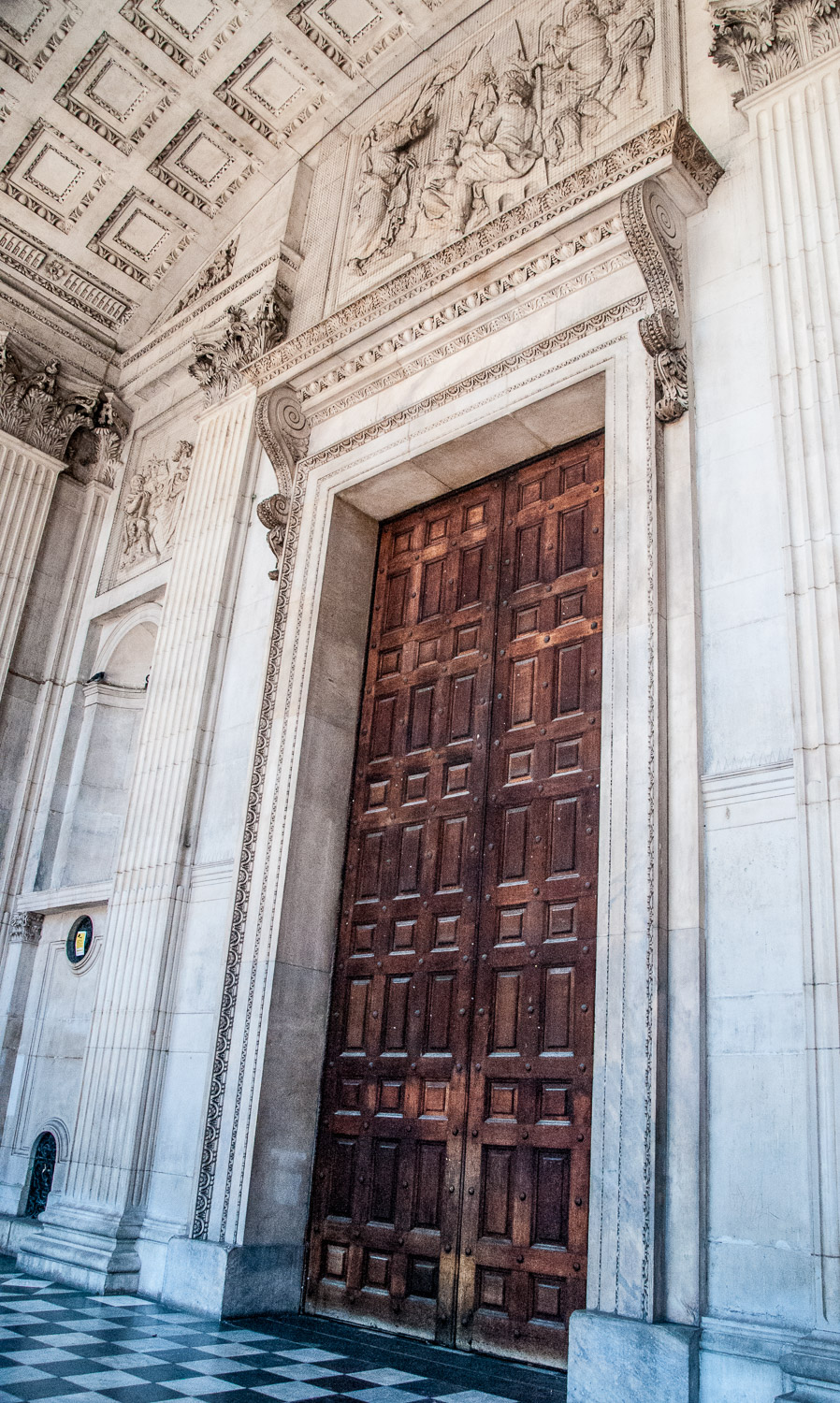
The Great West Door – only opened on very special occasions.

I have, however, yet to see anyone look more closely at the surrounding stonework. If they did, they would encounter a fascinating collection of 18th century graffiti. They are very hard to see and extremely difficult to photograph so these are my best efforts.

Names in cursive script overlap one another …
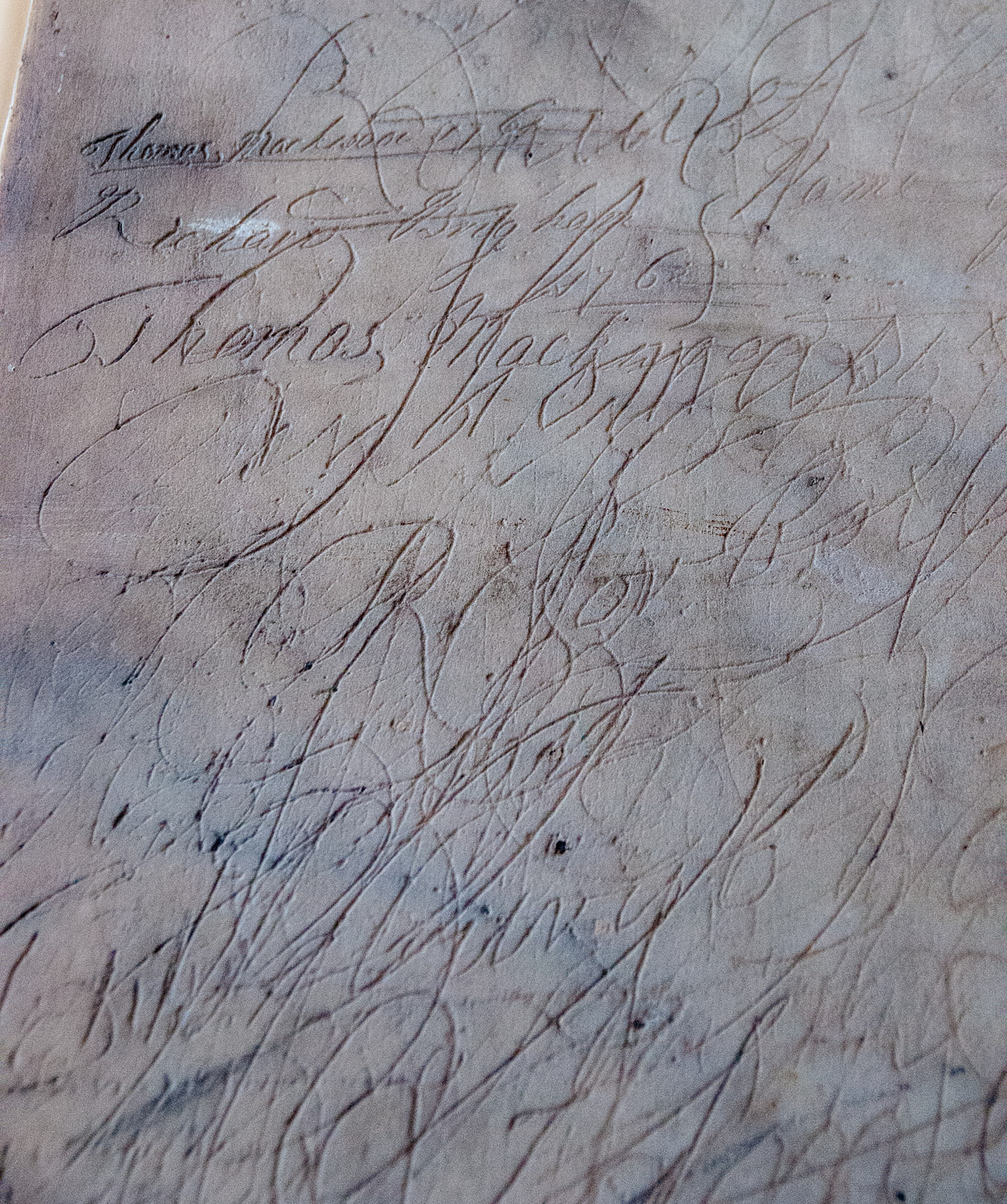
Some are clearly dated …
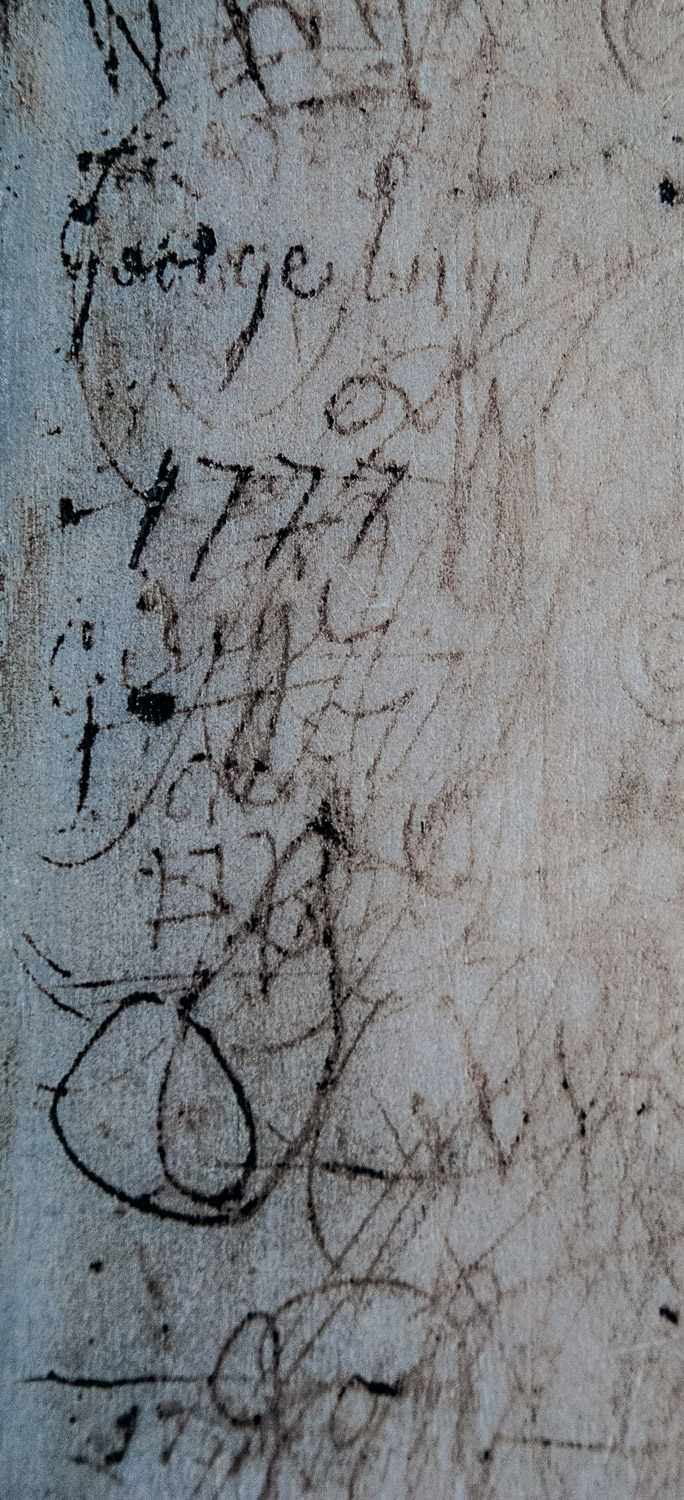
And it wasn’t just men leaving their mark …
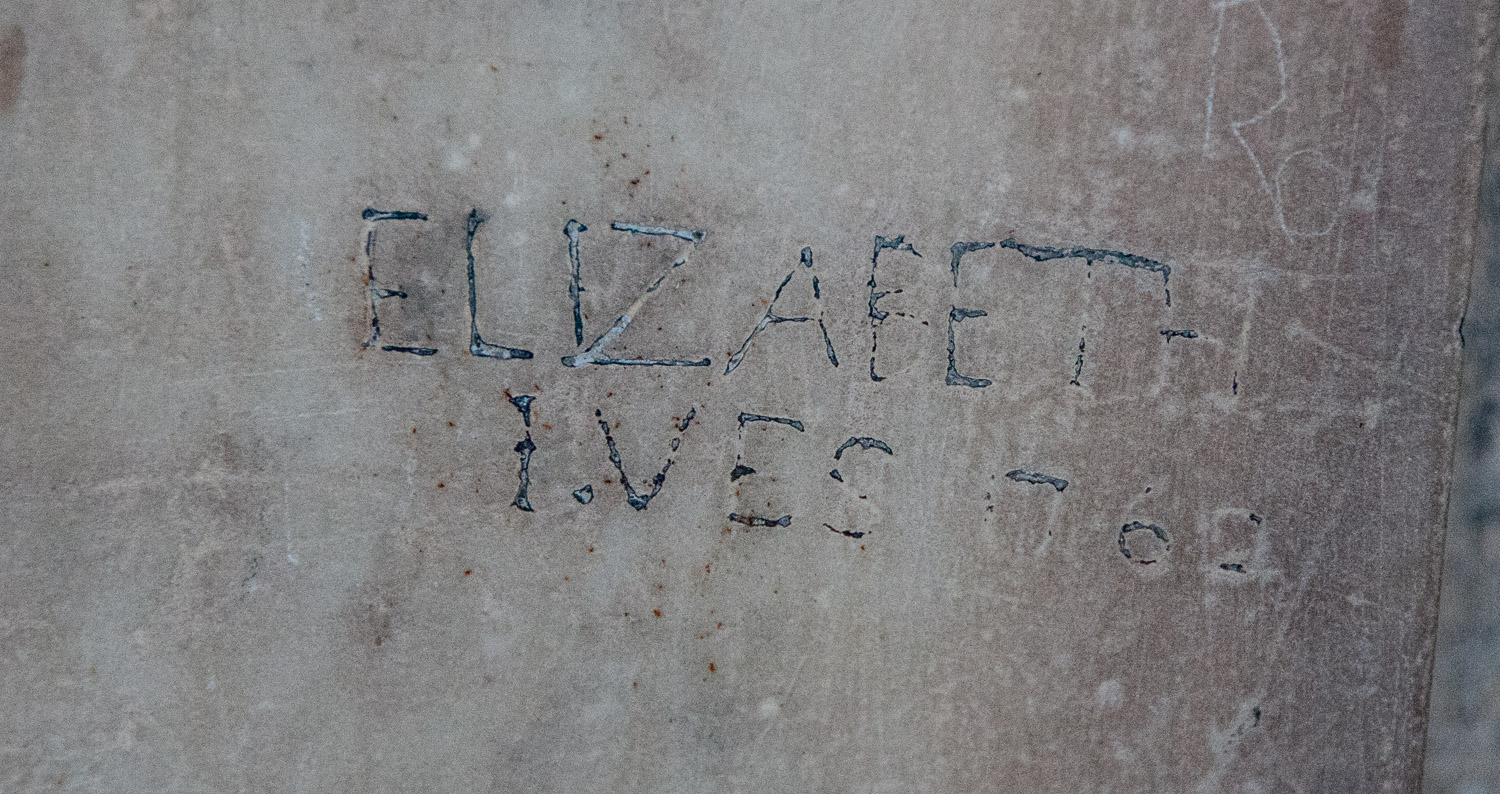
Elizabeth Ives was here (1760).

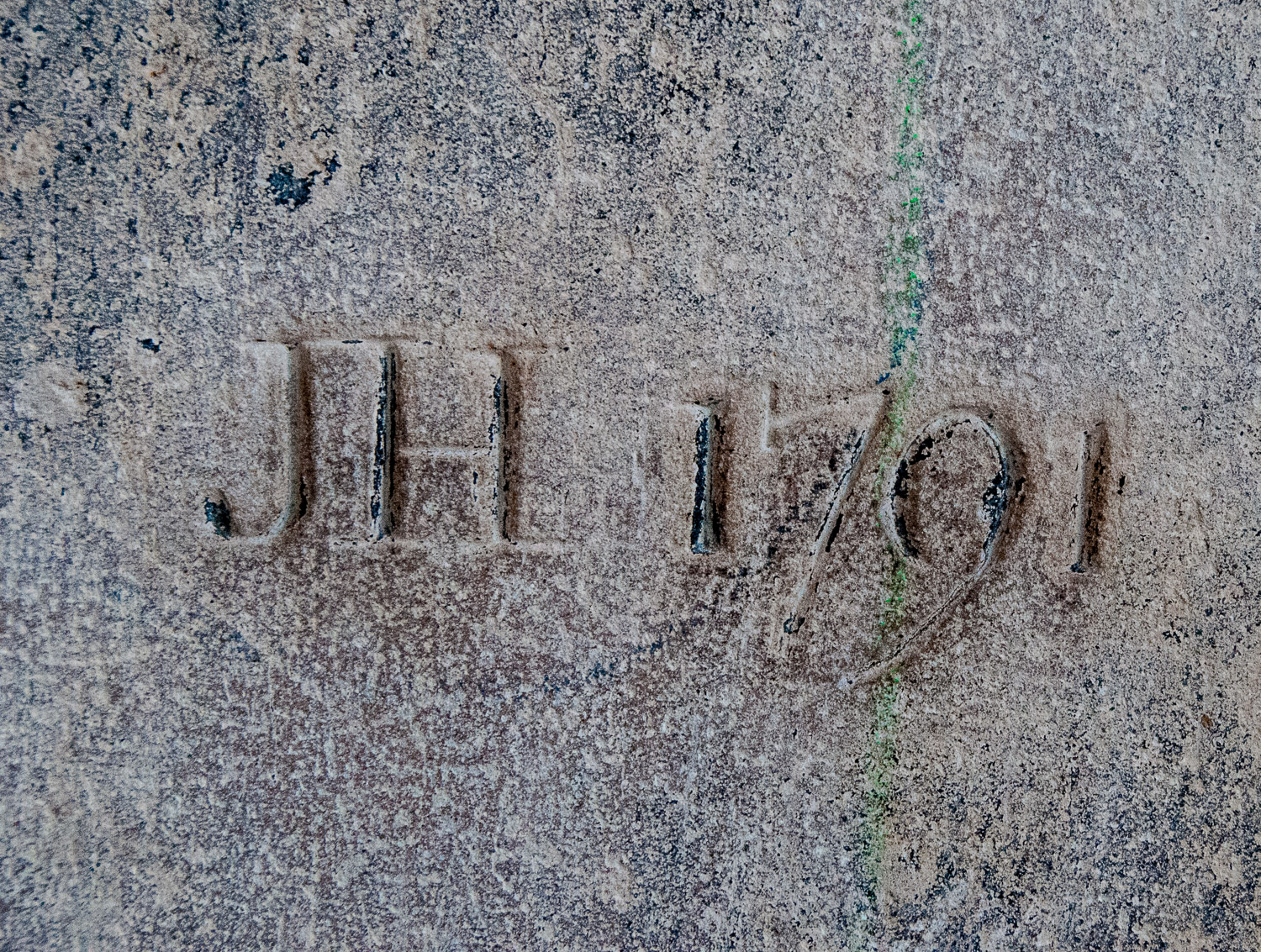
‘JH’ must have taken some time over this …
And what about this bird with a bald human head?
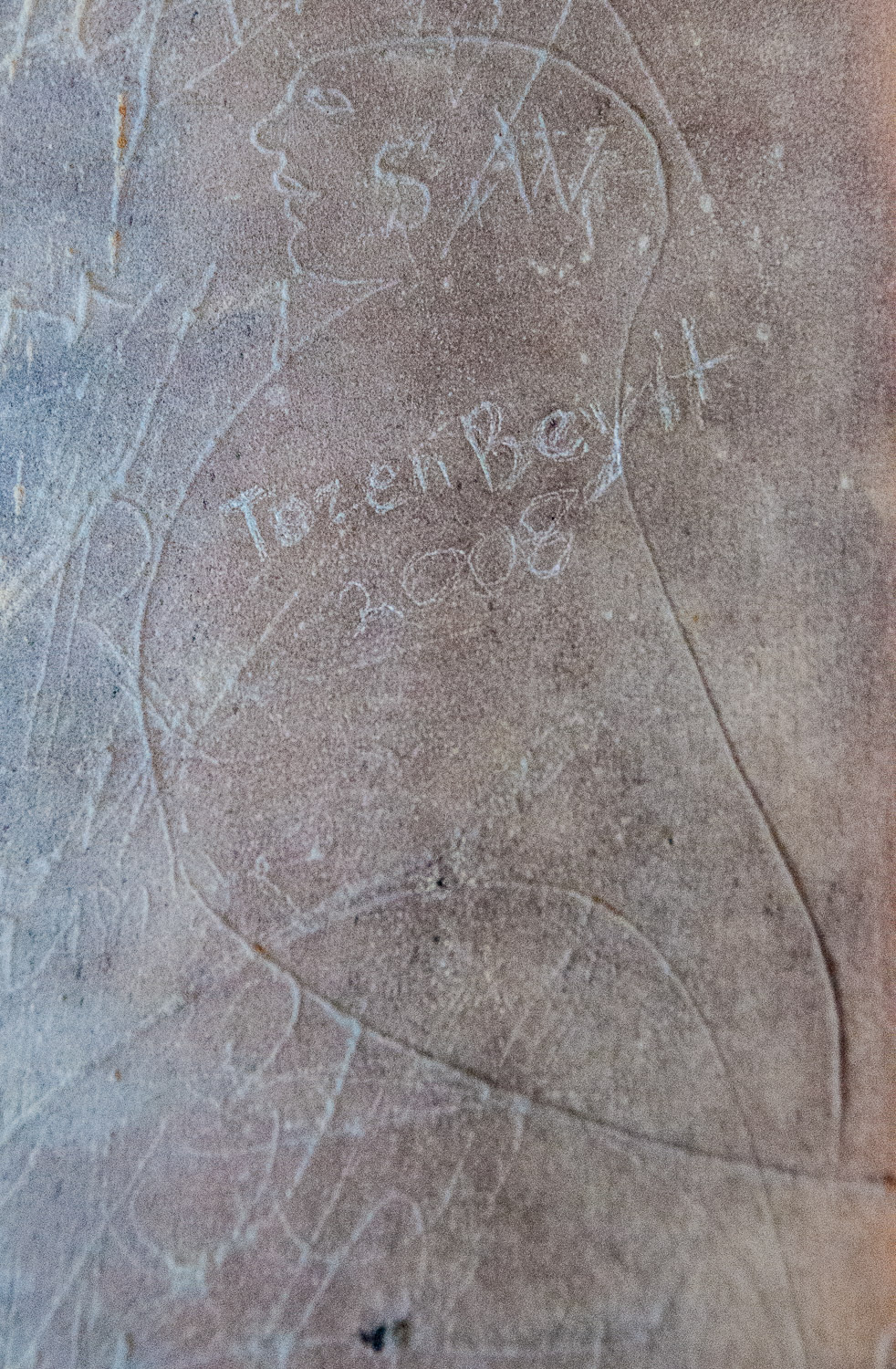
Maybe a pompous, plump supervisor who upset one of his apprentices?

There are many, many inscriptions and they become more visible as your eyes get used to the light.

If you now turn around and walk down the steps you can examine these fossils, embedded in the stone for over 5oo million years …
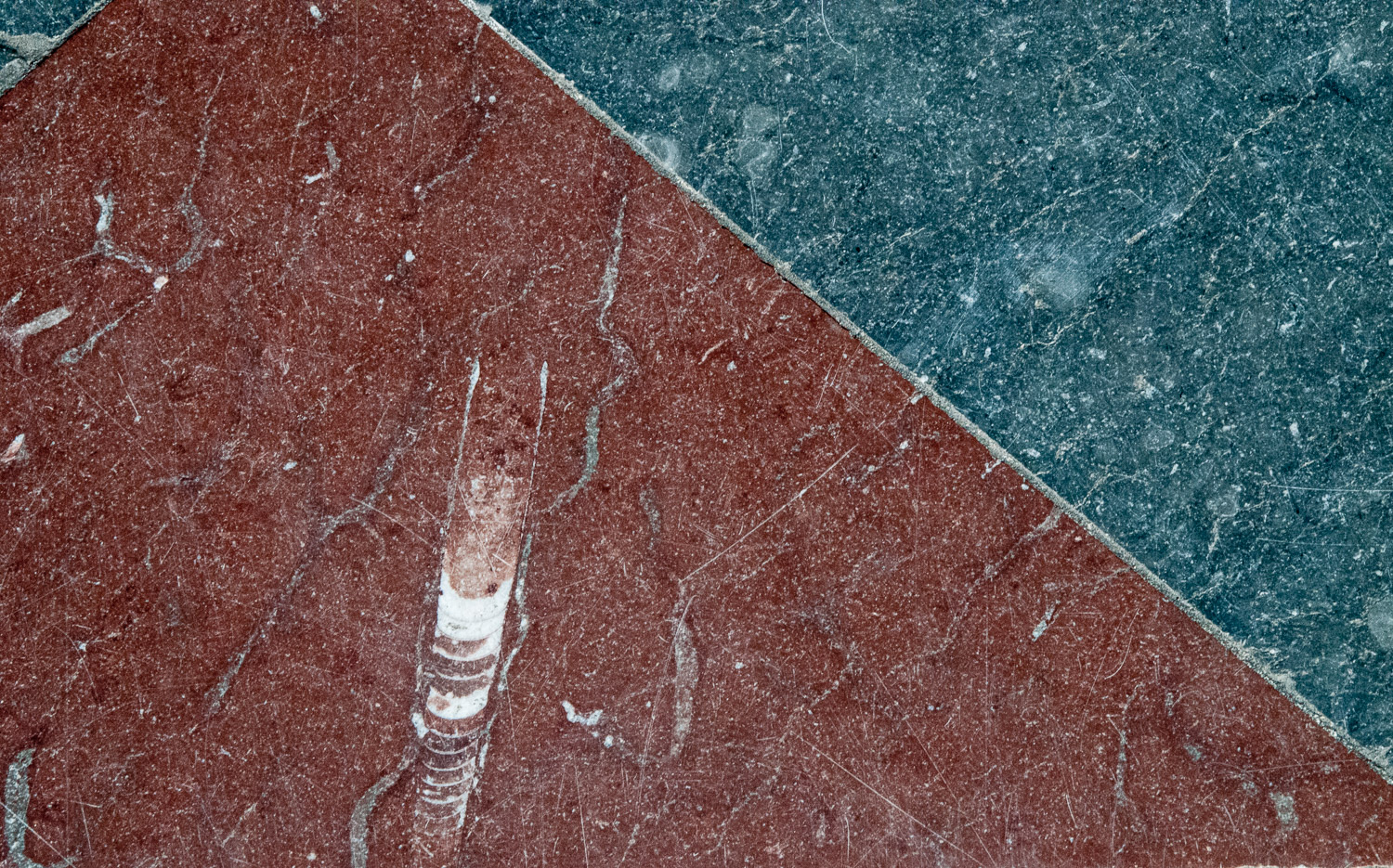
You can read more about them in my blog Jurassic City.

The first pineapple arrived in Europe courtesy of Christopher Columbus in 1493.  The strange fruit he brought back from Guadaloupe looked like a pine cone but the edible interior had the texture of an apple. Pineapples begin to rot as soon as they are picked, so supplies from overseas were rare, and they proved very difficult to cultivate. The forces of supply and demand drove up the 17th century price to the present day equivalent of £5,000 each – but you could rent one for your dinner party table centrepiece if you wanted to show off. They became associated with wealth, royalty and generous hospitality which, presumably, is why they were chosen as the decorative finials on the St Paul’s western towers. Their shape is aesthetically pleasing too.
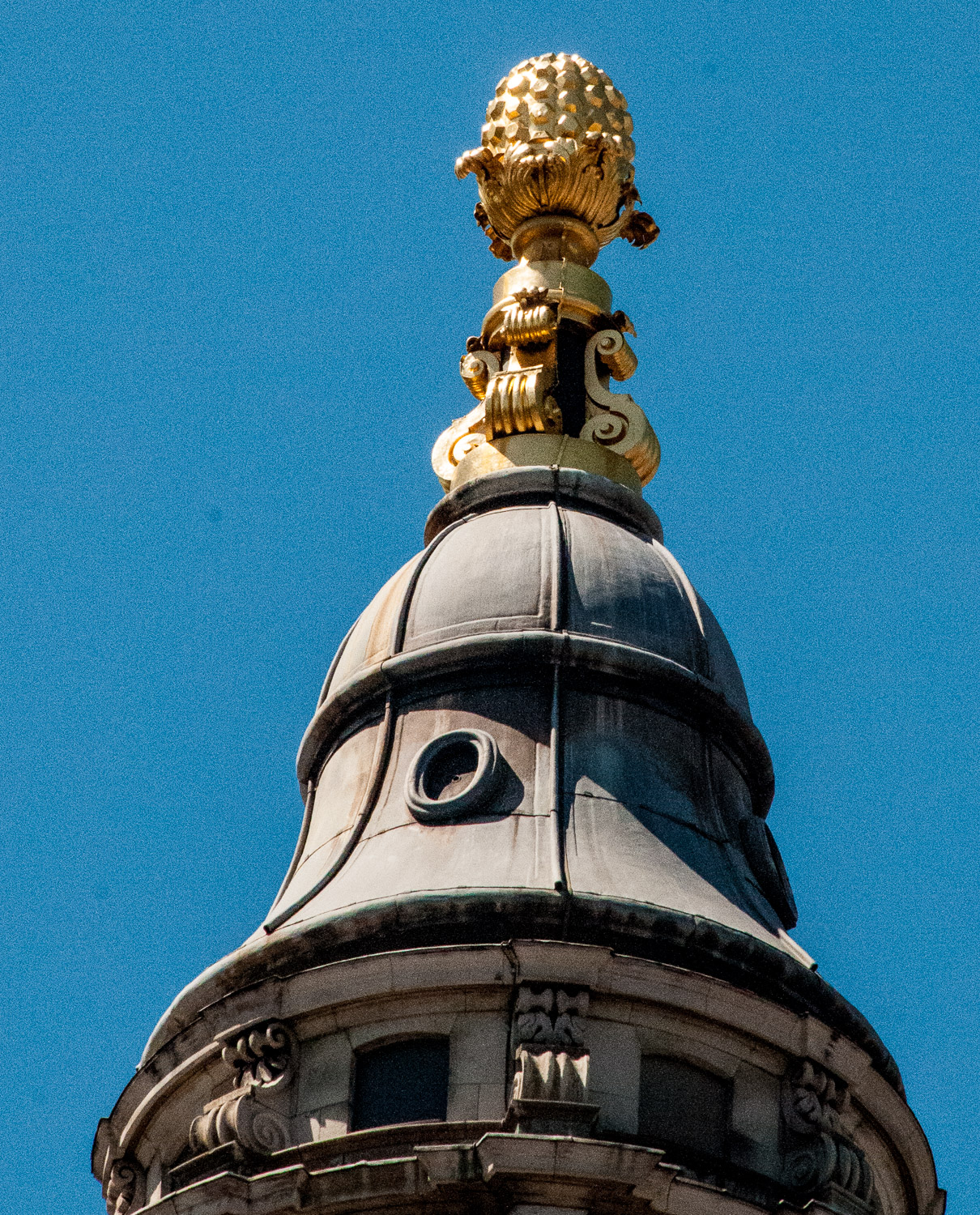
The gilded copper pineapples were modelled by Francis Bird (1677-1731), cast by Jean Tijou and completed in July 1708. Tijou was a French Huguenot ironworker about whom little else is known.

You can see them most clearly from outside the tourist information centre across the road. They were cleaned and restored in 2003 and are covered with two layers of gold leaf (as are the numbers and hands of the clock face).

Standing there you can also see the south porch of the cathedral and the centrepiece of the pediment, a phoenix rising from its own ashes above the word ‘RESURGAM’, a fitting symbol of the Cathedral and harking back to an earlier episode in its construction.
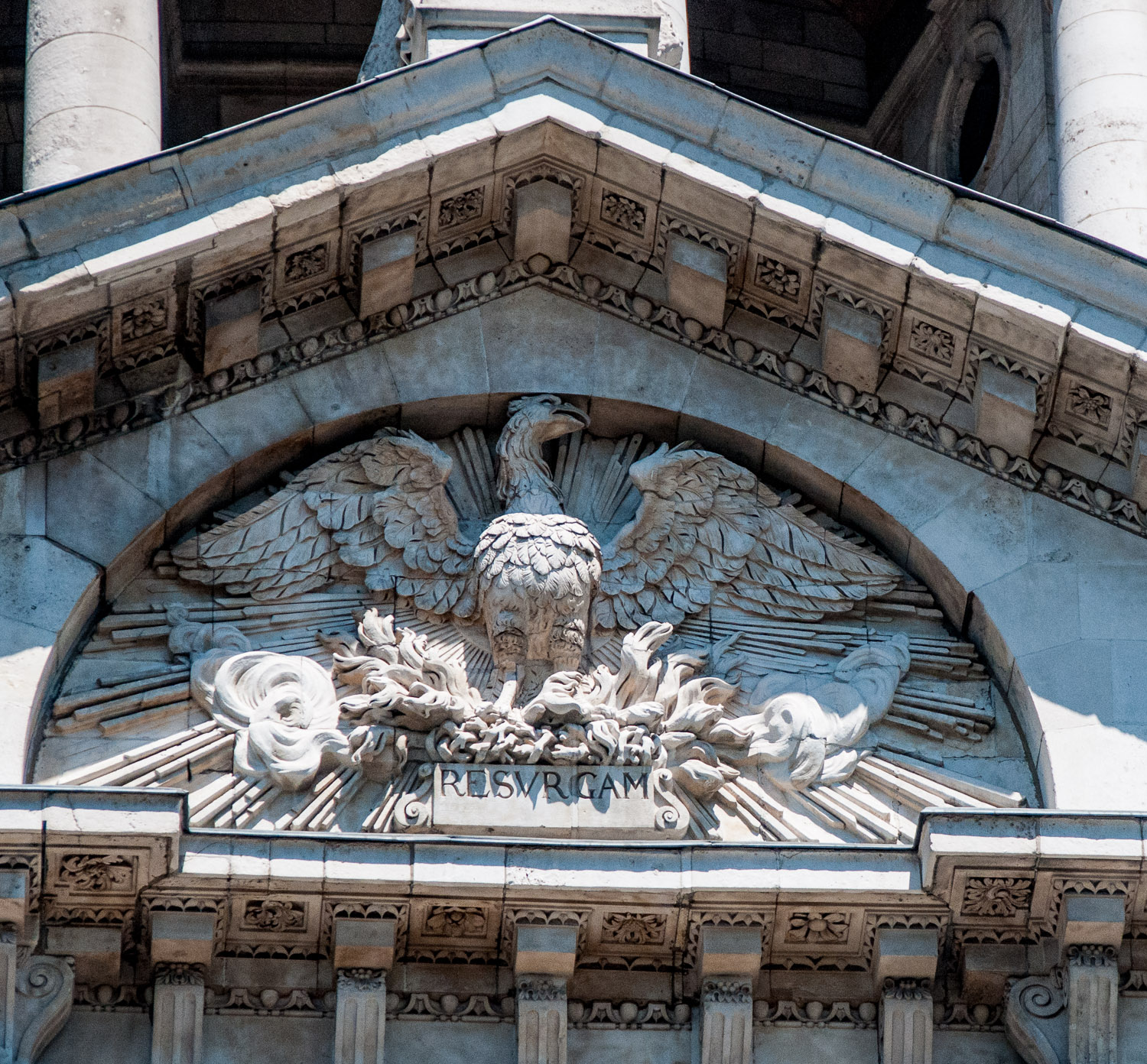
The carving is by Caius Gabriel Cibber (1630-1700).

When marking out foundations, Sir Christopher Wren asked a labourer to bring a stone to mark a particular spot. The man came back with a fragment of a broken tombstone on which was carved one word – RESURGAM – I shall rise again – and the architect never forgot this omen.

St Paul’s has an abundance of cherubs …
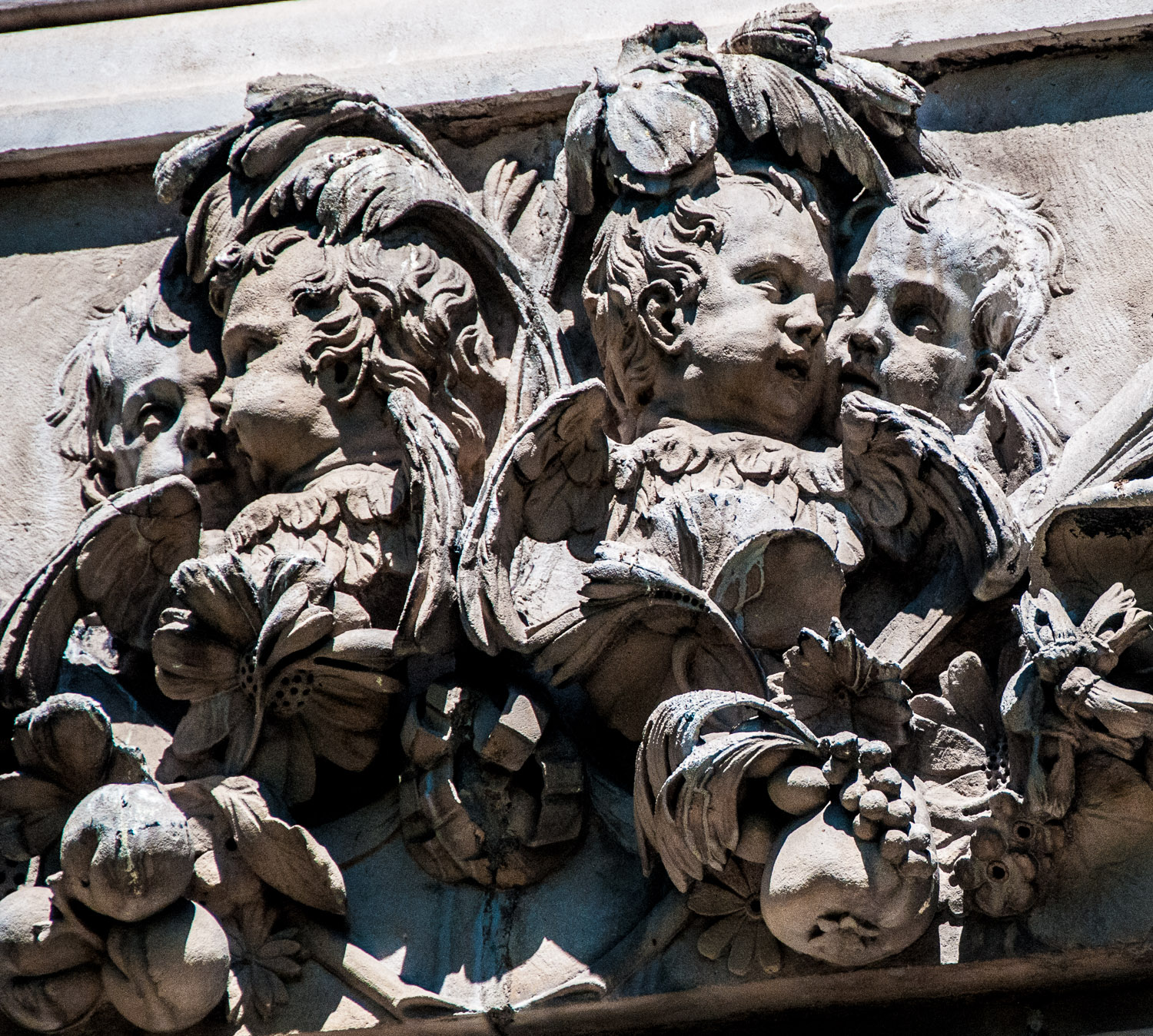
You can read more about the City’s cherubs in my earlier blog Charming Cherubs.

On the north side is the Dean’s door …
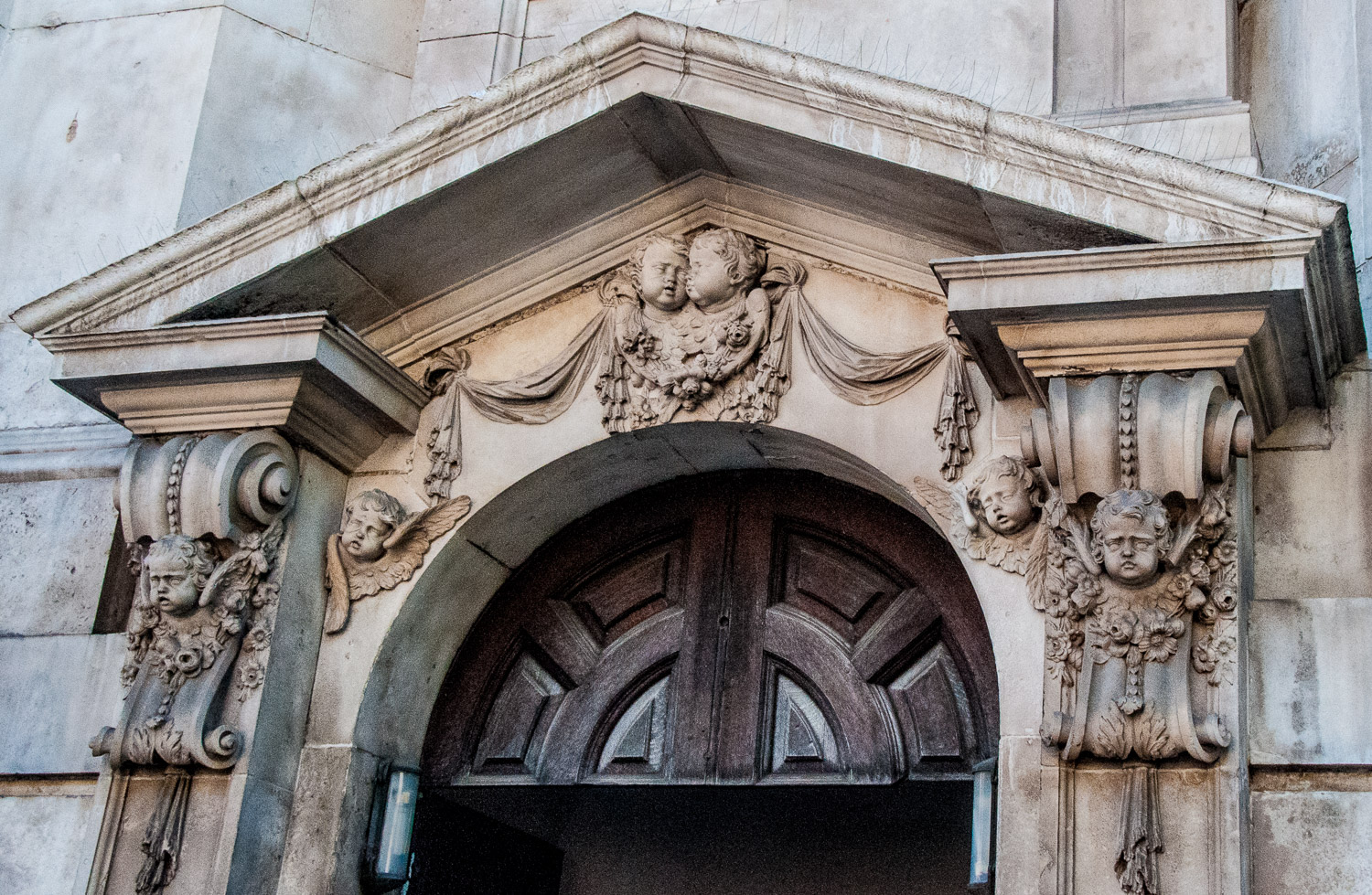
The carver was stonemason and architect Christopher Kempster (1627-1715).

Kempster’s work on the cherub’s heads and foliage was considered so good Wren awarded him an extra £20 for ‘the extraordinary diligence and care used in the said carving and his good performance of the same’. When Kempster died at the age of 88 his son carved a cherub’s head for his memorial.

Much restoration has had to be carried out on St Paul’s in view of both its age and the damage done by London’s polluted air. In the yard beside the cathedral you can see an example close up …
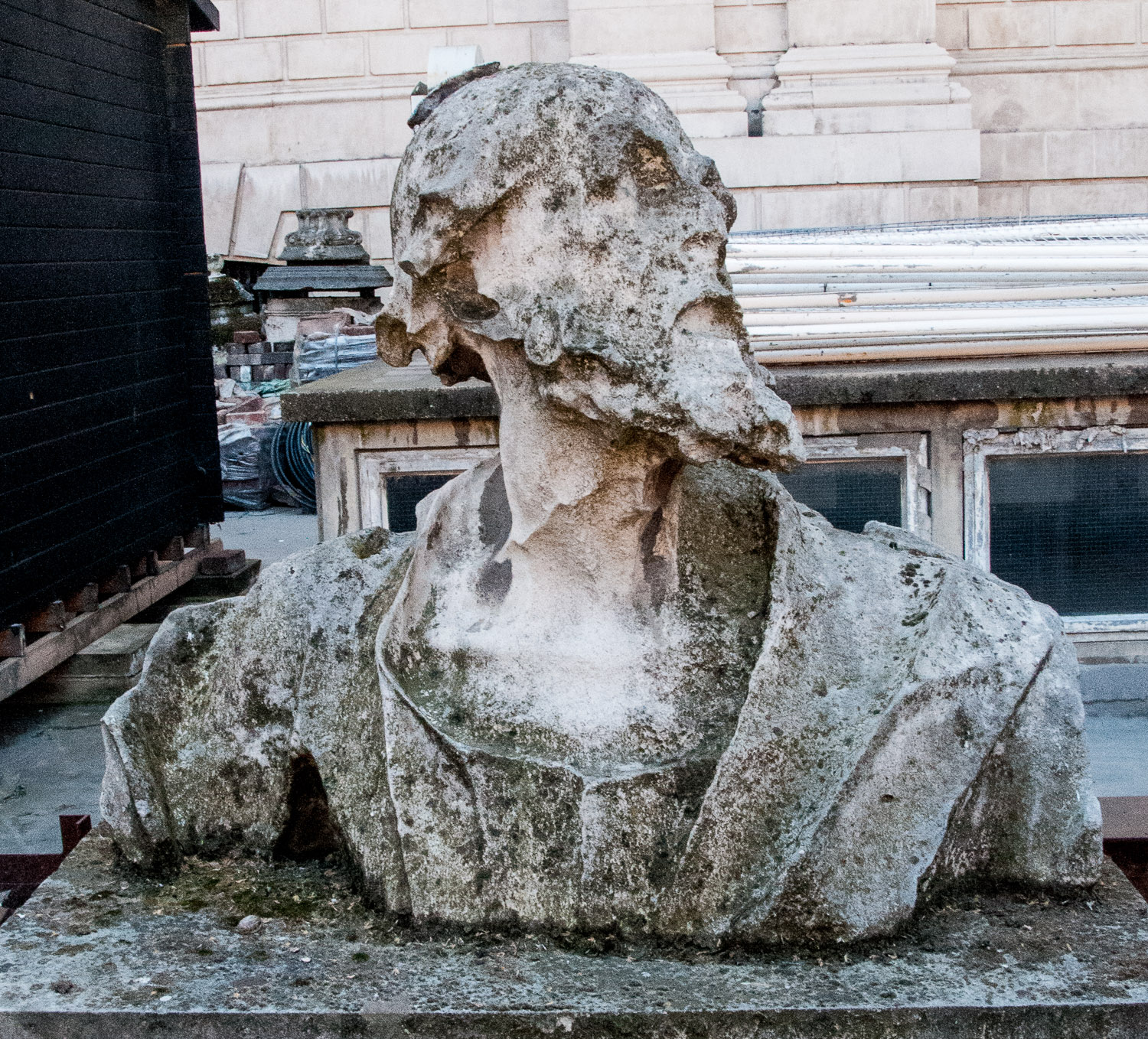
A very eroded statue of St Andrew from the pediment of the south portico.

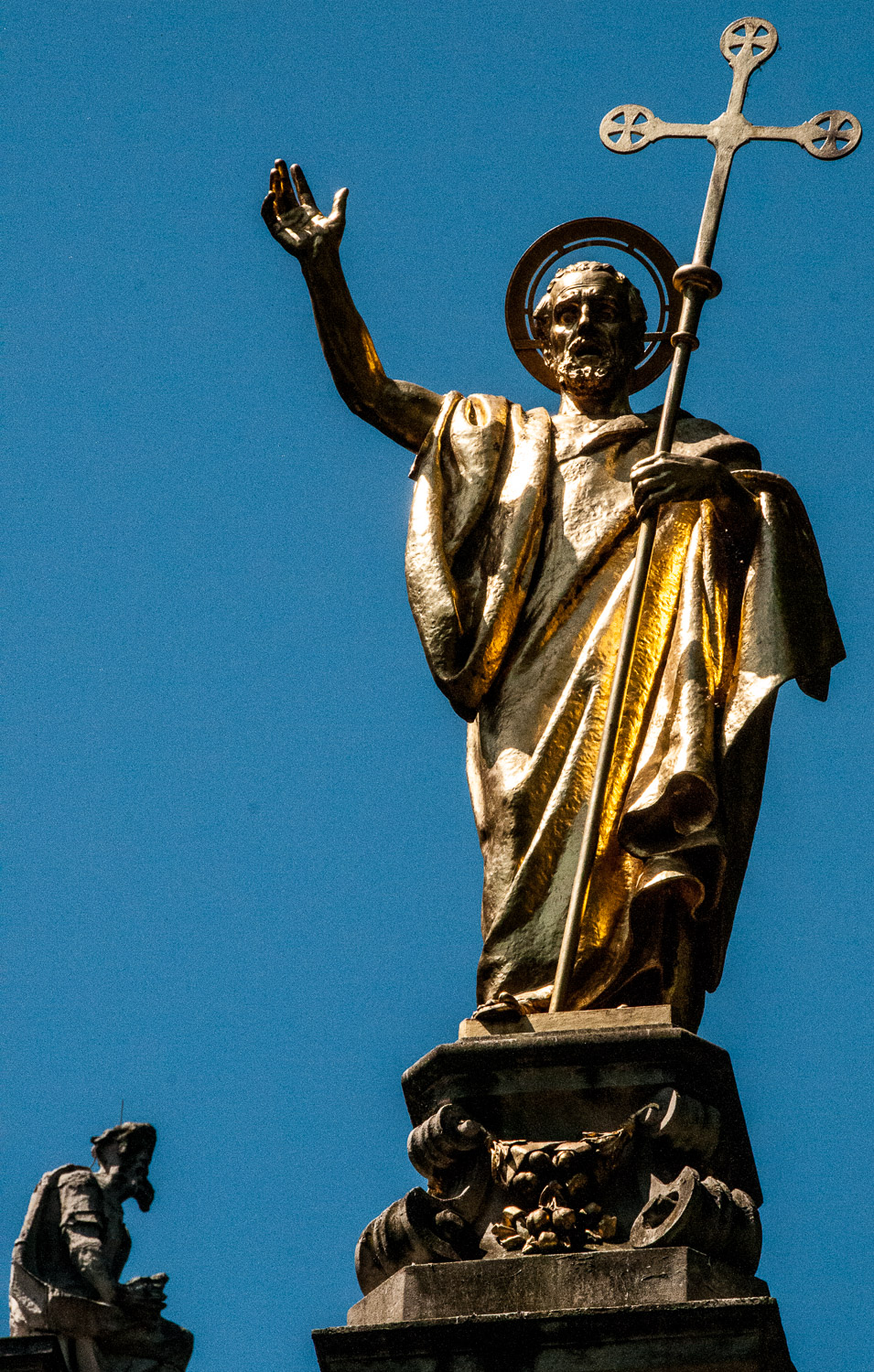
The churchyard also contains a statue of St Paul …
Over 30,000 Londoners died in the World War II air raids and they are commemorated by this understated monument outside the north transept.
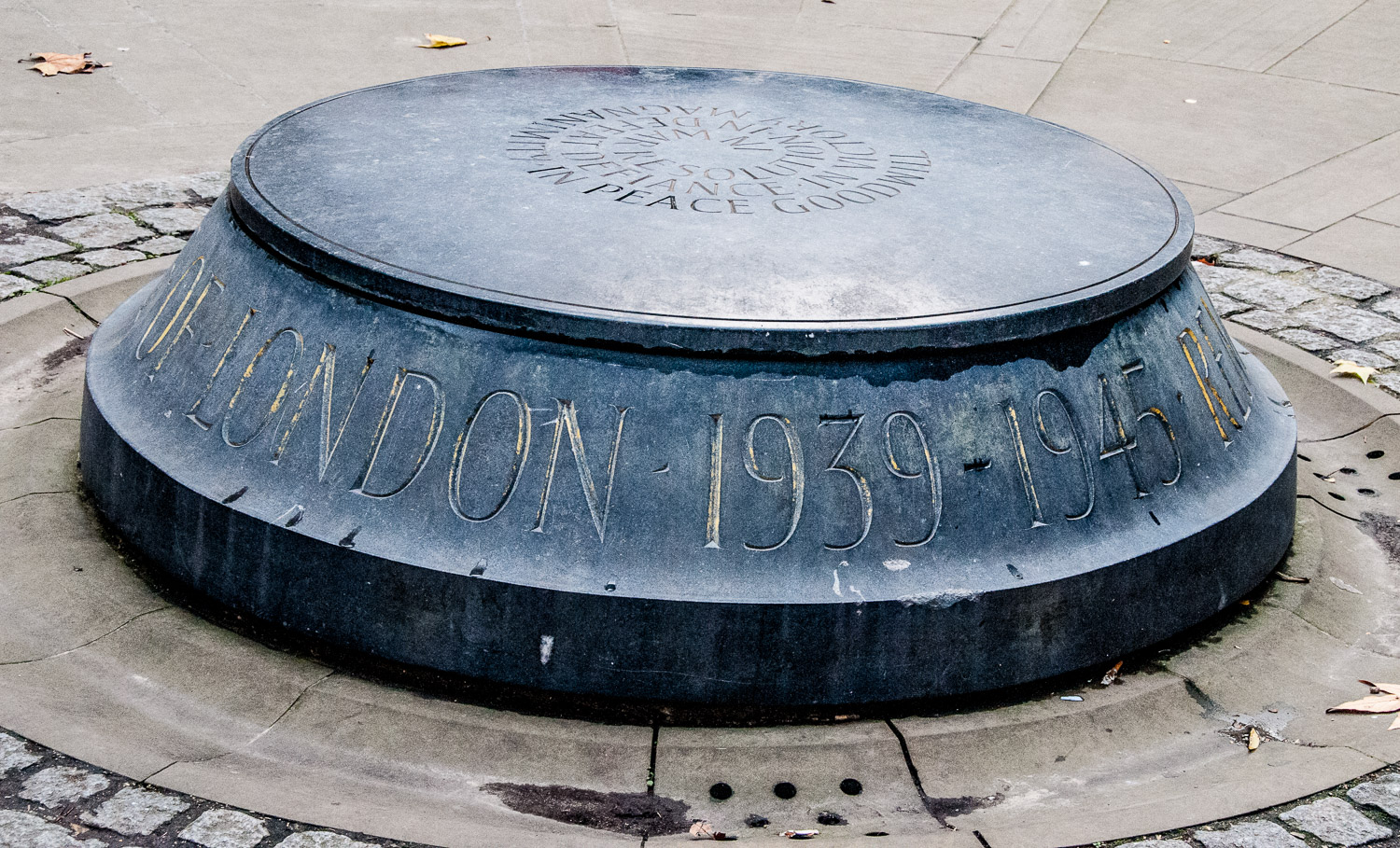
The inscriptions read …

‘In War, Resolution: In Defeat, Defiance: In Victory, Magnanimity: In Peace: Goodwill’

And around the sides

REMEMBER BEFORE GOD, THE PEOPLE OF LONDON 1939-1945

The cathedral itself did not escape World War II bombing unscathed but several bomb hits (and numerous incendiary attacks) miraculously failed to seriously damage the dome. Virtually every other structure in the near vicinity was destroyed or had to be demolished.

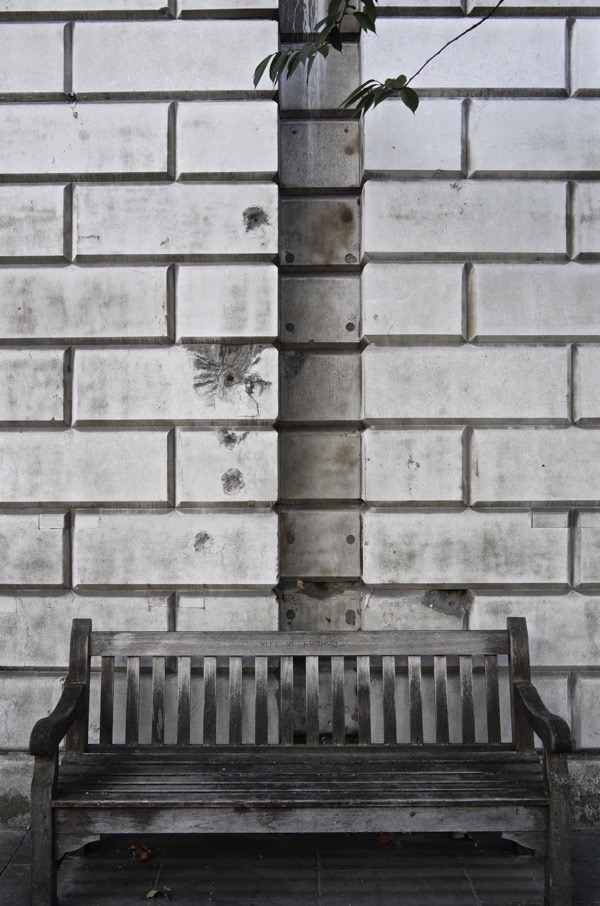
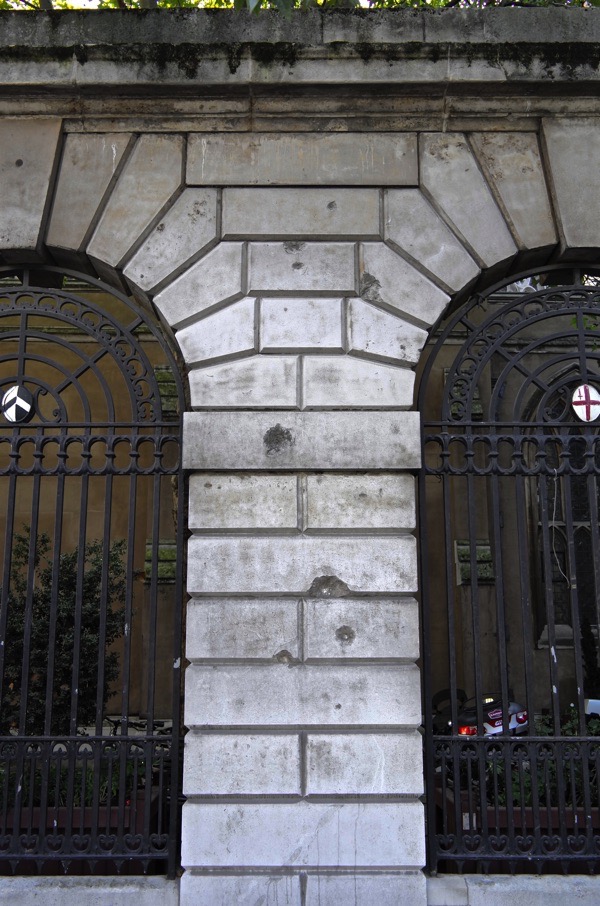
One is reminded how close St Paul’s came to destruction by these shrapnel scars still visible on the north wall …
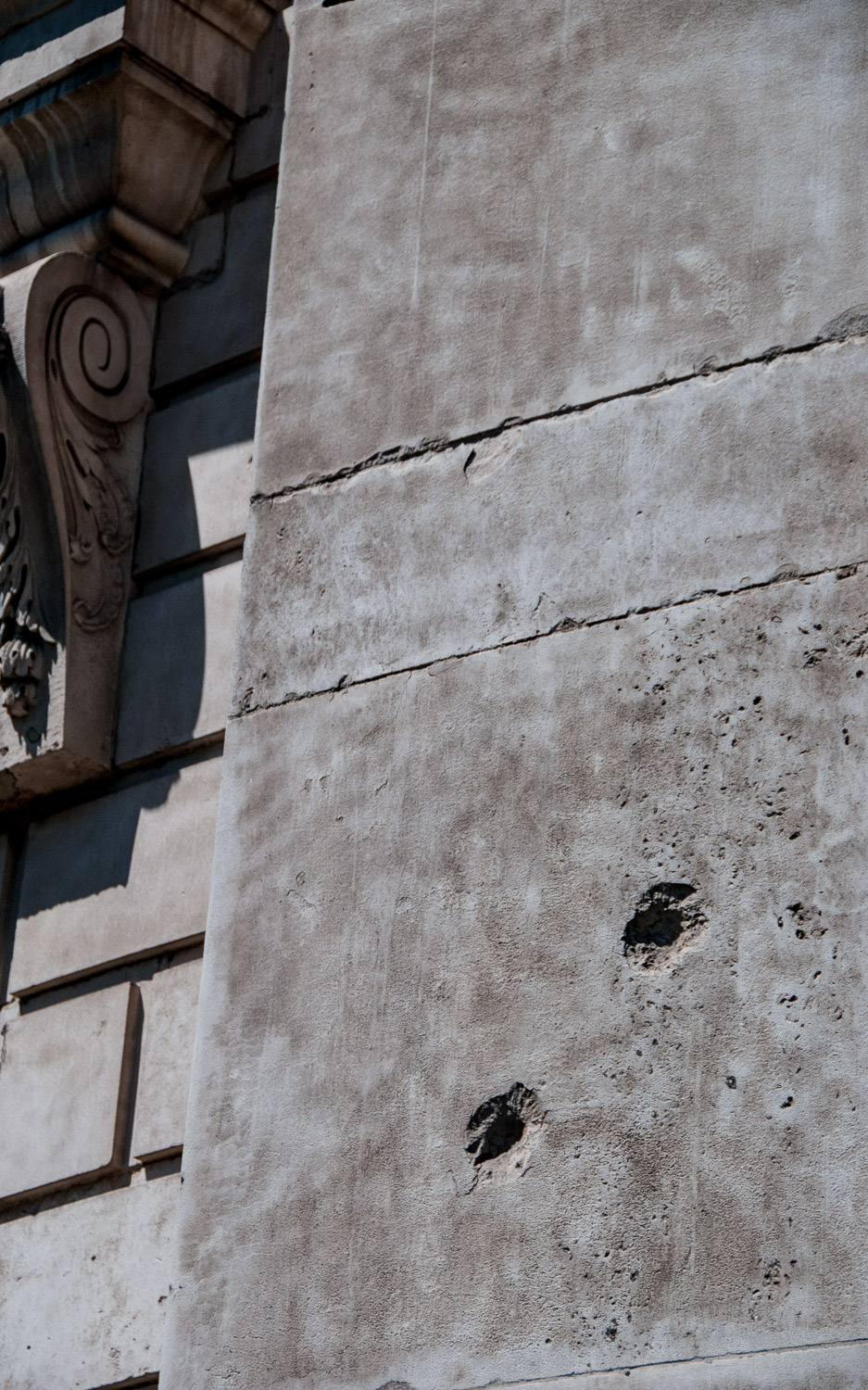
The cathedral’s north wall.

In 1668, when Christopher Wren was commissioned to submit proposals for a new cathedral, he was only in his thirties. From then, until when the government declared the work finished on Christmas day 1711, he not only maintained his vision but also held together an incredibly varied body of people to a common purpose.

He is thought of as a scientific genius and a great architect, but he was also a great man, with an understanding of other men and an ability to get more out of them than they knew they had in them.

Dr Ann Saunders – historian and author


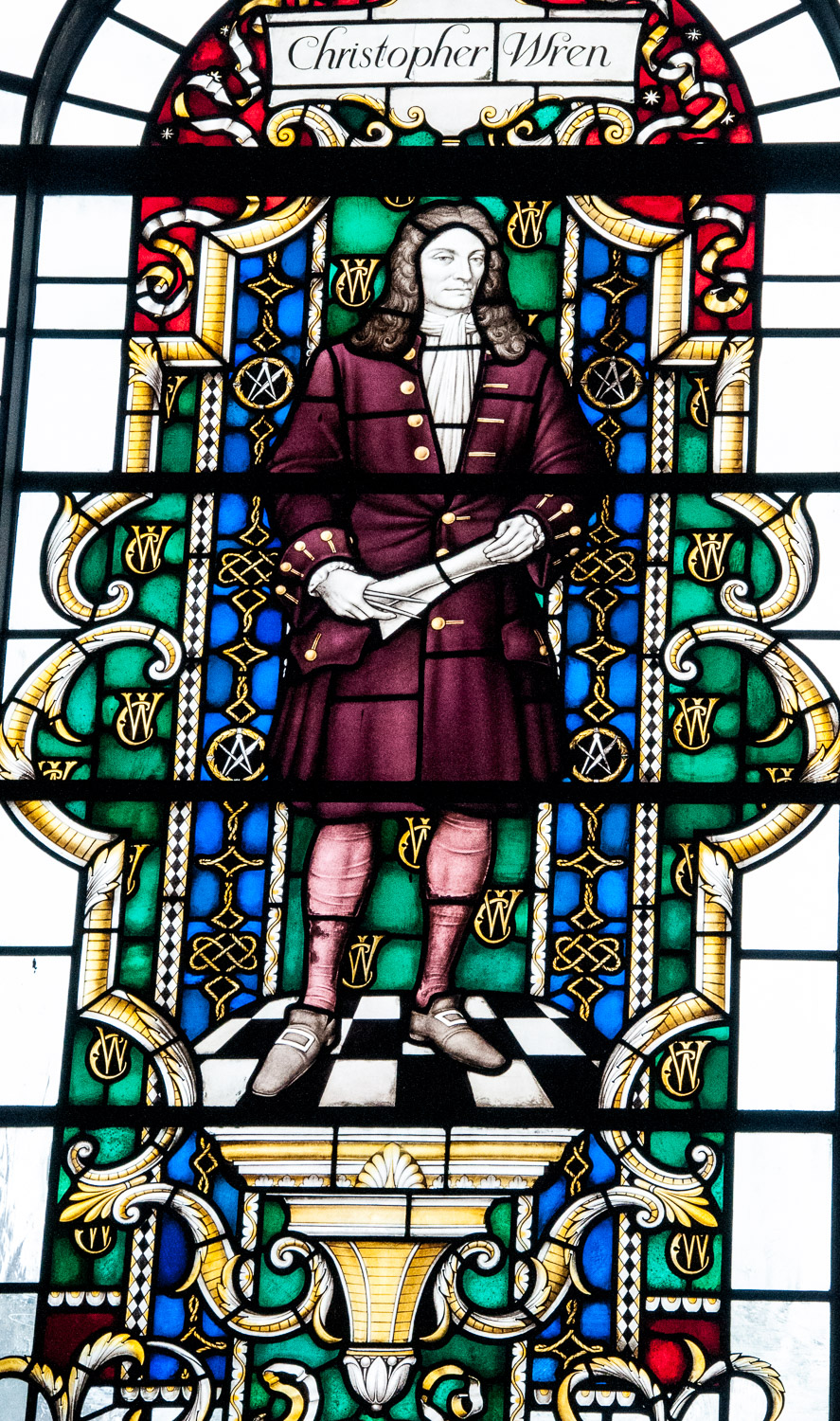
Sir Christopher Wren as portrayed in stained glass at the church of St Lawrence Jewry

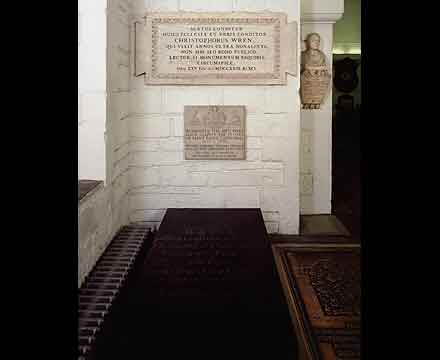
He is buried in a quiet corner of the cathedral crypt under a plain stone and an inscription which includes the words ‘Lector, si monumentum requiris, circumspice‘, usually translated as

Reader, if you seek his memorial – look around you


The City’s little museums 2

Before Melania Trump arrived in the White House, only one US President’s wife had been born outside America – read on to see who she was.

My first visit was to the Bank of England Museum in Bartholomew Lane EC2. Interactive exhibits mean you can have a go at setting monetary policy or try to navigate some tricky financial crises. It’s a great museum but unfortunately many of the exhibits (such as the building’s architectural development) are not easily photographed so you will have to visit in person to see more.

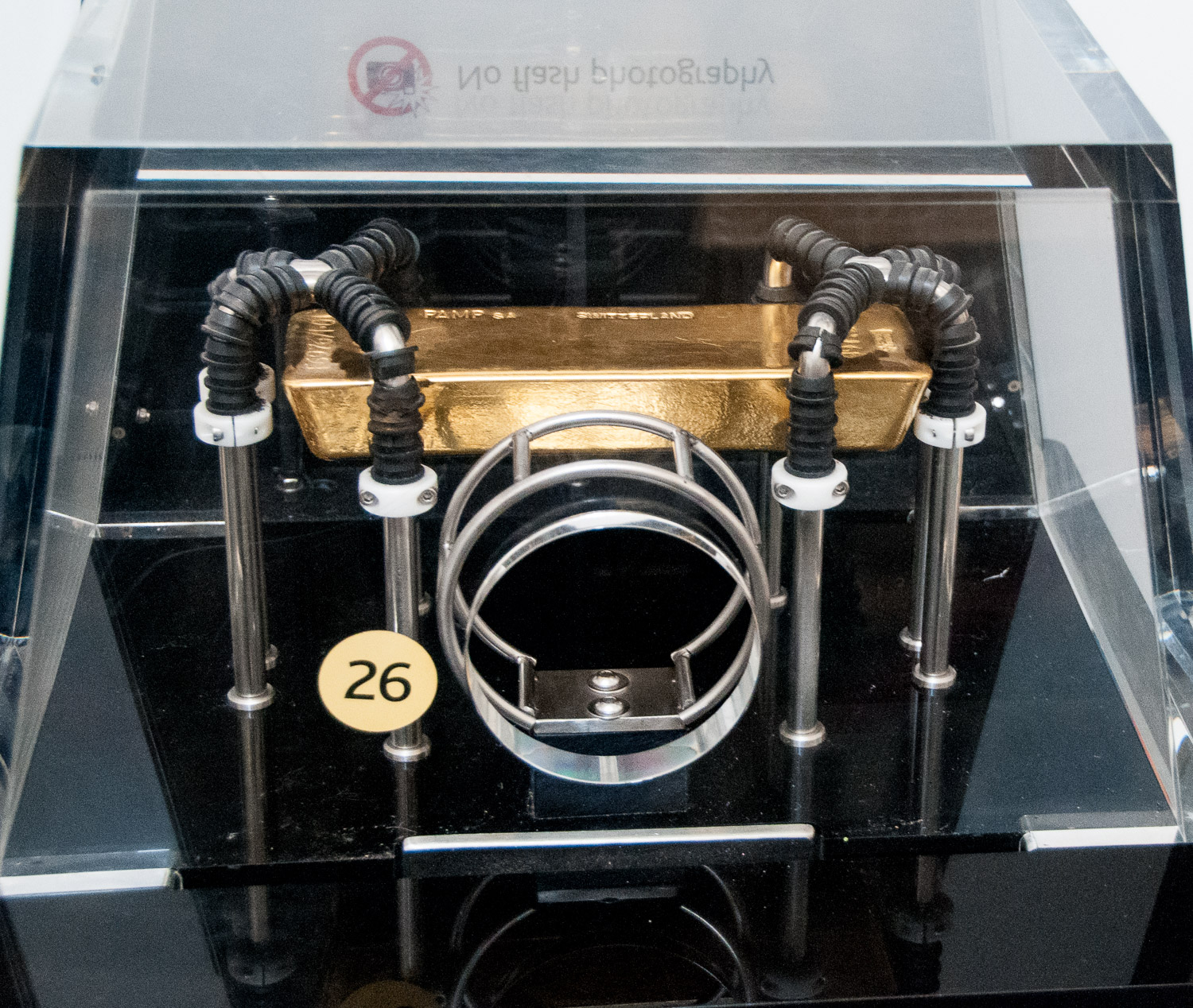
Among the fun things you can do there is to reach into a box and try to pick up a 13 kilo (28 lb) gold bar …

It’s 99.79% pure gold.

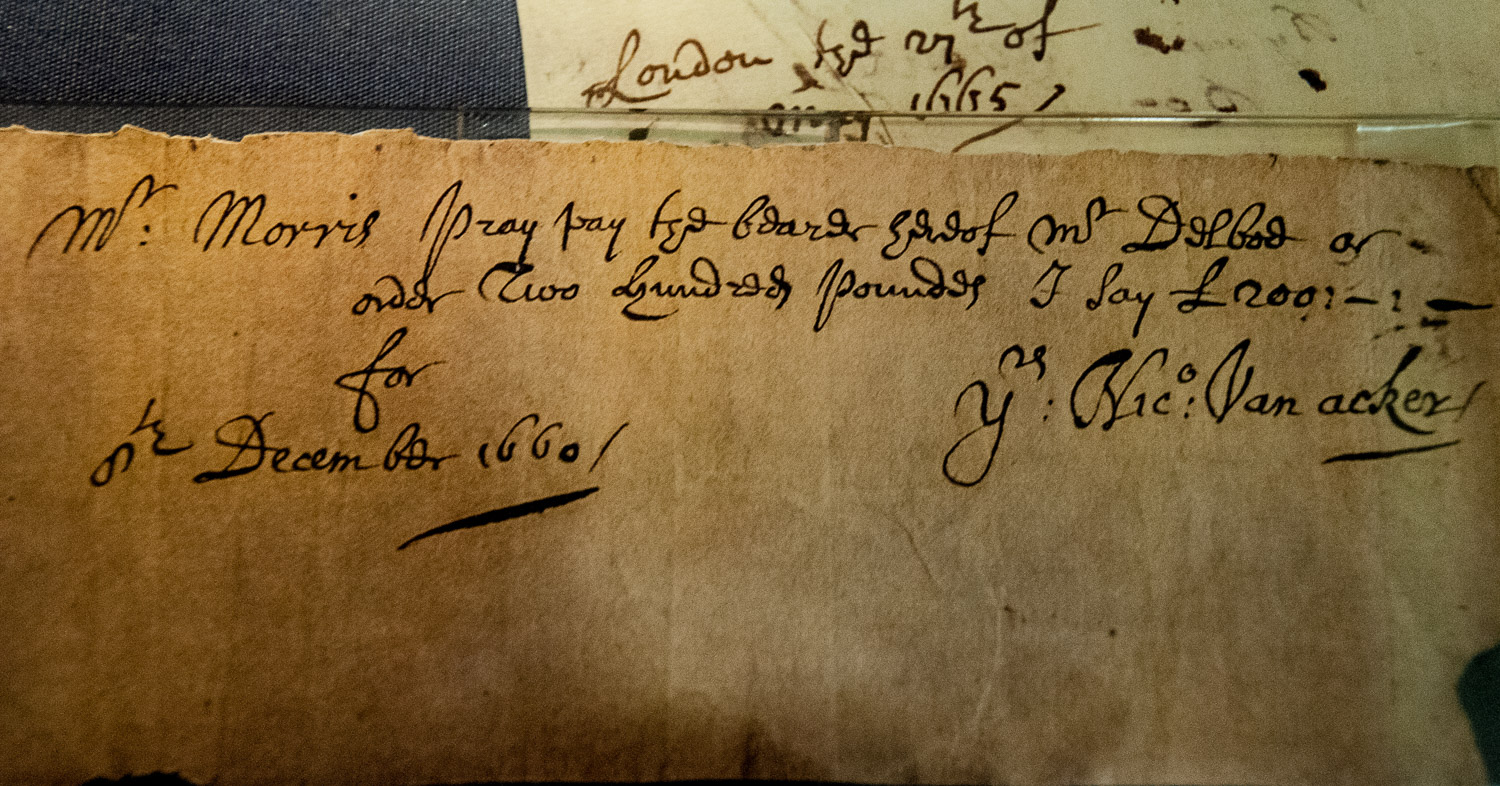
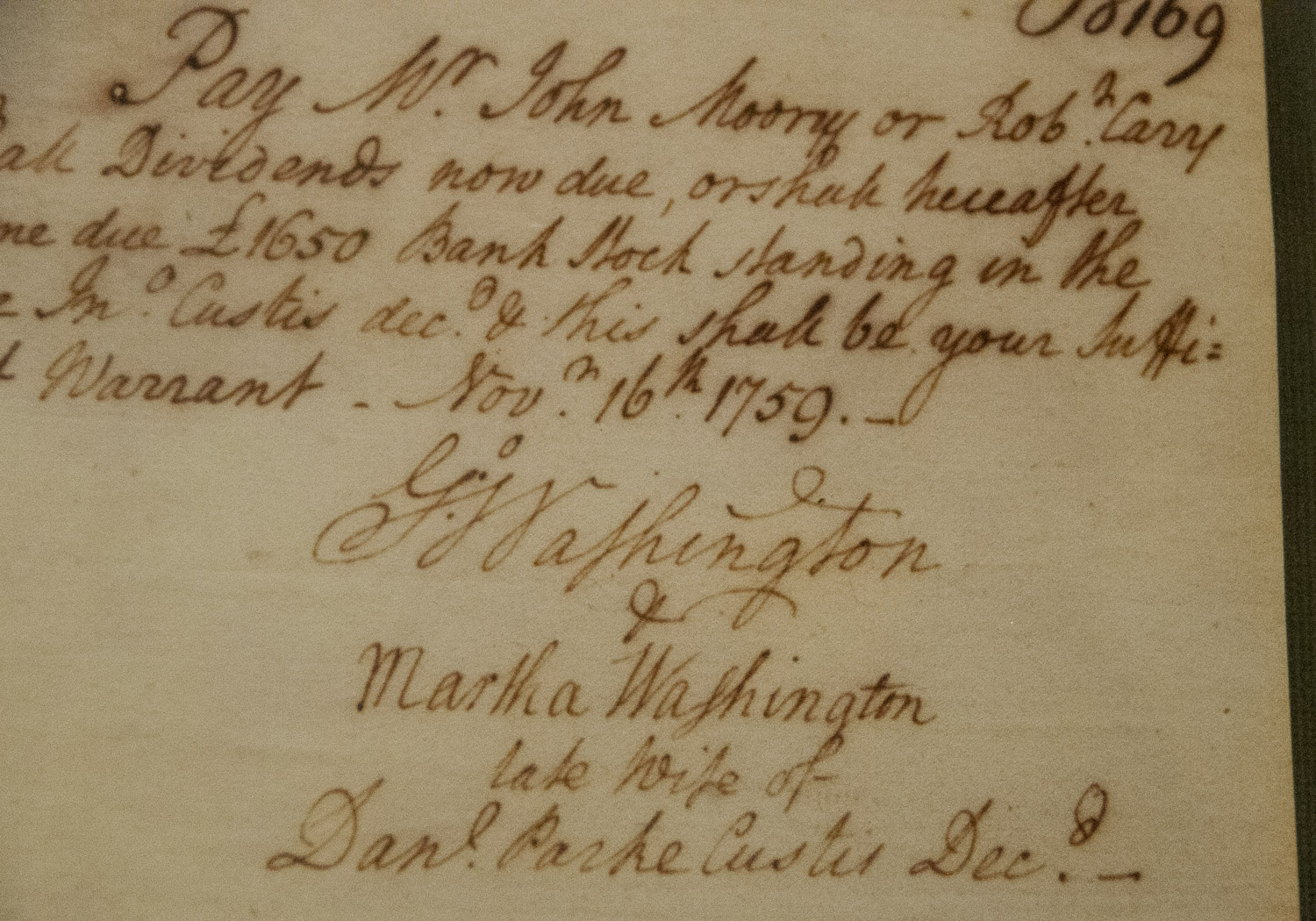
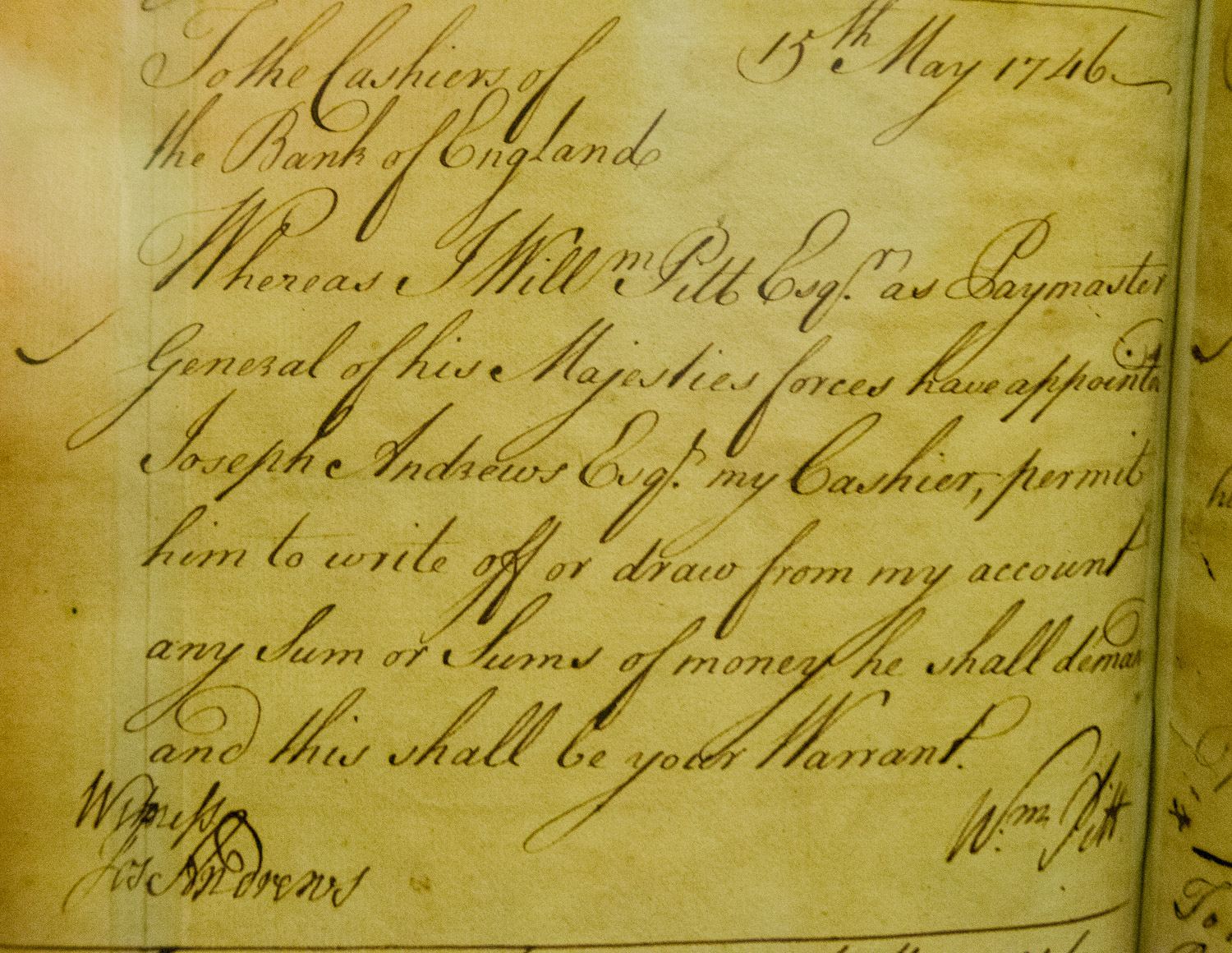
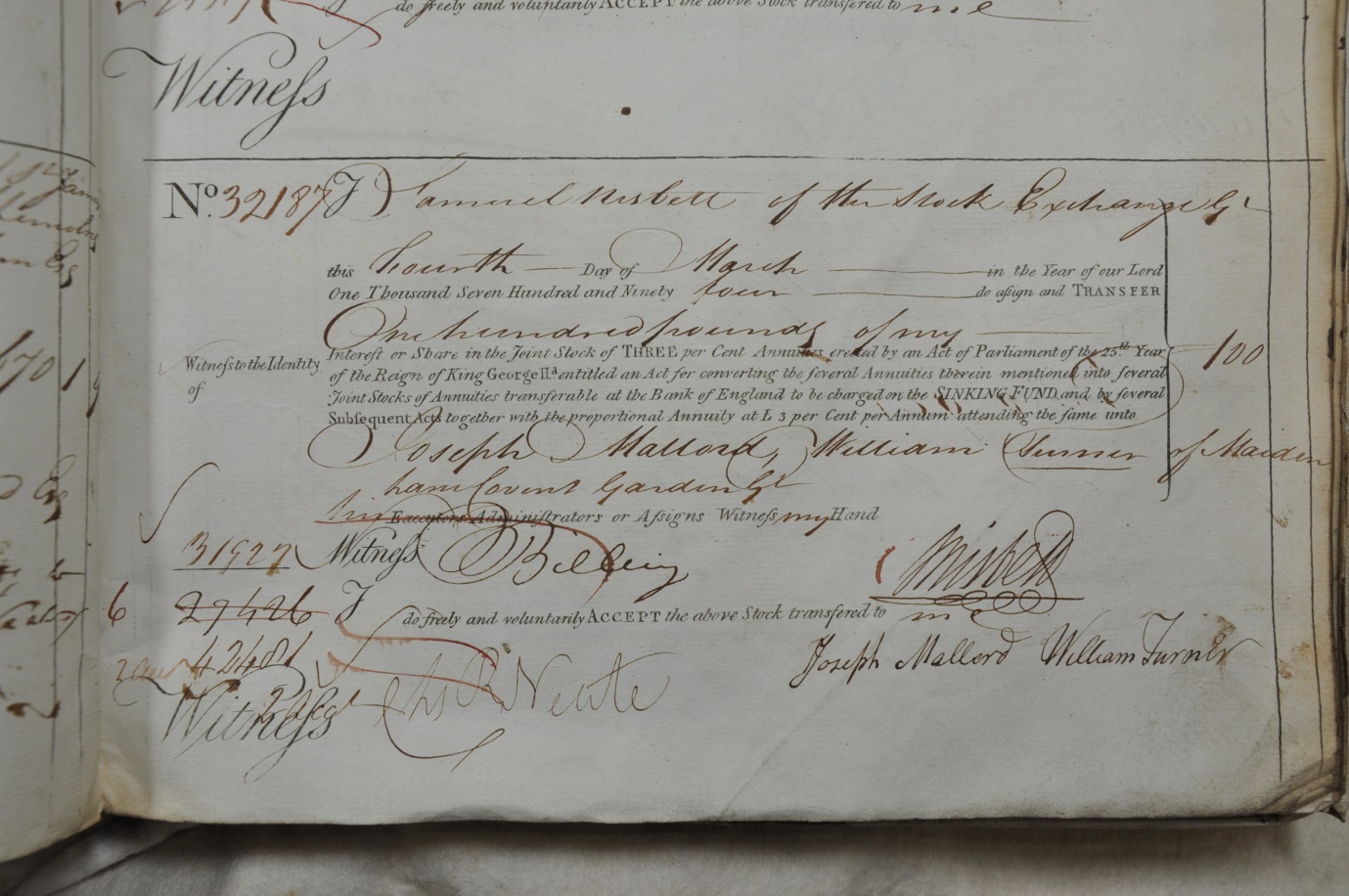
There are some fascinating documents including …

A very early cheque dated 8 December 1660.

A document signed by the first President of the United states, George Washington, and his wife Martha …

The signature of William Pitt the Elder …

And J M W Turner …

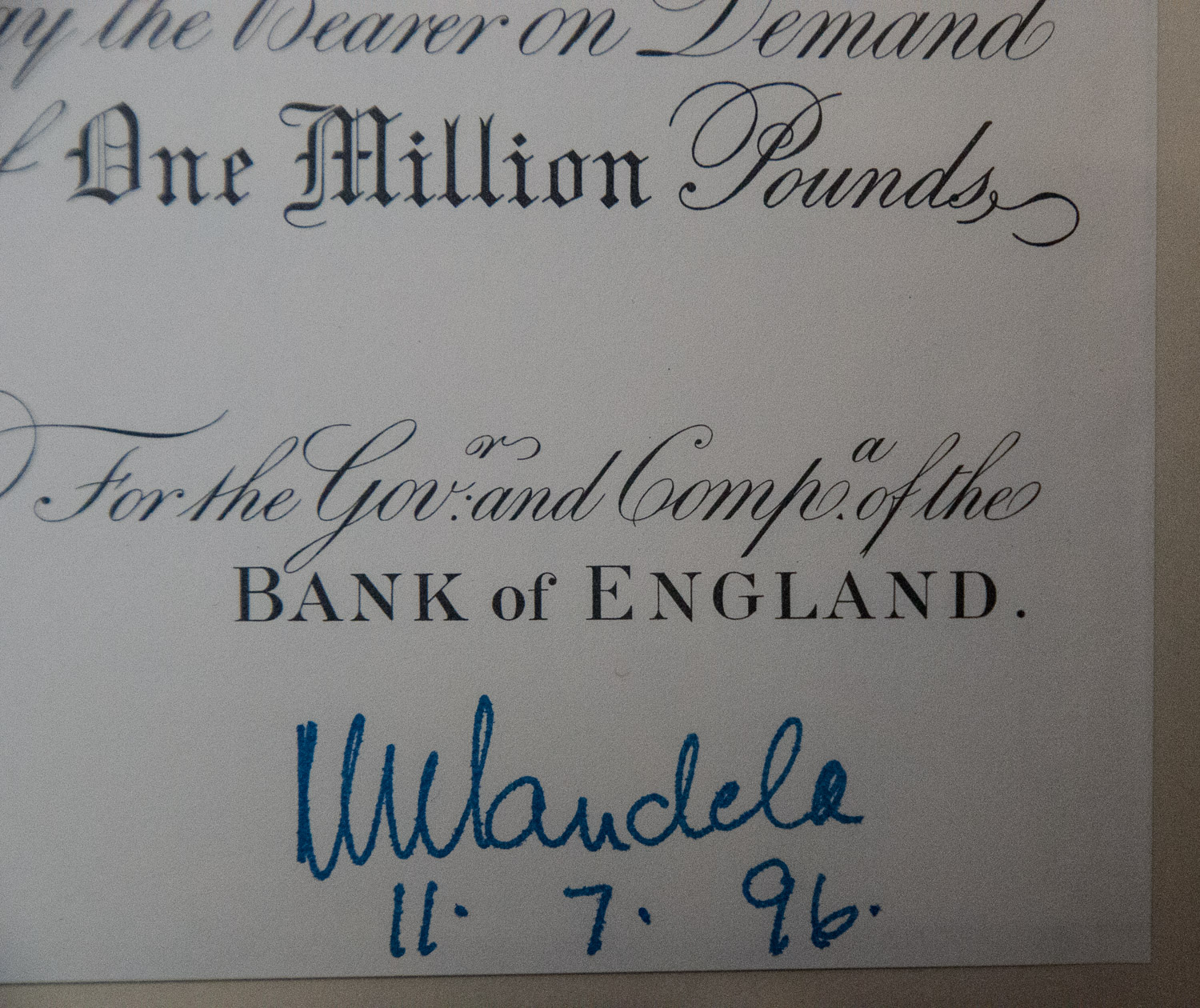
And finally a memento of when Nelson Mandela briefly became the Bank’s Chief Cashier when he was a guest in 1996 …

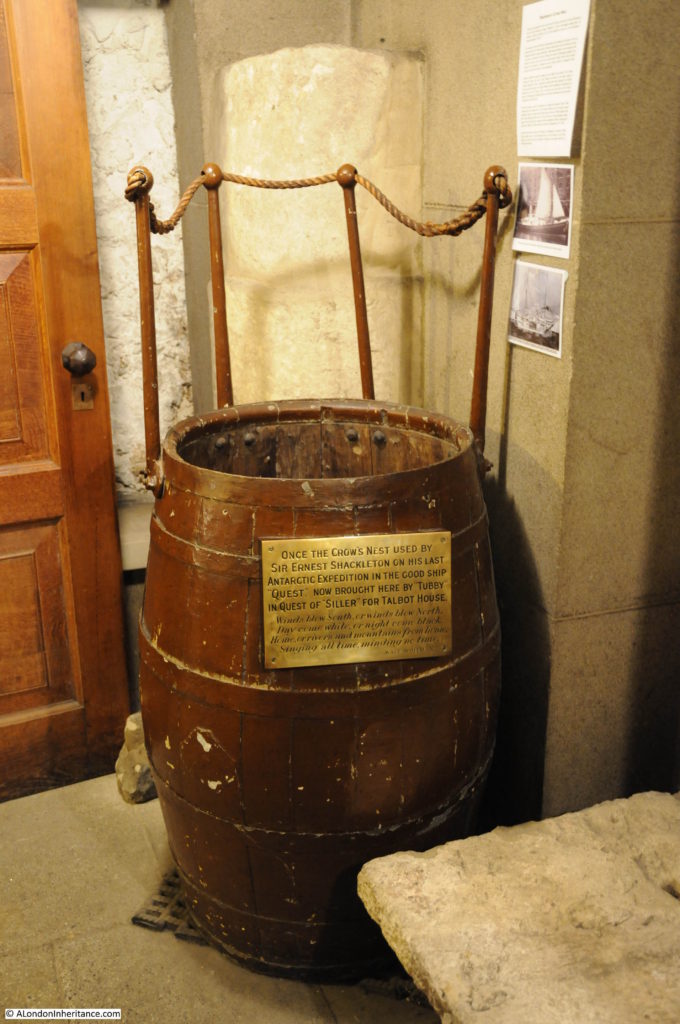
My next visit was to the Crypt at All Hallows-by-the-Tower on Byward Street EC3. The church was seriously damaged during the War but has now been beautifully restored and, when you have had a look around, head downstairs to the crypt. Here, in what is part of the original Saxon church, you will find the original crow’s nest from a ship …

Photo by A London Inheritance.

The Quest sailed from 1917 until sinking in 1962 and was the polar exploration vessel of the Shackleton–Rowett Antarctic Expedition of 1921-1922. It was aboard this vessel that Ernest Shackleton died on 5 January 1922 while the ship was in harbour in South Georgia.

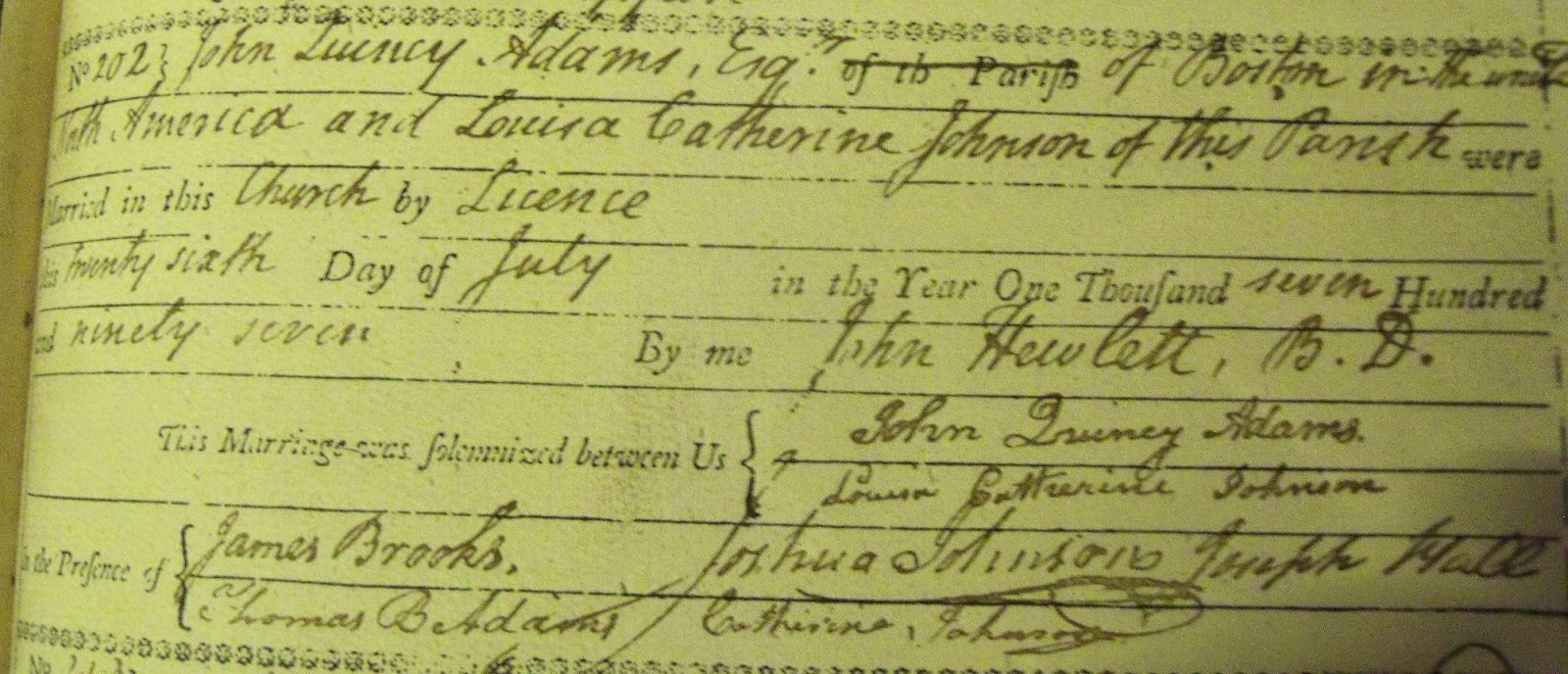
Nearby is displayed the marriage certificate dated 26 July 1797 of John Quincy Adams, later to become the sixth President of the United States. It was his wife Louisa, a local London girl, who was the only foreign born first lady of the United States until the arrival of Melania Trump.

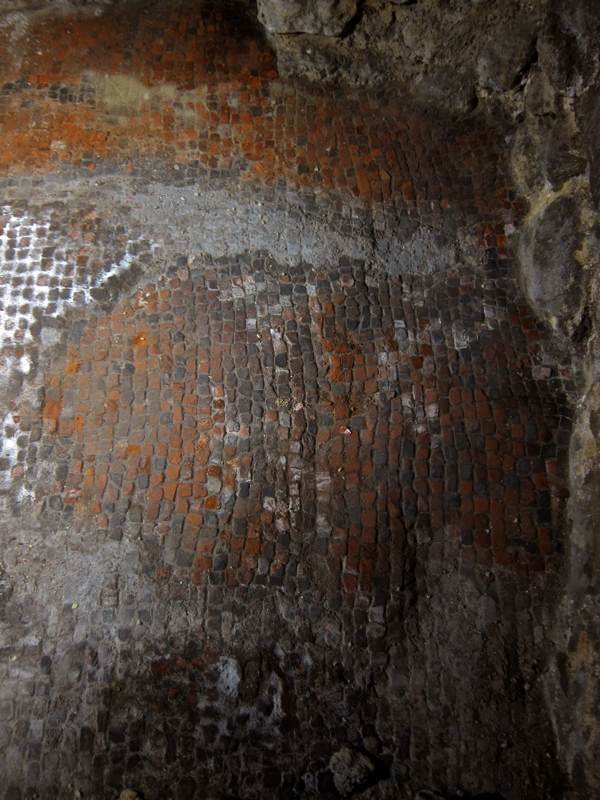
Also in the crypt are remains of the floor of a second or third century Roman house, including part of a corridor and adjacent rooms …

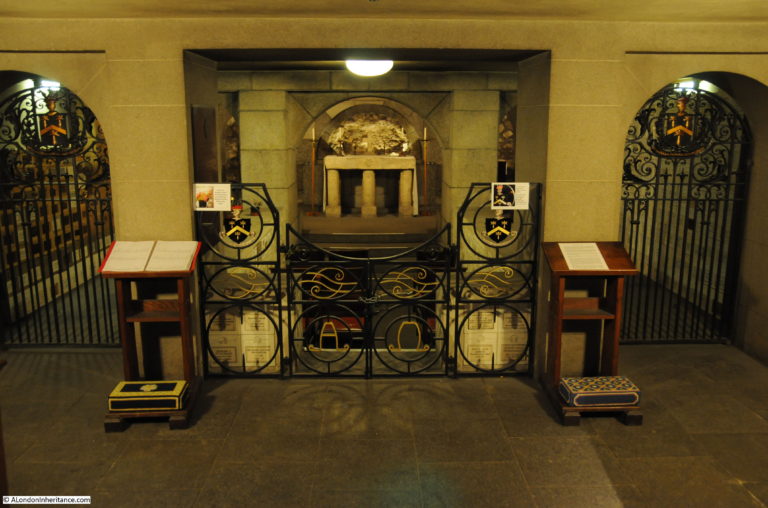
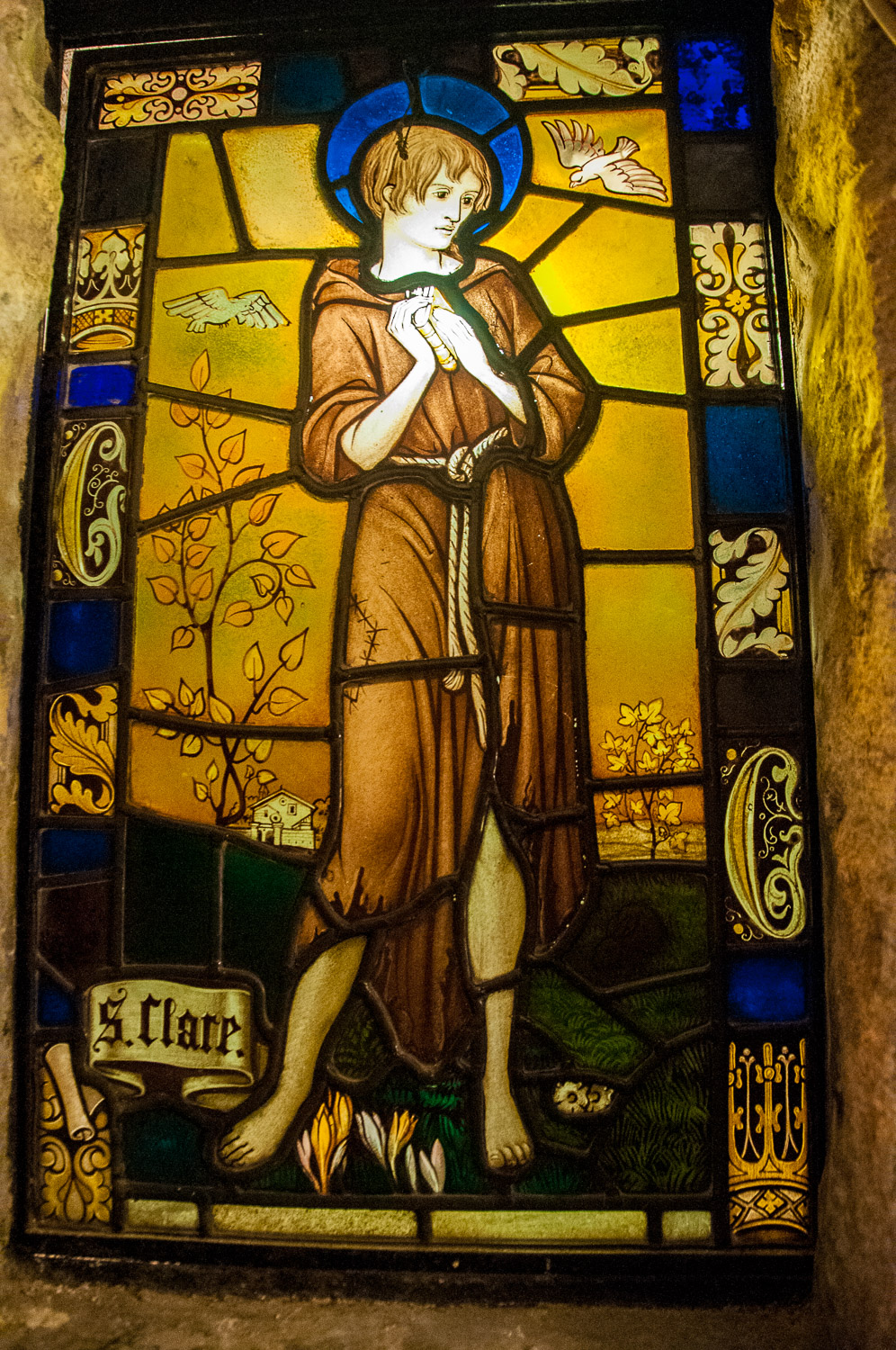
Beneath the present nave is the undercroft of the Saxon church containing three chapels: the Undercroft Chapel, the Chapel of St Francis of Assisi and the Chapel of St Clare.

The Undercroft Chapel. Picture by A London Inheritance.

The Undercroft Chapel is constructed out of the former ‘Vicars’ Vault’, and is now a columbarium for the interment of ashes of former parishioners and those closely associated with the church.

The pretty St Clare chapel stained glass.

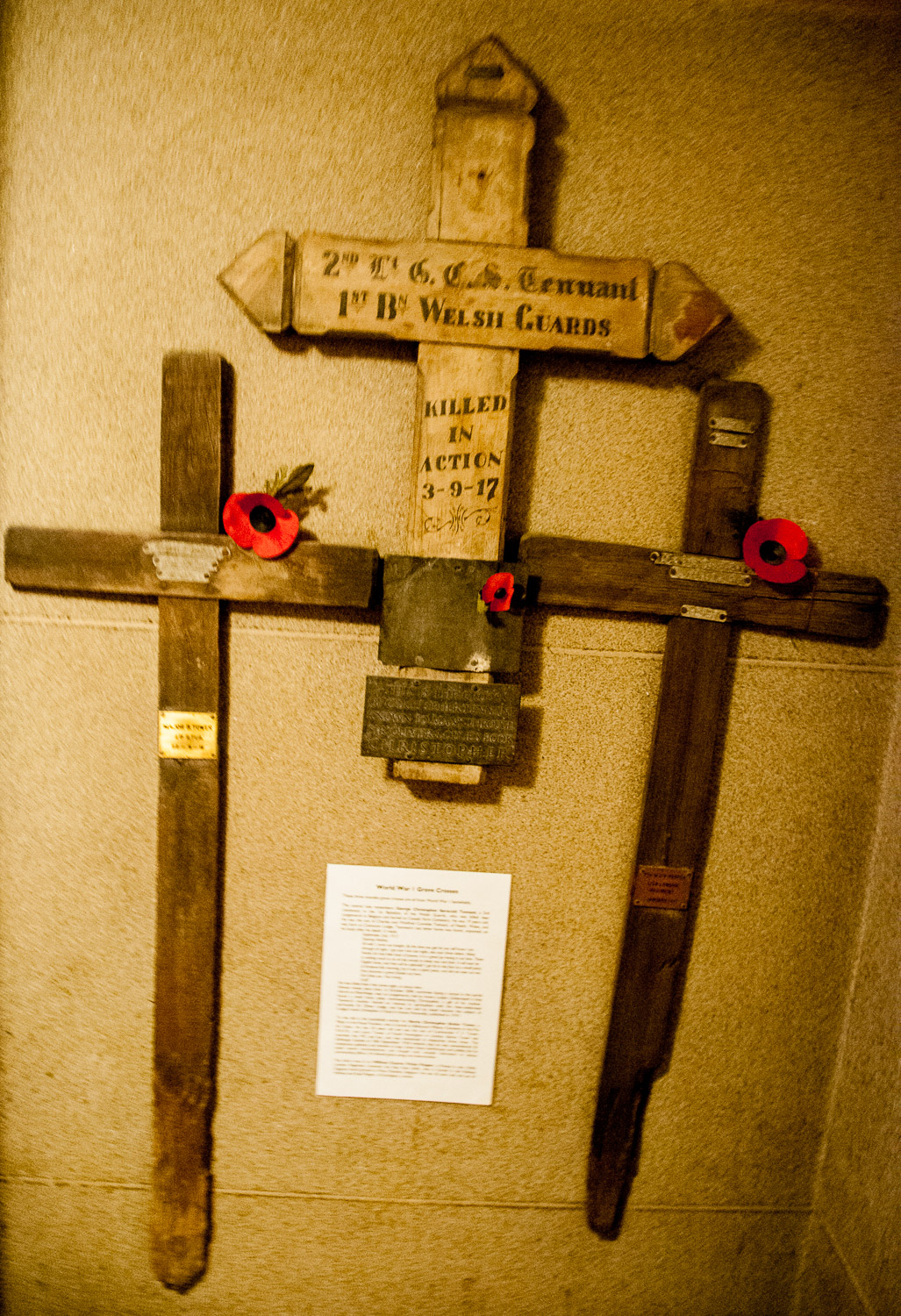
Since this year marks the 100th anniversary of the end of the Great War, I will end this blog with these three crosses removed from World War I battlefields and which can be seen in the museum …

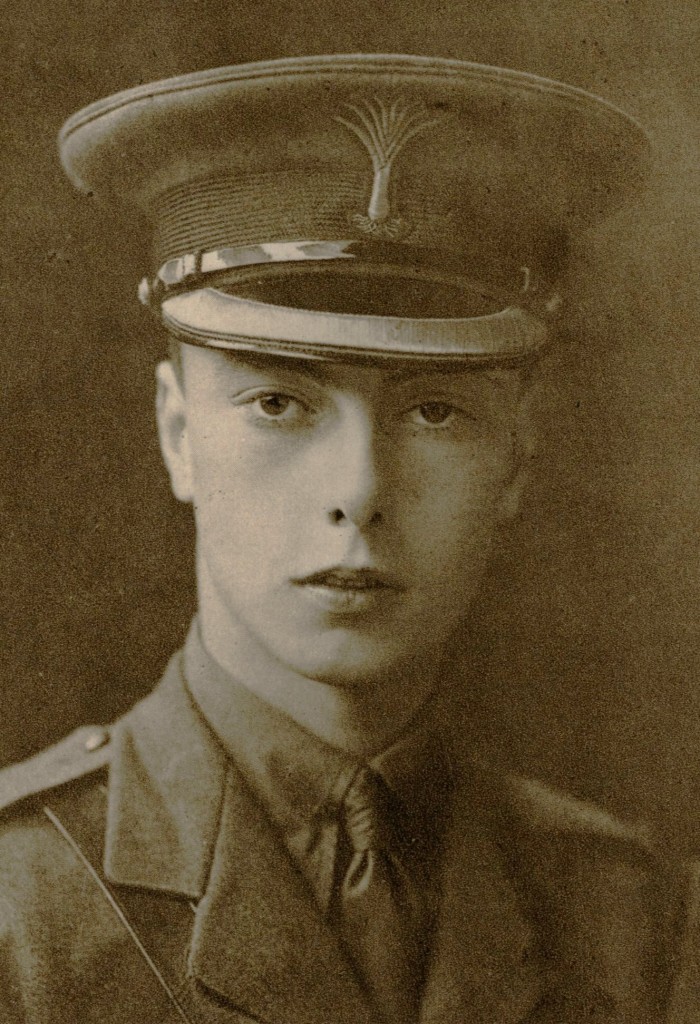
I have done some research on the three men but have only been able to find a picture of one of them.

On the left, Major B. Tower, MC and bar, mentioned in dispatches three times and now buried at Bellacourt Military Cemetery in the Pas-de-Calais. The Edinburgh Gazette of 18th September 1918 remarks that he was remembered ‘for conspicuous gallantry and devotion to duty. Under heavy machine gun and artillery fire he made several reconnaissances and brought back valuable information to various commanding officers. He showed great energy and determination.’

The cross on the right marked the grave of W. C. V. Pepper, a Private in the 1/24th London Regiment and previously the East Kent Buffs. He is buried in Railway Dugouts Burial Ground in West Flanders, Belgium – he was 20 years old and died on New Year’s Day 1917.

In the centre 2nd Lt. G.C.S Tennant. His last letter home was found unposted on his body after his death. It reads:

Sept. 2nd 1917.

Dearest Mother,

All well I come out tonight. By the time you get this you will know I am through all right. I got your wire last night, also your three letters. Many thanks for that little book of poems. It is a great joy having it out here. There is nothing much to do all day except sleep now and then. It will soon be English leave, and that will be splendid! I got hit in the face by a small piece of shrapnel this morning, but it was a spent piece, and did not even cut me. One becomes a great fatalist out here.

God bless you, your loving Cruff.

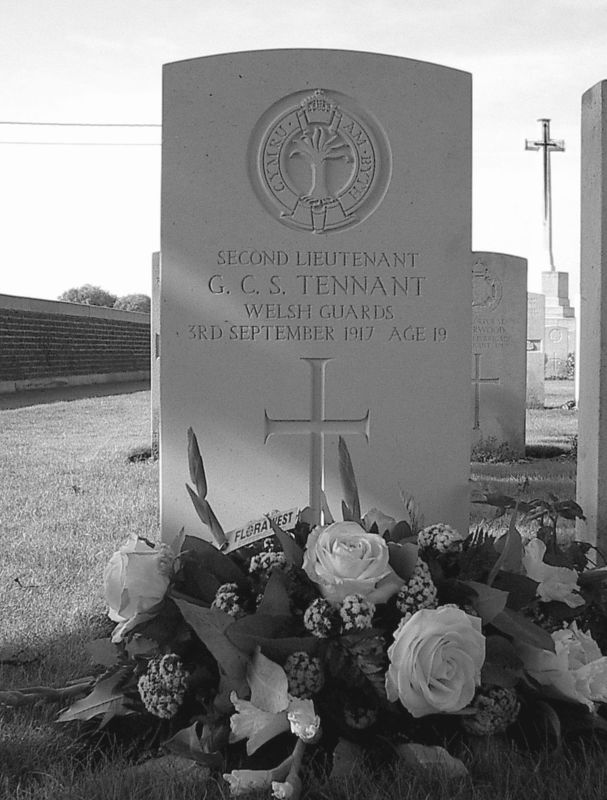
He was killed later that night, at about 4.00 am, and is now buried at Canada Farm Cemetery. He was 19 years old.

George Christopher Serocold Tennant (1897-1917).

After his death one of his men attested:

‘He was specially loved by us men because he wasn’t like some officers who go into their dug-outs and stay there, leaving the men outside. He had us all in all day long … The men would have done more for him than for many another officer because he was so friendly with them and he knew his job. He was a fine soldier, and they knew it.’


Bombs and Boundaries

In today’s blog I have pulled together two subjects that I have found really interesting in my City wanderings. They are not linked thematically at all, but I hope you will still enjoy reading about them.

When we think of ‘London at War’ we tend to think of the Blitz, but Londoners were also at considerable risk during the First World War.

The first Zeppelin raid on London took place on 30 May 1915. At 10:50 that night Zeppelin LZ38 looped around London and, from a high altitude and barely heard, it dropped eighty-nine incendiary bombs and thirty ‘man killing’ grenades. The historian Jerry White tells us, in his splendid book Zeppelin Nights, that there were seven fatalities that night, including four children. Two of the children and two of the adults were burnt to death as a result of fires started by the incendiaries. He goes on to say …

Londoners met the raids with that unpredictable mixture of sangfroid and blind terror that characterised their response to aerial warfare throughout the First World War.

The last attack on Britain did not take place until 5 August 1918, when four Zeppelins bombed targets in the Midlands and the North of England.

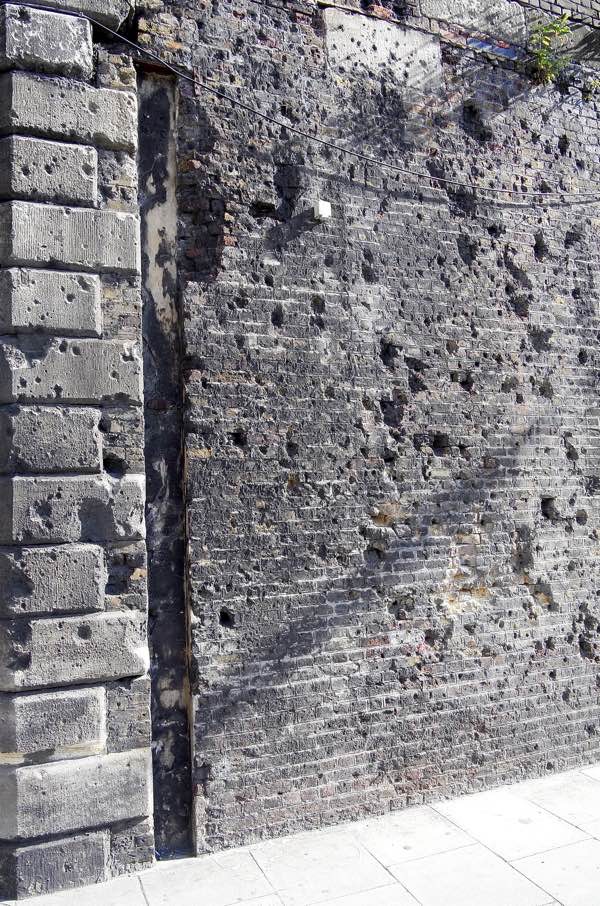
There is still some evidence to be seen of the destruction, and the terrible danger you were exposed to if you were on the street during a bombing raid …

Damage at St Bartholomew’s Hospital from Zeppelin raids on 8th September 1915 and on 7th July 1917. Photo courtesy of Spitalfields Life.

Another picture of the St Bartholomew’s Hospital outer wall. Photo courtesy of Spitalfields Life.

And damage from the Second World War …

Shrapnel scars at the junction of Mansell St & Chambers St. Photo courtesy of Spitalfields Life.

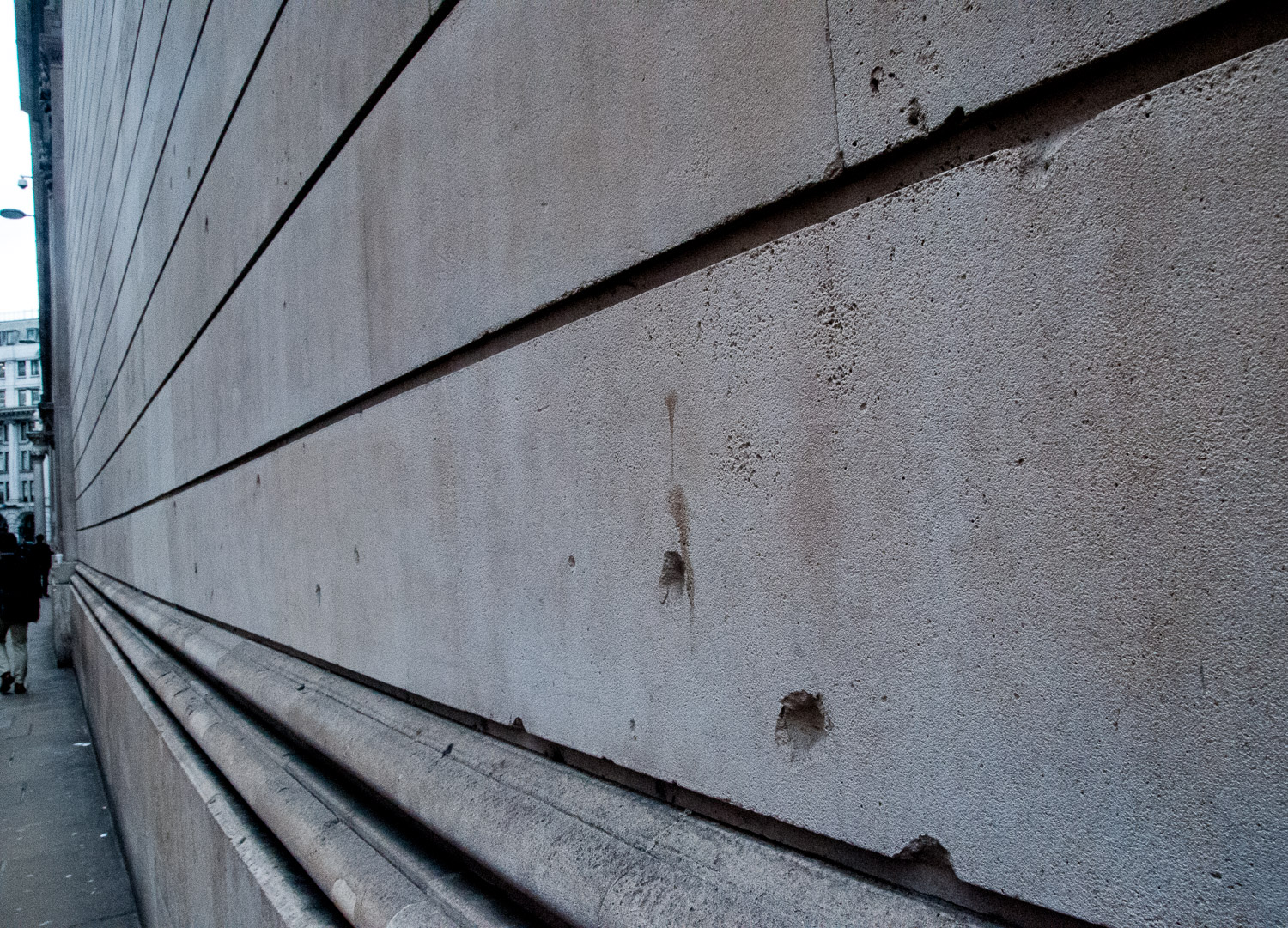
Once I saw the pictures in Spitalfields Life I kept an eye open for other evidence and, sure enough, on the wall of the Bank of England in Princes Street …

Wall of the Bank of England.

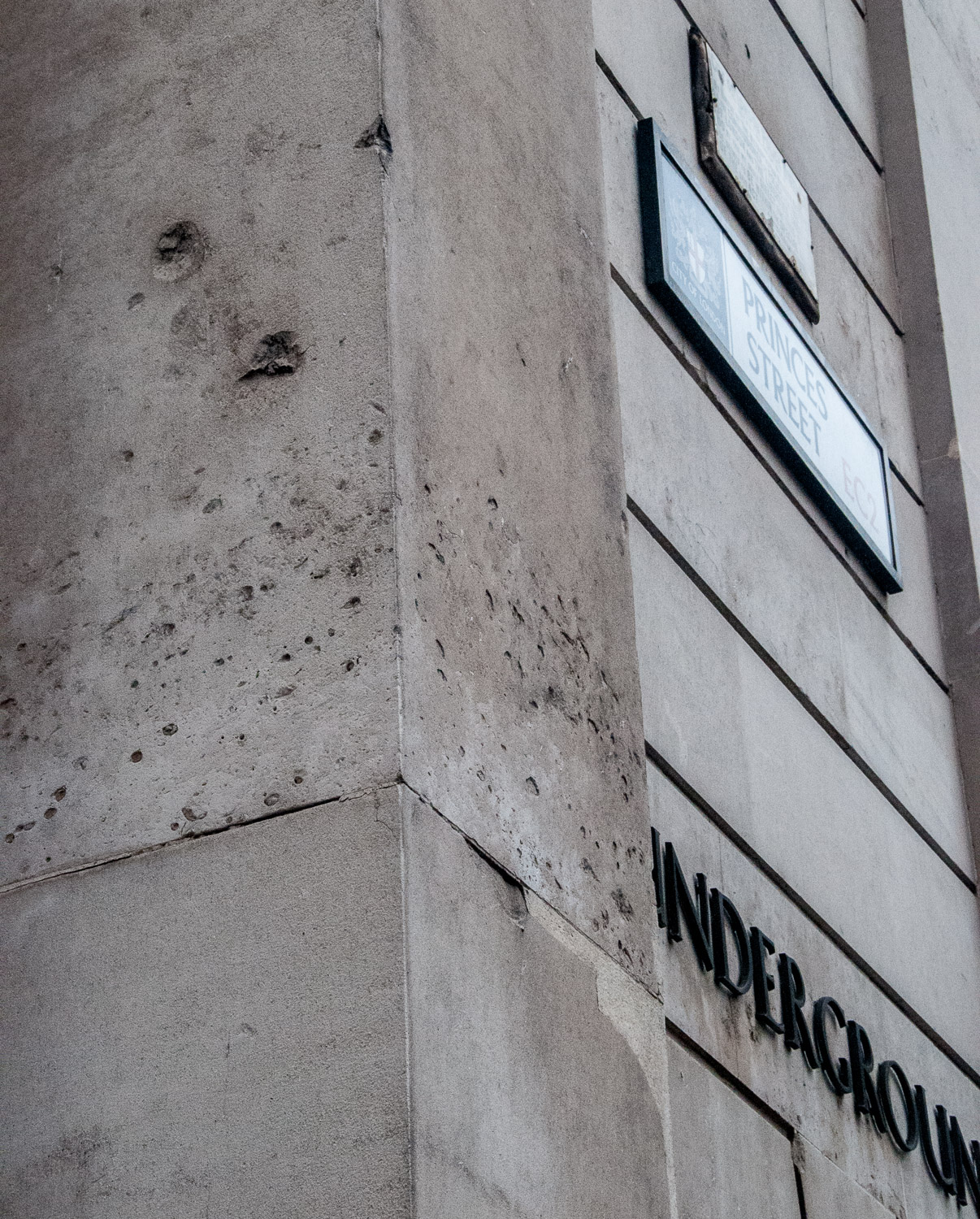
And more of the same …

Beside the entrance to Bank Underground.

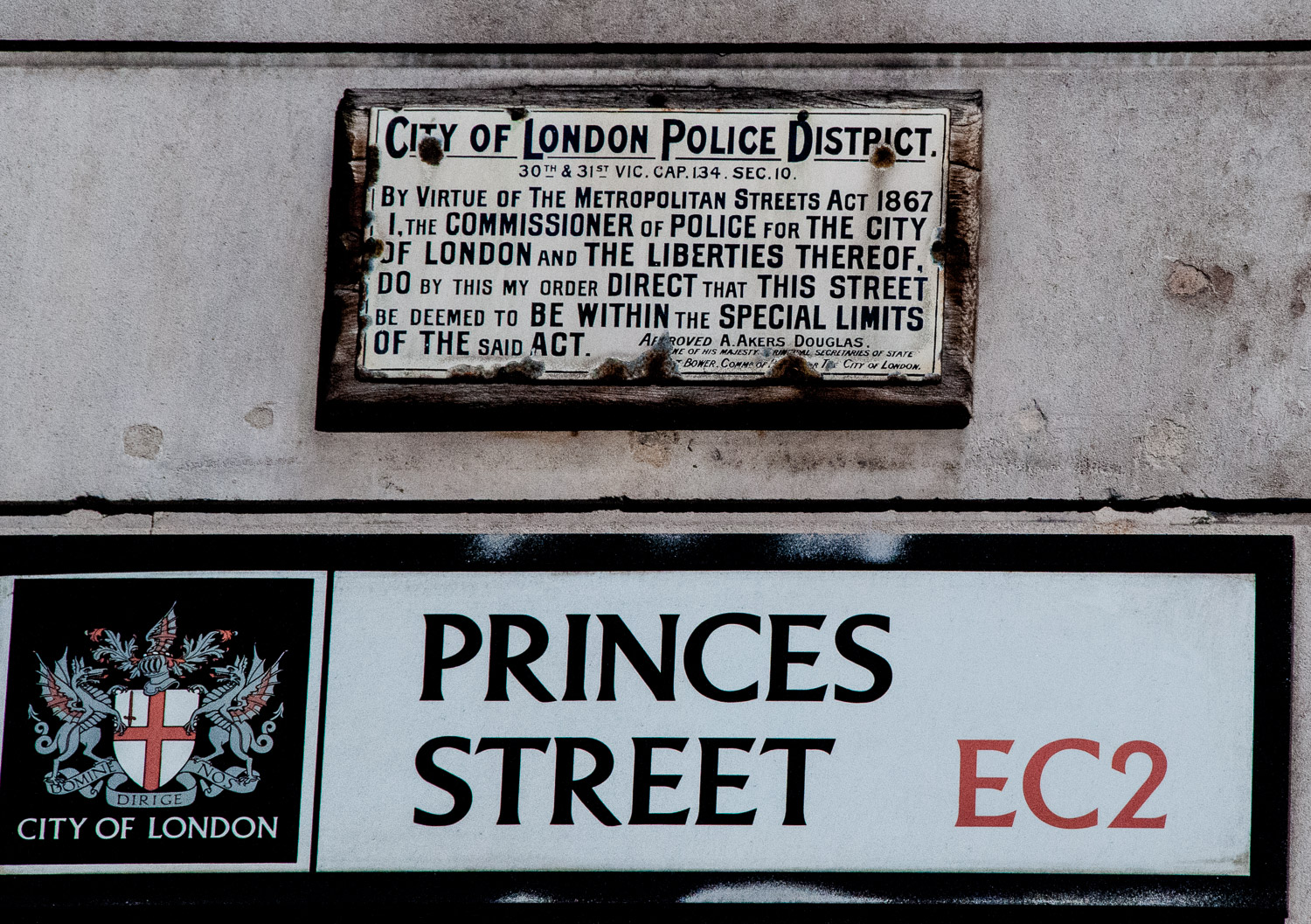
Above the Princes Street sign is a notice that will allow me to segue into ‘Boundaries’ …

The signatory, Aretas Akers-Douglas was First Commissioner of Works from 1895-1902, so the notice is a remarkable survivor.

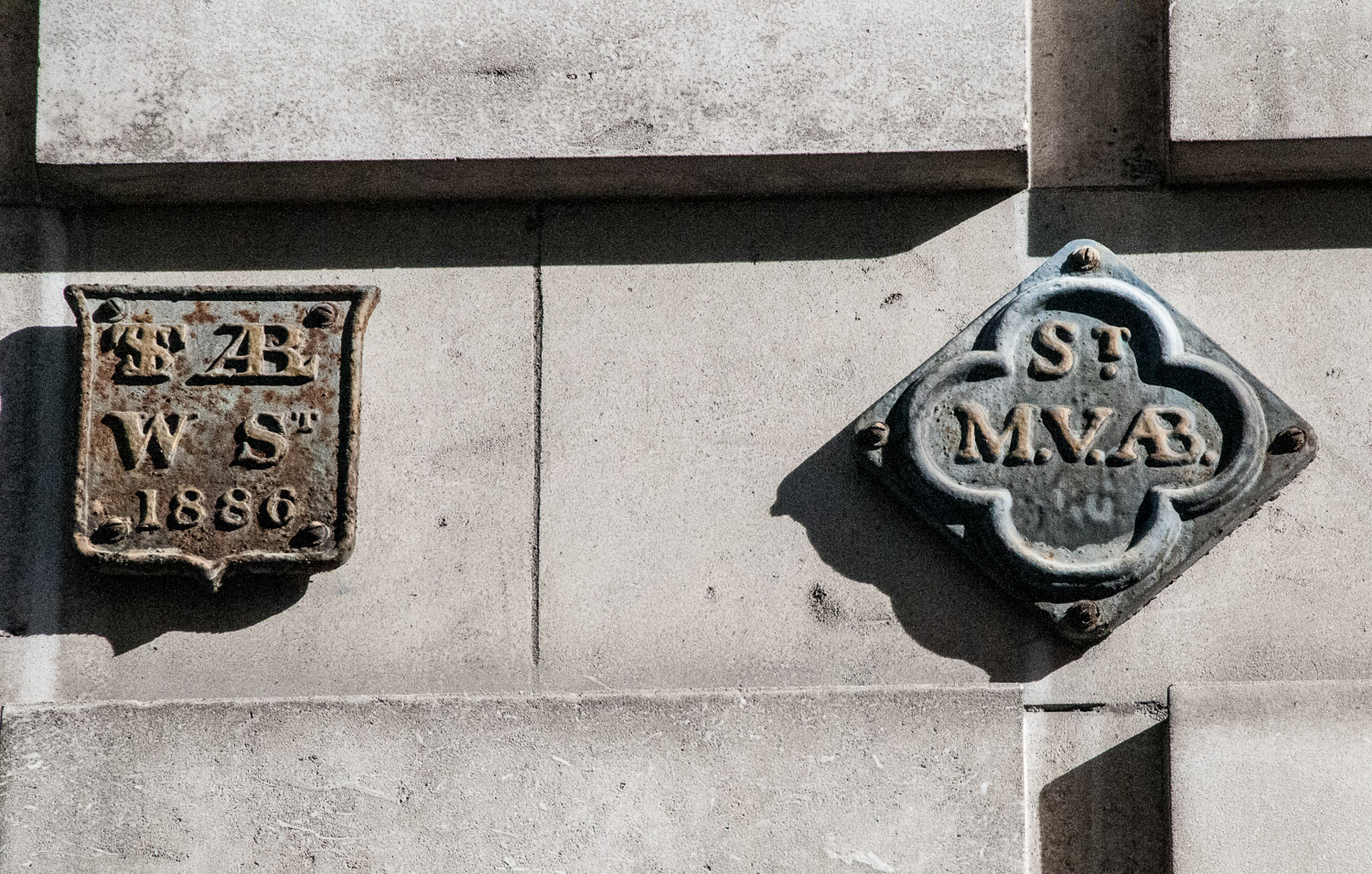
Parish boundary markers will probably be a familiar sight to anyone who has worked in the City.

Long before the advent of the London borough, the parish already existed for spiritual purposes and had a form of management.  This was the ‘vestry’ and so a mechanism was in place for getting local people together, either in the church or in a nearby vestry hall. It was to the parish that local administrative responsibility was gradually given by Parliament. Even when new statutory bodies were set up to deal with lighting, policing, paving, sewerage and so on, the parish remained as the local unit capable of raising its local rate or tax. It was therefore important that people knew what parish they lived in and where the boundaries were. From this emerged the need for distinctive markers.

Here are some example I have found …

Love Lane EC2V : On the left, St Alban, Wood Street, on the right the marker for St Mary Aldermanbury.


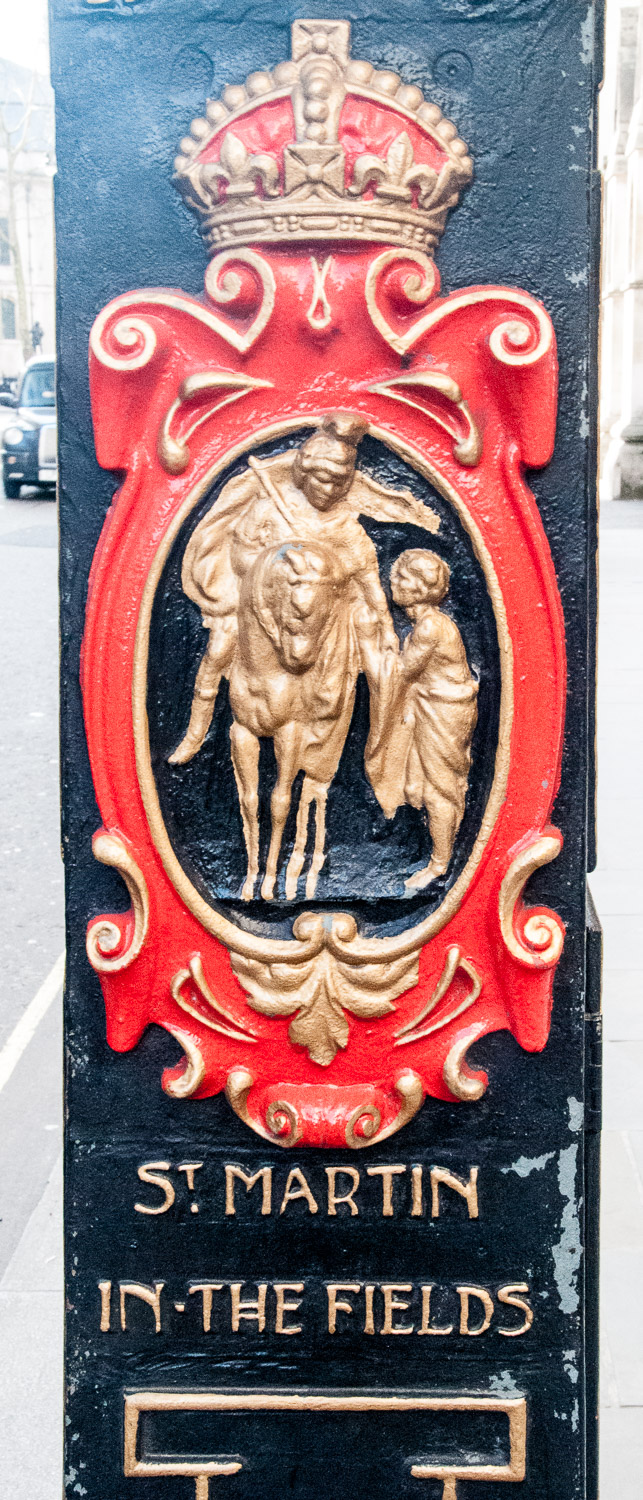
A St Martin-in-the Fields parish marker, on a lamp post in Fleet Street

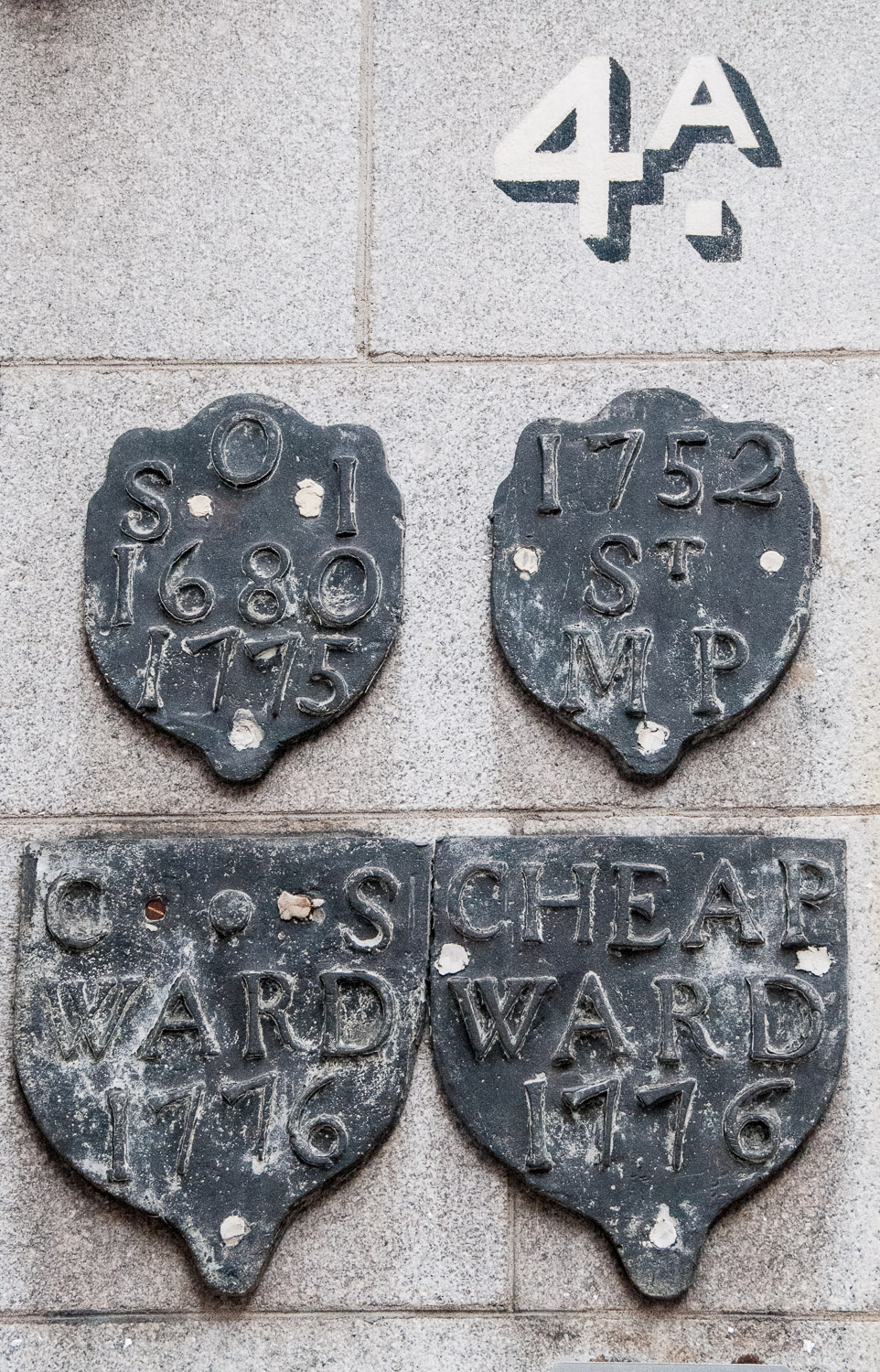
At Frederick’s Place EC2R, clockwise from top left are markers for: St Olave Old Jewry, St Martin Pomeroy and Cheap Ward. I am still researching the last one.

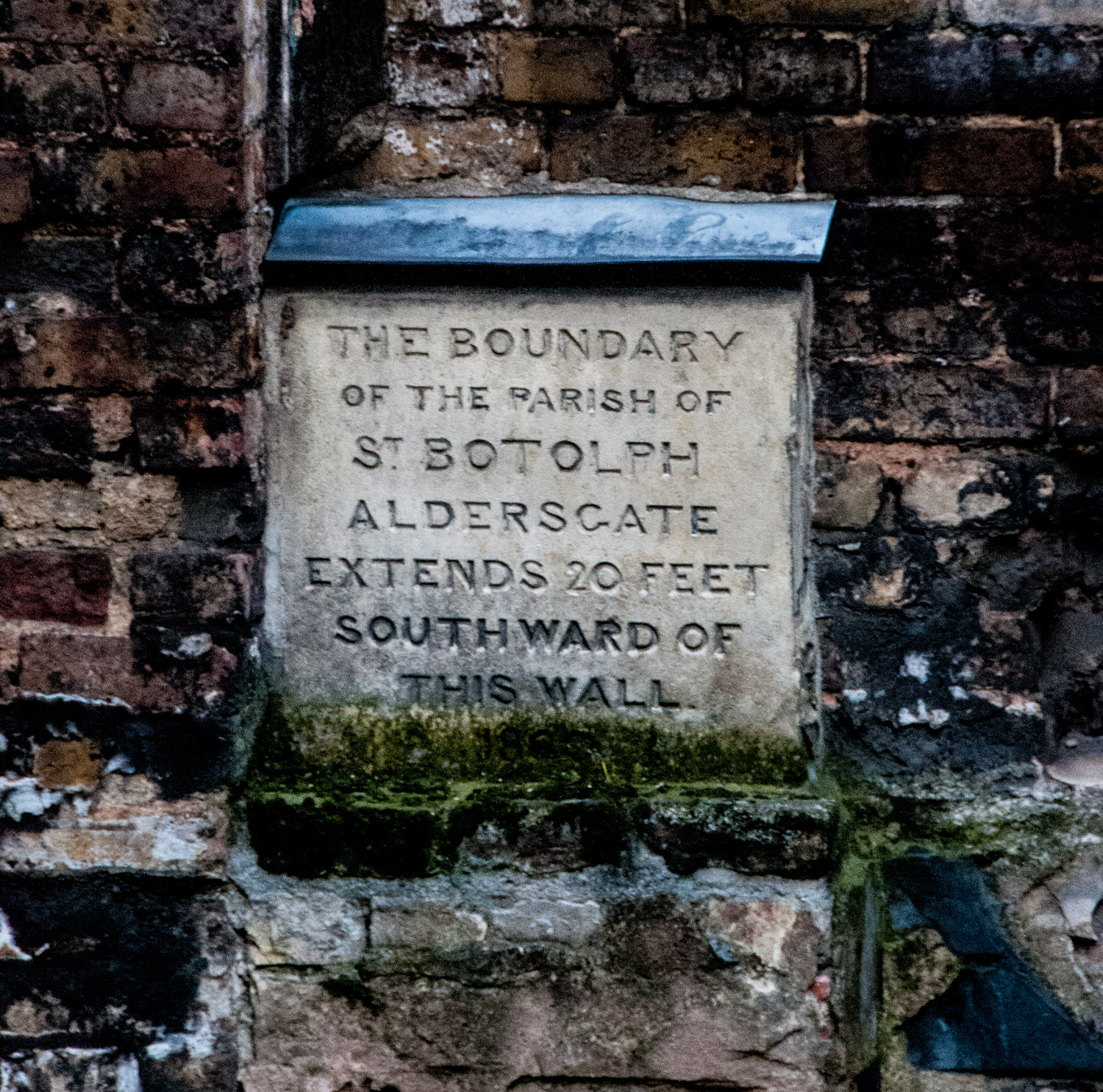
St Botolph Without Aldersgate – a stone marker on a wall in a bomb site in Noble Street EC2V

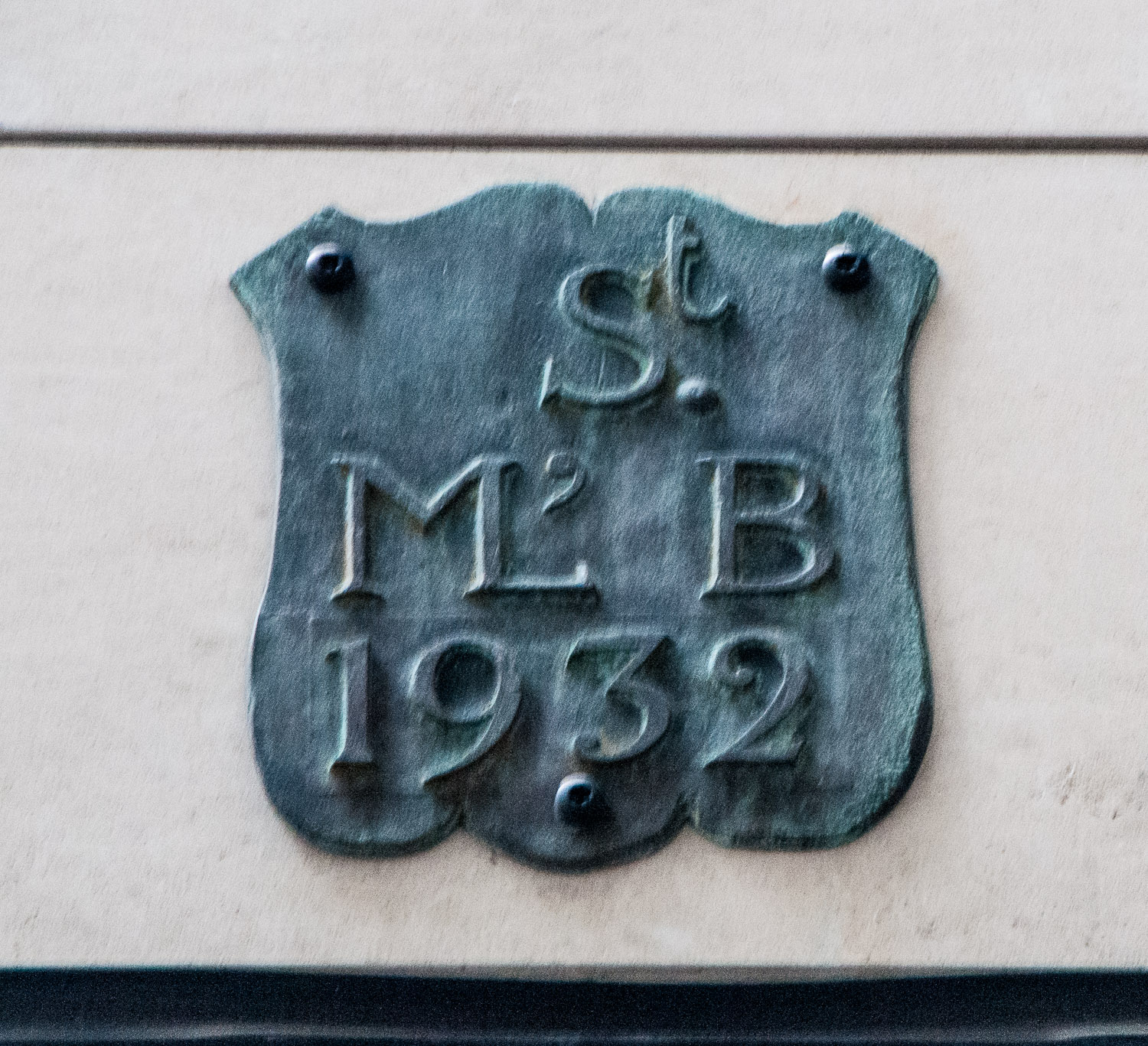
Honey Lane EC2V : a marker for the parish of St Mary-le-Bow

And finally …

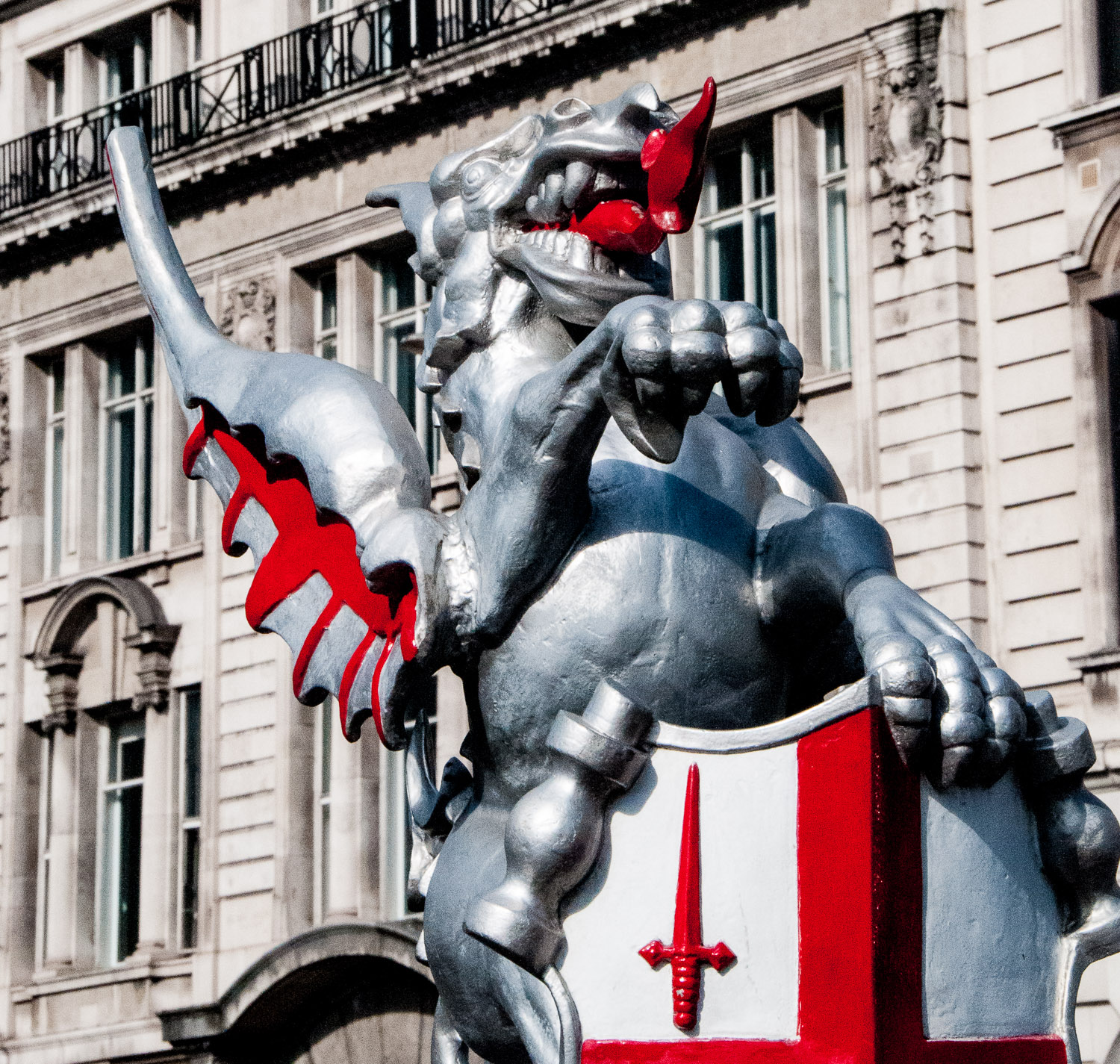
The most famous boundary marker of all – the City of London Dragon. See my earlier blog from October last year: ‘Dragons and Maidens’.

I will be returning to the subject of Parish Markers later in the year – lots more research still to do.


Page 16 of 16

Powered by WordPress & Theme by Anders Norén

Symbols & Secrets
Privacy Overview

This website uses cookies so that we can provide you with the best user experience possible. Cookie information is stored in your browser and performs functions such as recognising you when you return to our website and helping our team to understand which sections of the website you find most interesting and useful.