Walking the City of London

Category: Wartime Page 15 of 16

Sculptures with striking poses

I’ll start with a work that caused some controversy, the Charity Drinking Fountain (also known as La Maternité) by Aimé-Jules Dalou (1877-9).

In his book Public Sculpture of the City of London, Philip Ward-Jackson describes the lady as follows:

Despite her casual garb she has a diadem or tiara on her head. With her left arm she enfolds a baby, who she is suckling, whilst with her right she draws to her knee a naked boy, who gazes up at her.
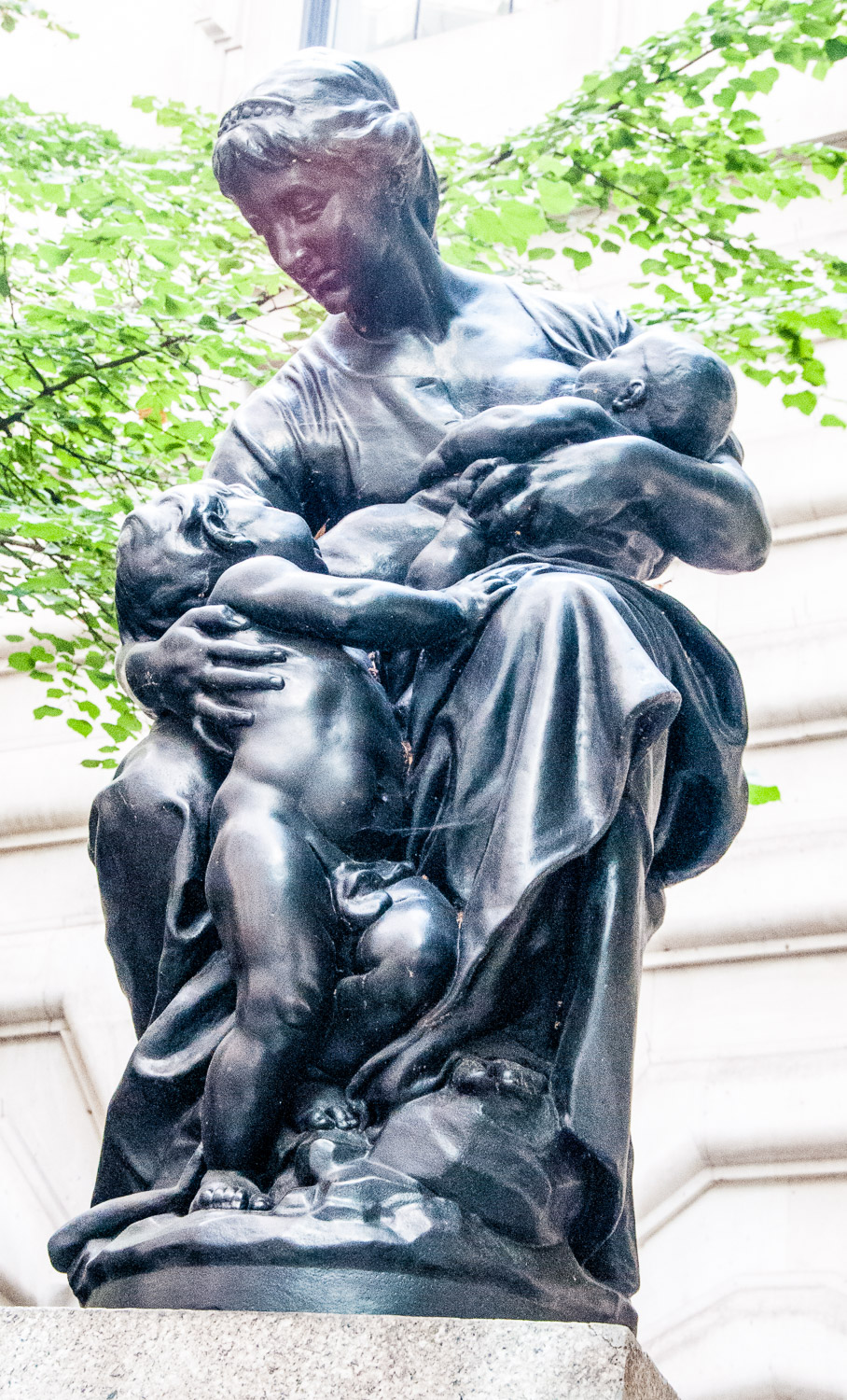
She is outside Royal Exchange Buildings EC3V 3NL.

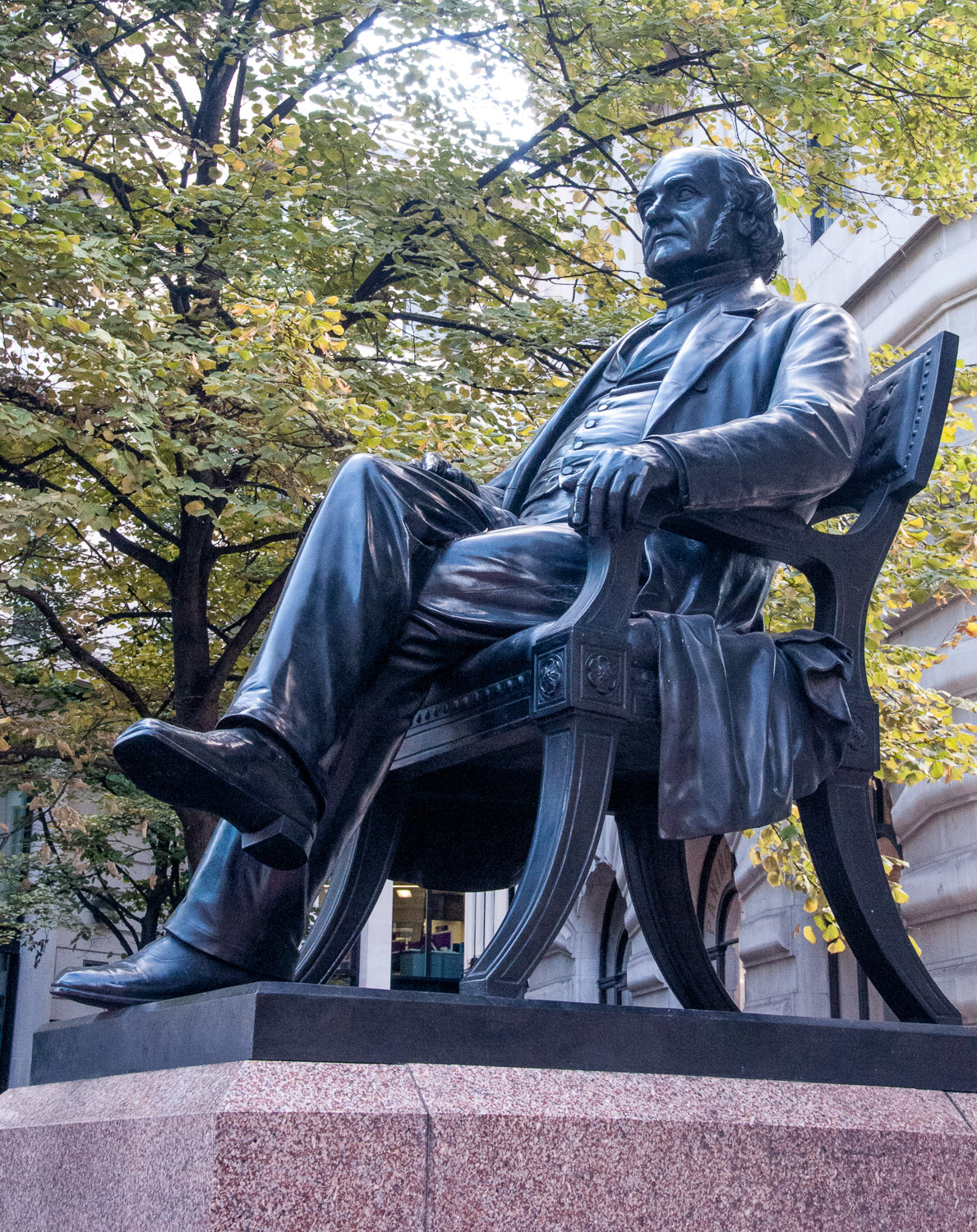
Nearby is a very relaxed George Peabody who I have written about in an earlier blog

Ward-Jackson tells us that the suckling lady’s very authentic exposed breast produced at least one letter of protest to the editor of The Globe. The correspondent urged that ‘common decency’ should be observed and went on …

Do you not think, Sir, that Mr Peabody’s chair should be turned, at least until the delicate operation of ‘lacteal sustenation’ be concluded … or the young woman and youngsters provided with the requisite clothing.

On a more serious theme, St Thomas à Becket lies in agony in St Paul’s Churchyard on the south side of St Paul’s Cathedral (EC4M 8AD) …
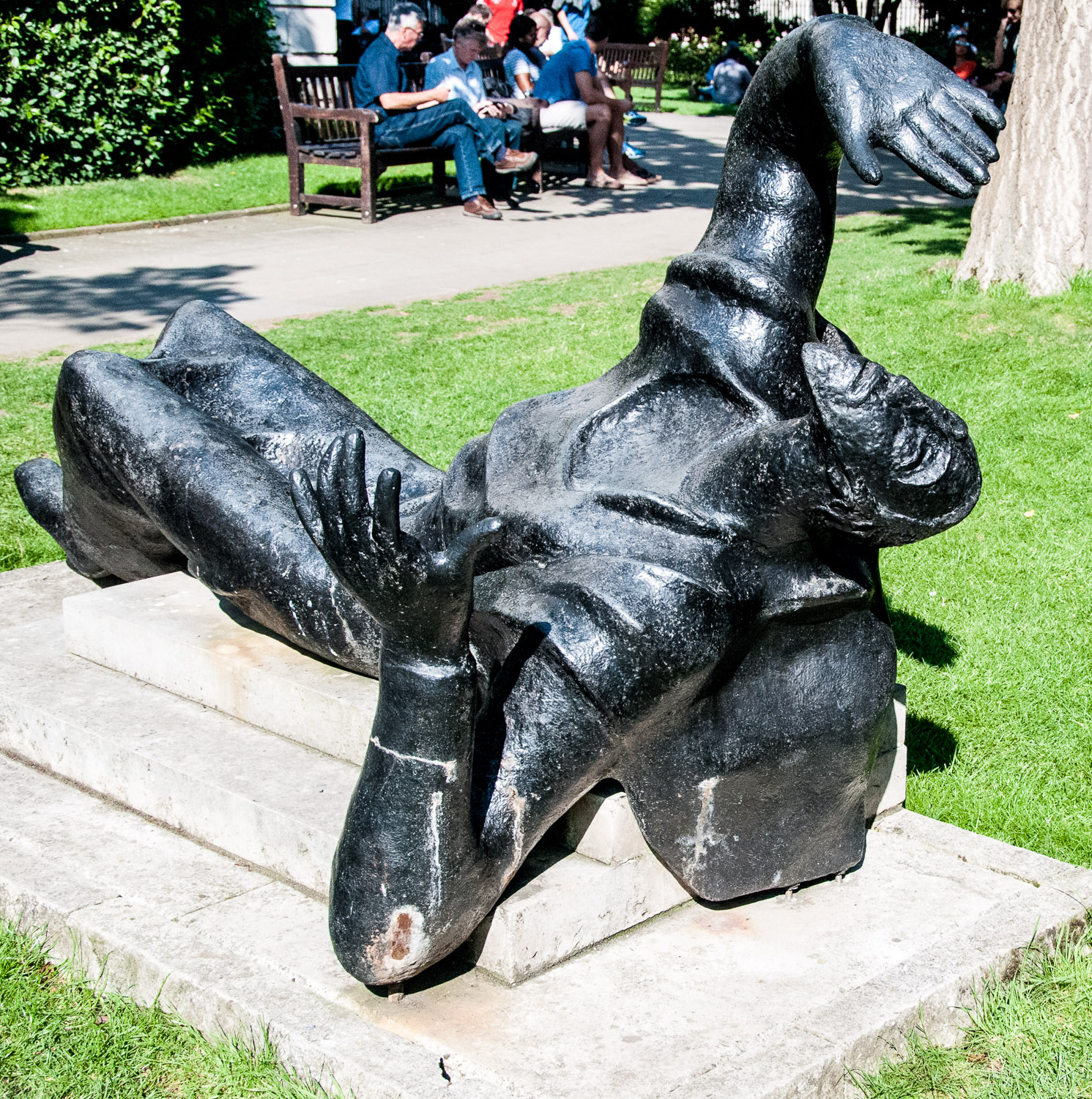
‘Becket’ by Edward Bainbridge Copnall (1970-71).

The Ornamental Passions website gives the following description :

(The sculptor) depicts the Archbishop in the agony of death, his right hand extended as if to ward off the blows of his knightly assassins. The plinth is stepped to recall the steps into the choir of Canterbury Cathedral … This memorable image was created in 1970 as part of the commemorations of the saint’s martyrdom.
The material looks like bronze but is in fact resin coloured to look like bronze.

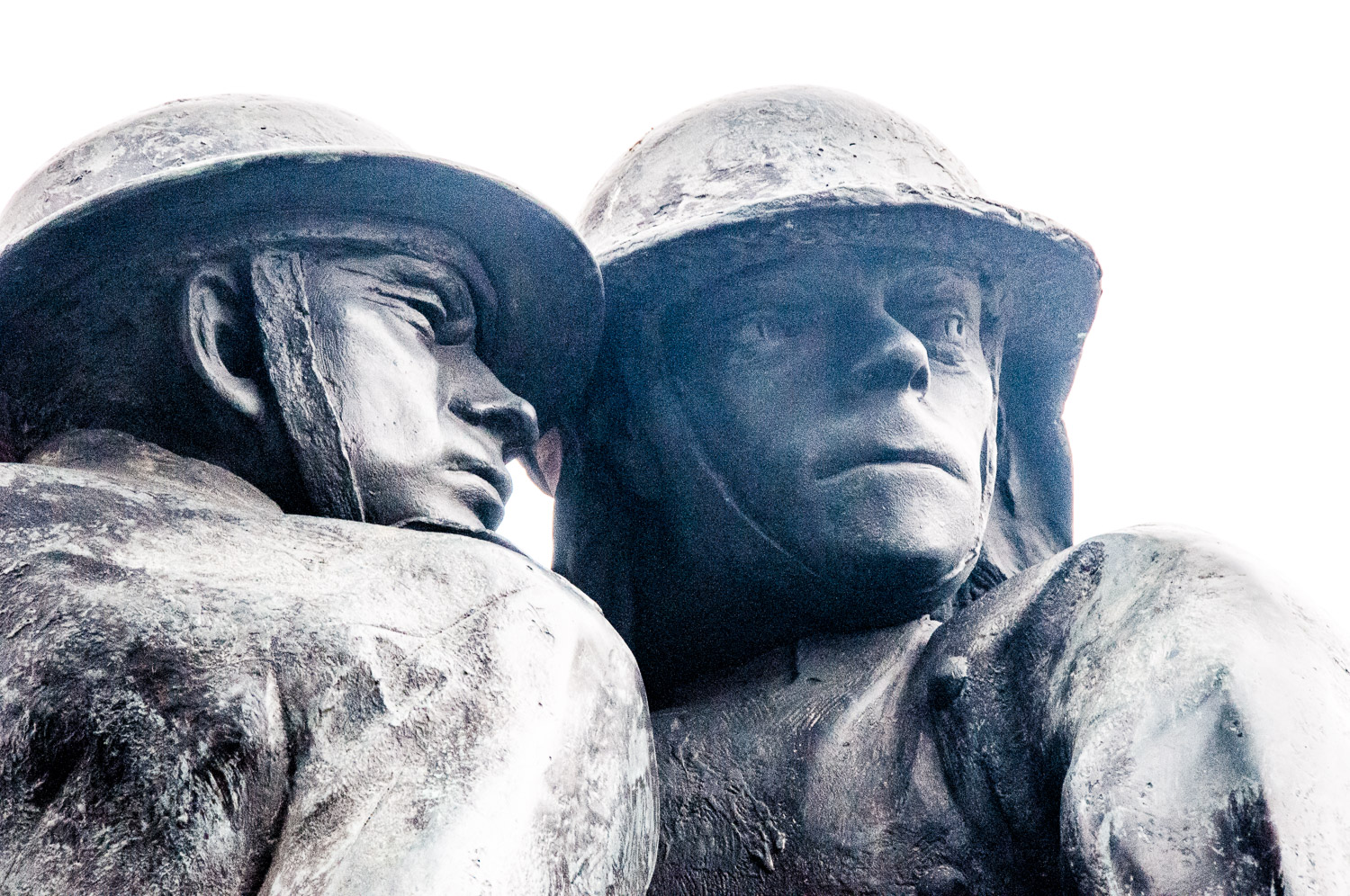
Just across the road from St Paul’s, on the right as you approach the Millennium Bridge, you will see the National Firefighters Memorial (EC4M 8BX) which depicts a Fire Officer and two Firemen, cast in bronze engaged in firefighting duties. Unveiled by the Queen Mother in 1991, it was originally called ‘Blitz’ and was dedicated to the men and women of the Fire Service who lost their lives as a result of their duties during World War II.  In 2000 it was renamed the Firefighters Memorial in order to commemorate all firefighters killed whilst in service and a new raised plinth now records almost 2,300 names.

Two of the men are ‘working a branch’, their legs braced to take the strain …
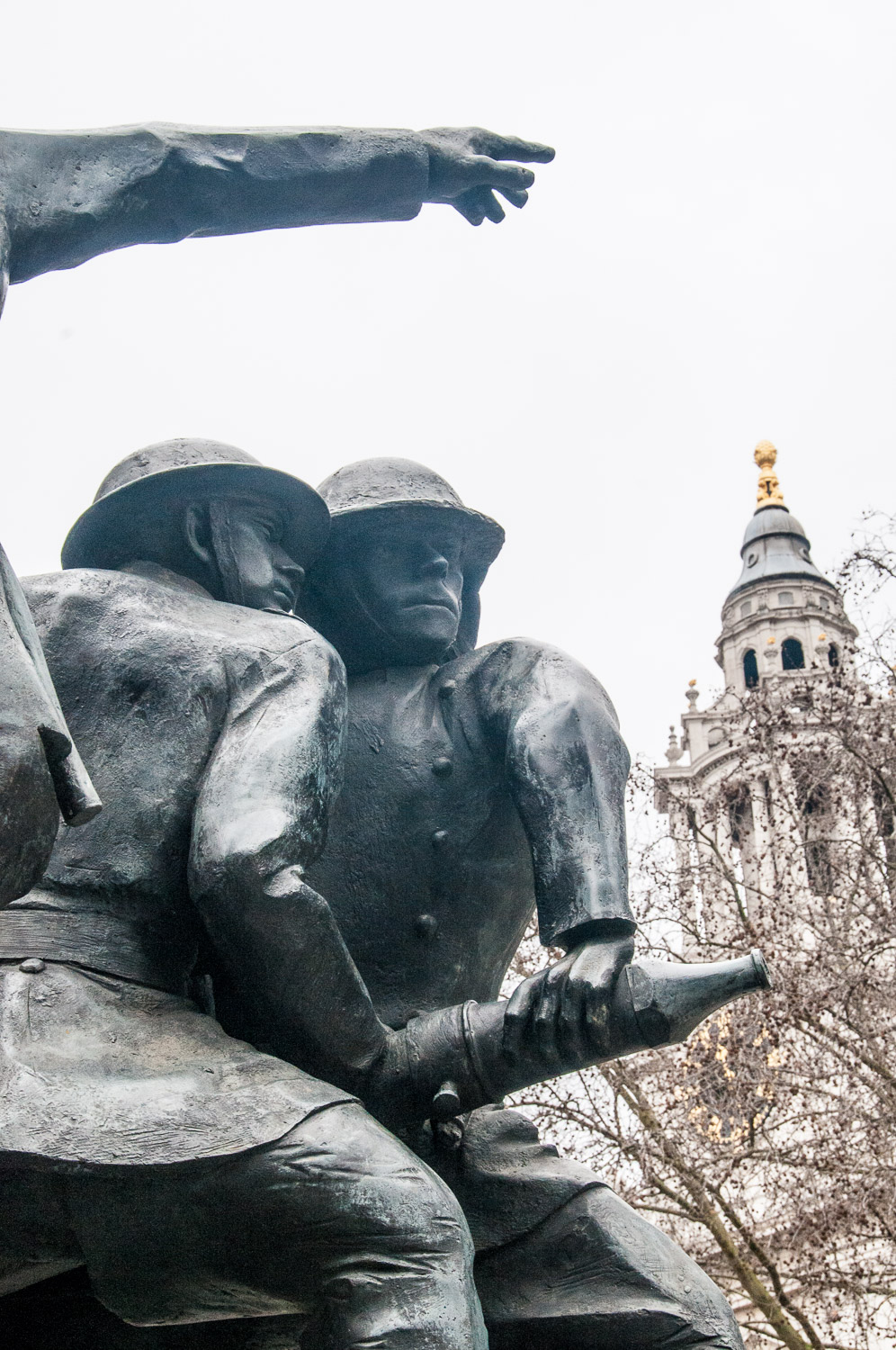
Churchill memorably called them ‘Heroes with grimy faces’.

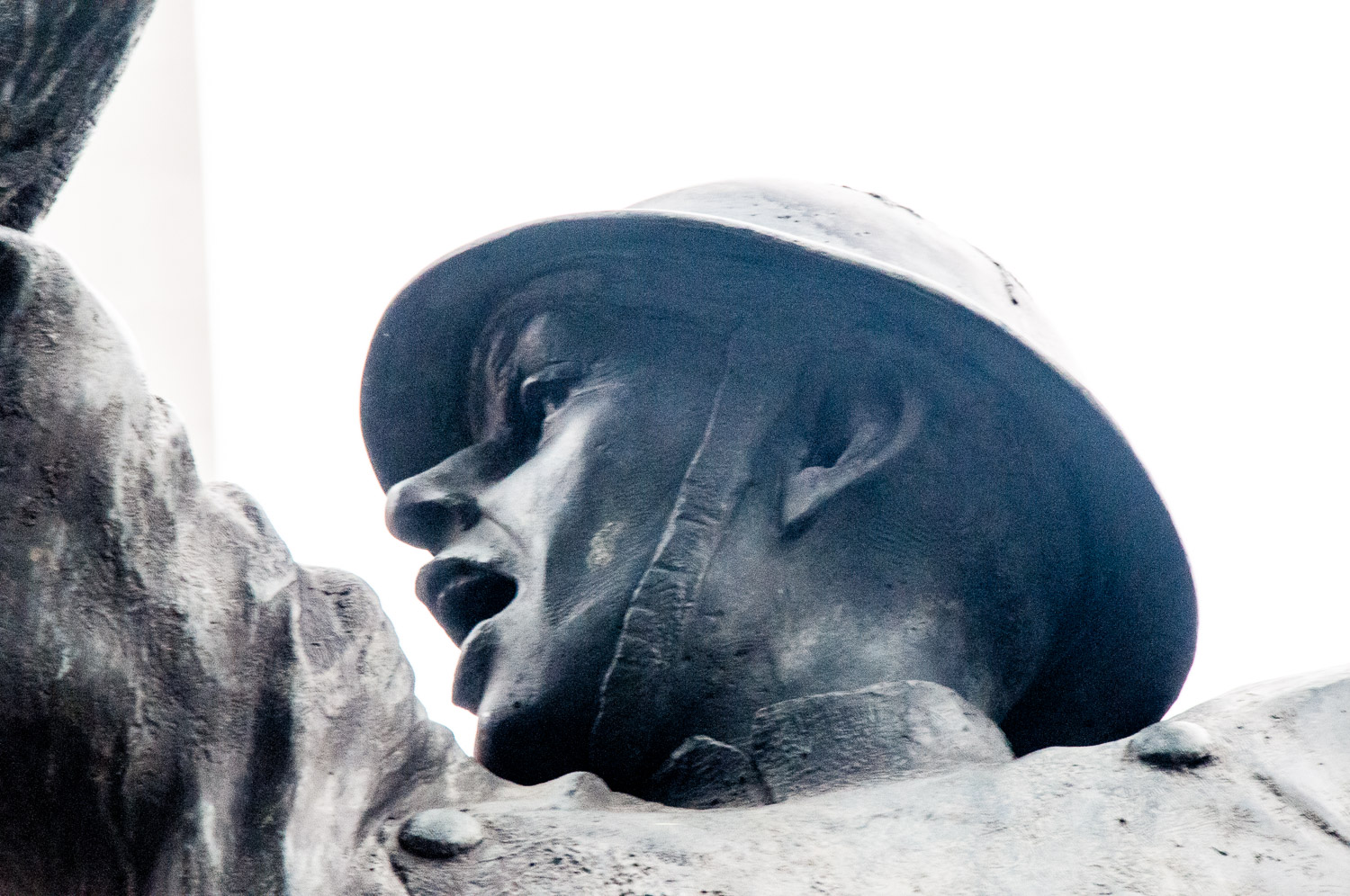
The Officer below looking over his shoulder, possibly calling up reinforcements, is Cyril Demarne OBE who provided photographs to help the sculptor (who also happened to be his son-in-law) …
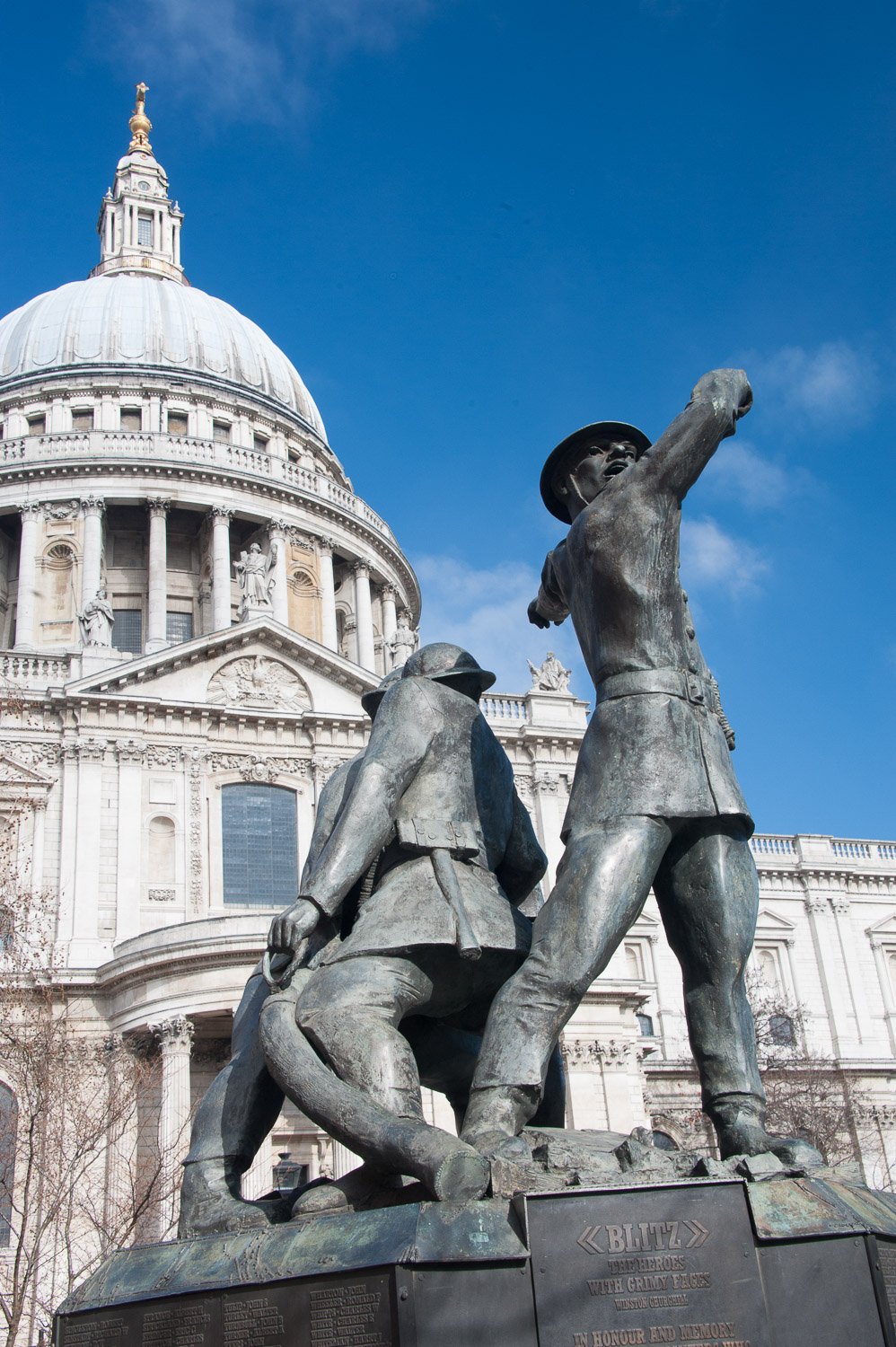
According to Philip Ward-Jackson, Demarne’s initials CTD are scattered among the brickwork on which the men stand but his old colleagues needed no such clues. One stated in an interview …

You can tell it’s Cyril by the way he’s standing … He always waved his arms about like that when he was ordering us about.

Officer Demarne in full flow …
By 1943 over 70,00 women had enrolled in the National Fire Service in the United Kingdom. This memorial commemorates those who lost their lives in the London Blitz …
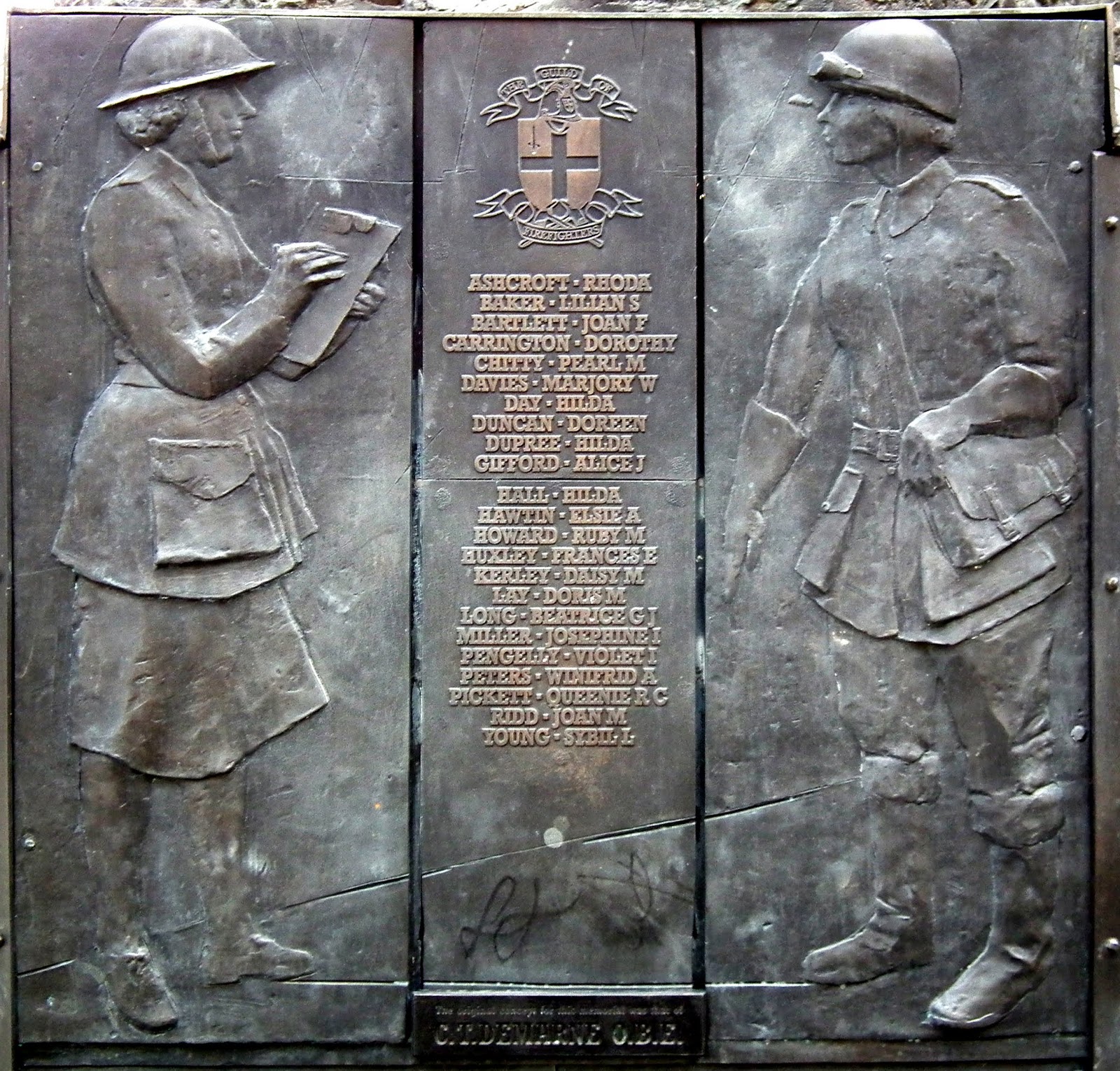
The lady on the left is an incident recorder and the one on the right a despatch rider.

Finally, would you like to see Zoe, the floating Barbican Muse? If so, make your way to the Barbican Library on the second floor of the Centre, stand with your back to it, and walk through the automatic doors. She’s a few yards ahead on your left …
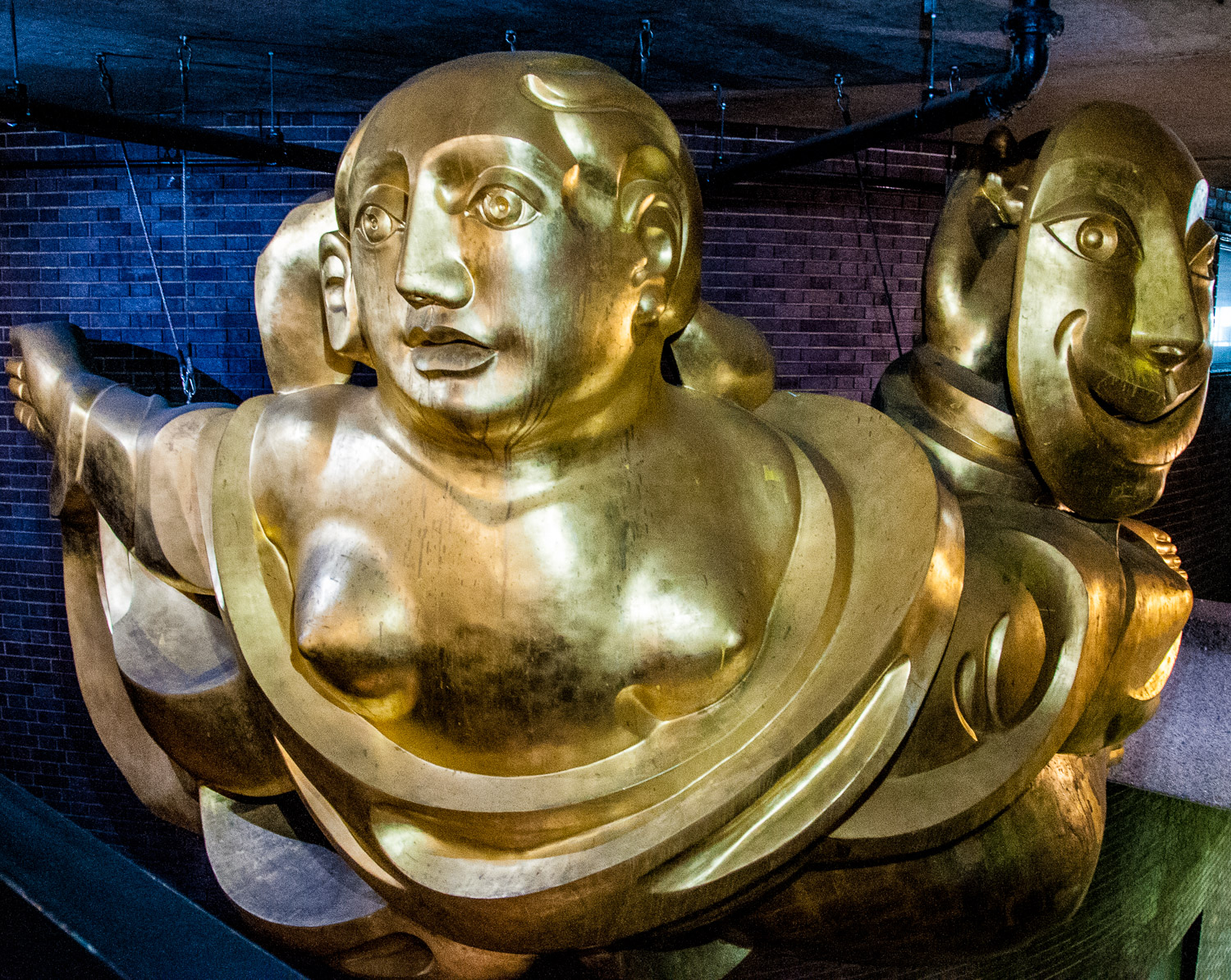
Sculpted by Matthew Spender in 1993-4, she is made of polyurethane and glass fibre and finished in gold leaf. She holds in her left hand the masks of Comedy and Tragedy whilst her right hand points the way to the entrance to the Centre (hopefully assisting folk lost in the highwalk system). She’s nicknamed Zoe after the Cambridge student who had posed for the sculptor.
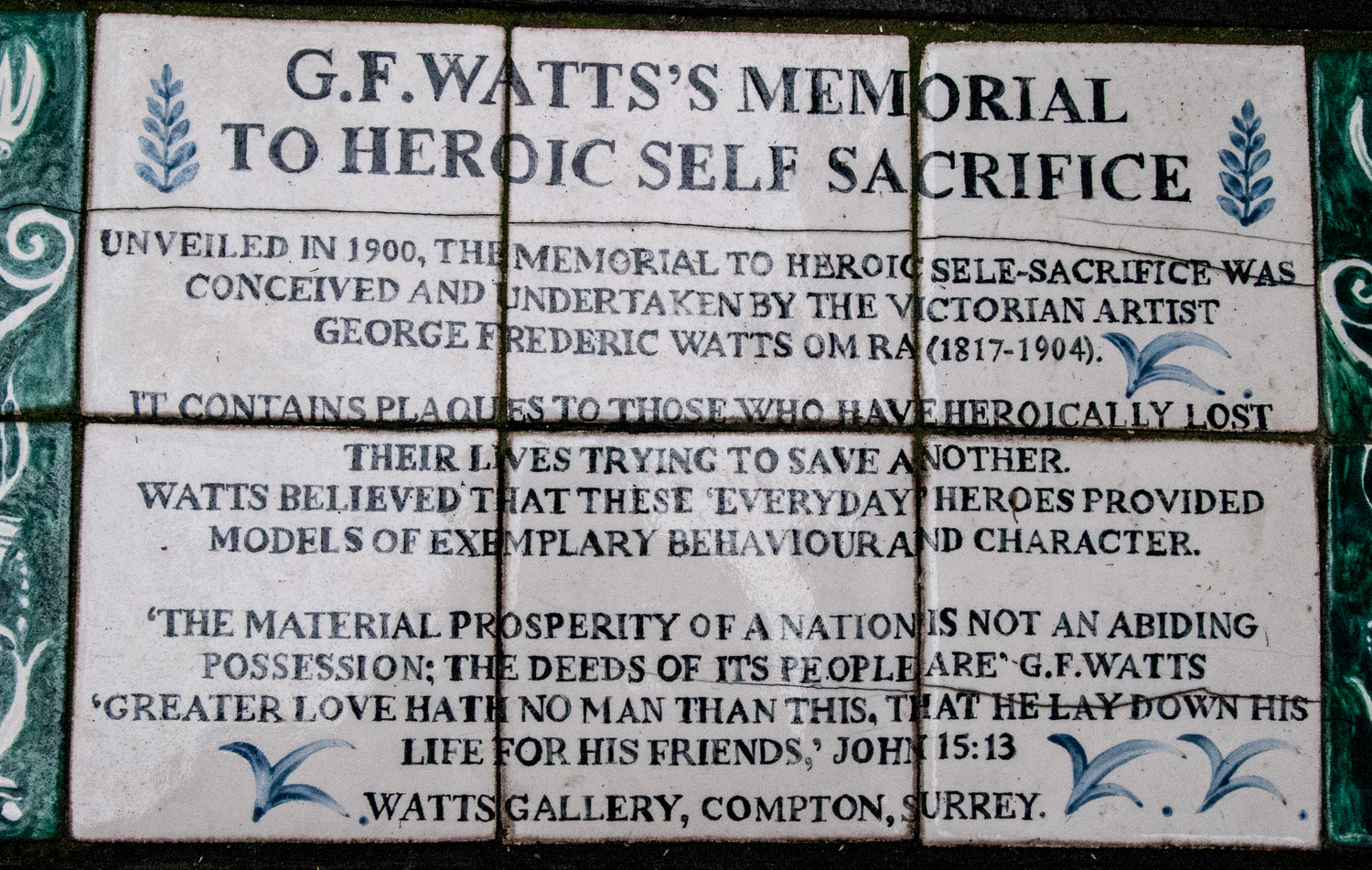


Postman’s Park and the Watts Memorial to Heroic Self Sacrifice

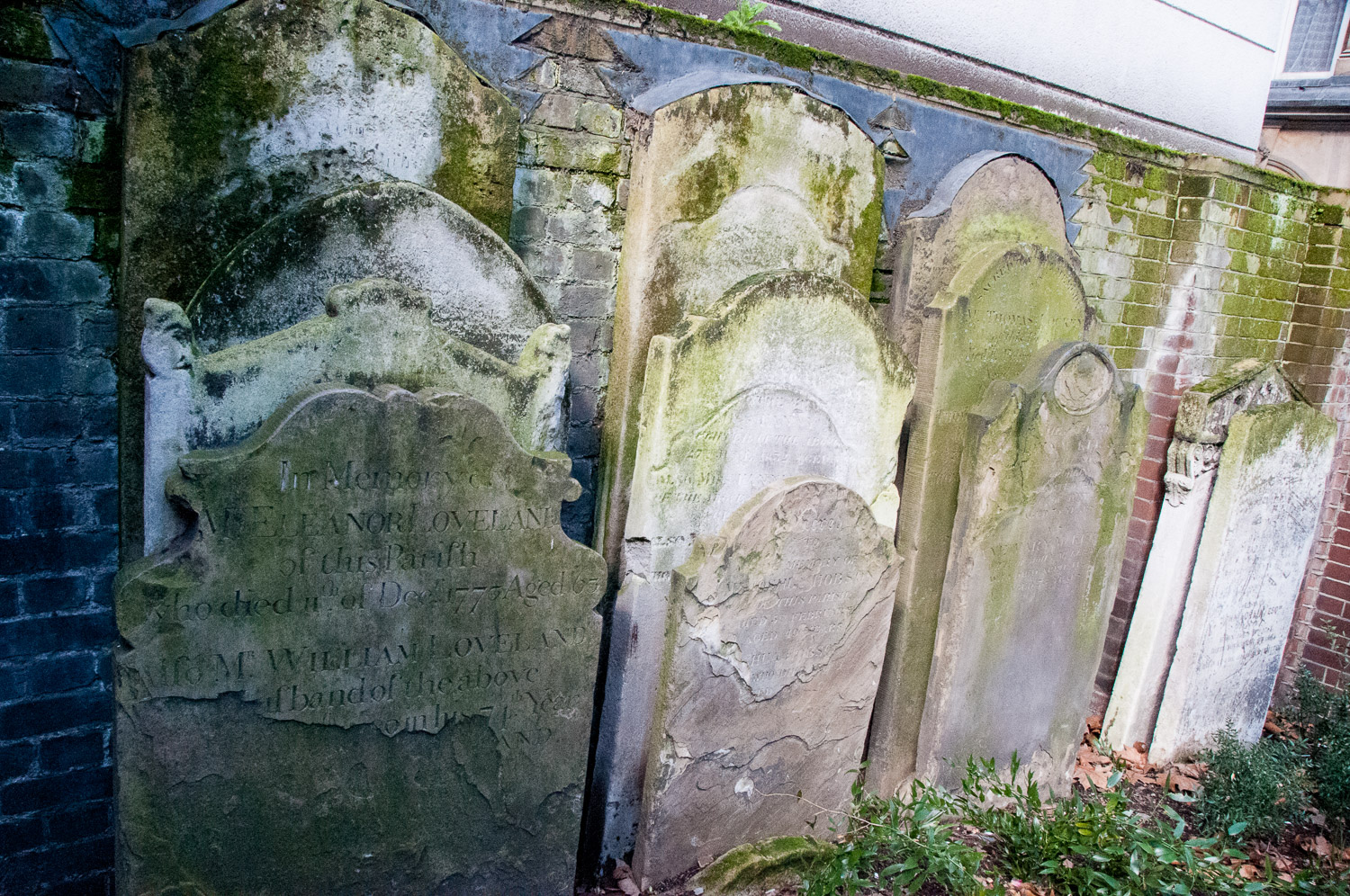
Postman’s Park was once the churchyard to the adjacent church, St Botolph Aldersgate, but between 1858 and 1860 it was cleared of human remains and re-landscaped as a public space. A number of gravestones remain and you can see some of them now stacked neatly against the northern churchyard wall …

Nearby, in 1829, the General Post Office had moved in to a vast new building on St Martin Le Grand and, when the new park opened, it quickly became a popular leisure area for the post office workers and, as a result, the park soon became known as Postman’s Park (EC1A 7BT).

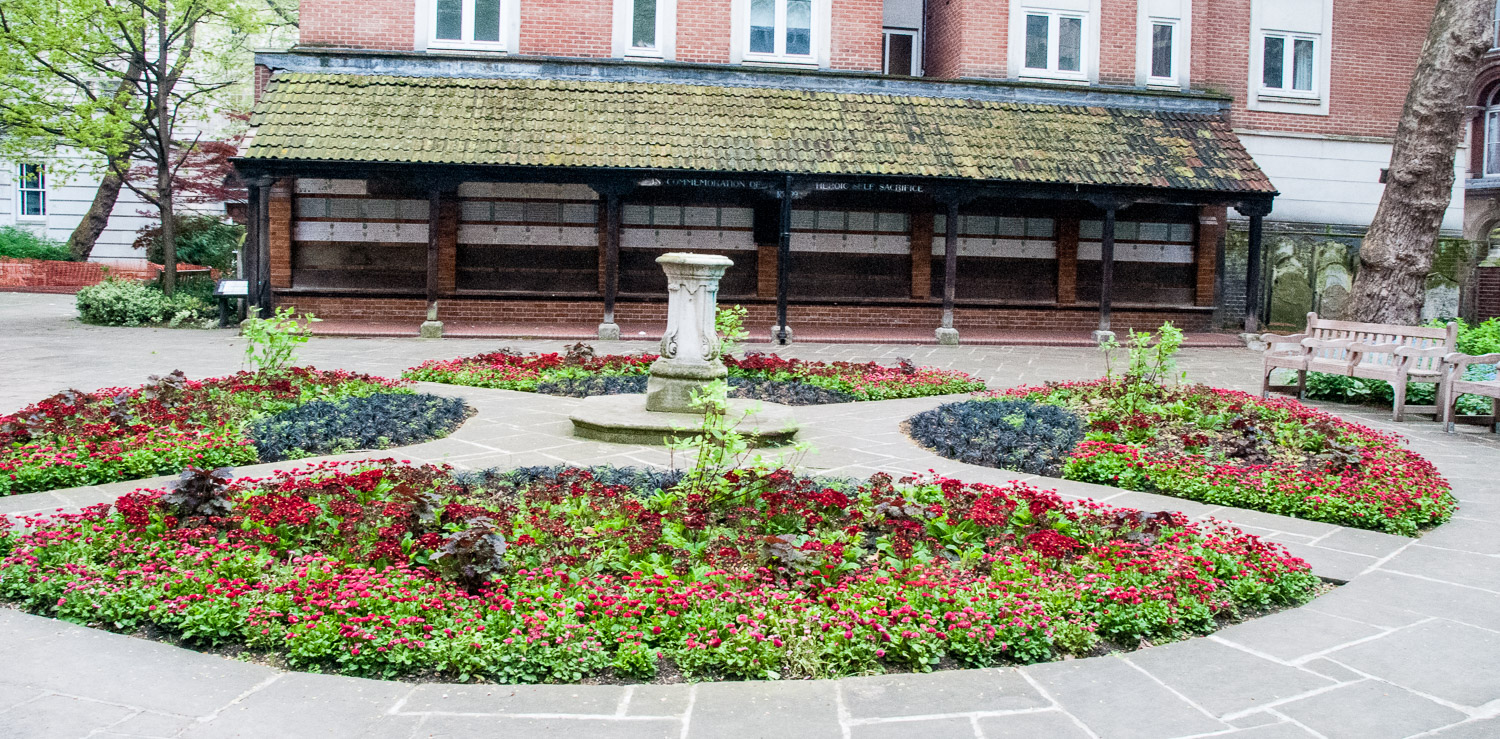
It contains now what is, in my view, one of the most interesting, poignant and rather melancholy memorials in the City – The G F Watts Memorial to Heroic Self Sacrifice. This plaque nearby contains a useful mini-history …

In the late 1890s the idea was mooted that the park would be an ideal location for a memorial to ‘ordinary’ and ‘humble’ folk who had lost their lives endeavouring to save the lives of others. Two of its most enthusiastic supporters were the artists George Frederic Watts (1817 – 1904) and his wife Mary (1849 – 1938). There are some nice images of both him and his wife on the National Portrait Gallery website. Here he is  and here his wife Mary.

After much debate about its positioning and design, the memorial was finally declared finished and open on 30 July 1900, the building looking very much as it does today …

The memorial consists of 54 ceramic tablets which were gradually added over the years, each describing a particular act of selfless heroism. I have chosen to write about four of them using as my source the splendid book by the historian John Price: Heroes of Postman’s Park (ISBN 9780750956437). You can also, like me, become a Friend of the Watts Memorial, and more details can be found here.

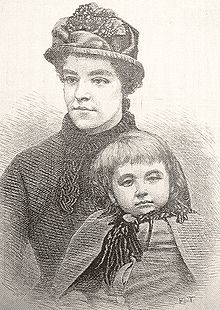
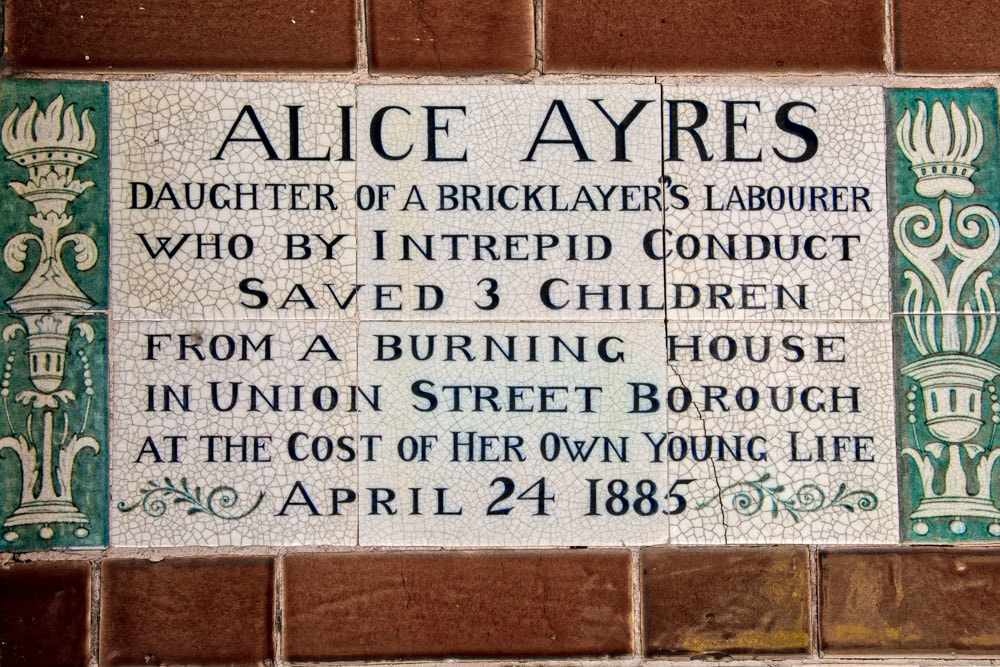
The first of my four heroes is Alice Ayres …

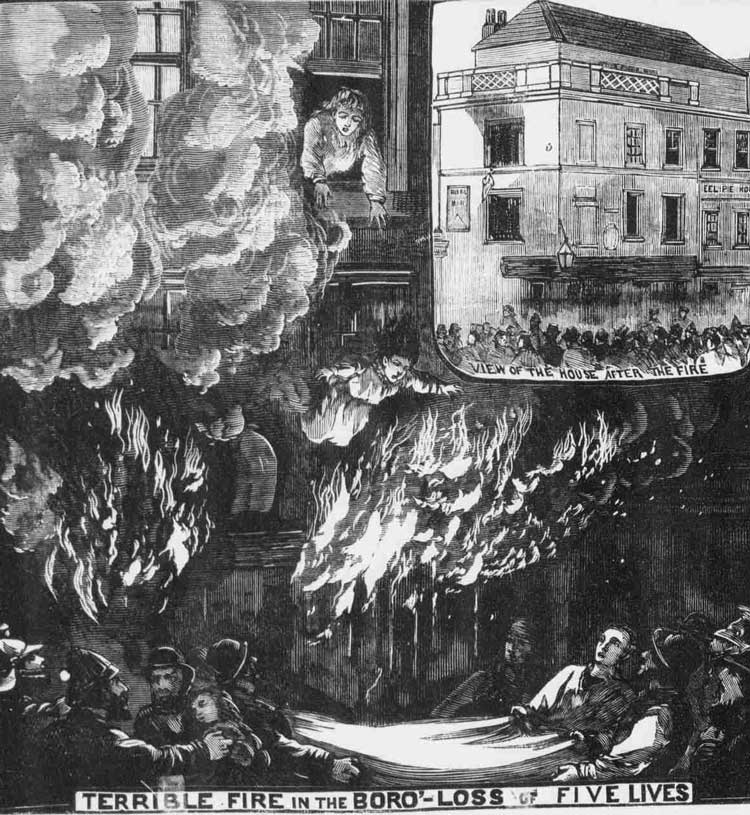
The picture above shows Alice Ayres as portrayed by the Illustrated London News in 1885 (Copyright the British Library Board). Her commemorative plaque reads as follows and was the first to be installed …

It was Alice’s brave act that prompted Watts to write to the Times newspaper and suggest the creation of a memorial

That would celebrate the sacrifices made by ‘likely to be forgotten heroes’ by collecting ‘…a complete record of the stories of heroism in every-day life’.

Alice threw down a mattress from a burning building and successfully used it to rescue three children …

From The Illustrated Police News 2nd May 1885 Copyright, The British Library Board.

Alice eventually jumped herself but received terrible injuries and died two days later. Incidentally, if her name rings a bell with you it could be because, in the 2004 film Closer, one of the characters, Jane Jones, sees Alice’s memorial and decides to adopt her name.

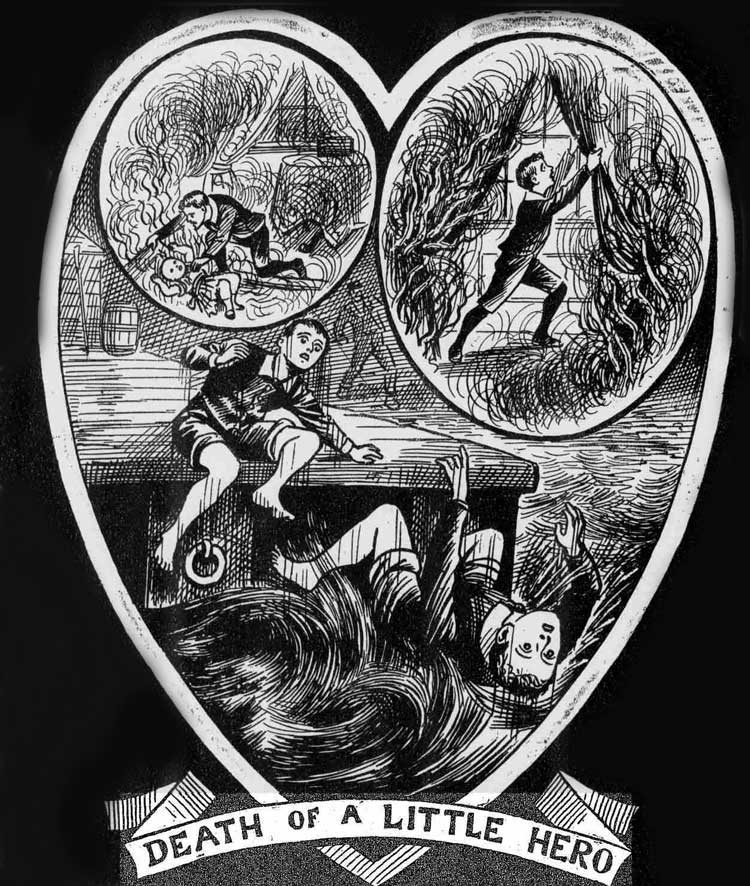
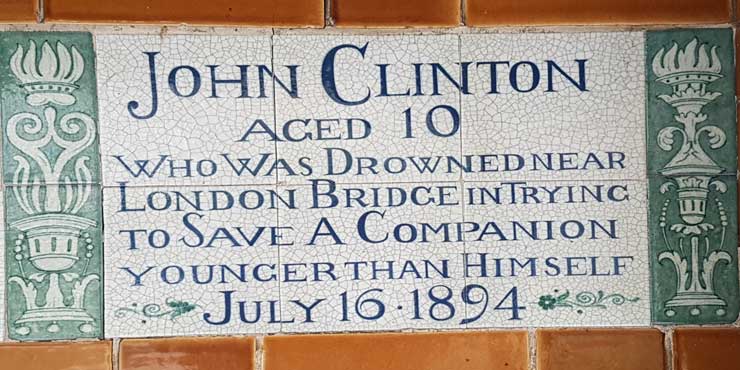
John Clinton was only 10 when he dived into the Thames to save another little boy’s life. Unfortunately, after the rescue, John himself slipped back into the water and drowned. According to his father this wasn’t his first brave act, having saved a baby from a fire and tearing down burning curtains that were threatening the house. Both acts were commemorated in this illustration …

From The Illustrated Police News, 28th July 1894. Copyright, The British Library Board.

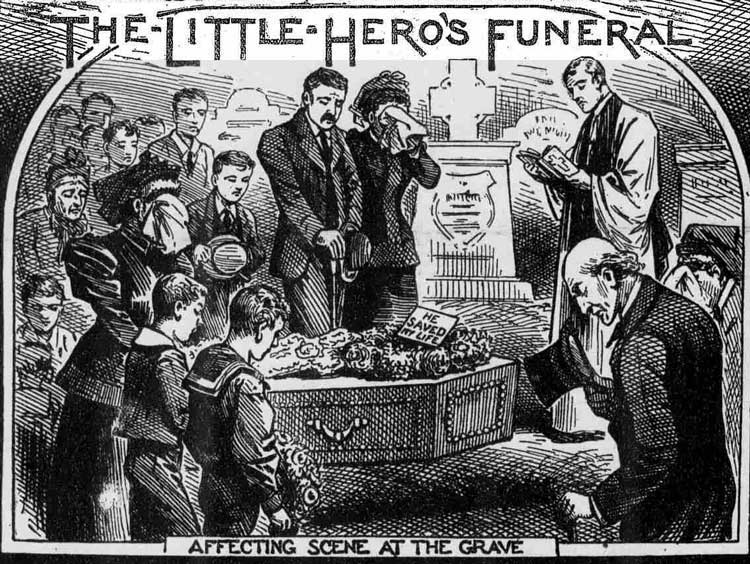
His funeral was widely reported …

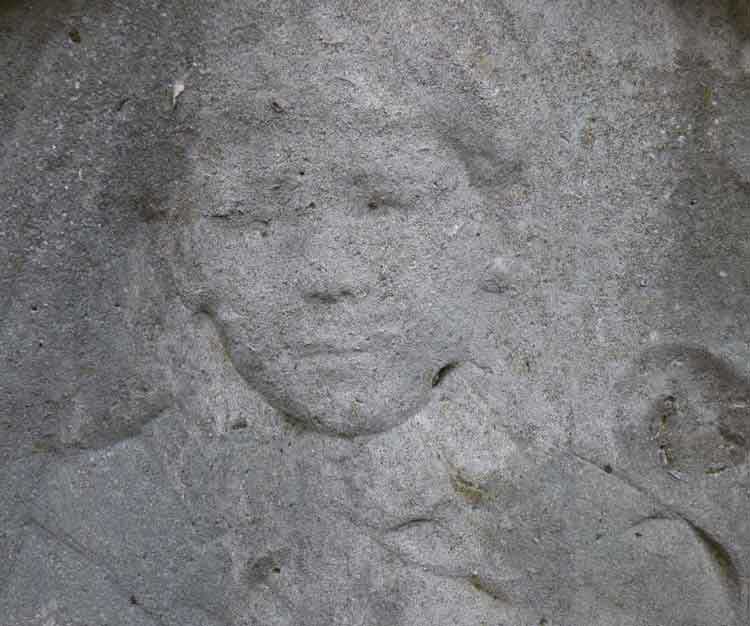
I am indebted to the editor of the London Walking Tours website for this photograph of John Clinton’s image on his tombstone in Manor Park cemetery …

His Postman’s Park plaque …

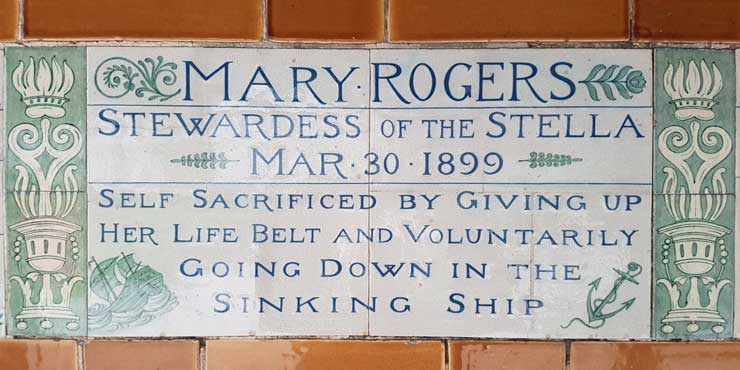
And now another brave lady,

Many of these memorials give us glimpses of the nature of society at the time these events took place, and Mary’s story is a typical example. It is most unlikely that she would ever have found herself serving at sea had it not been for the fact that her husband, Richard, was drowned when the cross channel steamer SS Honfleur sank in the English Channel on 21 October 1880.

The steamer was operated by the London & South Western Railway Company (LSWR) and so Richard was one of their employees. It was common practice at the time for railway companies to offer employment to the widows or children of deceased employees so as to avoid having to pay compensation or provide a pension. Almost immediately after the birth of her son in January 1881, Mary began work as a stewardess for LSWR. Her earnings were 15 shillings a week plus any tips received from passengers. For a woman in her circumstances, this was a decent, stable income and in modern terms, a job with prospects. It also kept her family out of the workhouse.

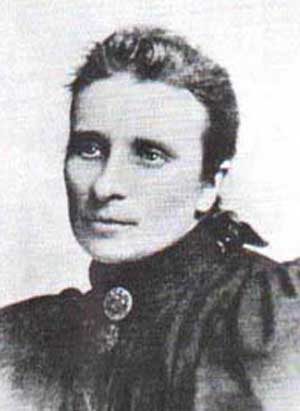
Mary Rogers – 1855-1899

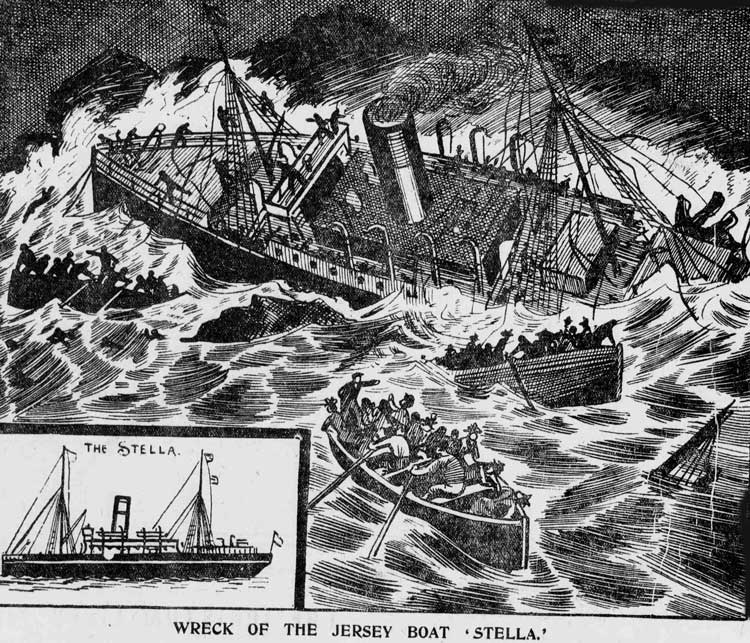
The story of the sinking of the SS Stella is a gripping one and rather too complicated to relate in detail here. If you want all the details either get hold of a copy of John Price’s book and/or have a look at this website run by Jake Simpkin, a Blue Badge holder and south of England historian.

From The Illustrated Police News – 8th April 1899. Copyright, The British Library Board

The Times reported that Rogers …

Helped ‘her ladies’ from the cabin into the lifeboats. Next she gave up her own lifejacket, and then when urged to get into the lifeboat refused for fear of capsizing it. She was told it was her only chance, but she persisted that she could not save her own life at the cost of a fellow creature’s. She waved the lifeboat ‘farewell’ and bid the survivors to be of ‘good cheer’.

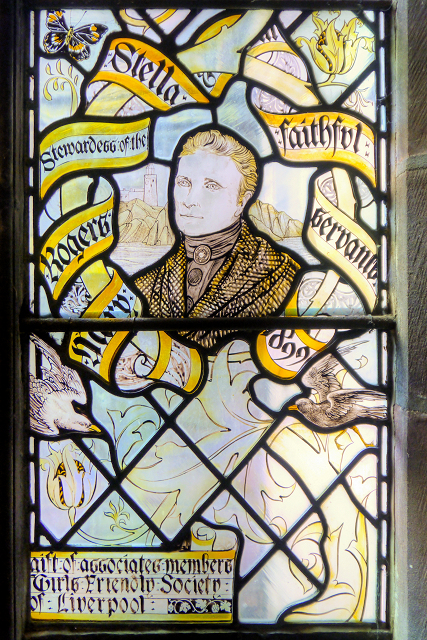
In 1908, the committee of the new Anglican Liverpool Cathedral chose 21 ‘noble women’ for commemoration in stained glass windows. Mary was included, and is depicted in her window alongside Grace Darling and Elizabeth Fry …

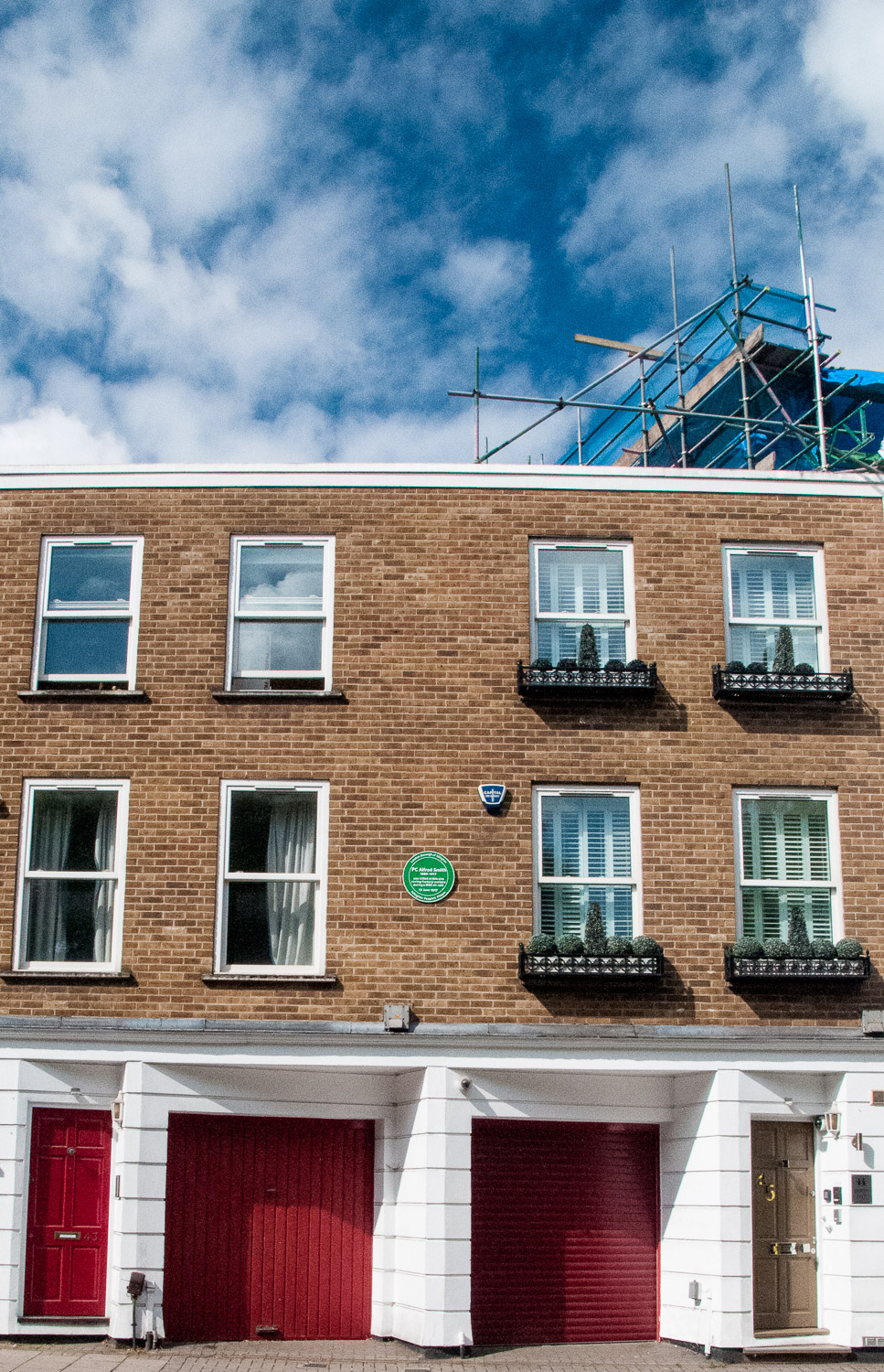
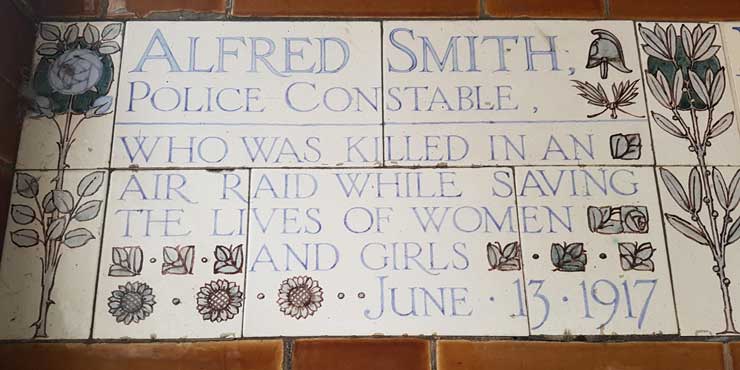
Walking down Central Street one day I noticed this green plaque on the other side of the road …

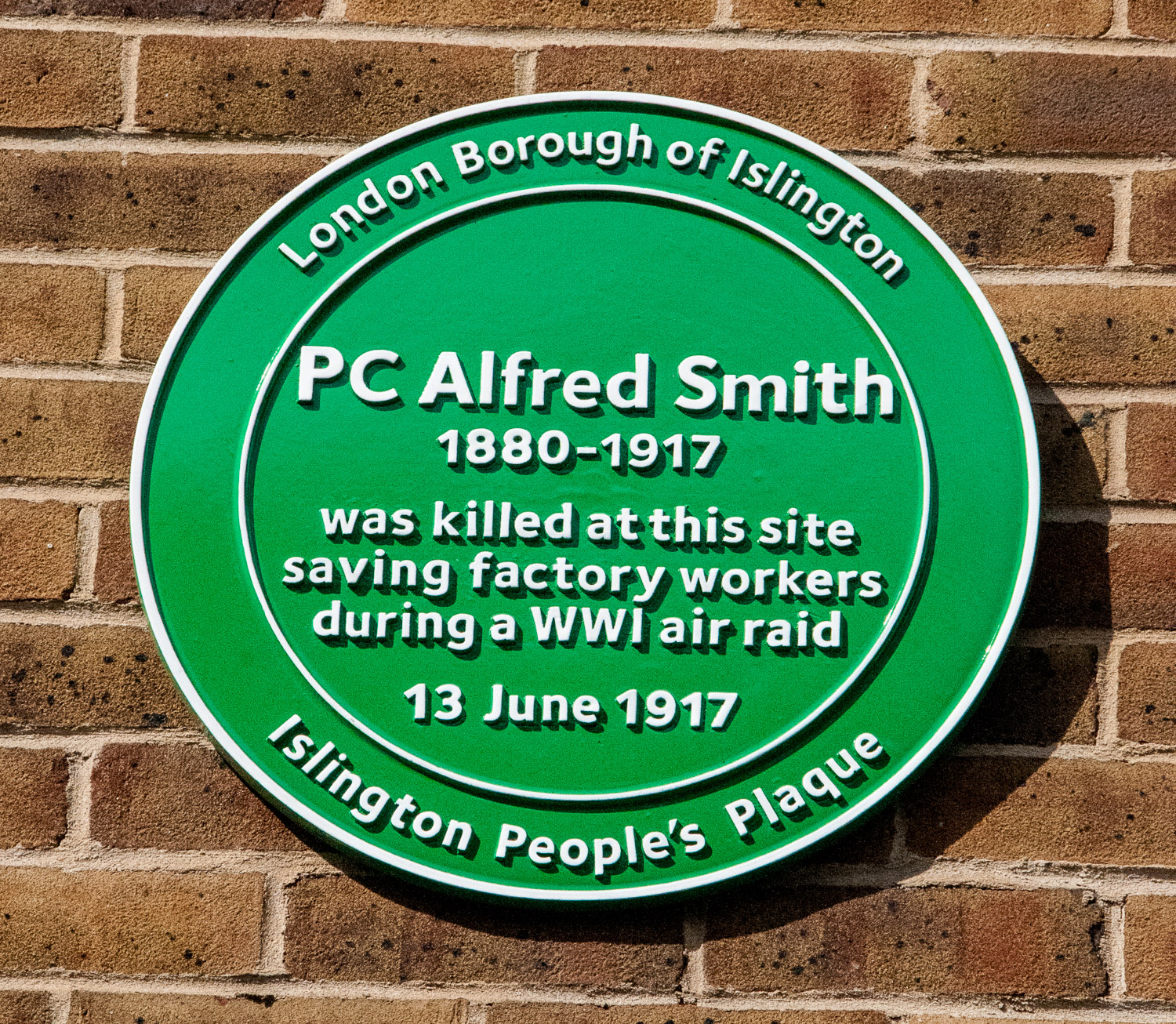
On crossing over to take a look this is what I saw …

I took a picture, resolving to do further research and then discovered that the brave Alfred Smith is commemorated on the Watts Memorial …

PC Smith, 37 years old, was on duty in Central Street when the noise was heard of an approaching group of fourteen German bombers. One press report reads as follows …

In the case of PC Alfred Smith, a popular member of the Metropolitan Force, who leaves a widow and three children, the deceased was on point duty near a warehouse. When the bombs began to fall the girls from the warehouse ran down into the street. Smith got them back, and stood in the porch to prevent them returning. In doing his duty he thus sacrificed his own life.

Smith had no visible injuries but had been killed by the blast from the bombs dropped nearby. He was one of 162 people killed that day in one of the deadliest raids of the war.

His widow was treated much more kindly than Mary Rogers. She received automatically a police pension (£88 1s per annum, with an additional allowance of £6 12s per annum for her son) but also had her MP, Allen Baker, working on her behalf. He approached the directors of Debenhams (whose staff PC Smith had saved) and solicited from them a donation of £100 guineas (£105). A further fund, chaired by Baker, raised almost £472 and some of this was used to pay for the Watts Memorial tablet, which was officially unveiled on the second anniversary of Alfred’s death.

Watts used newspaper reports to decide who should receive the honour of a plaque, but in one case the report was false and the ‘hero’ didn’t exist. Unfortunately, Watts didn’t see the newspaper article correcting the mistake and the plaque went up anyway. If you want to know the identity of the non-existent ‘hero’ I am not going to reveal it here, and you will have to buy John Price’s book to find out.

I wrote about some more of the heroes from the memorial in an earlier blog which you can access here.


City Animals 5

It has been quite a while since I sought out animals in the City and so last weekend I took advantage of the sunny weather and went on another safari.

I always like to visit the Tower Hill memorial to the merchant navy and fishing fleet seafarers who lost their lives in both World Wars and have no grave but the sea. It’s a peaceful place on a weekend as virtually all the visitors to London have their eyes focused on the Tower of London across the road.

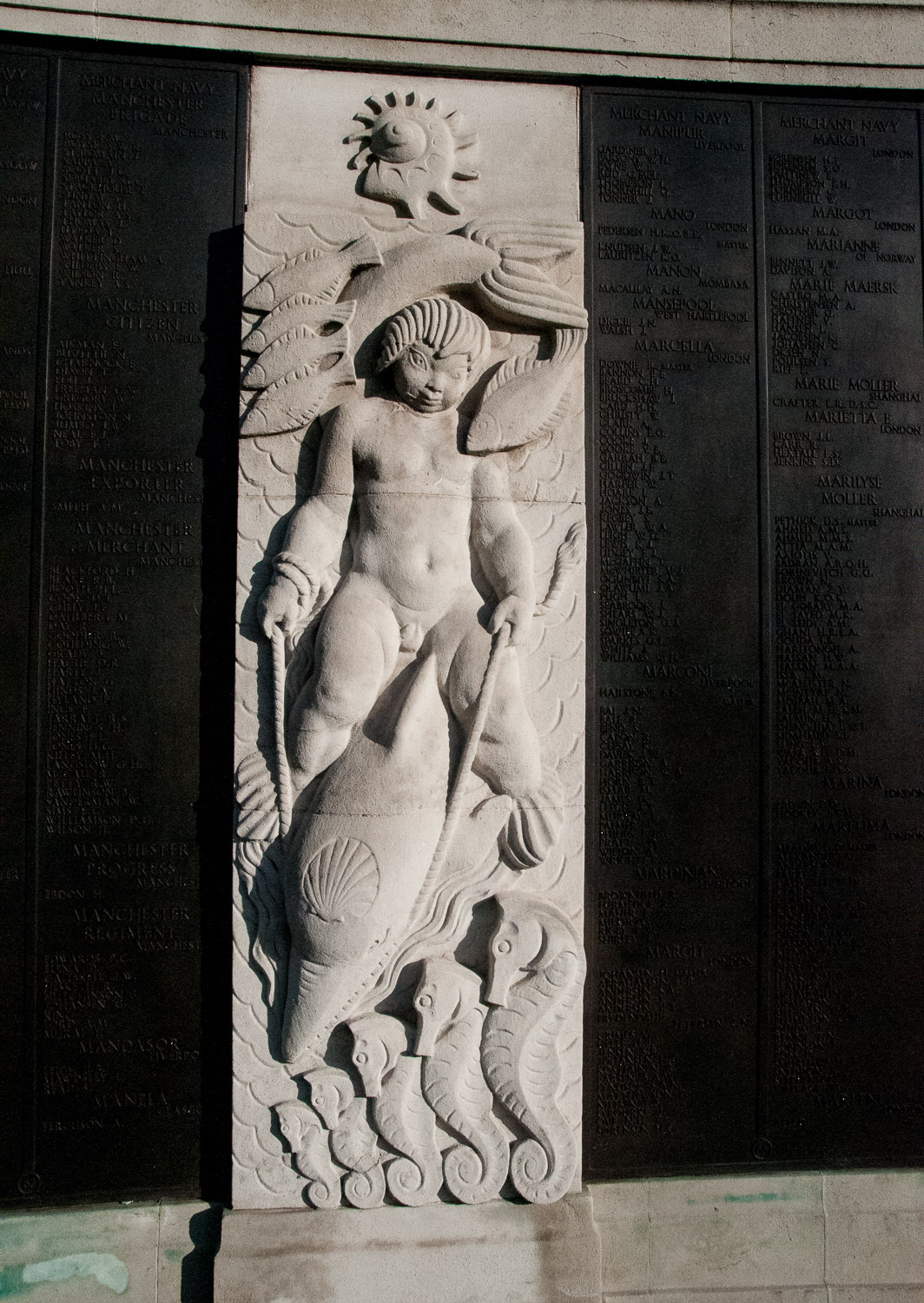
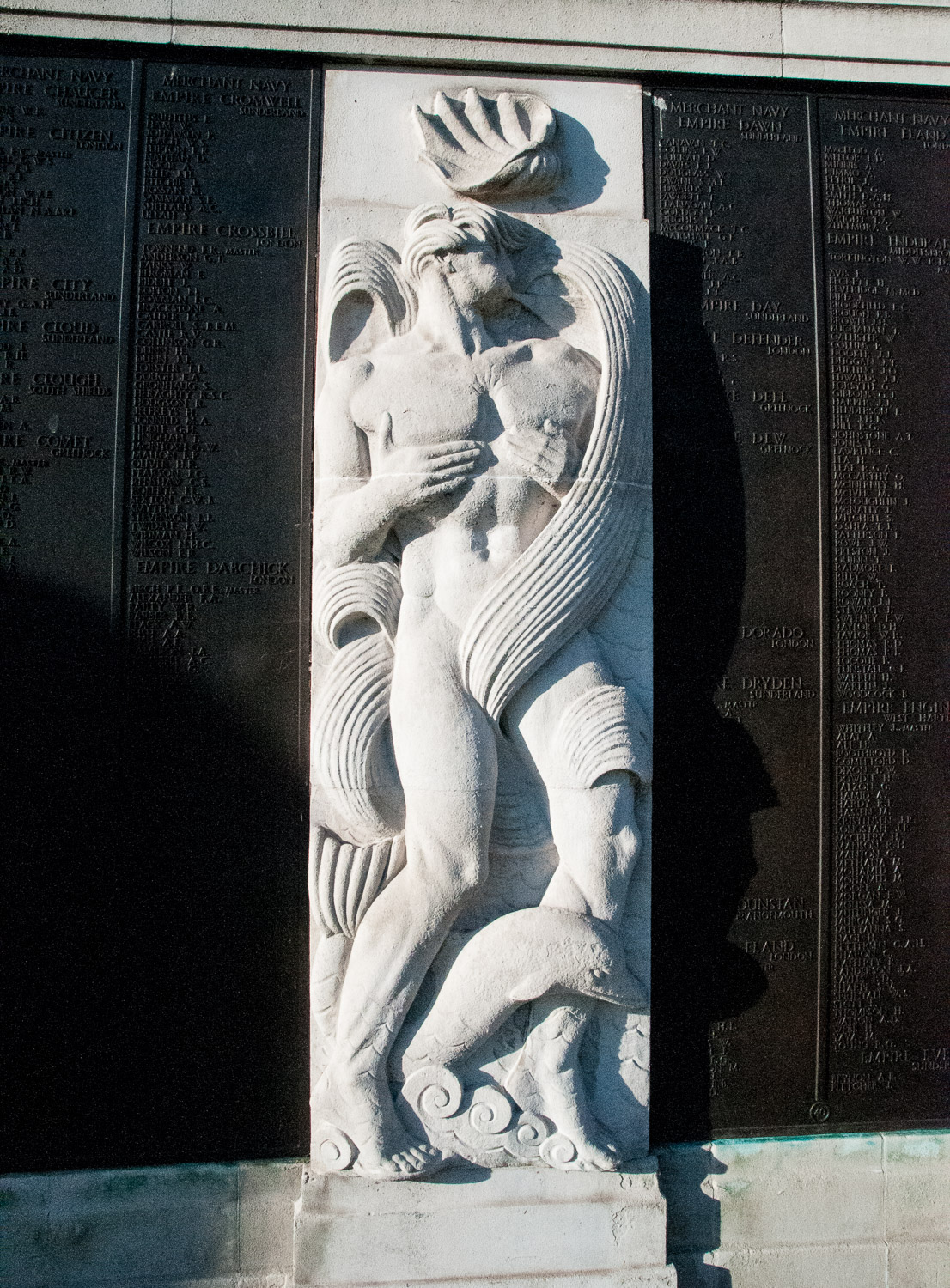
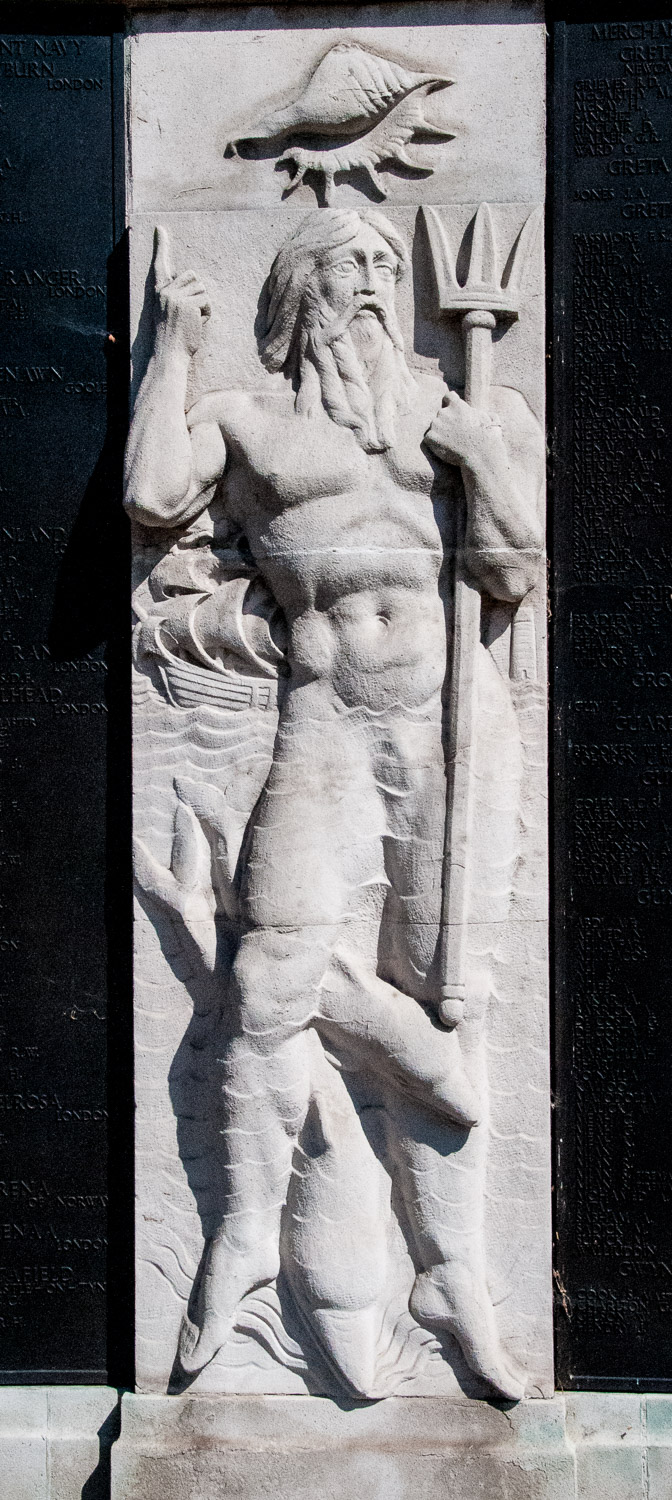
There are two memorials alongside one another and these pictures come from the one commemorating the almost 24,000 casualties of the Second World War (Trinity Square EC3N 4DH).

Dolphins feature highly in the allegorical sculptures by Sir Charles Wheeler representing the Seven Seas.

Here a boy is seen riding one surrounded by fishes and sea horses, above his head is a thorny snail …

A dolphin leaps through the legs of this figure who is creating the wind …

You can’t miss Neptune with a spider conch above his head and accompanied by another dolphin …

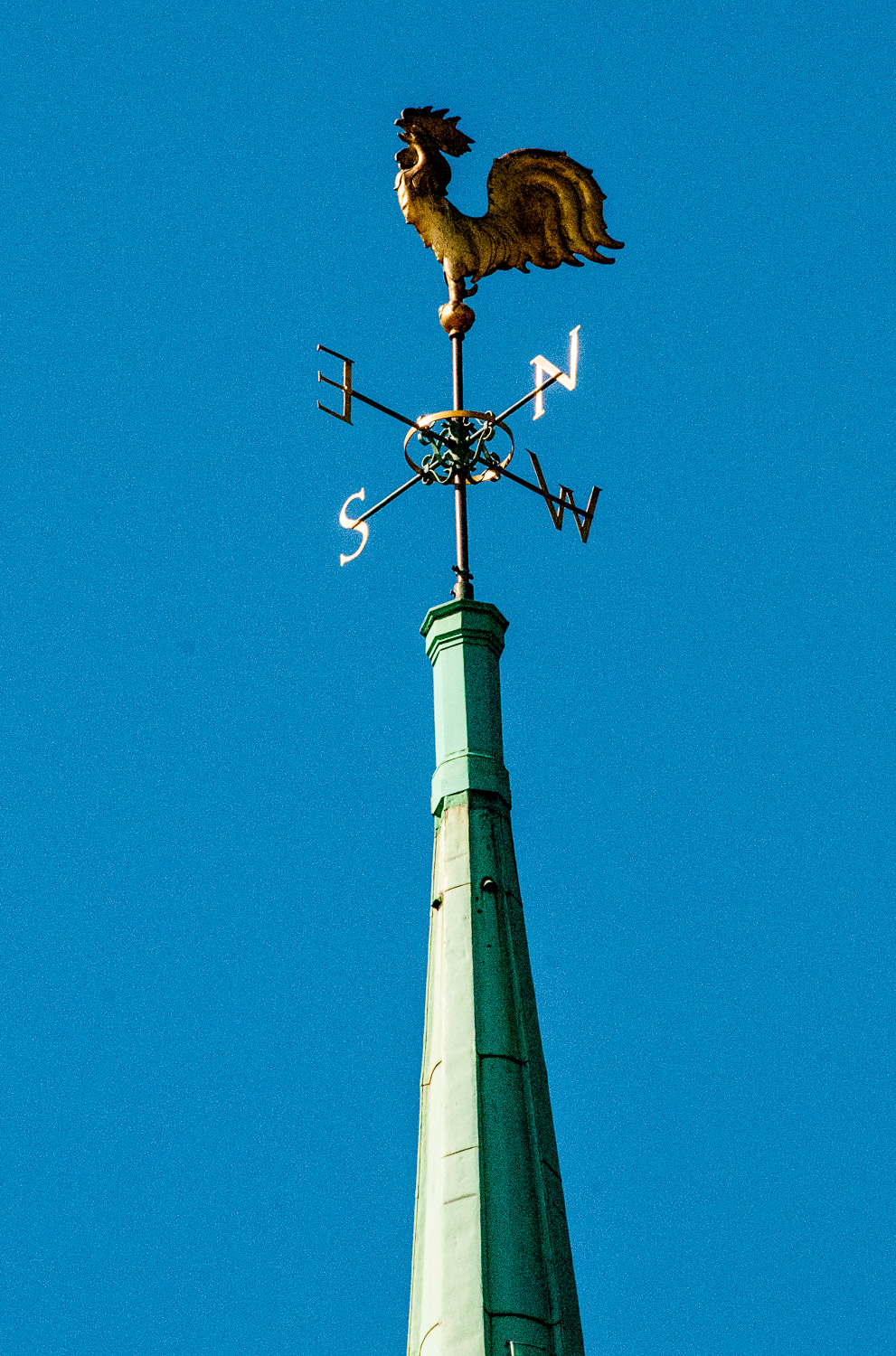
Across the road from Trinity Square is the church of All Hallows-by-the-Tower (EC3R 6BJ).

Substantially damaged in the War it was restored and reopened in 1957 with a new cockerel weathervane …

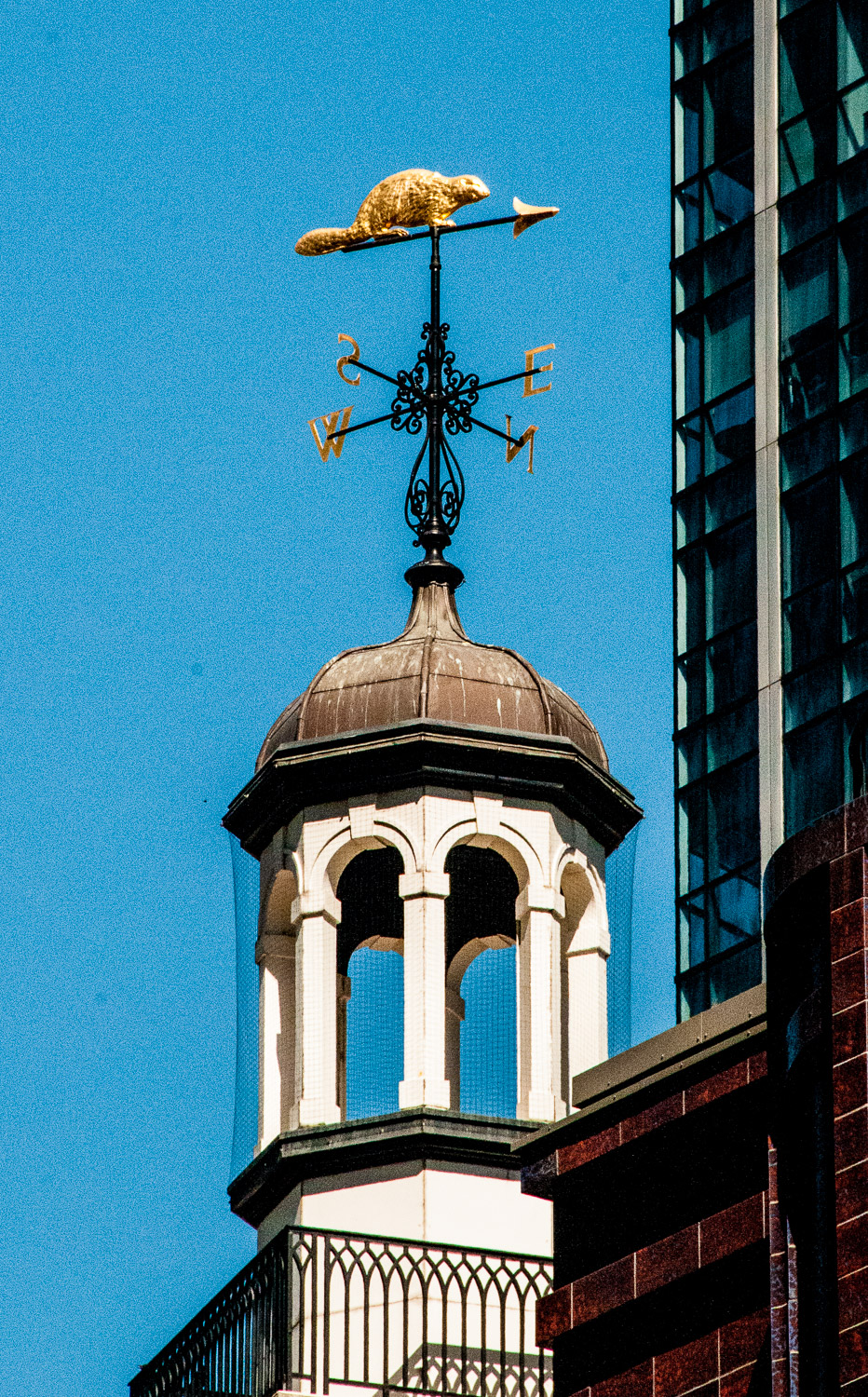
The beaver above 64 Bishopsgate (EC2N 4AW) is a reminder of the Hudson’s Bay company which once dominated the fur trade and was based nearby. Beaver fur was much sought after, particularly in the making of hats …

A golden rodent looks out across Bishopsgate.

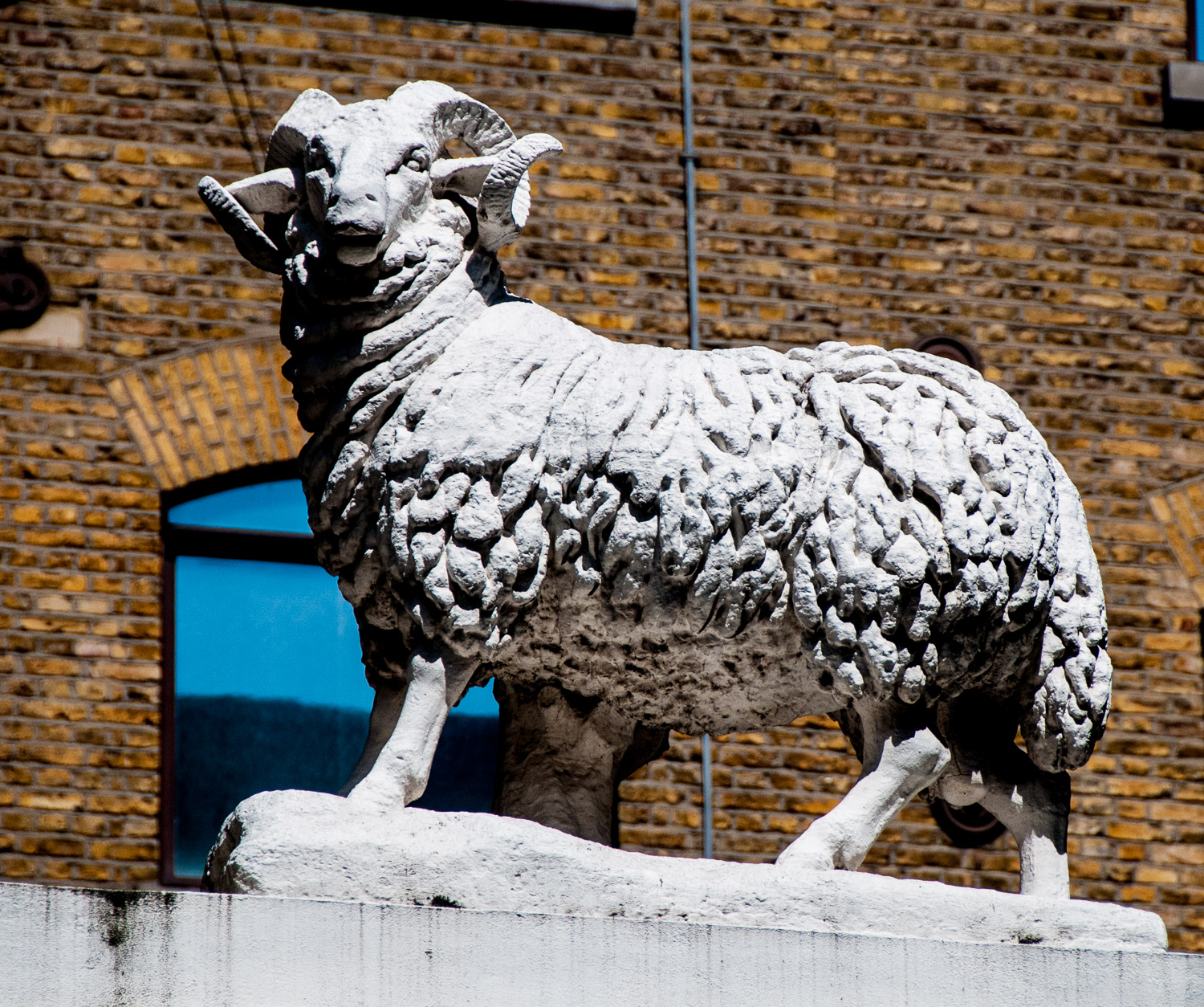
Wander down to the end of New Street off Bishopsgate (EC2M 4TP) and you will find this ram over the gateway leading to Cock Hill …

It’s by an unknown sculptor, dates from the 186os and used to stand over the entrance to Cooper’s wool warehouse.

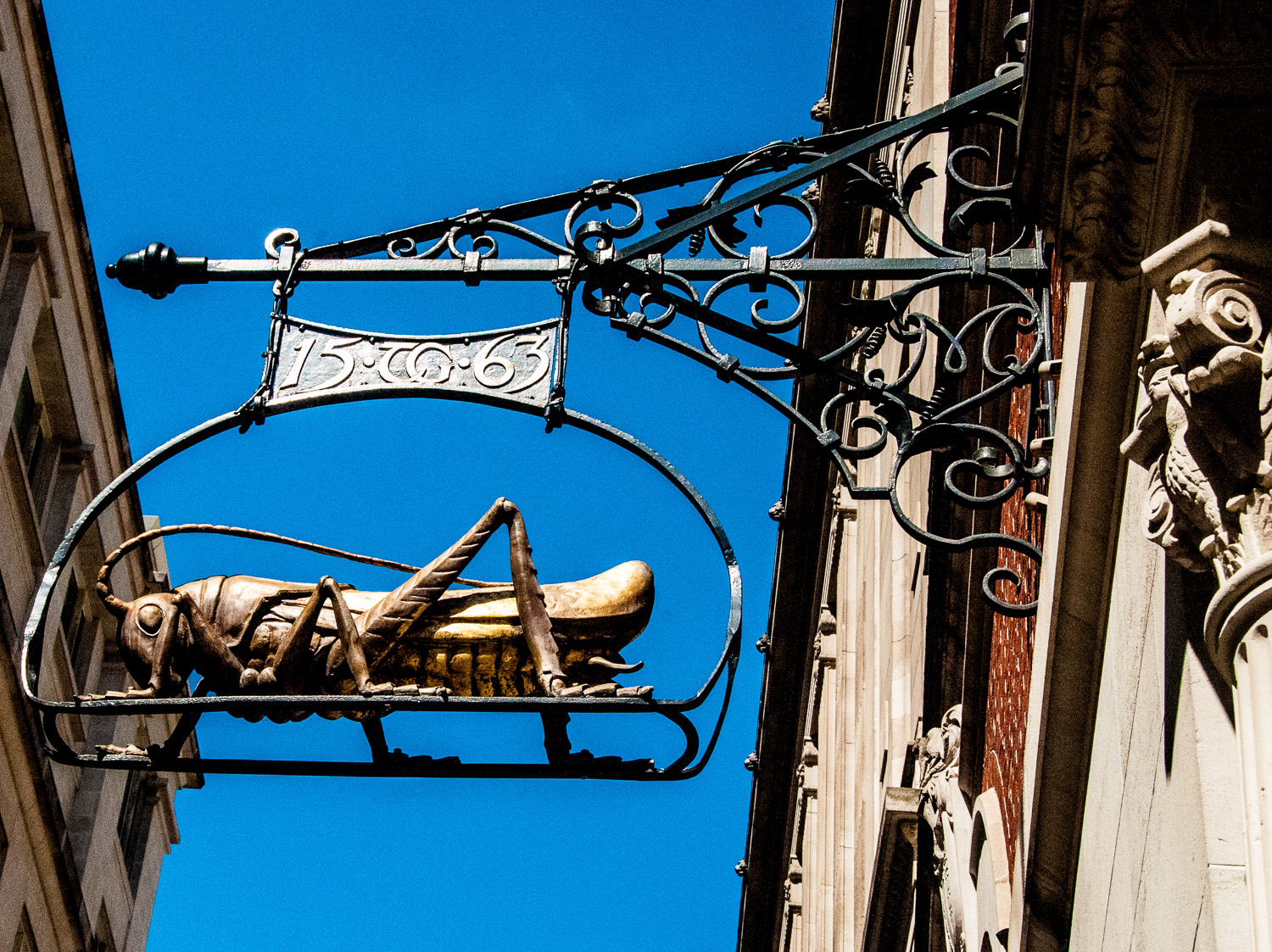
Outside 68 Lombard Street there hangs an astonishing five foot long grasshopper (EC3V 9LJ) the insect being derived from the coat of arms of the Gresham family. Buildings in Lombard Street were not numbered until 1770 and so when the Greshams lived and worked there a similar sign would have been used to mark their residence …

The year 1563 refers to the year Thomas Gresham (TG on the sign) set up his business here.

The present building dates from 1930 when it was destined to become the City office of Martin’s Bank (whose coat of arms included a grasshopper). The original family sign disappeared at the time of Charles II when such advertisements were banned after numerous serious accidents. They had a tendency to become detached in high winds and on one occasion pulled down the entire frontage of a building. This grasshopper dates from 1902 when a host of signs were recreated to celebrate the coronation of Edward VII.

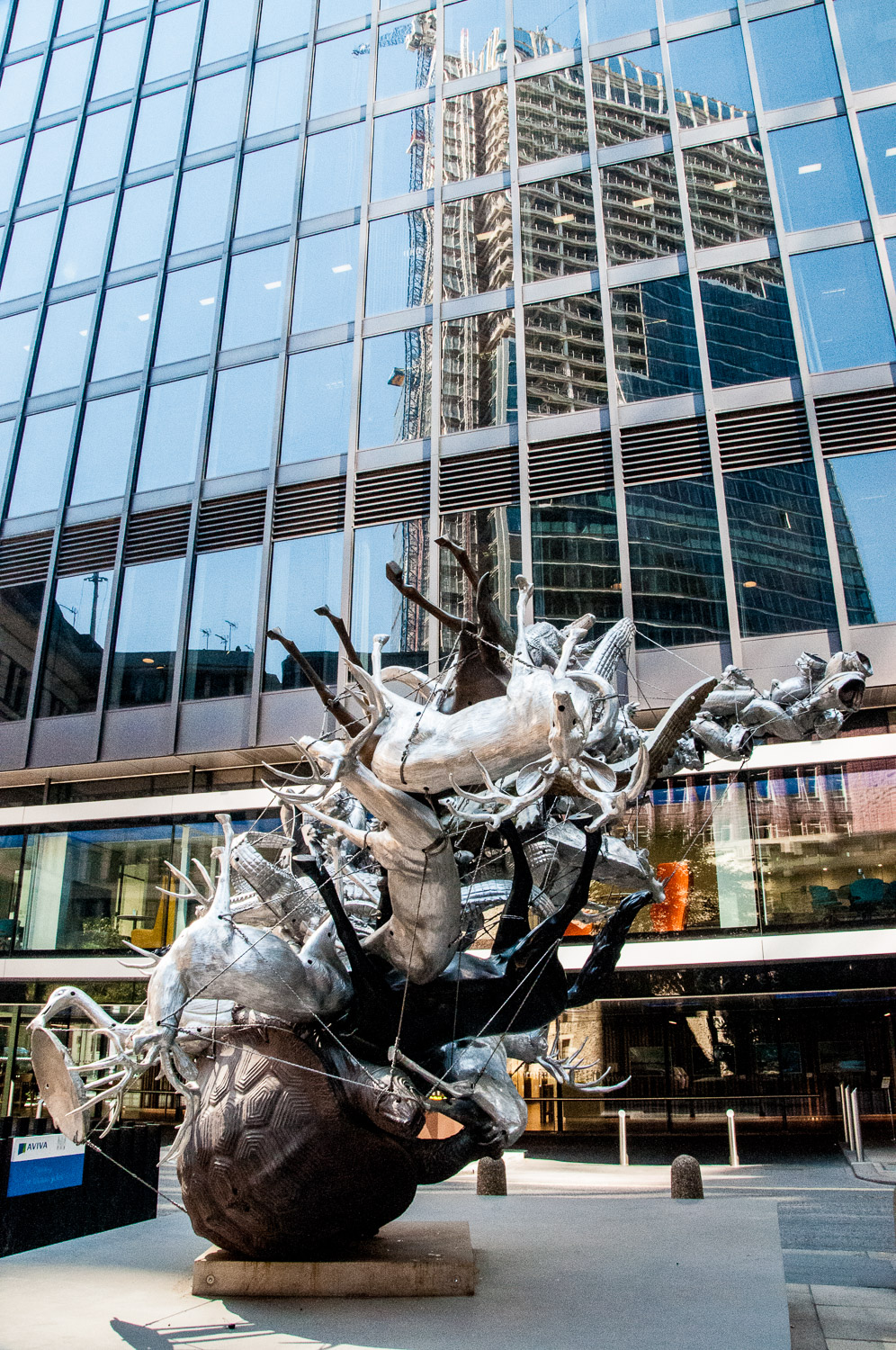
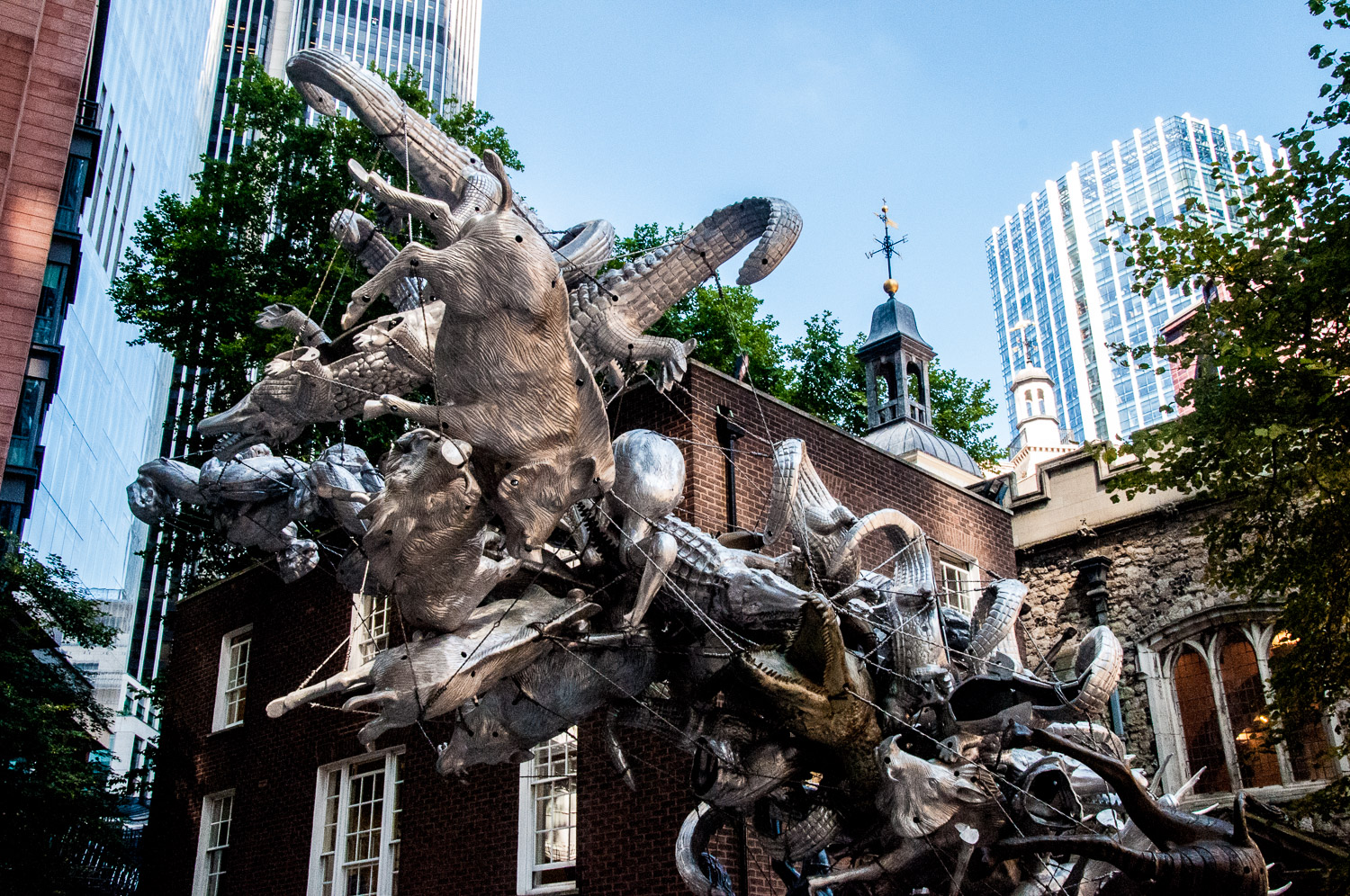
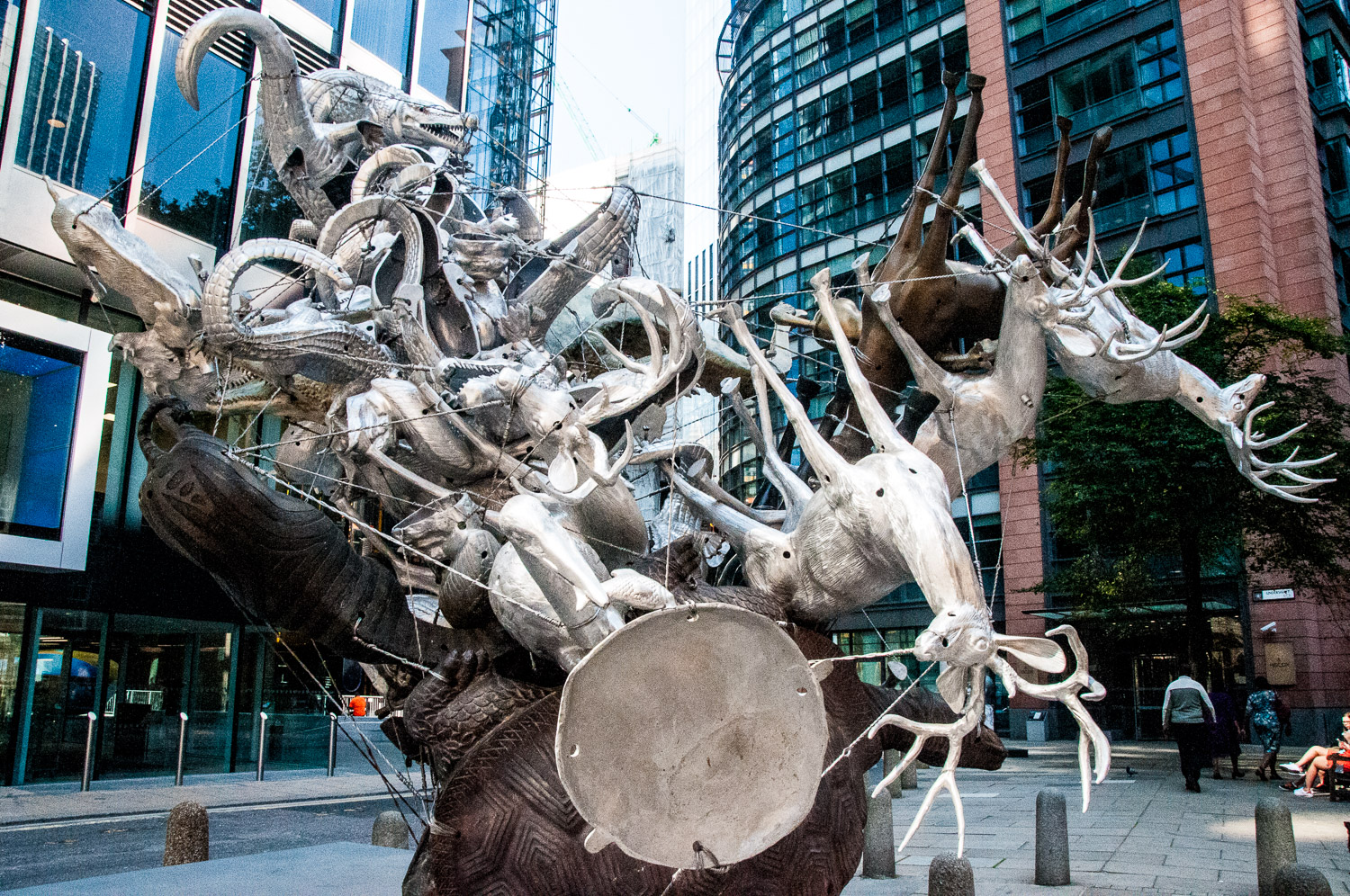
And finally, the Sculpture in the City event has brought us this extraordinary work by Nancy Rubins. It’s called Crocodylius Philodendrus and you can view it at 1 Undershaft (EC3A 6HX).

See how many animals you can spot …

In there somewhere you will find crocodiles, hogs, deer, tortoises and a zebra.


Page 15 of 16

Powered by WordPress & Theme by Anders Norén

Symbols & Secrets
Privacy Overview

This website uses cookies so that we can provide you with the best user experience possible. Cookie information is stored in your browser and performs functions such as recognising you when you return to our website and helping our team to understand which sections of the website you find most interesting and useful.