As you travel down the escalator at the Walbrook entrance to Bank Underground Station you will encounter a rather remarkable sight …
The 24 illuminated panels on display are a tribute to the Roman life that once flourished in this location, most notably, the nearby Temple of Mithras. Discovered in 1954, the ancient temple has now been restored and returned to its original Roman location, of which more later.
The panels were created in 1960 by the celebrated glass artist, John Hutton (1906 – 1978). Born in New Zealand, Hutton moved to London as a young artist. He became renowned for his masterful work in etched and engraved glass. They were originally on display in an office block called Bucklersbury House and, when that building was scheduled for demolition, they were gifted to London Underground to be installed in the tube station entrance.
The first series depicts daily life in Roman London, with the original London Bridge visible in the background. Women cluster in groups – some holding baskets or amphorae, vessels used to carry oil or wine, while others tend their children. A merchant sells his wares on the steps leading down to the river, while men holding scrolls engage in conversation. A group of soldiers gathers in a small clutch, their swords and spears piled next to them, elsewhere other soldiers ride their horses across the bridge …
A second series of panels shows gods and goddesses from a variety of ancient traditions. This cluster shows three Roman deities, Venus, Bacchus and Minerva but also the Egyptian God Serapis wearing a modius (cylindrical headdress) …
There is also the main iconography from the cult of Mithras, The Tauroctony where Mithras slaughters the bull …
Various other Gods and Goddesses …
You can read more about the delicate removal and restoration of the panels here.
Next door to the station entrance is the London Mithraeum. This is a fantastic venue to visit and entrance is free with a time-booked ticket.
Here are images from my visit some years ago. Descending through time, seven metres or so, from modern London to the very last days of the Romans in Britain, about AD 410 …
The beautifully restored temple itself …
Well done Bloomberg!
Even if you are not planning to visit the temple, you can pop in to the ground floor reception area …
At the moment it is hosting a fascinating free exhibition entitled Folkmoot by Anne Ryan. You can read more about the artist and the work on display here.
Some images from the exhibition …
There is also a permanent, well organised display of Roman artefacts which can be explored using your own mobile device, a tablet that they provide, or just by reading the labels …
If you are fascinated (as I am) with all things Roman London related you could follow the London Wall Walk which is identified throughout the City by plaques like this …
They’re a bit low-tech and weatherbeaten now, but I think that gives them a particular charm. Also, I found this very useful guide to the plaques and the wall in the London on my Mind website. Recommended.
A few words about what we still tend to describe as the ‘Roman’ Wall.
Londinium was a settlement established around AD 43-50. It sat at a key crossing point over the River Thames which turned the city into a trading port, serving as a major commercial centre in Roman Britain until its abandonment during the 5th century. Sometime between 190 and 225, the Romans built the London Wall, a defensive ragstone wall around the landward side of the city. It was one of the largest construction projects carried out in Roman Britain, requiring somewhere in the region of 85,000 tons of Kentish ragstone to complete. A medieval city wall was built on top of the remains of the Roman wall so much of what we see today was constructed in the fifteenth century.
Here are some images I took recently.
For a good sense of the scale of the wall one of the best places to visit is Salters’ Hall Garden …
Impressive as it is, it is pretty much all medieval, although the red tiles were probably scavenged from the earlier Roman construction …
This illustration from the excellent Living London History blog gives a good idea as to how the wall ‘grew’ in medieval times …
You can see medieval stonework. This is the only surviving section with a brick parapet dating from 1477 …
It was added by King Edward IV to help protect the city during the Wars of the Roses.
I like nice, helpful signage …
You also get a good view from the St Alphage Highwalk …
If you head north, you get a glimpse of more remains …
You can view them more easily if you make your way to the friendly, beautifully restored church of St Giles Cripplegate. In the old churchyard you can look across the artificial lake to another section of wall …
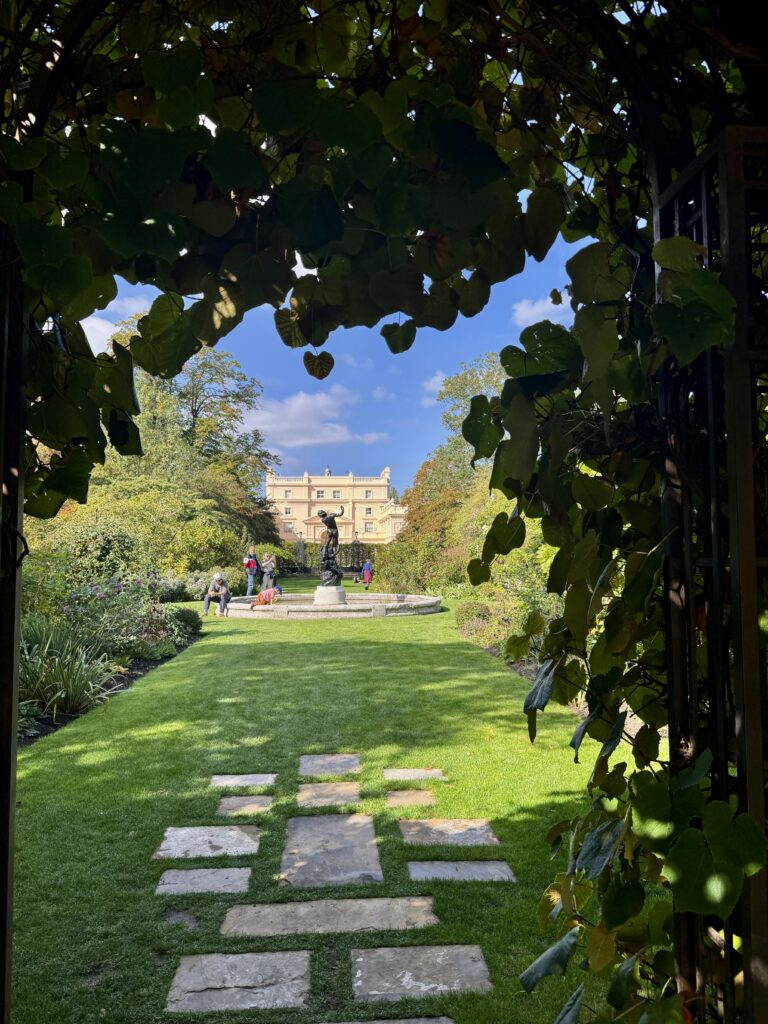
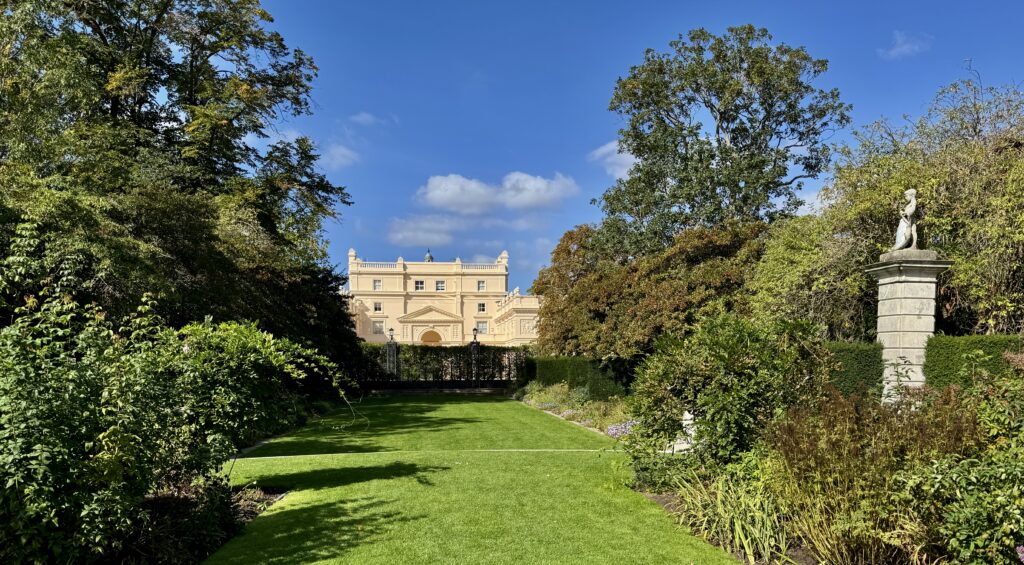
This resembles a country estate. Where do you think it is?
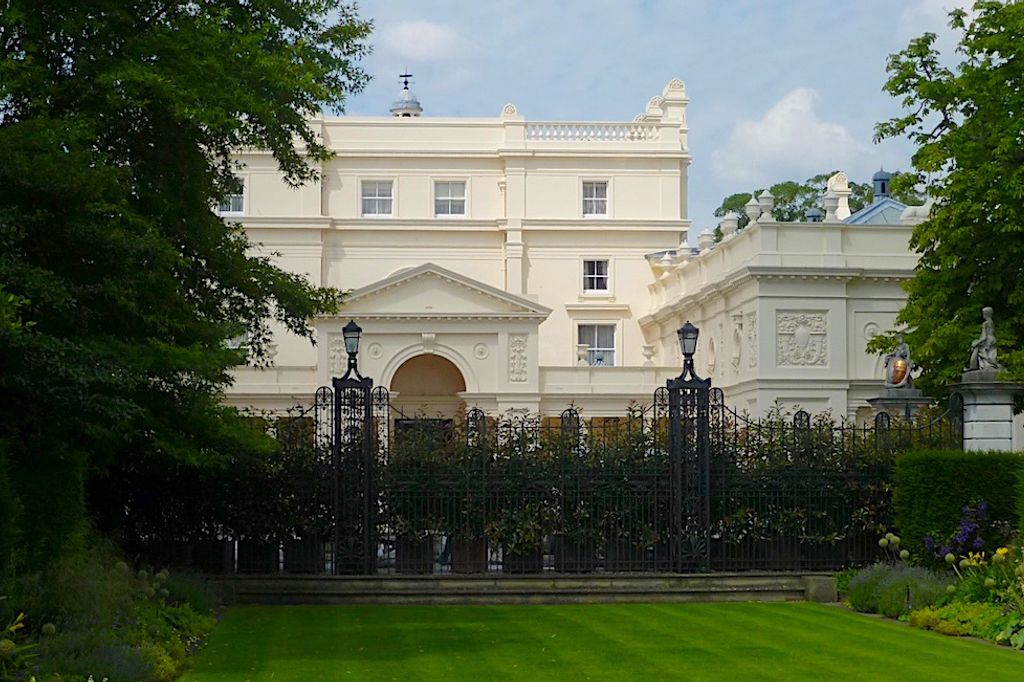
An elegant family home overlooks the carefully landscaped gardens …
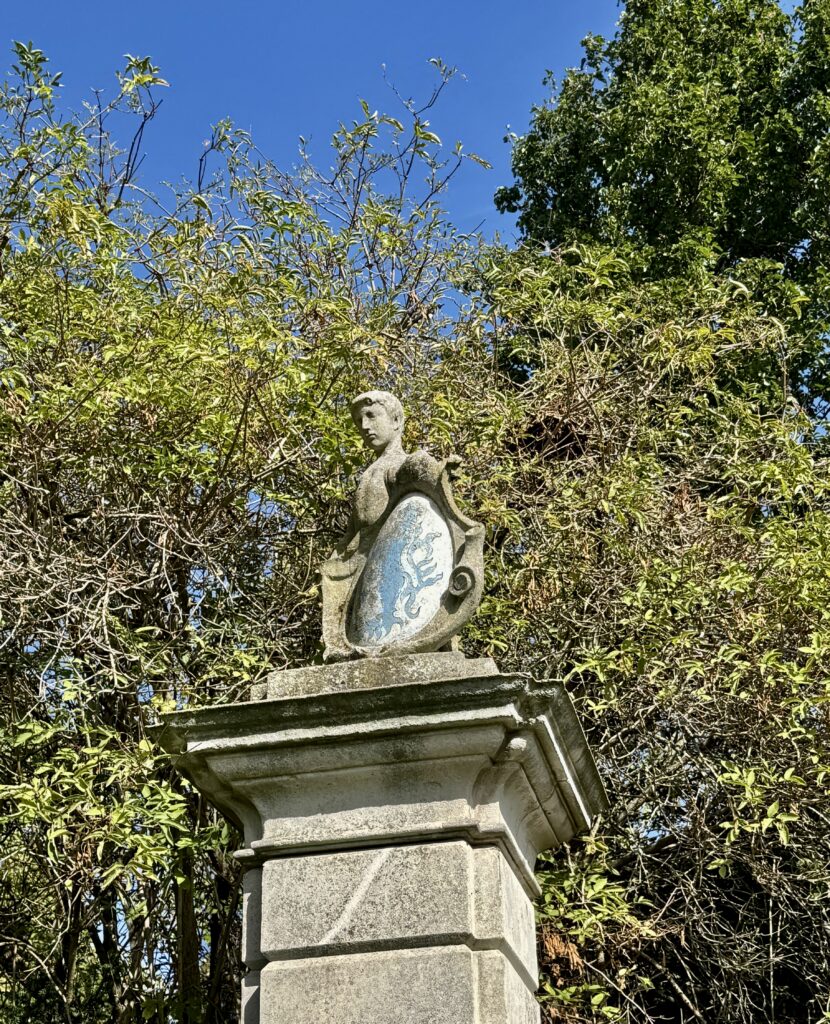
The coat of arms of the Bute family who acquired the lease to the house and gardens in 1889 …
Classy statuary …
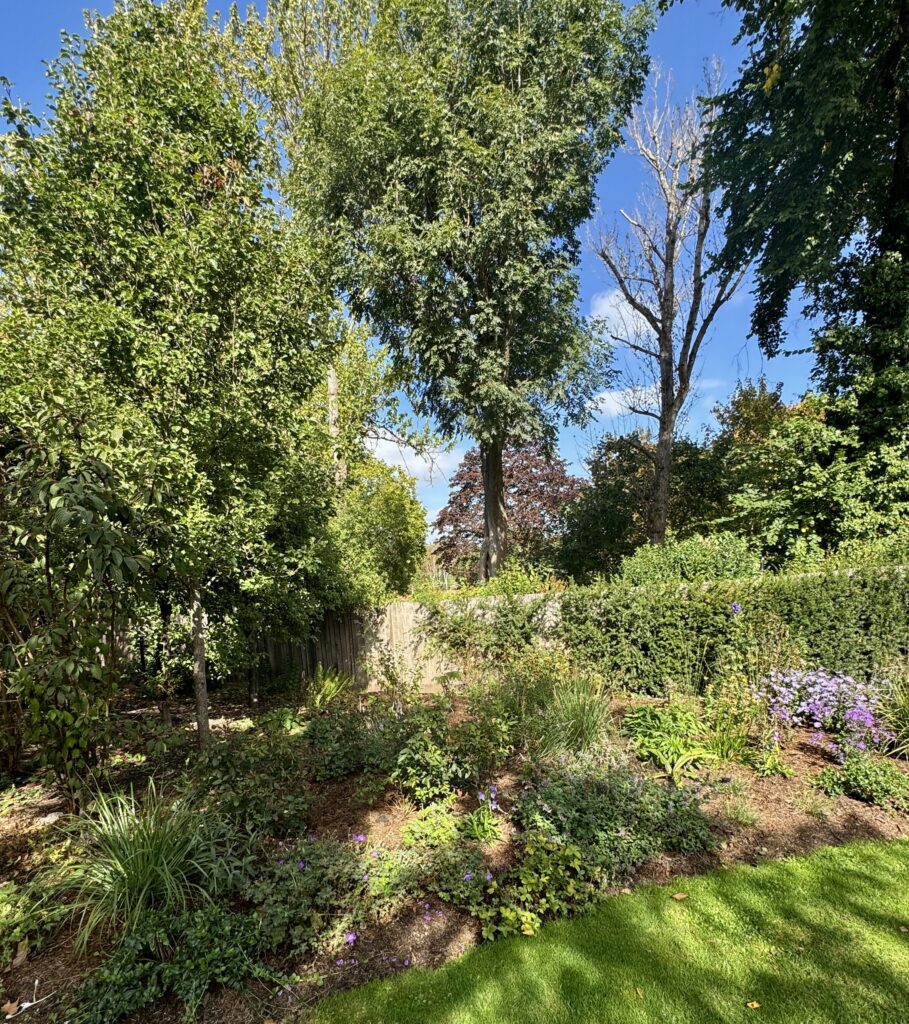
Pretty views into the distance …
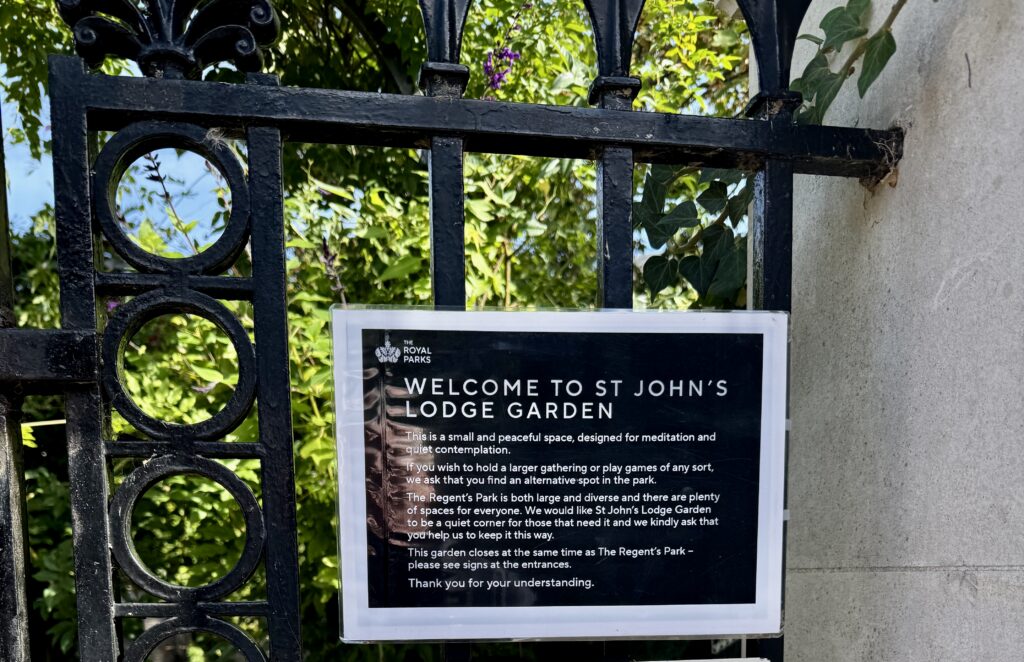
Well, you may be surprised to find out, as I was when I visited, that it’s a little hidden enclave in Regent’s Park. It is very easy to miss the entrance with its discreet signage …
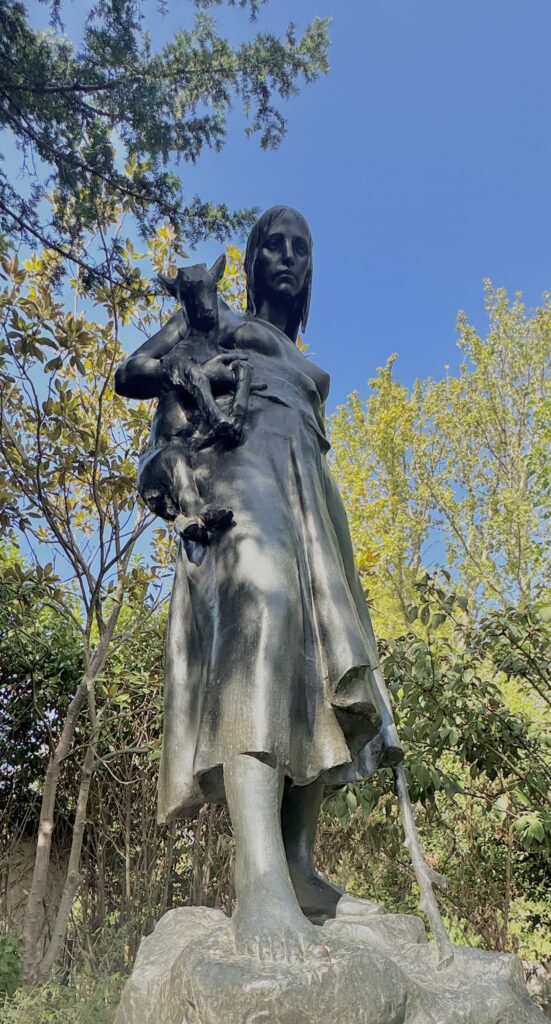
The statue above is entitled The Goatherd’s Daughter. It’s a Grade II listed bronze of a woman carrying a young goat and was erected in honour of Harold and Gertrude Baillie Weaver by the National Council for Animal Welfare in 1932. Designed by Charles Leonard Harwell, it won him the Royal British Society of Sculptors Silver Medal. The inscription reads: “To all the Protectors of the Defenceless”.
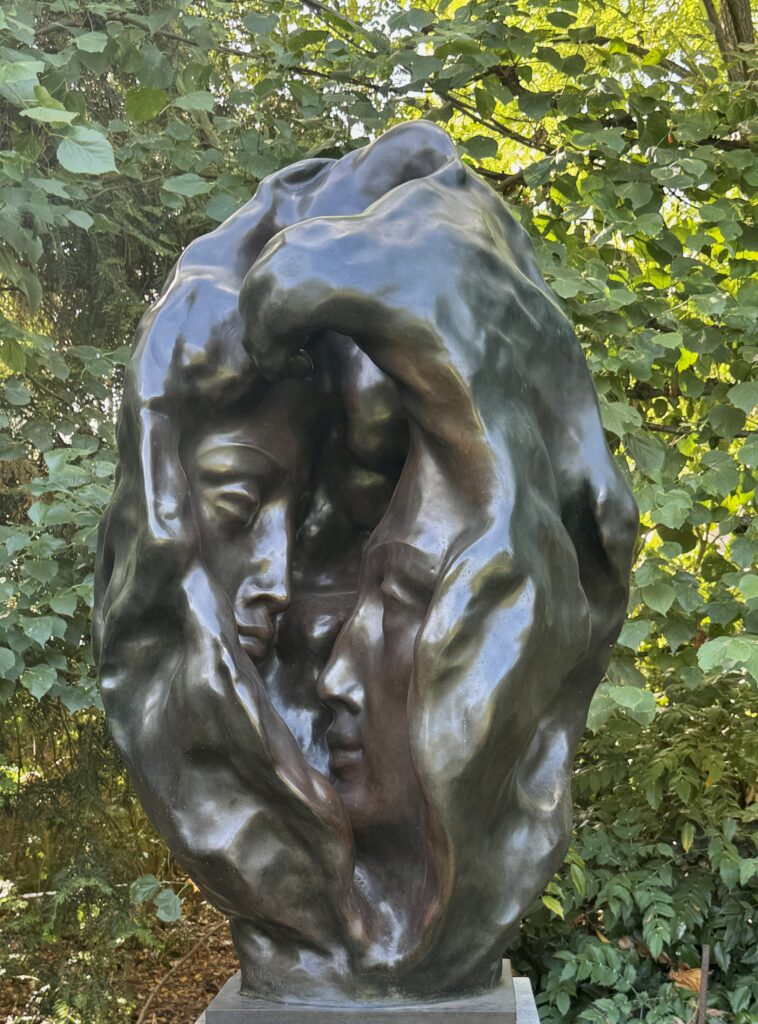
This sculpture by Unus Safardier (b. 1968) is entitled The Awakening and is inscribed on the plinth “In fond memory of Anne Lydia Evans 1929-1999 who shared the secret of this garden” …
Anne was a local GP who, in 1980, took a year off to become professor of family health at the American University in Beirut. After witnessing the ferocity of the war in Lebanon, she was drawn, when she returned to London, to work with the Medical Foundation for the Care of Victims of Torture.
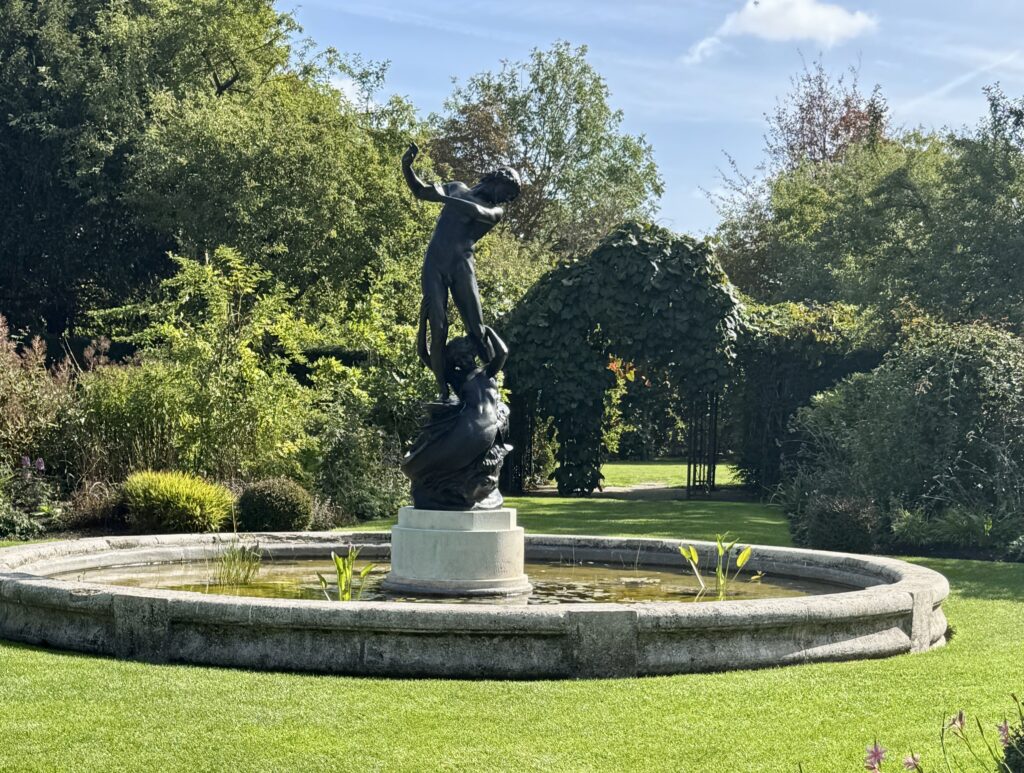
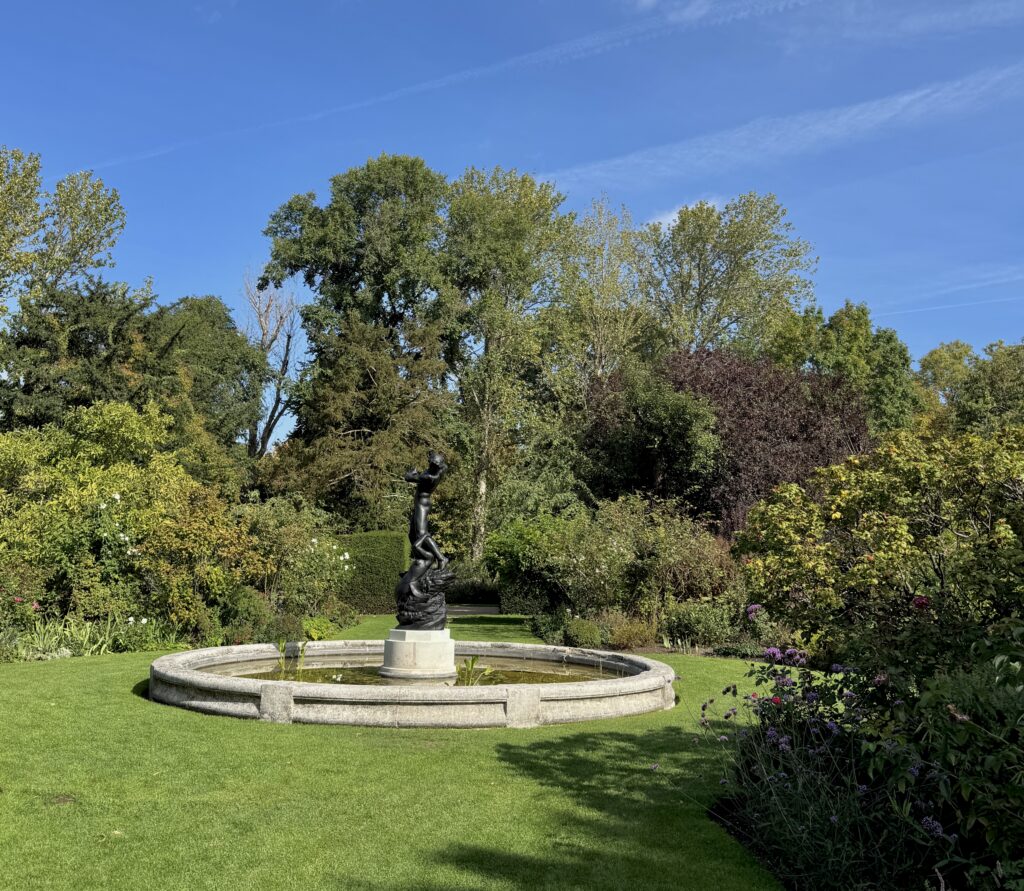
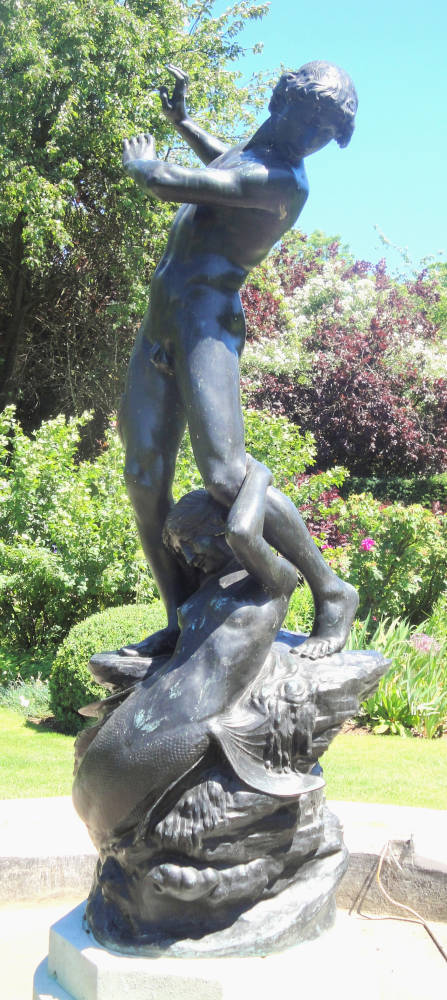
The Statue above the pond is Hylas and the Nymph by Henry Pegram, completed 1922 and installed here in 1933 …
You can read more about the work and see more images here.
A beautiful place for calm and contemplation …
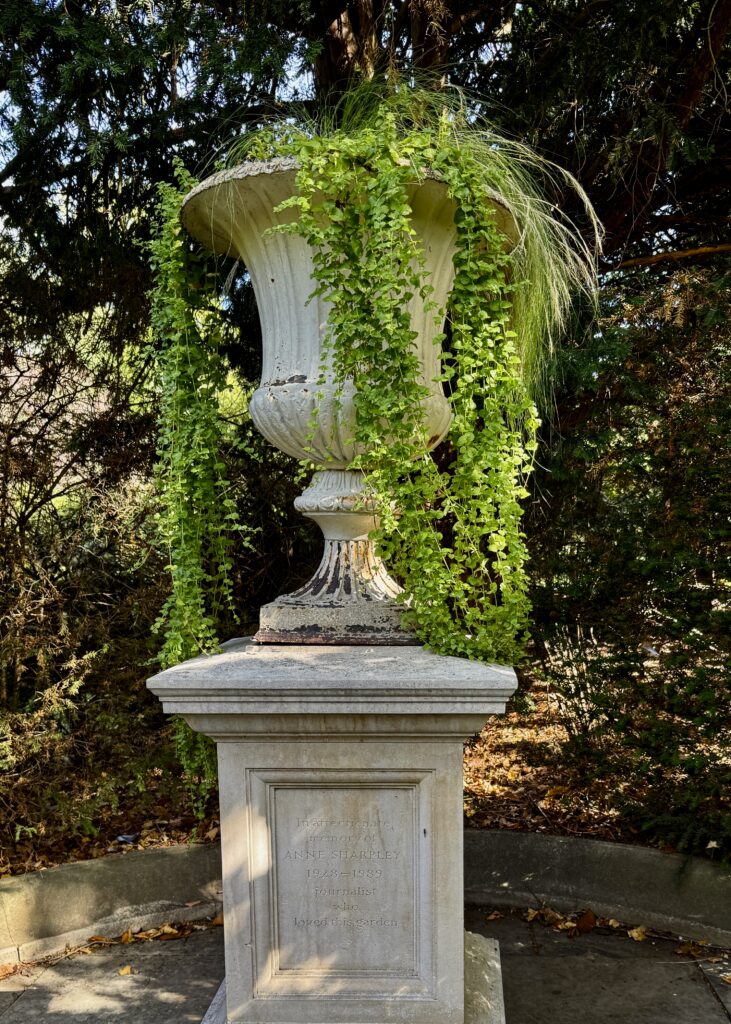
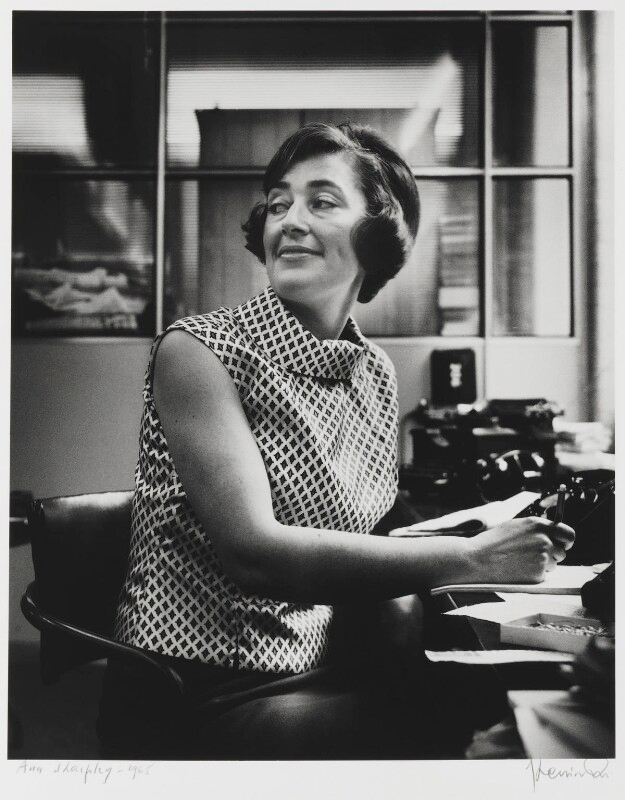
Incidentally, just inside the entrance is this memorial to the journalist Anne Sharpley (1928-1989) …
A true Fleet Street character. According to her Wikipedia entry, she reputedly told Ann Leslie that a female foreign correspondent should: ‘First, sleep with the resident Reuters correspondent and then with the chief of police. That way you’ll pick up stories before anyone else’. She was known for scooping other reporters with her account of Winston Churchill‘s funeral, by vandalising a telephone after filing it, thereby delaying her rivals’ reports. At work in the newsroom, reportedly Randolph Churchill nicknamed her ‘Shapely Sharpley’ …
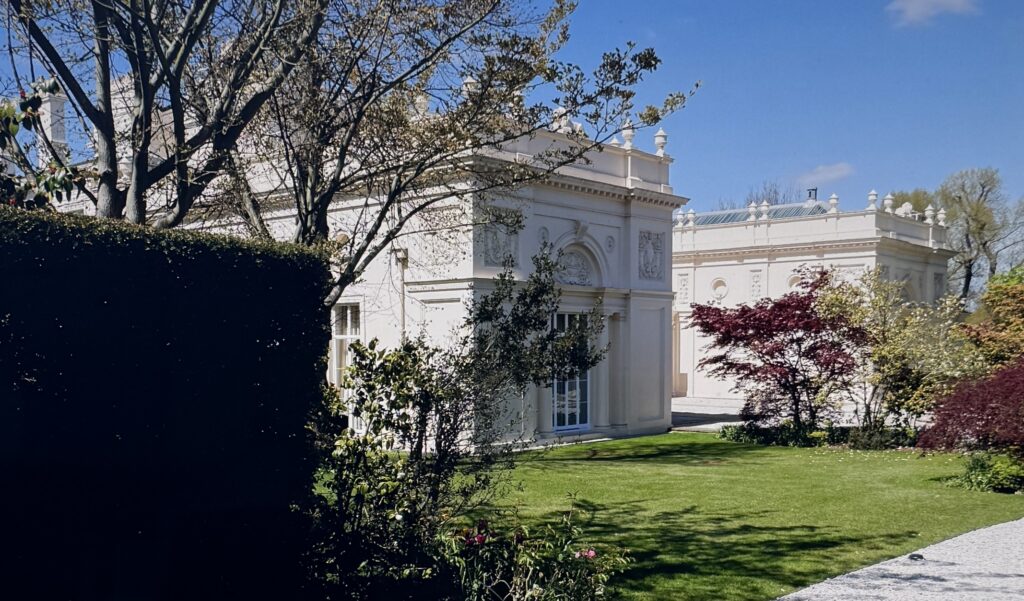
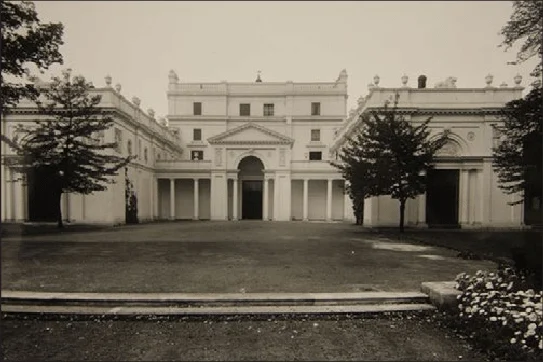
It was originally built in 1818 by John Raffield and was the second villa in the park to be occupied. In 1847 it belonged to the wealthy and eminent Goldsmid brothers and was greatly enlarged by Charles Barry. In 1889 the lease was acquired by the 3rd Marquess of Bute, who commissioned Robert Weir Schultz to improve the garden layout. The building was later used as a hospital for disabled officers during the First World War, it was the Headquarters of St. Dunstan’s from 1921-1937 and the Institute of Archaeology 1937-58. An image from the late 1940s …
It is now a private residence, with public access to the gardens. I strongly recommend reading more about its fascinating history as a hospital and a rehabilitation centre here.
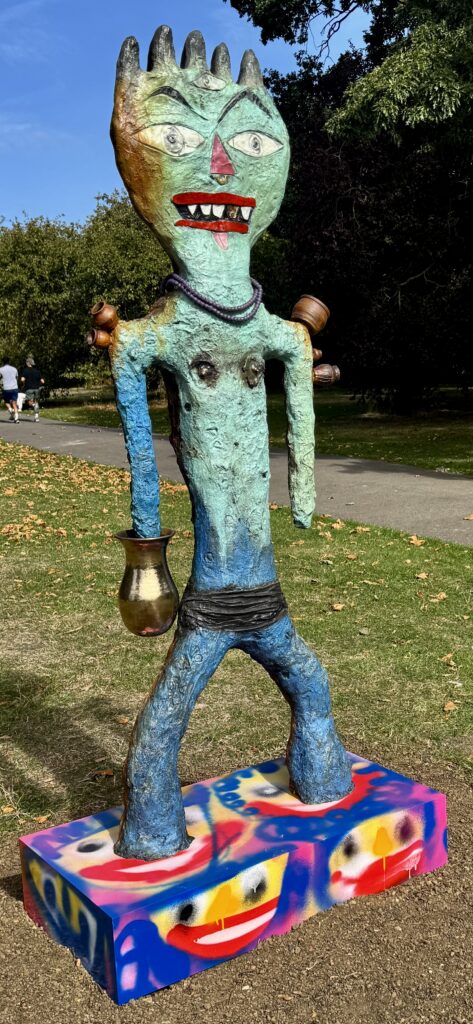
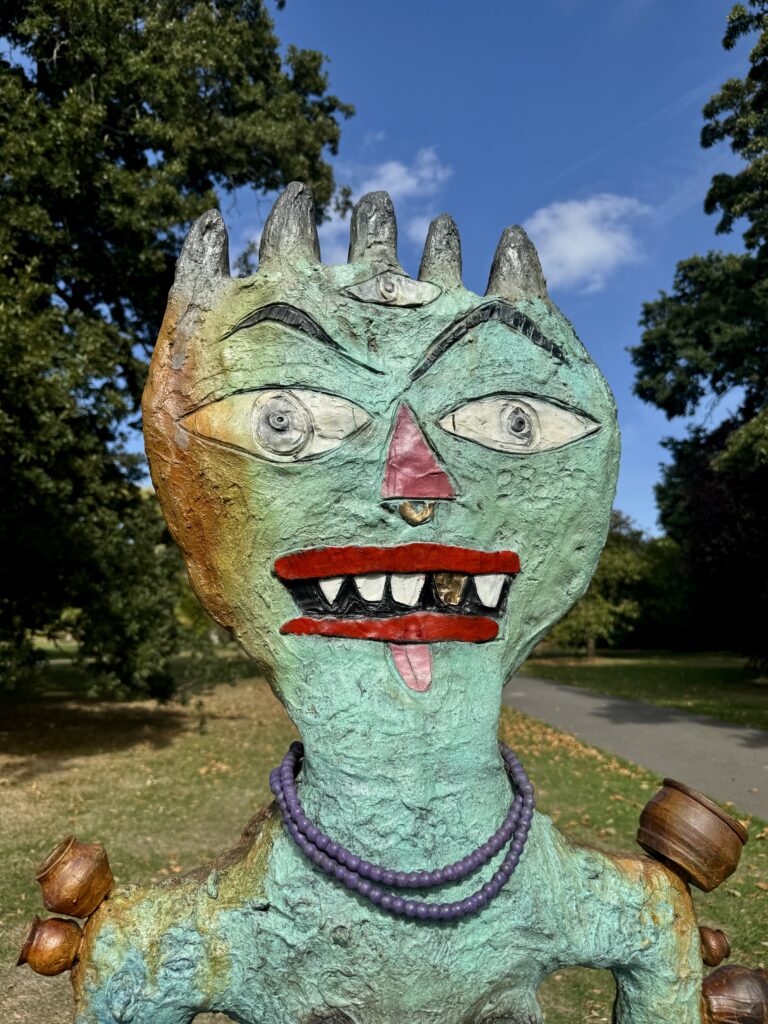
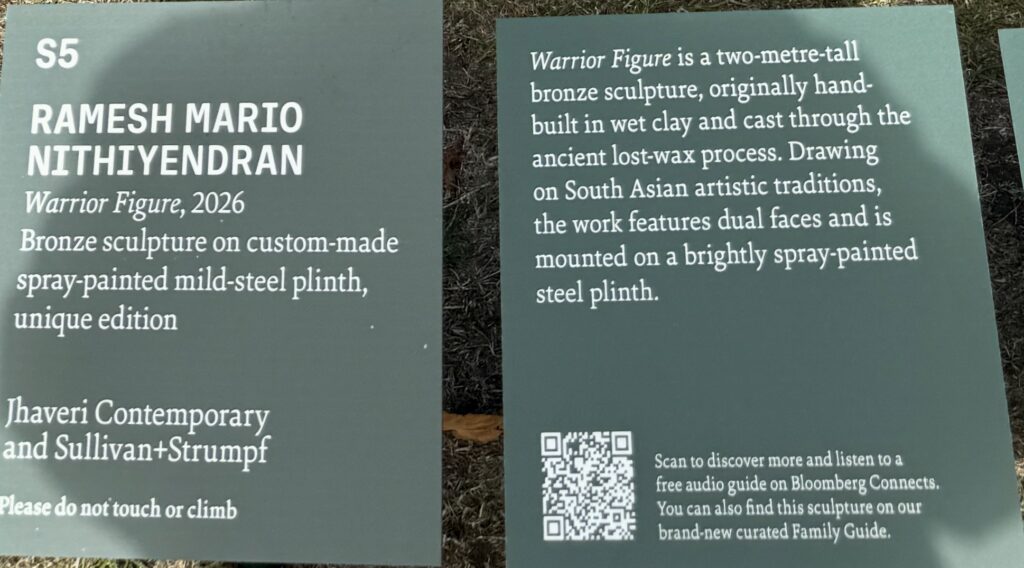
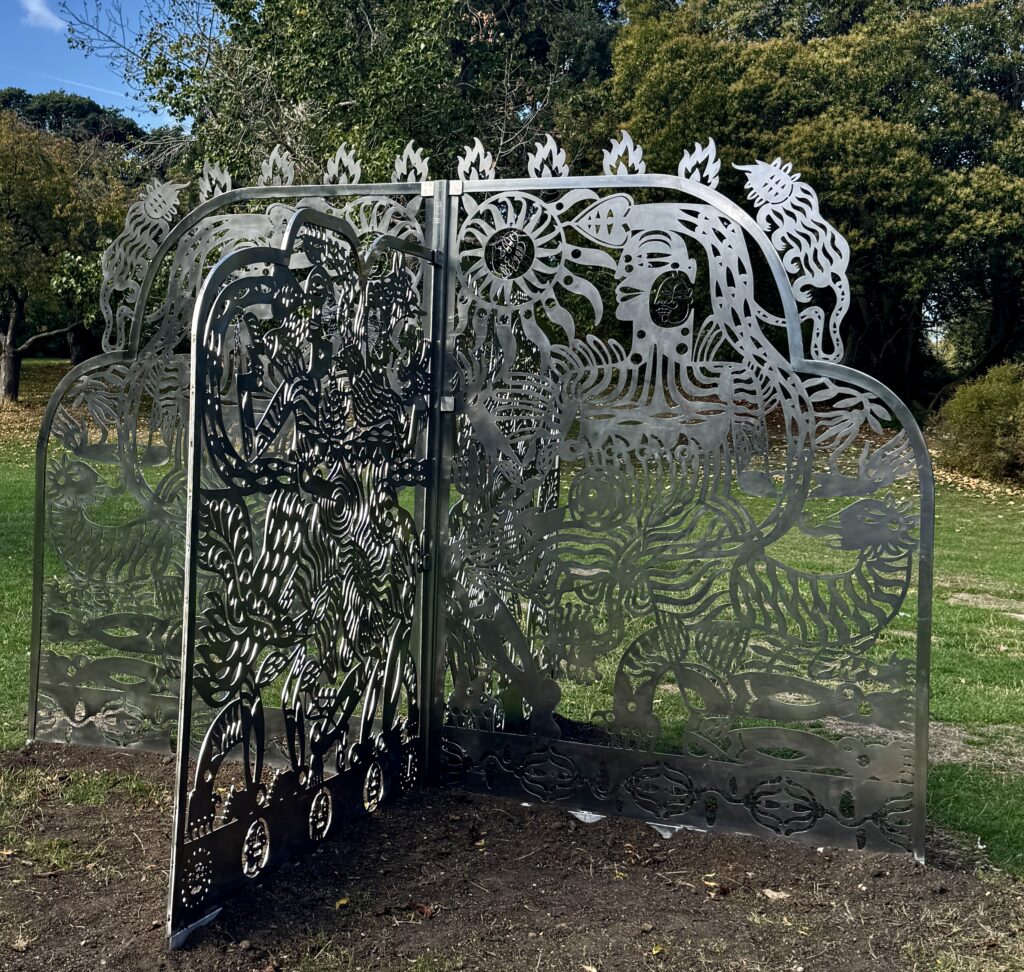
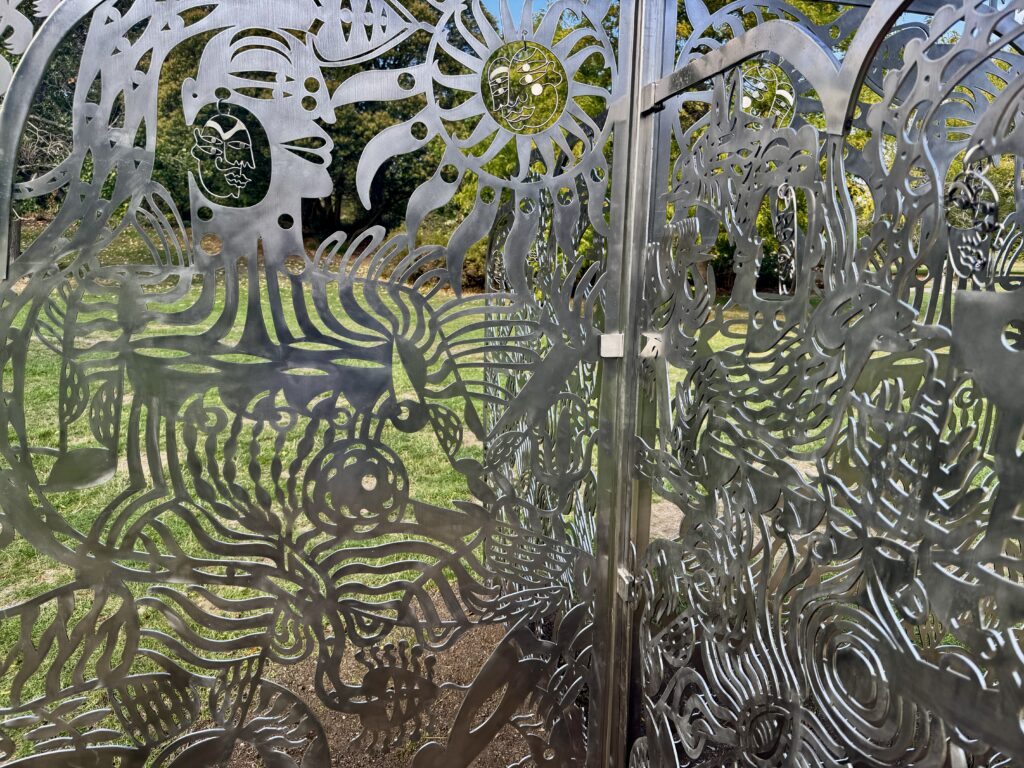
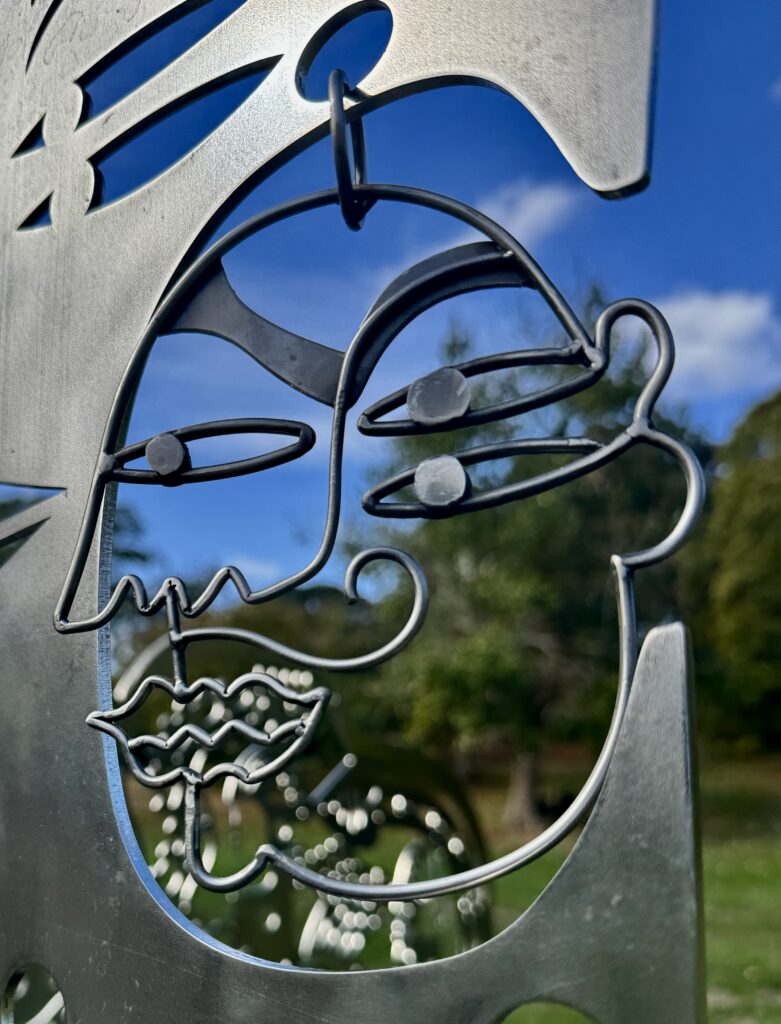
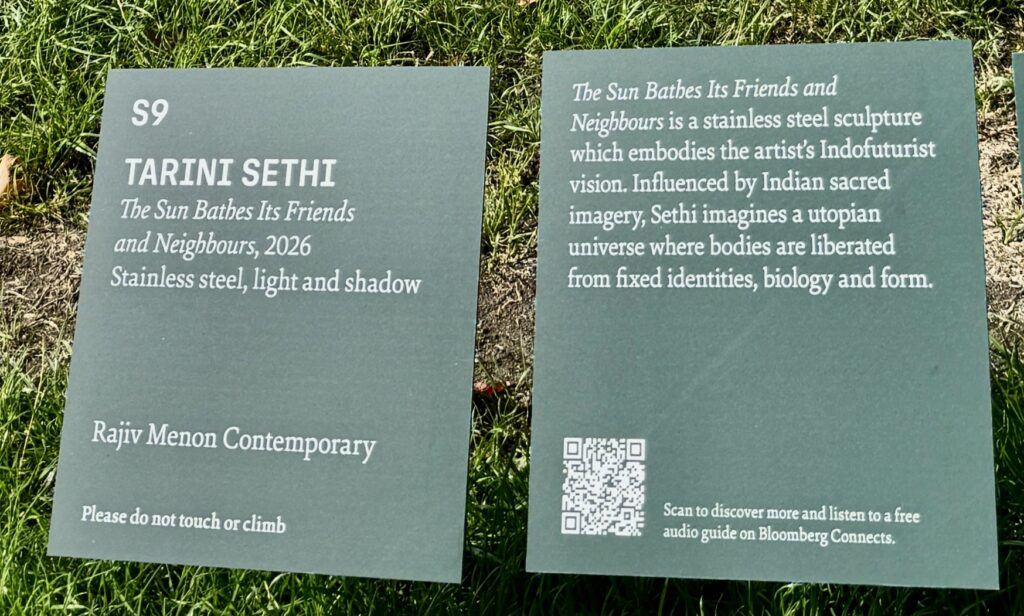
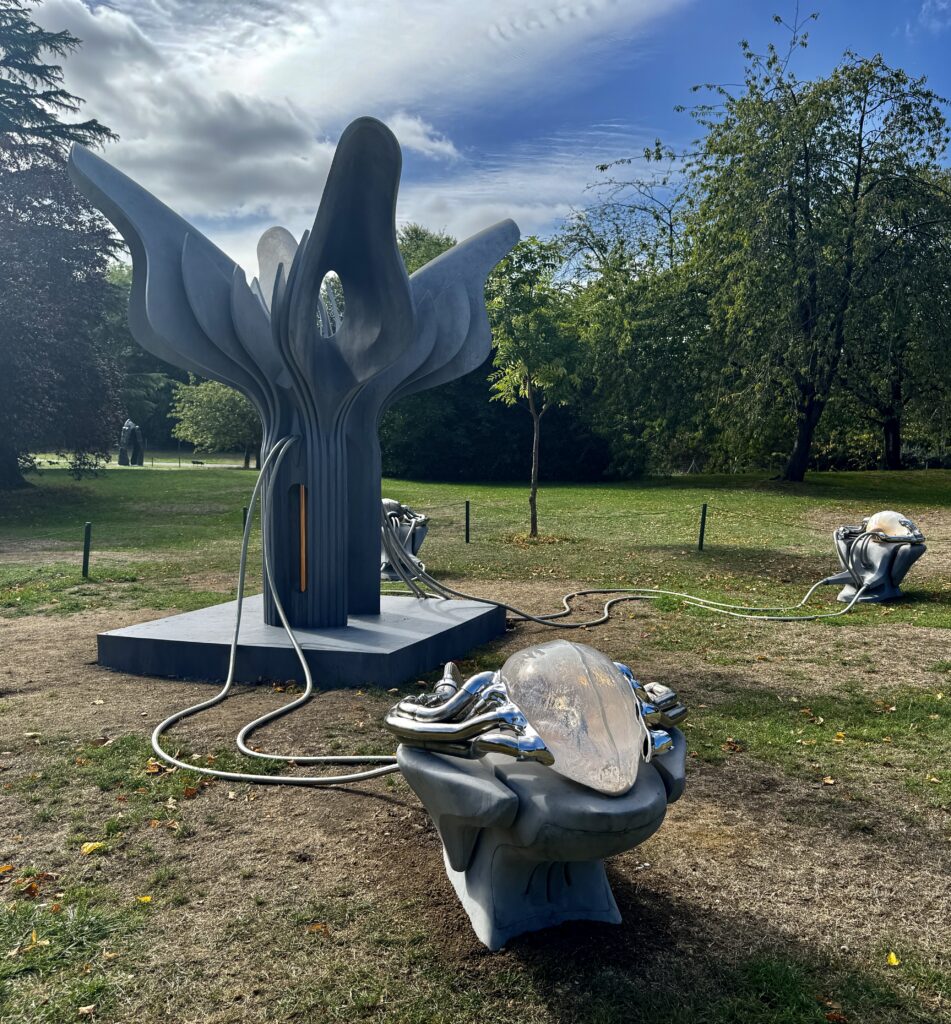
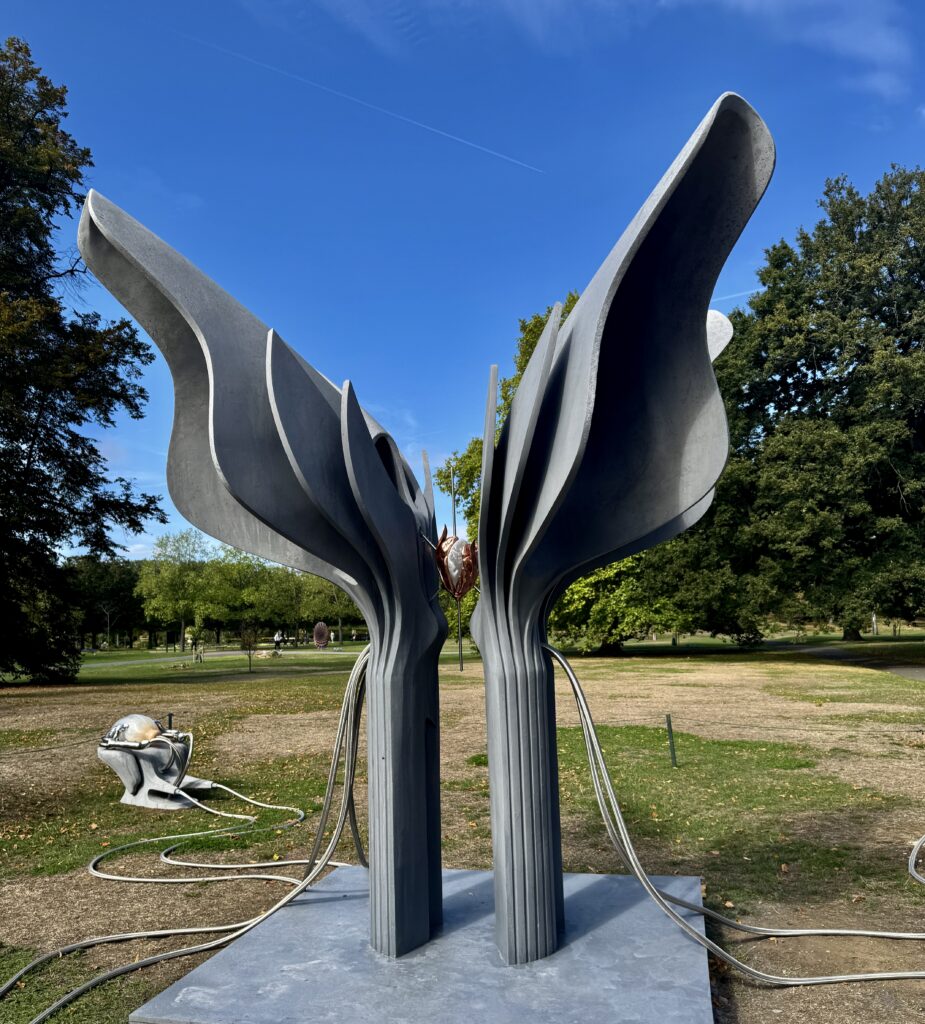
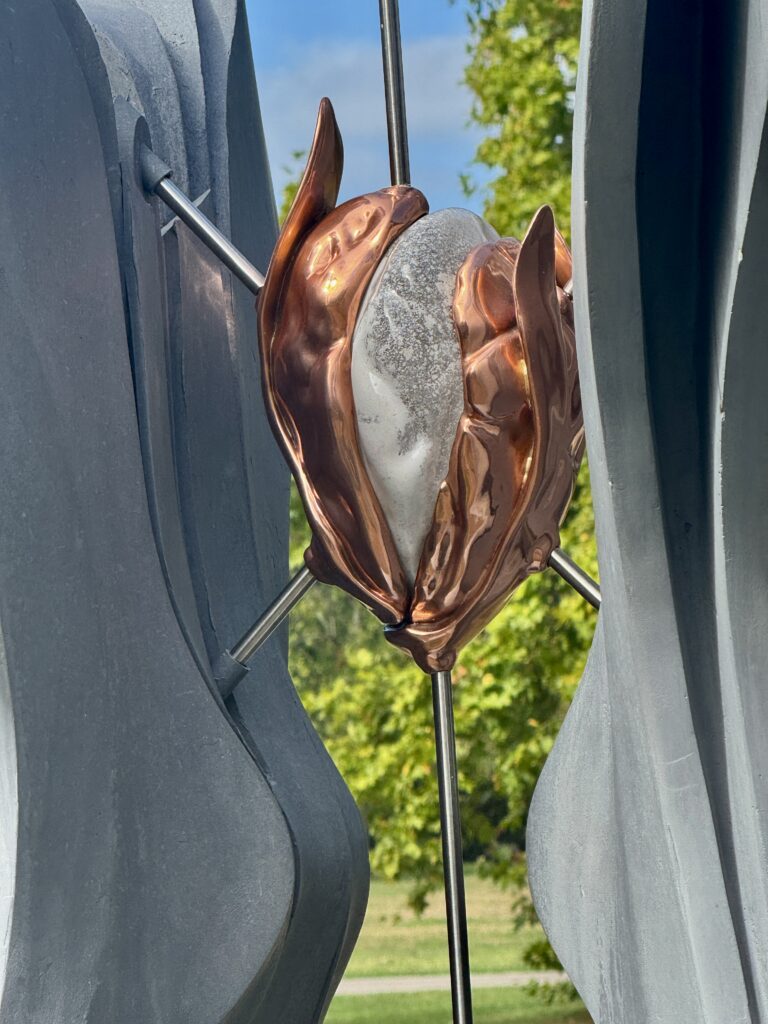
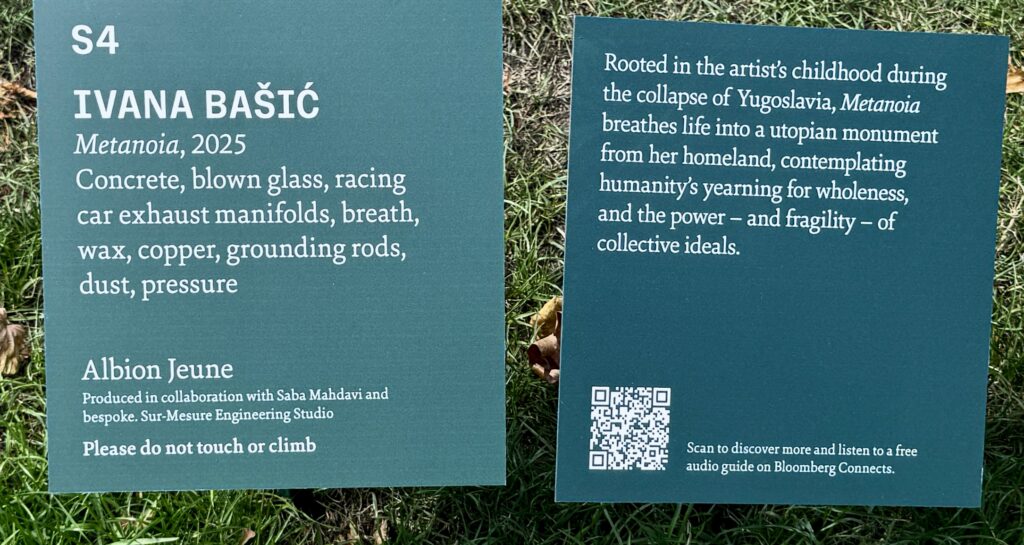
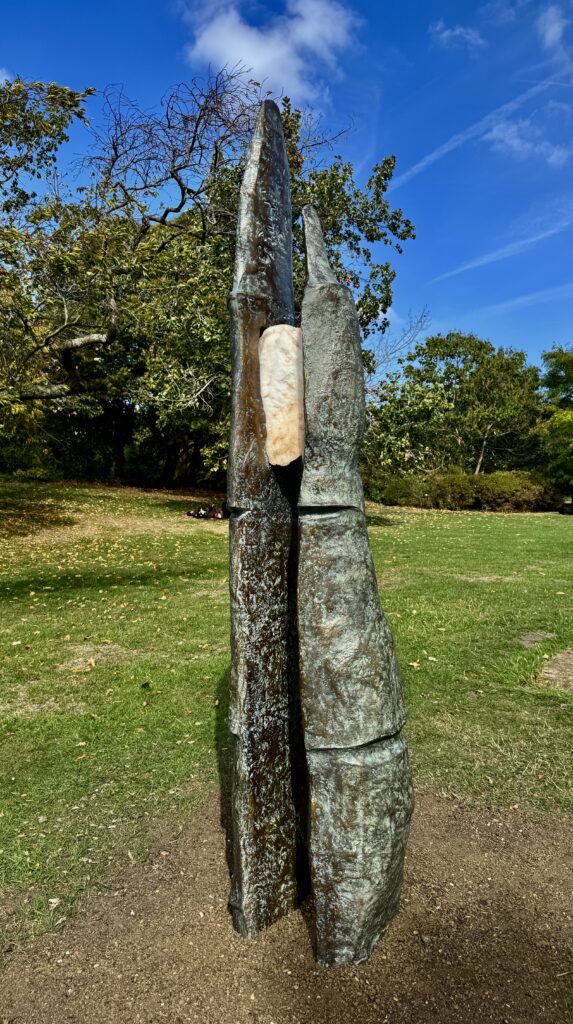
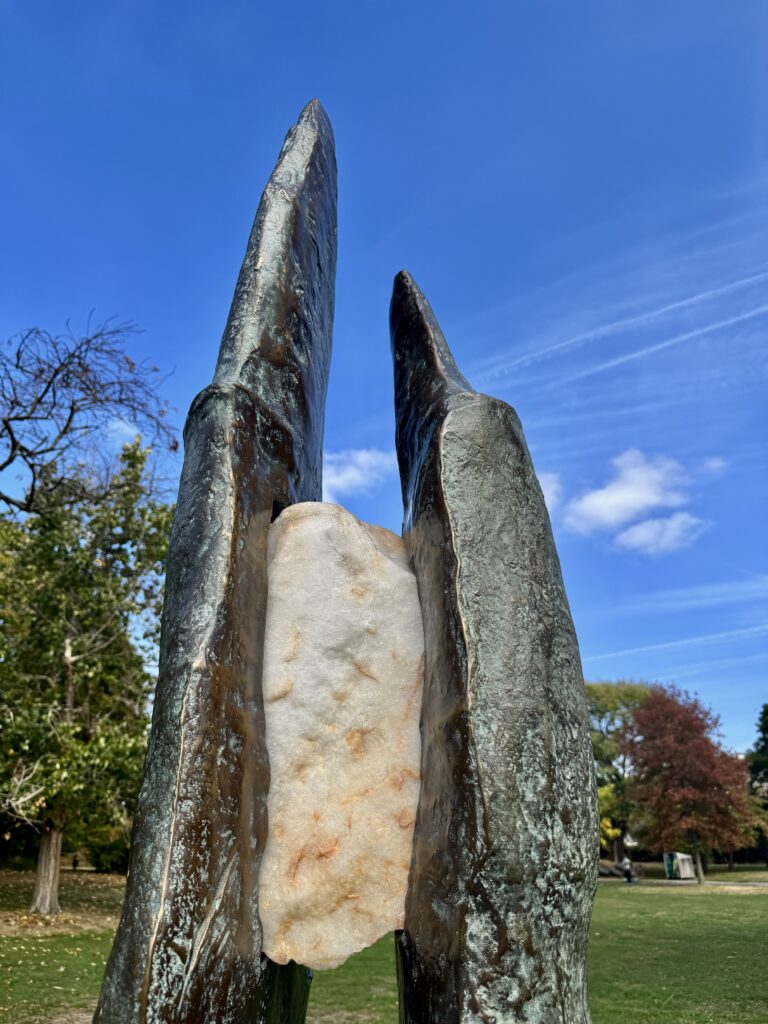
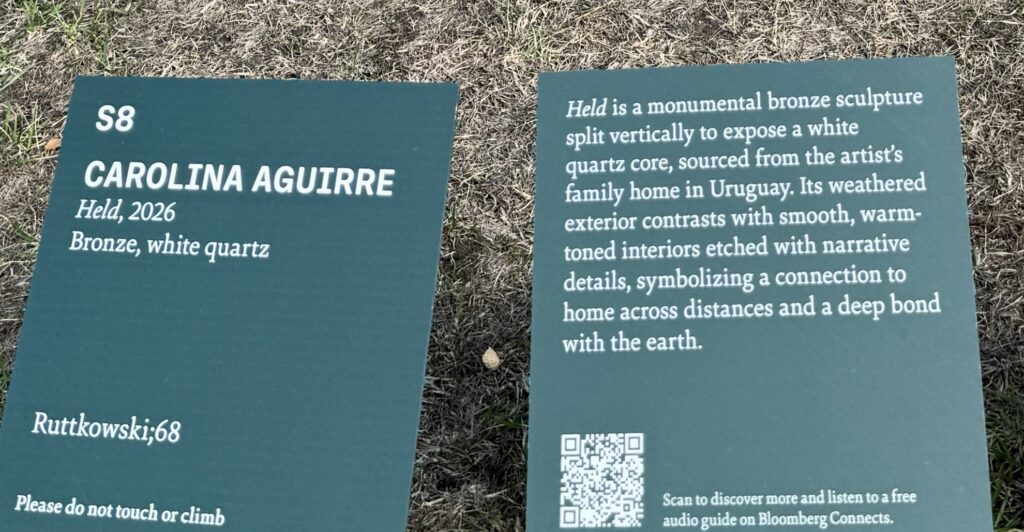
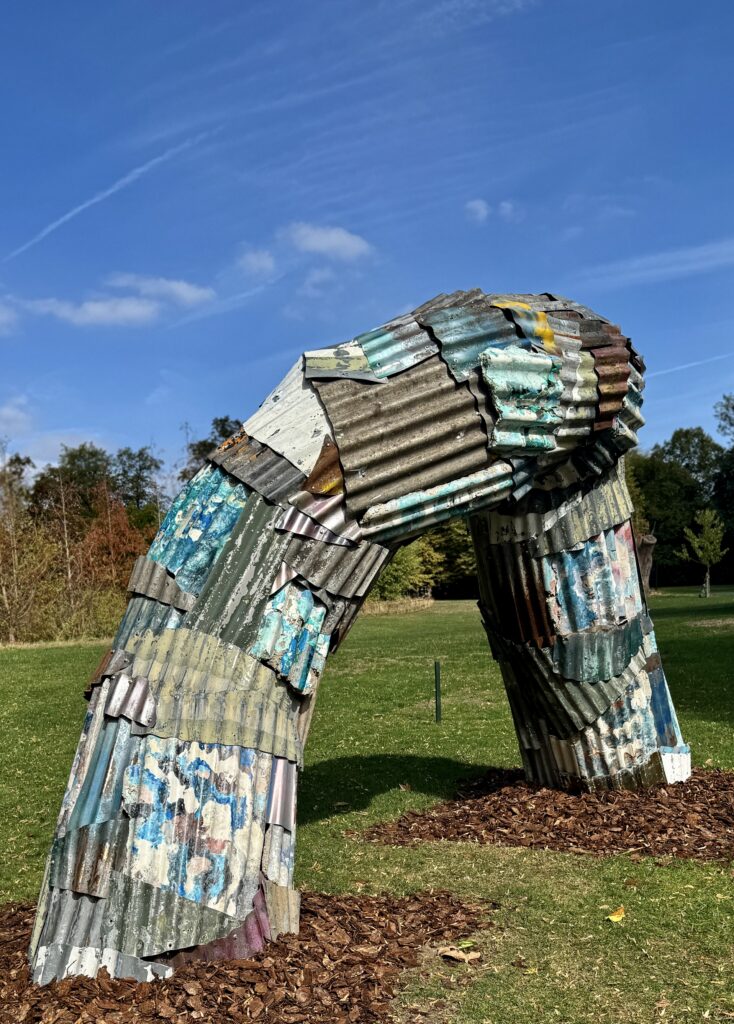
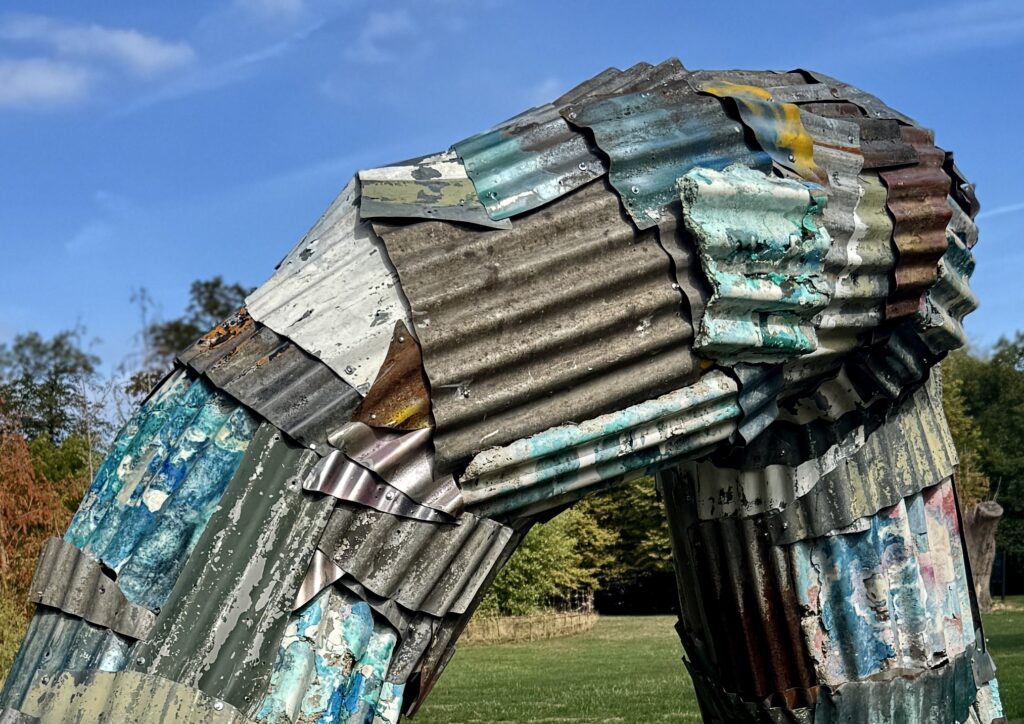
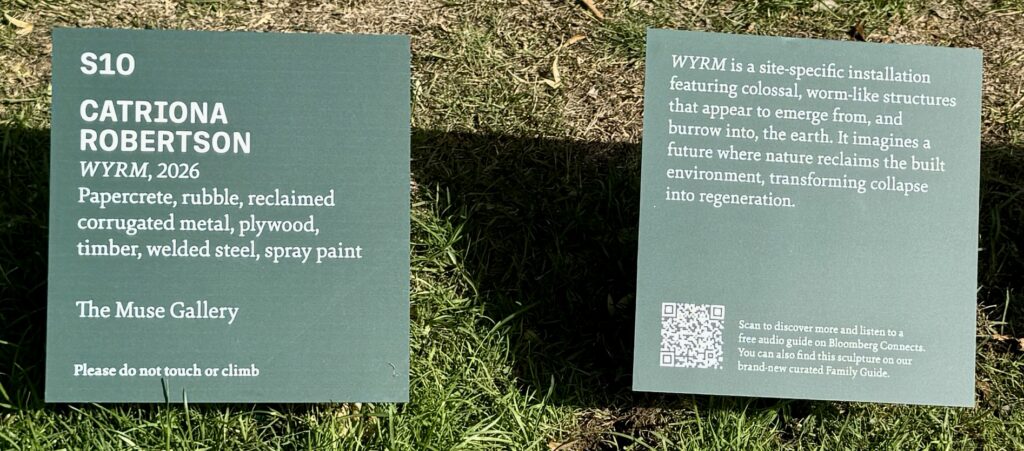
It was a nice surprise to find that Frieze Sculpture had returned to the park and will remain there until 1 November 2026. It is its fourth year curated by Fatoş Üstek and includes 11 leading international artists whose work will be sited throughout gardens.
Here is a selection.
I shall publish a few more images next week.
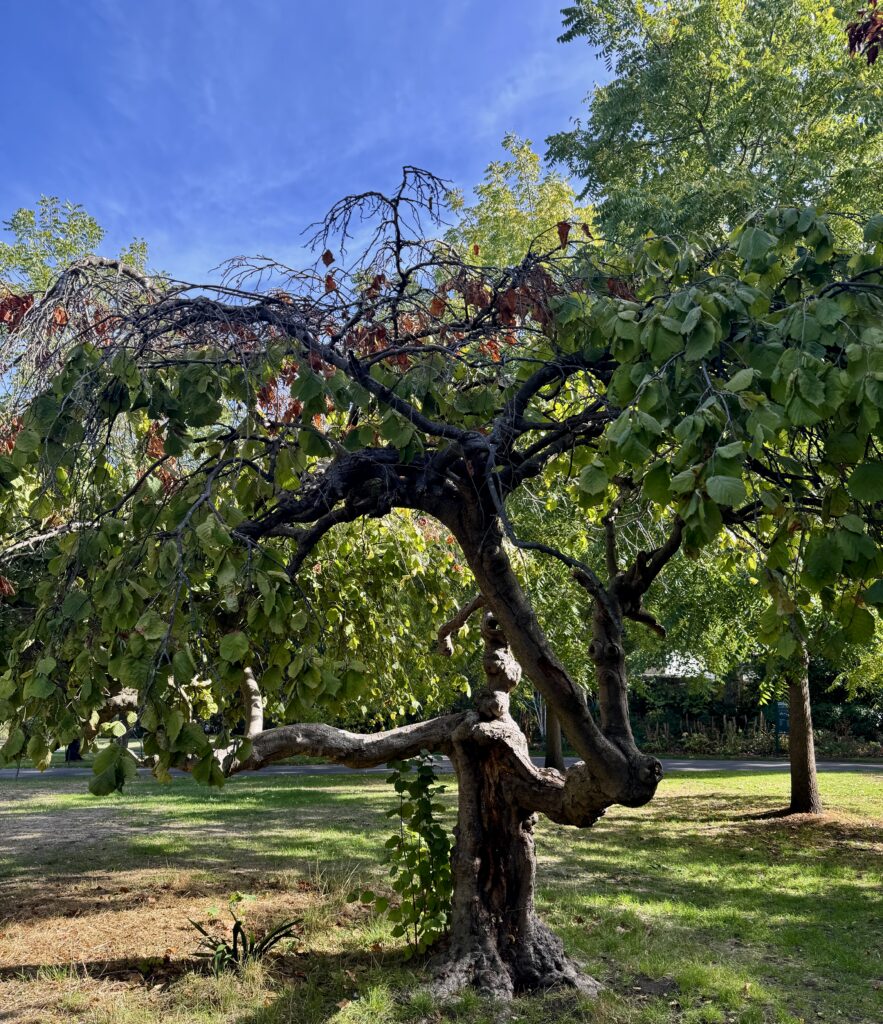
I loved the shape of this old tree …
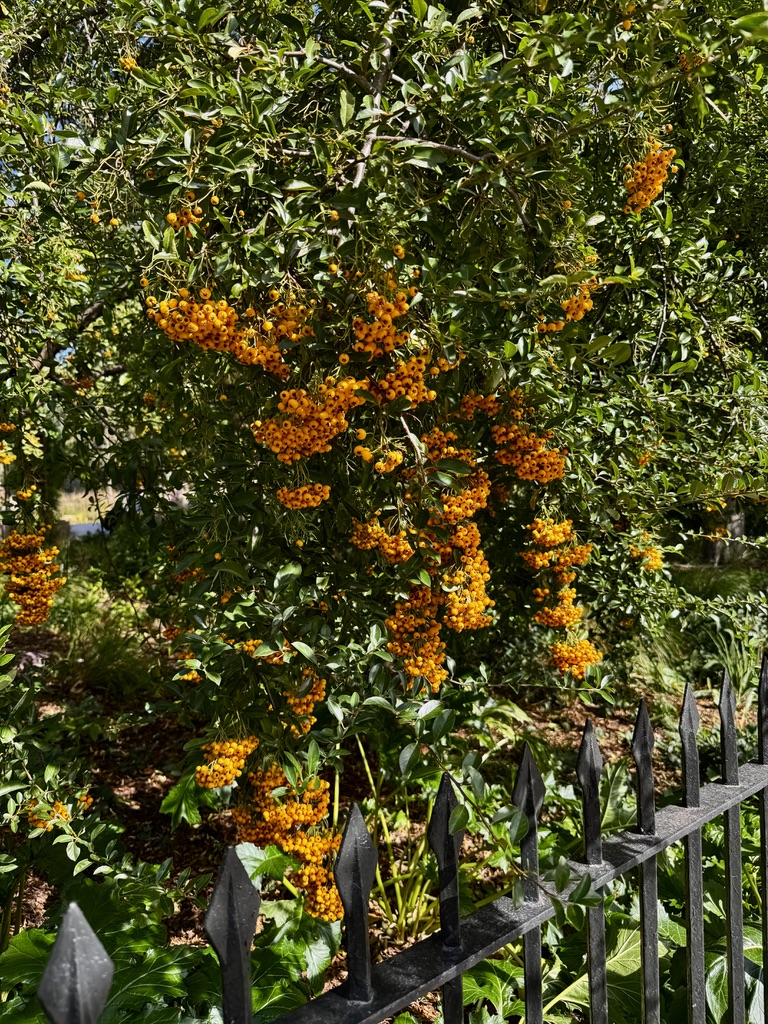
As seen from the Regent’s Park Inner Circle on the way to the St John’s Garden, Cotoneaster rothschildianus, an semi-evergreen shrub or small tree famed for its clusters of creamy-yellow berries …
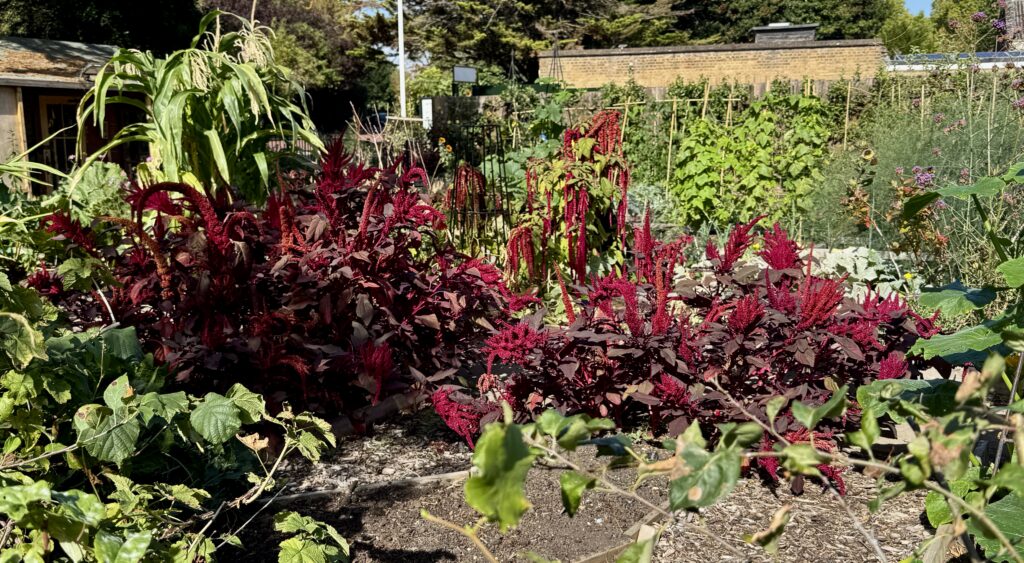
And Amaranthuscaudatus …
An eye-catching annual plant famously known by the common names love-lies-bleeding, pendant amaranth, cat’s tail and, apparently, ladies’ riding whip (!).
In other news.
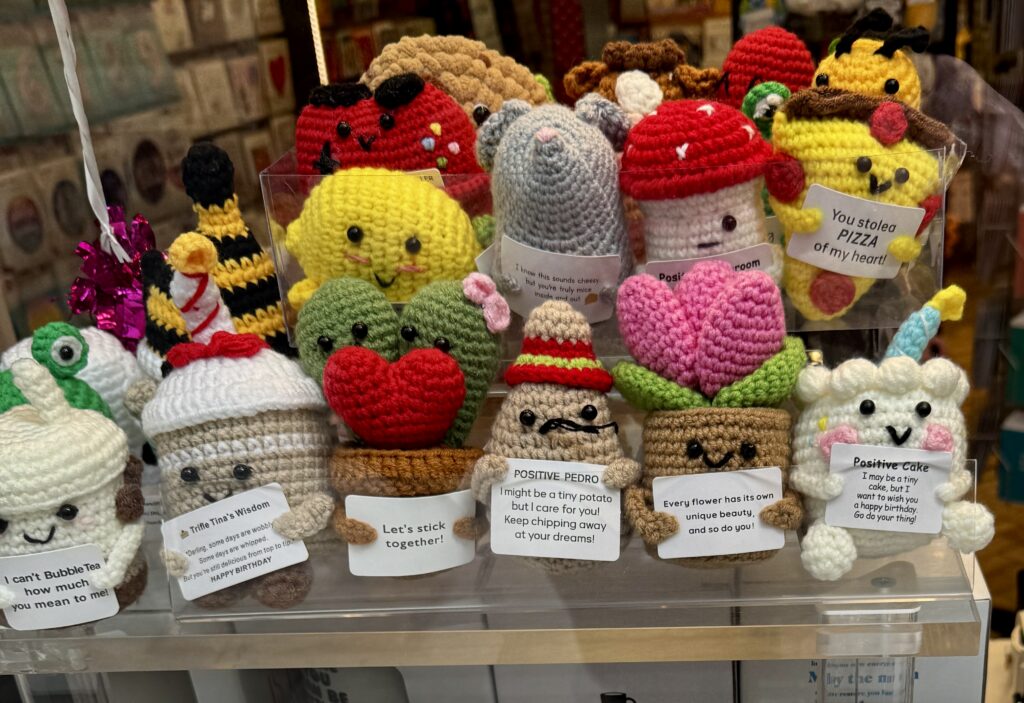
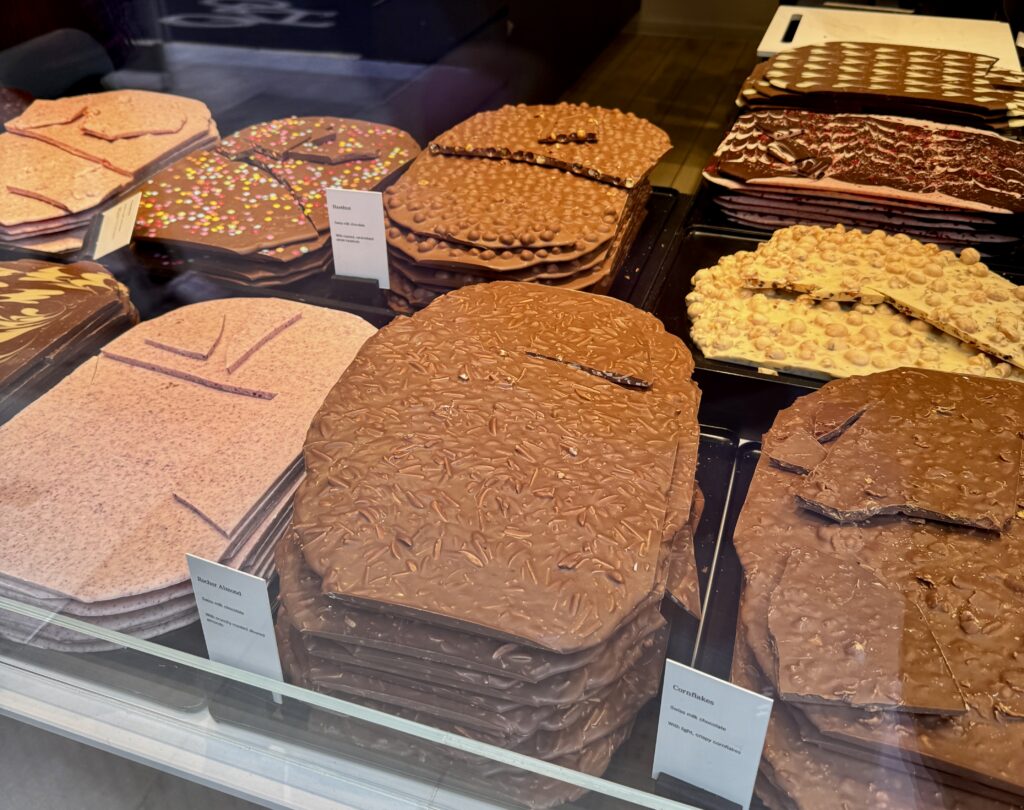
Am I weird for really liking these?
Big slabs of chocolate. My mum used to make a version of the cornflake one (happy days) …
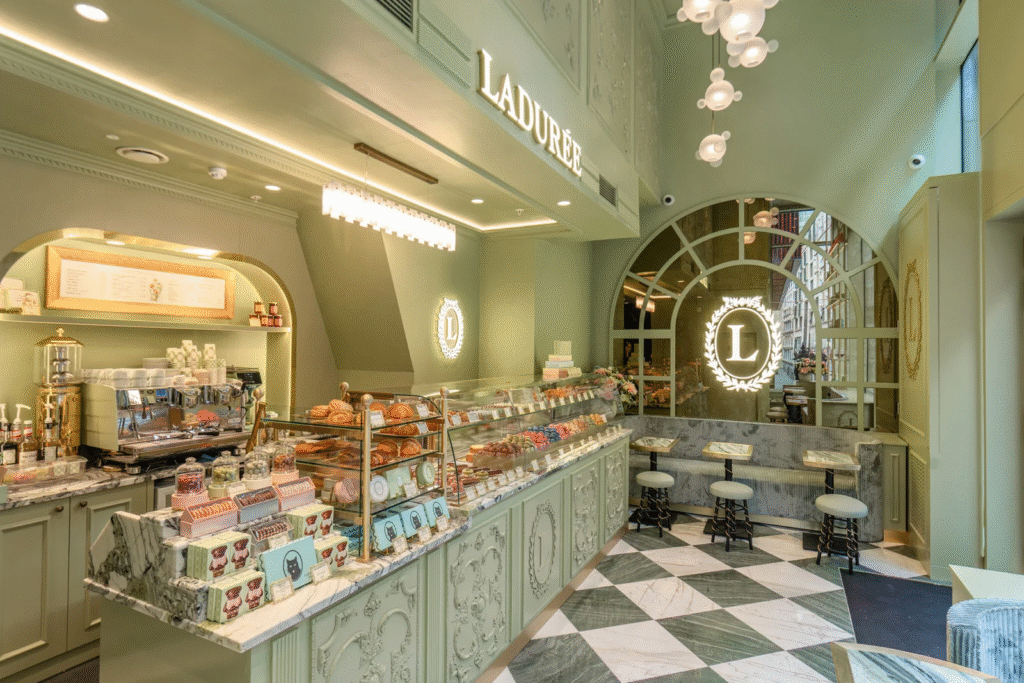
The seriously posh and French Ladurée at Broadgate …
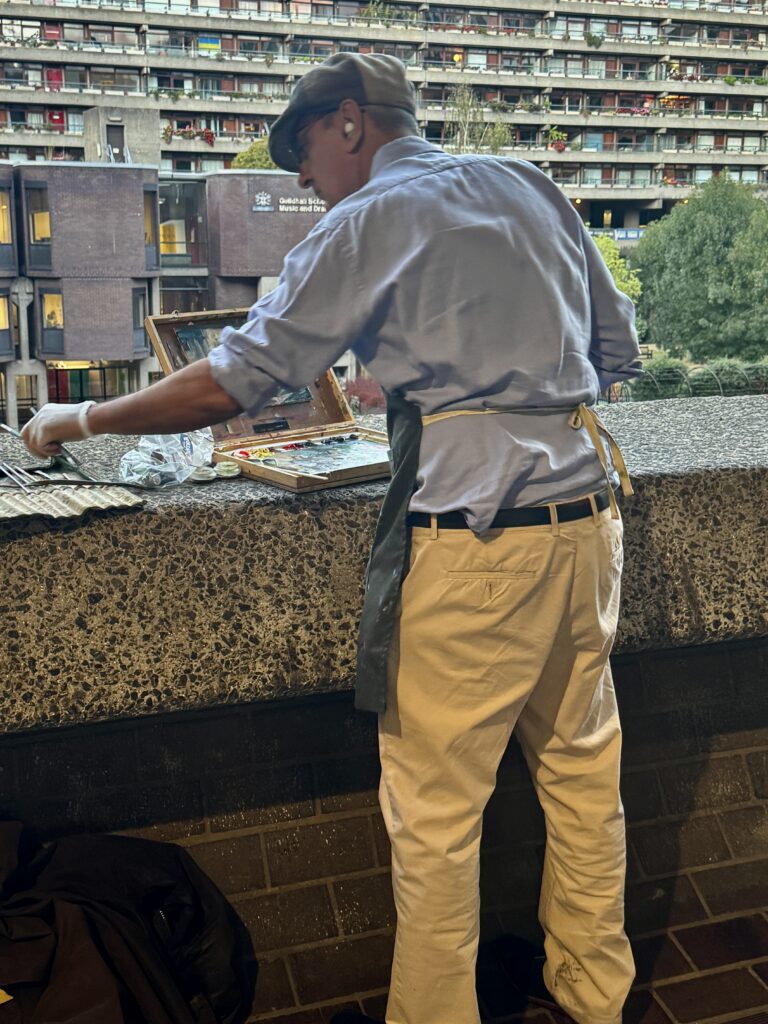
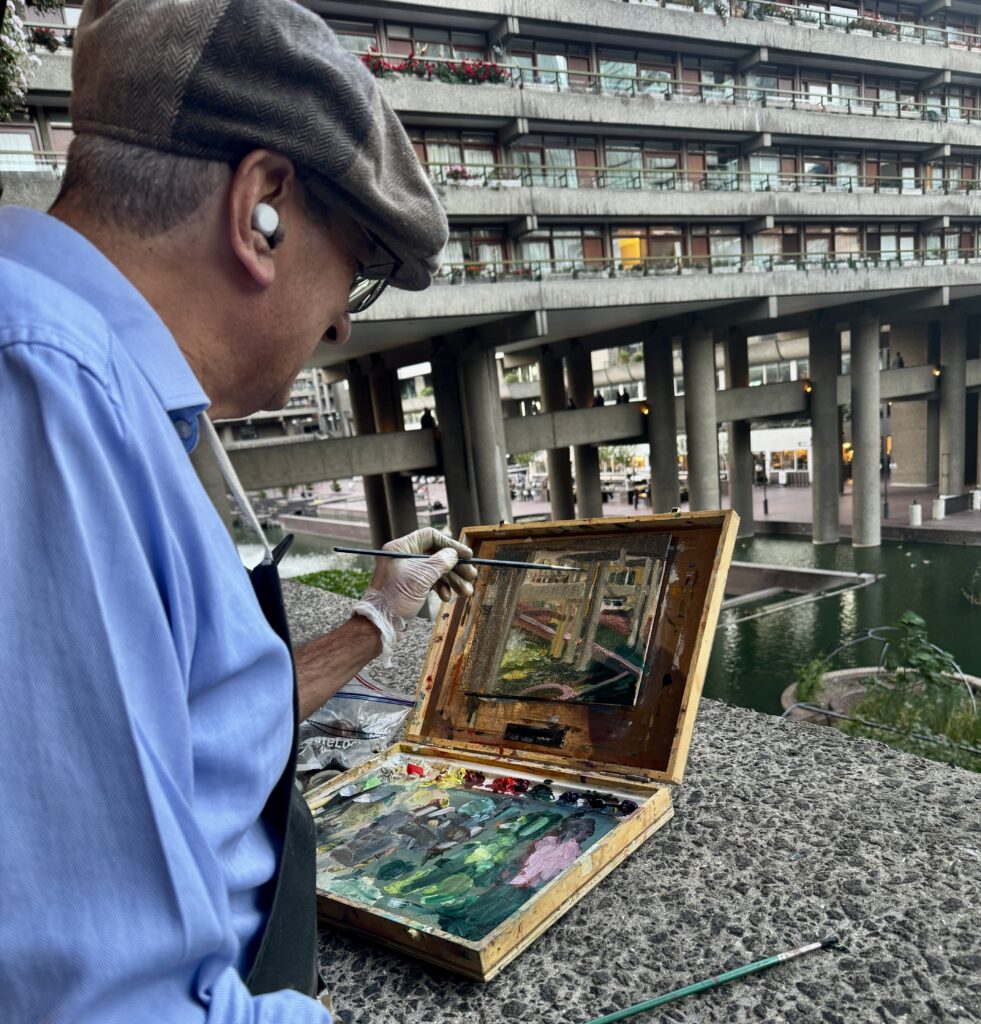
Closer to home, a Barbican artist at work …
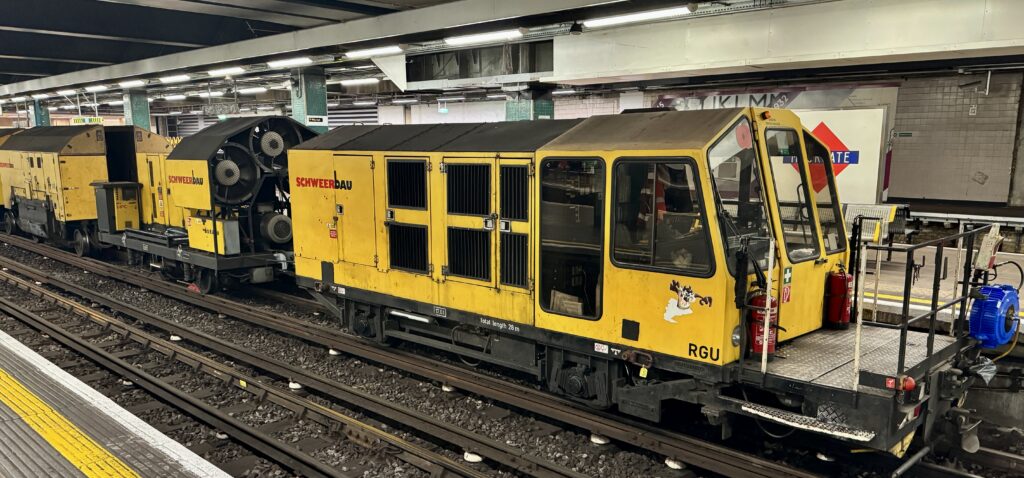
At Moorgate station …
Professor Google tells me ‘A Schweerbau rail grinder is a specialised compact maintenance machine used to profile, smooth, and remove surface defects or corrugation from railway tracks’.
Love this mad character. Who says the Germans don’t have a sense of humour …
If you would like to follow me on Instagram here is the link …
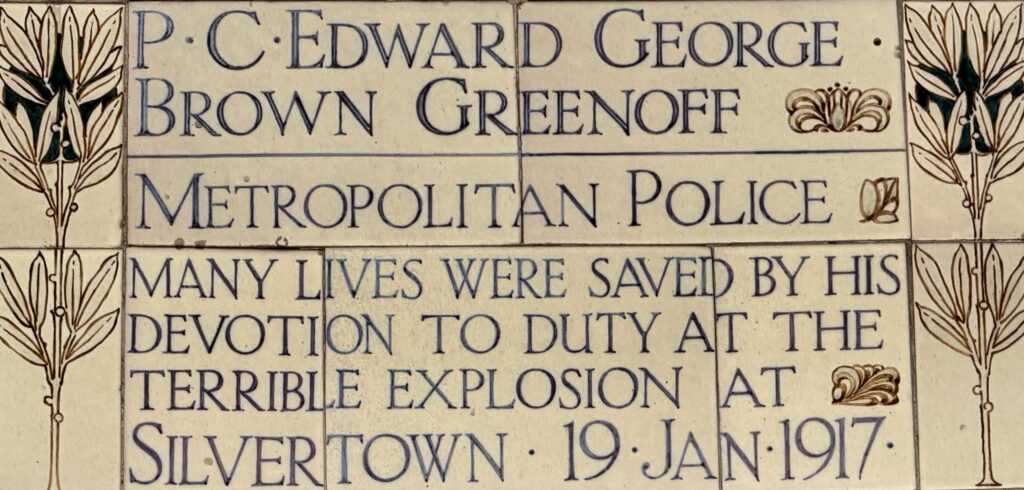
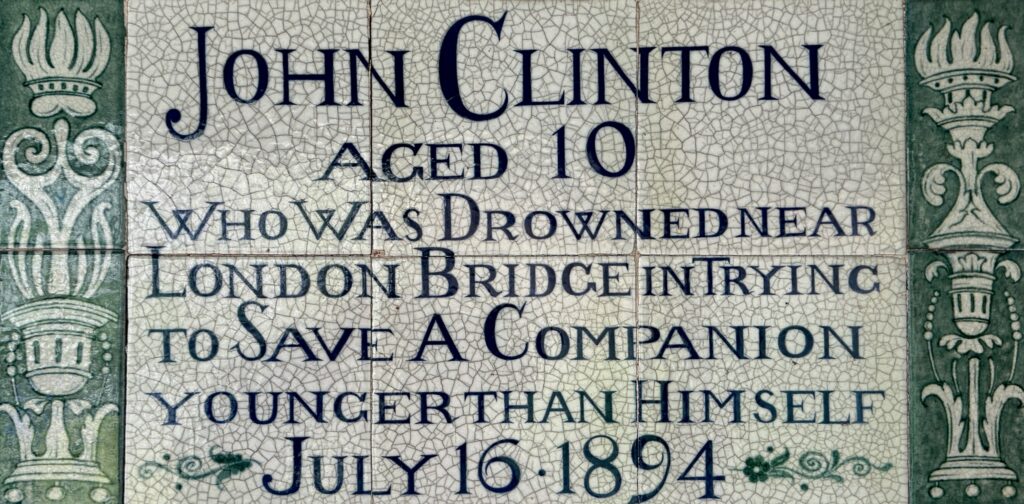
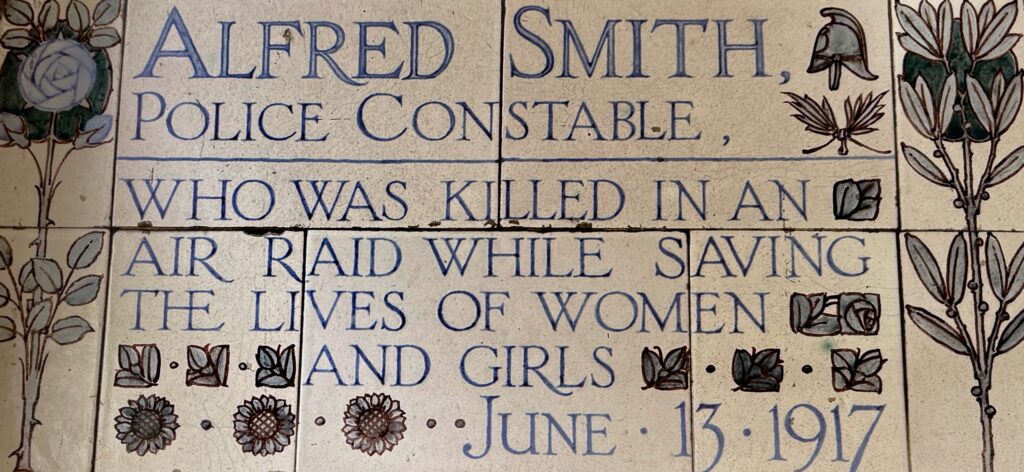
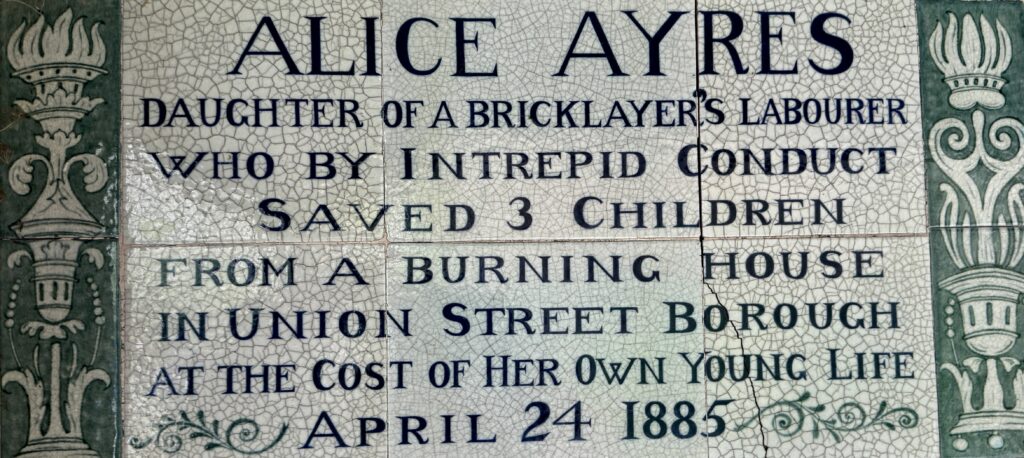
Occasionally I find myself drawn to the peaceful Postman’s Park in King Edward Street (EC1A 7BT). In the late 1890s the idea was mooted that the park would be an ideal location for a memorial to ‘ordinary’ and ‘humble’ folk who had lost their lives endeavouring to save the lives of others. Two of its most enthusiastic supporters were the artists George Frederic Watts (1817 – 1904) and his wife Mary (1849 – 1938). There are some nice images of both him and his wife on the National Portrait Gallery website. Here he is and here his wife Mary. I have written about the memorials before and you can read two of my blogs here and here.
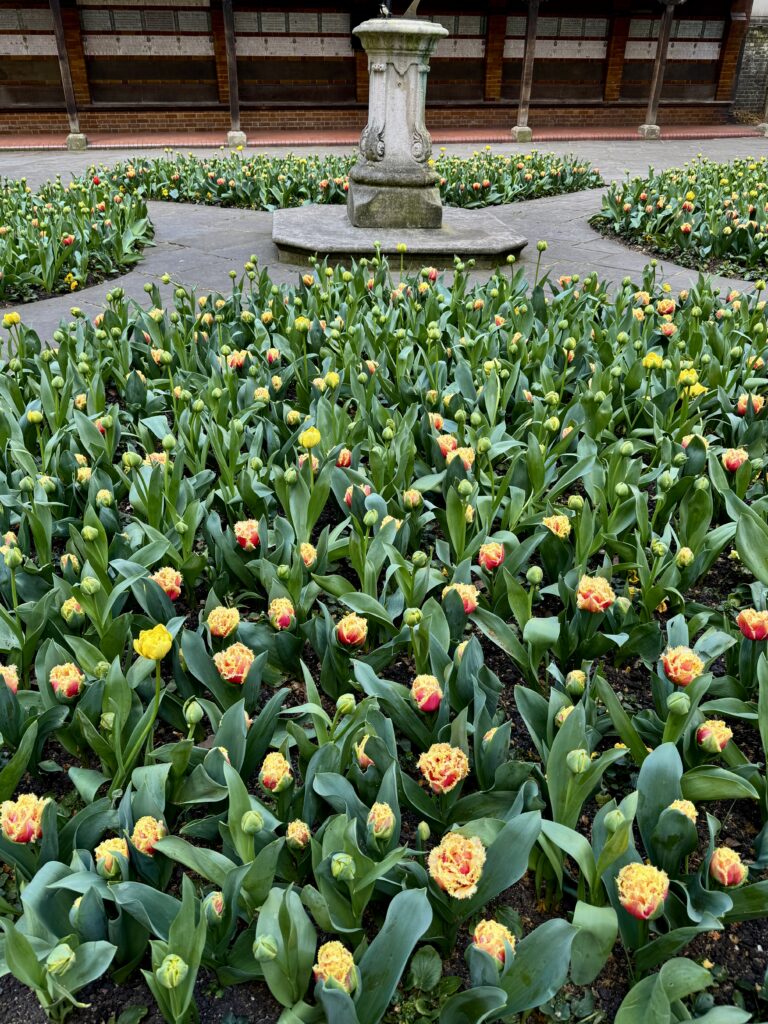
The memorial today in the background behind the sundial …
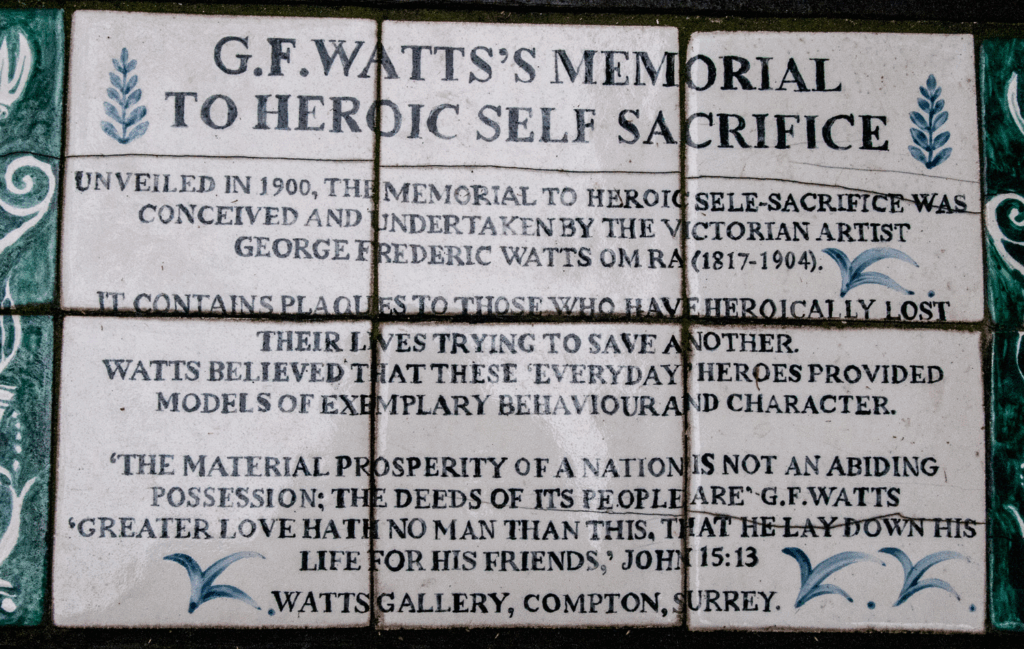
And the plaque describing a little of its story …
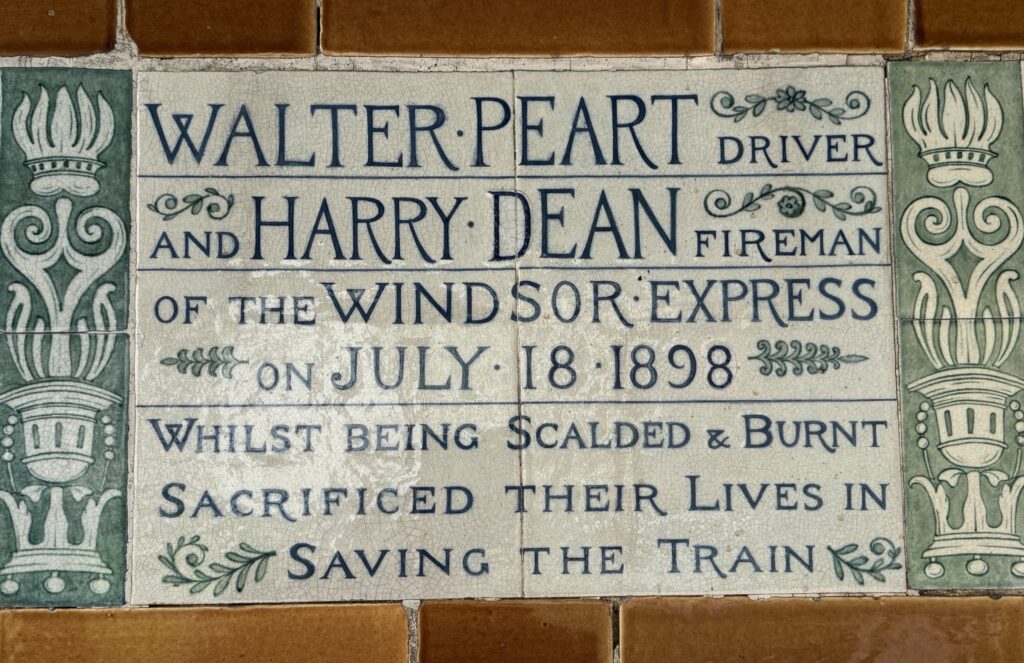
I have written about some of the individuals commemorated here before and for this week’s blog I chose some new ones, starting with Walter Peart and Harry Dean …
On Monday 18 July 1898, at a time when the Great Western Railway ran trains directly from Windsor to Paddington, the 4.15 pulled out normally from Windsor Central Station. The driver was 43-year-old Walter Peart, the fireman 25-year-old Henry Dean.
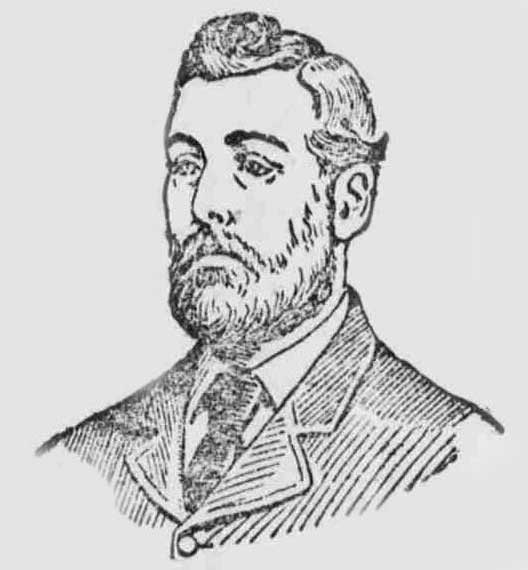
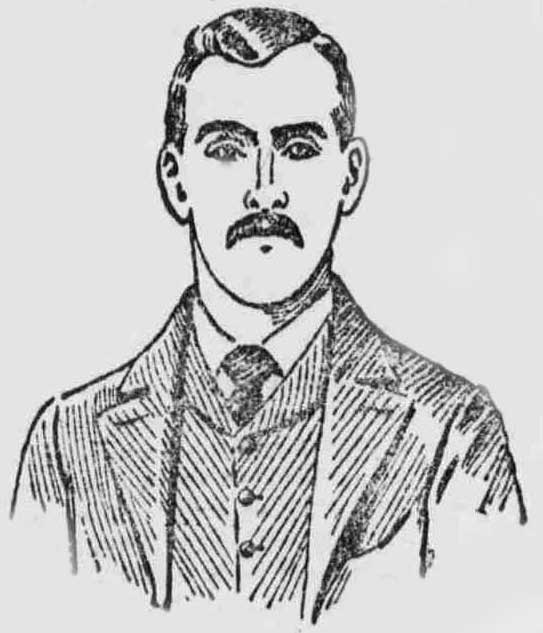
A Portrait of Walter Peart (1857 – 1898) From Lloyd’s Weekly Newspaper, 24th July 1898 Copyright, The British Library Board
A Portrait of Henry Dean (1873 – 1898) From Lloyd’s Weekly Newspaper, 24th July 1898 Copyright, The British Library Board
The train was approaching Acton when suddenly the connecting-rod of the engine shattered. A piece was driven through the casing of the boiler, there was a violent explosion, the train was enveloped in steam and ash, and in the cab piping, fire and cinders were driven into the two men’s faces. They staggered back, but knew that the train was still running and that if it could not be stopped there would be a catastrophic crash. The driver forced himself forward into the inferno to apply the vacuum brake and the train came to a standstill.
On his way to hospital, Peart asked after his ‘poor mate’, who was in a bad way. He himself was not much better, but he made light of his condition saying proudly, ‘’Never mind – I saved the train.” Both men died the next day in St Mary’s Hospital Paddington.
At the inquest the jury criticised the GWR for their use that day of an engine which only normally pulled goods trains; it was not, in their opinion, ‘fit and proper … for drawing express trains’. But they praised the men’s courage in averting ‘a serious catastrophe’.
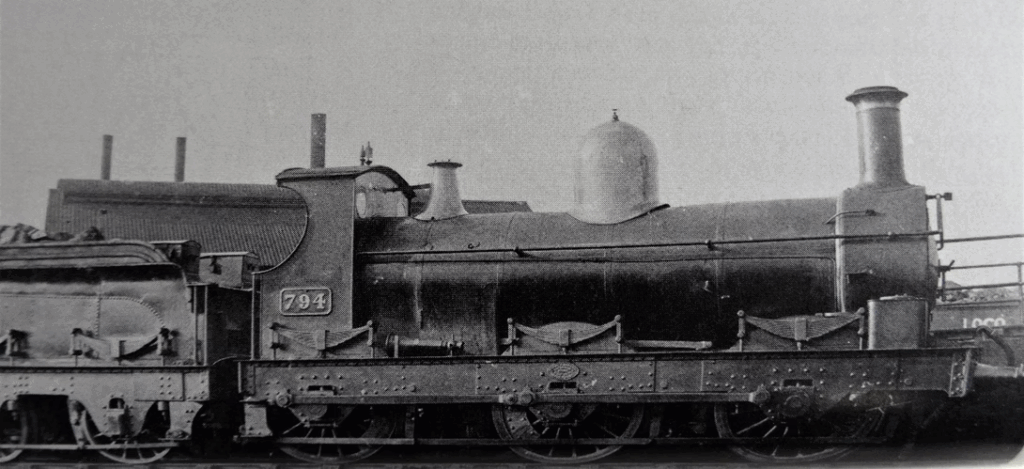
A locomotive similar to the one involved in the accident …
Driver Peart was 43 and left a wife and five children. Fireman Henry Dean was 25 years old and had recently married. Their dependants were assured that the long-established GWR Provident Society would provide for them. George Goschen, 1st Viscount Goschen, who had previously been Chancellor of the Exchequer and was now the First Lord of the Admiralty, had been a passenger on the train. He was returning from an audience with Queen Victoria at Windsor Castle. He was so impressed by the act of heroism and the men’s conspicuous bravery that he raised a subscription for their widows and children. The Daily Telegraph also started a fund to help their families and the Windsor Express records that there were many local donations, including a number from the officers of the 2nd Scots Guards, who were stationed at Victoria Barracks.
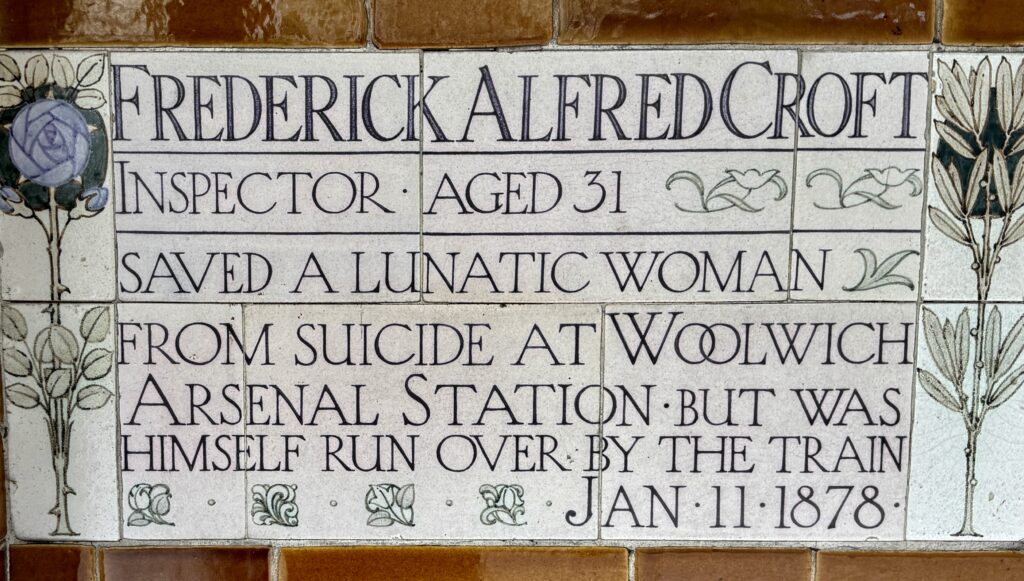
The next person I researched was shown on the memorial as Frederick Alfred Croft, but this is a case of a wrong surname as the person who performed the act of heroism memorialised here was actually Frederick Alfred Craft …
We may flinch a bit nowadays at the description of the woman as a ‘lunatic’ but this was common parlance at the time. The lady whose life he saved was Eliza Newman and, although she suffered from delusions, she was considered to be a ‘perfectly harmless lunatic’ and was generally allowed to live outside of an institution. On 11 January a police physician had concluded that she was ‘of unsound mind, though neither suicidal nor dangerous to others’ but nonetheless licensed her to be immediatly committed to the Kent County Asylum near Maidstone. She was accompanied on the journey by a matron from Woolwich, Sarah Wilkinson, and a poor-law relieving officer called Joseph Moore.
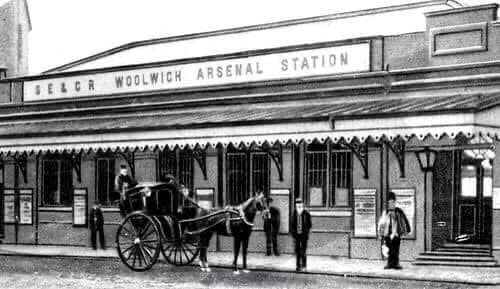
Woolwich Arsenal Station at the turn of the 20th century …
When transporting mental patients or prisoners by train it was common practice, for the safety of other passengers, for the party to travel in a single locked compartment. On arrival at the station, Moore went to look for the stationmaster to make arrangements and purchase tickets.
Whilst waiting on the platform Wilkinson discreetly kept hold of the patient’s coat to stop her walking off. Suddenly, at around 5:30 as the train to Plumstead approached, Eliza pulled away with such force that it left a torn piece of material in the nurse’s hand. She then leapt from the platform onto the rails in front of the approaching engine and Inspector Craft, who was on the platform, immediatly followed with the intention of pulling her out of the engine’s path. She escaped, but poor Craft was hit by the offside buffer and cast under the train. He received horrendous injuries and died later that night from shock and blood loss.
The inquest jury encouraged the public to recognise the gallantry of the deceased by providing for his widow and two small children through the subscription fund that Bartholomew the stationmaster had opened. The fund had already received donations to the value of £24 2s, including £20 from the South Eastern Railway Company, and the jurors all agreed to donate their fee, which came to £3 8s.
Incidentally, Frederick and his wife Elizabeth’s son, Frederick junior, initally followed his father into employmemt on the railways, working as a clerk in his late teens and early twenties. He was probably offered the post in lieu of compensation for his father’s death, as was common practice with railway companies.
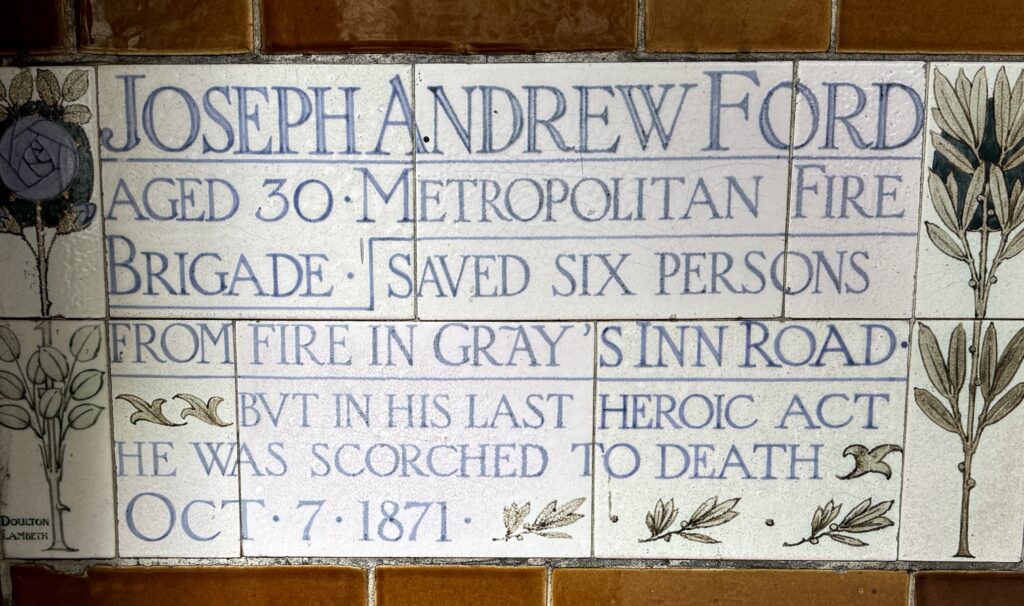
My third and final story is about this man …
His death was controversial since, after carrying out rescues with extraordinary bravery, Ford died trapped in the wire netting of an escape chute. The Metropolitan Fire Board enquiry found:
“Before he reached the fire three persons had been rescued by the police, who took them down from the second floor window on a builder’s ladder, and on his arrival there were six persons in the third-floor.
He pitched his escape to the left-hand window, and with great difficulty and much exertion and skill succeeded in getting the five persons out safely, the woman in the right-hand window being in the meanwhile rescued by the next escape, and he was in the act of coming down himself when he became enveloped in flame and smoke , which burst from the first-floor window, and, after some struggling in the wire netting, he fell to the pavement.
I have carefully investigated all the circumstances, and I am of the opinion that Ford must have become entangled in some of the netting or other gear aloft, and had to break his way through it in order to clear himself, and that while struggling he got so severely burned that his recovery became hopeless.
It was a work of no ordinary skill and difficulty to save so many persons in the few moments available for the purpose, and when it is mentioned that some of them were very old and crippled, it is no exaggeration to say that it would be impossible to praise too highly Ford’s conduct on this occasion, which has resulted so disastrously to himself.
He leaves his wife and two children – one a daughter aged two years, and the other four months.
Ford was a respectable and trustworthy man, and in all respects and excellent servant to the board.”
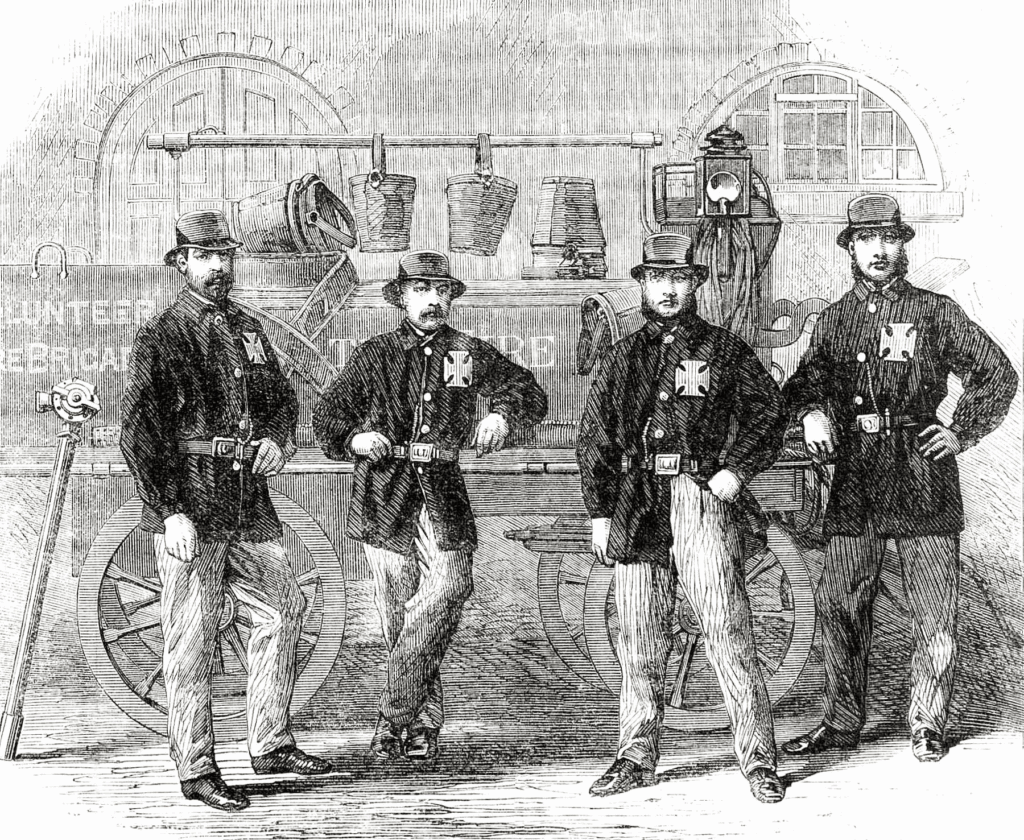
Four firemen in front of their fire engine. The Illustrated London News 4 January 1862.
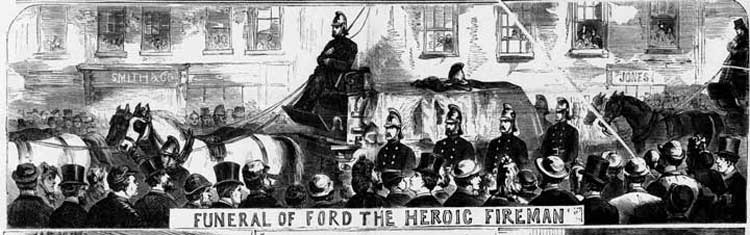
Literally thousands of people lined the streets of London to witness his coffin on its way to Abney Park Cemetery where it was laid to rest alongside the most famous firefighter London had known, Superintendent James Braidwood …
According to The Illustrated Police News:-
“…On the coffin were placed the half-burnt tatters of clothing the torn and smoke-begrimed coat being marked with the meshes of the fatal net-work; the badge, with the name of the dead fireman branded on the handle; and the brass helmet, bruised and batterred, and having one long, deep fearful indentation along the side on which the wearer fell headlong. The crushing force of the concussion was terribly apparant in the beating-in of the strong headgear; and it was but too apparent that the metal must have been driven with great violence on the skull..”
The band from ‘E’ division of brigade played the ‘Dead March’ from Saul as it led the cortège, folowed by Ford’s family and two divisions of Metropolitan Police officers. Behind them followed ‘nearly the whole of the fire engines of the brigade, fully manned, each of the men wearing a band of crêpe on his left arm’.
The Metropolitan Board of Works, responsible for the Metropolitan Fire Brigade (MFB), came under intense criticism for the way it treated his widow Emmeline and his two children, Emmeline Junior and Frederick. The Brigade’s 1865 constitution contained a provision for widows whose husbands died on active duty to receive an annuity, but Ford was the first MFB fireman to do so and there was, therefore, no precedent. A figure of £1 a week was decided upon (less than the £1 8s a week he was earning ) and it was stipulated that it should be ‘revisited’ after six months. When the subscription fund for donations raised £1,000 the Board of Works withdrew its pension provision stating that”[the fund] brought to the widow an actually larger income than the pay her husband received when he was living’. In addition to this, his widow and children had to vacate their home in the fire station!
Surely no way to treat a hero.
Five more true heroes from the memorial …
If you want to find out more about them, their stories are told in my book Courage, Crime and Charity in the City of London. Perfect for London lovers and only £10 for over 100 pages in full colour. You can buy it online here or in person at Daunt Books or the Guildhall Gallery shop.
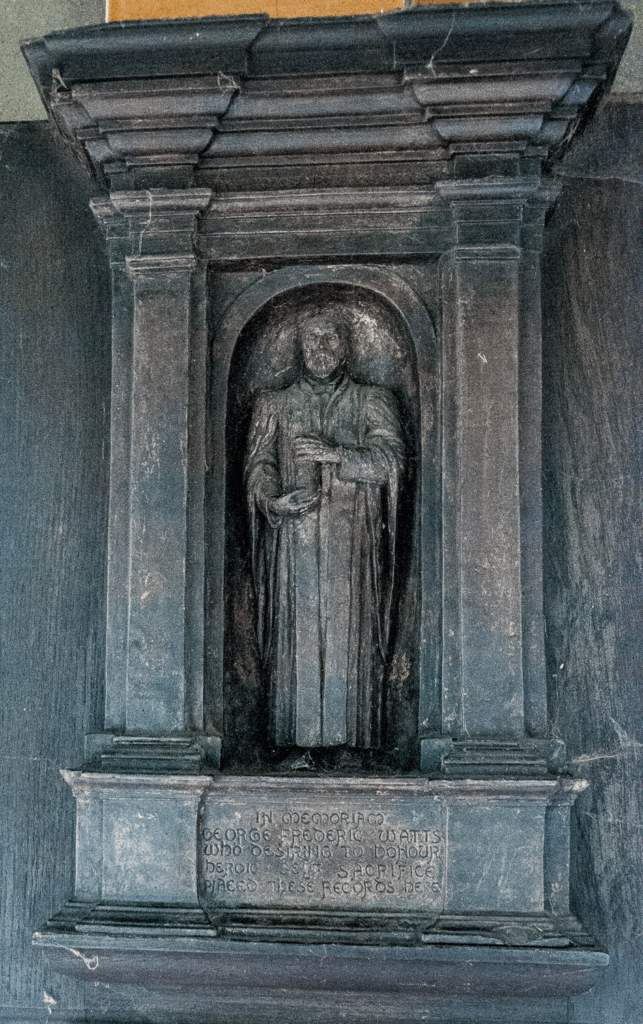
There is a nice small statuette in the middle of the Memorial of Mr Watts himself that was installed in 1905, the year after he died. There was originally a plan to cover it with a protective grille but his widow refused and said the public should be trusted, and she was right …
He holds a scroll on which is inscriber the word HEROES.
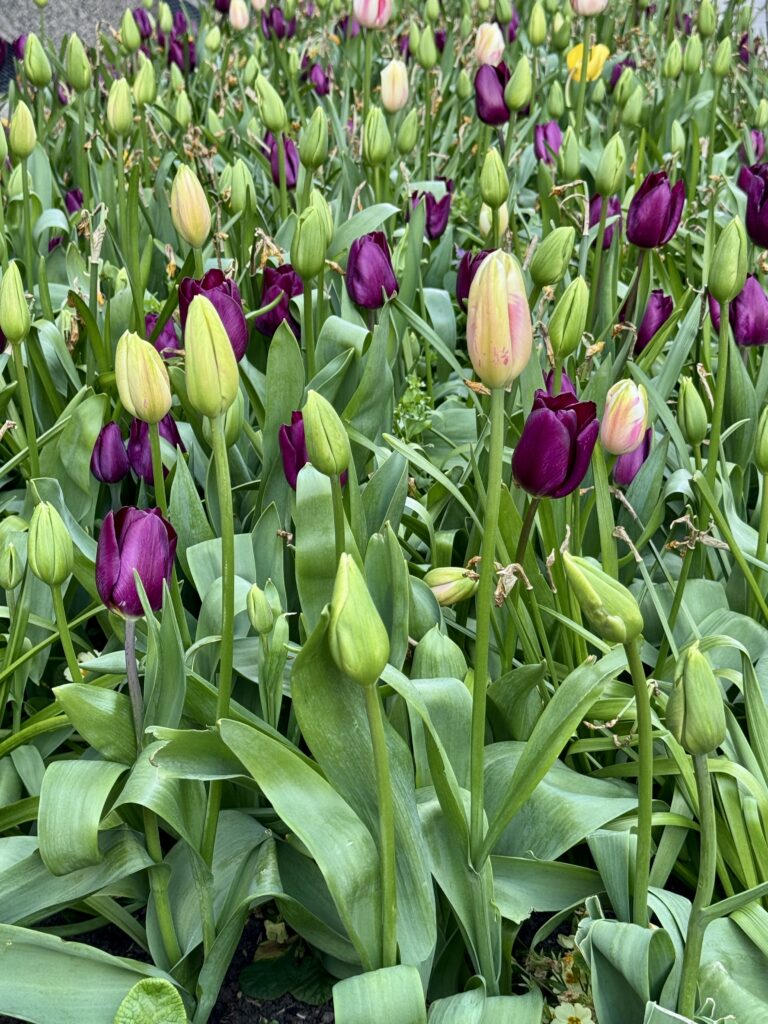
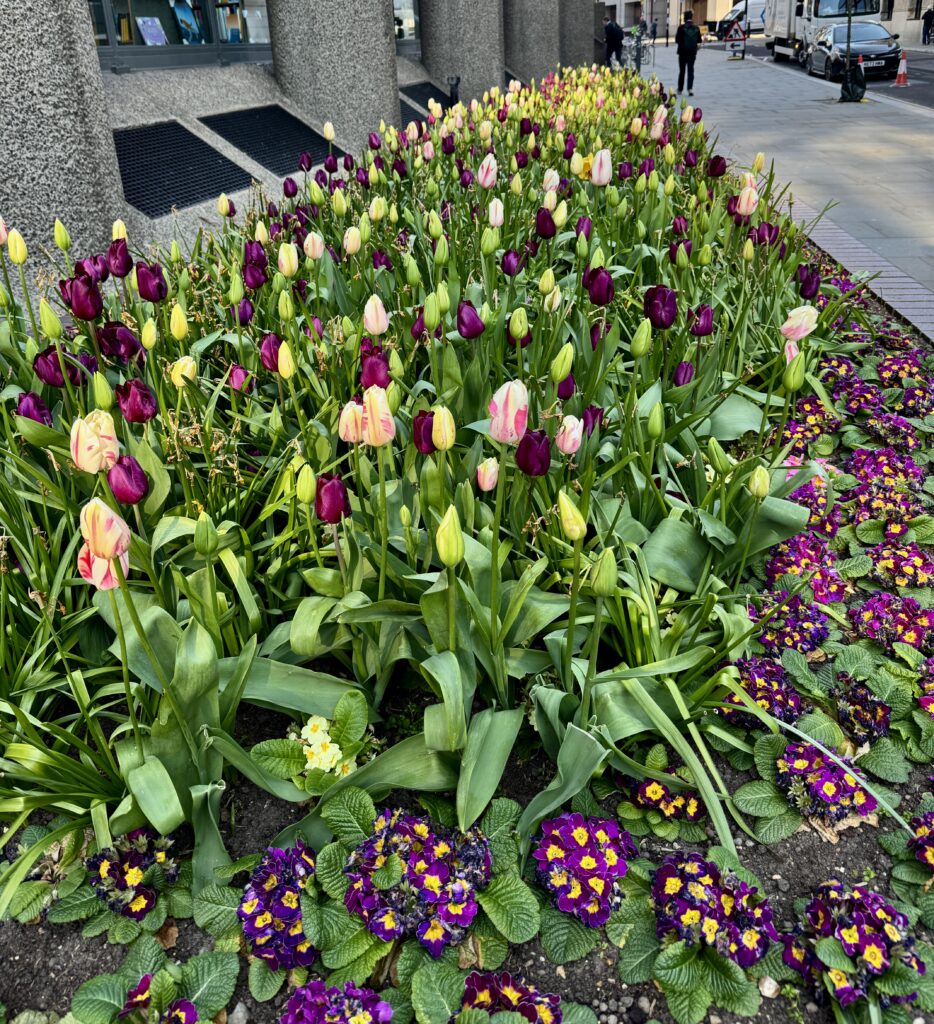
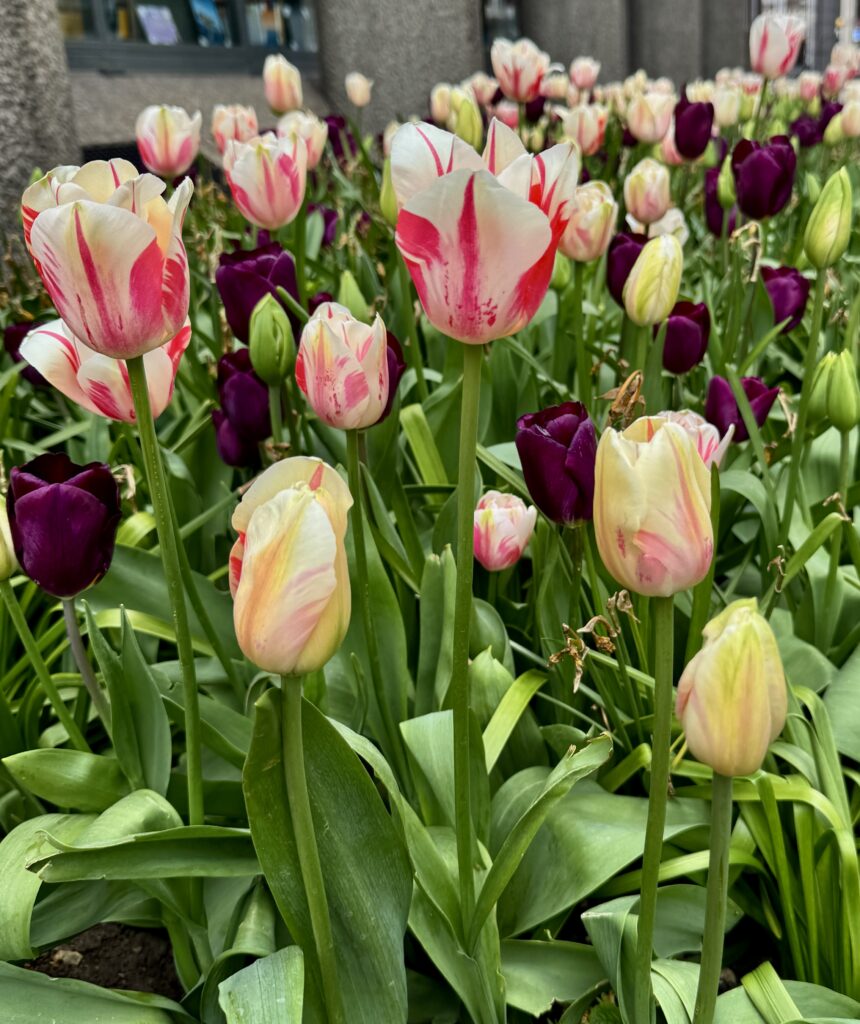
On Silk Street, now that the daffodils have gone over, the clever City gardeners have planted appropriately for the tulips to arrive with perfect timing …
Almost ready …
And open!
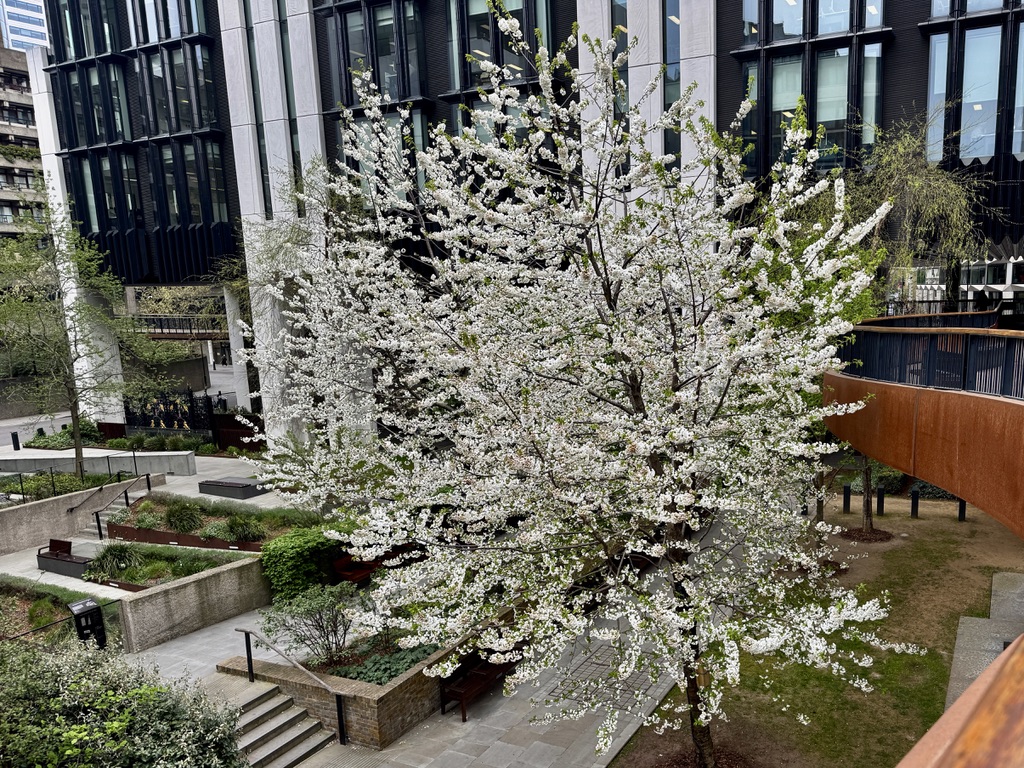
Cherry Blossom at London Wall Place …
In Postman’s Park (I know I’ve shown some of these before but I like them a lot!) …
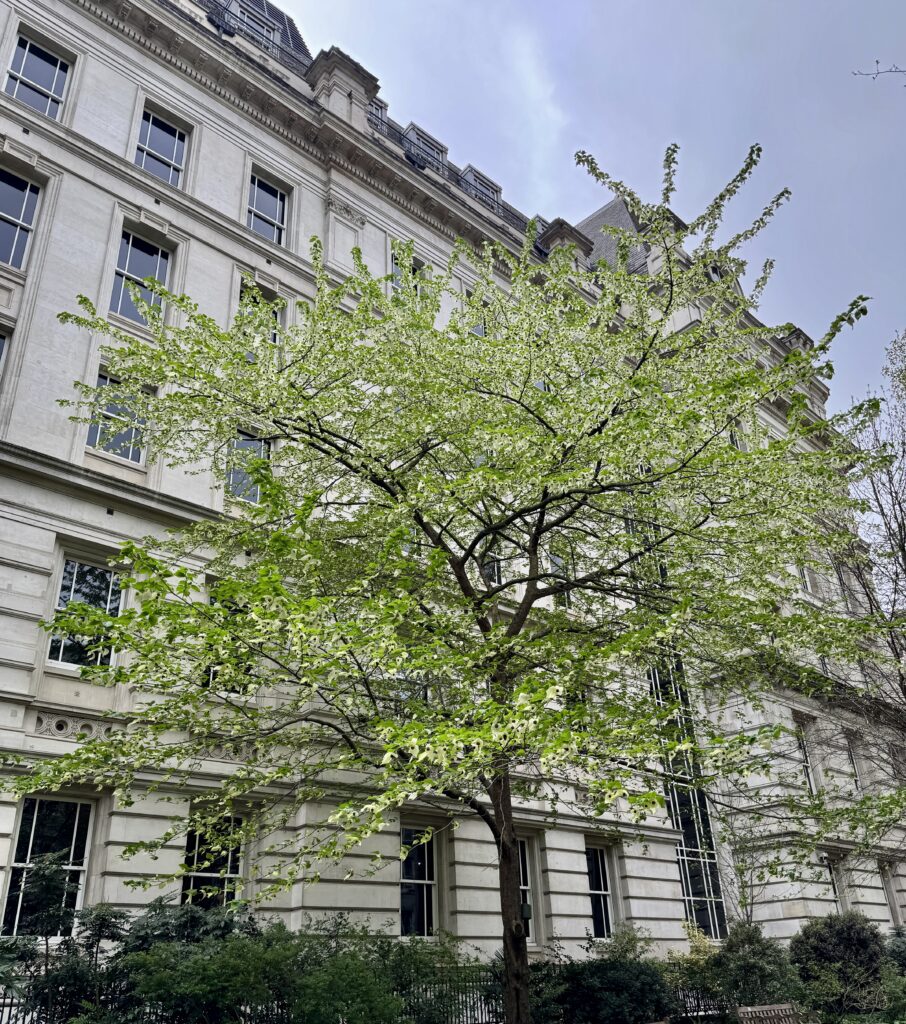
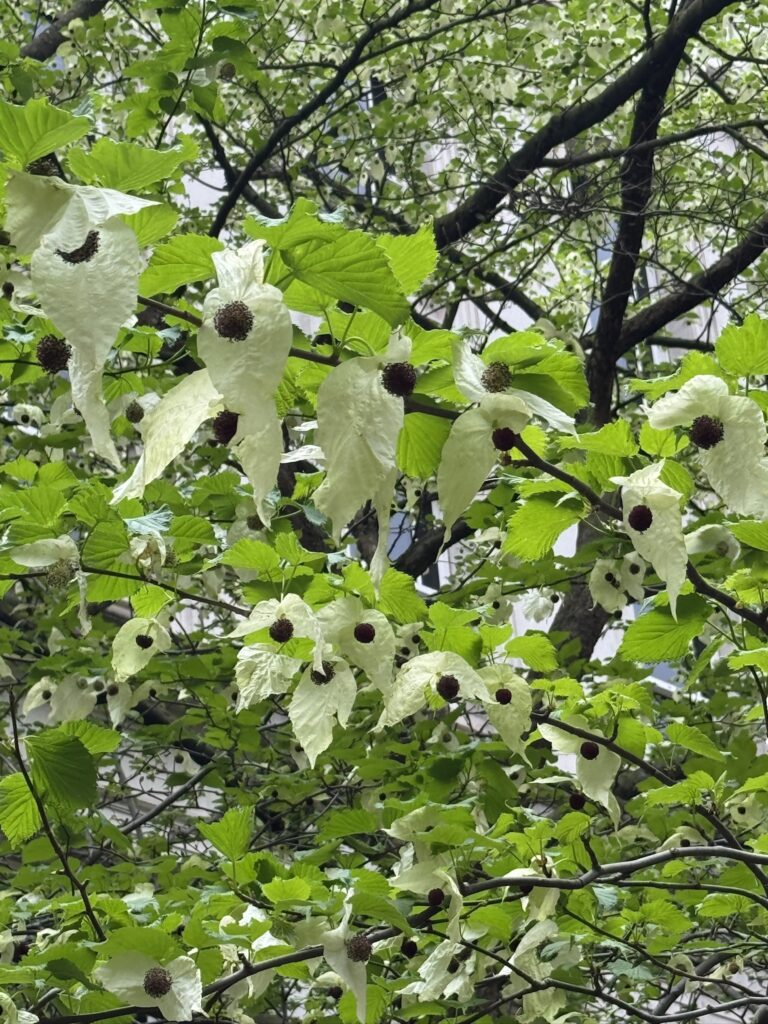
The wonderful Handkerchief Tree …
There’s a lovely article about it here, highly recommended.
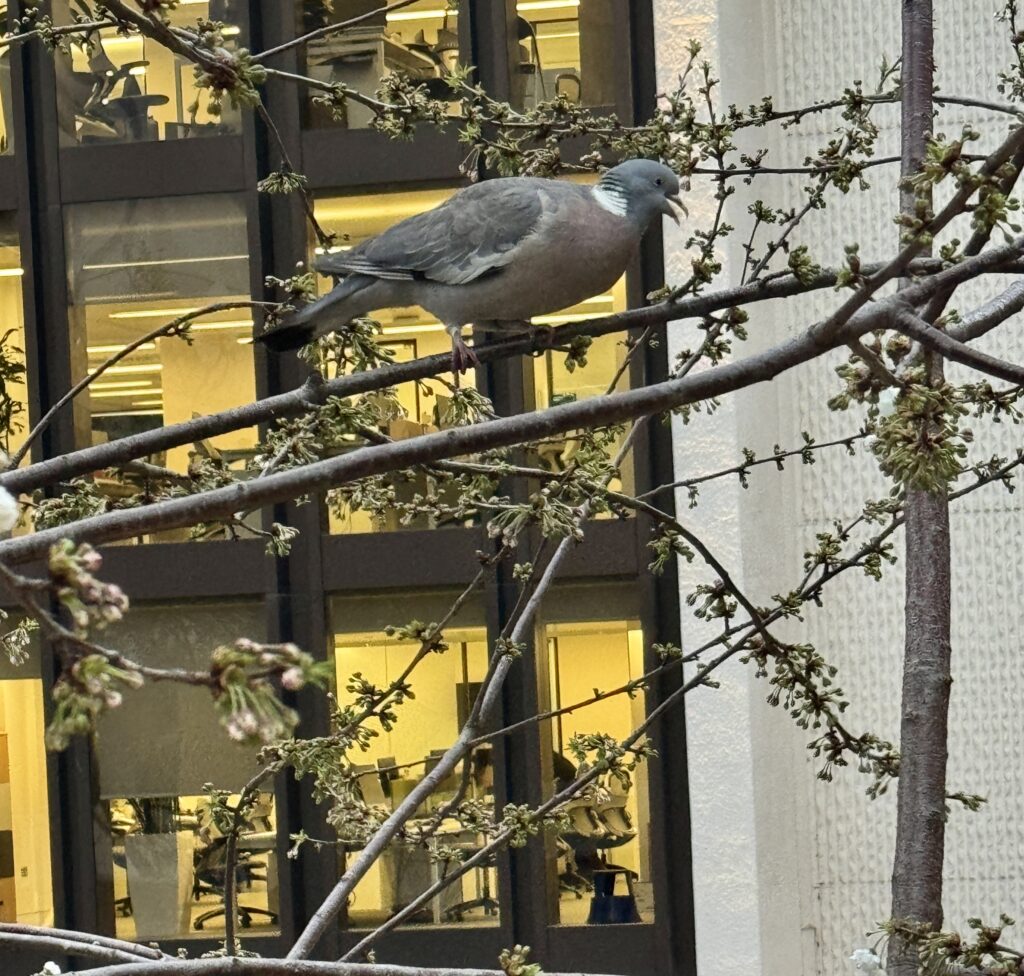
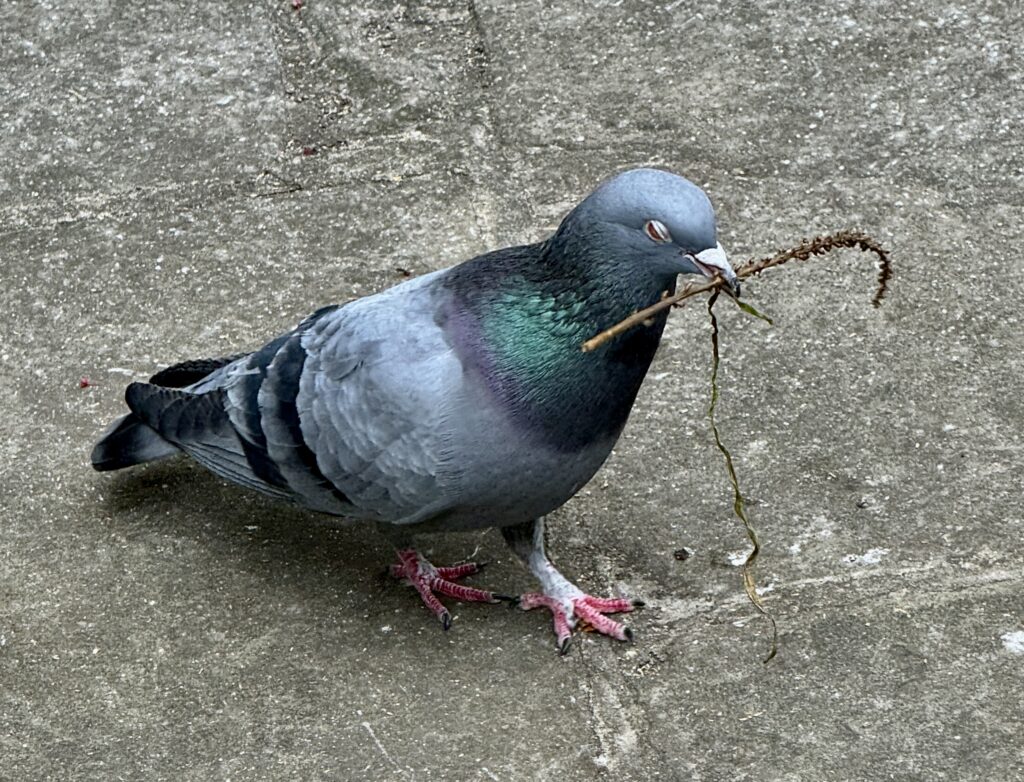
On my walks of an evening I have occasional pigeon encounters …
I think this chap has an ongoing nest-building project …
I call this one ‘the sentinel’ …
Lonely look-out duty …
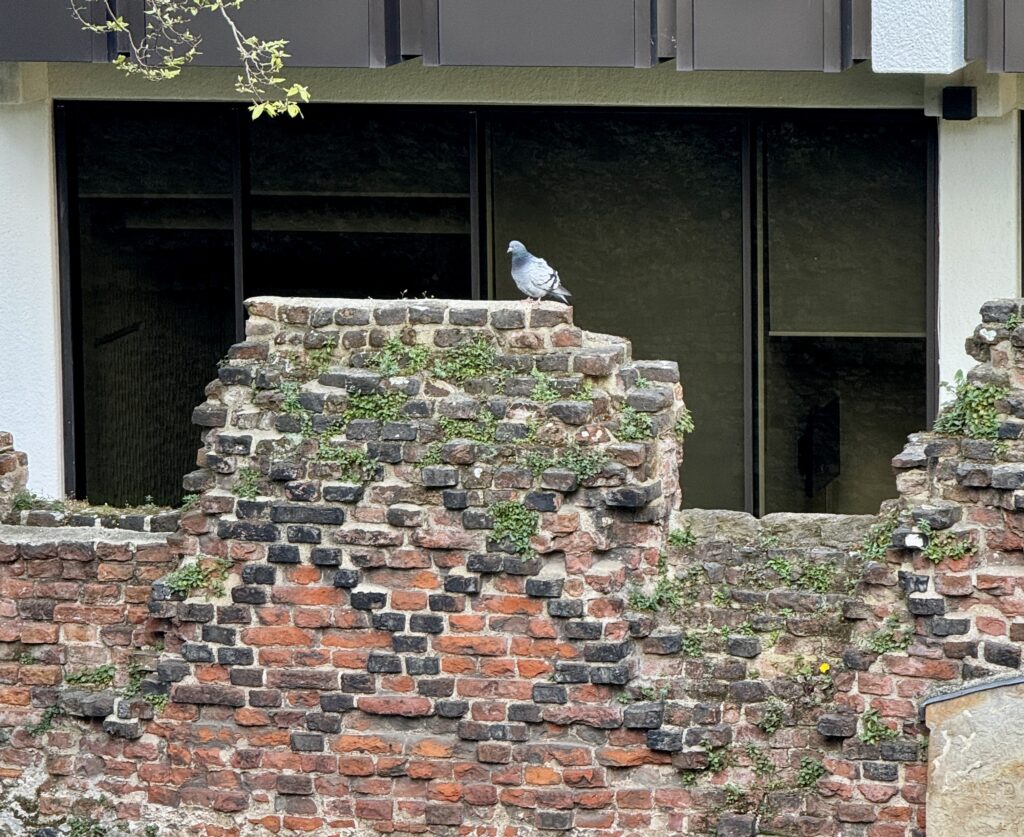
Patrolling the medieval wall …
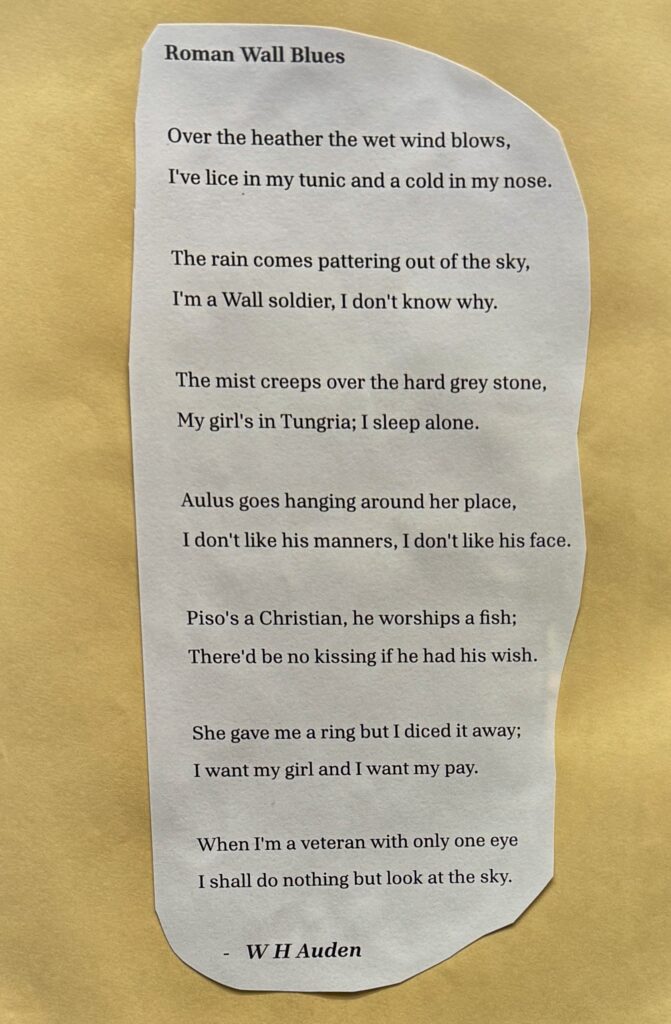
I didn’t know that W H Auden had written a poem about a Roman soldier on duty on the original Roman Wall. Here it is, I love it …
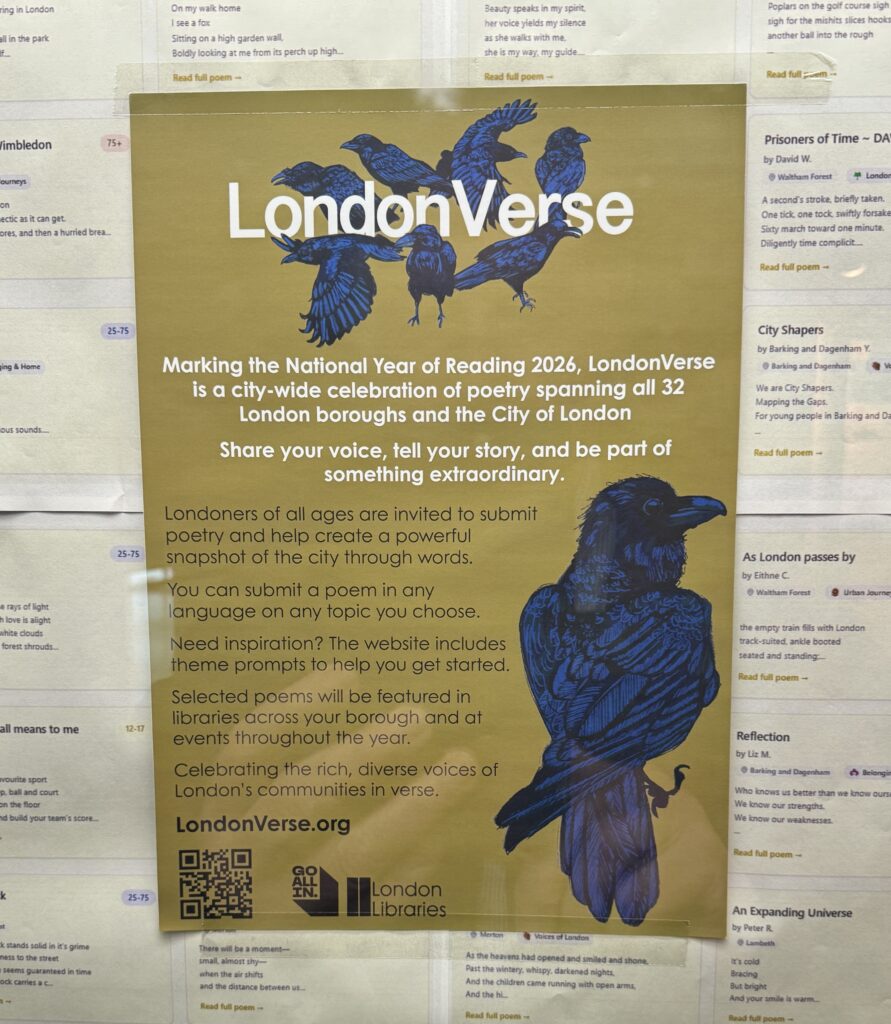
You’ll find it on display in the Barbican Library along with details of the London Verse project …
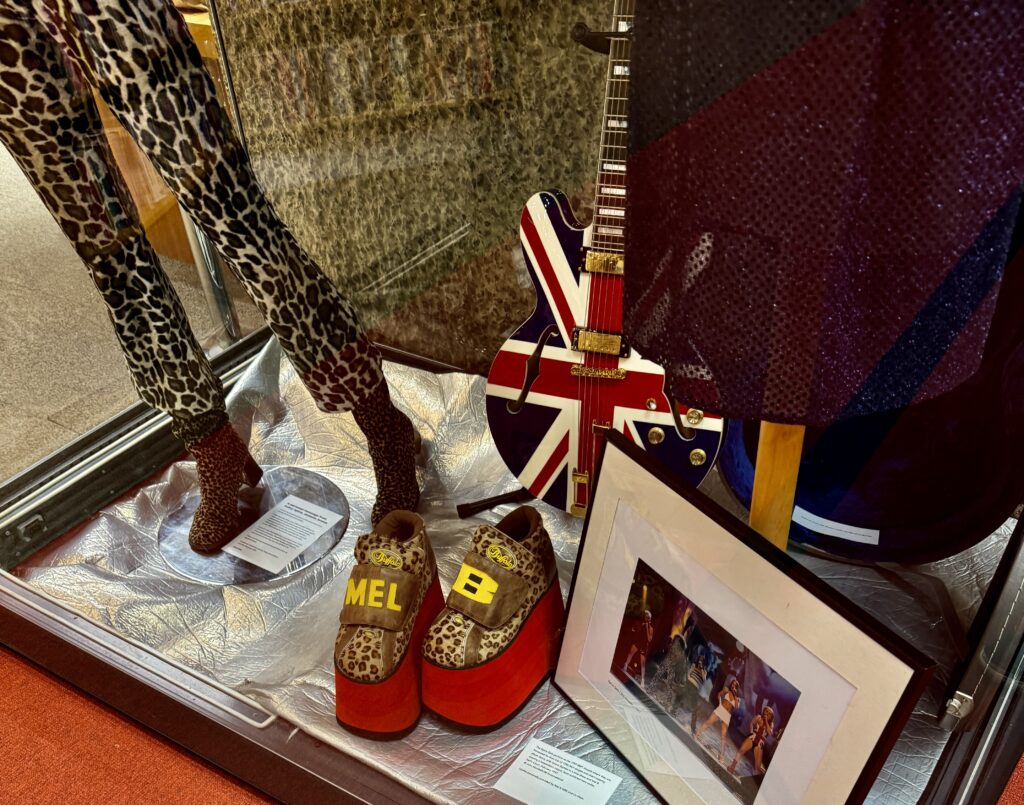
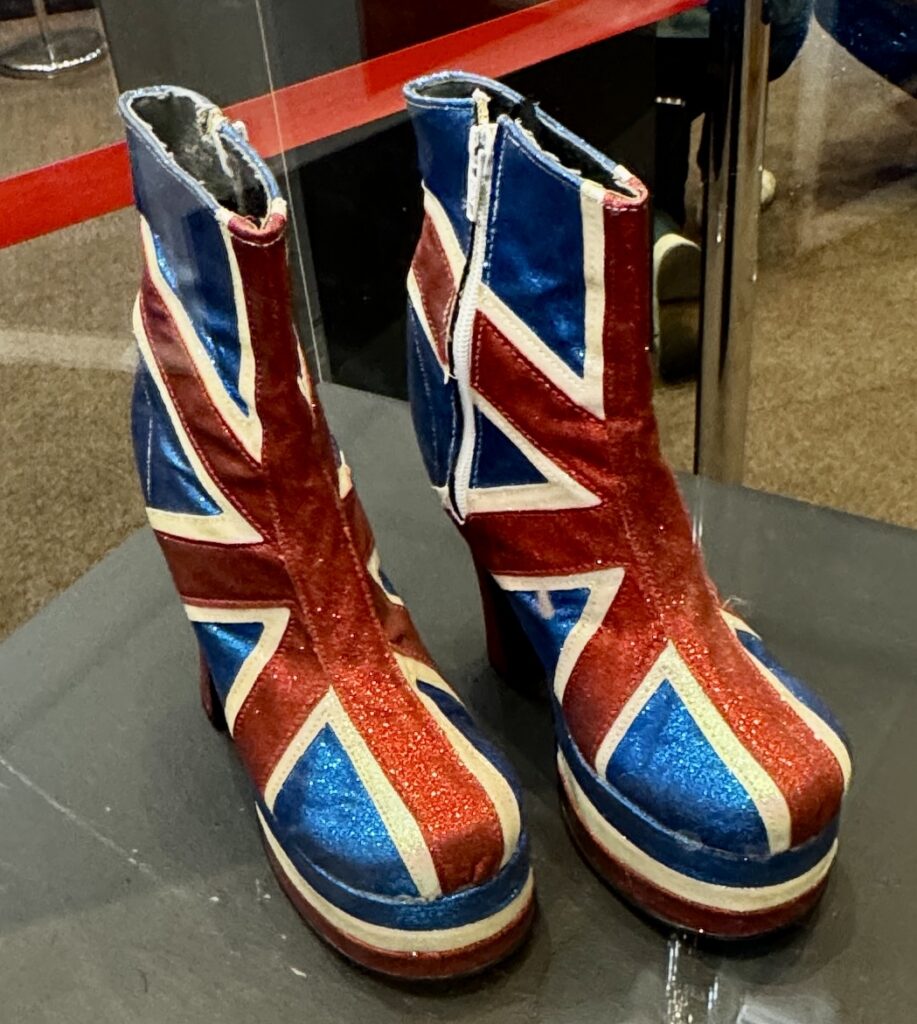
And, finally, these interesting items of footwear will feature in next week’s blog …
If you would like to follow me on Instagram here is the link …