Walking the City of London

Category: Memorials Page 23 of 37

‘Smooth Field’ – a wander around Smithfield

Smithfield has a rather gruesome history.

For example, on 16 July 1546 Anne Askew was burnt at the stake along with John Lascelles (a lawyer and Gentleman of the King’s Privy Chamber), John Hadlam (a tailor from Essex) and John Hemsley (a former Franciscan friar). A great stage was built at Smithfield for the convenience of Chancellor Wriothesley, other members of the Privy Council and City dignitaries, to watch the burning in comfort …
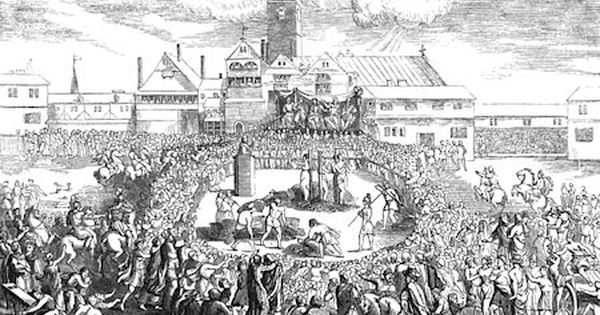
The execution of Anne Askew and her companions – 1563 woodcut from Foxe’s Book of Martyrs.

Anne herself, having been illegally broken on the rack, was unable to stand, and was chained to the stake in a sitting position. You can read more about this fascinating, brave lady here.

Every burning was different; if the fire ‘caught’, it could be over relatively quickly, but on damp days, or when the wind persisted in blowing the flames away from the body, it could take up to an hour for the condemned person to die, an hour of excruciating agony.

Their crime was heresy and of the 288 people estimated to have been burnt during the five year reign of Mary Tudor, forty eight were killed in Smithfield. ‘Bloody Mary’ was the daughter of Henry VIII and Katherine of Aragon and the burnings were part of her campaign to reverse the English Reformation.

The ‘Marian Martyrs’ are commemorated with this plaque erected by the Protestant Alliance in 1870 …
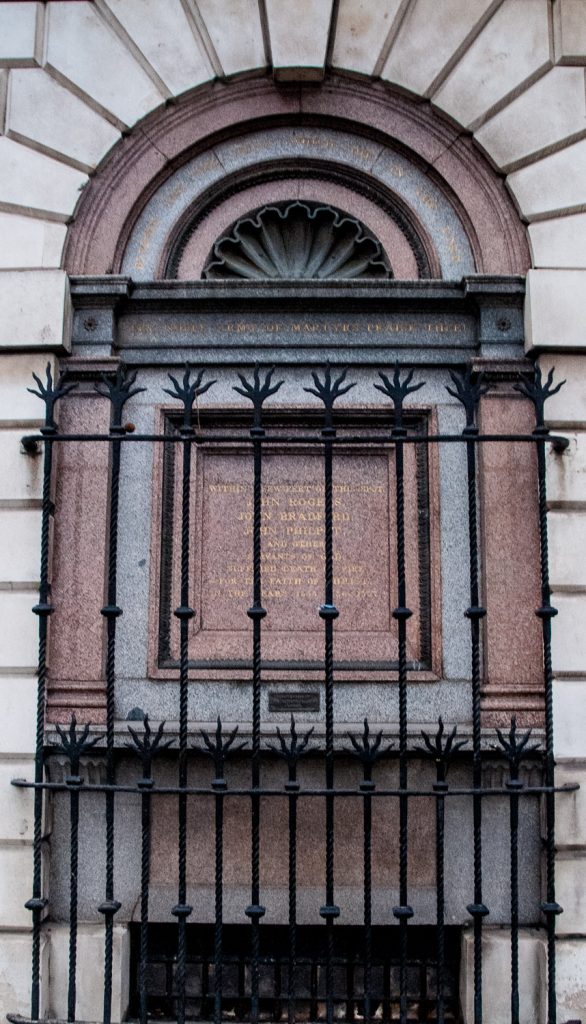
The gilding is a little faded in this picture. It reads …

Blessed are the dead which die in the Lord. The noble army of martyrs praise Thee! Within a few feet of this spot,

John Rogers,

John Bradford,

John Philpot,

and other servants of God, suffered death by fire for the faith of Christ, in the years 1555, 1556, 1557

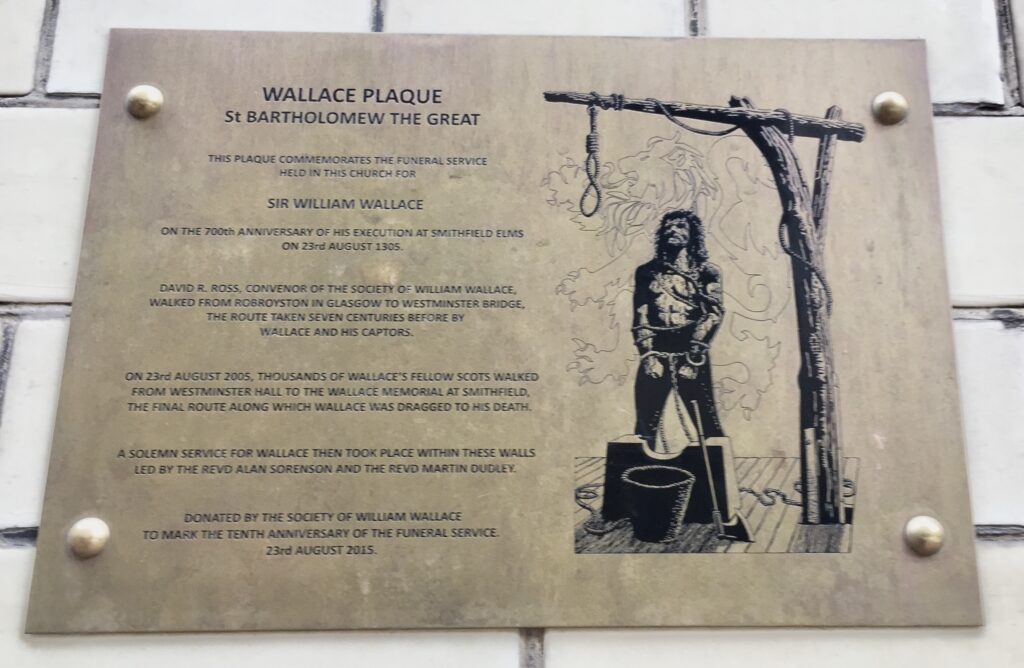
This had been a place of public execution for over 400 years; many witches and heretics had been burnt, roasted or boiled alive there. It was here that the Scottish hero and patriot, Sir William Wallace, was hanged, drawn and quartered in 1315 and has two memorials. This one in West Smithfield (EC1A 7AQ) …
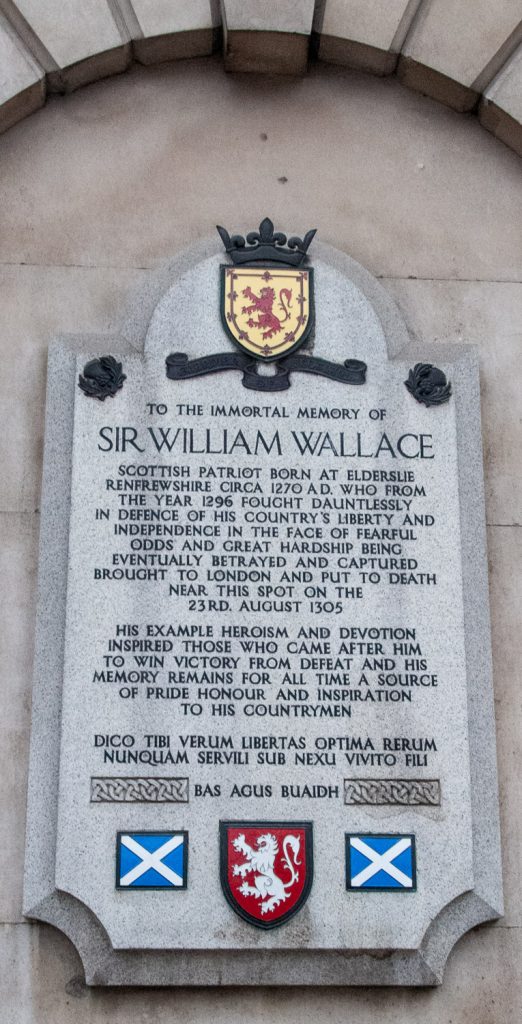
There are often fresh flowers left here in his memory.

And another just inside the entrance to the St Bartholomew the Great churchyard …
This slate triptych, also in West Smithfield,was unveiled by Ken Loach in July 2015 and commemorates the Great Rising of 1381 (more commonly known as the Peasants’ Revolt) …
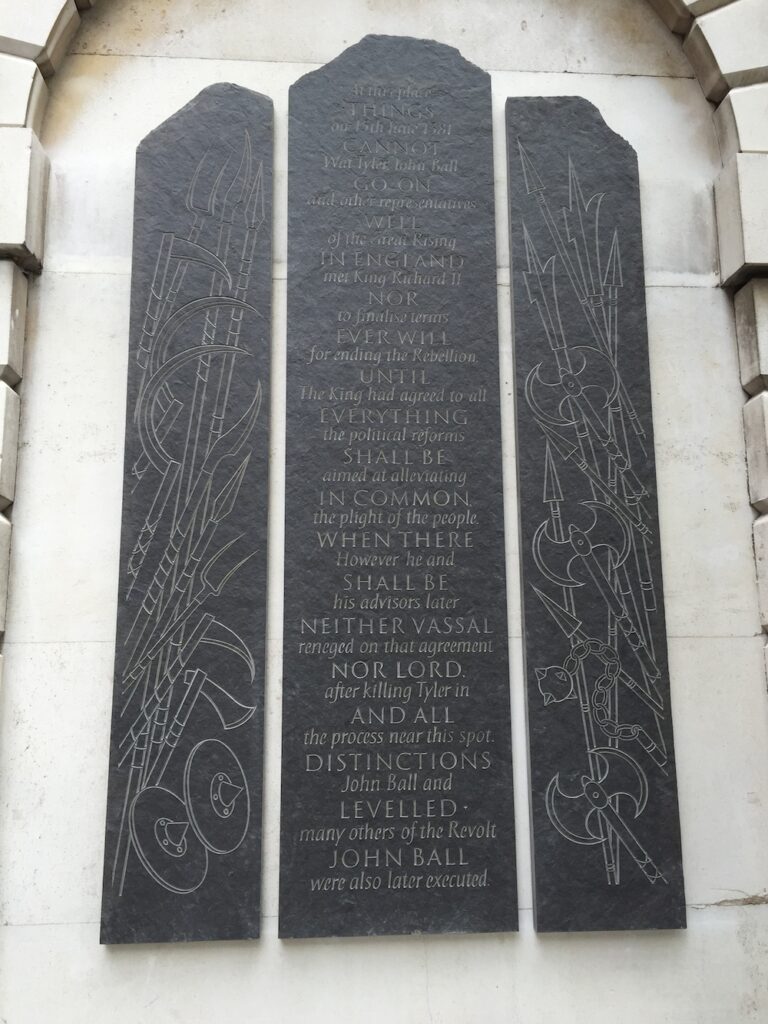
The Revolt was led by Wat Tyler and on June 15th 1381 he had the opportunity to speak directly to the 14-year-old king, Richard II. Accompanying the King was the Lord Mayor of London William Walworth and, for reasons that are not entirely clear, Walworth ran Tyler through with his sword. Badly wounded, Tyler was carried into nearby St Bartholomew’s Hospital but, rather unsportingly, Walworth had him dragged out and decapitated. Poll Tax protesters were dealt with very ruthlessly in those days!

The Mayor is commemorated with a statue on Holborn Viaduct …
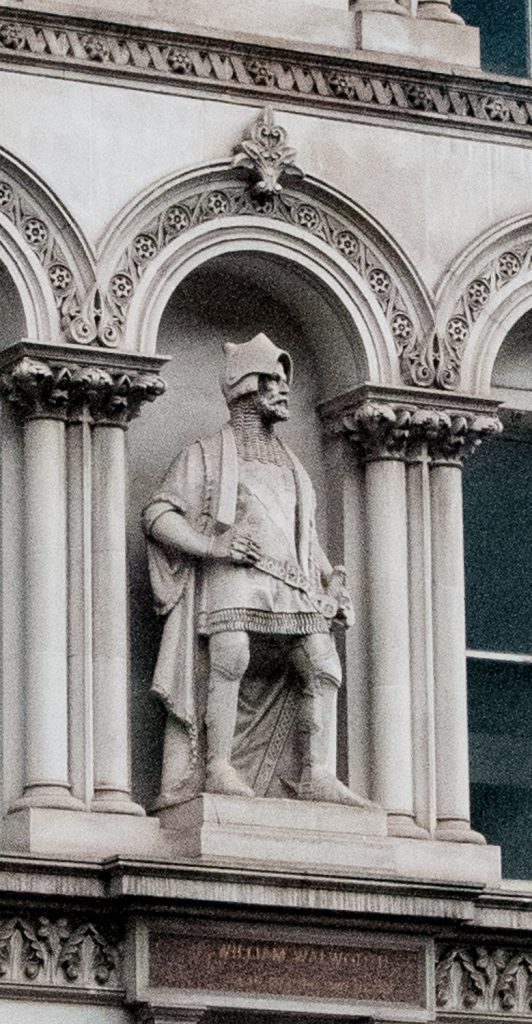
His trusty sword is in a scabbard at his side.

Here is a 15th century depiction of Walworth in action …
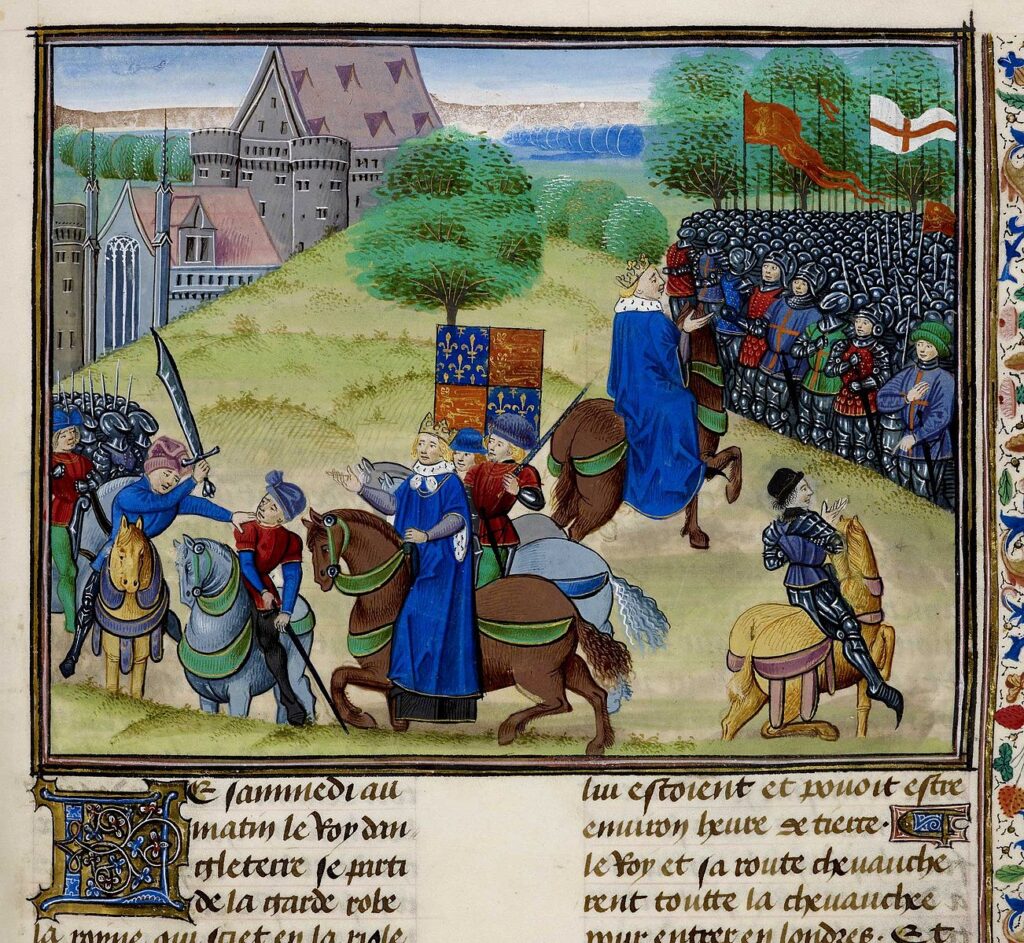
The death of Wat Tyler. From a manuscript copy of the Chronicles of Jean Froissart, created in 1483.
Image from Wikimedia Commons.

Queen Mary’s dad, Henry VIII, has a statue nearby over the main entrance to the hospital. If you have seen and admired the famous Holbein portrait, the king’s pose here is very familiar. He stands firmly and sternly with his legs apart, one hand on his dagger, the other holding a sceptre. He also sports an impressive codpiece …
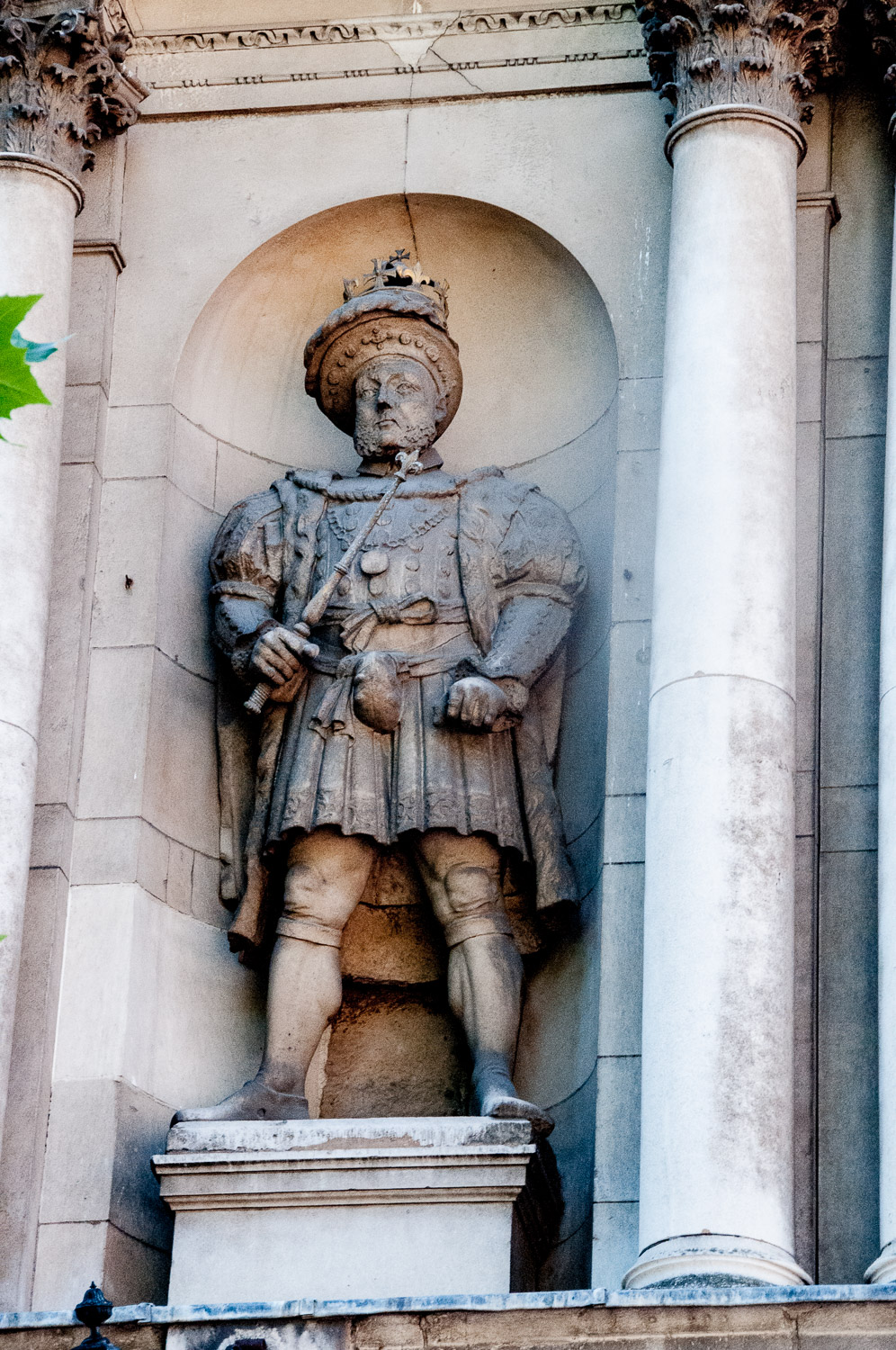
Founded in 1331, the hospital was put seriously at risk in 1534, when Henry VIII commenced the Dissolution of the Monasteries. The nearby priory of St Bartholomew was suppressed in 1539 and the hospital would have followed had not the City fathers petitioned the king and asked for it to be granted back to the City. Their motives were not entirely altruistic. The hospital, they said, was needed to help:

the myserable people lyeing in the streete, offendyng every clene person passyng by the way with theyre fylthye and nastye savors.

Henry finally agreed in December 1546 on condition that the refounded hospital was renamed ‘House of the poore on West Smithfield in the suburbs of the City of London, of King Henry’s foundation’. I suspect people still tended to call it Bart’s. Henry finally got full public recognition when the gatehouse was rebuilt in 1702 and his statue was placed where we still see it today. The work was undertaken and overseen by the mason John Strong, who was at the same time working for Sir Christopher Wren on St Paul’s Cathedral. Such were the masons’ talents, no architectural plans were needed to complete the work.

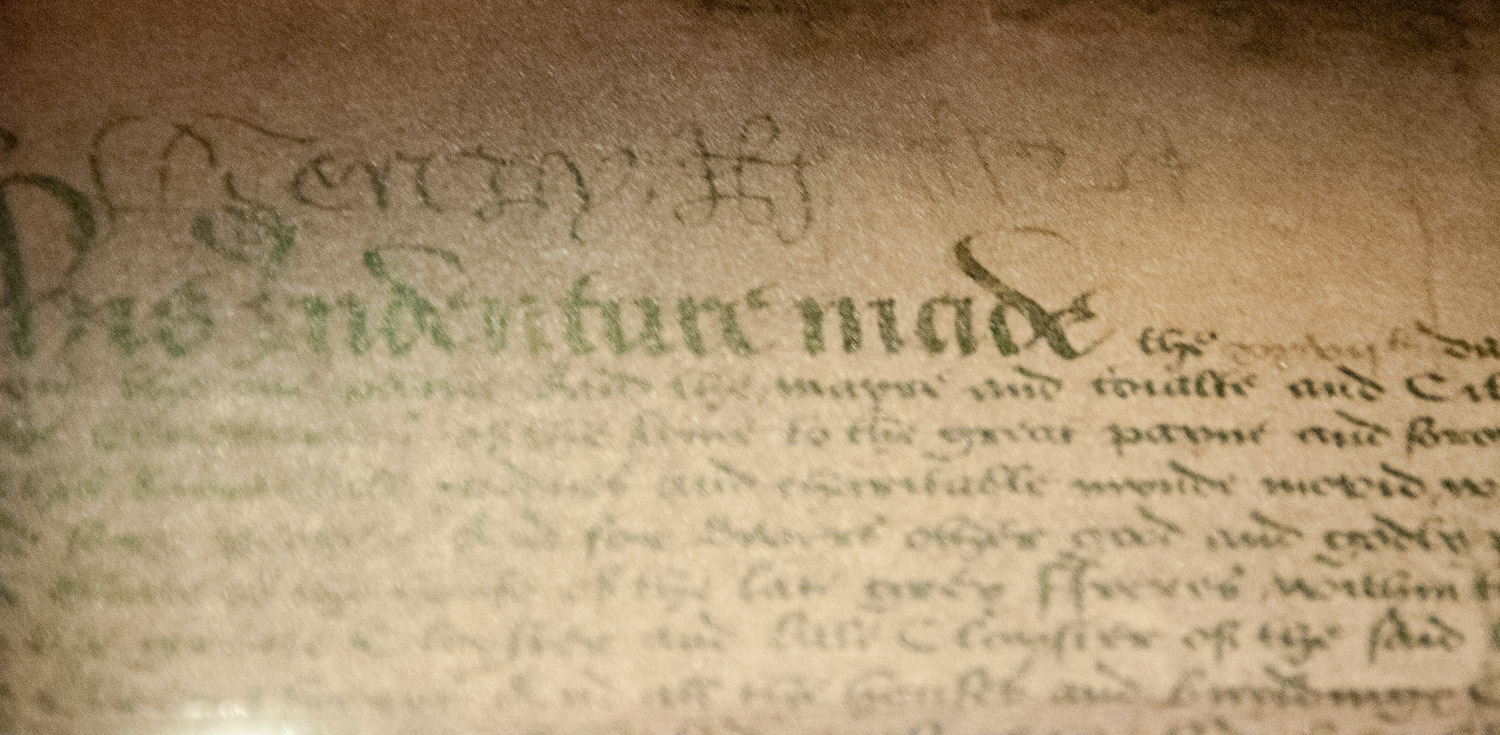
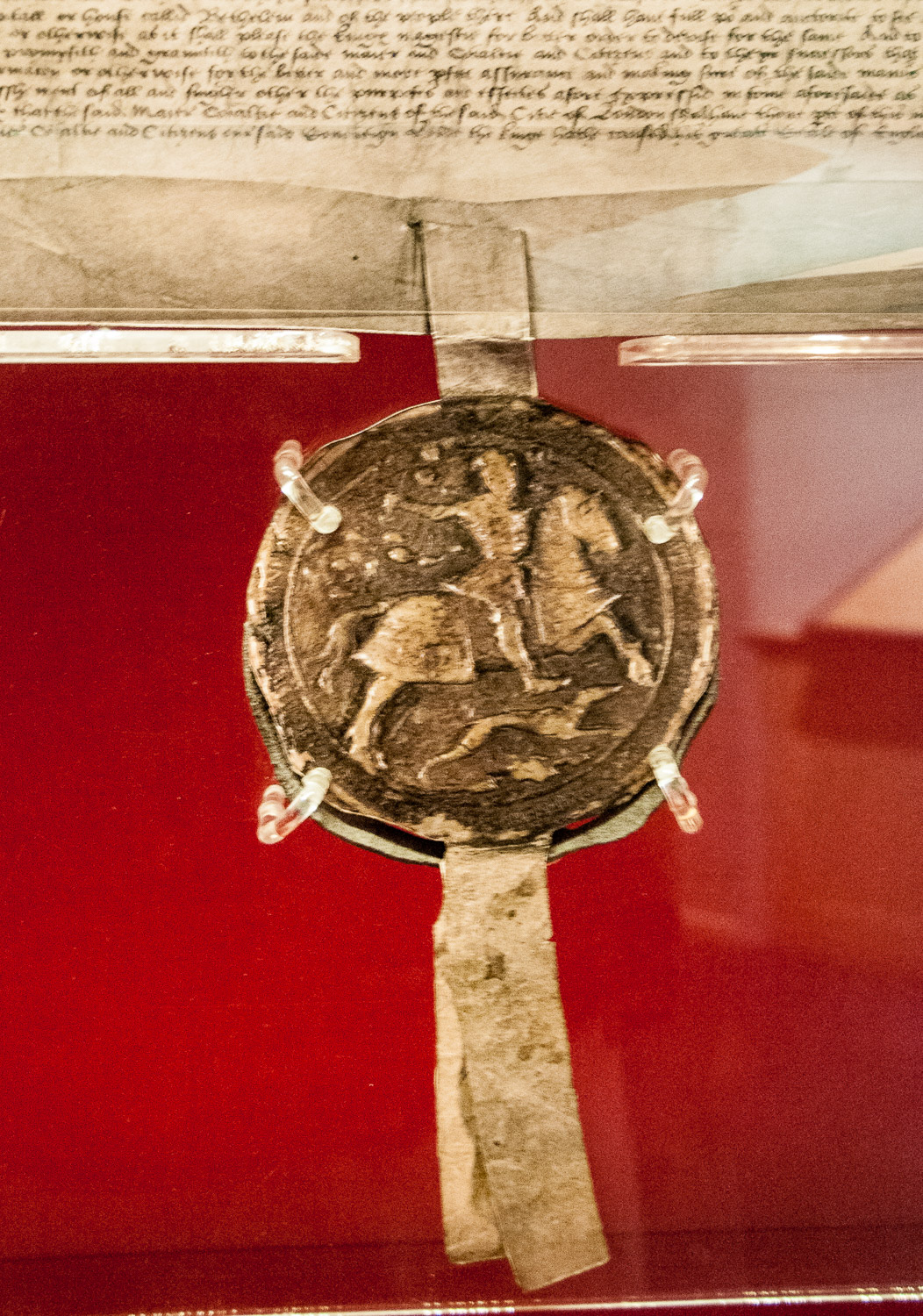
By the way, you can see the agreement, with Henry’s signature, at the lovely little St Bartholomew’s Museum when hopefully it reopens next year. Here’s a picture of the document I took a few years ago …
It also bears the Henry’s seal, the king charging into battle on horseback accompanied by a dog …
The hospital was founded, along with the Priory of St Bartholomew, in 1123 by Rahere, formerly a courtier of Henry I, and if you pop into the church of St Bartholomew the Great you can see his tomb …
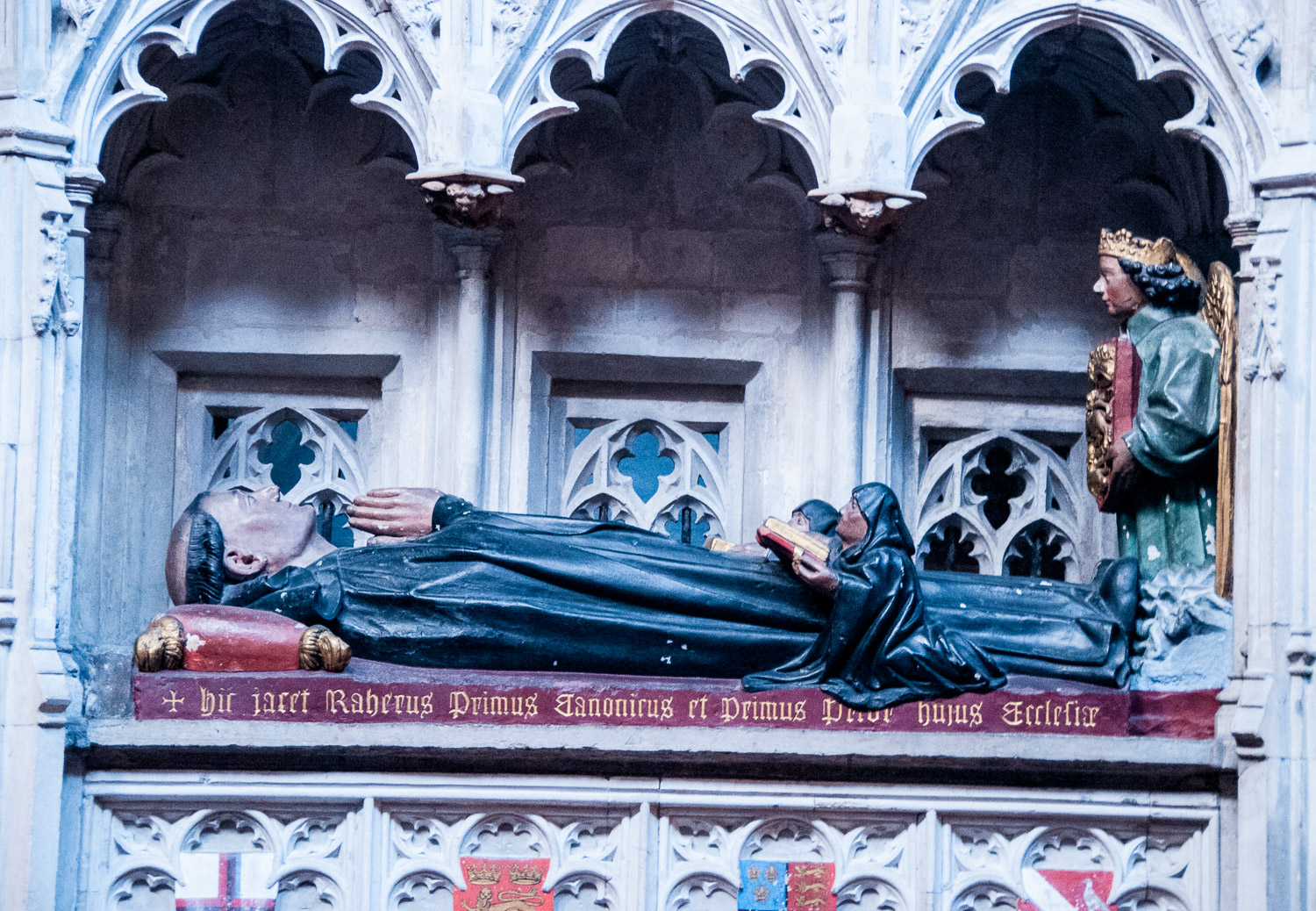
Rahere died in 1143 and his tomb dates from 1405.

I found this great picture of how the tomb was protected from bomb damage during the First World War …
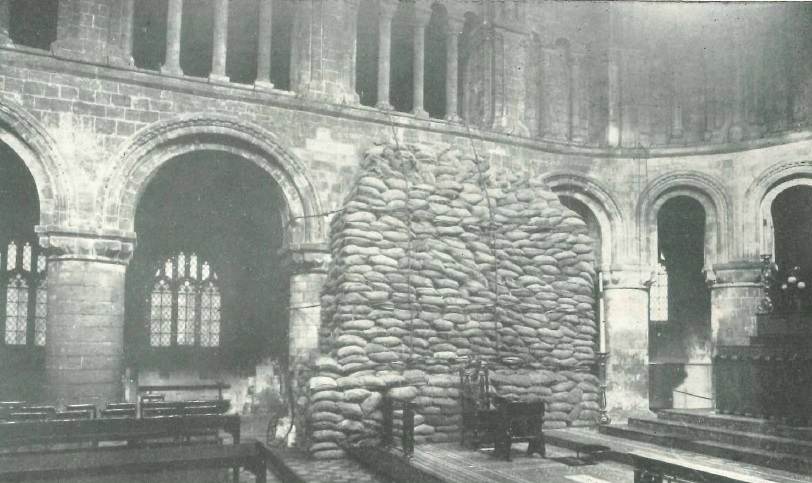
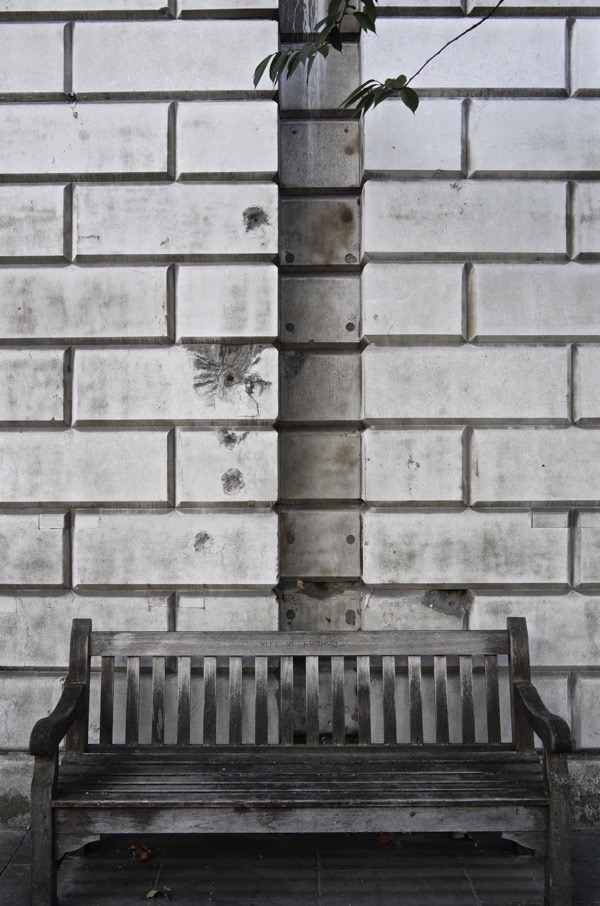
There were several near misses from bombs dropped by Zeppelin airships and you can still see shrapnel marks on the hospital’s walls …
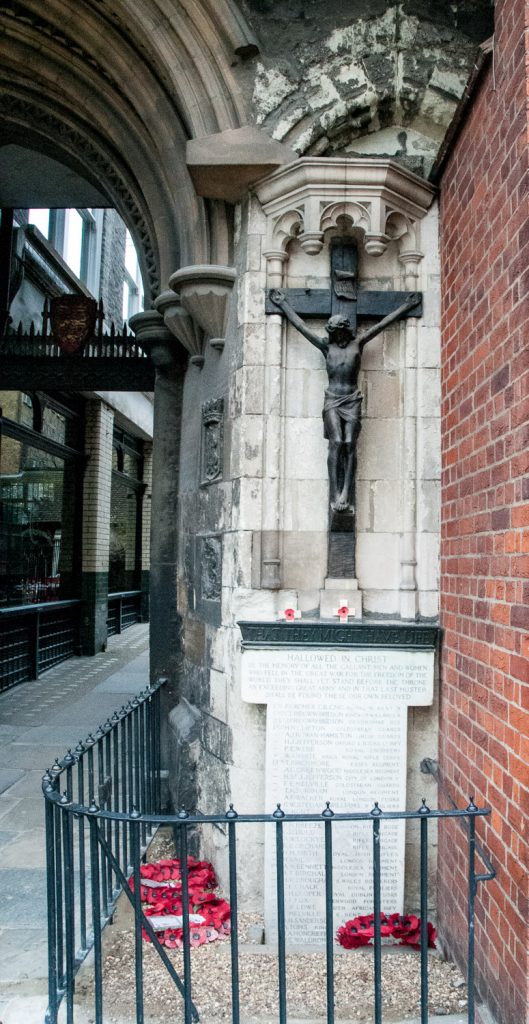
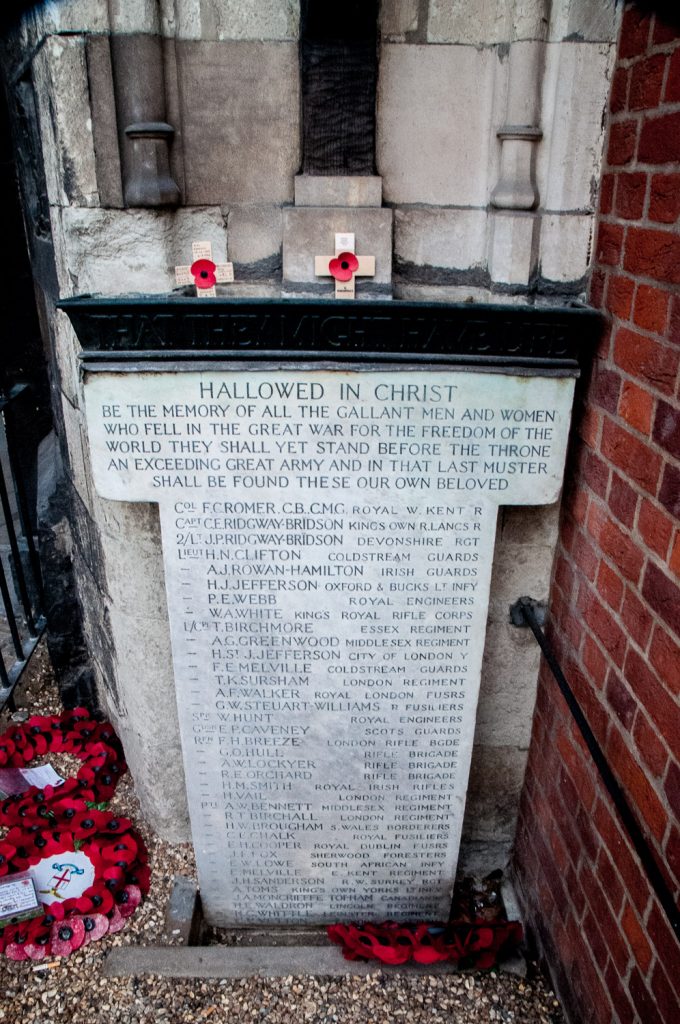
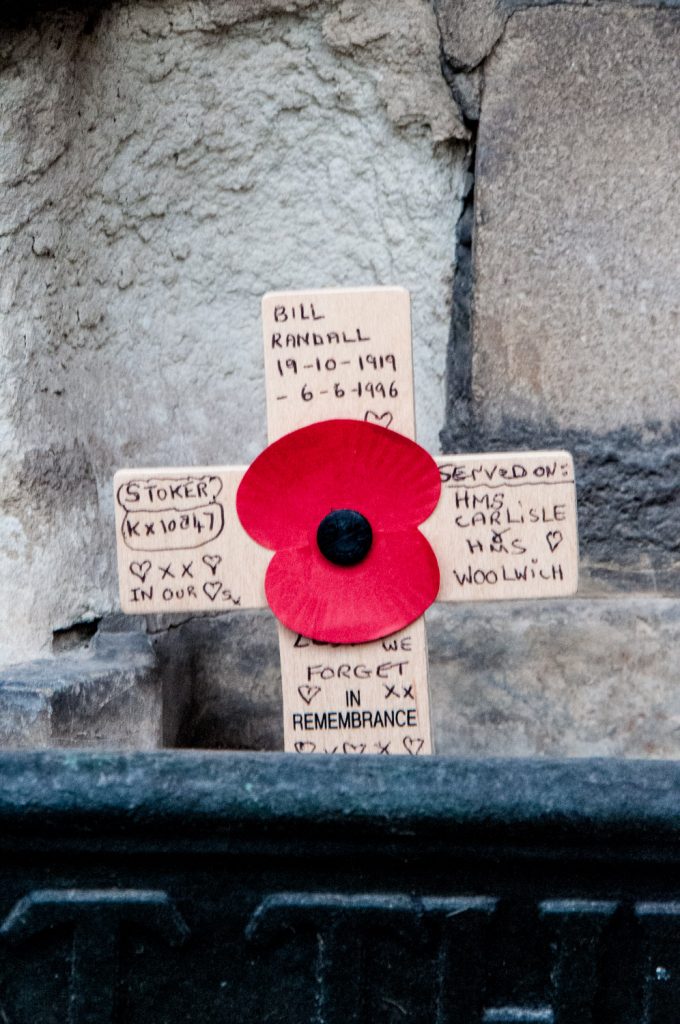
As you leave the hospital, pause for a few moments at the little War Memorial commemorating those who lost their lives in the ‘Great War’ . I took these pictures just after the Armistice Day ceremony …
This image has an empty alt attribute; its file name is DSC_7224-529x1024.jpg
This image has an empty alt attribute; its file name is DSC_7225-680x1024.jpg

This touching message commemorates a Second World War sailor …
If you want to know more about the Smithfield burnings here is a link to one of my sources and a book entitled The Burning Time – The Story of the Smithfield Martyrs.

I have discovered a lot more to write about relating to Smithfield and will return there in a future blog.

If you would like to follow me on Instagram here is the link …
https://www.instagram.com/london_city_gent/

A famed swordsman, a tragic drowning and an honest lawyer – exploring St Dunstan-in-the-West

I had a great stroke of luck last Friday when I wandered into St Dunstan’s and met by chance two of the lady administrators who kindly took the trouble to show me around. The church is on Fleet Street (EC4A 2HR).

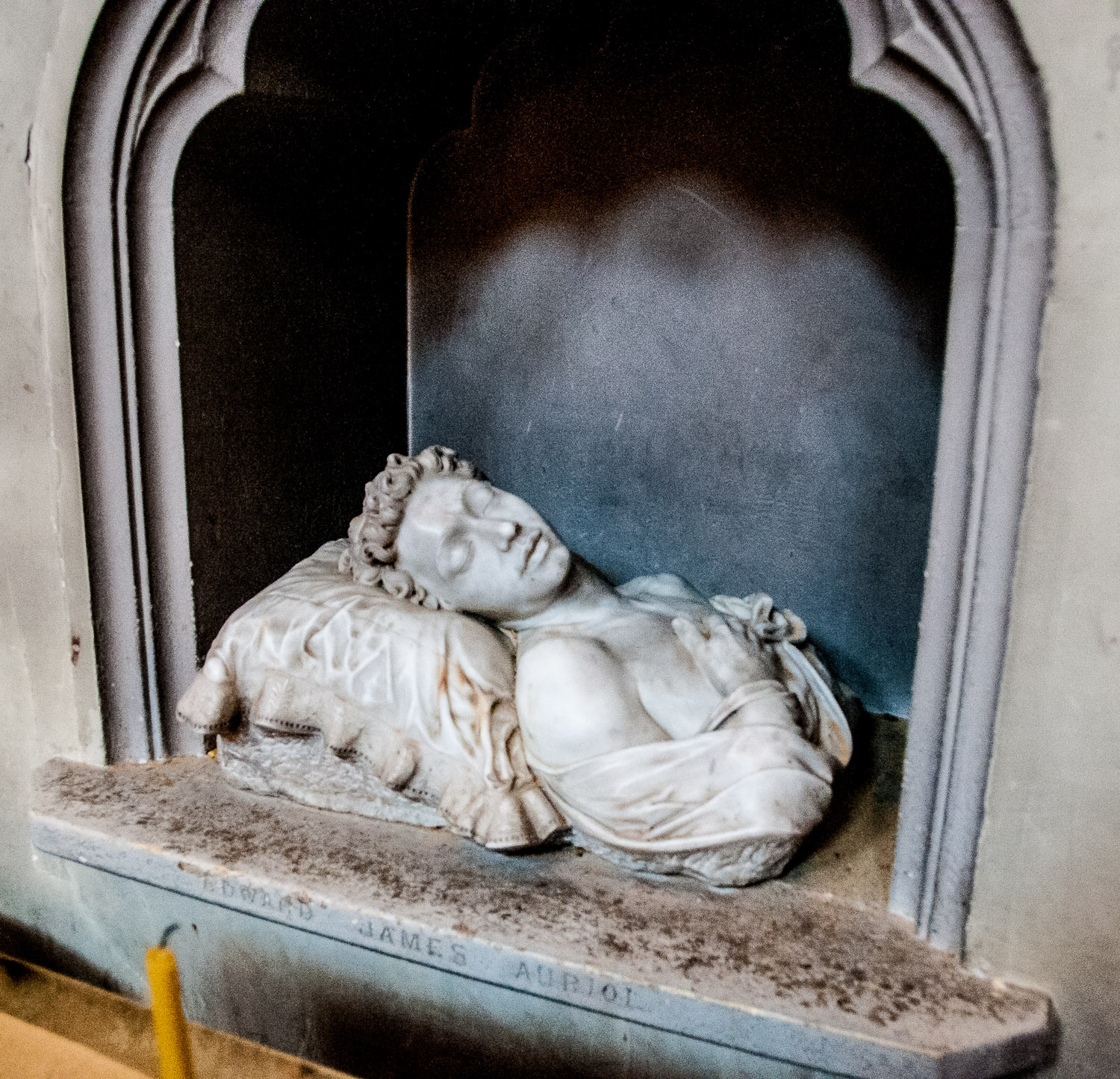
In a niche in one of the side chapels is a marble bust of a youth with fine features, Edward James Auriol lying on a pillow, hand on heart, as if asleep …

In fact, he died tragically at the age of 17 when he drowned in the Rhône river in Geneva one bright morning on 19th August 1847. A student at King’s College London, he was the ‘tenderly beloved and only child’ of the Rector of St Dunstan’s Edward Auriol and his wife Georgiana.

Nearby is this fascinating memorial to ‘ye fam’d swordsman’ Alexander Layton who died in 1679 and who rests ‘not far from this place’ …

Erected by a grateful scholar of Layton’s, ‘John Brewer of Grays Inn Road’, at the foot of the tablet are the following words suggesting Layton’s final opponent was death itself …

His thrusts like lightning flew, more skilful Death

Parried ’em all, and beat him out of breath.

There was nothing the ‘Master of Defence’ could do.

There’s a memorial bust to Cuthbert Fetherstone (1537-1615) …

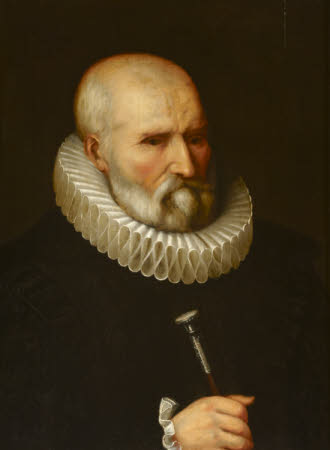
He served as the Gentleman Usher to Queen Elizabeth I, and as such was her trusted friend. Cuthbert and his wife Katharine lived in London but the housing conditions in the city were poor and they eventually left their home in Chancery Lane. They purchased Hassingbrook Hall, an ancient manor near the banks of Hassinbrook at Stanford-le-Hope, twenty-five miles downstream from London. After Elizabeth’s death he became Usher and Crier to King James I.

Here he is, painted in oils around 1598 …

Copyright: National Trust Uppark House and Garden, West Sussex

The earliest monuments in the church are these two brass kneeling figures …

The plaque reads as follows …

Here lyeth buryed the body of Henry Dacres, Cetezen and Marchant Taylor and Sumtyme Alderman of London, and Elizabeth his Wyffe, the whych Henry decessed the … day of … the yere of our Lord God – and the said Elizabeth decessed the xxii day of Apryll the yere of our Lord God MD and XXX.

Elizabeth died in 1530 and Henry nine years later. His will tells us that the brass was already made before he died and ‘made at myn owne costes to the honour of almighty god and the blessed sacrament’. He also left 20 shillings to be used for the annual purchase of coal for the benefit of poor parishoners.

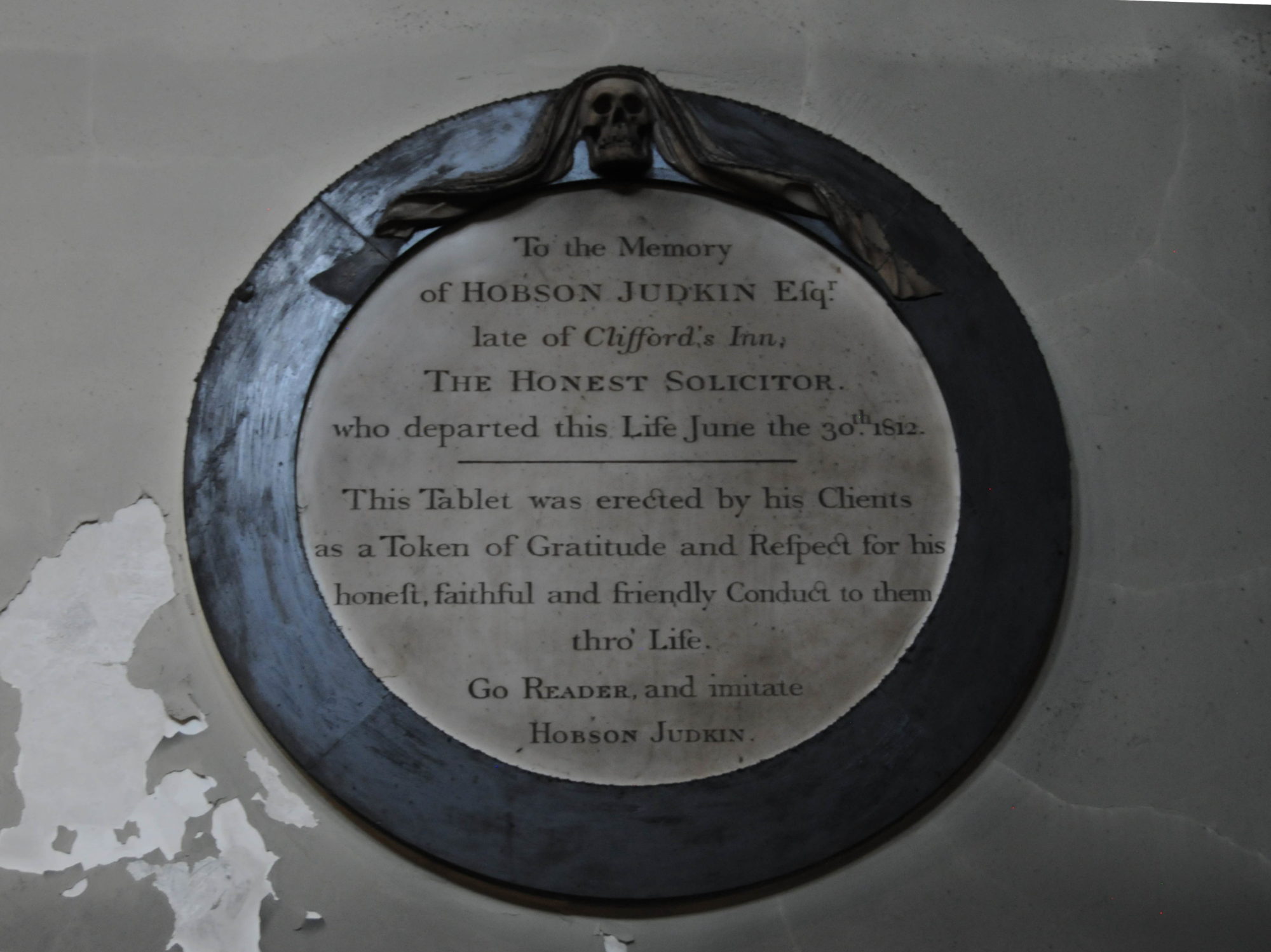
I am sure there are very few dishonest solicitors nowadays, but there seems to have been a time when an honest one was rather unusual, and this virtue was so exceptional that his clients paid for a memorial plaque saying so. It reads ‘Hobson Judkin, late of Clifford’s Inn, THE HONEST SOLICITOR who departed this life June 30th 1812’.

‘Go reader’ we are commanded ‘and imitate Hobson Judkin’.

The kneeling figure next to the war memorial is said to represent Sir Roger North (1577-1651) …

This plaque celebrates the virtues and generosity of James Chambers, a ‘Citizen and Goldsmith … Eminent Banker … A man courteous to his neighbours … a Loving Husband, a Tender Father and a Sincere Friend’ …

He was also incredibly generous, being …

Very benificent to his Relations to whom he parted with upwards of £20,000 in his lifetime.

That would be getting on for two million pounds in today’s money.

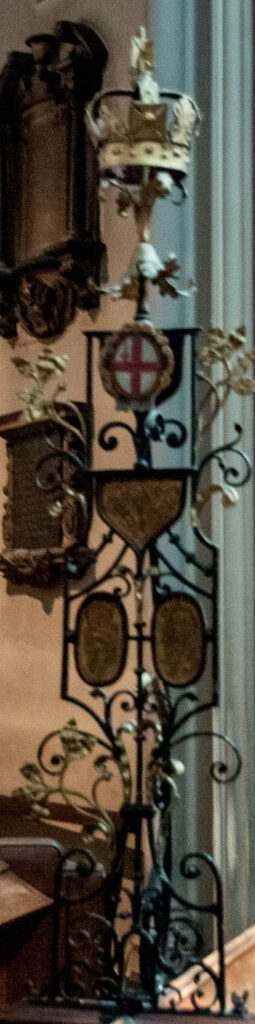
The front right-hand pew has a seat reserved for the Lord Mayor, dramatically marked by an iron sword rest, dating from 1745, and commemorating the English victory over the Jacobite Young Pretender, Bonnie Prince Charlie, at Culloden. My photograph doesn’t really do it justice …

Sword rests, or sword stands, were originally installed in City churches to hold the Lord Mayor’s sword of state when he visited different churches every Sunday, a practice which ceased in 1883.

Dedicated to a Saxon Archbishop of Canterbury and Benedictine monk, St Dunstan’s survived the Great Fire but was demolished and rebuilt between 1830 and 1833. The octagonal interior is wonderfully atmospheric …

I took a close look at the remarkable Christian Orthodox screen (or iconostasis) which came from Romania in 1966 …

The screen is over 100 years old and was originally created for the Monastery of Antim in Bucharest. I also spotted various individual icons …

These and the screen are clues to the fact that, although this is a Church of England church, it also hosts Romanian Orthodox Church services.

There is more to see in St Dunstan’s and I intend to return. If you are interested in churches, this is definitely one to visit. It has just reopened for private prayer and you can find opening times on the website.

Remember you can follow me on Instagram :

https://www.instagram.com/london_city_gent/

Horses, mermaids and memorials – more City Ladies

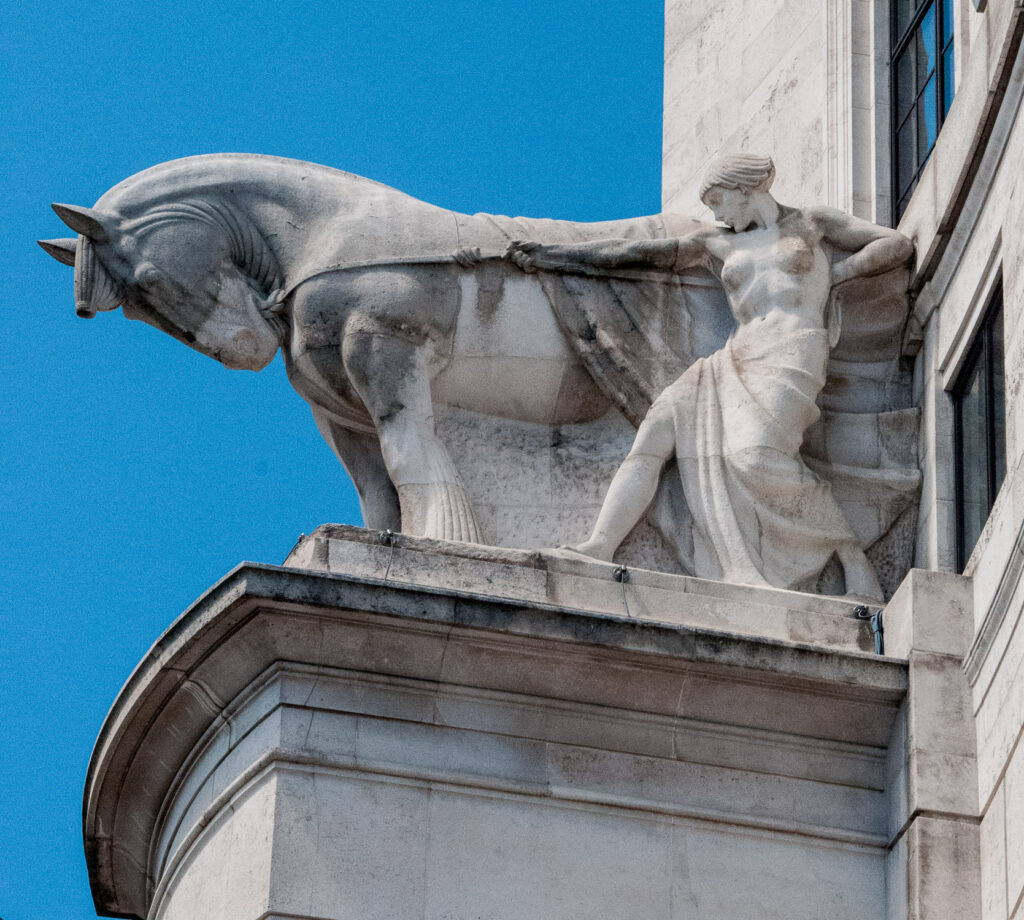
My first stop was Unilever House where a lady, her head bowed, strains hard to control a gigantic horse (EC4Y 0DY) …

The sculpture, called Controlled Energy, dates from 1932 and the sculptor, William Reid Dick, had a real horse model for him. Dr Philip Ward-Jackson, in his book Public Sculpture of the City of London, tells us …

This was no ordinary horse. A light bay gelding called Victor, it was a little over 18 hands high and, when shown at Olympia, had been described as ‘the biggest horse in the world’. The sculptor later told a reporter ‘I am sorry to say it died shortly after I finished with it’.

There is a similar male figure at the other end of the building and, when asked why he had included female figures as well as male ones, this was the sculptor’s interesting reply …

These days women are controlling affairs nearly, if not quite, as much as men. They begin to take control in some respects … as soon as they are out of their cradles, and the idea would have been incompletely carried out if only men had been used.

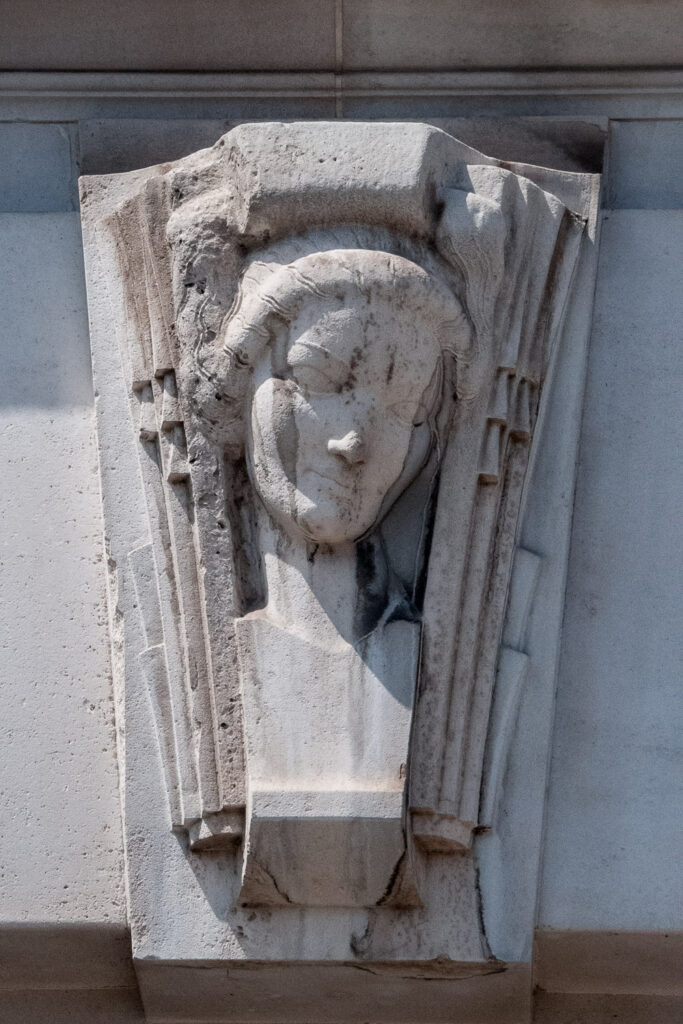
There are a number of female head keystones …

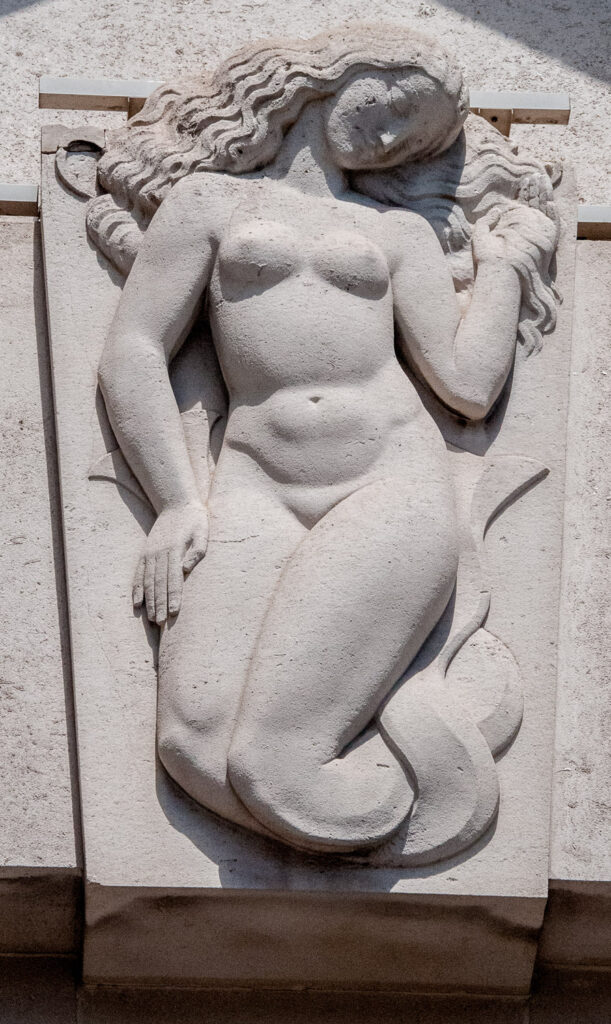
… and a pretty mermaid sculpted by Gilbert Ledward …

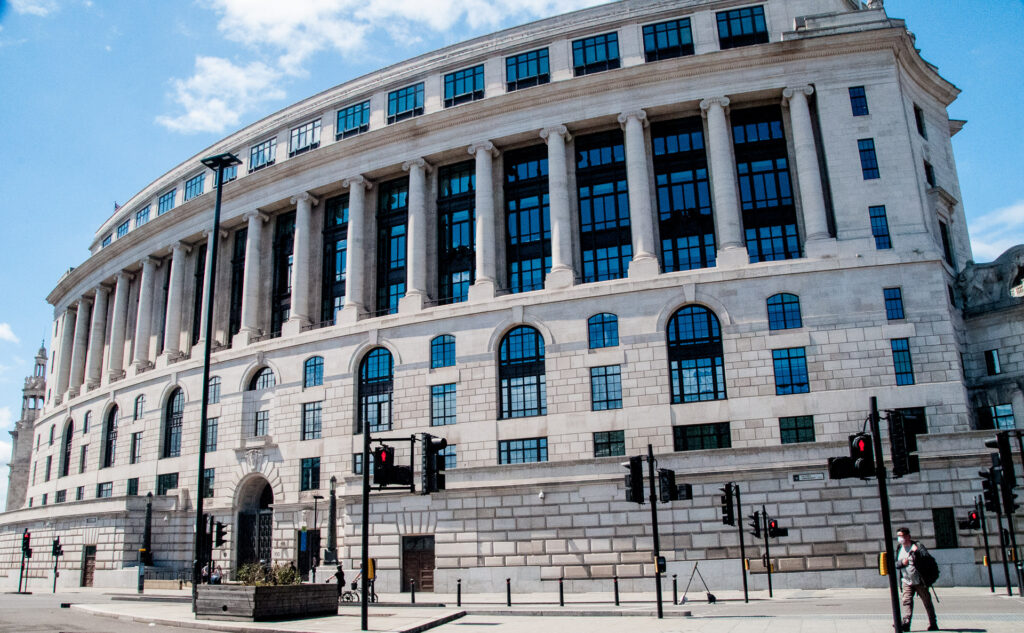
Just in case you are not familiar with the building here it is, opposite Blackfriars Station …

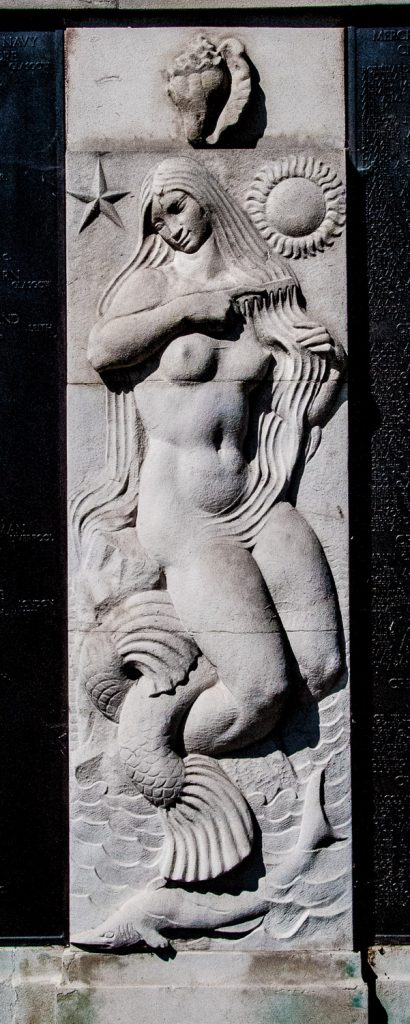
Ledward’s sculpture reminded me of the mermaid combing her hair at the Merchant Navy Memorial on Tower Hill …

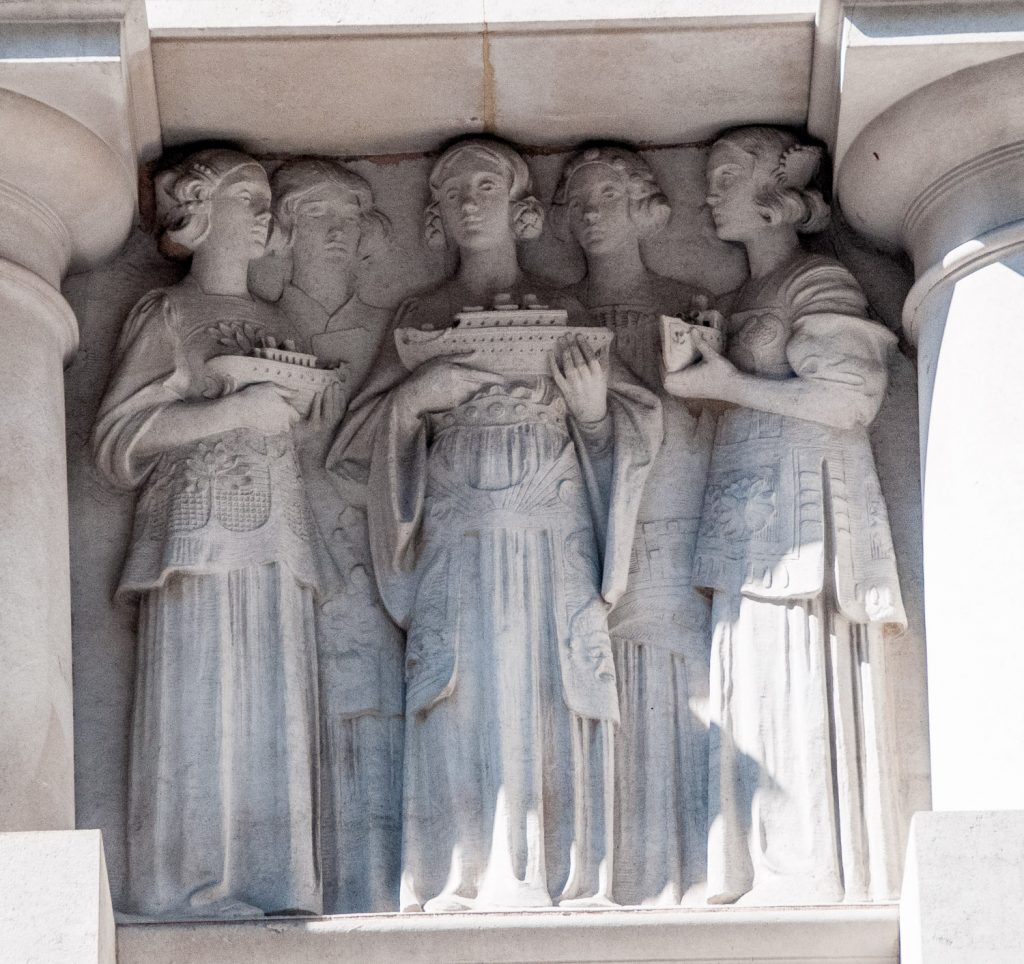
In last week’s blog I wrote about the numerous female figures decorating the Lloyd’s Register of Shipping’s offices in Fenchurch Street. Here a group of maidens hold models of ships …

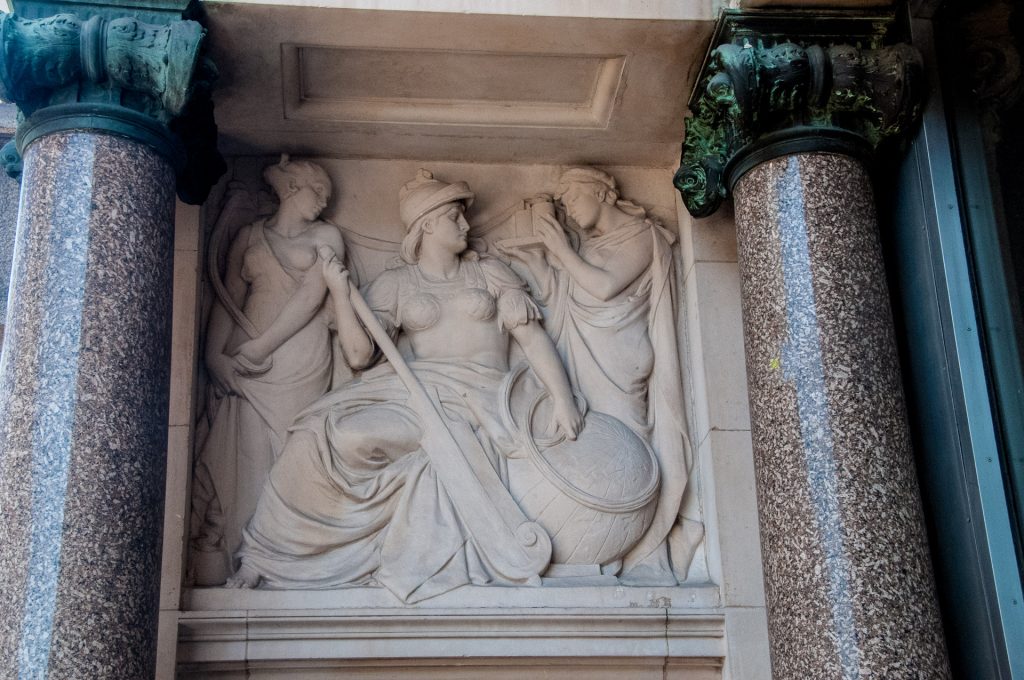
In my 2nd April blog, Moorgate and the Goddess of Electricity, I wrote about the impressive building called Electra House. I didn’t, however, venture into the entrance hall. If I had I would have seen two allegorical panels by F.W. Pomeroy who did much work on the Central Criminal Court, including the statue of Lady Justice. Again, there is more in last week’s blog.

The panel to the left has a seated figure, which may be Britannia, holding a rudder in one hand and a loop of cable in the other …

The cable encircles a globe and the figure to the right holds up two batteries on a tray.

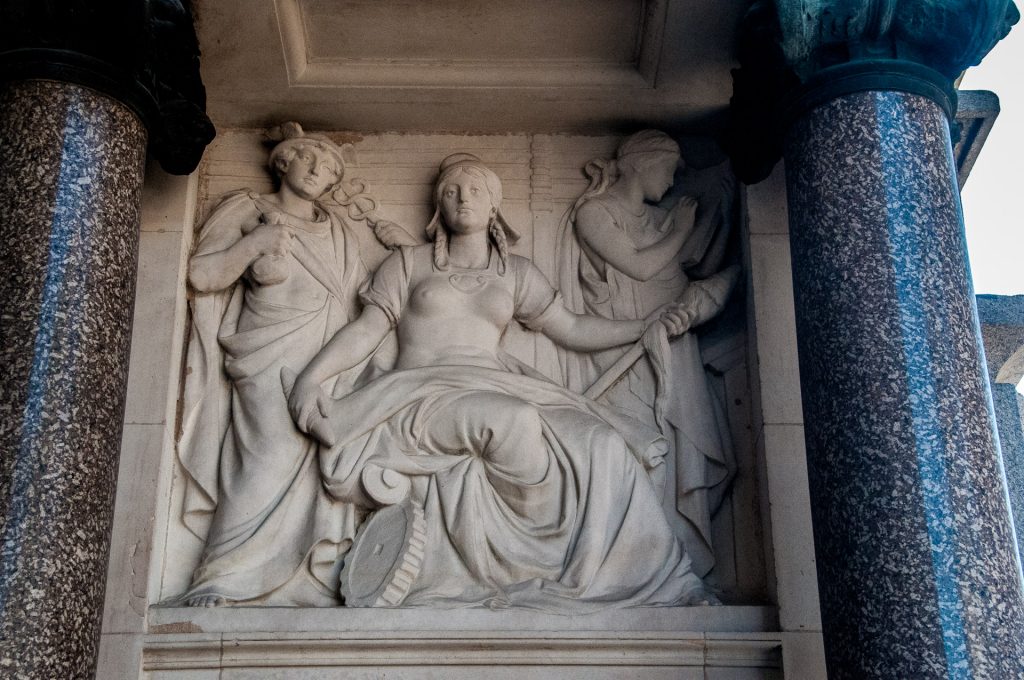
This is the panel opposite …

The female figure holds a distaff in one hand and a weaving shuttle in the other. Standing to her left is Mercury, holding his caduceus and a bag of money. The lady on the right writes in a ledger whilst in the background is a telegraph pole. The panel probably represents the advantages to trade and industry of the telegraph.

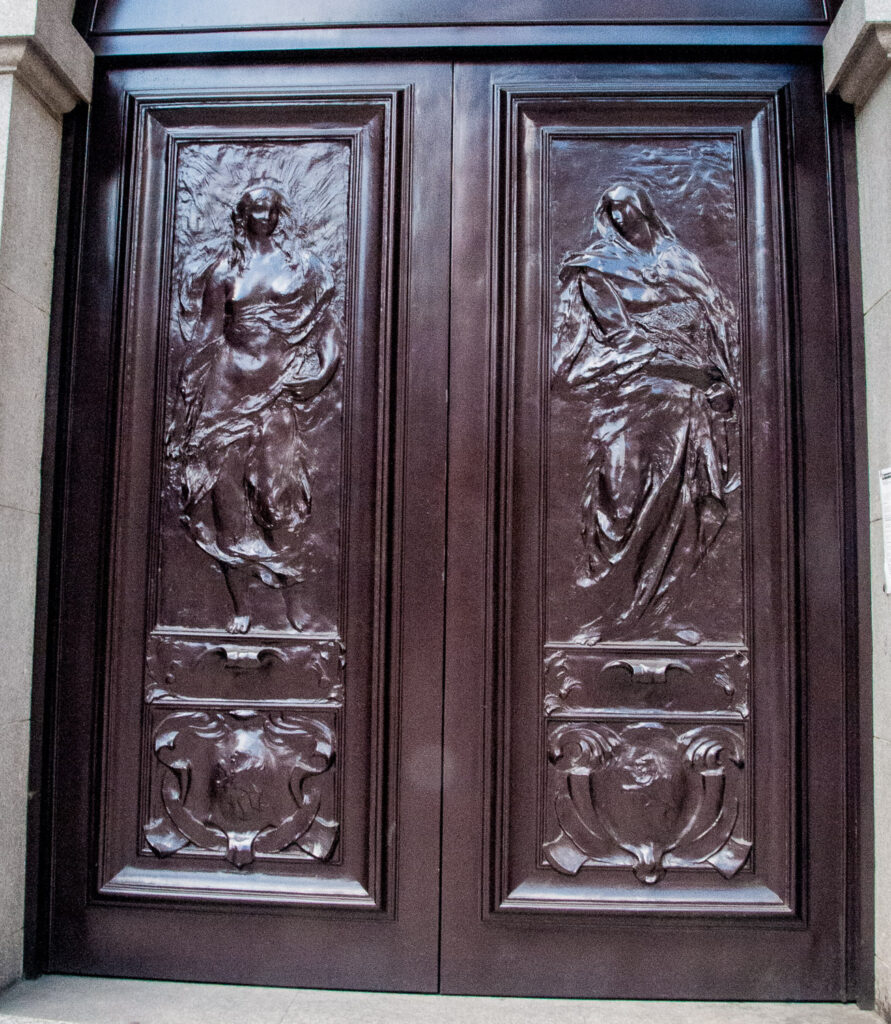
And now south, to Number 1 Moorgate which was once the Banco di Napoli. Created in the 1980s, the bronze doors portray two ladies in peasant costume …

The woman on the left is sowing seeds and the one on the right holds a sickle and a sheaf of cut corn.

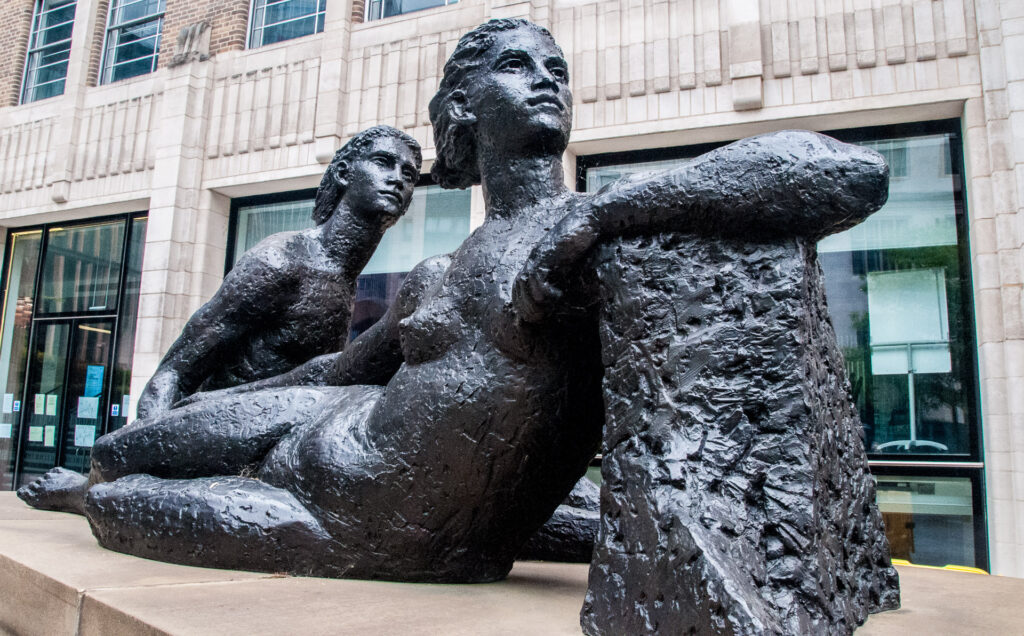
Just off Aldermanbury and to the north of the Guildhall is this 1972 bronze by Karin Jonzen called Beyond Tomorrow …

A young couple look expectantly towards the future.

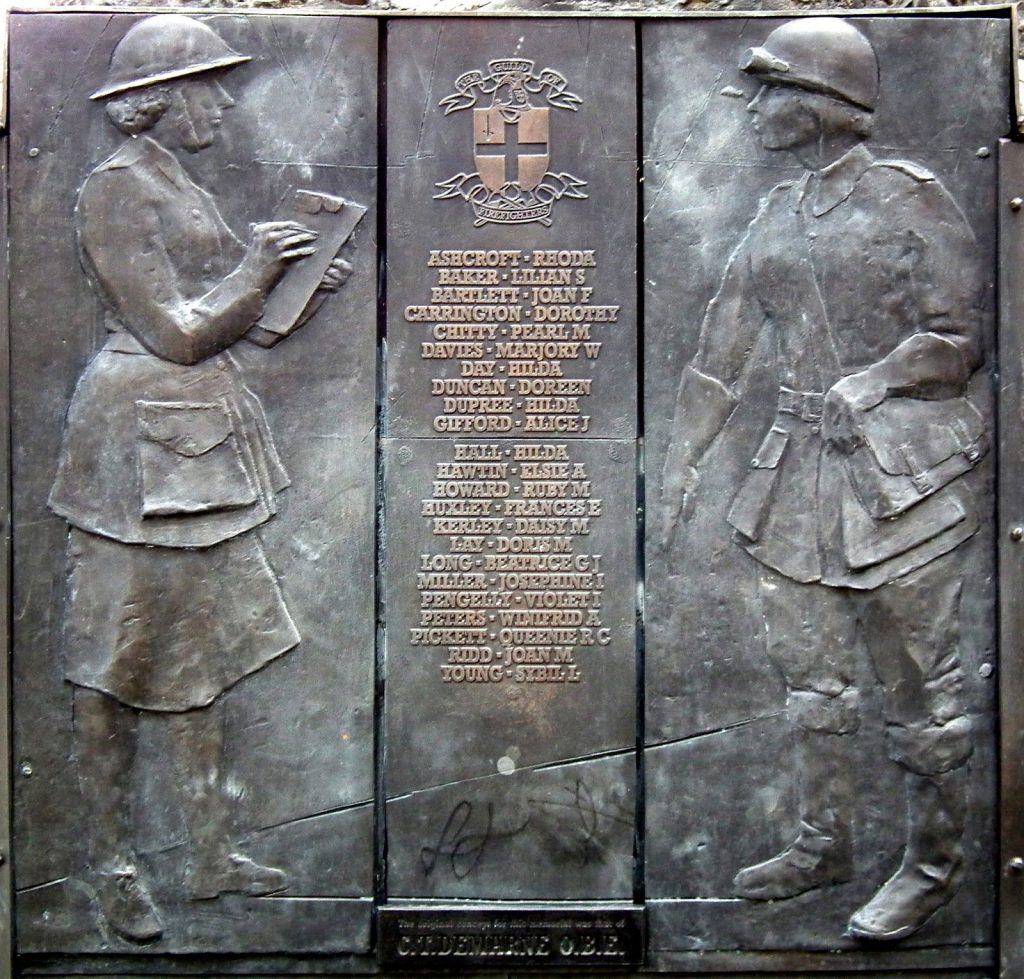
During the Second World War almost a thousand firefighters sacrificed their tomorrows trying to save property and lives during the intense bombing. On Sermon Lane opposite St Paul’s Cathedral can be found The National Firefighters’ Memorial (1991). On the north side is this representation of the women members of the National Fire Service and a list of those killed whilst on duty …

The lady on the right is a Dispatch Rider and the one on the left an Incident Recorder. Although not meant to actually fight fires, a former wartime firefighter declared …

The reality … was that firewomen were more widely involved in active work than is generally acknowledged, and they could often be found in the midst of things during the blitz, whether helping out on the pumps, in control rooms close to the centre of the severest raids or delivering supplies to firefighters.

Twenty-one-year-old Gillian Tanner was awarded the George Medal for bravery when she delivered petrol to fire pumps around Bermondsey while the docks were being bombed during the height of the Blitz.

Their pay was set at two thirds of that of the men, the Home Office having turned down their union’s request for equal pay in 1943.

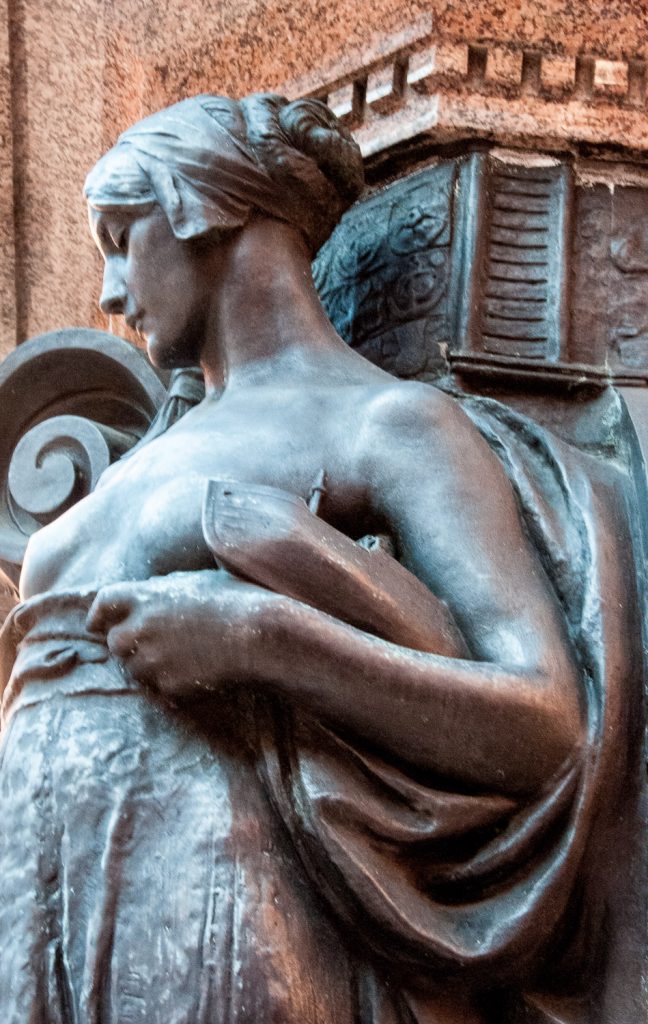
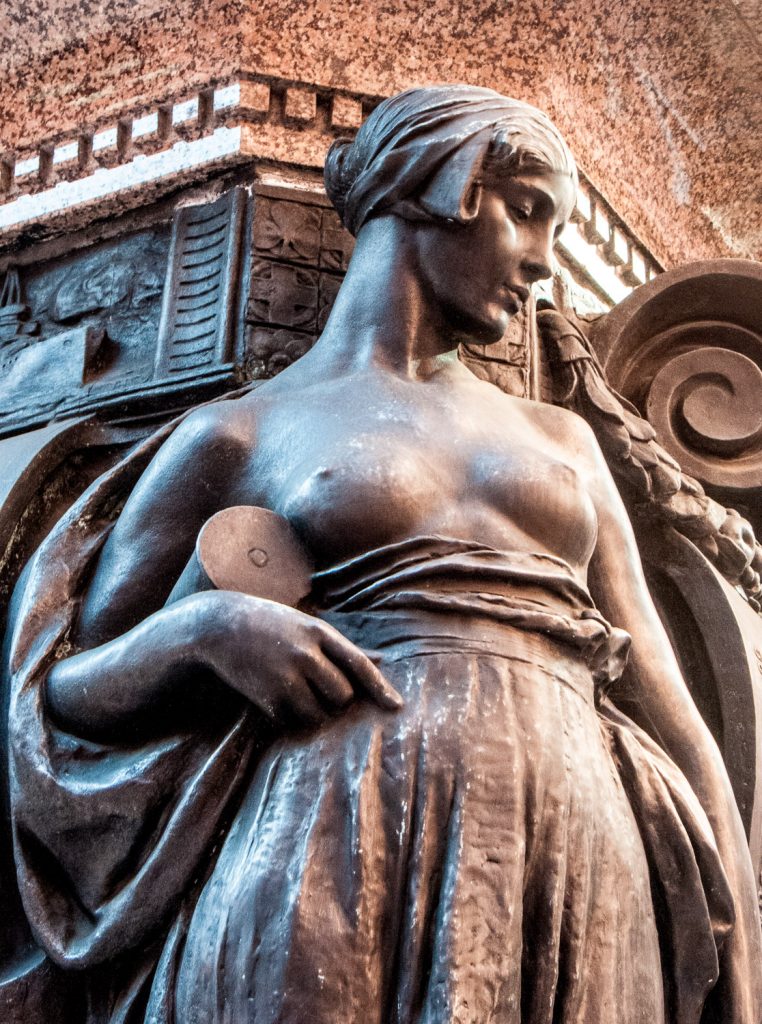
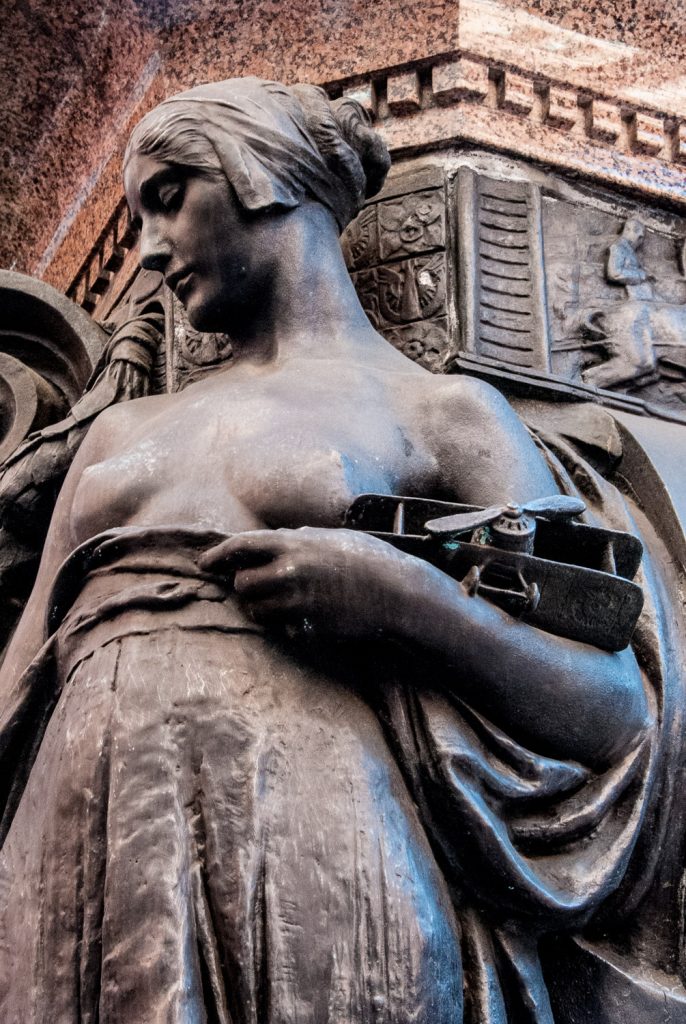
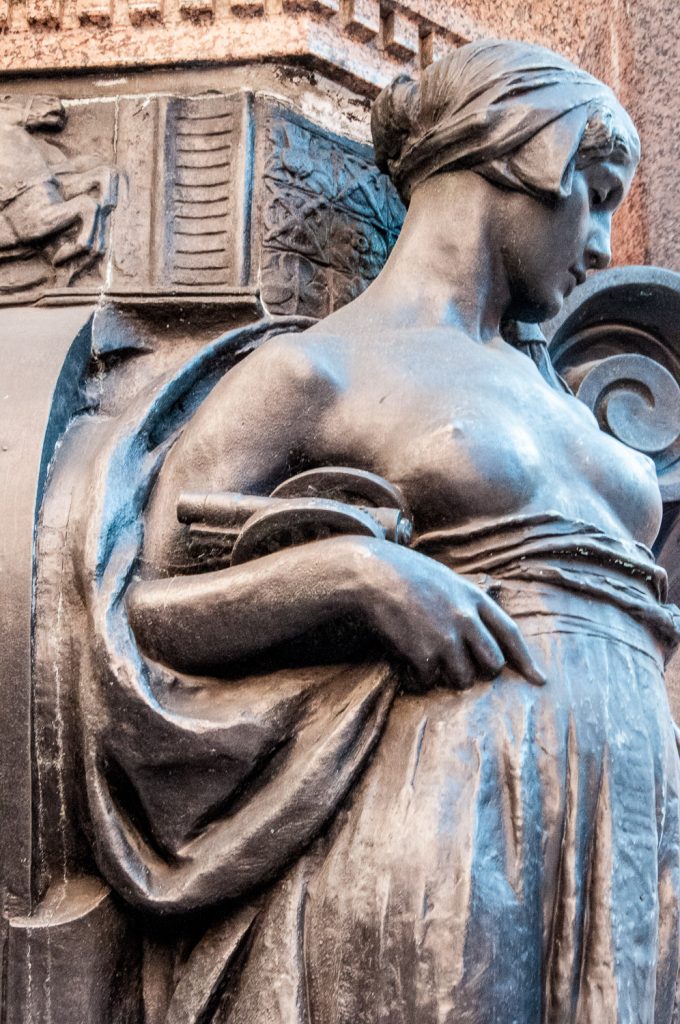
Four ladies adorn the memorial to the 786 employees of the Prudential Assurance Company who gave their lives in the First World War. It can be found in the courtyard outside their old headquarters in Holborn and you can read more about it here.

This lady holds a seagoing vessel, representing the Navy …

At the back is a figure holding a shell representing National Service …

The bi-plane represents the Air Force …

And this one holds a field gun and represents the Army …

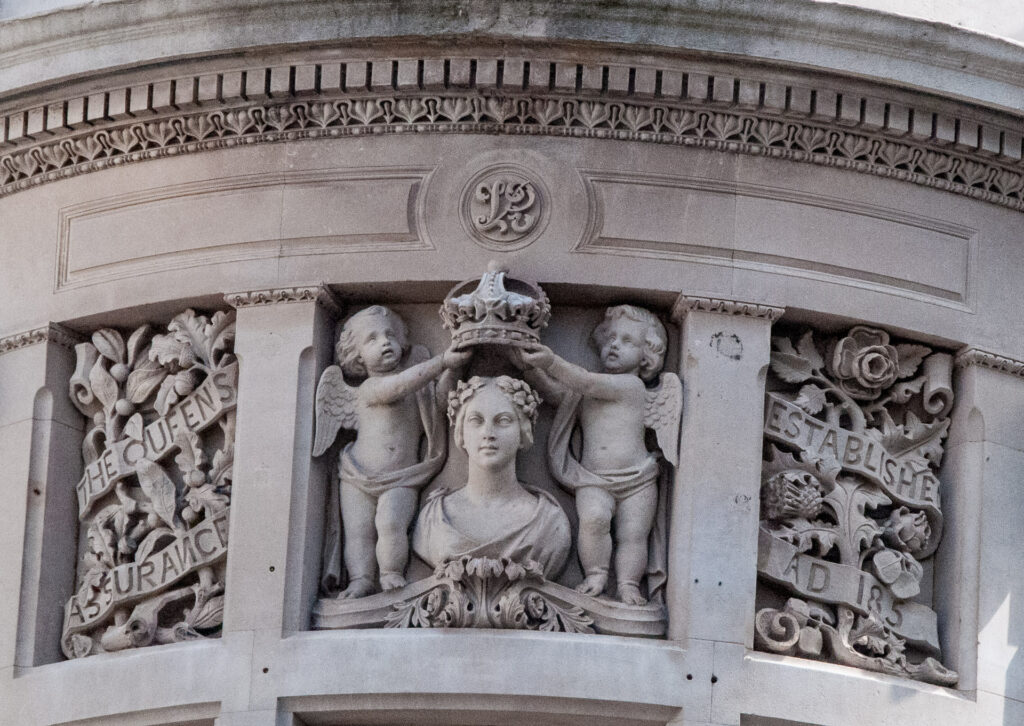
I like the Queen’s Assurance sign from 1852 at 42-44 Gresham Street …

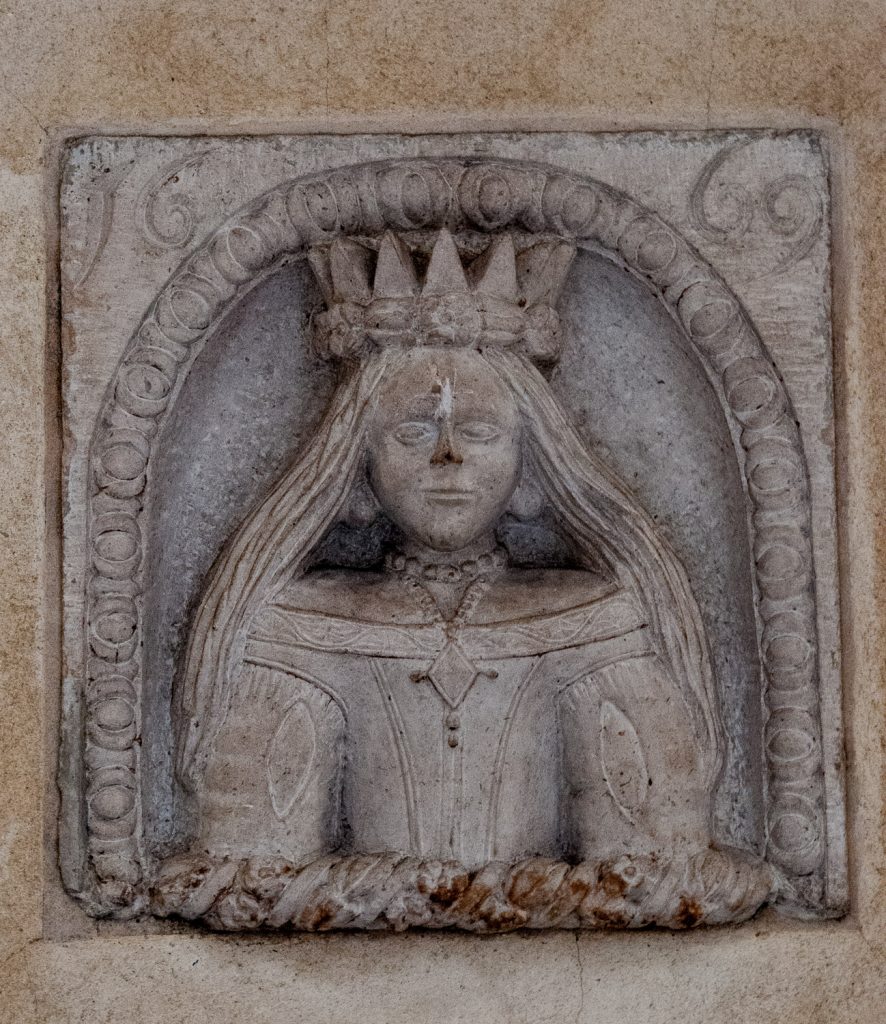
And finally, she may be the oldest City Lady I have found but she still looks beautiful and serene …

Dated 1669, she must have witnessed much of the rebuilding of the City after the great fire of 1666. She now resides in a sheltered spot in Corbet Court (EC3V 0AT). I have written about Mercer Maidens like her in an earlier blog entitled Dragons and Maidens.

Remember you can follow me on Instagram :

https://www.instagram.com/london_city_gent/

Page 23 of 37

Powered by WordPress & Theme by Anders Norén

Symbols & Secrets
Privacy Overview

This website uses cookies so that we can provide you with the best user experience possible. Cookie information is stored in your browser and performs functions such as recognising you when you return to our website and helping our team to understand which sections of the website you find most interesting and useful.