Walking the City of London

Category: Memorials Page 24 of 37

City children

Not all statues, pictures and memorials in the City are of the ‘great and the good’ – there are quite a few young people represented as well.

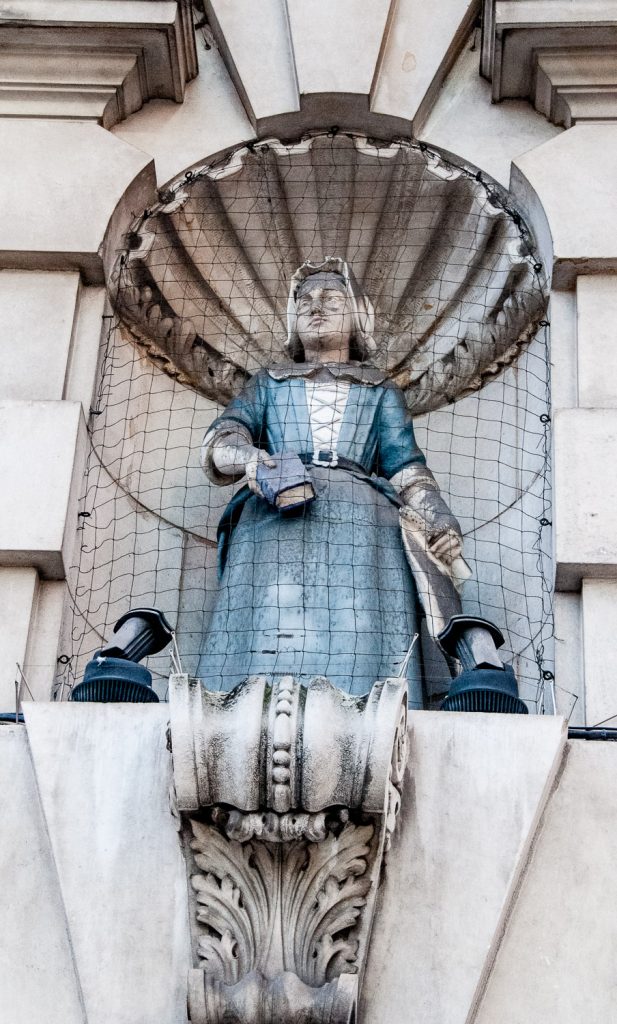
For a start, there are the charity school children who wore a striking uniform that confirmed their school’s charity status – hence the name Bluecoat Schools. Blue was chosen since it was once the cheapest dye available. The school buildings often displayed life-size representations of their pupils and these two can now be found outside the church of St Andrew Holborn (EC4A 3AF) …
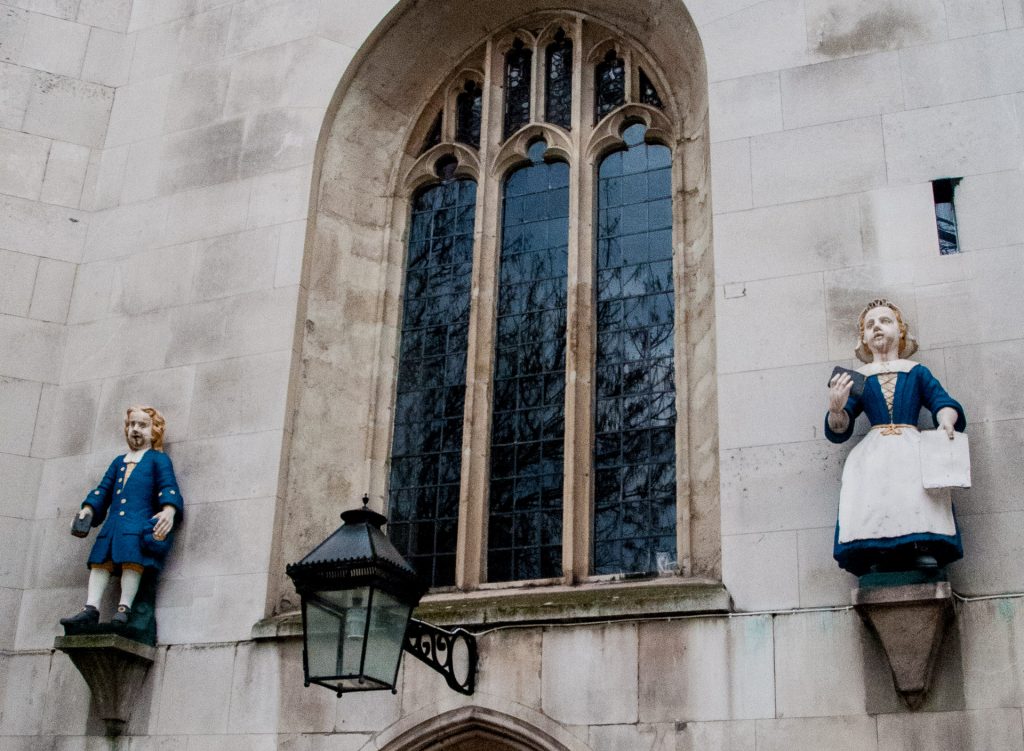
They depict children attending St Andrew’s Parochial School, founded in 1696 and located in Hatton Garden since 1721. The statues once stood over the Cross Street entrance to the Hatton Street school but were moved here during the church’s restoration after WWII bombing damage.

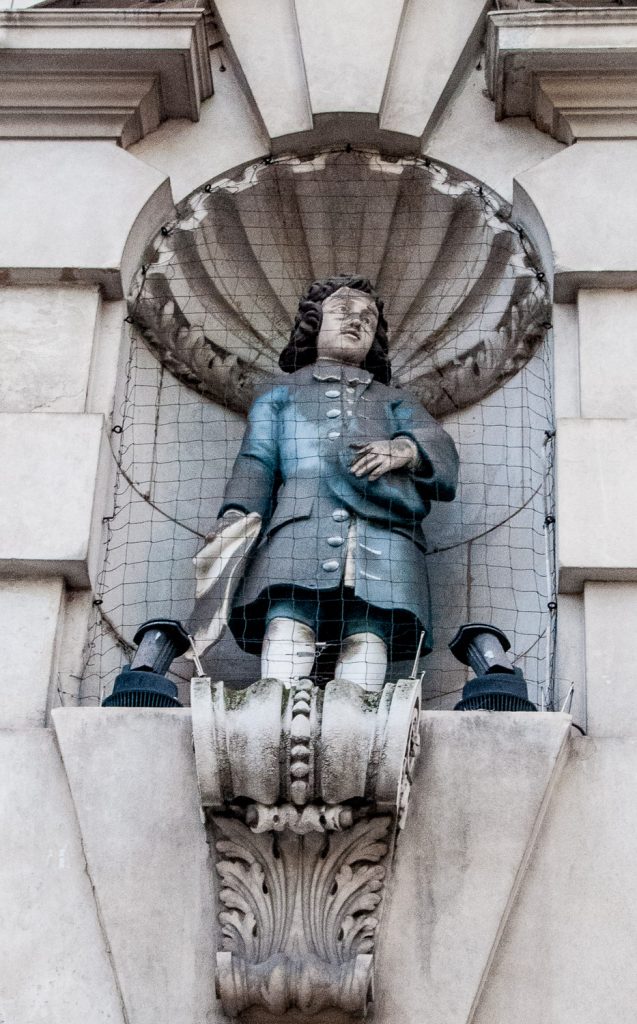
Sir John Cass’s School at Aldgate also has its little boy and girl statues (C3A 5DE) …
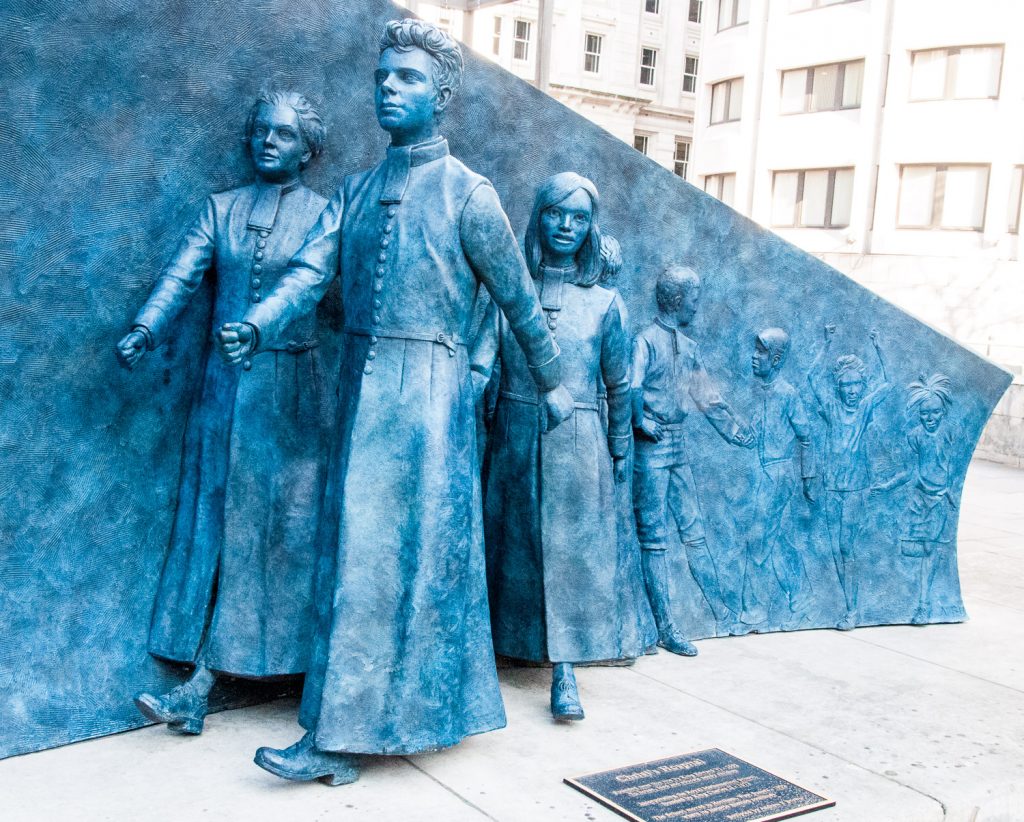
This work outside Liverpool Street Station depicts children from the Kindertransport (EC2M 7PD). I think they are beautifully portrayed, appearing both curious and confident (and one piece of luggage is clearly a violin case) …
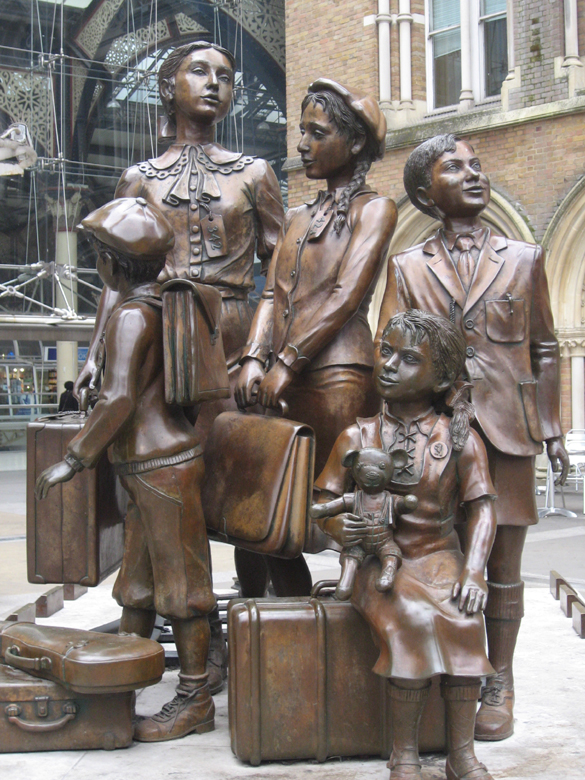
Photograph: Robin Coupland. Statue by Frank Meisler (2006).

In 1938 and 1939, nearly ten thousand unaccompanied Jewish children were transported to Britain to escape persecution in their hometowns in Germany, Czechoslovakia and Austria. These children arrived at Liverpool Street station to be taken in by British families and foster homes. Often they were the only members of their families to survive the Holocaust.

On a modern building in Giltspur Street (EC1A 9DD) a naked boy stands looking upwards with his arms crossed. He is often referred to as The Golden Boy of Pye Corner and he probably started life as a shop sign …
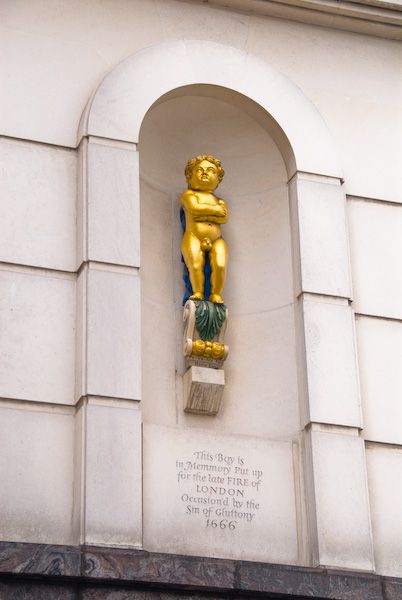
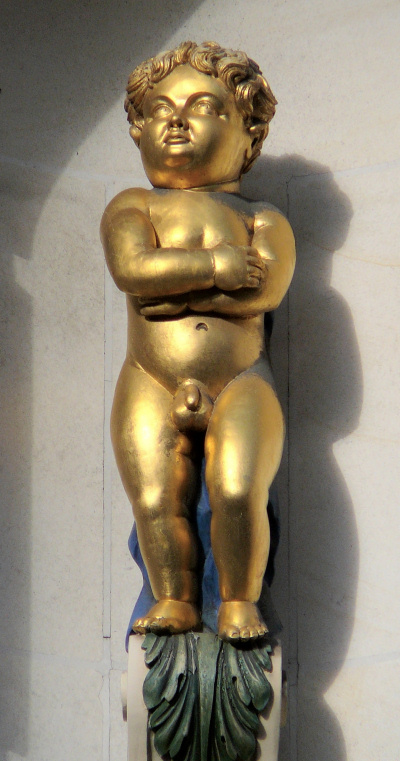
Now he commemorates one of the places where the Great Fire of 1666 was finally halted, and the inscription beneath refers to the belief by some at the time that God was punishing the City for the sin of gluttony. This was also evidenced by the fact that the conflagration started in Pudding Lane!

Despite the reference to gluttony, the little boy is not enormously fat but ‘healthily rotund’, as children or putti tended to be sculpted at that time. Pye (or Pie) Corner, on the other hand, was noted for food shops, particularly at the time of Bartholomew Fair. This annual celebration was finally suppressed in 1855 for ‘encouraging debauchery and public disorder’ and becoming a ‘school of vice which … initiated … youth into the habits of villainy’. The fair had also become one of the year’s great opportunities for pickpockets as well as for prostitutes, who might be found in tents coyly labelled ‘soiled doves’ or in a nearby street appropriately named Cock Lane.

But I digress.

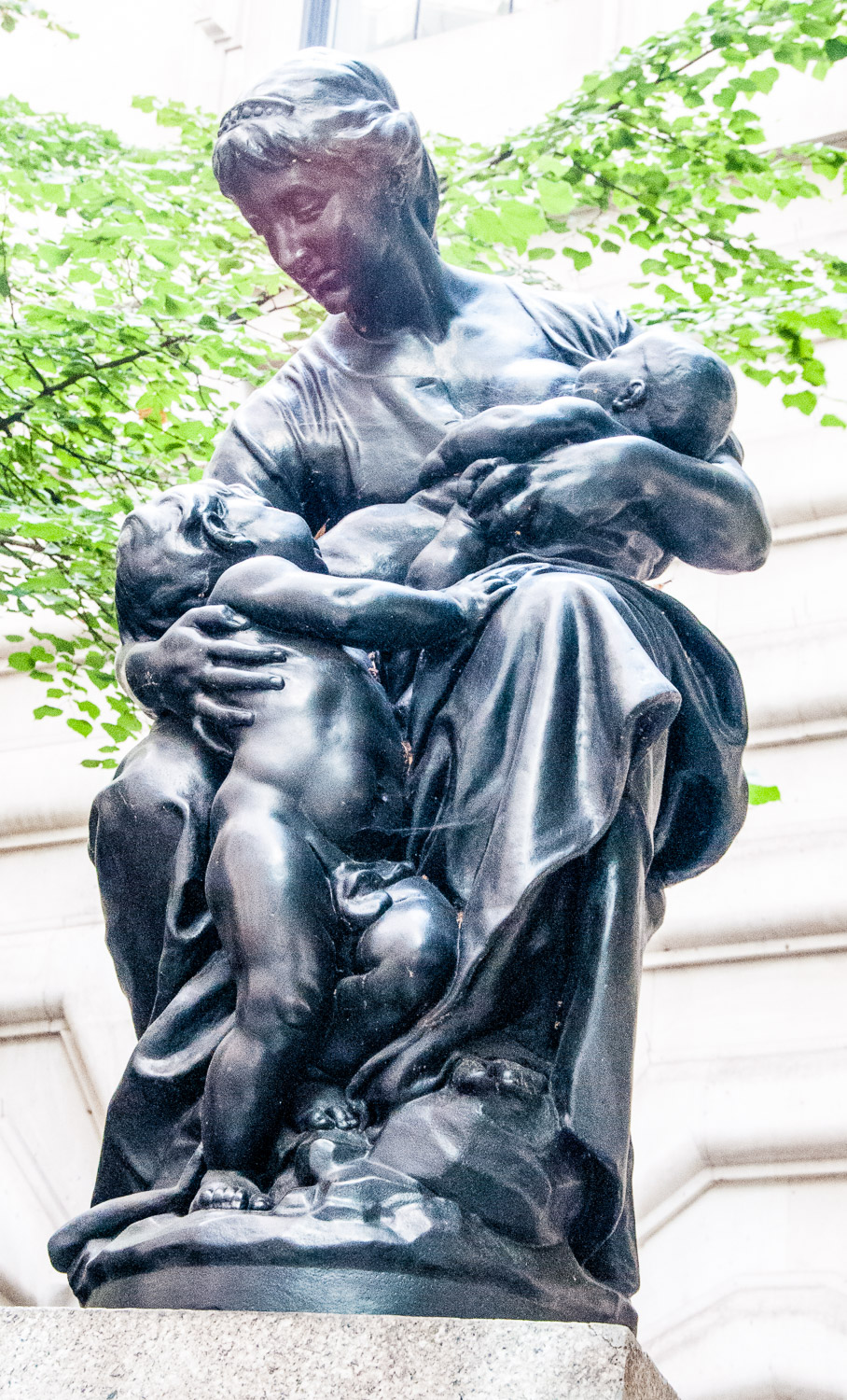
Just behind the Royal Exchange is a work that caused some controversy, the Charity Drinking Fountain (also known as La Maternité) by Aimé-Jules Dalou (1877-9). (EC3V 3NL).

In his book Public Sculpture of the City of London, Philip Ward-Jackson describes the lady as follows:

Despite her casual garb she has a diadem or tiara on her head. With her left arm she enfolds a baby, who she is suckling, whilst with her right she draws to her knee a naked boy, who gazes up at her.
Nearby is a very relaxed George Peabody who I have written about in an earlier blog …
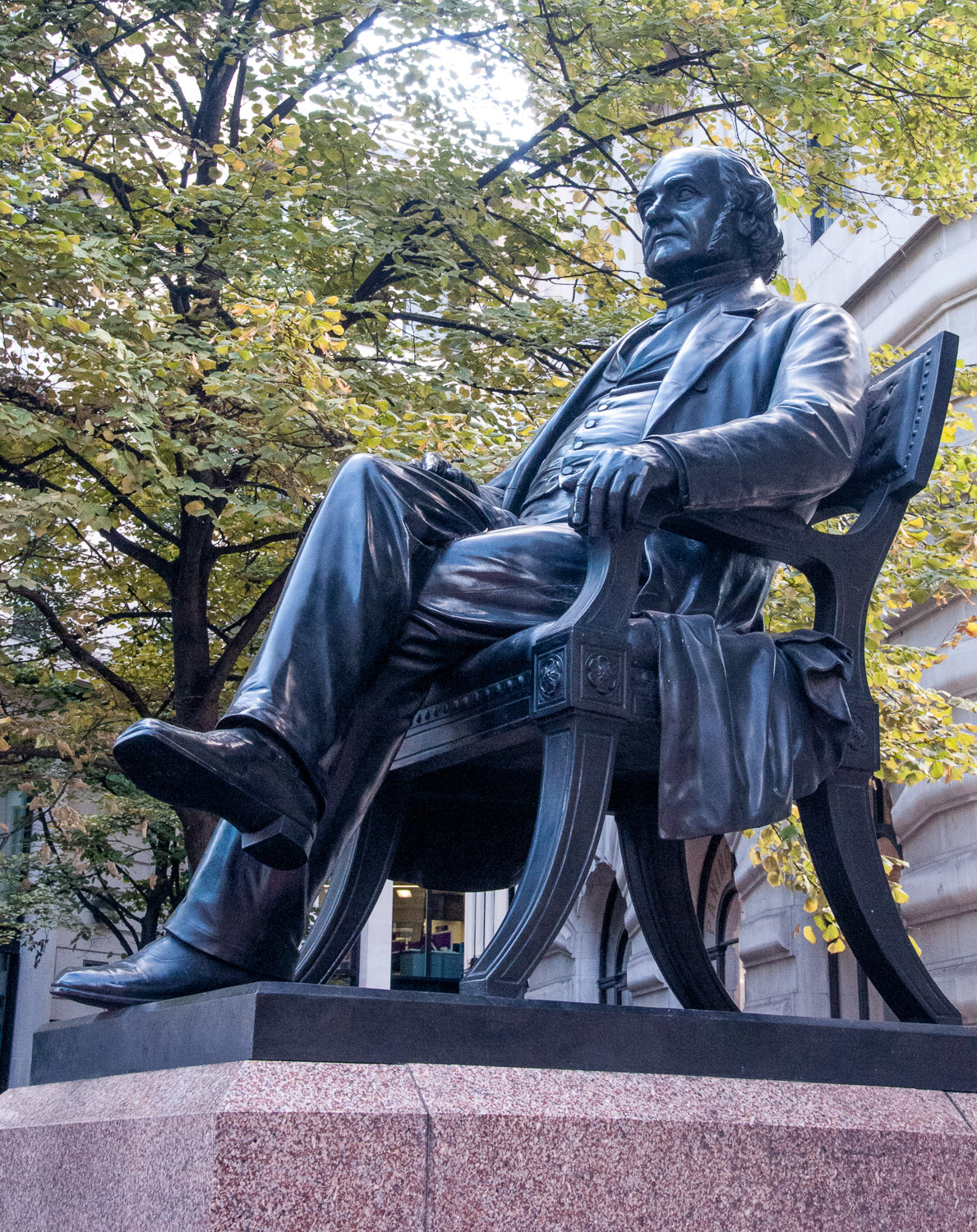
Ward-Jackson tells us that the suckling lady’s very authentic exposed breast produced at least one letter of protest to the editor of The Globe. The correspondent urged that ‘common decency’ should be observed and went on …

Do you not think, Sir, that Mr Peabody’s chair should be turned, at least until the delicate operation of ‘lacteal sustenation’ be concluded … or the young woman and youngsters provided with the requisite clothing.

Living in the Appold Street entrance to Exchange Square are The Broad Family (EC2A 2BR) …

Look long enough and you will see mum, dad, a little girl with her ball and the family dog (well I did, anyway). It has just occurred to me that the dog resembles Dr Who’s companion K9.

The little girl’s shoes peep out tantalisingly …

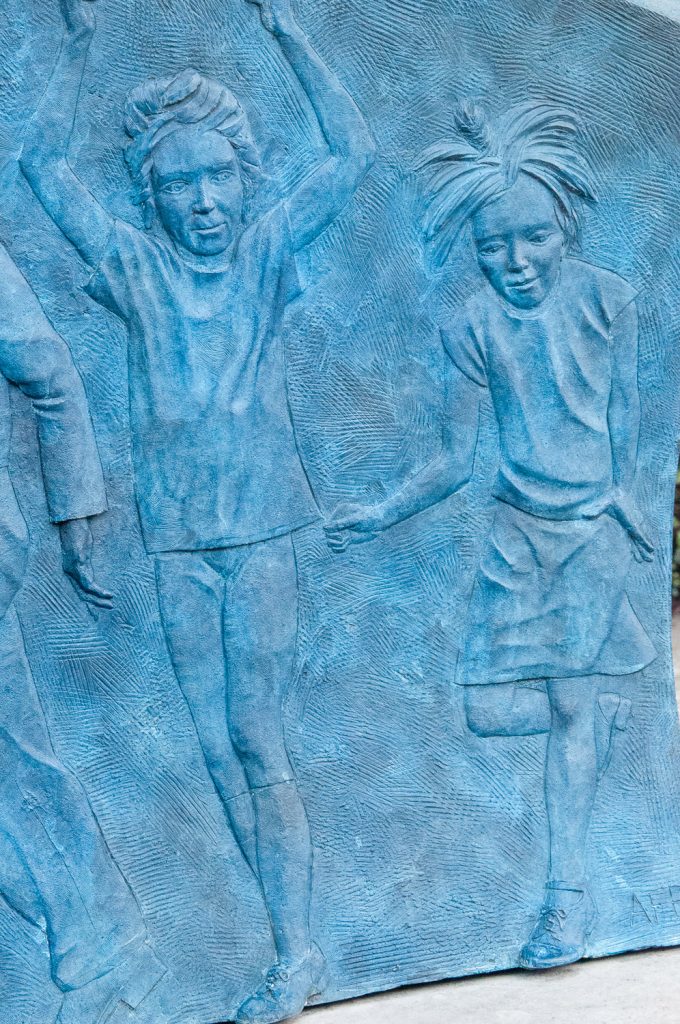
These young folk striding out purposefully are part of the memorial to Christ’s Hospital School which was sited nearby before it relocated to Horsham in 1902 (EC1A 7BA). It shows the pupils developing from street urchins to smart, confident young adults …
I love the ragamuffins at the far end of the sculpture.They seem to be having enormous fun and sport the most extraordinary hairstyles …
As you approach the Bank junction from Cheapside look up and you will see two young boys at either end of the grand building that was once the City headquarters of Midland Bank (1935). The are both struggling with a rather angry looking Goose …
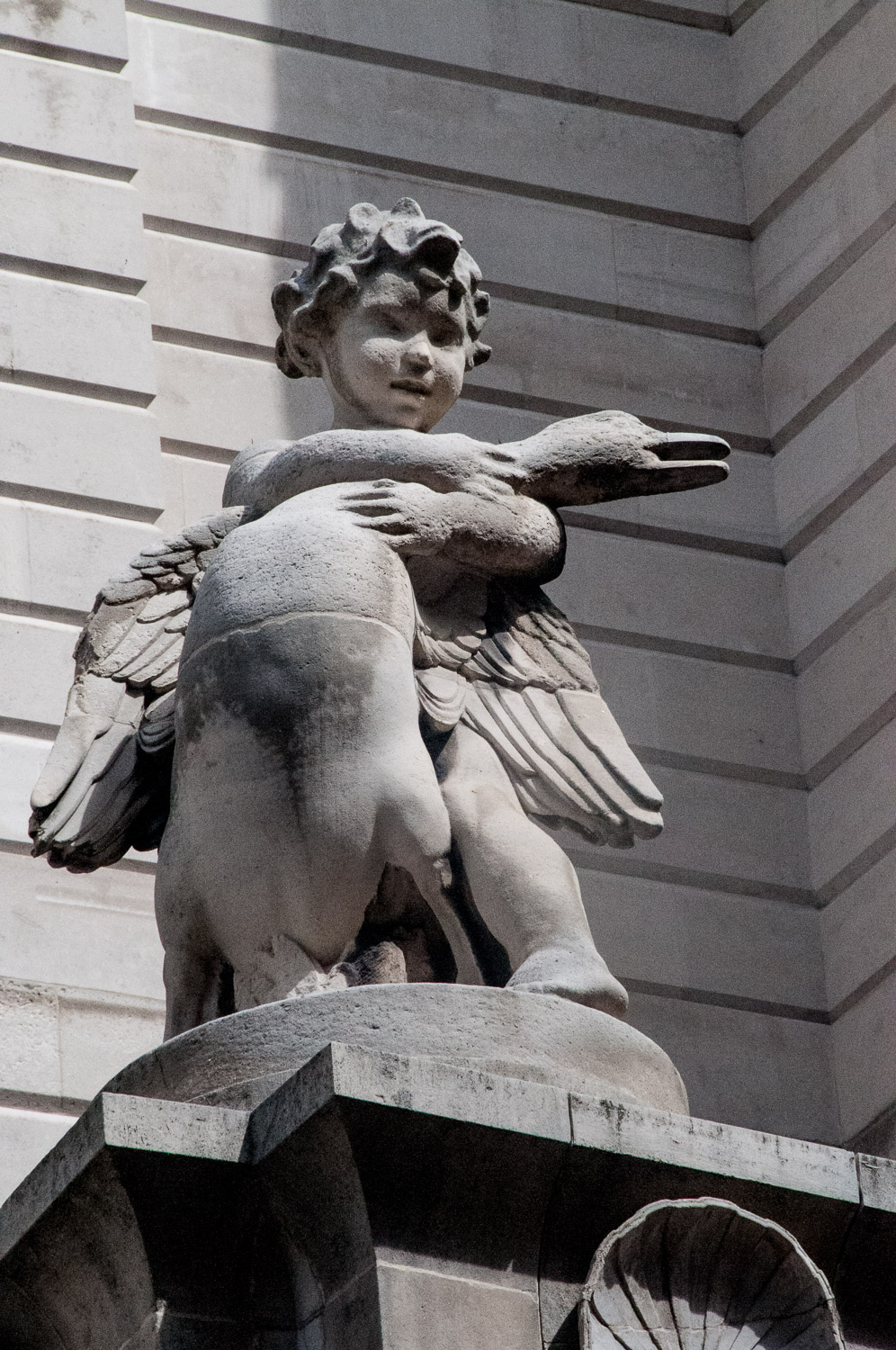
The sculptor was William Reid Dick.
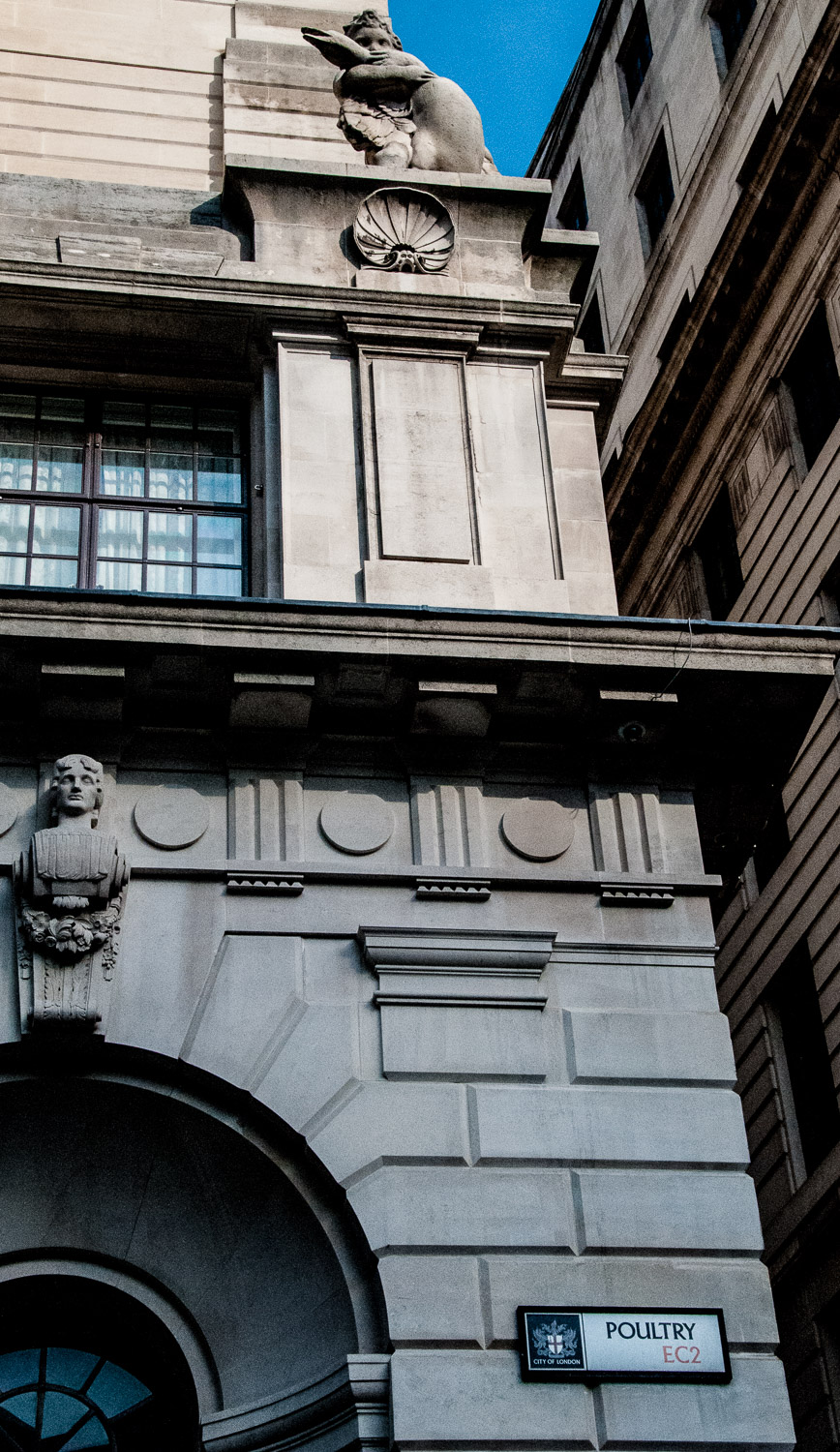
Why a goose? A clue is the ancient name of the street and the goose was a suggestion by the architect Sir Edwin Lutyens to commemorate its original market function. The building is now a private club and restaurant, called The Ned in Sir Edwin’s honour.

In the Guildhall Art Gallery there is a pretty little girl attending her first sermon …
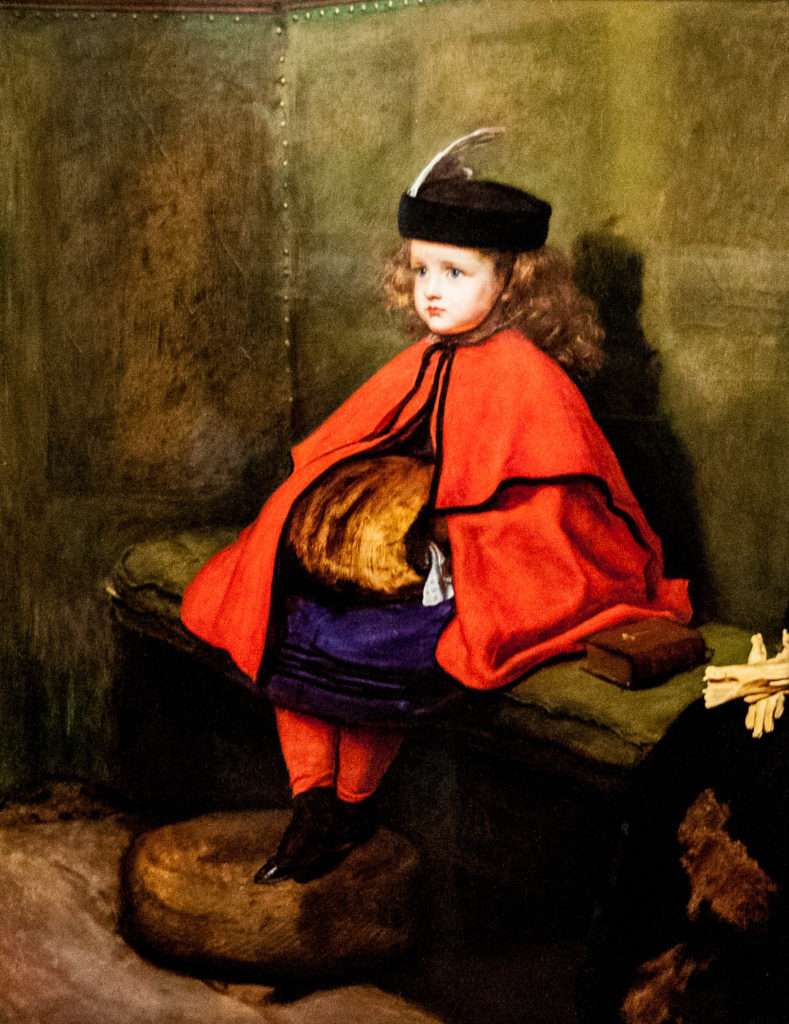
‘My First Sermon’ by John Everett Millais

She obviously knows this is an important occasion in her life and sits with her back straight, eyes attentively focused looking ahead. She is the artist’s 5 year old daughter Effie. On seeing it the Archbishop of Canterbury commented …

… our spirits are touched by the playfulness, the innocence, the purity, and … the piety of childhood

In 1864 the artist produced a sequel entitled ‘My Second Sermon’ …
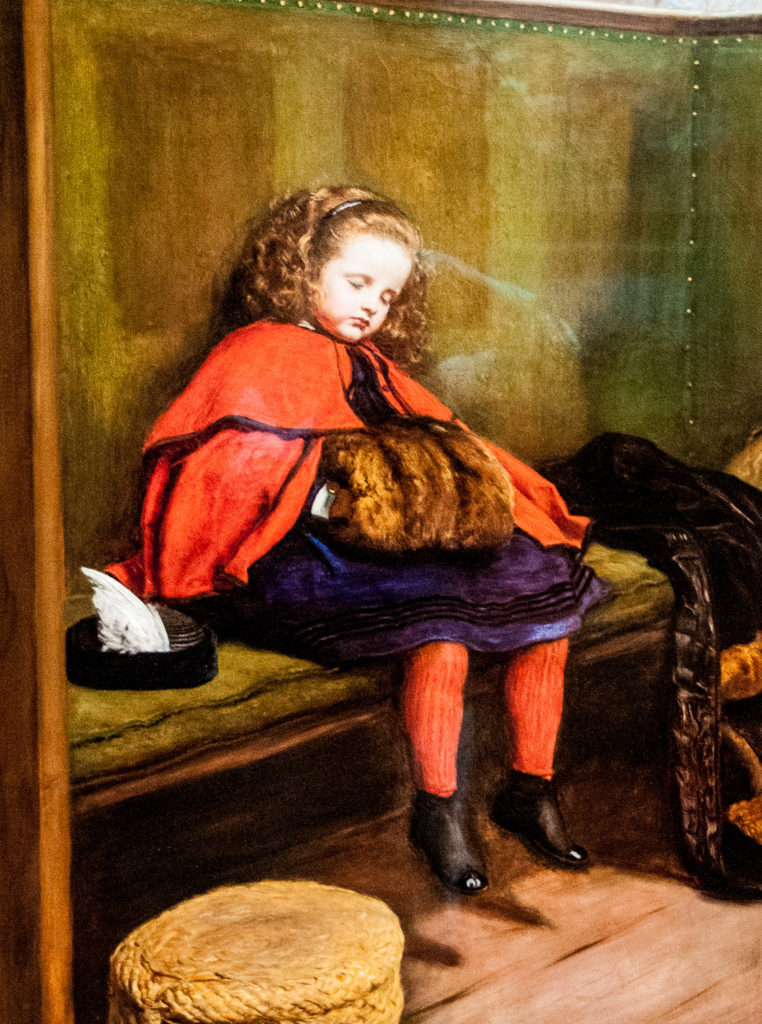
The Archbishop, Charles Longley, was obviously a rather good sport, and when he saw the later picture commented …

… by the eloquence of her silent slumber, (she has) given us a warning of the evil of lengthy sermons and drowsy discourses. Sorry indeed should I be to disturb that sweet and peaceful slumber, but I beg that when she does awake she may be informed who they are who have pointed the moral of her story, have drawn the true inference from the change that has passed over her since she has heard her “first sermon,” and have resolved to profit by the lecture she has thus delivered to them.

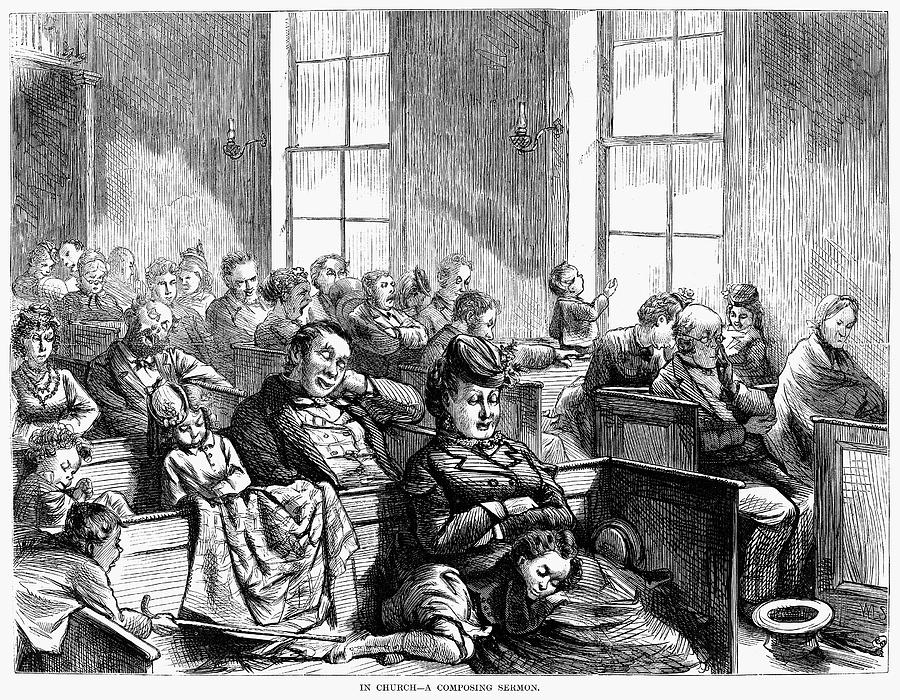
I was reminded of this wonderful drawing of a Victorian congregation who are finding the sermon rather heavy going …
In 1995 a skeleton was discovered when excavations were taking place before the construction of 30 St Mary Axe, now often referred to as the Gherkin. The remains were of a young girl aged between 13 and 17 years – her arms were crossed over her body and pottery close by indicated a burial date of between AD 350 and 400.

Having been removed to the Museum of London, she waited patiently until 2007 when the developers of the Gherkin proposed that she be reburied on the site. So, in April of that year, there was a service at St Botolph’s church in Aldgate followed by a procession through the streets before her body was respectfully interred near where it was found. The Lady Mayoress of the City of London was there to spread rose petals on the gravesite, marked with a marble slab decorated with a laurel wreath.
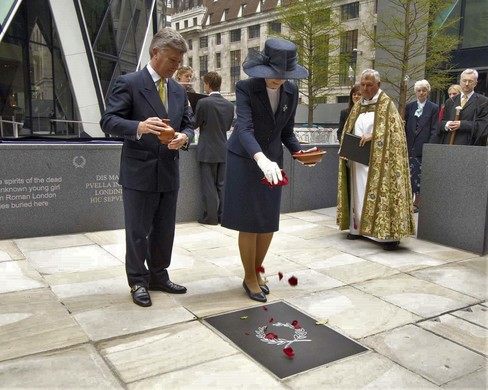
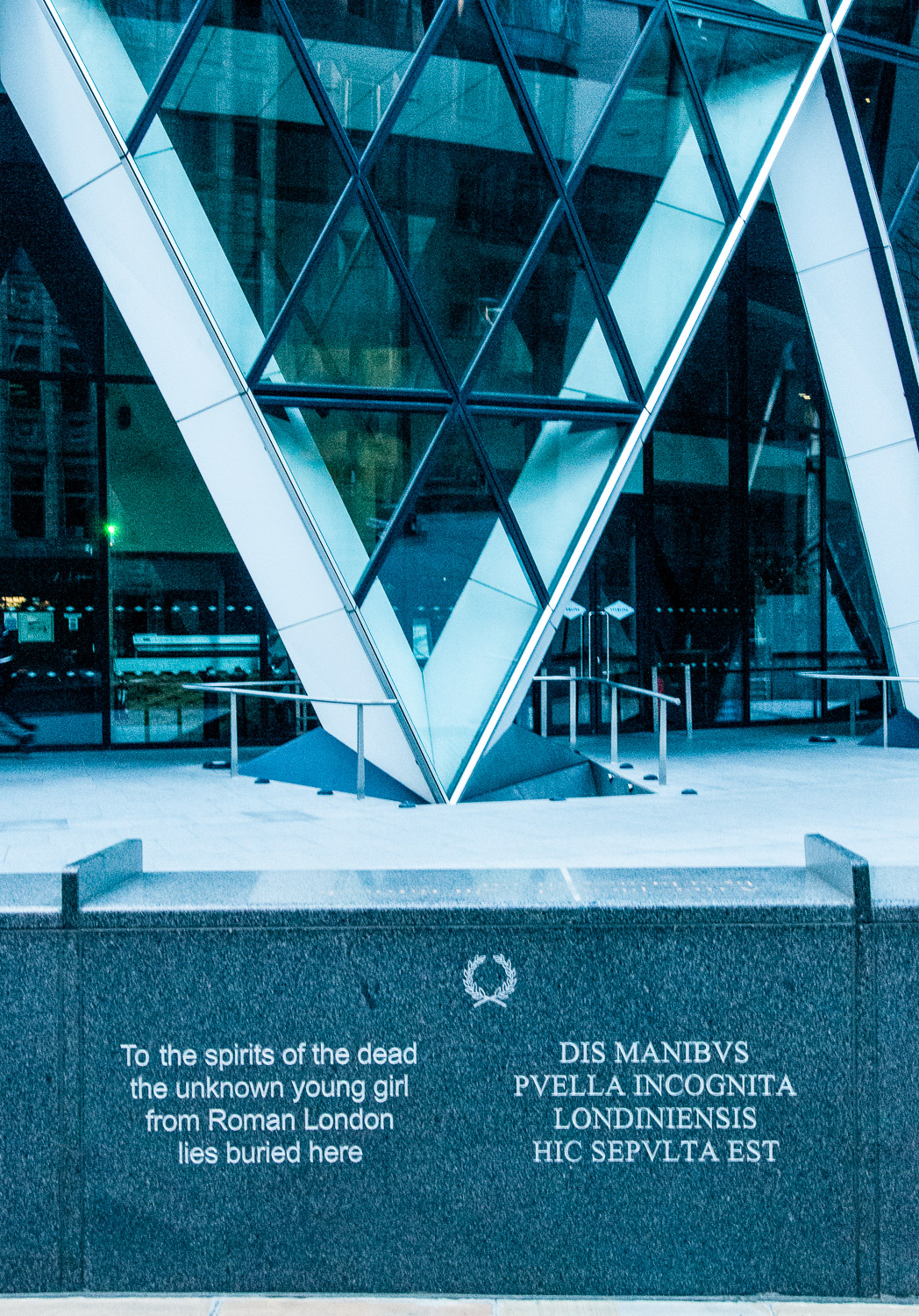
We don’t know her name, or whether she was an original Londoner, but she now rests again 1,600 years after her death in the place that she would have called Londinium.

And finally to one of my favourite places, the Watts Memorial in Postman’s Park (EC1A 7BT). I have written before about three of the brave youngsters commemorated there – Alice Ayres, John Clinton and Elizabeth Boxall.

To them I will now add this young man …
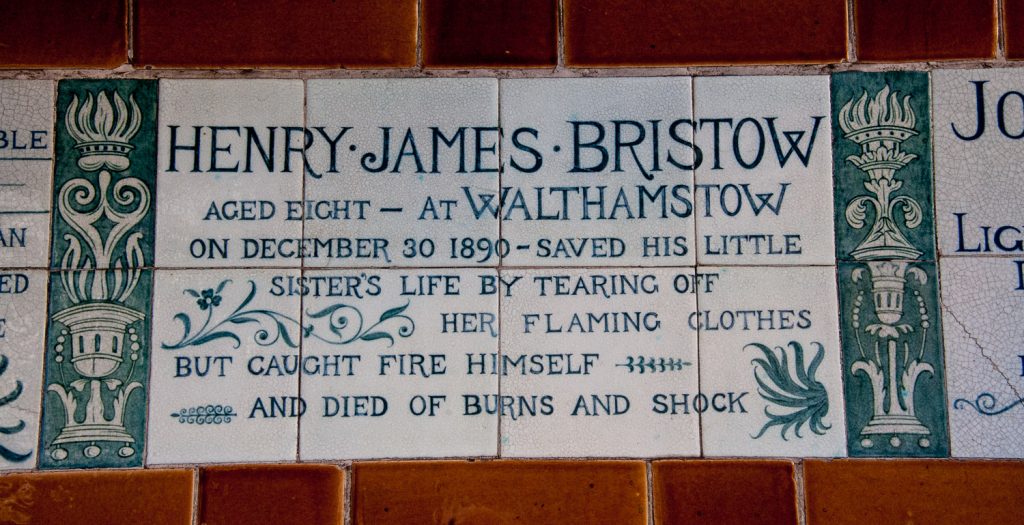
While their mum was out running an errand Henry’s two-year-old sister Jessie, intrigued by the glow of a paraffin lamp, managed to clamber up a chair and reach out for it. Tragically, she overturned it and was enveloped in flaming paraffin. Henry rushed to help her, but in tearing off her clothes set fire to himself and both children received severe burns. Jessie survived but Henry died on 5th January – the coroner at his inquest commented ‘it is a sad case, the little fellow was quite a hero’.

That’s all for this week – I hope you enjoyed it even though I have written about some of these subjects before.

Remember you can follow me on Instagram :
https://www.instagram.com/london_city_gent/

At the Charterhouse

Doing photography for my blog isn’t an essential journey, so I hope you won’t mind if I republish an earlier edition, the one reporting on my visit to the Charterhouse. The buildings are in Charterhouse Square (EC1M 6AN) just opposite Florin Court, the flats used as ‘Whitehaven Mansions’ in the Poirot TV series.

A Carthusian monastery had existed on this site since 1371, but catastrophe came in 1535 when the monks were asked to sign an oath acknowledging the King – Henry VIII – as the supreme head of the Church of England. Many refused, and on 4th May that year the Prior, John Houghton, a monk and a lay brother, were hanged, drawn and quartered at Tyburn. Houghton’s right arm was chopped off and hung over the Charterhouse entrance gate – a symbol of what happened to those refusing to acknowledge the King’s authority.

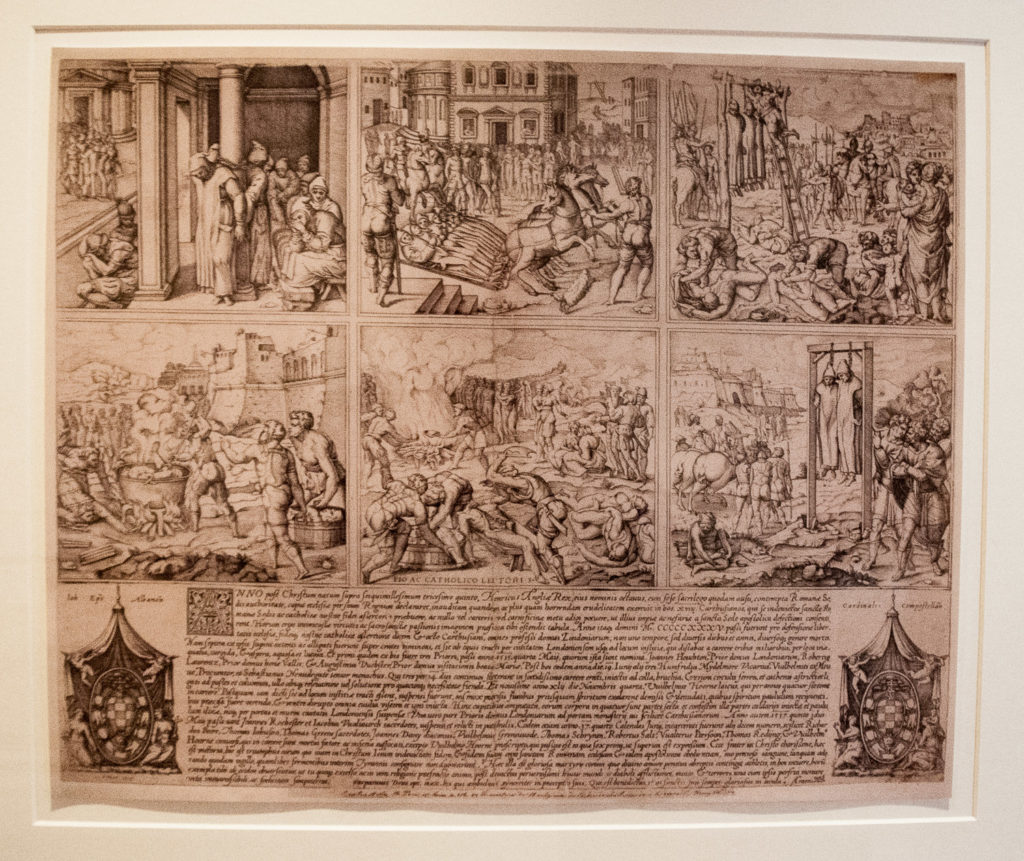
One of the many fascinating things to see on a modern-day tour is this engraving …

Probably by Nicolas Beatrizet (1540-1560)

The print was produced in Rome about 20 years later. Five of the scenes show the monks imprisoned, dragged through the streets and then being executed. The final scene shows two Carthusian monks being executed in York.

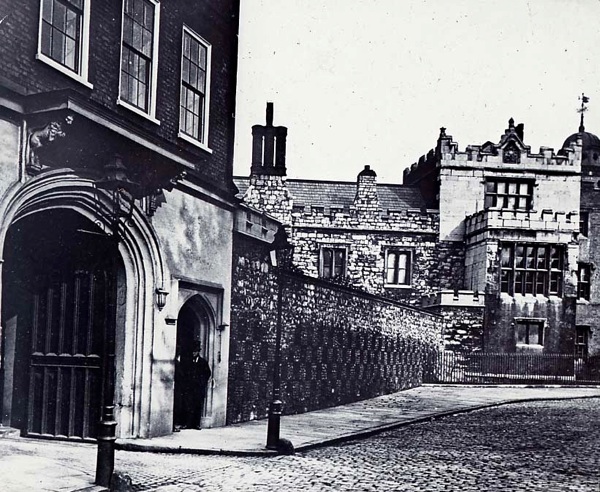
The gatehouse in the 1930s

Charterhouse has passed through many incarnations over the centuries and evidence of this abounds to this day.

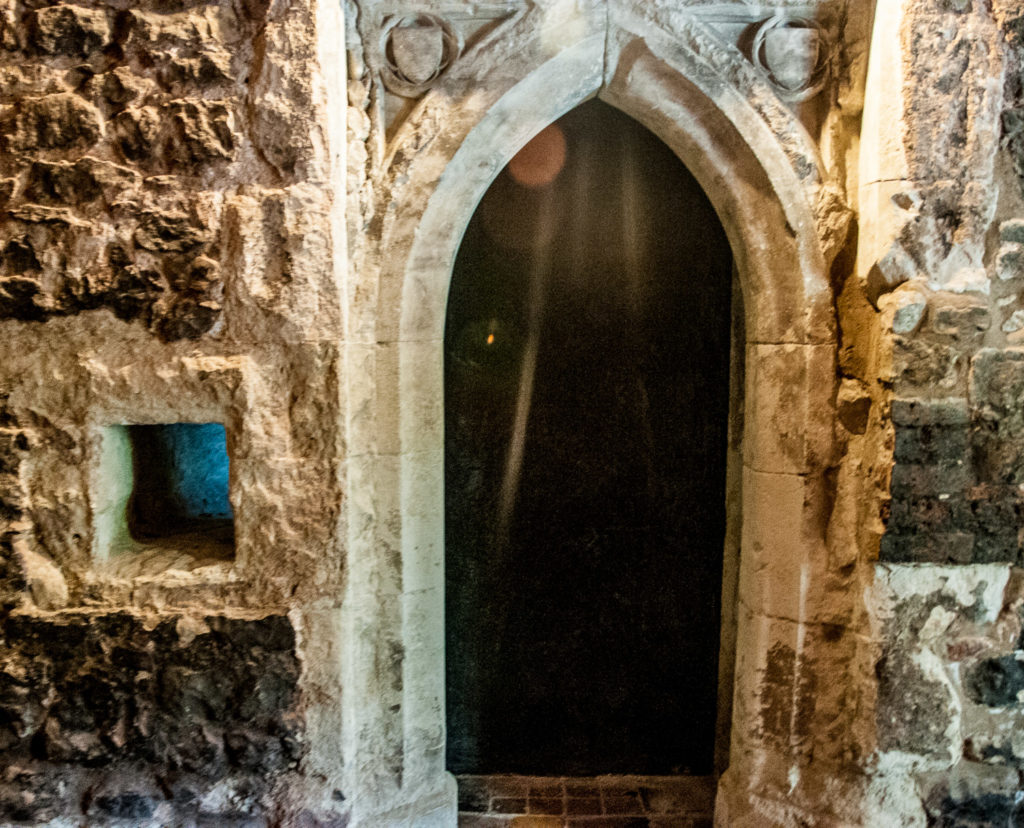
We can still see the entrance to one of the two-up two-down cells the monks occupied …

Food was passed in to the cell through the portal on the left to avoid disturbing the monk’s solitude

Each monk lived as a hermit, spending their time in prayer, contemplation and scholarly work. They seldom spoke, usually only meeting together for Sunday lunch.

Sir Edward North (later Baron North) bought the ransacked property in 1545 and turned it into a mansion. To describe North (1496-1564) as a ‘survivor’ in this tumultuous period would be an understatement – somehow remaining in favour with both Queen Mary and later Queen Elizabeth I. In fact three other owners of Charterhouse (John Dudley, Thomas Howard and Philip Howard) were all executed for treason.

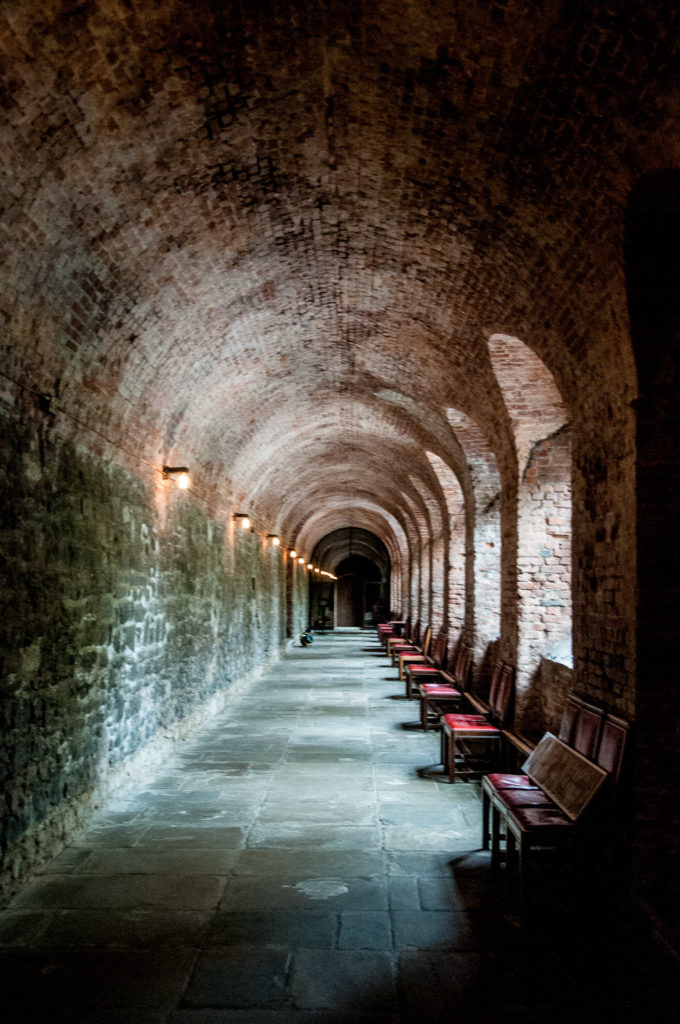
Thomas Howard, the Fourth Duke of Norfolk, bought the buildings in 1564. He rebuilt what is now called the Norfolk Cloister, from the ruins of the monks’ original Great Cloister …

The boys from Charterhouse school played football here, its narrow dimensions creating the need for the offside rule

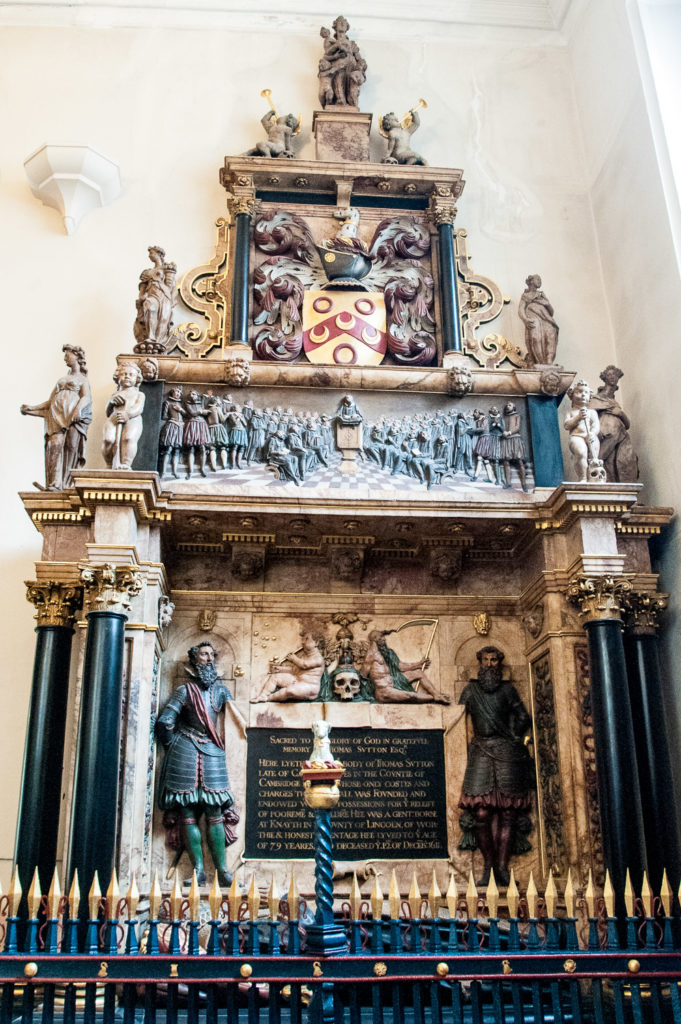
It was in King James’s reign in 1611 that a former ‘Master of the Ordnance in the Northern Parts’, Thomas Sutton, said to be England’s wealthiest commoner, bought the property and established a founda­tion to maintain a school and almshouses. The school, for 40 boys, was the beginning of Charterhouse School. Later, John Wesley and William Makepeace Thackeray were pupils. In 1872, the school moved to Godalming, taking the young Robert Baden-Powell to complete his schooling in Surrey.

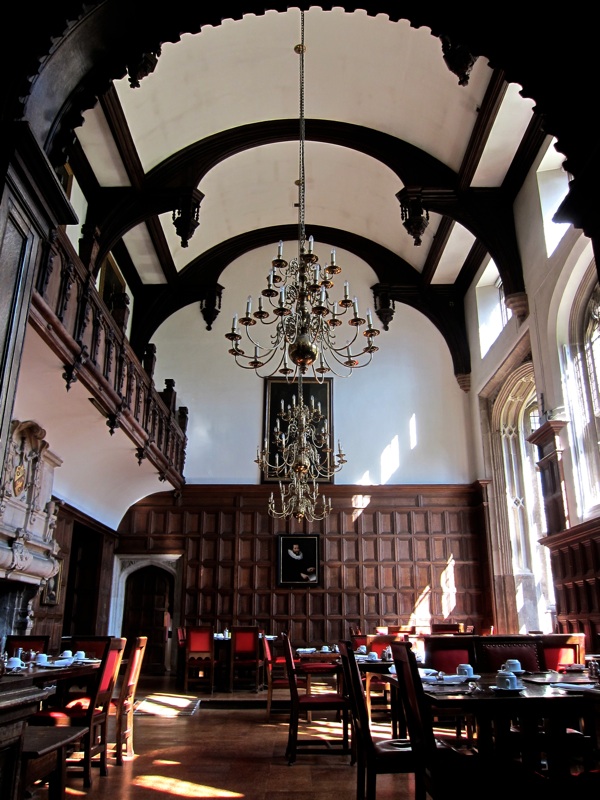
The Great Hall (1571) where the Brothers dine today

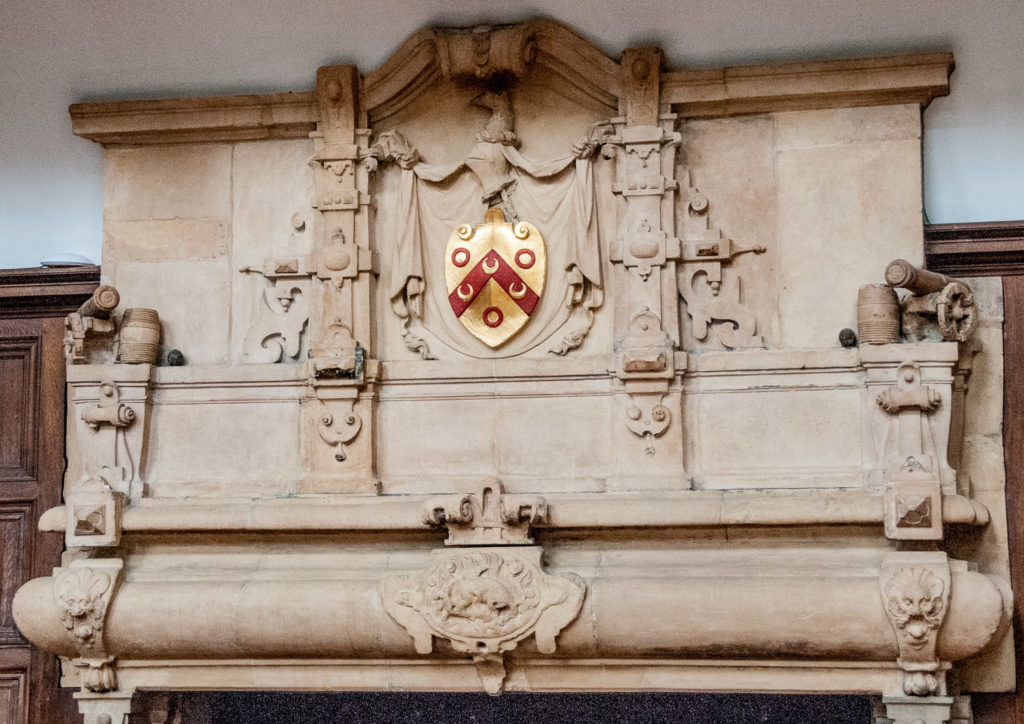
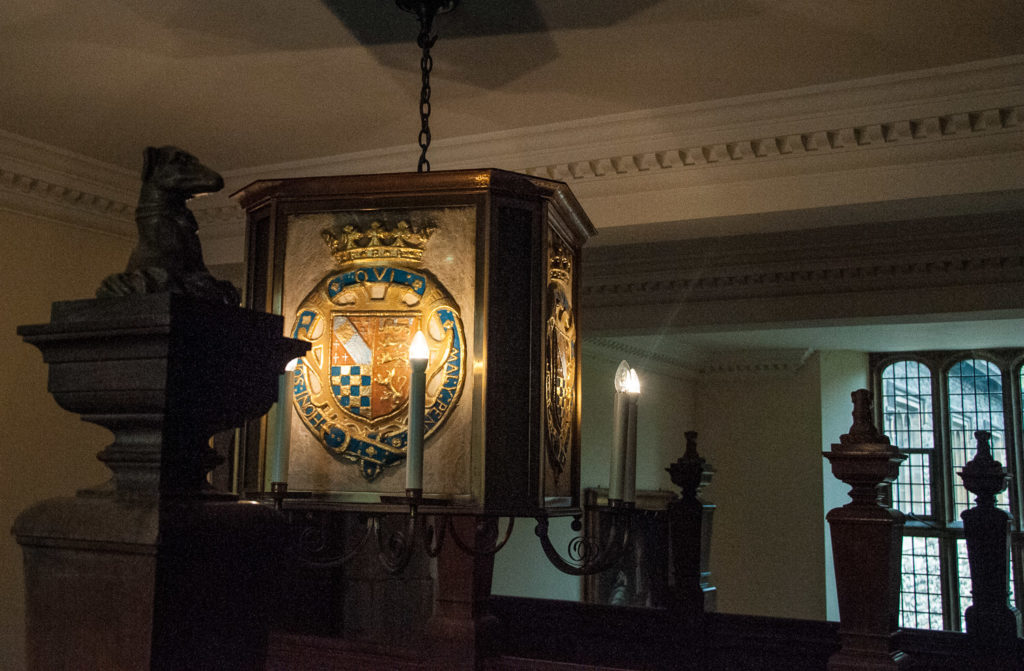
In the Hall, Sutton’s coat of arms can be seen above this magnificent Caen stone chimneypiece, the cannon and gunpowder barrels at the sides referencing his connection with The Ordnance …

The arms include the head of a hunting dog, a Talbot, now extinct. It’s a motif that can be found throughout the building …

A carved Talbot dog on the stairs along with the arms of the fourth Duke of Norfolk


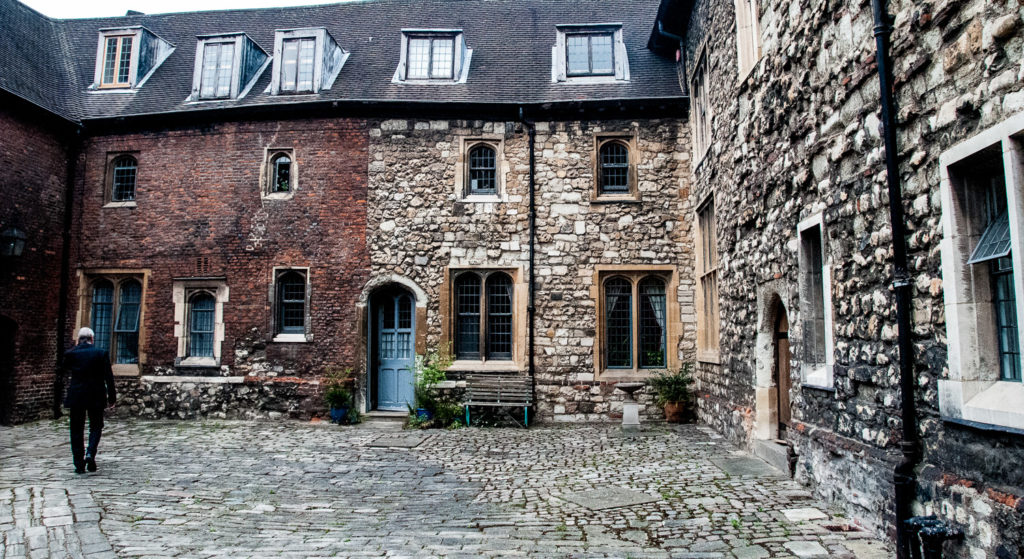
In Wash House Court, Tudor bricks meet Monastery stone …

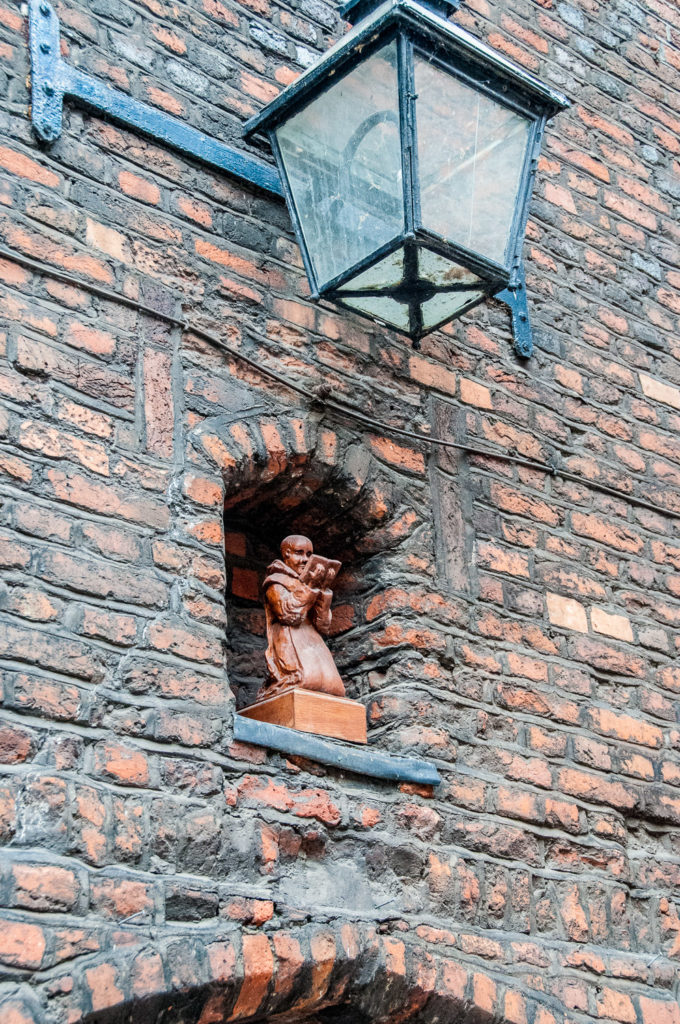
Above the entrance to the passageway to the Court, a tiny monk has found a quiet place to study his Bible …

The buildings were severely damaged by incendiary bombs during the Second World War …

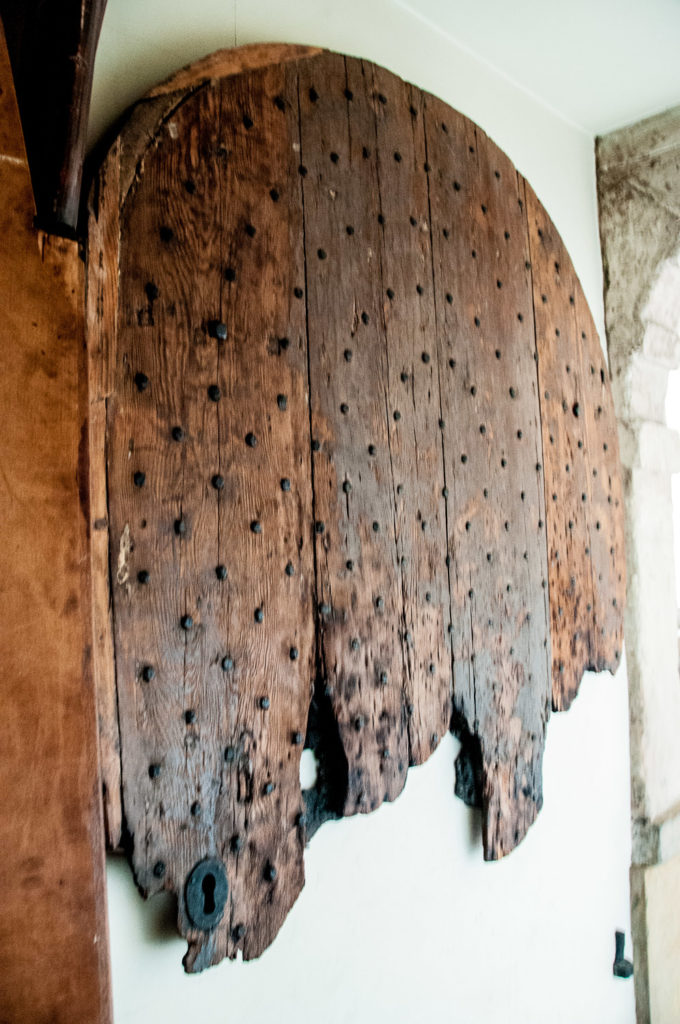
The medieval door to the Chapel damaged in the Blitz

The Chapel contains Thomas Sutton’s spectacular monument …

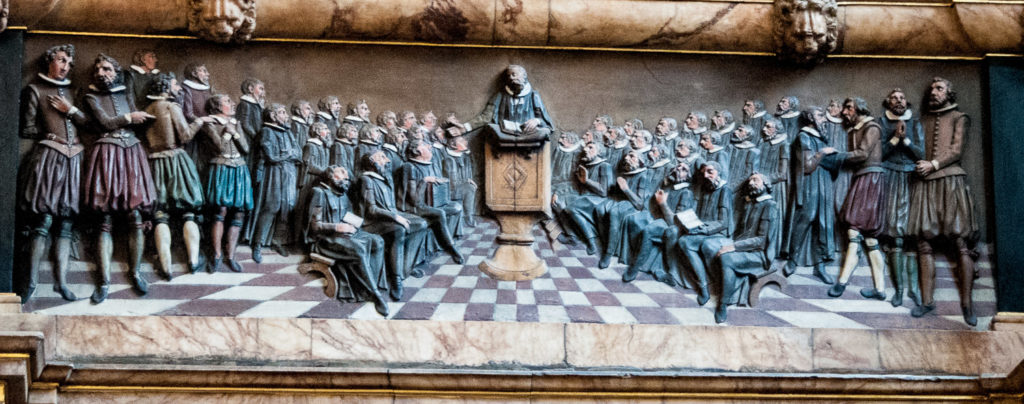
A relief panel shows the Poor Brothers in their gowns and a body of pious men and boys (perhaps scholars) listening to a sermon …

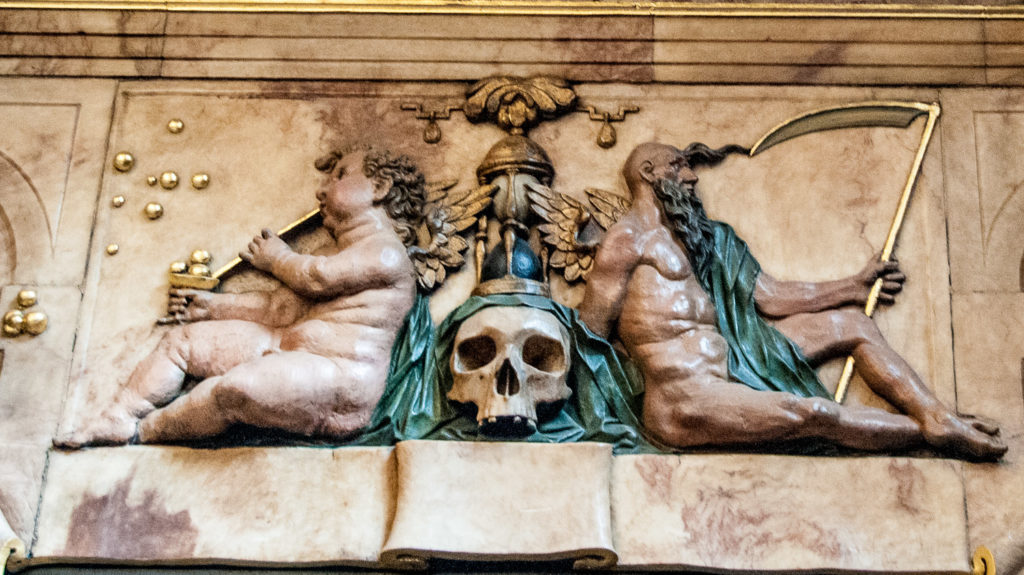
I love the figure, Vanitas, blowing bubbles and representing the ephemeral quality of worldly pleasure. The figure with the scythe is Time …

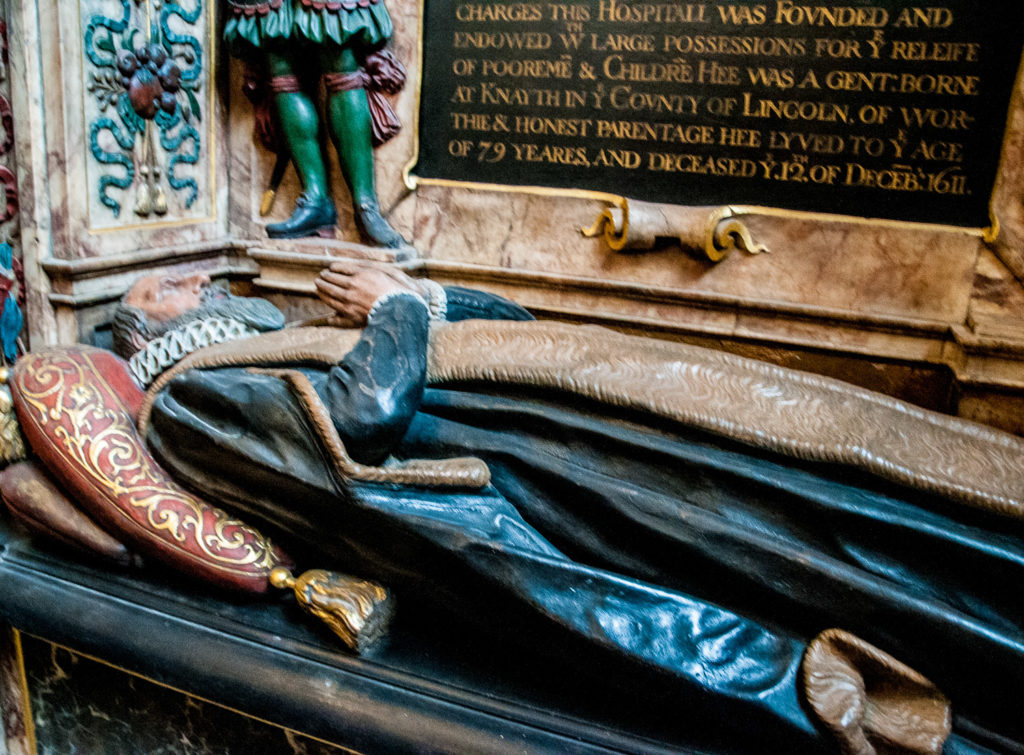
The man himself …

His body rests in a vault beneath the monument

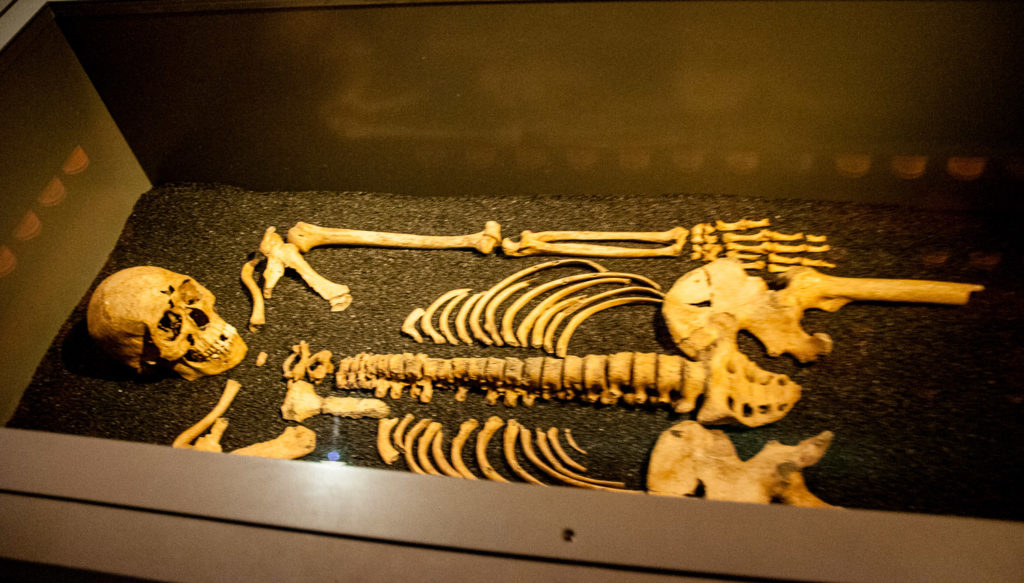
By way of contrast we can also see, in a darkened room lit by candles, this poor soul. Uncovered during the Crossrail tunneling, archeologists found it belonged to a man in the prime of his life, in his mid-twenties, when he was struck down by the Black Death. It’s believed he died at some point between 1348 and 1349, at the height of the pandemic …

Thomas Sutton’s will provided for up to 80 residents (called Brothers): ‘either decrepit or old captaynes either at sea or at land, maimed or disabled soldiers, merchants fallen on hard times, those ruined by shipwreck or other calamity’.

A community of some 40 Brothers (as of 2016, women are not excluded by this term) still live in the Charterhouse today.

This blog only covers a tiny example of what you will discover at the Charterhouse. I highly recommend the tours that are conducted every day except Monday. Some are led by one of the resident Brothers and are given from the perspective of each individual Brother, therefore no two tours are the same. Click here for details.

Remember you can follow me on Instagram :
https://www.instagram.com/london_city_gent/

City safari!

I have been looking again at some of the animals I have come across in previous City walks and I thought it might be fun to publish them again since, at the moment, walking around taking photographs doesn’t comply with the ‘stay at home’ recommendation.

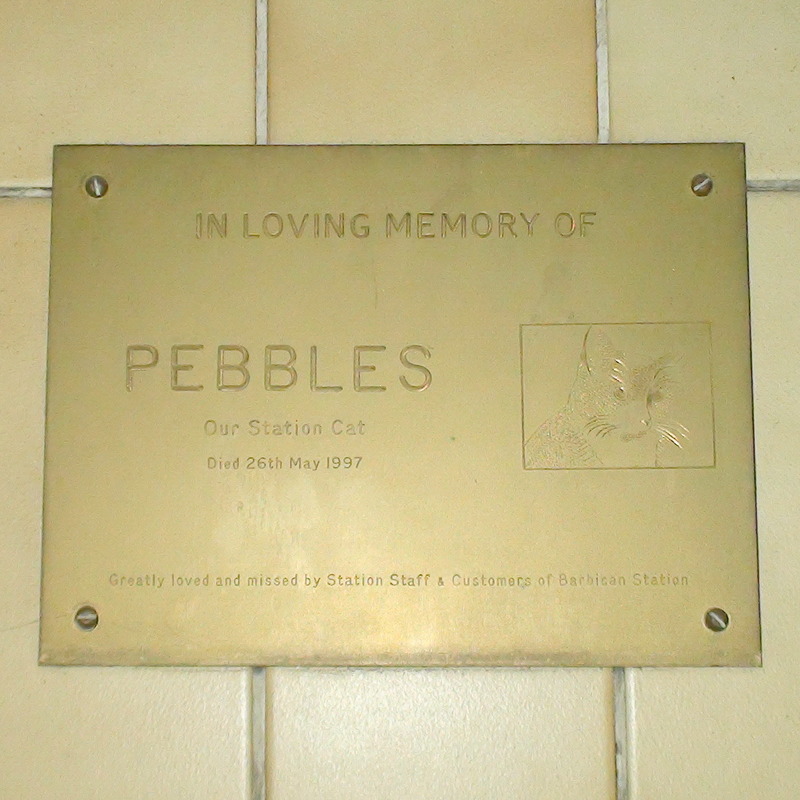
When Barbican Station reopens you might like to pop in and pay your respects to the memory of Pebbles, the award-winning Station cat.

High up on a tiled pillar opposite the old ticket office is this poignant memorial …

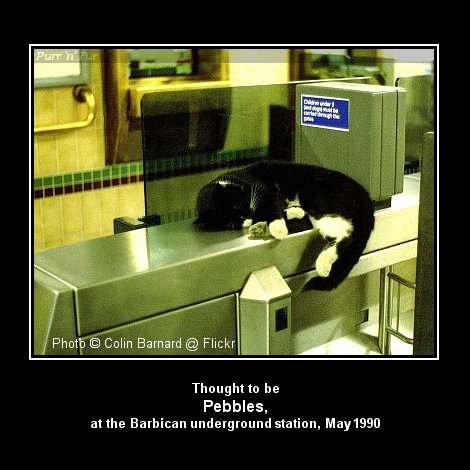
For many years Pebbles was a favourite of staff and passengers, often sleeping soundly on top of the exit barriers despite the rush hour pandemonium going on around him. Here is a picture from the wonderfully named Purr’n’Fur website, a great source for moggie-related stories …

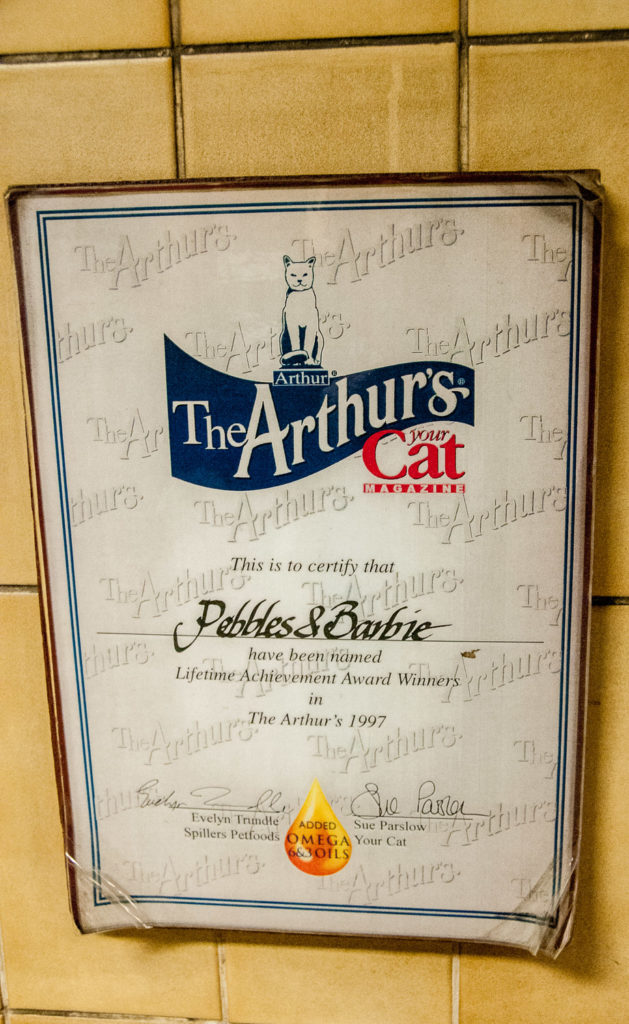
Clearly he was greatly missed when he died, as the plaque faithfully records, on 26th May 1997. This was doubly sad because he was due to be given a Lifetime Achievement Award. This was sponsored by Spillers Pet Foods and named after Arthur, a cat they used in their advertising who, I seem to remember, ate with his paws. The Certificate that came with the award is also displayed (the co-winner, the aptly named Barbie, was Pebbles’ companion) …

Pebbles’ posthumous award.

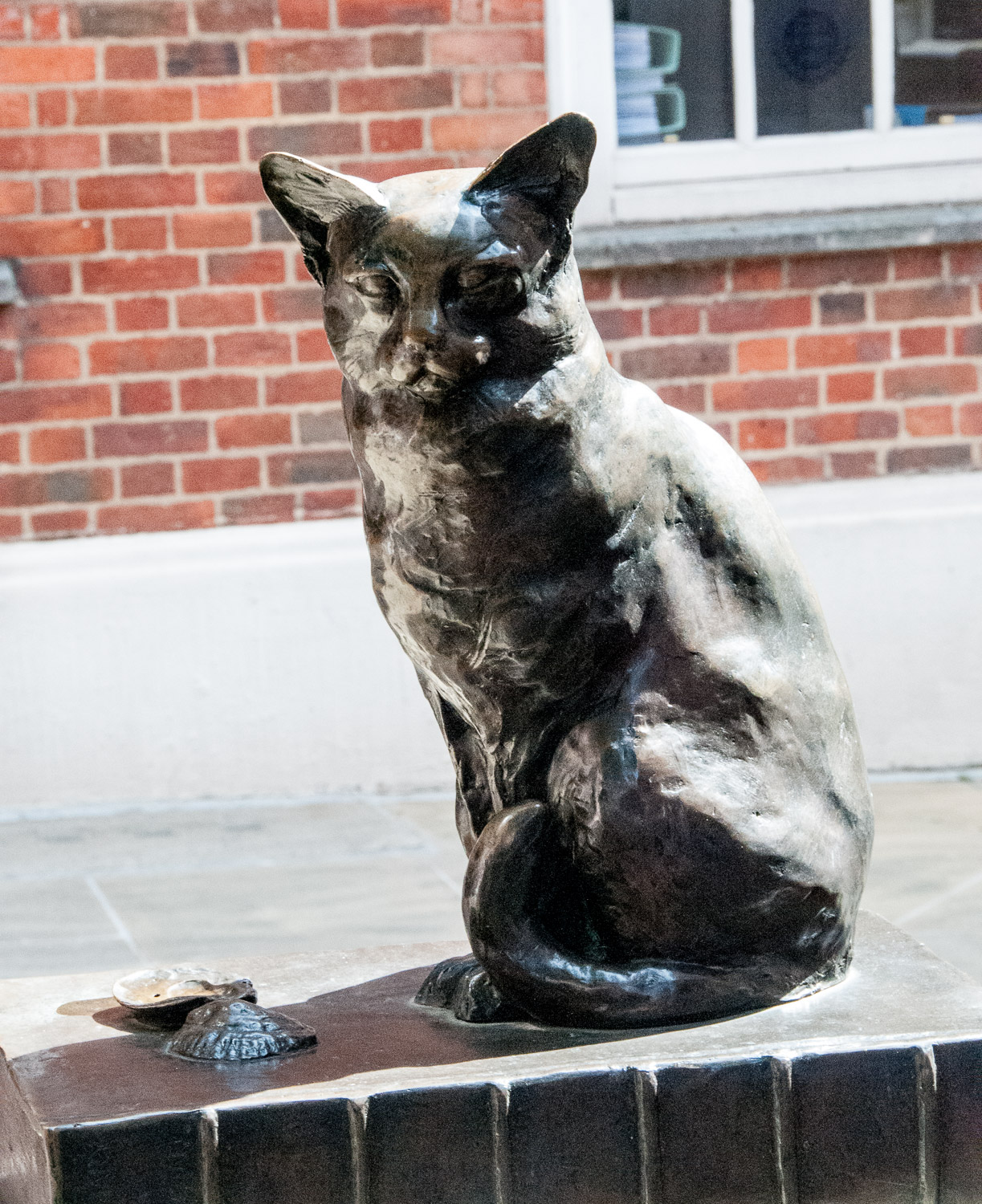
Another famous cat, Hodge, is remembered by this attractive bronze by John Bickley which was unveiled by the Lord Mayor, no less, in 1997. Hodge belonged to Dr Johnson and sits atop a copy his famous dictionary and alongside a pair of empty oyster shells. Oysters were very affordable then and Johnson would buy them for Hodge himself. James Boswell, in his Life of Johnson, explained why:

I never shall forget the indulgence with which he treated Hodge, his cat: for whom he himself used to go out and buy oysters, lest the servants having that trouble should take a dislike to the poor creature

People occasionally put coins in the shell for luck and every now and then Hodge is given a smart bow tie of pink lawyers’ ribbon.

You can find him in Gough Square opposite Dr Johnson’s house (EC4A 3DE). ‘A very fine cat, a very fine cat indeed’, said his owner.

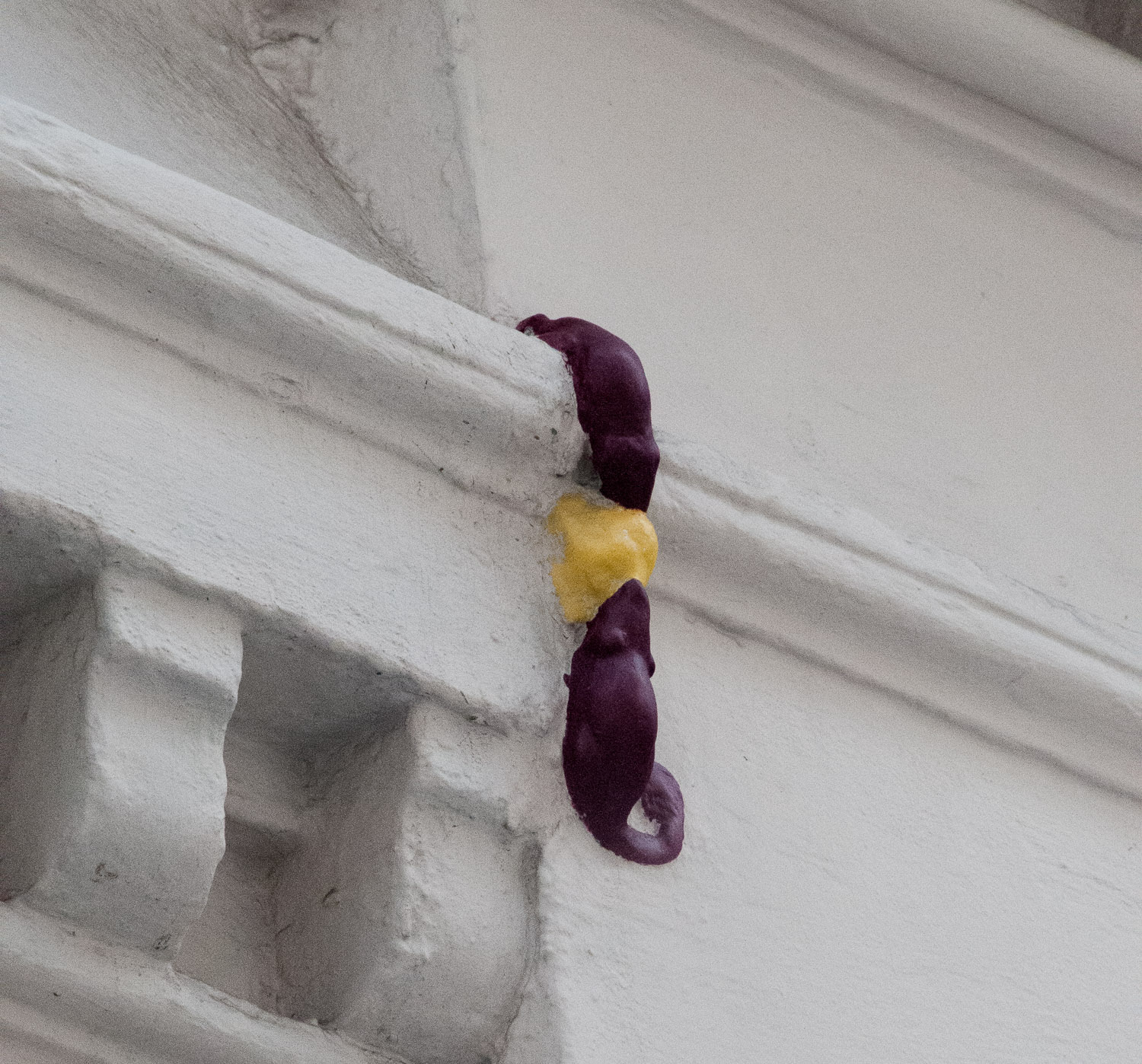
And from famous cats to mysterious mice. Nibbling a piece of cheese, they add charm to a building in Philpot Lane off Eastcheap and have been described (rather appropriately, I think) as London’s smallest sculpture. Even though they have been repainted they are still a bit hard to find – so I am not saying precisely where they are, and hopefully (one day!) you will enjoy looking for them. One theory is that the builders in 1862 were pestered by mice who persistently ransacked their lunch packs, so they left this little informal tribute. Another is that they commemorate a man who died during the construction of the nearby Monument to the Great Fire. Mice had eaten his lunch, but he accused a fellow worker by mistake, and fell to his death in the fight that followed. As to the true story behind the little rodents, your guess is as good as mine …

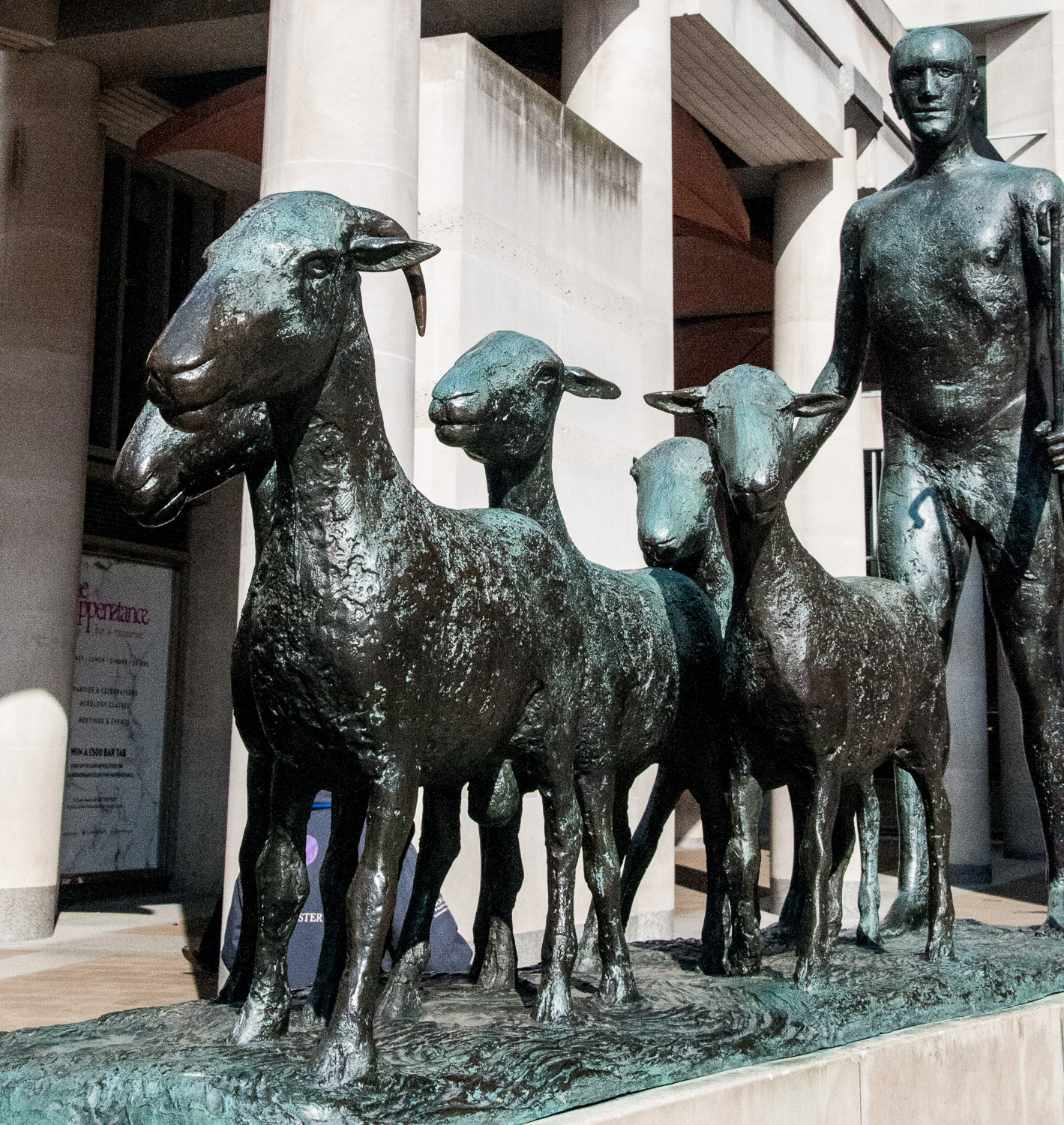
In Paternoster Square is a 1975 bronze sculpture by Elisabeth Frink which I particularly like – a ‘naked’ shepherd with a crook in his left hand walks behind a small flock of five sheep …

Dame Elisabeth was, anecdotally, very fond of putting large testicles on her sculptures of both men and animals. In fact, her Catalogue Raisonné informs us that she ‘drew testicles on man and beast better than anyone’ and saw them with ‘a fresh, matter-of-fact delight’. It was reported in 1975, however, that the nude figure had been emasculated ‘to avoid any embarrassment in an ecclesiastical setting’. The sculpture is called Paternoster.

As you approach the Bank junction from Cheapside look up and you will see two young boys at either end of the grand building that was once the City headquarters of Midland Bank (1935). The are both struggling with a rather angry looking Goose …

The sculptor was William Reid Dick.

Why a goose? A clue is the ancient name of the street and the goose was a suggestion by the architect Sir Edwin Lutyens to commemorate its original market function. The building is now a private club and restaurant, called The Ned in Sir Edwin’s honour.

The name of the street is a clue.

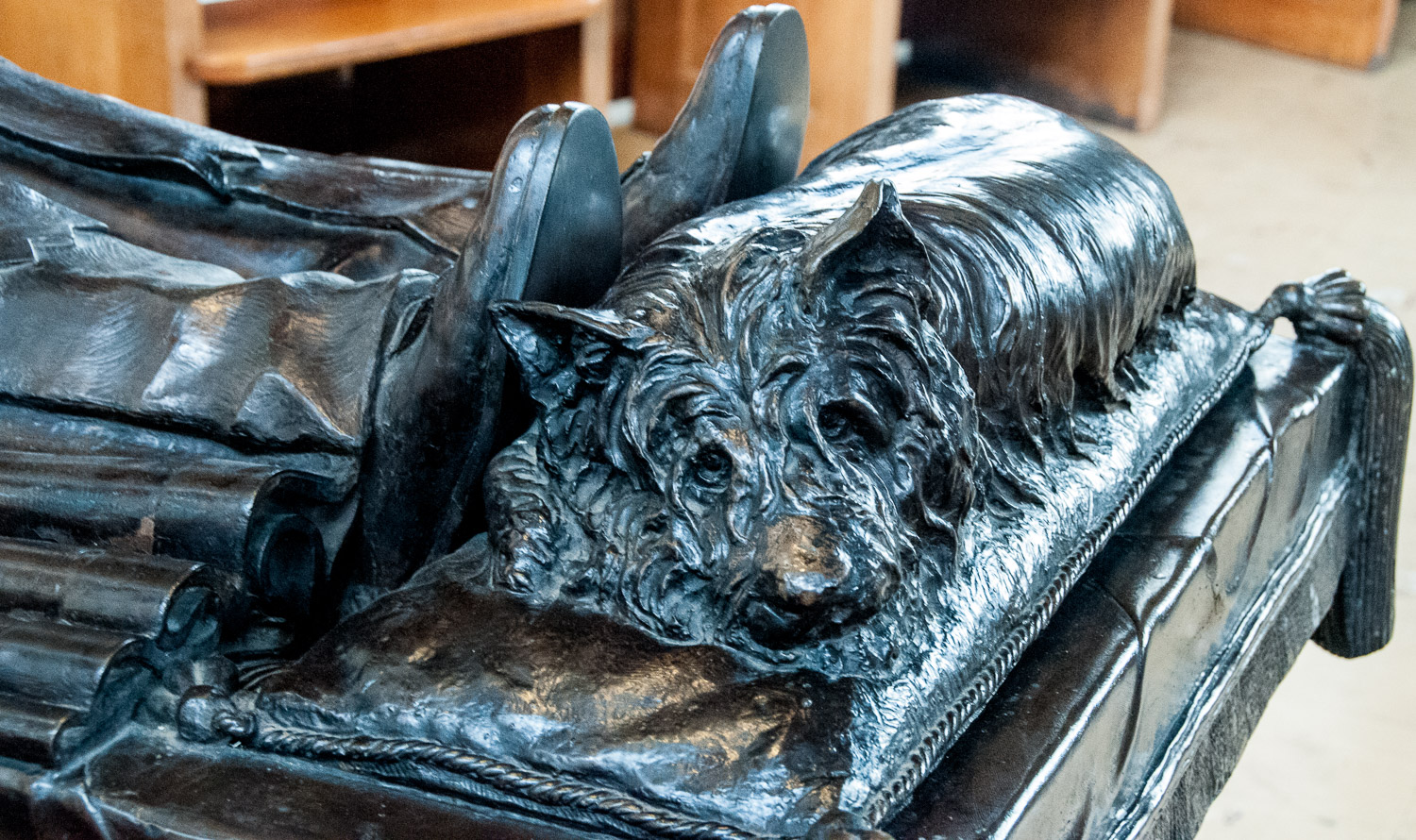
This little Scottish terrier is called Chippy. He rests now in All Hallows by the Tower at the feet of his master the Reverend ‘Tubby’ Clayton CH MC who became vicar of the Church in 1922 and remained there until 1963.  He is best known for his work initially as an army chaplain during the First World War and in particular the establishment of Talbot House, a unique place of rest and sanctuary for British troops. After the war the spirit and intent of Talbot House became expressed through the Toc H movement.

Clayton owned a succession of Scottish Terriers and they were all called Chippy.

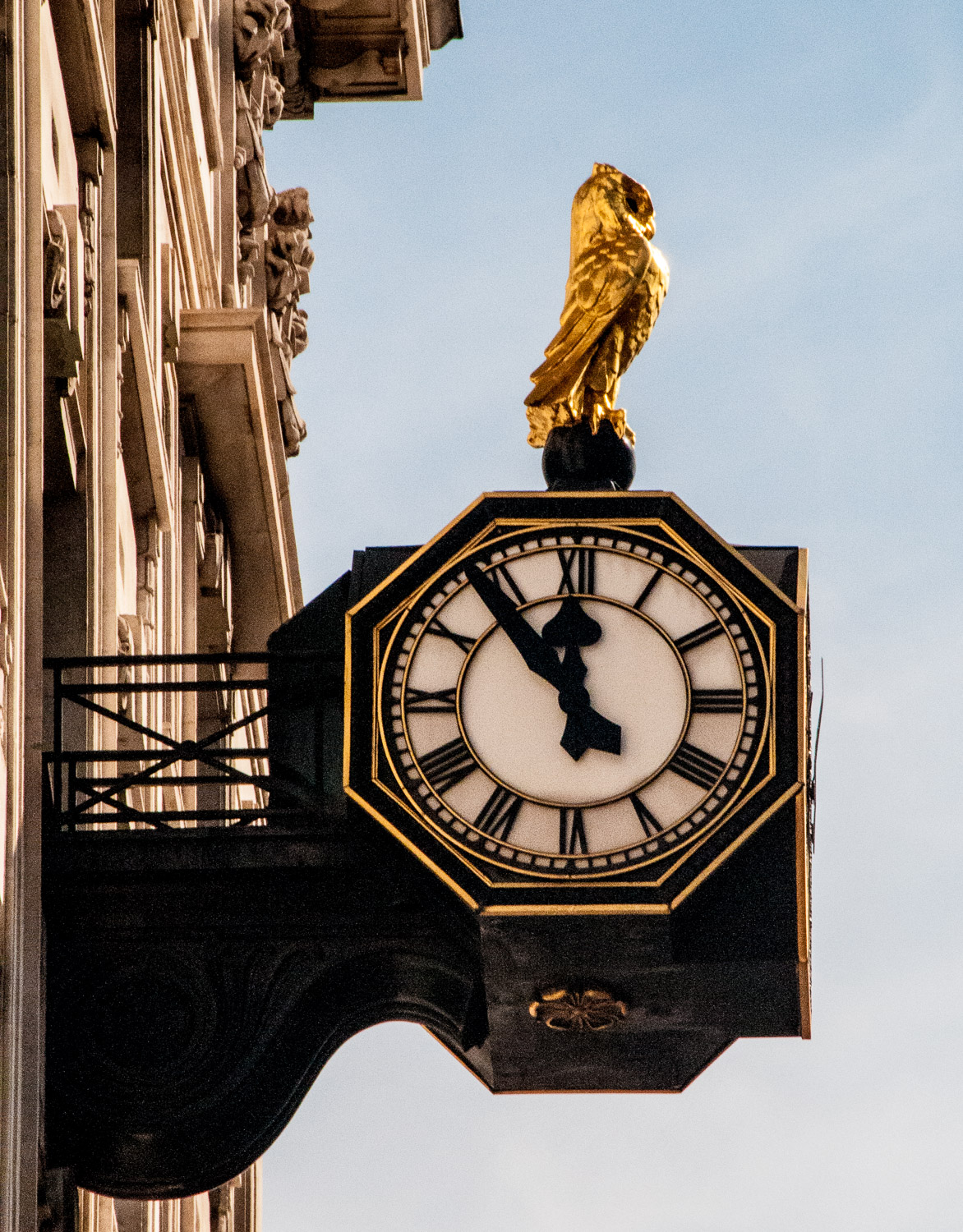
A wise owl gazes at the commuters as they trek over London Bridge from his perch opposite the north entrance to the bridge …

The building used to be the offices of the Guardian Royal Exchange Insurance Company.

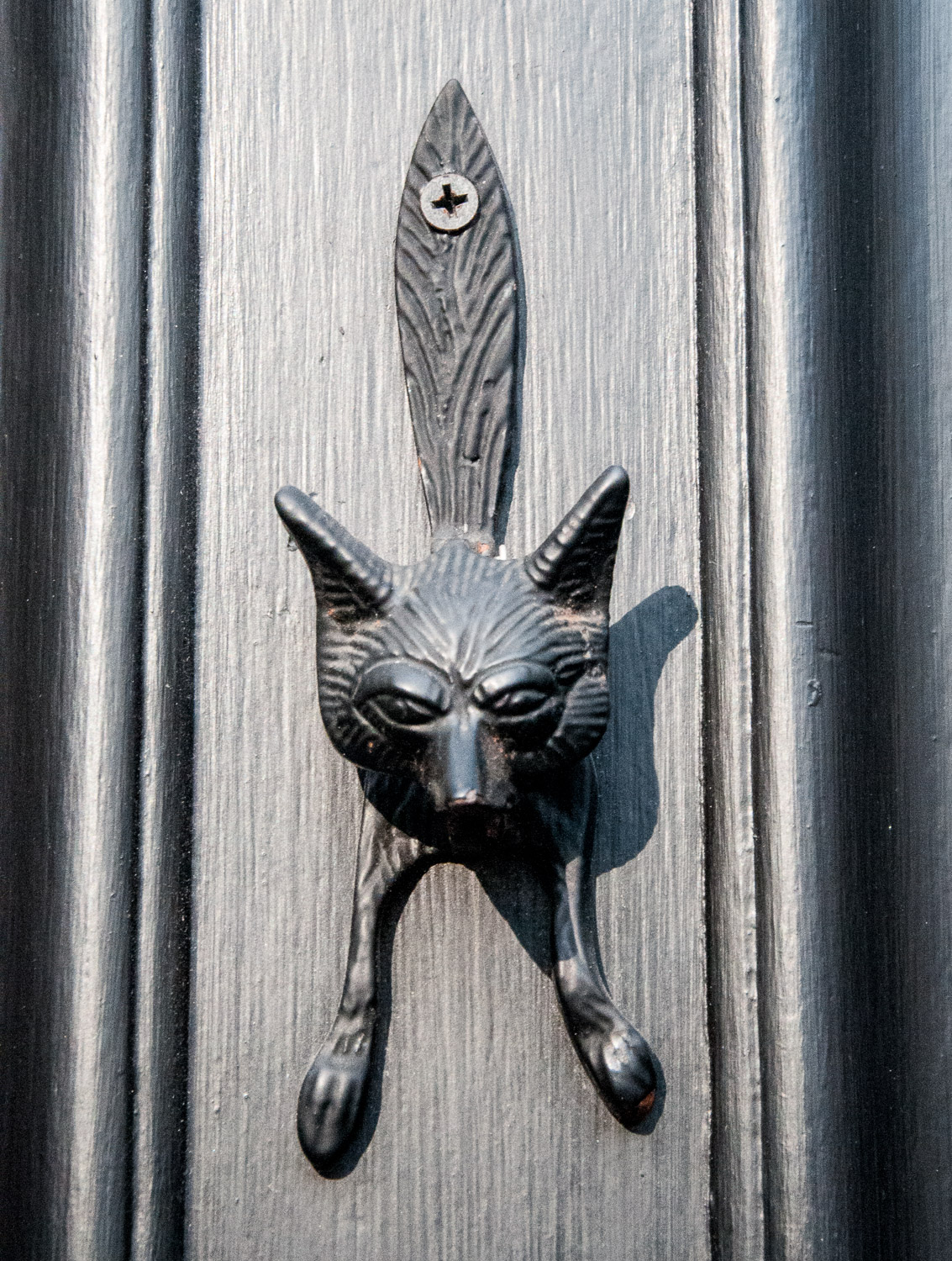
A wily fox decorates the door of the old Fox’s umbrella shop on London Wall …

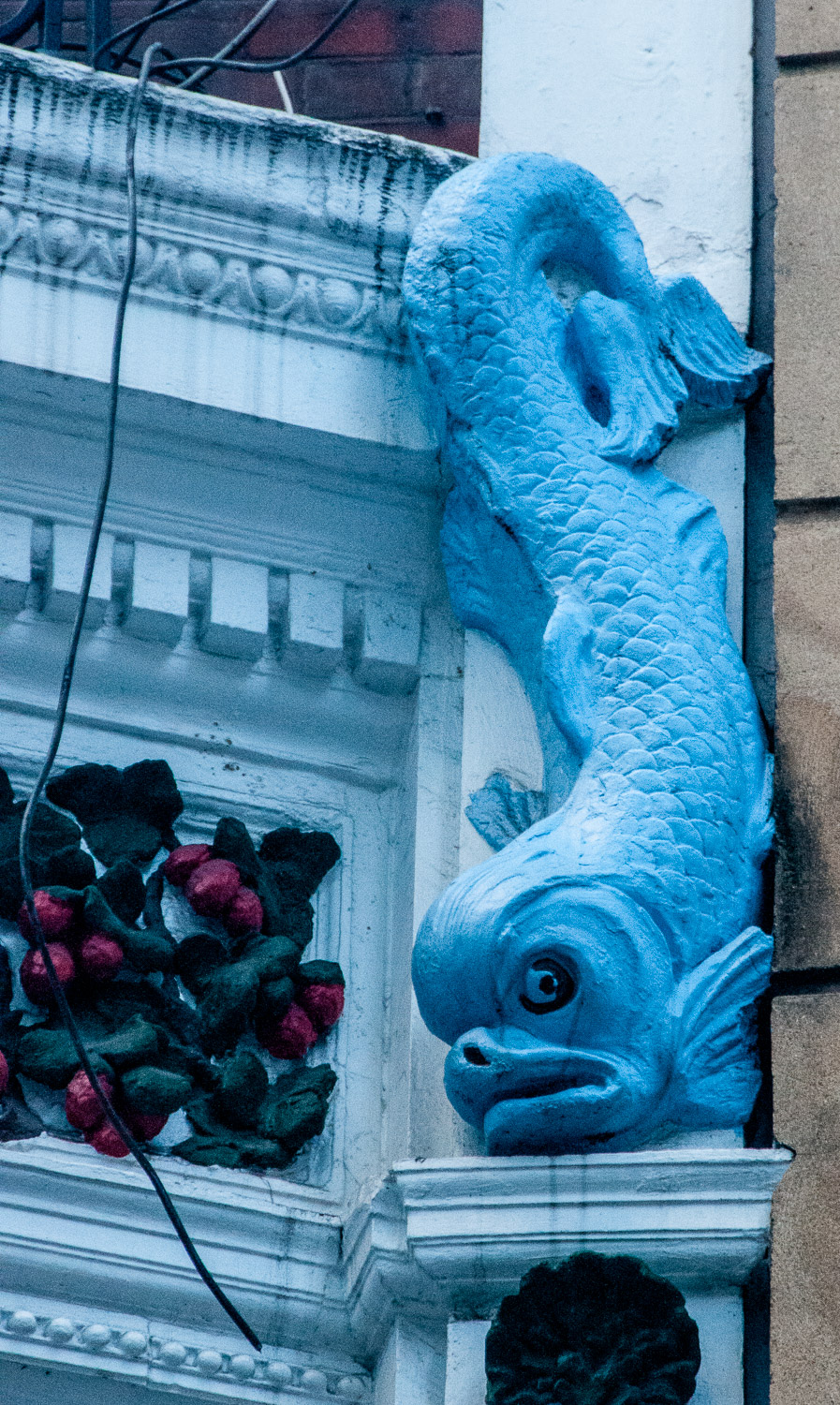
This dolphin looks decidedly uncomfortable balanced on the facade of The Ship pub in Hart Street (built 1887) …

He needn’t look so worried – both he and the pub are Grade II listed.

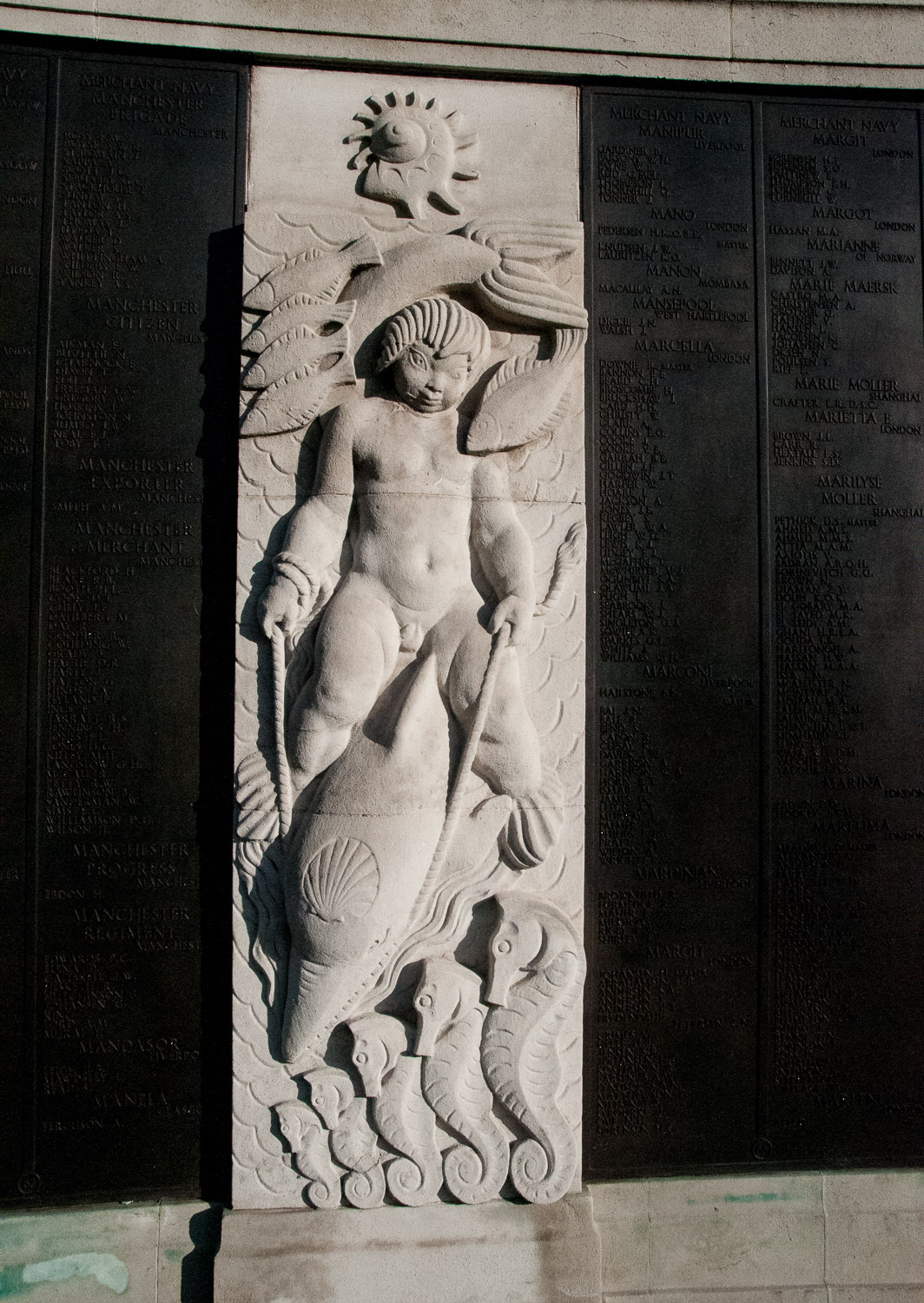
Another dolphin serves a more solemn purpose on Tower Green…

More than 50,700 Commonwealth merchant seamen lost their lives in the two World Wars and the Mercantile Marine Memorial commemorates the almost 36,000 of them who have no known grave. The boy riding the dolphin, accompanied by fishes and seahorses, is one of seven sculptures representing the seven seas by Sir Charles Wheeler. The sculpture is surrounded by plaques showing the names of the dead arranged alphabetically under their ship’s name and the name of the Master or Skipper.

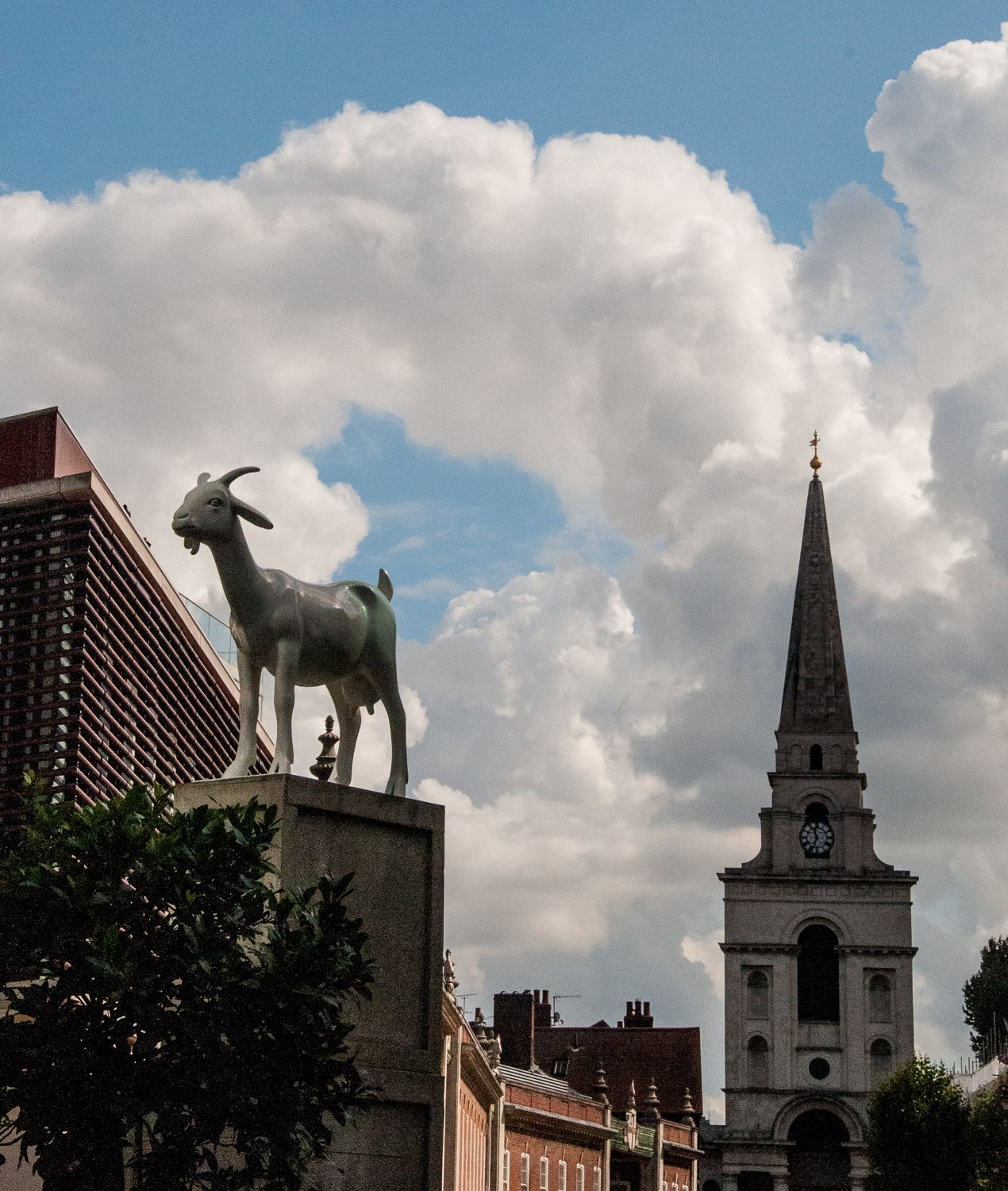
And finally, outside Spitalfields Market, is the wonderfully entitled I Goat. In the background is Hawksmoor’s Christ Church …

It was hand sculpted by Kenny Hunter and won the Spitalfields Sculpture Prize in 2010.

The sculptor commented …

Goats are associated with non-conformity and being independently-minded. That is also true of London, its people and never more so than in Spitalfields.

I hope you enjoyed the safari even though the animals have featured in blogs before.

Remember you can follow me on Instagram :
https://www.instagram.com/london_city_gent/

Page 24 of 37

Powered by WordPress & Theme by Anders Norén

Symbols & Secrets
Privacy Overview

This website uses cookies so that we can provide you with the best user experience possible. Cookie information is stored in your browser and performs functions such as recognising you when you return to our website and helping our team to understand which sections of the website you find most interesting and useful.