Walking the City of London

Category: Architecture Page 47 of 92

More City gardens and a churchyard mystery.

I must admit I thought I’d visited all the City gardens but I was wrong and had missed one of the most interesting.

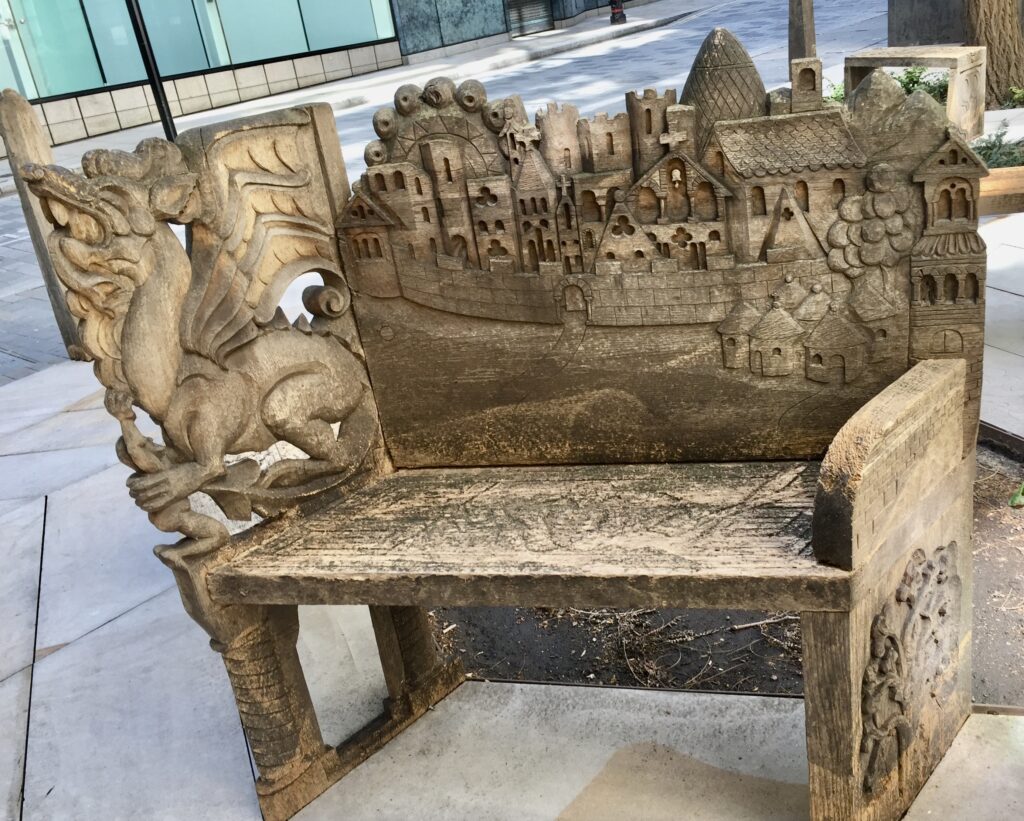
In Pancras Lane, just off Queen Street, is the St Pancras Church Garden (EC2R 8JR). I was intrigued straight away by the carving of two devils cooking some poor condemned souls in a pot …
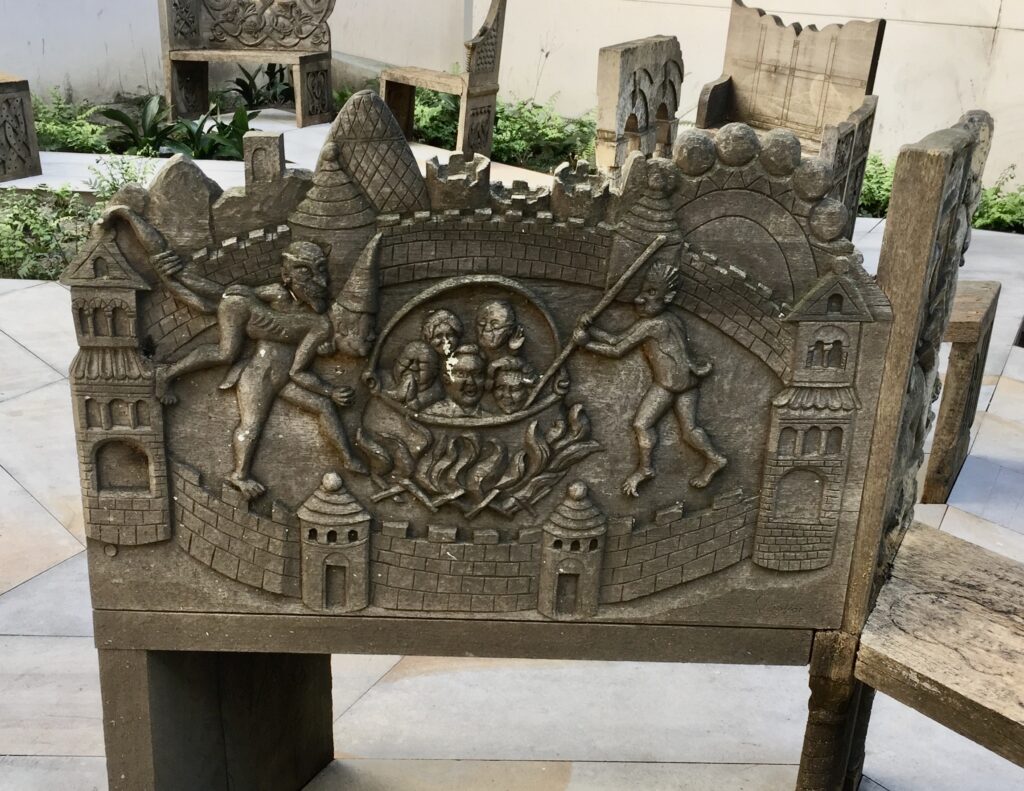
The garden is on the site of St Pancras Church, a late 11th century church destroyed by the Great Fire of London in 1666. The church was never rebuilt, and the site was used first as a burial ground, but then lay basically abandoned until in 2010 the City of London acquired the leasehold of the site in order to turn it into a public garden.

The poetic idea behind the design, by Studio Weave, is that the church has somehow re-emerged, sprouting from the earth in the form of beautifully carved Romanesque wooden benches.

On the right Eve accepts an apple from the serpent – and we know it all turned out badly for her and Adam after that …
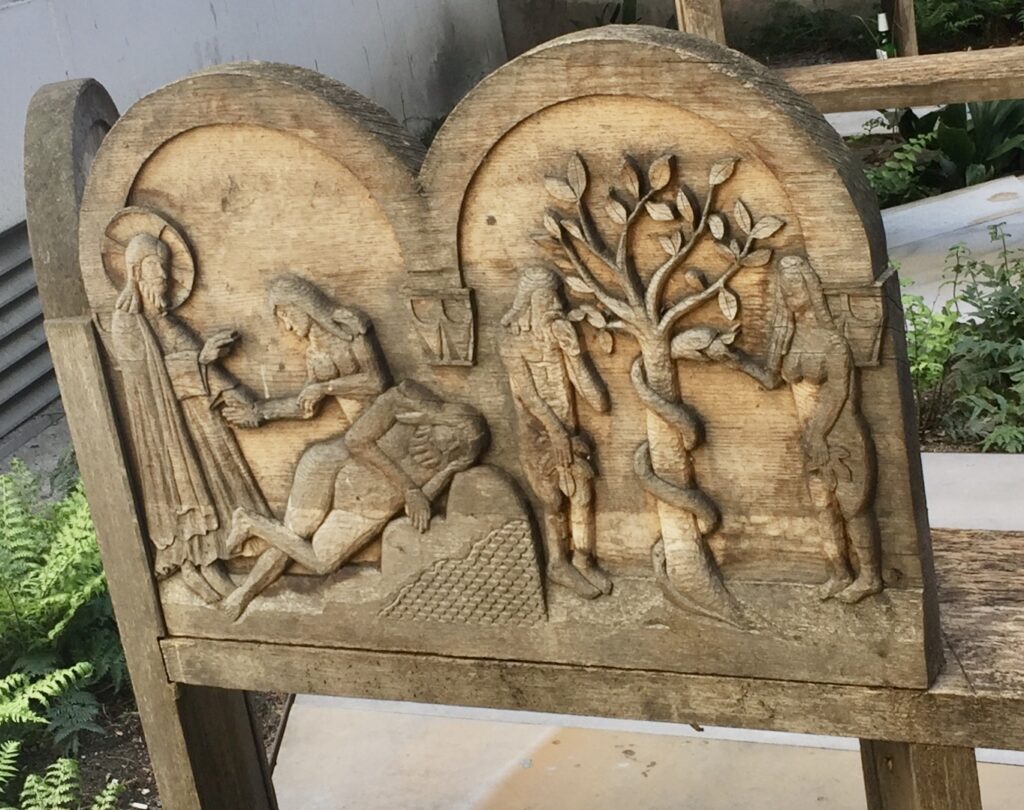
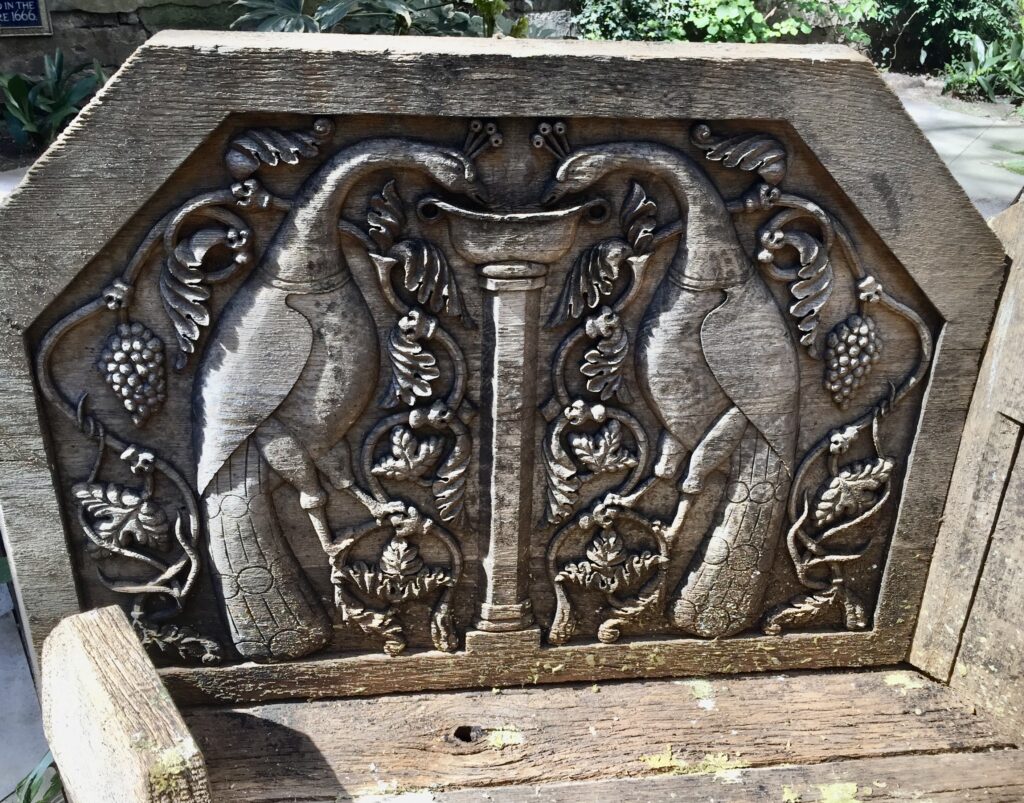
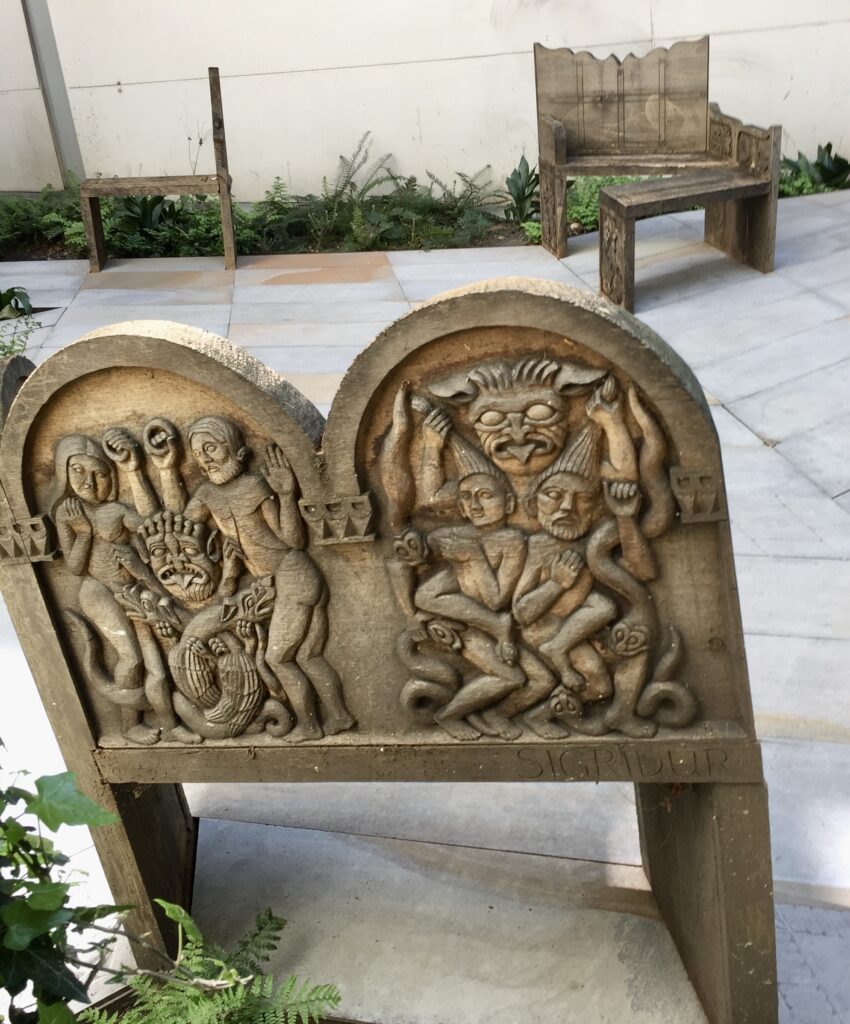
City & Guilds of London Art School was commissioned to produce the benches, which were individually carved during Summer 2011 by a team of tutors and students. The students based the design of the benches on historically referenced Romanesque church carvings …
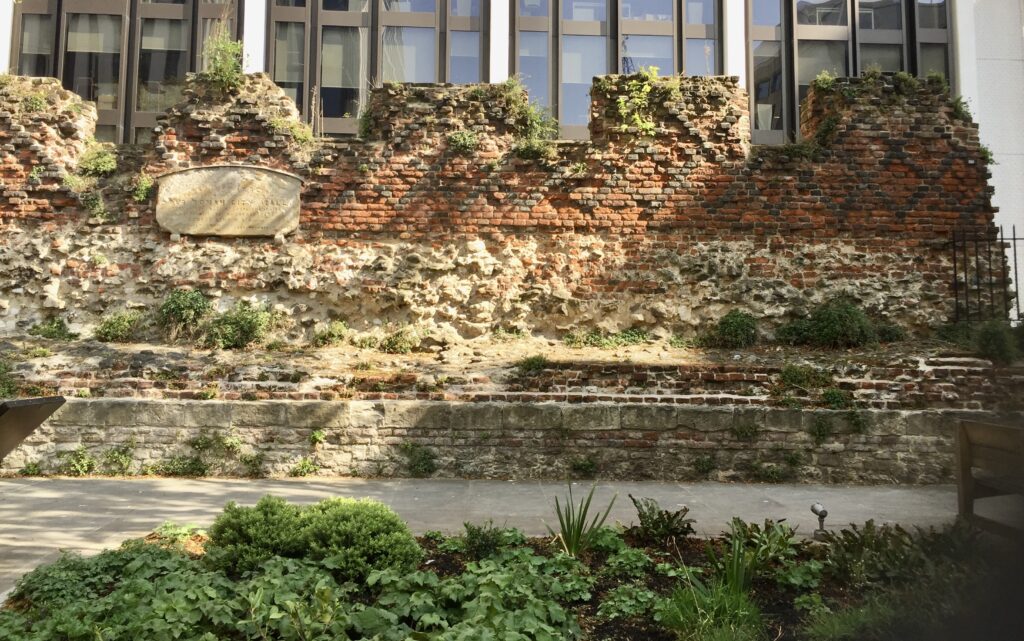
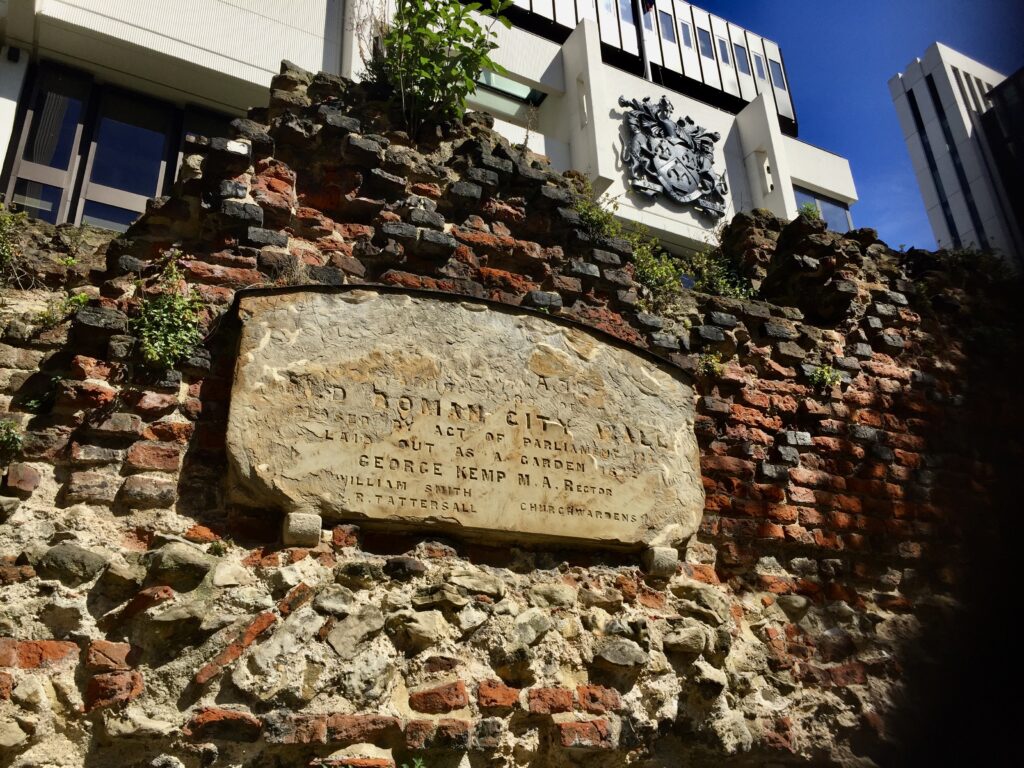
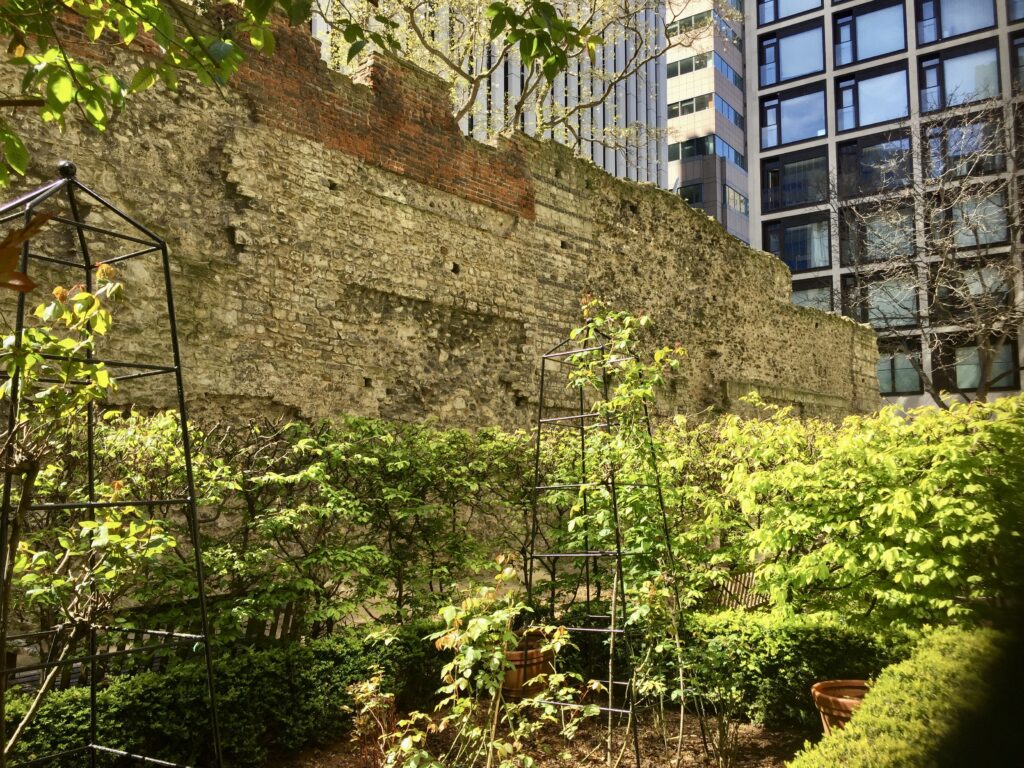
I then headed north to walk around the London Wall Place area, which is looking really nice now that development has been completed. My first stop was St Alphage Gardens (EC2Y 5DE) …
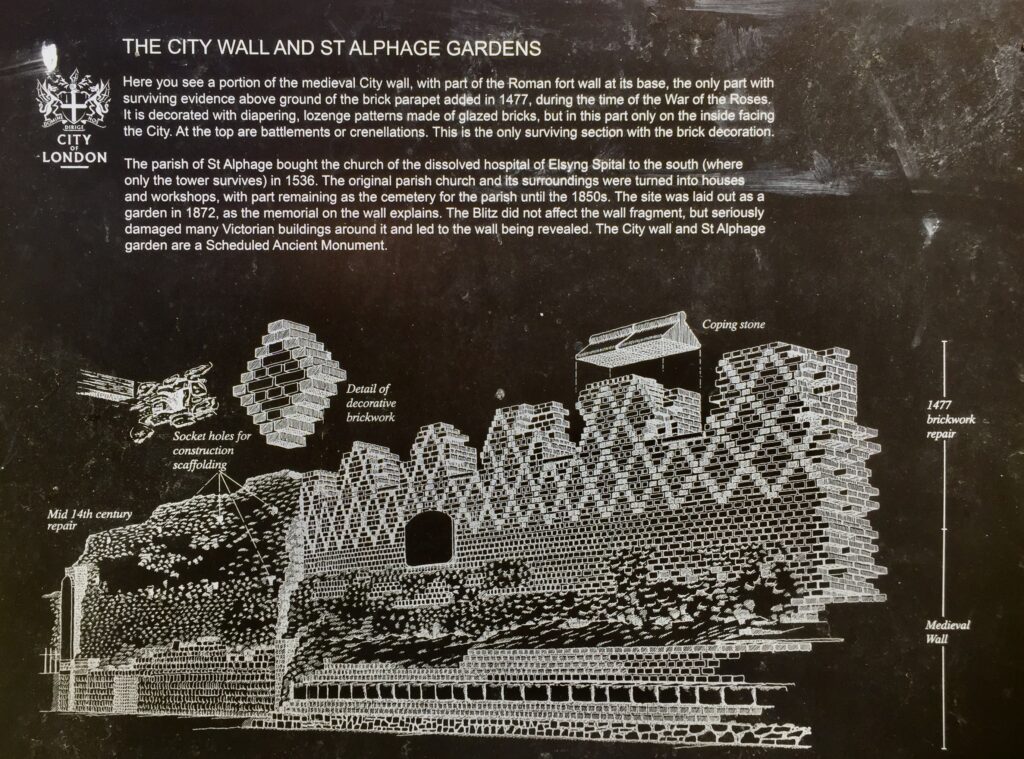
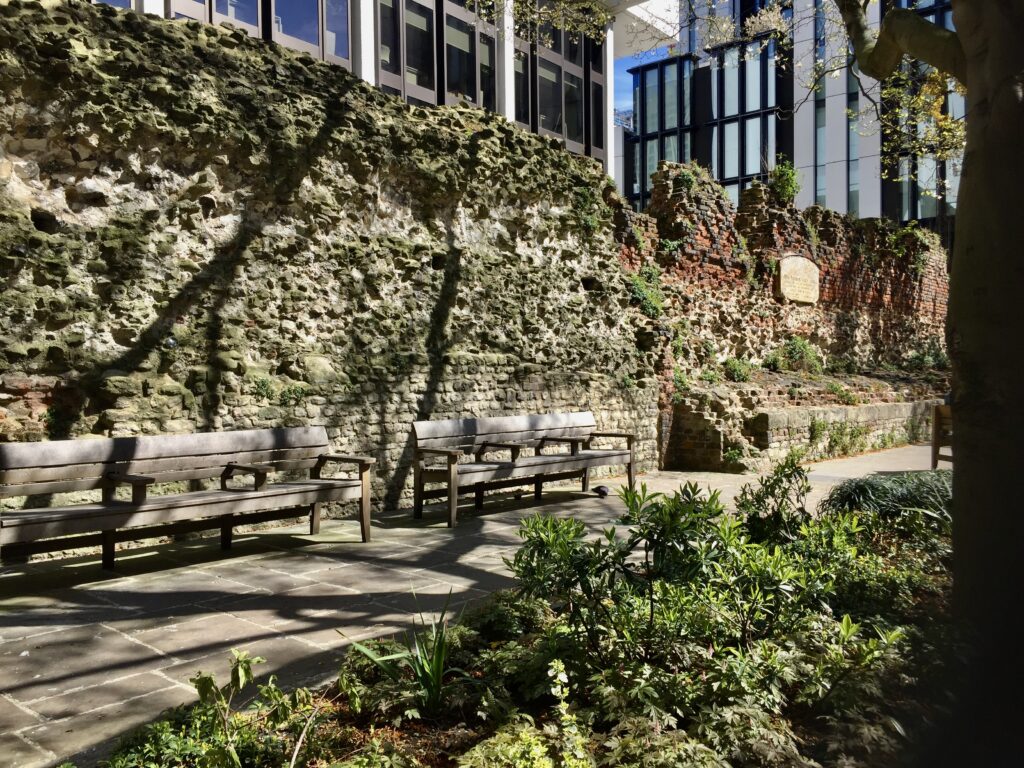
You can see the north side of the wall from the Salters’ Hall garden – now usually open to the public (EC2Y 5DE) …
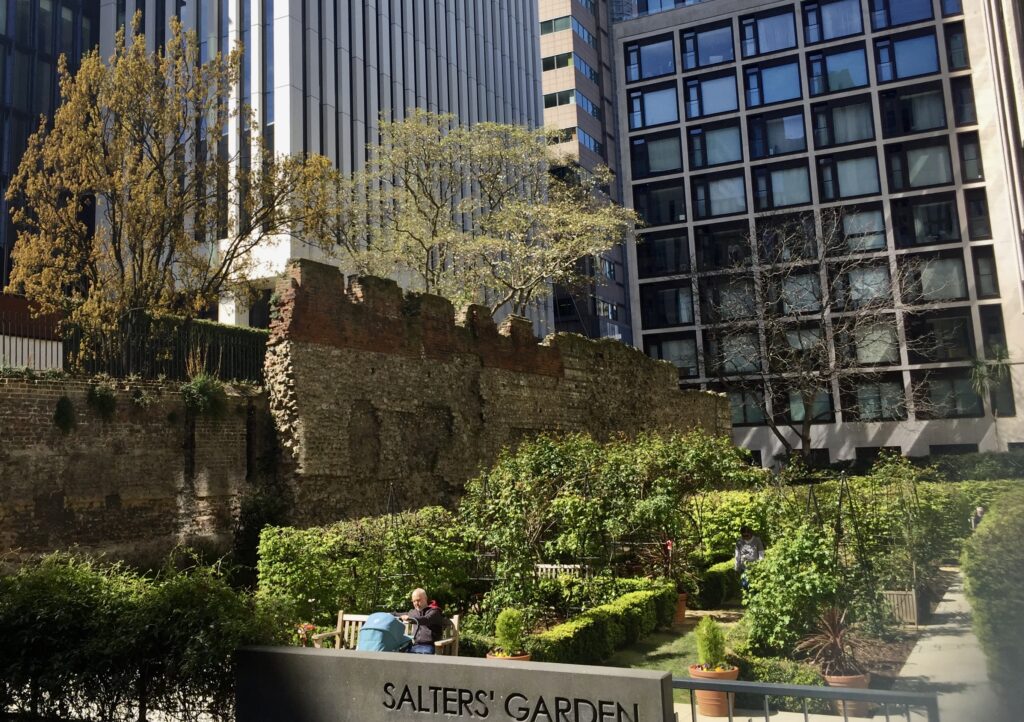
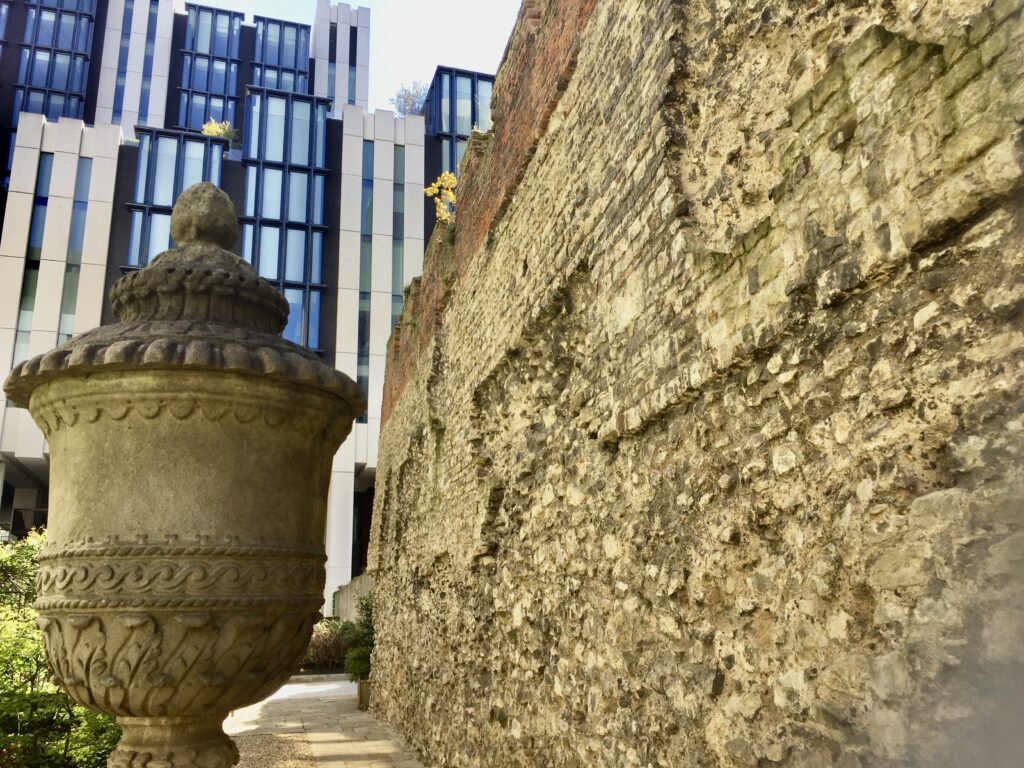
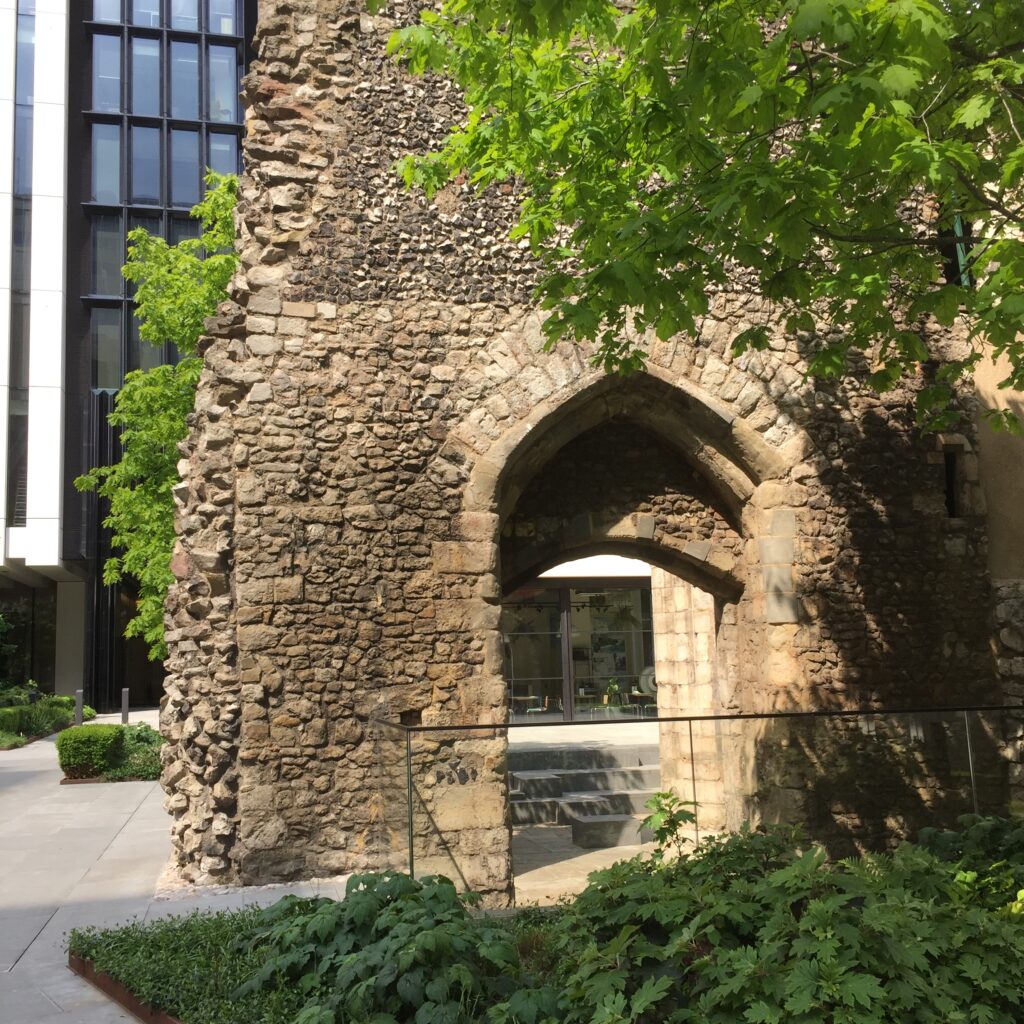
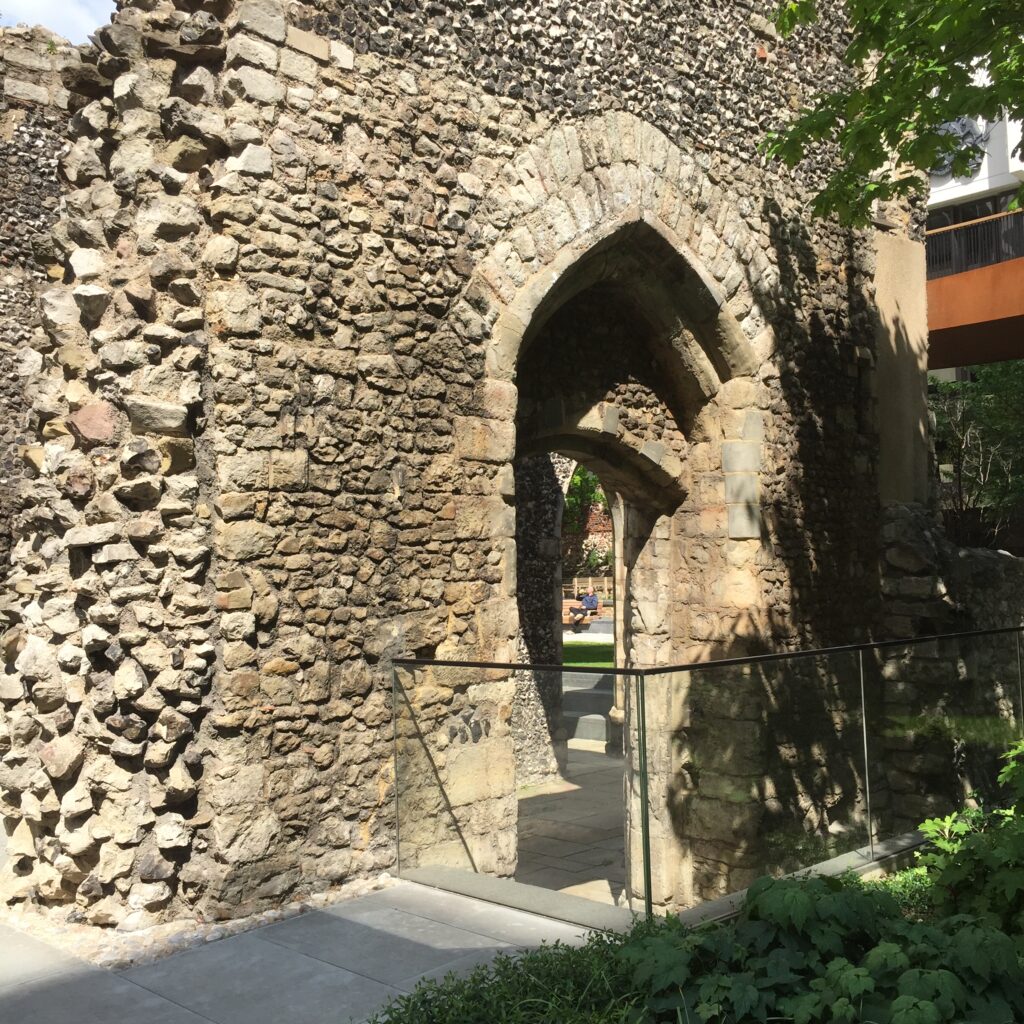
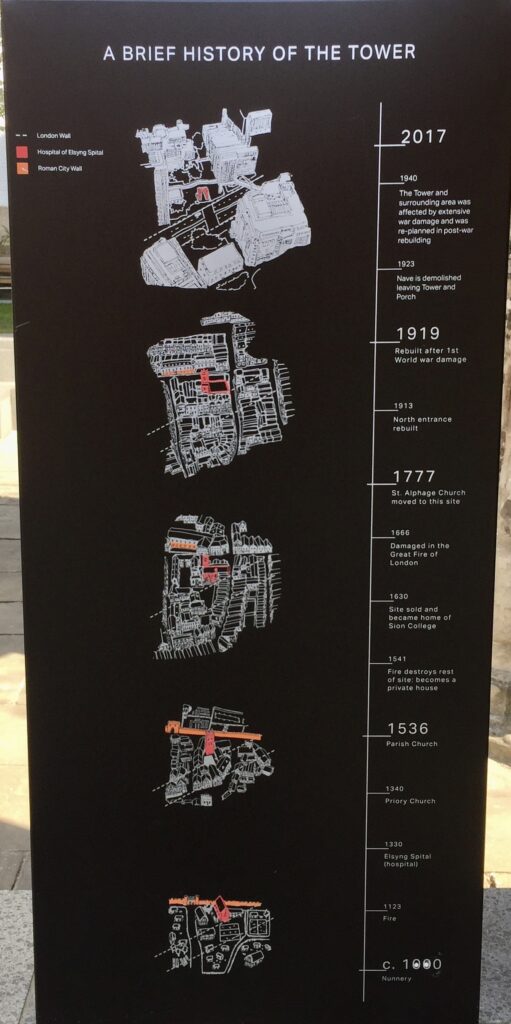
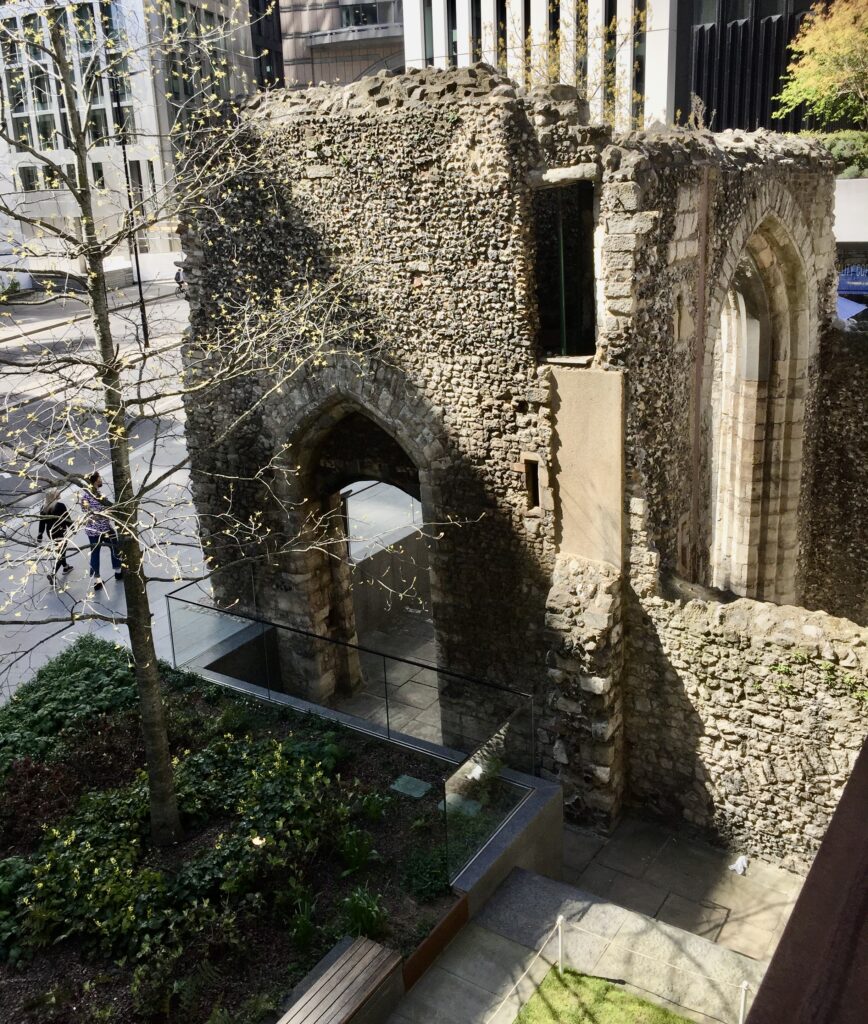
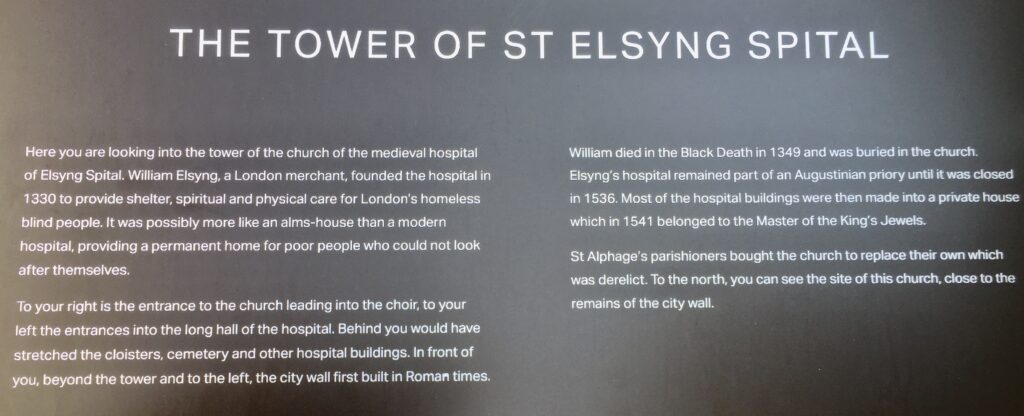
The St Alphage parish bought the church of the dissolved hospital of St Elsyng Spital in 1536. The tower is still there today just to the south of the wall …
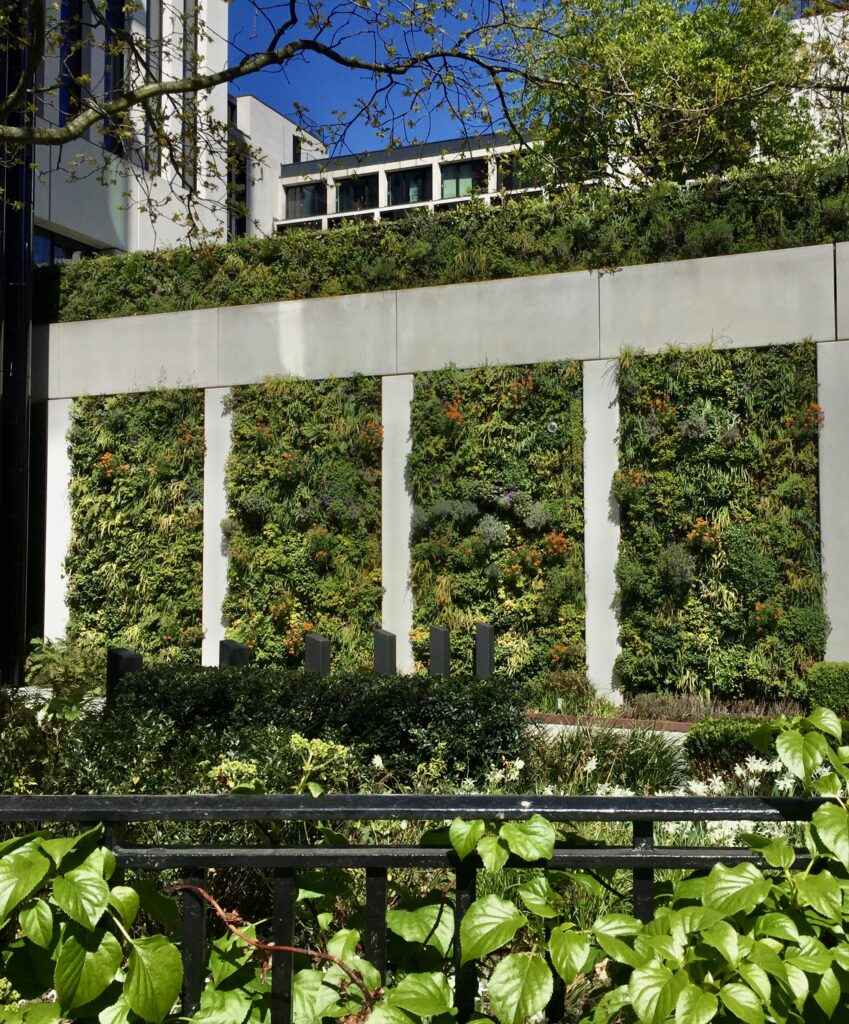
From London Wall to lush green wall at Number 2 London Wall Place (EC2Y 5AU) …
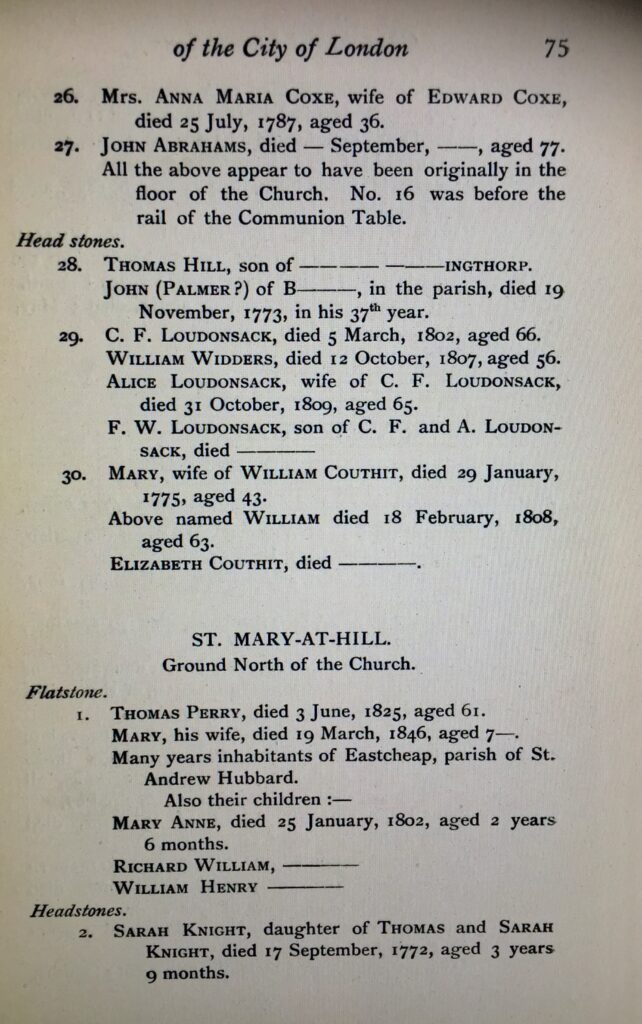
And now a mystery. In the churchyard of St Mary Aldermary are two tombstones several feet apart (EC4M 9BW). One denotes the resting place of ‘Mary, wife of William Couthit. Entered into rest 29th January 1775 aged 43 years.’ William is also there – he died on 18th February 1808 aged 63. Beneath the William and Mary inscriptions are the words ‘Also Elizabeth Couthit …’ with the rest tantalisingly buried.
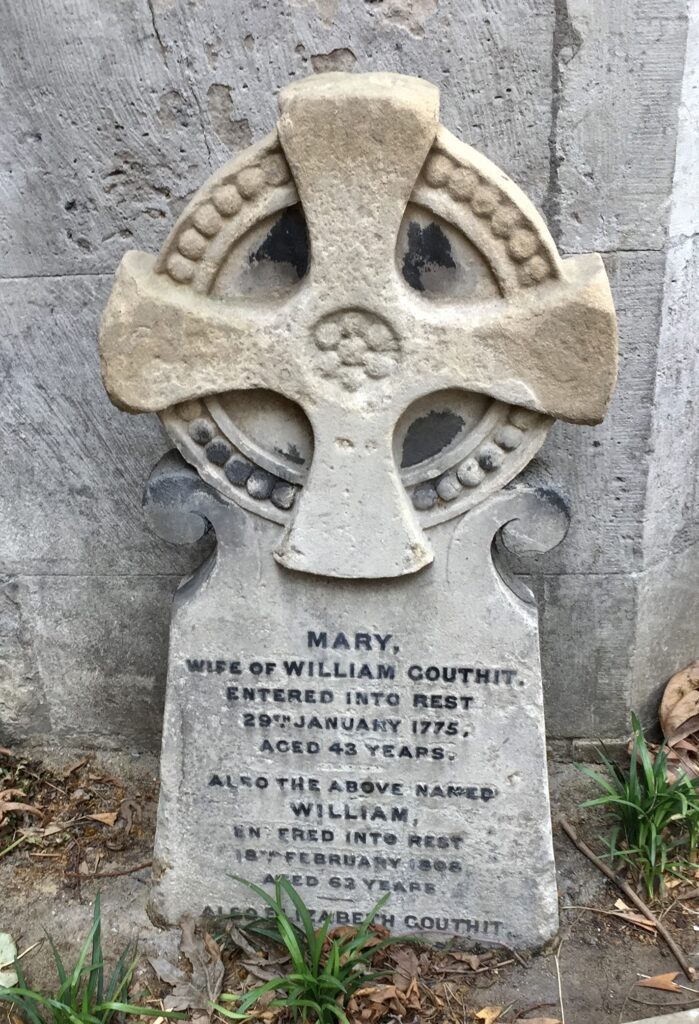
I have checked out this stone with a really useful resource, the audit of ‘Churchyard Inscriptions’ in City churchyards carried out by a man called Percy C. Rushen in 1910. He describes the stone exactly as it is now but records no date of death for Elizabeth. Here’s the actual page from his audit – the Couthits are recorded about half way down …
Now the mystery.

This is the other stone …
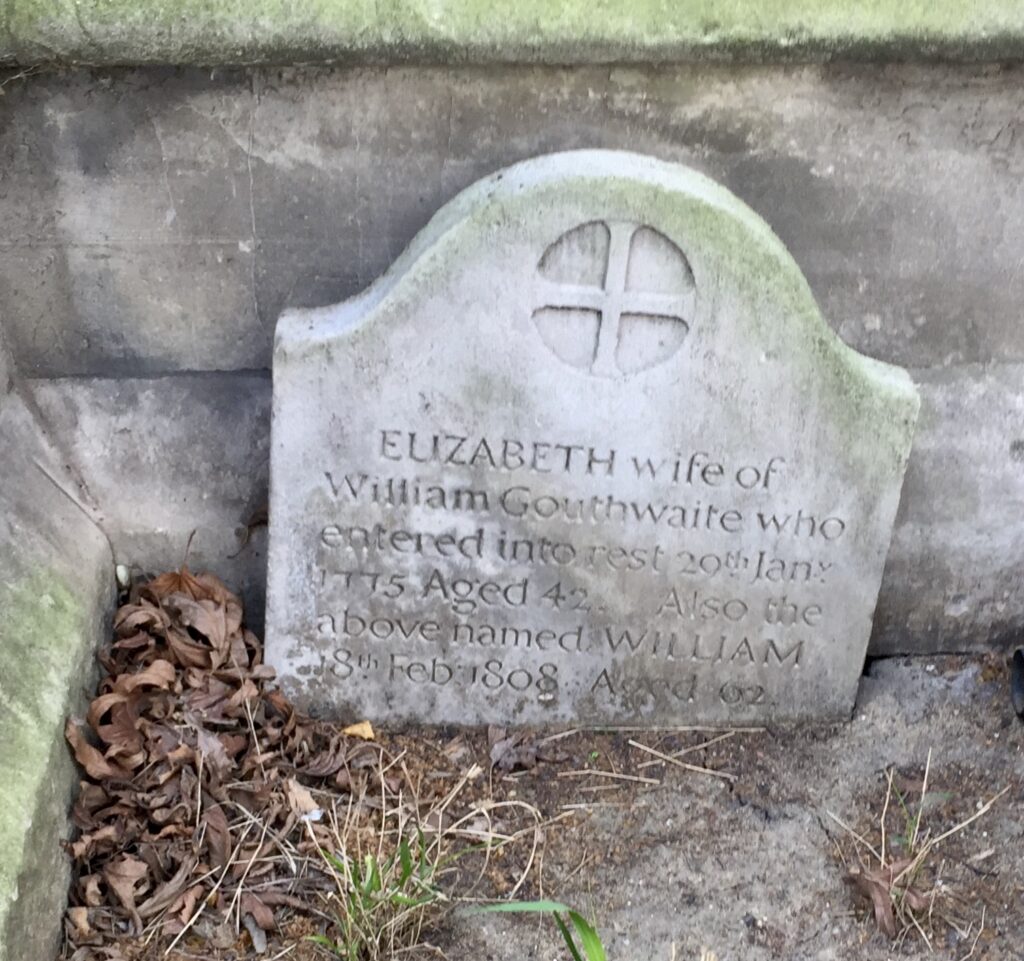
It claims to commemorate ELIZABETH, the wife of William COUTHWAITE, (so at first glance this is a different couple) and also William himself. However, she died on the same day as Mary Couthit (29th January 1775) and her William the same day as William Couthit (18th February 1808). As well as these anomalies, the ages at date of death on the second stone differ by one year. Elizabeth is shown as 42 at death rather than 43 and William as 62 instead of 63. Crucially, this stone does not appear in Rushen’s audit and he was obviously very meticulous.

My theory is that, many years after the Coutits had died, their descendants (now called Couthwaite) had traced their ancestors. Not realising for some reason that there was already a memorial, they erected another one with incorrect information.

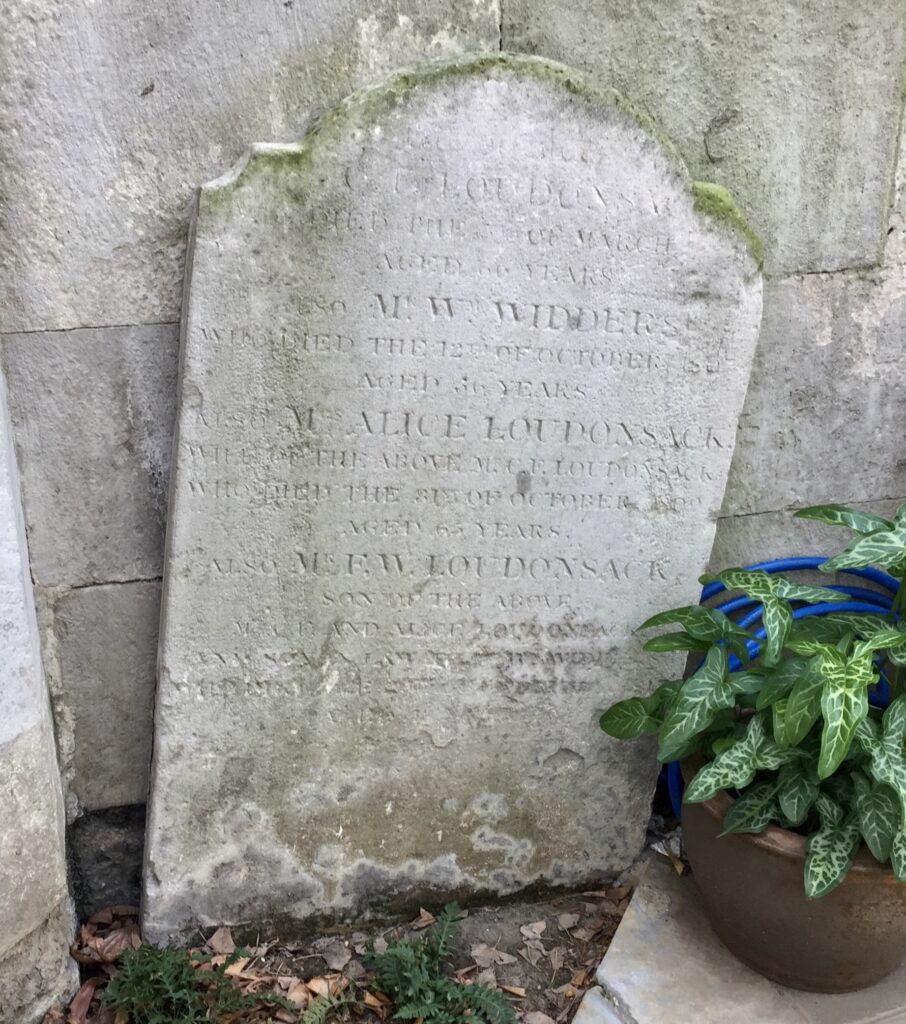
In 1910 there were only three headstones and there are only three today. As we know, the Coutit one is still in the churchyard, and the other survivor is the one for Loudonsack and Widders …
The third stone still there is so weathered I couldn’t read it …
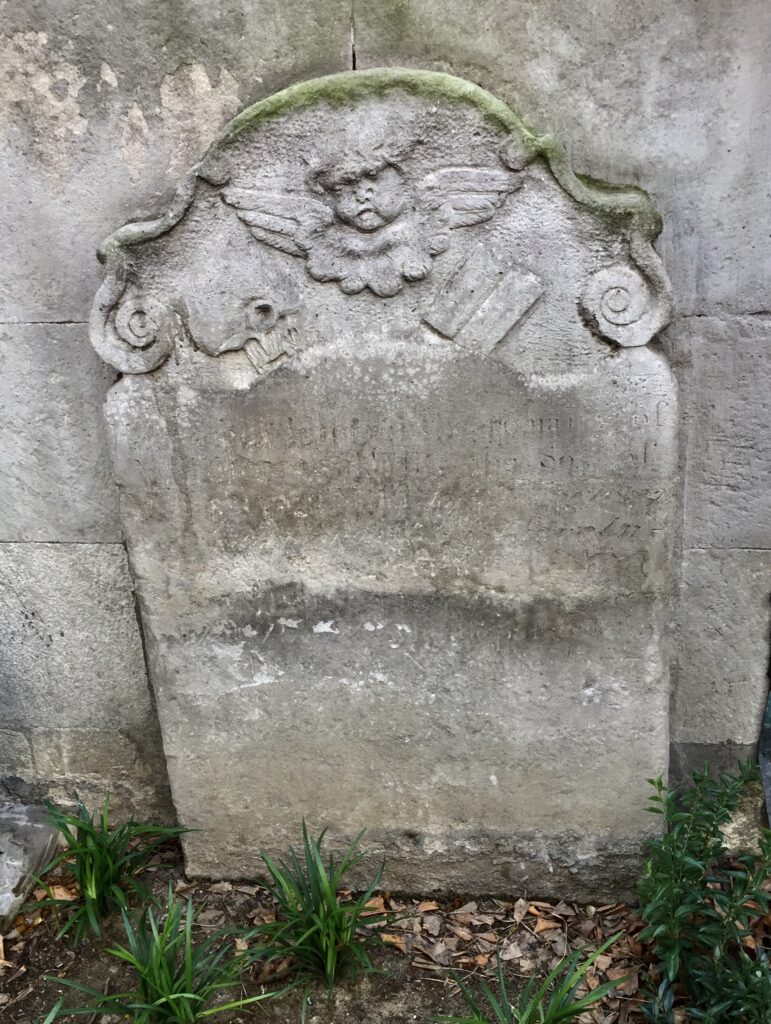
The last two words on the top line seem to be ‘…remains of …’ which would rule it out being the Thomas Hill stone mentioned in the audit.

Rushen listed 27 flatstones and there are nine in the churchyard now (all on the path leading to the door) …
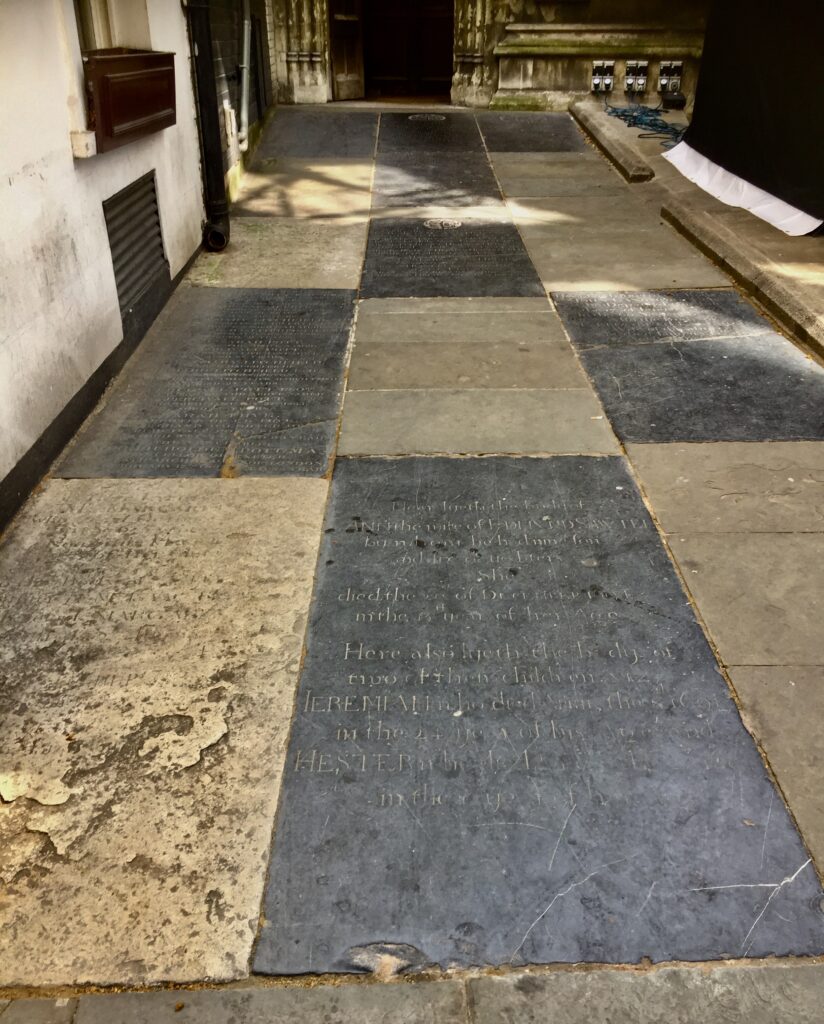
One gives a remarkably detailed time of death along with Mrs Schneider’s exact age …
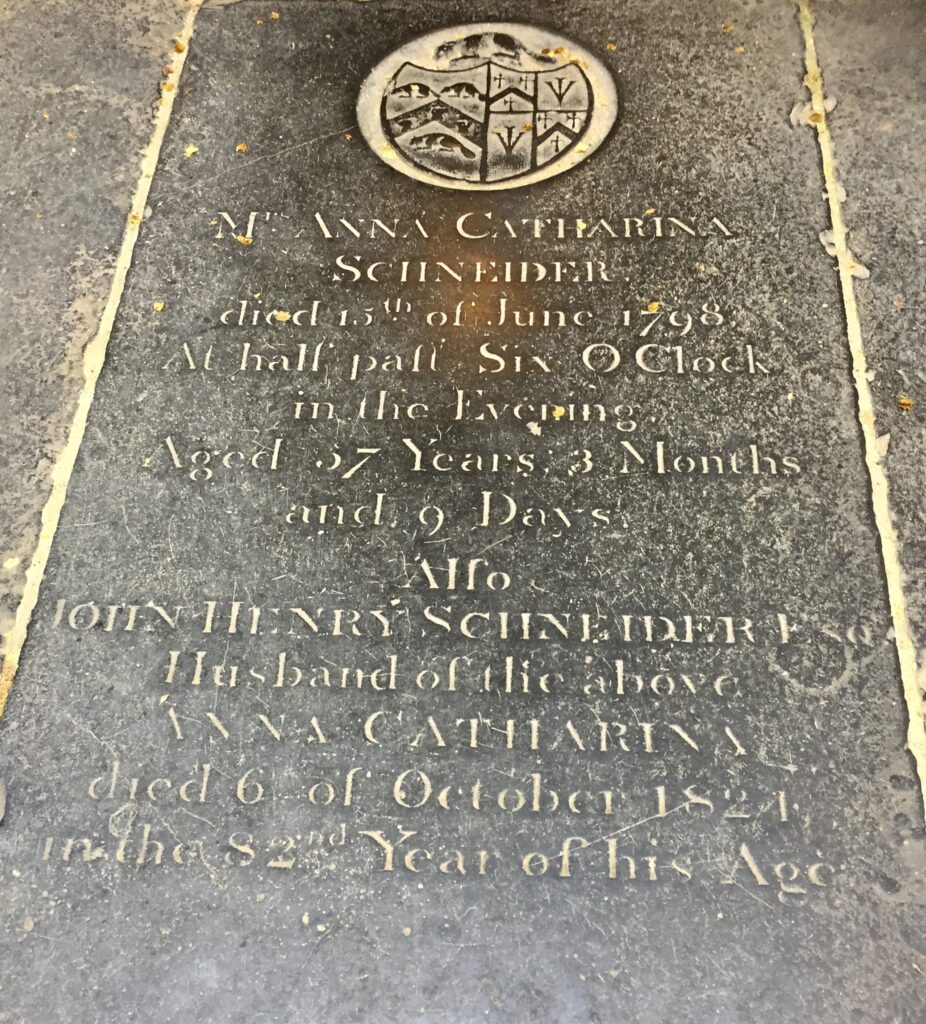
I have done some research about this stone and the people it commemorates in an earlier blog entitled Some of my favourite tombs, gravestones and memorials.

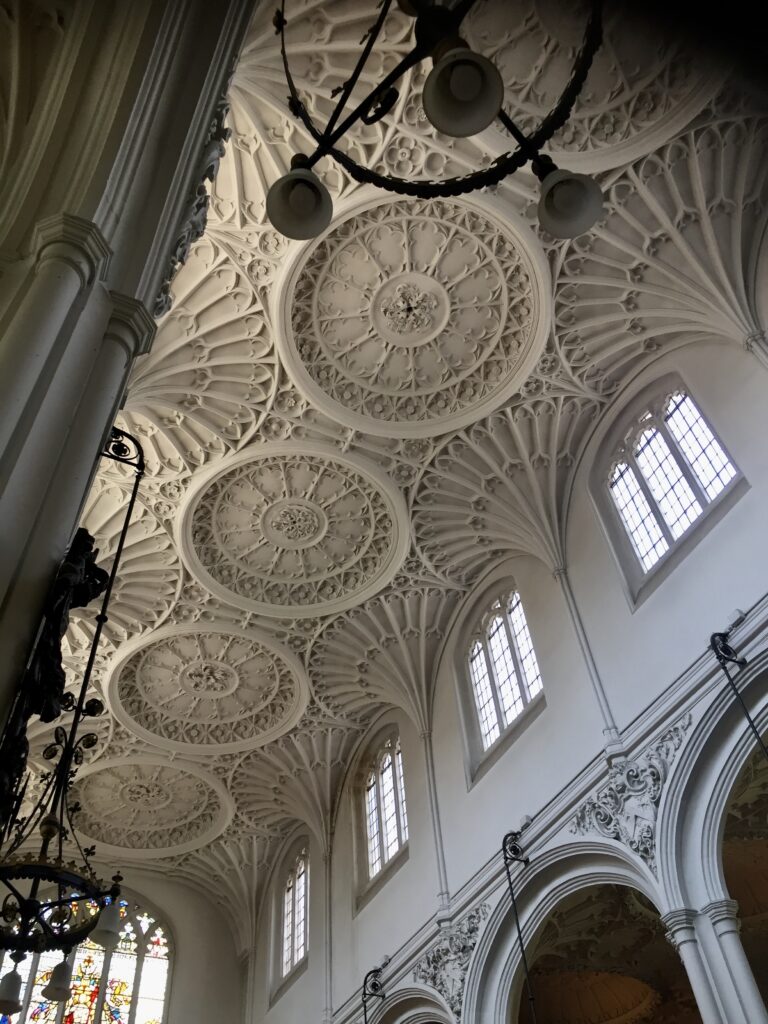
If you get the chance do visit the church. A former medieval church, largely destroyed in the Great Fire of 1666, it was rebuilt in 1679-82 by Sir Christopher Wren’s master craftsmen. It is the only surviving late 17th century Gothic church in the City of London and is especially notable for its unique plaster vaulting. Here’s what you see when you look up …
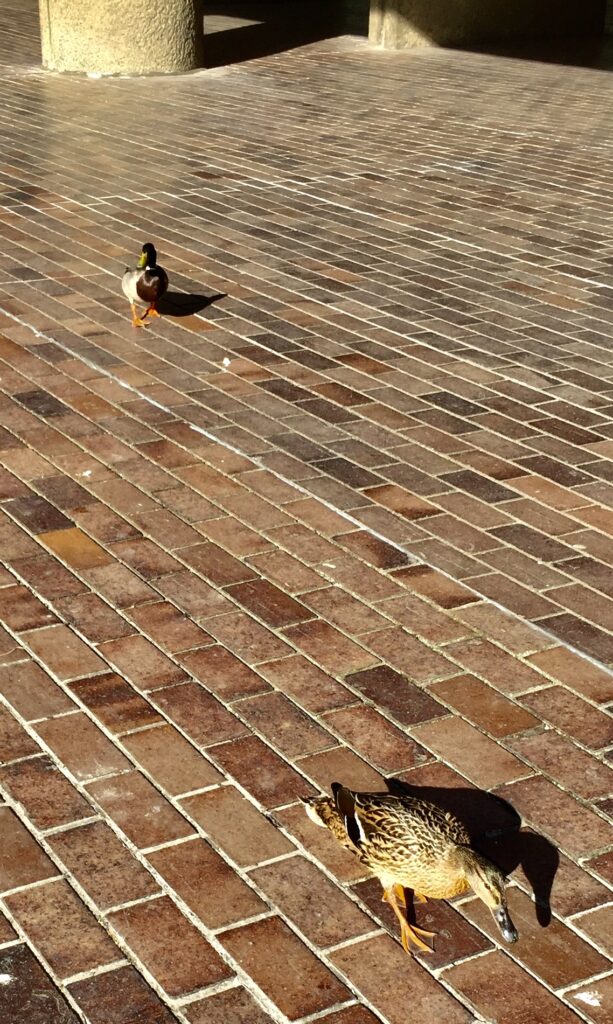
… and finally, a lady duck update.

Last week I published this picture of Ms Duck being pursued by two enthusiastic suitors …
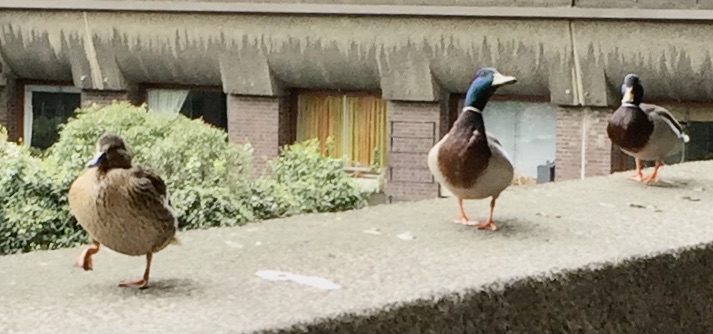
I saw this scene a few days later and it seem she has shaken one of them off!
If you would like to follow me on Instagram here is the link …
https://www.instagram.com/london_city_gent/

Street art in and around Brick Lane.

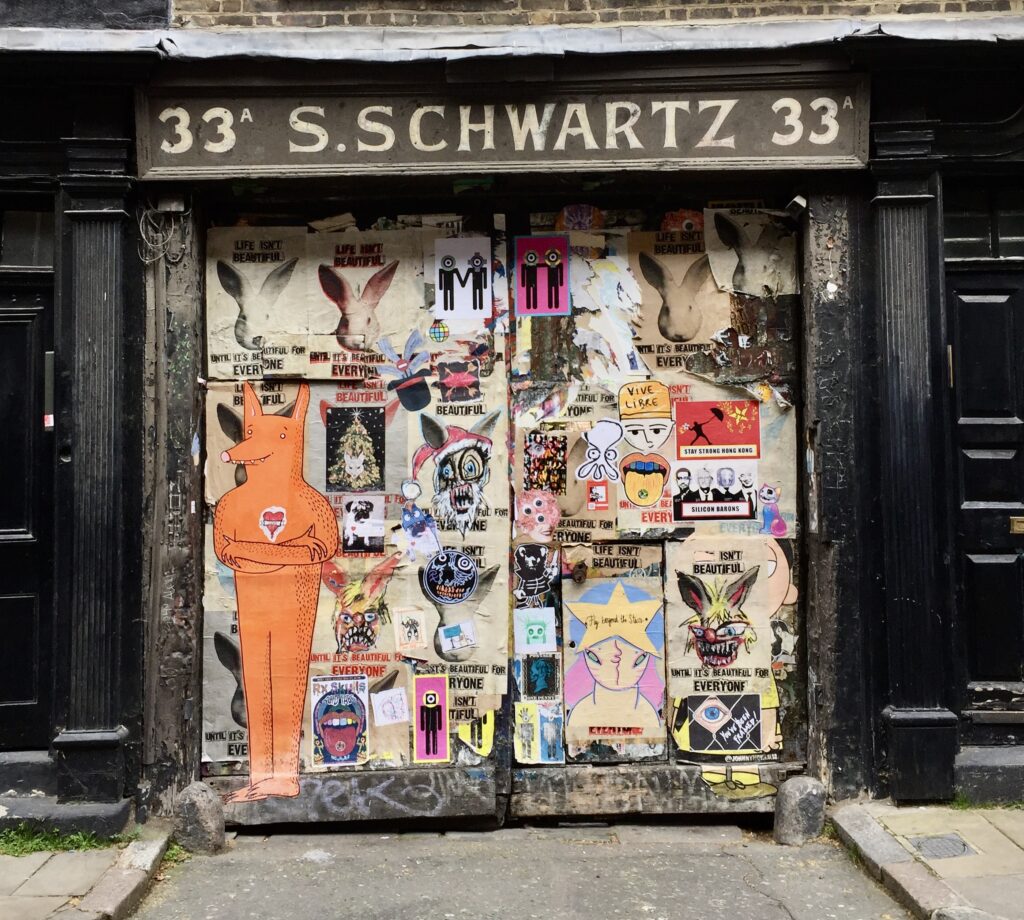
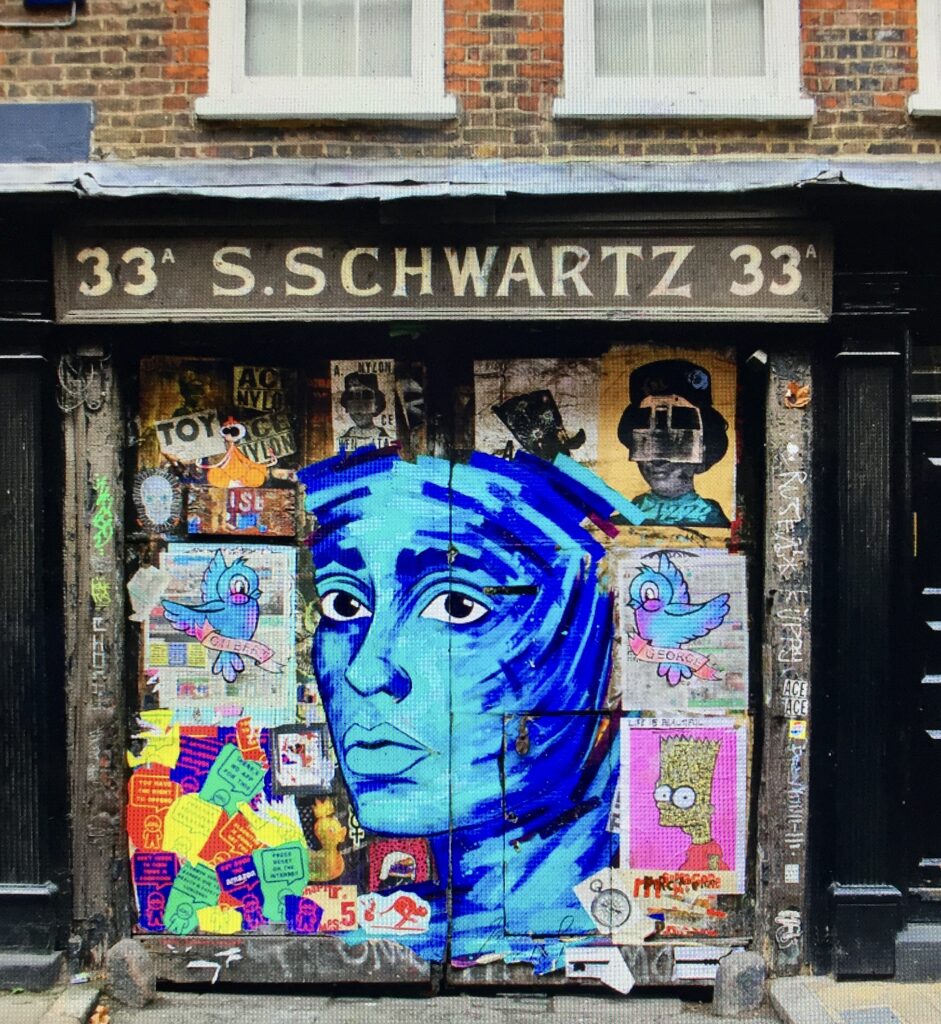
In my blog a few weeks ago some of you will remember that I wrote about this pair of doors in Fournier Street …

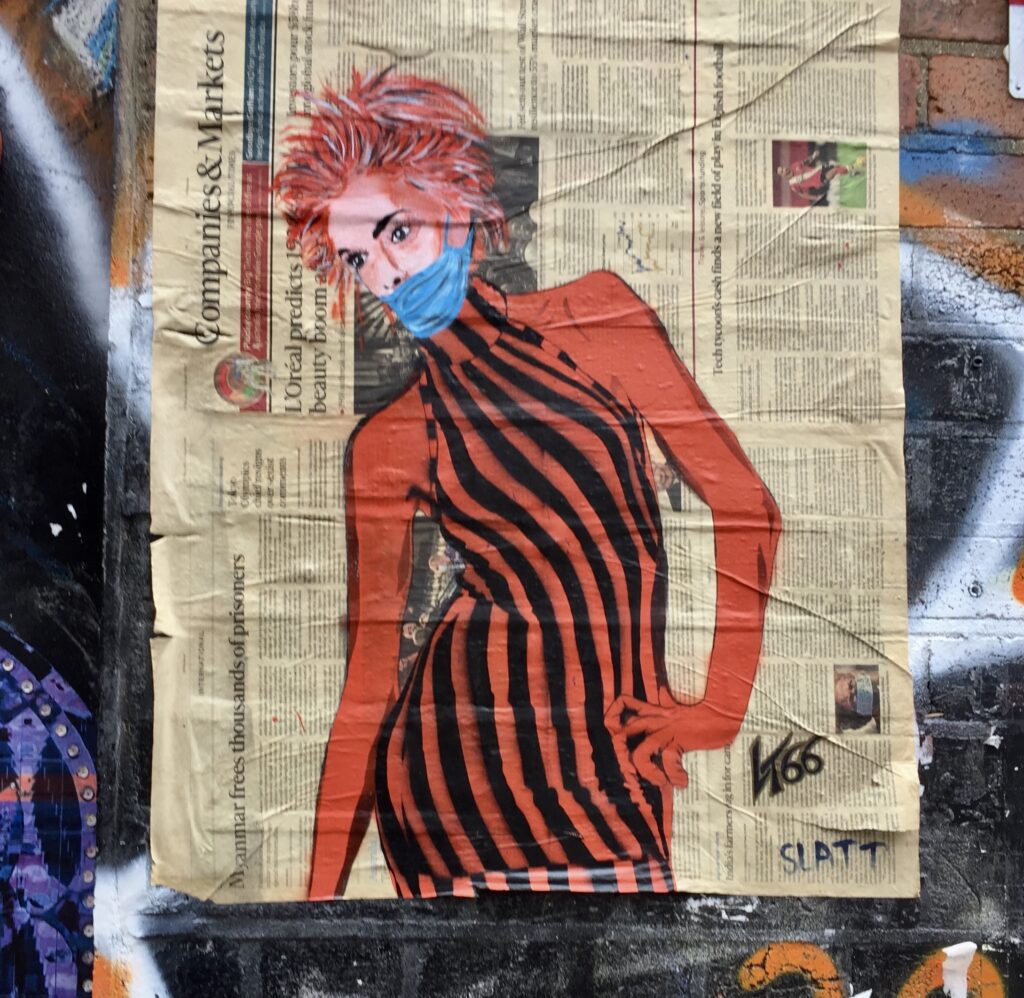
Much street art is constantly being painted or pasted over. For example, this is what the doors looked like in April 2018 …

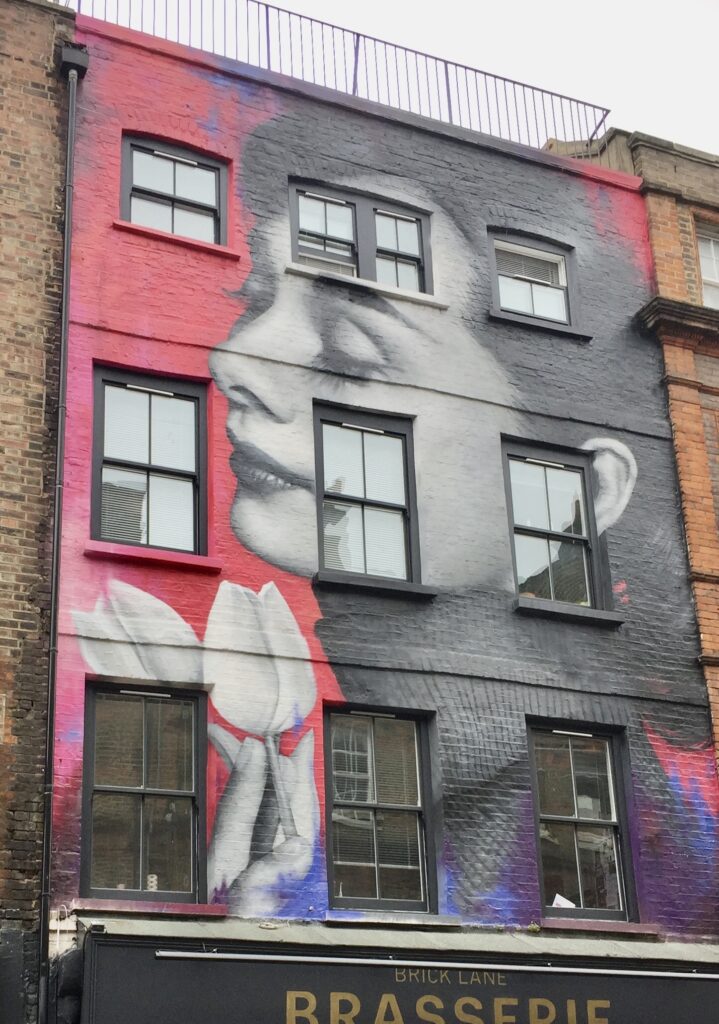
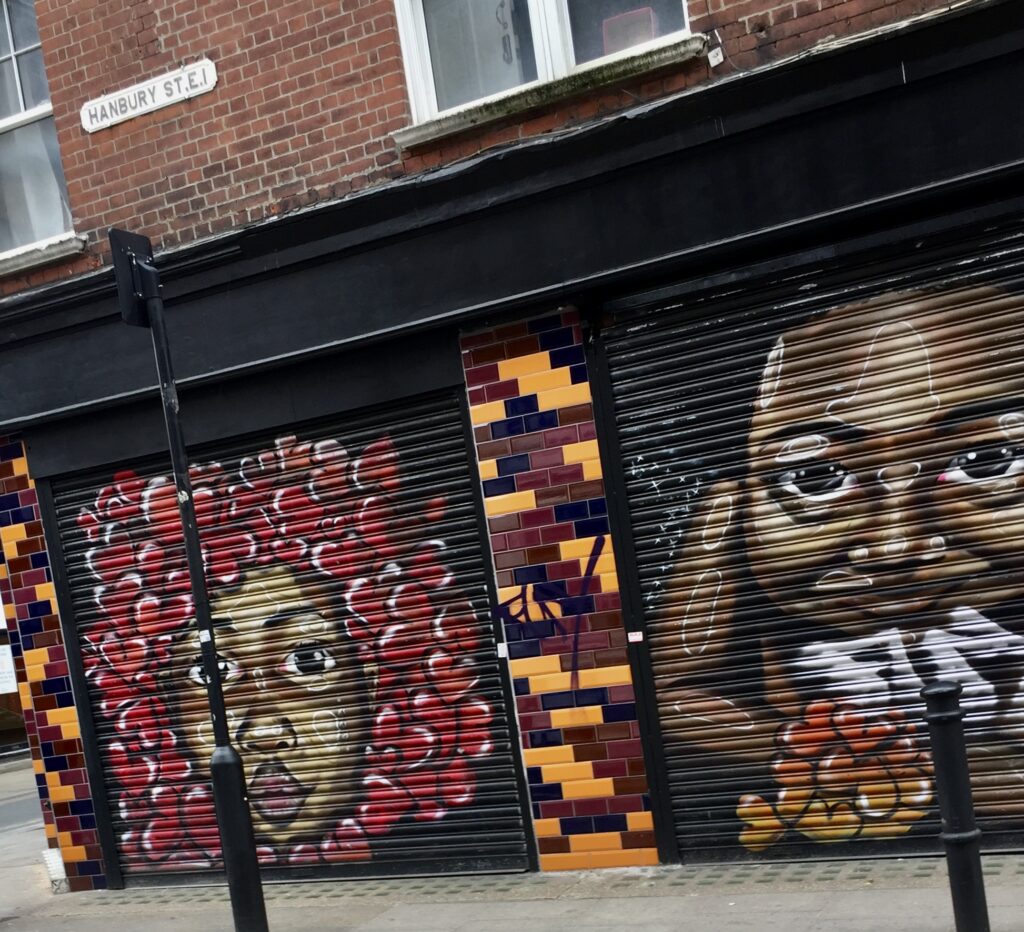
I was inspired to go in search of what else had been created nearby and these pictures are the result of my wanderings.

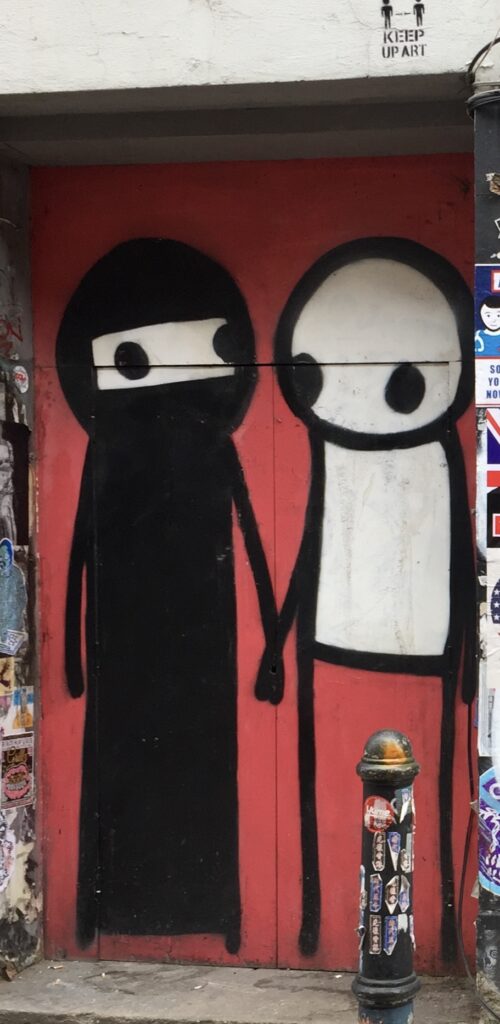
I’ll start in Princelet Street with a work by the famous street artist Stik …

Entitled A Couple Hold Hands in the Street, it shows a woman in a niqab holding hands with a second stick figure. It was painted in 2010 and you can read more about the artist in this fascinating article in Christie’s magazine.

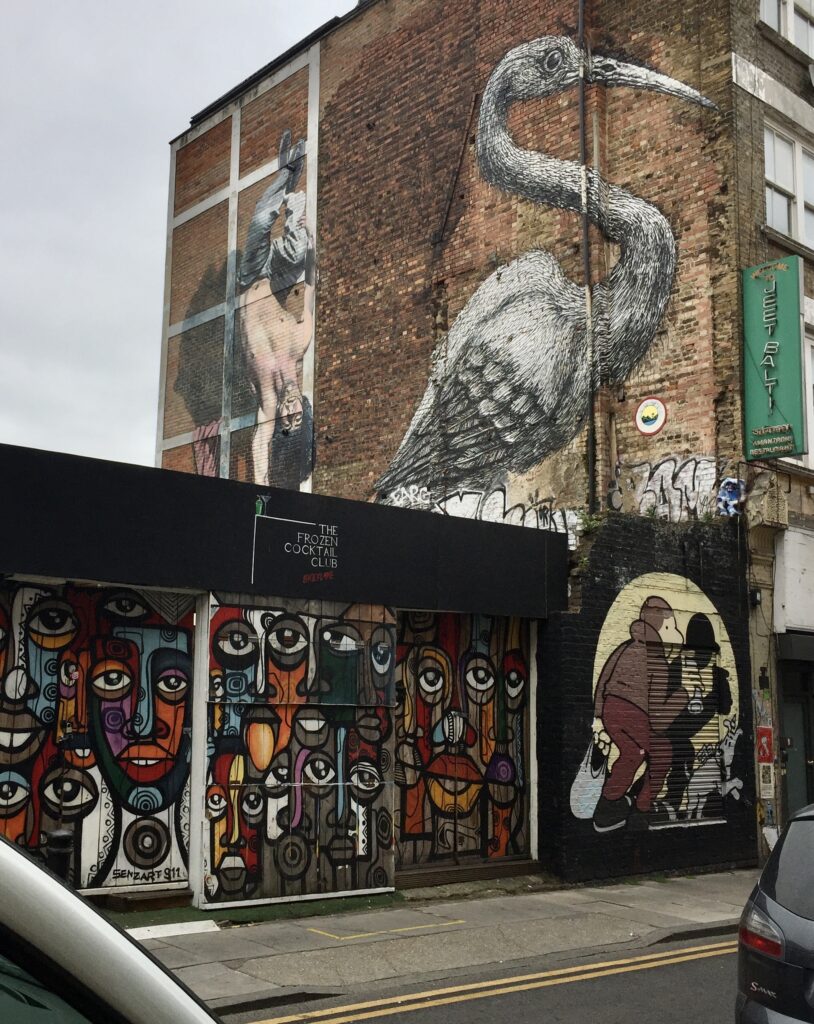
Local people are also very fond of this Hanbury Street bird …

The work is by the Belgian street artist Roa. His intention had been to paint a heron but, after being asked if it was a crane by Bengali people – for whom the crane is a sacred bird – he morphed his bird into a crane to best complement its location on the wall of an Indian restaurant. Read more here about The Return of Roa by The Gentle Author.

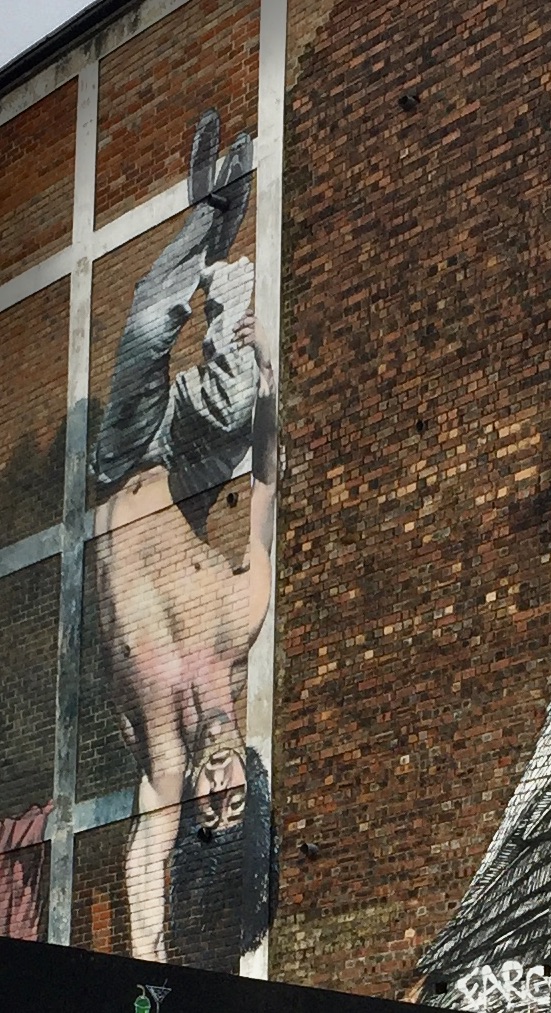
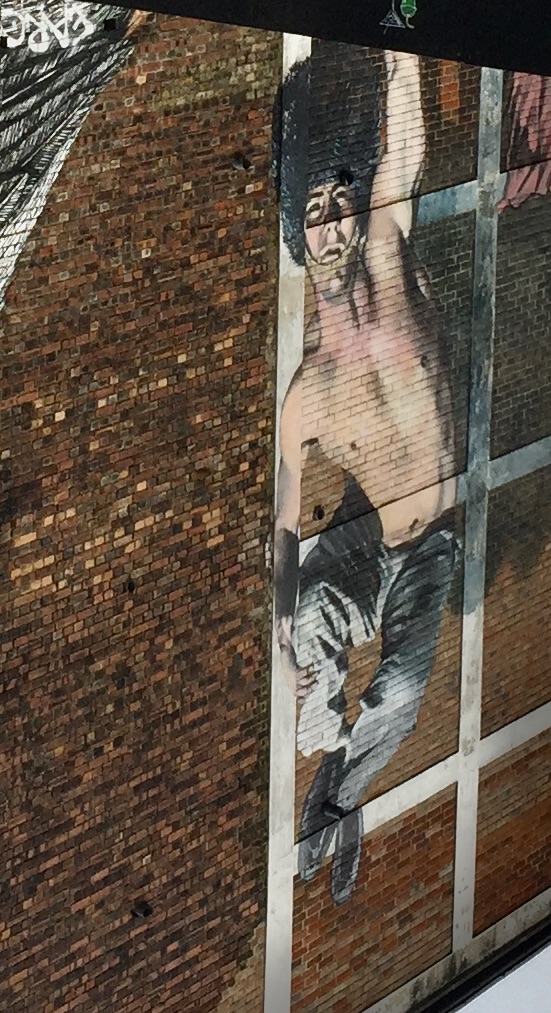
To the left of the crane is a bearskin-hatted guardsman break dancing …

Here he is ‘right’ way up …

It’s by the Argentinian painter Martin Ron who is based in Buenos Aires.

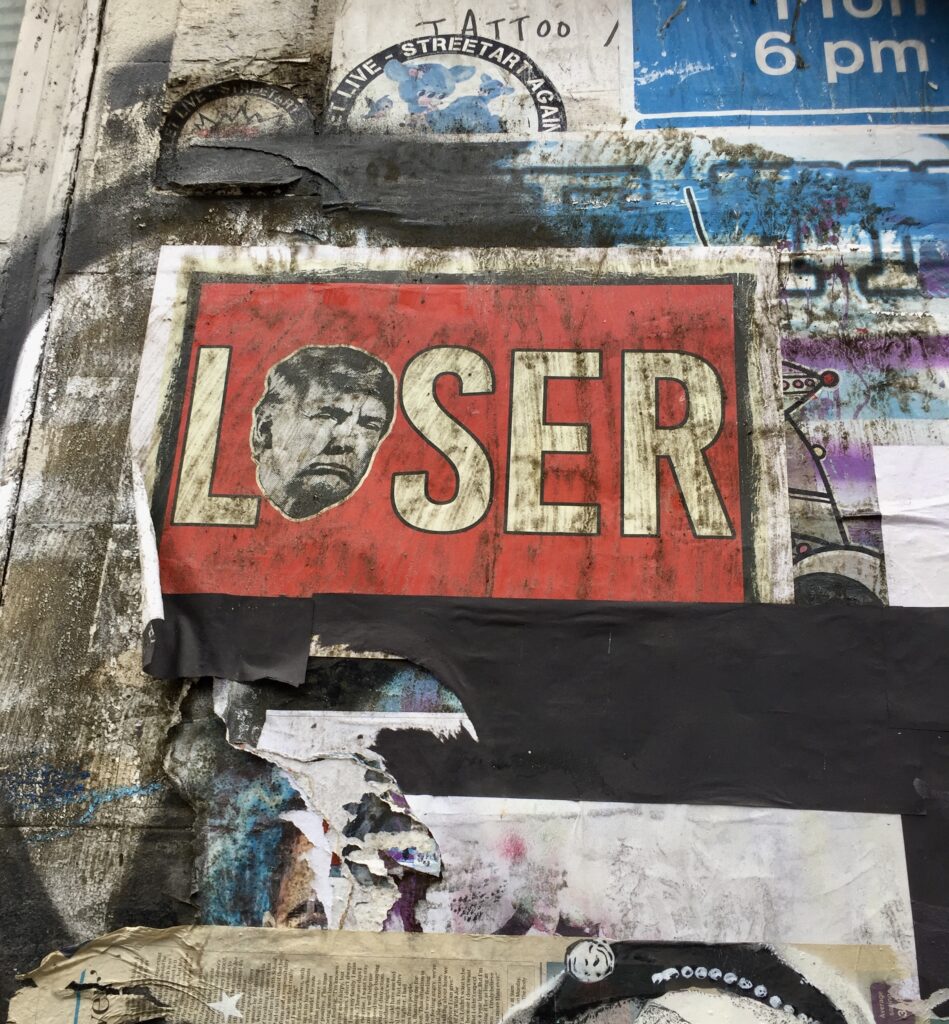
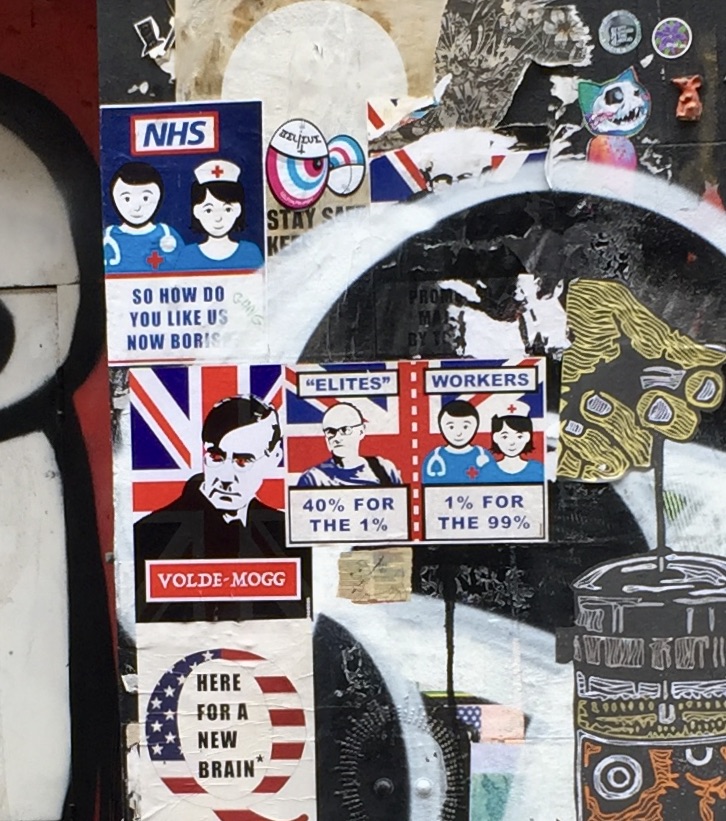
There were bound to be a few political points being made …

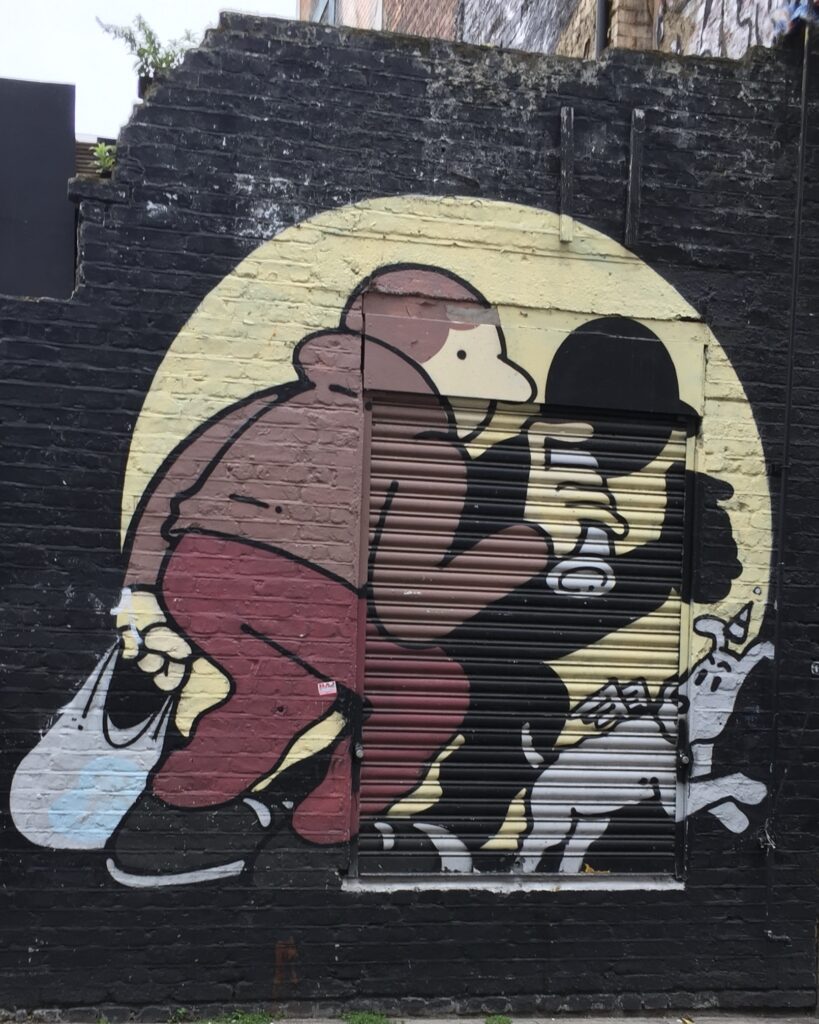
This made me laugh – could it be Tintin and his dog Snowy doing some clandestine paint spraying? …

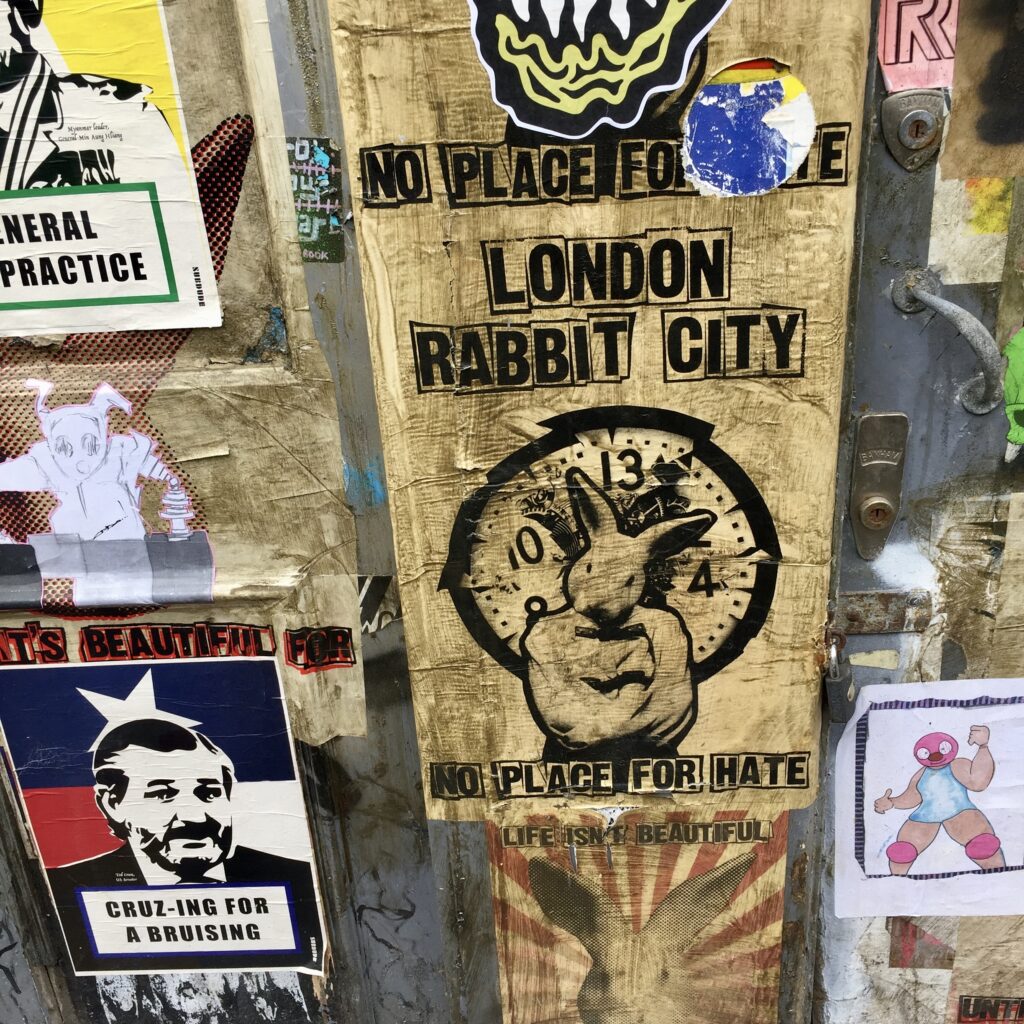
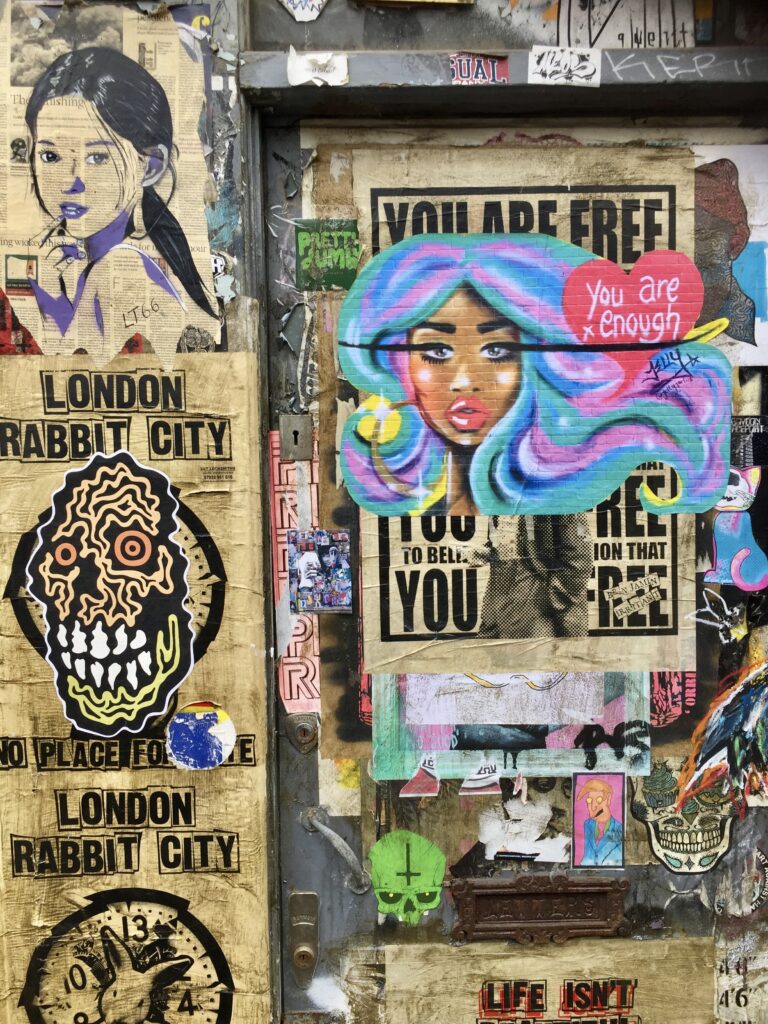
The ‘No place for hate’ rabbit pops up a lot …

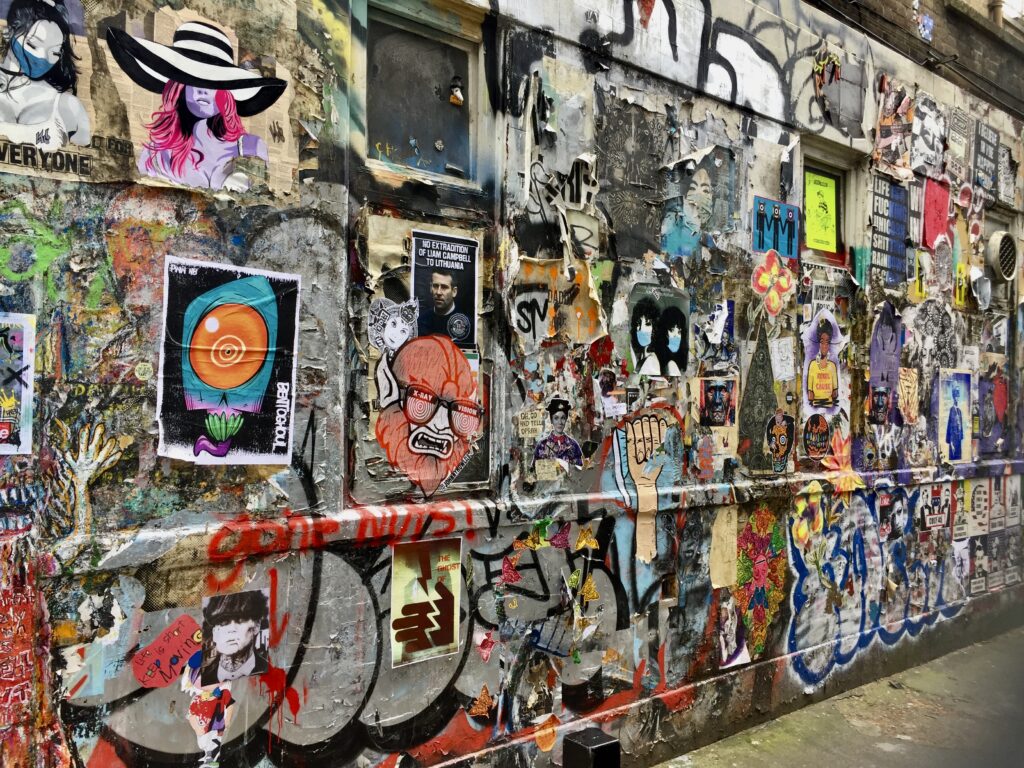
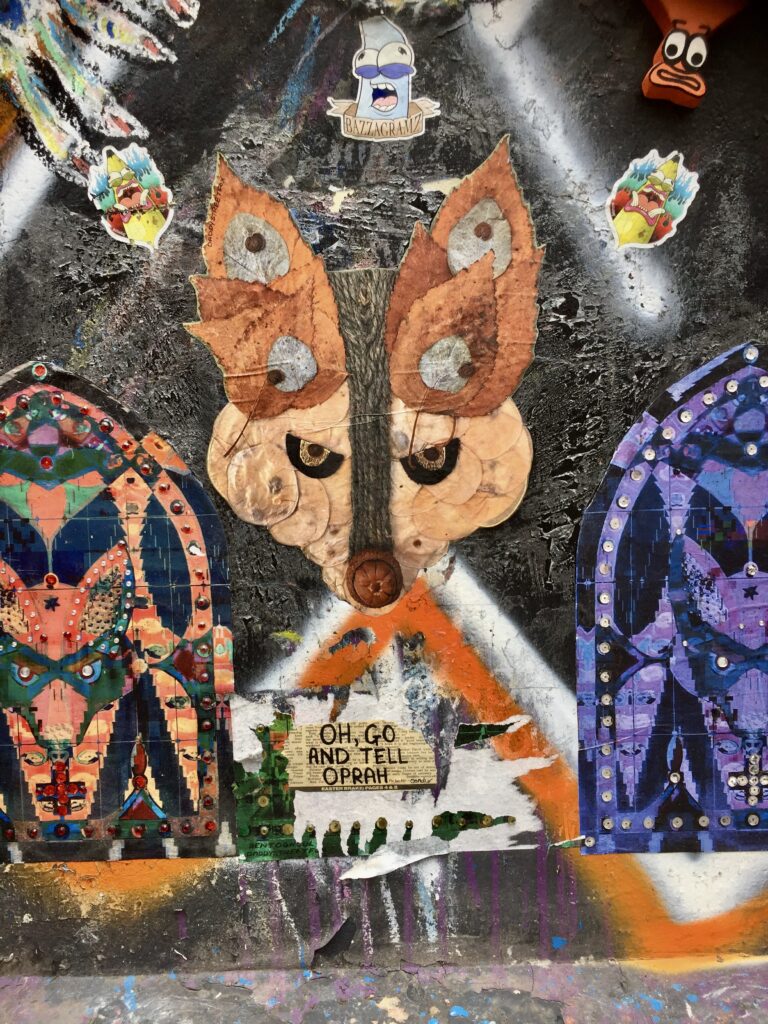
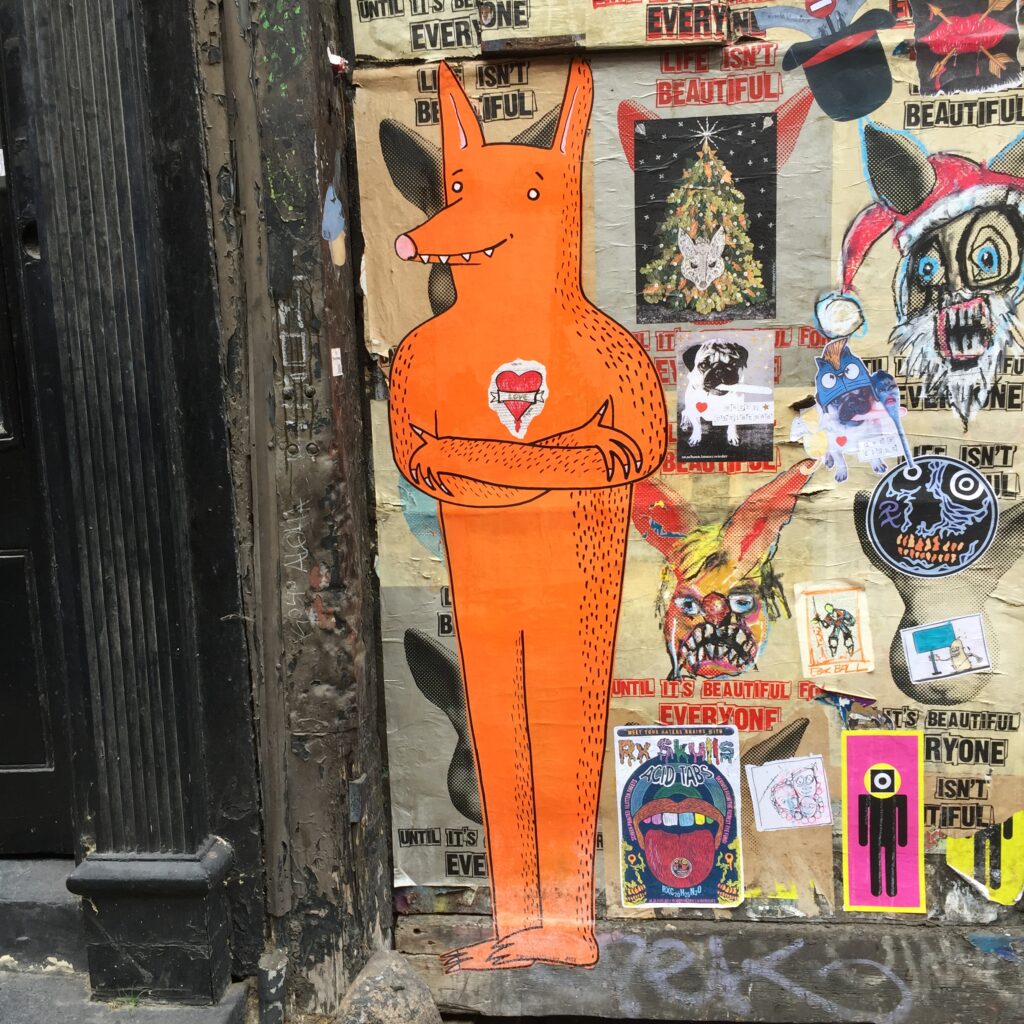
Layers and layers of street artist paste-ups cover walls …

Picking out individual works is fun and quite absorbing …

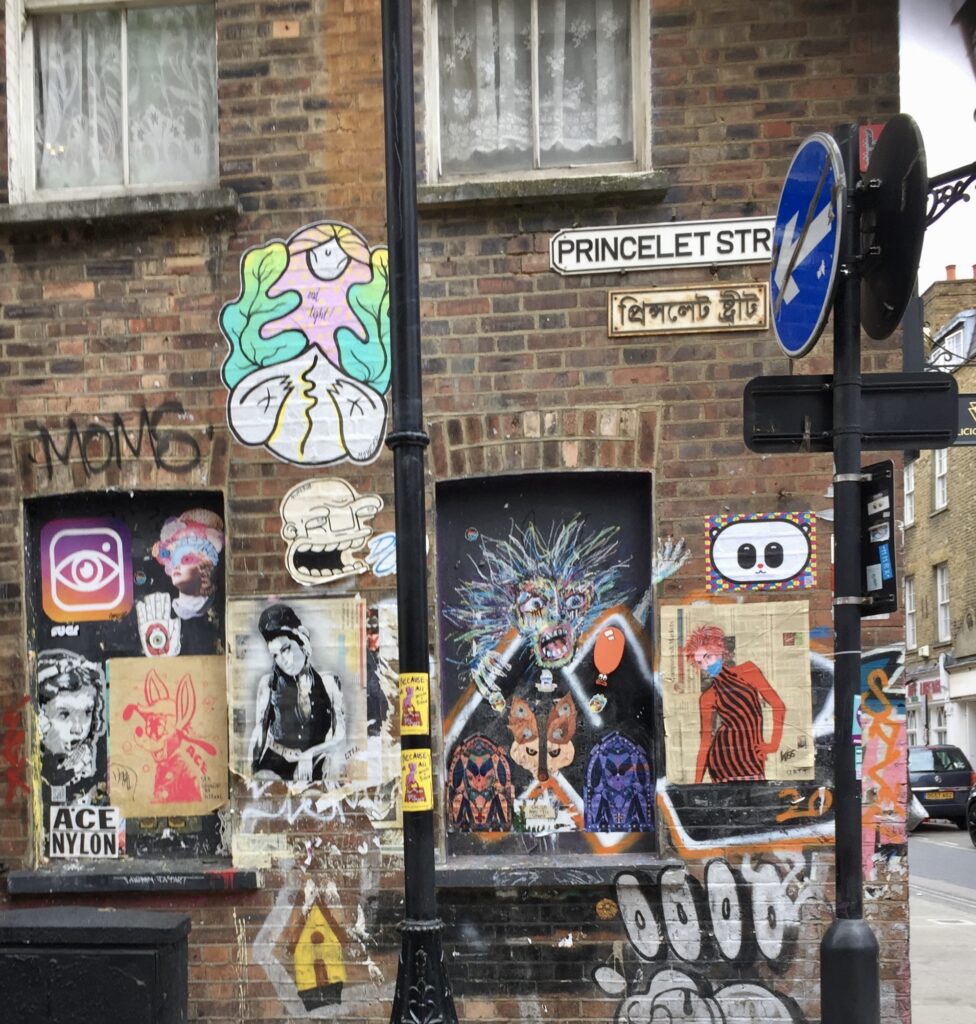
I have been trying to identify all the artists but still have some research to do with regard to these distinctive portraits …

Brick Lane looks a bit sad at the moment with the restaurants either closed or open for take-away orders only but the art certainly brightens everything up and I shall be going back to watch it continually develop.

If you would like to follow me on Instagram here is the link …
https://www.instagram.com/london_city_gent/

Hands, Lions and Sphinxes … Spitalfields doors and their knockers.

Writing this blog has led me to research some pretty unusual things and doorknockers must rate highly on the list.

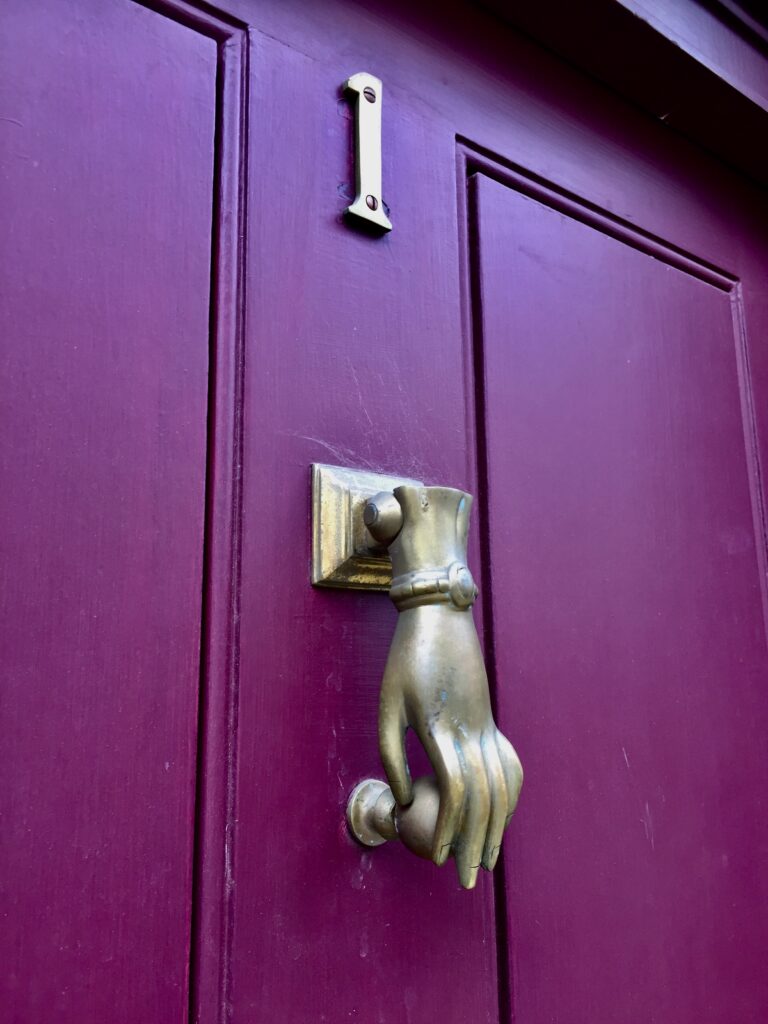
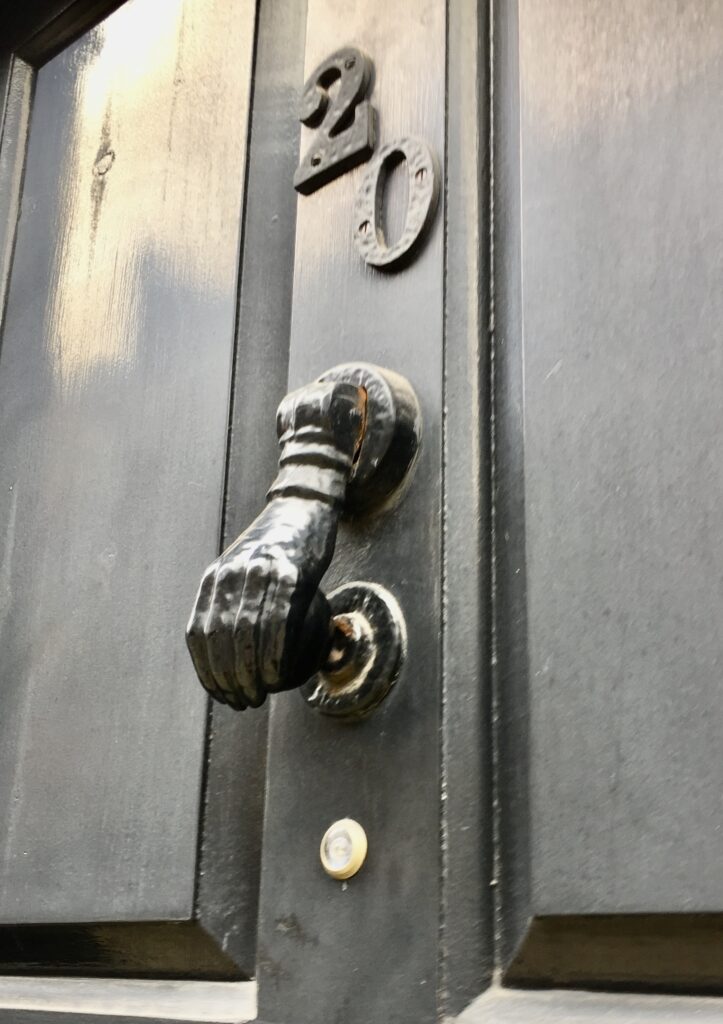
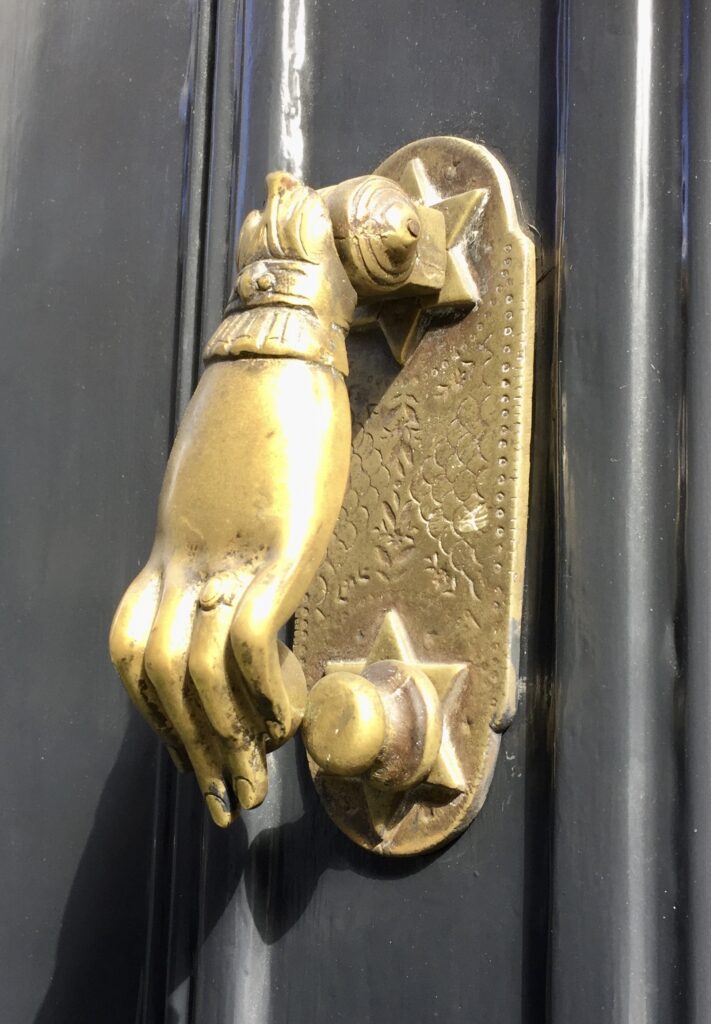
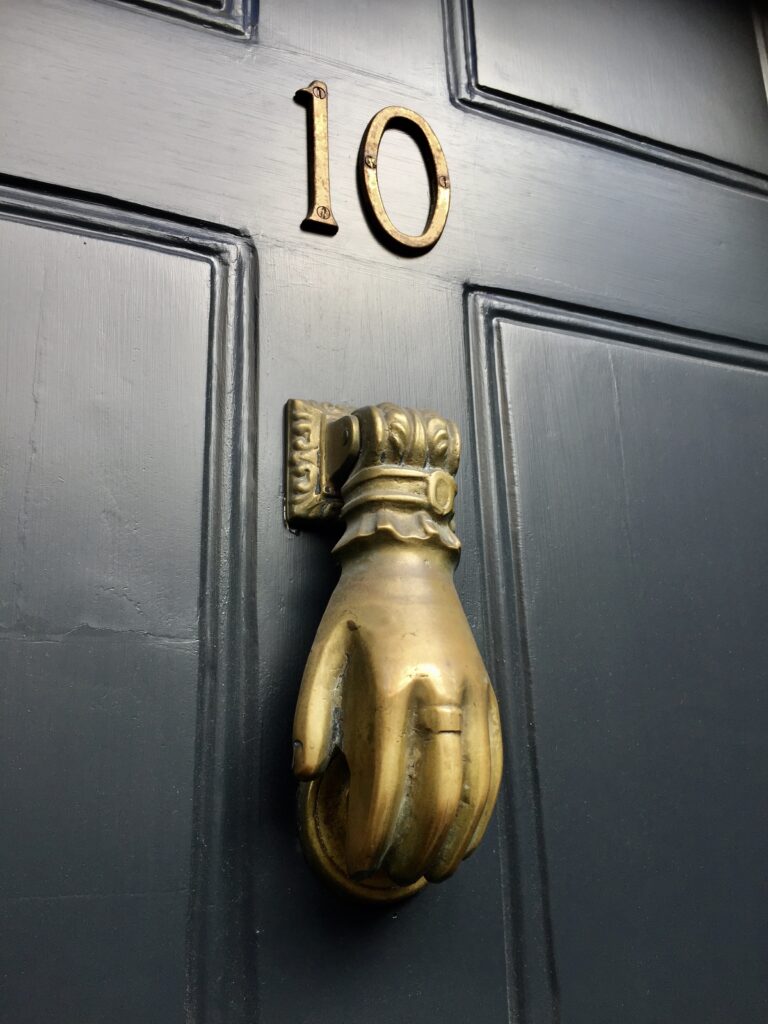
What prompted my interest were the hands I encountered when I was wandering around the elegant houses on Elder, Fournier, Wilkes, Folgate and Princelet Streets. The area is well known as where Huguenot and other master silk weavers set up in business when they fled persecution in the late 17th century. Door knockers shaped as women’s hands proliferate, this one is wearing a bracelet …

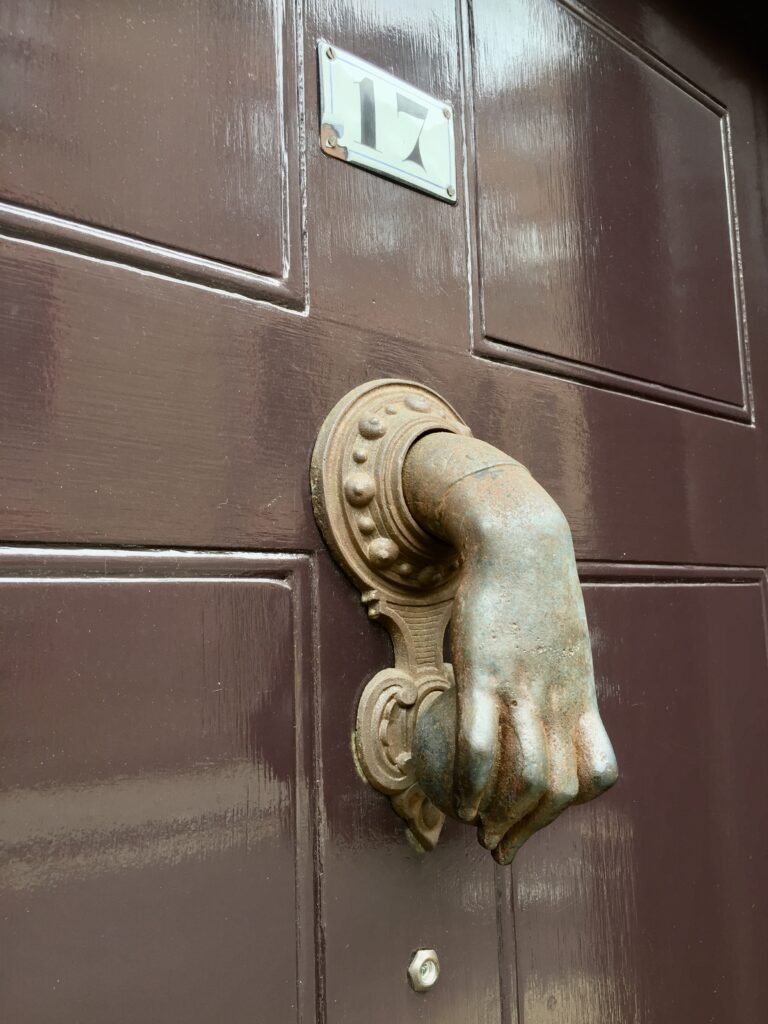
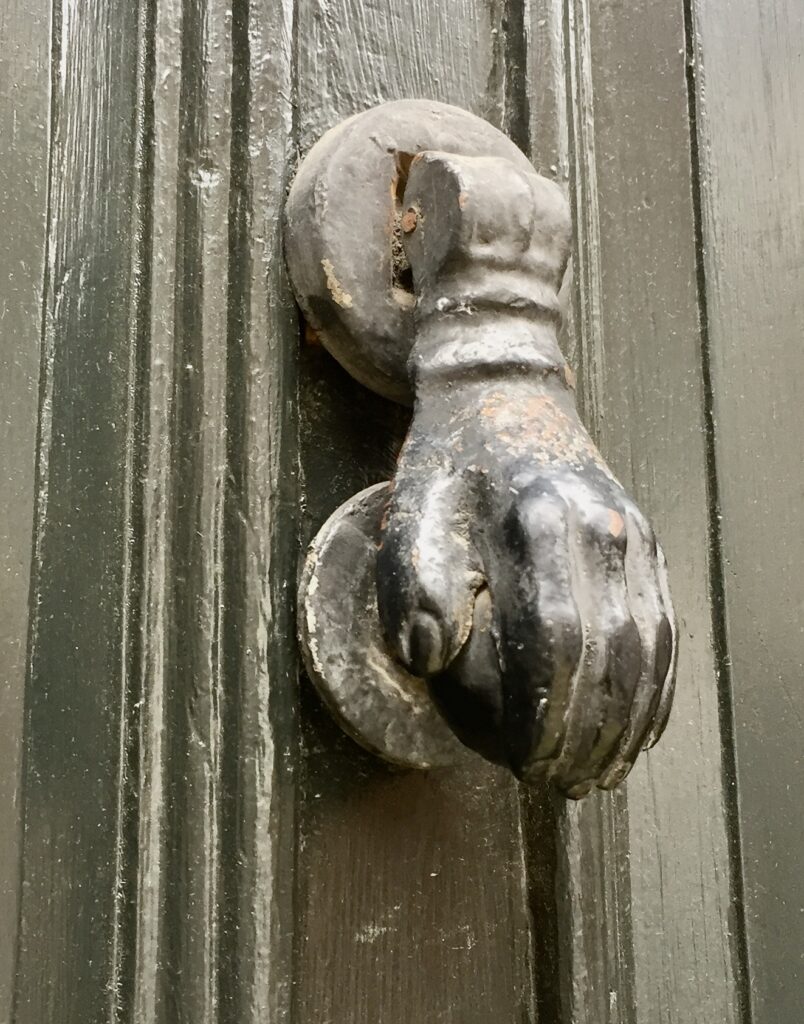
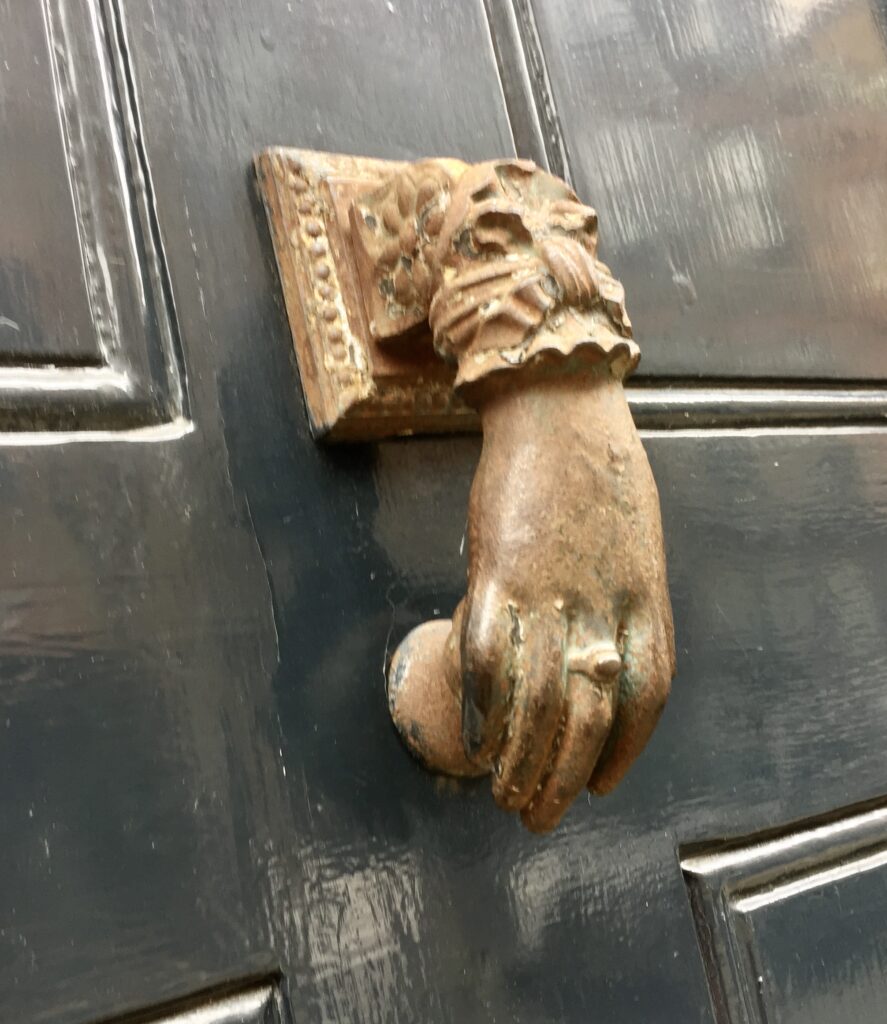
Some are older and more worn than others …

These three are emerging from a lacy cuff and all are wearing a ring. In the second two the bracelet surrounds the cuff …

This one is on a door that has become a piece of artwork …

This image has an empty alt attribute; its file name is IMG_6051-660x1024.jpeg

Door knockers are still being manufactured today and researching the origins of their design has been a bit tricky because most of the published history appears on sales sites. Manufacturers may have a bit of a vested interest in making their wares as intriguing as possible.

Anyway, the consensus seems to be that the hand is the Hamsa, or Hand of Fatima, a symbol of protection which originates in Islam (Fatima was a daughter of Mohammed) but has since been adopted by Judaism and Christianity to ward off evil forces.

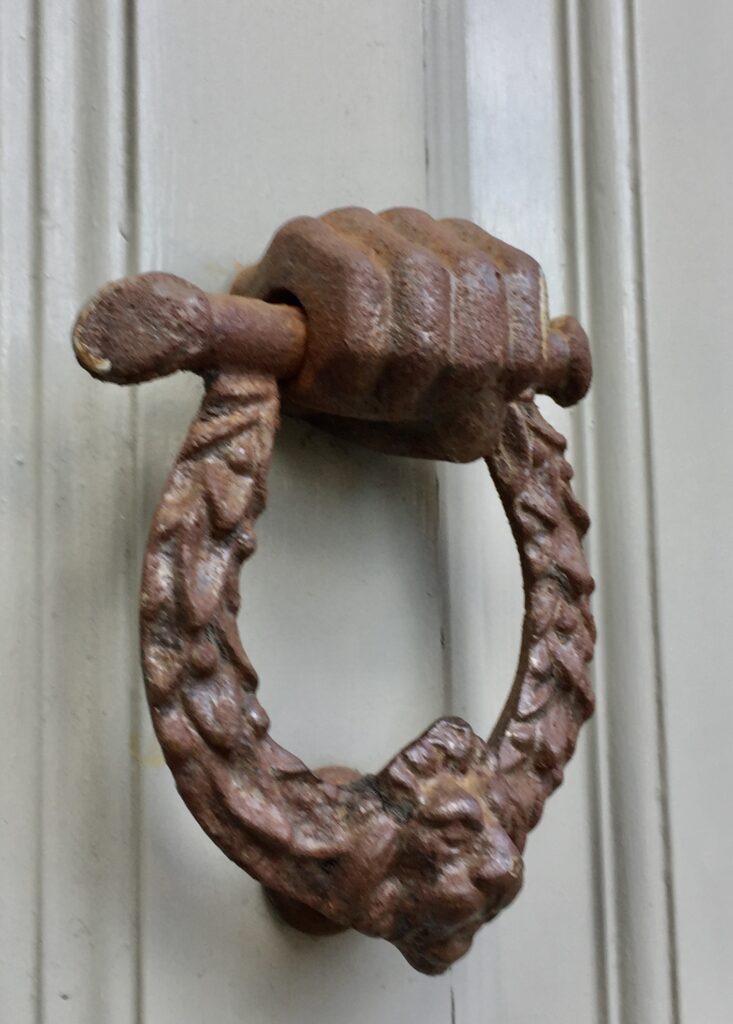
Incidentally, I only came across one man’s hand but it belonged to a very famous person. Known as a ‘Wellington’, it was invented in 1814 by David Bray, a London ironmonger. His sales pitch was that it represented …

The Hand of our immortal Hero grasping the Wreath of Victory, and the Baton of Field Marshal, as being the highest rank that can be conferred on military fame: the Lion’s face represents British valour overpowering the arms of Tyranny and Usurpation.

This image has an empty alt attribute; its file name is IMG_6084-733x1024.jpeg

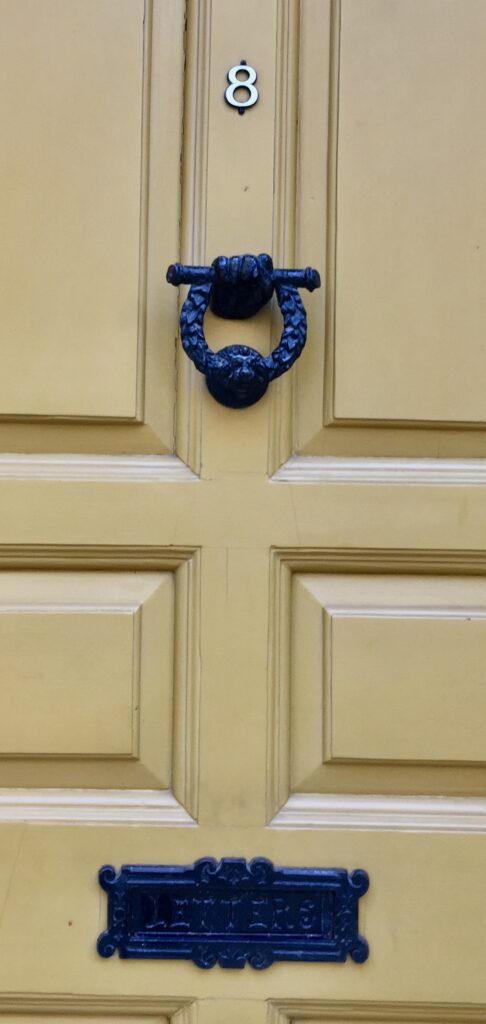
Another ‘Wellington’ …

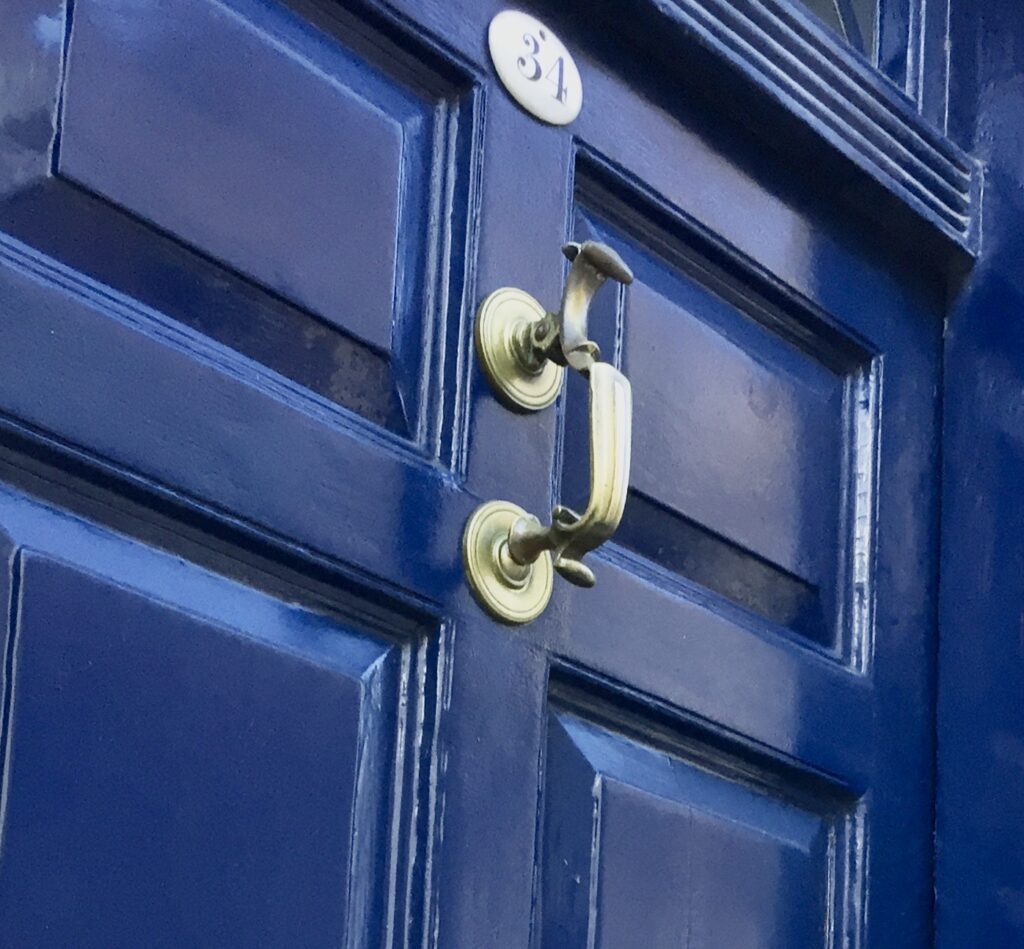
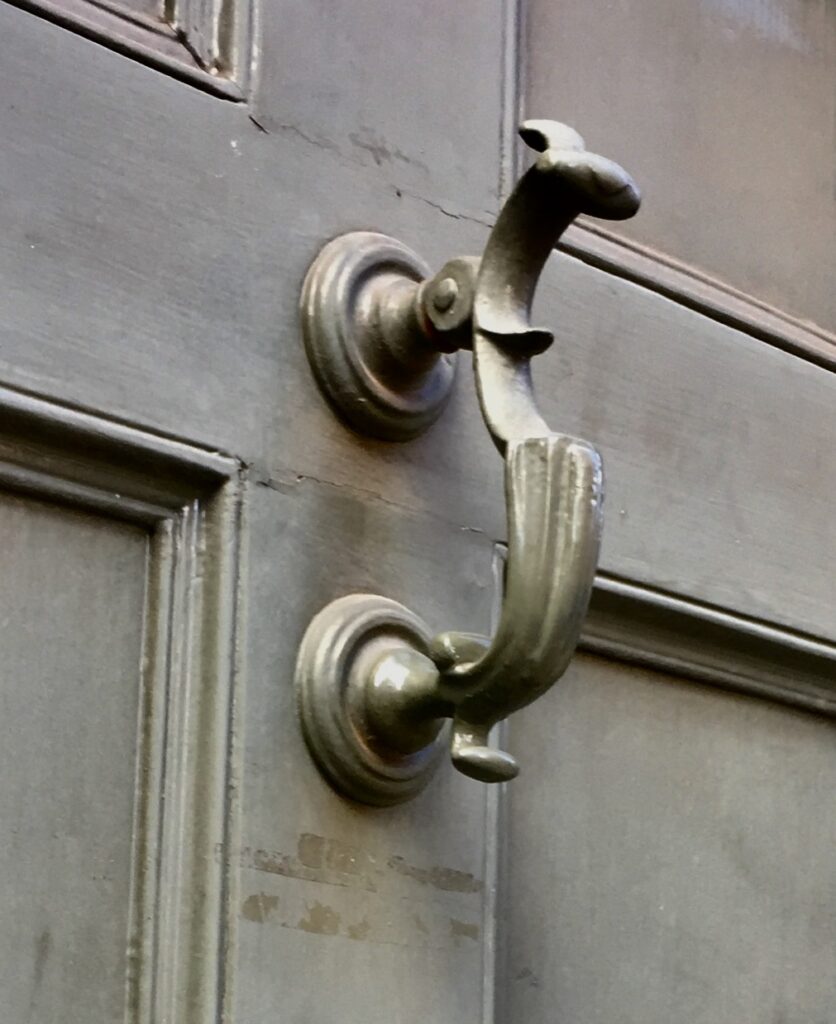
The following are described in catalogues as ‘Doctors door knockers’ since apparently they indicated a doctor’s house where medical assistance could be found in an emergency. One variety has (of course) been named ‘The Watson’ …

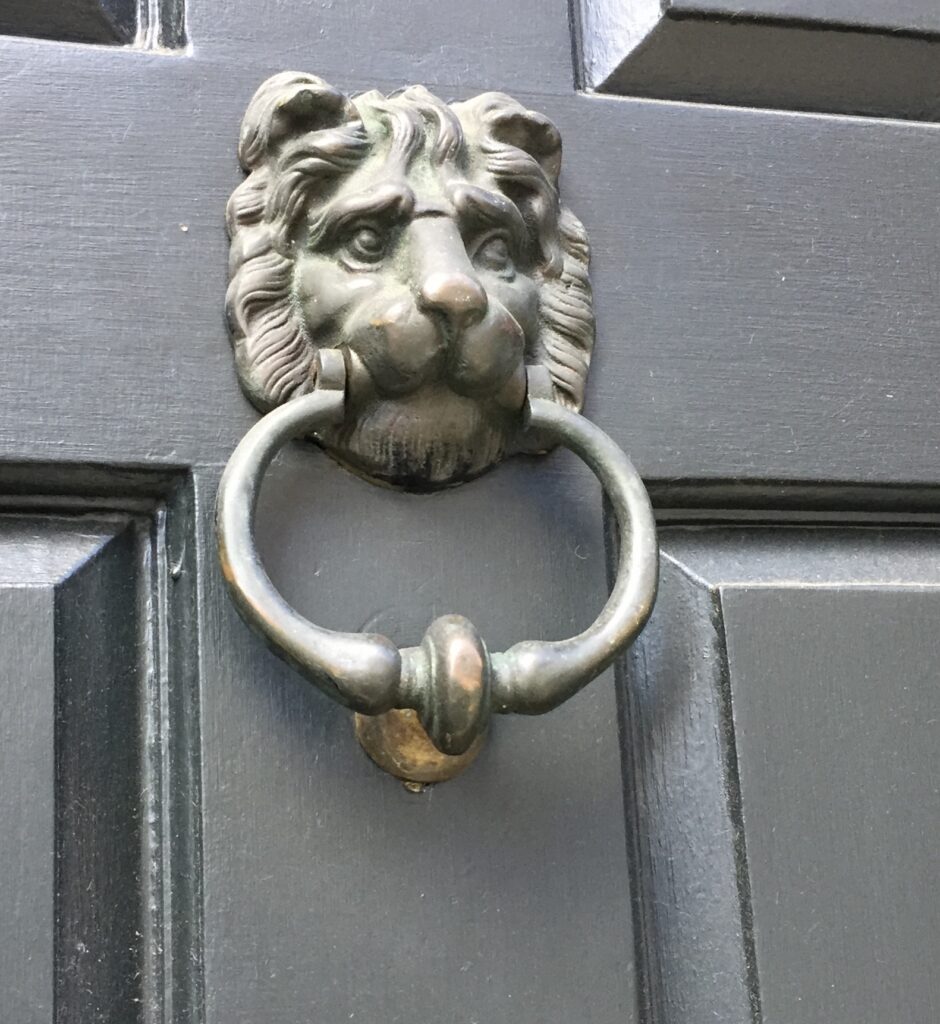
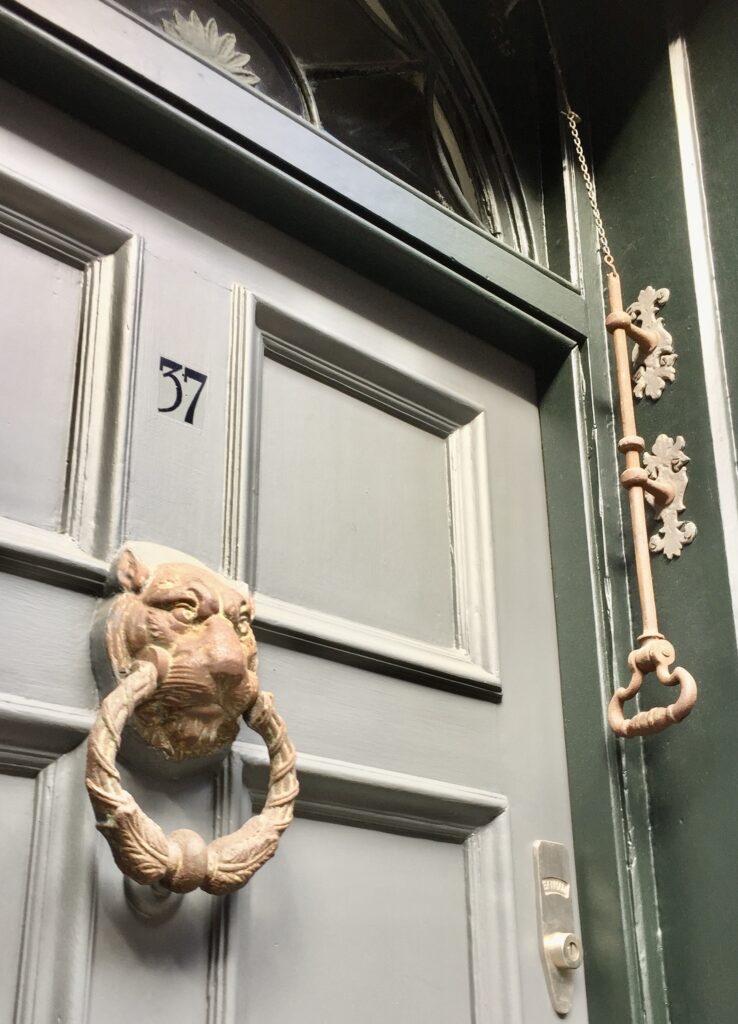
Lions are popular, symbolising protection …

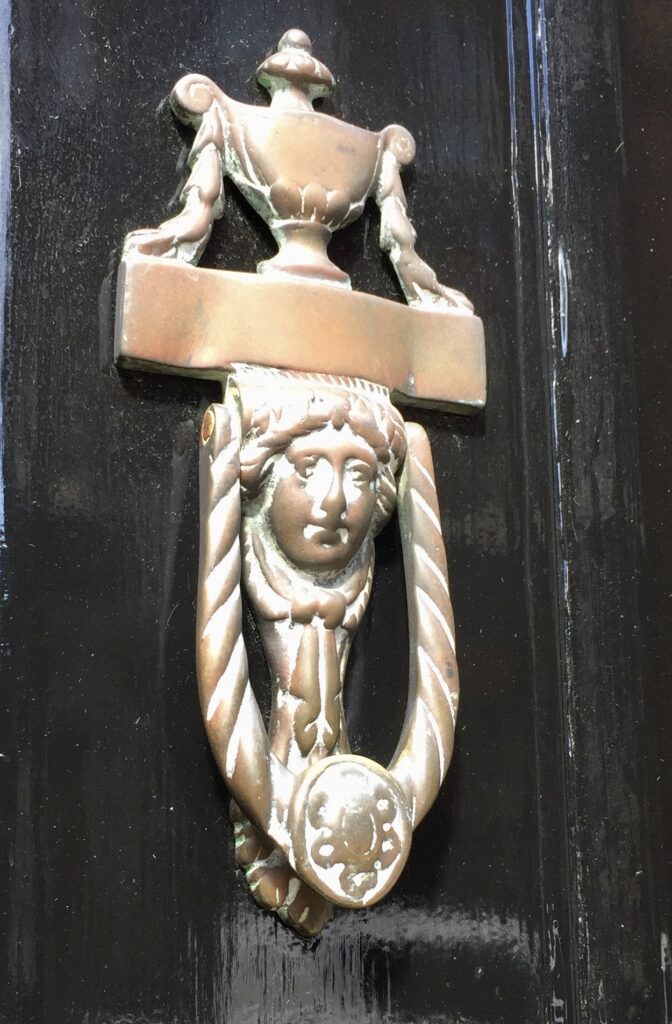
This door also has an old-fashioned bell mechanism …

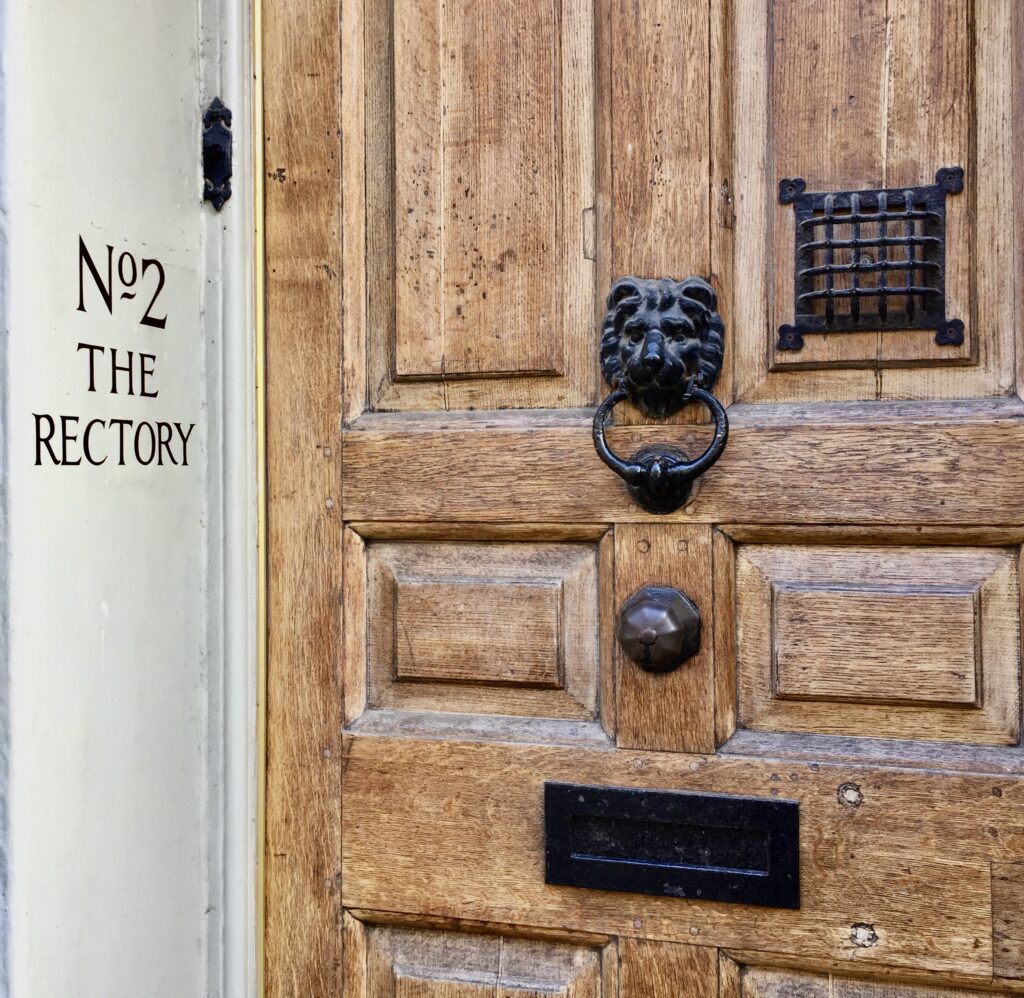
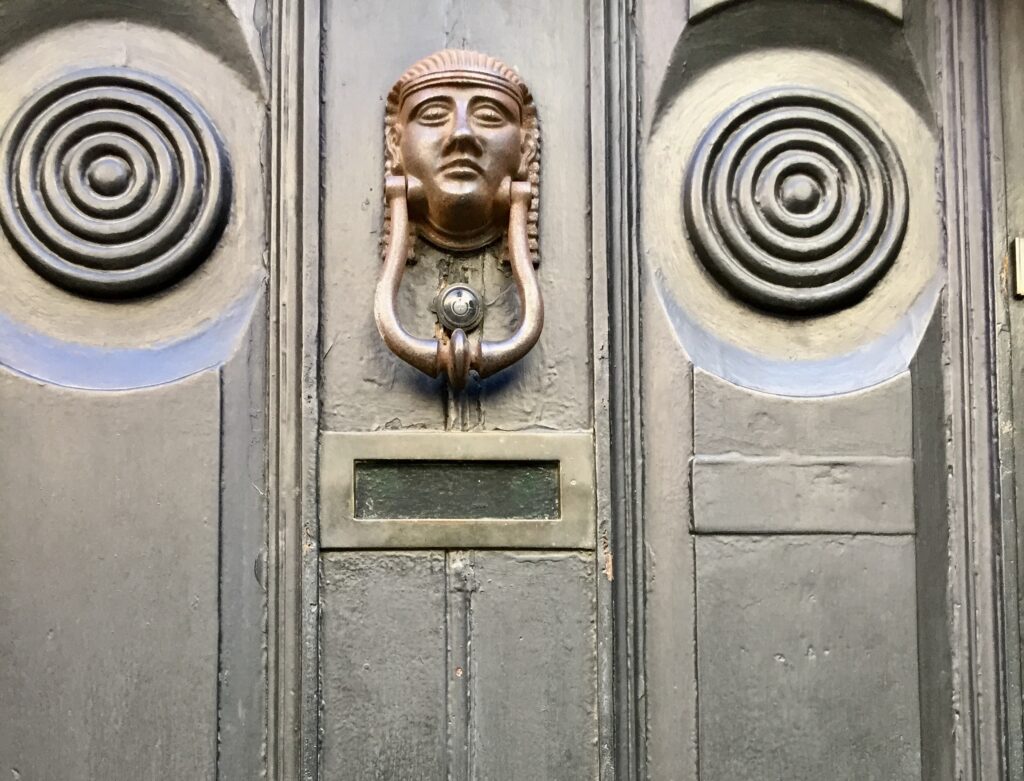
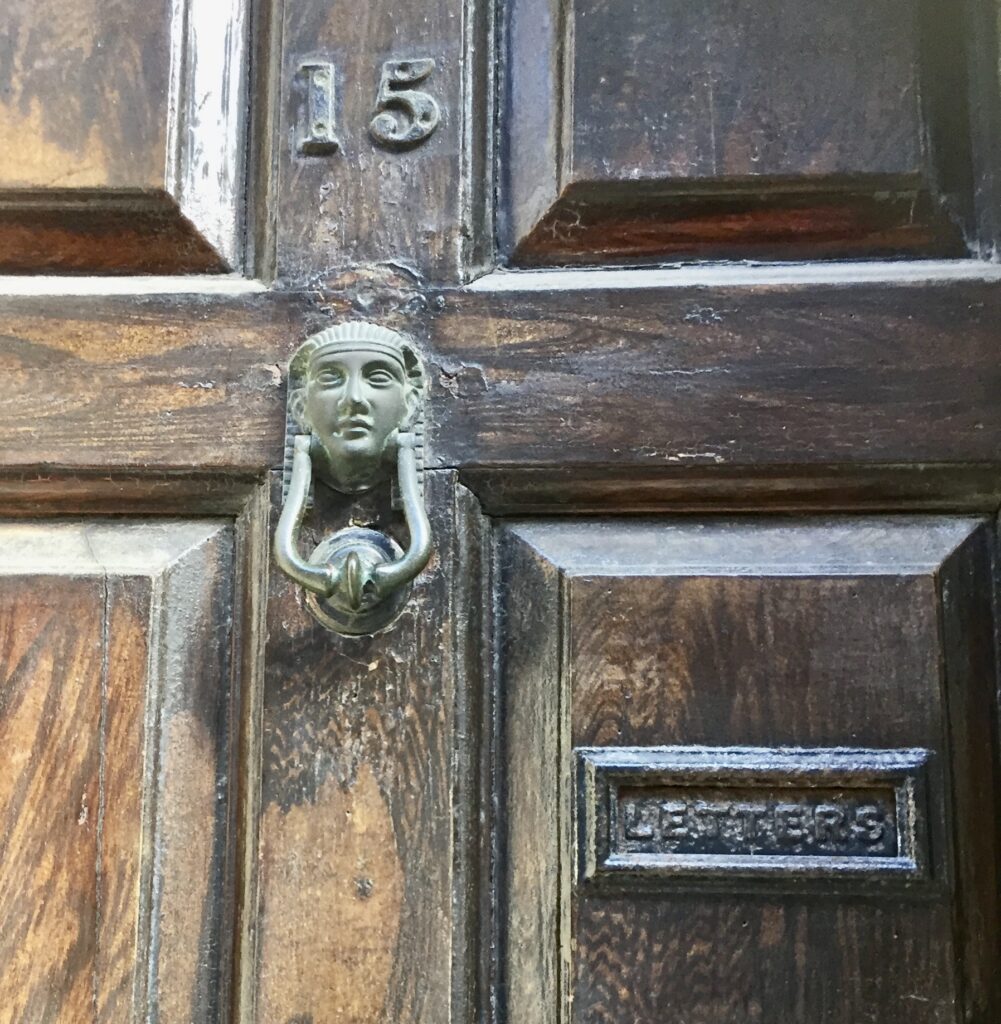
Sphinx versions are available …

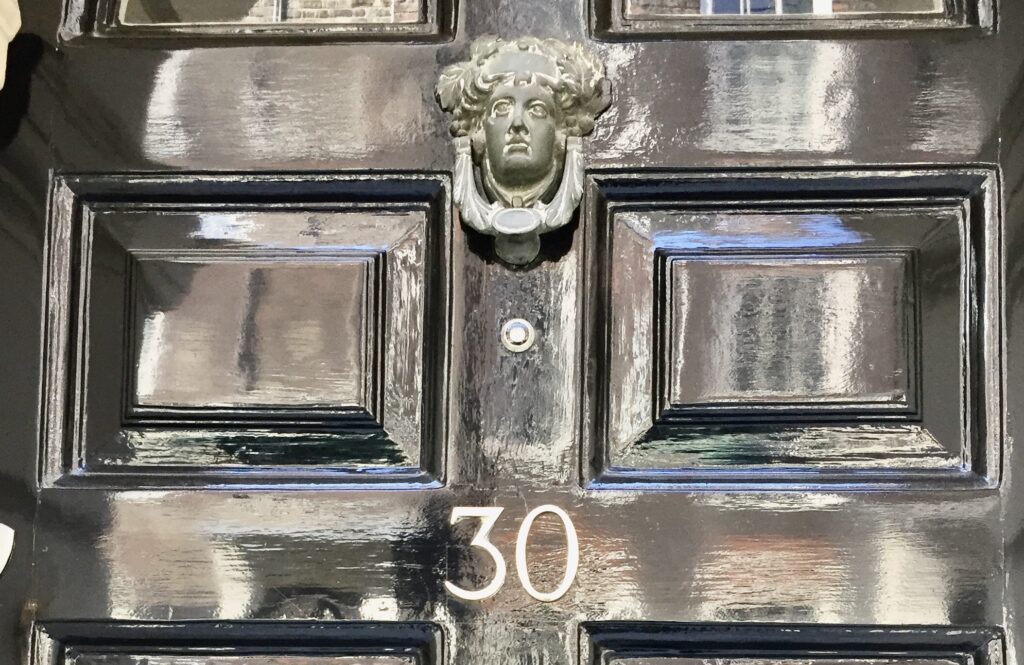
Or ladies that are just decorative …

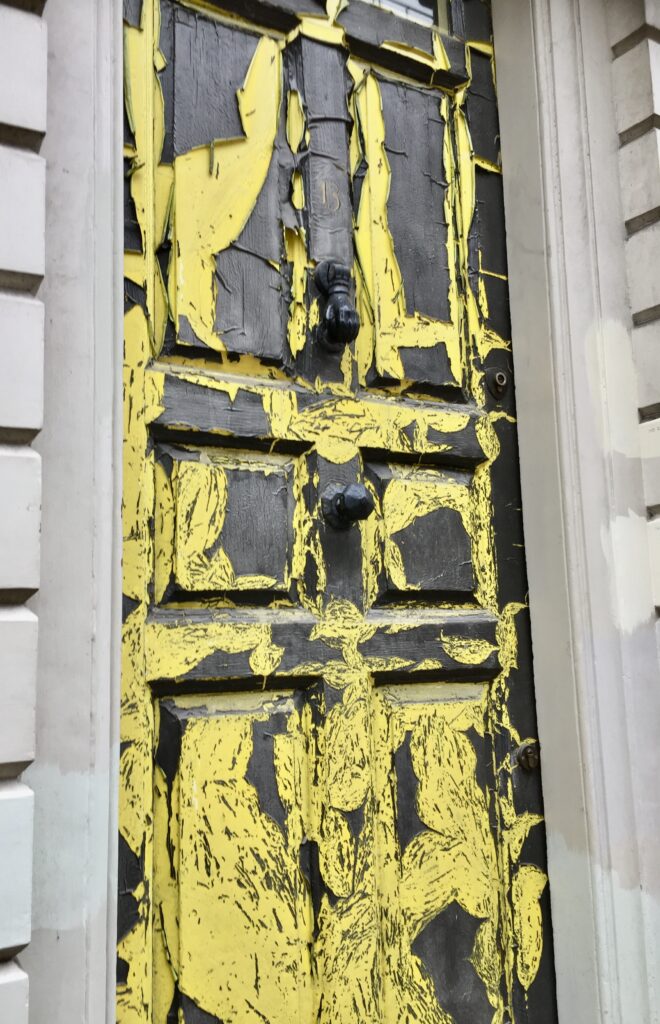
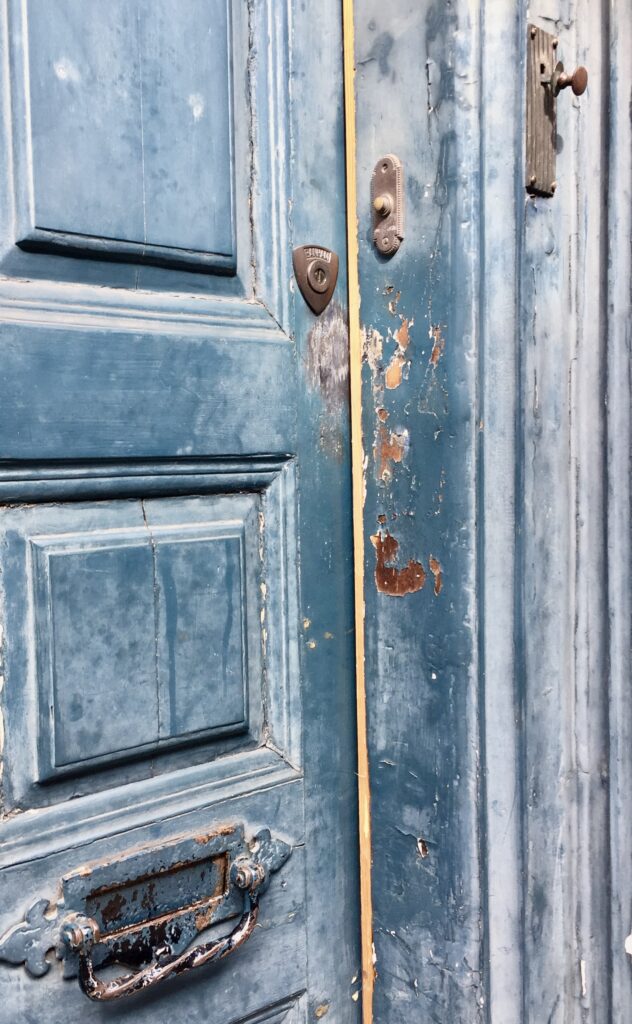
Some doors have seen better days and are untouched as yet by Messrs Farrow & Ball …

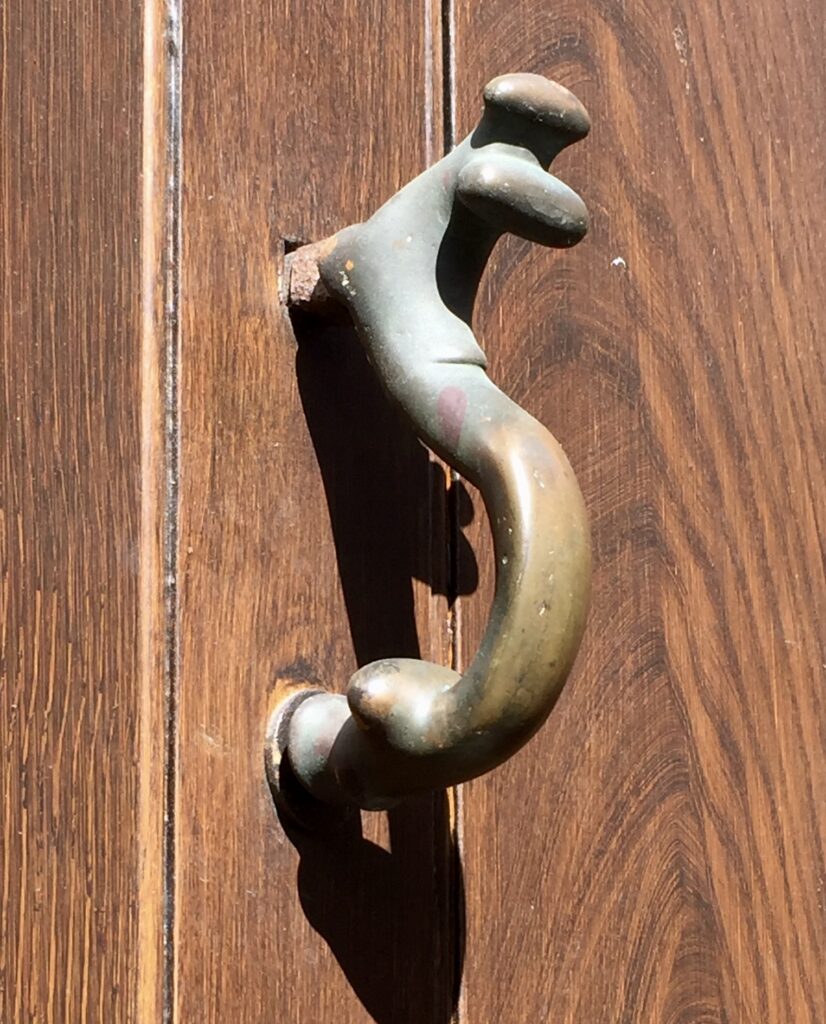
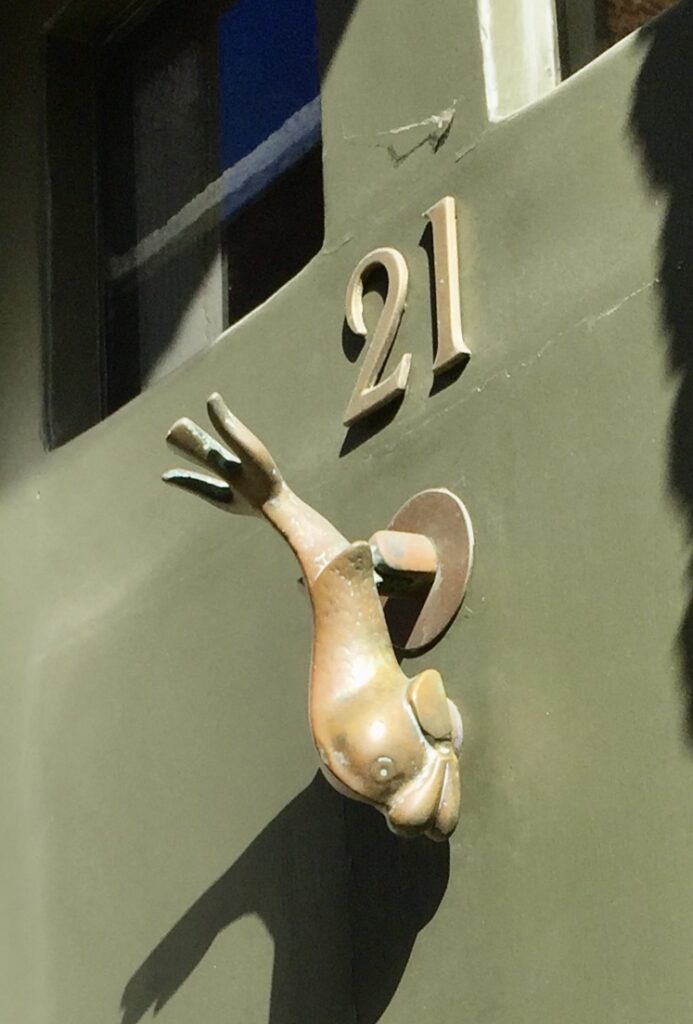
I loved this one, I think it represents a dolphin …

I deliberately haven’t specified on what streets these particular knockers can be found so you can have the pleasure of wandering around and finding them yourself. Elder, Fournier, Wilkes, Folgate and Princelet are all close to one another and easy to find. Or keep your eyes open for upcoming walking tours with Look up London.

If you are interested in researching this further just search Google using ‘door knockers’ (make sure you include the word ‘door’!). If you haven’t already had enough of doors have a look at these earlier blogs …

That Rings a Bell

City of London Doors and Doorways

More City Doors and Doorways

If you would like to follow me on Instagram here is the link …
https://www.instagram.com/london_city_gent/

Page 47 of 92

Powered by WordPress & Theme by Anders Norén

Symbols & Secrets
Privacy Overview

This website uses cookies so that we can provide you with the best user experience possible. Cookie information is stored in your browser and performs functions such as recognising you when you return to our website and helping our team to understand which sections of the website you find most interesting and useful.