Walking the City of London

Category: Stained Glass Page 6 of 9

St Olave’s memorials – from Samuel Pepys to the great sacrifices made by the employees of Wm Cory in both World Wars.

I love visiting St Olave Hart Street. It’s tiny and wonderfully atmospheric, being one of the few surviving Medieval buildings in London. It was badly damaged during the War but many of its treasures had been removed to safety and others have been beautifully restored.

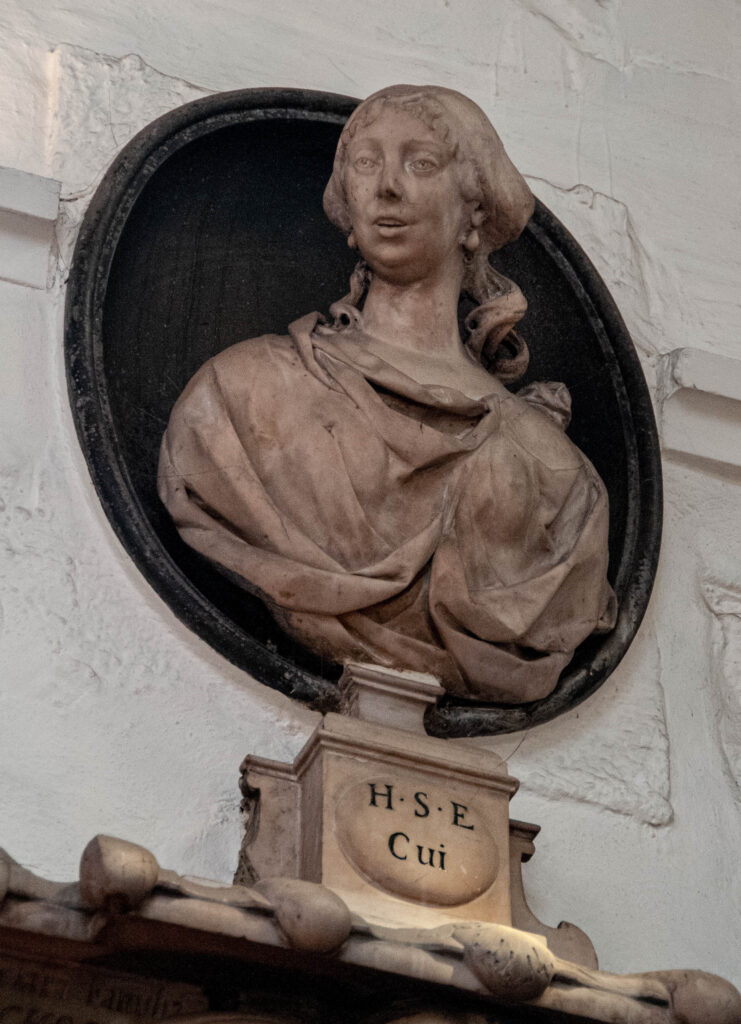
I first visited with my camera some years ago when I was writing about Samuel Pepys and I was immediately captivated by this sculpture of his wife Elizabeth. She died of typhoid fever at the age of 29 and, despite his dalliances with other women, Pepys was devastated by her death at such a young age. He commissioned this bust in white marble from the sculptor John Bushnell …

She is shown with her gaze directed towards the location of the Navy Office Pew where her husband would have sat, her mouth open as if in conversation.

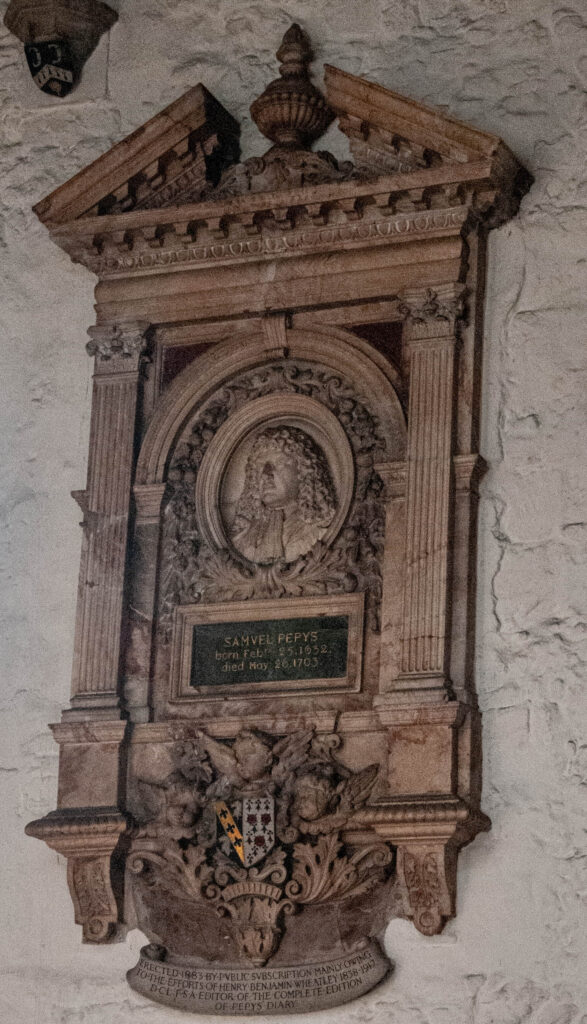
His pew was in the gallery he had had built on the south wall of the church with an added outside stairway from the Royal Navy Offices so that he could go to church without getting soaked by the rain. The gallery is now gone but a memorial to Pepys marks the location of the stairway’s door …

Pepys never married again and arranged to be buried in St Olave’s next to Christine. Now they face one another across the aisle for eternity.

Although small, the church is packed with other items of interest and I shall write about a few of them this week.

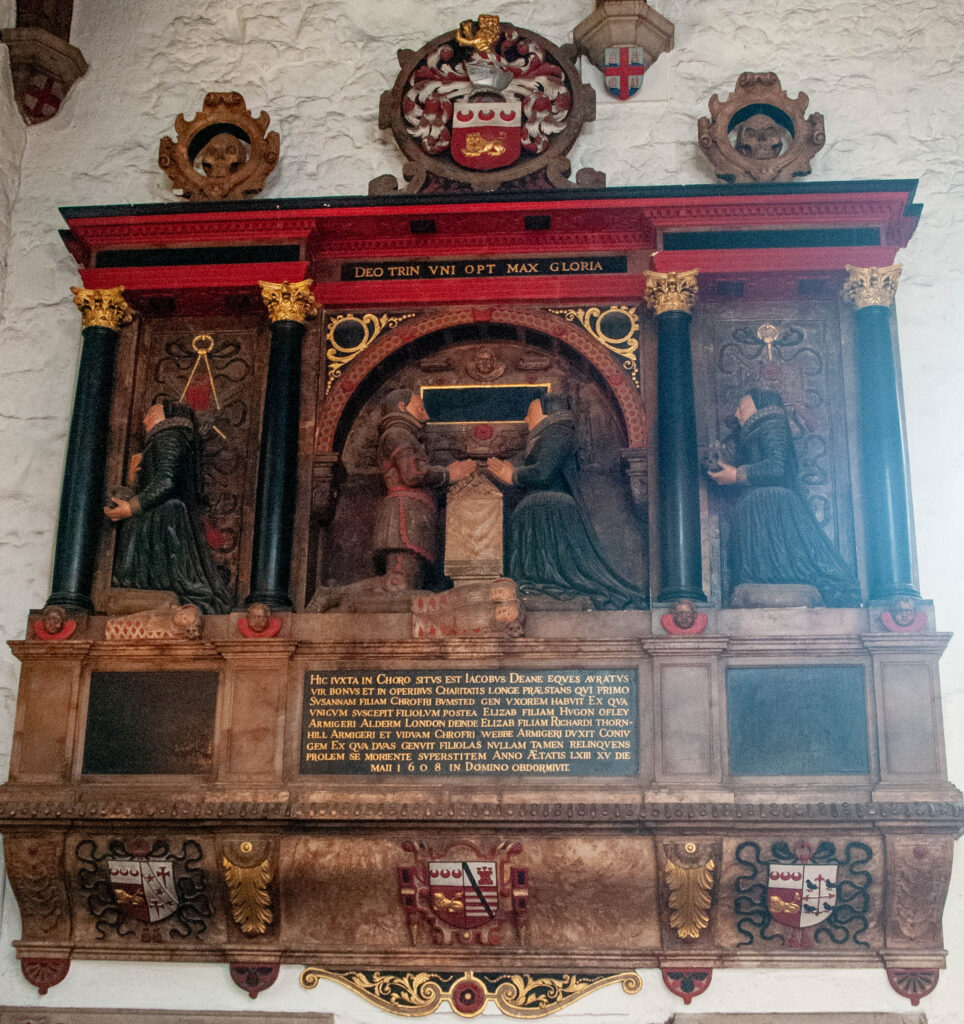
Sir James Deane has an impressive tripartite monument showing him and his three wives kneeling in prayer …

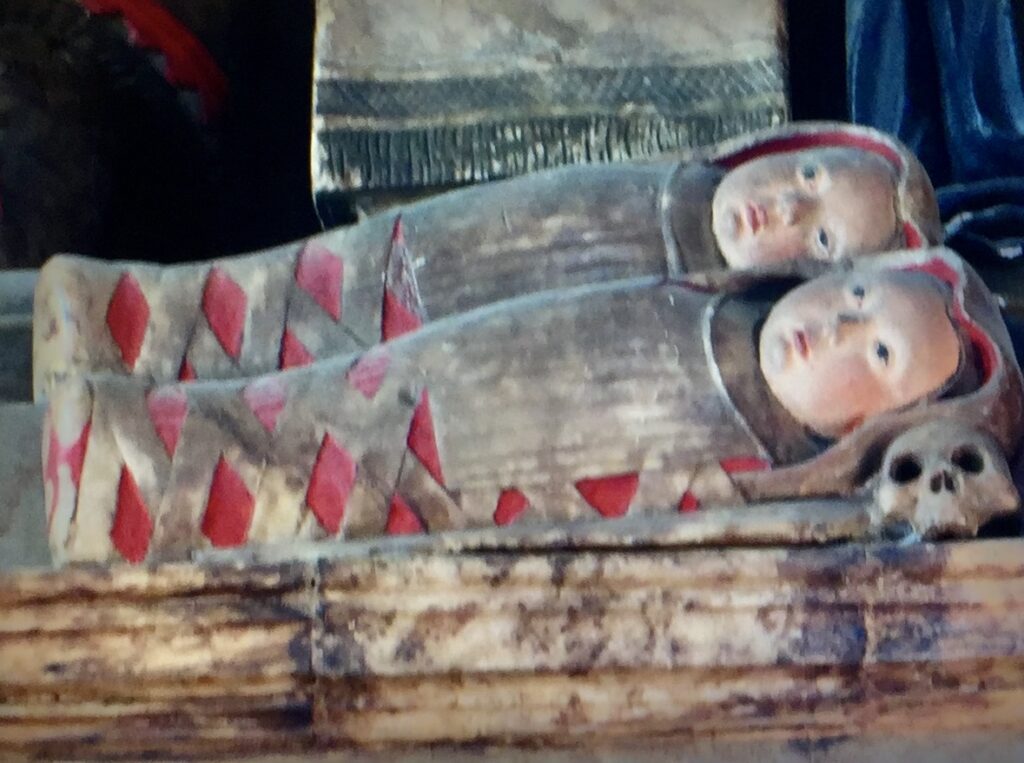
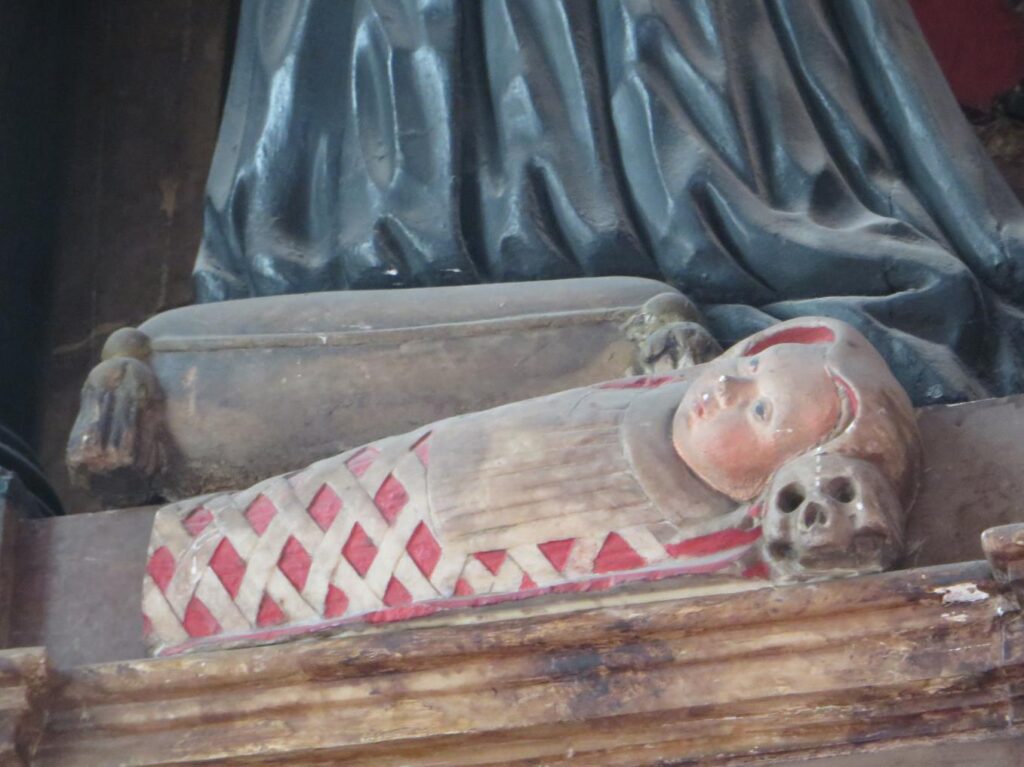
Two of the women carry skulls indicating that they died before their time. Three of his children died in infancy and their swaddled bodies are included in the monument with their little heads resting on skulls, again indicating mortality (images copyright Carole Tyrrell) …

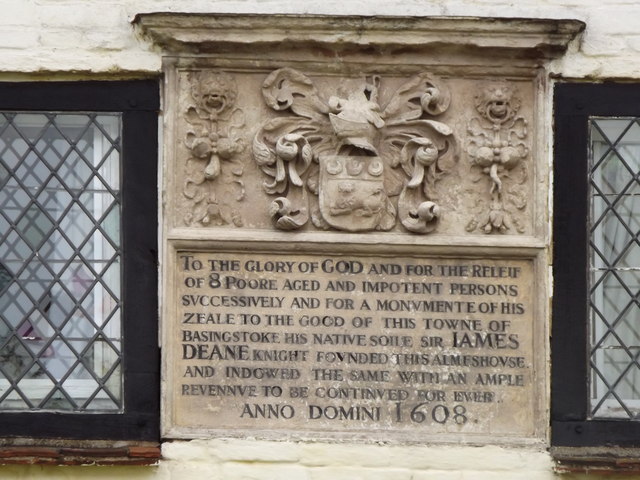
Deane was knighted on 8 July 1604 and was a very wealthy man. He made his fortune as a merchant adventurer to India, China and the Spice Islands and was very generous to the poor in every parish in which he lived or owned property. He also built almshouses in Basingstoke that survive to this day …

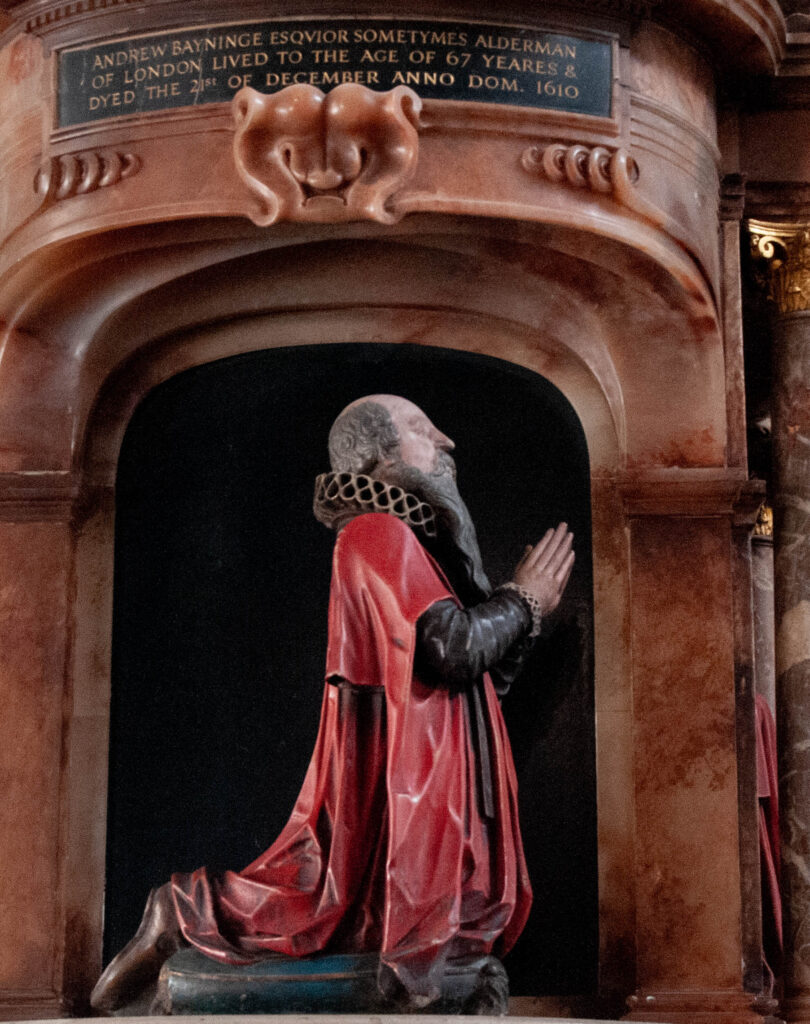
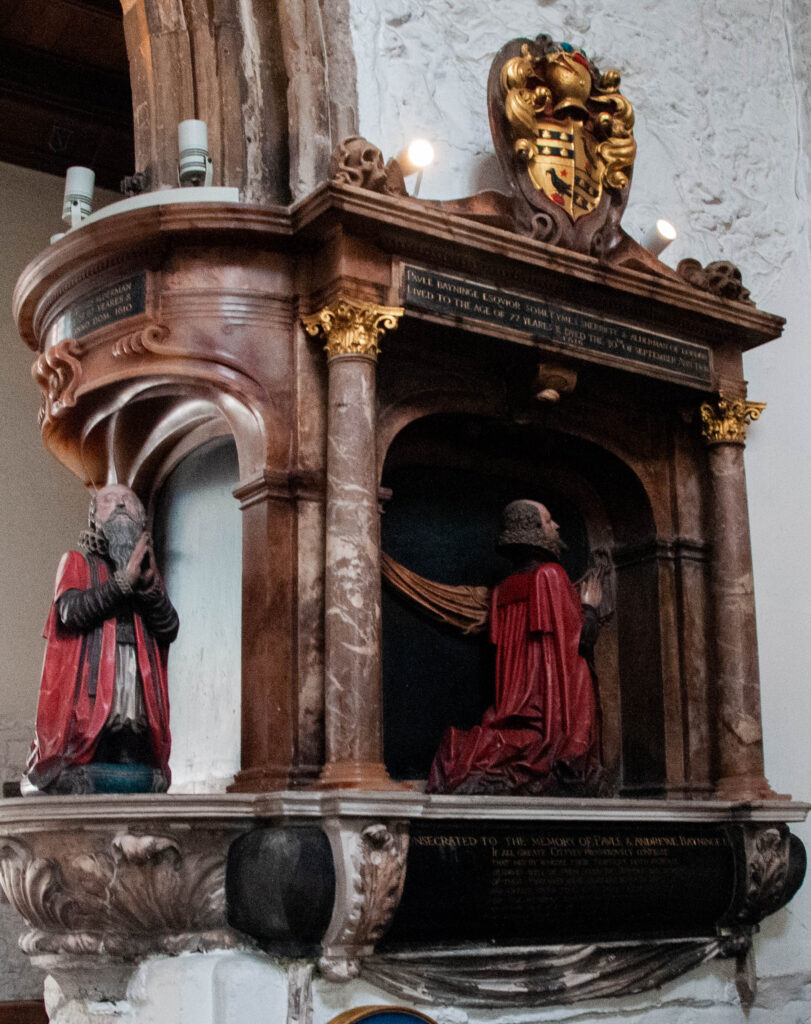
There is a picturesque monument to two brothers, Andrew and Paul Bayning. They are shown in the red robes of Aldermen and were both closely involved with the Levant Company …

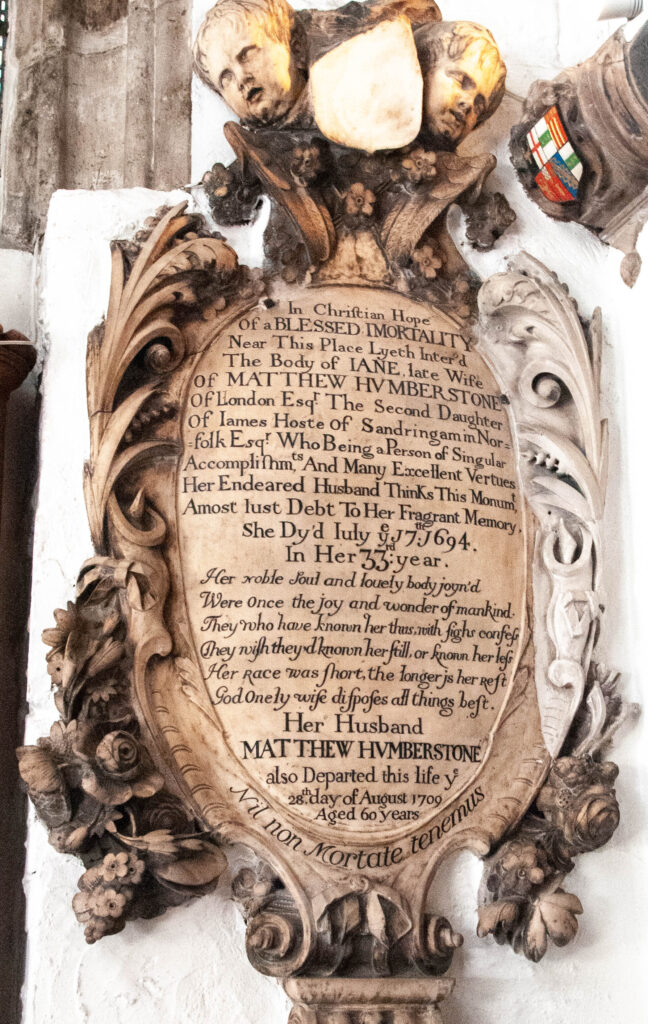
There are memorials with touching inscriptions. ‘Her noble soul and lovely body joined, were once the wonder and the joy of mankind’ …

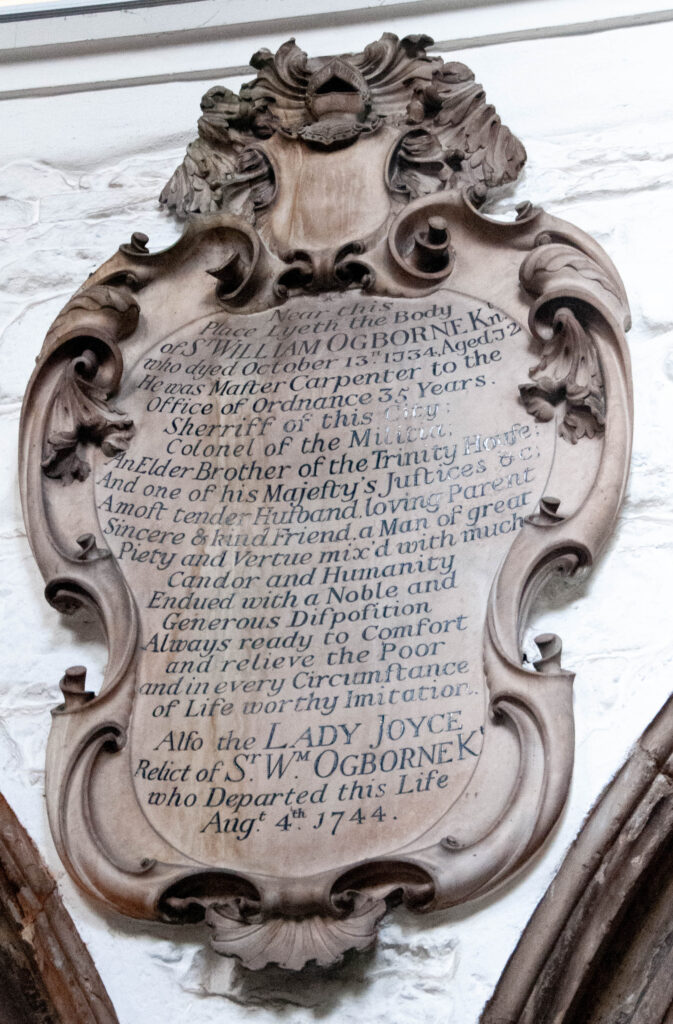
Sir William Ogborne was ‘A most tender husband, loving parent and a sincere and kind friend’ …

In his will he left all his property (which included several houses) to his wife, Lady Joyce, along with his ‘coach, his chariot horses, plate, hay and corn’.

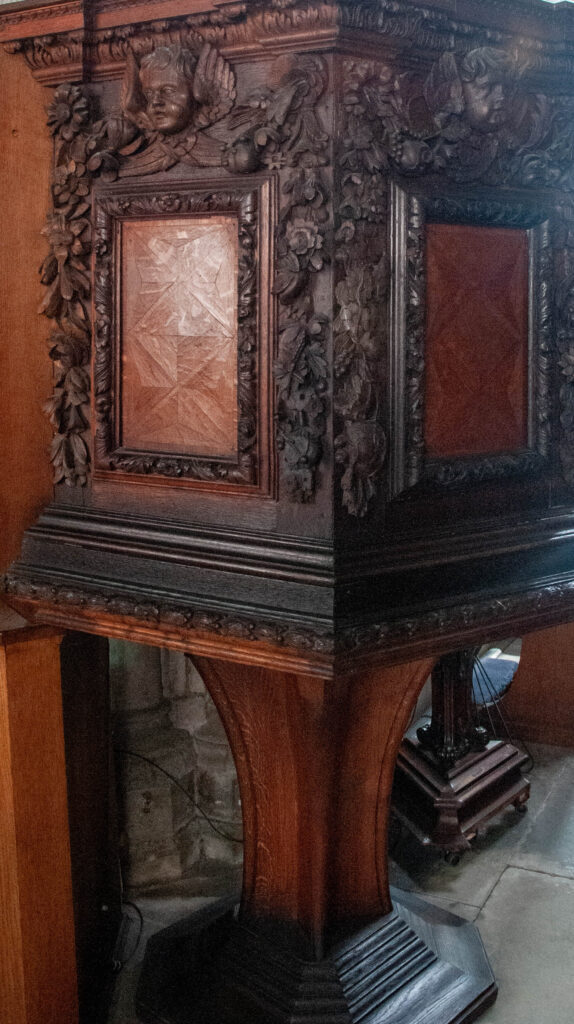
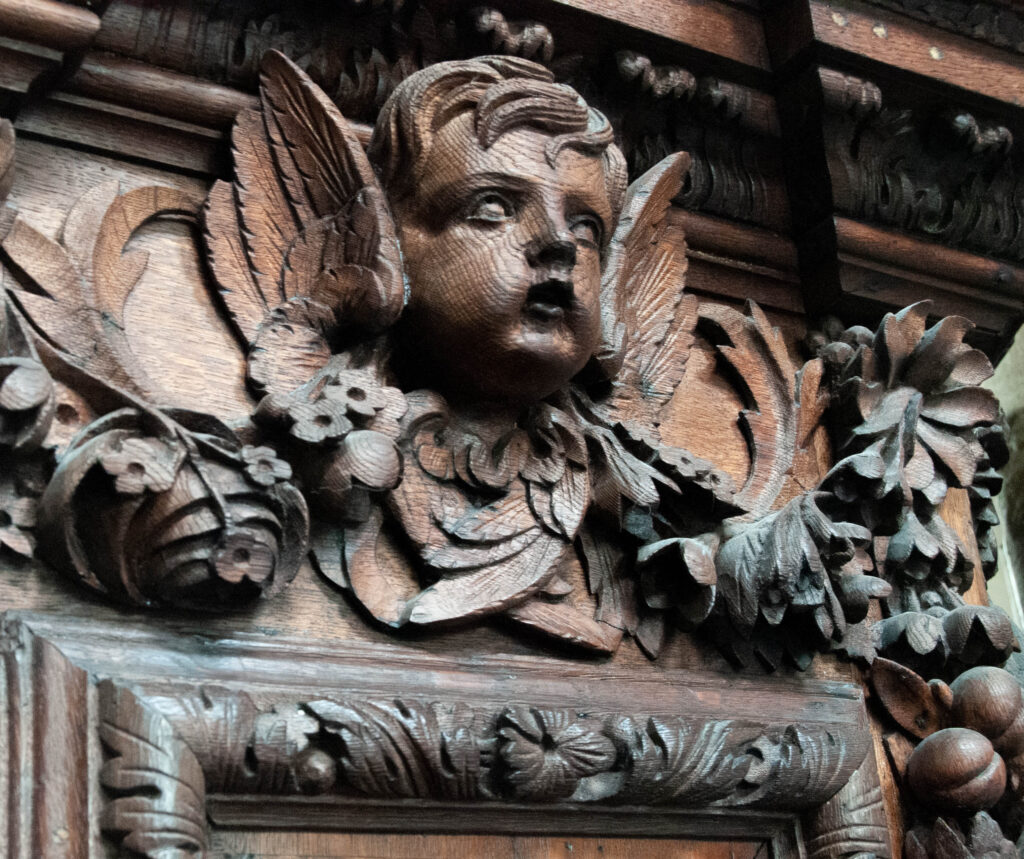
The pulpit came to St Olave’s from St Benet Gracechurch when it was demolished in 1868 …

Once thought to be the work of Grinling Gibbons, it is certainly a fine example of 17th century wood carving …

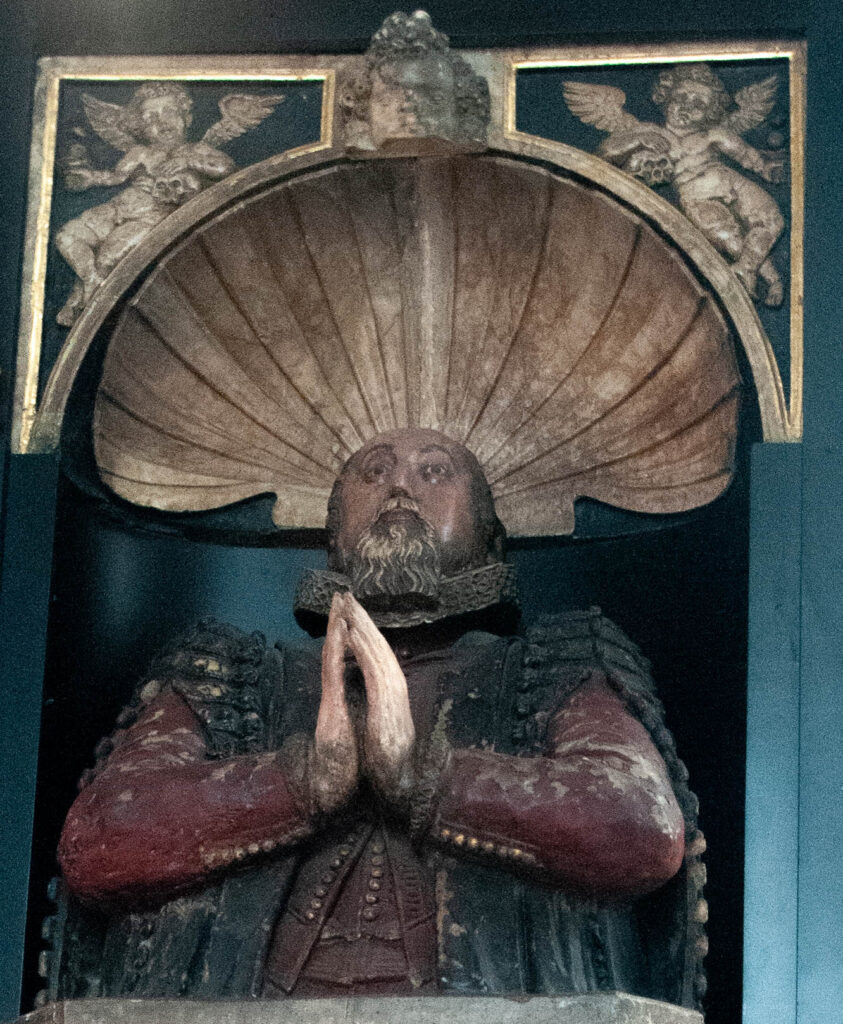
The monument of Dr Peter Turner. It was looted from the bombed out church in 1941 but was finally returned in 2011 having spent some time in the Netherlands! A curator at the Museum of London found out about an upcoming auction listing the statue in 2010, the Art Loss Register investigated, and the bust was removed from the sale …

He was an eminent physician and botanist.

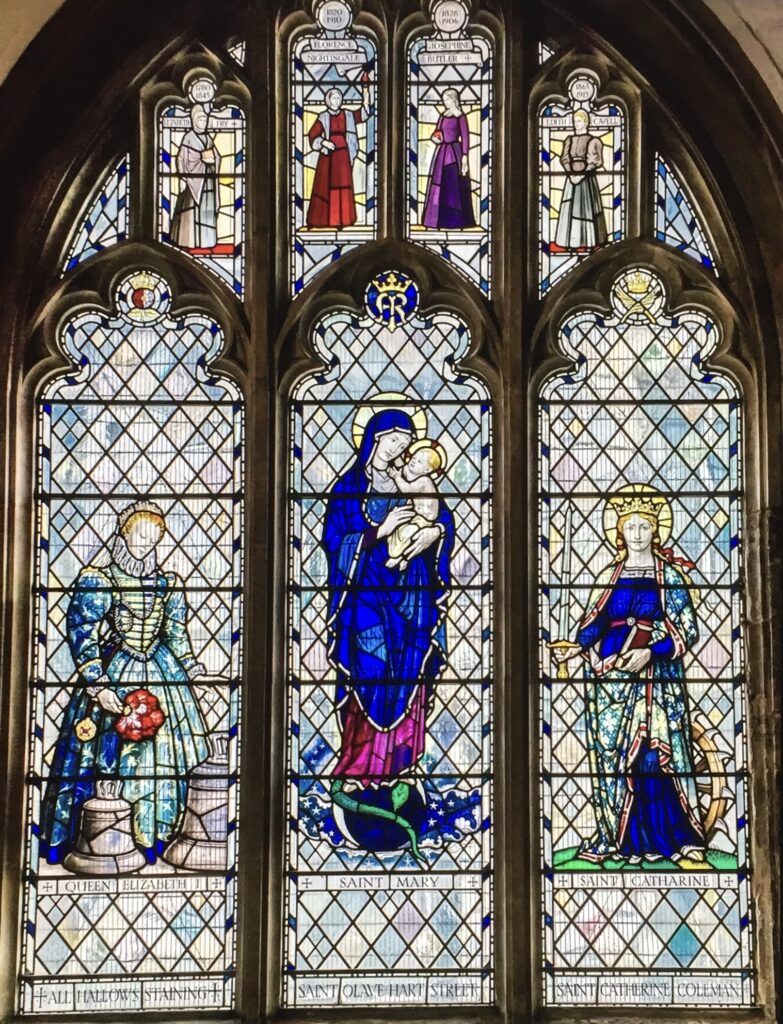
All prewar windows were lost in the bombing and the new windows which replaced them were specially designed to take into account the tall buildings that were springing up in the rebuilding of the City.

Two other churches have parishes which have been joined with that of St Olave to form a united benefice and the Lady Chapel Window on the north side of the church has three lights representing them.

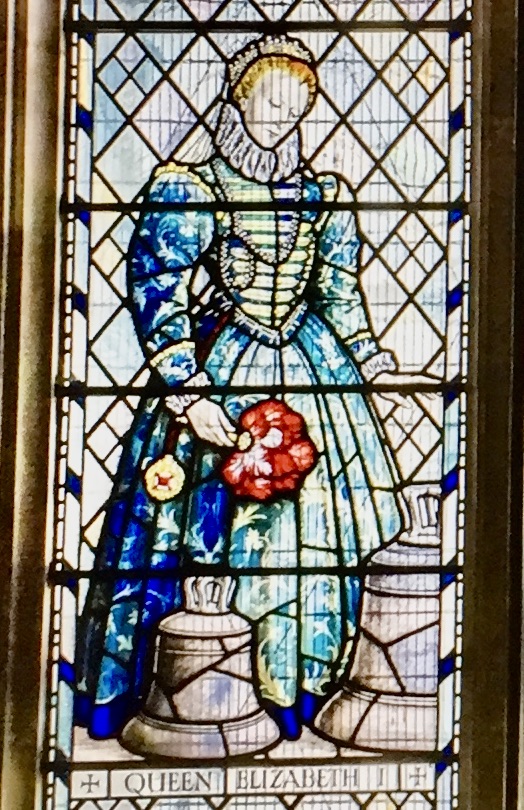
St Olave’s is in the centre and depicts the Virgin and Child. On the left, All Hallows Staining is represented by Queen Elizabeth I with the bells of the church at her feet …

Painstaking work was needed in order to create the gradient of colour from left to right across her dress.

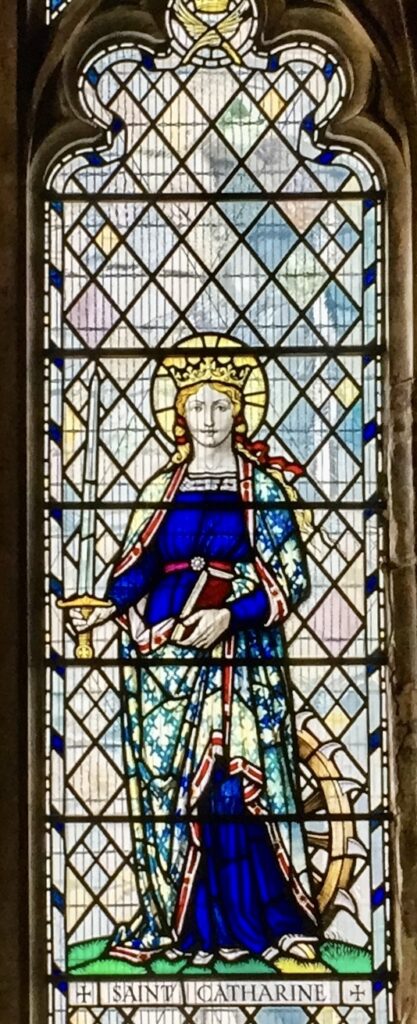
On the right St Katharine of Alexandria represents the former parish of St Catherine Coleman …

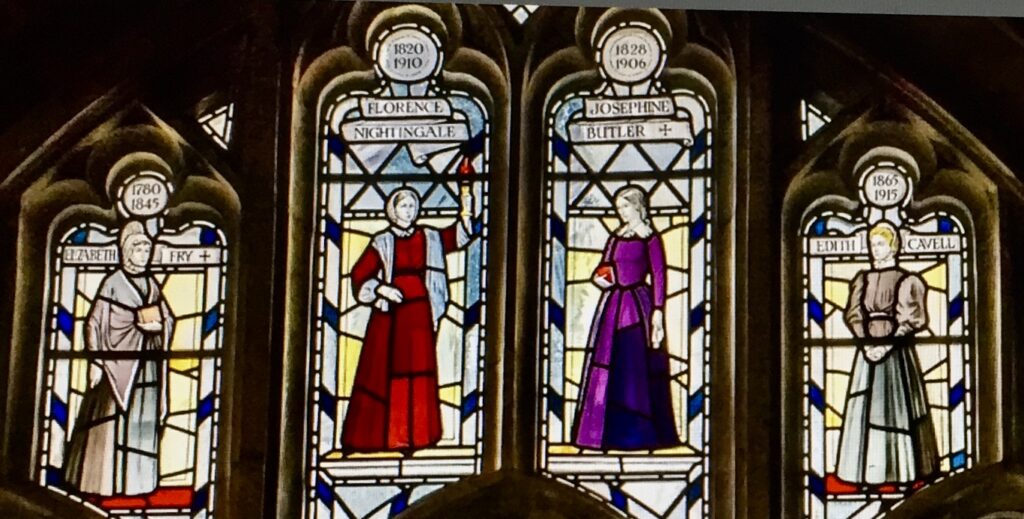
Above, in the four tracery lights are depicted more modern types of Christian womanhood : Elizabeth Fry, Florence Nightingale, Josephine Butler and Edith Cavell

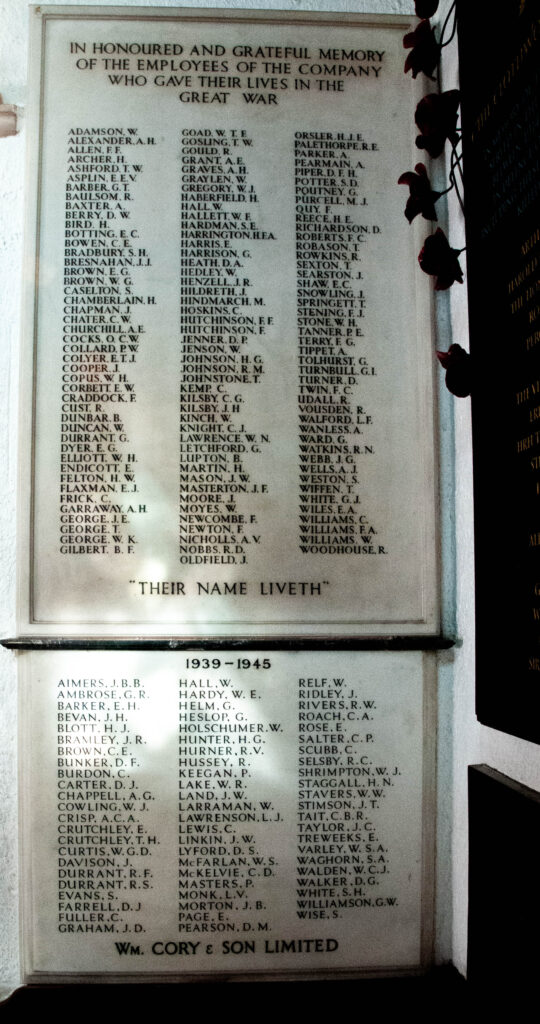
As I left by the north door this memorial reminded me of the tremendous sacrifices made during both World Wars by the employees of Wm Cory & Son …

At the outbreak of WW1 in 1914, Cory had a large workforce, many of them skilled as engineers, mechanics, bargees and physically fit labourers. Before conscription was introduced, Cory encouraged its workers to enlist in Kitchener’s Army – an all-volunteer force of the British Army – and guaranteed to keep their jobs open for them. The company also undertook to look after the family of anyone who joined up, setting aside a sum of £25,000 (equivalent to £3 million today) to care for the men and their dependents.

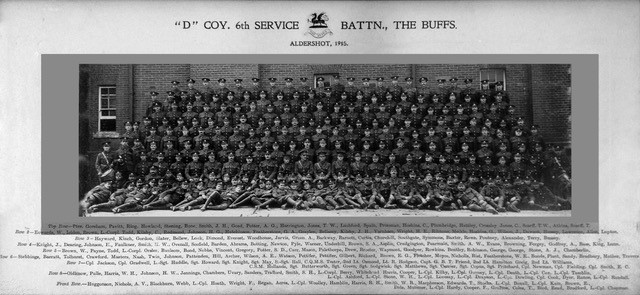
Within a few days of the appeal there were enough men to form the entire D Company of the 6th Battalion of the Buffs – also known as Cory’s Unit. Most of these men came from places like Greenwich, Erith and Plumstead.

There is a photograph of Cory’s Unit which was taken at Aldershot shortly before their departure for France on the 1st of June 1915. Within six months, so many of these young men would be a name on a memorial or buried in a battlefield grave in Belgium or France …

Cory also mobilised its boats in support of the war eff­­ort in both World Wars, losing 17 boats in WWI and 13 in WWII (usually due to German mines, submarine attacks or aerial bombardment).

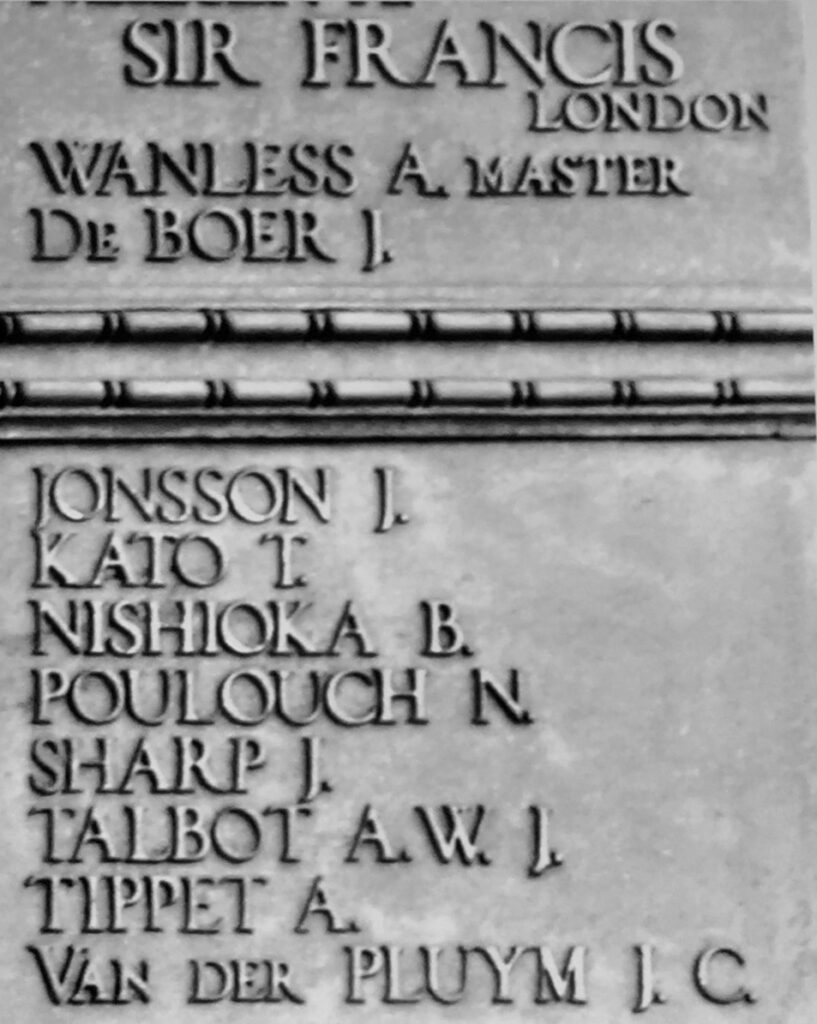
There is a plaque on the Tower Hill Maritime Memorial relating to one of the boats lost in WW1 – the Sir Francis …

She was torpedoed 4 miles off Ravenscar, North Yorkshire, on a ballast run to the Tyne to pick up coal on 7 June 1917. You may be interested in the diversity of nationalities among the crew :

Wanless, A, master, whose place of birth, residence, and family is not recorded;

de Boer, J, seaman, born in Holland;

Jonsson, John, born in Iceland, resident in South Shields and married to an Englishwoman;

Kato, T, fireman, born in Japan;

Nishioka, B, fireman, also born in Japan;

Poulouch, N, fireman, born in Greece;

Sharp, Joseph, steward, of South Shields;

Talbot, Alfred, engineer’s steward, of Penarth;

Tippett, Albert, engineer, a Yorkshireman resident in Tyneside;

van der Pluym, Johannes Cornelis, seaman, a resident of Amsterdam.

A further 12 crew members survived.

Not all their names appear on the St Olave Memorial, presumably because not all of them were directly employed by the company.

You can read more about the Cory company’s involvement on both World Wars here and here. There is a great blog dealing with colliers and multi-national crews here – it’s also the source of my information about the crew of the Sir Francis.

If you would like to follow me on Instagram here is the link …

https://www.instagram.com/london_city_gent/

‘True Hearts and Warm Hands’ at St Margaret Lothbury.

After the Great Fire of London of 1666 St Margaret’s was rebuilt by Christopher Wren between 1683 and 1692. As some churches around St Margaret’s were demolished under the 1860 Union of Benefices Act, St Margaret’s benefited from acquiring some of the interior furnishings of these buildings. The church now houses an outstanding collection of seventeenth century fittings, many by the sculptor and wood carver Grinling Gibbons. It is one of the few Wren churches that sustained only minor damage during the Second World War.

In 1698–9 the top stage of the tower with large belfry openings and all of the spire were added and this work was probably designed by Robert Hooke. Hooke was Surveyor to the City of London and chief assistant to Christopher Wren, in which capacity he helped Wren rebuild London after the Great Fire.

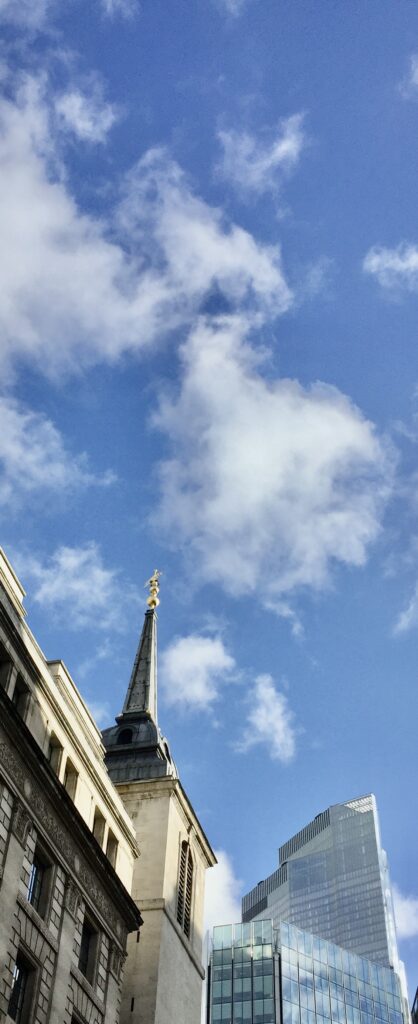
The church and tower (EC2R 7HH).

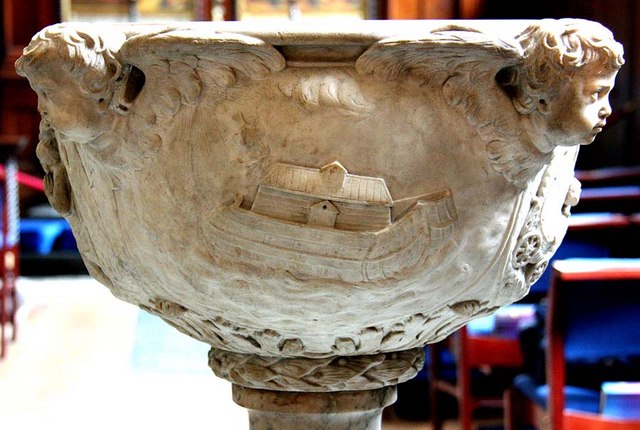
The baptismal font, believed to be by Grinling Gibbons (1648–1721), came from St Olave, Old Jewry, after that church was partially demolished in 1887. The font is a carved bowl with cherub heads at each corner and the sides are decorated with Adam and Eve, the dove returning to the ark, the baptism of Jesus and the baptism of the Ethiopian eunuch by Philip.

Of the subsequent additions to the church the most splendid is the choir screen, one of only two in a Wren church, erected originally in the Church of All Hallows the Great, Thames St. in 1683-84 …

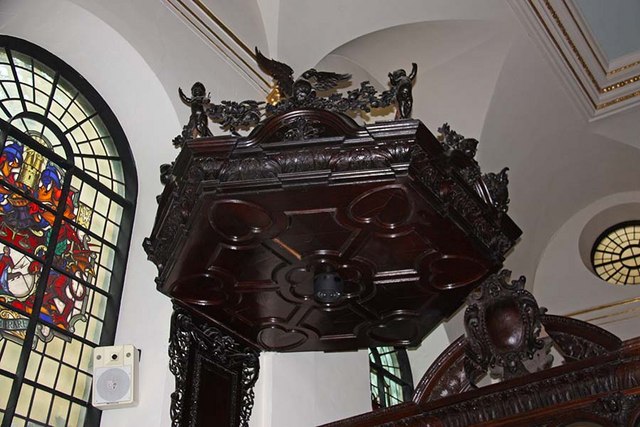
The screen, along with the tester above the pulpit, was moved to St Margaret’s in 1894 when the Church of All Hallows the Great was demolished, to allow widening of Thames Street and building of the City of London Brewery on the site.

The tester above the pulpit.

The Stuart royal arms are part of the screen which was originally donated by the German merchant Theodore Jacobson in c.1685. The eagle is supposed to refer to Herr Jacobson’s nationality …

The lovely stained glass windows celebrate St Margaret’s links with a number of City Livery Companies and Institutions. The windows were donated by either the Livery Companies or their Masters.

The Worshipful Company of Glovers of London – True hearts and warm hands

The Worshipful Company of Tin Plate Workers alias Wire Workers’ motto is Amore Sitis Uniti, Latin for Be United in Love (rather sweet!) …

The Institute of Chartered Accountants in England and Wales. The phrase Recte Numerare means to reckon or number rightly in Latin …

The Worshipful Company of Tylers and Bricklayers : In God is all our trust, let us never be confounded.

The Worshipful Company of Scientific Instrument Makers. The motto Sine Nobis Scientia Languet Knowledge cannot flourish without us – reflects the fundamental role the craft has played in the achievement of science over the past centuries …

The Worshipful Company of Armourers and Brasiers. The Company’s present Coat of Arms was granted in 1709 and incorporates the former arms of the Armourers granted in 1556 with a new coat for the Brasiers. The two mottos are Make All Sure for the Armourers, and We are one for the joint Company. ‘Put on the whole armour of God’ …

There’s much more to see at St Margaret’s so I shall return.

Incidentally, if you are passing near the Royal Exchange check out Paparazzi Dogs

If you would like to follow me on Instagram here is the link …

https://www.instagram.com/london_city_gent/

Roman elephants and Suffragette bread – more fun at the Museum of London.

As regular readers of this blog will know, I love the Museum of London and it’s one of my go-to places if I feel I need a bit of cheering up (and, almost inevitably, I learn something new).

For example, it had completely escaped my notice that the Roman Emperor Claudius used elephants during his invasion of Britain in AD 43. Not far inside the entrance to the Museum is this totally bonkers mural illustrating their use in battle. The beasts look suitably angry at being dragged half way around the world just to stamp on a few ancient Britons …

There’s Claudius on the right on a white horse, possibly declaring ‘missio peracta’ (which Google assures me is ‘mission accomplished’ in Latin). Around the same time a young woman of the Iceni tribe called Boudica was aged about 30.

As Queen Boudica, she is now famous for her 60/61 AD uprising against the Romans. For resisting the appropriation of her property and that of her tribe, the local Roman procurator had her flogged and her daughters raped. Building on the fury of other tribes, she raised an army which went on to capture present day Colchester (Camulodunum) routing the Roman division there in the process. She then headed for Londinium.

Early London was a sprawling settlement, unwalled and defenceless since the Governor, Gaius Seutonius Paulinus, believing his troops to be disastrously outnumbered, made a tactical retreat (i.e. fled). On arriving, Boudica’s army burnt the place to the ground and slaughtered everyone they could find. These skulls on display in the Museum may be evidence of that massacre …

Primarily belonging to young adult men, a large number were found in the ancient Walbrook stream (although it must be said that there are alternative theories as to their origin).

The settlement of Verulamium – today’s St Albans – was next to feel the wrath of Boudica’s revenge as her, seemingly unstoppable, army sacked and burnt it en route to their inevitable confrontation with the now significantly strengthened Governor’s army.

The battle went badly and, rather than face the inevitable humiliation of capture, she is said to have poisoned herself and was buried by her people at a secret location. Some claim she’s buried beneath platform 10 of King’s Cross Station – maybe that’s why there’s a Boadicea Street nearby (N1 0UA)!

‘How’s my driving?’ Here she is with her daughters, driving her chariot, remarkably without the use of reins …

Boudica at Westminster : picture by Paul Walter/Wikipedia

Evidence of Boudica’s destruction of London lives on in a layer of burnt earth and debris known as the Red Layer that is occasionally uncovered during modern developments.

Not an elephant but the skull of a long extinct animal called an Auroch …

Up until the early 17th century you could still have encountered a live one (living in Poland). The one in the museum lived in Essex and was found in Ilford where it would have been part of a large herd. Incidentally, Aurochs live on today in the coats of arms of Romania and Moldova.

There’s a great temporary exhibition at the Museum illustrating the work of contemporary London makers.

I really like this stained glass work entitled Gorilla (2017) by Piotr Frac

And what about this piece by James Shaw entitled Plastic Baroque

And I love this witty Venus (2015) by Claire Partington

Pregnant and casually dressed, she poses with a ciggie in one hand and the dogs’ leash in another.

Now some brave women from a different era, the Suffragettes. This is the banner of the West Ham branch of the Women’s Social and Political Union 1909-1910 …

Suffragette prisoners often removed loaves of bread from Holloway Prison as a souvenir of their incarceration. Now well over 100 years old, this loaf was carefully preserved and gifted to the Museum in 1950 …

Read more about the campaign for Votes for Women and those who fought it here.

What a great poster …

If you’d like to cast you mind back to the heady, optimistic days of the 2012 London Olympics, the Olympic cauldron is on display again …

When you are appropriately Sanitised, the Victorian Walk is always a nice way to complete a visit …

By the way, if you are passing through Temple Station and have a bit of time to spare, get off and make your way to the station roof where you will find this fabulous installation by London-based artist Lakwena Maciver. It’s entitled ‘Back in the Air: A Meditation on Higher Ground’. This is only a small part of it …

I shall have more images for you next week.

If you would like to follow me on Instagram here is the link …

https://www.instagram.com/london_city_gent/

Page 6 of 9

Powered by WordPress & Theme by Anders Norén