Walking the City of London

Category: Stained Glass Page 5 of 9

St Mary Abchurch – Wren’s hidden masterpiece.

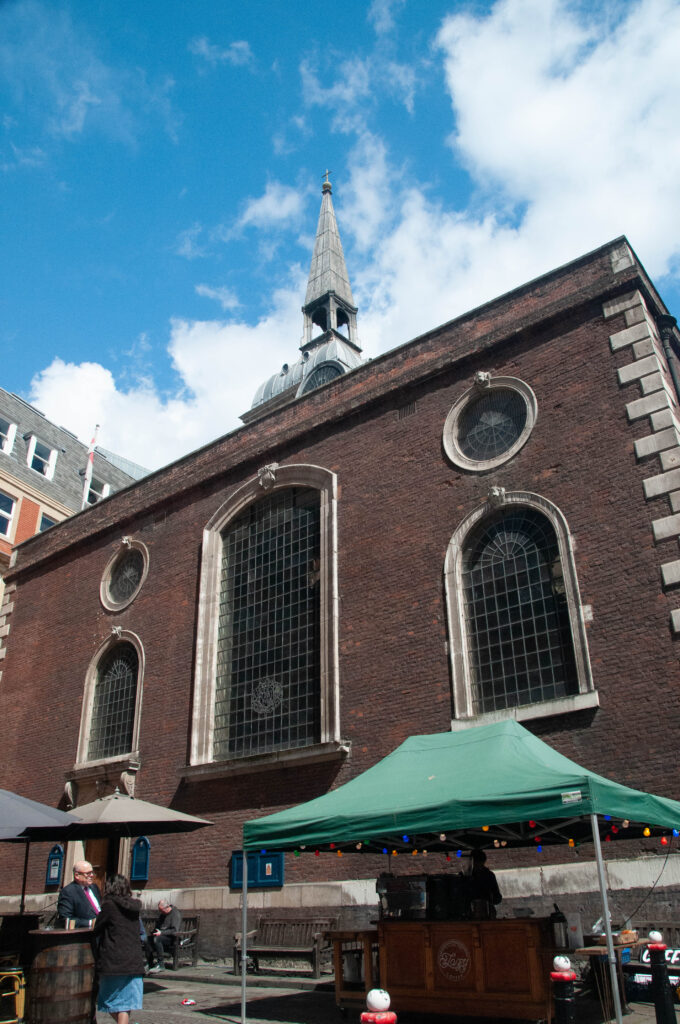
St Mary’s is tucked away halfway down the narrow Abchurch Lane that links Cannon Street and King William Street (EC4N 7BA). As Stephen Millar has written in his wonderful little book London’s City Churches, to stand in the old churchyard and look at the Dutch influenced red brick exterior it is not hard to imagine yourself back in the 17th century …

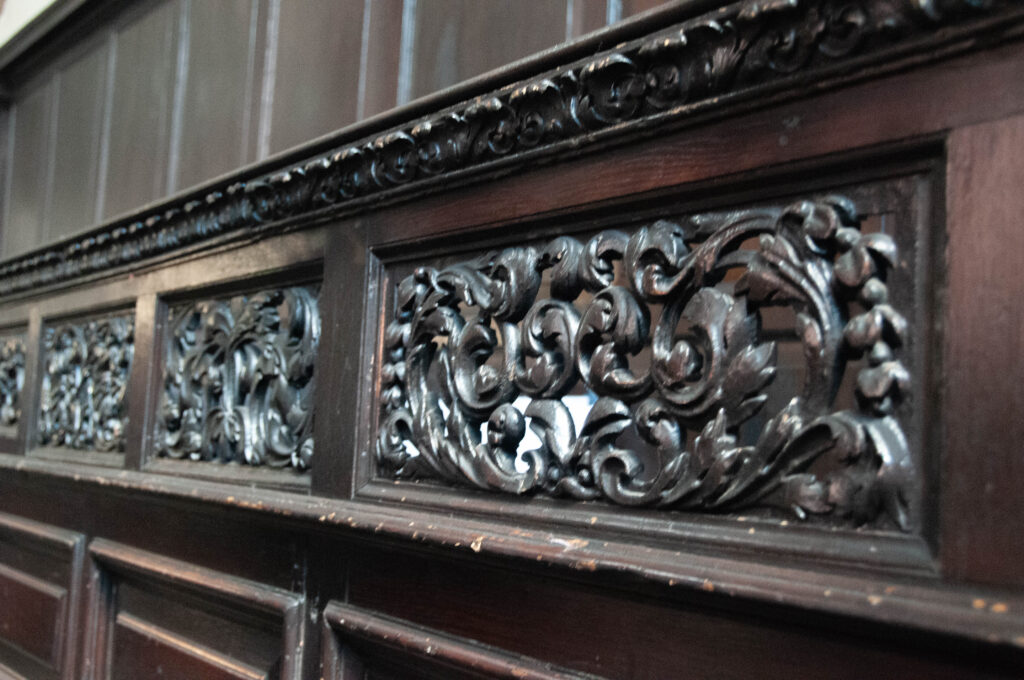
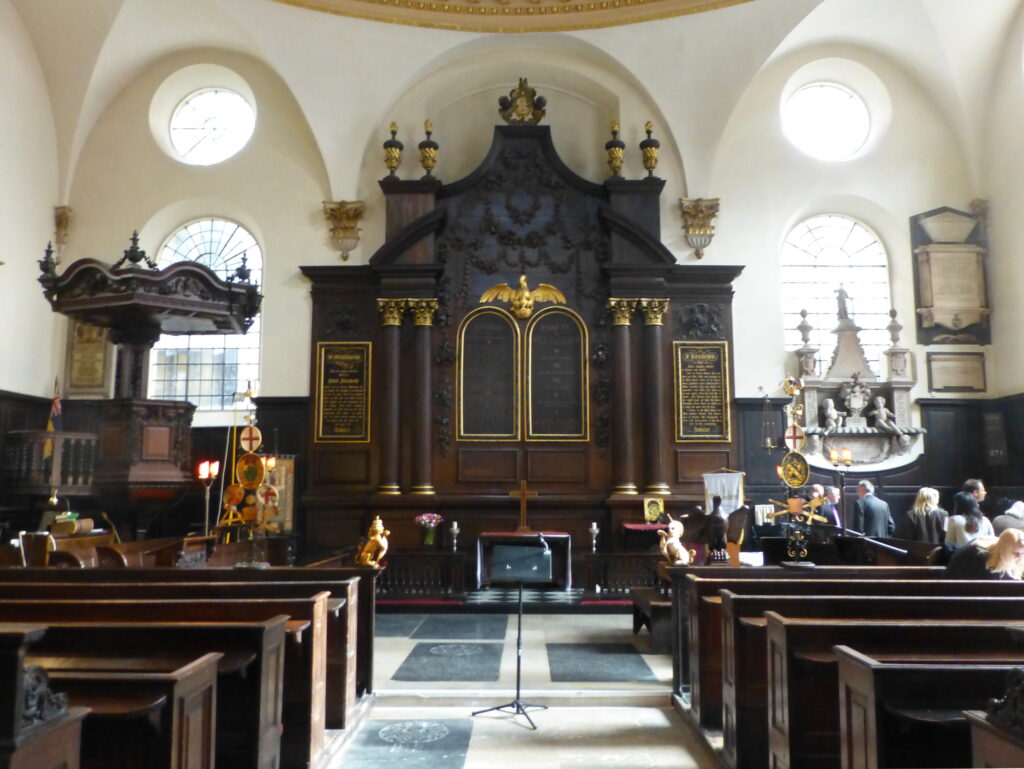
Built between 1681 and 1686, this is one of Wren’s greatest parish churches. The interior is almost square, its rich dark woodwork contributing to the intimate atmosphere …

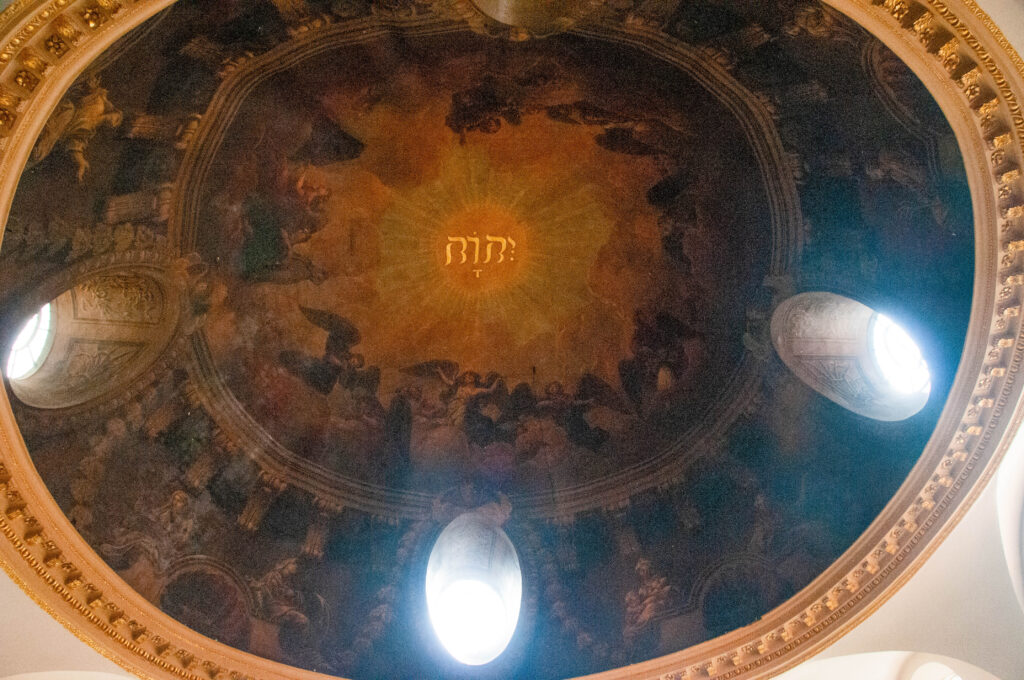
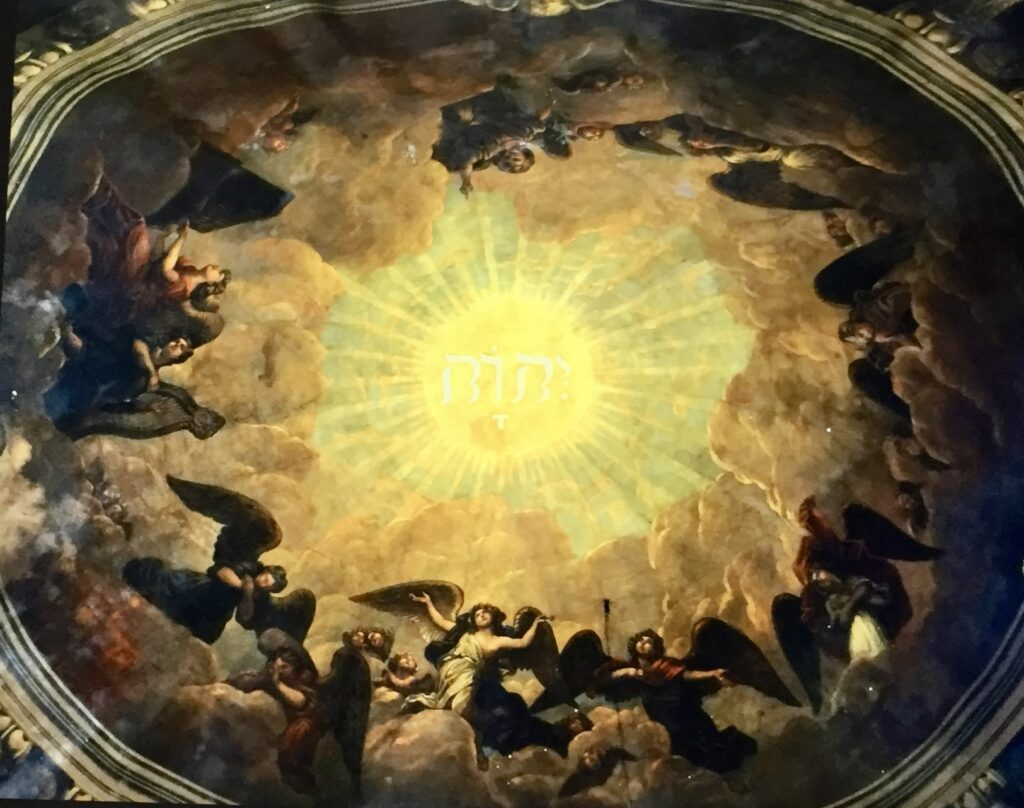
The dome was built during Wren’s experimental period, later perfected on a much larger scale at St Paul’s Cathedral. The dome was painted in 1708 by parishioner William Snow and contains a heavenly choir around the name of God in Hebrew …

It’s very difficult to photograph but I found this image on Pinterest, copyright Rex Harris …

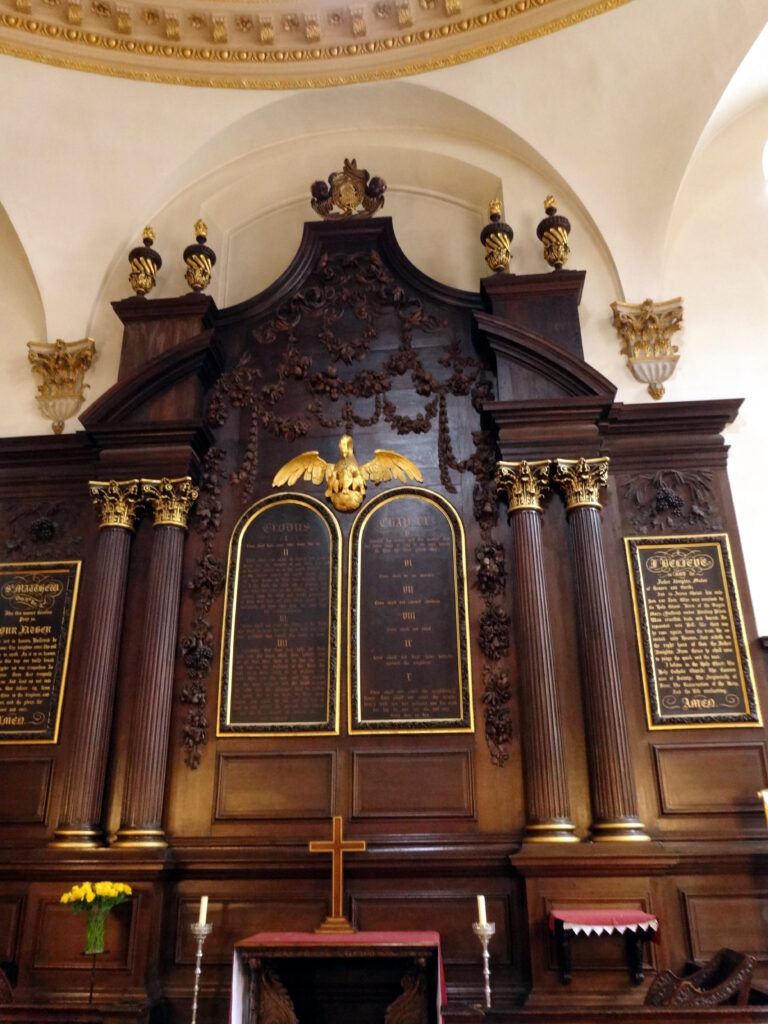
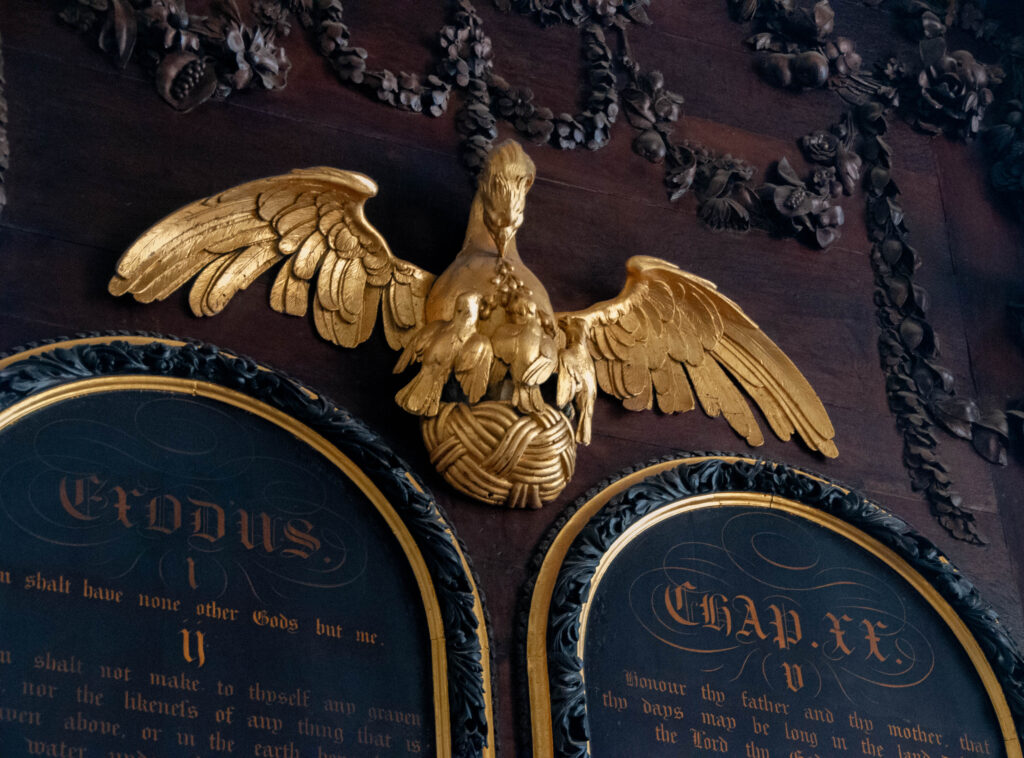
The beautiful reredos features limewood carvings by Grinling Gibbons, the pre-eminent carver of his generation …

The pelican in the centre represents the Eucharist and is also the crest of Corpus Christi College …

Also of note are the original box pews on three sides of the church …

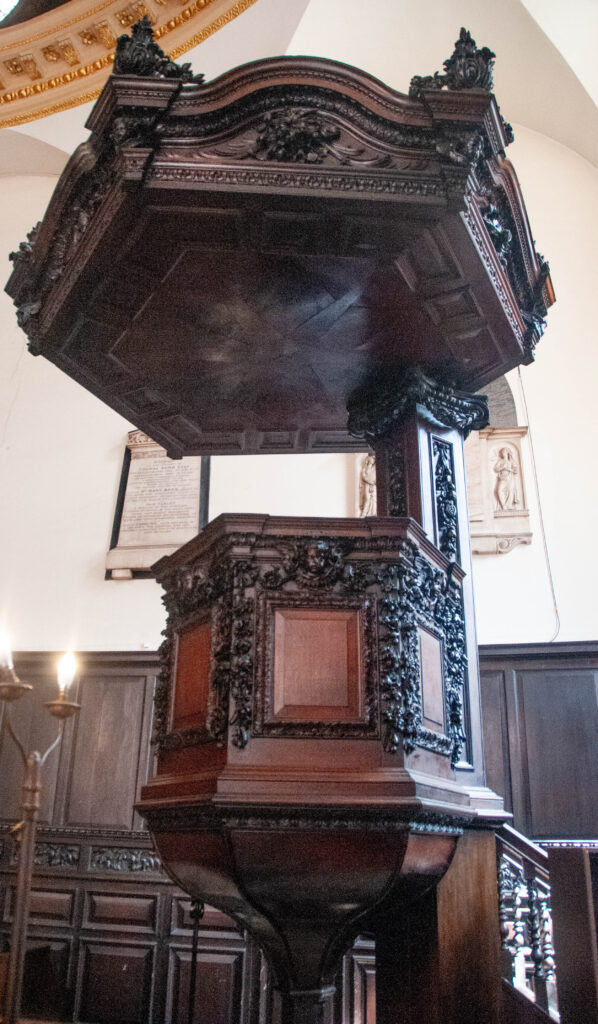
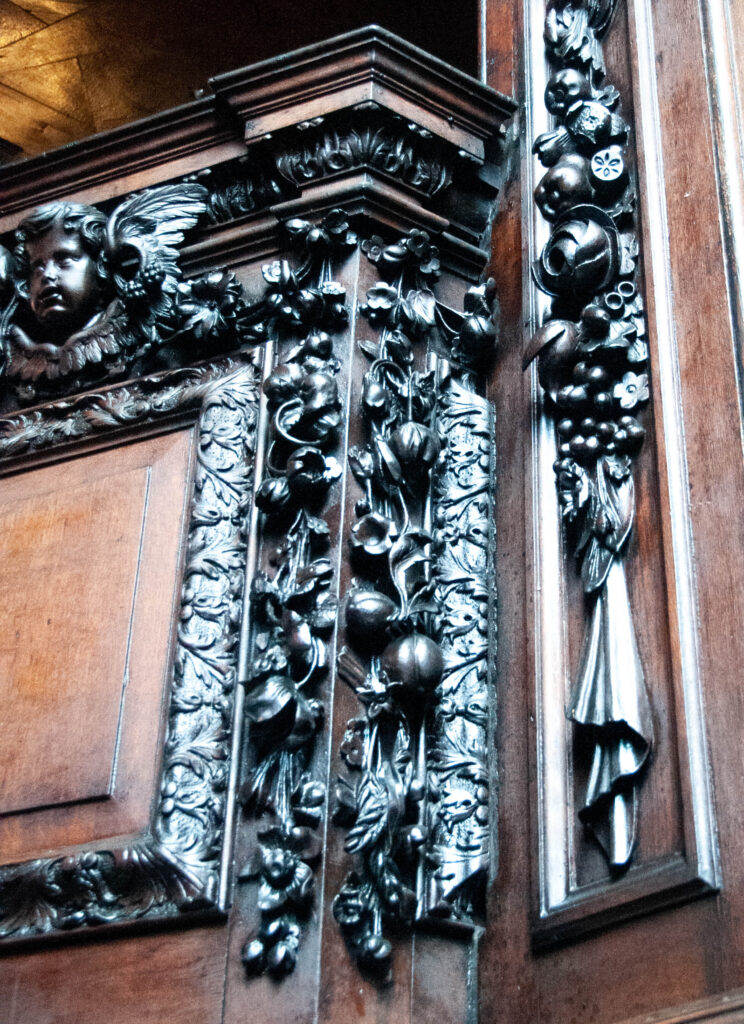
The pulpit (circa 1685) is by William Grey and is one of the finest examples in any City church …

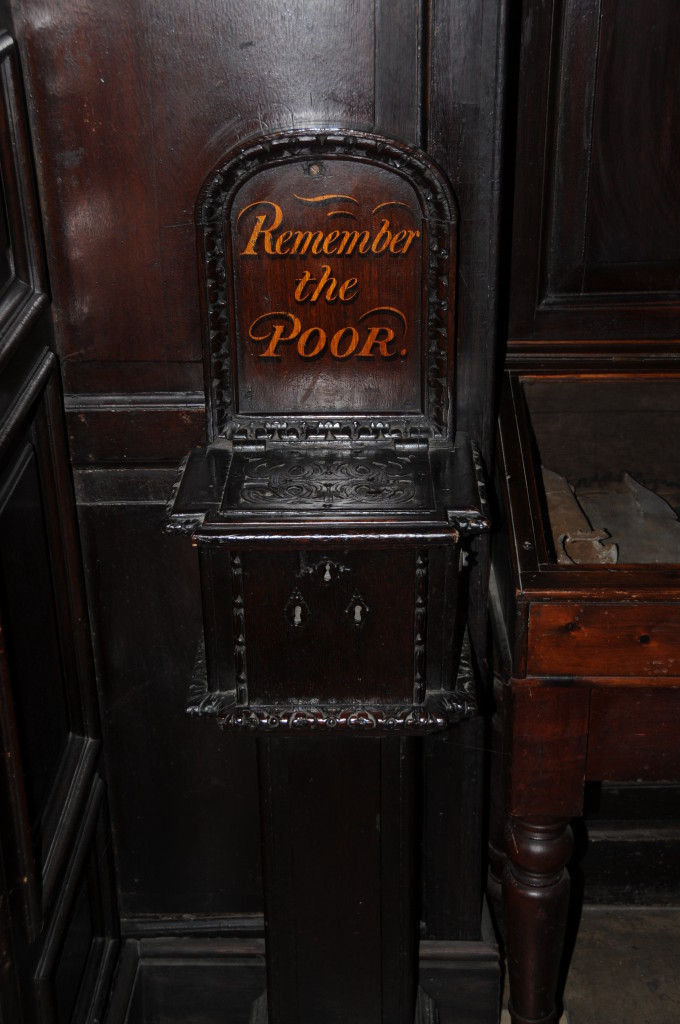
Near the entrance is an original alms box dating from 1694 (three keys were needed to open it!) …

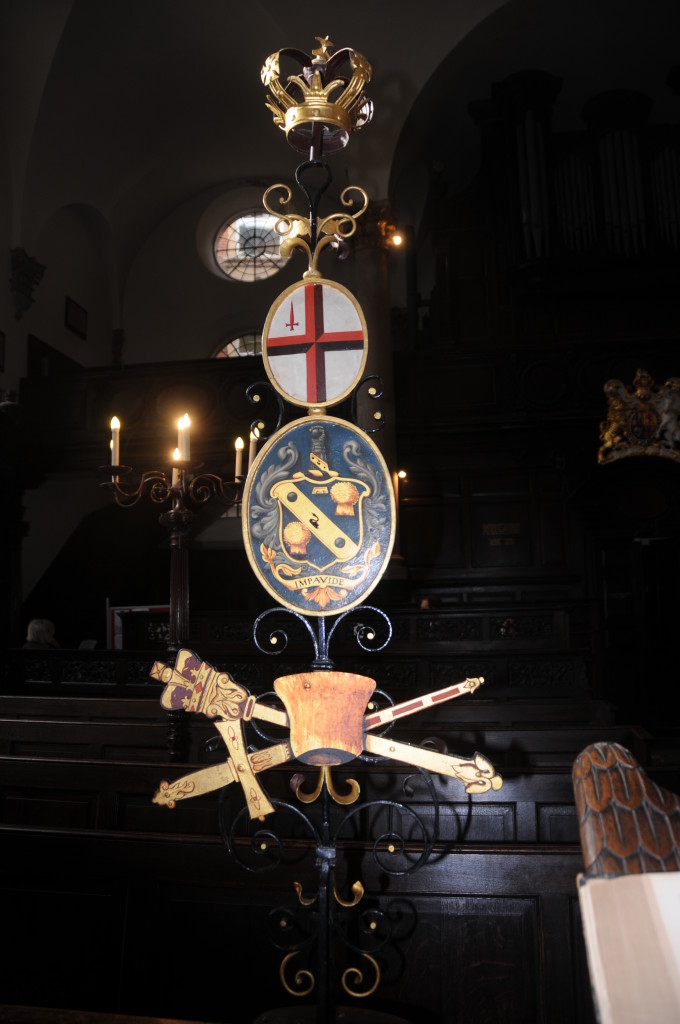
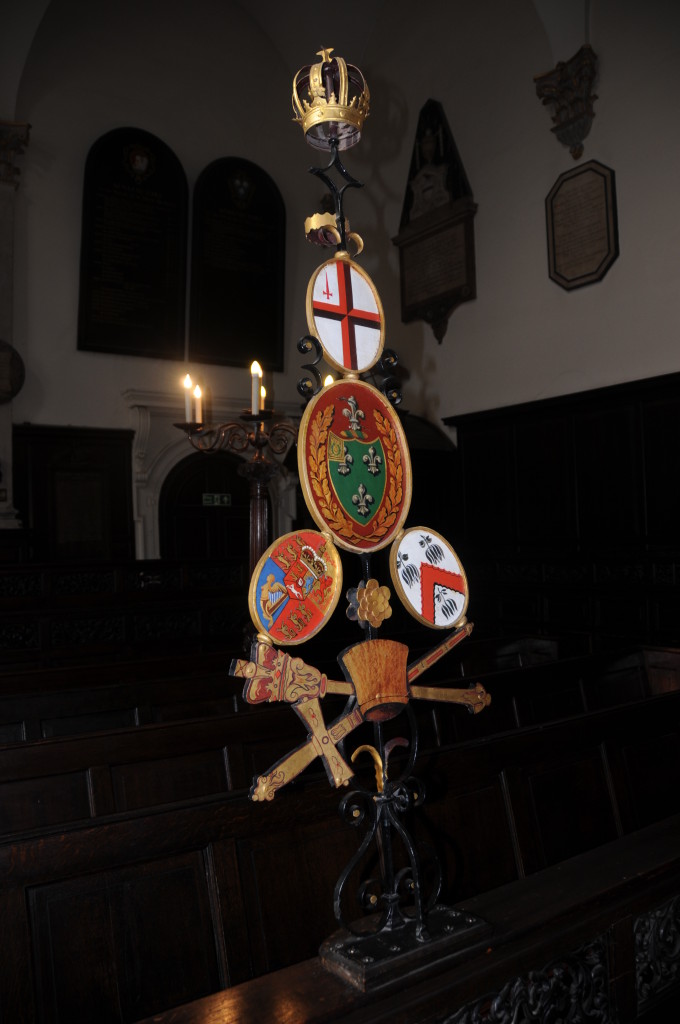
On the front pews are two ceremonial wrought iron sword-rests used to support the civic sword when the Lord Mayor of London attends a service at the church. The arms on the sword-rests are those of two former parishioners who were also Lord Mayors of London, George Scholey (1812) and Samuel Birch (1814). The first …

And the second …

Images courtesy of A London Inheritance.

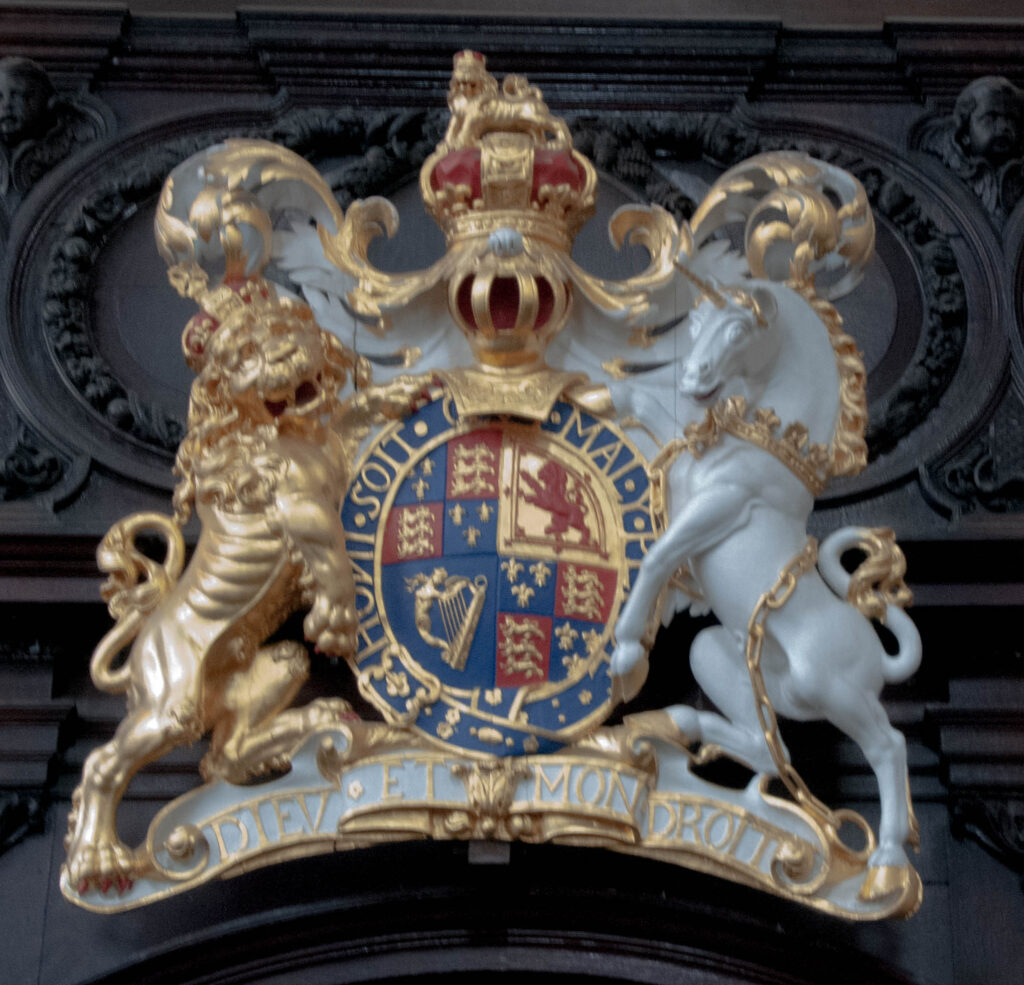
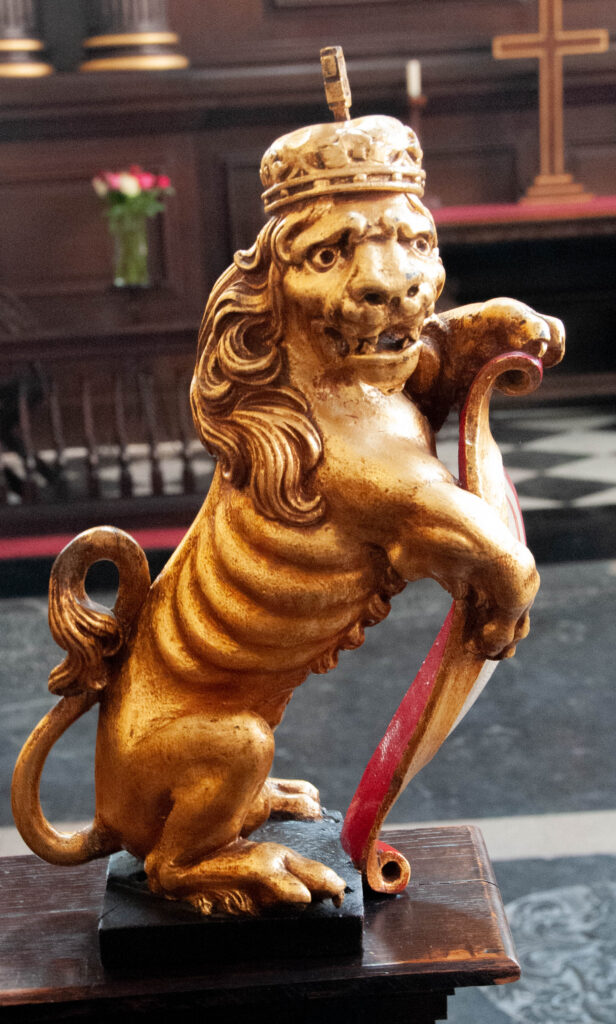
William Emmett made the wooden Royal Arms …

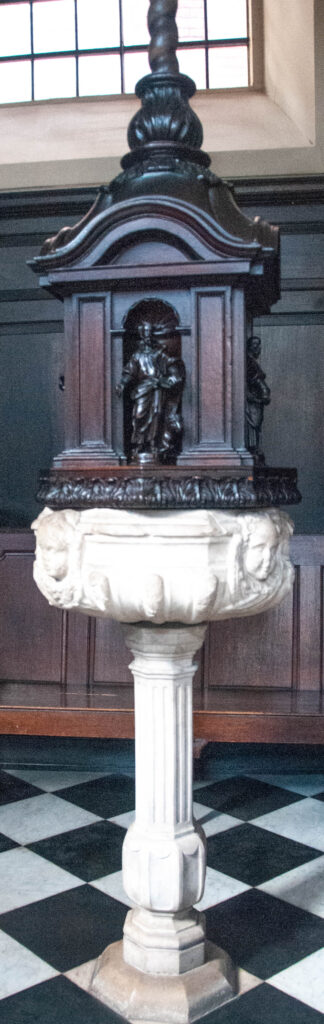
Along with the font cover …

The font itself is by William Kempster.

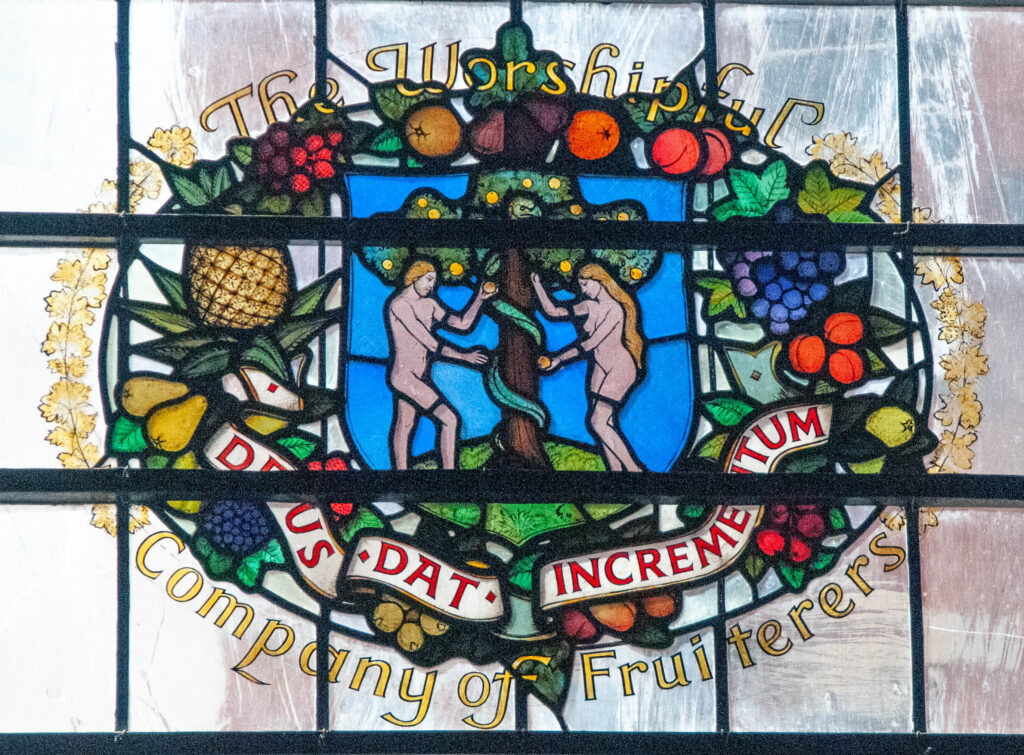
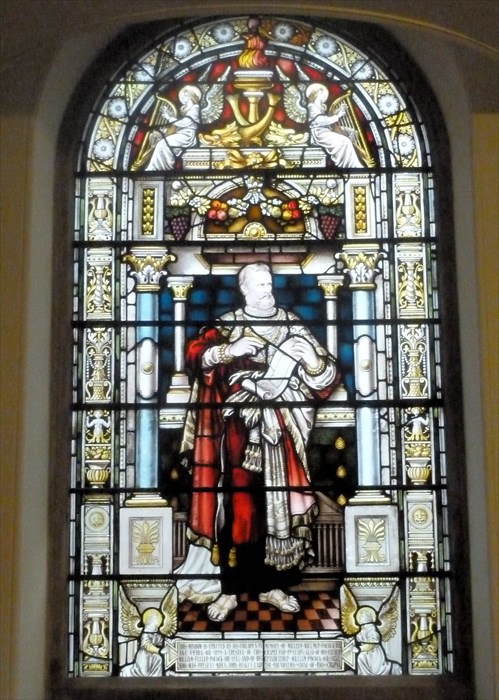
The church’s connection with the Fruiterers Company is commemorated by this charming stained glass window …

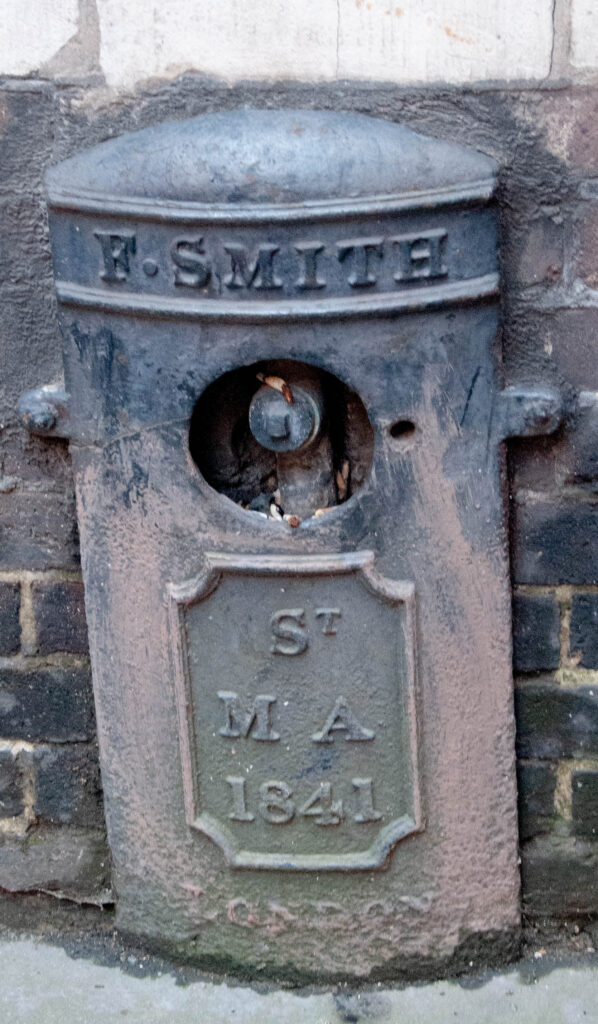
Outside you’ll find an old hydrant cover from 1841 which incorporates a parish marker. The pipe and outlet are clearly seen in the hole in the centre and only the cover that was originally across this hole is missing …

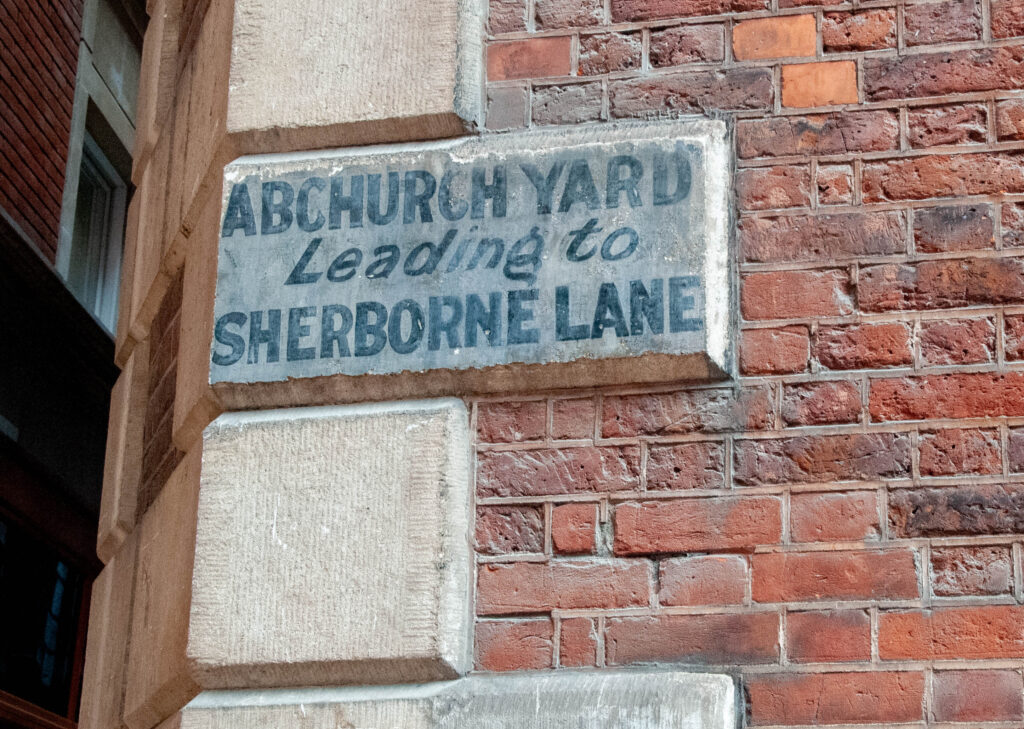
There’s an old ghost sign too …

It’s a lovely church to visit. There are regular organ recitals and you can grab a coffee and a snack from one of the stalls in the churchyard. Find out more here.

If you would like to follow me on Instagram here is the link …
https://www.instagram.com/london_city_gent/

Where Maggie wed Denis – a visit to Wesley’s Chapel.

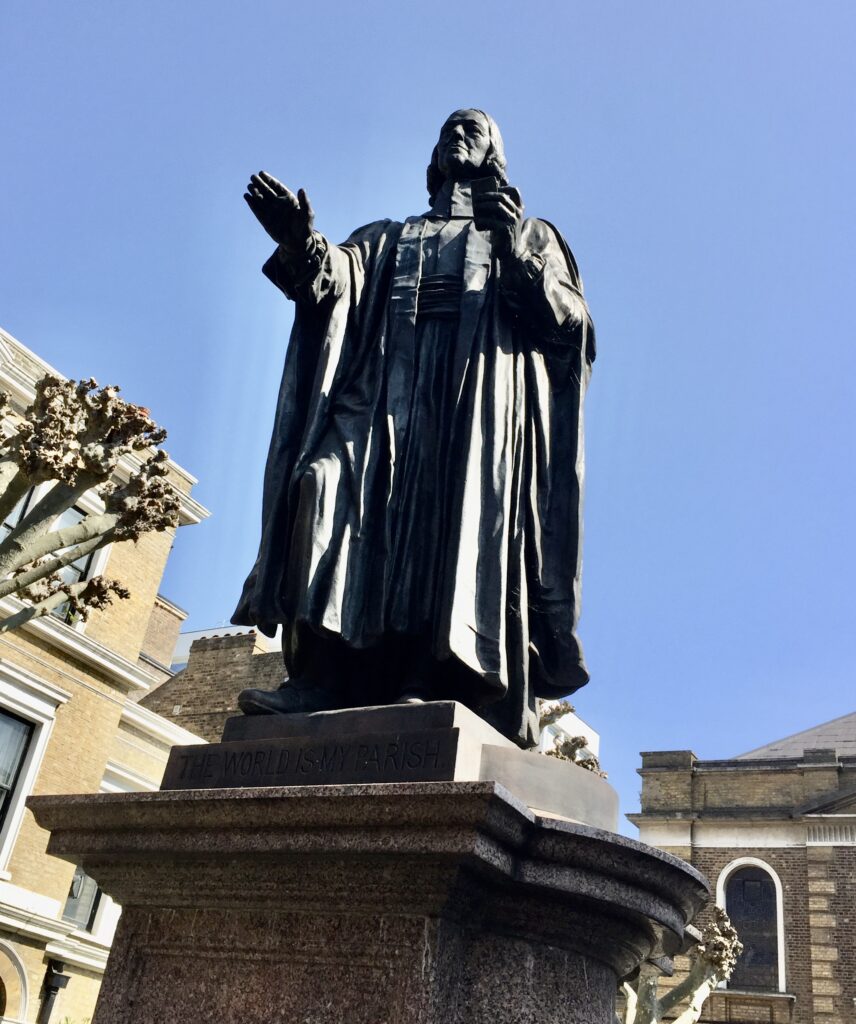
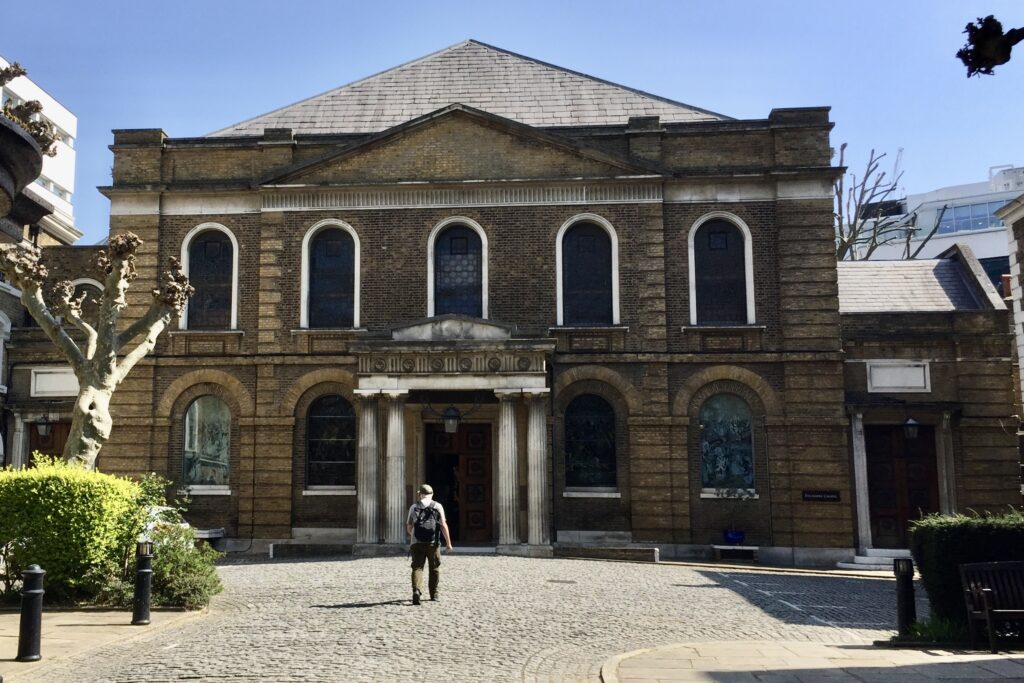
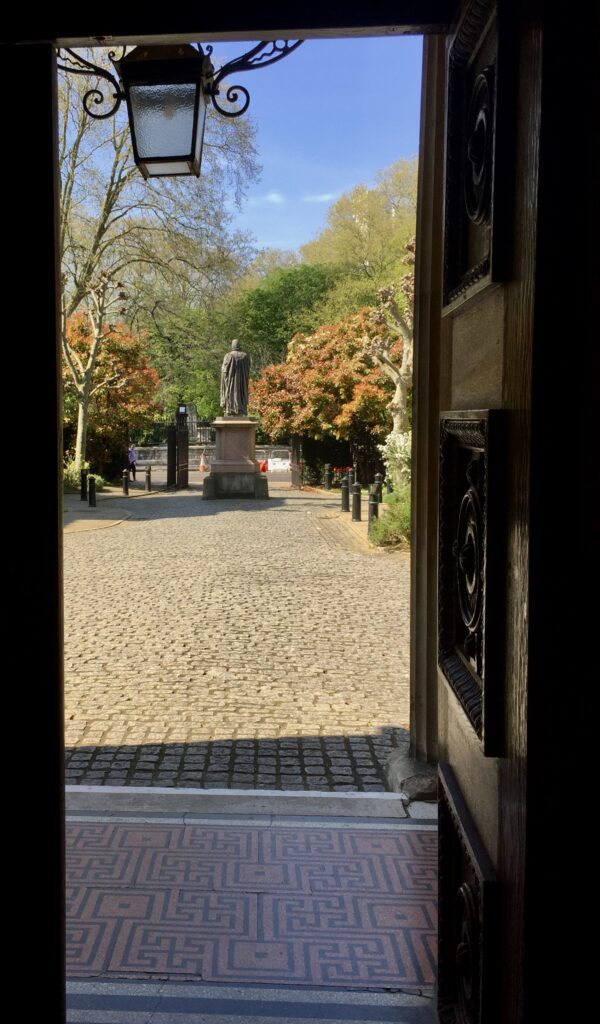
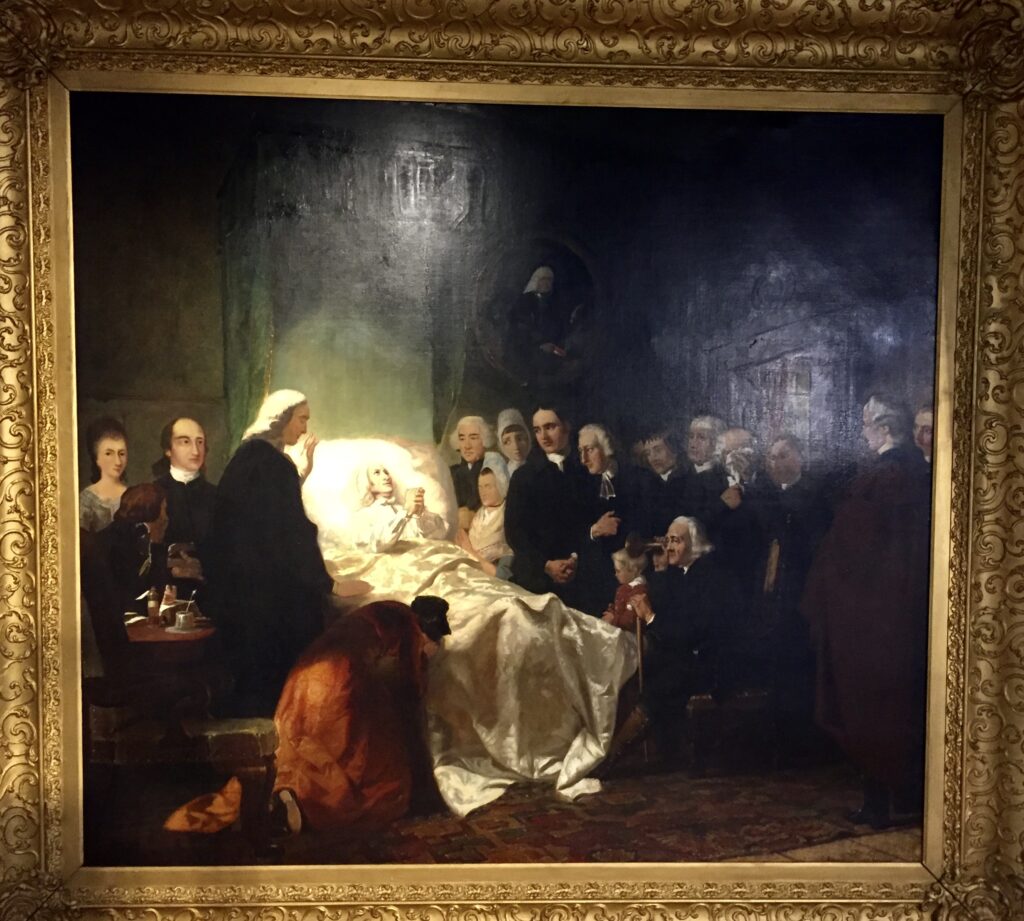
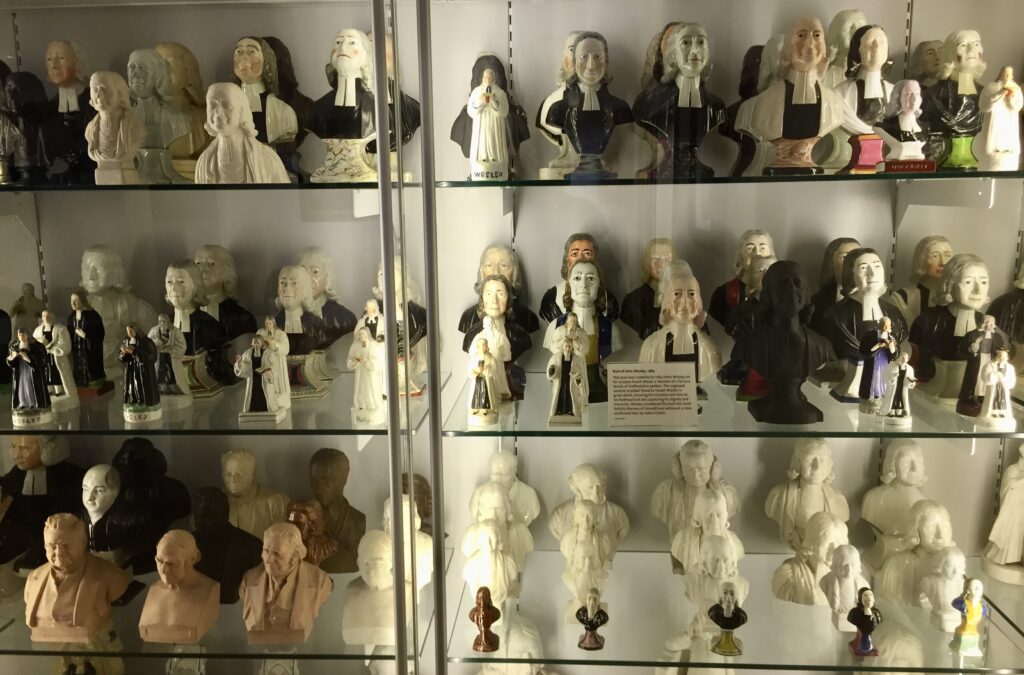
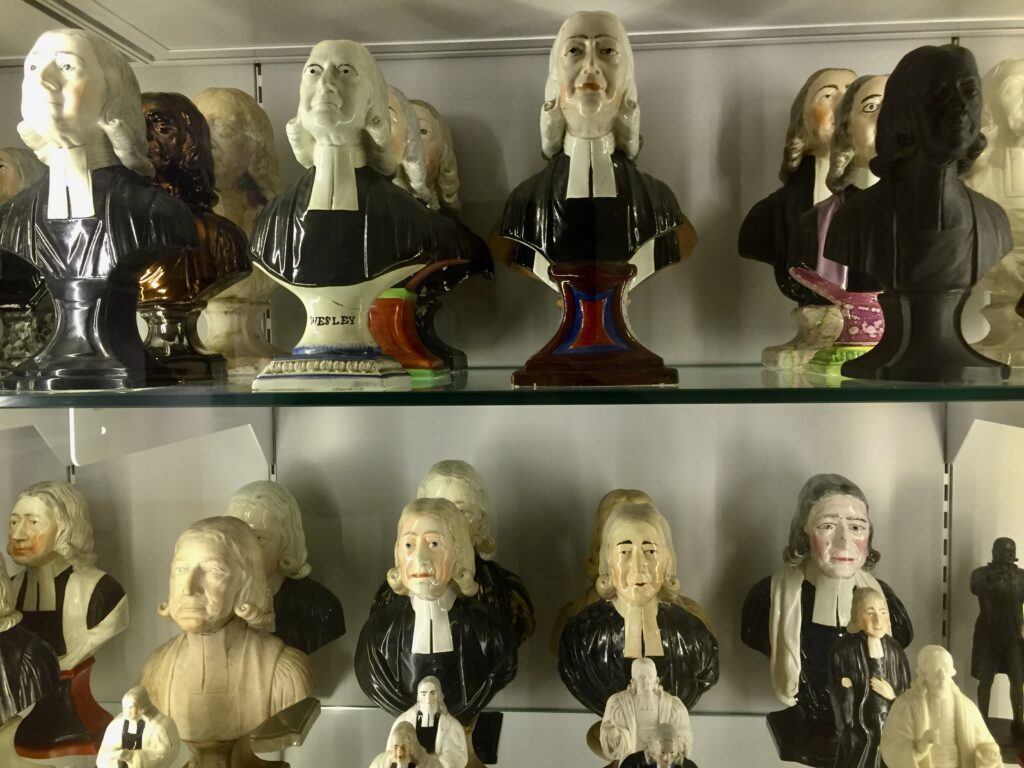
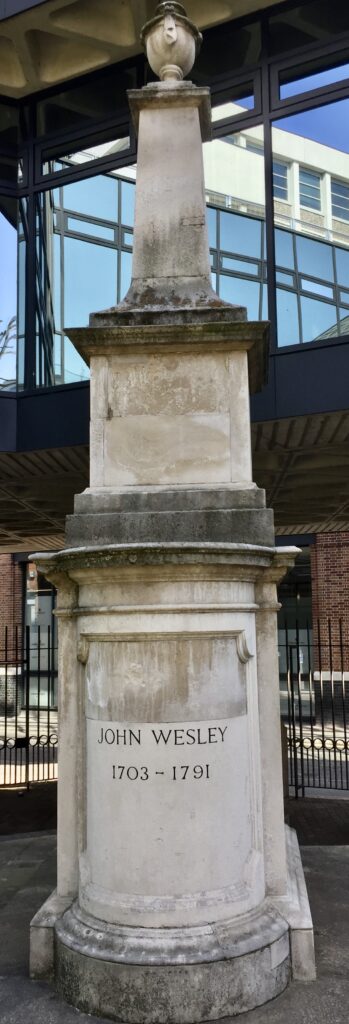
Wesley’s Chapel on City Road was first opened in 1778 by John Wesley (1703-1791) as a home base for his fast growing network of churches and societies which eventually became the Methodist Church (EC1Y 1AU).

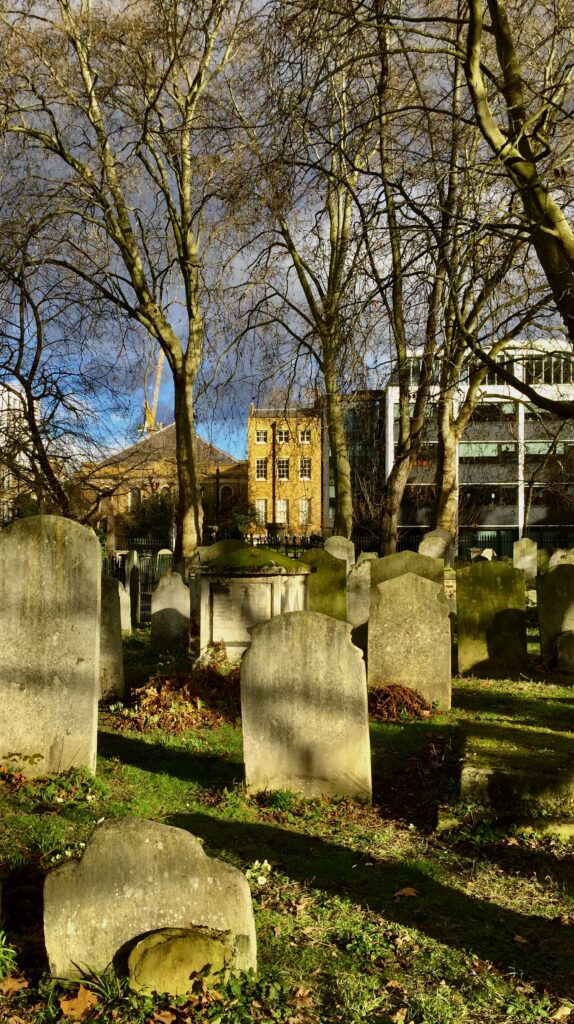
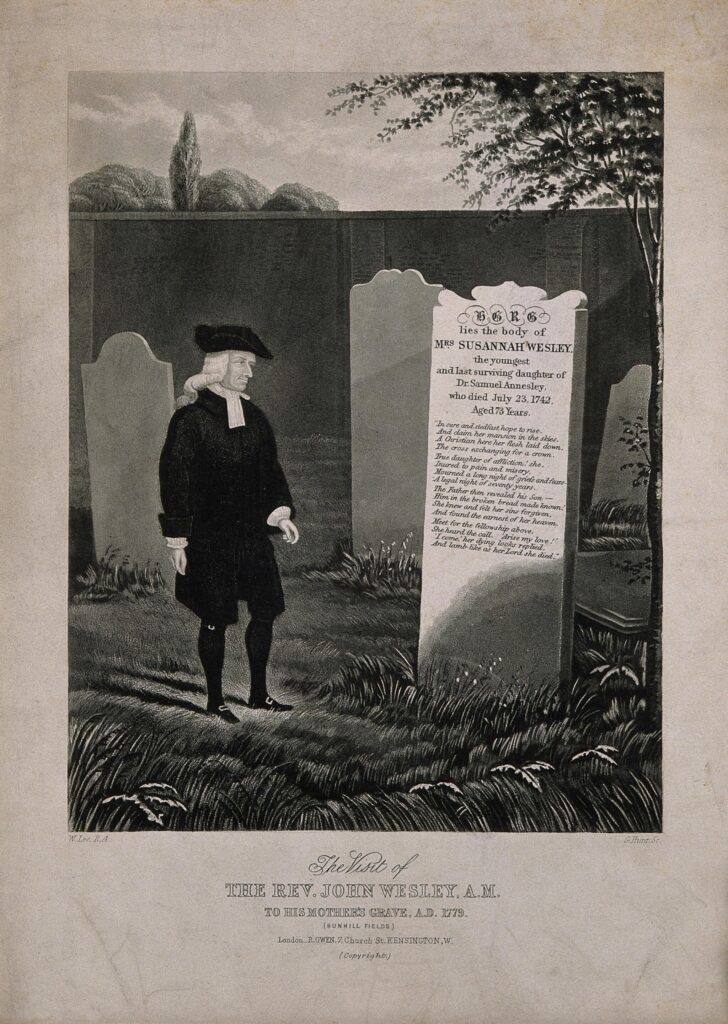
The house where he lived during his later years is next door. Here’s the view of the house from Bunhill Burial Ground where Wesley’s mother is buried. He could see her grave from his bedroom window on the second floor …

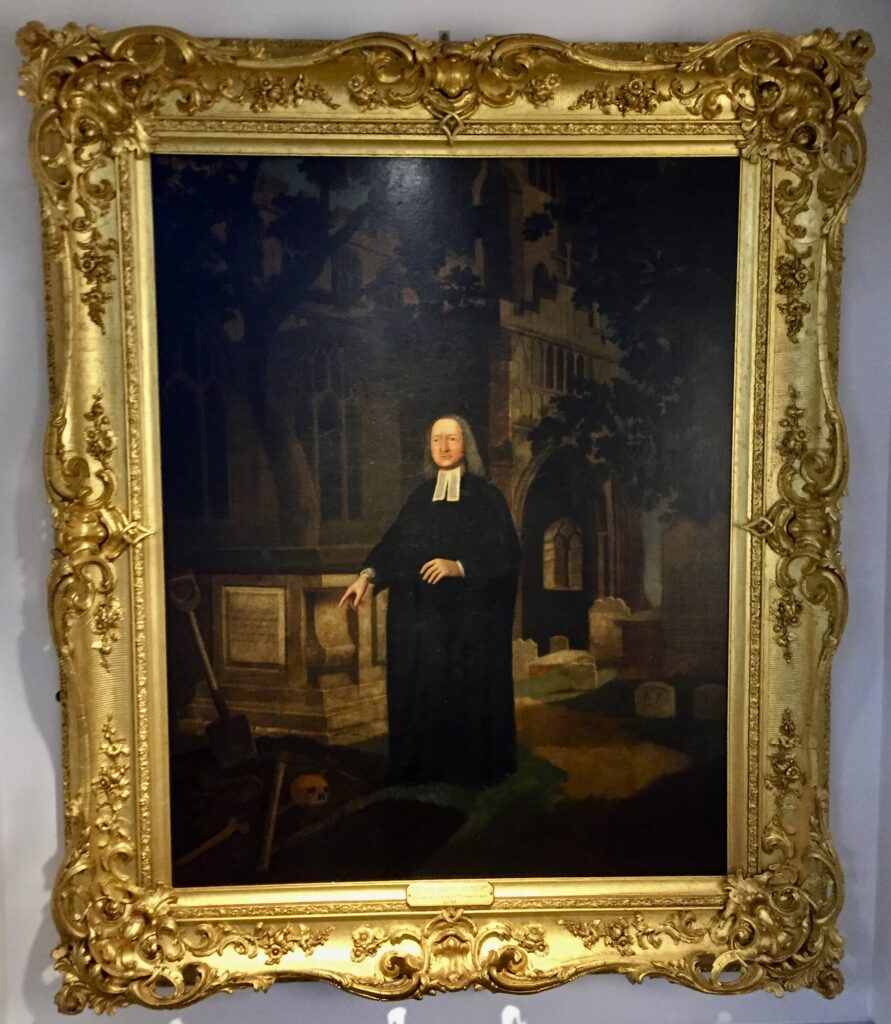
Here he is depicted visiting the grave in 1779 …

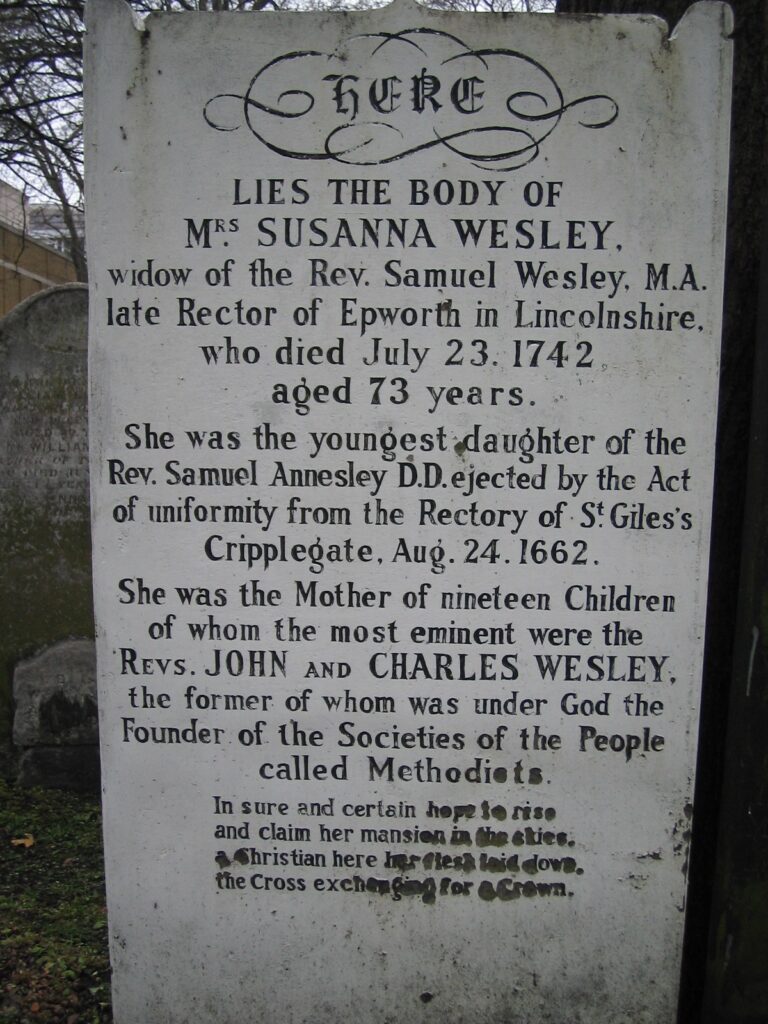
The original marker has now been replaced by one with a much shorter inscription …

This part of Bunhill is not open to the public.

There are dozens of memorials within the Chapel, along with 18 magnificent stained glass windows depicting Biblical scenes. Although it’s an active house of worship, it is open to the public during the week and many visitors come to see the place where Wesley preached and lived and last week I became one of them.

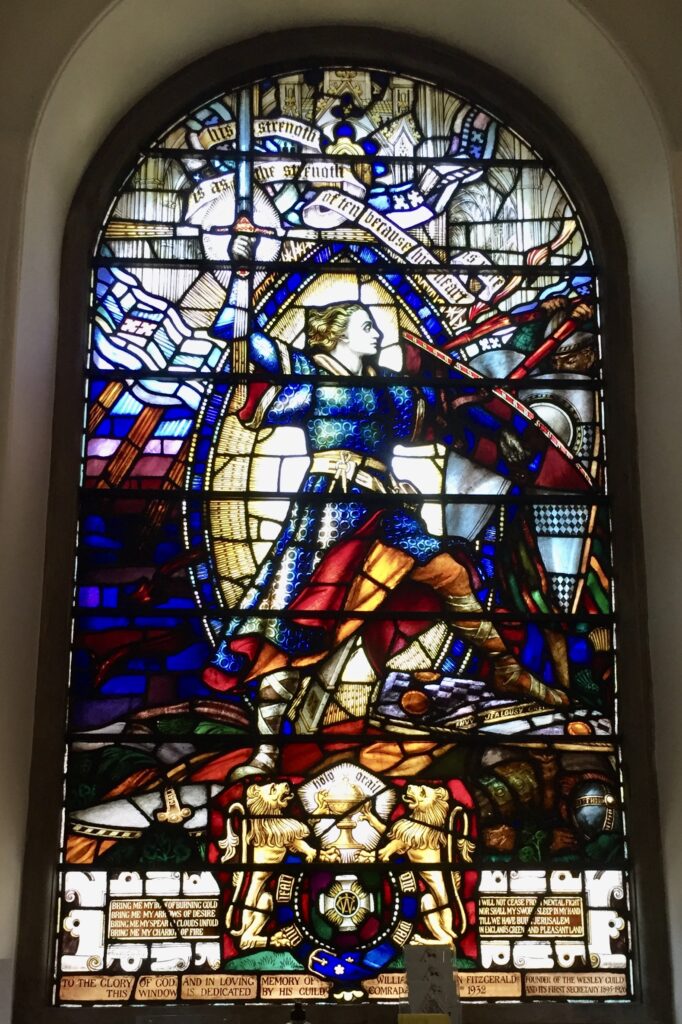
This window shows Sir Galahad overcoming the seven deadly sins and, through his victory, building the City of God. Sir Galahad is the patron saint of the Wesley Guild, which, when founded, was seen as a modern youth movement …

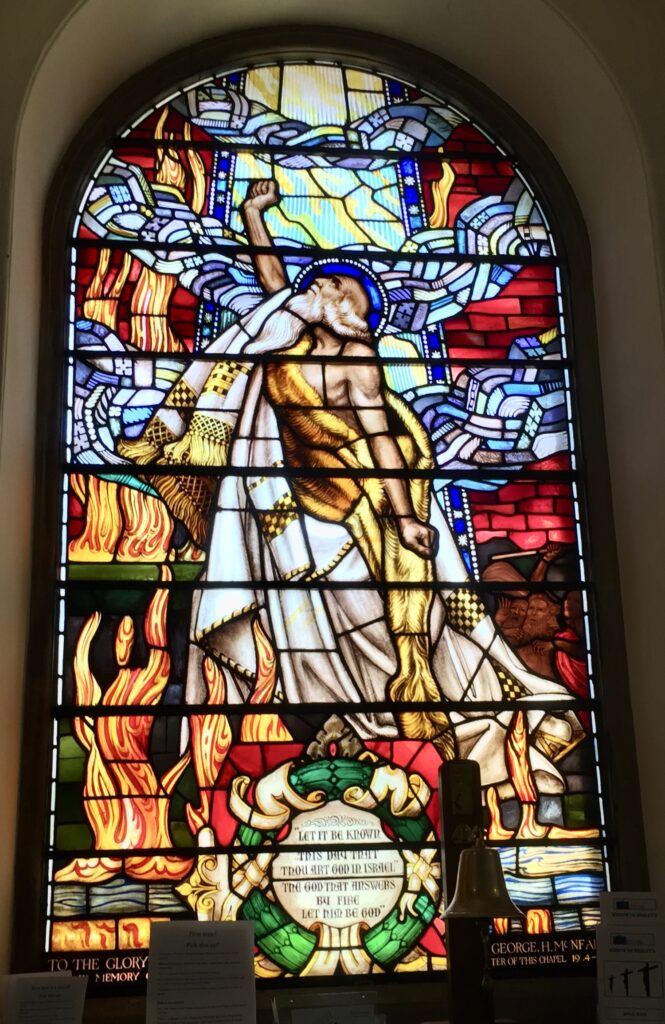
Here is a small selection of other glass you can admire …

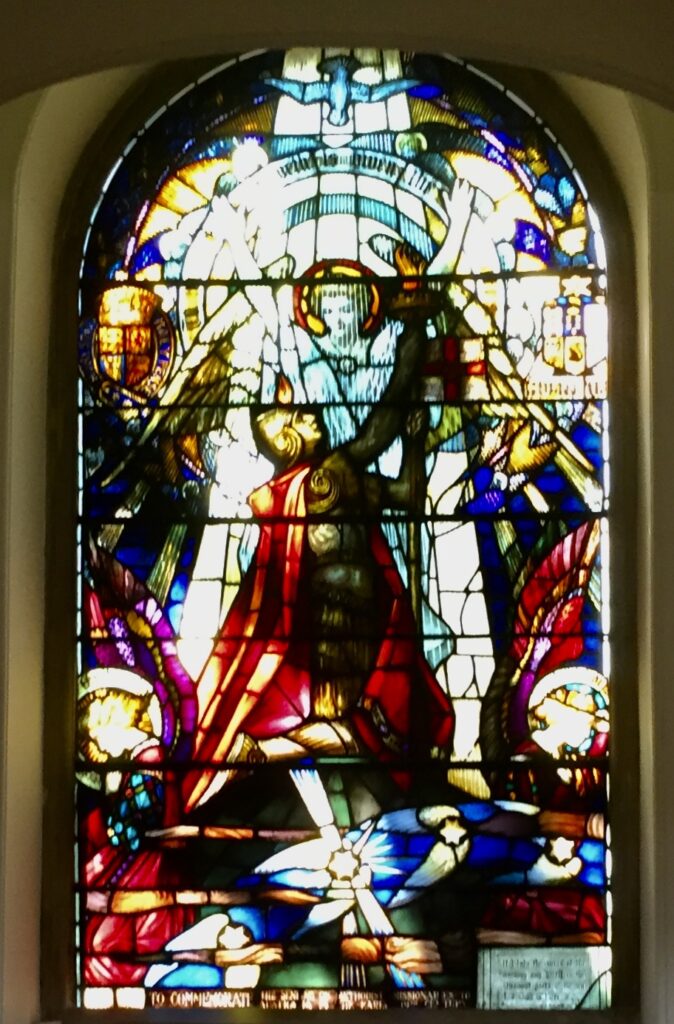
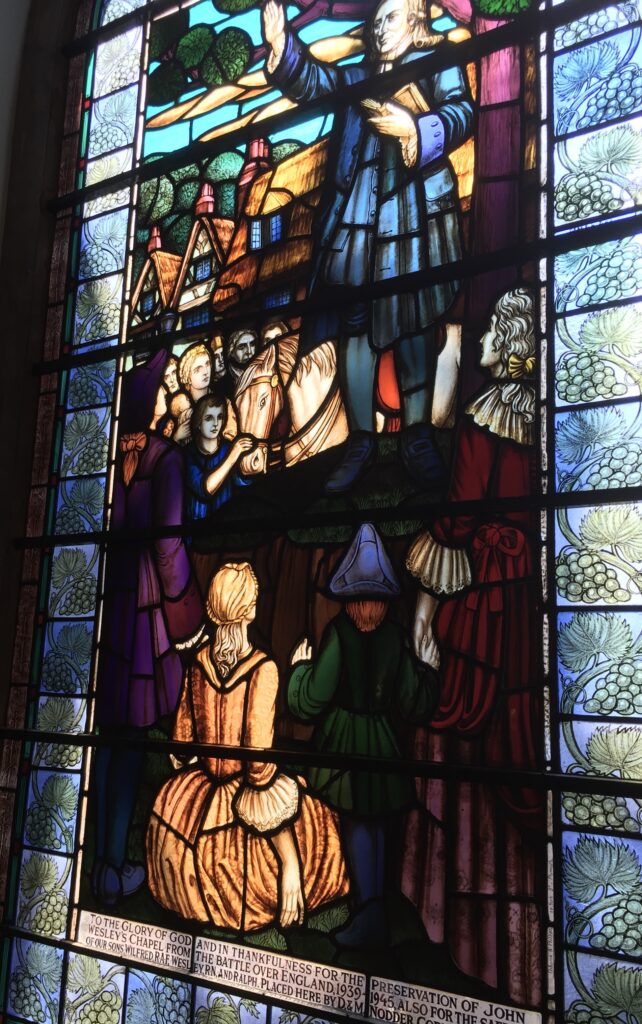
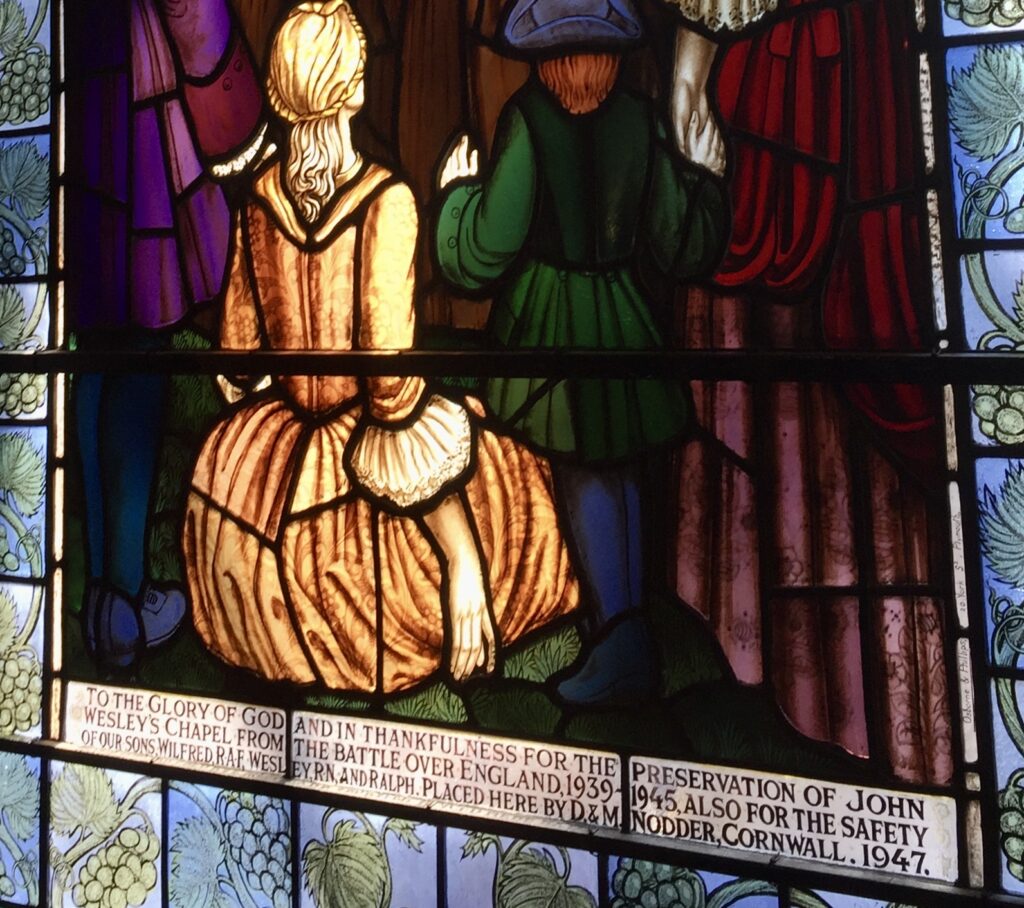
This window gives thanks for the fact that the chapel escaped damage during the Second World War …

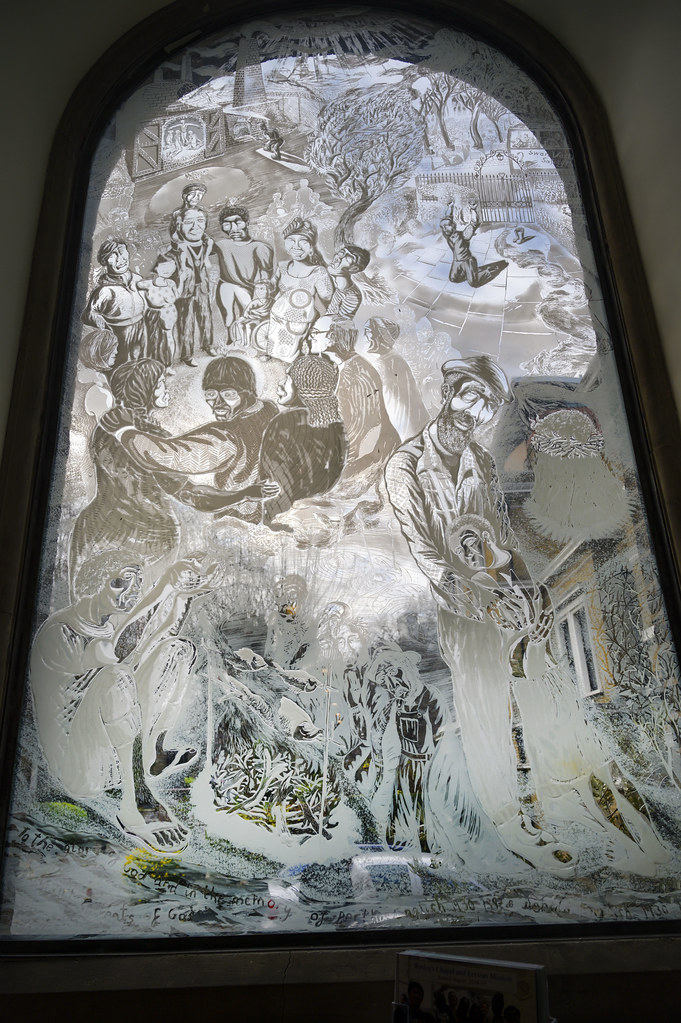
At either end of the vestibule there are two windows by Mark Cazalet. One shows God as fire …

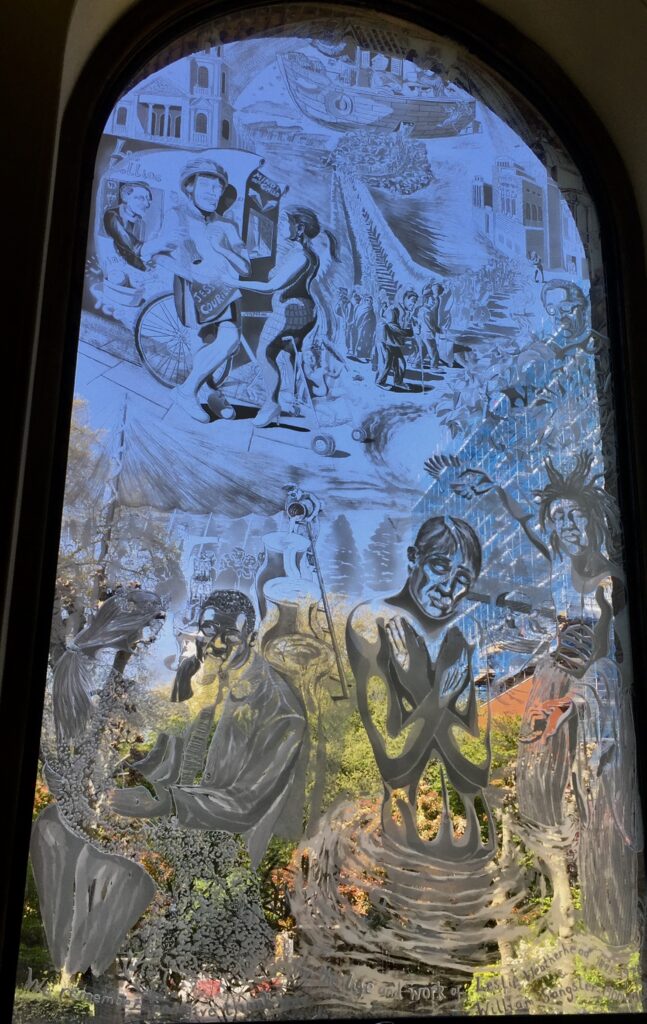
And the other God as water …

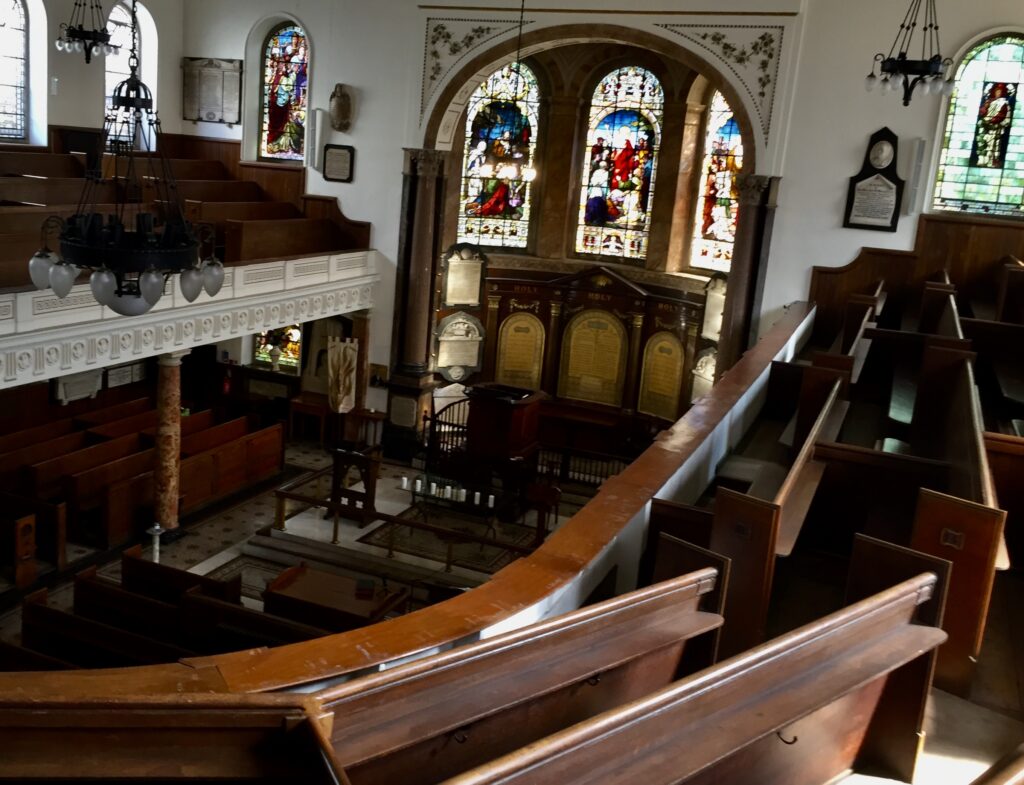
The view from the balcony …

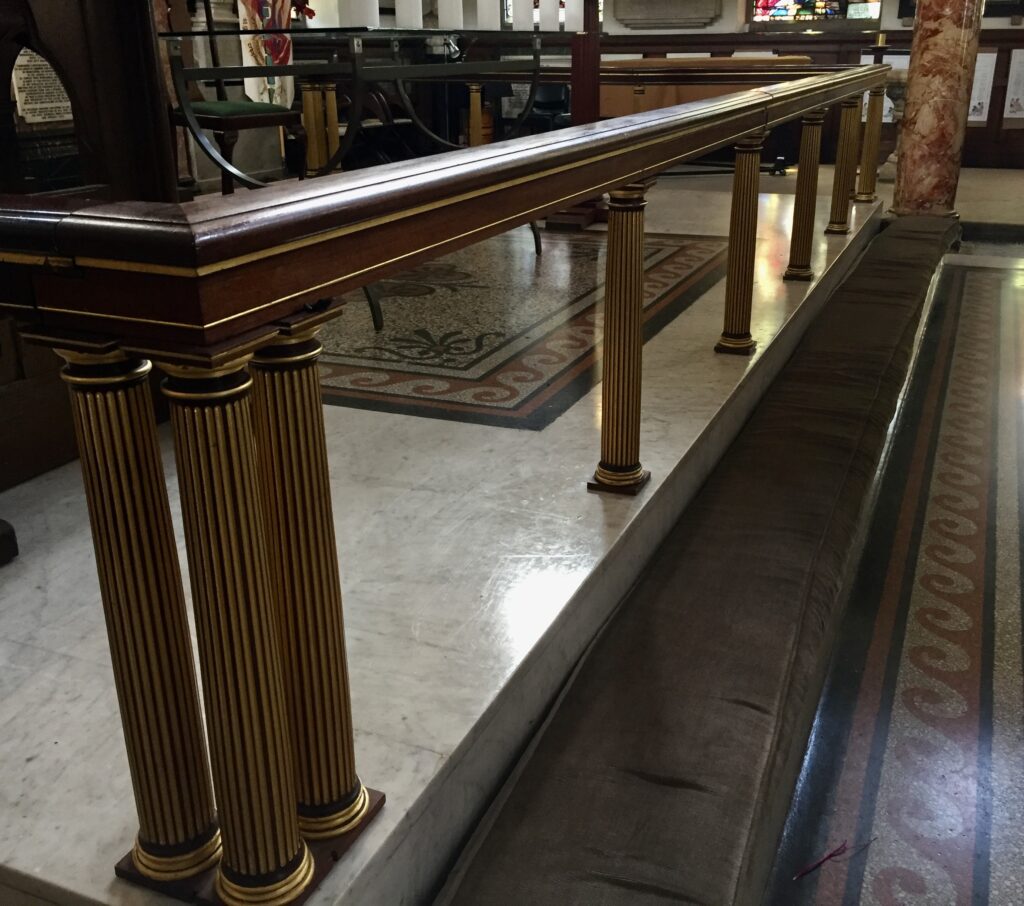
Margaret Thatcher (then Margaret Roberts) married Denis Thatcher here on 13 December 1951 and both their children were christened here. She donated the communion rail in 1993 …

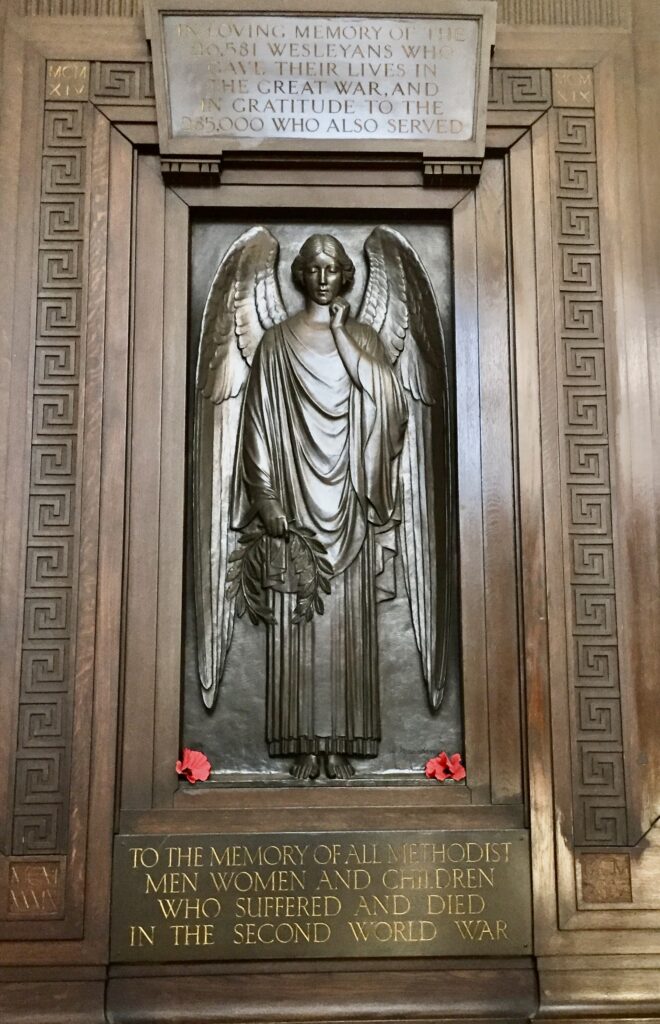
The War memorial …

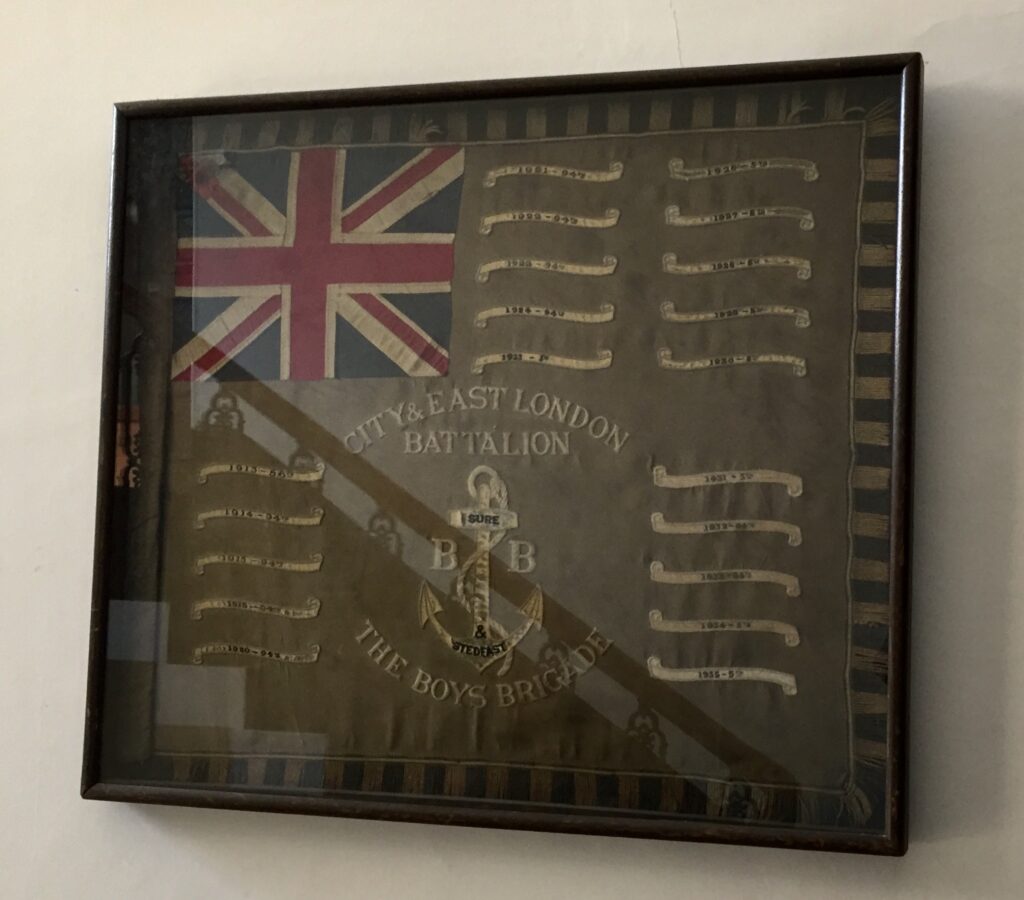
Old Boys’ Brigade flag …

The Brigade is still going strong and now welcomes girls as members. Have a look at their very lively website here.

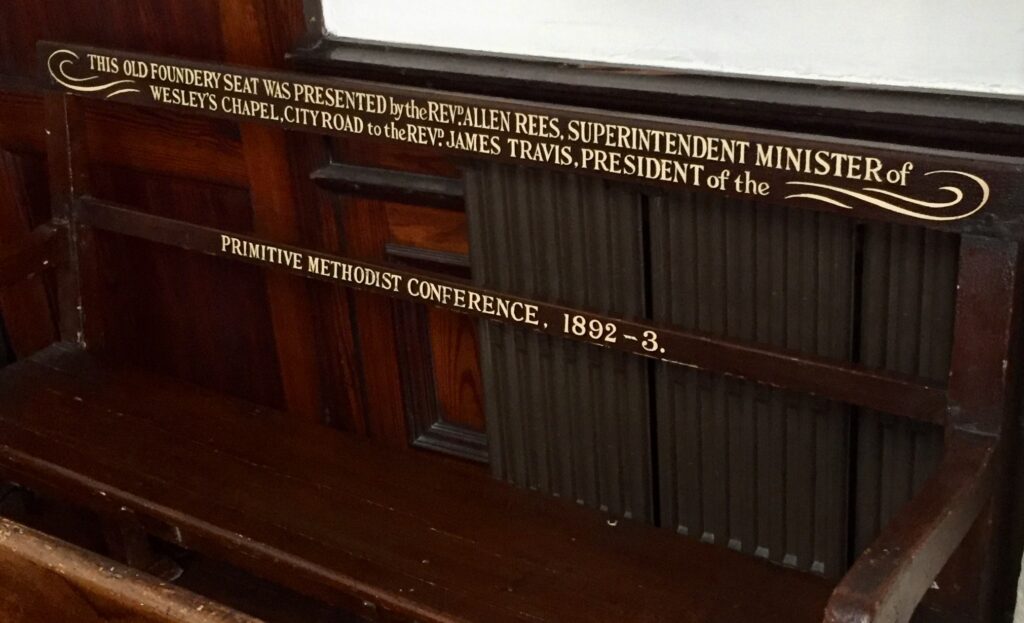
A seat in the Foundery Chapel. ‘Primitive’ meant ‘simple’ or ‘relating to an original stage’; the Primitive Methodists saw themselves as practising a purer form of Christianity, closer to the earliest Methodists …

I strongly recommend a visit to the museum …

And the shop, where you can pick up a tasteful memento of your visit …

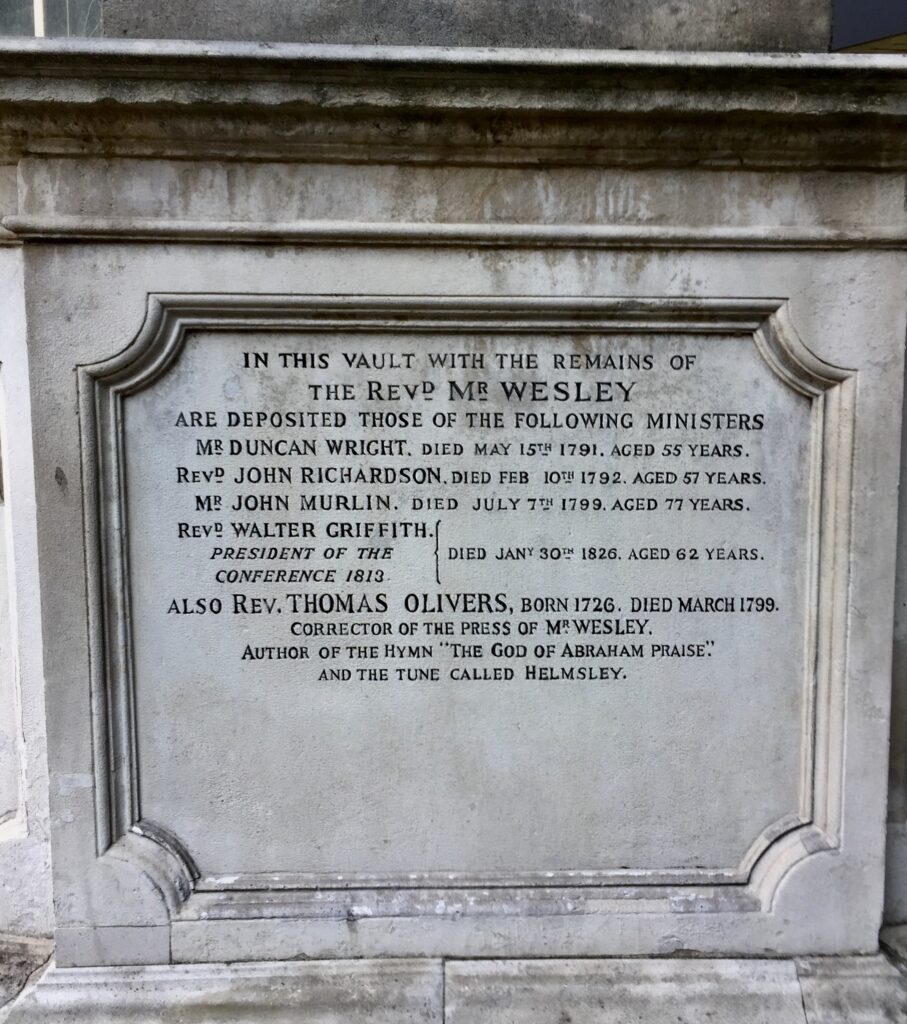
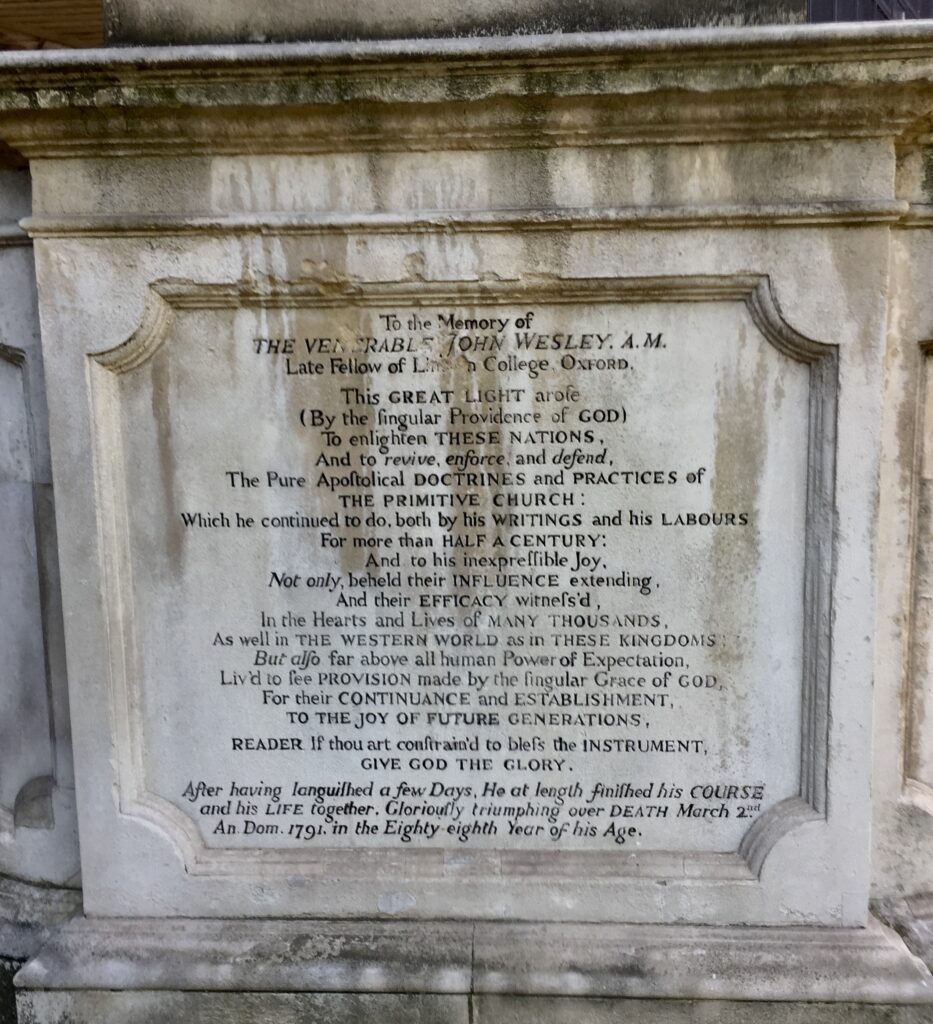
Wesley’s tomb is behind the Chapel …

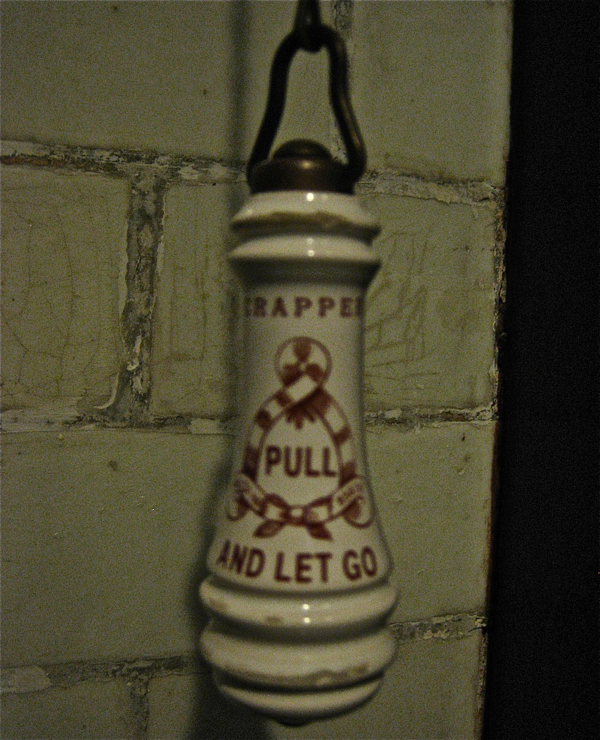
In the basement of the Chapel there is a beautifully preserved Victorian lavatory dating from 1899. It’s a shrine to Thomas Crapper – the champion of the flushing toilet and inventor of the ballcock …

Unfortunately it was closed when I visited but you can, however, read about it and see more images in the Gentle Author’s blog At God’s Convenience.

The Chapel and the Museum are wonderful places to visit and this blog really doesn’t do them justice so do call in if you get the chance.

If you would like to follow me on Instagram here is the link …
https://www.instagram.com/london_city_gent/

Fun on the Tube – from a piece of Roman Wall to a beloved cat.

Every now and then I like to explore our fascinating Underground network to see what new discoveries I can make.

If you go to the east end of the westbound platform at Tower Hill you will see this sign …

And here is the piece of wall …

If you get off the train at Aldgate East you can admire these intriguing tiles …

There are many to choose from and you can read all about them in my visit to Aldgate East blog.

You’ll also find at the station a fine example of a 1930s roundel …

There’s another heritage example just outside Temple Station. It’s a London Passenger Transport Board Underground map from 1932 (to avoid potential confusion the attached notice points out that there is ‘An up-to-date Journey Planner located inside the station’!) …

Here is the part of the 1932 Map covering the stations I visit in this blog. ‘Post Office’ became ‘St Paul’s’ five years later …

Whilst you wait there for your train, look up and you will see the tops of the ornate columns that once supported the canopy covering the tracks and platforms …

When Temple Station was first opened locomotive drivers were forbidden to sound their whistles at the station lest they disturb the barristers working (or dozing) in the Inns of Court nearby.

Also on the platform are some images of historical interest. This, for example, is Blackfriars Station in 1876 …

And today (image courtesy of Network Rail) …

Nowadays, if you want to travel by rail to Continental Europe, you head for St Pancras International and Eurostar. Once upon a time though, your gateway to the Continent was Blackfriars.

The station was badly damaged during the Second World War but the wall displaying a selection of the locations you could catch a train to survived and you can see it today in the ticket hall. It was part of the original façade of the 1886  station (originally known as St Paul’s) and features the names of 54 destinations – each painstakingly carved into separate sandstone blocks and illuminated with gold leaf …

You can read more about the wall and the interesting area around the station in my Terminus Tales blog.

I noticed this instruction at the top of the escalator …

I believe that, on his first visit to London, Paddington Bear interpreted this as meaning you couldn’t use the escalator unless you were carrying a dog.

Onward now to the refurbished Farringdon Station. On climbing the stairs from the platform you can admire the original 19th century roof supports …

Just before exiting through the barriers I spotted some nice stained glass windows which date from 1923 …

Farringdon Station moved to its current location on 23 December 1865 when the Metropolitan Railway opened an extension to Moorgate. It was renamed Farringdon & High Holborn on 26 January 1922 when the new building by the architect Charles Walter Clark facing Cowcross Street was opened, and its present name was adopted on 21 April 1936 …

From mid-1914, the Metropolitan Railway introduced its own version of the Underground roundel. This originally appeared as a blue station name plate across a red diamond and the diamond is still there, above the entrance …

It has also been reproduced on Moorgate Station as a nod to the railway’s past history …

Trivia quiz question. Only two station names contain all the vowels …

This is one of them – what is the other? The answer is at the end of this week’s blog – no peeping!

And finally to Barbican. The station was originally known as Aldersgate Street when it opened in 1865, changing its name to Aldersgate in 1910, Aldersgate & Barbican in 1923 and finally settling for Barbican in 1968.

Just inside the barriers is a nice photo montage illustrating some of the station’s history …

The station platforms used to be covered by a glazed arch but after suffering serious bomb damage during the Second World War, it was eventually removed in 1955 …

Those were the days, with carriages pulled by steam locomotives …

You can still see the support brackets for the now demolished roof …

Do pause in the entrance hall and pay your respects to the memory of Pebbles the Blackfriars Station cat.

For many years Pebbles was a favourite of staff and passengers, often sleeping soundly on top of the exit barriers despite the rush hour pandemonium going on around him. This is a picture from the wonderfully named purr’n’furr website, a great source for moggie-related stories …

Clearly he was greatly missed when he died, as the plaque faithfully records, on 26th May 1997.

This was doubly sad because he was due to be given a Lifetime Achievement Award. This was sponsored by Spillers Pet Foods and named after Arthur, a cat they used in their advertising who ate with his paws. The Certificate that came with the award is also displayed (the co-winner, the aptly named Barbie, was Pebbles’ companion) …

Incidentally, here is Arthur in action …

The TV ads ran between 1966 and 1975 with a succession of Arthurs playing the role. At one time a terrible rumour circulated that the advertising agency had taken the original cat to the vet and had all his teeth removed in order to encourage his rather eccentric eating behaviour. This story was subsequently demonstrated to be untrue. Obviously there is a detailed entry about Arthur on the purr’n’furr website and there’s lots more about him if you just Google Arthur the cat that ate with his paws. There is some great footage of the ads themselves with hilarious voice-overs by eminent actors such as Peter Bull, Leo McKern and Joss Ackland.

If you would like to follow me on Instagram here is the link …
https://www.instagram.com/london_city_gent/

The other station with all the vowels is, of course …
Page 5 of 9

Powered by WordPress & Theme by Anders Norén