Walking the City of London

Category: Stained Glass Page 7 of 9

Shakespeare, a quack doctor and a cadaver – my visit to Southwark Cathedral.

Last Saturday I popped in to the wonderful Southwark Cathedral, paid £2 for a photography licence, and walked around entranced.

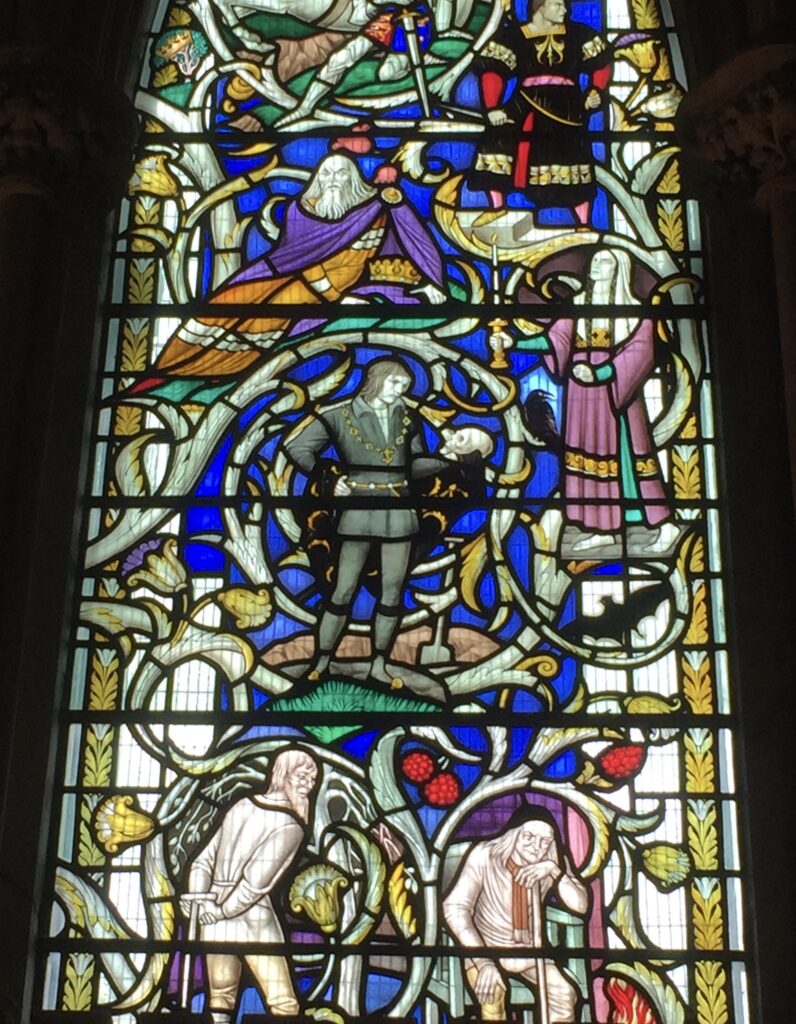
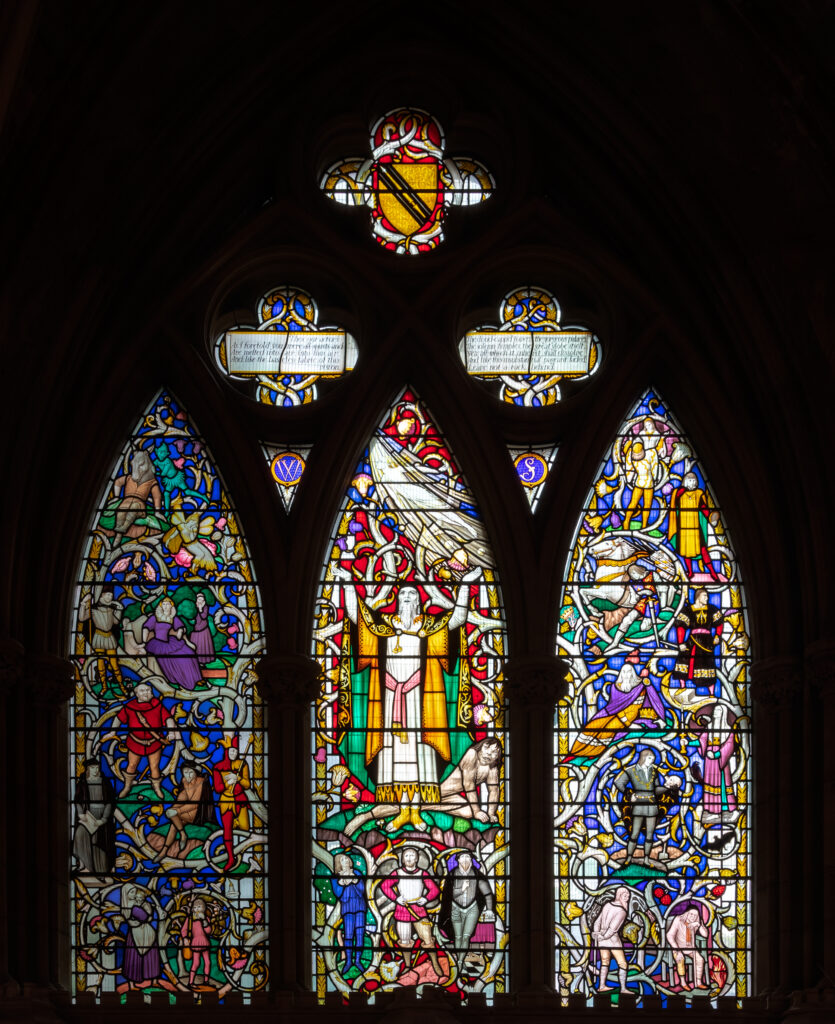
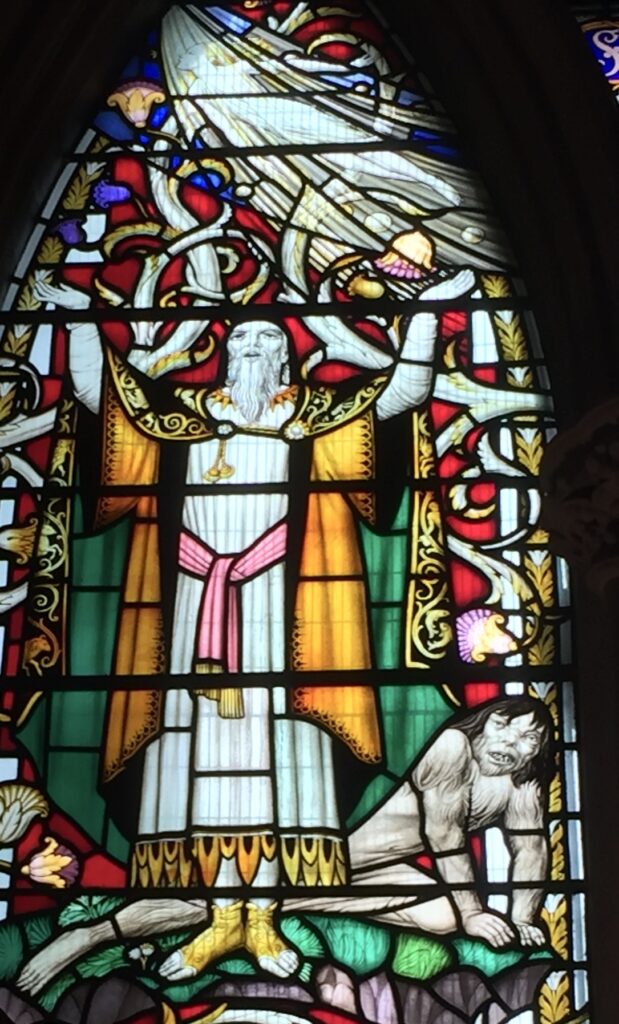
A few feet from the door is the magnificent Shakespeare Memorial Window, Designed by Christopher Webb, it was created in 1954 to replace another destroyed in enemy action. It shows characters from the Bard’s plays …

The design uses the concept of the Jesse Tree. Prospero in the central light forms the trunk, with Ariel above and Caliban at his feet …

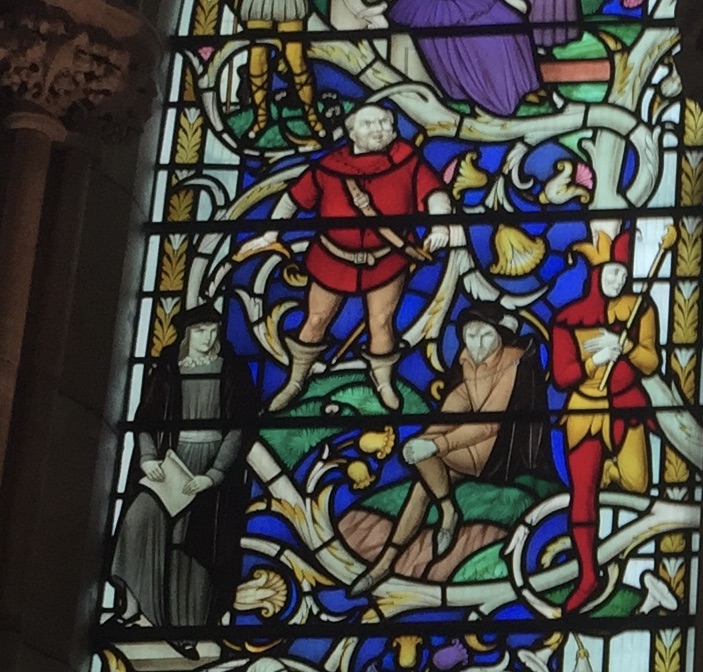
I’m sure you can spot Falstaff …

In the right hand window we find Lady Macbeth ,,,

Is this a dagger which I see before me, the handle toward my hand? Come, let me clutch thee …

and Hamlet …

Alas, poor Yorick! I knew him, Horatio: a fellow of infinite jest, of most excellent fancy …

At the base, the last two of the Seven Ages of Man … …

The sixth age slips into the lean and slippered pantaloon, with spectacles on nose … and his big manly voice turning again toward childish treble … Last scene of all, is second childishness … sans teeth, sans eyes sans everything.

All the characters portrayed in the window are identified in this short article.

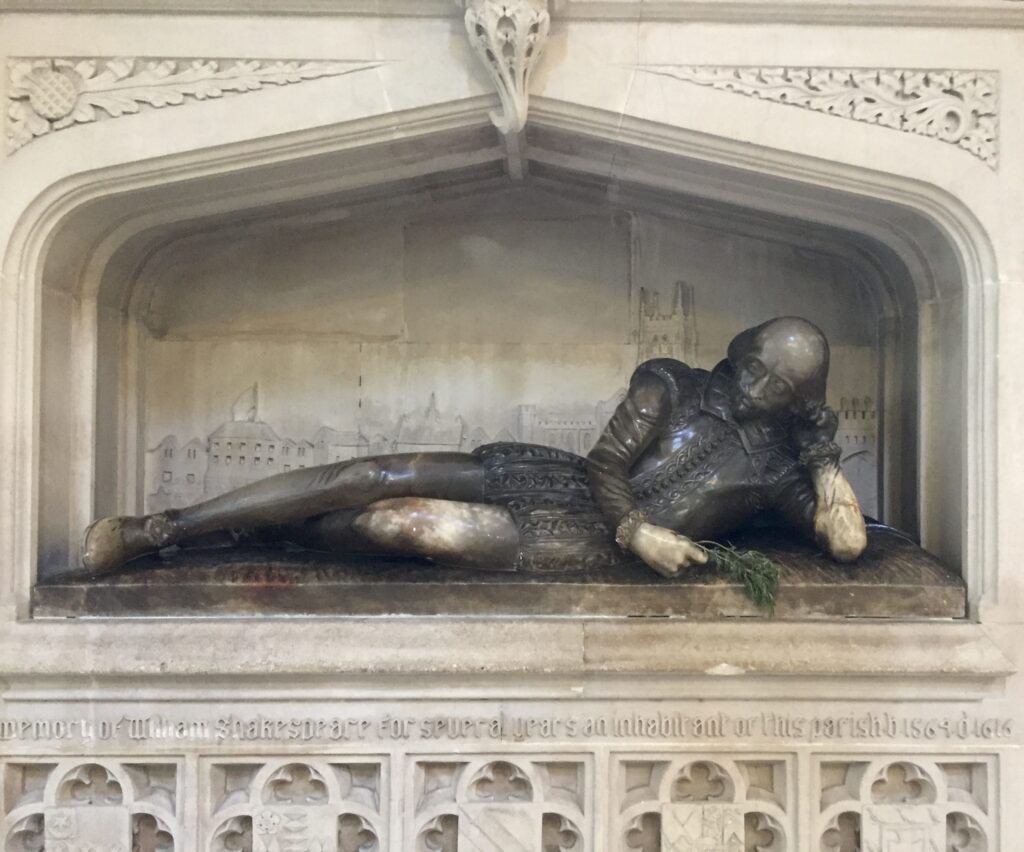
Below the window is an alabaster sculpture. Made by Henry McCarthy in 1912, it shows the world’s most famous playwright resting outside the Globe Theatre. He usually has a sprig of rosemary in his hand. The aromatic herb rosemary, as Ophelia says to her brother Laertes in Hamlet, is for remembrance; ‘pray, love remember’ …

I was very taken with this remarkably lifelike bust …

This is Lancelot Andrewes (1555 – 25 September 1626), the English bishop and scholar who oversaw the translation of the King James Version of the Bible …

Most importantly, I live in a block of flats named after him.

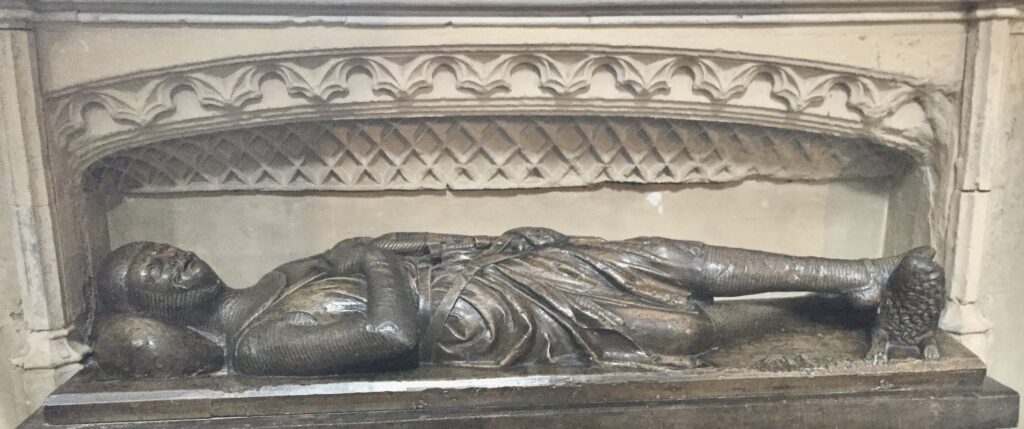
This effigy of an unknown knight is one of the earliest monumental wooden effigies in England, his mail coat and coif dating him to around 1280. He is believed to be a member of the de Warenne family who were benefactors of the priory …

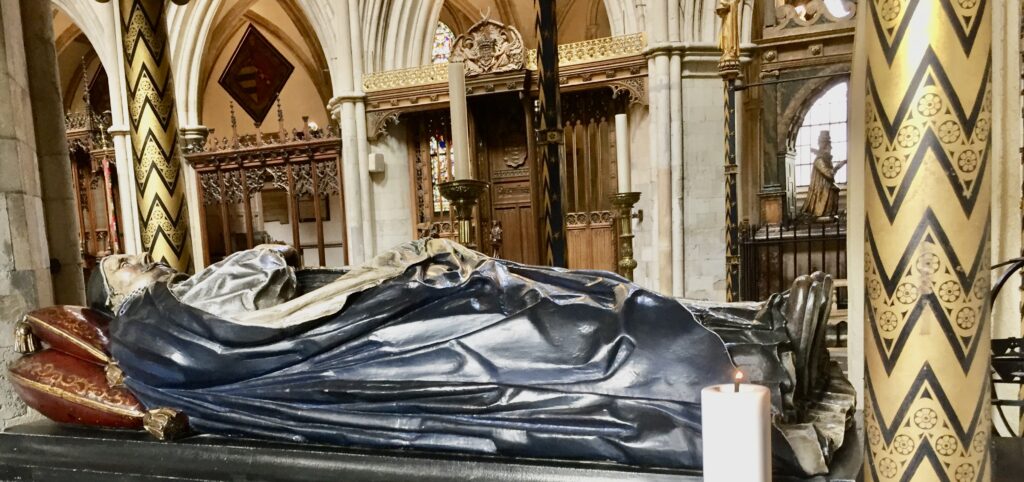
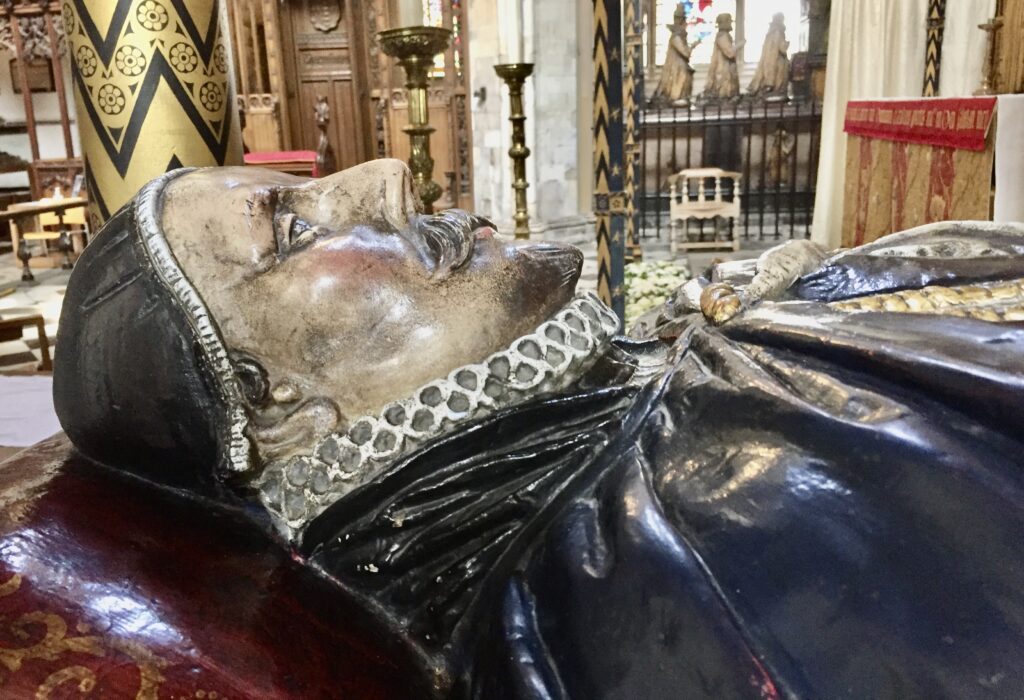
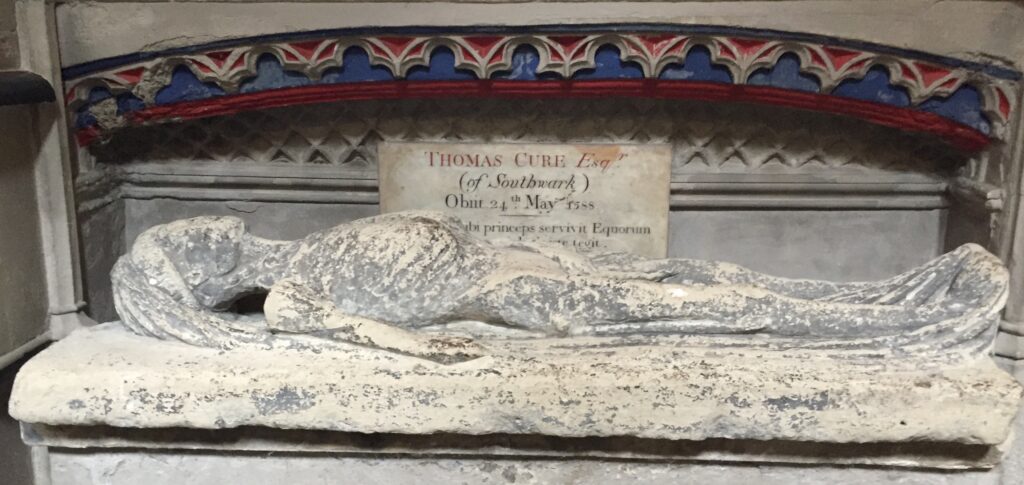
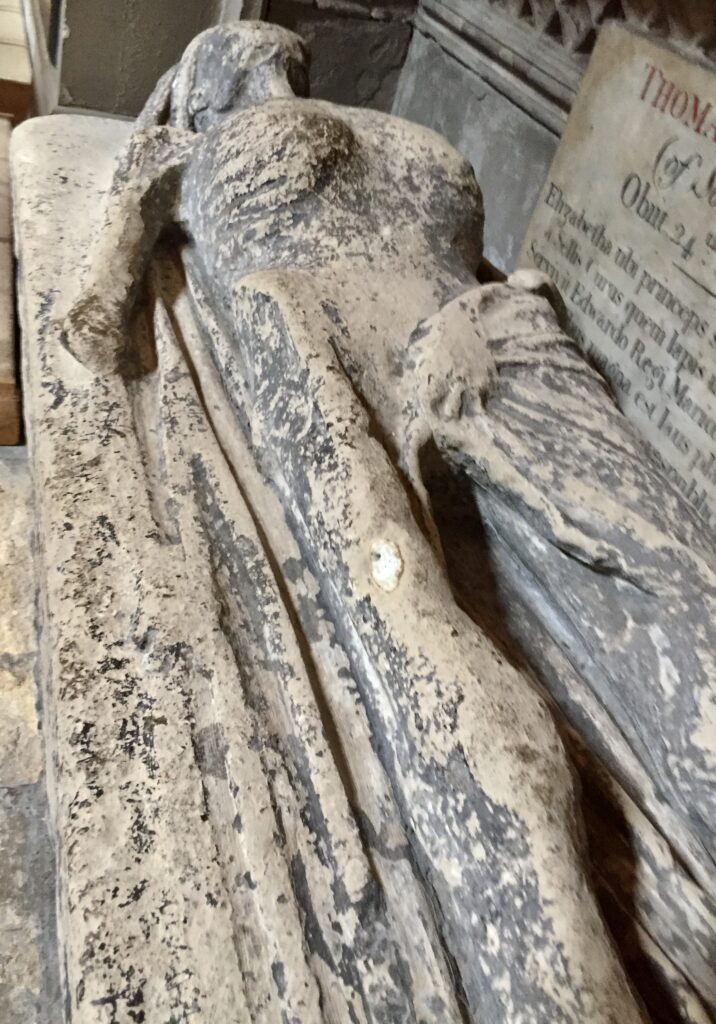
Thomas Cure was a very important person in Southwark and London. He was the MP locally, and in East Grinstead, as well as the Master Saddler to King Edward VI, Queen Mary I and Queen Elizabeth I. He founded almshouses for the poor and these stood for nearly 300 years in Park Street, until the new railways forced their move to West Norwood. Eventually they were relocated, in the form of modern sheltered flats, to Purley, Surrey in 2006. Cure died in 1588 and this is a ‘cadaver tomb’, reminding us all of our mortality …

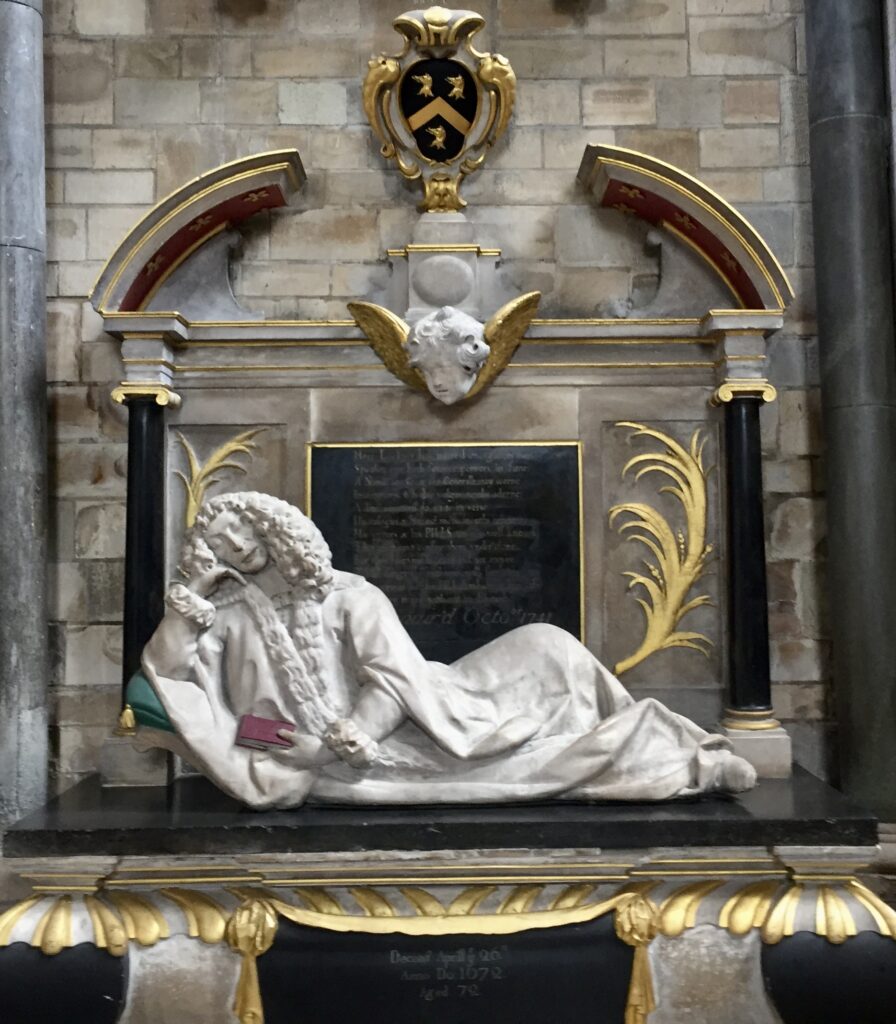
Is there anywhere in the world a more impressive monument to a quack ‘doctor’? Lionel Lockyer never qualified as a doctor (he was originally a tailor and a butcher) but became famous for his miracle pills that he claimed included sunbeams as an ingredient …

His tomb has an amusing inscription which includes the words …

His virtues & his PILLS are soe well known…
That envy can’t confine them vnder stone.
But they’ll surviue his dust and not expire
Till all things else at th’universall fire.

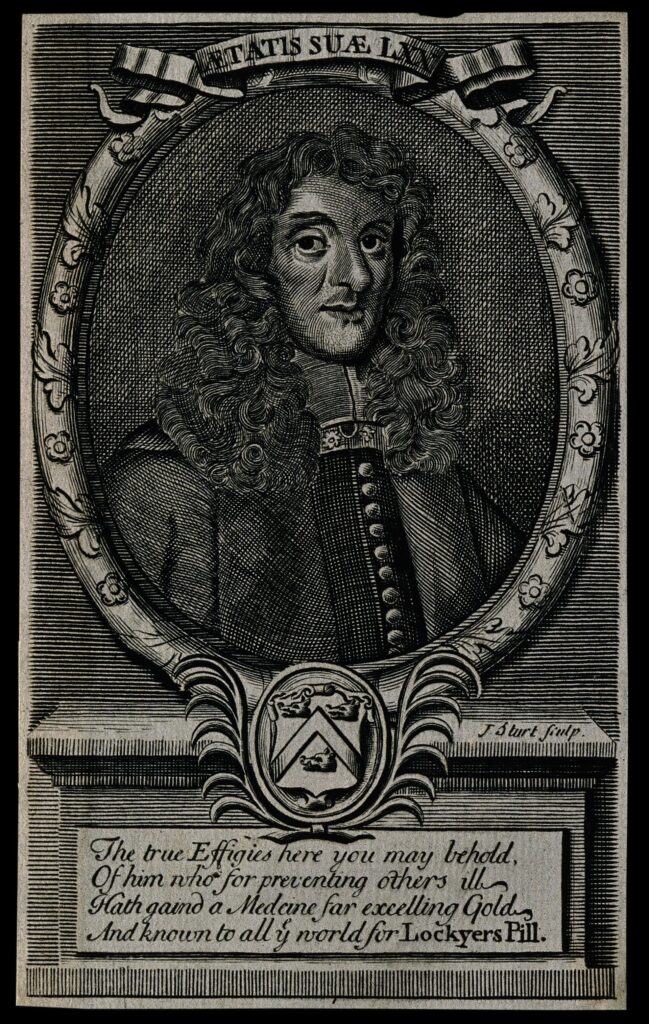
The man himself …

Lionel Lockyer. Line engraving by J. Sturt. Wellcome Library collections.

Following Lockyer’s death in 1672, his pills continued to be sold by his nephew, John Watts, in partnership with Thomas Fyge, an apothecary. The pills were sold wholesale in tins of 50 or 100 at a price of 4 shillings for 100. That equates to about two weeks’ wages for a skilled tradesman.

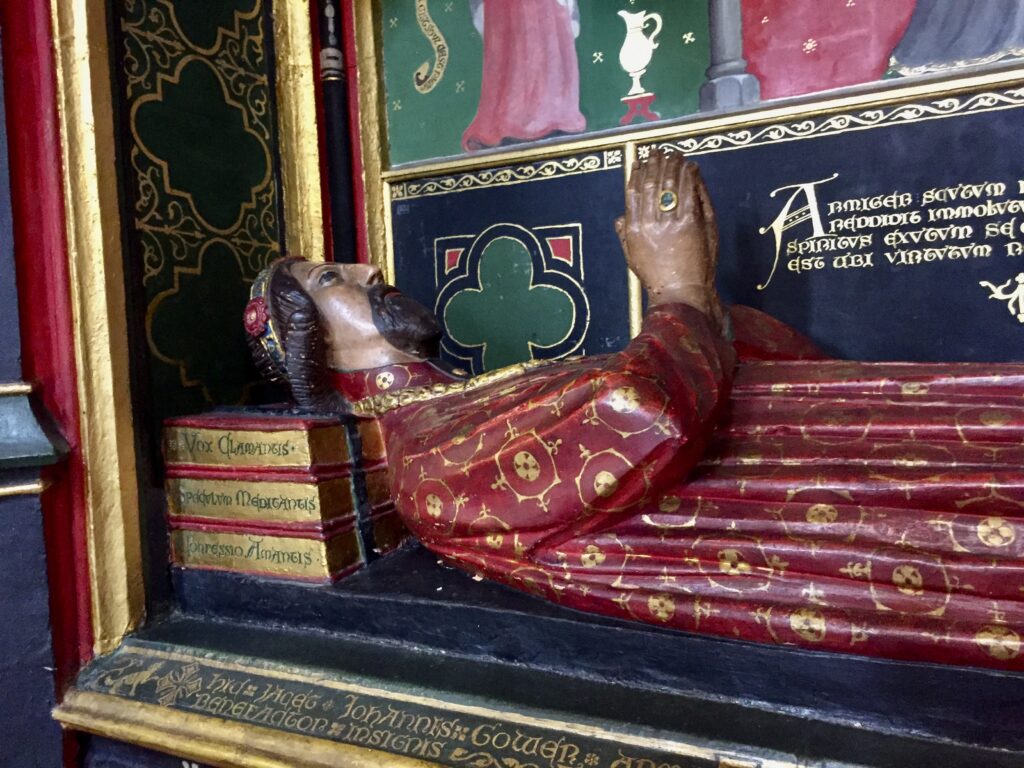
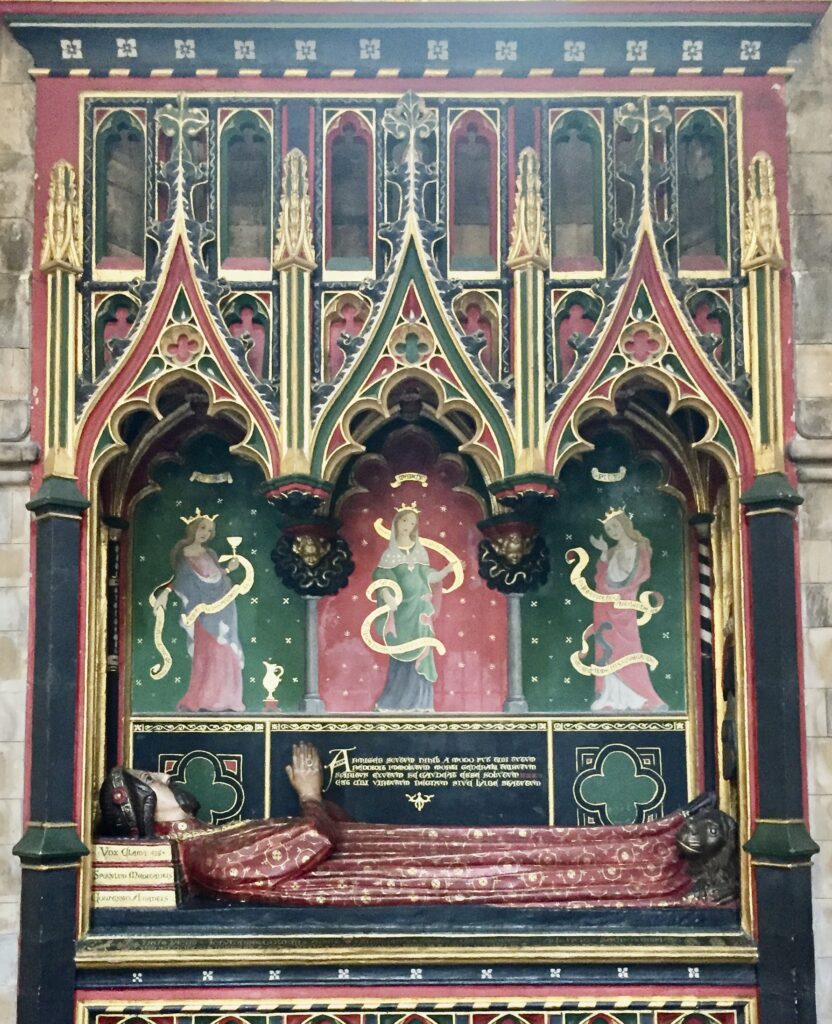
This is the tomb of John Gower. He was the Poet Laureate to Richard II and Henry IV and his head rests on his three best known books, Vox Clamantis in Latin, Speculum Meditantis in French, and Confessio Amantis in English. He died in 1408 …

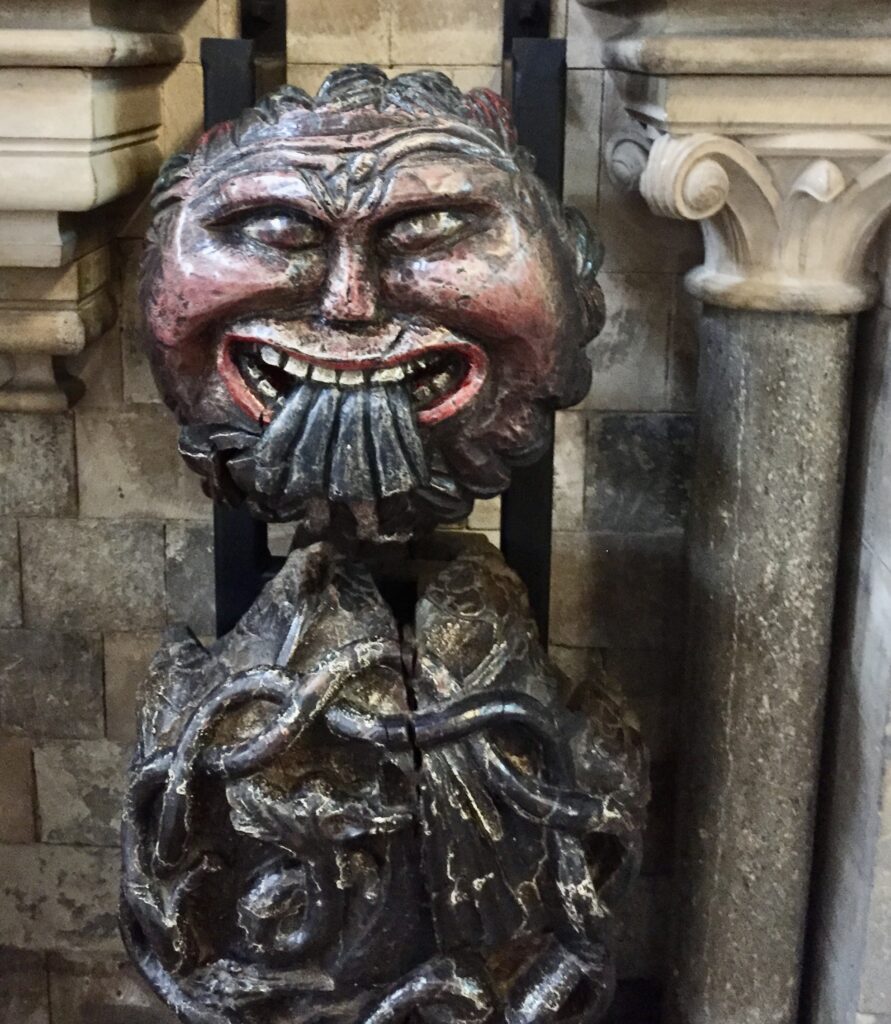
I finished my short visit looking at a collection of medieval roof bosses. In 1469 the roof of the priory church collapsed and the stone vaulting was replaced by a carved wooden ceiling. This is one from that ceiling and shows the Devil swallowing Judas Iscariot …

There was, of course, lots more to see at Southwark, so I shall return. I went on to have a wander around the area and will report back on that next week.

If you would like to follow me on Instagram here is the link …
https://www.instagram.com/london_city_gent/

More pics from my Instagram collection

I set up my Instagram account because I found I was taking more pictures outside the City and also because some City images didn’t fit into any neat category. You will find details of how to follow me at the end of the blog. Some of the other pictures here I just took for fun.

I hope you enjoy them – I’ll start with evidence as to how the local animals are practicing social distancing …

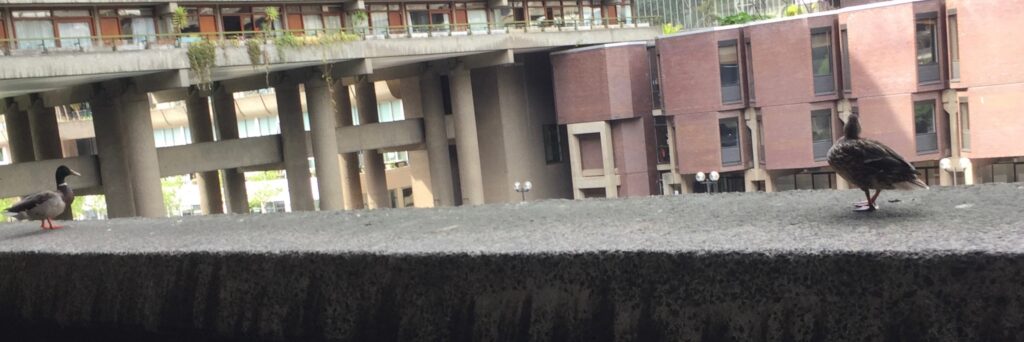
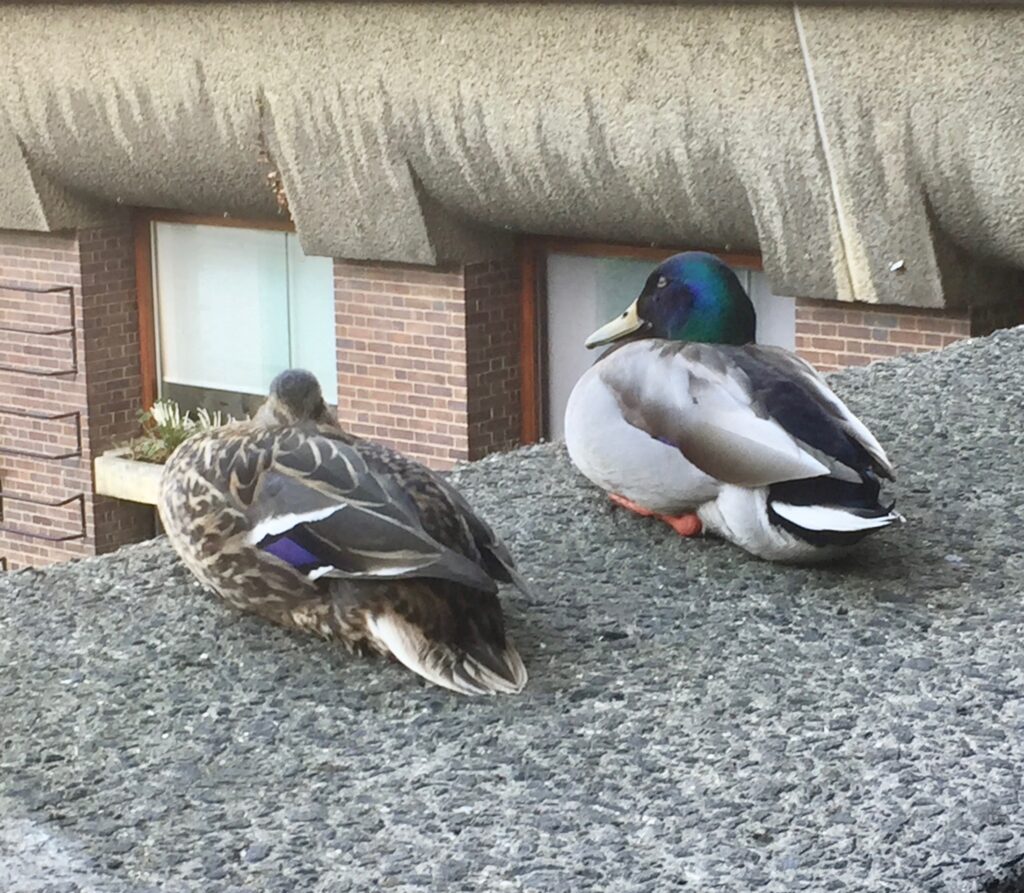
I love ducks. These two were fast asleep on the Barbican Highwalk in the early morning …

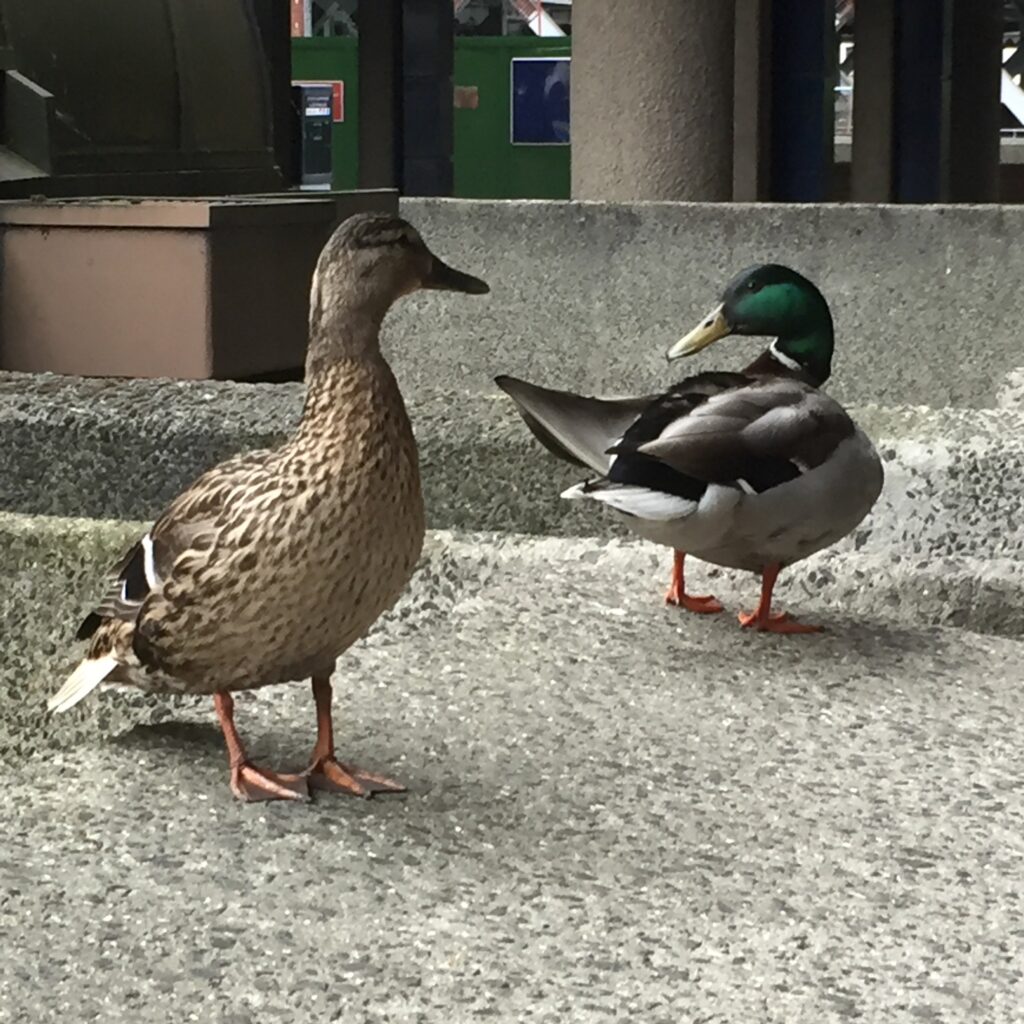
Still there later on (I didn’t wake them up). They are completely relaxed about having their picture taken and obviously like to strike a pose …

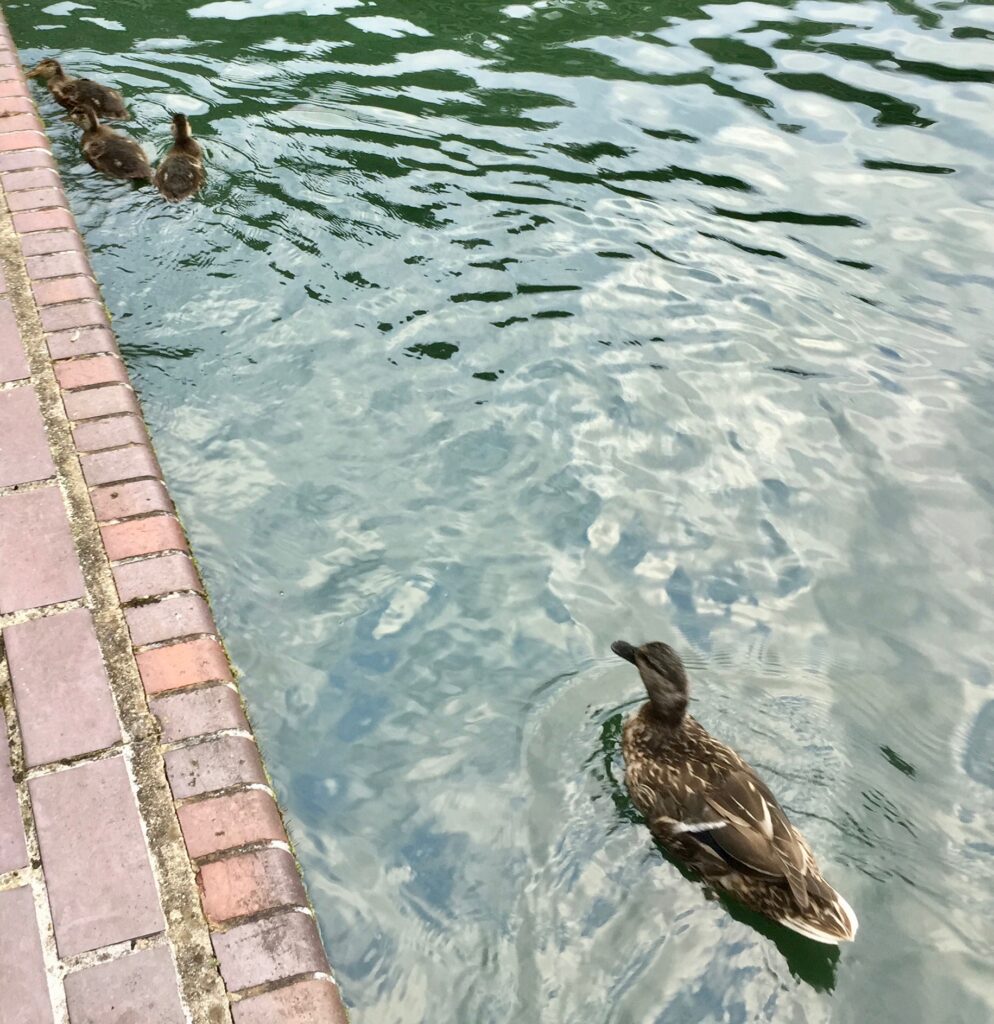
Now that people have deserted the City so have the seagulls. This is good news for the little ducklings who often provided the gulls (and the visiting heron) with a tasty snack. There are quite a few families now growing up quickly …

Mum keeps a watchful eye.

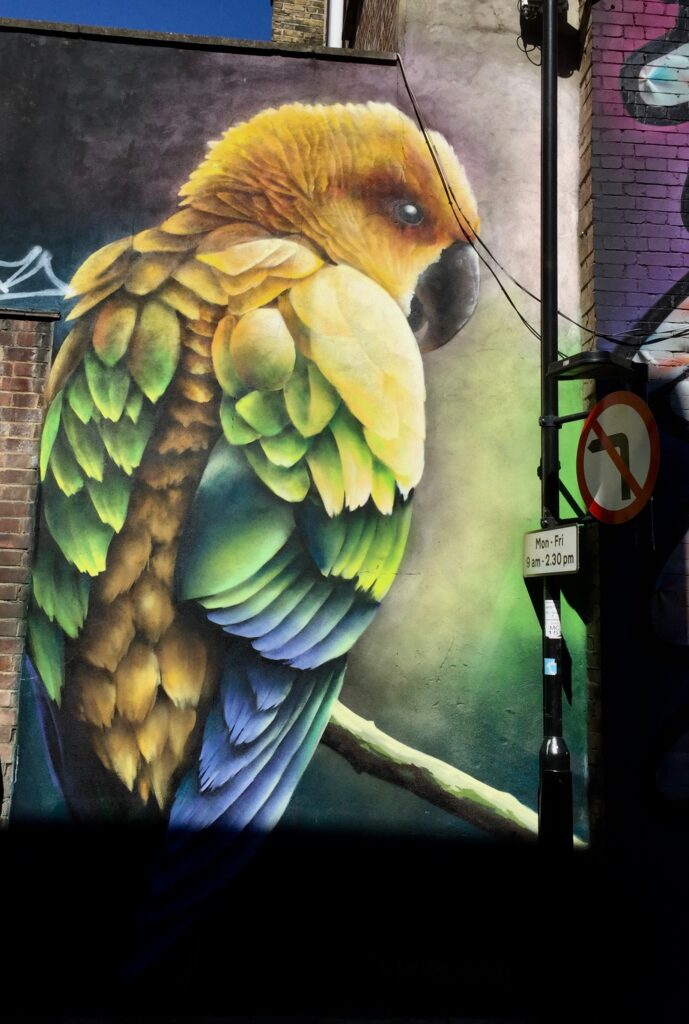
Another bird, a moody parrot near Whitecross Street …

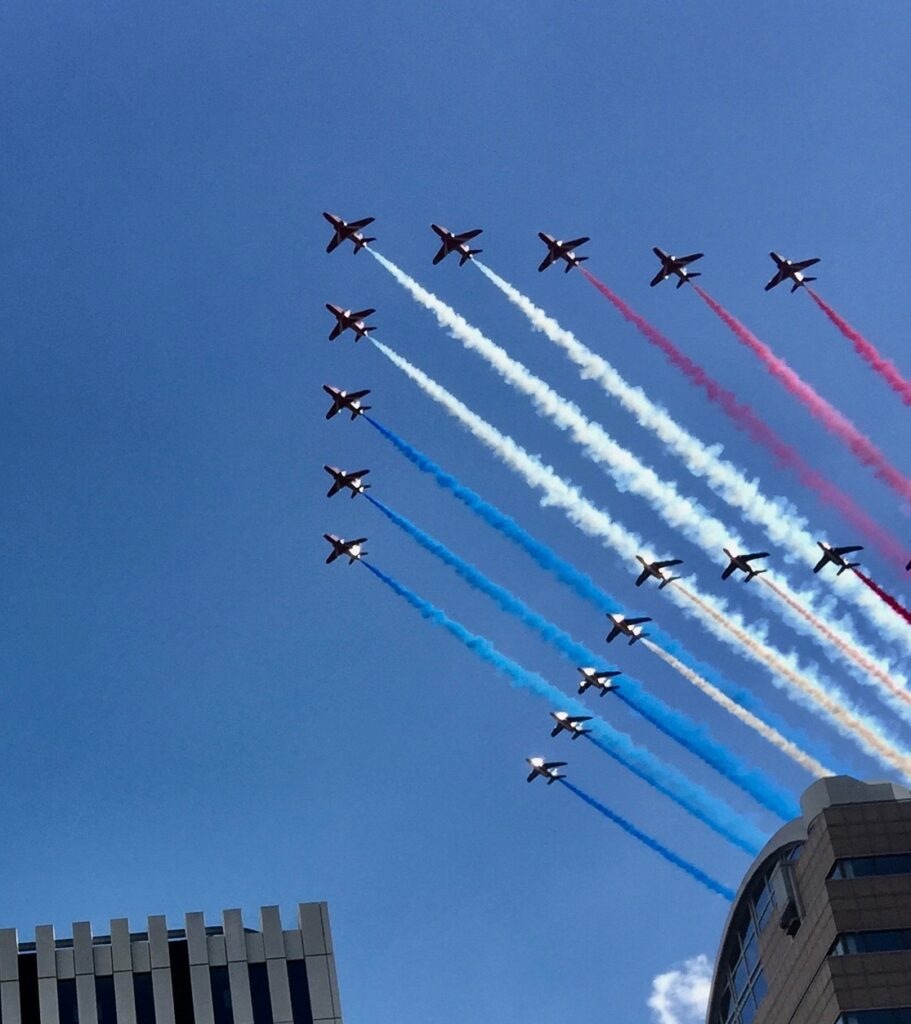
I managed to snatch this picture of the Red Arrows flypast accompanied by their French equivalent the Patrouille de France (PAF). They took to the skies on June 18th to mark the 80th anniversary of a famous wartime speech by General Charles de Gaulle …

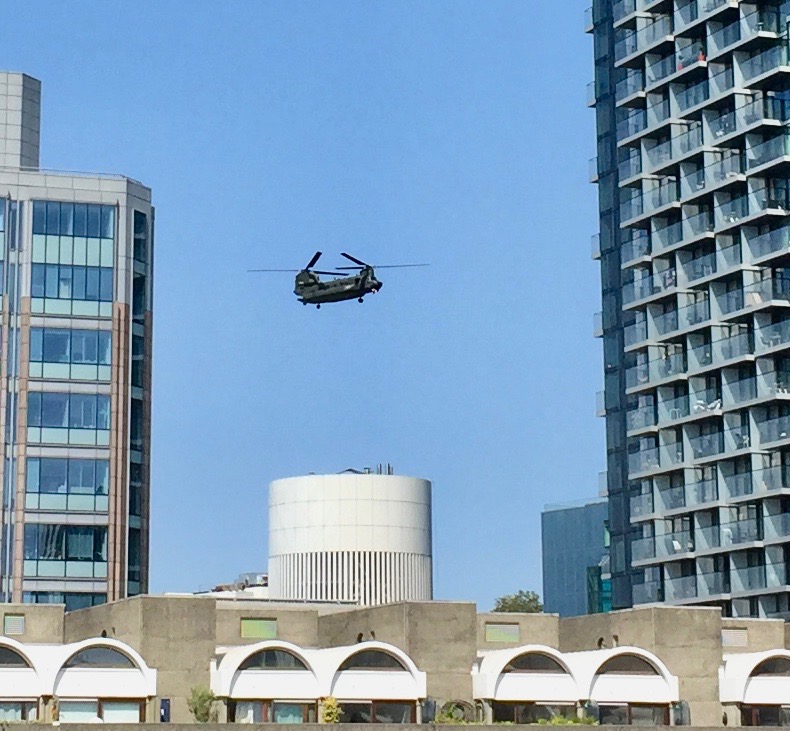
Still on an aviation theme, every now and then a Chinook helicopter practices landing in the Honourable Artillery Company’s field just off Moorgate. The noise sounds like you are in a Vietnam War movie …

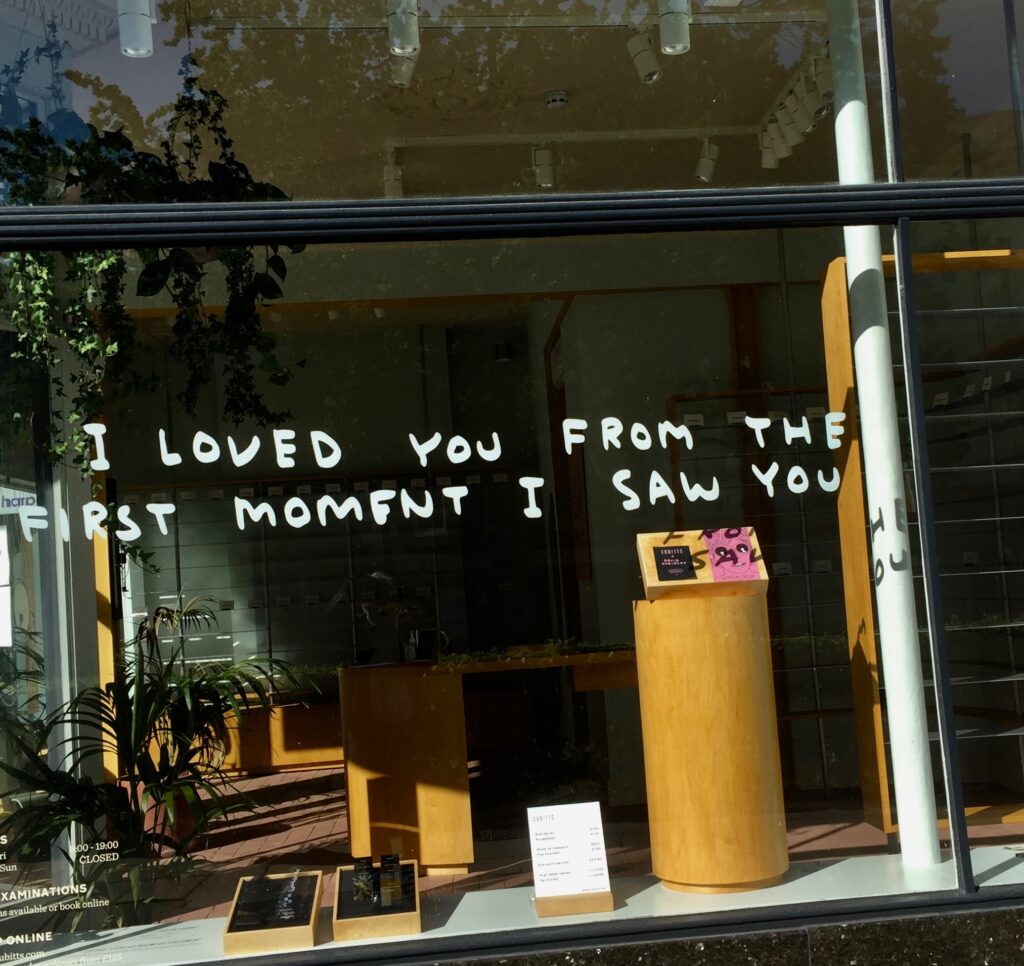
What about this enigmatic message on an optician’s window on London Wall …

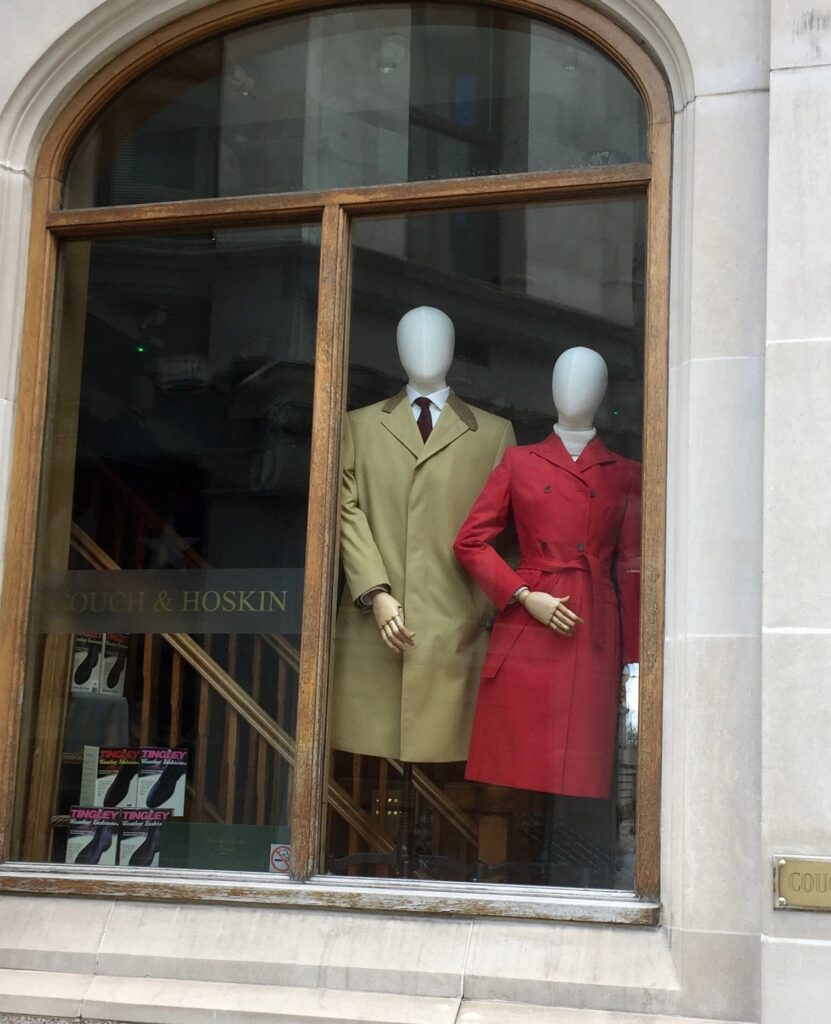
On the other hand, I thought these models in an Eastcheap shop looked really creepy …

Like creatures out of a Doctor Who episode.

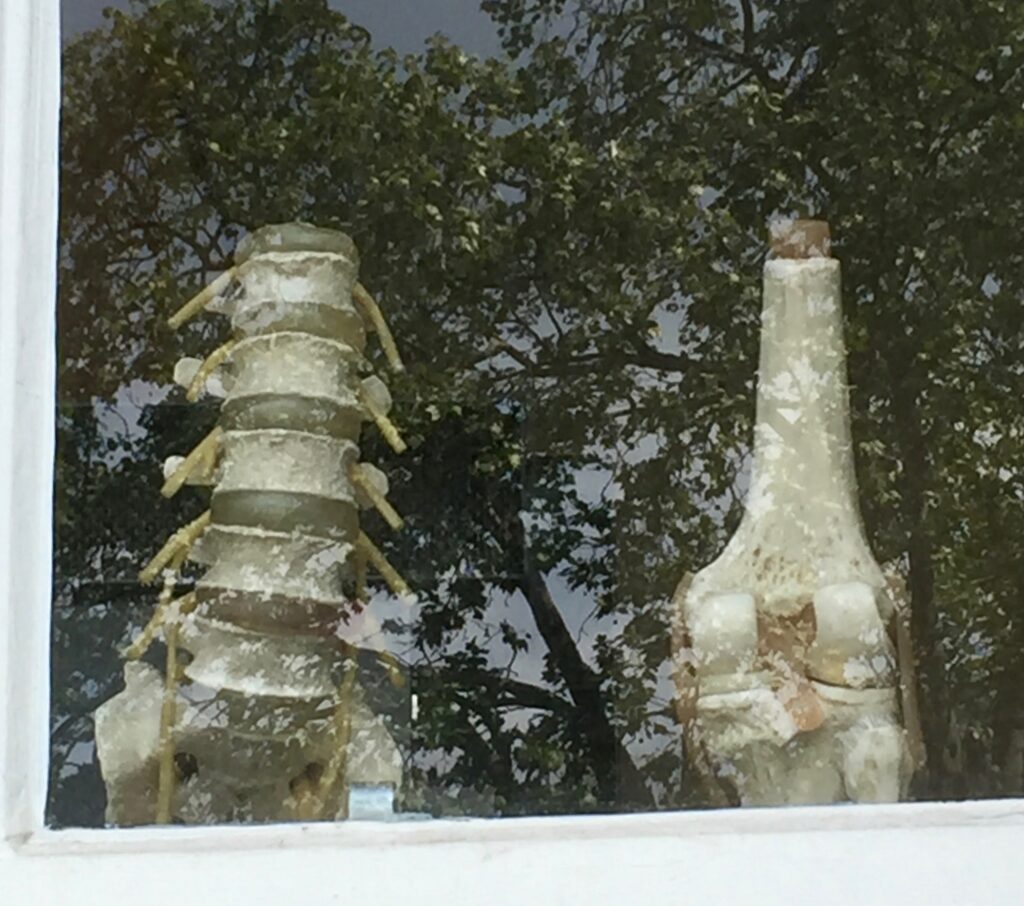
I suppose these bony teaching aids glimpsed through a Bart’s Hospital window are also a bit disturbing …

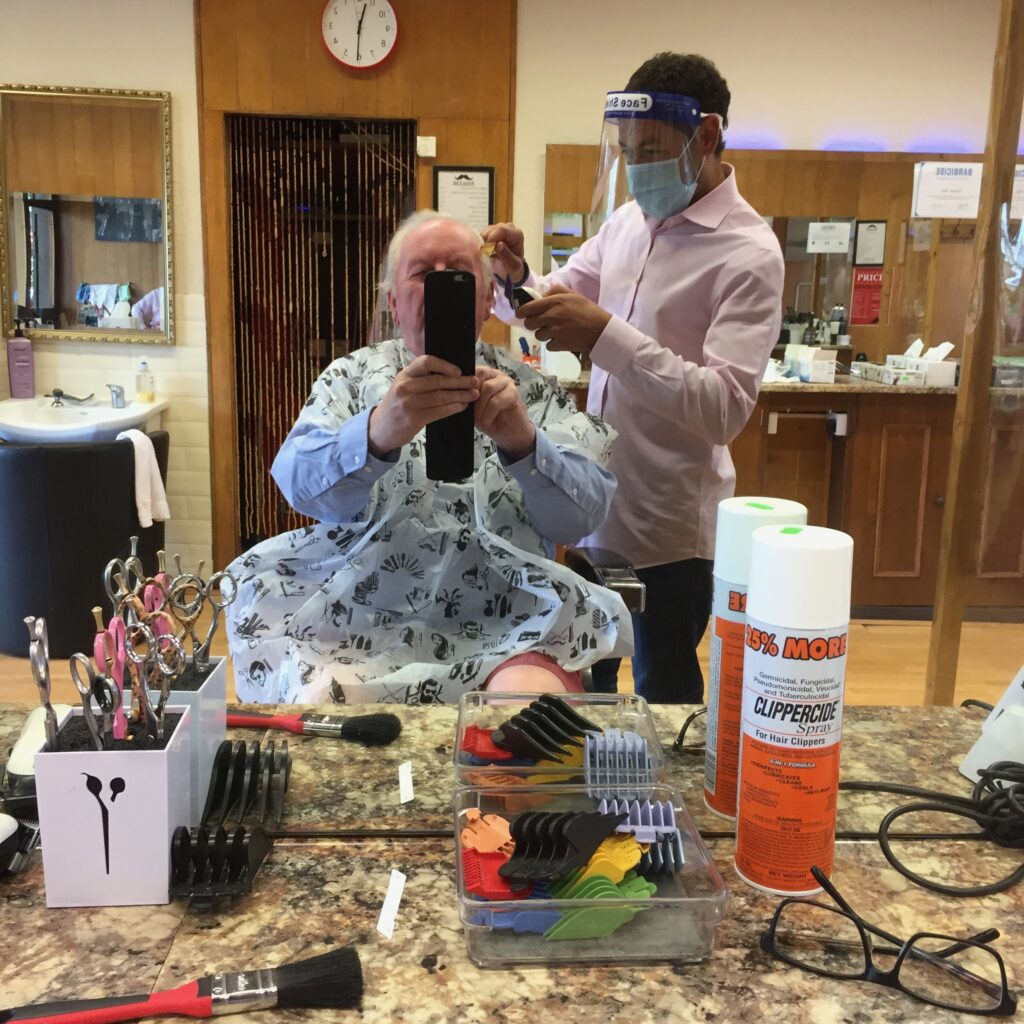
High spot of the easing of lockdown – getting a haircut …

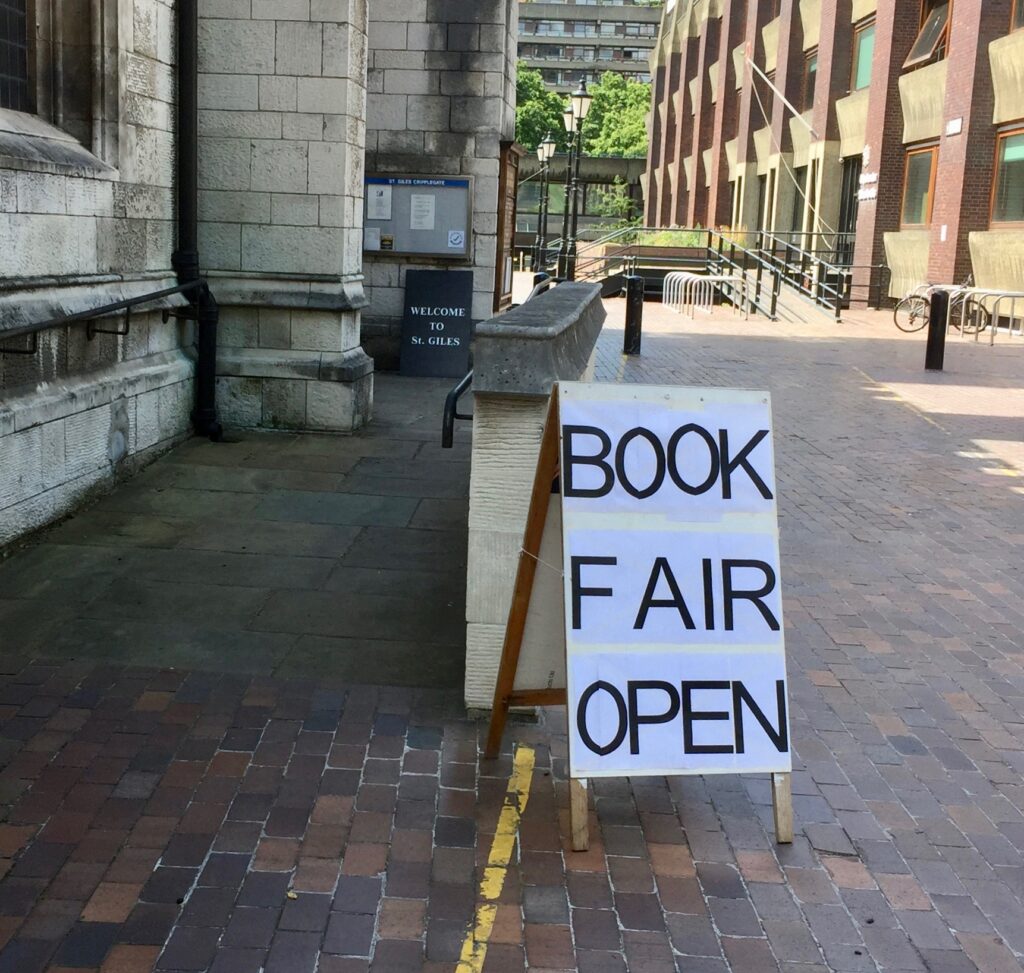
Second high spot …

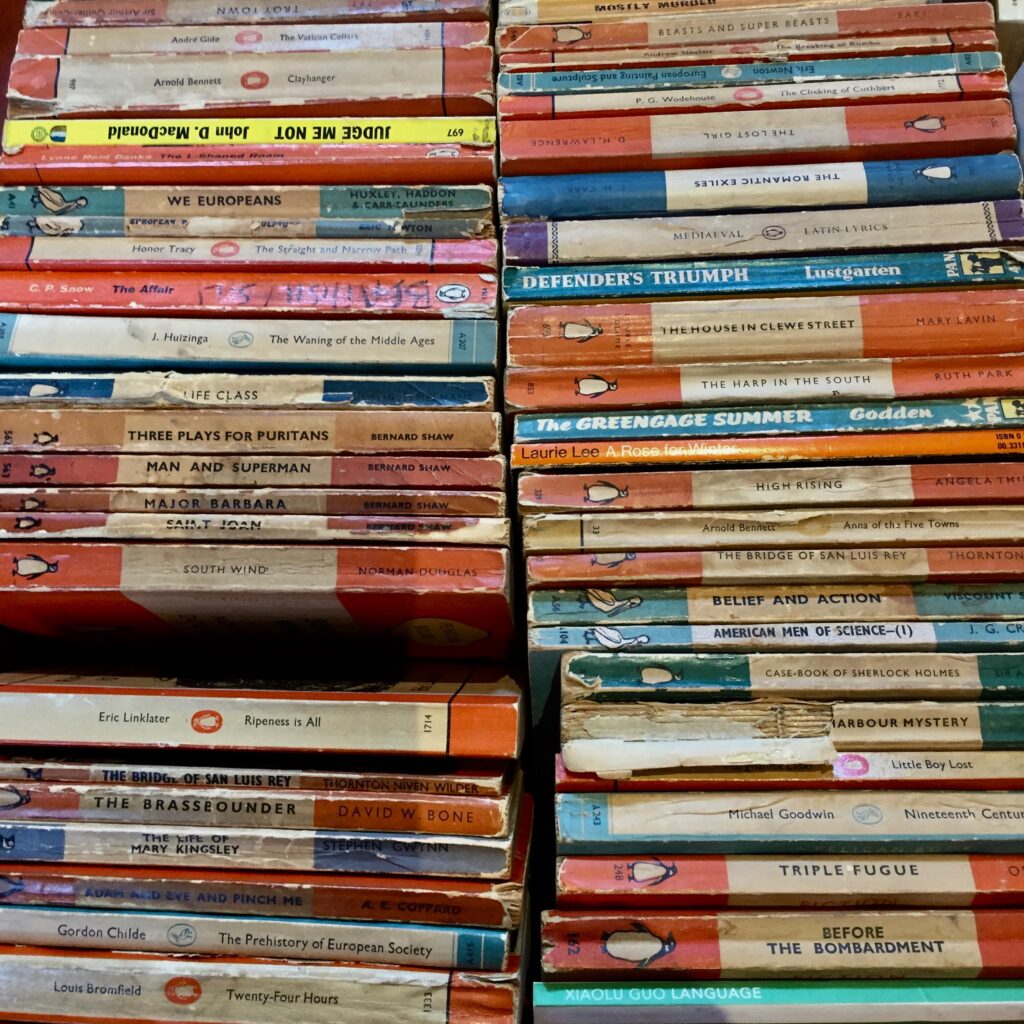
I do like to tuck into a Penguin …

Oh how the simple pleasures of life take on a new importance when you are deprived of them!

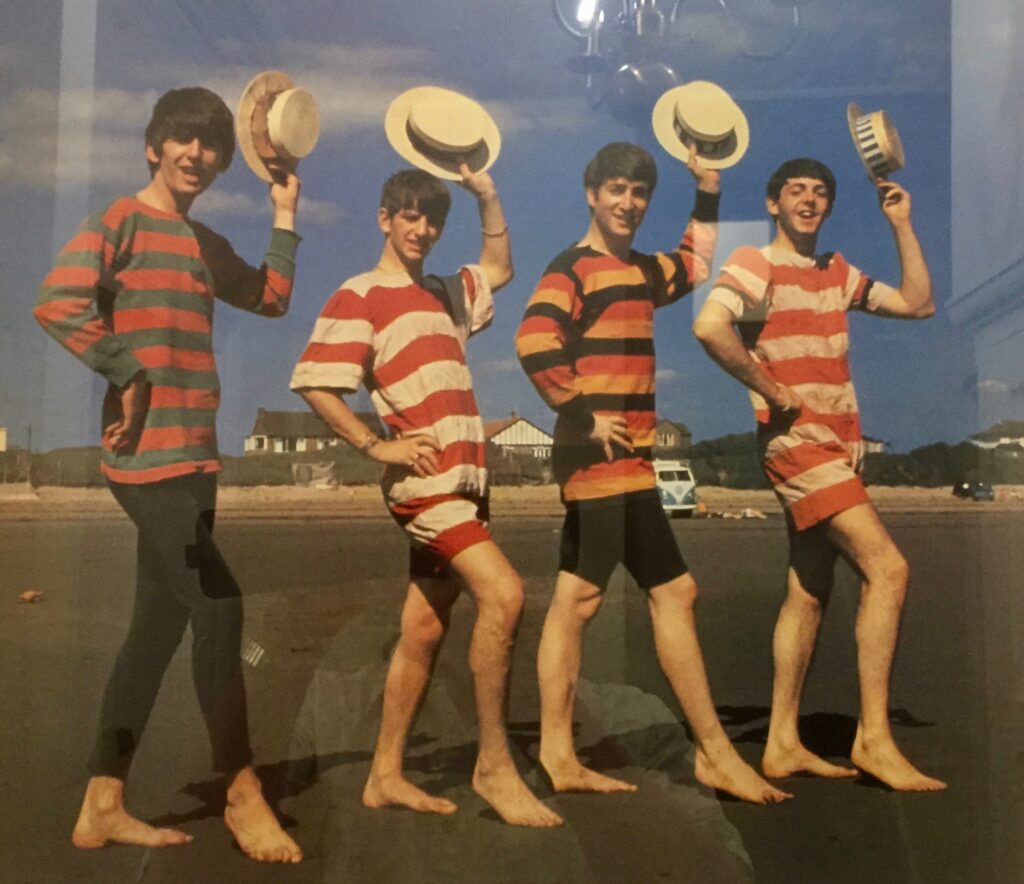
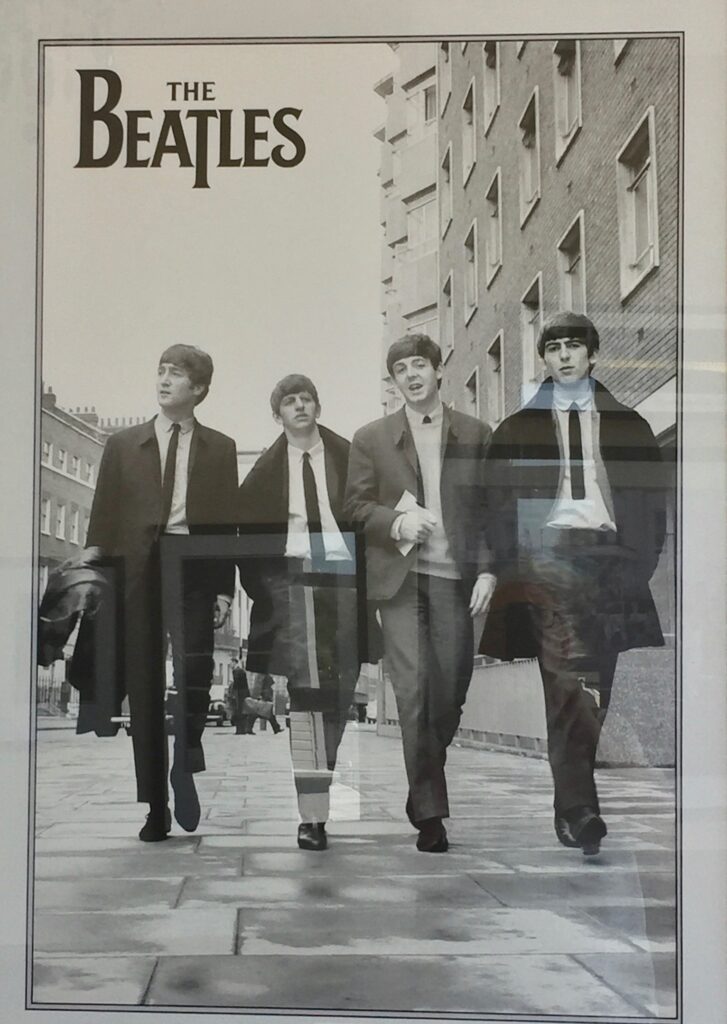
The hotel I stayed at in Eastbourne last week had some very interesting items displayed on the walls. I liked these pictures of The Beatles in their early days but they made me feel a bit sad and nostalgic too …

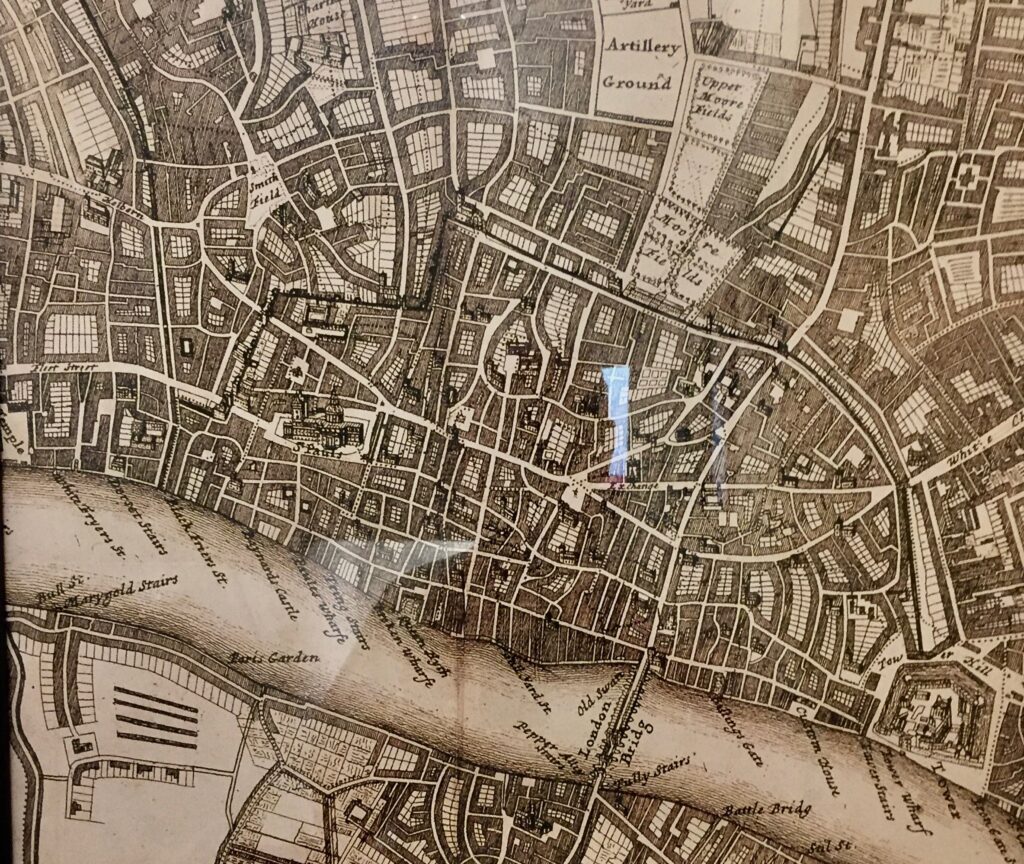
To my delight the hotel also had a reproduction of a very early map of London …

Note particularly Smooth Field and the three dimensional representations of St Paul’s Cathedral and the Tower of London.

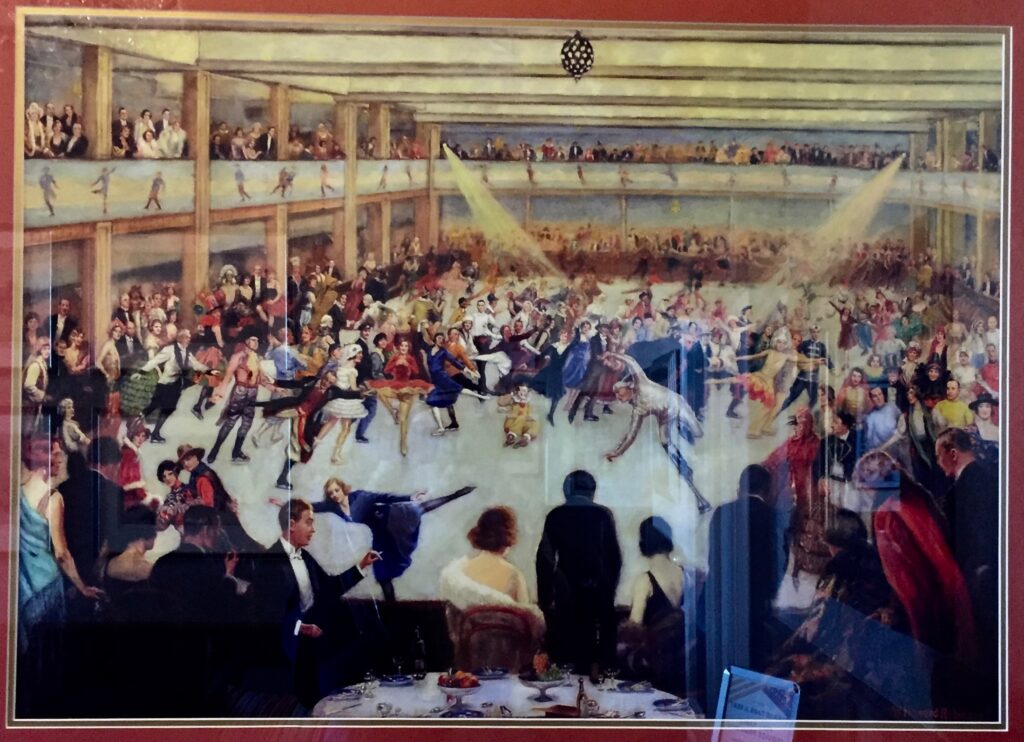
This was fascinating …

The picture is entitled …

Ice Carnival held at Grosvenor House, Park Lane, 31st October 1930 in the presence of the Prince of Wales with Mrs Wallis Simpson who was always seated three places from him in public.

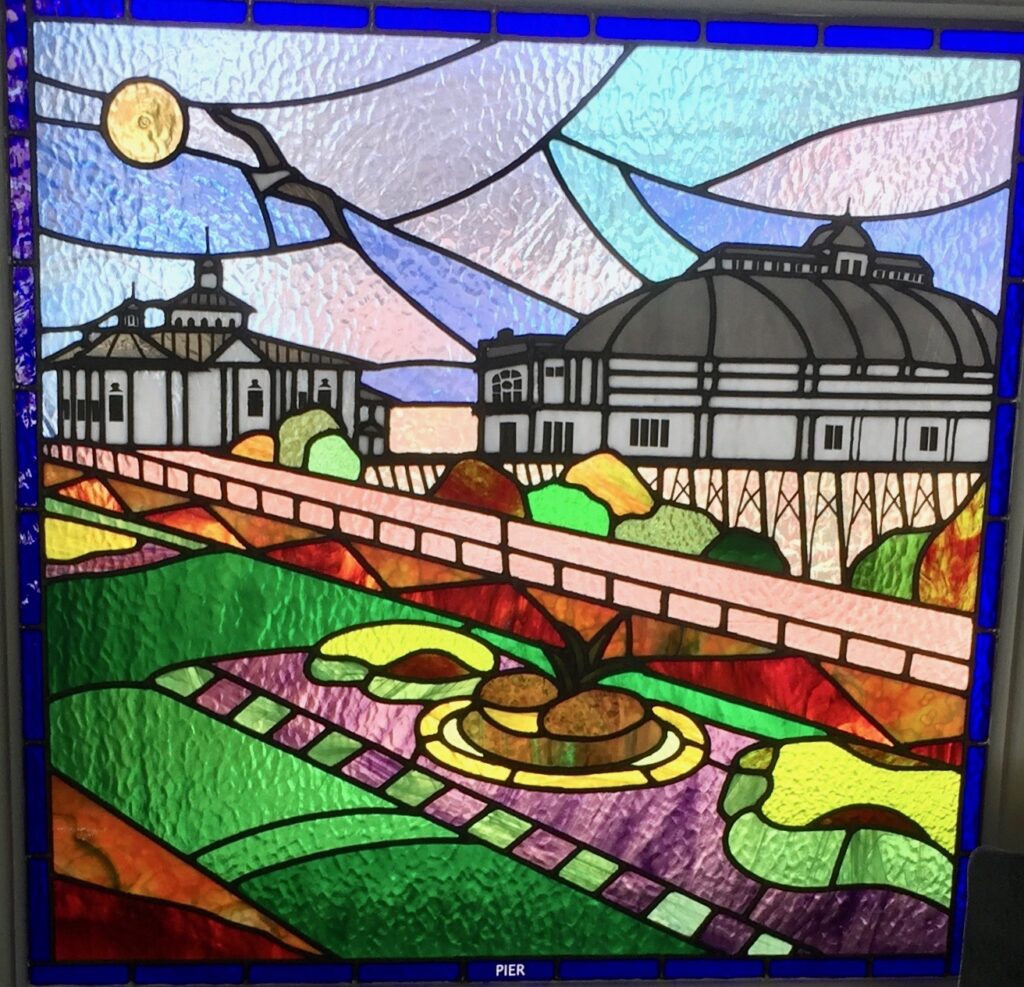
There was some nice stained glass too …

The hotel is the Langham and I highly recommend it.

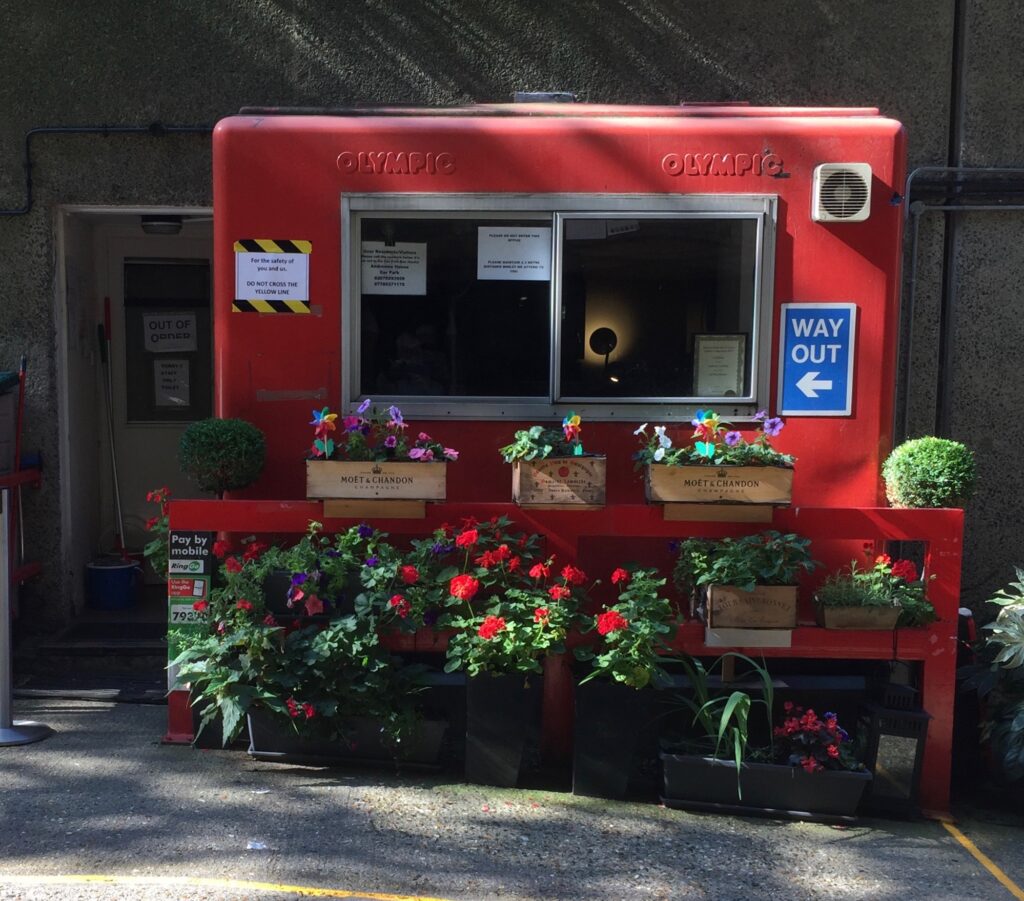
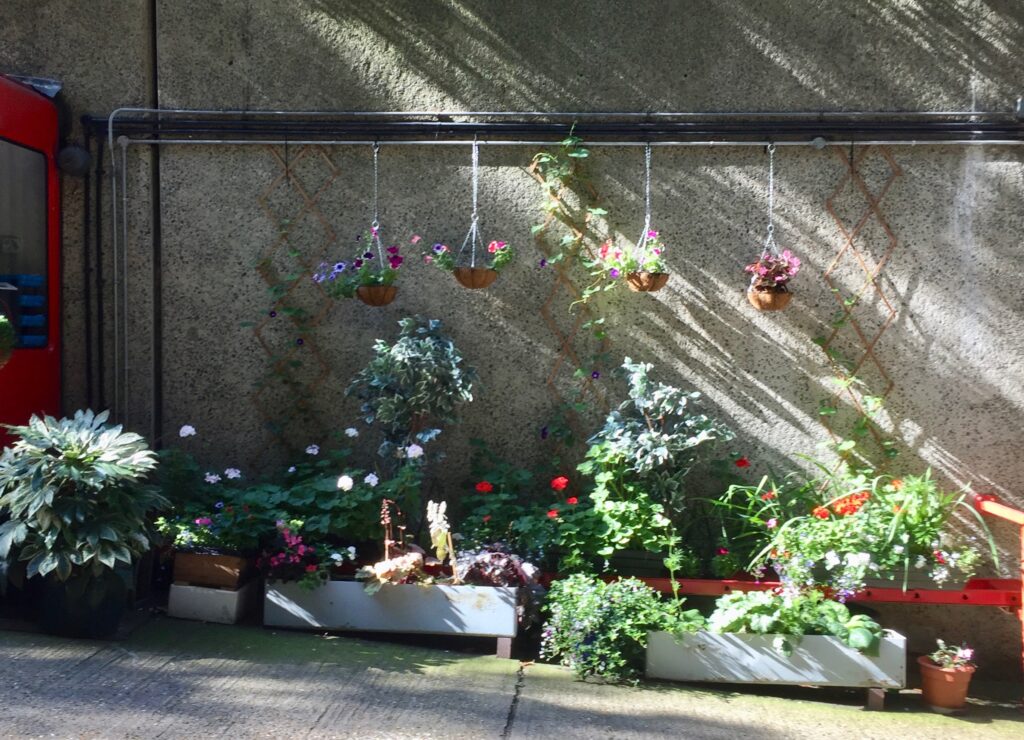
Our Car Park attendant and concierge has green fingers and has improved the environment immeasurably …

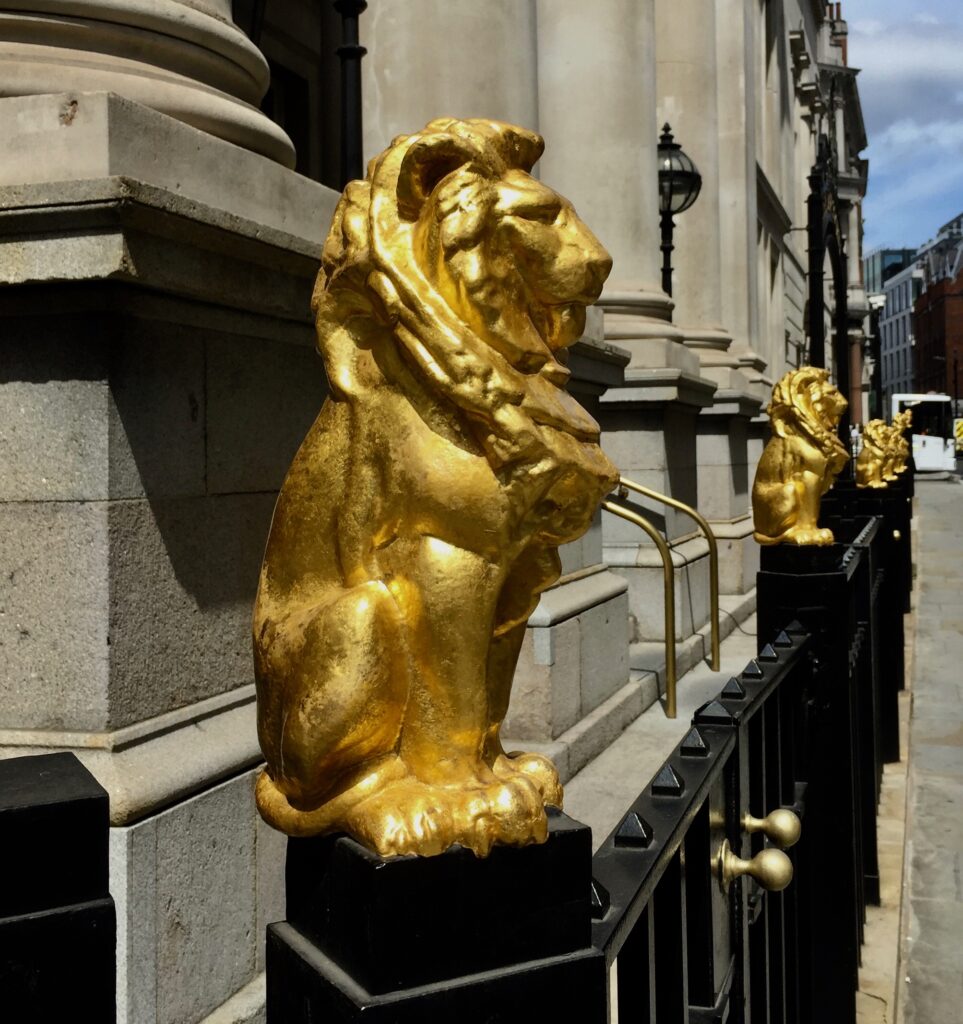
I like these golden lions outside the Law Society …

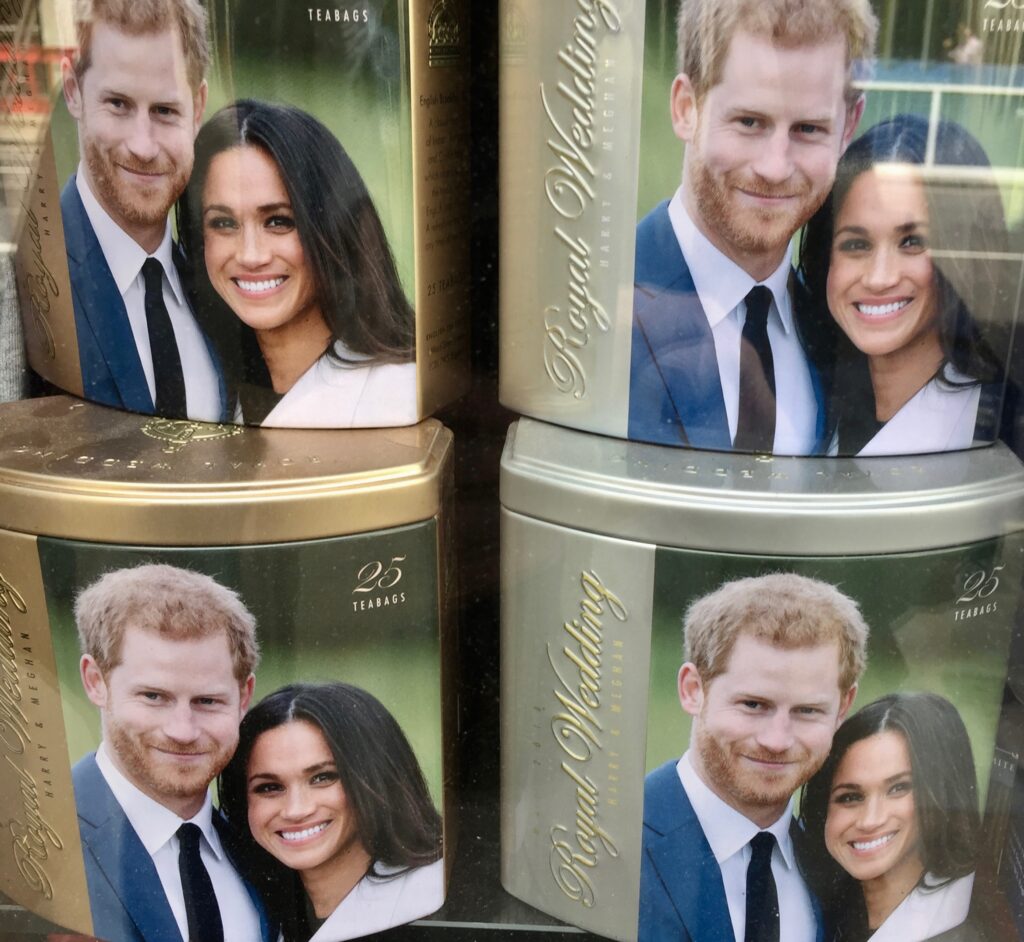
Royal Wedding teabags are still available at this shop on Ludgate Hill …

Hurry hurry hurry while stocks last!

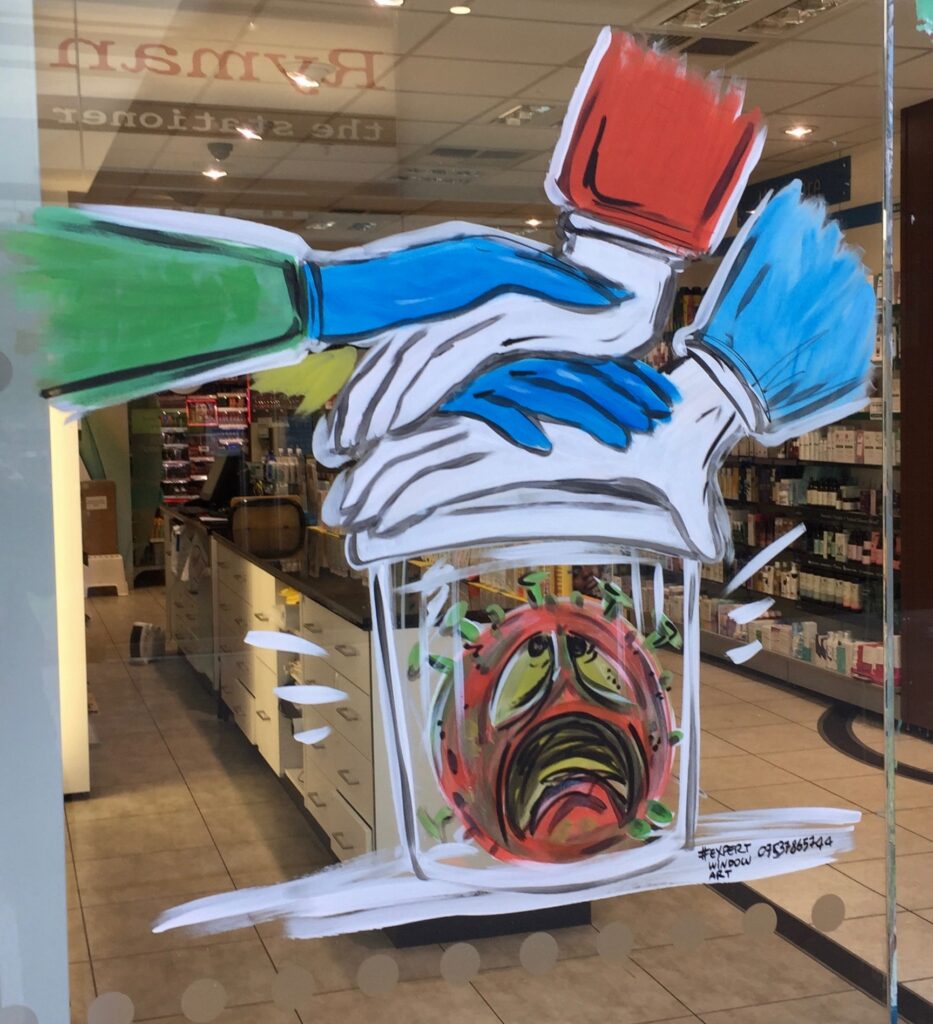
Pharmacy humour …

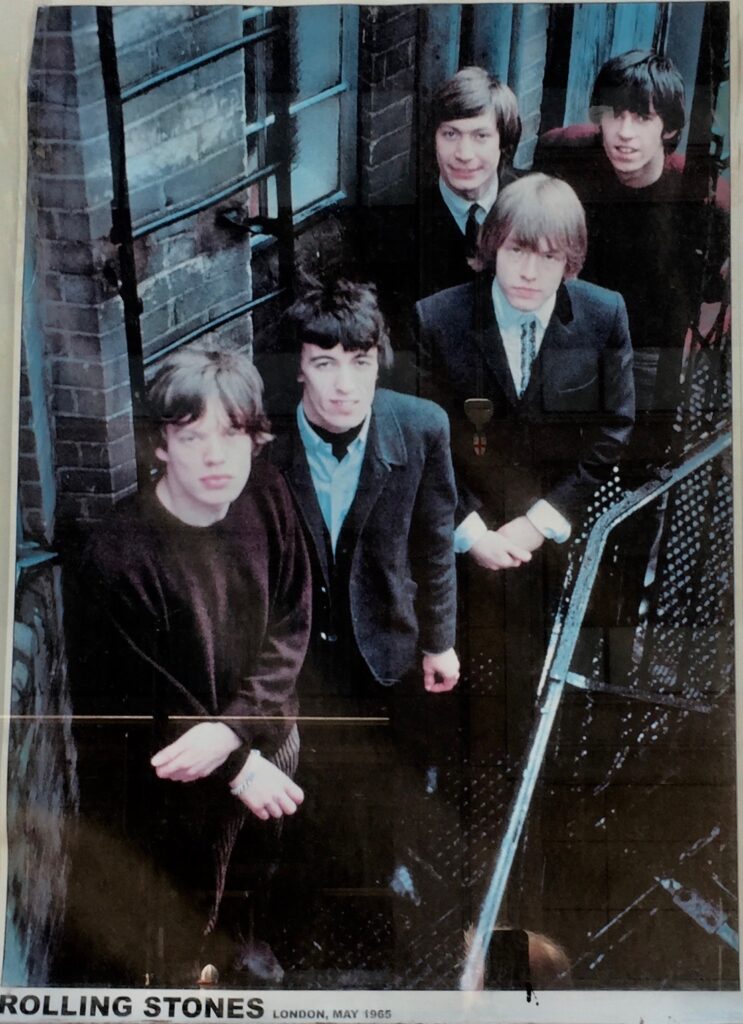
Another pop group caught my eye – a picture in a music shop window of the Rolling Stones in May 1965. Who would have thought they would still be touring 55 years later (apart from poor Brian Jones, of course) …

And finally you will be relieved to hear …

If you would like to follow me on Instagram here is the link …
https://www.instagram.com/london_city_gent/

The only Catholic church in the City

I have been researching the history of St Mary Moorfields in Eldon Street (EC2M 7LS) and Catholic worship in the City generally.

For over two hundred years, after the 1559 Act of Uniformity, Catholics were forbidden to worship in public until the Catholic Relief Act of 1791. A chapel was opened in 1686, but had to be suspended in 1689. From 1736 there was a chapel in Ropemaker’s Alley but its altar, fittings and crucifixes were ripped out and destroyed in the Gordon Riots of 1780. This was succeeded by a chapel in White Street. Its replacement in 1820 by a large Classical church in Finsbury Circus sponsored by laypeople marked a turning point in the size and stylistic aspirations of Catholic churches. The final church of the first wave of building that succeeded the Relief Act, it was probably the finest in structure and decoration and also the largest Catholic church in London. It was called St Mary Moorfields after its location …
‘Celebration of High Mass on Christmas Day’ – Picture: Wikimedia Commons

In 1884 the Church acquired a huge site off of Victoria Street in west London. The construction of what would be Westminster Cathedral commenced in 1895 and in 1899, when parts of the new building became usable for worship, the Moorfields church was sold and demolished. It was replaced by the present building in Eldon Street which was designed by George Sherrin and opened on 25th March 1903. The name remained the same even though it was no longer in Moorfields.

The entrance is squeezed in between two shops and if you are walking along the north side of Eldon Street it is easy to miss it completely unless you look up and see the Papal tiara over the doors …
View from the South side of Eldon Street.

The facade is of Portland stone with some intricate decoration either side of the entrance. Note the hammer, pliers and three nails representing the crucifixion. Further up there is a scourge and a crown of thorns …

Alongside are scenes from the life of the Virgin by J Daymond …

These two represent the Annunciation and the Nativity.

Above them is a statue of the Virgin and child being crowned by cherubs …

I think the interior is magnificent. The classical como marble columns around the altar come from the old church …

As does the High Altar itself …

It is modelled in the form of a sarcophagus to recall the ancient practice of celebrating Mass on the tombs of martyr-saints in the catacombs of Rome.

The wide becherubed font also made the journey from Moorfields but the cover is from around 1900 …

The church enjoys very little natural light. In fact when the building was erected the floor had to be lowered three feet to protect adjoining buildings’ ‘ancient lights’. As a result the stained glass window is artificially illuminated …

It depicts the Assumption.

One of the side chapels …

The oak wood carving in the church is very attractive and is also by Daymond …

The tympanum above the shrine to St Thomas More at the south end of the aisle portrays his execution in 1920s mosaic style …

It is a lovely little church to visit and when I have popped in occasionally pre-Covid there was a very atmospheric whiff of incense.

You can find details such as mass times on the website.

Incidentally, there were other survivors from the 1899 demolition, four stained glass windows which found their way to St Joseph’s Lambs Passage (EC1Y 8LE), a small chapel in the basement of a former school of 1901. Despite what the sign on the building says, it is not actually a church but a ‘chapel of ease’ to St Mary’s. Such chapels were built within the bounds of a parish for the attendance of those who could not reach the parish church conveniently …

As a result of wartime damage only two windows survive and this is one of them (The Agony in the Garden). I wasn’t able to access the building to take pictures so the image comes from the internet …

Details of the chapel, its history, services and place in the community can be found here.

Remember you can follow me on Instagram :

https://www.instagram.com/london_city_gent/

Page 7 of 9

Powered by WordPress & Theme by Anders Norén