Walking the City of London

Category: Stained Glass Page 8 of 9

Moorgate and the Goddess of Electricity

Firstly, I hope you are all keeping well and safe in these troubled times, and that maybe my little blog occasionally offers a welcome distraction.

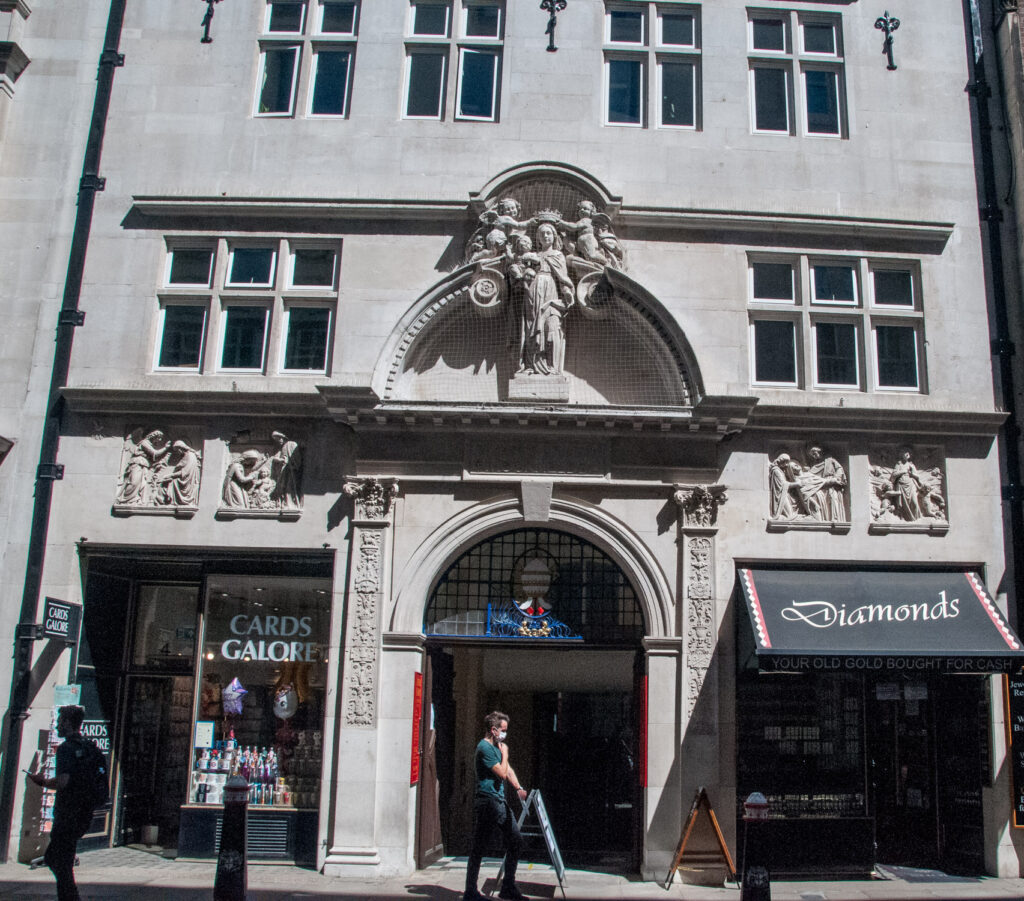
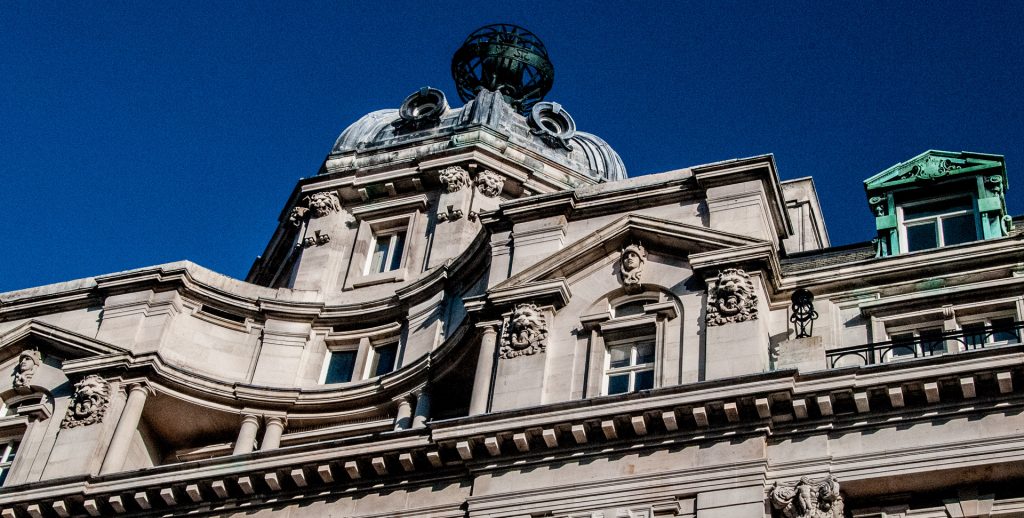
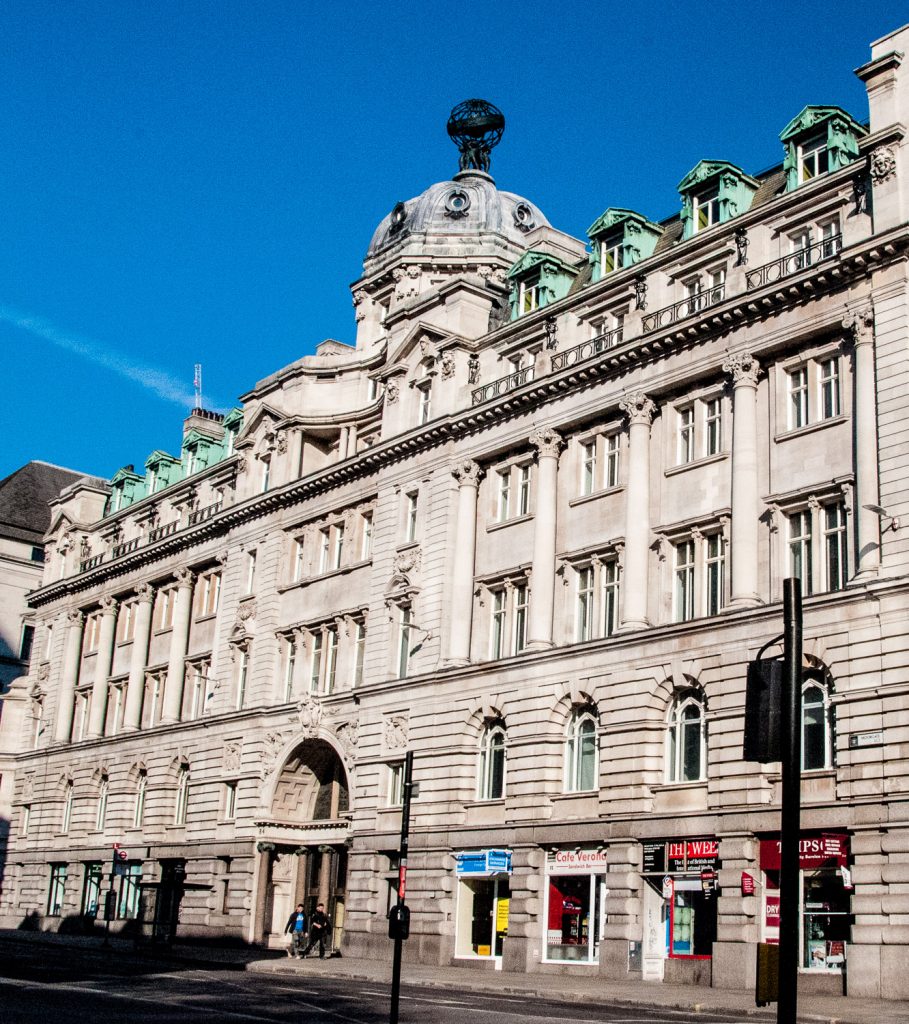
The diminished traffic flow in the City, combined with the recent really sunny days, meant that I could more easily incorporate some photography with the walks I take for exercise. I was able to pause for some time to take detailed images of this spectacular building on Moorgate …

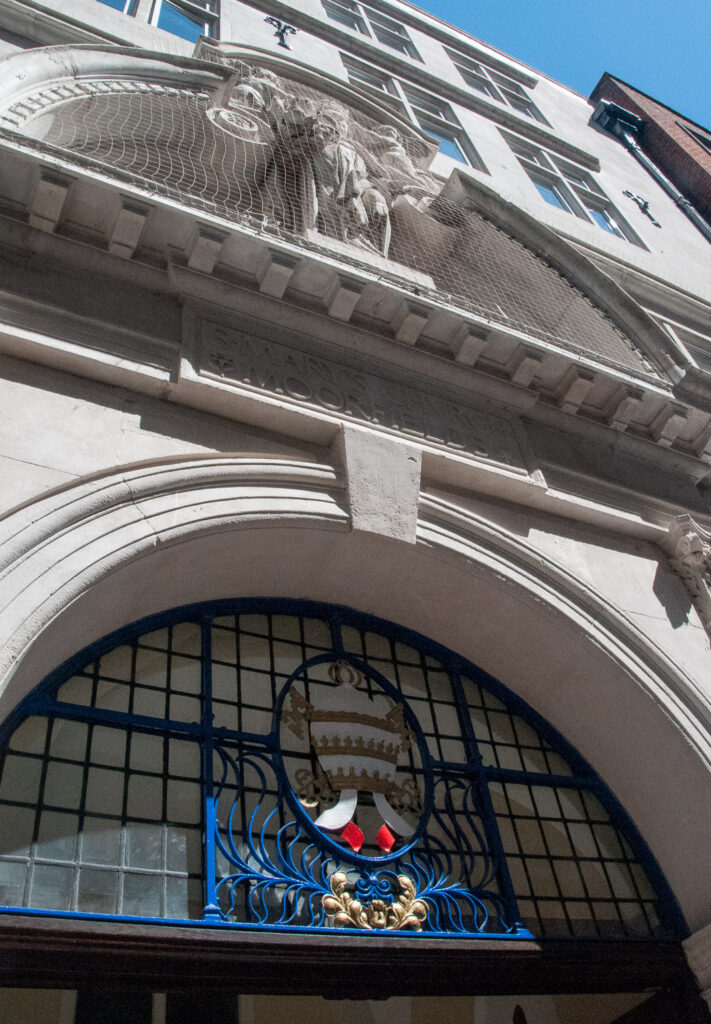
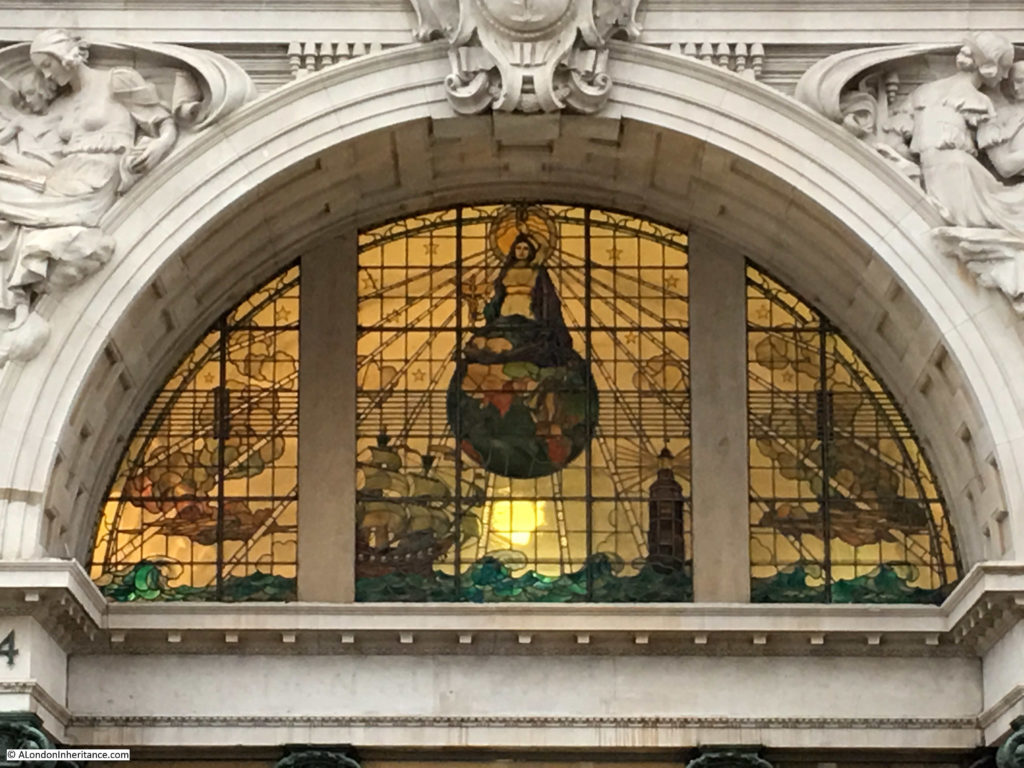
I think it’s crowning glory is its stained glass window, back-lit from within so its detail can be seen clearly from outside the building. Unfortunately the building was closed and in darkness when I visited so I have copied an image from the splendid London Inheritance website and blog.

Originally the London headquarters of the Eastern Telegraph Company, the current neo-classical building was built by Belcher & Joass between 1900 and 1903. At first it was called Electra House (named after the goddess of electricity) and the centre section shows her perched on top of the world. A glowing orb behind her head sends out rays across the seas, presumably representing the information the company’s cables help spread around the world. To the bottom left of the centre section is a sailing ship under full sail and bottom right is a lighthouse. Between the ship and lighthouse is a rough looking sea. The side panels show clouds and more rough sea and stars are scattered over the three parts …

The architect John Belcher was a prominent member the Catholic Apostolic Church and it is thought that this influenced the ornamentation of buildings he designed. The Moorgate stained glass window embodies the theme of communications but also symbolism from the Book of Revelations. You can read more about Belcher here.

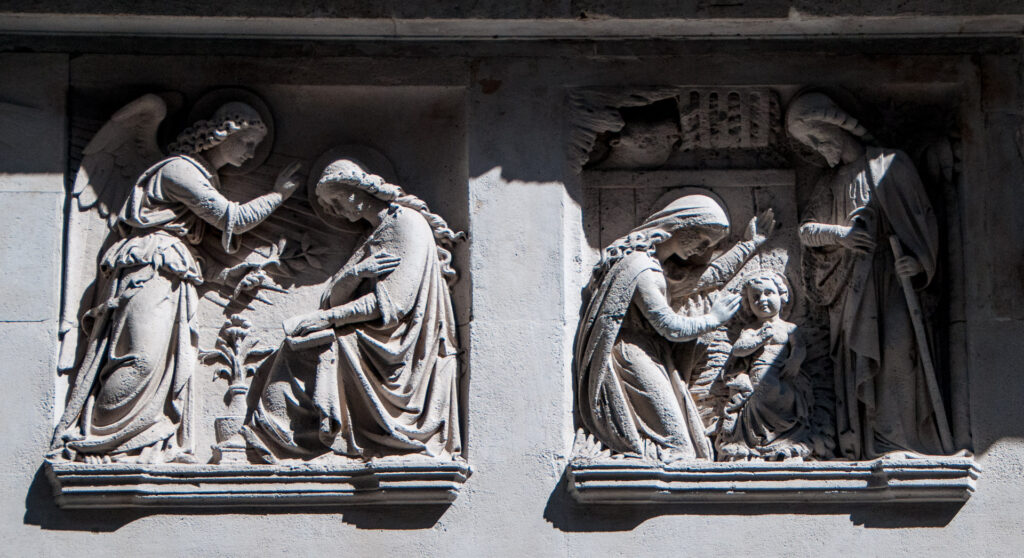
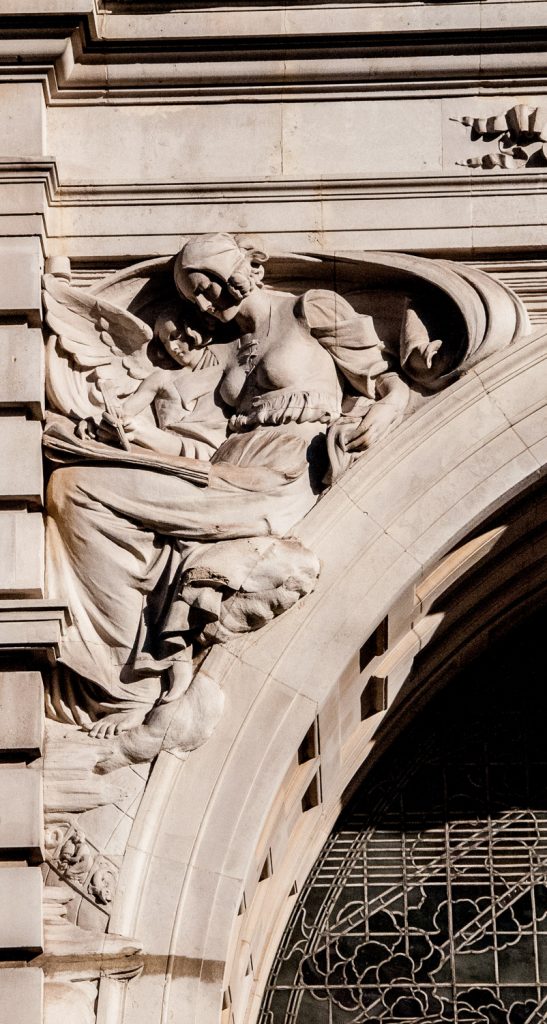
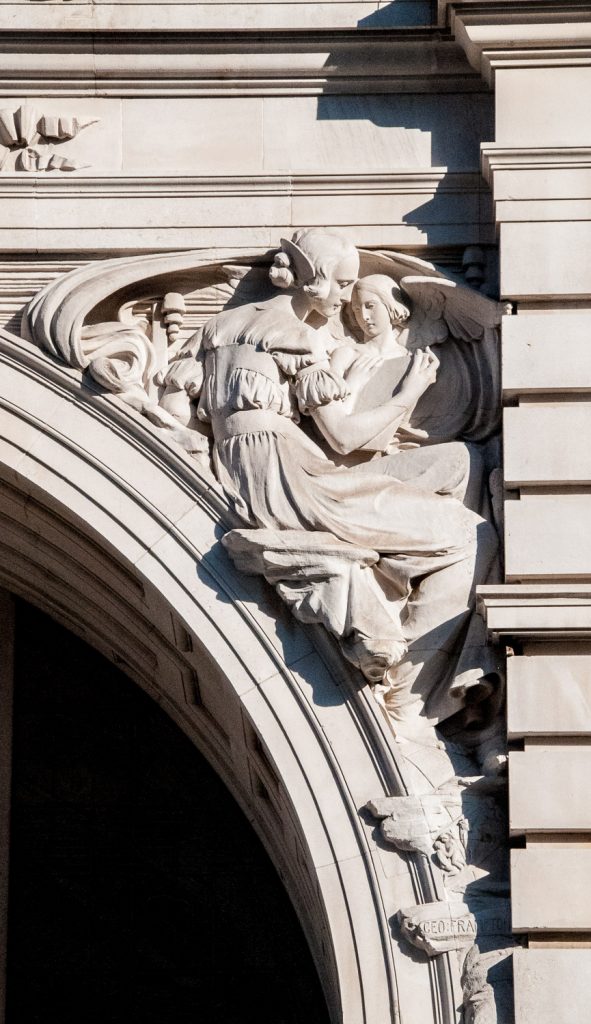
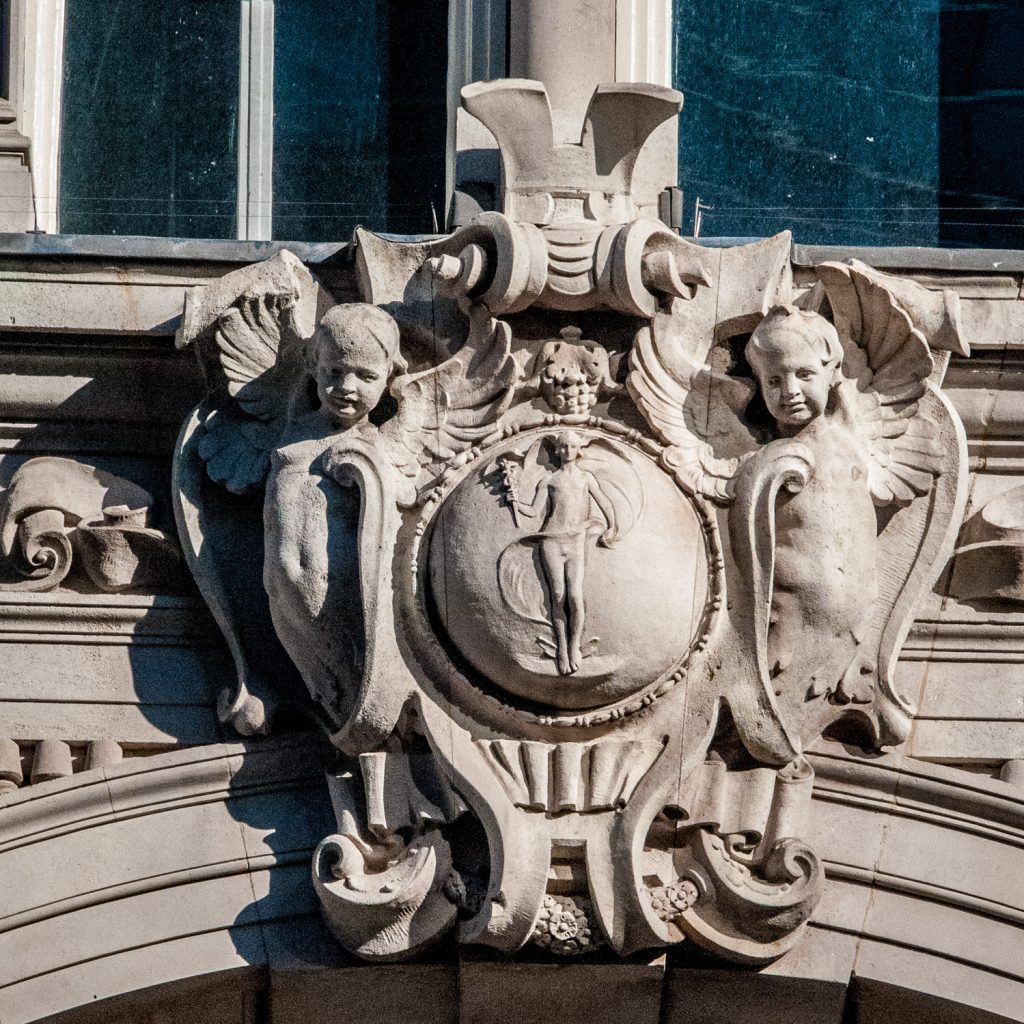
To the left of the arch is a seated girl accompanied by a young winged genius …

Sculptor: George Frampton

She is transmitting a message.

The figure on the right is receiving a message (could be an iPad!) …

And above the arch …

… a winged Mercury, the god of Commerce, carries a caduceus.

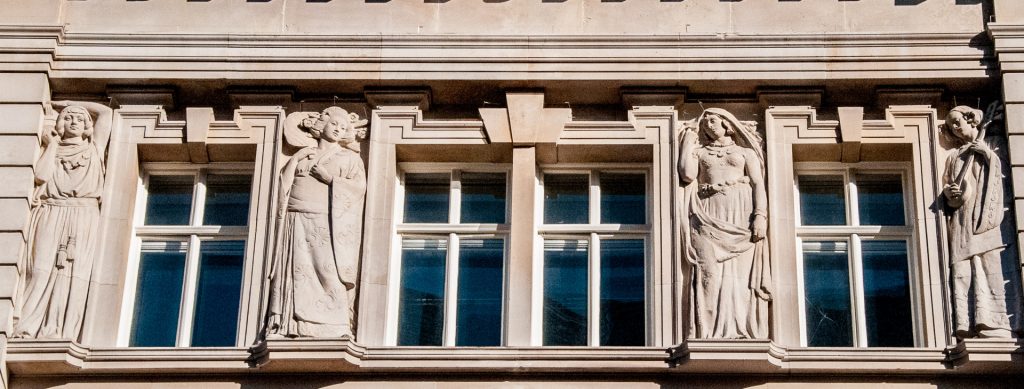
Higher up is a beautiful frieze of four female figures …

Sculptor: William Goscombe John

They represent from left to right Egypt, Japan, India and China. Egypt carries a water jar on her shoulder, Japan is in a kimono and carries a fan, India lifts the veil from her face, and China carries a samisen (a three stringed lute).

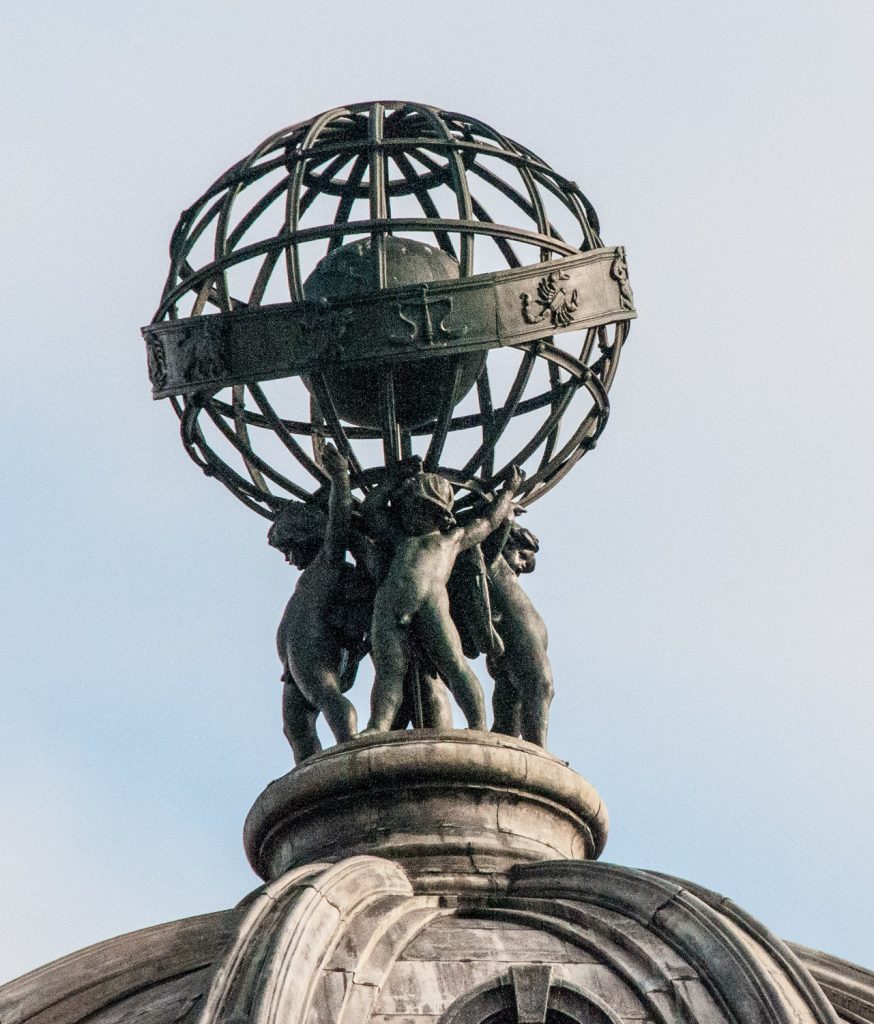
At the very top of the building four naked boys support an armillary sphere which is itself encircled by a broad band displaying zodiacal signs …

Here it is in close up …

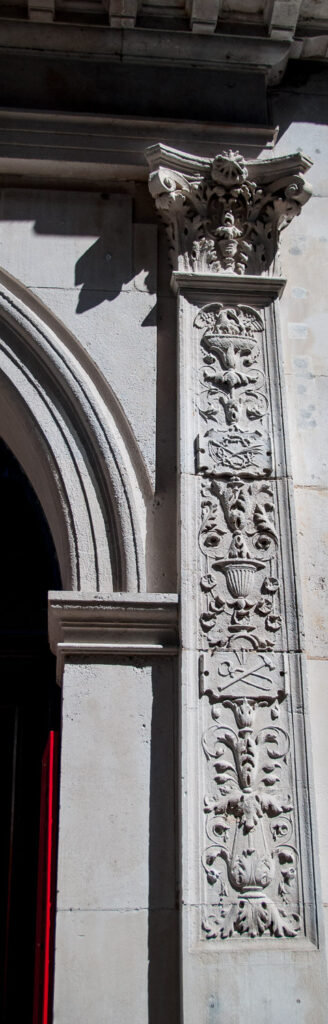
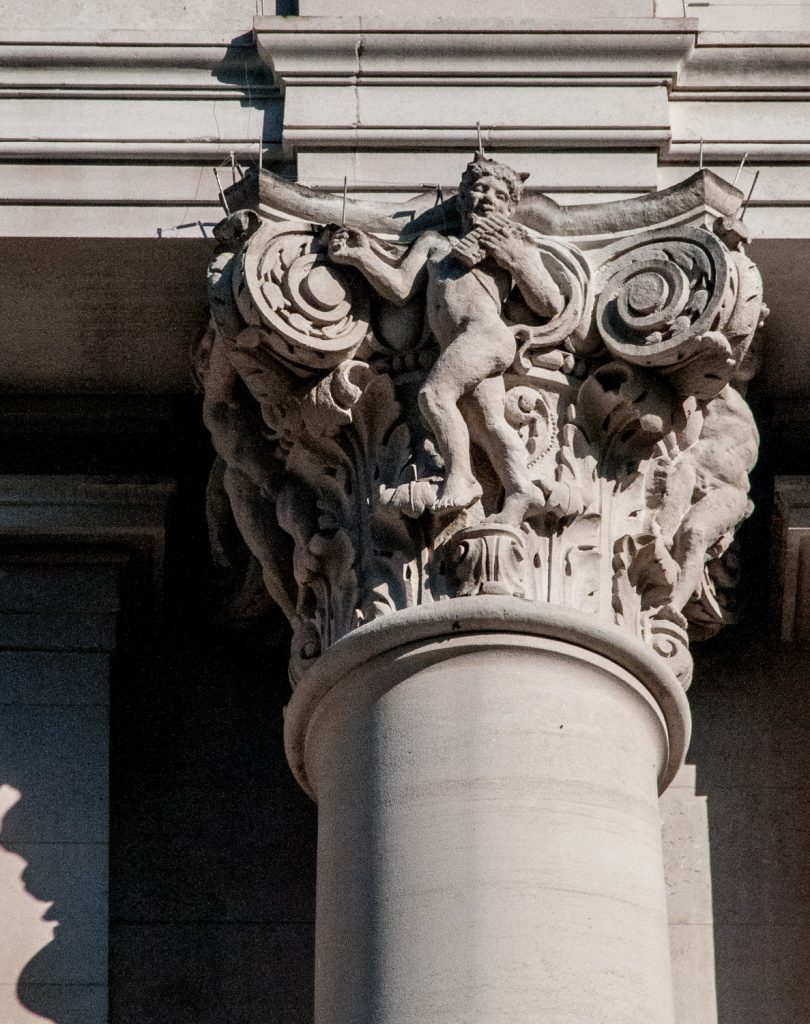
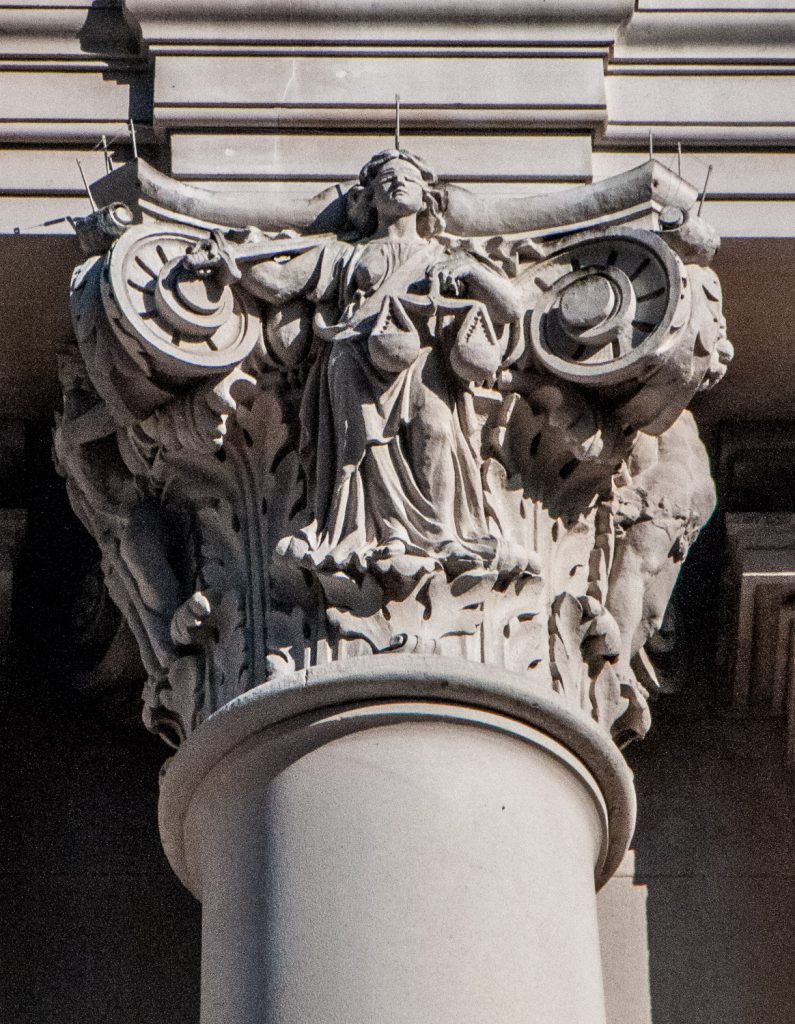
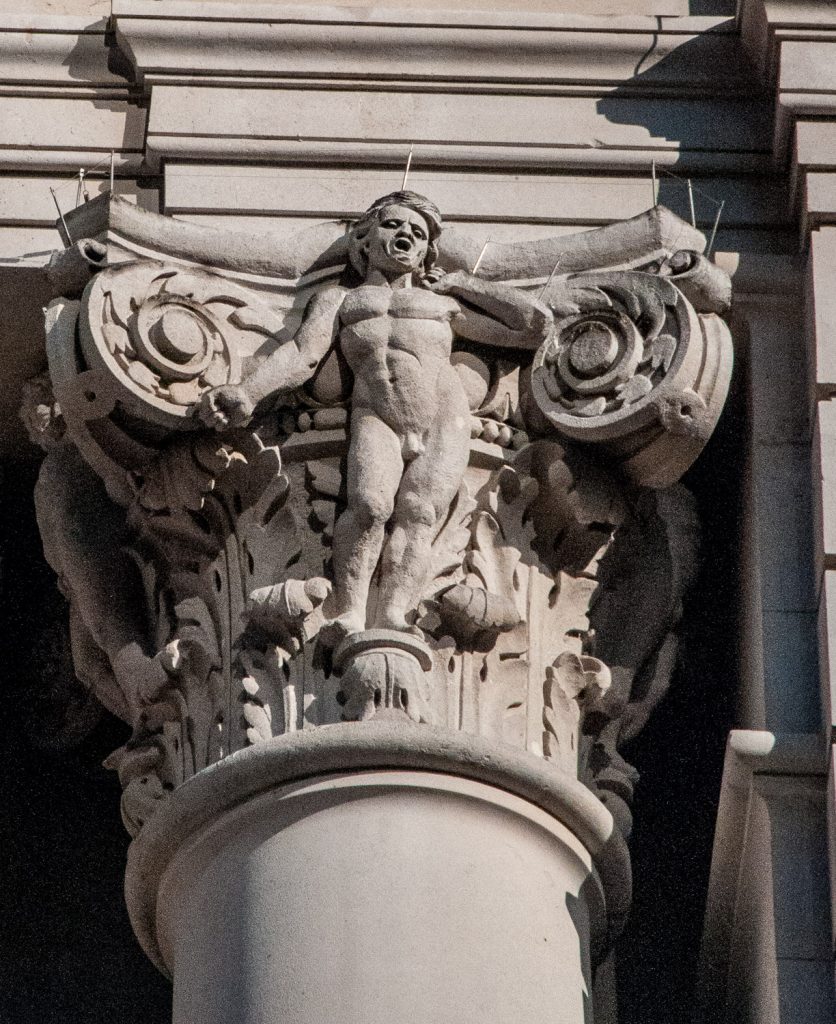
Some small figures decorate the tops of the pillars. Here are a few of them.

The horned god Pan playing his flute …

A blindfolded Lady Justice holding scales and sword …

I have no idea as to what this one represents …

I hope you found this interesting. I have not covered all the building’s decorations in this blog and there are more inside which maybe I will get access to at some future date.

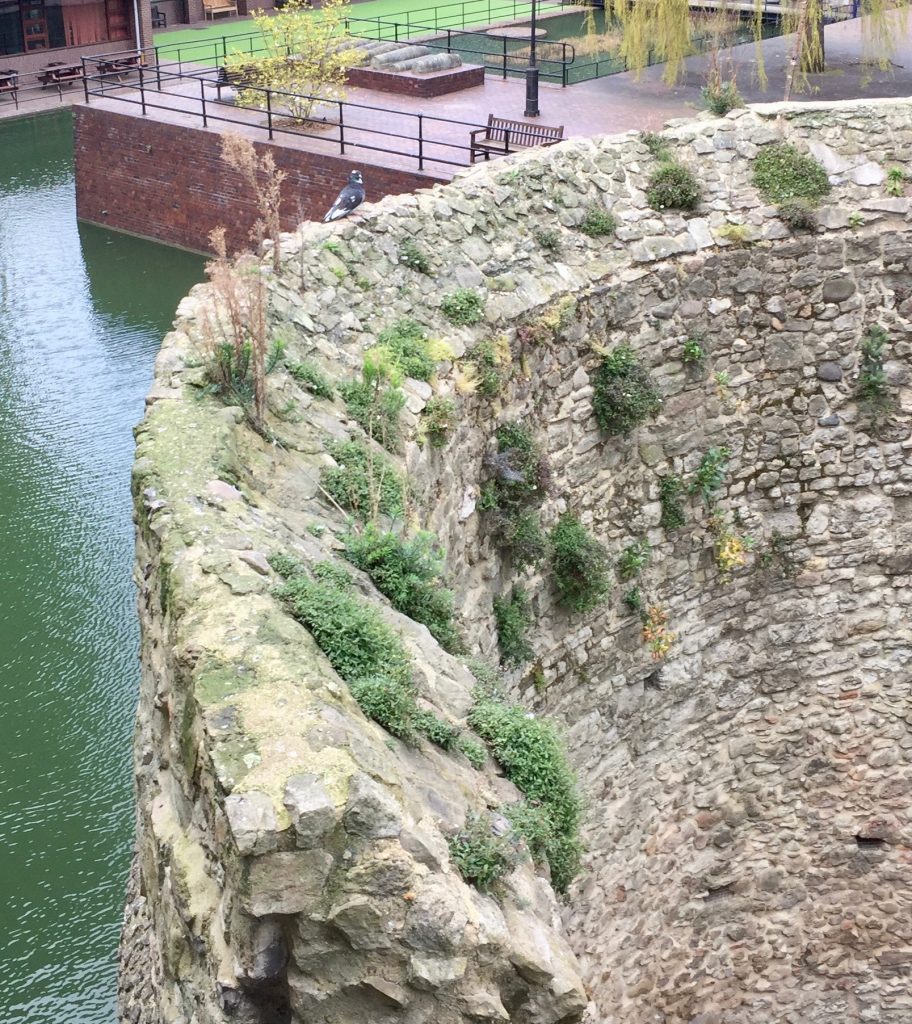
To end on a more lighthearted note, have you noticed that the pigeons seem to have deserted the City? No humans, no food, I suppose. However, I did spot this lonely chap self-isolating on the old Roman/Medieval City wall …

Remember you can follow me on Instagram :
https://www.instagram.com/london_city_gent/

Pebbles the cat … and other Underground surprises

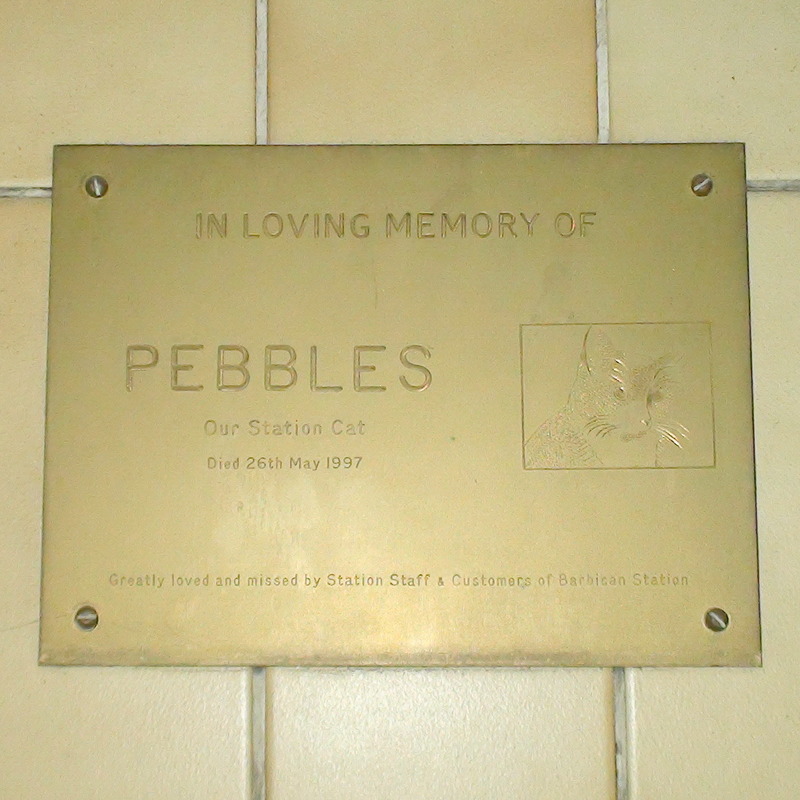
High up on a tiled pillar in Barbican Underground Station is this poignant memorial …

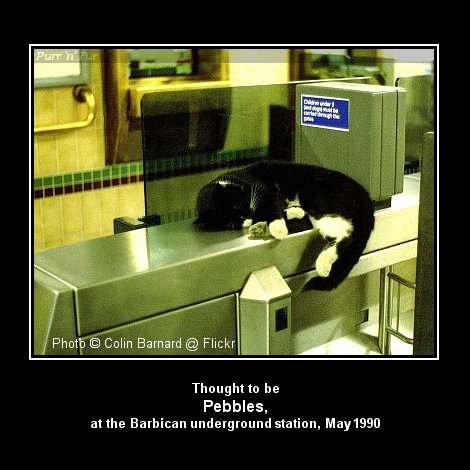
For many years Pebbles was a favourite of staff and passengers, often sleeping soundly on top of the exit barriers despite the rush hour pandemonium going on around him. Here is a picture from the wonderfully named Purr’n’Fur website, a great source for moggie-related stories …

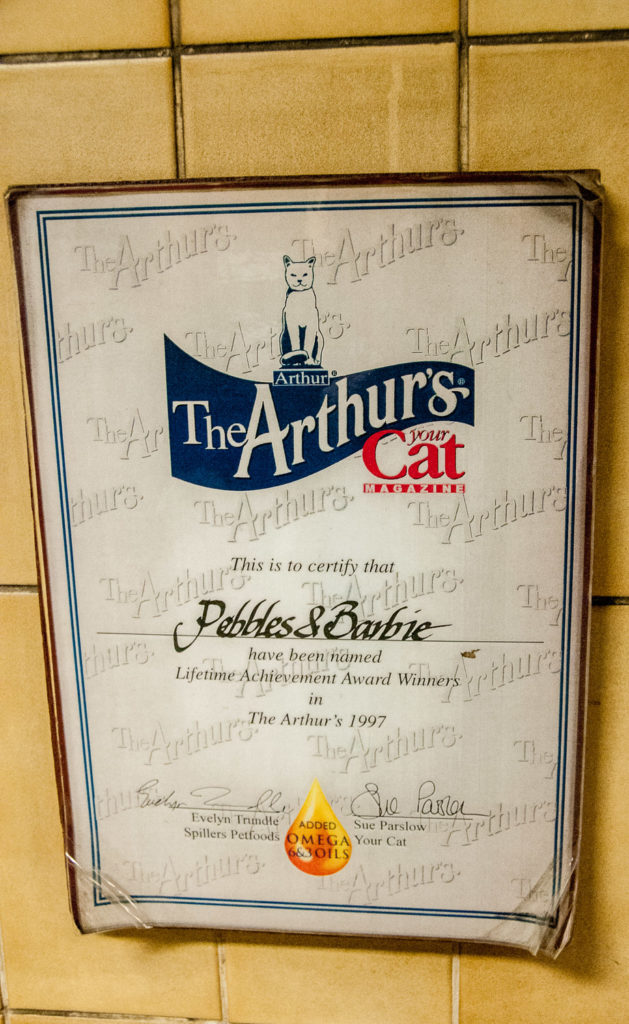
Clearly he was greatly missed when he died, as the plaque faithfully records, on 26th May 1997. This was doubly sad because he was due to be given a Lifetime Achievement Award. This was sponsored by Spillers Pet Foods and named after Arthur, a cat they used in their advertising who, I seem to remember, ate with his paws. The Certificate that came with the award is also displayed (the co-winner, the aptly named Barbie, was Pebbles’ companion) …

Pebbles’ posthumous award.

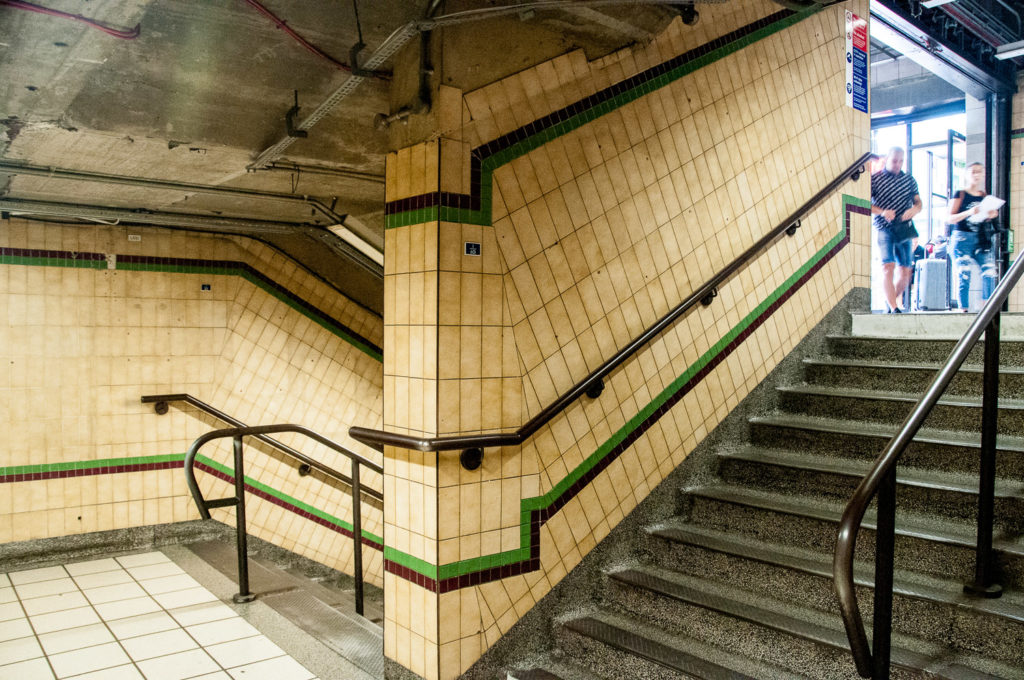
As I walked down the stairs to see the plaque I noticed that everything looks sadly tatty. However, just imagine these tiles when they were newly fitted before the War, with their geometric patterns leading you down to the Ticket Office …

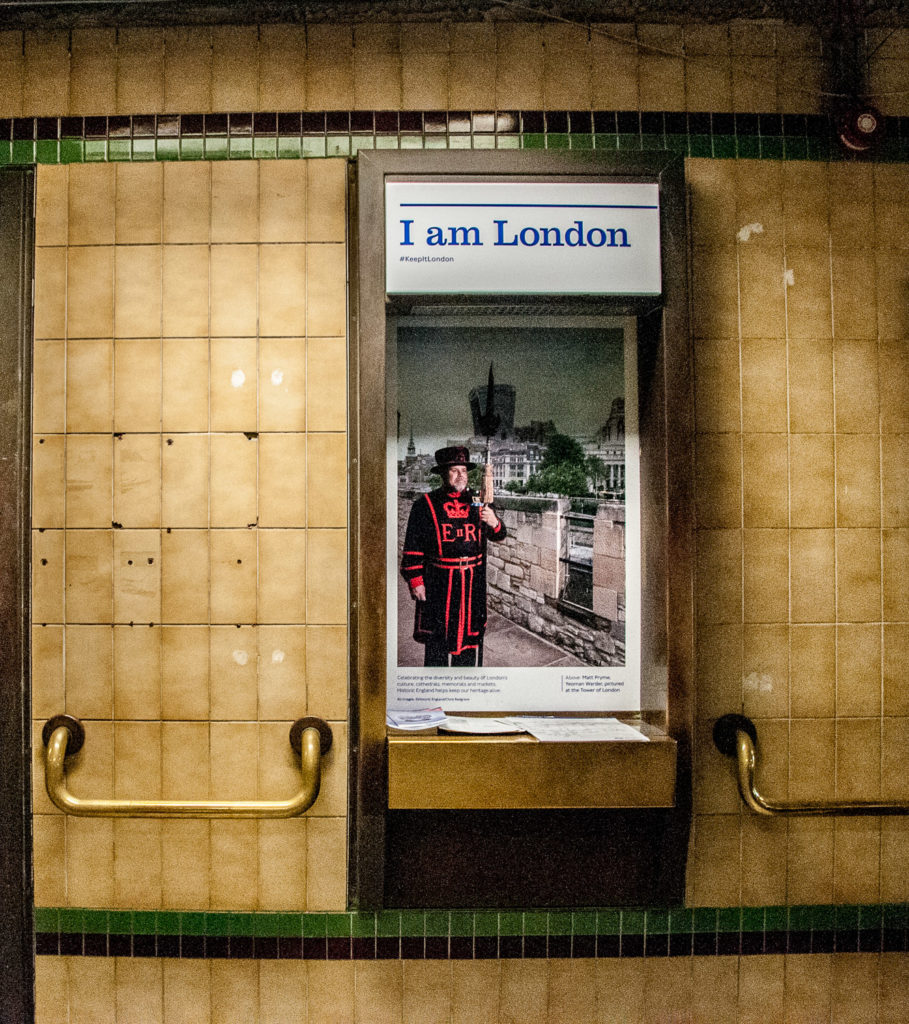
And how wonderful, the Office window is still there, although instead of a helpful Ticket Clerk there is a poster. I reckon those lovely brass fittings and the counter date from the early 1930s. The pattern on the tiles continues down here as well – such thoughtful design …

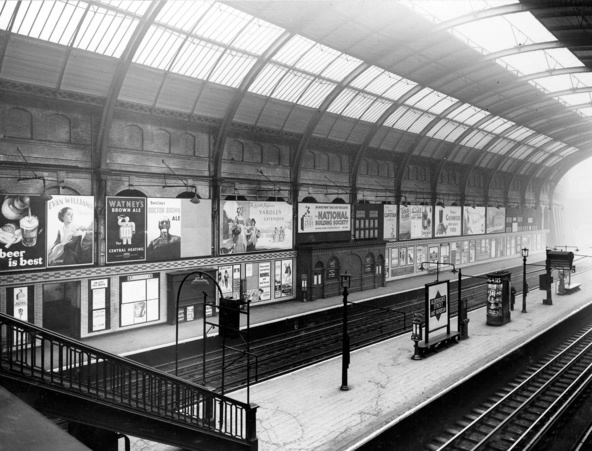
The station, originally called Aldersgate Street, was opened on 23 December 1865 and had a large glazed roof which allowed light down to the platform. Here it is in 1936 …

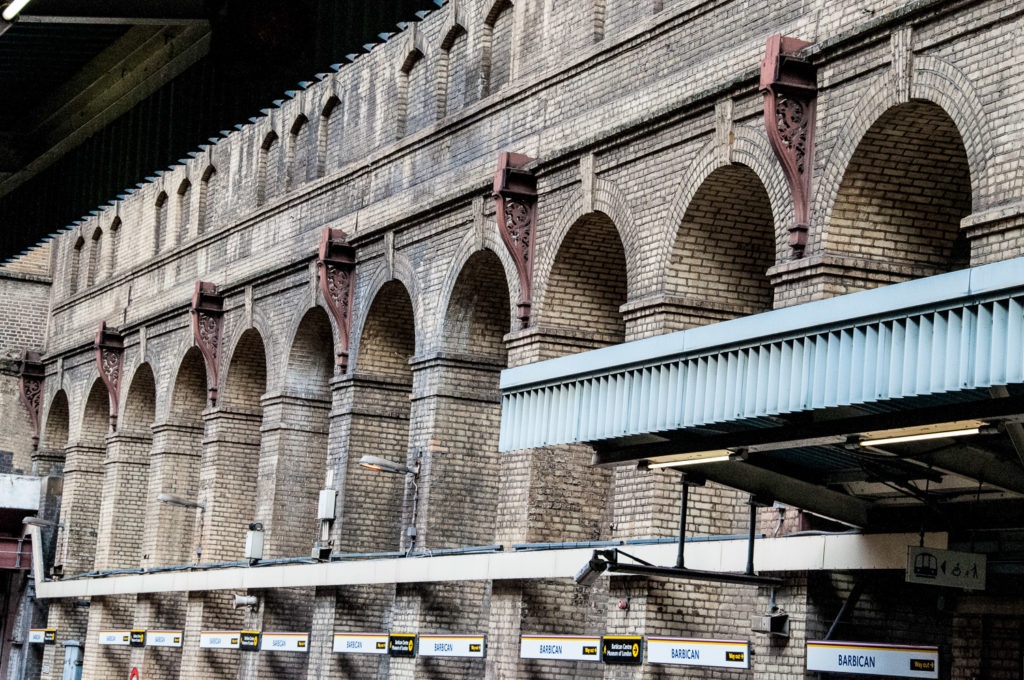
The roof was removed in 1955 but you can still see the supporting brackets …

John Betjeman wrote about the roof’s dismantling, calling the work Monody on the death of Aldersgate Street Station

Snow falls in the buffet of Aldersgate station,
Soot hangs in the tunnel in clouds of steam.
City of London! before the next desecration
Let your steepled forest of churches be my theme.

Barbican station holds the unenviable distinction as the scene of the tube network’s first ever passenger disaster. On 16 December 1866 three passengers were killed and a guard was seriously injured when a girder collapsed onto a passenger train in the station. The newspapers reported that service on the line was running again only 30 minutes after the accident.

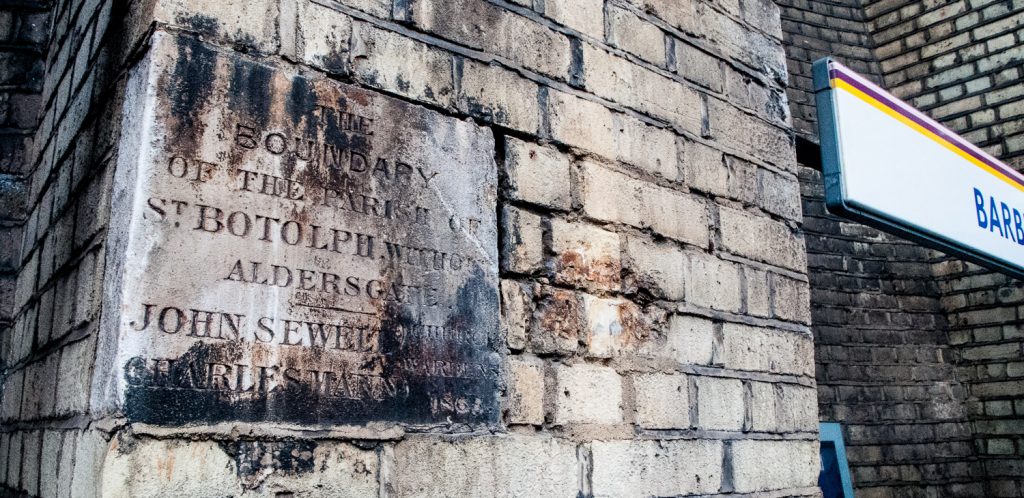
Look out for the old parish boundary marker dated 1868 on the eastbound platform …

This image has an empty alt attribute; its file name is DSC_3405-1024x498.jpg

I have written in more detail about boundary markers in an earlier blog which you can find here. If you want to read more about the railways in the area, there is a great blog on the subject called Reconnections with useful maps and interesting pictures.

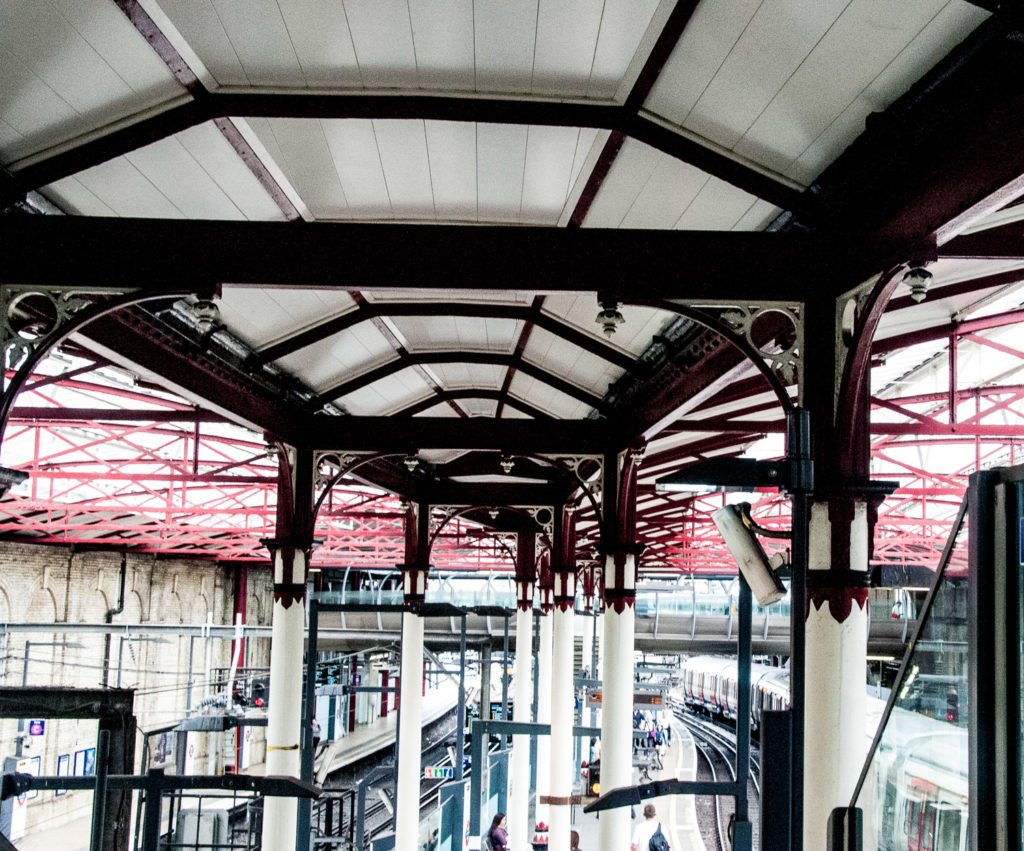
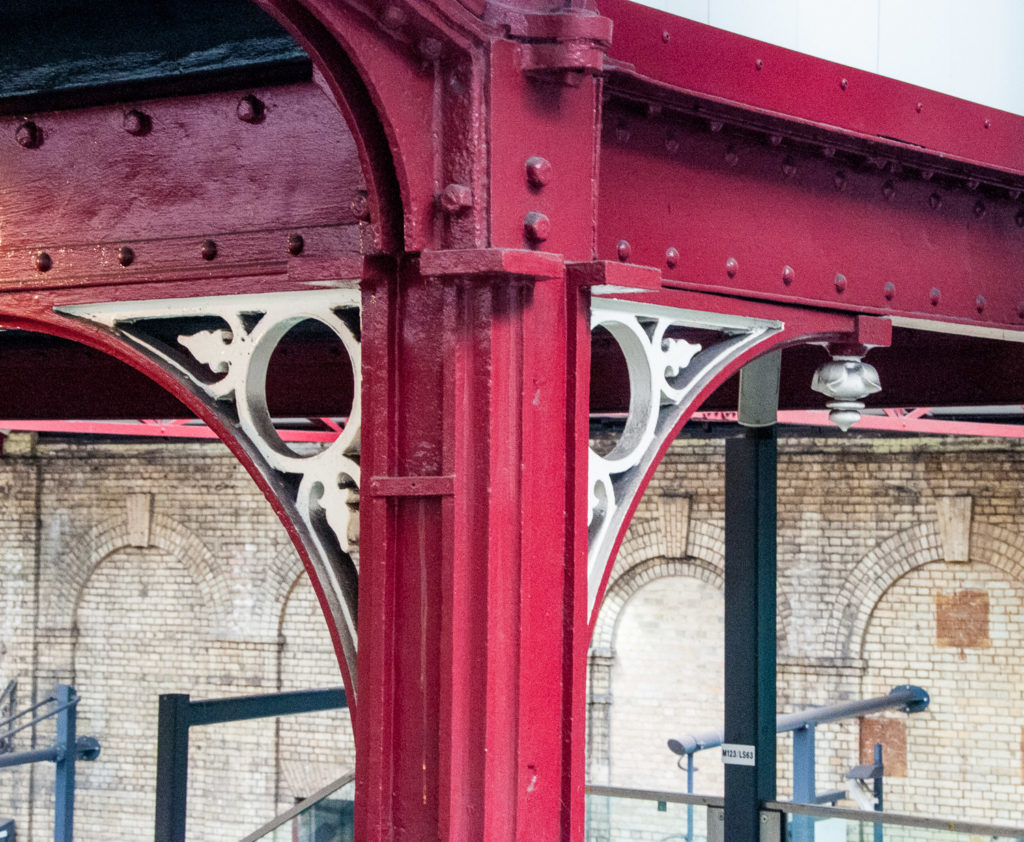
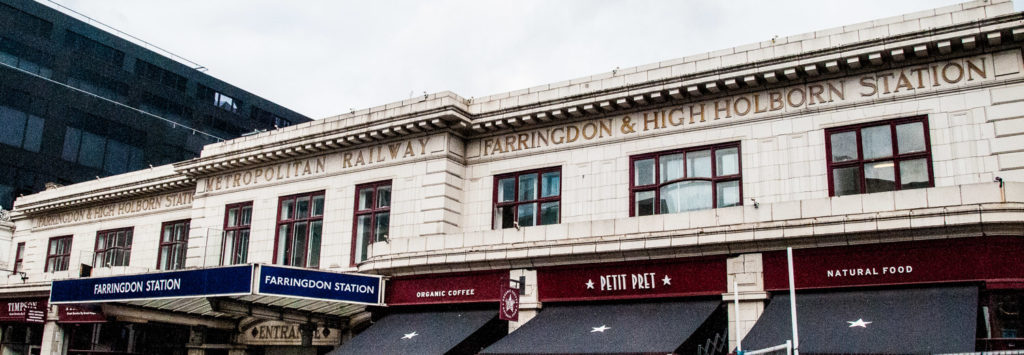
Onward now to the refurbished Farringdon Station. On climbing the stairs from the platform you can admire the original 19th century roof supports …

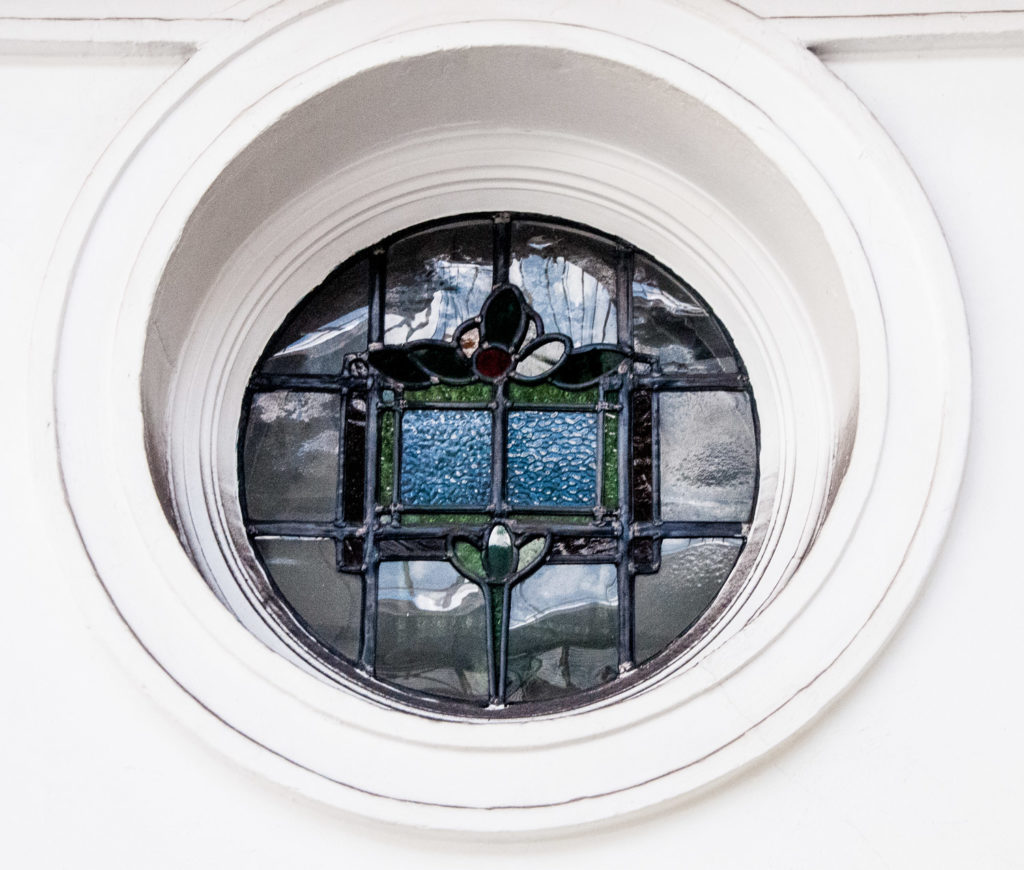
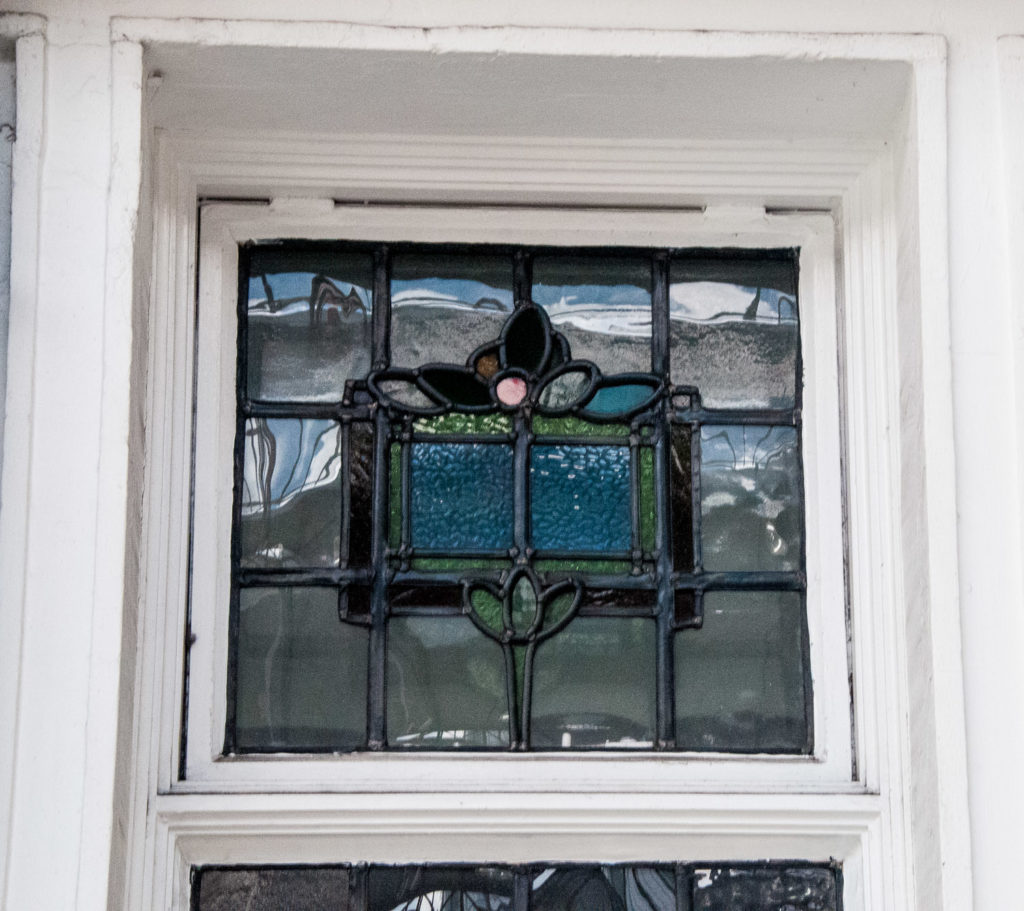
Just before exiting through the barriers I spotted some nice old stained glass windows. I had never noticed them before, it just shows what you can come across if you have time to dawdle …

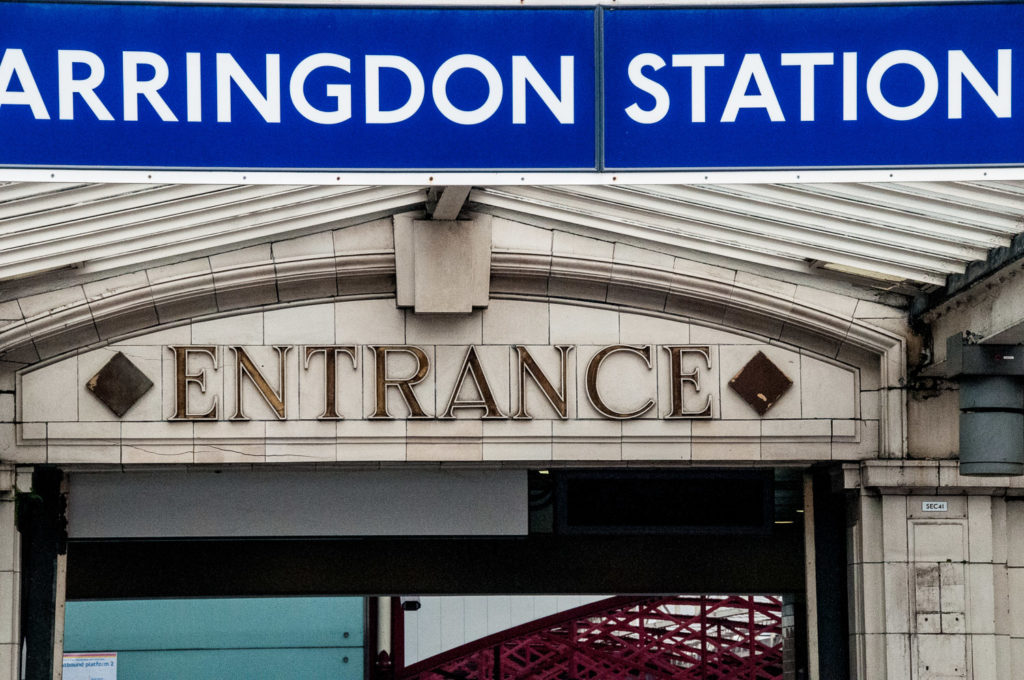
I had as my guide a book by the brilliant Underground historian Antony Badsey-Ellis – Underground Heritage. He tells us that many Metropolitan Railway stations were modernised between 1914 and 1931 and the house style employed at what is now Farringdon Station was by Charles W Clarke …

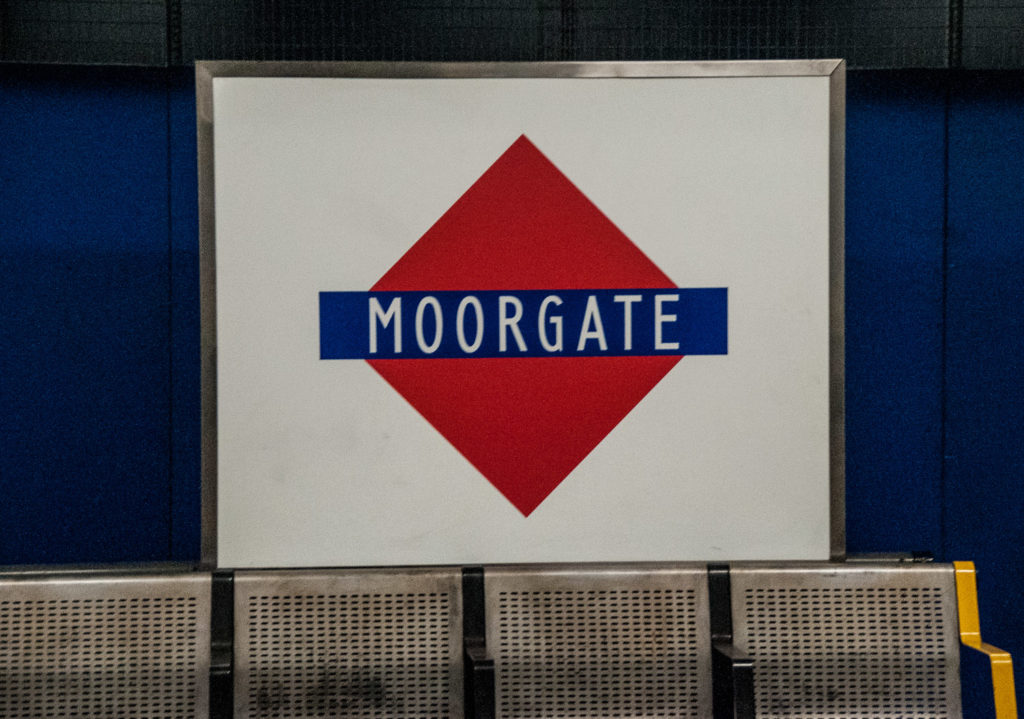
The only decoration on the friezes was the diamond motif used by the railway …

It’s been reproduced as a heritage sign at Moorgate ..

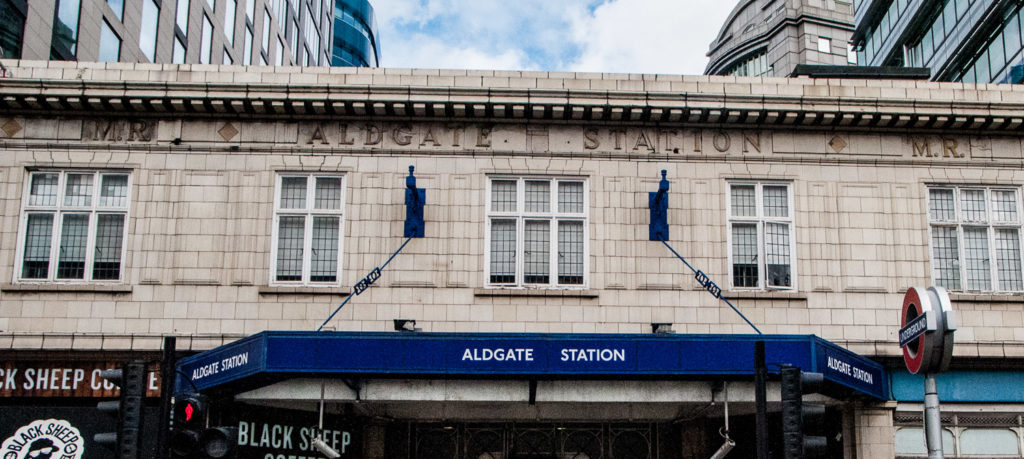
And here it is again at Aldgate …

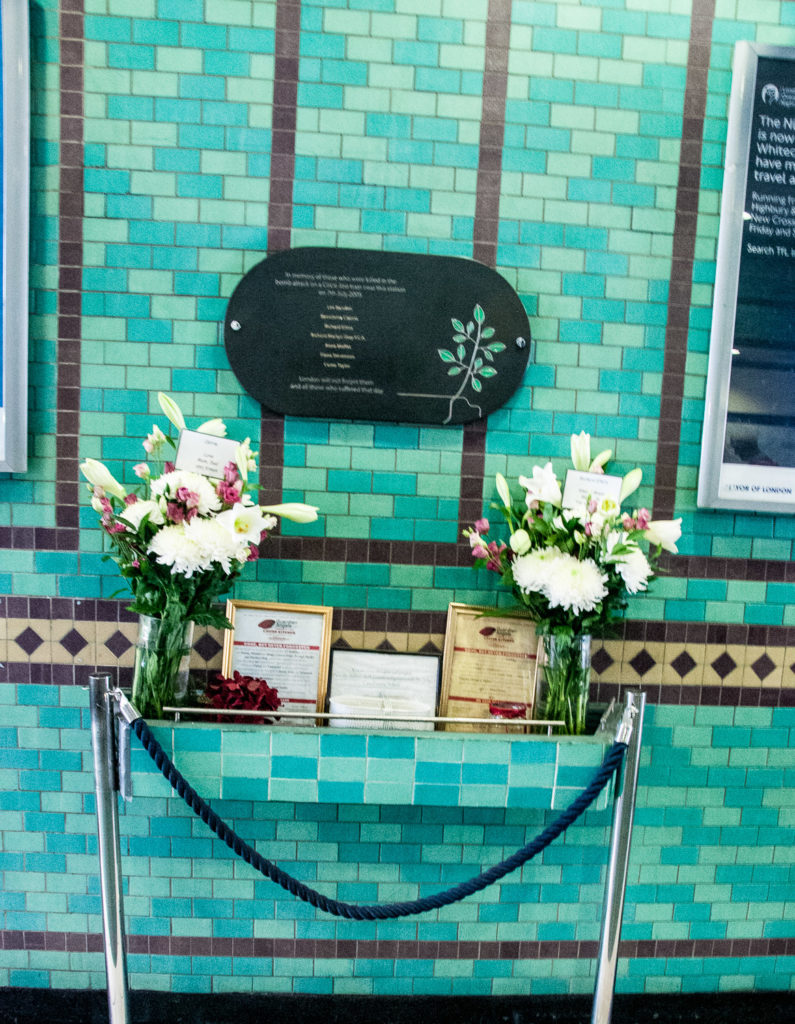
In the lobby is a beautifully maintained memorial to the seven people killed at Aldgate in the terrorist attacks on 7 July 2005 …

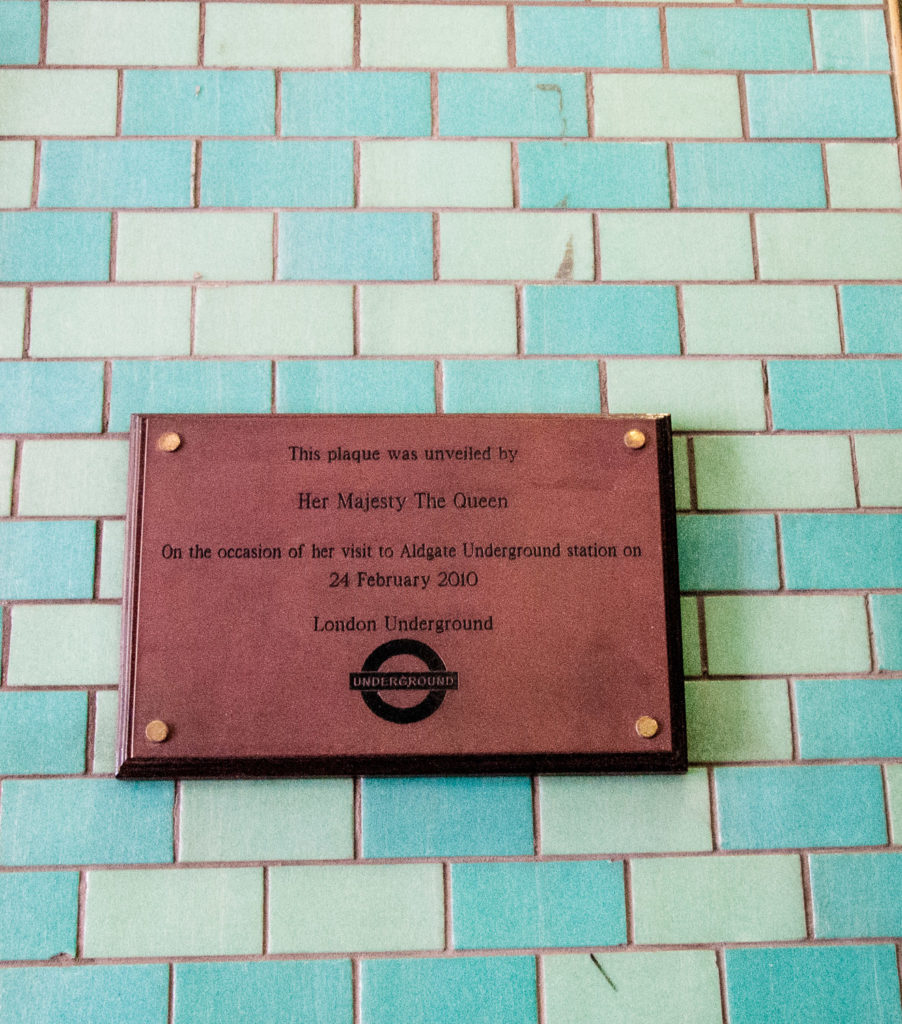
There is also a plaque commemorating the Queen’s visit in 2010 …

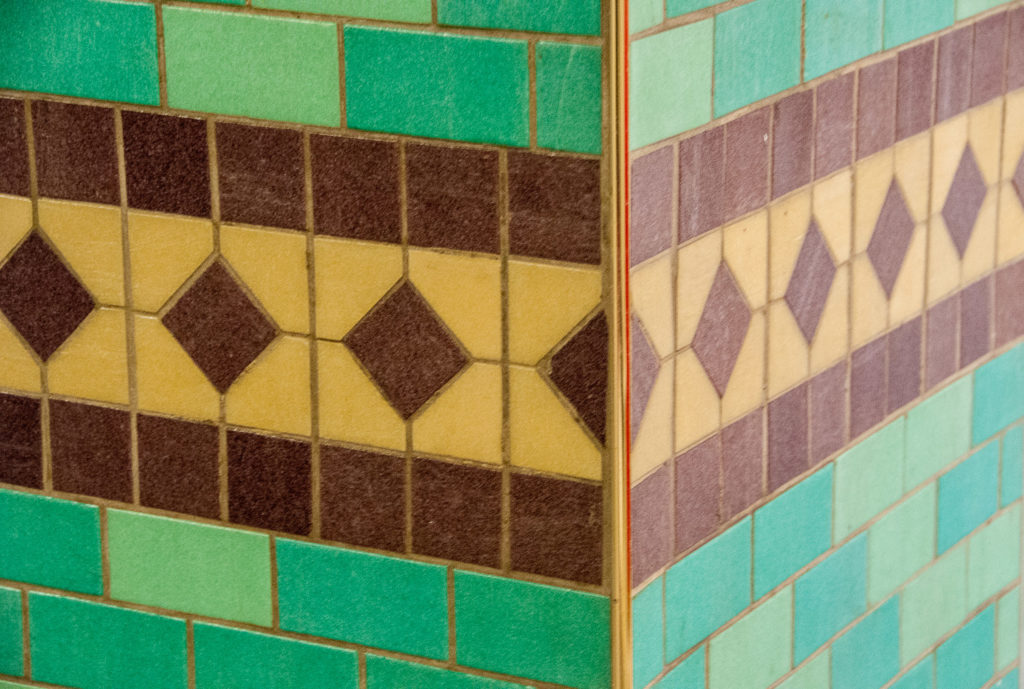
The tiles at Aldgate are very pretty and often include the Metropolitan Railway diamond …

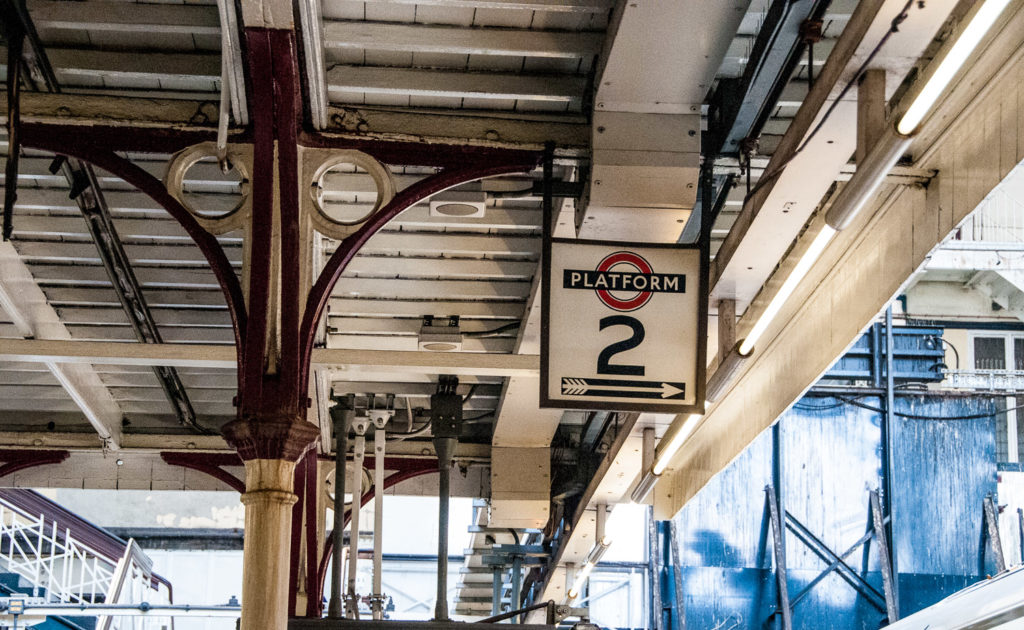
And it’s nice to see some original platform signage from the 1930s (with original roof supports in the background) …

And finally, a ghost station …

You can still see the old entrance to Mark Lane tube station next to the All Bar One, just as Byward Street becomes Tower Hill. It closed on 4 February 1967 and was replaced by the nearby Tower Hill station. The entrance (through the arch on the left of the steps) now leads to a pedestrian subway …

Postman’s Park and the Watts Memorial to Heroic Self Sacrifice

Postman’s Park was once the churchyard to the adjacent church, St Botolph Aldersgate, but between 1858 and 1860 it was cleared of human remains and re-landscaped as a public space. A number of gravestones remain and you can see some of them now stacked neatly against the northern churchyard wall …

Nearby, in 1829, the General Post Office had moved in to a vast new building on St Martin Le Grand and, when the new park opened, it quickly became a popular leisure area for the post office workers and, as a result, the park soon became known as Postman’s Park (EC1A 7BT).

It contains now what is, in my view, one of the most interesting, poignant and rather melancholy memorials in the City – The G F Watts Memorial to Heroic Self Sacrifice. This plaque nearby contains a useful mini-history …

In the late 1890s the idea was mooted that the park would be an ideal location for a memorial to ‘ordinary’ and ‘humble’ folk who had lost their lives endeavouring to save the lives of others. Two of its most enthusiastic supporters were the artists George Frederic Watts (1817 – 1904) and his wife Mary (1849 – 1938). There are some nice images of both him and his wife on the National Portrait Gallery website. Here he is  and here his wife Mary.

After much debate about its positioning and design, the memorial was finally declared finished and open on 30 July 1900, the building looking very much as it does today …

The memorial consists of 54 ceramic tablets which were gradually added over the years, each describing a particular act of selfless heroism. I have chosen to write about four of them using as my source the splendid book by the historian John Price: Heroes of Postman’s Park (ISBN 9780750956437). You can also, like me, become a Friend of the Watts Memorial, and more details can be found here.

The first of my four heroes is Alice Ayres …

The picture above shows Alice Ayres as portrayed by the Illustrated London News in 1885 (Copyright the British Library Board). Her commemorative plaque reads as follows and was the first to be installed …

It was Alice’s brave act that prompted Watts to write to the Times newspaper and suggest the creation of a memorial

That would celebrate the sacrifices made by ‘likely to be forgotten heroes’ by collecting ‘…a complete record of the stories of heroism in every-day life’.

Alice threw down a mattress from a burning building and successfully used it to rescue three children …

From The Illustrated Police News 2nd May 1885 Copyright, The British Library Board.

Alice eventually jumped herself but received terrible injuries and died two days later. Incidentally, if her name rings a bell with you it could be because, in the 2004 film Closer, one of the characters, Jane Jones, sees Alice’s memorial and decides to adopt her name.

John Clinton was only 10 when he dived into the Thames to save another little boy’s life. Unfortunately, after the rescue, John himself slipped back into the water and drowned. According to his father this wasn’t his first brave act, having saved a baby from a fire and tearing down burning curtains that were threatening the house. Both acts were commemorated in this illustration …

From The Illustrated Police News, 28th July 1894. Copyright, The British Library Board.

His funeral was widely reported …

I am indebted to the editor of the London Walking Tours website for this photograph of John Clinton’s image on his tombstone in Manor Park cemetery …

His Postman’s Park plaque …

And now another brave lady,

Many of these memorials give us glimpses of the nature of society at the time these events took place, and Mary’s story is a typical example. It is most unlikely that she would ever have found herself serving at sea had it not been for the fact that her husband, Richard, was drowned when the cross channel steamer SS Honfleur sank in the English Channel on 21 October 1880.

The steamer was operated by the London & South Western Railway Company (LSWR) and so Richard was one of their employees. It was common practice at the time for railway companies to offer employment to the widows or children of deceased employees so as to avoid having to pay compensation or provide a pension. Almost immediately after the birth of her son in January 1881, Mary began work as a stewardess for LSWR. Her earnings were 15 shillings a week plus any tips received from passengers. For a woman in her circumstances, this was a decent, stable income and in modern terms, a job with prospects. It also kept her family out of the workhouse.

Mary Rogers – 1855-1899

The story of the sinking of the SS Stella is a gripping one and rather too complicated to relate in detail here. If you want all the details either get hold of a copy of John Price’s book and/or have a look at this website run by Jake Simpkin, a Blue Badge holder and south of England historian.

From The Illustrated Police News – 8th April 1899. Copyright, The British Library Board

The Times reported that Rogers …

Helped ‘her ladies’ from the cabin into the lifeboats. Next she gave up her own lifejacket, and then when urged to get into the lifeboat refused for fear of capsizing it. She was told it was her only chance, but she persisted that she could not save her own life at the cost of a fellow creature’s. She waved the lifeboat ‘farewell’ and bid the survivors to be of ‘good cheer’.

In 1908, the committee of the new Anglican Liverpool Cathedral chose 21 ‘noble women’ for commemoration in stained glass windows. Mary was included, and is depicted in her window alongside Grace Darling and Elizabeth Fry …

Walking down Central Street one day I noticed this green plaque on the other side of the road …

On crossing over to take a look this is what I saw …

I took a picture, resolving to do further research and then discovered that the brave Alfred Smith is commemorated on the Watts Memorial …

PC Smith, 37 years old, was on duty in Central Street when the noise was heard of an approaching group of fourteen German bombers. One press report reads as follows …

In the case of PC Alfred Smith, a popular member of the Metropolitan Force, who leaves a widow and three children, the deceased was on point duty near a warehouse. When the bombs began to fall the girls from the warehouse ran down into the street. Smith got them back, and stood in the porch to prevent them returning. In doing his duty he thus sacrificed his own life.

Smith had no visible injuries but had been killed by the blast from the bombs dropped nearby. He was one of 162 people killed that day in one of the deadliest raids of the war.

His widow was treated much more kindly than Mary Rogers. She received automatically a police pension (£88 1s per annum, with an additional allowance of £6 12s per annum for her son) but also had her MP, Allen Baker, working on her behalf. He approached the directors of Debenhams (whose staff PC Smith had saved) and solicited from them a donation of £100 guineas (£105). A further fund, chaired by Baker, raised almost £472 and some of this was used to pay for the Watts Memorial tablet, which was officially unveiled on the second anniversary of Alfred’s death.

Watts used newspaper reports to decide who should receive the honour of a plaque, but in one case the report was false and the ‘hero’ didn’t exist. Unfortunately, Watts didn’t see the newspaper article correcting the mistake and the plaque went up anyway. If you want to know the identity of the non-existent ‘hero’ I am not going to reveal it here, and you will have to buy John Price’s book to find out.

I wrote about some more of the heroes from the memorial in an earlier blog which you can access here.


Page 8 of 9

Powered by WordPress & Theme by Anders Norén