Walking the City of London

Category: Sculpture Page 27 of 43

Bladderstones and fleas in the Seething Lane Garden

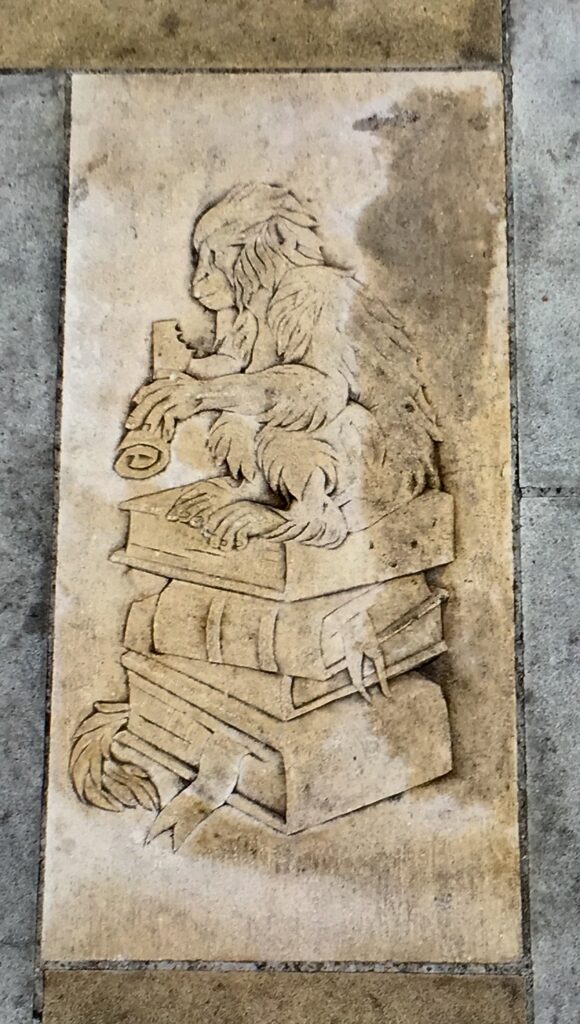
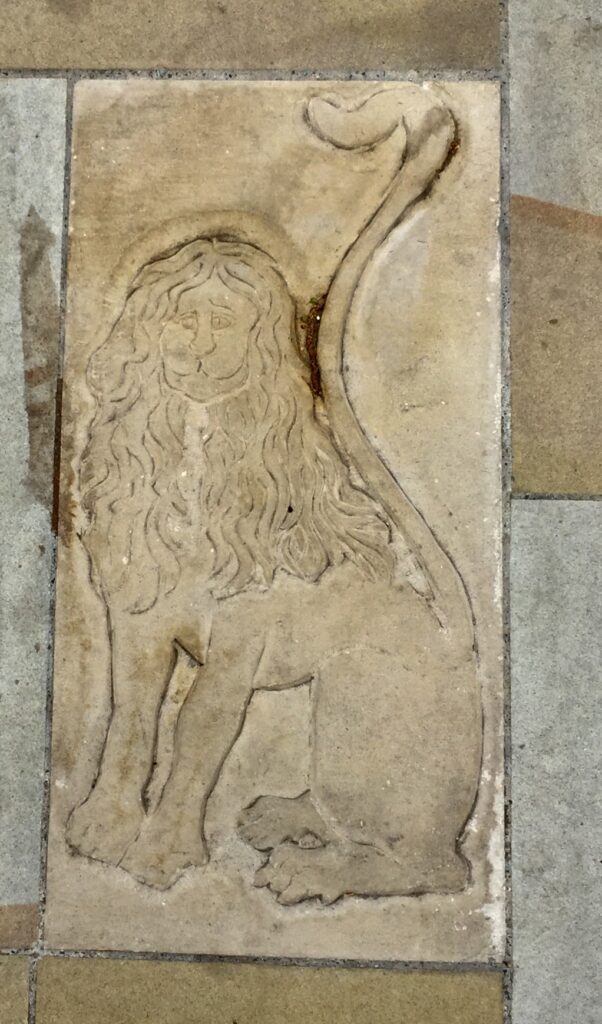
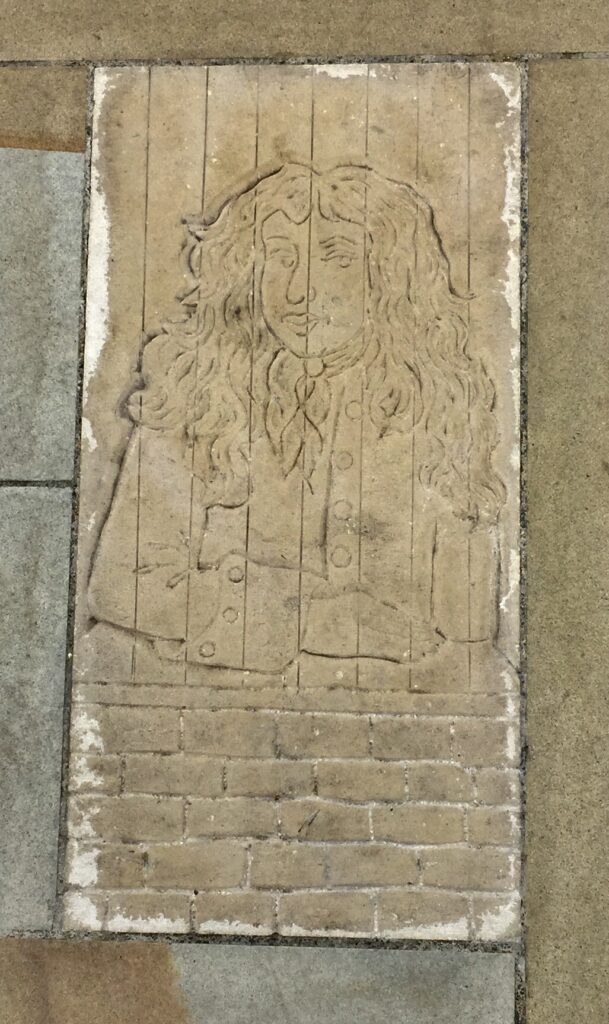
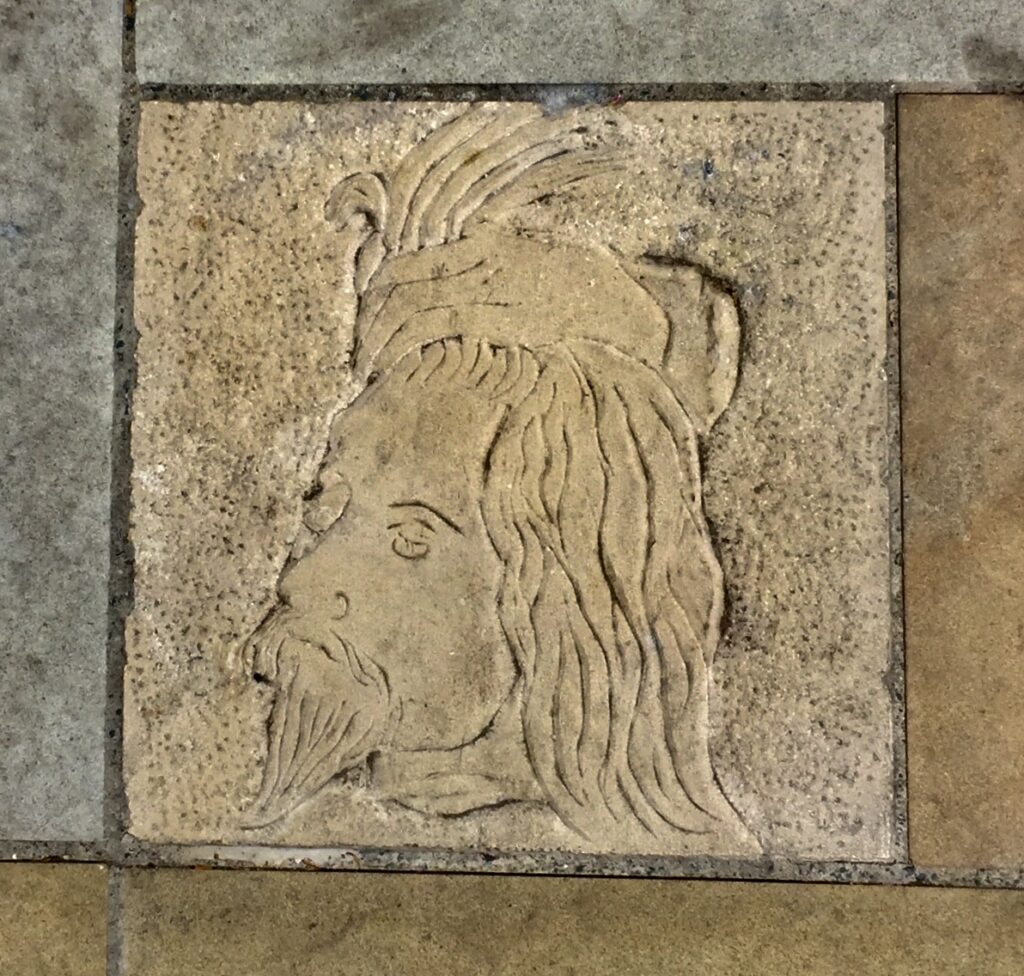
I mentioned in my blog last week that I’d been visiting the garden dedicated to a famous Londoner and it was a real thrill to discover some garden pavers with fascinating carvings (EC3N 4AT). The famous Londoner was, of course, Samuel Pepys and I haves since discovered a lot more about the carvings.

But first of all, some examples. The first one I noticed made me smile.

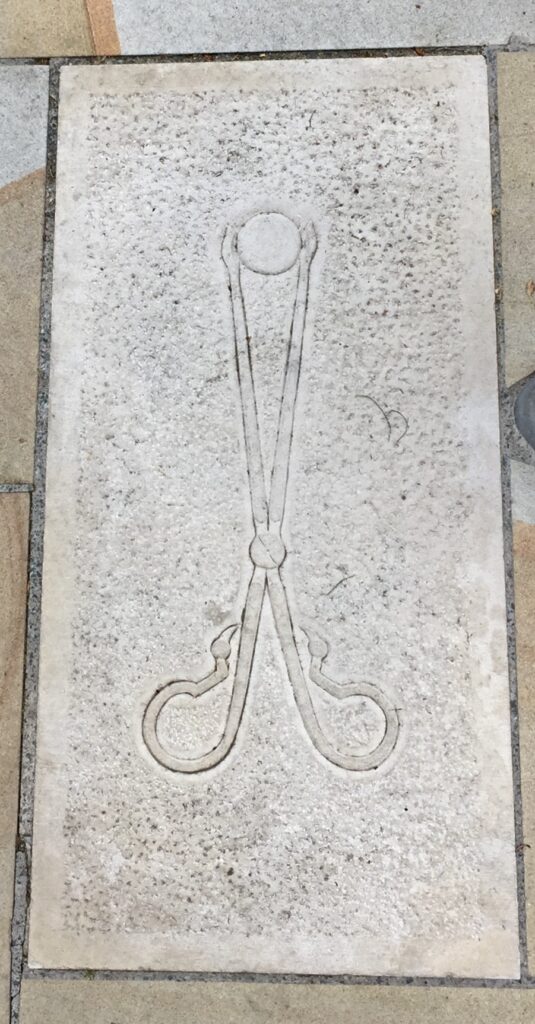
Pepys had been plagued by recurring stones since childhood and, at the age of 25, decided to tackle it once and for all and opt for surgery. He consulted a surgeon, Thomas Hollier, who worked for St Thomas’ Hospital and was one of the leading lithotomists (stone removers) of the time. The procedure was very risky, gruesome and, since anaesthetics were unknown in those days, excruciatingly painful. But Pepys survived and had the stone, ‘the size of a tennis ball’, mounted and kept it on his desk as a paperweight. It may even have been buried with him. One of the garden carvings shows a stone held in a pair of forceps …

You can read more about the procedure Pepys underwent here.

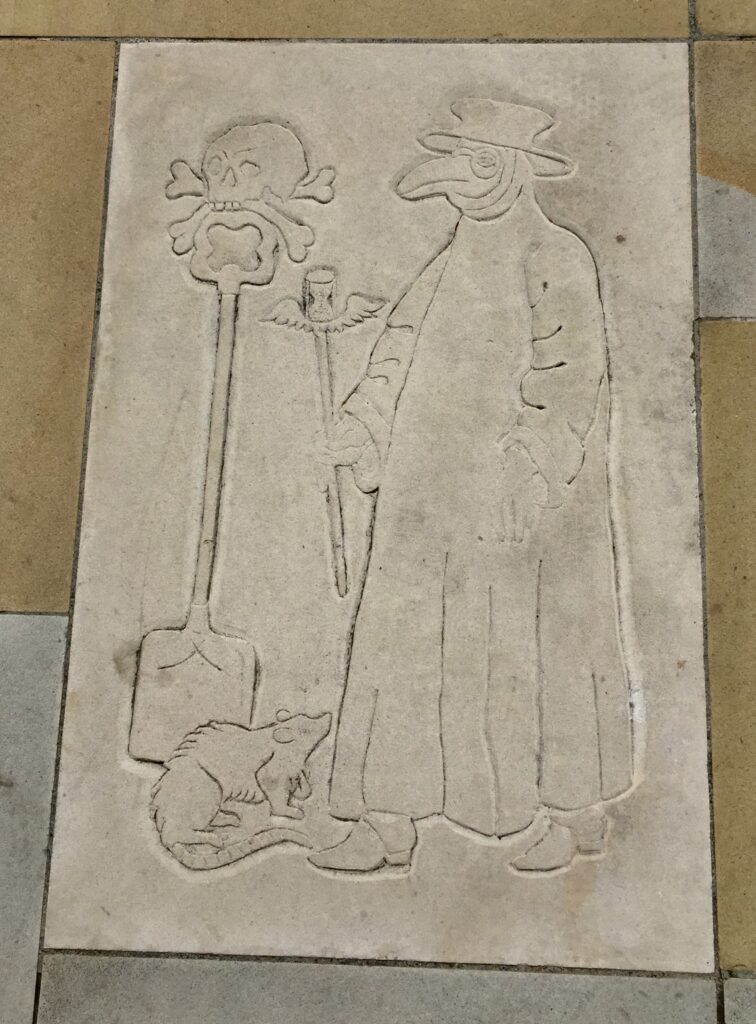
Pepys survived the Great Plague of 1665 even though he remained in London most of the time. The pestilence is referenced by a plague doctor carrying a winged hourglass and fully dressed in 17th century protective clothing …

No one at the time realised that the plague could be spread by fleas carried on rats. One of the species sits cheekily at the doctor’s feet.

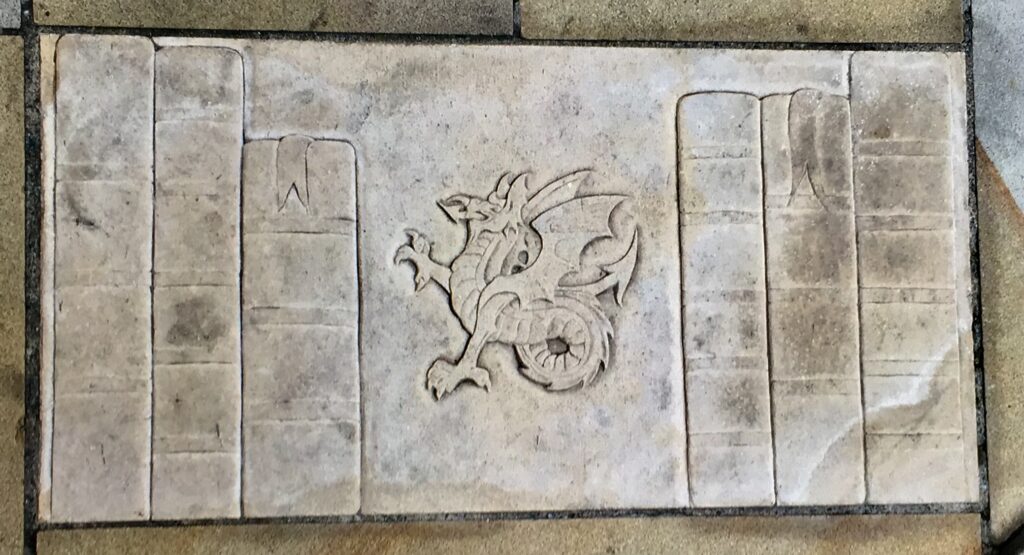
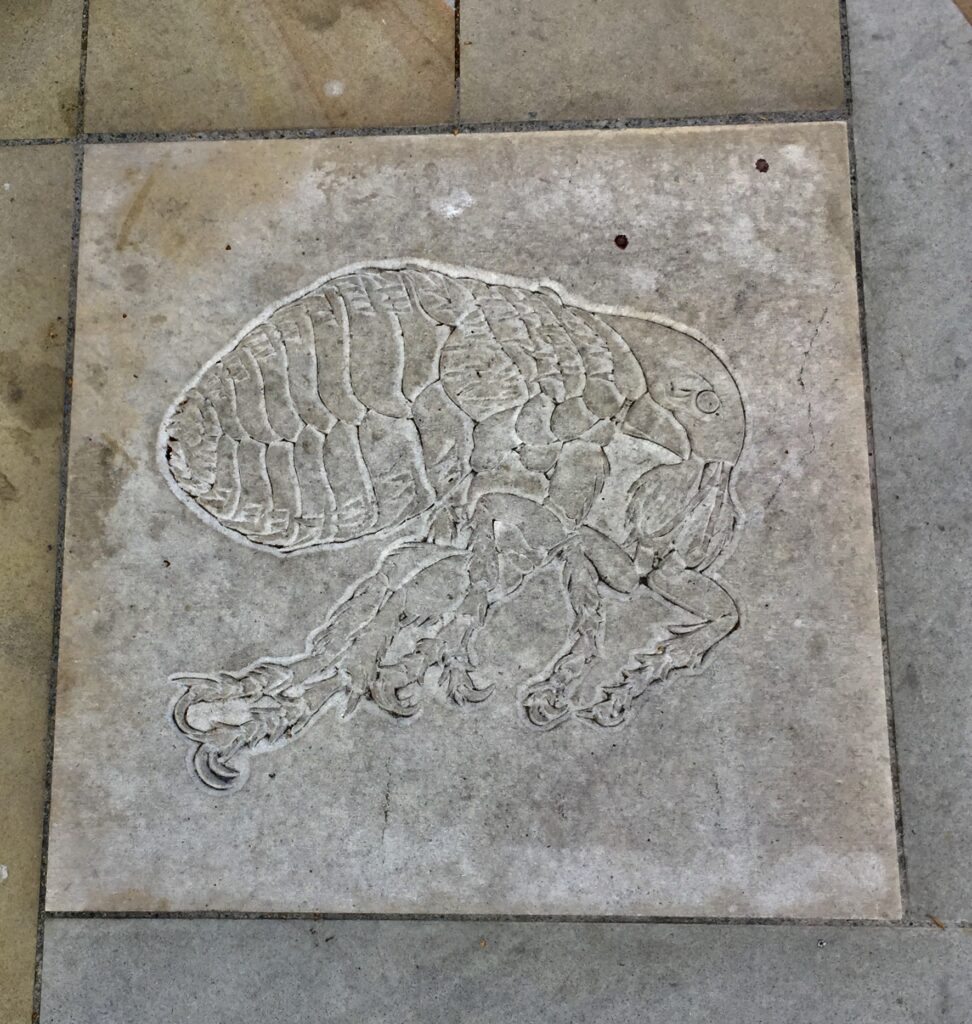
There is a flea in the garden but it has nothing to do with the plague …

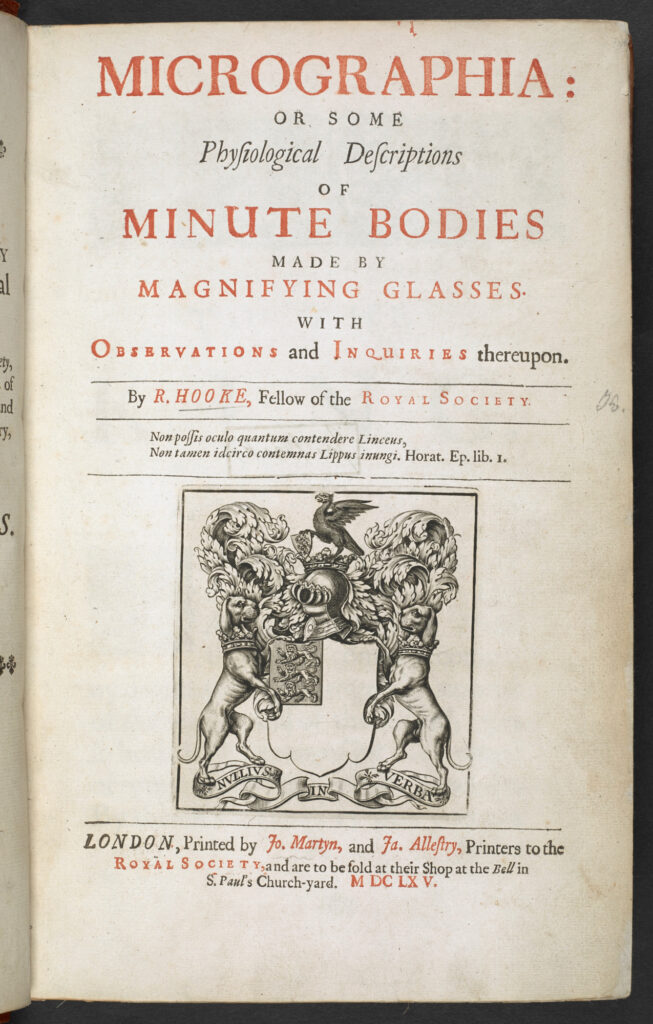
While visiting his bookseller on a frosty day in early January 1665 Pepys noticed a copy of Robert Hooke’s Micrographia, ‘which‘, Pepys recorded in his diary, ‘is so pretty that I presently bespoke it‘ …

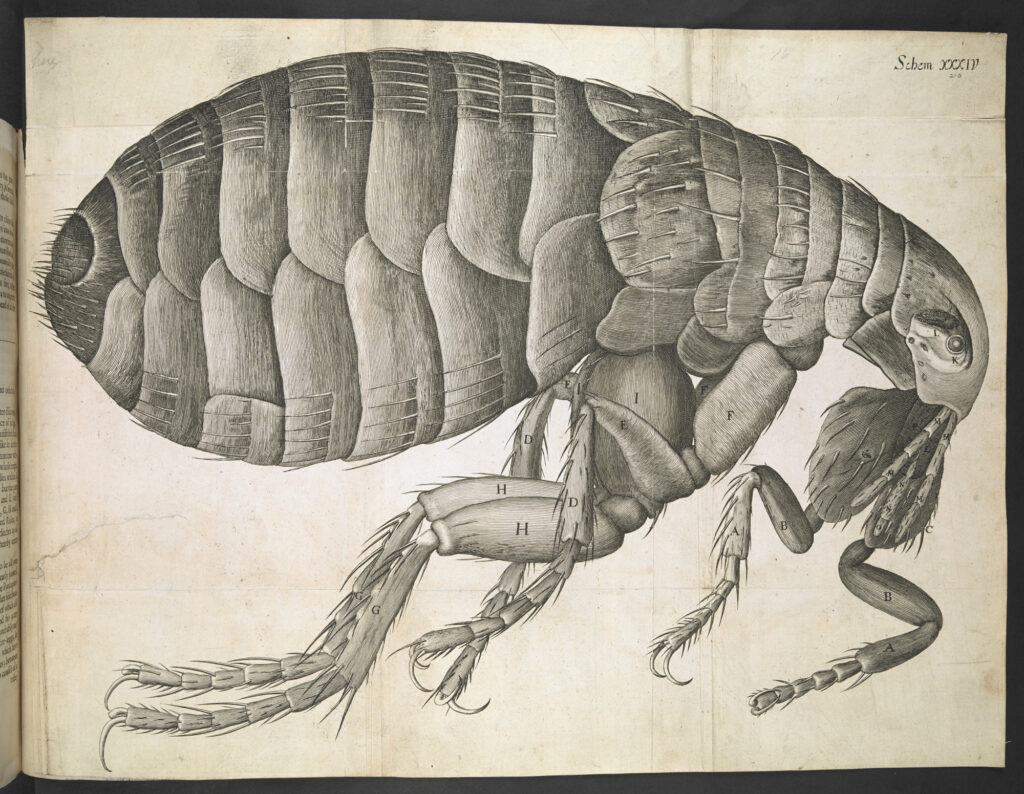
Like many other readers after him, Pepys was immediately drawn in by the beautiful engravings printed in what was the world’s first fully-illustrated book of microscopy. When he picked up his own copy later in the month Pepys was even more pleased with the book, calling it ‘a most excellent piece . . . of which I am very proud‘. The following night he sat up until two o’clock in the morning reading it, and voted it ‘the most ingenious book that ever I read in my life‘. Here is the engraving Hooke made of a flea …

It’s on a huge fold-out page 43 by 33 centimetres.

You can explore the wonders of Micrographia yourself by clicking on this link to the British Library website.

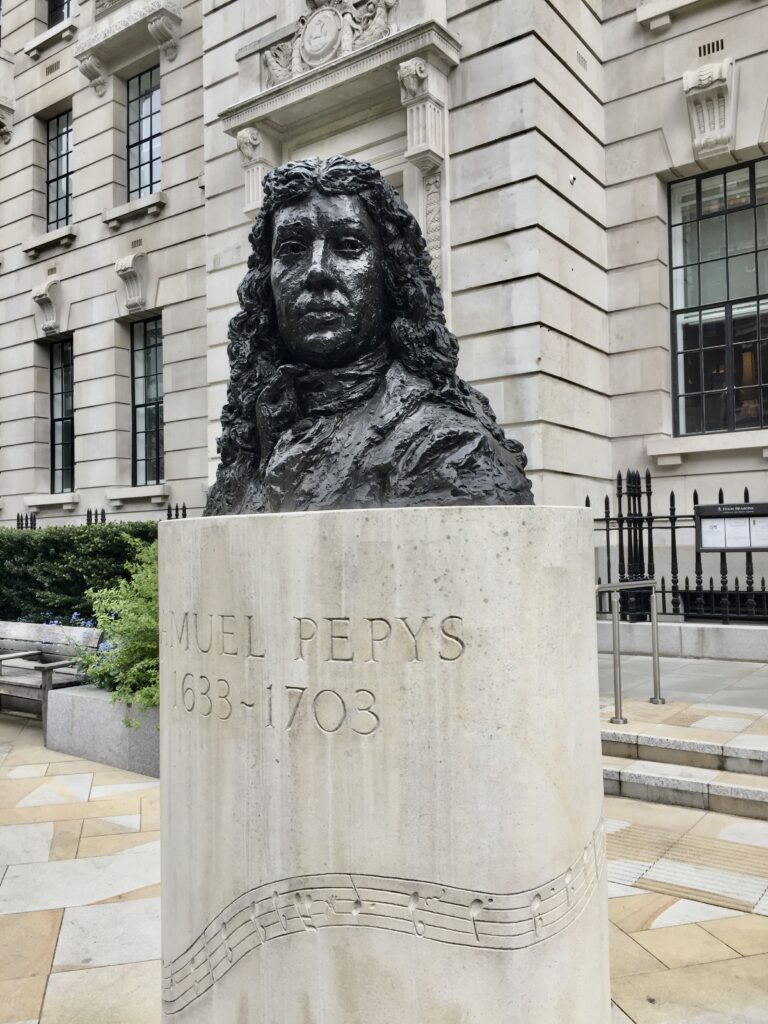
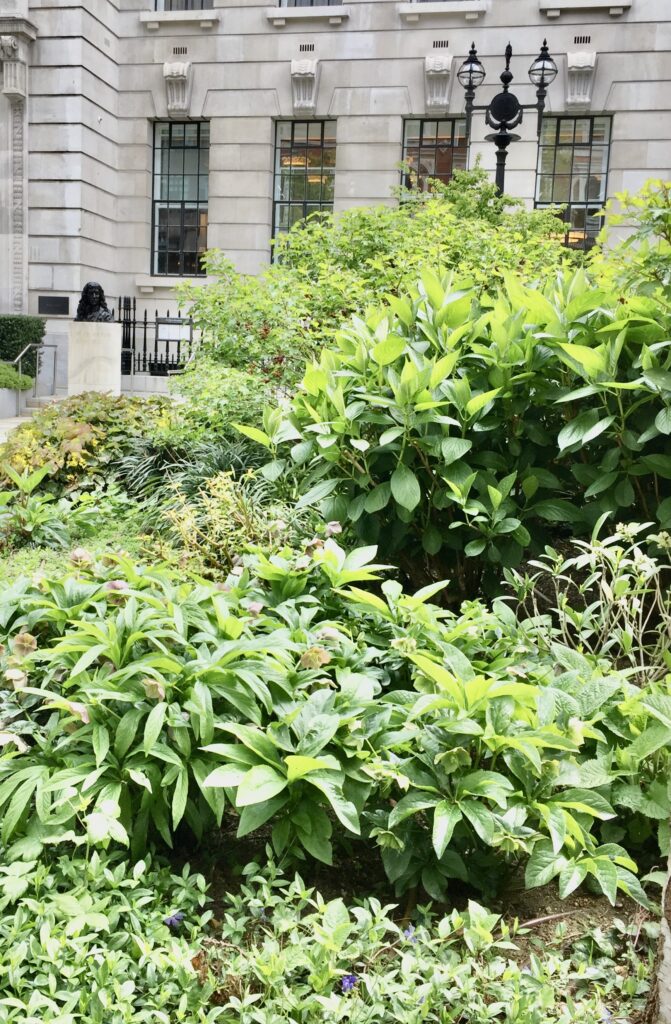
In the garden Pepys is commemorated with a splendid bust by Karin Jonzen (1914-1998), commissioned and erected by The Samuel Pepys Club in 1983 …

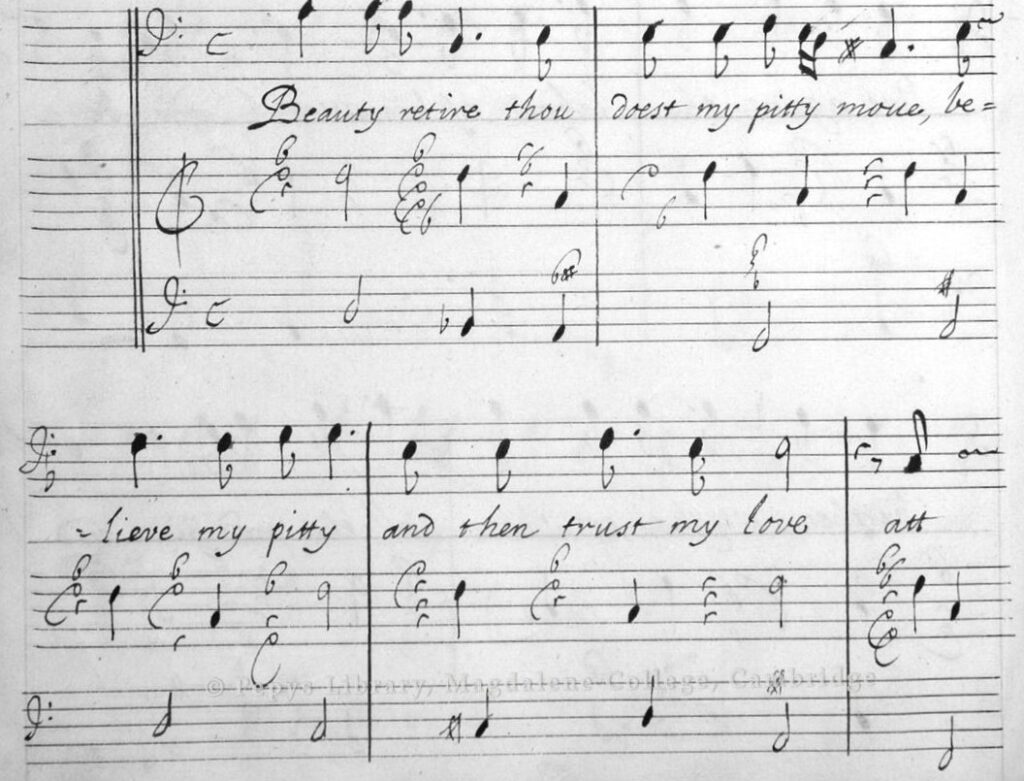
The plinth design was part of the recent project and the music carved on it is the tune of Beauty Retire, a song that Pepys wrote. So if you read music you can hear Pepys as well as see his bust …

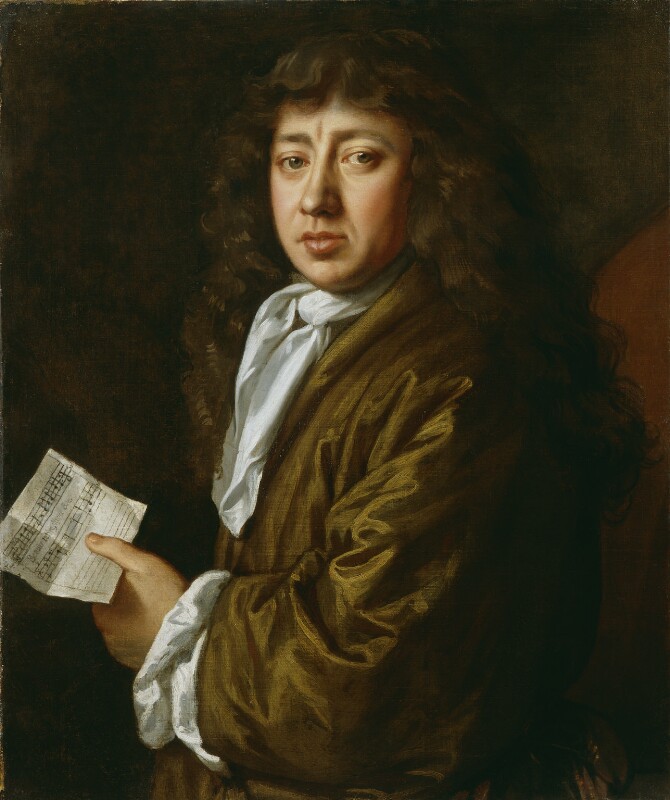
Pepys was evidently extremely proud of Beauty Retire, for he holds a copy of the song in his most famous portrait by John Hayls, now in the National Portrait Gallery. A copy of the portrait hangs in the Pepys Library …

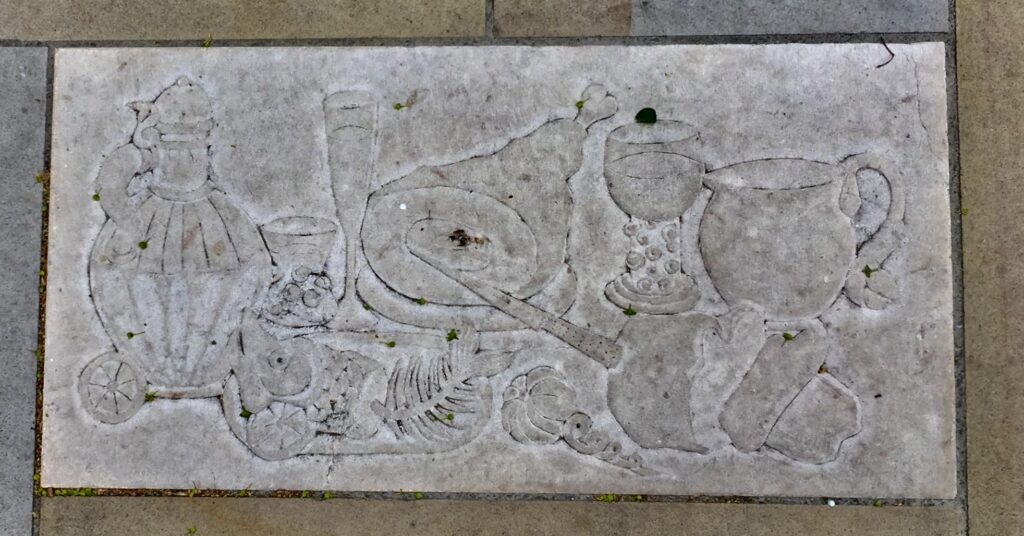
Every year, on the anniversary of his surgery, Pepys held what he called his ‘Stone Feast’ to celebrate his continued good health and there is a carving in the garden of a table laden with food and drink …

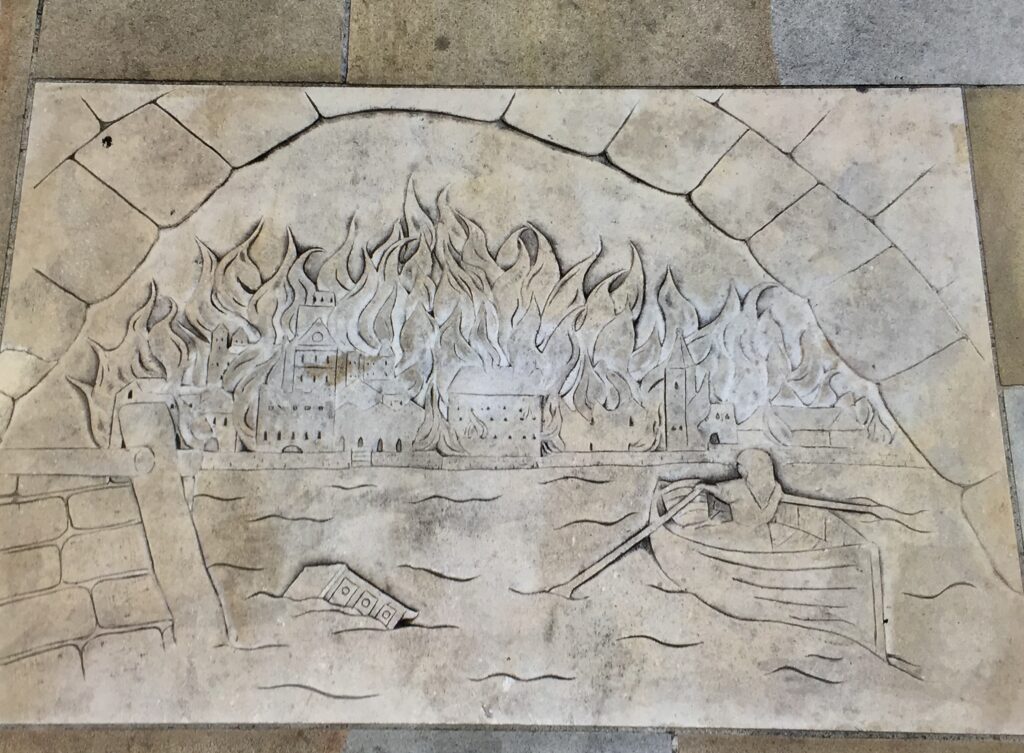
The Great Fire of London began on 2 September 1666 and lasted just under five days. One-third of London was destroyed and about 100,000 people were made homeless. He wrote in his diary …

I (went) down to the water-side, and there got a boat … through (the) bridge, and there saw a lamentable fire. Everybody endeavouring to remove their goods: poor people staying in their houses as long as till the very fire touched them, and then running into boats, or clambering from one pair of stairs by the water-side to another. And among other things, the poor pigeons, I perceive, were loth to leave their houses, but hovered about the windows and balconys till … some of them burned their wings and fell down.

A boat in the foreground with the City ablaze in the distance while a piece of furniture floats nearby …

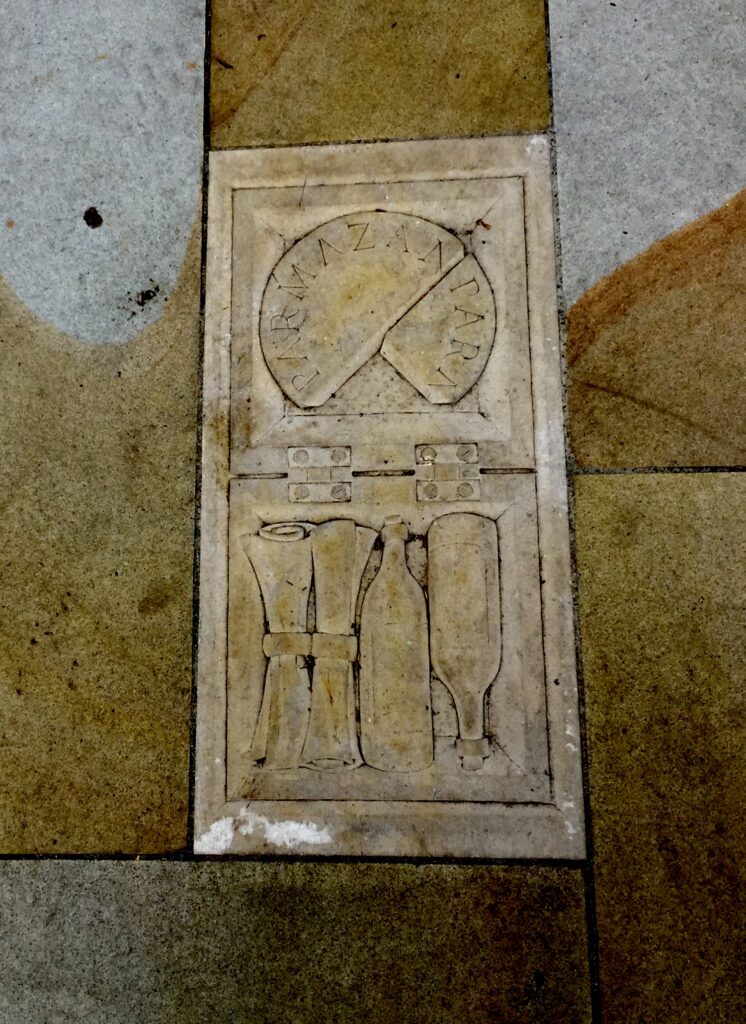
His house was in the path of the fire and on September 3rd his diary tells us that he borrowed a cart ‘to carry away all my money, and plate, and best things‘. The following day he personally carried more items to be taken away on a Thames barge, and later that evening with Sir William Pen, ‘I did dig another [hole], and put our wine in it; and I my Parmazan cheese, as well as my wine and some other things.’ And here is his cheese and wine …

Why did he bury cheese? Read more about the value of Parmesan (then and now) here.

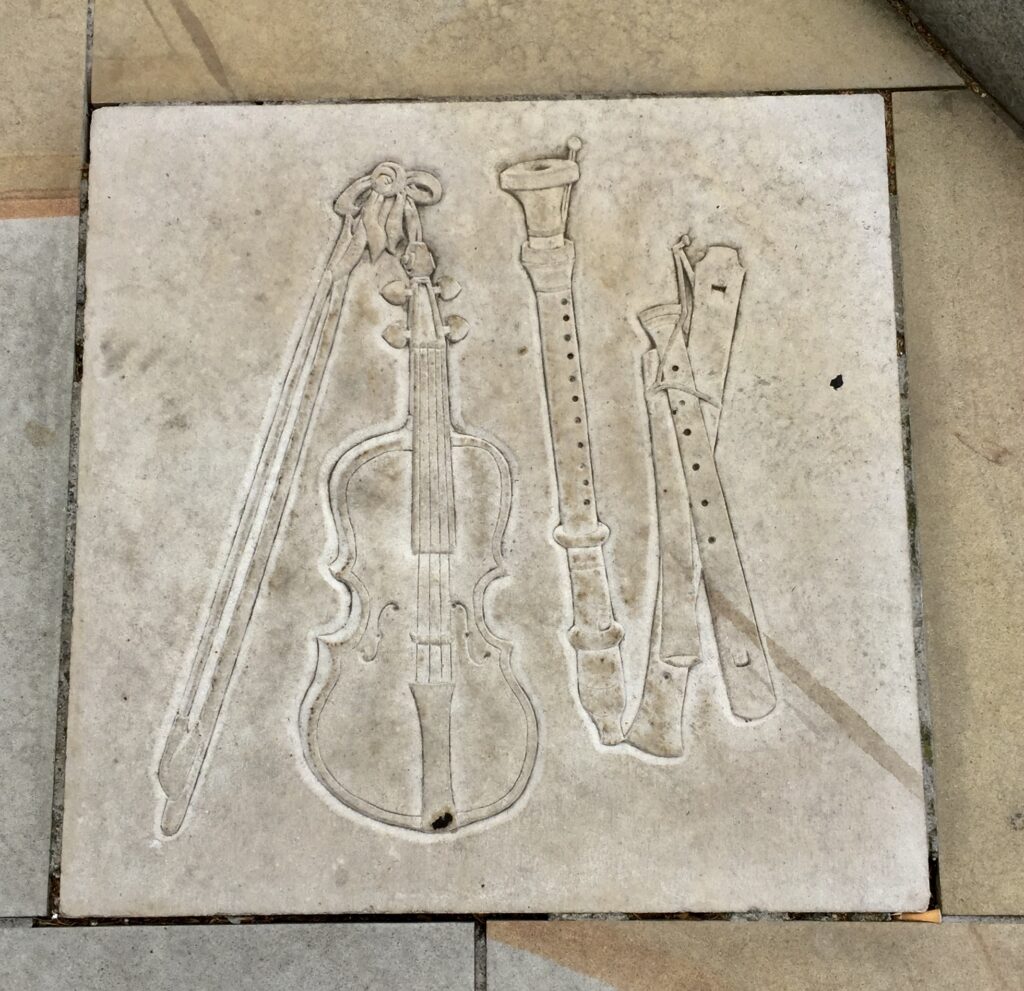
Then there are these musical instruments, all of which Pepys could play …

From the Pepys Club website: ‘To Pepys, music wasn’t just a pleasant pastime; it was also an art of great significance – something that could change lives and affect everyone who heard it. He was a keen amateur, playing various instruments and studying singing – he even designed a room in his home specially for music-making. He attended the services at the Chapel Royal; he collected a vast library of scores, frequented the theatre and concerts and even commented with affection on the ringing of the church bells that filled the air in London’s bustling streets where he lived and worked’.

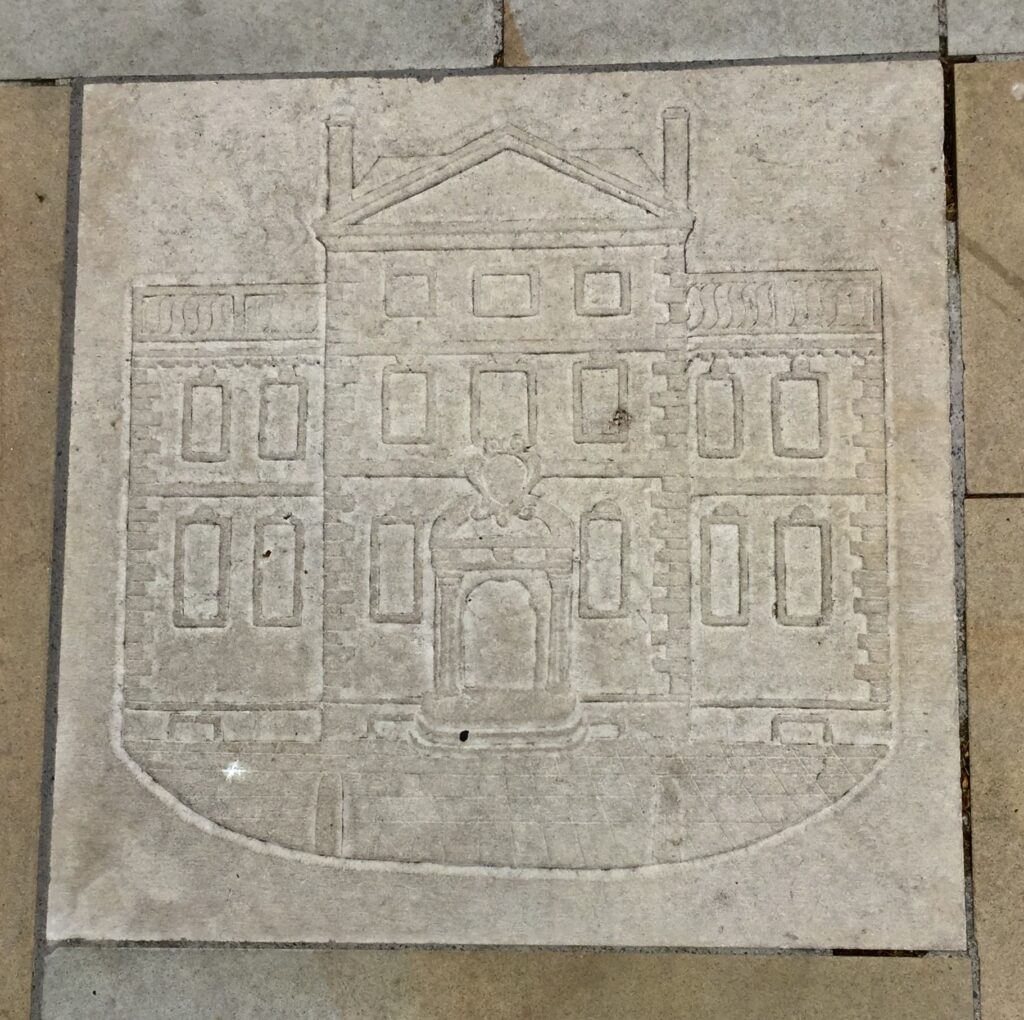
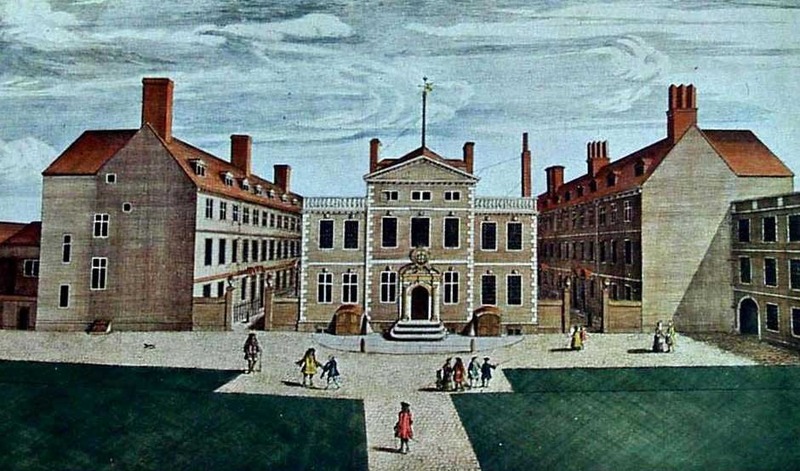
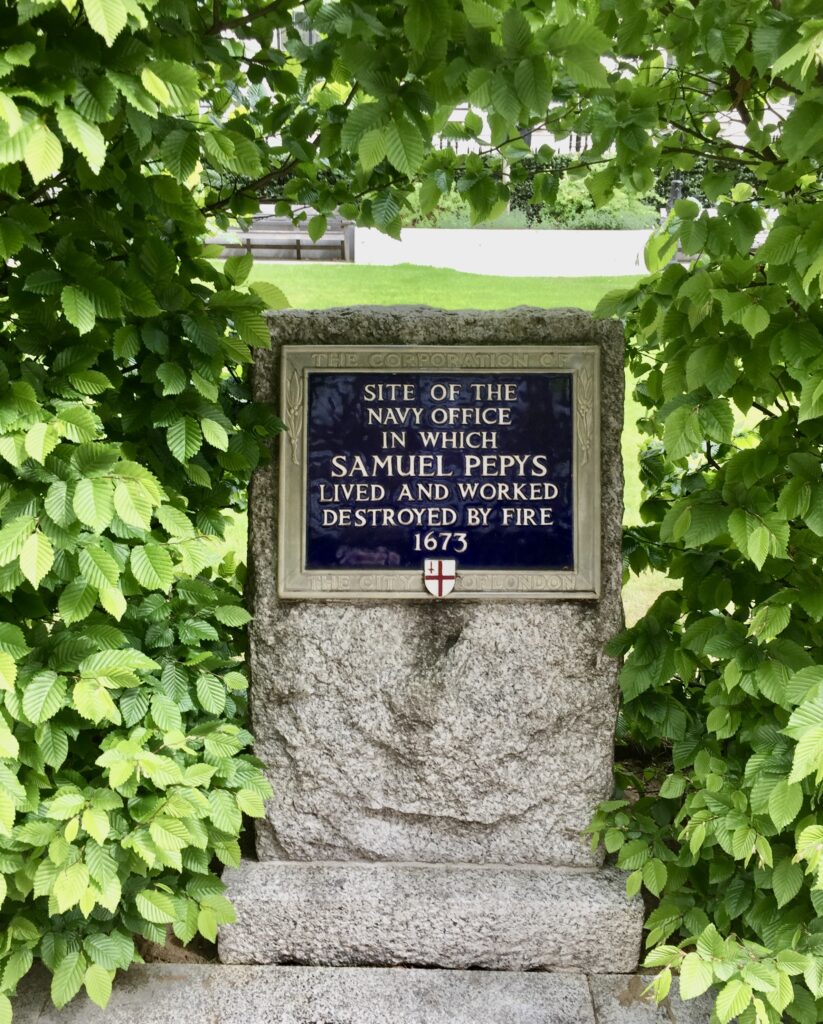
The Navy Office where he worked, eventually rising to become Chief Secretary to the Admiralty …

Source: London Remembers.

There are thirty pavers in all and I shall return to them in a later blog. In the meantime, great credit is due to the folk who worked on this incredibly interesting project.

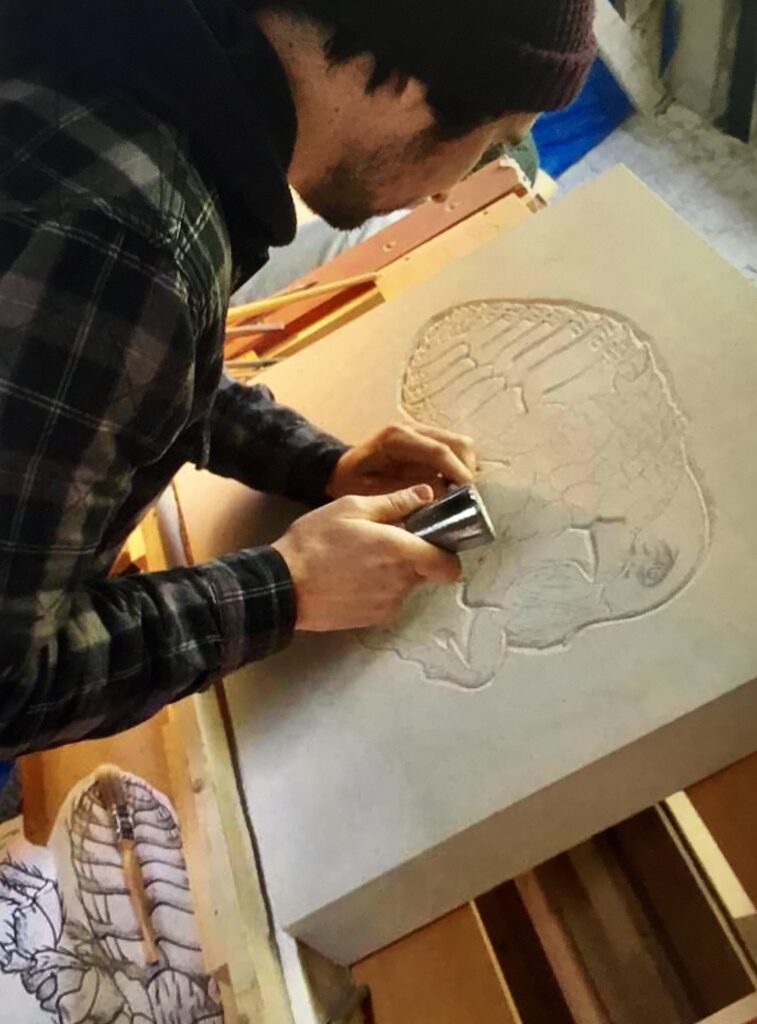
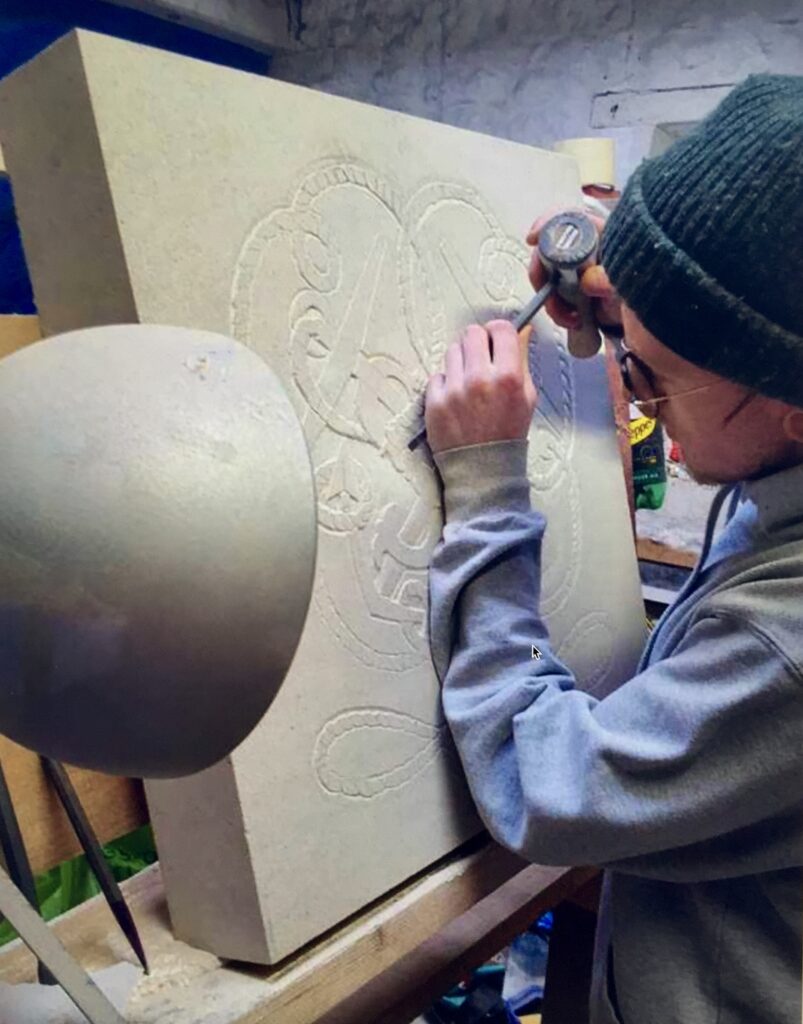
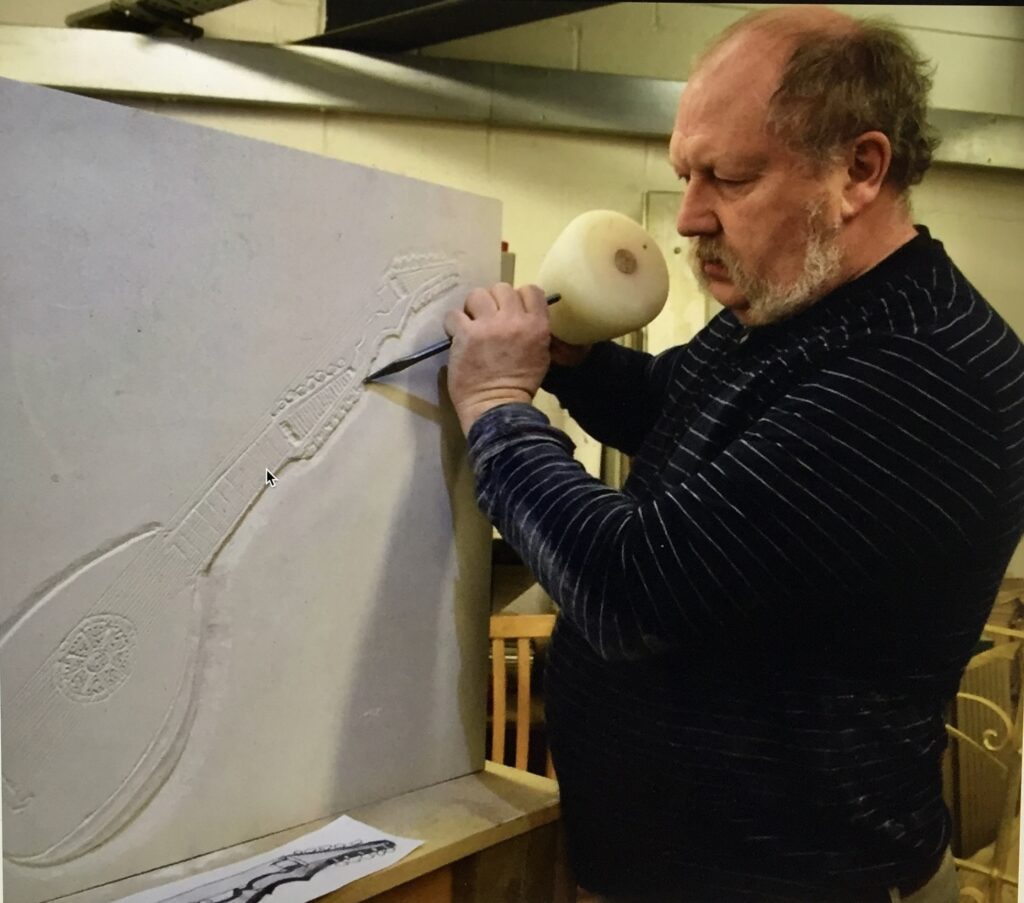
The designs were created by a team of students and alumni of City & Guilds London Art School working under the direction of Alan Lamb of Swan Farm Studios Ltd. Further contributions to the design were made by Sam Flintham, Jackie Blackman, Clem Nuthall, Tom Ball, Sae Na Ku, Sophie Woodhouse and Alan Lamb himself. Here are some pictures of the sculptors at work.

Tom Ball working on the flea …

Mike Watson working on Pepys’s monogram …

And finally, Alan Lamb working on a theorbo lute, another instrument Pepys could play …

Do visit the garden if you have the chance. Another of its interesting features is that it is irrigated by rainwater harvested from the roof of the hotel next door!

I have written about Pepys before : Samuel Pepys and his ‘own church’ and Samuel Pepys and the Plague.

If you would like to follow me on Instagram here is the link …
https://www.instagram.com/london_city_gent/

Some cheery images for Easter.

It’s now just over four years since I started writing these blogs and I would like to thank all of you for subscribing and making my efforts seem worthwhile. I thought I’d celebrate my anniversary and Easter itself by publishing some jolly images that have cheered me up in these sometimes sad days of lockdown.

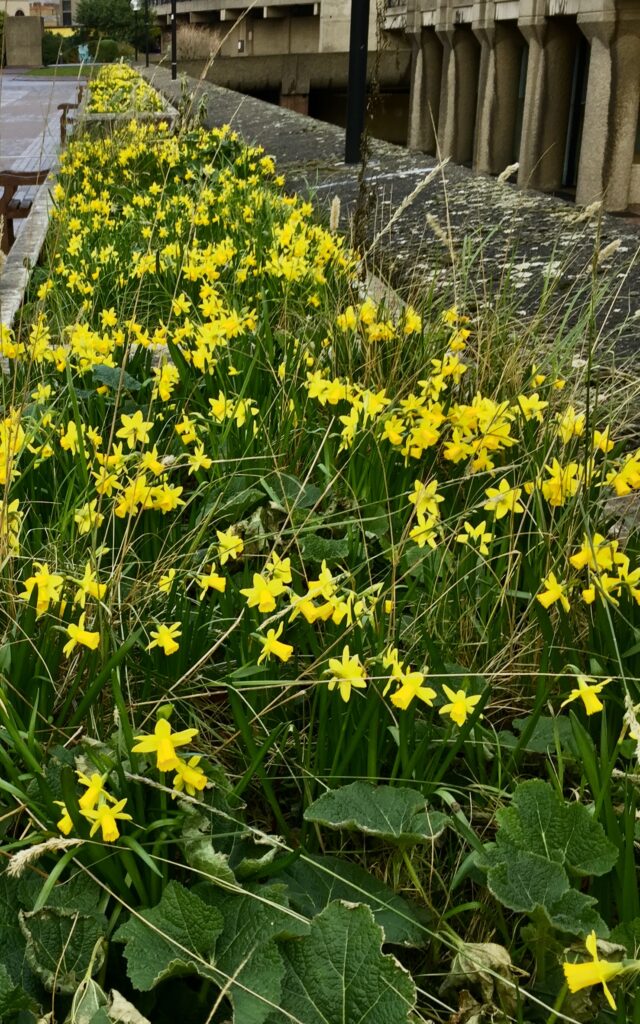
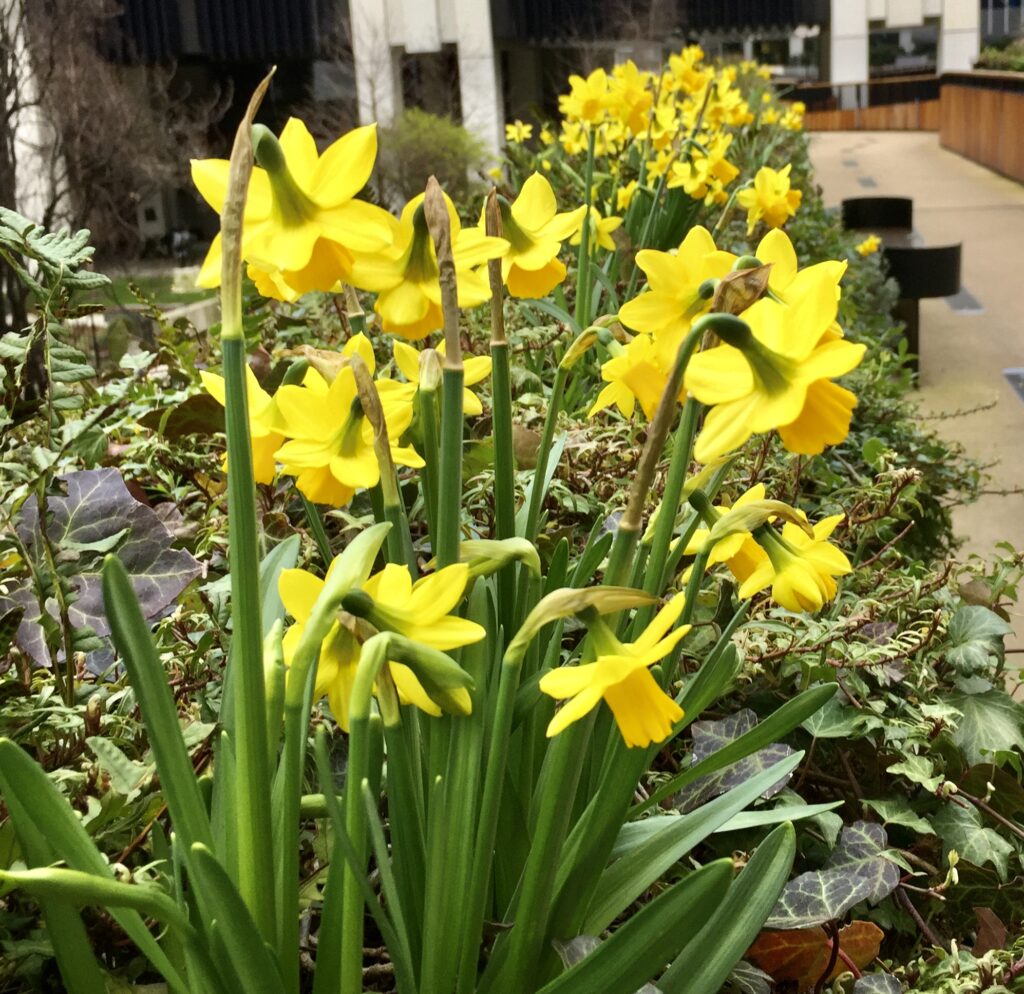
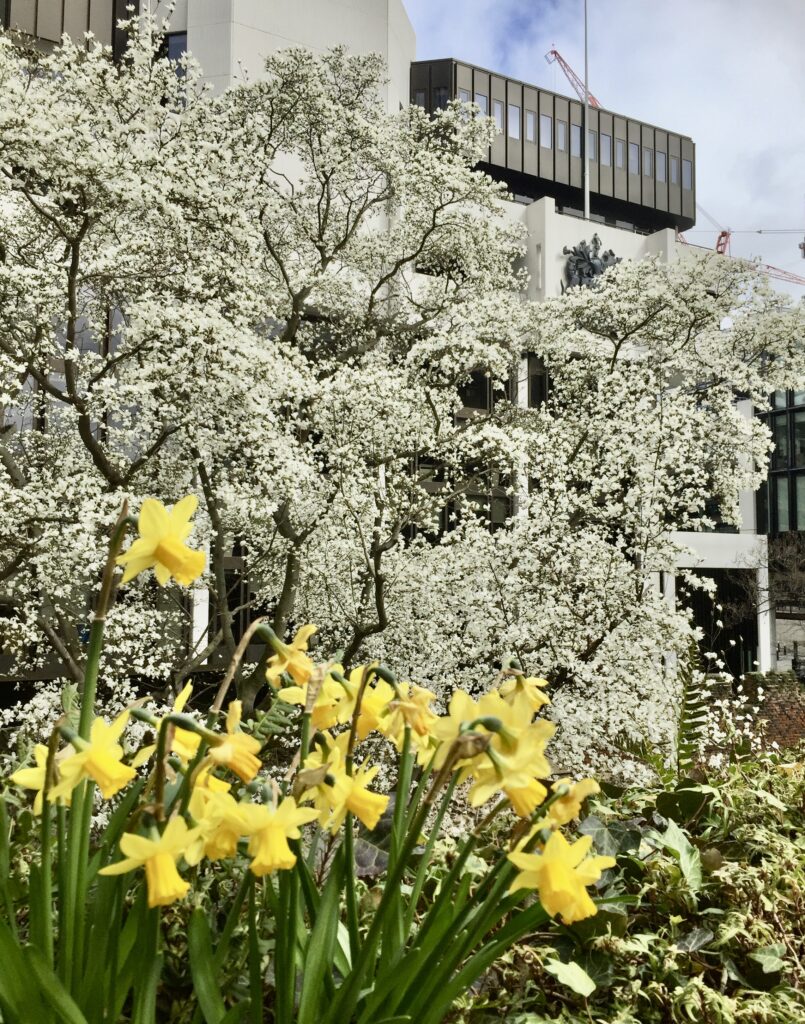
What could be nicer than the little daffodils that emerged a few weeks ago …

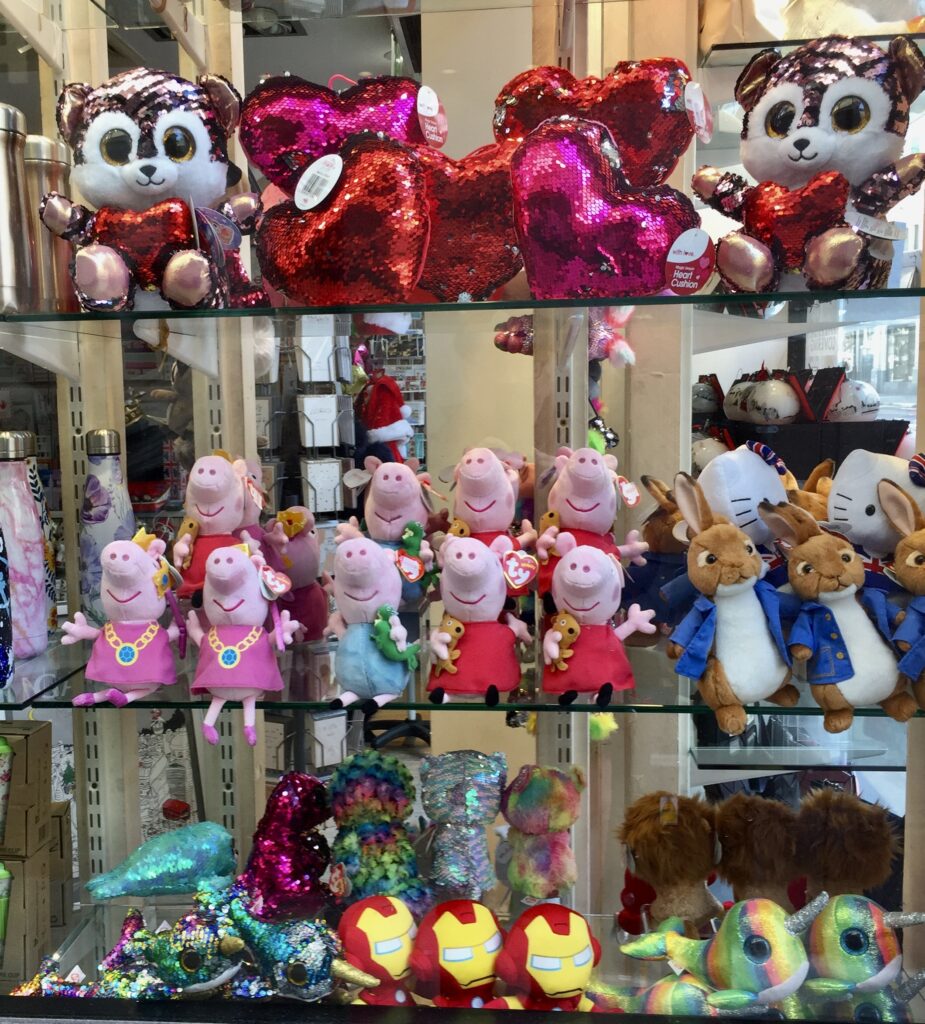
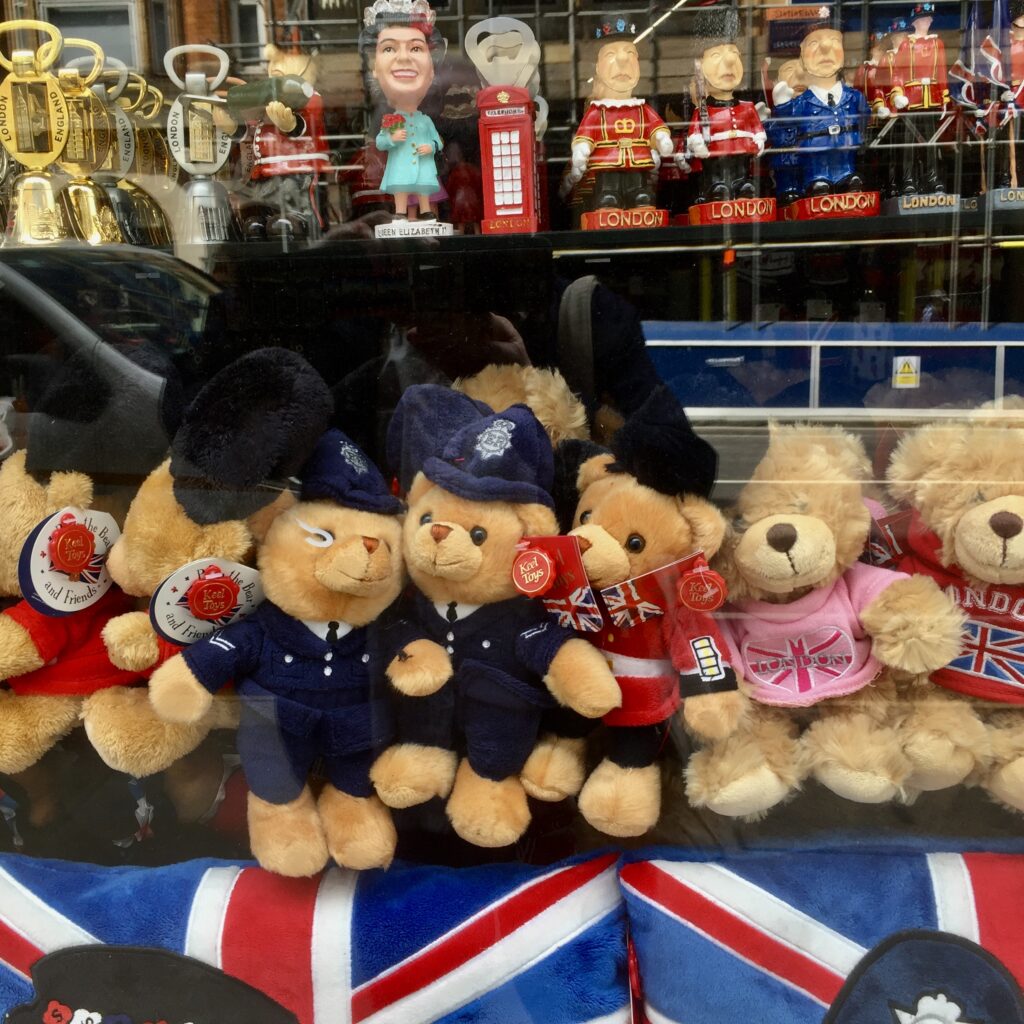
This slightly bonkers window display on Ludgate Hill made me laugh. I thought these little creatures looked like they were doing a dance but that’s probably a symptom of lockdown madness …

‘Who’s going to buy us with no tourists coming?’ …

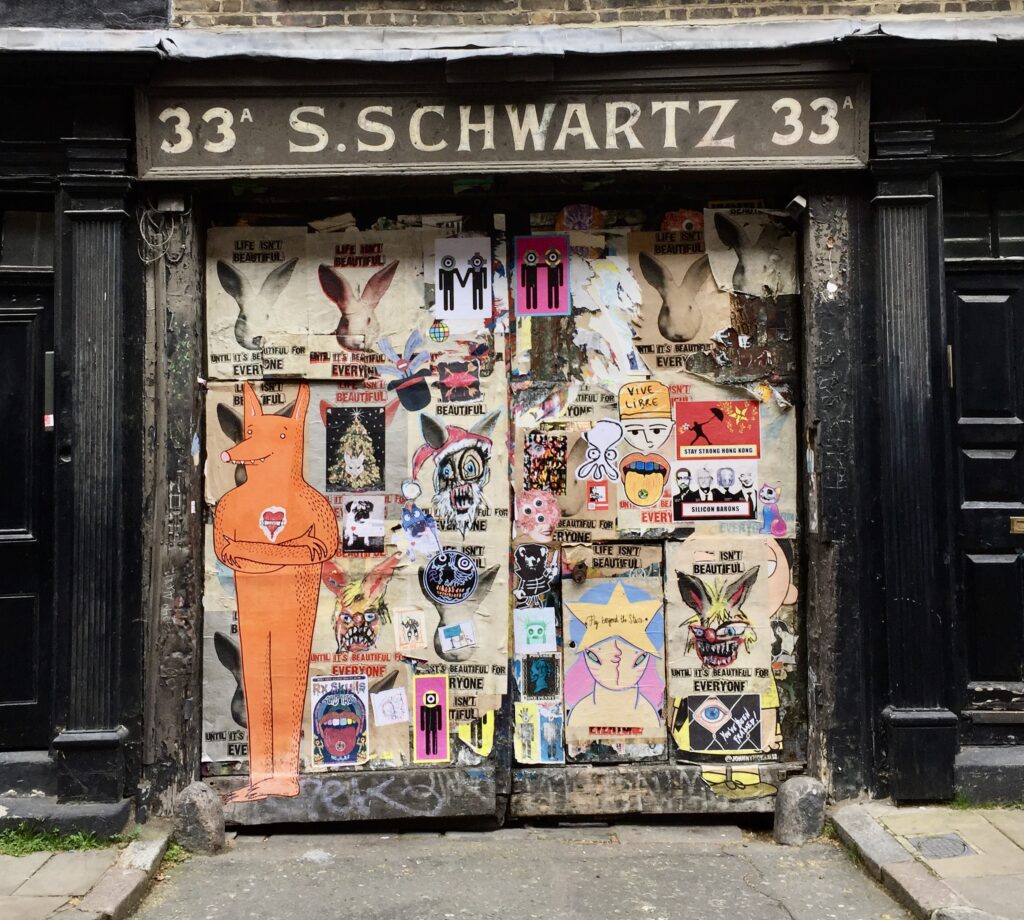
I came across this eye-catching pair of doors in Fournier Street above which is a very old sign indicating the name of the business owner …

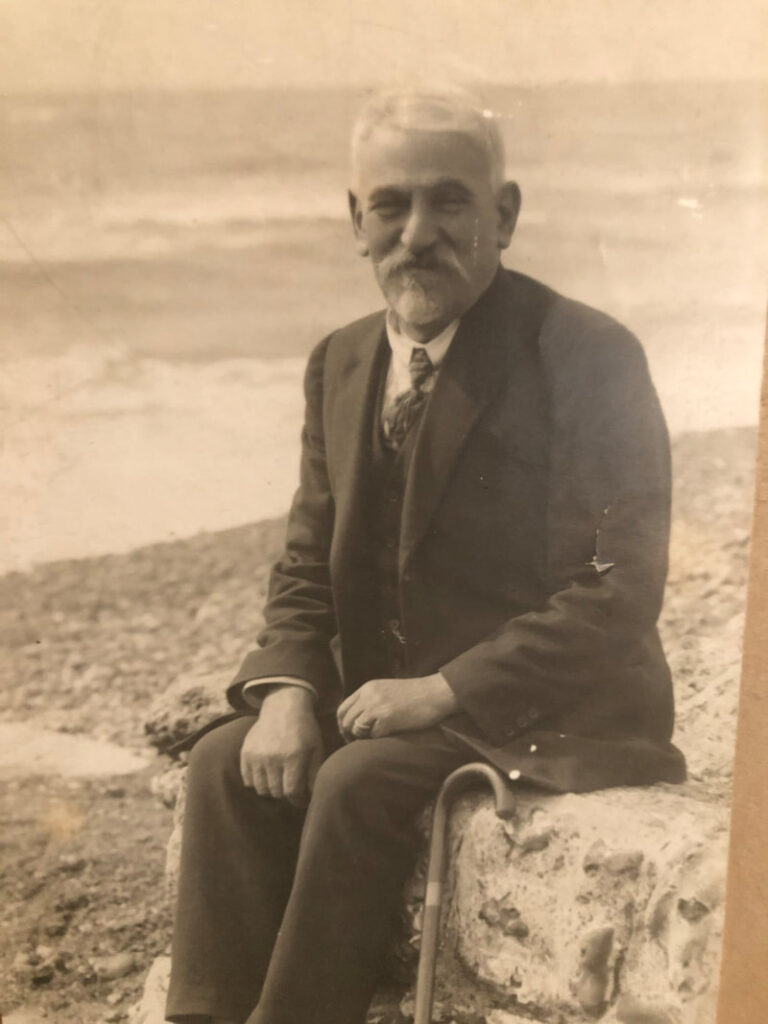
I resolved to do a bit more research and in doing so actually discovered what Mr Simon Schwartz looked like! What a distinguished looking gentleman he was …

To find out more about him, his business and the background to this picture go to the excellent Andrew Whitehead blog where the story is charmingly revealed.

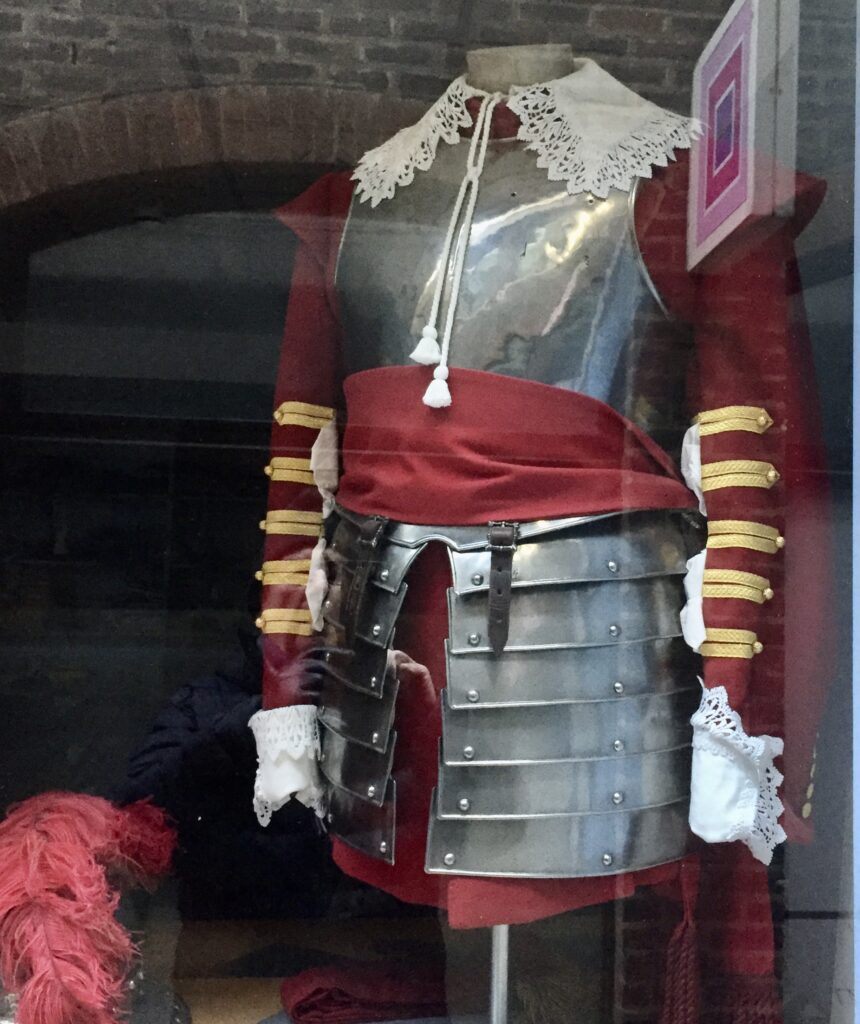
No Lord Mayor’s Show last year but I spotted a Pikeman’s uniform in a tailor’s shop just off Carter Lane …

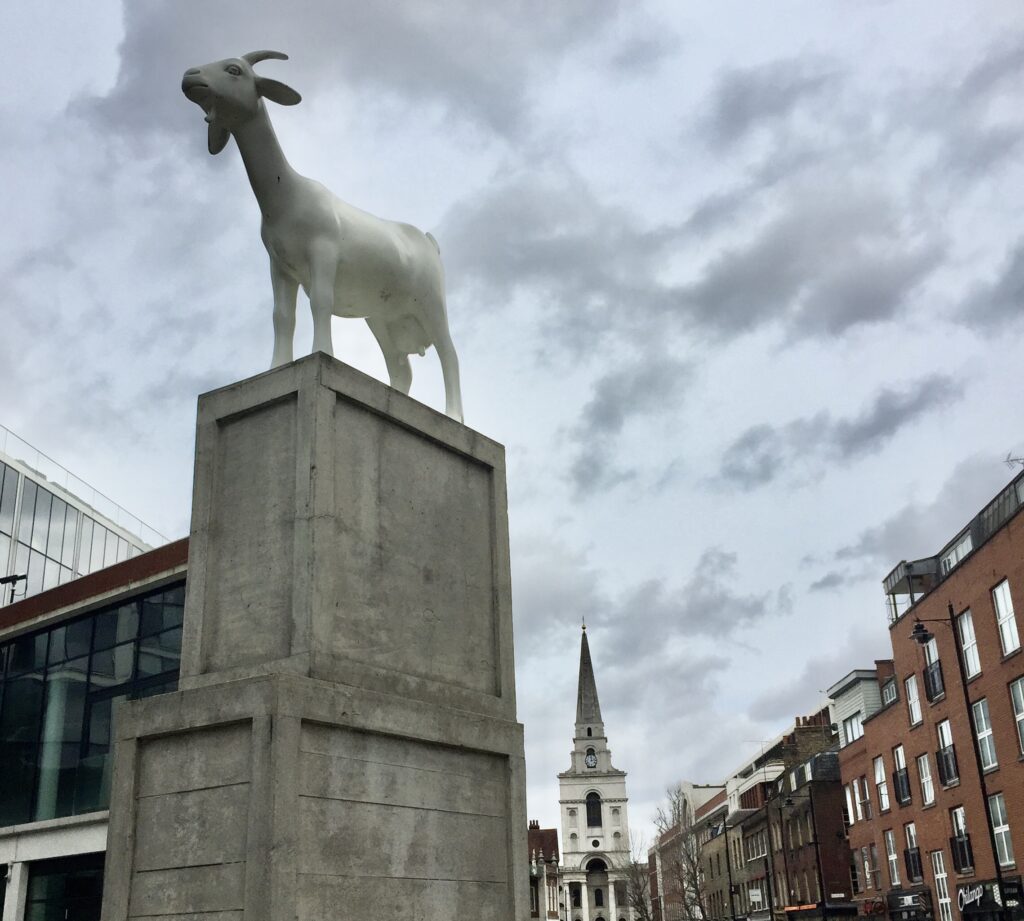
The magnificent I Goat outside Spitalfields Market …

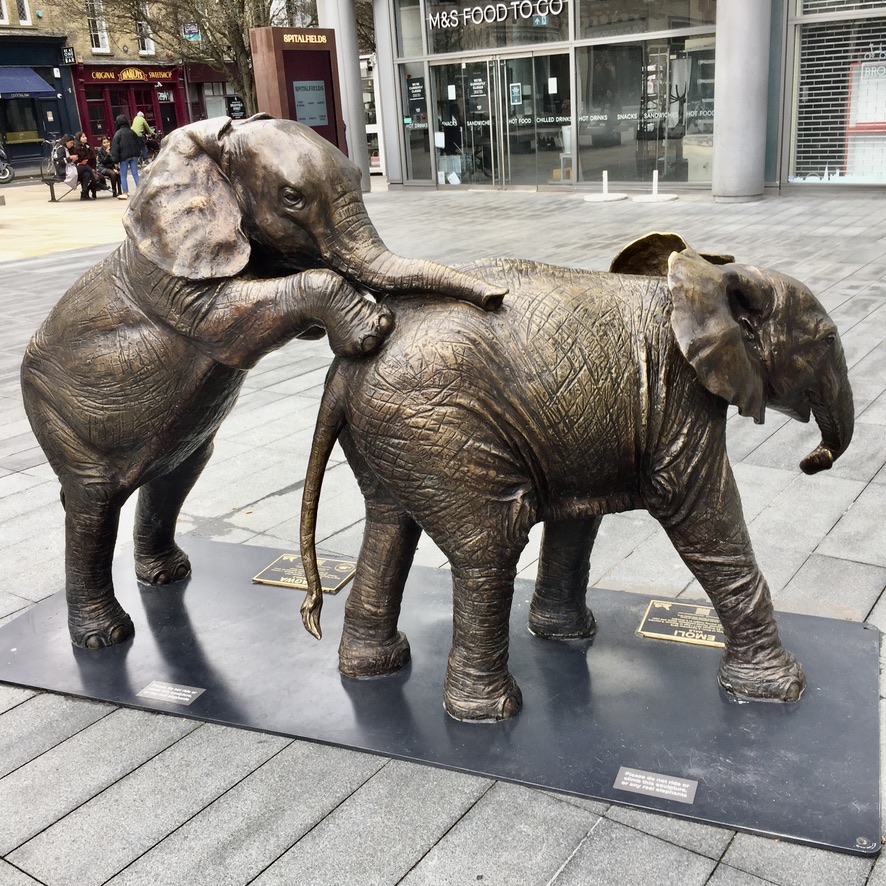
Read about it here along with the background to the lovely elephants …

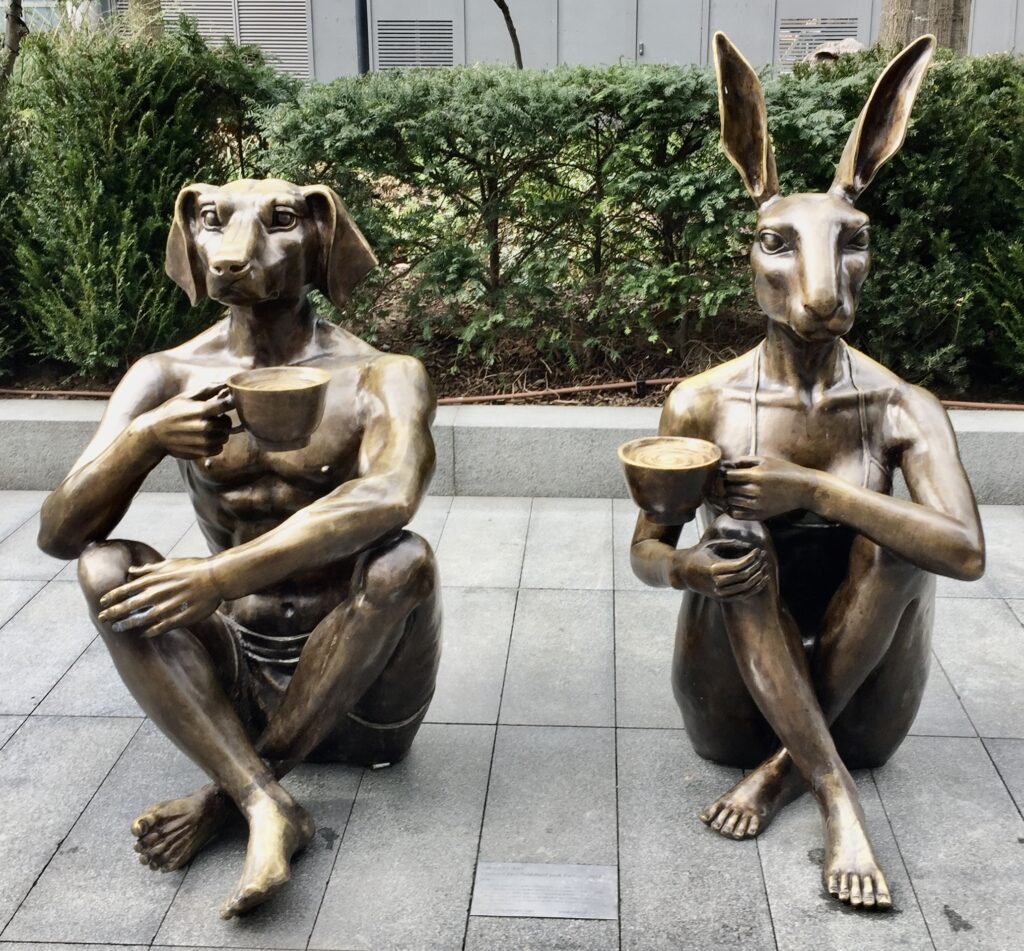
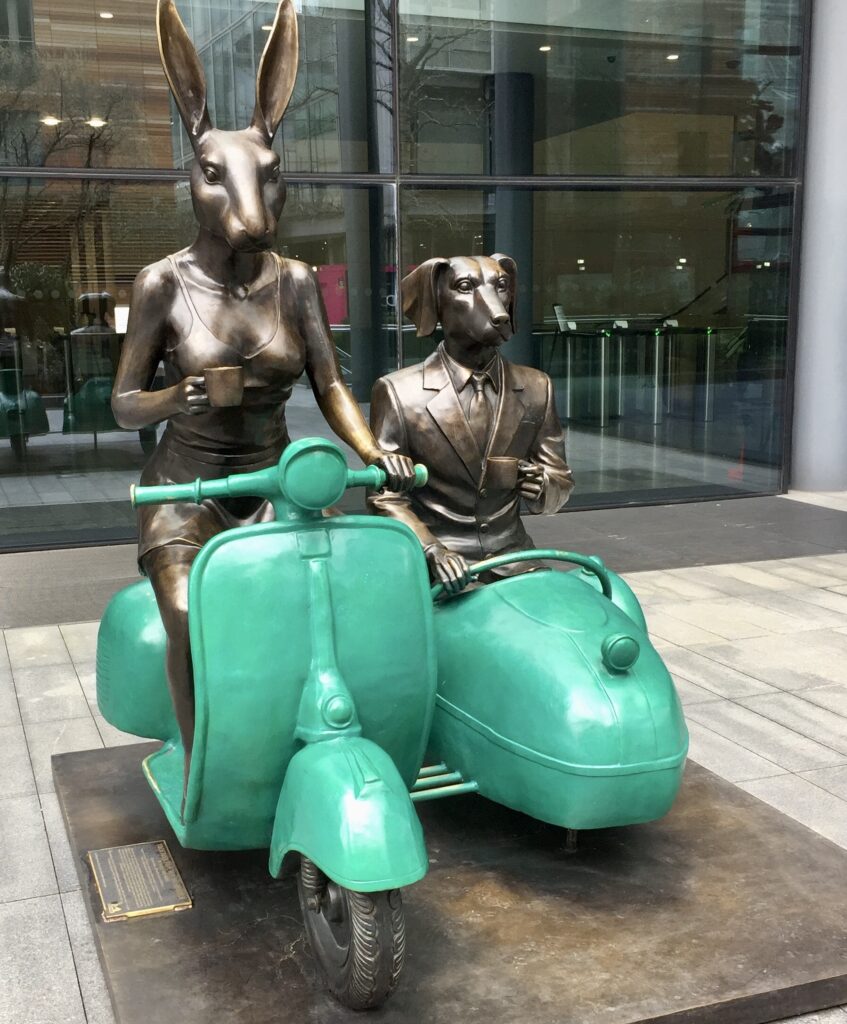
… and these crazy characters, Dogman and Rabbitgirl …

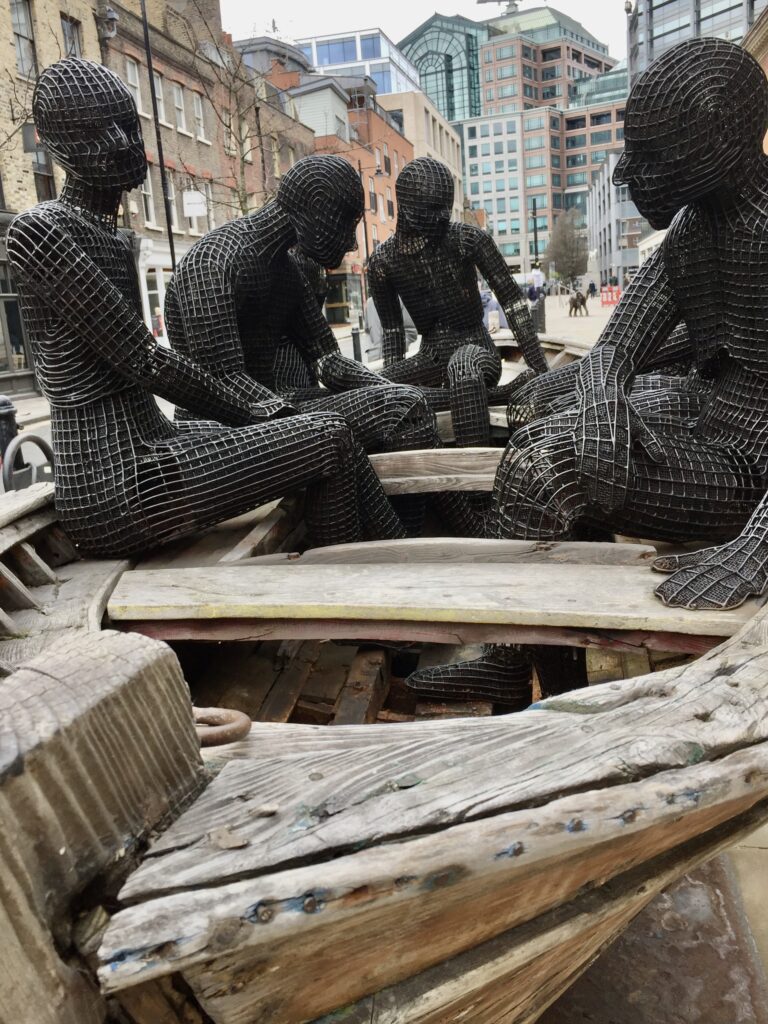
You can also read about this more sombre work …

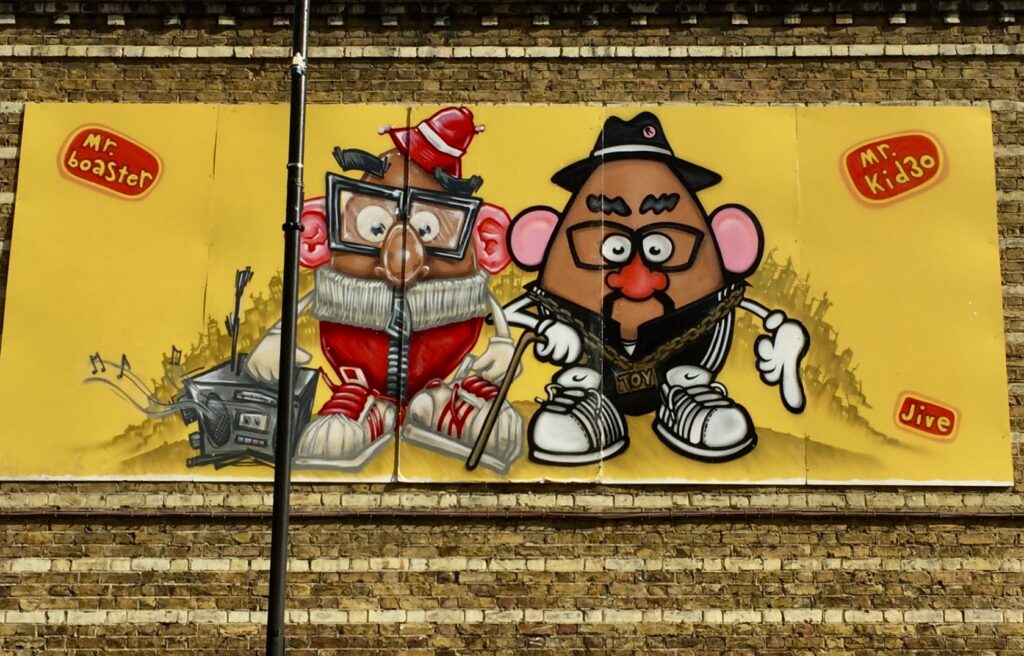
Potato heads in Whitecross Street …

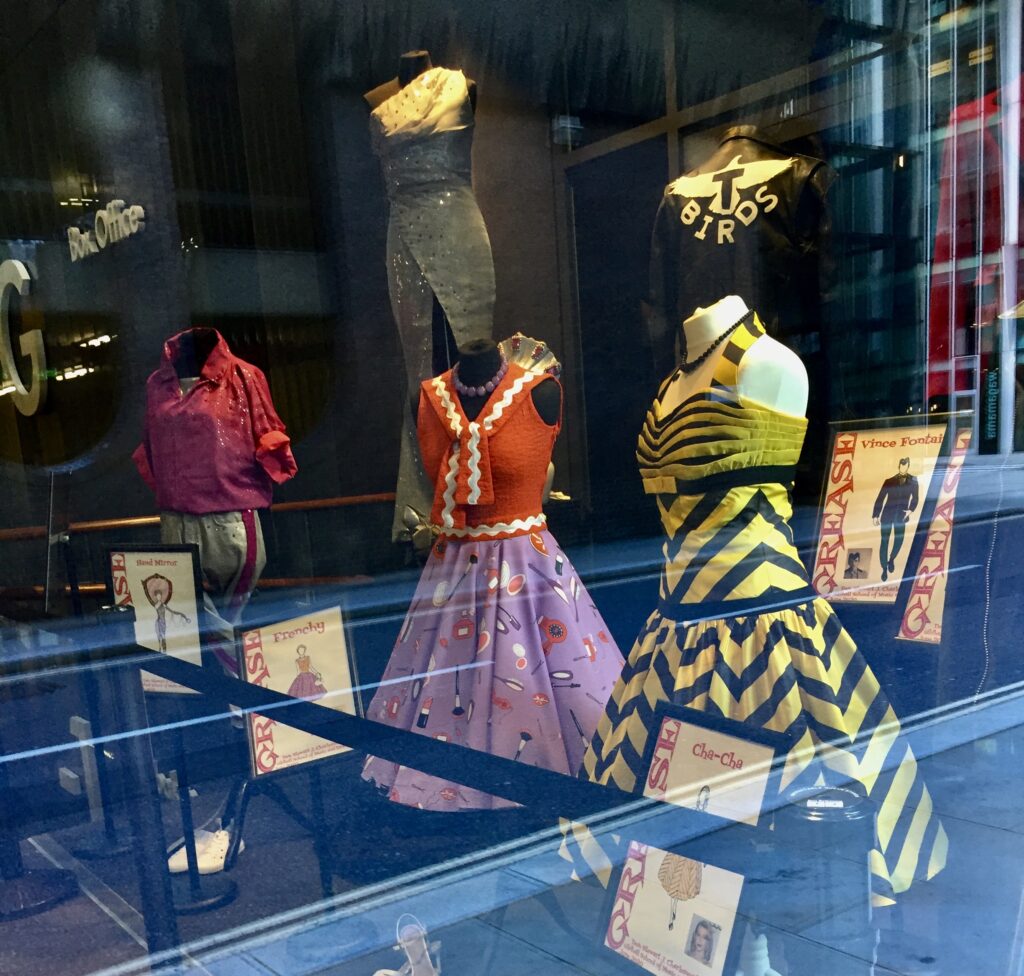
Costumes from a production of Grease at the Guildhall School of Music and Drama in Milton Court …

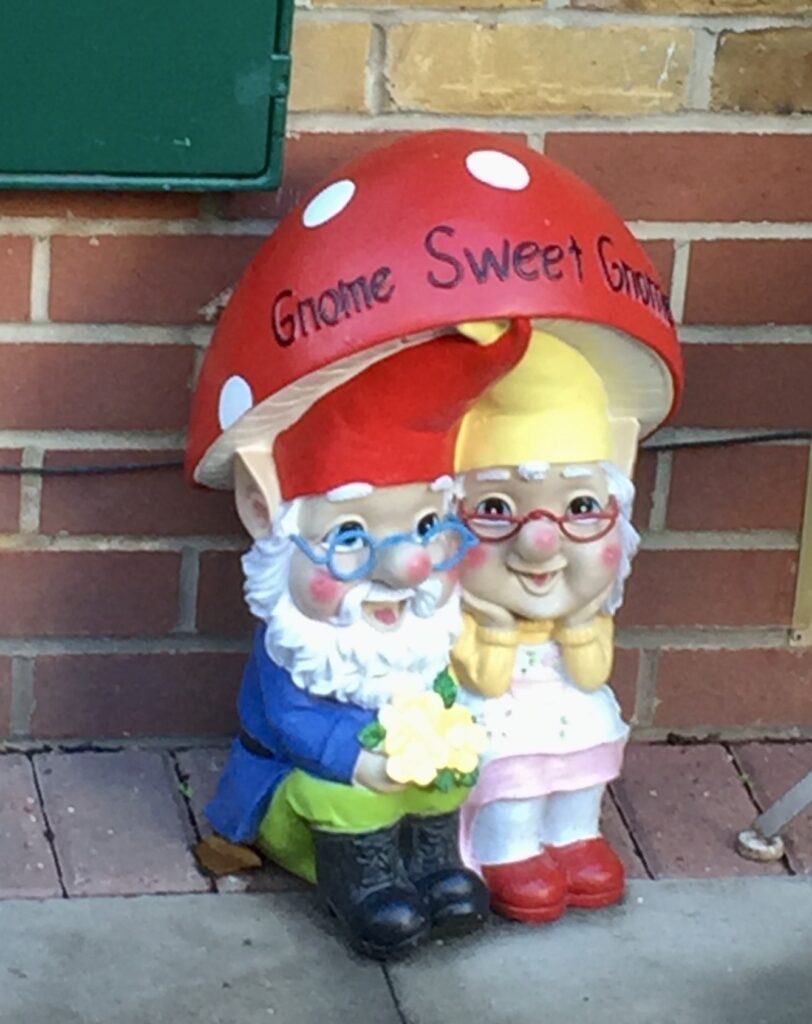
A happy Clerkenwell couple sitting in their garden …

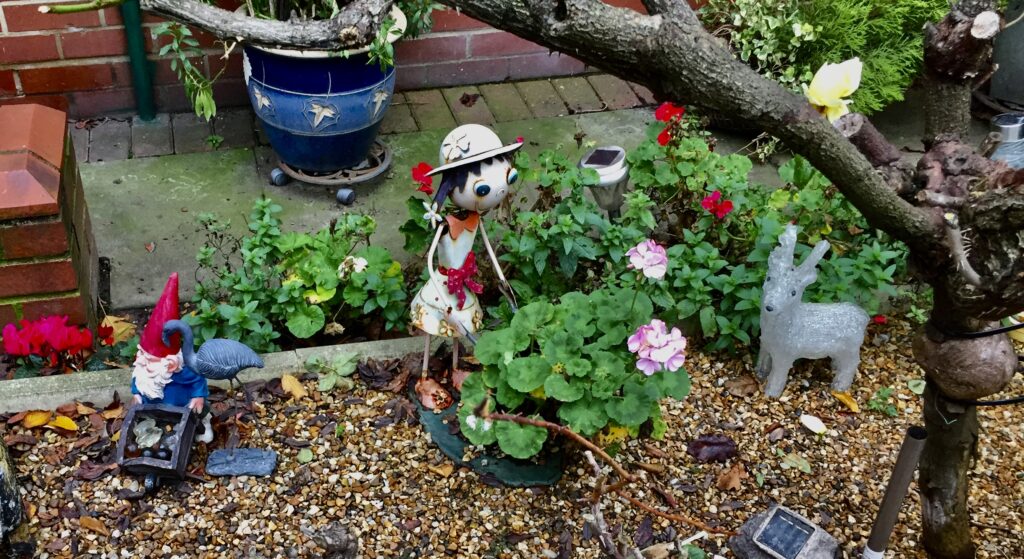
Along with some friends …

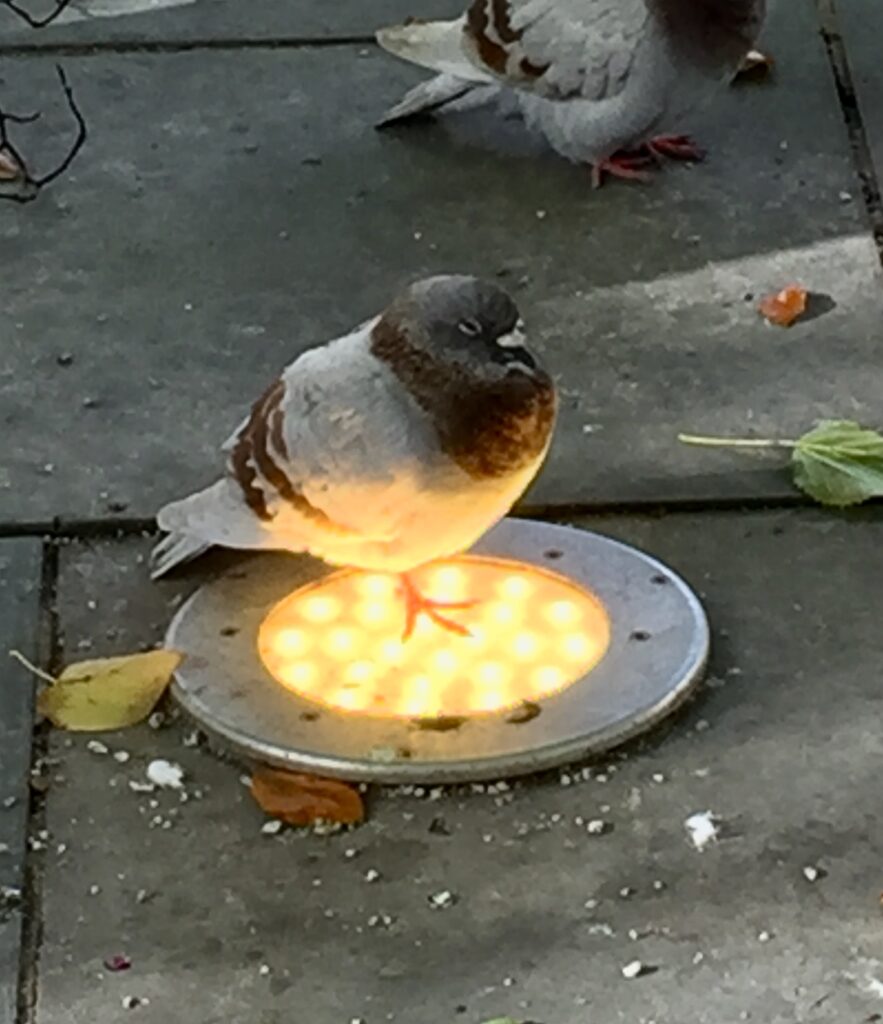
One of my favourites from last year – a pigeon dozes whilst drying his feathers and warming his bottom on a spotlight …

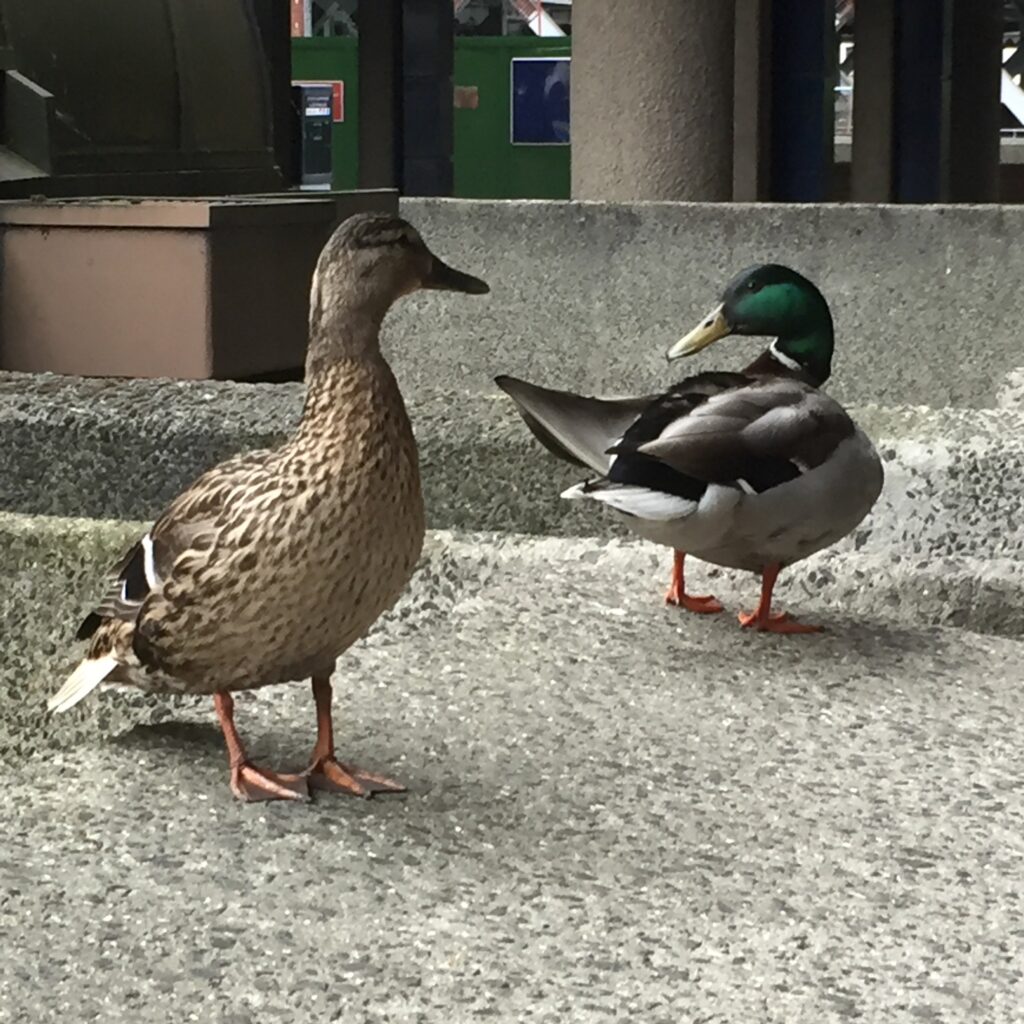
Ducks frequently pose for me on the Barbican Podium …

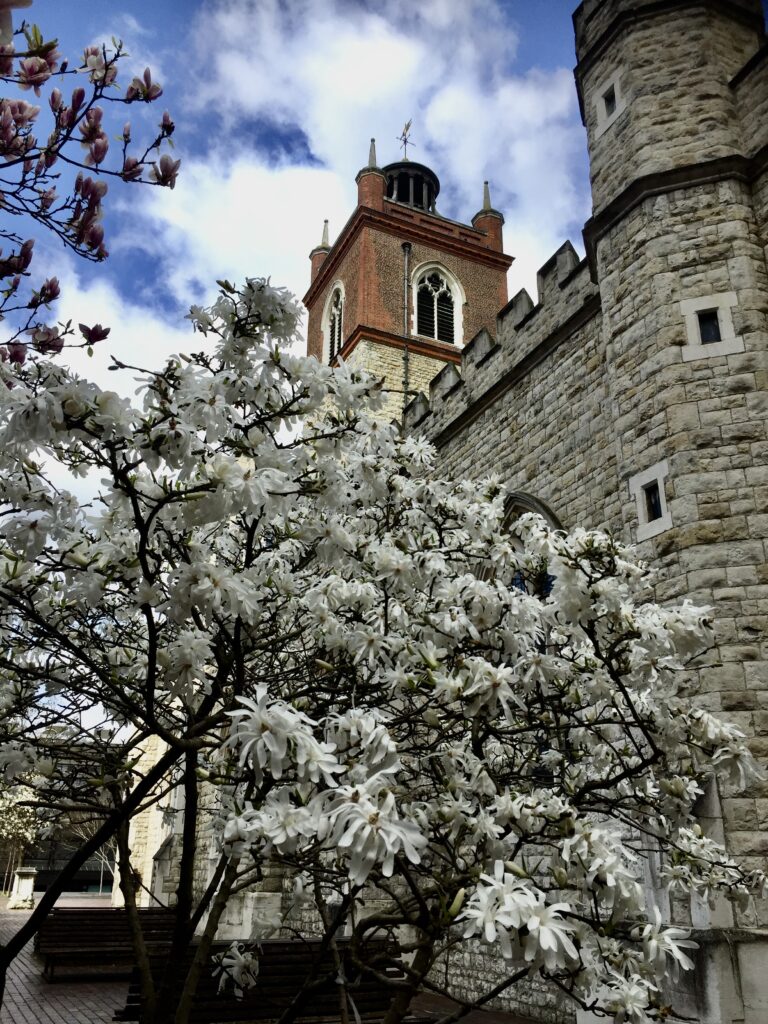
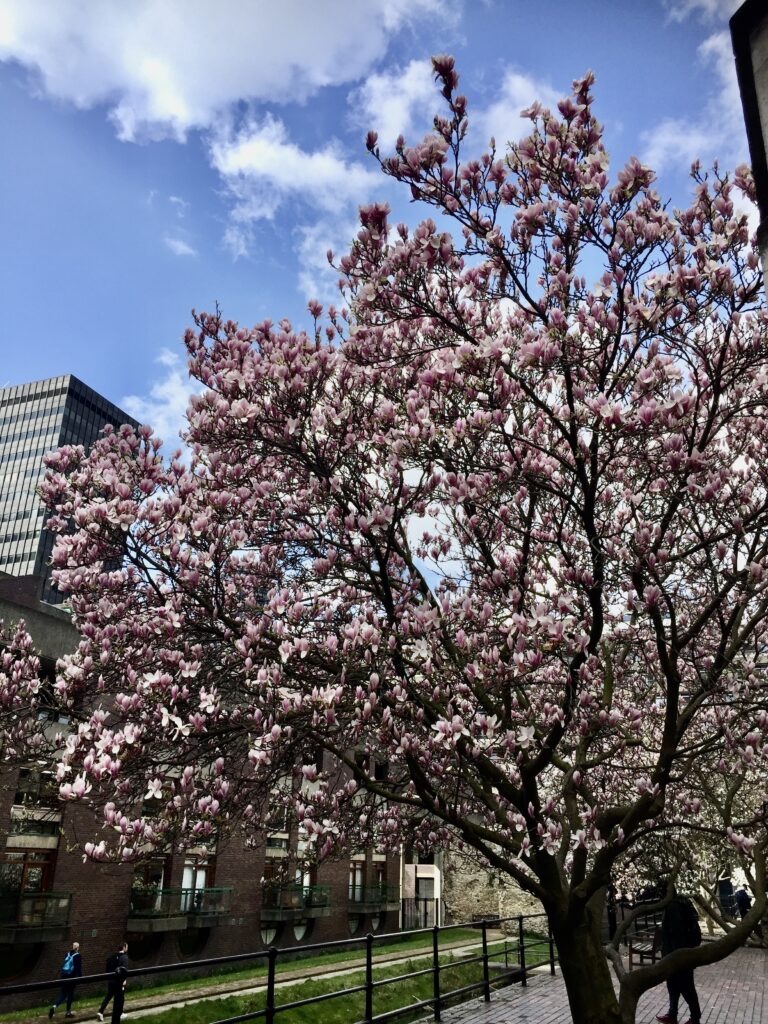
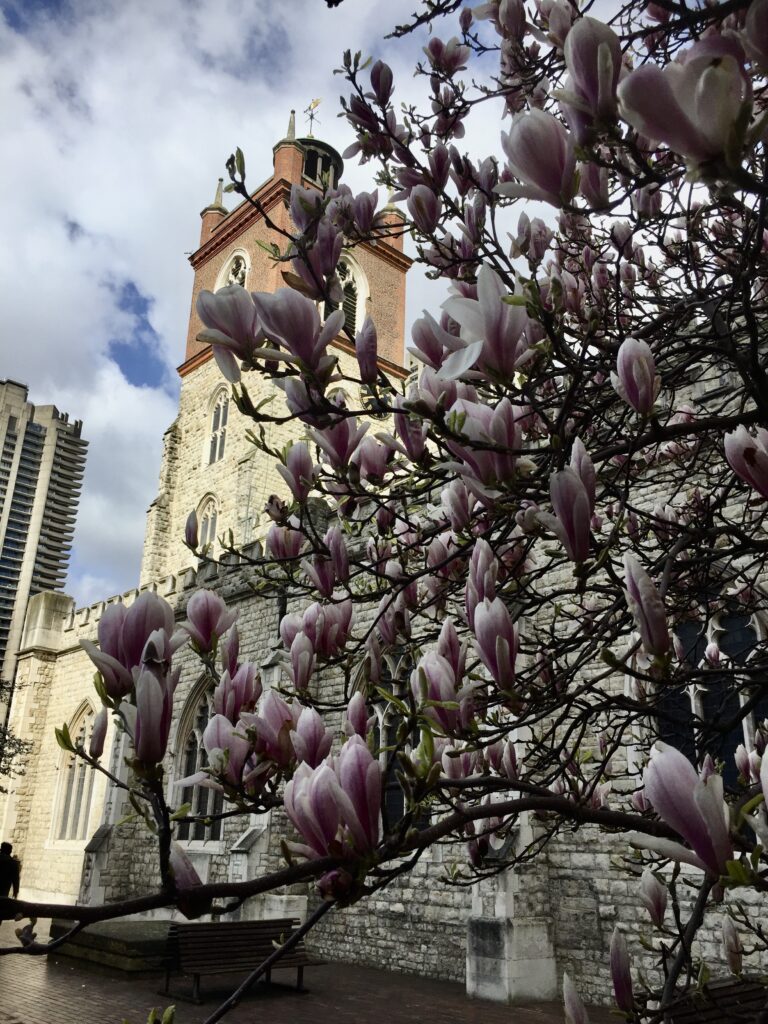
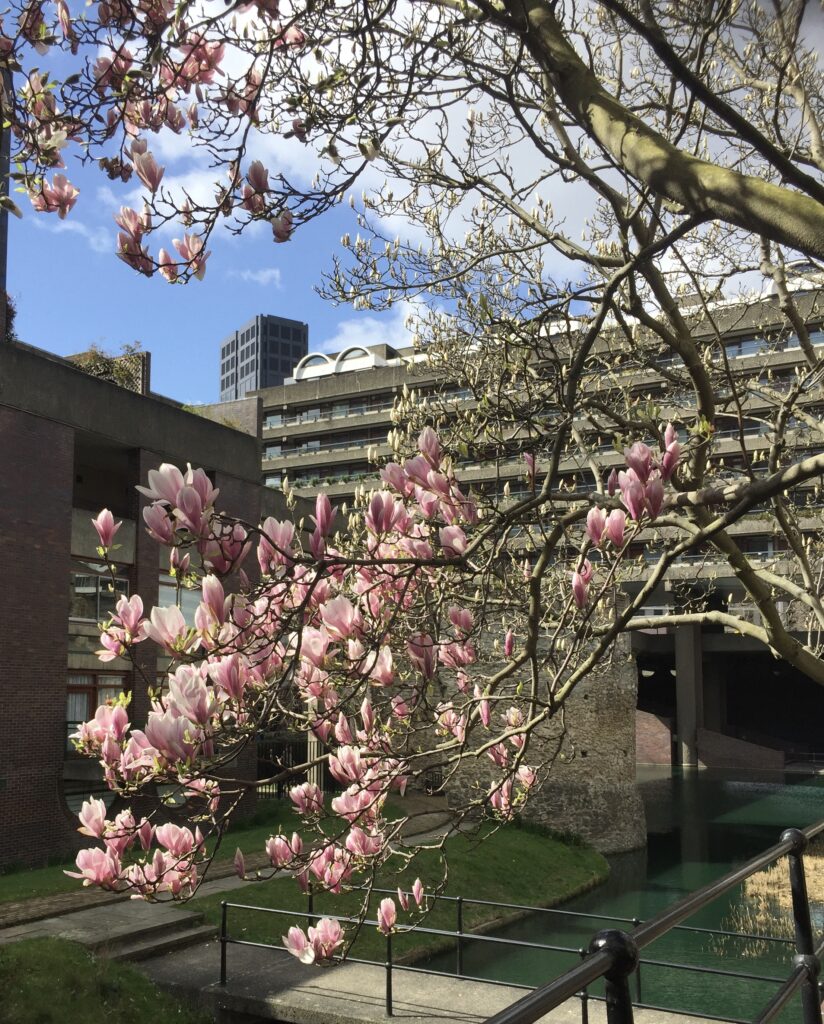
This is the time of year to celebrate the beautiful magnolia trees on the terrace at St Giles church …

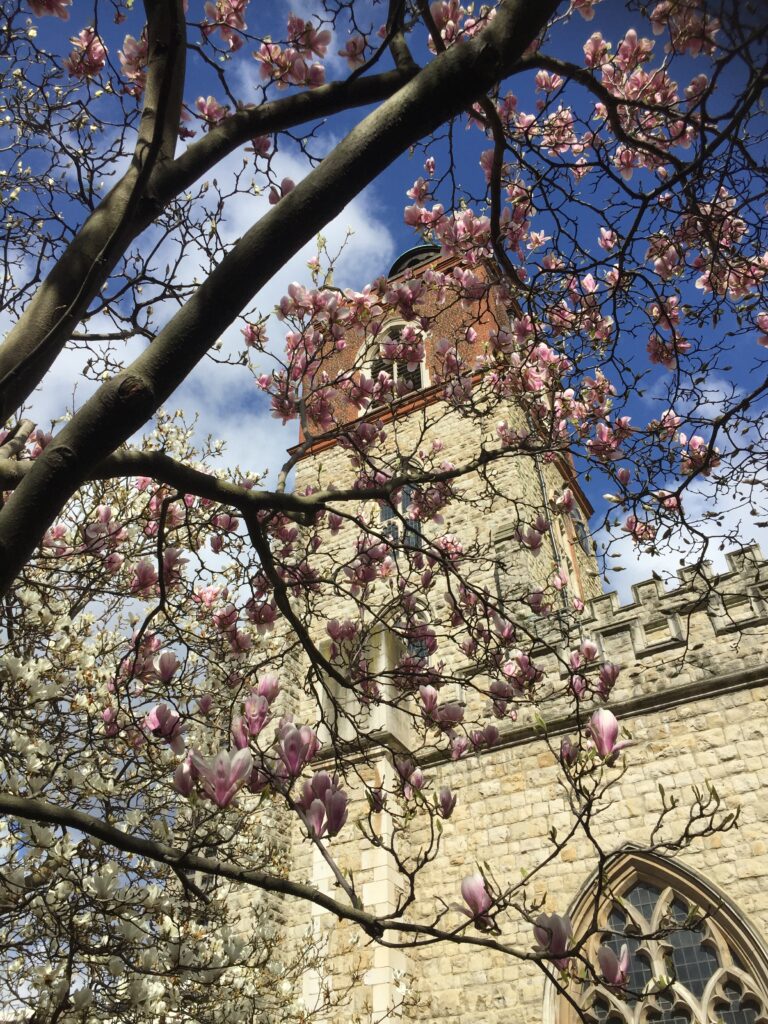
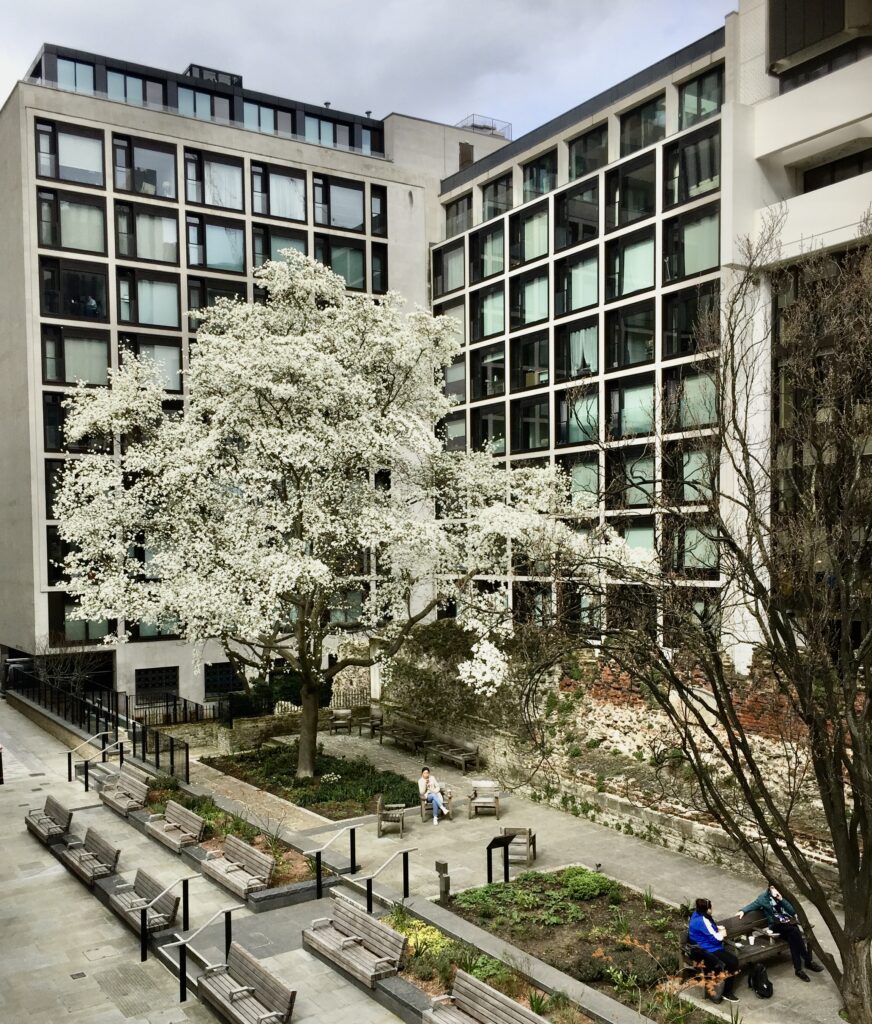
Nearby is St Alphage Garden which boasts another stunning magnolia (EC2Y 5EL) …

A nice spot for lunch …

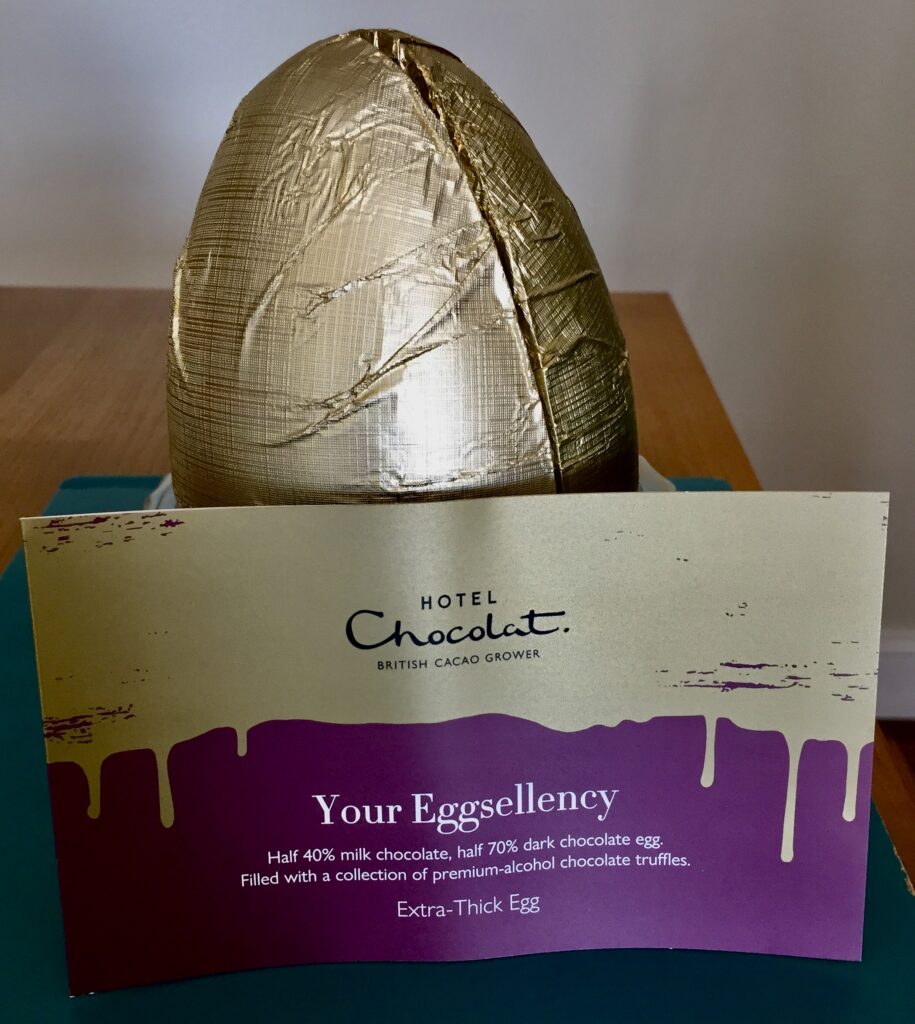
And now time for my Hotel Chocolat Easter treat …

Have a great Easter!

If you would like to follow me on Instagram here is the link …
https://www.instagram.com/london_city_gent/

City ladies, a magic square and some gentle amusement

Women feature on many City sculptures (often in an allegorical role) and I have been on another sculpture safari to see how many I can identify. I have written about female sculptures twice before and you can find links here and here.

In quite a few cases they are located high up on buildings and so are easily missed.

A good example is this pediment group on what once was the Cripplegate Institute building on Golden Lane (EC1Y 0RR) …

Education is seated in the centre, whilst Art and Science recline at either side. Although the building opened in 1896 the pediment was only added in 1910-11 when the upper stories were modified to provide, among other facilities, a rifle range.

You can read much more about the Institute in the excellent London Inheritance blog which also contains this 1947 photograph highlighting the vast extent of the wartime bomb damage. The Institute building is circled in red …

If you stand outside the Royal Exchange you will be rewarded with two more female figures along with the mysterious Magic Square, but again you have to look up.

The first lady is sited in a pediment above the Bank of England and is known as The Lady of the Bank …

Sculptor Charles Wheeler 1929-1930.

She is seated on a globe and her right hand holds a cloak which billows out to her left. Her left hand holds a temple-like building which contains a miniature relief of the Lady herself and beside her right leg is a cascade of coins. She is a replacement for the original ‘Old Lady of Threadneedle Street’, which resembled Britannia, since it was considered stylistically incompatible with the new building. She is intended to represent ‘the stability and security of the Bank of England’. Inside the wreath on the right is the date of construction in Roman numerals, MCMXXX.

On the corner across Bank junction is the impressive NatWest building and if you look up you will see this (rather grubby) allegorical group …

Sculptor Ernest Gillick – 1931-2.

Britannia rises on a winged seat, flanked by Mercury (representing Commerce) and Truth with his torch. At Britannia’s knees are crouching nude females representing Higher and Lower Mathematics. Higher Mathematics, on the left, holds a carved version of Dürer’s Magic Square, a numerical acrostic whose numbers add up to 34 when added horizontally, vertically or diagonally. Lower mathematics holds a pen and a book whilst beside her two owls sit on piles of books.

The square is not very clear now due to the dirt on the carving so here are the numbers it contains …

Innovation Factory — Magic Squares

Dürer included it in an engraving entitled Melancholia I

It can be seen in the top right hand corner and you can read more about it here and here.

Nearby in Prince’s Street, on the same building, you can view this elegant lady at street level …

Sculptor Charles Doman – 1931.

Representing Prosperity, she holds a basket with a rich assortment of fruit and corn.

You have to stretch your neck if you want to examine this relief sculpture at 7 Lothbury (EC2R 7HH) …

Sculptor James Redfern – 1866.

It is rather unusual and is intended as a pastiche of a late medieval Venetian palace. A crowned female figure at the centre sits on a padlocked strong-box and writes in a ledger held up for her by a standing woman with a bunch of large keys suspended from her girdle. Other figures include a woman holding a model steam engine and another figure holding a model boat.

It’s a fascinating building and you can read more about it here.

The frieze on the Institute of Chartered Accountants is magnificent and was intended as a grand symbolic depiction of all the areas of human activity which have benefited from the services of accountants (EC2R 7EF). Groups of figures represent the arts, science, crafts, education, commerce, manufactures, agriculture, mining, railways, shipping and India and the Colonies. I have chosen a few with female figures and the first is entitled ‘Crafts’ …

The shield in the tree is inscribed Laborare est Orareto work is to pray. To the left, two women represent ‘workers in metal’, the one on the left is holding a sword. On the other side of the panel are ‘Pottery’, a woman with a two-handled vase, and ‘Textiles’, a woman with a weaving frame.

Next is ‘Education’ …

The group on the left represents ‘Early Training’. A mother leads her son, who is carrying a cricket bat, towards a schoolmaster wearing a gown and carrying a textbook. On the other side is a student ‘in collegiate dress’ and holding a book, and a ‘College Don’ wearing a mortar-board and gown.

Onward to ‘Manufactures’ …

Behind the allegorical lady, and just about visible, are beehives ‘betokening industry’. The two women on the left represent ‘Fabrics’ – one holds a bolt of cloth and the other a shuttle and a spool of yarn. The two men on the right represent ‘Hardware goods’. The smith has his shirt open and stands next to an anvil. The other is ‘a Sheffield Knife Grinder’ feeling a chisel blade.

Another example is ‘Agriculture’ …

On the left are two men – a sower and a mower. On the other side are two girls – one reaping and the other carrying a basket of fruit.

In my favourite sculpture from the building Lady Justice looks like she has stepped out of her niche in order to upstage the accountants number-crunching away behind her …

She appears frequently in allegorical representations around the City and I have written about them before. If you are interested you can find my blog here.

You can see her again on the Old Bailey behind my final sculpture, the Peace drinking fountain in the Smithfield Rotunda Garden (EC1A 9DY). She is depicted with her right hand raised in a gesture of blessing while her left holds an olive branch …

Sculptors John Birnie Philip and Farmer & Brindley – 1871-3.

The structure was erected by the Corporation’s Market Improvement Committee in 1873 a few years after the armistice between France and Prussia was signed in 1871. The 11m-high fountain originally comprised a huge stone canopy in an eclectic style with four corner figures of Temperance, Hope, Faith and Charity but the structure fell into disrepair and was taken down. The illustration below appeared in The Builder magazine in 1871 …

I thought I’d add some light relief in these difficult times.

Happy Clerkenwell gnomes …

Santa’s elves, with appropriate face coverings, seconded for Covid prevention duty …

An optician on London Wall goes for the ‘minimalist’ window display approach …

And finally, more spooky clothes models to add to the collection …

If you would like to follow me on Instagram here is the link …
https://www.instagram.com/london_city_gent/

Page 27 of 43

Powered by WordPress & Theme by Anders Norén

Symbols & Secrets
Privacy Overview

This website uses cookies so that we can provide you with the best user experience possible. Cookie information is stored in your browser and performs functions such as recognising you when you return to our website and helping our team to understand which sections of the website you find most interesting and useful.