Women feature on many City sculptures (often in an allegorical role) and I have been on another sculpture safari to see how many I can identify. I have written about female sculptures twice before and you can find links here and here.
In quite a few cases they are located high up on buildings and so are easily missed.
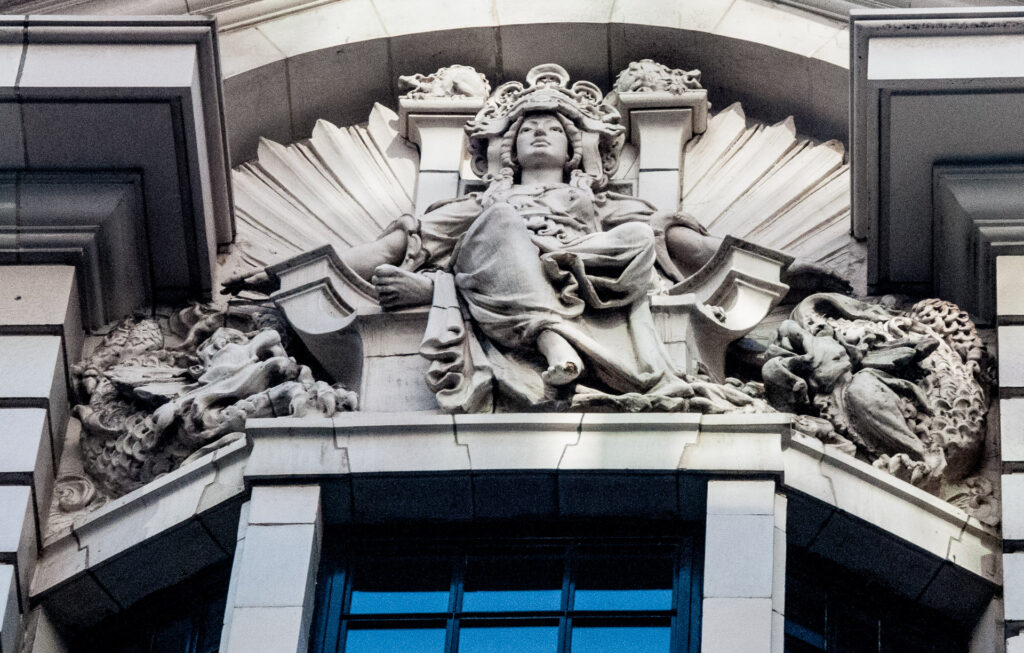
A good example is this pediment group on what once was the Cripplegate Institute building on Golden Lane (EC1Y 0RR) …
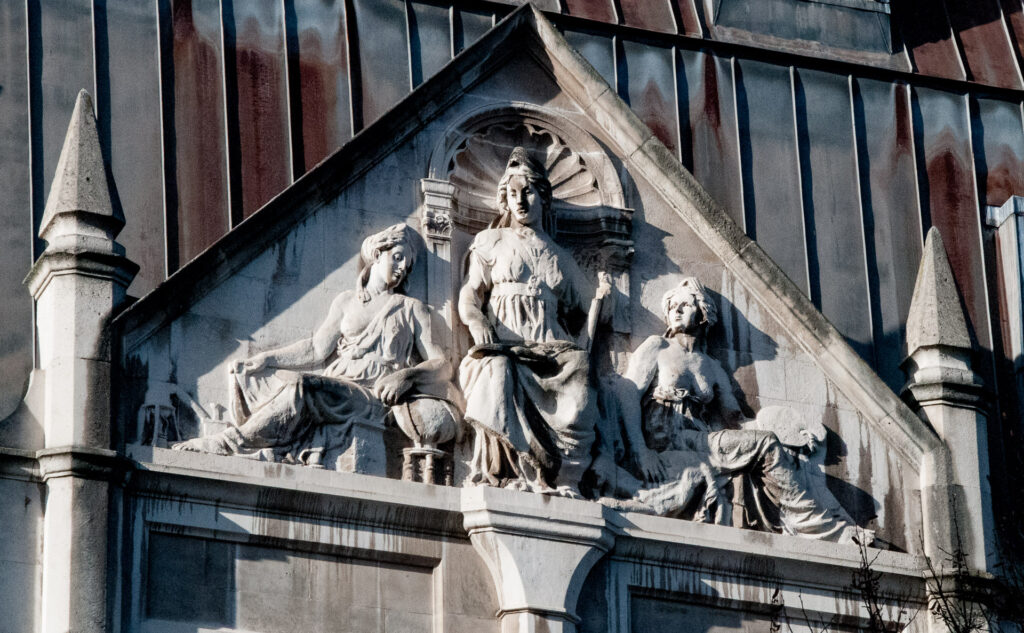
Education is seated in the centre, whilst Art and Science recline at either side. Although the building opened in 1896 the pediment was only added in 1910-11 when the upper stories were modified to provide, among other facilities, a rifle range.
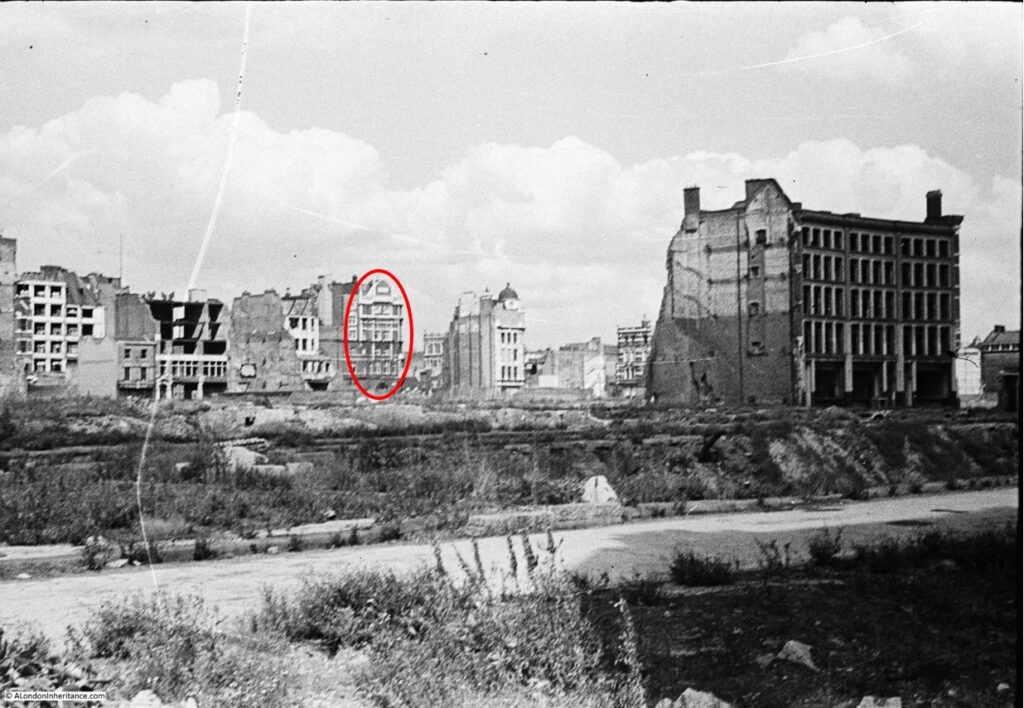
You can read much more about the Institute in the excellent London Inheritance blog which also contains this 1947 photograph highlighting the vast extent of the wartime bomb damage. The Institute building is circled in red …
If you stand outside the Royal Exchange you will be rewarded with two more female figures along with the mysterious Magic Square, but again you have to look up.
The first lady is sited in a pediment above the Bank of England and is known as The Lady of the Bank …
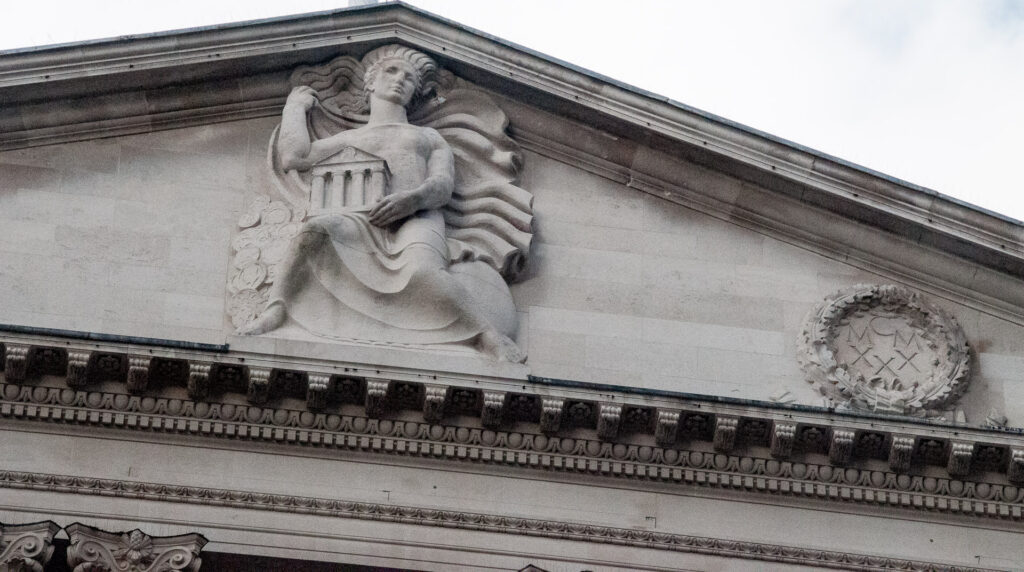
She is seated on a globe and her right hand holds a cloak which billows out to her left. Her left hand holds a temple-like building which contains a miniature relief of the Lady herself and beside her right leg is a cascade of coins. She is a replacement for the original ‘Old Lady of Threadneedle Street’, which resembled Britannia, since it was considered stylistically incompatible with the new building. She is intended to represent ‘the stability and security of the Bank of England’. Inside the wreath on the right is the date of construction in Roman numerals, MCMXXX.
On the corner across Bank junction is the impressive NatWest building and if you look up you will see this (rather grubby) allegorical group …
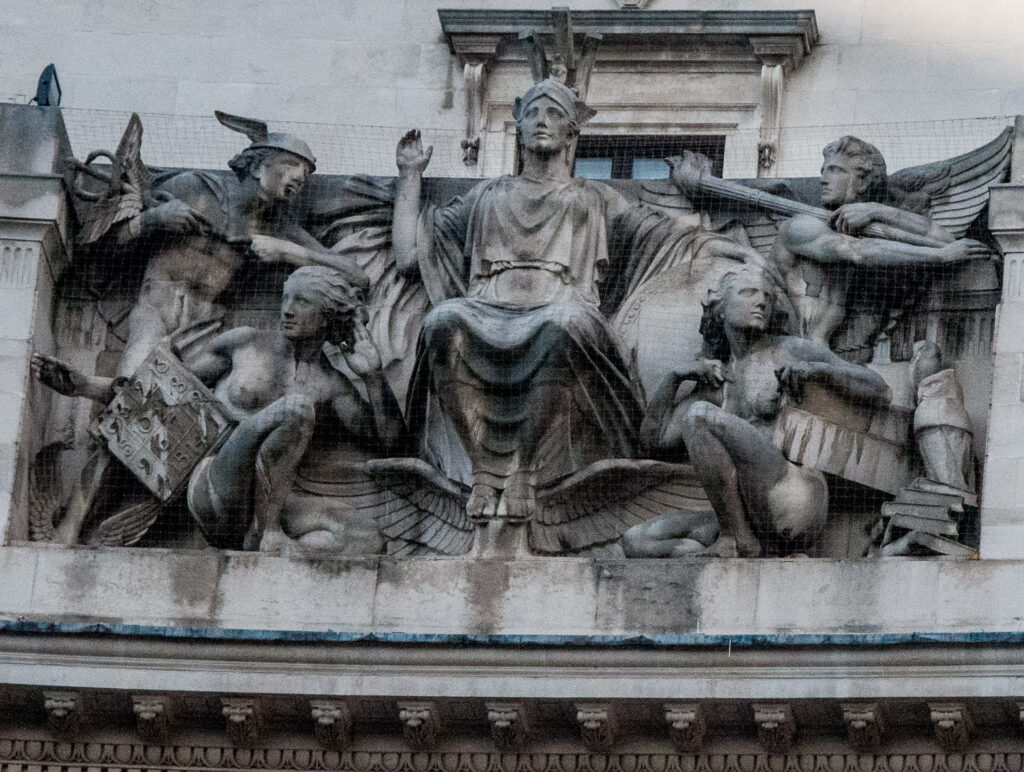
Britannia rises on a winged seat, flanked by Mercury (representing Commerce) and Truth with his torch. At Britannia’s knees are crouching nude females representing Higher and Lower Mathematics. Higher Mathematics, on the left, holds a carved version of Dürer’s Magic Square, a numerical acrostic whose numbers add up to 34 when added horizontally, vertically or diagonally. Lower mathematics holds a pen and a book whilst beside her two owls sit on piles of books.
The square is not very clear now due to the dirt on the carving so here are the numbers it contains …
Dürer included it in an engraving entitled Melancholia I …
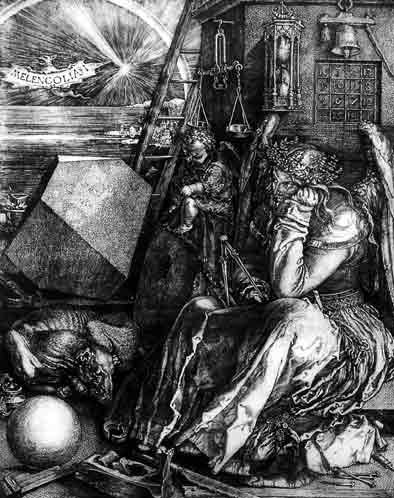
It can be seen in the top right hand corner and you can read more about it here and here.
Nearby in Prince’s Street, on the same building, you can view this elegant lady at street level …
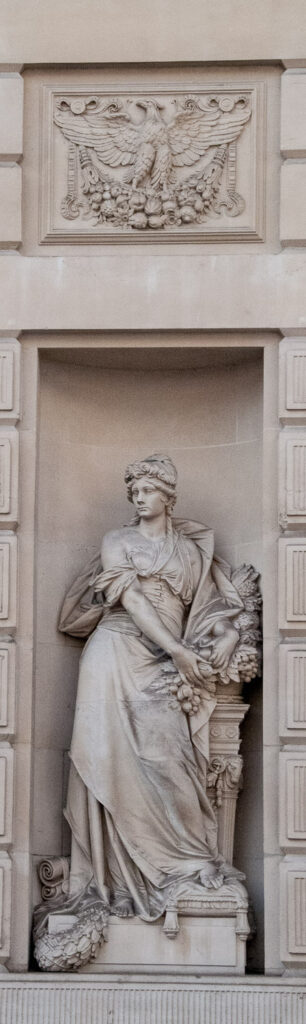
Representing Prosperity, she holds a basket with a rich assortment of fruit and corn.
You have to stretch your neck if you want to examine this relief sculpture at 7 Lothbury (EC2R 7HH) …
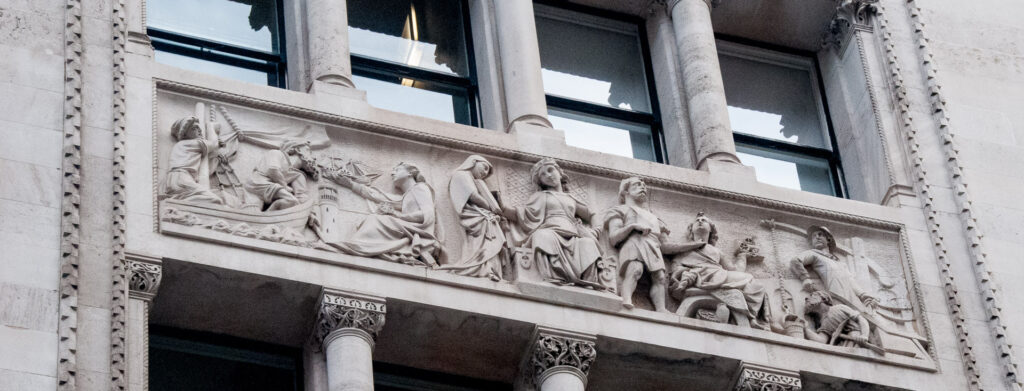
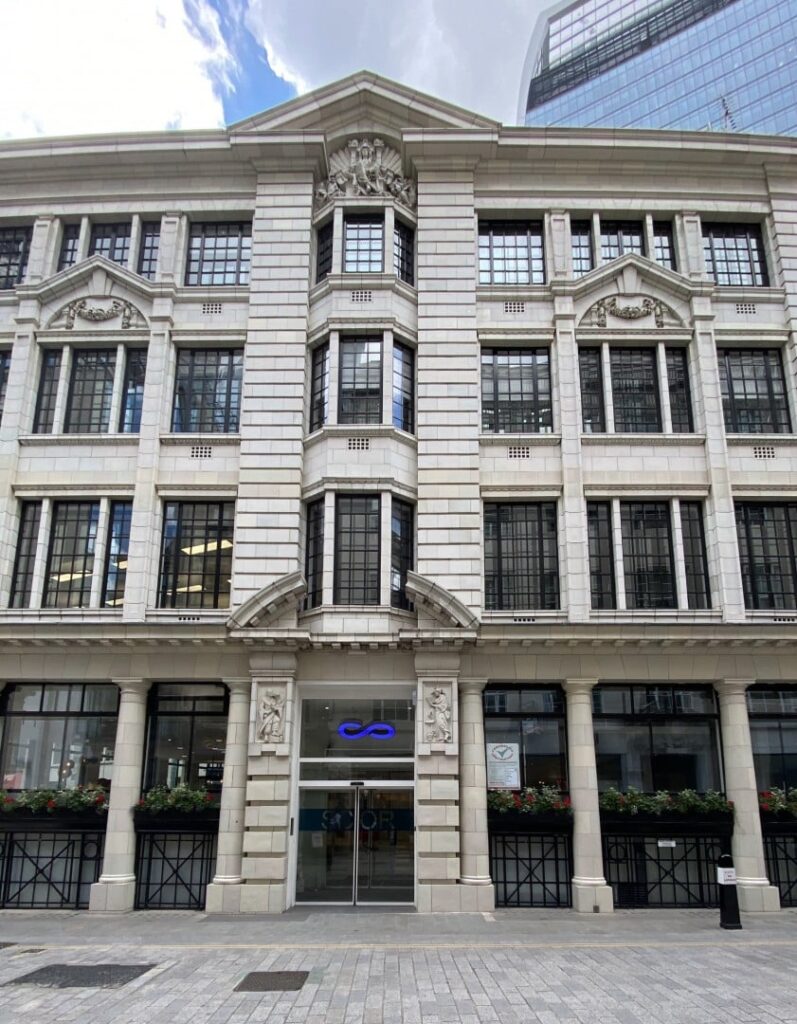
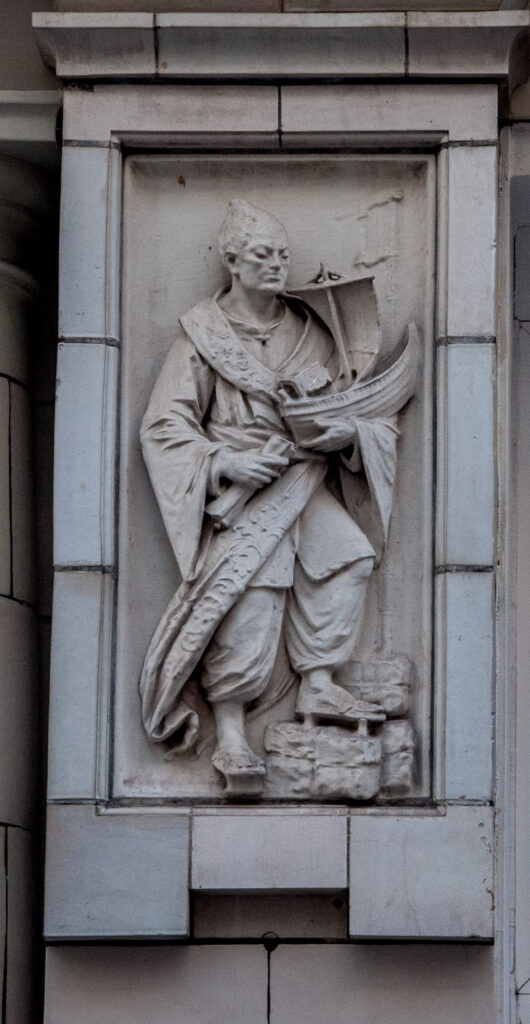
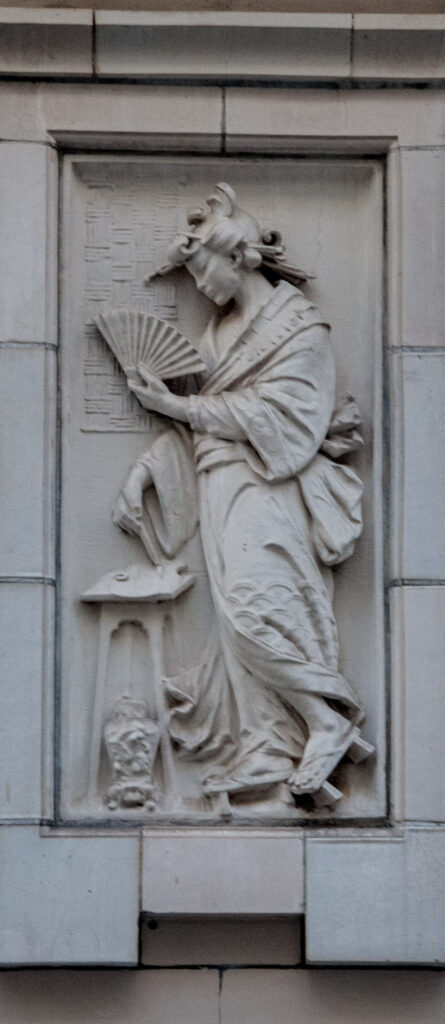
It is rather unusual and is intended as a pastiche of a late medieval Venetian palace. A crowned female figure at the centre sits on a padlocked strong-box and writes in a ledger held up for her by a standing woman with a bunch of large keys suspended from her girdle. Other figures include a woman holding a model steam engine and another figure holding a model boat.
It’s a fascinating building and you can read more about it here.
The frieze on the Institute of Chartered Accountants is magnificent and was intended as a grand symbolic depiction of all the areas of human activity which have benefited from the services of accountants (EC2R 7EF). Groups of figures represent the arts, science, crafts, education, commerce, manufactures, agriculture, mining, railways, shipping and India and the Colonies. I have chosen a few with female figures and the first is entitled ‘Crafts’ …
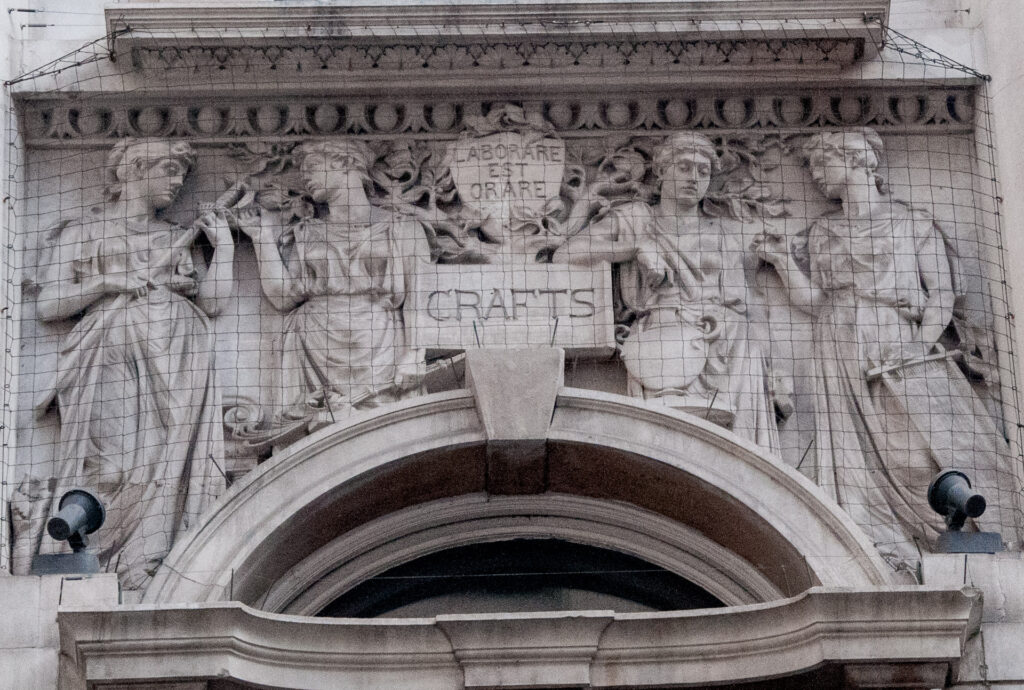
The shield in the tree is inscribed Laborare est Orare – to work is to pray. To the left, two women represent ‘workers in metal’, the one on the left is holding a sword. On the other side of the panel are ‘Pottery’, a woman with a two-handled vase, and ‘Textiles’, a woman with a weaving frame.
Next is ‘Education’ …
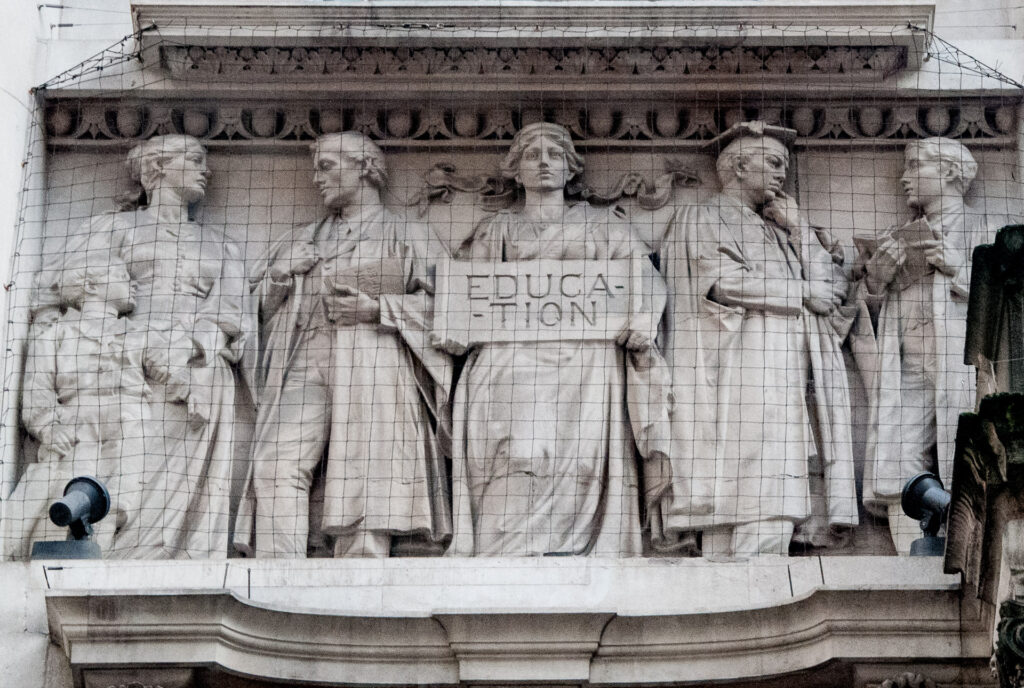
The group on the left represents ‘Early Training’. A mother leads her son, who is carrying a cricket bat, towards a schoolmaster wearing a gown and carrying a textbook. On the other side is a student ‘in collegiate dress’ and holding a book, and a ‘College Don’ wearing a mortar-board and gown.
Onward to ‘Manufactures’ …
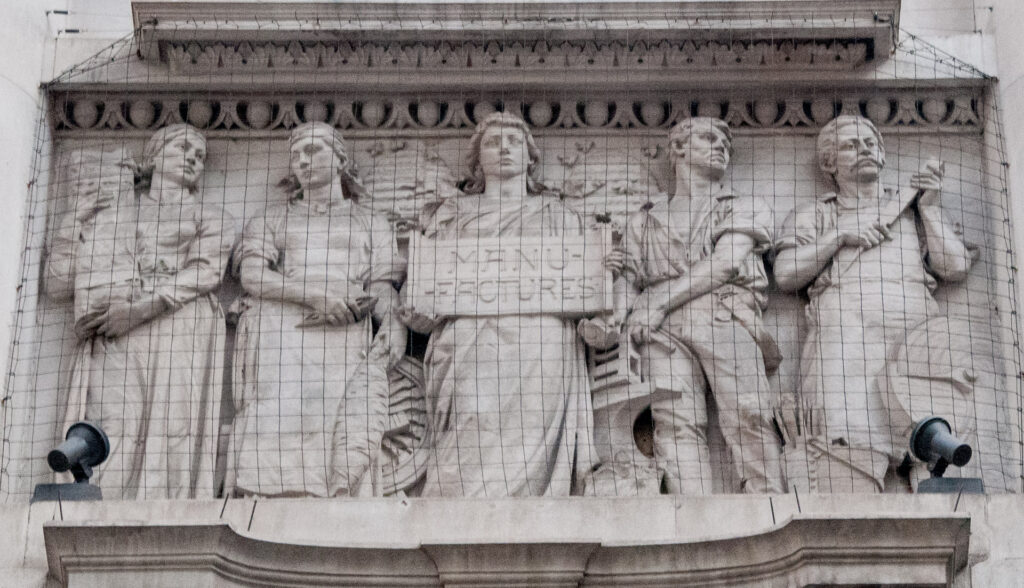
Behind the allegorical lady, and just about visible, are beehives ‘betokening industry’. The two women on the left represent ‘Fabrics’ – one holds a bolt of cloth and the other a shuttle and a spool of yarn. The two men on the right represent ‘Hardware goods’. The smith has his shirt open and stands next to an anvil. The other is ‘a Sheffield Knife Grinder’ feeling a chisel blade.
Another example is ‘Agriculture’ …
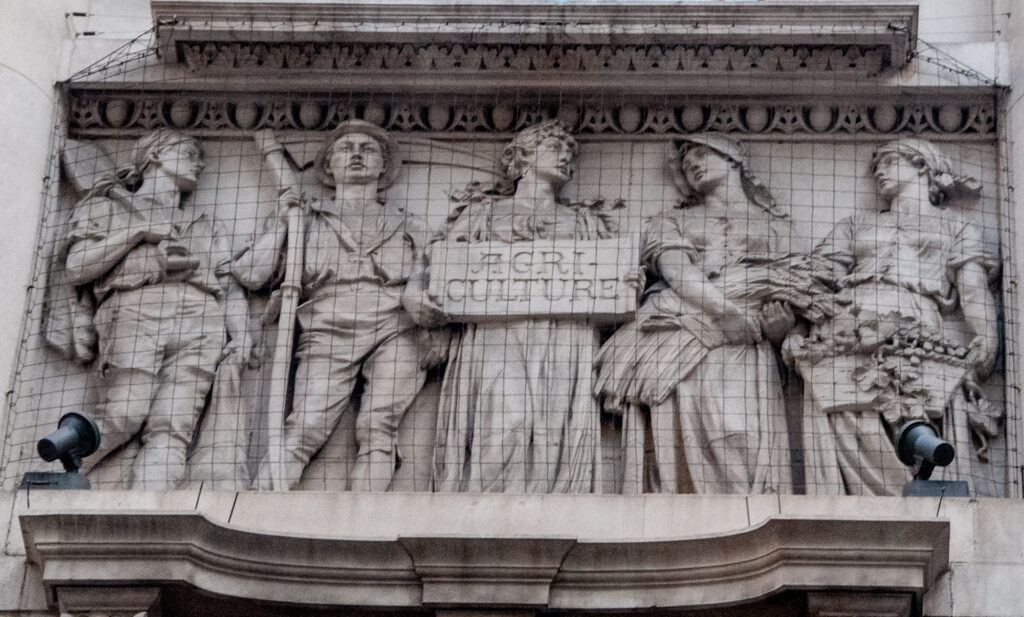
On the left are two men – a sower and a mower. On the other side are two girls – one reaping and the other carrying a basket of fruit.
In my favourite sculpture from the building Lady Justice looks like she has stepped out of her niche in order to upstage the accountants number-crunching away behind her …
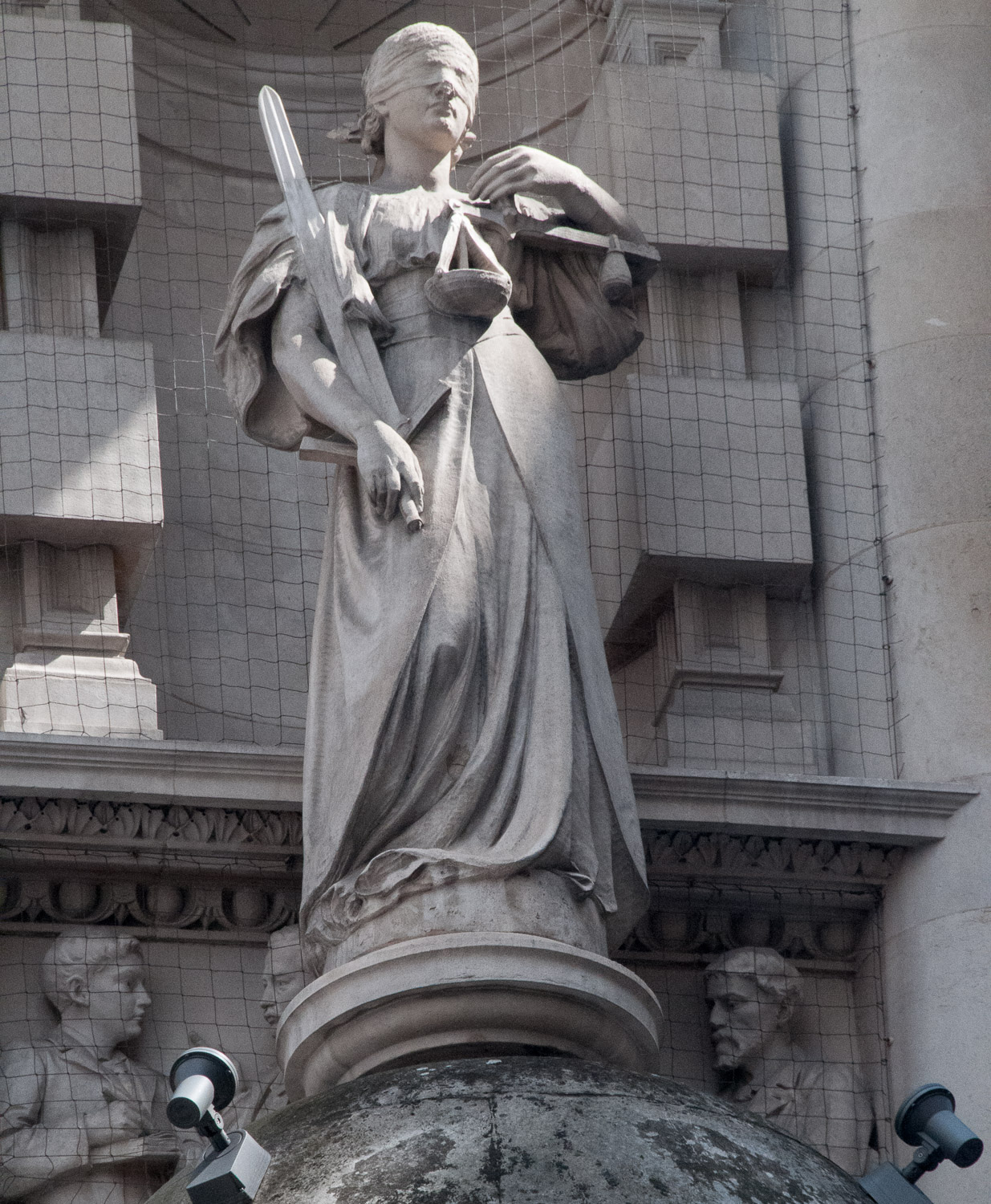
She appears frequently in allegorical representations around the City and I have written about them before. If you are interested you can find my blog here.
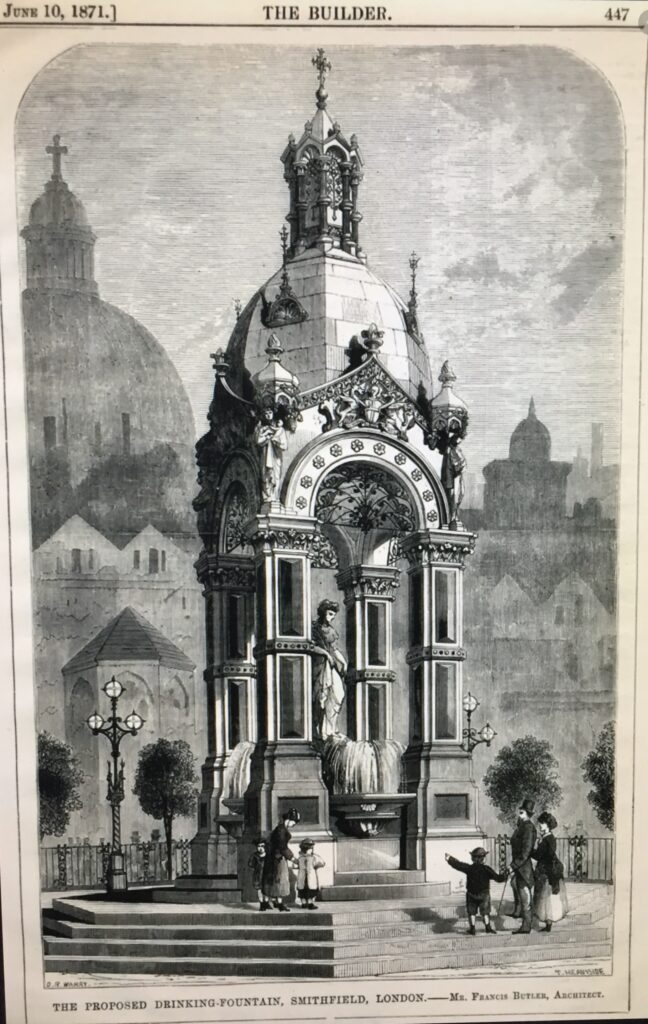
You can see her again on the Old Bailey behind my final sculpture, the Peace drinking fountain in the Smithfield Rotunda Garden (EC1A 9DY). She is depicted with her right hand raised in a gesture of blessing while her left holds an olive branch …
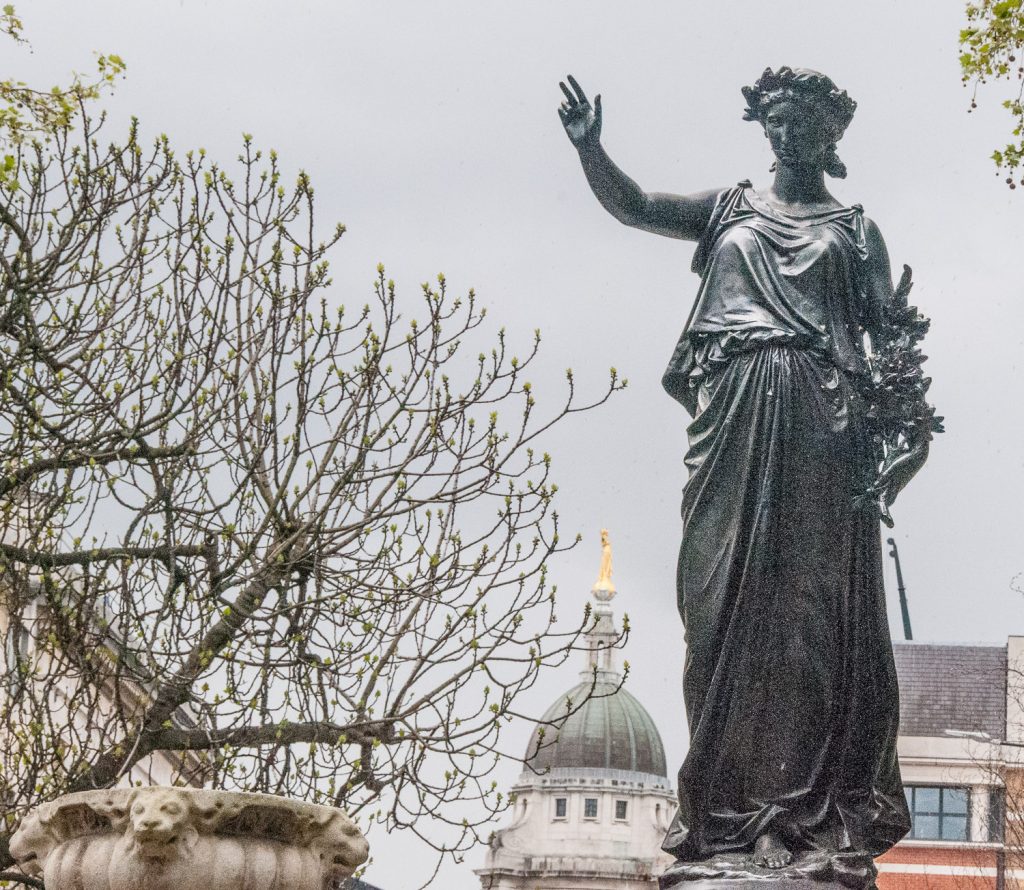
The structure was erected by the Corporation’s Market Improvement Committee in 1873 a few years after the armistice between France and Prussia was signed in 1871. The 11m-high fountain originally comprised a huge stone canopy in an eclectic style with four corner figures of Temperance, Hope, Faith and Charity but the structure fell into disrepair and was taken down. The illustration below appeared in The Builder magazine in 1871 …
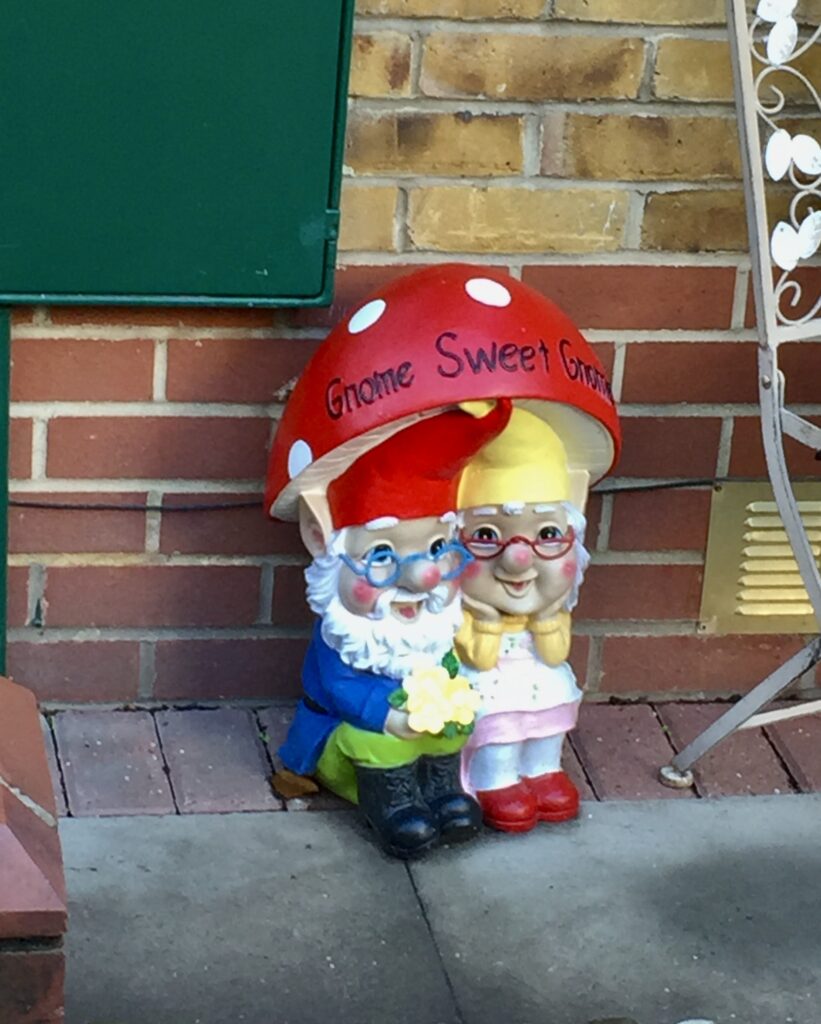
I thought I’d add some light relief in these difficult times.
Happy Clerkenwell gnomes …
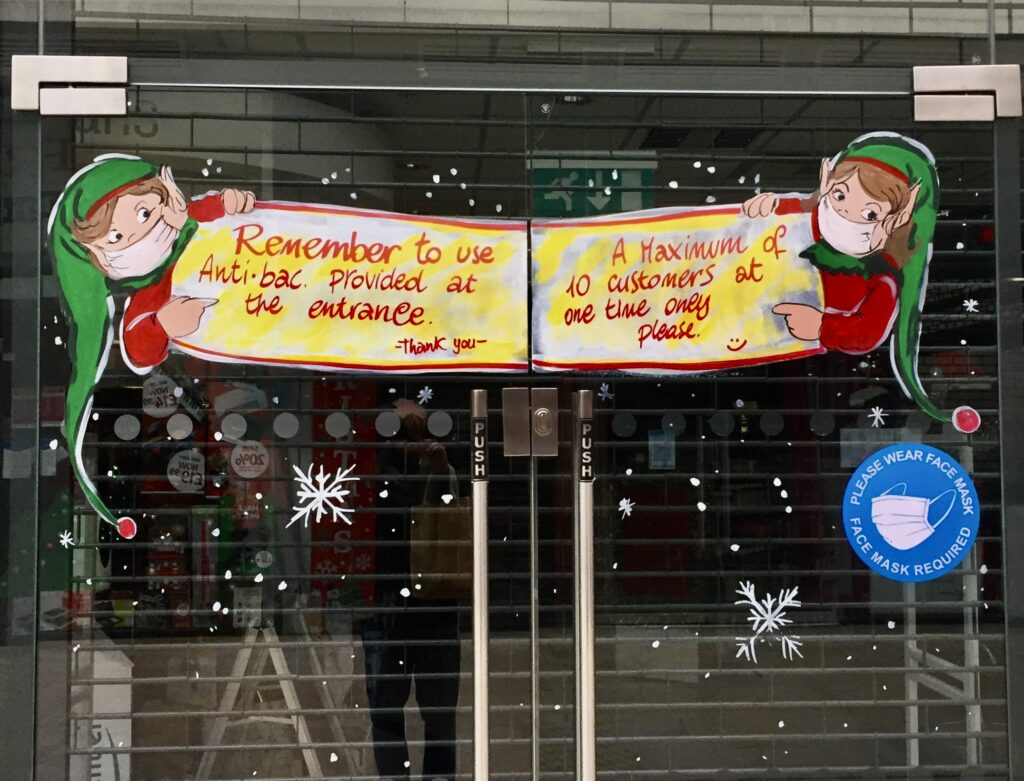
Santa’s elves, with appropriate face coverings, seconded for Covid prevention duty …
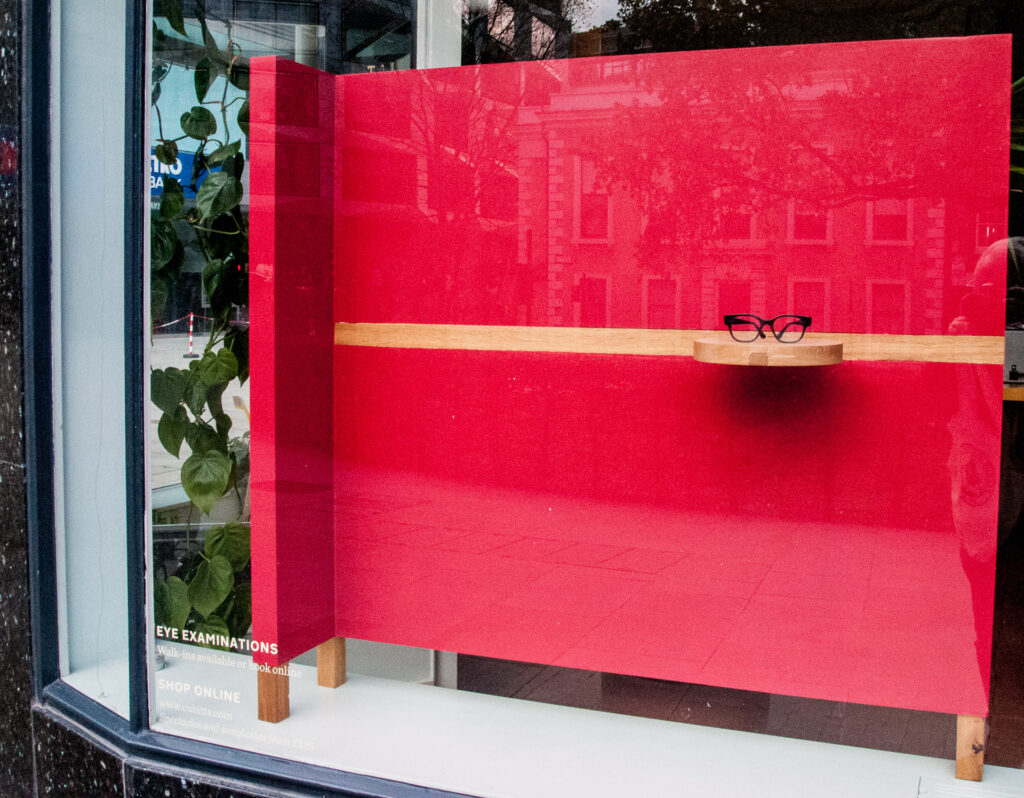
An optician on London Wall goes for the ‘minimalist’ window display approach …
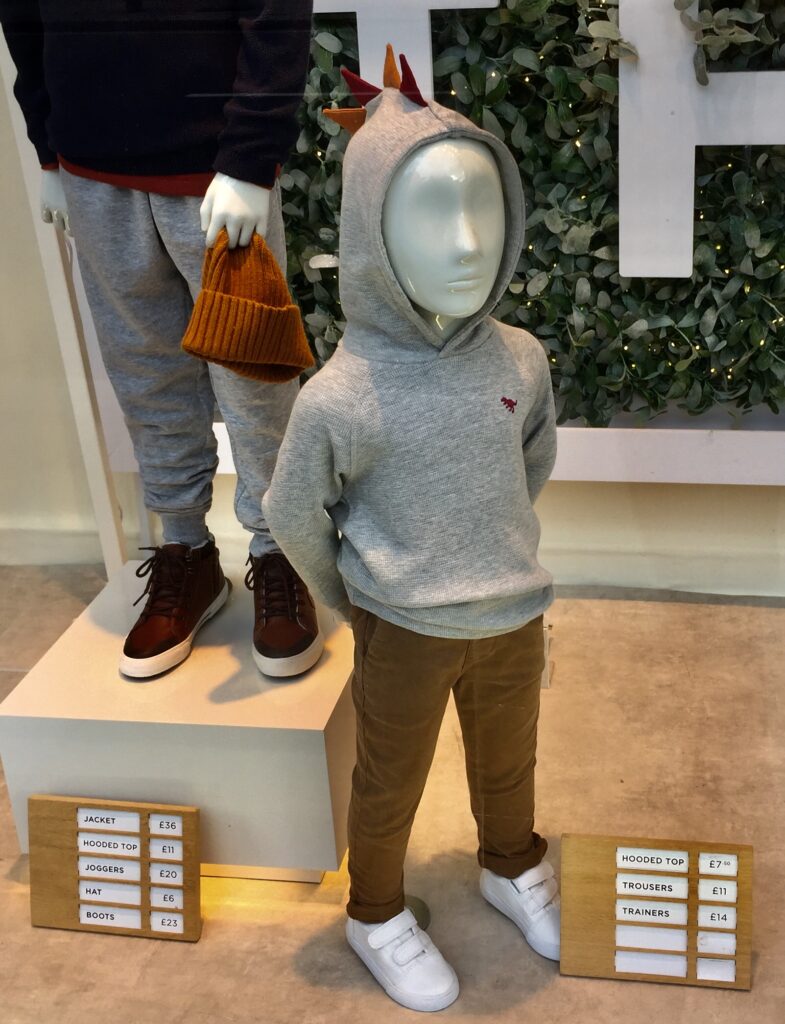
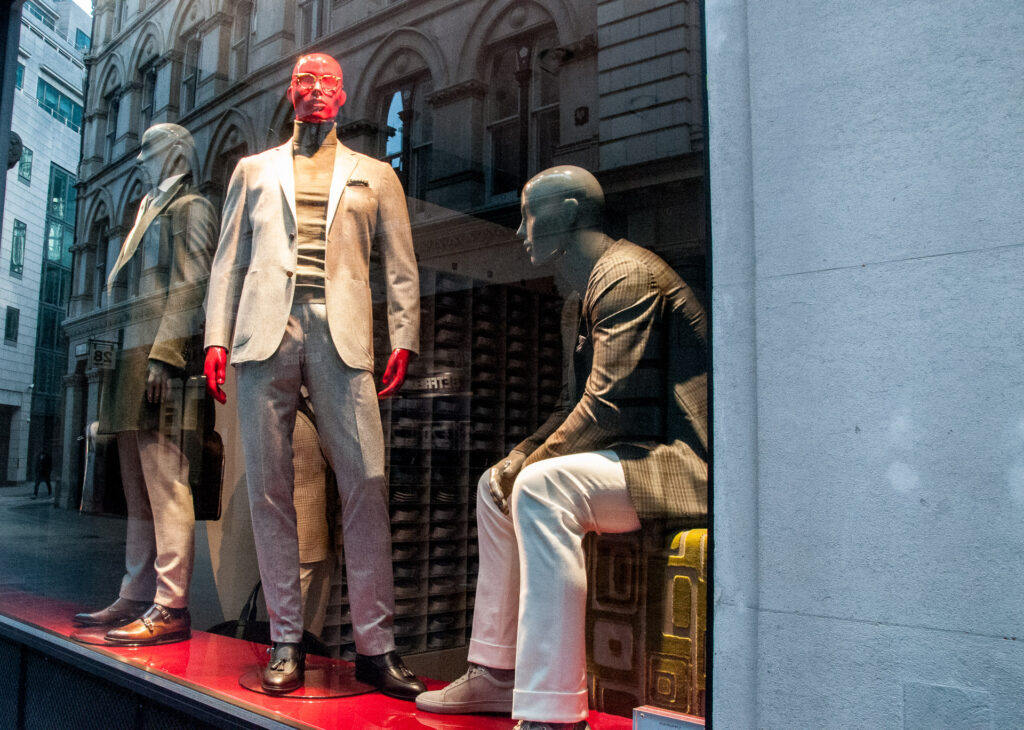
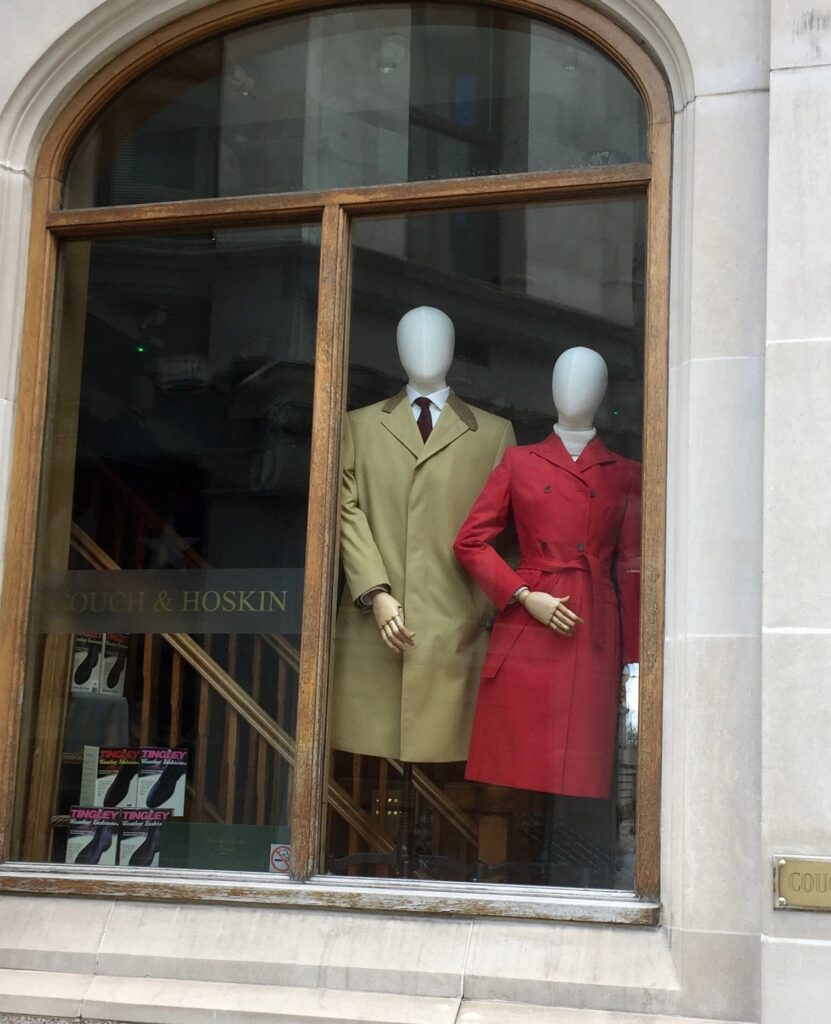
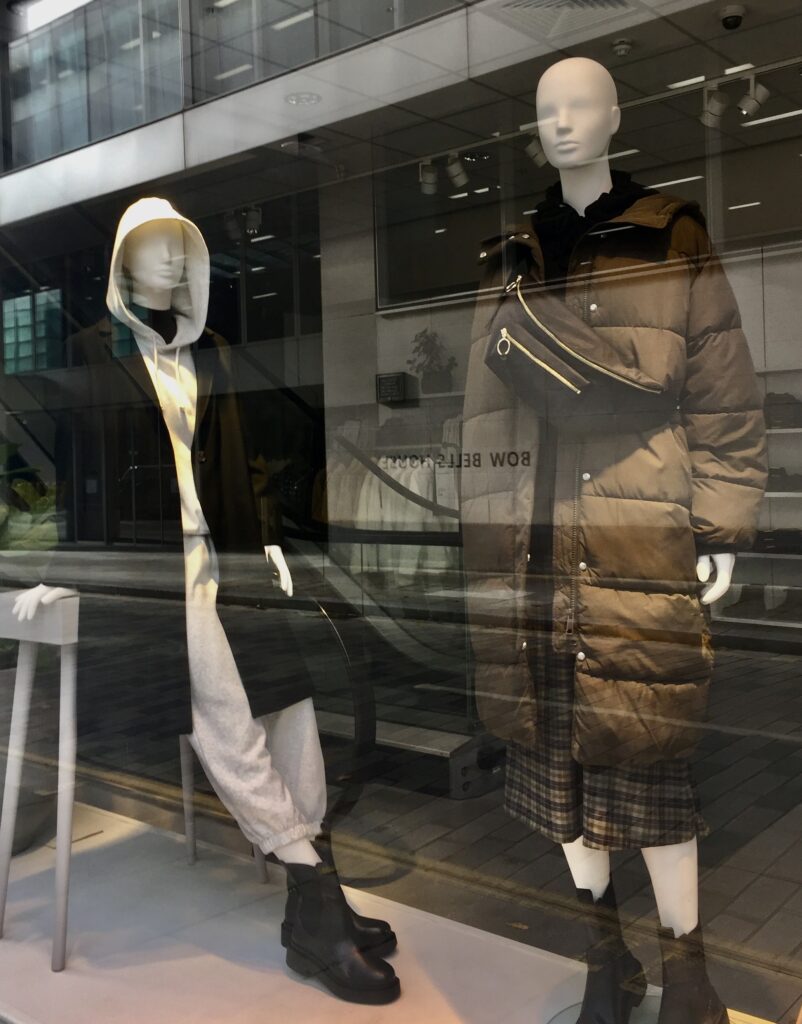
And finally, more spooky clothes models to add to the collection …
If you would like to follow me on Instagram here is the link …