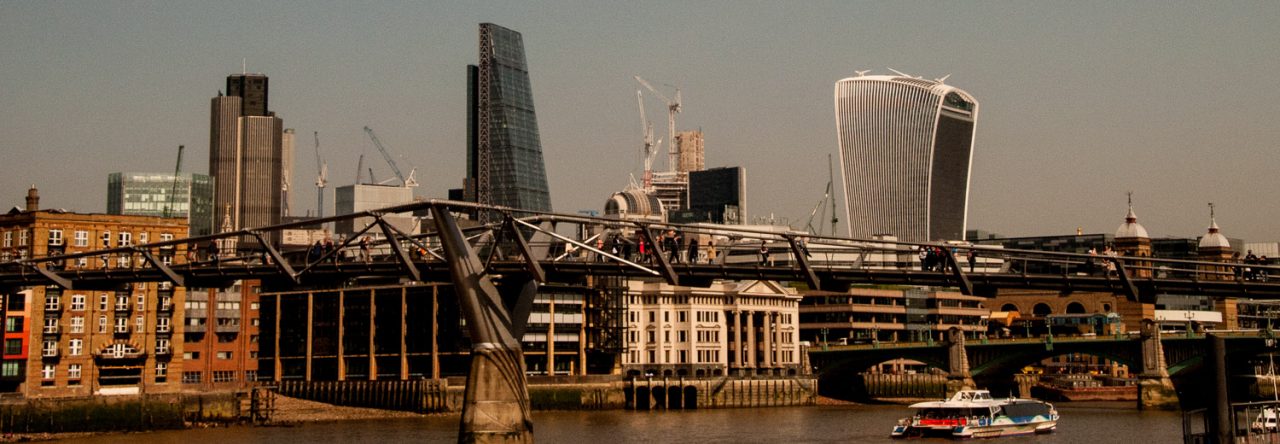
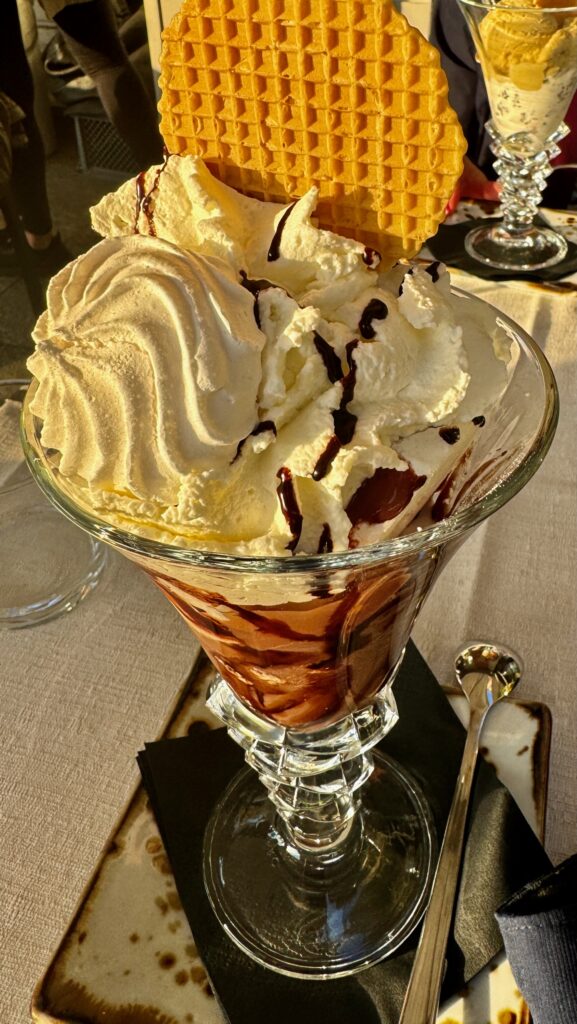
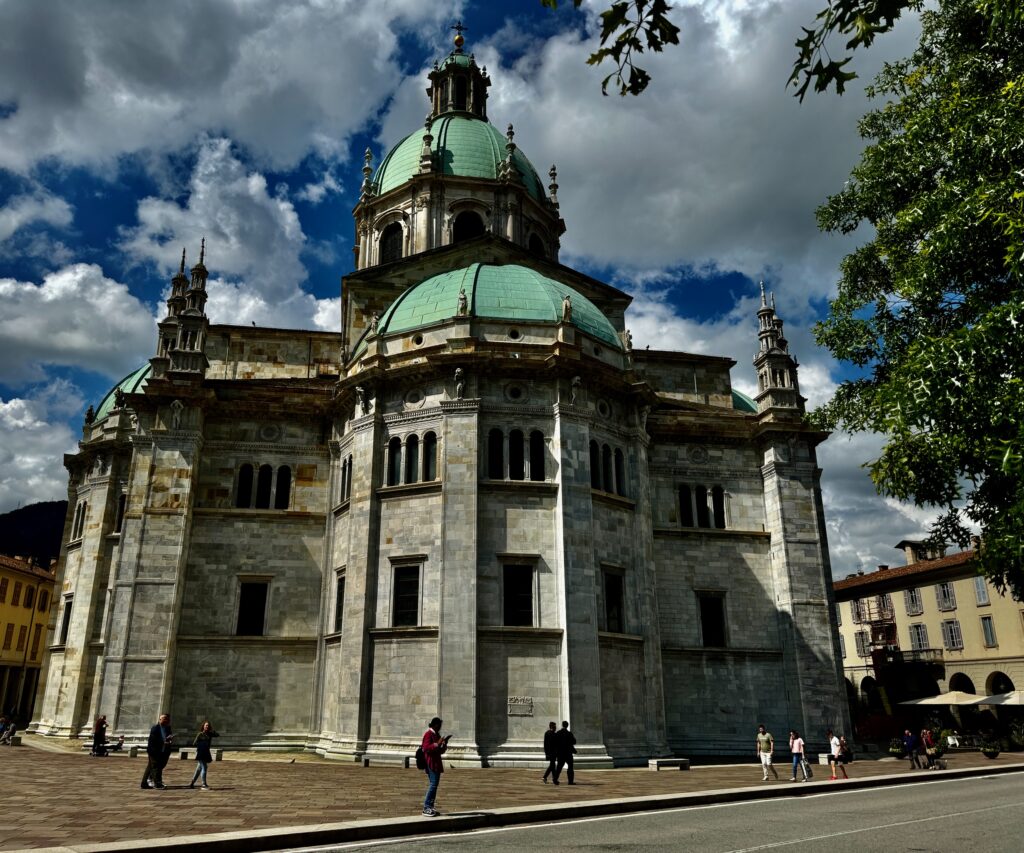
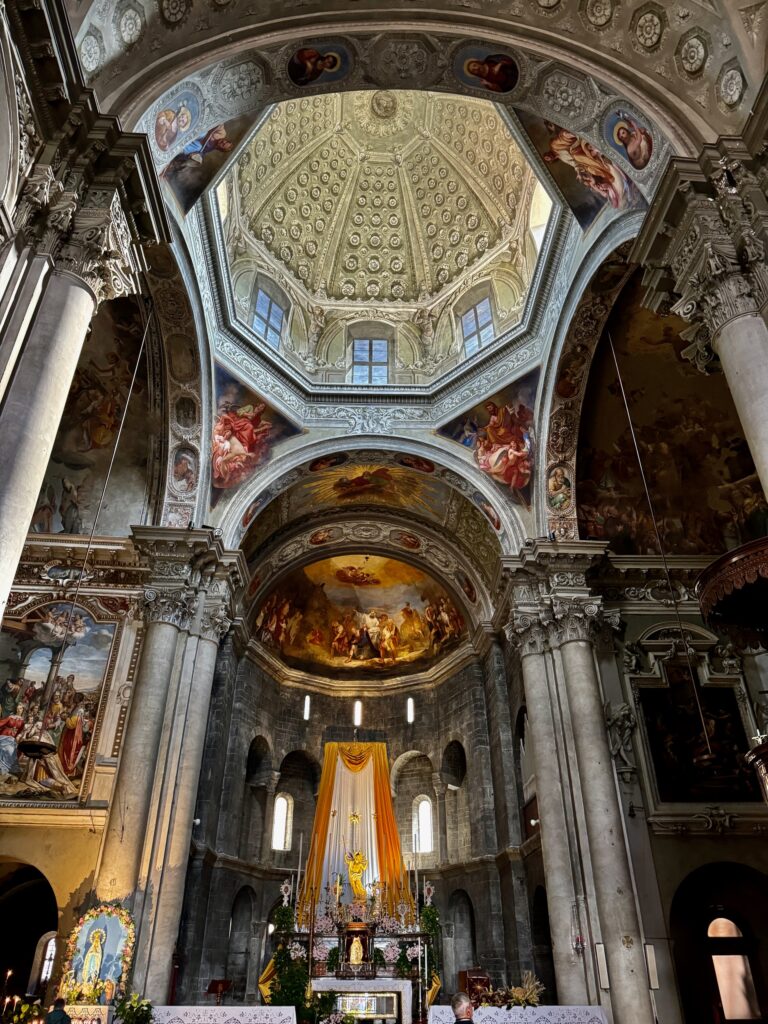
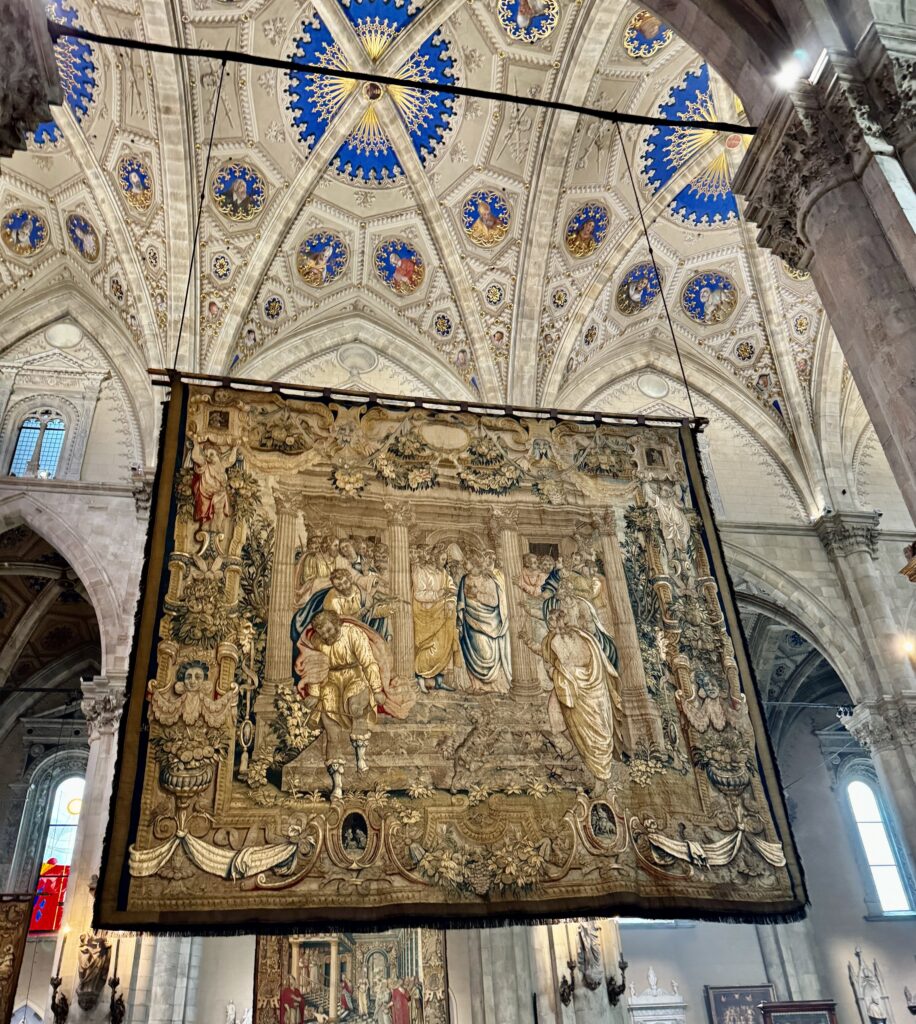
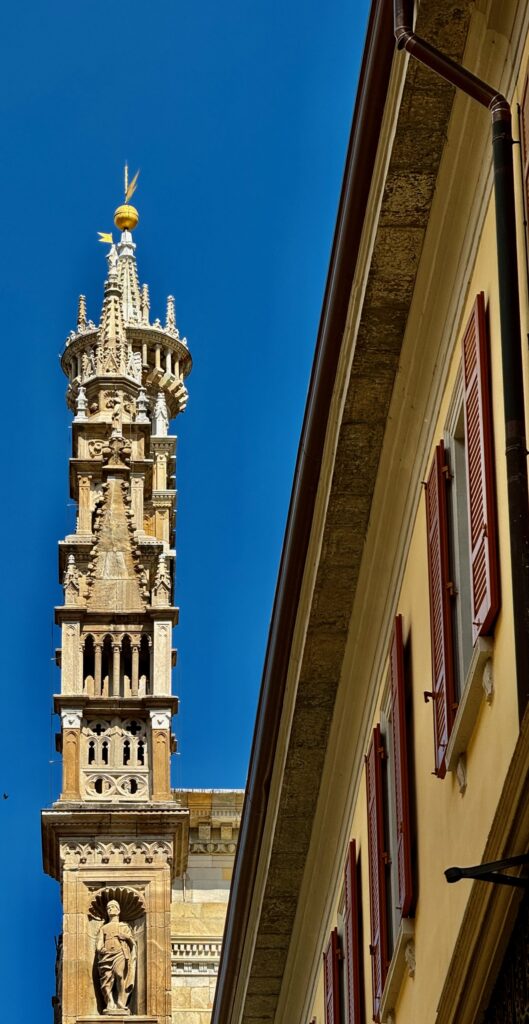
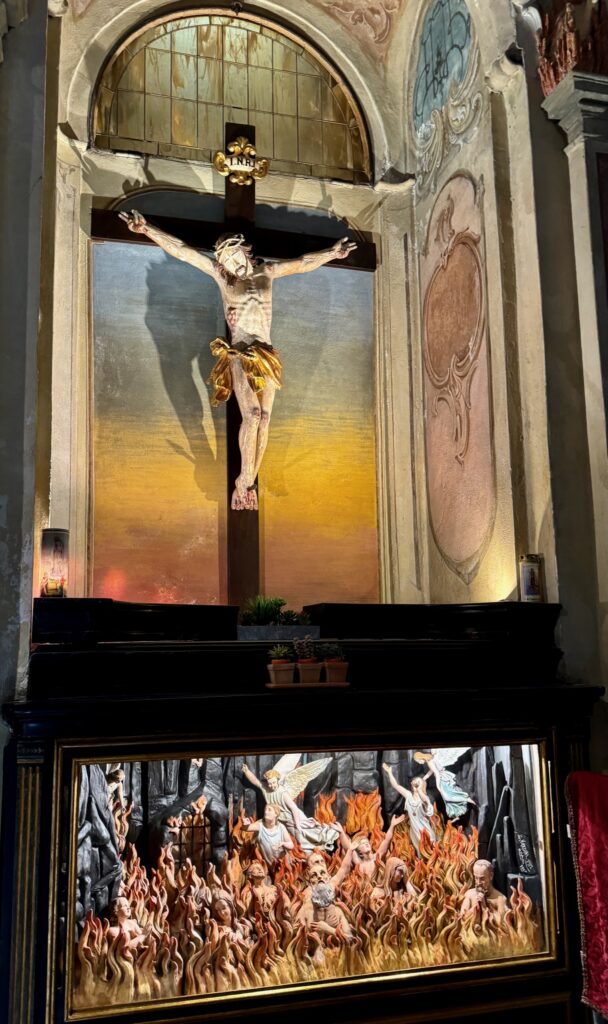
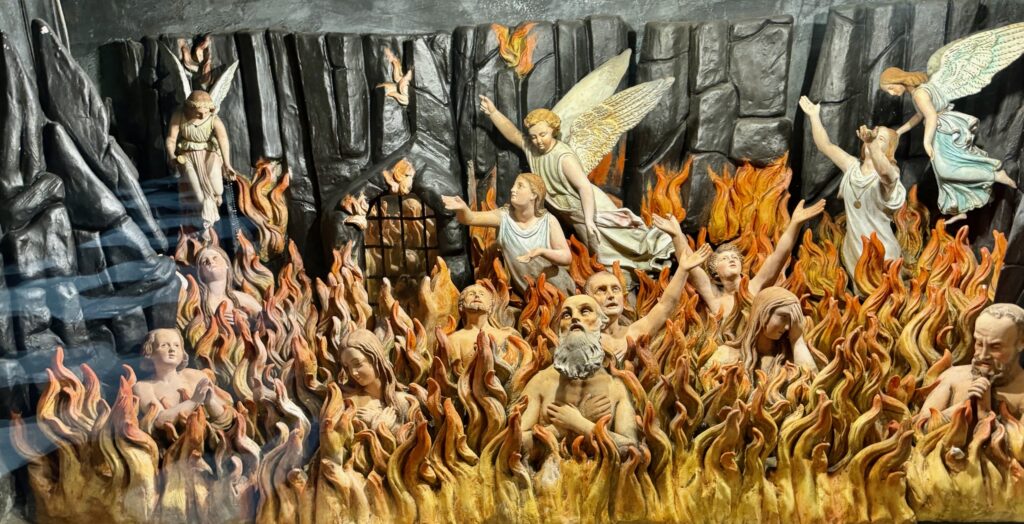
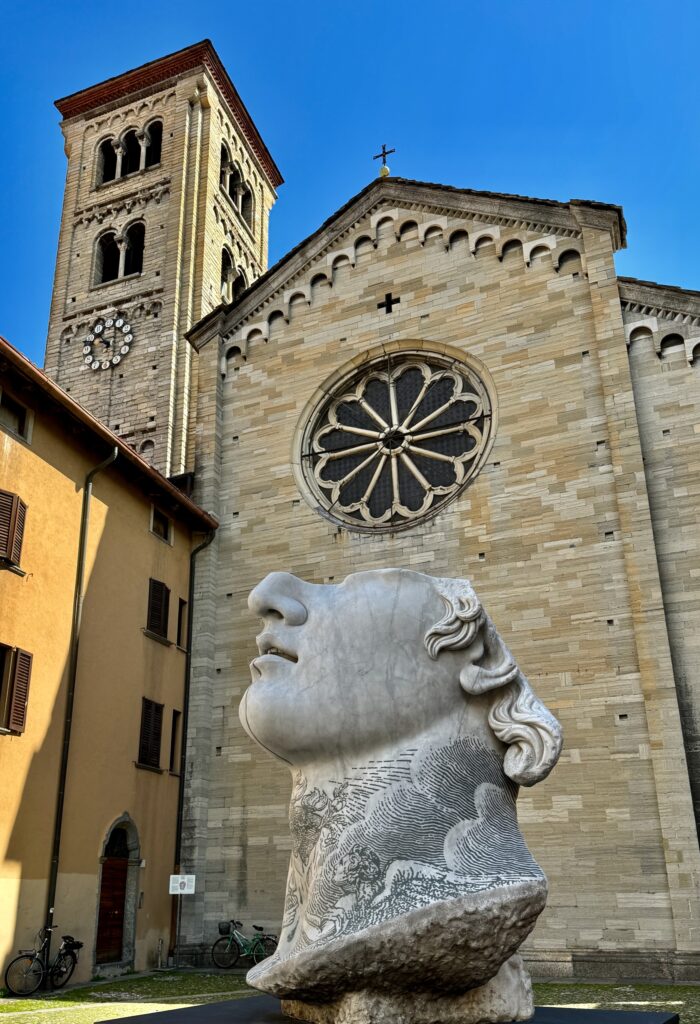
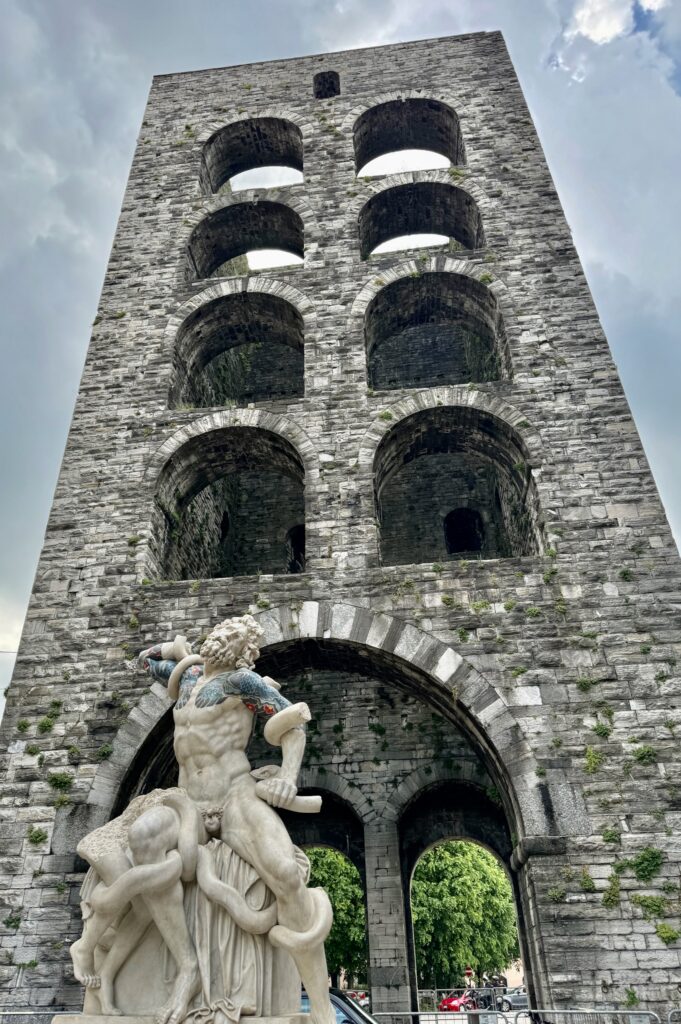
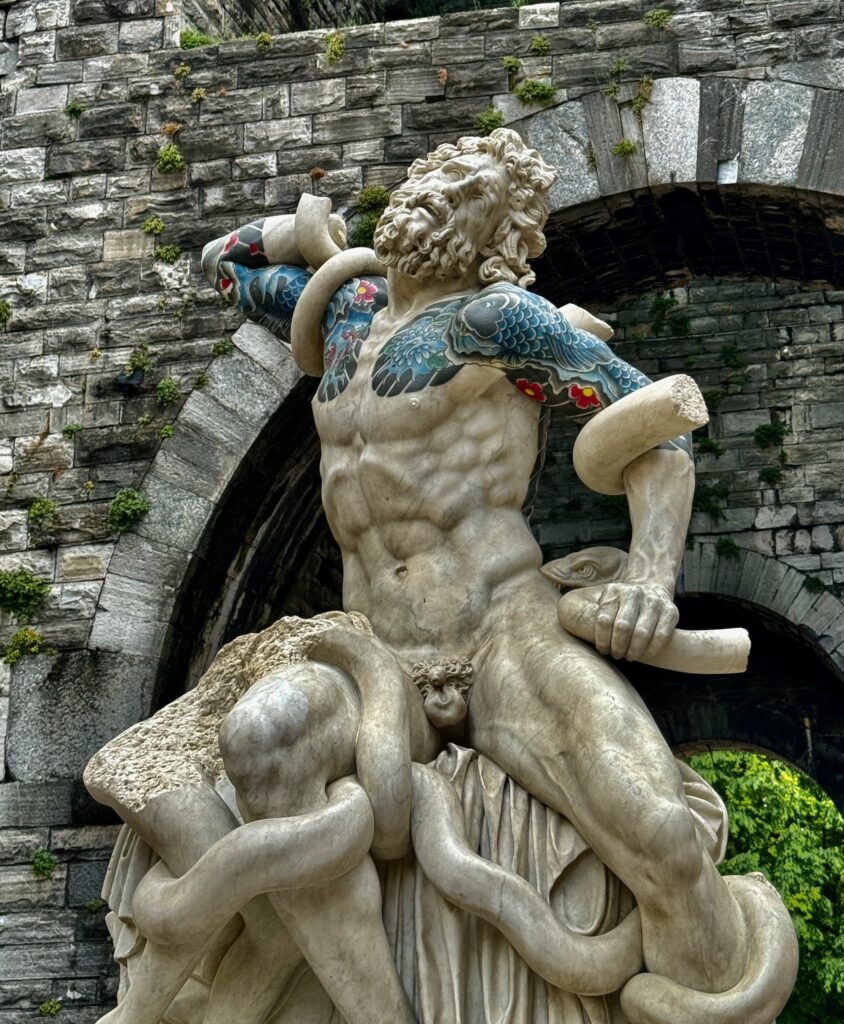
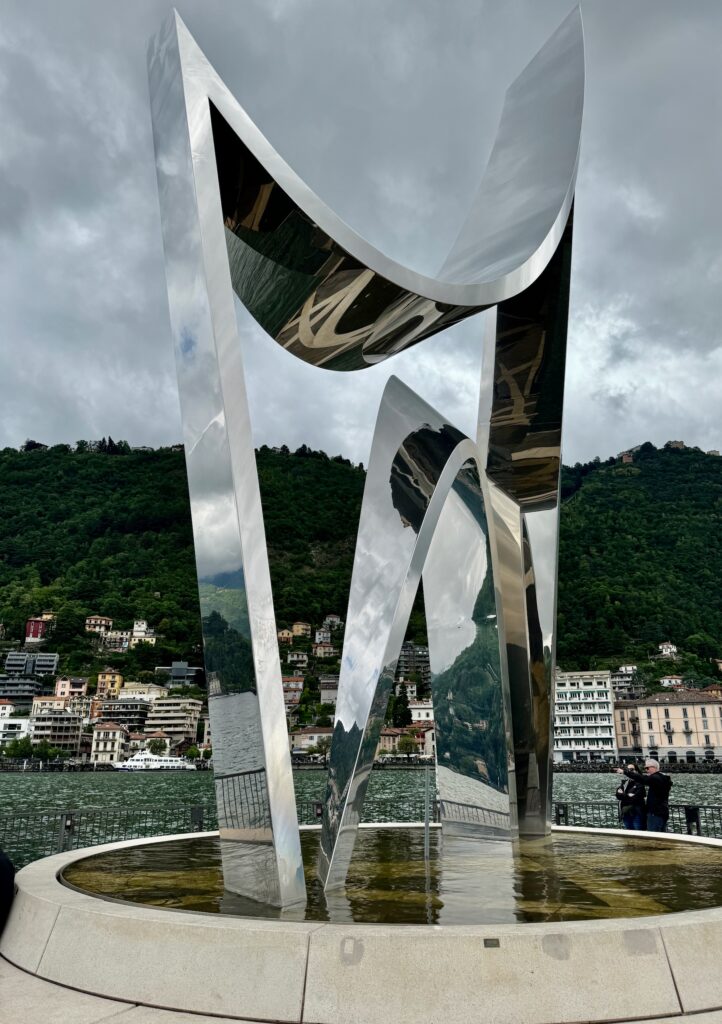
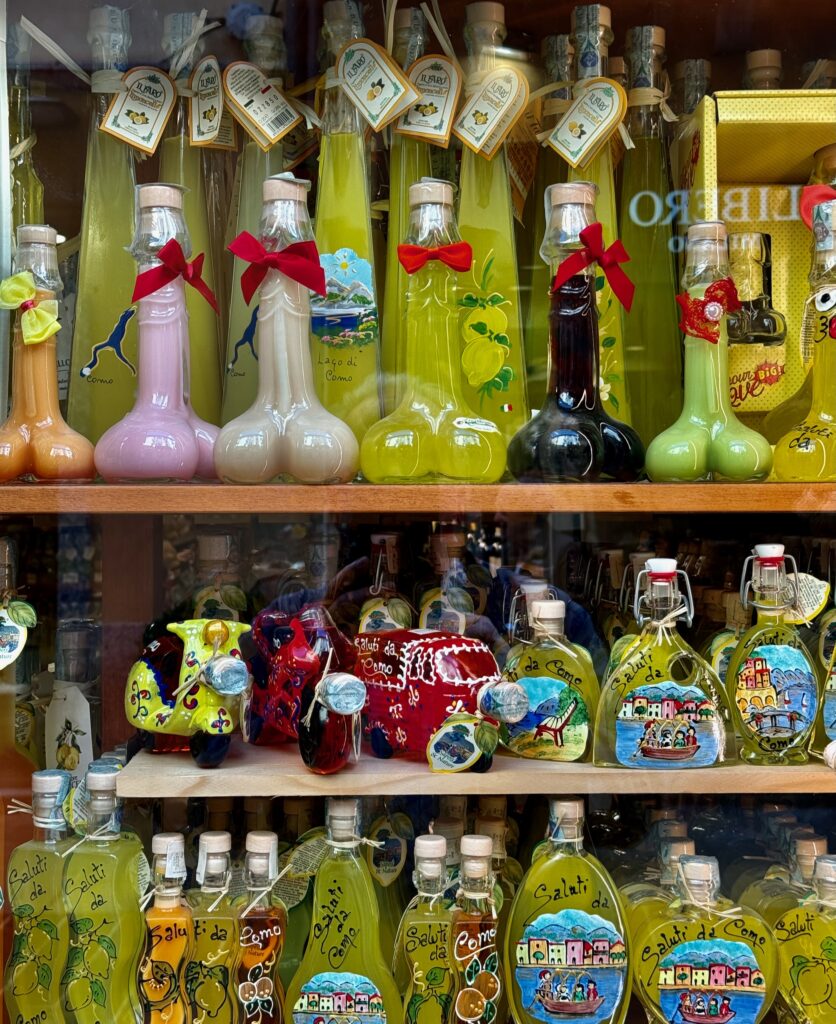
Having been away I have neglected the blog somewhat so I hope you will forgive me if this week’s offering is a rather miscellaneous collection of City images and a few pics from my holiday by Lake Como!
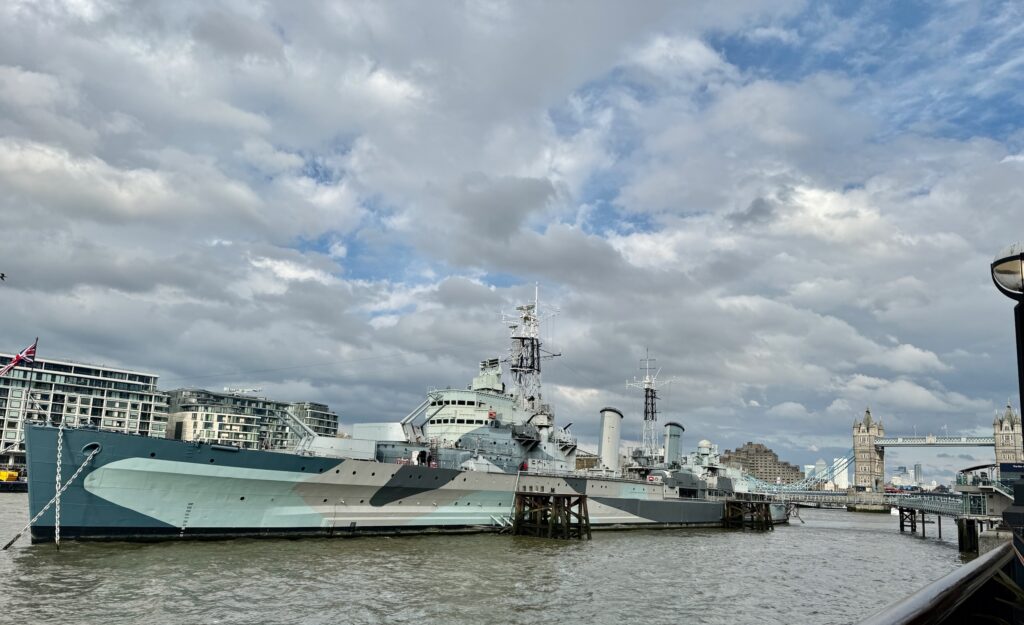
HMS Belfast and Tower Bridge look good on a grey, cloudy day …
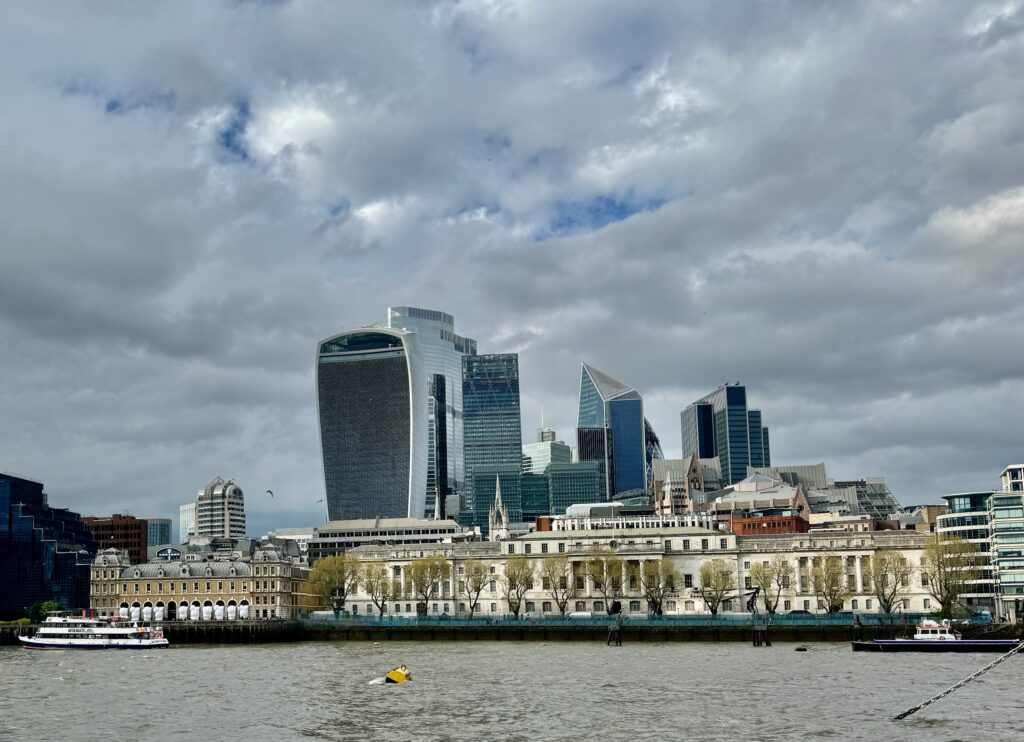
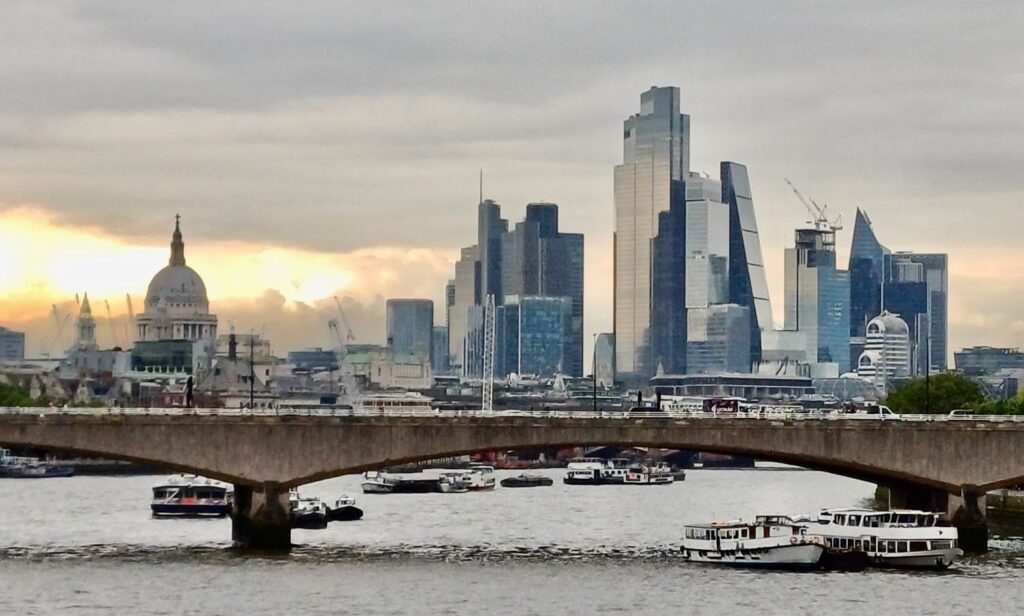
The City skyline from nearby …
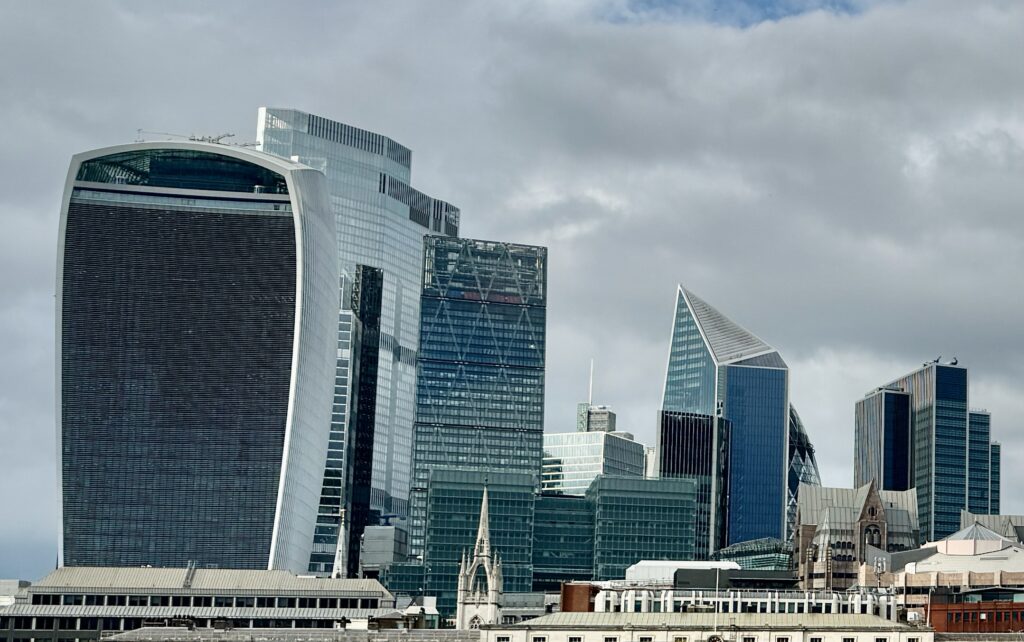
The poor Gherkin is gradually being surrounded and the Walkie Talkie really is a monster from this viewpoint …
Control of protected views has still managed to give St Paul’s the priority it deserves. Long may this continue as even more development gains approval …
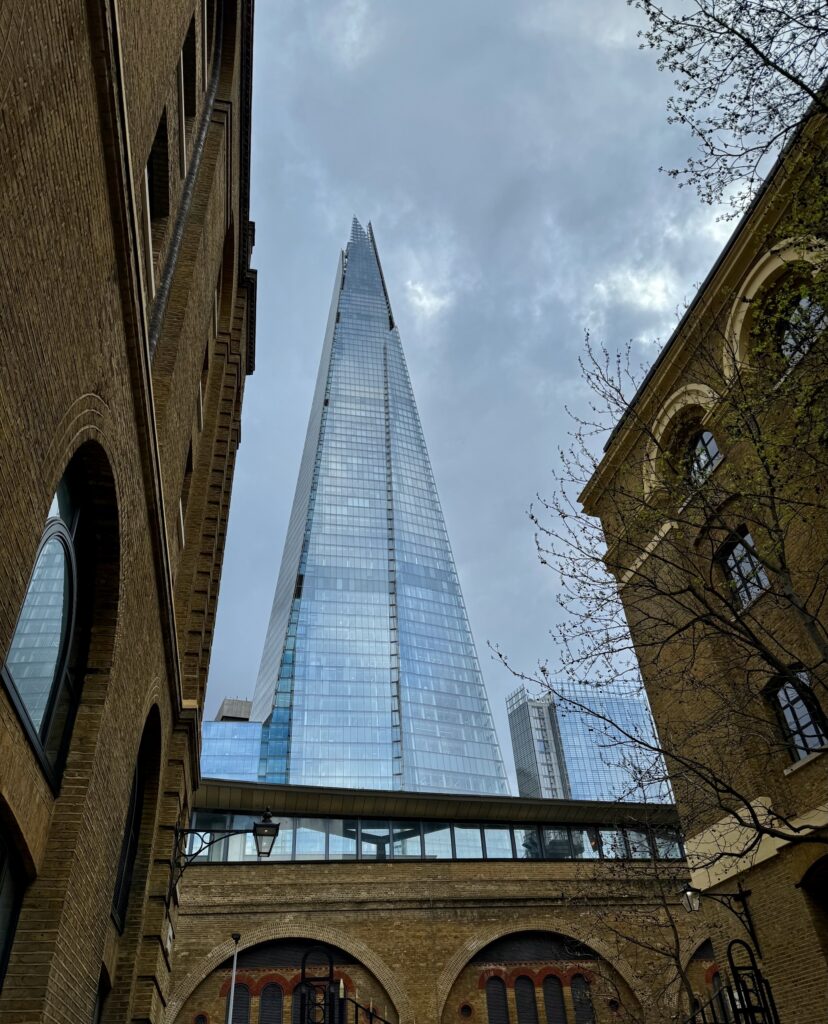
The Shard from Hay’s Galleria …
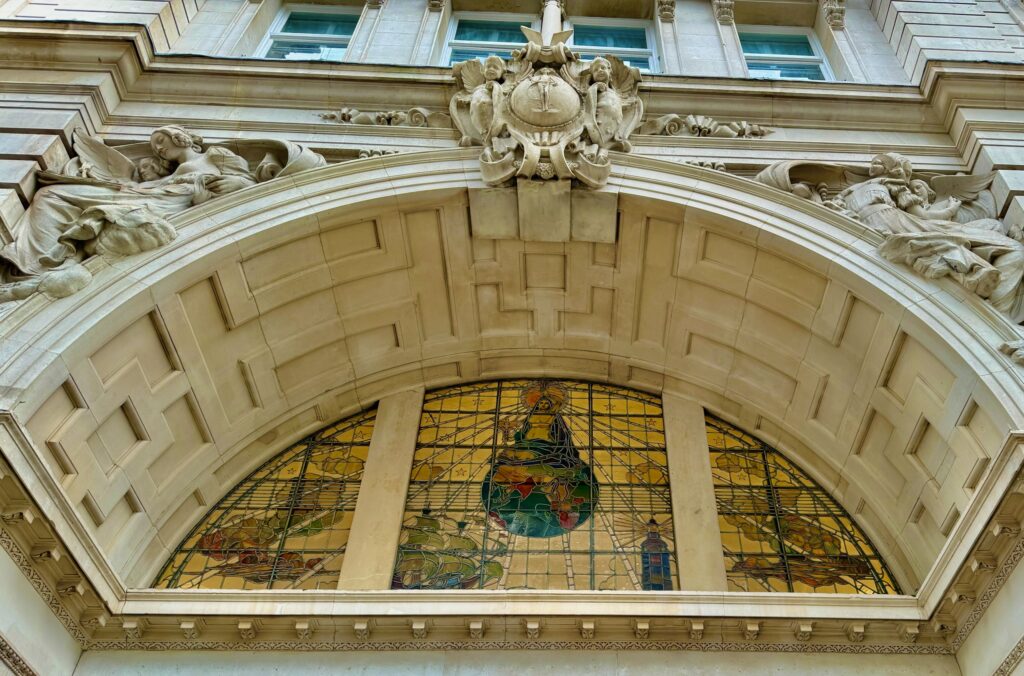
The refurbished facade of the old headquarters of the Eastern Telegraph Company on Moorgate is gradually being revealed including this fabulous stained glass …
At first it was called Electra House (named after the goddess of electricity) and the centre section shows her perched on top of the world. You can read more about her and the building in my April 2020 blog.
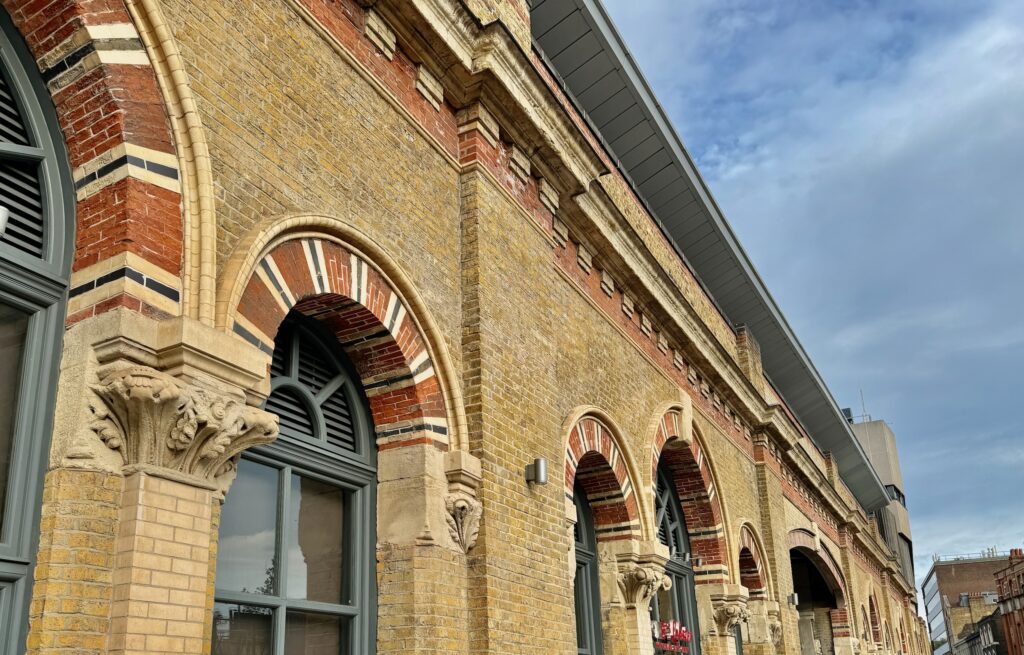
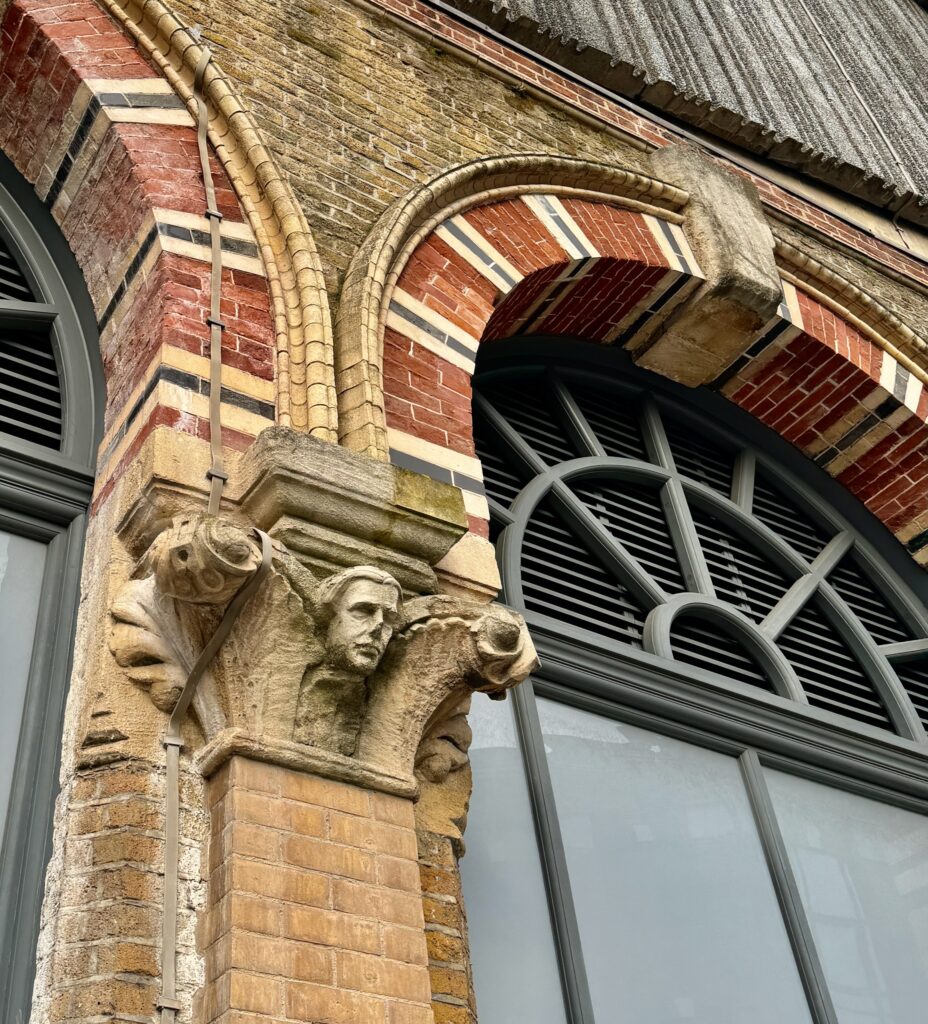
Nice brickwork in St Thomas Street on the south side of London Bridge Station …
A wacky installation at Vinegar Yard across the road …
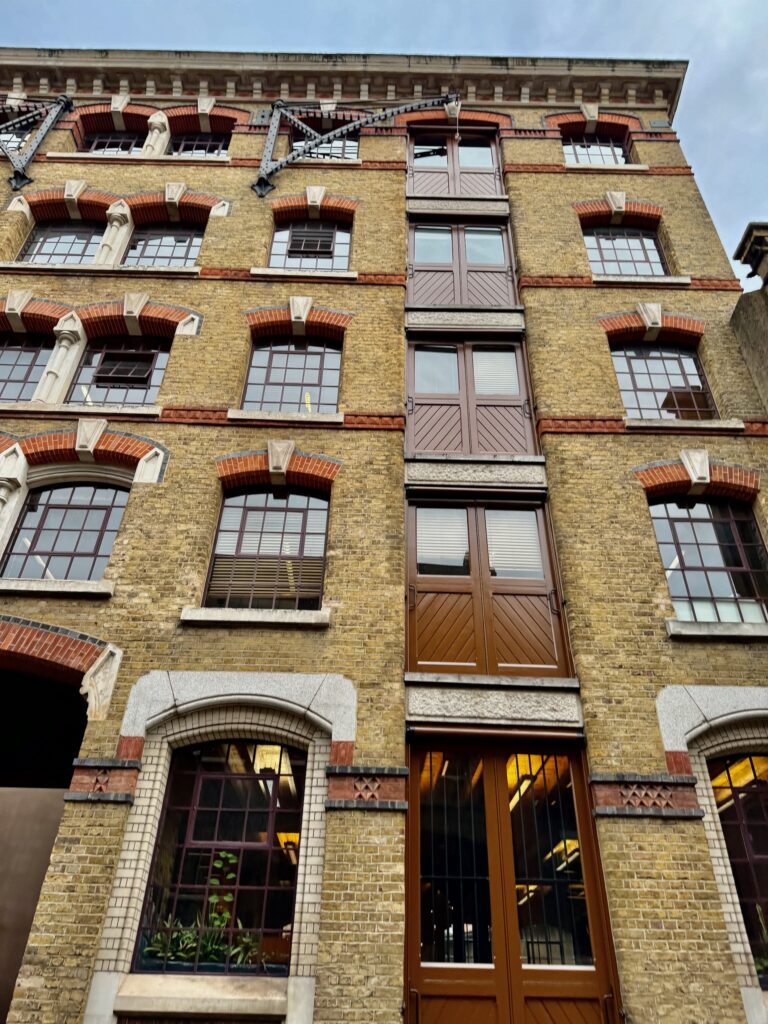
Re-purposed warehouses nearby …
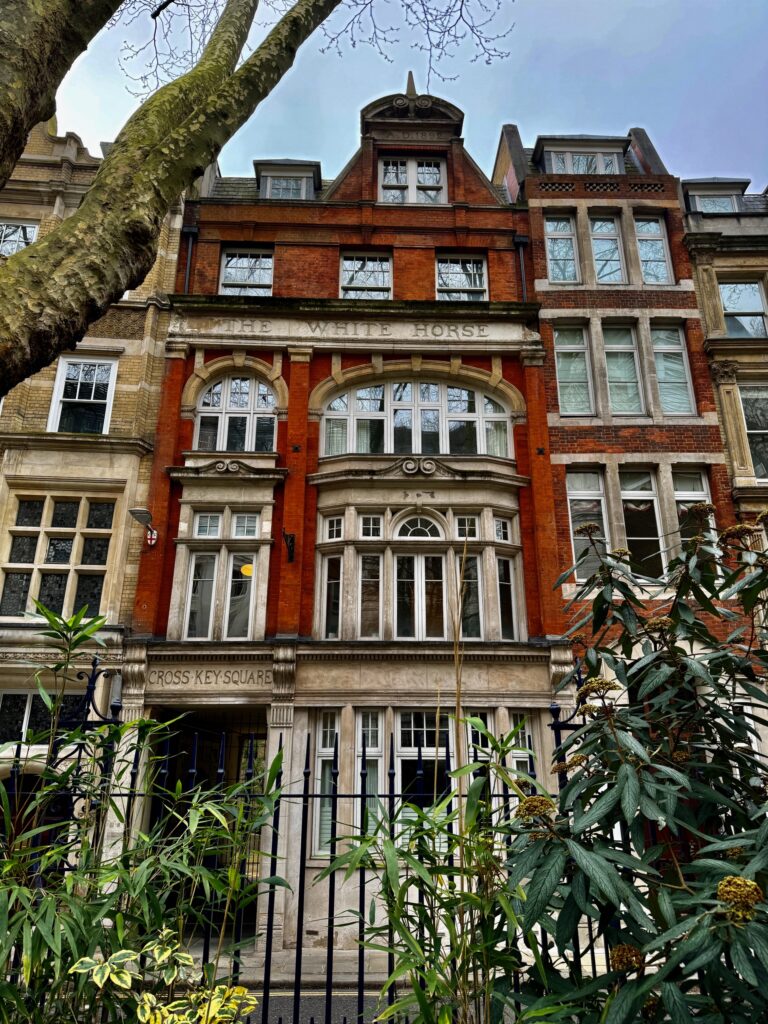
A re-purposed pub across the road from St Bartholomew the Great …
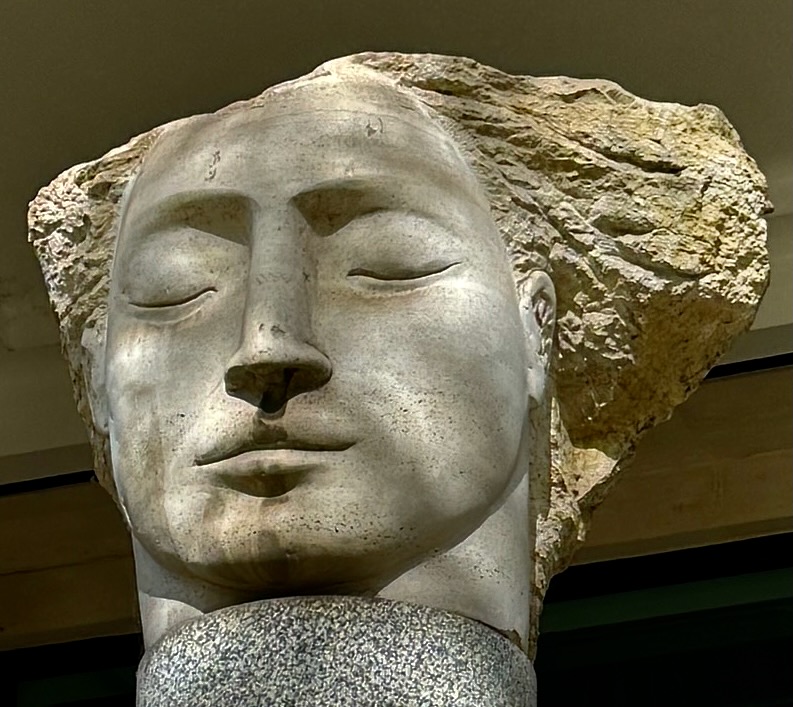
Angel III by Emily Young (2003), Paternoster Square, opposite St Paul’s Cathedral …
You can read my blog about City Angels (and Devils!) here.
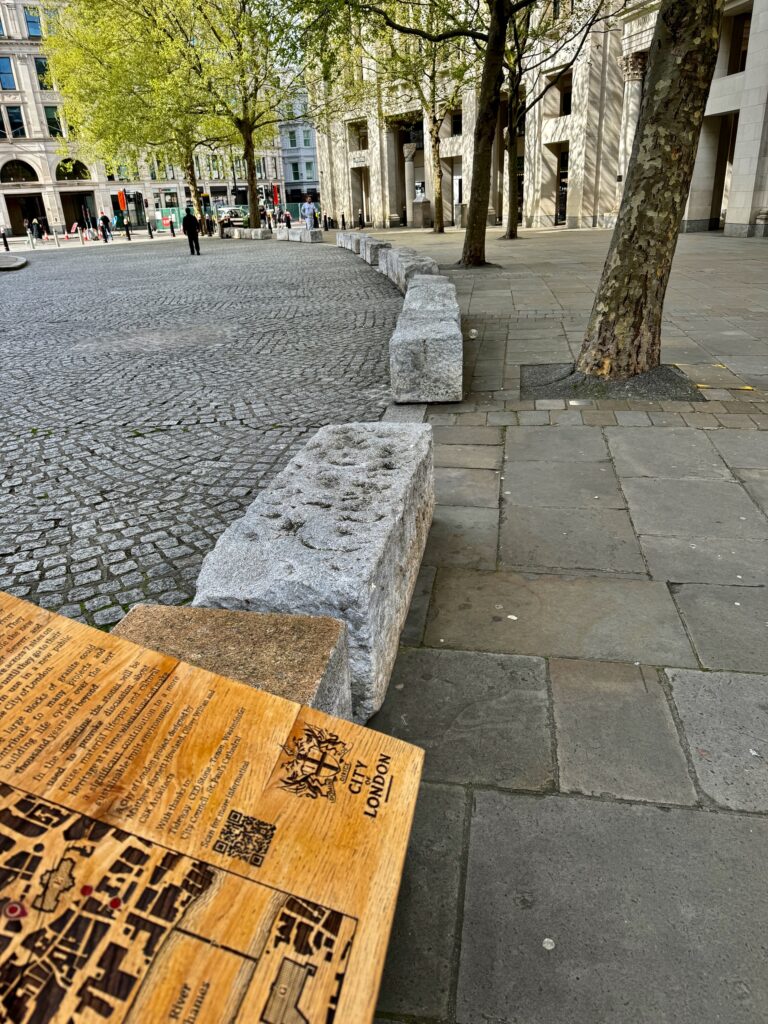
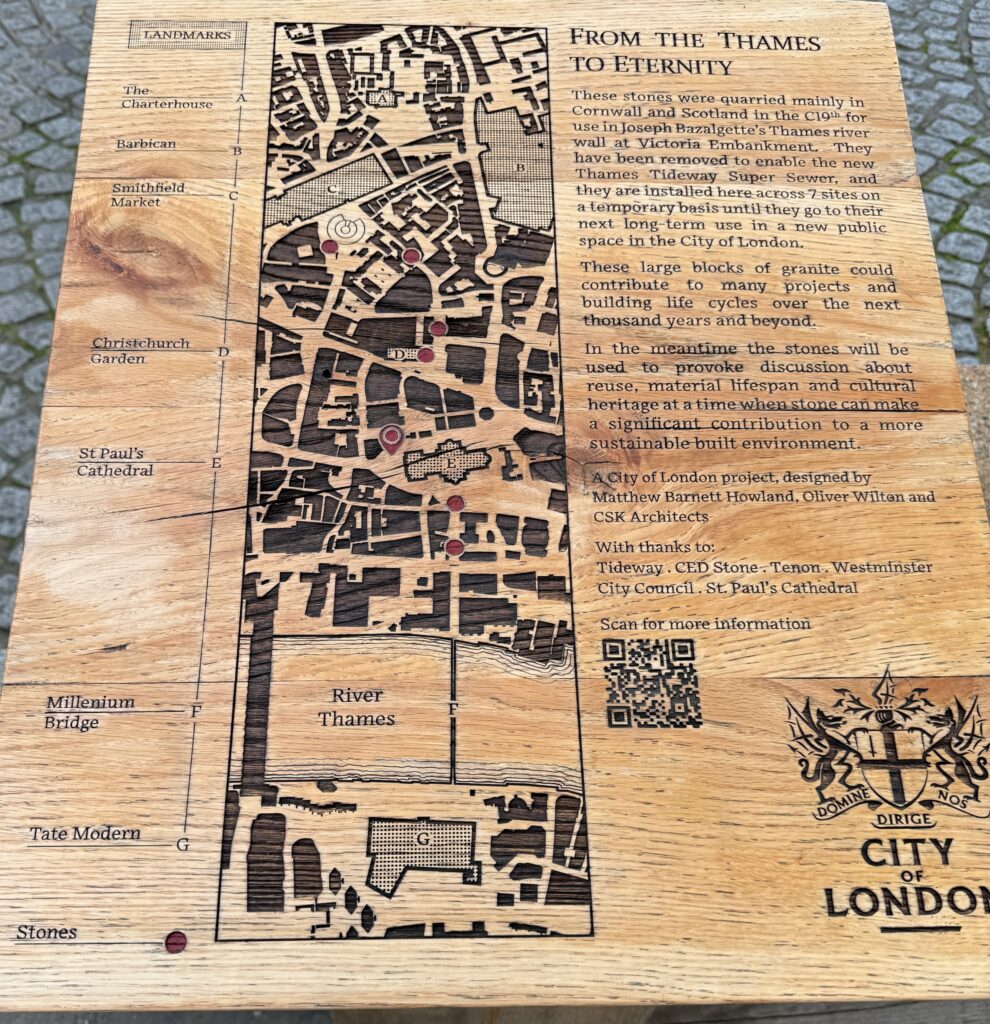
Also outside the Cathedral …
The explanation …
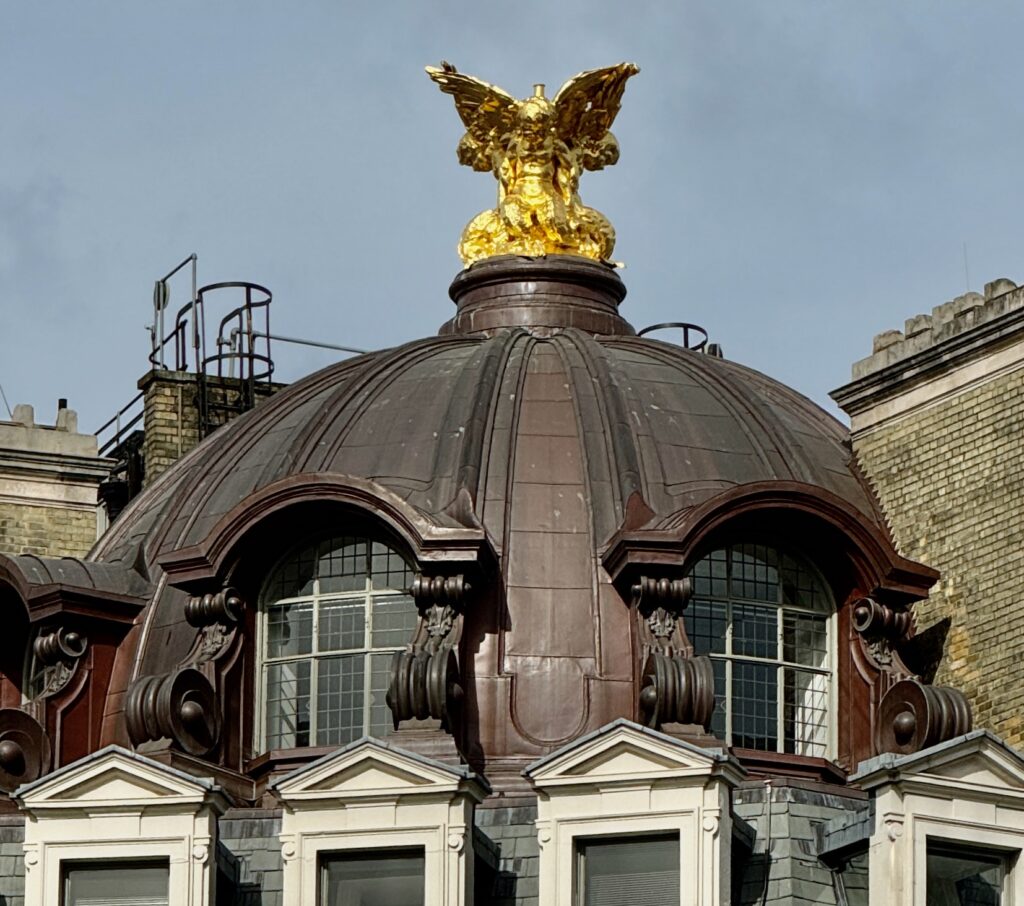
Golden cherubs at Ludgate Circus …
This building was originally the London headquarters of the Thomas Cook travel agency. Built in 1865, the first floor was a temperance hotel in accordance with Cook’s beliefs. Read more about the cherubs, and many of their fellows, in my Blog Charming Cherubs.
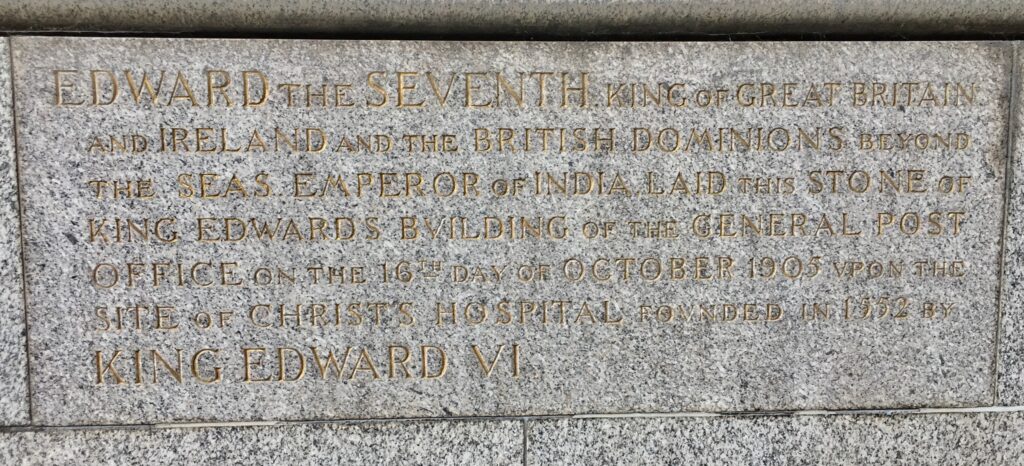
The wording on this foundation stone in King Edward Street emanates pride in the British Empire at its height …
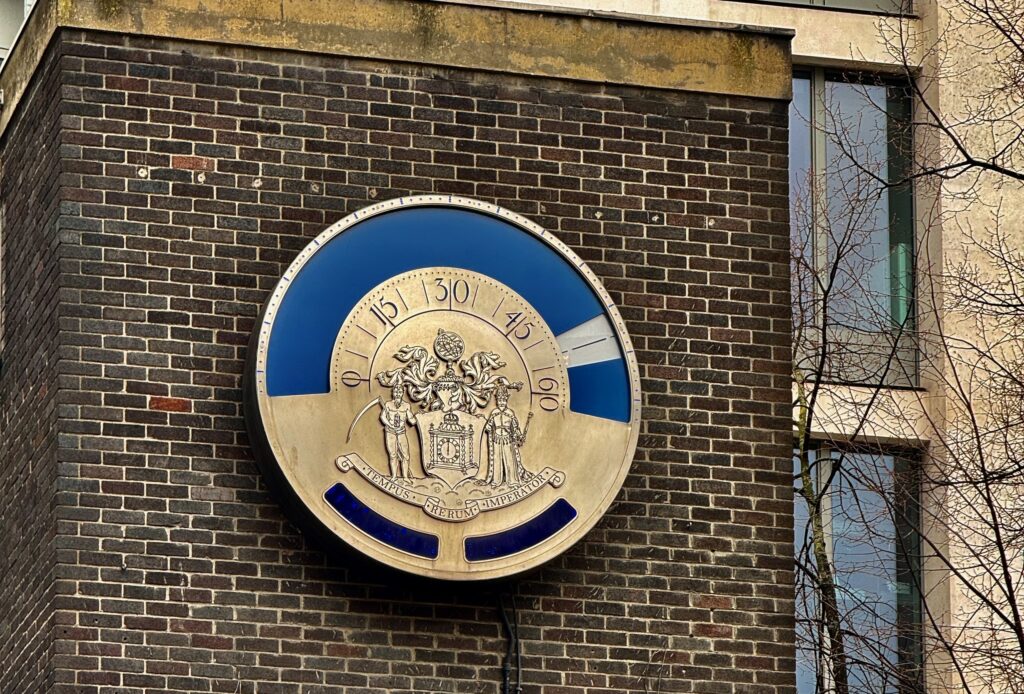
Across the road nearby are the coat of arms and the motto of the Worshipful Company of Clockmakers. It’s the Newgate Street Clock, the Worshipful Company’s 375th anniversary gift to the City of London …
The motto Tempus Rerum Imperator can be translated as Time, the Ruler of All Things.
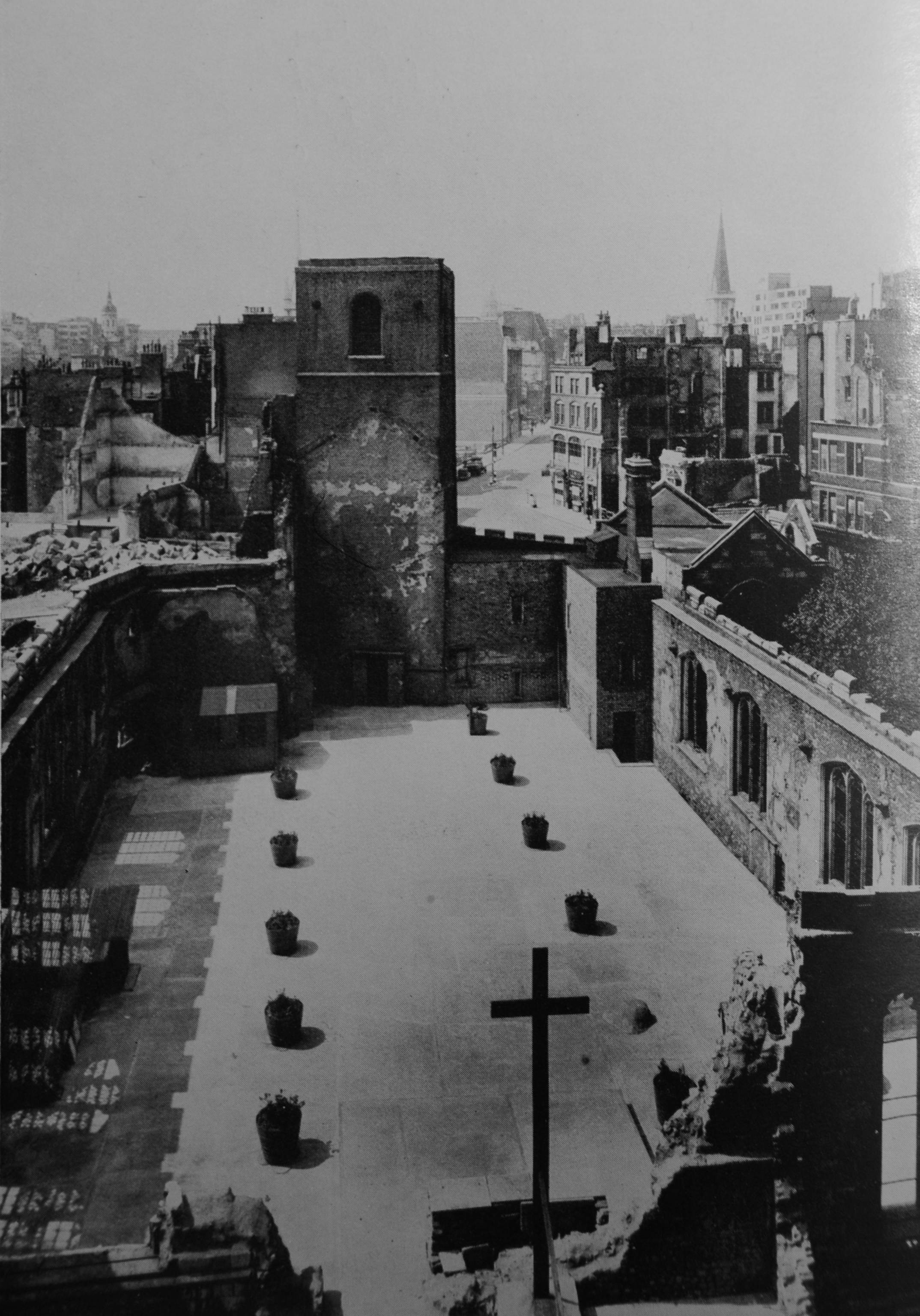
One of the aspects of this church that impresses me most is how it was reconstructed after direct hits by bombs during the Blitz.
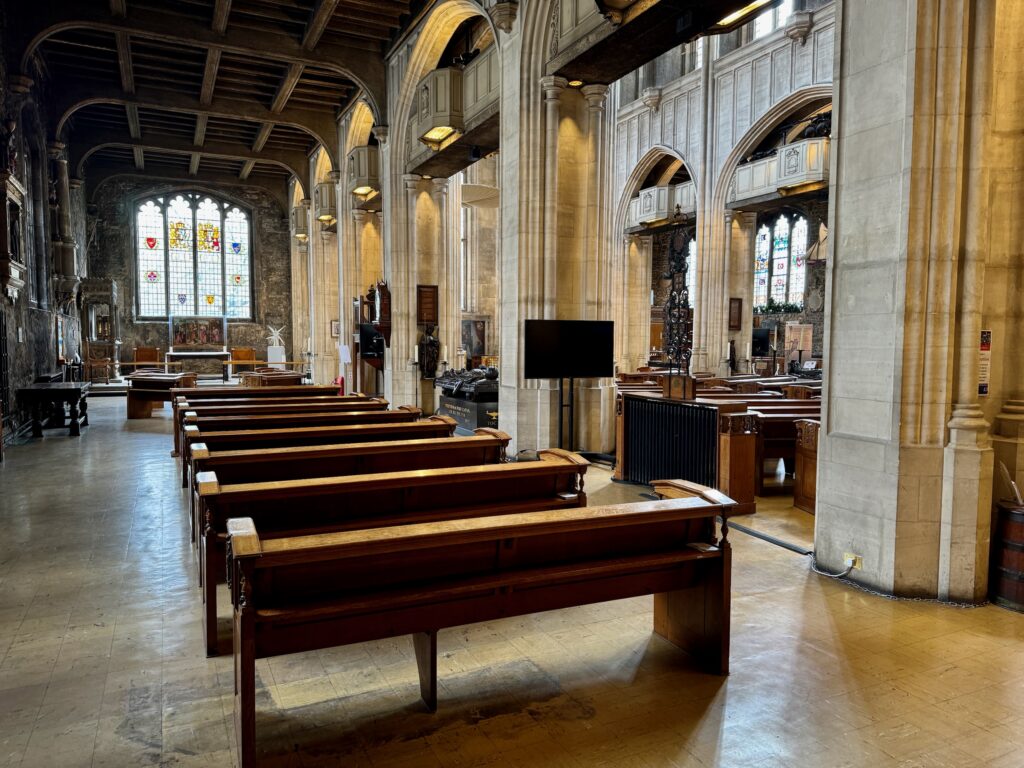
The interior today …
The church was bombed on two occasions during the Blitz: first the east end was badly damaged by a bomb in December 1940, and three weeks later the whole building was gutted by incendiary bombs, leaving only the tower and outer walls standing. This photo from the 1947 publication The Lost Treasures of London by William Kent shows the devastation …
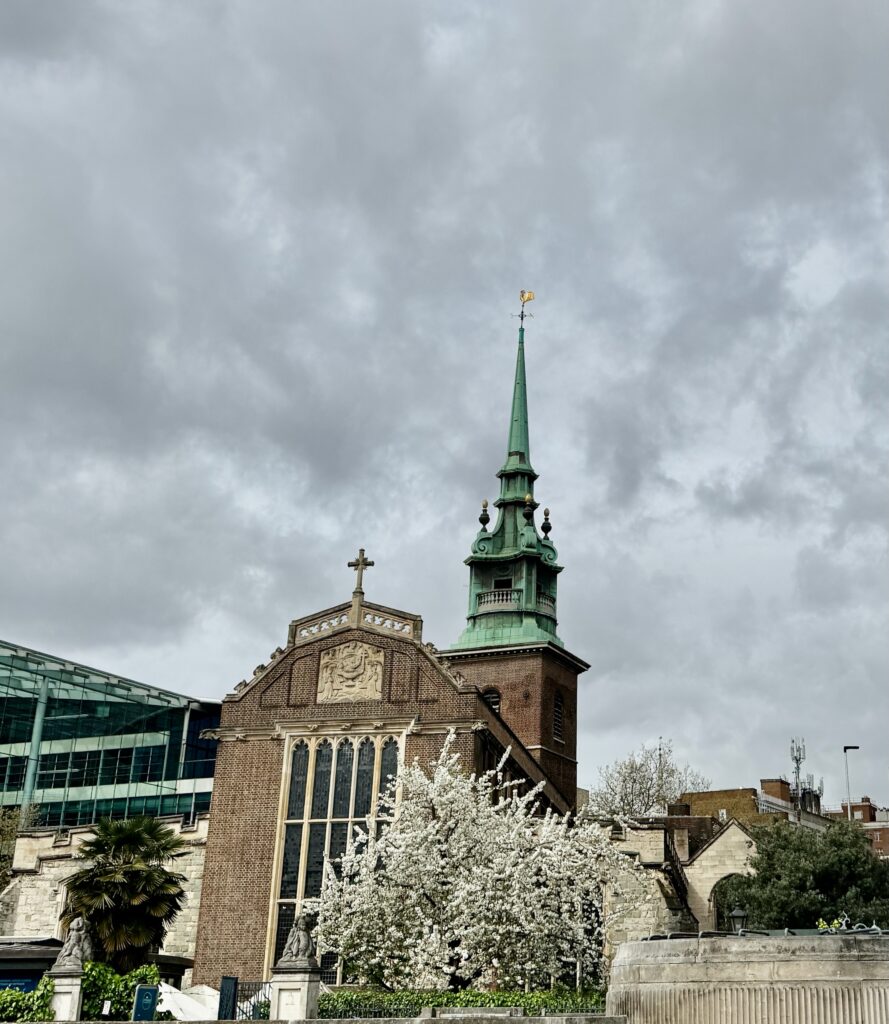
Here it is last week on a wet and windy day looking from the east …
Before entering the church from this direction I suggest a short diversion.
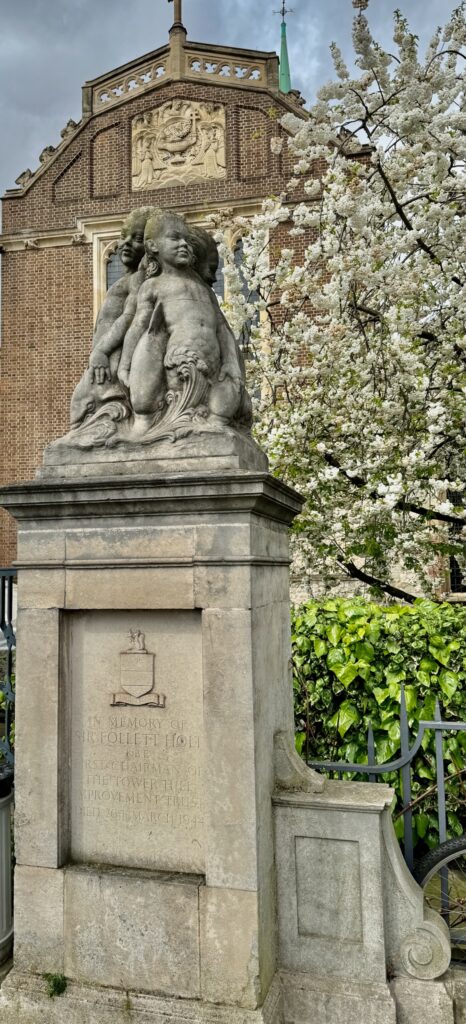
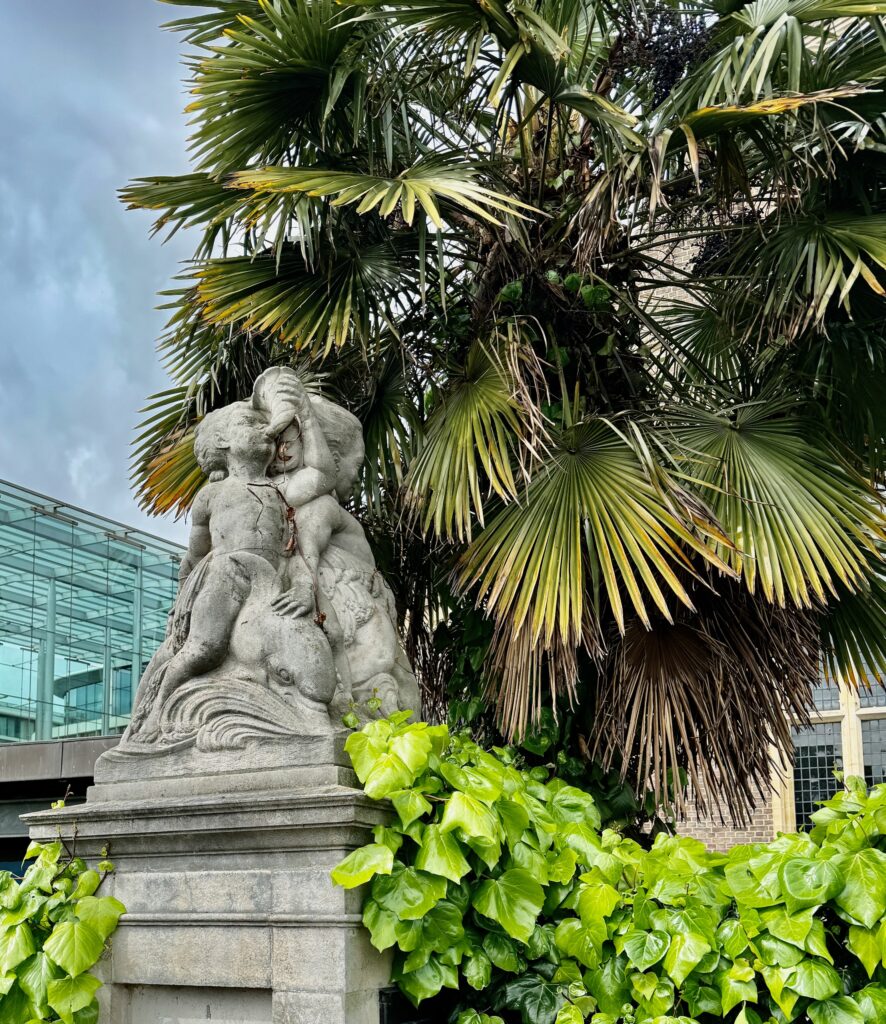
On Tower Hill Terrace you will find this pretty sculpture. It’s called The Seaand incorporates a tribute to Sir Follett Holt, KBE, the first Chairman of the Tower Hill Improvement Trust, who died 20th March 1944 …
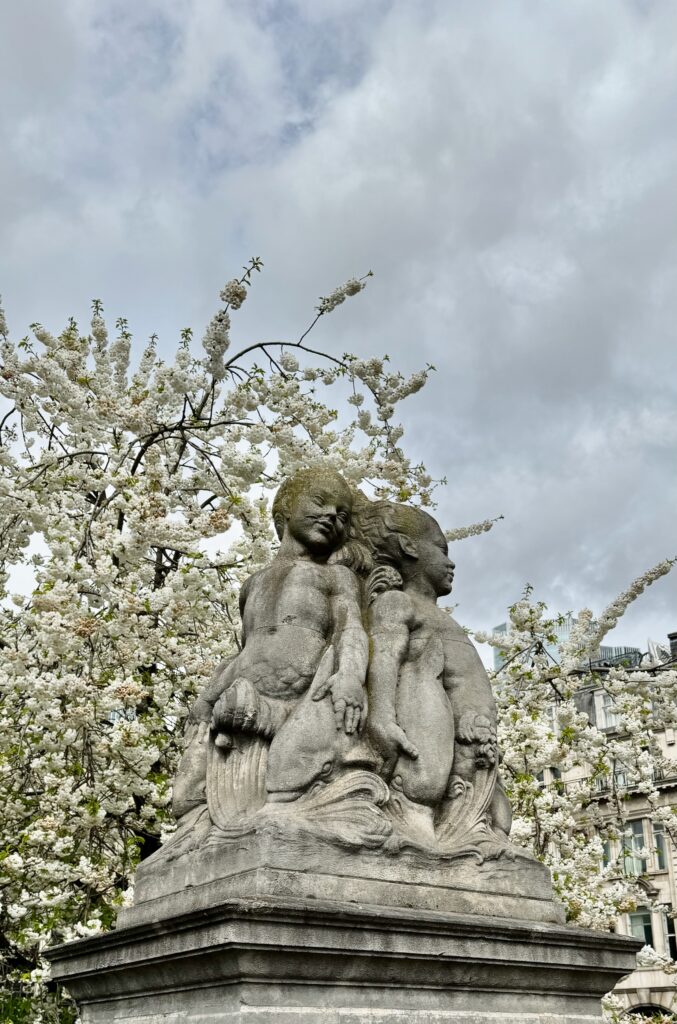
It is one of two gate posts – this is its partner …
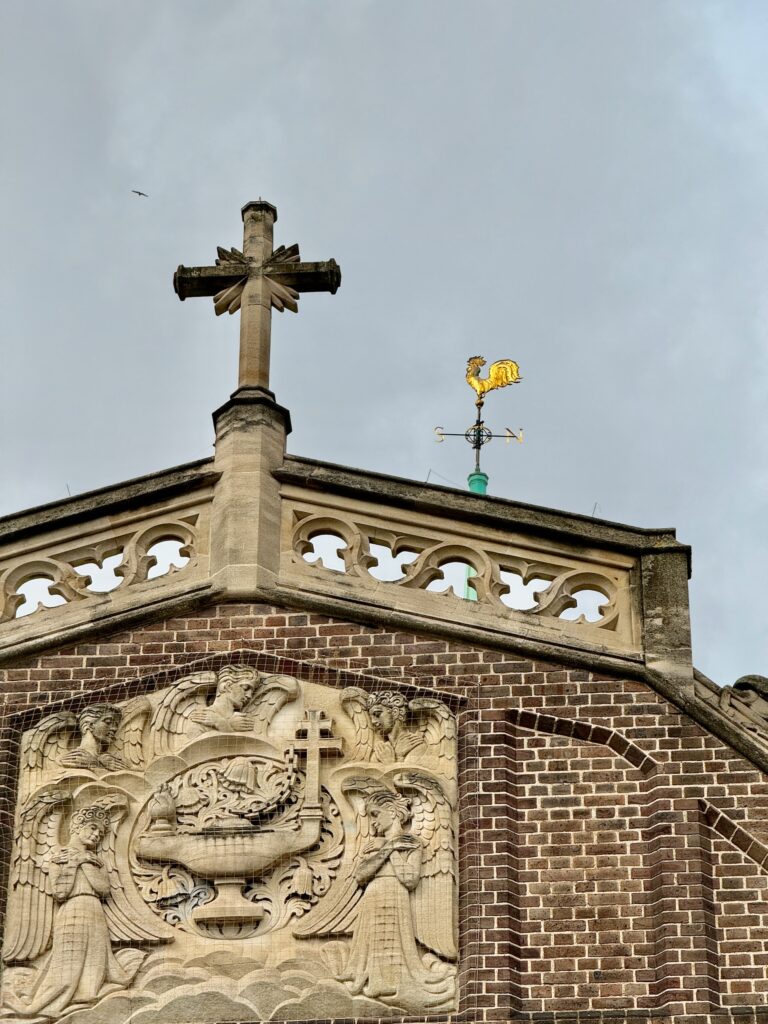
The PMSA says ‘Each of these groups comprises two children with dolphins swimming around them. Their frolicking pagan style contrasts rather vividly with the relief of the Toc H Lamp, also by Cecil Thomas, on the east wall of All Hallows behind them’
The Toc H relief …
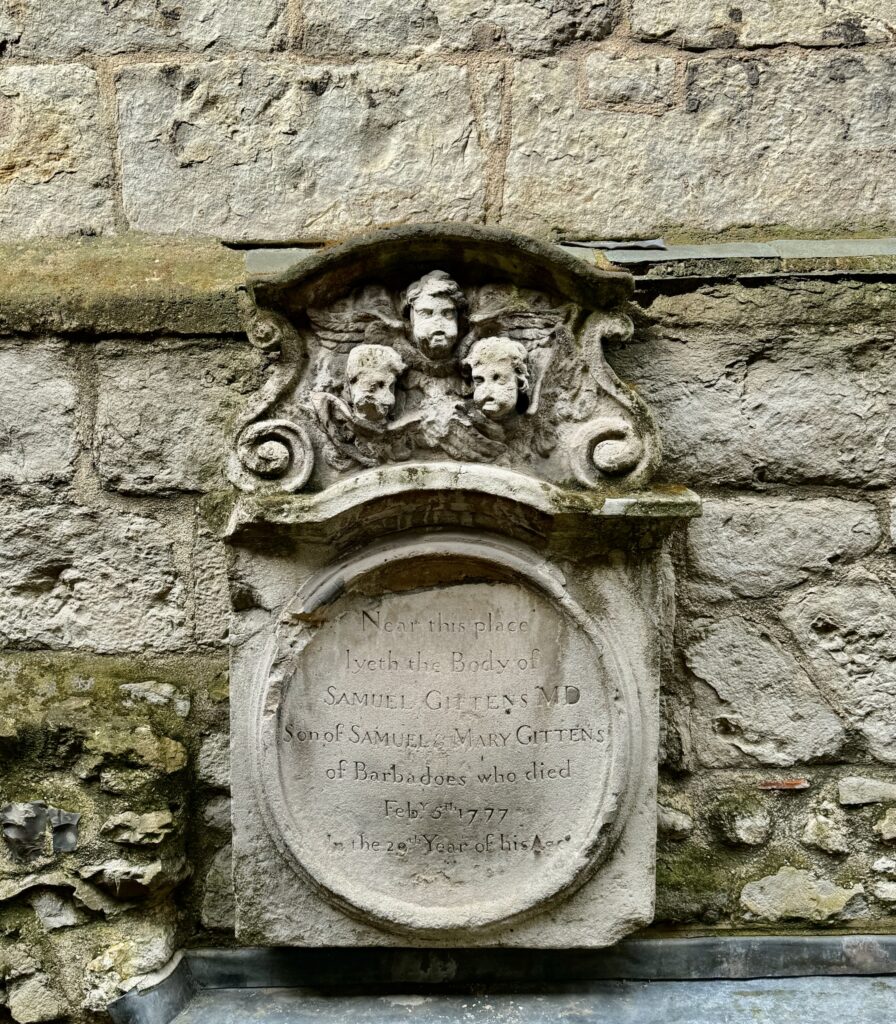
I walked down the little path alongside the west wall of the church …
Embedded in the wall was this memorial to Samuel Gittens MD. It has three little cherubs heads and refers to his parents ‘Samuel and Mary Gittens of Barbados’ …
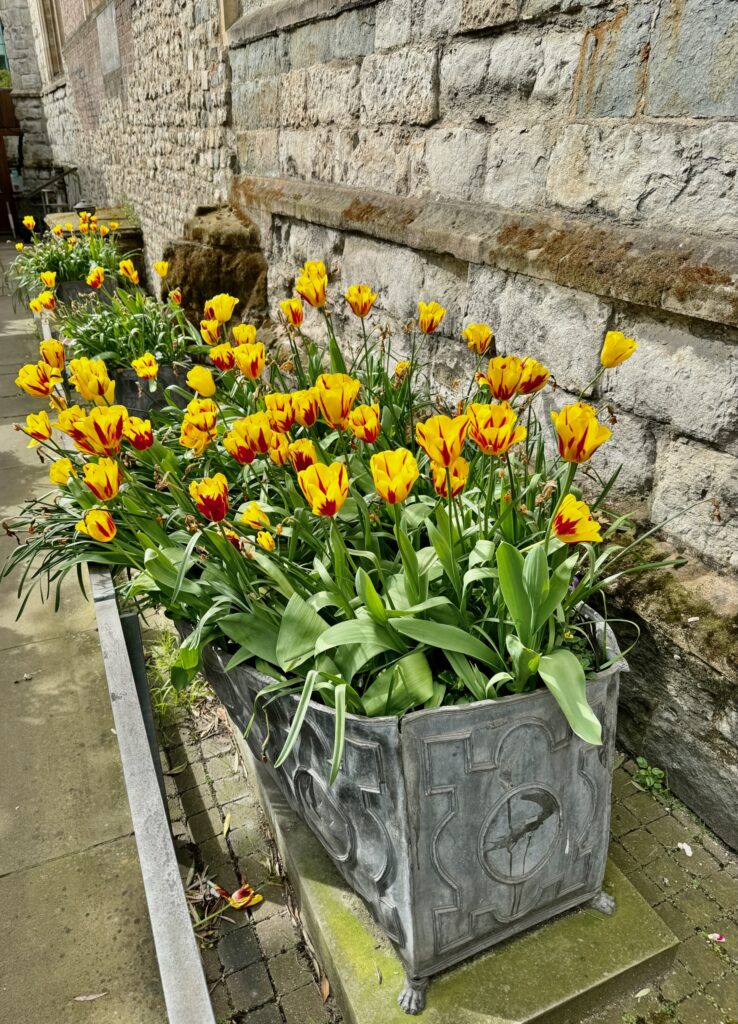
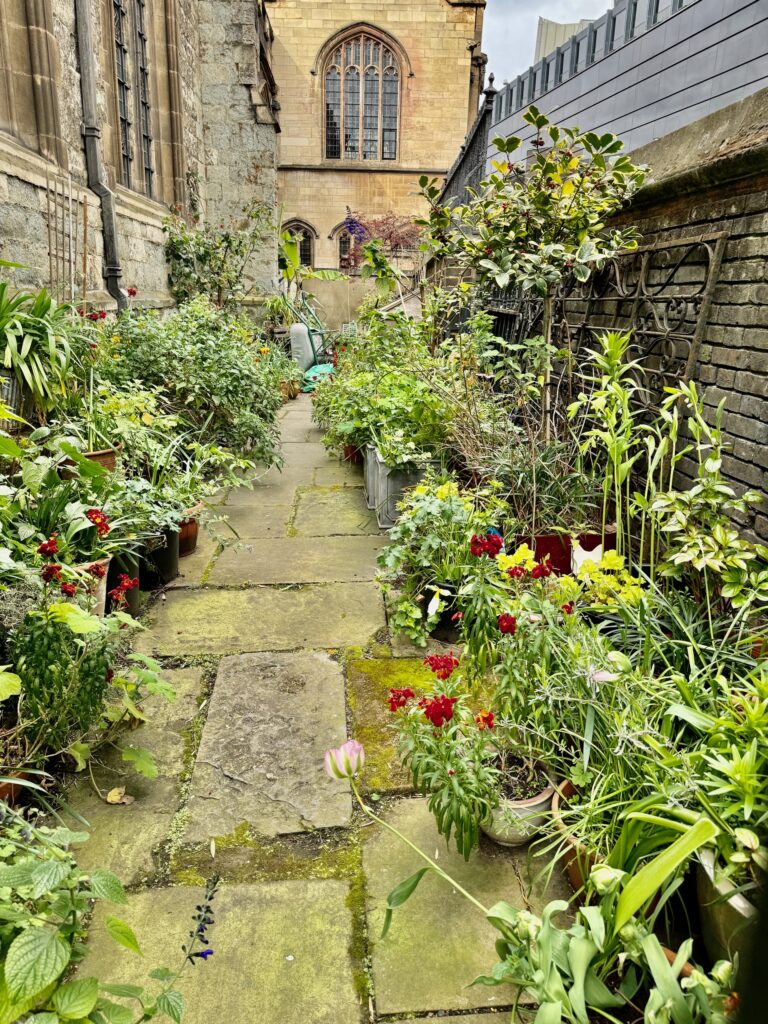
Alongside the north wall is the ‘Secret Garden’ …
It is such a shame that, even though the church is right alongside the Tower of London, it doesn’t seem to get many visitors. Do visit if you have the opportunity.
Here are just a few of its treasures.
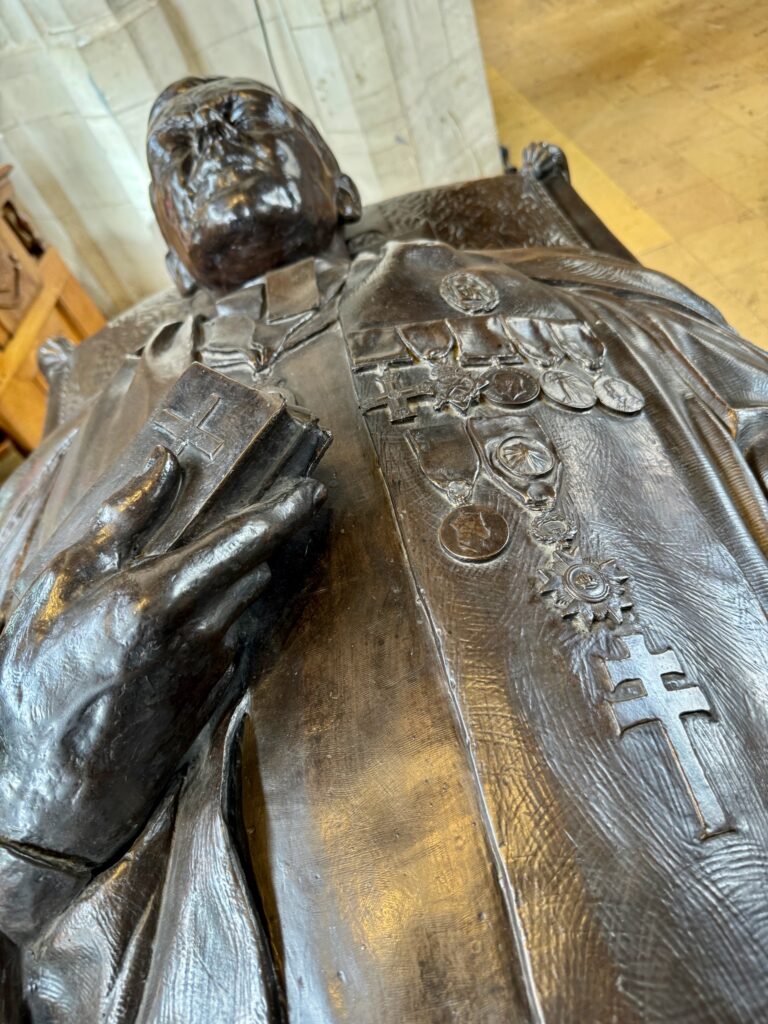
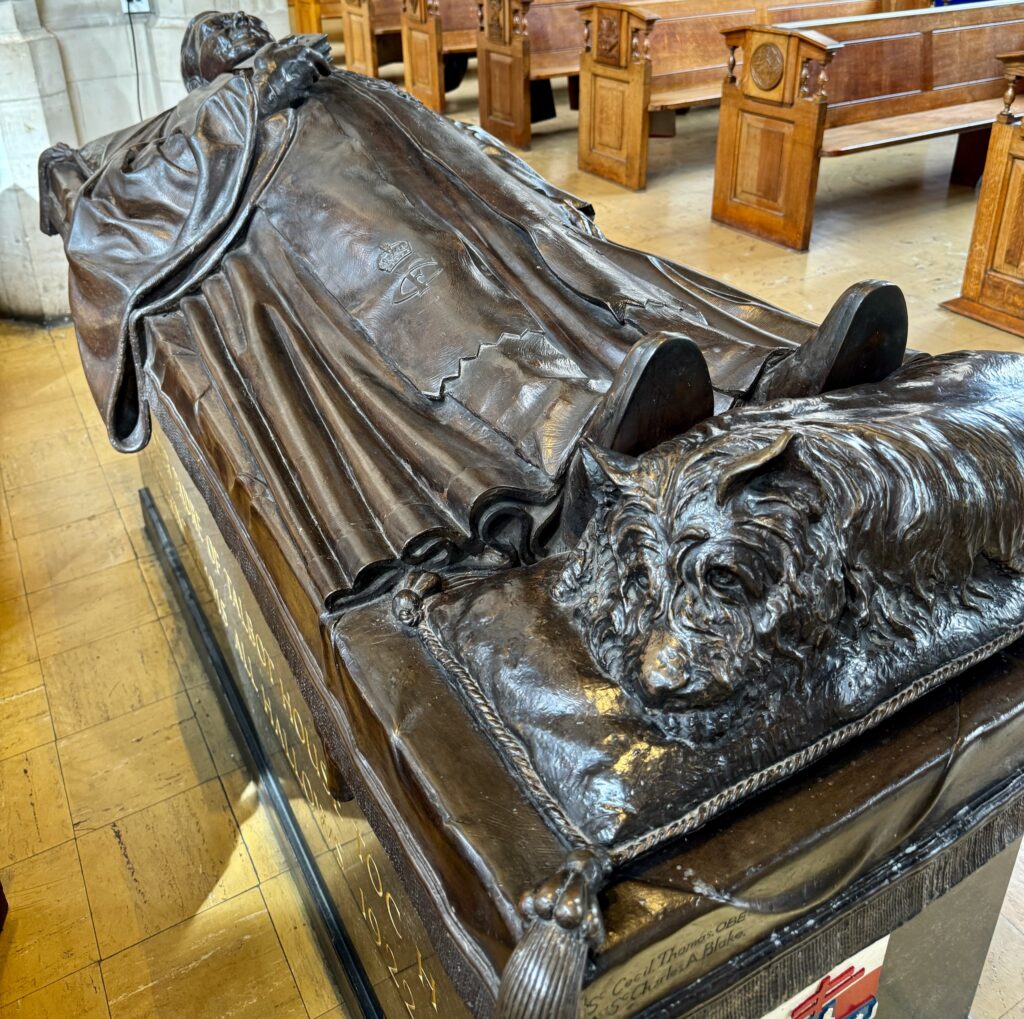
This is the tomb of the Reverend ‘Tubby’ Clayton CH MC who became vicar of the Church in 1922 and remained there until 1963. He is best known for his work initially as an army chaplain during the First World War and in particular the establishment of Talbot House, a unique place of rest and sanctuary for British troops. After the war the spirit and intent of Talbot House became expressed through the Toc H movement …
His effigy is one of the last works by Cecil Thomas, the ‘soldier sculptor’, and Tubby’s dog Chippie sits on a tassellated cushion at his feet …
Clayton owned a succession of Scottish Terriers, one of them a gift from the Queen Mother. All of them were called Chippie.
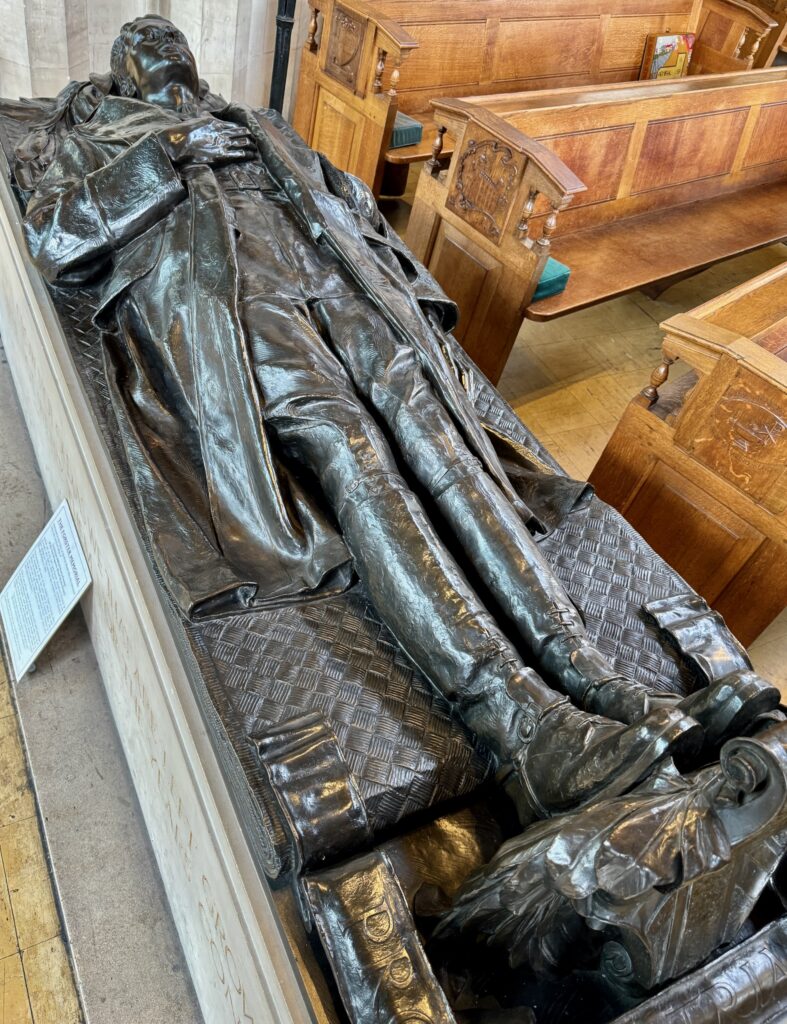
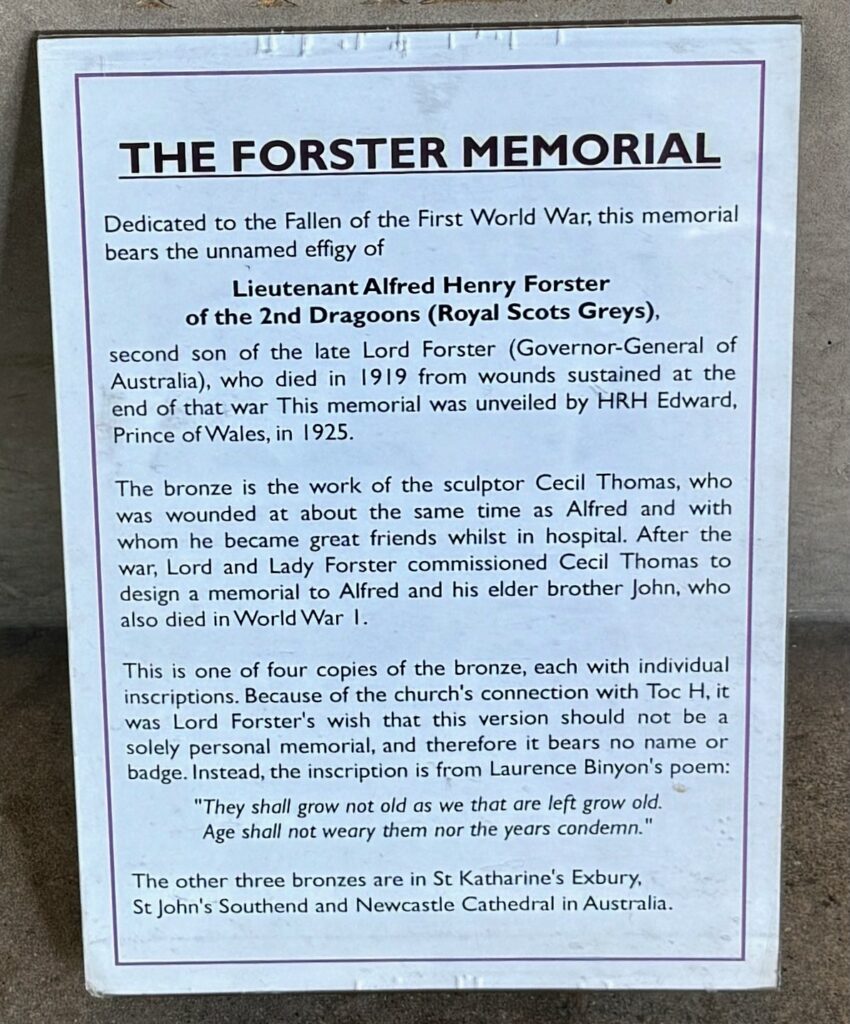
Another work by Thomas, the Forster Memorial …
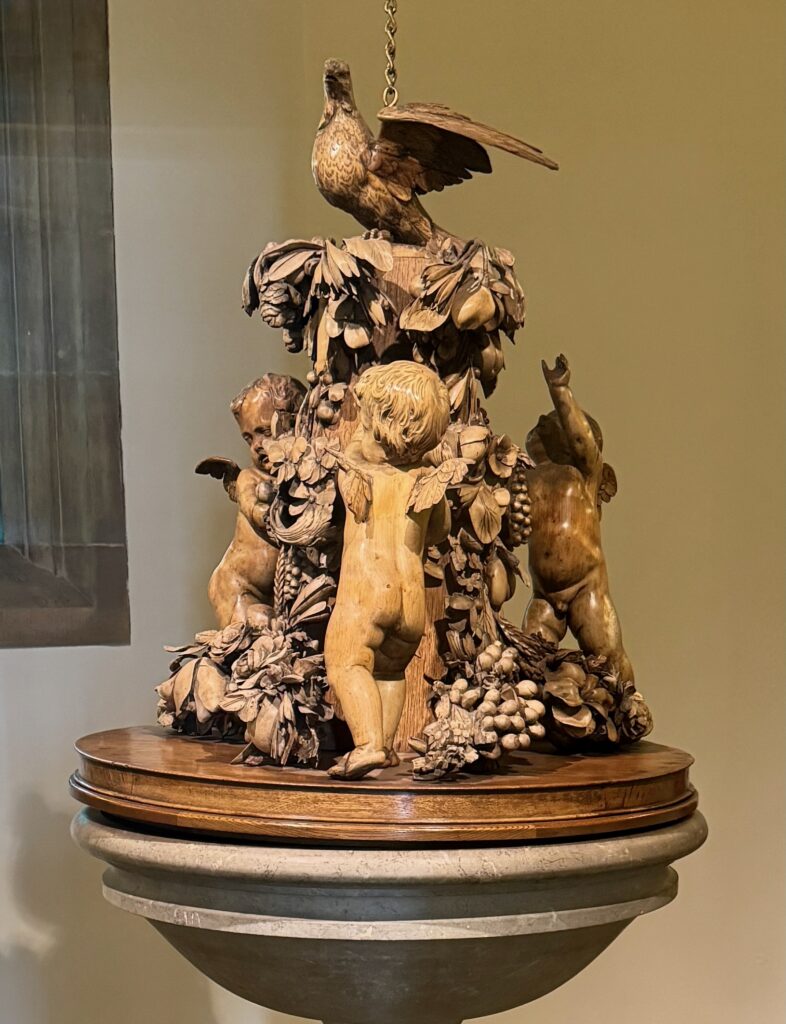
The magnificent font cover is by Grinling Gibbons and dates from 1682 …
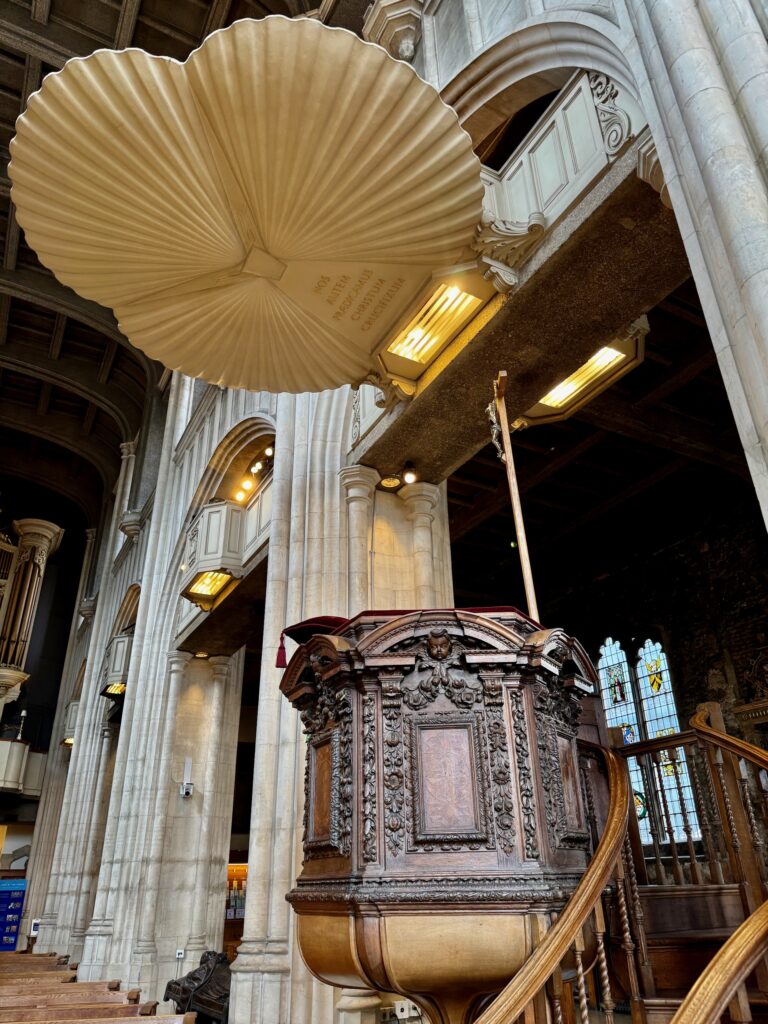
The present pulpit dates from around 1670 and is carved in the Gibbons style. It comes from the church of St Swithun’s, London Stone, which was destroyed by bombing and not rebuilt …
Above it is the tester, or sounding board, designed to represent three pilgrim shells associated with the pilgrimage of St James Compostella in Spain.
All Hallows is known as the seafarer’s church with strong connections to the Port of London Authority and to maritime history generally.
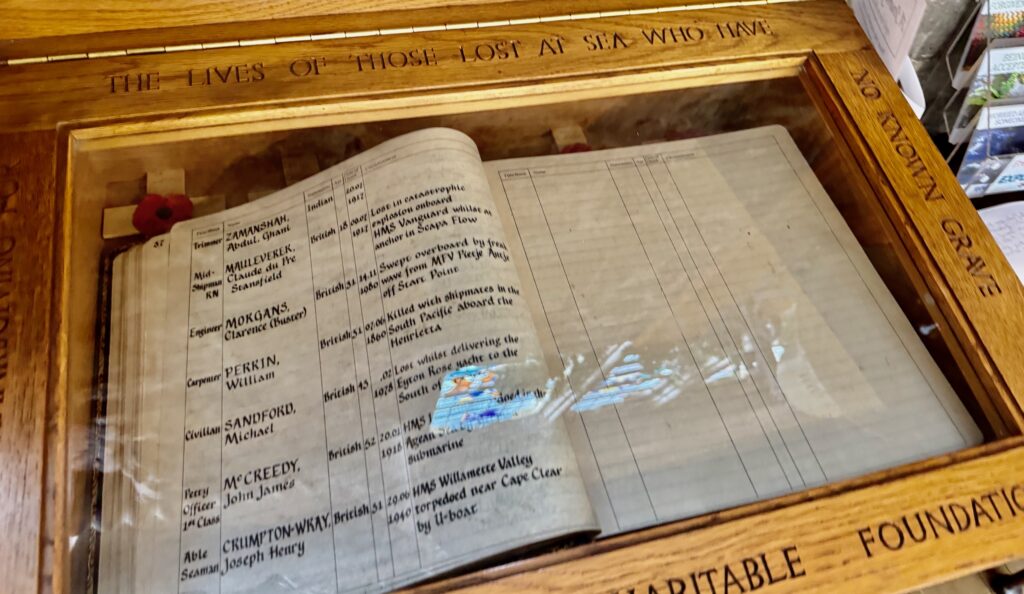
Mariners lost at sea with no known grave …
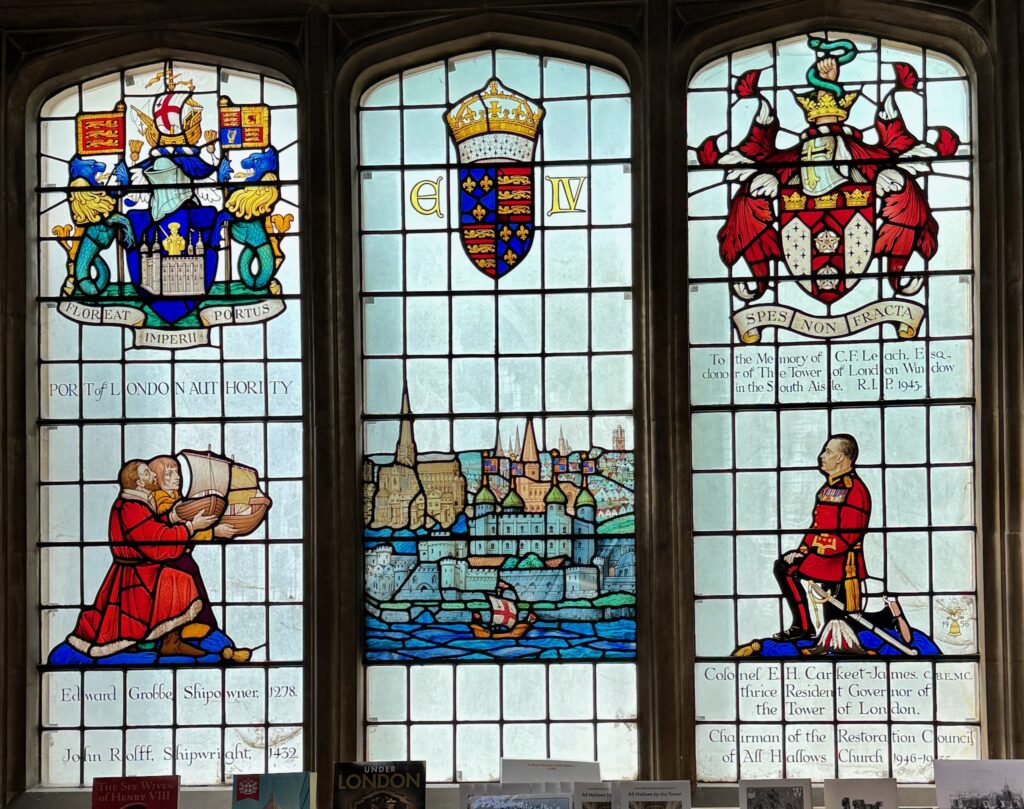
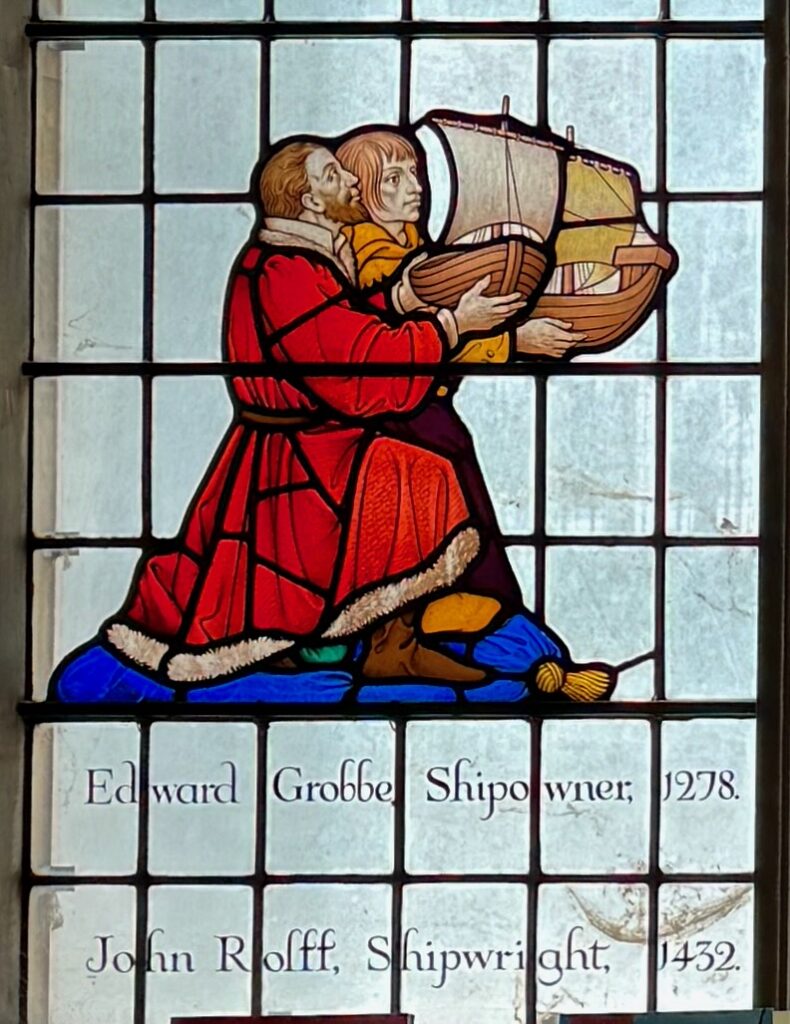
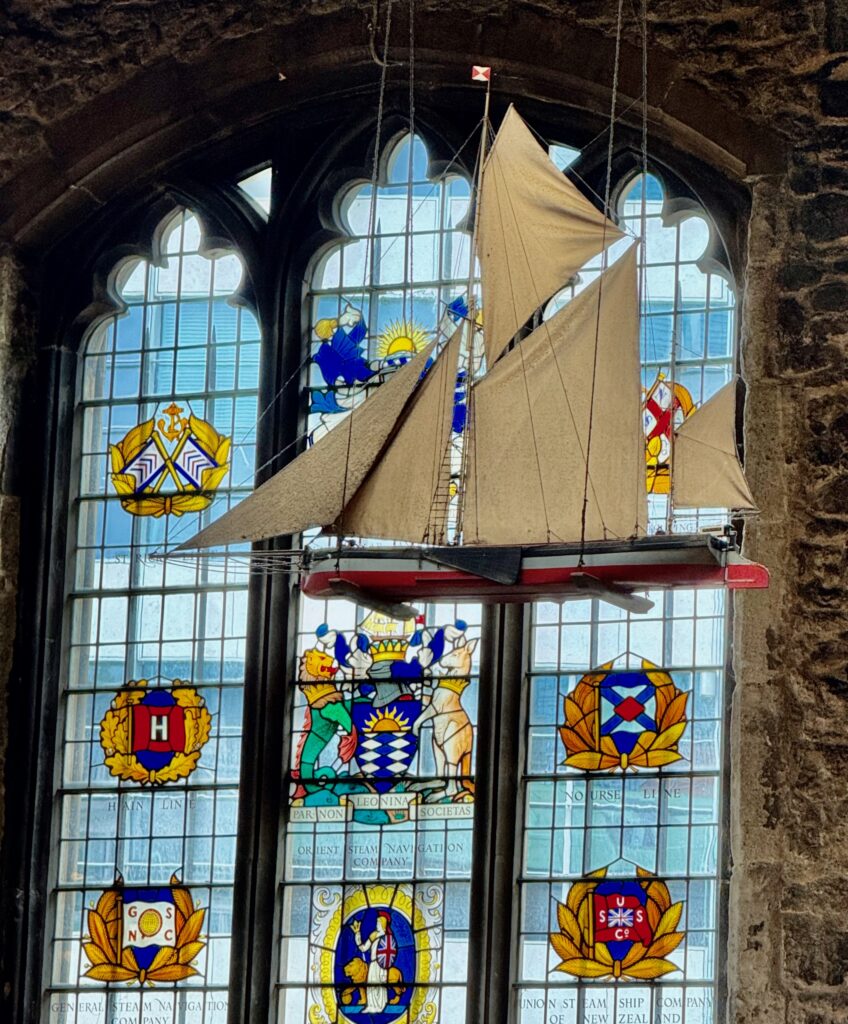
The stained glass windows, especially in the south aisle, also bear witness to the church’s close association with the sea and the river Thames …
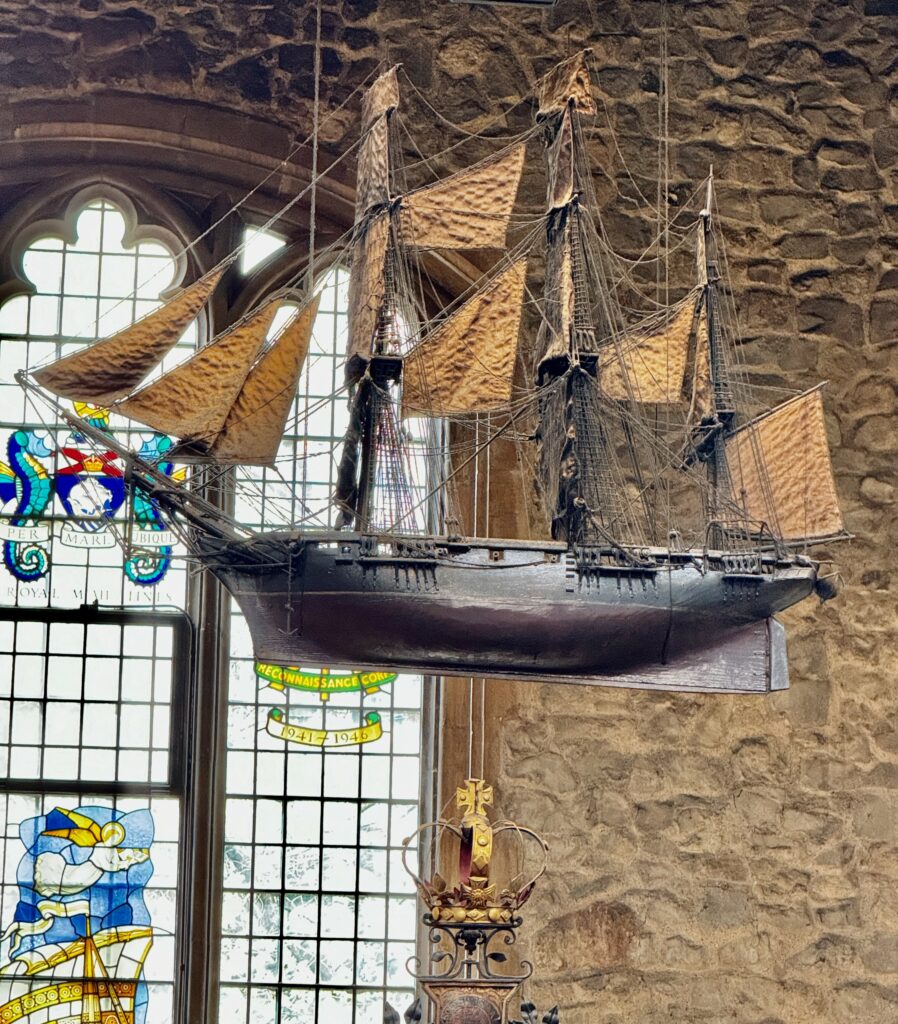
There are also, as you might expect, some superb model ships …
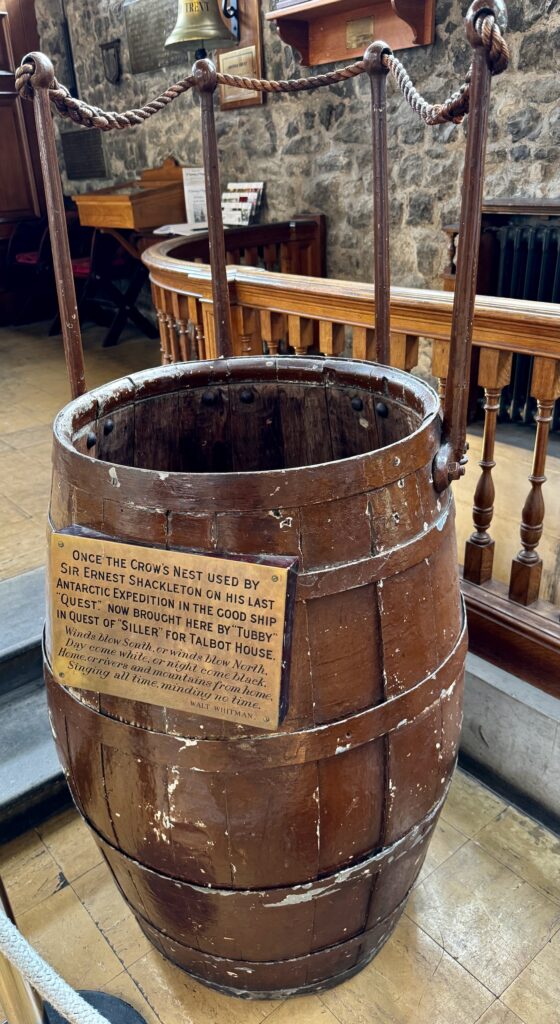
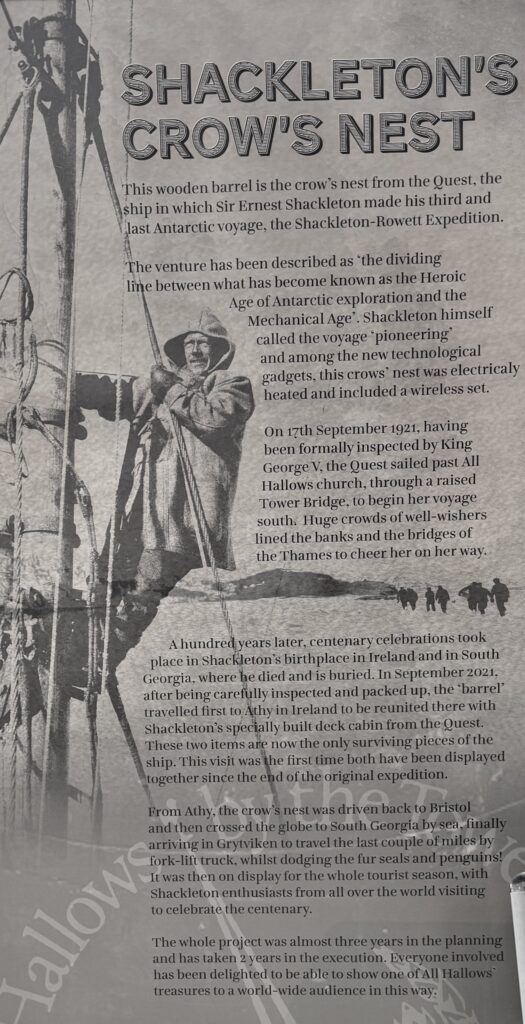
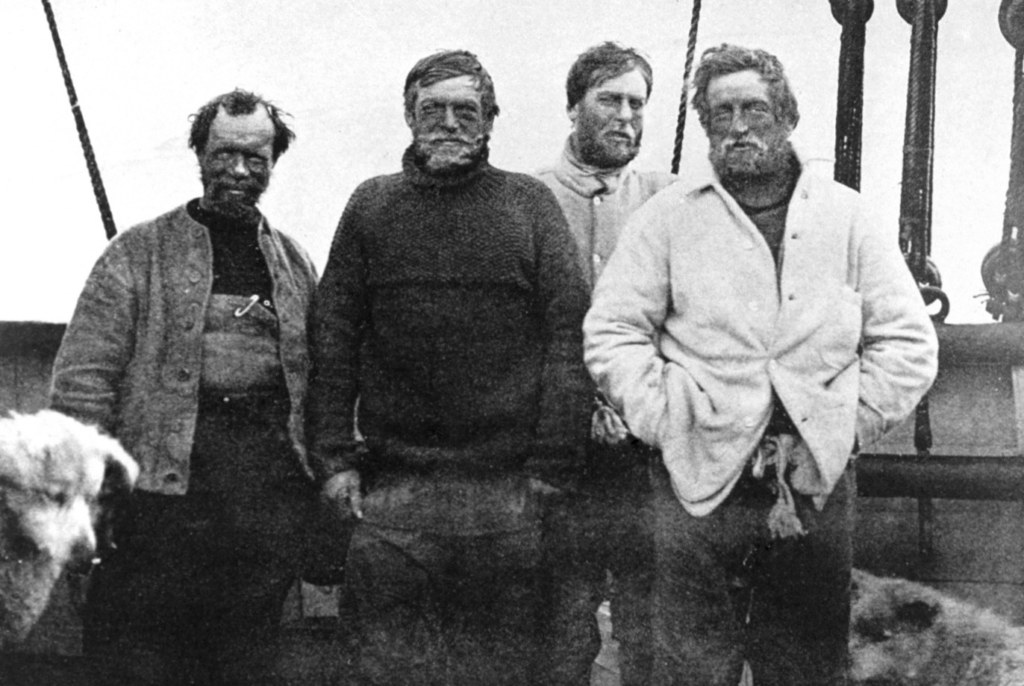
And what about this, Sir Ernest Shackleton’s electrically heated crow’s nest from the ‘Good Ship Quest’ on which he died on 5 January 1922 while in harbour in South Georgia …
The man climbing to the crow’s nest in the picture is Frank Wild. He took over the leadership of the expedition after Shackleton died.
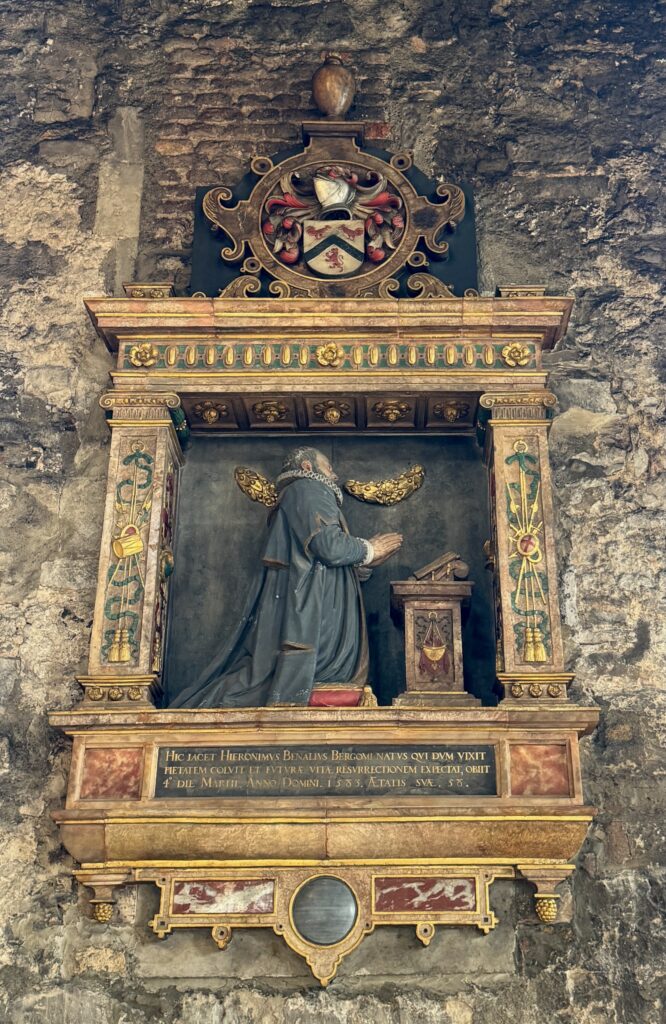
The 16th century monument to the Italian merchant Hieronimus Benalius who lived in nearby Seething Lane and died in 1583. He left instructions for Masses to be said for his soul …
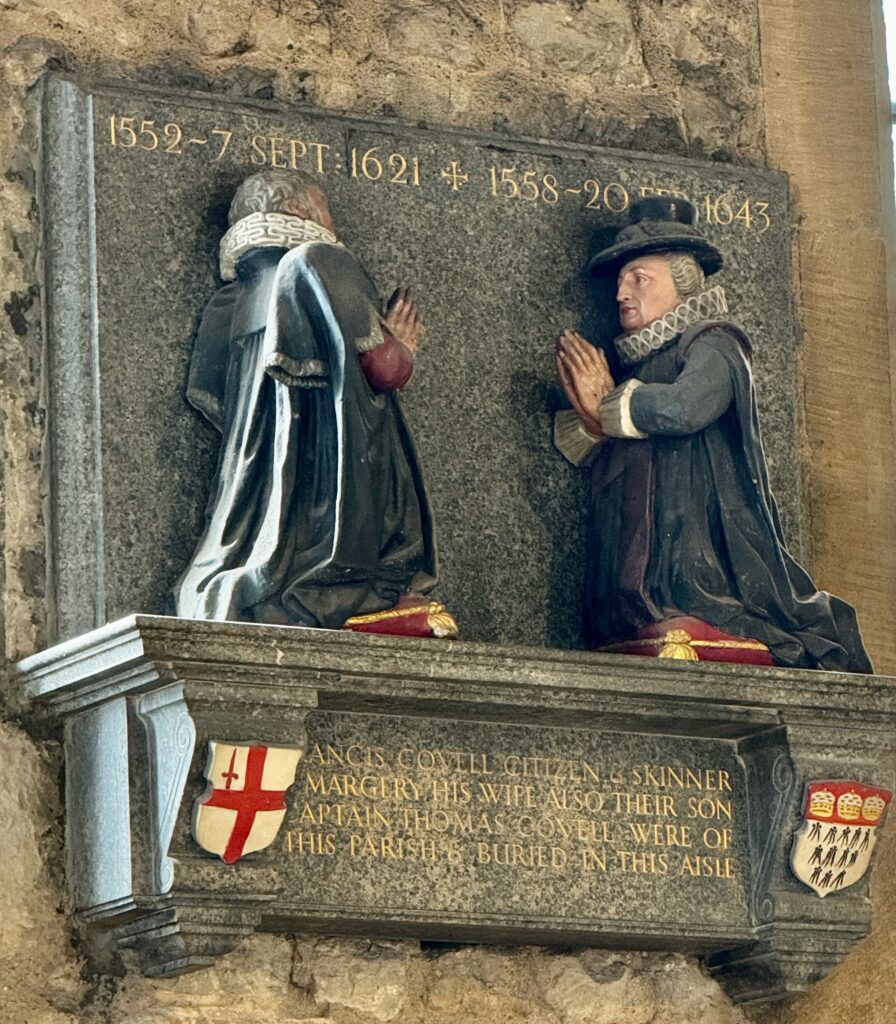
This wall monument contains the kneeling effigies of Francis Covell and his wife, each in long robes and with ruffs at the necks. They kneel facing one another, and probably originally had a desk between them which has disappeared …
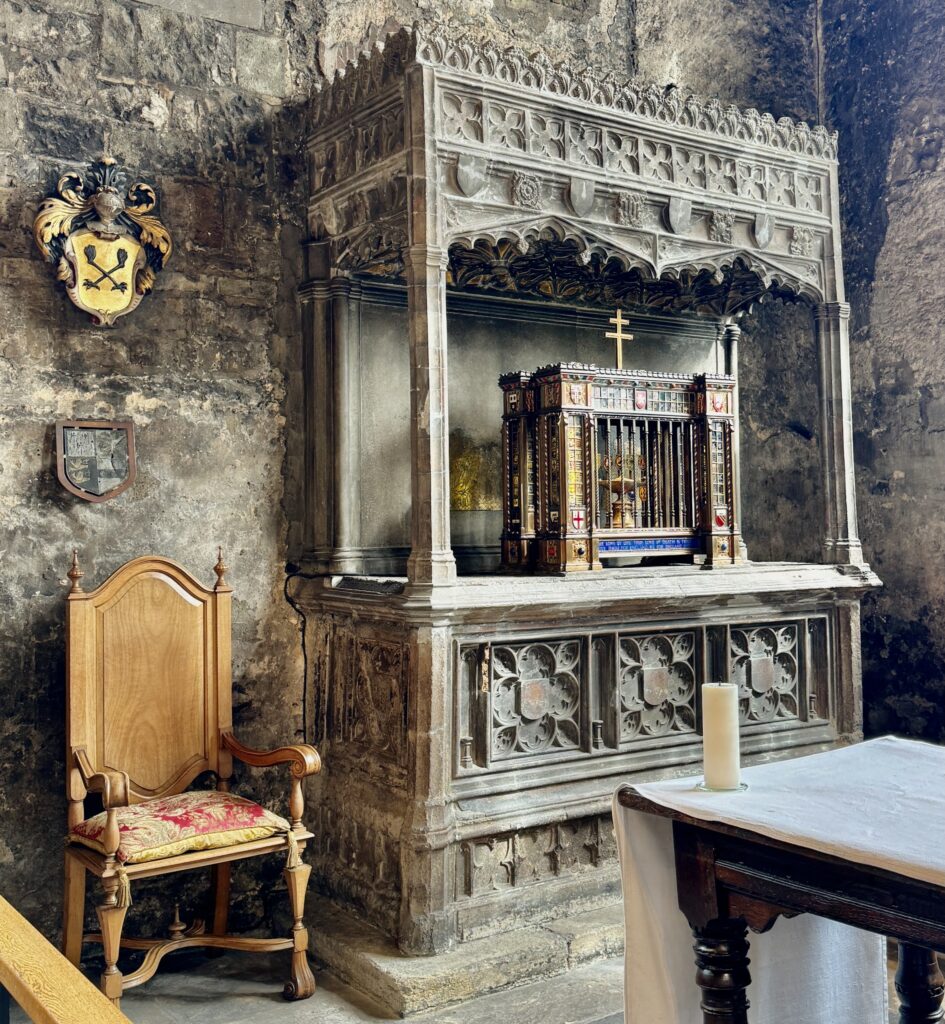
In the Lady Chapel is the tomb of Alderman John Croke from 1477. It was destroyed during the war, but rebuilt and restored from the remaining fragments …
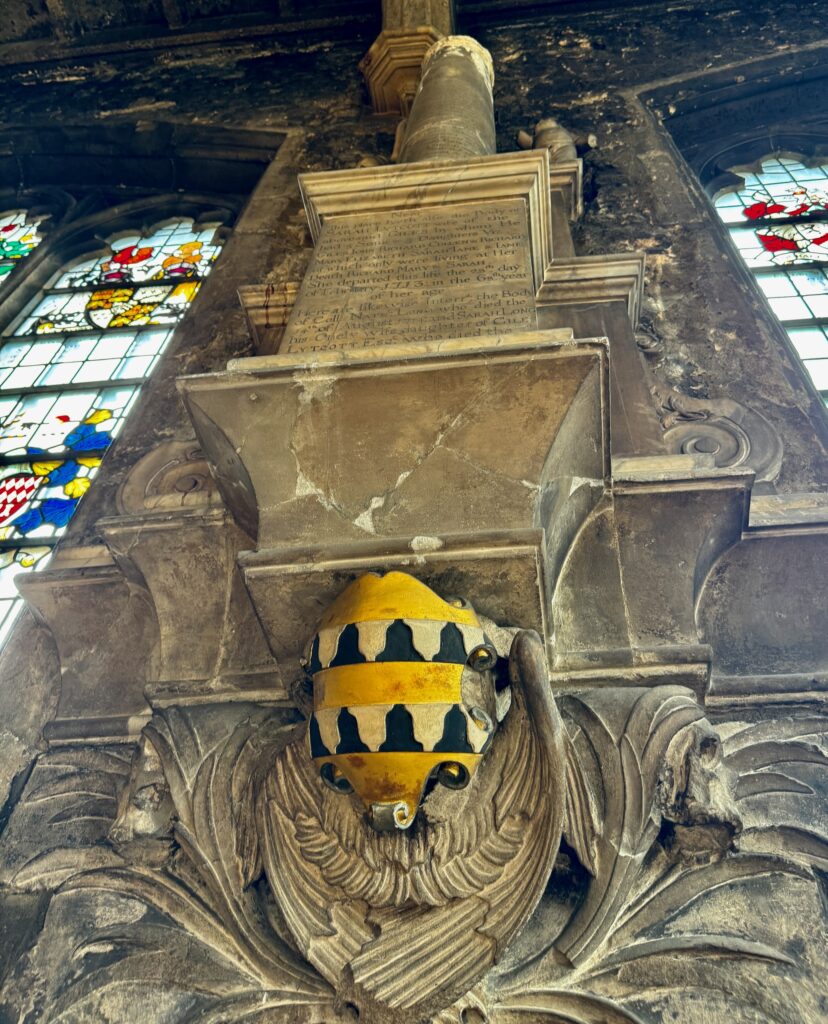
This is the formidable pillar monument to Giles Lytcott and his family …
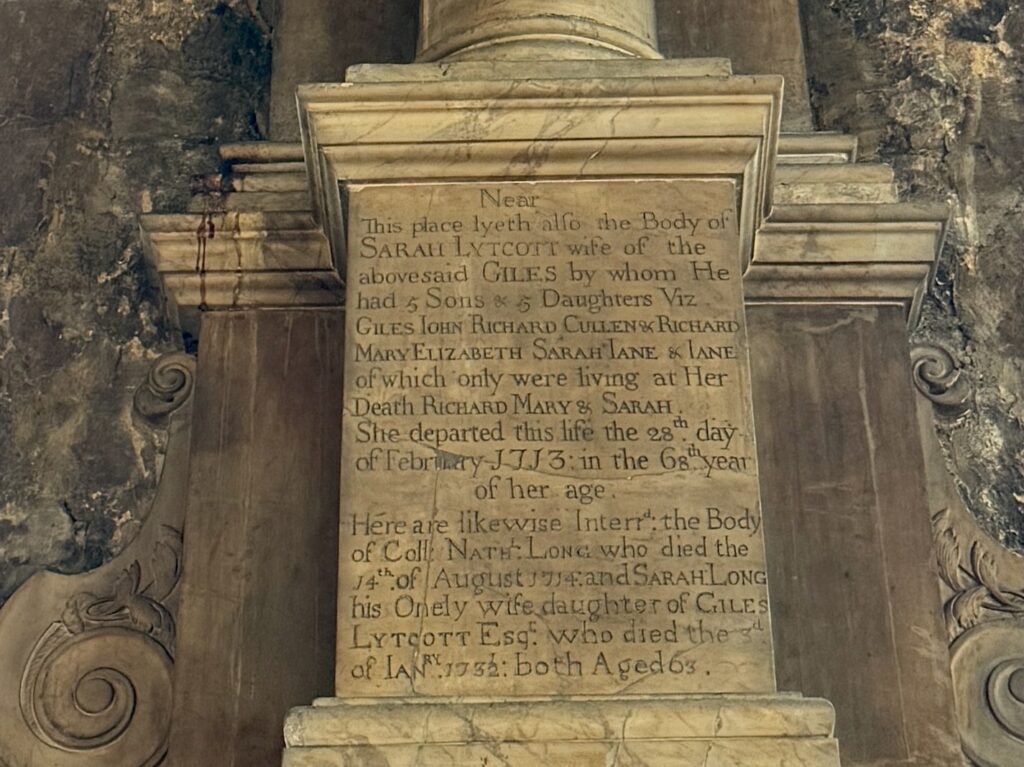
The lower inscription …
Ten children but only three living at the time of the mother’s death. It didn’t matter how rich you were, child mortality was high.
You can read the full insciption here. Intriguingly it refers to an ancestor ‘poisoned in the Tower’.
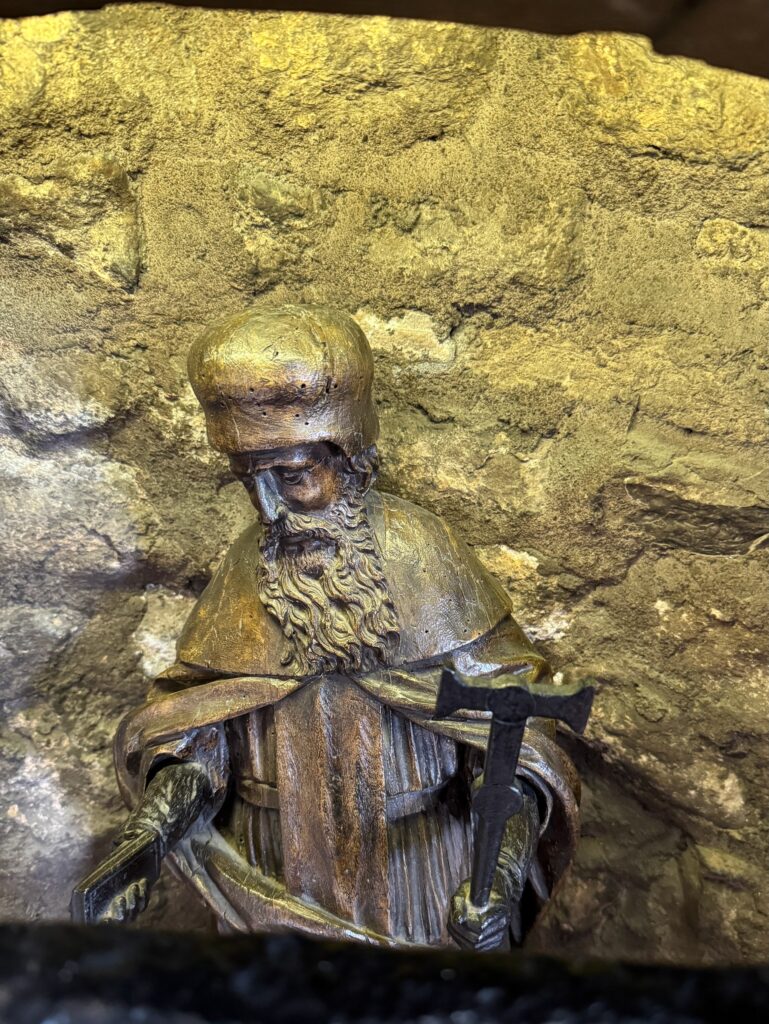
A niche in the wall holds a 17th century wooden statue of St. Antony of Egypt …
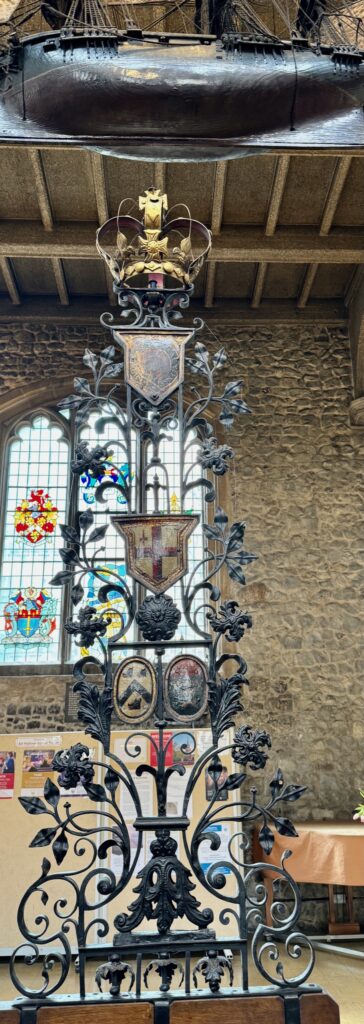
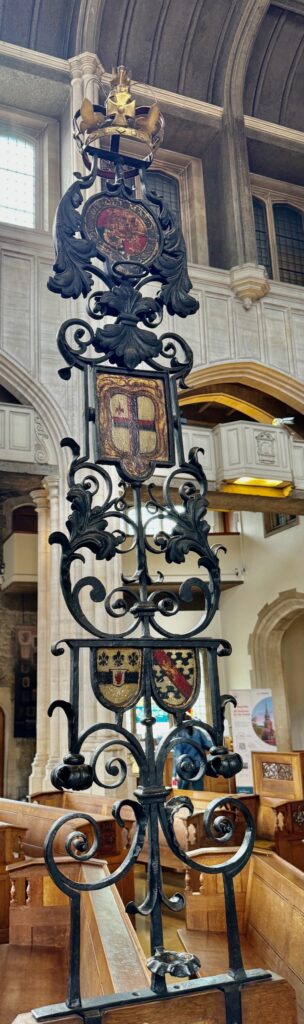
There are several fine 18th century sword rests …
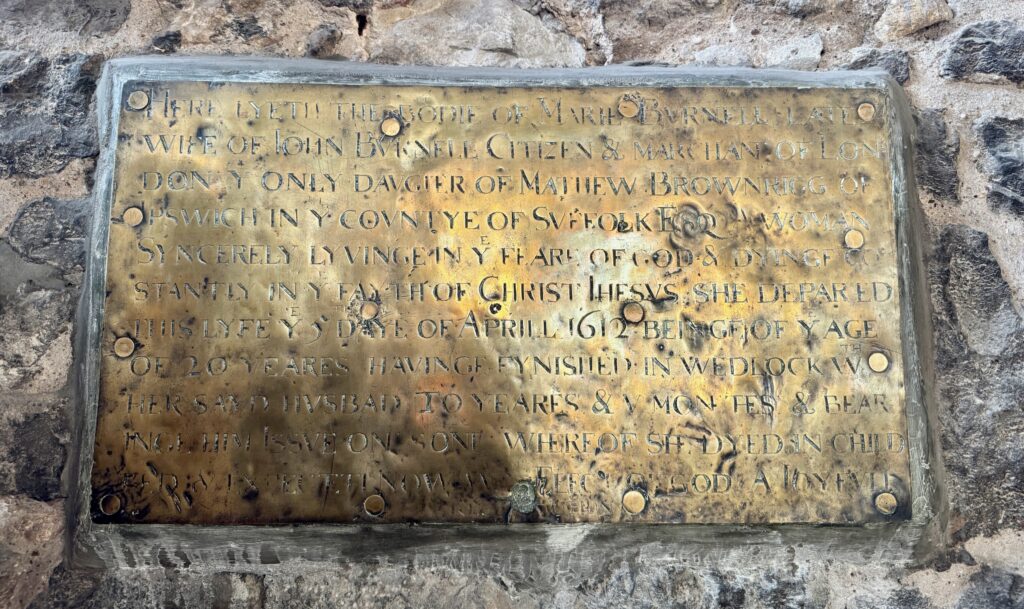
How fantastic that this brass from 1612 has survived to tell a sad story …
Here lyeth the bodie of Marie Bvrnell late wife of Iohn Bvrnell Citizen & marchant of Lon don ye only davghter of Mathew Brownrigg of Ipswich in ye covntye of Svffolk Esq. A woman Syncerely lyvinge in ye feare of god & dyinge con stantly in ye fayth of Christ Ihesvs she departed this lyfe ye 5 daye of Aprill 1612 beinge of yf age of 20 years havinge fynished in wedlock wth her sayd hvsband to yeafes & v moneths & bear ing him Issve one sone whereof she dyed in child bed & expecteth now wth ye Elect of god a Ioyfvll resvrrection
Poor Marie. So typical of the time, a young woman dying in childbirth.
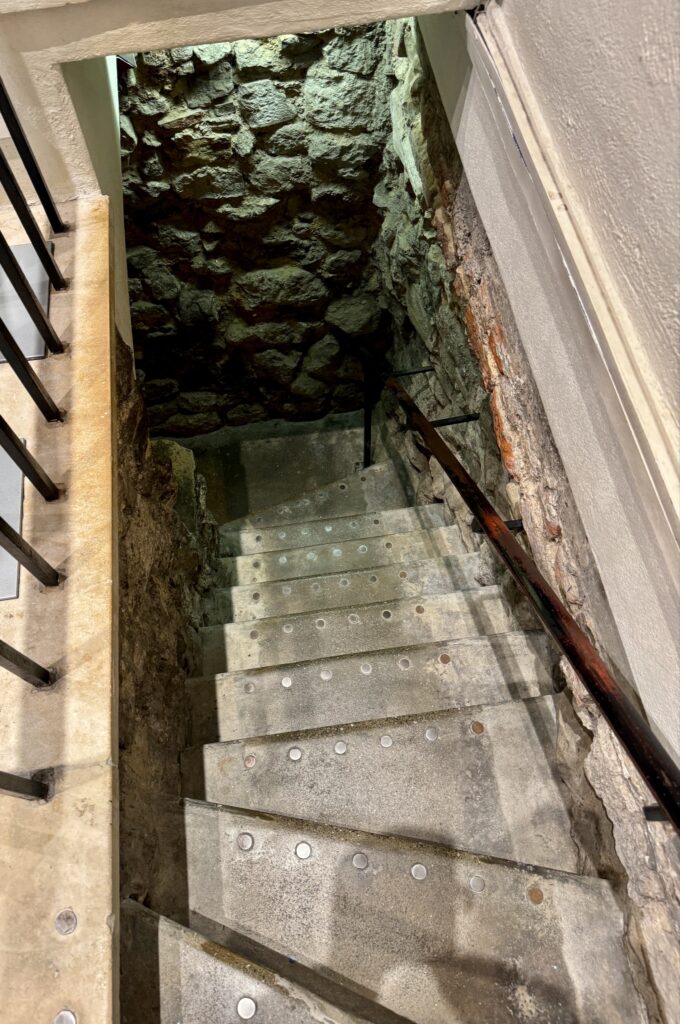
And now down to the crypt museum. A subject for a future blog …
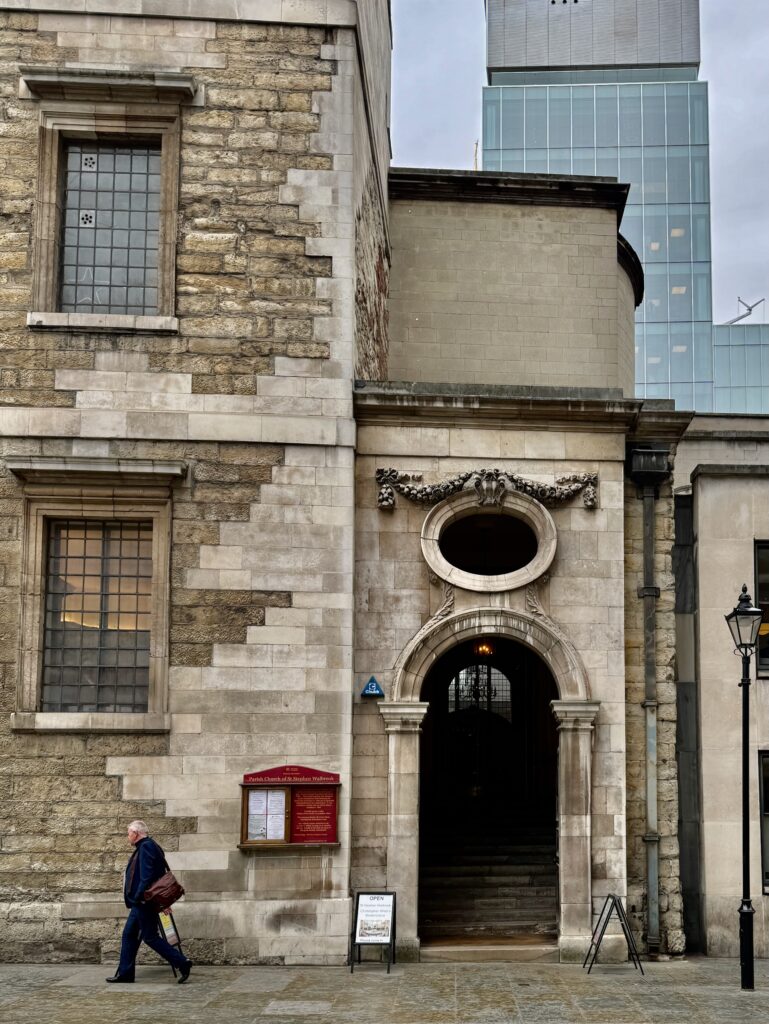
The modest entrance to this church is so deceptive …
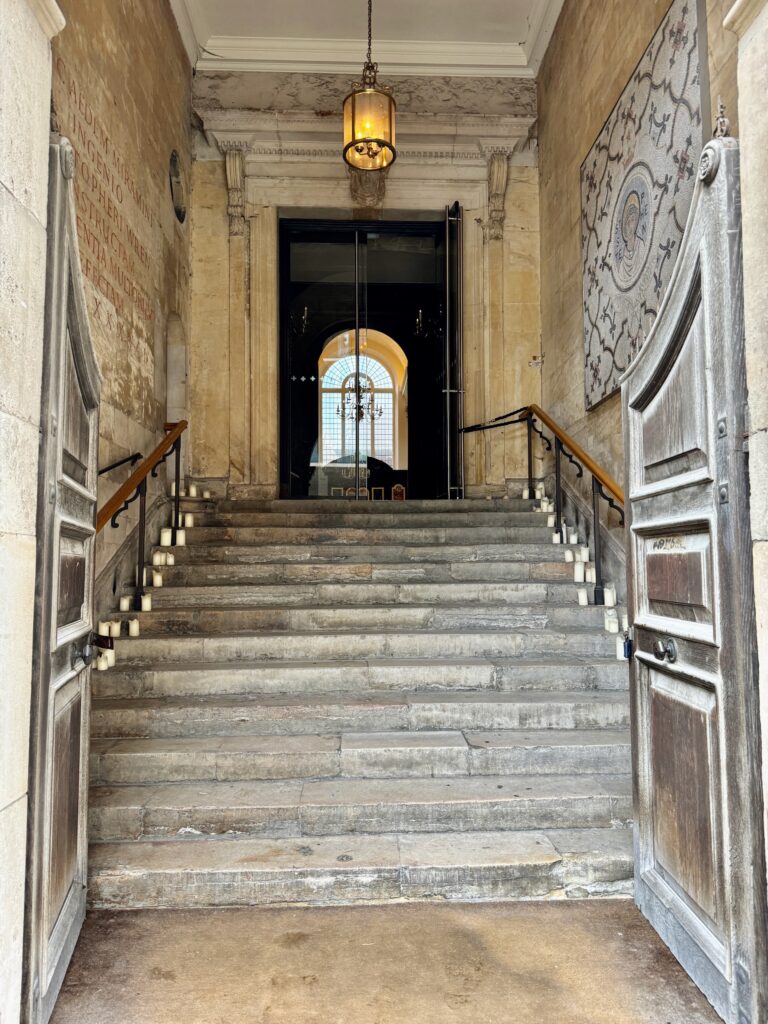
Nothing prepares you, as you climb the 13 steps, for what you will shortly encounter when you enter …
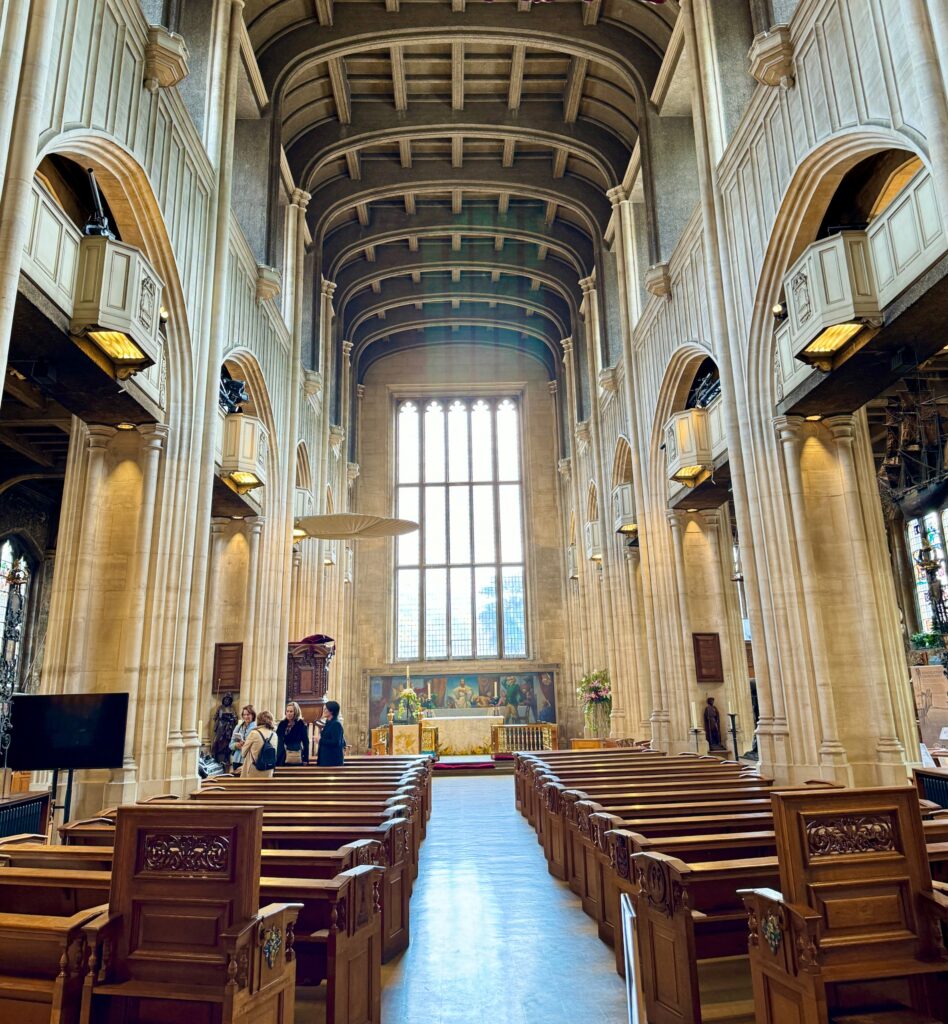
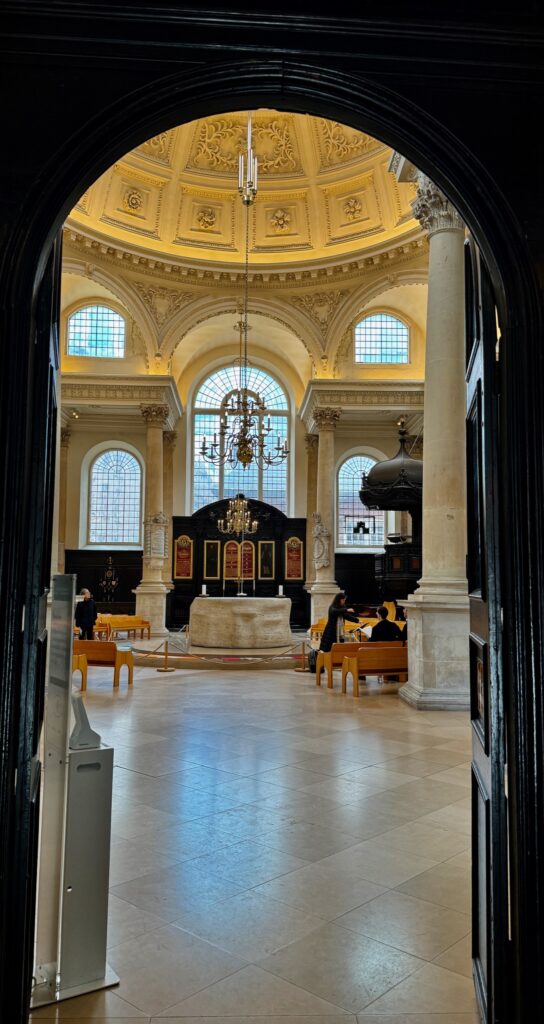
The majestic space within…
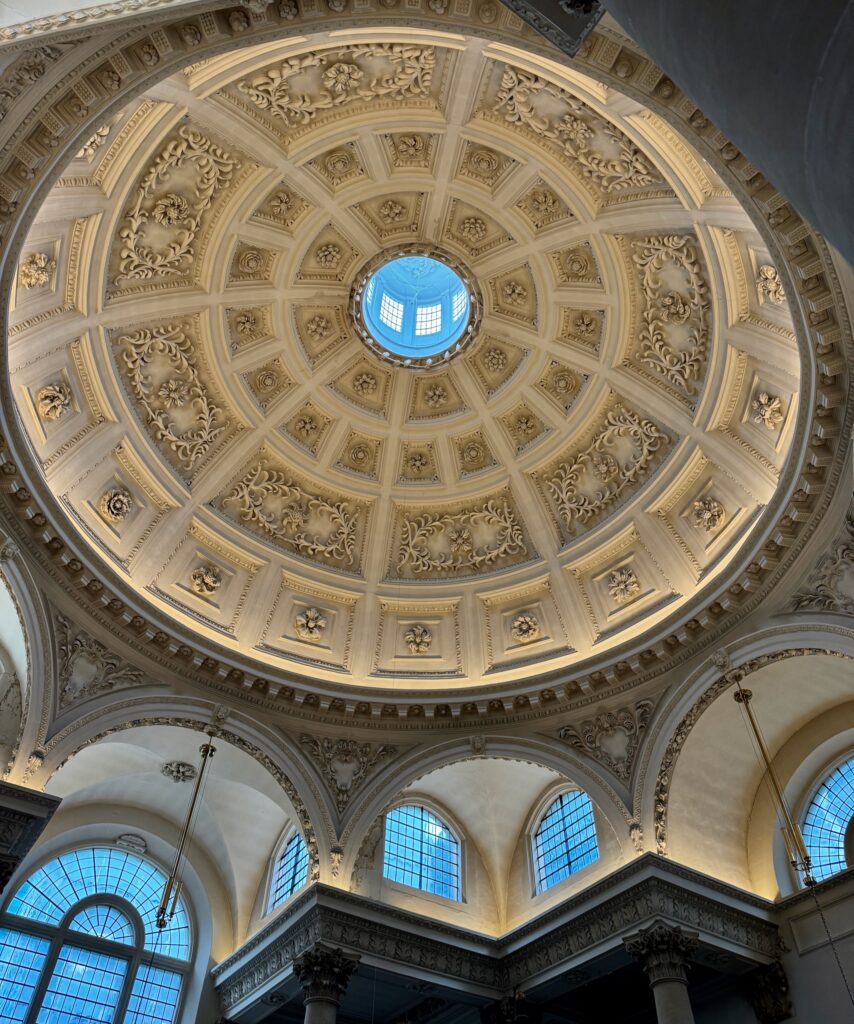
The dome is Wren’s finest and based on his original design for St Paul’s …
Wren lived at number 15 Walbrook and took special care in rebuilding this, his parish church, between 1672 and 1679, after the previous 15th century church was destroyed in the Great Fire. By the 18th century, the building was world famous, the Italian sculptor/architect Antonio Canova declaring, ‘We have nothing to touch it in Rome.’ And the architectural historian Nikolaus Pevsner lists it as one of the ten most important buildings in all of England.
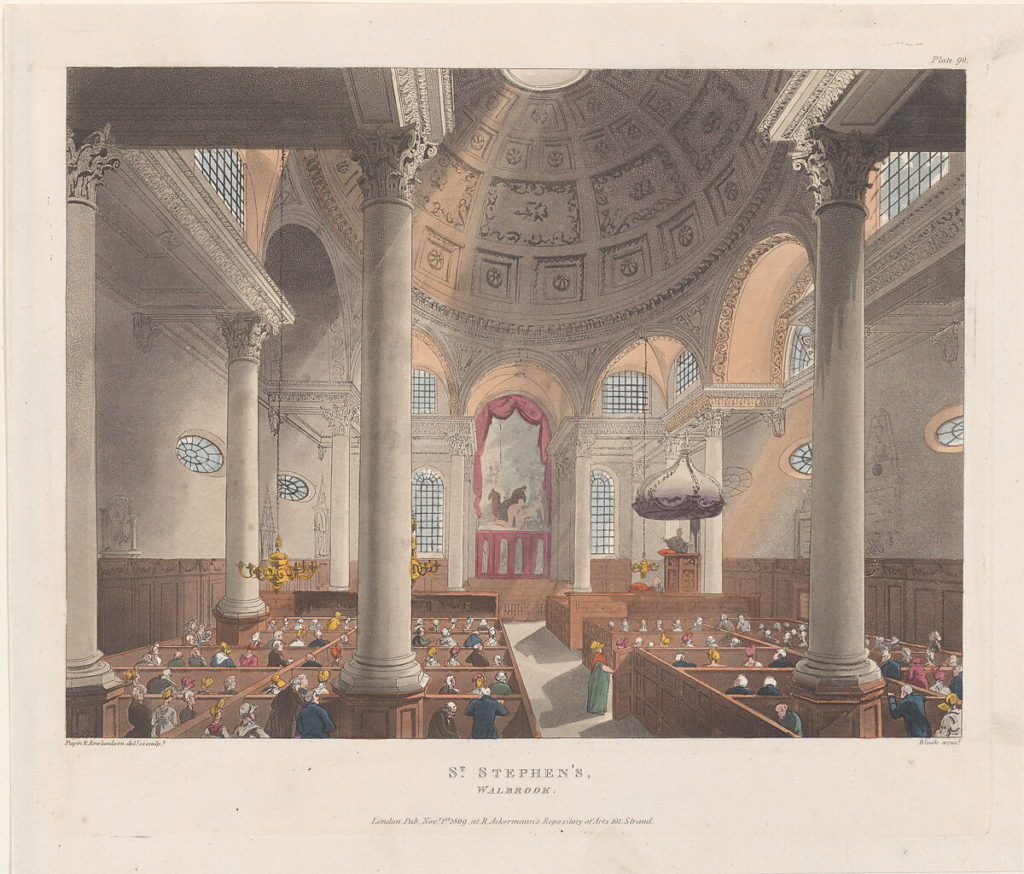
Before considering the church as it looks now, you might be interested in its layout before the box pews were removed in 1888. This image, held by the Metropolitan Museum of Art in New York and dated 1809, shows a service in progress with figures in the pews listening to a minister in a pulpit to the right of the altar …
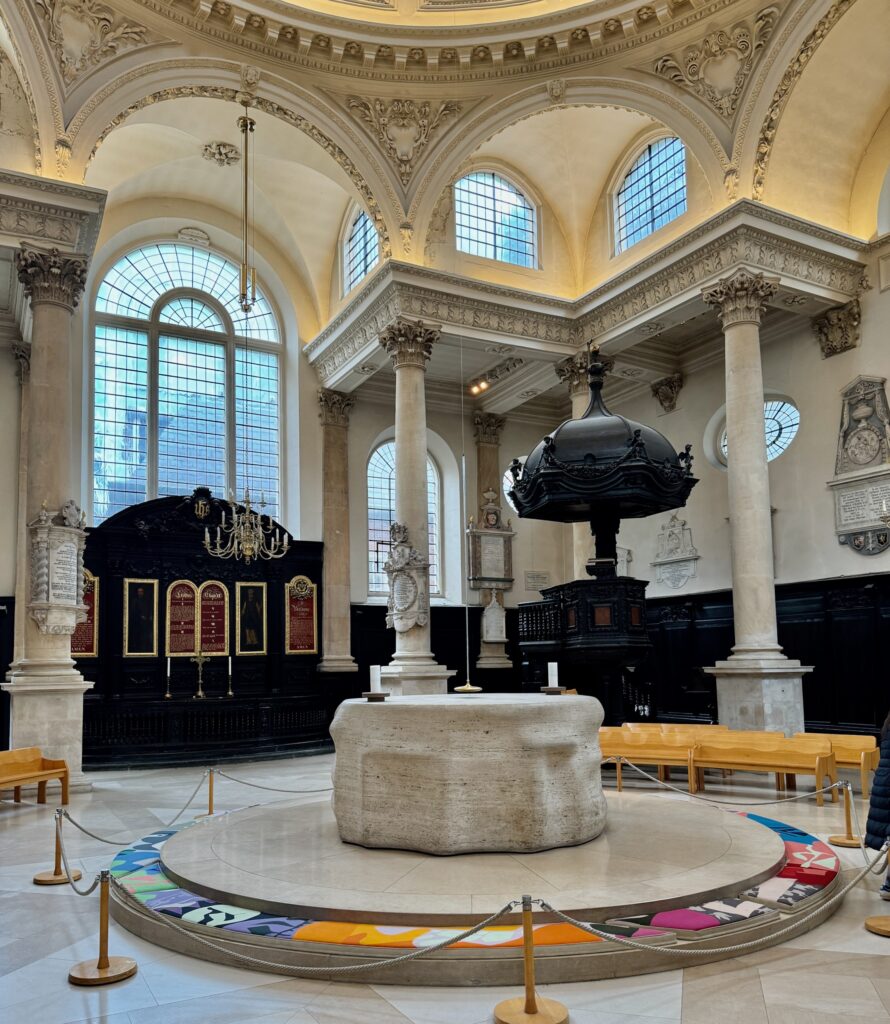
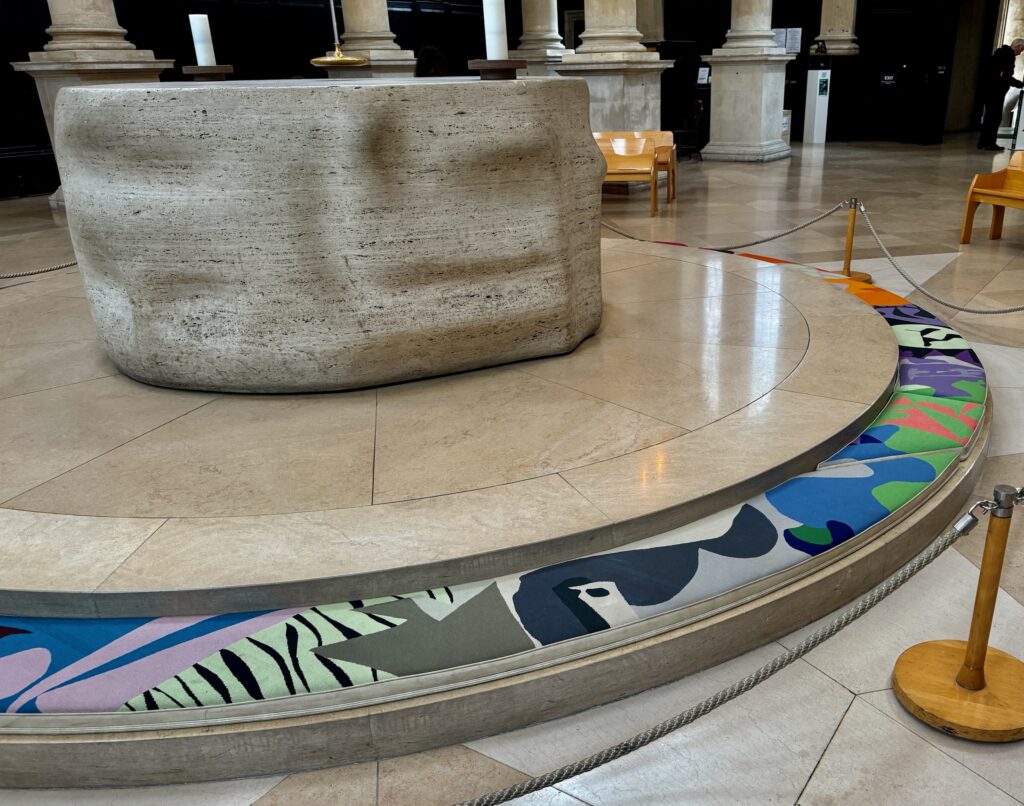
In 1987 the church was rearranged around a central, circular, polished stone altar, made of travartine marble by the famed sculptor Henry Moore. Patrick Heron (1920-1999) was one of Britain’s foremost abstract painters and he designed the colourful kneelers …
The idea was that the community would gather around it and for its central position to represent how the Gospel was central to their lives.
It went against the Christian tradition of having the altar at the Eastern end of the church and so naturally there was huge opposition to idea from some. The case ended up being taken to the Ecclesiastical courts where it was found to be acceptable.
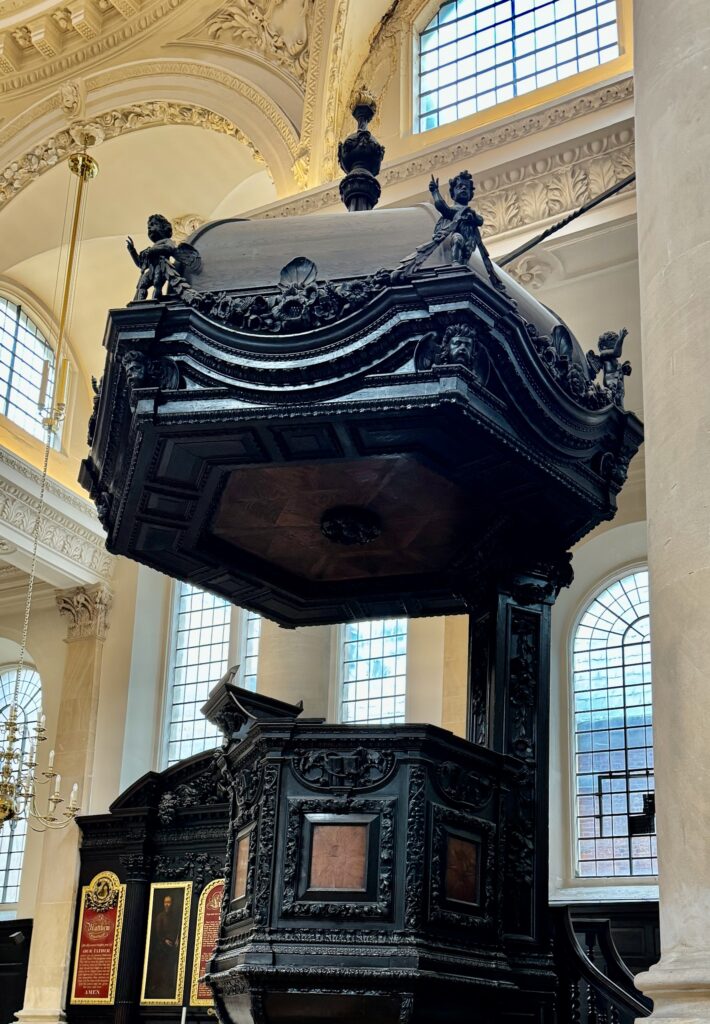
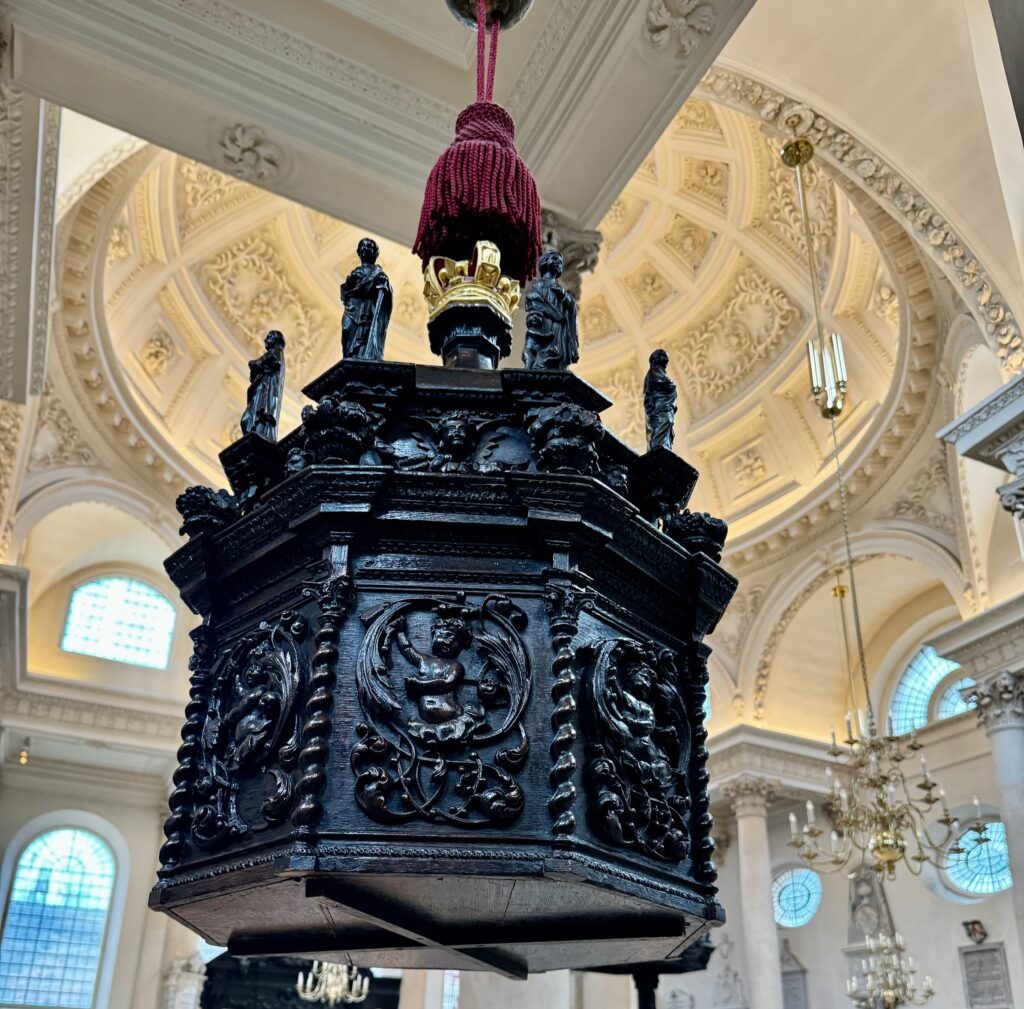
The pulpit and font cover are attributed to the carpenters Thomas Creecher and Stephen Colledge, and the carvers William Newman and Jonathan Maine …
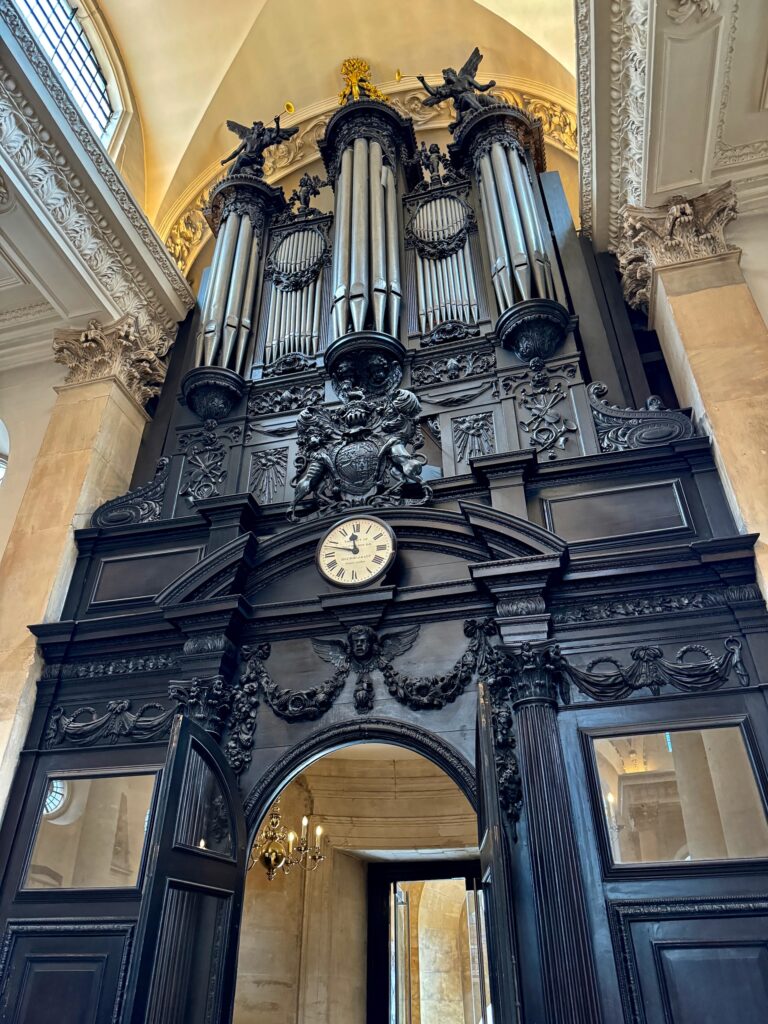
Look back towards the entrance to the church to see the rather magnificent organ case above the door. This dates from 1765 …
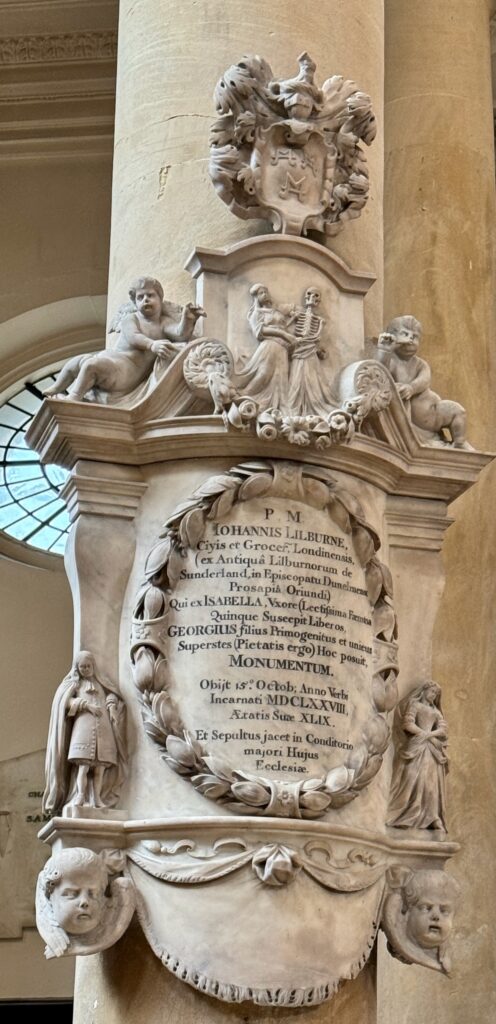
I took a prowl around the monuments and was stopped in my tracks by this one to John Lilburne (d.1678), citizen and grocer, of the Lilburn family of Sunderland, and his wife Isabella. It’s the earliest monument in the Church …
I love the little standing figures of the couple, he with cloak and long flowing hair above a tunic, with big cuffs and slender shoes, she a slim figure with long, flaring skirt, puffed out bodice and drapes over and behind her head. A charming pose with her arms crossed in front of her.
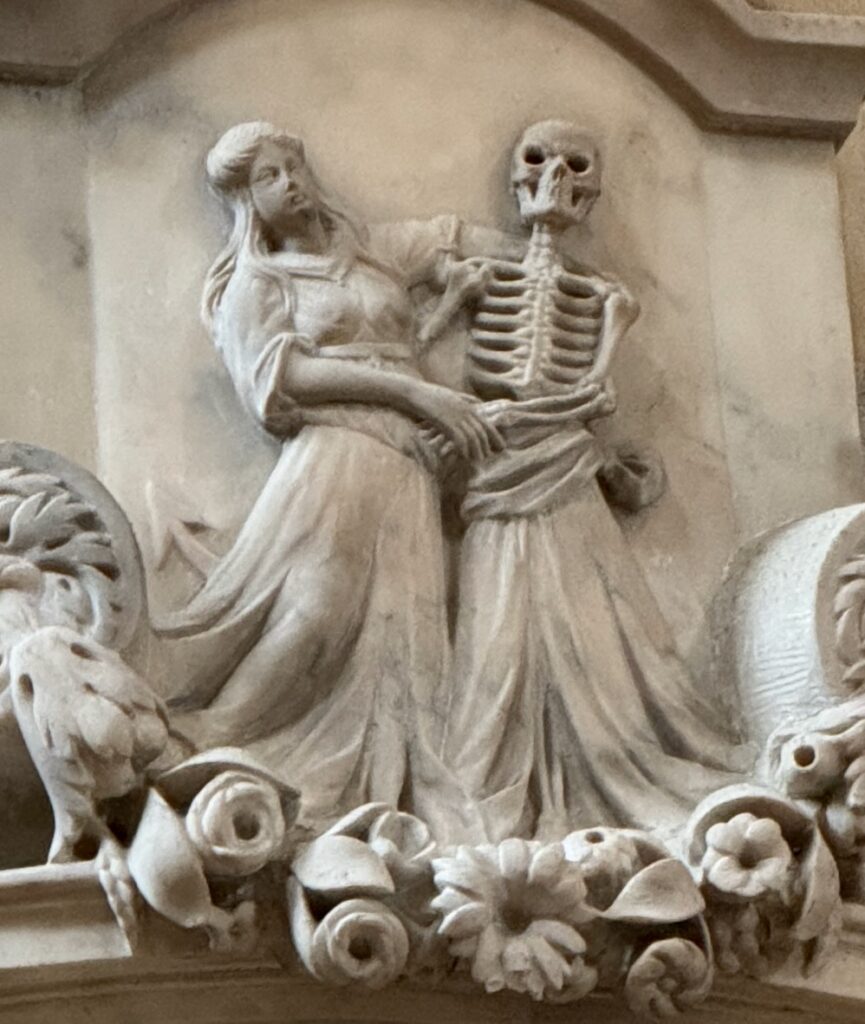
But what really caught my eye was the memento mori, a sculpture of a woman dancing with Death, who is a skeleton wearing a long skirt …
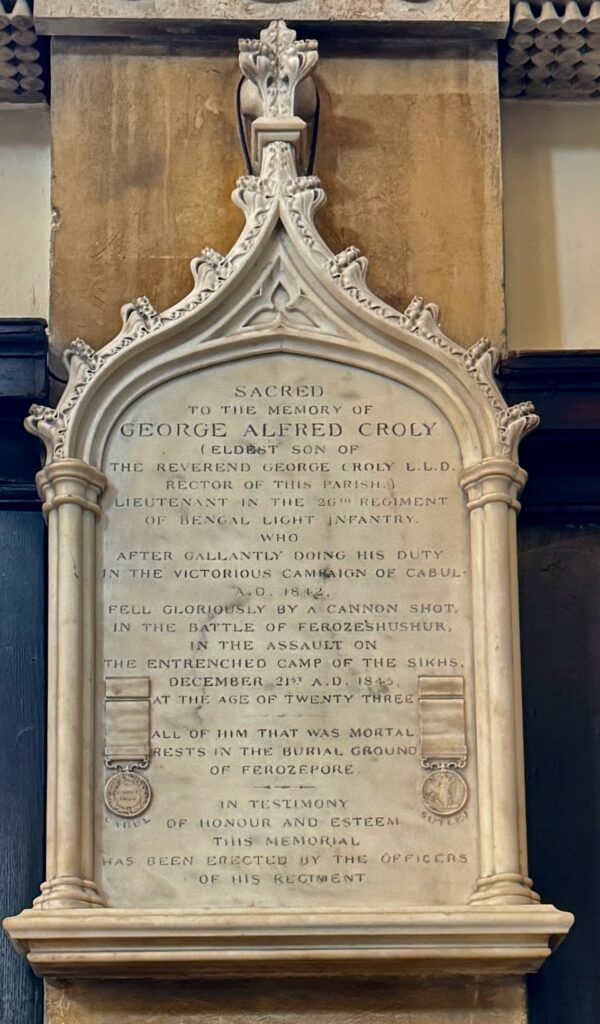
Then there’s George Alfred Croly of the Bengal Light Infantry who fell ‘gloriously by a cannon shot’ in the ‘assault on the entrenched camp of the sikhs’ in 1845, aged only 23 …
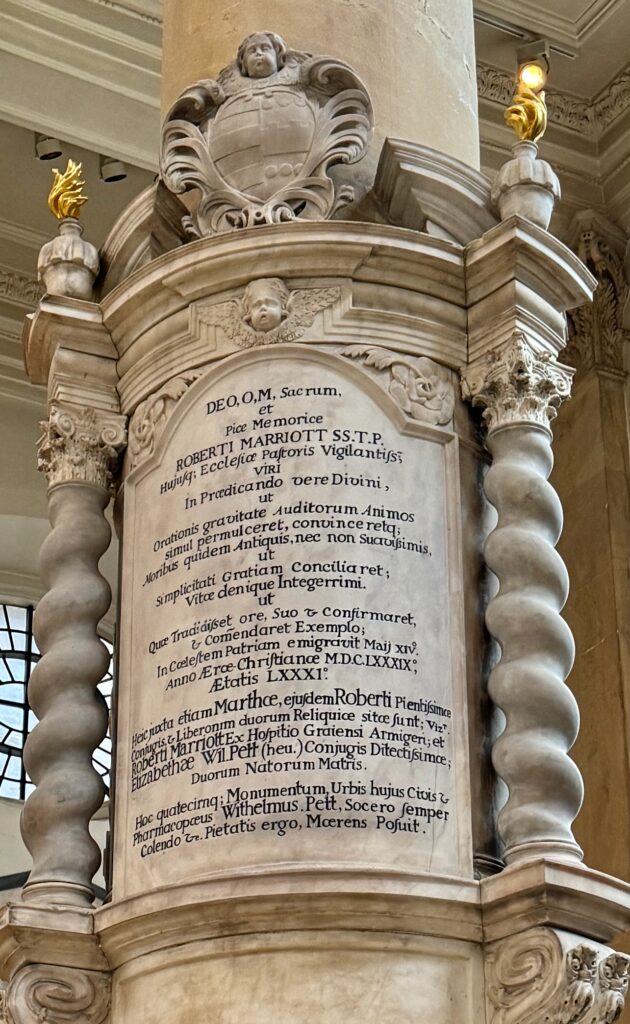
Robert Marriott’s splendid memorial …
Robert Marriott was Rector from 1662 until he died in 1689 aged 81 years. His monument in Latin describes him as ‘Professor of theology and the watchful pastor of this Church. A man as a preacher so truly Divine that by his preaching he at once charmed and convinced his hearers. A man in whose character old time integrity was so tempered with a sweetness that he made simplicity loveable. A man of so spotless a life that his own example confirmed and recommended what his lips taught.’ Praise indeed.
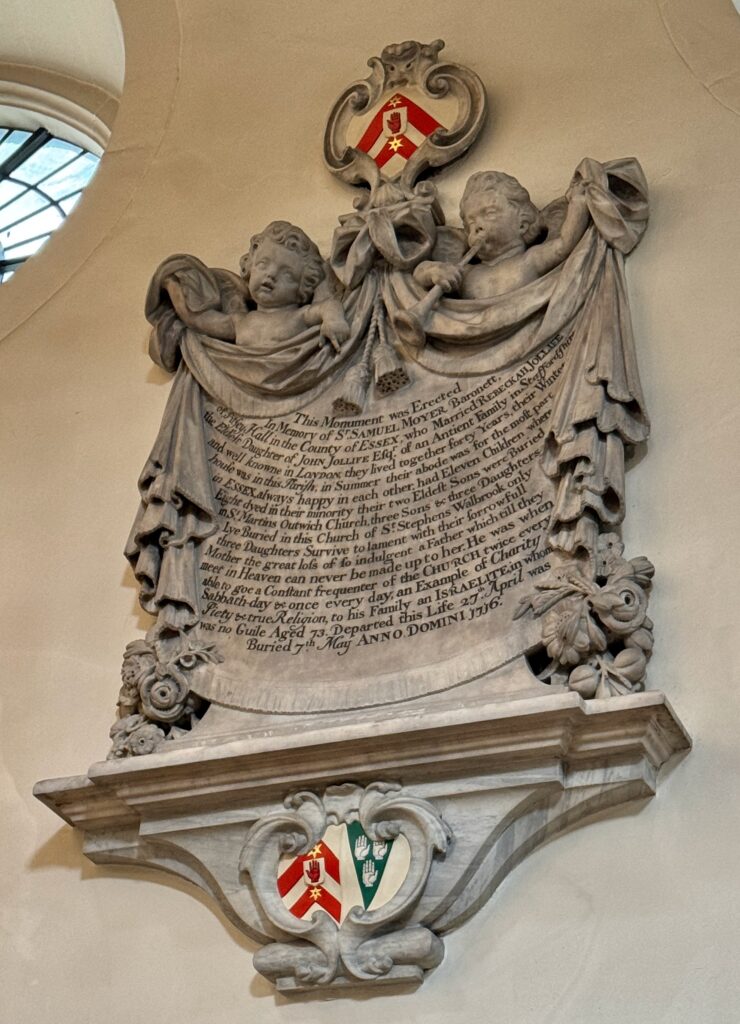
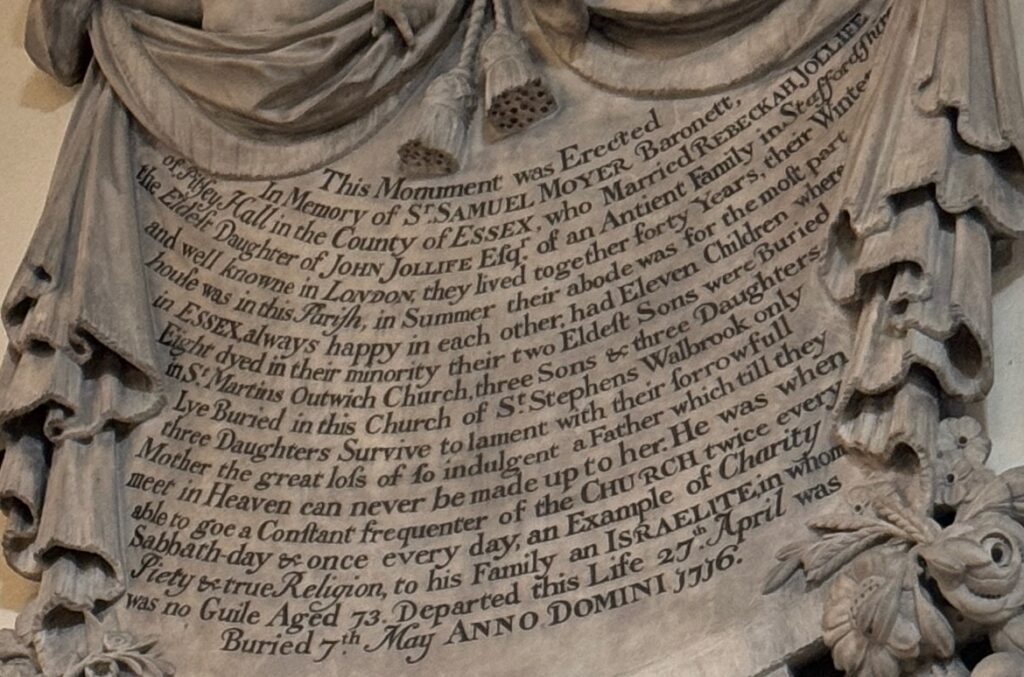
A long, rather touching inscription for Sir Samuel Moyer …
Many memorials of the time provide an insight into the dreadful child mortality rates of earlier centuries, even for those who were affluent. The tablet states that Samuel Moyer was a Baronet. He must have had money as the tablet states the family spent the summer at their home at Pitsey Hall in Essex and the winters in the parish of St Stephen Walbrook.
A Baronet who could afford homes in Essex and London still suffered numerous child deaths. Of their eleven children, eight died in their minority, with only three daughters surviving to “lament with their sorrowful mother, the great loss of so indulgent a father”.
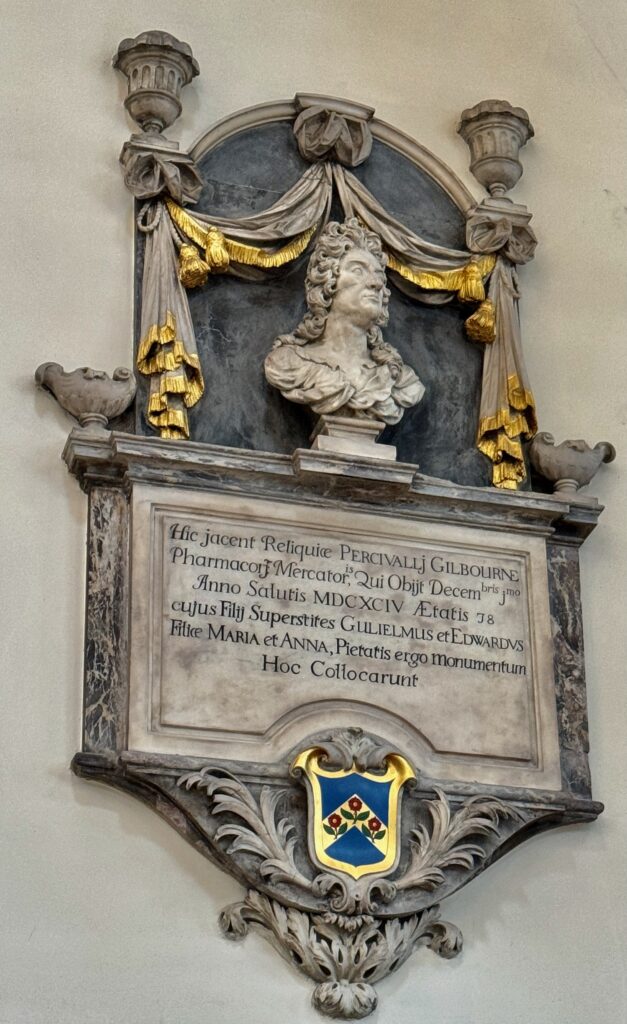
The bust of Percivall Gilbourne …
Described in the excellent Bob Speel website as follows: ‘A short Latin inscription on a panel with a colourful marble surround … We see a noble bewigged head of an ageing man, firm of countenance and strong of neck, but with something of a jowl, above shoulders and chest wearing a drape rather than contemporary clothing’.
I make no apology for writing again about this brave man ..
Nathaniel Hodges was a 36-year-old doctor practising in London when the terrible plague of 1665 reached the City. Its arrival prompted a flight from London and, Hodges recalled later, this included four-fifths of the College of Physicians. The City was awash, he said, with ‘Chymists’ and ‘Quacks’ dispensing, as he put it: ‘… medicines that were more fatal than the plague and added to the numbers of the dead.’
Dr Hodges decided to stay and minister to his patients and first thing every morning before breakfast he spent two or three hours with them. He wrote later …
Some (had) ulcers yet uncured and others … under the first symptoms of seizure all of which I endeavoured to dispatch with all possible care …
hardly any children escaped; and it was not uncommon to see an Inheritance pass successively to three or four Heirs in as many Days.
After hours of visiting victims where they lived he walked home and, after dinner, saw more patients until nine at night and sometimes later.
He survived the epidemic and wrote two learned works on the plague. The first, in 1666, he called An Account of the first Rise, Progress, Symptoms and Cure of the Plague being a Letter from Dr Hodges to a Person of Quality. The second was Loimologia, published six years later …
A later edition of Dr Hodges’ work, translated from the original Latin and published when the plague had broken out in France.
It seems particularly sad to report that his life ended in personal tragedy when, in his early fifties, his practice dwindled and fell away. Finally he was arrested as a debtor, committed to Ludgate Prison, and died there, a broken man, in 1688.
The Latin on his memorial translates as follows:
Learn to number thy days, for age advances with furtive step, the shadow never truly rests. Seeking mortals, born that they might succumb, the executioner comes from behind. While you breathe you are a victim of death; you know not the hour in which your fate will call you. While you look at monuments, time passes irrevocably. In this tomb is laid the physician Nathaniel Hodges in the hope of heaven; now a son of earth, who was once a son of Oxford. May you survive the plague by his writings. Born 13 September AD 1629 Died 10 June 1688.
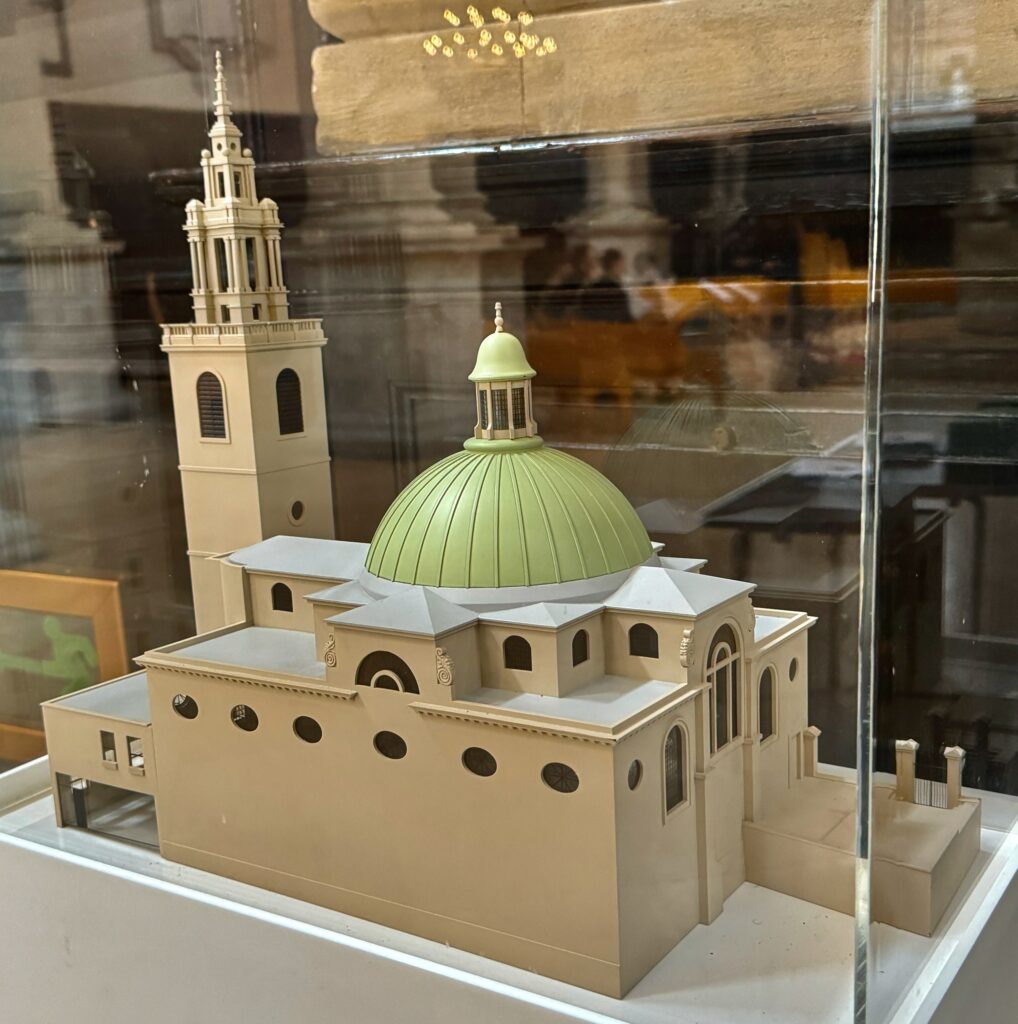
There are two glass display cases in the church.
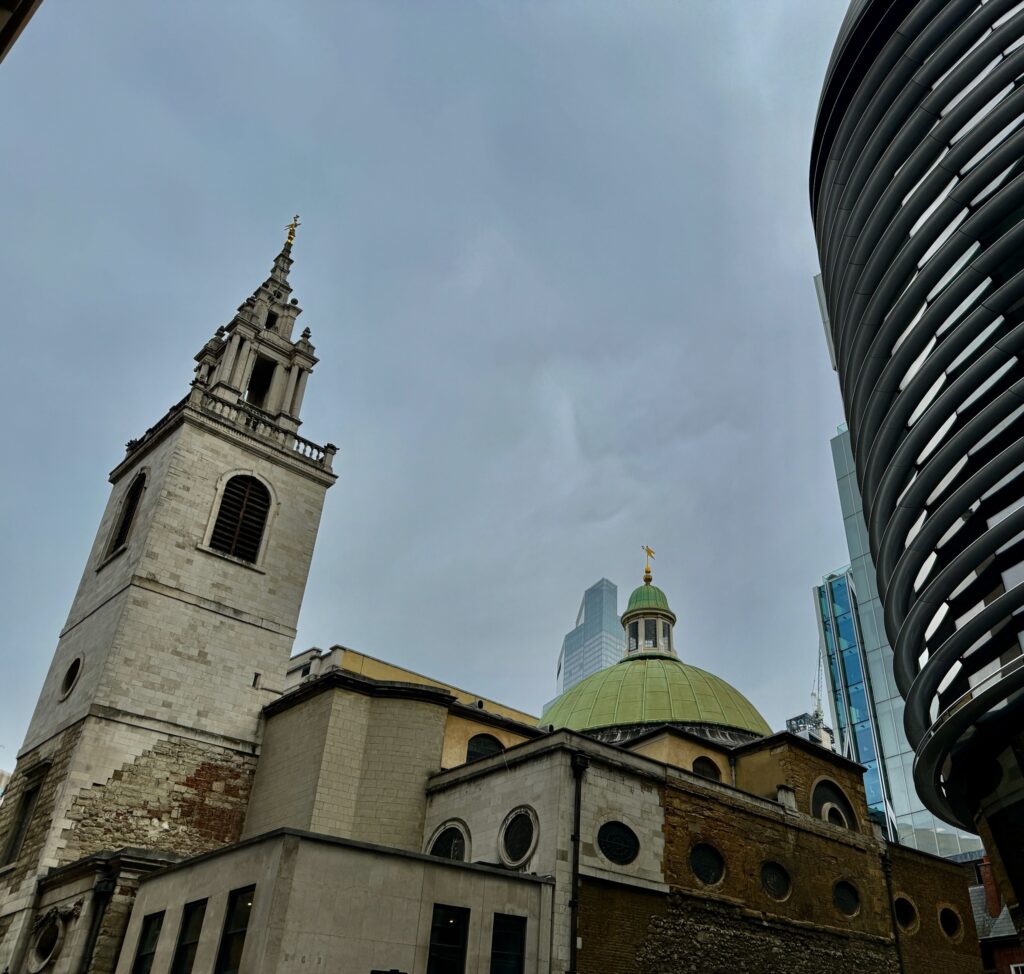
This model allows the overall design of the church to be appreciated, not easy when viewed from outside …
For example. this is the view from the south …
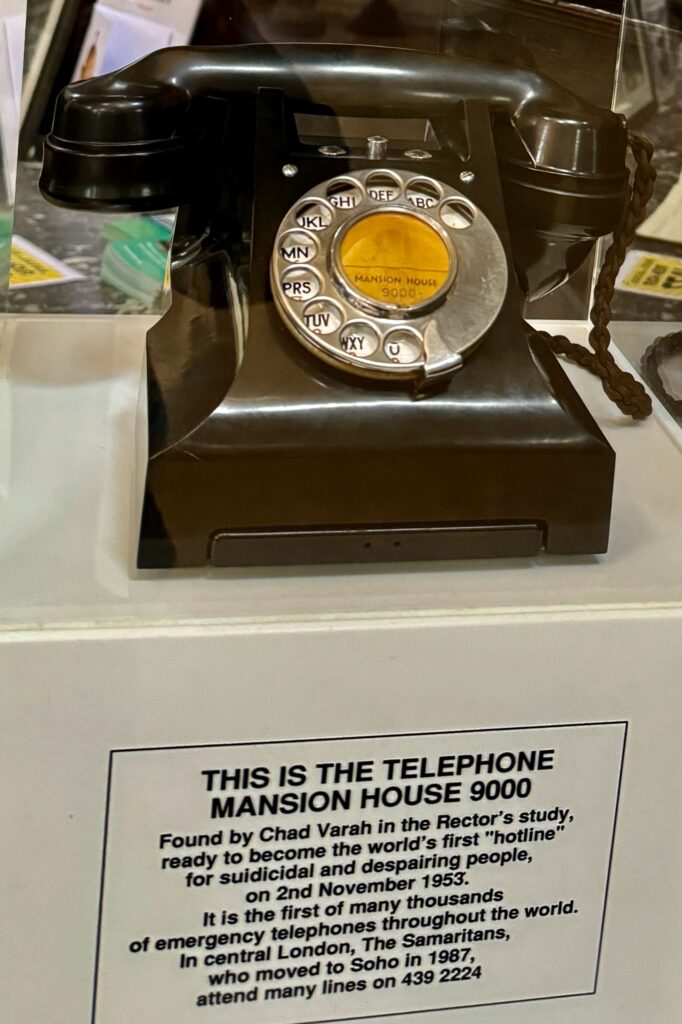
Inside in another glass case you’ll see this famous phone …
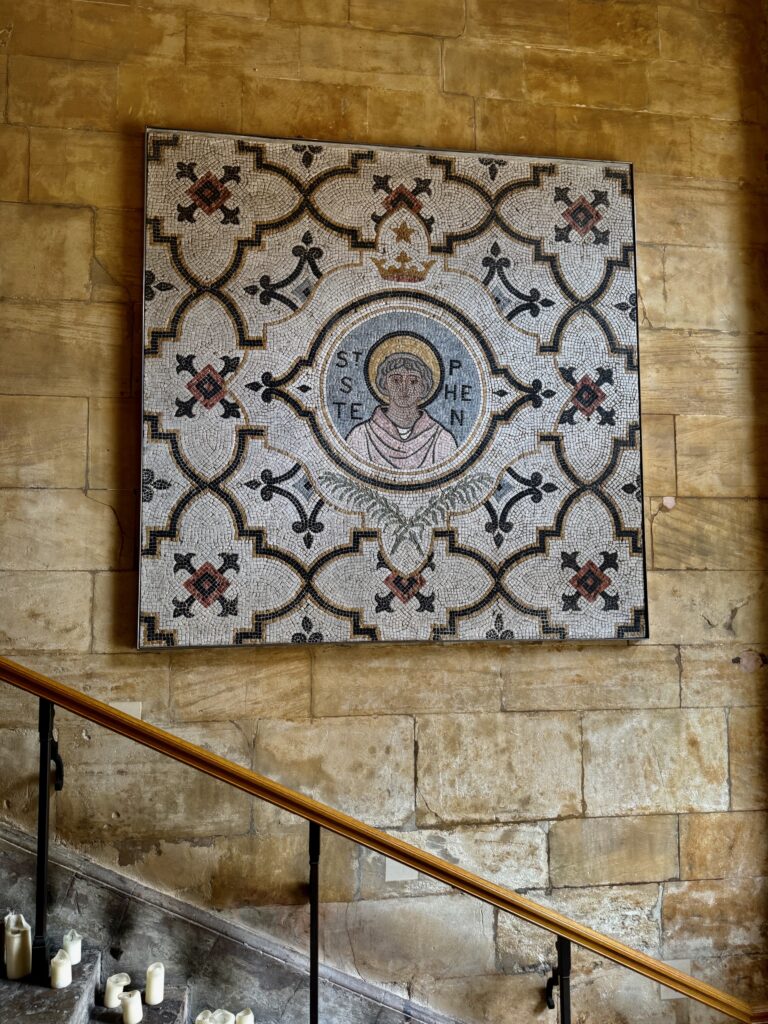
As you leave and walk down the steps, look to your left and you will see a modern mosaic of St Stephen …
I would like to finish with a quotation that I particularly like from the church’s own publication setting out its history.
Wren considered geometry to be the basis of the whole world and the manifestation of its Creator, while light not only made that geometry visible but also represented the gift of Reason, of which geometry was for him the highest expression. Like the solution to a mathematical problem, everything fits into place with apparent simplicity; yet this simplicity itself is mysterious and magical. Whether one experiences St. Stephen’s alone, in stillness and quiet, or in a full congregation resounding with music, the effect is always the same. Life outside is complicated and chaotic. To enter is not to escape into fantasy; rather is it to submit to the strongest positive assertion of the true order of the universe.