Walking the City of London

Category: Quirky

City Churches – more unusual discoveries

Last week I thought it was time to take another stroll around the City churches to see what I would discover. After researching last week’s blog, I was particularly interested in artifacts that had been moved from one church to another and why.

I was very lucky in the first church I visited, St Martin within Ludgate, on Ludgate Hill (EC4M 7DE) inside which I found both a fascinating chandelier and a very unusual font. There is a large entrance lobby (designed to reduce traffic noise inside the church) and you then enter one of Sir Christopher Wren’s least altered interiors (1677-1686) with fine dark woodwork which largely escaped the Blitz.

Look up and you will see this beautiful chandelier or candelabrum …
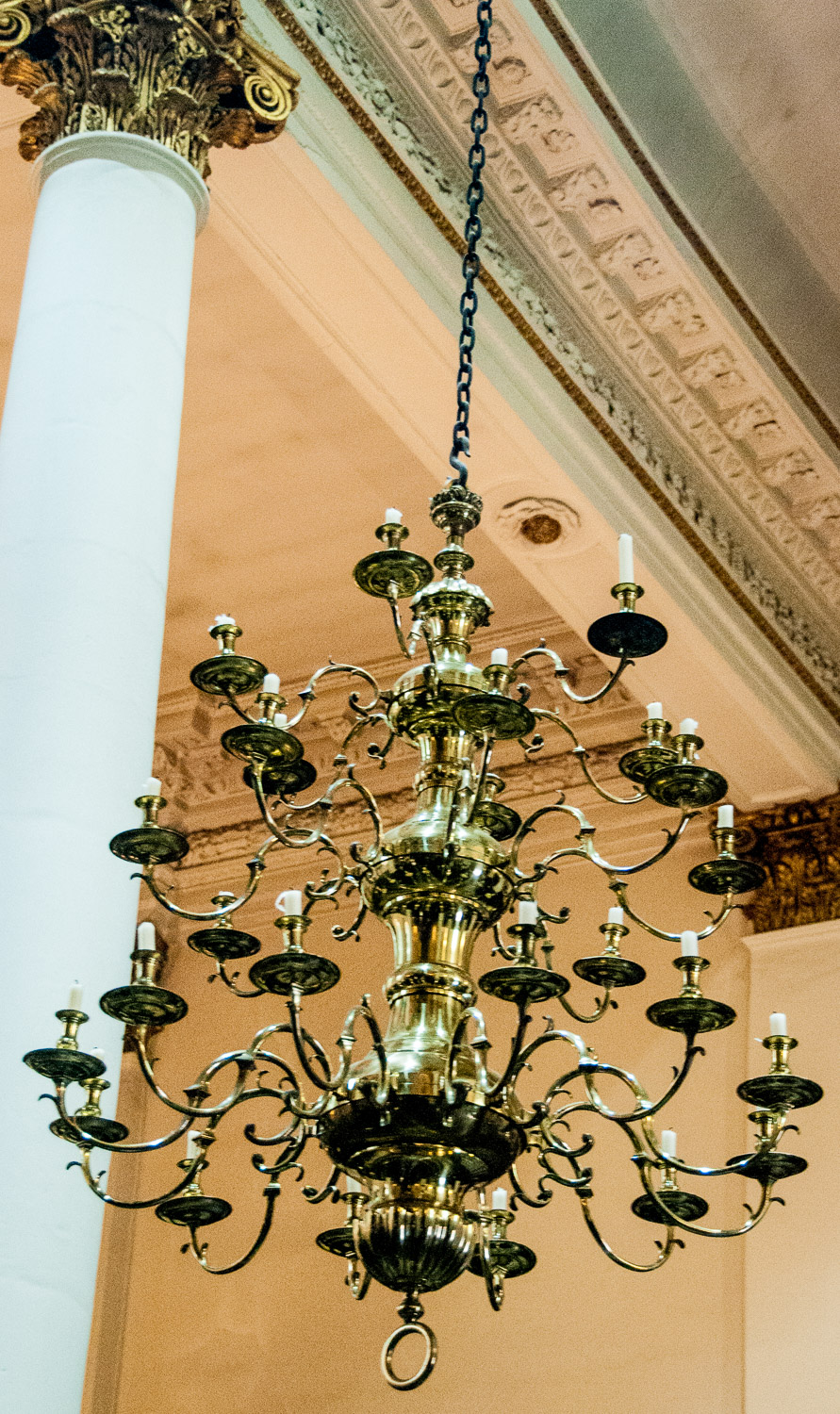
It’s still lit by candles.

As one commentator has noticed, it looks more like something you would find in a country house or a ballroom. The candles were not lit when I visited but I am sure that when they are, on a dark morning or evening, one must get a real feel for what it was like to worship here in earlier centuries. It came to the church via St Vincent’s Cathedral in the West Indies, probably in 1777: a reminder of the links between the City’s trading economy and the British Empire overseas.

And now to the very unusual font …
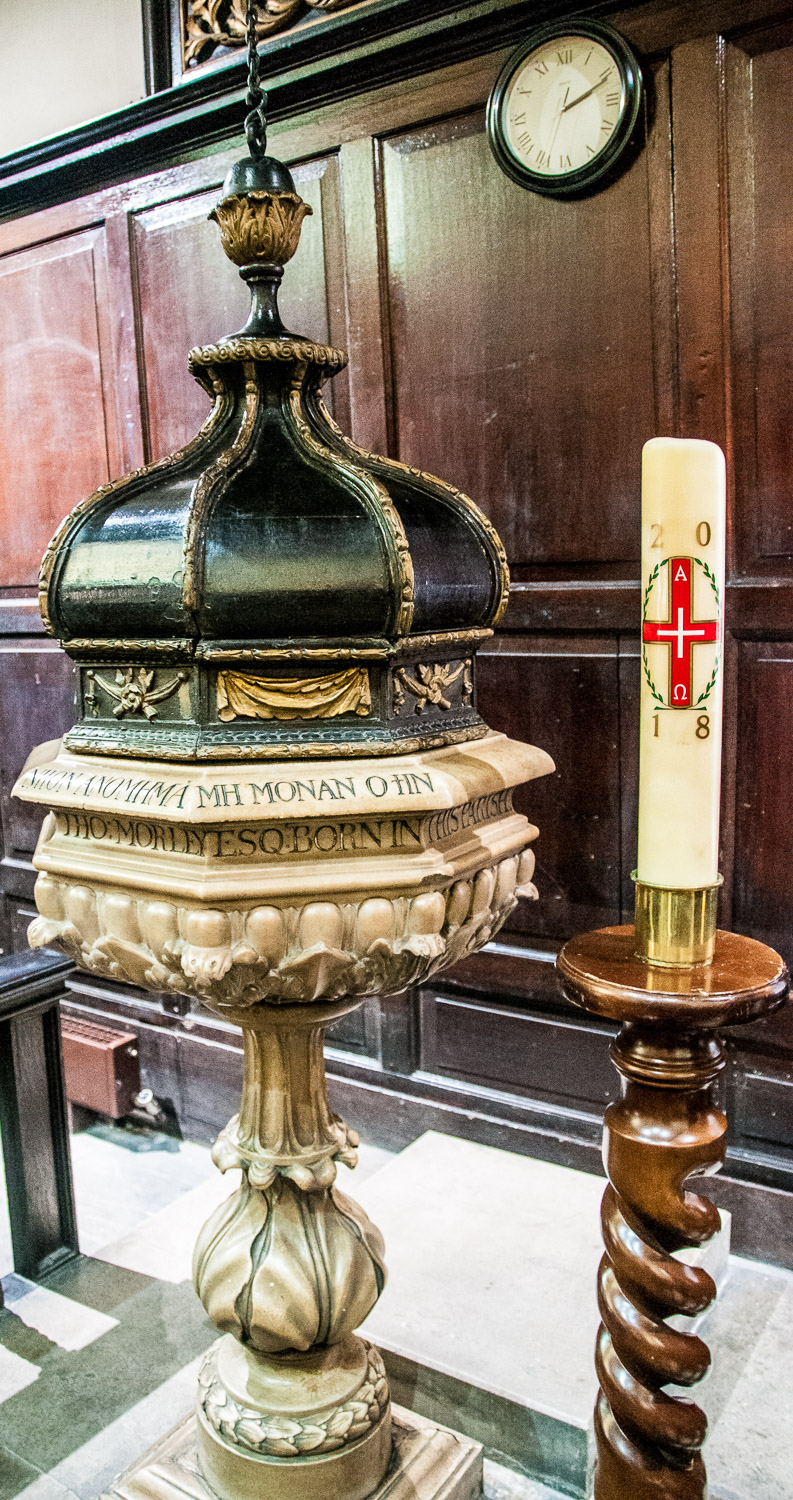
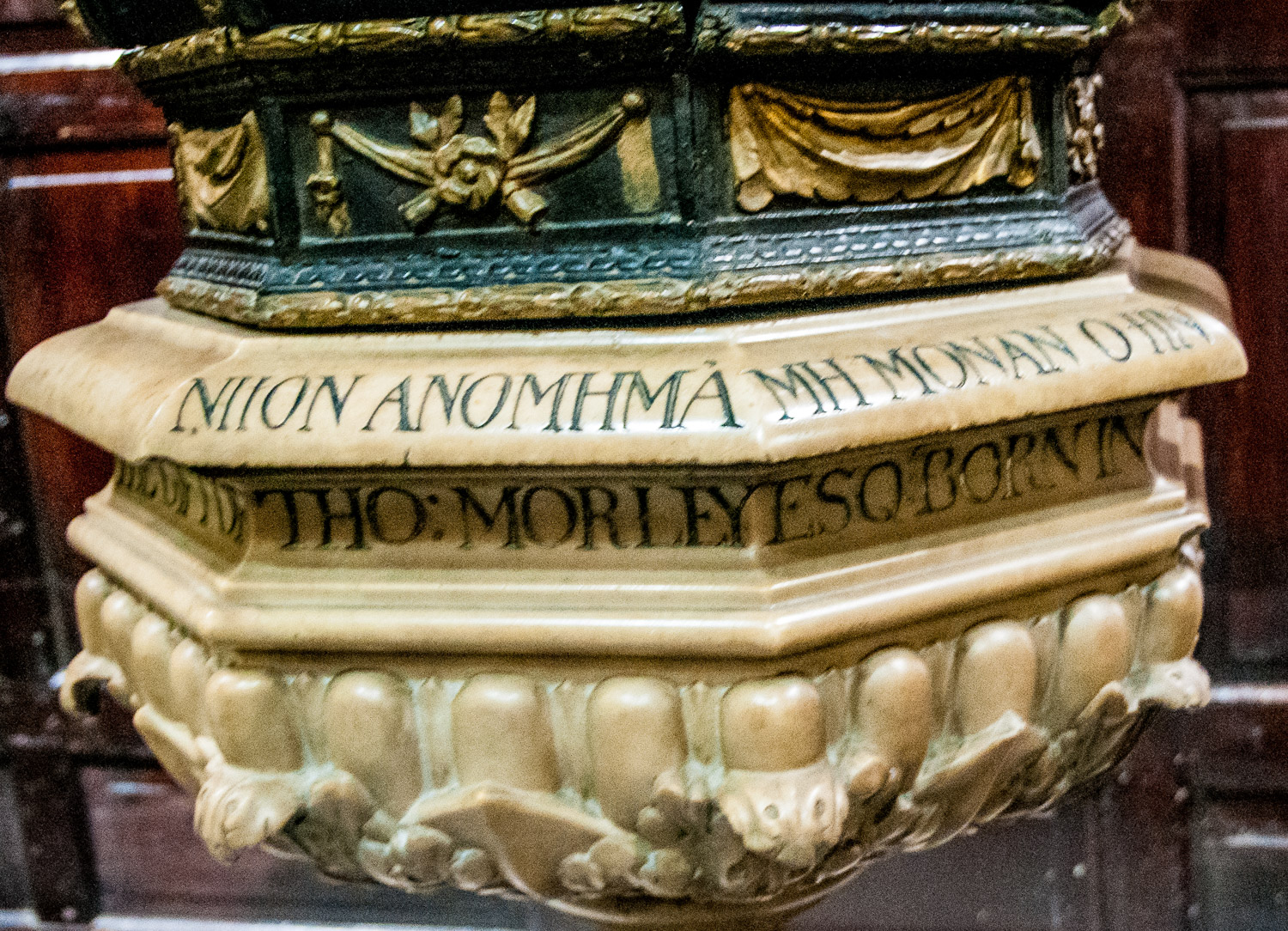
The bowl is white marble and the wooden supporting plinth is painted to look like stone. It dates from 1673, predating the church, and was previously located in a ‘tabernacle’ used by the congregation during the rebuilding.

It contains a Greek palindrome copied from the Cathedral of St Sophia in Constantinople:

Niyon anomhma mh monan oyin

(Cleanse my sin and not my face only)
No church blog of mine would be complete if it didn’t contain a reference one of my favourite churches, St Vedast Foster Lane (EC2V 6HH) …
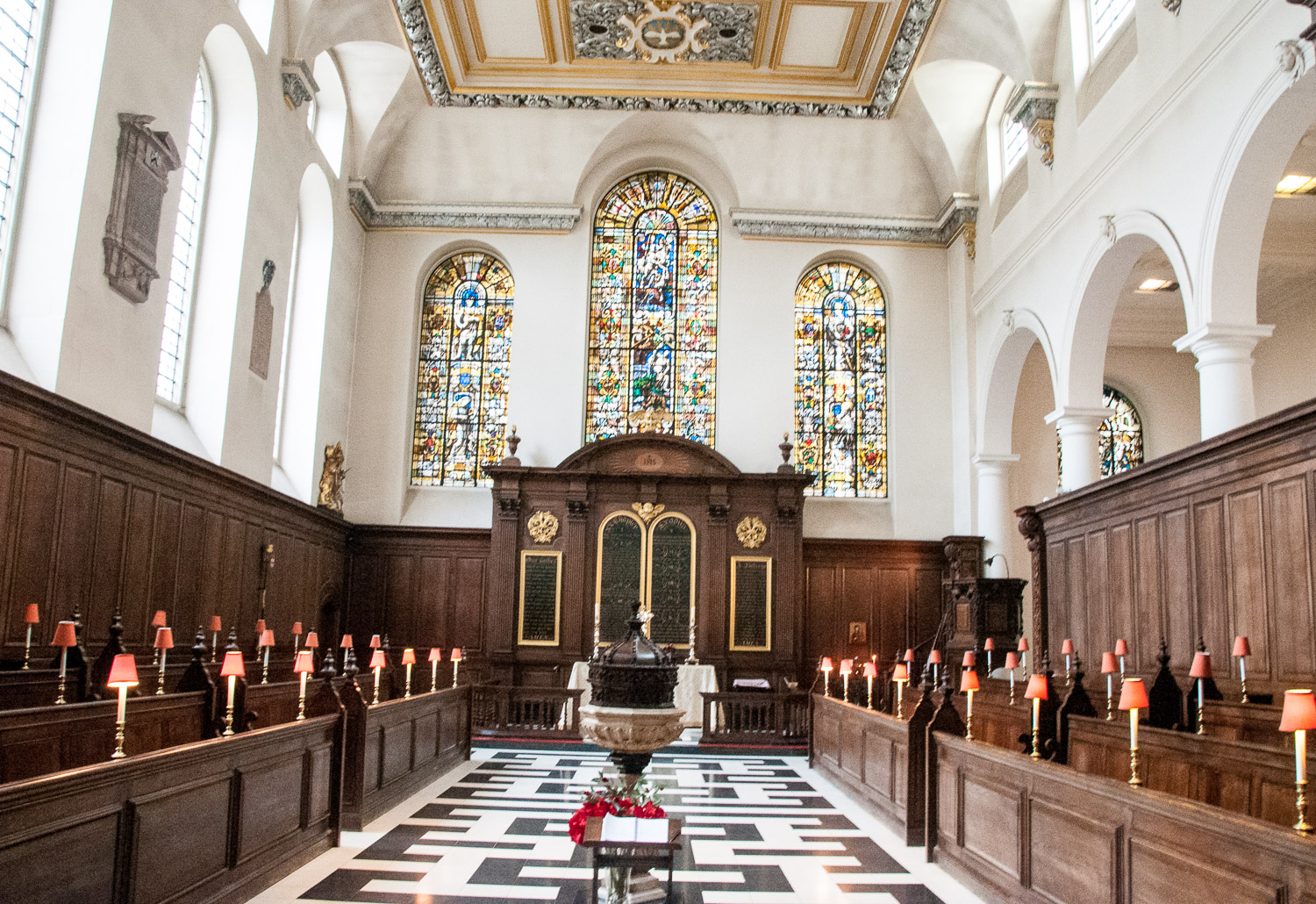
The interior looking east.

Here there are a few features that have come from other churches.
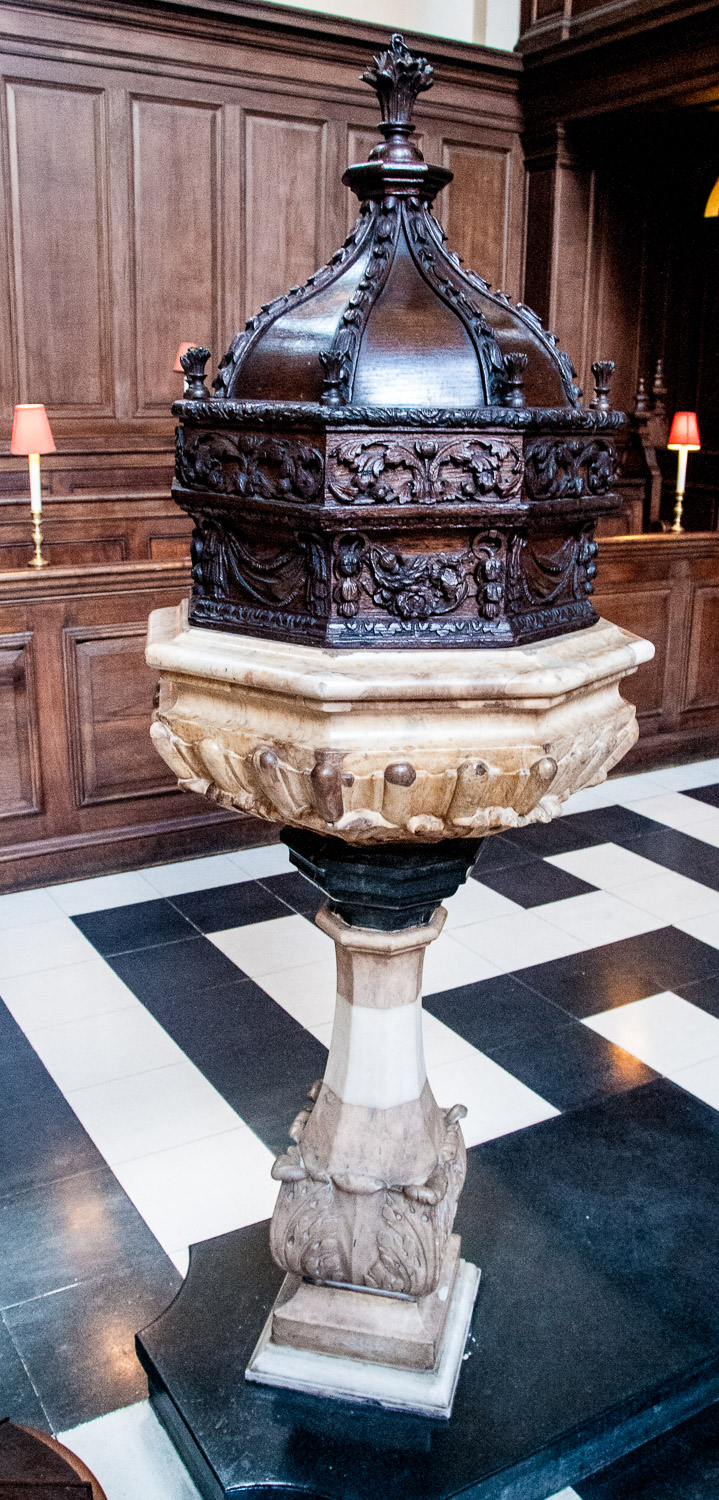
The font and its cover both date from the late 17th century. The font itself was designed by Christopher Wren and the cover is by the most celebrated woodcarver of the 17th century, Grinling Gibbons. Both were rescued from St Anne & St Agnes in Gresham Street after the Blitz.

The reredos behind the altar came from the ‘lost’ church of St Christopher le Stocks …
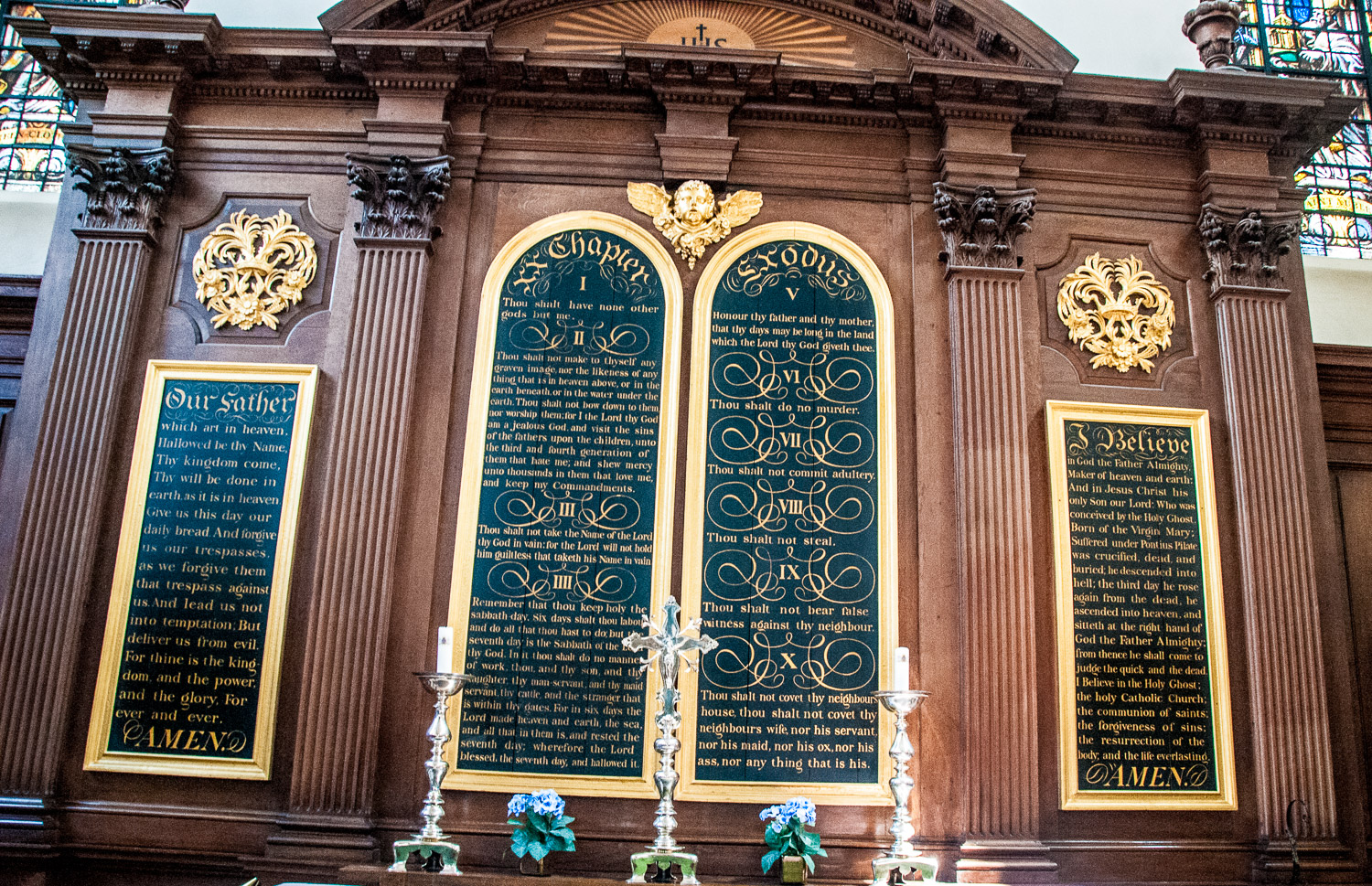
The original St Christopher le Stocks was destroyed in the Great Fire, rebuilt by Wren in 1671 and situated in Threadneedle Street. During the 18th century, the Bank of England gradually bought up adjoining properties, extending its site into the parish. In 1781 it came to an agreement with the rector of St Christopher’s, and its patron, the Bishop of London, allowing it to demolish the church itself. This was not only motivated by a desire to build on the land, but also by a fear that rioters might use the church as a platform to attack the bank, a concern sparked by the Gordon Riots of 1780.

The richly carved pulpit came from All Hallows Bread Street, demolished in 1878 under the Union of Benefices Act 1860 which I also mentioned in last week’s blog …
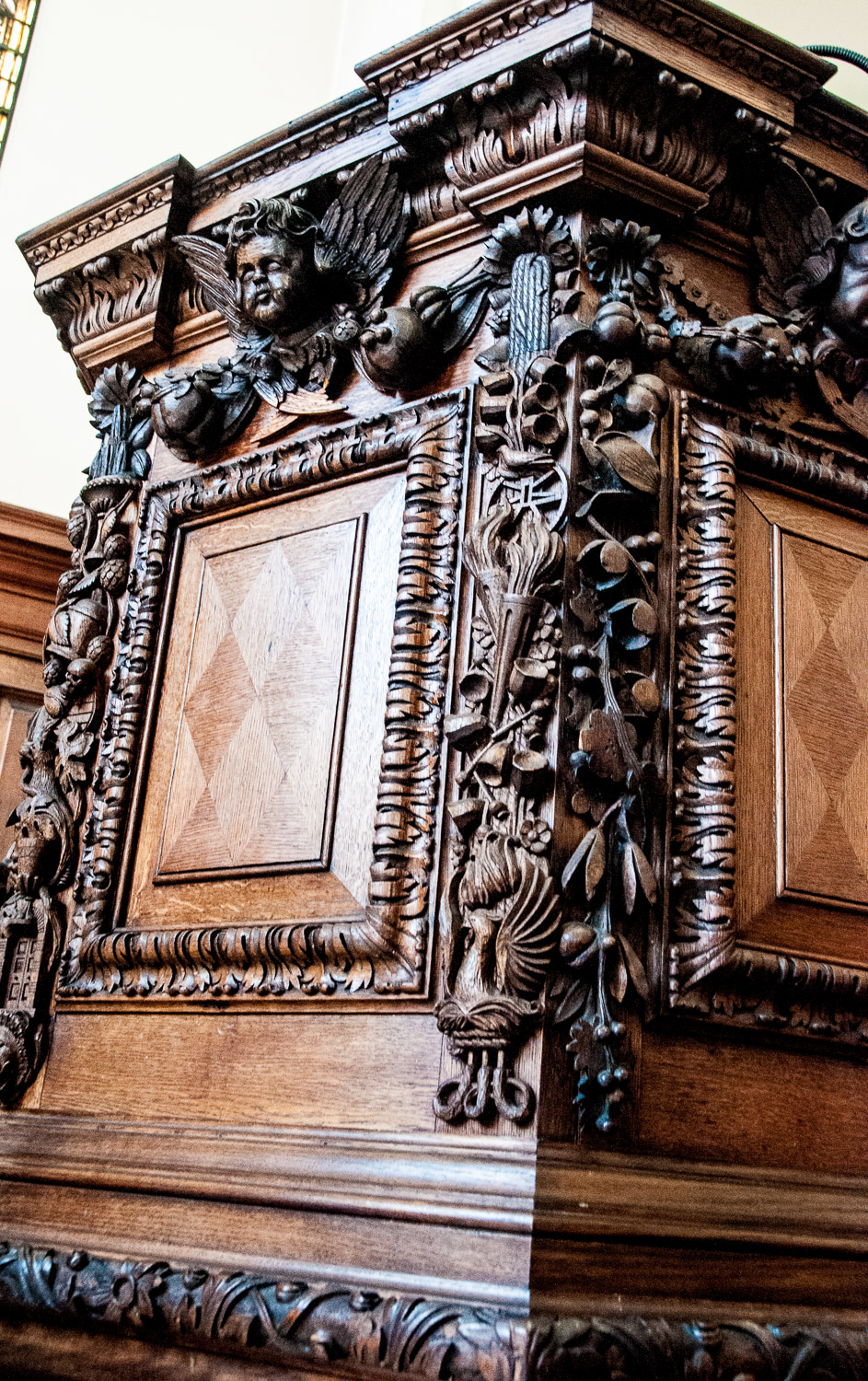
For my last visit of the day I thought I would take a look at St Anne & St Agnes (mentioned above) and see what I could find there (Gresham Street EC2V 7BX).

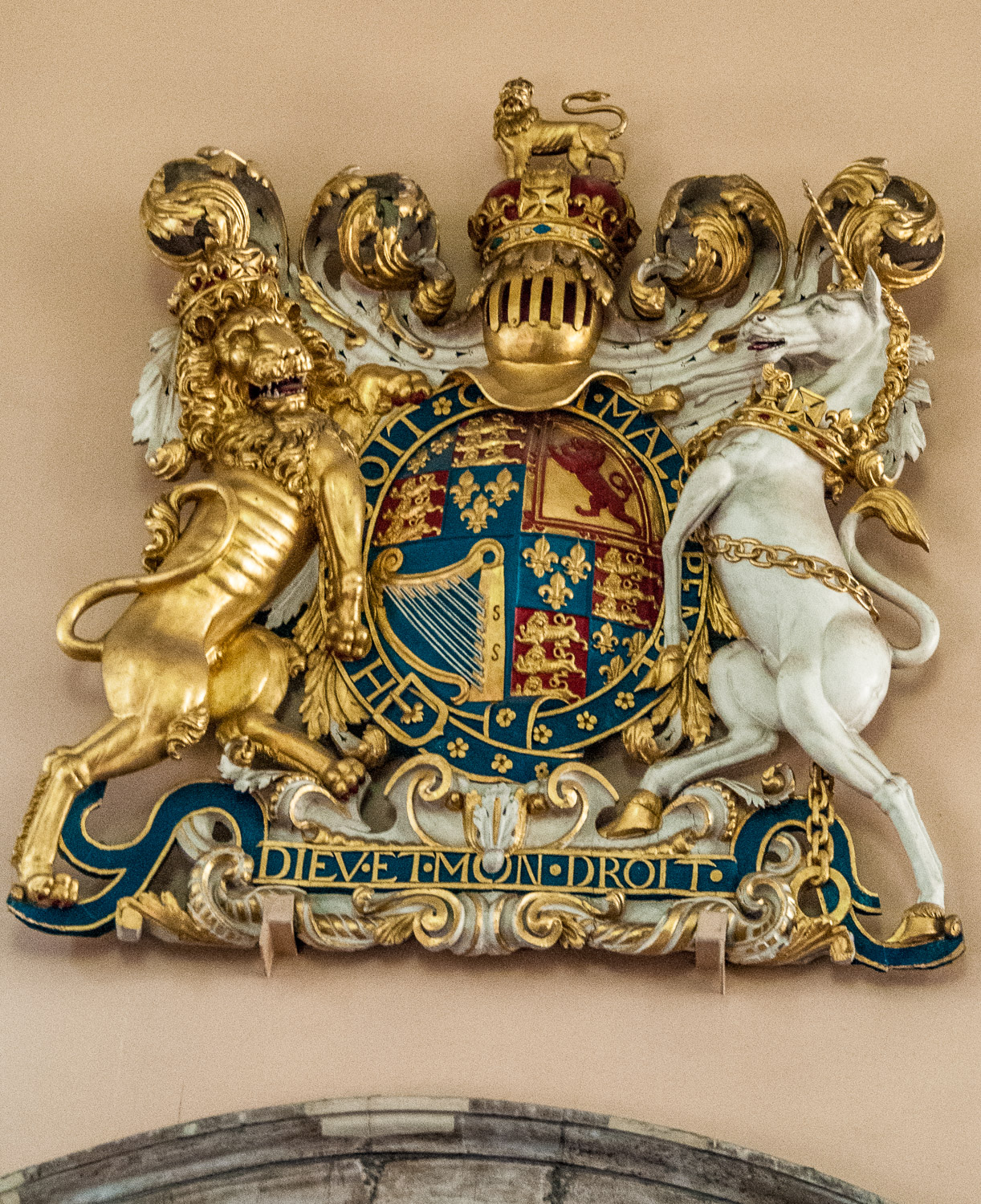
The Royal Arms of Charles II on the west wall is one of the best examples in England …
In 1649 the vicar was beheaded for protesting against the execution of King Charles I.

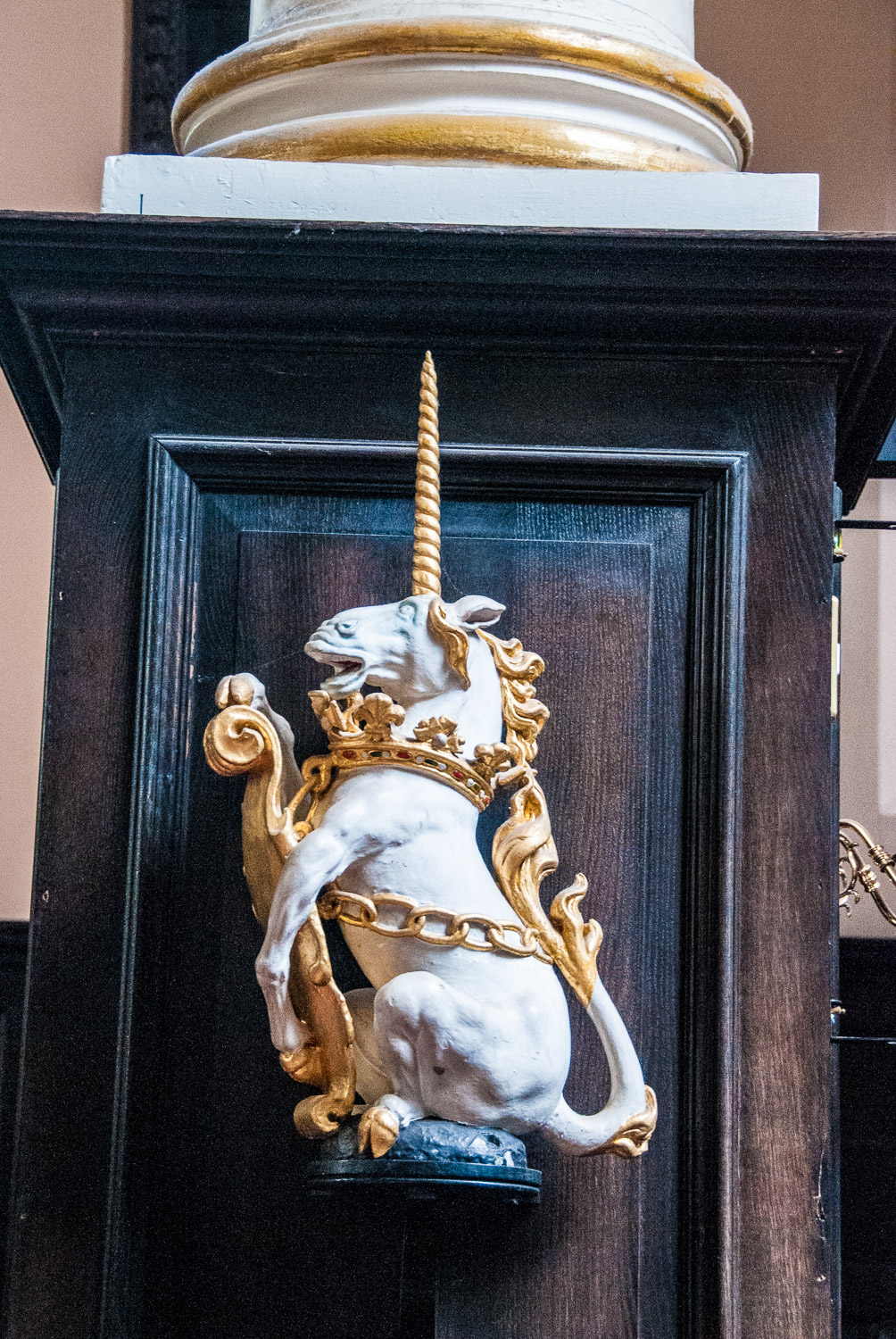
The central dome is supported by four handsome Corinthian columns two of which contain heraldic representations, one being this unicorn …
High up on the south wall are busts of Sir James Drax (died 1662) and his son John (died 1682). They come from the ‘lost’ church of St John Zachary which was destroyed in the Great Fire and not rebuilt …
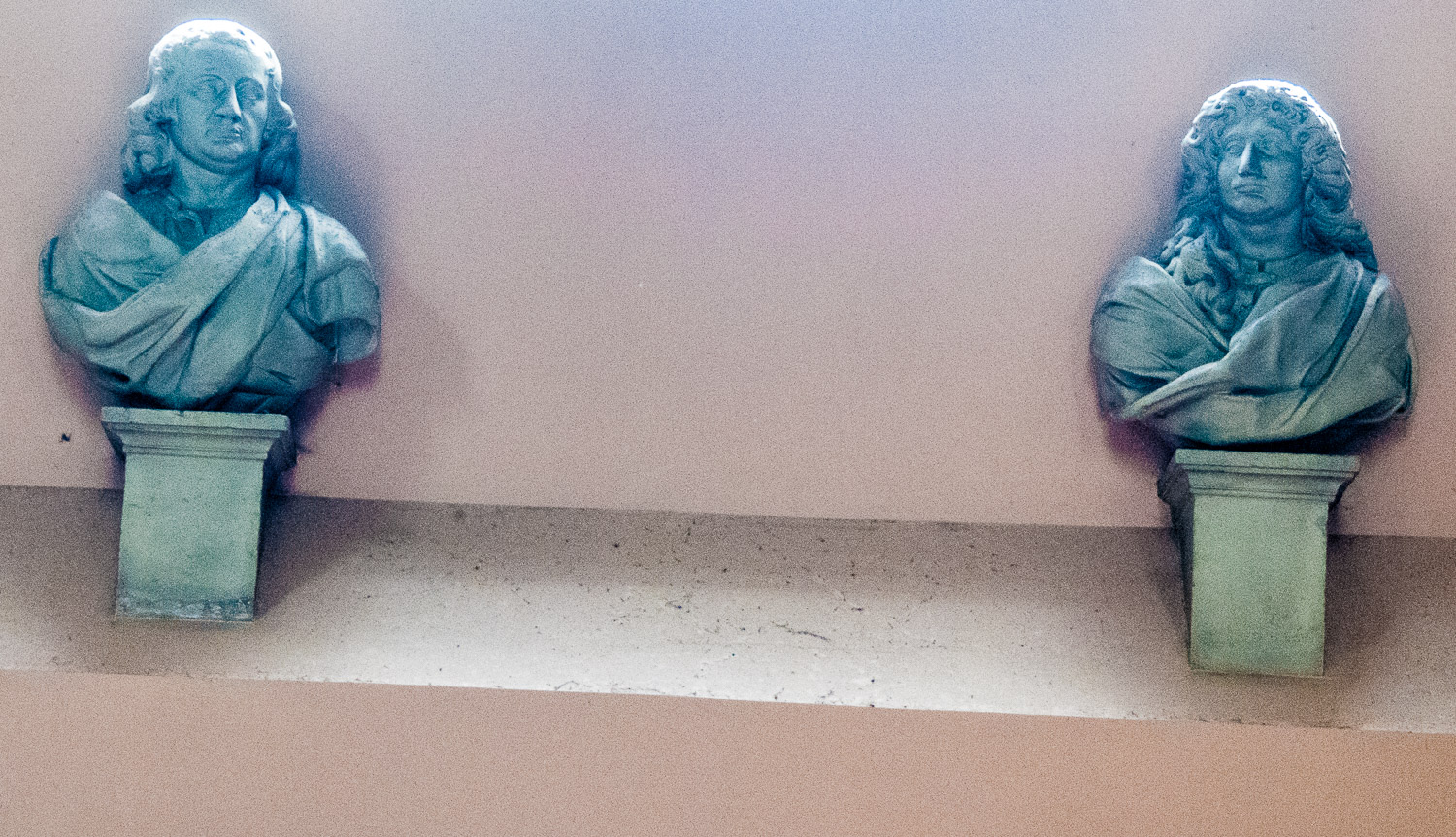
The Drax family were pioneers of the sugar industry (and slavery) in Barbados and apparently Drax Hall Plantation in St George, Barbados is the oldest surviving Jacobean mansion in the western hemisphere.

St John Zachary may be no more but there is now very attractive and quiet garden where the church used to stand …
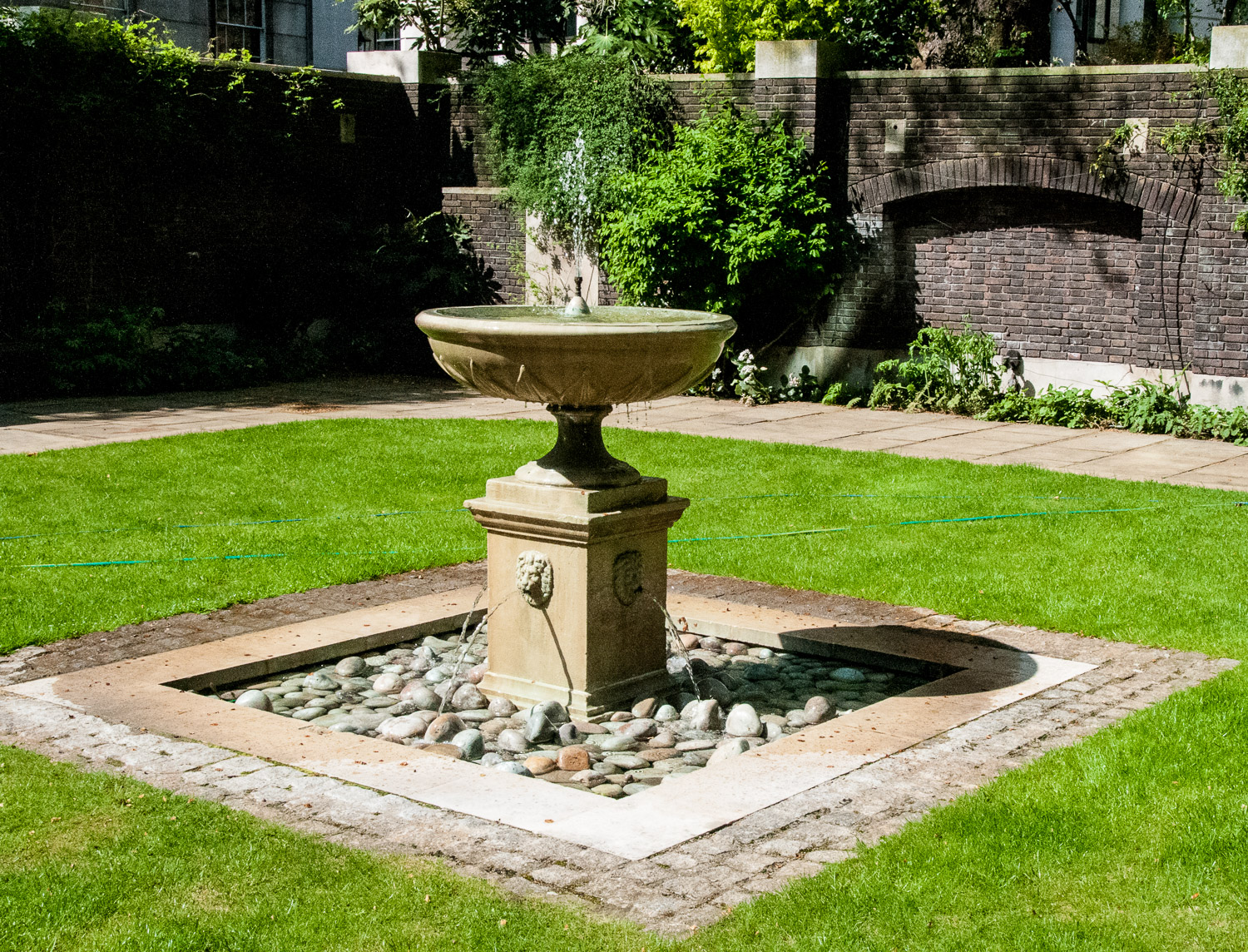
You can read more about it here.


St Paul’s Cathedral from the outside – 18th century graffiti and posh pineapples.

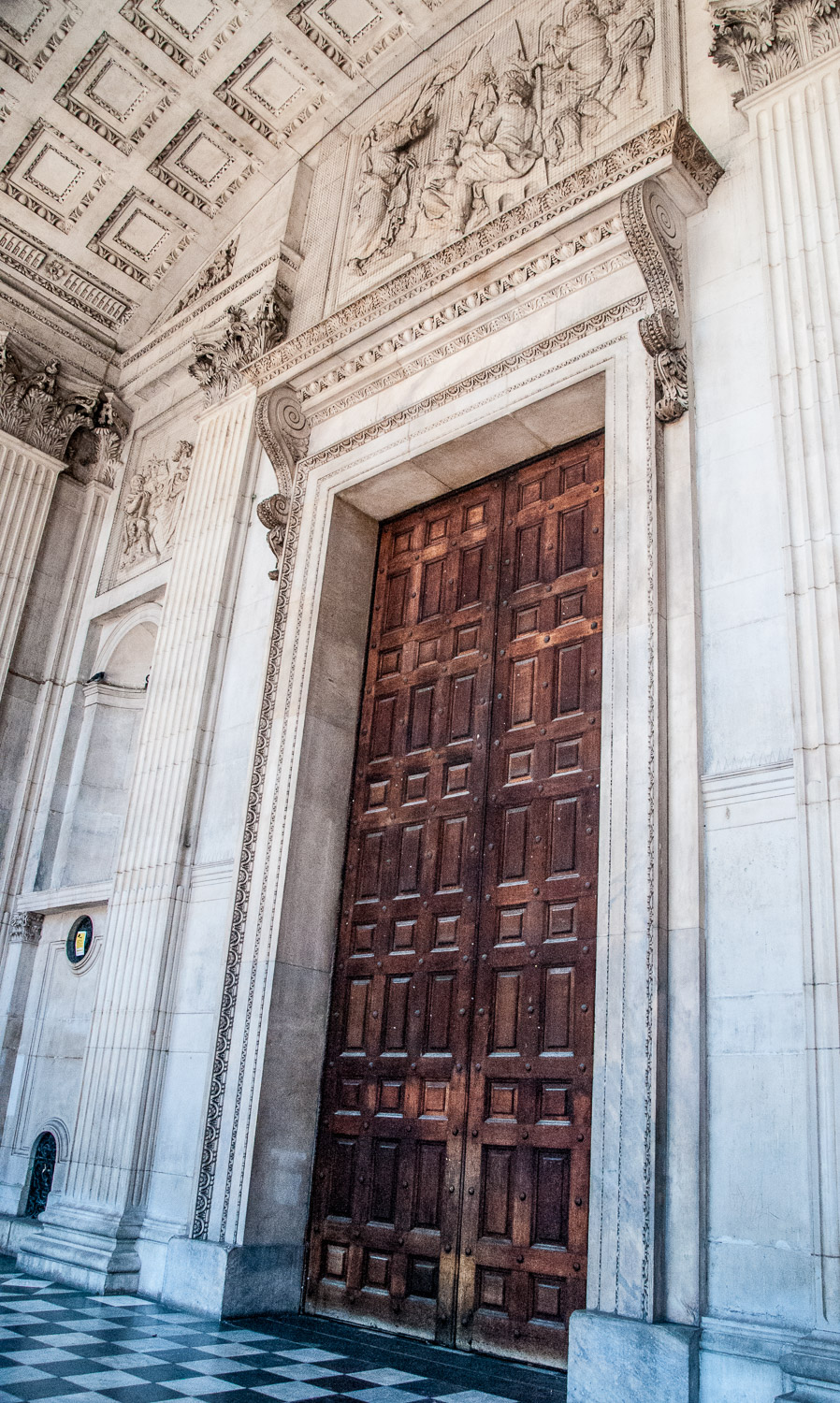
I decided to start my walk around the cathedral at the Great West Door, a very popular background for many tourist photographs. Maybe some are recalling the sequence in the film Mary Poppins (‘Feed the birds, tuppence a bag!’) or perhaps Princess Diana, emerging wearing her stunning wedding dress with its 25 foot train. Both can be viewed on YouTube.

The Great West Door – only opened on very special occasions.

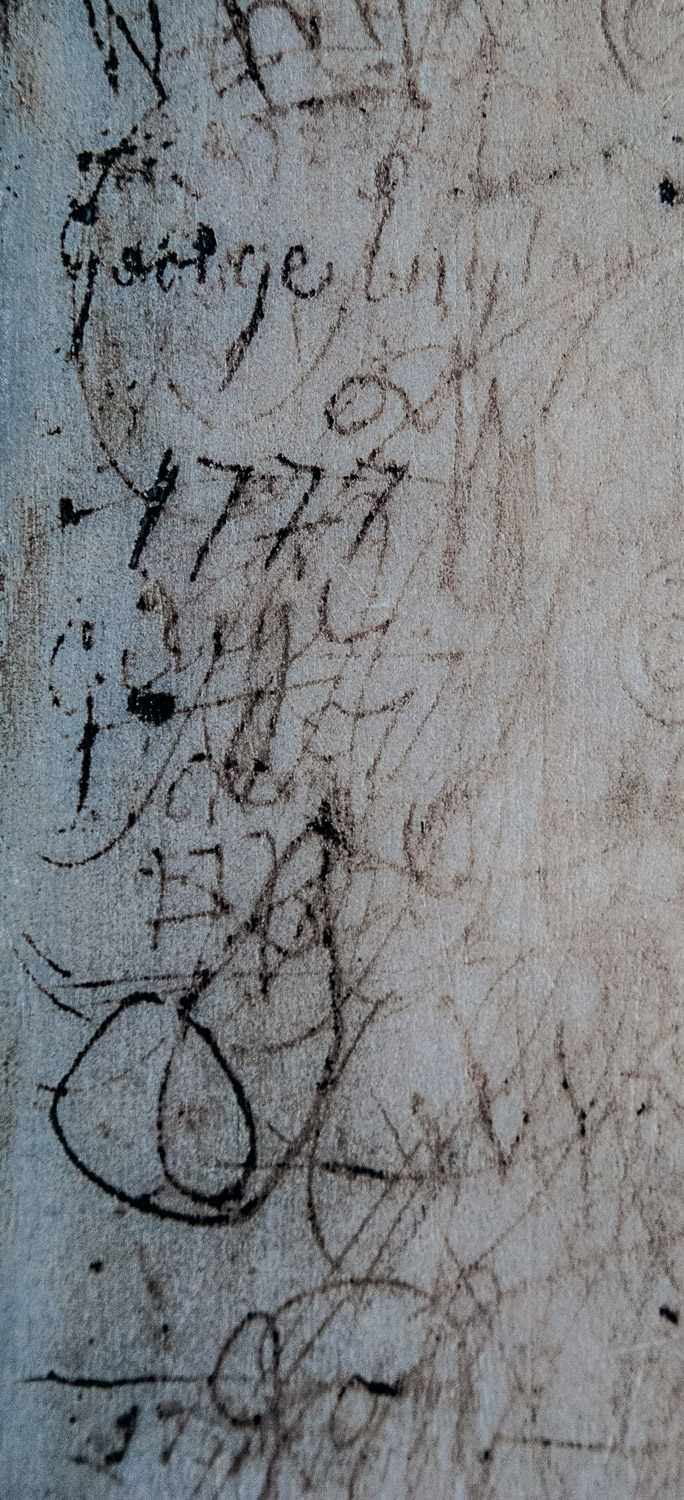
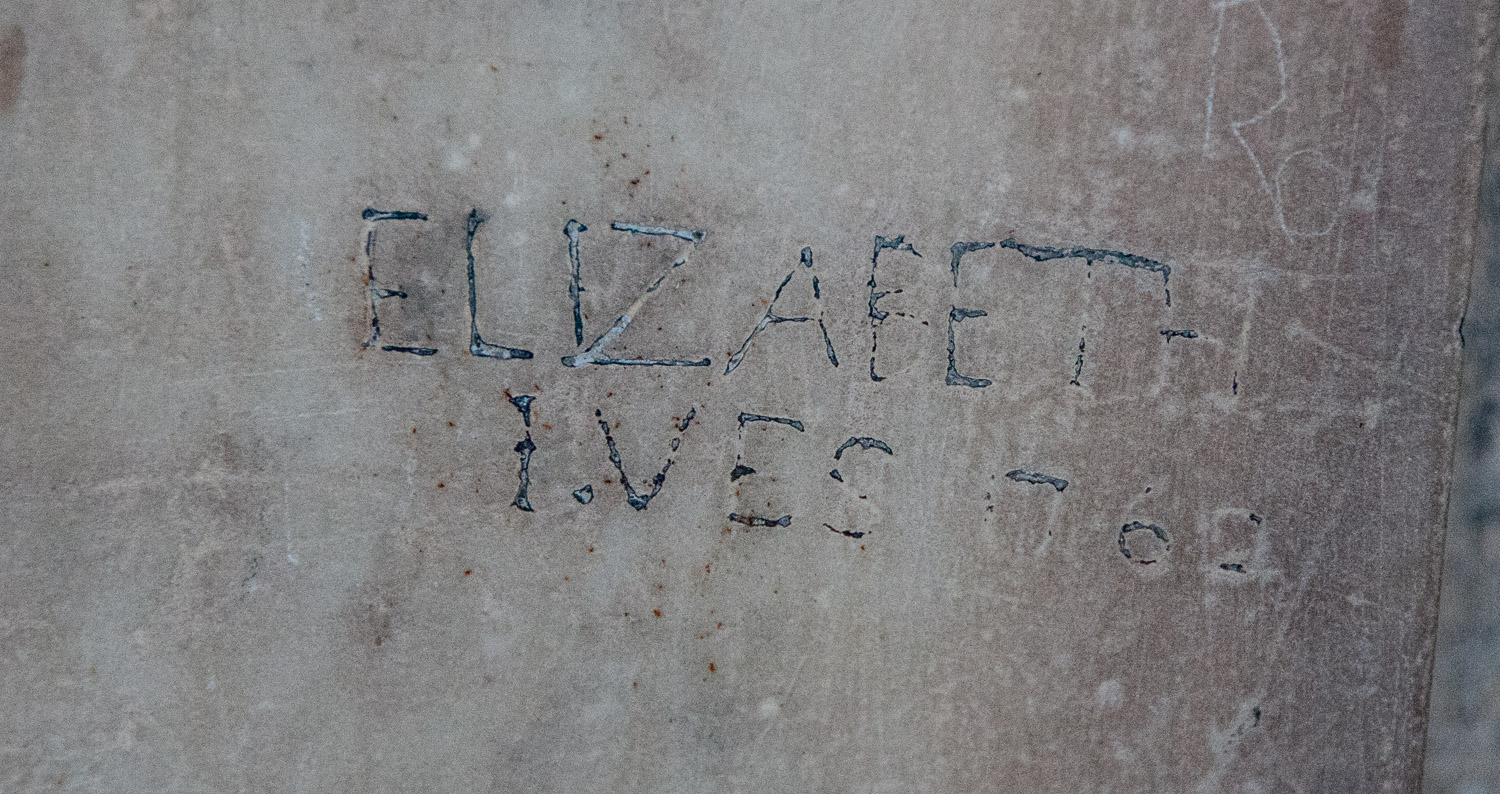
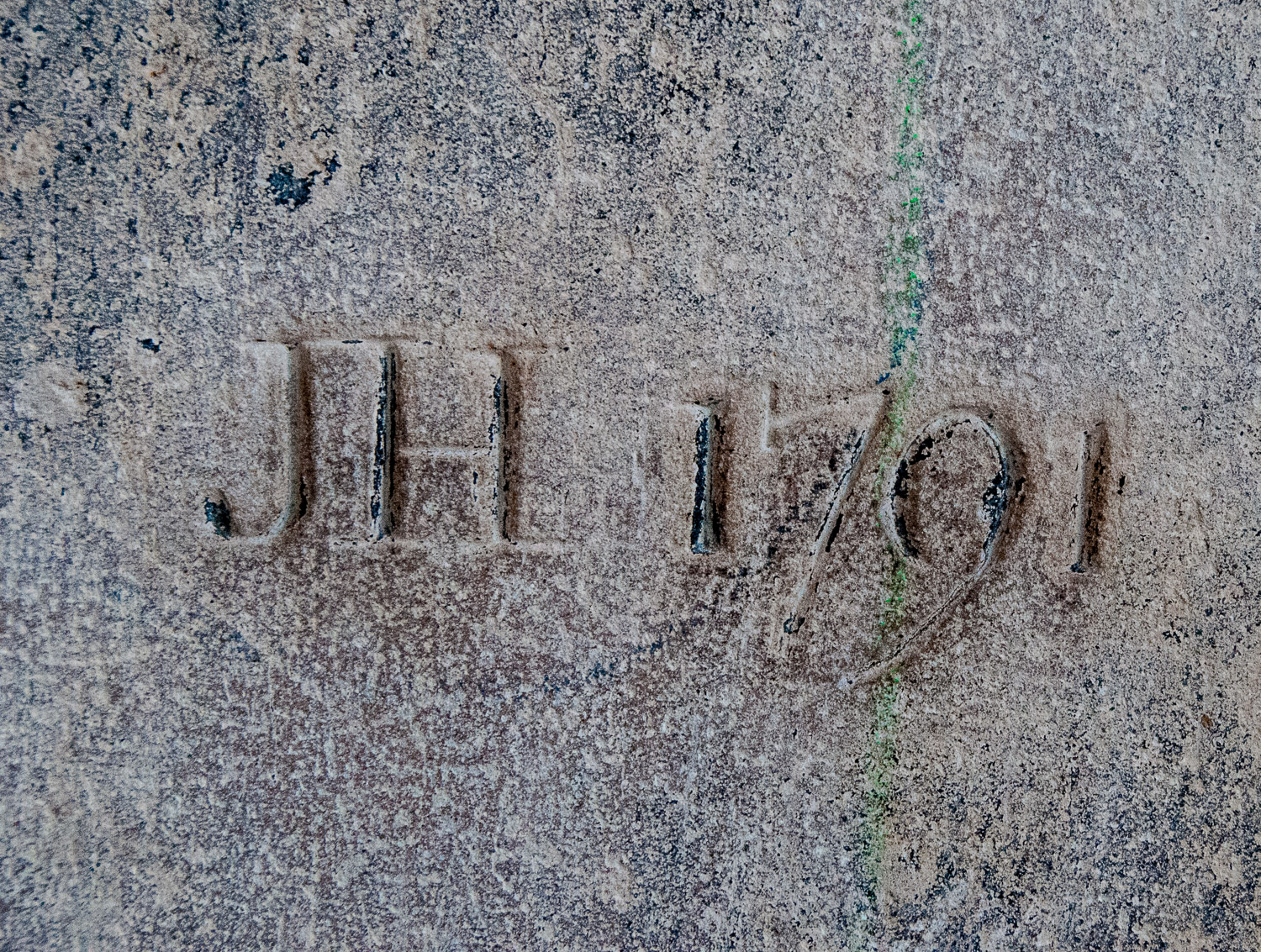
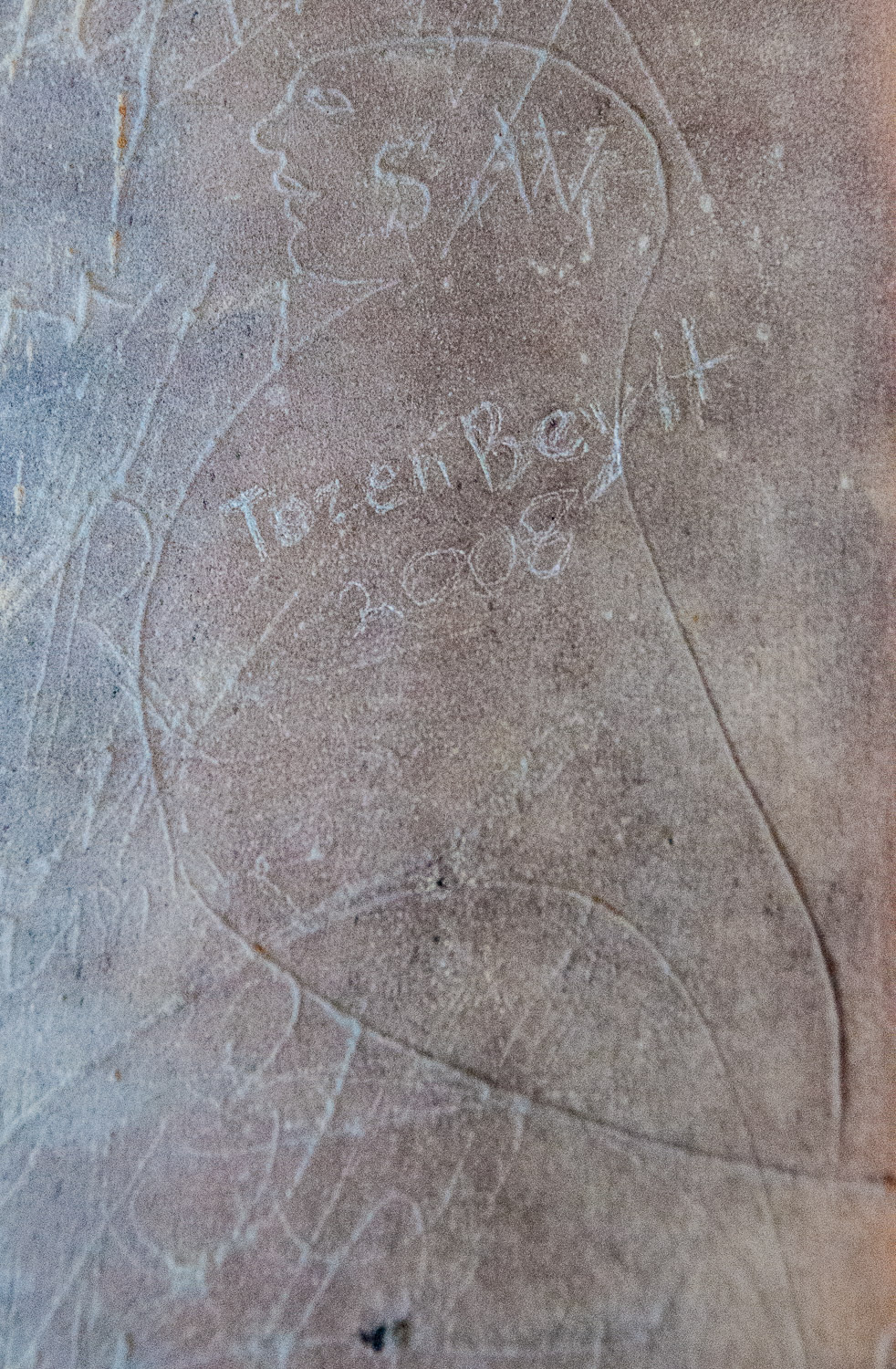
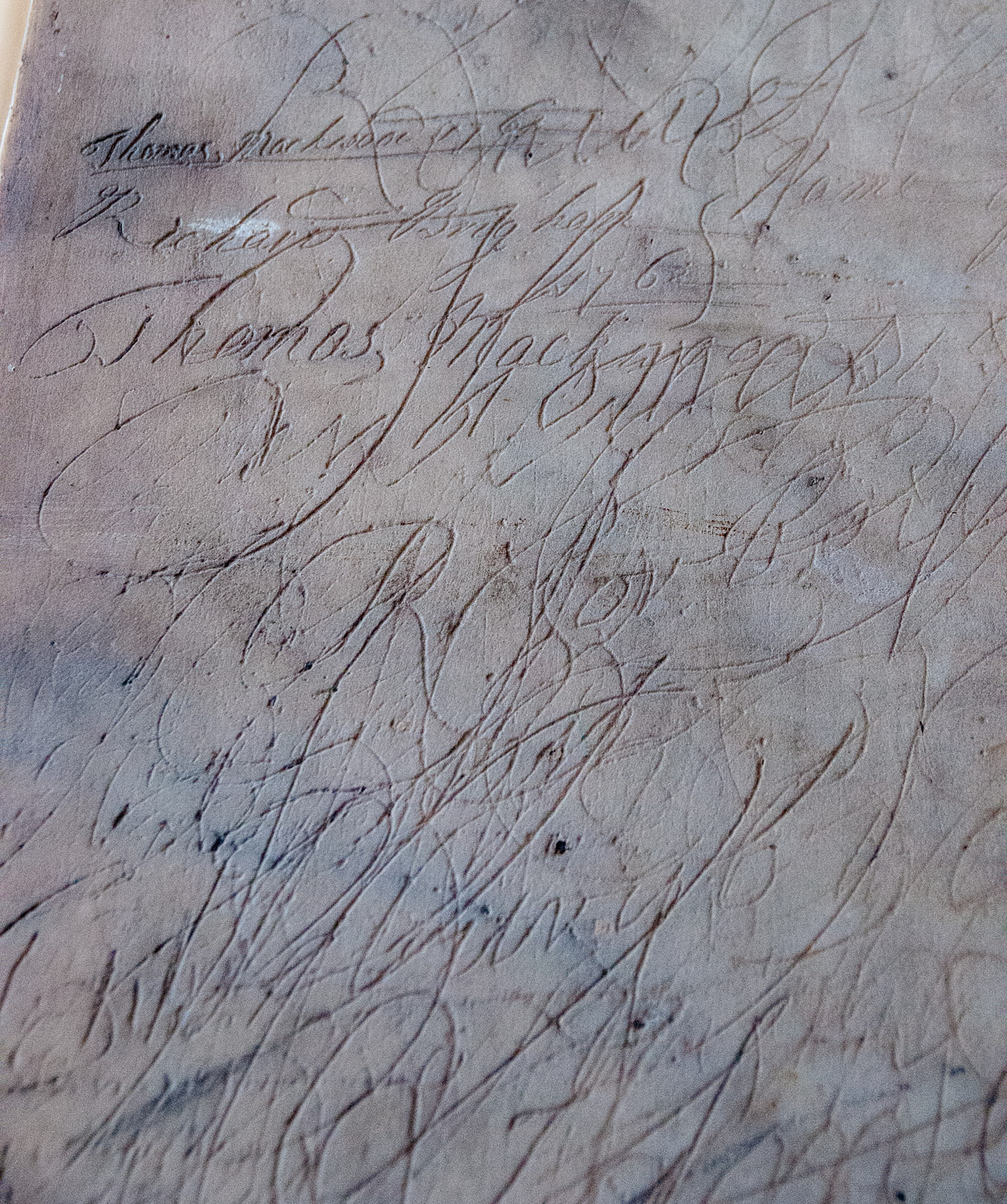
I have, however, yet to see anyone look more closely at the surrounding stonework. If they did, they would encounter a fascinating collection of 18th century graffiti. They are very hard to see and extremely difficult to photograph so these are my best efforts.

Names in cursive script overlap one another …

Some are clearly dated …

And it wasn’t just men leaving their mark …

Elizabeth Ives was here (1760).

‘JH’ must have taken some time over this …

And what about this bird with a bald human head?

Maybe a pompous, plump supervisor who upset one of his apprentices?

There are many, many inscriptions and they become more visible as your eyes get used to the light.

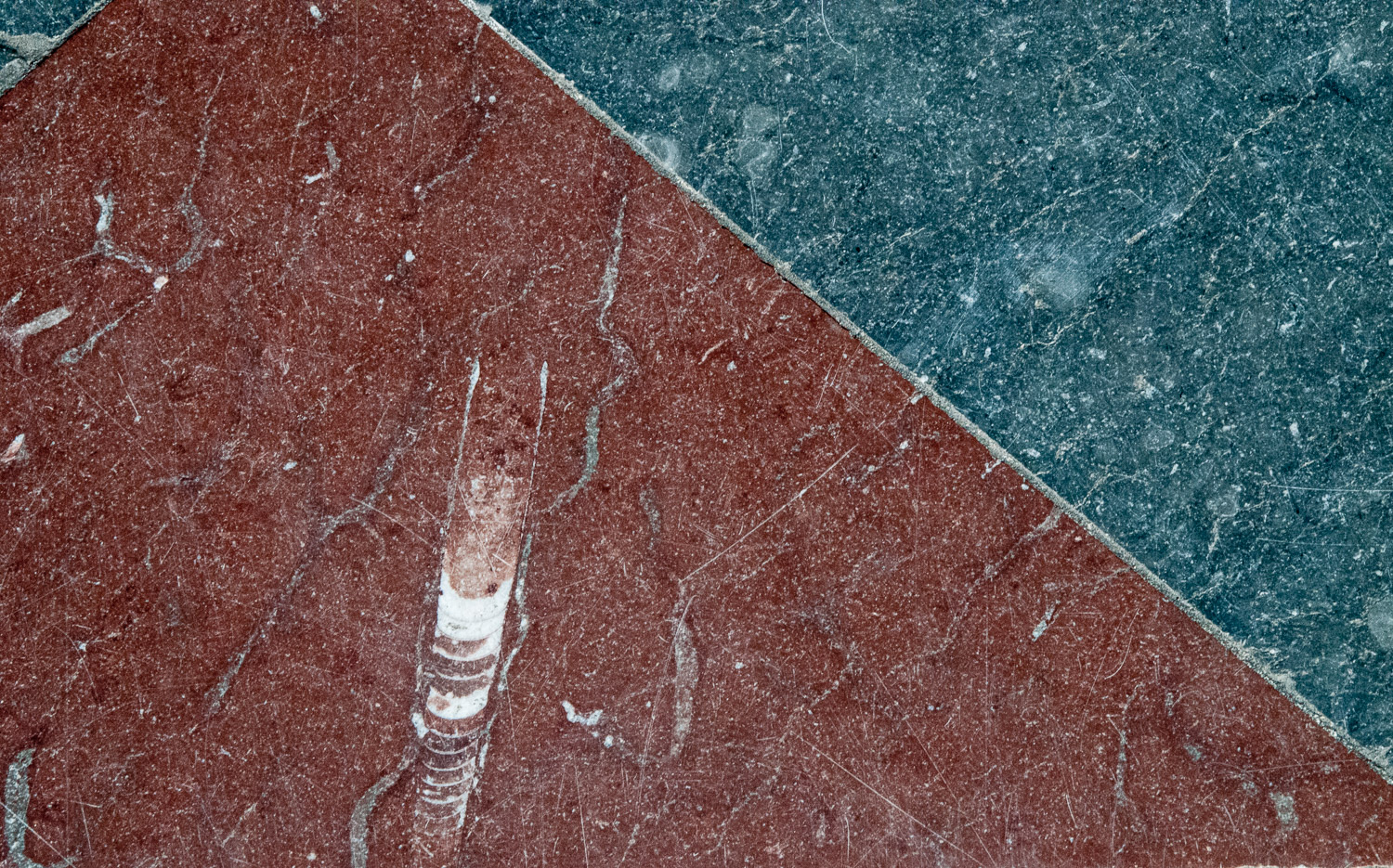
If you now turn around and walk down the steps you can examine these fossils, embedded in the stone for over 5oo million years …

You can read more about them in my blog Jurassic City.

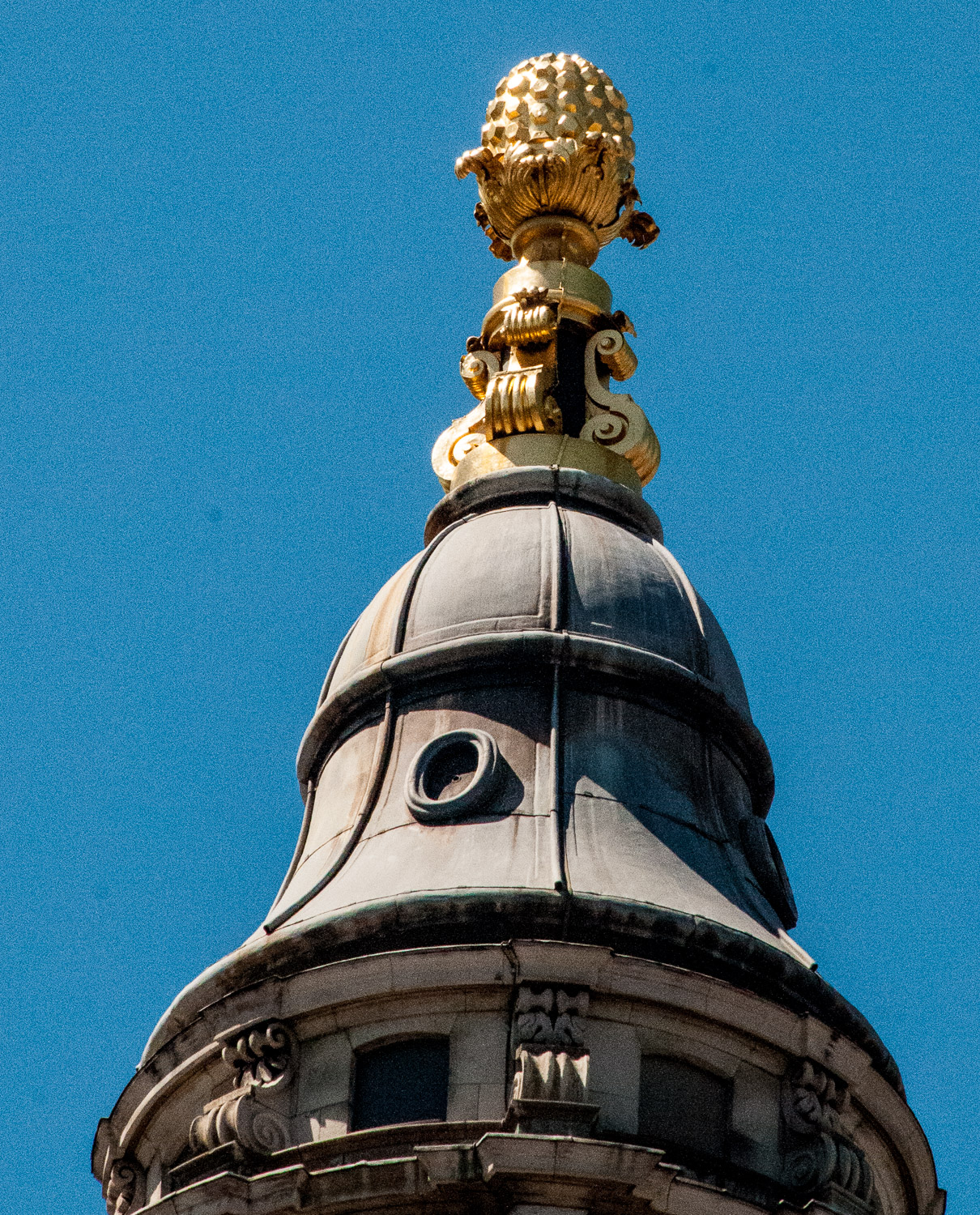
The first pineapple arrived in Europe courtesy of Christopher Columbus in 1493.  The strange fruit he brought back from Guadaloupe looked like a pine cone but the edible interior had the texture of an apple. Pineapples begin to rot as soon as they are picked, so supplies from overseas were rare, and they proved very difficult to cultivate. The forces of supply and demand drove up the 17th century price to the present day equivalent of £5,000 each – but you could rent one for your dinner party table centrepiece if you wanted to show off. They became associated with wealth, royalty and generous hospitality which, presumably, is why they were chosen as the decorative finials on the St Paul’s western towers. Their shape is aesthetically pleasing too.

The gilded copper pineapples were modelled by Francis Bird (1677-1731), cast by Jean Tijou and completed in July 1708. Tijou was a French Huguenot ironworker about whom little else is known.

You can see them most clearly from outside the tourist information centre across the road. They were cleaned and restored in 2003 and are covered with two layers of gold leaf (as are the numbers and hands of the clock face).

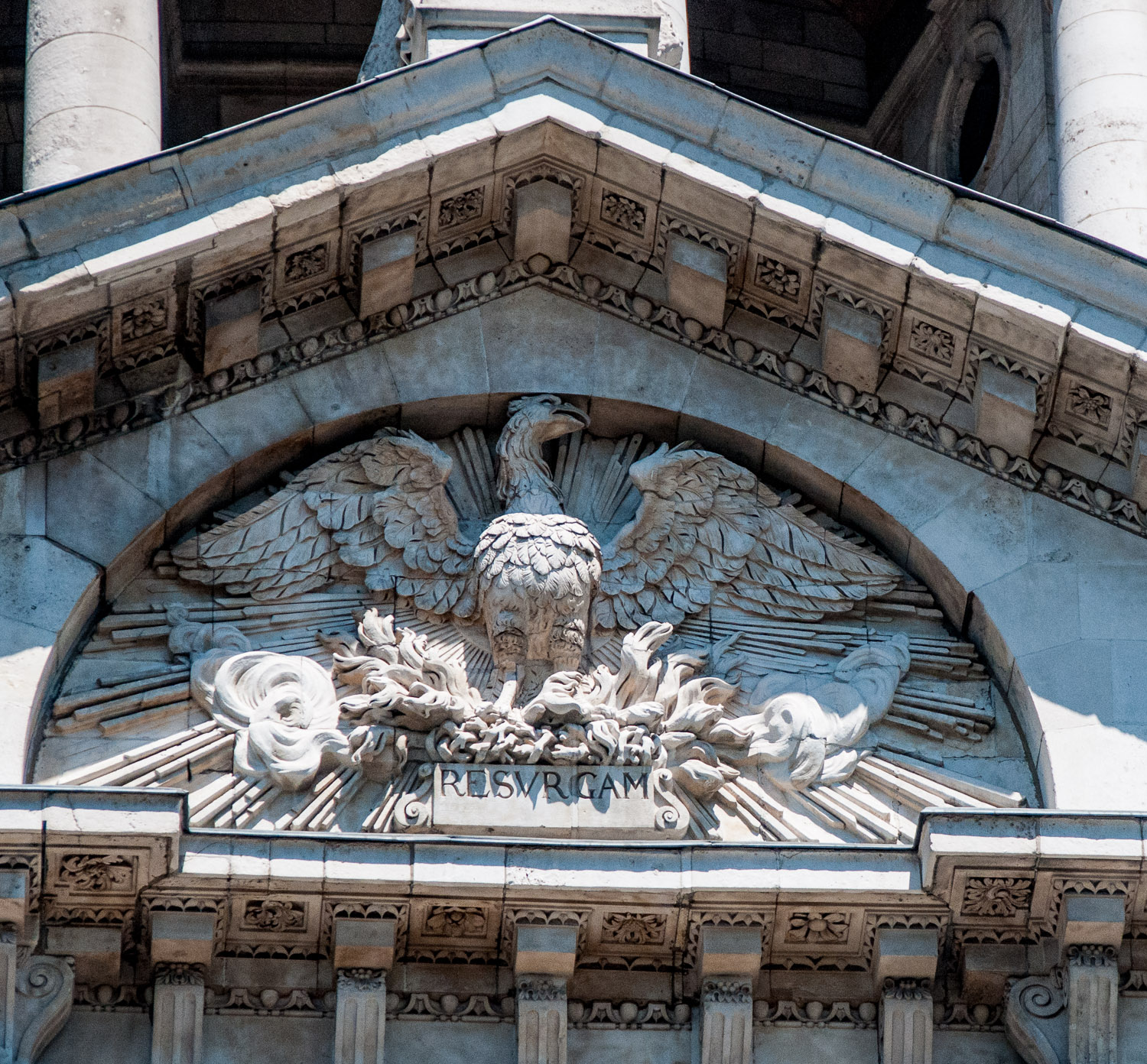
Standing there you can also see the south porch of the cathedral and the centrepiece of the pediment, a phoenix rising from its own ashes above the word ‘RESURGAM’, a fitting symbol of the Cathedral and harking back to an earlier episode in its construction.

The carving is by Caius Gabriel Cibber (1630-1700).

When marking out foundations, Sir Christopher Wren asked a labourer to bring a stone to mark a particular spot. The man came back with a fragment of a broken tombstone on which was carved one word – RESURGAM – I shall rise again – and the architect never forgot this omen.

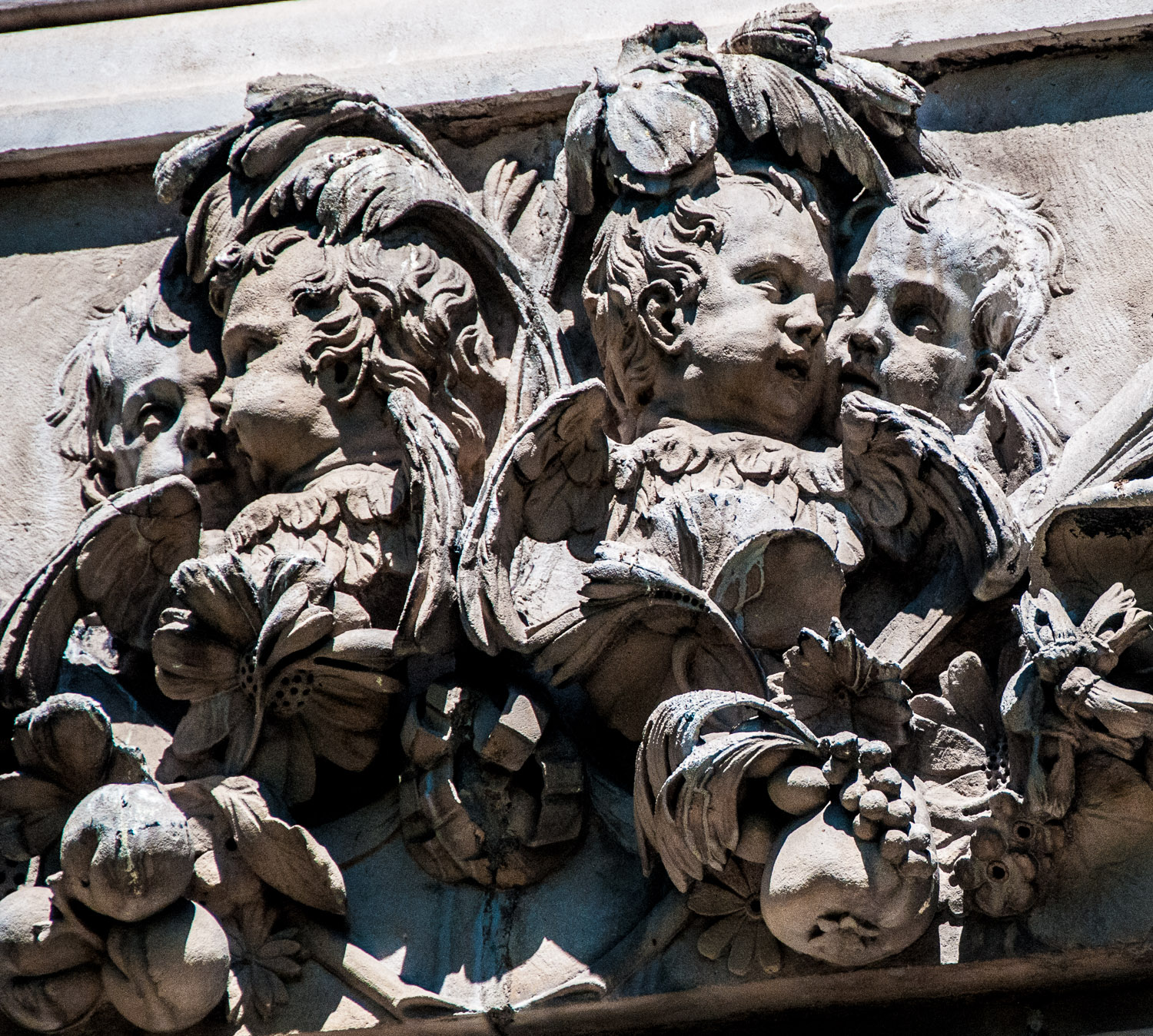
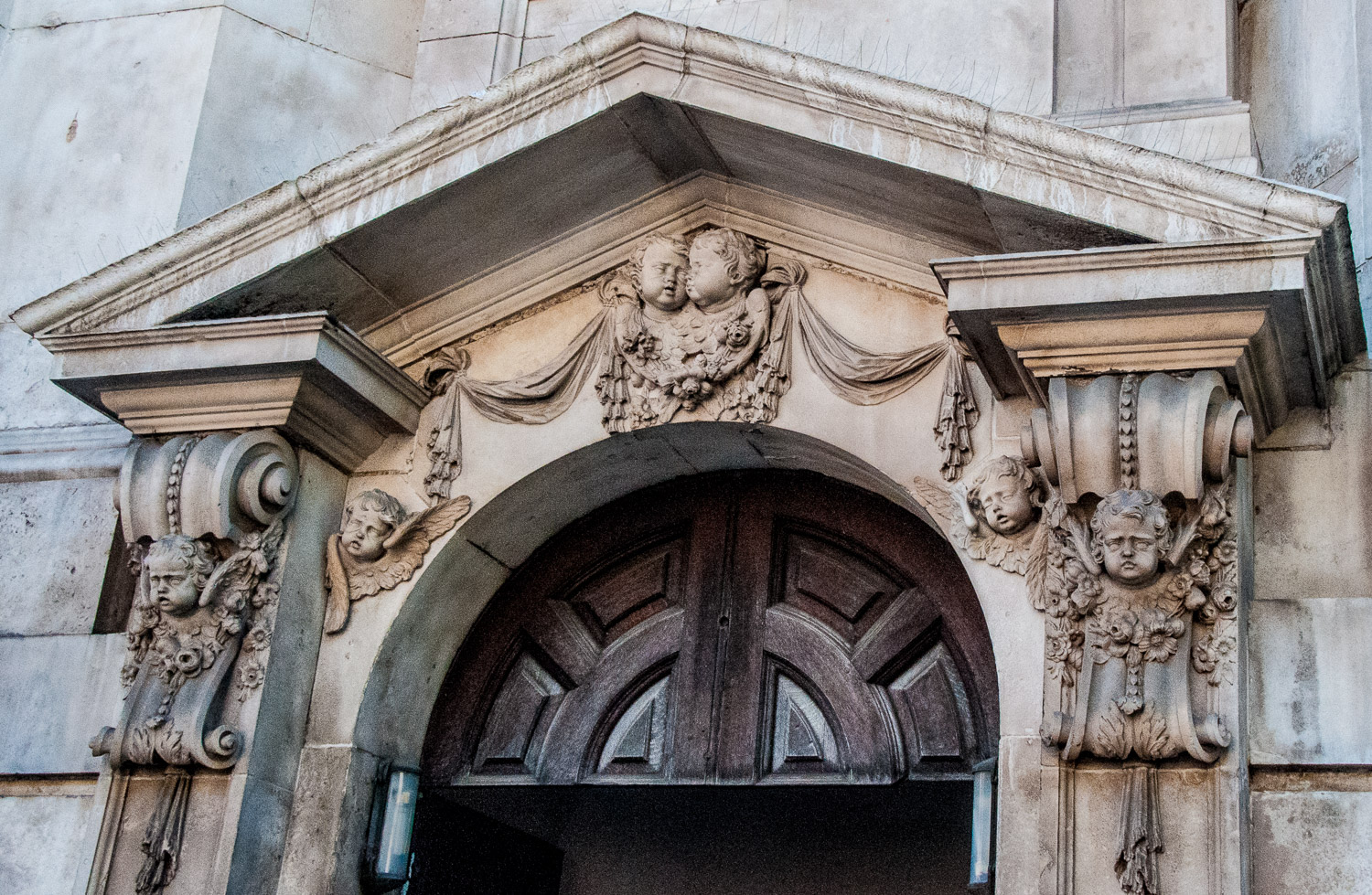
St Paul’s has an abundance of cherubs …

You can read more about the City’s cherubs in my earlier blog Charming Cherubs.

On the north side is the Dean’s door …

The carver was stonemason and architect Christopher Kempster (1627-1715).

Kempster’s work on the cherub’s heads and foliage was considered so good Wren awarded him an extra £20 for ‘the extraordinary diligence and care used in the said carving and his good performance of the same’. When Kempster died at the age of 88 his son carved a cherub’s head for his memorial.

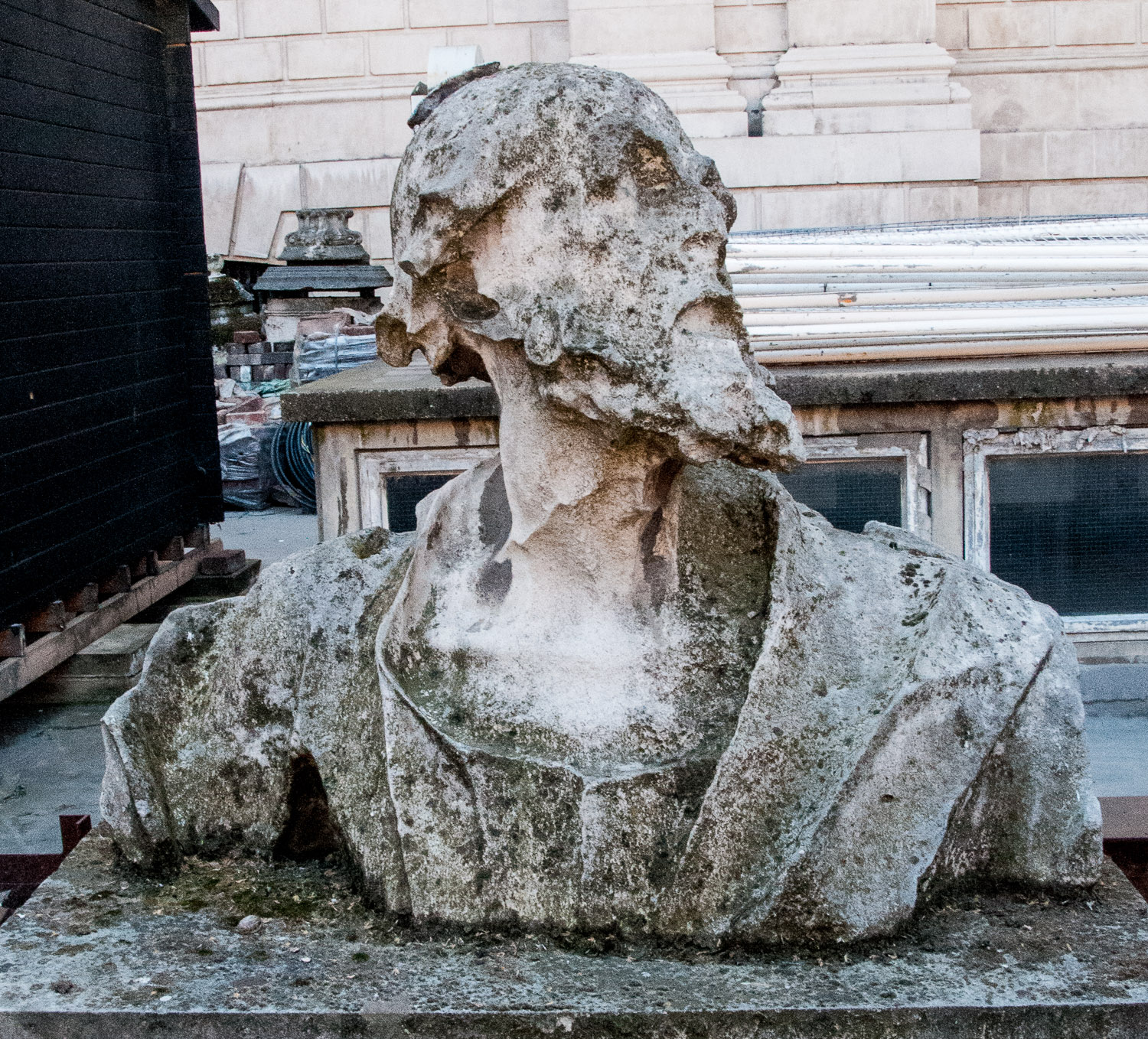
Much restoration has had to be carried out on St Paul’s in view of both its age and the damage done by London’s polluted air. In the yard beside the cathedral you can see an example close up …

A very eroded statue of St Andrew from the pediment of the south portico.

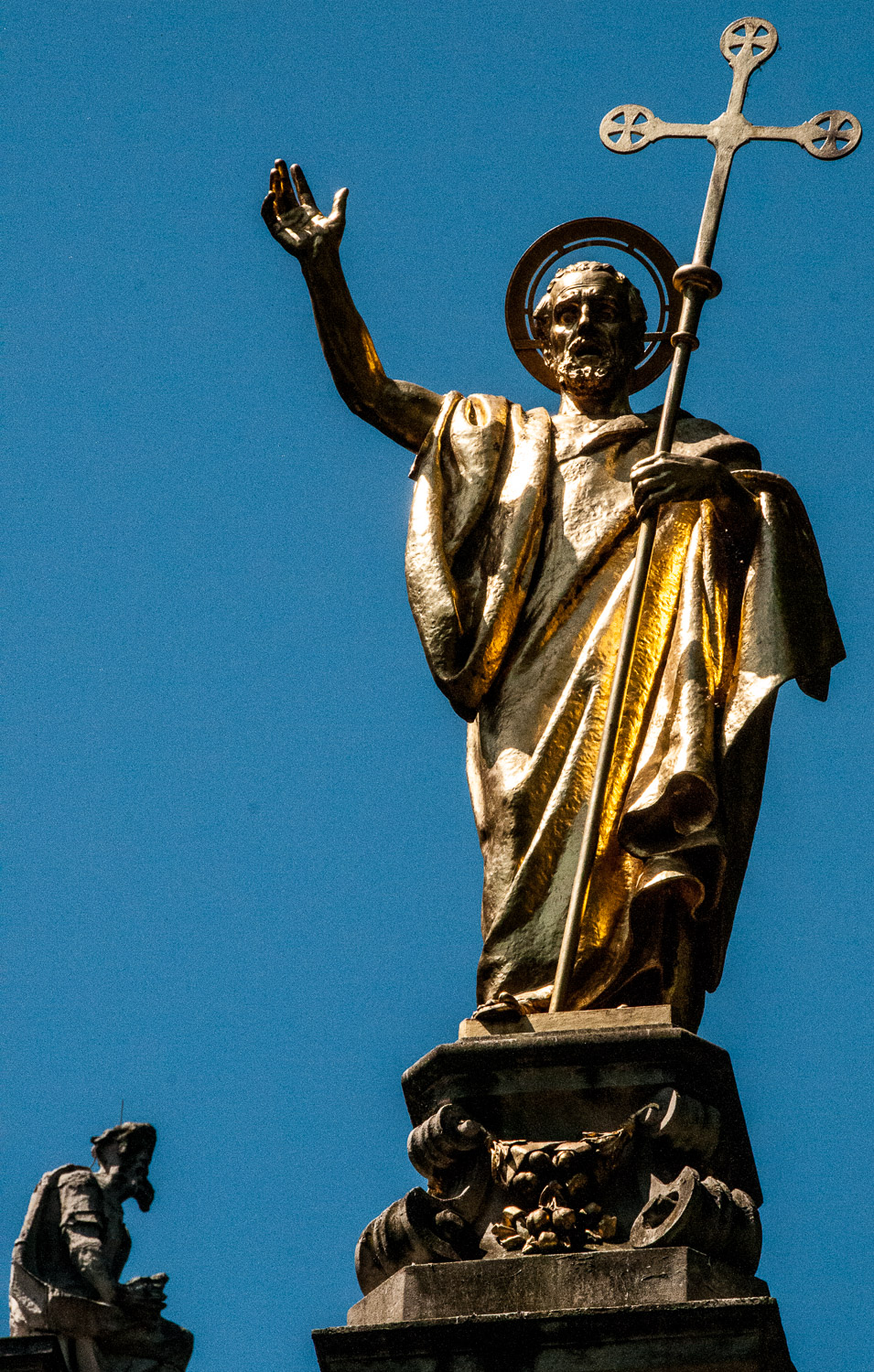
The churchyard also contains a statue of St Paul …

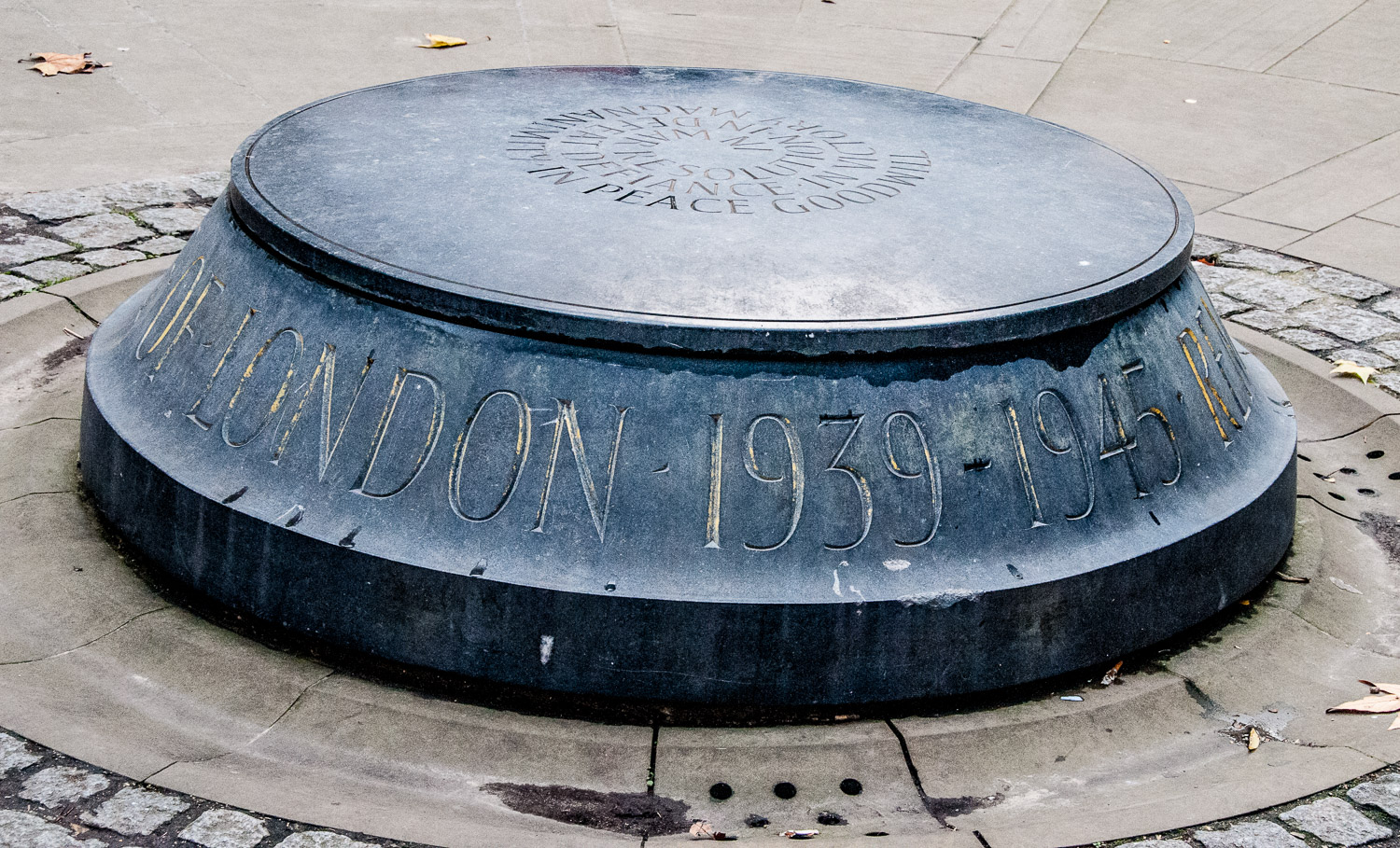
Over 30,000 Londoners died in the World War II air raids and they are commemorated by this understated monument outside the north transept.

The inscriptions read …

‘In War, Resolution: In Defeat, Defiance: In Victory, Magnanimity: In Peace: Goodwill’

And around the sides

REMEMBER BEFORE GOD, THE PEOPLE OF LONDON 1939-1945

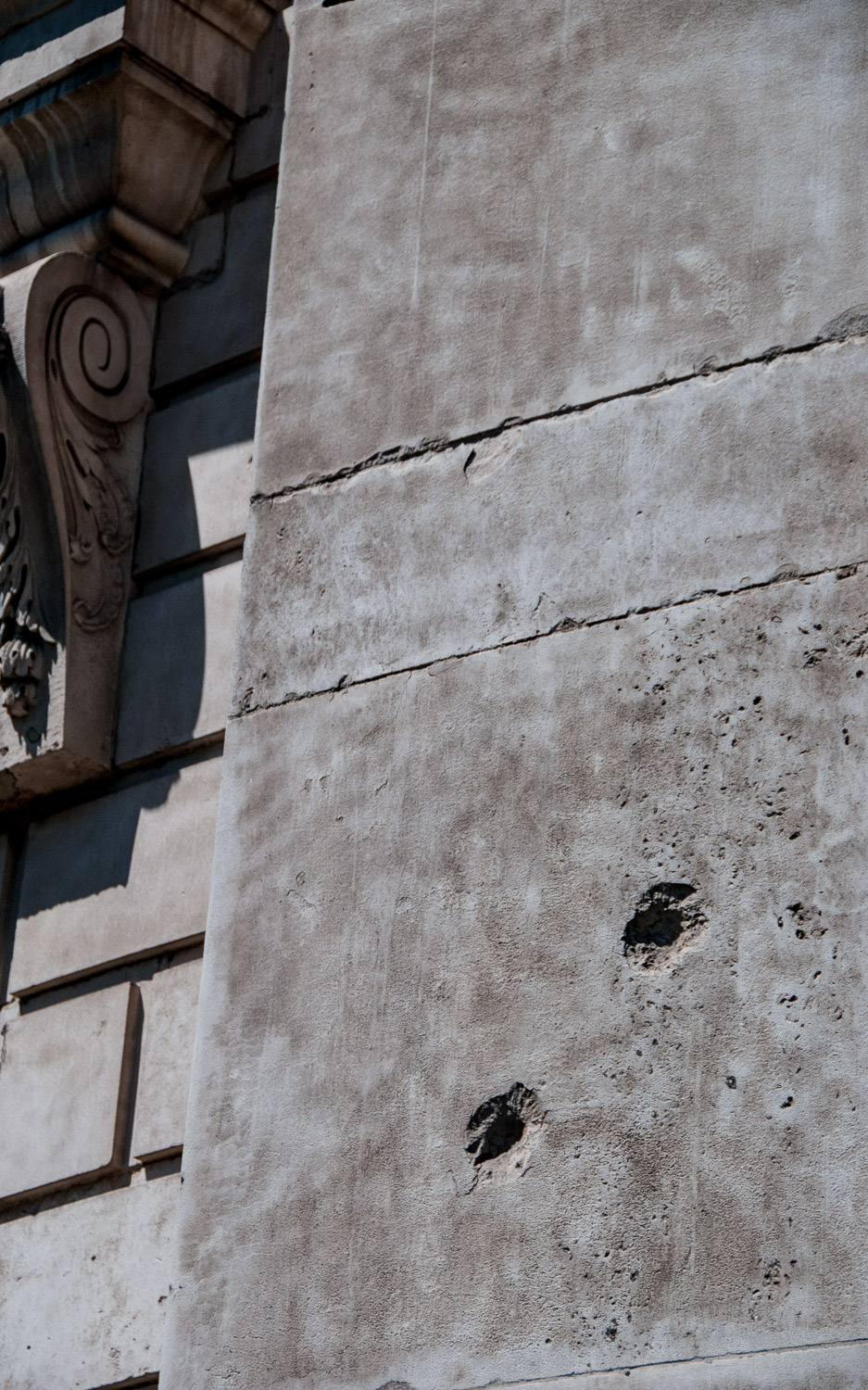
The cathedral itself did not escape World War II bombing unscathed but several bomb hits (and numerous incendiary attacks) miraculously failed to seriously damage the dome. Virtually every other structure in the near vicinity was destroyed or had to be demolished.

One is reminded how close St Paul’s came to destruction by these shrapnel scars still visible on the north wall …

The cathedral’s north wall.

In 1668, when Christopher Wren was commissioned to submit proposals for a new cathedral, he was only in his thirties. From then, until when the government declared the work finished on Christmas day 1711, he not only maintained his vision but also held together an incredibly varied body of people to a common purpose.

He is thought of as a scientific genius and a great architect, but he was also a great man, with an understanding of other men and an ability to get more out of them than they knew they had in them.

Dr Ann Saunders – historian and author


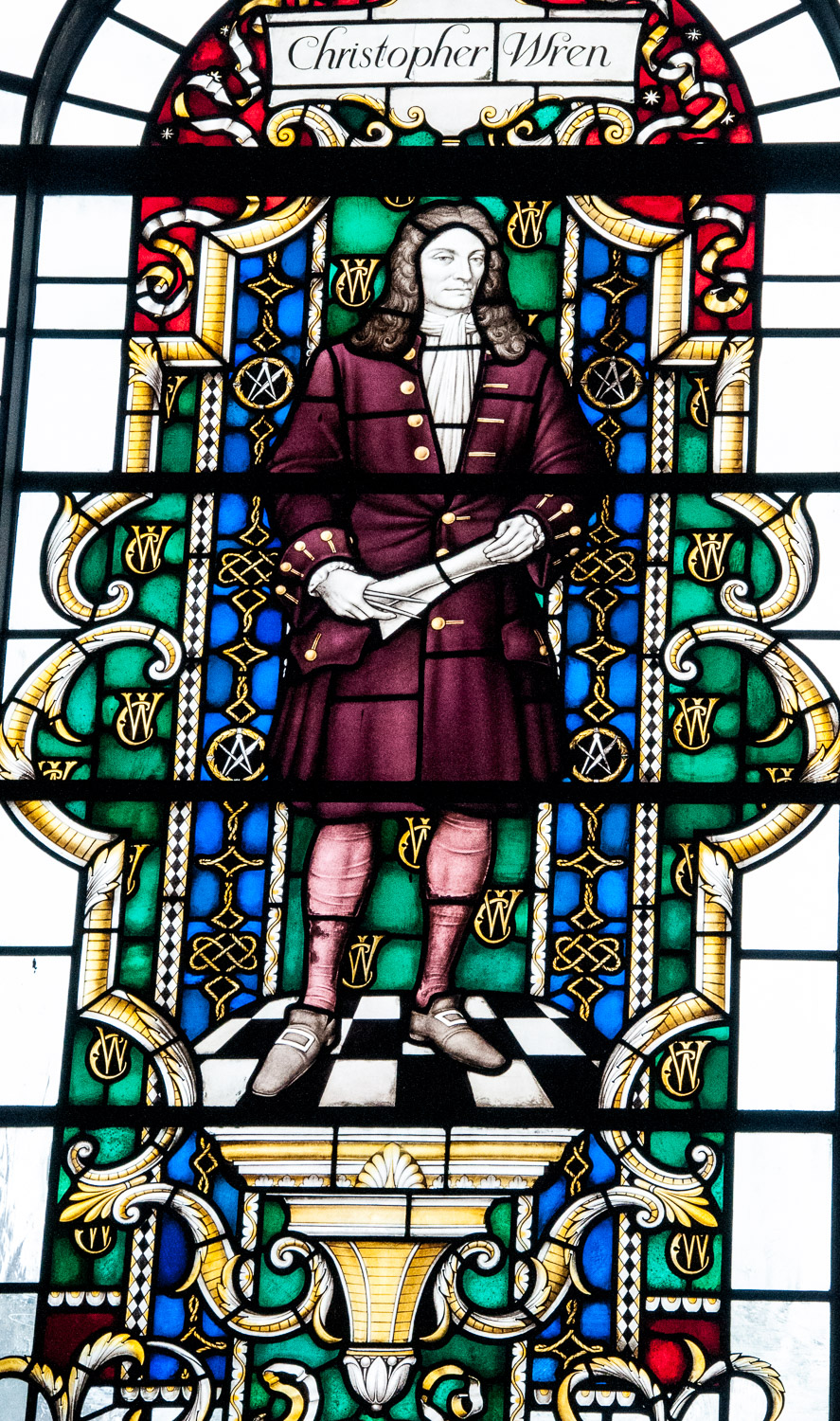
Sir Christopher Wren as portrayed in stained glass at the church of St Lawrence Jewry …

He is buried in a quiet corner of the cathedral crypt under a plain stone and an inscription which includes the words ‘Lector, si monumentum requiris, circumspice‘, usually translated as

Reader, if you seek his memorial – look around you


Anniversary Blog! Things that made me smile.

I am really pleased to be celebrating the 52nd edition of my blog. Thank you so much for subscribing – especially those of you who have been doing so since the beginning.

As this is a special occasion, I am departing from the usual format and have been looking back at pictures from previous editions as well as other pictures that, for various reasons, I did not use. My only criteria for inclusion is that they made me smile and I hope you find them amusing too – where there is a blog you can click on the links to access it.

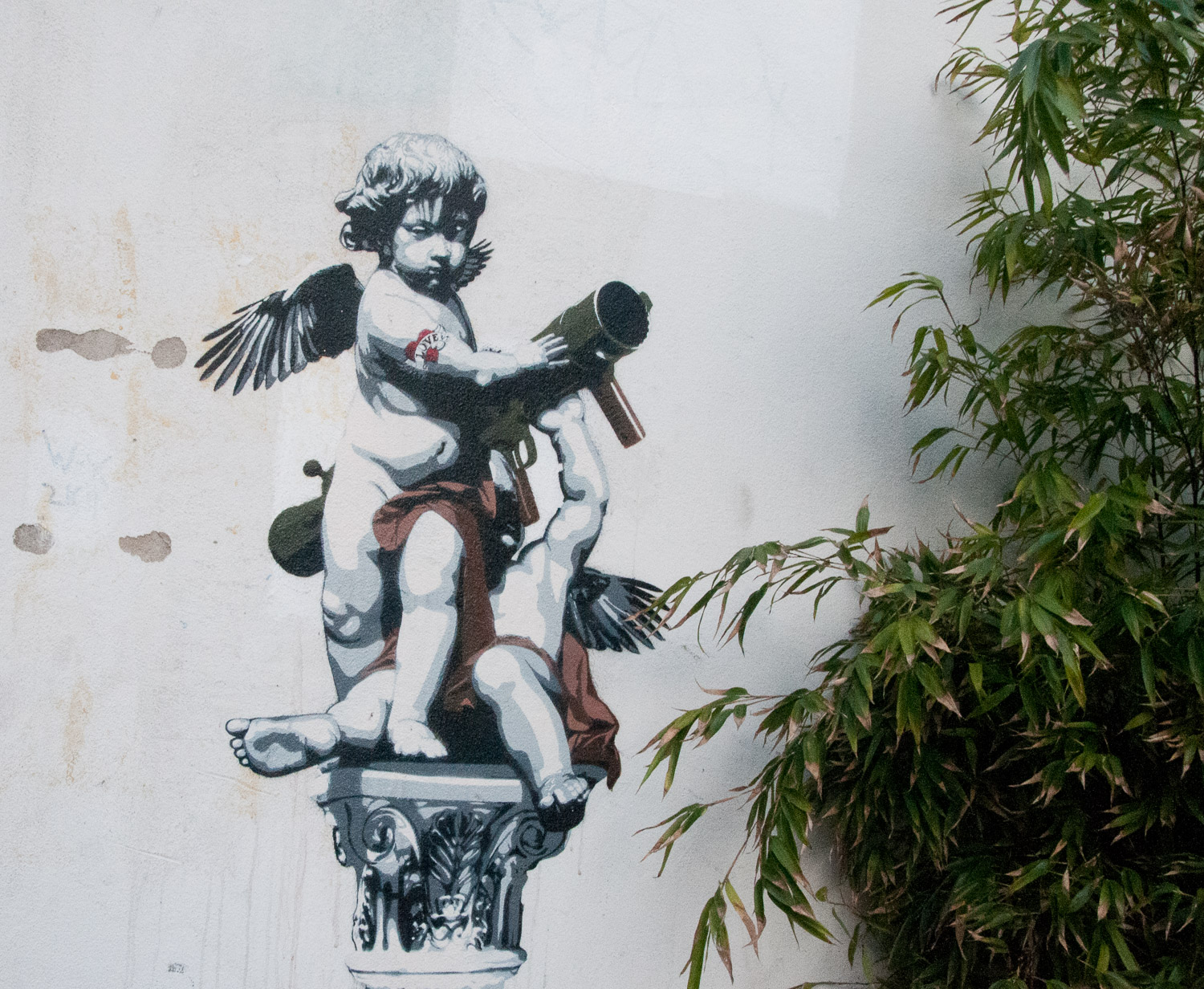
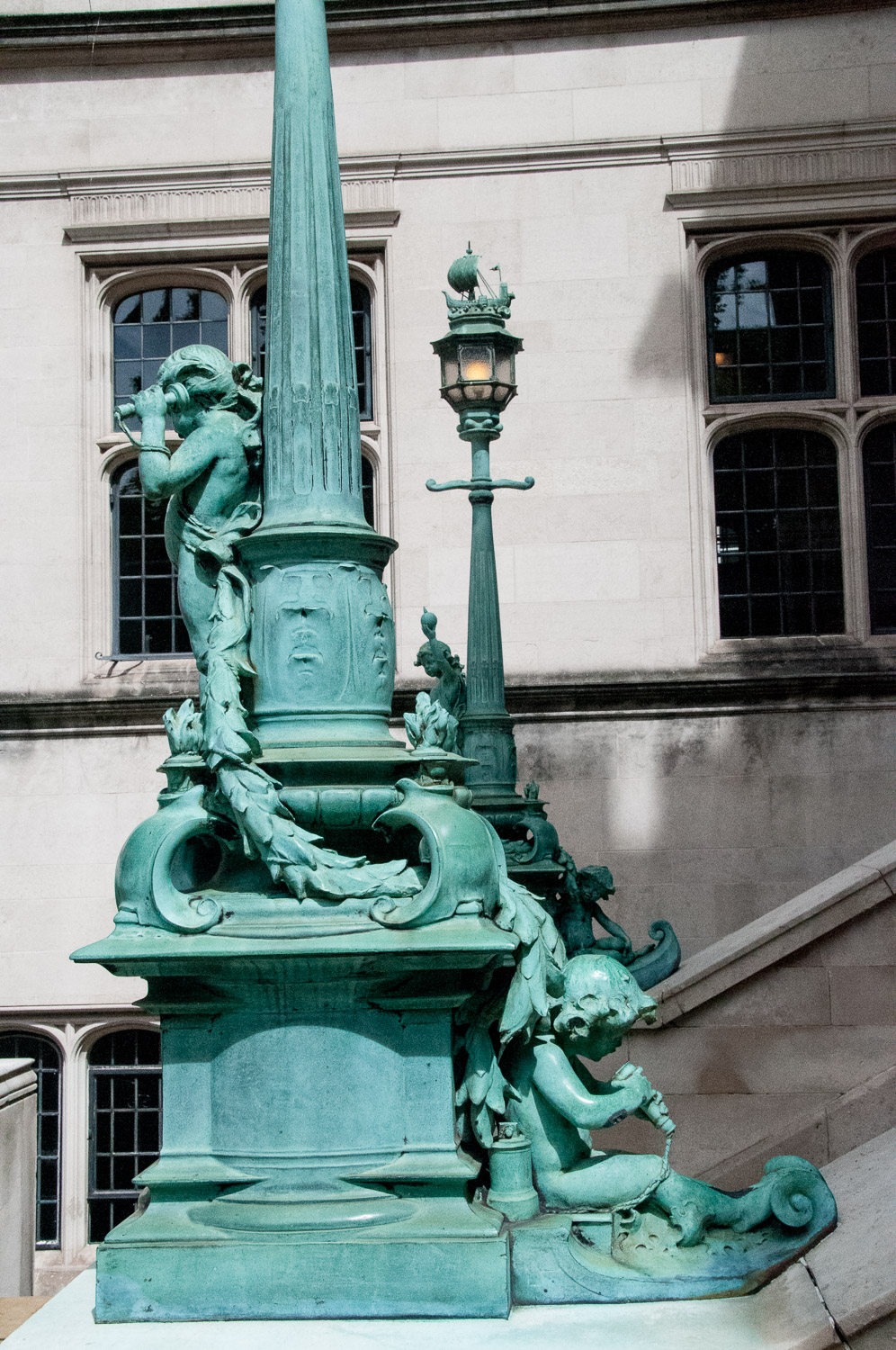
First up are these cherubs busy assembling a bazooka – I particularly like the ‘LOVE’ tattoo that one of them has on his arm …

And what about these two chatting on a 19th century telephone …

They all appeared in my blog Charming Cherubs

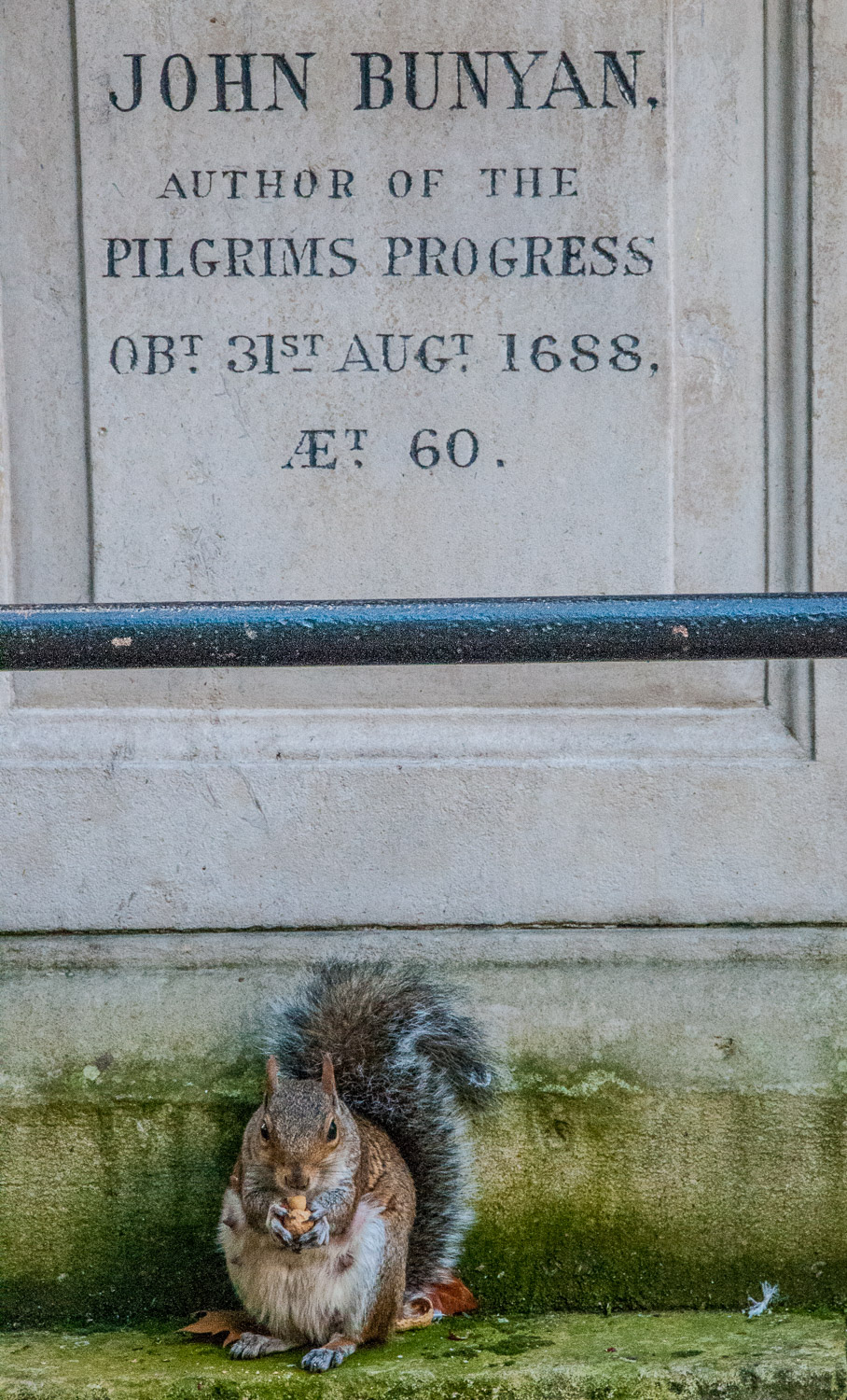
On looking through the archive I was surprised at just how many animals have found their way into my blog. For example, when I was photographing John Bunyan’s tomb in the Bunhill Burial Ground, I was photobombed by this cheeky squirrel. He decided to tuck into his lunch just as I was about to take the picture …

You can read more here

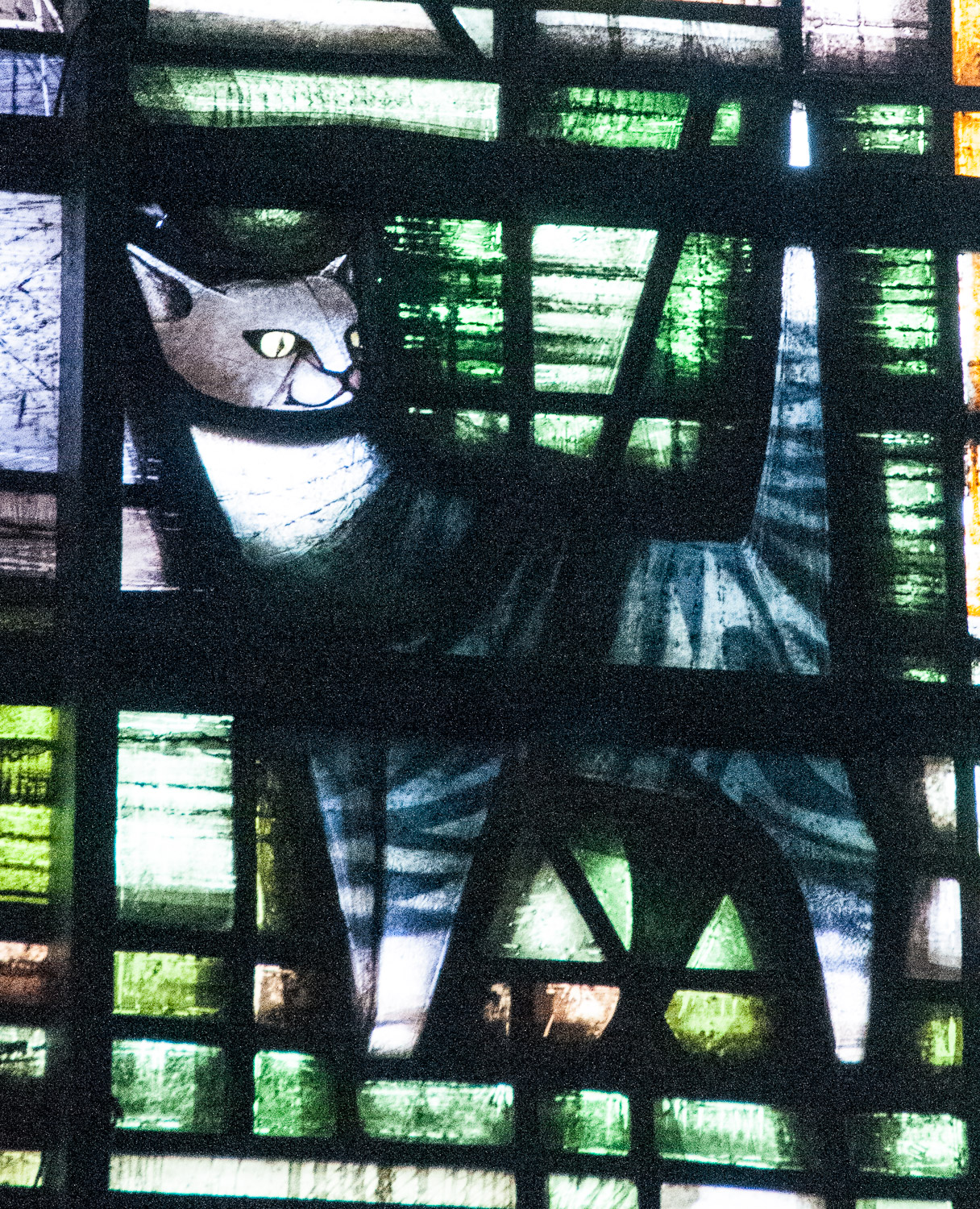
Everyone knows the story of Dick Whittington and his cat and here the animal is portrayed in stained glass. He looks like he has just seen a mouse – and I love his perky tail …

This and other stunning stained glass windows are celebrated here

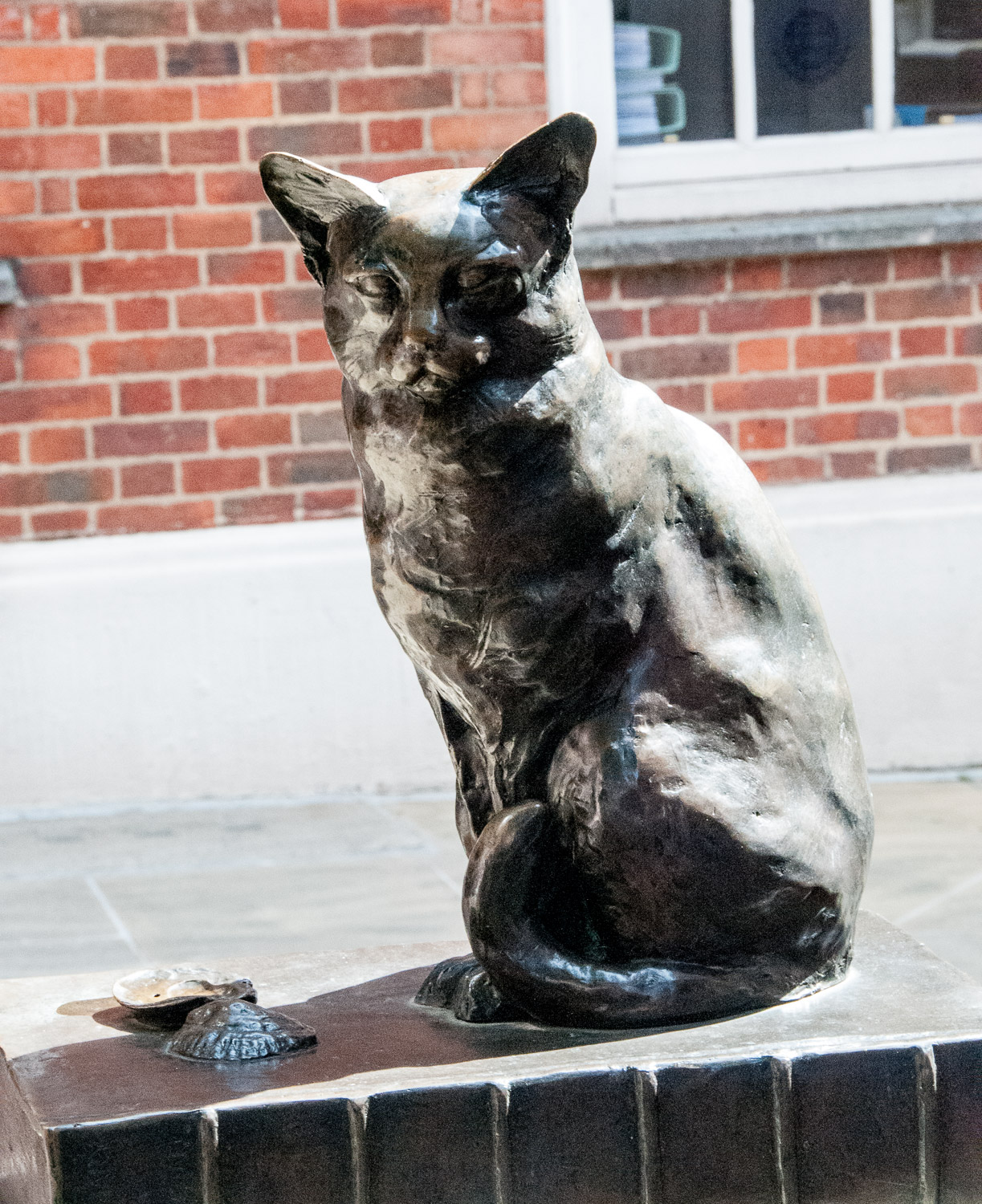
Another well known cat can be found in Gough Square. His name is Hodge and he is sitting on his master’s famous dictionary …

His owner, Dr Johnson, declared him  ‘A very fine cat, a very fine cat indeed’

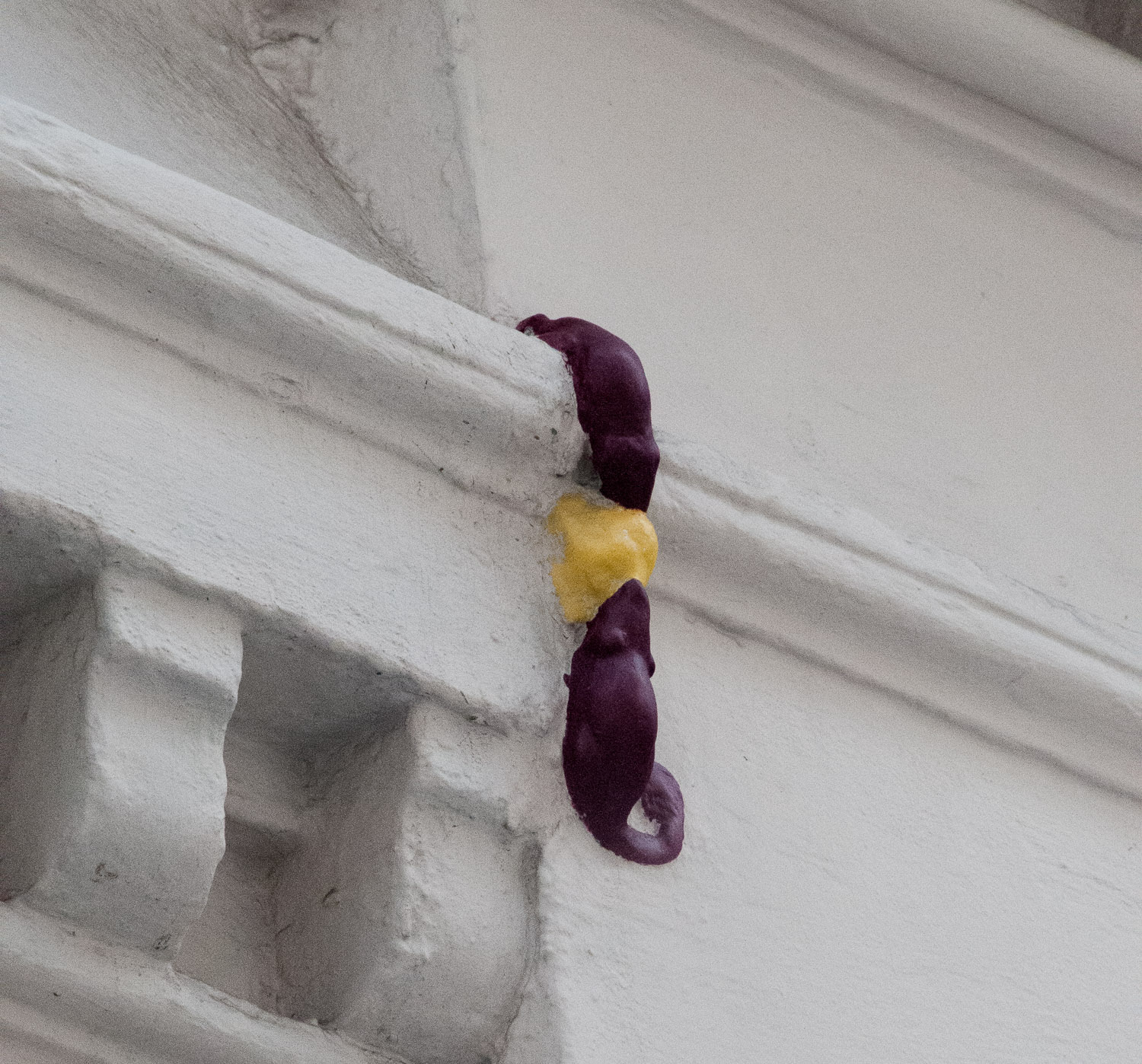
From famous cats to mysterious mice. Nibbling a piece of cheese, they add charm to a building in Philpot Lane off Eastcheap and have been described as London’s smallest sculpture.

No one knows their origin but there are a few theories. You can read more about the mice and other animals here

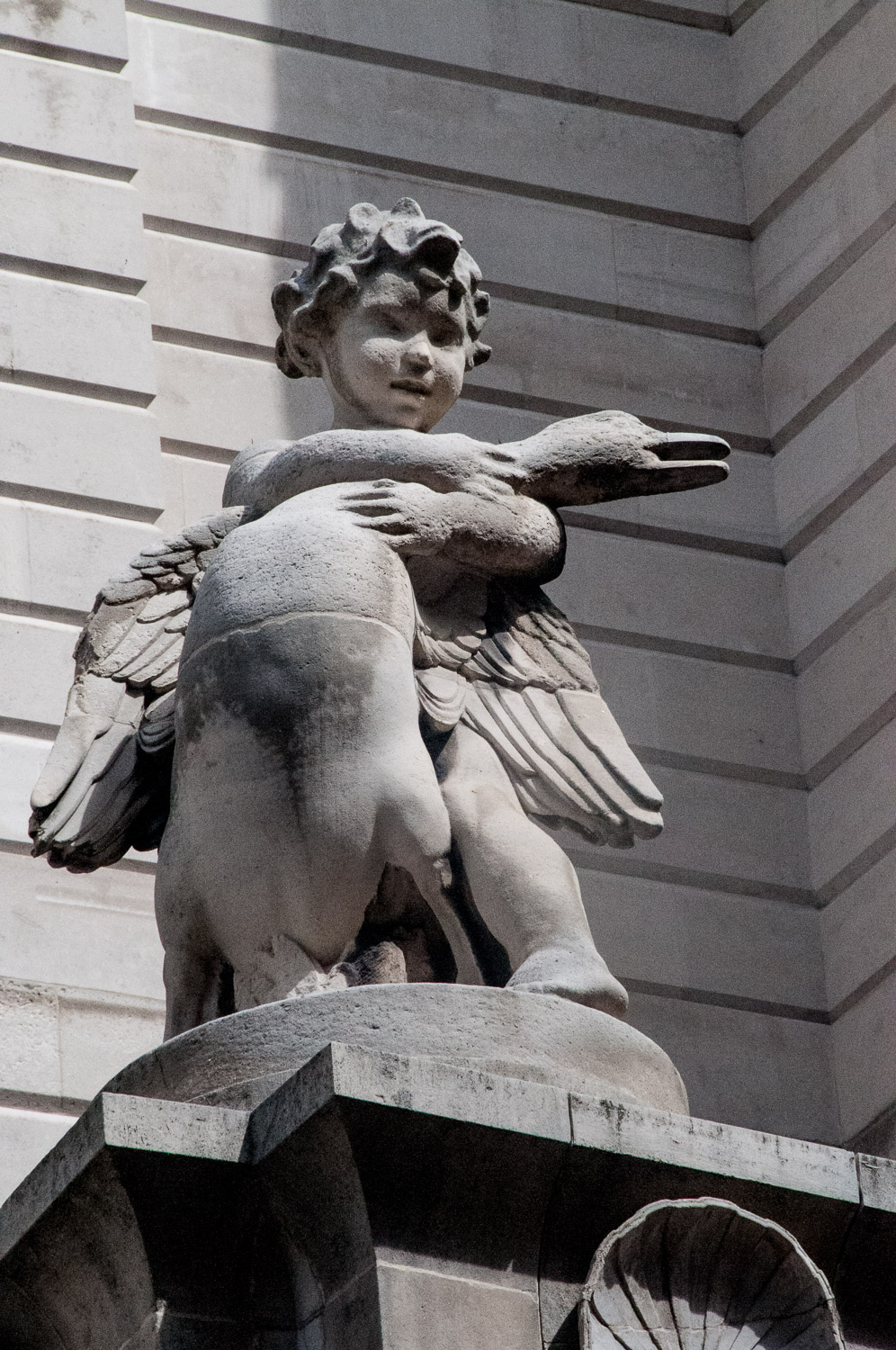
When deciding on how to decorate this imposing City building the sculptor had a bit of fun by adding this little boy struggling to hold a goose …

The street it is on is, of course, Poultry

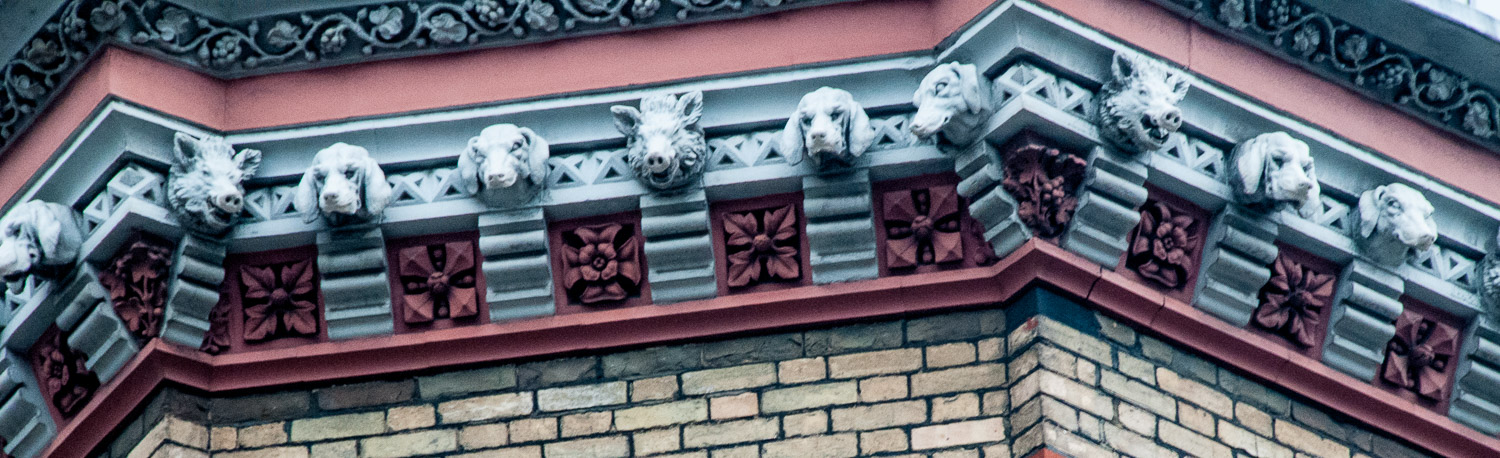
Floppy eared dogs and smiling boars’ heads compete for your attention at the corner of Eastcheap and Philpot Lane …

Unfortunately when I looked recently they had been repainted a dull, boring cream.

They reference a Shakespeare play and you can read more here

I really liked this poster for the movie King Kong and then had to smile when, looking closely, I noticed an unusual feature. As Kong rampages through New York, he also seems to be chasing a double-decker London bus …

Edgar Wallace worked on the script for the film and I recount some of his story here

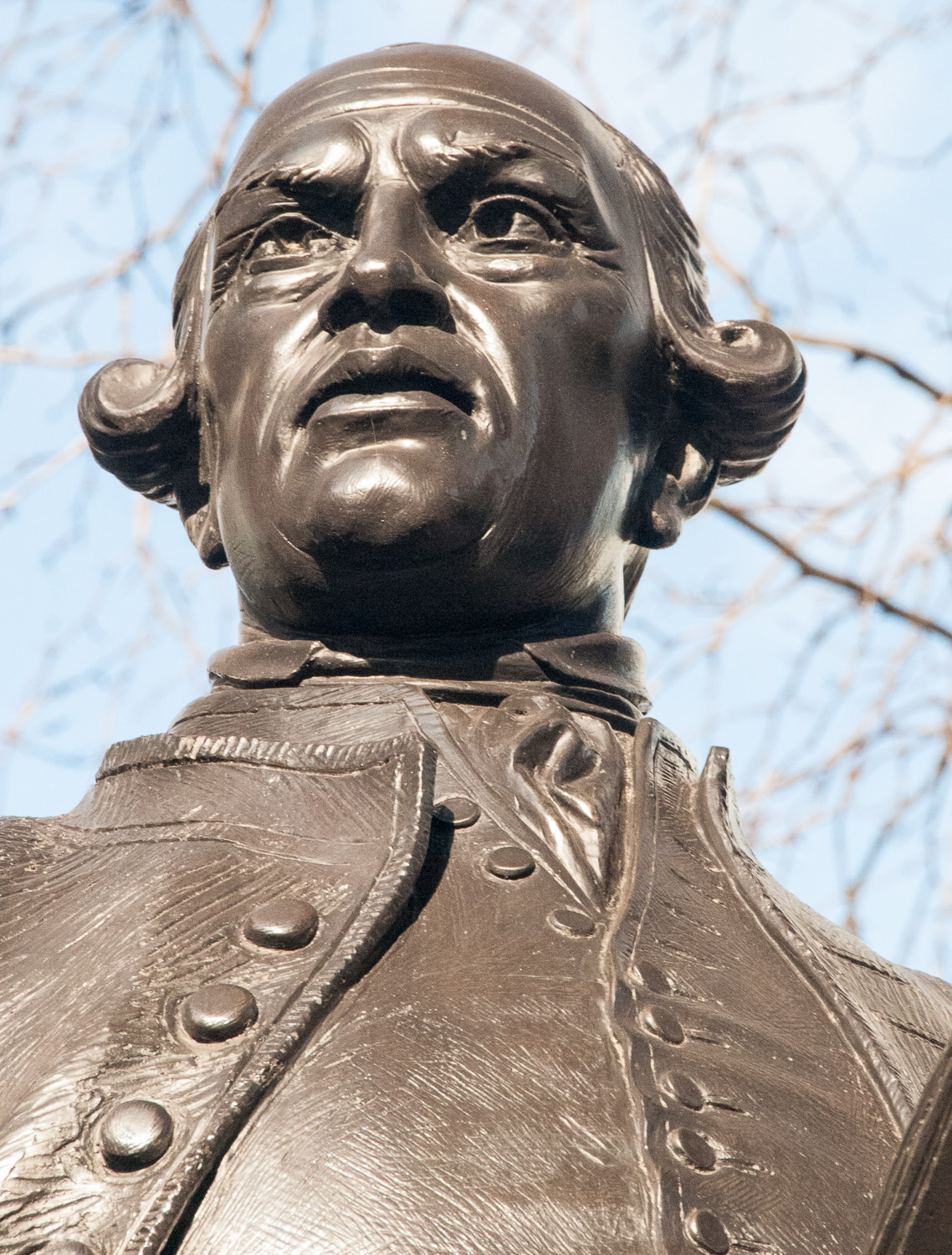
Is this the only statue in London portraying a man with a pronounced squint?

The inscription on his statue reads as follows: ‘A champion of English freedom, John Wilkes 1727-1797, Member of Parliament, Lord Mayor.’ You can read more about him here

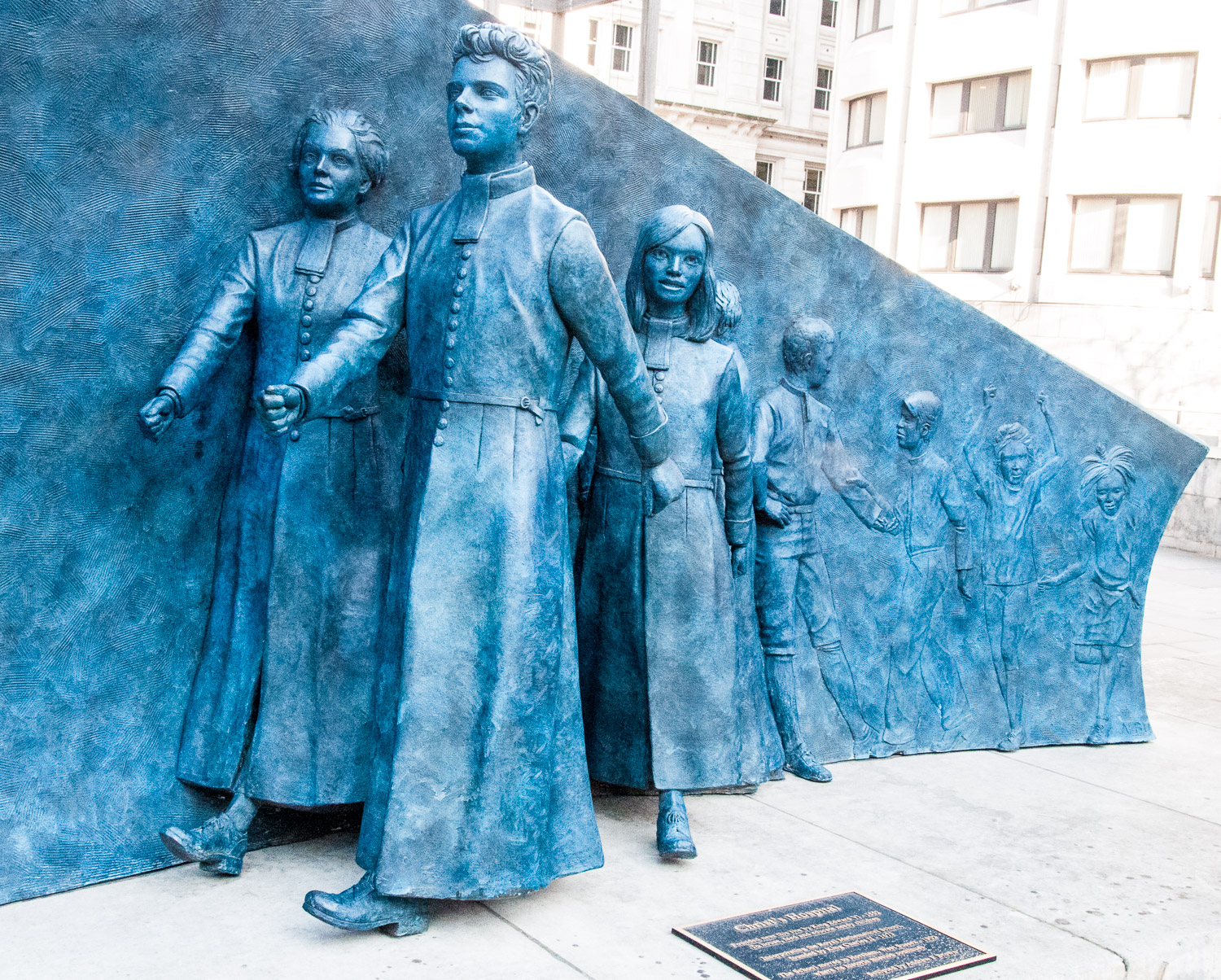
Unveiled in November 2017, this splendid sculpture in the Christchurch Greyfriars Church Garden commemorates Christ’s Hospital School’s 350 years presence in the City of London from 1552 to 1902.

The sculpture is ‘designed to curve gently, reflecting the care and support provided to children, who flow from the youngest entering the School to confident adolescents marching boldly into their futures’.

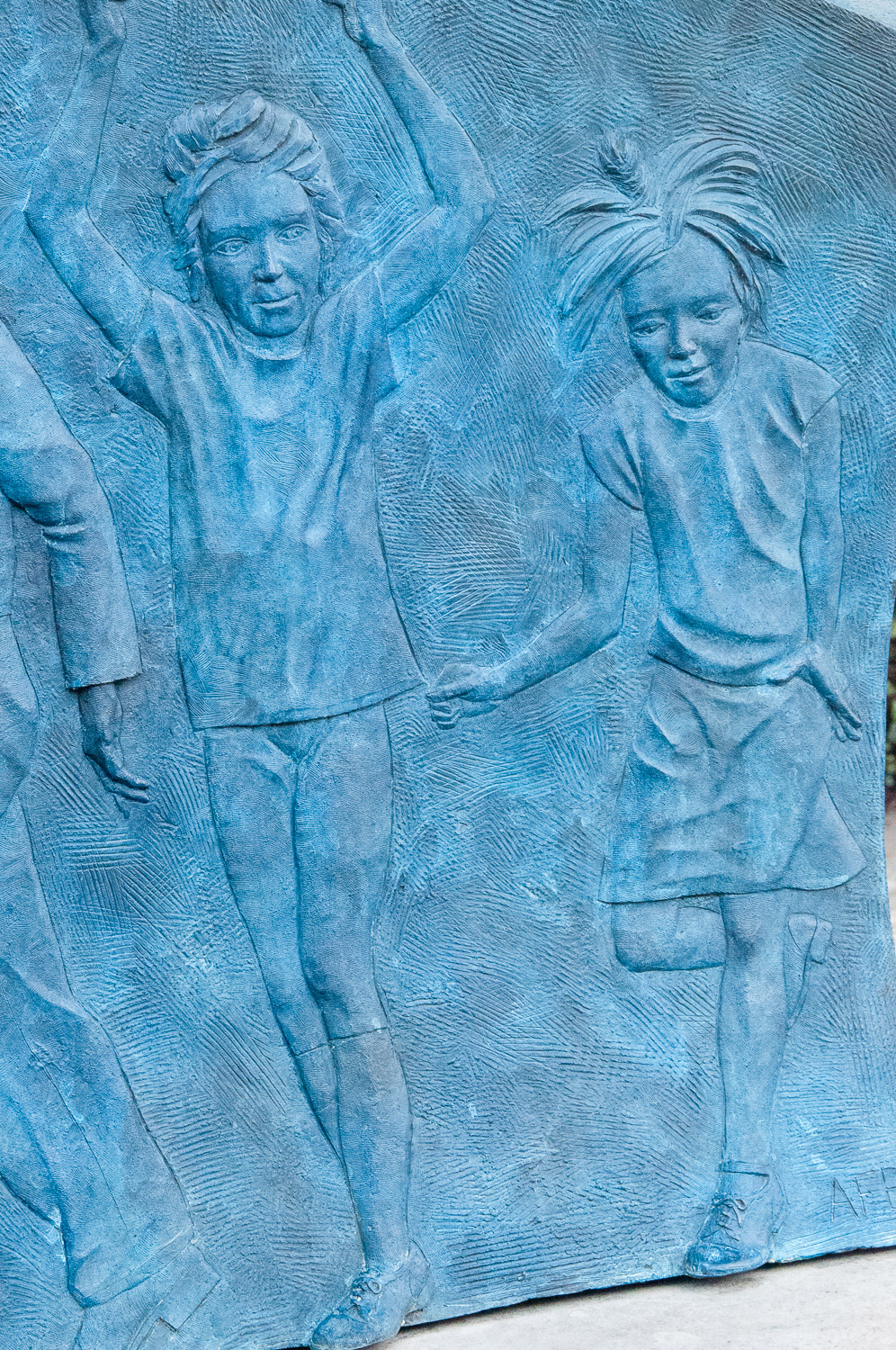
What made me smile was the portrayal of the ragamuffins at the far right, obviously before they benefited from the school’s civilising influence …

They look like they are having great fun running wild.

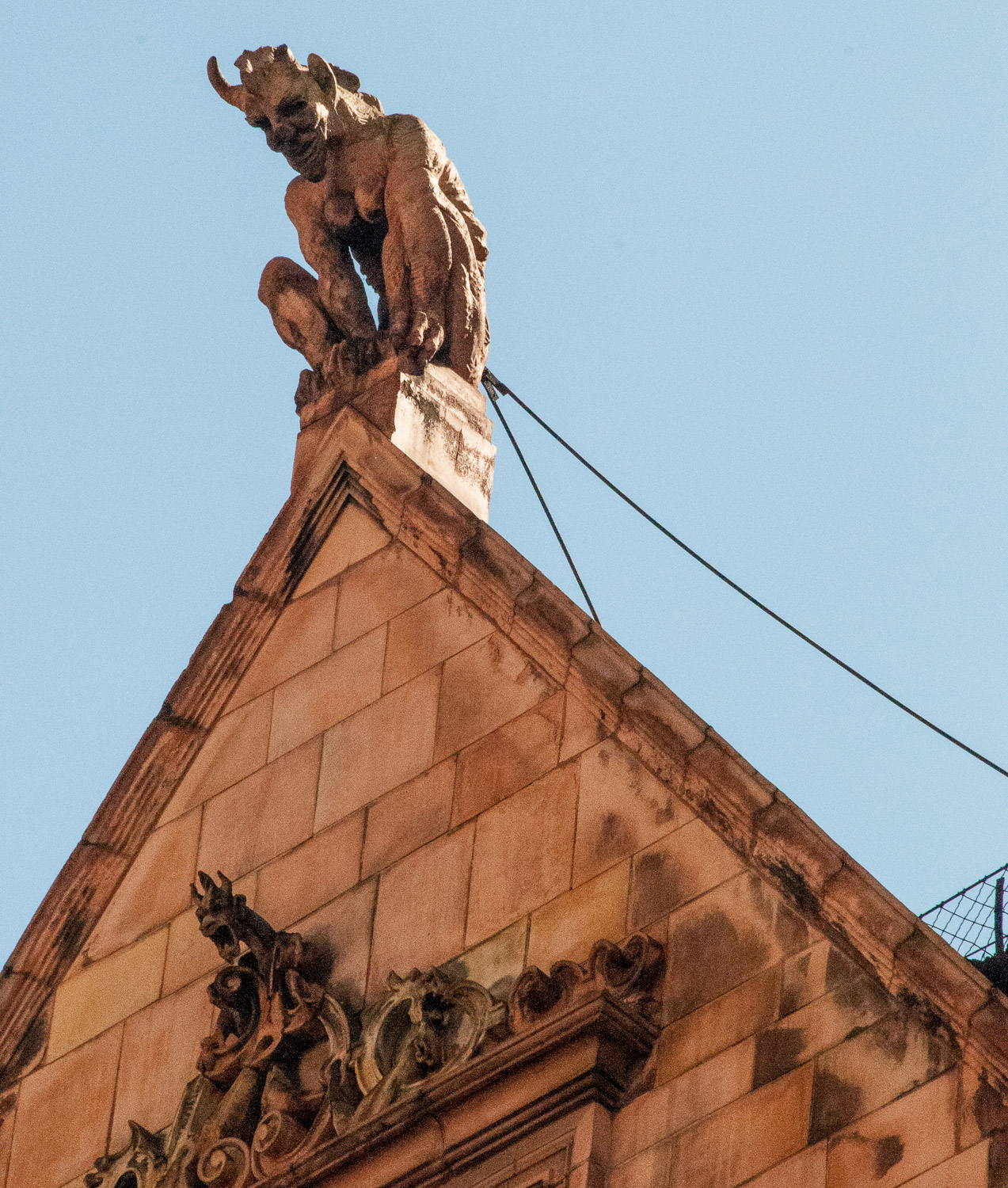
The Cornhill Devils are said to resemble the rector of the church next door …

I tell the story of the devils in this blog

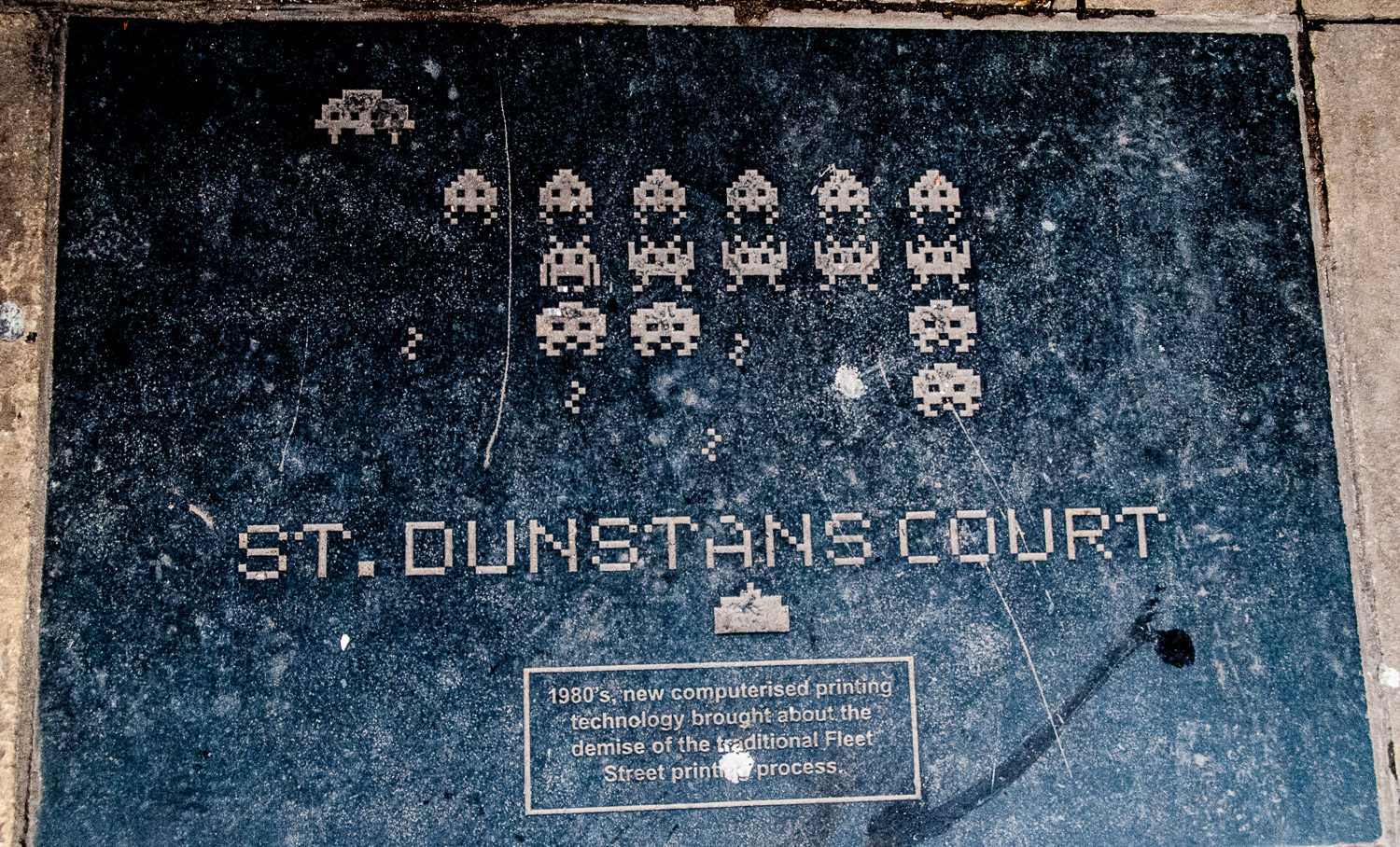
If you walk down Fleet Street you will notice that many of the narrow alleyways leading off to the north have plaques embedded in their entrance telling stories of Fleet Street in its heyday as the print news capital of the UK. The one at the entry to St Dunstan’s Court reminds one of the way game technology has moved on. Older readers will recognise figures from Pacman, the game used here to illustrate ‘hi tech’ developments. Younger readers will probably have no idea what we are talking about …

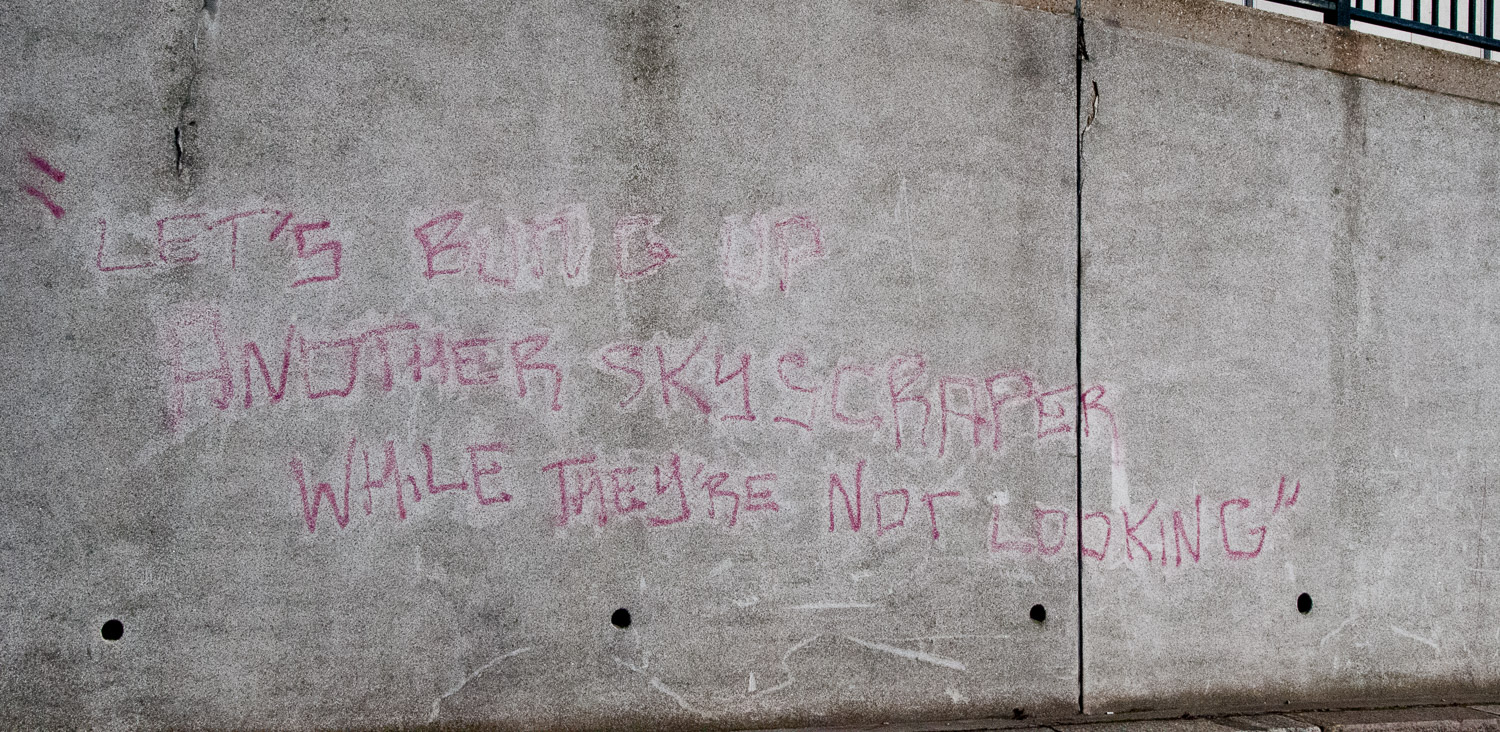
I don’t normally like graffiti but this seemed fair comment when you look around the City today …

‘Let’s bung up another skyscraper while they’re not looking.’

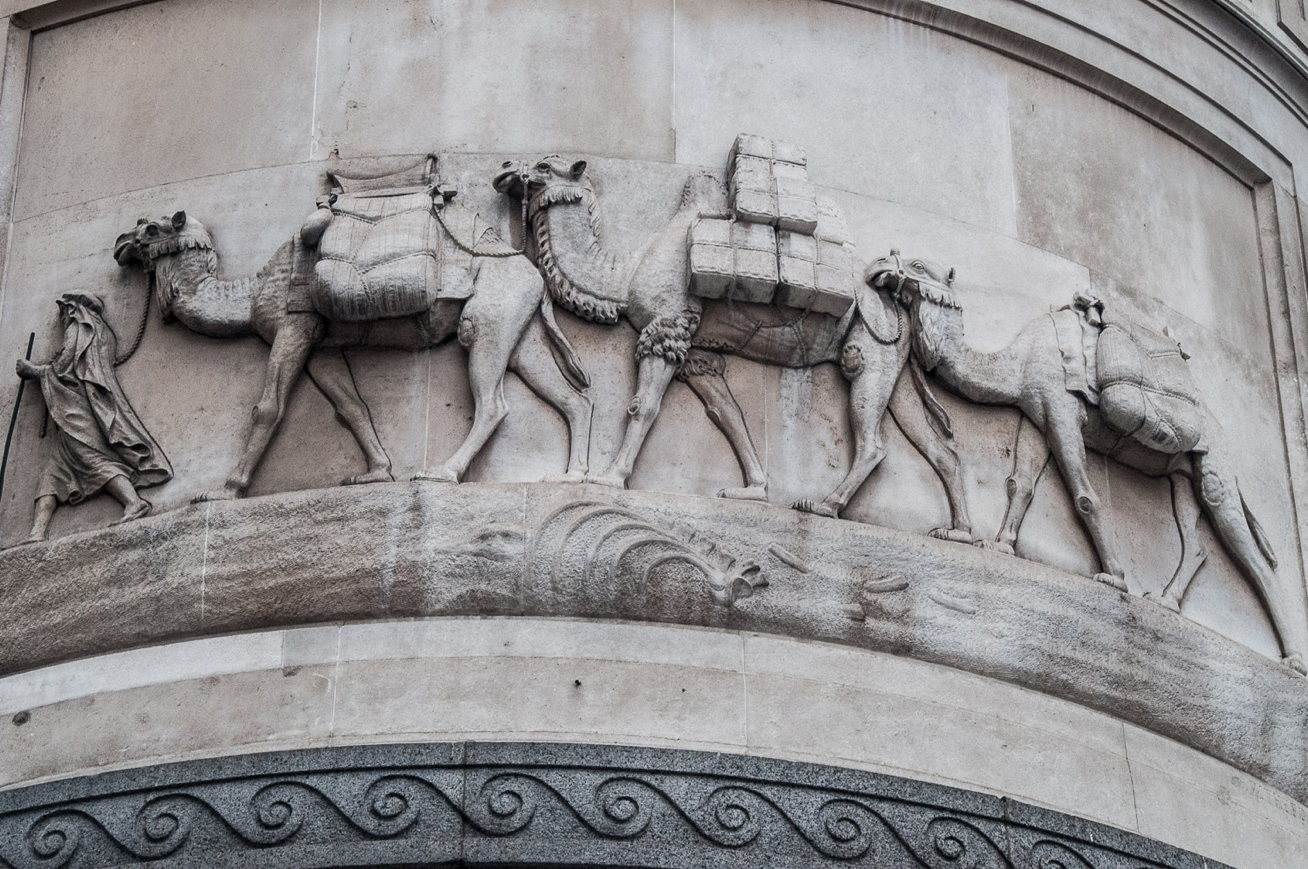
And I will end with a picture from my first blog. Happily these camels are still being led towards Tower hill …

Here’s a link to my first blog

Thank you again for subscribing!

Page 26 of 26

Powered by WordPress & Theme by Anders Norén

Symbols & Secrets
Privacy Overview

This website uses cookies so that we can provide you with the best user experience possible. Cookie information is stored in your browser and performs functions such as recognising you when you return to our website and helping our team to understand which sections of the website you find most interesting and useful.