Walking the City of London

Category: Quirky Page 17 of 26

Some mysteries, solved and unsolved … from strange street markings to wandering gravestones.

One of the best pieces of advice I was given when I began to write about the City was to continually look up and it’s true to say that I have often been surprised by what I have observed – from the Cornhill Devils to Mercer Maidens to a beautiful lighthouse on, of all places, Moorgate.

It’s also true to say, however, that looking down can be just as interesting.

Like me, you must have occasionally wondered what symbols like these painted on roads and pavements actually signify. I found this nice collection at the east end of Carter Lane …
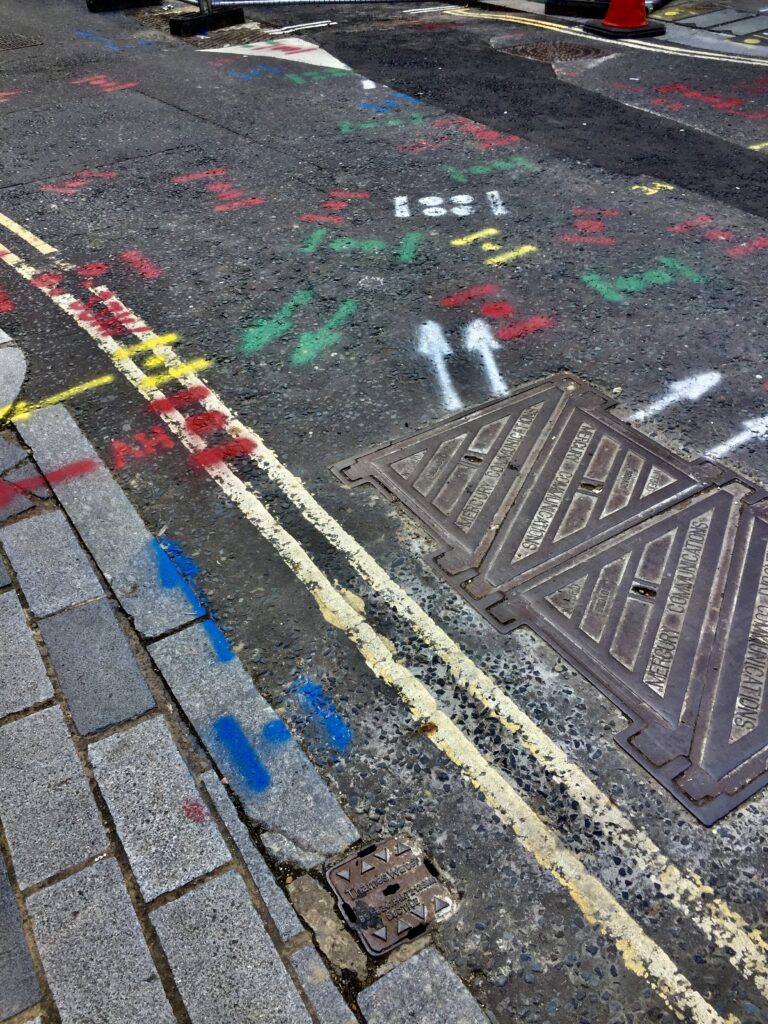
Well, wonder no more, all the answers are here. For example …
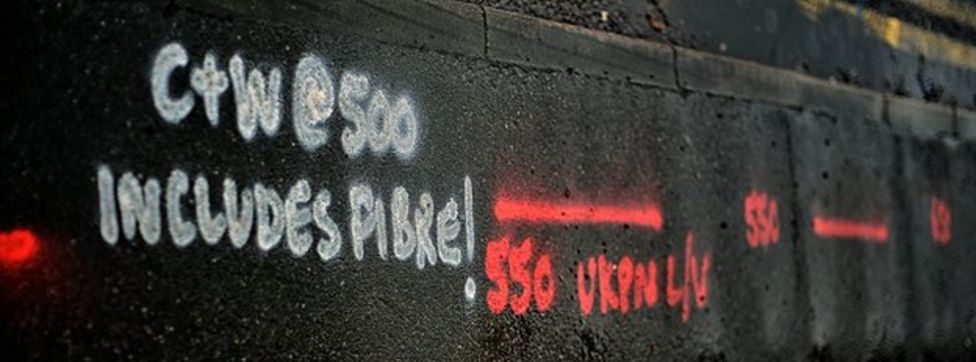
Not surprisingly, and used in warning signs the world over, red paint denotes electricity. Thus red lines show where electricity cables run and mean that anyone digging there must do so with extreme caution.

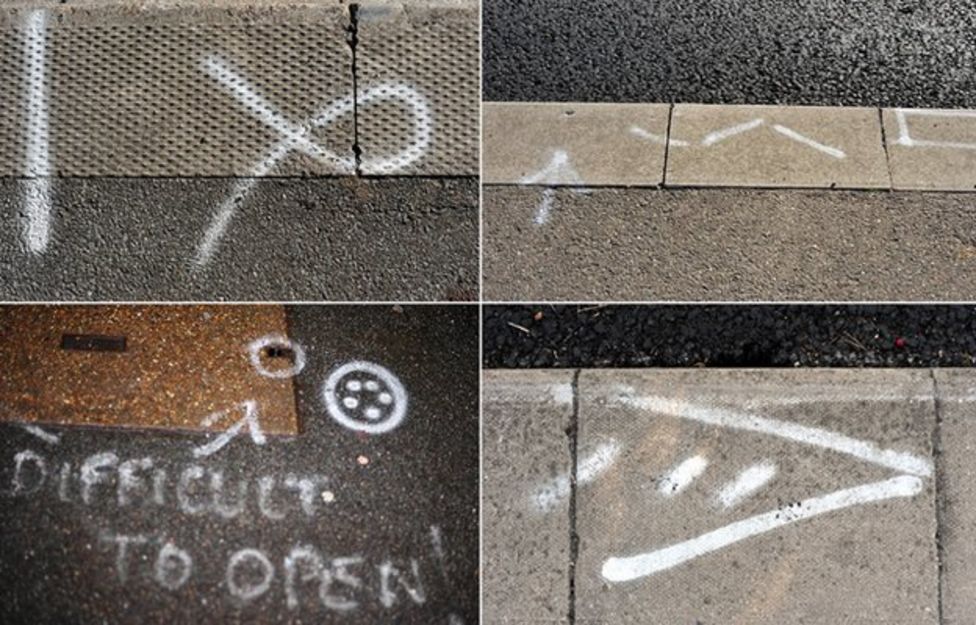
White is like a little Post-It note for future contractors …
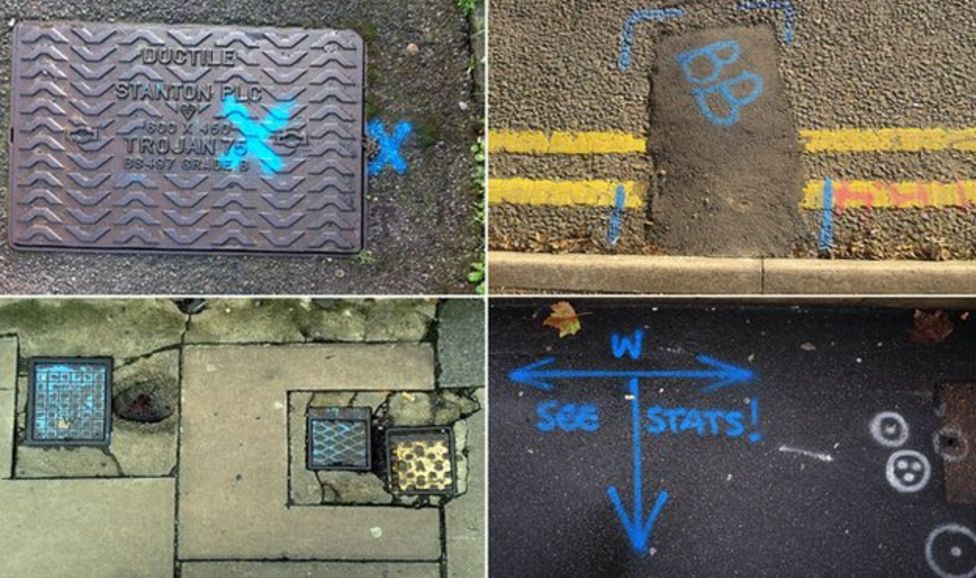
Blue is usually for water pipes …
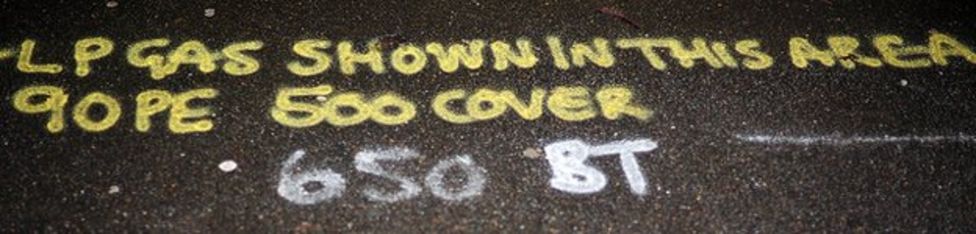
Yellow refers to all things gas …
A growing hue in the pavement-marking business is green, the colour of cable communications, which includes town and city CCTV networks and cable television lines …
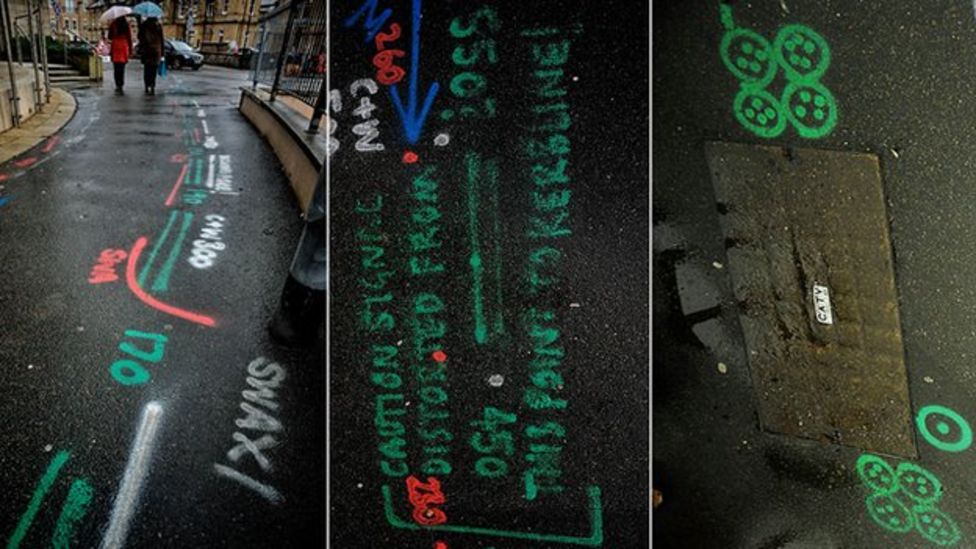
And finally some others in orange …
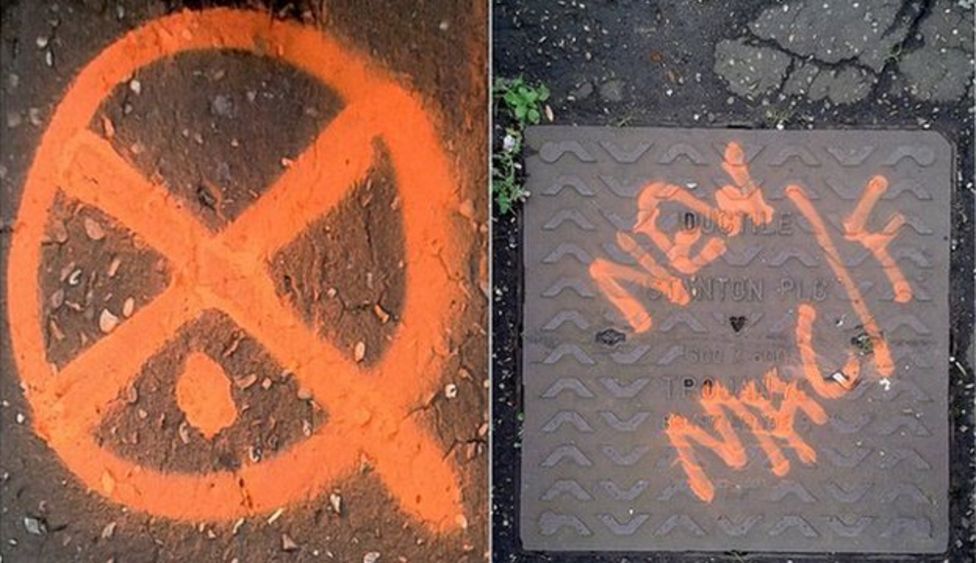
All are explained in this fascinating article entitled ‘What do those squiggles on the pavement actually mean?‘ from which I have drawn extensively for this week’s blog.

Incidentally, whilst on Carter Lane I briefly looked up and was puzzled by the small plaque on the left of the parish boundary mark …
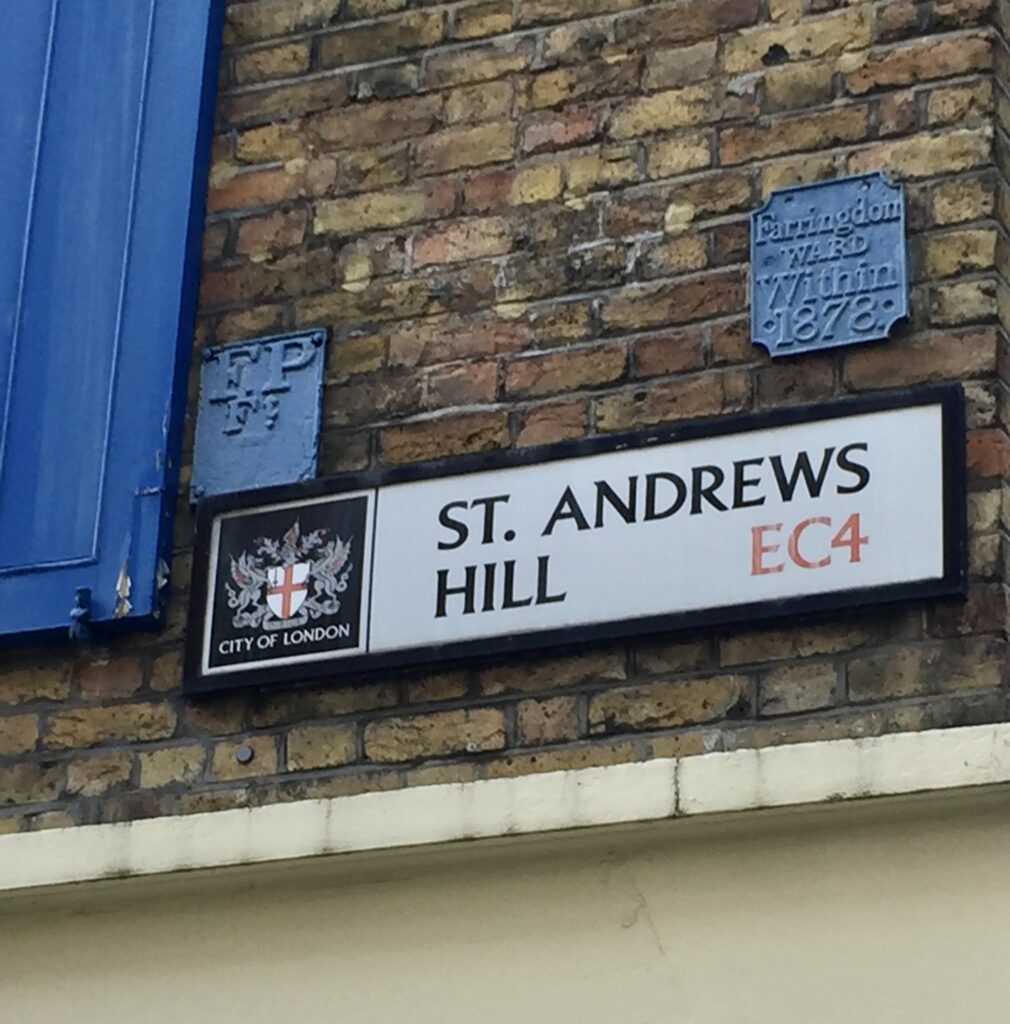
According to a document on the Essex Fire Brigade web site, FP stands for Fire Plug. Apparently in the early days of the fire service, and when many underground water pipes were made out of wood, firemen would dig down to the water main and bore a small, circular hole in the pipe to obtain a supply of water to fight the fire.

When finished, they would put a wooden plug into the hole, and leave an FP plate on a nearby wall to alert future firefighters that a water main with a plug already existed.

When wooden pipes were replaced by cast iron pipes in the 19th century, workmen would often bore a small hole in the pipe and fit with a wooden plug when they saw an FP plate. This would later be replaced with the Fire Hydrant method, which would be identified by a large H. Many thanks to the London Inheritance blog for this information.

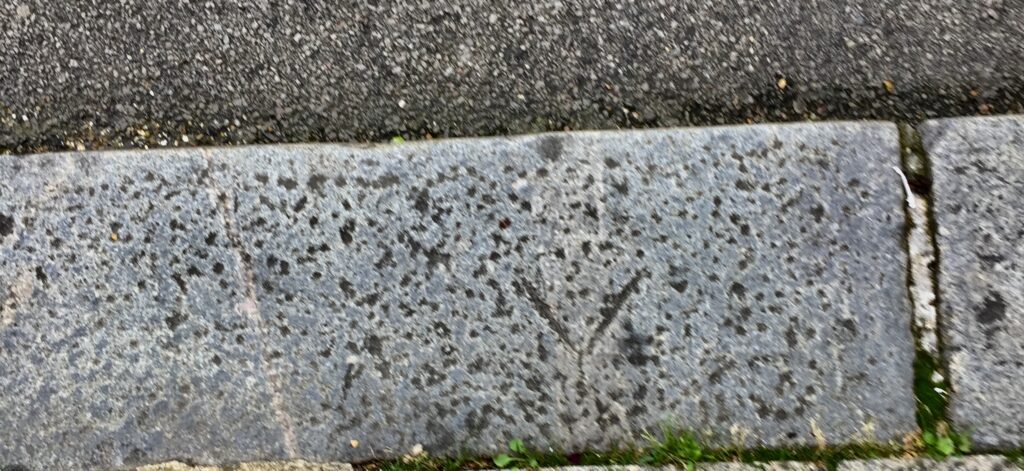
Looking down can be a bit addictive and another puzzle it presented me with were these ‘V’- shaped incisions into kerb stones. I found a number of examples in EC1.

On Old Street …
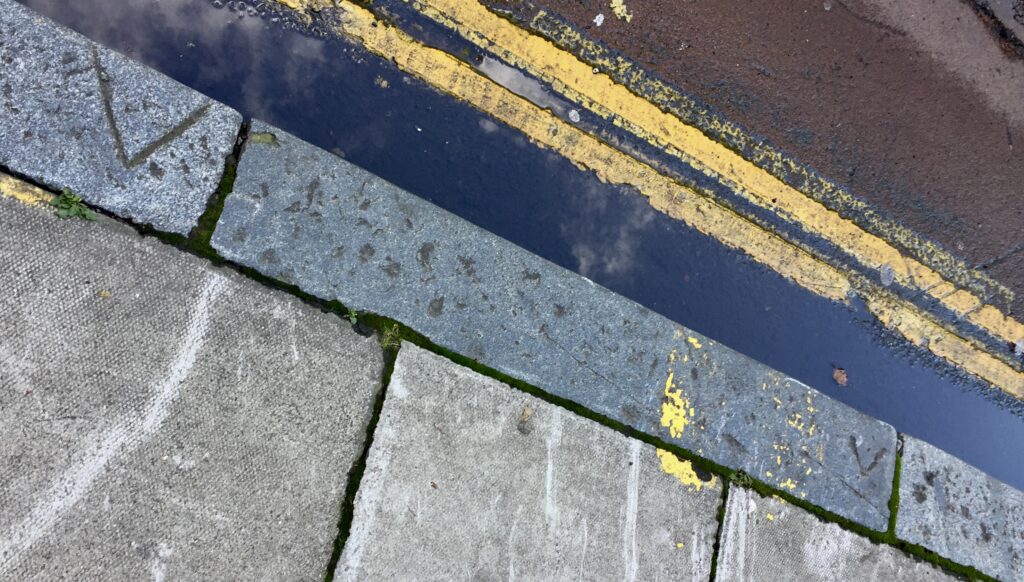
Look carefully and you can see there are two of them.

And Dufferin Street …

And Roscoe Street …
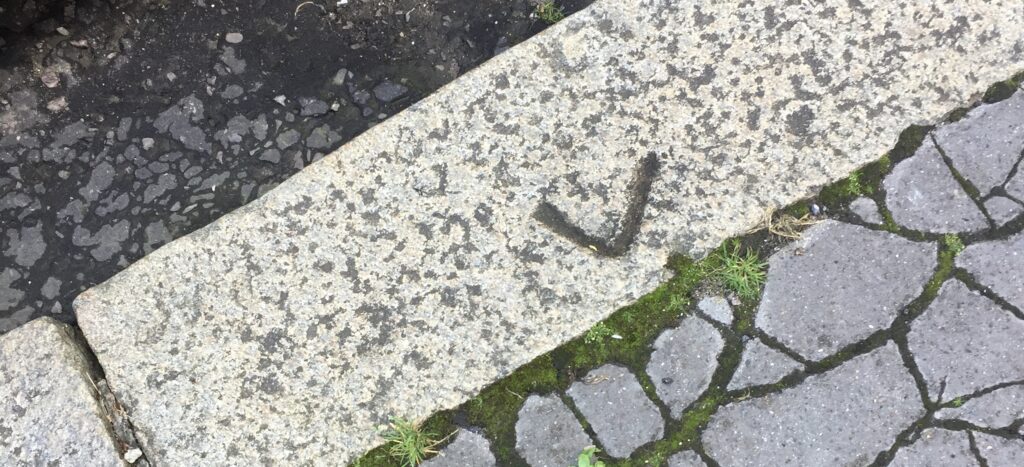
Discovering what they might mean proved rather difficult and I entered a whole new world when I started my research. Look at this article entitled The World of Carvings and Stories and click on some of the useful links. I shall continue to look down and see if I encounter any more.

In last week’s blog I spoke of a mystery connected to these two gravestones in the old parish churchyard of St Ann Blackfriars in Church Entry (EC4V 5HB) …
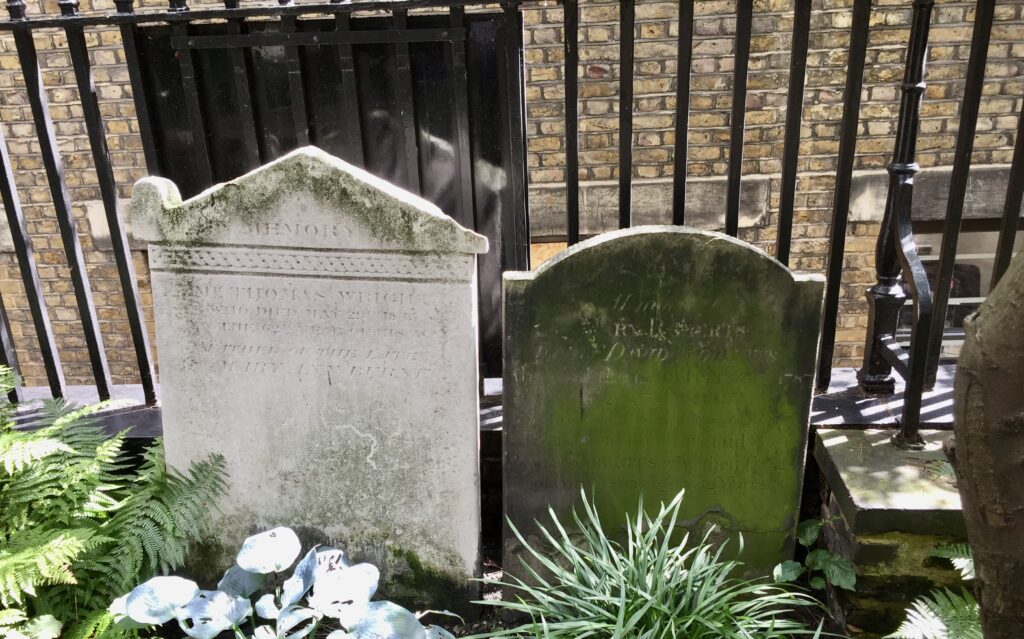
My ‘go to’ source of information when it comes to grave markers is the estimable Percy C. Rushen who published this guide in 1910 when he noticed that memorials were disappearing at a worrying rate due to pollution and redevelopment …
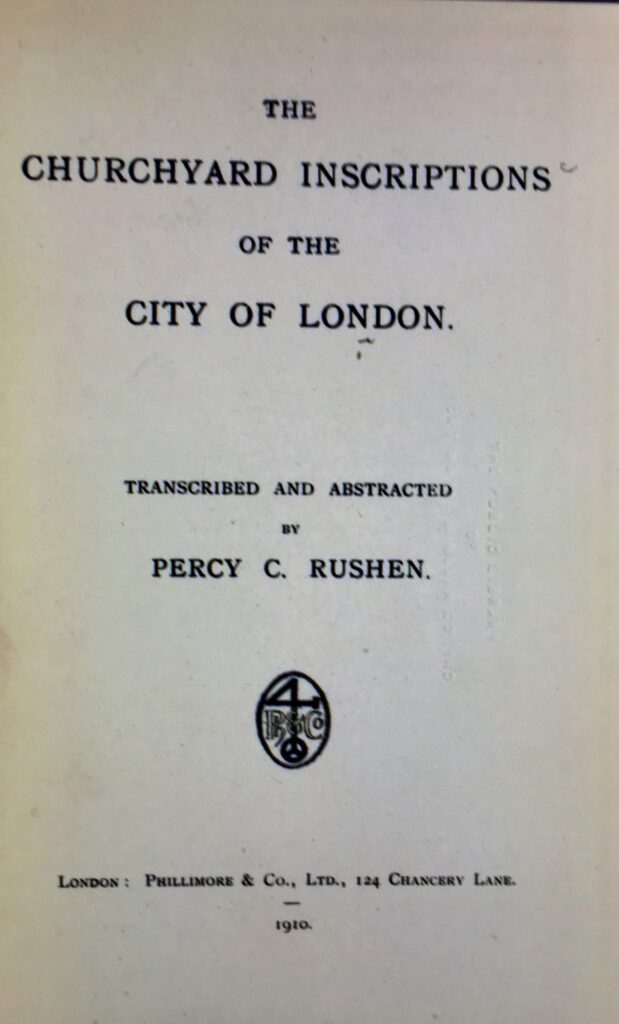
So when I came across the last two stones in this graveyard with difficult to read inscriptions I did what I normally do which is to consult Percy’s book in order to see what the full dedication was.

There was, however, a snag. Neither headstone is recorded in Percy’s list for St Ann Blackfriars. Let’s look at them one by one. This is the stone for Thomas Wright …
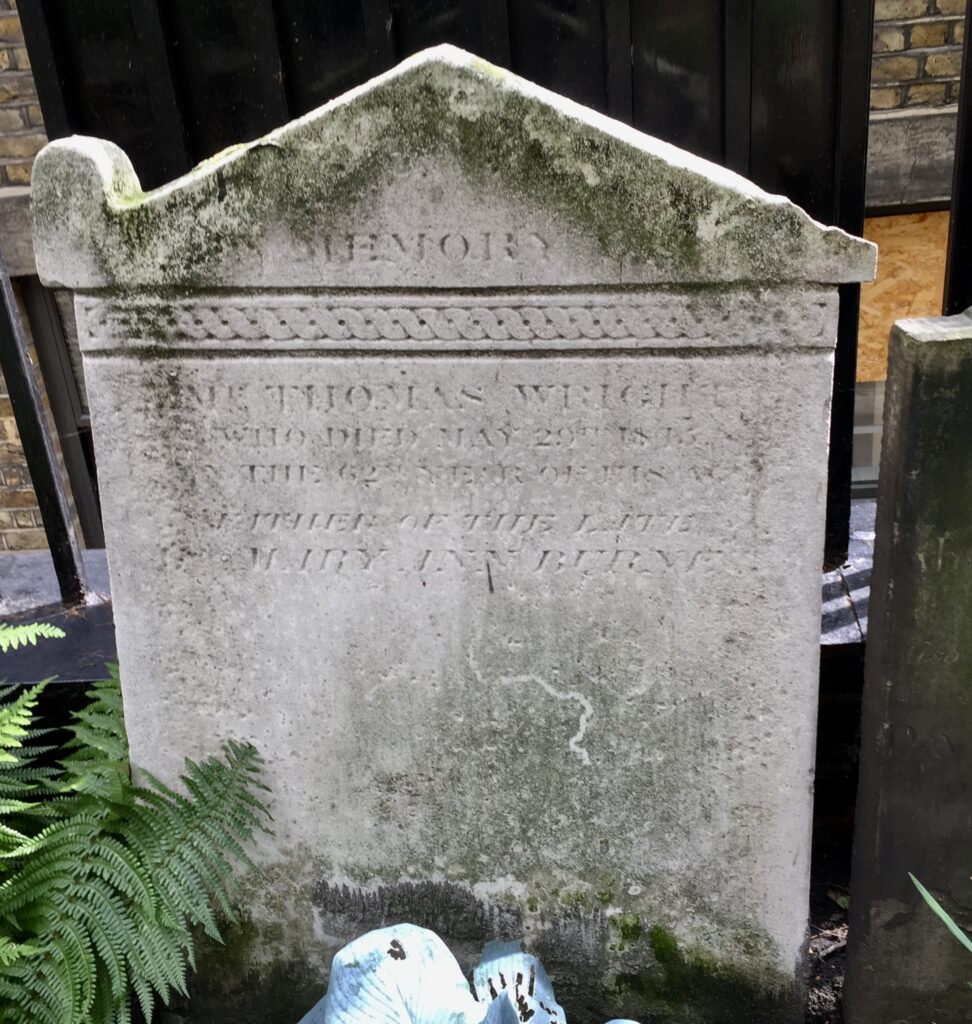
Fortunately, the book lists people in alphabetical order and, although there isn’t a Wright recorded at St Ann’s, there is one recorded at St Peter, Paul’s Wharf. It’s definitely the same one and reads as follows :

THOMAS WRIGHT, died 29 May 1845, father of the late Mrs Mary Ann Burnet.

The inscription of another stone recorded in the same churchyard reads …

CAROLINE, wife of JAMES BURNET , died 26 July 1830, aged 36.

MARY ANN, his second wife, died 12 April1840, aged 36.

JAMES BURNET, above, died … 1842, aged …3

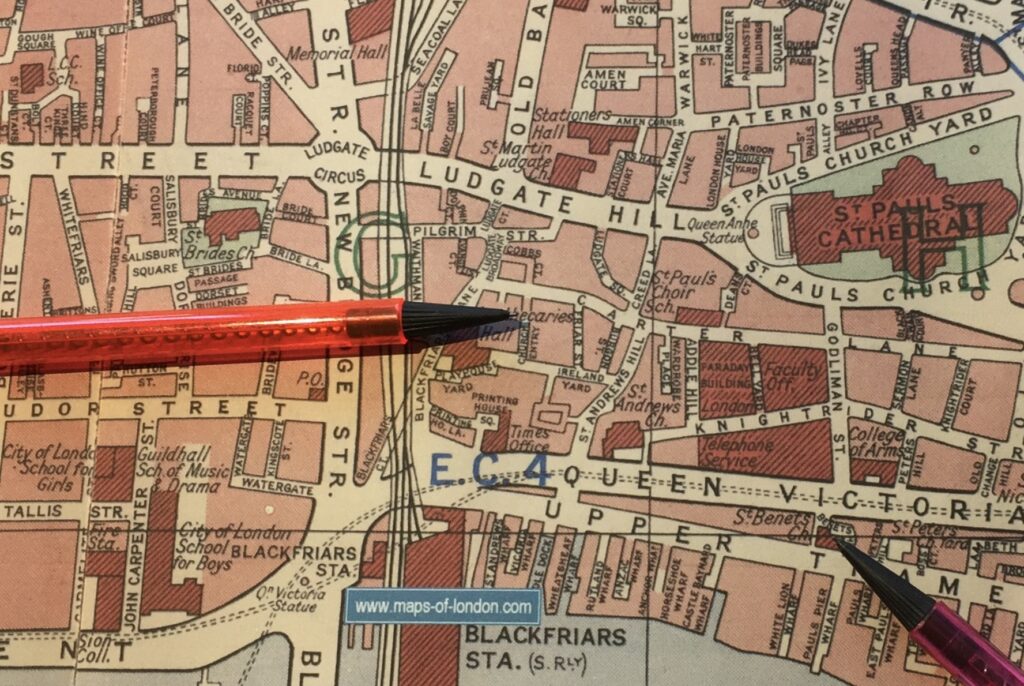
St Peter, Paul’s Wharf, was destroyed in the Great Fire of 1666 and not rebuilt but obviously its churchyard was still there in 1910. And it was still there in the 1950s as this map shows. I have indicated it in the bottom right hand corner with the other pencil showing the location of Church Entry and St Ann’s burial ground …
This is the present day site of Thomas Wright’s original burial place, now Peter’s Hill and the approach to the Millennium Bridge …
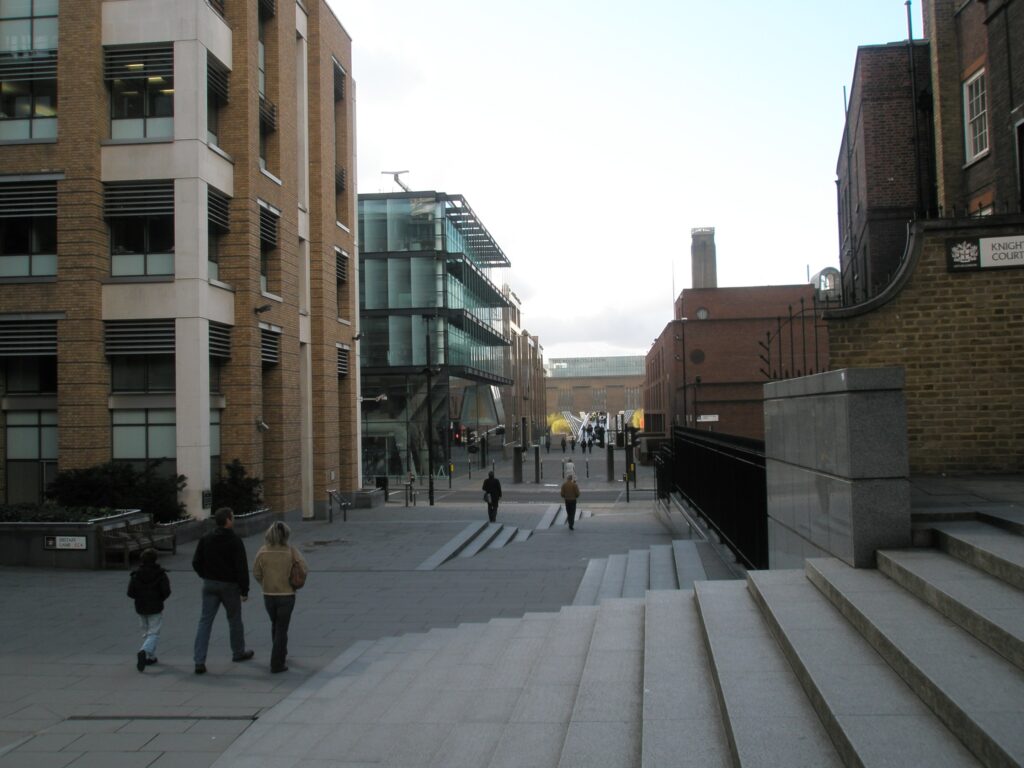
The stone must have been moved some time in the mid-20th century, but the question is, was Thomas moved as well? Have his bones finally come to rest in Church Entry? I have been unable to find out.

This is the headstone alongside Thomas’s …
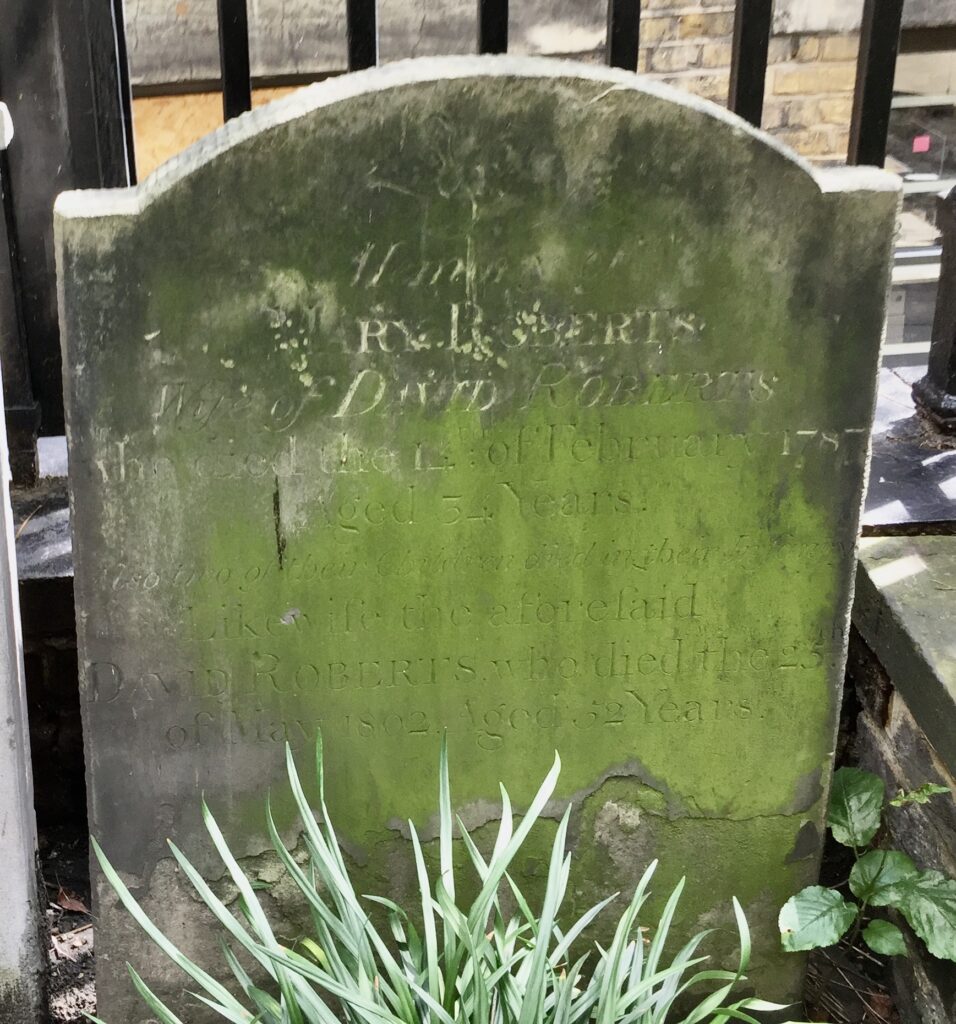
It reads as follows …

In Memory of MARY ROBERTS who died the 14th February 1787. Also two of their children who died in their infancy like the wife of the aforesaid DAVID ROBERTS who died the 25th May 1802, aged 52 years.

I have read this to mean that Mary died in childbirth – a terrible risk at the time. About one in three children born in 1800 did not make it to their fifth birthday and maternal deaths at birth have been estimated at about five per thousand (although that is probably on the low side). Just by way of comparison, in 2016 to 2018, among the 2.2 million women who gave birth in the UK, 547 died during or up to a year after pregnancy from causes associated with their pregnancy. The 1800 equivalent rate would have meant 11,000 deaths.

If you are interested to know more about maternal mortality, its history and causes, you’ll find this incredibly informative article in The Journal of the Royal Society of Medicine. Most disturbing is how doctors who discovered the underlying cause of many deaths were disbelieved and vilified by the medical profession as a whole, thus allowing unnecessarily high mortality to continue for decades.

The mystery surrounding this stone is that, although there are quite a few people called Roberts recorded in Percy’s memorial list, none of them are called Mary or David. So, assuming, the book is complete (and Percy was obviously very fastidious) I wonder where this marker comes from.

That’s all for this week – I shall continue to try to solve the mysteries I have written about.

If you would like to follow me on Instagram here is the link …

https://www.instagram.com/london_city_gent/
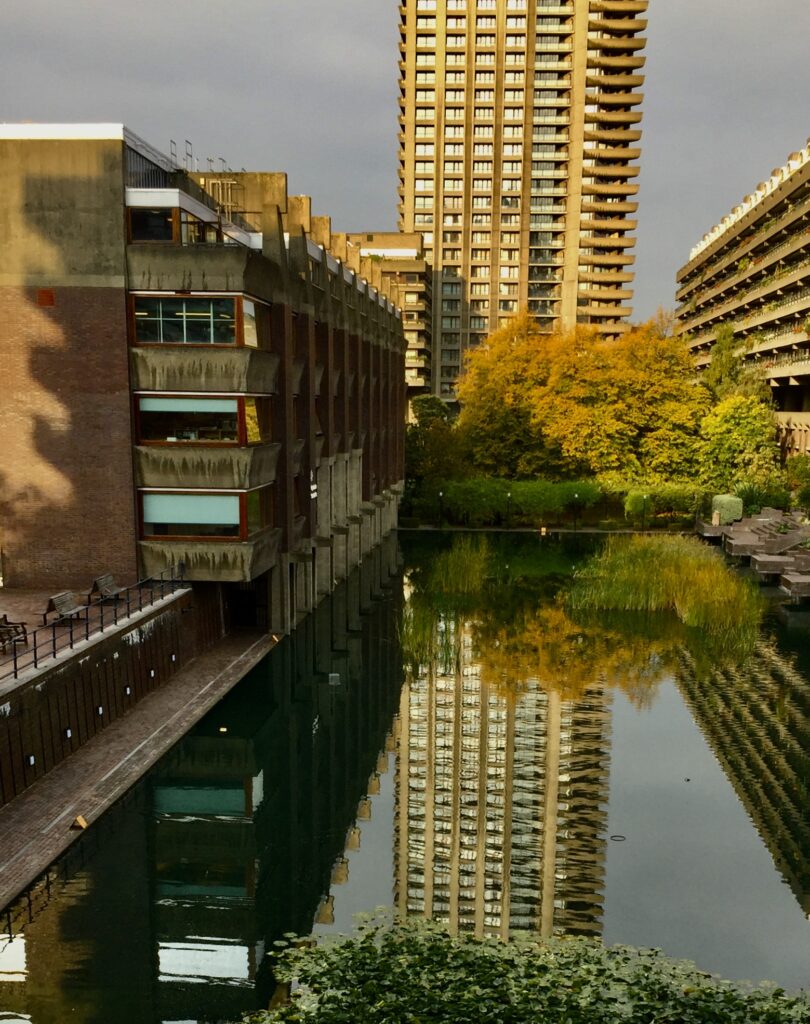
Reflections, colours and shapes – what fun I have had.

Sometimes, when the weather is nice, I find it great fun to just wander about taking whatever images I fancy, hoping they will eventually build into some kind of coherent whole. For a while now, sunshine has drawn me into looking at subjects in a slightly more abstract way rather than trying to make them tell a story, and this blog is the result.

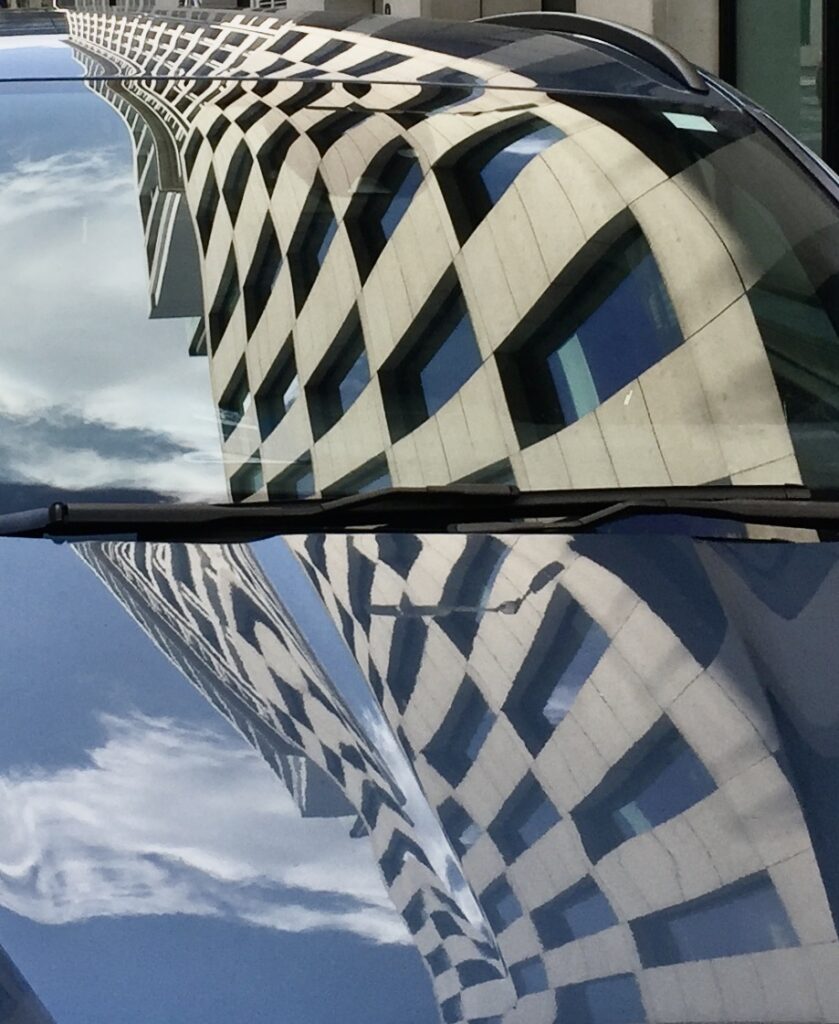
I am really, really proud of this image. It’s the reflection on the bonnet and windscreen of a car parked in Wood Street. I love the way the nearby building seems to stretch away into infinity …

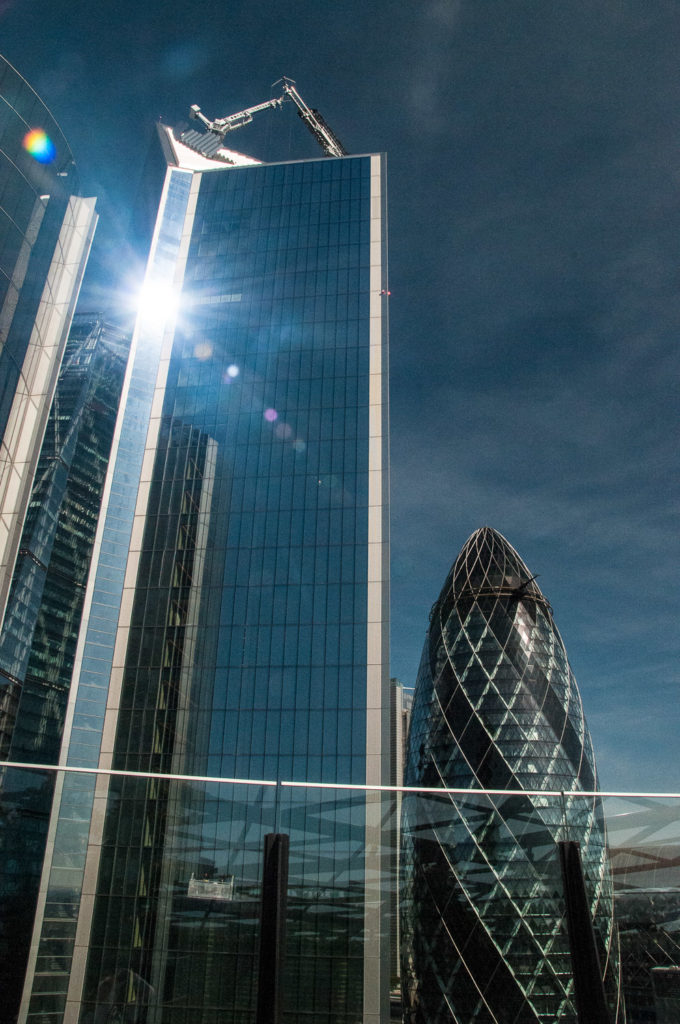
The Gherkin and part of the tower of St Andrew Undershaft are reflected in the Scalpel skyscraper (EC3M 7BS) …

The poor Gherkin is gradually vanishing behind its more intrusive neighbours …

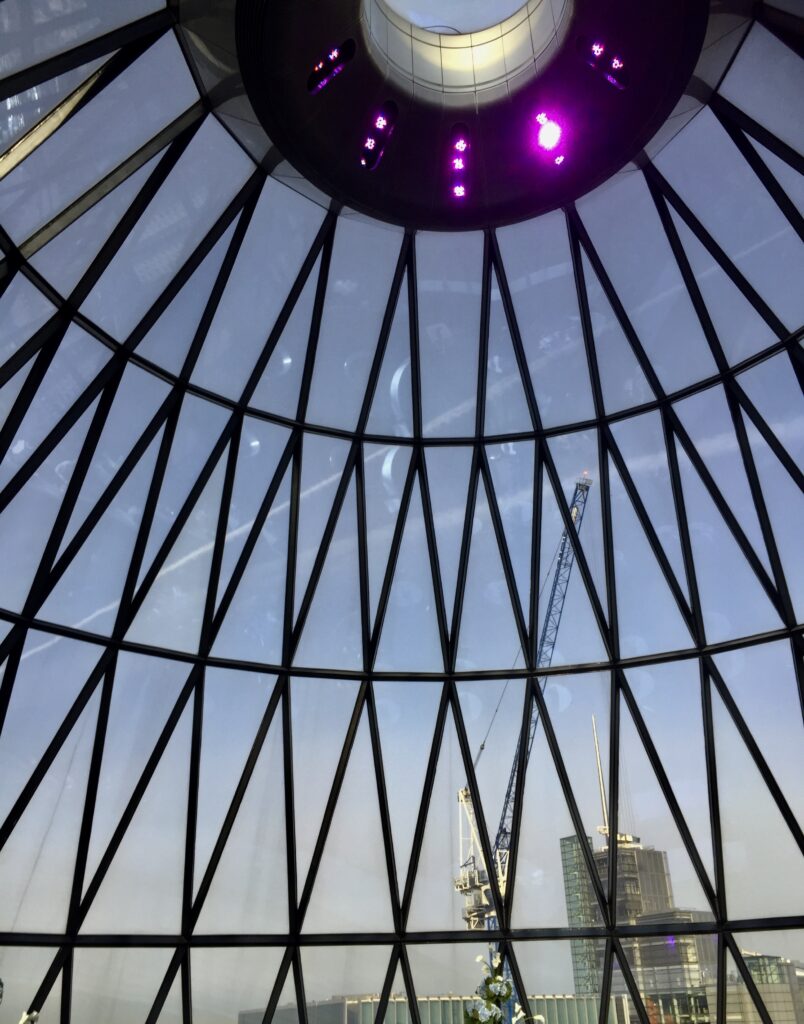
But it’s still great to visit the restaurant on the roof and just look up …

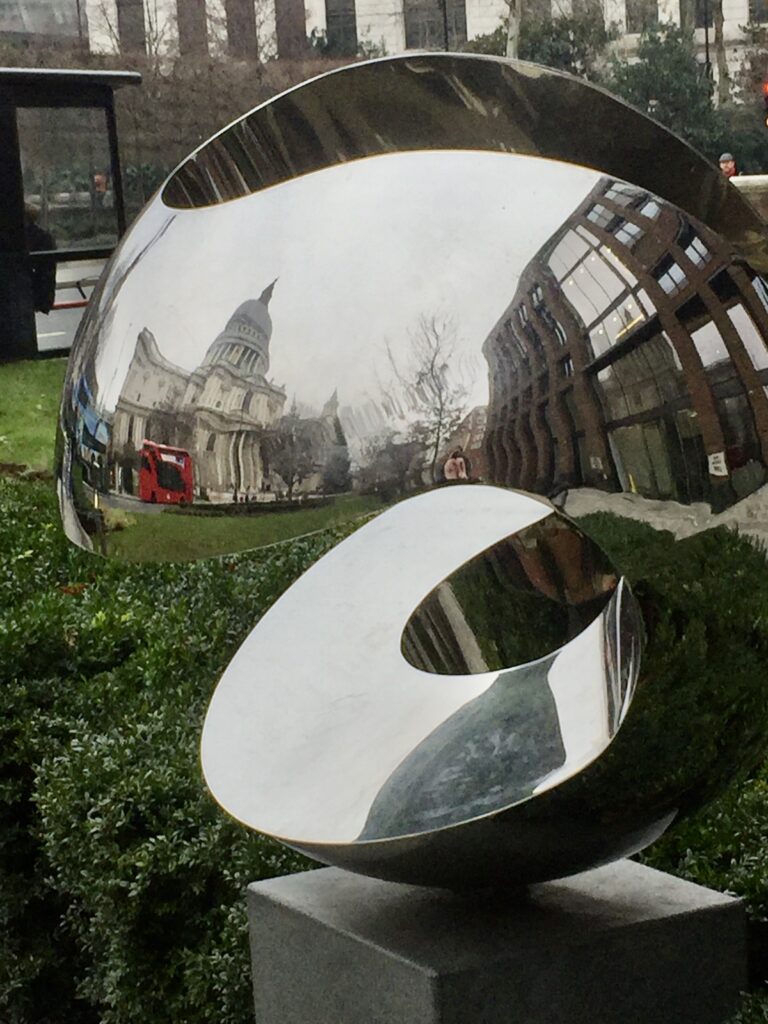
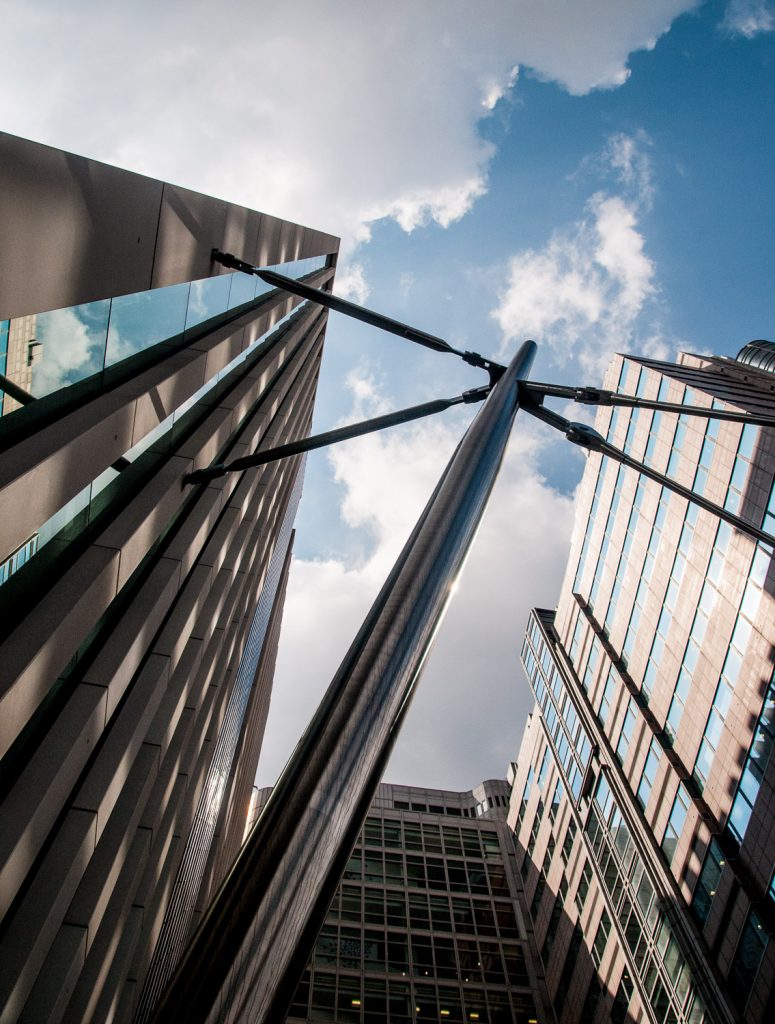
A mirror sculpture across the road from St Paul’s Cathedral – I waited specially for the red bus …

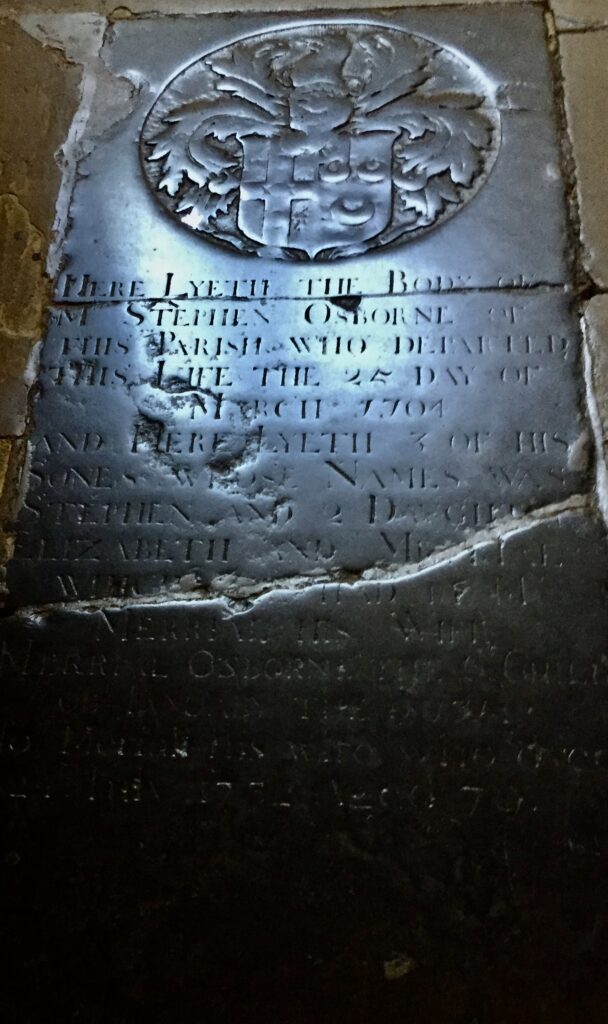
Stephen Osborne was laid to rest here almost 320 years ago and since then the sunlight has been reflecting off his gravestone in the south aisle of Southwark Cathedral (SE1 9DA). Hundreds of years of footfall have worn down the elaborate family coat of arms but the quality of the stone and the carving mean we still know today the name of the person it commemorates …

Early morning colours, reflections and shadows …

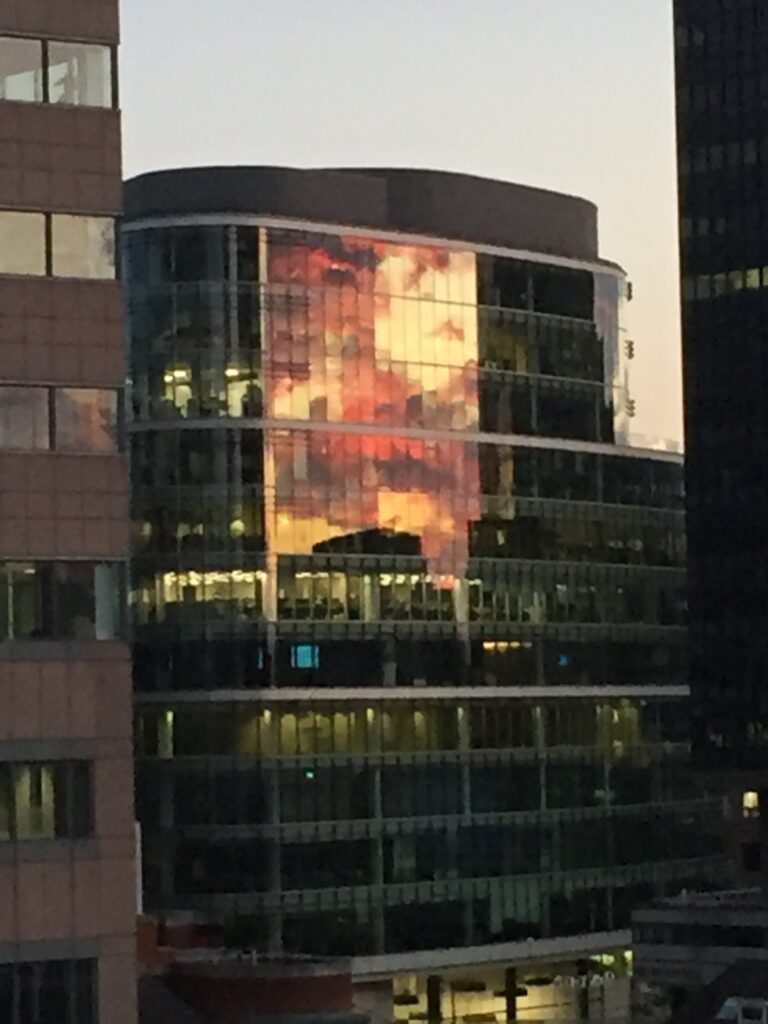
A fiery, dramatic sunset reflection …

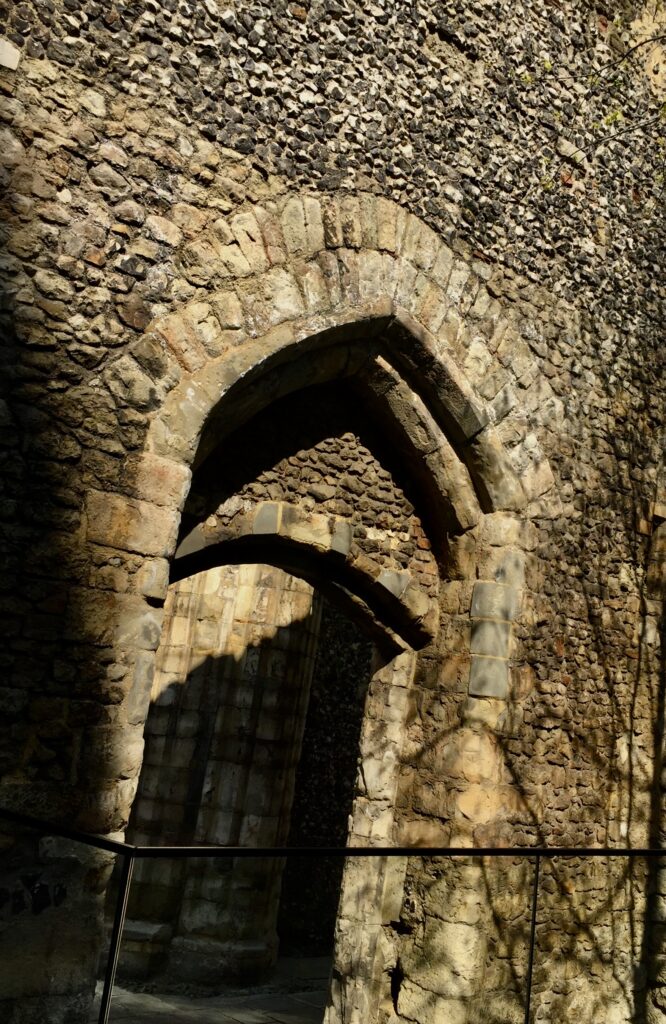
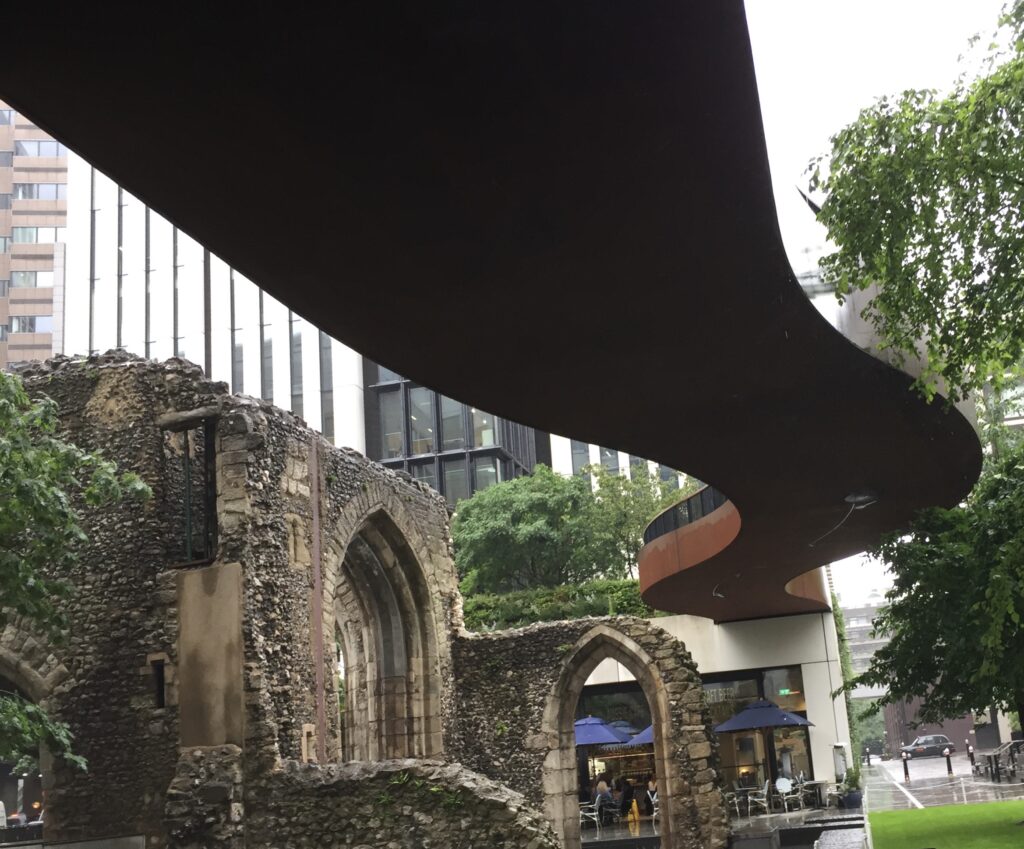
These walls alongside London Wall are from the chapel of St Mary Elsing. It was part of a hospital and priory which had been founded by Sir William Elsing early in the 14th century. I can just imagine a hunched medieval monk or nun emerging from the shadows …

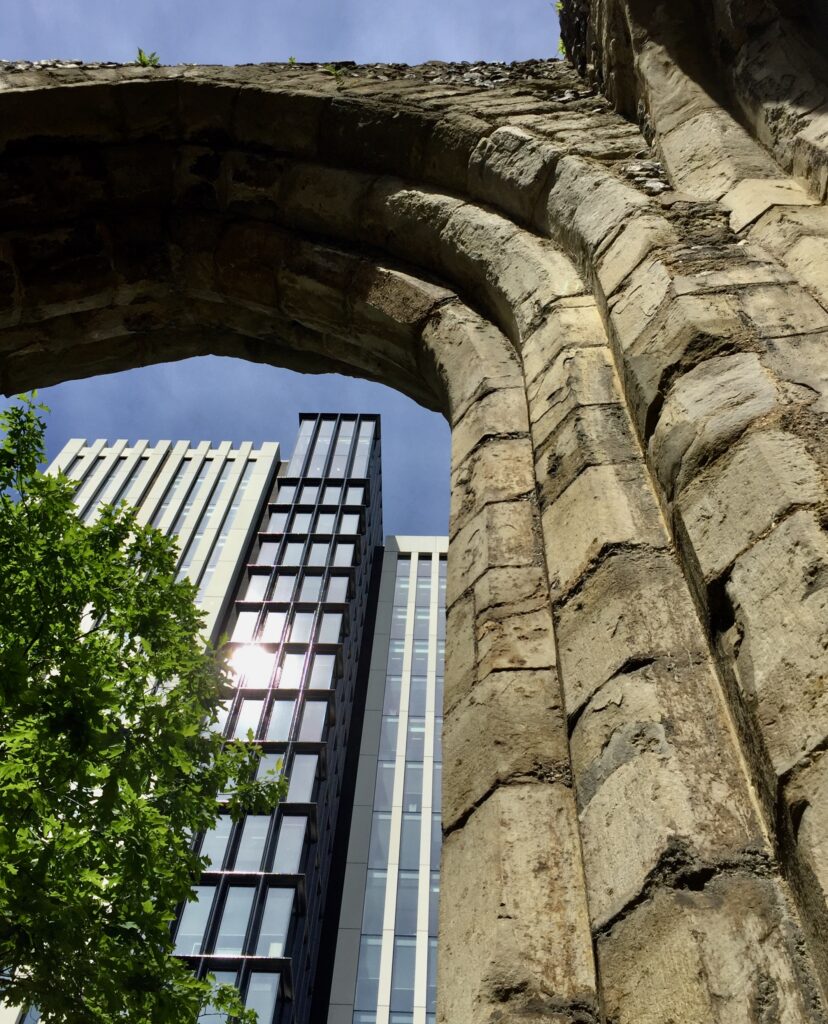
If they could look up they’d get a bit of a shock. I like the way the modern building is framed by a six hundred-year-old arch …

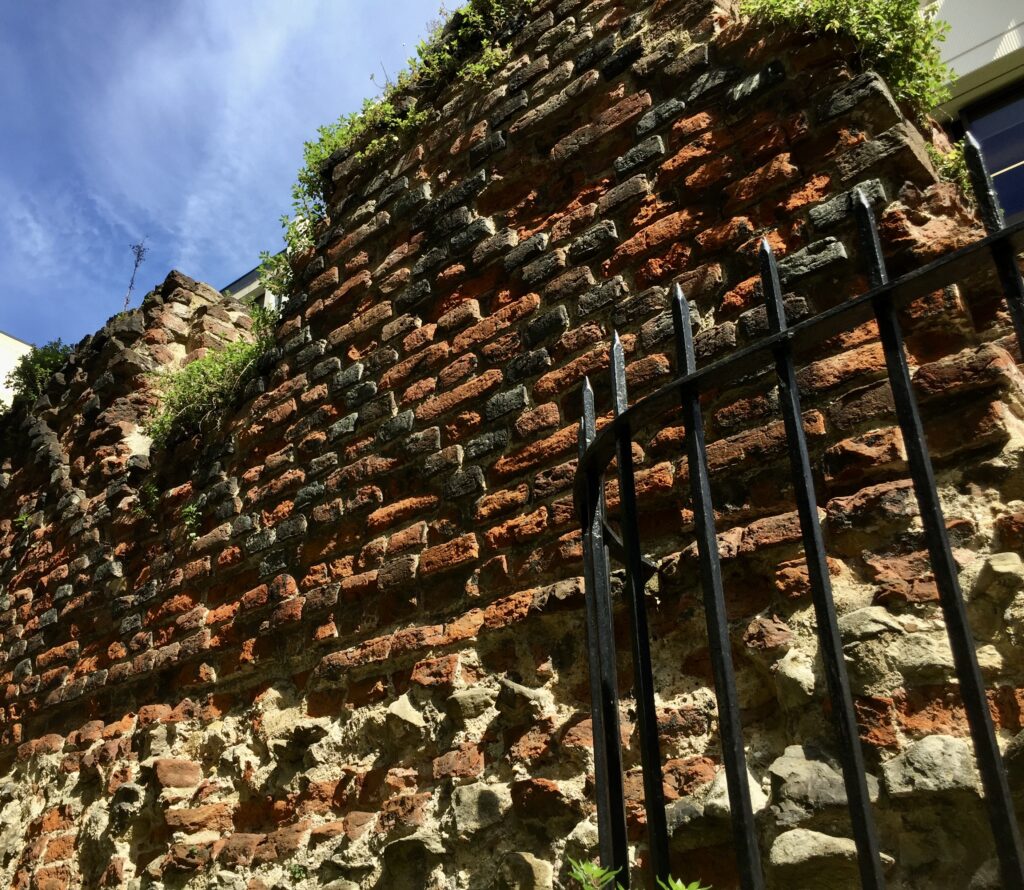
Nearby are the lovely red bricks and diamond patterns of the medieval wall, built on top of the original Roman fortification (EC2Y 5DE) …

Now for some more colour.

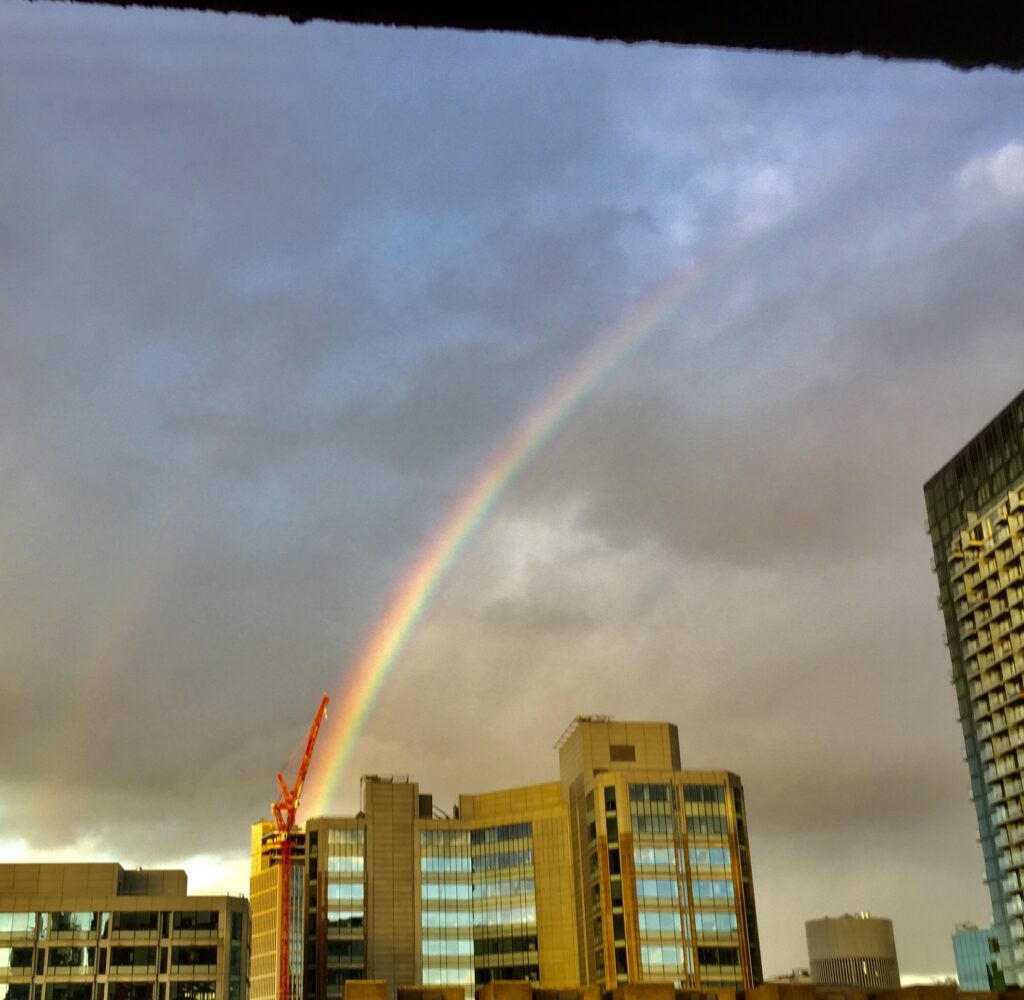
A lucky shot – red crane and rainbow (a double rainbow, actually, if you look carefully) …

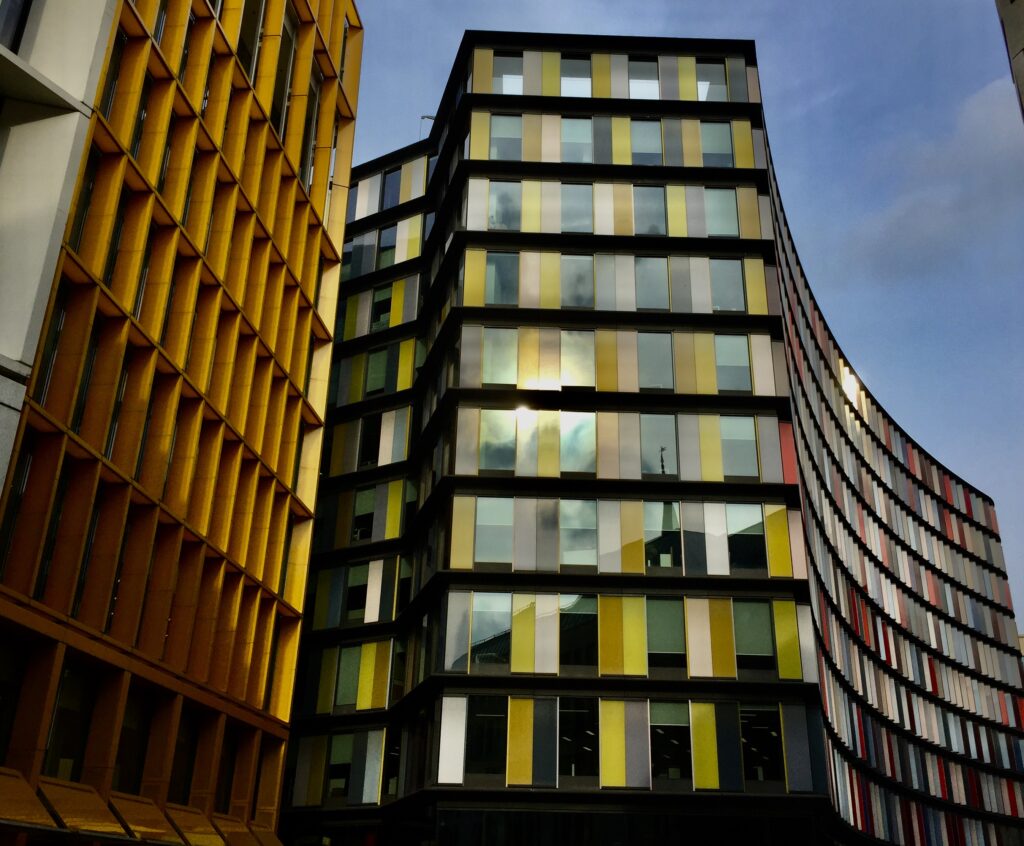
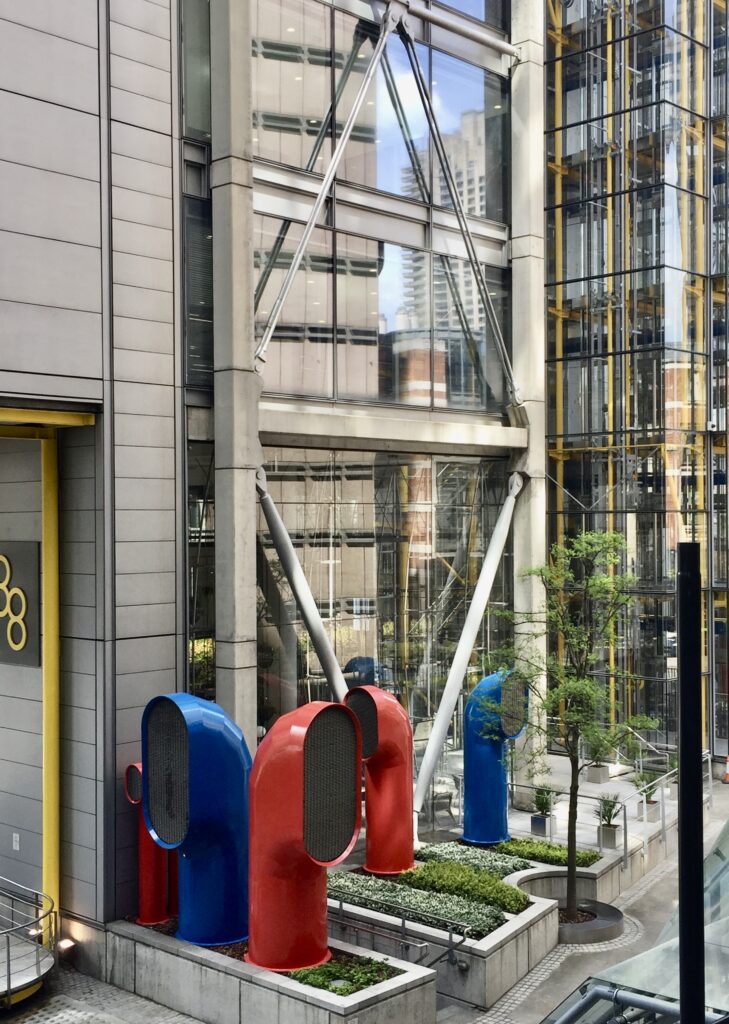
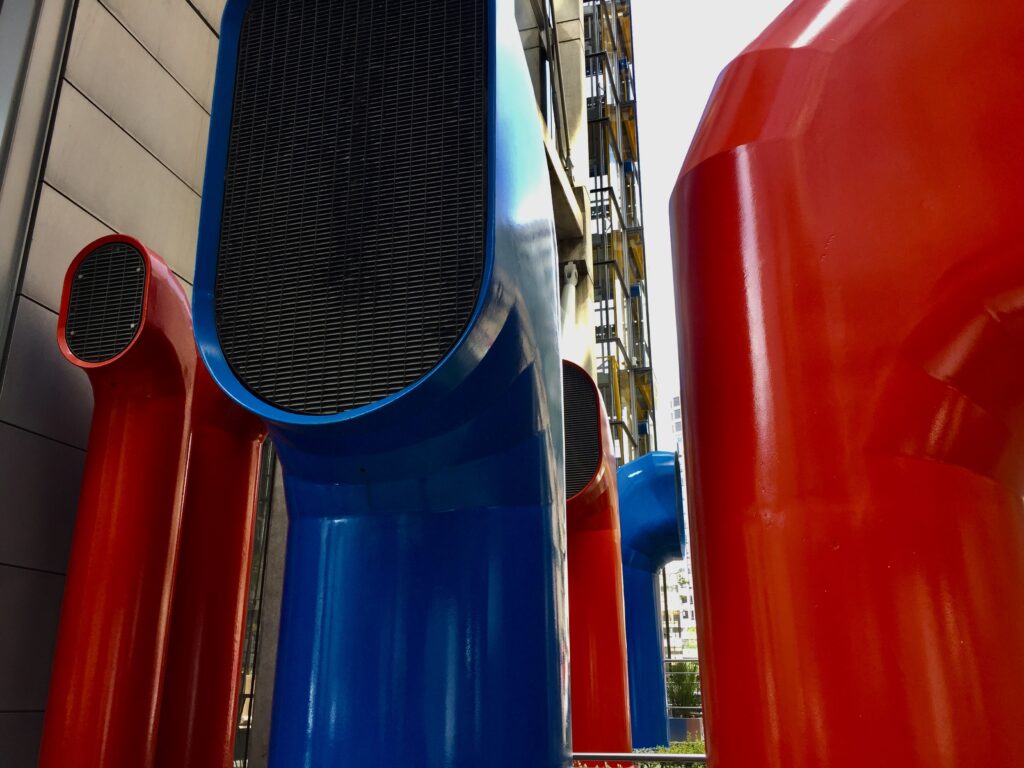
Modern architects seem to be using colour more adventurously …

Offices in Old Bailey – EC4M 7NB
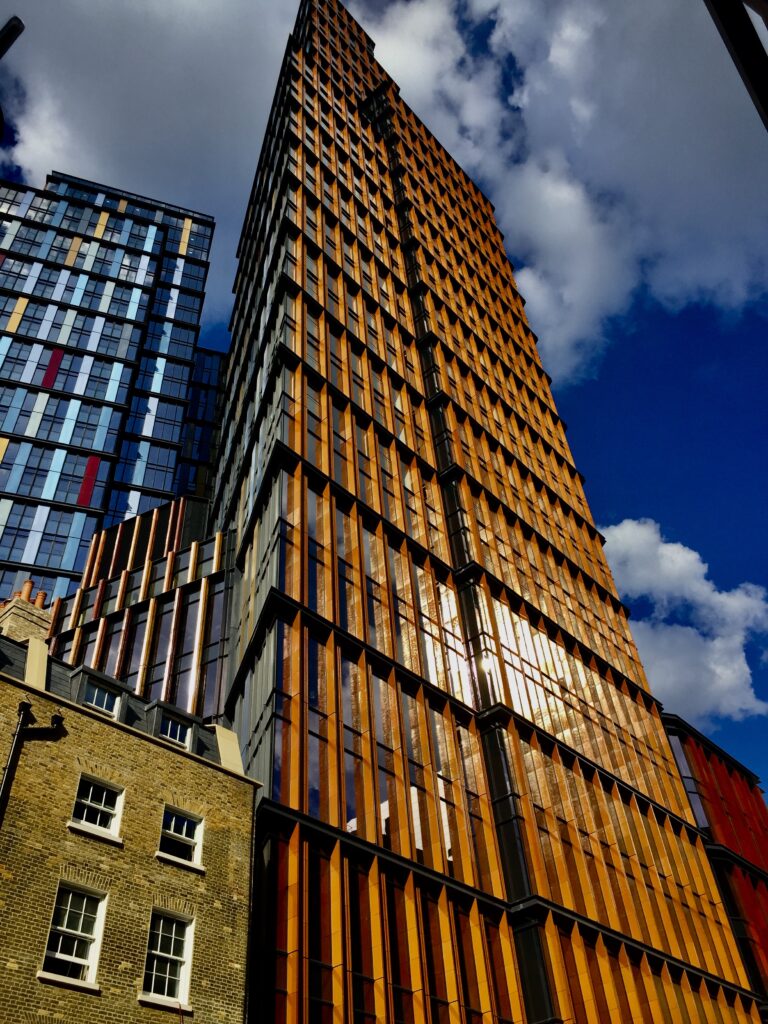
View looking up from Sun Street (EC2A). The Georgian terrace house in the foreground and its neighbours are being converted into a hotel.

I like 88 Wood Street, but it’s a bit hemmed in by other buildings (EC2V 7QF) …

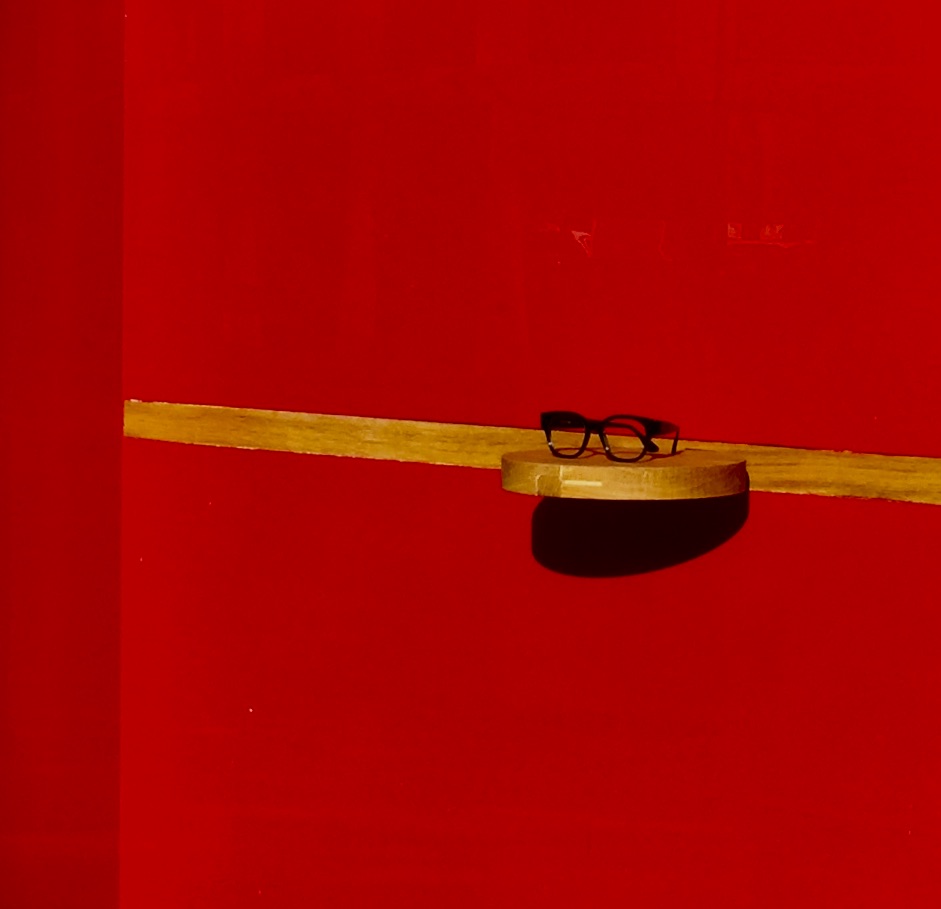
This optician on London Wall likes rather wacky window displays (EC2Y 5JA) …

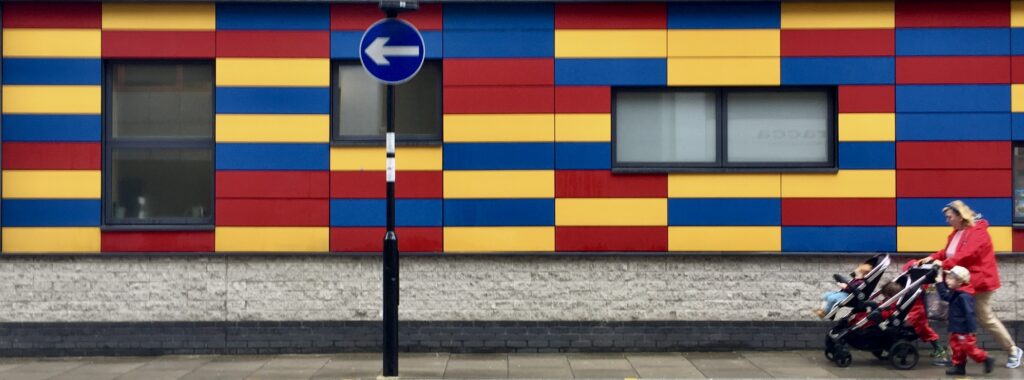
Lady in red on Whitecross Street (EC1Y 8JA). She’s walking past the colourful exterior of the Prior Weston Primary School campus …

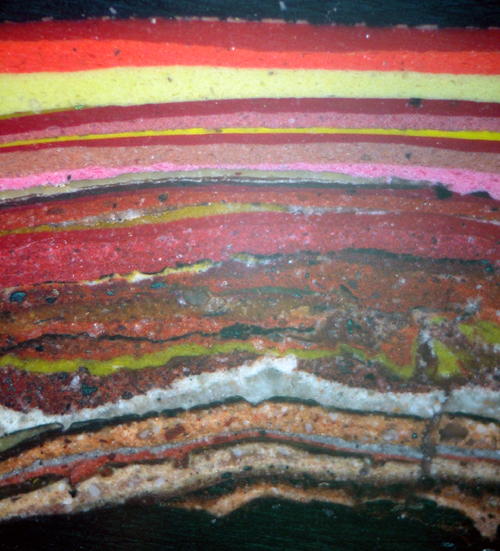
Now some very old colours. Crafts people restoring Holborn Viaduct recently discovered layers revealing 150 years of repainting …

Time for some shapes and shadows.

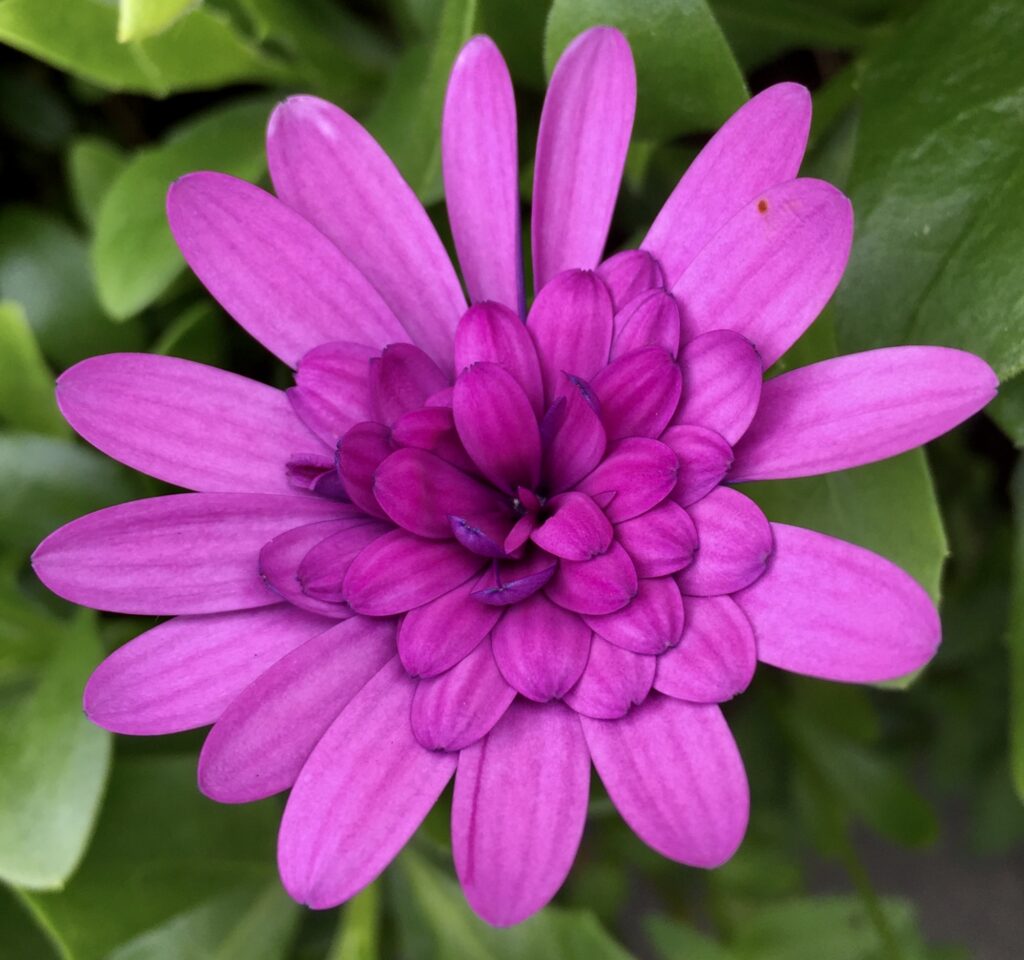
No one does symmetry quite like Mother Nature …

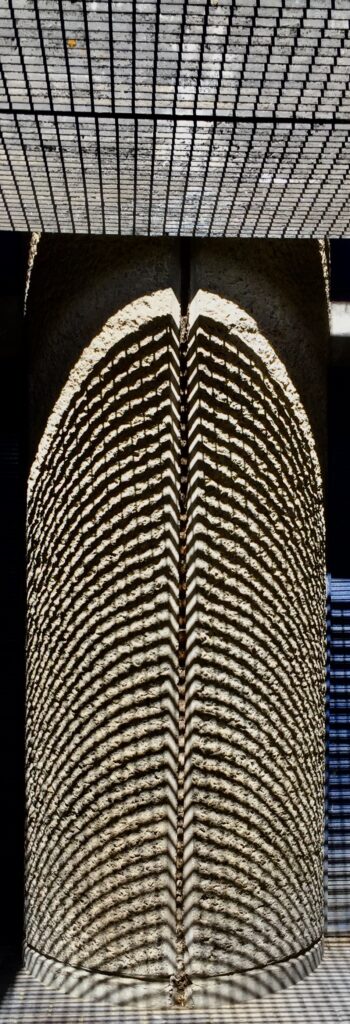
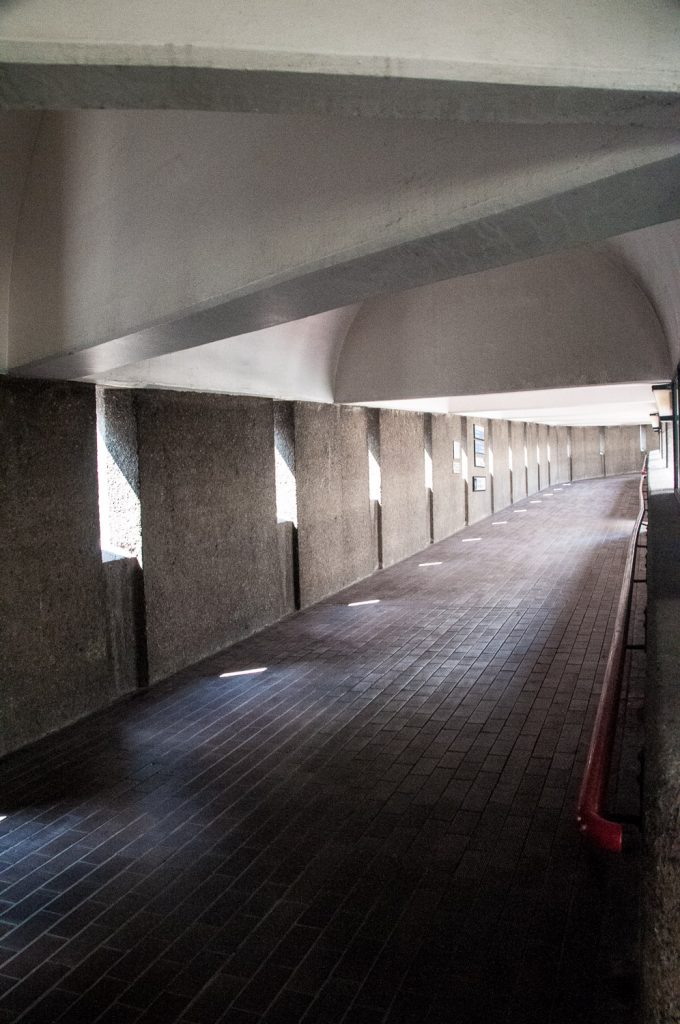
A concrete buttress in a car park resembles the prow of a ship as the sun shines through the grating above …

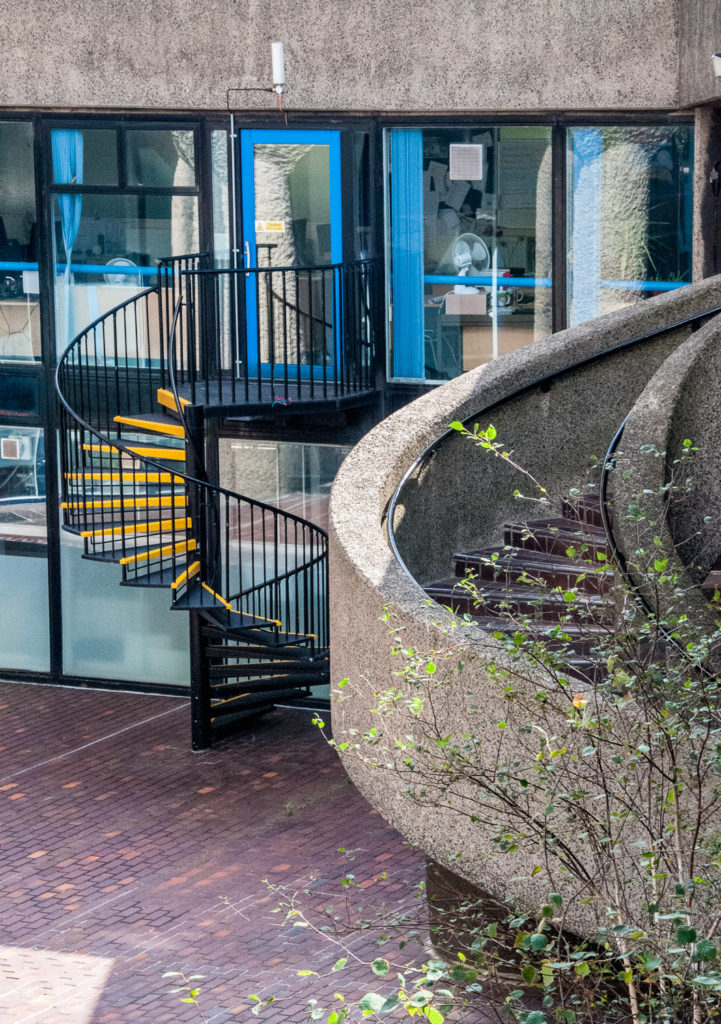
Practicality combined with aesthetic beauty …

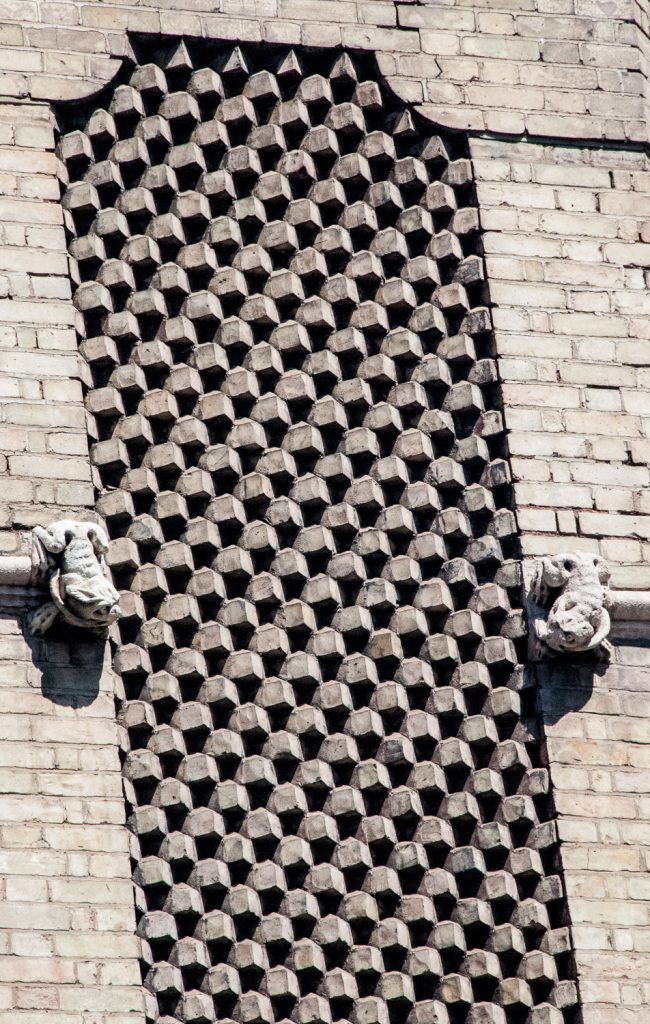
At the corner of Clerkenwell Road and St John Street is the building which once housed the Criterion Hotel (EC1V 4JS). Look up and you will see this lovely, painstakingly created Victorian brick decoration. I don’t know what the frogs represent, or maybe they are toads …

Read more about the area in my blog City of London Pub Ghosts.

Where the Barbican archers will be placed if the Estate requires defending …

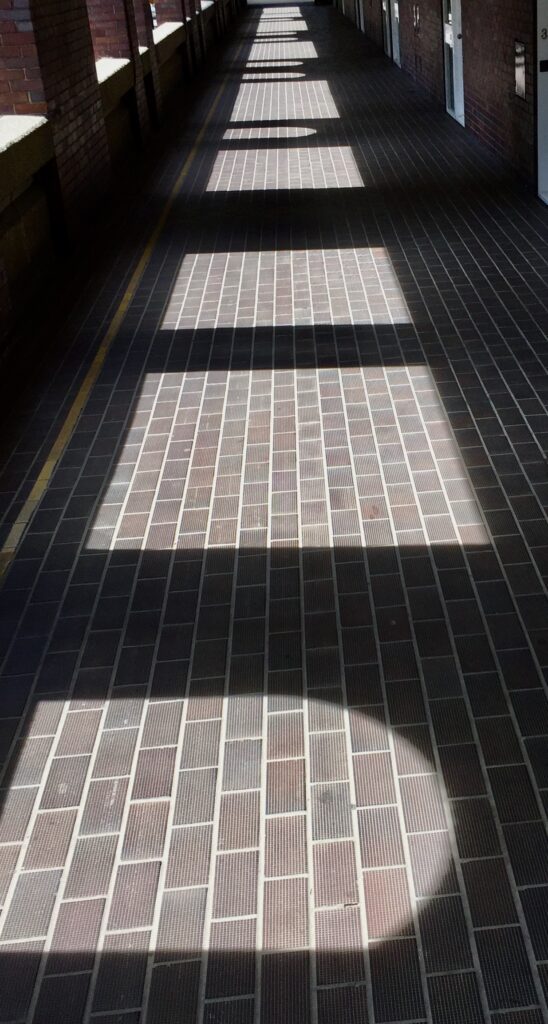
More morning shadows …

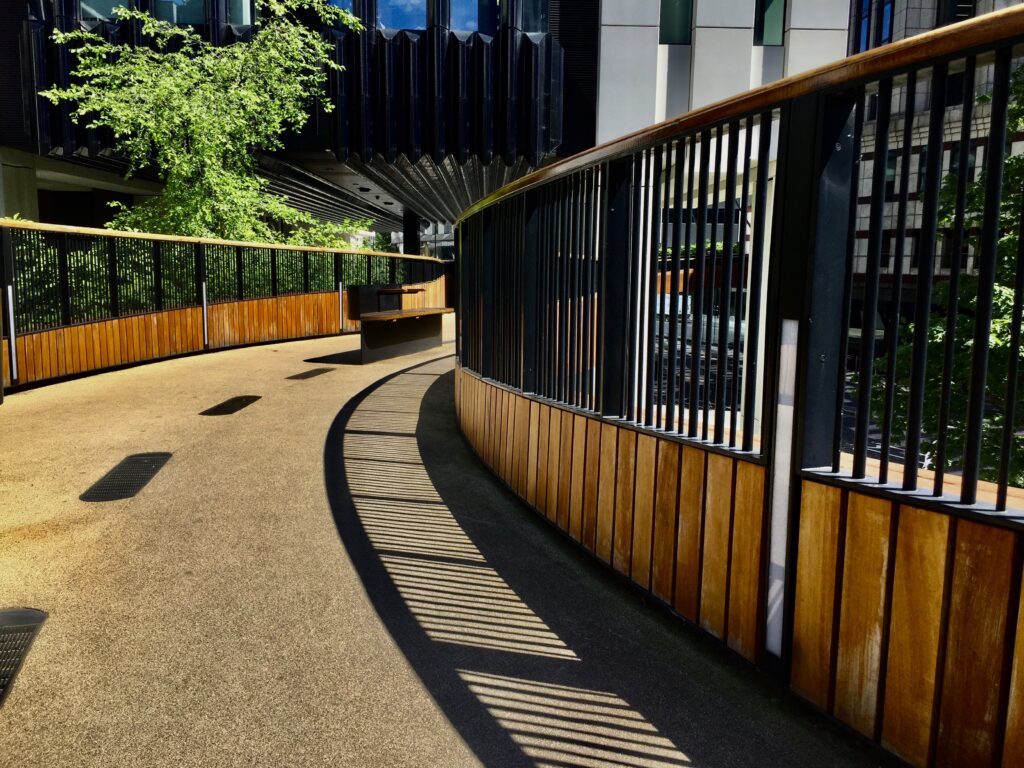
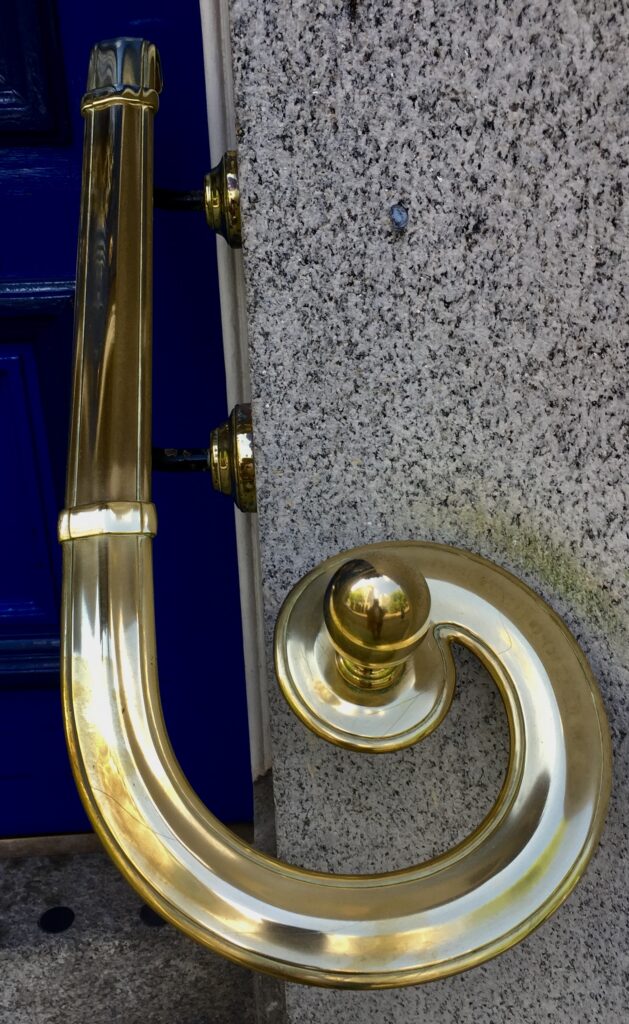
A gentle curve …

And seen from below …

And two more in sync …

Another outside Wax Chandler’s Hall in Gresham Street (EC2V 7AD) …

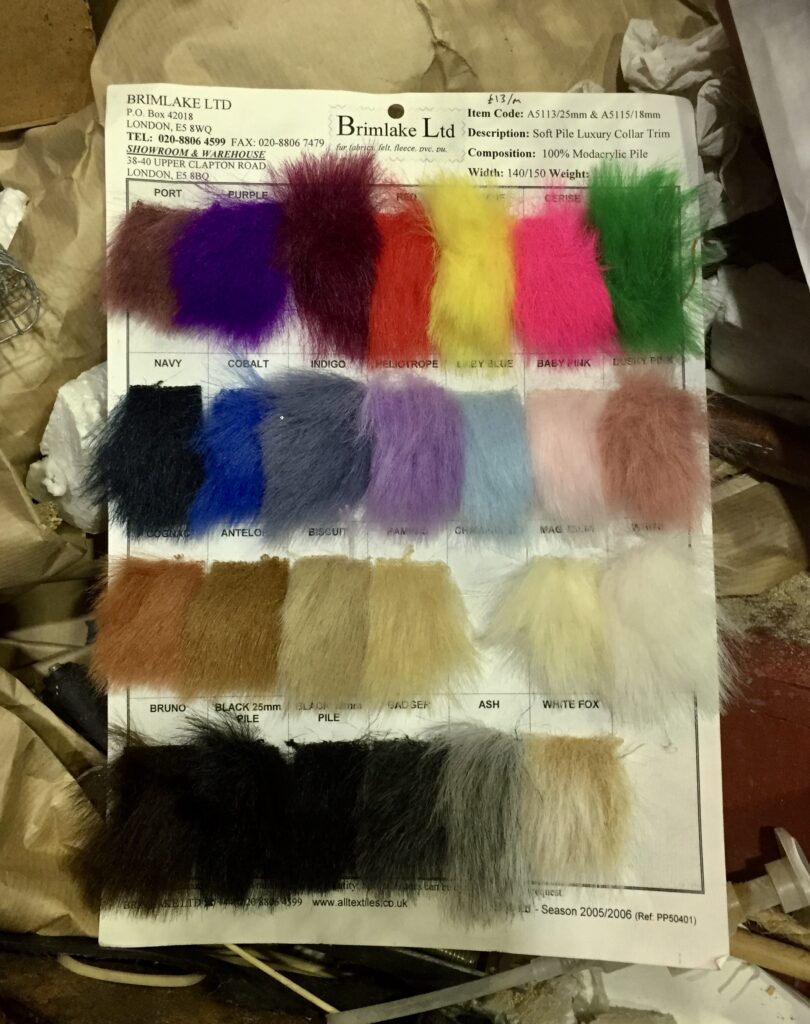
On a lighthearted note, ‘Luxury collar trim’ colour sample discarded in a skip outside the Barbican Theatre …

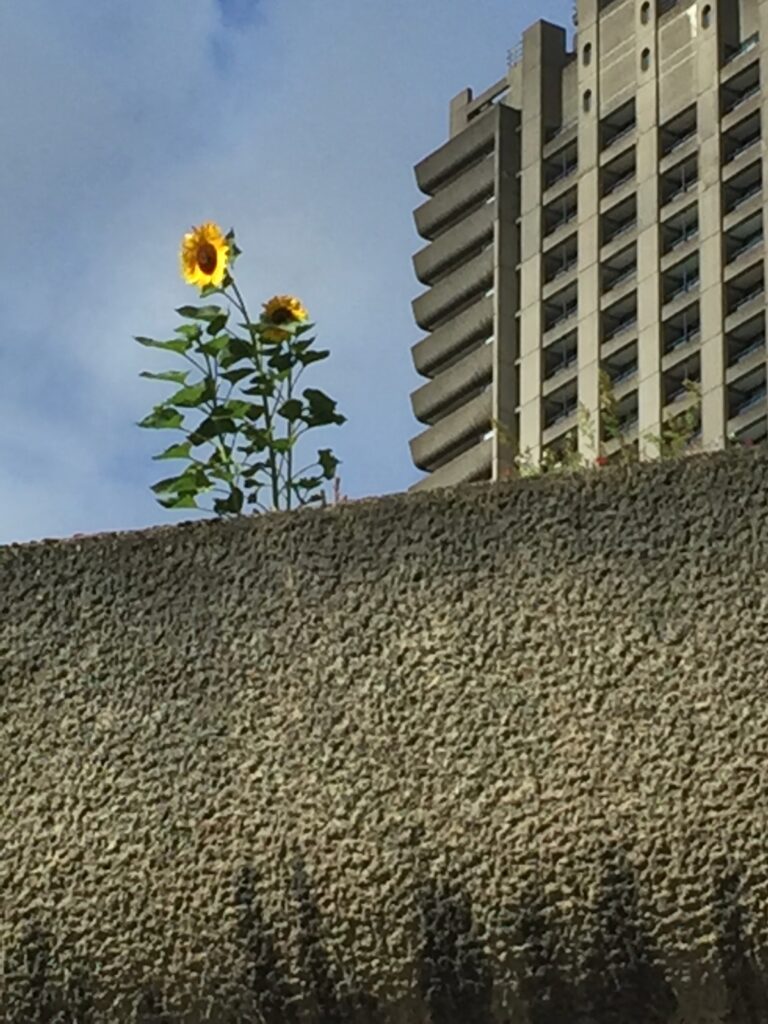
Finally, ‘Sunflower Surprise’ …

If you would like to follow me on Instagram here is the link …

https://www.instagram.com/london_city_gent/

A visit to the Monster Supplies store (and some interesting sights on Hoxton Street).

Every now and then I head a short distance out of the City and look in at my favourite store – Hoxton Street Monster Supplies (N1 6PJ). A location hiding a fascinating and important secret which will be revealed later …

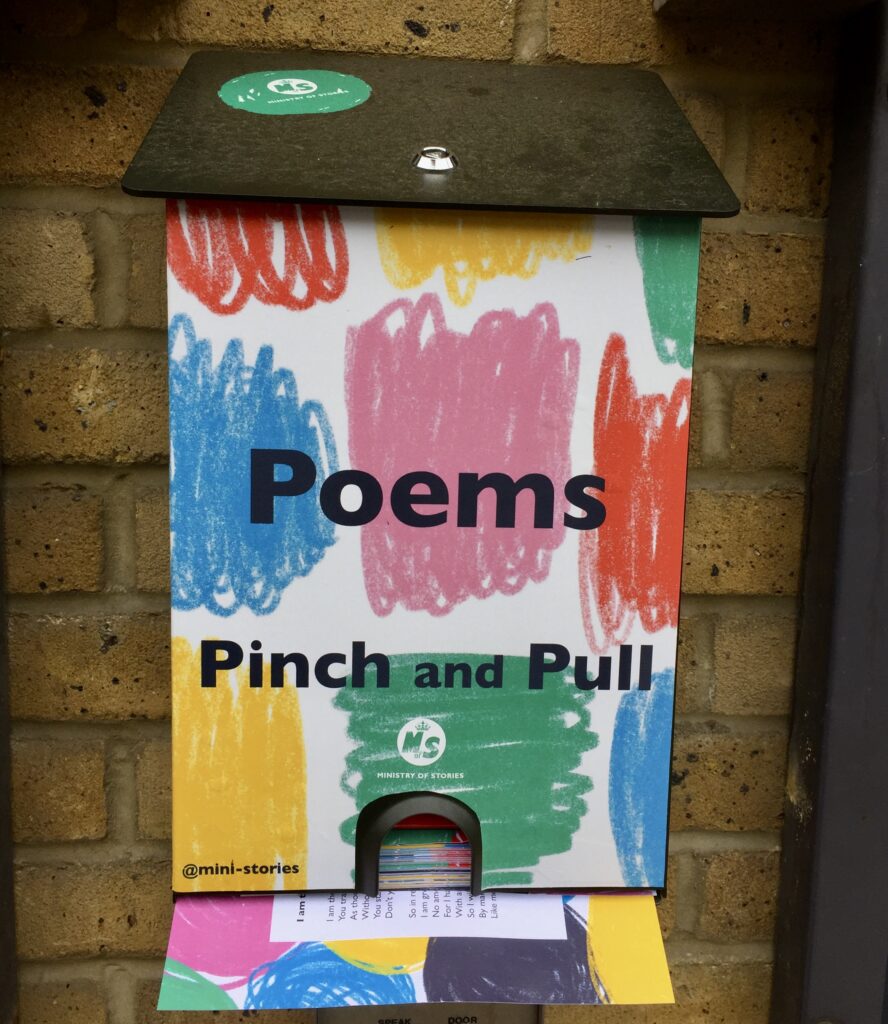
You know you are just about to visit somewhere special before you even go through the door. What kind of a place has a dispenser outside offering you free poems?

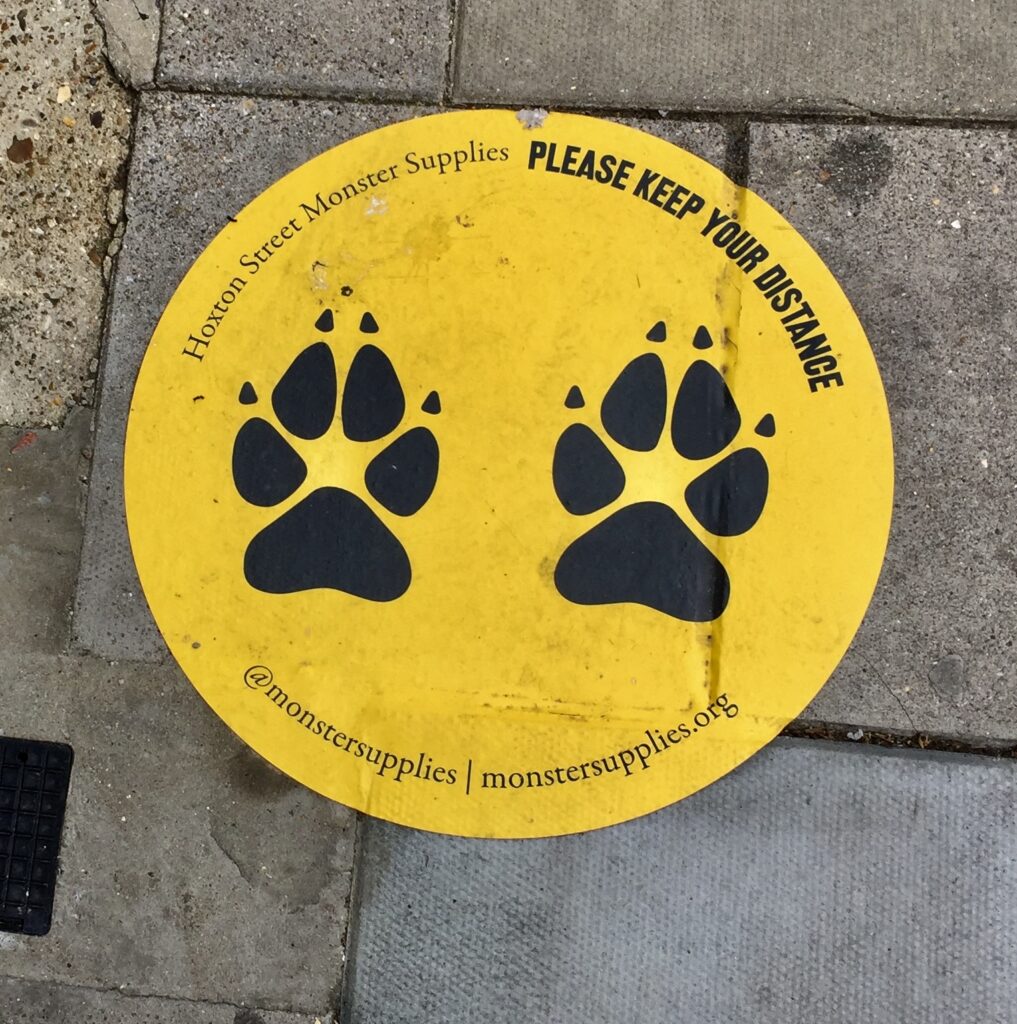
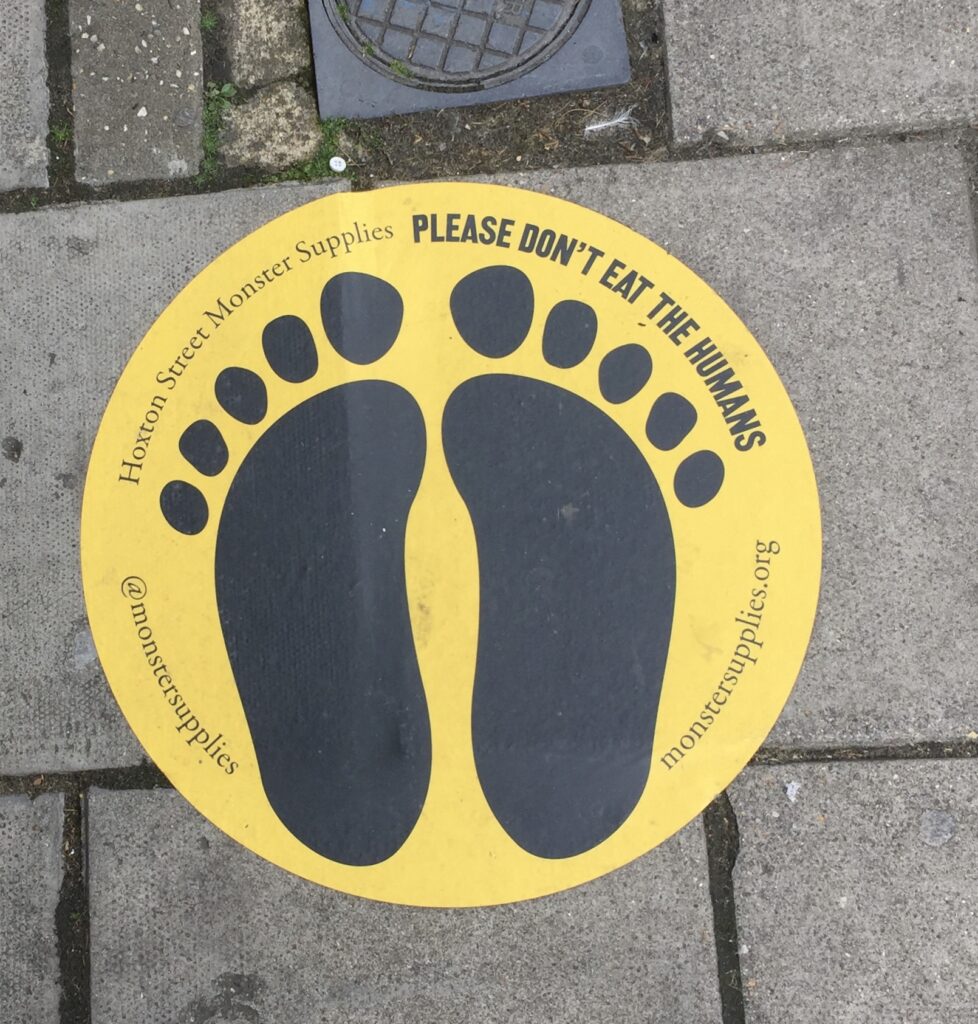
And what kind of creatures need this guidance to remind them of social distancing?

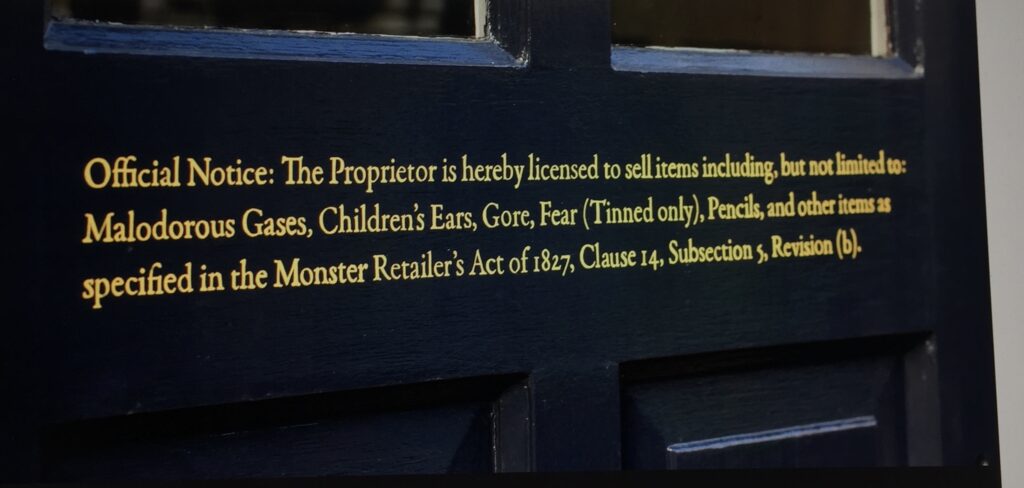
No need to worry about going in – they have the appropriate licences …

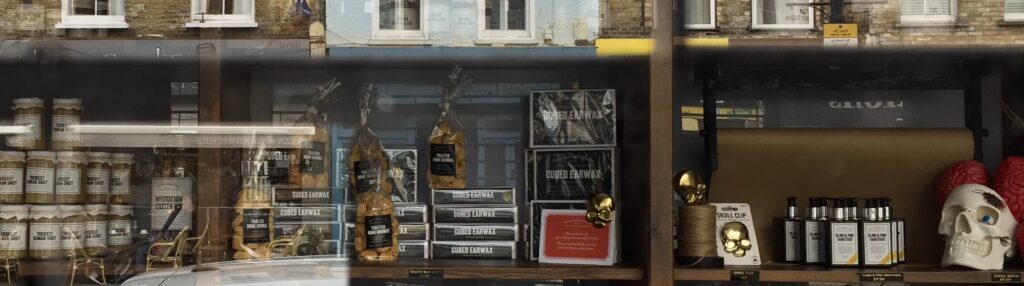
Glancing through the window, some of the merchandise looks decidedly … er … odd …

On the packed shelves inside you will find lots of items that will give pleasure to yourself and any monsters you know (both little and grown up). There are, for example …

Even non-flying reptiles love Dragon Treats but caution is needed with the Guts and Garlic Chutney – as the label warns, it is definitely not suitable for vampires.

Originally made for Banshees, these Banshee Balls have brought soothing relief to humans too …

These days sensible monsters regularly sanitise …

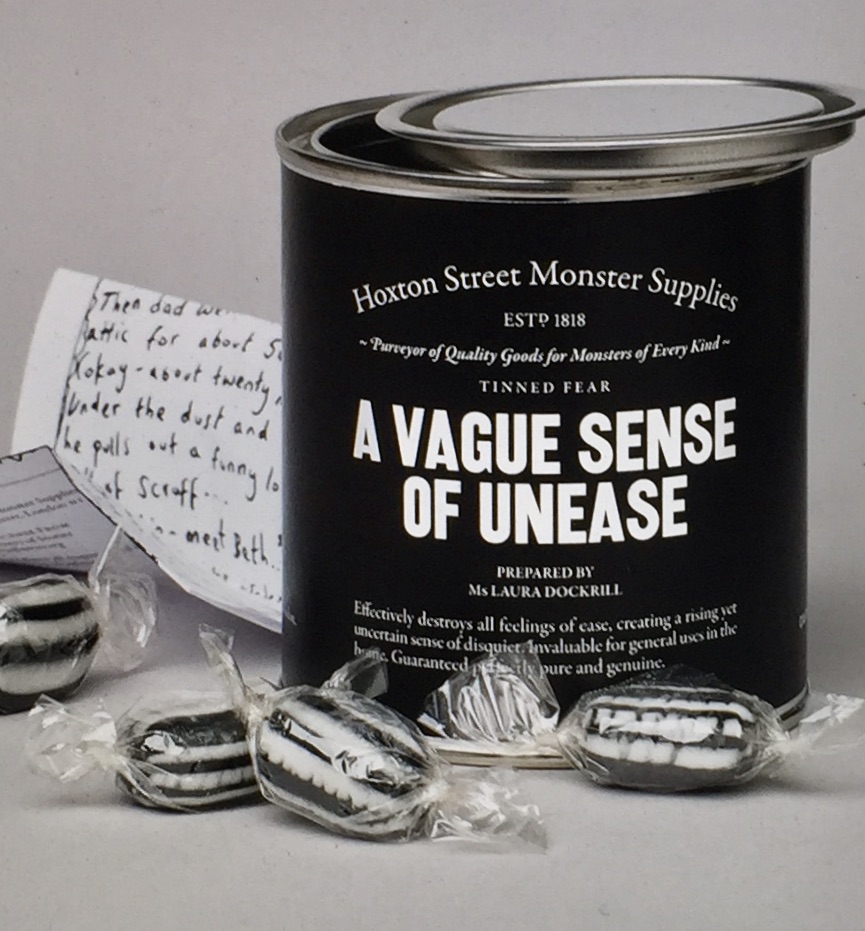
Even if you didn’t enter the shop with a vague sense of unease, you can leave with one …

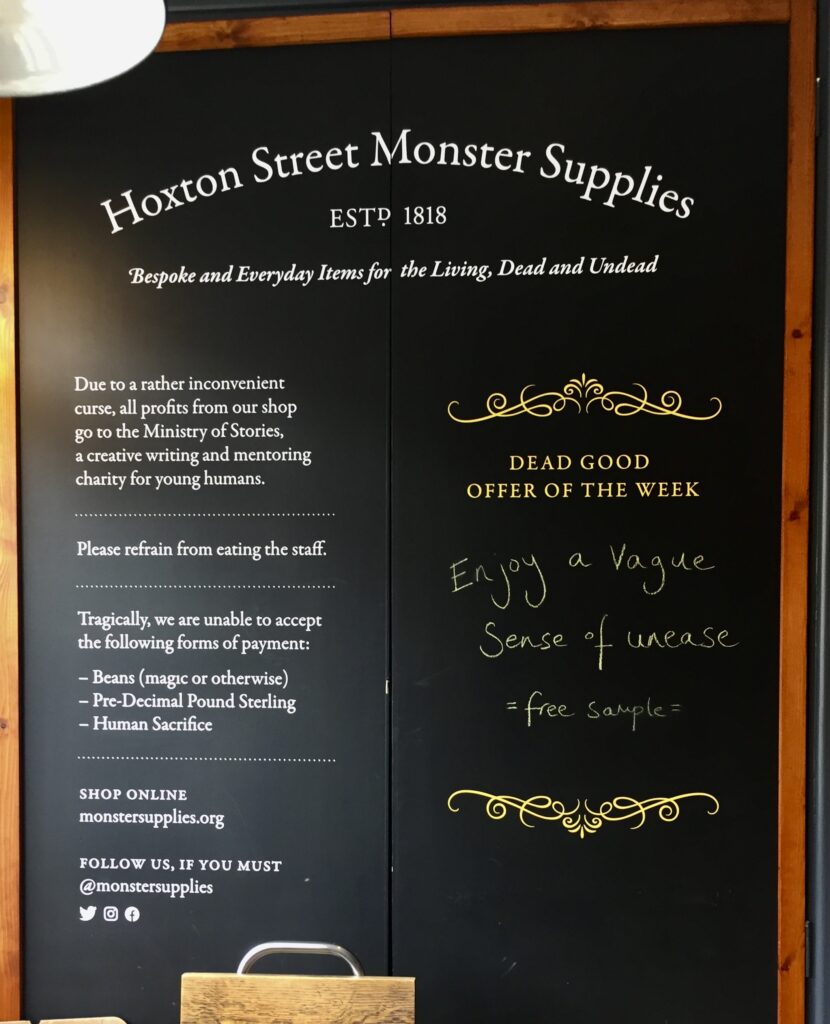
A notice at the counter gives a clue as to what this very special place is all about …

Behind a secret, cunningly camouflaged door, wonderful things happen (staff will grudgingly show you the door if you promise not to eat them when they emerge from behind the counter).

The shop supports the fantastic work undertaken by my favourite charity, The Ministry of Stories. Co-founded by author Nick Hornby in 2010, the charity’s mission is to develop self-respect and communication skills through innovative writing programmes and one-to-one mentoring. Its clients are children living in under-resourced communities and its work is conducted both in schools and at the dedicated writing centre behind the secret door in the shop.

Do read more on their fascinating website : https://ministryofstories.org/

I have seen some of the results of their work and it has been absolutely extraordinary. They are literally changing children’s lives for the better. If you like what you see maybe you will be kind enough to make a donation – all charities have been finding the last year difficult.

Or, visit the shop and stock up on unusual treats.

Opening times are:

  • Thursday 1pm-5pm
  • Friday 1pm-5pm
  • Saturday 11am-5pm
  • Closed Sun-Wed

The website will give you much more information : https://www.monstersupplies.org/pages/about-us

‘Hoxton Street Monster Supplies was recently voted ‘No. 1 Kids’ Shop in London’ by Time Out Magazine – which was weird, because we are self-evidently a shop for monsters’.

You’ll see some interesting sights as you walk up Hoxton Street from the junction with Old Street.

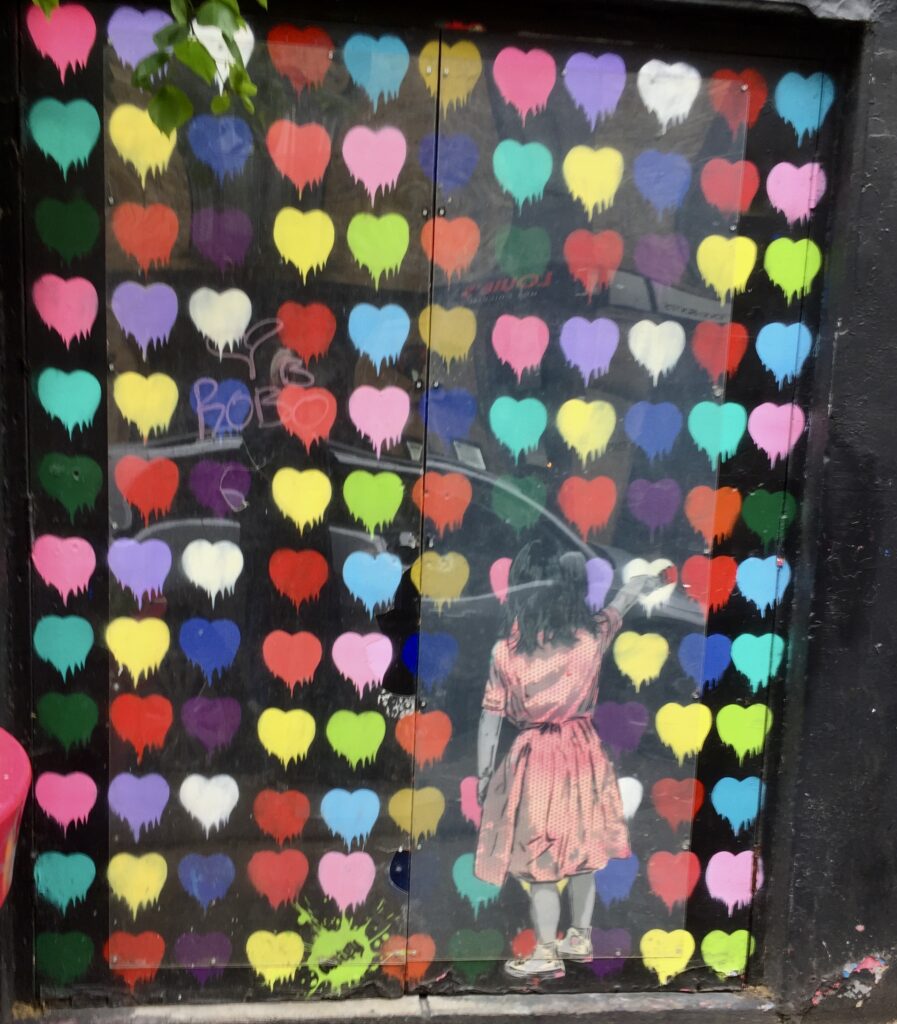
A short way along on the left, at the entrance to Hoxton Square, is this piece of street art …

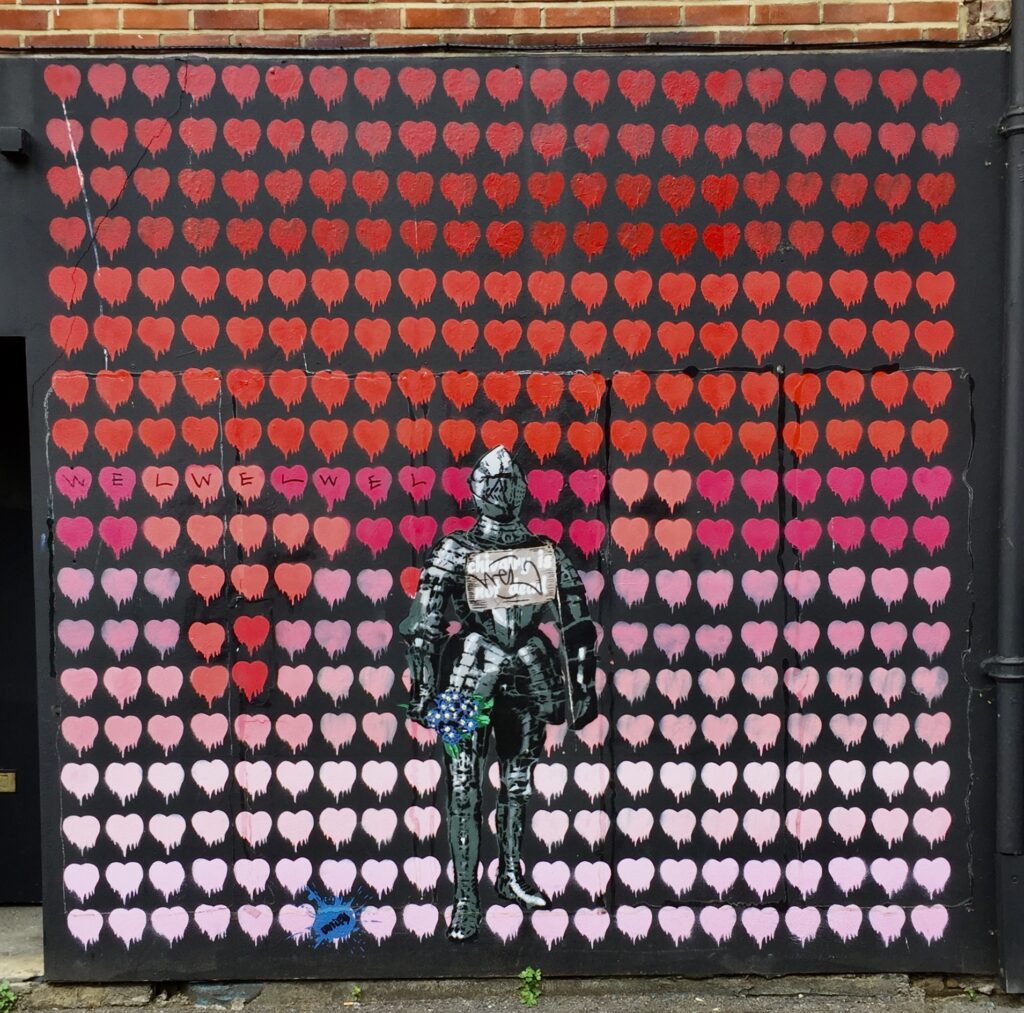
A few yards away is another work by the same artist but I can’t quite make out the signature …

Chivalry is not dead.

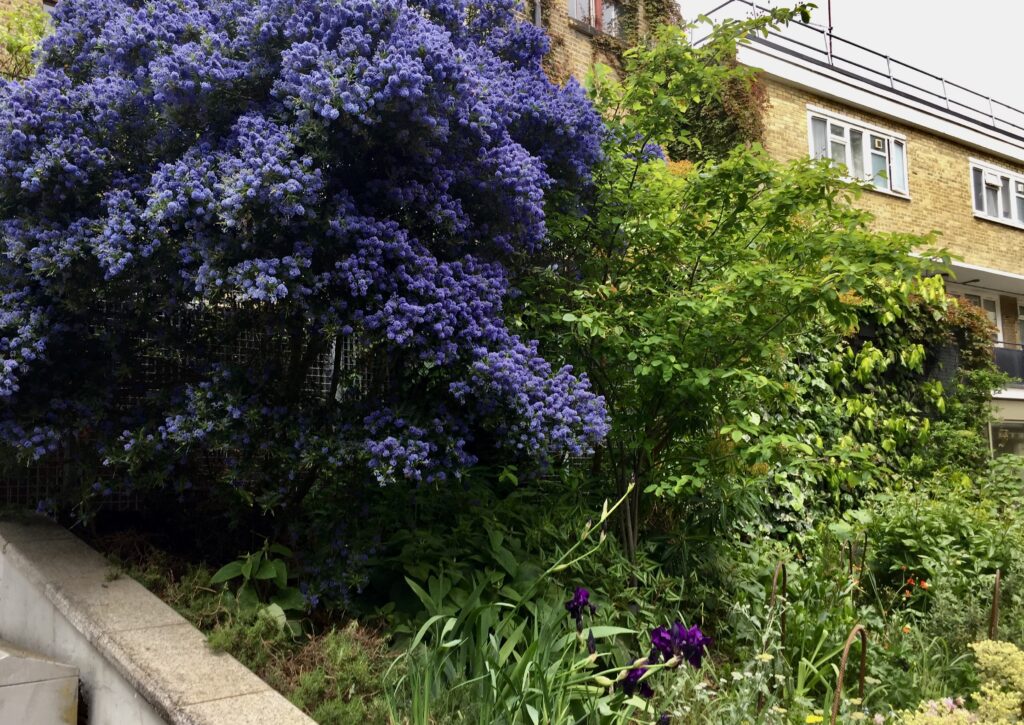
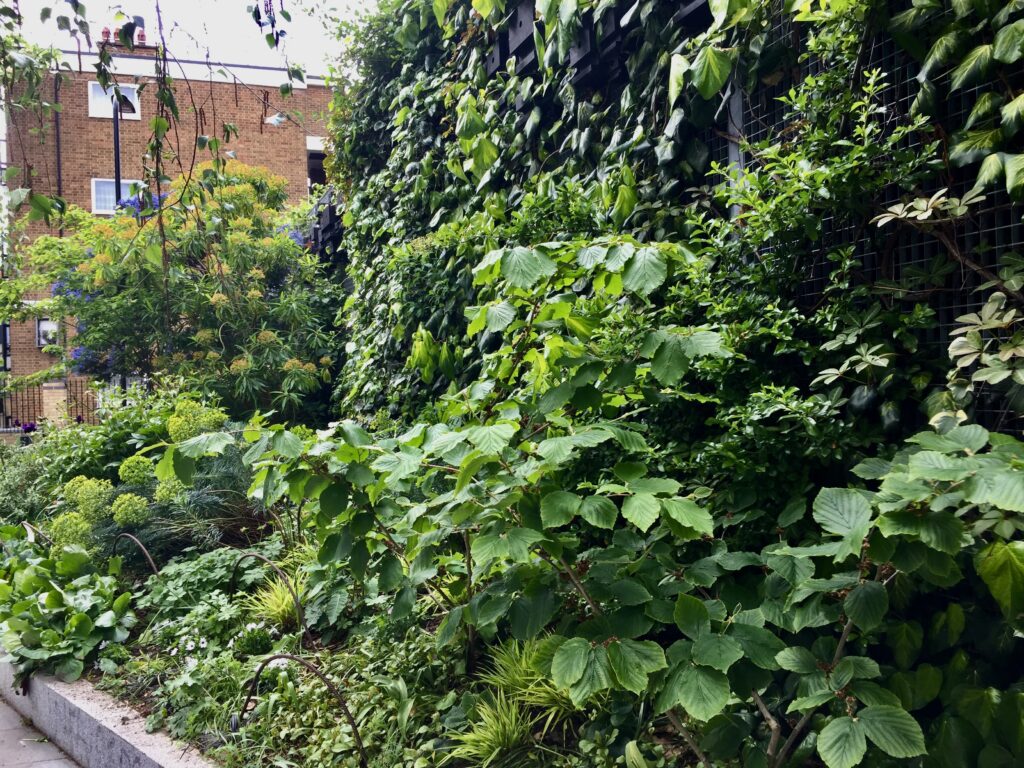
Keep walking north and check out this beautiful little garden, created in memory of Khadija Saye who, along with her mother, Mary Mendy, was tragically killed in the Grenfell Tower fire …

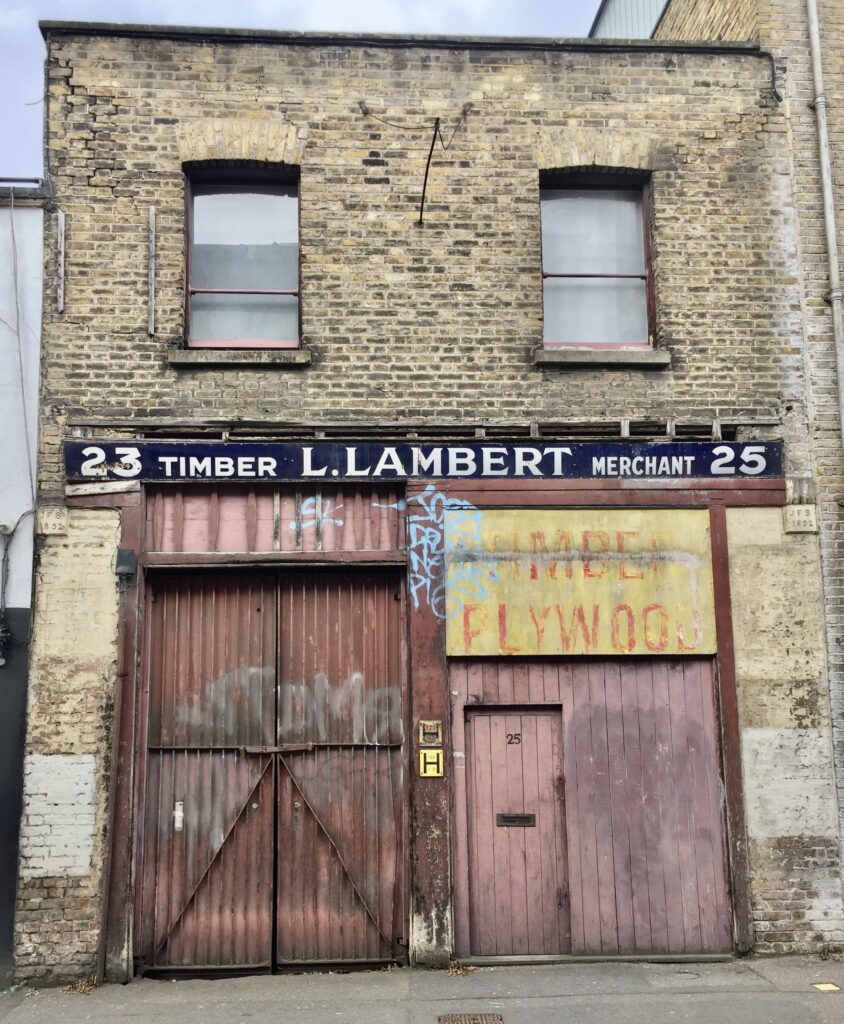
I wonder how much longer these old business premises will remain untouched. The firm was run by the wonderfully named Lazarus Lambert until it closed in 2002. ‘JFB 1892’ is etched into the concrete brackets …

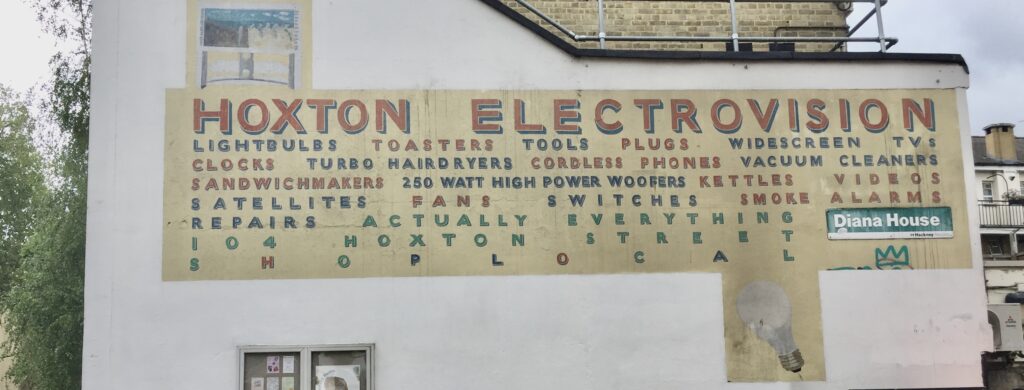
I like this retro local business sign. The store stocks ‘actually everything’ …

That’s all for now.

If you would like to follow me on Instagram here is the link …

https://www.instagram.com/london_city_gent/
Page 17 of 26

Powered by WordPress & Theme by Anders Norén

Symbols & Secrets
Privacy Overview

This website uses cookies so that we can provide you with the best user experience possible. Cookie information is stored in your browser and performs functions such as recognising you when you return to our website and helping our team to understand which sections of the website you find most interesting and useful.