Walking the City of London

Category: Memorials Page 35 of 36

City Angels (and a few devils)

Having had a lot of fun seeking out cherubs for an earlier blog I decided to go in search of angels.

Above the door of St Michael Cornhill is the warrior Archangel Michael ‘disputing with Satan’. It was carved by John Birnie Philip when the church was remodelled in 1858-1860.
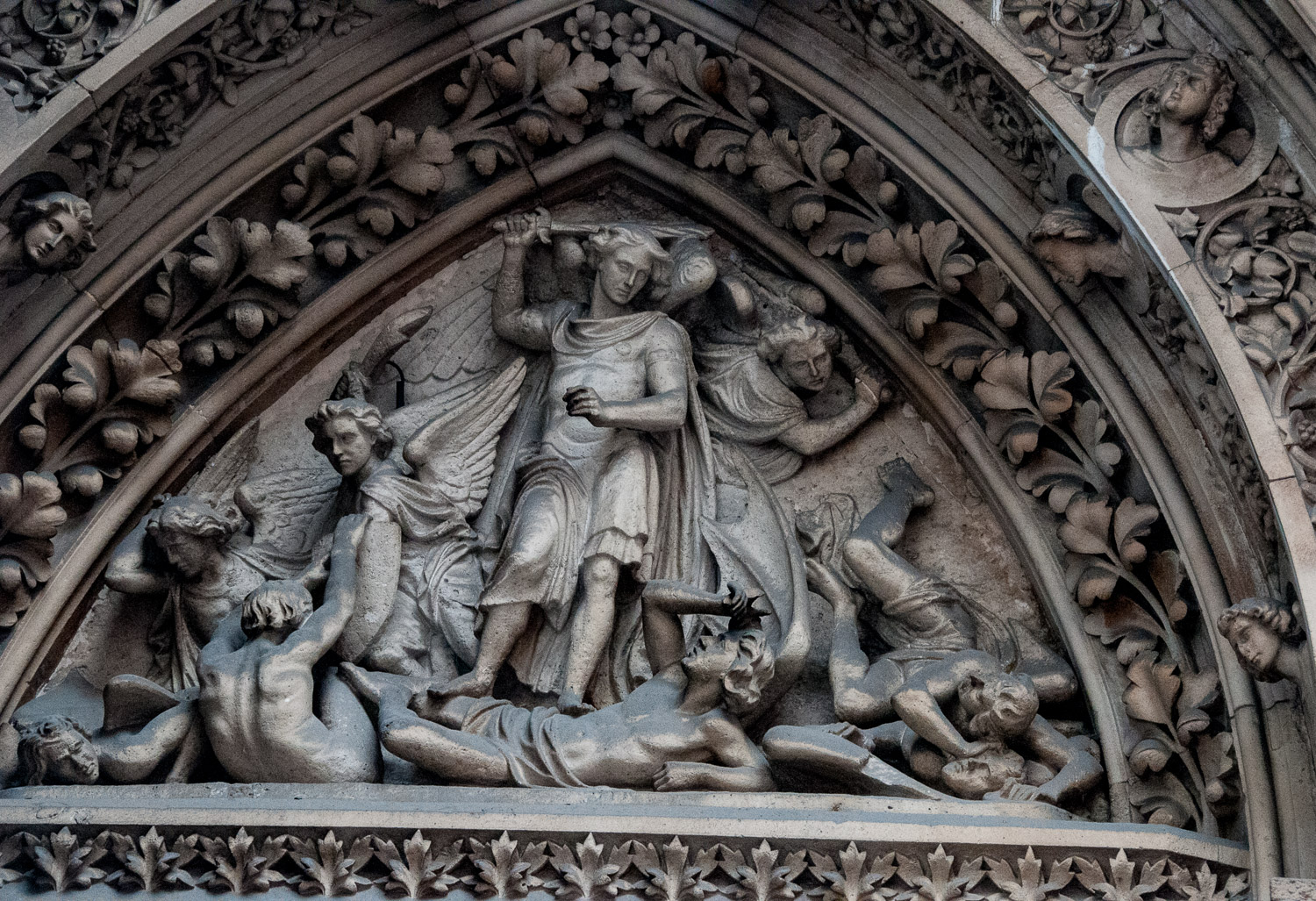
No question as to who is winning this battle

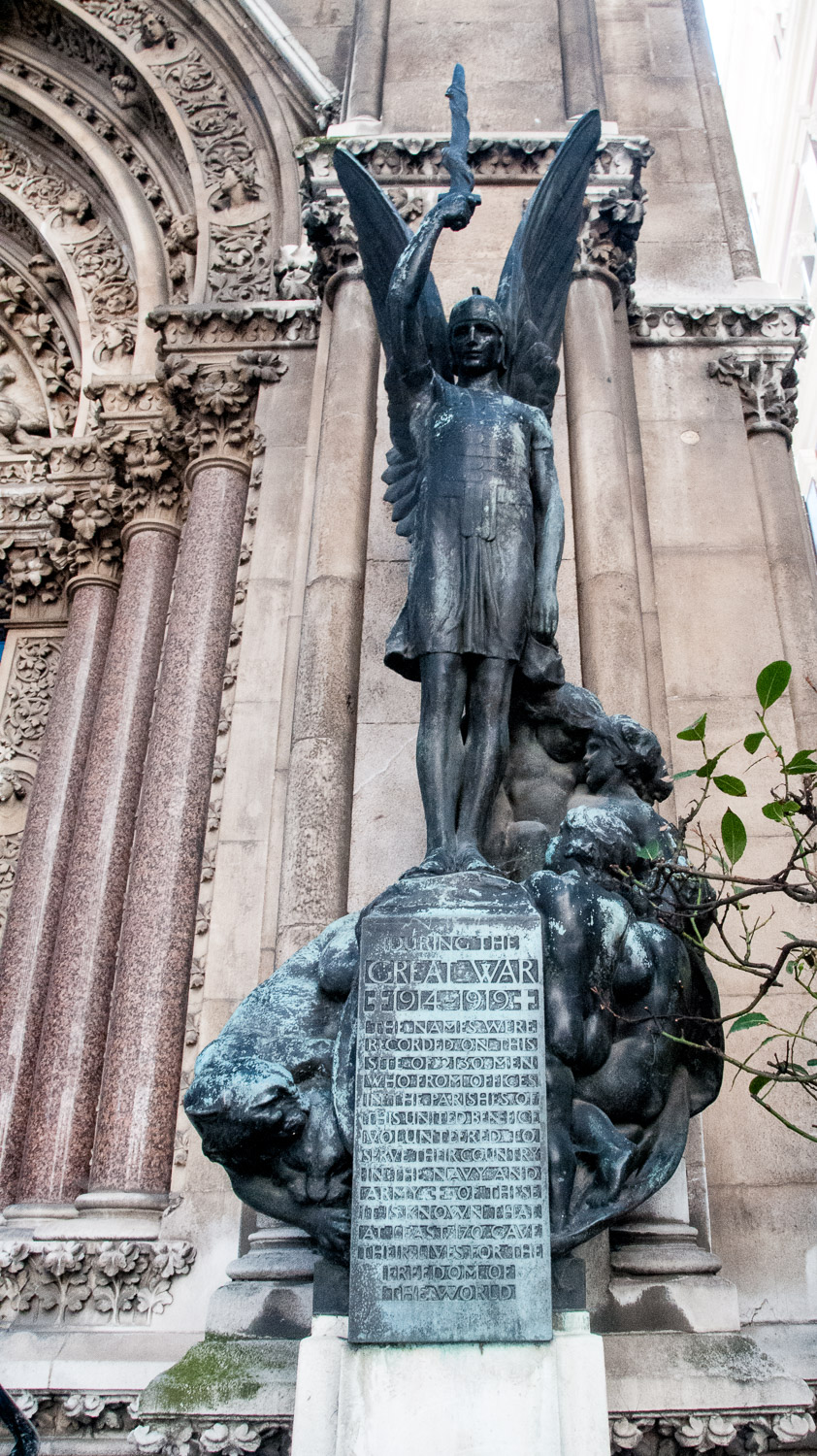
Outside the church is another sculpture of Michael brandishing a flaming sword. It is a bronze memorial to the 170 out of the 2,130 men of this parish who enrolled for military service in the First World War and died as a result.
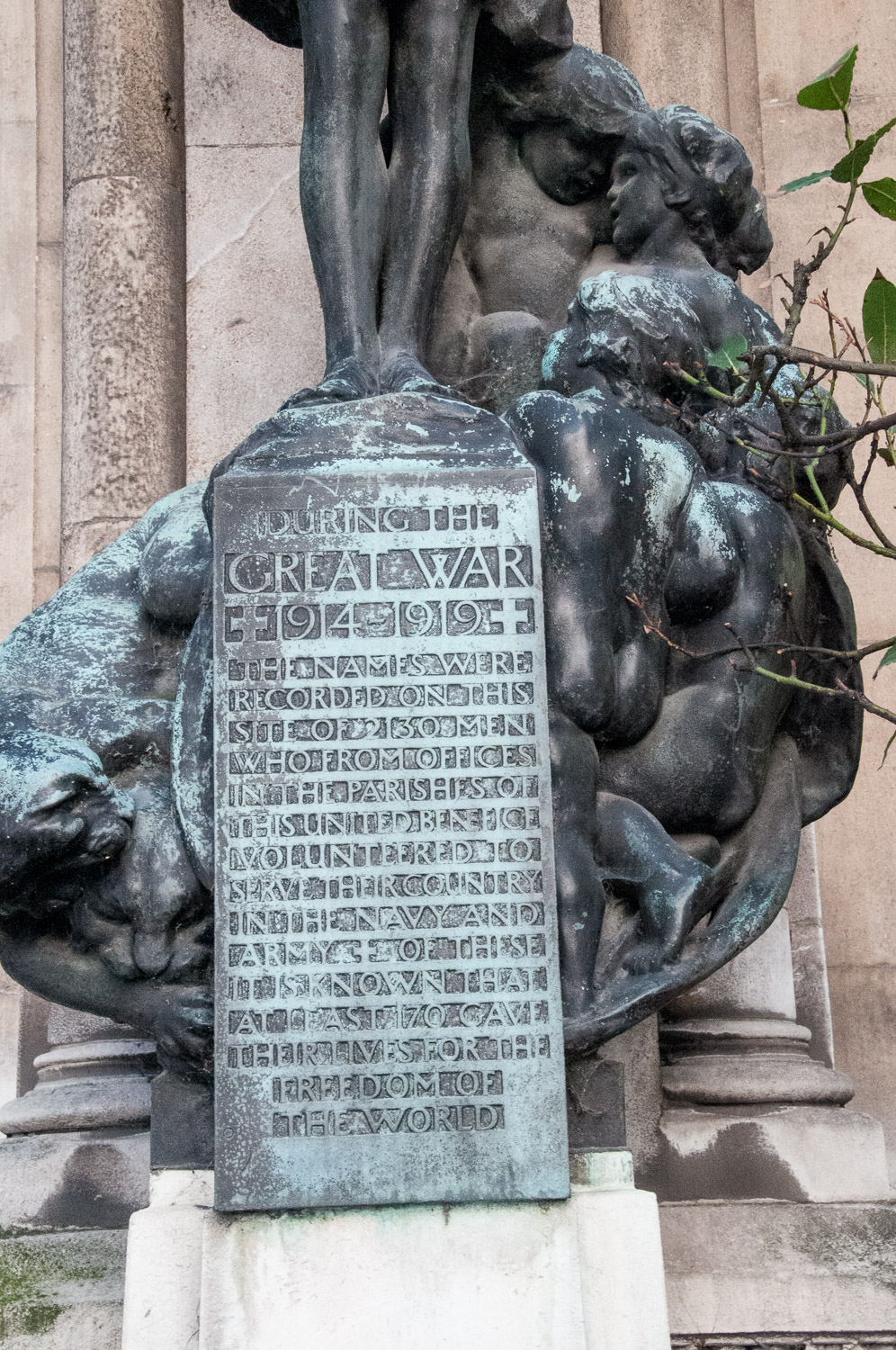
 

A close-up of the inscription

The sculpture (by R R Goulden) was described in the Builder magazine as follows

St Michael with the flaming sword stands steadfast above the quarreling beasts which typify war, and are sliding slowly, but surely, from their previous paramount position. Life, in the shape of young children, rises with increasing confidence under the protection of the champion of right.


Do go into the church, it’s a serene place to visit with very attractive pews and stained glass.

Of particular note on the left is the Churchwarden’s pew which shows St Michael thrusting a lance into the mouth of a truly evil-looking devil. It’s a work by the eminent wood carver William Gibbs Rogers (1792-1875).
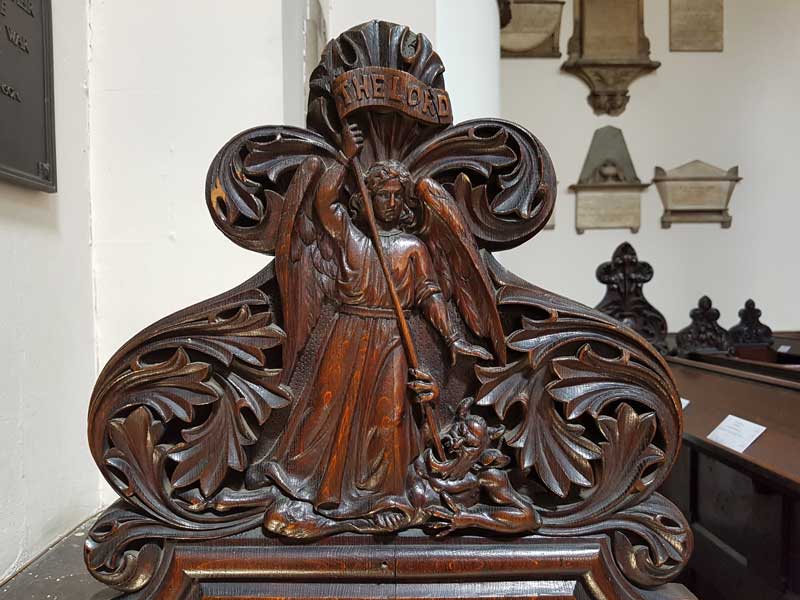
The carving on the church wardens pew showing St Michael driving a spear into the devil’s mouth..
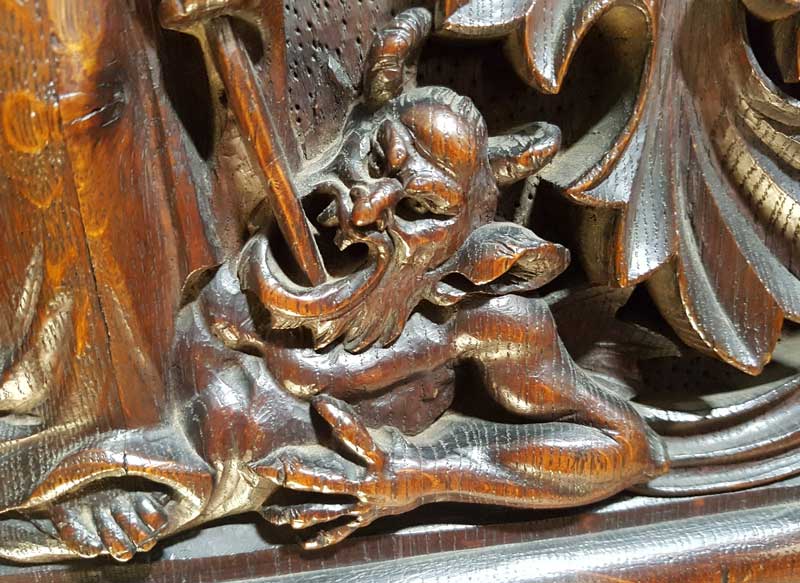


A close-up of the devil’s face on the churchwarden’s pew.

When you come out of the church turn right and you will find that Cornhill is seriously infested with devils.

It’s a blogger’s dilemma when one encounters what seems to be an apocryphal explanation for something one is researching. I have taken the decision that it’s OK to publish if, firstly, I make the nature of the story clear and, secondly, if it could just about be true, and thirdly if it’s a great story!

What follows seems to me to meet all the criteria.

As I walked along Cornhill one day I glanced up and saw these rather sinister figures silhouetted against the sky…
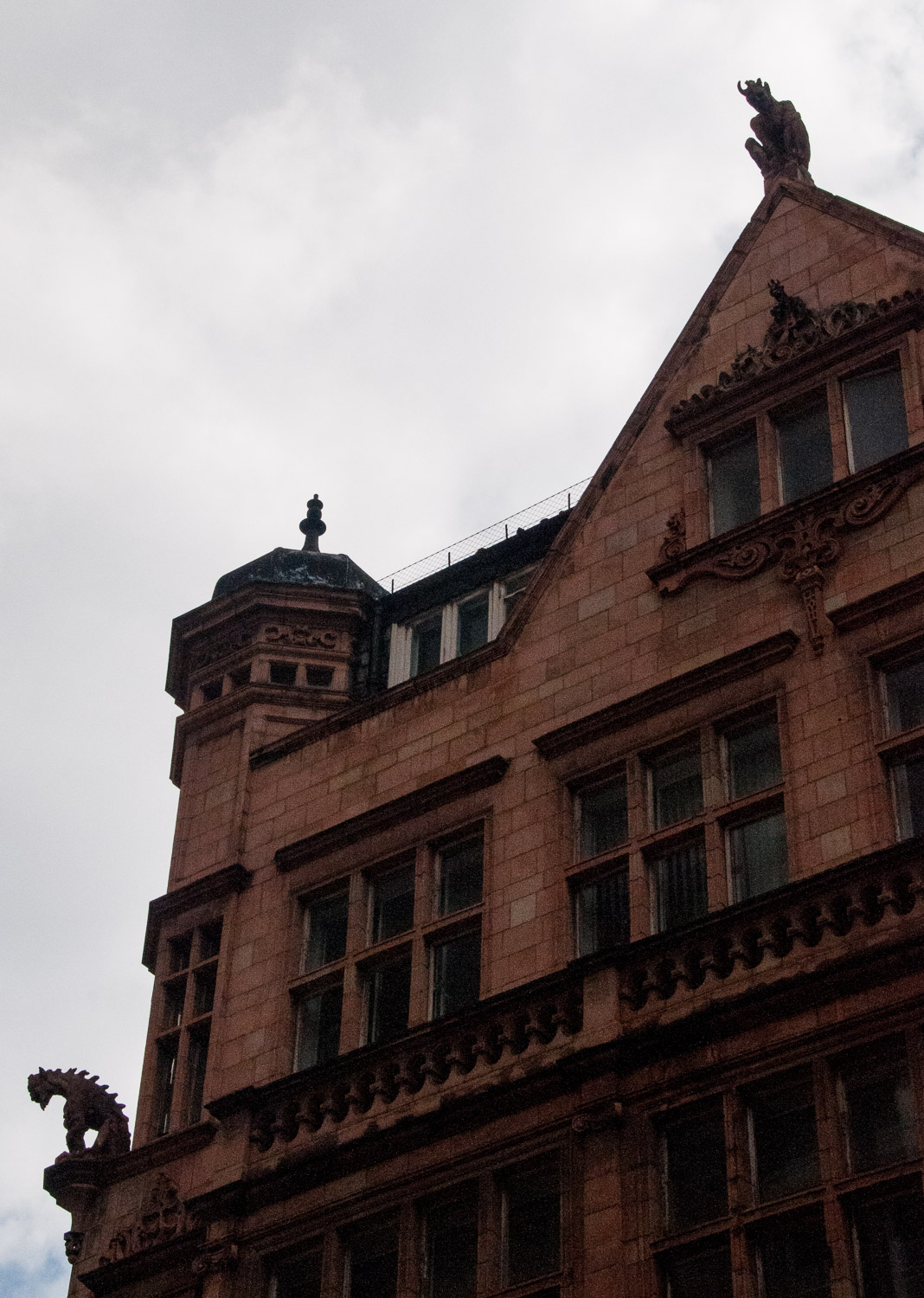
Closer inspection shows them to be devils, and rather angry and malevolent ones too …
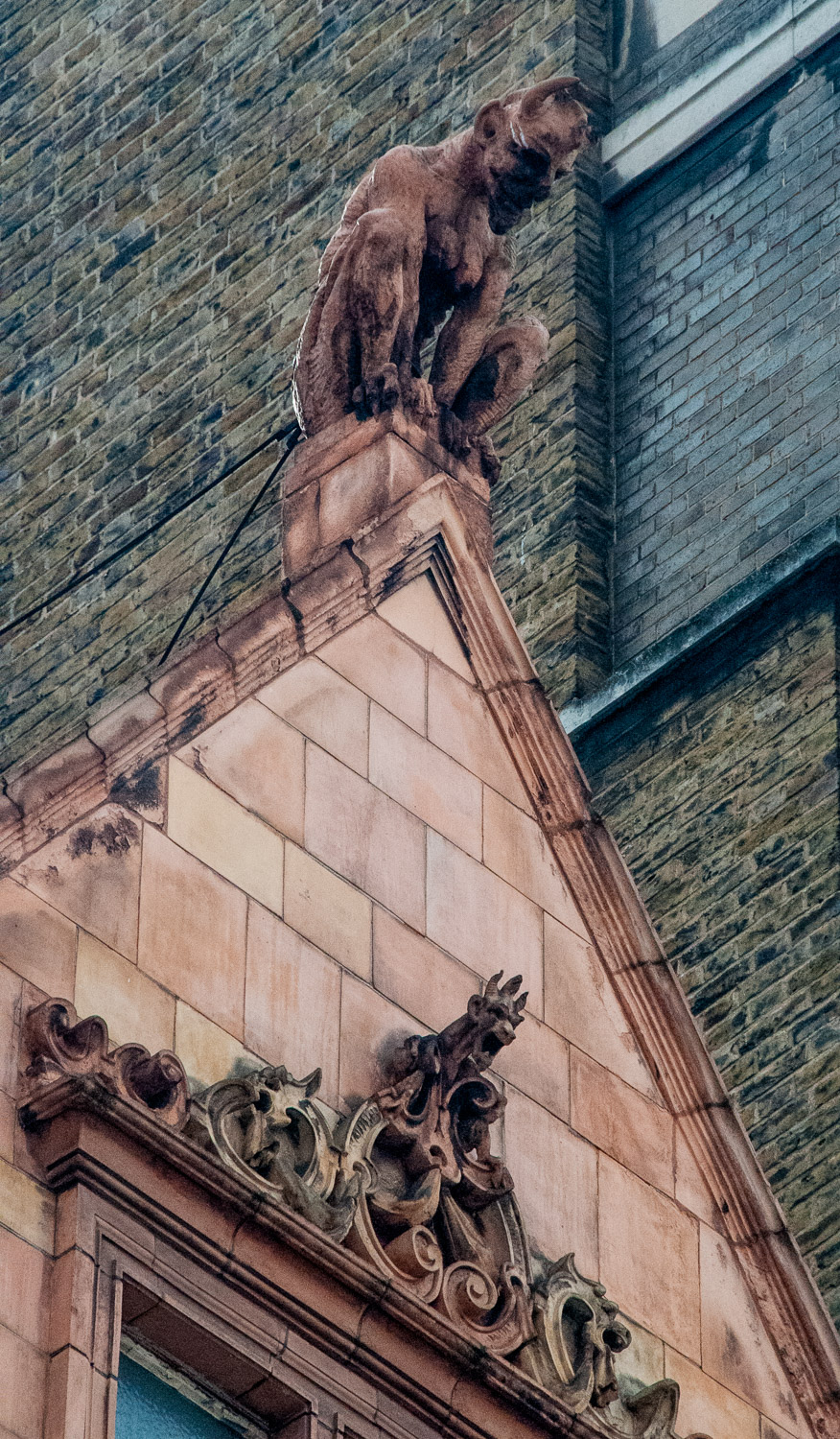
They look down on St Peter upon Cornhill and are known as the Cornhill Devils. The story goes that, when plans were submitted for the late Victorian building next to the church, the rector noticed that they impinged slightly on church land and lodged a strong objection. Everything had to literally go back to the drawing board at great inconvenience and expense. The terracotta devils looking down on the entrance to the church are said to be the architect’s revenge with the lowest devil bearing some resemblance to the cleric himself.
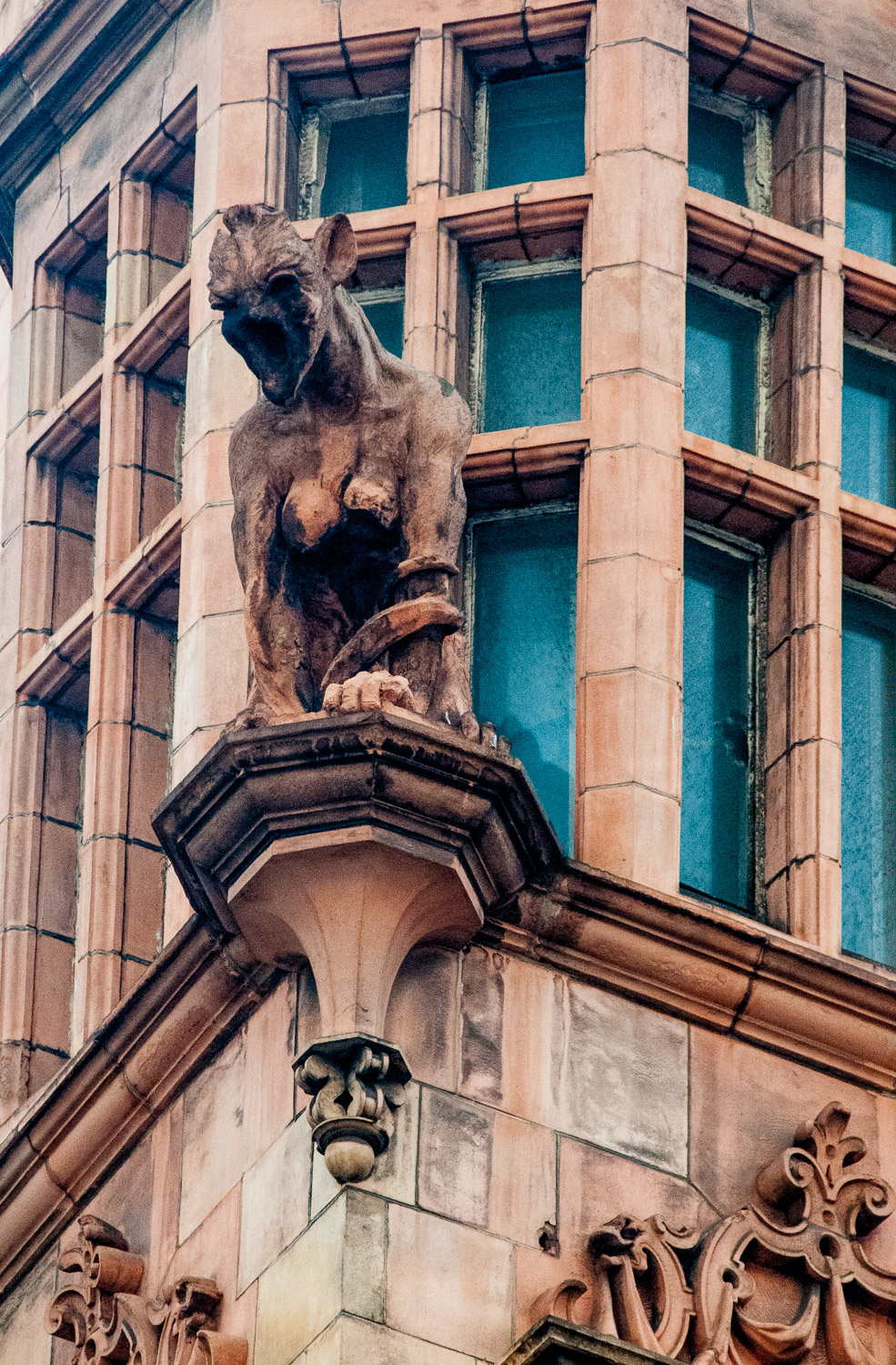
If this resembles the rector he must have been a pretty ugly guy!

Onward now towards the Tower of London via Hart Street.

Two trumpeting spandrel angels face one another over the doors of St Olave, Hart Street.
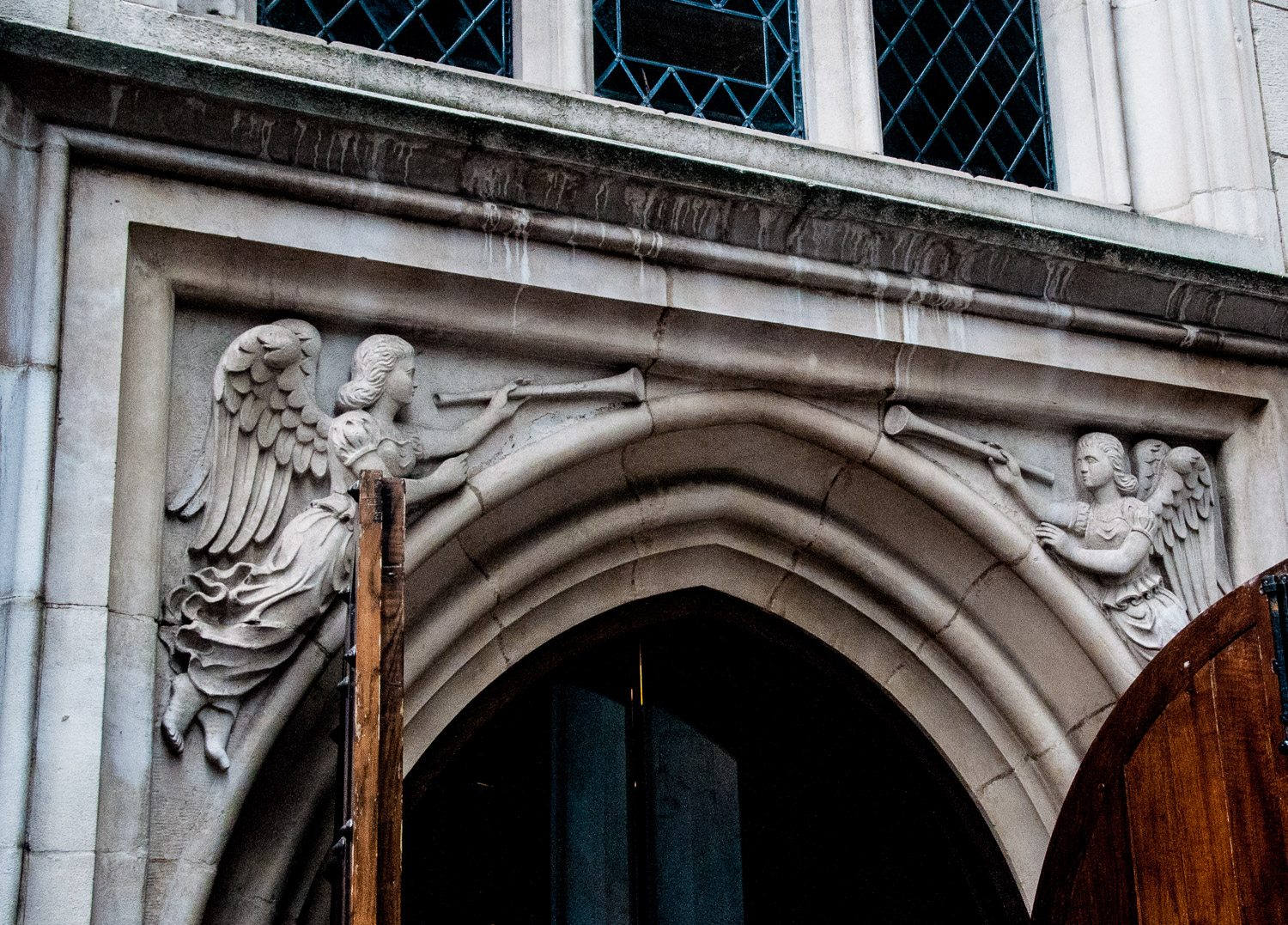
North door, St Olave

You can read more about this historic church in my earlier blog Samuel Pepys and his ‘own church’.

This angel by the door of All Hallows by the Tower holds a shield bearing the cross of St Andrew. Above is the crossed sword emblem of the Diocese of London.
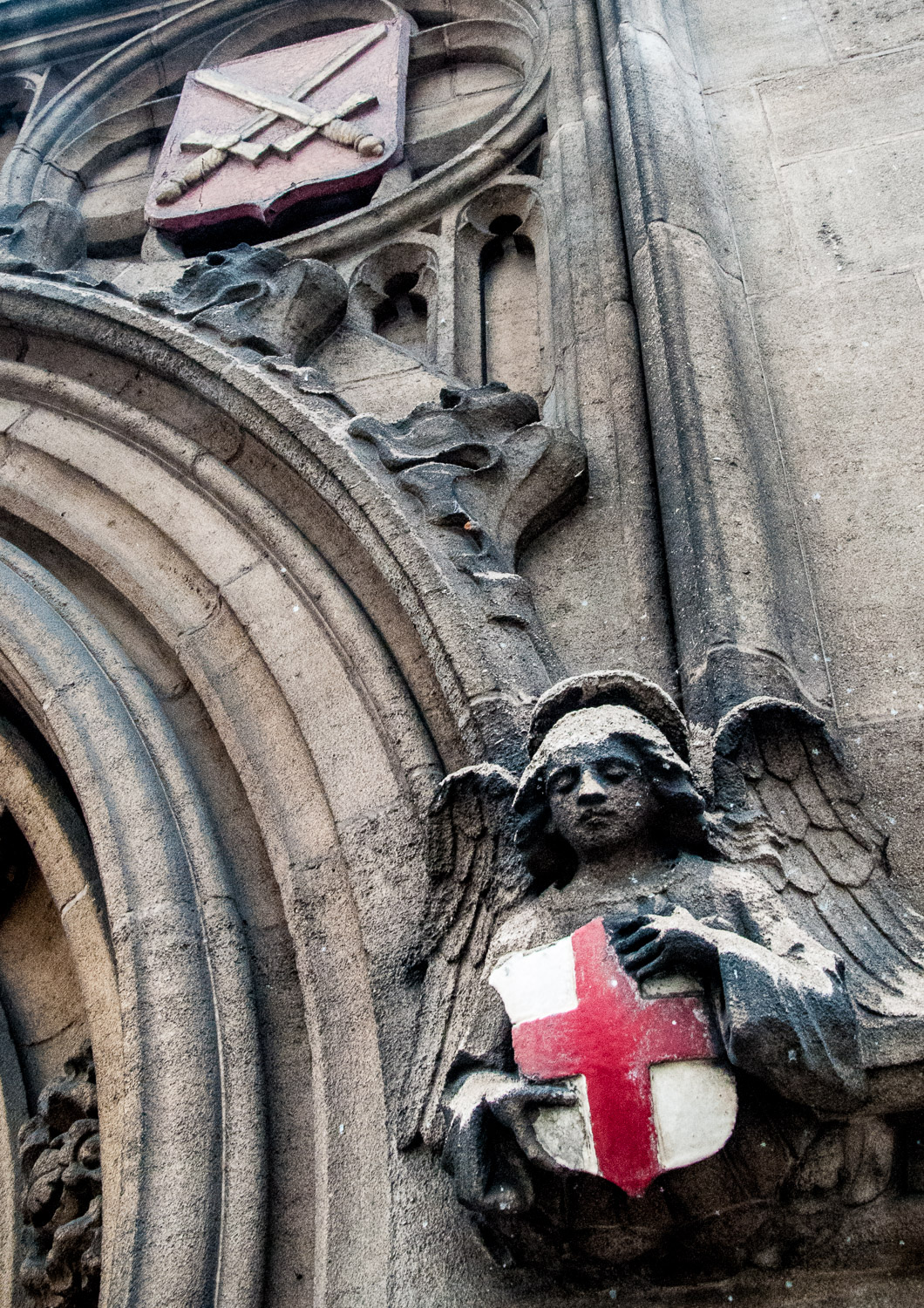
All Hallows by the Tower, north door

Fleet street is always great to visit given the vast range of subjects to explore.

Inside the door of St Dunstan in the West, Fleet Street…
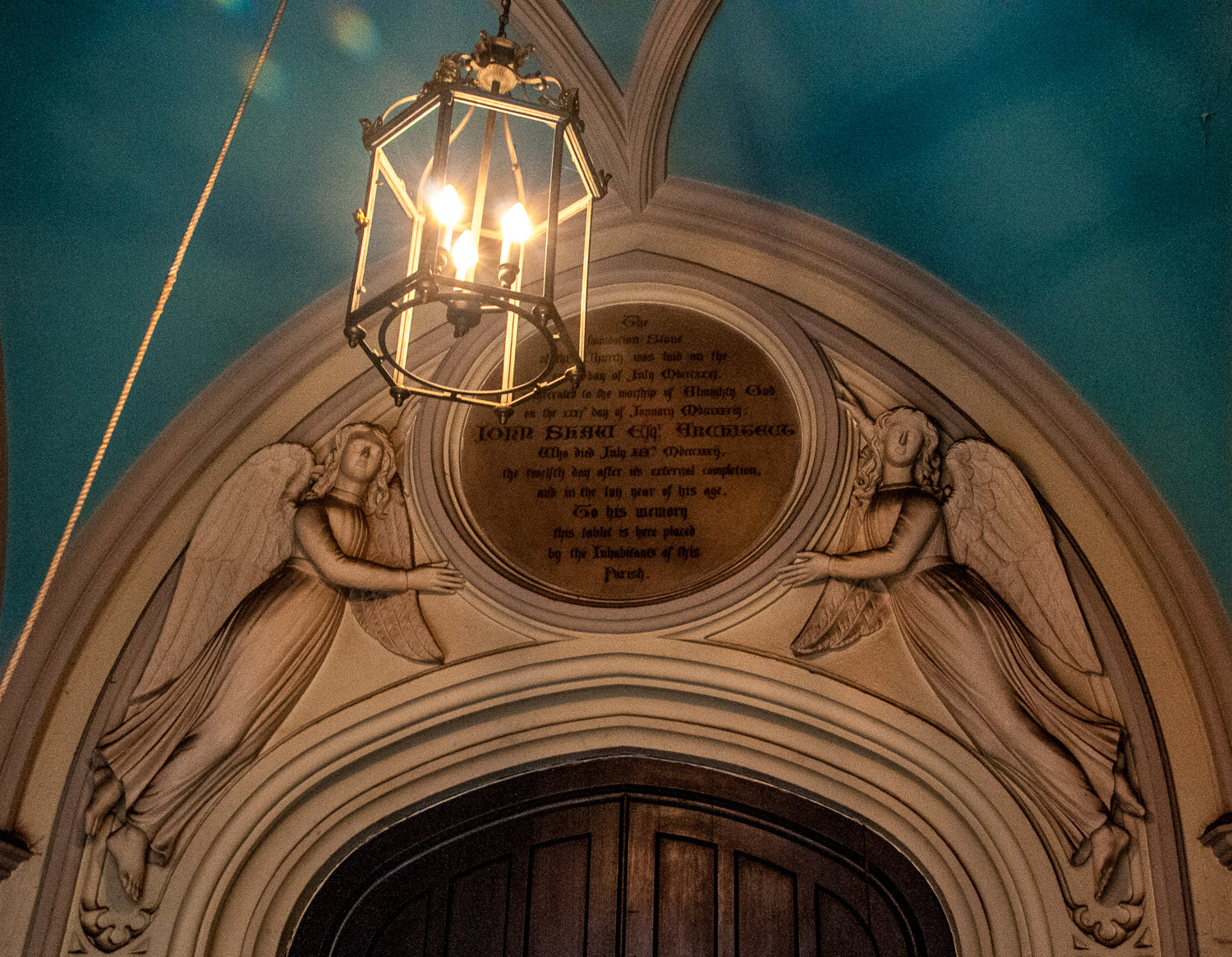
Angels holding a commemorative plaque to the original architect (1830-1832) John Shaw. On his death the work was continued by his son, also John

The plaque reads:

The foundation stone of this Church was laid on the 27th day of July 1831 and consecrated to the worship of Almighty God on the 31st day of January 1833: John Shaw, Architect who died July 30th 1832, the 12th day after its external completion, and in the 57th year of his age. To his memory this tablet is here placed by the Inhabitants of this Parish.

Ever since one of my earliest blogs, Philanthropic Fountains, I have a bit of  a ‘thing’ about drinking fountains so I shall digress from angels momentarily.

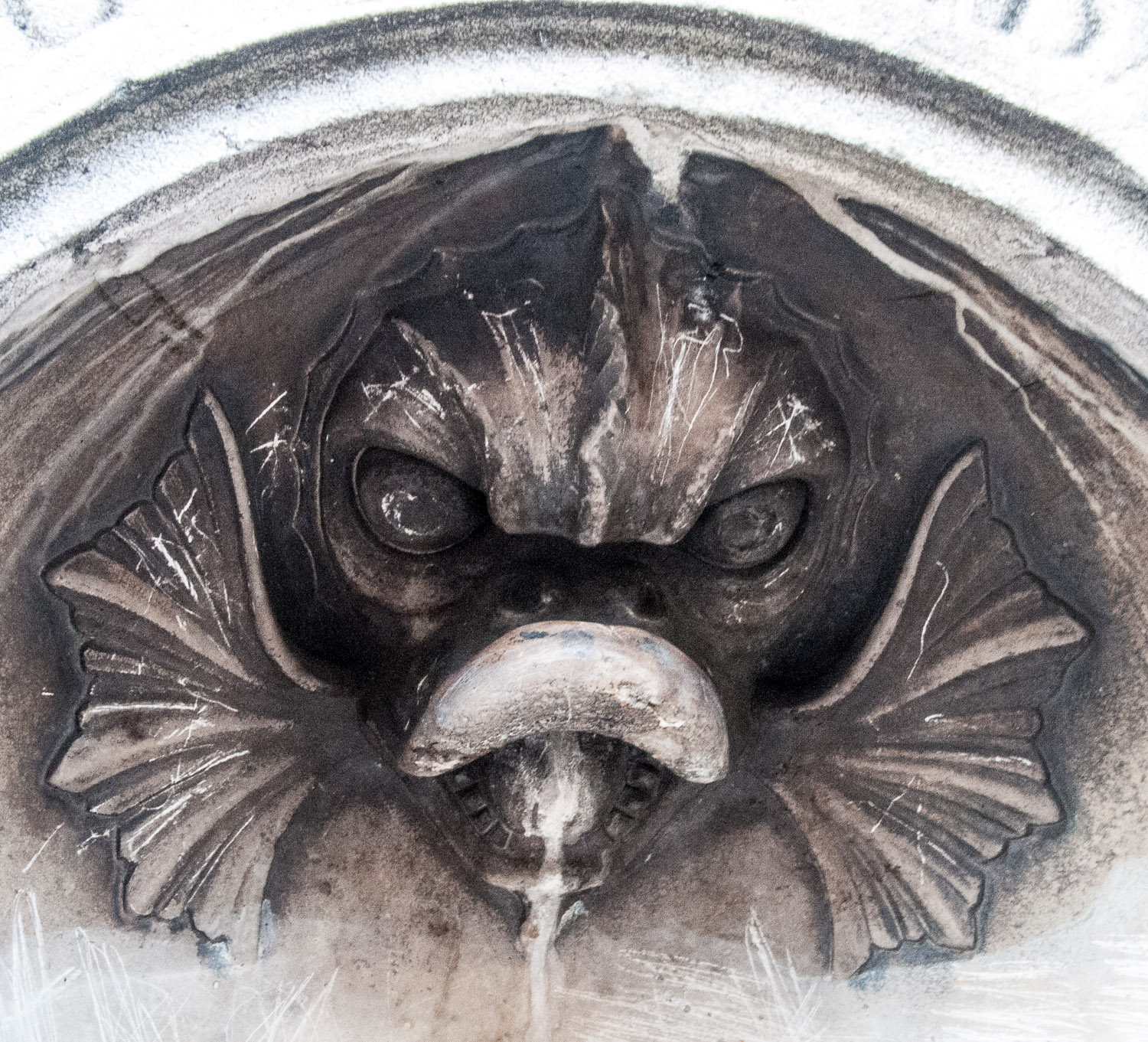
Just outside St Dunstan’s is this pretty but sadly timeworn fountain designed by John Shaw junior. The inscription is really hard to read but I believe it says …

The gift of Sir James Duke Bart MP ald. of this ward

The fear of the Lord is the fountain of life

Elected Lord Mayor 1848

MP London 1849
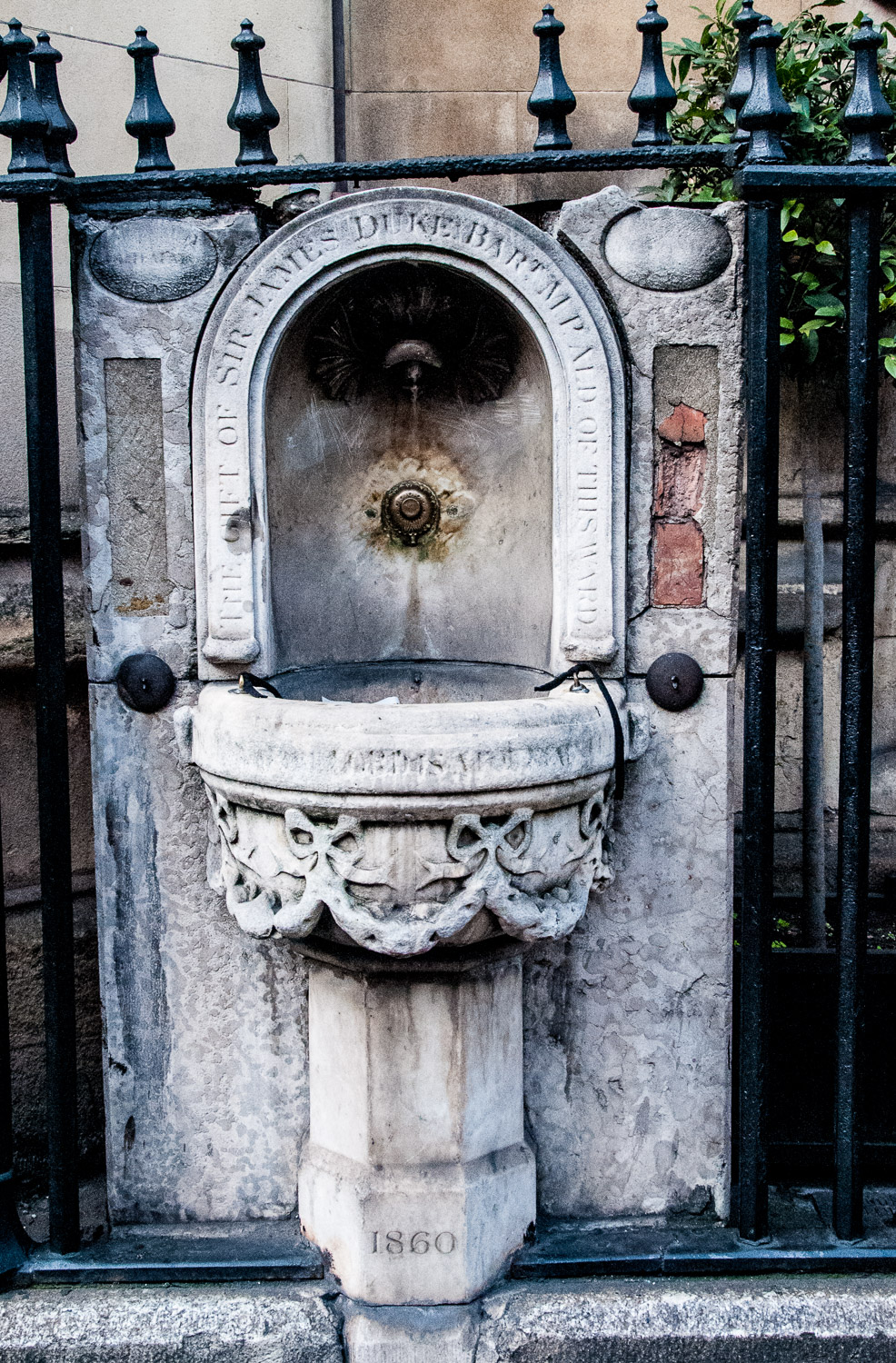
Fountain detail

An Art Deco trumpeting angel called The Herald graces 85 Fleet Street. The sculpture is by William Reid Dick and was unveiled by Sir Edwin Lutyens himself on 10 July 1939. The Times stated that The Herald was

Sending forth through her trumpet the news gathered from all corners of the Earth …
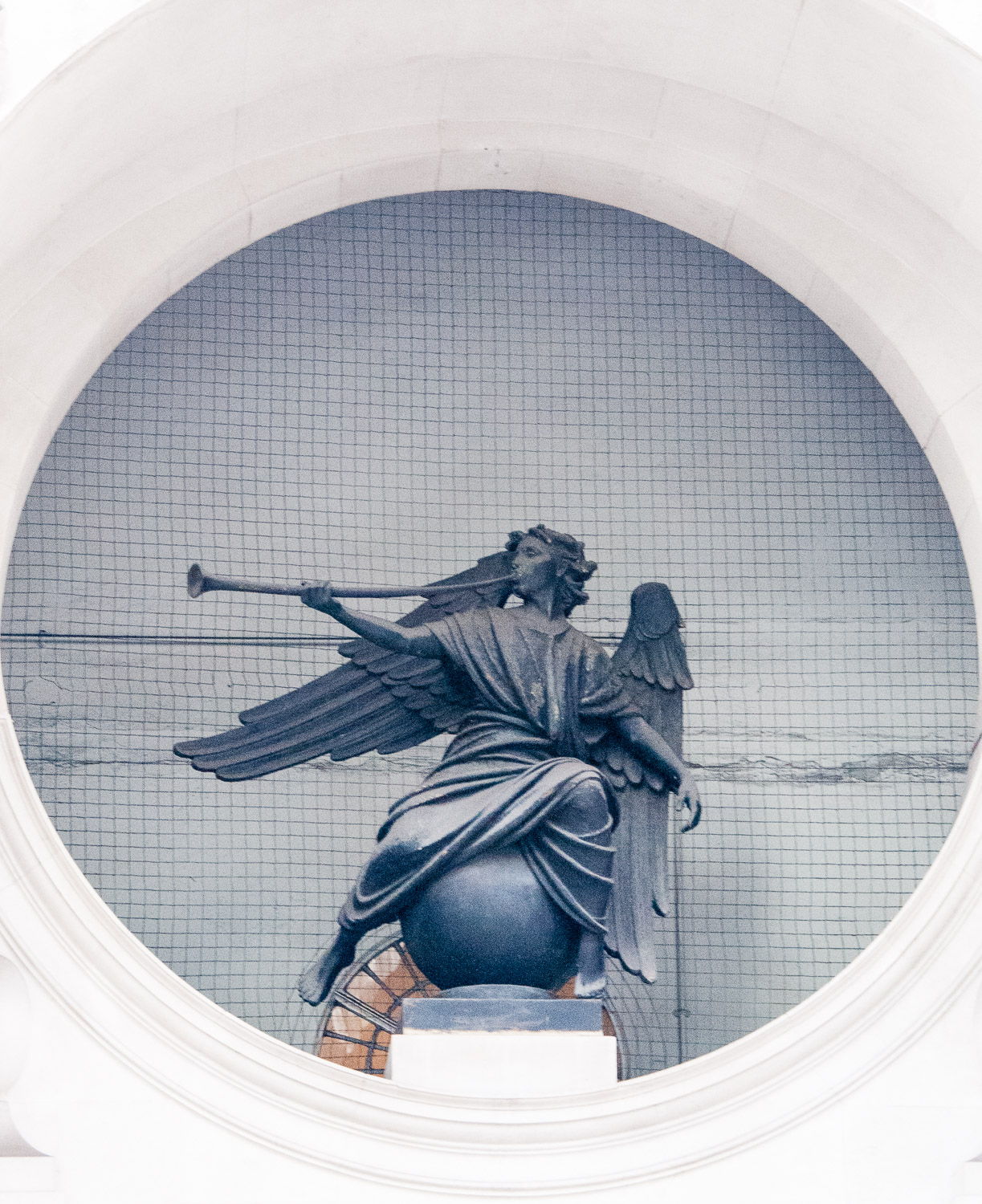
The Herald

And finally to St Bartholomew the Great via St Paul’s Cathedral.

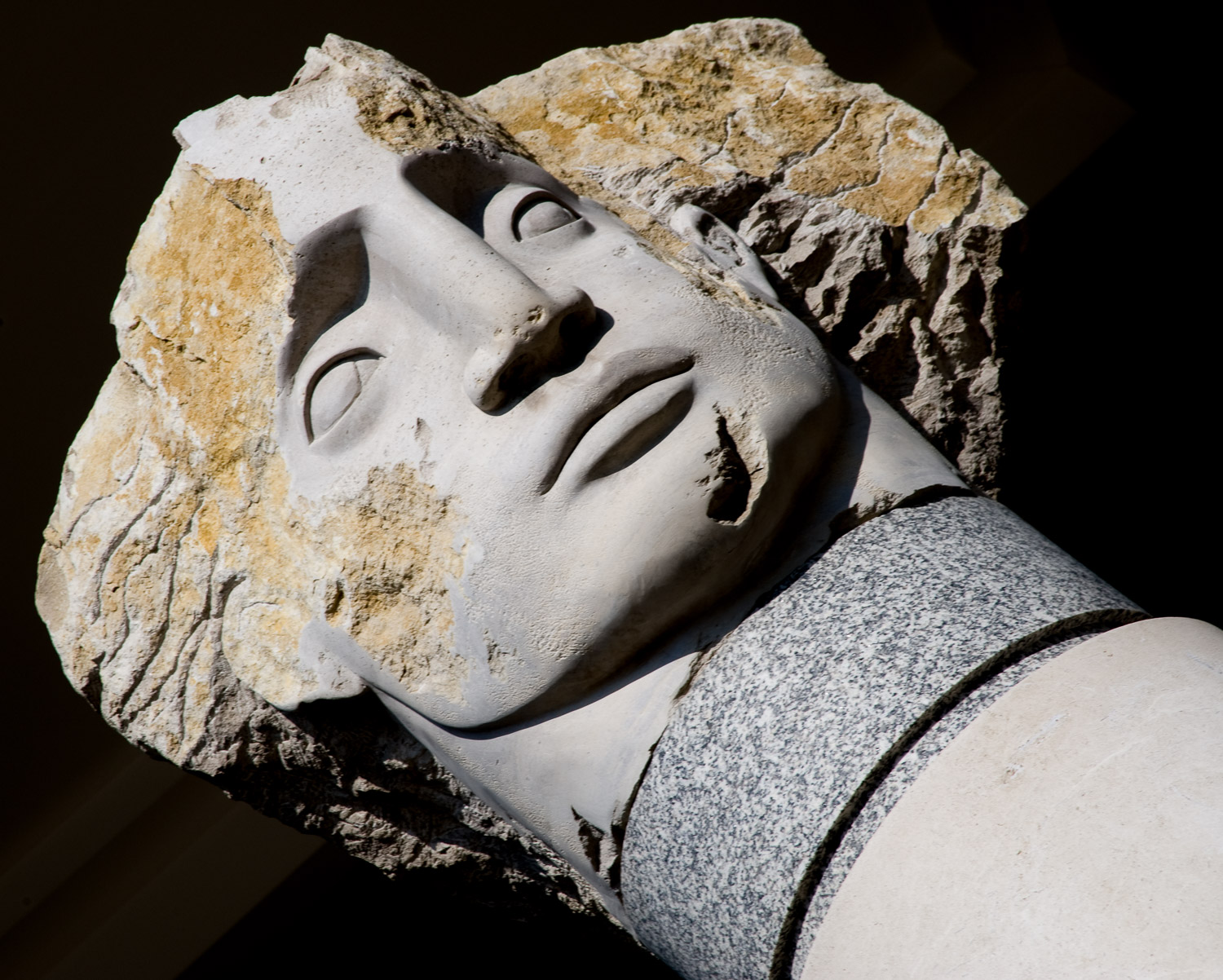
Emily Young FRBS is one of the country’s foremost stone sculptors and you can enjoy her work in the form of Angels I to V in the courtyard beside St Paul’s Cathedral. I never tire of looking at them.
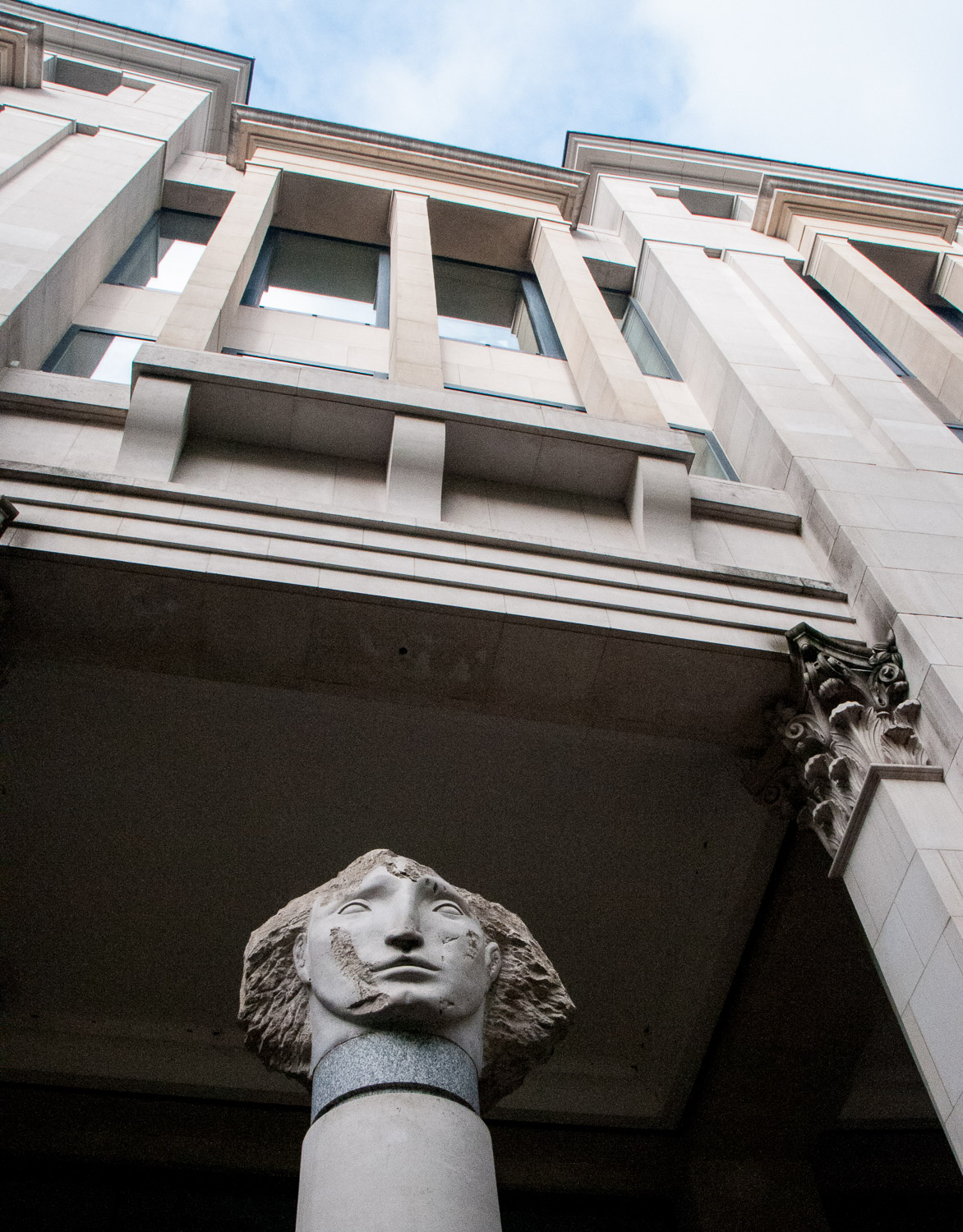
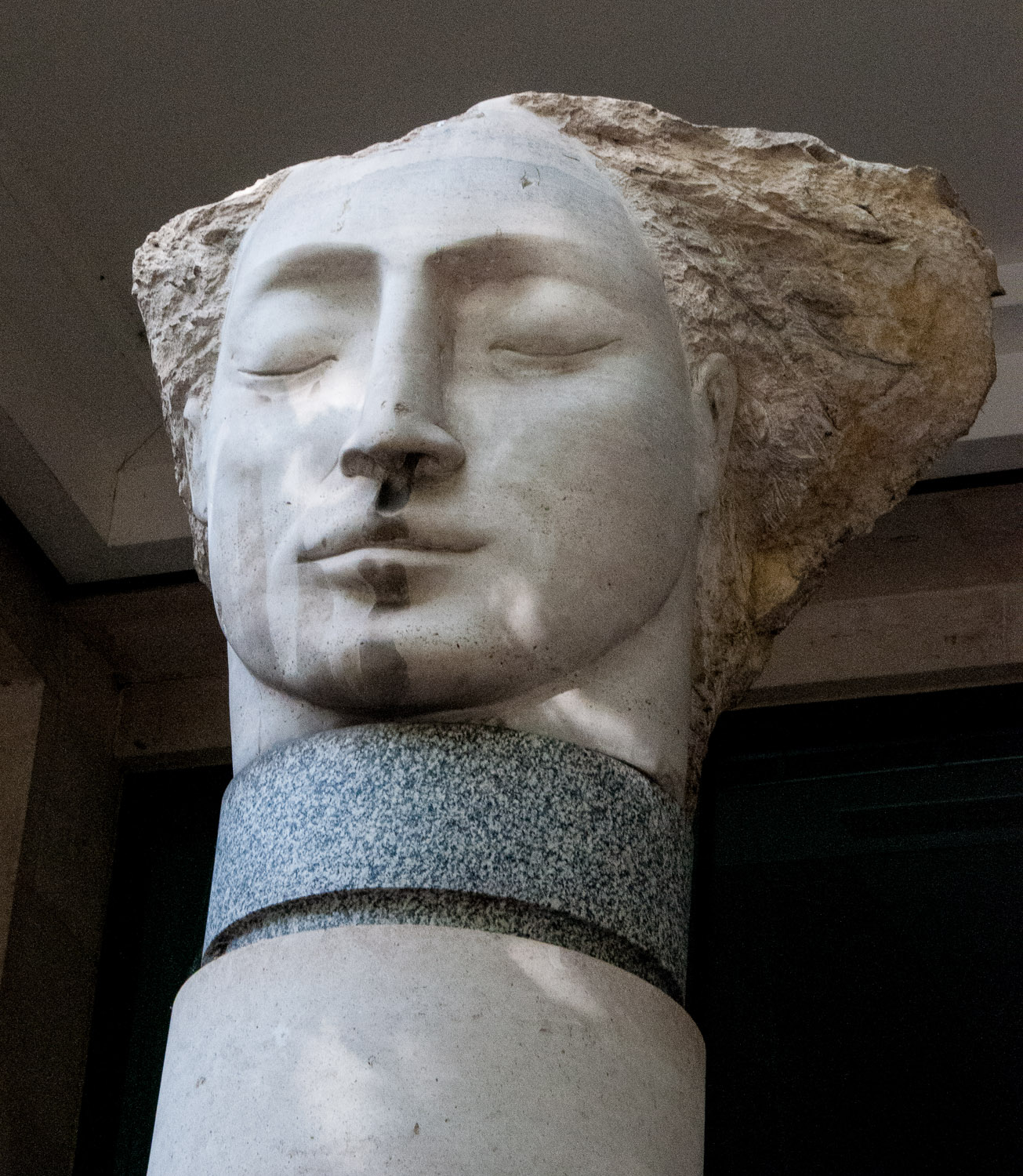
 

And finally some more classical angels at the church of St Bartholomew the Great …
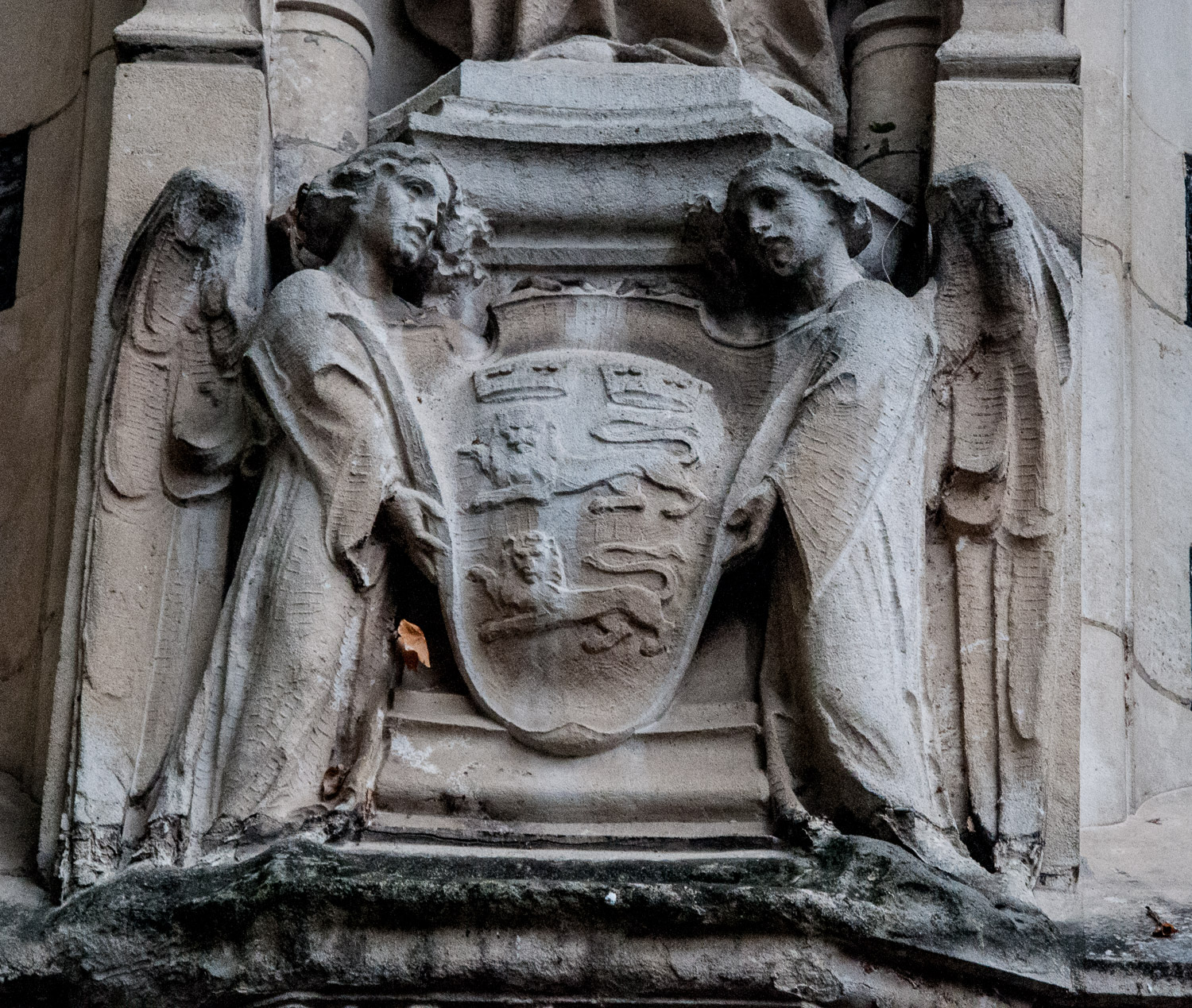
They support the coat of arms of the founding patron King Henry I (reigned 1100-1135)
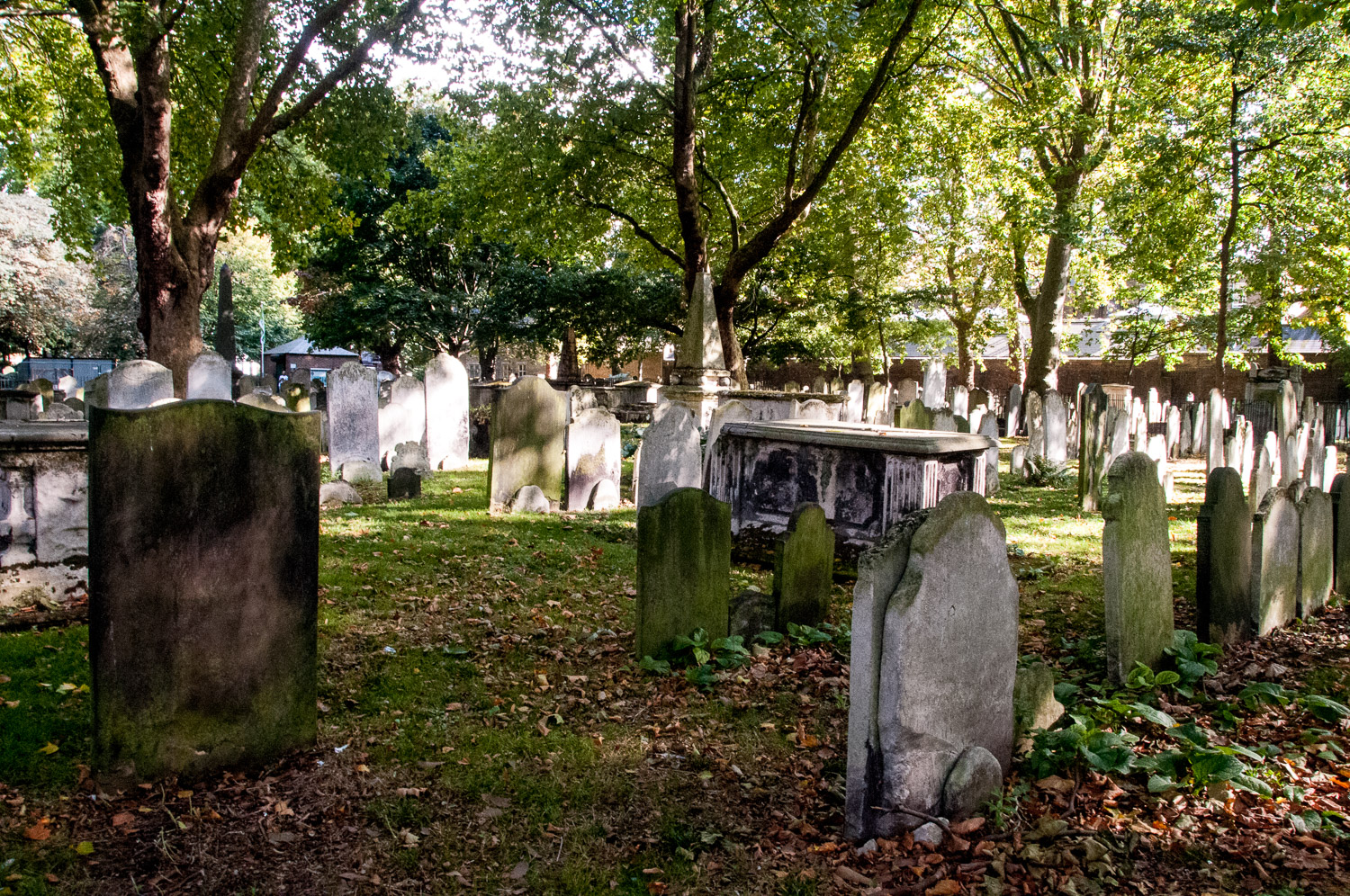
 

Stones and bones – a walk through Bunhill Burial Ground

When I read that over 120,000 people had been interred in the Bunhill burial ground over the years it immediately made me think of Thomas Hardy’s 1882 poem The Levelled Churchyard

O passenger, pray list and catch

Our sighs and piteous groans,

Half stifled in this jumbled patch

Of wrenched memorial stones!

We late-lamented, resting here,
 are mixed to human jam,

And each to each exclaims in fear, 
‘I know not which I am!’

About 2,500 monuments survive in Bunhill and it is possible to go on an accompanied walk through the stones, which are mostly now fenced off.  In this short blog I am restricting myself to commenting on what can be seen from the public paths.

The history of the land is fascinating. Owned by the Dean & Chapter of St Paul’s Cathedral between 1514 and 1867, it was continuously leased to the City Corporation who themselves sub-leased it to others. The name Bunhill seems to have been a corruption of the word Bonehill.  Theories range from people being interred there during Saxon times to the suggestion that various types of refuse, including animal bones from Smithfield, were disposed of there. However, an extraordinary event in 1549 made the name literally true.

Since the 13th century corpses had been buried in St Paul’s churchyard just long enough for the flesh to rot away, after which the bones were placed in a nearby Charnel House ‘to await the resurrection of the dead’. After the Reformation this was seen as an unacceptable Popish practice, the Charnel House was demolished, and 1,000, yes 1,000, cartloads of bones were dumped at Bunhill. A City Golgotha, it is said the the resulting hill was high enough to accommodate three windmills.

In 1665 it was designated a possible ‘plague pit’ but there is no evidence that it was used as such. At the same time, however, a crisis arose concerning St Paul’s, the ‘noisome stench arising from the great number of dead’ buried there. Many other parishes had the same problem and the Mayor and Aldermen were forced to act quickly as a terrible smell of putrefaction was permeating the City. After negotiations with the existing tenants, the ‘new burial place in Bunhill Fields’ was created and had been walled in by the 19th October that year with gates being added in 1666.

The Act of Uniformity of 1663 had established the Church of England as the national church and at the same time established a distinct category of Christian believers who wished to remain outside the national church. These became known as the nonconformists or dissenters and Bunhill became for many of them the burial ground of choice due to its location outside the City boundary and its independence from any Established place of worship.

The last burial took place in January 1854 and the area was designated as a public park with some memorials being removed and some restored or relocated. Heavy bombing during the war resulted in major landscaping work and the northern part was cleared of memorials and laid out much as it is now with grassy areas and benches.

I have chosen a few memorials for you to look at as you walk through Bunhill from City Road in the East to Bunhill Row in the west.

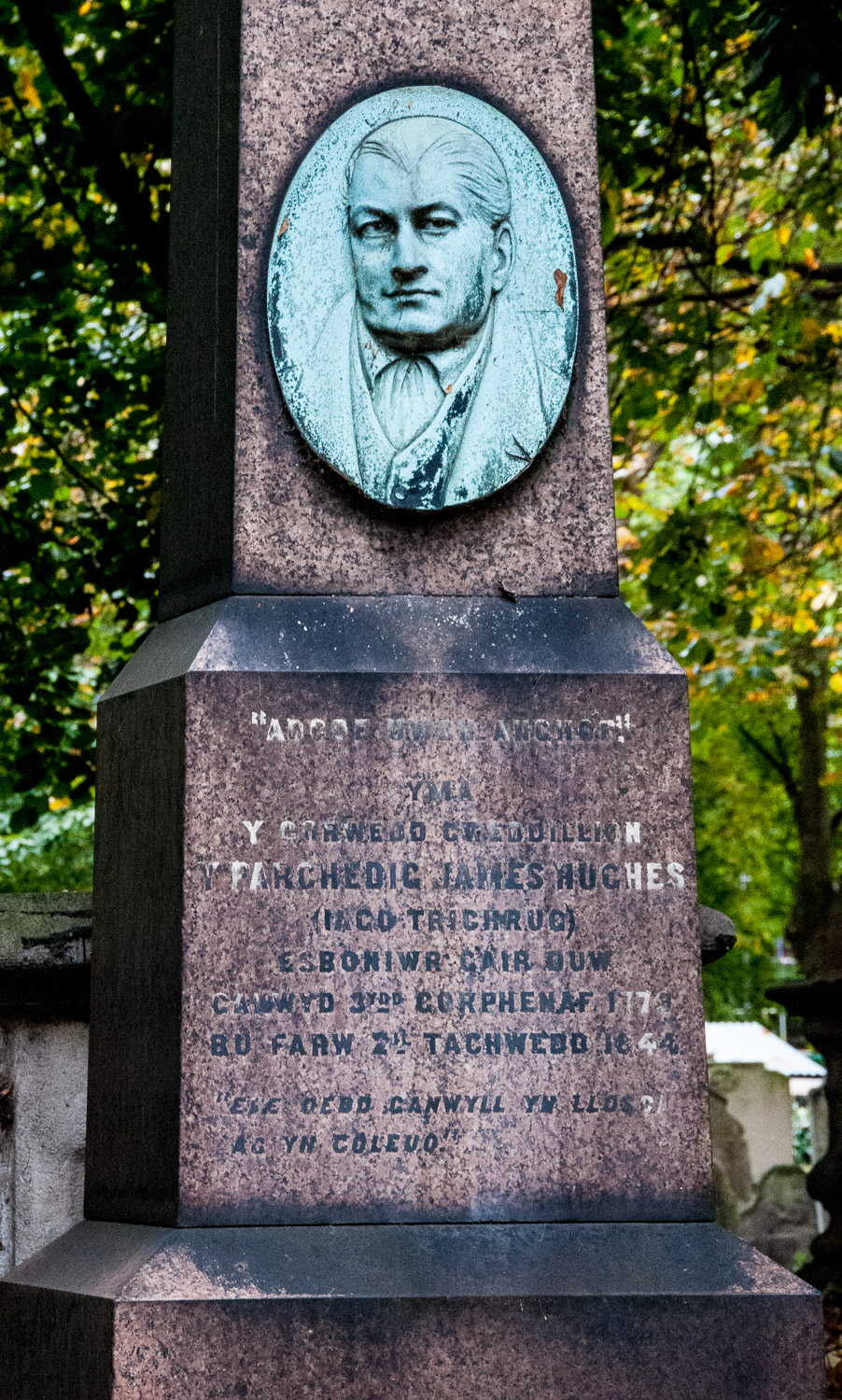
I’d like to start just outside the east entrance on City Road and a few yards to the north. Look through the railings and you will see an obelisk memorial to this handsome gentleman. The inscription is in Welsh and marks the tomb of the Calvinistic Methodist minister, poet and Bible commentator James Hughes. Also inscribed is his Bardic name Iago Trichrug.

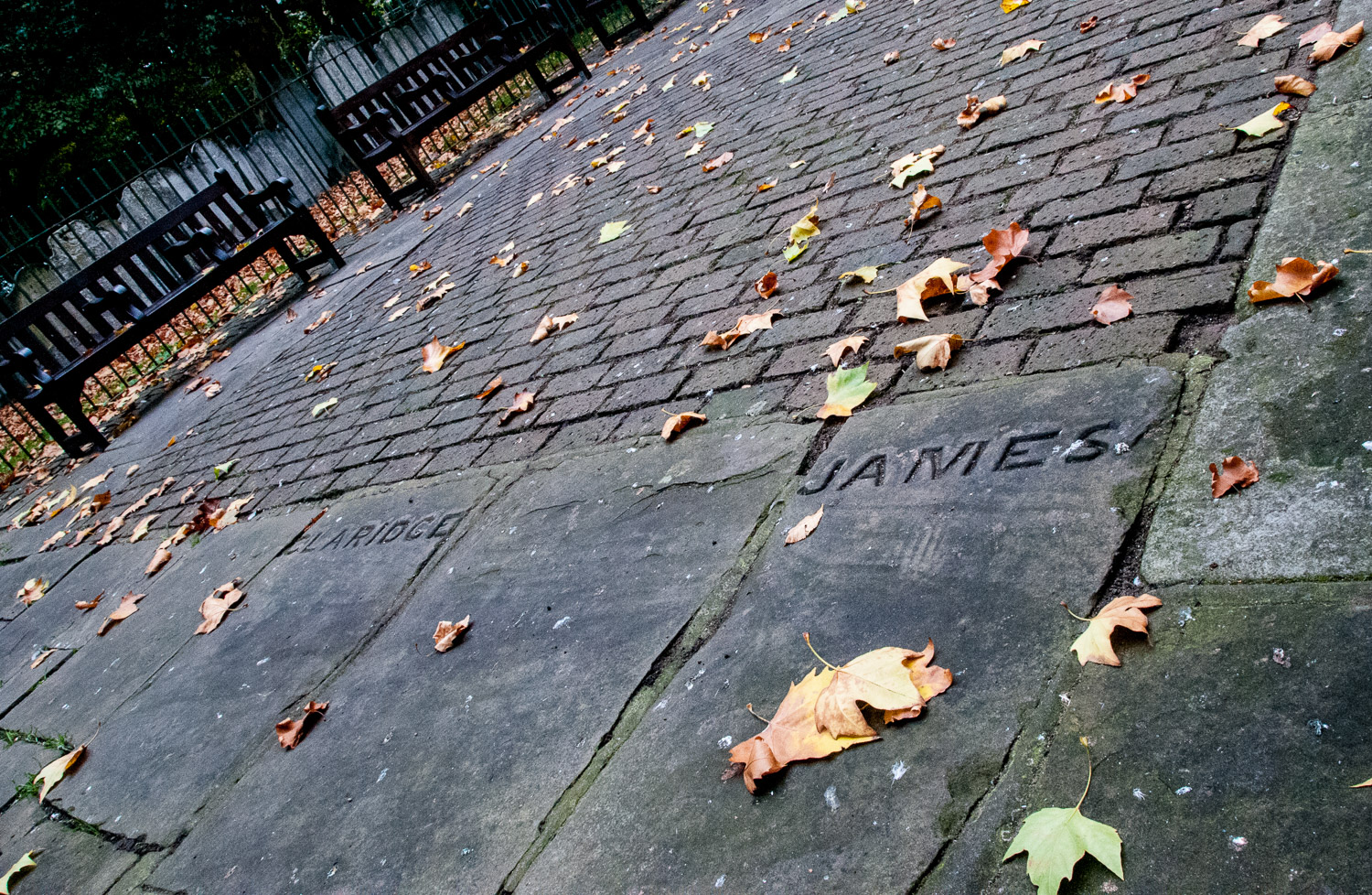
As you enter Bunhill you’ll notice that much of the path you are walking on consists of old grave stones, with some lettering still visible. I will point out a few along the way.

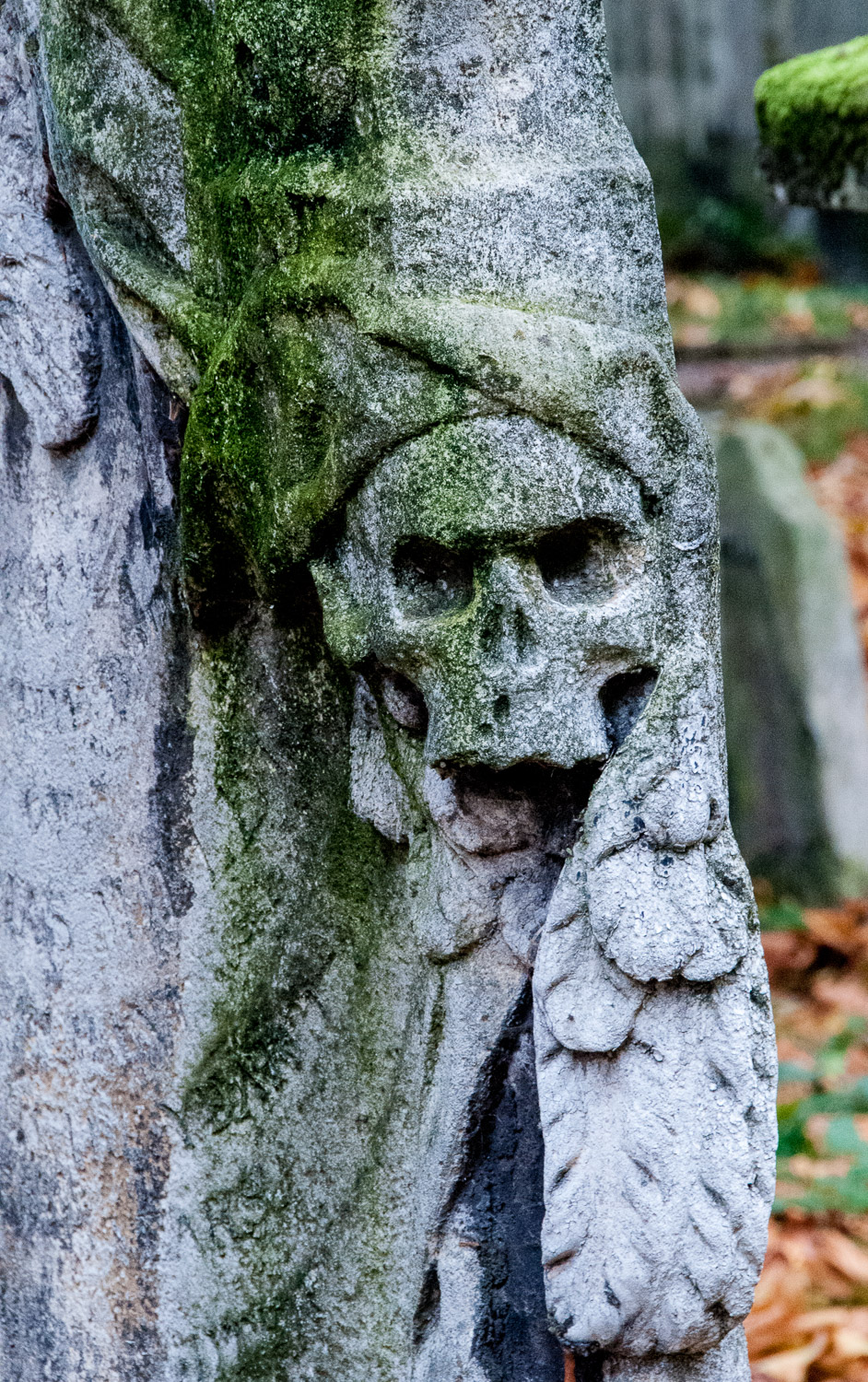
After passing through the east gate, look out on the left for this skull on the corner of one of the gravestones. Many of the stones are seriously eroded now but this one gives us an intimation of what the graves must have looked like originally.

This stone probably dates from the late 18th century judging by the others nearby

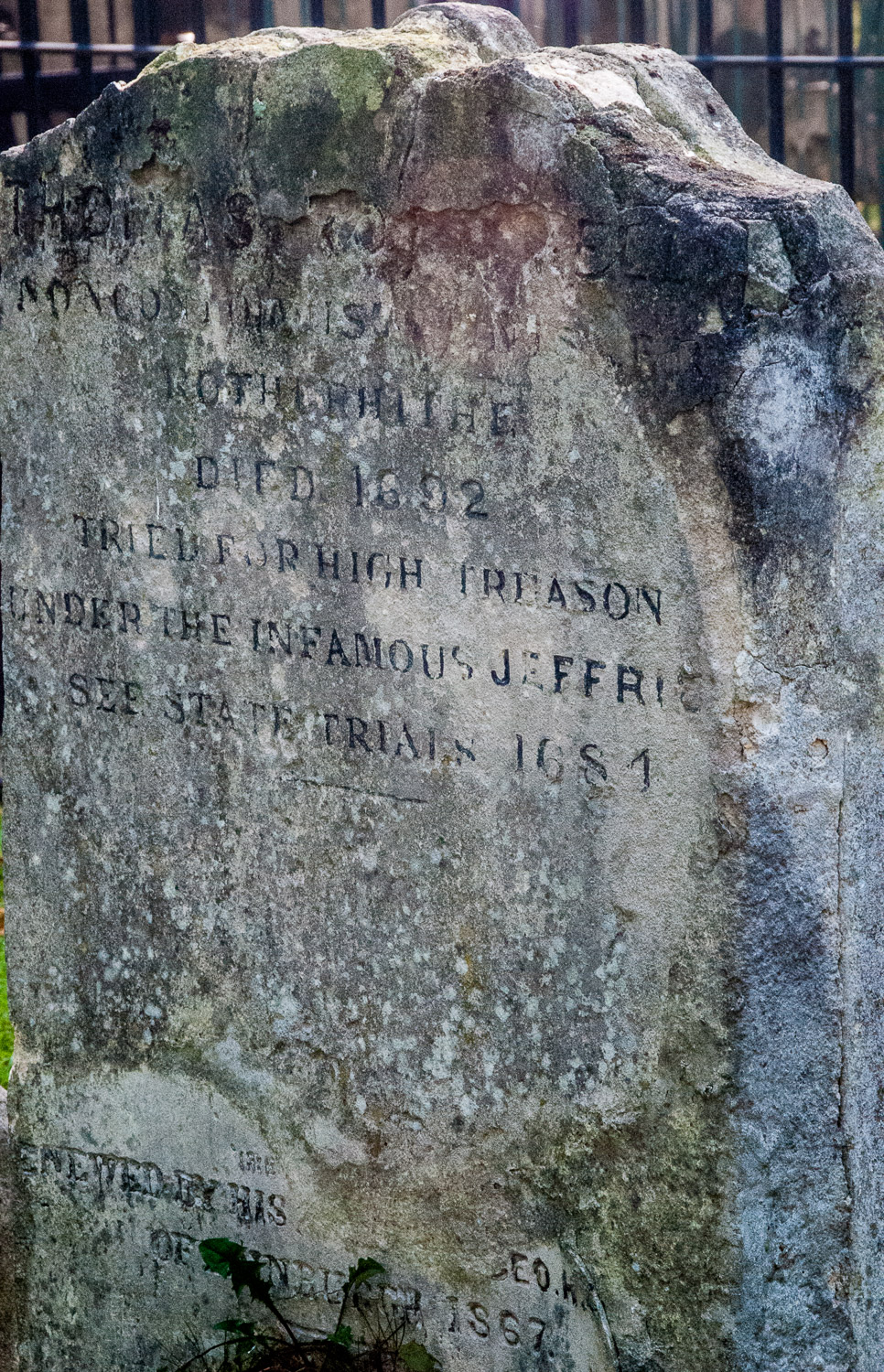
A little bit further on to the left is the memorial to Thomas Rosewell. The inscription reads

Thomas Rosewell

Nonconformist Minister

                                                       Rotherhithe

Died 1692

Tried for High Treason under the infamous Jeffries

See state trials 1681


The stone was renewed by a descendant in 1867

A Presbyterian minister in Rotherhithe, allegations (almost certainly fabricated) were made that he had uttered seditious sentiments during a sermon in September 1684. This led to his being arraigned for high treason at a trial presided over by the notoriously ruthless Lord Chief Justice, George Jeffreys, aka ‘The Hanging Judge’. He was initially found guilty and sentenced to death, but a tremendous public outcry led to a royal pardon in January 1685. Charles II had been told by an adviser that ‘If your majesty suffers this man to die, we are none of us safe in our houses’.

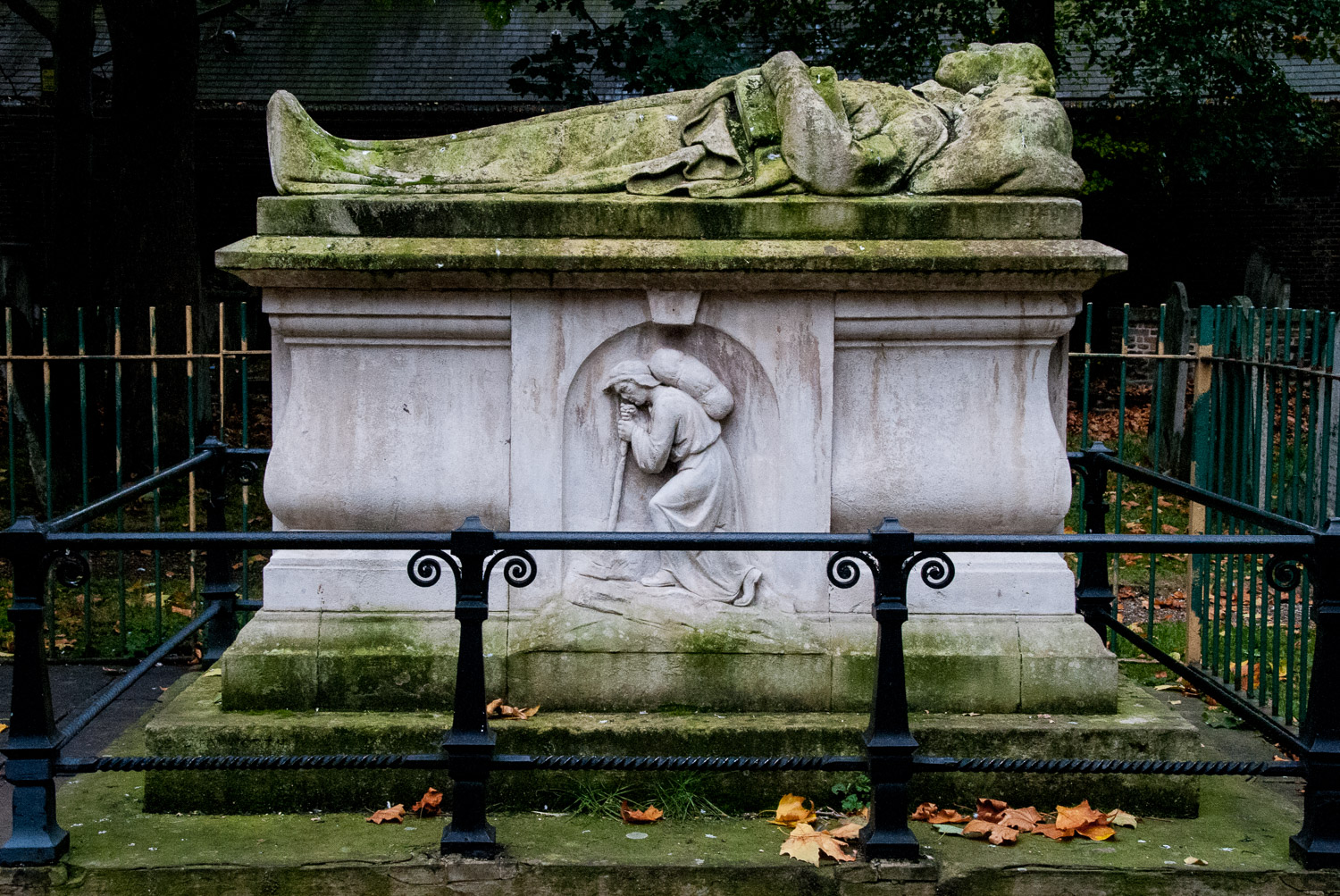
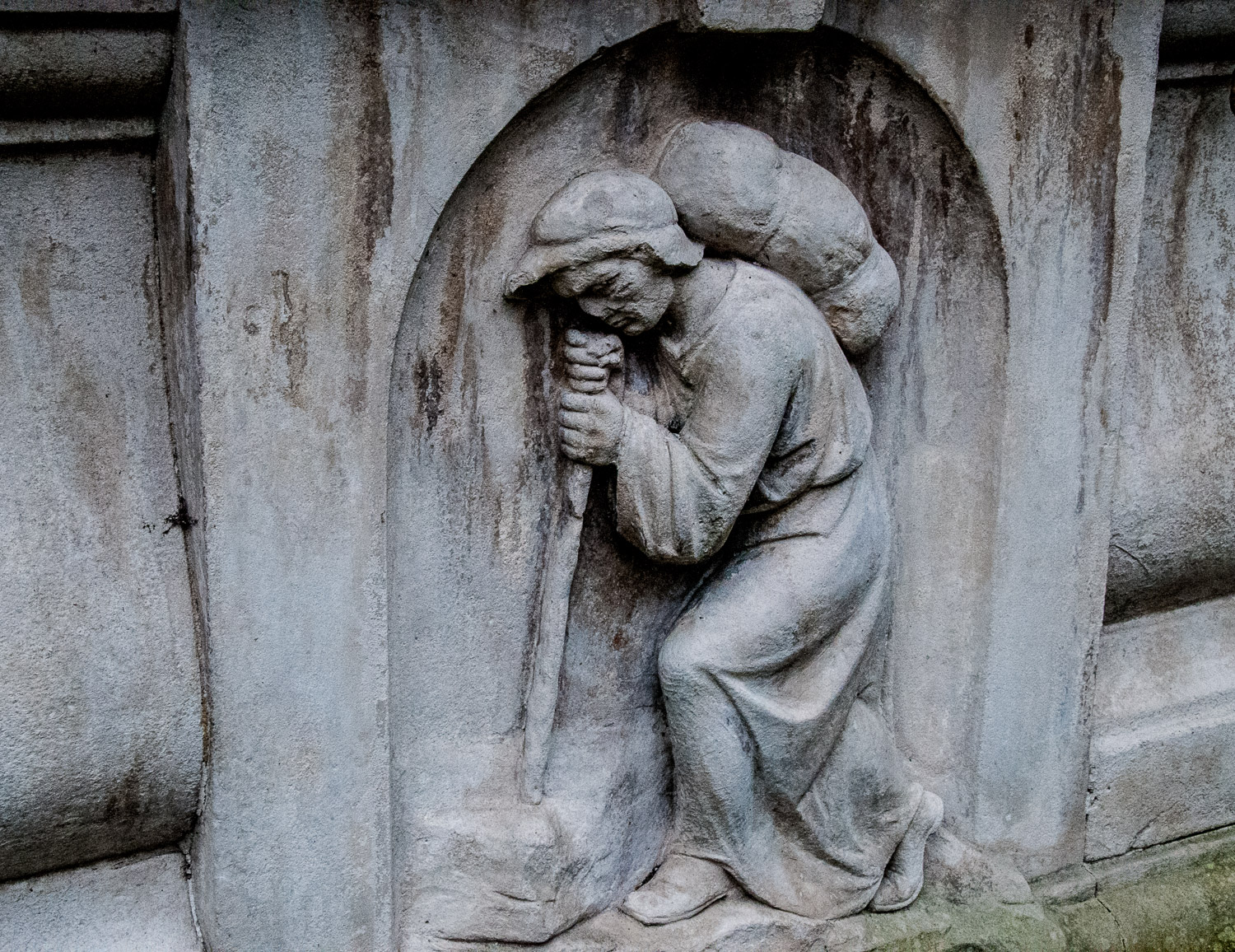
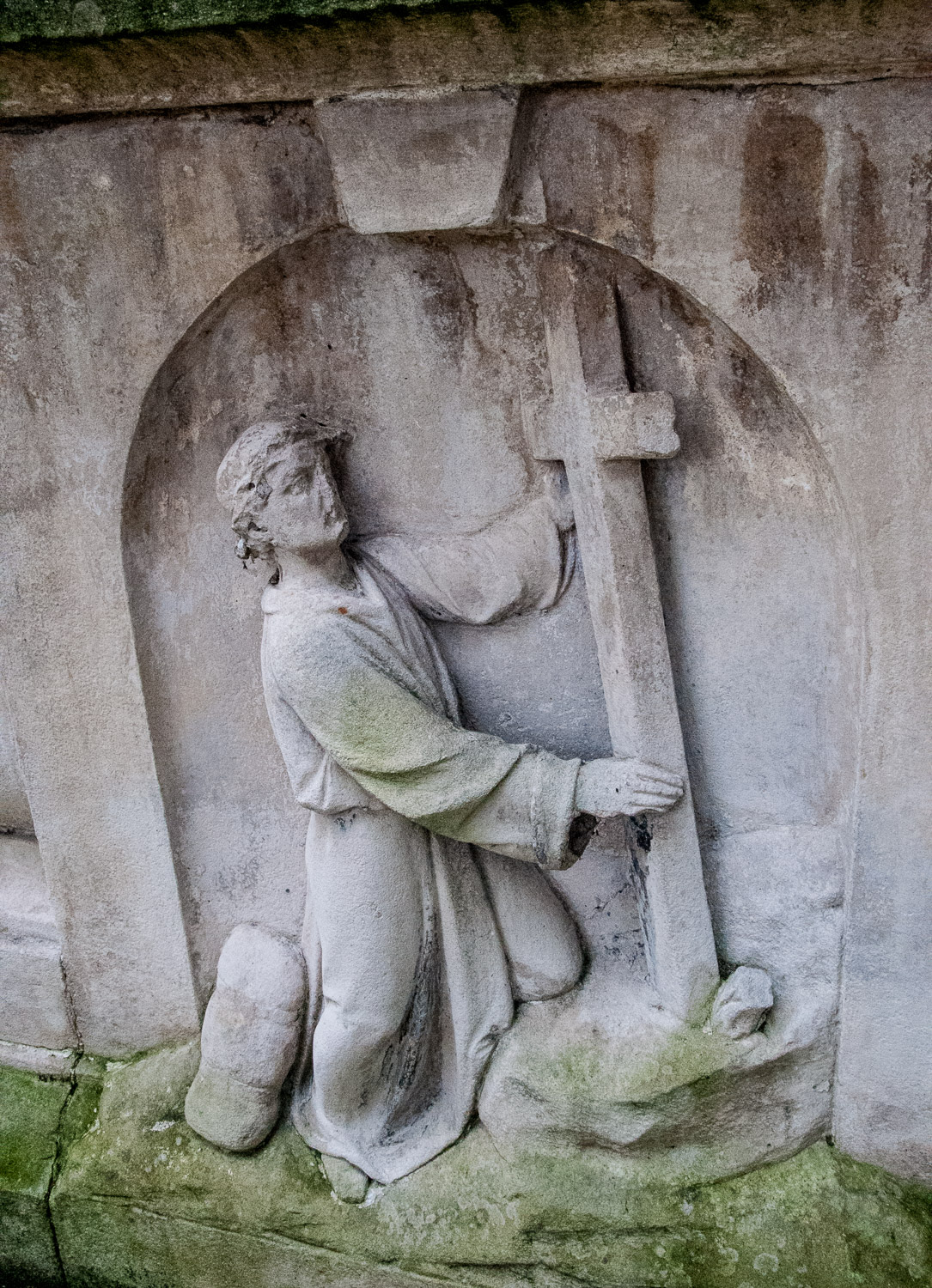
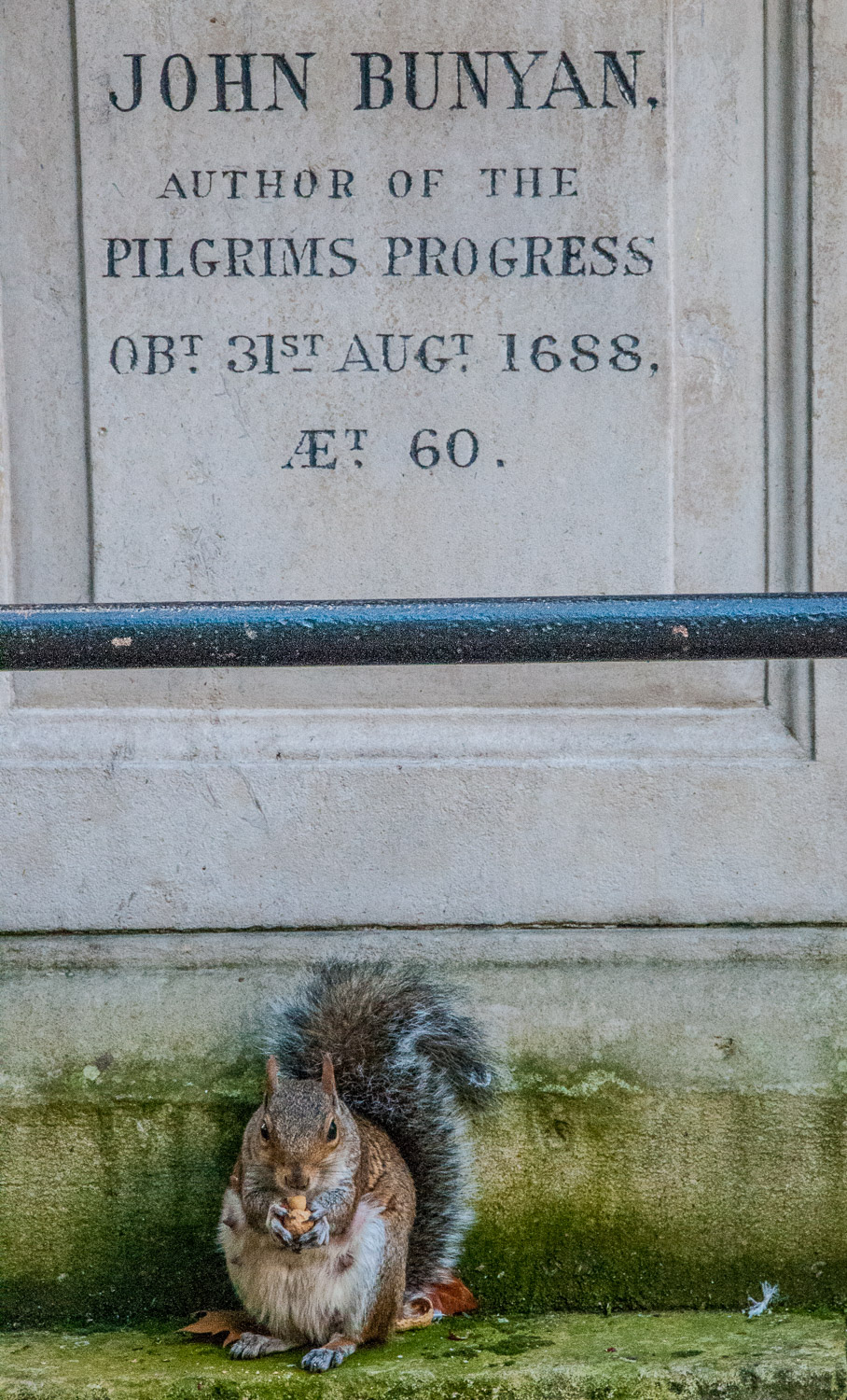
A little further on is John Bunyan’s tomb of 1689. It is not quite what it seems since the effigy of the great man and the bas-reliefs (inspired by Pilgrim’s Progress) were only added in 1862 when the tomb was restored. A preacher who spent over a decade in jail for his beliefs, he holds the bible in his left hand. He started the Christian allegory Pilgrim’s Progress whilst imprisoned and it became one of the most published works in the English language.


The Christian weighed down by his heavy burden of sin

Standing upright, free of sin, and clinging to the cross

Bunhill is a nice place for a quiet spot of lunch …

I was photobombed by a squirrel!

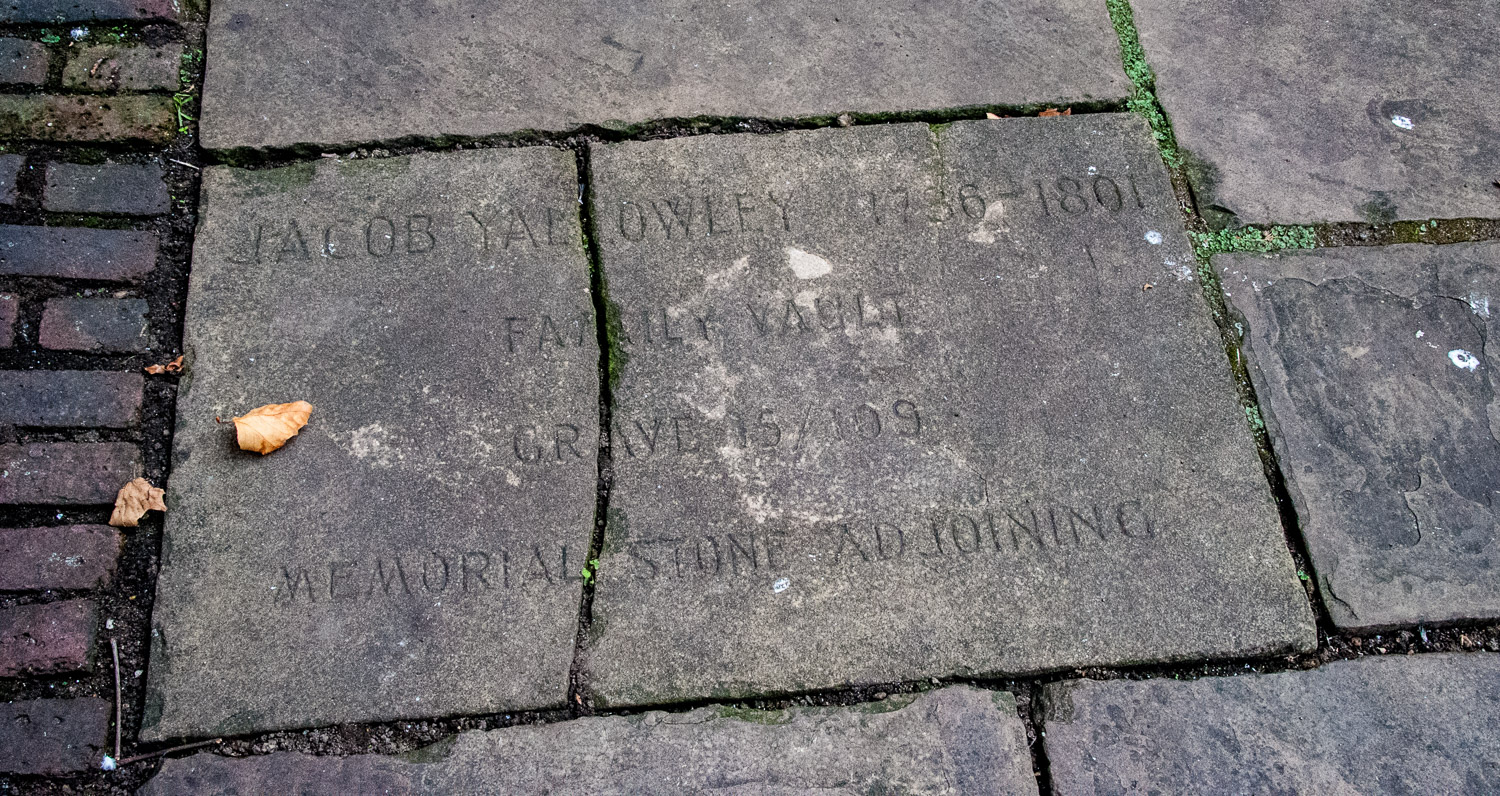
Old stones used as paving beside Bunyan’s memorial.

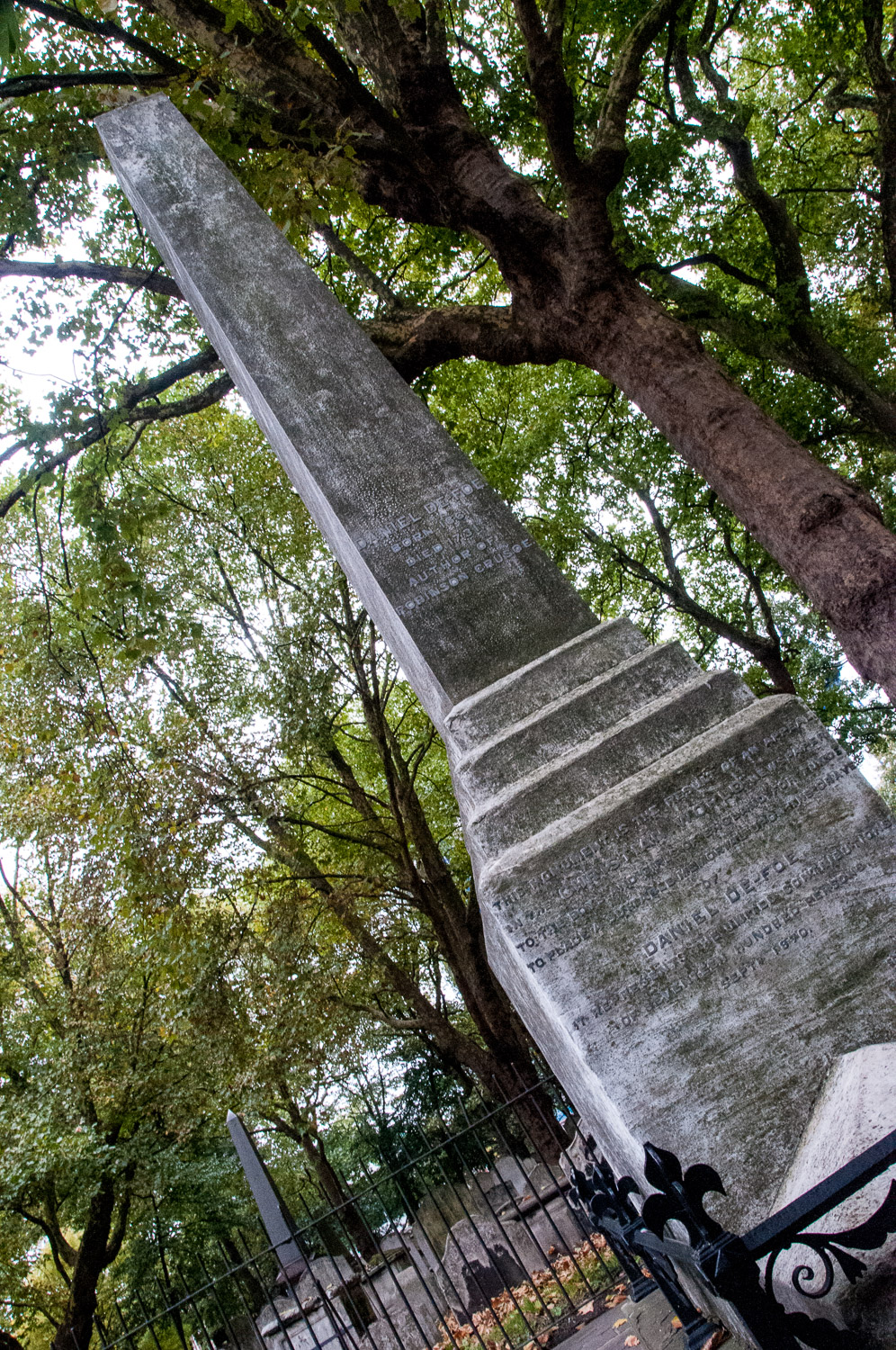
Turn your back on Bunyan’s tomb and you will be facing the obelisk erected in 1870 to commemorate the 1731 burial of Daniel Defoe, the author of Robinson Crusoe. The monument was funded by an appeal to boys and girls by the weekly newspaper Christian World who were invited to give ‘not less than sixpence’. Defoe got into serious trouble in 1702 by publishing a satirical work entitled The Shortest Way with Dissenters which was taken seriously by some and resulted in him being prosecuted for seditious libel. He spent time in jail and  was also sentenced to three sessions in the pillory – supporters threw flowers instead of stones and garbage and he emerged unscathed to write a pamphlet entitled Hymn to the Pillory.

Defoe’s memorial

Paving nearby

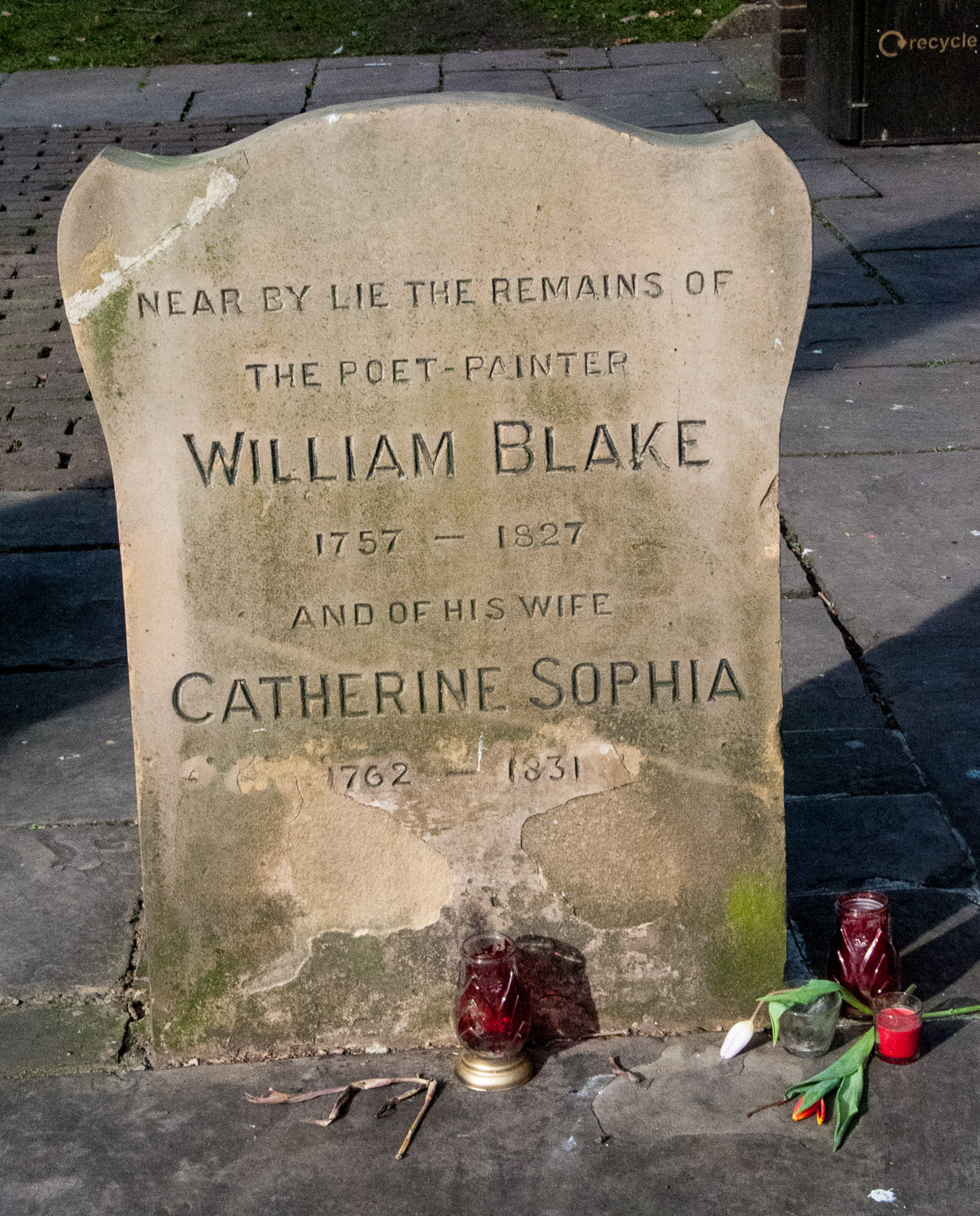
Next to Defoe’s obelisk is the stone pictured below commemorating William Blake and his wife. The memorial was originally placed over his actual grave by The Blake Society on the centenary of Blake’s death (1927) but it was moved in 1965 when the area was cleared to create a more public open space. Candles, flowers and other offerings are frequently left here by modern day Blake admirers. Considered mad by many of his contemporaries, he is now regarded as one of Britain’s greatest artists and poets, his most famous work probably being the short poem And did those feet in ancient time. It is now best known as the anthem Jerusalem and includes the words that  are often cited when people refer to the Industrial Revolution.

And did the Countenance Divine,
Shine forth upon our clouded hills?
And was Jerusalem builded here,
Among these dark Satanic Mills?

Blake’s memorial with some offerings from modern day Blake pilgrims

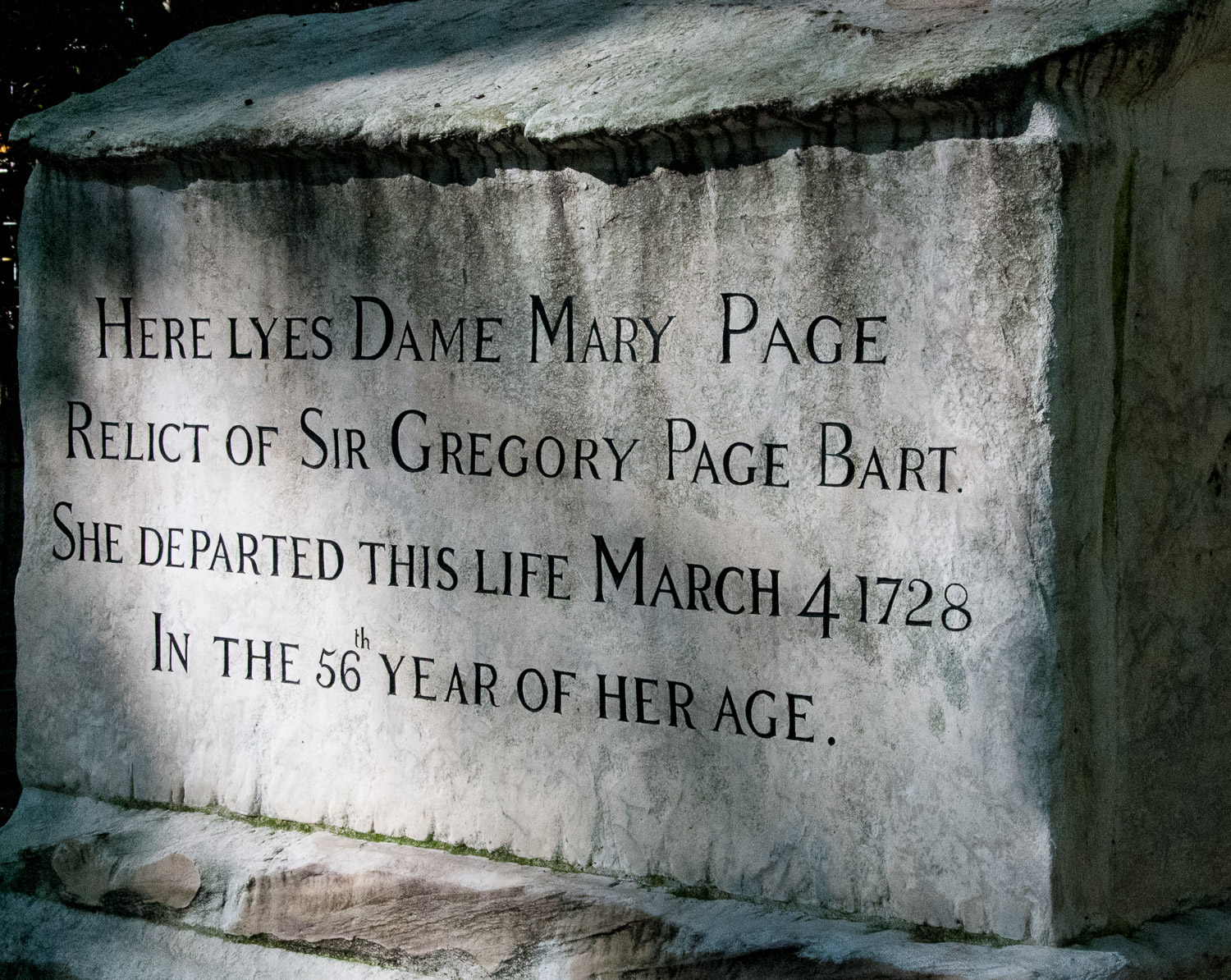
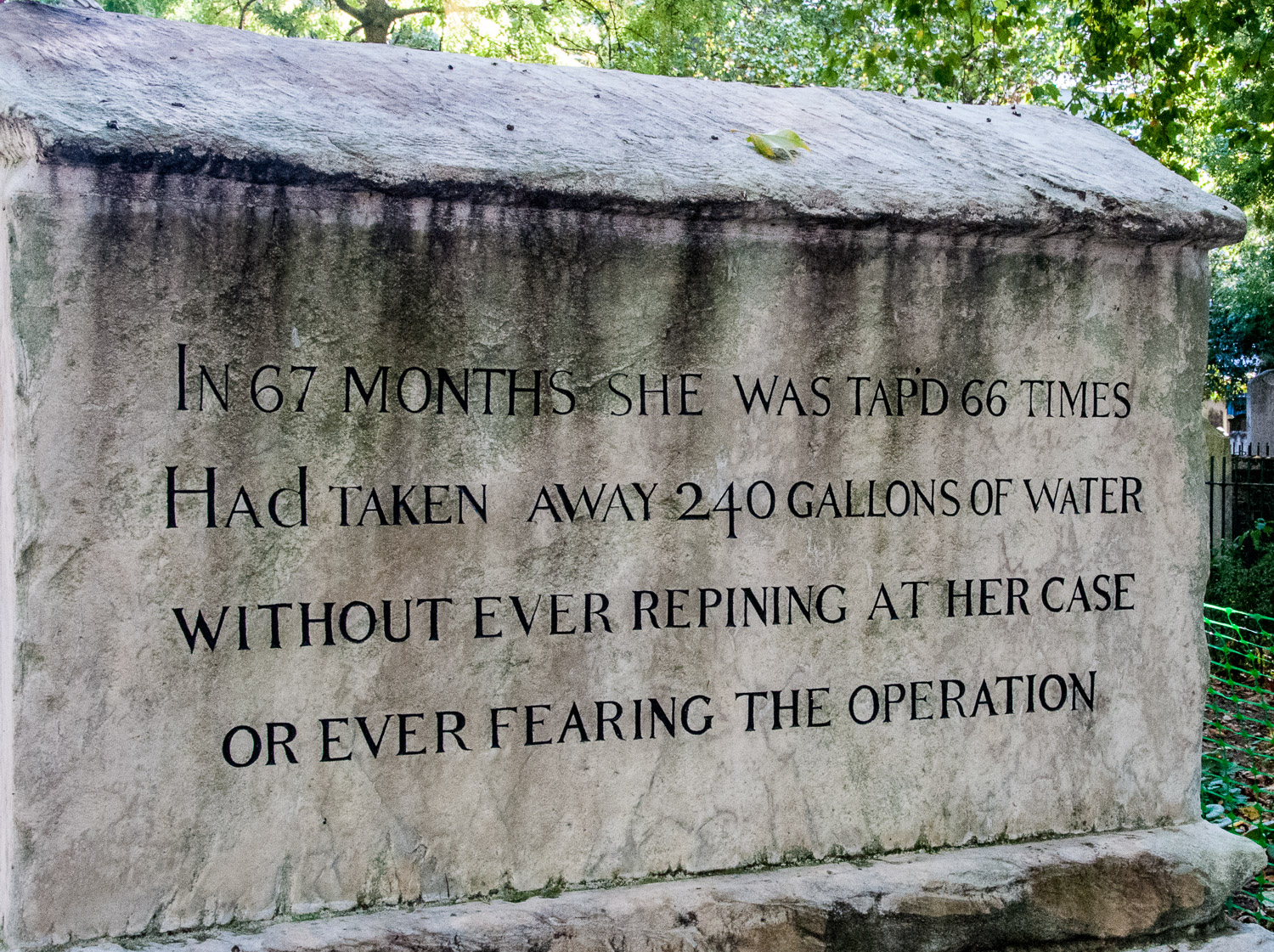
If you return to the east/west path and carry on walking you will shortly see down a path on your right the extraordinary tomb of Dame Mary Page.

It appears that Mary Page suffered from what is now known as Meigs’ Syndrome and her body had to be ‘tap’d’ to relieve the pressure. She had to undergo this treatment for over five years and was so justifiably proud of her bravery and endurance she left instructions in her will that her tombstone should tell her story. And it does …

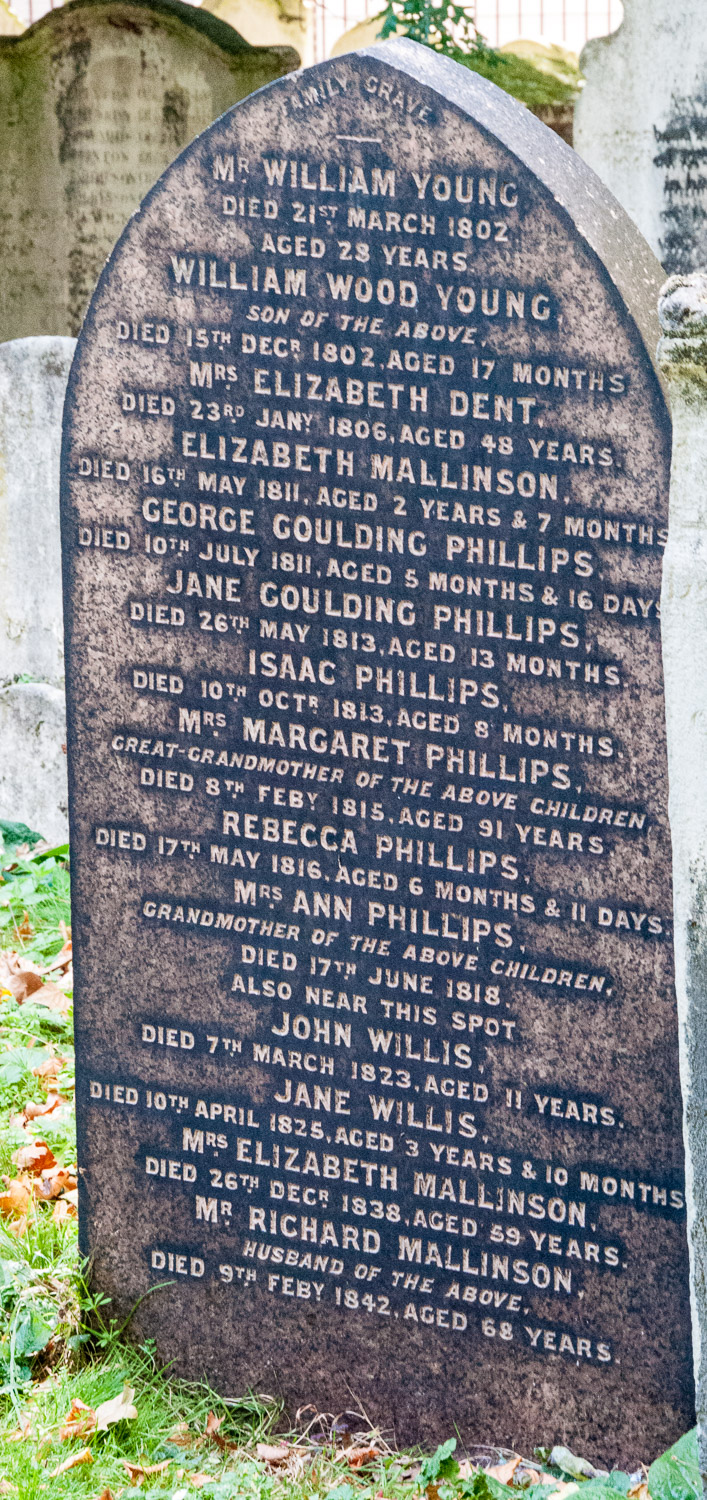
Return to the path going west and this family grave is on the left.

I mention it because it poignantly illustrates the high degree of infant mortality in the early 19th century.

Days of life are sometimes included as well as years and months

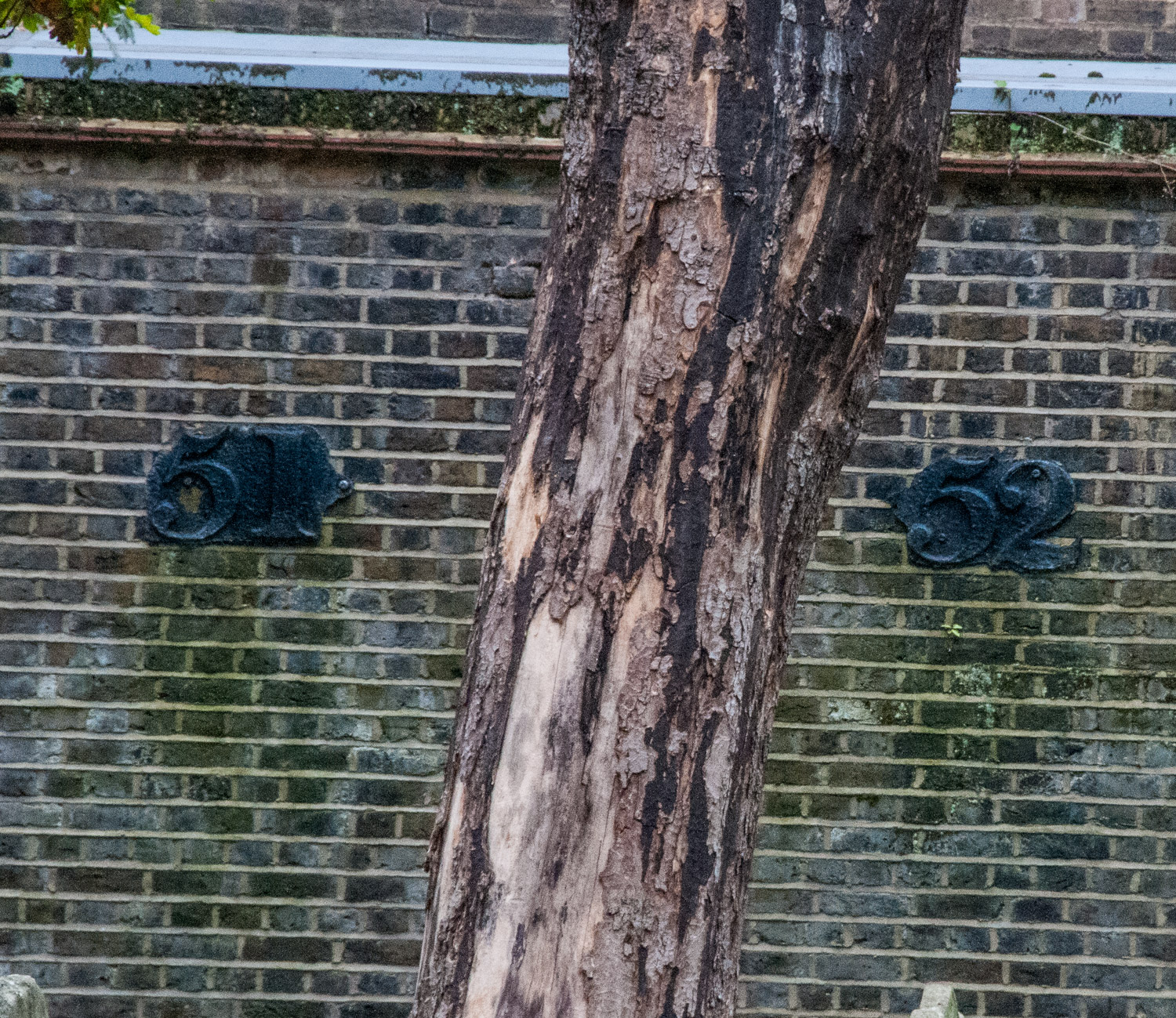
And finally, as you approach the west gate, take a look at the wall on the left and you will see the elegant iron row numbers that the Victorians placed there to make finding a particular grave easier.


Three Queens and a King

I have chosen these four statues because I love the background stories behind them and hope you find them interesting too.

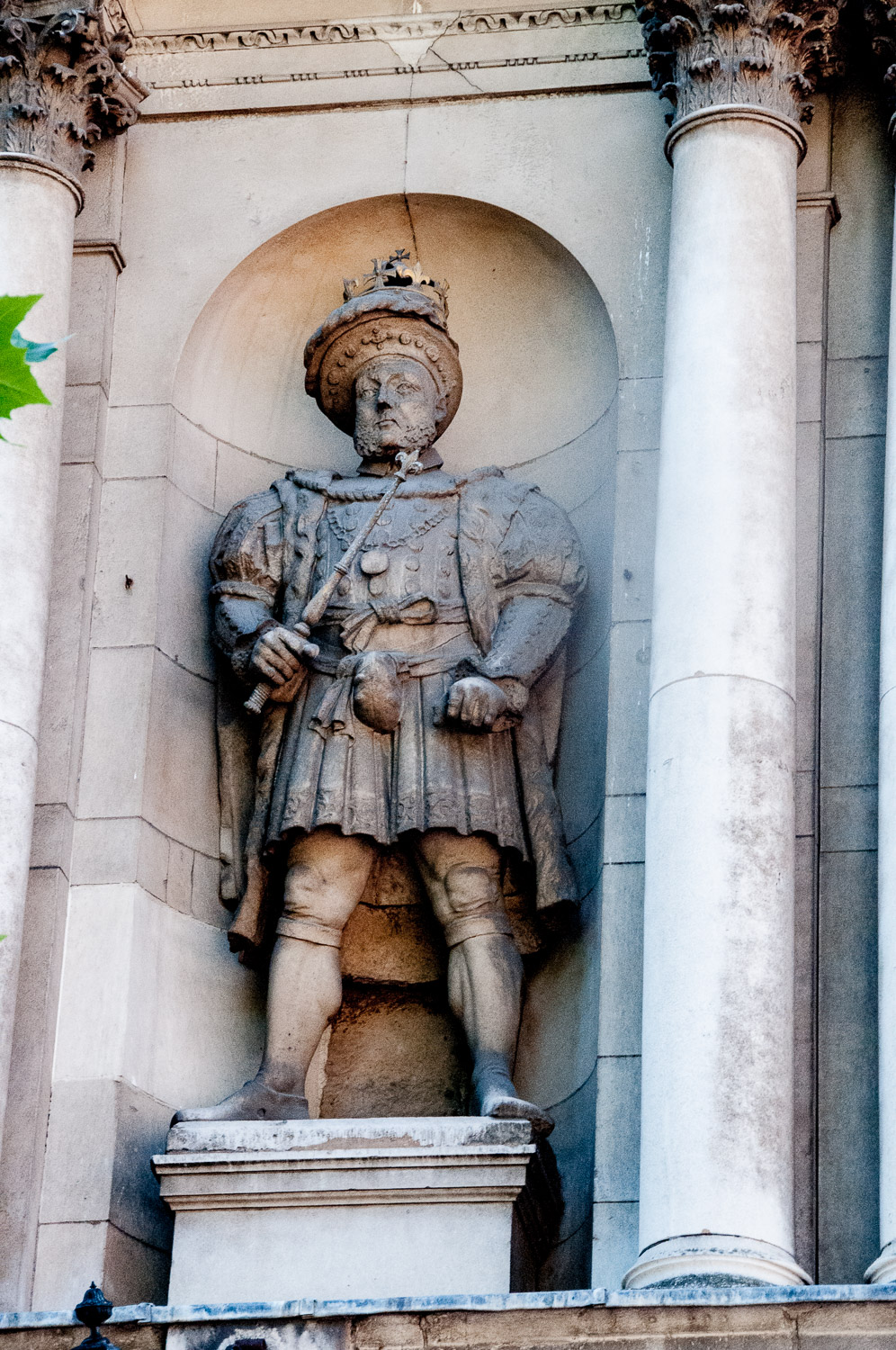
First up is the one of Henry VIII over the main entrance to St Bartholomew’s hospital, the only outdoor statue of the king in London. If you have seen and admired the famous Holbein portrait, the king’s pose here is very familiar. He stands firmly and sternly with his legs apart, one hand on his dagger, the other holding a sceptre. He also sports an impressive codpiece.

The hospital was founded in 1123 in the reign of Henry I and, during the Peasants’ Revolt of 1331, Wat Tyler died there of a stab wound in what we would now call the A&E department.  Bart’s, as it became known affectionately, was put seriously at risk seven Henrys later in 1534, when Henry VIII commenced the Dissolution of the Monasteries. The nearby priory of St Bartholomew was suppressed in 1539 and the hospital would have followed had not the City fathers petitioned the king and asked for it to be granted back to the City. Their motives were not entirely altruistic. The hospital, they said, was needed to help:

the myserable people lyeing in the streete, offendyng every clene person passyng by the way with theyre fylthye and nastye savors.

Henry finally agreed in December 1546 on condition that the refounded hospital was renamed ‘House of the poore on West Smithfield in the suburbs of the City of London, of King Henry’s foundation’. I suspect people still tended to call it Bart’s. Henry finally got full public recognition when the gatehouse was rebuilt in 1702 and his statue was placed where we still see it today. The work was undertaken and overseen by the mason John Strong, who was at the same time working for Sir Christopher Wren on St Paul’s Cathedral. Such were the masons’ talents, no architectural plans were needed to complete the work.

Fleet Street boasts two queens – one responsible for the execution of the other.

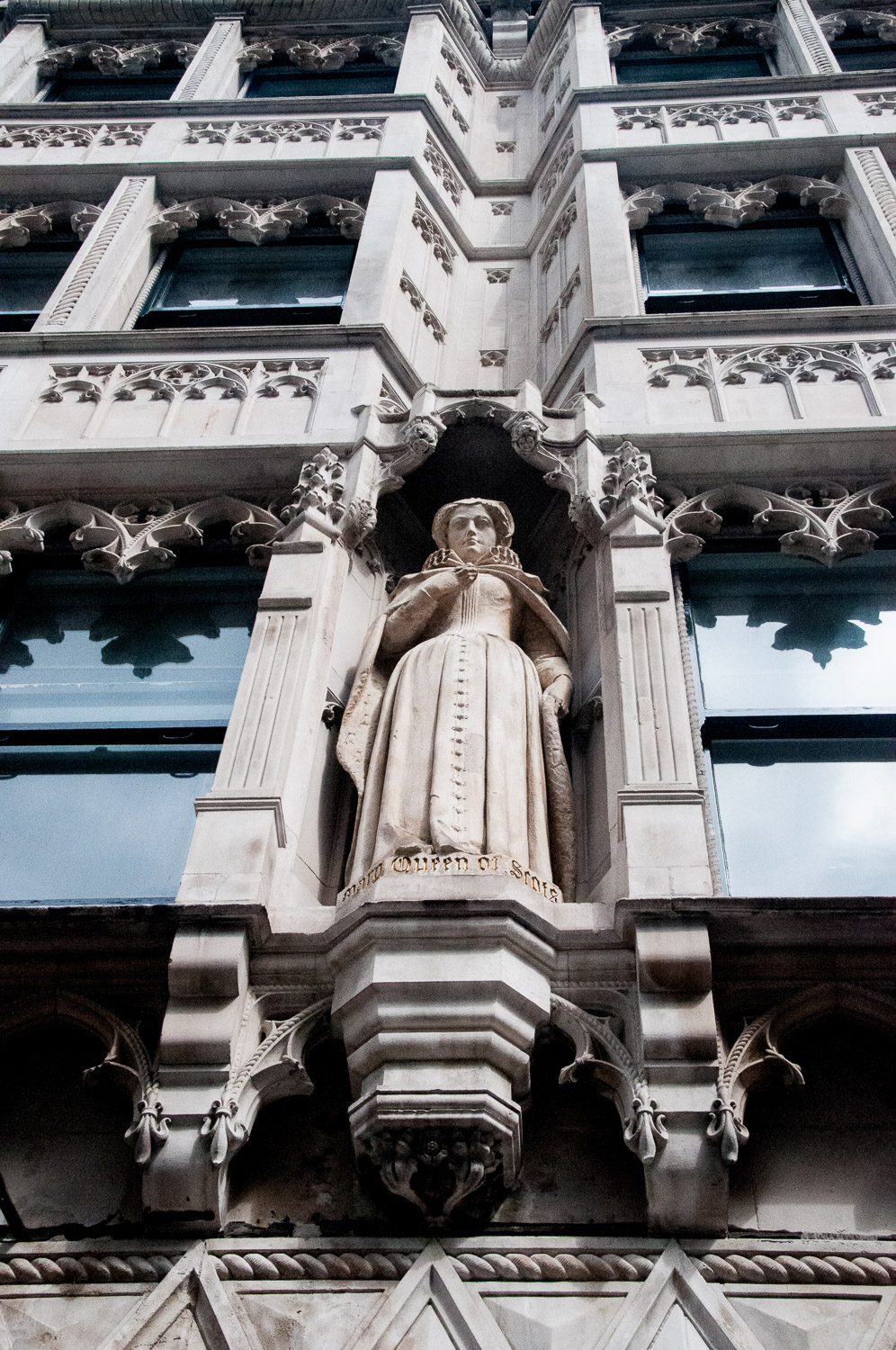
Mary, Queen of Scots was born in 1542, daughter of King James V of Scotland and Mary of Guise. Briefly Queen of France, in 1559, Mary ruled Scotland from 1542-1567. Following an uprising she fled to England putting herself under the protection of her cousin, Elizabeth I. Mary’s fervent Catholicism, and claim to the English throne, made her a target for plots and Elizabeth ordered her beheading for treason in 1587.

Mary Queen of Scots House was built in 1905 for a Scottish insurance company but I have been unable to discover which one. The developer, Sir Tollemache Sinclair, was a big fan of the Queen and his architect, R. M. Roe, created an extravagant, theatrical building with a special niche for her statue. Head slightly bowed, she peers down at us wearing an elegant headpiece and a wide prominent ruff. Unfortunately the sculptor’s name is unknown. Do glance up at her if you pop in to Pret’s on the ground floor for a lunchtime sandwich.


143-144 Fleet Street

And now her nemesis.

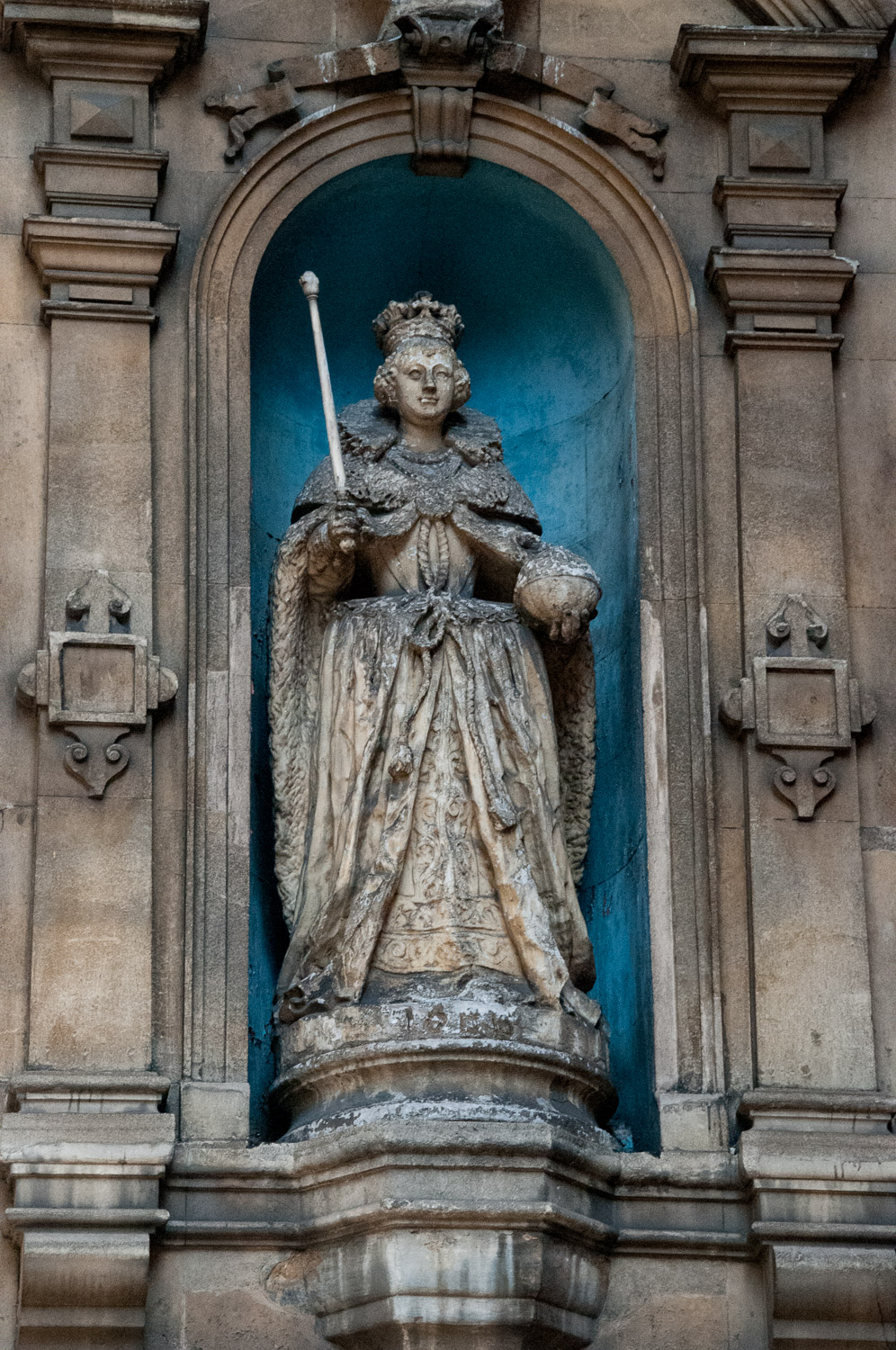
She looks young, doesn’t she?

This statue of Queen Elizabeth I is nearby in a niche at St Dunstan-in-the-West and its history is rather complex. Some current thinking is that the Queen dates from 1670-99 despite a date on the base of 1586, which would have made it the only statue carved in her lifetime. It is now thought that, rather than the date of sculpture, this date was inscribed on it when the statue was placed on a restored Lud Gate in 1670 after the Great Fire and is merely making reference to the original gate. When the gate was demolished in 1760 she was moved to a previous St Dunstan’s but this was torn down in 1829-33 to be replaced by the current building. Meanwhile it seems that the statue spent the time in the basement of a nearby pub. It was only when that too was demolished in 1839 that the statue was rediscovered and put in its current niche on St Dunstan’s. Millicent Fawcett, the prominent suffragist, left £700 in her will for the statue’s upkeep and the funds are managed by the Society for the Protection of Ancient Buildings.

And finally Queen Anne.

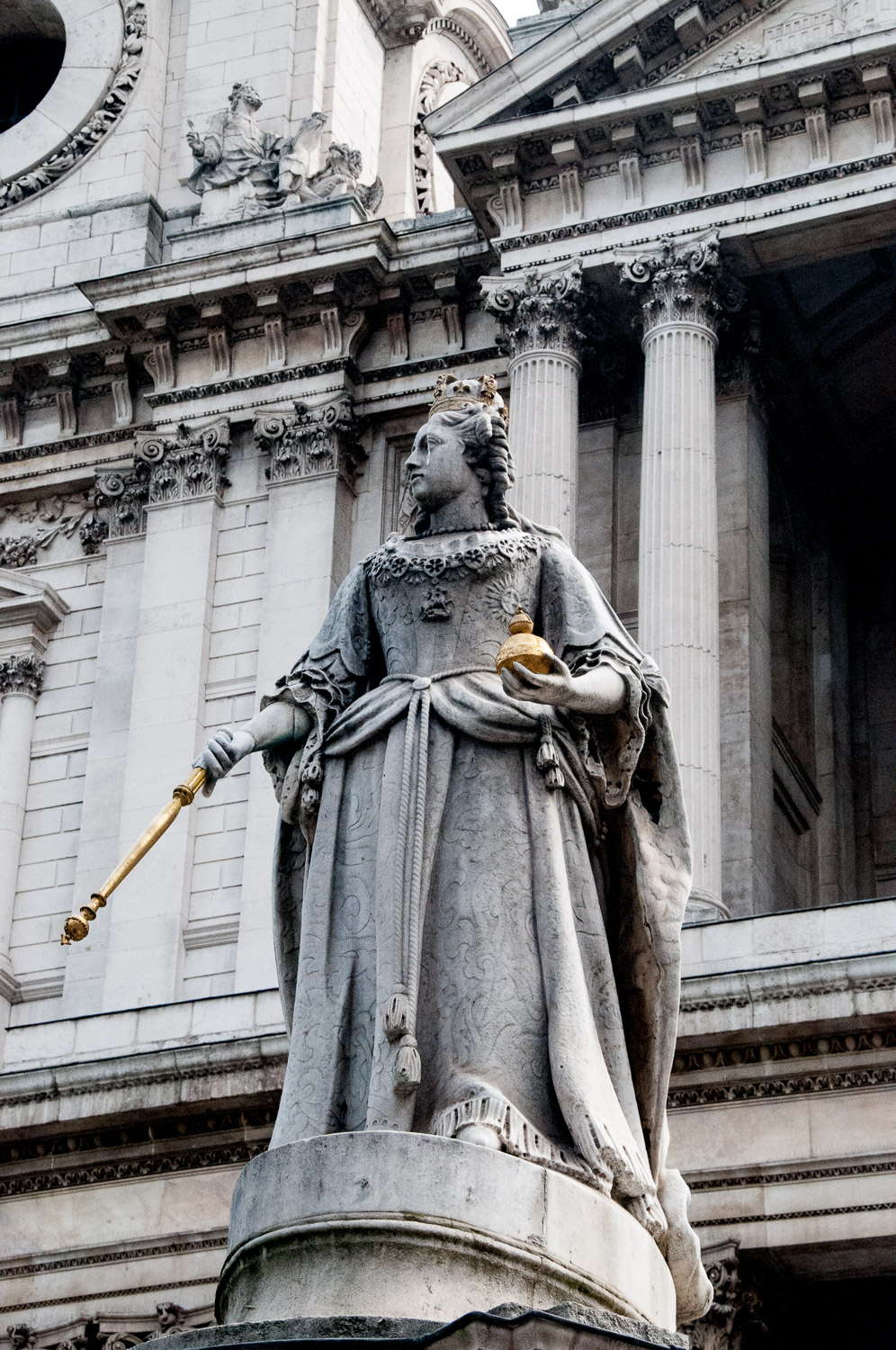
Brandy Nan, left in the lurch, her face to the gin shop, her back to the church

One has to feel sorry for Anne – and not just because of the scurrilous rhyme referring to her alleged fondness for alcohol. Of her 18 pregnancies, none of her children survived infancy except for one boy who reached 11, and this sadness may have contributed to her tendency to overindulge in both food and drink.

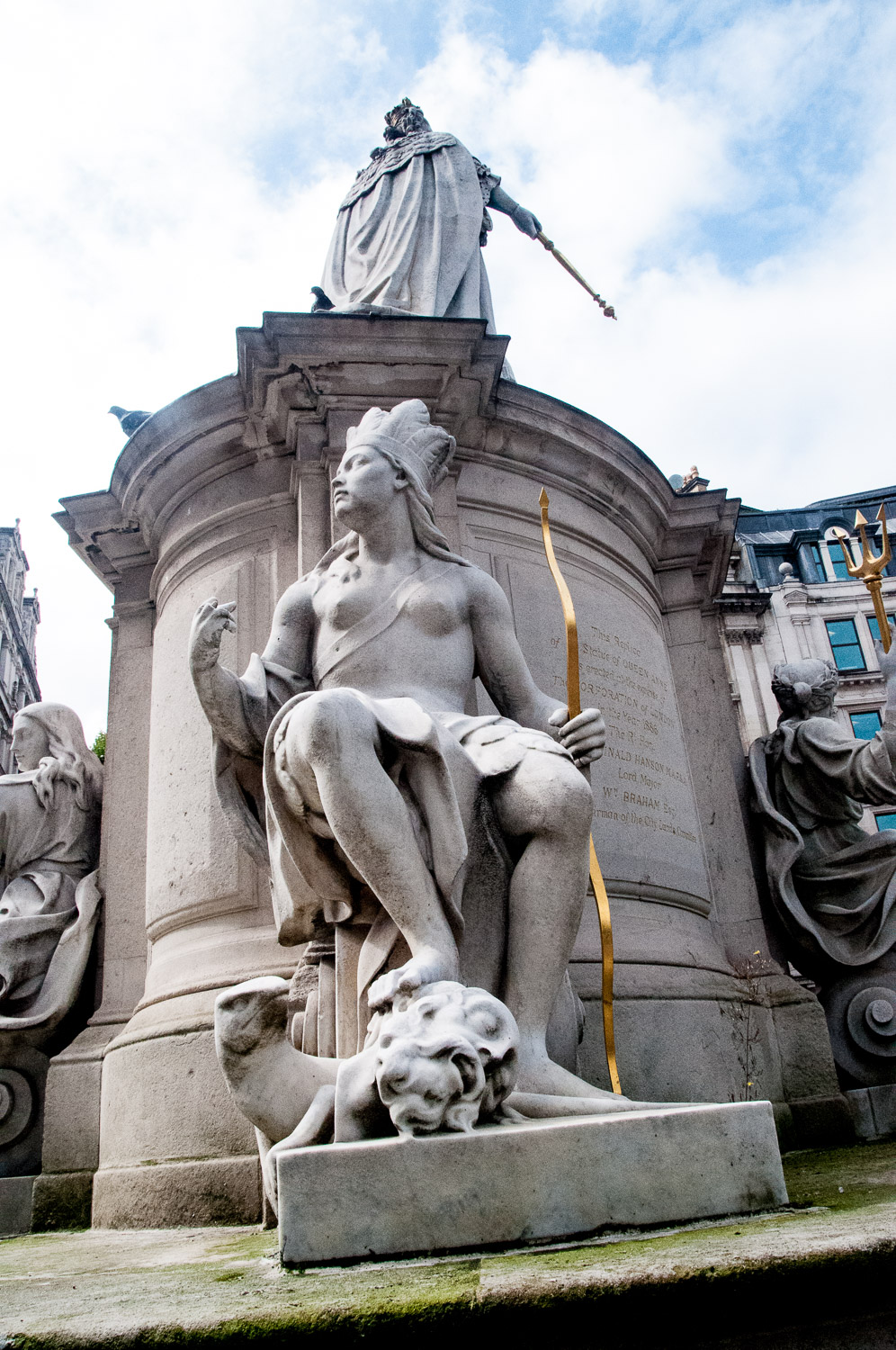
Here she stands outside the west entrance to St Paul’s Cathedral – an 1884-6 sculpture which replaced an earlier weather-beaten version of 1712. She looks imperiously upwards, holding a sceptre and orb and wearing the Order of St George around her neck.

She is surrounded by allegorical figures, the picture below being that of America.

‘America’ with a not very accurate alligator

America wears a feathered head-dress, holds a metal bow and has a quiver of arrows on her back. Her foot rests on what looks like the severed head of a European. The strange lizard like creature was described in the original statue as ‘…an allegator creeping from beneath her feet; being an animal very common in some parts of America, and which lives on land and in the water’.


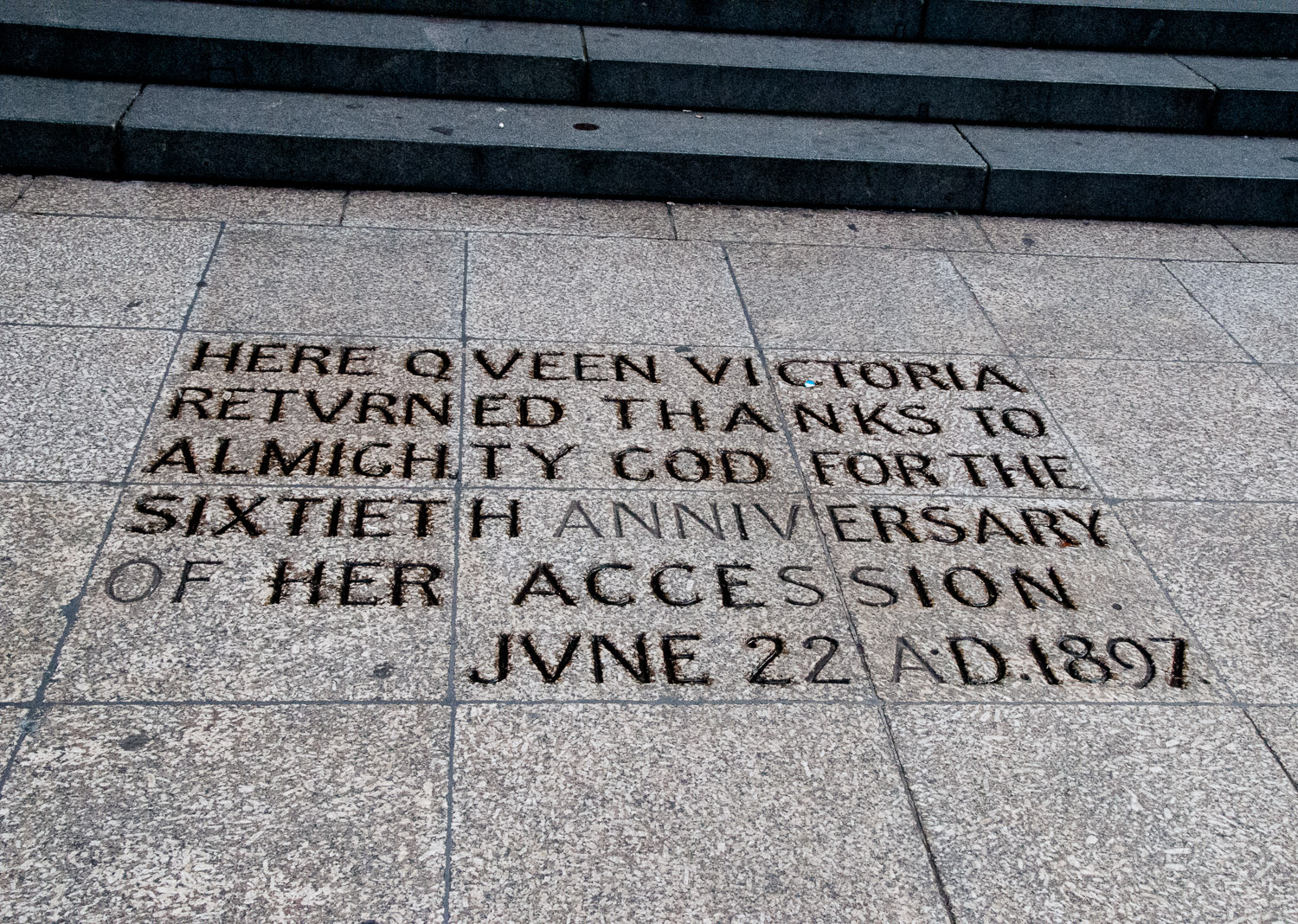
Queen Victoria celebrated her Diamond Jubilee here in 1897. She sat outside in her carriage for the service, being then too infirm to climb the Cathedral steps. It was suggested that Anne’s statue should be moved for the occasion, but Victoria would have none of it, apparently commenting

‘Certainly not, someone in future might want to move a statue of me, and I should not like that at all’.


Page 35 of 36

Powered by WordPress & Theme by Anders Norén

Symbols & Secrets
Privacy Overview

This website uses cookies so that we can provide you with the best user experience possible. Cookie information is stored in your browser and performs functions such as recognising you when you return to our website and helping our team to understand which sections of the website you find most interesting and useful.