Walking the City of London

Category: Memorials

Samuel Pepys and his ‘own church’


Samuel Pepys is one of my heroes. Clever, witty, curious, hard-working and, some would say, licentious, we owe him a lot. His diary gives us a wonderful insight into his times, and his work on the Navy Board and with the Admiralty played a major role in rebuilding England’s naval strength at a critical time in history. Not only that, his personal intervention with King Charles II probably helped curb the spread of the catastrophic Great Fire of 1666.

There are many, many books written about Pepys and a short little blog like this can’t really do him justice. So instead, in this and in future blogs, I will write  briefly about some of the places and events Pepys wrote about in his diary and see what remains of them today.
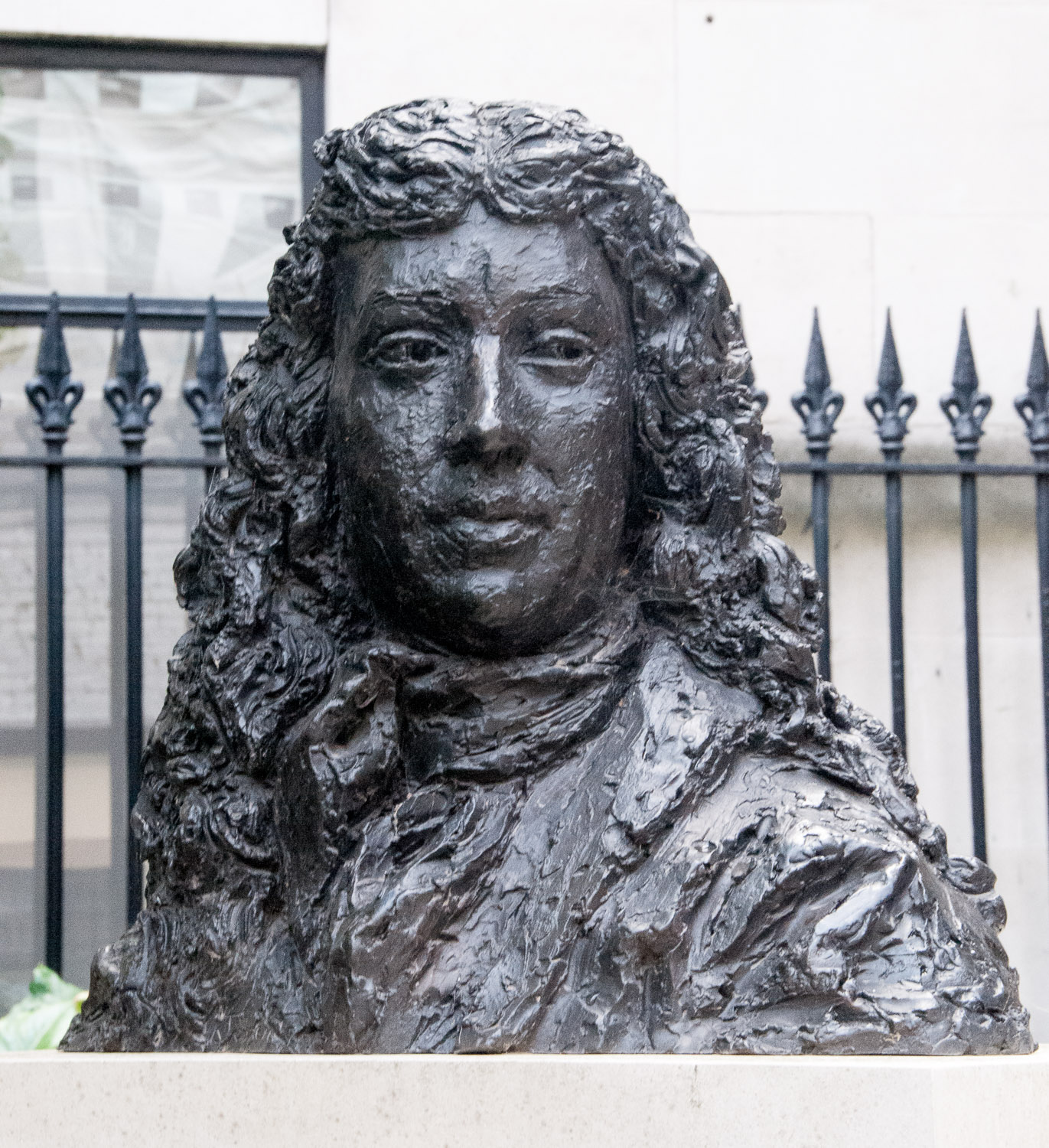
A bust of Samuel Pepys by Karin Jonzen, 1983, in the St Olave churchyard

In July 1660 the Pepys household moved to a house in the Navy Office building on Seething Lane and his famous diary dates from that year to 1669, when he stopped writing it because he feared losing his sight. This location meant that his local Church (‘our own church’ as he described it) became St Olave Hart Street, which is still there for us to explore today and is the subject of this blog. It has a really gruesome but stunning churchyard entrance incorporating impaled skulls and crossed bones dated 11th April 1658. The Latin inscription, roughly translated, reads ‘Christ is life, death is my reward‘ and the central skull wears a victory wreath.
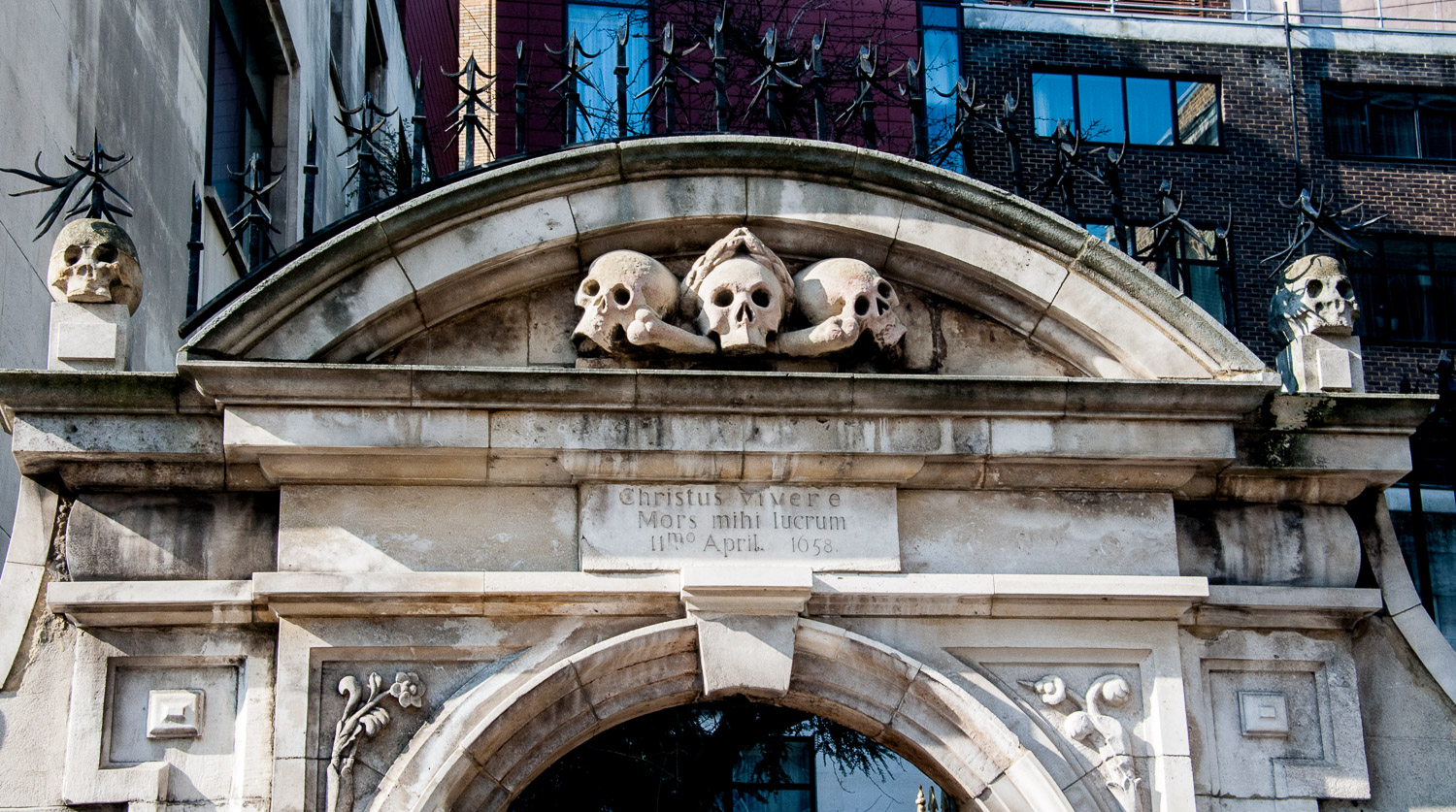
Charles Dickens called it ‘St Ghastly Grim’

Fortunately for us, Pepys was around to give us an intimate personal account of two of the most awful events that struck London in the seventeenth century – the ‘Black Death’ plague of 1665 and the Great Fire of 1666.

When in 1665 it became apparent that a major pestilence was striking London, Charles II and the entire Court moved to Oxford. The Privy Council was endowed with wide-reaching powers to try to control its spread, appointing ‘Searchers’ to seize dying victims and to quarantine both them and their households.

Pepys wrote on 7th June 1665 about a terrible sign he encountered on his way to Covent Garden:

‘I did in Drury Lane see two or three houses marked with a red cross upon the doors, ’Lord have mercy upon us’ writ there – which was a sad sight to me’.

Despite such efforts, the plague spread slowly and remorselessly. According to the official records, the ‘Bills of Mortality’, 68,596 people died of it in London in 1665 but the true figure was probably more like 100,000. Even the lower figure represents a very high percentage of the population at the time, which was about 460,000.

It had eventually subsided by January the following year and on January 30th 1666 he visited St Olave, but found the experience deeply shocking:

‘It frighted me indeed to go through the church… To see so many graves lie so high upon the churchyard, where many people have been buried of the plague.’

And five days later, on February 4th he wrote:

‘It was a frost and had snowed last night, which had covered the graves in the churchyard, so I was less afraid of going through’.

The churchyard survives, its banked-up top surface a reminder that it is still bloated with the bodies of plague victims, and gardeners still turn up bone fragments. Three hundred and sixty five were buried there including Mary Ramsay, who was widely blamed for bringing the disease to London. We know the number because their names were marked with a ‘p’ in the parish register.
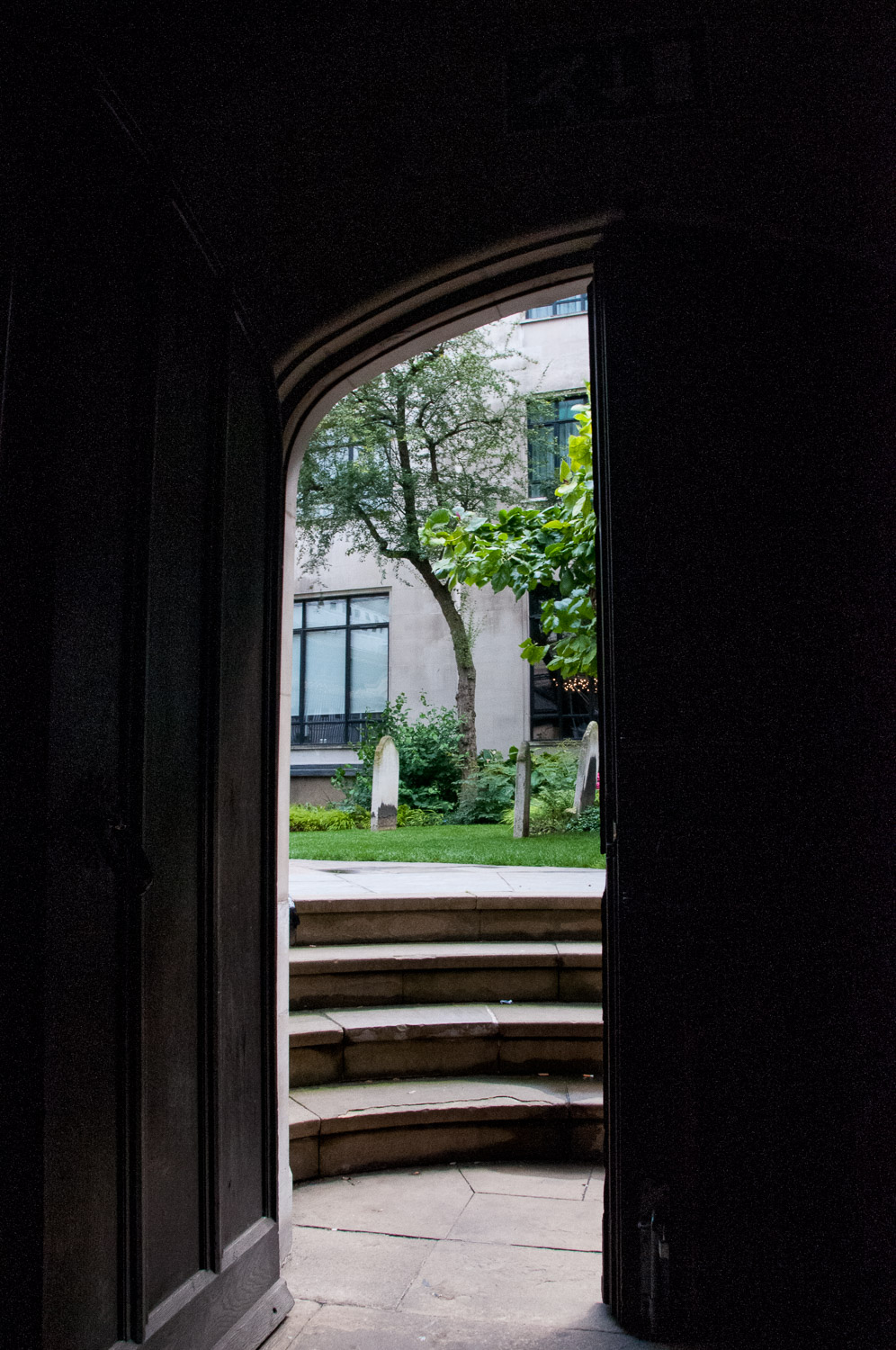
Note how much higher the graveyard is than the floor at the church door

In 1655 when he was 22 he had married Elizabeth Michel shortly before her fifteenth birthday. Although he had many affairs (scrupulously recorded in his coded diary) he was left distraught by her death from typhoid fever at the age of 29 in November 1669.

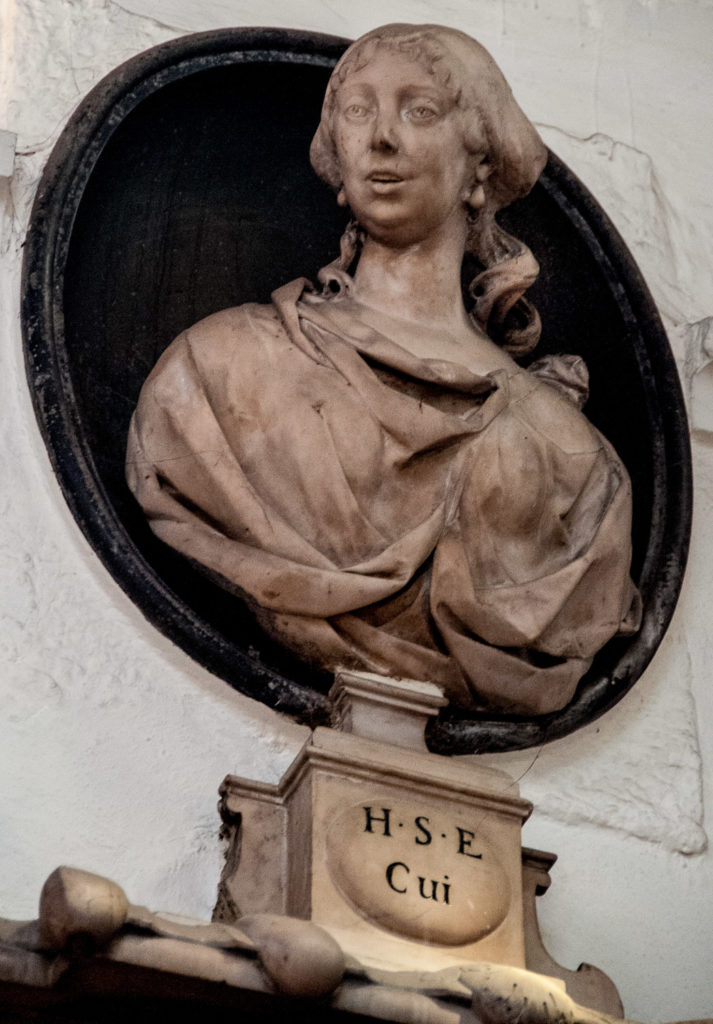
Do go into the church and find the lovely marble monument Pepys commissioned in her memory. High up on the North wall, she gazes  directly at Pepys’ memorial portrait bust, their eyes meeting eternally across the nave where they are both buried. When he died in 1703, despite other long-term relationships, his express wish was to be buried next to her.
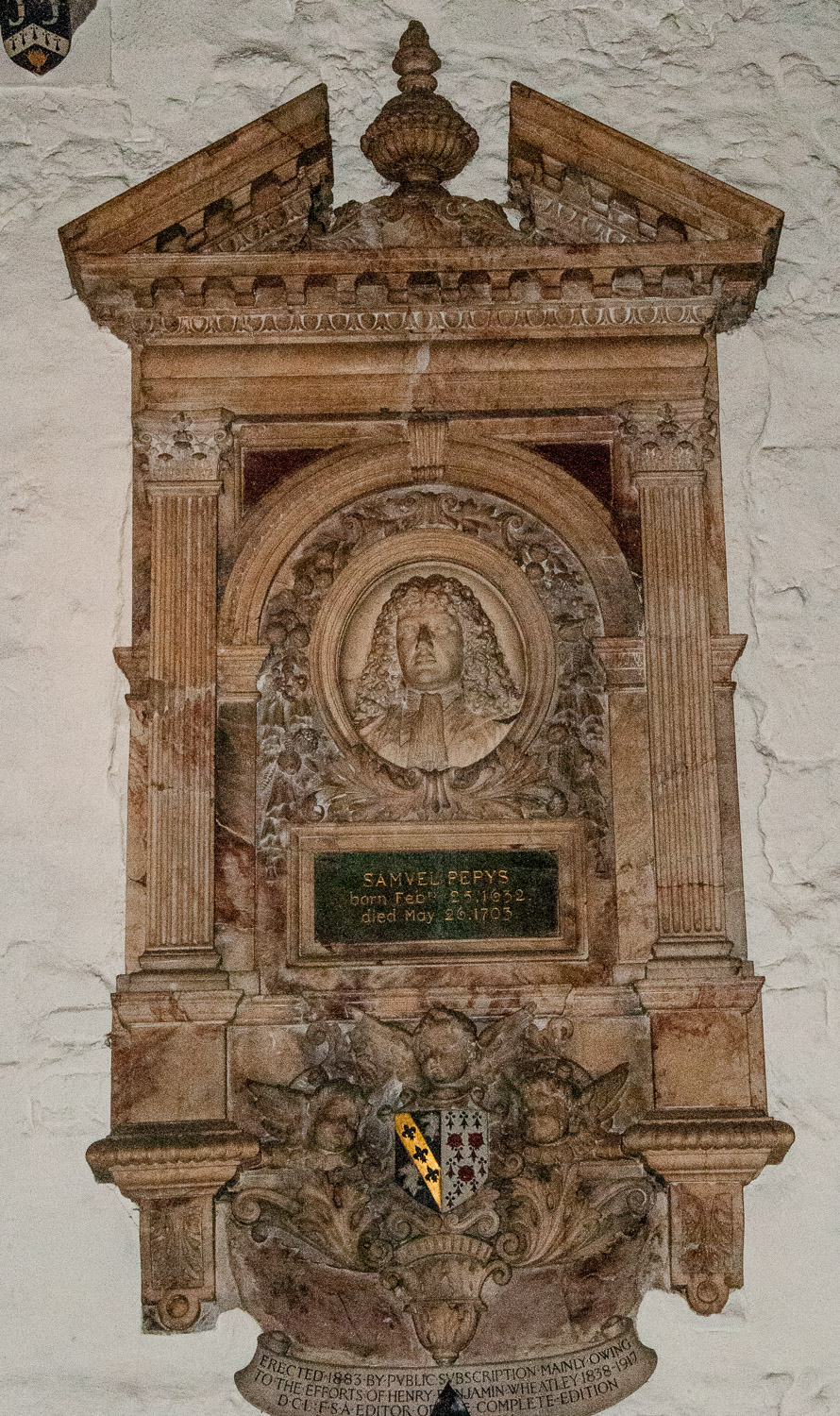
Memorial to Samuel Pepys

And the sculpture of Elizabeth – I think she looks beautifully animated, like she is in the middle of a conversation.
 

Philanthropic Fountains

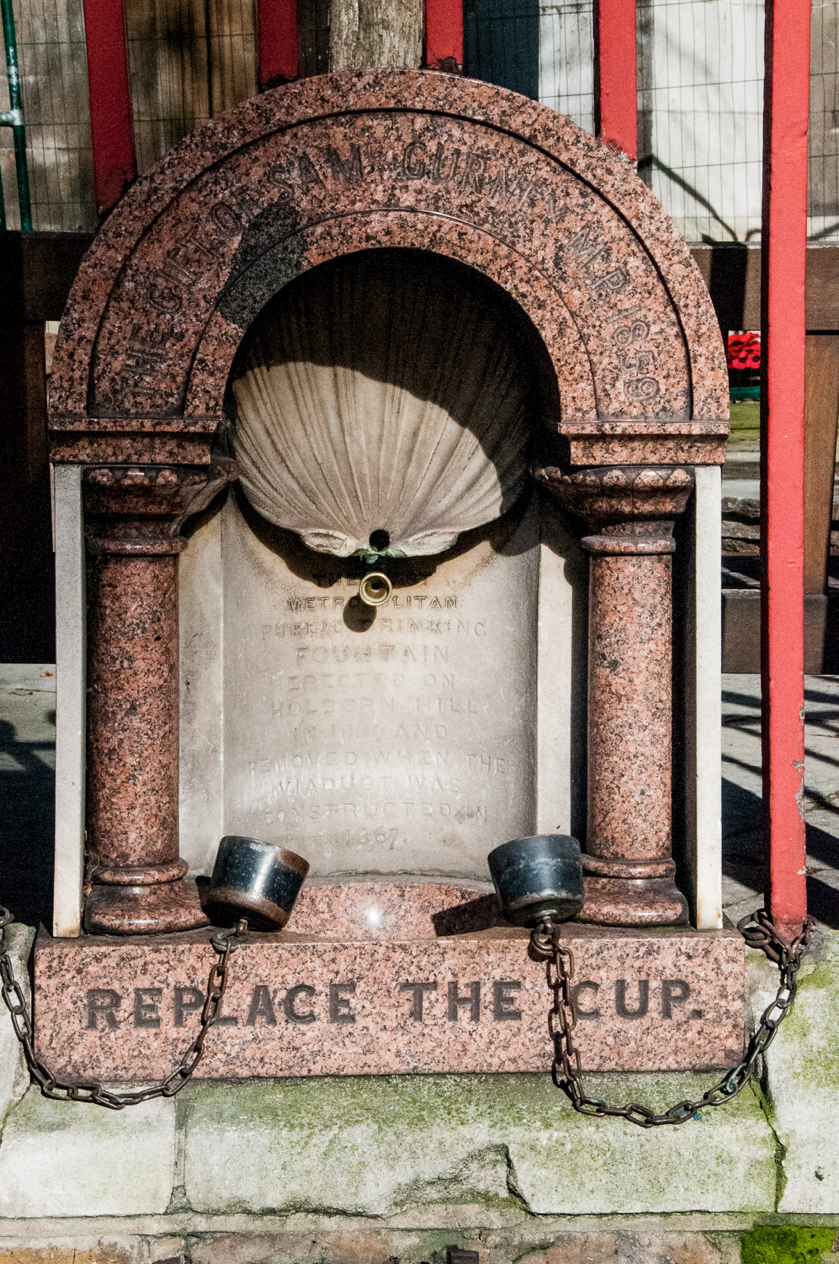
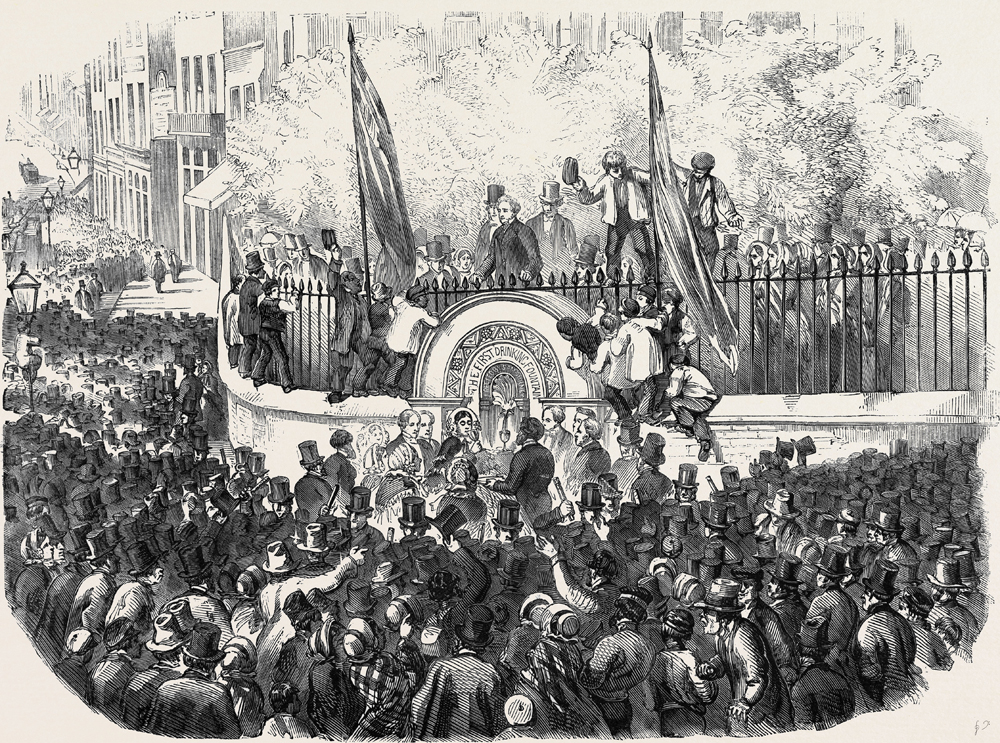
It was a nice sunny day when I stood in front of this modest little drinking fountain outside St Sepulchre’s Church on Snow Hill near Holborn Viaduct and recalled a picture of the scene on 20th April 1859 when it was unveiled as the first public drinking fountain in London.

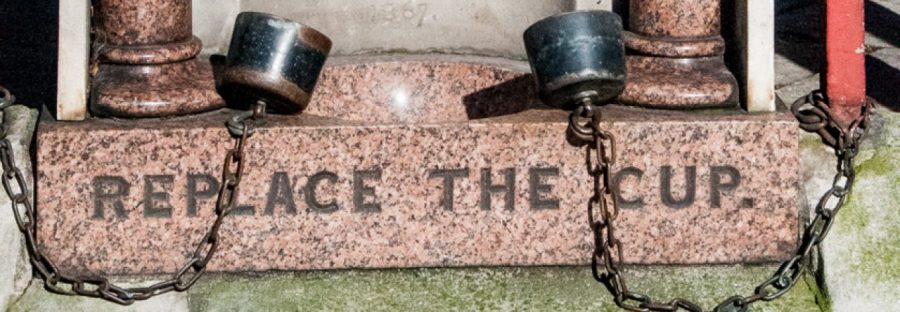
A stern reminder to ‘Replace the Cup’ common on many fountains

To me the fountain represents the coming together of some of the great influences on people’s lives in the 19th Century – the philanthropic initiatives of the Quakers, the gradual recognition that access to clean water was essential if London was to continue to flourish, and the temperance and teetotalism movements striving to combat drunkenness.

In the early 19th century water had become a valuable commodity and by 1860 the supply of drinking water to London was controlled by no fewer than eight private companies. It was generally acknowledged that its quality was unsatisfactory to say the least, as outbreaks of cholera earlier in the century had demonstrated. This, combined with a shortage of availability, contributed to a heavy consumption of beer and spirits, particularly among poorer citizens and the ‘labouring classes’ whose workplace was the London streets. Making available free, safe water was to enable a common cause to be established between those seeking to improve hygiene and reduce disease and the anti-alcohol campaigners.

If you look at the picture of the fountain, you might just be able to make out the inscription on the arch above the scallop shell which reads ‘The Gift of Sam Gurney MP 1859’. Gurney was a Quaker, and although Quakers numbered less than 14,000 people in Britain in 1861 their influence in business and philanthropy was disproportionately great – think, for example, of Cadbury, Fry, Barclay and Rowntree. They believed that good works were a sign of man’s sanctification and their economic and religious philosophies ran parallel to one another.

Gurney was present in spring 1859 for the inauguration of The Metropolitan Free Drinking Fountain Association. At the meeting the unveiling in two weeks time of his new fountain was announced along with the intention that it would be the first of many. The Earl of Albermarle got rather carried away and stated his hopes that the fountains would …

Check those habits of intemperance which caused nine-tenths of the pauperism, three-fourths of the crime, one half of the disease, one-third of the insanity, one-third of the suicide, three-fourths of the general depravity and (amazingly) one-third of the shipwrecks that annually occurred.

The opening of the fountain was an incredibly well attended event …

 Copyright Illustrated London News.

‘The Lady’ newspaper’s view was that the fountains would help by ‘providing an alternative to the public house and the low company found in those establishments’. To demonstrate the water’s purity the inaugural first sip at the opening was taken by a Mrs Wilson – the Archbishop of Canterbury’s daughter, no less – who declared the taste excellent. Just for the removal of doubt, however, a final announcement was made that the fountain was for the special use of the working classes and was committed to their care. Incidentally, Mrs Wilson used a specially engraved silver cup which she was presented with after the ceremony.

Over the next six years 85 fountains were built, most using granite in order to keep the water supply cool. In summer 1865 the Association conducted a twenty-four-hour survey, which produced some very satisfying results. For example, 2,647 drinkers were recorded at the St Sepulchre’s site; at London Bridge more than 3000 people visited and at Bishopsgate an extraordinary 6,666. By 1867 it was estimated that up to 400,000 drinkers a day were using the amenities and by 1875 there were 276 fountains across the capital.

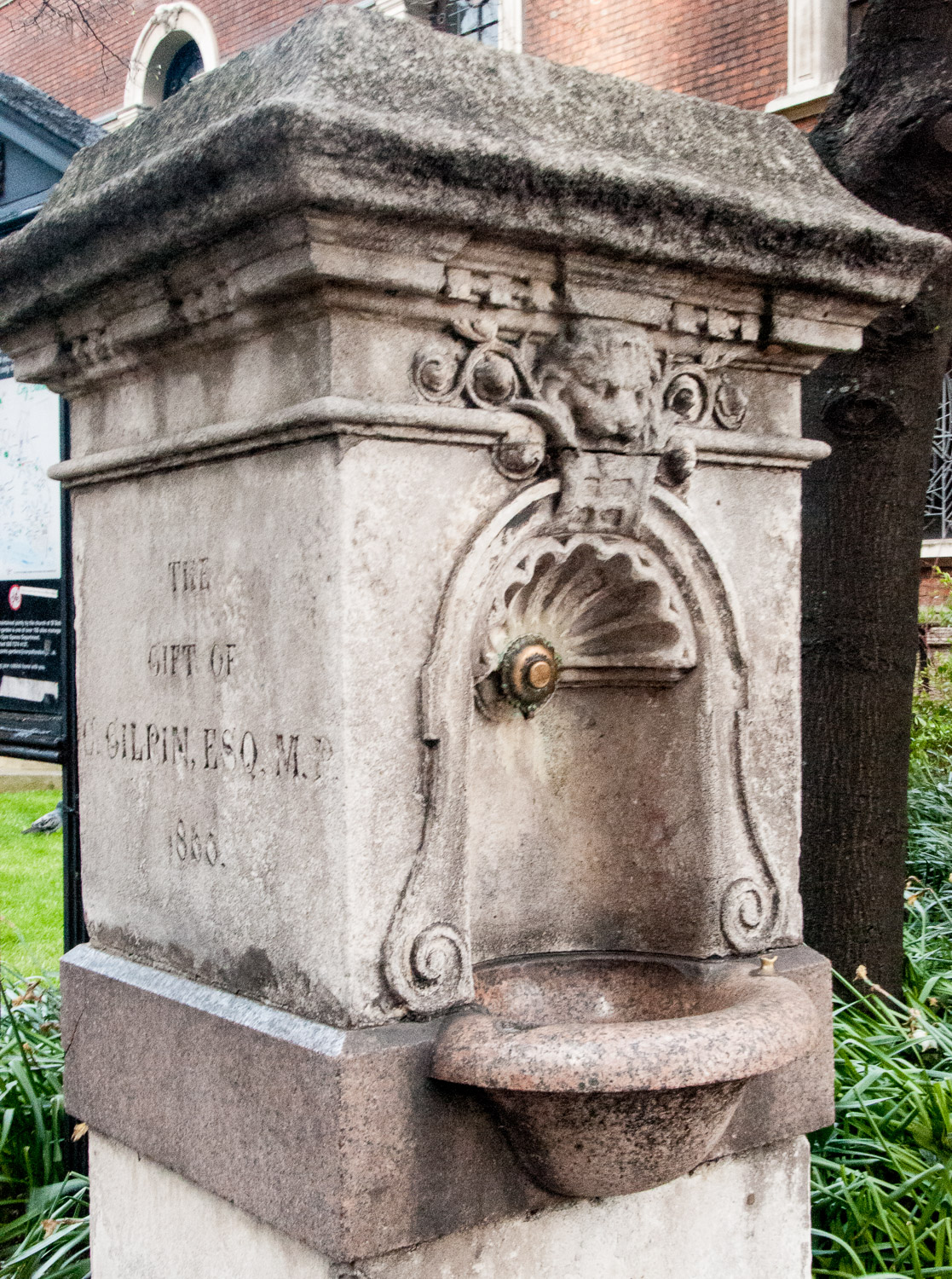
Charles Gilpin was another Quaker whose fountain can still be seen at St Botolph Without Bishopsgate

‘The Gift of C. Gilpin Esq. M.P. 1860’

Getting the fountains built was no easy matter with protracted negotiations often needed with, for example, local vestries, and of course the water companies themselves, who had to be paid for the water used unless they could be persuaded to become donors. Also, water was a precious commodity, and some objected on moral grounds to the wastefulness of the water flowing continuously when the idea of using taps was rejected, given the wear and tear involved. Before the end of its first decade the term ‘free’ in the Association’s title had been recognised as a misnomer and it was dropped. About the same time it elongated its name to the Metropolitan Drinking Fountain and Cattle Trough Association to embrace public water provision for animals. Previously troughs had been sited outside public houses with free use only for patrons or on payment of a fee, as one poetic sign declared:

All that water their horses here
Must pay a penny or have some beer

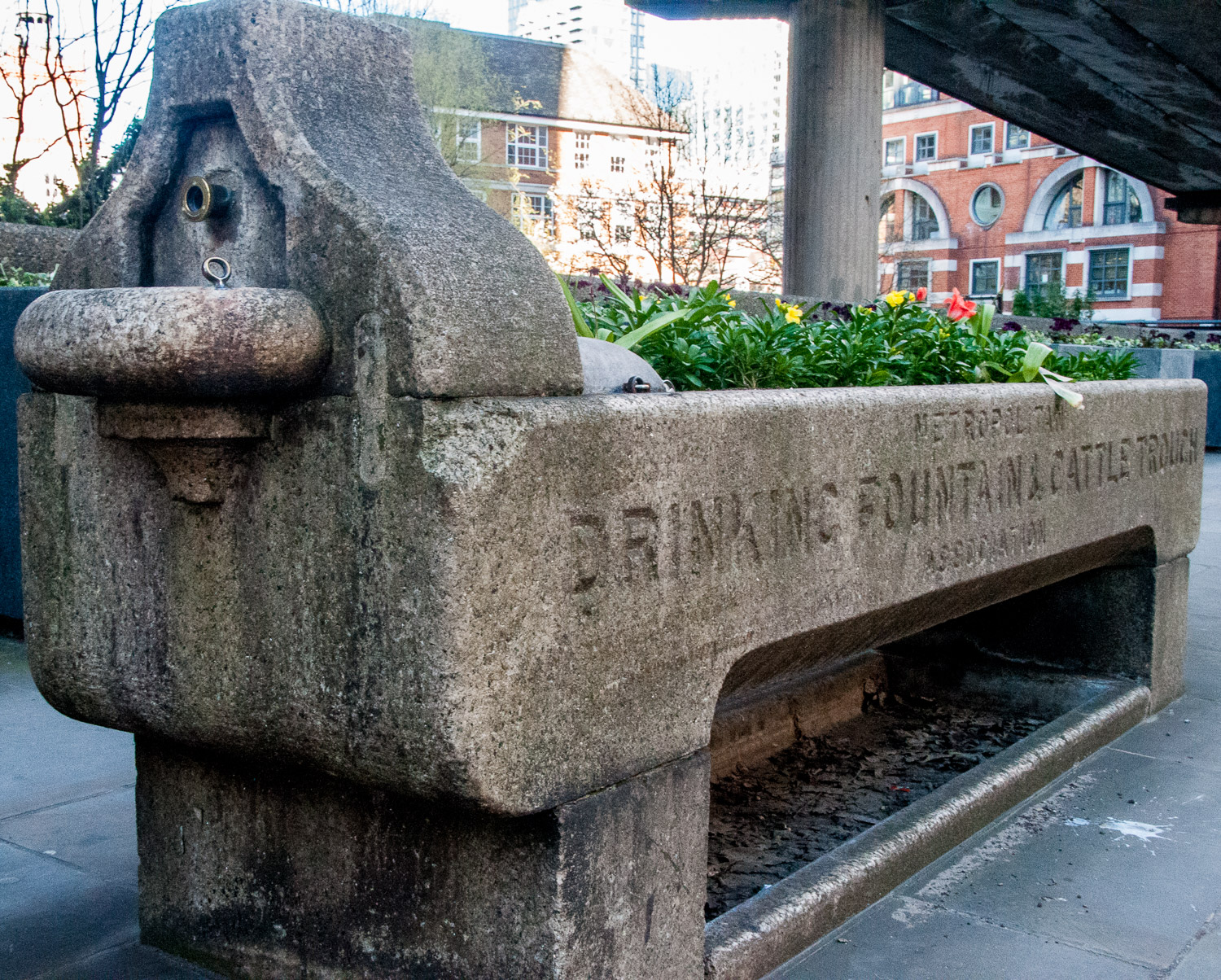
At least one of the horse troughs has survived in the City – although many more can be found around London, usually adapted to accommodate flowers.

Trough and fountain for use by the public, and animals large and small, on London Wall

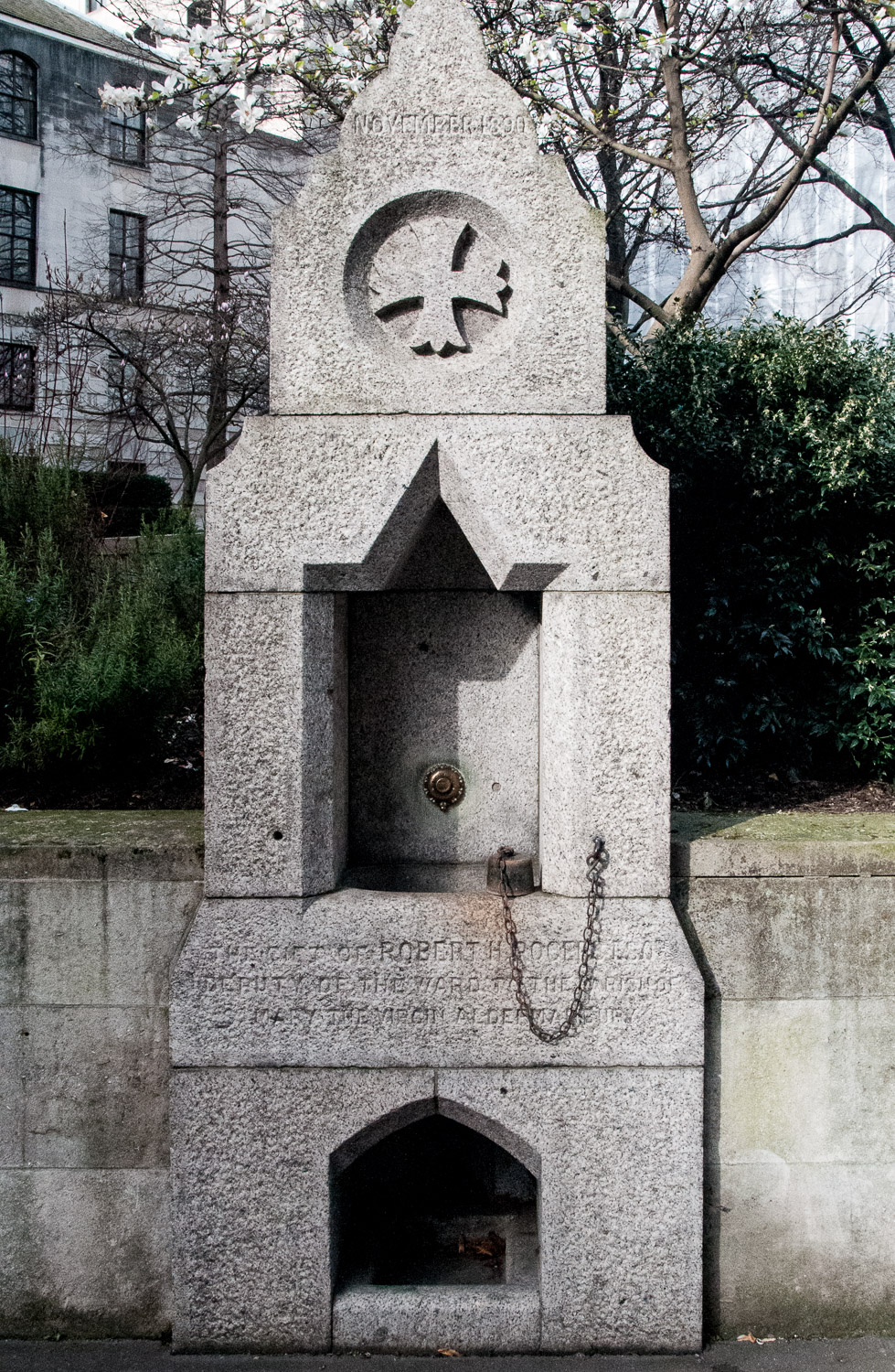
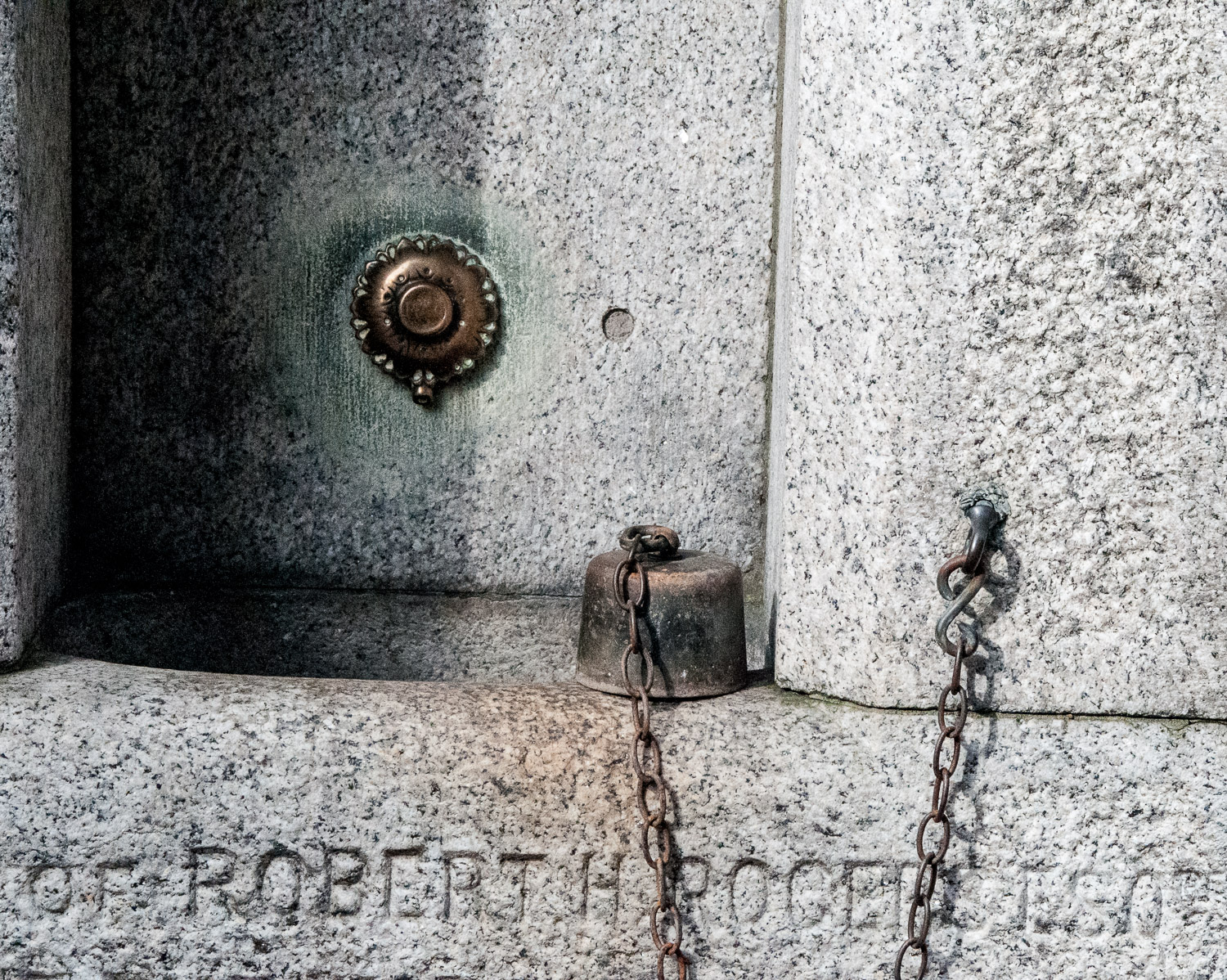
Remarkably, the cup is also still attached to this nice fountain in Love Lane at the junction with Aldermanbury, the gift of Robert H. Rogers, a Ward Deputy.

Robert H. Rogers’s gift dated November 1890


Love Lane fountain cup and chain


If you thirst for more knowledge about London’s water-related history get hold of a copy of the excellent book ‘Parched City’ by Emma M. Jones on which much of this post is based, including the title.


Page 36 of 36

Powered by WordPress & Theme by Anders Norén

Symbols & Secrets
Privacy Overview

This website uses cookies so that we can provide you with the best user experience possible. Cookie information is stored in your browser and performs functions such as recognising you when you return to our website and helping our team to understand which sections of the website you find most interesting and useful.