Walking the City of London

Category: Memorials Page 21 of 37

Bladderstones and fleas in the Seething Lane Garden

I mentioned in my blog last week that I’d been visiting the garden dedicated to a famous Londoner and it was a real thrill to discover some garden pavers with fascinating carvings (EC3N 4AT). The famous Londoner was, of course, Samuel Pepys and I haves since discovered a lot more about the carvings.

But first of all, some examples. The first one I noticed made me smile.

Pepys had been plagued by recurring stones since childhood and, at the age of 25, decided to tackle it once and for all and opt for surgery. He consulted a surgeon, Thomas Hollier, who worked for St Thomas’ Hospital and was one of the leading lithotomists (stone removers) of the time. The procedure was very risky, gruesome and, since anaesthetics were unknown in those days, excruciatingly painful. But Pepys survived and had the stone, ‘the size of a tennis ball’, mounted and kept it on his desk as a paperweight. It may even have been buried with him. One of the garden carvings shows a stone held in a pair of forceps …
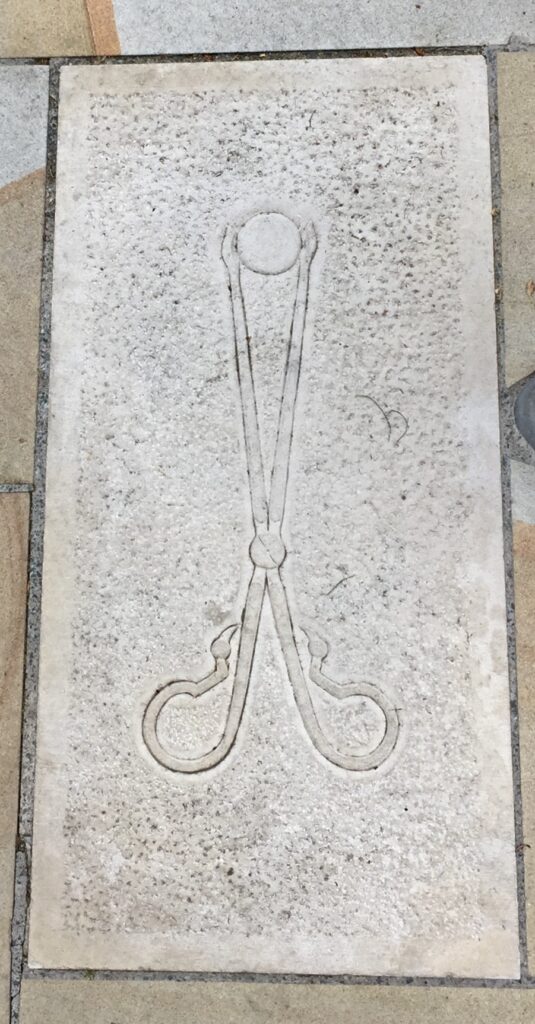
You can read more about the procedure Pepys underwent here.

Pepys survived the Great Plague of 1665 even though he remained in London most of the time. The pestilence is referenced by a plague doctor carrying a winged hourglass and fully dressed in 17th century protective clothing …
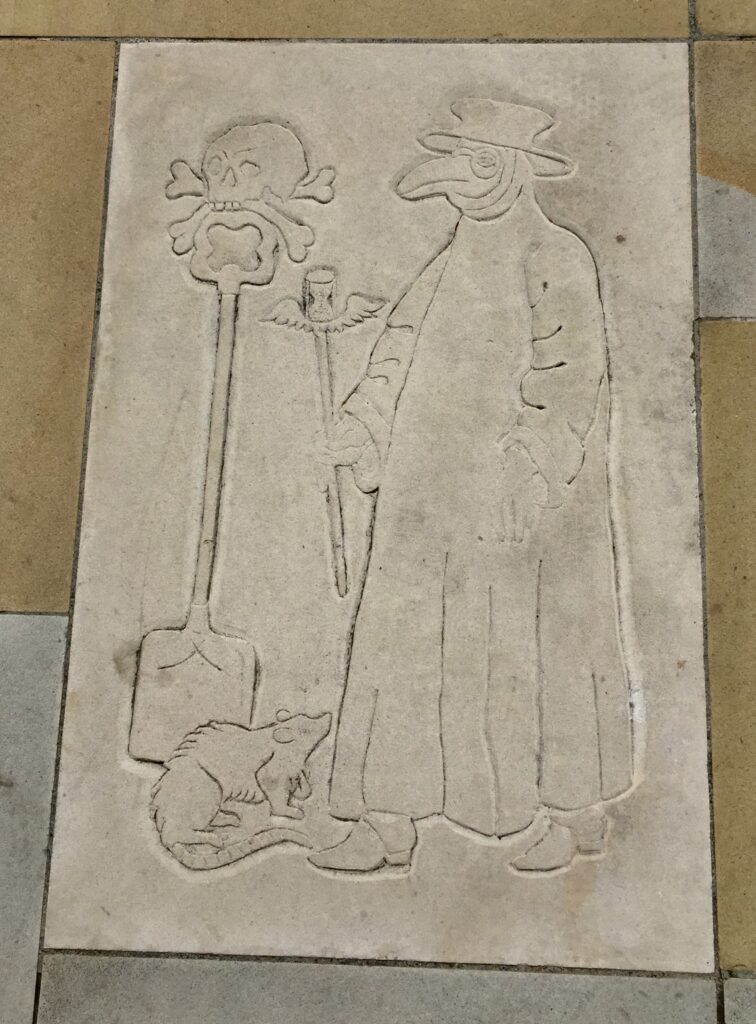
No one at the time realised that the plague could be spread by fleas carried on rats. One of the species sits cheekily at the doctor’s feet.

There is a flea in the garden but it has nothing to do with the plague …
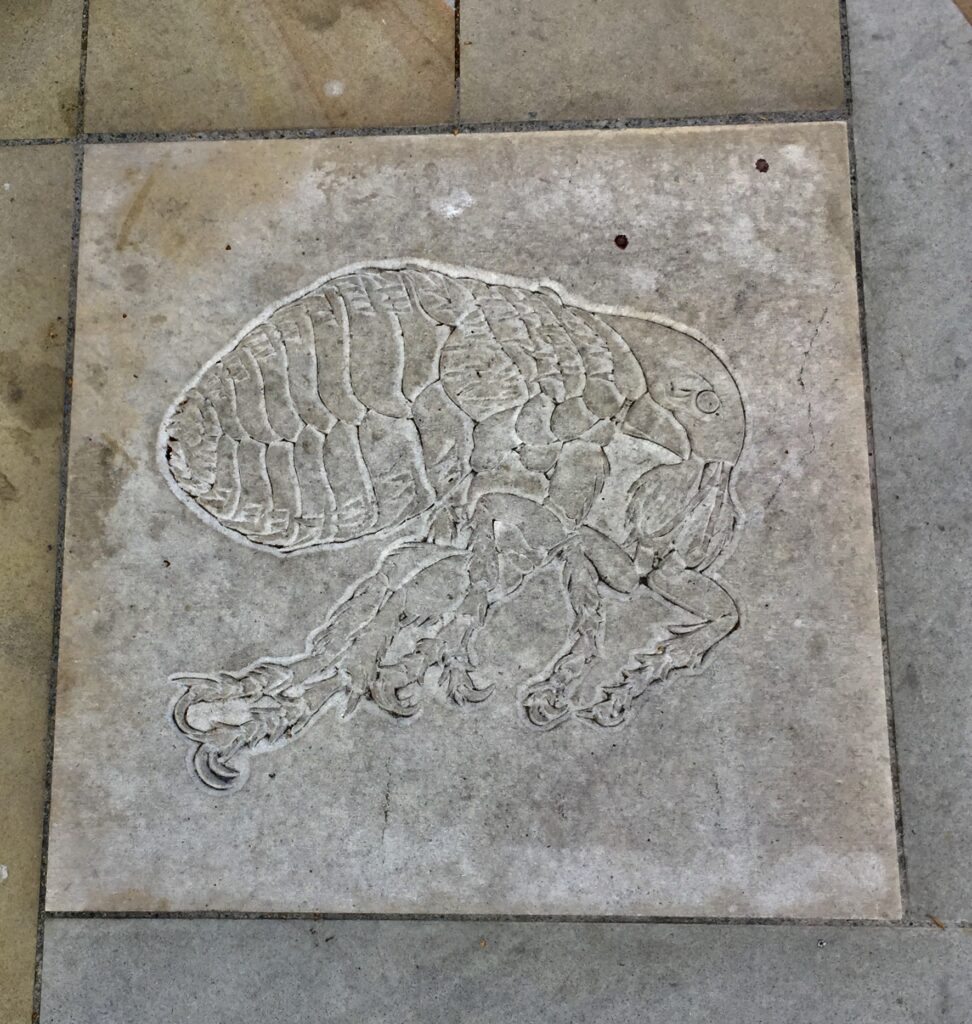
While visiting his bookseller on a frosty day in early January 1665 Pepys noticed a copy of Robert Hooke’s Micrographia, ‘which‘, Pepys recorded in his diary, ‘is so pretty that I presently bespoke it‘ …
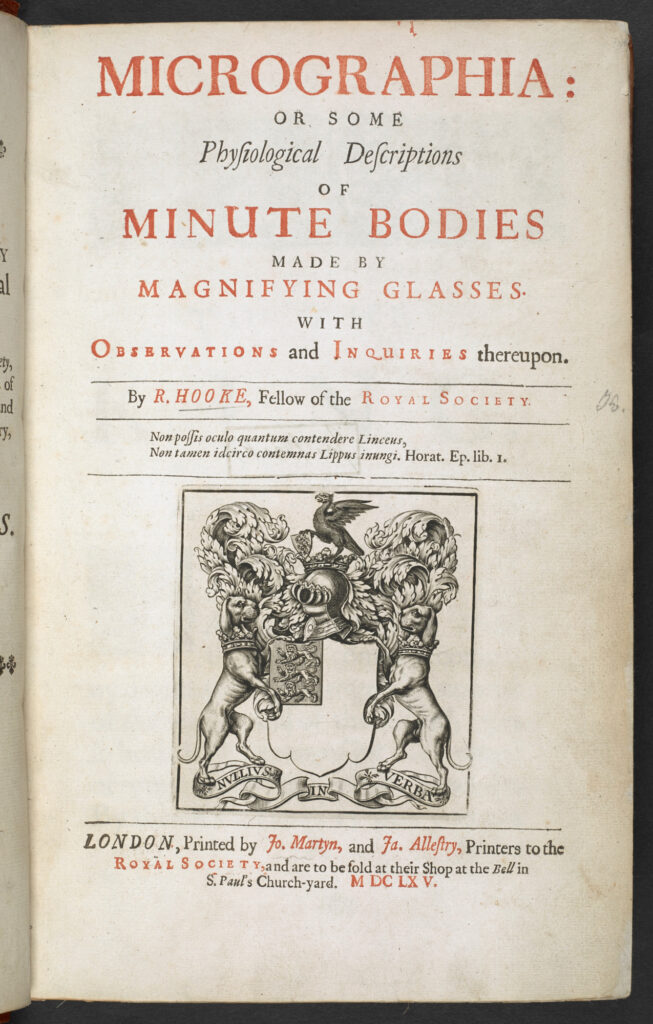
Like many other readers after him, Pepys was immediately drawn in by the beautiful engravings printed in what was the world’s first fully-illustrated book of microscopy. When he picked up his own copy later in the month Pepys was even more pleased with the book, calling it ‘a most excellent piece . . . of which I am very proud‘. The following night he sat up until two o’clock in the morning reading it, and voted it ‘the most ingenious book that ever I read in my life‘. Here is the engraving Hooke made of a flea …
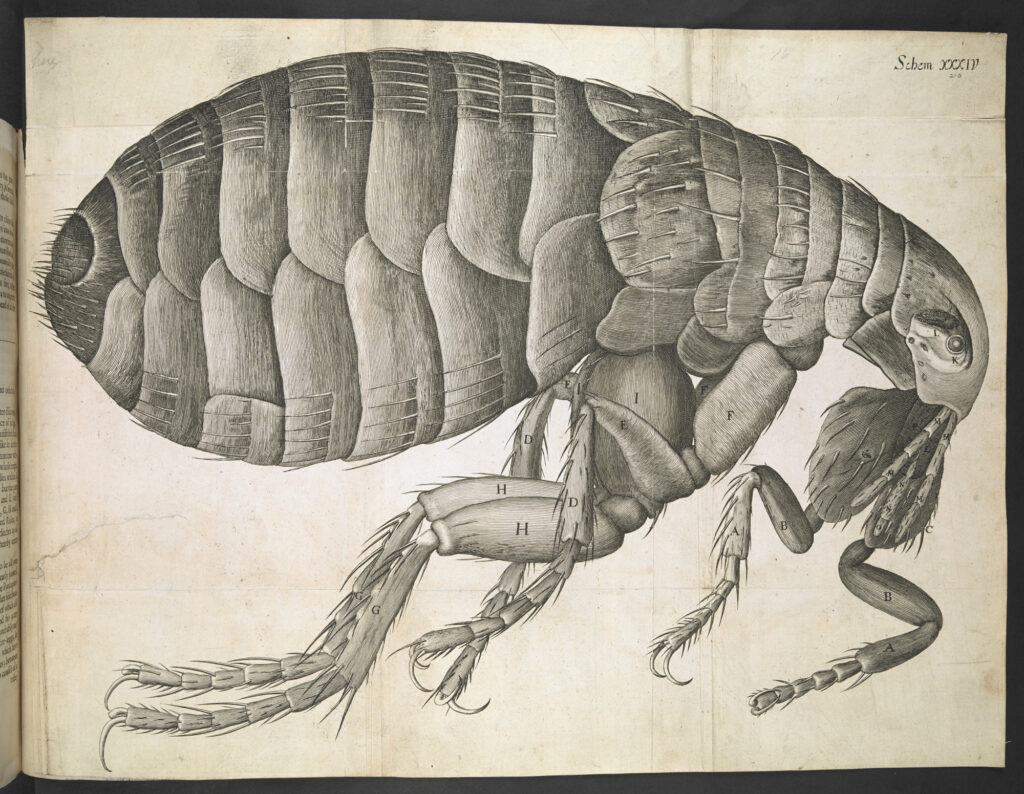
It’s on a huge fold-out page 43 by 33 centimetres.

You can explore the wonders of Micrographia yourself by clicking on this link to the British Library website.

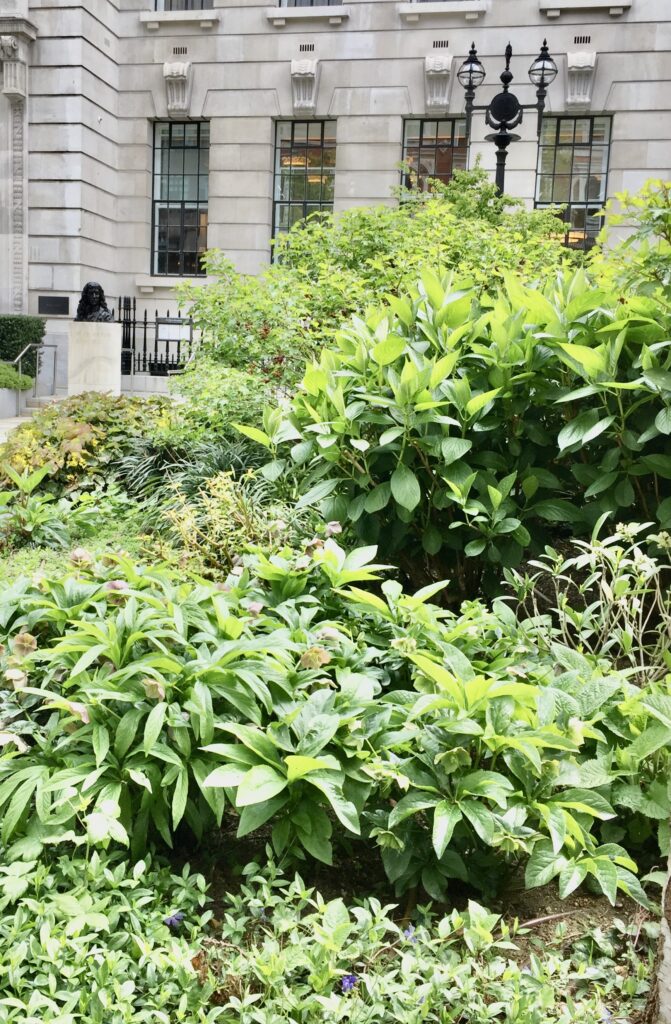
In the garden Pepys is commemorated with a splendid bust by Karin Jonzen (1914-1998), commissioned and erected by The Samuel Pepys Club in 1983 …
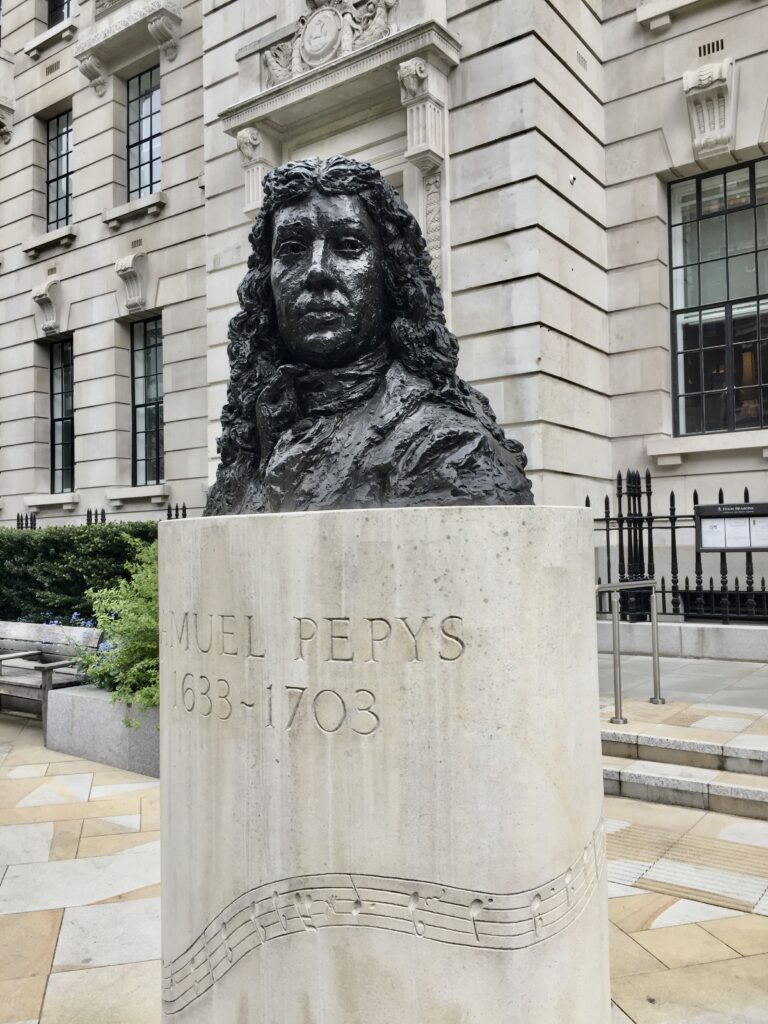
The plinth design was part of the recent project and the music carved on it is the tune of Beauty Retire, a song that Pepys wrote. So if you read music you can hear Pepys as well as see his bust …
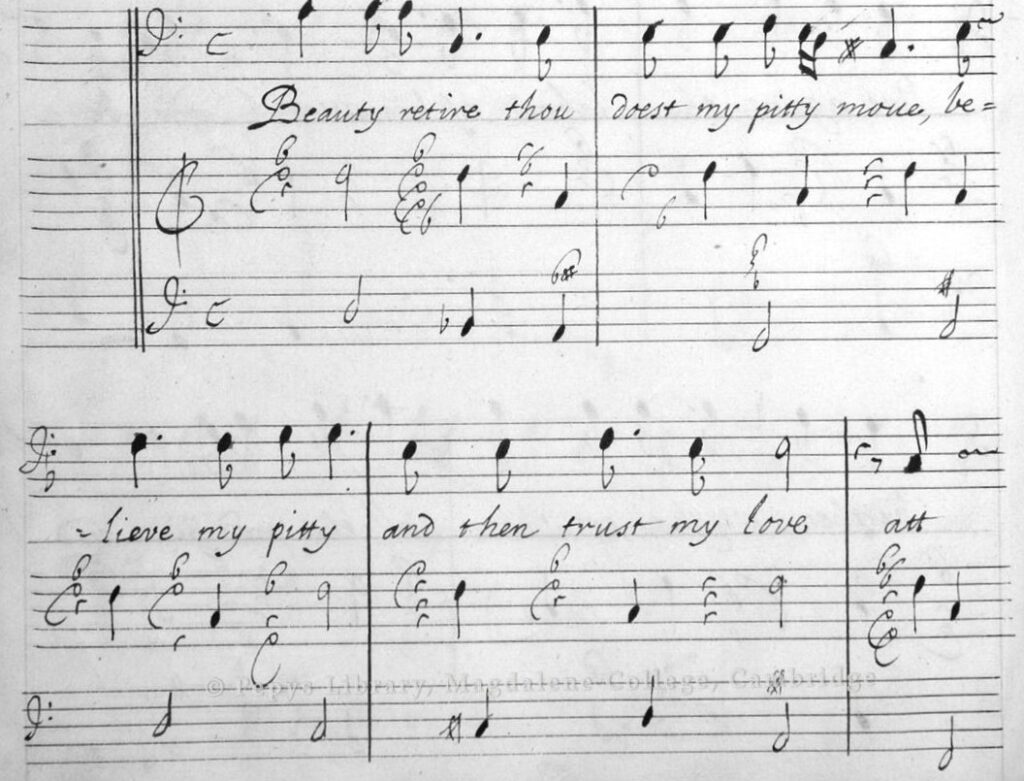
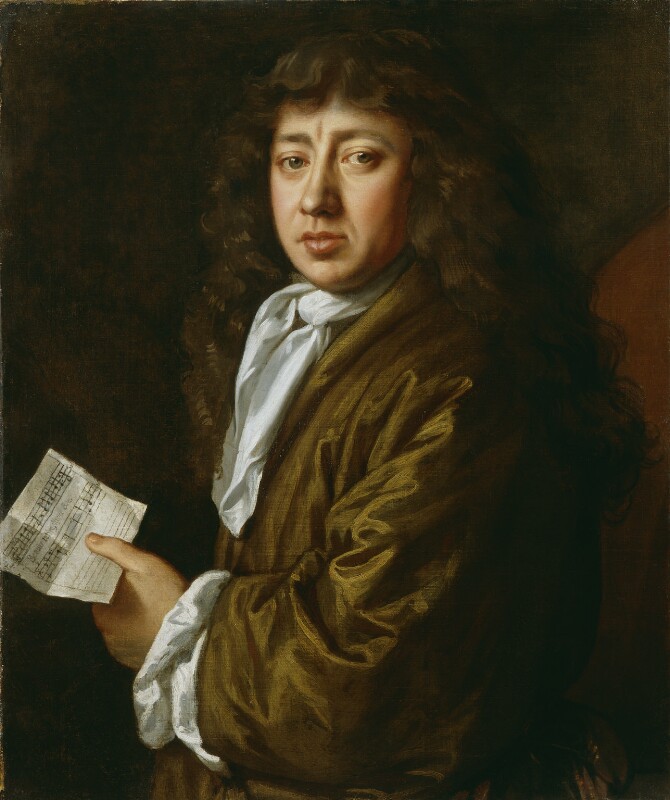
Pepys was evidently extremely proud of Beauty Retire, for he holds a copy of the song in his most famous portrait by John Hayls, now in the National Portrait Gallery. A copy of the portrait hangs in the Pepys Library …
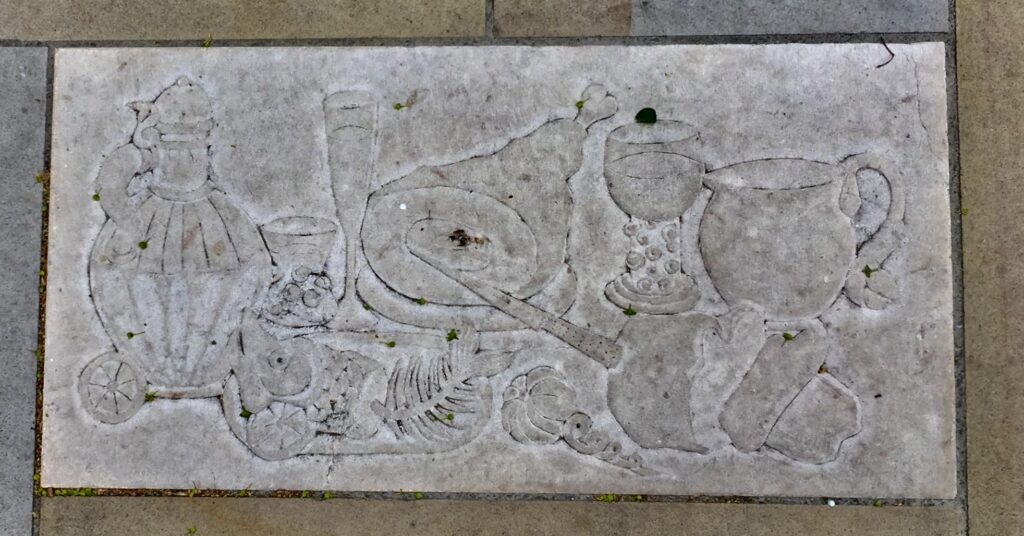
Every year, on the anniversary of his surgery, Pepys held what he called his ‘Stone Feast’ to celebrate his continued good health and there is a carving in the garden of a table laden with food and drink …
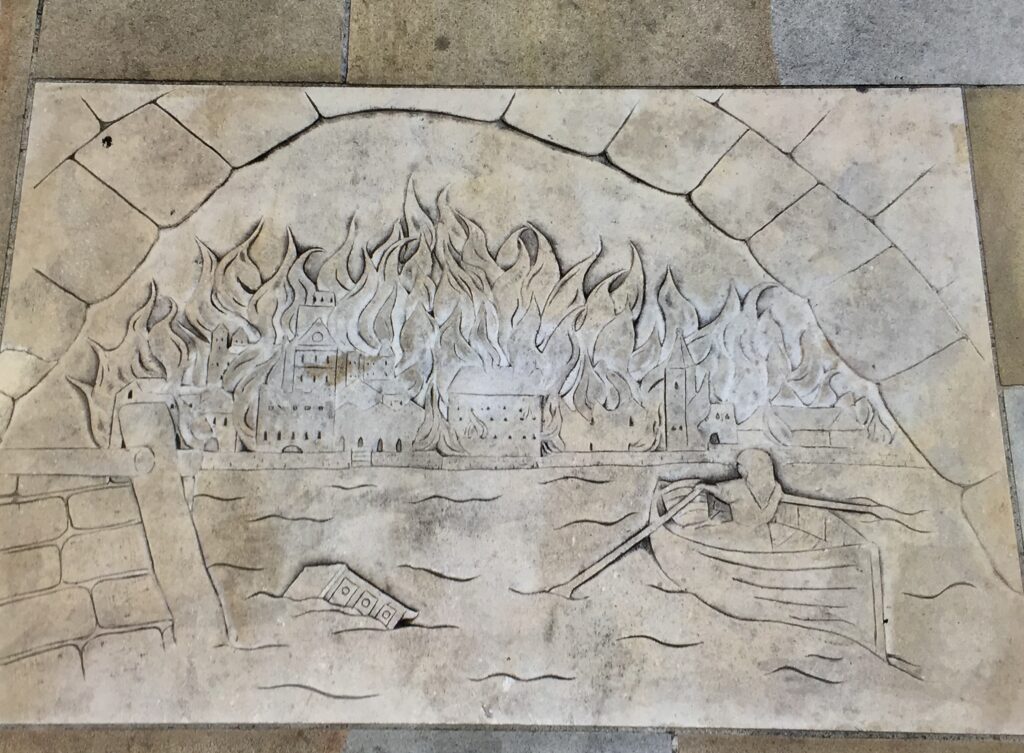
The Great Fire of London began on 2 September 1666 and lasted just under five days. One-third of London was destroyed and about 100,000 people were made homeless. He wrote in his diary …

I (went) down to the water-side, and there got a boat … through (the) bridge, and there saw a lamentable fire. Everybody endeavouring to remove their goods: poor people staying in their houses as long as till the very fire touched them, and then running into boats, or clambering from one pair of stairs by the water-side to another. And among other things, the poor pigeons, I perceive, were loth to leave their houses, but hovered about the windows and balconys till … some of them burned their wings and fell down.

A boat in the foreground with the City ablaze in the distance while a piece of furniture floats nearby …
His house was in the path of the fire and on September 3rd his diary tells us that he borrowed a cart ‘to carry away all my money, and plate, and best things‘. The following day he personally carried more items to be taken away on a Thames barge, and later that evening with Sir William Pen, ‘I did dig another [hole], and put our wine in it; and I my Parmazan cheese, as well as my wine and some other things.’ And here is his cheese and wine …
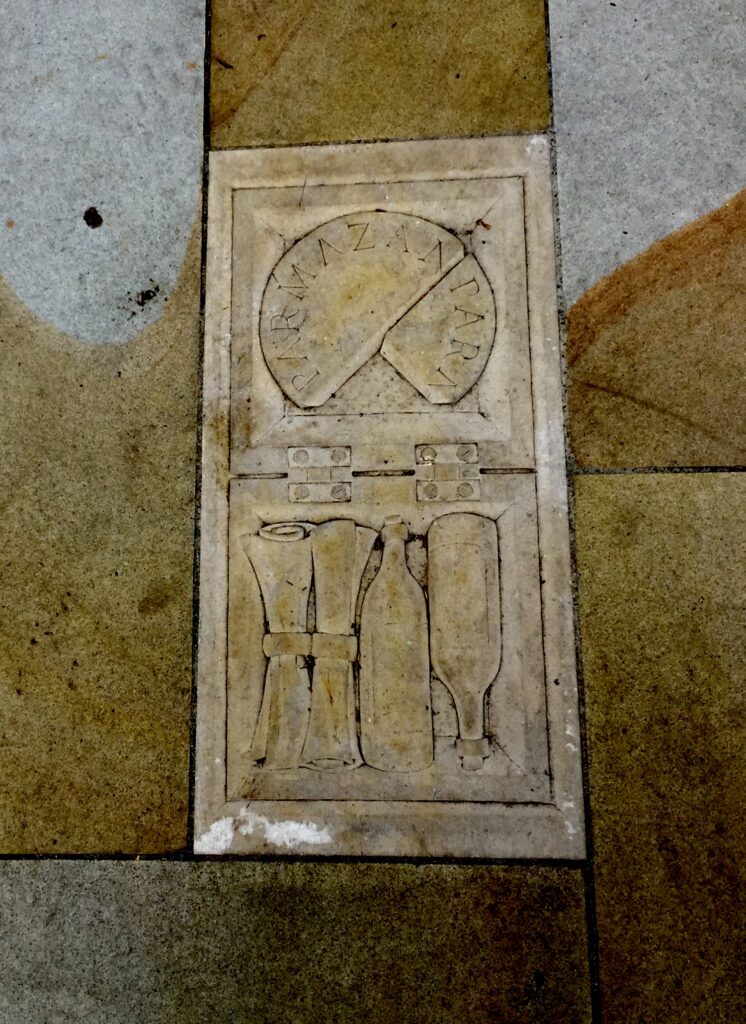
Why did he bury cheese? Read more about the value of Parmesan (then and now) here.

Then there are these musical instruments, all of which Pepys could play …
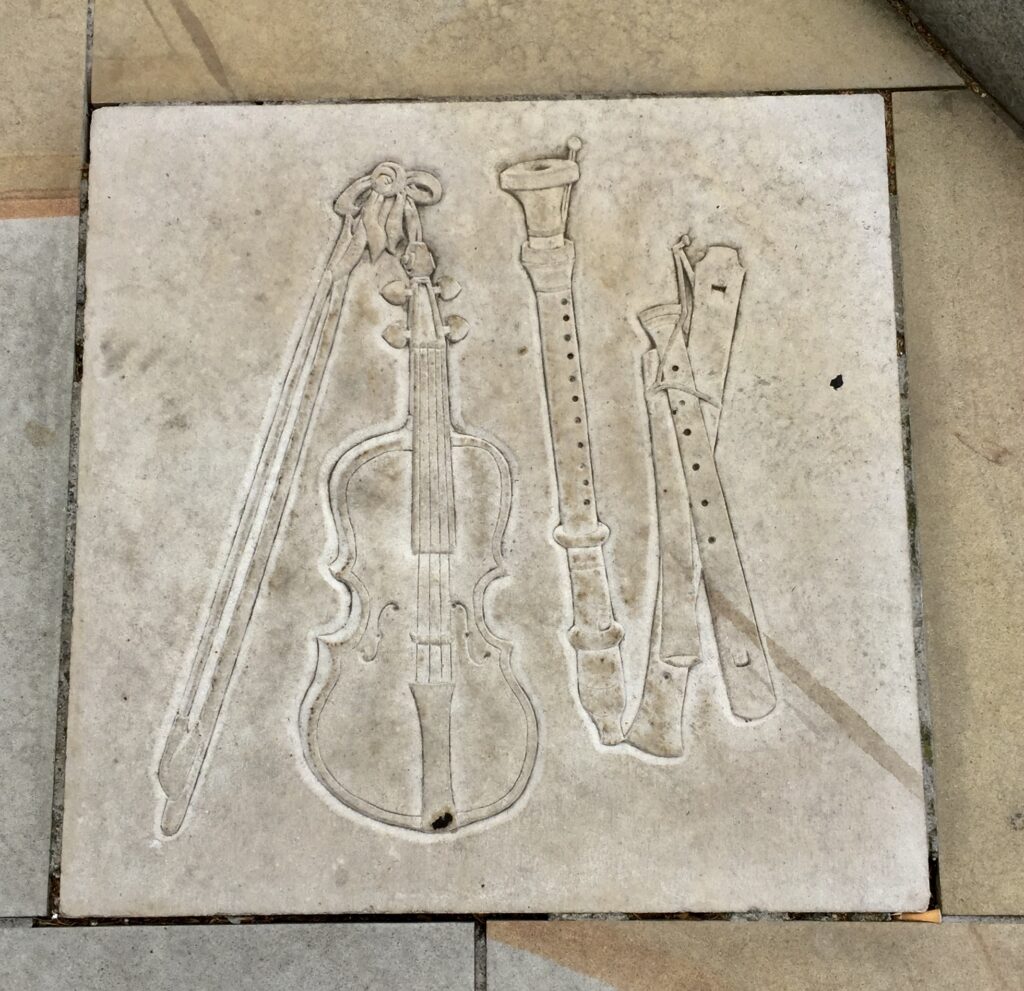
From the Pepys Club website: ‘To Pepys, music wasn’t just a pleasant pastime; it was also an art of great significance – something that could change lives and affect everyone who heard it. He was a keen amateur, playing various instruments and studying singing – he even designed a room in his home specially for music-making. He attended the services at the Chapel Royal; he collected a vast library of scores, frequented the theatre and concerts and even commented with affection on the ringing of the church bells that filled the air in London’s bustling streets where he lived and worked’.

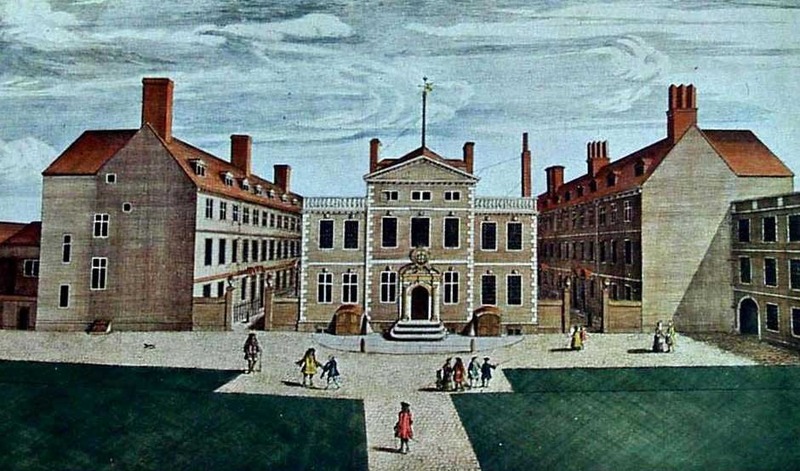
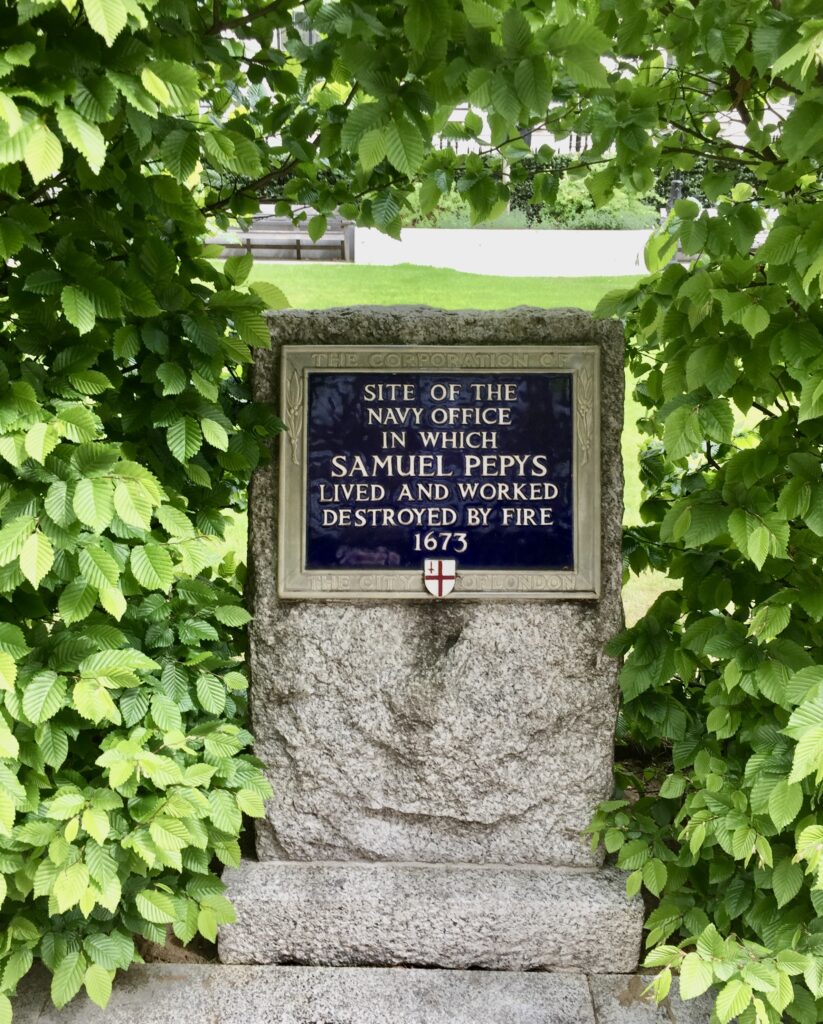
The Navy Office where he worked, eventually rising to become Chief Secretary to the Admiralty …
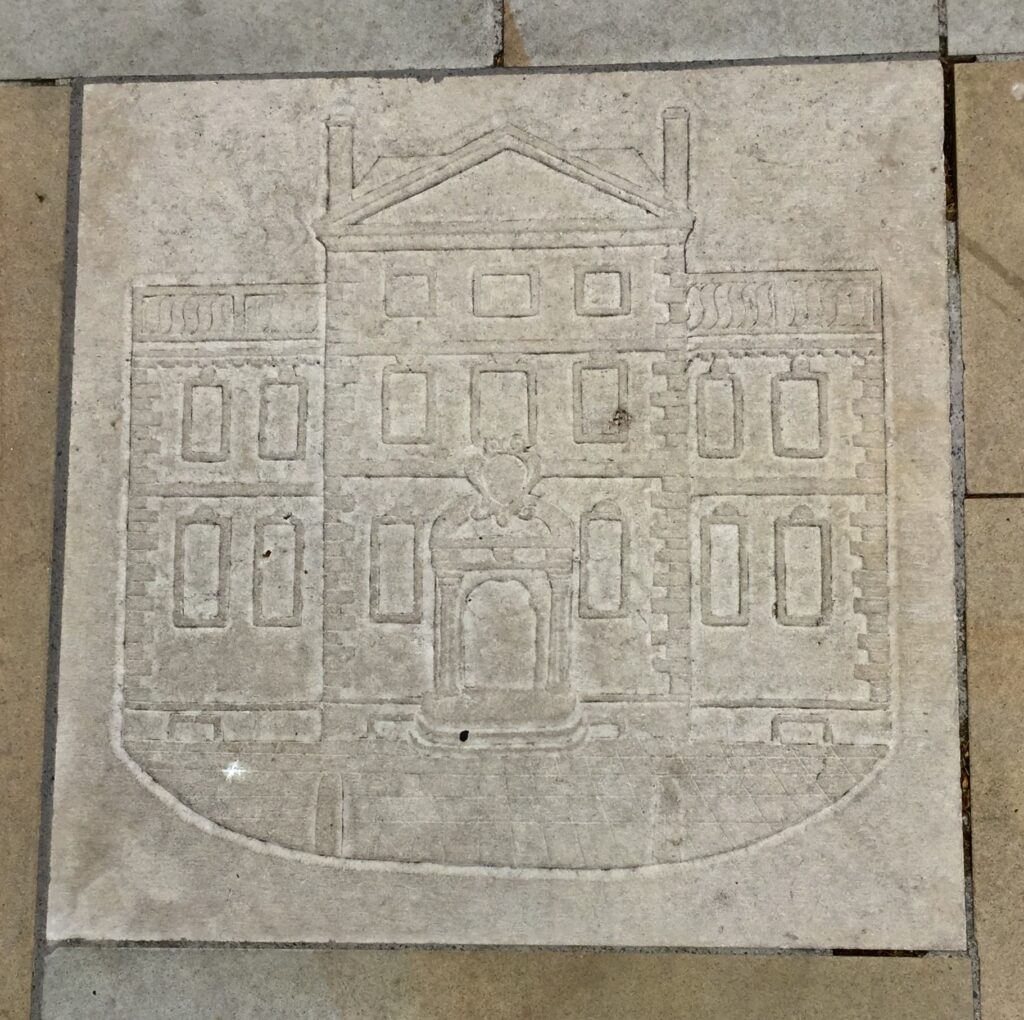
Source: London Remembers.

There are thirty pavers in all and I shall return to them in a later blog. In the meantime, great credit is due to the folk who worked on this incredibly interesting project.

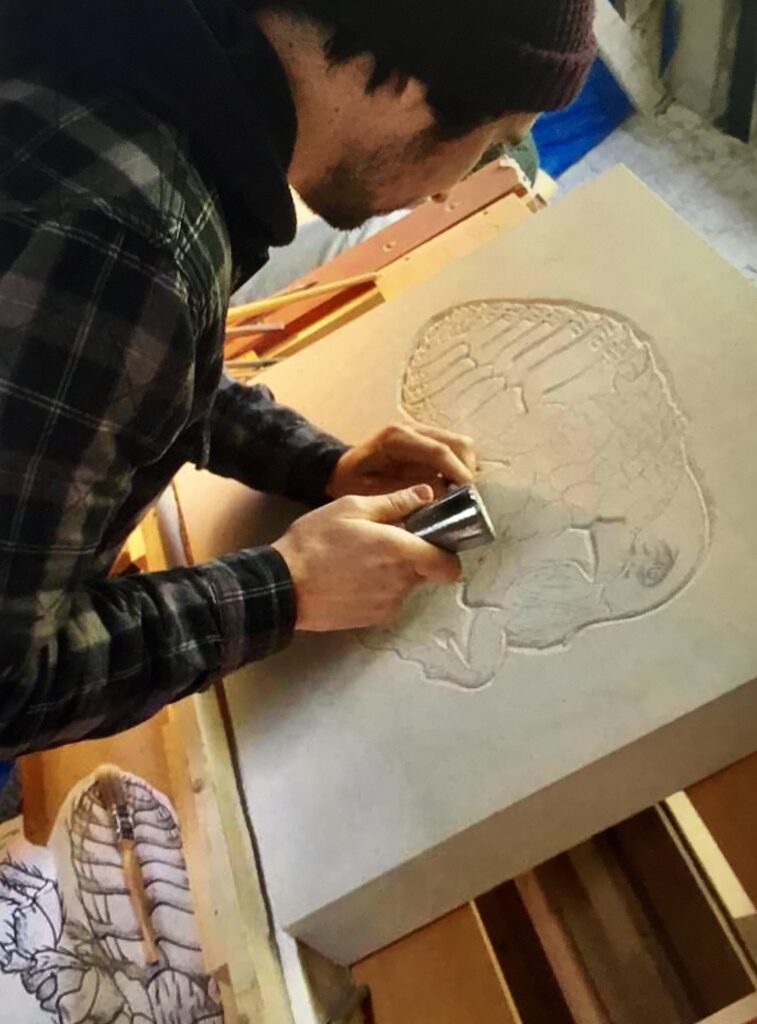
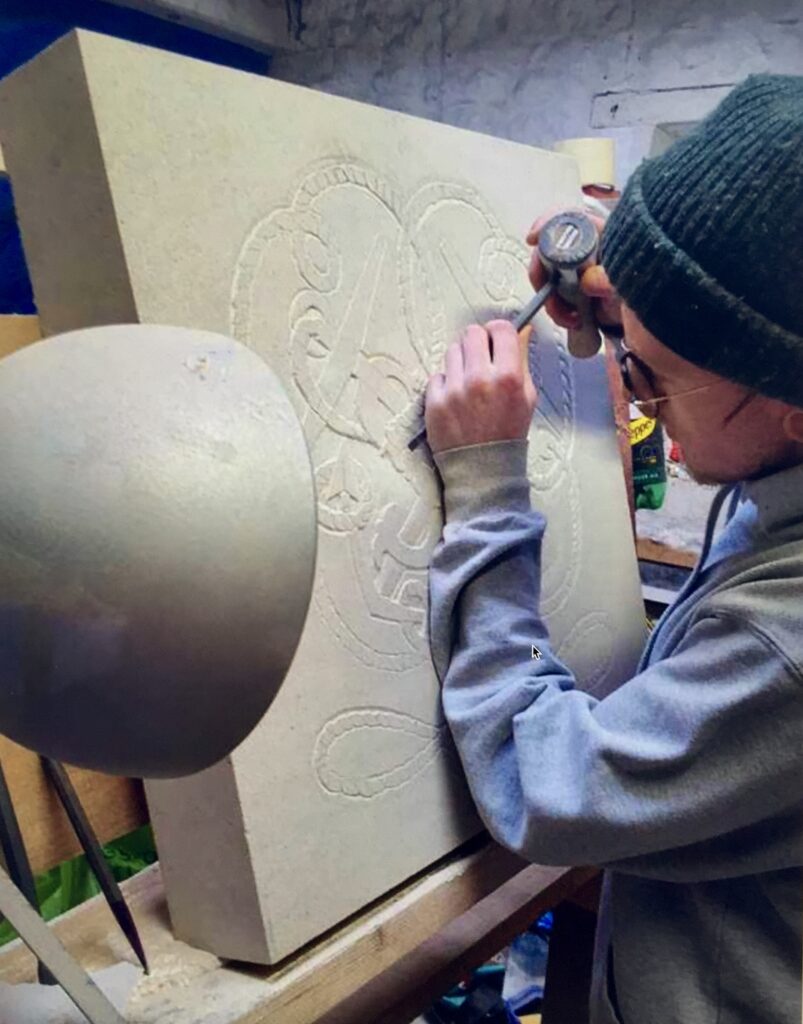
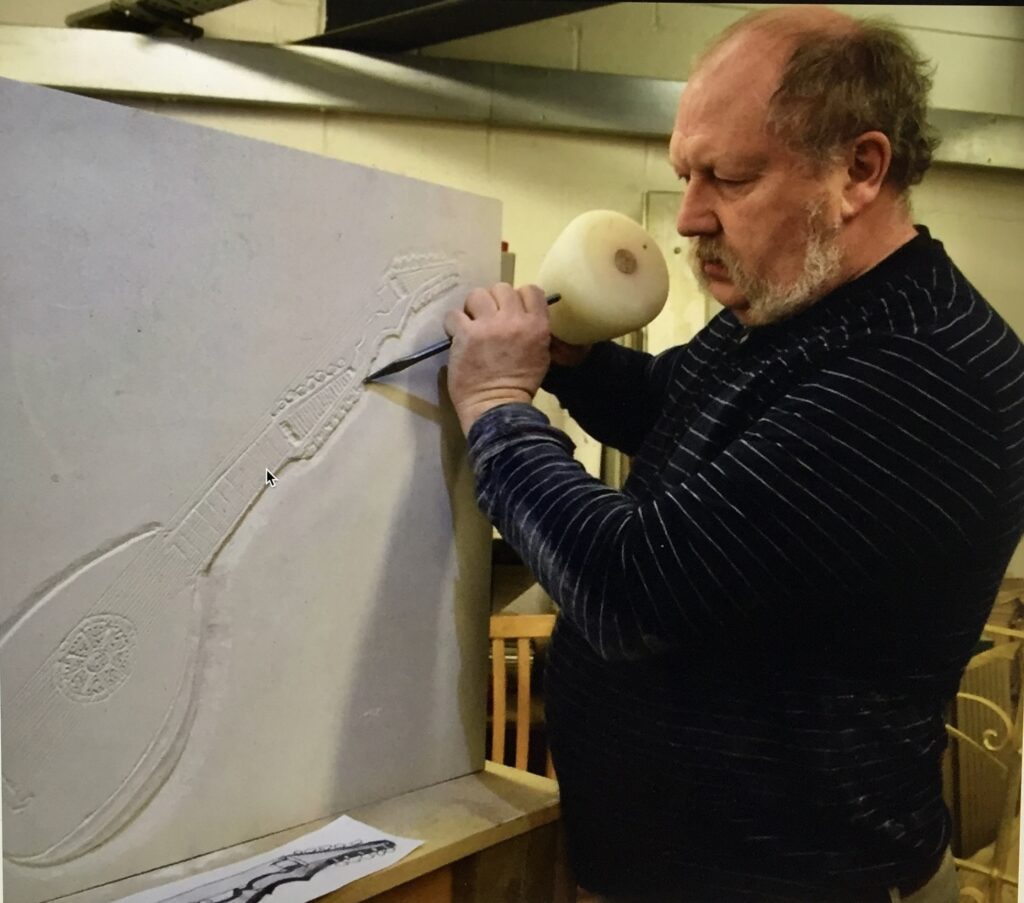
The designs were created by a team of students and alumni of City & Guilds London Art School working under the direction of Alan Lamb of Swan Farm Studios Ltd. Further contributions to the design were made by Sam Flintham, Jackie Blackman, Clem Nuthall, Tom Ball, Sae Na Ku, Sophie Woodhouse and Alan Lamb himself. Here are some pictures of the sculptors at work.

Tom Ball working on the flea …
Mike Watson working on Pepys’s monogram …
And finally, Alan Lamb working on a theorbo lute, another instrument Pepys could play …
Do visit the garden if you have the chance. Another of its interesting features is that it is irrigated by rainwater harvested from the roof of the hotel next door!
I have written about Pepys before : Samuel Pepys and his ‘own church’ and Samuel Pepys and the Plague.

If you would like to follow me on Instagram here is the link …
https://www.instagram.com/london_city_gent/

More City gardens and a churchyard mystery.

I must admit I thought I’d visited all the City gardens but I was wrong and had missed one of the most interesting.

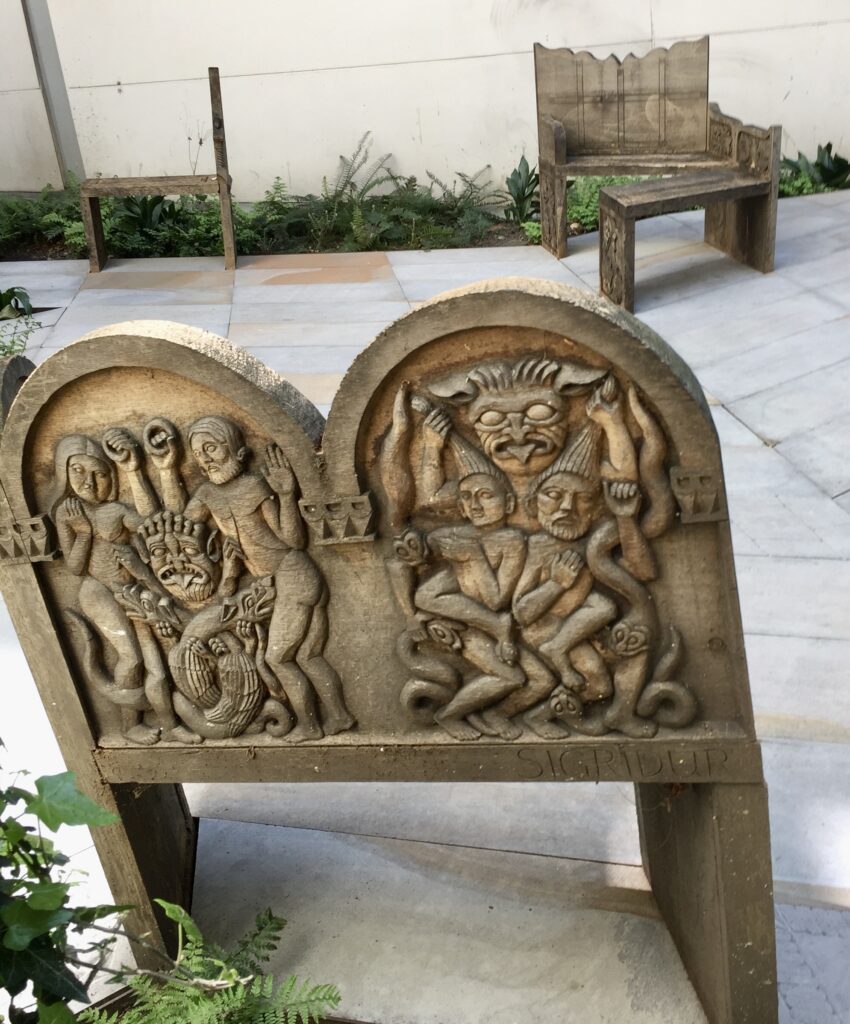
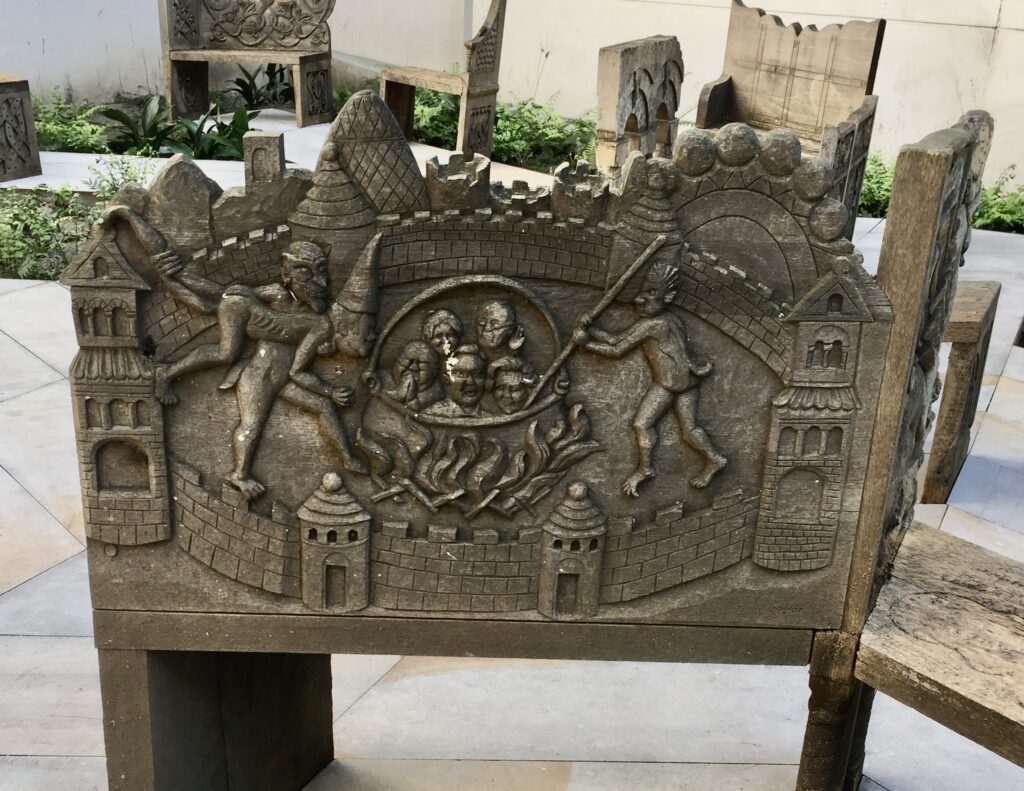
In Pancras Lane, just off Queen Street, is the St Pancras Church Garden (EC2R 8JR). I was intrigued straight away by the carving of two devils cooking some poor condemned souls in a pot …

The garden is on the site of St Pancras Church, a late 11th century church destroyed by the Great Fire of London in 1666. The church was never rebuilt, and the site was used first as a burial ground, but then lay basically abandoned until in 2010 the City of London acquired the leasehold of the site in order to turn it into a public garden.

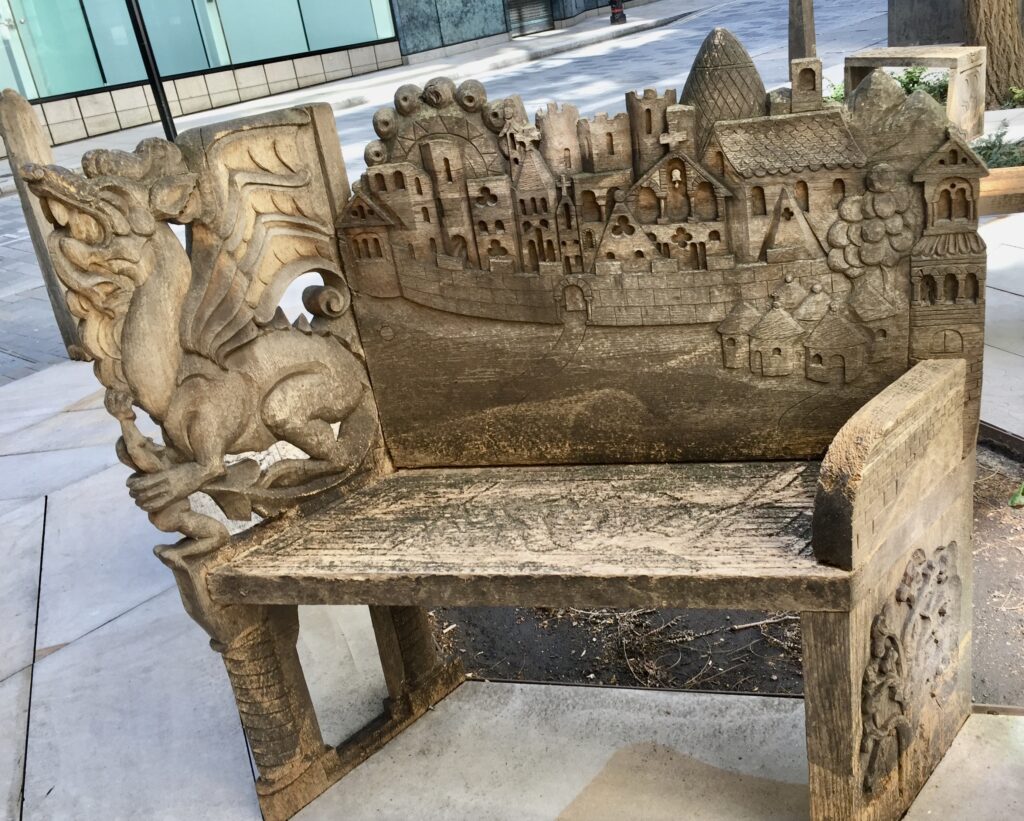
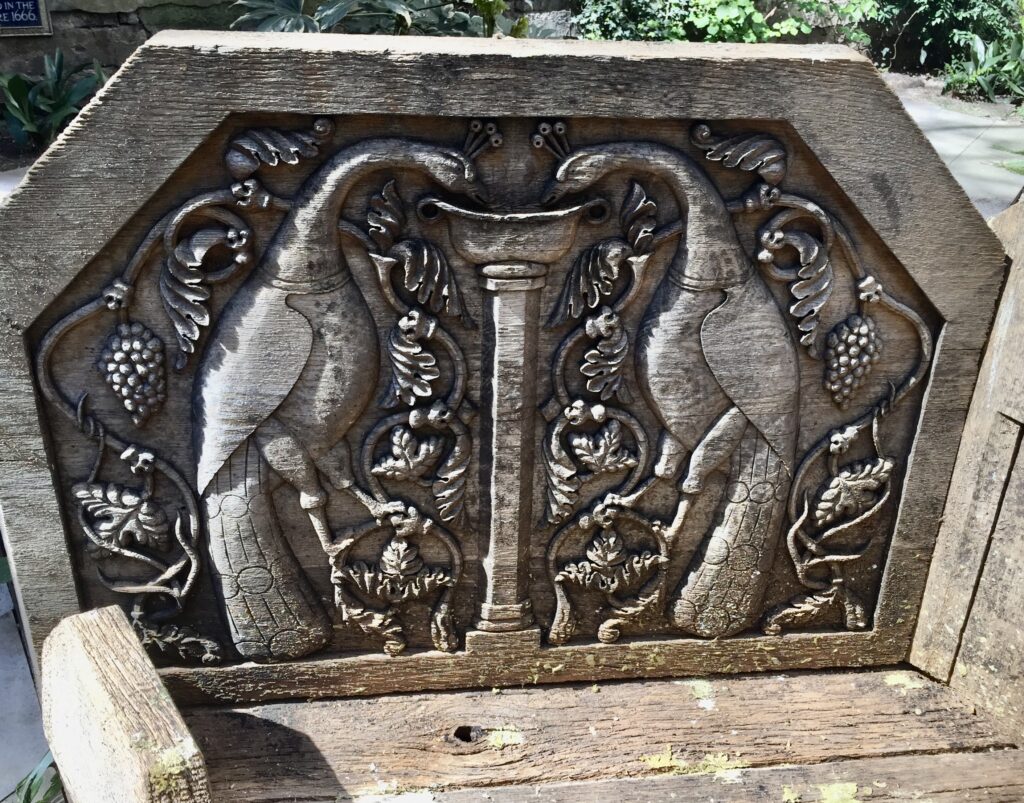
The poetic idea behind the design, by Studio Weave, is that the church has somehow re-emerged, sprouting from the earth in the form of beautifully carved Romanesque wooden benches.

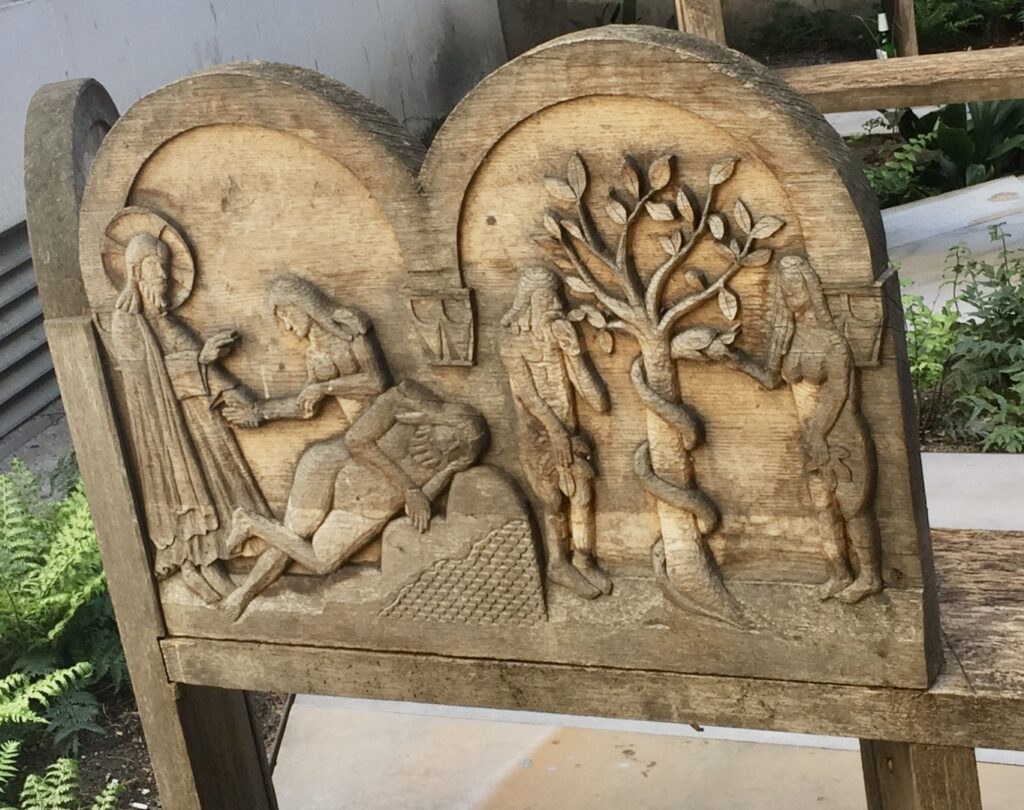
On the right Eve accepts an apple from the serpent – and we know it all turned out badly for her and Adam after that …

City & Guilds of London Art School was commissioned to produce the benches, which were individually carved during Summer 2011 by a team of tutors and students. The students based the design of the benches on historically referenced Romanesque church carvings …

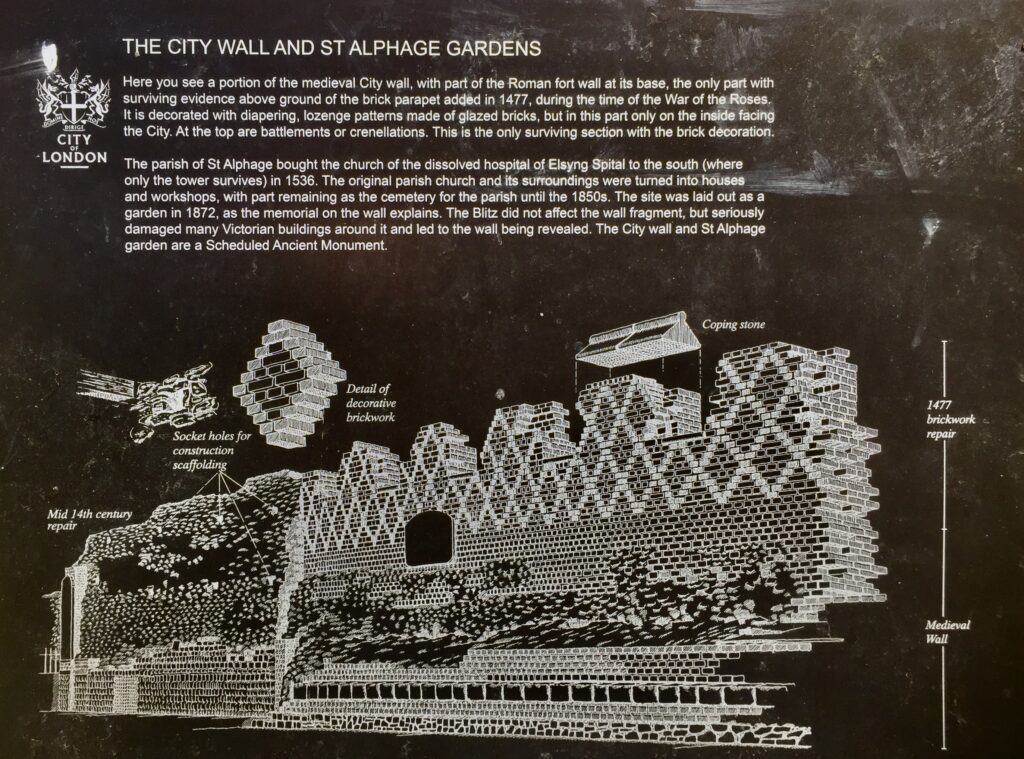
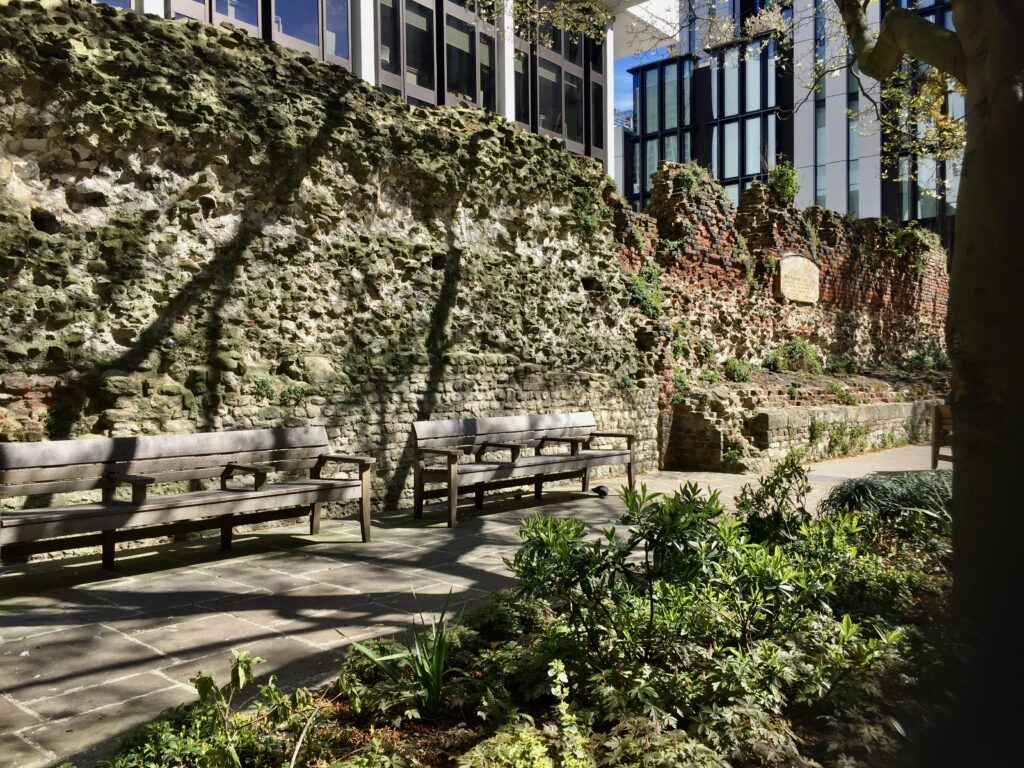
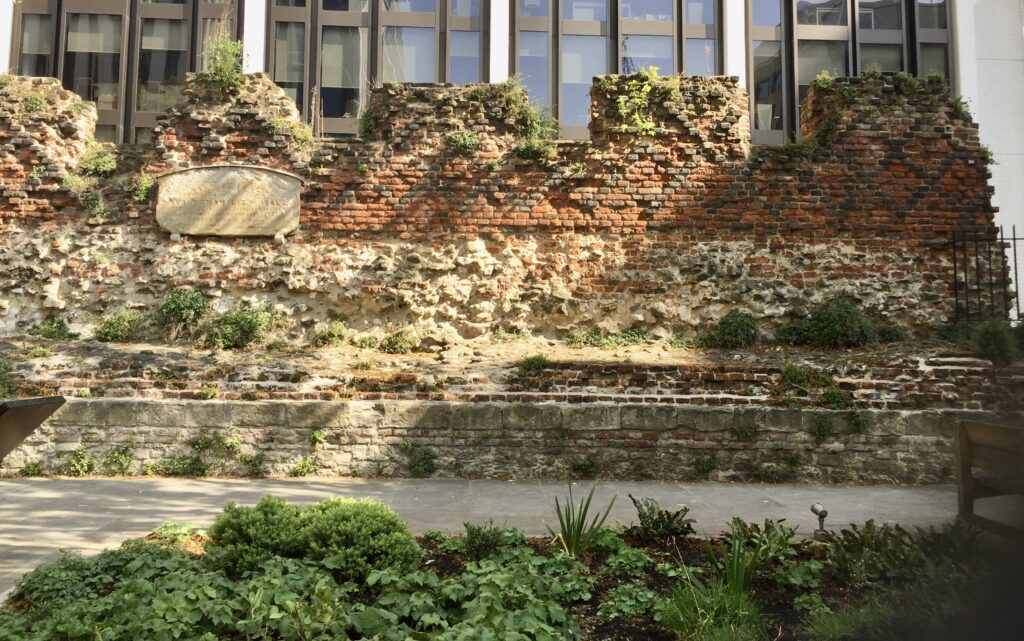
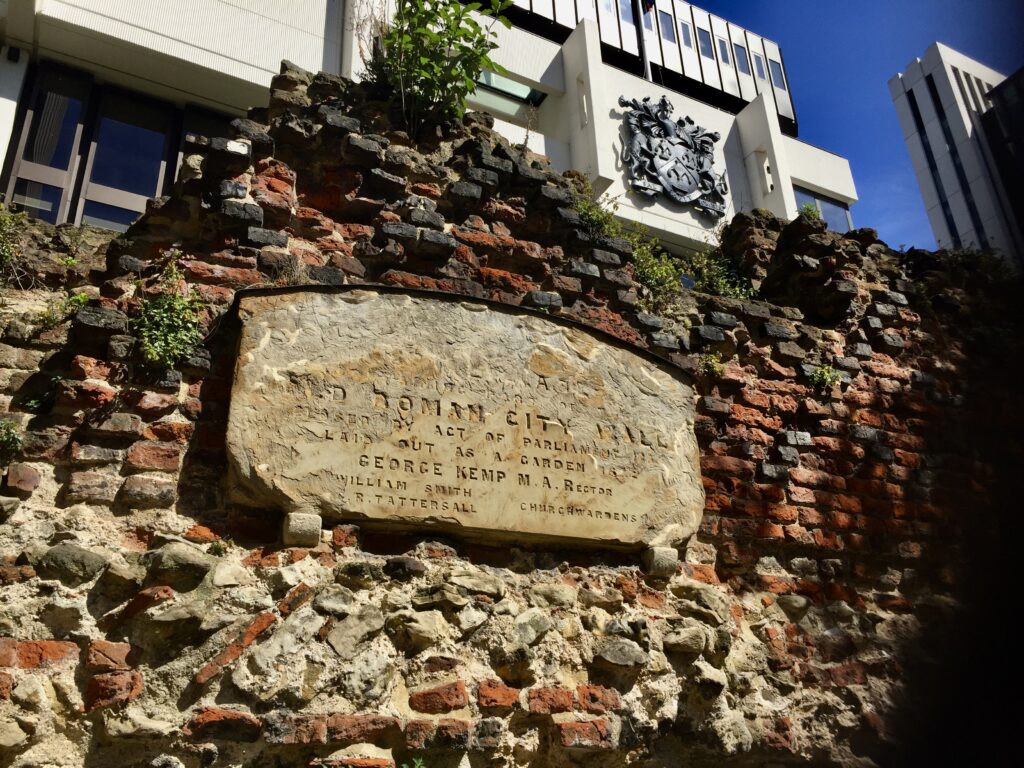
I then headed north to walk around the London Wall Place area, which is looking really nice now that development has been completed. My first stop was St Alphage Gardens (EC2Y 5DE) …

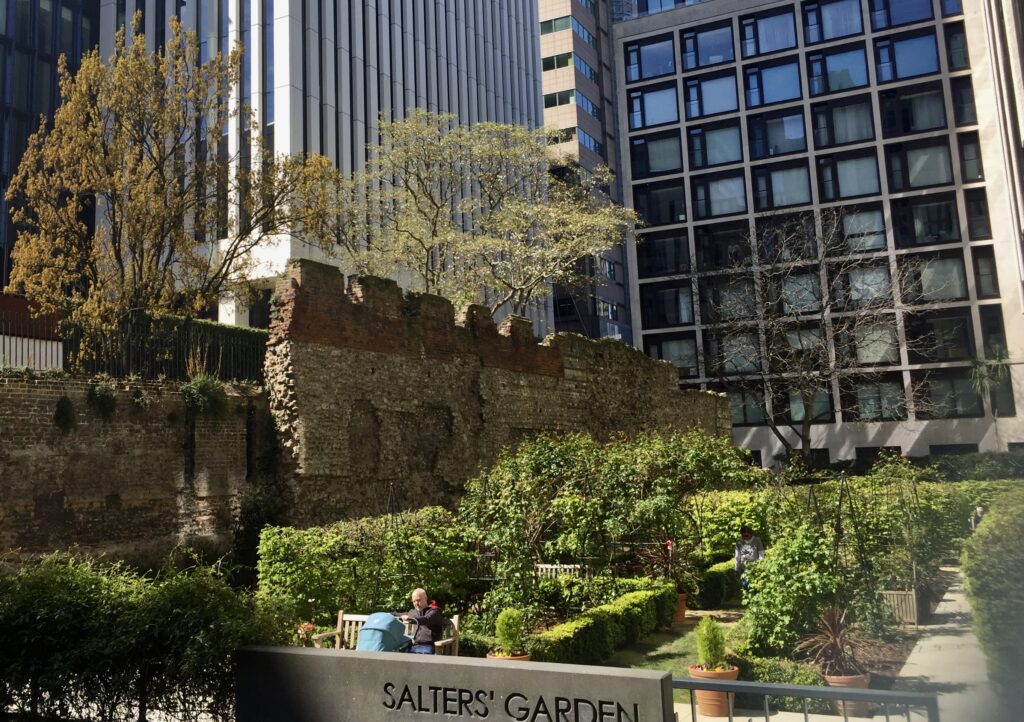
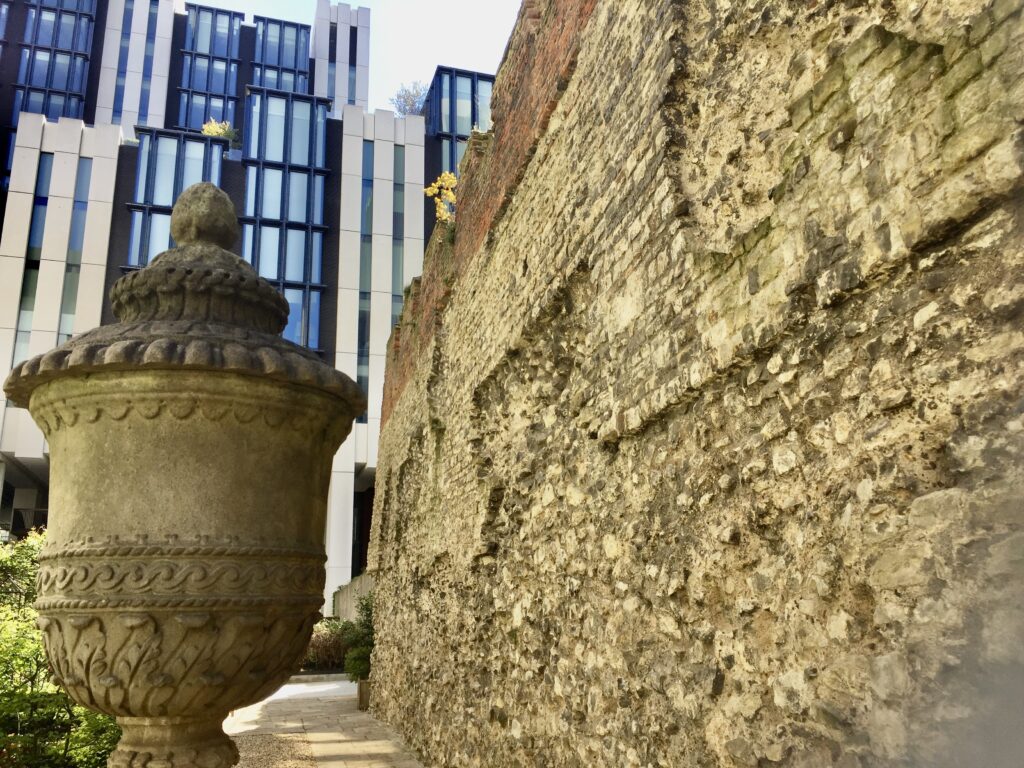
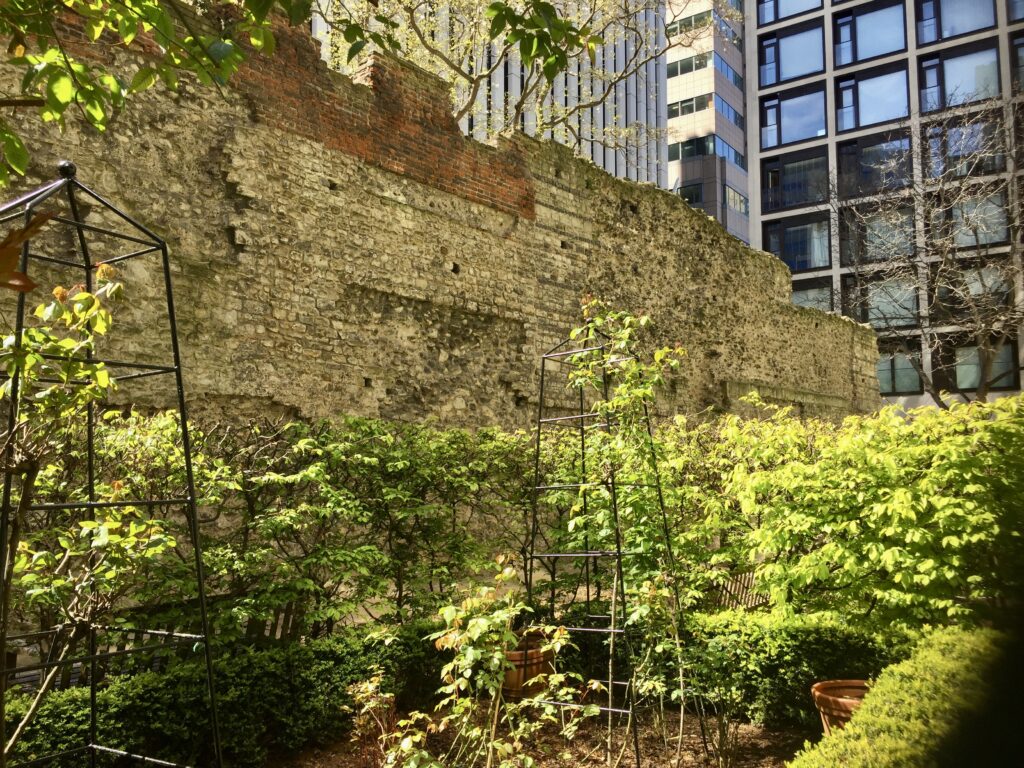
You can see the north side of the wall from the Salters’ Hall garden – now usually open to the public (EC2Y 5DE) …

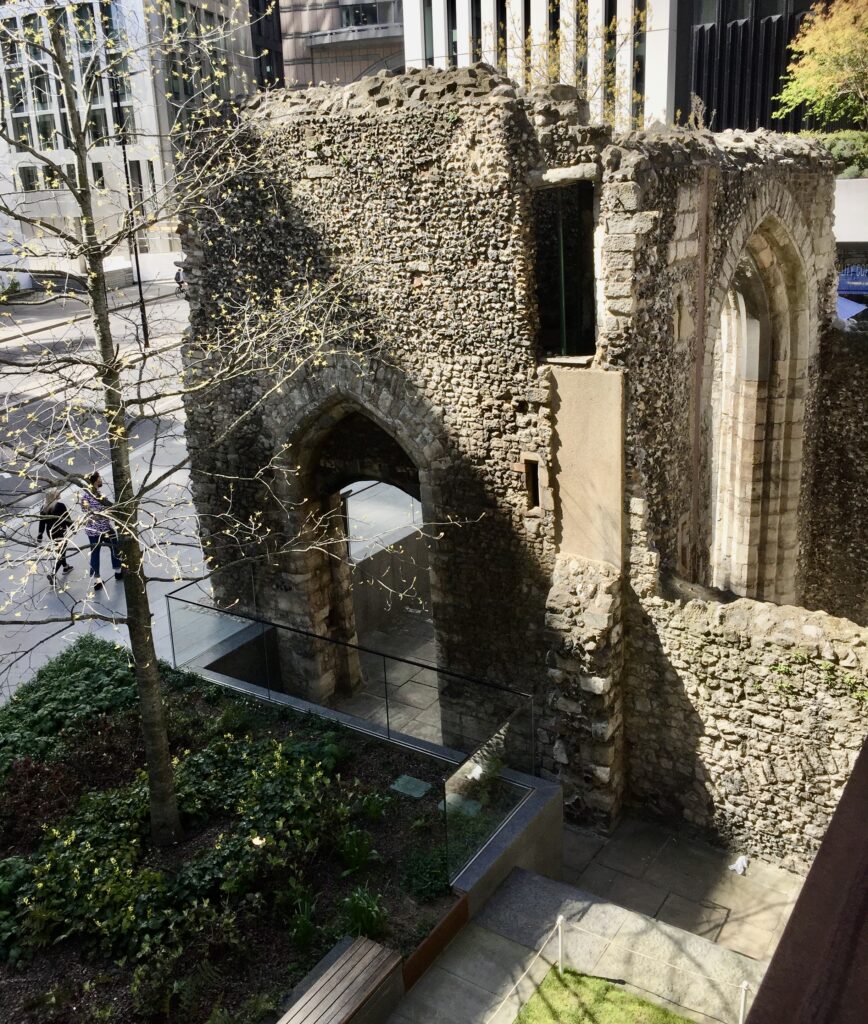
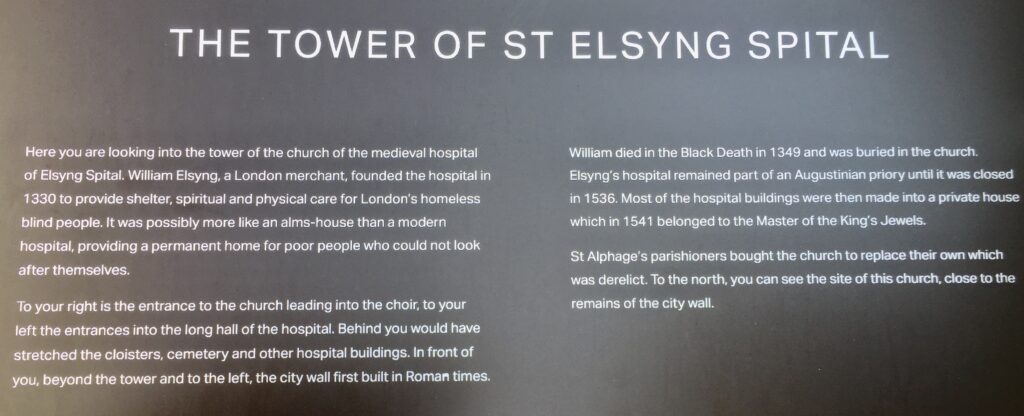
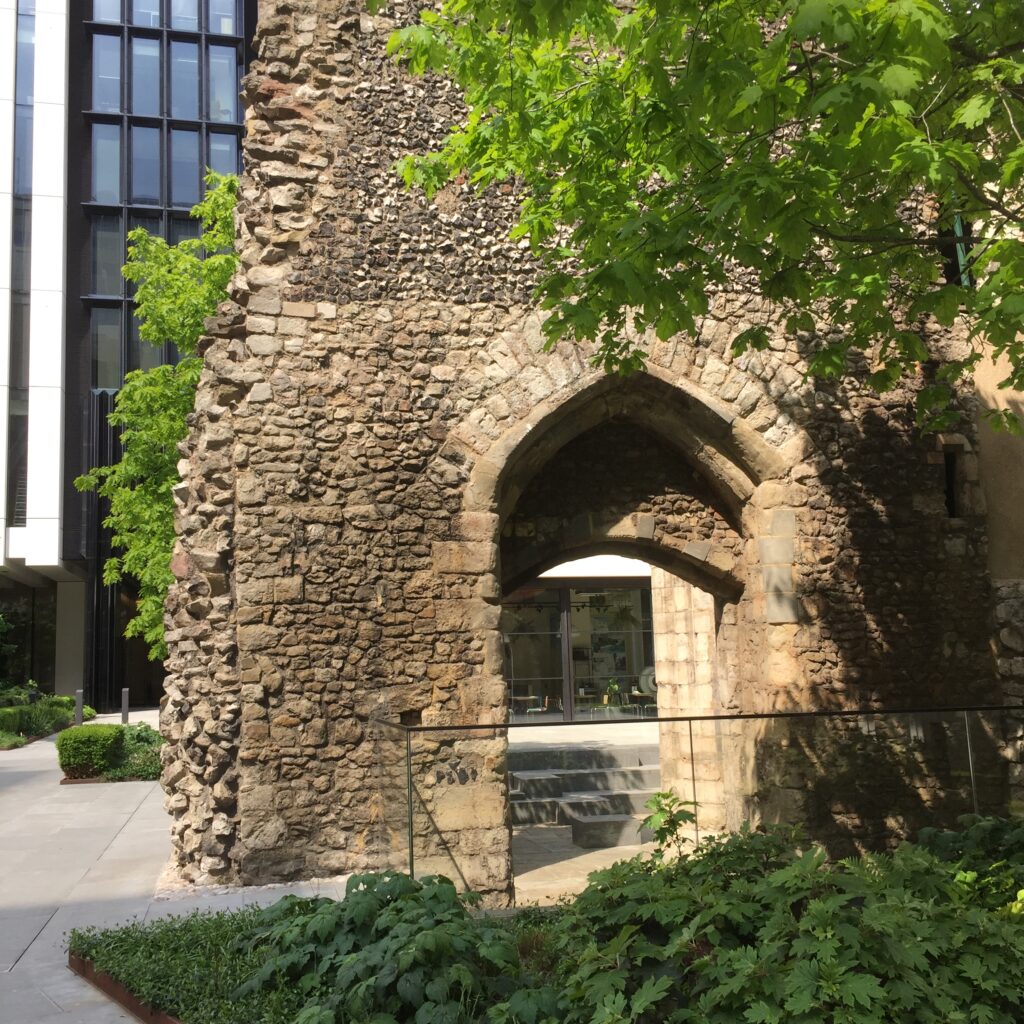
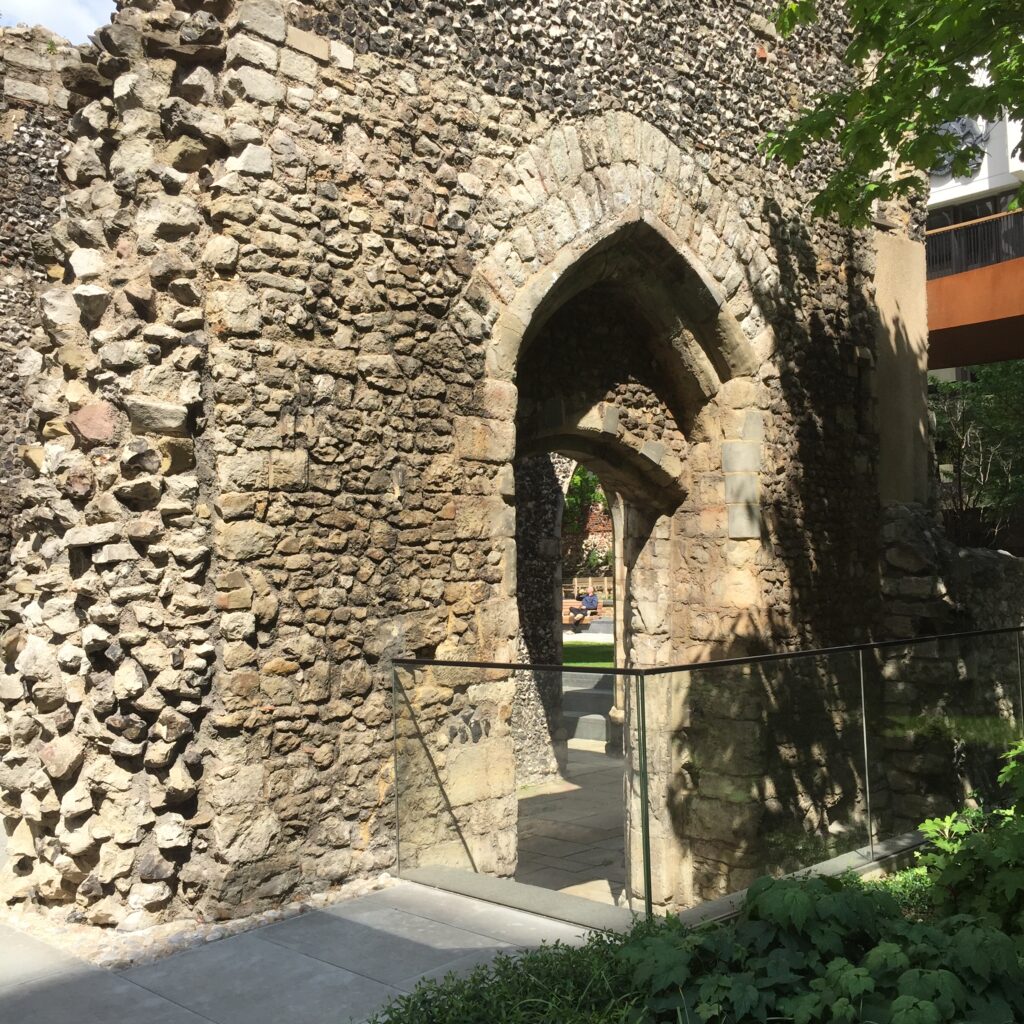
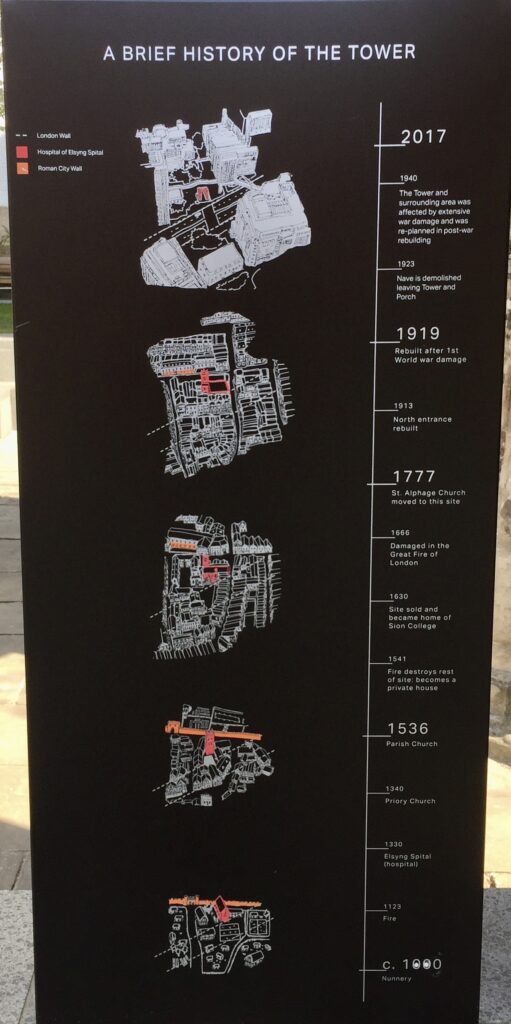
The St Alphage parish bought the church of the dissolved hospital of St Elsyng Spital in 1536. The tower is still there today just to the south of the wall …

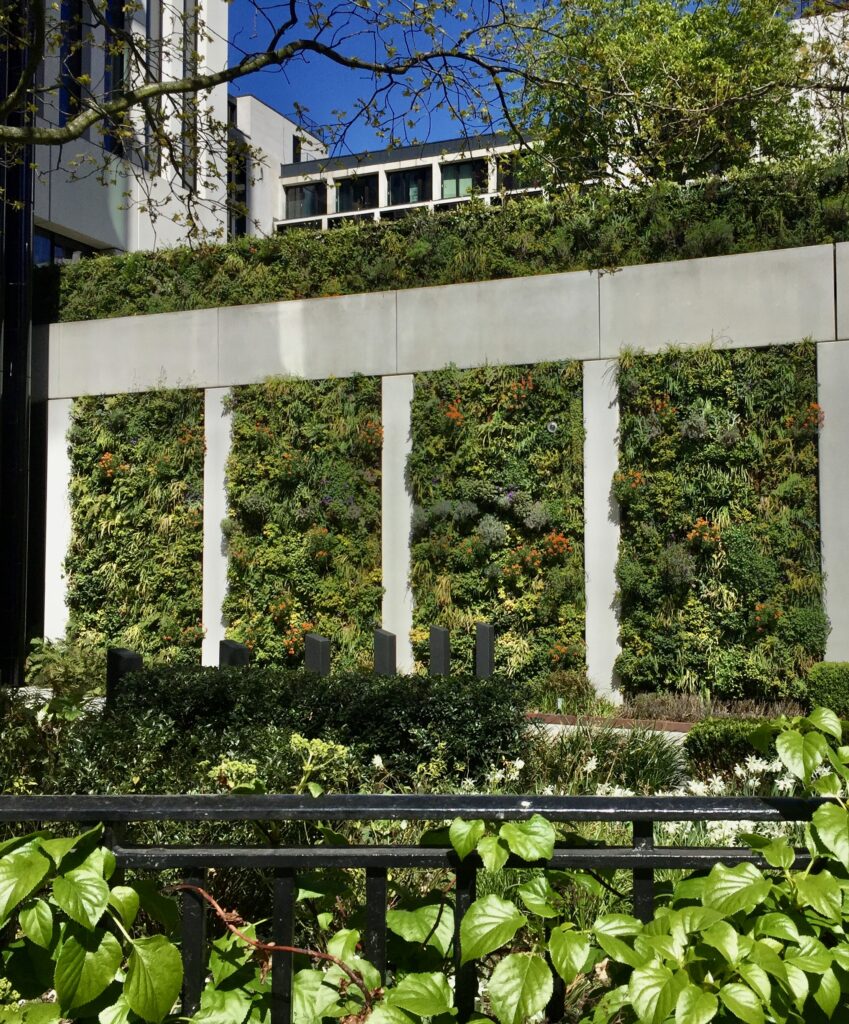
From London Wall to lush green wall at Number 2 London Wall Place (EC2Y 5AU) …

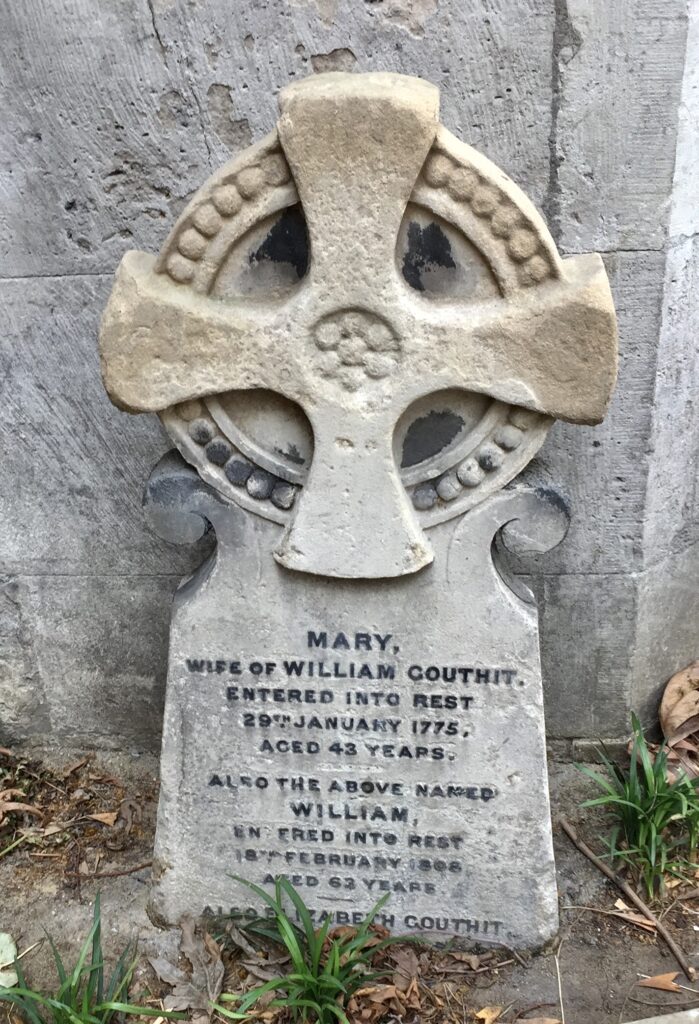
And now a mystery. In the churchyard of St Mary Aldermary are two tombstones several feet apart (EC4M 9BW). One denotes the resting place of ‘Mary, wife of William Couthit. Entered into rest 29th January 1775 aged 43 years.’ William is also there – he died on 18th February 1808 aged 63. Beneath the William and Mary inscriptions are the words ‘Also Elizabeth Couthit …’ with the rest tantalisingly buried.

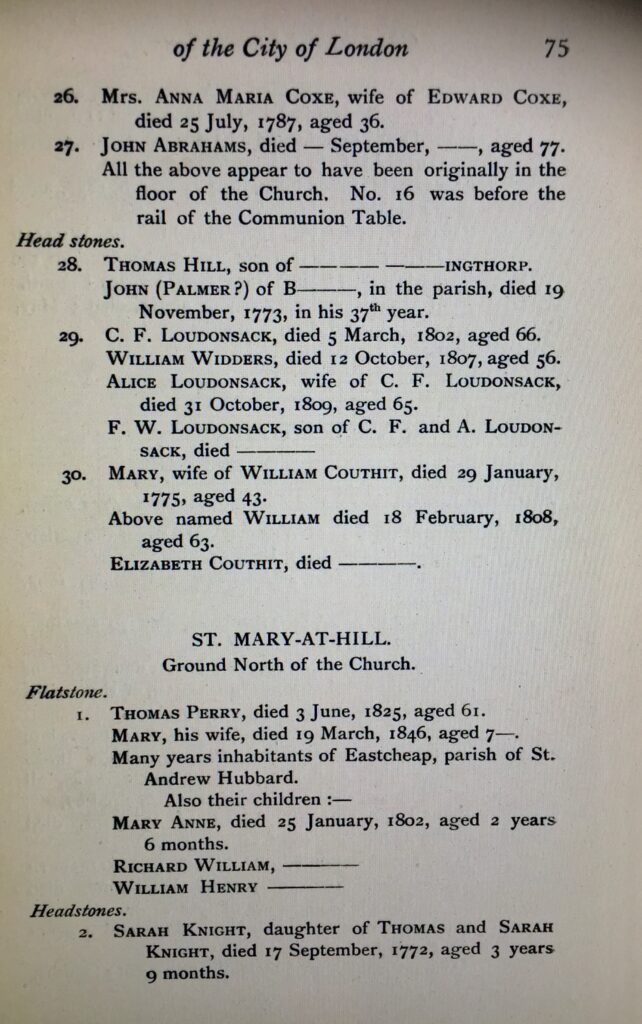
I have checked out this stone with a really useful resource, the audit of ‘Churchyard Inscriptions’ in City churchyards carried out by a man called Percy C. Rushen in 1910. He describes the stone exactly as it is now but records no date of death for Elizabeth. Here’s the actual page from his audit – the Couthits are recorded about half way down …

Now the mystery.

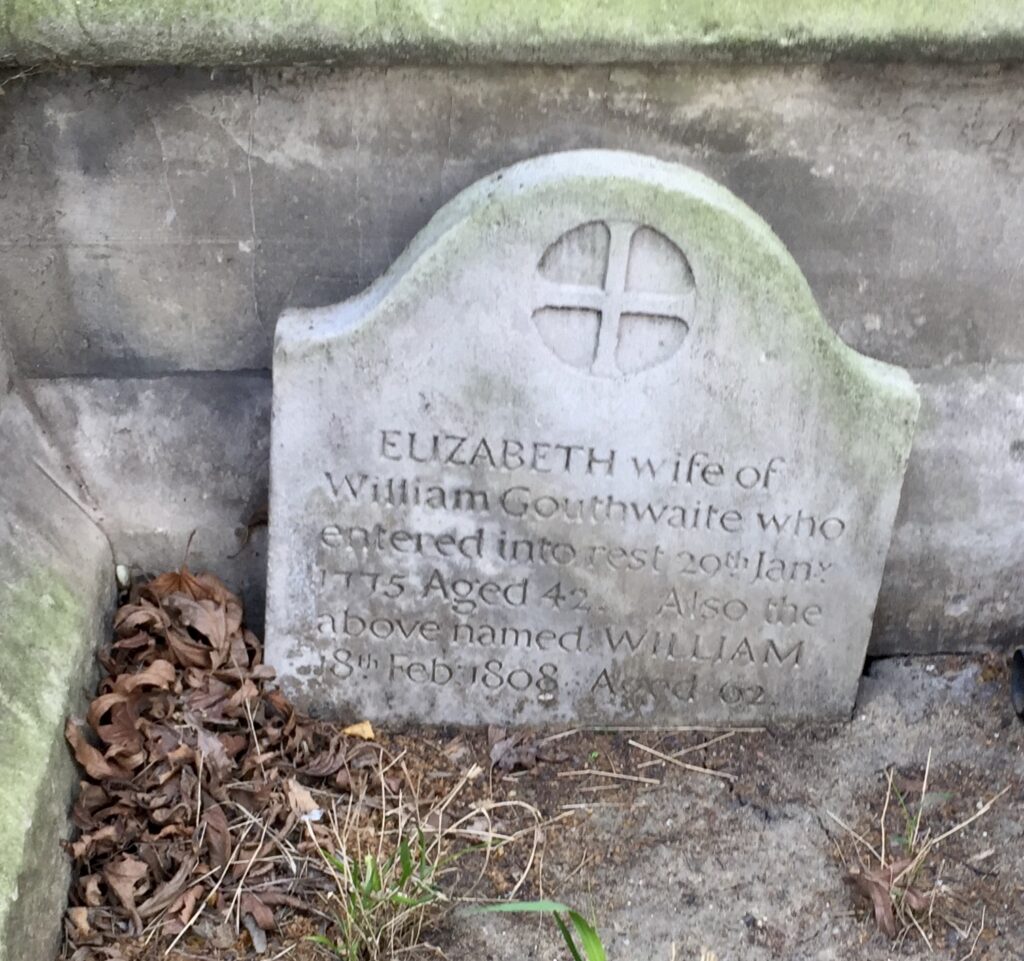
This is the other stone …

It claims to commemorate ELIZABETH, the wife of William COUTHWAITE, (so at first glance this is a different couple) and also William himself. However, she died on the same day as Mary Couthit (29th January 1775) and her William the same day as William Couthit (18th February 1808). As well as these anomalies, the ages at date of death on the second stone differ by one year. Elizabeth is shown as 42 at death rather than 43 and William as 62 instead of 63. Crucially, this stone does not appear in Rushen’s audit and he was obviously very meticulous.

My theory is that, many years after the Coutits had died, their descendants (now called Couthwaite) had traced their ancestors. Not realising for some reason that there was already a memorial, they erected another one with incorrect information.

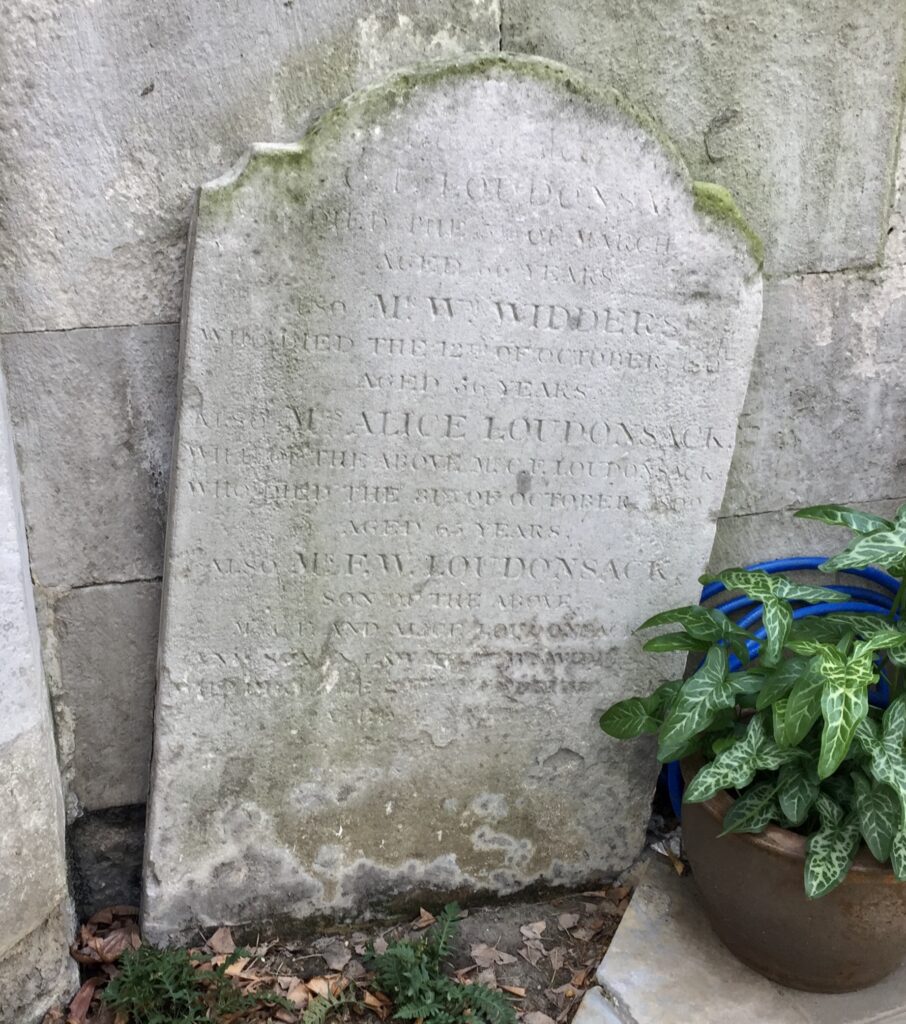
In 1910 there were only three headstones and there are only three today. As we know, the Coutit one is still in the churchyard, and the other survivor is the one for Loudonsack and Widders …

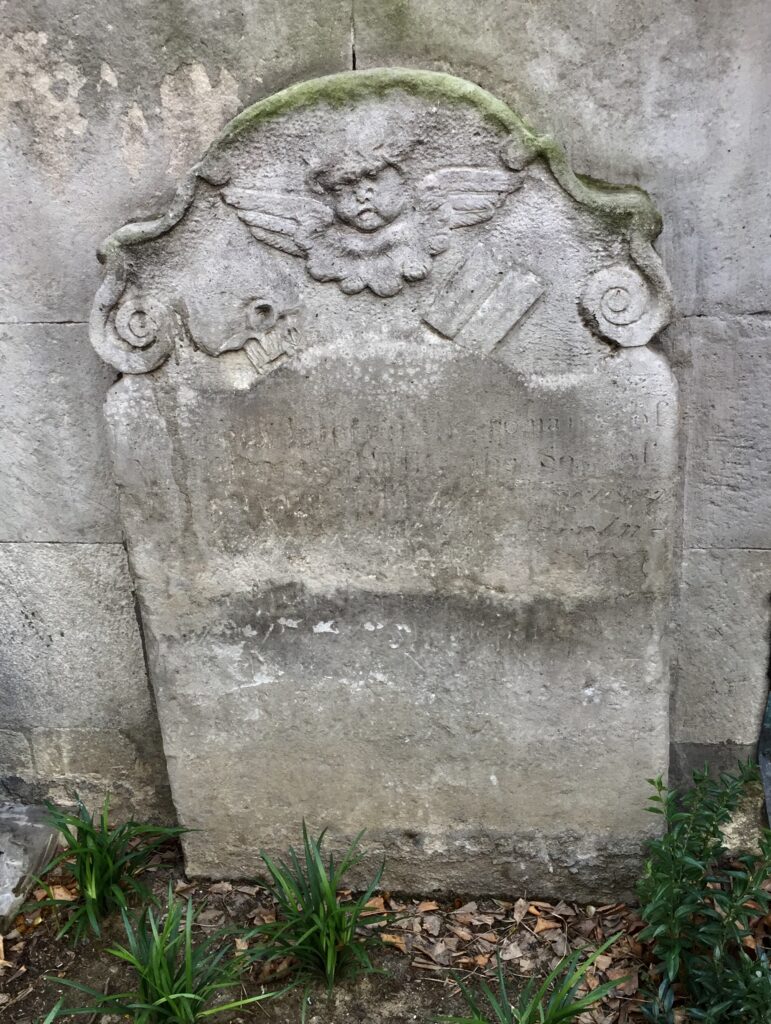
The third stone still there is so weathered I couldn’t read it …

The last two words on the top line seem to be ‘…remains of …’ which would rule it out being the Thomas Hill stone mentioned in the audit.

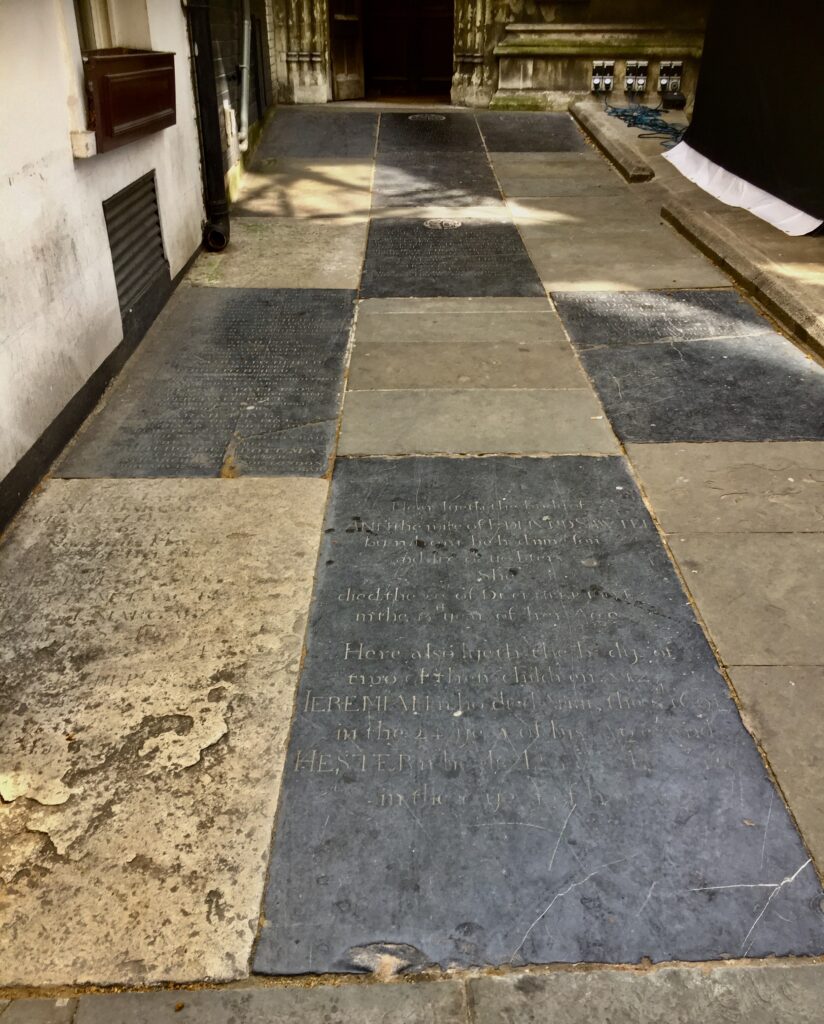
Rushen listed 27 flatstones and there are nine in the churchyard now (all on the path leading to the door) …

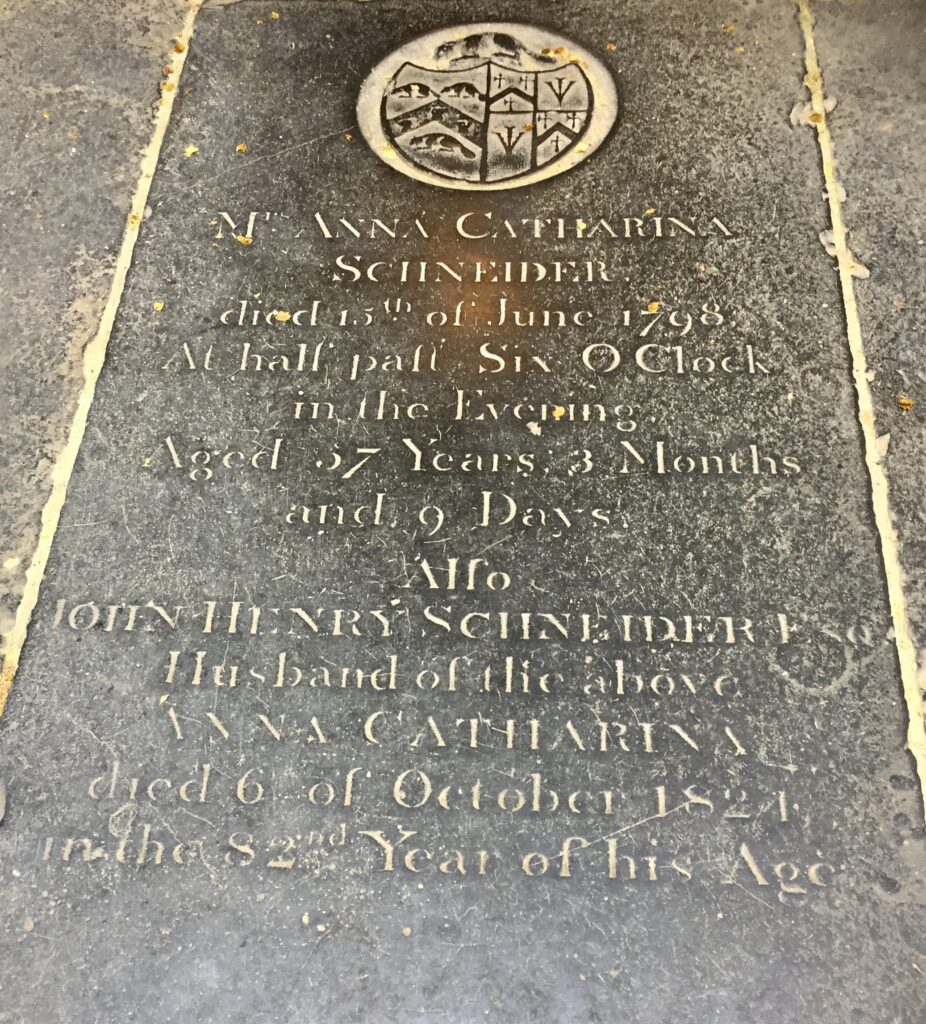
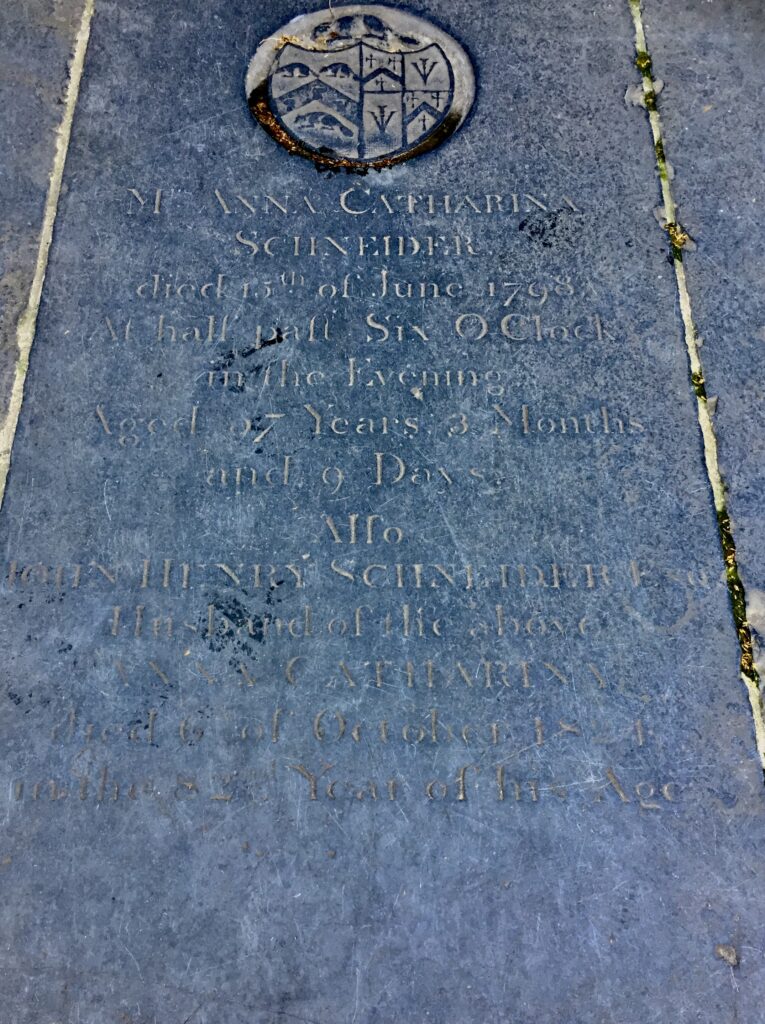
One gives a remarkably detailed time of death along with Mrs Schneider’s exact age …

I have done some research about this stone and the people it commemorates in an earlier blog entitled Some of my favourite tombs, gravestones and memorials.

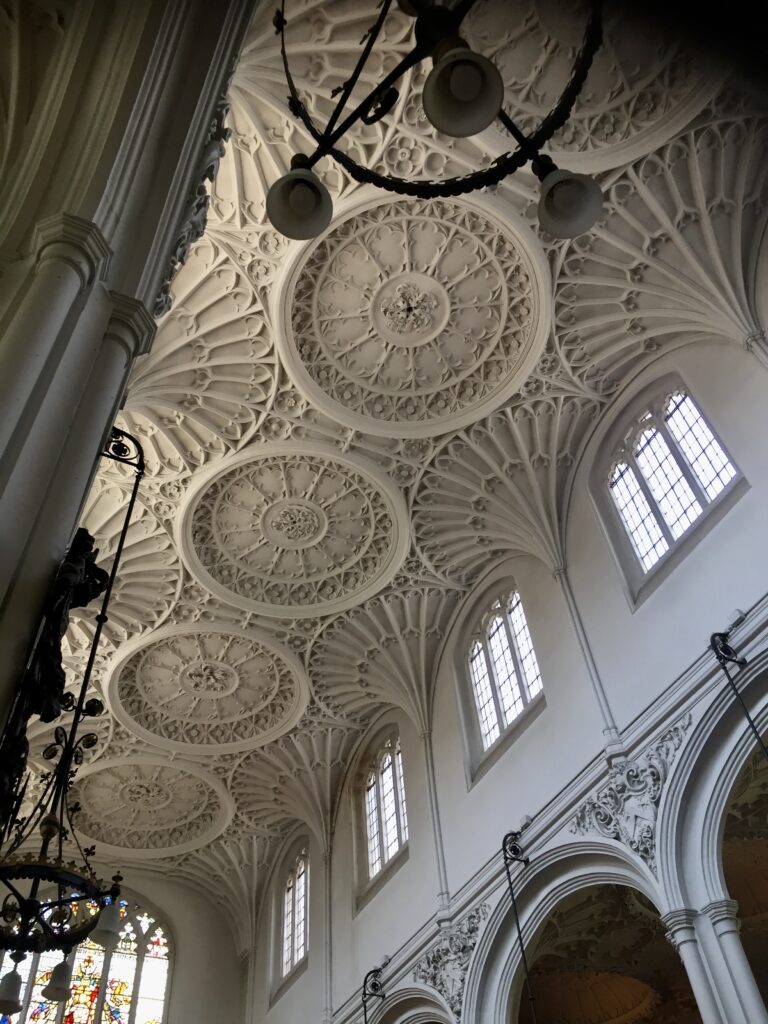
If you get the chance do visit the church. A former medieval church, largely destroyed in the Great Fire of 1666, it was rebuilt in 1679-82 by Sir Christopher Wren’s master craftsmen. It is the only surviving late 17th century Gothic church in the City of London and is especially notable for its unique plaster vaulting. Here’s what you see when you look up …

… and finally, a lady duck update.

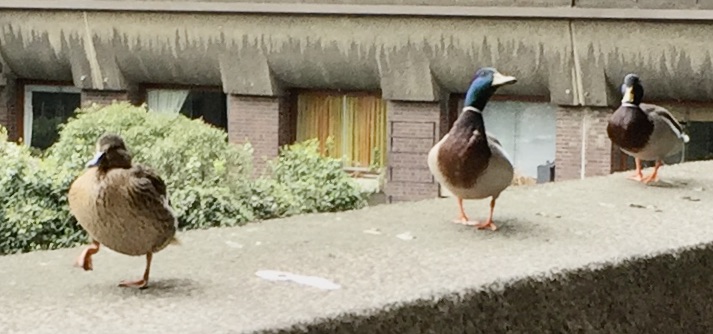
Last week I published this picture of Ms Duck being pursued by two enthusiastic suitors …

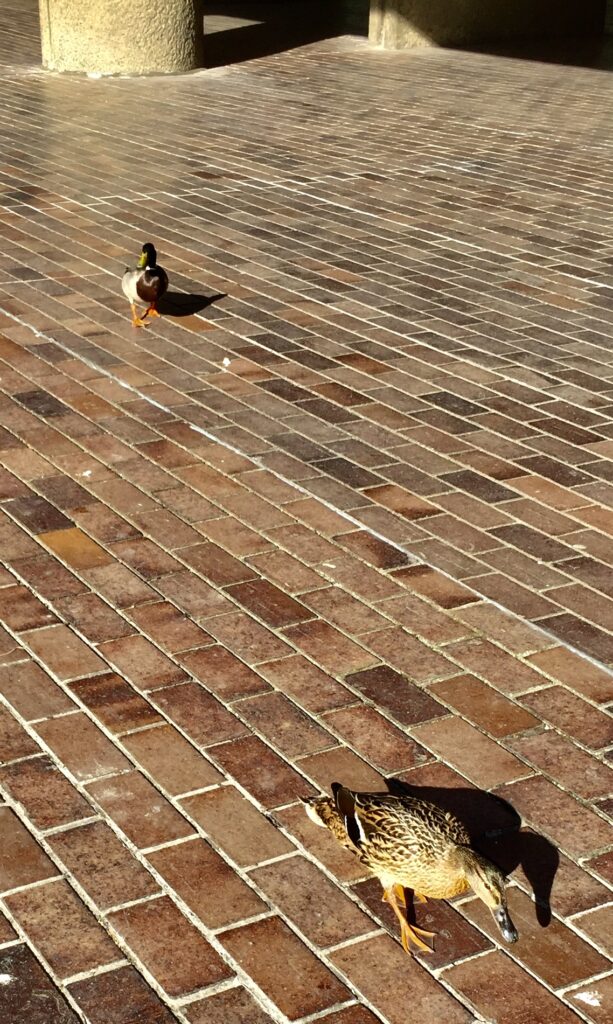
I saw this scene a few days later and it seem she has shaken one of them off!

If you would like to follow me on Instagram here is the link …
https://www.instagram.com/london_city_gent/

Some of my favourite tombs, gravestones and memorials

Since I started this blog almost four years ago I must have looked at hundreds of tombs, gravestones and memorials and I have been out again recently adding to my collection. These are some of my favourites with my reason for choosing them. I know times are tough at the moment but although this week’s blog is about dead people I will try to keep it interesting, positive and even maybe a little upbeat!

First up is this stone in the Bow Lane churchyard of St Mary Aldermary. It wins my award for attention to detail. I have never seen actual time of death recorded before …

There is a well preserved coat of arms which seems to include four beavers suggesting involvement in the fur trade which was flourishing at the time.

Under the coat of arms the inscription reads as follows …

Mrs Anna Catharina Schneider. Died 15th of June 1798 at half past Six O’clock in the Evening. Aged 57 Years, 3 months and 9 Days

Her husband’s details, also on the stone, are more basic …

Also John Henry Schneider, Husband of the above Anna Catharina, Died 6th of October 1824 in the 82nd year of his age

I have been trying to find out a bit more about them and I came across a few tantalising details. The London Metropolitan Archives of the City of London have a record of a John Henry Schneider & Company, Merchants, in Bow Lane – surely the same person. It records the company insuring its premises on 29th October 1791. A Wikipedia search throws up a John Henry Powell Schneider (circa 1768 – 1862) and describes him as a ‘merchant of Swiss origin’. I can’t help but speculate that he was Catharina and John Henry’s son. He certainly enjoyed a long life.

From a memorial displaying extraordinary accuracy to one where the date of death is not recorded at all. This gets my ‘oh dear, what happened there’ award.

The earliest memorial in the church of St Dunstan-in-the-West consists of these two brass kneeling figures commemorating Henry Dacres and his wife Elizabeth …

Elizabeth died in 1530 and Henry nine years later. His will tells us that the brass was already made before he died and ‘made at myn owne costes to the honour of almighty god and the blessed sacrament’. Unfortunately it seems he made no arrangement for his actual date of death to be included later and so the date on the plaque is blank and it reads …

Here lyeth buryed the body of Henry Dacres, Cetezen and Marchant Taylor and Sumtyme Alderman of London, and Elizabeth his Wyffe, the whych Henry decessed the … day of … the yere of our Lord God … and the said Elizabeth decessed the xxii day of Apryll the yere of our Lord God MD and XXX.

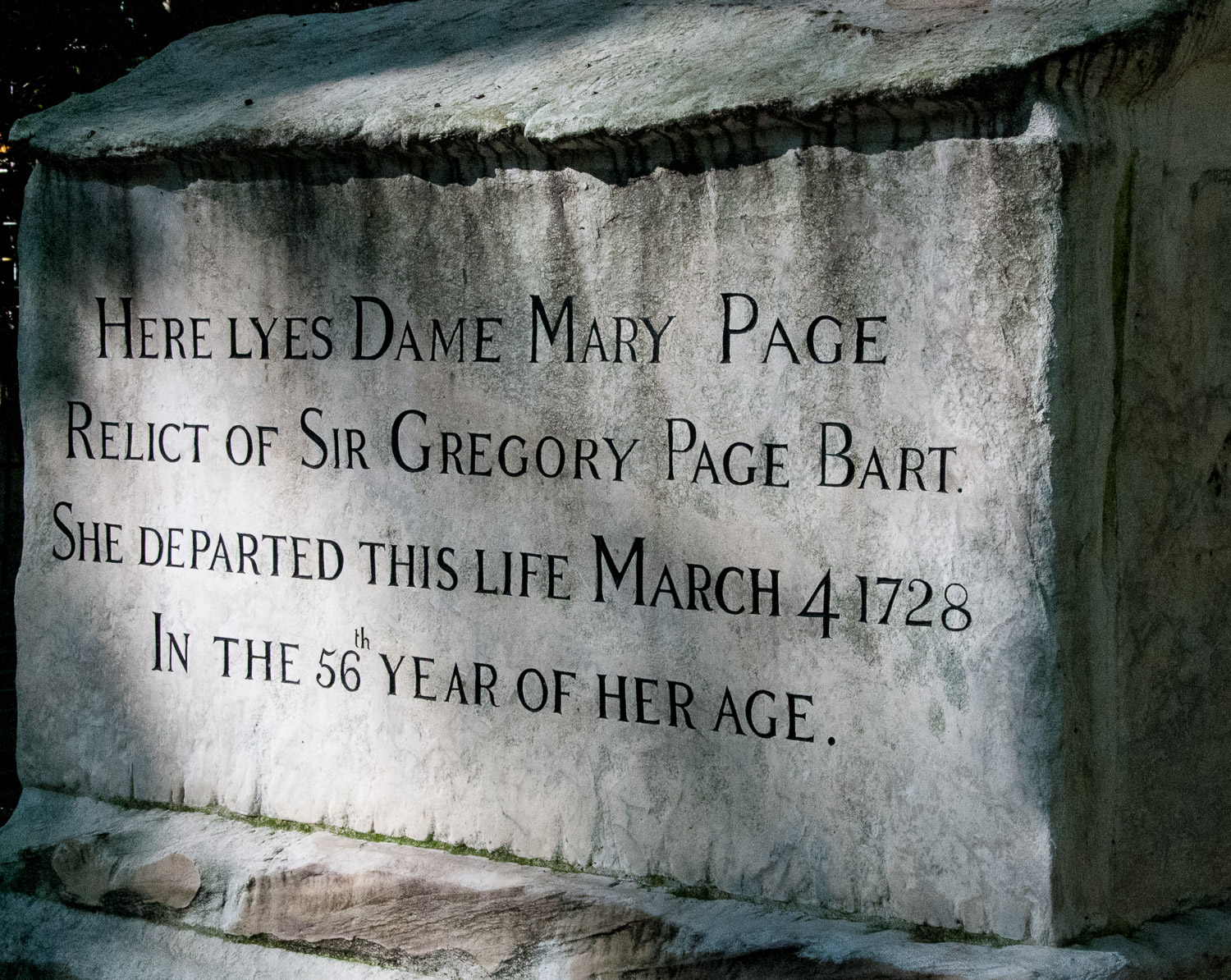
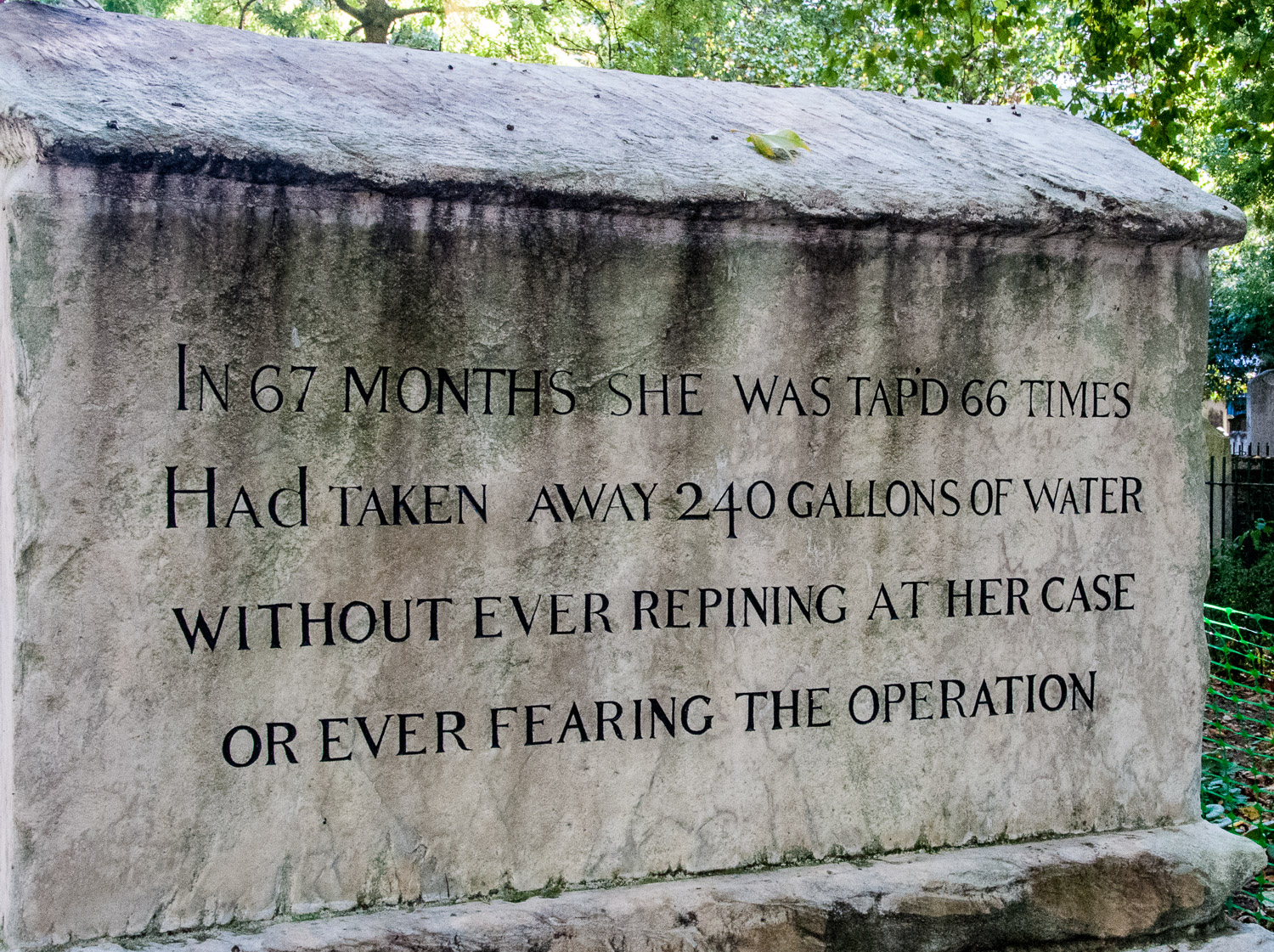
My award for the most interesting medical history must go to Dame Mary Page who has one of the most impressive tombs in Bunhill Fields Burial Ground …

It appears that Mary Page suffered from what is now known as Meigs’ Syndrome and her body had to be ‘tap’d’ to relieve the pressure. She had to undergo this treatment for over five years and was so justifiably proud of her bravery and endurance she left instructions in her will that her tombstone should tell her story. And it does …

When I pointed this out to a friend he remarked ‘for me, that’s a bit too much information’.

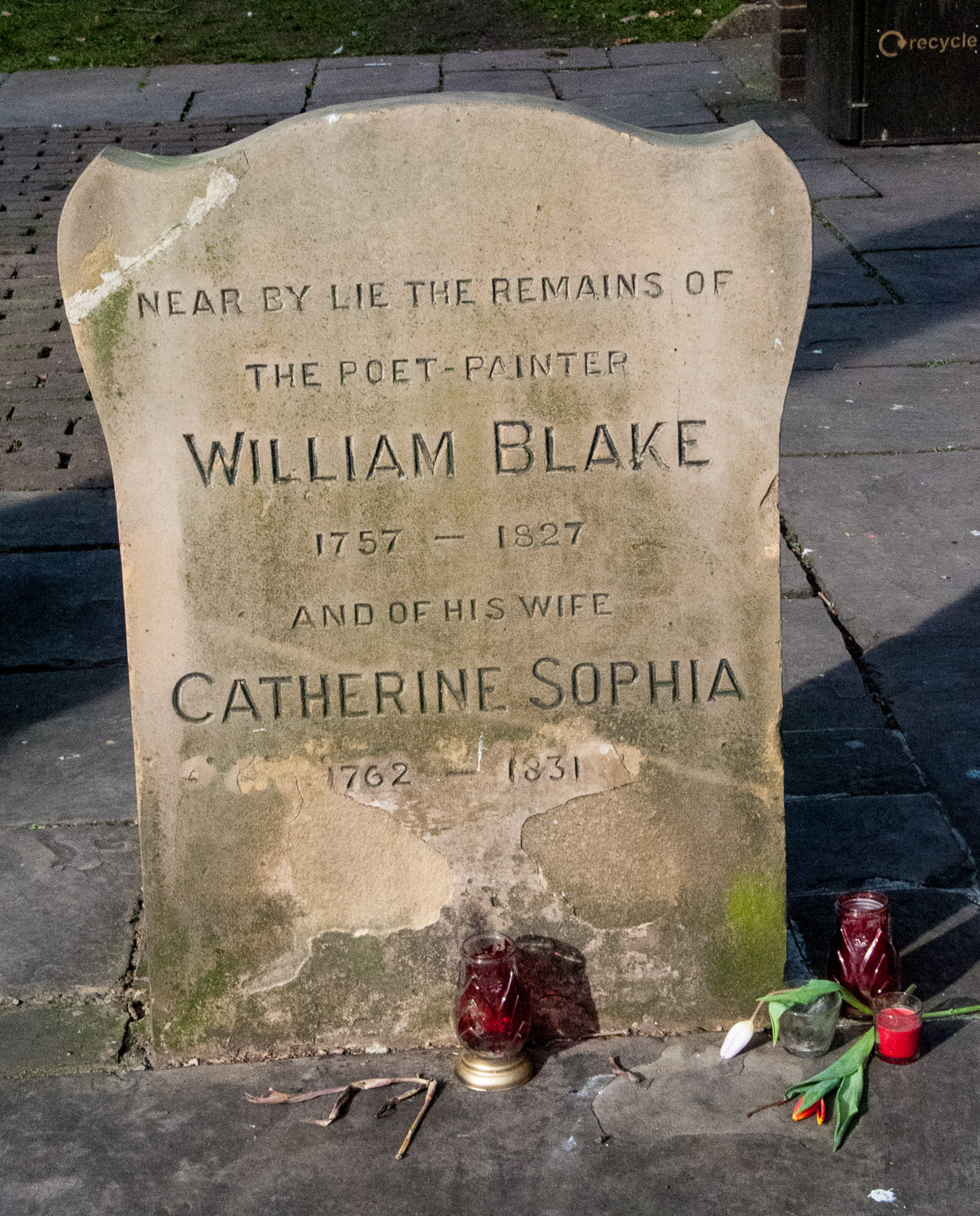
Again located in Bunhill, my award for the most uplifting gravestone story goes to the Blake Society. Until recently the only stone recording the last resting place of William Blake was the one below …

It was originally placed over his actual grave by The Blake Society on the centenary of his death (1927) but it was moved in 1965 when the area was cleared to create a more public open space. Considered mad by many of his contemporaries, he is now regarded as one of Britain’s greatest artists and poets, his most famous work probably being the short poem And did those feet in ancient time. It is now best known as the anthem Jerusalem and includes the words that  are often cited when people refer to workplaces of the Industrial Revolution …

And did the Countenance Divine,
Shine forth upon our clouded hills?
And was Jerusalem builded here,
Among these dark Satanic Mills?

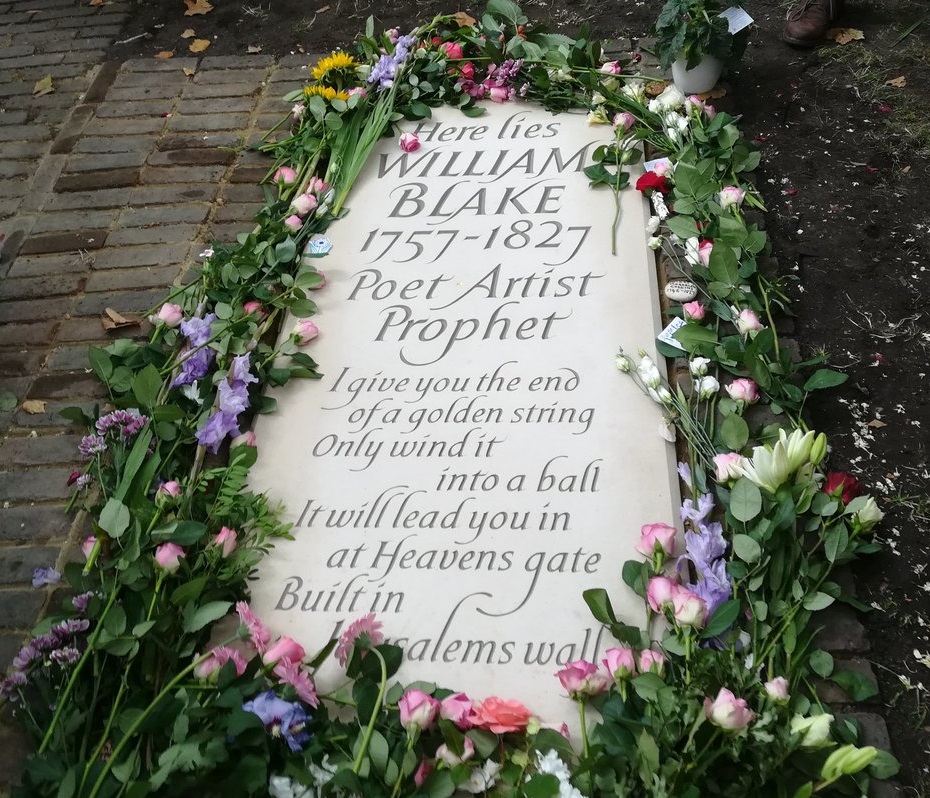
The present day Blake Society finally traced again where he was actually buried and in August 2018 a beautiful stone was placed over his final resting place exactly 191 years after his death …

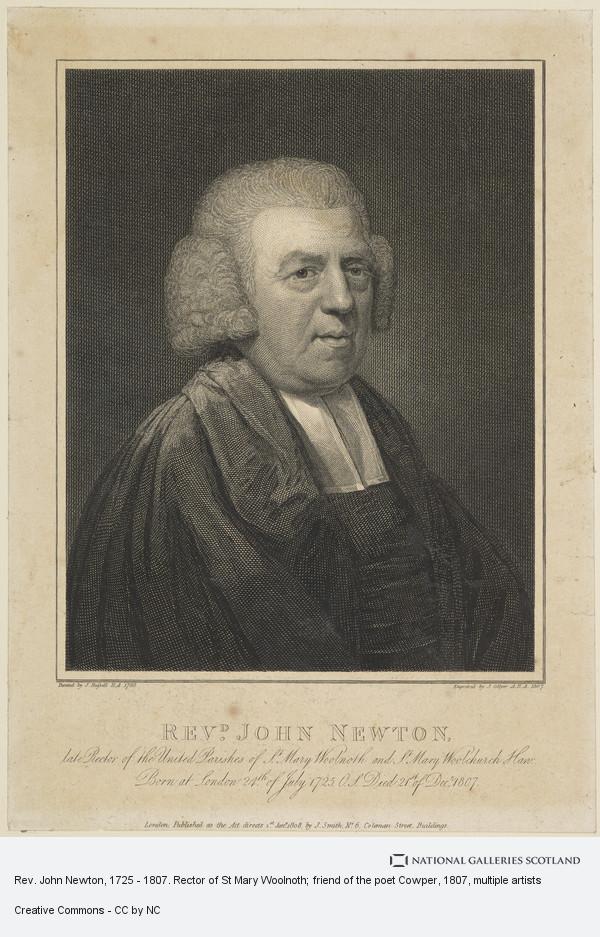
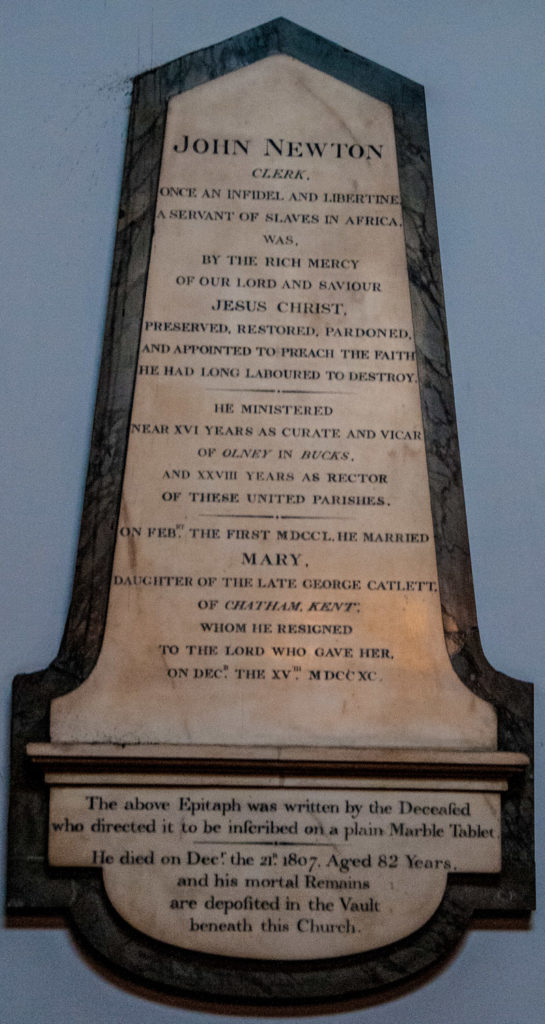
Lots of memorials attempt to draw attention to the key characteristics and achievements of the person immortalised. My award for most interesting life history goes to this gentleman commemorated in the church St Mary Woolnoth where he served as rector, John Newton …

Born the son of a master mariner in Wapping, he spent the early part of his career as a slave trader. From 1745-1754 he worked on slave ships, serving as captain on three voyages. He was involved in every aspect of the slaver’s trade, and his log books record the torture of rebellious slaves. Following his conversion to devout Christianity in 1748 he eventually became rector at St Mary’s in 1780. In the church is his memorial tablet, which he wrote himself beginning …

John Newton, Clerk, once an infidel and libertine, a servant of slaves in Africa …

In 1785, he became a friend and counsellor to William Wilberforce and was very influential himself in the abolition of slavery. He lived just long enough to see the Abolition Act passed into law. Think of him also when you hear the hymn Amazing Grace, which he co-wrote with the poet William Cowper in 1773.

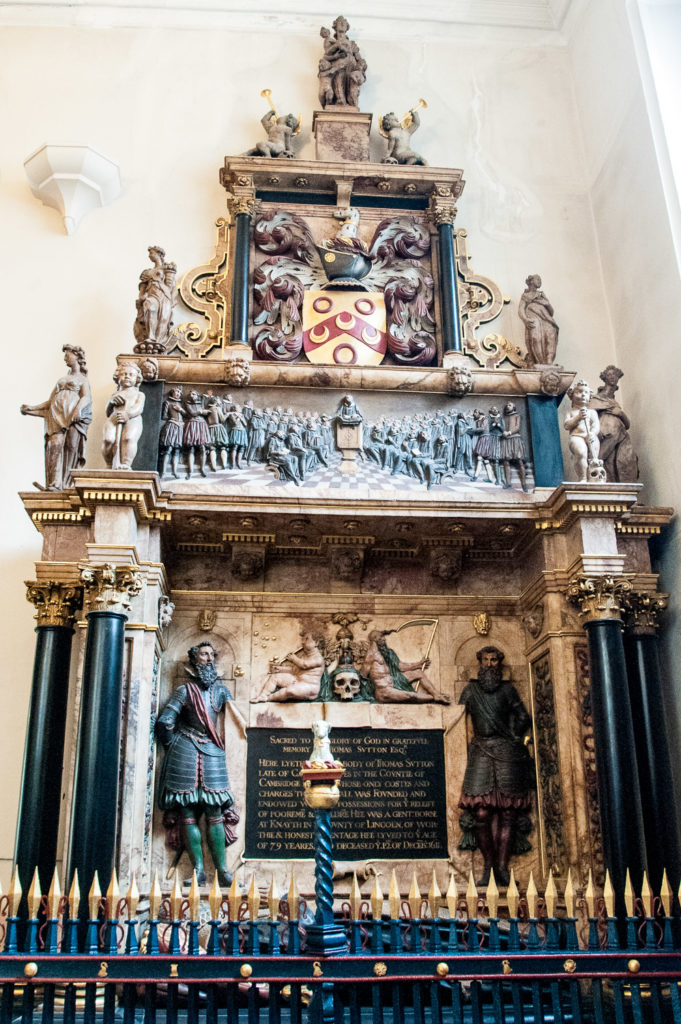
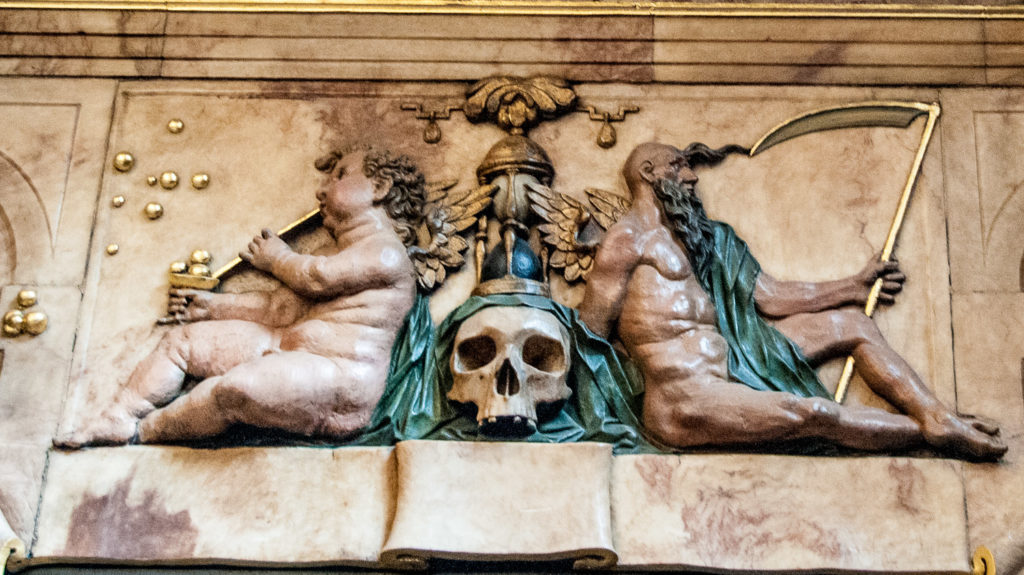
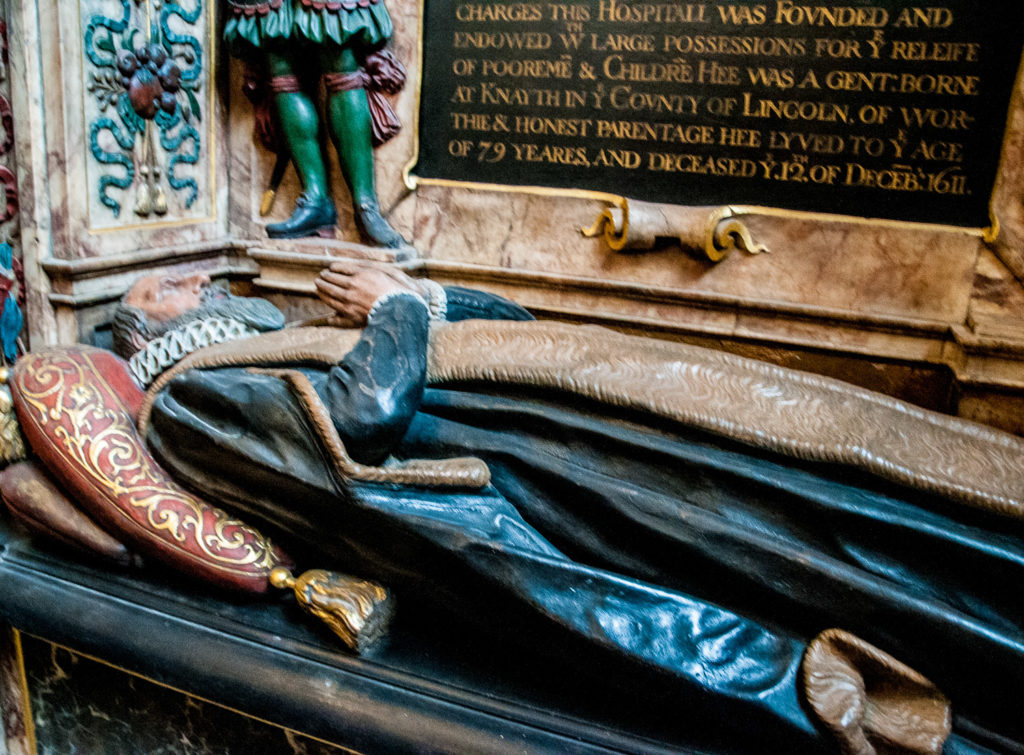
My award for being absolutely spectacular must go to Thomas Sutton’s tomb in the chapel at the Charterhouse …

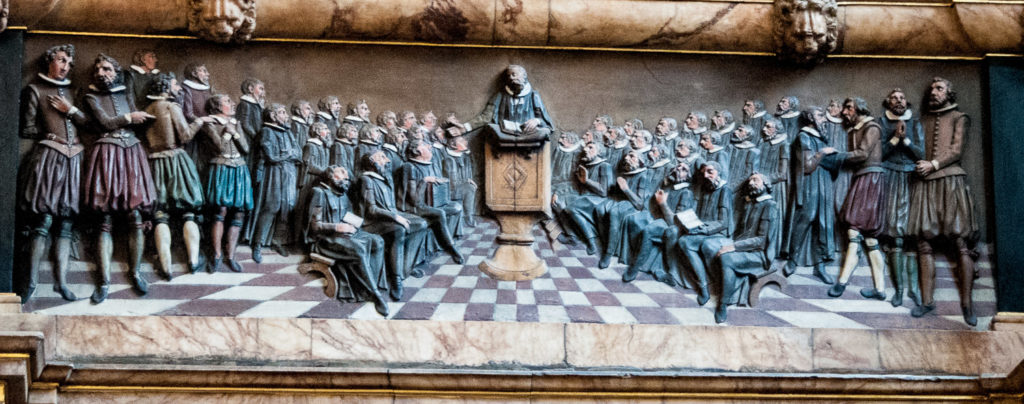
A relief panel shows the Poor Brothers in their gowns and a body of pious men and boys (perhaps scholars) listening to a sermon …

I love the plump figure, Vanitas, blowing bubbles and representing the ephemeral quality of worldly pleasure. The figure with the scythe is, of course, Time …

The man himself …

His body rests in a vault beneath the monument

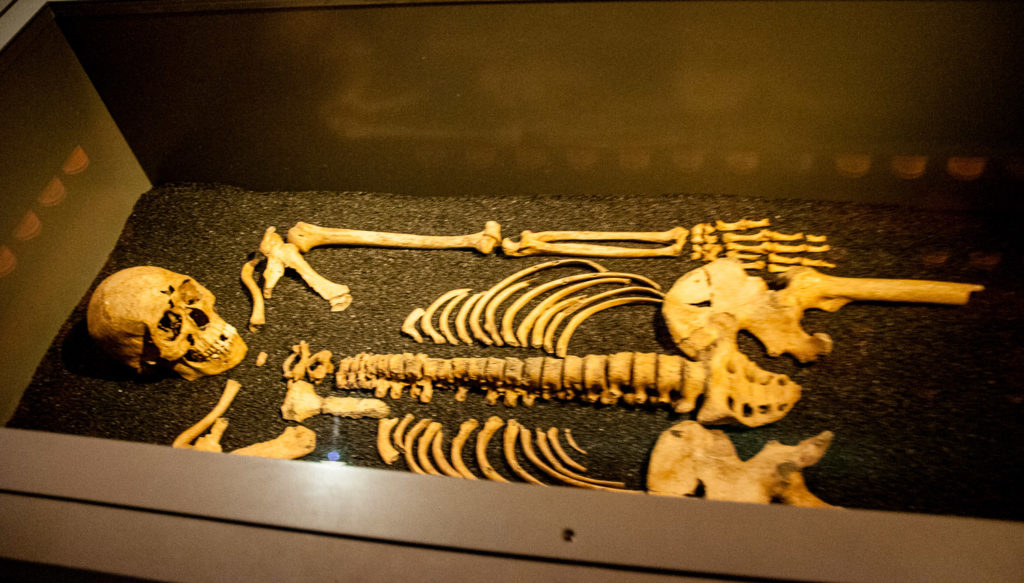
Incidentally, by way of contrast we can also see, in a darkened room lit by candles, this poor soul. Uncovered during the Crossrail tunneling, archeologists found it belonged to a man in the prime of his life, in his mid-twenties, when he was struck down by the Black Death. It’s believed he died at some point between 1348 and 1349, at the height of the pandemic …

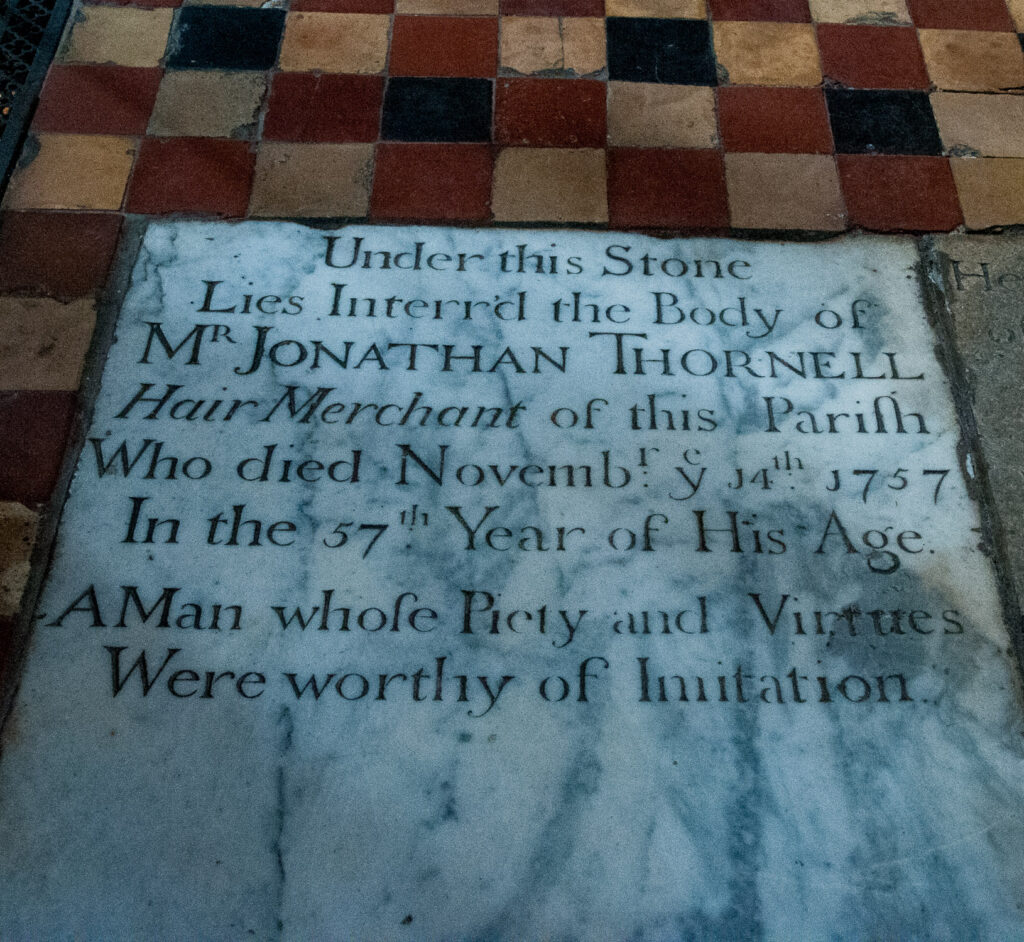
Many memorials state the occupation of the deceased and my award for one of the most interesting as a reflection of the times is the tombstone of the hair merchant Mr Jonathan Thornell in St Bartholomew the Great …

To be buried inside the church indicated that he was a wealthy man and this was no doubt because, in the 18th century, wigs of all varieties were tremendously fashionable. Good hair was seen as a sign of health, youth and beauty and merchants like Mr Thornell often travelled the country looking for supplies (even buying it off the head of those needy enough to sell it).

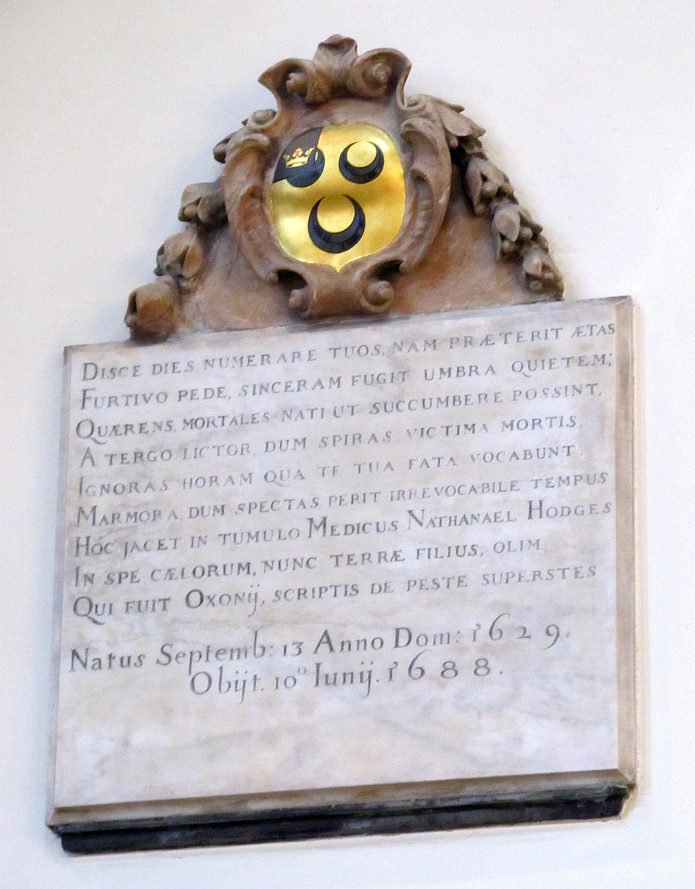
Finally, lots of brave deeds are recorded in city churches but one of the people I most admire is commemorated in St Stephen Walbrook, Dr Nathaniel Hodges …

His memorial is on the north wall and this is a translation from the Latin …

Learn to number thy days, for age advances with furtive step, the shadow never truly rests. Seeking mortals born that they might succumb, the executioner [comes] from behind. While you breathe [you are] a victim of death; you know not the hour which your faith will call you. While you look at monuments, time passes irrevocably. In this tomb is laid the physician Nathaniel Hodges in the hope of Heaven; now a son of earth, who was once [a son] of Oxford. May you survive the plague [by] his writings. Born: September 13, AD 1629 Died, 1o June 1688

Unlike many physicians, Dr Hodges stayed in London throughout the time of the terrible plague of 1665.

First thing every morning before breakfast he spent two or three hours with his patients. He wrote later …

Some (had) ulcers yet uncured and others … under the first symptoms of seizure all of which I endeavoured to dispatch with all possible care …

hardly any children escaped; and it was not uncommon to see an Inheritance pass successively to three or four Heirs in as many Days.

After hours of visiting victims where they lived he walked home and, after dinner, saw more patients until nine at night and sometimes later.

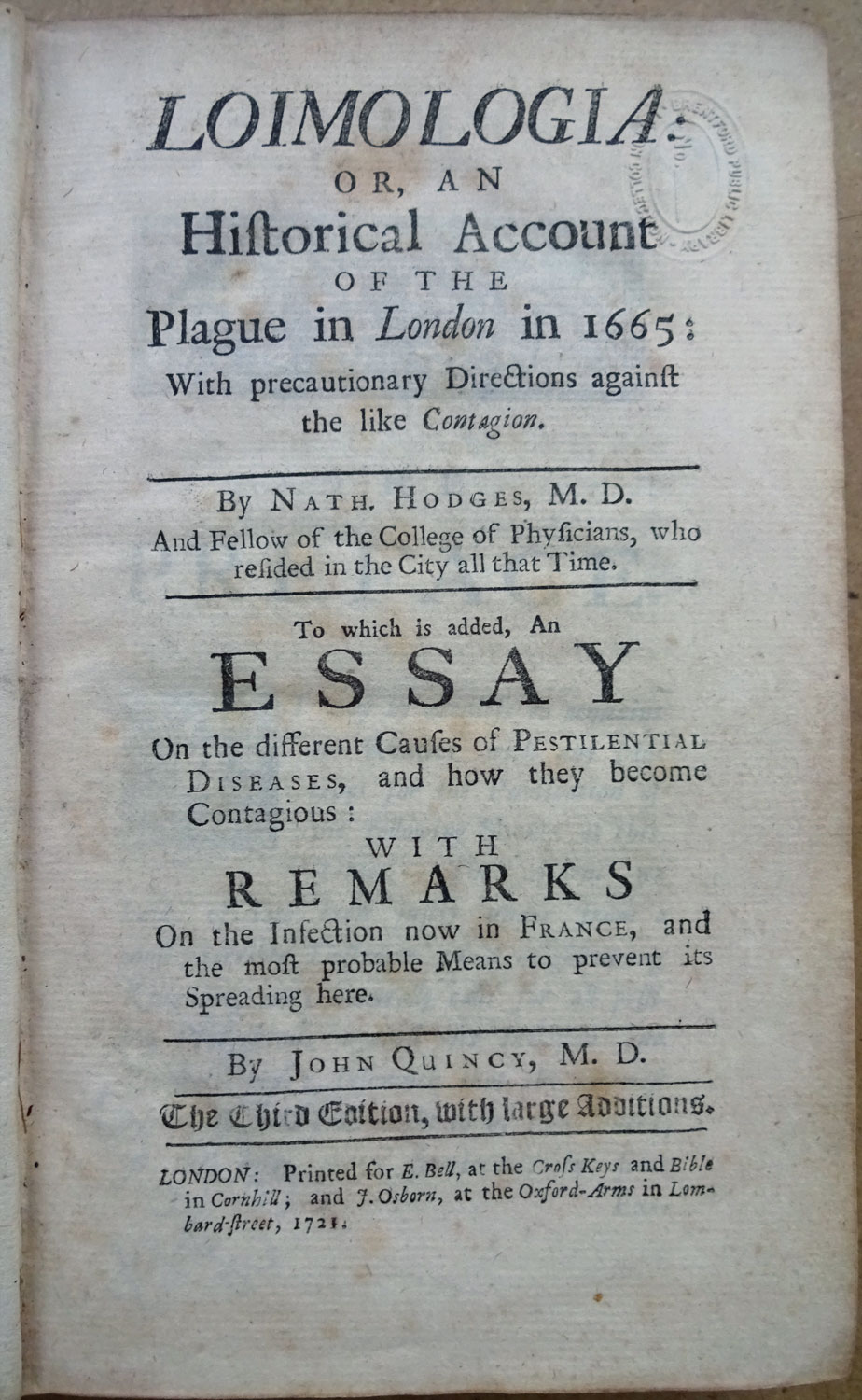
He survived the epidemic and wrote two learned works on the plague. The first, in 1666, he called An Account of the first Rise, Progress, Symptoms and Cure of the Plague being a Letter from Dr Hodges to a Person of Quality. The second was Loimologia, published six years later …

Above is a later edition of Dr Hodges’ work, translated from the original Latin and published when the plague had broken out in France.

It seems particularly sad to report that his life ended in personal tragedy when, in his early fifties, his practice dwindled and fell away. Finally he was arrested as a debtor, committed to Ludgate Prison, and died there, a broken man, in 1688.

If you would like to follow me on Instagram here is the link …
https://www.instagram.com/london_city_gent/

Page 21 of 37

Powered by WordPress & Theme by Anders Norén

Symbols & Secrets
Privacy Overview

This website uses cookies so that we can provide you with the best user experience possible. Cookie information is stored in your browser and performs functions such as recognising you when you return to our website and helping our team to understand which sections of the website you find most interesting and useful.