It’s not much fun at the moment is it with a virus to worry about. So I thought I would pop in some light-hearted pictures this week and maybe cheer you up a bit.
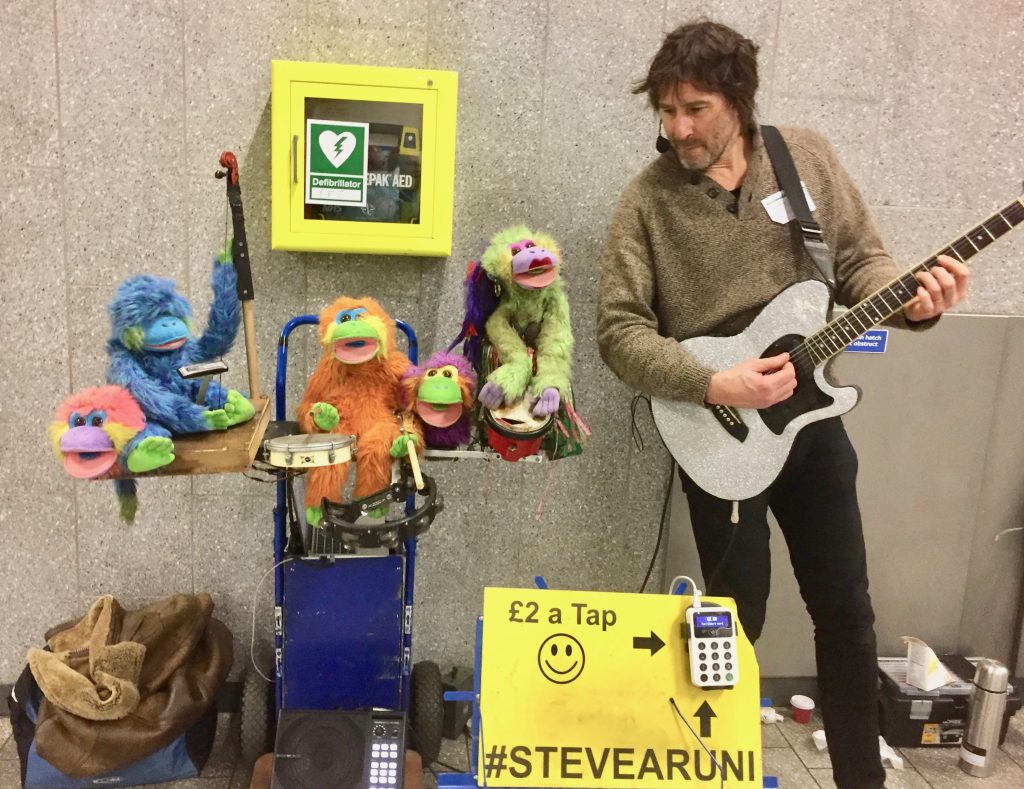
First up, a brilliant busker collects donations using up-to-date technology …
Listen to him and his ‘backing singers’ by Googling ‘Bohemian Rhapsody Steve Aruni on YouTube’. I promise you will enjoy it.
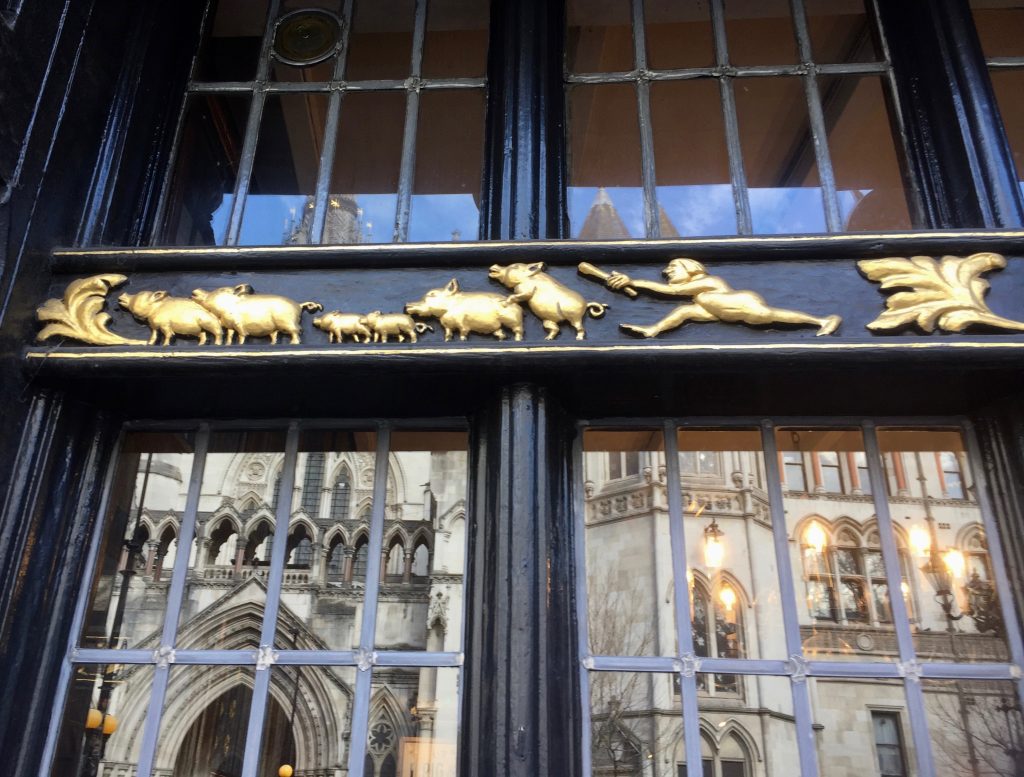
A farmer chases his pigs across the front of The George pub with the Royal Courts of Justice reflected in the window …
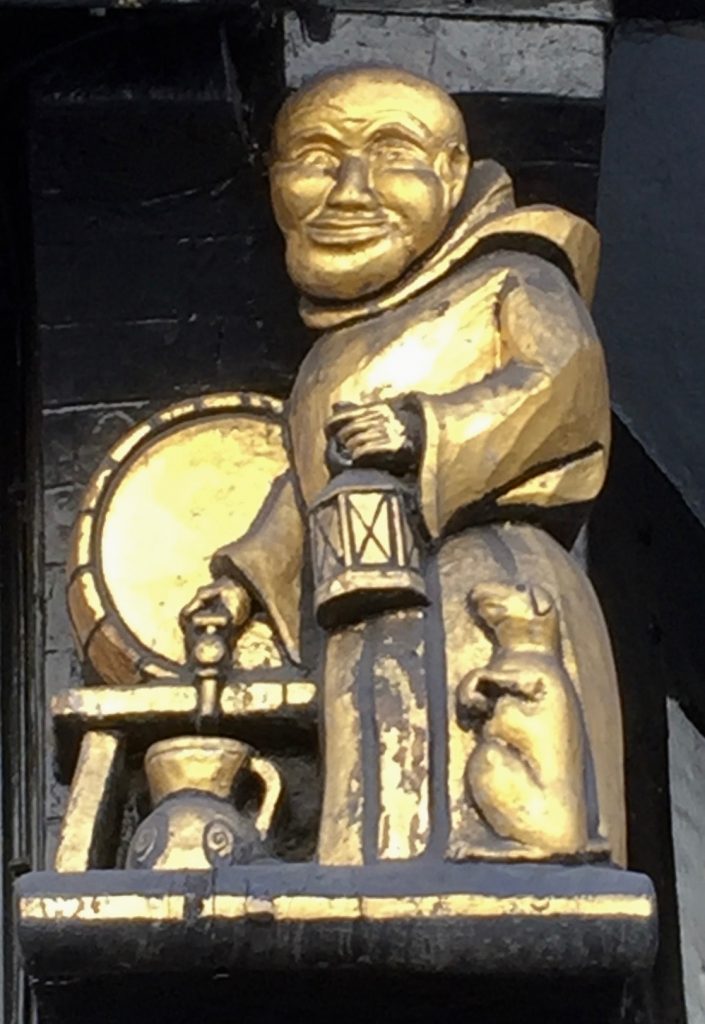
Nearby a monk pours some ale into a jug. I think that’s his faithful dog next to him – I sincerely hope it’s not a rat …
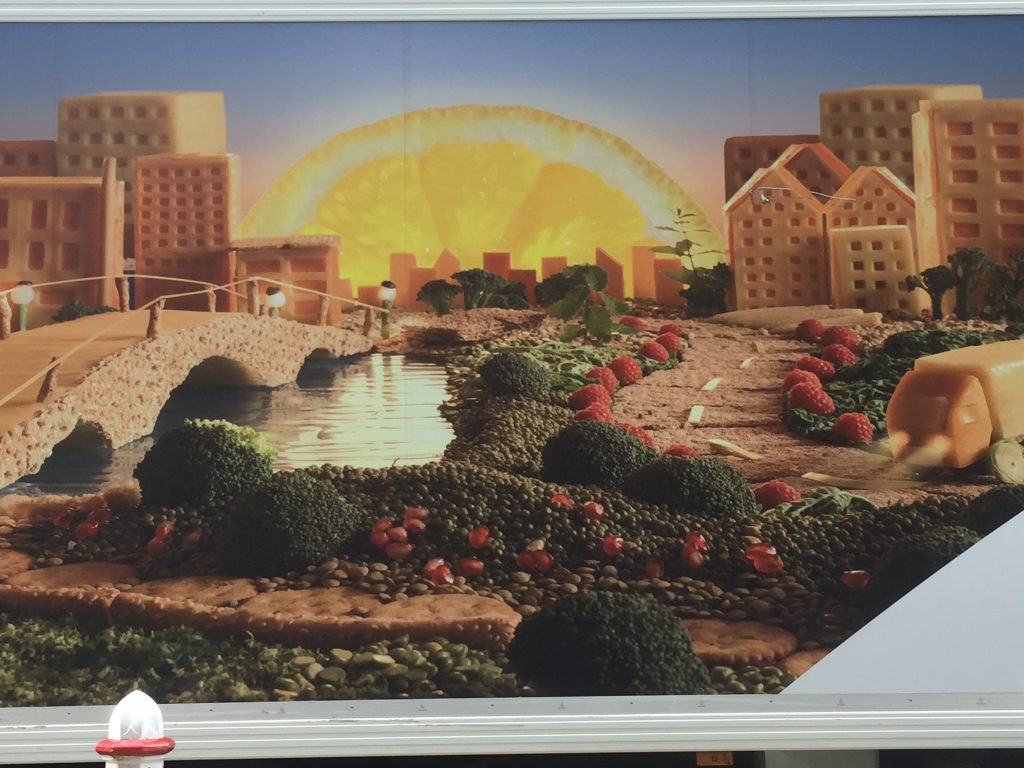
Bidfood vans! I regularly see them delivering around the City and love the edible landscapes portrayed on the sides.
An orange sunrise between the cheese tower blocks …
A tranquil lake with bread hills and cauliflower clouds …
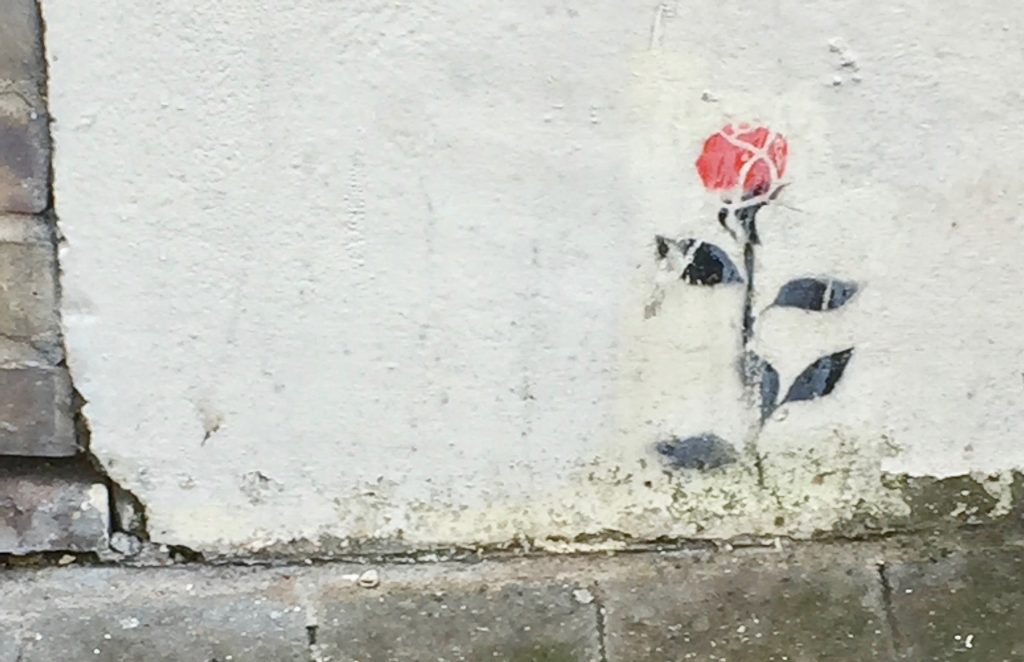
I know it’s not a Banksy, but this little flower cheered me up …
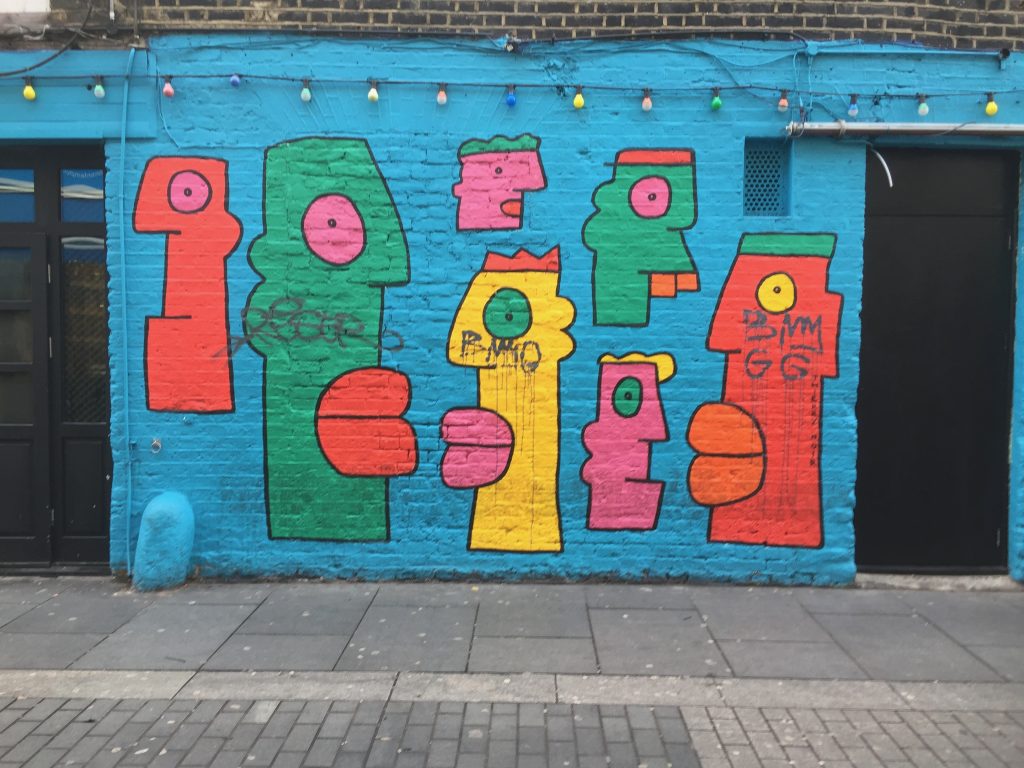
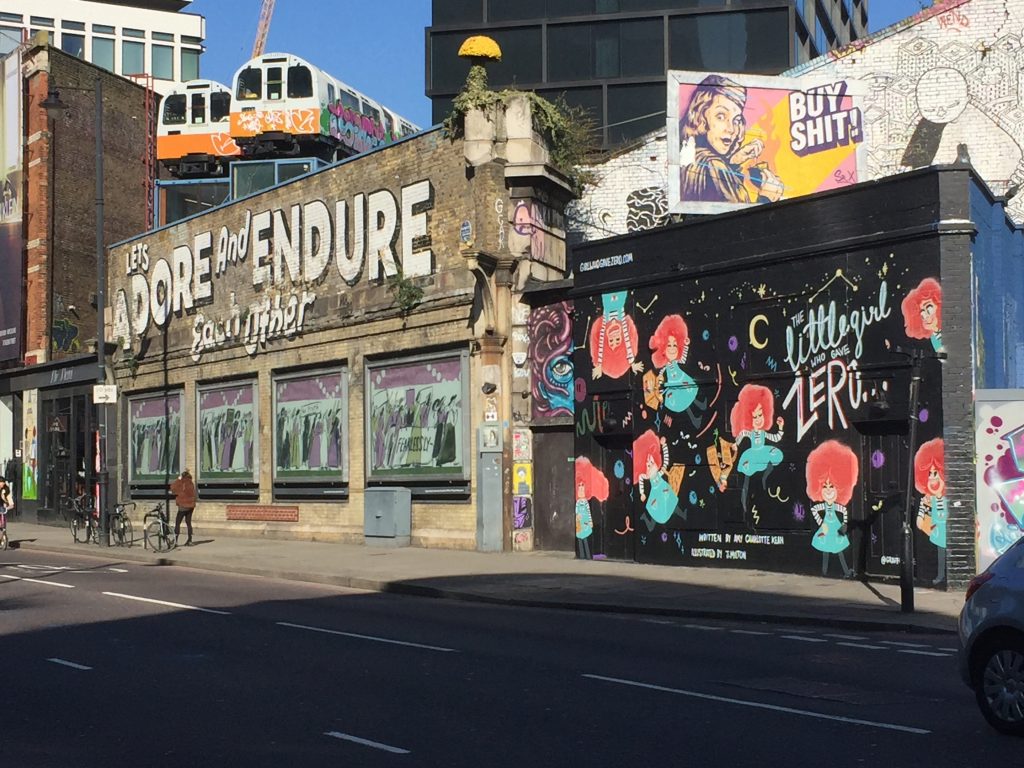
Colourful street art on Rivington Street …
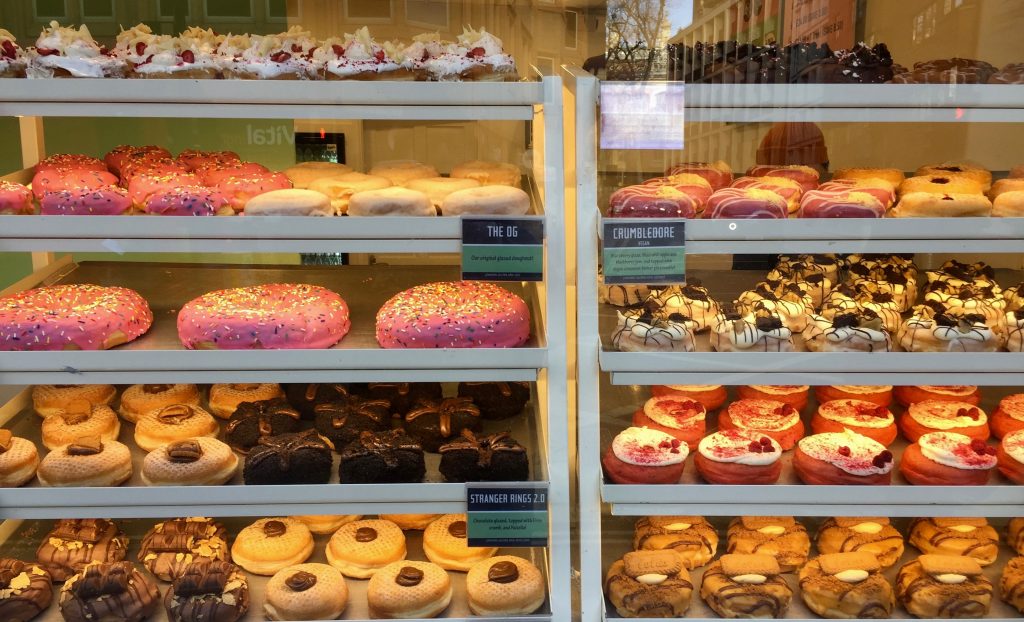
Healthy eating options on Fleet Street …
‘Let’s ADORE and ENDURE each other’ on Great Eastern Street …
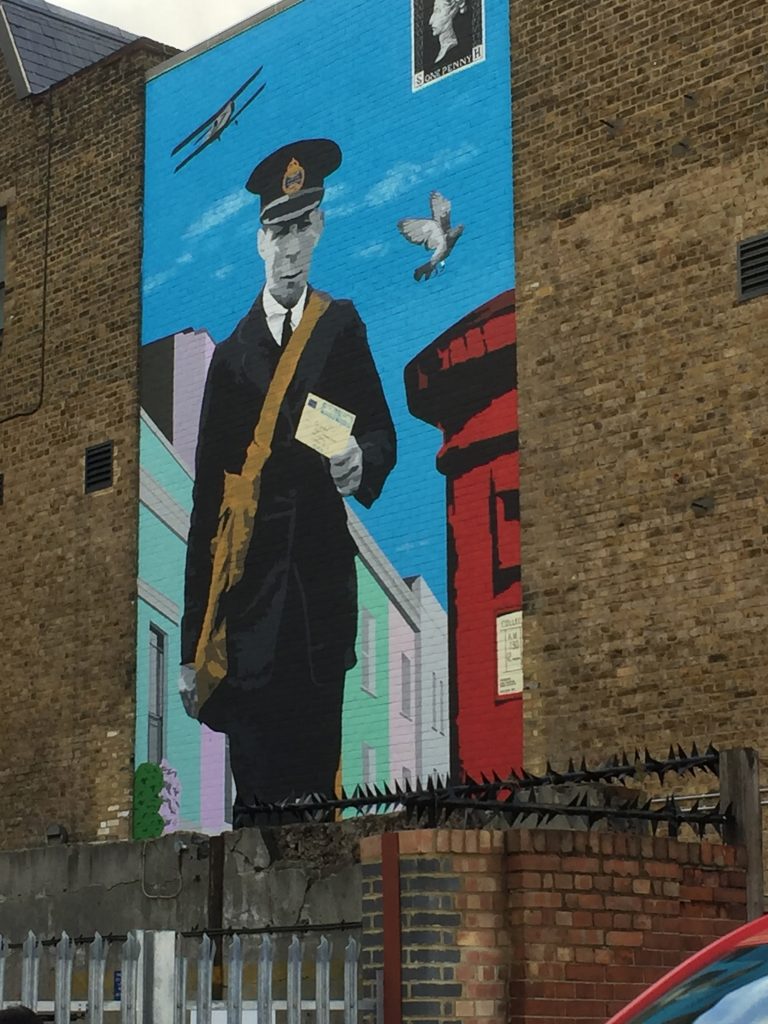
Postman, biplane and pigeon mural next to the Postal Museum …
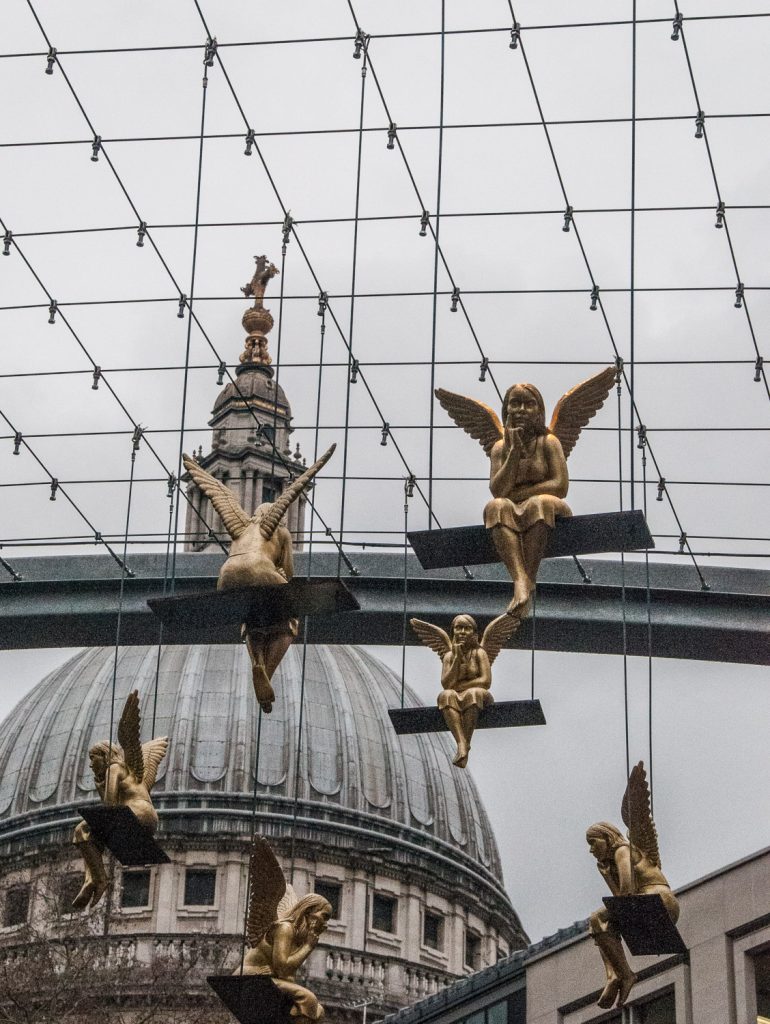
Yes, the pretty guardian angels are still there on their swings opposite St Paul’s Underground Station …
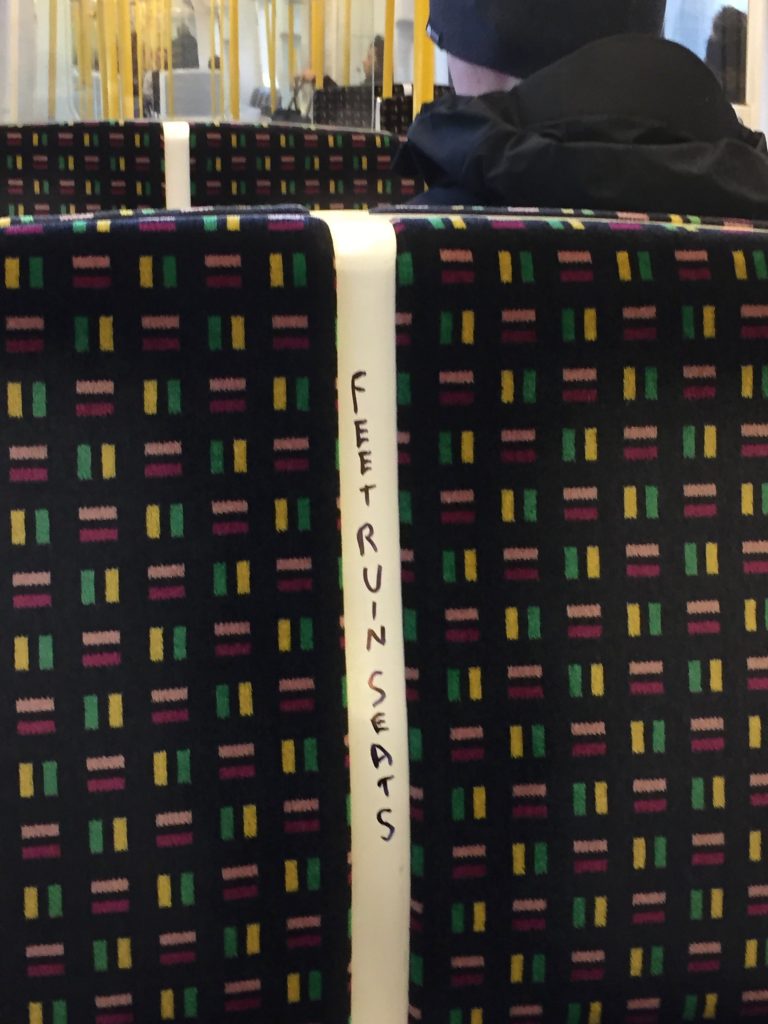
I smiled at this at first …
…and then thought: ‘Hey, writing on seats isn’t good for them either!’
And finally, one of my favourite sculptures, Leaping Hare on Crescent Bell by the late Barry Flanagan on Broadgate Circle …
Plaques abound in the City and I thought it might be fun to write here about some of the more unusual or interesting ones I have come across.
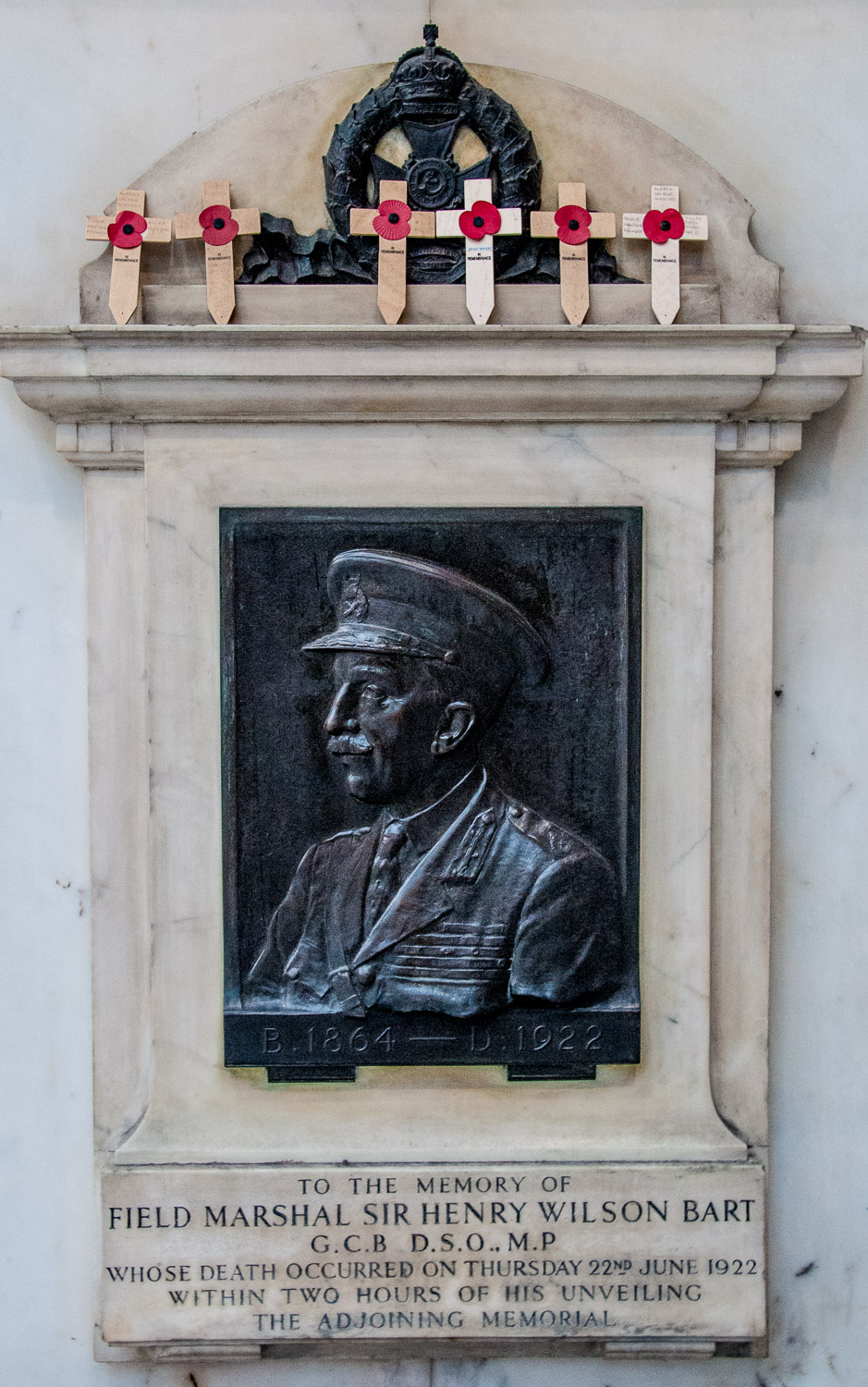
First up is this example, now rather tucked away in a corner at Liverpool Street railway station. It’s underneath the main memorial to the First World War dead, which was unveiled by this gentleman in 1922 …
Wilson was assassinated outside his house in Eaton Place at about 2:20 pm. Still in full uniform, he was shot six times, two bullets in the chest proving fatal. The two perpetrators, IRA volunteers Reginald Dunne and Joseph O’Sullivan, shot two police officers and a chauffeur as they attempted to escape but were surrounded by a hostile crowd and arrested after a struggle. Interestingly both were former British army officers and O’Sullivan had lost a leg at Ypres, his subsequent disability hindering their escape. After a trial lasting just three hours they were convicted of murder and hanged at Wandsworth gaol on 10 August that year – justice was certainly delivered swiftly in those days. No organisation claimed responsibility for Wilson’s murder.
Until researching this event I hadn’t realised that, in all, about 210,000 Irishmen served in the British forces during World War One. Since there was no conscription, about 140,000 of these joined during the war as volunteers and about 35,000 of them died.
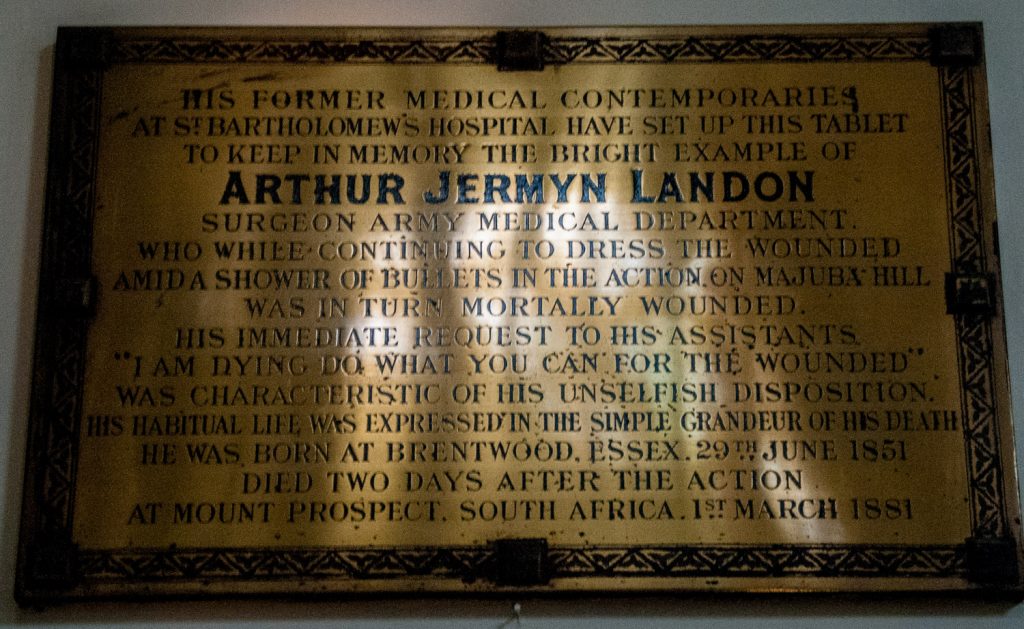
A brave doctor from an earlier war is commemorated in the church of St Bartholomew the Less, his actions and character described in poignant detail …
His former medical contemporaries at St Bartholomew’s Hospital have set up this tablet to keep in memory the bright example of ARTHUR JERMYN LANDON Surgeon Army Medical Department who, while continuing to dress the wounded amid a shower of bullets in the action on Majuba Hill, was in turn mortally wounded. His immediate request to his assistants “I am dying do what you can for the wounded” was characteristic of his unselfish disposition. His habitual life was expressed in the simple grandeur of his death. He was born at Brentwood Essex 29th June 1851. Died two days after the action at Mount Prospect South Africa 1st March 1881.
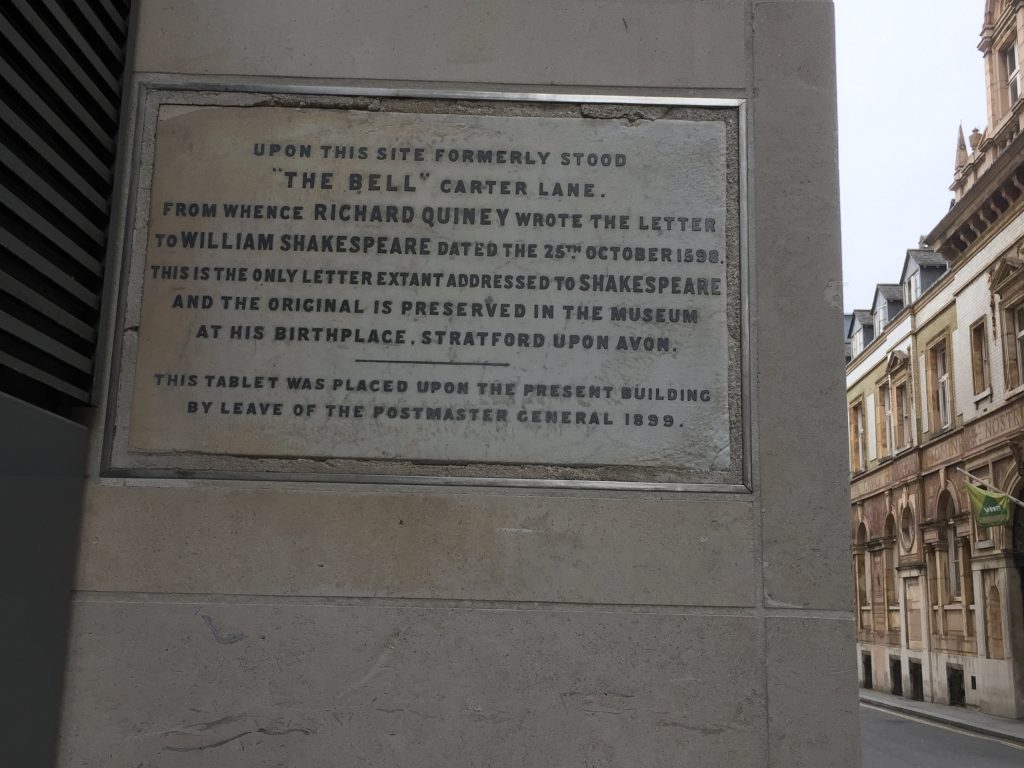
A plaque of a totally different nature is affixed to a hotel in Carter Lane …
The plaque was the result of a long campaign by a City grandee called Joseph Newbon who was a great believer in making sure that historical events connected with the City were properly commemorated.
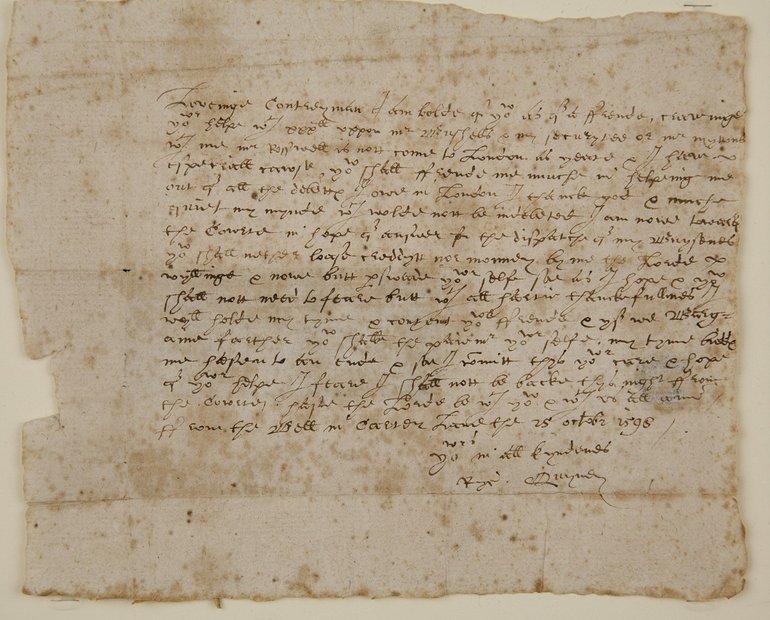
Ironically, the letter written to Shakespeare by Richard Quiney (asking to borrow £30, about £3,700 in today’s money) was never dispatched and was found among his papers after he died.
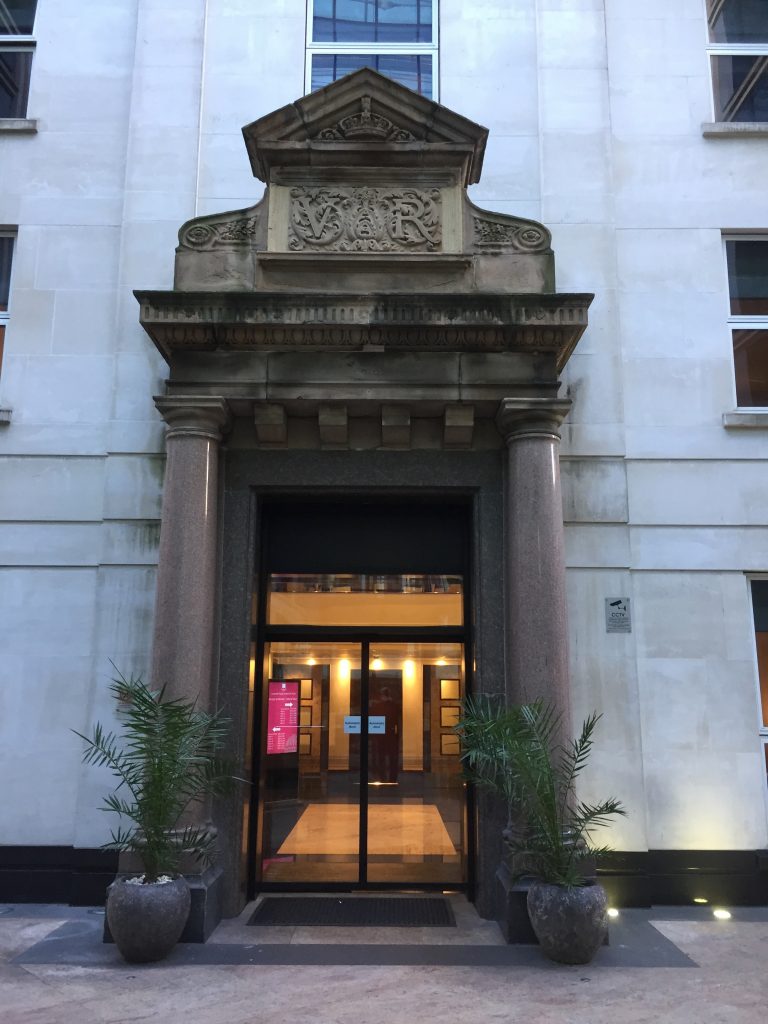
The plaque was originally on the wall of a major Post Office, hence the reference to the Postmaster General. Now demolished, its imposing entrance has been incorporated into the hotel …
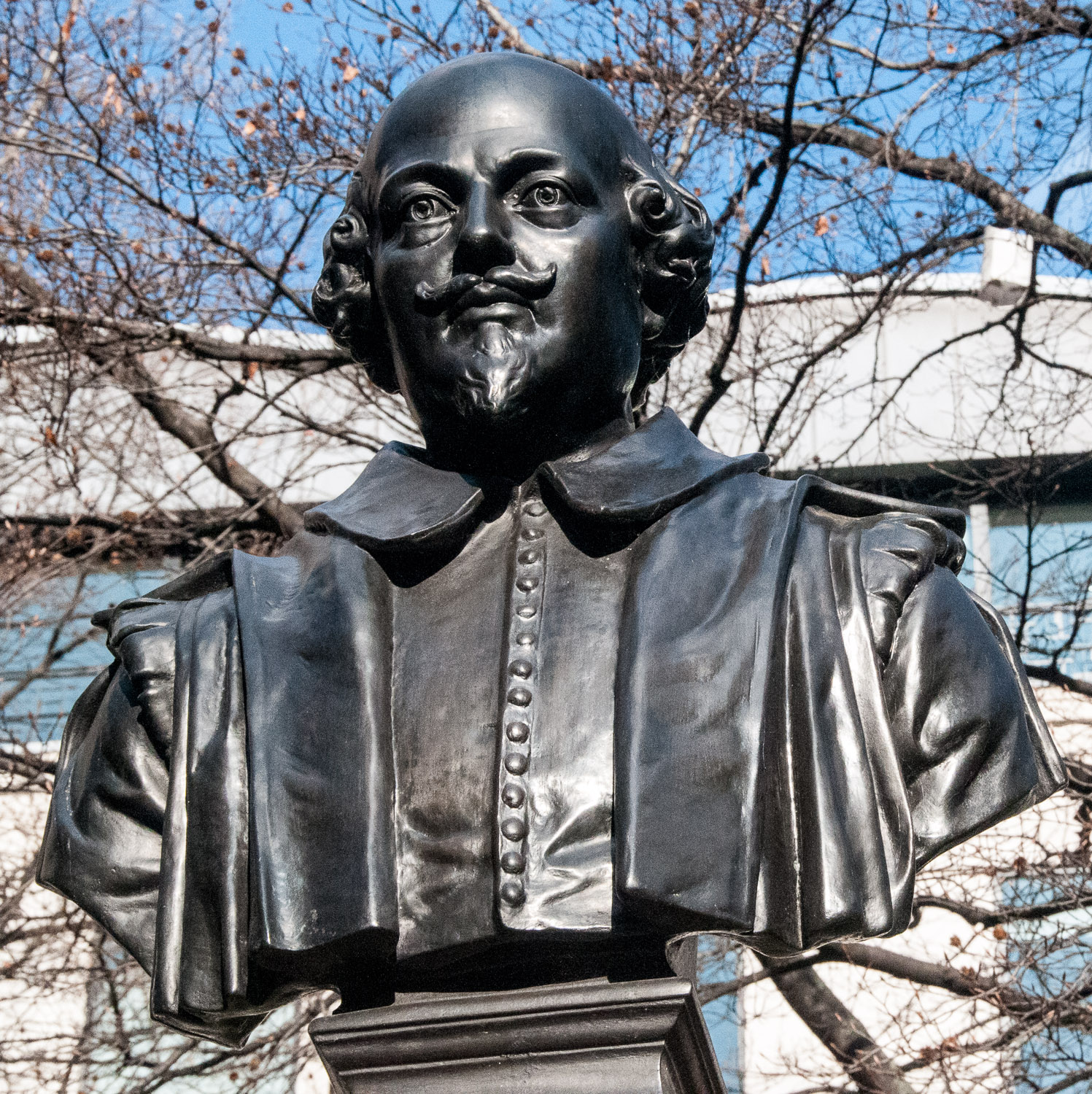
Whilst on the subject of The Bard, this magnificent bust is in St Mary Aldermanbury Garden, Love Lane EC2 …
A Wren church gutted in the Blitz, the remains of St Mary Aldermanbury were shipped to Fulton, Missouri, USA in 1966. The restored church is now a memorial to Winston Churchill’s ‘Iron Curtain’ speech made at Westminster College, Fulton, in 1946.
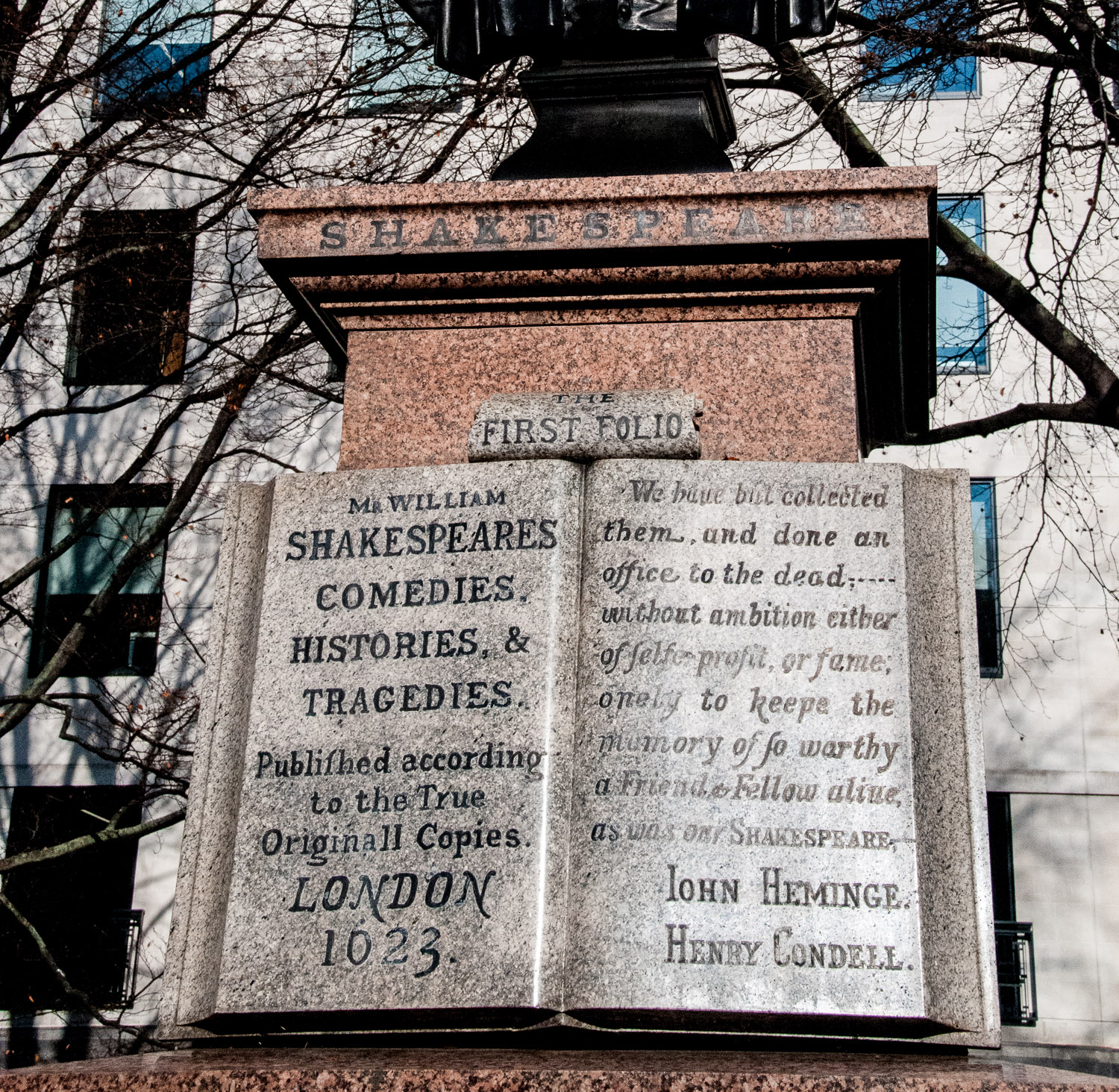
Below the bust is a plaque commemorating his fellow actors Henry Condell and John Heminge who were key figures in the printing of the playwright’s First Folio of works seven years after his death. There are almost twenty plays by Shakespeare, including The Tempest, Julius Caesar, Macbeth and Antony and Cleopatra, which we would not have at all if it were not for their efforts. Both of them were buried at St Mary’s …
This is what Shakespeare had to say about the churchyards of his day …
‘Tis now the very witching of the night
When churchyards yawn, and hell itself breathes out
Contagion to the world.
(Hamlet’s soliloquy Act 3 Scene 2)
Up until the mid-19th century the City contained numerous churchyards, usually adjacent to a parish church, but these were becoming seriously overcrowded and seen as an obvious threat to health. Not only did the population have to breathe in the ‘odour of the dead’, gravediggers themselves could contract typhus and smallpox from handling diseased corpses.
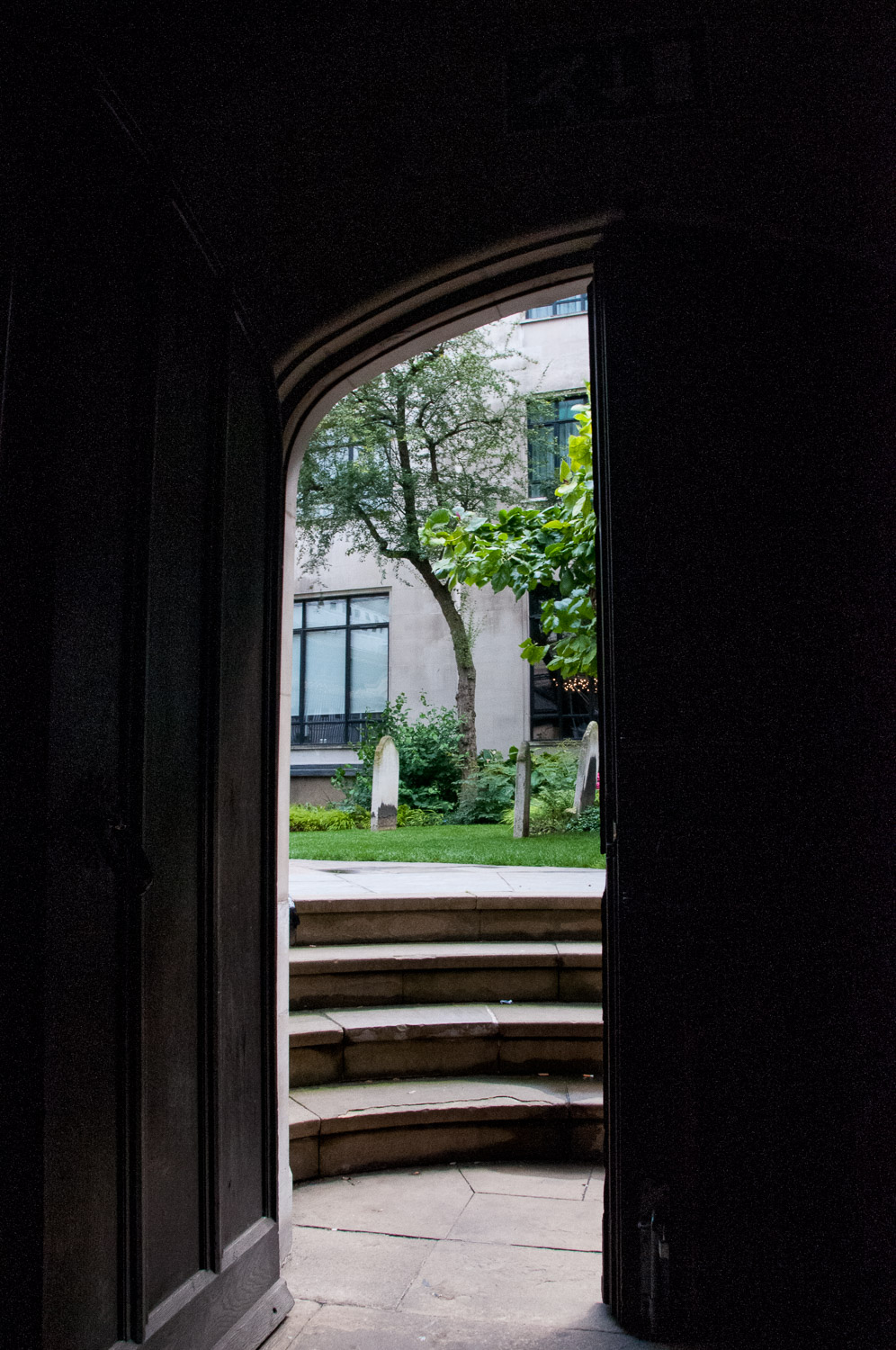
You can get a sense of how packed the graveyards were if you look at them now and see how much higher than street level some of them still are. For example, here is the view from inside St Olave Hart Street …
Eventually the overcrowding of the dead meant relatively fresh graves were broken into while new ones were being dug, and corpses were dismembered in order to make room for more. Sites were also subject to body snatchers (nicknamed the ‘Resurrection Men’), who sold the corpses on the black market as medical cadavers. The government eventually took action action when a serious cholera epidemic broke out and burial within the City limits was virtually totally prohibited by a series Burial Acts.
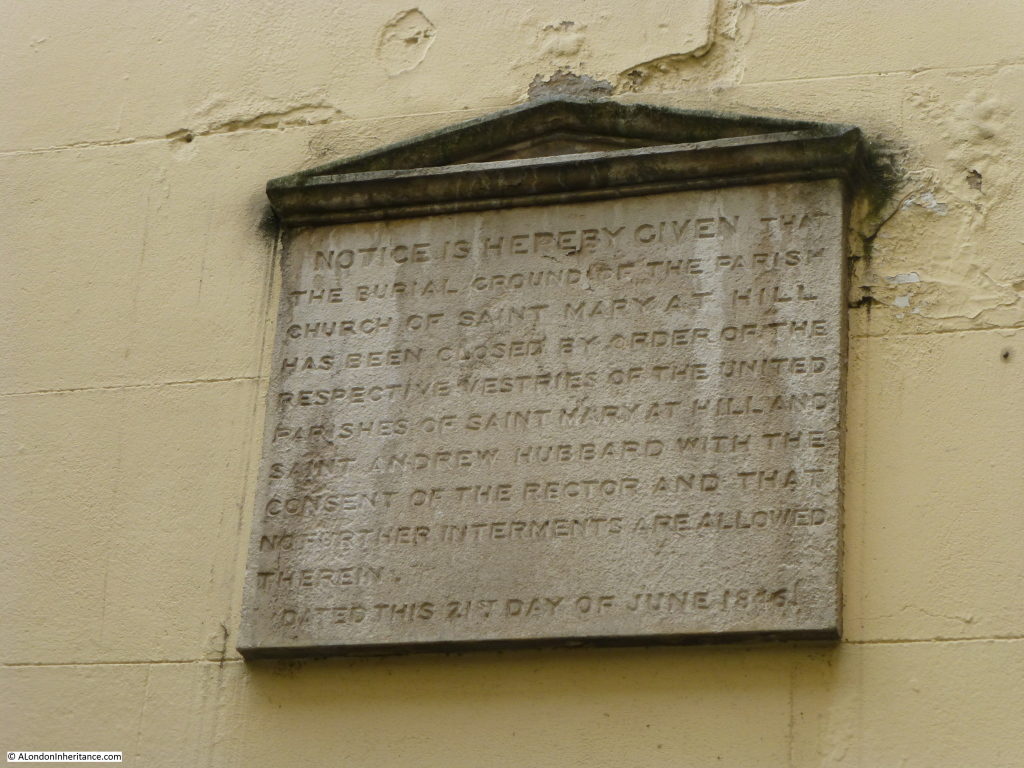
The removal of the dead from one churchyard is commemorated here …
A plaque on the wall informs us that ‘the burial ground of the parish church of St. Mary-At-Hill has been closed by order of the respective vestries of the united parishes of St. Mary-At-Hill and Saint Andrew Hubbard with the consent of the rector and that no further interments are allowed therein – Dated this 21st day of June 1846’. Following the closure, all human remains from the churchyard, vaults and crypts were removed and reburied in West Norwood cemetery. You can read more on the excellent London Inheritance blog.
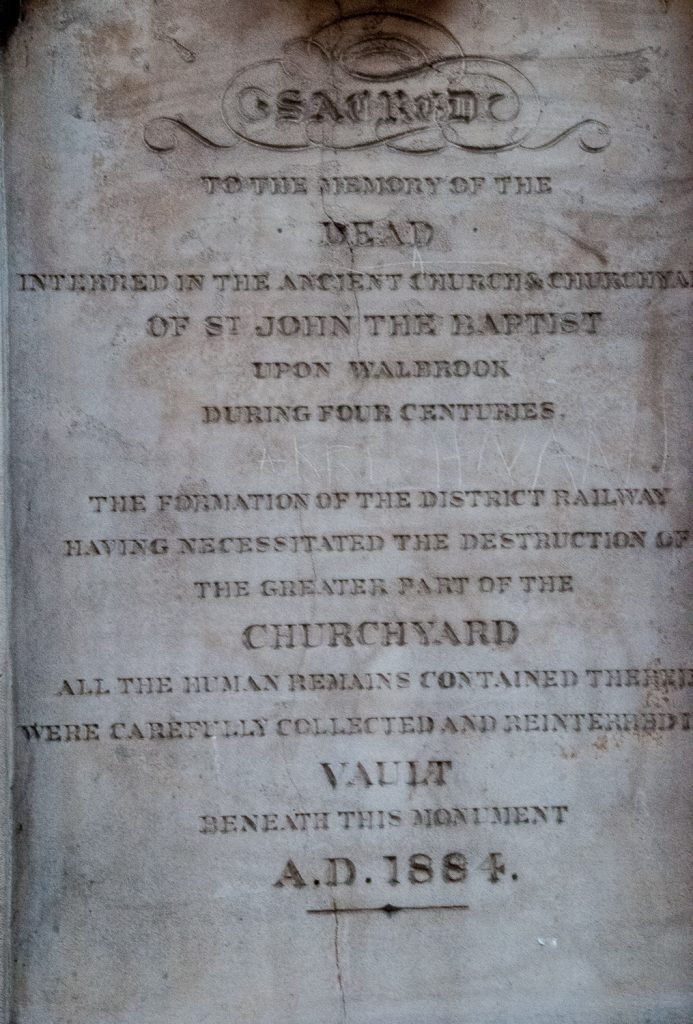
Some bodies remained in place only to be resited for other reasons. In the case of the churchyard of St John the Baptist upon Walbrook it was the construction of the District Line underground railway …
The plaqueis in Cloak Lane EC4R 2RU.
There is a fascinating article here about the London Underground’s construction and it’s reported encounters with London’s dead.
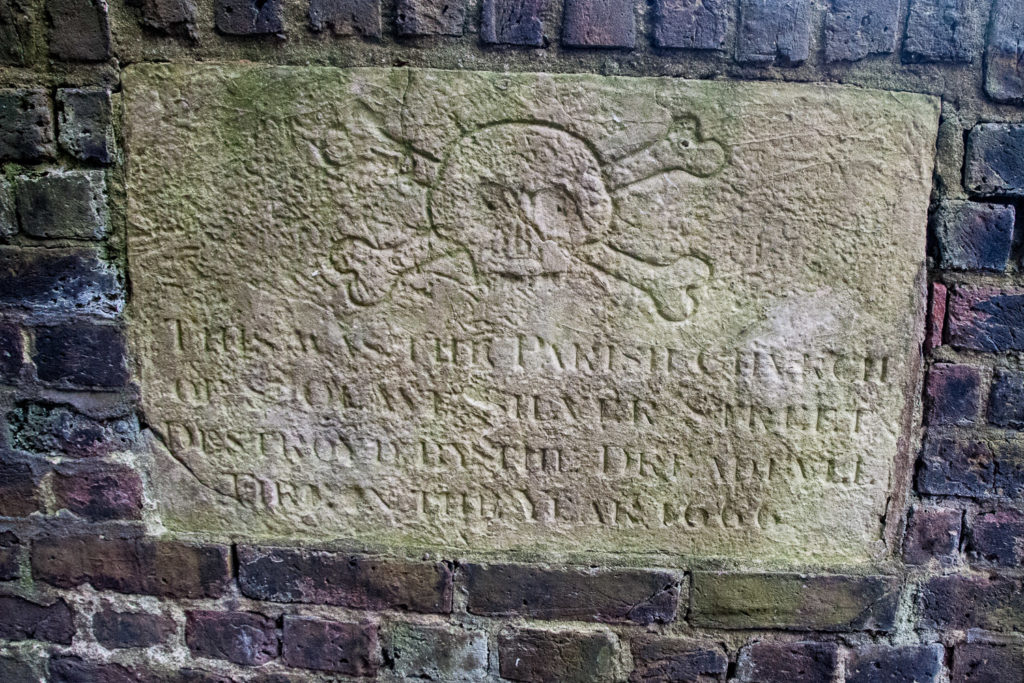
St Olave Silver Street was totally destroyed in the Great Fire of 1666 but its little churchyard lives on. A much weathered 17th century stone plaque records the terrible event …
This was the Parish Church of St Olave Silver street, destroyed by the dreadful fire in the year 1666.
Silver Street itself was annihilated in the Blitz and erased completely by post-war development and traffic planning. The little garden containing the stone is on London Wall at the junction with Noble Street.
I shall end on two more lighthearted notes.
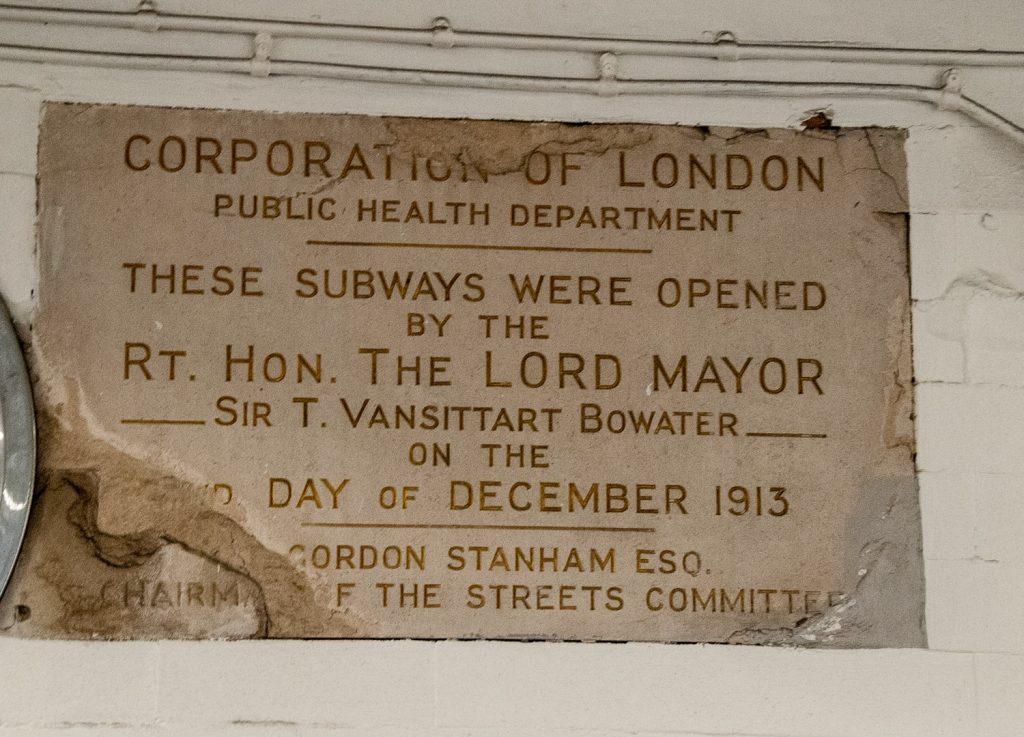
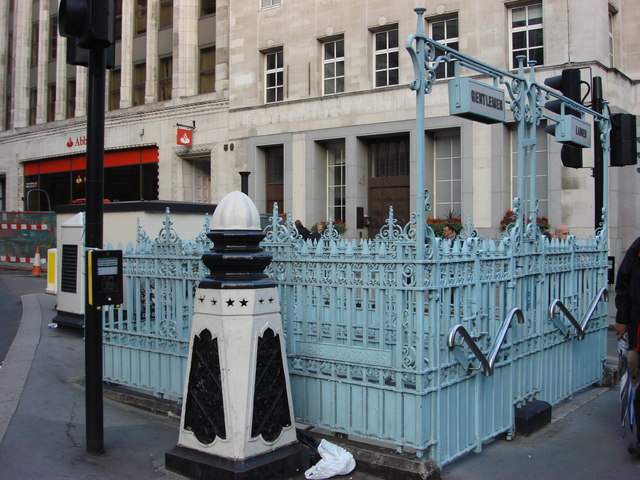
Probably hundreds of people pass through the subway that leads to Mansion House Underground Station every day and don’t notice this old plaque dating from 1913 …
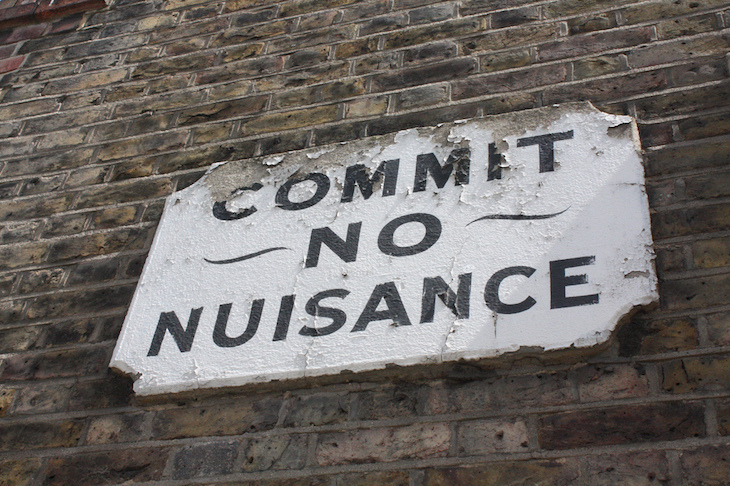
It celebrates not only the opening of the subway but also some brand new Gentlemen’s toilets (hence the involvement of the Public Health Department). ‘Street fouling’ had become a major problem, hence the rather ambiguously worded signs that were once common around London exhorting people to …
In the mid 19th century ideas were being put forward for ‘halting places’ and ‘waiting rooms’ and the City of London installed the first underground ‘Convenience’ outside the Royal Exchange in 1855. It’s still there, completely renovated, and is accessed by tunnels leading to Bank Underground Station. The original toilets were for men only, ladies had to wait another 30 years for their ‘convenience’.
The Mansion House loo is now closed and sealed off but a great example of street level toilet architecture exists on Eastcheap …
I am indebted for much of this information to a lady called Sarah McCabe who made the provision of underground conveniences the subject of her MA dissertation – I highly recommend it.
And finally. I know I have written about this famous cat before but it’s a nice story so I am going to repeat it.
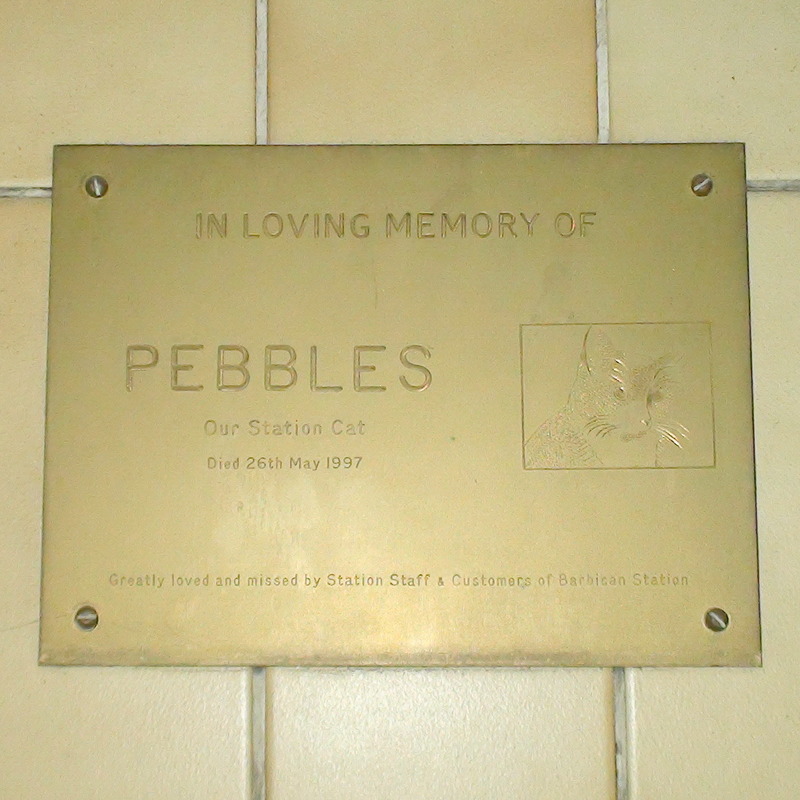
High up on a tiled pillar in Barbican Underground Station is this rather sad little memorial …
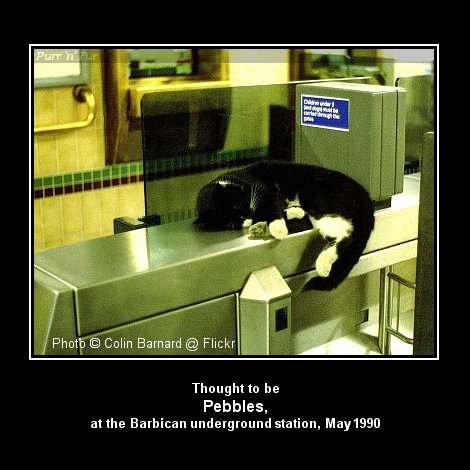
For many years Pebbles was a favourite of staff and passengers, often sleeping soundly on top of the exit barriers despite the rush hour pandemonium going on around him. Here is a picture from the wonderfully named Purr’n’Fur website, a great source for moggie-related stories …
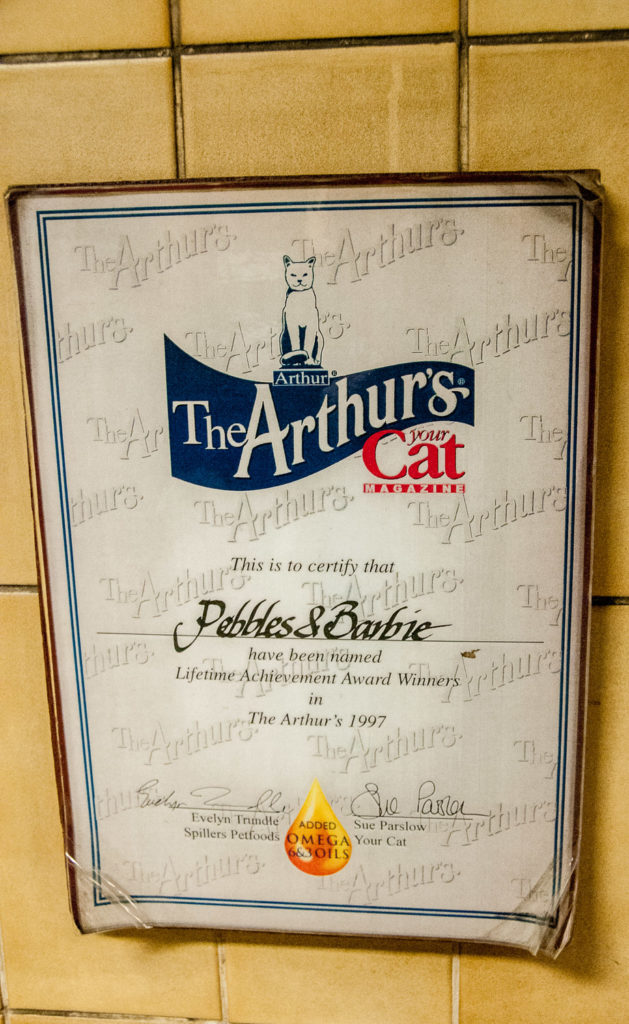
Clearly he was greatly missed when he died, as the plaque faithfully records, on 26th May 1997. This was doubly sad because he was due to be given a Lifetime Achievement Award. This was sponsored by Spillers Pet Foods and named after Arthur, a cat they used in their advertising who, I seem to remember, ate with his paws. The Certificate that came with the award is also displayed (the co-winner, the aptly named Barbie, was Pebbles’ companion) …
I spend a lot of time looking up as I wander around the City, which is another reason why I tend to take photographs at the weekend. That way I won’t be obstructing bustling City folk going about their business and get tutted at when I stop abruptly.
I hope you find this miscellaneous collection interesting. Some have appeared in blogs already but I have included them again because I just like them.
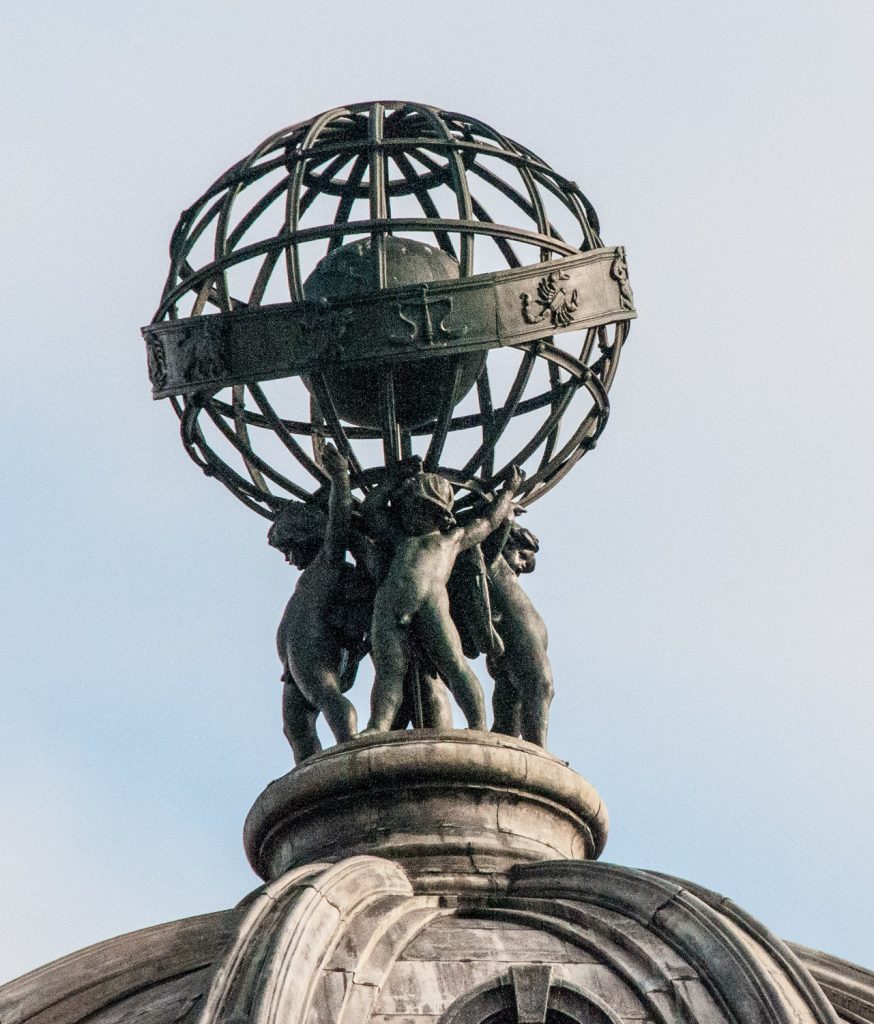
This globe sits on top of the London Metropolitan University building on Moorgate (EC2M 6SQ) …
I had never noticed before that it is encircled by the signs of the Zodiac.
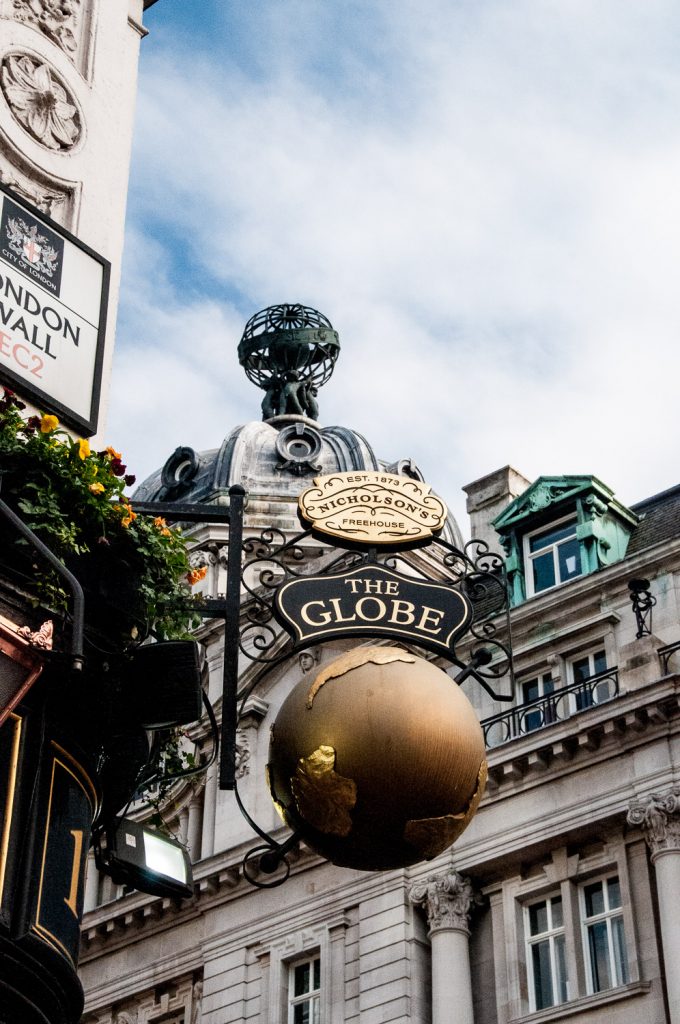
Here’s what it looks like at street level with the Globe Pub sign in the foreground …
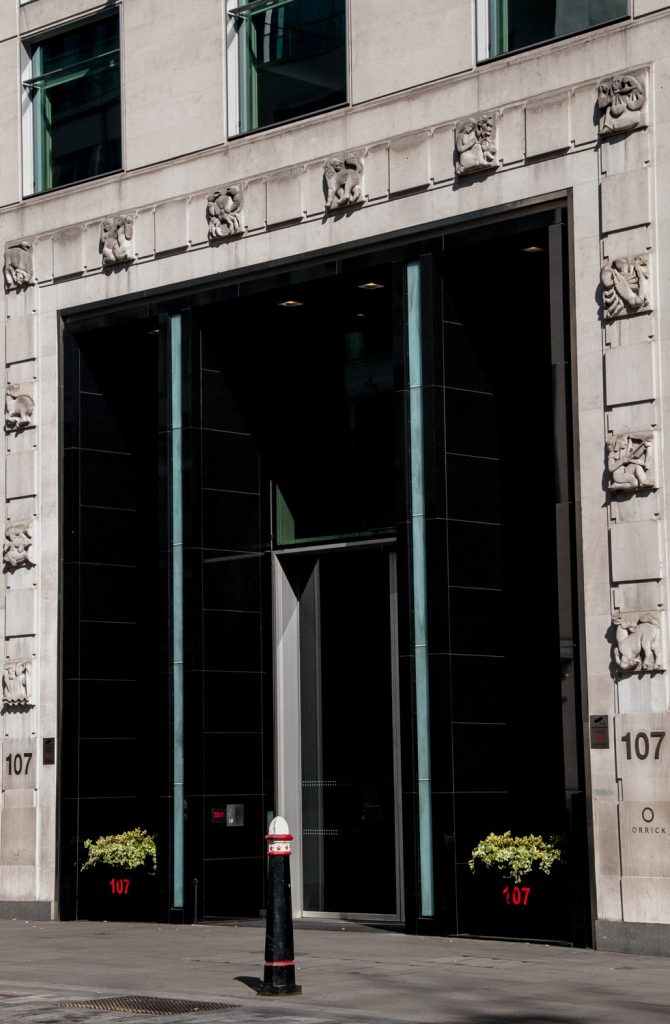
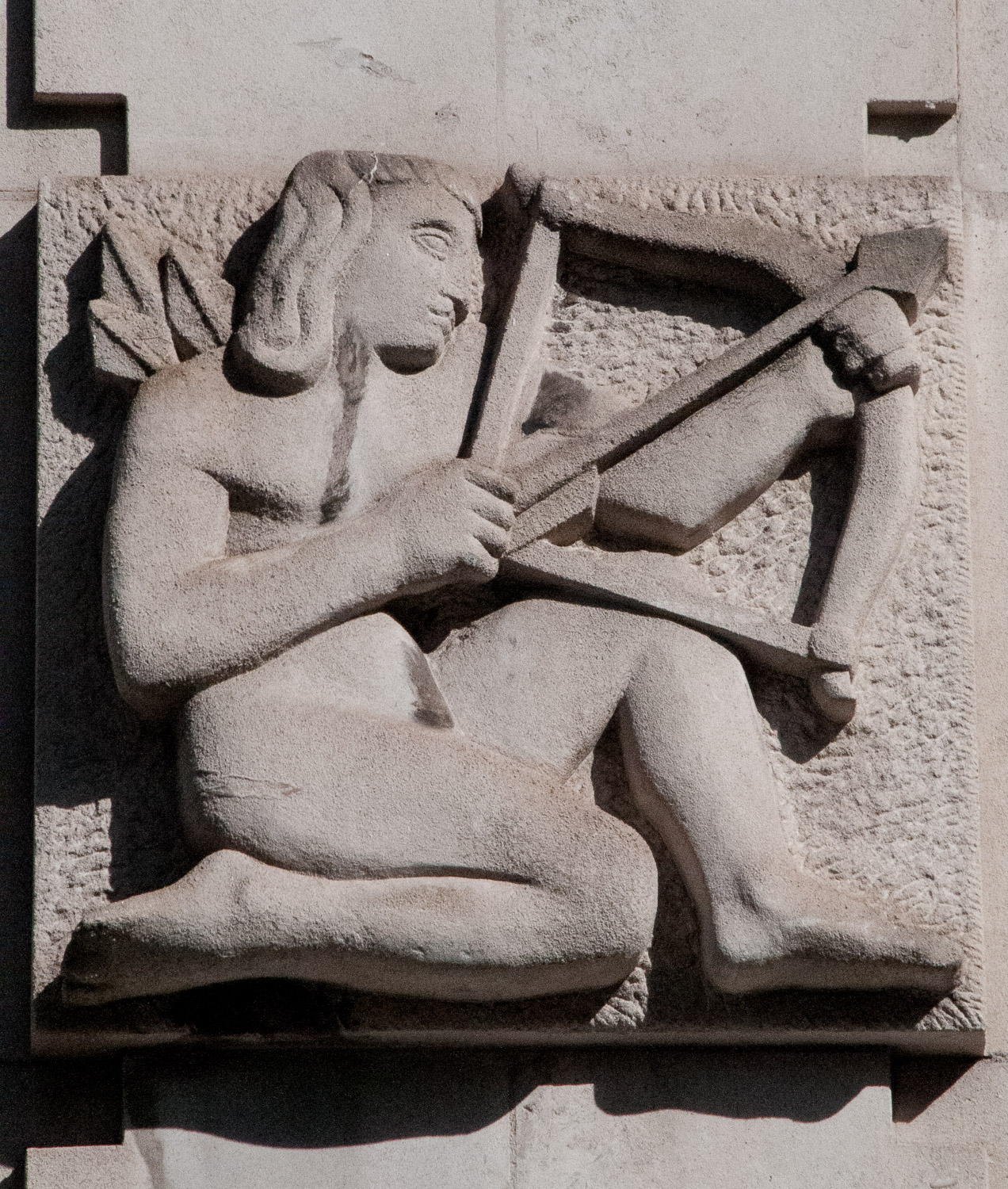
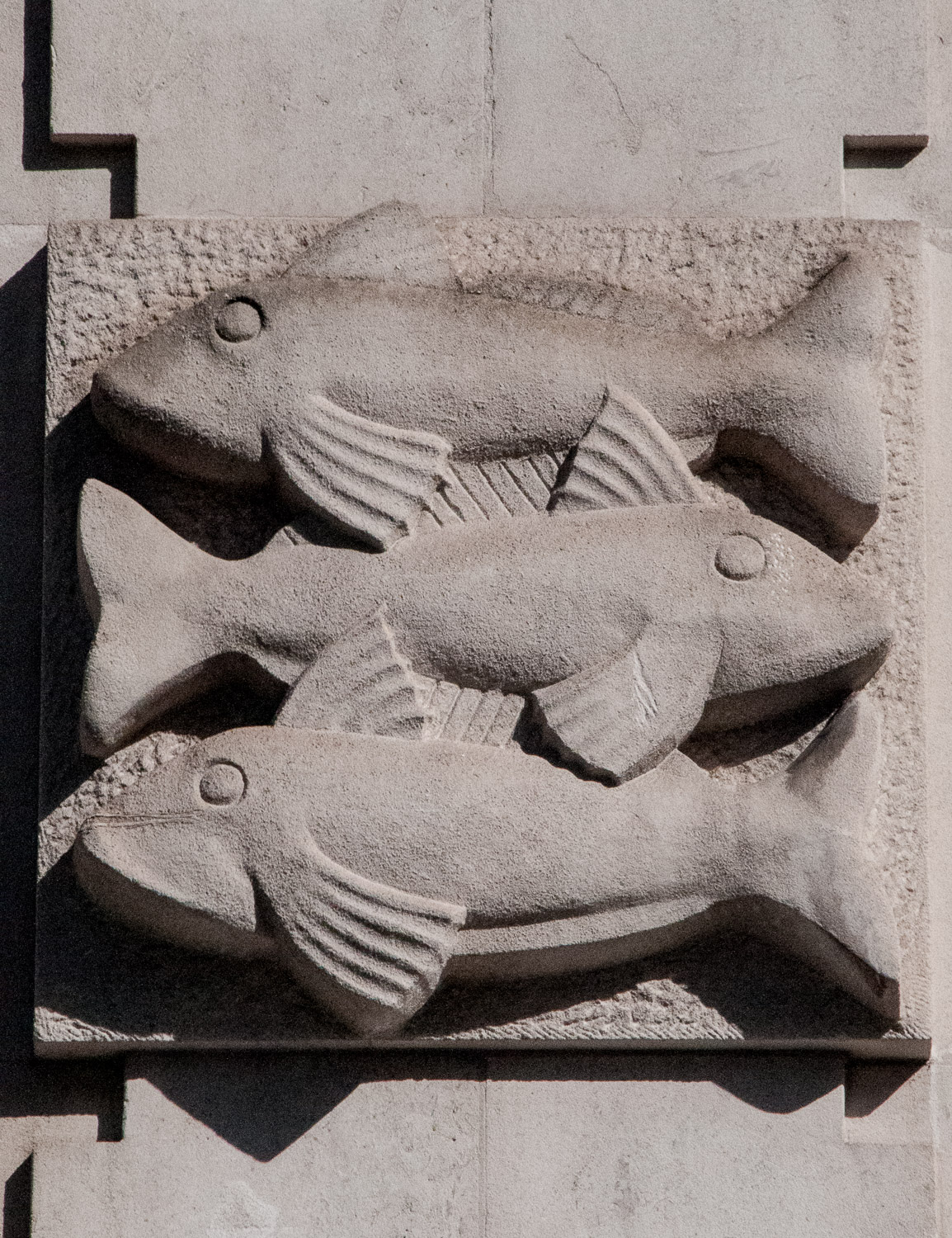
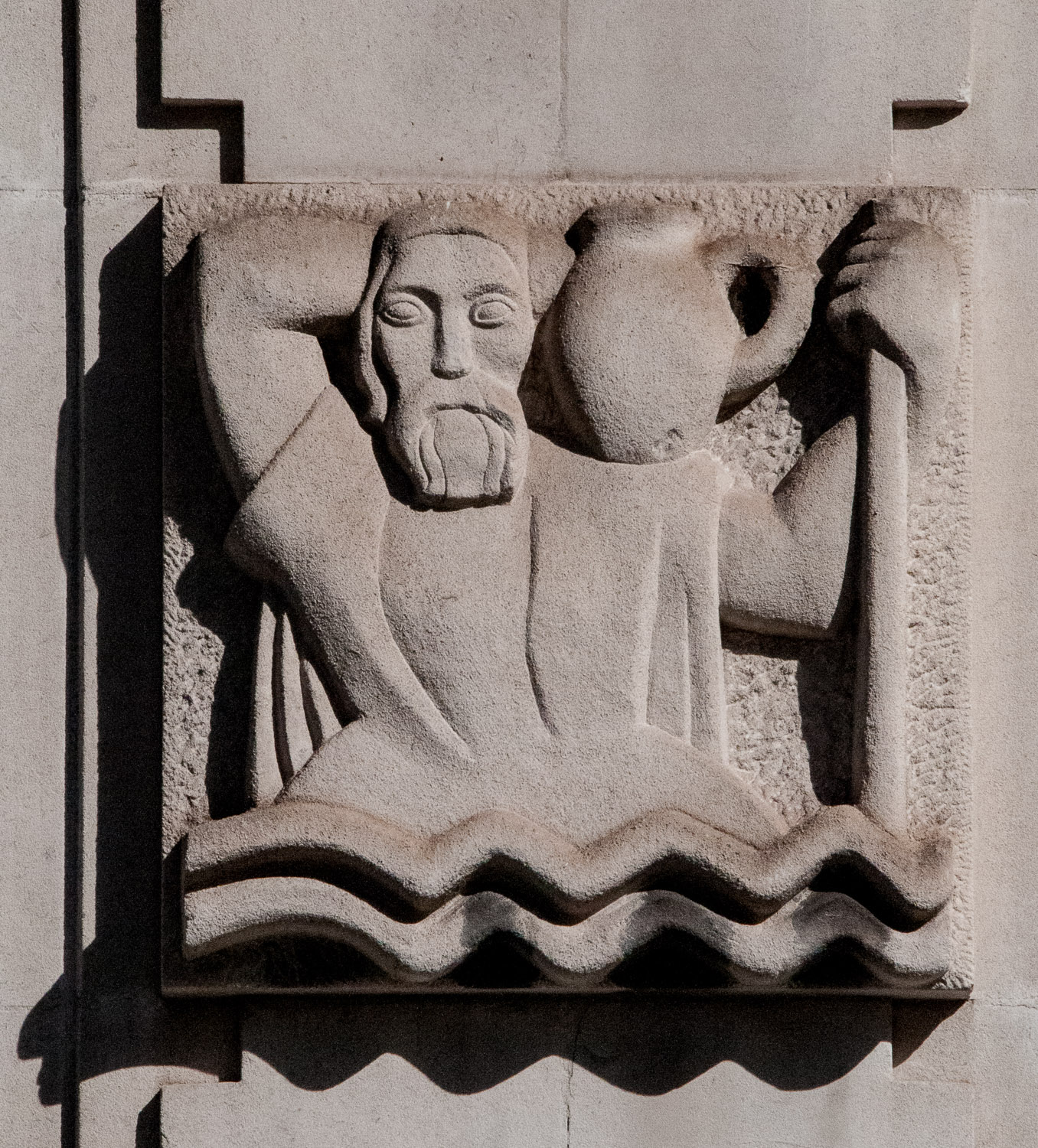
Whilst on the subject of Zodiacs, there are some attractive figures around the door of 107 Cheapside (EC2V 6DN) …
They were sculpted by John Skeaping, Barbara Hepworth’s first husband …
Sagittarius – November 22nd to December 21st. Pisces – February 19th to March 20th.Aquarius January 20th to February 18th.
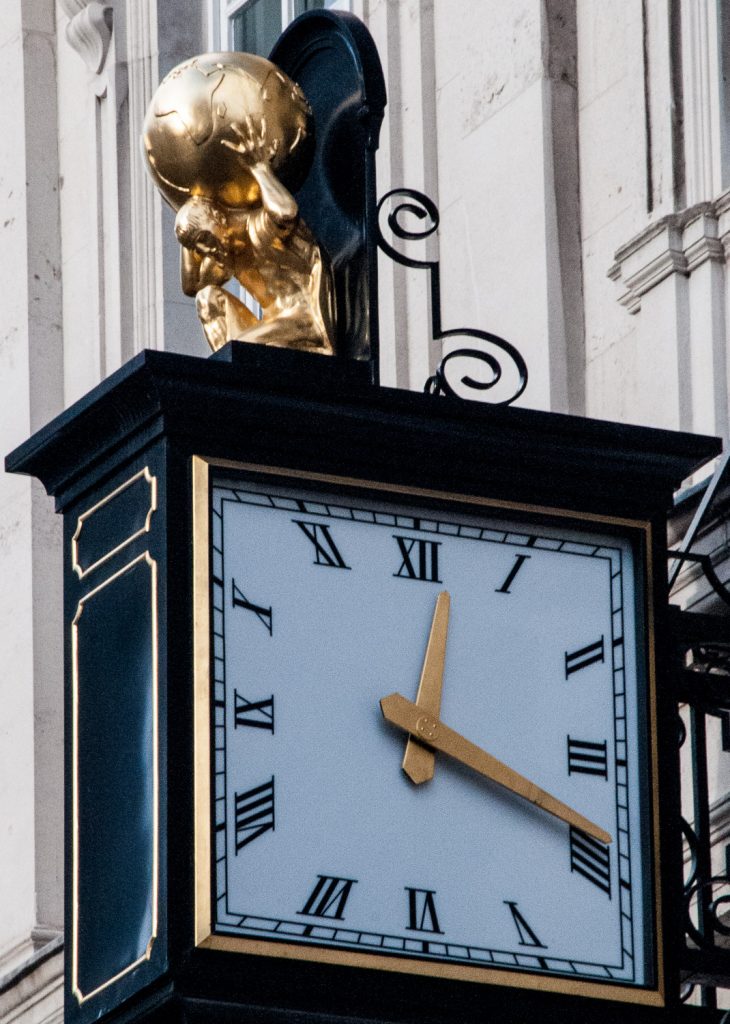
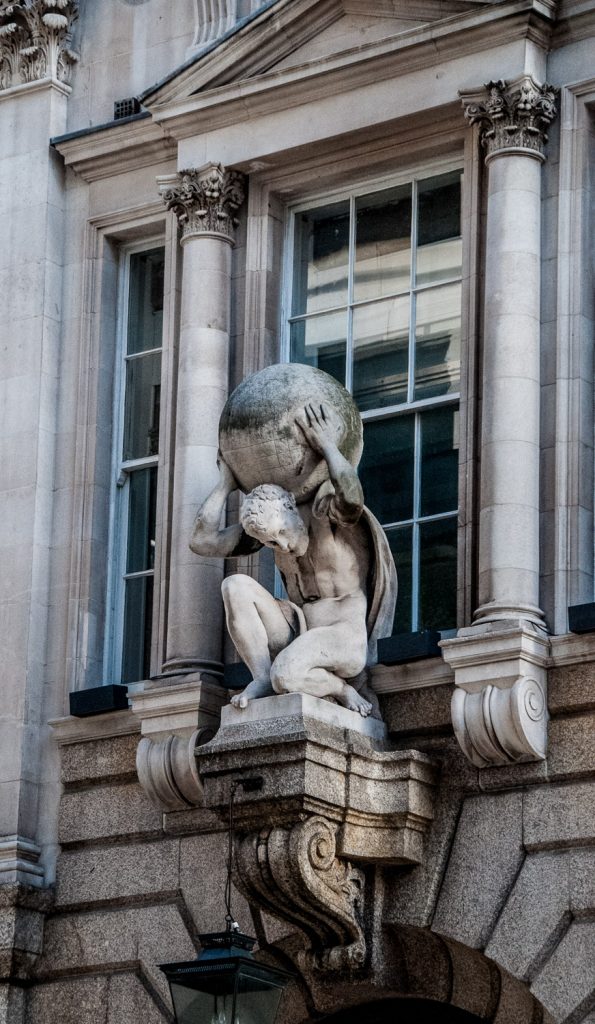
And in Cheapside there is another globe, this time supported by a straining Atlas balanced on top of a clock …
It was once the headquarters of the Atlas Assurance Company. The entrance was in King Street and above the door is another depiction of Atlas hard at work. I like the detail of his toes curled around the plinth (EC2V 8AU) …
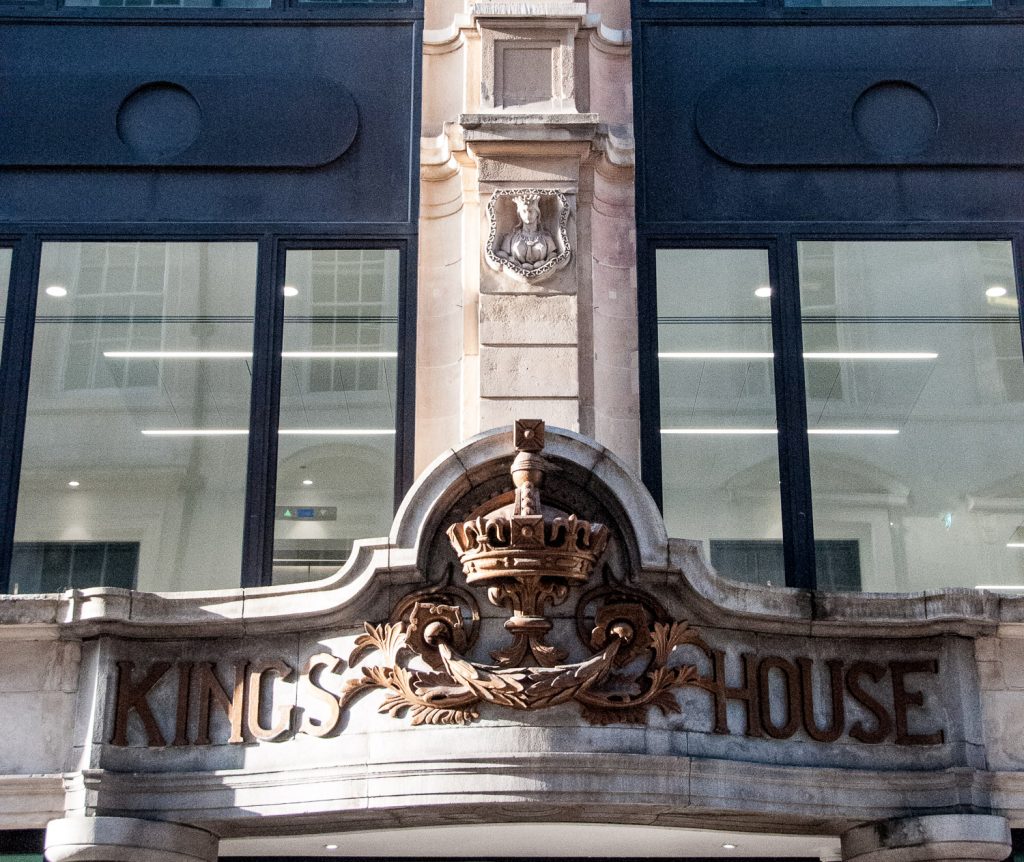
Across the road is Kings House sporting a magnificent crown …
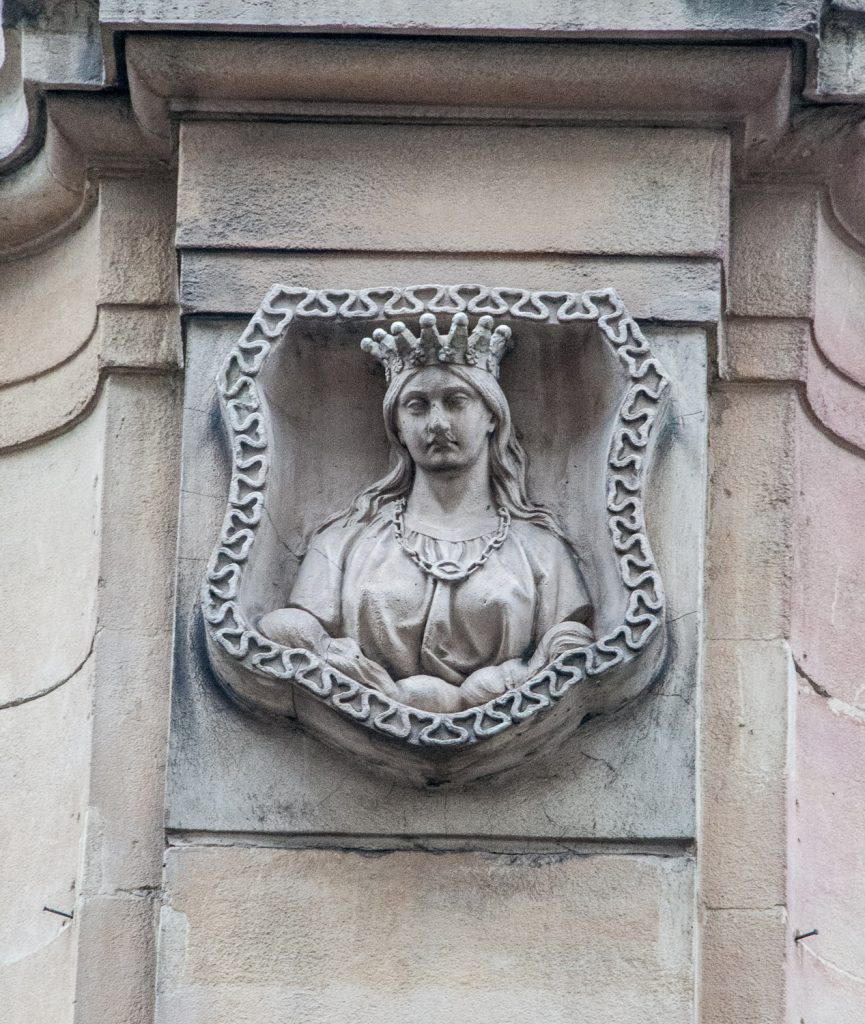
Above it is a very pretty Mercer Maiden dating from 1938 …
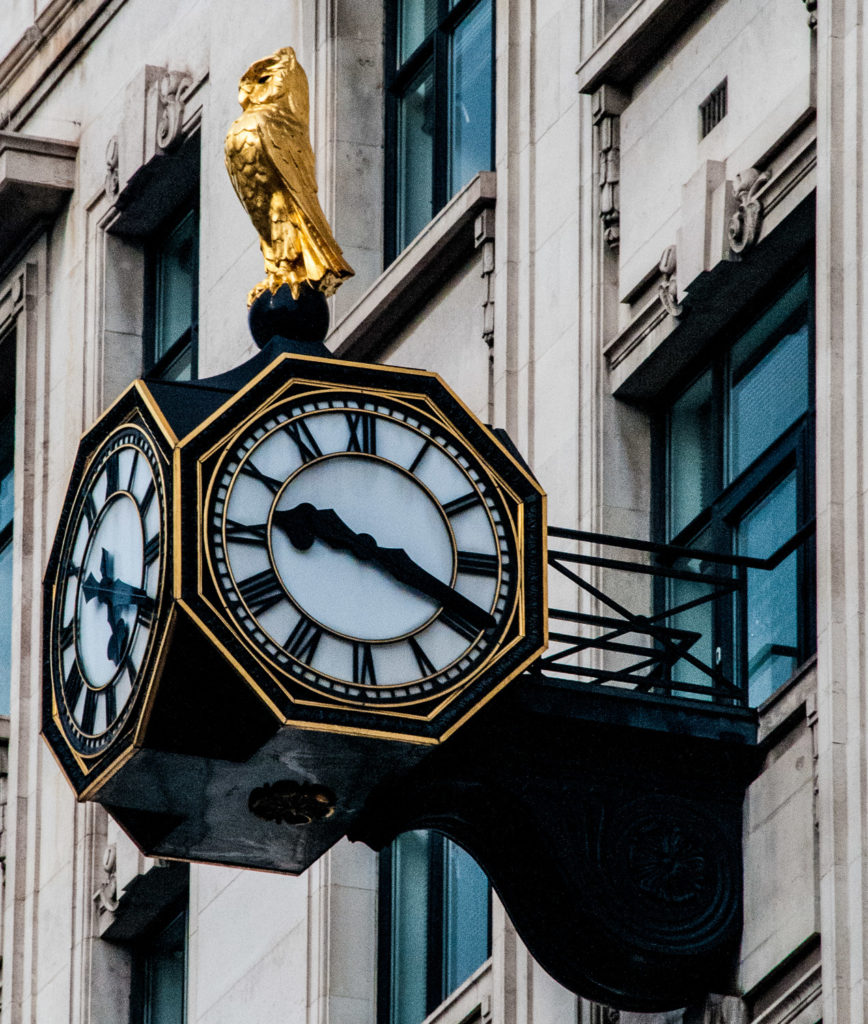
This wise old owl watches commuters as they flow back and forth over London Bridge. He was located outside what was once the Guardian Insurance Company headquarters (EC4N 7HR) …
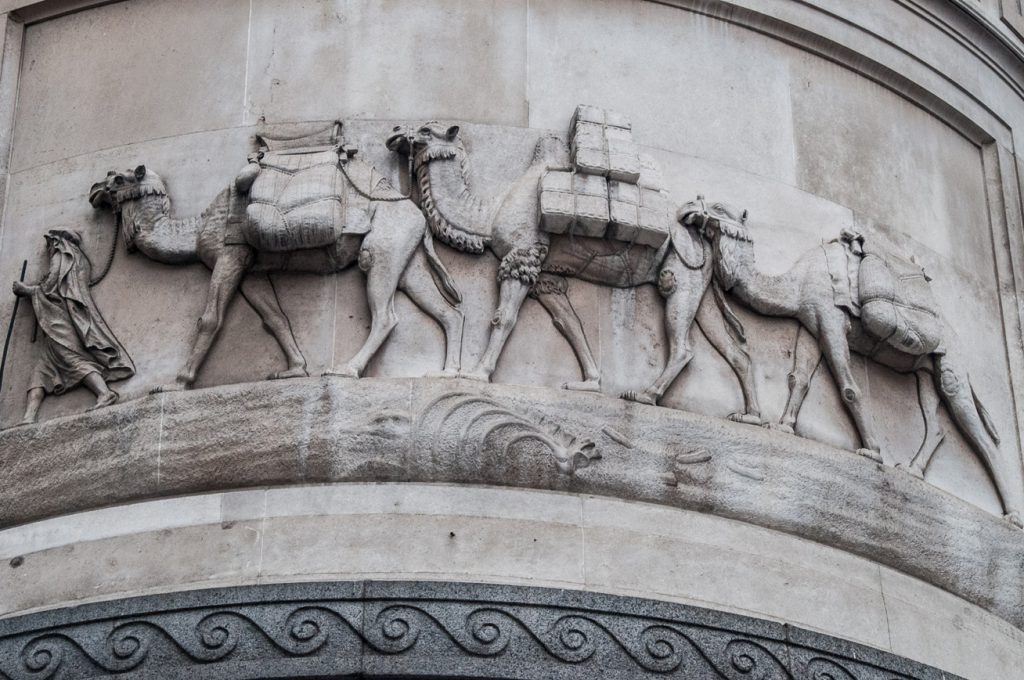
Look up as you walk down Eastcheap and you will see the remains of a dead camel …
Constructed between 1883 and 1885, the building at 20 Eastcheap was once the headquarters of Peek Brothers & Co, dealers in tea, coffee and spices, whose trademark showed three camels bearing different shaped loads being led by a Bedouin Arab. The firm was particularly well known for its ‘Camel’ brand of tea. When Sir Henry Peek (son of one of the original founders) commissioned this building he wanted the panel over the entrance to replicate the trademark, right down to the dried bones of the dead camel lying in the sand in the foreground.
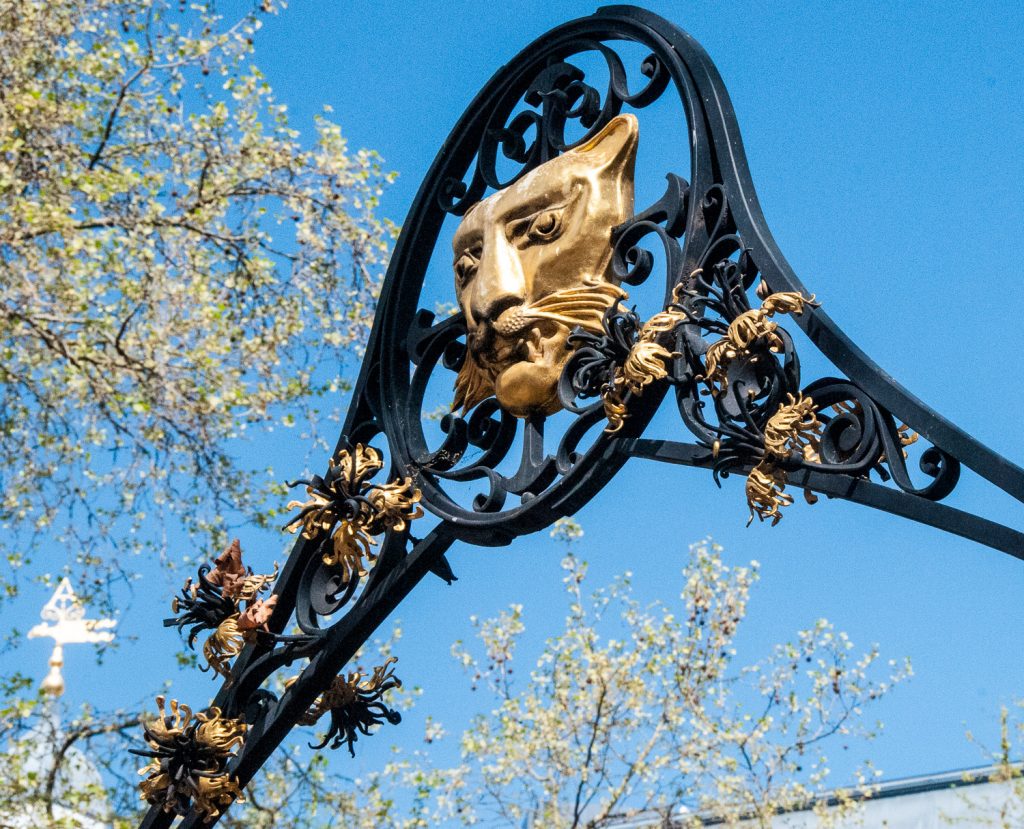
Admire the leopard’s head symbol of the Goldsmith’s Company over the entrance to the old churchyard of St Zachary on Gresham Street (EC2V 7HN) …
Guardian angels are still resting on their swings opposite St Paul’s Underground Station …
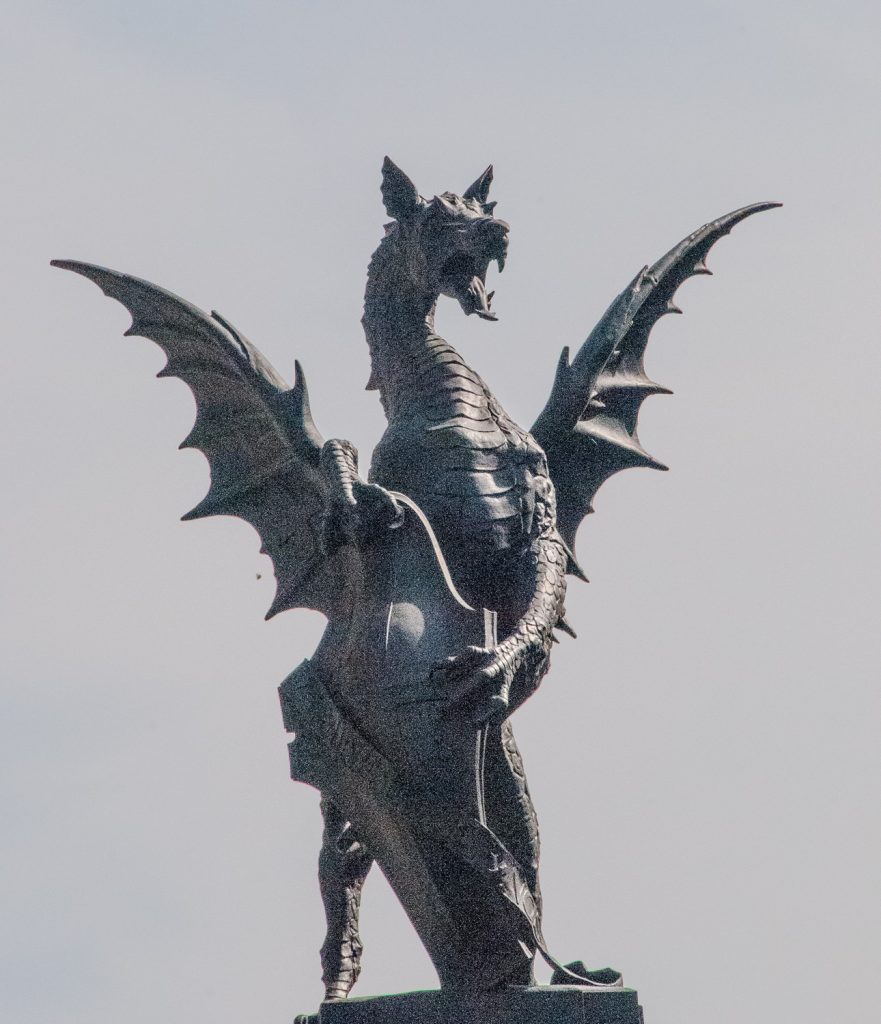
This fearsome dragon on Fleet Street guards the western entrance to the City on the site of the old Temple Bar. He looks like something straight out of a Harry Potter story …
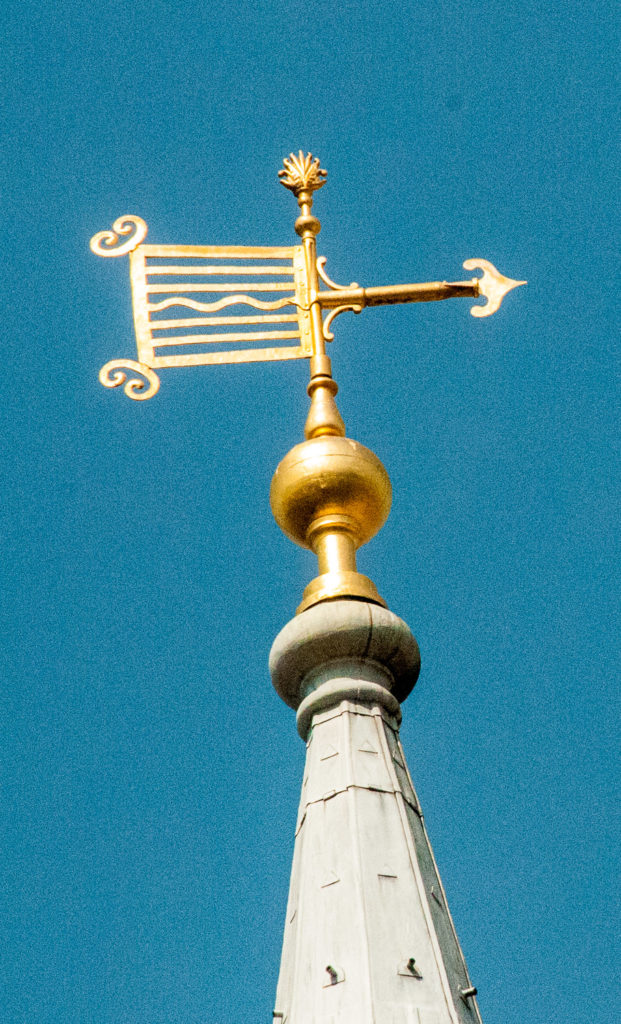
I love spotting the wide variety of weather vanes that populate the skyline even in a City crowded with new skyscrapers. This one referencing the horrific death of a martyr sits atop St Lawrence Jewry (EC2V 5AA) …
St Lawrence was executed in San Lorenzo on 10 August 258 AD in a particularly gruesome fashion, being roasted to death on a gridiron. At one point, the legend tells us, he remarked ‘you can turn me over now, this side is done’. Appropriately, he is the patron saint of cooks, chefs and comedians.
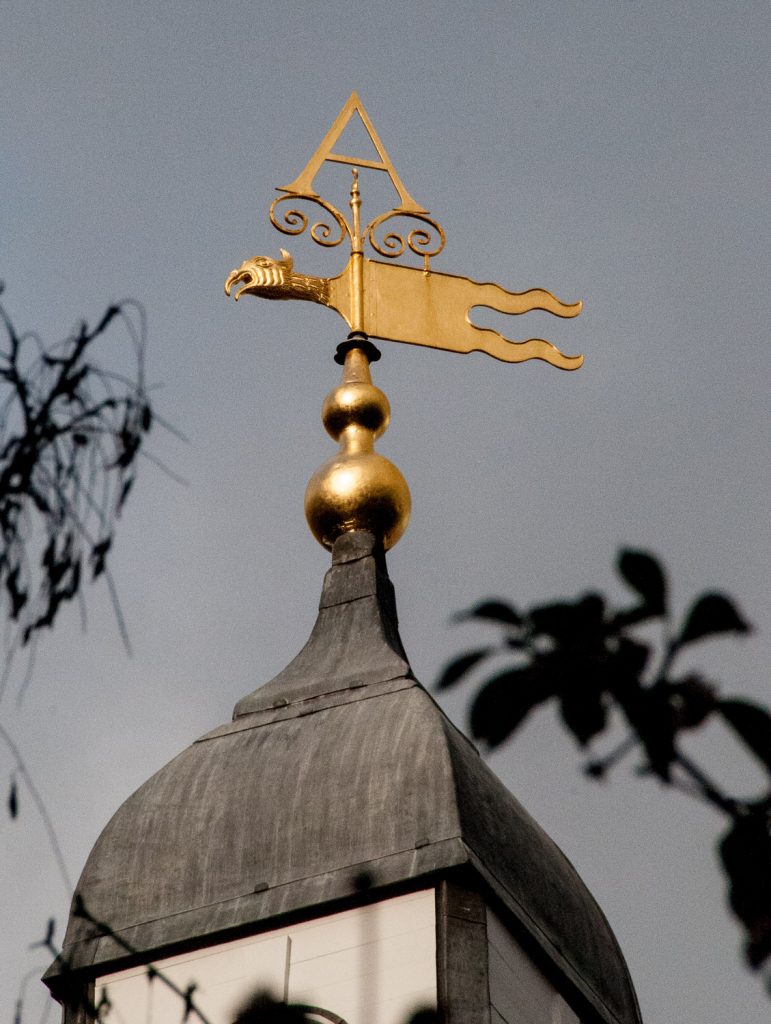
The church of Anne and St Agnes also stands in Gresham Street and is unmistakable by its letter ‘A’ on the weather vane on top of the small tower. It is named after Anne, the mother of the virgin Mary and Agnes, a thirteen year old martyr (EC2V 7BX) …
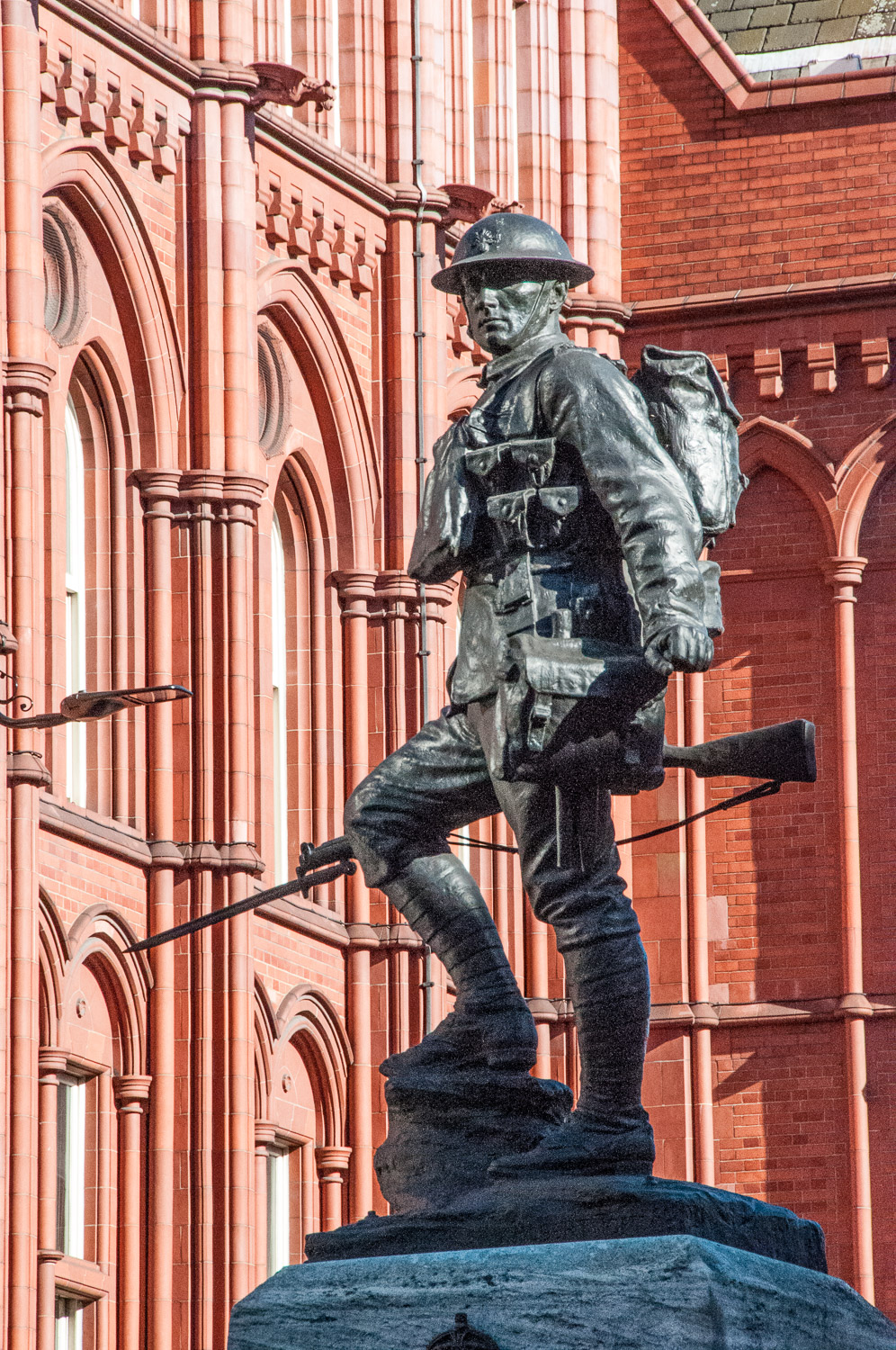
Now compare and contrast these two war memorials.
In Holborn is this work by Albert Toft. Unveiled by the Lord Mayor in 1922, the inscriptions read …
To the glorious memory of the 22,000 Royal Fusiliers who
fell in the Great War 1914-1919 (and added later) To the Royal Fusiliers
who fell in the World war 1939-1945 and those fusiliers killed in
subsequent campaigns.
Toft’s soldier stands confidently as he surveys the terrain, his foot resting on a rock, his rifle bayoneted, his left hand clenched in determination (EC1N 2LL).
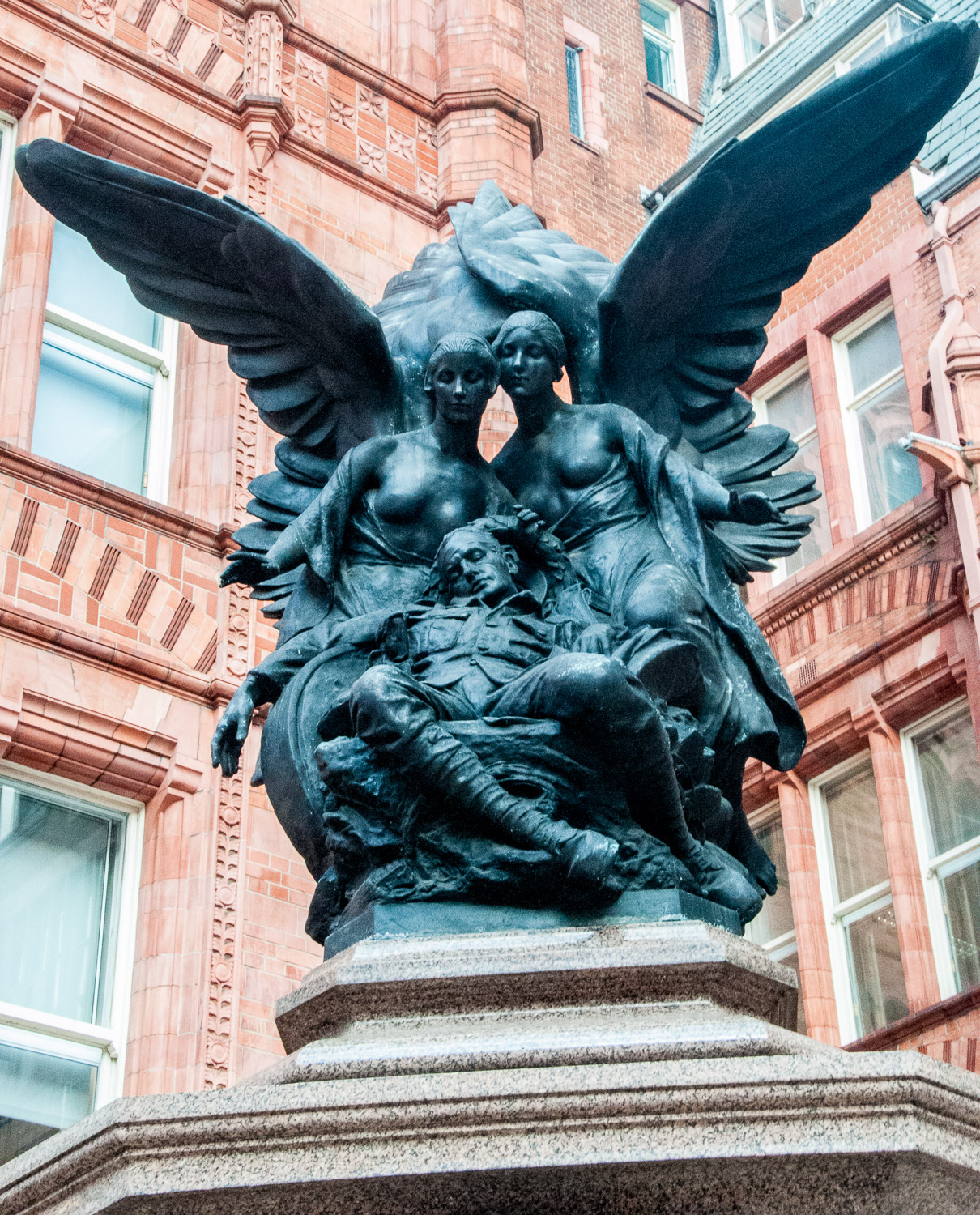
Behind him is the magnificent, red terracotta, Gothic-style building by J.W. Waterhouse, which once housed the headquarters of the Prudential Insurance Company. Walk through the entrance arch to the courtyard and you will see the work of a sculptor who has chosen to illustrate war in a very different fashion. The memorial carries the names of the 786 Prudential employees who lost their lives in the First World War …
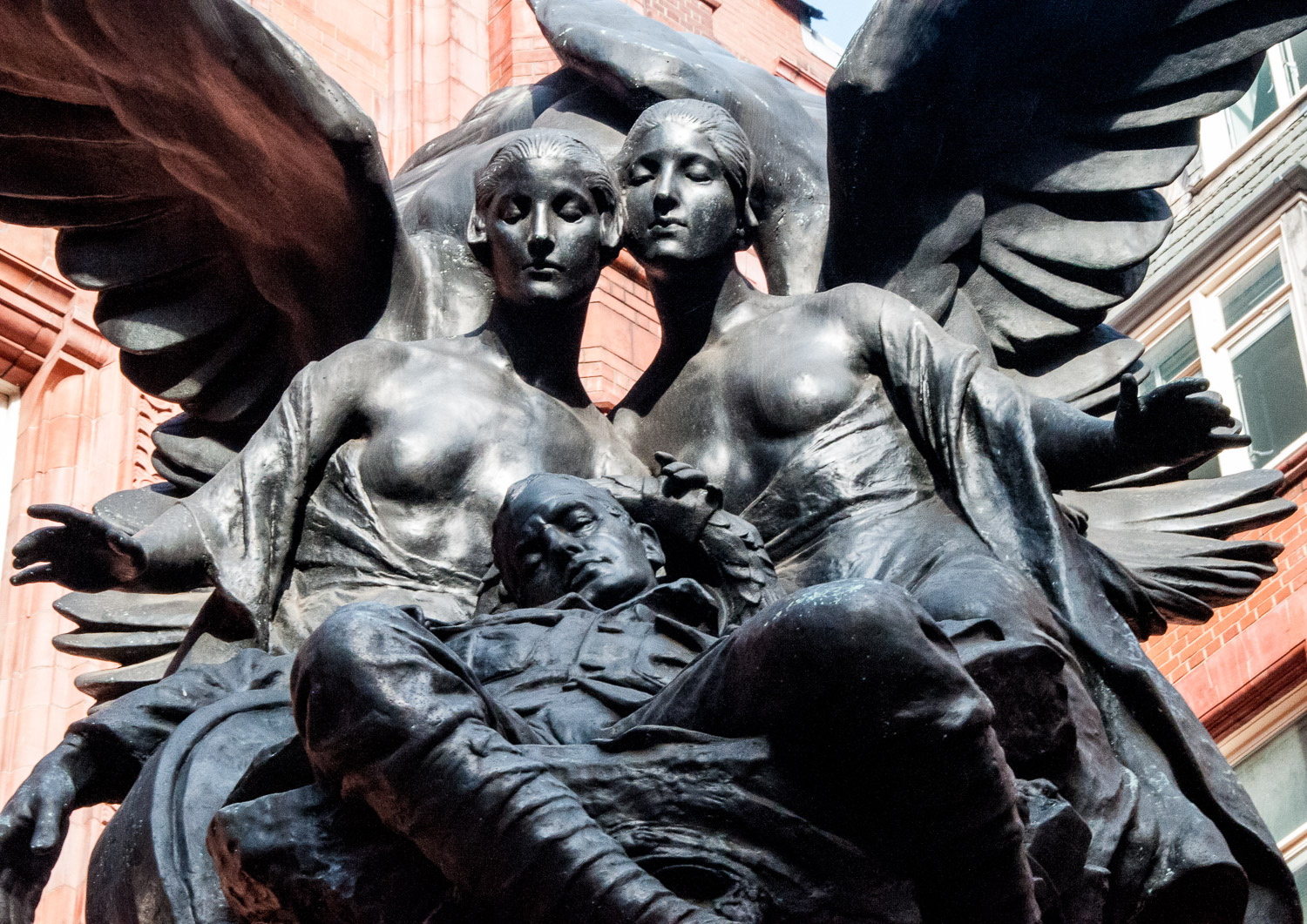
The sculptor was F V Blunstone and the main group represents a soldier sustained in his death agony by two angels. He is lying amidst war detritus with his right arm resting on the wheel of some wrecked artillery piece. His careworn face contrasts with that of the sombre, beautiful girls with their uplifted wings. I find it incredibly moving.
I have written about angels in the City before and they are usually asexual, but these are clearly female.
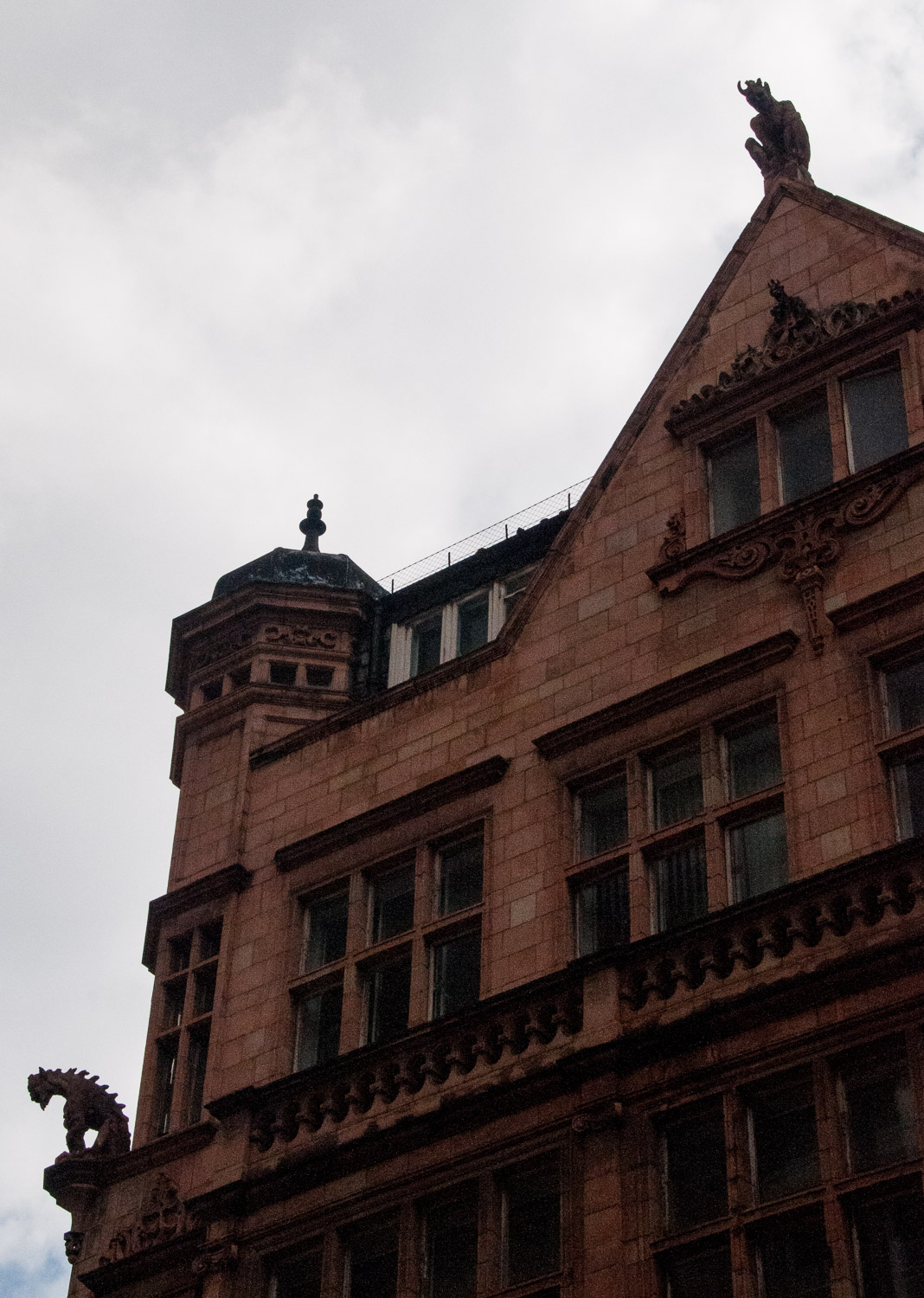
And finally, as I walked along Cornhill one day I glanced up and saw these rather sinister figures silhouetted against the sky…
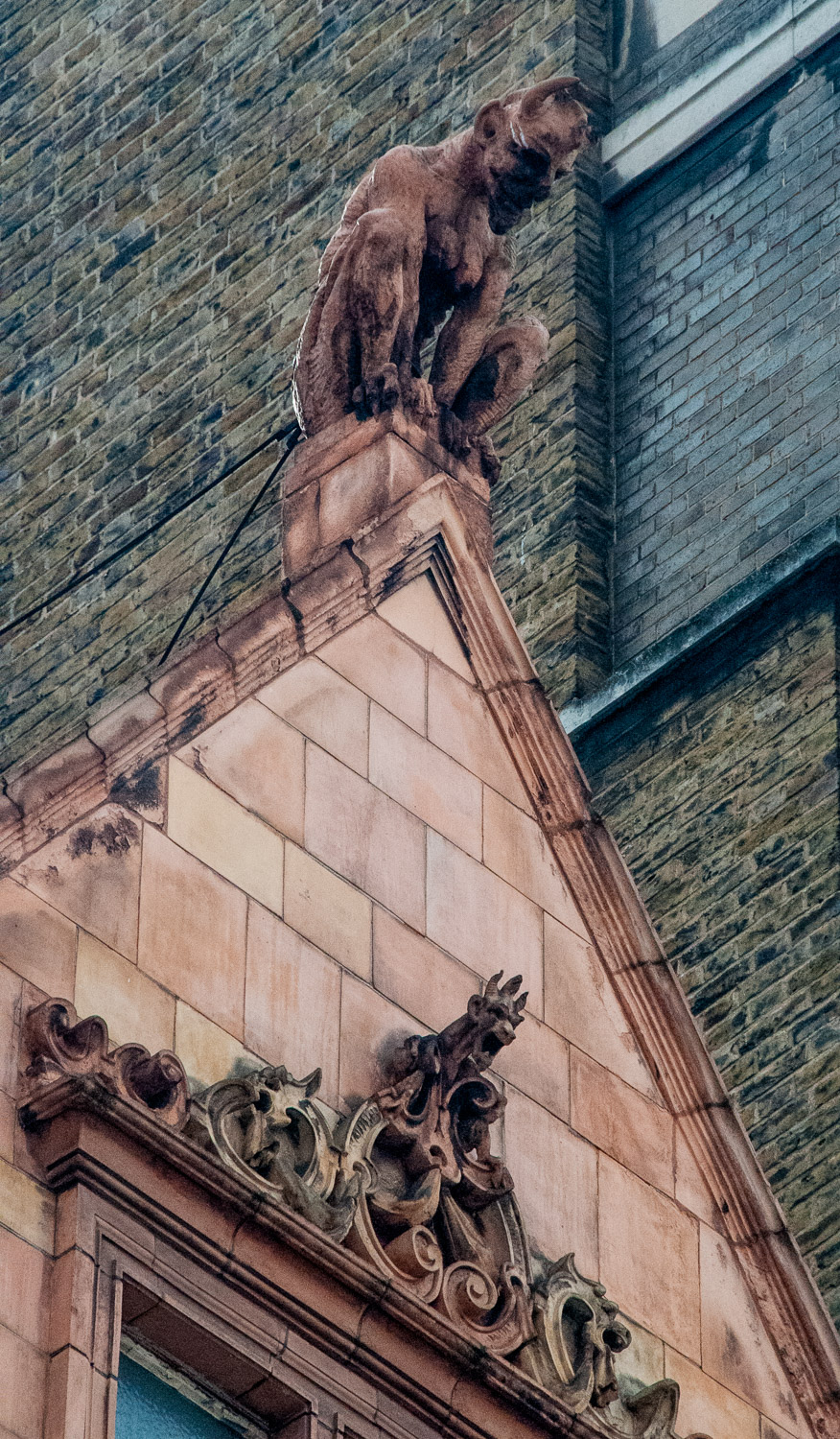
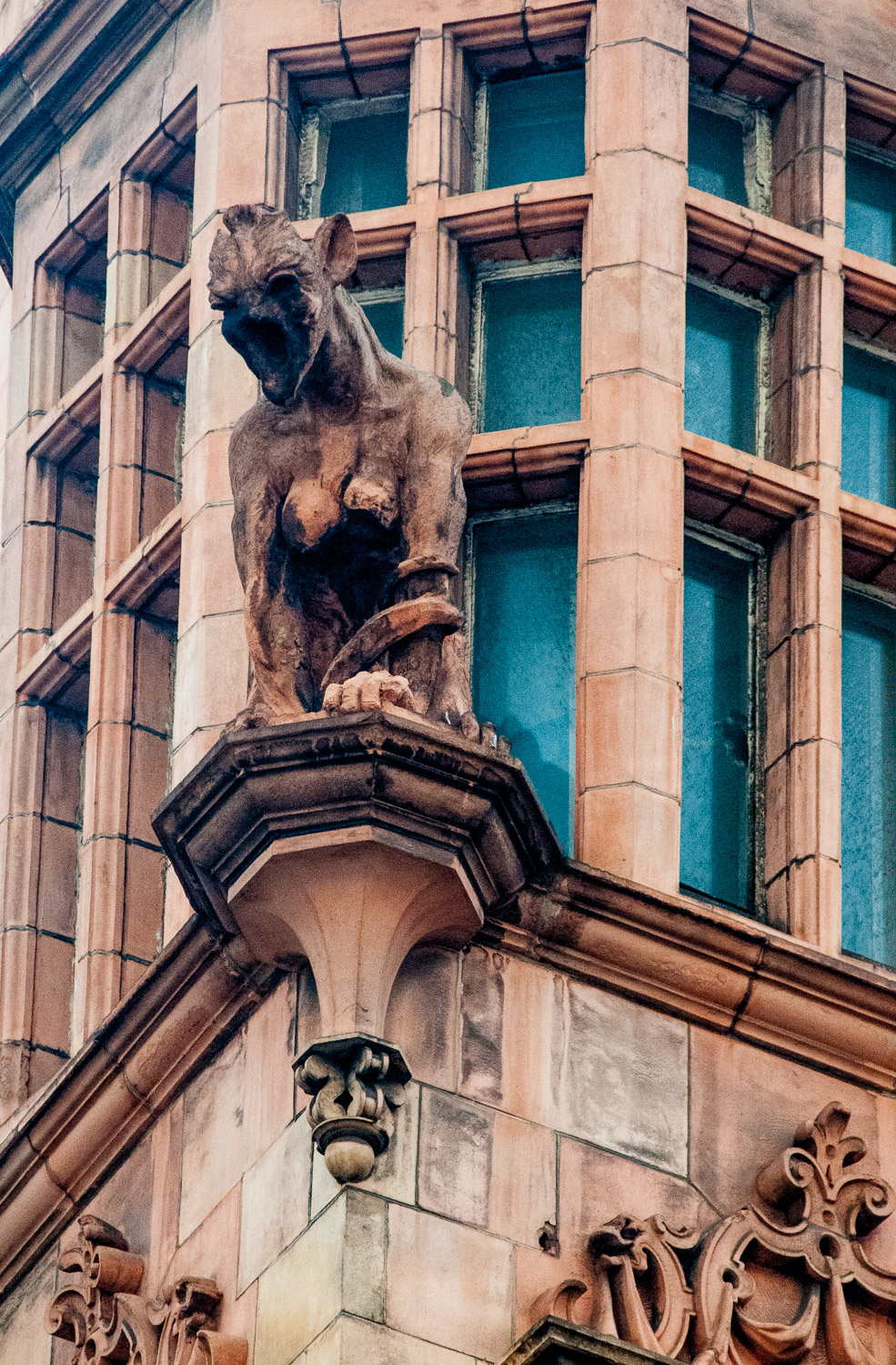
Closer inspection shows them to be devils, and rather angry and malevolent ones too …
They look down on St Peter upon Cornhill and are known as the Cornhill Devils (EC3V 3PD). The story goes that, when plans were submitted for the late Victorian building next to the church, the rector noticed that they impinged slightly on church land and lodged a strong objection. Everything had to literally go back to the drawing board at great inconvenience and expense. The terracotta devils looking down on the entrance to the church are said to be the architect’s revenge with the lowest devil bearing some resemblance to the cleric himself.
If this resembles the rector he must have been a pretty ugly guy!