Symbols & Secrets

Walking the City of London

Samuel Pepys and his ‘own church’


Samuel Pepys is one of my heroes. Clever, witty, curious, hard-working and, some would say, licentious, we owe him a lot. His diary gives us a wonderful insight into his times, and his work on the Navy Board and with the Admiralty played a major role in rebuilding England’s naval strength at a critical time in history. Not only that, his personal intervention with King Charles II probably helped curb the spread of the catastrophic Great Fire of 1666.

There are many, many books written about Pepys and a short little blog like this can’t really do him justice. So instead, in this and in future blogs, I will write  briefly about some of the places and events Pepys wrote about in his diary and see what remains of them today.
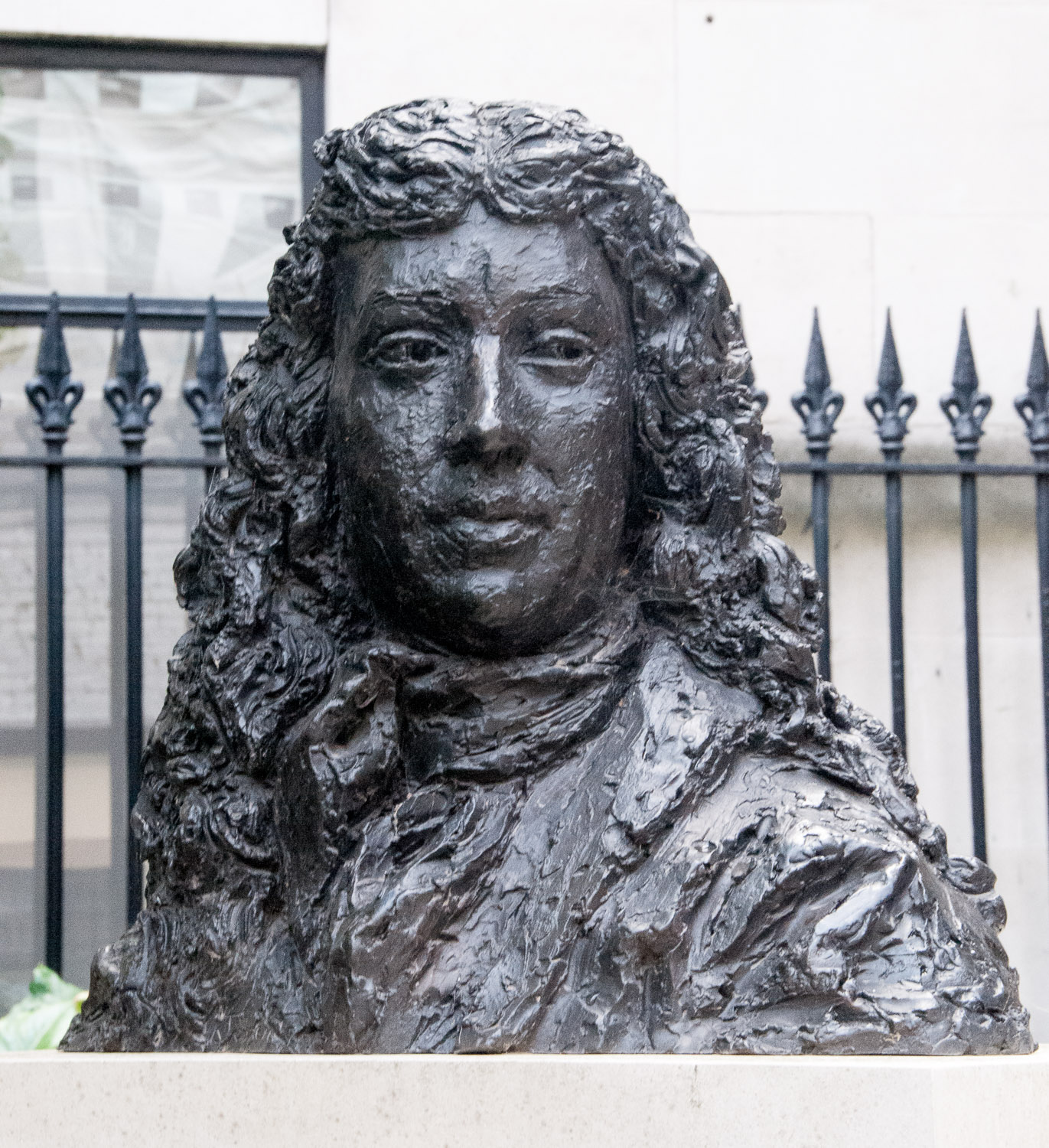
A bust of Samuel Pepys by Karin Jonzen, 1983, in the St Olave churchyard

In July 1660 the Pepys household moved to a house in the Navy Office building on Seething Lane and his famous diary dates from that year to 1669, when he stopped writing it because he feared losing his sight. This location meant that his local Church (‘our own church’ as he described it) became St Olave Hart Street, which is still there for us to explore today and is the subject of this blog. It has a really gruesome but stunning churchyard entrance incorporating impaled skulls and crossed bones dated 11th April 1658. The Latin inscription, roughly translated, reads ‘Christ is life, death is my reward‘ and the central skull wears a victory wreath.
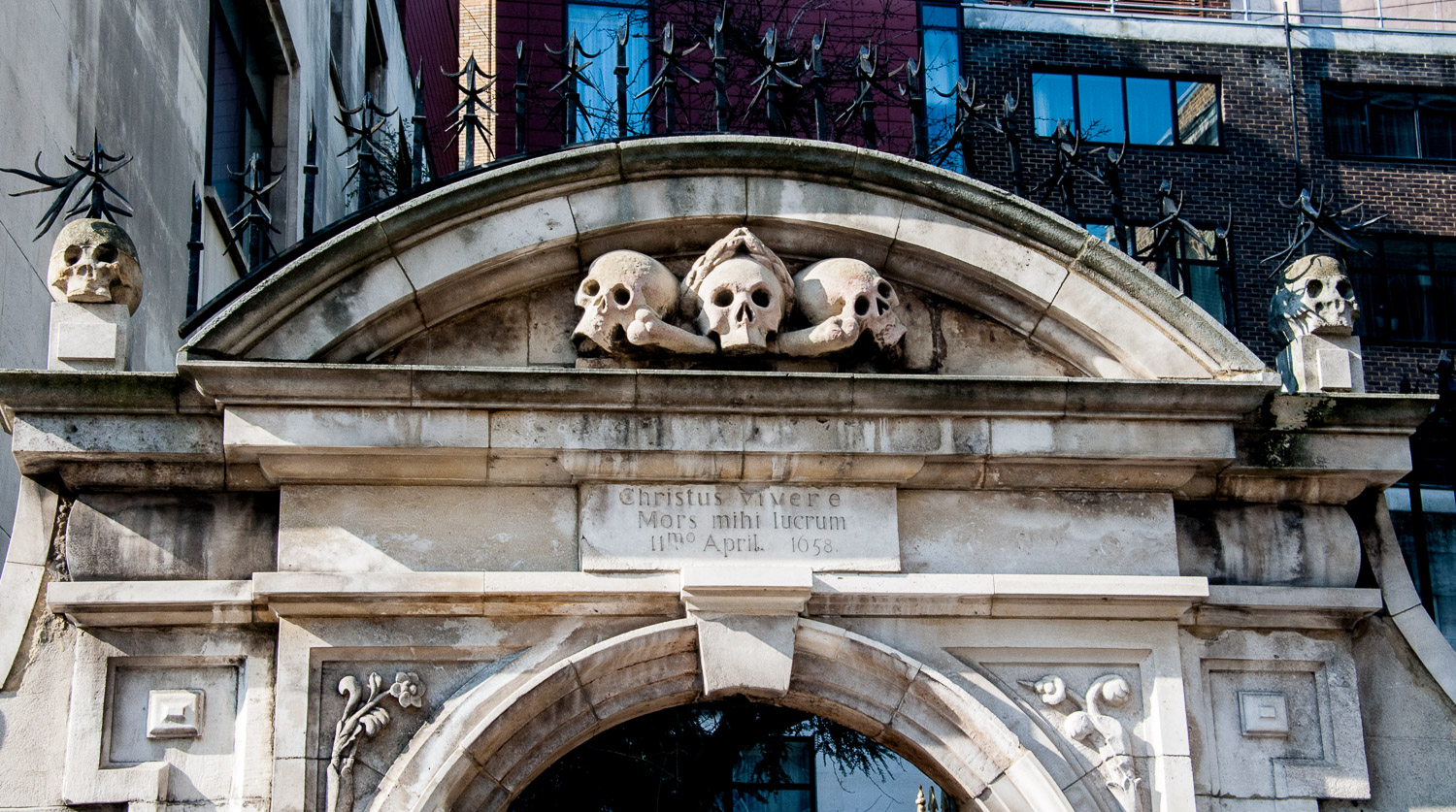
Charles Dickens called it ‘St Ghastly Grim’

Fortunately for us, Pepys was around to give us an intimate personal account of two of the most awful events that struck London in the seventeenth century – the ‘Black Death’ plague of 1665 and the Great Fire of 1666.

When in 1665 it became apparent that a major pestilence was striking London, Charles II and the entire Court moved to Oxford. The Privy Council was endowed with wide-reaching powers to try to control its spread, appointing ‘Searchers’ to seize dying victims and to quarantine both them and their households.

Pepys wrote on 7th June 1665 about a terrible sign he encountered on his way to Covent Garden:

‘I did in Drury Lane see two or three houses marked with a red cross upon the doors, ’Lord have mercy upon us’ writ there – which was a sad sight to me’.

Despite such efforts, the plague spread slowly and remorselessly. According to the official records, the ‘Bills of Mortality’, 68,596 people died of it in London in 1665 but the true figure was probably more like 100,000. Even the lower figure represents a very high percentage of the population at the time, which was about 460,000.

It had eventually subsided by January the following year and on January 30th 1666 he visited St Olave, but found the experience deeply shocking:

‘It frighted me indeed to go through the church… To see so many graves lie so high upon the churchyard, where many people have been buried of the plague.’

And five days later, on February 4th he wrote:

‘It was a frost and had snowed last night, which had covered the graves in the churchyard, so I was less afraid of going through’.

The churchyard survives, its banked-up top surface a reminder that it is still bloated with the bodies of plague victims, and gardeners still turn up bone fragments. Three hundred and sixty five were buried there including Mary Ramsay, who was widely blamed for bringing the disease to London. We know the number because their names were marked with a ‘p’ in the parish register.
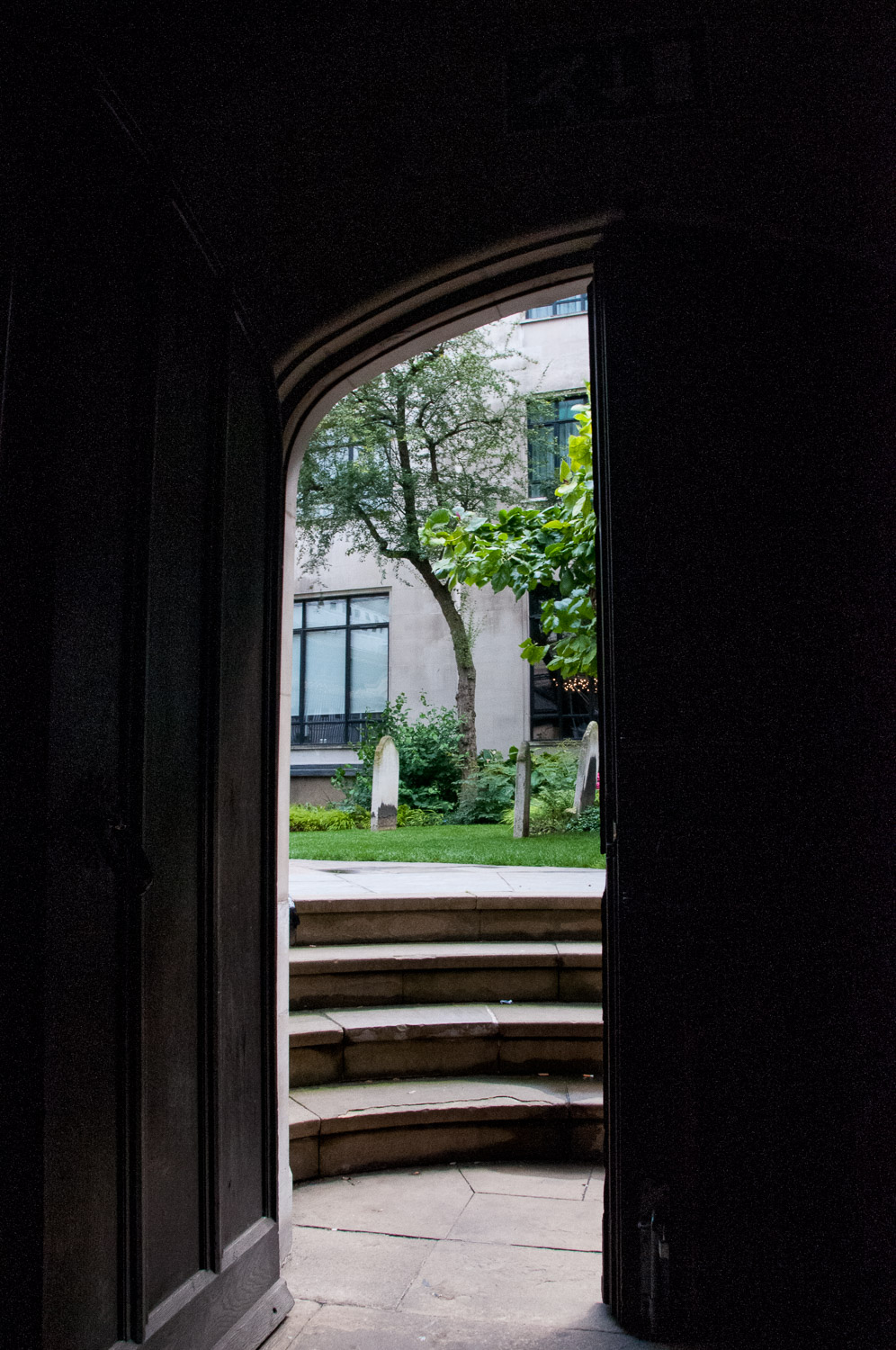
Note how much higher the graveyard is than the floor at the church door

In 1655 when he was 22 he had married Elizabeth Michel shortly before her fifteenth birthday. Although he had many affairs (scrupulously recorded in his coded diary) he was left distraught by her death from typhoid fever at the age of 29 in November 1669.

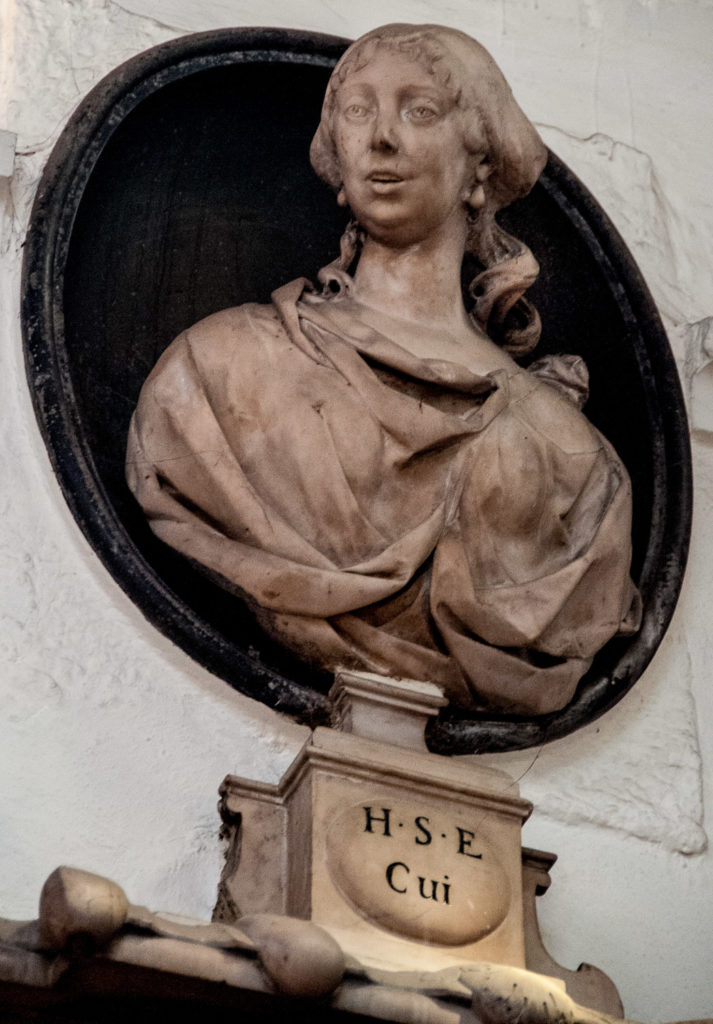
Do go into the church and find the lovely marble monument Pepys commissioned in her memory. High up on the North wall, she gazes  directly at Pepys’ memorial portrait bust, their eyes meeting eternally across the nave where they are both buried. When he died in 1703, despite other long-term relationships, his express wish was to be buried next to her.
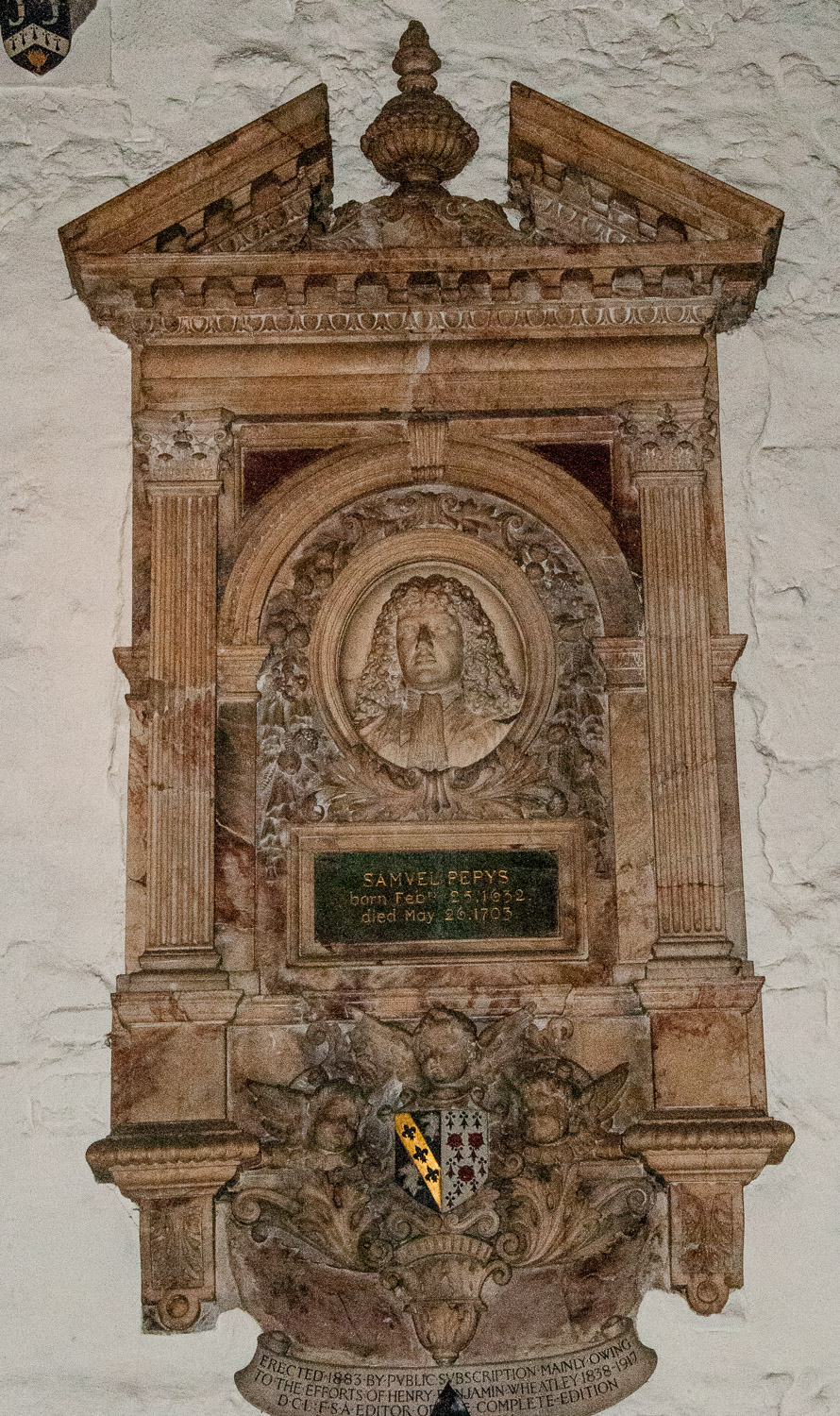
Memorial to Samuel Pepys

And the sculpture of Elizabeth – I think she looks beautifully animated, like she is in the middle of a conversation.
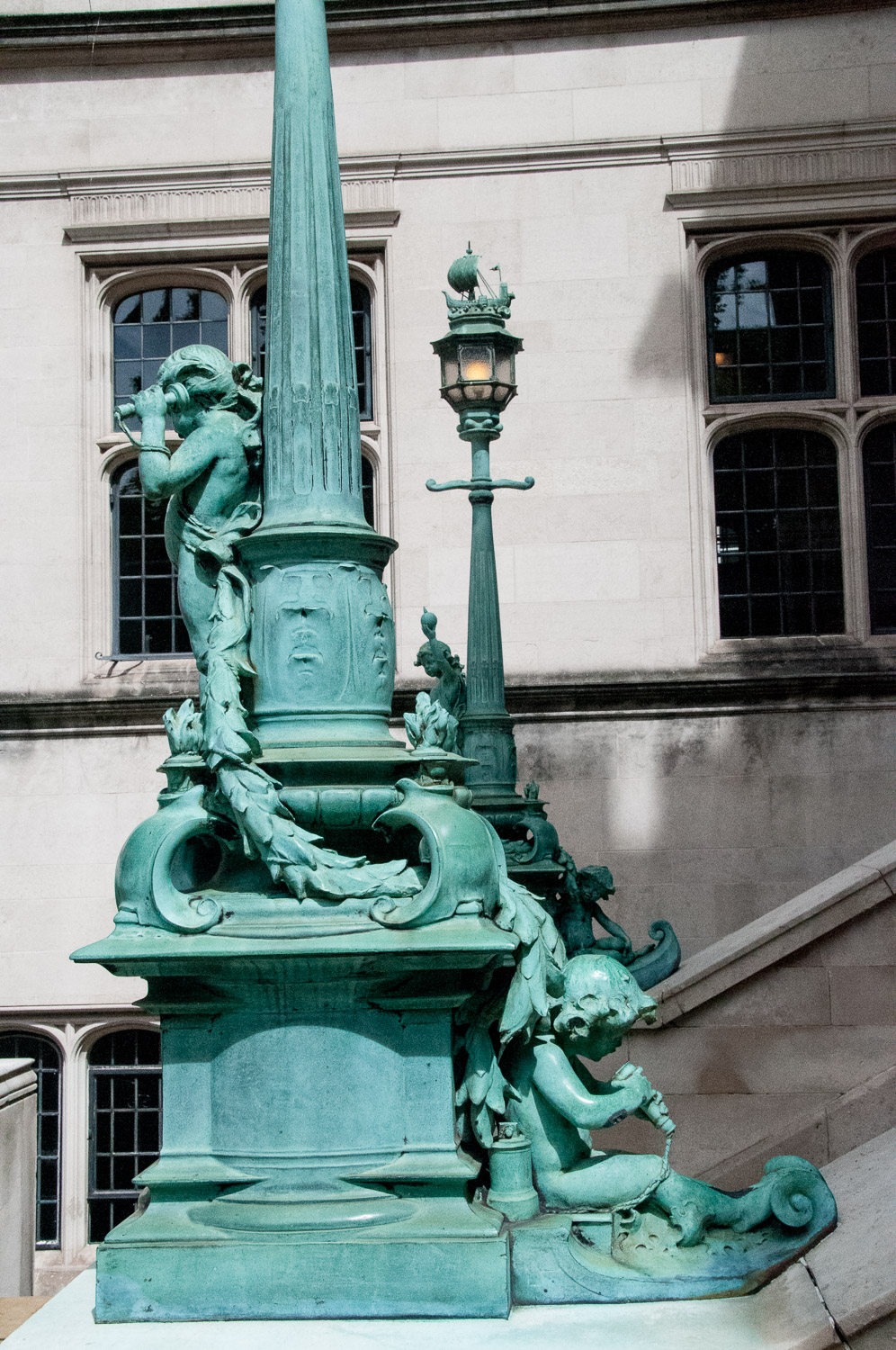
 

Charming Cherubs

They are everywhere in the City, watching over us from their lofty perches for literally hundreds of years. I always associated them with church buildings but they have now taken on many secular duties.

They are, of course, Cherubs. Called putti in Italian, they were originally little winged infants deployed in Christian art and architecture but over the centuries came to be used in a wider decorative fashion. Recently I have been walking around the City admiring their antics.

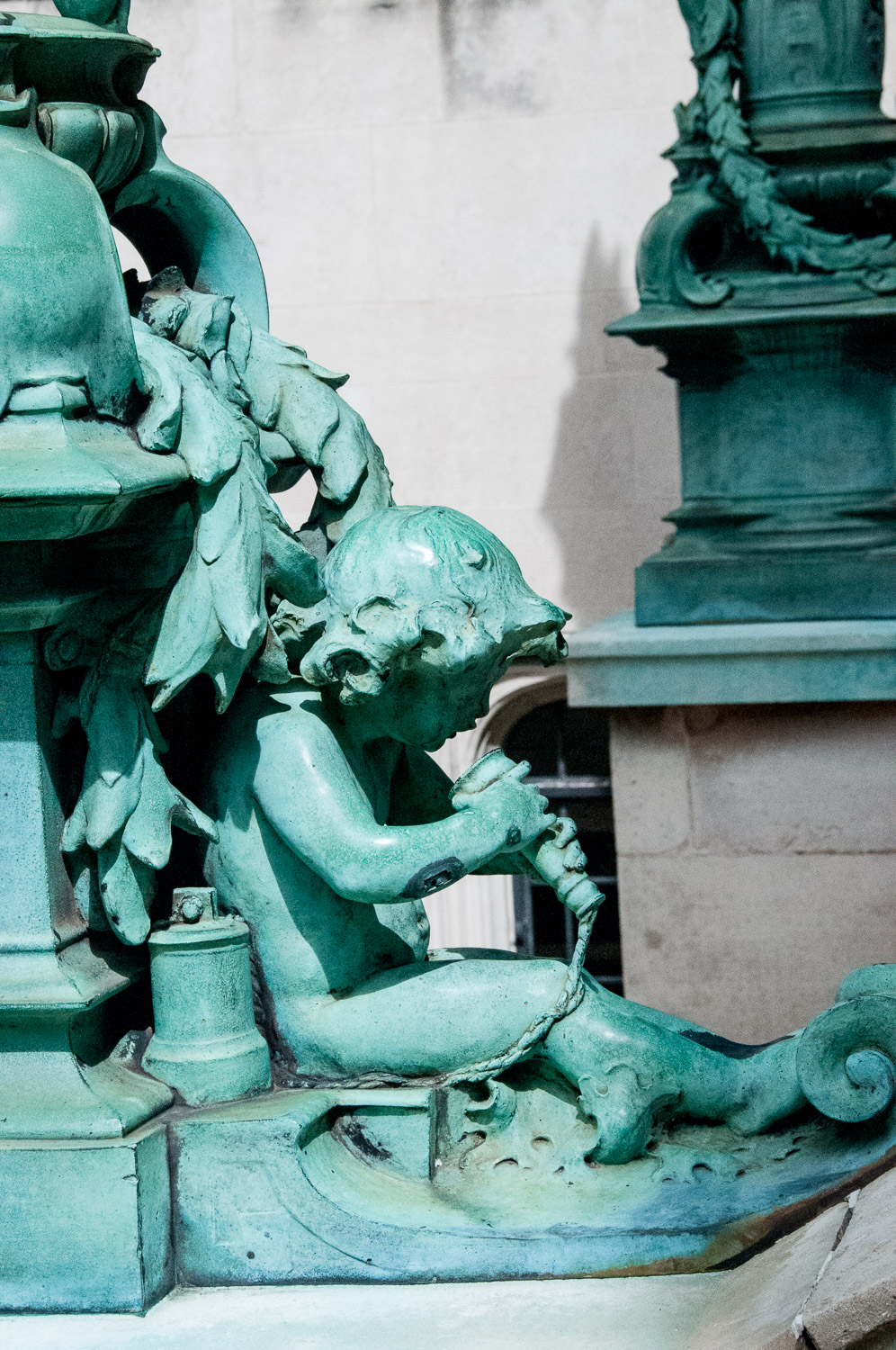
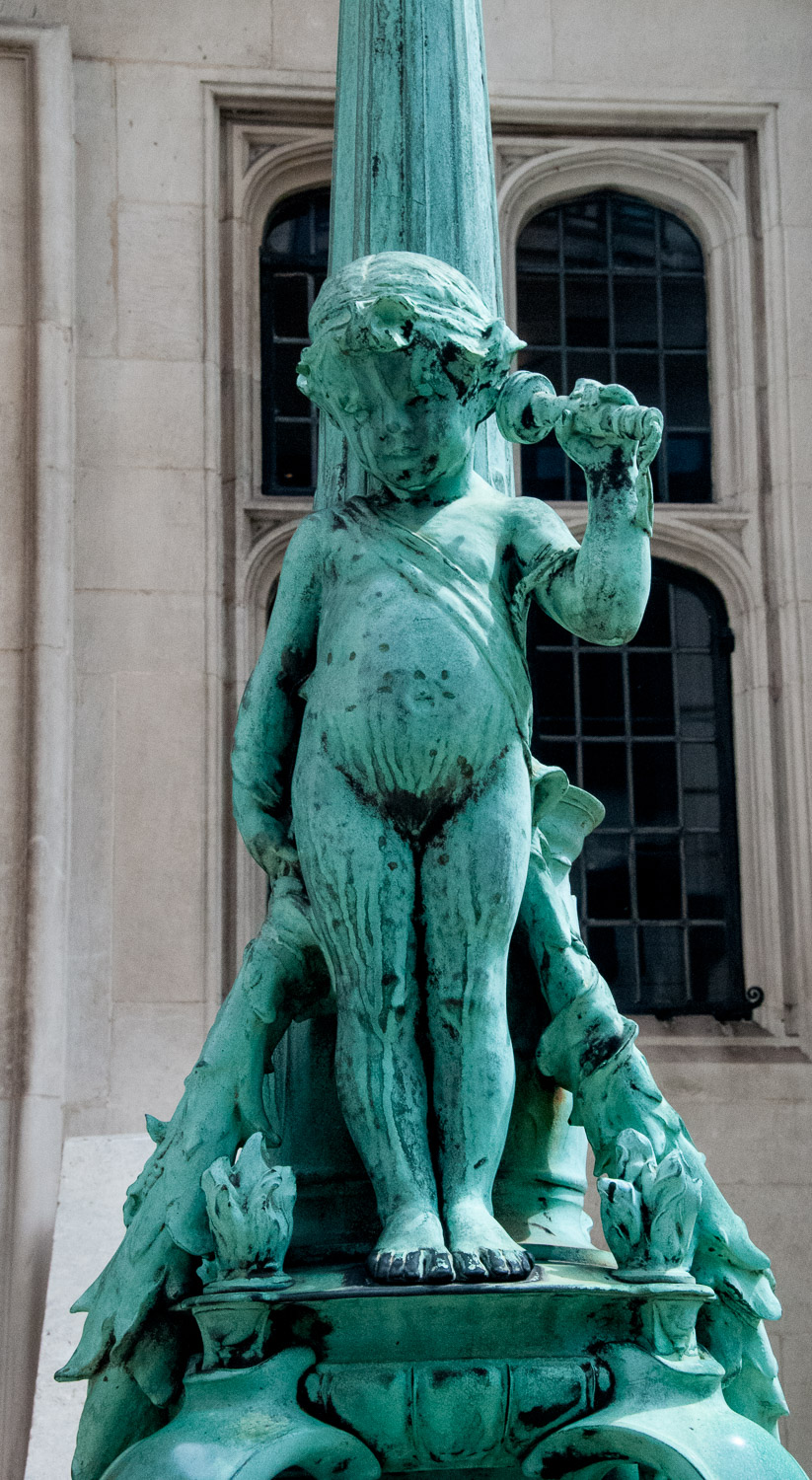
These two are enjoying chatting to one another on early 20th Century telephones. Now known as 2 Temple Place, the house was built in 1892 for William Waldorf Astor and was one of the first London residences to have a telephone installed. Astor’s incredibly generous philanthropy earned him a peerage and later, in 1917, he was elevated (somewhat controversially) to the rank of Viscount.

‘Can you hear me?’


‘Yes, I’m listening …’

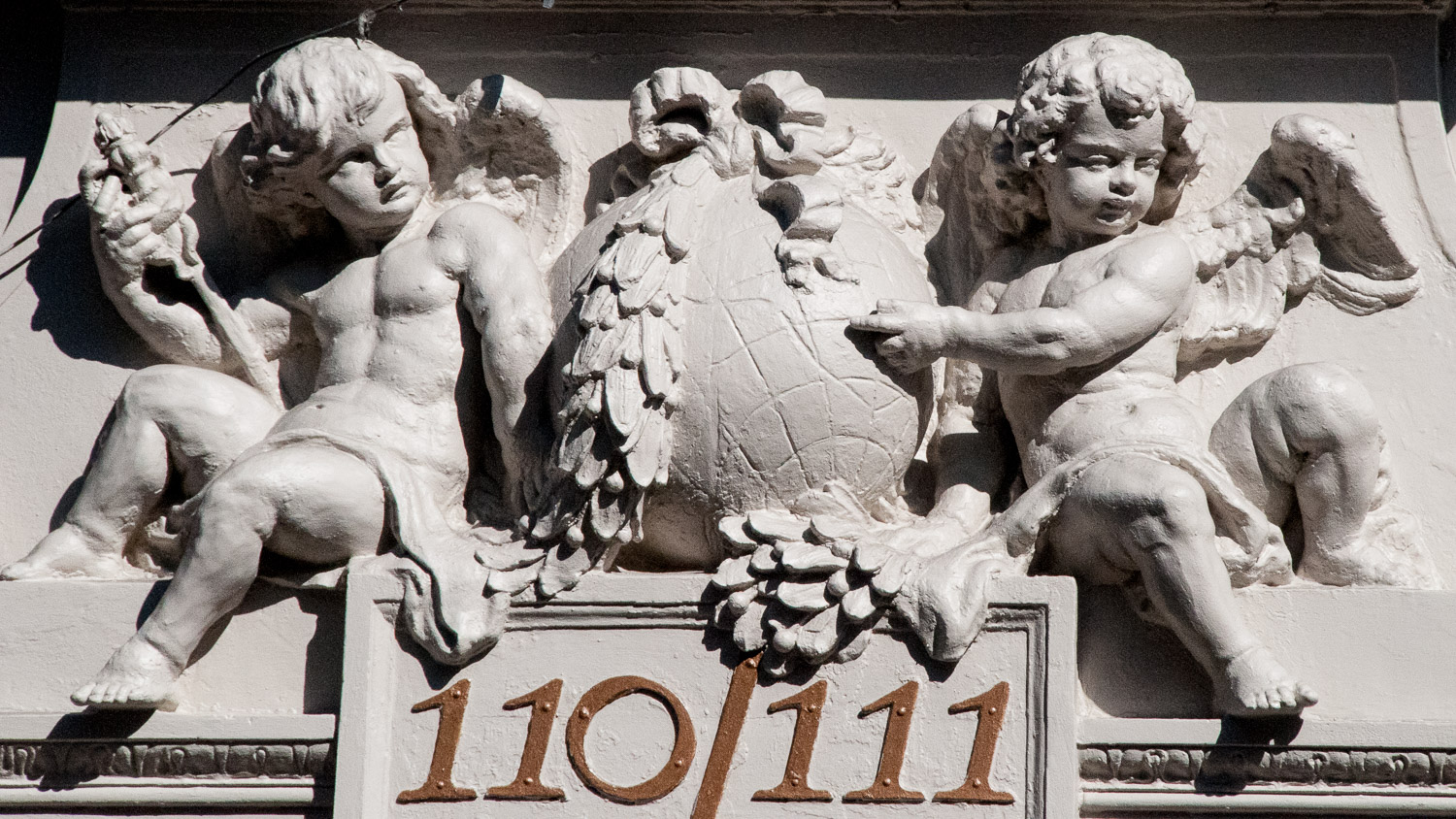
There are some nice recently spruced-up cherubs at 110-111 Fleet Street. They are supporting a globe since this building was originally the London headquarters of the Thomas Cook travel agency. Built in 1865, the first floor was a temperance hotel in accordance with Cook’s beliefs.

‘This is where we are going for our holidays’

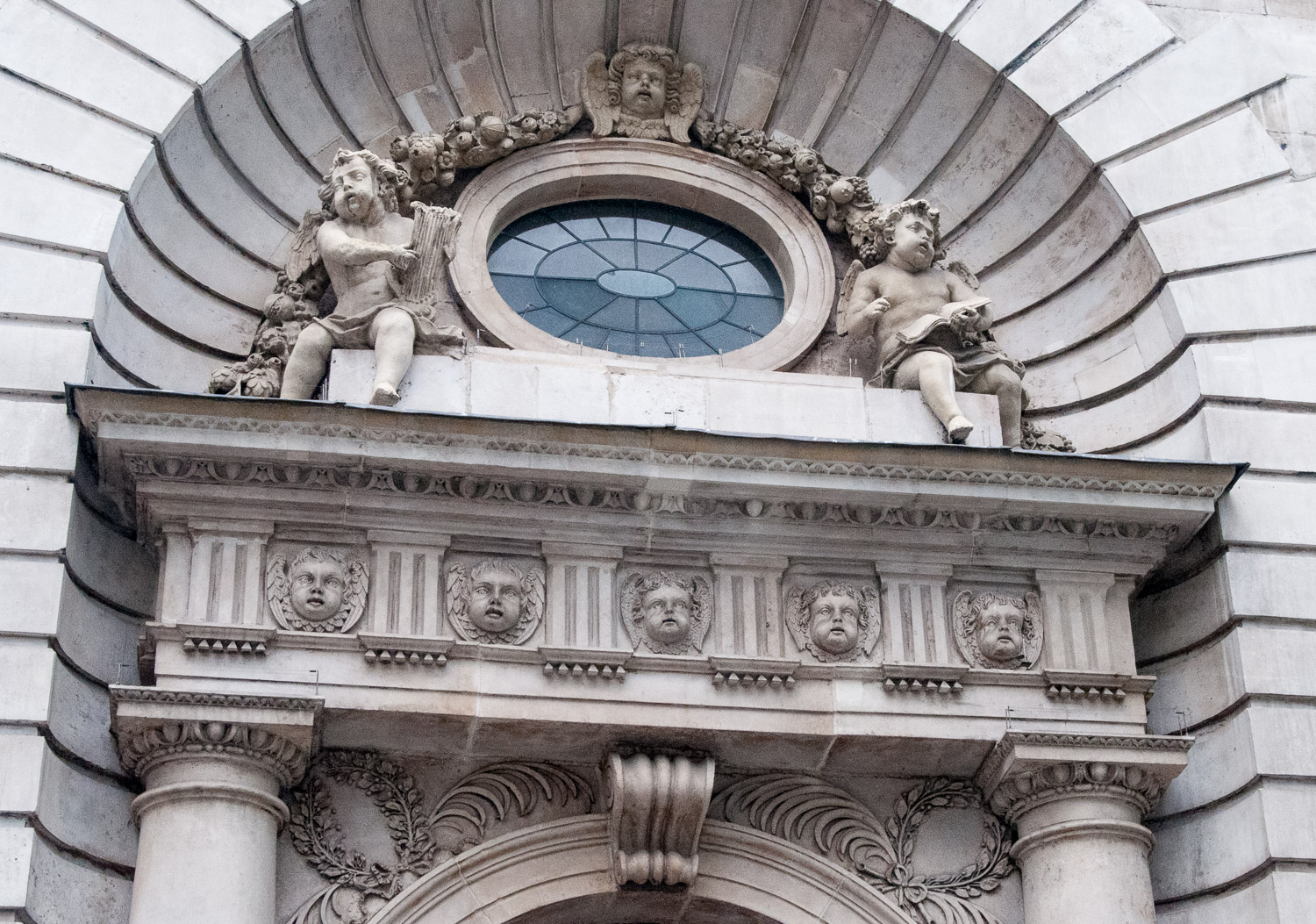
If you find yourself walking down Cheapside, do stop and admire the more traditional eight cherubs over the portico at Christopher Wren’s St Mary-le-Bow. There is a line of little winged cherub heads which, if you look closely, you will see are not identical. The two full-figured cherubs are extremely plump – one is playing a musical instrument and the other reading a book, presumably the bible.

St Mary-le-Bow, Cheapside

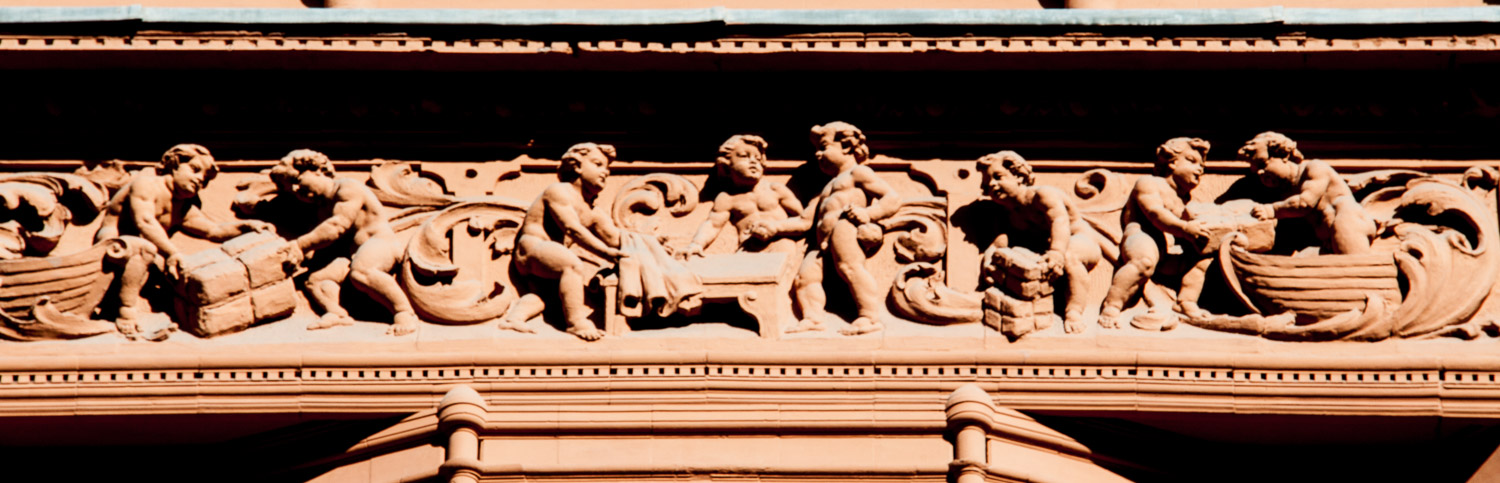
In Cannon Street look up towards the roof of number 123 . Here are numerous terracotta cherubs who look like they are running an import/export business

Industrious cherubs running a business


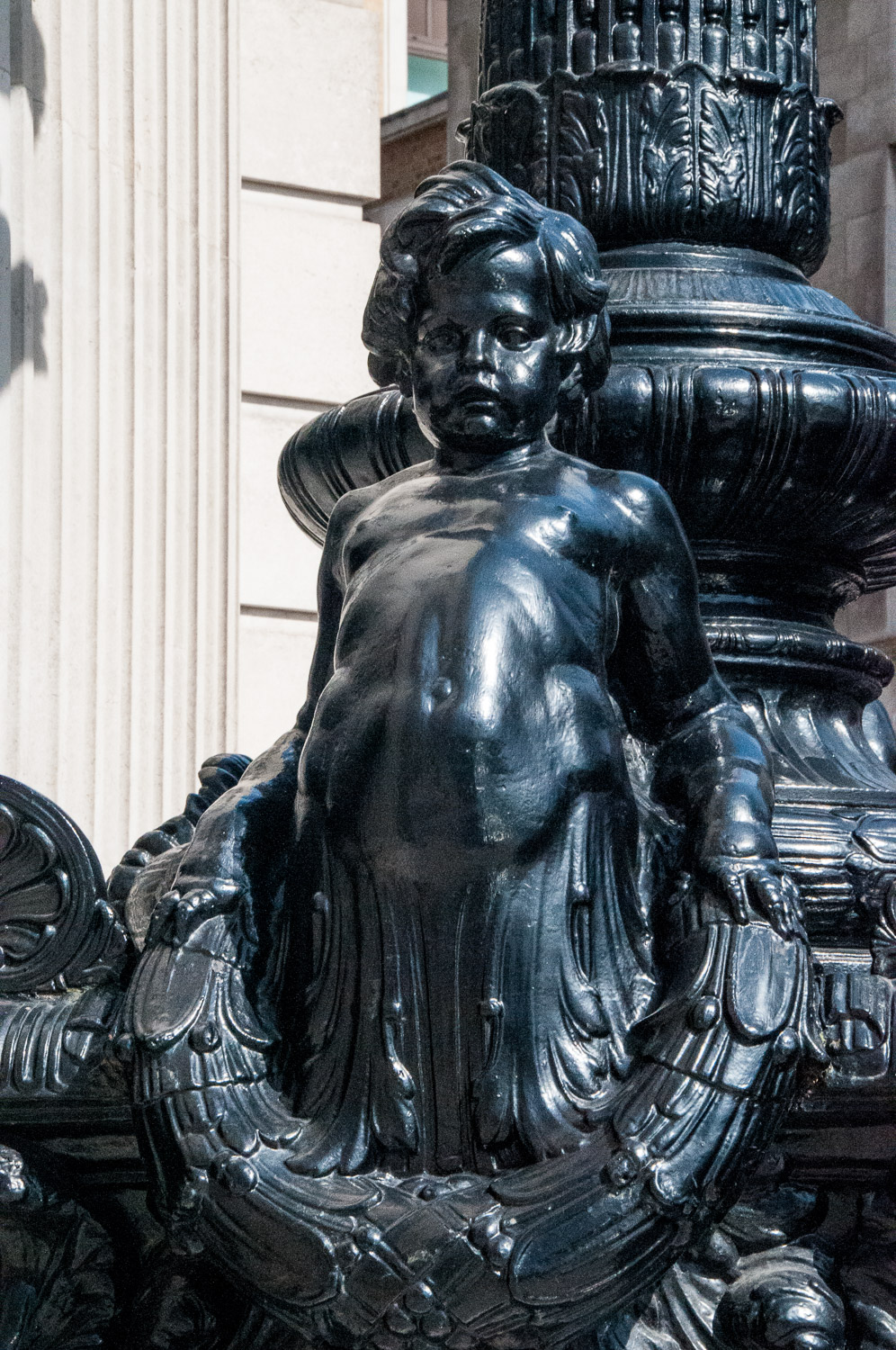
Resting against a lamppost outside 10 Trinity Square. When this was the headquarters of the Port of London Authority, hundreds of people would have walked past him every day to pay their dues on goods landed in the port. It’s now a hotel.

The former Port of London Authority building built 1912-22


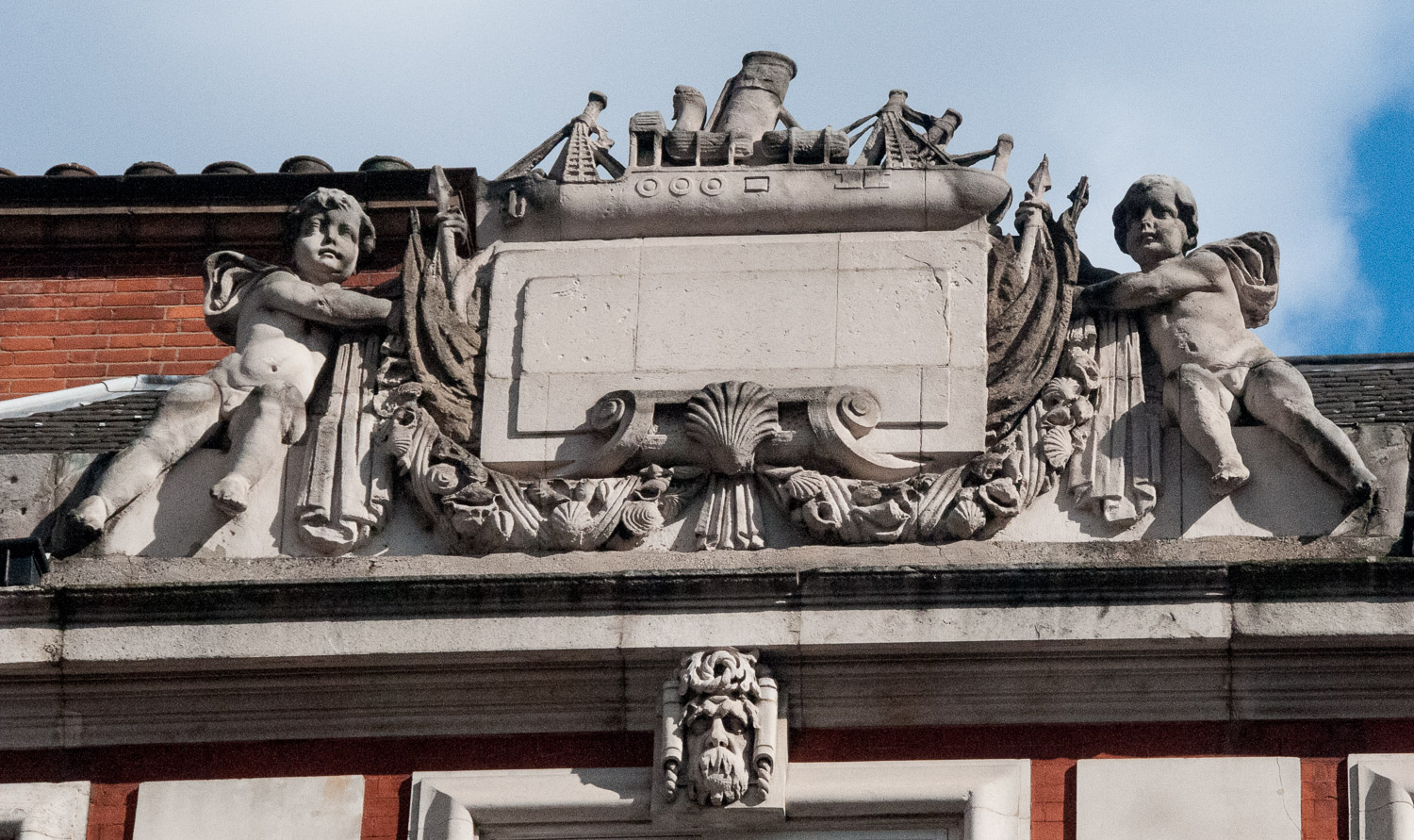
Supporting a cartouche is hard work, especially if there is a ship on top of it.

In Tooley Street opposite London Bridge Underground Station

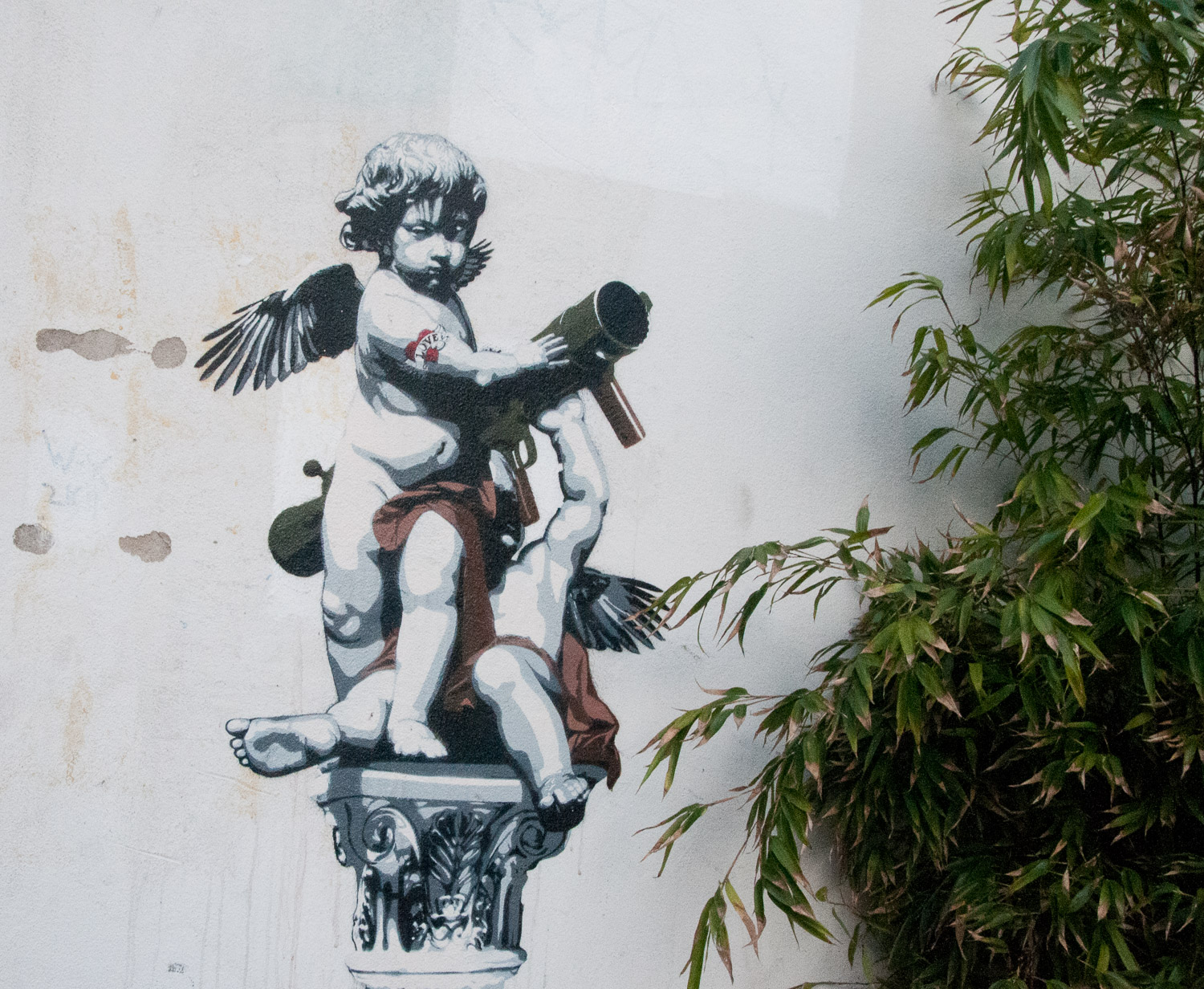
And finally these two painted on a wall in Whitecross Street – is that a bazooka they are assembling? Best not to upset these little chaps.

Outside 124 Whitecross Street


City Animals

Once I decided to look for animals in the City I started to find them everywhere and here are just a few.

A boar pokes its head out from behind some foliage, sheep stroll past St Paul’s Cathedral and King Charles II’s spaniels are immortalised on one of the City’s most  modern buildings.

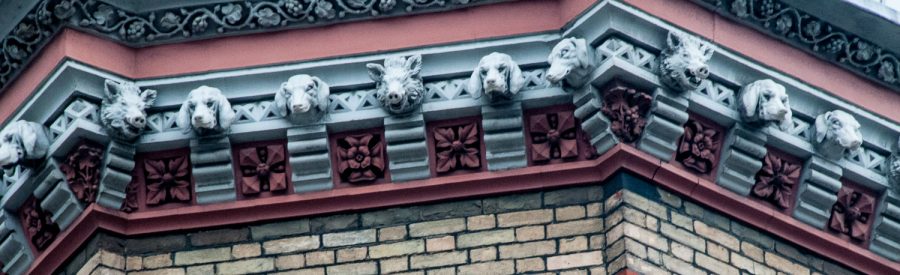
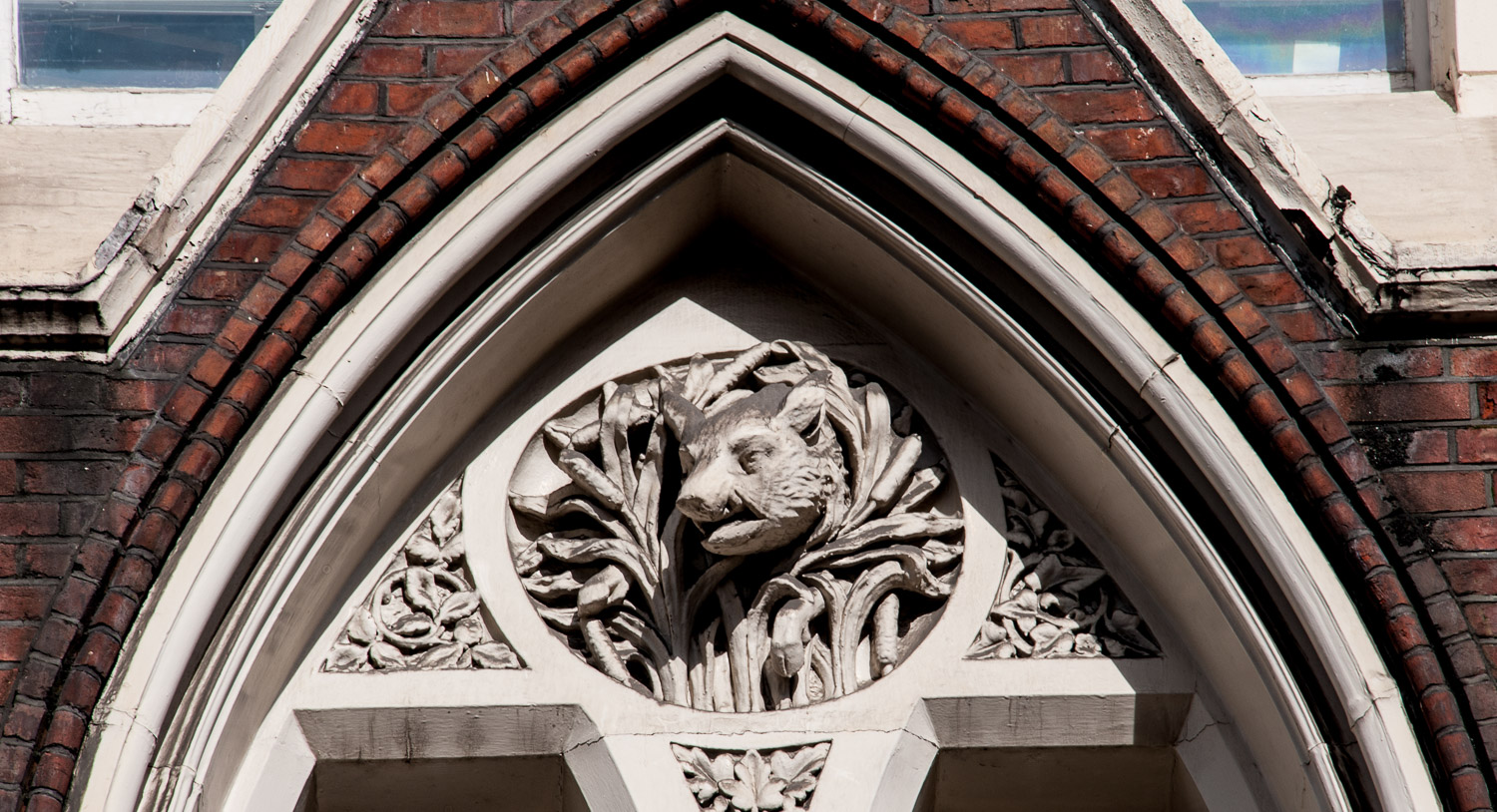
The Boar’s Head Tavern in Eastcheap was where Shakespeare set the meetings of Sir John Falstaff and Prince Hal in his Henry IV plays. The present building (at numbers 33-35) dates from 1868 and references the Boar’s Head in its design by including a boar peeping out of bushes along with portrait heads of Henry IV and Henry V. The building exterior is extraordinary and I shall write about it in more detail in a future blog. Ian Nairn, the architectural critic, called it ‘the scream you wake on at the end of a nightmare’.


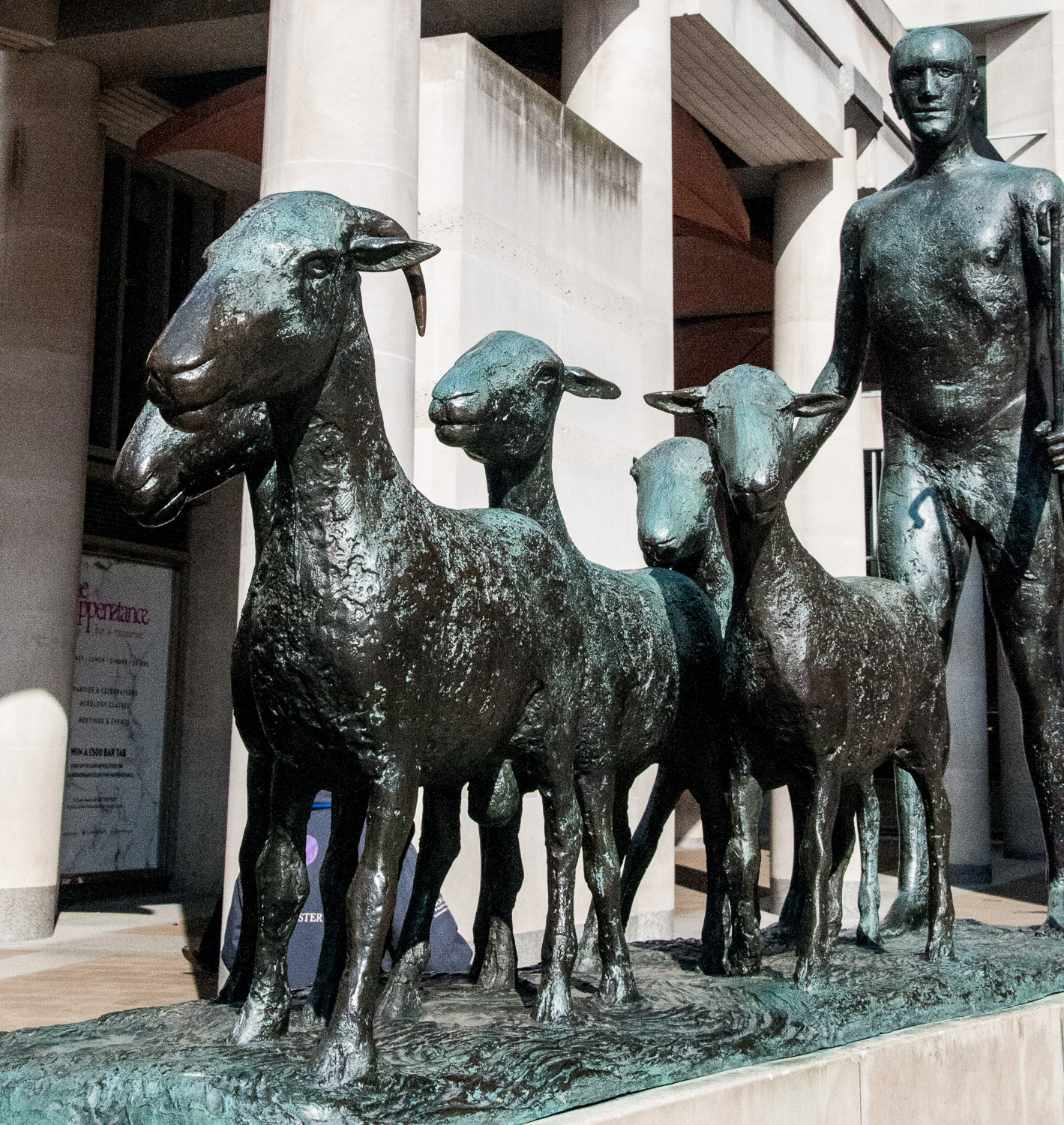
Sheep wander past St Paul’s

In Paternoster Square is a 1975 bronze sculpture by Elisabeth Frink which I particularly like – a ‘naked’ shepherd with a crook in his left hand walks behind a small flock of five sheep. Dame Elisabeth was, anecdotally, very fond of putting large testicles on her sculptures of both men and animals. In fact, her Catalogue Raisonné informs us that she ‘drew testicles on man and beast better than anyone’ and saw them with ‘a fresh, matter-of-fact delight’. It was reported in 1975, however, that the nude figure had been emasculated ‘to avoid any embarrassment in an ecclesiastical setting’. The sculpture is called called ‘Paternoster’. In pre-Reformation times there was a market there for rosary beads (known as Paternosters, after the first words of the Lord’s prayer).  The sculpture also references the connection between the area and the Newgate livestock market.

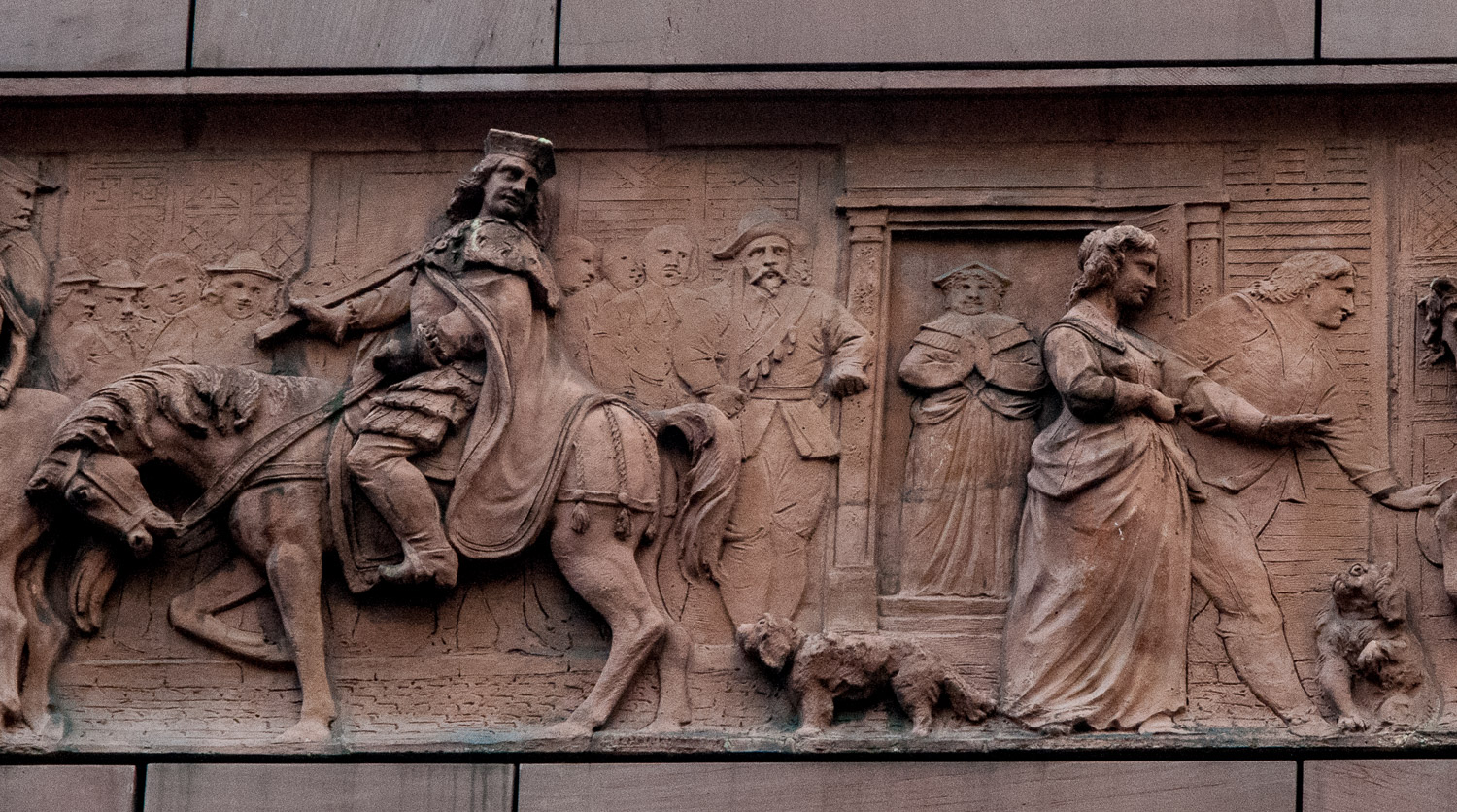
Like many others, I was really sad to witness the demolition of what was usually called the Mappin & Webb building at Bank junction and see it replaced in 1997 by ‘1 Poultry’ by James Stirling. Nonetheless, if you look up at the North side of the building you will see a fascinating survivor of the original building of 1875. In red terracotta it portrays royal progresses and shows visits to the City of (from left to right) Edward VI, Elizabeth I, Charles II and Queen Victoria. Look closely and you will see Charles is accompanied by his faithful spaniels. The incorporation of the panels was part of the listed building consent and we have the planning officer at the time, Tony Tugnutt, to thank for them being placed on Cheapside (where they used to be) rather than over the service entrance as originally suggested. I think they blend in with the new building extremely well.

King Charles II with two of his spaniels – Sculptor Joseph Kremer


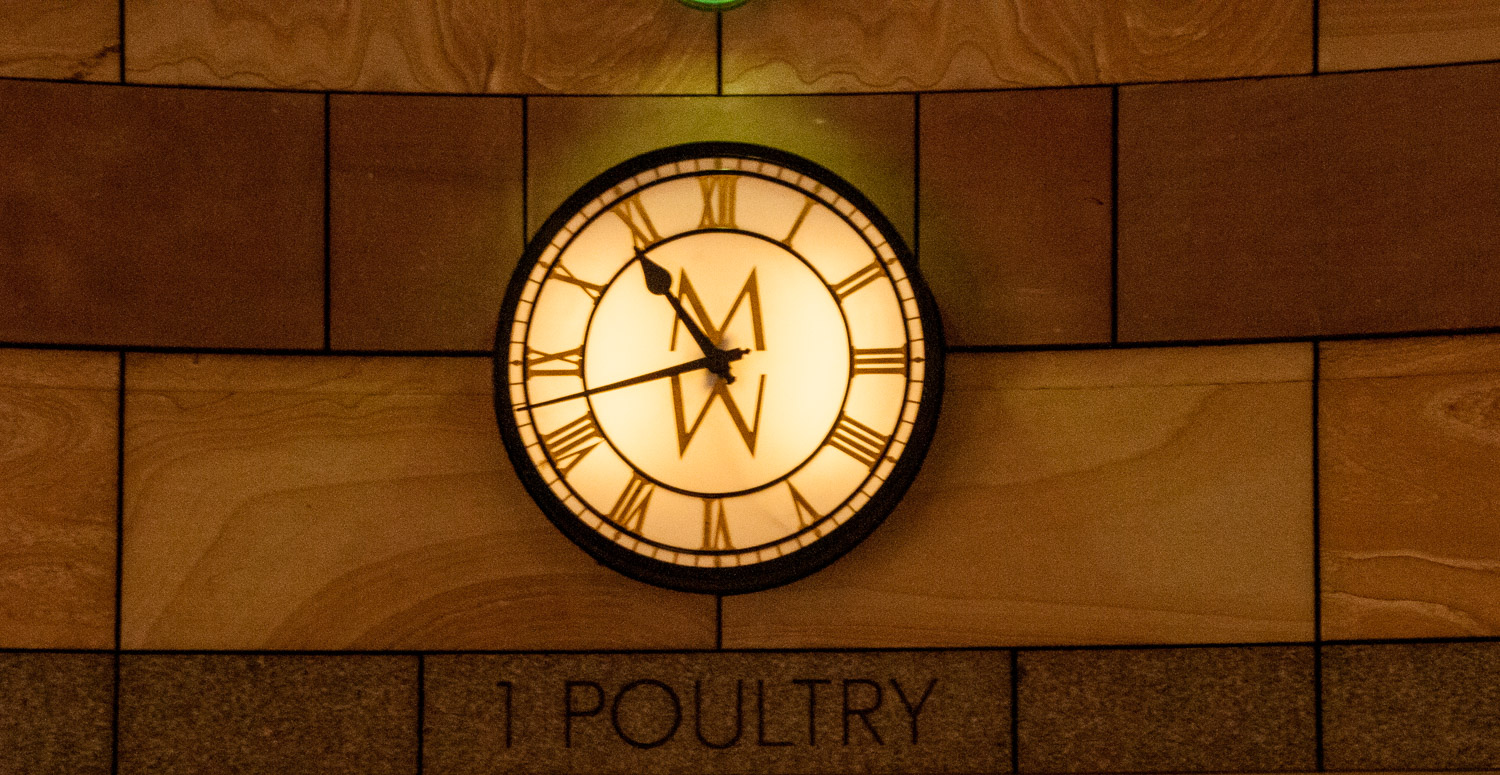
When I started work in Queen Victoria Street I always glanced at the Mappin & Webb clock as I left Bank station to see if I had to run to ‘sign in’ on time. Even though the building has disappeared, the clock has been re-sited inside the new building’s rotunda.

The old Mappin & Webb clock

Page 149 of 151

Powered by WordPress & Theme by Anders Norén

Symbols & Secrets
Privacy Overview

This website uses cookies so that we can provide you with the best user experience possible. Cookie information is stored in your browser and performs functions such as recognising you when you return to our website and helping our team to understand which sections of the website you find most interesting and useful.