Symbols & Secrets

Walking the City of London

City Animals 2

Animals are everywhere in the City and, after some really nice feedback on my previous City Animals blog, I have decided to put together another selection.

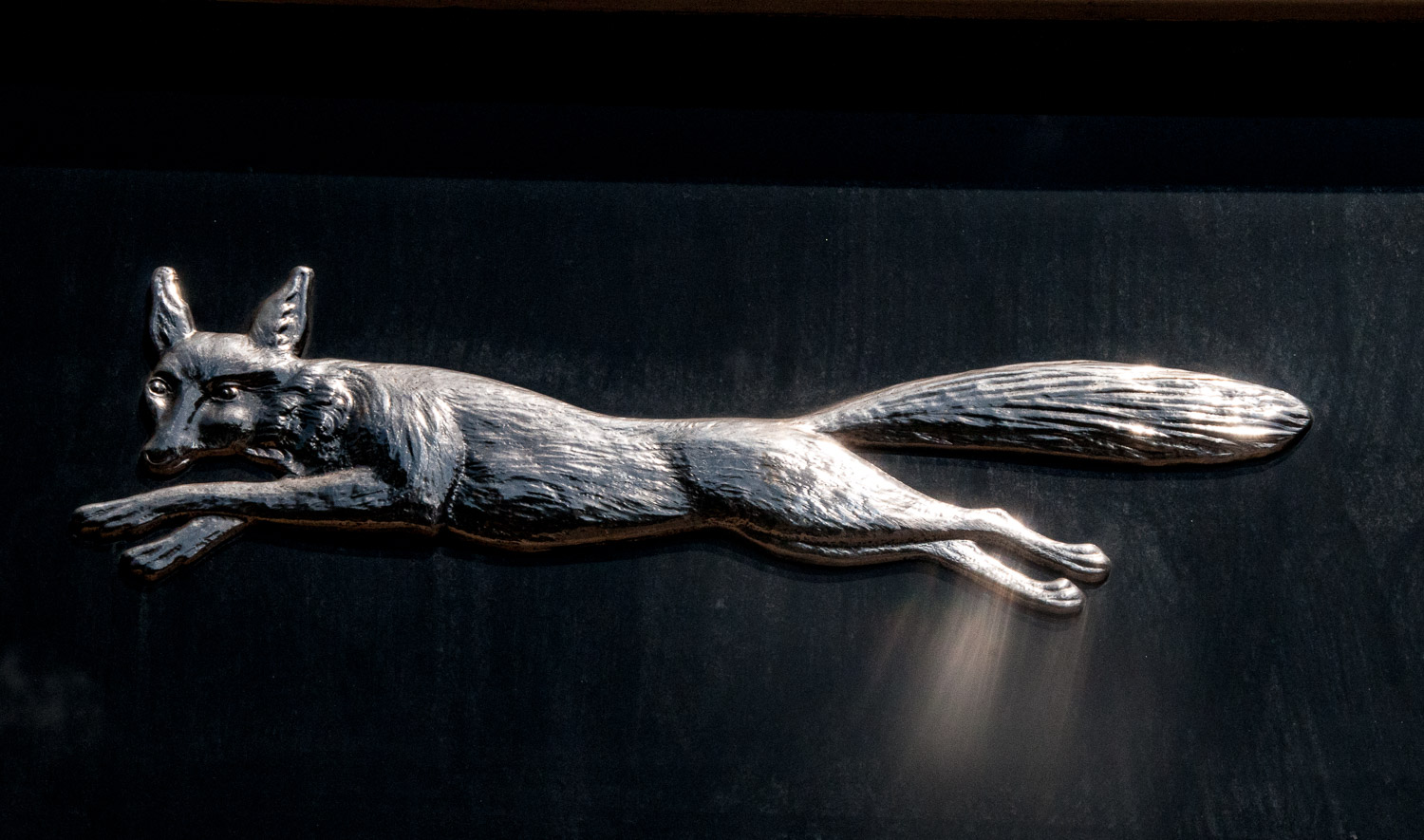
First up is this magnificent leaping fox. It appears on the exquisite Grade II listed Art Deco shopfront of the Fox company, who manufactured and repaired umbrellas. Mr Fox opened his first shop in the City in 1868 but this shop dates from 1935. You can still purchase a classy Fox umbrella if you go to their website, but the shop is now a wine bar.
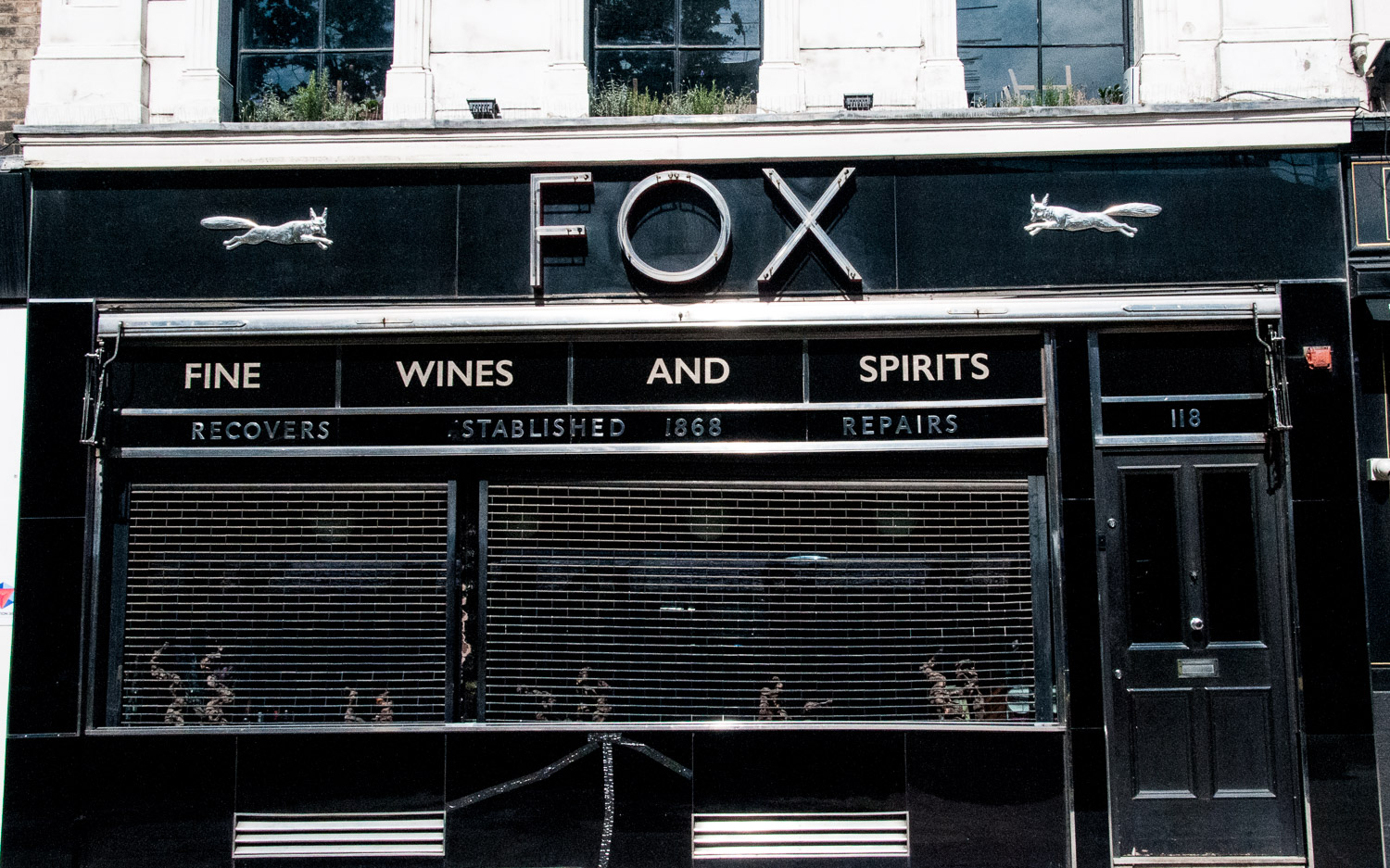
Fox and Company Limited, ‘Recovers’ and ‘Repairs’, 118 London Wall, EC2

It’s easy to understand why lion heads have been chosen to adorn so many late Victorian and early 20th Century buildings. They are fierce, brave, noble, the king of the beasts and, of course, immediately recognisable as a symbol of Great Britain in the heyday of Empire.
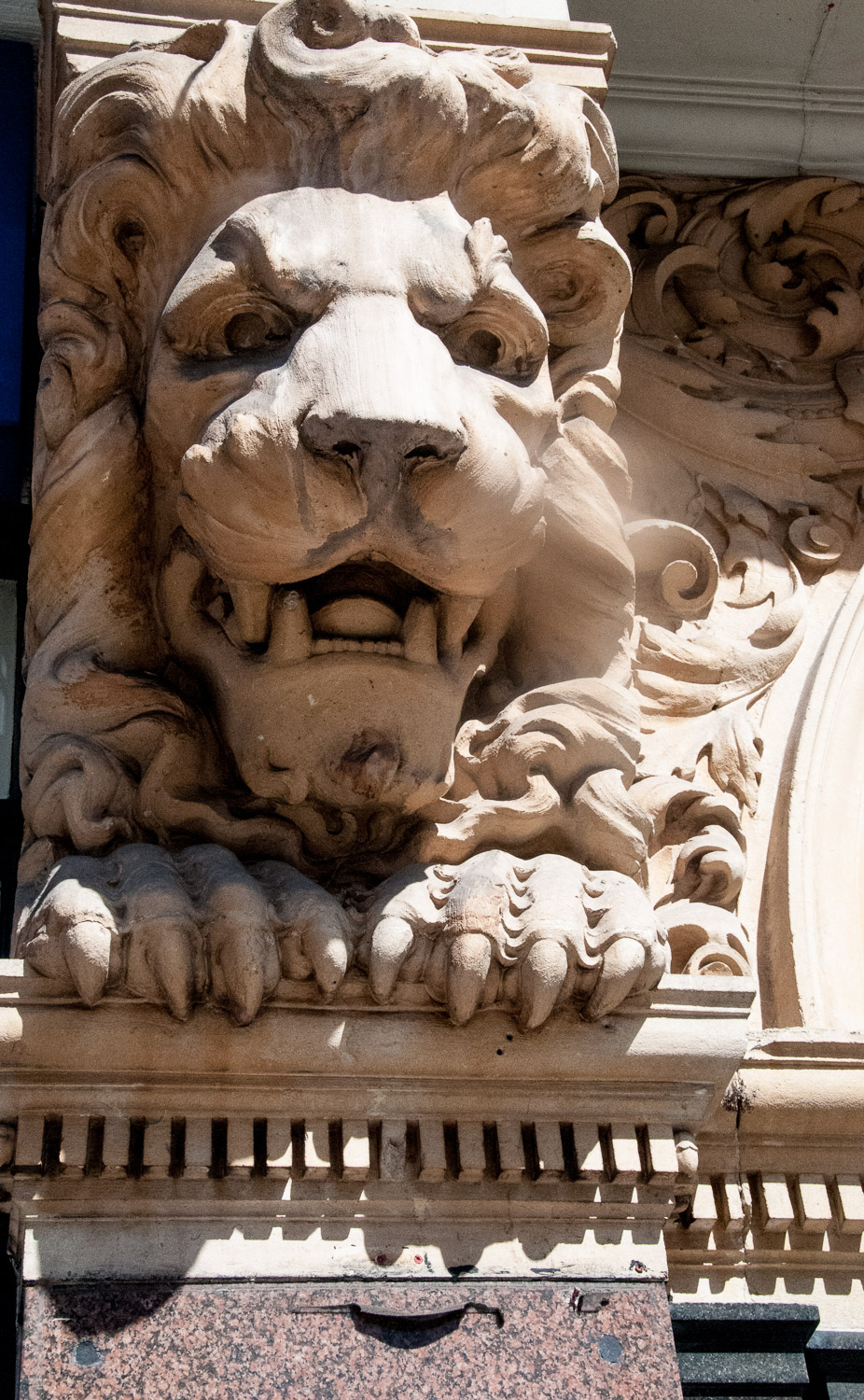
Grrrrr …. just look at those teeth and claws. Entrance to Salisbury House, London Wall

Once surrounded by the throbbing printing presses of Fleet Street newspapers, Gough Square is today a quiet haven off the noisy main road. Now known as Dr Johnson’s House, 17 Gough Square was built by one Richard Gough, a City wool merchant, at the end of the seventeenth century. It is the only survivor from a larger development and Dr Johnson lived here from 1748 to 1759 whilst compiling his famous disctionary.
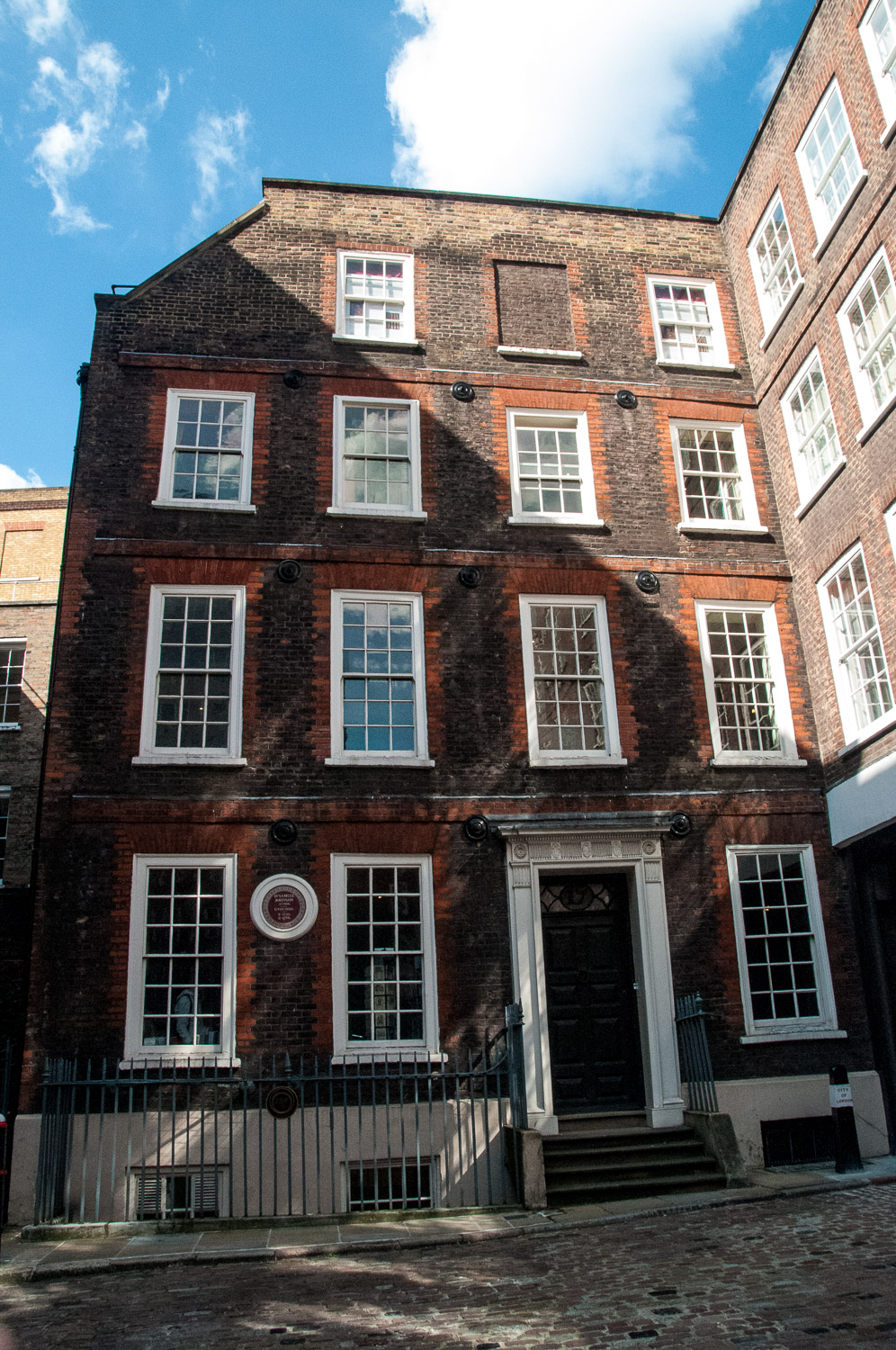
17 Gough Square

Nearby, Johnson’s most famous cat, Hodge, is remembered by this attractive bronze by John Bickley which was unveiled by the Lord Mayor, no less, in 1997. Hodge sits atop a copy of the dictionary and alongside a pair of empty oyster shells. Oysters were very affordable then and Johnson would buy them for Hodge himself. James Boswell, in his Life of Johnson, explained why:

I never shall forget the indulgence with which he treated Hodge, his cat: for whom he himself used to go out and buy oysters, lest the servants having that trouble should take a dislike to the poor creature

People occasionally put coins in the shell for luck and every now and then Hodge is given a smart bow tie of pink lawyers’ ribbon.
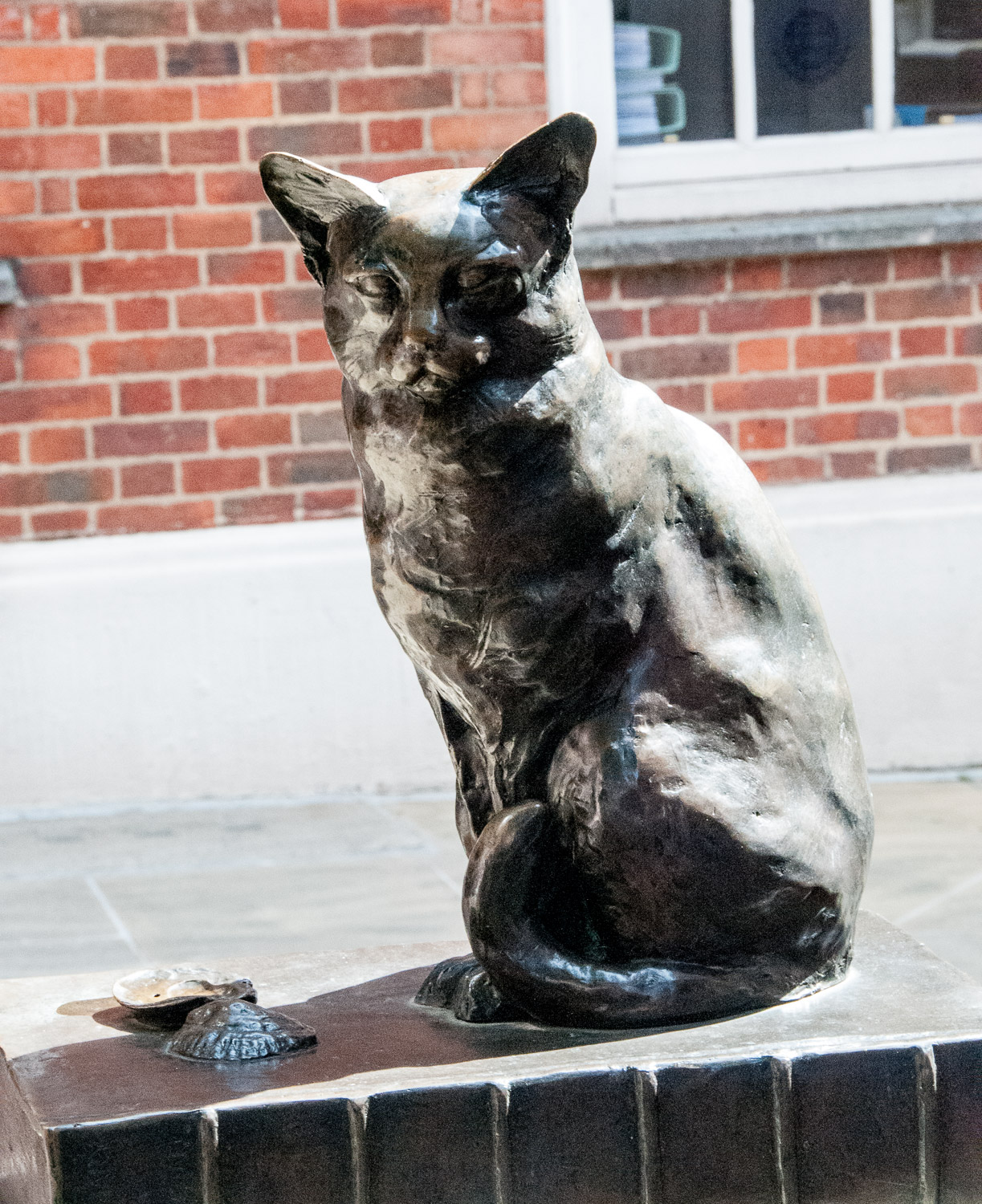
‘A very fine cat, a very fine cat indeed’, said Johnson

And from a famous cat to mysterious mice. Nibbling a piece of cheese, they add charm to a building in Philpot Lane off Eastcheap and have been described (rather nicely, I think) as London’s smallest sculpture. Even though they have been repainted they are still a bit hard to find – so I am not saying precisely where they are, and hopefully you will enjoy looking for them. One theory is that the builders in 1862 were pestered by mice who persistently ransacked their lunch packs, so they left this little informal tribute. Another is that they commemorate a man who died during the construction of the nearby Monument to the Great Fire. Mice had eaten his lunch, but he accused a fellow worker by mistake, and fell to his death in the fight that followed. As to the true story behind the little rodents, your guess is as good as mine.
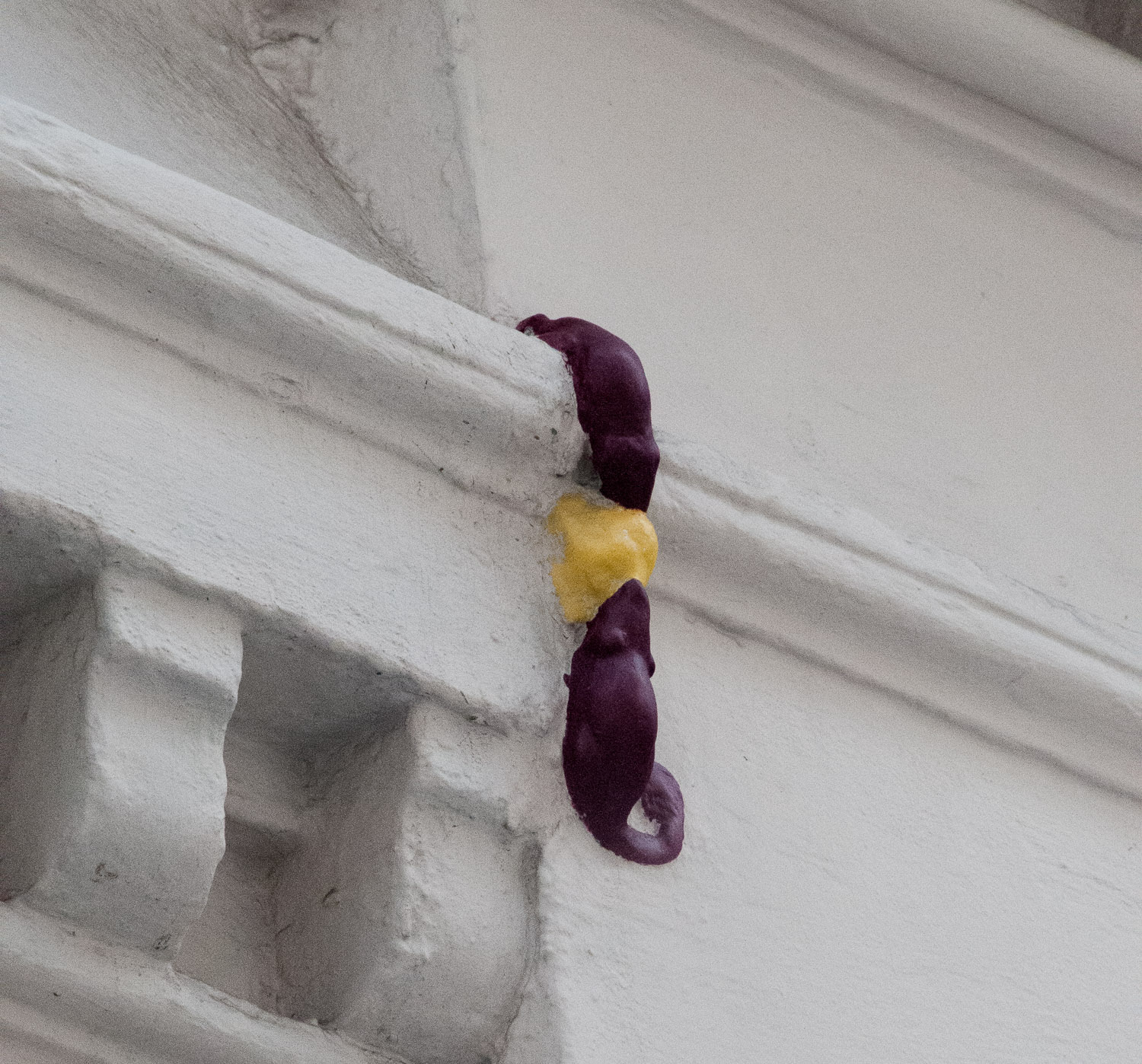
The Philpot Lane mice

And now another cat.

Hanging signs were once a major feature of London’s streets and were encouraged by Charles I in order to help people find their way around at a time when many could not read. Needless to say, they became immensely popular with businesses, and proliferated to such an extent that they posed a threat to life and limb in times of storm and windy weather. When, in 1718, one brought about the collapse of an entire building frontage and killed four people it was obvious something had to be done. Nonetheless but it was not until 1762 that businesses were forced to remove them and fix them to shopfronts instead – just as we see today. The Cat and Fiddle sign in Lombard Street harks back to a tavern of that name but was only erected in 1902, along with other replicas, to celebrate the coronation of Edward VII.
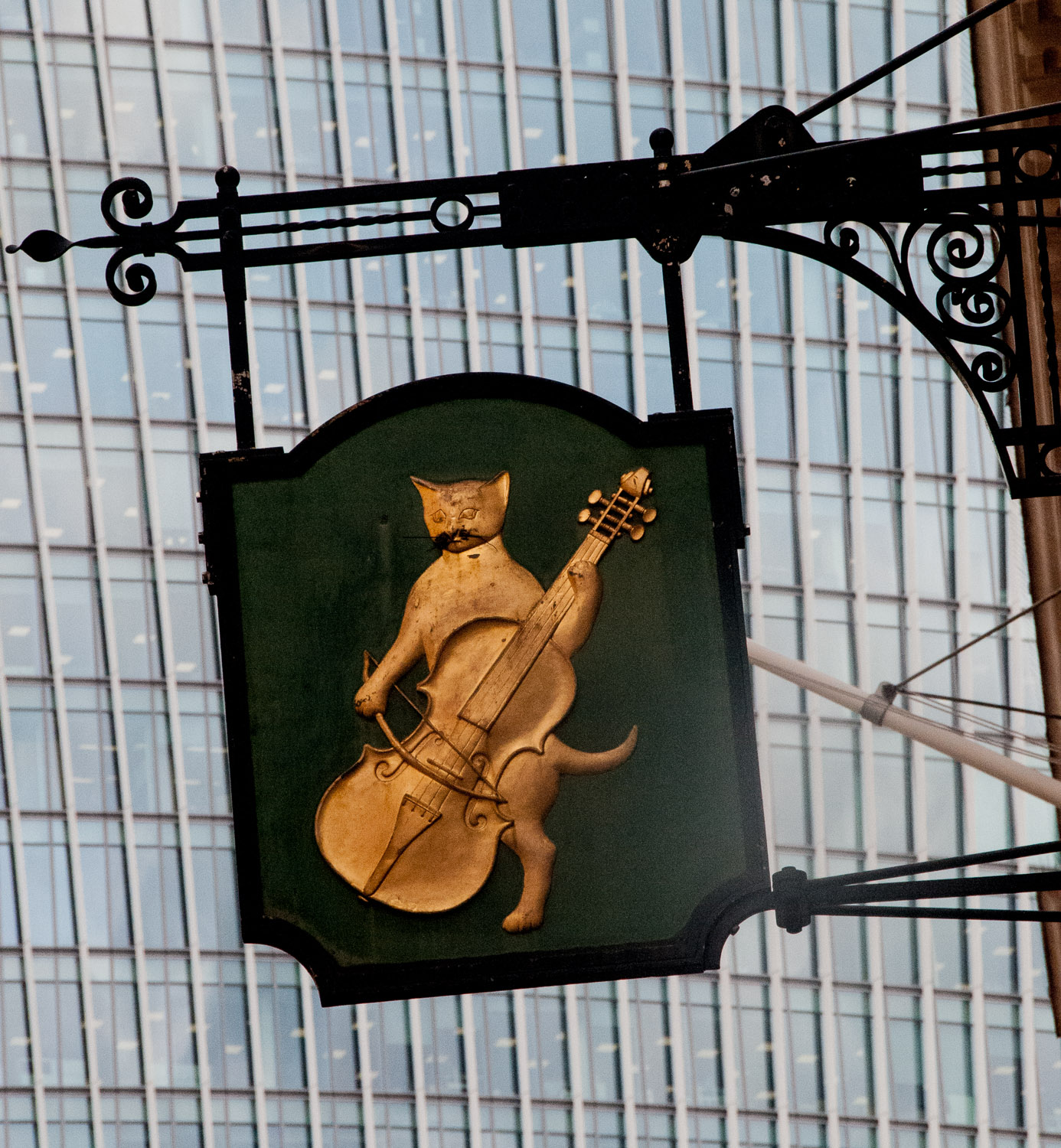
At the sign of the ‘Cat-a-Fiddling’ Lombard Street

And finally, this stunning black horse is part of the 2017 ‘Sculpture in the City’ project. It is at the corner of Bishopsgate and Wormwood Street,
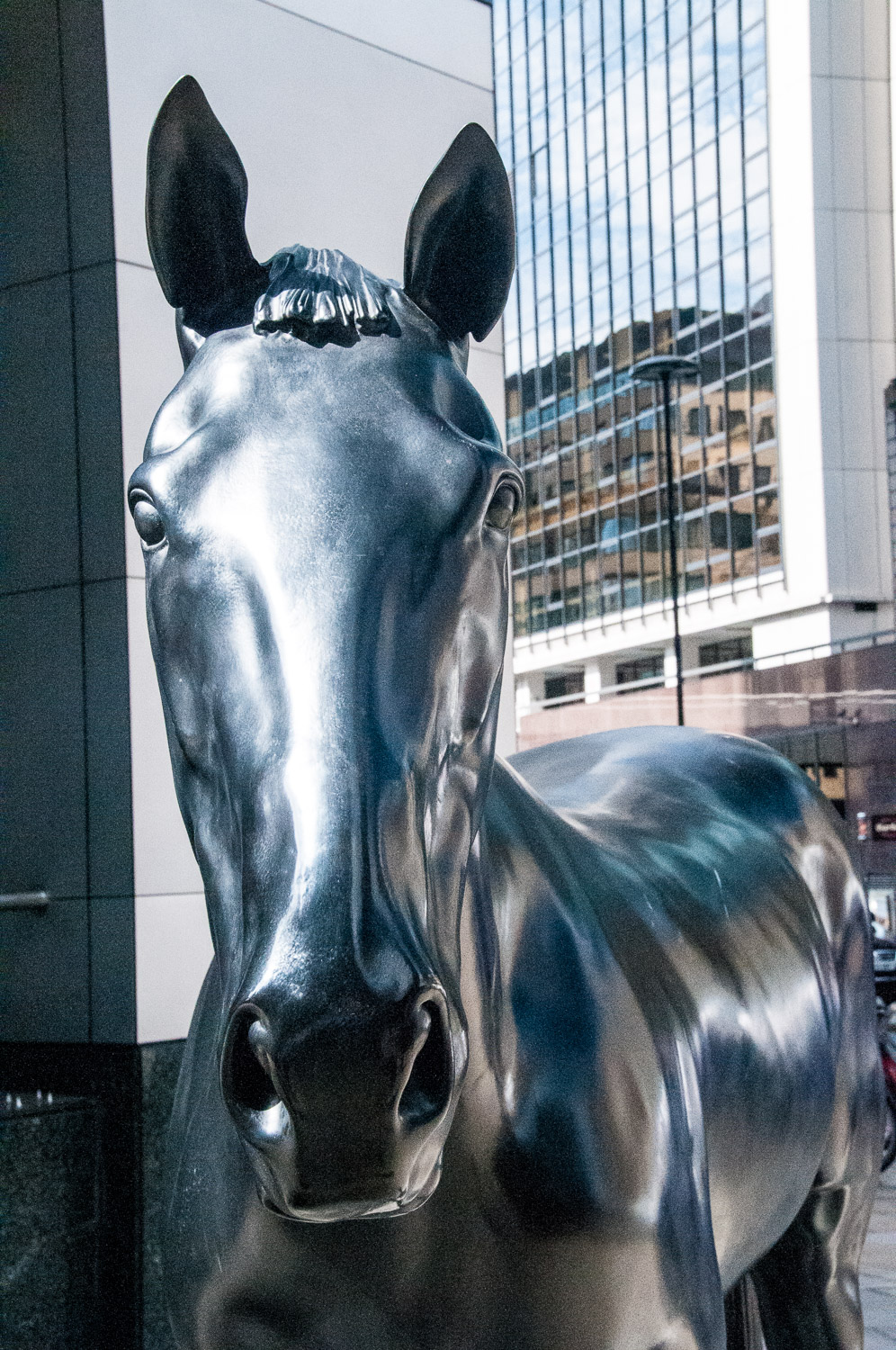
‘The Black Horse’ (2015) by Mark Wallinger
Temple Bar and the banjo-playing Lady

What happened to Temple Bar in the 126 years between when it was demolished in 1878 and its return to the City in 2004?

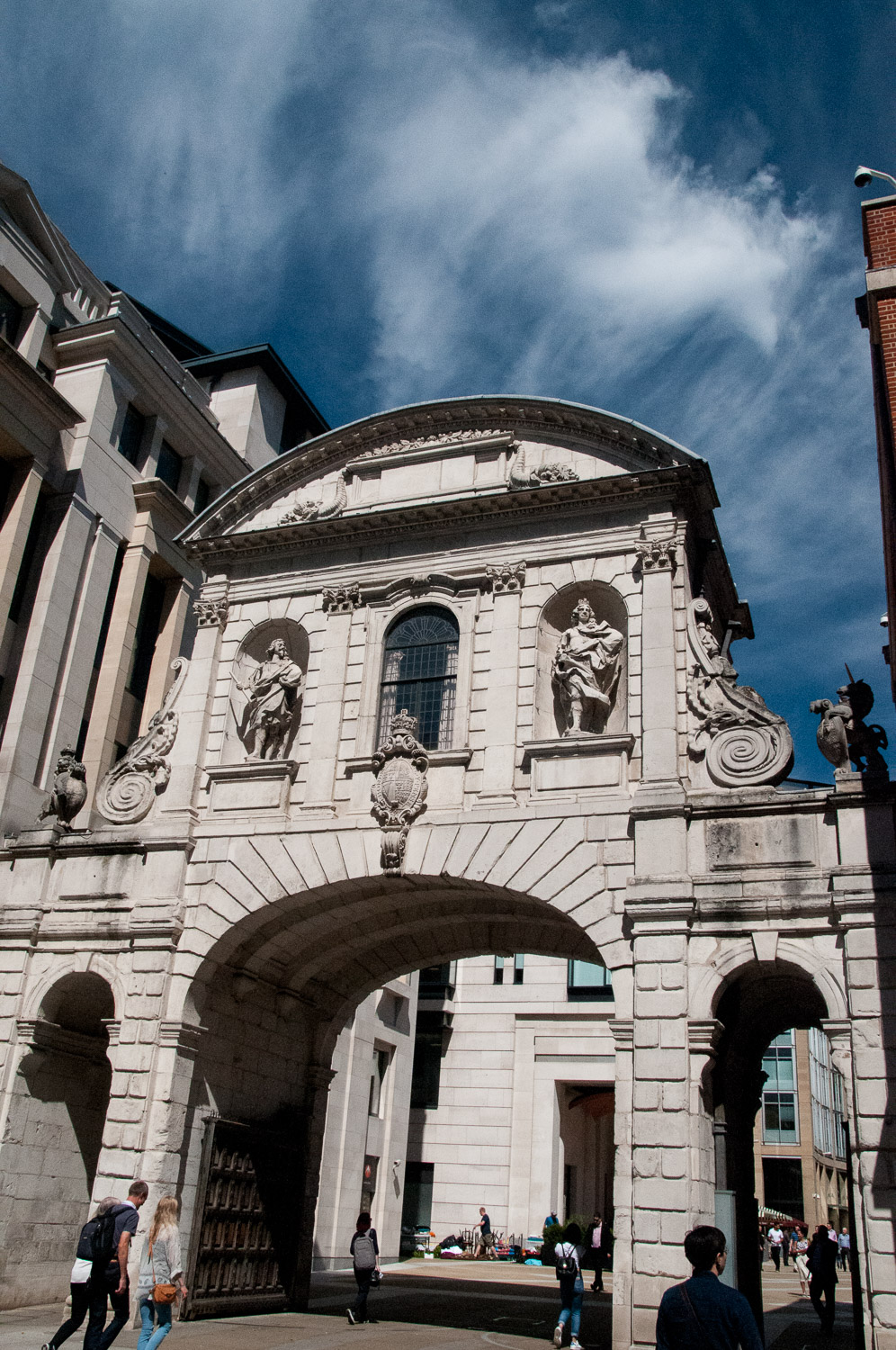
It once marked the boundary between the City of London and the City of Westminster and now stands proudly at the entrance to the Paternoster Square piazza, alongside St Paul’s Cathedral. It has been nicely spruced up having been relocated from an exile in the countryside, the second move in its history since it was originally erected in Fleet Street in 1672.

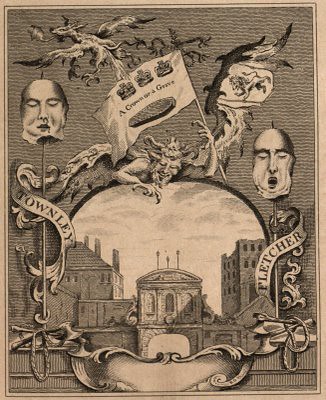
The City of London once had seven gates which restricted access and could be closed, or barred, for security or in times of emergency, but only Temple Bar survived into the nineteenth century. It escaped demolition for a number of reasons, including its design being attributed to Sir Christopher Wren and the fact that it was the point at which royal personages were welcomed into the City by the Lord Mayor. It also had the macabre reputation of being the place where the heads and other body parts of executed traitors were displayed before the public. The last two to meet this fate were Francis Townley and George Fletcher who were executed for their part in the 1745 rebellion which aimed to place Bonnie Prince Charlie on the throne.

townley

A contemporary print showing the traitors’ fate – ‘A Crown or a Grave’ was the Rebellion’s motto

The heads of Fletcher and Townley were put on the Bar August 12, 1746. On August 15th Horace Walpole, writing to a friend, says he had just been roaming in the City, and

passed under the new heads on Temple Bar, where people make a trade of letting spy-glasses at a halfpenny a look

A storm in March 1772 finally blew the grisly things off into the street and ‘against the sky no more relics remained of a barbarous and unchristian revenge’.

The room above the street was once used for the more mundane purpose of storing the ledgers of the nearby Child’s bank.

The Child’s Bank ledgers in 1876, two years before the Bar’s demolition

By the 1860s the Bar had become a serious obstruction to traffic, the road needed widening and also room was required for the construction of the Royal Courts of Justice. Demolition was decided upon but fondness for the Bar resulted in it being taken down ‘brick by brick, beam by beam, numbered stone by stone’, and stored in a yard off Farringdon Road until a decision for its re-erection could be reached.

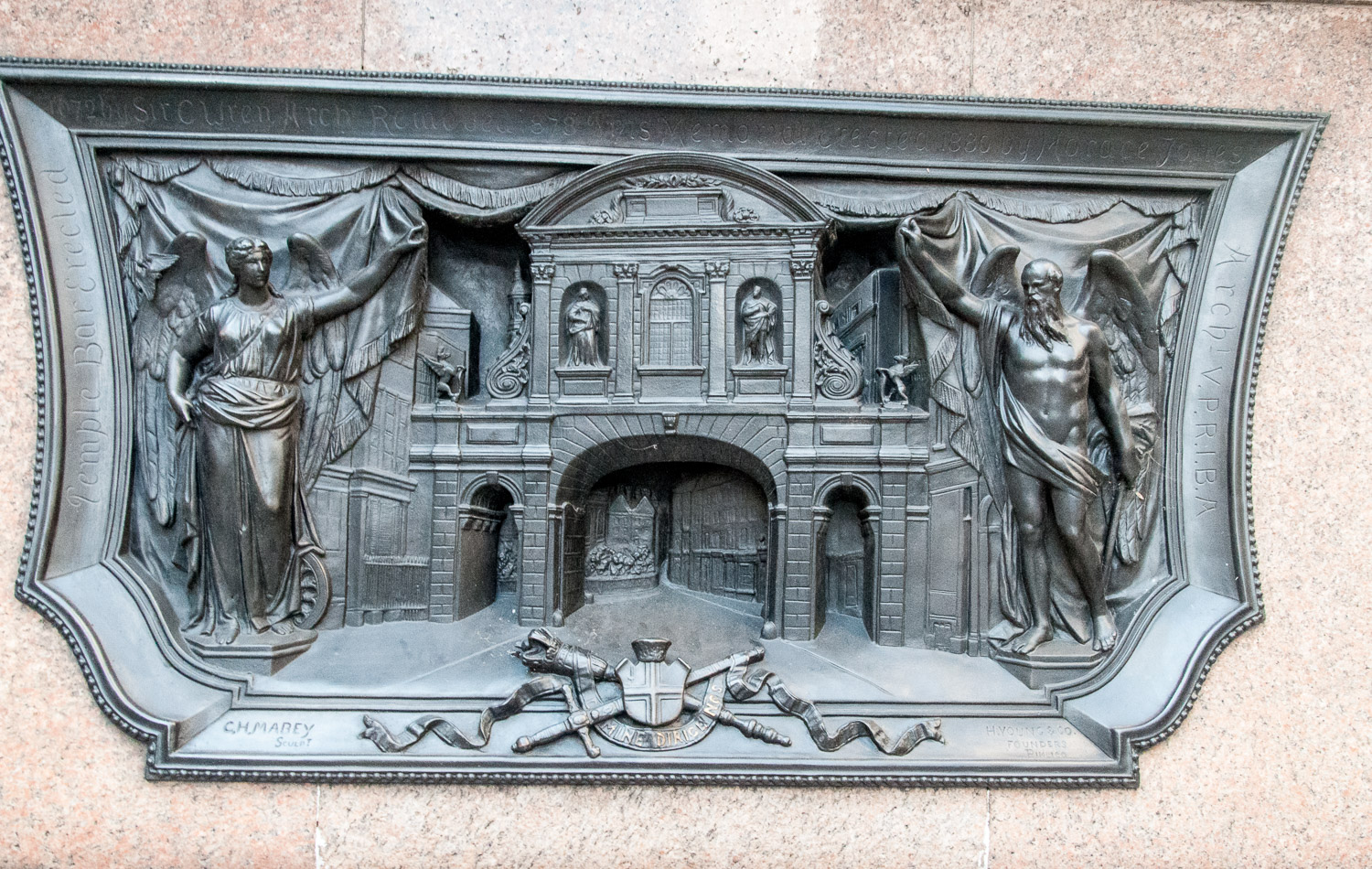
Demolition, above, started on January 2 1878 and was completed just eleven days later. It was replaced by the Temple Bar Memorial and on this monument today is a plaque commemorating the removal of the old Bar – a curtain is being dramatically drawn over it.

Farewell Temple Bar – the Angels of Fortune and Time pull across the curtain

Ten years later, enter Lady Valerie Meux, a beautiful ex-actress and singer who had married Sir Henry Meux of the wealthy brewing family. Sir Henry’s family never accepted her and, I must say, she was a tad eccentric, driving herself around London in a phaeton carriage drawn by a pair of zebras. She took a fancy to Temple Bar and in 1887, her husband having purchased it from the Corporation of London, all 400 tons of it were transported to their house in Theobalds, Hertfordshire.

The historian E V Lucas, who had walked through the arch as a child, was outraged and later wrote in his book A Wanderer in London

The transplantation of the Elgin Marbles from the Parthenon to the British Museum – from dominating the Acropolis and Athens to serving as a source of complexity to Londoners in an overheated gallery in Bloomsbury – is hardly more violent than the transplantation of Temple Bar from Fleet Street and the City’s feet to Hertfordshire and solitude

Lady Meux was delighted with her purchase. At Theobalds it was meticulously reconstructed as a new gateway to the estate and, in the upper chamber, she entertained guests such as Winston Churchill and the Prince of Wales. I love this picture of Lady Meux serenading her husband with her banjo whilst he leans against her chair wearing his tweeds and stout walking boots.

Here she is, more formally, in an 1881 painting by James McNeill Whistler entitled Harmony in Pink and Grey (Frick Collection).

Lady Meux died in 1910 and the Bar remained on the estate, sadly suffering from the effects of the weather and some vandalism.

Fast forward to 1976 and the Temple Bar Trust was established with the intention of returning it to London. This was finally achieved on 10 November 2004 when, in its new location, it was opened by the Lord Mayor.

Temple Bar in its new home

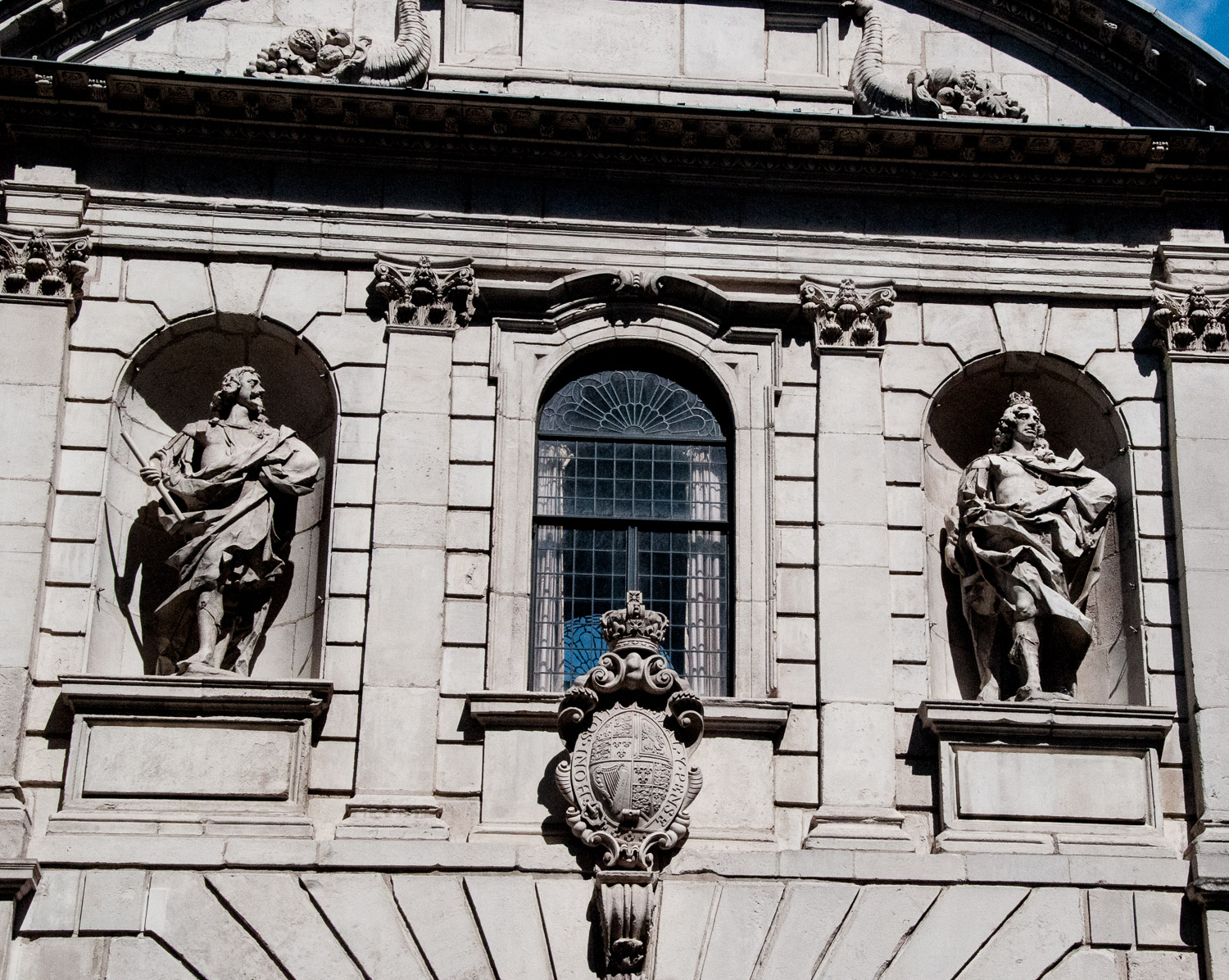
The upper room where Lady Meux entertained – the statues are of Charles I and Charles II

All credit to the Trust, the City of London Corporation and the Livery Companies who put together the funding needed to bring the Bar back to the City – I think it looks terrific.

Also, though, spare a thought for the beautiful, wilful and eccentric Valerie Meux. I think she deserves recognition too – who knows what might have happened to this great building were it not for her intervention.


Three Queens and a King

I have chosen these four statues because I love the background stories behind them and hope you find them interesting too.

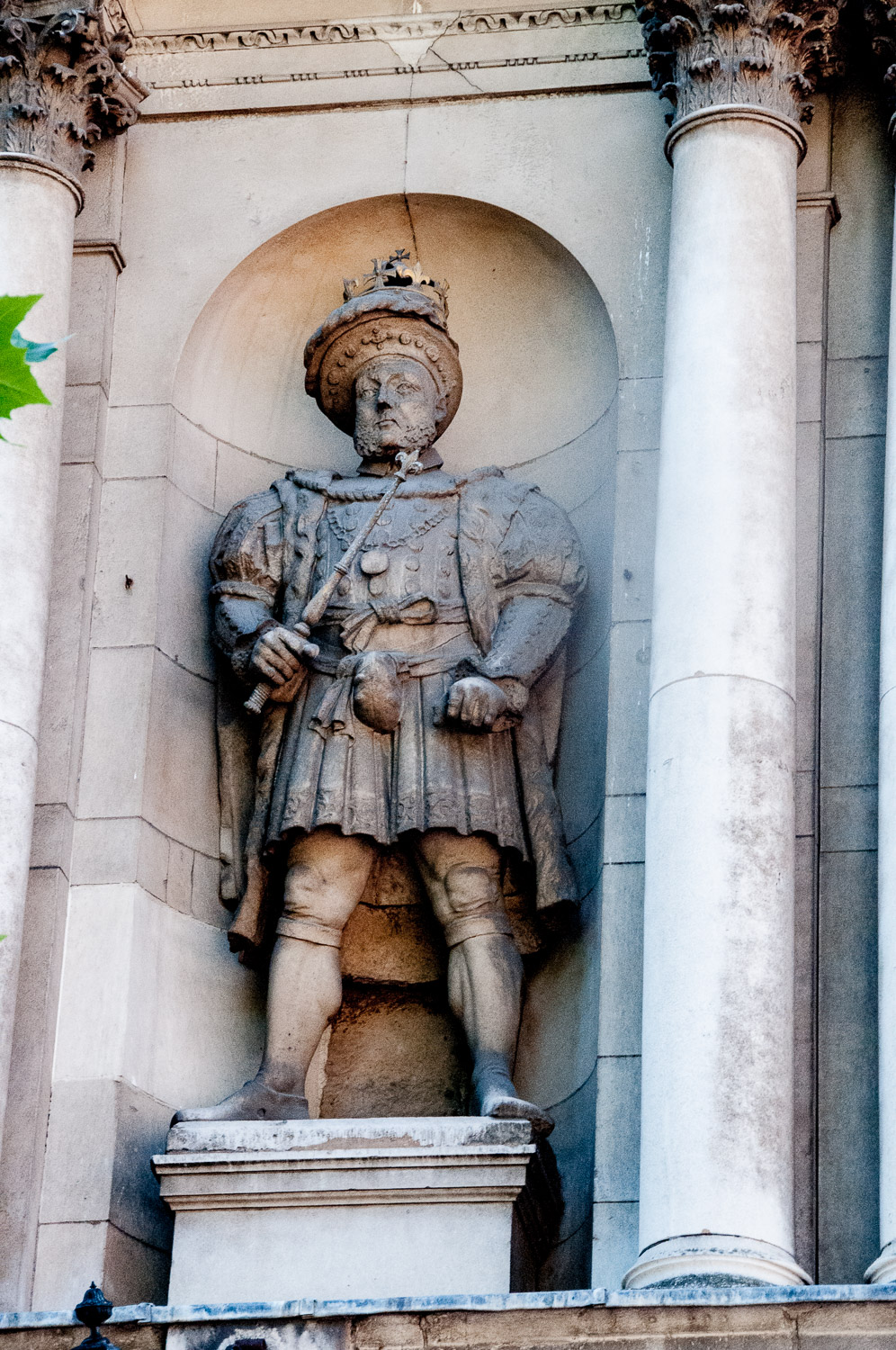
First up is the one of Henry VIII over the main entrance to St Bartholomew’s hospital, the only outdoor statue of the king in London. If you have seen and admired the famous Holbein portrait, the king’s pose here is very familiar. He stands firmly and sternly with his legs apart, one hand on his dagger, the other holding a sceptre. He also sports an impressive codpiece.

The hospital was founded in 1123 in the reign of Henry I and, during the Peasants’ Revolt of 1331, Wat Tyler died there of a stab wound in what we would now call the A&E department.  Bart’s, as it became known affectionately, was put seriously at risk seven Henrys later in 1534, when Henry VIII commenced the Dissolution of the Monasteries. The nearby priory of St Bartholomew was suppressed in 1539 and the hospital would have followed had not the City fathers petitioned the king and asked for it to be granted back to the City. Their motives were not entirely altruistic. The hospital, they said, was needed to help:

the myserable people lyeing in the streete, offendyng every clene person passyng by the way with theyre fylthye and nastye savors.

Henry finally agreed in December 1546 on condition that the refounded hospital was renamed ‘House of the poore on West Smithfield in the suburbs of the City of London, of King Henry’s foundation’. I suspect people still tended to call it Bart’s. Henry finally got full public recognition when the gatehouse was rebuilt in 1702 and his statue was placed where we still see it today. The work was undertaken and overseen by the mason John Strong, who was at the same time working for Sir Christopher Wren on St Paul’s Cathedral. Such were the masons’ talents, no architectural plans were needed to complete the work.

Fleet Street boasts two queens – one responsible for the execution of the other.

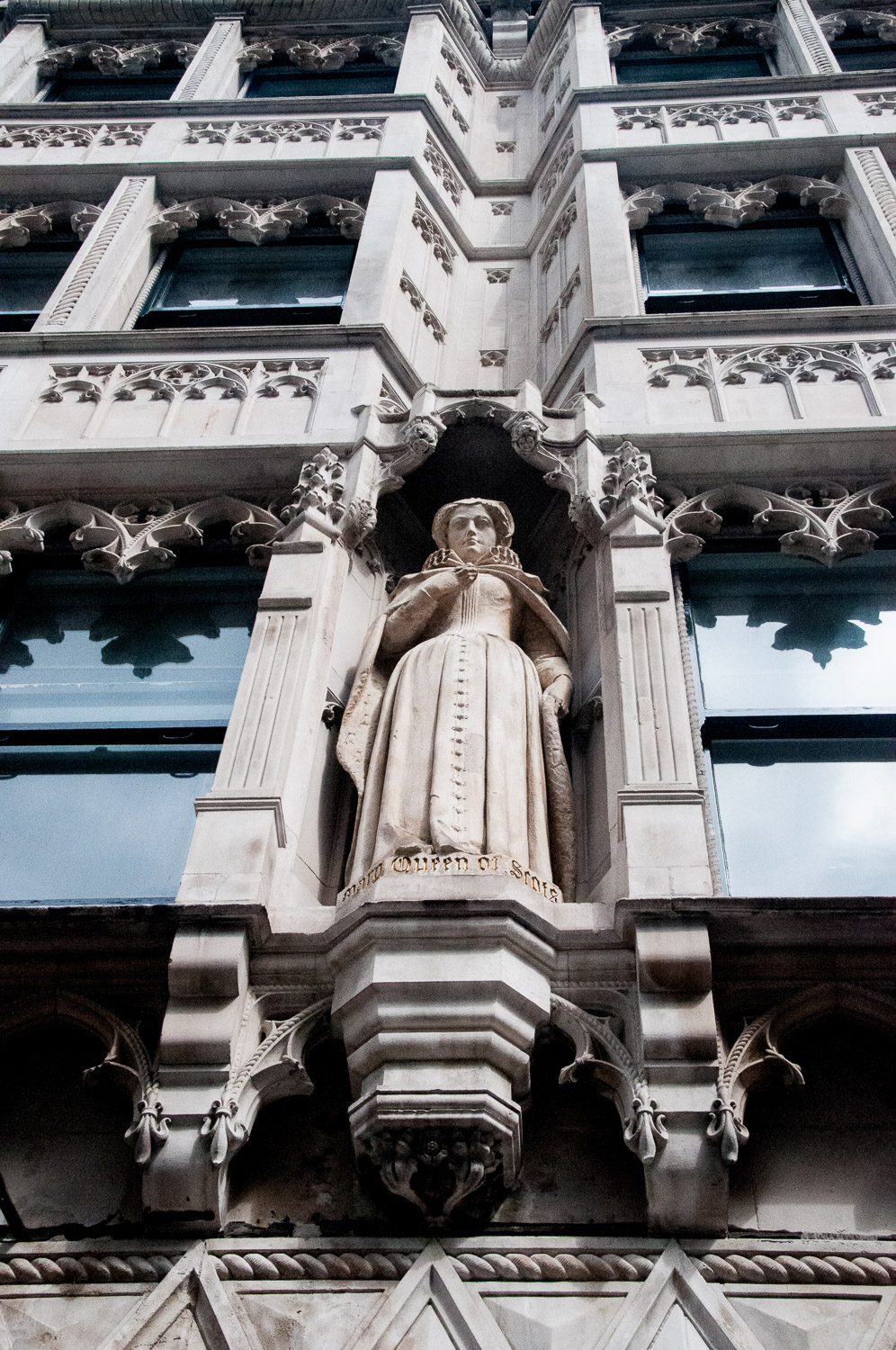
Mary, Queen of Scots was born in 1542, daughter of King James V of Scotland and Mary of Guise. Briefly Queen of France, in 1559, Mary ruled Scotland from 1542-1567. Following an uprising she fled to England putting herself under the protection of her cousin, Elizabeth I. Mary’s fervent Catholicism, and claim to the English throne, made her a target for plots and Elizabeth ordered her beheading for treason in 1587.

Mary Queen of Scots House was built in 1905 for a Scottish insurance company but I have been unable to discover which one. The developer, Sir Tollemache Sinclair, was a big fan of the Queen and his architect, R. M. Roe, created an extravagant, theatrical building with a special niche for her statue. Head slightly bowed, she peers down at us wearing an elegant headpiece and a wide prominent ruff. Unfortunately the sculptor’s name is unknown. Do glance up at her if you pop in to Pret’s on the ground floor for a lunchtime sandwich.


143-144 Fleet Street

And now her nemesis.

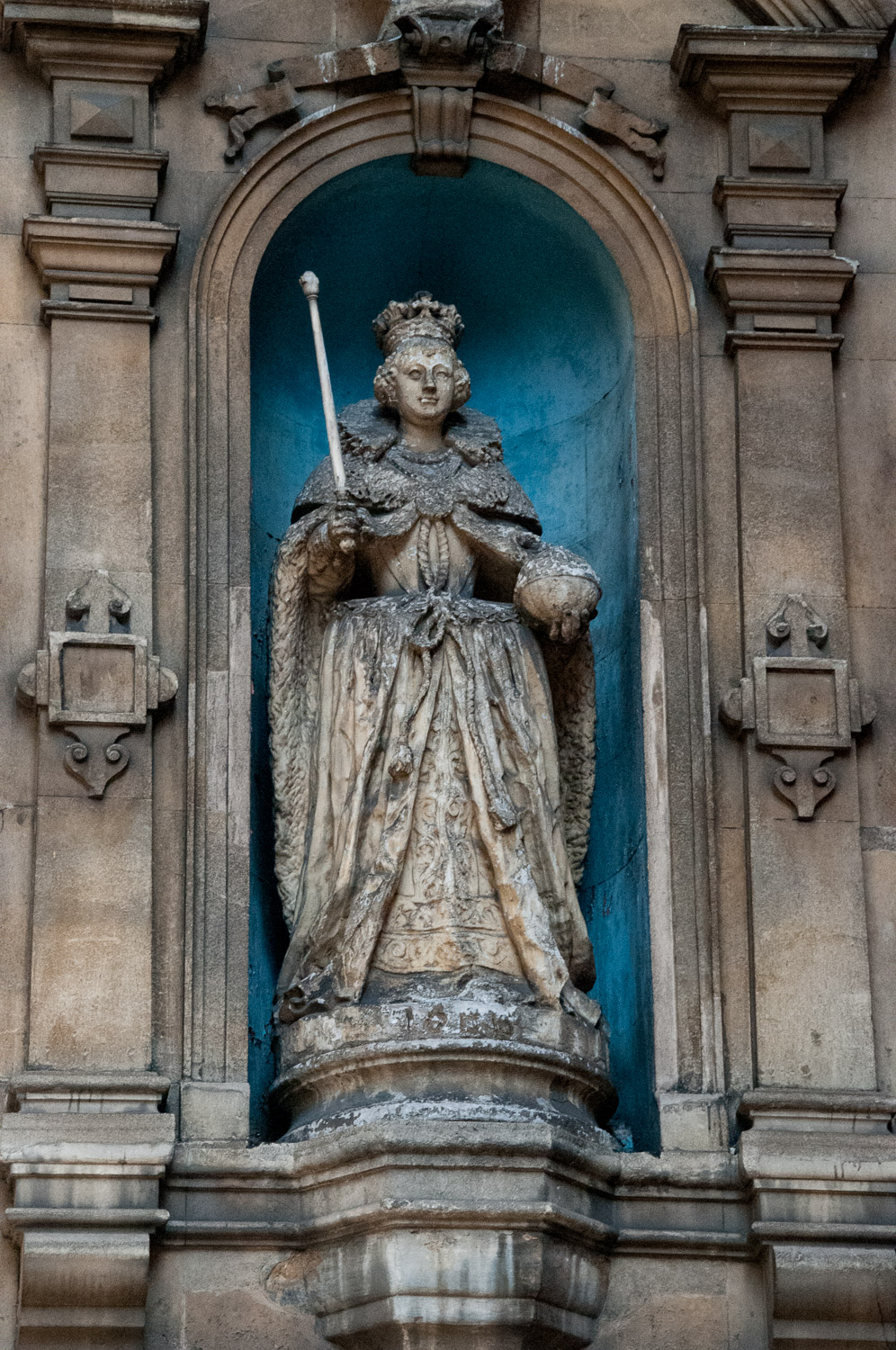
She looks young, doesn’t she?

This statue of Queen Elizabeth I is nearby in a niche at St Dunstan-in-the-West and its history is rather complex. Some current thinking is that the Queen dates from 1670-99 despite a date on the base of 1586, which would have made it the only statue carved in her lifetime. It is now thought that, rather than the date of sculpture, this date was inscribed on it when the statue was placed on a restored Lud Gate in 1670 after the Great Fire and is merely making reference to the original gate. When the gate was demolished in 1760 she was moved to a previous St Dunstan’s but this was torn down in 1829-33 to be replaced by the current building. Meanwhile it seems that the statue spent the time in the basement of a nearby pub. It was only when that too was demolished in 1839 that the statue was rediscovered and put in its current niche on St Dunstan’s. Millicent Fawcett, the prominent suffragist, left £700 in her will for the statue’s upkeep and the funds are managed by the Society for the Protection of Ancient Buildings.

And finally Queen Anne.

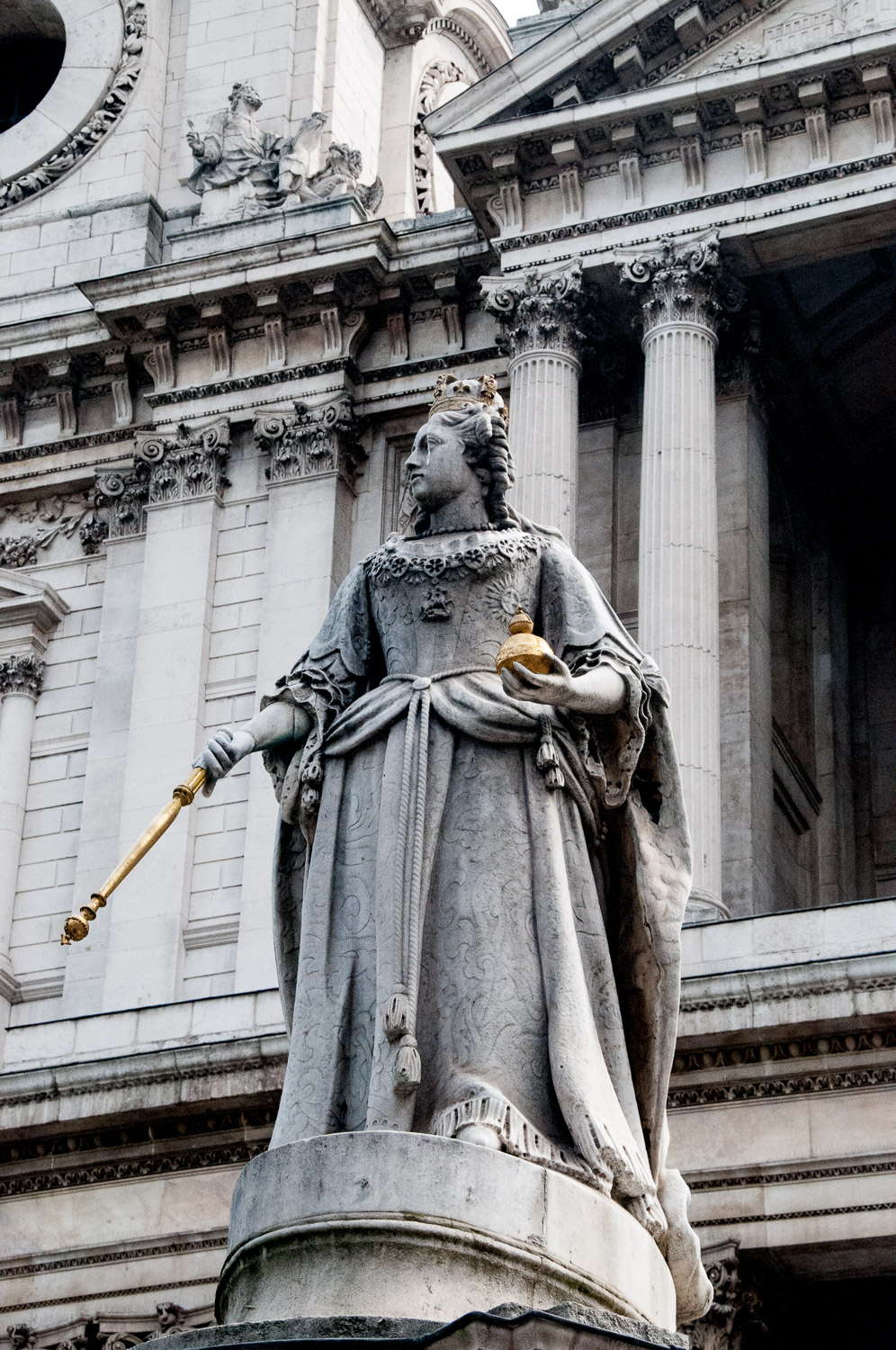
Brandy Nan, left in the lurch, her face to the gin shop, her back to the church

One has to feel sorry for Anne – and not just because of the scurrilous rhyme referring to her alleged fondness for alcohol. Of her 18 pregnancies, none of her children survived infancy except for one boy who reached 11, and this sadness may have contributed to her tendency to overindulge in both food and drink.

Here she stands outside the west entrance to St Paul’s Cathedral – an 1884-6 sculpture which replaced an earlier weather-beaten version of 1712. She looks imperiously upwards, holding a sceptre and orb and wearing the Order of St George around her neck.

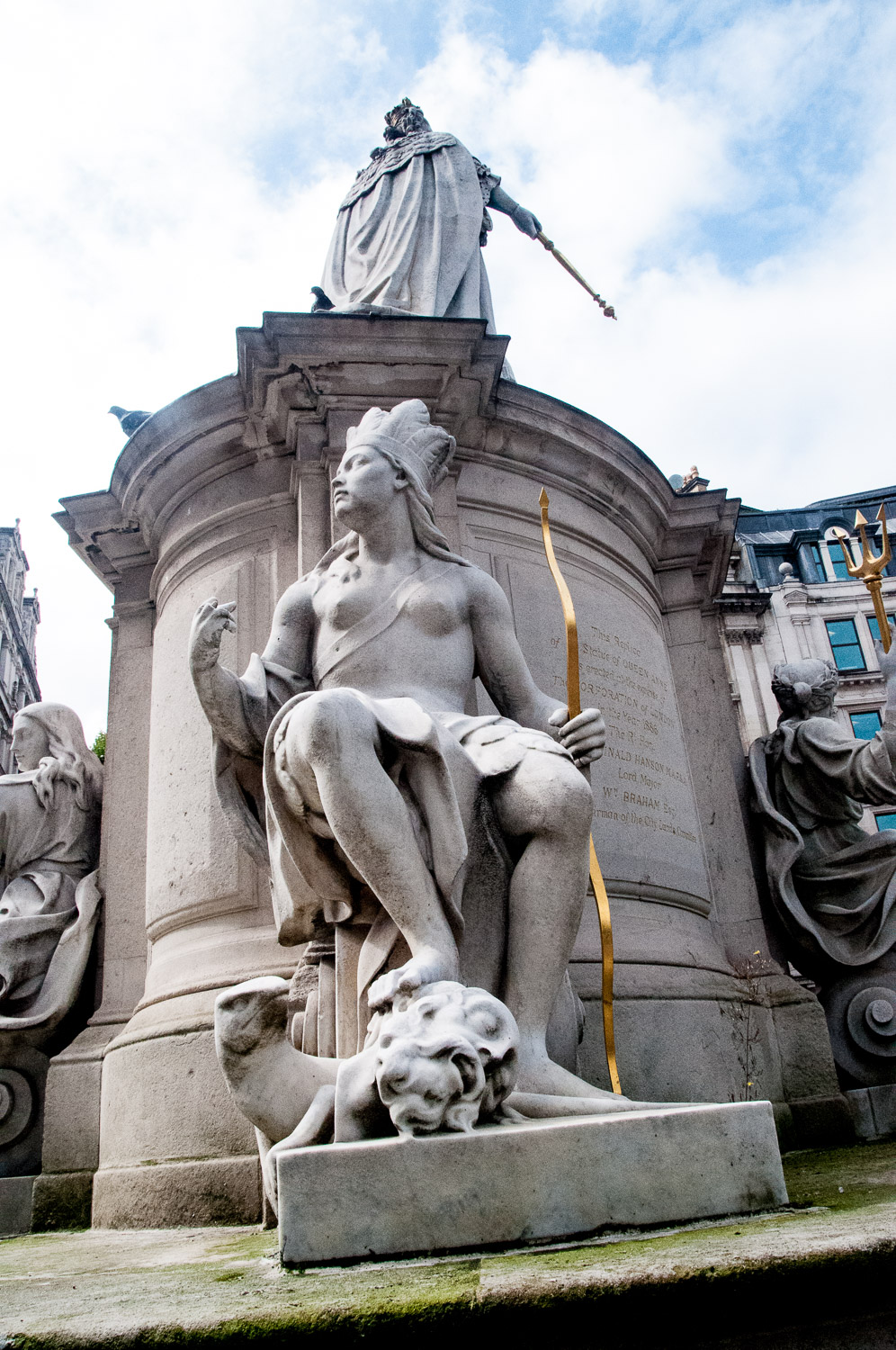
She is surrounded by allegorical figures, the picture below being that of America.

‘America’ with a not very accurate alligator

America wears a feathered head-dress, holds a metal bow and has a quiver of arrows on her back. Her foot rests on what looks like the severed head of a European. The strange lizard like creature was described in the original statue as ‘…an allegator creeping from beneath her feet; being an animal very common in some parts of America, and which lives on land and in the water’.


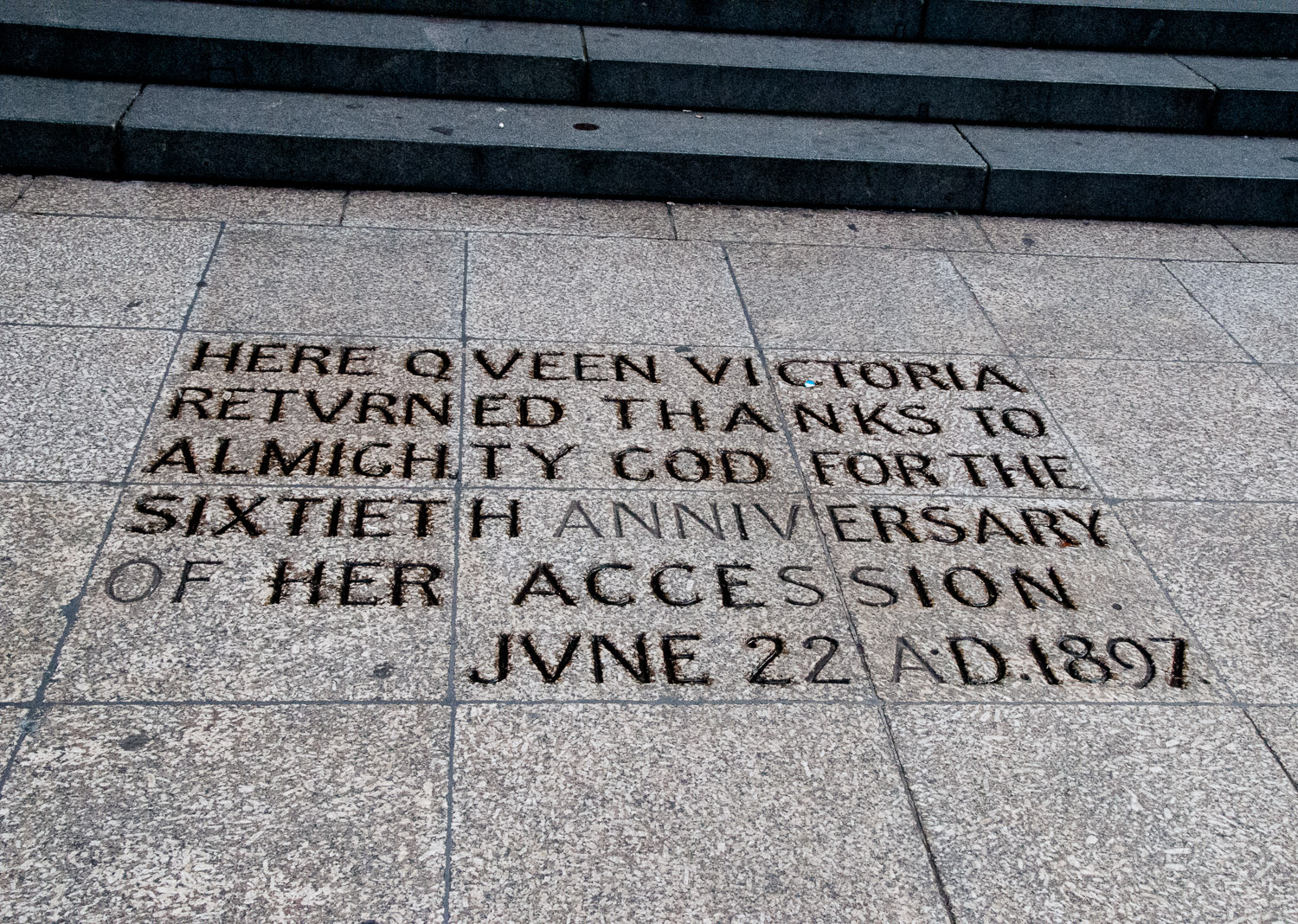
Queen Victoria celebrated her Diamond Jubilee here in 1897. She sat outside in her carriage for the service, being then too infirm to climb the Cathedral steps. It was suggested that Anne’s statue should be moved for the occasion, but Victoria would have none of it, apparently commenting

‘Certainly not, someone in future might want to move a statue of me, and I should not like that at all’.


Page 148 of 151

Powered by WordPress & Theme by Anders Norén

Symbols & Secrets
Privacy Overview

This website uses cookies so that we can provide you with the best user experience possible. Cookie information is stored in your browser and performs functions such as recognising you when you return to our website and helping our team to understand which sections of the website you find most interesting and useful.