Symbols & Secrets

Walking the City of London

More water – trickling, whooshing and gurgling

In last week’s blog I wrote about the classic fountains that can be found around the City. This week I’m looking at more modern versions and would like to start with this spectacular example.

When Lloyd’s Register outgrew their old building at 71 Fenchurch Street (EC3M 4BS) a stunning new extension was build alongside and this sculpture, called Argosy, is in the front courtyard. The website tells us that ‘the water action of the sculpture adopts the Coanda principle where water clings to overhanging surfaces, moving downwards over the reflective surfaces in rollwave patterns. The shape is suggestive of a ship’s hull and has been conceived to be seen and enjoyed from both below and above from the nearby building’.
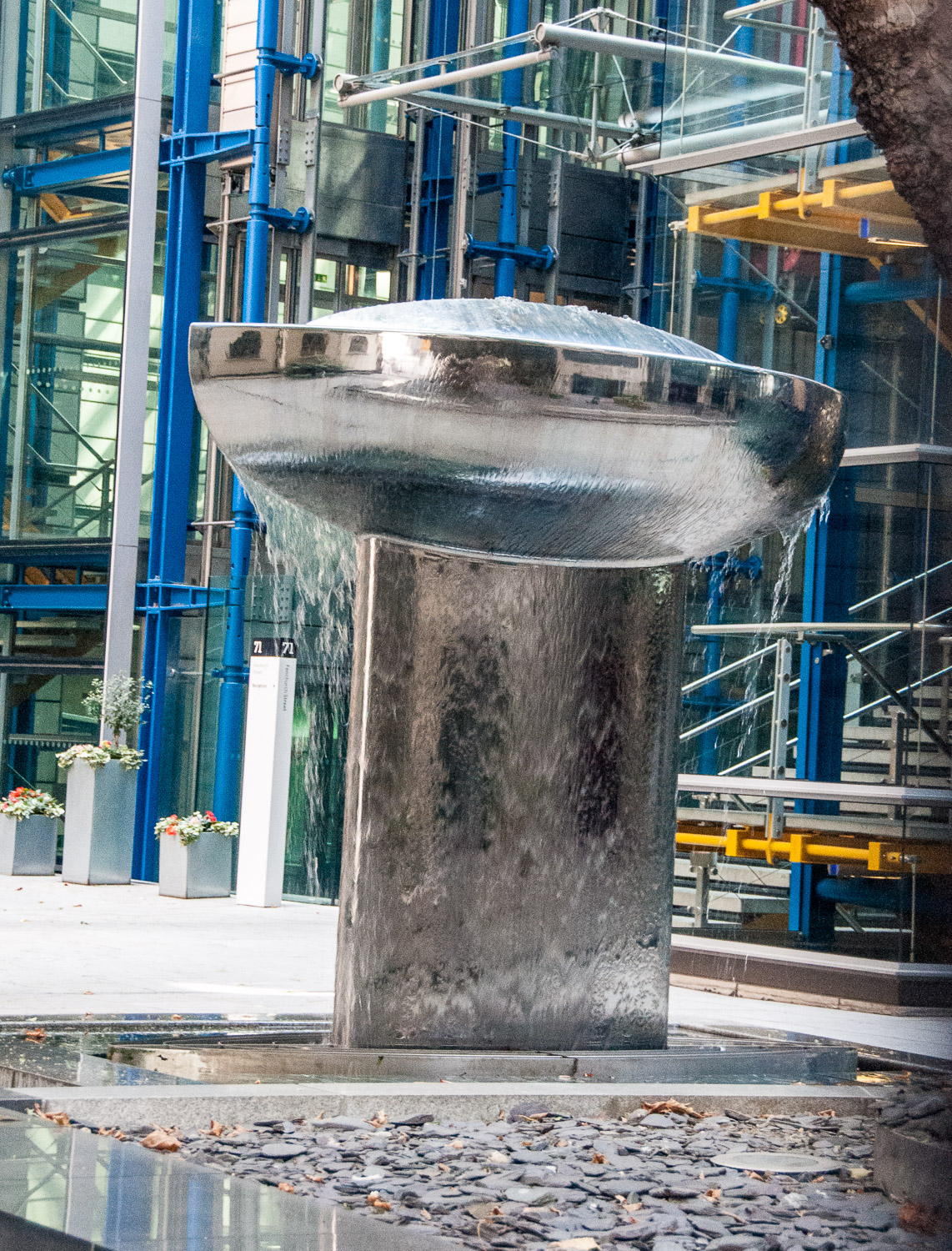
Sculpture by William Pye (2009).

Incidentally, the courtyard it is in used to be the churchyard of St Catherine Coleman which was the last church to be demolished under the Union of Benefices Act (in 1926) – the old church railings are still there.

Tucked away in Aldermanbury (EC2V 7HY) is one of the City’s earliest permanent abstract public sculptures …

This image has an empty alt attribute; its file name is DSC_6776-670x1024.jpg
Glass Fountain by Allen David (1969).

It was commissioned by Mrs Gilbert Edgar who was ‘enchanted by the iridescent design’. She was wife of Gilbert H. Edgar CBE, who was a City of London Sheriff, and it was unveiled by the Lord Mayor of London in December 1969.

I have always liked the little pool and fountains outside the entrance to St Lawrence Jewry in Gresham Street (EC2V 5AA) …

This image has an empty alt attribute; its file name is DSC_6775-649x1024.jpg

One day when I was passing I saw three ducks in the water, parading around as ducks tend to do. Sadly I didn’t have a camera with me …

This image has an empty alt attribute; its file name is DSC_6771-1024x680.jpg

If you have the time, do visit the church and enjoy the beautiful modern stained glass.

Nearby you have the opportunity to see two examples of fountains that gurgle up through the pavement. Here is the one outside 25 Basinghall Street (EC2V 5HA) …

There is a rather damp footpath running diagonally through it. It might be tempting to traverse it if you’ve over indulged at the Davy’s Wine Bar next door.

Here’s another version in Aldermanbury Square (EC2V 7HR), just across the road from Allen David’s fountain …

The traffic-free square was re-designed in 2006. Natural stone was used and over 20 trees planted with soft landscaping, new seating and a new water feature on the south side with 24 jets set flush with the paving.

The Salters’ Hall Garden (EC2Y 5DE) has been recently refurbished and looks wonderful …

Inside a new water fountain commemorates a past master …

The full inscription reads …

In Memory of Jock Russell, Master Salter 2001-2002. Sal Sapit Omnia (Salt seasons everything).

Looking for some water whooshing? Head off to the gardens alongside St Paul’s Cathedral where the formal layout consists of a sunken lawn with a wall fountain. The water pours from lion’s heads …
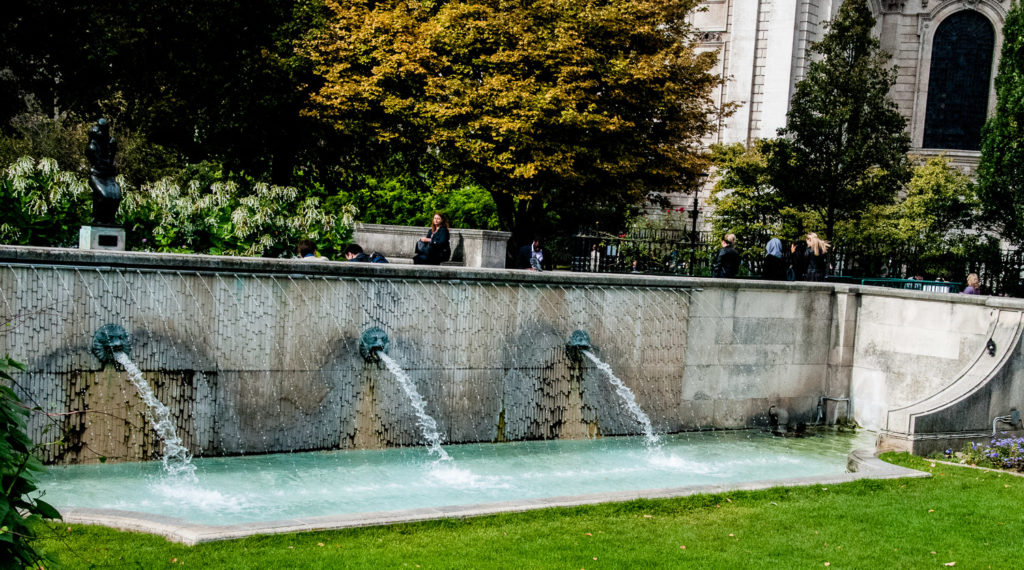
The fountain and garden were a gift from the Worshipful Company of Gardeners.

And finally to the Barbican. In Ben Jonson Place, two small dolphins stand on their tails and twist in opposite directions …
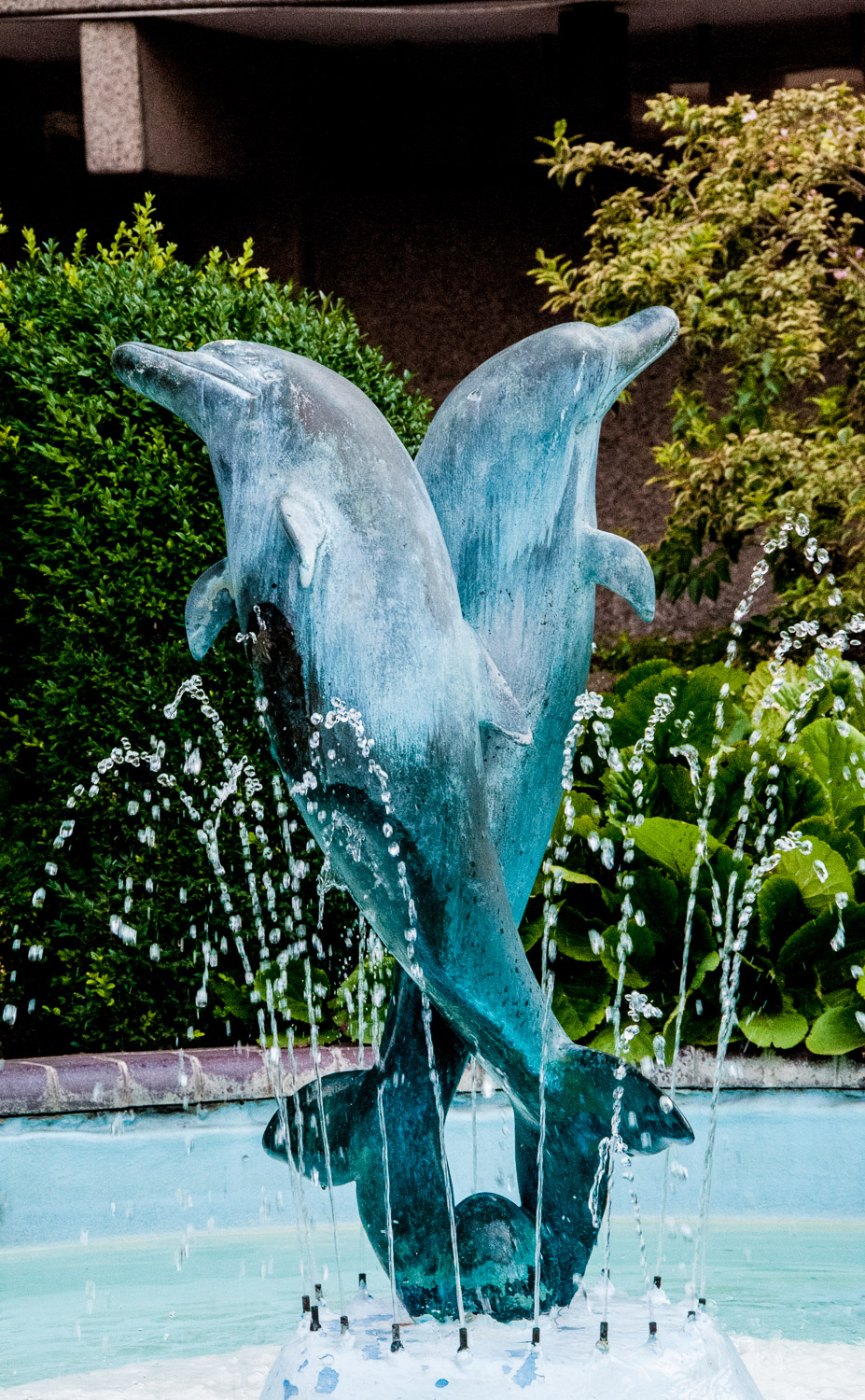
The sculpture is by John Ravera and dates from 1990.

This is more of a waterfall than a fountain …

View from the Andrewes highwalk

And from behind …

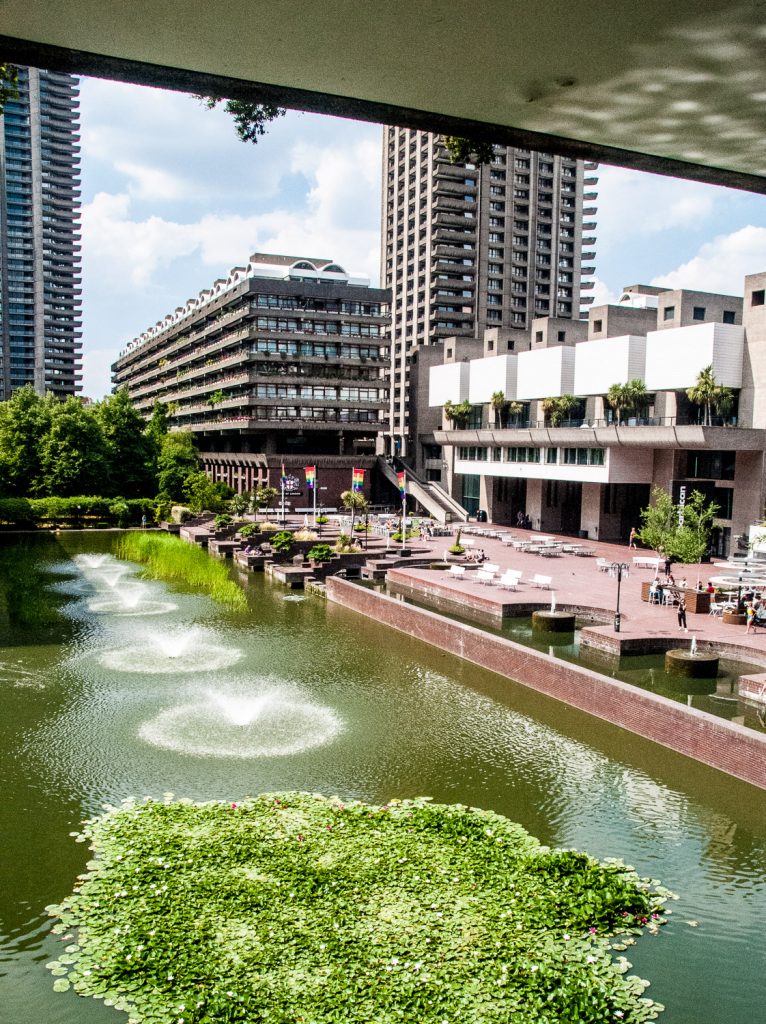
The fountains alongside the terrace are currently under repair so this is a picture I took last year …
Don’t forget you can follow me on Instagram:

https://www.instagram.com/london_city_gent/

By the way, the Lord Mayor’s Show is on 9th November and his coach is currently out on display in Guildhall Yard …

Water ‘crashing, whooshing, gurgling or gently lapping’

I’d like to quote from the City Corporation’s little booklet on Fountains – it’s rather poetic in places.

‘Fountains are an important sensory diversion in the urban scene of the City. Whether a municipal drinking fountain or a monumental water feature, they provide a rich diversity of sculptural form, movement and sound. The movement provided by the water of a fountain is probably its most fascinating element. Still water seems lifeless, but when given motion, either by spurting, spraying, spouting, undulating or tumbling, it becomes full of life and vitality. Of itself colourless, water can direct and refract light rays, and when it is in the form of a fine mist, it can disperse all the colours of the spectrum. The sound of a fountain is also one of its most essential and most overlooked attractions. Whether the water is crashing, whooshing, gurgling or gently lapping, sound is an integral part of a fountain’s aesthetic appeal. This can improve significantly the quality of a space, not only by adding the sound of water, but also by blocking out the less attractive sounds of the City’.

So I was inspired to search out some nice examples and I shall start with this absolute beauty in the quadrangle at St Bartholomew’s Hospital (EC1A 7BE). Created in 1859, it shows naked boys holding aloft a shell with dolphin-esque waterspouts …

It was the idea of Philip C Hardwick, the Hospital Surveyor.

You can read the full story about its construction and the part it played in Bart’s history here on the Bart’s Heritage website.

Originally the water was projected much higher in order to be seen above the shrubs that had then recently been planted …

Picture credit: The Wellcome Collection.

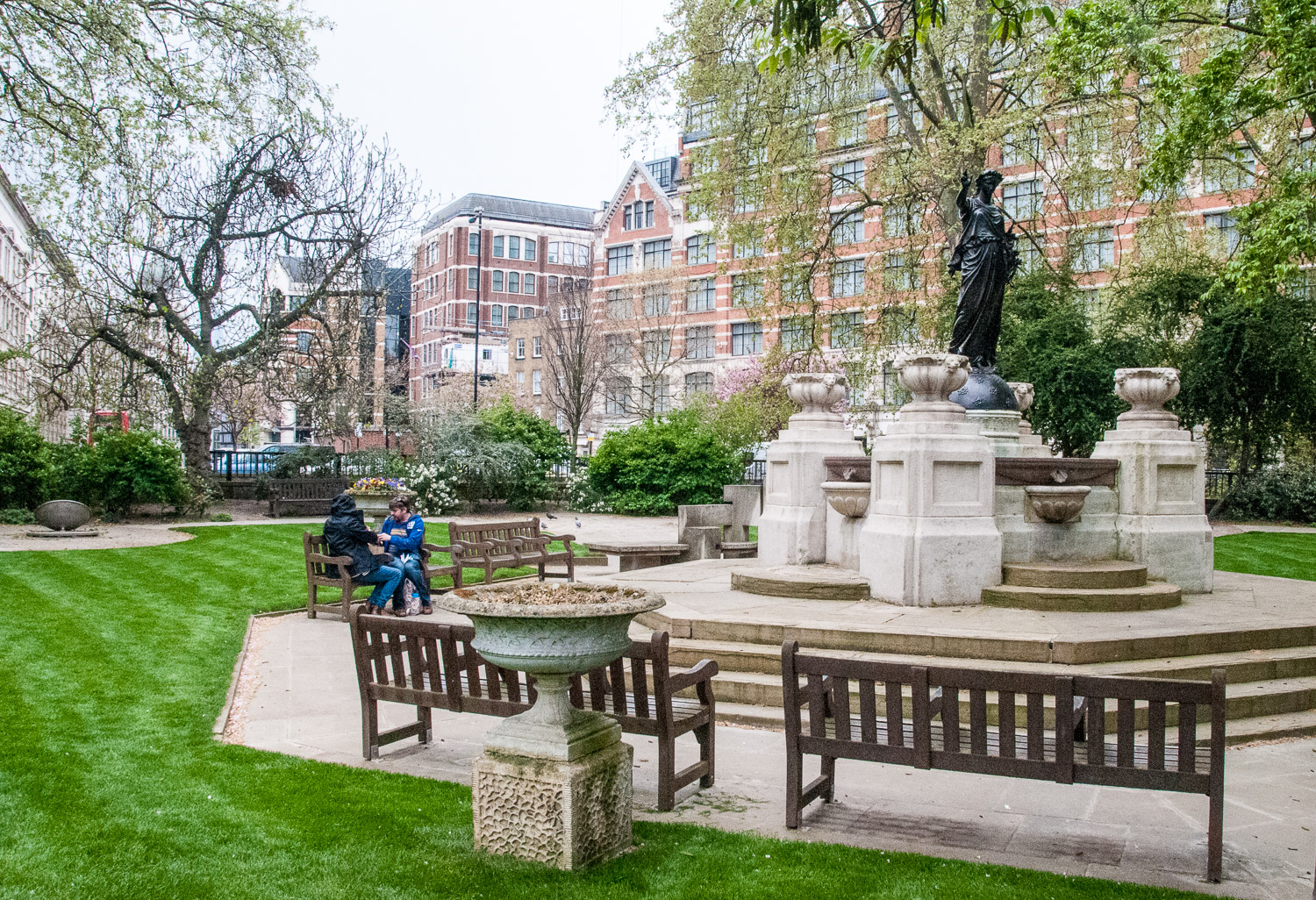
Just across the road is the West Smithfield Garden (EC1A 9BD). Waste ground for a time, the site was finally laid out as public gardens by the Corporation of London and opened to the public in 1872 …

This image has an empty alt attribute; its file name is DSC_3809.jpg

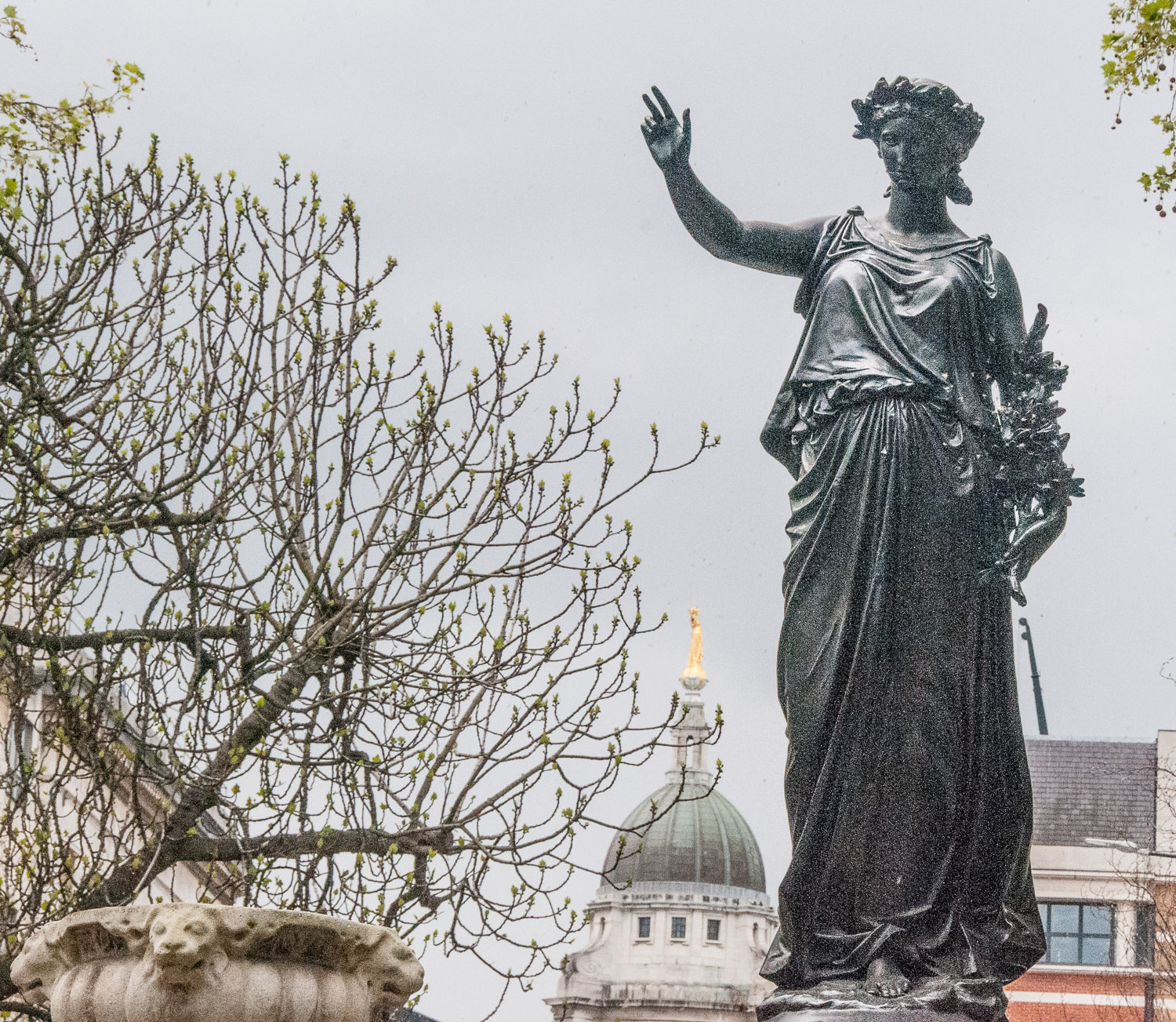
A drinking fountain with a bronze figure representing ‘Peace’ was erected in 1873 a few years after the armistice between France and Prussia was signed in 1871 …

This image has an empty alt attribute; its file name is DSC_3807.jpg
The sculptor was John Birnie Philip (1824-1875).

You can see Lady Justice atop the Old Bailey in the background.

Before you leave the Bart’s area do visit the interesting little Hospital museum just inside the entrance to the quadrangle.

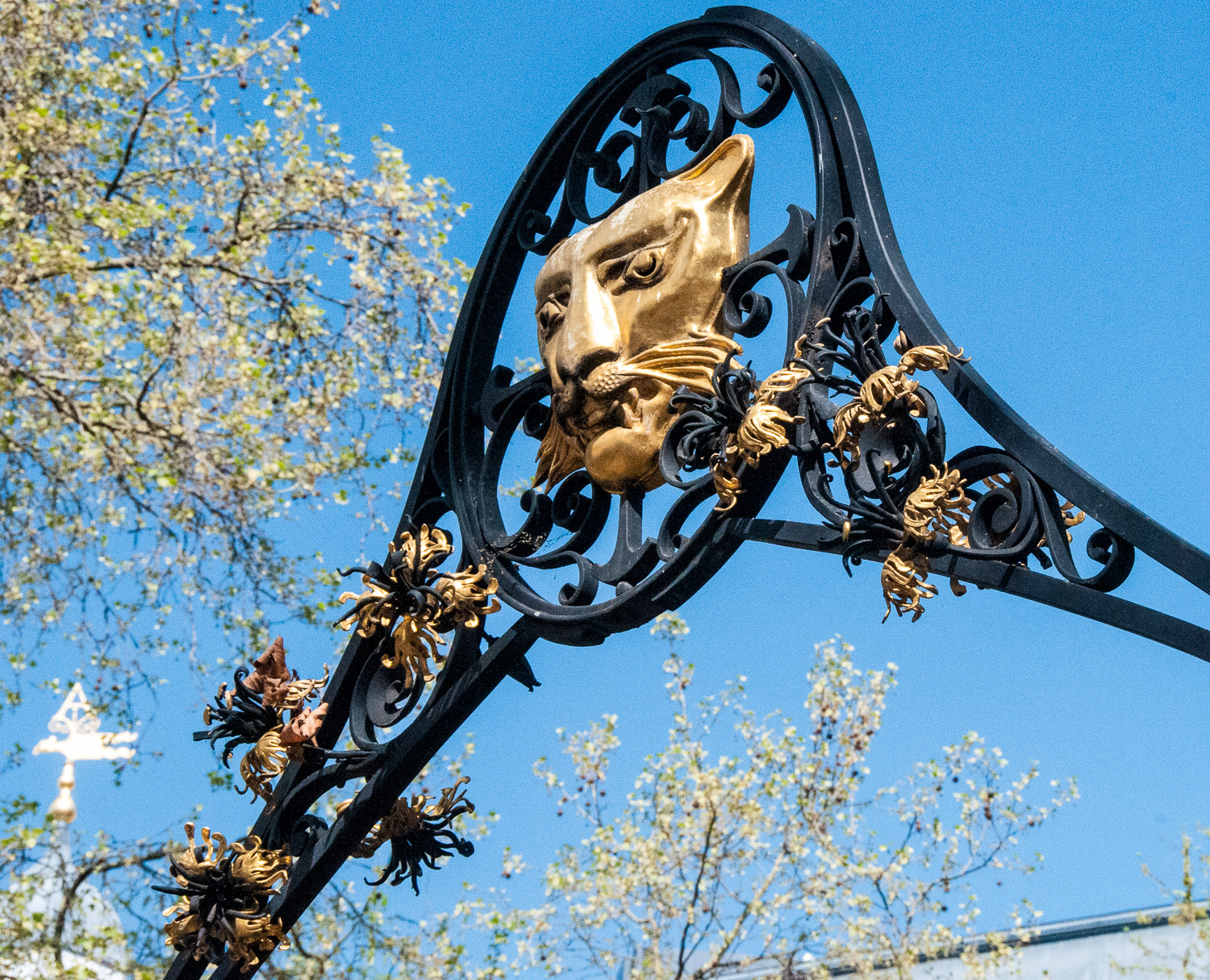
The St John Zachary or Goldsmith’s Garden in Gresham Street EC2V 7HN) is a haven of peace in the bustling City. Walk under the stunning golden leopard’s head symbol of the Goldsmith’s Company …

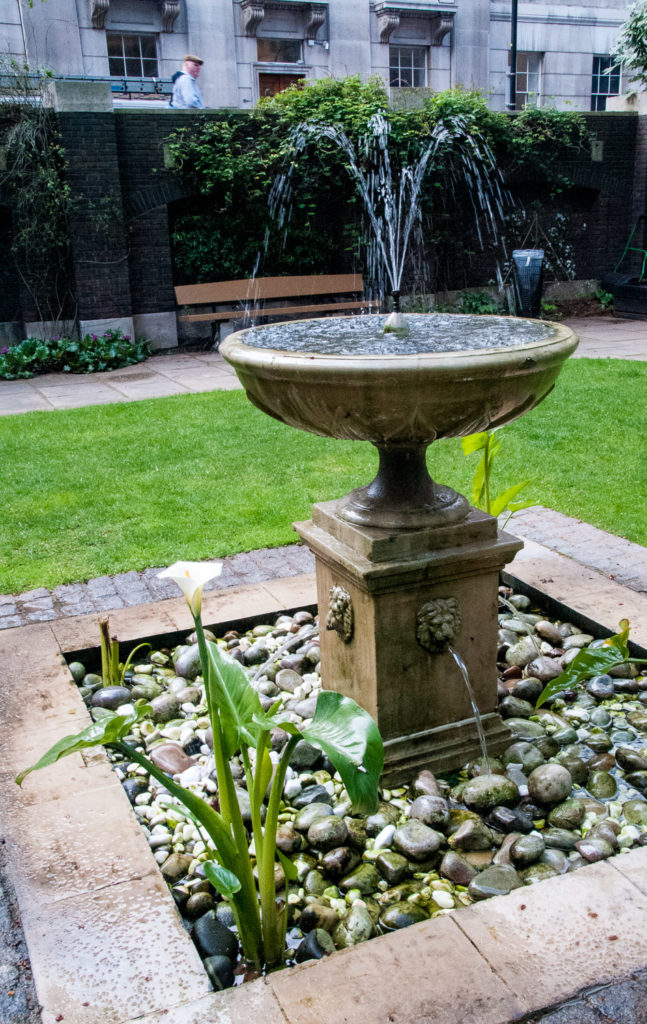
Down the steps in the sunken garden you will find this pretty little fountain …

This image has an empty alt attribute; its file name is DSC_5549-647x1024.jpg

You can read more about the garden and an interesting nearby sculpture called The Three Printers in my City Gardens blog.

Postman’s Park’s fountain is rather modest (EC1A 7BT) …

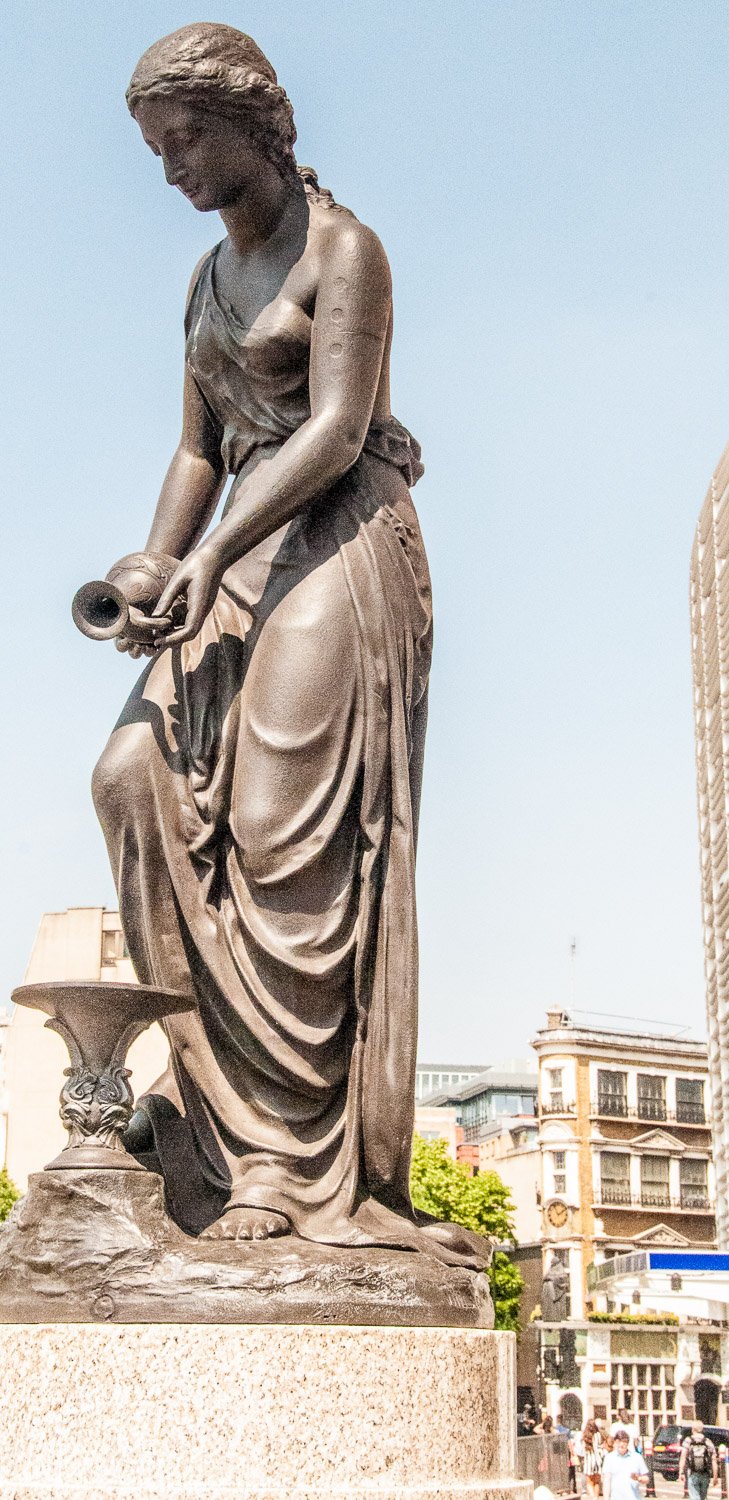
And finally, on the north side of Blackfriars Bridge is one of my favourites, recently liberated from behind hoardings and nicely restored (but sadly no longer pouring water) …

Sculptor Wills Bros.

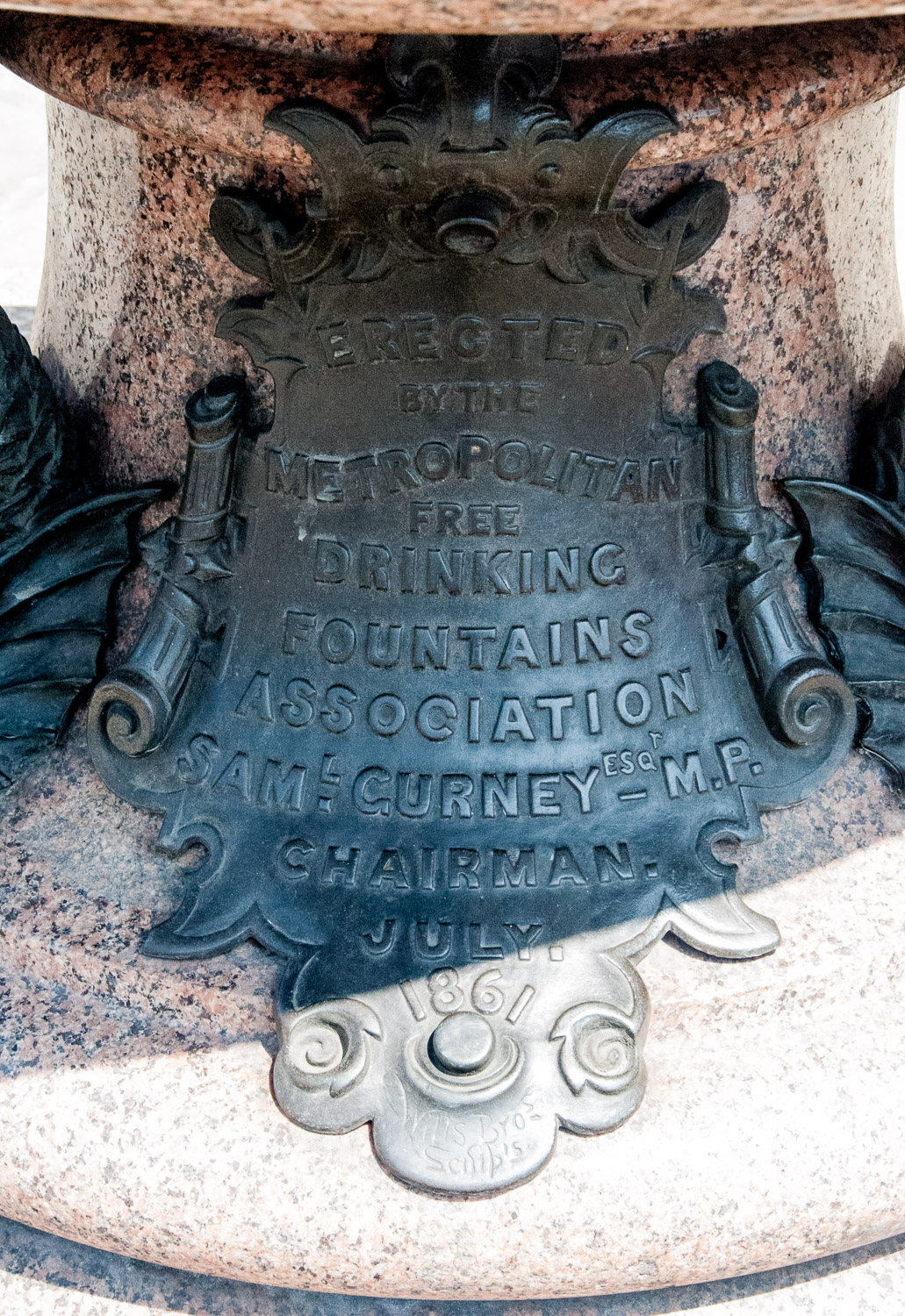
The pretty lady represents ‘Temperance’ and she originally stood outside the Royal Exchange. The fountain was inaugurated by Samuel Gurney, MP, the Chairman of the Metropolitan Free Drinking Fountains Association, on 27 July 1861 and you can read more about him, and the Association, in my earlier blog Philanthropic Fountains.

This week’s fountains have been very traditional.

Next week I will look at more modern versions, including those that tend to pop up out of the ground …

Don’t forget to follow me on Instagram :

https://www.instagram.com/london_city_gent/

Swinging angels, an alligator and public sculpture around St Paul’s

First of all, some great news! You can now follow me on Instagram at :

www.instagram.com/london_city_gent/

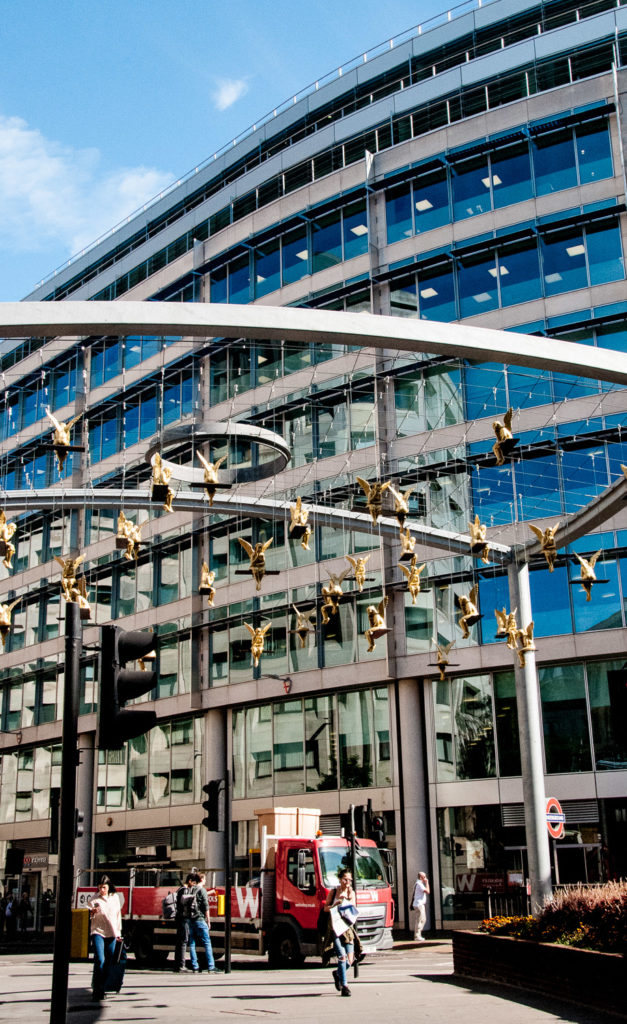
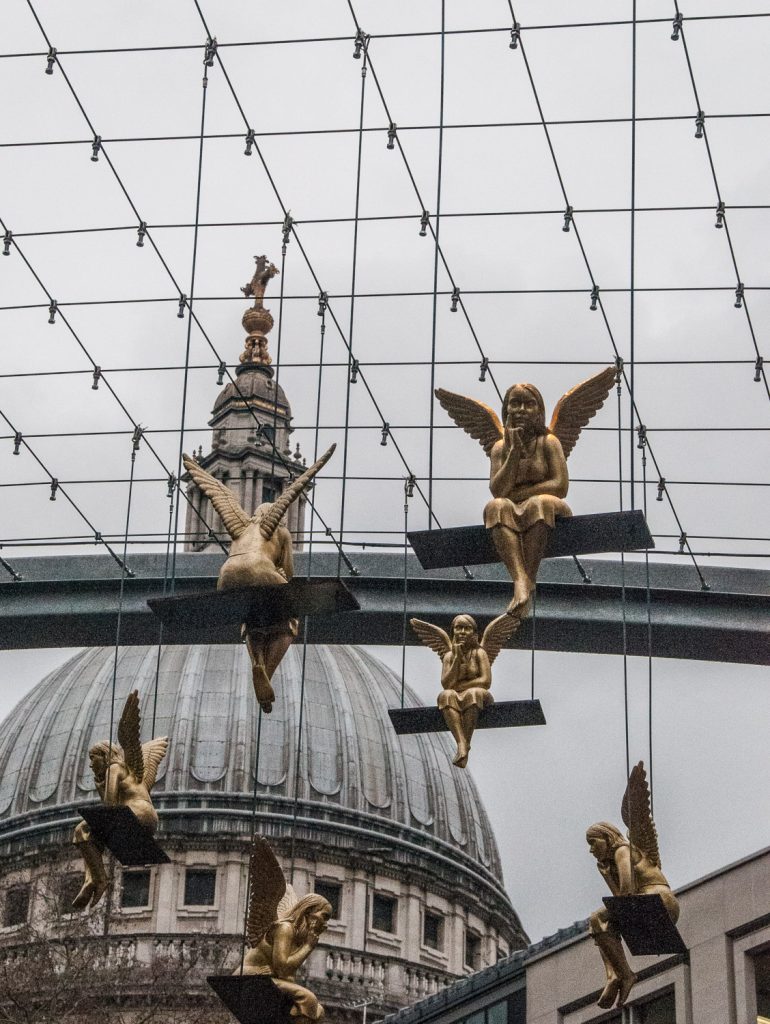
Crossing the road outside St Paul’s Underground station I came across the surprising sight of 40 golden angels resting on swings above my head …

Entitled Lunch Break they are an installation by architects KHBT in collaboration with artist Ottmar Hörl. Intended to create a strong conceptual and visual link to the Cathedral it is, the note nearby tells us, also an emotional and imaginative work that is aiming to make people think and smile. ‘After all, in this particular time, guardian angels deserve some rest’ …

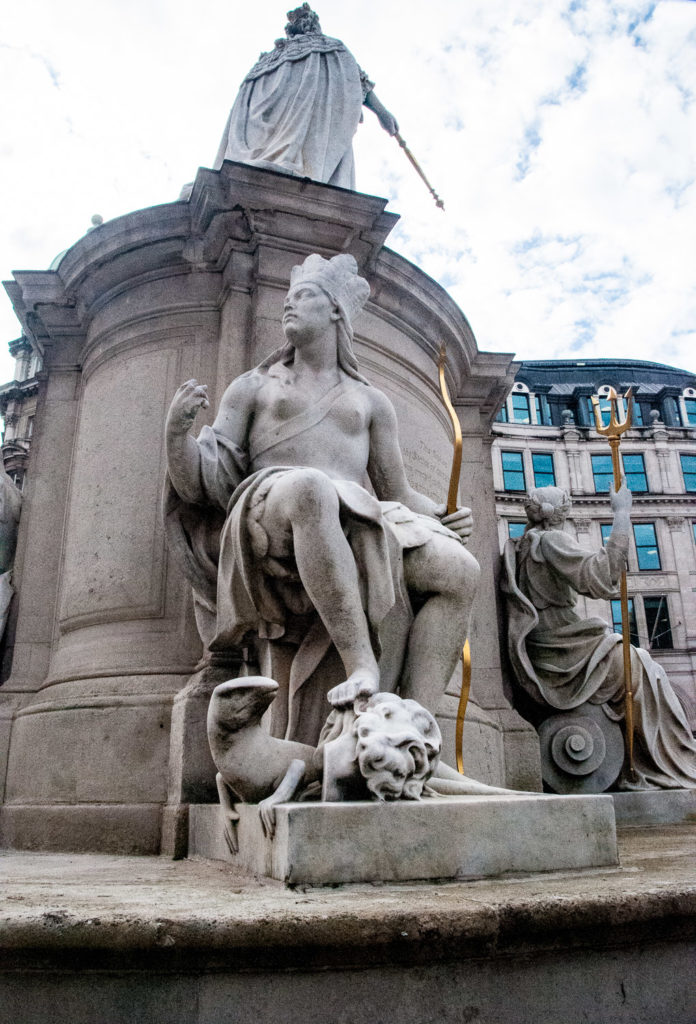
Outside the west front of the Cathedral is the statue commemorating Queen Anne, a Victorian replica of an earlier work that had become weathered and vandalised. The queen is surrounded by four allegorical figures and this one represents America …

She wears a feathered head-dress and skirt whilst her left hand grasps a metal bow. Her right hand may once have held an arrow.

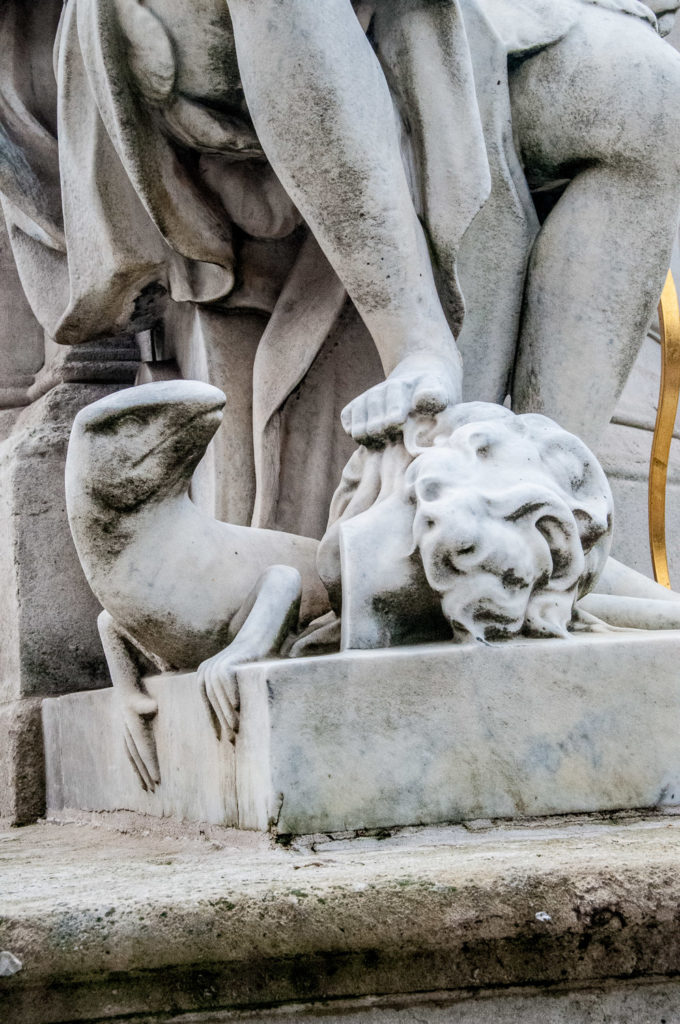
What fascinated me, however, is the creature by her feet which resembles a rather angry Kermit the frog (alongside the severed head of a European) …

In 1712, this is what the original sculptor Francis Bird imagined an alligator would look like. A contemporary description of the statue states …

There is an allegator creeping from beneath her feet; being an animal very common in some parts of America which lives on land and in the water.

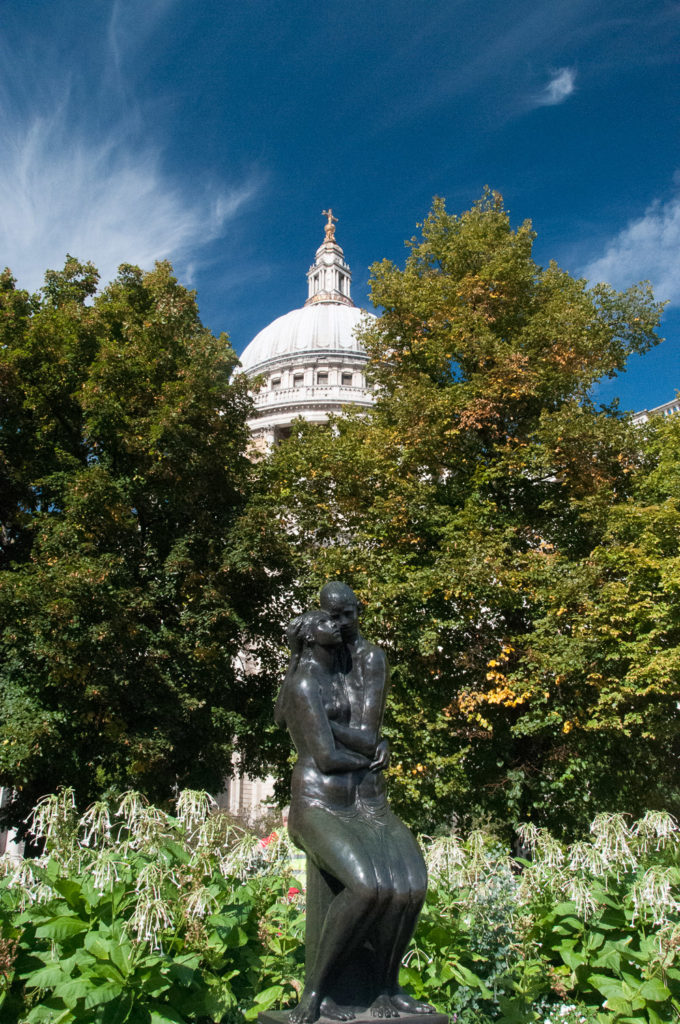
In the Diamond Jubilee Gardens close by is this work, The Young Lovers, by Georg Ehrlich (1897-1966). The Cathedral gives it a dramatic backdrop …

Ehrlich was a Austrian sculptor who was born and studied in Vienna. During the First World War he served in the Austrian Army and in 1930 he married the artist Bettina Bauer. After the rise of the Nazis, Ehrlich decided that it was too dangerous for them to be in Austria since they were both Jewish and they moved to London. He became a British citizen in 1947 and was elected an Associate of the Royal Academy in 1962.

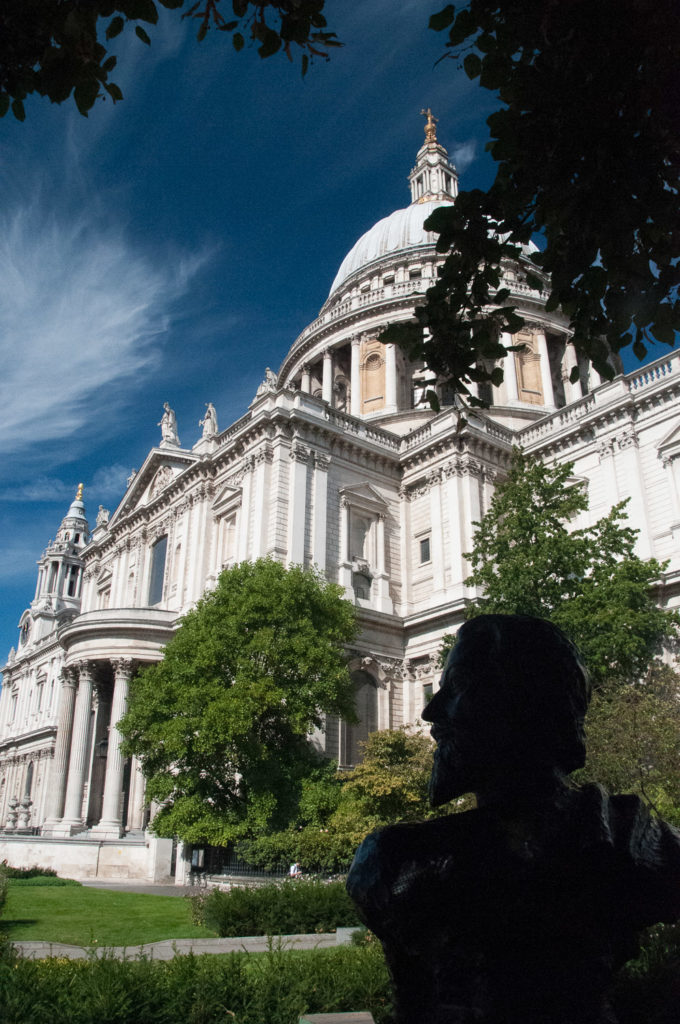
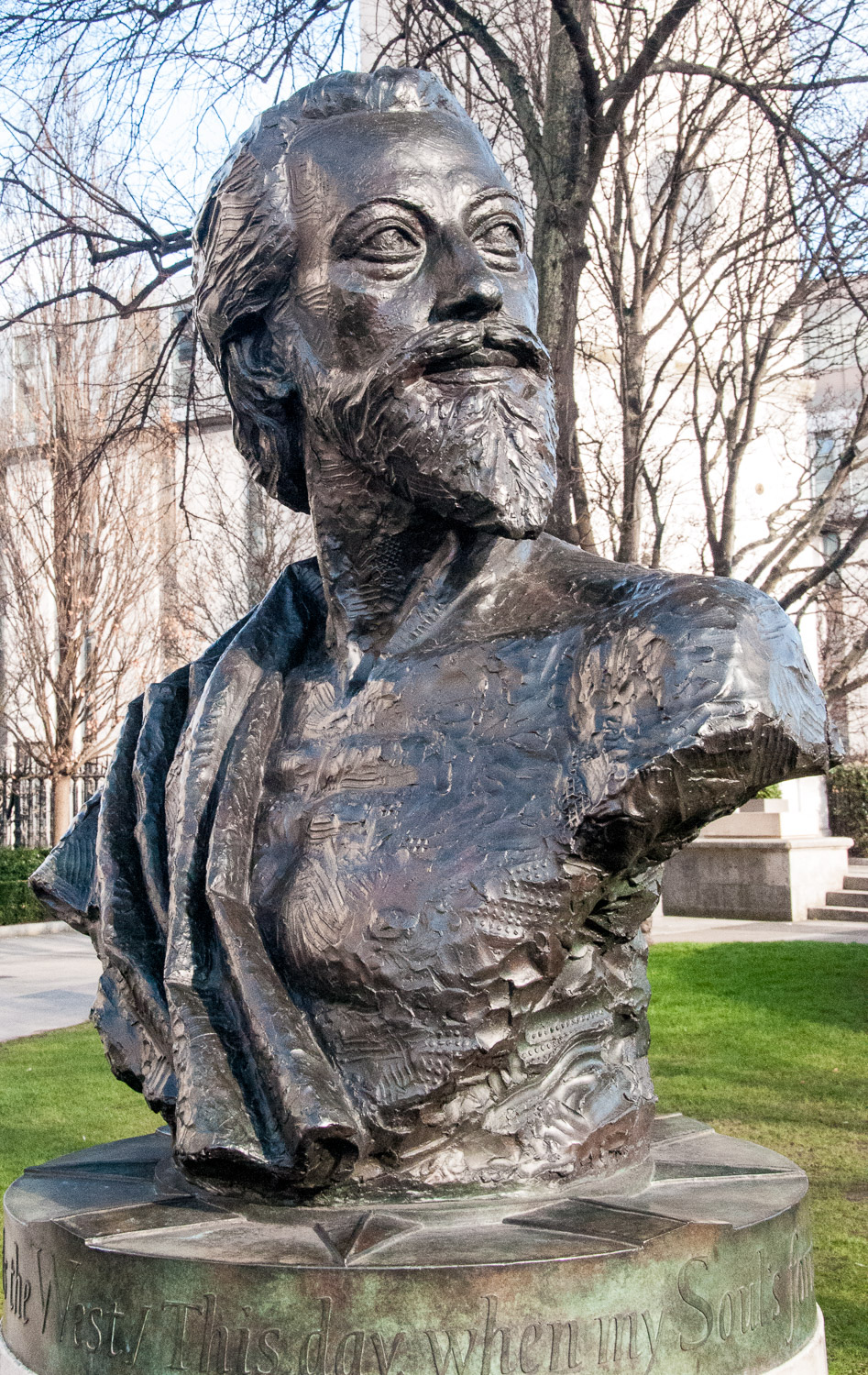
Since the weather was so nice, I took the opportunity to capture this profile of the one-time Dean of St Paul’s John Donne …

John Donne 1572 – 1631 by Nigel Boonham (2012)

I have written about Donne before and you can access the blog here.

His bust points almost due west but shows him turning to the east towards his birthplace on Bread Street. The directions of the compass were important to Donne in his metaphysical work: east is the Rising Sun, the Holy Land and Christ, while west is the place of decline and death. Underneath the bust are inscribed words from his poem Good Friday – Riding Westward :

Hence is’t that I am carried towards the west, This day when my soul’s form bends to the east

The most familiar quotation from Donne comes from his Meditation XVII – Devotions upon Emergent Occasions published in 1624:

No man is an island, entire of itself; every man is a piece of the continent, a part of the main … and therefore never send to know for whom the bell tolls, it tolls for thee.

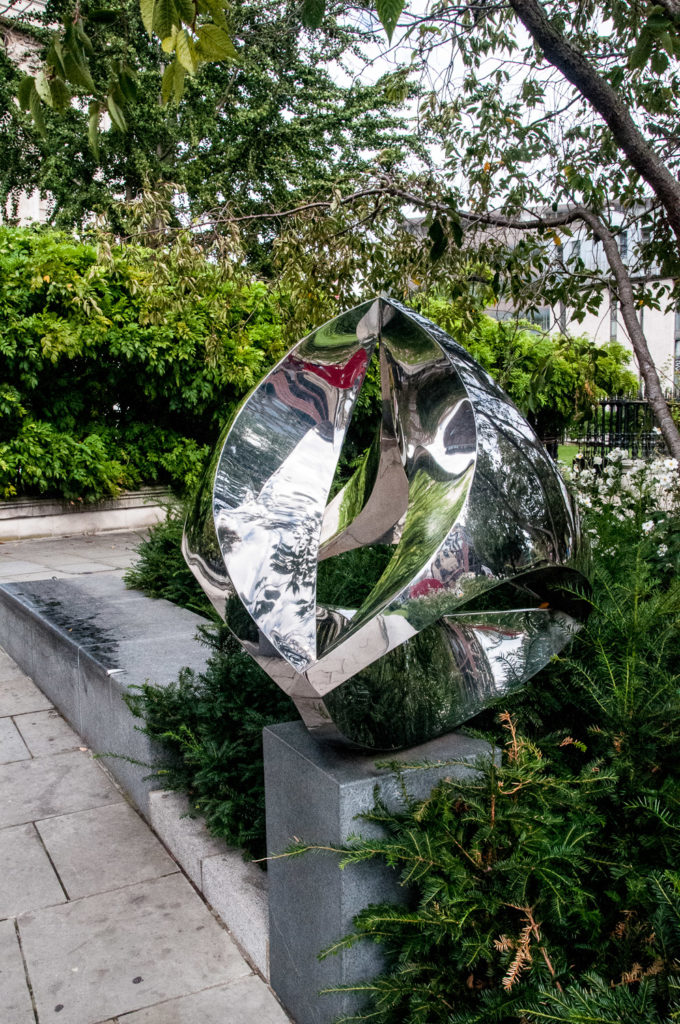
I really like this work by Paul Mount (1922-2009), also to be found in the gardens …

Amicale (2007)

Mount was one of the last British artists whose careers were interrupted by the Second World War. A lifelong pacifist, he served in the Friends Ambulance Unit in North Africa and then France, where he stayed on after the end of the war to do relief work. Once free to work again, artists like him never really lost their sense of a world to be made anew through art. For Mount, sculpture expressed an essential human dignity. He observed …

The way that two shapes relate is as important as the way two people relate.

There is a nice obituary notice about him and his fascinating life in The Guardian which you can access here.

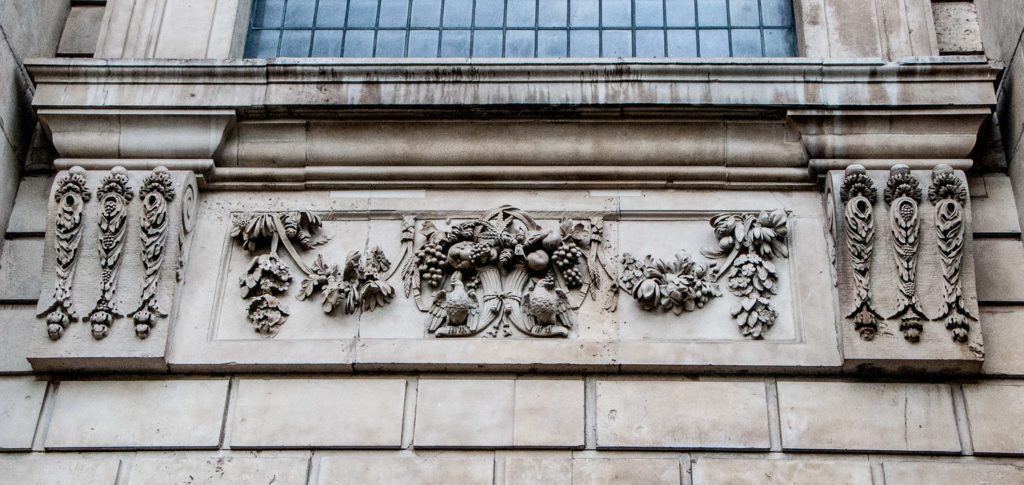
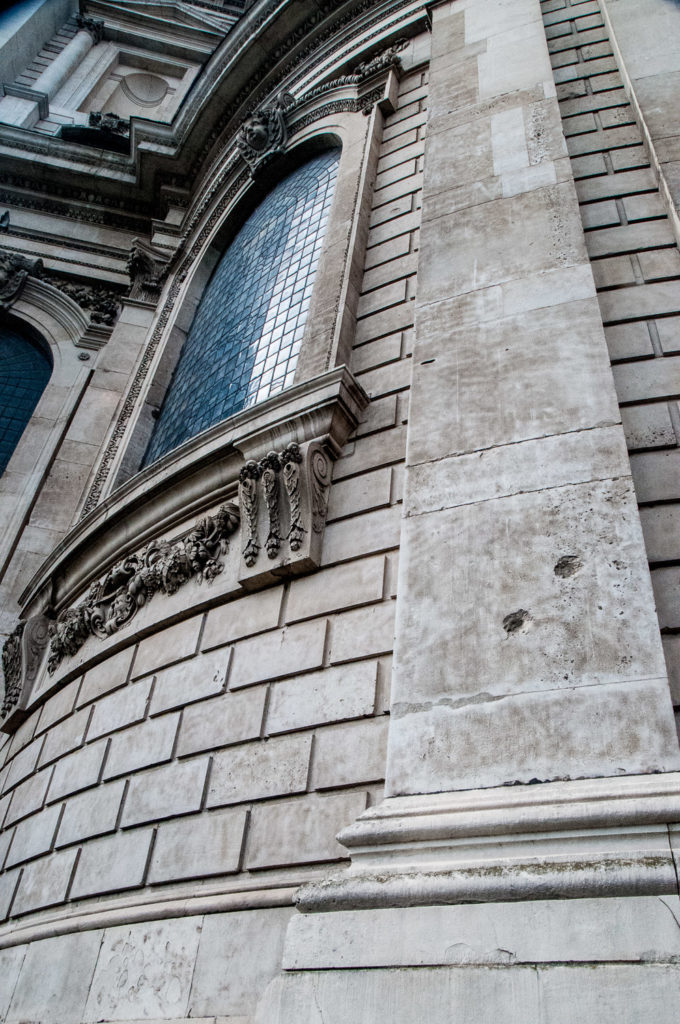
And finally, every time I walk past St Paul’s I am struck by the beauty of the stone carving, take this example …

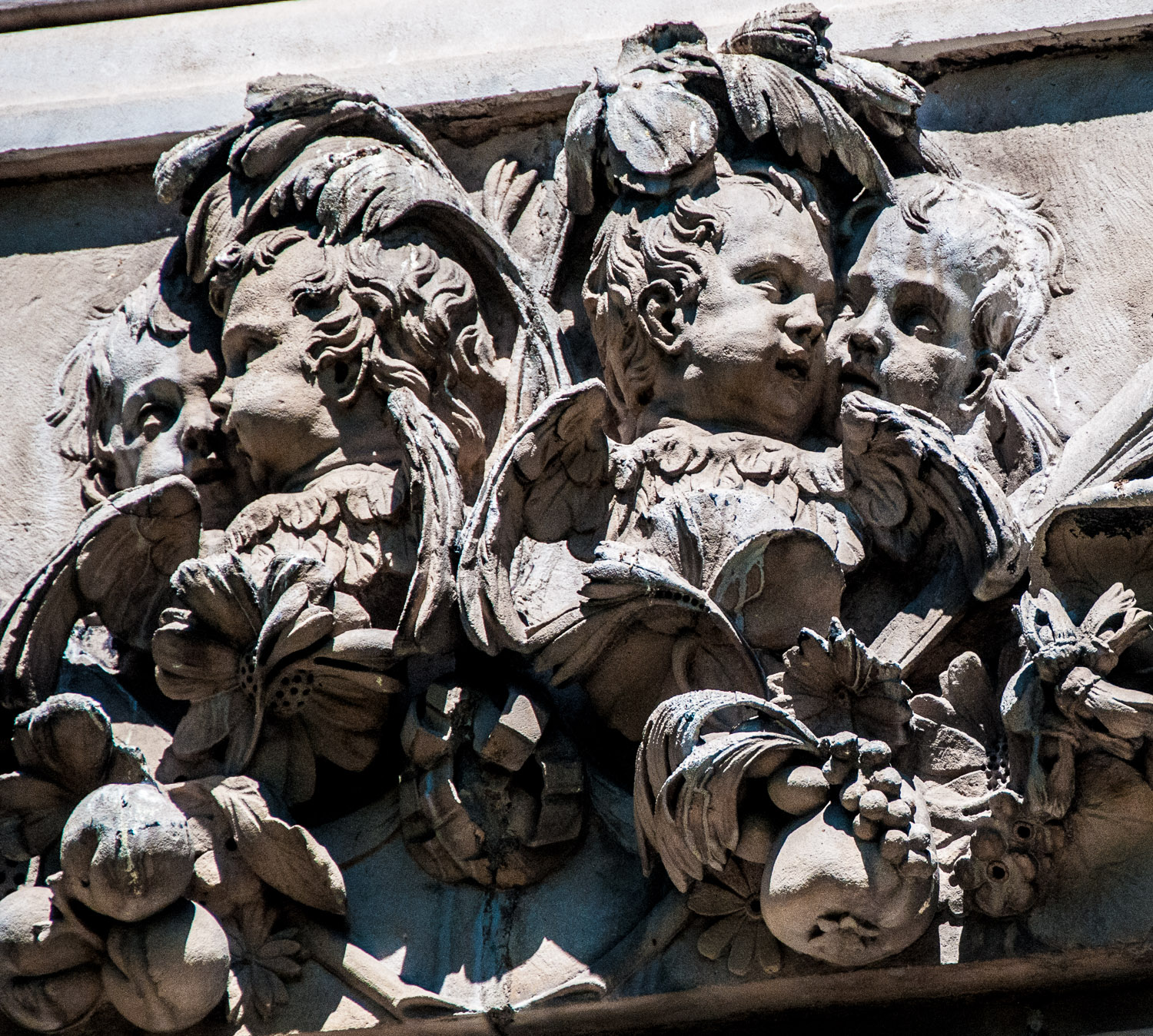
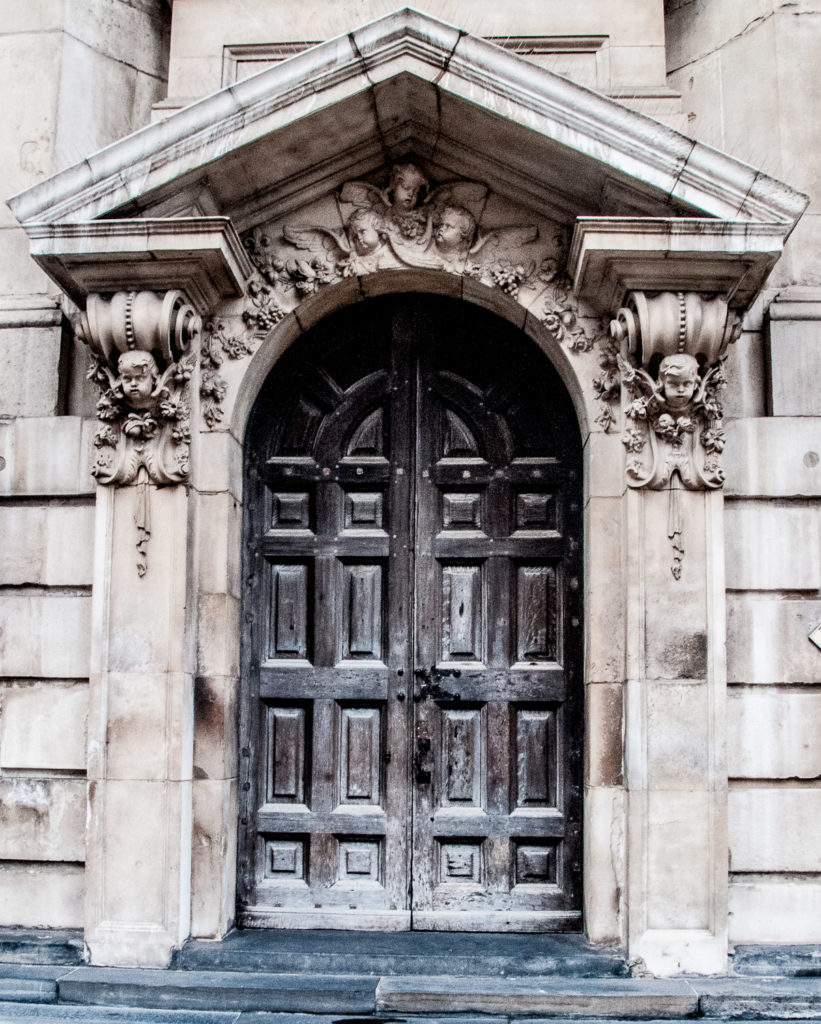
Or this abundance of cherubs …

And this meticulous carving around the Dean’s Door …

Christopher Wren paid the sculptor, William Kempster, an additional £20 for the excellence of his work.

As memories of wartime fade, these shrapnel marks from a nearby bomb blast serve to remind us of how close the Cathedral came to destruction …

A number of other City buildings bear scars from World War bombing and you can read about them here.

Don’t forget to find me on Instagram: www.instagram.com/london_city_gent/

Page 113 of 150

Powered by WordPress & Theme by Anders Norén

Symbols & Secrets
Privacy Overview

This website uses cookies so that we can provide you with the best user experience possible. Cookie information is stored in your browser and performs functions such as recognising you when you return to our website and helping our team to understand which sections of the website you find most interesting and useful.