Symbols & Secrets

Walking the City of London

A wander around St Paul’s (again)

I find myself continually drawn to the area around the Cathedral. There is always the constant background noise of tourist chatter but there is also something wonderful about walking around in the shadow of Sir Christopher Wren’s sublime masterpiece.

And there is also a lot to see.

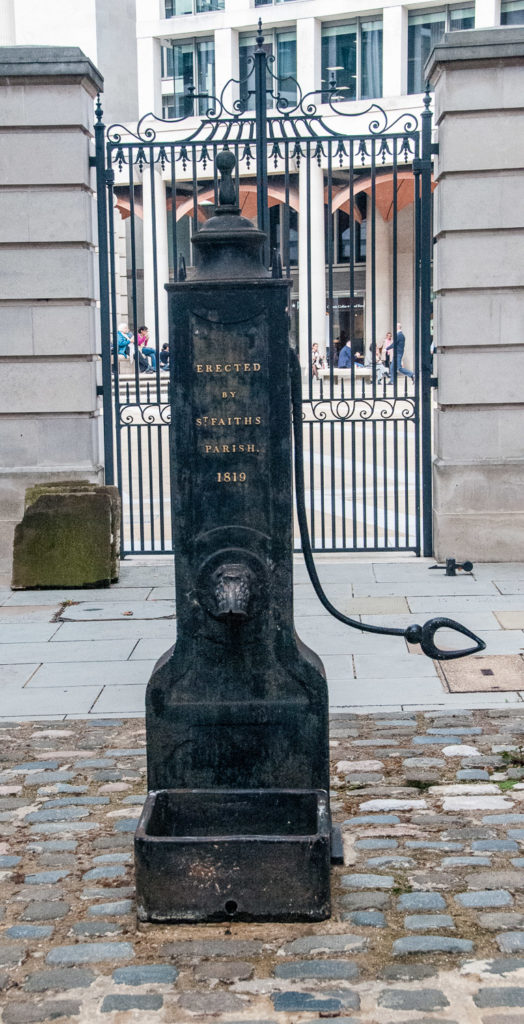
This old Parish Pump, dated 1819, bears the name of St Faith’s Parish despite the fact that the church after which it was named was demolished in 1256 (yes, over 700 years ago) to allow for the eastern expansion of St Paul’s.
This image has an empty alt attribute; its file name is DSC_6732-524x1024.jpg

From the 1250s until the reign of Edward VI, the parish known as St Faith under St Paul’s literally worshiped beneath St Paul’s Cathedral, using a space the end of the west crypt under St Paul’s Quire. After the Great Fire of 1666 the parish was united with St Augustine Watling Street. The pump was once situated against railings of St Paul’s Churchyard close to St Paul’s Cross, but was moved to its present position in 1973.

The old parish still has a boundary marker on the wall of St Paul’s Cathedral School …
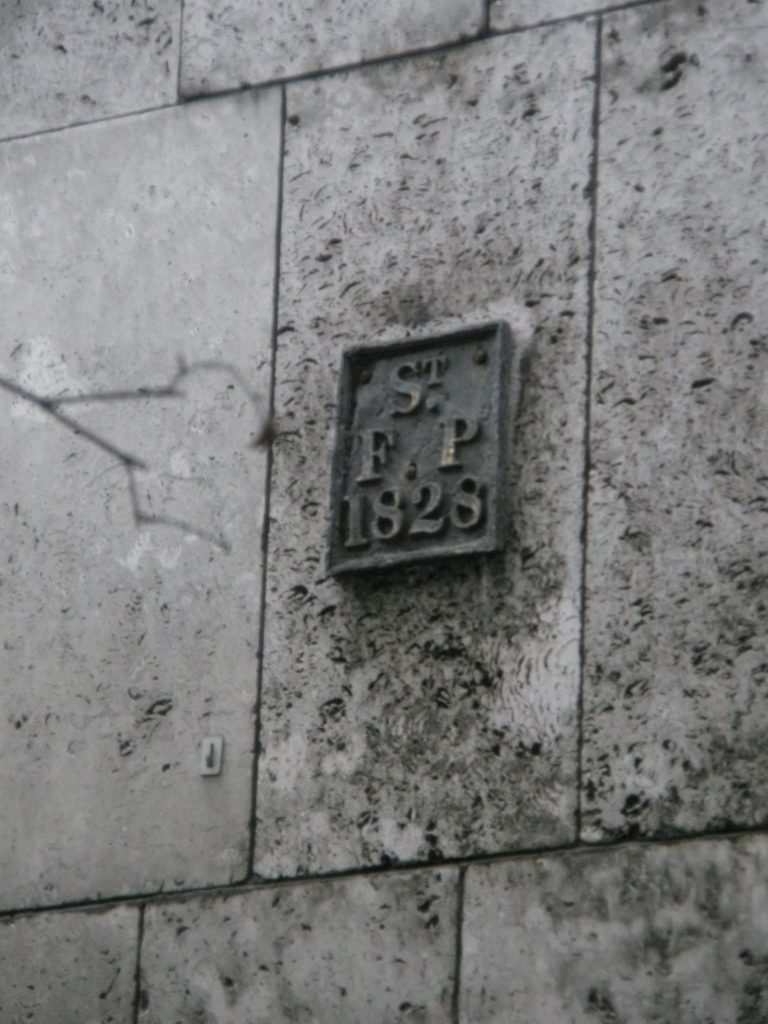
You can read more about Parish Markers here.

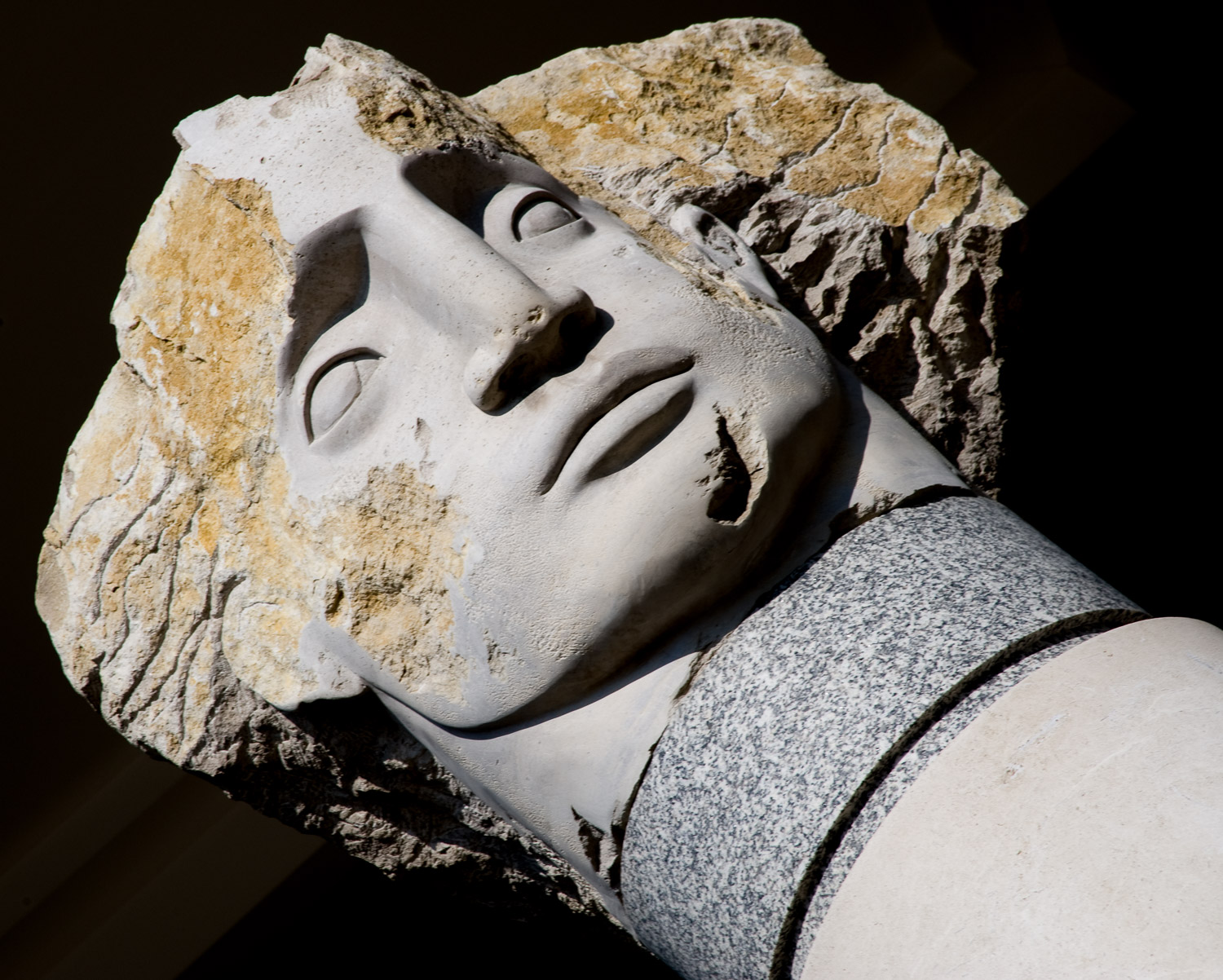
Emily Young FRBS is one of the country’s foremost stone sculptors and you can enjoy her work in the form of Angels I to V in the courtyard opposite the Cathedral’s main entrance. I never tire of looking at them …
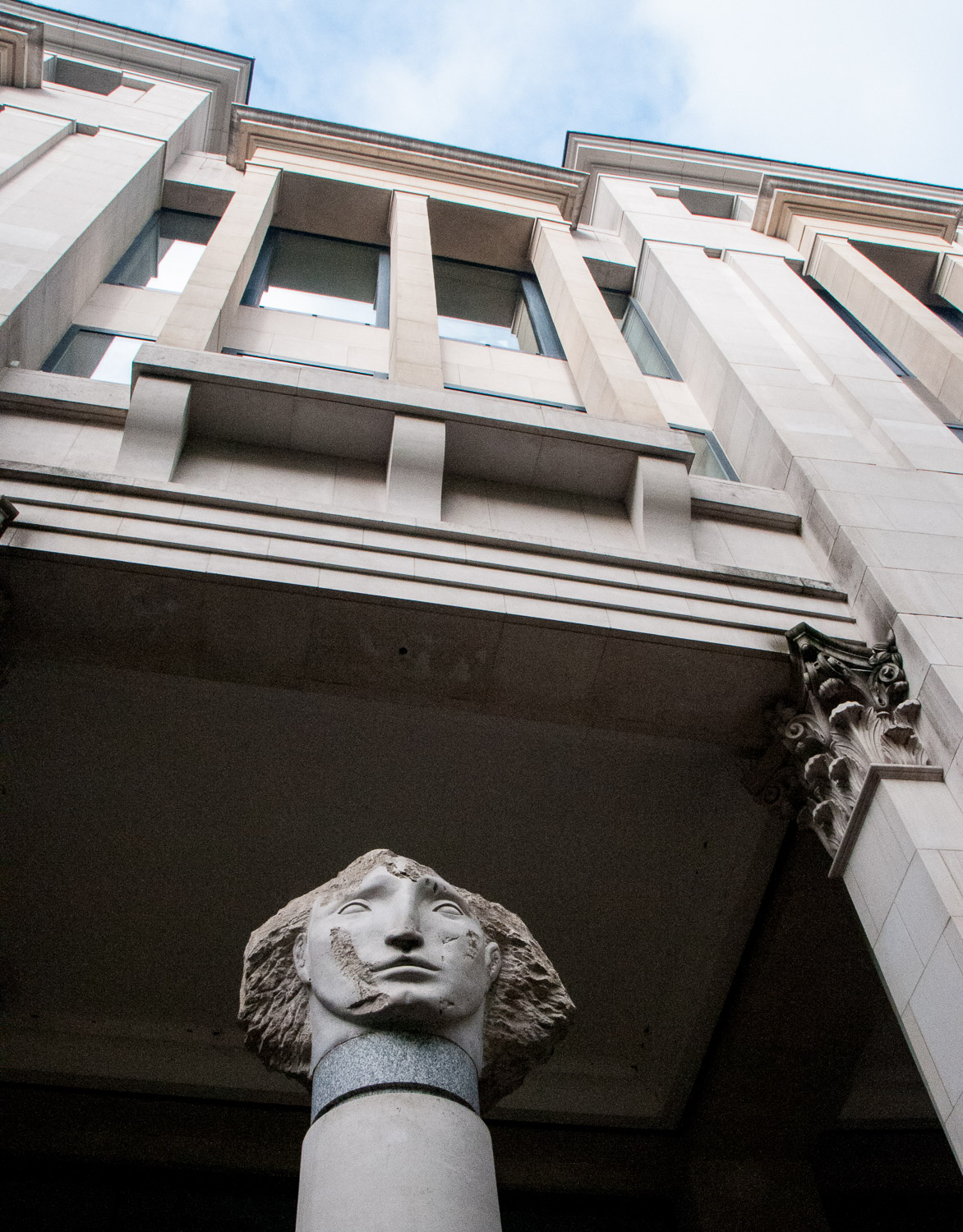
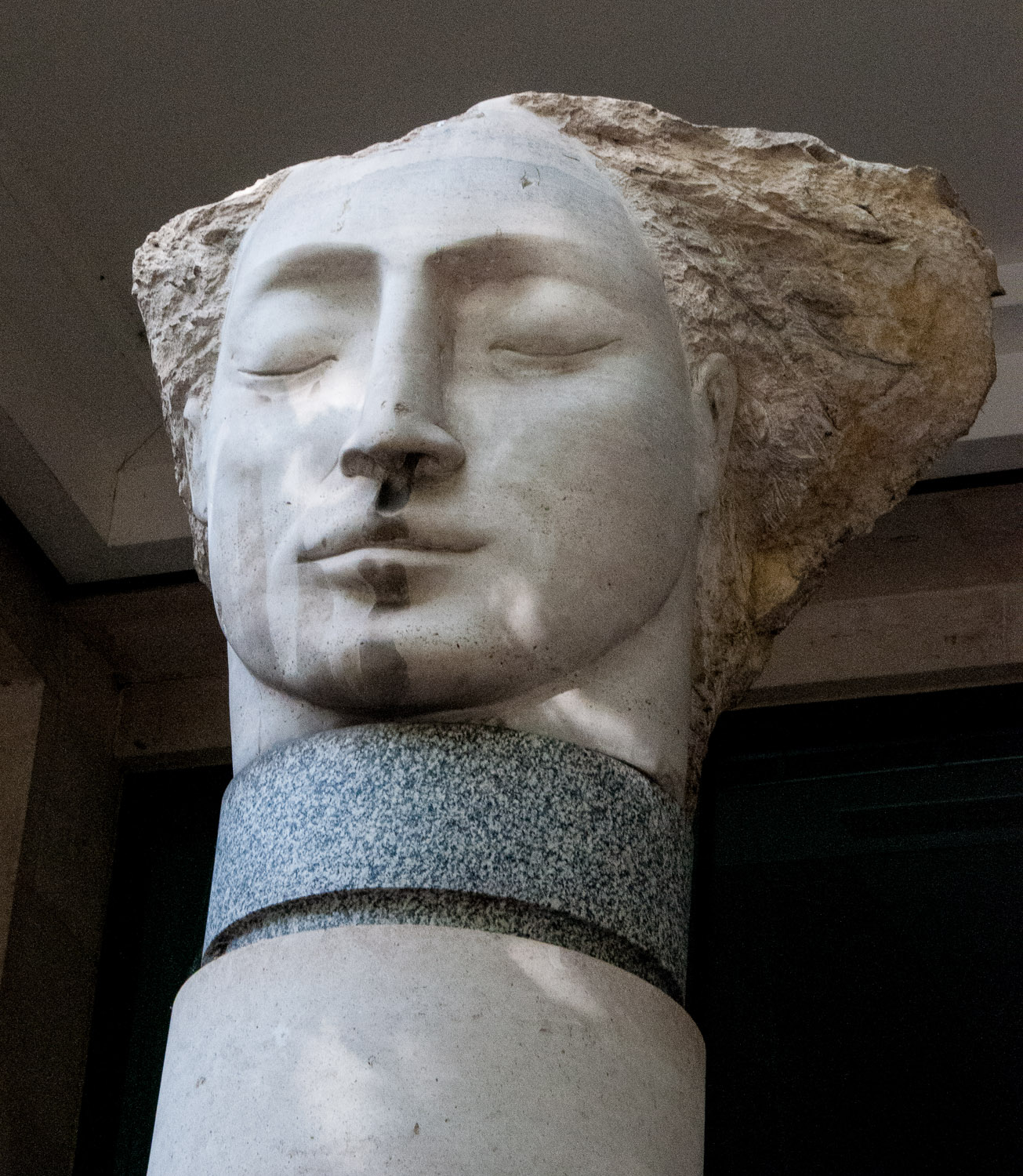
I have written an entire blog about City Angels and Devils and you can access it here.

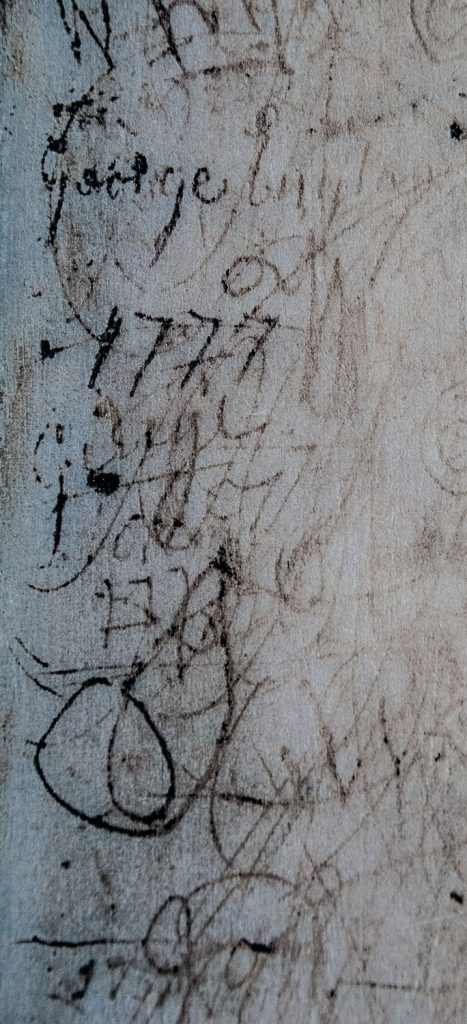
Now climb up the steps to the imposing West Door and admire, if that’s the right word, the elegant cursive script of the 18th century ‘vandals’ who scratched their names in the stonework …
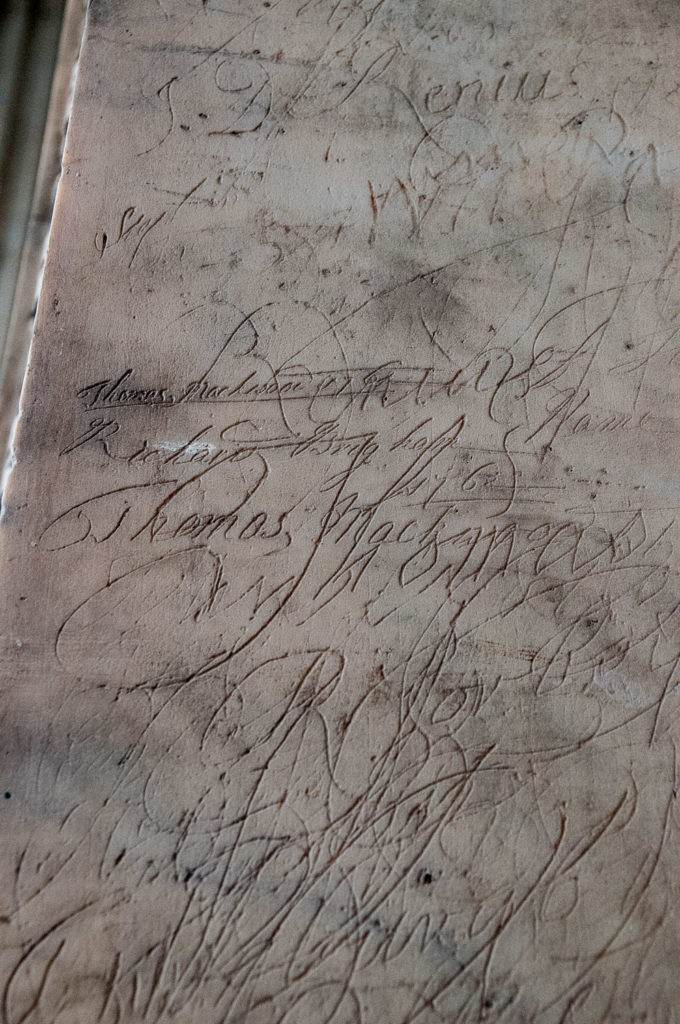
Some of it is very high up which leads me to believe the marks were made by workmen using sharp implements whilst standing on a scaffold …
This image has an empty alt attribute; its file name is DSC_4029-467x1024.jpg

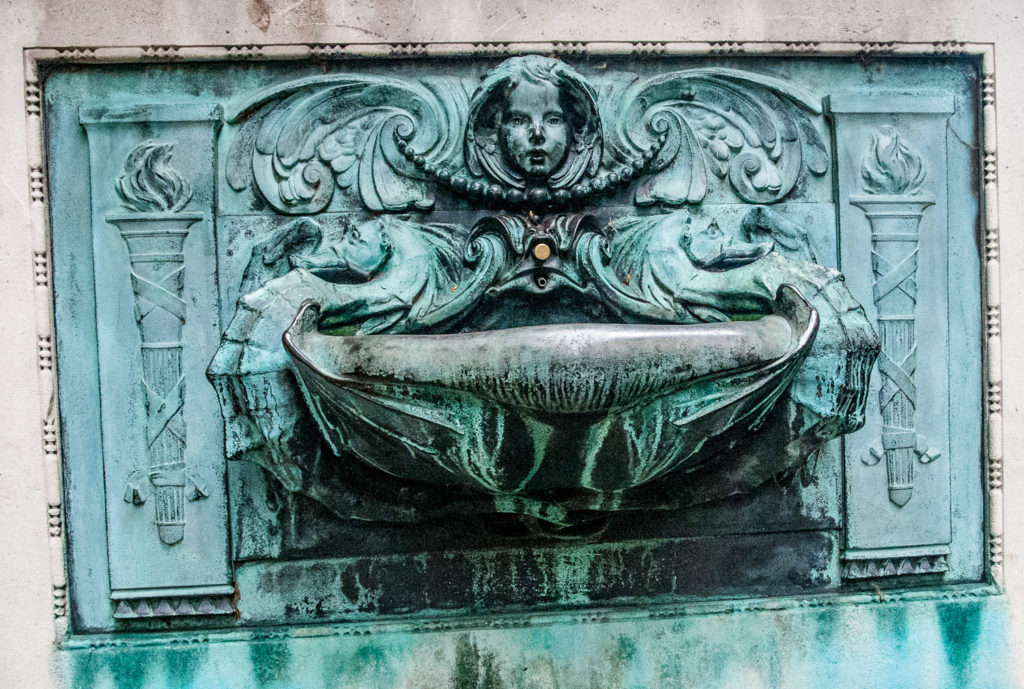
In the gardens you will find this pretty little drinking fountain …
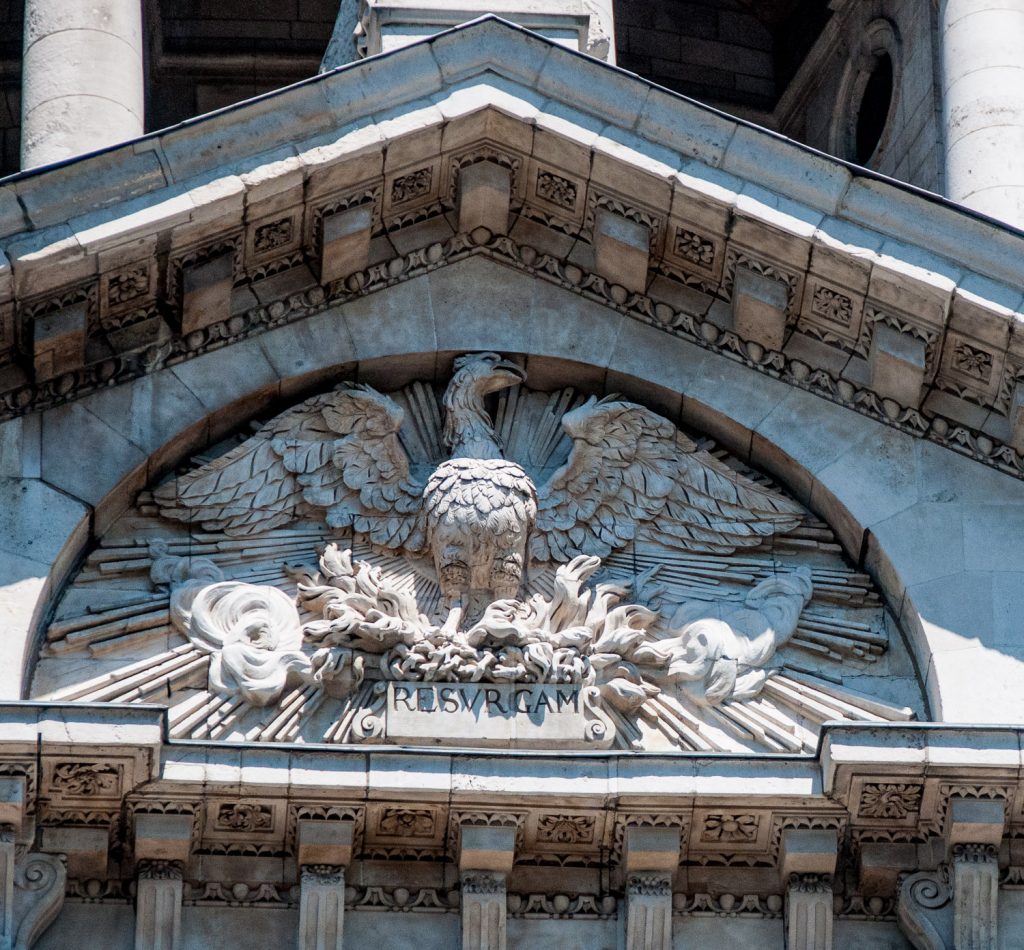
An extraordinary coincidence occurred during the Cathedral’s rebuilding. Whilst staking out the foundations in the newly cleared site, Sir Christopher needed to mark a particular spot and asked a labourer to fetch a stone. The man came back with a fragment of a broken tombstone on which was carved 0ne word, RESURGAM – I shall rise again. Wren’s son later wrote that the architect never forgot that omen and it was an incident from which he drew comfort when the obstacles that arose during the long years of rebuilding seemed insuperable.

If you look up at the pediment of the south porch this is what you will see …
This image has an empty alt attribute; its file name is DSC_4045-1024x950.jpg

The sculptor Caius Gabriel Cibber was instructed to portray a phoenix rising from the ashes. This would not only be a fitting symbol for the Cathedral but would also include the one word that had cheered Wren two decades earlier.

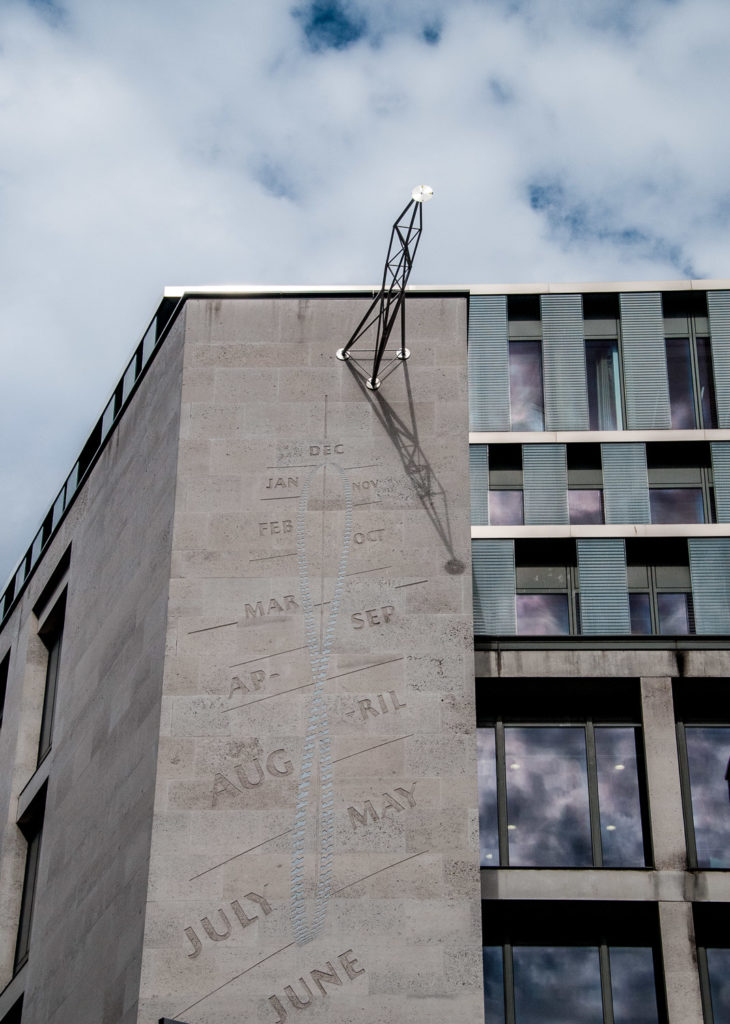
In Paternoster Square there is this unusual sundial …
This image has an empty alt attribute; its file name is DSC_6739-730x1024.jpg

I took this picture on 28th September.

Opposite the Cathedral on Ludgate Hill is a nice double aperture pillar box …
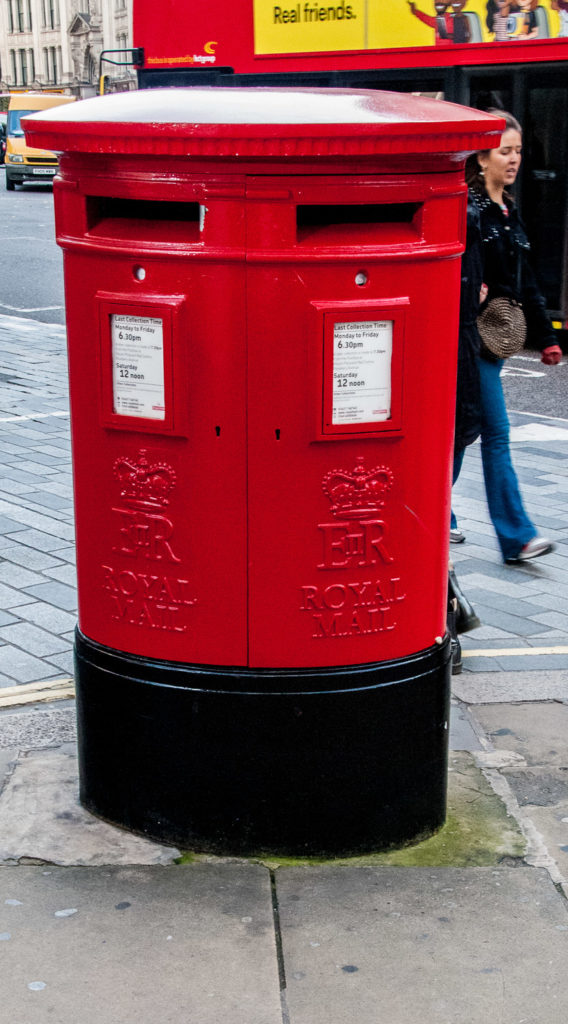
It was cast in 1996 …
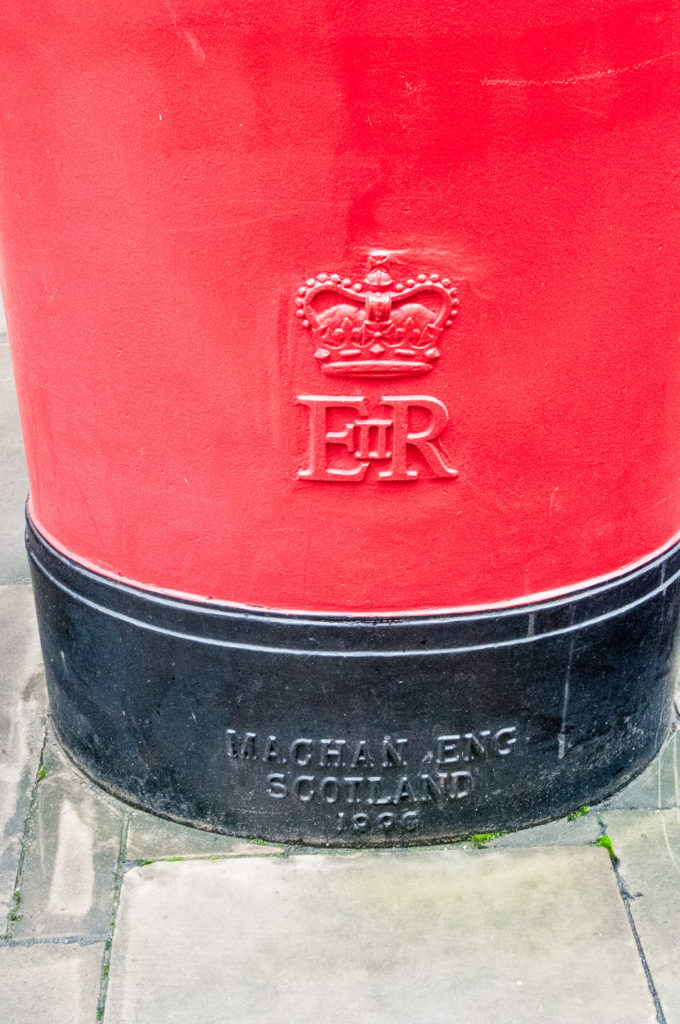
At that time Machan Engineering were the only foundry in the UK to make the traditional cast-iron pillar boxes. The company had supplied Royal Mail since the 1980s and used to get 150 orders a year but in 2014 they only received 20 orders and in 2015 they had just one. Sadly the business closed later that year.

I have written a blog devoted to City postboxes and you can find it here.

And finally, look closely at limestone wall which supports the signage for the London Stock Exchange Group. You will see a great collection of bivalves – oyster shells from the Jurassic period when dinosaurs really did walk the earth …
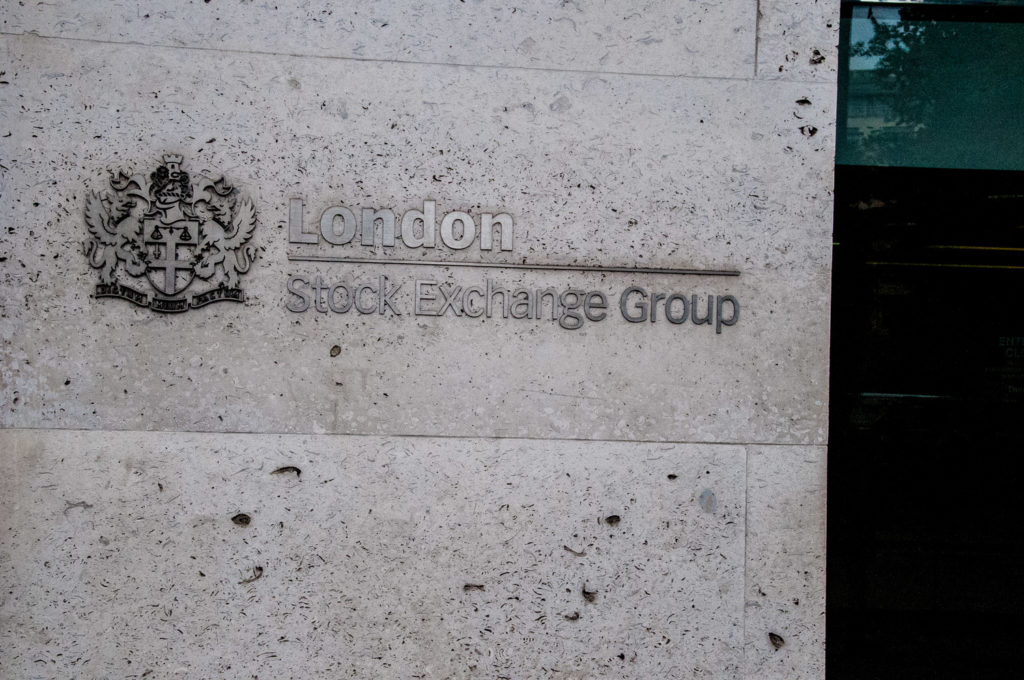
Read more about the City’s fossils in my blog Jurassic City.

Do remember that you can follow me on Instagram :

https://www.instagram.com/london_city_gent/

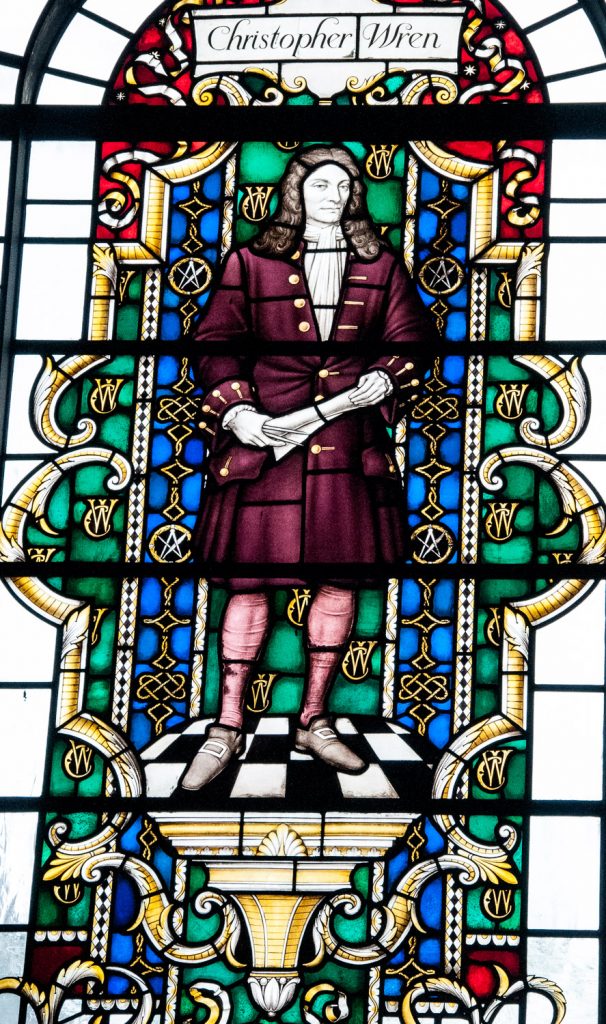
The great man himself portrayed in stained glass at the church of St Lawrence Jewry

A City Miscellany

As I walk around the City I often just take pictures with no particular theme in mind and it seems a shame not to share them so here is a random collection.

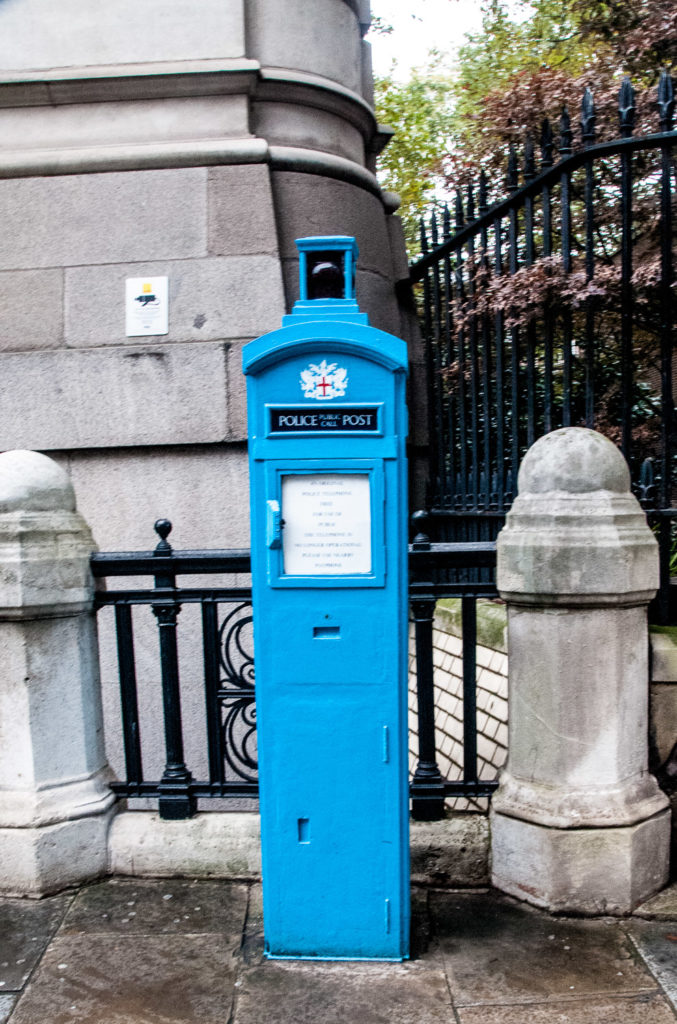
First up are a couple of Police Call Boxes that date from 1958. This one is in St Martin’s Le Grand …

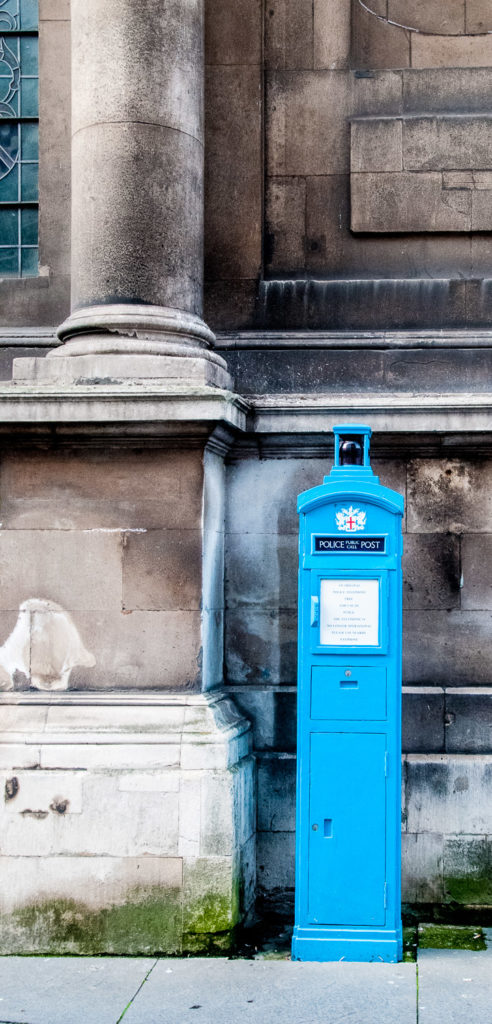
And this one alongside St Lawrence Jewry in Guildhall Yard …

Along with the well-known TARDIS boxes the Metropolitan Police Service’s network of call boxes included the smaller Police Public Call Post, designed for the City’s narrower streets. Originally they were fitted with a telephone, a compartment for a first aid kit, and a large light attached directly or using a pylon to the top of the post. Once there were over 70 of them but they were gradually removed from 1969 onwards and these are the only two I have come across in the City. Incidentally, there are no longer any TARDIS boxes anywhere in London apart from when Dr Who is visiting (as of course you know, TARDIS stands for Time and Relative Dimensions in Space).

If you want more information there is a book by John Bunker called The Rise and Fall of the Police Box and you can read more about Dr Who and his time travelling machine here.

I liked this glimpse of a chandelier in the Goldsmiths’ Company building on a dull rainy day …

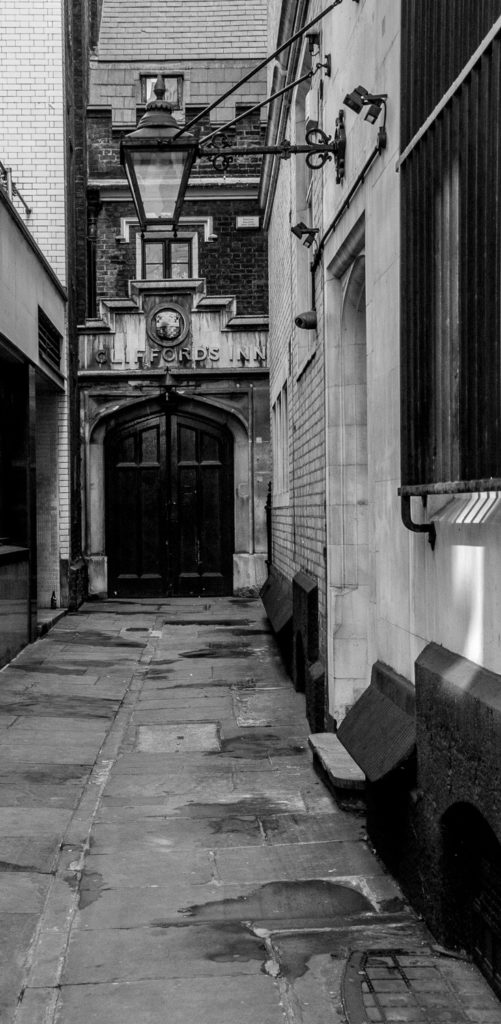
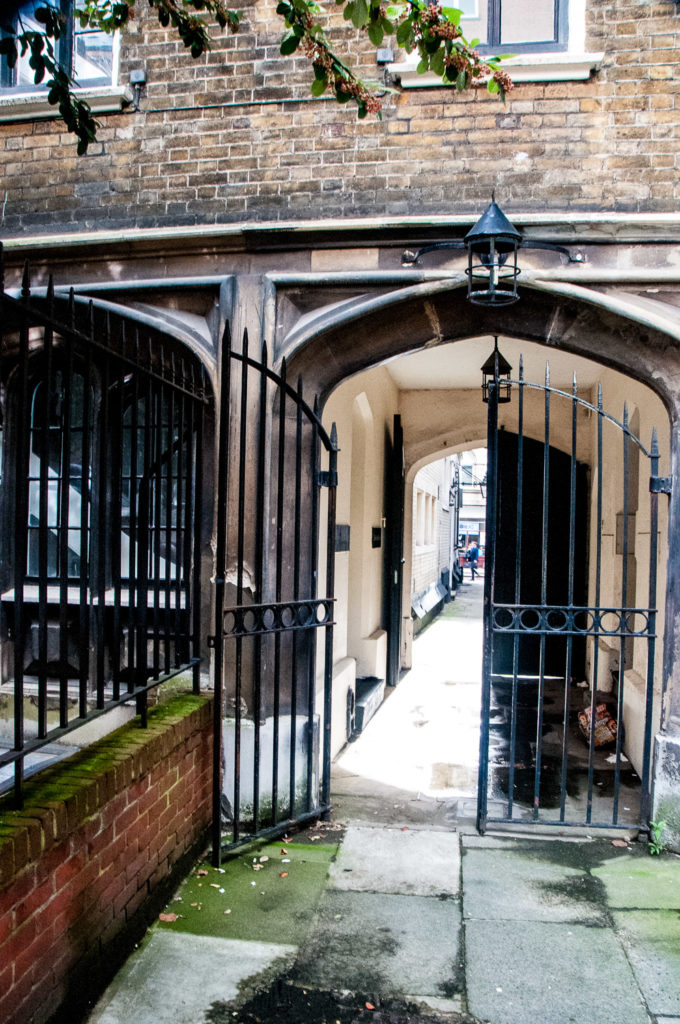
I have written before about Cliffords Inn Passage and how spooky it is with little natural light and the wall-mounted ‘deflectors’ designed to deter male misbehaviour and protect the brickwork …

This image has an empty alt attribute; its file name is DSC_4723-501x1024.jpg

Because I do most of my photography at the weekend the imposing doors at the north end have always been closed but last week they were open and I was able to take a cheerier view looking towards Fleet Street …

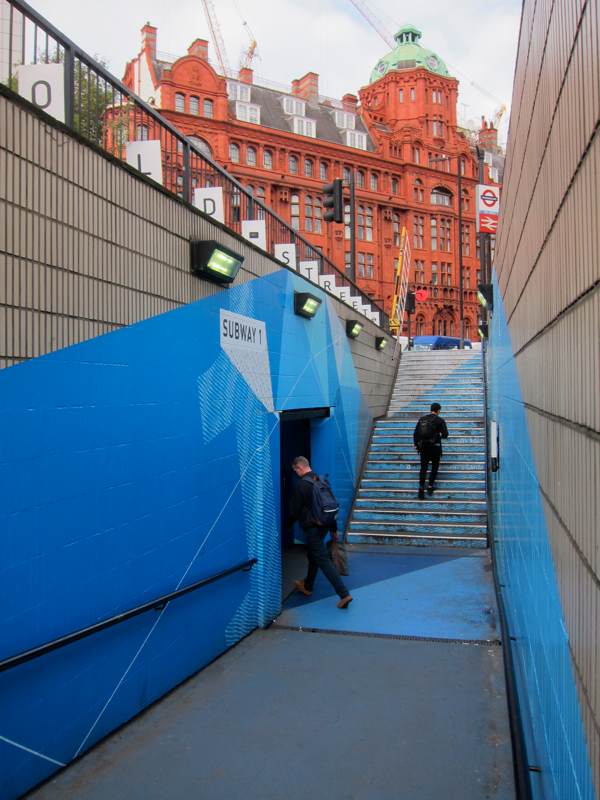
I like this shot which contrasts the blue paint of the subway entrance with the bold red facade of the Leysian Mission (which one day I shall get around to writing about) …

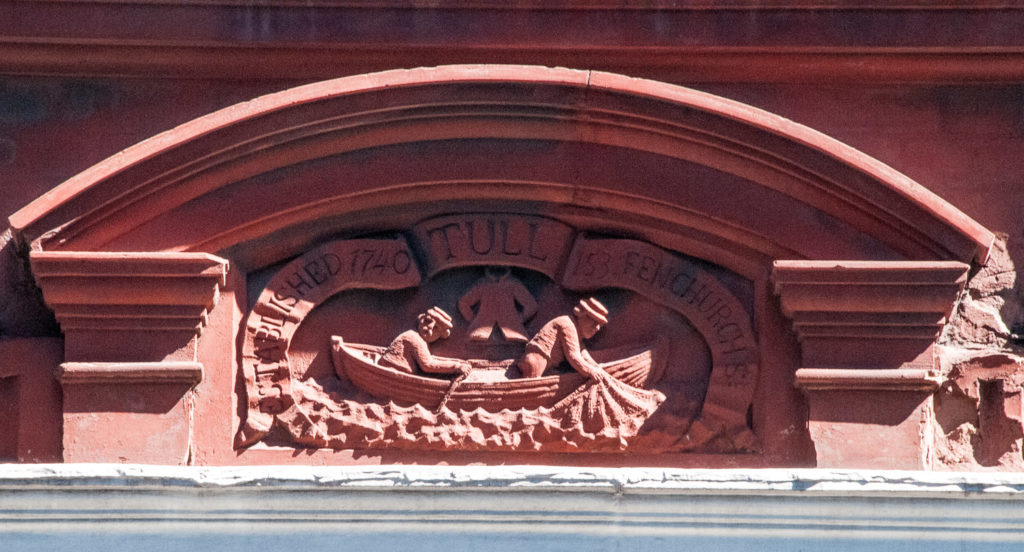
153 Fenchurch Street is squeezed between two glass office blocks but happily has survived 20th century redevelopment and contains this pretty cartouche. It shows two men fishing under a ribbon signage stating ‘Established 1740, Tull, 153 Fenchurch St.’

I am indebted to the London Remembers website for this information …

From Some Notes on the Ward of Aldgate (1904) “Messrs. SAMUEL TULL & Co., 12, Creechurch Lane, Rope, Line, Twine and Net Makers, established over 164 years. Originally at the sign of the “Peter Boat” (after the Apostle Peter), on Fish Street Hill, from there to 153, Fenchurch Street, and then for many years at 97, Leadenhall Street {now demolished}. They have a large number of customers of long standing — many of whom are of the same old school as themselves, the beginning of whose accounts go back for generations.”

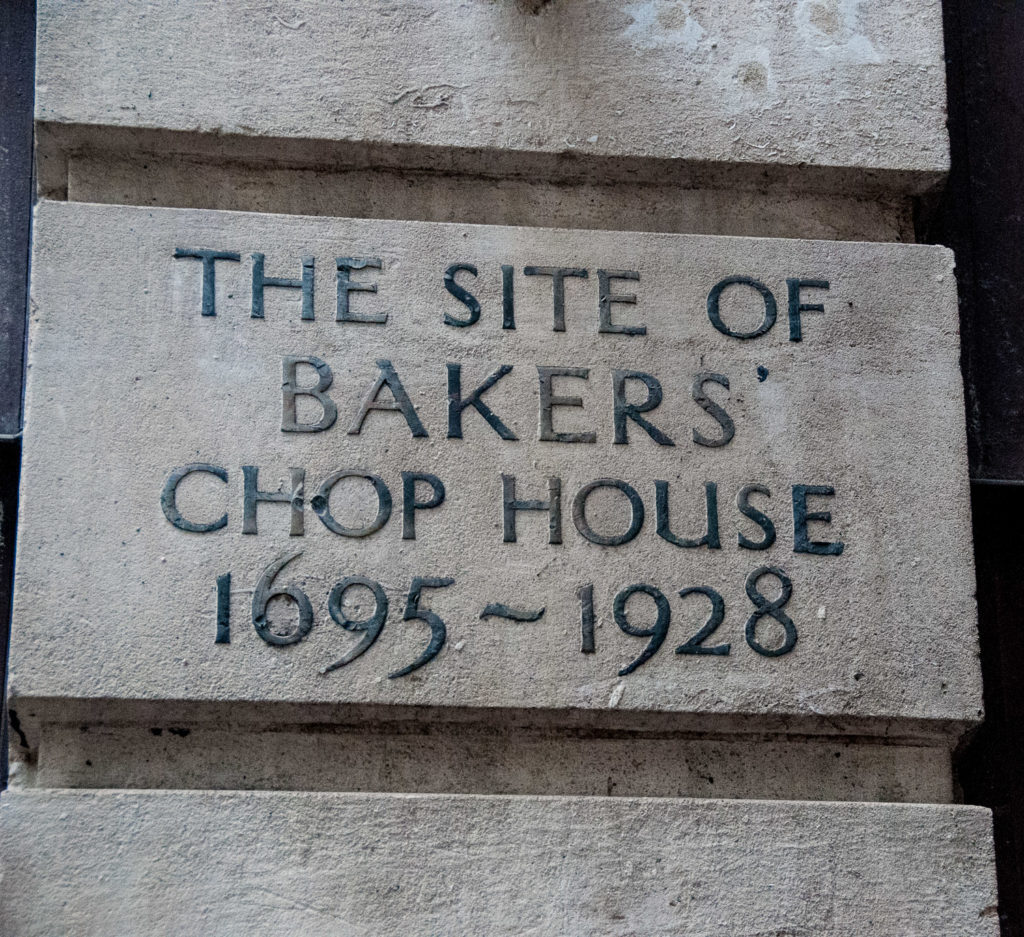
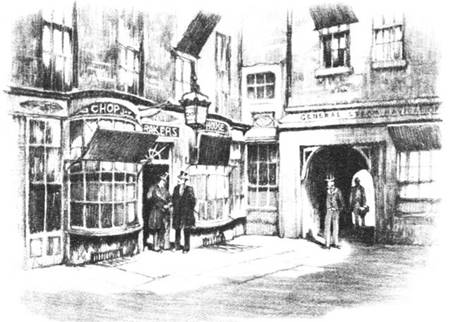
I have also written before about Change Alley and its intriguing history. This plaque inspired me to do a bit more research …

Here it is some time in the 19th century …

Eventually it was swallowed up as Martin’s Bank expanded and bought local freeholds. There is an interesting history of the Bank and the local area which you can find here. It looks like it was written in 1969 and I think is a lovely piece of corporate memorabilia.

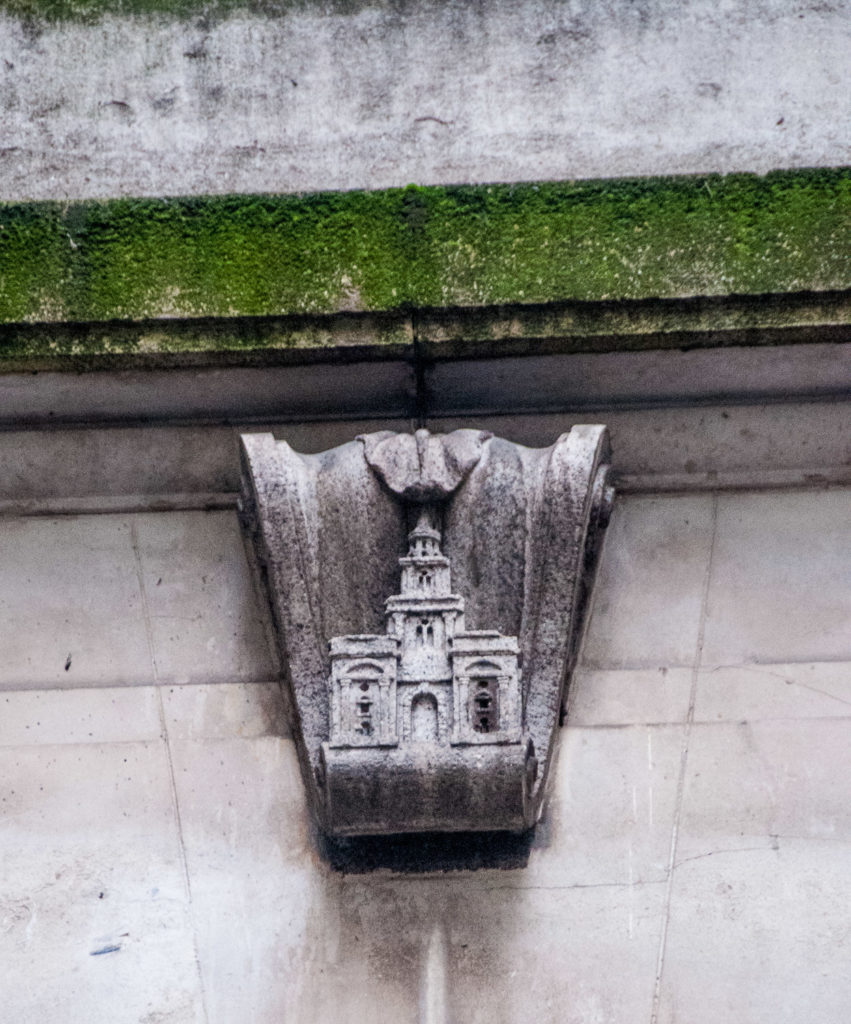
This carving is also in Change Alley but I have yet to work out what it represents. It looks like a church but not one I recognise …

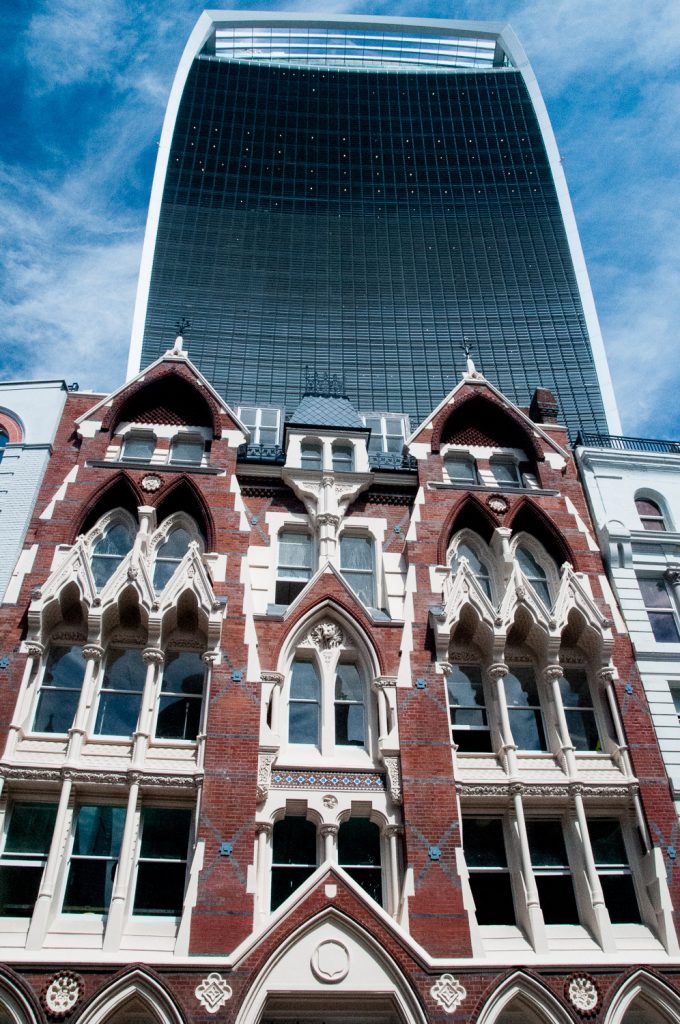
I really have tried to like the Walkie-Talkie but just can’t. Here it is looming over the 19th century masterpiece that is 33-35 Eastcheap …

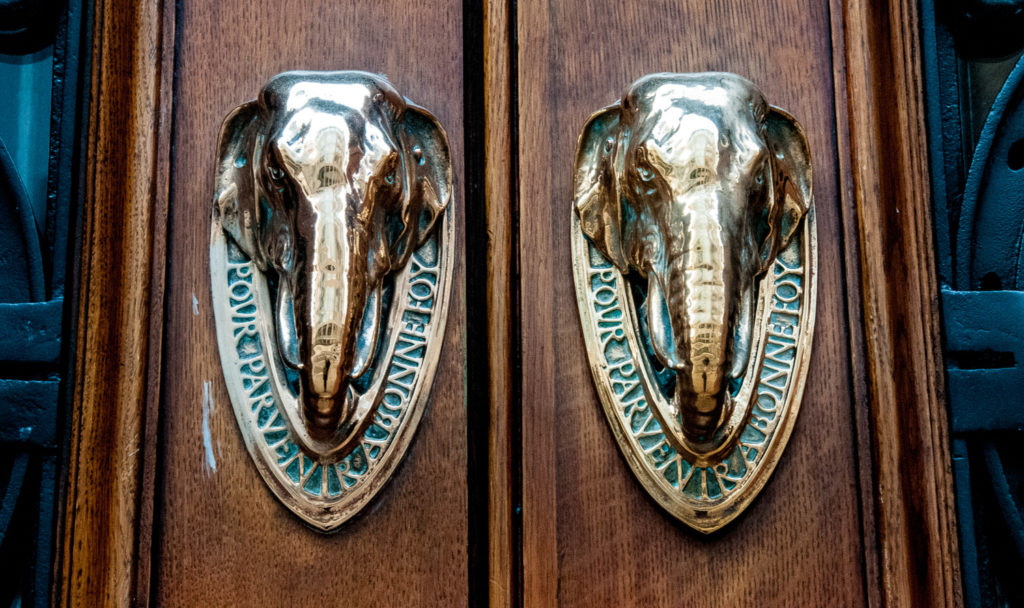
I like elephants and the doors of the Cutlers’ Company boast a fine pair (EC4M 7BR). The words are the Company motto Pour parvenir a bonne foy (To succeed through good faith) …

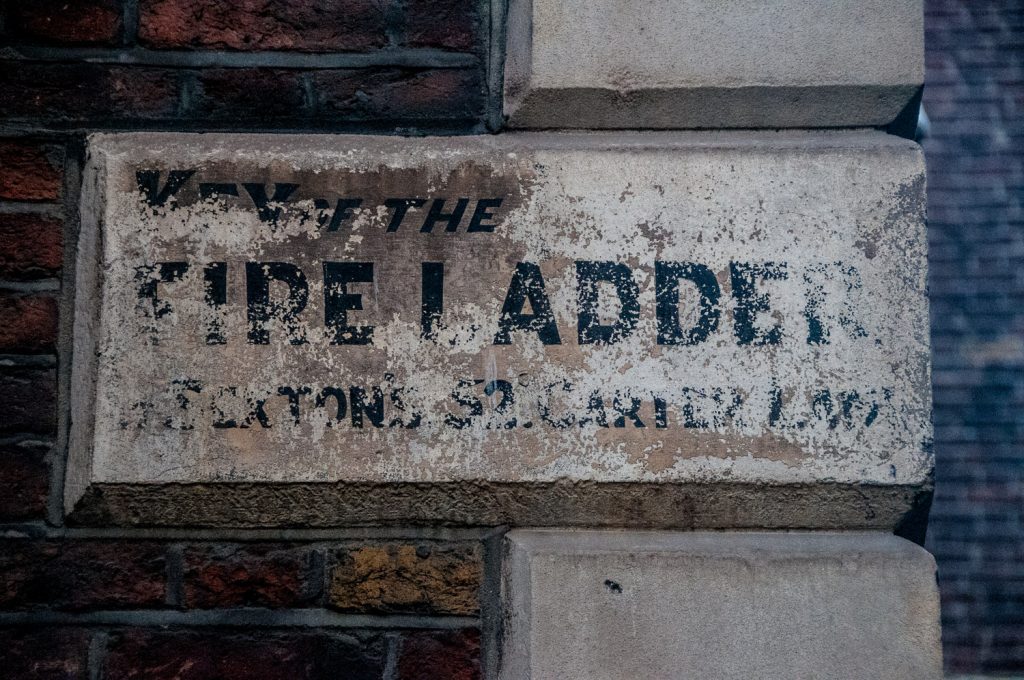
And finally, this sign on the wall of St Andrew by the Wardrobe is gradually disappearing (EC4V 5DE). Eventually no one will know that the key for the fire ladder is kept with the Sexton at nearby 52 Carter Lane …

Don’t forget you can follow me on Instagram:

https://www.instagram.com/london_city_gent/

City postboxes

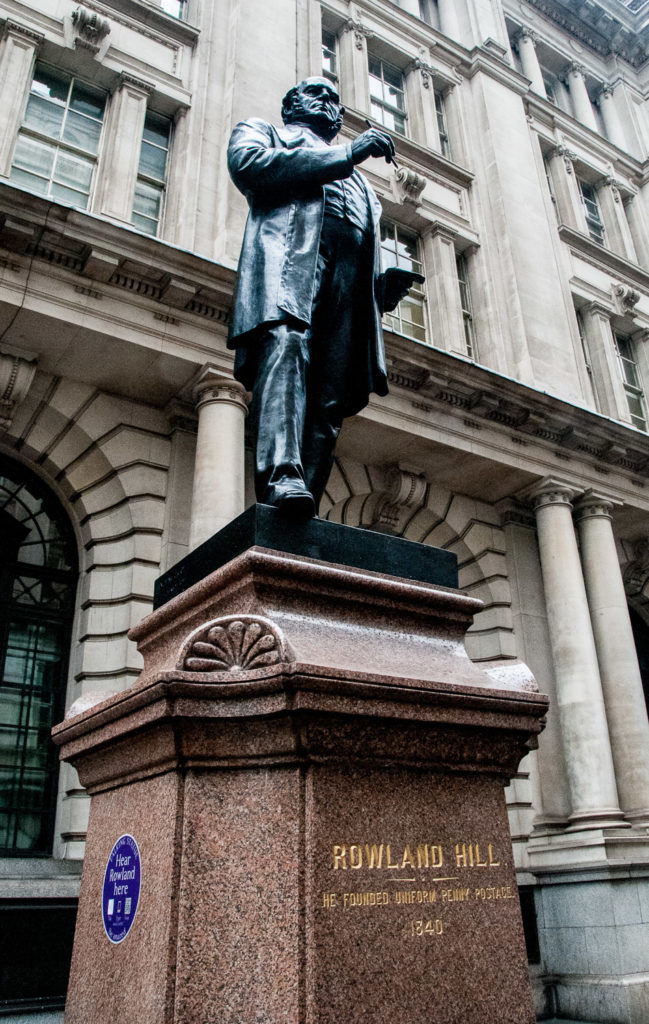
Along with red telephone boxes, the red postbox is immediately recognisable as something intrinsically British and last week, as I passed the Penny Post’s founder’s statue, I decided to write a blog about them.

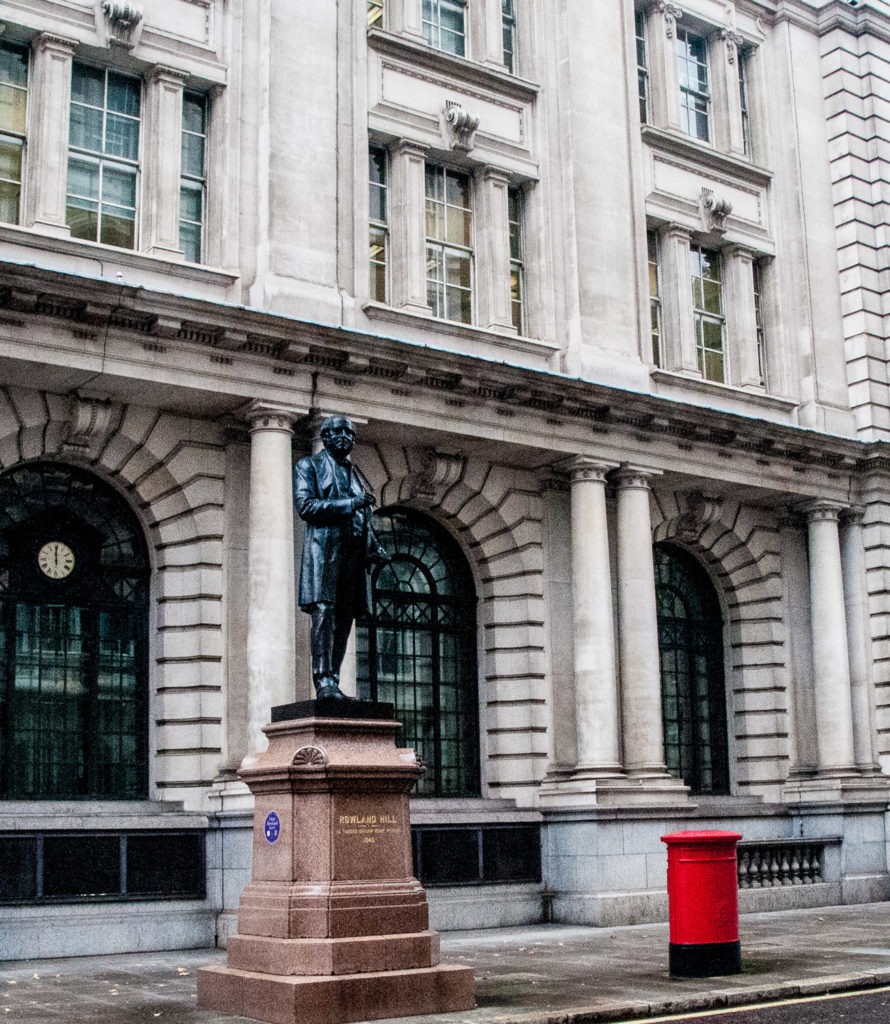
Here he is, cast in bronze and larger than life, looking across King Edward Street (EC1A 1HQ) …

Sculptor : Edward Onslow Ford (1881-2)

The unveiling took place on 17 June 1882 and the reporter for the City Press said all were impressed by the ‘grace and firmness’ of the statue’s attitude.

Sir Rowland Hill stands erect, in the attitude of an energetic and busy man, and, notebook and pencil in hand, may be taken to be engaged in some detail of his scheme.

It was originally sited outside the Royal Exchange and was moved, after some time in storage, to its present location in 1923. The area was then still dominated by the Post Office but gradually work was moved to Mount Pleasant and the main building sold to bankers Merrill Lynch in 1997.

The post box nearby to the north only dates from 2001 …

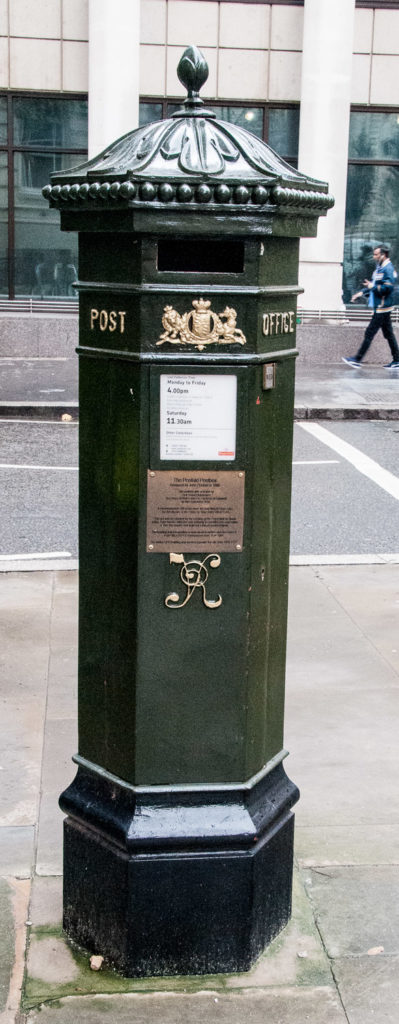
Now stroll through Postman’s Park (EC1A 7BT) to St Martin’s Le Grand, maybe pausing on the way to investigate the Watts Memorial to Heroic Self Sacrifice. Turn right after you leave the park and few yards ahead you will find this fascinating replica …

The box was topped with acanthus leaves and ball and was made in three sizes, with five distinct types.

This early box was designed by the architect John Penfold in 1866. Green was chosen as the colour so the box would blend in with the landscape but it was replaced by ‘pillar box’ red in 1884 to improve visibility. Penfold had a fascinating career which included the re-design the Jewin Street area in the City of London after it had been destroyed by a large fire. It was again destroyed in the Blitz and now houses the Golden Lane Estate.

Devotees of trivia may be interested to note that in the cartoon series Danger Mouse DM’s sidekick is named Penfold since the duo’s secret hideout was a post box (although not a Penfold one).

And now a story that might be an urban myth.

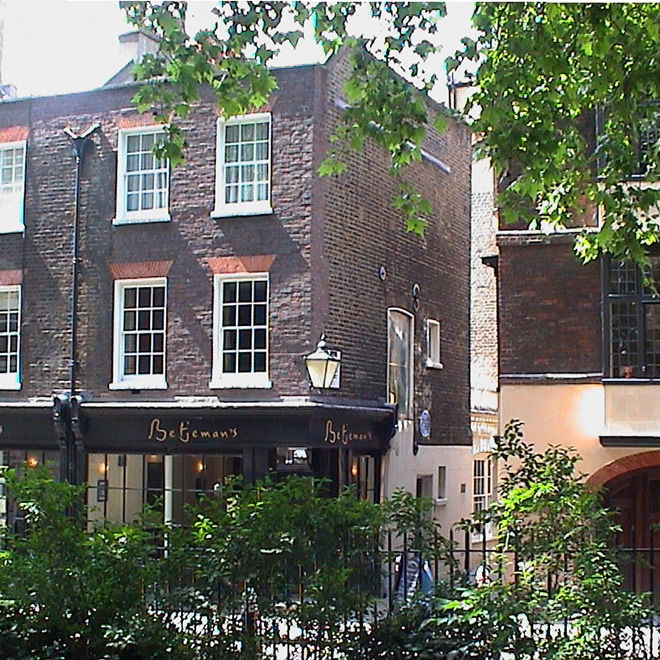
John Betjeman lived in this house in Cloth Fair for almost 20 years (EC1A 7JQ). The story goes that, if he had written a letter but couldn’t be bothered to go to the post box, he would put a stamp on it and cast it out the window in the certain knowledge that a helpful Londoner would find it and post it for him.

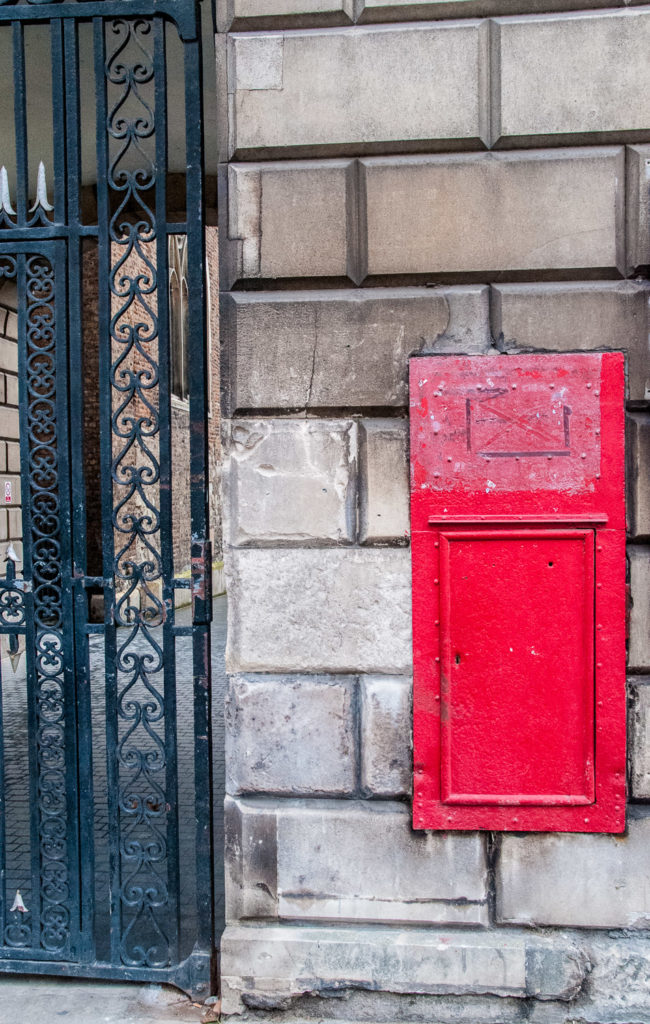
Sir John’s nearest post box would have been just on the other side of the Henry VIII gateway to St Bartholomew’s Hospital (EC1A 7BE) …

It’s unique in carrying no royal cipher and also because, although it faces the hospital, it is emptied from the other side of the wall in the street …

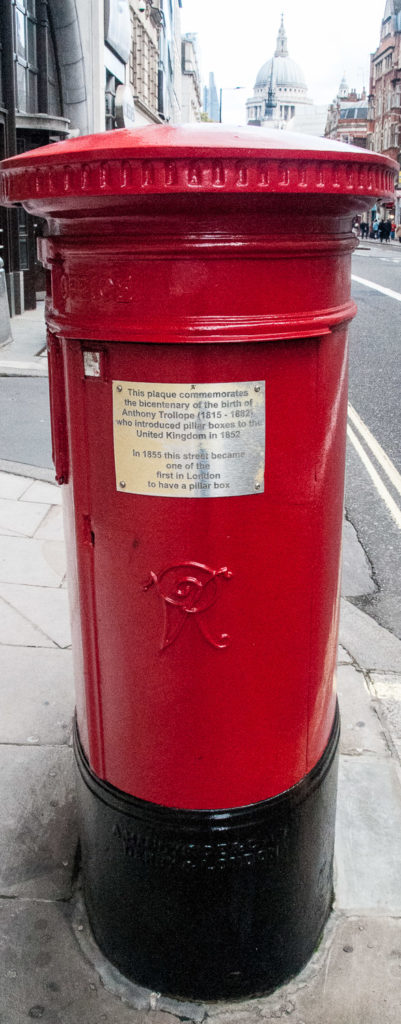
Hill’s 1840 Postal Reform act introduced affordable postage and easy-to-use adhesive stamps. Yet the nearest letter-receiving office was miles away from many communities. It took Anthony Trollope (the Victorian author, then a General Post Office official) to notice that in Europe, locked cast-iron pillar boxes were placed in convenient locations with regular collection times.

Trollope first introduced this efficient scheme to the Channel Islands in 1852, and pillar boxes emerged on the mainland the following year. By 1860, over 2,000 ‘standard’ design roadside boxes were established and by the 1890s, this had increased to 33,500. The UK now has about 115,500 and a Royal Mail post box stands within half a mile of over 98% of the UK population.

This box on Fleet Street has a plaque commemorating Trollope’s work …

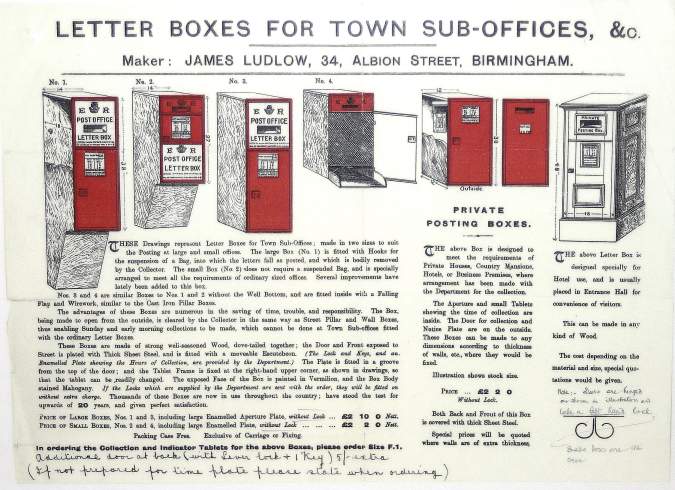
As well as free-standing pillar boxes there are also those fitted into walls. Here’s an advertisement by James Ludlow, a firm that produced them …

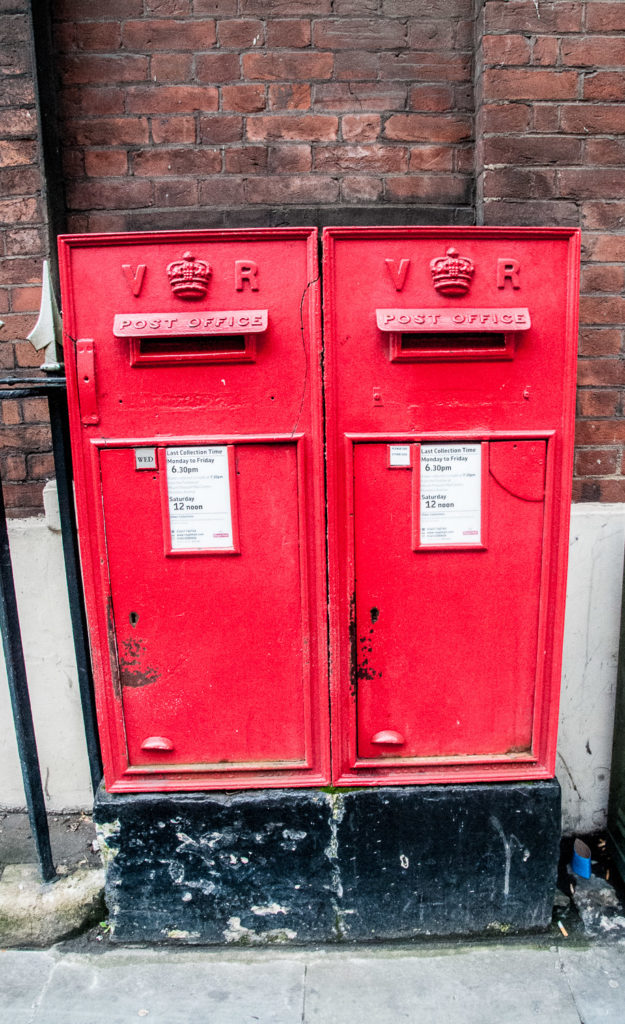
Here are a few from the City (although not produced by Ludlow) …

A Victorian pair in Chiswell street next to the Jugged Hare bar and restaurant (EC1Y 4SA)

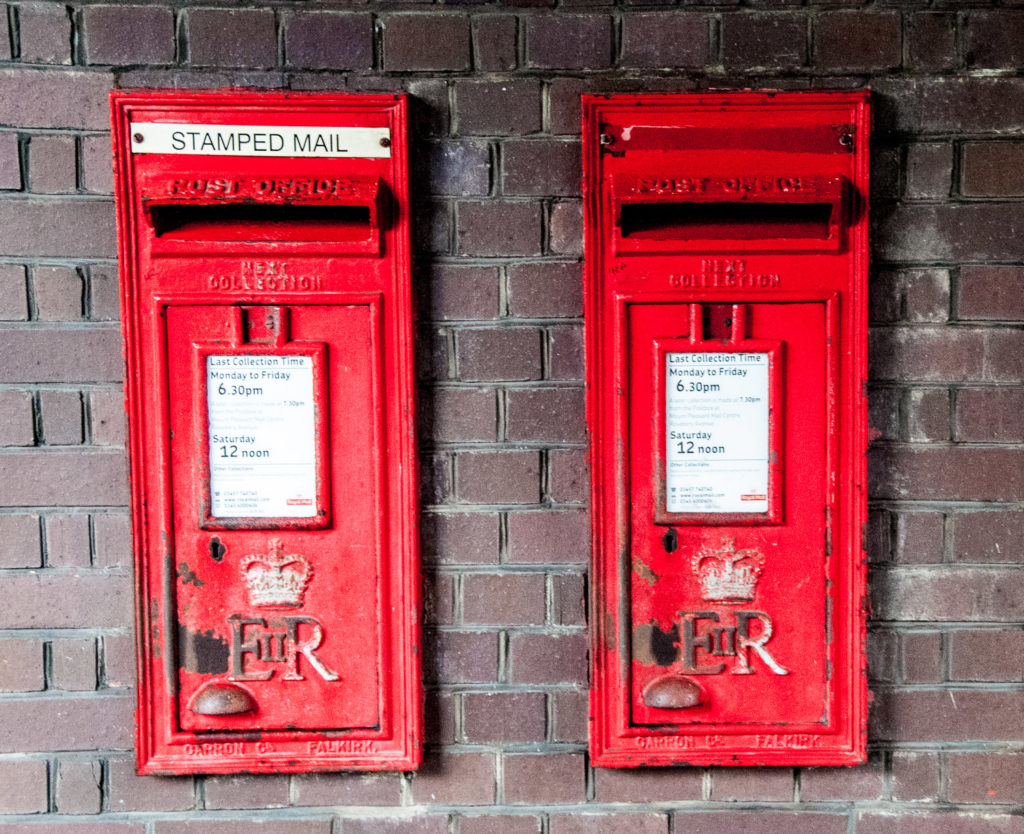
And two from the Barbican highwalk …

These were made by the Carron Company, one of the major suppliers of letter boxes during the twentieth century. From the Mungal Foundry, near Falkirk, Stirlingshire they cast pillar boxes (from 1922), wall boxes (from 1952) and small lamp boxes for rural areas (from 1969 to 1982). The ironworks were first established in 1759 and played an important part in the Industrial Revolution as well as becoming famous for its naval cannons but the company became insolvent in 1982 after 223 years casting iron.

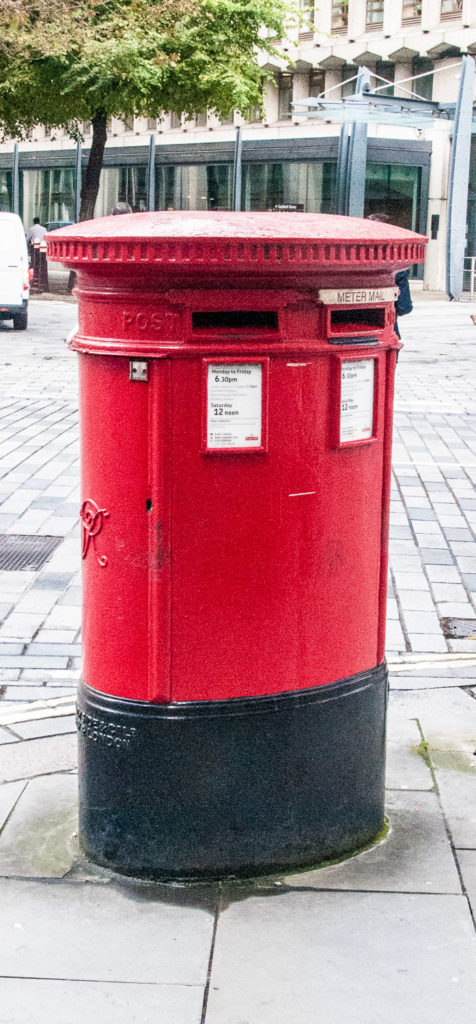
I am beginning to get the hang of the terminology now – this, for example, is a ‘double aperture’ box since it has two slots …

Some, like this one, still have a slot marked ‘Meter Mail’. Metered reply mail, or MRM, is a type of mail in which a business sends pre-printed, self-addressed envelopes or packages to customers with postage pre-paid in-house using a postage meter. This is much less common nowadays and many of the ‘meter mail’ signs are being removed.

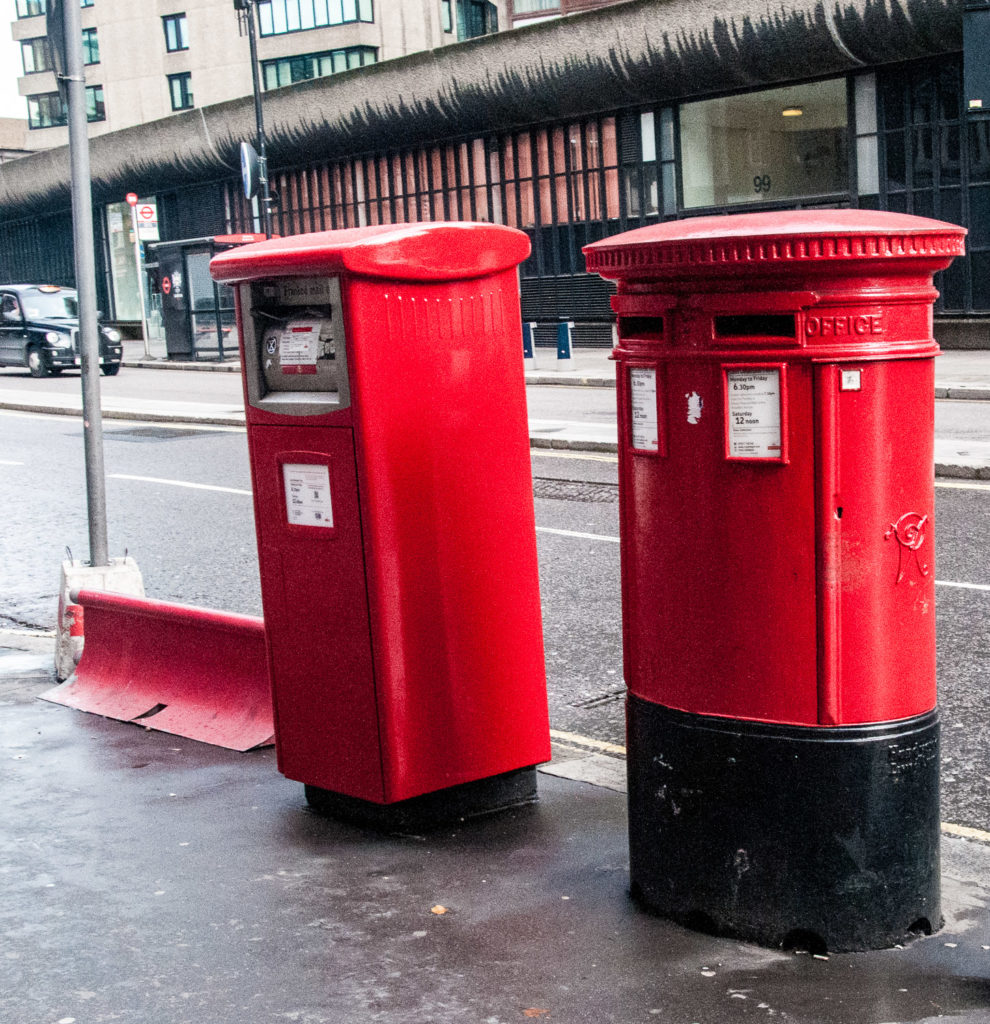
Modern boxes are now being introduced with small businesses and eBay sellers in mind – here is one next to a Victorian box near Barbican station …

I know why the change is needed but I still know which one I prefer.

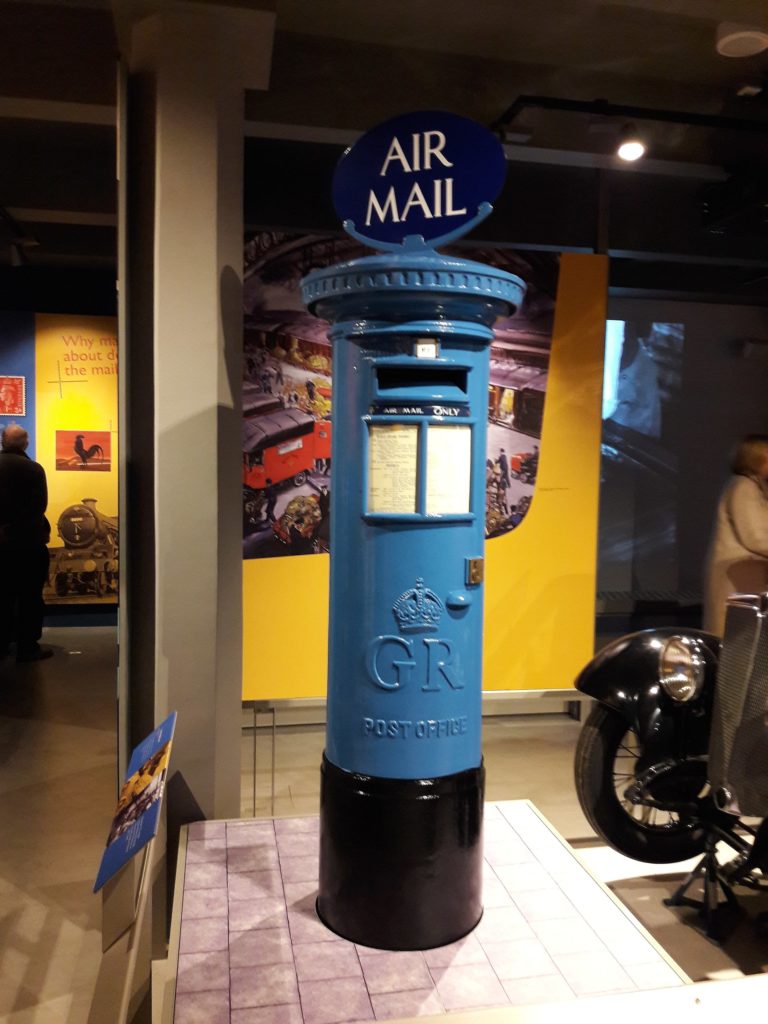
For all things postal I strongly recommend a visit to the Postal Museum where you can, among many other exhibits, admire this special Air Mail box, created to make communication with His Majesty’s Dominions around the world easier …

You can read lots more on these fascinating websites, one jointly published by Historic England and Royal Mail and this one by The Letter Box Study Group.

Don’t forget you can follow me on Instagram here: https://www.instagram.com/london_city_gent/

Page 112 of 150

Powered by WordPress & Theme by Anders Norén

Symbols & Secrets
Privacy Overview

This website uses cookies so that we can provide you with the best user experience possible. Cookie information is stored in your browser and performs functions such as recognising you when you return to our website and helping our team to understand which sections of the website you find most interesting and useful.