Symbols & Secrets

Walking the City of London

The Pump of Death and a walk towards St Botolph’s

At the junction of Fenchurch Street and Leadenhall Street people usually hurry past this old water pump without a second glance, not knowing anything about some gruesome aspects of its history …
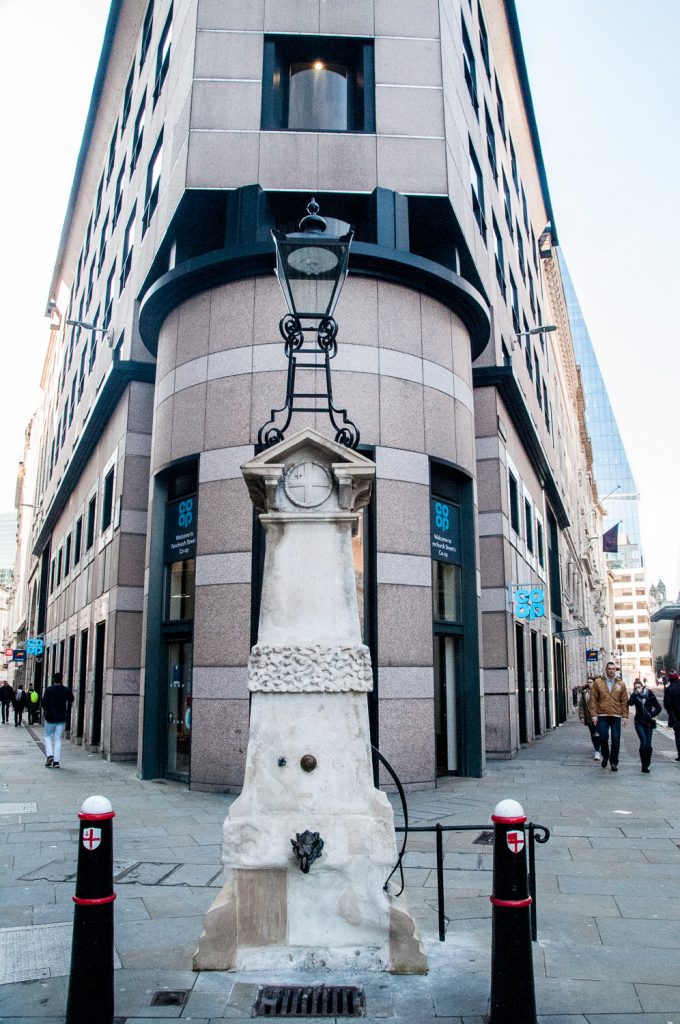
There was a well here for centuries and one appears to be shown on the Agas map of 1561 …
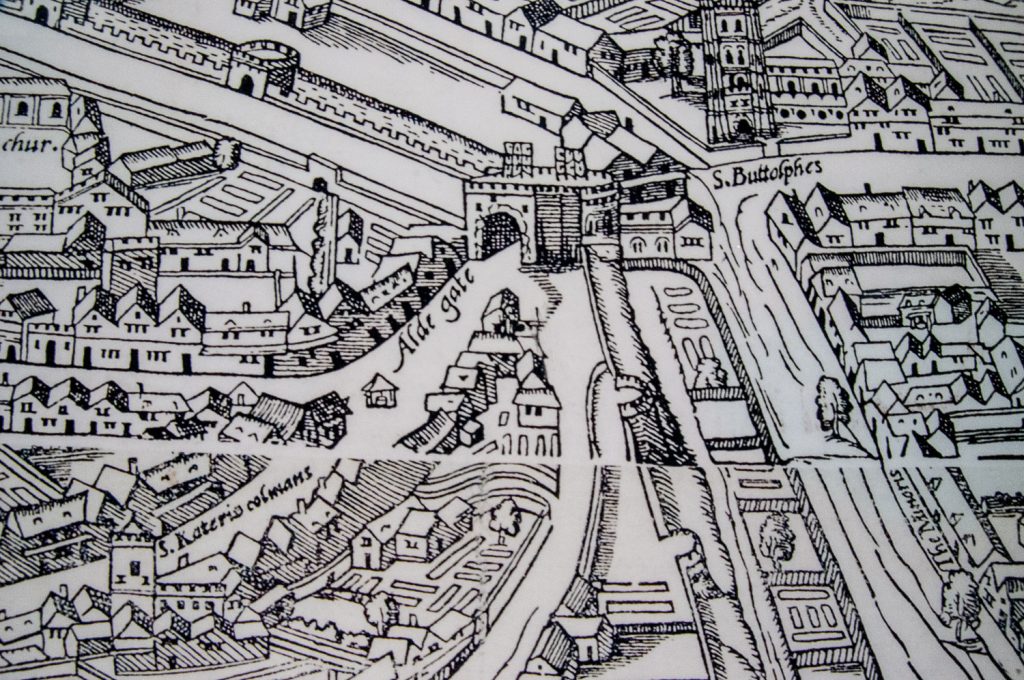
Look under the ‘A’ of Aldegate

After a pump was installed in the sixteenth century the water gained a reputation for being ‘bright, sparkling, and cool, and of an agreeable taste’. In the early 1870s, however, people started noticing the taste deteriorate and become foul. Then people who had drank the water started dying in great numbers in a tragedy that became known as the Aldgate Pump Epidemic.

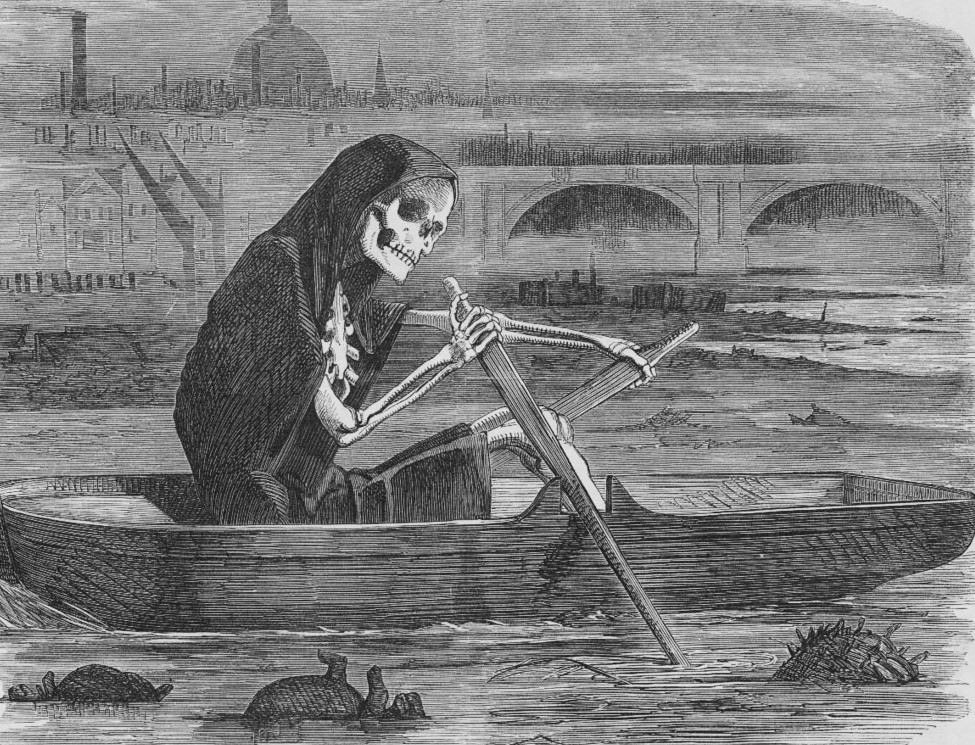
It was known that Thames water was dangerous as illustrated by this 1850s drawing entitled The Silent Highwayman

But Aldgate water originated in the healthy springs of Hampstead and Highgate and flowed underground – so it should have been safe.

The bad news broke publicly in April 1876 …
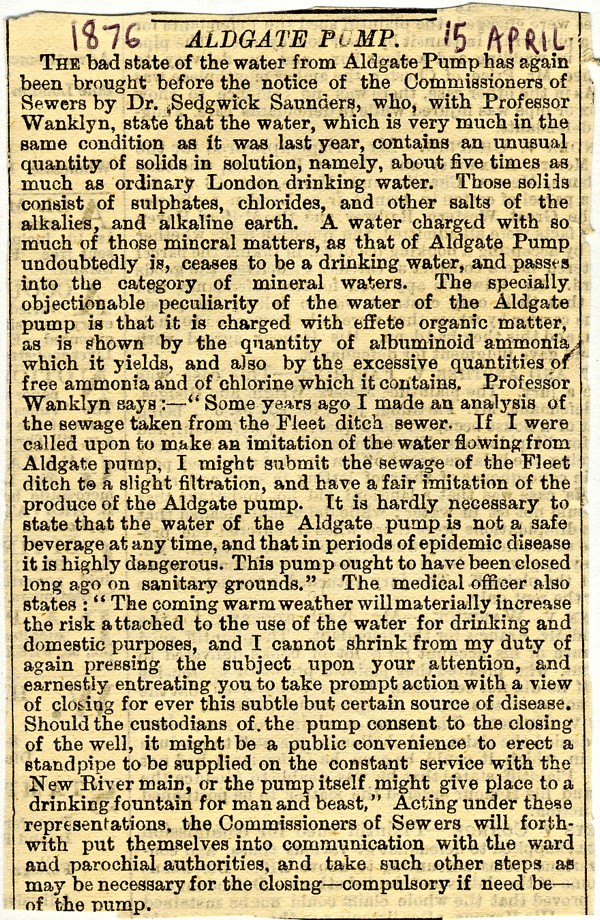
An investigation by the Medical Officer of Health for the City revealed the terrible truth. During its passage underground from north London it had passed through and under numerous new graveyards thereby picking up the bacteria, germs and calcium from the decaying bodies. The pump was immediately closed and eventually reconnected to the safer New River Company’s supply later in 1876. You will find a fascinating history of the New River Company if you access the splendid London Inheritance blog.

The epidemic was obviously a distant memory by the nineteen twenties when Whittard’s tea merchants used to

… always get the kettles filled at the Aldgate Pump so that only the purest water was used for tea tasting.

I have discovered a few old pictures …
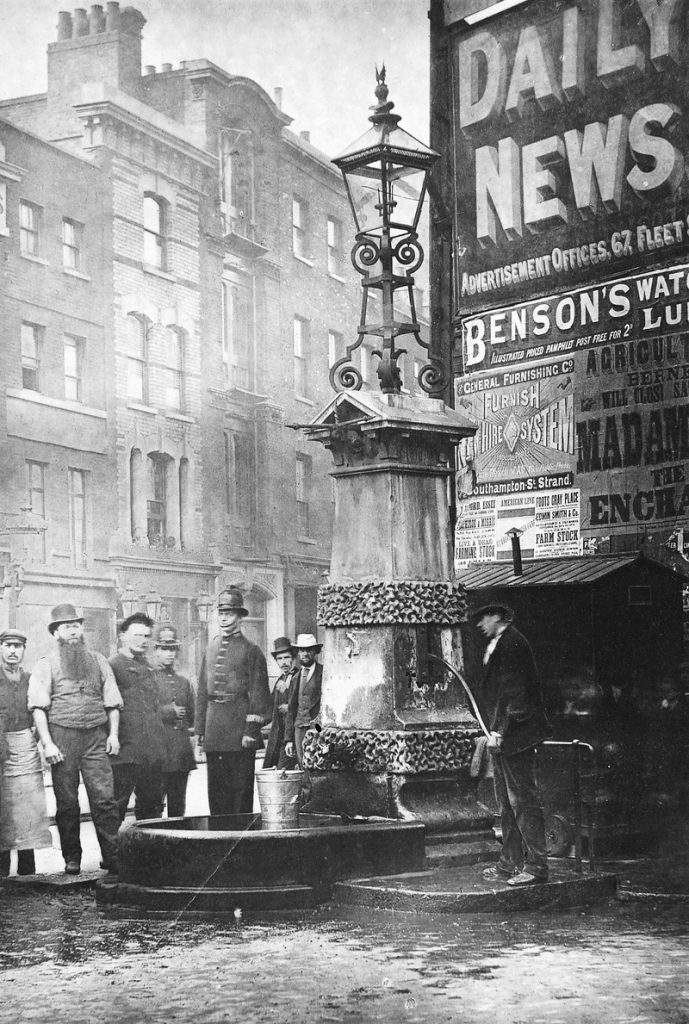
The pump in 1874- picture from the Wellcome Collection.

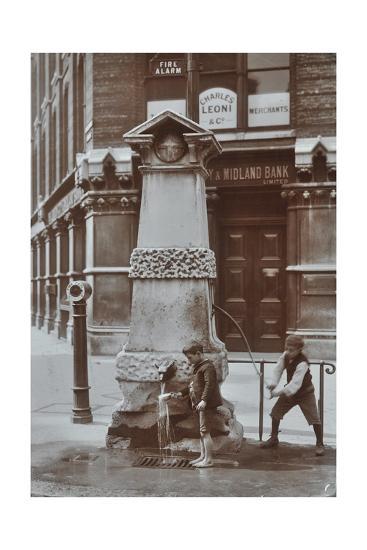
And in August 1908 a little East End boy refreshes himself using the cup attached to the pump by a chain …
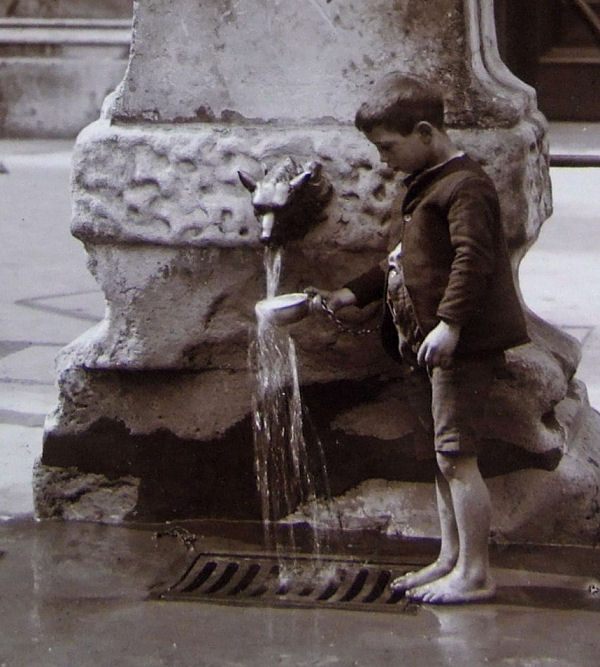
The full picture …
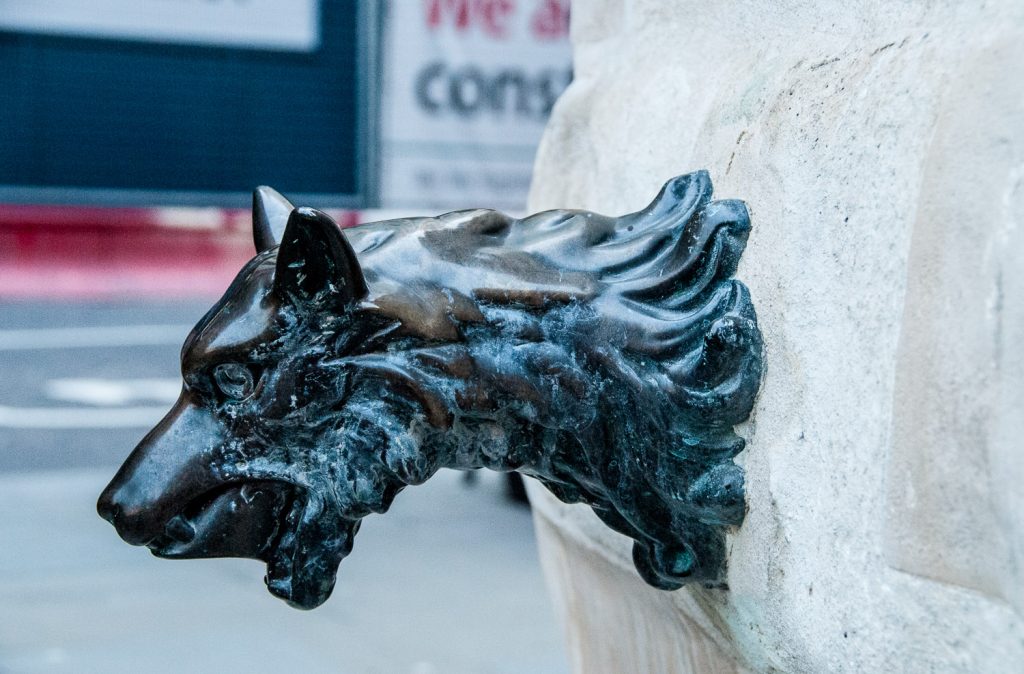
The wolf’s head spout is said to reference the last wolf killed in the City of London …
Nice that it has survived intact into the 21st century.

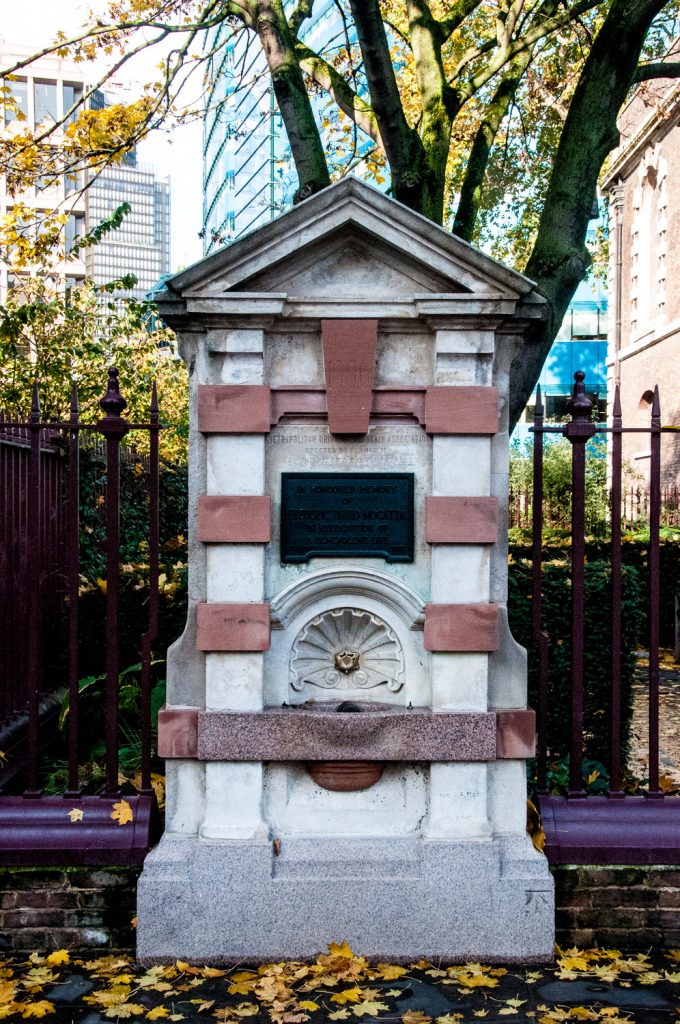
Walking towards St Botolph’s church I saw on the left this magnificent drinking fountain ‘Erected by permission of the vicar and churchwardens’. It has a connection with the Metropolitan Drinking Fountain Association which I have written extensively about in my blog Philanthropic Fountains

It’s dedicated to the memory of Frederic David Mocatta …
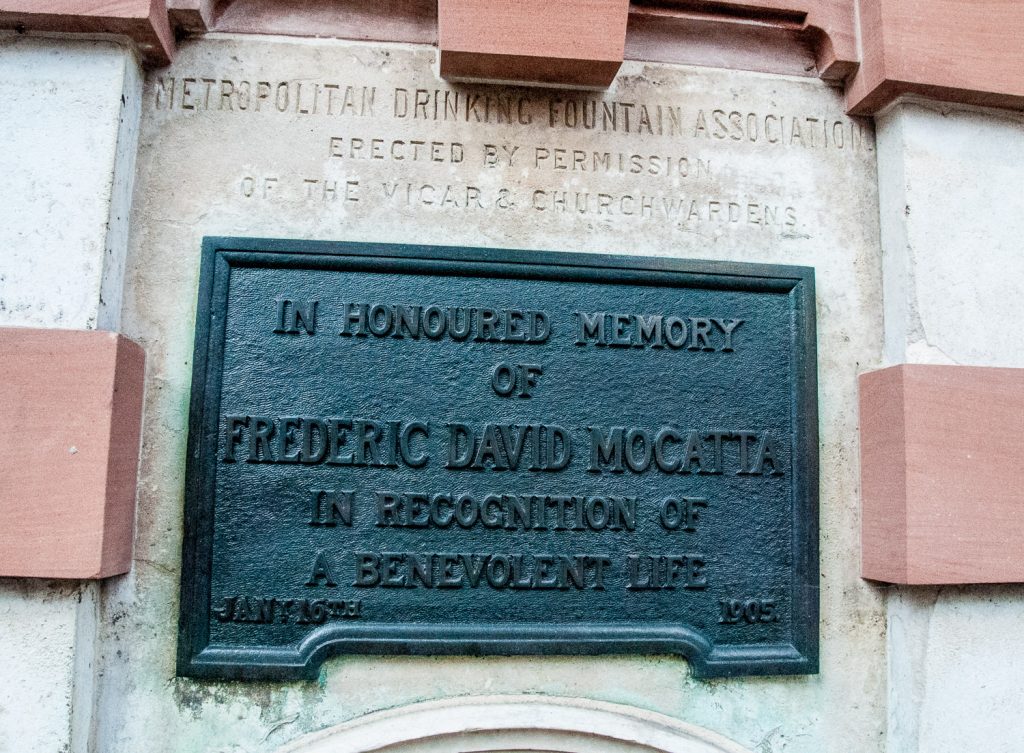
A wealthy bullion broker, after he had retired from the business in 1874 he devoted himself to works of public and private benevolence, especially in the deprived East End of London. It was people from that area who raised the money for this memorial and you can read more about him here.

A little bit further on is this 1950s police call box …
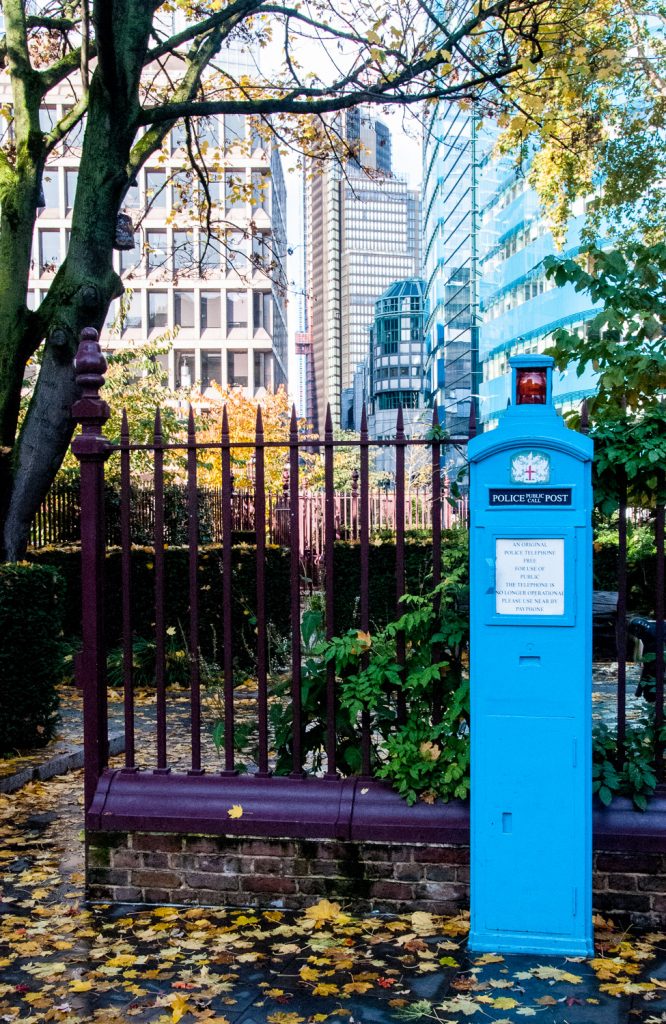
This is the third one I have discovered in the City and you can read more about the others here.

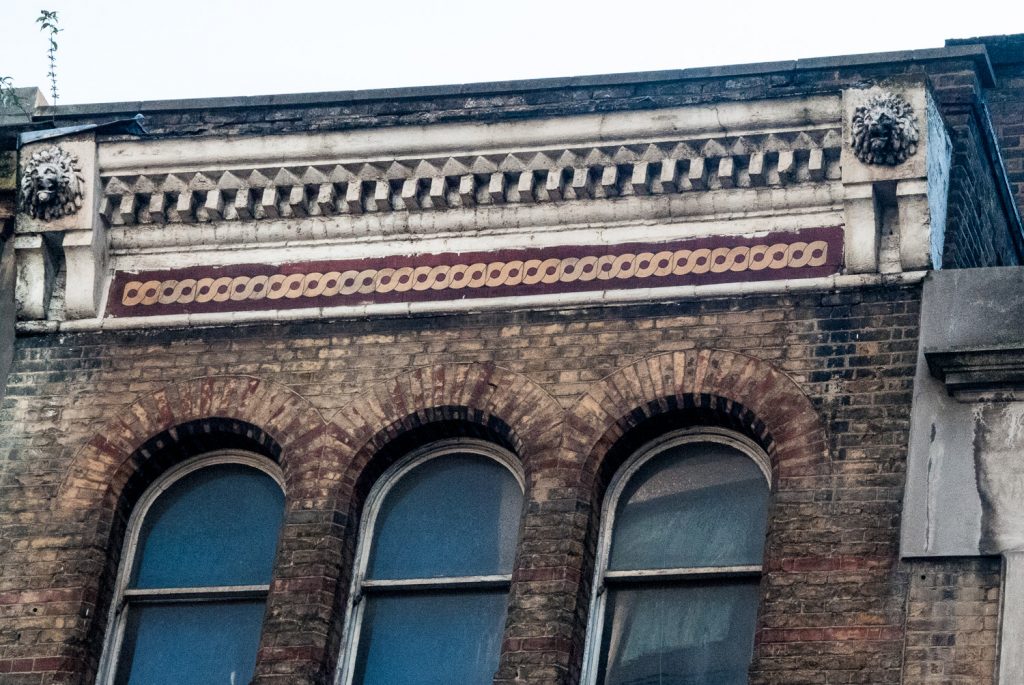
As you walk up the steps to visit St Botolph’s, turn around and look across the road. There are some old late Victorian buildings that have survived redevelopment and I was struck by how much care had gone into the decoration at roof height, even though very few people would be looking up to see it …
Next week I enter St Botolph’s and will write about some of the best and most interesting monuments and memorials in the City.

Don’t forget you can follow me on Instagram:
https://www.instagram.com/london_city_gent/

Exploring Aldgate – including a terrible event in the past

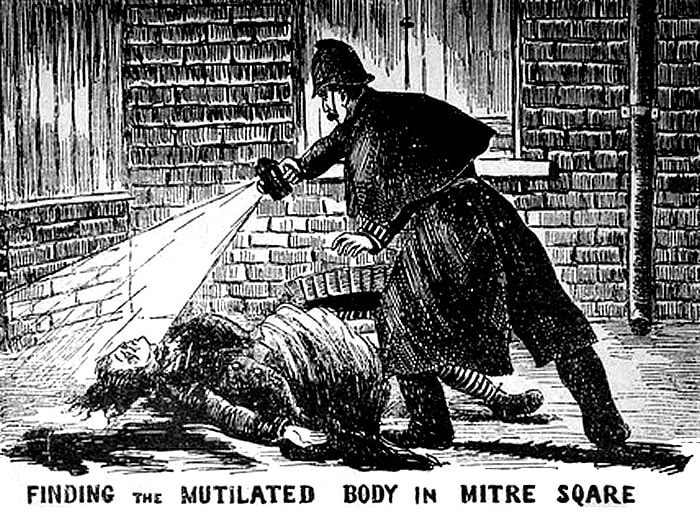
On Sunday 30th September 1888 at about 1.45 in the morning Police Constable 881 Edward Watkins turned into Mitre Square, a regular part of his beat.

In the southernmost corner, clearly picked out by the bullseye lantern on Watkins’s belt, lay the terribly mutilated body of a woman. Watkins ran across to Kearley and Tongue’s warehouse, knowing that the watchman there, George James Morris, was a retired police officer. Watkins found the door to the warehouse ajar, pushed it open, and found Morris sweeping the steps that led down toward the door.

‘For God’s sake, mate, come to my assistance,’ cried Watkins.

‘What’s the matter?’ asked Morris, to which Watkins replied, ‘There’s another woman cut to pieces.’

The woman was Catherine Eddowes* and she was destined to be named as the fourth victim of the Whitechapel Murderer, more commonly known as Jack the Ripper.

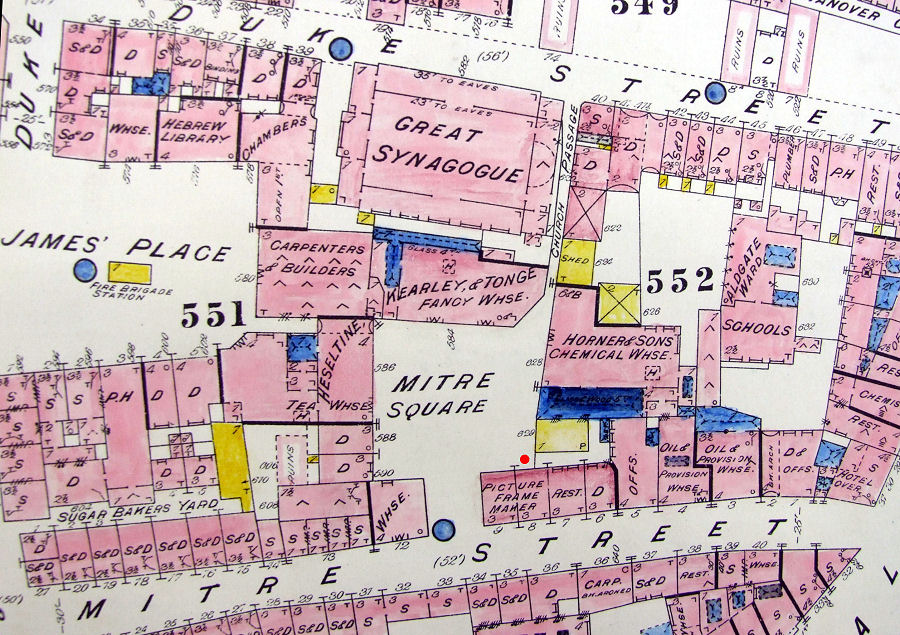
Around this time Charles Goad was compiling maps for use by the fire insurance companies and this is one of his earliest prepared just 20 months before the murder. The red spot indicates where the body was found …

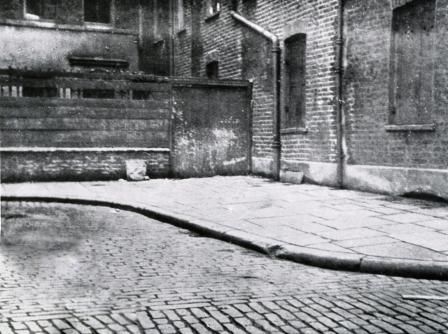
The murder scene …

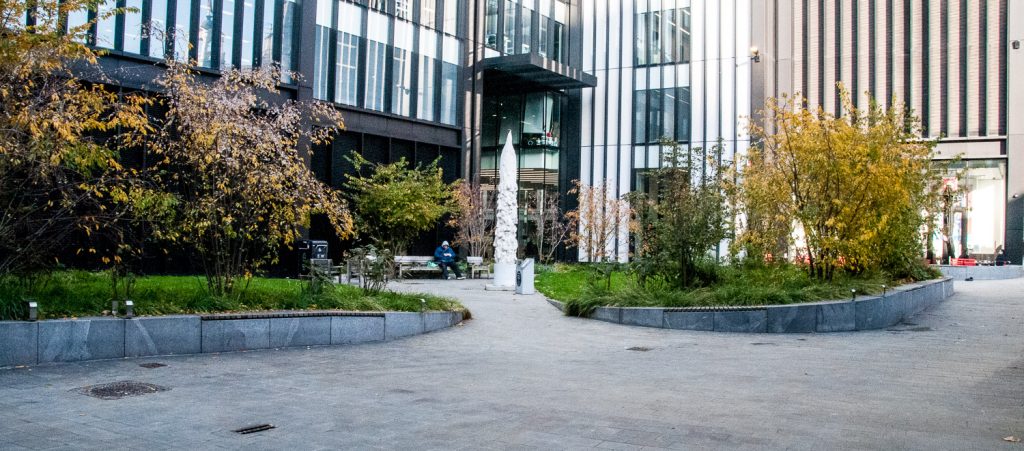
The Square today – I think I am standing approximately where she was was discovered …

The fact that ‘Jack’s’ identity has never been agreed upon has led to the practice commonly called Ripperology in which the crimes and possible perpetrators are endlessly debated and discussed. Needless to say there are numerous sources online but I found this one to be one of the most interesting including as it does a poignant list of poor Catherine’s possessions. You can find an account of her funeral here. (By the way, you can see an authentic police bullseye lantern in the City of London Police Museum and a picture in my blog The City’s Little Museums).

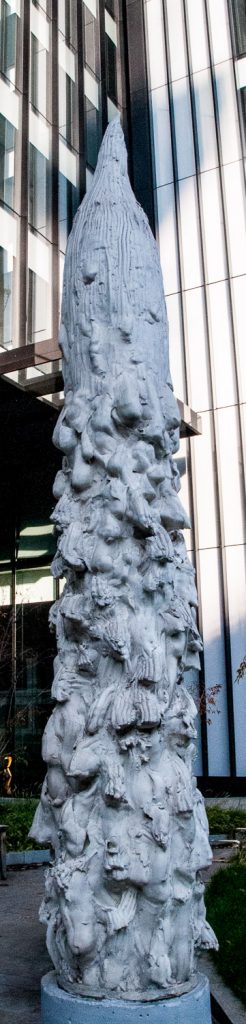
In the centre of my photograph of the Square today is an example of the Sculpture in the City initiative …

This is Climb by Juliana Cerqueira Leite. In this fascinating YouTube clip she explains how it was created.

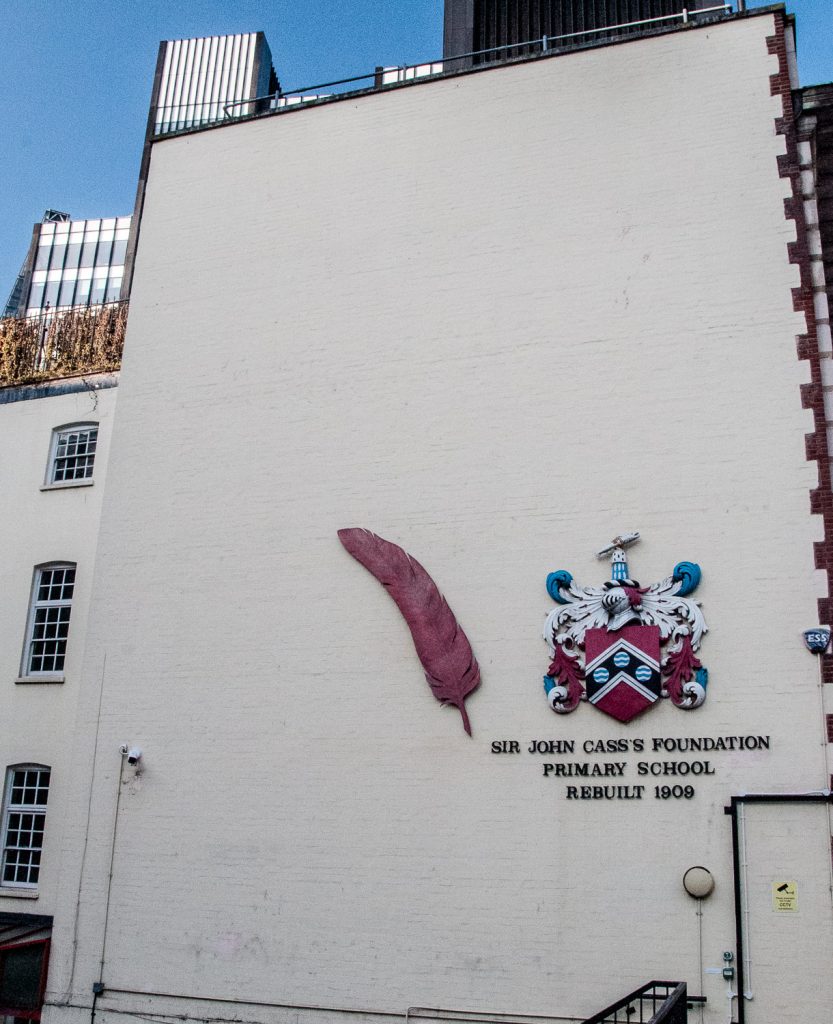
As you stand in Mitre Square you can often hear children playing. They are pupils at Sir John Cass’s Foundation Primary School …

Note the red goose quill.

Sir John Cass was born in the City of London in 1661 and during his lifetime served as Alderman, Sheriff and the City’s MP.

In 1710 he set up a school for 50 boys and 40 girls and rented buildings in the churchyard of St Botolph Without Aldgate. Cass intended to leave the vast majority of his property to the independent school but, when he died in 1718, had only initialled two of the eight pages of his will. The incomplete will was contested, but was finally upheld by the Court of Chancery thirty years after his death. The school, which by this time had been forced to close, was re-opened, and the foundation established.

There is an old legend that he had a haemorrhage of the lungs which stained the quill pen with which he was initialising his will, and it is for this reason that the pupils of the school still wear red goose quills when they attend St Botolph’s Church on the anniversary of their Founder’s birth each year.

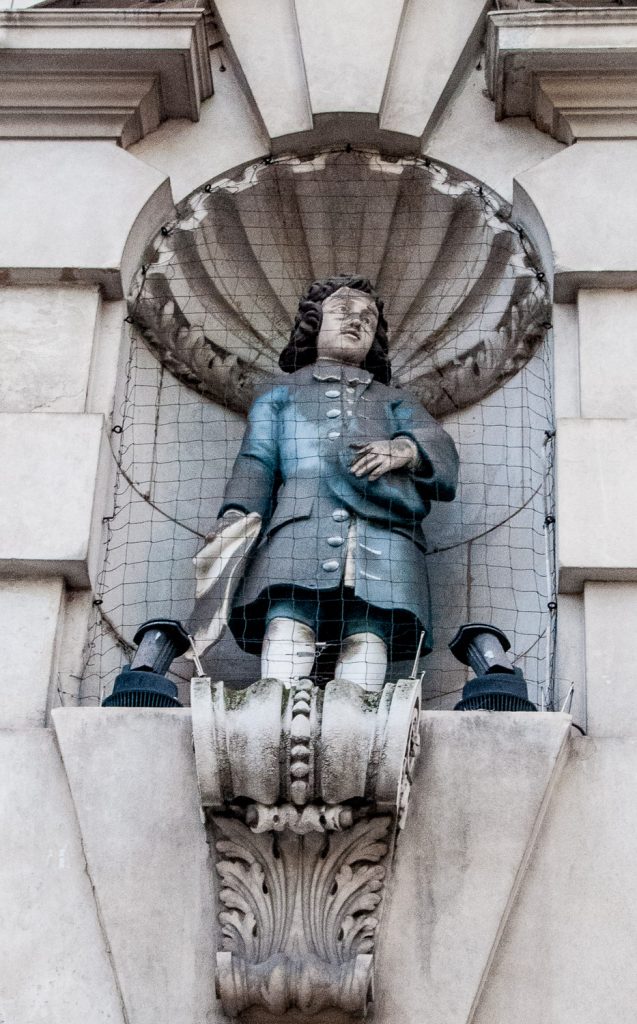
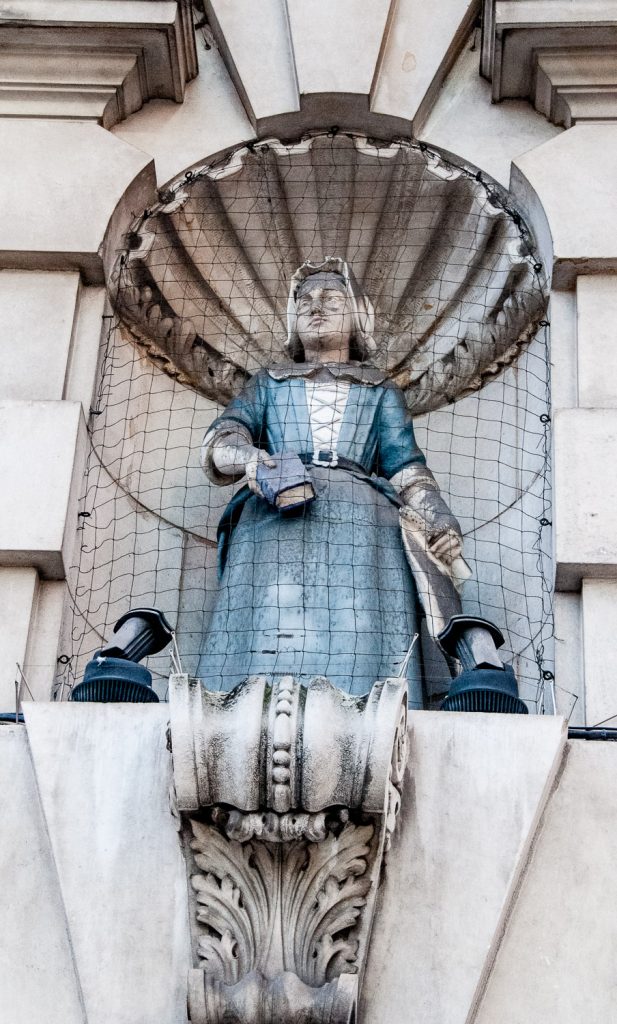
Two statues of children in blue coats stand over the previous girls’ and boys’ entrances …

The school was rebuilt in 1909 and I think these statues are reproductions. I don’t know if the originals still exist.

Blue was the distinctive colour for paupers, charity schools and almsmen, (hence Bluecoat Boys and Girls) and Cass’s School would have been called a Bluecoat School. By extension it typified the dress of tradesmen so that ‘To put on a blue apron’ meant to take up a trade. Incidentally, the great diarist Samuel Pepys, recording a trade riot in London in 1664, tells us that ‘At first, the butchers knocked down all the weavers that had green or blue aprons.’ Those were the days.

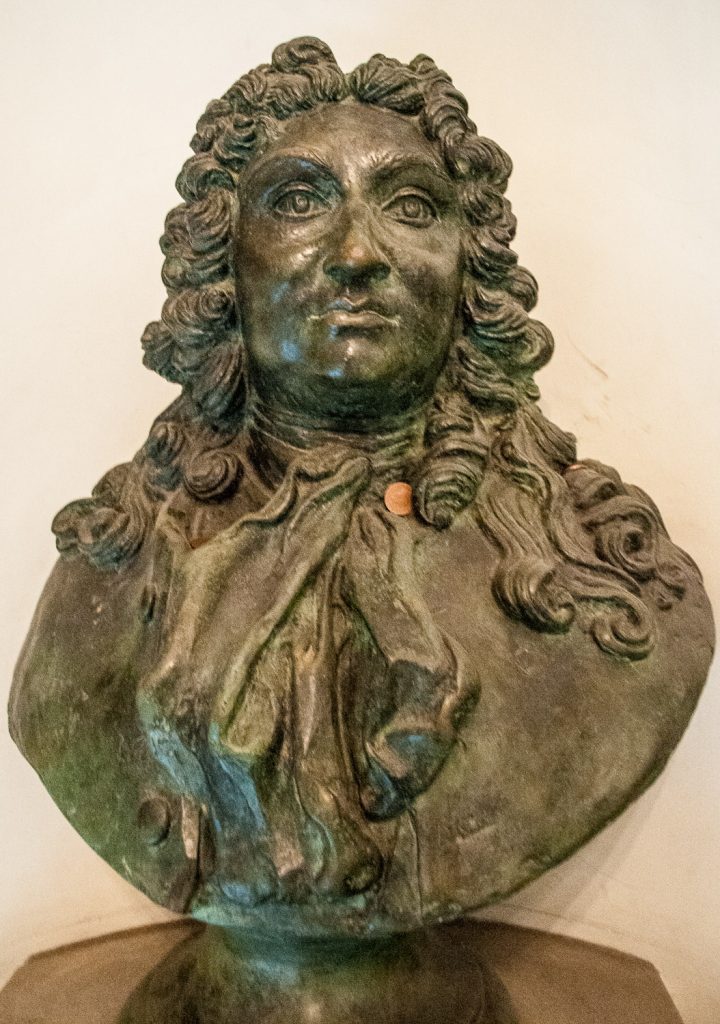
Here’s a bust of Sir John as displayed in the nearby church of St Botolph Without Aldgate, which I shall write about in a later blog …

Someone had tucked a two pence coin into his flowing locks but I didn’t like to remove it in case it was part of some arcane tradition!

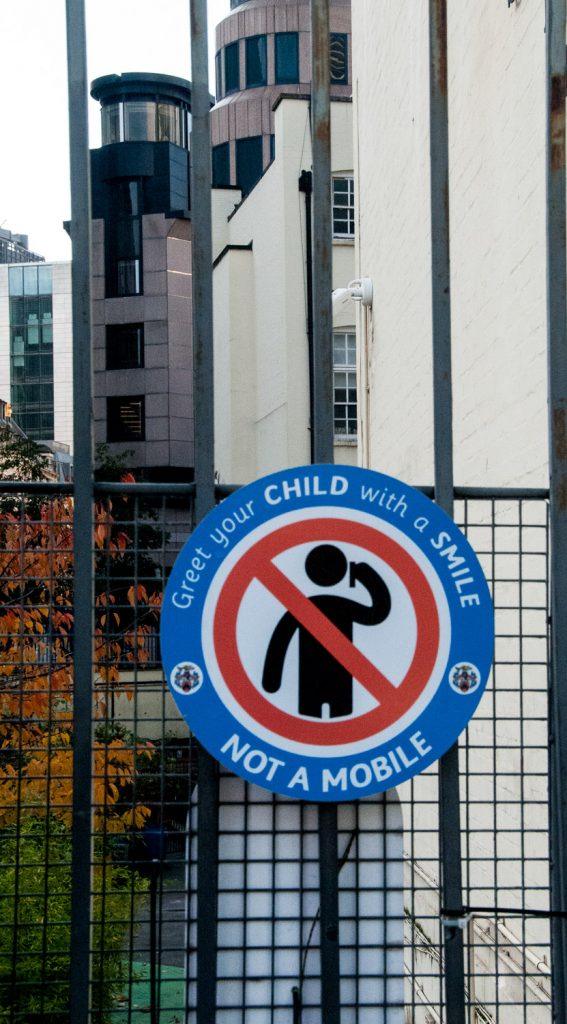
On the school gates I noticed this very appropriate instruction …

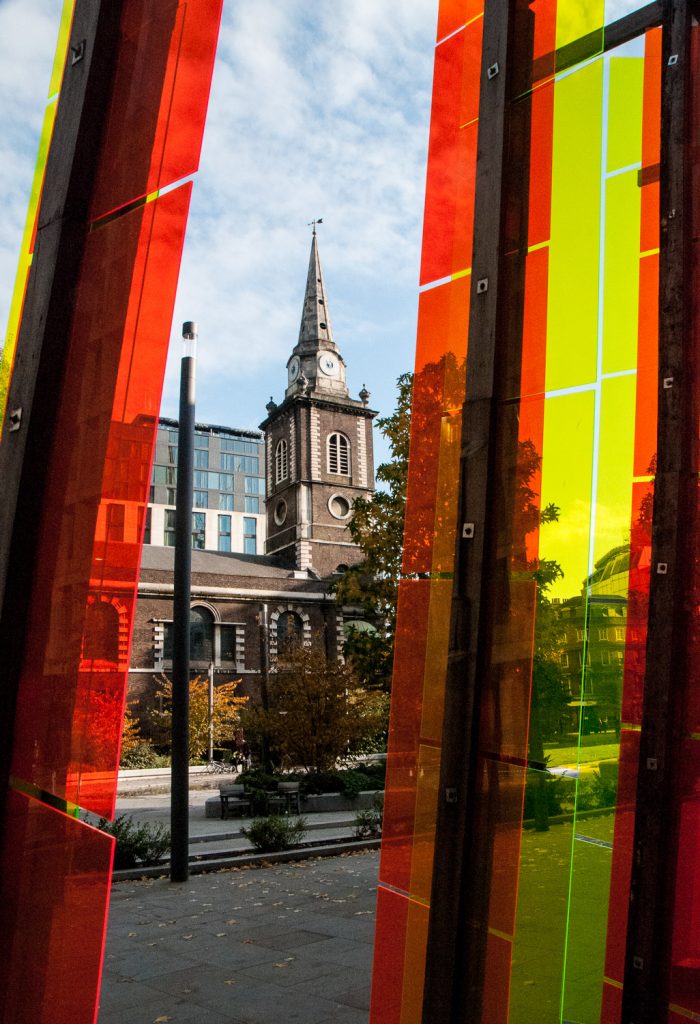
I took this picture of St Botolph’s whilst standing behind another Sculpture in the City exhibit by Jyll Bradley …

Made from coloured sheets of edge-lit Plexiglas turned on their side and leant against a south-facing wall, Dutch / Light (for Agneta Block) creates an open-glasshouse pavilion that is activated by the sun. The work references the so-called ‘Dutch Light’ a horticultural revolution that hit British shores over three centuries ago as Dutch growers pioneered early glasshouse technology.

There is lots more to see around Aldgate and St Botolph’s so I shall return next week.

Do remember that you can follow me on Instagram :

https://www.instagram.com/london_city_gent/

*None of the research I have done suggests that Catherine was a prostitute and this is confirmed in a new book, The Five, by Hallie Rubenhold, which you can read more about here.

Fleet Street Ghosts

Although I have written about Fleet Street in an earlier blog, I always find something new to write about when I walk there.

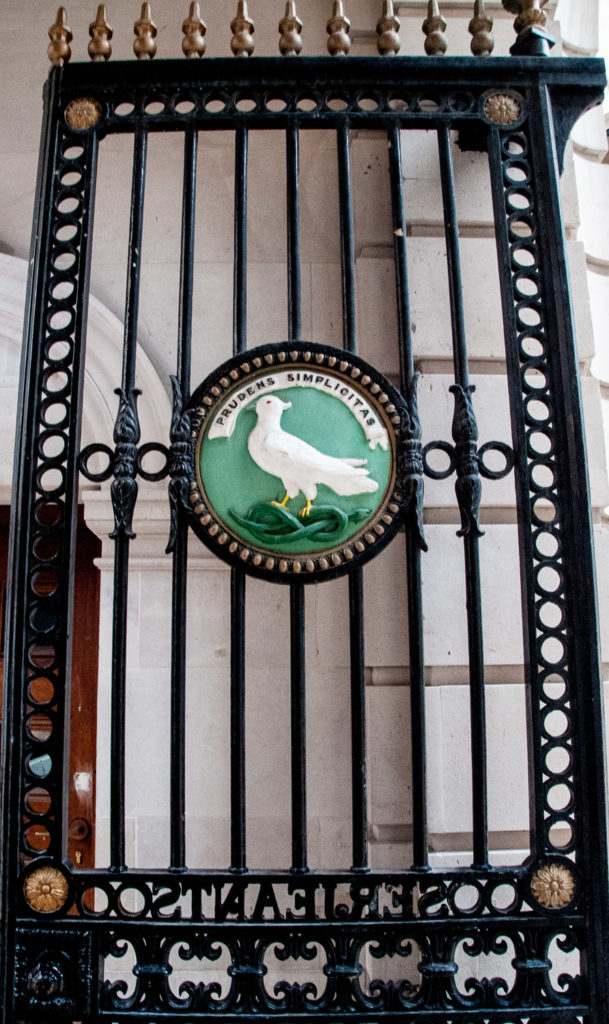
How about these impressive gates incorporating the words ‘Serjeant’s Inn’ …

This image has an empty alt attribute; its file name is DSC_5809-609x1024.jpg

What caught my eye, however, was the dove perched on a twisted serpent and the words Prudens Simplicitas (Prudent Simplicity). This was the motto of the Amicable Society which was based here from 1838 and was the world’s first mutual life insurance company. The unusual choice of creatures may refer to a biblical quotation in which Jesus exhorted followers to be ‘wise as serpents, gentle as doves’. Lost during building works, the gates were rediscovered in a scrapyard in 1937 and returned to their original position here in 1970.

The arms were officially granted on 9 February 1808 to the Amicable Society for a Perpetual Assurance Office and re-granted 14 April 1938 to the Norwich Union Life Insurance Society after the two organisations merged. You can see the dove and serpent in the Norwich Union coat of arms …

Arms of Norwich Union Life Insurance Society
Esto Perpetua means ‘Be everlasting’.

There is more information about the coat of arms and its fascinating symbolism here, the connection with Aviva here, and my blog about Insurance Company ghosts here.

How sad that the venerable Thomas Cook travel agency has gone into compulsory liquidation. Cook started organising leisure trips in the summer of 1841 when he arranged a successful one-day rail excursion at a shilling a head from Leicester to Loughborough. During the next three summers Mr Cook put together a succession of trips, taking passengers to Leicester, Nottingham, Derby and Birmingham. Four years later, he organised his first trip abroad, taking a group from Leicester to Calais. This was followed in the 1860s by trips to Switzerland, Italy, Egypt and America …

Italy and Switzerland were popular early destinations

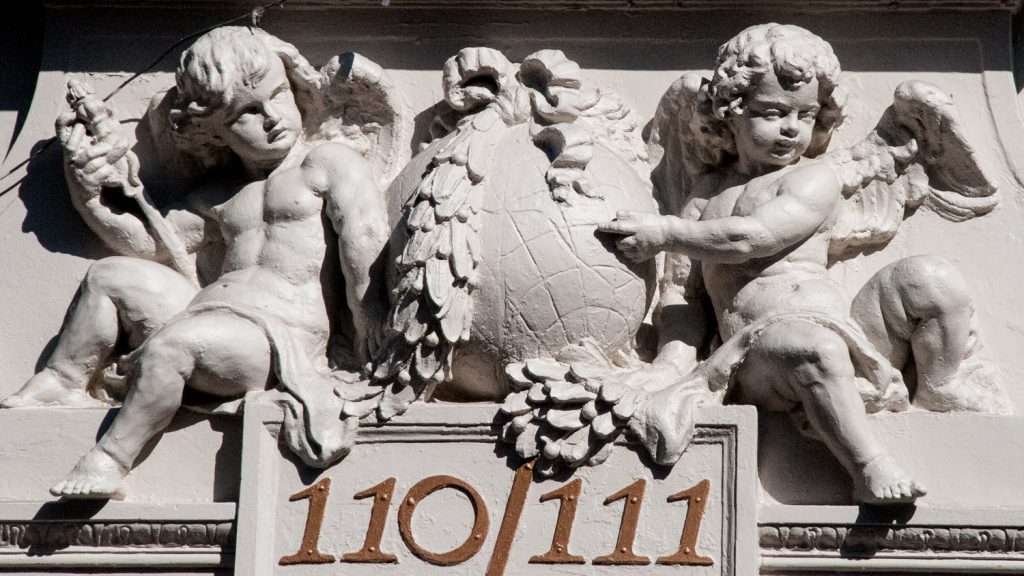
In partnership with his son, John Mason Cook, he opened an office in Fleet Street in 1865. In accordance with his beliefs, Mr Cook senior and his wife also ran a small temperance hotel above the office. You can still see the office now. It is graced with numerous globes and cherubs …

This image has an empty alt attribute; its file name is 20170409-DSC_1790-1024x576.jpg

Hundreds of cherubs live in the City – you can find many of them pictured in my blog Charming Cherubs.

The Cook family sold the business in 1928 and the Thomas Cook brand has just been saved from obscurity after the Chinese owner of Club Med said it would buy the name for £11m. There is a nice potted history of the company here.

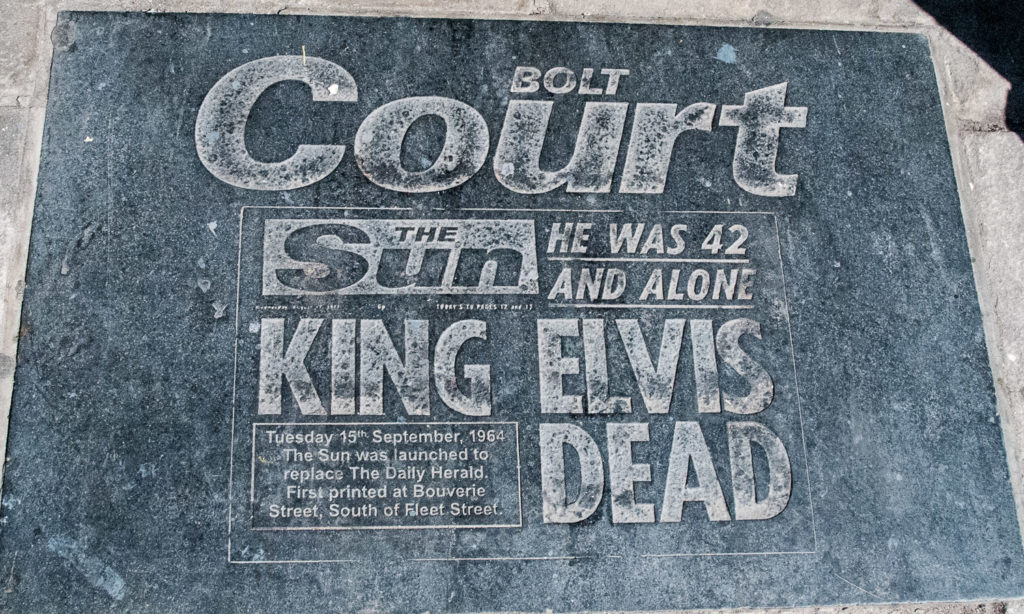
Once the beating heart of newspaper journalism, Fleet Street’s printing past survives only in some commemorative plaques and old signage.

Many of the alleys and courtyards contain plaques at their entrances. This one recalls a dramatic event as reported by The Sun newspaper …

This image has an empty alt attribute; its file name is DSC_4691-1024x614.jpg

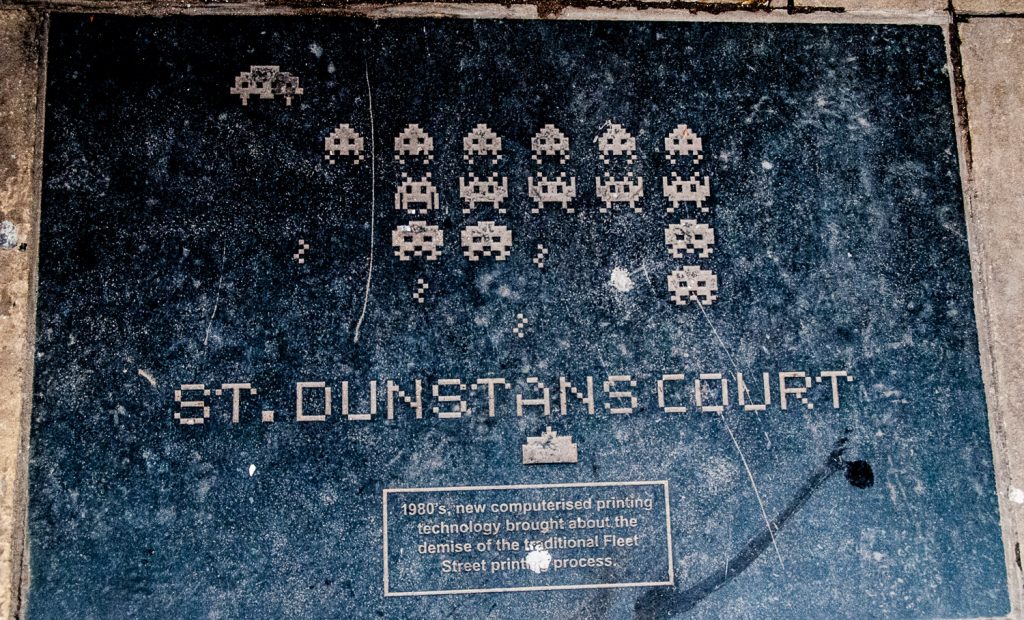
Computerisation is represented, a bit bizarrely I think, by the electronic Pac-Man game …

This image has an empty alt attribute; its file name is DSC_3344-1024x620.jpg

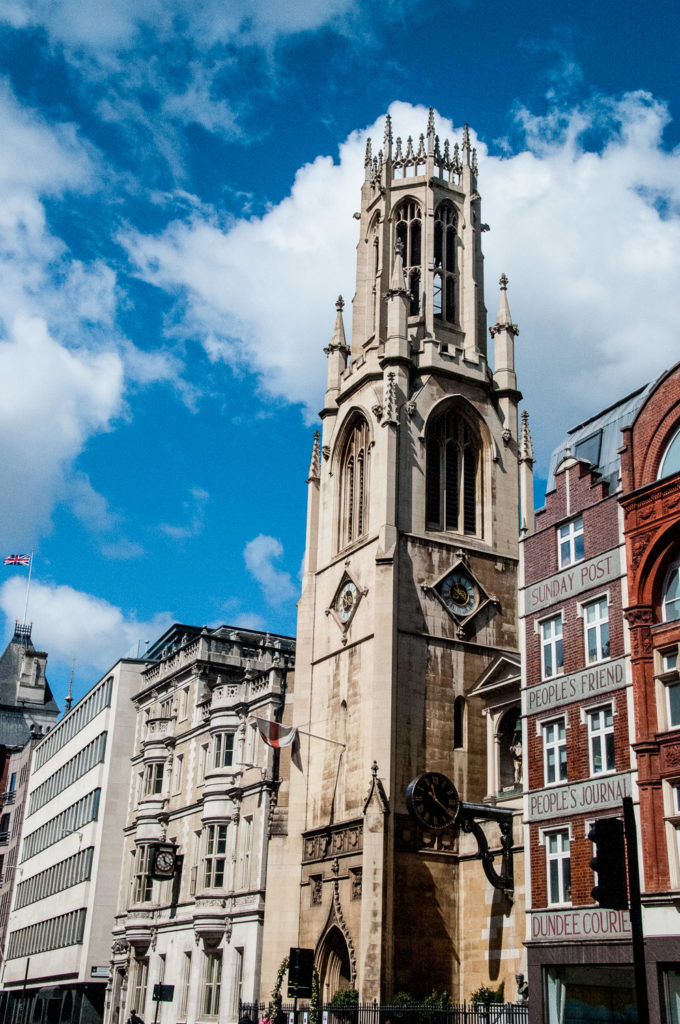
And some old signage is still clear …

This image has an empty alt attribute; its file name is DSC_5865-680x1024.jpg

Child’s Bank has traded from the same Fleet Street site since 1673. Its impressive Grade II* listed premises, designed by eminent architect John Gibson, were opened here in 1880 …

I really like the following story. When the founder’s grandson, Robert Child, died in 1782 without any sons he refused to leave his interests in the Bank to his daughter because she had eloped earlier that year with the Earl of Westmoreland. Child didn’t want the Earl to get hold of the Child family wealth so he left it in trust to his daughter’s second surviving son or eldest daughter. This turned out to be Lady Sarah Sophia Fane who was born in 1785. There must have been a great supply of Earls at the time because she married the Earl of Jersey in 1804 thereby becoming a Countess. Here she is in a painting by Alfred Edward Chalon …

Sarah Sophia Child Villiers, Countess of Jersey (née Fane)

Upon her majority in 1806 she became senior partner in the Bank and exercised her rights personally until her death in 1867. She was known by the nickname ‘Silence’, which was ironic since, famously, she almost never stopped talking. The memoirist Captain Gronow, who disliked her, called her ‘a theatrical tragedy queen’, and considered her ‘ill-bred and inconceivably rude’.

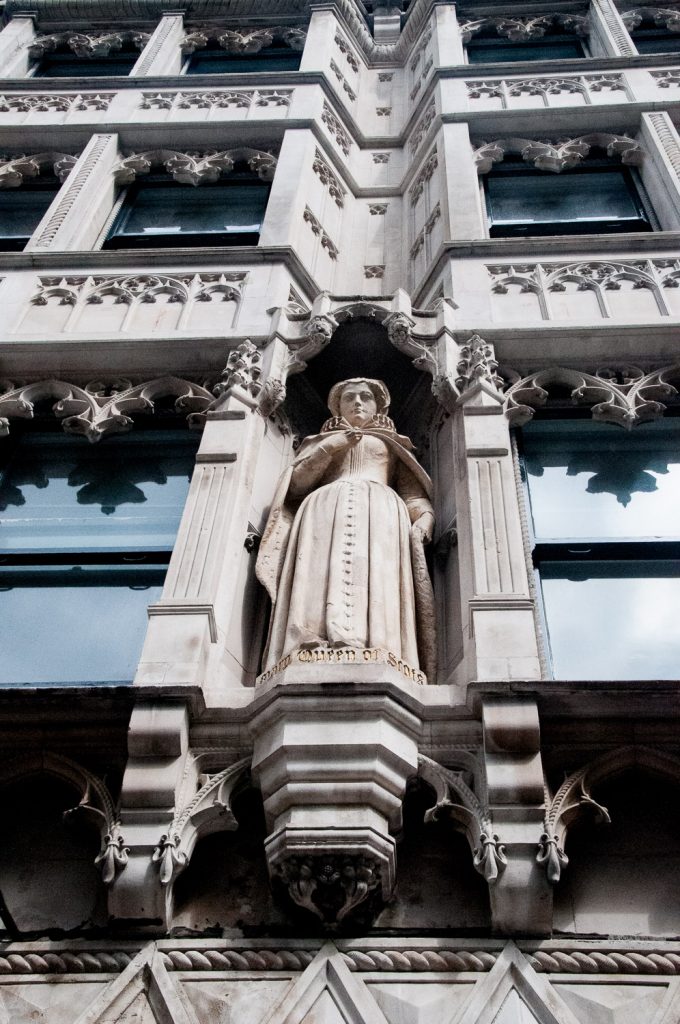
And now two memorials to real Queens …

Mary looks down on Pret’s customers as they buy their lunch at 143-144 Fleet Street.

Mary Queen of Scots House was built in 1905 for a Scottish insurance company. The statue was the idea of one of the developers, Sir John Tollemache Sinclair, Bart, MP, who was a big fan of the ill-fated lady.
The architect was one R.M. Roe, who concocted ‘a facade as frilly as a doily with lashings of French Flamboyant tracery’.

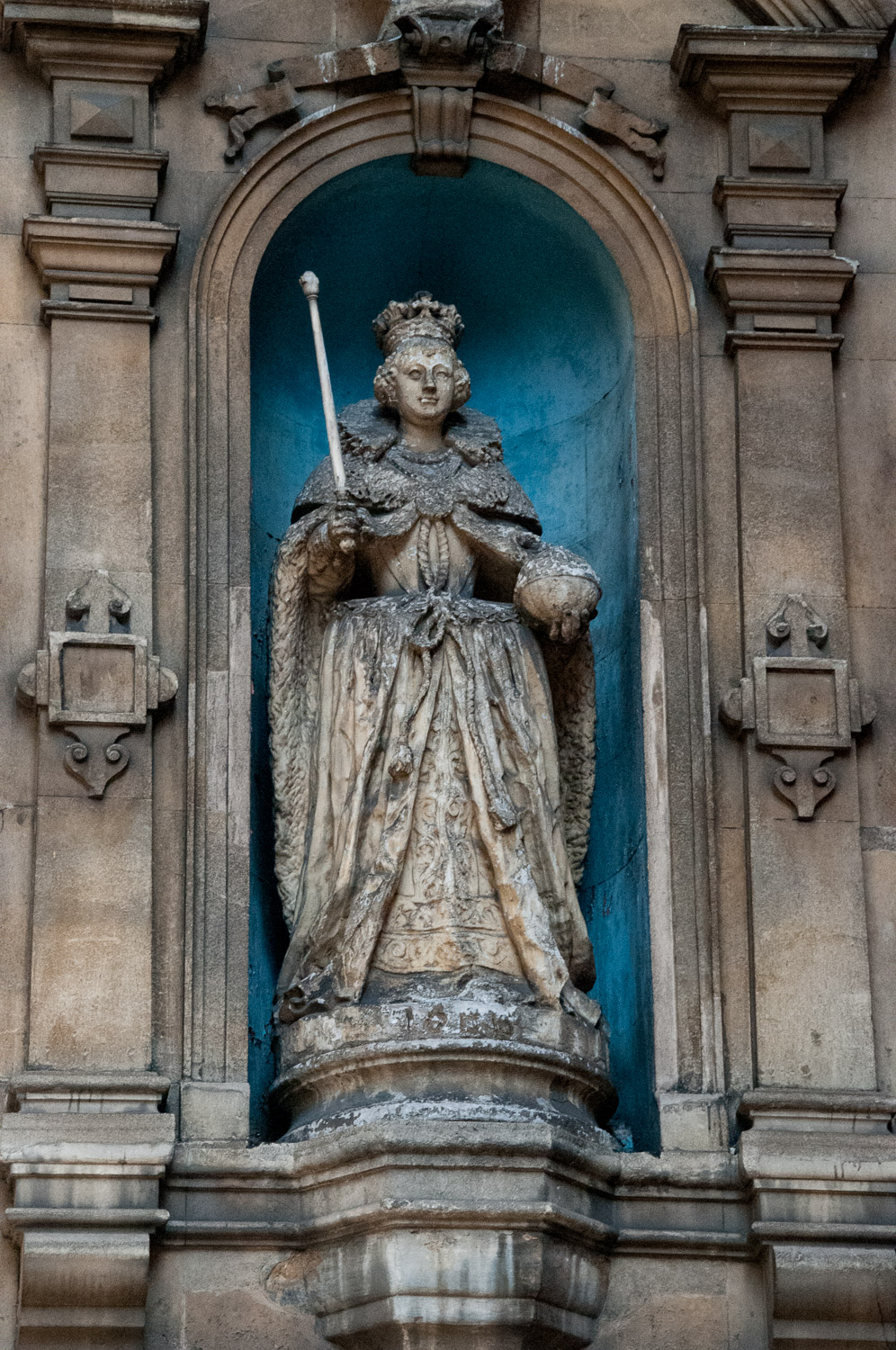
Her nemesis is commemorated nearby …

She looks young, doesn’t she?

This statue of Queen Elizabeth I is nearby in a niche at St Dunstan-in-the-West and its history is rather complex. Some current thinking is that the Queen dates from 1670-99 despite a date on the base of 1586, which would have made it the only statue carved in her lifetime. It is now thought that, rather than the date of sculpture, this date was inscribed on it when the statue was placed on a restored Lud Gate in 1670 after the Great Fire and is merely making reference to the original gate. When the gate was demolished in 1760 she was moved to a previous St Dunstan’s but this was torn down in 1829-33 to be replaced by the current building. Meanwhile it seems that the statue spent the time in the basement of a nearby pub. It was only when that too was demolished in 1839 that the statue was rediscovered and put in its current niche on St Dunstan’s. Millicent Fawcett, the prominent suffragist, left £700 in her will for the statue’s upkeep and the funds are managed by the Society for the Protection of Ancient Buildings.

I have written about Fleet Street and its features many times but I have no doubt that I will be doing so again!

Don’t forget you can follow me on Instagram:
https://www.instagram.com/london_city_gent/

Page 111 of 150

Powered by WordPress & Theme by Anders Norén

Symbols & Secrets
Privacy Overview

This website uses cookies so that we can provide you with the best user experience possible. Cookie information is stored in your browser and performs functions such as recognising you when you return to our website and helping our team to understand which sections of the website you find most interesting and useful.