Walking the City of London

Category: Water Page 8 of 9

Fish tales – a walk along the river

I started my westward walk at the old Billingsgate Market on Lower Thames Street. Once the centre of London’s fish trade, it has been comprehensively smartened up and no trace remains of its pulsating, pongy past, its interior now a soulless ‘event space’.
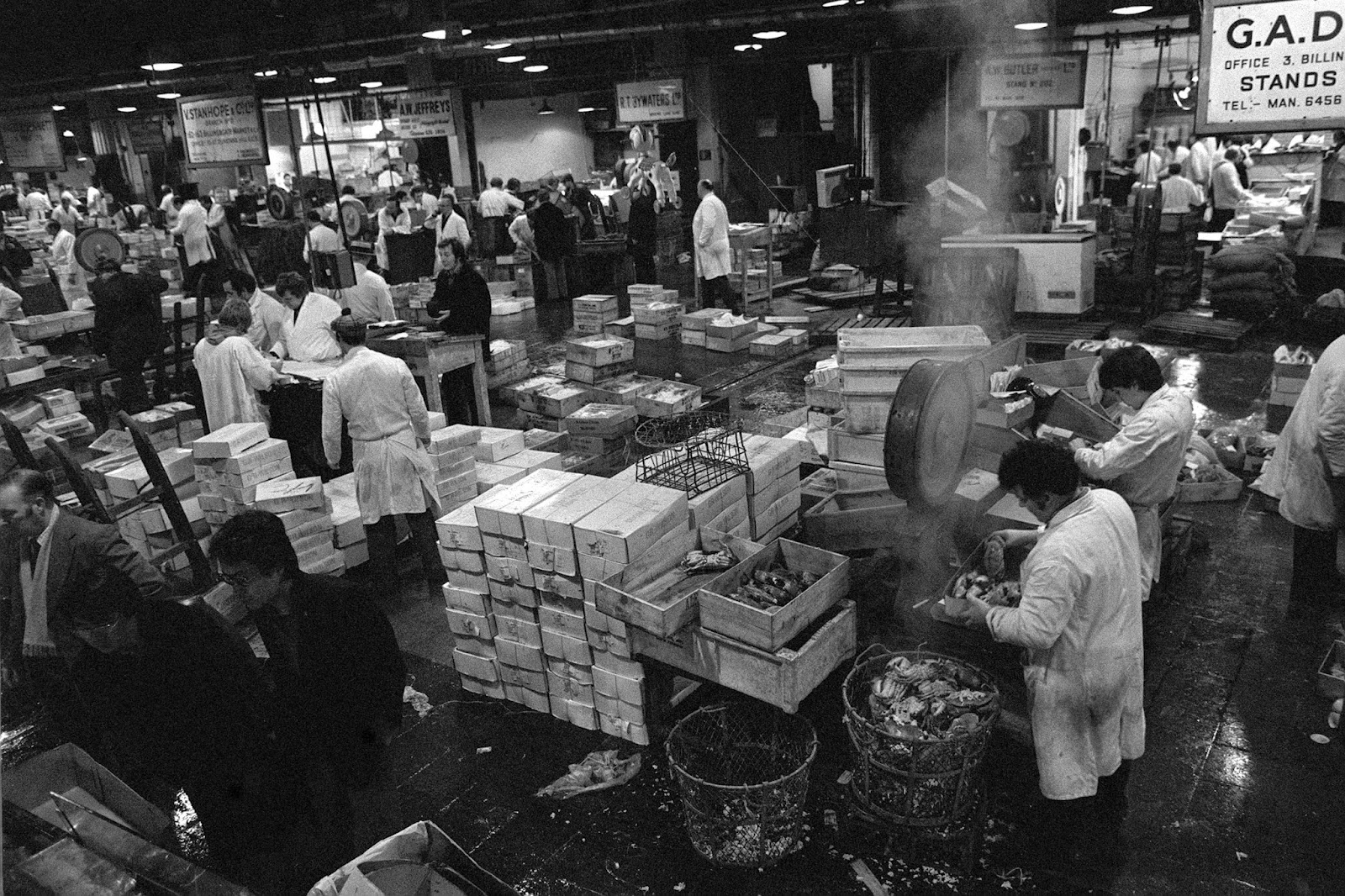
The market in its 20th century heyday.

Billingsgate was originally a general market for corn, coal, iron, wine, salt, pottery, fish and miscellaneous goods and does not seem to have become associated exclusively with the fish trade until the sixteenth century.

In 1699 an Act of Parliament was passed making it ‘a free and open market for all sorts of fish whatsoever’. The only exception to this was the sale of eels which was restricted to Dutch fishermen whose boats were moored in the Thames. This was because they had helped feed the people of London during the Great Fire.

The present building dates from 1876 and was designed by Sir Horace Jones, an architect perhaps best known for creating Tower Bridge but who also designed Leadenhall and Smithfield markets. Business boomed until 1982, when the fish market moved to the Isle of Dogs.
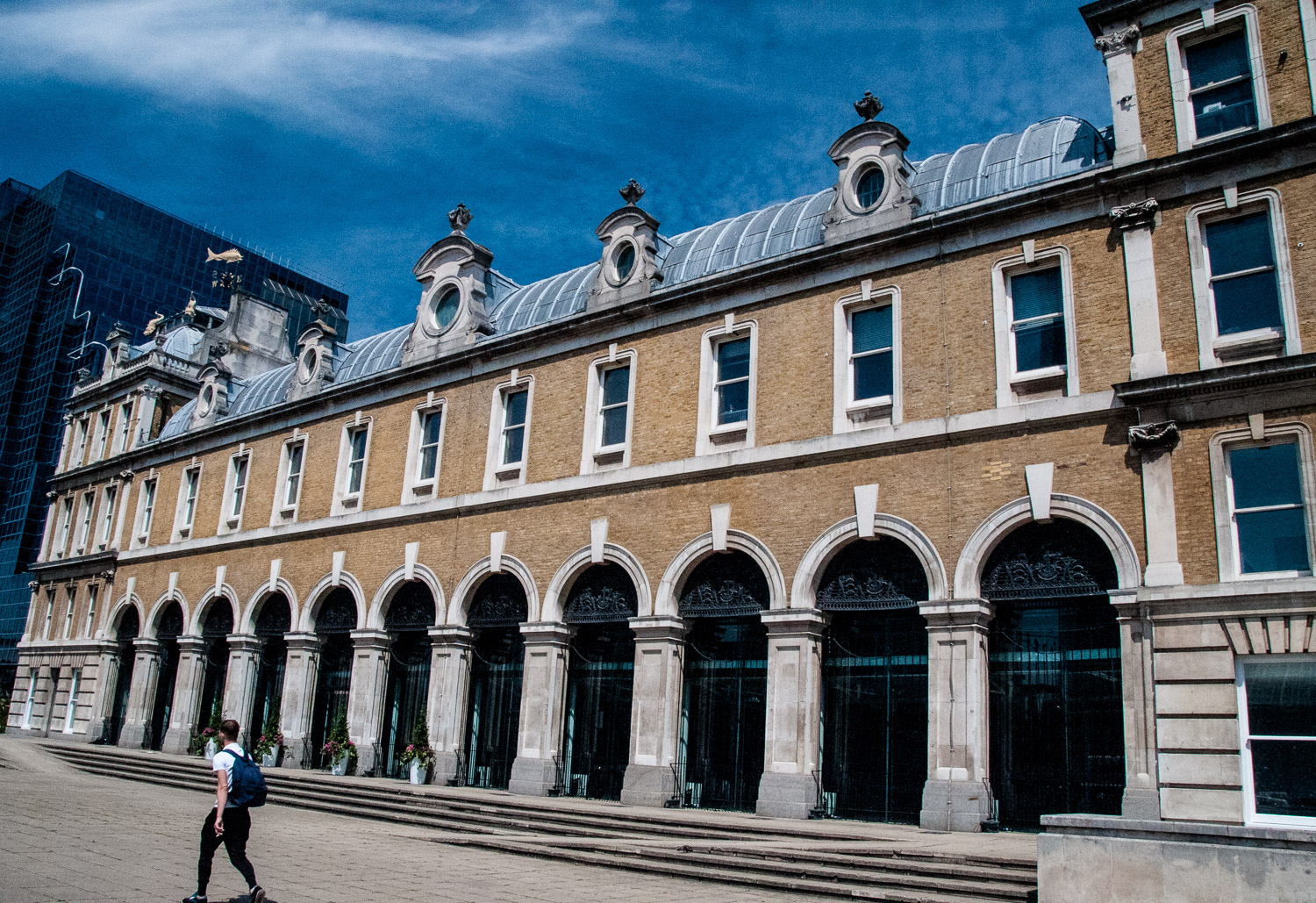
The south side of the old market today.

I love the weathervanes …
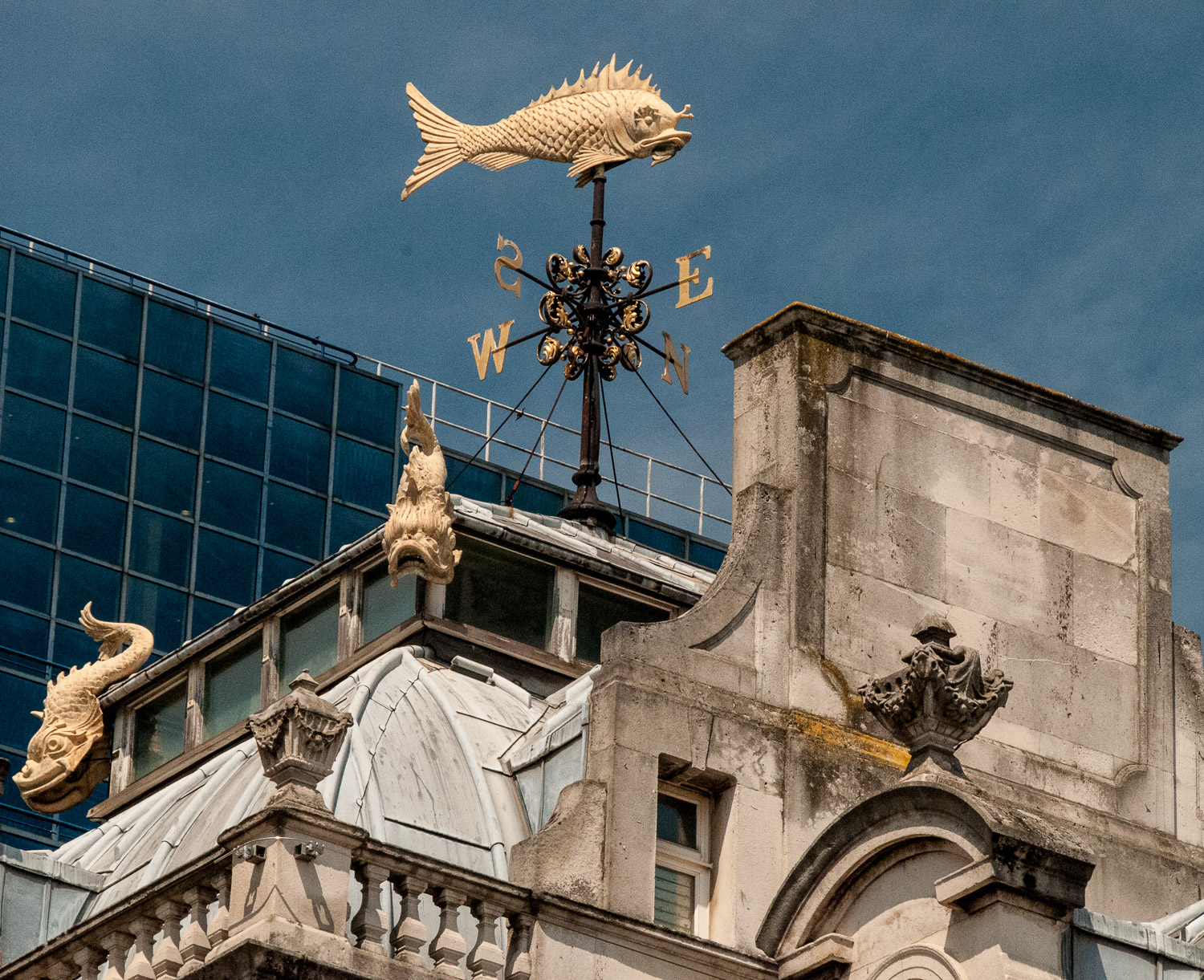
The weathervane at the west end of the market.

Similar weathervanes adorn the new market buildings in Docklands but they are fibreglass copies.

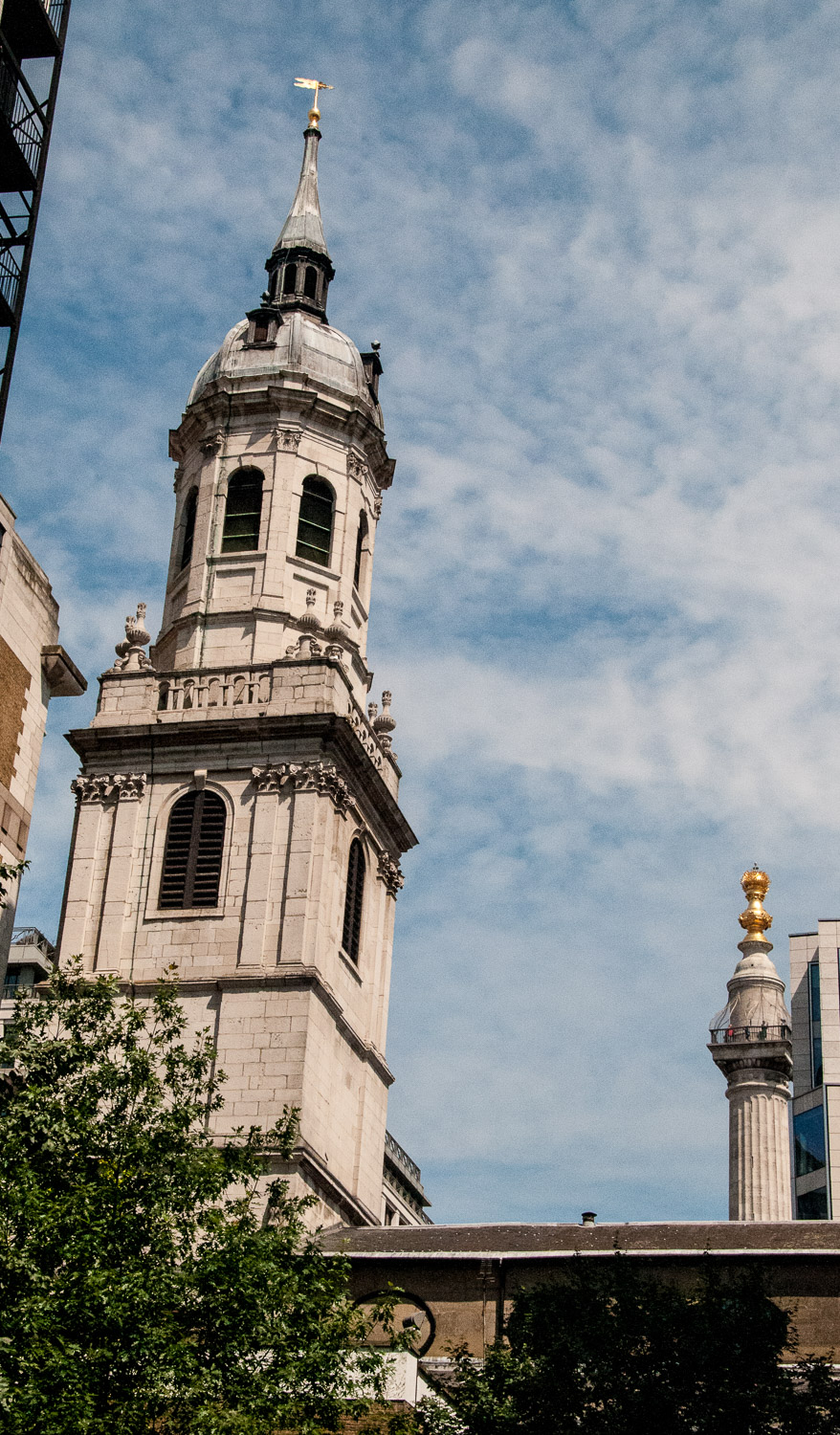
As you walk westwards you will see on your right a view of both the tower of St Magnus-the-Martyr and Wren’s monument to the Great Fire of 1666 …
The fishy environment is enhanced by the lamps that illuminate the path at night …
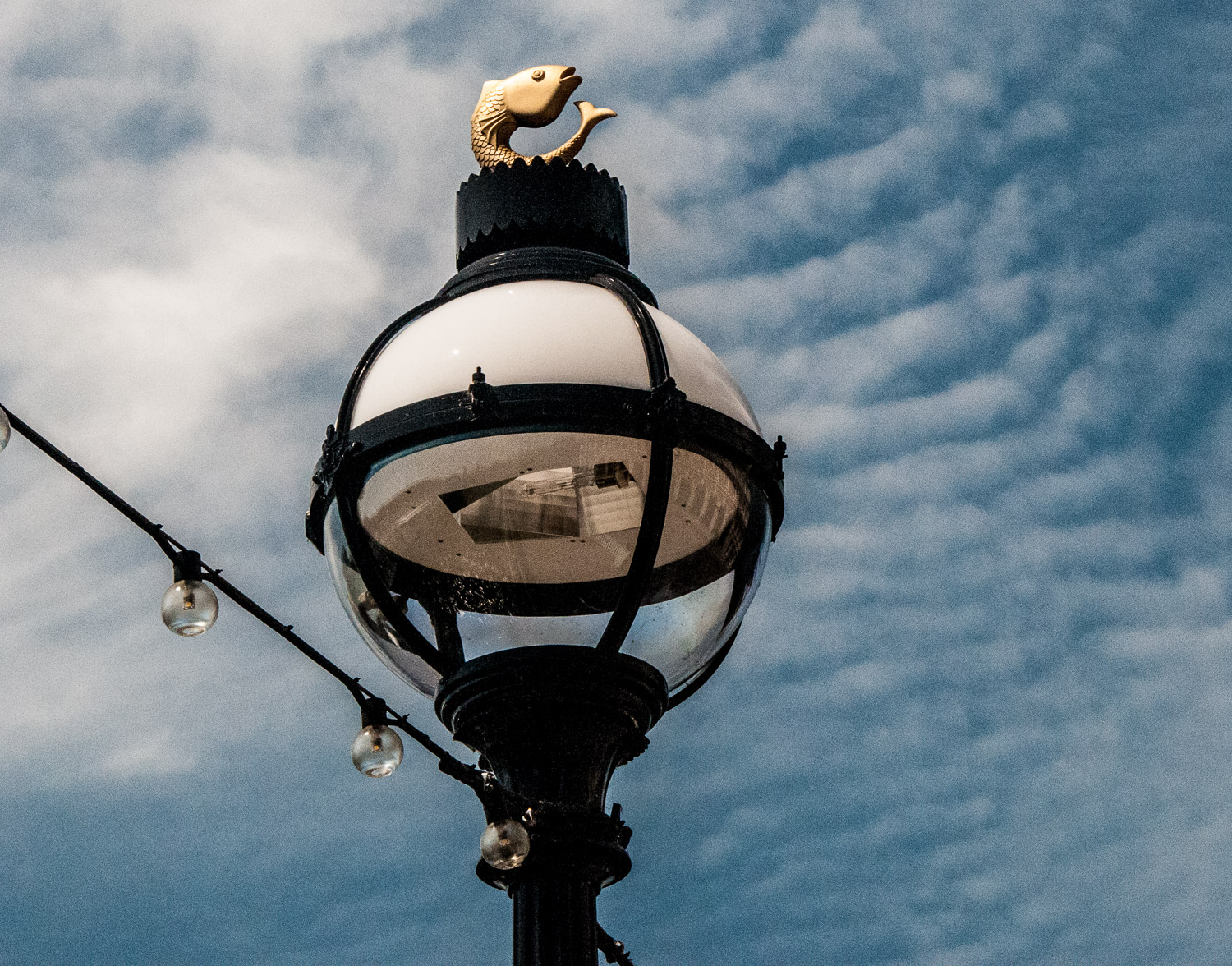
And, amazingly, I think the cloud formation behind is the beginning of what is known as a ‘mackerel sky’.
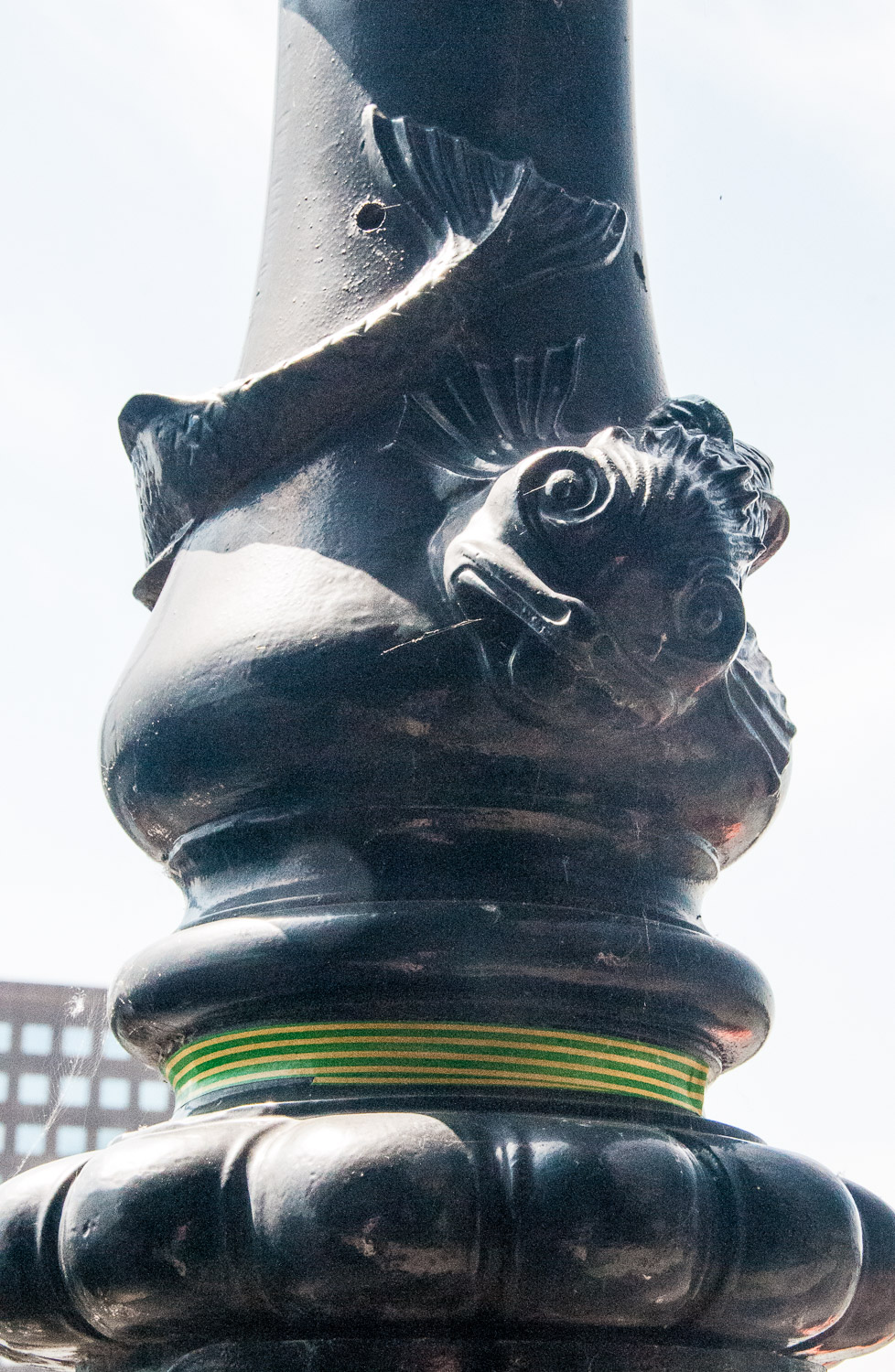
‘Hello, there!’ : Face-to-face with a fish at eye level.

Further along Adelaide House looms above you …
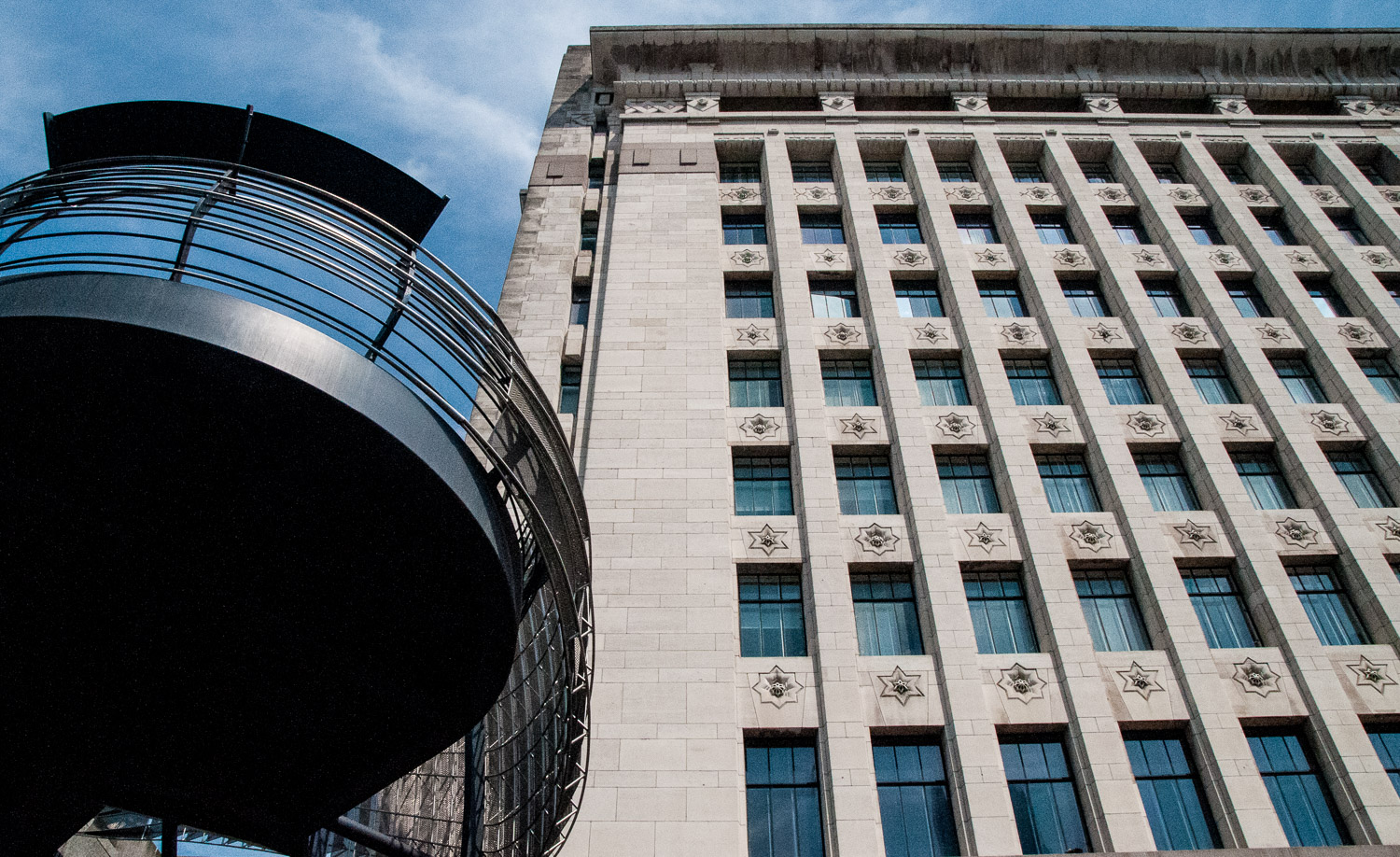
Built in 1925, it was then the City’s tallest block and is now Grade II listed. The building was named in honour of King William IV’s wife Adelaide who, in 1831, had performed the opening ceremony of London Bridge. Office workers there could once access an 18-hole mini-golf course on the roof. When I discovered this an image came to mind of an errant golf ball flying over the parapet and bonking a London Bridge commuter on the head.

Glance across the river for an interesting contrast of old and new …
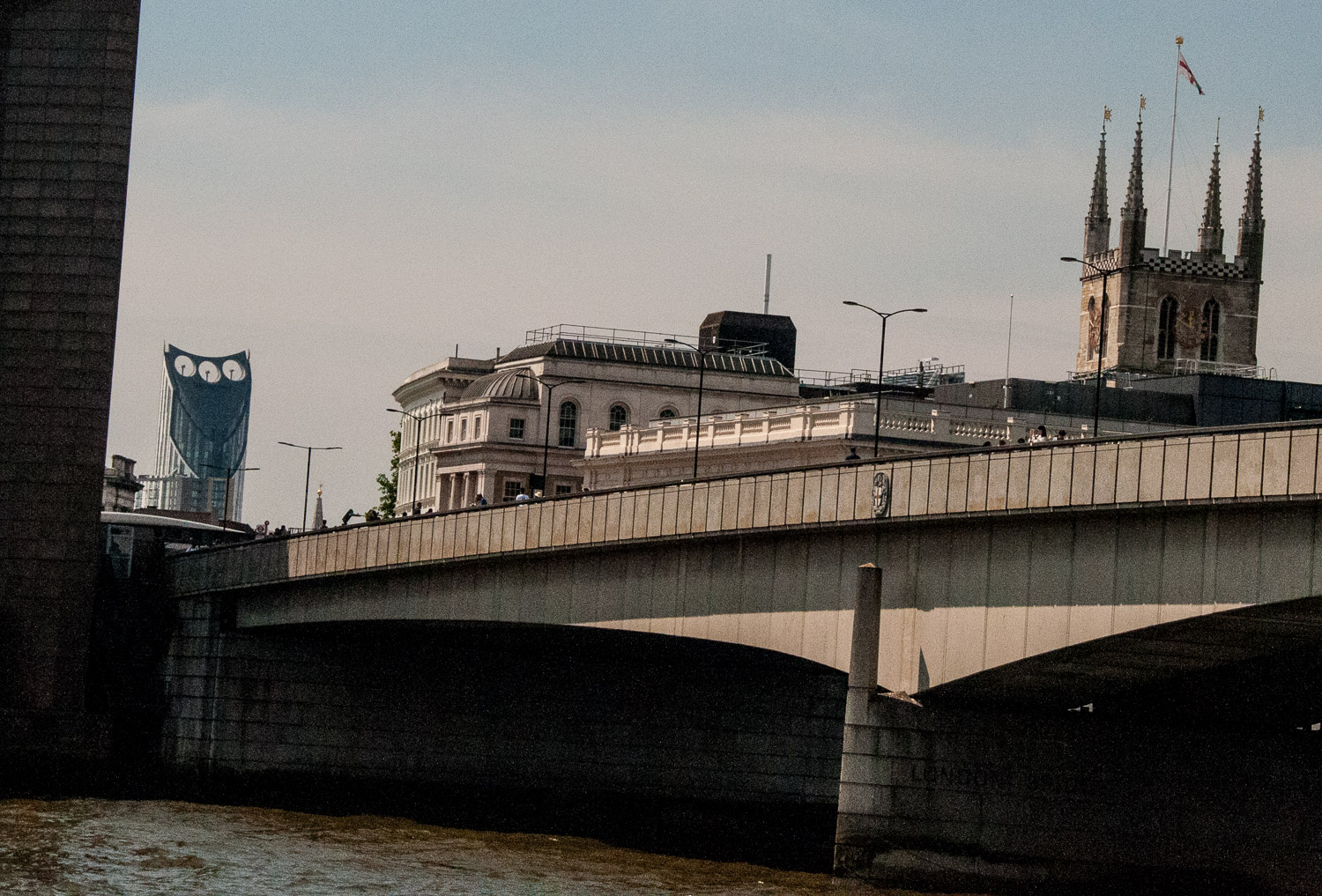
On the right, the 16th century tower of Southwark Cathedral peeps over London Bridge. In the distance the Strata tower block at Elephant & Castle, with its three wind turbines, stares back at you. The turbines were supposed to generate electricity but I have never seen them move. I am told that locals have nicknamed the building Mordor.

The Fishmongers’ Livery Company is one of the most ancient of the City Guilds and you encounter the river frontage of their hall as you continue to walk westwards. You will also spot more fish motifs both on the lamps and on the railings …
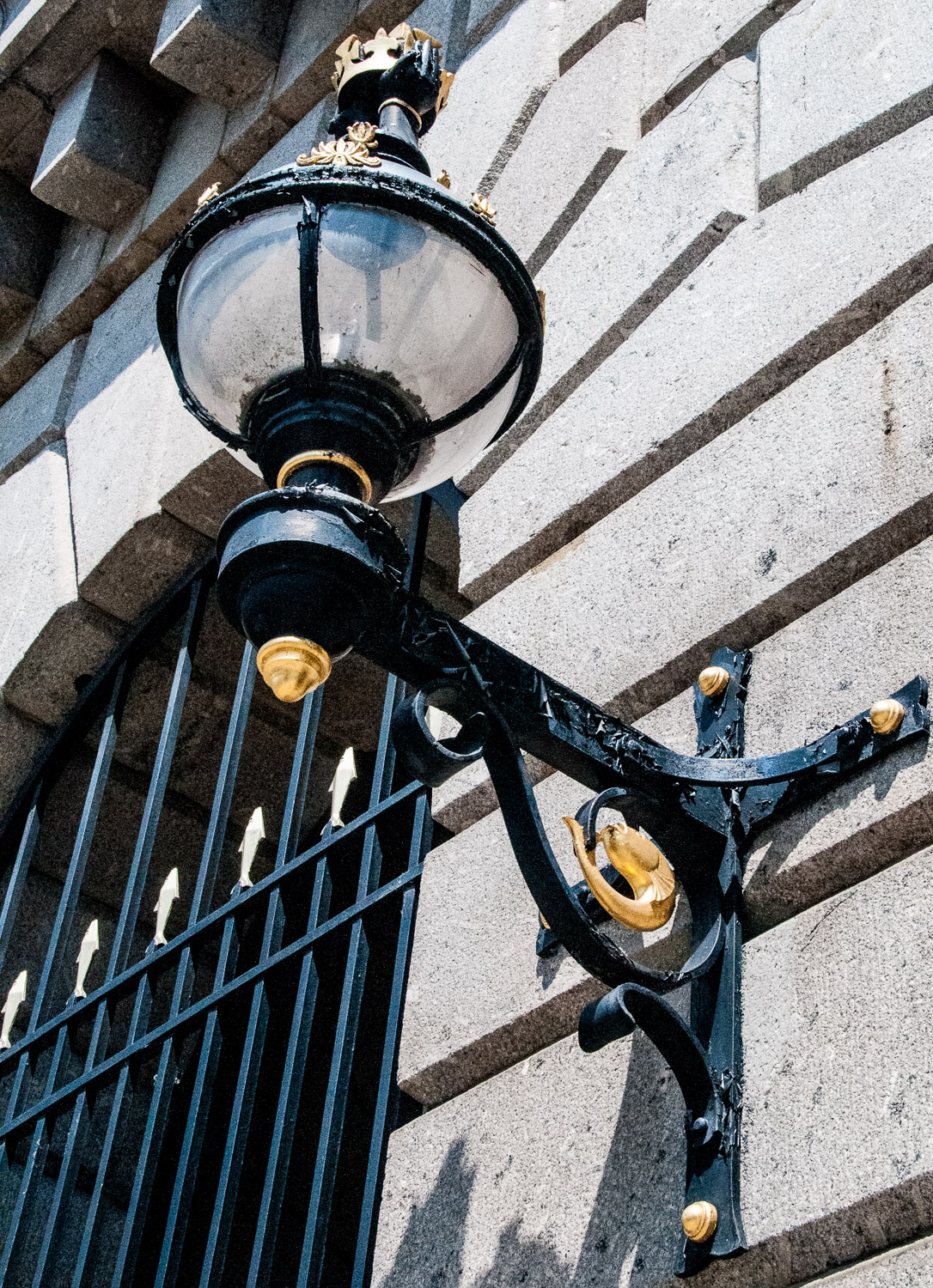
The south side of Fishmongers’ Hall.

Glance across the river and there, perched in a dry dock, is a replica of a very famous Elizabethan vessel …
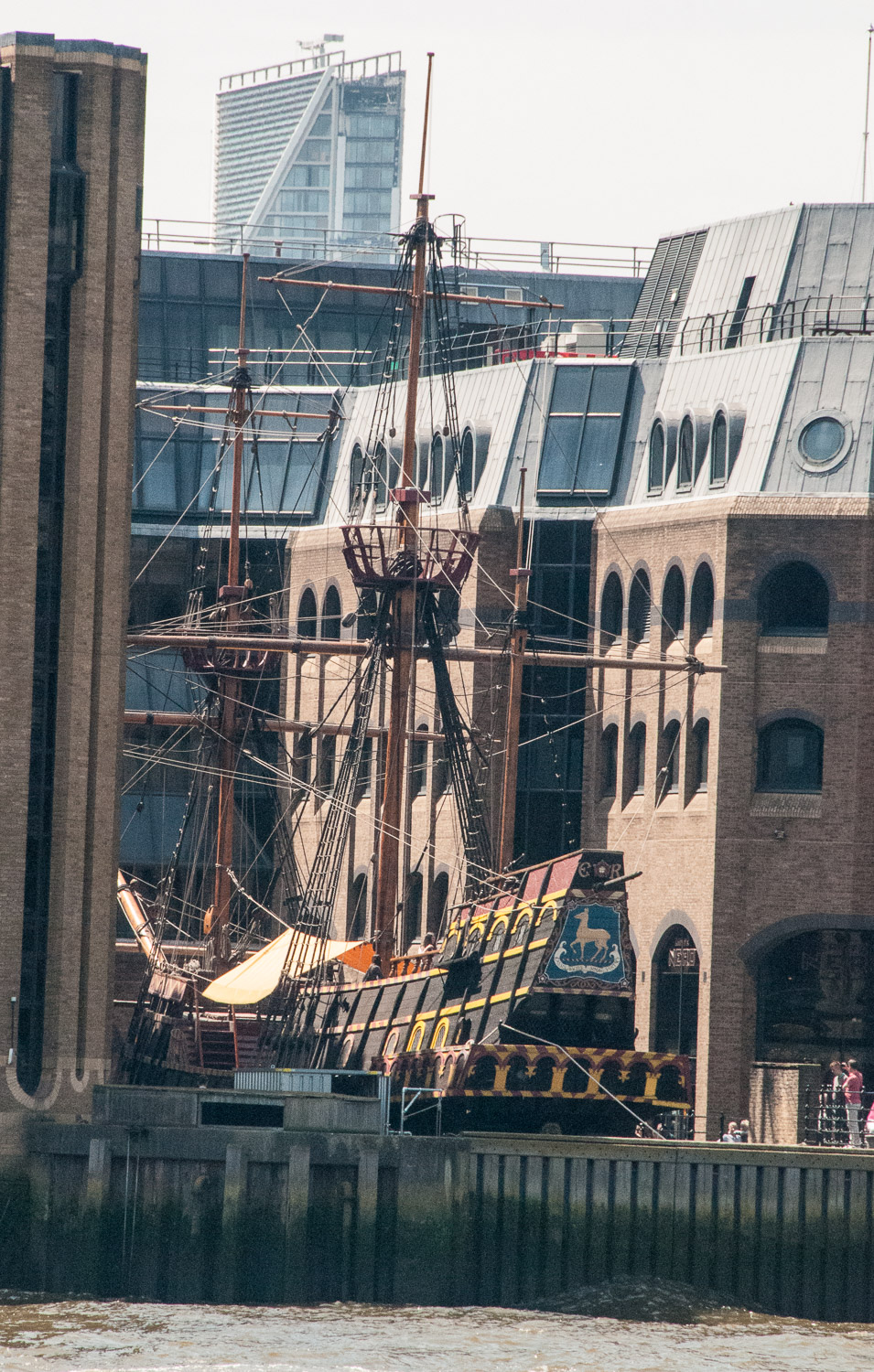
The Golden Hinde, under the captaincy of Sir Francis Drake, circumnavigated the globe between 1577 and 1580. It is open to visitors at St Mary Overie Dock SE1.

And now some bollards …
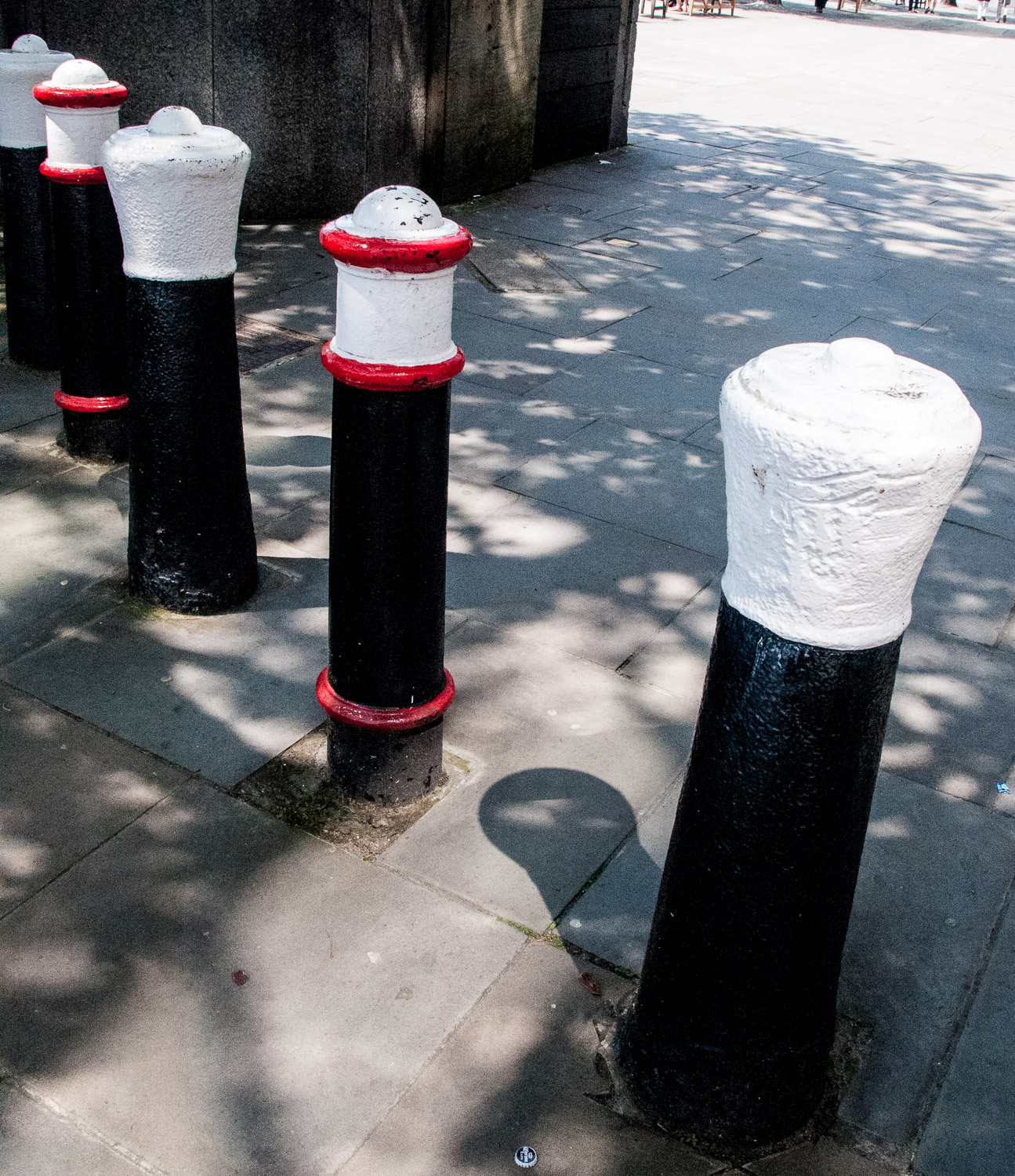
After the Battle of Trafalgar, it was discovered that the captured French cannons could not be retrofitted to British ships, and many of them were taken to London and erected as bollards. A cannon ball too large for the barrel was welded into the muzzle to give a distinctive shape. Most have disappeared, or are actually modern replicas, but I do think these fat black and white ones have an authentic look.

Further on, another fish lamp …
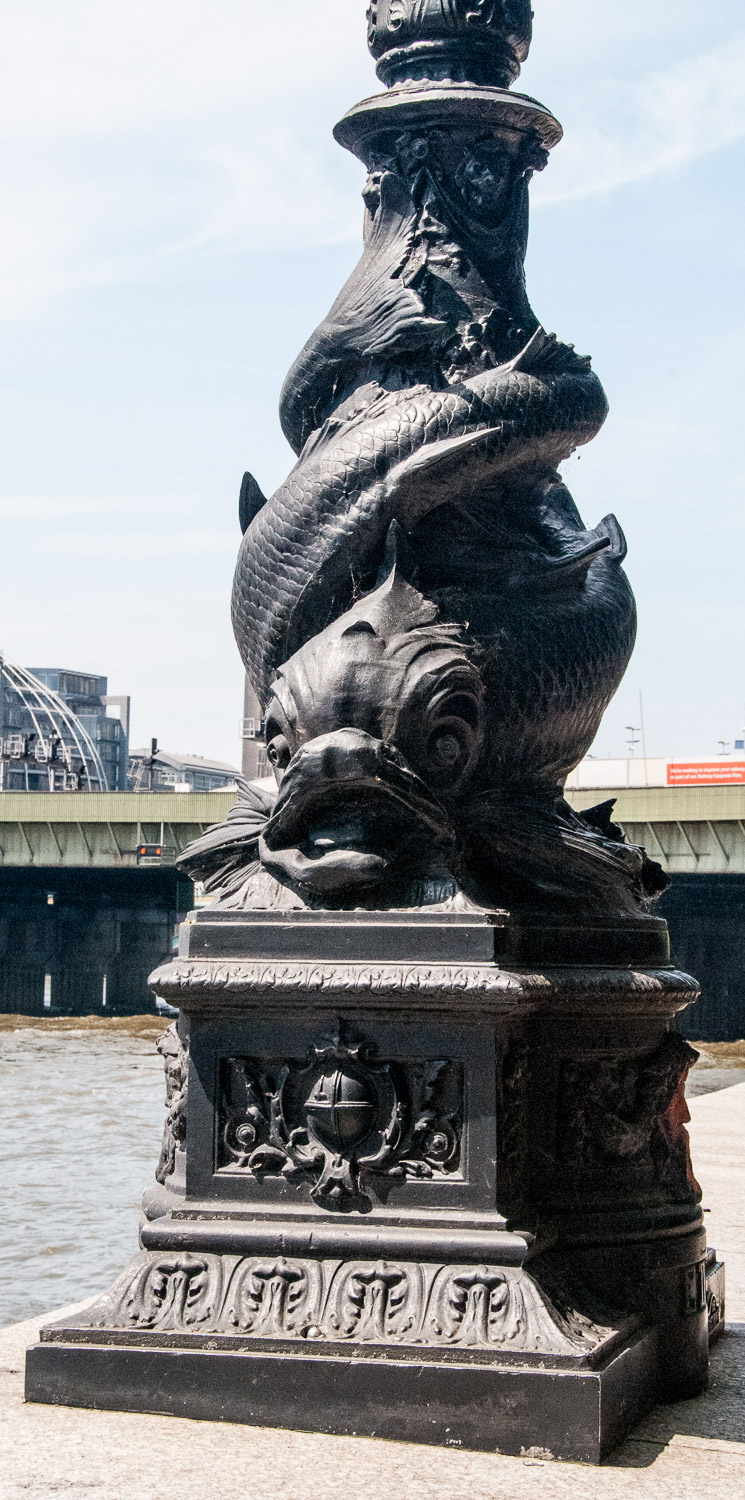
This one dates from 1998 when this part of the Thames Path was opened.

You will now pass under Cannon Street Station through the atmospheric Steelyard Passage which I wrote about in last week’s blog about Cannon Street Station.

One feature I didn’t mention was these blue lights built into the path …
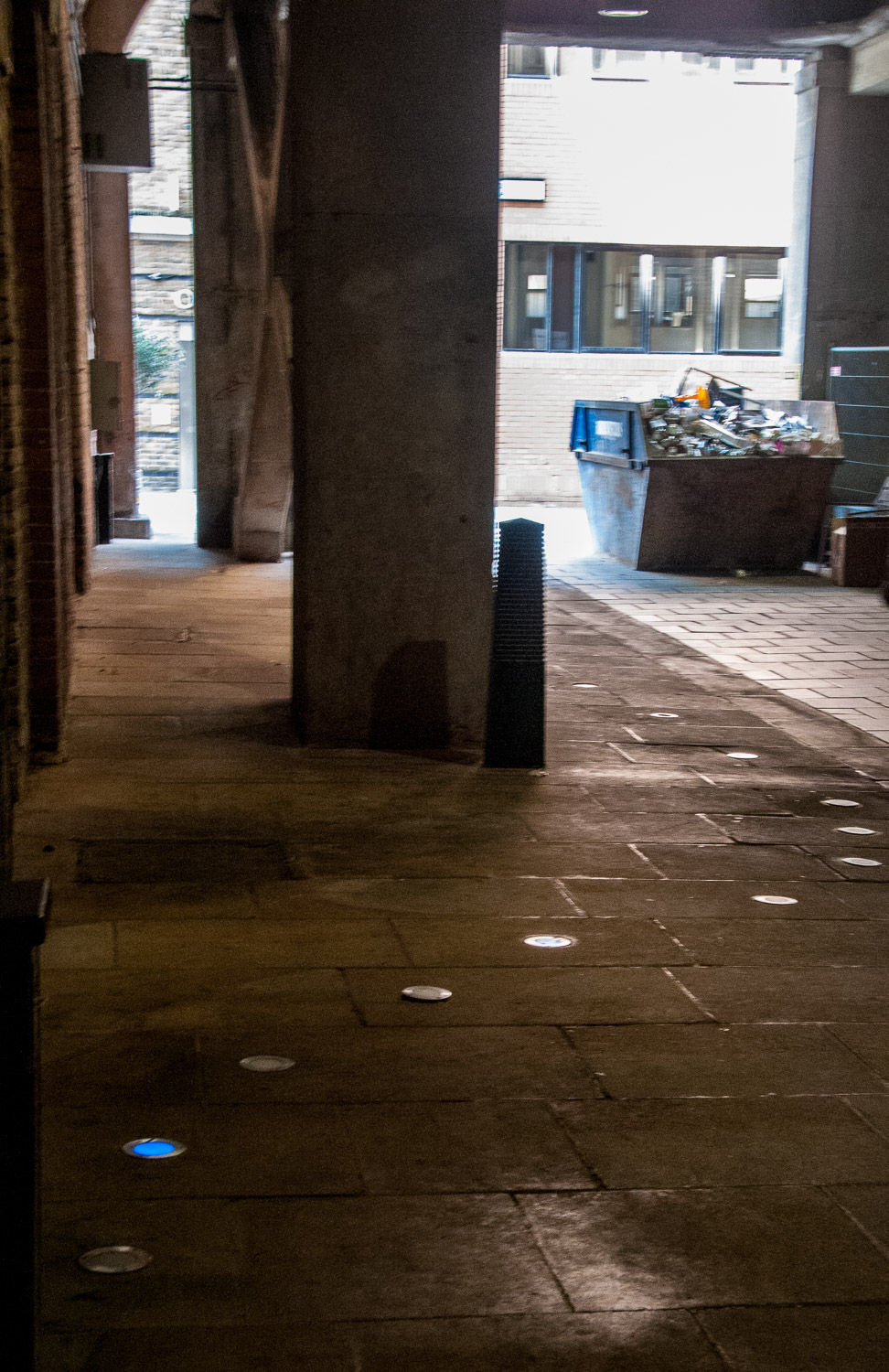
The lights illustrate the edge of the River Thames at high tide before the Embankment was built in the 19th century. Shame about the skip.

At the end of the path turn left and you can look down onto the River …
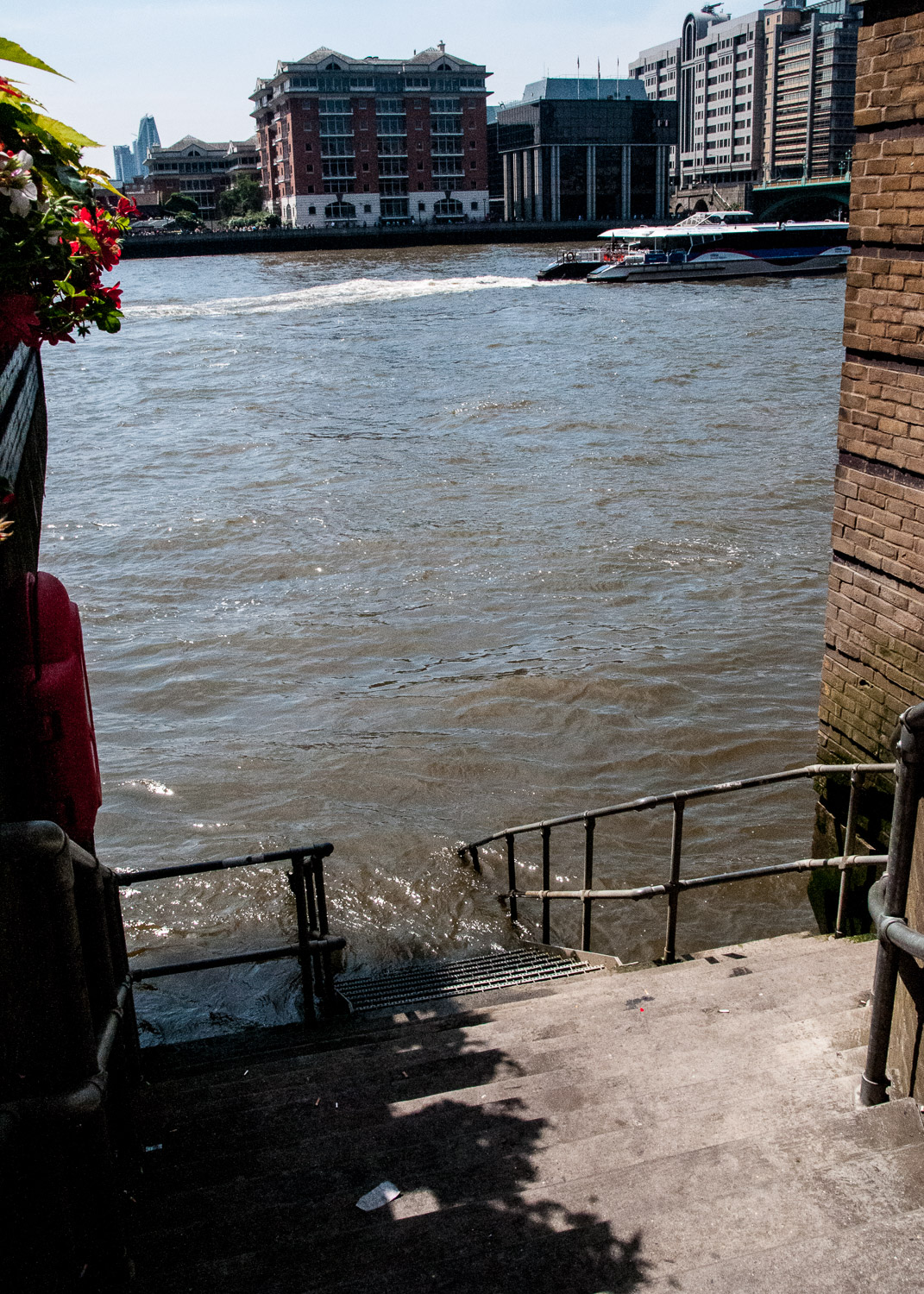
You are standing above the old Walbrook River which entered the Thames at approximately this point. Now totally covered over, it was once quite a torrent. The historian John Stow wrote that it had …

Such a swift course that in the year 1564 a lad of eighteen years, minding to have leapt over the channel, was borne down that narrow stream towards the Thames with such violent swiftness as no man could rescue or stay him.

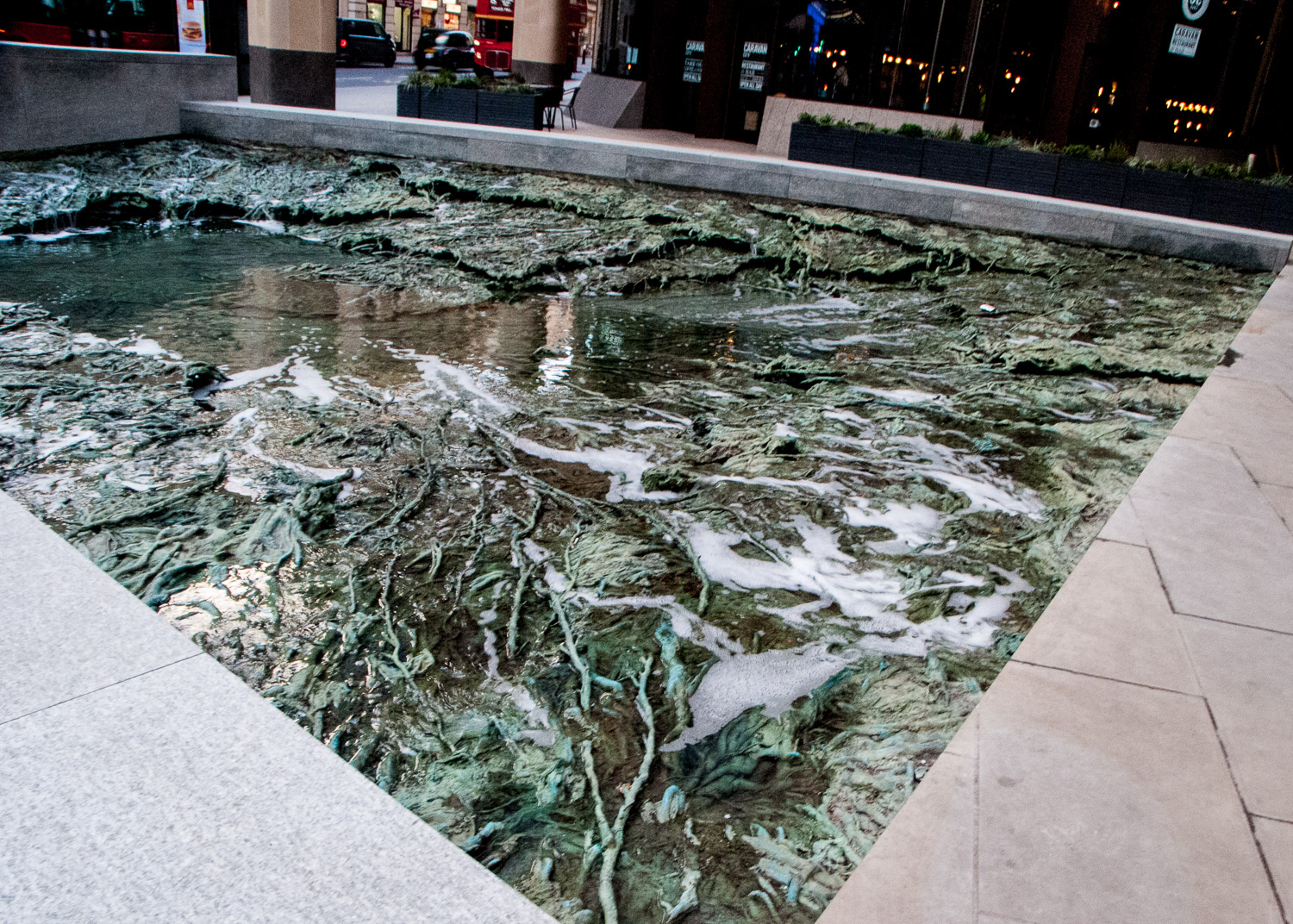
If you turn round now and walk up Cousin Lane you follow the course of the old Walbrook. On the north side of  Cannon Street it is commemorated in this sculpture entitled Forgotten Streams by the Spanish artist Cristina Iglesias …
Terminus tales – Blackfriars Station

Nowadays, if you want to travel by rail to Continental Europe, you head for St Pancras International and Eurostar. Once upon a time though, your gateway to the Continent was Blackfriars Station in the City.

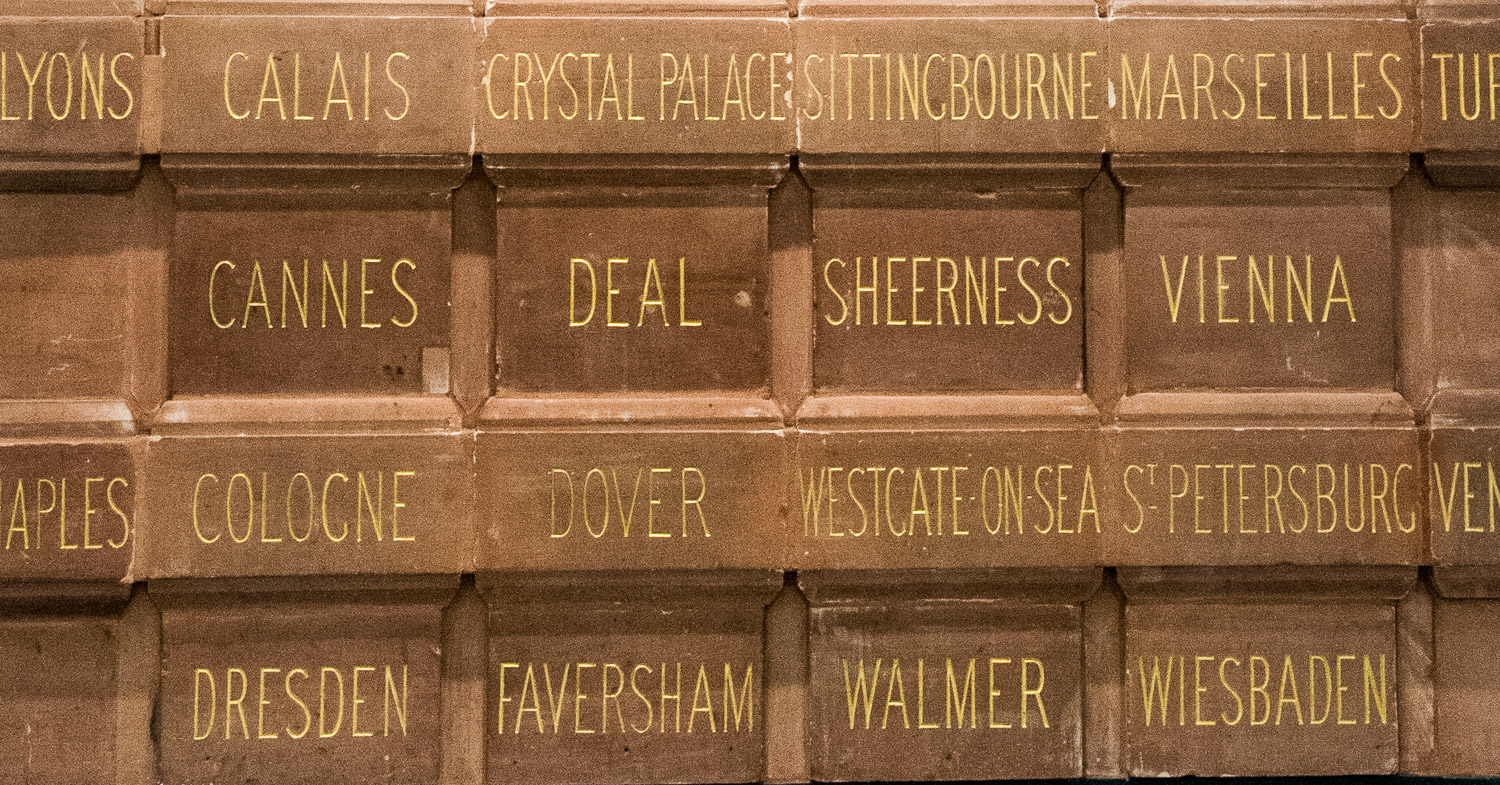
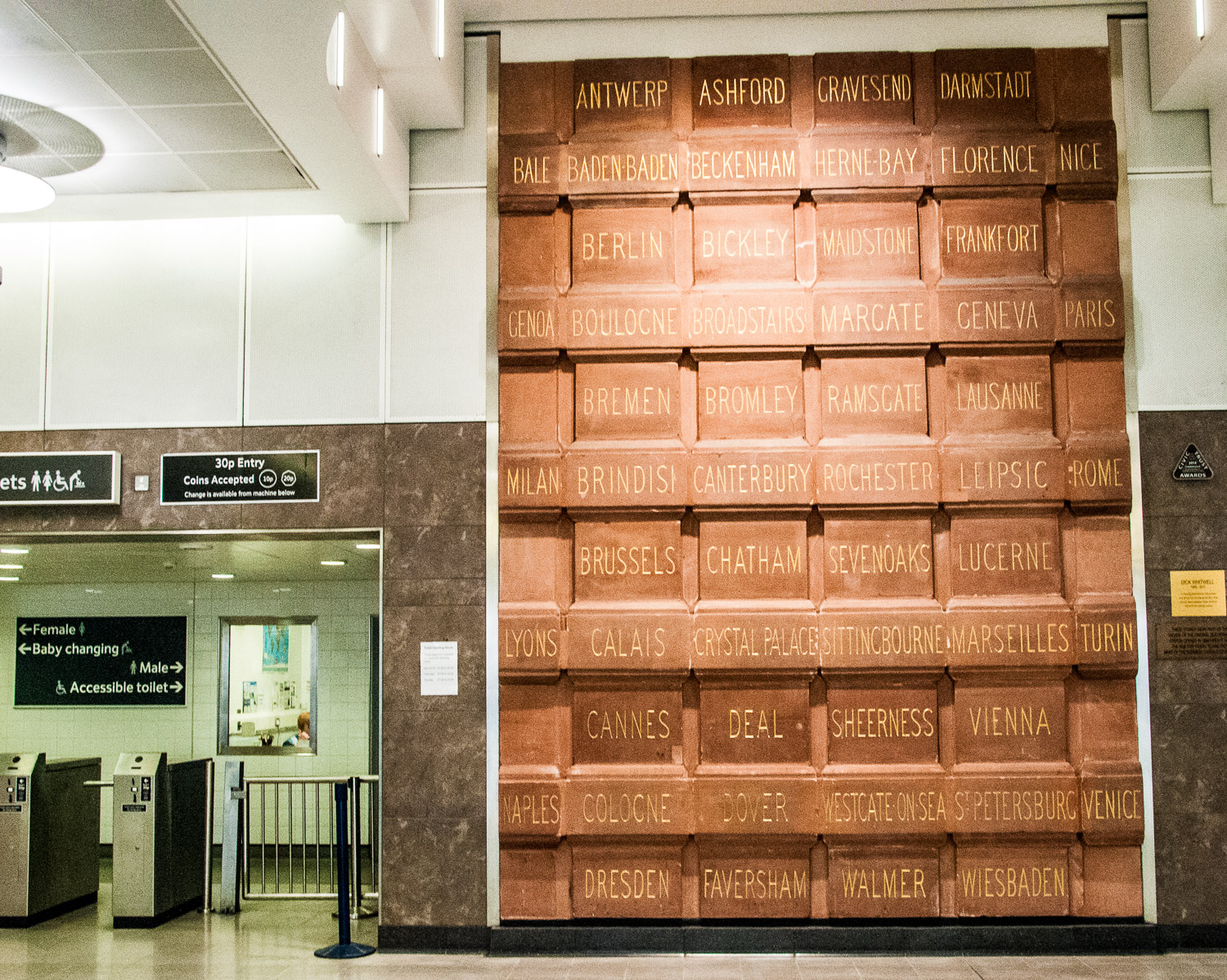
The station was badly damaged during the Second World War but the wall displaying a selection of the locations you could catch a train to survived and you can see it today in the ticket hall. It was part of the original façade of the 1886  station (originally known as St Paul’s) and features the names of 54 destinations – each painstakingly carved into separate sandstone blocks.

The destinations are gilded in 24 carat gold leaf …

‘Where shall we buy a ticket to today? Crystal Palace or Marseilles? Westgate-on-Sea or St Petersburg? Tough choices!’

The new station gave the London Chatham & Dover Railway an important foothold in the City of London.

If you leave the station and turn left you can walk across Blackfriars Bridge and take in a few more interesting sights.

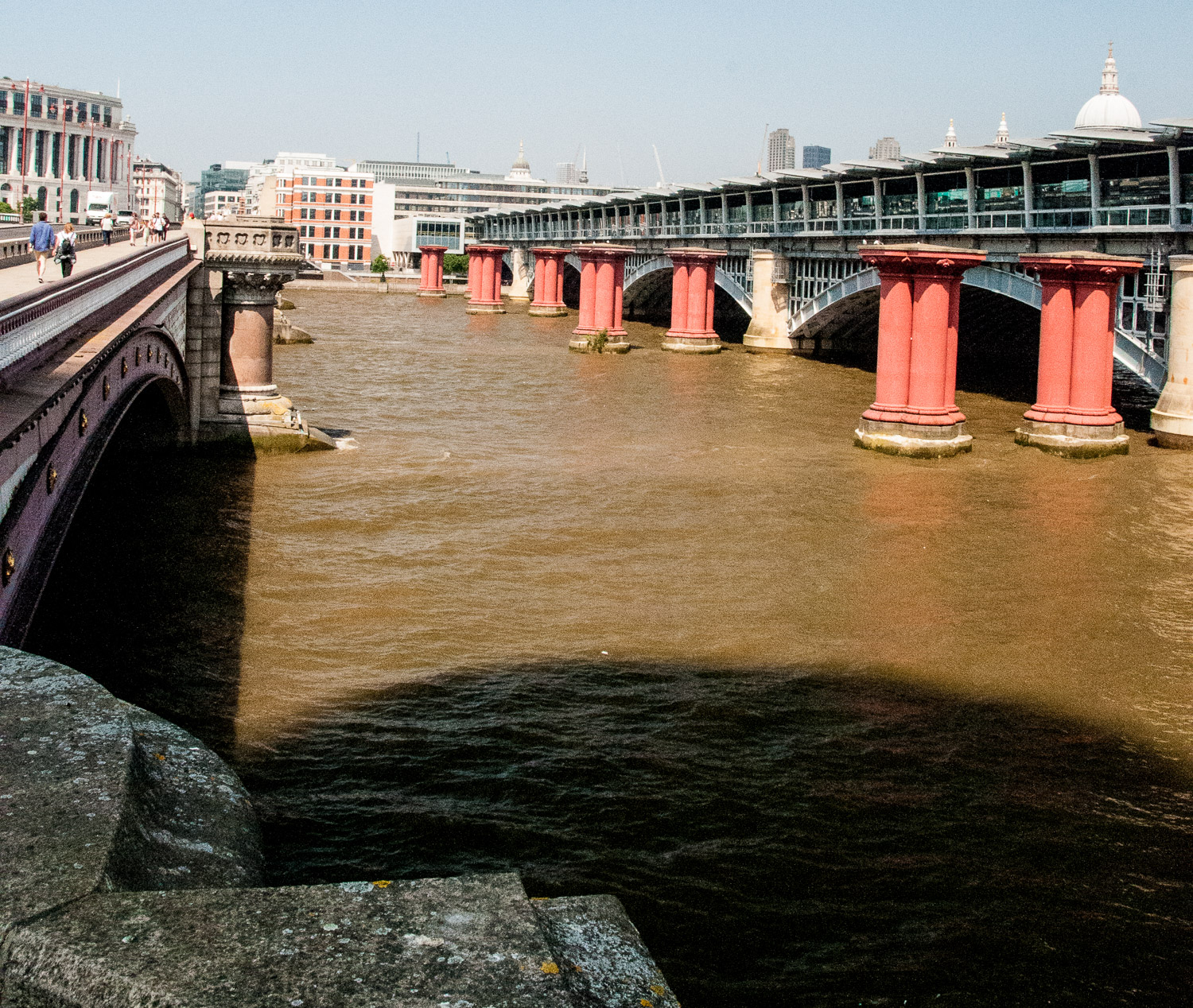
There are these columns rising out of the river …

In 1862-64 a bridge was built to accommodate four trains at one time. John Wolfe-Barry and H M Brunel built a second bridge to increase the number of trains coming into St Paul’s. The columns are the remains of the original bridge, which was removed in 1985 as it was deemed too weak for modern trains.

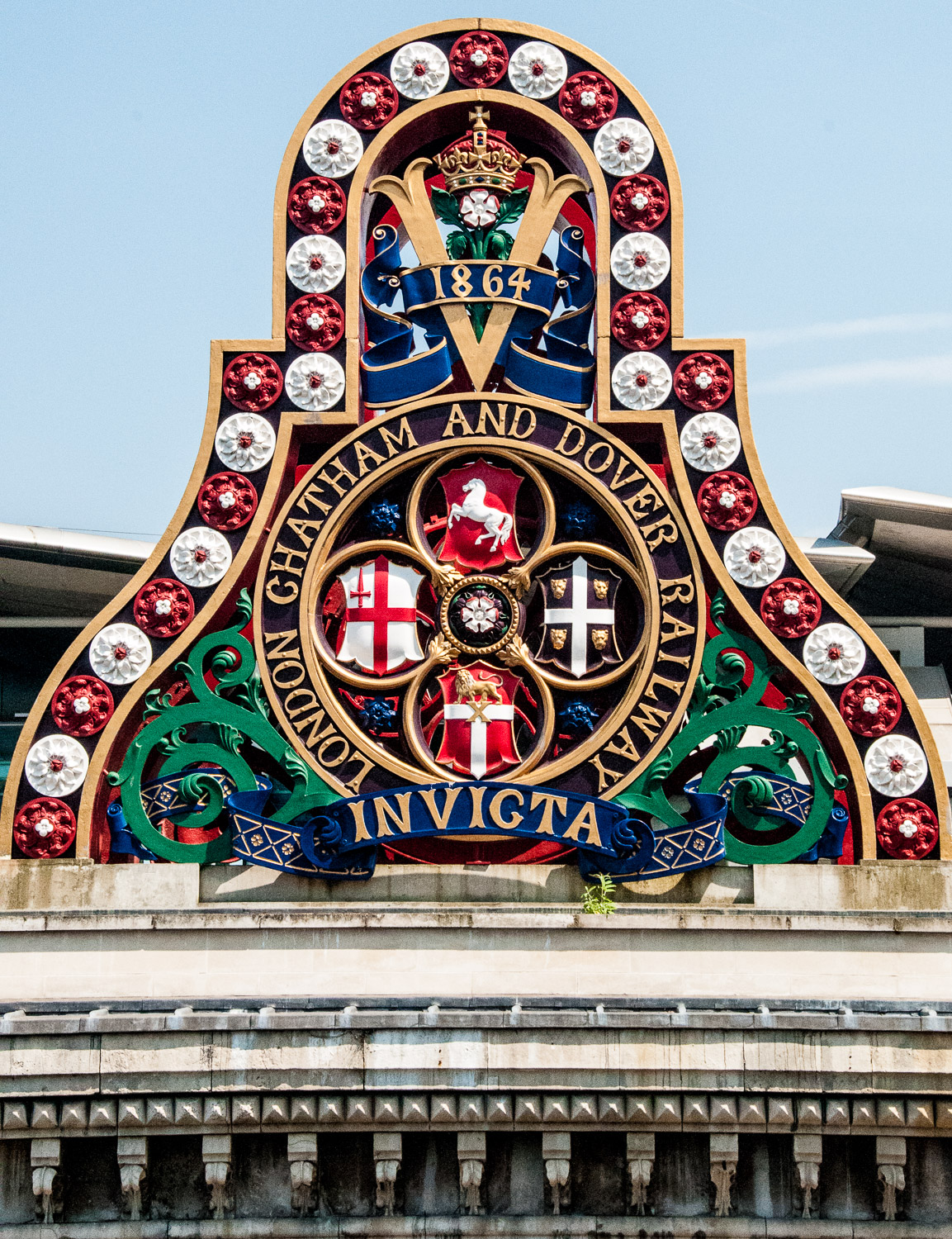
On the south side is the beautifully restored coat of arms of the London Chatham & Dover Railway …

Note the white horse rampant, symbol of Kent, and the county motto ‘Invicta’ meaning ‘undefeated’ or ‘unconquered’.

And now features not everyone notices. They are not related to the station but if you have ventured onto the bridge they are worth looking out for.

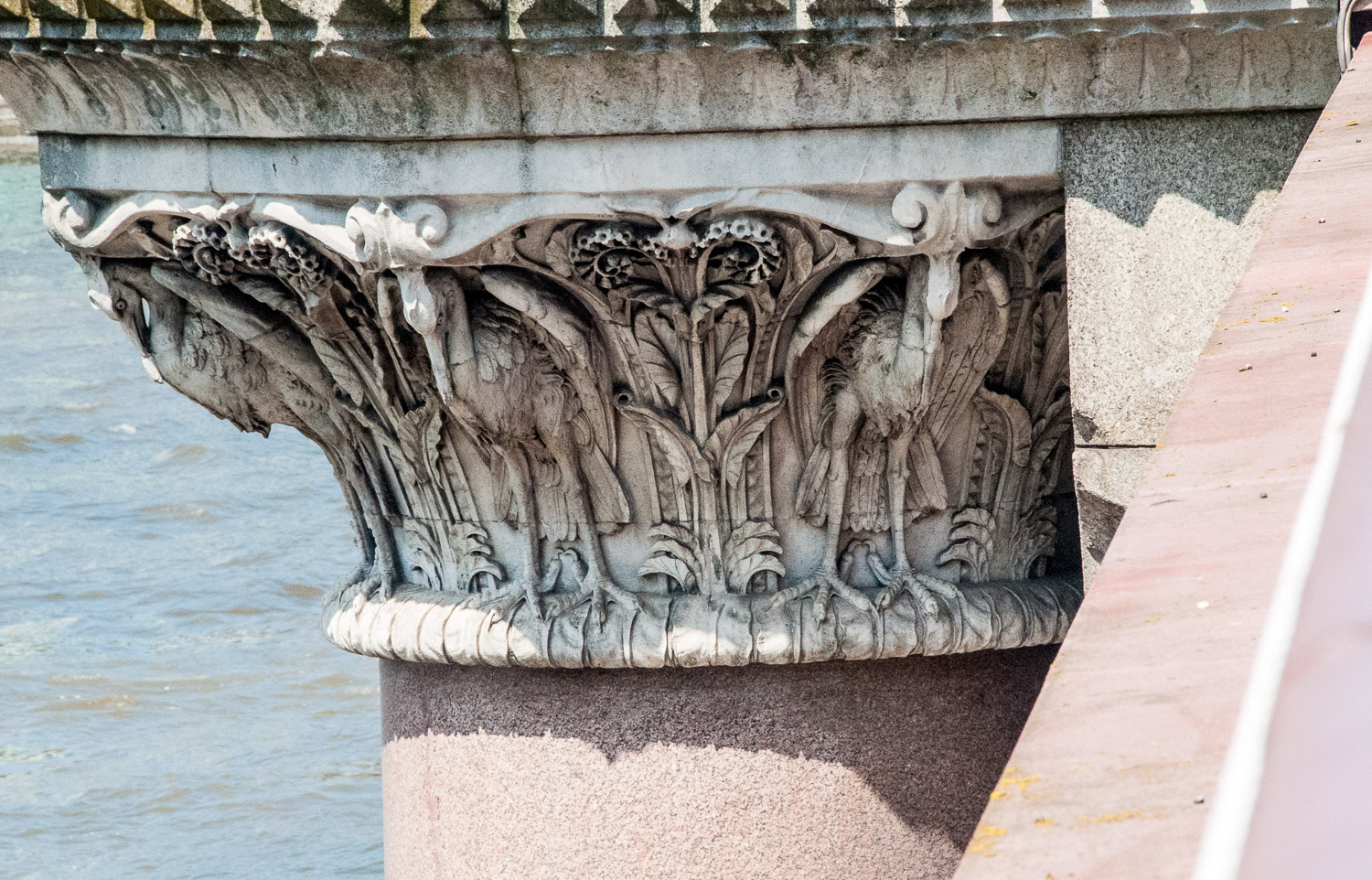
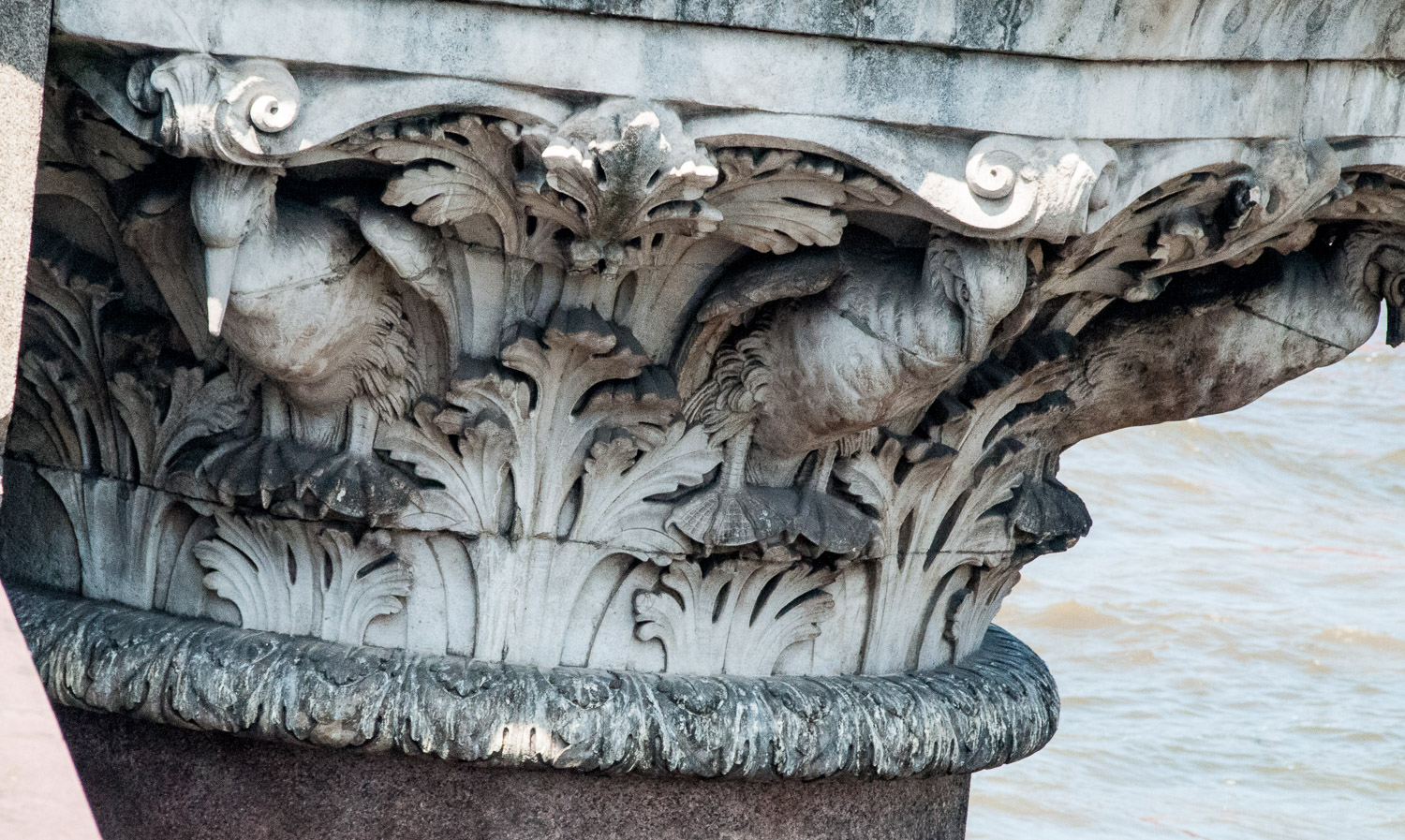
Peer over the parapet and on either side you will see some birds on the capitals of the bridge supports, beautifully carved in Portland stone by J.B.Philip.

The birds on the west side are fresh water birds and plants to be found on the upper reaches of the river …

And on the east side, sea birds and seaweeds to be found at the mouth of the Thames …

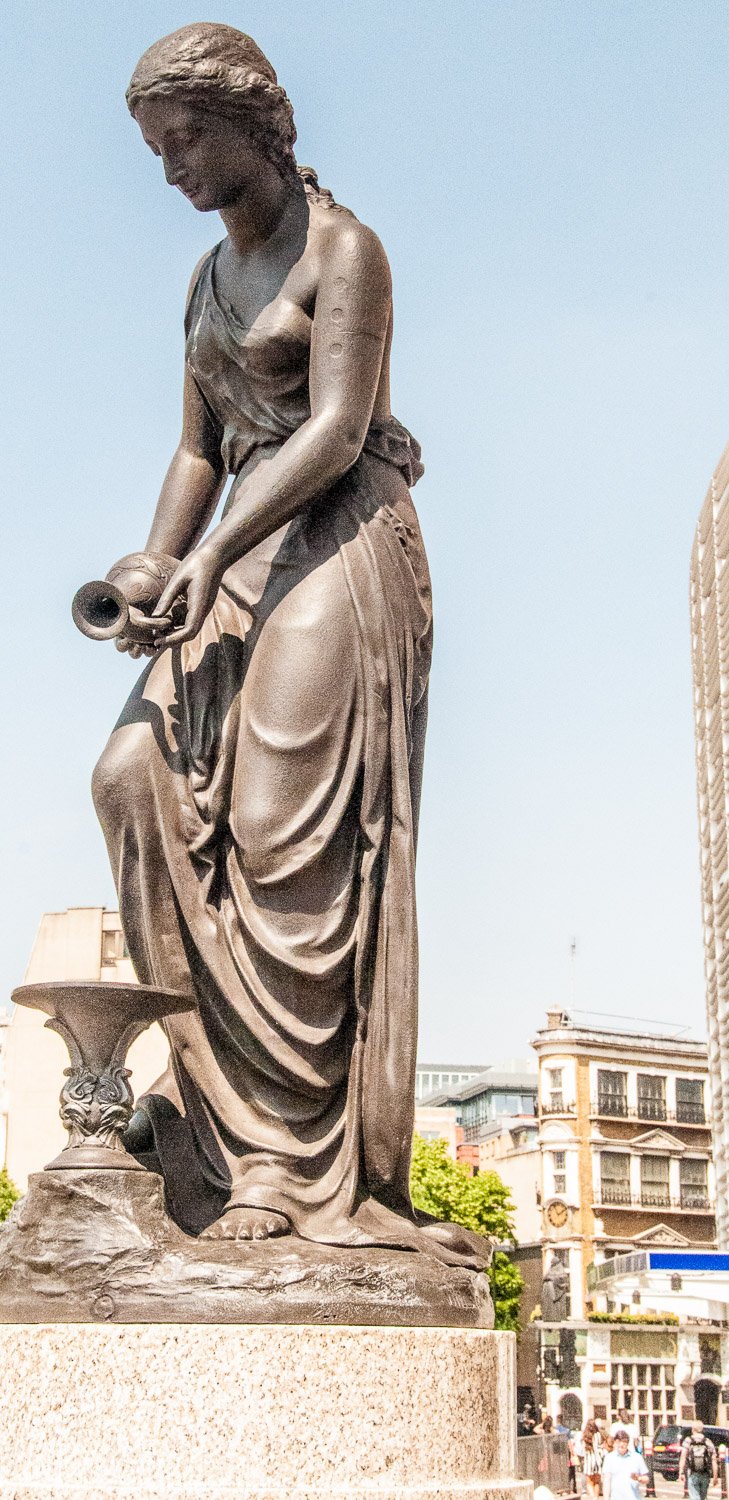
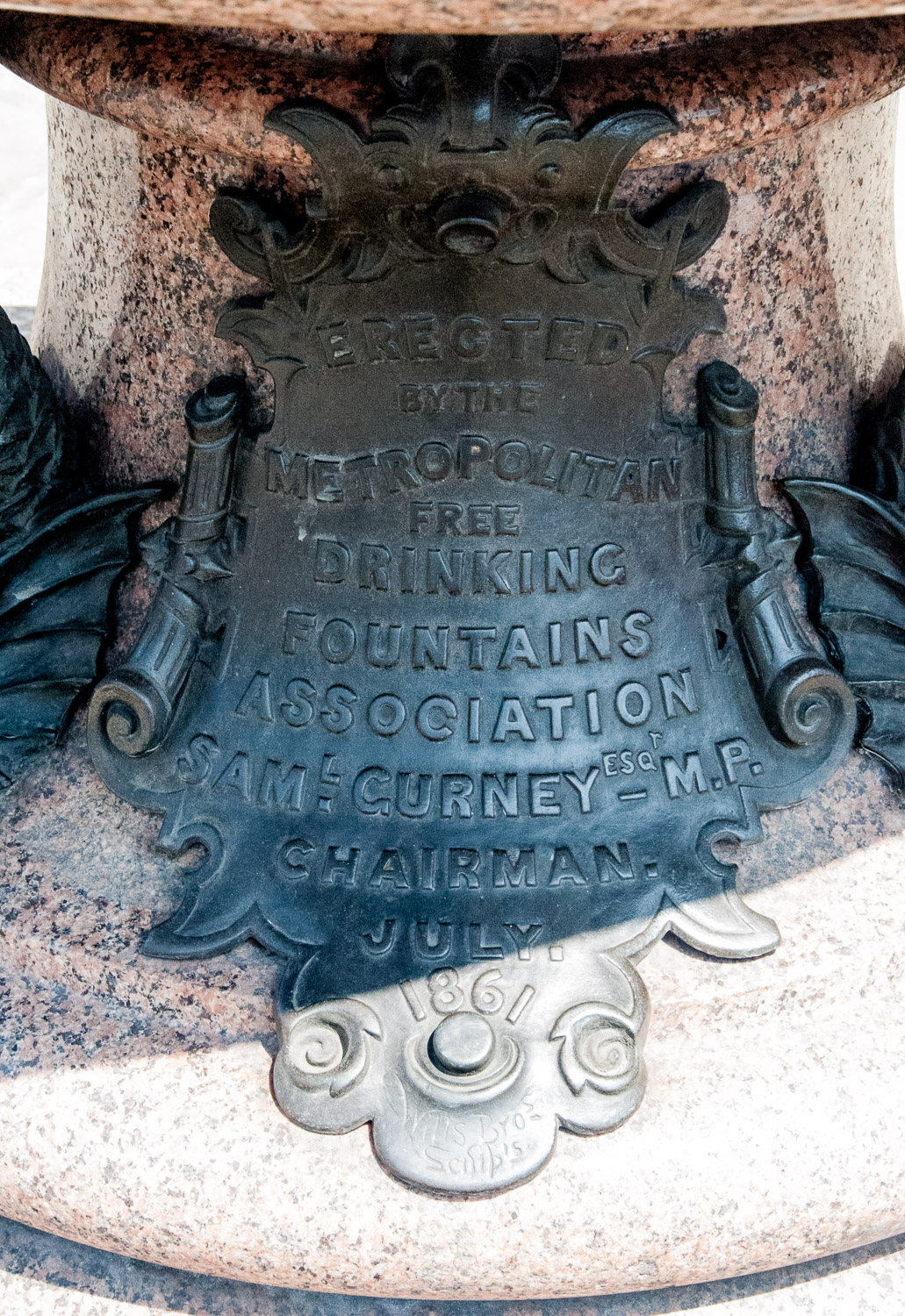
Just after you turn left outside the station you will see one of my favourite water fountains, recently liberated from behind hoardings and nicely restored.

Sculptor Wills Bros.

The pretty lady represents ‘Temperance’ and she originally stood outside the Royal Exchange.

The fountain was inaugurated by Samuel Gurney, MP, the Chairman of the Metropolitan Free Drinking Fountains Association, on 27 July 1861 and you can read more about him, and the Association, in my earlier blog Philanthropic Fountains.

A shop, a tree and a poem

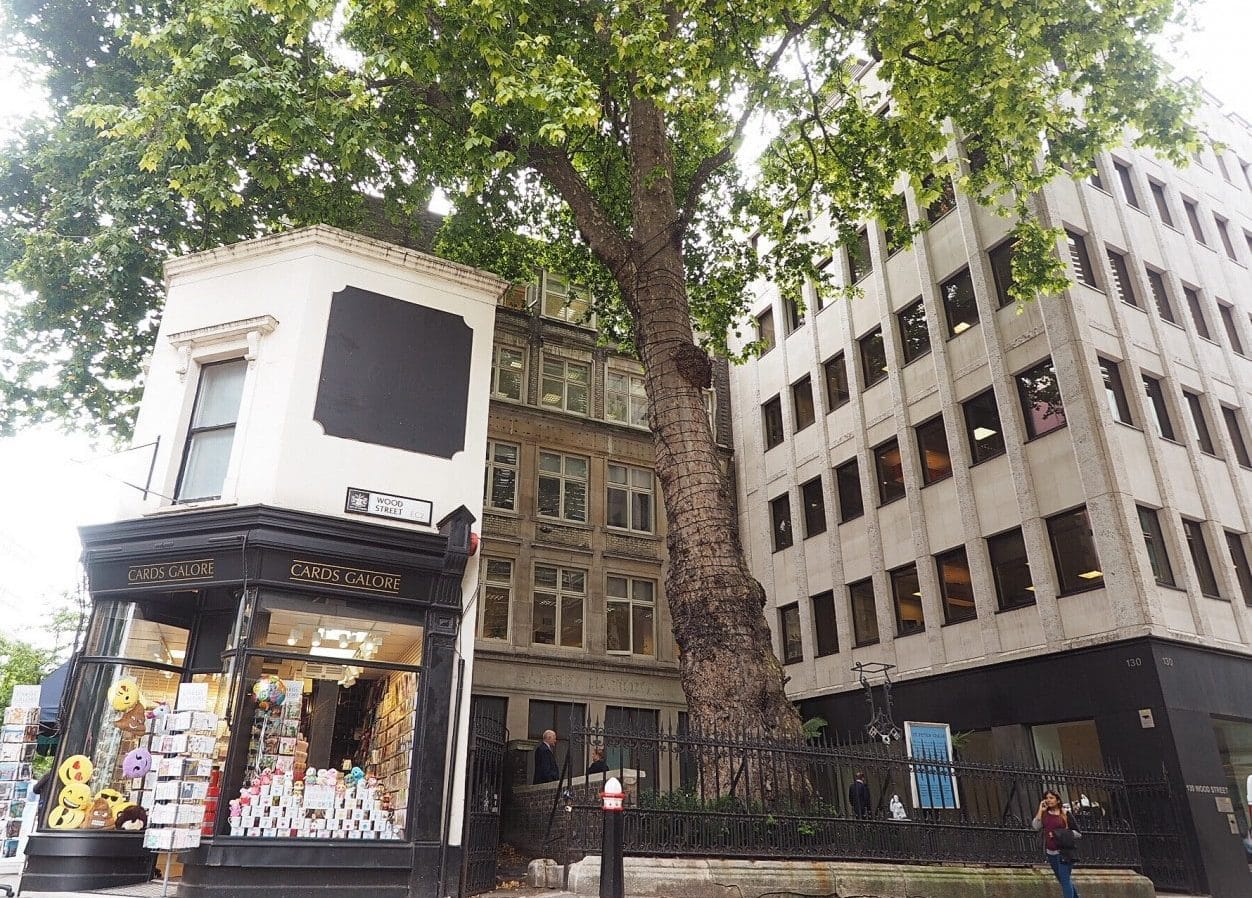
Although it doesn’t look it at first glance, the corner of Wood Street and Cheapside is a little historical treasure trove. Here it is today, a card shop, a tree and a bit of open space – and all offer a fascinating sense of continuity with the City’s past.

Copyright Katie at ‘Look up London’

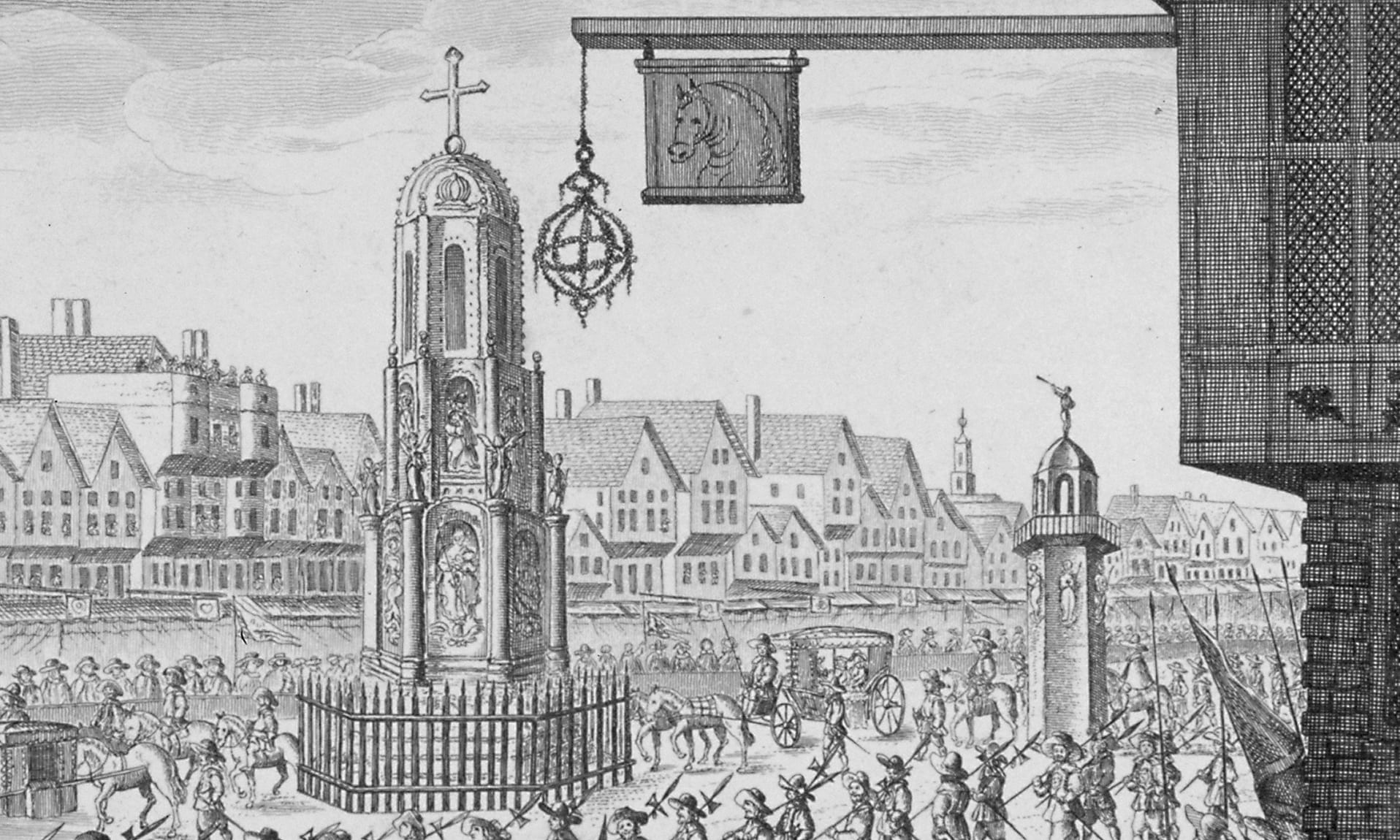
Cheapside had originally been known as West Chepe to distinguish it from East Chepe at the other end of the City and the name comes from the Saxon Ceap, meaning market. For centuries it was a scene of medieval pageantry, being wide enough for horse racing and jousts. It was also a place of grisly executions and the punishment of the likes of errant tradesmen and apprentices, usually utilising the permanent pillory and stocks. Facing Wood Street was the Eleanor Cross, one of a dozen lavish monuments erected by Edward I between 1291 and 1294, in memory of where the coffin of his wife Eleanor of Castile rested overnight as her body was transported to London.

The Cheapside Cross, with the Great Conduit to the right of it. Illustration: Guildhall Library & Art Gallery/Heritage Images/Getty

Before its demolition in 1643, the Cross was adjacent to a conduit, one of three providing fresh water piped from the River Tyburn, giving the citizens of London an alternative to the foul water from the wells and the Thames. It was the custom, on days of celebration, for the conduits to run with claret. The historian Bernard Ash observed that it was …

‘Claret undoubtedly as coarse and bloody as the mob which drank it’.

By the beginning of 1666 the street was dominated by traders: mercers, drapers, haberdashers, furriers and also Cheapside’s ‘greatest treasure’, the goldsmiths. Most of the messy, smelly trades had migrated to London’s rim.

As the Great Fire fire spread, people dug desperately into the earth to puncture the conduit’s water supply, hoping the water might quench the flames – in vain – and the Great Conduit itself was razed to the ground along with Cheapside on Tuesday 4 September 1666. A post-fire visitor declared in amazement …

‘You may stand in Cheapside and see the Thames!’

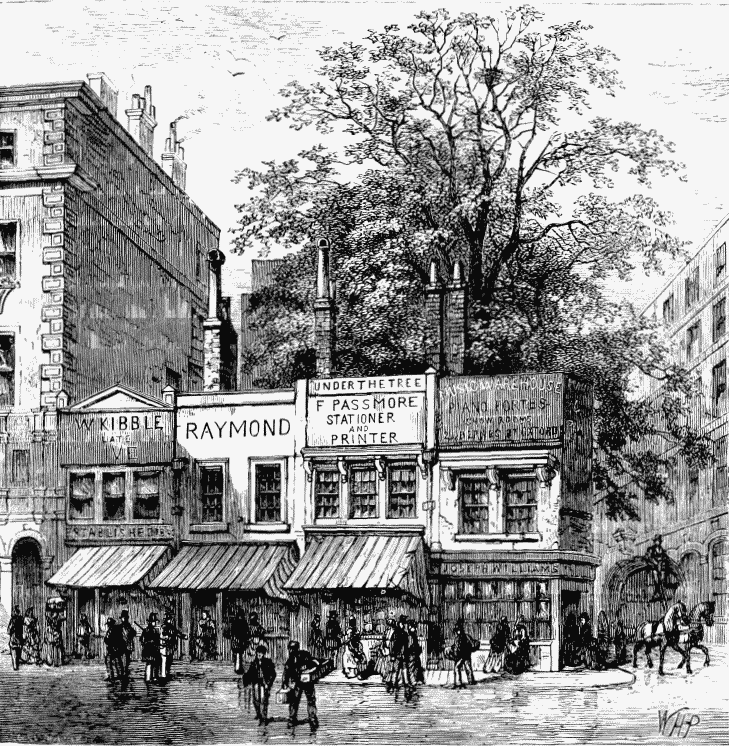
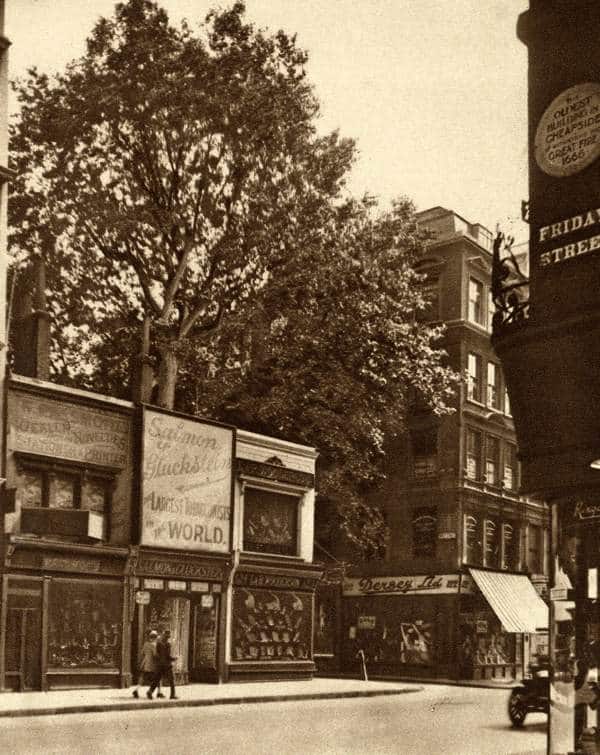
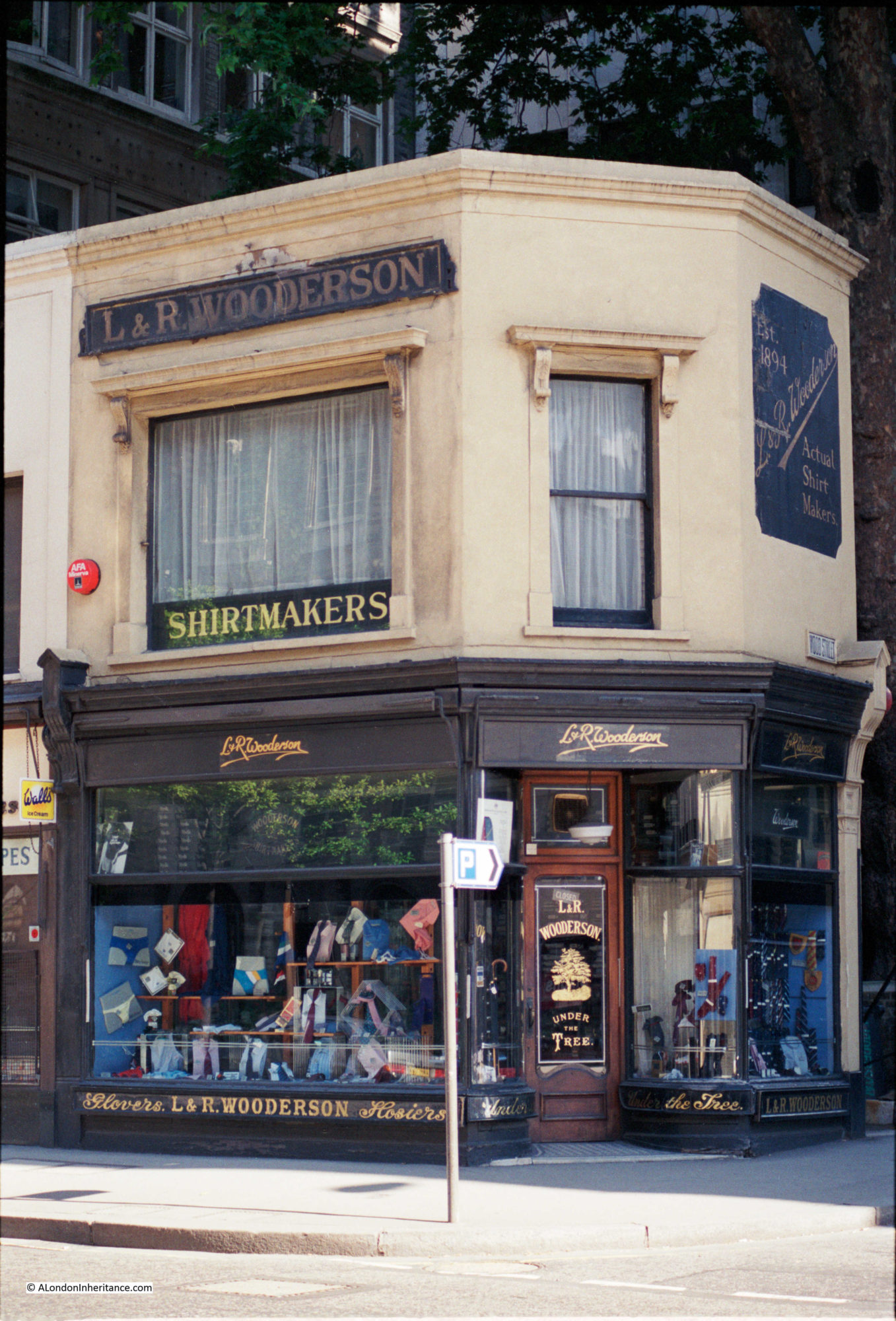
I would like to start my story with the little shop on the corner, which I have been tracking through time …

An anonymous drawing from the 1860s.

The 1920s – From ‘Spitalfields Life’ – pictures selected from the three volumes of ‘Wonderful London’ edited by St John Adcock and produced by The Fleetway House in the nineteen-twenties.

As I remember it in the 1970s through to the late 1990s. Sadly the lovely glass door engraved with the words ‘L R Woderson under the Tree’ has disappeared and been replaced with plain glass and a security grille.

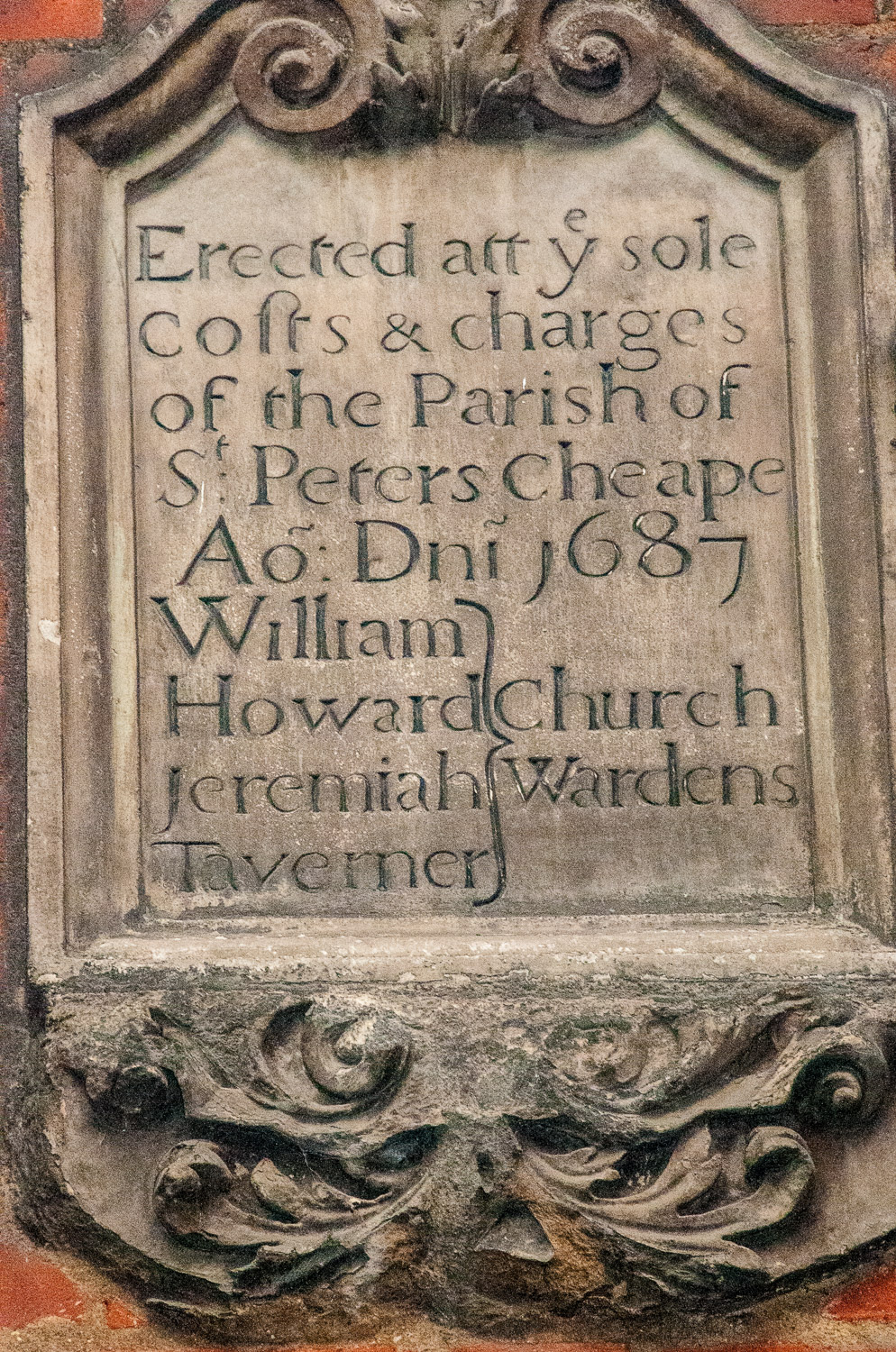
The rebuilding of the City after the Great Fire took over forty years, but the little shop on Cheapside, along with its three neighbours to the west, were some of the earliest new structures to be built as the City recovered. The site is small and each of the shops in the row consists of a single storey above and a box front below. According to Peter Ackroyd, in his London, the Biography, many trades have operated there since the stores were built in 1687. These included silver-sellers, wig-makers, law stationers, pickle- and sauce-sellers, fruiterers, florists and, as can be seen above, shirt-makers. The shop now sells greetings cards.

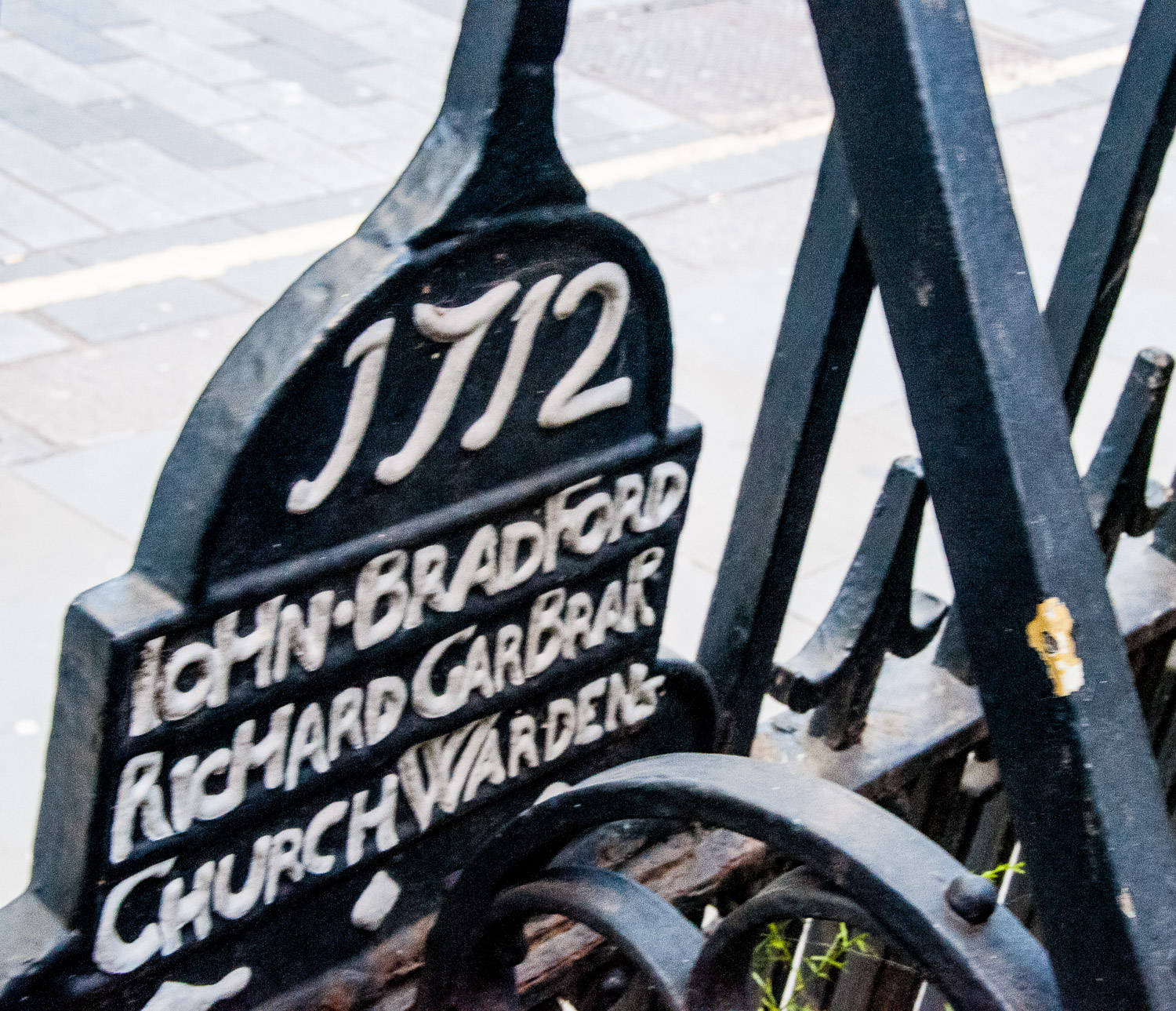
The little garden at the back of the shop used to be the churchyard of St Peter Westcheap (also known as St Peter Cheap) which was destroyed in the Great Fire and not rebuilt. Three gravestones survive as do the railings which date from 1712.

The railings and the names of the Churchwardens who probably raised the money for them.

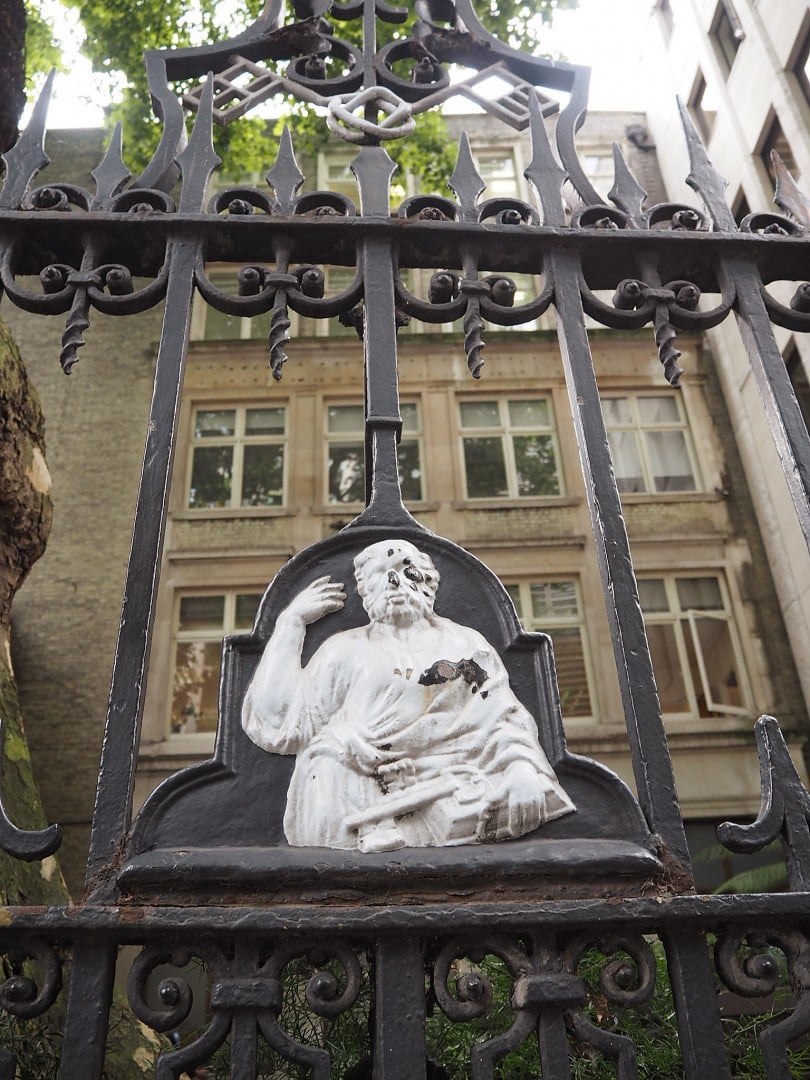
The railings incorporate an image of St Peter. In his lap and above his head are the Keys to the Kingdom of Heaven.

The plaque in the churchyard attached to the Cheapside shop’s northern wall confirms the age of the building …

And finally to the magnificent London Plane tree that you can see in most of the pictures. It stands 70 feet high and is protected by a City ordinance which also limits the height of the shops.

No one knows precisely how old it is but what we do know is that it was there in 1797 when its presence inspired the poet Wordsworth to compose a poem ‘where the natural world breaks through Cheapside in visionary splendour’. The poem, The Reverie of Poor Susan, records the awakened childhood memories of a country girl now working in London, possibly as a servant. I think it is rather sad. An excerpt is displayed in the churchyard, but here is the complete version:

At the corner of Wood-Street, when day-light appears,
There’s a Thrush that sings loud, it has sung for three years.
Poor Susan has pass’d by the spot and has heard
In the silence of morning the song of the bird.

‘Tis a note of enchantment; what ails her? She sees
A mountain ascending, a vision of trees;
Bright volumes of vapour through Lothbury glide,
And a river flows on through the vale of Cheapside.

Green pastures she views in the midst of the dale,
Down which she so often has tripp’d with her pail,
And a single small cottage, a nest like a dove’s,
The only one dwelling on earth that she loves.

She looks, and her heart is in Heaven, but they fade,
The mist and the river, the hill and the shade;
The stream will not flow, and the hill will not rise,
And the colours have all pass’d away from her eyes.

As Ackroyd declares, in his unique, poetic style …

Everything about this corner of Wood Street suggests continuity … on every level, human, social, natural and communal.

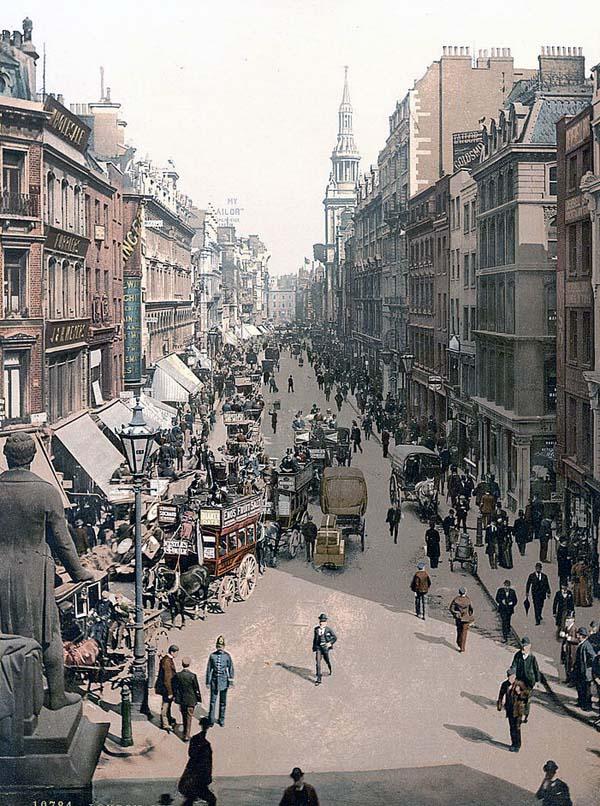
I thought this picture was worth including. Sir Robert Peel looks east down Cheapside around the turn of the 20th century (and a uniformed ‘Peeler’ stands beneath the lamp post). The shops gradually disappeared for a while as commerce took over but now they are back in abundance, especially with the new development at New Change.

Sir Robert was moved in 1933 to reduce traffic congestion. He is now outside the Peel Centre in Barnet (more familiarly known as Hendon Police College).


Page 8 of 9

Powered by WordPress & Theme by Anders Norén