Walking the City of London

Category: Water

The Romans in London – Mithras, Walbrook and The Games

My two Roman London blogs this month are in celebration of the opening of the London Mithraeum in Bloomberg Space, Walbrook, which I enjoyed tremendously when I visited last week.

If you want to immerse yourself more completely in the Mithras Temple story, you might like to call in to the Museum of London beforehand and view the treasures there from the Walbrook excavation. I have put together a small selection.

There is this head of Mithras …
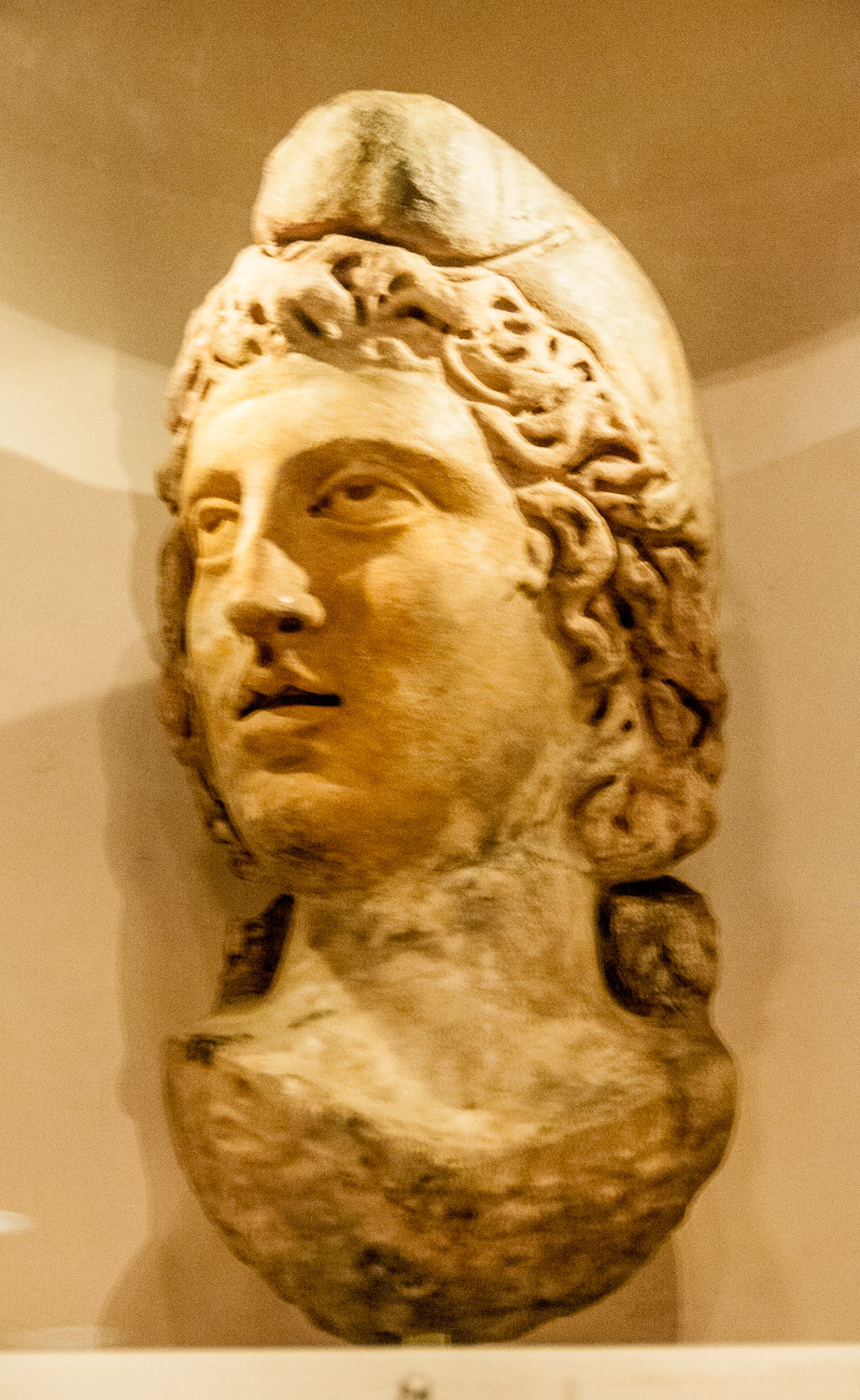
Head of Mithras, marble, late 2nd century

He is shown as a handsome youth, the head probaly part of a large sculpture forming a focal point at the apse end of the Temple.

Serapis, the Egyptian God of the Underworld, was also represented …
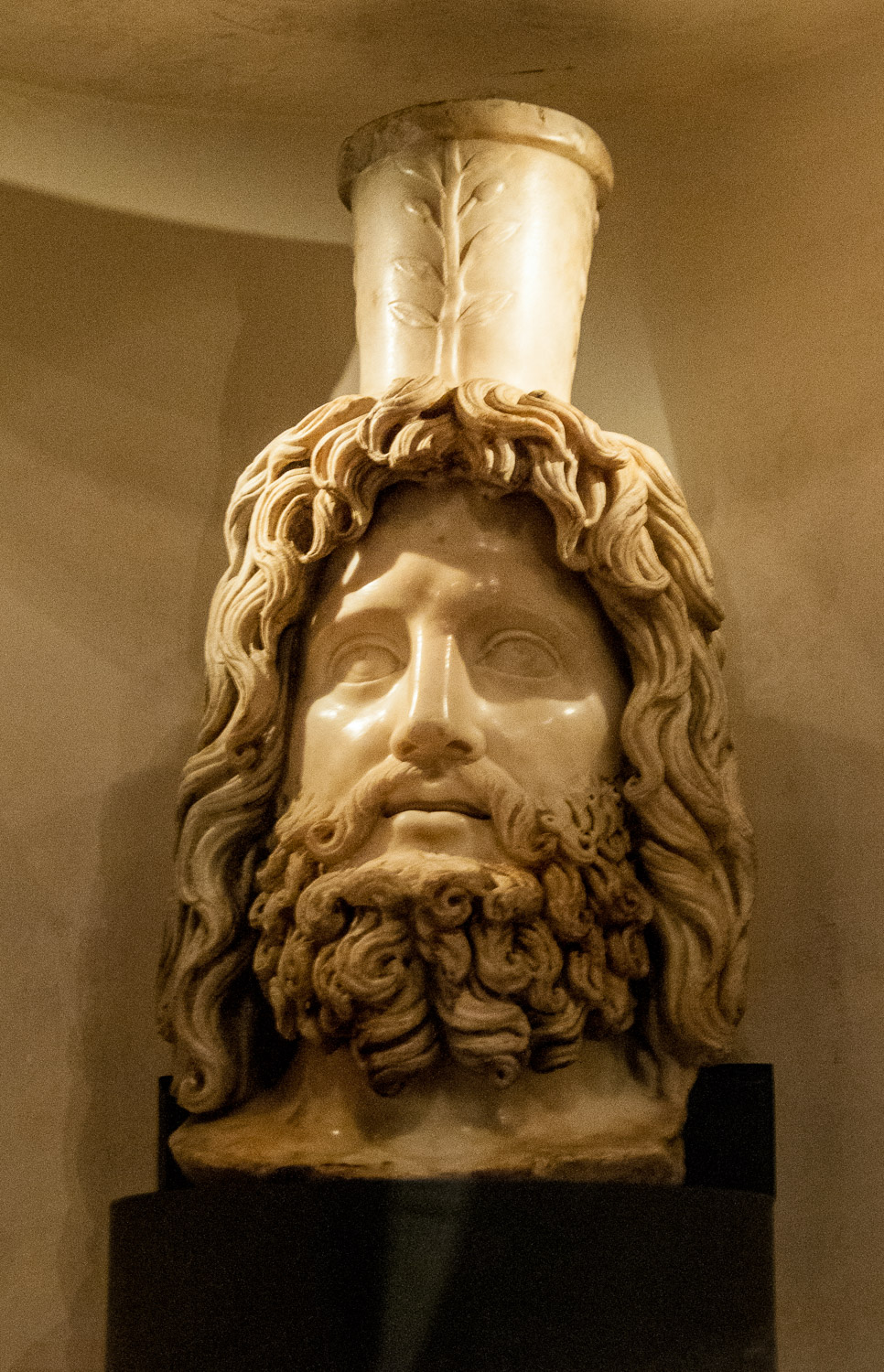
Head of Serapis, marble, late 2nd – early 3rd century

He carries a corn measure on his head symbolising the wealth and fertility of the earth.

And Minerva, the Roman Goddess of Wisdom …
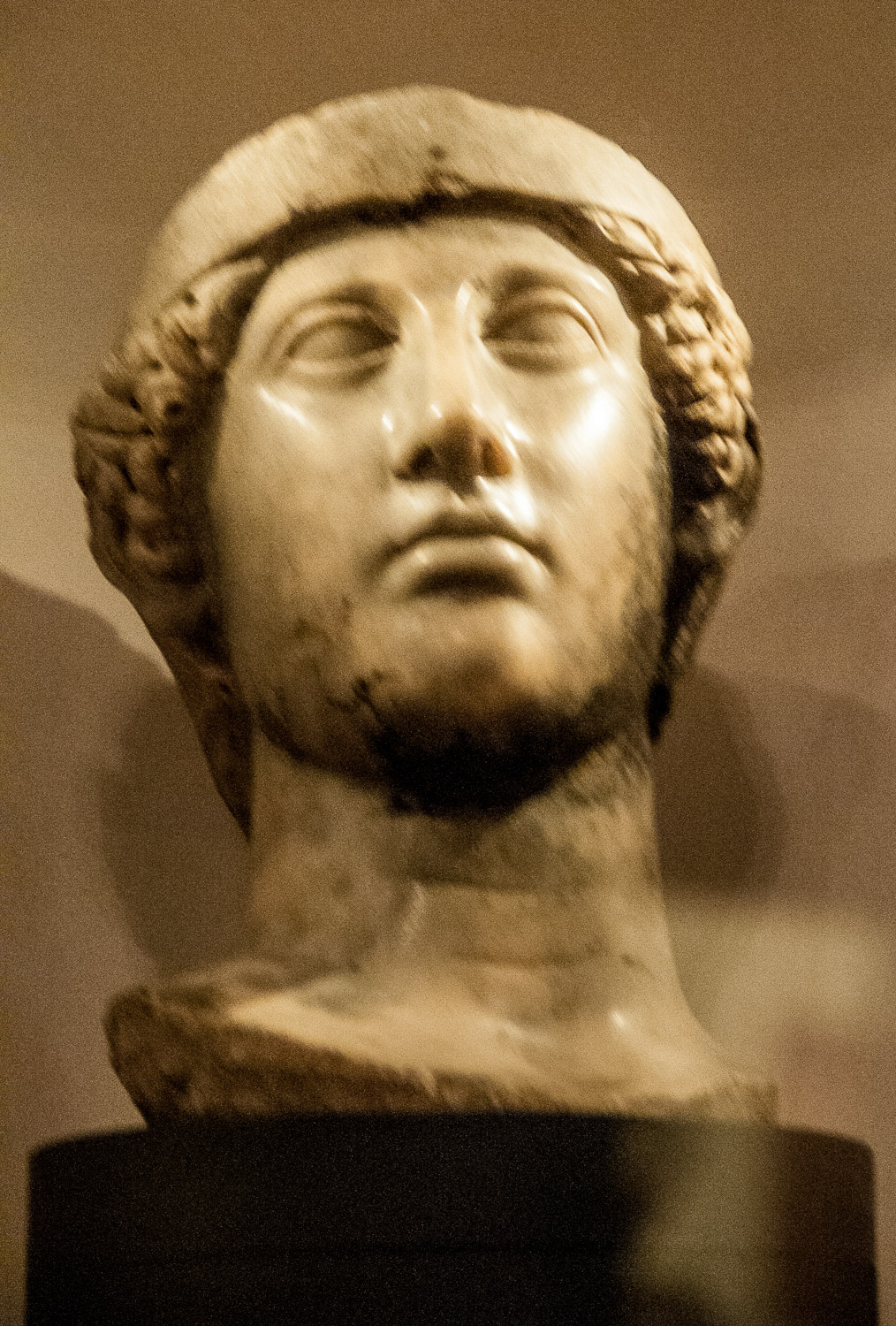
Head of Minerva, marble, early 2nd century, possibly AD 130

Again, the head was probably originally part of a larger statue.

So now on to the Mithraeum itself at 12 Walbrook. Entry is free but you must book a time slot in advance using the website.

The first thing you see is this stunning tapestry by Isabel Nolan …
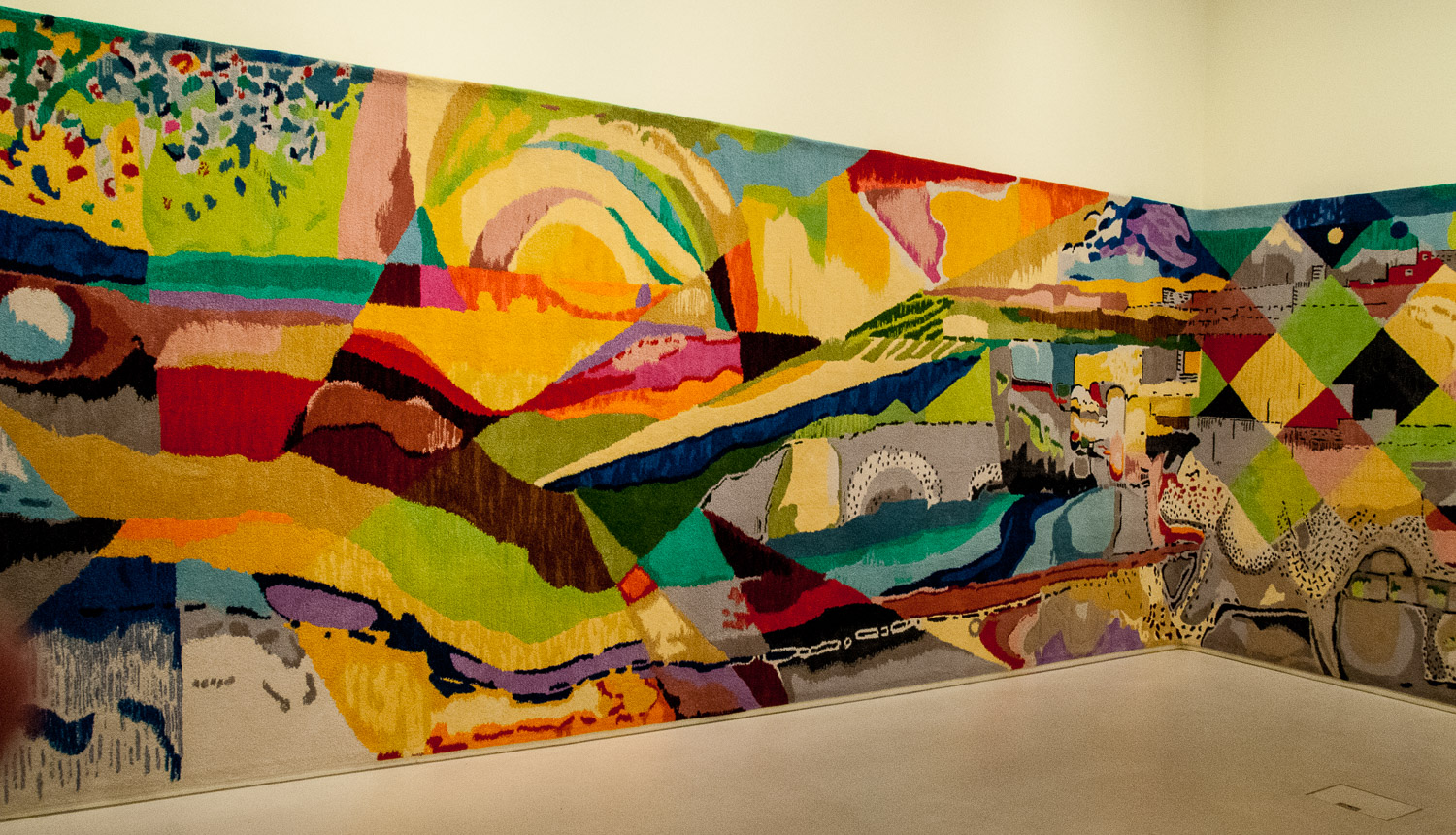
Another View from Nowhen, 2017

There are helpful guides ready, and very willing, to introduce you to the Mithraeum, explain the tapestry and an accompanying sculpture, and hand you an excellent printed guide. There is a well organised display of Roman artefacts which can be explored using your own mobile device, a tablet that they provide, or just by reading the labels. Unfortunately I couldn’t get a good enough photograph of these for the blog – please take my word for it that they are fascinating.

Then you are ready to descend through time, seven metres or so, from modern London to the very last days of the Romans in Britain, about AD 410.
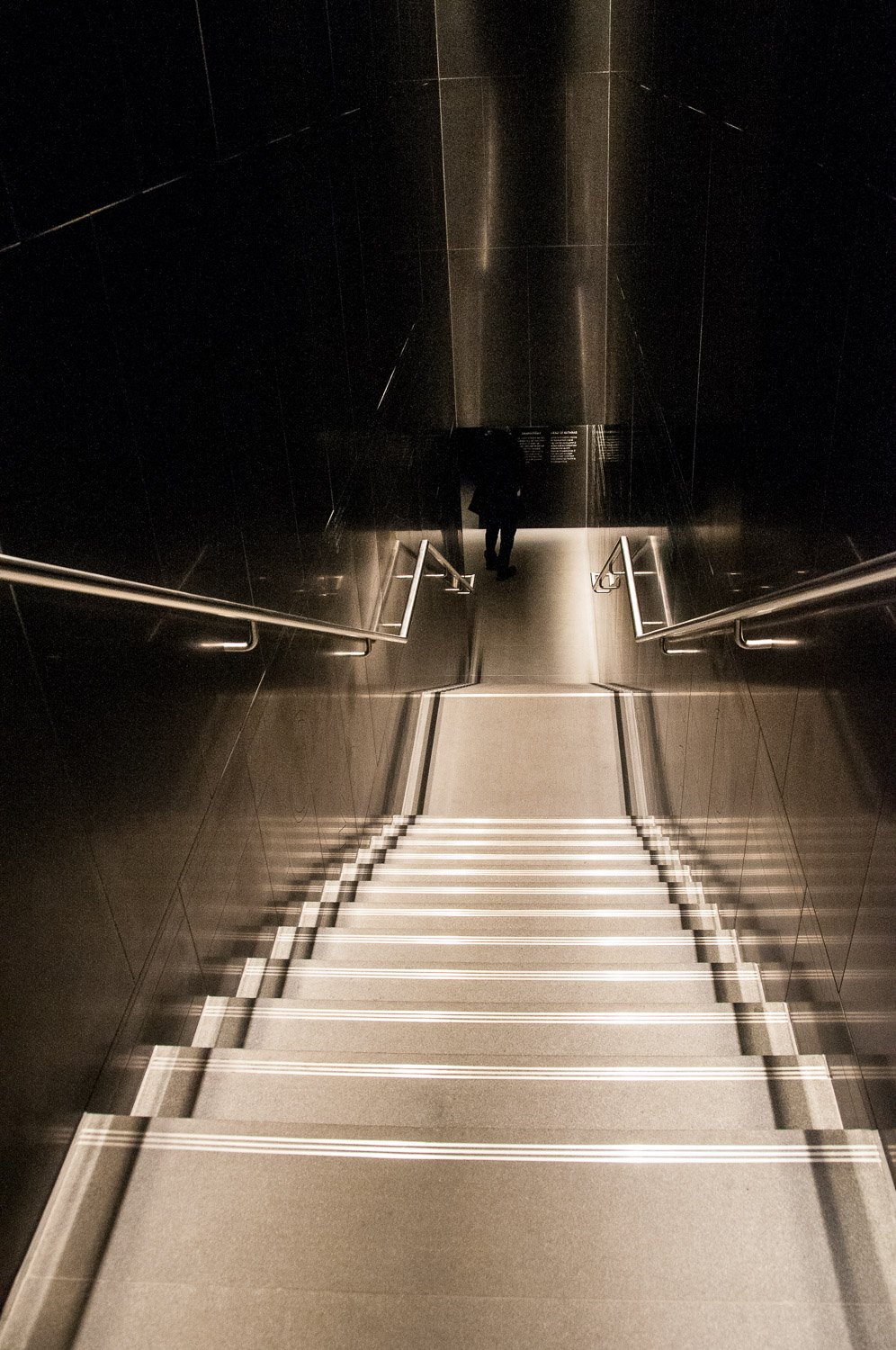
Various levels of history are inscribed on the wall as you descend – there is also step-free access

At mezzanine level there is a further exhibition consisting of a reproduction of artefacts from the site including, of course, the head of Mithras, and a helpful commentary.

You then descend further to see the Temple itself. Initially it is dark and shrouded in mist but, as this gradually clears to the sound of evocative chants, you will see an accurate reconstruction of the ruin as it was on the last day of excavation in October 1954.
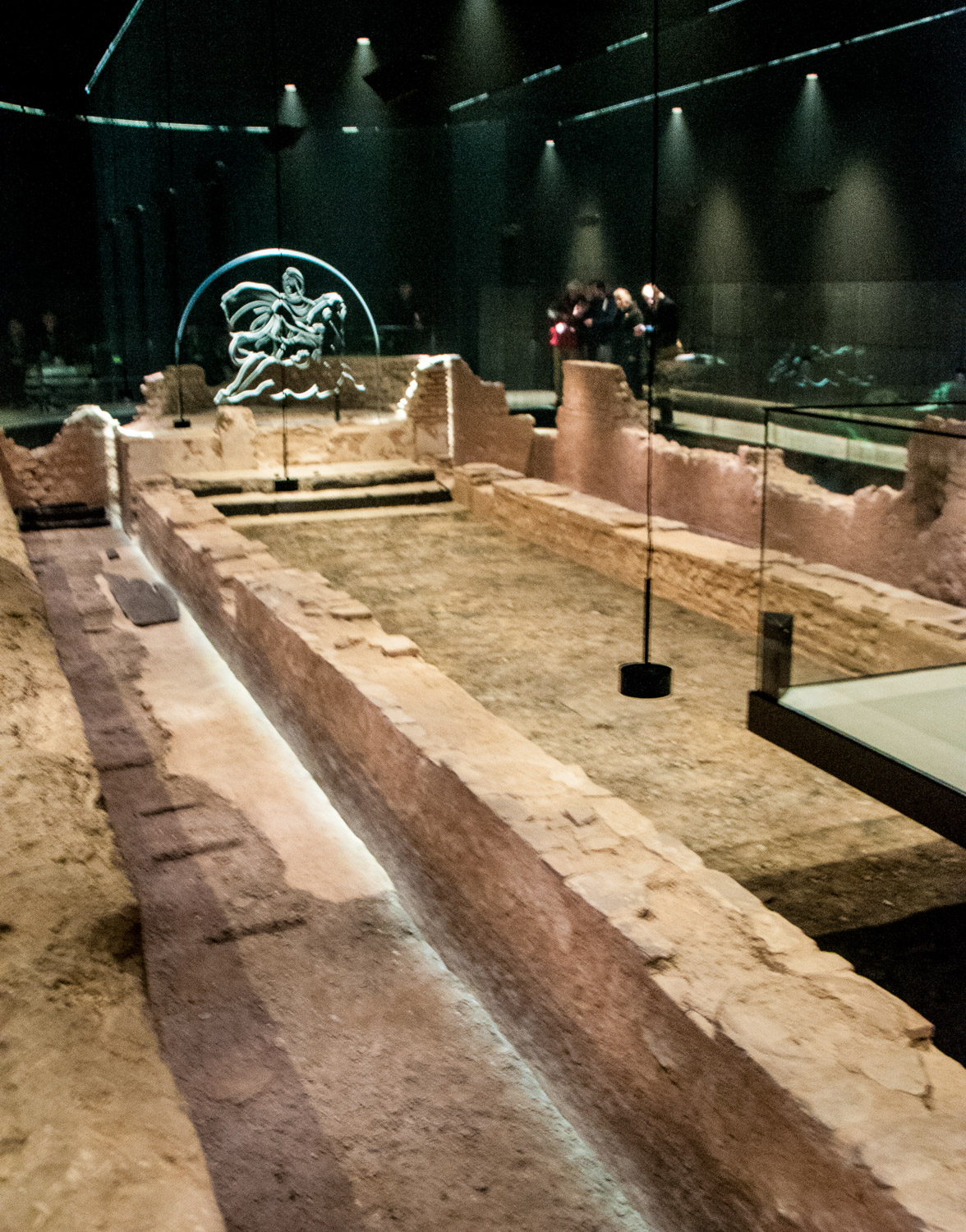
All the stone that you see and most of the bricks are from the original structure
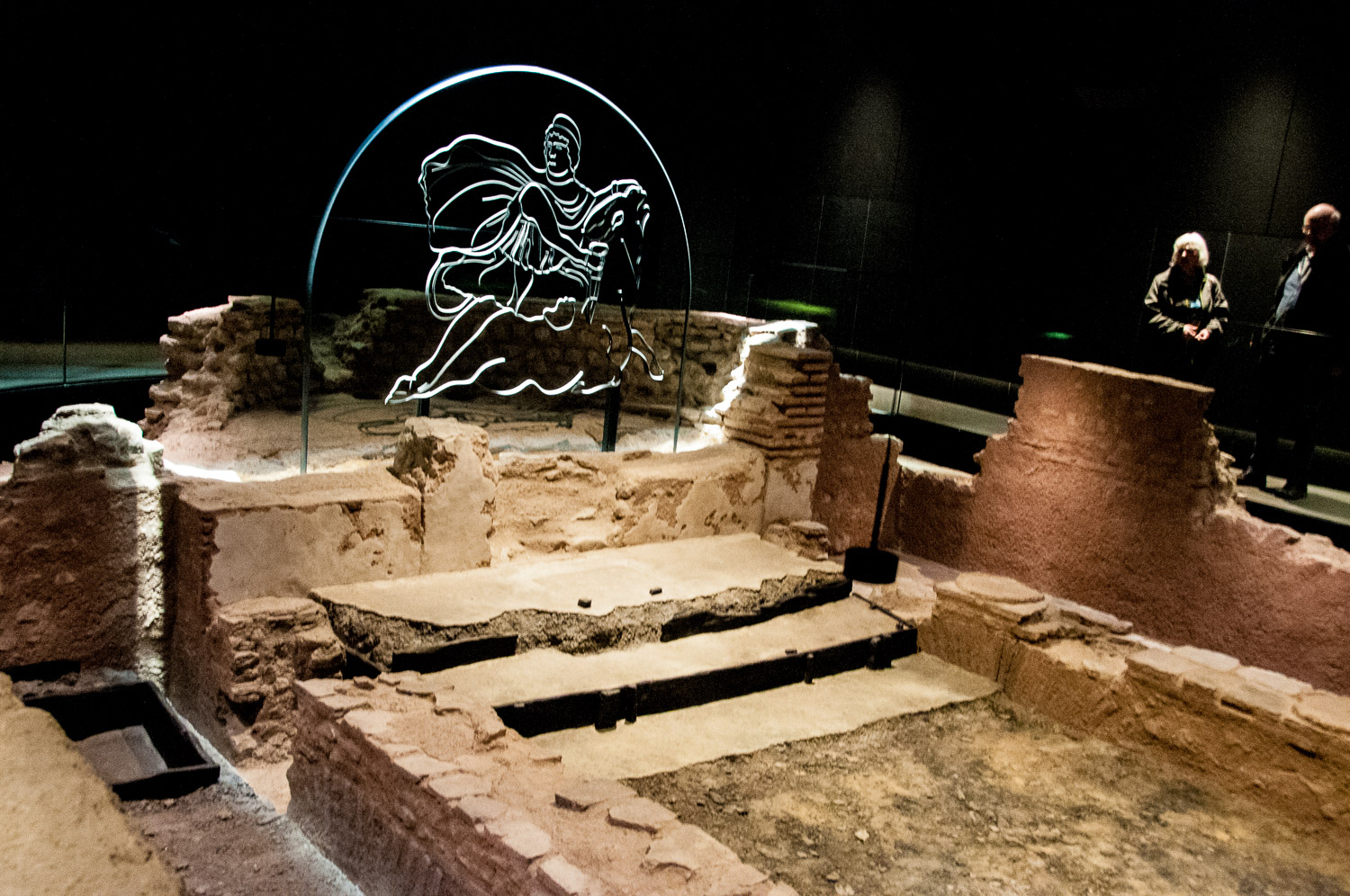
The central icon of the cult is Mithras killing a bull

All I can say is ‘well done Bloomberg’.

The Walbrook stream played a very important part in the establishment of Roman London. Originating in what is now Finsbury Park, it carried fresh water in to the walled City and carried waste away to the River Thames. As the City developed it became imprisoned underground.
The stream lives on in the name of the street

The area has been difficult to access lately because of construction work, but is now a new open space and I took the opportunity to explore.

What a wonderful surprise! It looks like the Walbrook is flowing again above ground through the City…
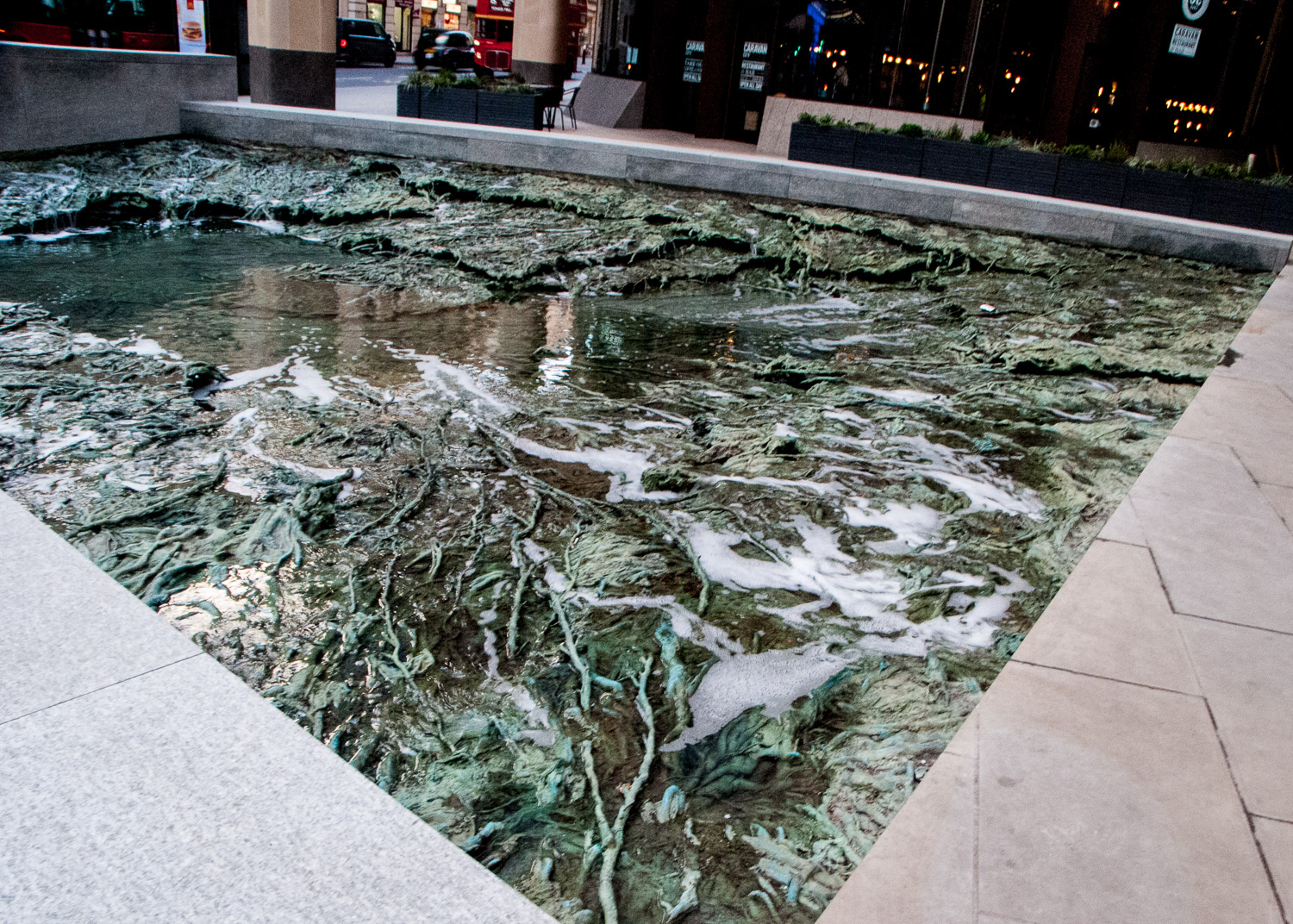
Alongside Cannon Street
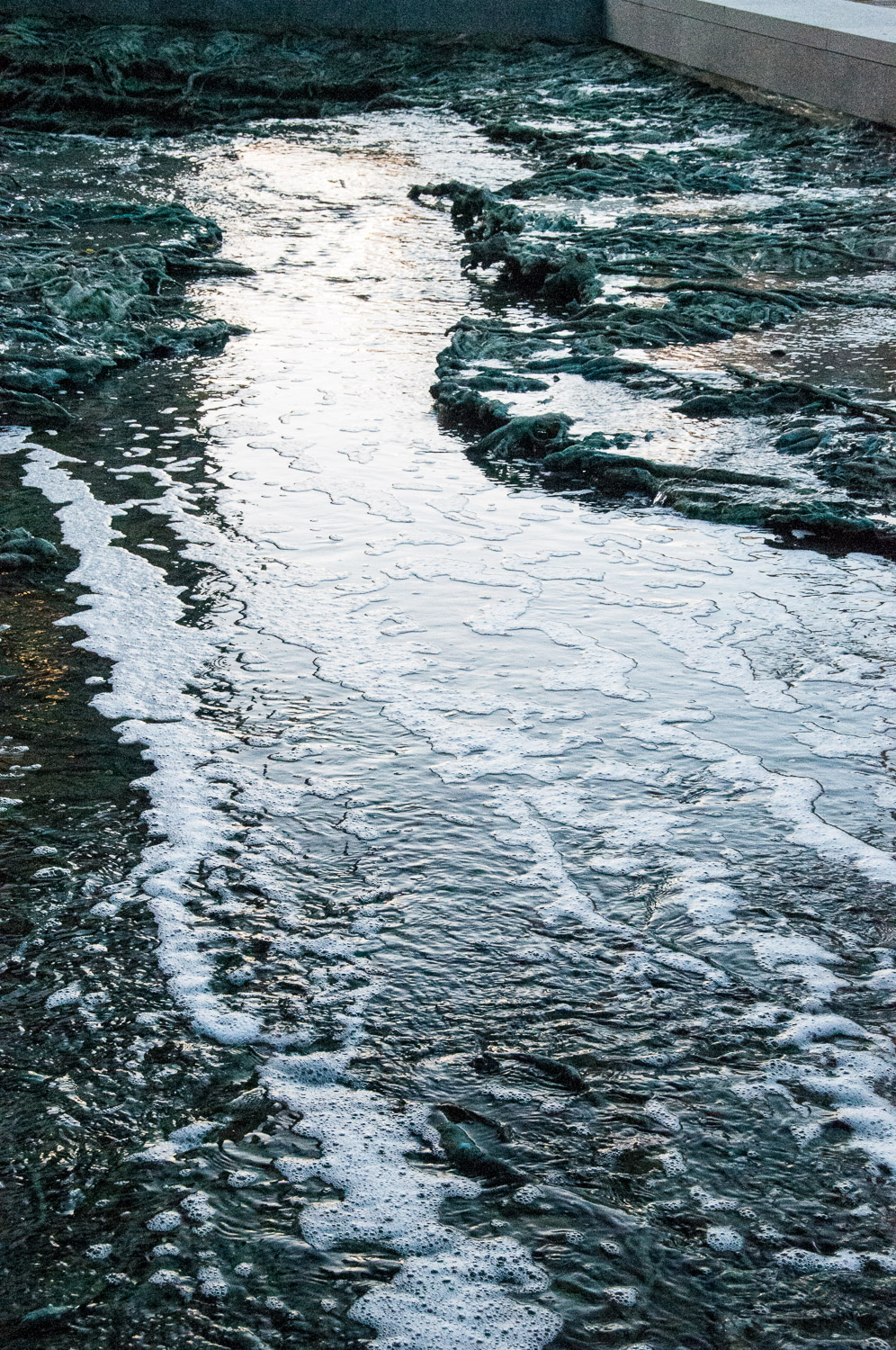
Parallel to Queen Victoria Street

Entitled Forgotten Streams, and cast in bronze, the Spanish artist Cristina Iglesias took as her inspiration the ancient Walbrook itself. It looks very authentic and quite beautiful.

And finally, to complete a Roman London experience, you might want to visit the Guildhall Art Gallery, in the lower level of which you will find Roman London’s Amphitheatre. An 80 metre wide curve of dark stone in Guildhall Yard marks out the area of the Amphitheatre, the site of the famous Roman ‘Games’ …
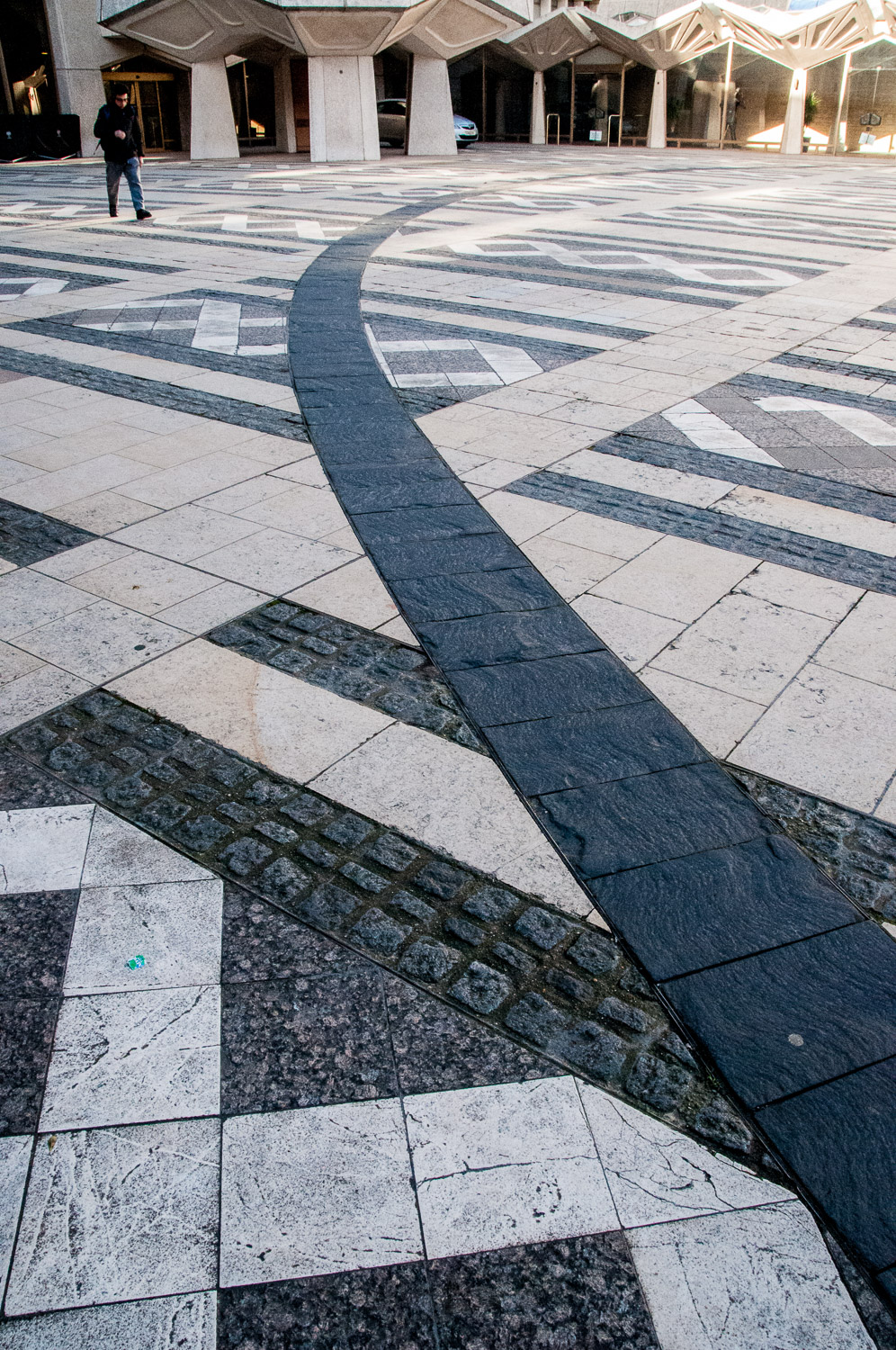
An outline of what existed about 8 metres below
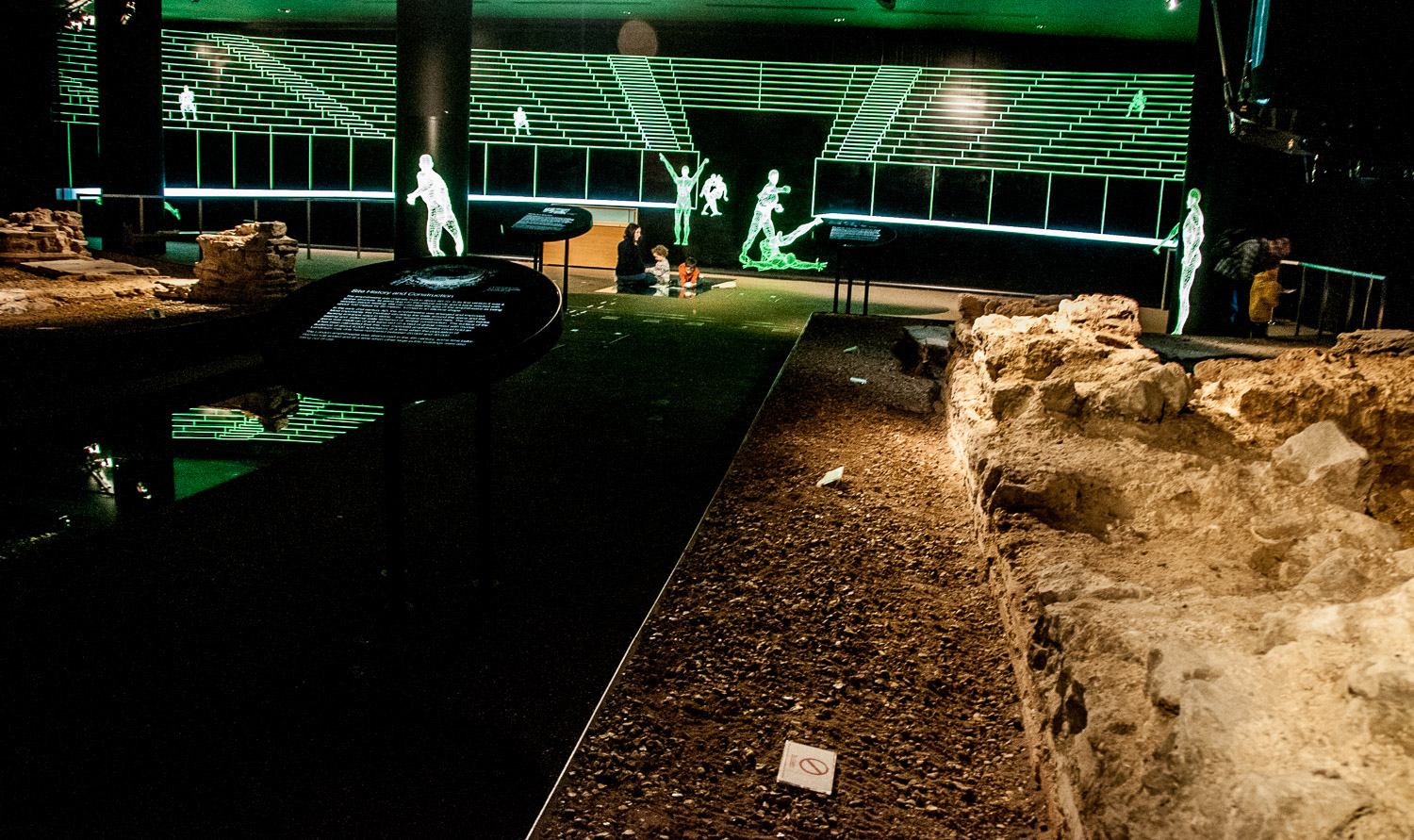
The site of the Amphitheatre

Once inside you will see the remains of the original walls, the drainage system, and a rather impressive digital projection that fills in the gaps in the ruins.


Philanthropic Fountains

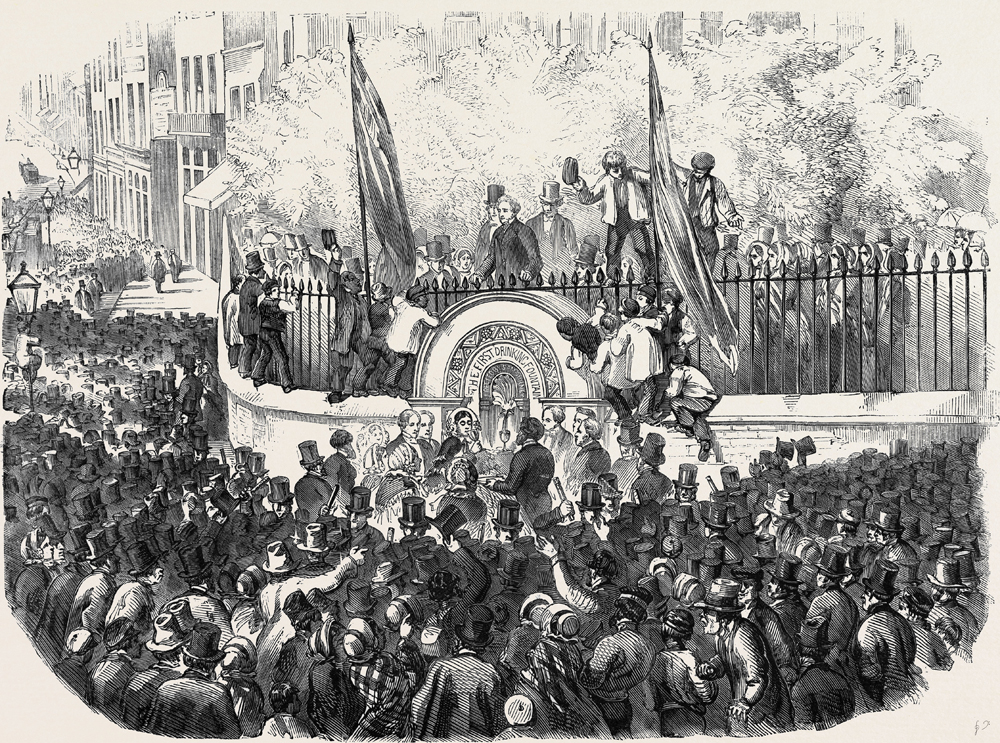
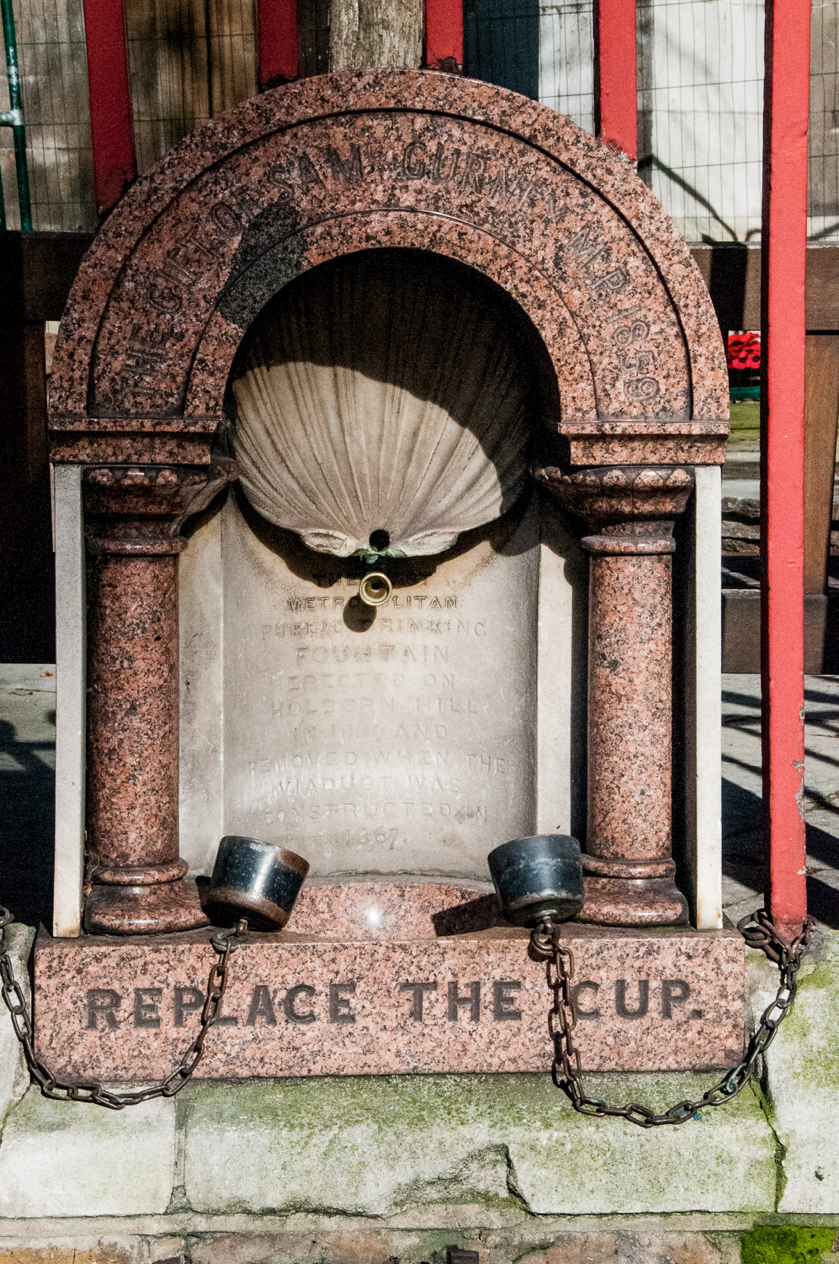
It was a nice sunny day when I stood in front of this modest little drinking fountain outside St Sepulchre’s Church on Snow Hill near Holborn Viaduct and recalled a picture of the scene on 20th April 1859 when it was unveiled as the first public drinking fountain in London.

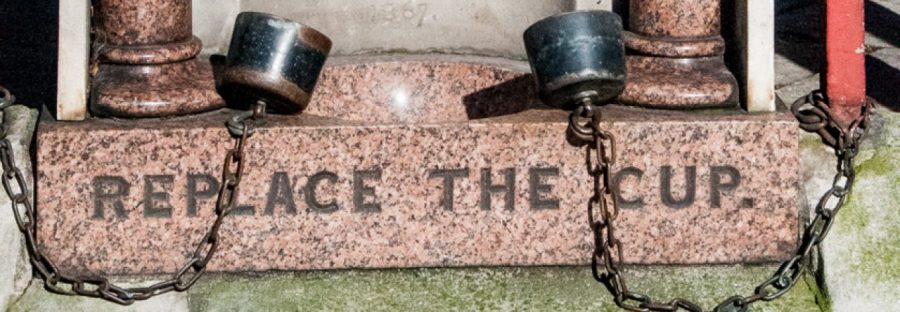
A stern reminder to ‘Replace the Cup’ common on many fountains

To me the fountain represents the coming together of some of the great influences on people’s lives in the 19th Century – the philanthropic initiatives of the Quakers, the gradual recognition that access to clean water was essential if London was to continue to flourish, and the temperance and teetotalism movements striving to combat drunkenness.

In the early 19th century water had become a valuable commodity and by 1860 the supply of drinking water to London was controlled by no fewer than eight private companies. It was generally acknowledged that its quality was unsatisfactory to say the least, as outbreaks of cholera earlier in the century had demonstrated. This, combined with a shortage of availability, contributed to a heavy consumption of beer and spirits, particularly among poorer citizens and the ‘labouring classes’ whose workplace was the London streets. Making available free, safe water was to enable a common cause to be established between those seeking to improve hygiene and reduce disease and the anti-alcohol campaigners.

If you look at the picture of the fountain, you might just be able to make out the inscription on the arch above the scallop shell which reads ‘The Gift of Sam Gurney MP 1859’. Gurney was a Quaker, and although Quakers numbered less than 14,000 people in Britain in 1861 their influence in business and philanthropy was disproportionately great – think, for example, of Cadbury, Fry, Barclay and Rowntree. They believed that good works were a sign of man’s sanctification and their economic and religious philosophies ran parallel to one another.

Gurney was present in spring 1859 for the inauguration of The Metropolitan Free Drinking Fountain Association. At the meeting the unveiling in two weeks time of his new fountain was announced along with the intention that it would be the first of many. The Earl of Albermarle got rather carried away and stated his hopes that the fountains would …

Check those habits of intemperance which caused nine-tenths of the pauperism, three-fourths of the crime, one half of the disease, one-third of the insanity, one-third of the suicide, three-fourths of the general depravity and (amazingly) one-third of the shipwrecks that annually occurred.

The opening of the fountain was an incredibly well attended event …

 Copyright Illustrated London News.

‘The Lady’ newspaper’s view was that the fountains would help by ‘providing an alternative to the public house and the low company found in those establishments’. To demonstrate the water’s purity the inaugural first sip at the opening was taken by a Mrs Wilson – the Archbishop of Canterbury’s daughter, no less – who declared the taste excellent. Just for the removal of doubt, however, a final announcement was made that the fountain was for the special use of the working classes and was committed to their care. Incidentally, Mrs Wilson used a specially engraved silver cup which she was presented with after the ceremony.

Over the next six years 85 fountains were built, most using granite in order to keep the water supply cool. In summer 1865 the Association conducted a twenty-four-hour survey, which produced some very satisfying results. For example, 2,647 drinkers were recorded at the St Sepulchre’s site; at London Bridge more than 3000 people visited and at Bishopsgate an extraordinary 6,666. By 1867 it was estimated that up to 400,000 drinkers a day were using the amenities and by 1875 there were 276 fountains across the capital.

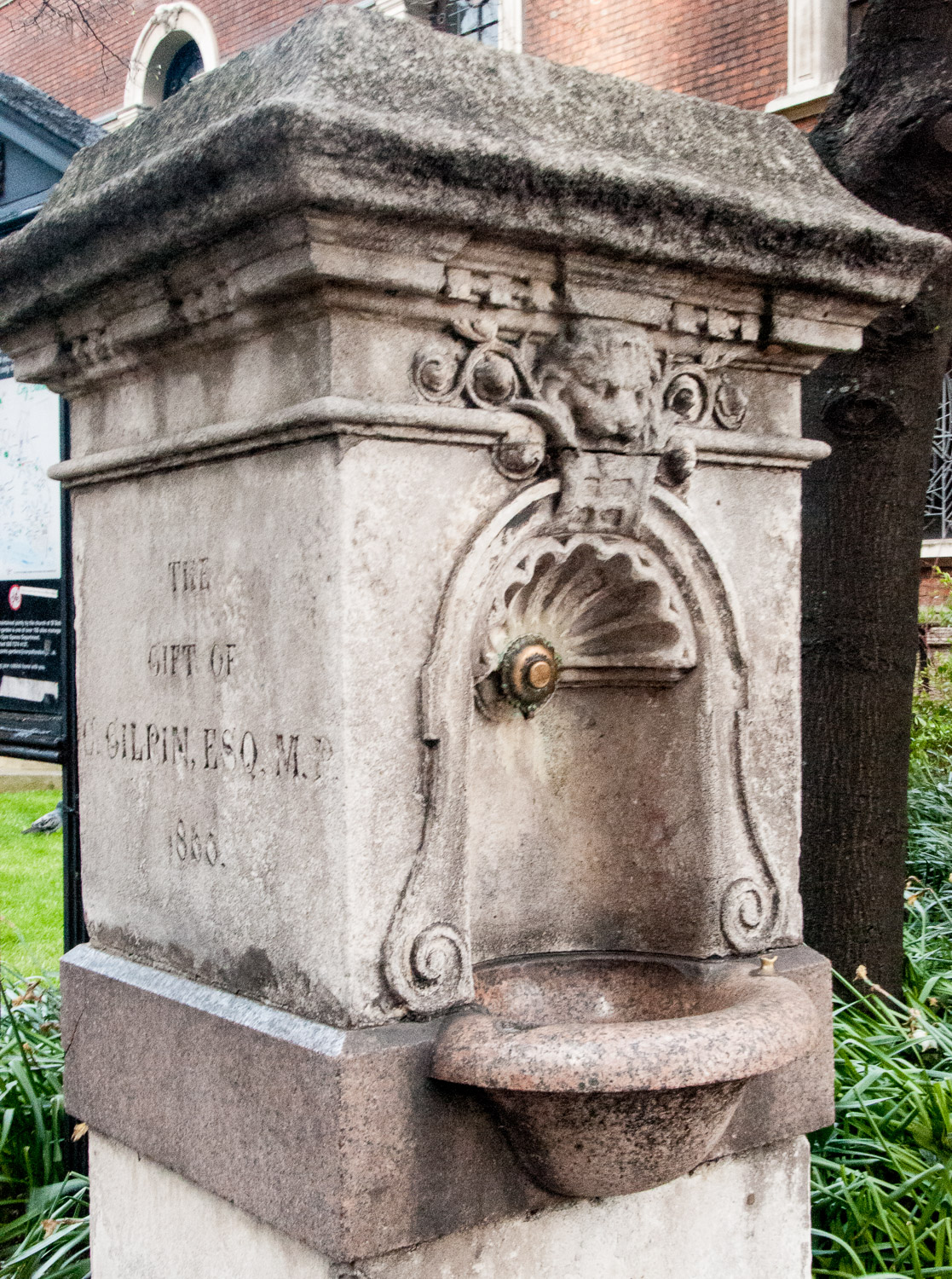
Charles Gilpin was another Quaker whose fountain can still be seen at St Botolph Without Bishopsgate

‘The Gift of C. Gilpin Esq. M.P. 1860’

Getting the fountains built was no easy matter with protracted negotiations often needed with, for example, local vestries, and of course the water companies themselves, who had to be paid for the water used unless they could be persuaded to become donors. Also, water was a precious commodity, and some objected on moral grounds to the wastefulness of the water flowing continuously when the idea of using taps was rejected, given the wear and tear involved. Before the end of its first decade the term ‘free’ in the Association’s title had been recognised as a misnomer and it was dropped. About the same time it elongated its name to the Metropolitan Drinking Fountain and Cattle Trough Association to embrace public water provision for animals. Previously troughs had been sited outside public houses with free use only for patrons or on payment of a fee, as one poetic sign declared:

All that water their horses here
Must pay a penny or have some beer

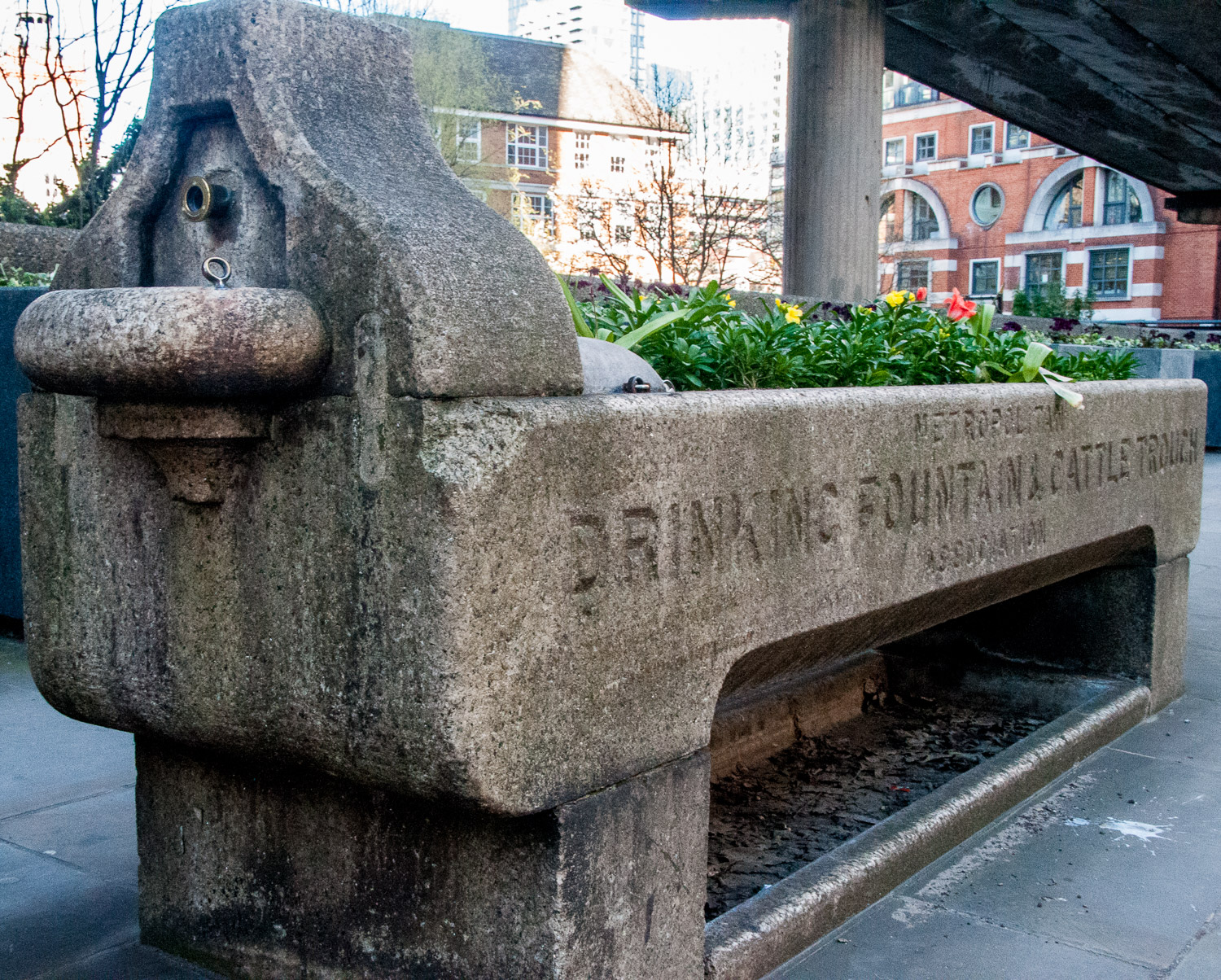
At least one of the horse troughs has survived in the City – although many more can be found around London, usually adapted to accommodate flowers.

Trough and fountain for use by the public, and animals large and small, on London Wall

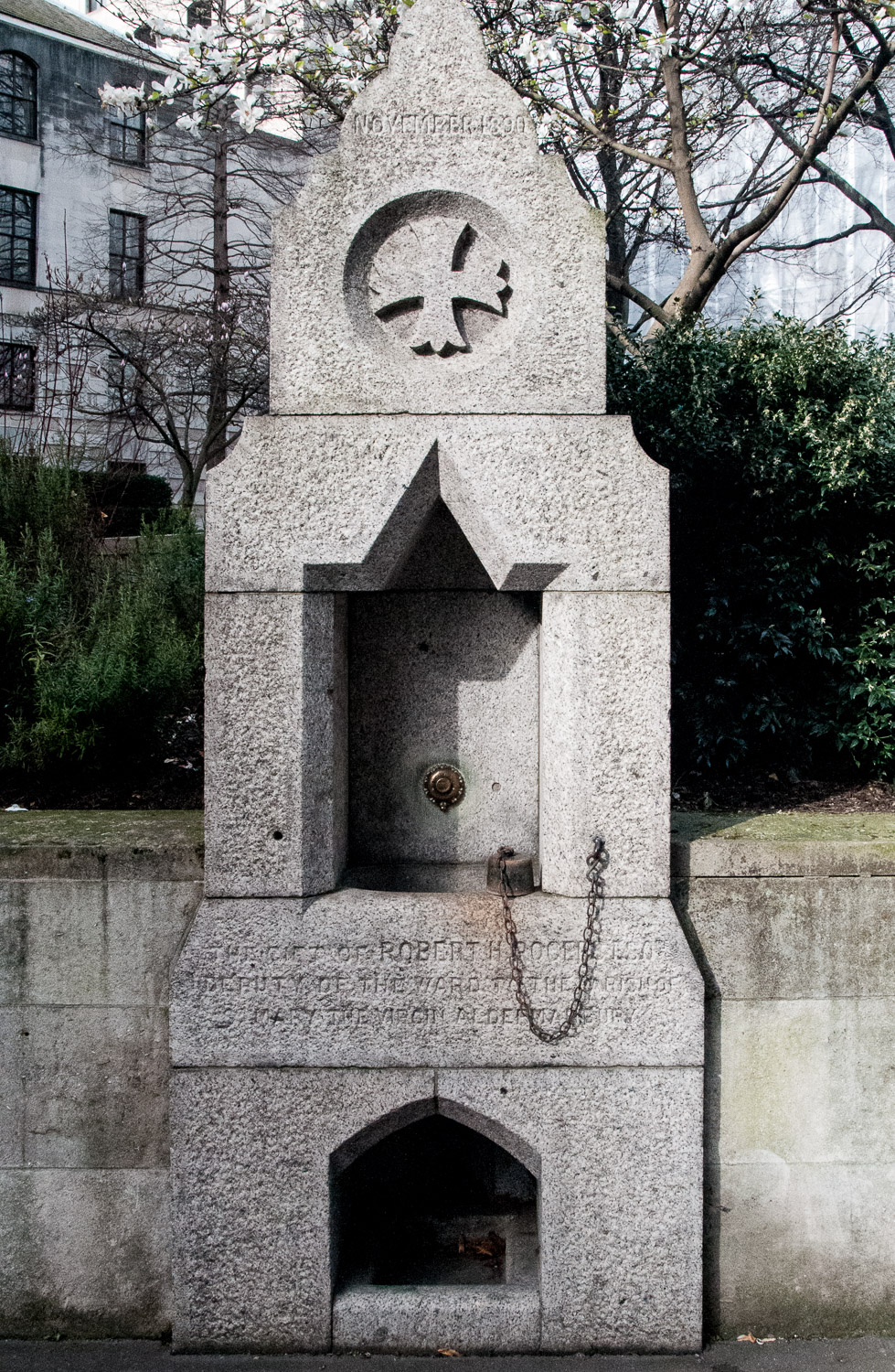
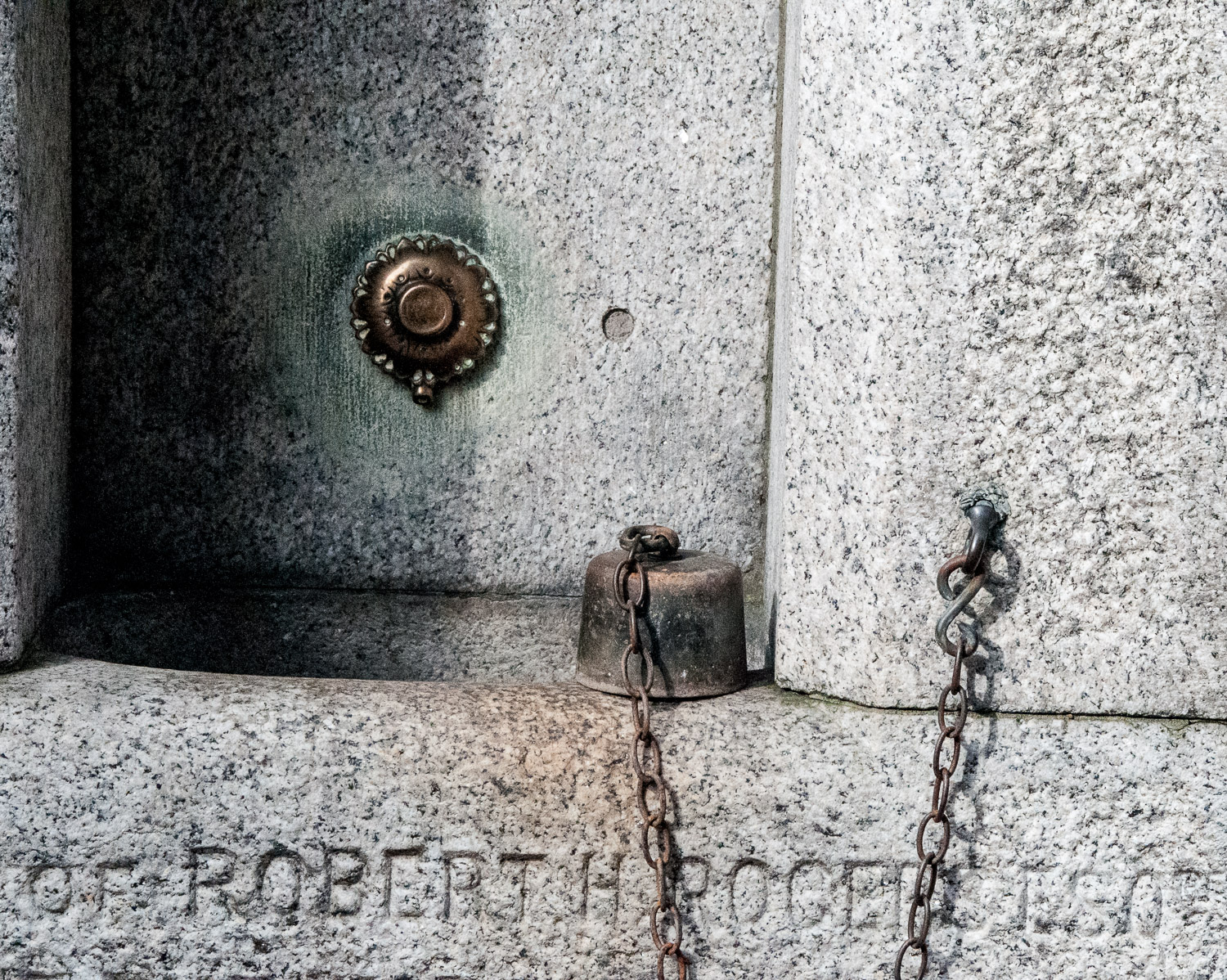
Remarkably, the cup is also still attached to this nice fountain in Love Lane at the junction with Aldermanbury, the gift of Robert H. Rogers, a Ward Deputy.

Robert H. Rogers’s gift dated November 1890


Love Lane fountain cup and chain


If you thirst for more knowledge about London’s water-related history get hold of a copy of the excellent book ‘Parched City’ by Emma M. Jones on which much of this post is based, including the title.


Page 9 of 9

Powered by WordPress & Theme by Anders Norén