Walking the City of London

Category: Wartime Page 9 of 16

What do pigeons do all day? And why was one awarded the Croix de Guerre?

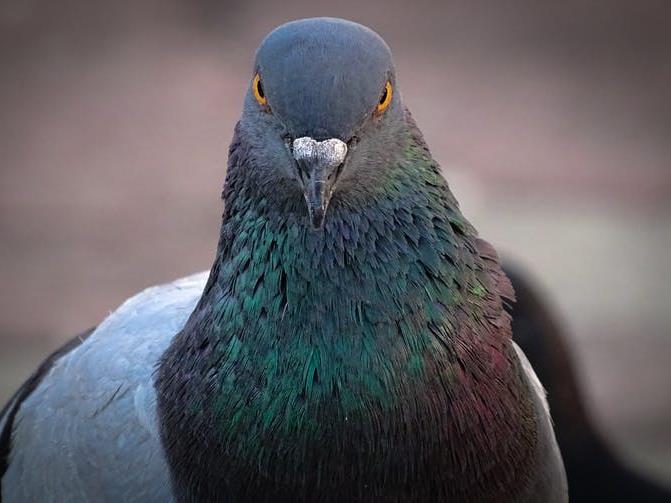
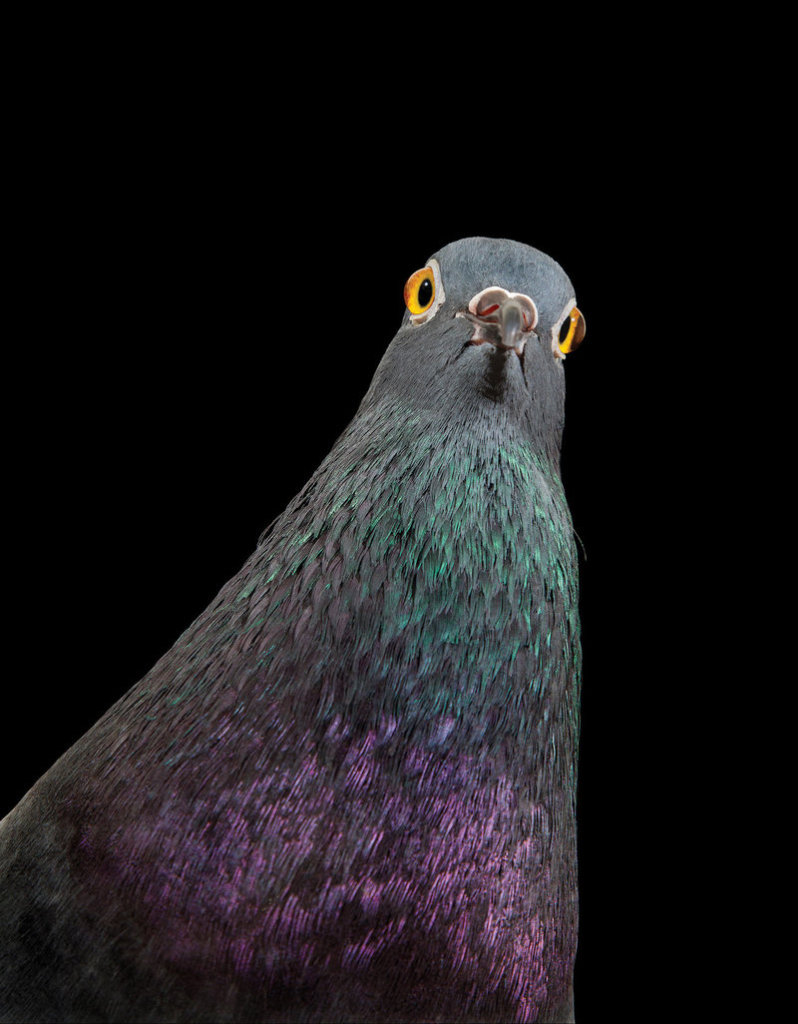
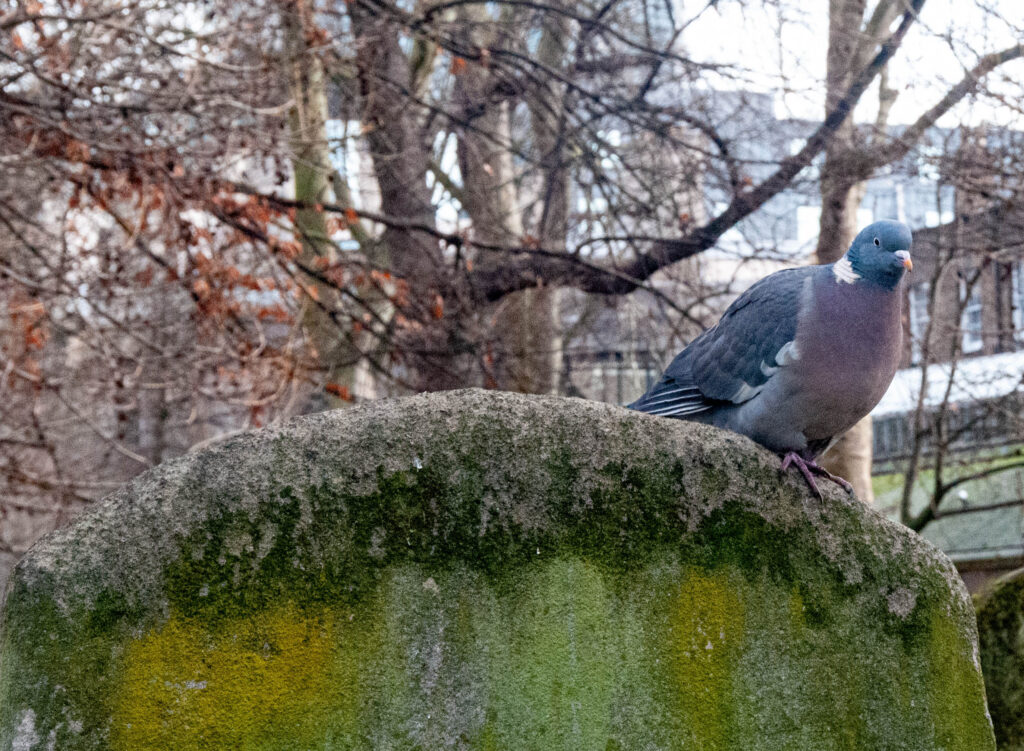
I was visiting Bunhill Fields burial ground last week with a view to writing about it again for a New Year blog. Whilst focusing my camera on an interesting tombstone I was photobombed by this cheeky fellow …

Although anthropomorphism is frowned upon by some, I do tend to indulge every now and then and felt the pigeon was definitely sending me a message along the lines of ‘why are you writing about boring bits of stone when you could be writing about me?’ So I took the hint and this week’s blog is the result.

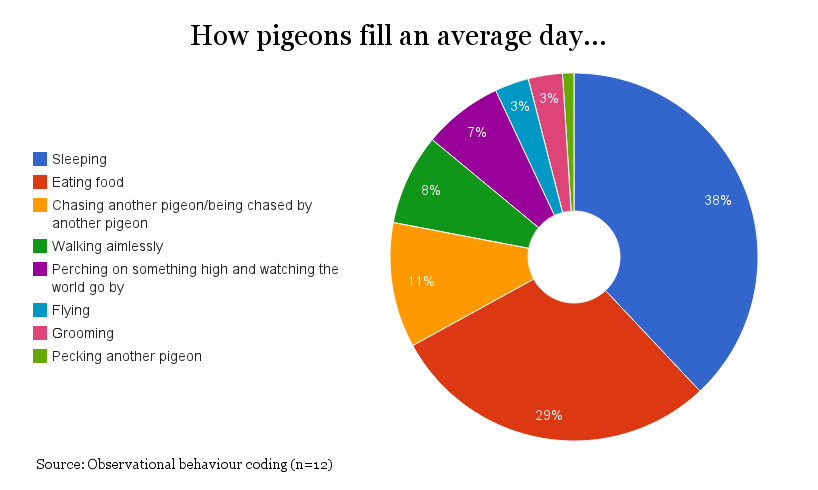
Obviously I started with some serious research. Have you, for example, ever wondered what pigeons do all day? Wonder no more – here is a breakdown of their typical activity over 24 hours …

Pie chart of pigeon activity over a 24 hour period (n=12) | © www.londonpigeons.co.uk

Just how smart are they?

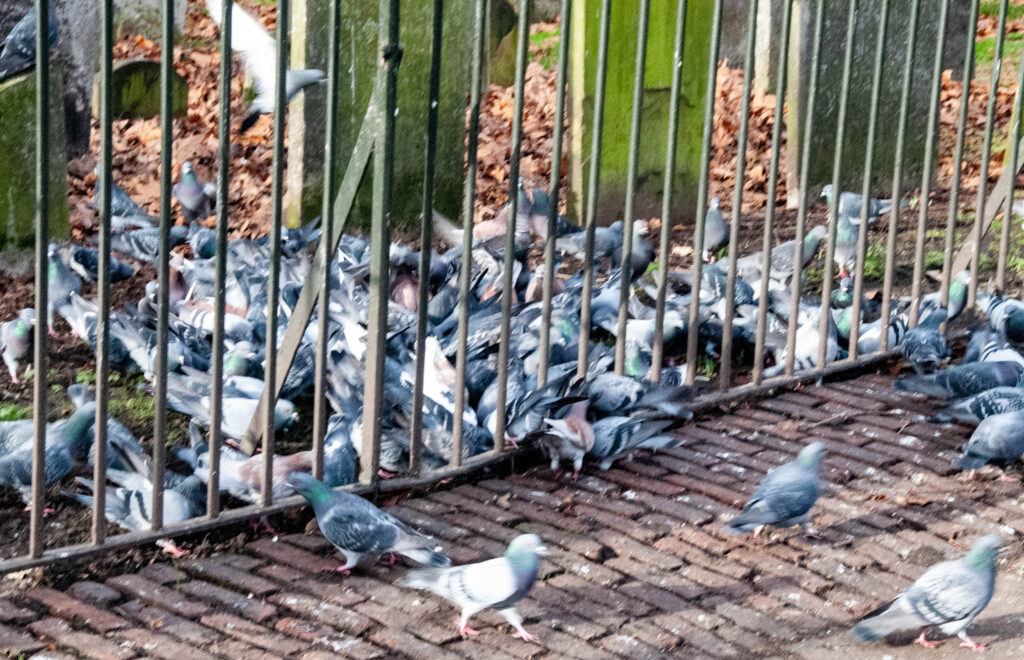
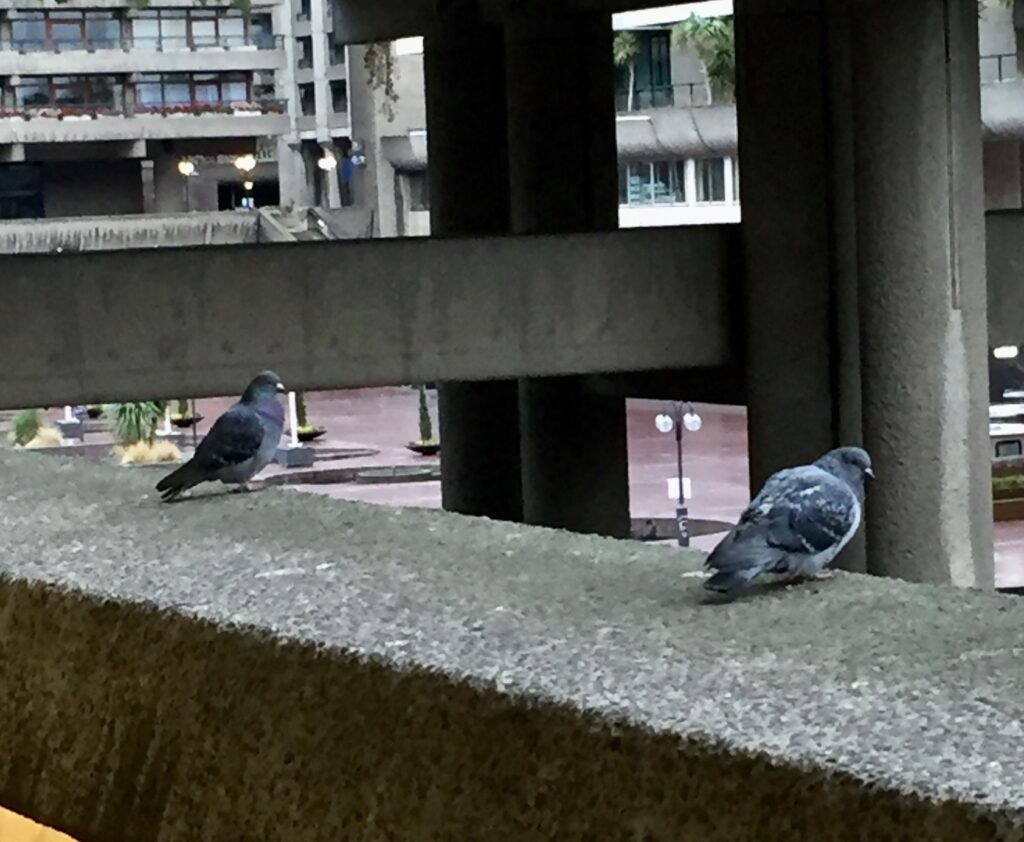
From my own observations it is obvious that the pigeon population has become aware of the Covid risk and birds are now practising social distancing as a matter of course …

With total isolation for the particularly vulnerable …

Sadly, however, they tend to lose all self-control when presented with food (just like some humans do when presented with alcohol and the opportunity to party) …

A kind lady has just distributed a handful of bread!

It has been difficult to establish the average pigeon’s IQ. As an expert in this field has written …

‘Pigeons have a very high brain to body mass ratio. The academic literature on pigeon intelligence is fairly non-existent. This is partly due to the difficulty in administering traditional IQ tests to pigeons: they have a notoriously short attention span and furthermore find it difficult to hold a pen’.

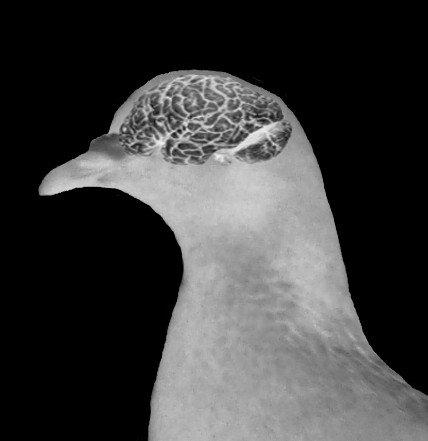
An MRI scan reveals a very large brain relative to body size …

Pigeon brain cross-section| © www.londonpigeons.co.uk

City of London pigeons, again according to my observations, spend a lot of time walking rather than flying and there would appear to be two reasons for this. Firstly, our fondness for eating ‘on the go’ due to our busy lifestyles which results either in accidental food distribution or occasional bursts of generosity where we share our snacks with our feathered companions. I have also witnessed acts of intimidation where rougher elements of the pigeon community hang around in an intimidating fashion in parks and outside supermarkets giving humans the ‘feed me or else’ glare …

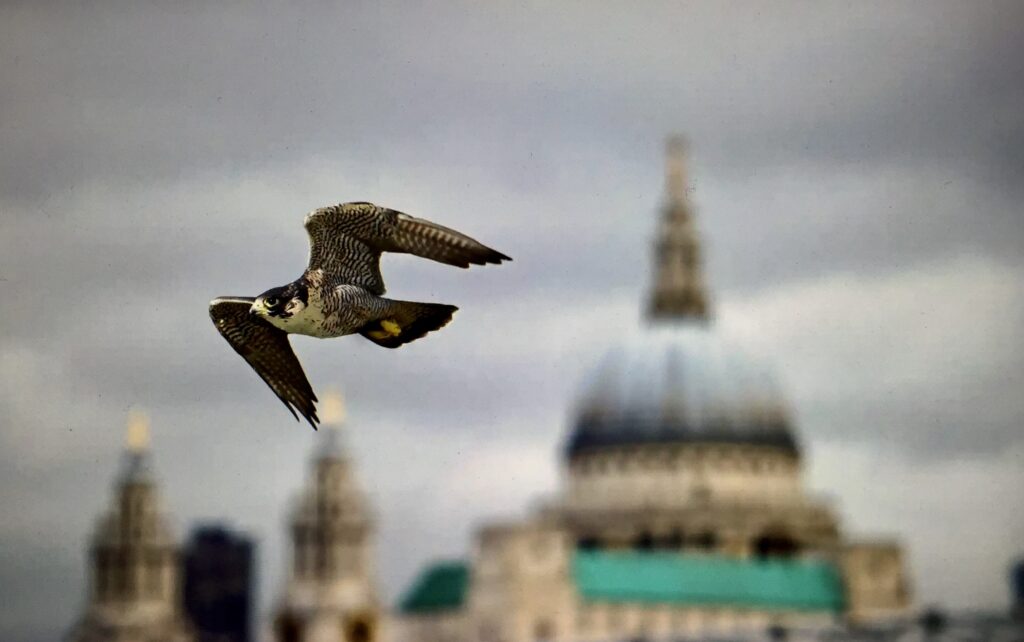
The second reason, I believe, is the presence of a number of pairs of peregrine falcons that nest on Tate Modern and on the towers of the Barbican. A pigeon represents a tasty meal …

Photograph David Tipling/Getty Images.

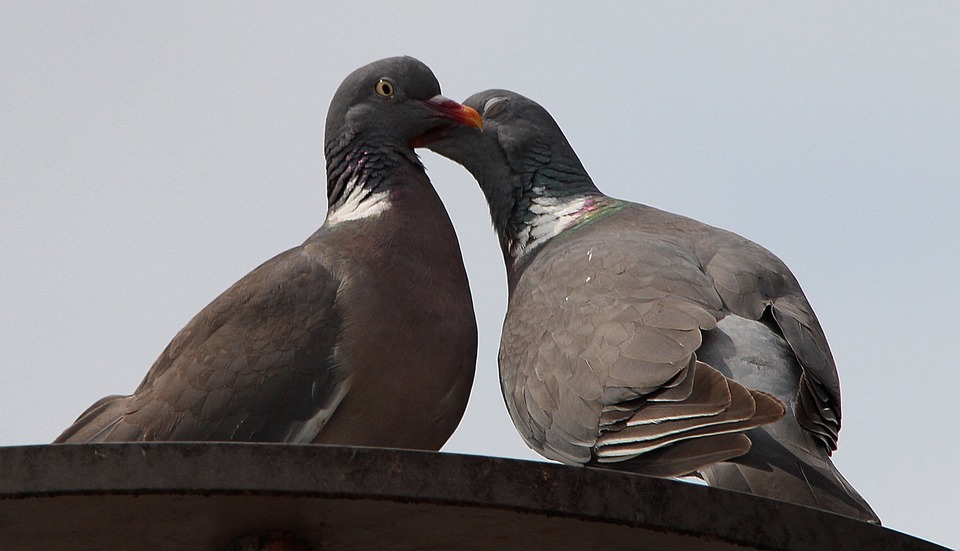
Pigeons are monogamous and mate for life and their mating ritual is quite cute. A single male will nod his head at the female which takes his fancy and spread his tail feathers to communicate his interest. The birds look directly at each other, and if the hen likes what she sees, she will nod back. The male will then prune his feathers, leaving the next move to the female. If interested the hen will hold out her head and move closer to the male and fan her tail feathers.

Things get spicy when the male offers his beak and indulges in a pigeon kiss (rubbing their beaks together) …

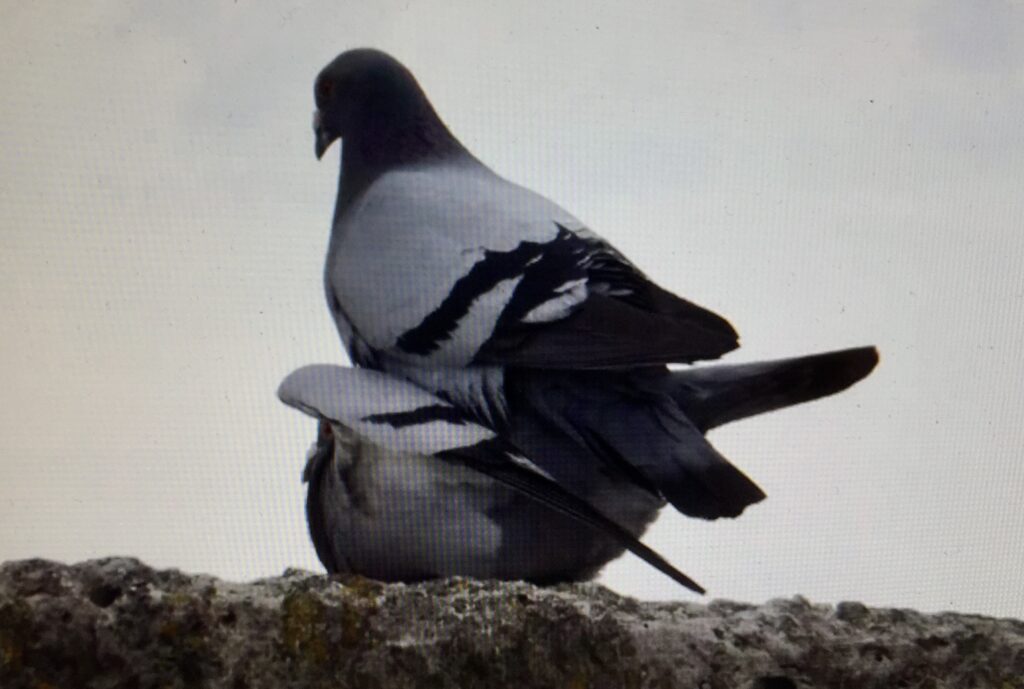
The hen will feed the male from her beak and together they will coo. Once she demonstrates she is ready, four seconds later its all over …

After mating the first egg will be laid within 10 days, with a second arrival following a couple of days later.

When it comes to food they don’t seem to be that fussy. I have observed them eating …

  • Bread
  • Chips
  • Biscuits
  • Cooked rice
  • Crisps
  • Pizza

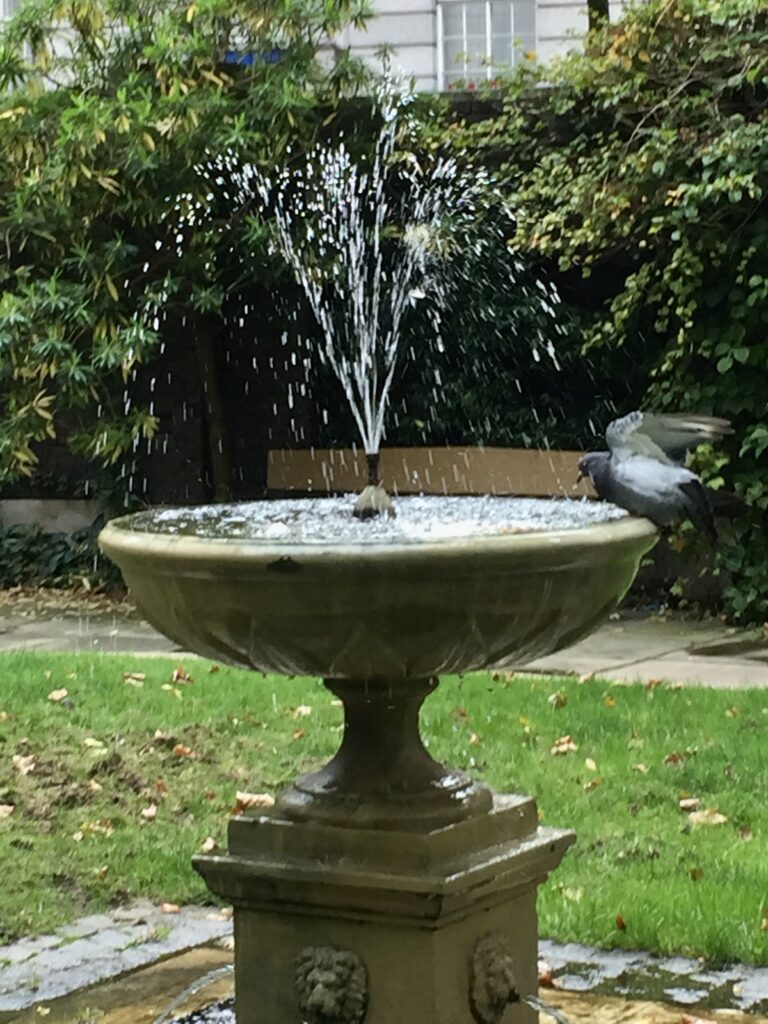
I think it rather sad they get called flying rats. They often seem to me to be positively fastidious, especially when there are pools of water around that they love to splash about in, like this one I spotted making sure to wash under his wings …

And lots of mutual grooming takes place too – occasionally leading to energetic bouts of hanky-panky.

A quick question for you. Who wrote the following to friends who were coming to visit him …

‘I hope Lady Lyell & yourself will remember whenever you want a little rest & have time how very glad we should be to see you here. I will show you my pigeons! Which is the greatest treat, in my opinion, which can be offered to human beings’.

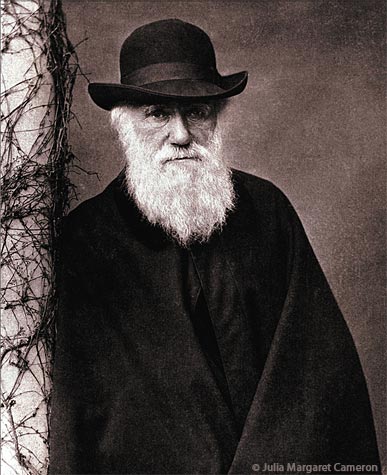
It was the man whose writings brought about one of the most fundamental and controversial changes in the way we viewed the world – Charles Darwin …

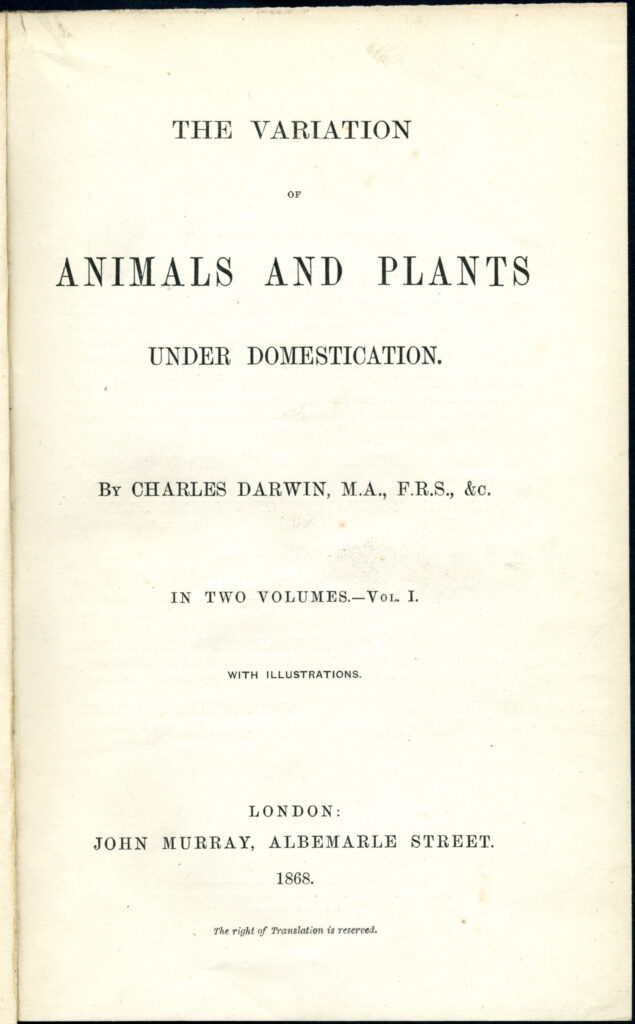
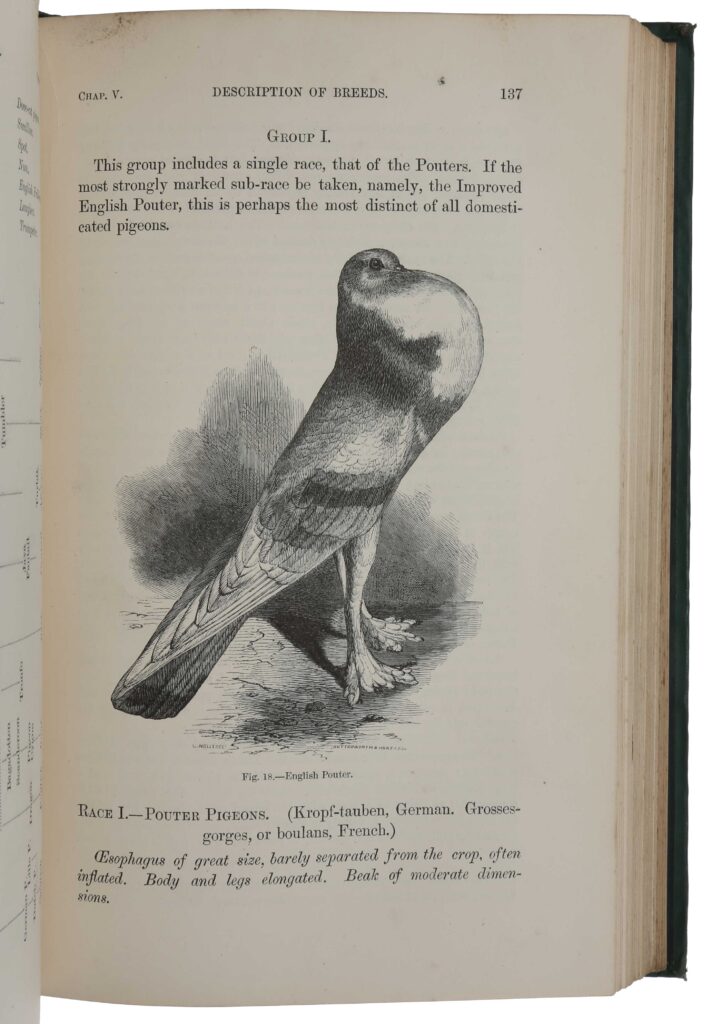
Although he never wrote On the Origin of Pigeons he clearly became very fond of them after he started studying and breeding them for scientific purposes in 1856. He wrote to another friend about a trip to London ‘where I am going to bring a lot more pigeons back with me on Saturday, for it is a noble and majestic pursuit, and beats moths and butterflies, whatever you may say to the contrary’. Although his study of pigeons informed On The Origin of Species, Darwin’s real ‘pigeon book,’ The Variation of Animals and Plants Under Domestication, did not come out until 1868. Its long and beautifully illustrated section on pigeons is still readable and relevant to both naturalists and pigeon fanciers today …

Here’s one of his illustrations …

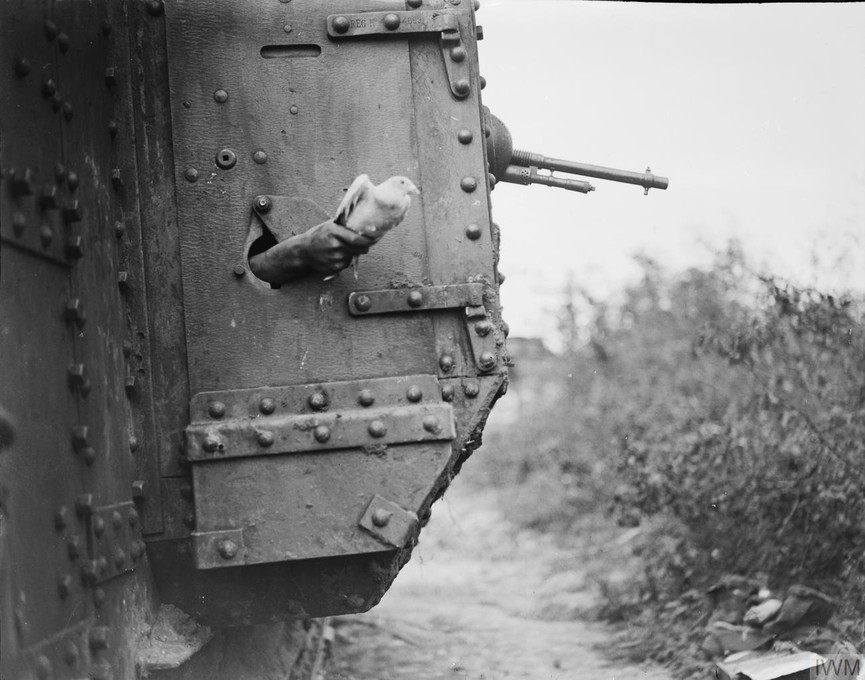
And let’s not forget pigeon bravery in two World Wars. Here’s a picture of a carrier pigeon being released from a port-hole in the side of a tank near Albert in the Somme on 9th August 1918. The Tank Corps often used carrier pigeons to relay information during an advance …

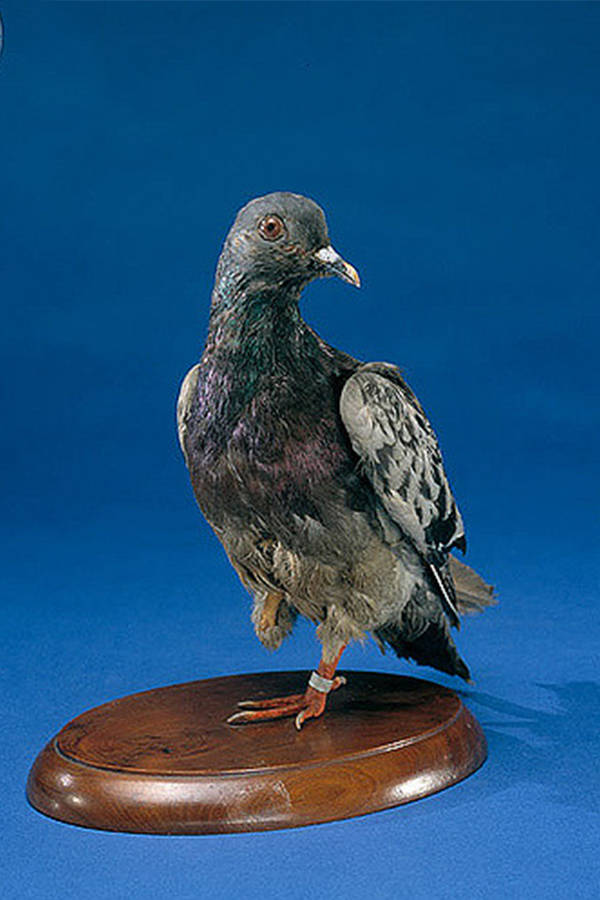
One of the bravest military birds was Cher Ami, who now poses stuffed in the Smithsonian Institution …

On 13th October 1918, despite being seriously wounded, she successfully delivered the following message which effectively saved the lives of almost 200 men …

‘We are along the road parallel to 276.4. Our own artillery is dropping a barrage directly on us. For heavens sake stop it’.

Military vets made Cher Ami a prosthetic limb and sent her home to well earned retirement. For her part in saving the 77th Division, she was awarded the Croix de Guerre, one of France’s highest military honours for her gallantry in the field. General John Pershing, commander of the American Expeditionary Force, said ‘There isn’t anything the United States can do too much for this bird.’

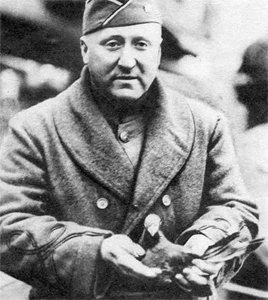
Capt John Carney, Cher Ami’s trainer, holds the feathered hero.

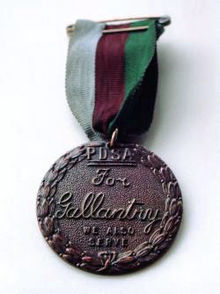
Pigeons continued in service during the Second World War. In the early 1940s, the American Signal Pigeon Corps consisted of 3,150 soldiers and 54,000 birds. Some 90 per cent of the messages got through. And these avian secret agents saved countless lives, too – of 54 Dickin Medals (the animals’ Victoria Cross) awarded in World War II, 32 went to pigeons.

One of its most famous recipients in World war II was a pigeon called Commando – read more about him here.

So next time you are tempted to frighten a pigeon or shoo it away remember this – they may be a distant relative of a war hero or descended from one of Charles Darwin’s feathered pals. And maybe look a bit more closely at them too – their colouring can be very attractive …

Who’s a pretty boy then?

I hope you enjoyed this little pigeon journey. For help with this blog I am indebted to the informative and occasionally hilarious London Pigeons website which provided some of the data.

If you would like to follow me on Instagram here is the link …
https://www.instagram.com/london_city_gent/

‘Spot the grasshopper’, enemy cannon from Waterloo, fascinating men and a Native American lady

I think this picture tells a story. The Gresham grasshopper on the roof of the Royal Exchange is dwarfed by the new monster office block on Bishopsgate and, to a lesser extent, the Cheesegrater. Will these buildings now ever be full?

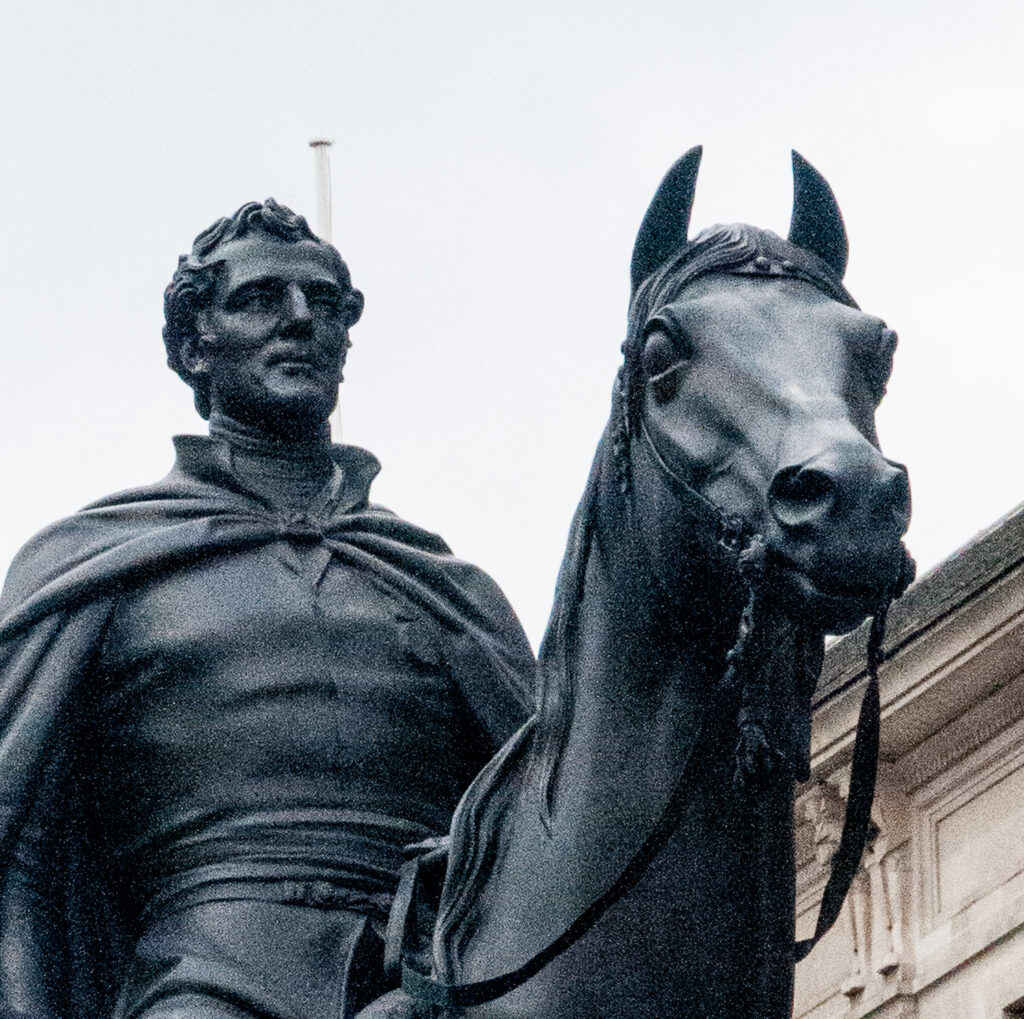
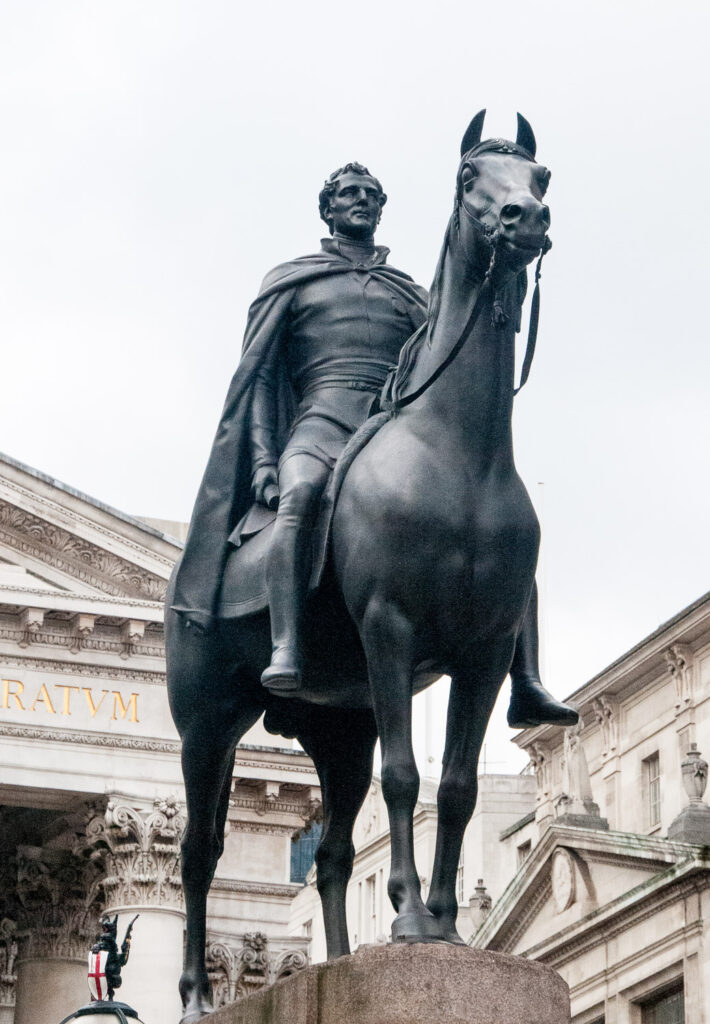
Outside the Exchange is this handsome chap, sitting without saddle or stirrups, on his fine steed …

Erected in 1844, it is, of course, the Duke of Wellington but the statue was not created to celebrate just his military achievements. On 19th July 1838 the Court of Common Council of the City of London agreed to a contribution of £500 towards its cost in appreciation of his efforts in assisting the passage of the London Bridge Approaches Act 1827. This Act led to the creation of King William Street. The government donated the metal, which is bronze from captured enemy cannon melted down after the Battle of Waterloo …

Not everyone approved. A writer to The Times declared …

…did his Grace ride at Waterloo without a saddle, without boots, without a hat and carrying his own despatches? … Is the charger supposed to be neighing to a blast of trumpets, or whinnying to the mare in the Mansion House?

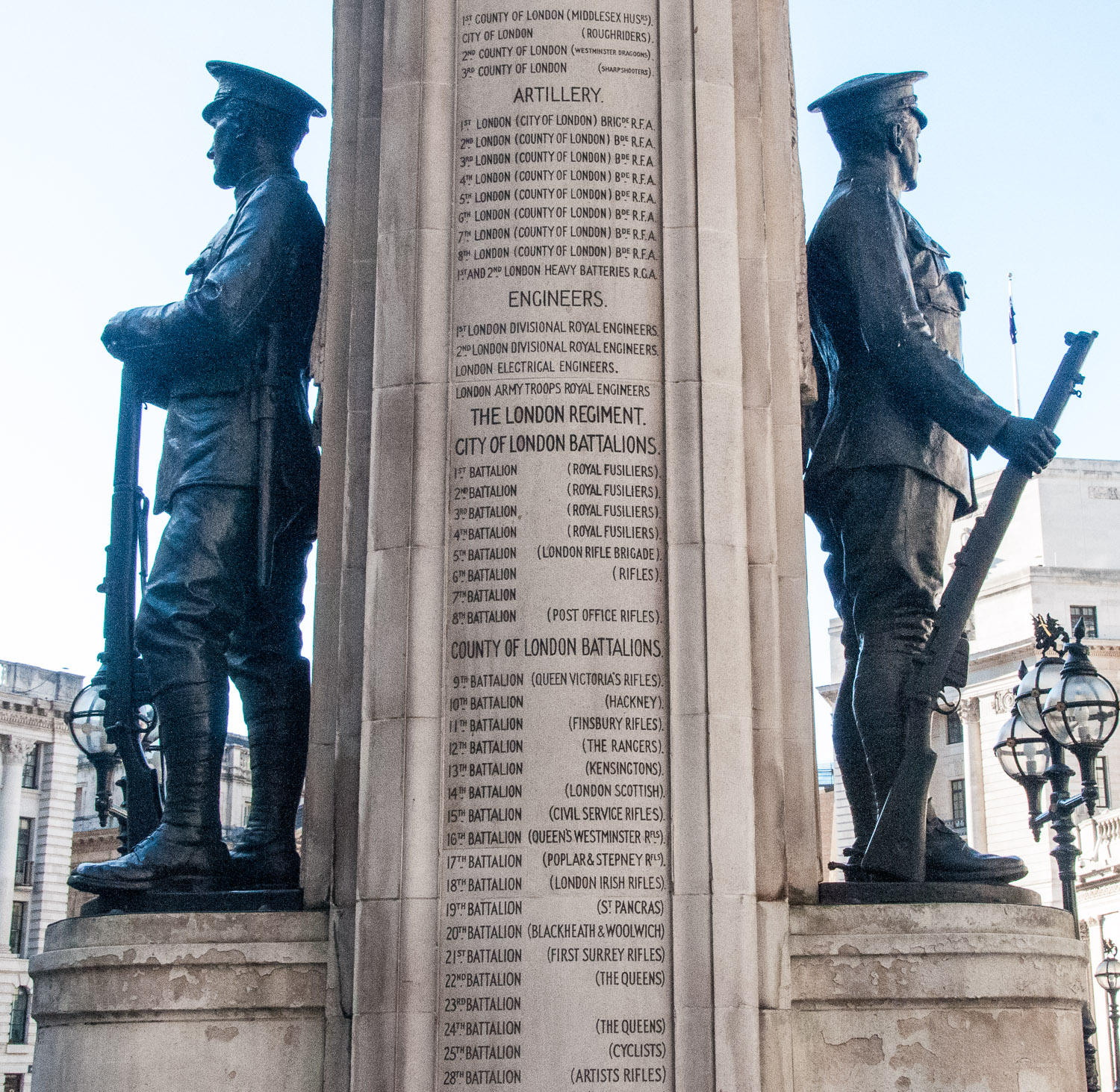
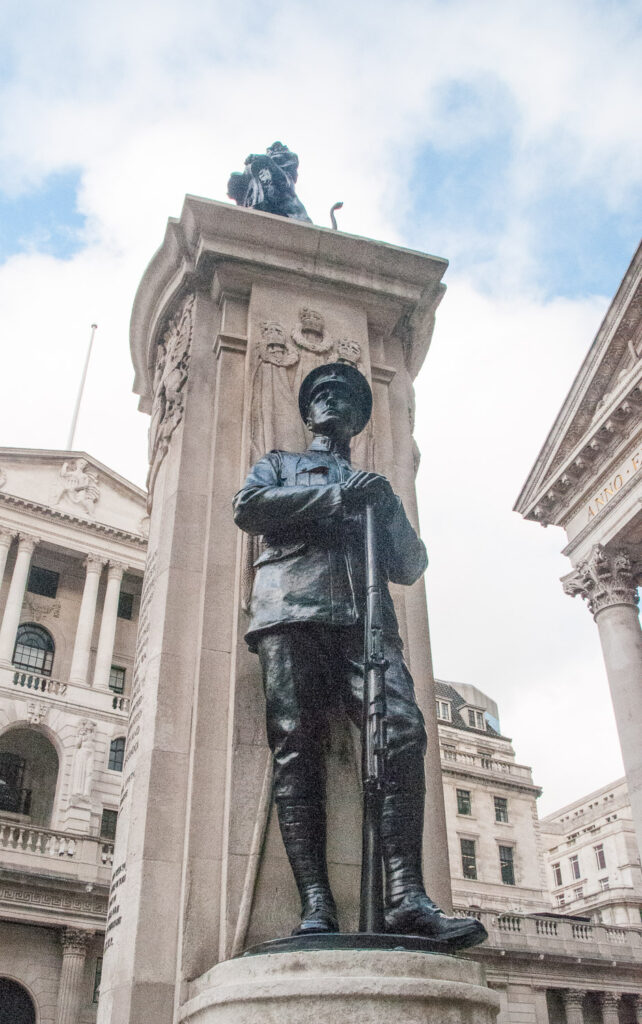
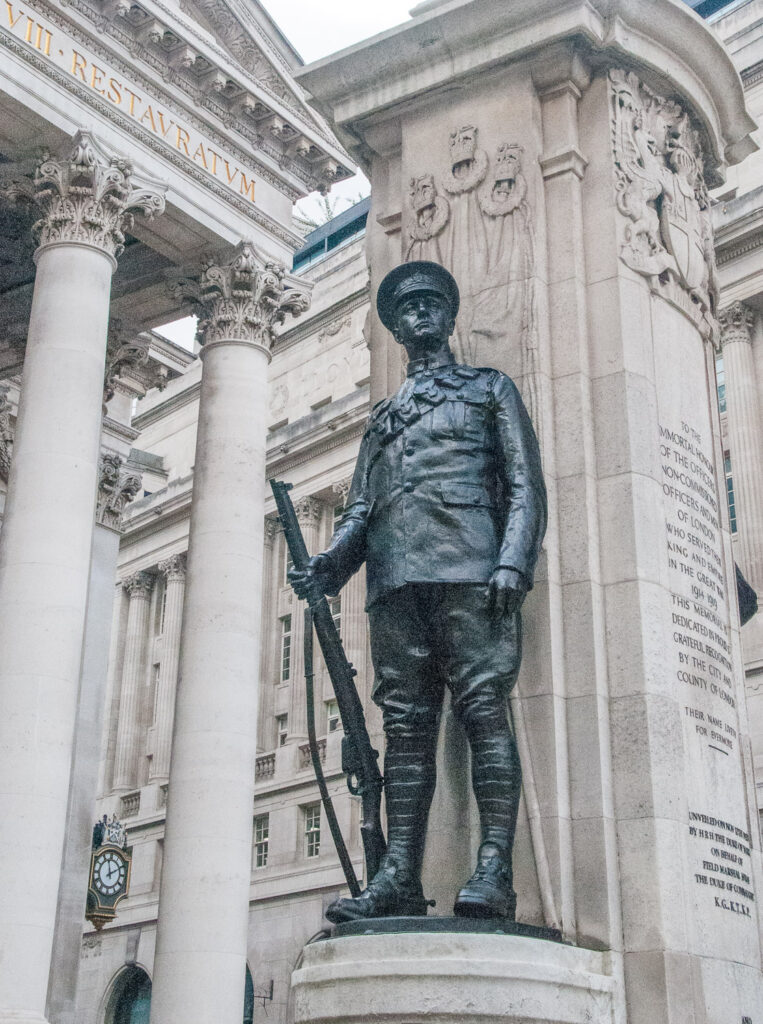
Nearby is the war memorial to the London Troops …

Standing on either side of the plinth are two soldiers of the London regiments, one middle-aged the other more youthful. It was unveiled on 12 November 1920 …

A leader in The Times was entitled ‘Our London Soldiers’ and extolled the bravery of the men who came …

… from counting-house and shop, from the far-reaching suburbs and the thronged centres … it will serve as a stimulus to the sense of unity and to the sense of duty now growing in our vast and diverse population.

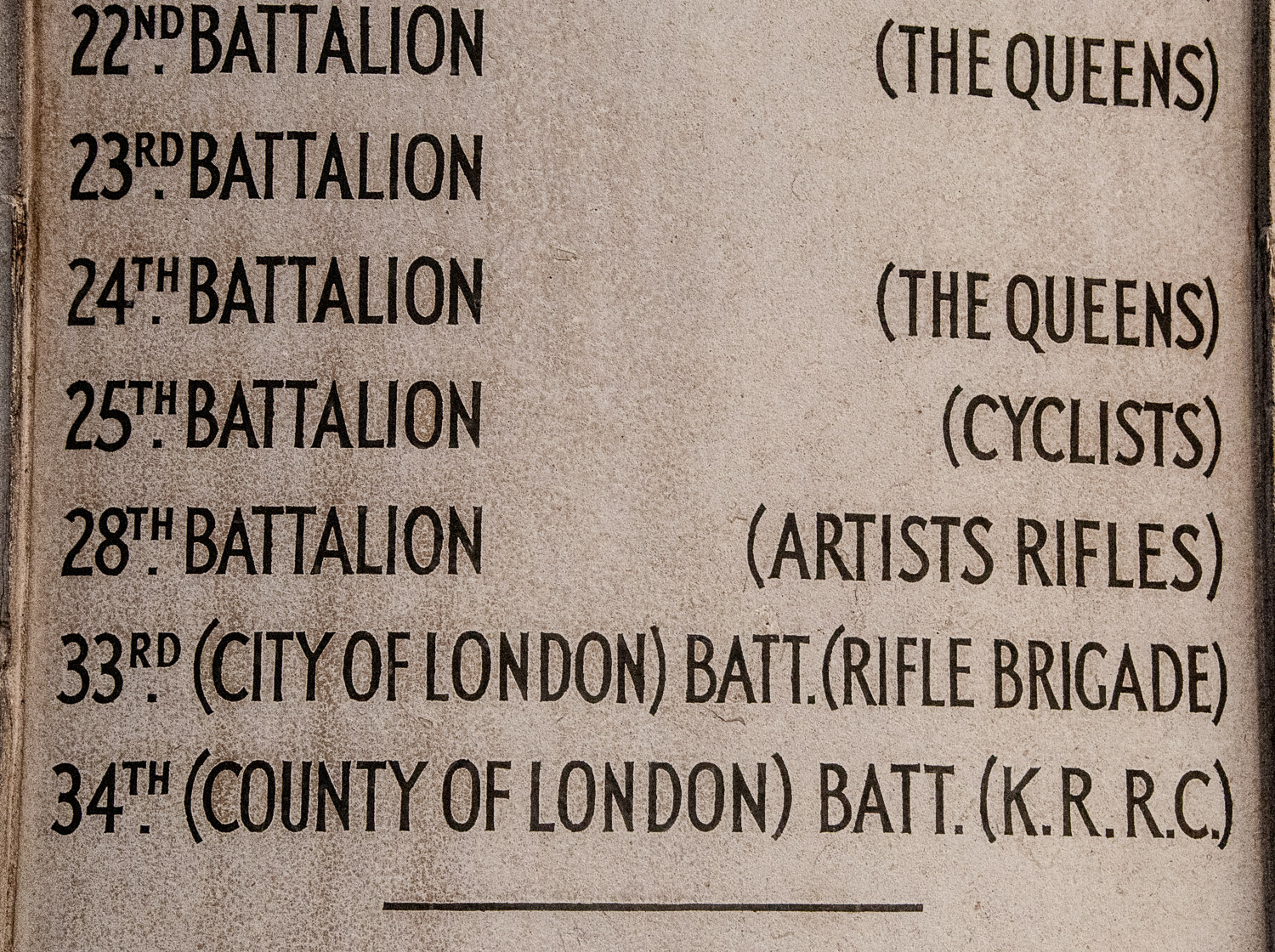
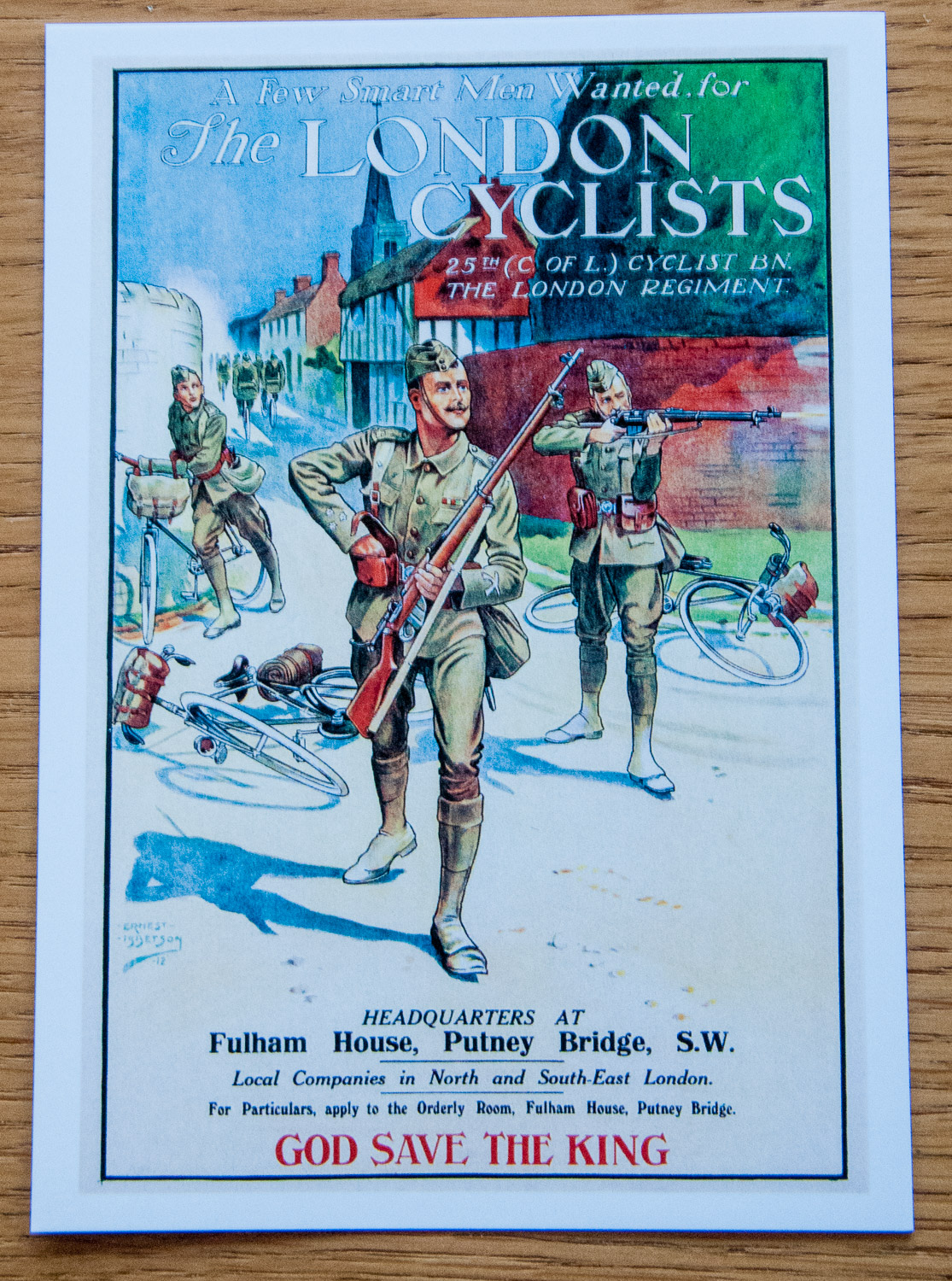
At the bottom of the list of battalions, one in particular caught my eye, the Cyclists …

When visiting the Imperial War Museum I came across a postcard of this splendid recruitment poster from 1912. It is poignant to look at this picture with its pretty village setting and then think of the industrial age war of slaughter, mud and filth, that was soon to follow …

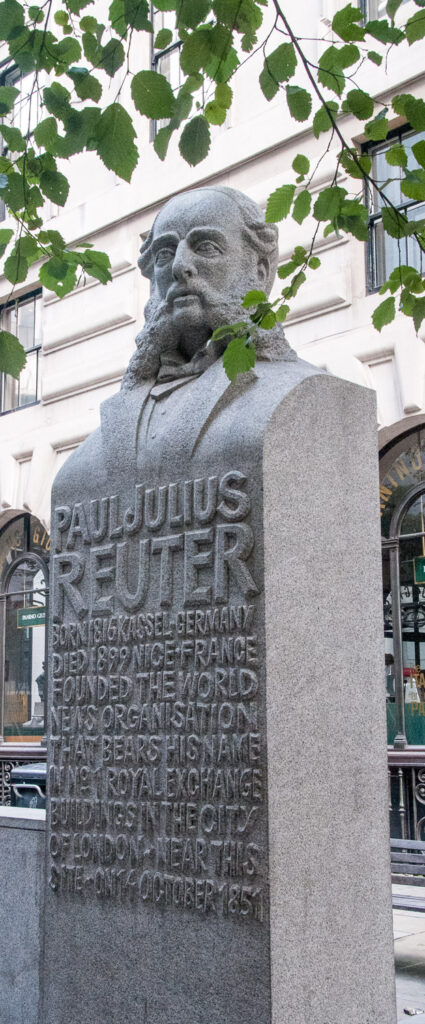
Often described as ‘standing at the back’ of the Royal Exchange, is a statue to a remarkable man – Paul Julius Reuter. The rough-cut granite sculpture by the Oxford-based sculptor Michael Black commemorates the 19th-century pioneer of communications and news delivery. It is a fitting place for the statue because the stone head faces the Royal Exchange which was the reason why Reuter set up his business in the City. He established his offices in 1851 on the opposite side of the walkway to the Royal Exchange – in other words, they were to the east of the Royal Exchange. The stone monument was erected by Reuters to mark the 125th anniversary of the Reuters Foundation. It was unveiled by Edmund L de Rothschild on 18 October 1976 …

The life of Reuter was most interesting. Having started his career as a humble clerk in a bank, he went on to ‘see the future’ of transmitting the news – regardless of whether it was financial or world news. If the ‘modern’ technology of telegraphy – also known then as Telegrams – was not in place, Reuter used carrier pigeons and even canisters floating in the sea to convey news as fast as possible. Such was his ambition to be the first with the news.

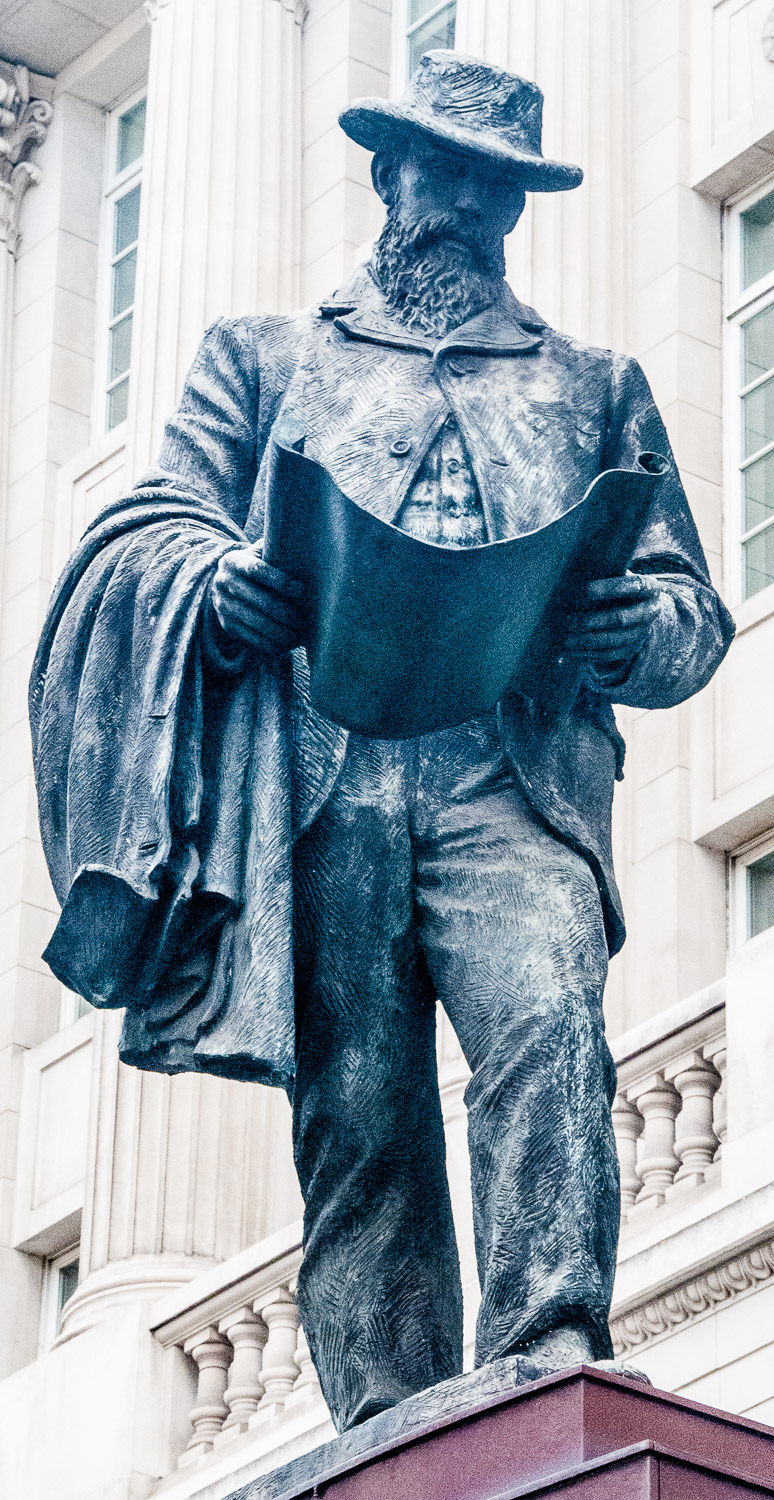
Just across the road is another bearded gentleman, studiously studying some plans. James Henry Greathead was a South African engineer (note the hat) who invented what was to become known as the Greathead Shield. He came to be here on Cornhill because a new ventilation shaft was needed for Bank Underground Station and it was decided that he should be honoured on the plinth covering the shaft …

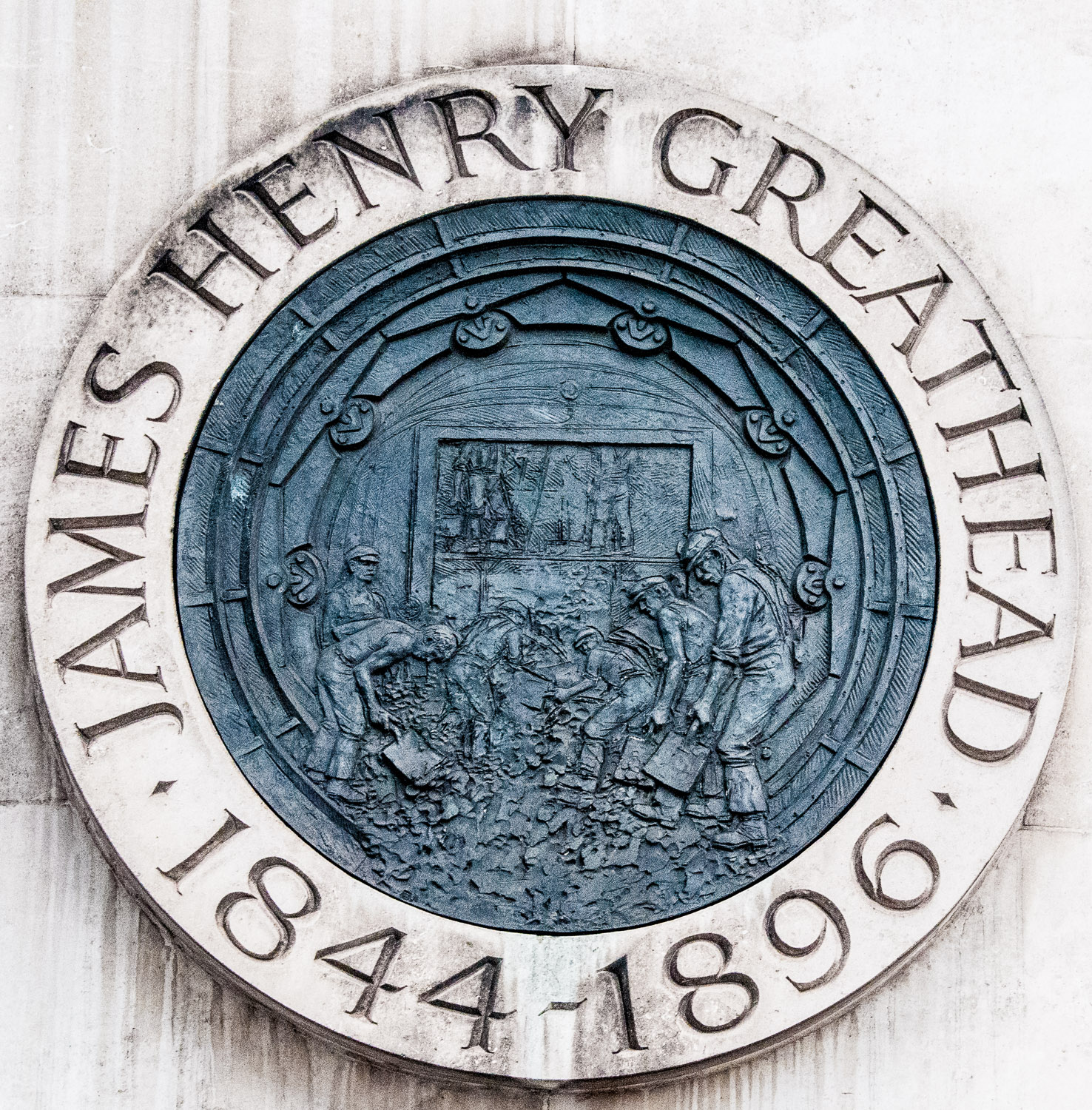
The Shield enabled the London Underground to be constructed at greater depths through the London clay. The miners doing the tunneling, using pneumatic spades and hand shovels, would create a cavity in the earth where the Shield would be inserted to hold back the walls whilst the miners installed cast-iron segments to create a ring. The process would be repeated until a tunnel had formed in the shape of a ‘tube’, which is where we get the nickname for the network today. A plaque on the side of the plinth shows the men at work …

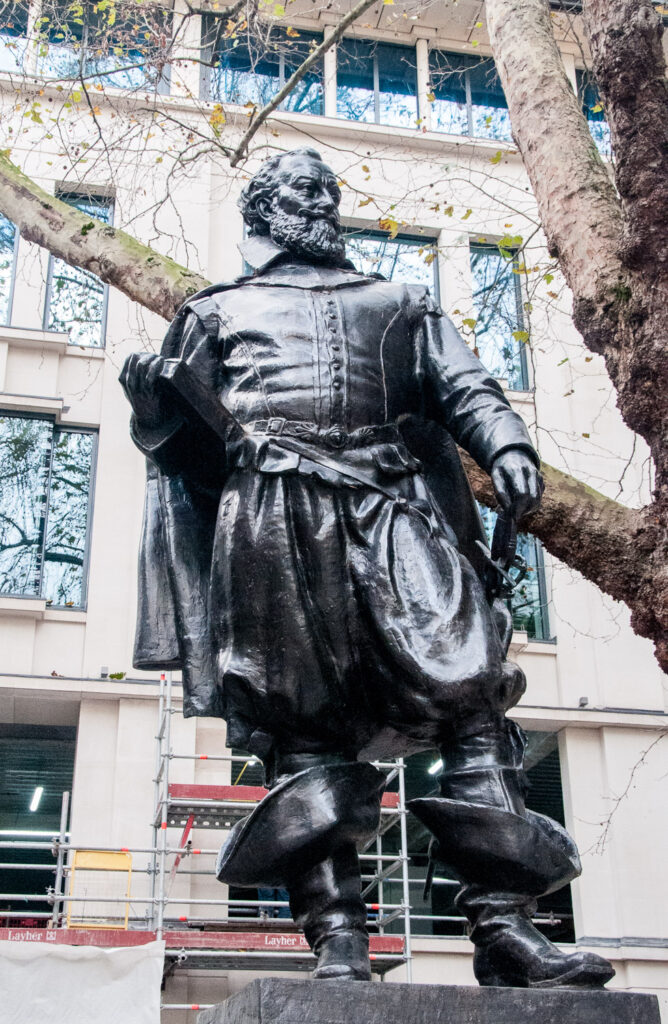
What about this fine fellow dominating the small courtyard outside St Mary-le-Bow (sporting another great beard) …

This image has an empty alt attribute; its file name is DSC_8164-668x1024.jpg

This is Captain John Smith. A colonial adventurer, Smith was a Citizen and Cordwainer, and set sail from Blackwall to found the colony of Virginia in 1606. Following a period as the prisoner of the native Americans he became head of the settler’s colony before returning to London in 1609-10. He later claimed that during his captivity his life had been saved by ‘Princess’ Pocahontas who pleaded with her father, the paramount Chief, that he be spared execution. Doubt has been cast on this story but early histories did establish that Pocahontas befriended Smith and the Jamestown colony. She often went to the settlement and played games with the boys there. When the colonists were starving, ‘every once in four or five days, Pocahontas with her attendants brought him [Smith] so much provision that saved many of their lives that else for all this had starved with hunger’.

Queen Elizabeth the Queen Mother unveiled the statue on 31st October 1960 and you can watch a Pathe News film of the event here.

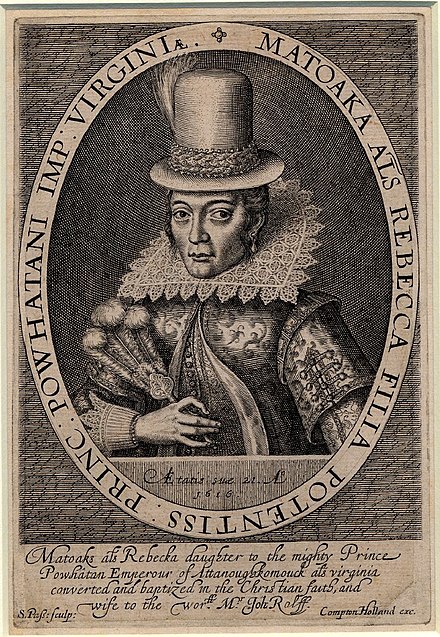
Incidentally, Pocahontas went on to marry an Englishman, John Rolfe, visited London, and became quite a celebrity. Sadly she died on the return journey from causes unknown and was buried in St George’s Church Gravesend. Her grave has since been lost.

This is a 1616 portrait engraving of her by Simon de Passe. What a super hat …

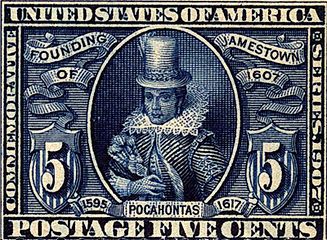
She was also commemorated on a 1907 postage stamp, the first native American to be honoured in this way …

Now another adventurous gentleman.

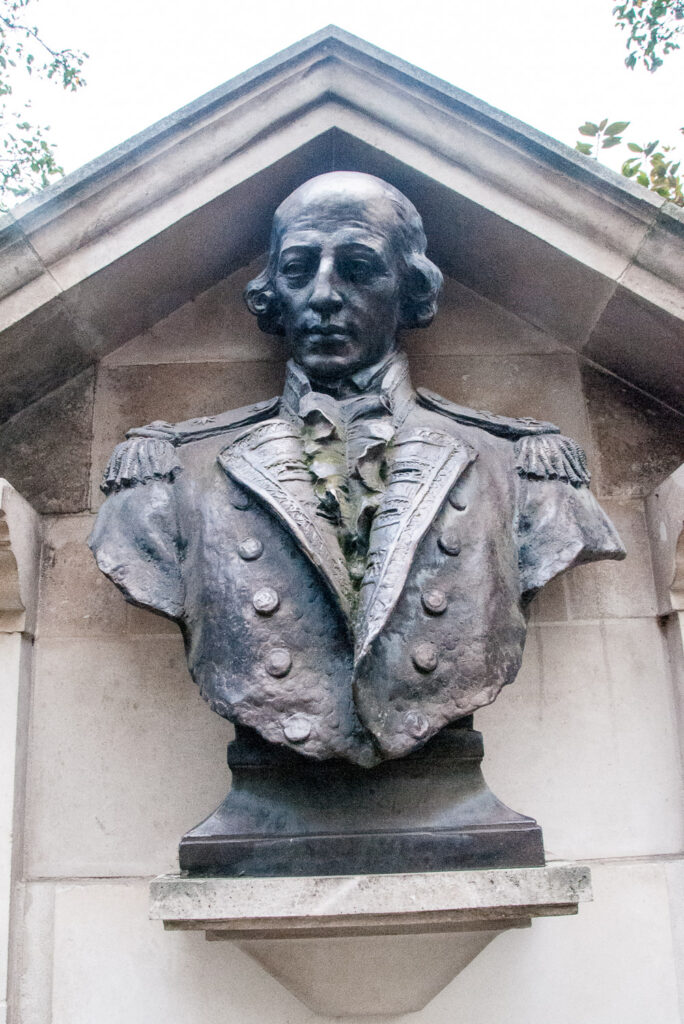
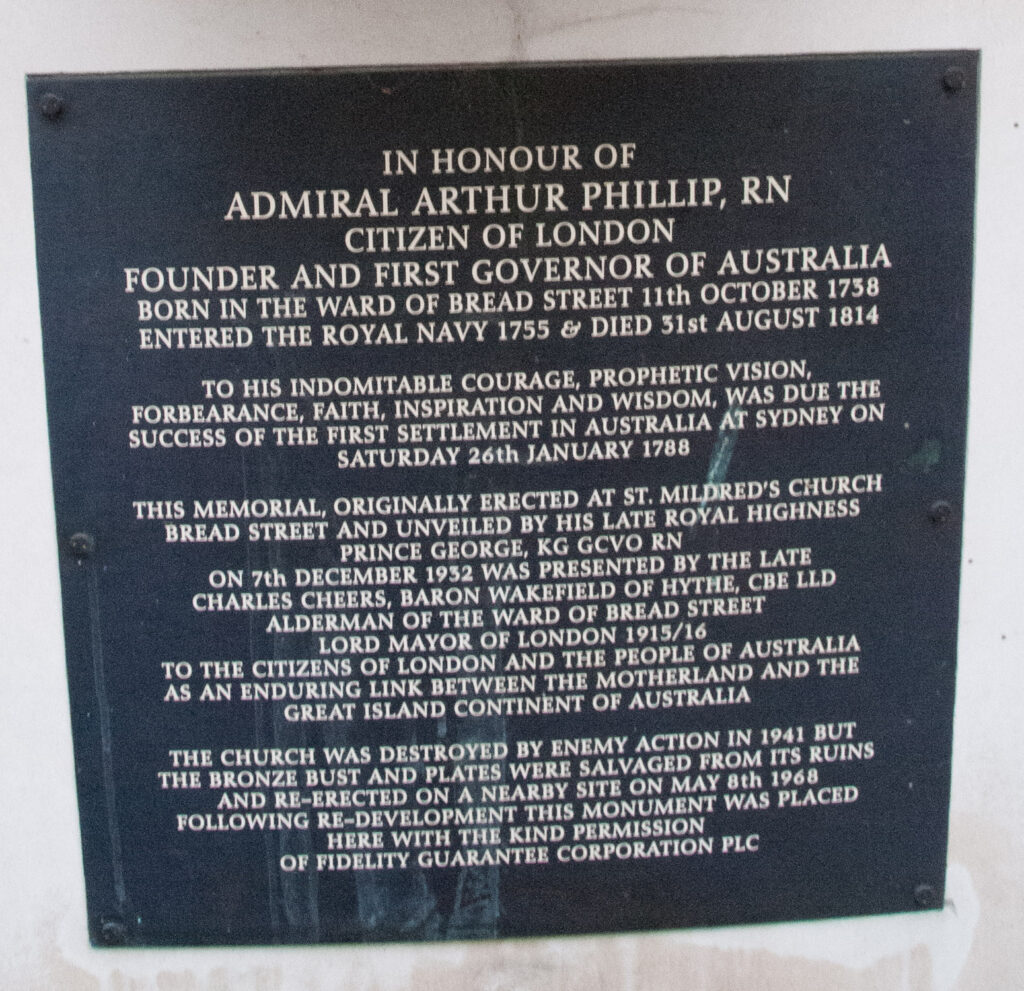
A memorial to Admiral Phillip was originally erected at St Mildred’s Church Bread Street. Although the church was destroyed by enemy action in 1941 the bronze bust was salvaged from its ruins. This modern copy can now be found on the south side of the New Change shopping centre, the original is in St Mary-le-Bow church …

The plaque makes interesting reading …

And now a woman and a man dressed somewhat… er … unconventionally.

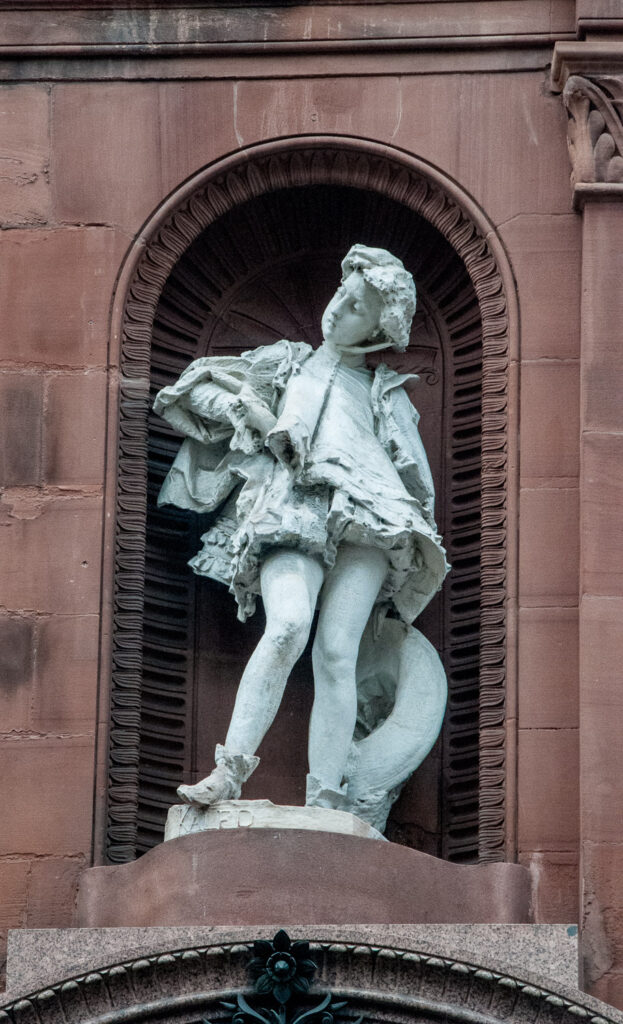
Let’s start with this extraordinary statue at 193 Fleet Street now, sadly, rather weathered …

I always thought that it resembled a rather effeminate youth but it is in fact a woman disguised as a pageboy, her name, Kaled, appears just under her right foot.

It is by Giuseppe Grandi, and dates from 1872. The shop owner, George Attenborough, had a niche created specially for it over the front door. Kaled is the page of Count Lara in Bryon’s poetic story of a nobleman who returns to his ancestral lands to restore justice. He antagonises the neighbouring chieftains who attack and kill him. Kaled stays with his master and lover to the end, when it is revealed he is in fact a woman. (Spoiler alert) She goes mad from grief and dies.

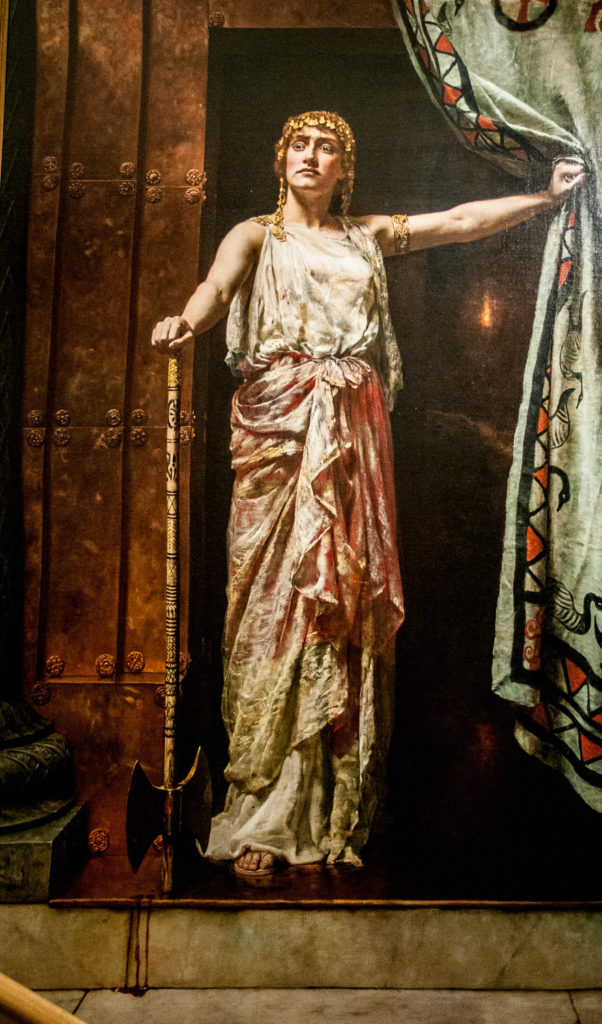
There seems to be no end to the wonderful paintings to be found at the Guildhall Art Gallery. This one is a representation of a famous Greek myth – the murder by Clytemnestra of her husband Agamemnon. Here she stands, wild-eyed in the Mediterranean sunlight, outside the room where she has committed the deed. In the background behind her we can just make out the outline of a dimly lit body …

‘Clytemnestra’ by John Collier (1882)

Agamemnon had commanded the Greek forces which besieged Troy during the Trojan Wars. Before setting sail for home, he sacrificed their youngest daughter Iphigenia to ensure a favourable wind for his fleet. To make matters worse, he returned with his lover, the prophetess Cassandra, the captured daughter of King Priam of Troy. Enraged and grieving, Clytemnestra and her son murdered them both in revenge

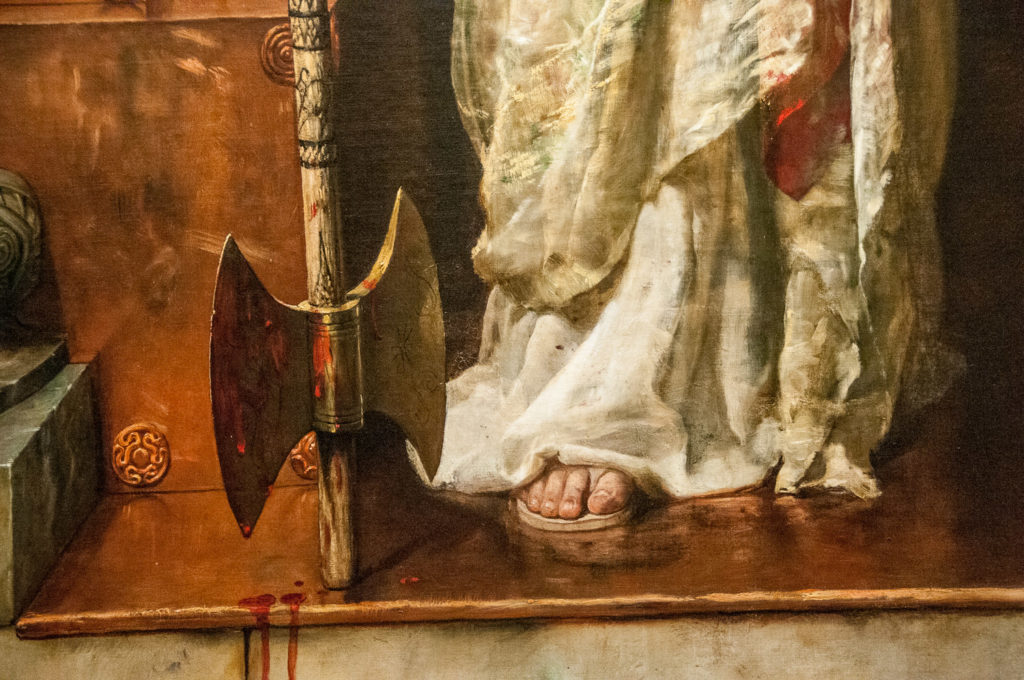
Collier was famous for his close attention to detail. There is light etching on the axe blade and the blood drips and runs authentically. All the little roundels we can see in the picture are different …

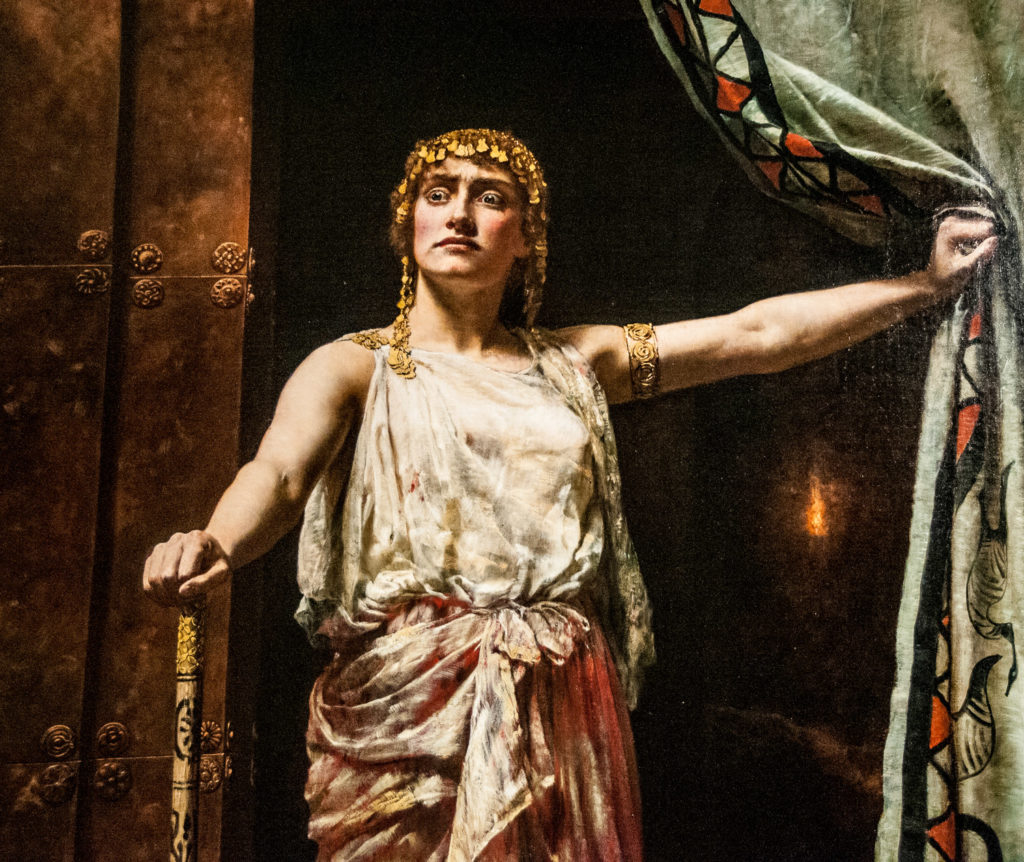
One has to say, however, that the more you study the figure the more it looks like a man. There is a pure physical dominance – and look at the muscular arms and large hands gripping the axe handle and holding back the curtain …

Collier brings extraordinary attention to detail in her blood-spattered garments.

It is now thought that Collier took his inspiration from an 1880 performance of Aeschylus’s Agamemnon at Balliol College, Oxford in which Clytemnestra was played by a male student, one Frank Benison.

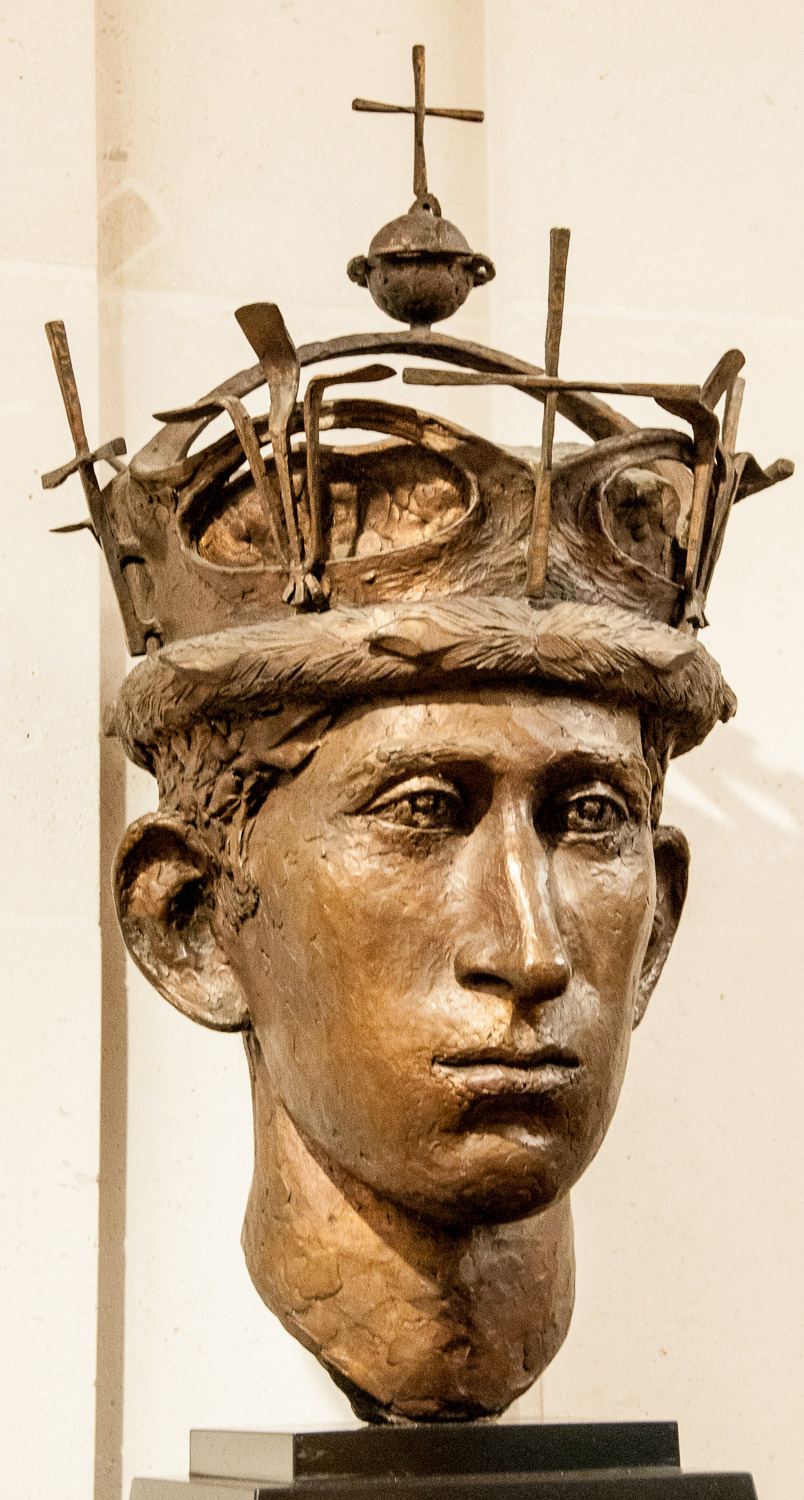
Also in the gallery is this David Wynne sculpture of Prince Charles …

He just doesn’t look happy, does he? Maybe he wasn’t too keen on the rather spiky modern version of a coronet that he is wearing here at his 1969 Investiture as Prince of Wales. It was designed by a committee chaired by his auntie Princess Margaret’s husband, Antony Armstrong-Jones (later Lord Snowdon). The globe and cross at the top was originally intended to be solid gold but the committee concluded that this would be far too heavy. The solution was to use a gold plated ping-pong ball – which is why I always smile at this portrayal of the Prince (and possibly why he doesn’t appear to have ever worn the item again).

Just by way of further light relief I have found another spooky clothes model to add to my collection (see last week’s blog) …

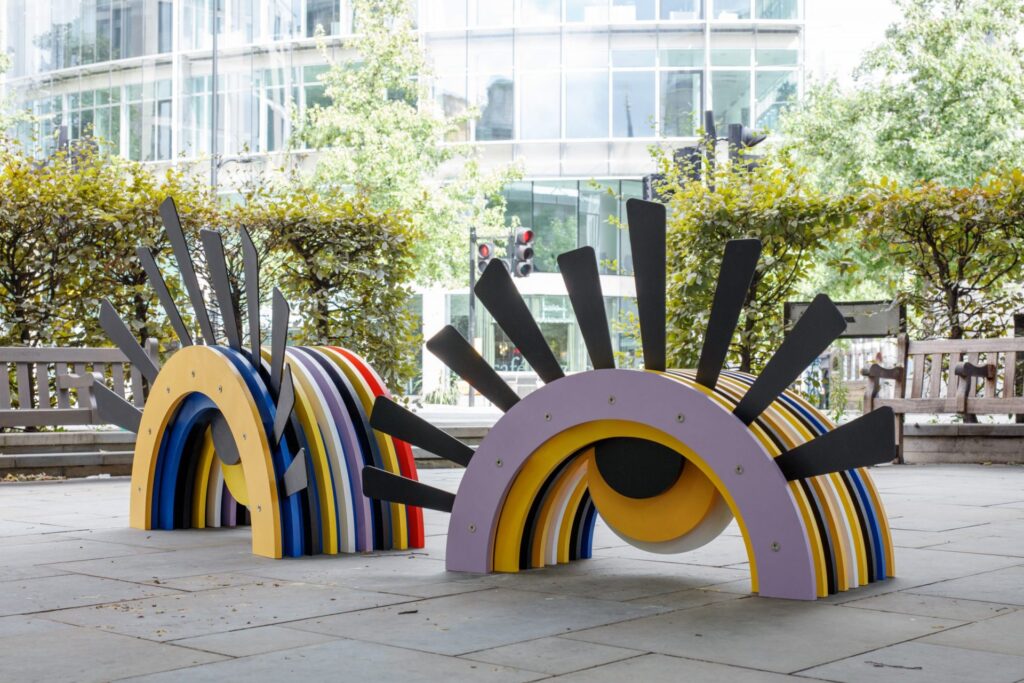
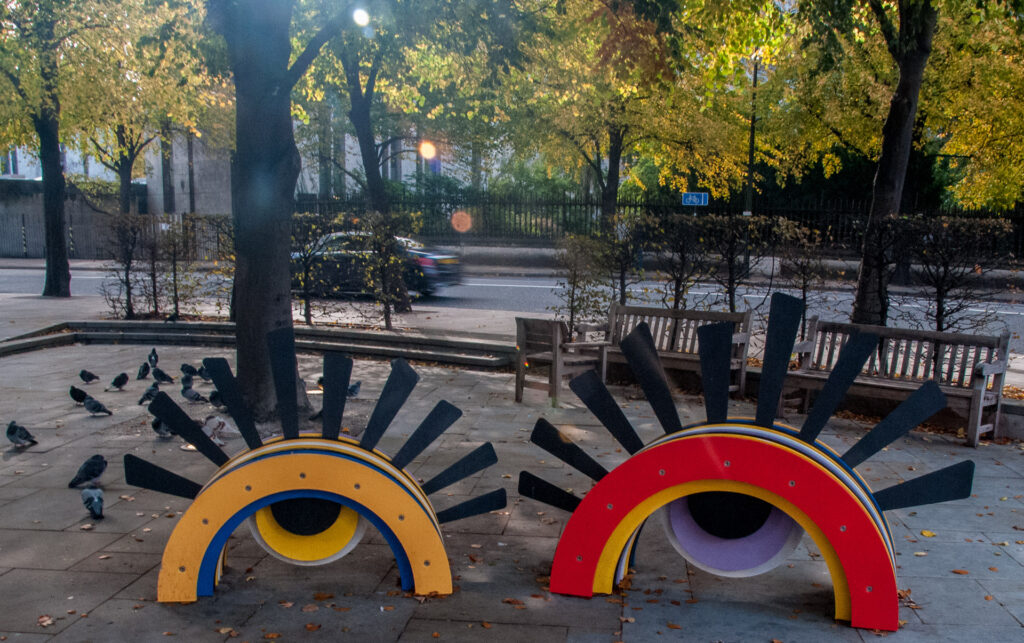
And these ‘eyebrows’ in the Cheapside Sunken Garden made me laugh. Part of the London Festival of Architecture, they entitled Look Up and are by Oli Colman …

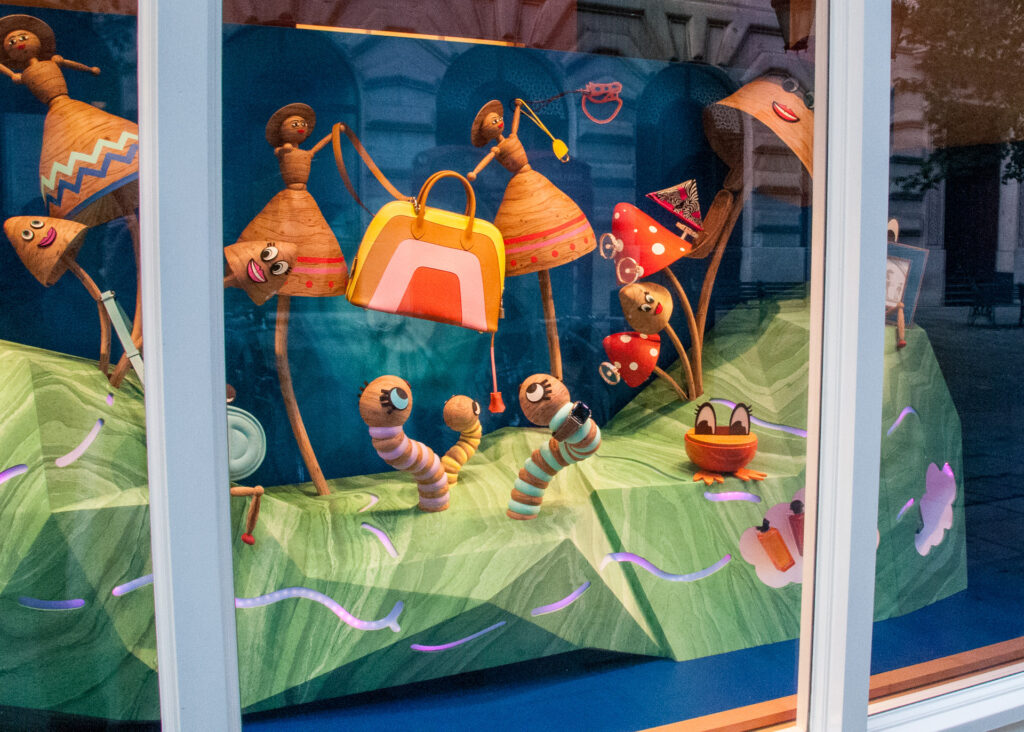
Finally, I loved this joyful Hermes shop window at the Royal Exchange …

As is often the case I am grateful to Philip Ward-Jackson for much of the detail about the sculptures. I highly recommend his book Public Sculpture of the City of London, still available at Waterstones.

If you would like to follow me on Instagram here is the link …
https://www.instagram.com/london_city_gent/

From Sam Pepys’s dinner plate to the Essex Auroch

Yes, I have again been taking advantage of the wonderful fact that the Museum of London has reopened and is free to enter with a timed ticket.

I was thrilled to see a new exhibit connected to my hero Samuel Pepys – naval administrator, Member of Parliament and, of course, famous diarist. The item is a silver dinner plate made in 1681/82 and engraved with his coat of arms. Scratched by knives and forks, it is one of only three that now survive of the full dinner service …

By the time he commissioned this he was already a wealthy man and took great pleasure in entertaining at home. I like this boast from his diary dated 8th April 1667 and his remark about Mrs Clarke made me laugh out loud …

We had with my wife and I twelve at table and very good and pleasant company, and a most neat and excellent, but dear dinner; but, Lord, to see with what envy they looked upon all my fine plate was pleasant, for I made the best show I could, to let them understand me and my condition, to take down the pride of Mrs Clarke, who thinks herself very great.

Being a man of intense curiosity, and a Fellow of the Royal Society, Pepys would almost certainly have heard of this discovery made during the rebuilding of St Martin’s Church on Ludgate Hill in 1669 …

It’s the third century tombstone of a Roman centurion wearing a tunic, a military belt and a long cloak draped over his left shoulder.

Amazingly, the inscription is still legible …

To the spirits of the departed and to Vivius Marcianus of the 2nd Legion Augusta, Januaria Martina his most devoted wife set up this memorial.

I think modern illustrations like this are mainly for the benefit of children, but I love them …

Incidentally, and still on a Roman theme, nearby is a fine mosaic floor dating from AD 300 and discovered in Bucklersbury in 1869 …

Pepys witnessed and wrote about the Great Fire of London in 1666 and the Museum has a rare depiction of the City before the fire. It dates from around 1630, three years before he was born …

Nearby is a dramatic oil painting of the conflagration at its height …

The view is taken from the west with the Cathedral, fiercely ablaze, dominating the scene. John Evelyn described what happened when the fire reached St Paul’s …

The stones of St Paul’s flew like grenades, the lead melting down the streets in a stream, and the very pavements of them glowing with fiery redness.

The cathedral was thought to be safe and the nearby printers and booksellers stored their entire stock in the crypt. Unfortunately the fire caught hold of wooden scaffolding put up for repairs and the cathedral and all its contents were consumed.

Since his home was at risk, Pepys hired a cart ‘to carry away all my money, and plate, and best things’ and buried his valuable Parmesan cheese in the garden.

Such was the intensity of the blaze that these two iron padlocks and key melted together in a lump. The owner of the premises, an 80-year-old watchmaker, chose to hide in his cellar rather than flee (presumably to protect his stock from looters). These items were found beside his body …

Referring to a giant who was supposed to have lived in the building, this figure, known as Gerald the Giant, stood in a niche on the front elevation of Gerard’s Hall in Basing Lane and dates from around 1670 …

I like his daintily decorated shoes …

There is also some lovely stained glass dating from 1660 – 1700 …

Dragging myself away from the 17th century, there were two paintings I really enjoyed studying. The first is entitled Eastward Ho! and was painted by Henry Nelson O’Neil in 1857. It became his most popular work …

Soldiers are shown boarding a ship at Gravesend, leaving to fight in the ‘Indian Mutiny’ – the first Indian war of independence. In a poignant scene they are saying farewell to their loved ones and it is a very emotionally charged picture. For the men we can only see in their faces optimism and patriotism whilst in the faces of the women we see fear and a sense of foreboding.

The Times newspaper commented …

Hope and aspiration are busy among these departing soldiers, and if mothers and wives, and sisters and sweethearts, go down the side sorrowing, it is a sorrow in which there is no despair, and no stain of sin and frailty…

A year later he painted Home Again

The soldiers are seen coming down the gangway of their troop ship. The main character appears to be the bearded soldier in khaki uniform with his Kilmarnock ‘pork-pie’ cap under a white cotton Havelock, which was worn to afford the wearer’s neck protection from the blazing and merciless Indian sun.

When the paintings were exhibited together in London thousands of Victorians queued to see them.

The Times had this to say about Home Again

The crowd round the picture delight to spell out the many stories it includes – its joyous reunitings, its agonies of bereavement; the latter kept judiciously down …

And, of course, I mustn’t forget the Aurock. Its colossal skull confronts you soon after you enter …

A beast that’s been extinct for nearly 400 years, this particular skull dates from the Neolithic period (4,000 -2,200 BC) and was discovered in Ilford, East London, where herds of this creature once roamed.

If you would like to follow me on Instagram here is the link …
https://www.instagram.com/london_city_gent/

Page 9 of 16

Powered by WordPress & Theme by Anders Norén

Symbols & Secrets
Privacy Overview

This website uses cookies so that we can provide you with the best user experience possible. Cookie information is stored in your browser and performs functions such as recognising you when you return to our website and helping our team to understand which sections of the website you find most interesting and useful.