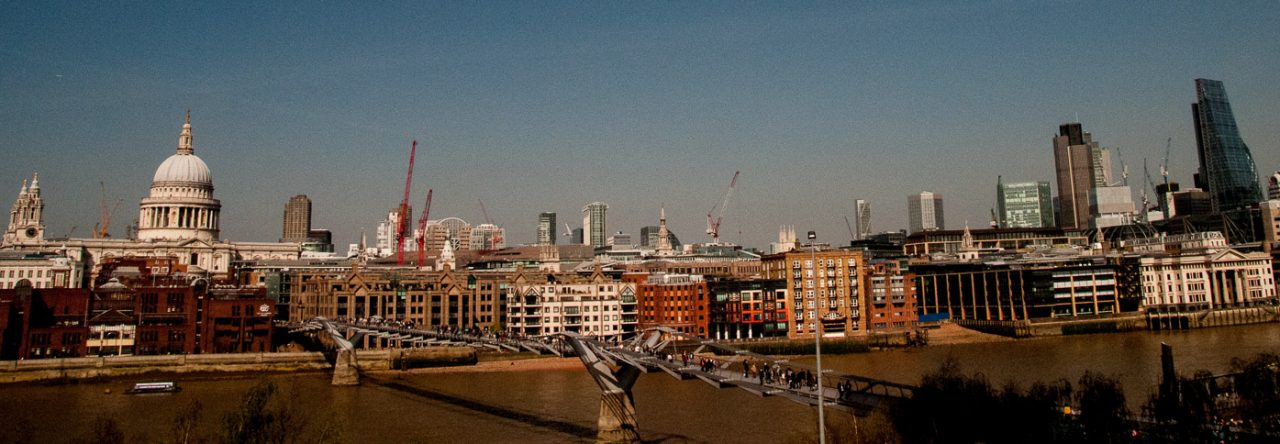
Walking the City of London

Category: Wartime Page 8 of 16

From Submariners to the Blitz Firefighters – a walk along Embankment towards St Paul’s.

A lovely Sunny day last Saturday tempted me out for a walk.

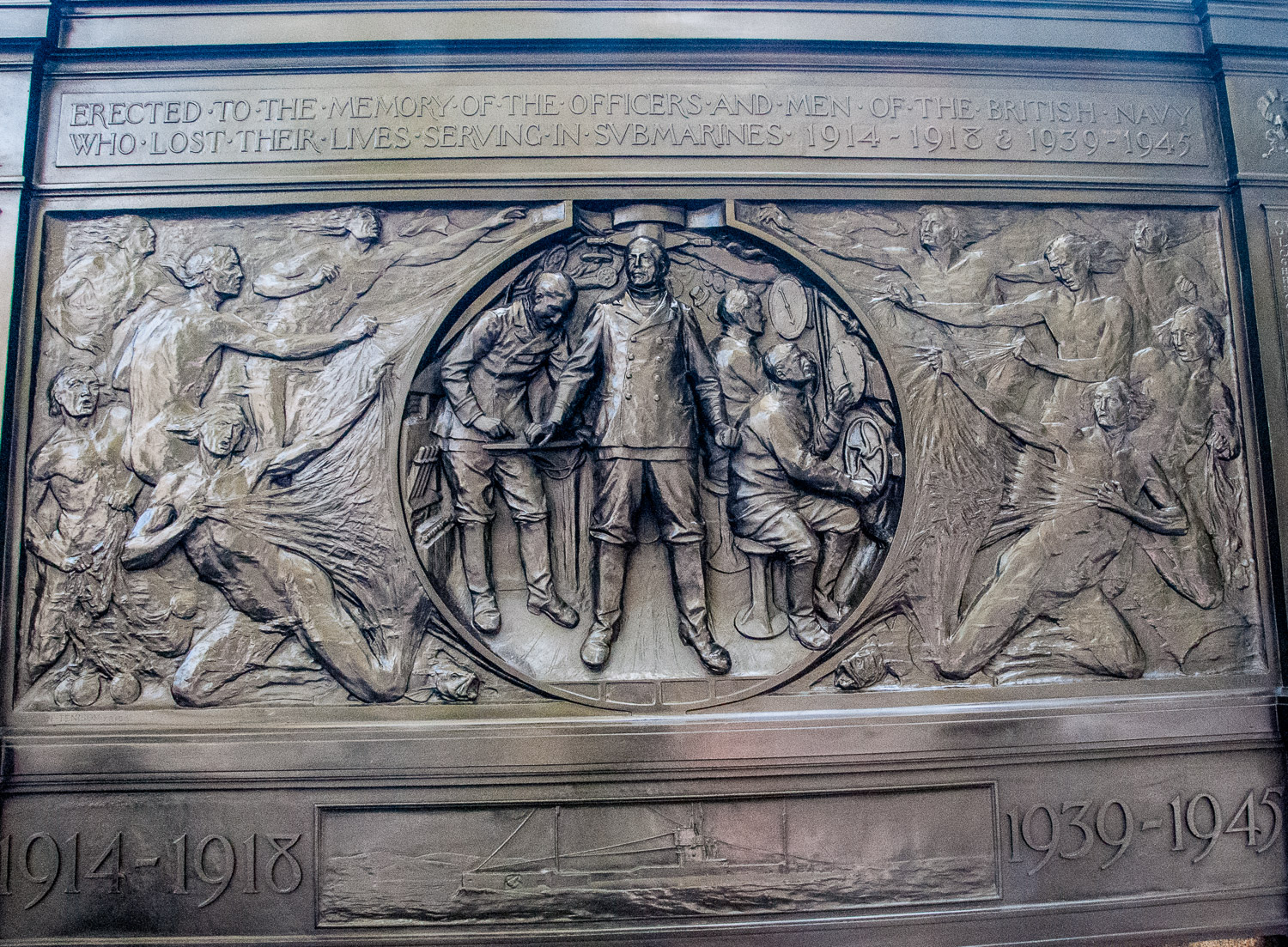
The national Submarine Memorial Memorial on Victoria Embankment (EC4Y 0HJ) is, I think, one of London’s most moving.

Although able to hide when submerged, once struck the vessels were often unable to rise to the surface and became effectively underwater coffins. In the First World War fifty four boats were lost and with them the lives of 138 officers and 1,225 men. At the inauguration in 1922 Rear Admiral Sinclair, the Chief of the Submarine Service, reminded those present that, during the Great War …

The number of those killed in the Submarine Service was greater in proportion to its size than any other branch of His Majesty’s fighting forces … one third of the total personnel.

In November 1959 new panels commemorating Second World war losses were unveiled by Rear Admiral B W Taylor.

Wright and Moore, writing for the 20th Century Architecture website, describe the memorial as a complex mixture of narrative and symbolism …

Sculptor: F B Hitch Architect: A H R Tenison Founder: E J Parlanti

The central figures recreate the scene set inside the submarine exaggerating it into a small, claustrophobic tunnel. The crew use charts and follow dials, the captain is braced at the centre with the periscope behind his head. Around the vessel a shallow relief depicts an array of sea creatures or mermen appearing to trap and haul the submarine in fishing nets, reminding us that the submarines were as much prey to the tempestuous elements as they were to the enemy.

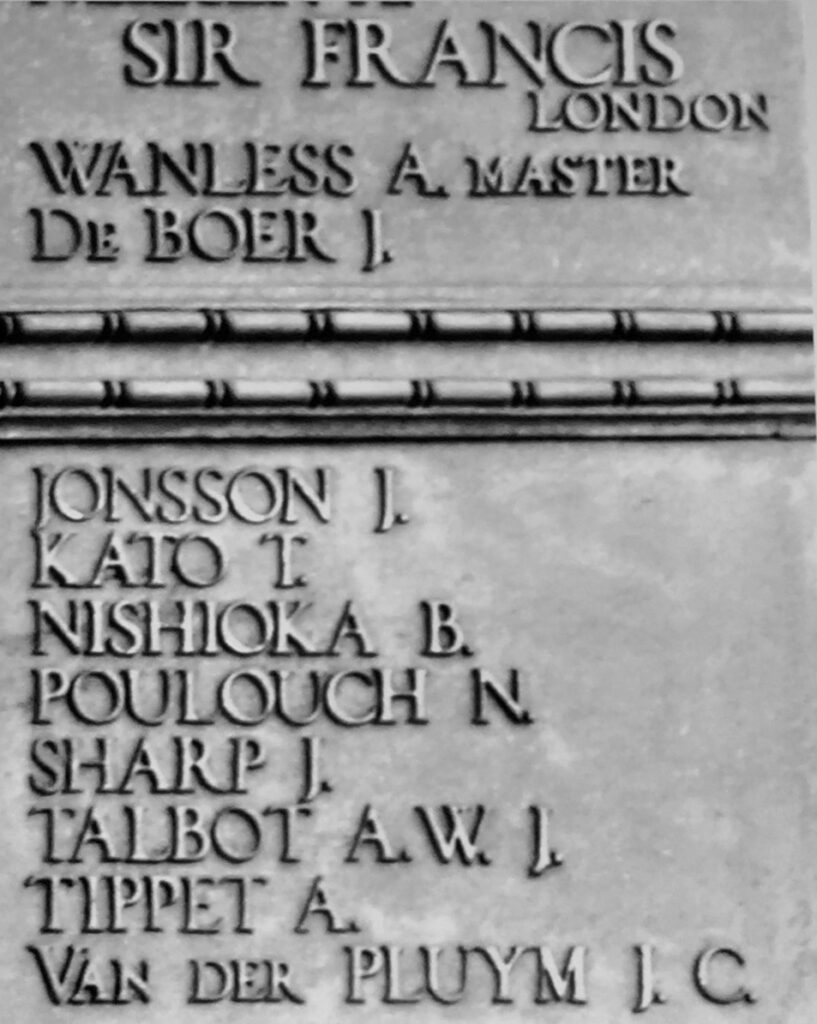
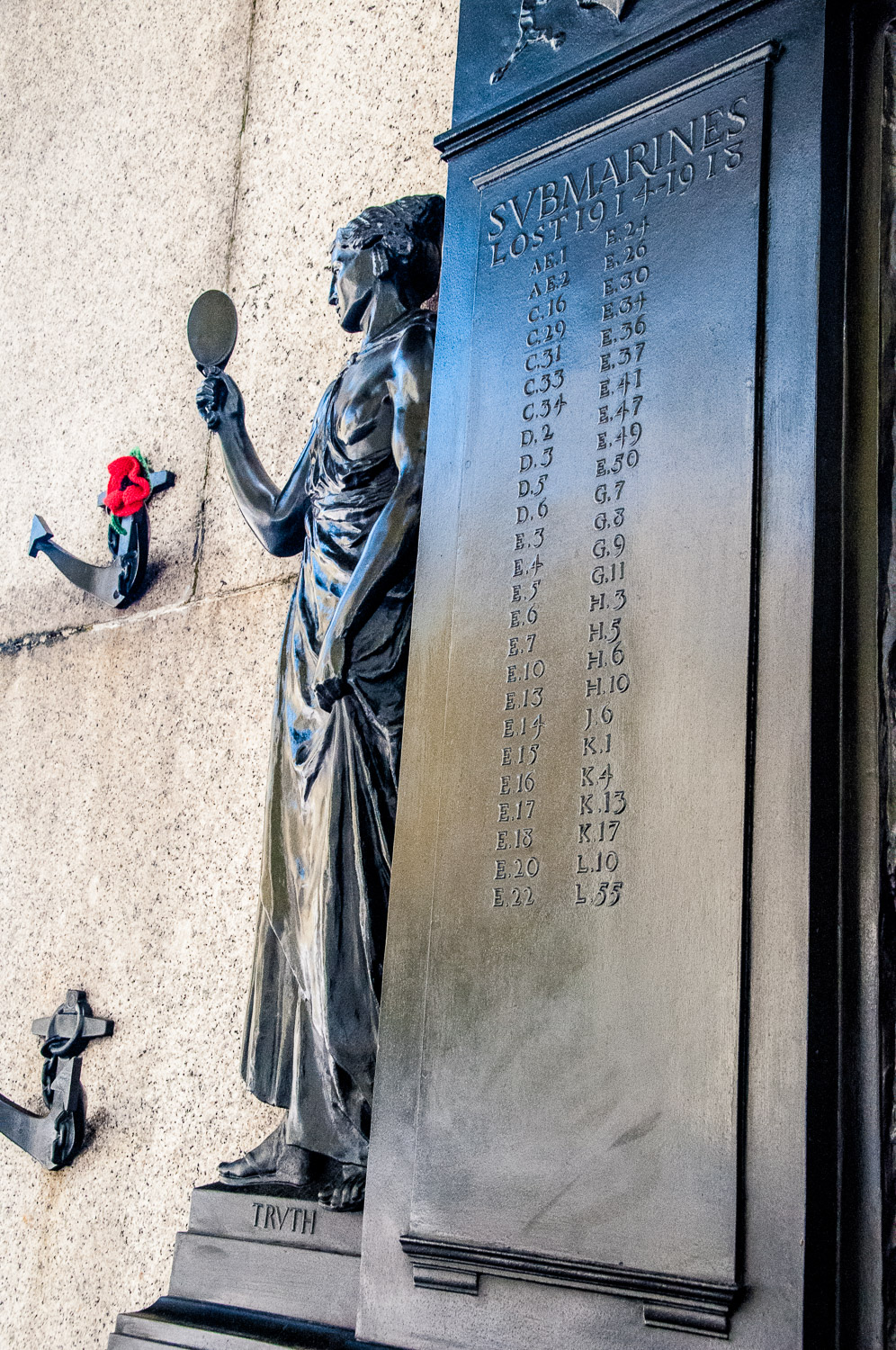
On both corners are allegorical figures. Next to the list of vessels lost between 1914 and 1918, Truth holds up her mirror. Just further to the left in the picture are two of the 40 bronze wreath hooks in the form of anchors …

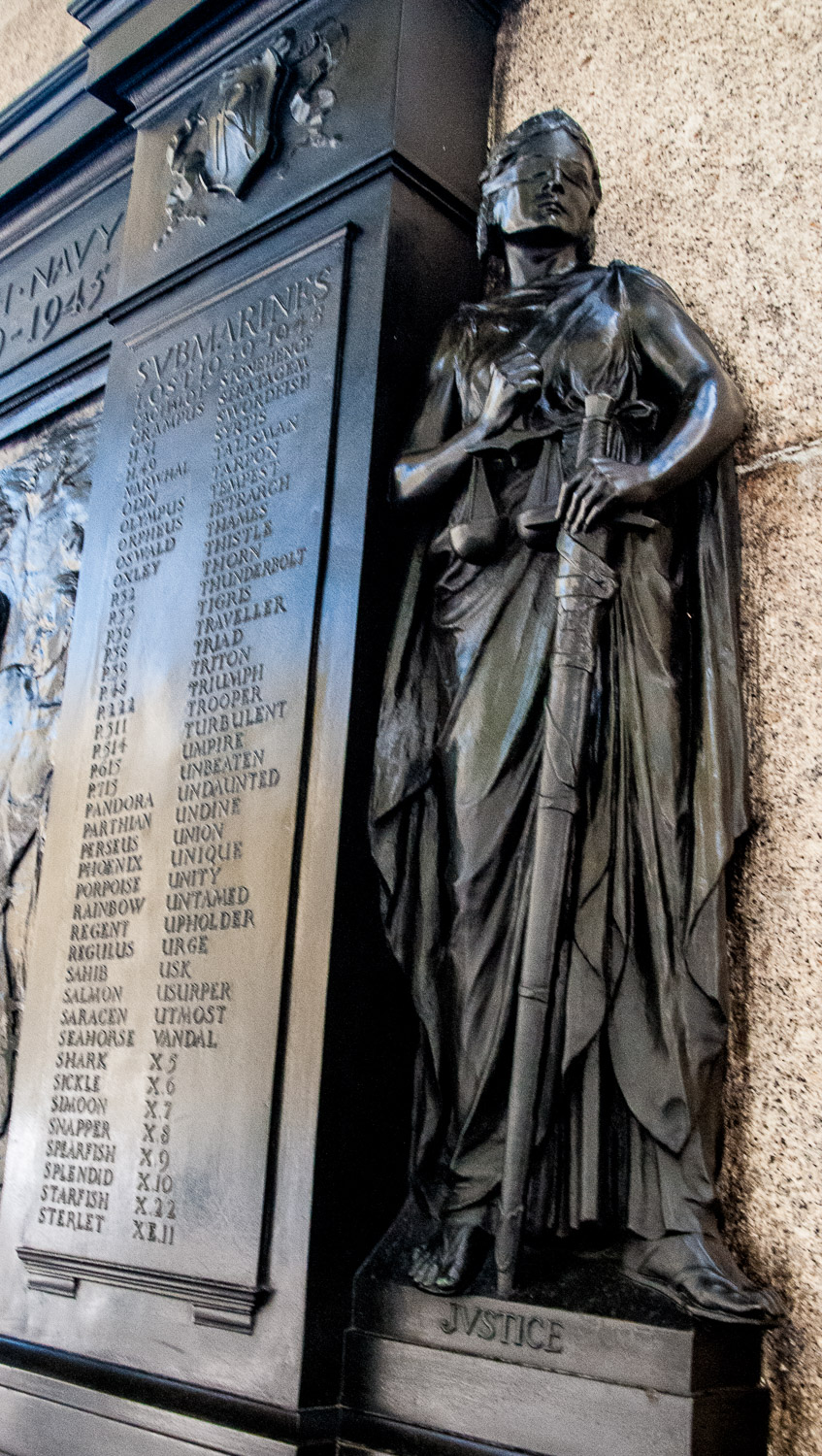
On the right, next to the vessels lost in the Second World War, Justice wears a blindfold and as usual holds a sword and scales …

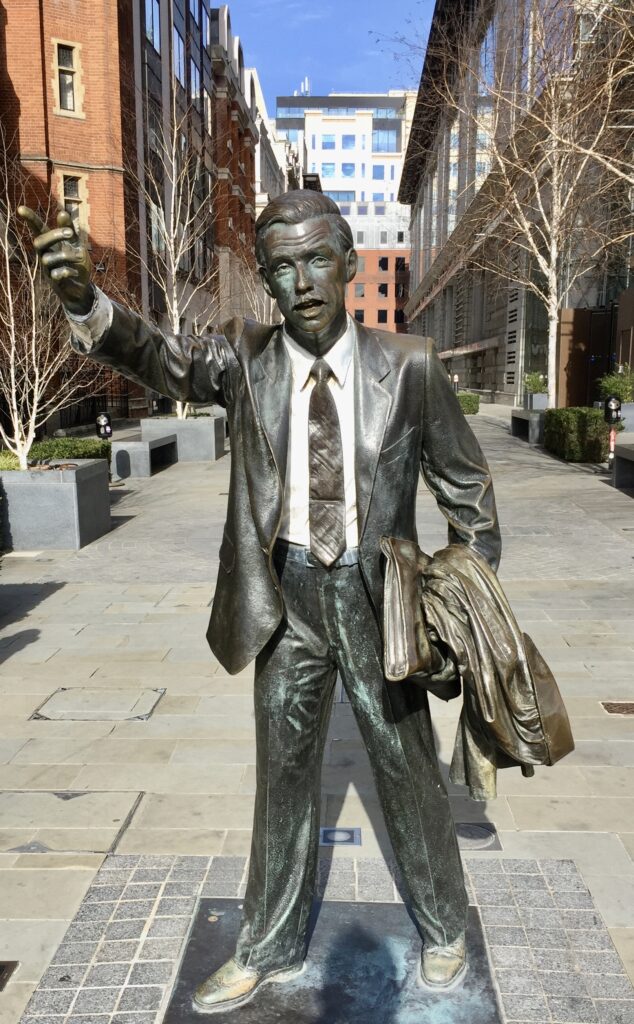
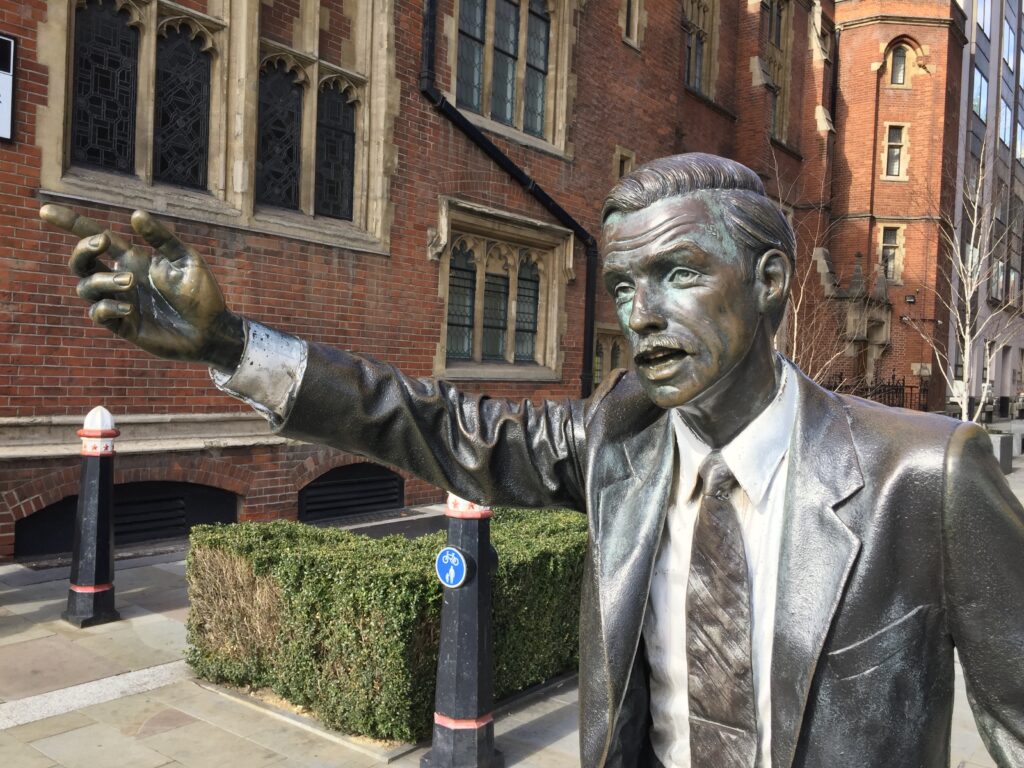
On a more lighthearted vein, walk east from the Memorial on the north side of the road and you’ll find this chap frantically trying to hail a taxi …

Taxi! by the American Sculptor J Seward Johnson is cast bronze and is now interestingly weathered. If you think the baggy trousers, moustache and side parting are erring on the retro, that’s because this particular office worker was transferred from New York in 2014. It was sculpted in 1983 and originally stood on Park Avenue and 47th Street.

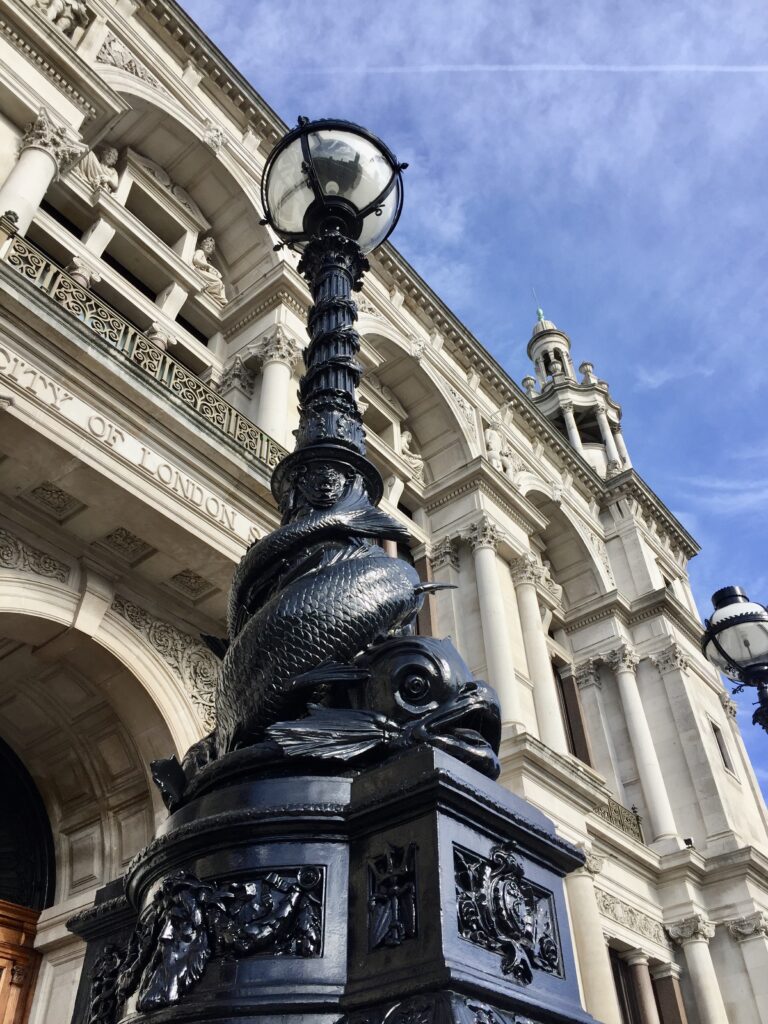
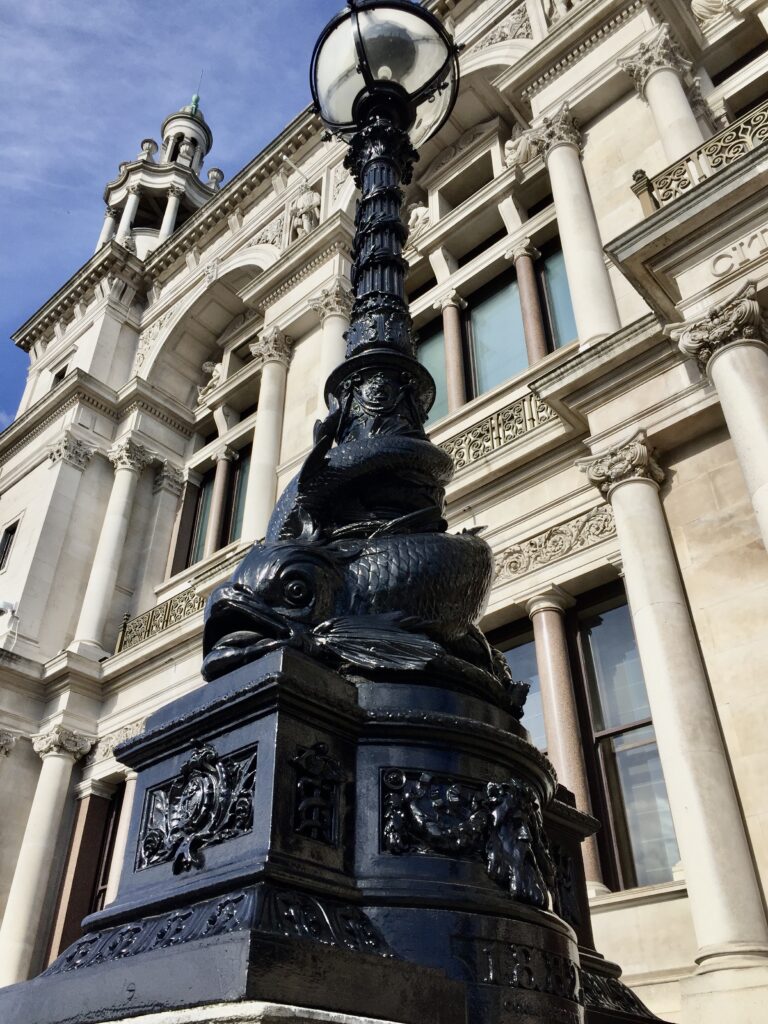
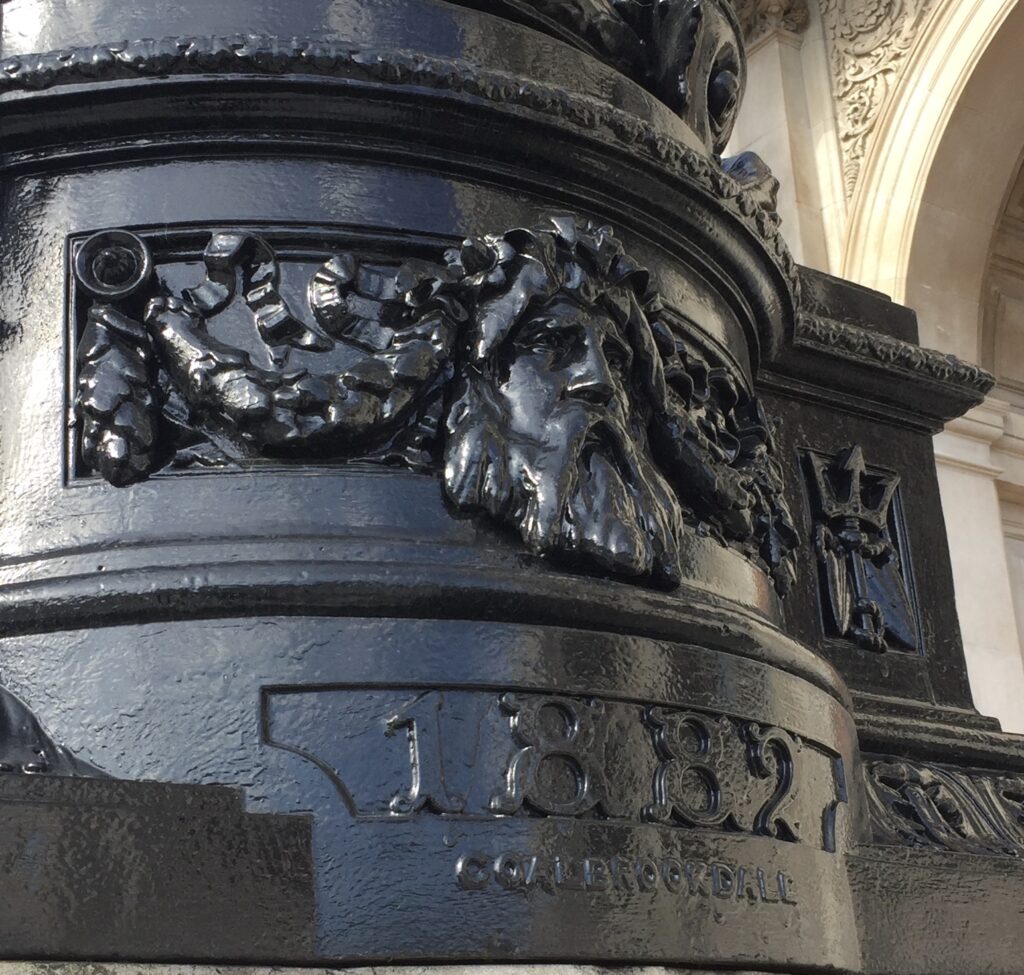
I love this pair of ‘dolphin’ lamps (although they are actually sturgeon) ..

Neptune also makes an appearance …

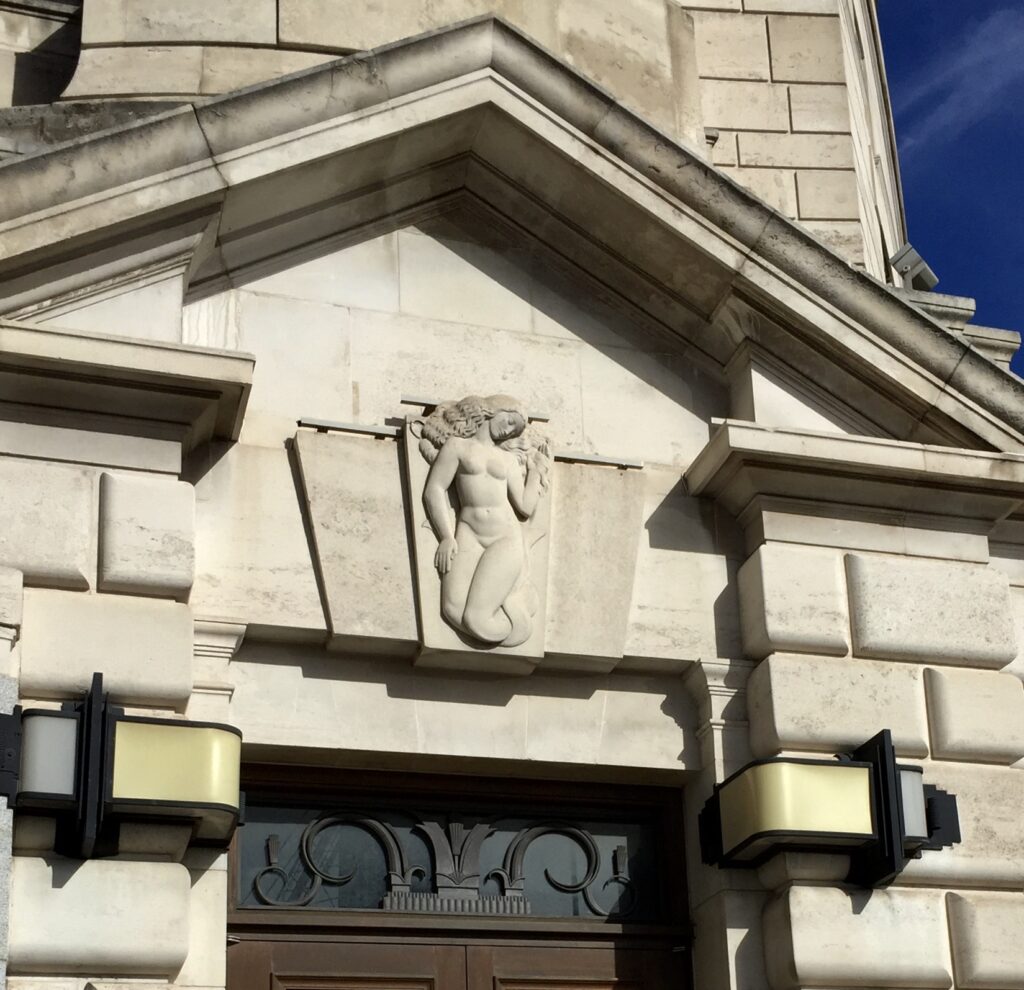
Further east you can wave to the pretty mermaid who embellishes the Art Deco style Unilever Building …

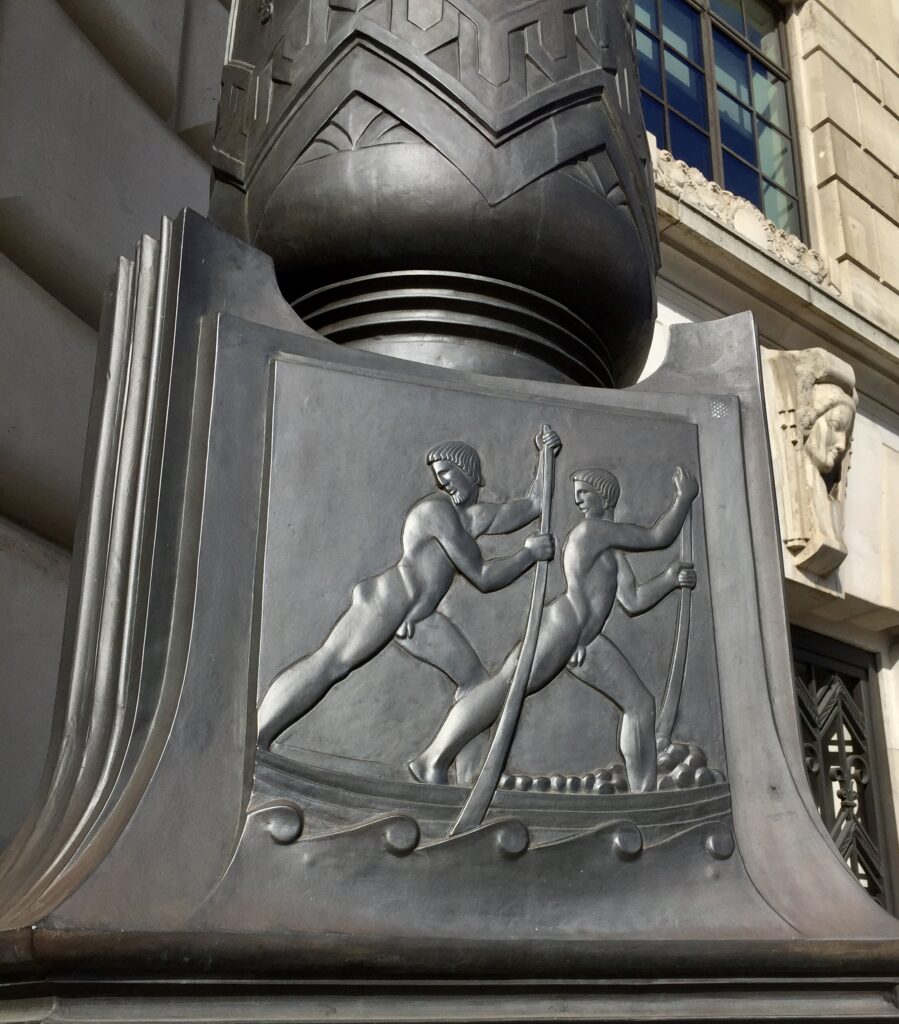
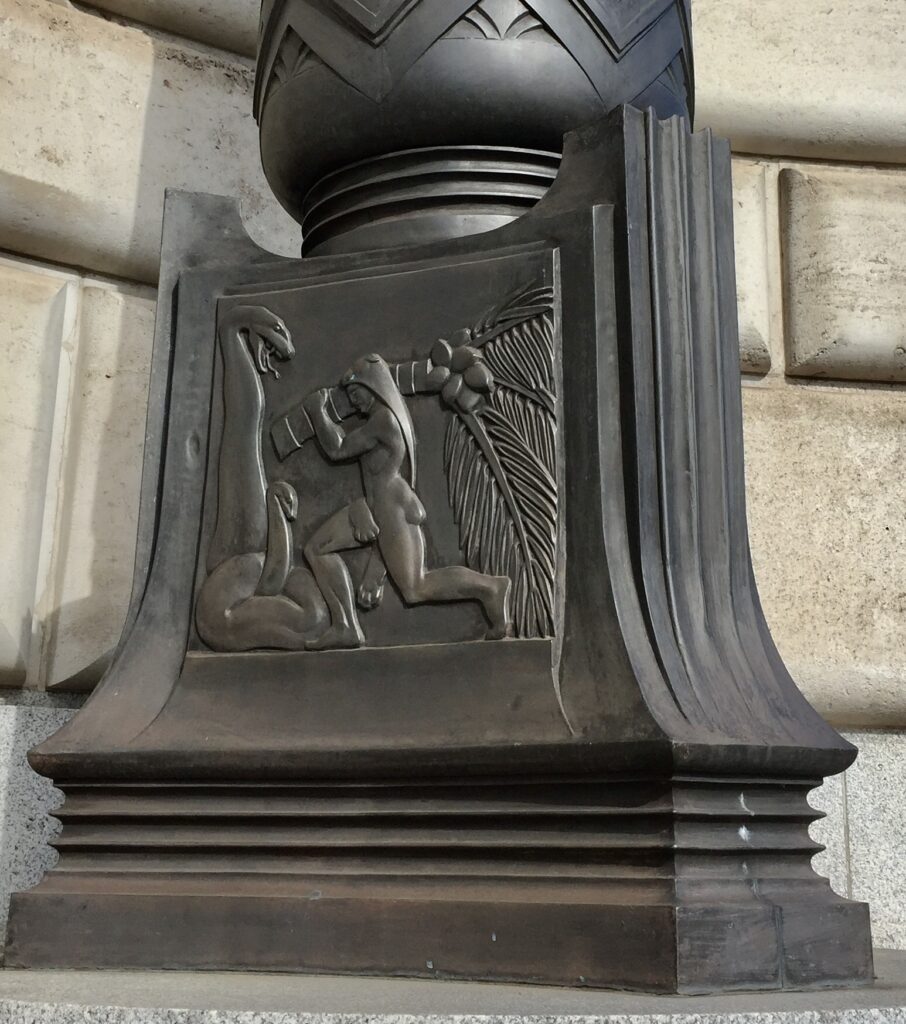
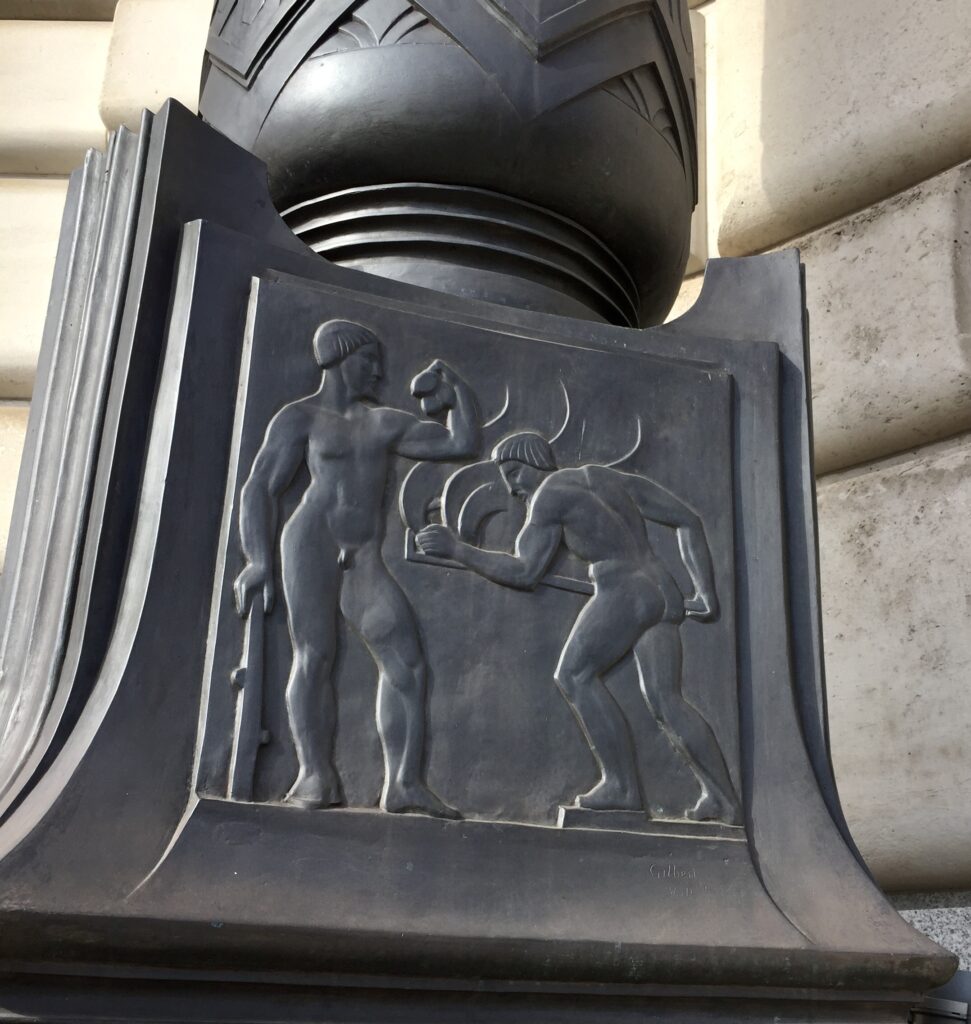
Further along the lamps repay detailed study …

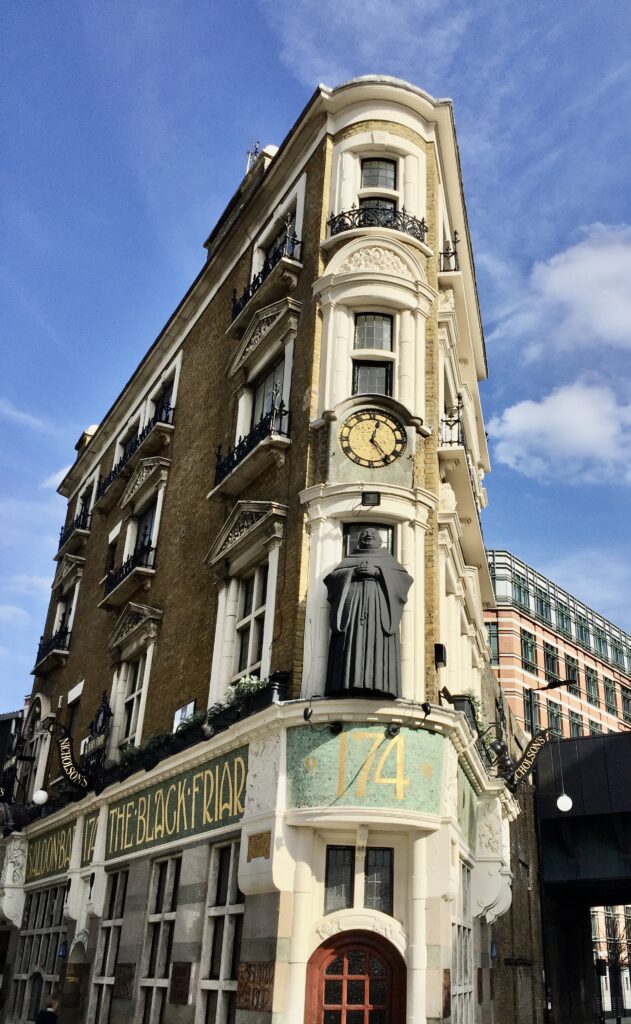
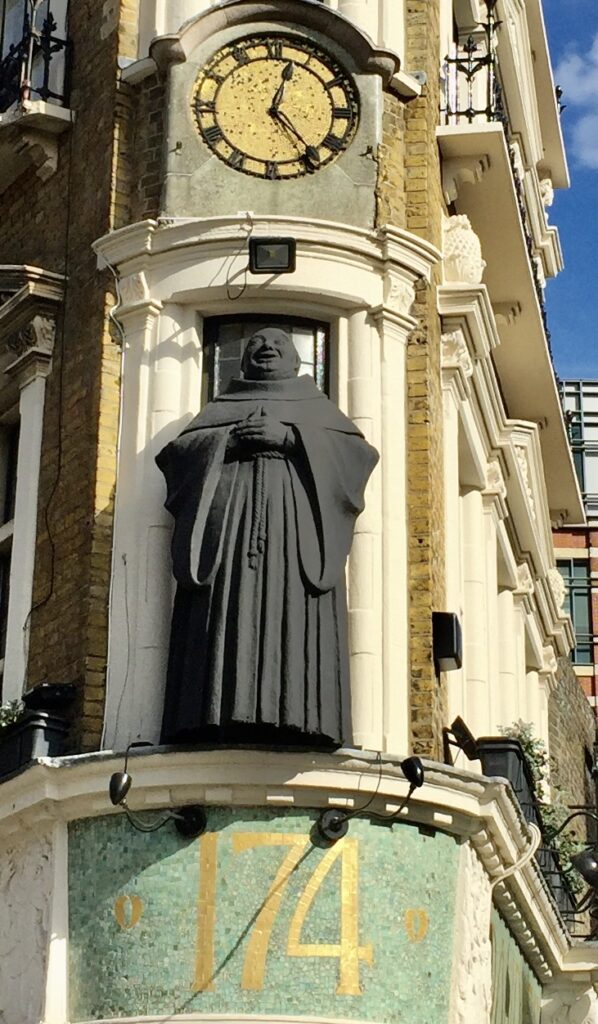
Across the road, a jolly friar looks down from the Blackfriar pub …

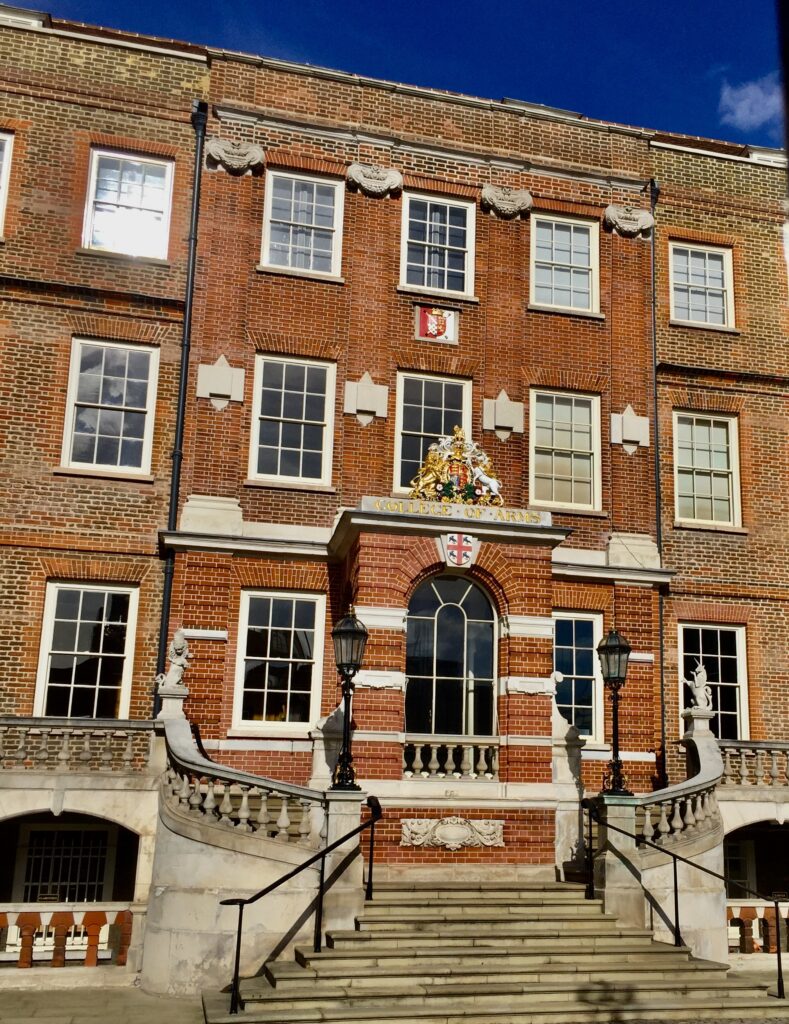
Carry on along Queen Victoria Street and admire the imposing College of Arms building …

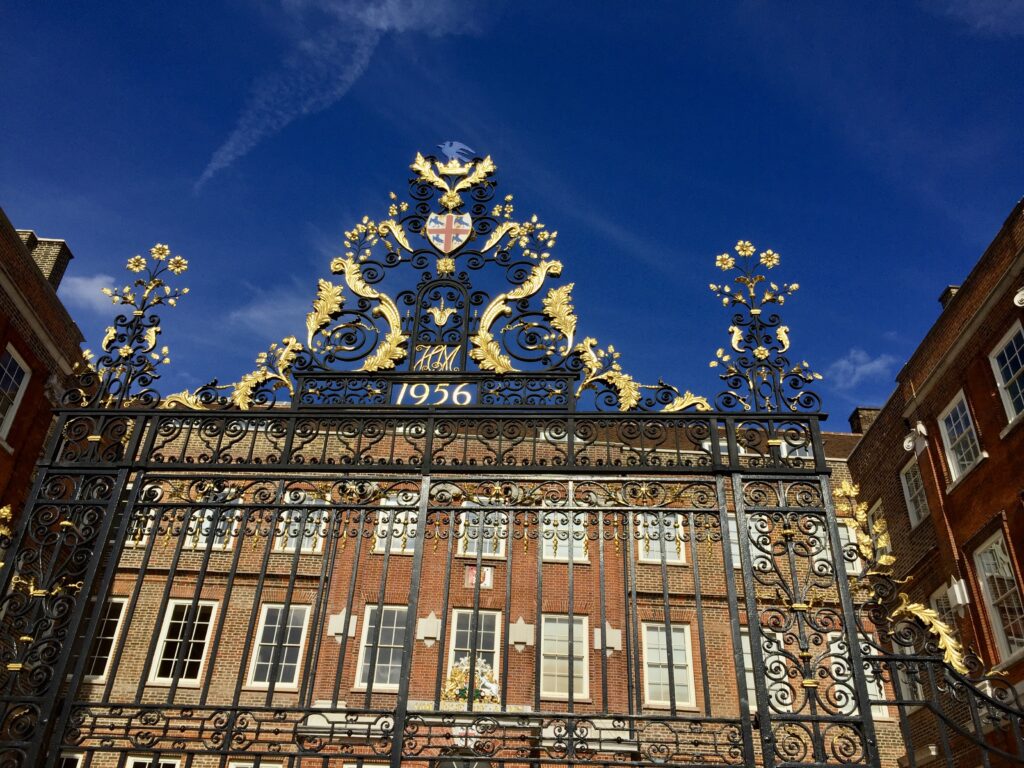
… and its ornate gate …

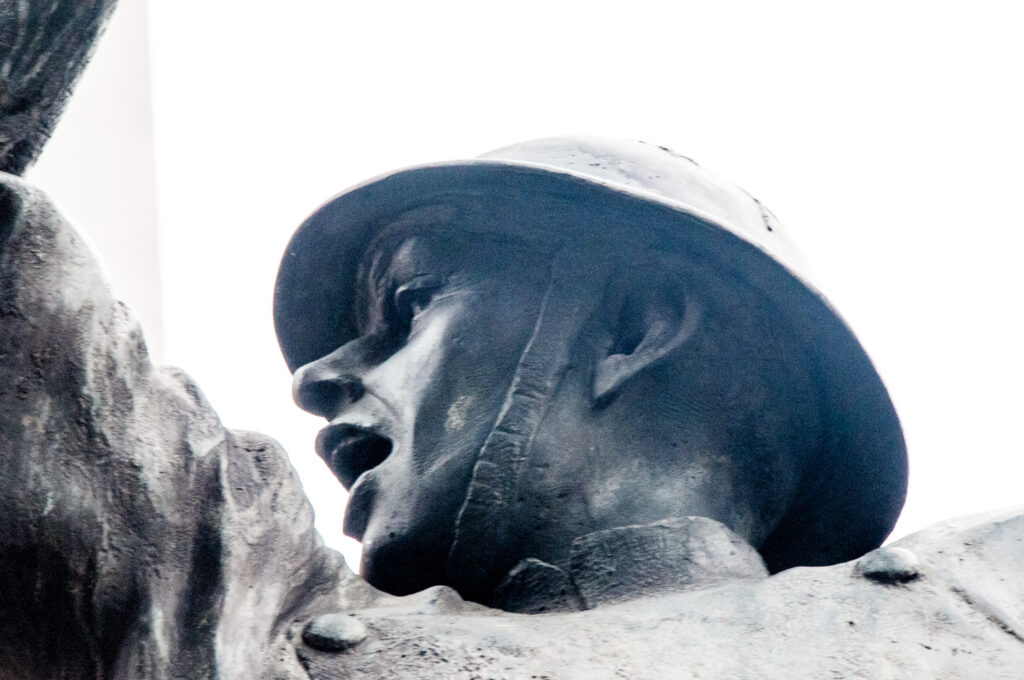
St Peter’s Hill runs north alongside the College and at the top you will find the Firefighters Memorial. On its octagonal bronze base are the names of the 997 men and women of the fire service who lost their lives during the conflict. The sculpture features two firemen ‘working a branch’, with their legs spread to take the strain of the hose …

A sub-officer directs others to assist. There are clues to the identity of this figure scattered among the debris at the figures’ feet: the letters CTD for C.T. Demarne. At the unveiling, his colleagues from the fire service claimed that there was no need for such clues. One who was interviewed by the Telegraph stated: ‘You can tell it’s Cyril by the way he’s standing…he always waved his arms about like that when he was ordering us about’.

Officer Demarne in full flow.

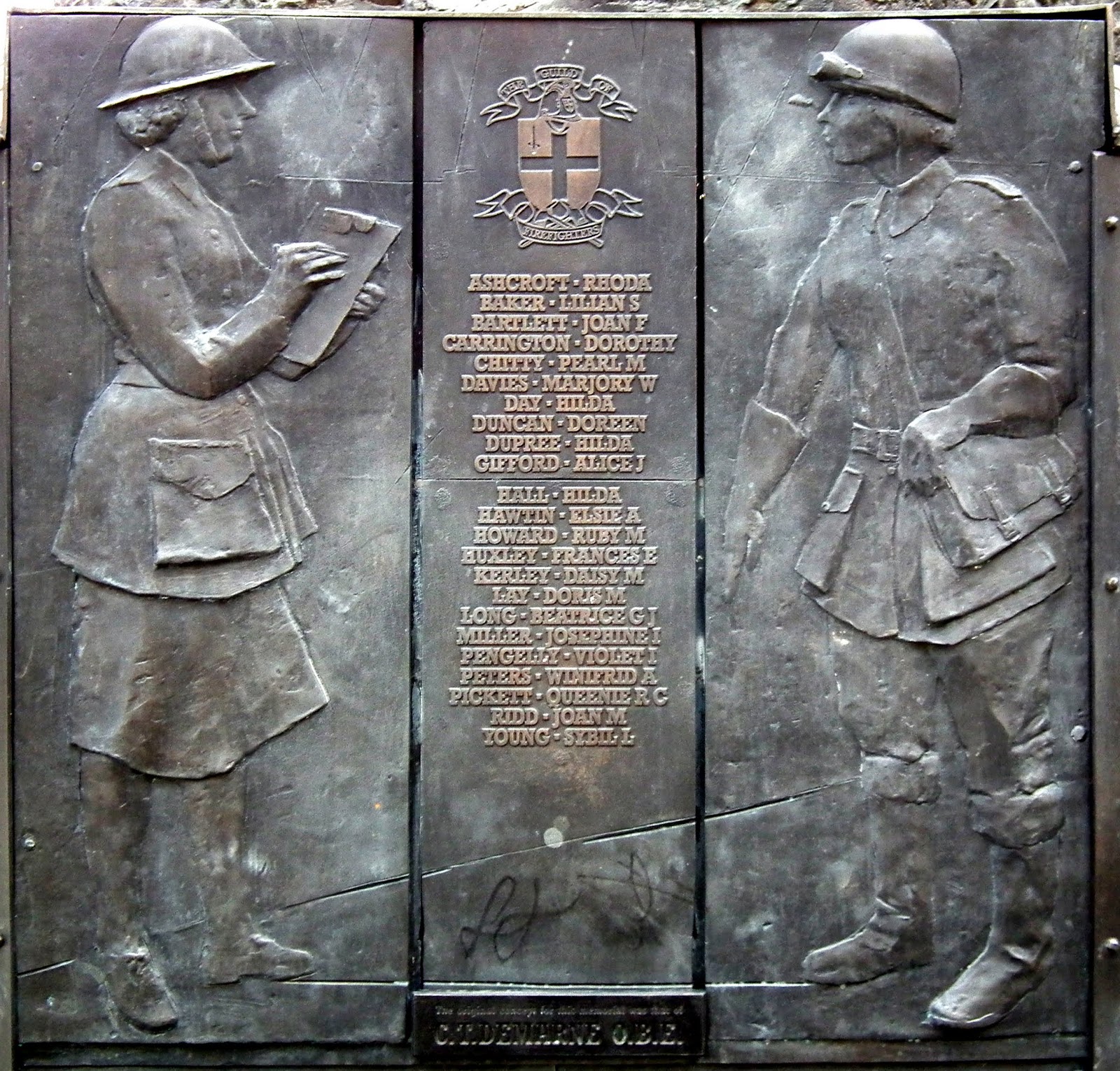
By 1943 over 70,00 women had enrolled in the National Fire Service in the United Kingdom. This memorial commemorates those who lost their lives in the London bombings …

The lady on the left is an incident recorder and the one on the right a despatch rider.

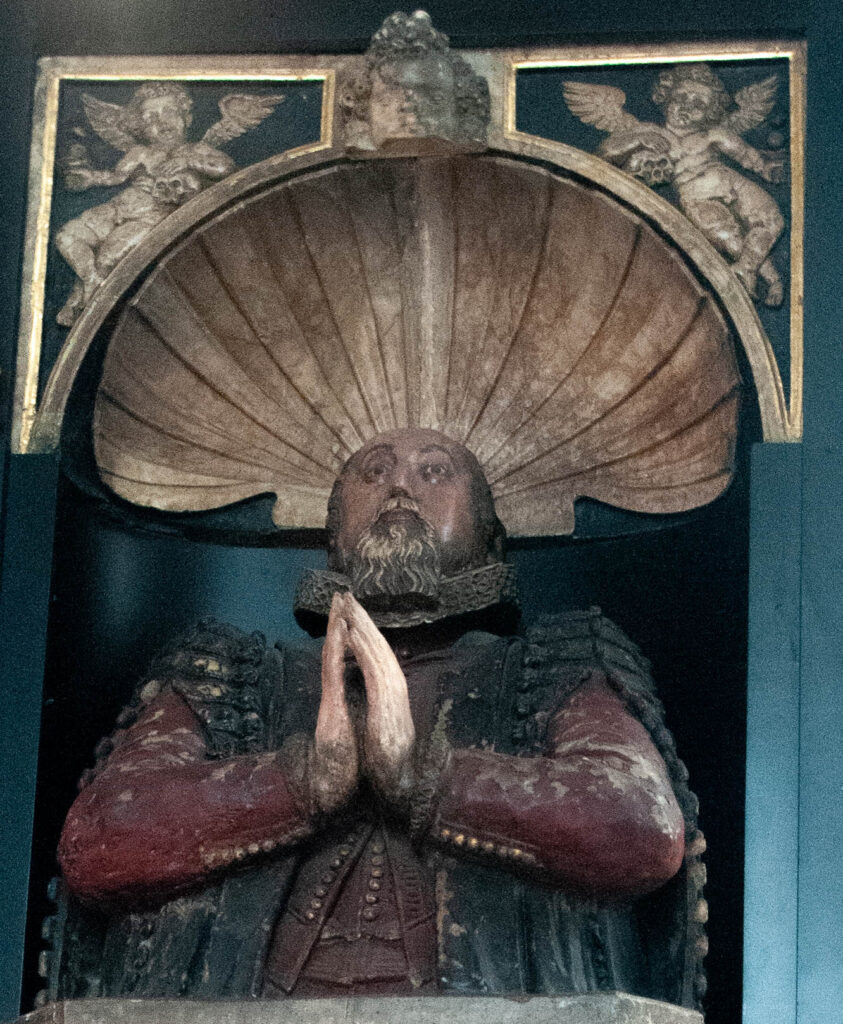
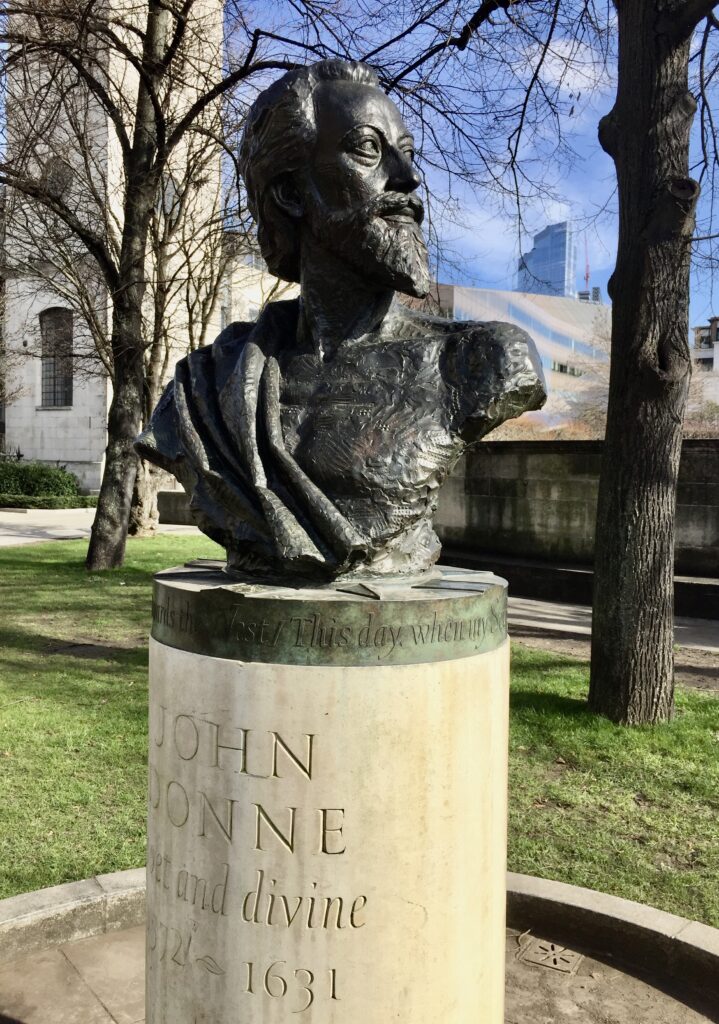
Across the road, just south of the Cathedral, is this rather handsome bearded gentleman …

John Donne 1572-1631 by Nigel Boonham (2012).

In 1617, two years after his ordination, Donne’s wife died at age 33 after giving birth to a stillborn child, their twelfth. Grief-stricken at having lost his emotional anchor, Donne vowed never to marry again, even though he was left with the task of raising his ten surviving children in modest financial circumstances. His bereavement turned him fully to his vocation as an Anglican divine and, on November 22, 1621, Donne was installed as Dean of St. Paul’s Cathedral. The power and eloquence of his sermons soon secured for him a reputation as the foremost preacher in the England of his day, and he became a favourite of both Kings James I and Charles I.

His bust points almost due west but shows him turning to the east towards his birthplace on Bread Street. The directions of the compass were important to Donne in his metaphysical work: east is the Rising Sun, the Holy Land and Christ, while west is the place of decline and death. Underneath the bust are inscribed words from his poem Good Friday – Riding Westward :

Hence is’t that I am carried towards the west, This day when my soul’s form bends to the east

The most familiar quotation from Donne comes from his Meditation XVII – Devotions upon Emergent Occasions published in 1624:

‘No man is an island, entire of itself; every man is a piece of the continent, a part of the main … and therefore never send to know for whom the bell tolls, it tolls for thee.’

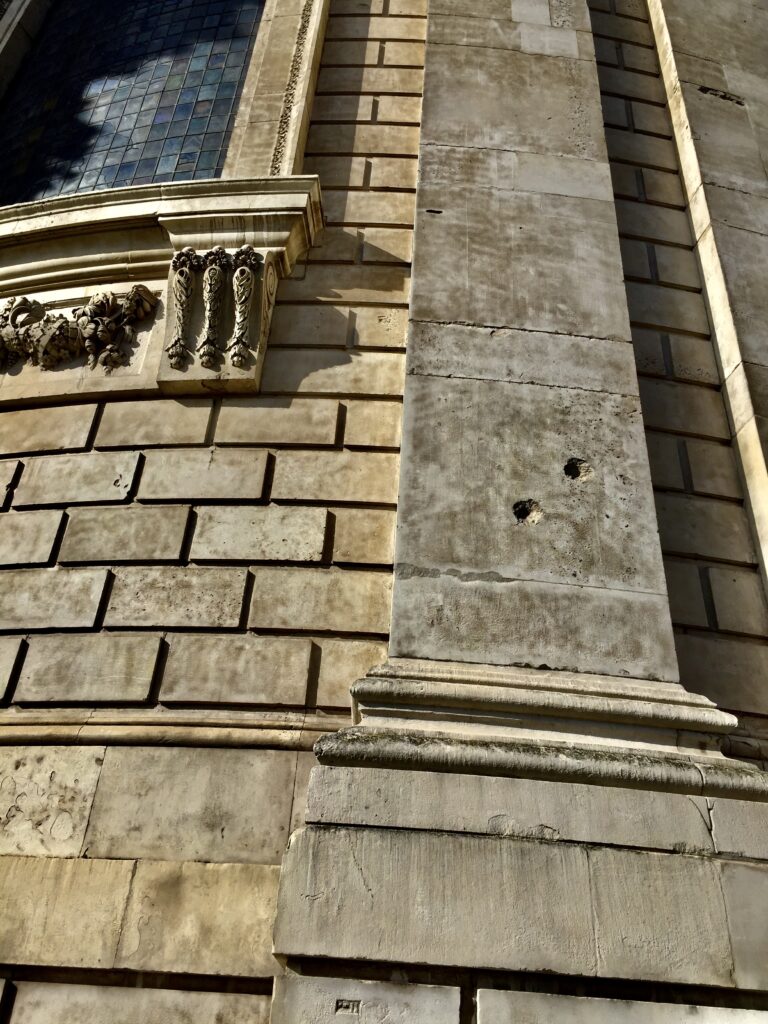
Incidentally, if you walk around the east side of the Cathedral you will see scars from the Second World War bombing which illustrate just how close the building came to destruction …

If you would like to follow me on Instagram here is the link …
https://www.instagram.com/london_city_gent/

Some things I have seen on recent wanderings – from traitors’ heads to woolly mammoths.

As regular readers will know, every now and then I like to publish some images that I have taken that don’t fit easily into any particular theme and this week’s blog is an example. They include wanderings outside the City and even London itself but I hope you will still enjoy them.

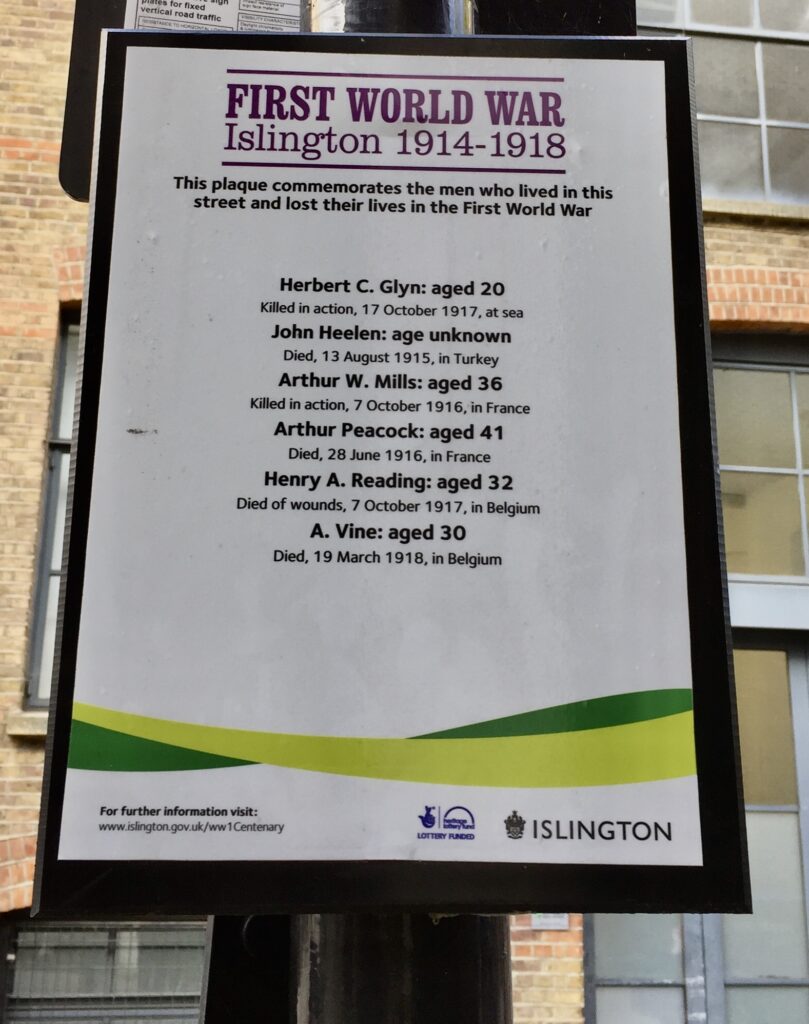
Walking down Errol Street in Islington (EC1Y 8LU – opposite Waitrose) I looked up and, for the first time, noticed this very touching memorial …

This wonderful map entitled The Streets They Left Behind is interactive. Just click on the poppies to read more about the men who never returned.

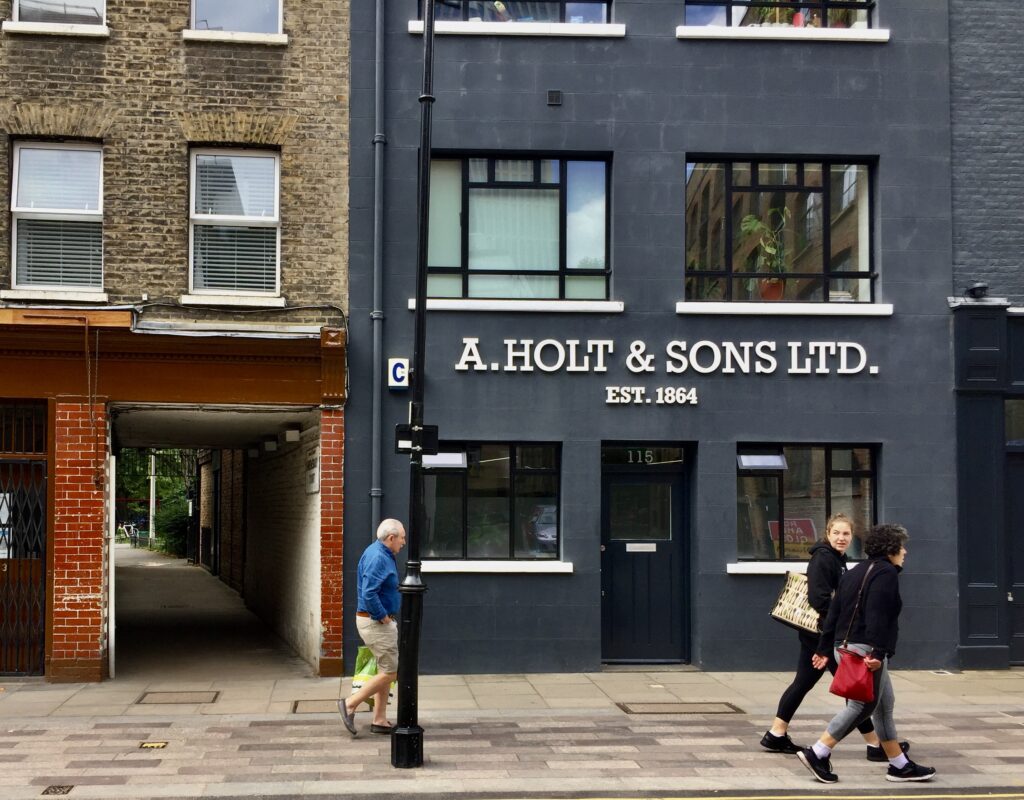
Just across the road in Whitecross Street are the premises of A Holt & Sons Ltd …

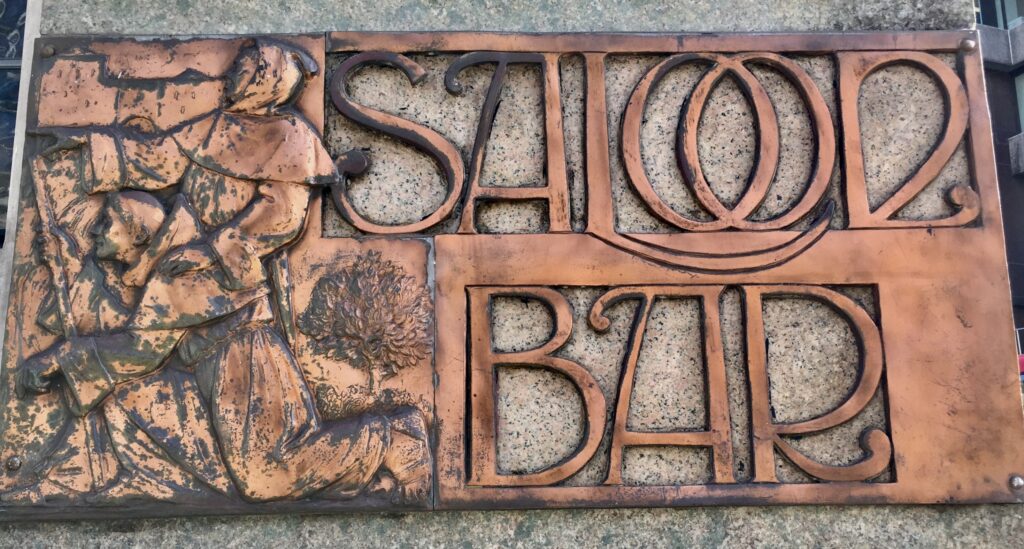
Because so many trades have moved out of the City and its adjacent boroughs, I had always assumed that the building contained flats and that the signage had been retained as a quaint ‘feature’ to attract tenants. How wrong I was!

The business (which specialises in cotton textiles) was founded by Abraham Holtz who started his enterprise on a stall nearby and who then bought these premises in 1864. It has been in the family ever since (the ‘z’ was dropped from the name at the time of the First World War). Have a look at their website for the full fascinating story.

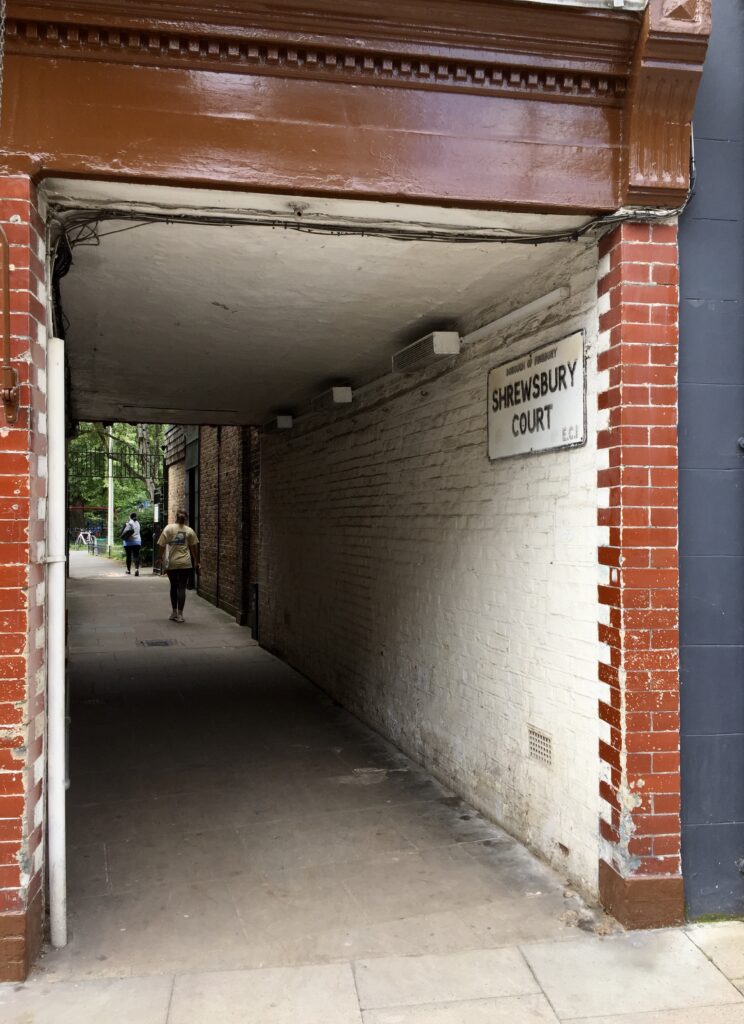
The building is adjacent to the tiny, covered alley called Shrewsbury Court …

Despite my best efforts, I haven’t been able to establish the origin of its name. You can read more about its history here in the splendid Ian Visits blog.

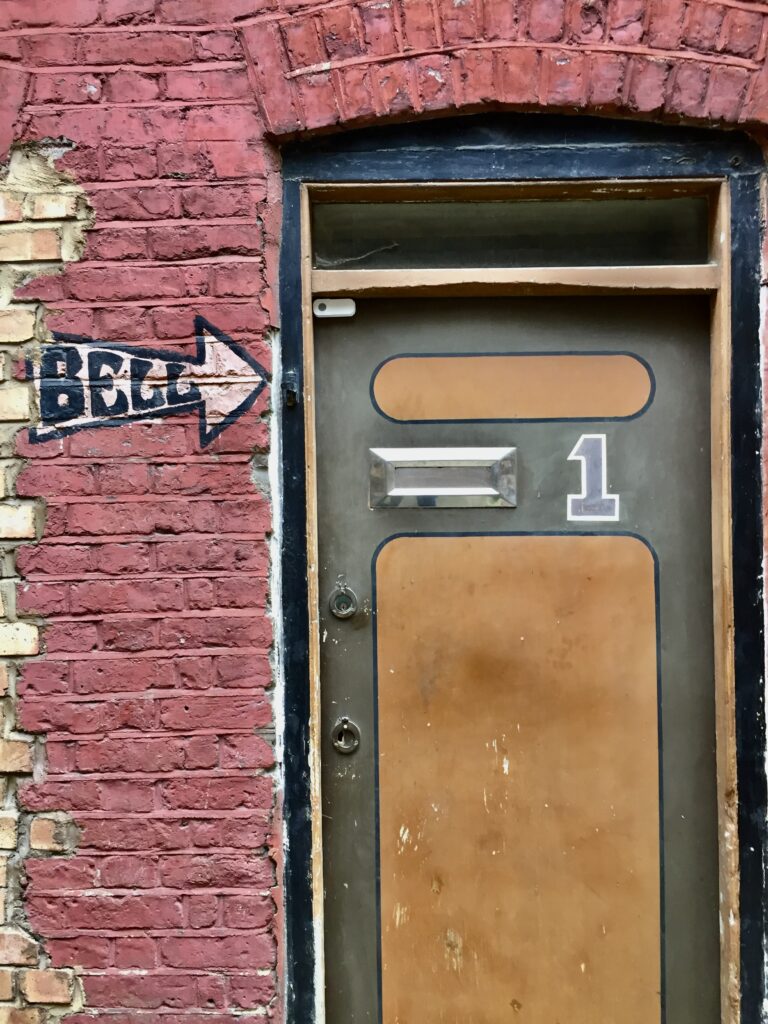
A few yards inside the alley is one of my favourite London doors. The story I have conjured up in my mind is that, some time in the early 1970s, the people living there found that visitors knocked on the door rather than ringing the bell. When asked why, callers usually said that they didn’t know there was a bell. As a consequence, the residents (who obviously had artistic talents) got out their paint brushes and added this helpful sign to indicate where the push button bell was. Brilliant!

If learning a bit more about City doors takes your fancy have a look at my blog entitled That rings a Bell.

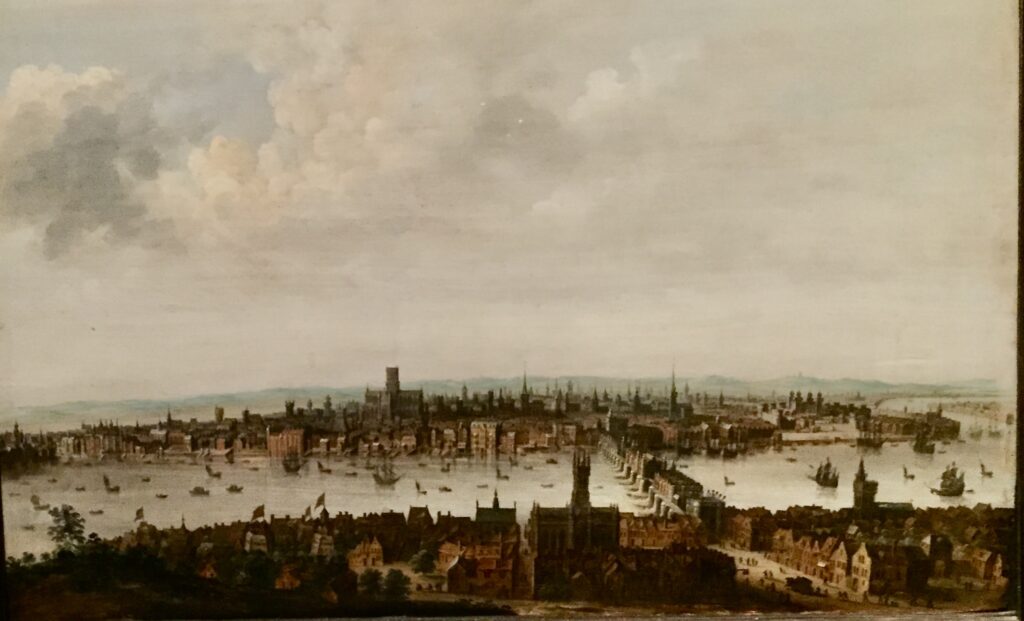
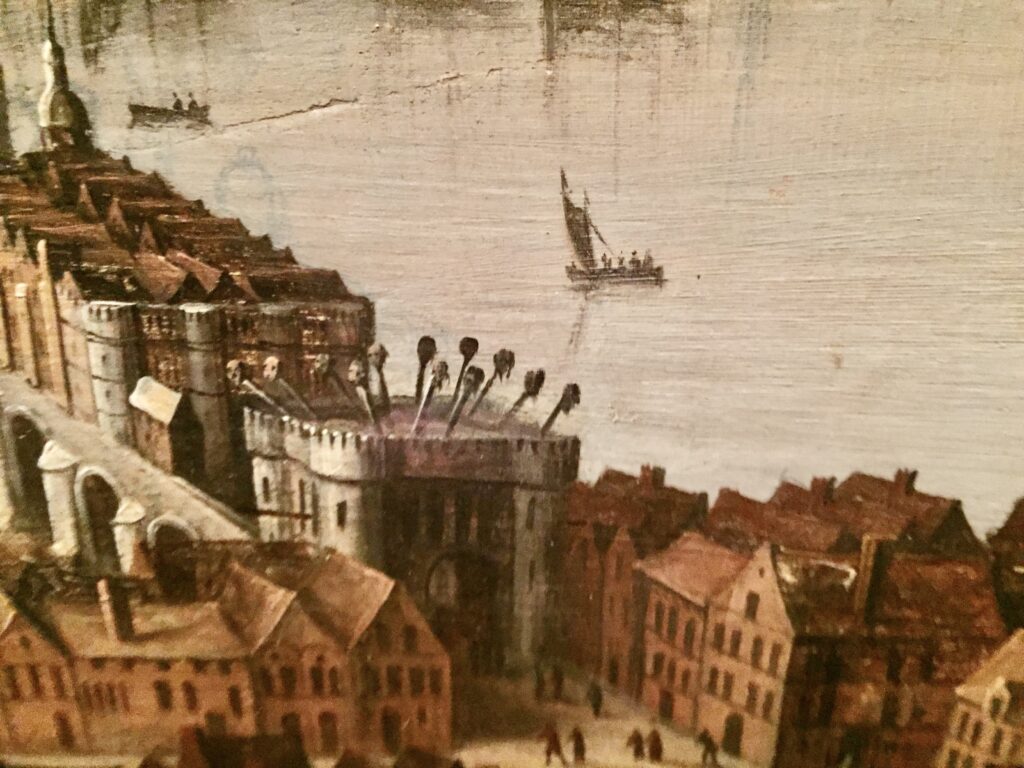
The other day at the Museum of London I was admiring this painting of London as seen from Southwark in around 1630. It’s one of the few painted records of the City before it was destroyed in the Great Fire …

My eye was drawn to London Bridge where a wide selection of traitors’ heads offered a grisly welcome to newcomers approaching from the south …

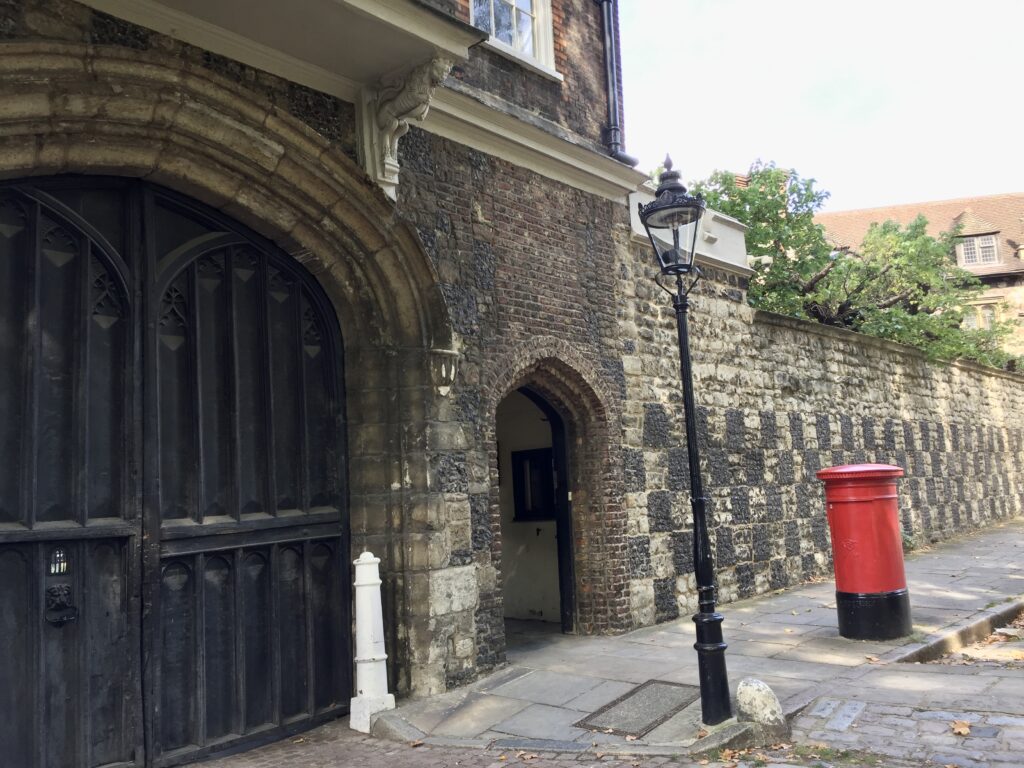
I liked this view of the outside of the Charterhouse with the very old gates, a gas lamp and an iconic red London pillar box …

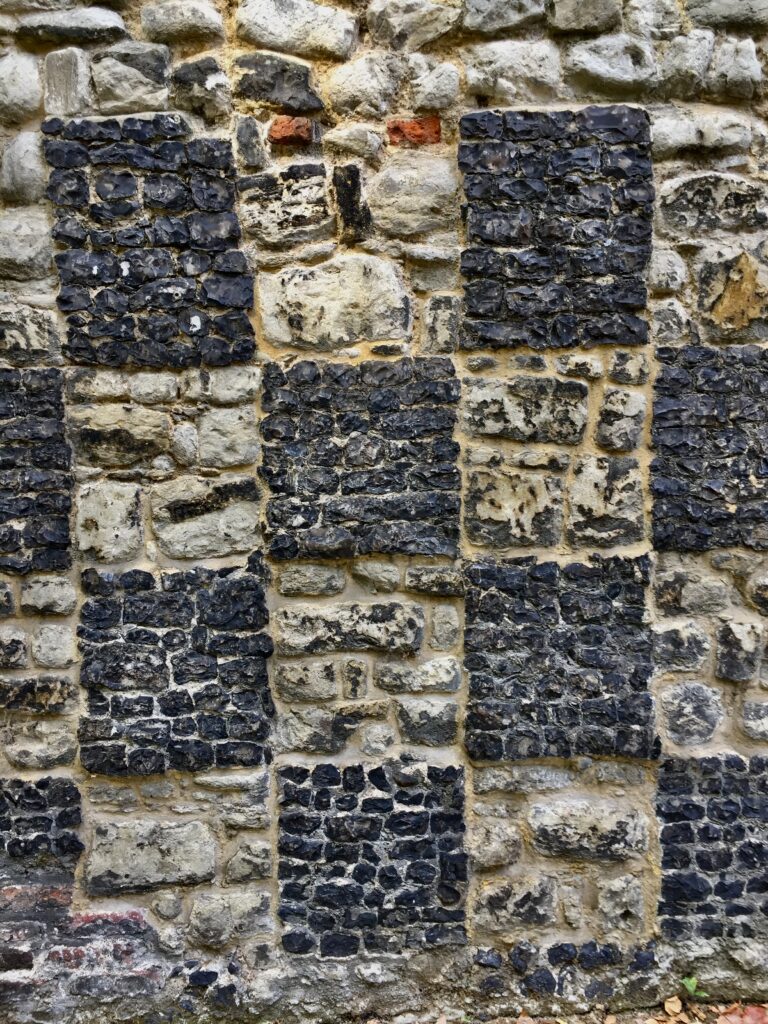
The Kentish ragstone wall is fantastic …

I wrote recently about the great Italian experience that is Eataly on Bishopsgate. Here’s some of the scrumptious produce on sale …

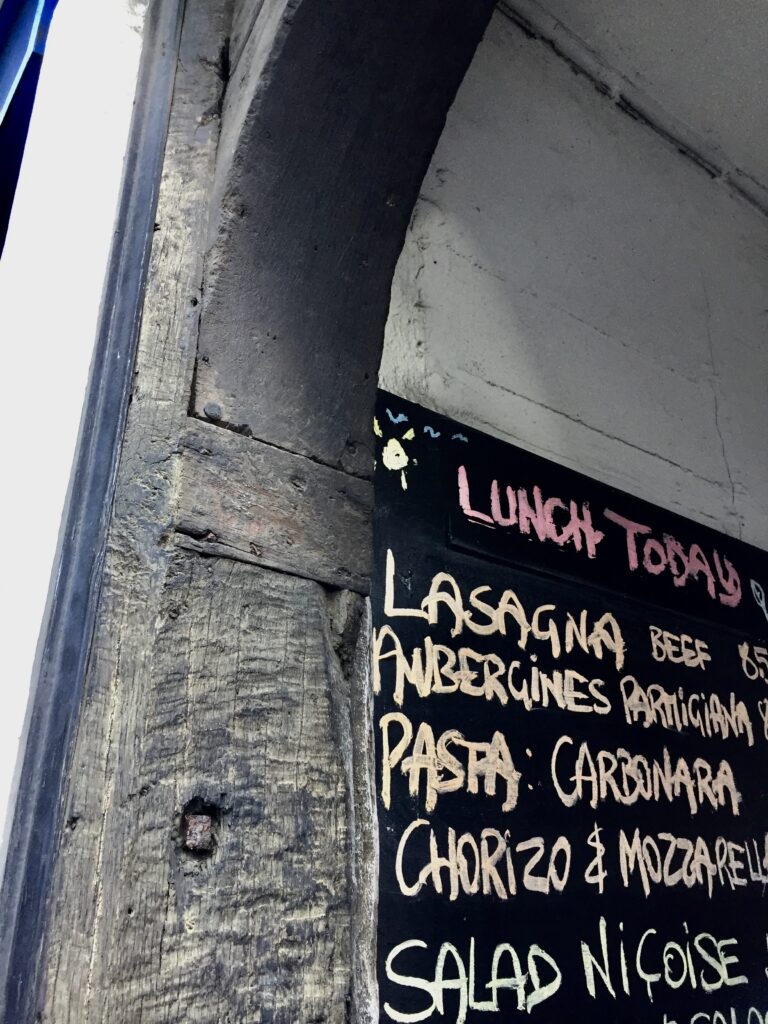
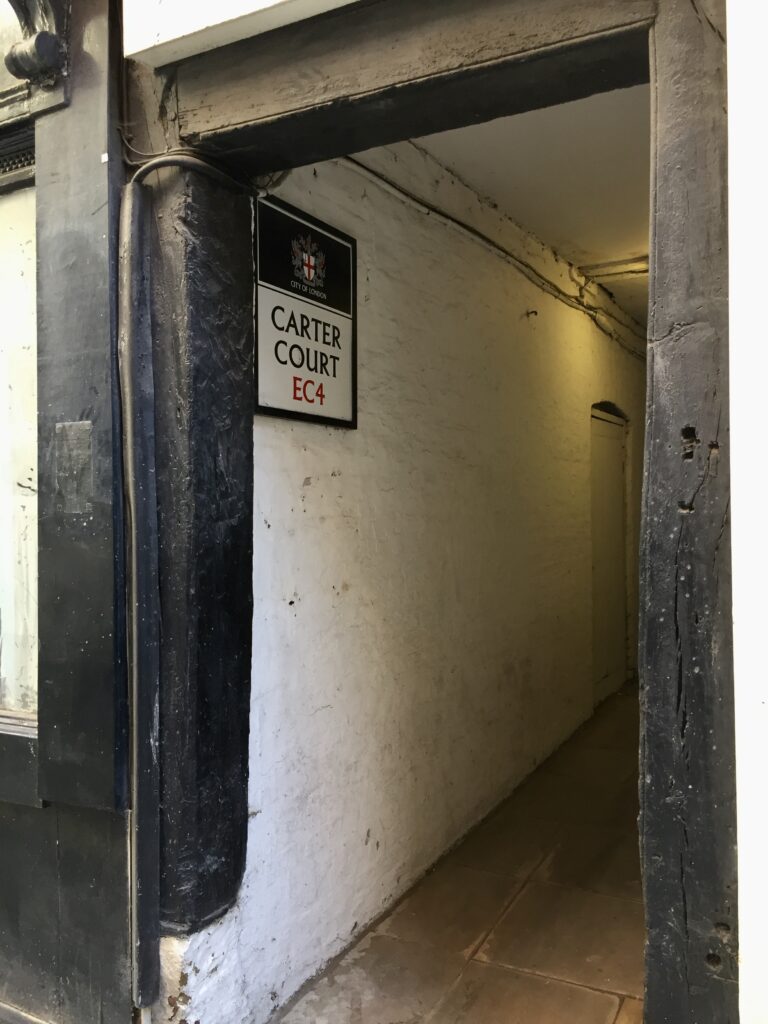
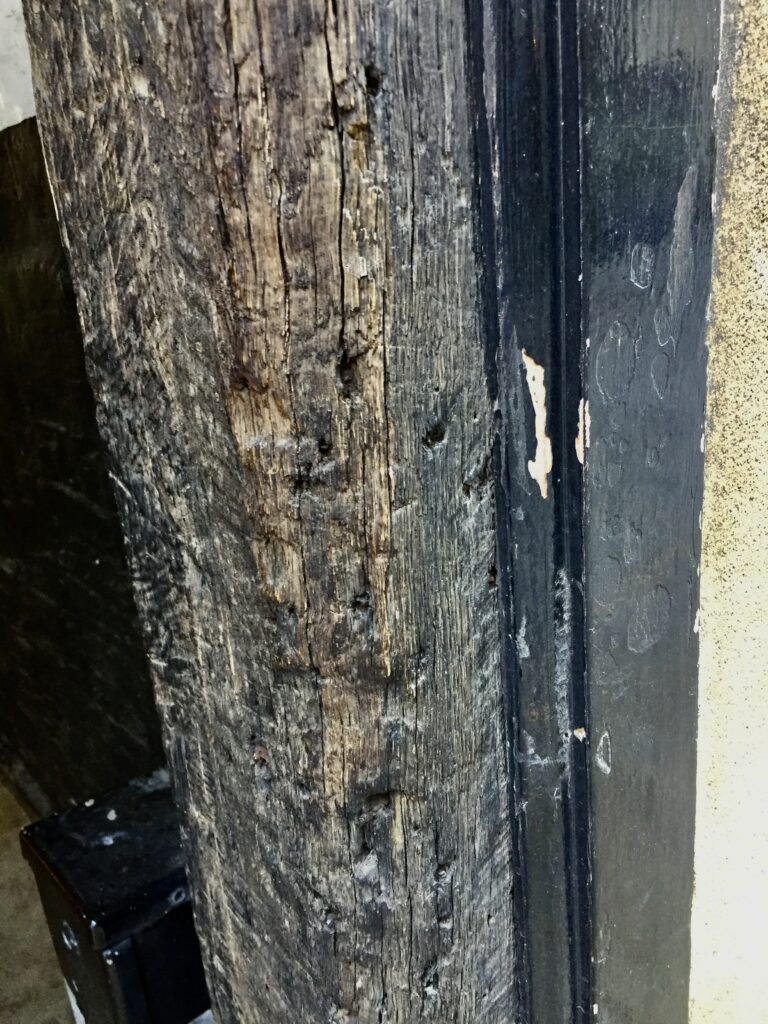
There are a few doorways around the City that have always intrigued me since the wood seems to be incredibly old and repurposed from another function. The first is on Foster Lane and the next two Carter Lane …

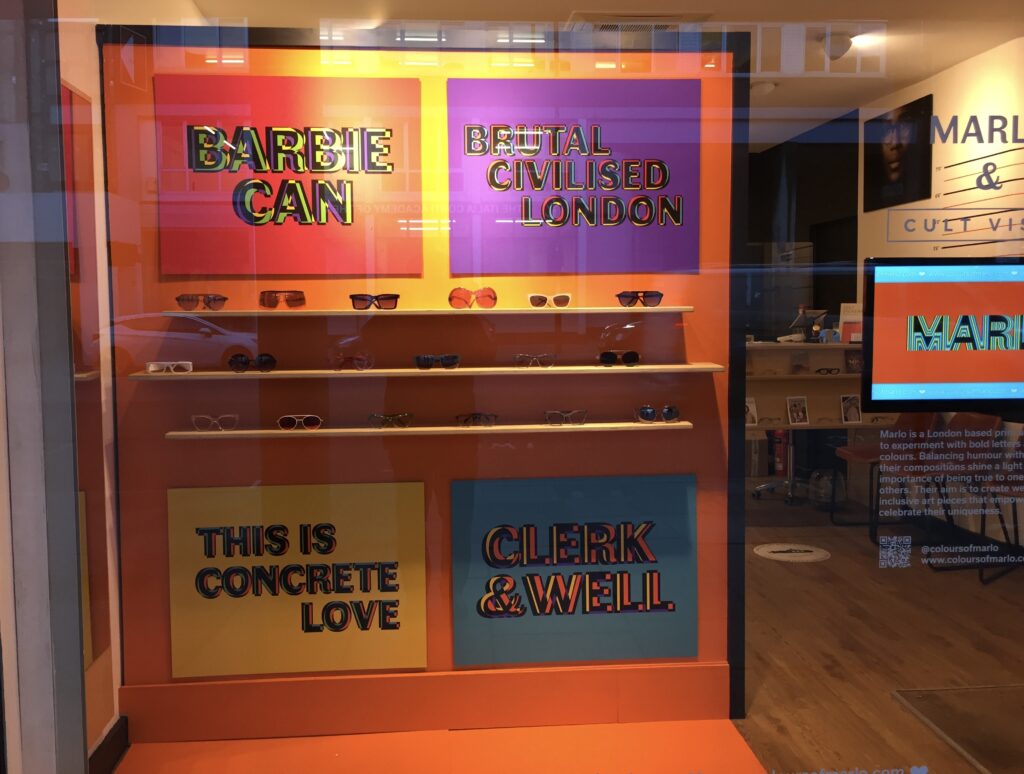
I have noticed a recent trend in City opticians to have really wacky displays that don’t seem to bear much resemblance at all to their product. This one’s in Aldersgate and is obviously referencing the nearby Barbican estate …

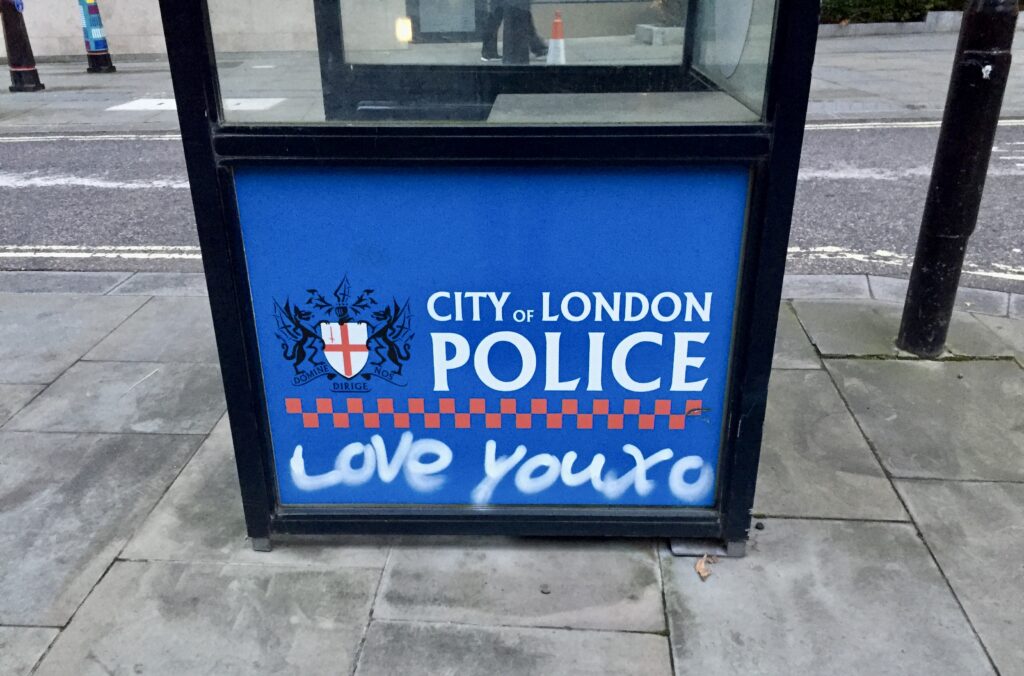
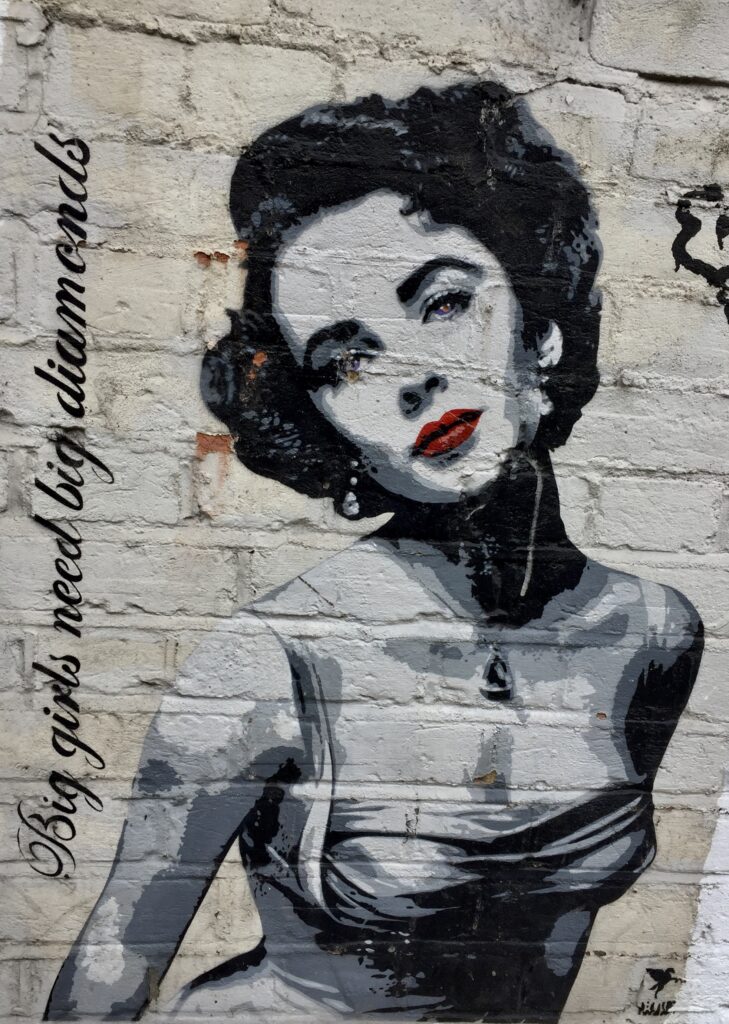
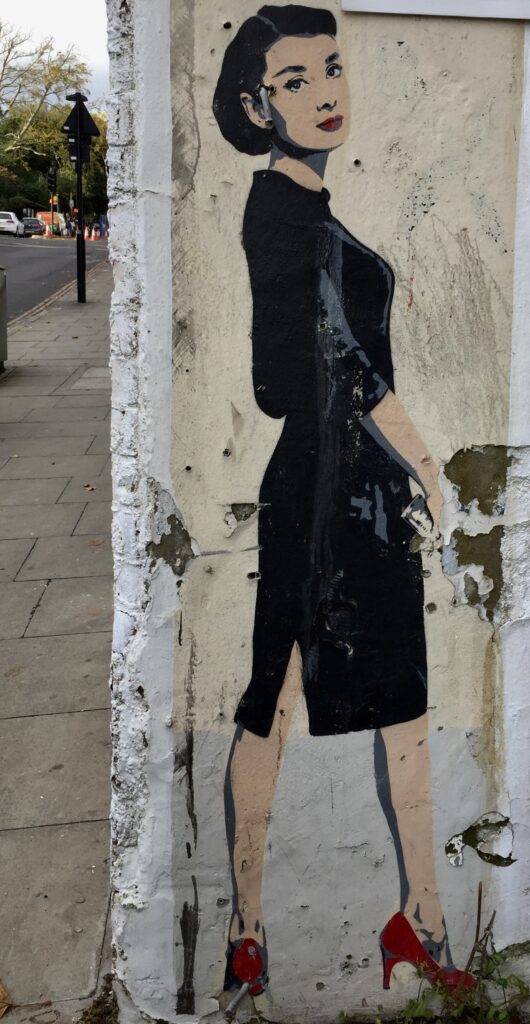
Generally speaking, I don’t approve of graffiti, but this made me laugh …

When visiting Highgate Cemetery a few weeks ago I encountered these two ladies on Highgate Hill. The first (‘Big girls need big diamonds’) is obviously Elizabeth Taylor …

If you are visiting nearby and are interested in finding them they are on the outside wall of the oddly named Brendan the Navigator pub (N19 5NQ).

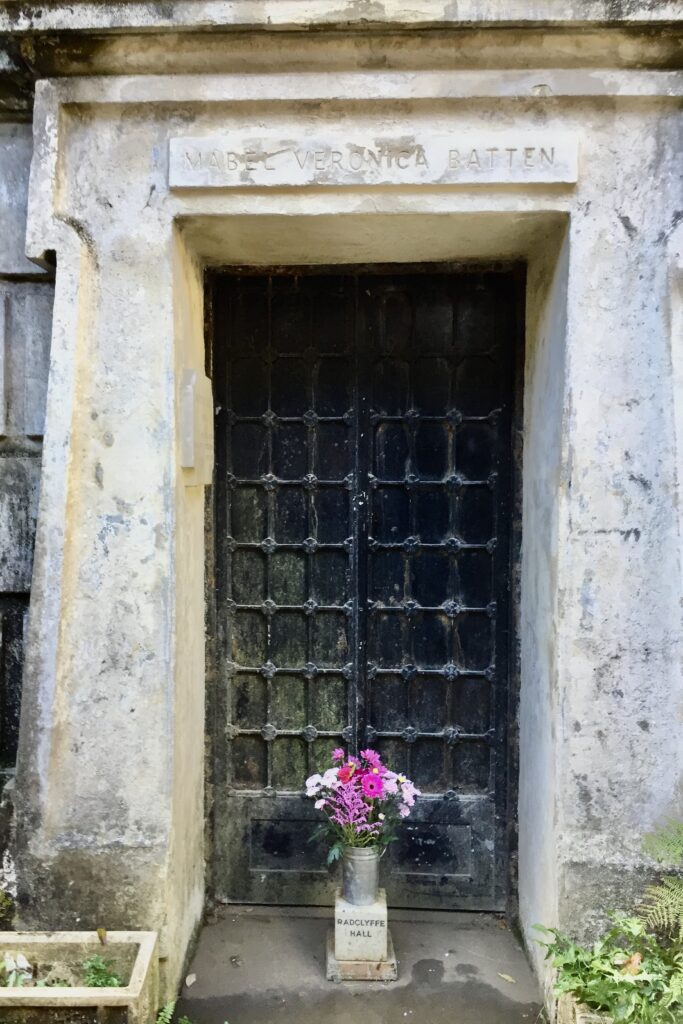
In the Egyptian Avenue in Highgate Cemetery you will come across the vault containing the remains of Mabel Veronica Batten. In front of the entrance there are always fresh flowers placed in a marble container inscribed with the name of her lover, Radclyffe Hall, who is also laid to rest there …

Hall, born Marguerite Radclyffe Hall but known to her loved ones as John, was a lesbian who dressed in men’s clothes in a society and era when same-sex love was considered not only immoral but legally punishable. Her book, The Well of Loneliness, dealing with a love between two women, was published in 1928. Here she is circa 1910 …

Picture: National Portrait Gallery, photographer unknown.

Her novel became the target of a campaign by James Douglas, editor of the Sunday Express, who wrote, ‘I would rather give a healthy boy or a healthy girl a phial of prussic acid than this novel.’ A judge eventually ordered the book destroyed, with the defendants to pay court costs.

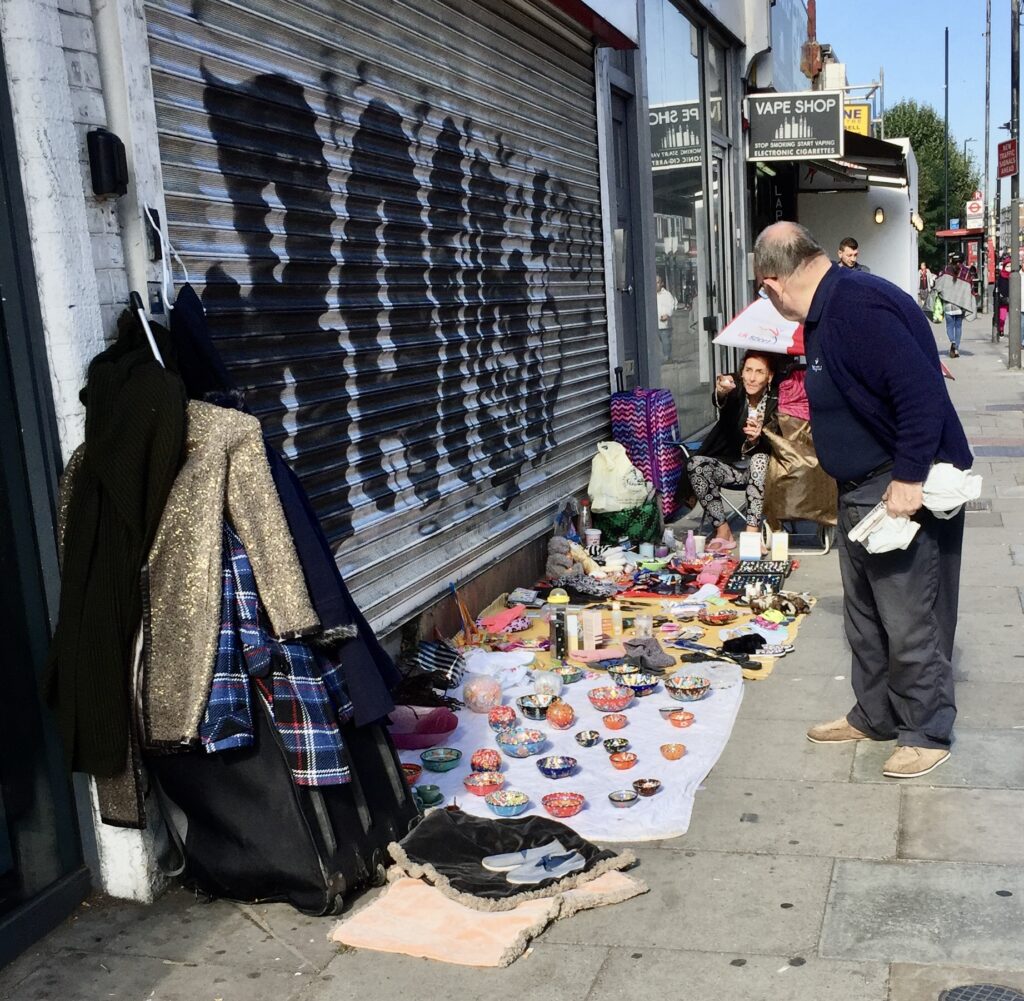
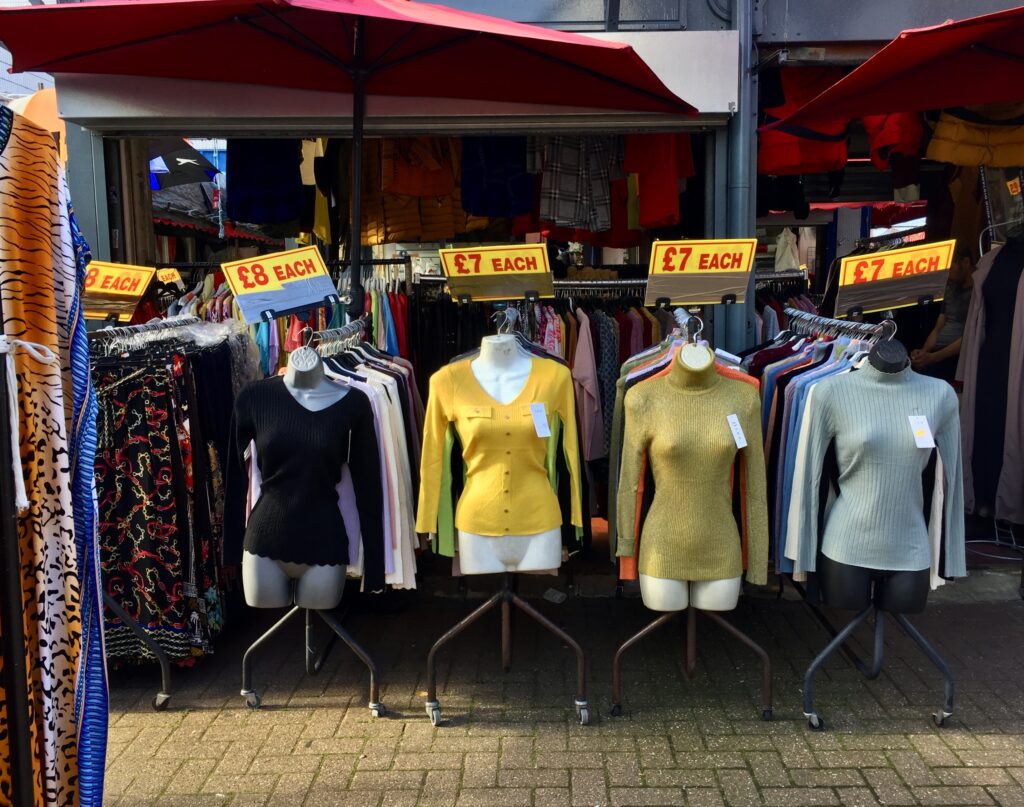
A lady entrepreneur sets out her wares on Kilburn High Road …

Nearby stalls …

And finally, some images from a really enjoyable trip to Ipswich.

Ipswich Museum is a delight containing an extraordinary range of exhibits, all displayed in an authentic Victorian environment.

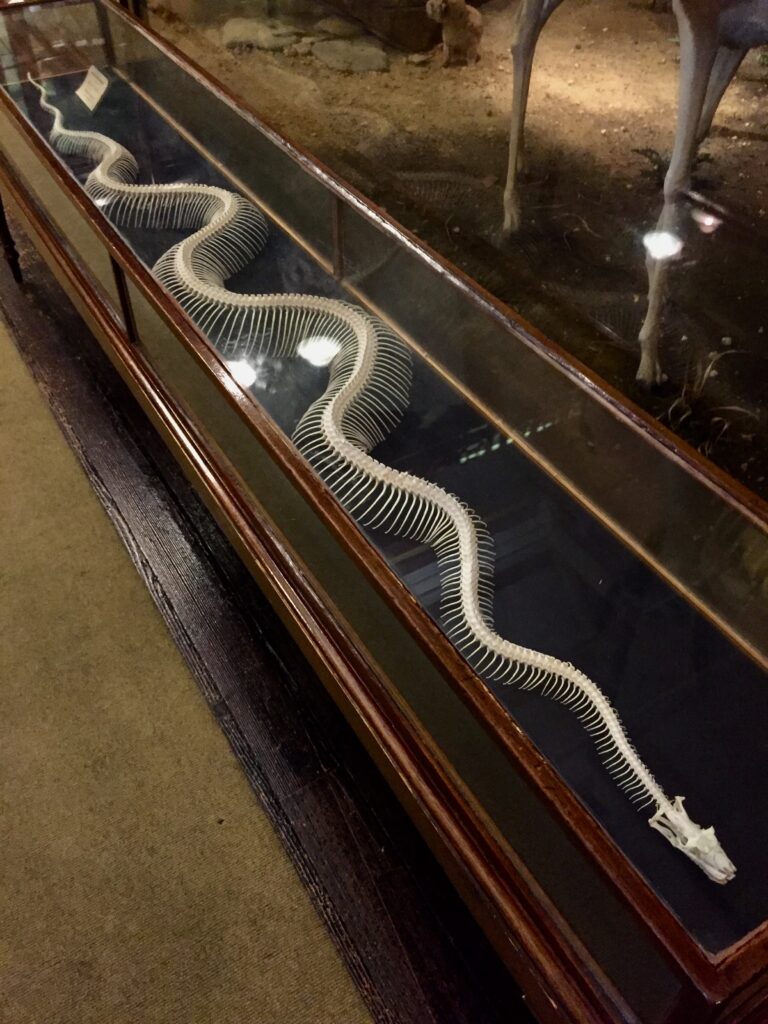
Ever wondered what a boa constrictor’s skeleton looks like? Wonder no more …

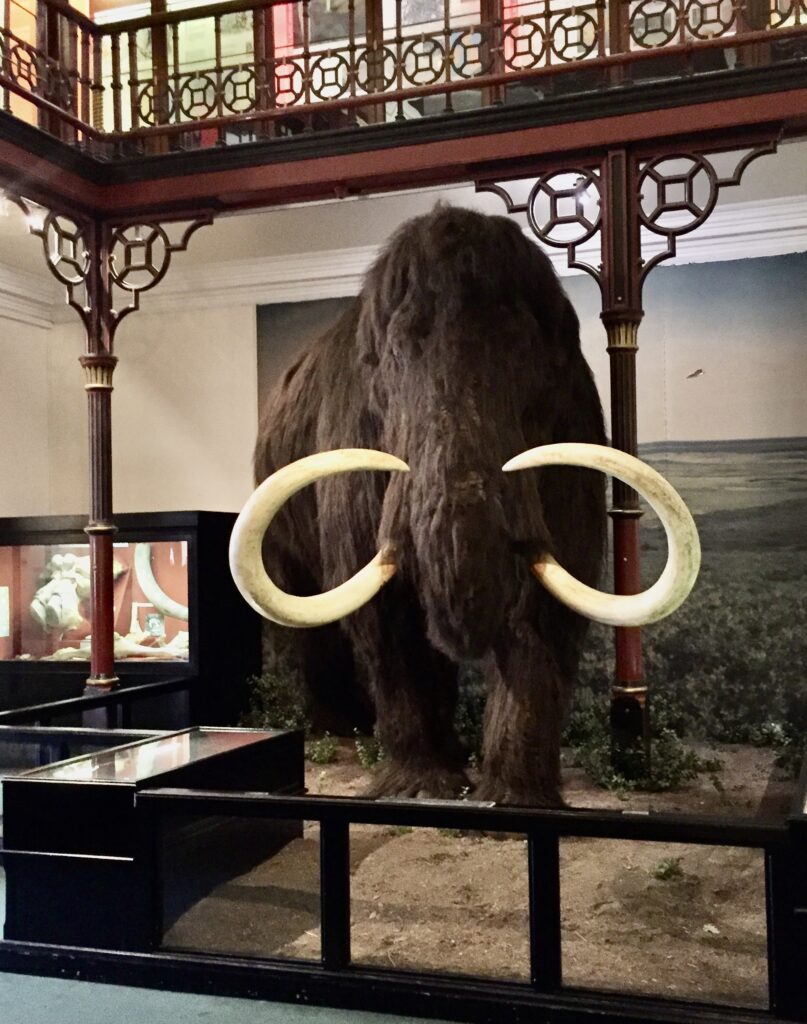
Ever fancied a close encounter with a woolly mammoth? This is the place to come …

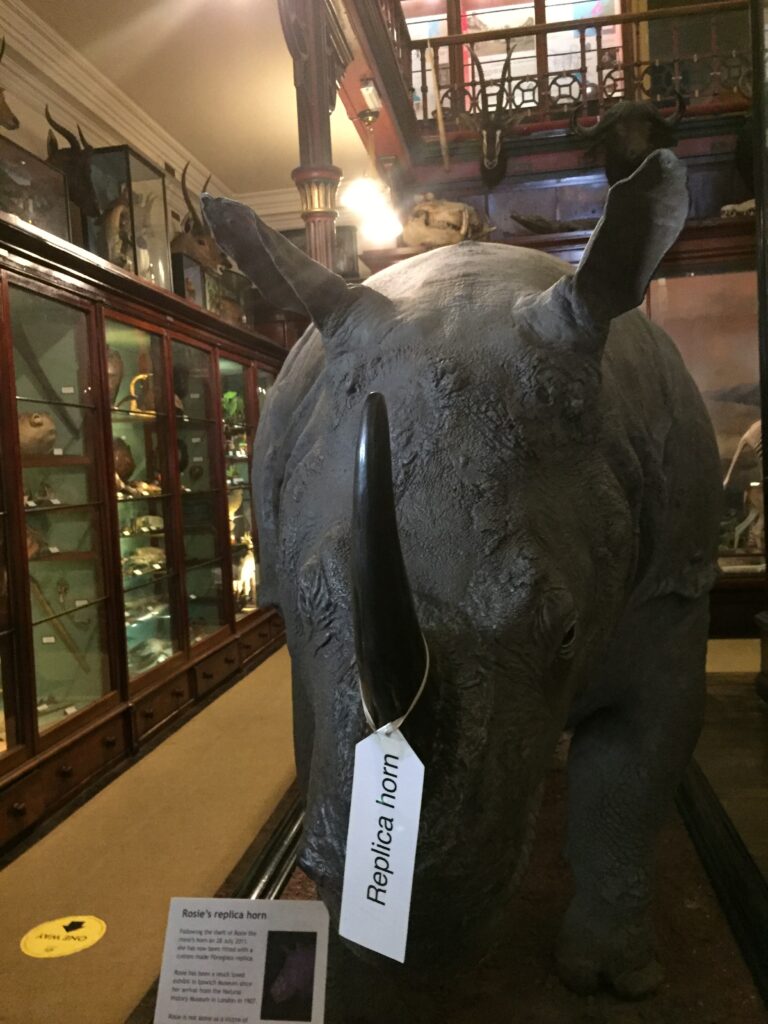
In a sad sign of the times, ten years ago someone broke in and sawed off and stole Rosie the Rhino’s horn!

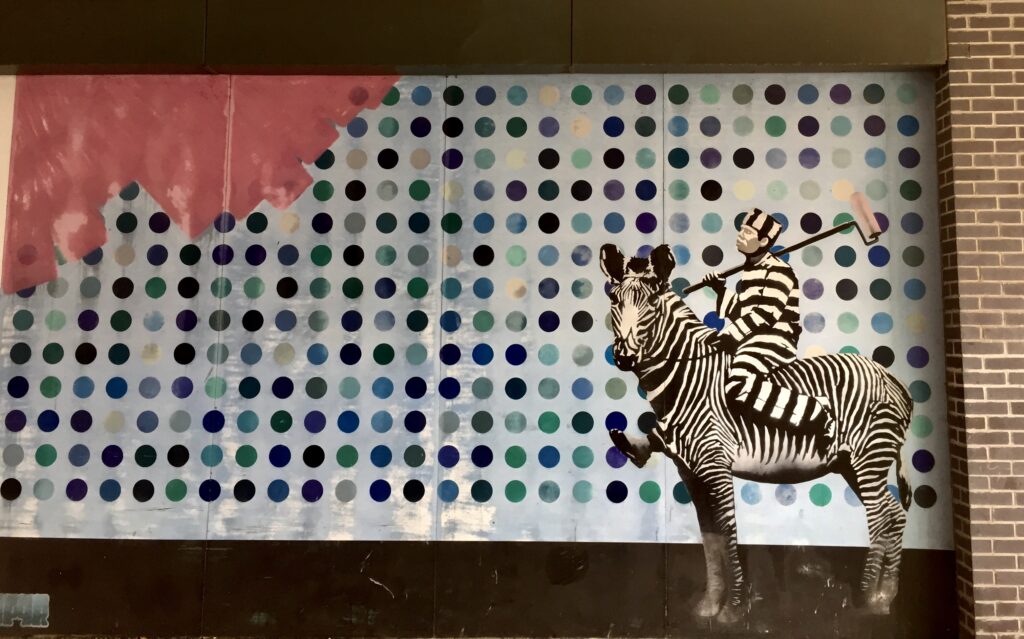
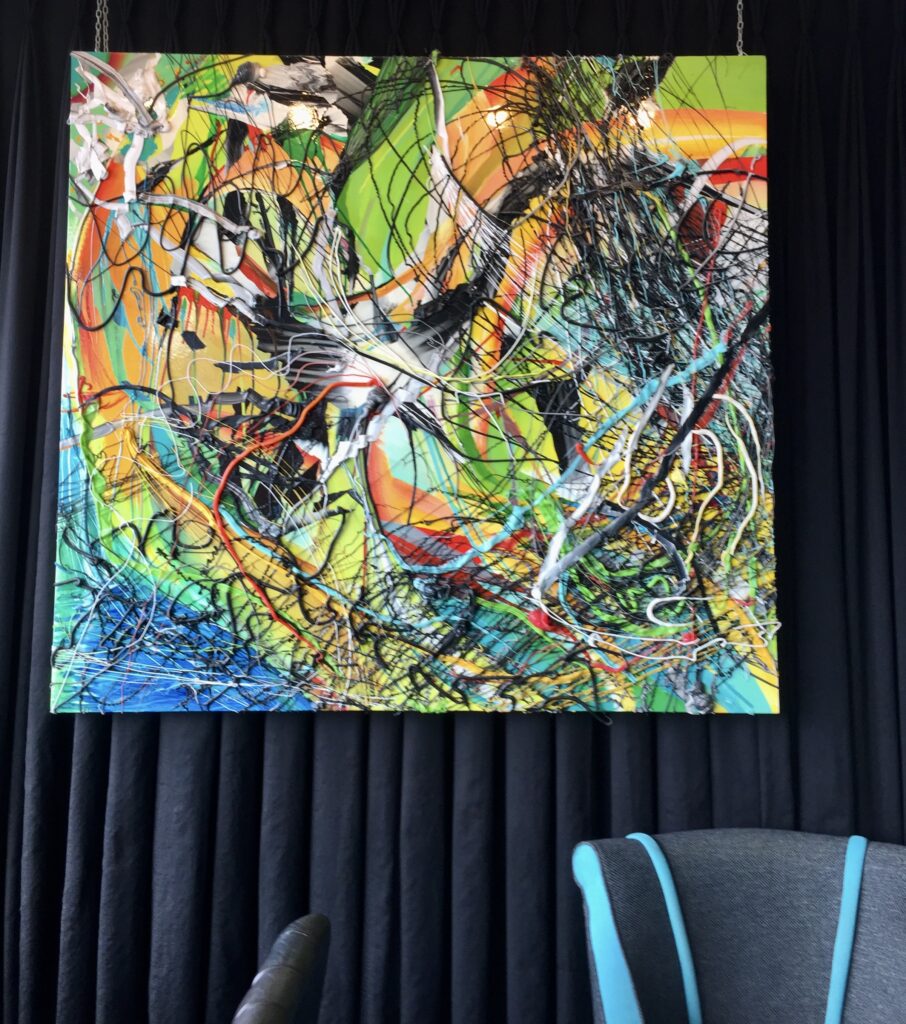
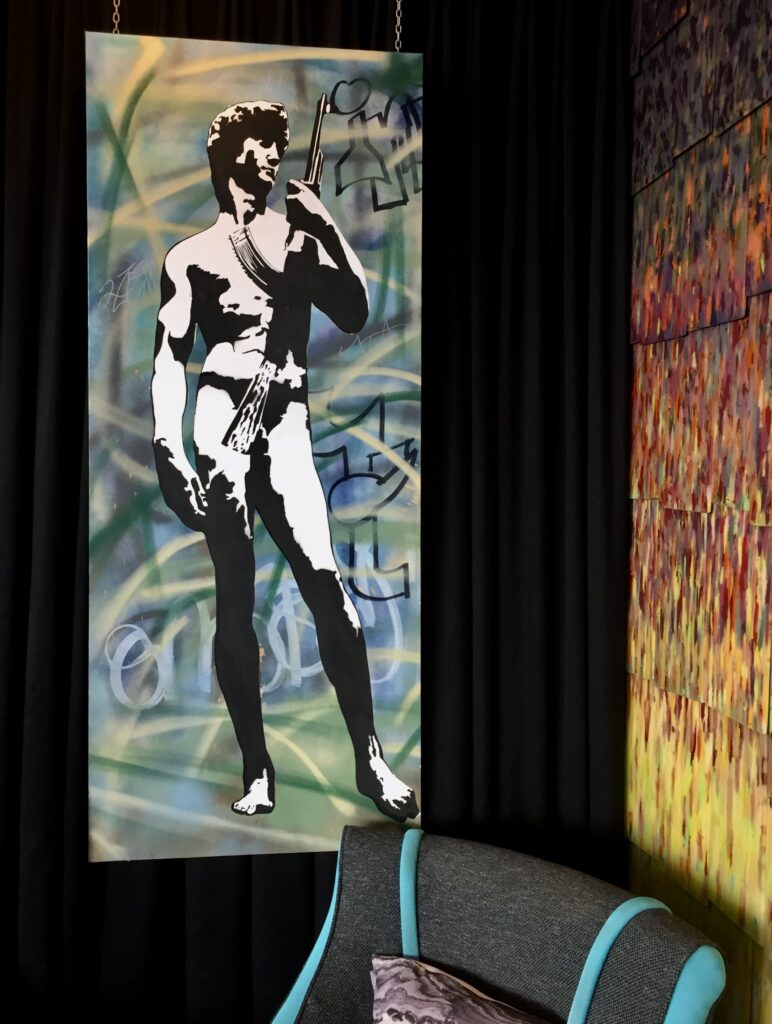
Staying at the Salthouse Harbour Hotel was fun. There is some interesting art on display …

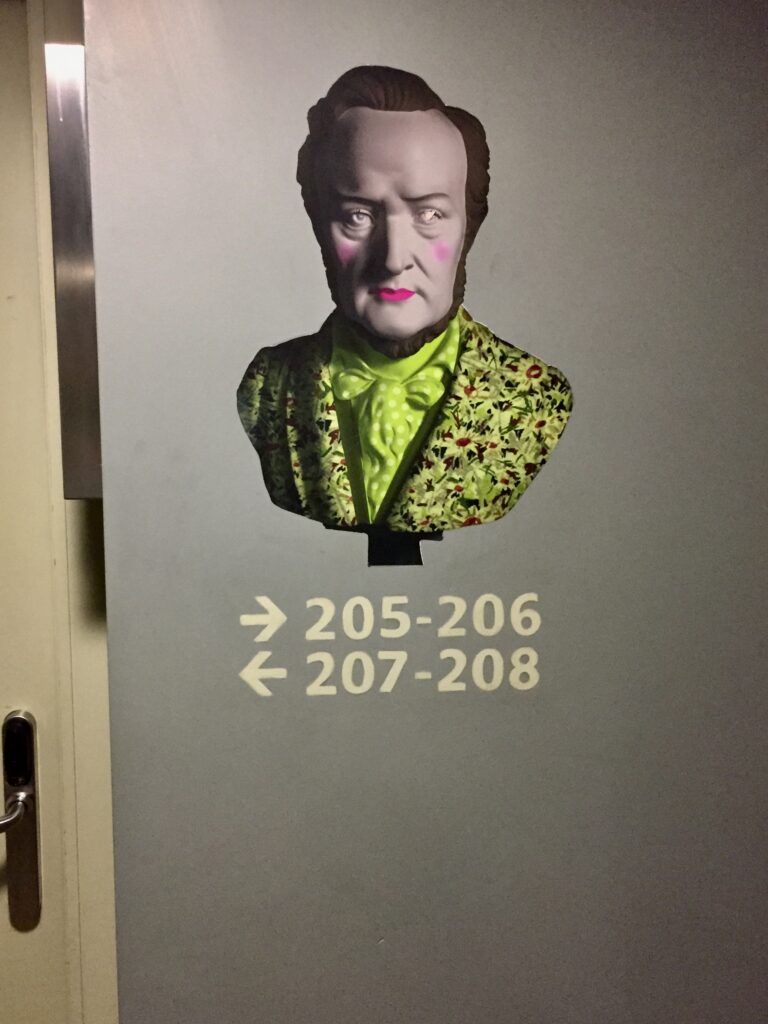
And some, er, rather eccentric signage …

If you would like to follow me on Instagram here is the link …
https://www.instagram.com/london_city_gent/

Reasons to be optimistic

Occasionally, when I feel the dark, heavy hand of doom tapping me on the shoulder (Covid, Lockdowns, Brexit, Trump etc) I cheer myself up by looking back at times past when things looked very grim but from which we eventually recovered. One way I do this is to look at some of the images of the terrifying days of the early 1940s and compare them to the same scene today.

The following Aerofilms photo from before the war shows how St. Paul’s was surrounded by the dense city streets with buildings much closer to the cathedral than they are now. These were not only offices, but also plenty of warehouses with one of the major publishers / book distributors having their office and warehouse just north of St. Paul’s in Paternoster Square. The spires of the city churches still stood clear of their surroundings, but St. Paul’s dominated the area …

EPW055297

Christmas 1940 had been relatively quiet, however on the evening of the 29th December a large bomber force appeared over the City just after 6pm and for just over the next three hours incendiary bombs rained down on the City along with high explosive bombs. This combination caused maximum damage. High explosive bombs would rip buildings apart, exposing their contents to the impact of the incendiaries. During the peak of the raid over 300 incendiary bombs a minute were falling across the City and St. Paul’s quickly became surrounded by a sea of flame, fire crossing over the small streets and debris falling all around. These pictures show what was considered to be the almost miraculous survival of St Paul’s Cathedral …

Two things strike me about the lower photograph. Firstly how dirty the cathedral stonework had become after over 300 years of London pollution. Secondly, two of those shrapnel marks that stand out so clearly against the soot-stained cathedral are still preserved today …

You can see where other scars from the bombing have been repaired.

This aerial view shows how close the Cathedral came to destruction …

Copyright : Popperfoto – Getty Images.

The view today …

As a result of the bombing, many of the narrow alleys nearby dating from medieval times simply disappeared as did Paternoster Row (although the name still lives on) …

Copyright : Guildhall Library.

This picture is entitled ‘Prince Albert raises his hat as Holborn Circus burns behind him‘ …

Copyright : Guildhall Library.

And he is still there in the same jaunty pose, albeit relocated a few yards to the east. You can read more about the statue here

St Clement Danes was seriously damaged …

Copyright : Associated Press.

But eighty years later Dr Johnson carries on nonchalantly reading his book. He is no longer imprisoned behind railings and has a fully restored church behind him …

The building still bears its Second World War scars …

In the book I consulted for these photographs the good Doctor gets a further mention …

Copyright : Guildhall Library.

Nothing much has changed. The photograph above is looking south from Fleet Street, this is the view today looking north …

St Mary-le-Bow was completely gutted. I was moved by this poignant picture of a service being conducted in the roofless building in 1941 …

Copyright : PopperfotoGetty Images.

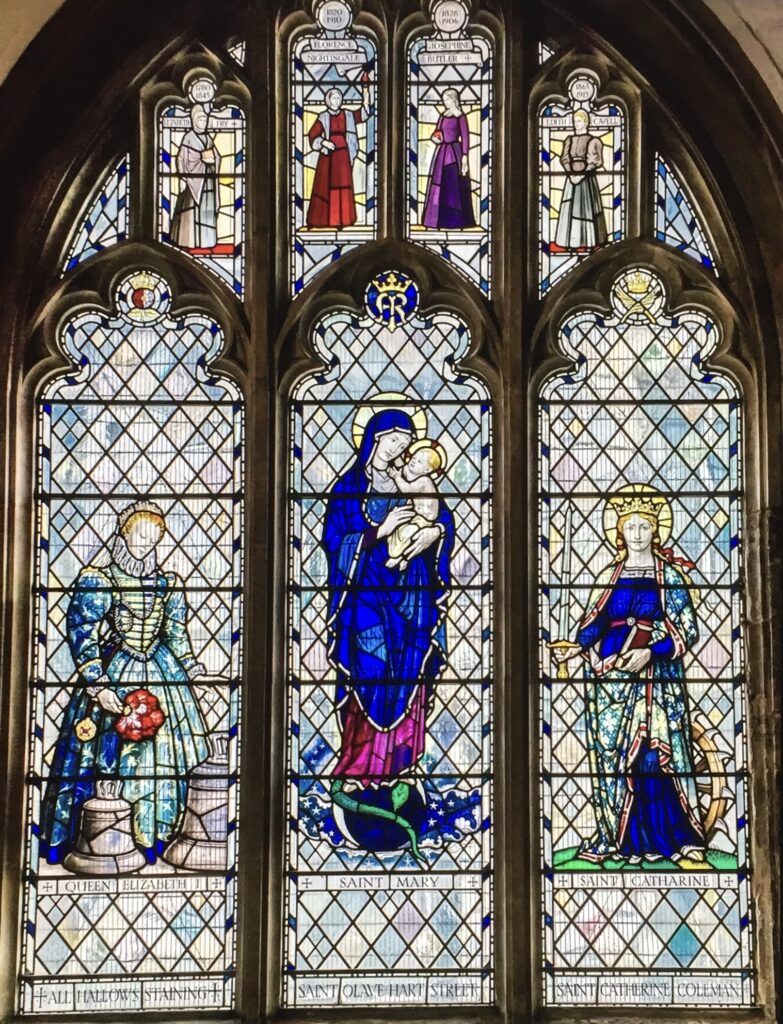
I am pretty sure that the window behind them that gives the unusual view of St Paul’s has now been filled with this beautiful stained glass work by John Hayward. Here the Virgin Mary cradles the church named after her as if it were a child, surrounded by church spires that survived the Blitz …

St Lawrence Jewry was also terribly damaged with only the walls and steeple remaining. This picture was taken on 30th December 1940 …

Copyright : Media Storehouse.

Now fully restored, it contains some of my favourite stained glass by Christopher Webb. In one window an angel holds the roofless, windowless church filled with rubble. In the background St Paul’s is illuminated by flames and searchlights pierce the sky as buildings burn …

In another the angel holds the restored building …

I have written previously about the lovely stained glass that can be found in the City and you can access the blog here : Dick Whittington, Hipster, City Stained Glass.

London Wall on the morning after the big December 1940 attack …

Copyright : PopperfotoGetty Images.

A scene typical of what Londoners faced on returning to work after an air raid. Fire hoses snake across the rubble filled street.

In this image a War Artist records the damage in Cannon Street …

The view today, as close as I can get it without being run over …

Christ Church Greyfriars, Newgate Street, could not be saved …

Copyright : PopperfotoGetty Images.

It’s now laid out as a garden …

Image courtesy of Jenikya’s Blog.

It’s impossible to consider the history of London without referencing some of the great disasters which have befallen it in the past and last year, living in Covid times, I published a piece about the terrible pestilence of 1665 : Samuel Pepys and the Plague – ‘God preserve us all.

I’m not making direct comparisons between these past disasters and the current pandemic – just reminding myself that even after terrible events a kind of normality usually returns, although life is never exactly the same as before. What seems to be unchanging, however, is people’s resilience and a spirit of helping others that I find positively uplifting.

I am indebted to the author of this book for some of the wartime photographs. It also contains a fascinating commentary …

I have also used quotations and pictures from from the excellent London Inheritance blog which you can access here.

If you would like to follow me on Instagram here is the link …
https://www.instagram.com/london_city_gent/

Page 8 of 16

Powered by WordPress & Theme by Anders Norén

Symbols & Secrets
Privacy Overview

This website uses cookies so that we can provide you with the best user experience possible. Cookie information is stored in your browser and performs functions such as recognising you when you return to our website and helping our team to understand which sections of the website you find most interesting and useful.