Walking the City of London

Category: Wartime Page 5 of 16

Fire in the City! Artists in the Blitz.

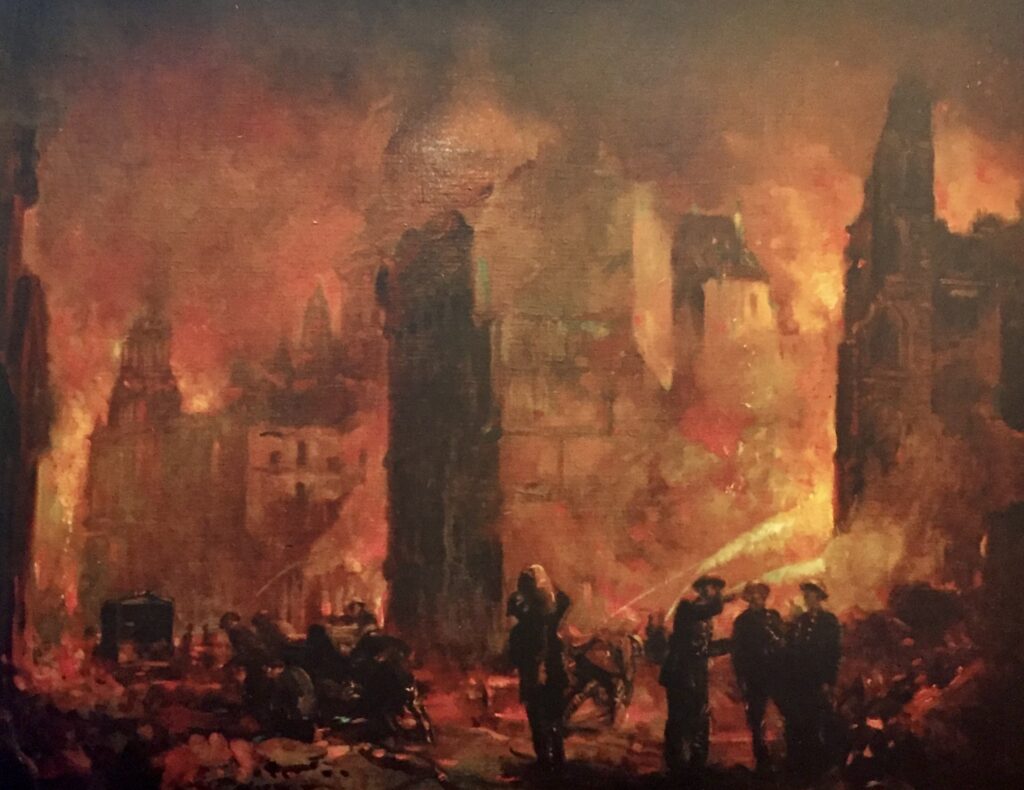
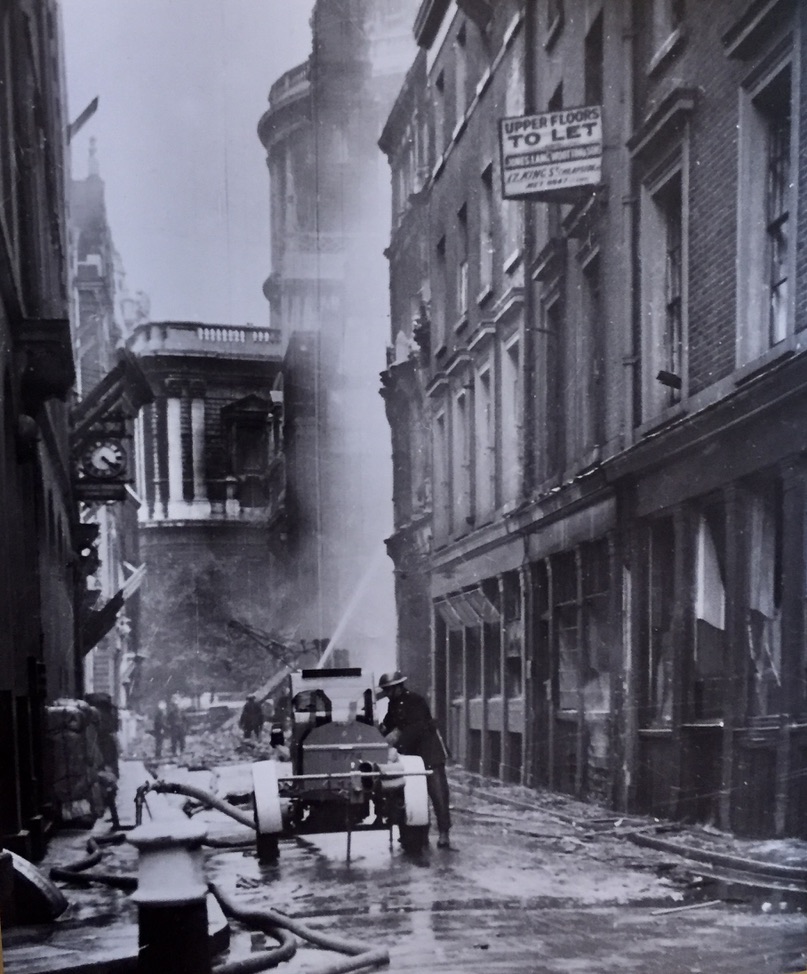
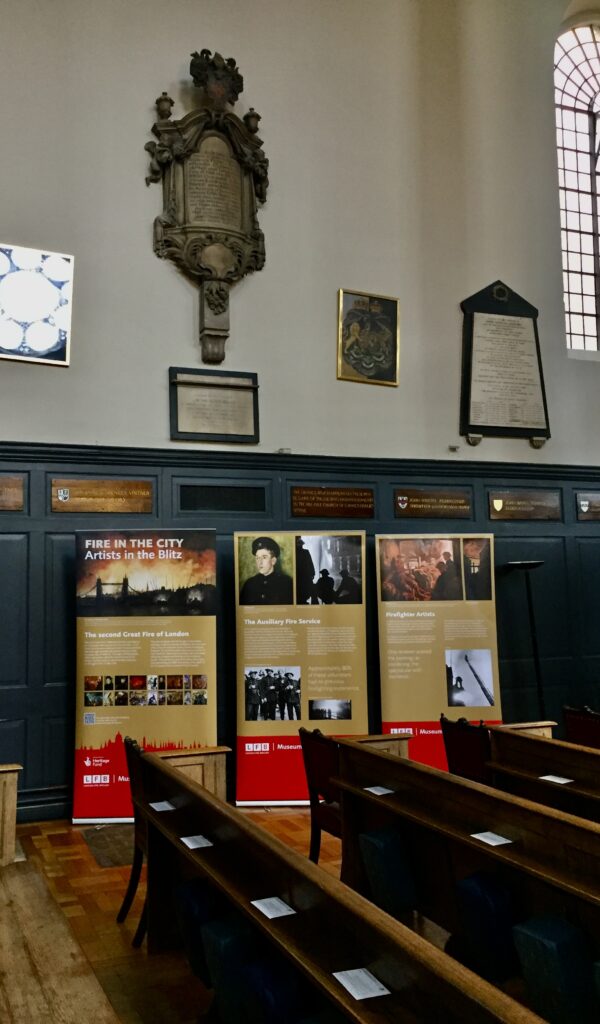
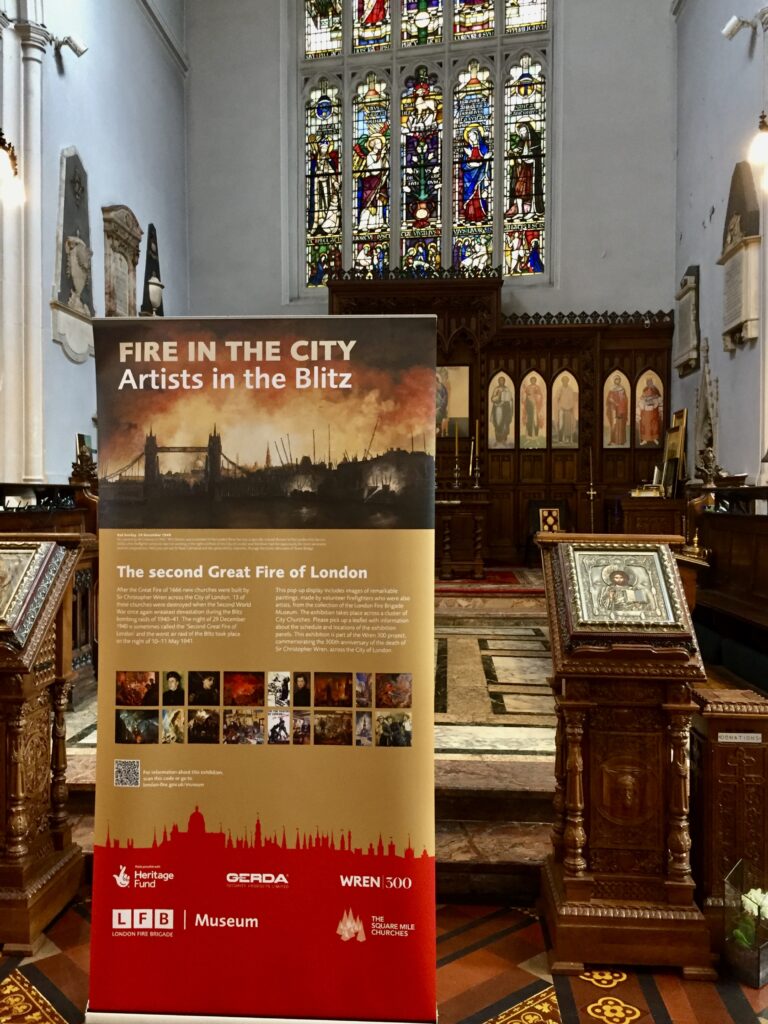
Five City churches are currently hosting an exhibition of reproductions of paintings by firefighter artists along with contemporary photographs from the London Fire Brigade archive.

The works are displayed on pop-up screens. For example, this one is at

St James Garlickhythe

And this one is in St Mary Aldermary

You will find details of participating churches at the end of the blog along with opening times.

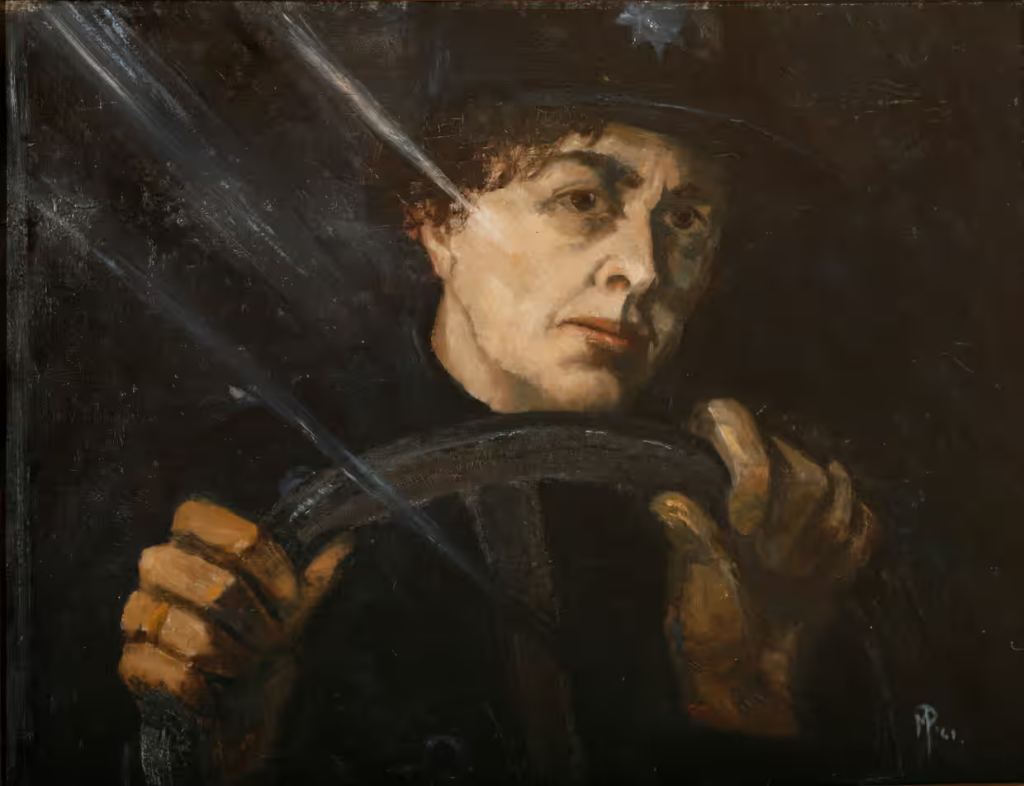
Here I am going to publish examples of some of the work on display, starting with my favourite, Driving by Moonlight, by Mary Pitcairn …

It depicts an AFS volunteer, Gillian “Bobbie” Tanner, at the wheel of a truck. She was awarded the George Medal for bravery and the citation read: ‘On the night of 20 September 1940, Auxiliary G.K.Tanner volunteered to drive a 30 cwt lorry loaded with 150 gallons of petrol. Six serious fires were in progress and for three hours Miss Tanner drove through intense bombing to the point at which the petrol was needed, showing coolness and courage throughout‘.

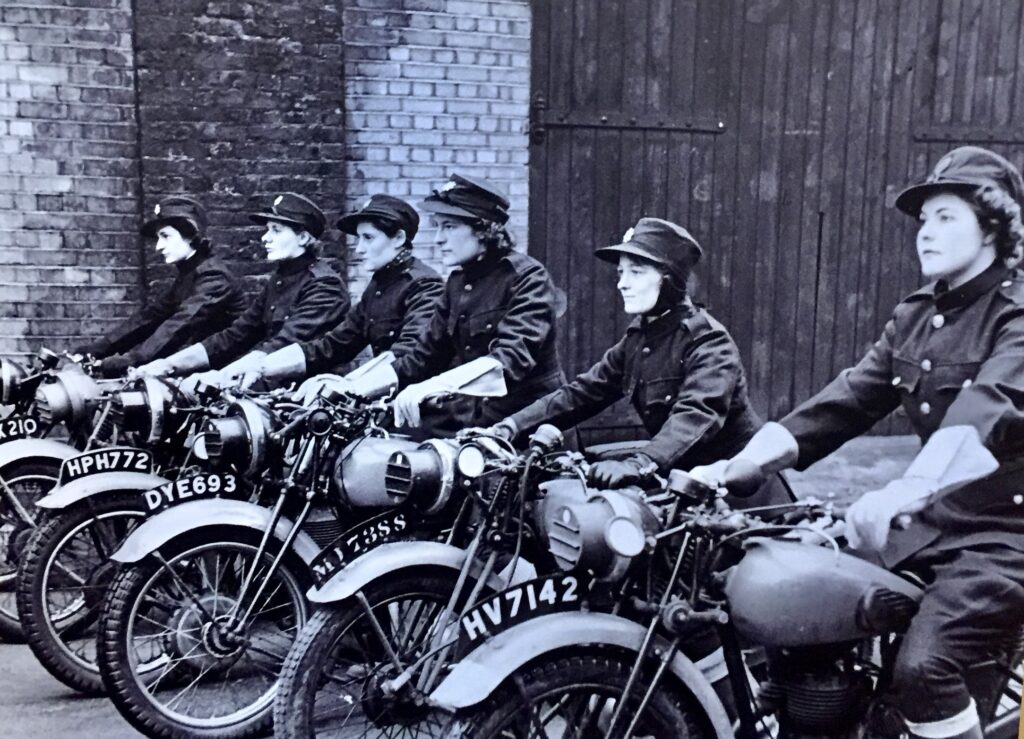
During the Second World War, women joined the fire service for the first time as volunteers in the AFS working in a variety of roles ranging from control operators to dispatch riders and delivery drivers.

AFS women despatch riders around 1940 …

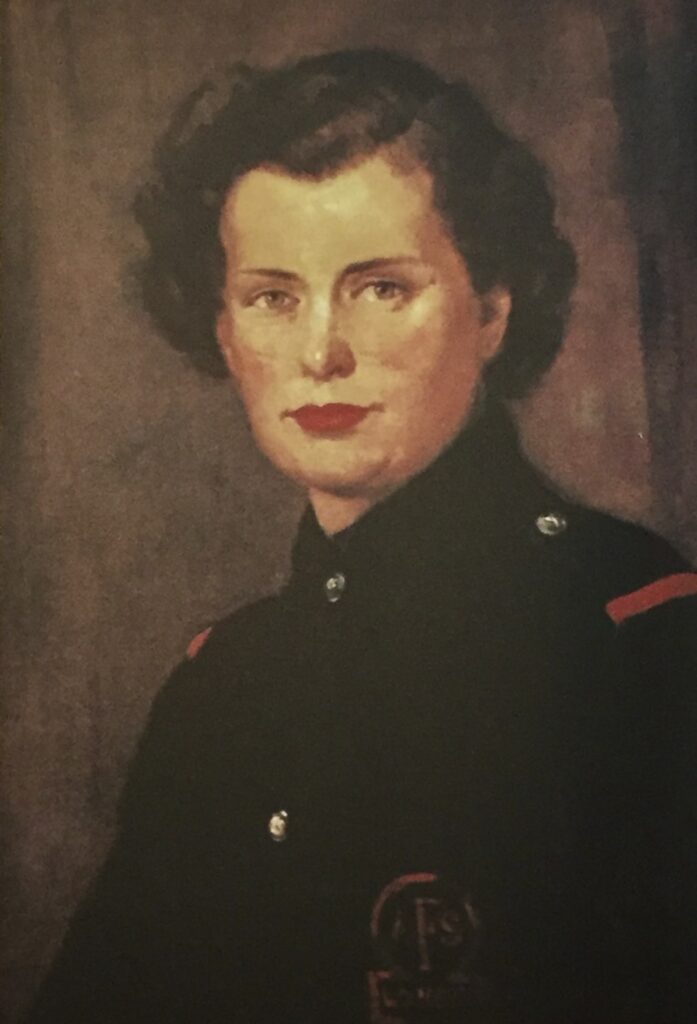
A 1941 oil painting by Reginald Mills of Mrs Kathleen Sayer an AFS Station Officer …

The Women’s Division of the AFS had its own leadership structure.

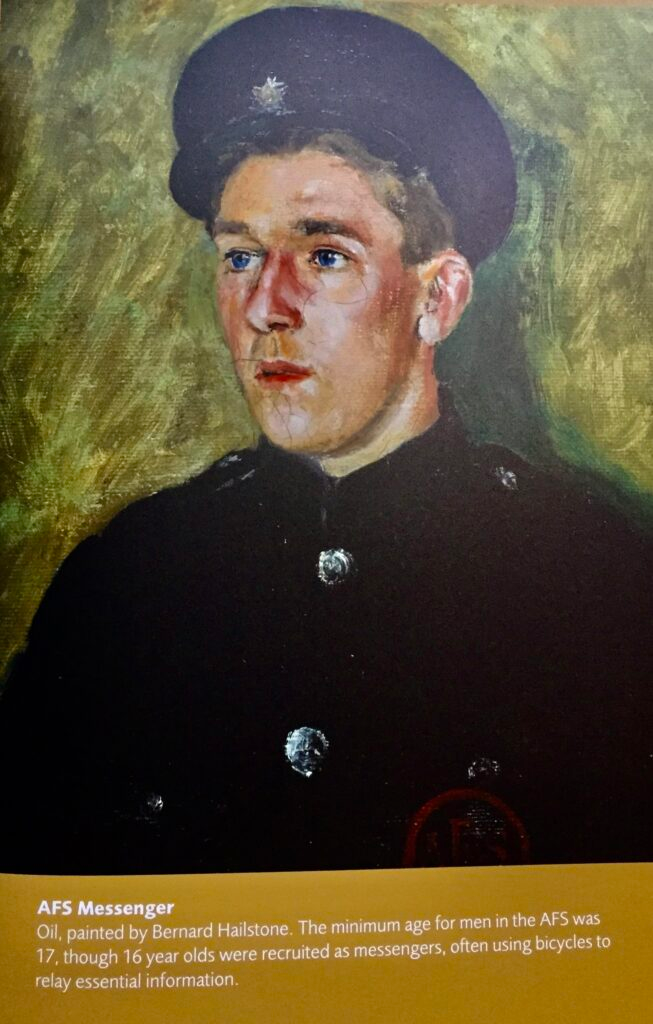
This portrait is by Bernard Hailstone

After the war Hailstone had a very successful career as a portrait painter. A gregarious, outgoing man, he went on to paint the last officially commissioned portrait of Sir Winston Churchill in 1955 and later members of the Royal family.

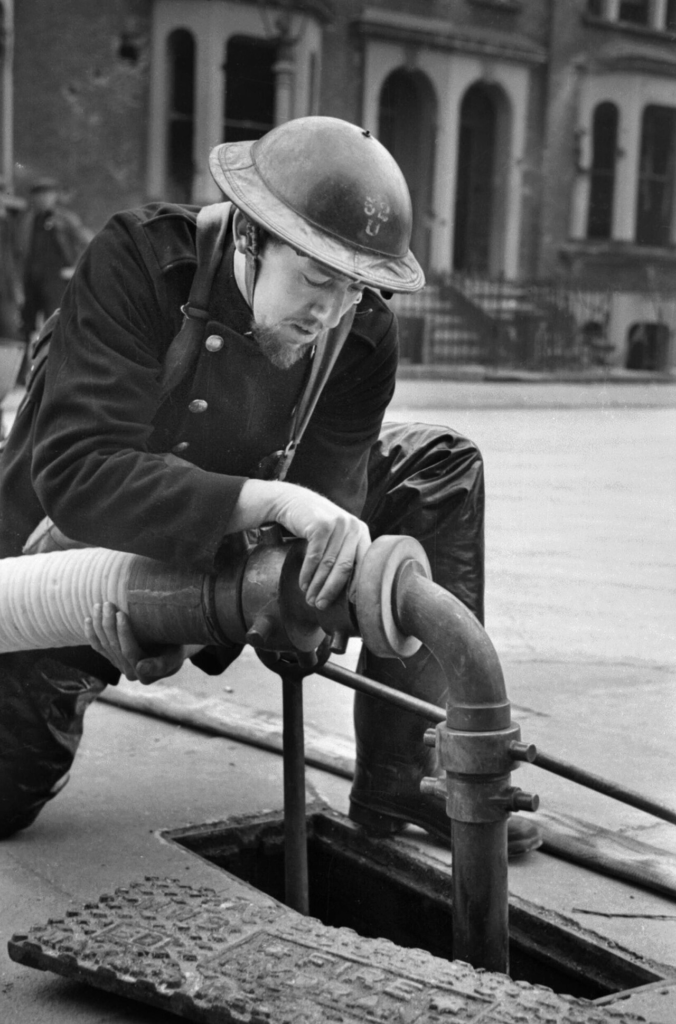
Here he is at work as a fireman circa 1940 attaching a hose to a fire hydrant …

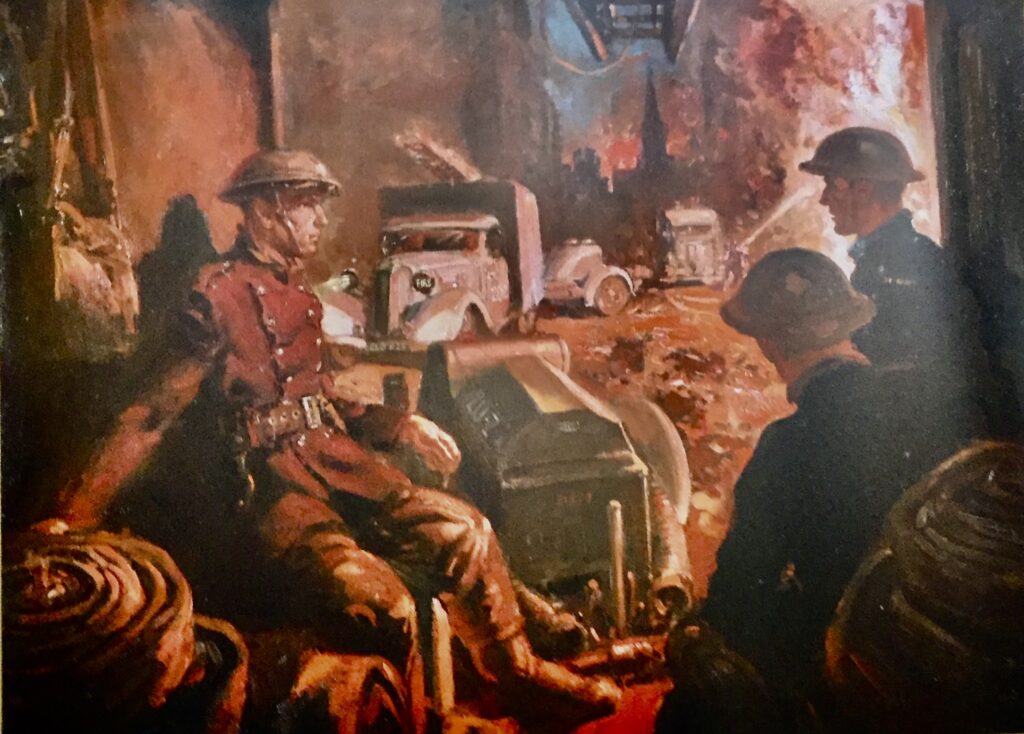
Resting at a Fire by Reginald Mills, around 1941 …

This image has an empty alt attribute; its file name is 9CC50303-E875-4C60-ACCE-DB3DC5C1D9DB_1_201_a-1024x734.jpeg

These AFS firefighters are surrounded by rolled up hose, resting in the back of an appliance vehicle which pulls a trailer pump, while their colleagues in the background continue to fight a fire. You can see a church spire in the background.

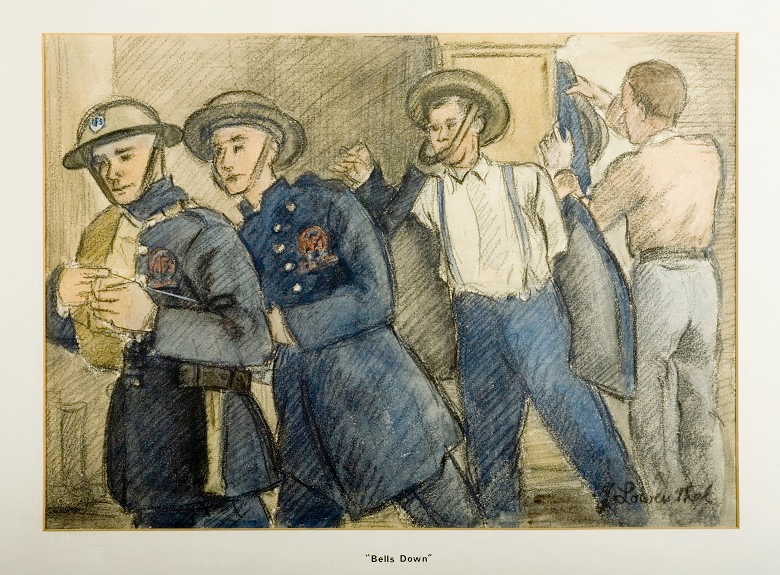
Bells Down by Julia Lowenthal …

Julia Lowenthal’s drawings and paintings gave remarkable insights into life inside the fire stations during the Blitz. Unlike most of her fellow firefighter artists she worked primarily in pencil and watercolour. Lowenthal was based in Kilburn and most of her surviving work is of colleagues in the station, and often at rest. Her watercolour sketch Bells Down refers to firefighters being called to action by bells in their fire station.

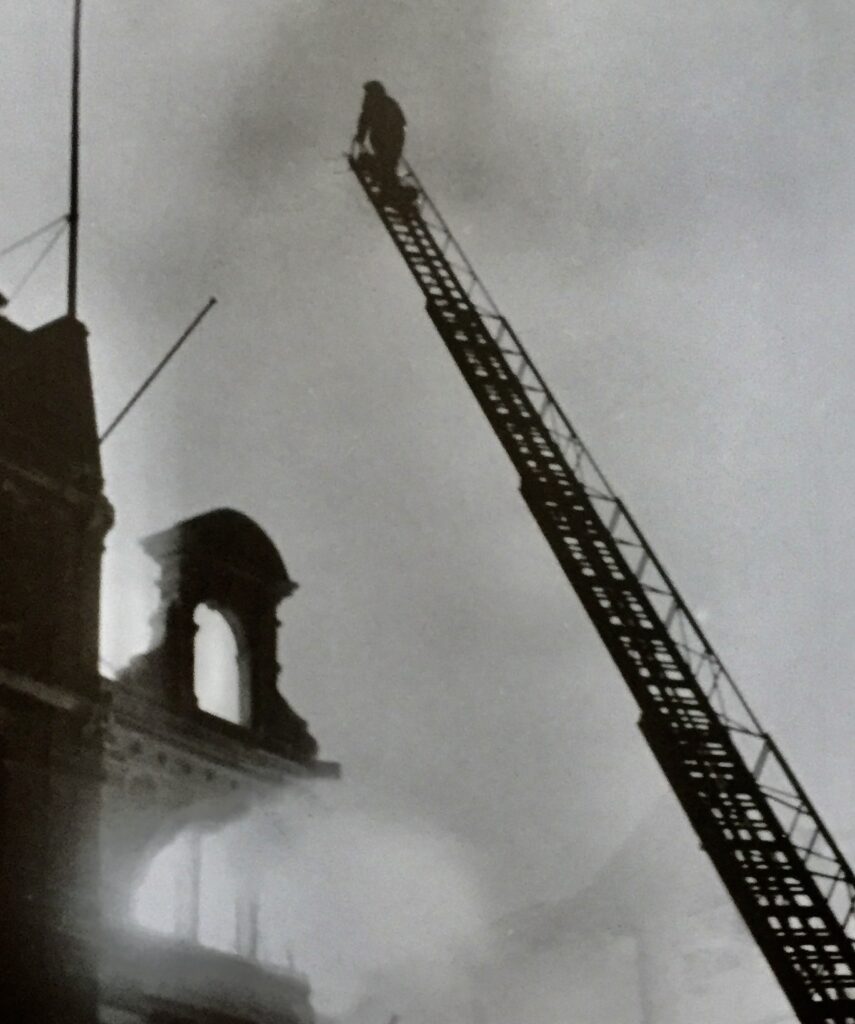
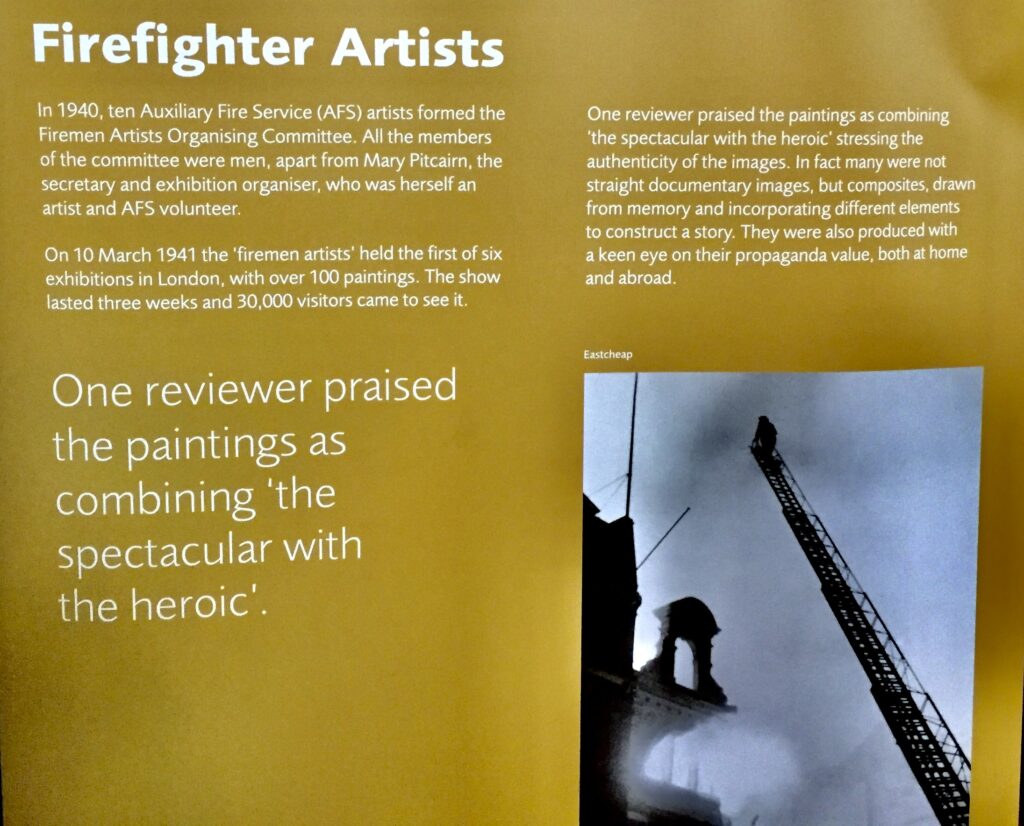
At the top of a turntable ladder in Eastcheap directing water into a blazing building, terrifying …

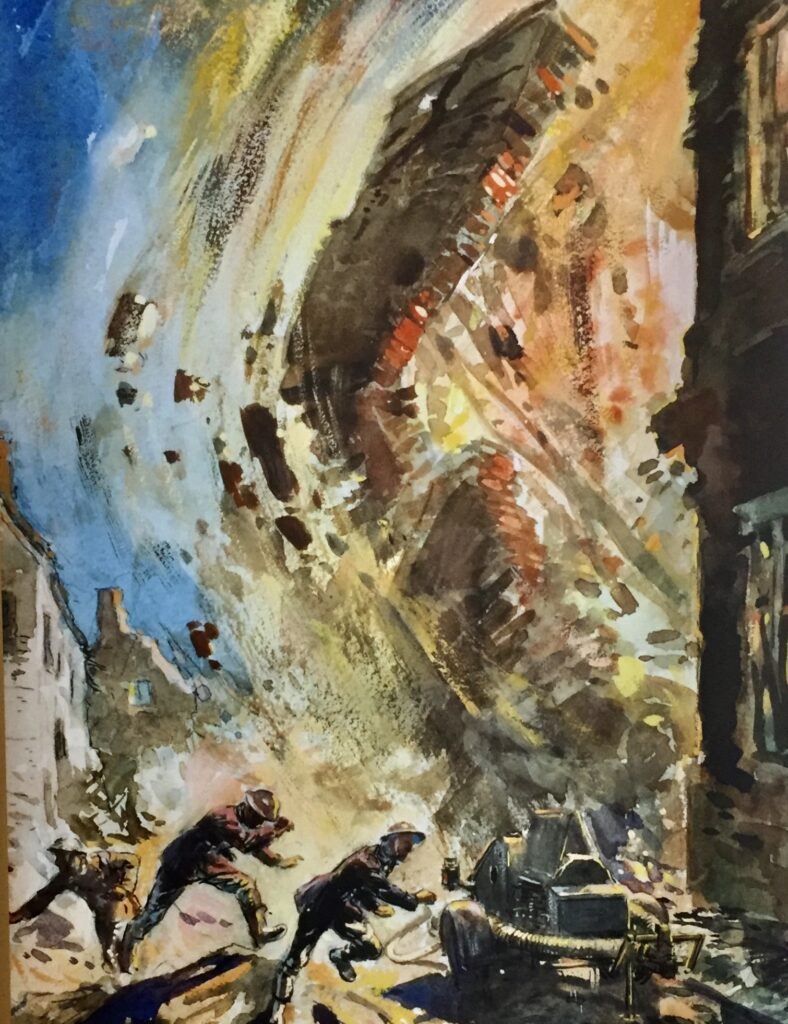
Also terrifying, Run! by Reginald Mills ..

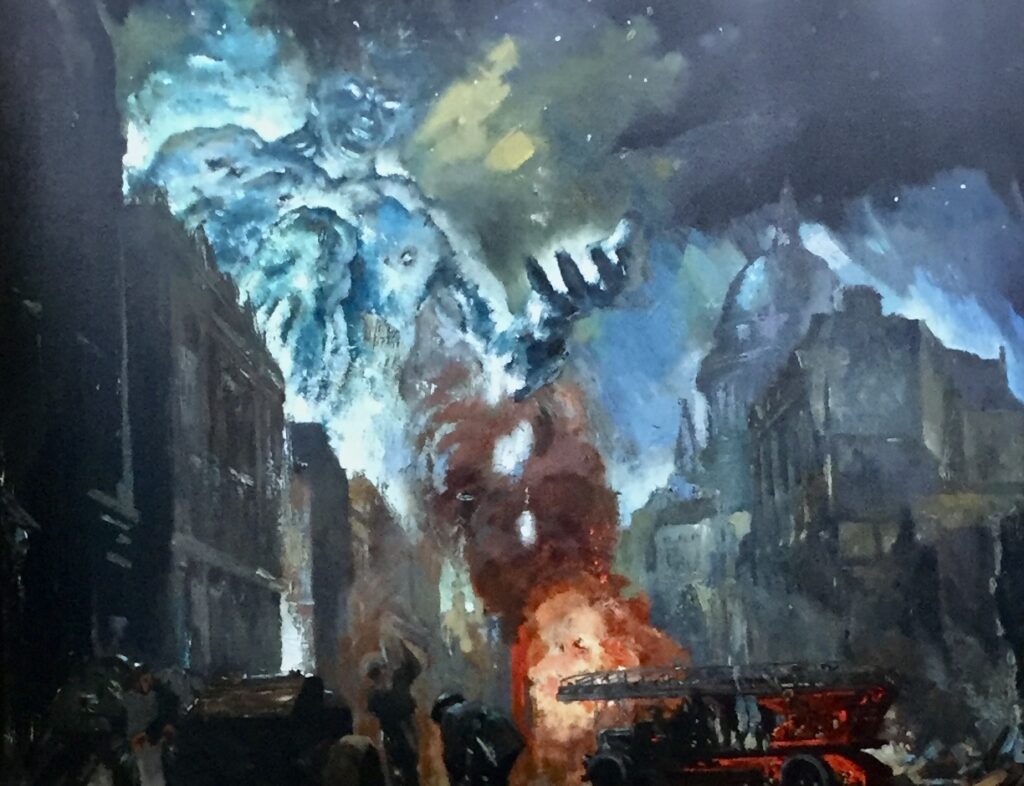
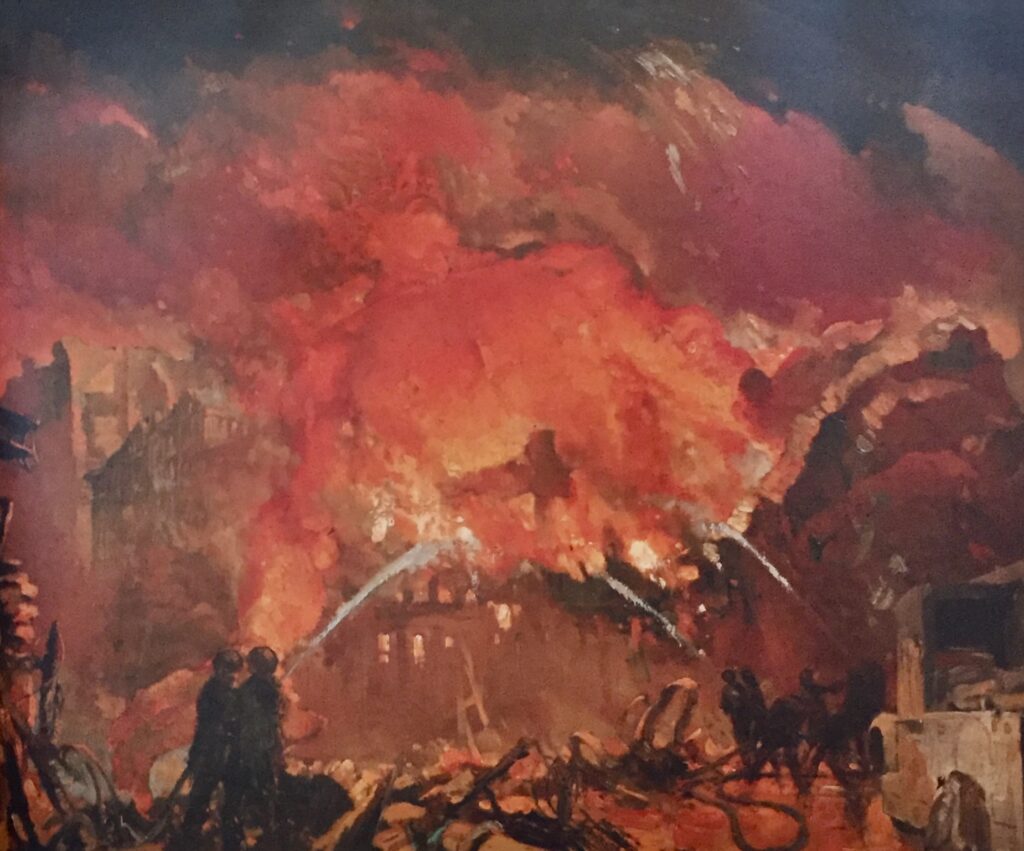
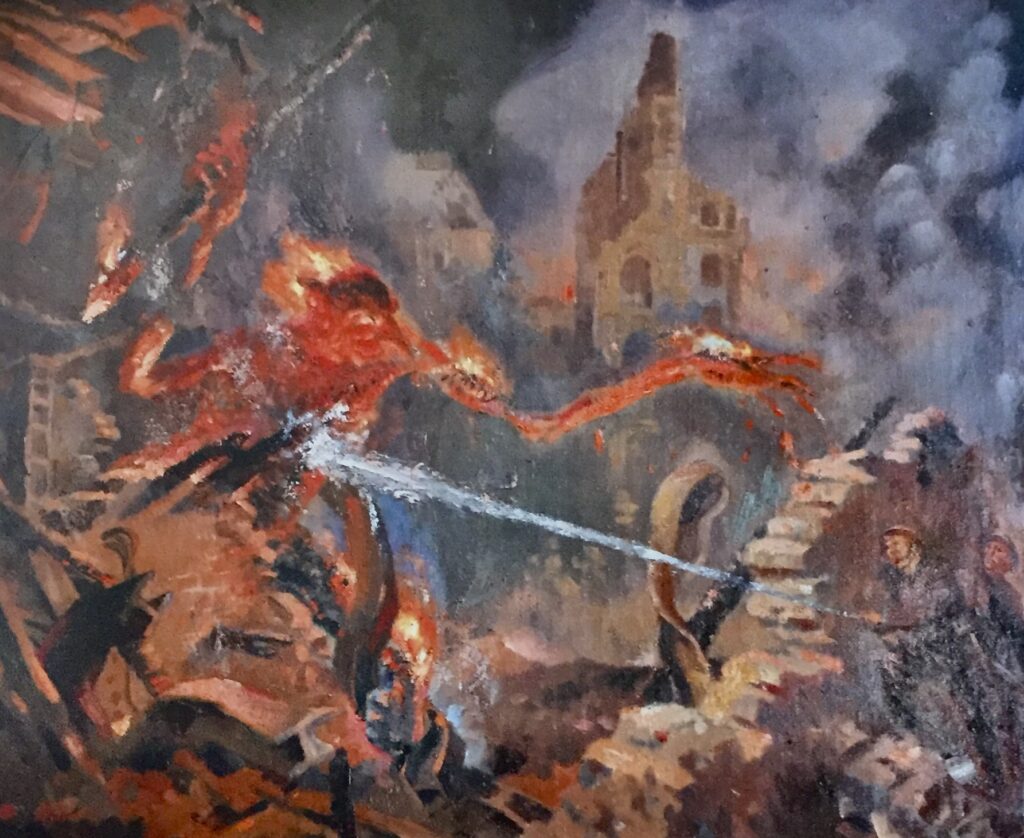
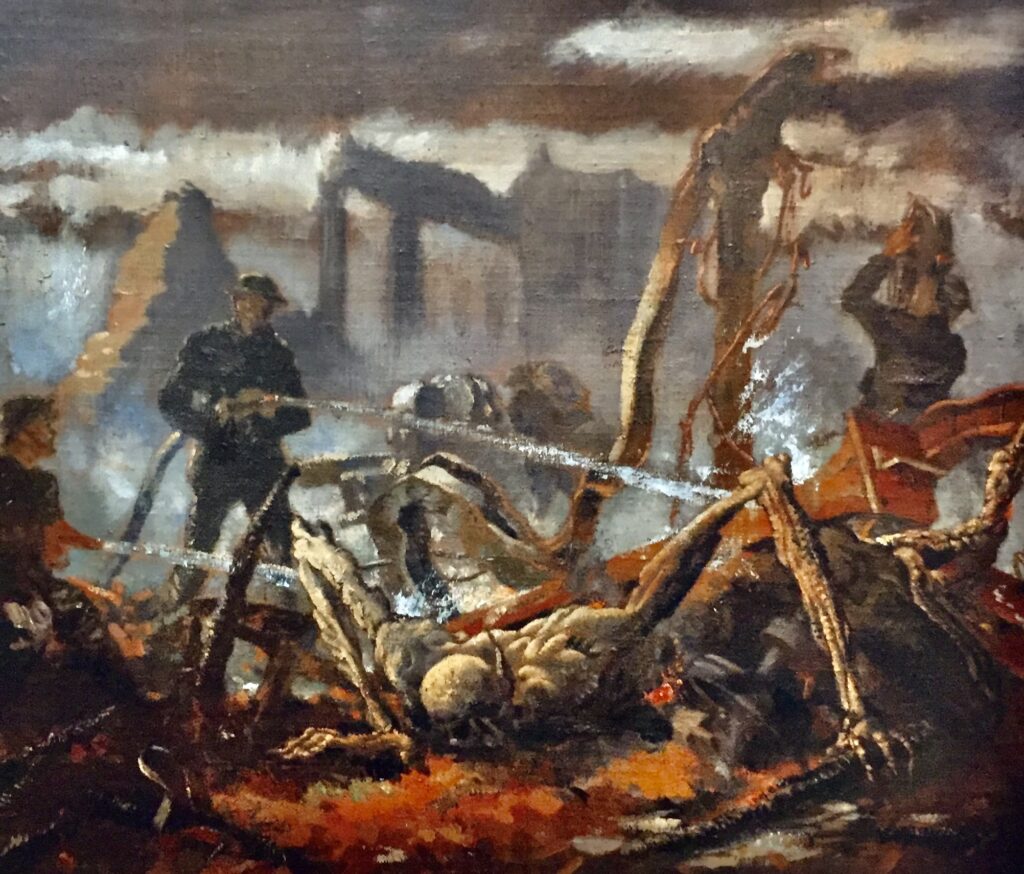
There are examples of extraordinary works by Paul Dessau. In one set, four scenes show different stages of the battle to conquer the flames, much in the style (if not the subject matter) of a Hogarth series. Look closely and you’ll see a monstrous form in each panel. In the first stage, termed Overture by the music-loving Dessau, the bombs begin to fall and a smokey menace looms large over the City …

In Crescendo, the flames take hold as a fiery giant smashes down buildings …

Rallentando, as the name suggest, shows the beast tempered, its infernal form withered but still intimidating …

In the final scene, Diminuendo, the foe lies vanquished amid the smoking rubble, the firemen victorious. Yet the creature has untold siblings who will return night after night to challenge the city’s protectors anew …

Cannon Street – also by Dessau …

Aftermath of a bombing raid near Cheapside with St Paul’s in the background …

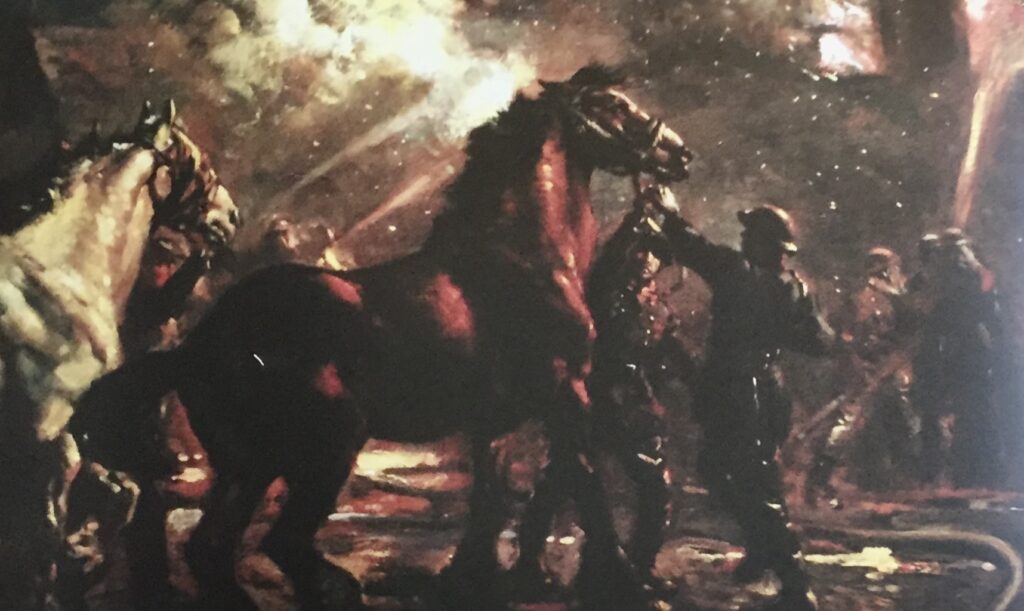
Rescuing Horses by Reginald Mills …

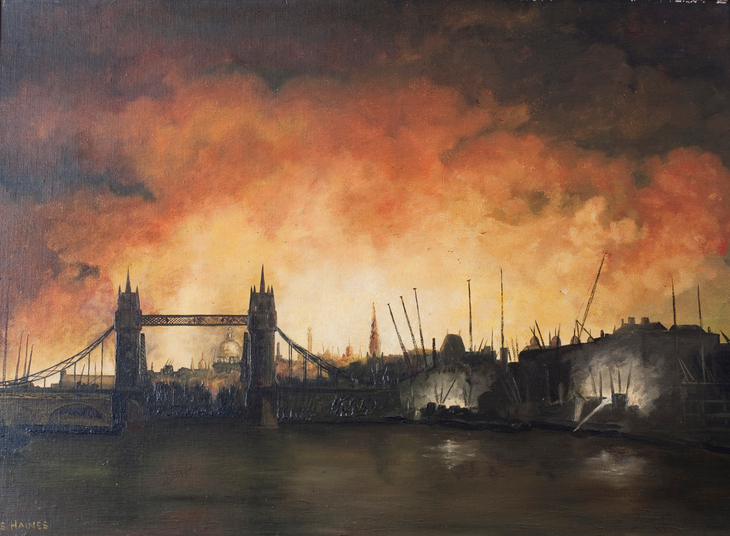
Red Sunday, 29 December 1940 by W.S.Haines. Haines was a member of the London River Service and unlike other firefighter artists he was not working in the tight confines of the City of London. This meant he had the opportunity for more panoramic pictorial compositions. Here you can see St Pauls Cathedral and the spires of City churches, through the iconic silhouette of Tower Bridge …

The London Blitz lasted from 7 September 1940 until 11 May 1941 and between 7 September and 2 November heavy bombing continued every night except one. More than 20,000 Londoners were killed including 327 men and women from the fire service with over 3,000 seriously injured. The Germans’ key weapon in the Blitz was the incendiary bomb, a device designed not to explode on impact, but able to burn at 2,500 degrees. Thousands of these were dropped creating fires that threatened to overwhelm the capital.

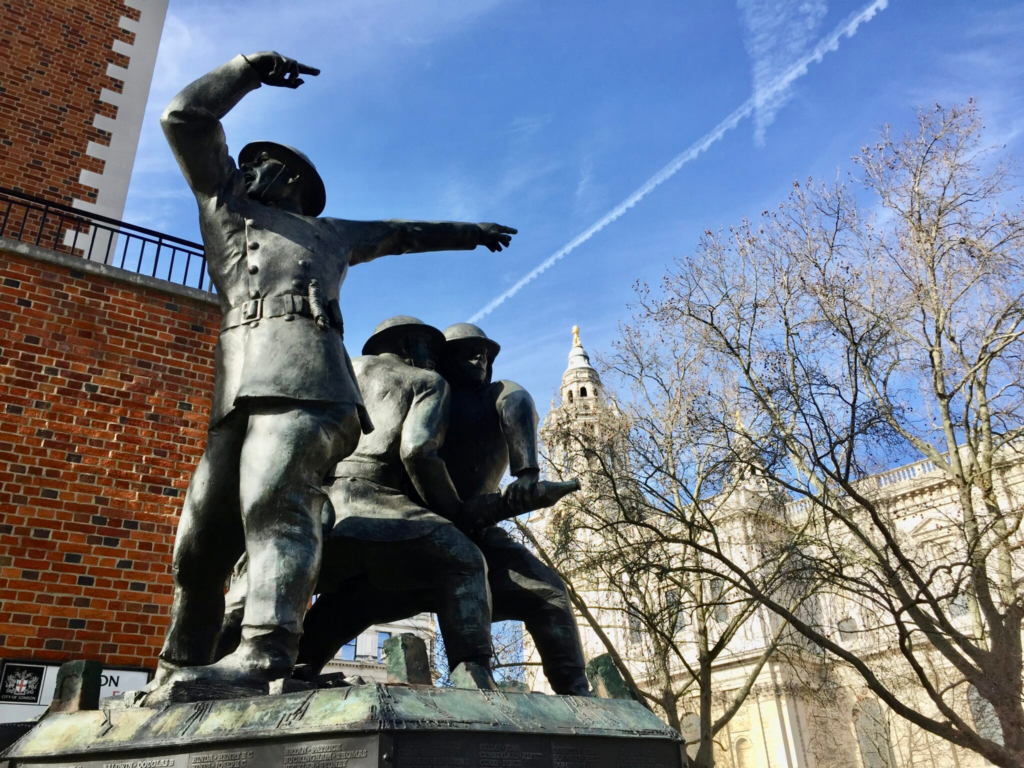
The firefighter memorial opposite St Paul’s Cathedral …

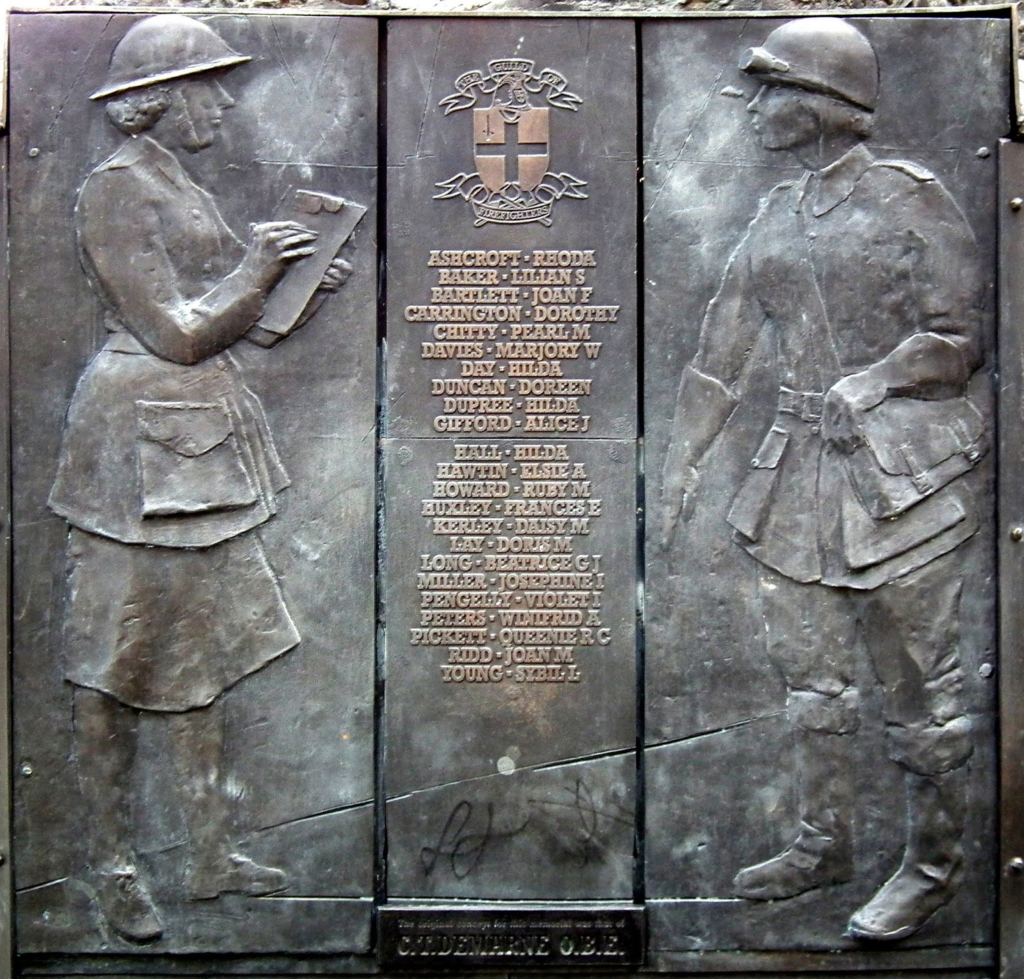
Part is dedicated to the women who died whilst serving in wartime. The lady on the left is an incident recorder and the one on the right a despatch rider …

Fire in the City is open now and can be seen in the following churches:

  • St Mary-le-Bow: Monday to Friday, 7.30am – 6.00pm. Open weekends on an informal basis.
  • St James Garlickhythe: Monday to Wednesday, 10.00am – 4.30pm, Thursday, 11.00am – 3.00pm, Sunday: 9.00am – 1.00pm. Friday & ​​Saturday, Closed.
  • St Mary Aldermary: Tuesday to Friday, 7.30am – 4.00pm
  • St Magnus the Martyr: Tuesday to Friday, 10.00am – 4.00pm, Sunday, 10.00am – 1.00pm (Mass at 11am)
  • St Stephen Walbrook: Monday to Friday, 10.30am – 3.30pm

(Venue details may be subject to change so it is advised to check individual church websites for the latest information). The exhibition will move to a second cluster of churches from Monday 23 October until the end of November (with selected venues hosting displays into December).

If you would like to follow me on Instagram here is the link …
https://www.instagram.com/london_city_gent/

An exhumed poet, a proud Mayor and a very modest attorney. Stories from St Giles.

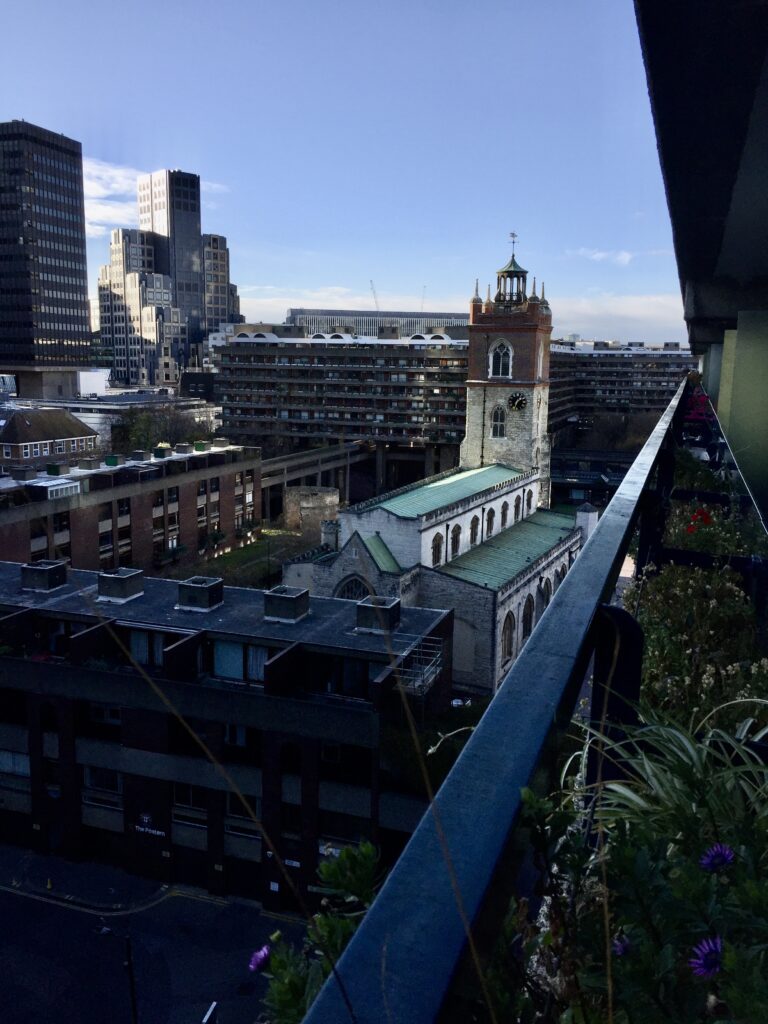
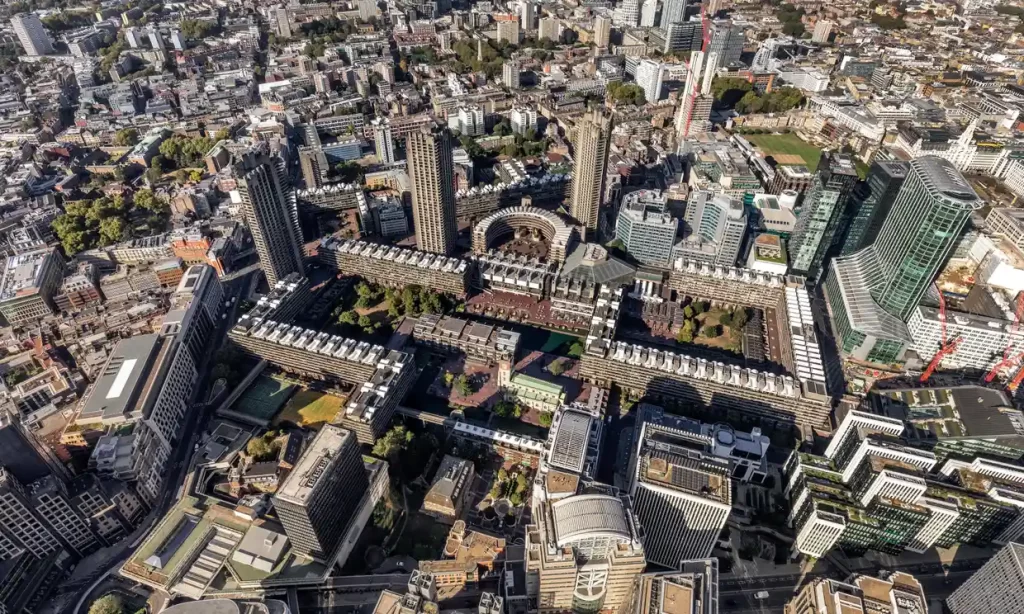
From where I live I have a nice view of my local church, St Giles Without Cripplegate. This image gives a good impression of where this wonderful old church is located within the strikingly modern Barbican Estate …

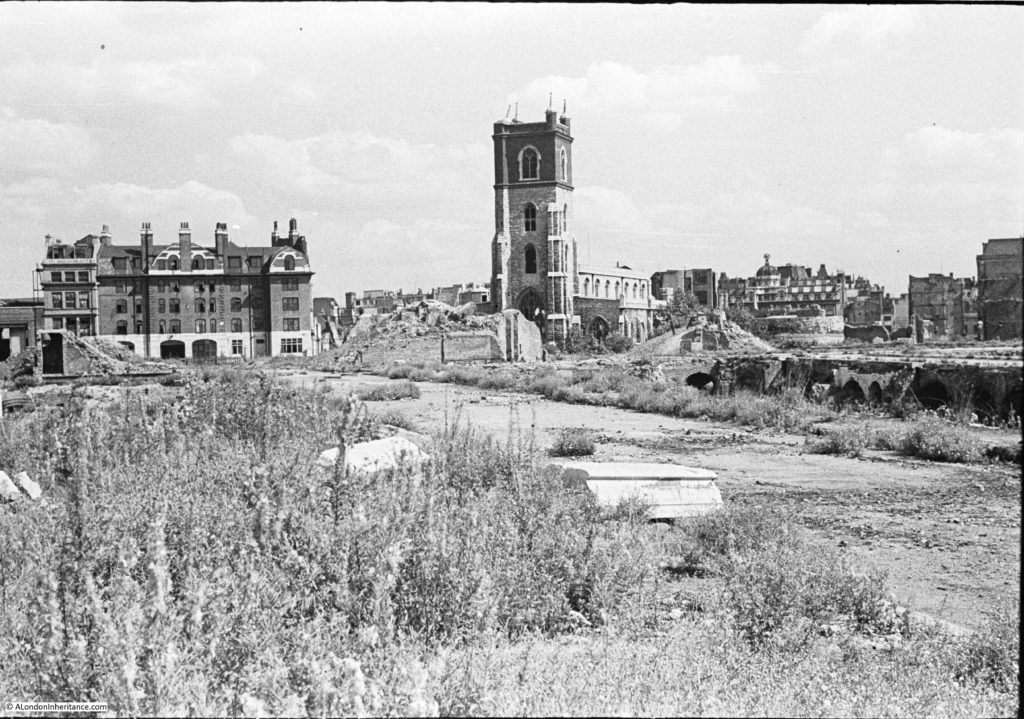
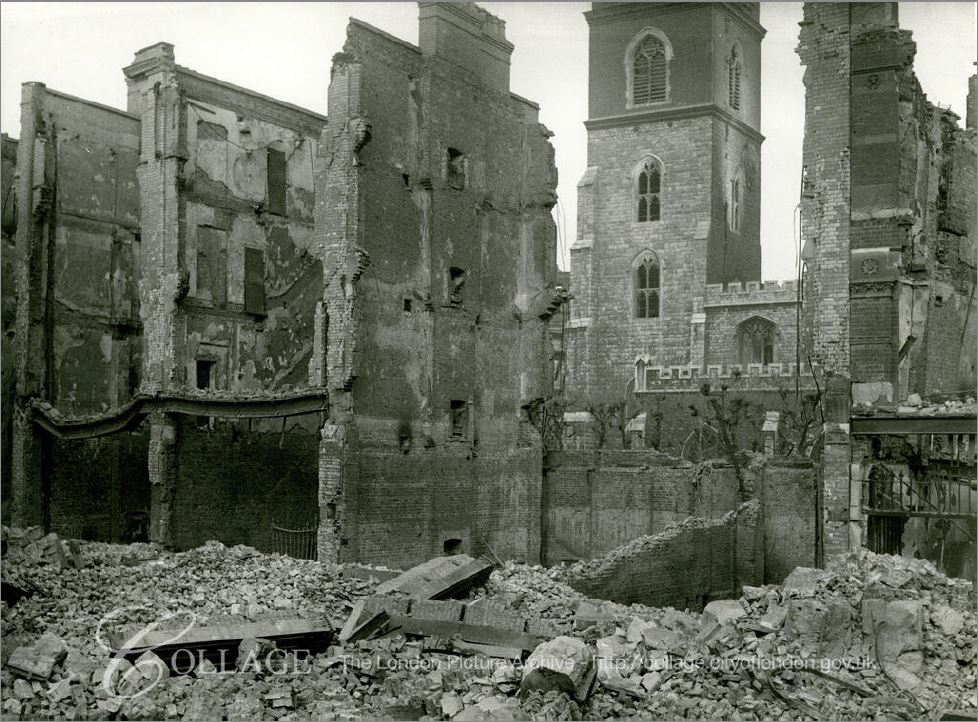
I am always pleased to come across old images of the area, particularly those taken in the three decades after the Second World War. I am indebted to the author of the splendid London Inheritance blog for this view from 1947 showing the devastated landscape …

The building on the left is the Red Cross Street Fire Station.

Another image showing nearby destruction …

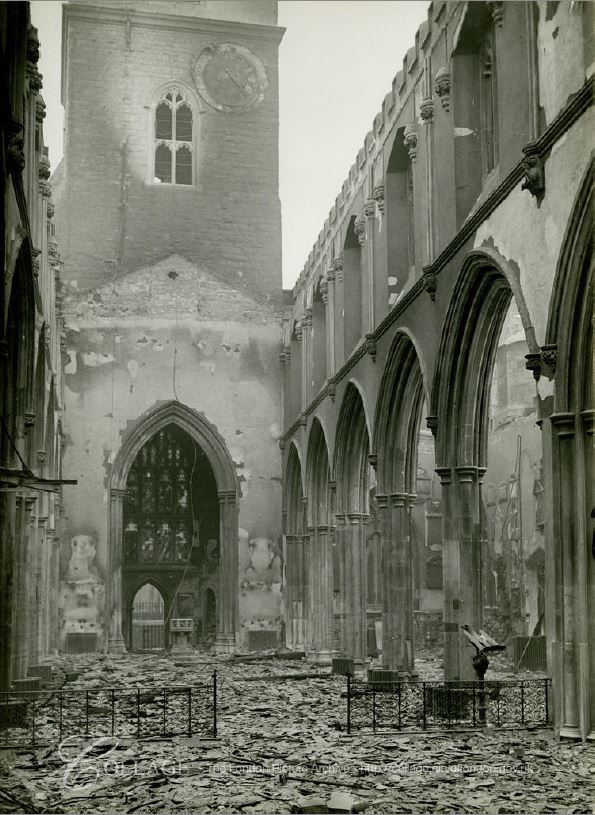
The following photo taken in the days following the raid on the 29th December 1940 shows the damage to the interior of the church …

St Giles Cripplegate

Image credit: London Metropolitan Archives, City of London: catalogue ref: m0017971cl

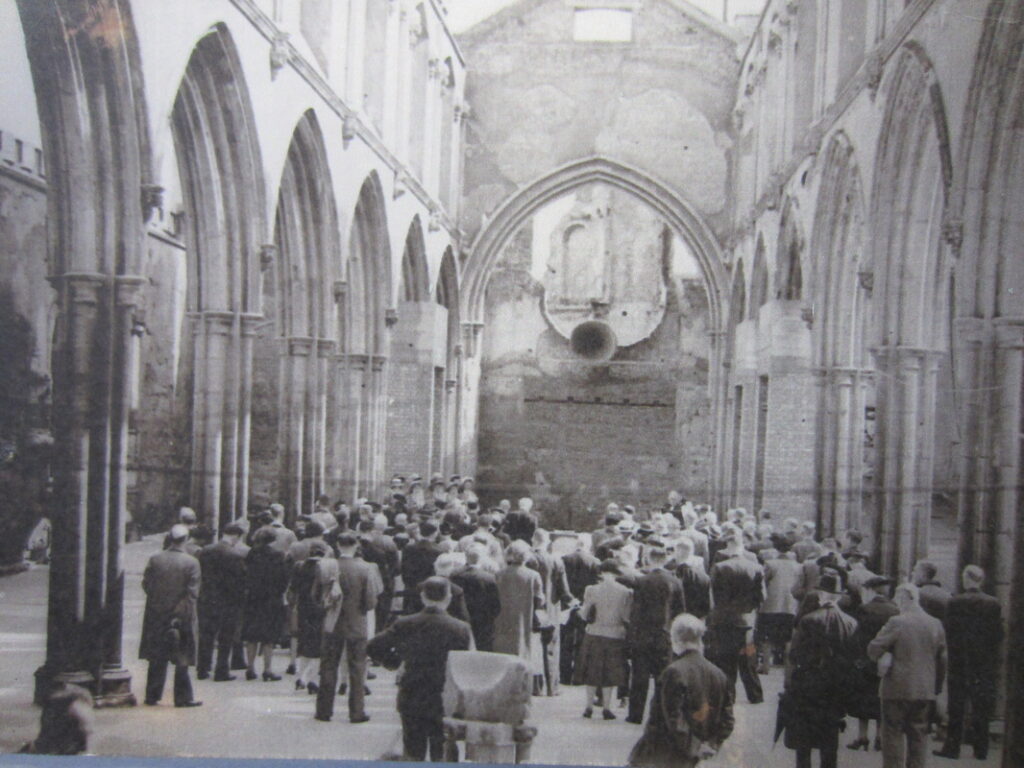
Since the walls and tower survived a service was possible with the parishioners able to look straight up to the sky …

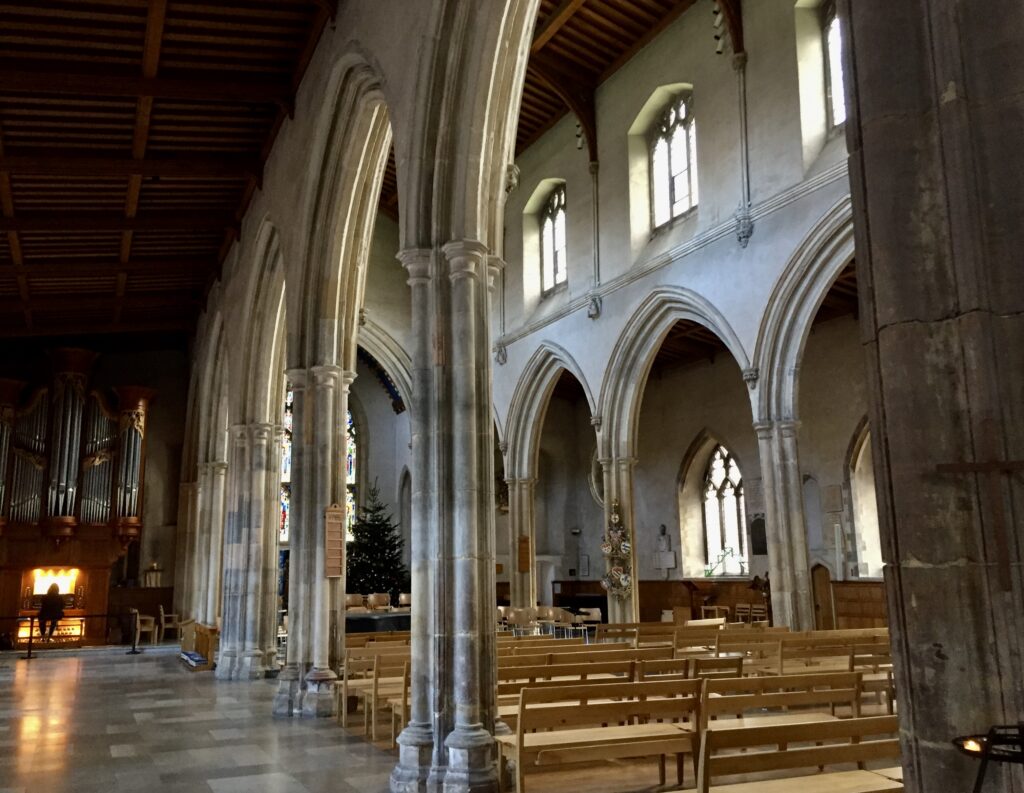
The inside of the church today. I was fortunate enough to visit when a lady (on the left in the picture) was practising beautifully on the organ …

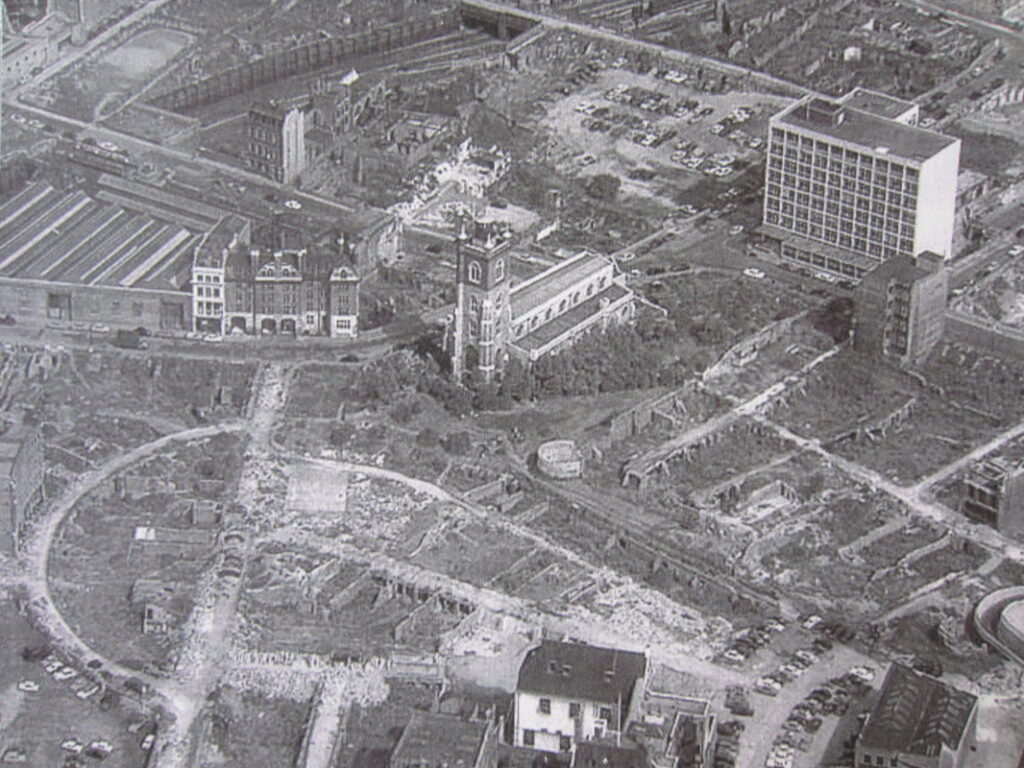
Here’s an aerial view from the 1960s and the church now has a roof. The more modern looking building on the right is Roman House which has recently been converted into apartments …

In this 21st century aerial image you can just make out the church’s green roof …

Some monuments remain from the old pre-Blitz building.

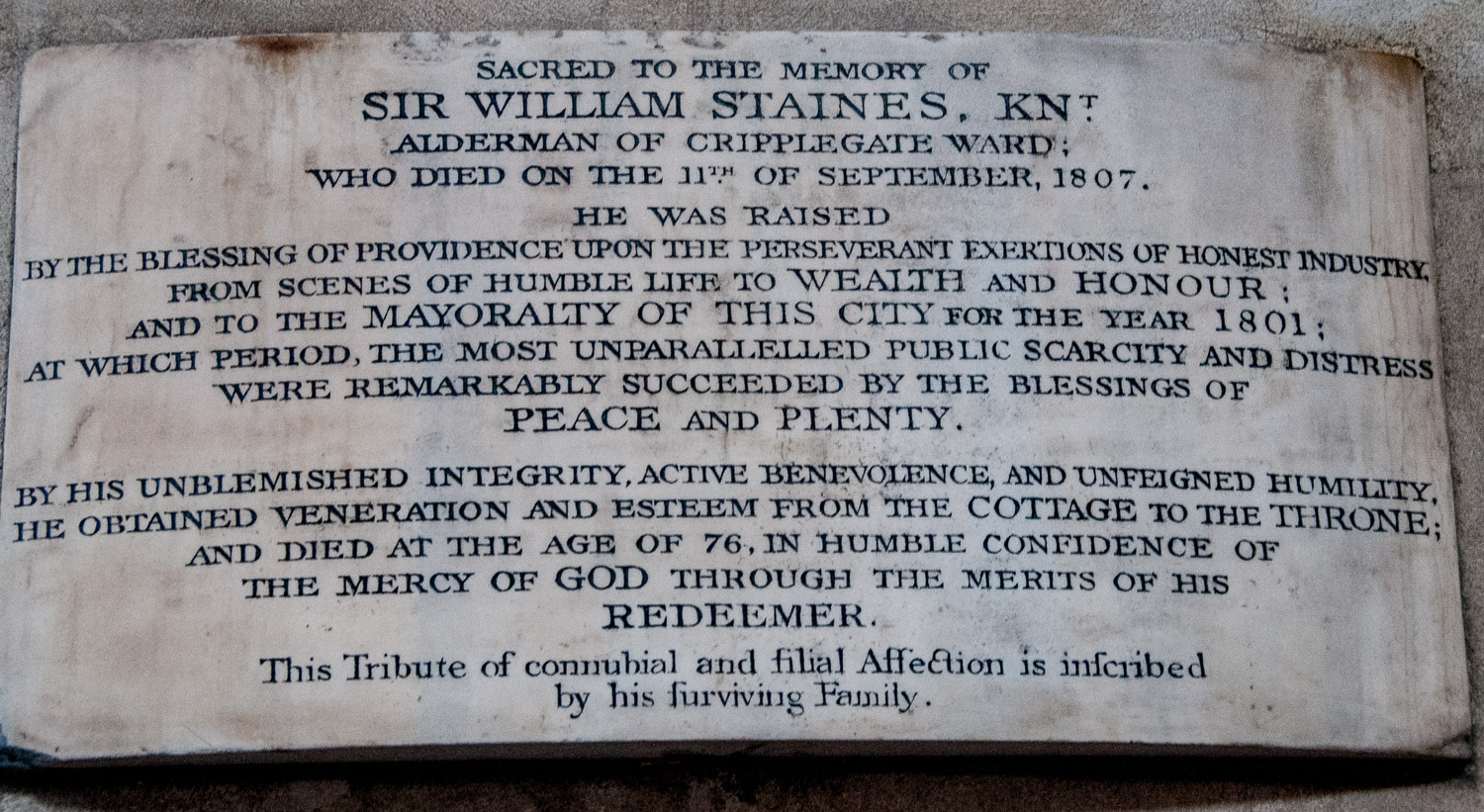
There is this touching memorial to a favourite character of mine, Sir William Staines …

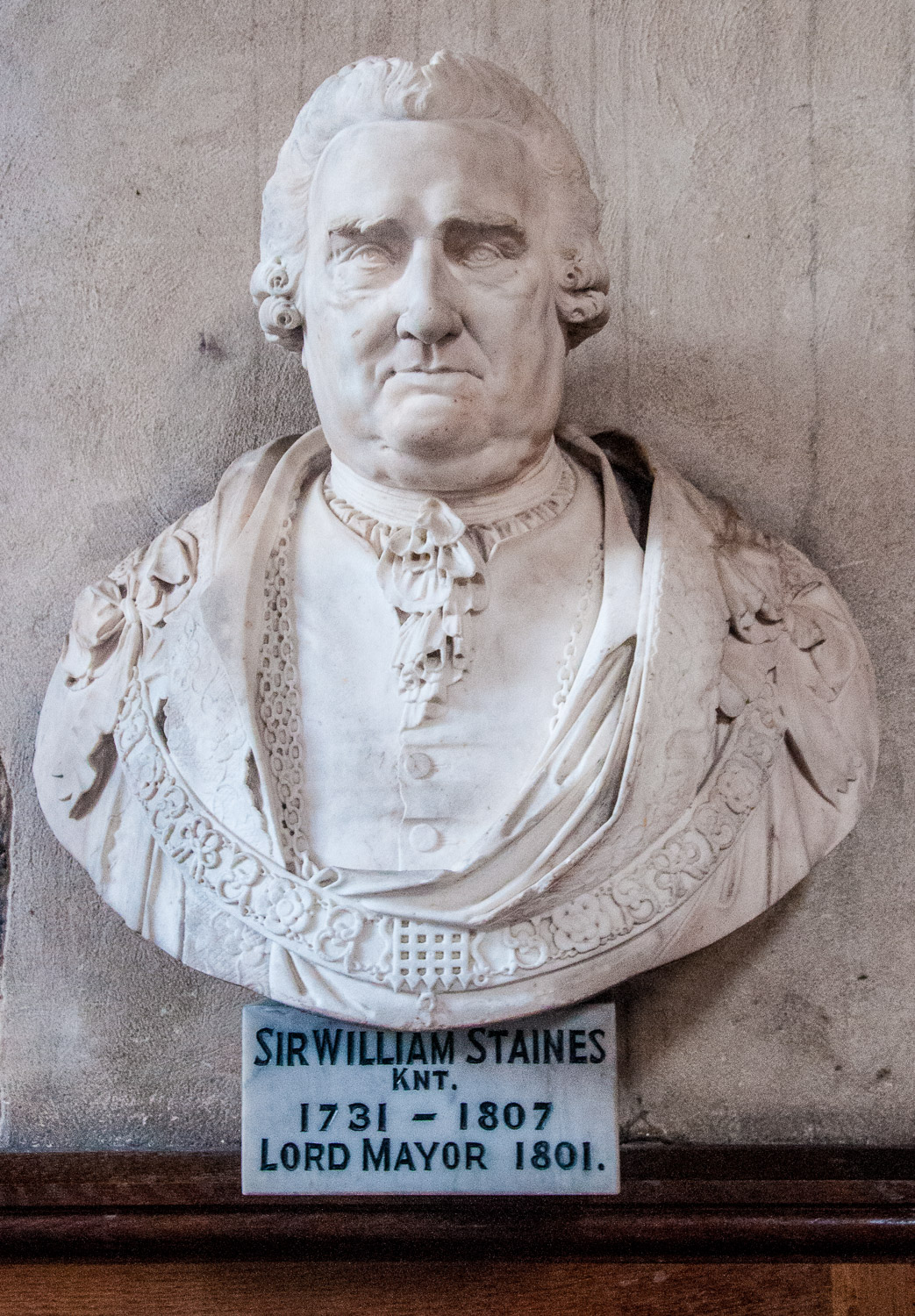
And here is the man himself …

Staines had extremely humble beginnings working as a bricklayer’s labourer, but eventually accumulated a large fortune which he generously used for philanthropic purposes. He seemed to recall his own earlier penury when he ensured that the houses he built for ‘aged and indigent’ folk would have ‘nothing to distinguish them from the other dwelling-houses … to denote the poverty of the inhabitant’.

British History Online records an encounter he had with the notorious John Wilkes who referred rather rudely to Staines’ original occupation …

The alderman was an illiterate man, and was a sort of butt amongst his brethren. At one of the Old Bailey dinners, after a sumptuous repast of turtle and venison, Sir William was eating a great quantity of butter with his cheese. “Why, brother,” said Wilkes, “you lay it on with a trowel!”

Incidentally, Wilkes is also commemorated in the the City in Fetter Lane where a striking statue of him honestly portrays his famous squint …

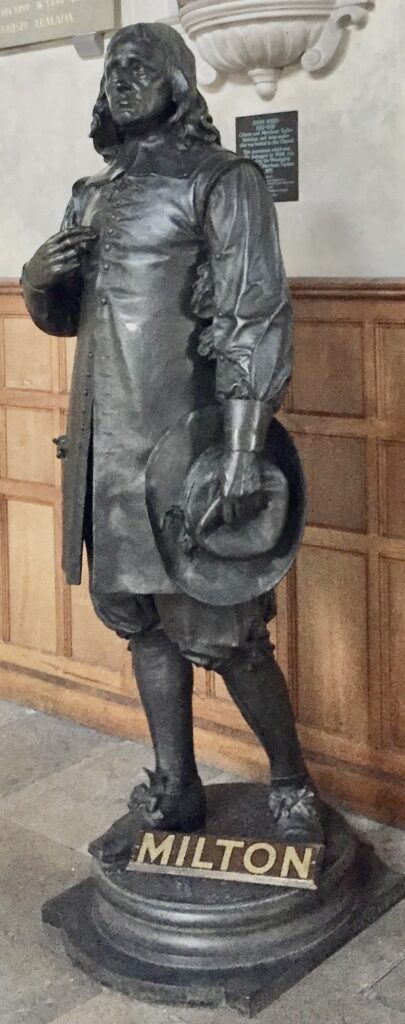
John Milton (1608-1674), the poet and republican, is perhaps the most famous former parishioner of St Giles and his statue stands by the south wall of the church …

It’s made of metal, which means it is one of the few memorials in the church that survived the bombing in the Second World War. It is the work of the sculptor Horace Montford (c1840-1919) and is based on a bust made in about 1654.

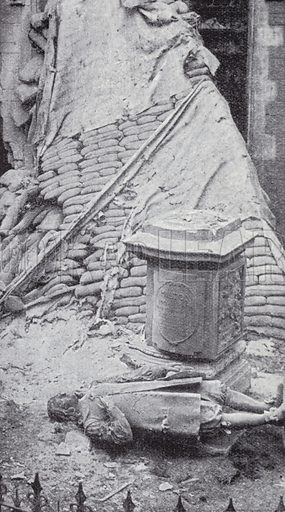
He used to be outside and was blasted off his plinth during the bombing …

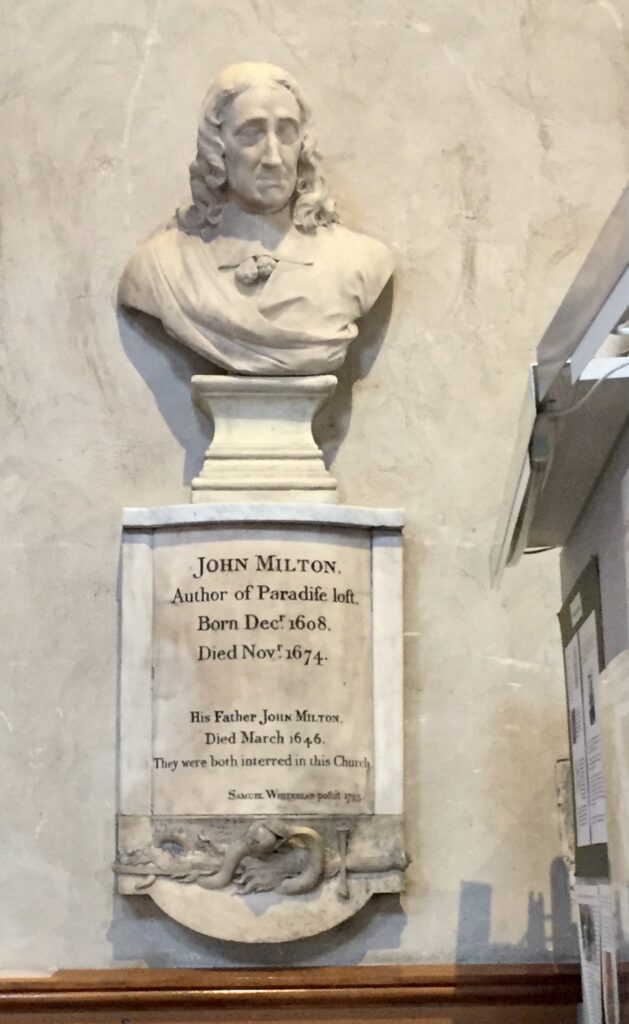
There is also this commemorative plaque …

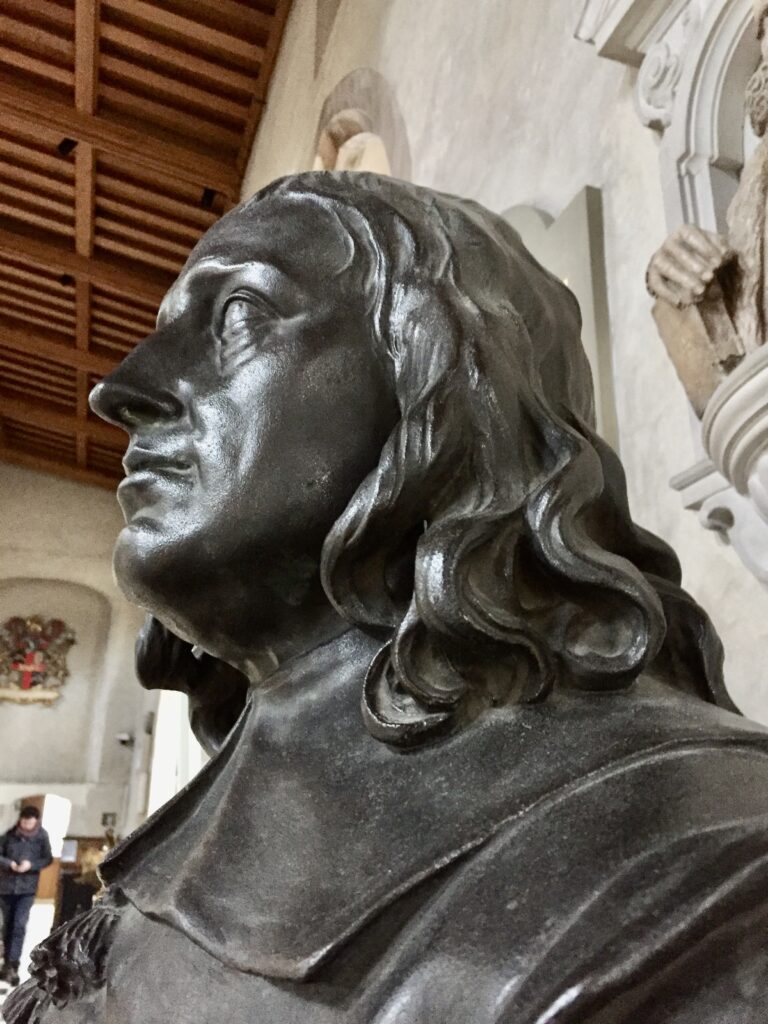
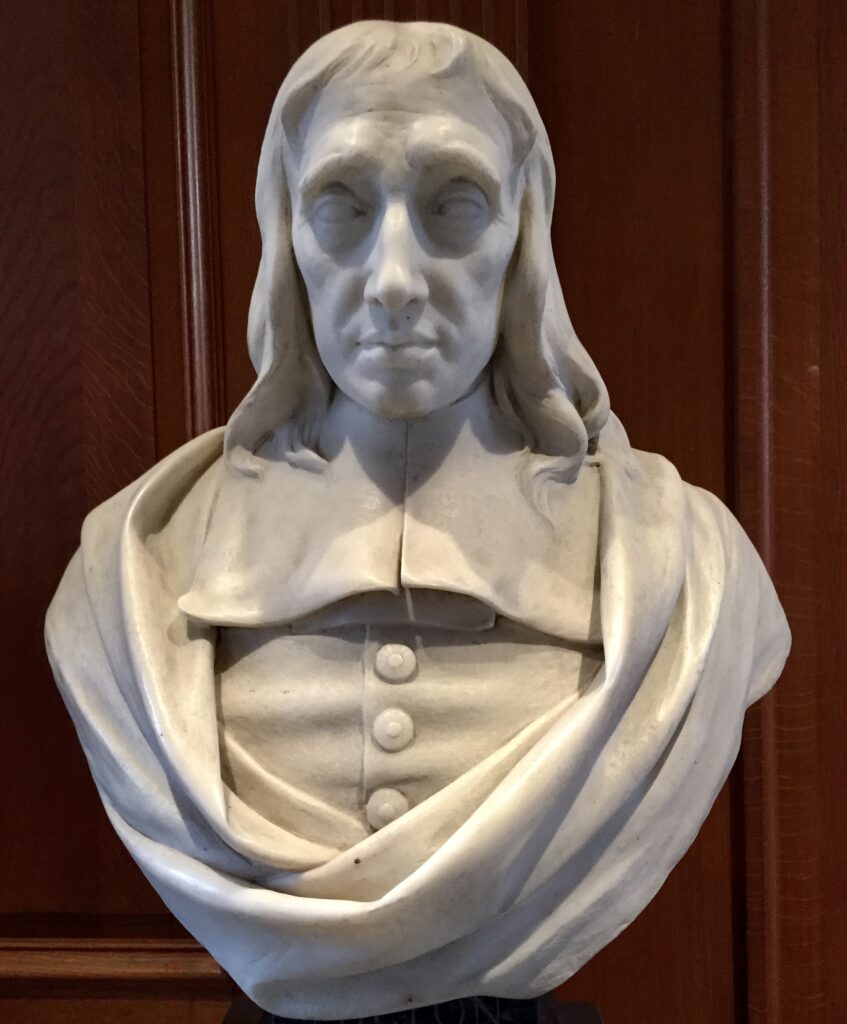
And a bust which clearly indicates his later-life blindness …

Milton was buried in the church next to his father, however he was not allowed to rest in peace.

British History Online reports the shocking event as follows …

‘A sacrilegious desecration of his remains, we regret to record, took place in 1790 … The disinterment had been agreed upon after a merry meeting at the house of Mr. Fountain, overseer, in Beech Lane, the night before, Mr. Cole, another overseer, and the journeyman of Mr. Ascough, the parish clerk, who was a coffin-maker, assisting’.

Having identified where they thought Milton’s grave was, they dug down almost six feet, found a coffin, and removed the lid. The report goes on …

‘Upon first view of the body, it appeared perfect, and completely enveloped in the shroud, which was of many folds, the ribs standing up regularly. When they disturbed the shroud the ribs fell. Mr. Fountain confessed that he pulled hard at the teeth, which resisted, until some one hit them a knock with a stone, when they easily came out. There were but five in the upper jaw, which were all perfectly sound and white, and all taken by Mr. Fountain. He gave one of them to Mr. Laming. Mr. Laming also took one from the lower jaw; and Mr. Taylor took two from it. Mr. Laming said that he had at one time a mind to bring away the whole under-jaw with the teeth in it; he had it in his hand, but tossed it back again’.

As if that wasn’t undignified enough,’Elizabeth Grant, the gravedigger … now took possession of the coffin; and, as its situation under the common councilmen’s pew would not admit of its being seen without the help of a candle, she kept a tinder-box in the excavation, and, when any persons came, struck a light, and conducted them under the pew; where, by reversing the part of the lid which had been cut, she exhibited the body, at first for sixpence and afterwards for threepence and twopence each person’.

The body was reburied but rumours spread that it wasn’t Milton in the coffin, but a woman. So Milton was dug up a second time and the surgeon in attendance examined the bones — what were left of them — and pronounced them to be masculine. Only then was Milton, at last, allowed to rest only to be permanently obliterated in the bombing.

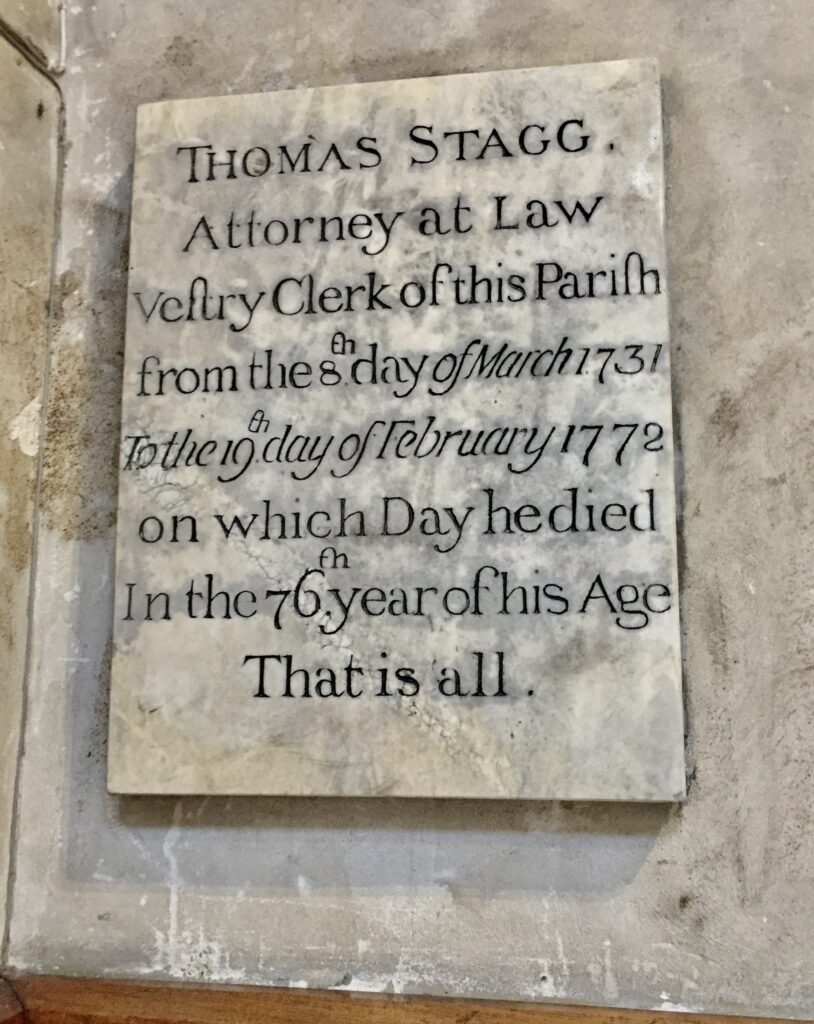
Notwithstanding the generous memorials to the great and the good, I was captivated by this modest plaque on the south wall …

An attorney at law who obviously believed in brevity. No Latin exhortation of his virtues, no figures of a grieving widow and children, only the important facts and the bald, concluding statement ‘That is all’.

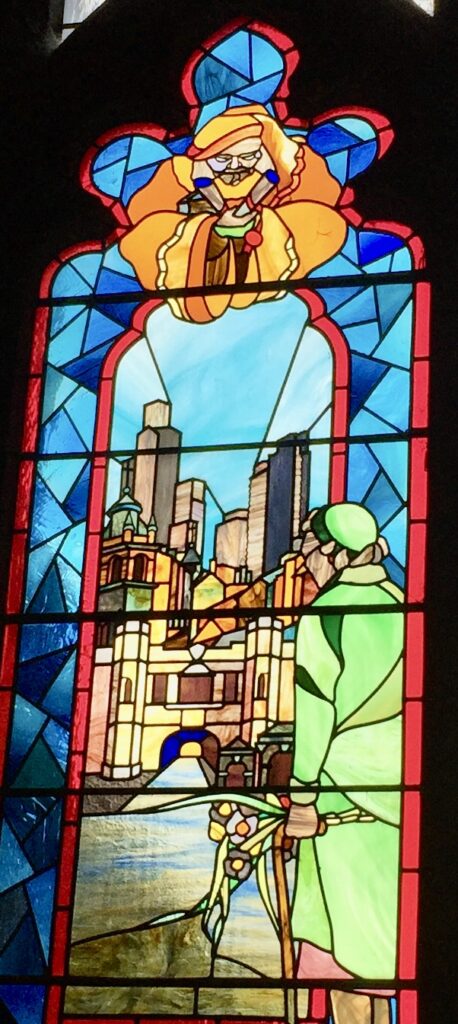
There is a lot more to see at St Giles such as modern stained glass …

And intriguing inscriptions, both inside …

And outside …

But for the moment ‘that is all!’

If you would like to follow me on Instagram here is the link …
https://www.instagram.com/london_city_gent/

‘On safari’ plus a pink banana and other random images.

A few weeks ago I had the pleasure of getting off the train at what must be one of the most strangely named stations in London …

Apparently the name derives from it being the former dumping ground for mud dredged from the Millwall Docks, which had to be regularly dredged to prevent silting up.

Very close by was the place where my safari started …

I suppose calling my visit a safari is a slight exaggeration but hopefully it sparked your interest to look at the blog.

Having browsed the Internet, this was the image I was hoping to replicate …

Sheep grazing with Canary Wharf in the background – what a great shot.

Unfortunately, on the day I visited the weather was awful and the sheep unobliging …

‘Just what do you think you’re staring at?’

The donkeys looked pretty fed up too …

‘Put that camera away – I’m not looking my best!’

Even the llamas didn’t want to know …

The goats, on the other hand, were delighted to see me …

I have a suspicion that not everyone obeys the ‘Do not feed the animals’ rule.

And I must say, this Ack-ack gun was an unexpected discovery …

These guns were a crucial part of London’s defence system during the War. Scroll down to the end of the blog to see a map of the damage bombs did around St Paul’s Cathedral.

Walking nearby along the river there are some great views and, of course, an interesting bollard or two …

So I’ll try to return when the weather is nicer.

Here are some more random images that I have recorded on my walks.

Outside St Giles the Magnolia trees are blossoming …

Daffs are popping up everywhere. They cheer me up even when the weather is rubbish …

And they’re not alone …

I came cross some Barbican acrobatics …

Barbican water feaures …

Water feature plus residents …

I went to a meeting in Finsbury Circus recently and they had a rather nice roof terrace so I snapped this city skyline view …

I’m not a great fan of that new monster building on Bishopsgate, but it does generate interesting reflections at certain times of day. In the foreground is St Giles Church and on the left Tower 42 …

And finally, an apartment hosting a giant pink banana being cuddled by a furry white poodle. I so wish I knew their background story!

PS Don’t forget, the excellent Magnificent Maps exhibition at the Metropolitan Archive finishes on 29th March, so no time to lose if you want to visit.

This is a screen shot of one of the displays showing the bomb damage around St Paul’s Cathedral …

Here is the key – just look at the devastation and wonder how the Cathedral survived …

If you would like to follow me on Instagram here is the link …
https://www.instagram.com/london_city_gent/

Page 5 of 16

Powered by WordPress & Theme by Anders Norén

Symbols & Secrets
Privacy Overview

This website uses cookies so that we can provide you with the best user experience possible. Cookie information is stored in your browser and performs functions such as recognising you when you return to our website and helping our team to understand which sections of the website you find most interesting and useful.