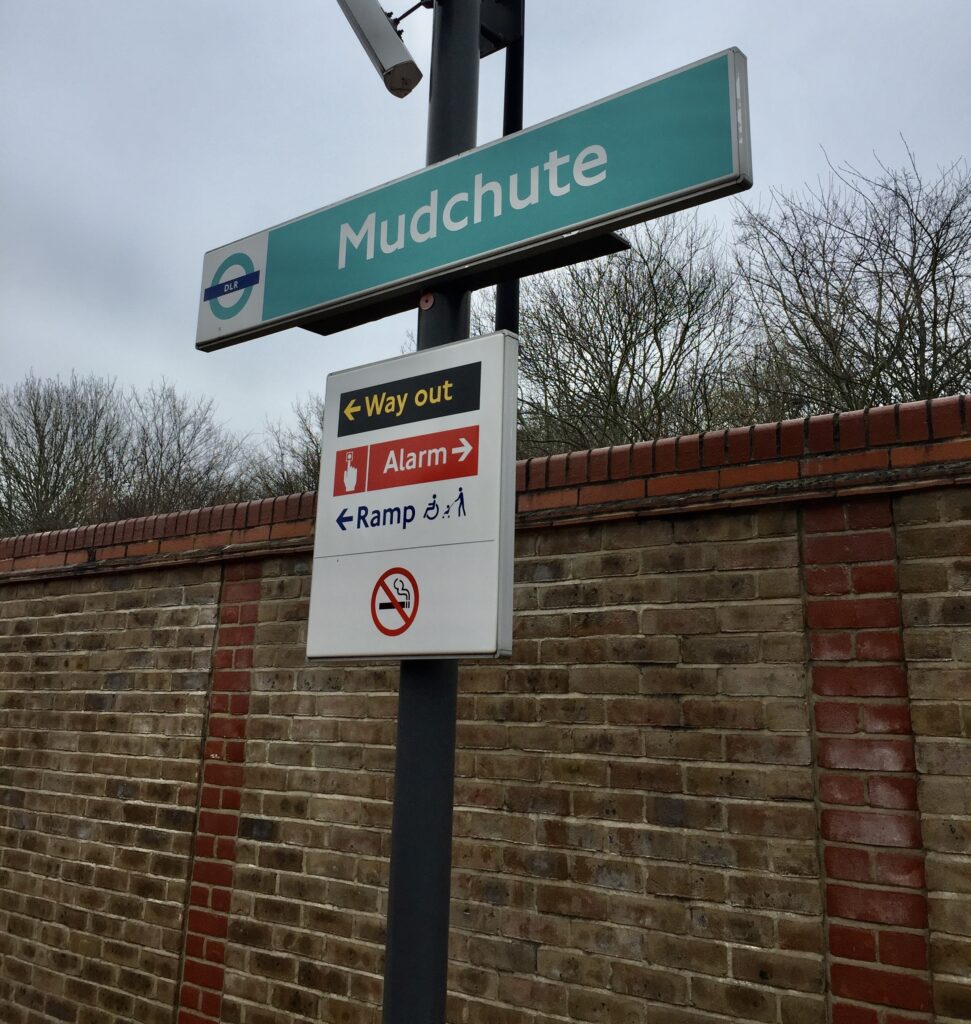
A few weeks ago I had the pleasure of getting off the train at what must be one of the most strangely named stations in London …
Apparently the name derives from it being the former dumping ground for mud dredged from the Millwall Docks, which had to be regularly dredged to prevent silting up.
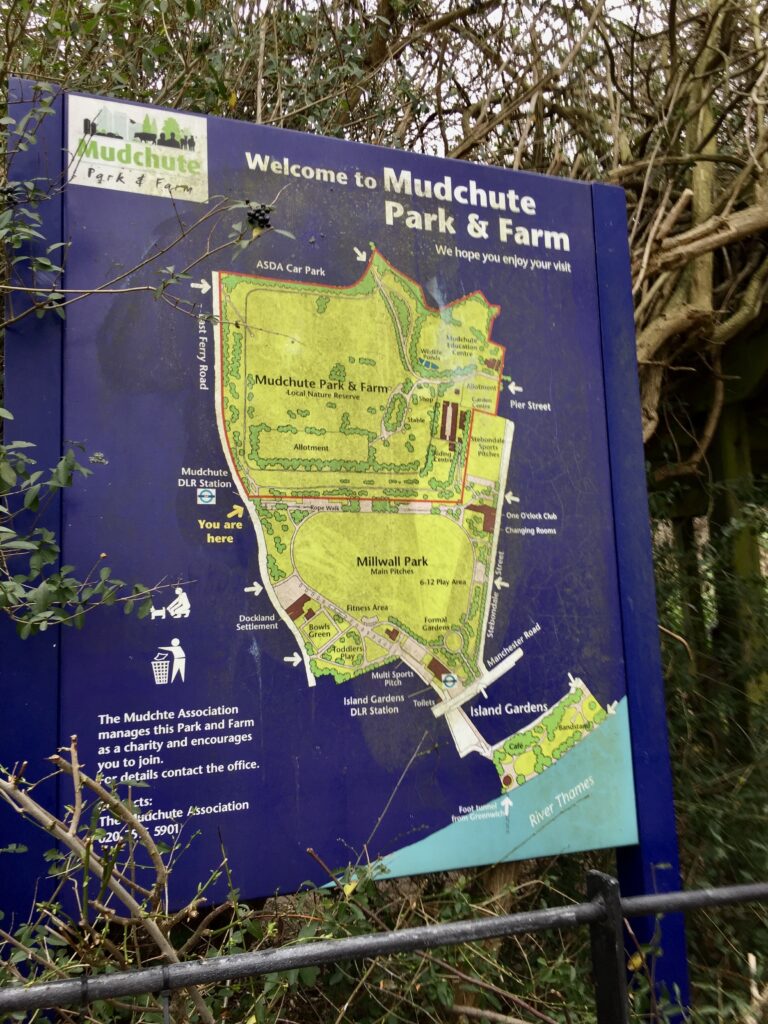
Very close by was the place where my safari started …
I suppose calling my visit a safari is a slight exaggeration but hopefully it sparked your interest to look at the blog.
Having browsed the Internet, this was the image I was hoping to replicate …
Sheep grazing with Canary Wharf in the background – what a great shot.
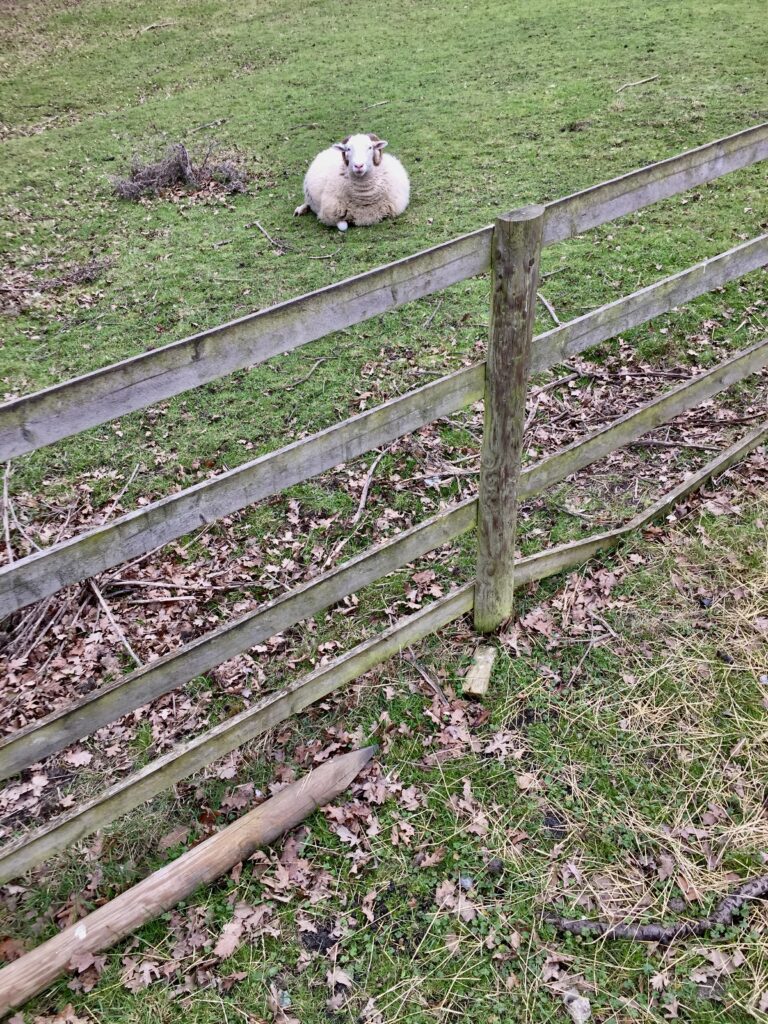
Unfortunately, on the day I visited the weather was awful and the sheep unobliging …
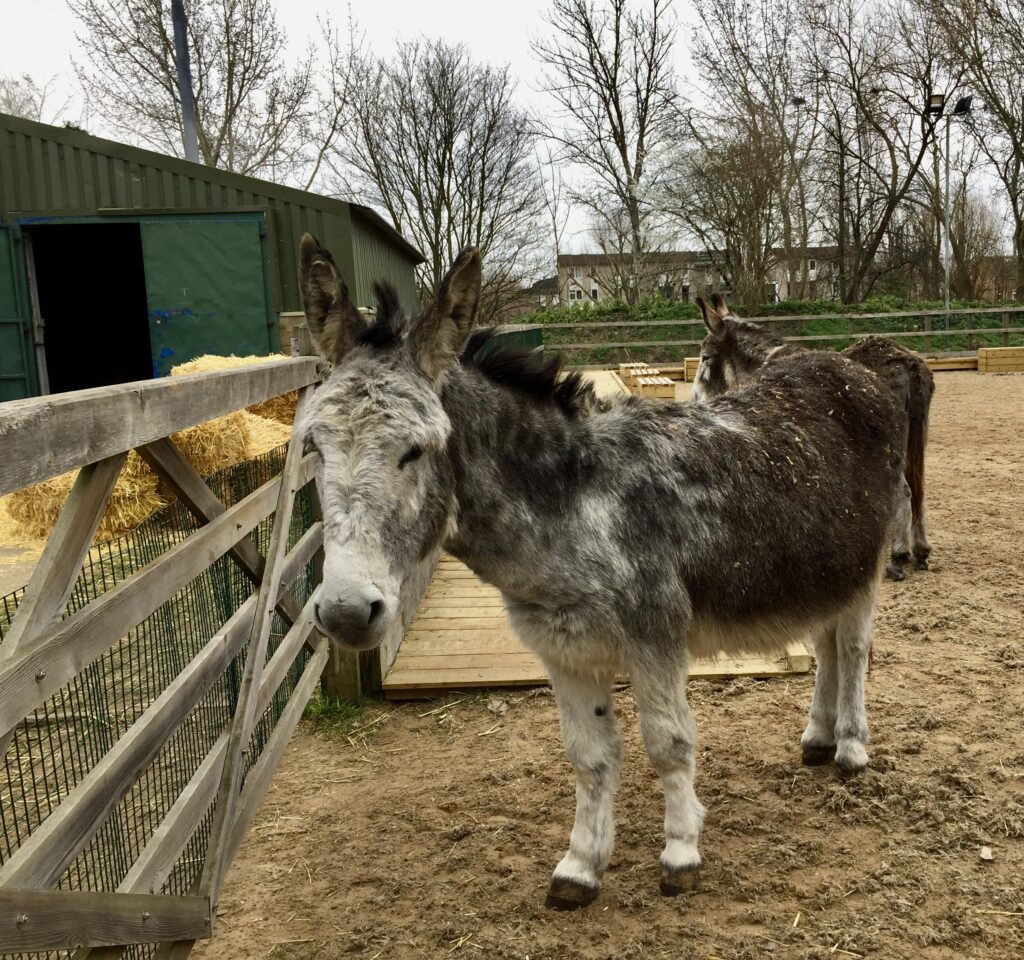
‘Just what do you think you’re staring at?’
The donkeys looked pretty fed up too …
‘Put that camera away – I’m not looking my best!’
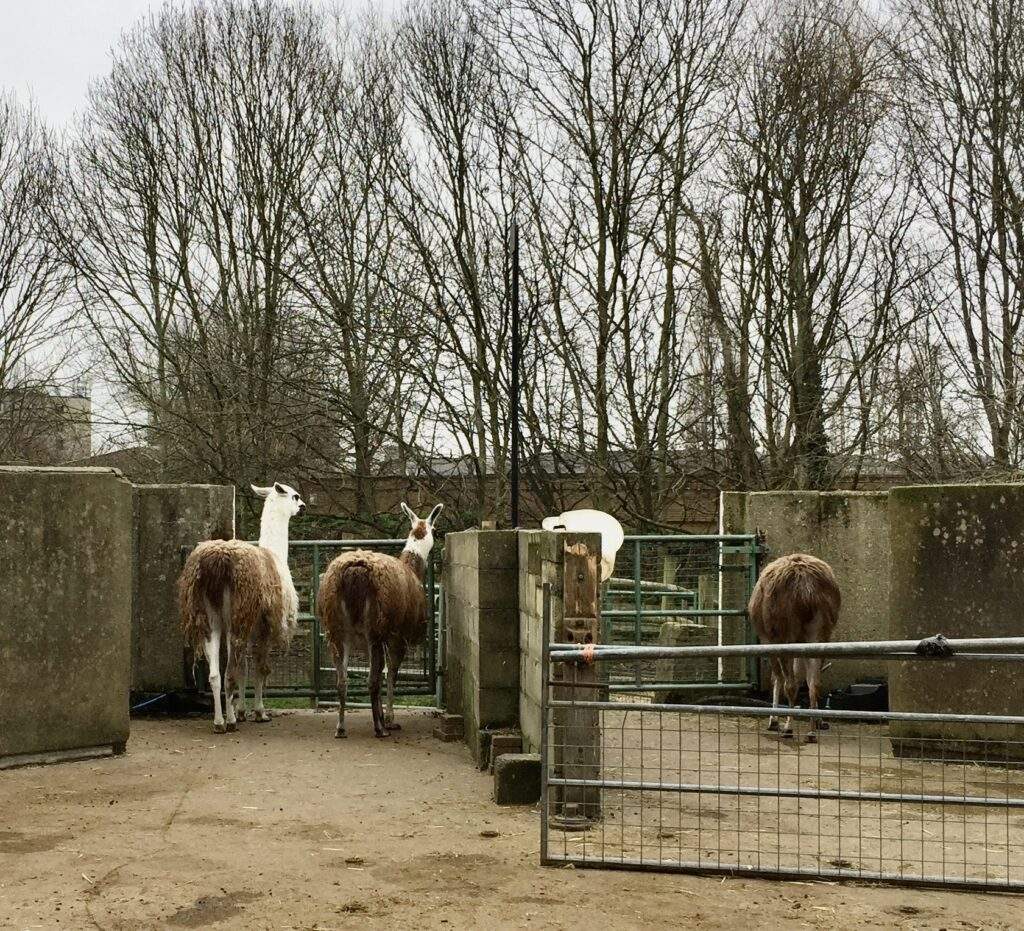
Even the llamas didn’t want to know …
The goats, on the other hand, were delighted to see me …
I have a suspicion that not everyone obeys the ‘Do not feed the animals’ rule.
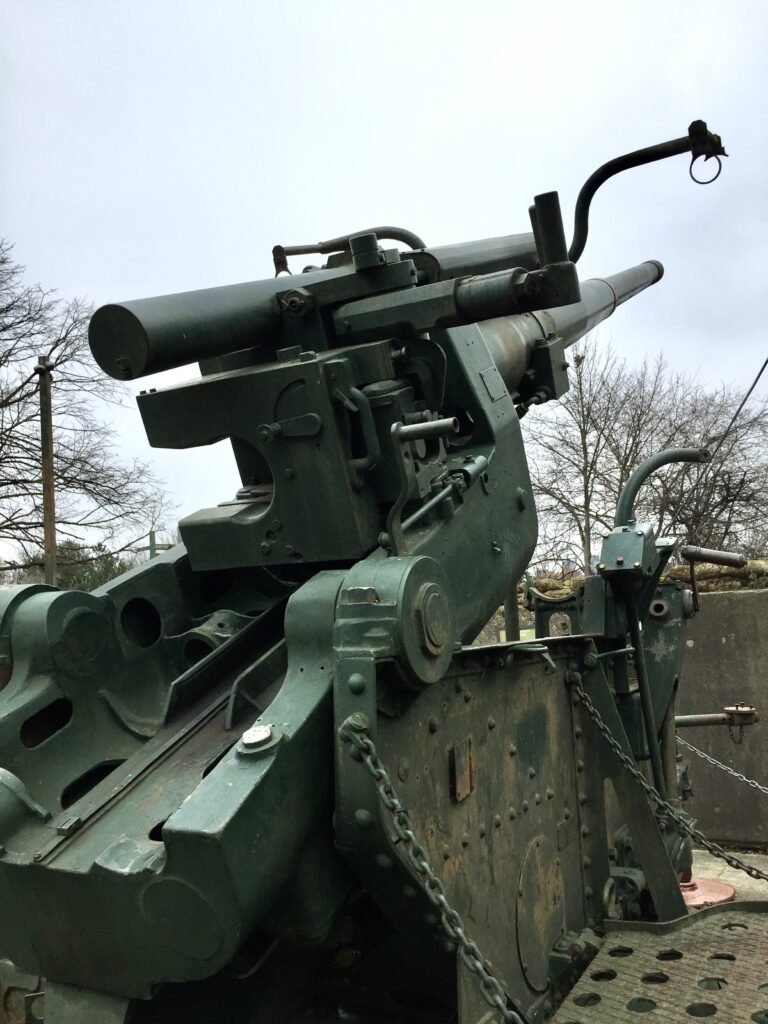
And I must say, this Ack-ack gun was an unexpected discovery …
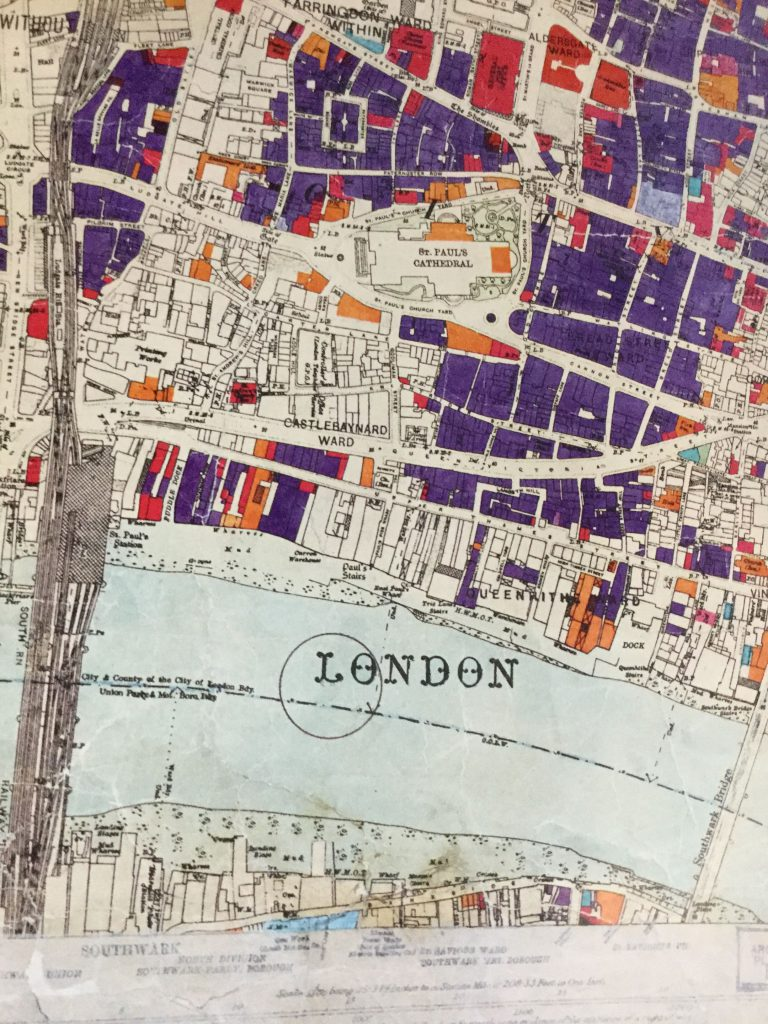
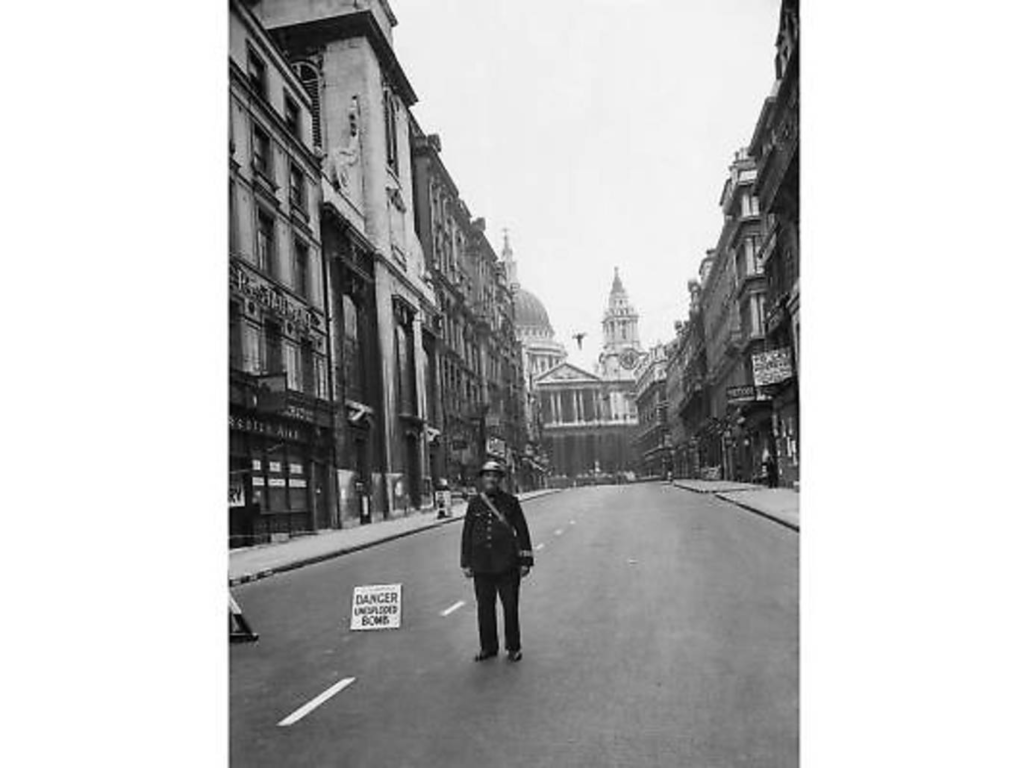
These guns were a crucial part of London’s defence system during the War. Scroll down to the end of the blog to see a map of the damage bombs did around St Paul’s Cathedral.
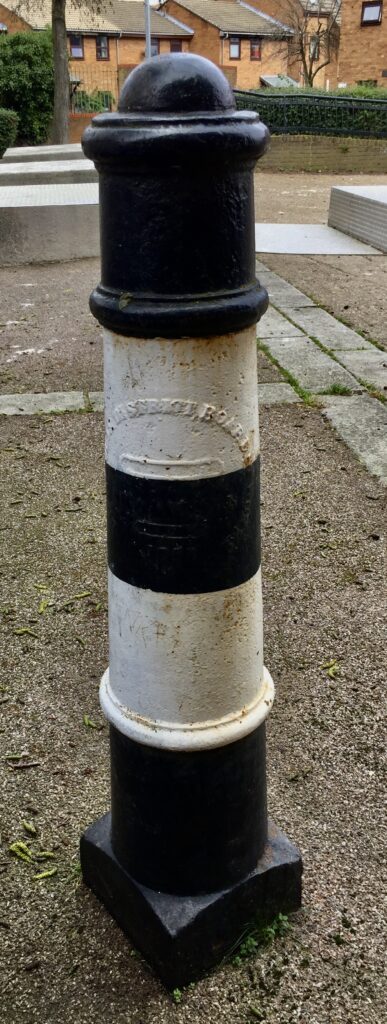
Walking nearby along the river there are some great views and, of course, an interesting bollard or two …
So I’ll try to return when the weather is nicer.
Here are some more random images that I have recorded on my walks.
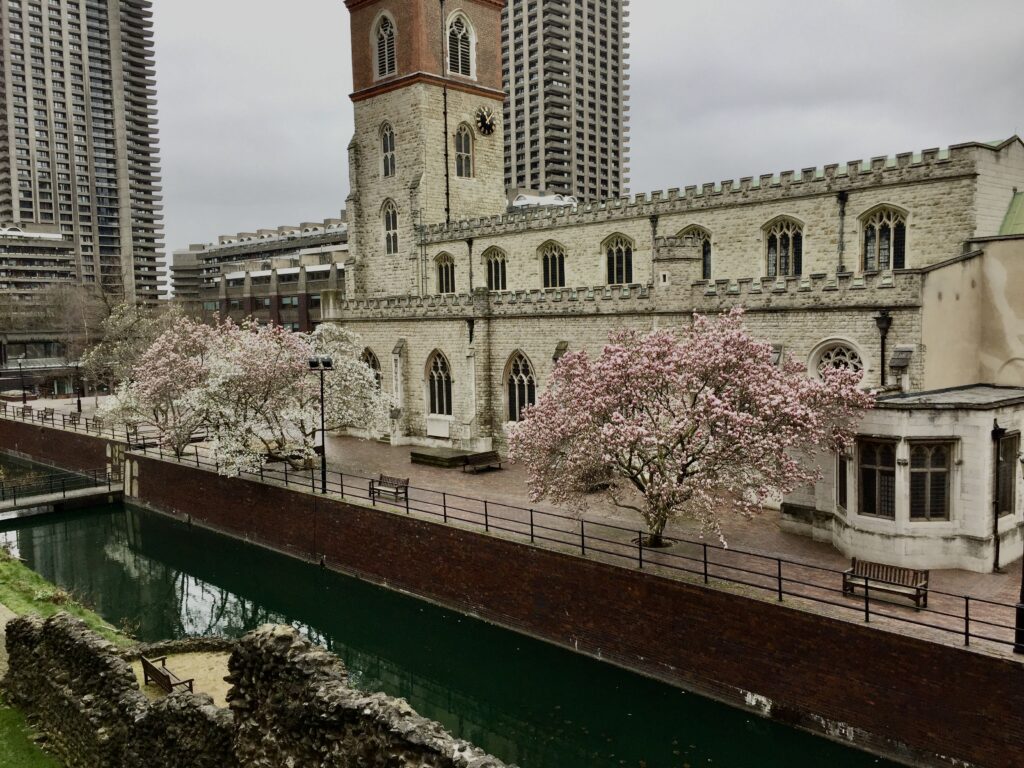
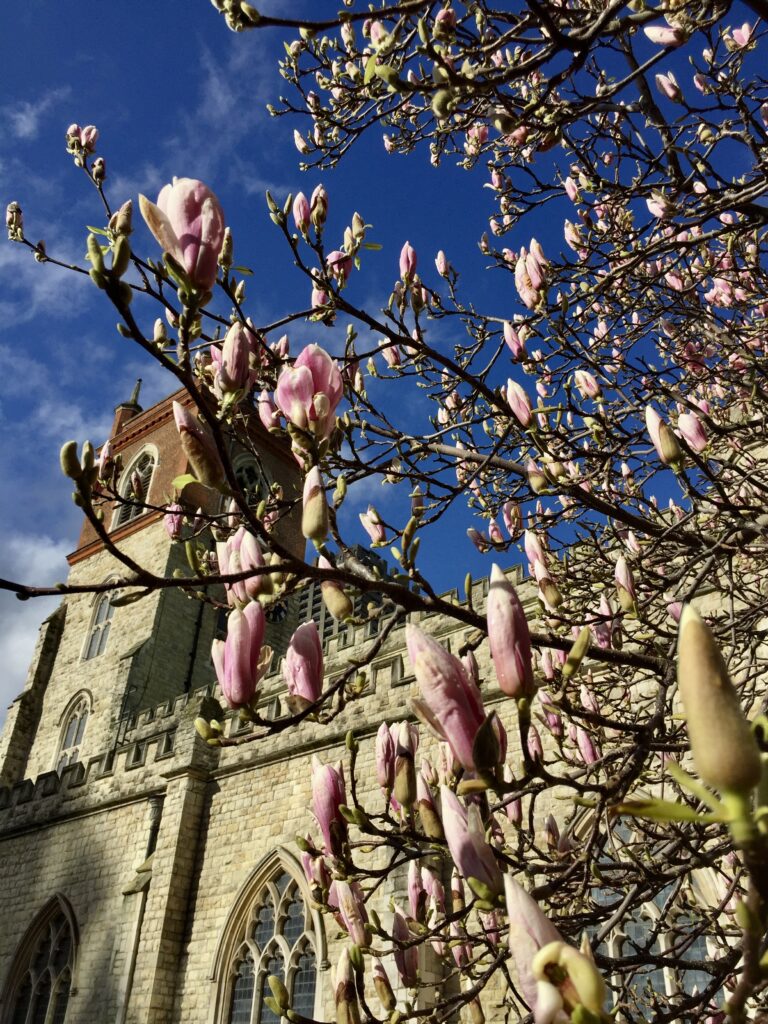
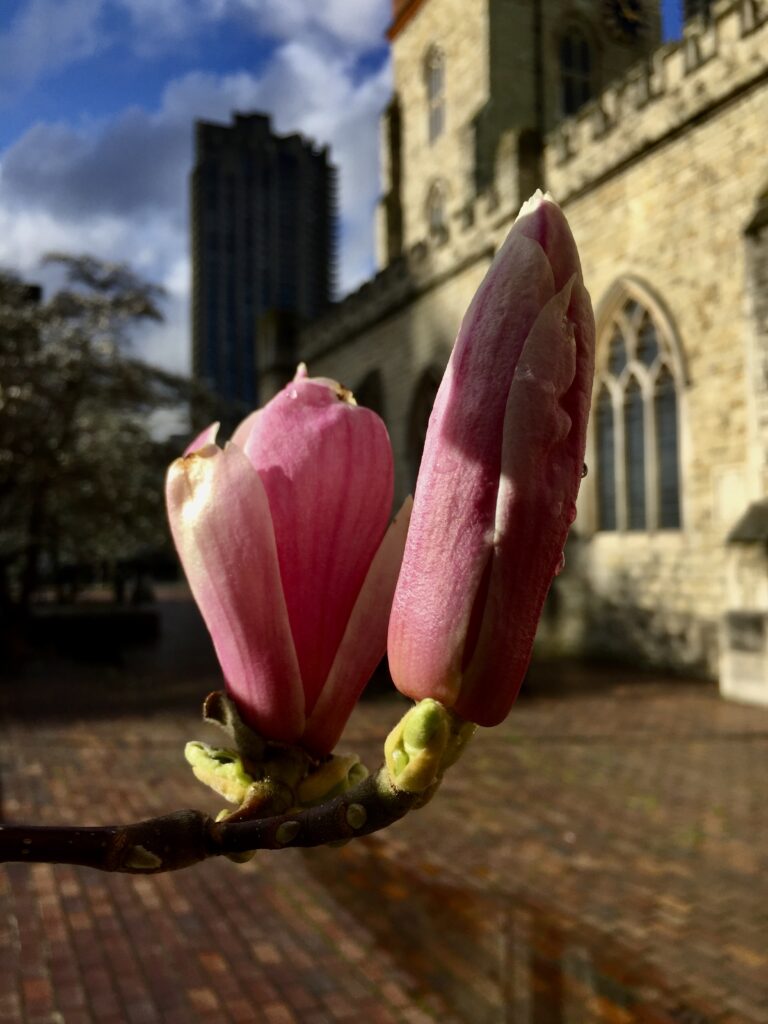
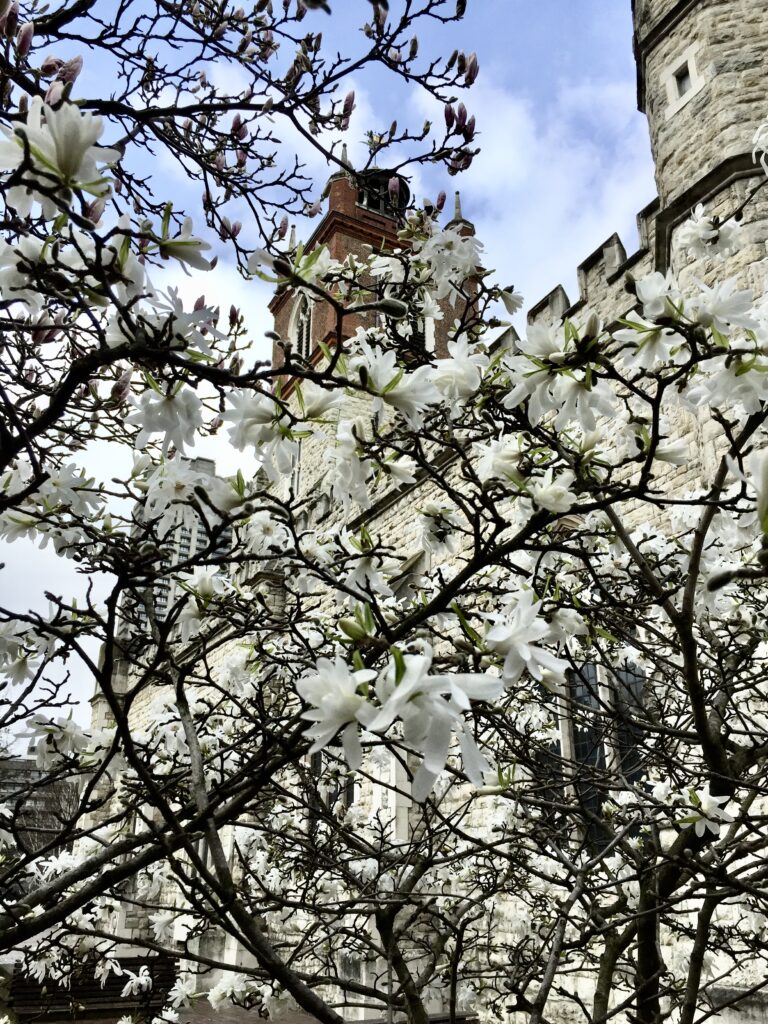
Outside St Giles the Magnolia trees are blossoming …
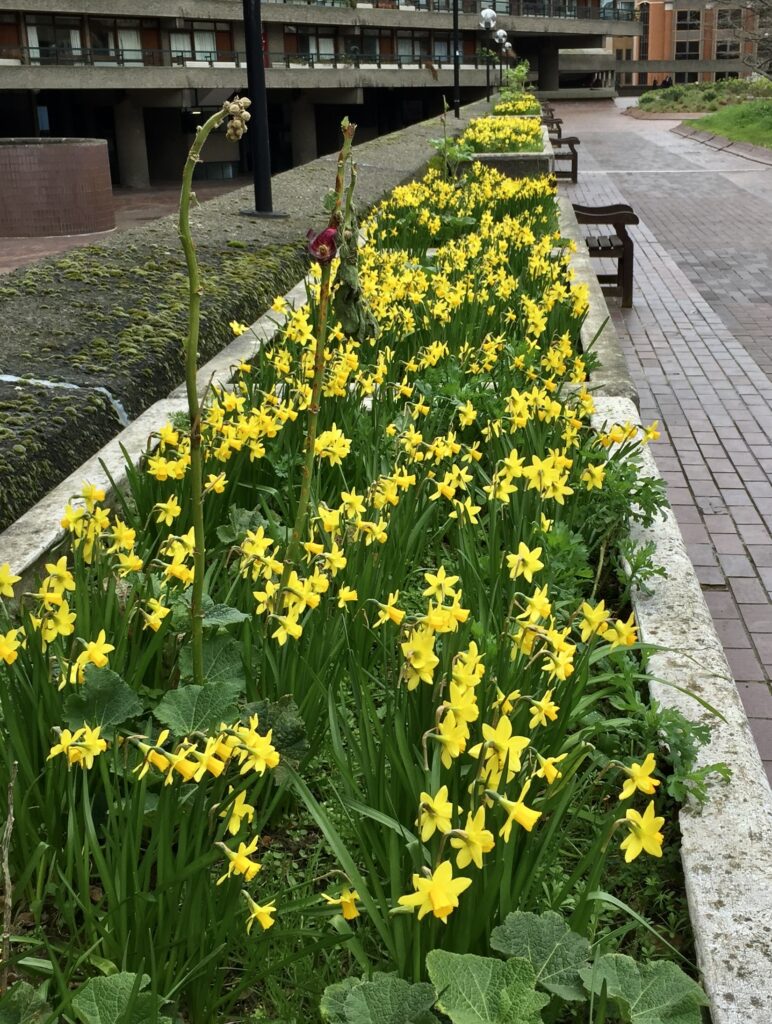
Daffs are popping up everywhere. They cheer me up even when the weather is rubbish …
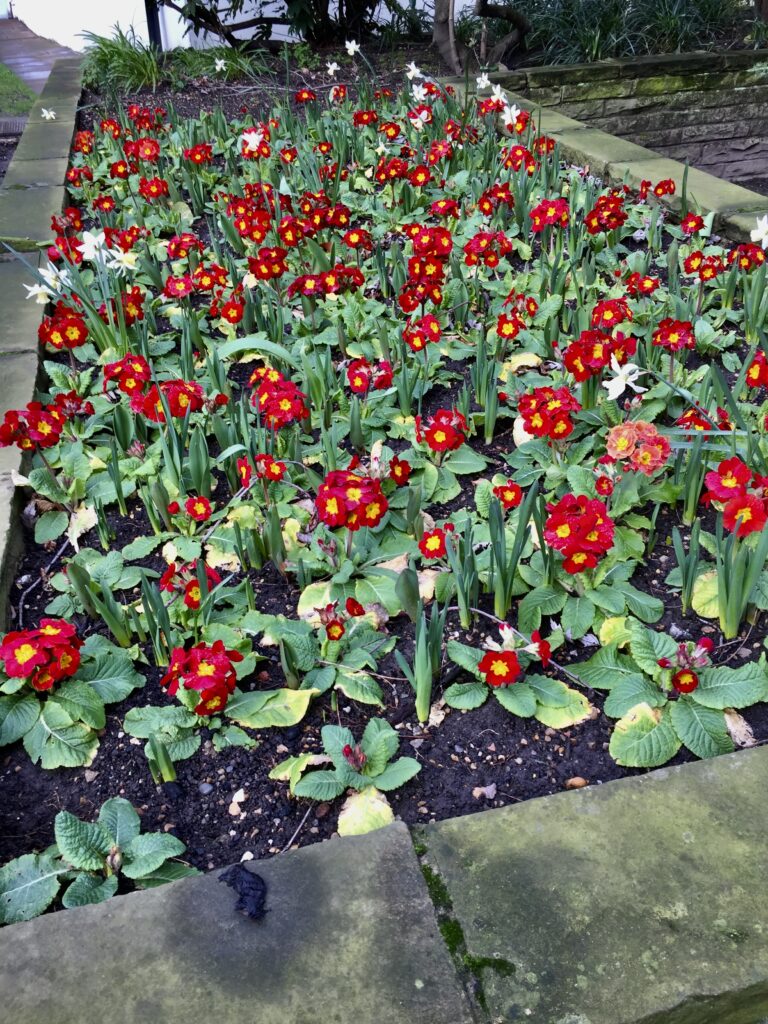
And they’re not alone …
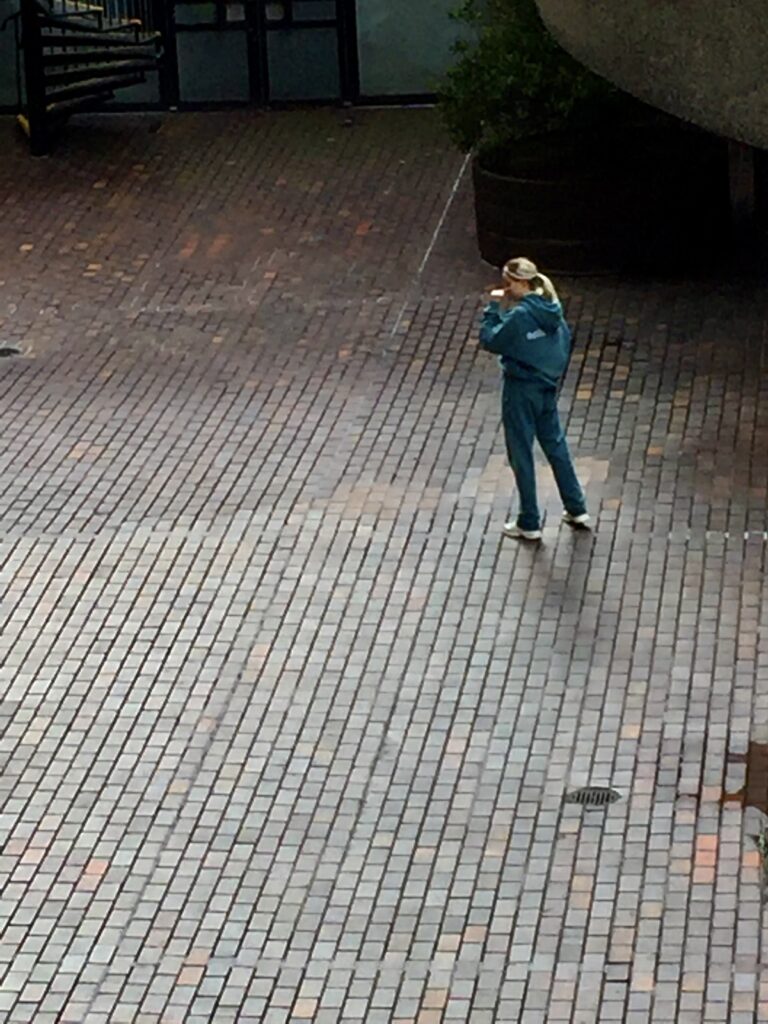
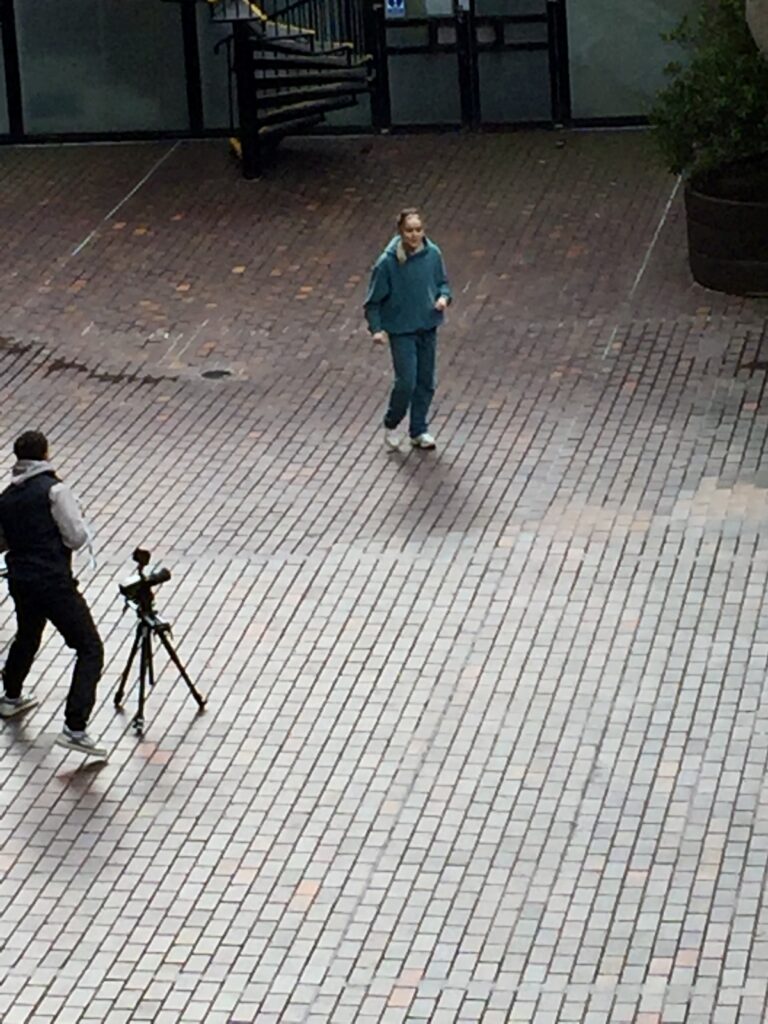
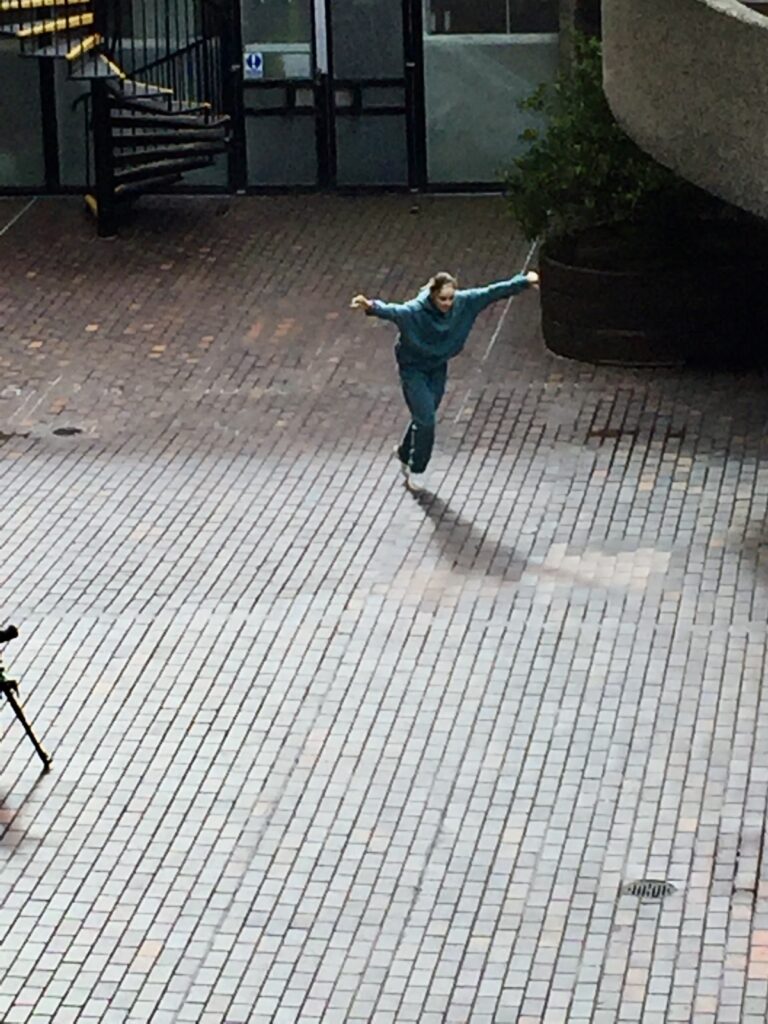
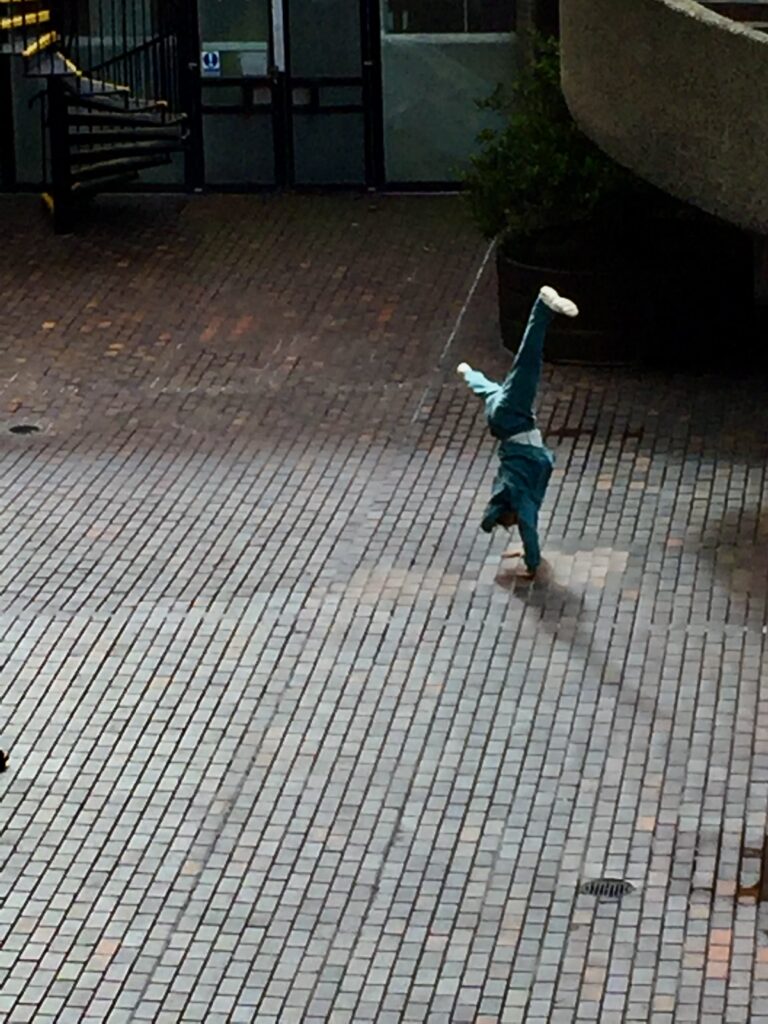
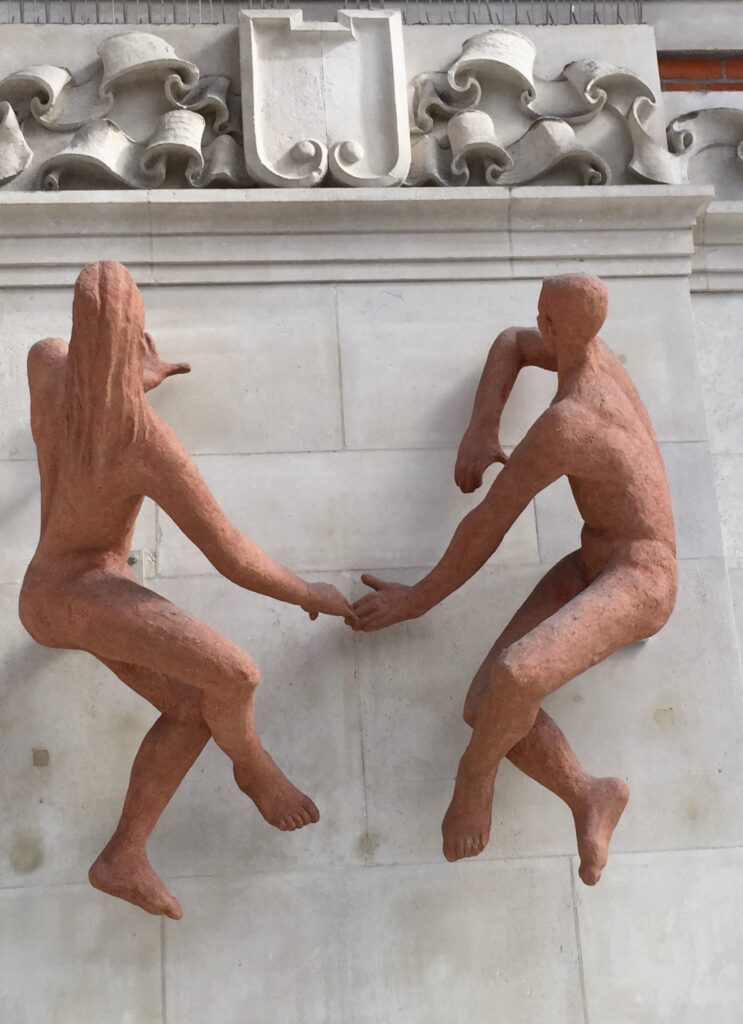
I came cross some Barbican acrobatics …
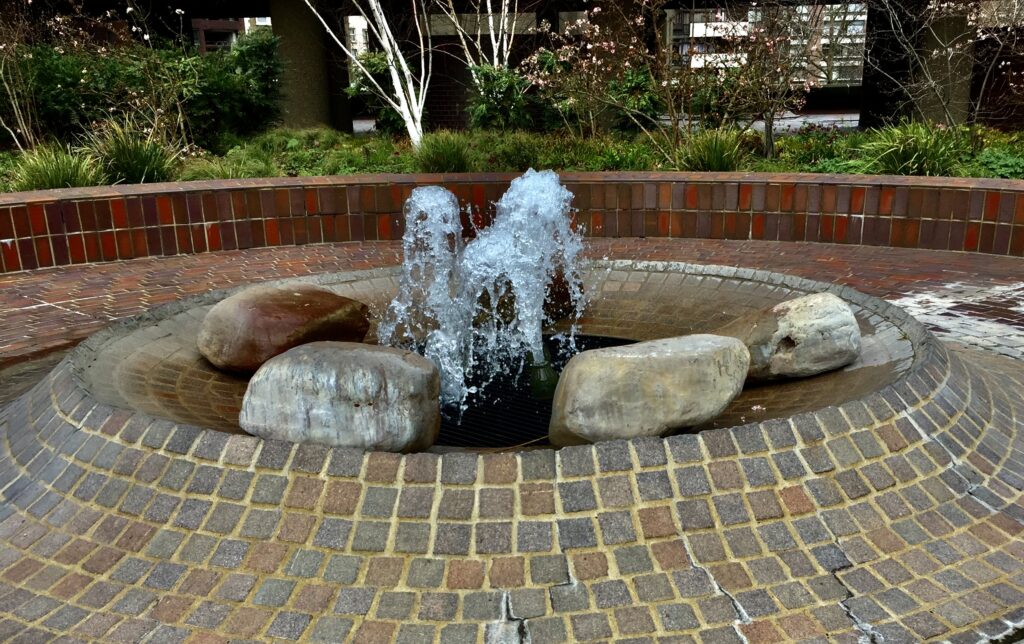
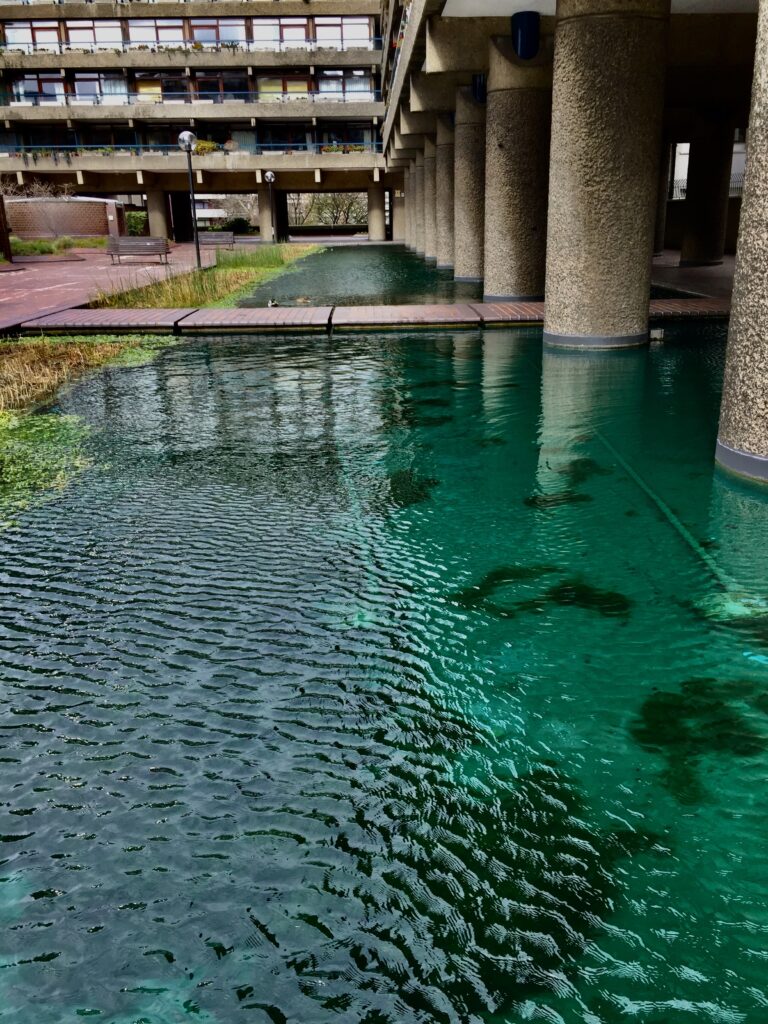
Barbican water feaures …
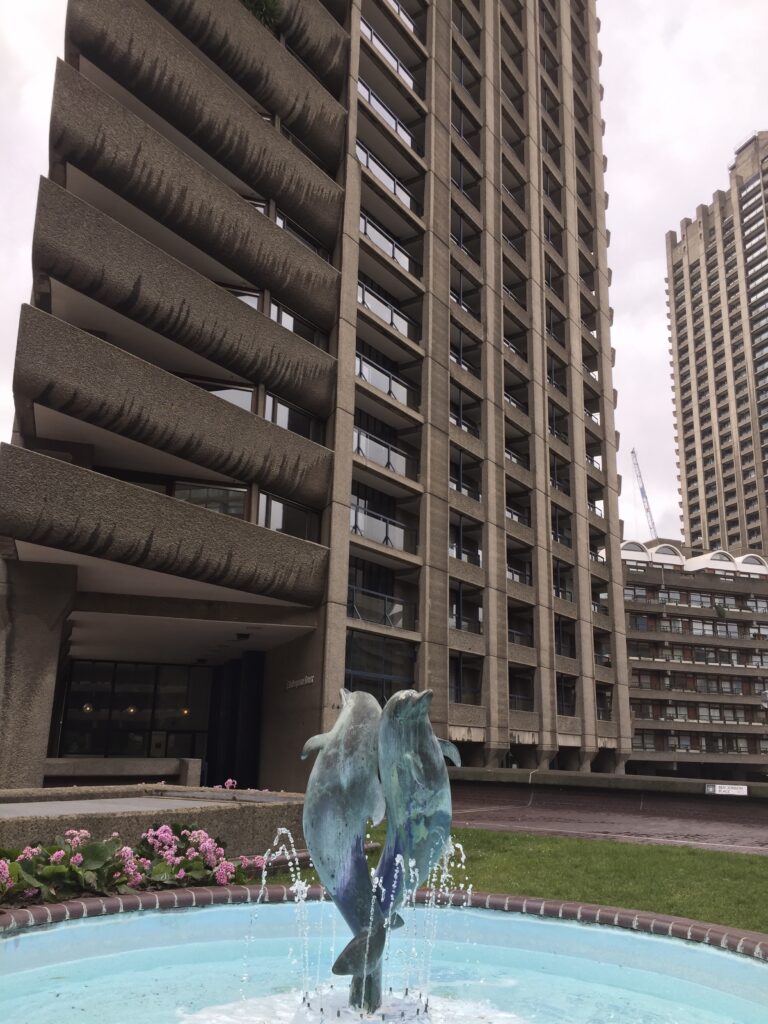
Water feature plus residents …
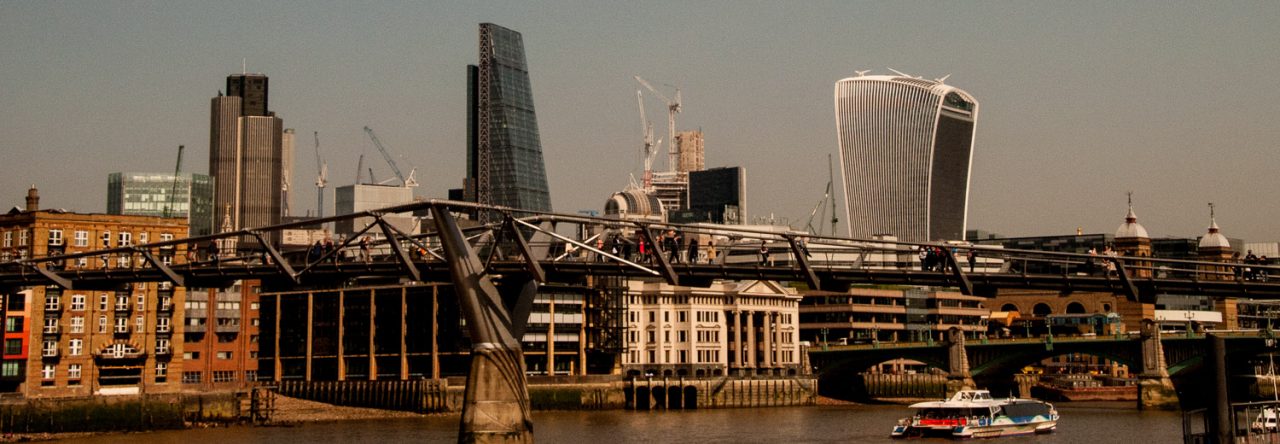
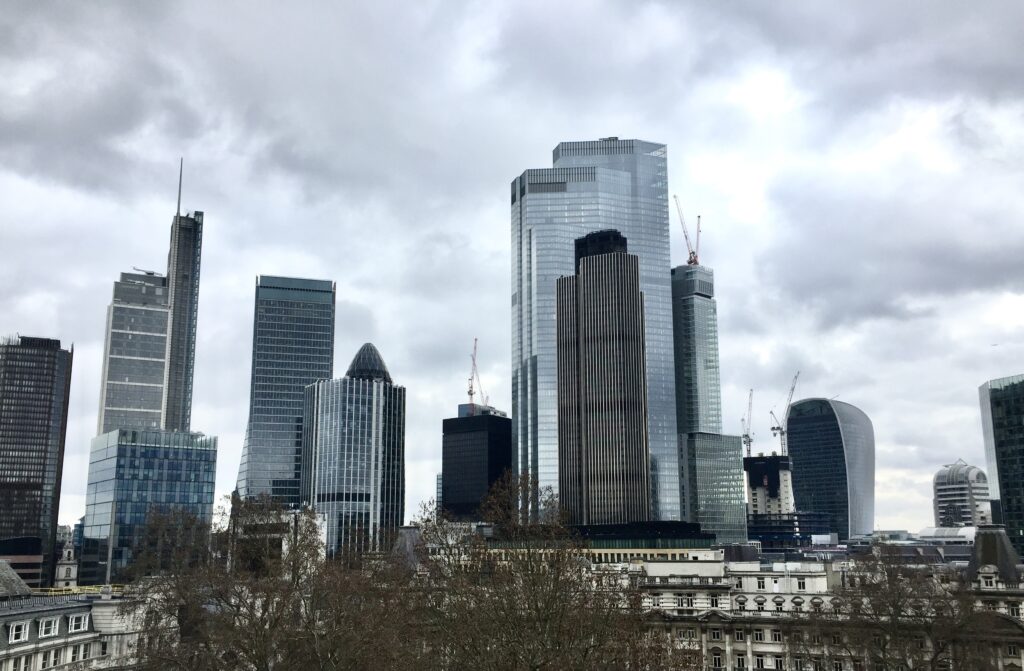
I went to a meeting in Finsbury Circus recently and they had a rather nice roof terrace so I snapped this city skyline view …
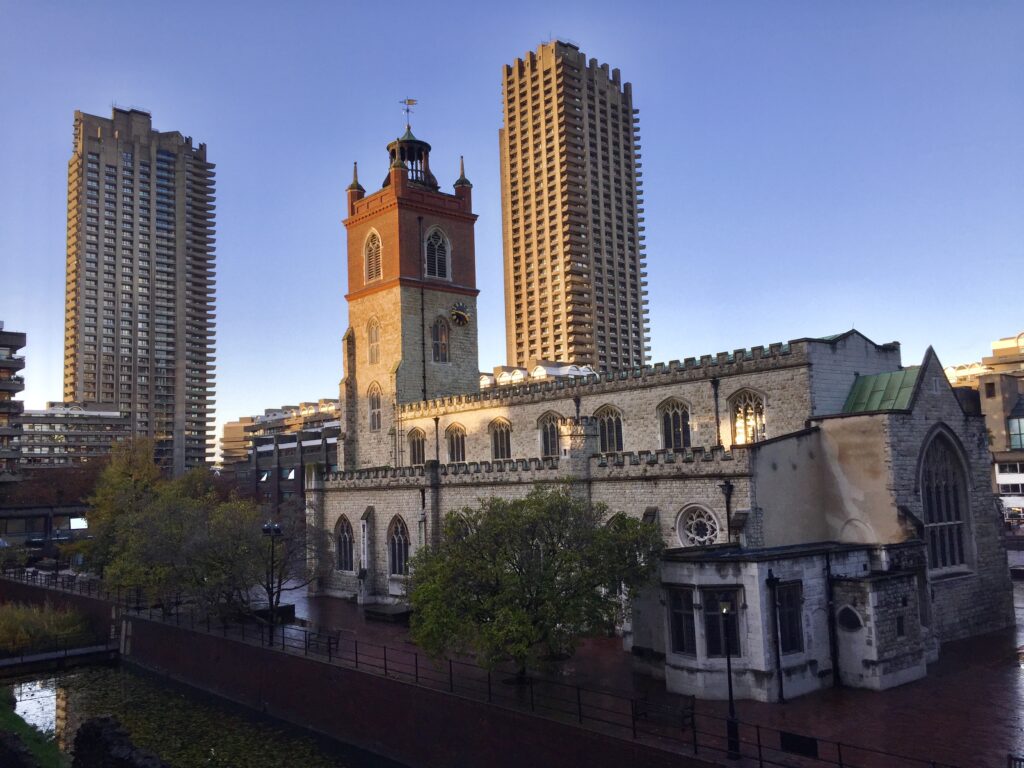
I’m not a great fan of that new monster building on Bishopsgate, but it does generate interesting reflections at certain times of day. In the foreground is St Giles Church and on the left Tower 42 …
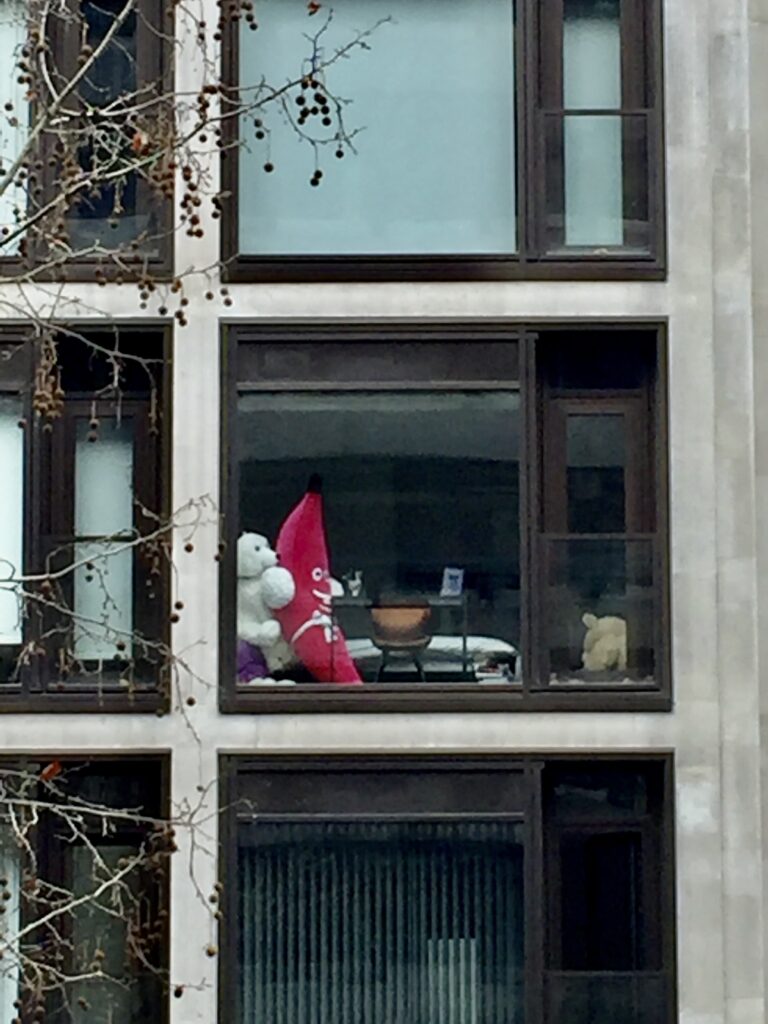
And finally, an apartment hosting a giant pink banana being cuddled by a furry white poodle. I so wish I knew their background story!
PS Don’t forget, the excellent Magnificent Maps exhibition at the Metropolitan Archive finishes on 29th March, so no time to lose if you want to visit.
This is a screen shot of one of the displays showing the bomb damage around St Paul’s Cathedral …
Here is the key – just look at the devastation and wonder how the Cathedral survived …
If you would like to follow me on Instagram here is the link …
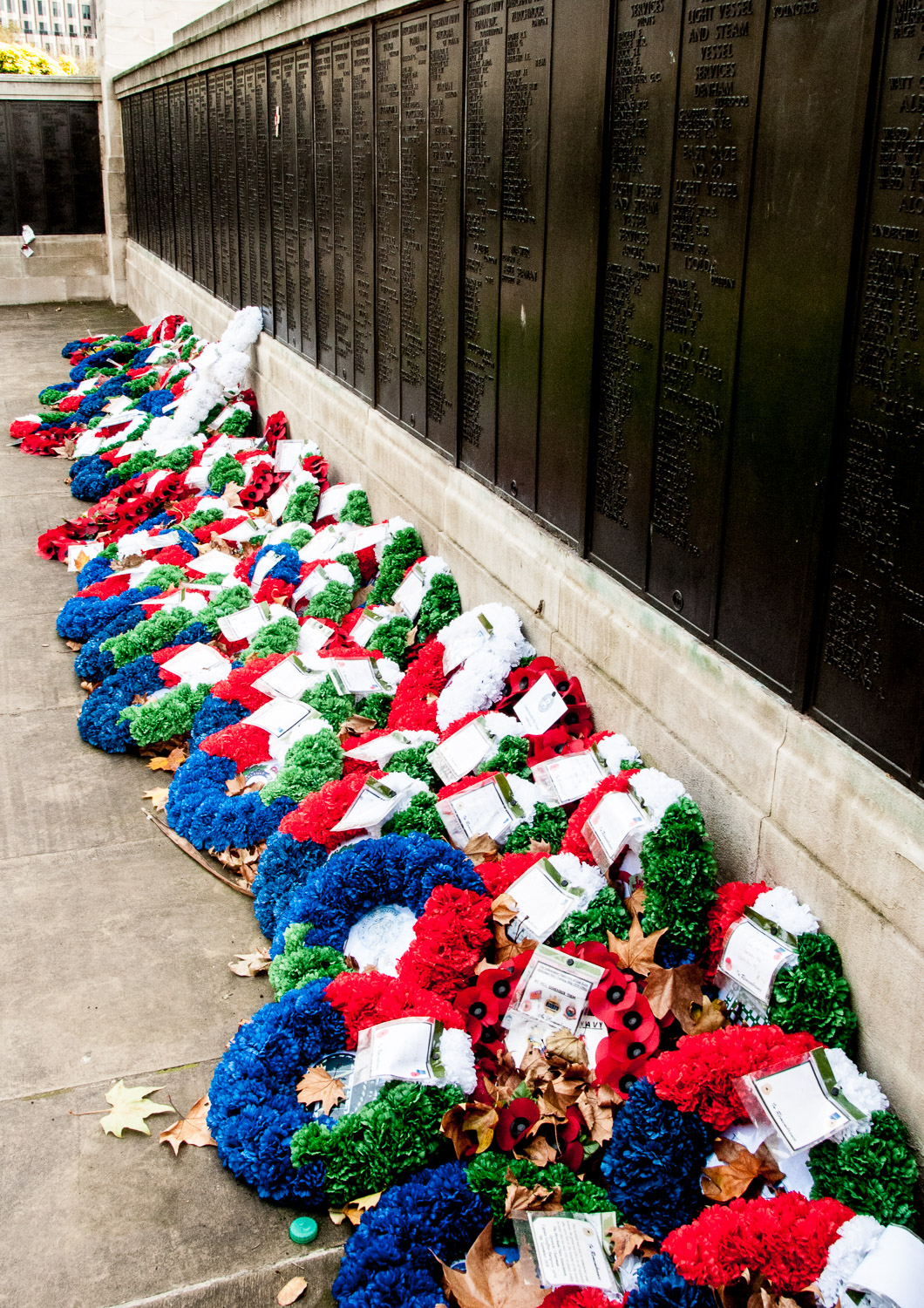
I wanted to do something special in view of the significance of tomorrow’s date so I will be writing about dramatic events that happened in or near the City during wartime. I also thought it would be appropriate to write again about some of the most moving of the memorials to be found around the City and suggest that this may be nice time to visit them since, for a few weeks now, wreaths, crosses and other tokens of remembrance will still be in place. Some of these stories and pictures have been posted before but I hope you don’t mind.
By coincidence, I have been reading historian Jerry White’s brilliant latest book The Battle of London 1939-45 and I reproduce below a short extract :
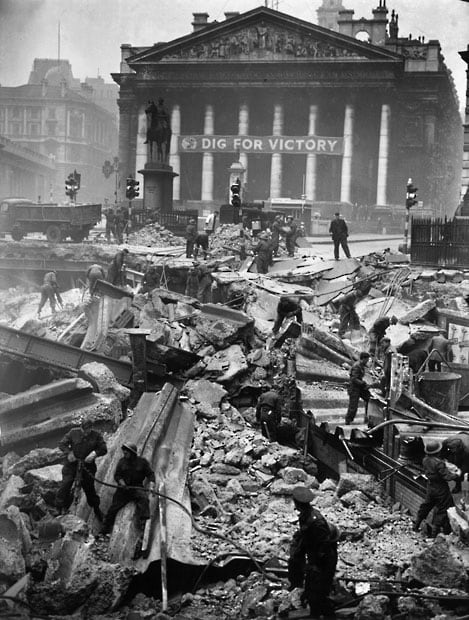
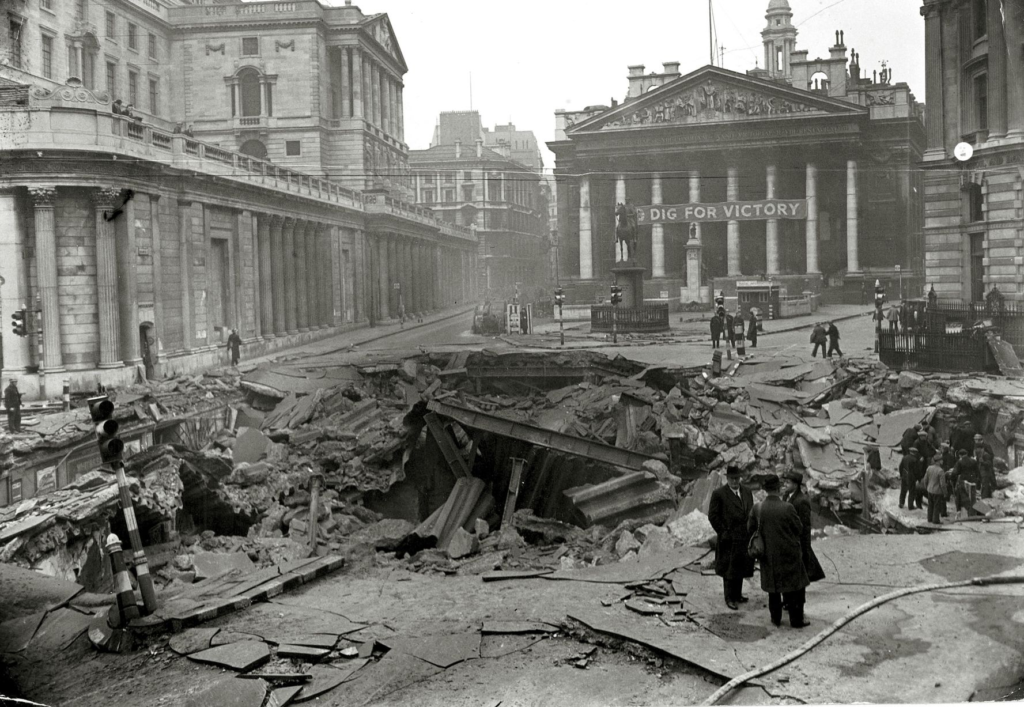
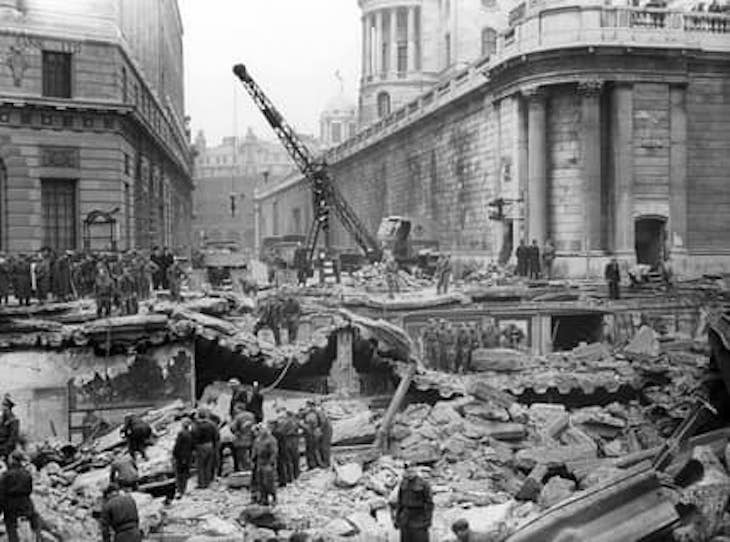
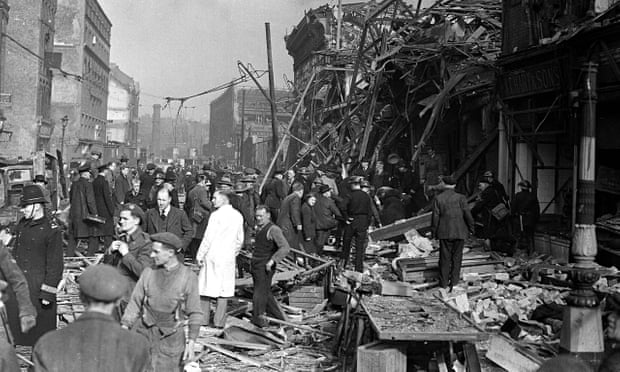
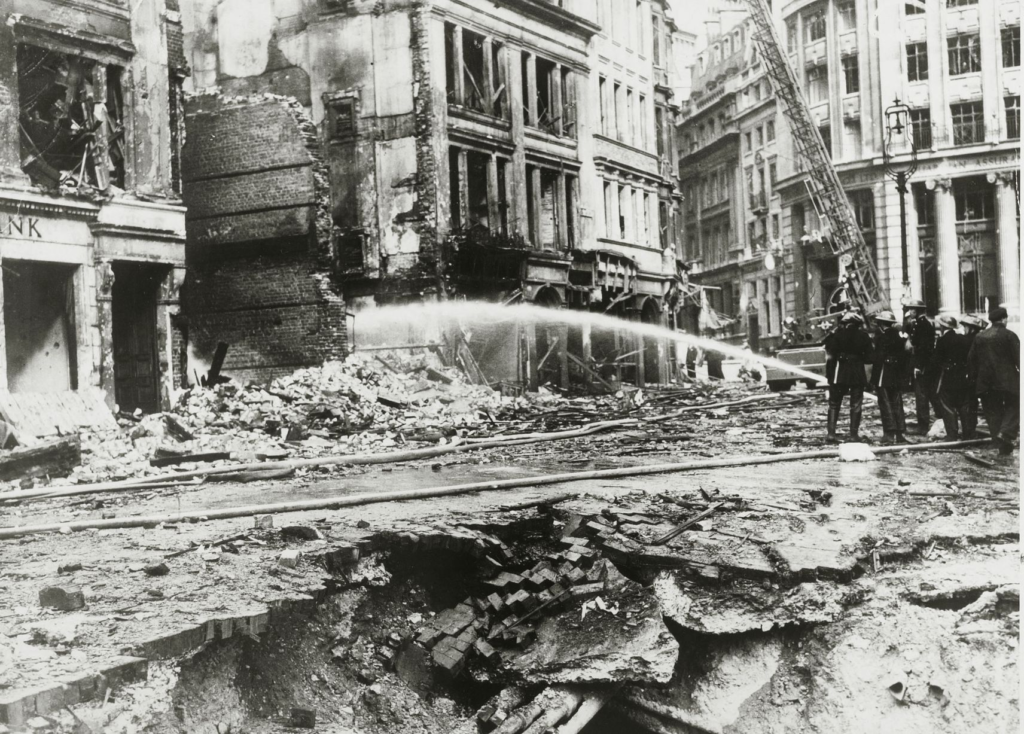
In the heavy seven-hour raid that started on Saturday 11 January 1941 and continued into Sunday … a High Explosive bomb burst through the roadway outside the Bank of England and exploded in the booking hall of Bank tube Station. The blast travelled through the top subways and escalators and swept shelterers and passengers off the platforms onto the path of trains pulling in. Fifty-two died … and the bomb left a deep crater blocking the seven-street interchange and three tube lines below …
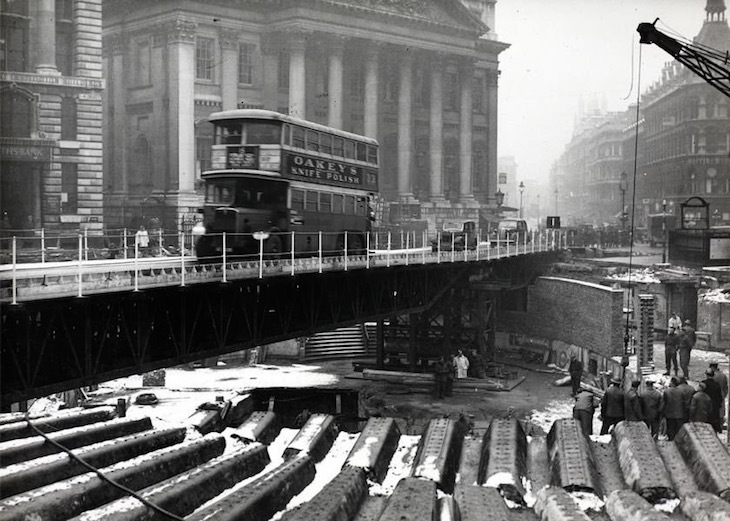
The City’s highway engineers, supplemented by army sappers, set to work on Sunday morning. Miraculously, and I use that word rarely, the ‘largest crater in London’ was speedily freed from rubble and on 1 February a temporary iron and steel bridge began to inch out from Cornhill to Poultry. It was completed and opened by the Lord Mayor on Monday 3 February …
The station was in use again by 17 March and by May the bridge had been dismantled and the interchange traffic was flowing once more.
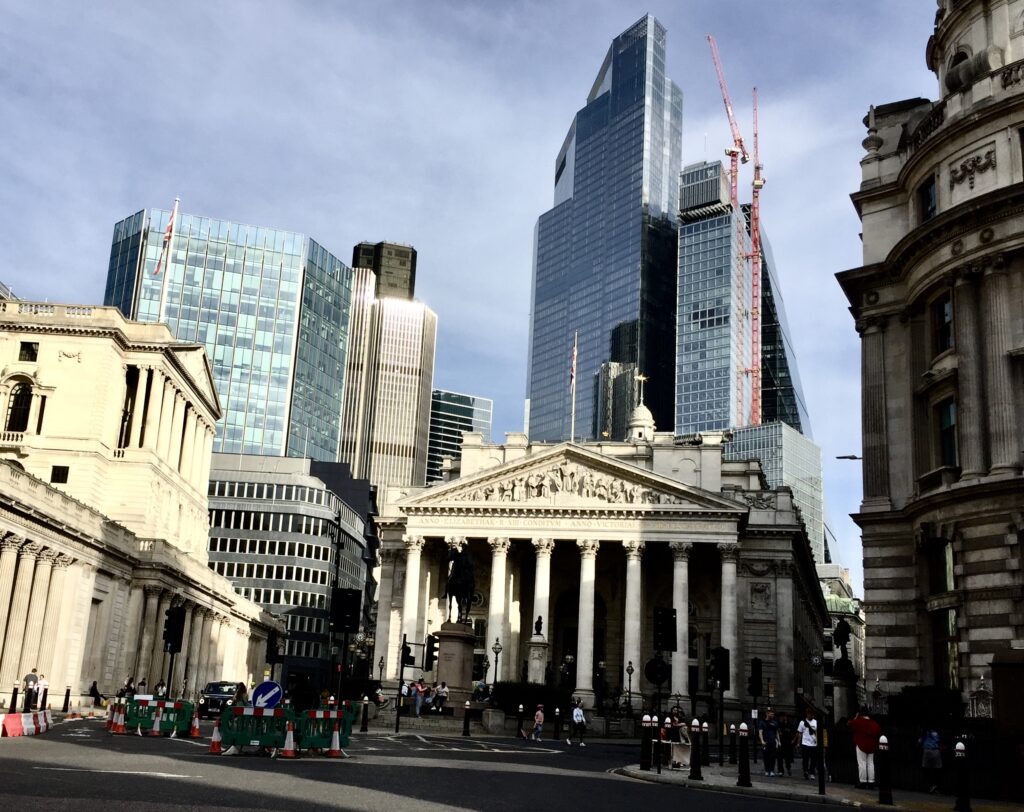
Looking north a few weeks ago …
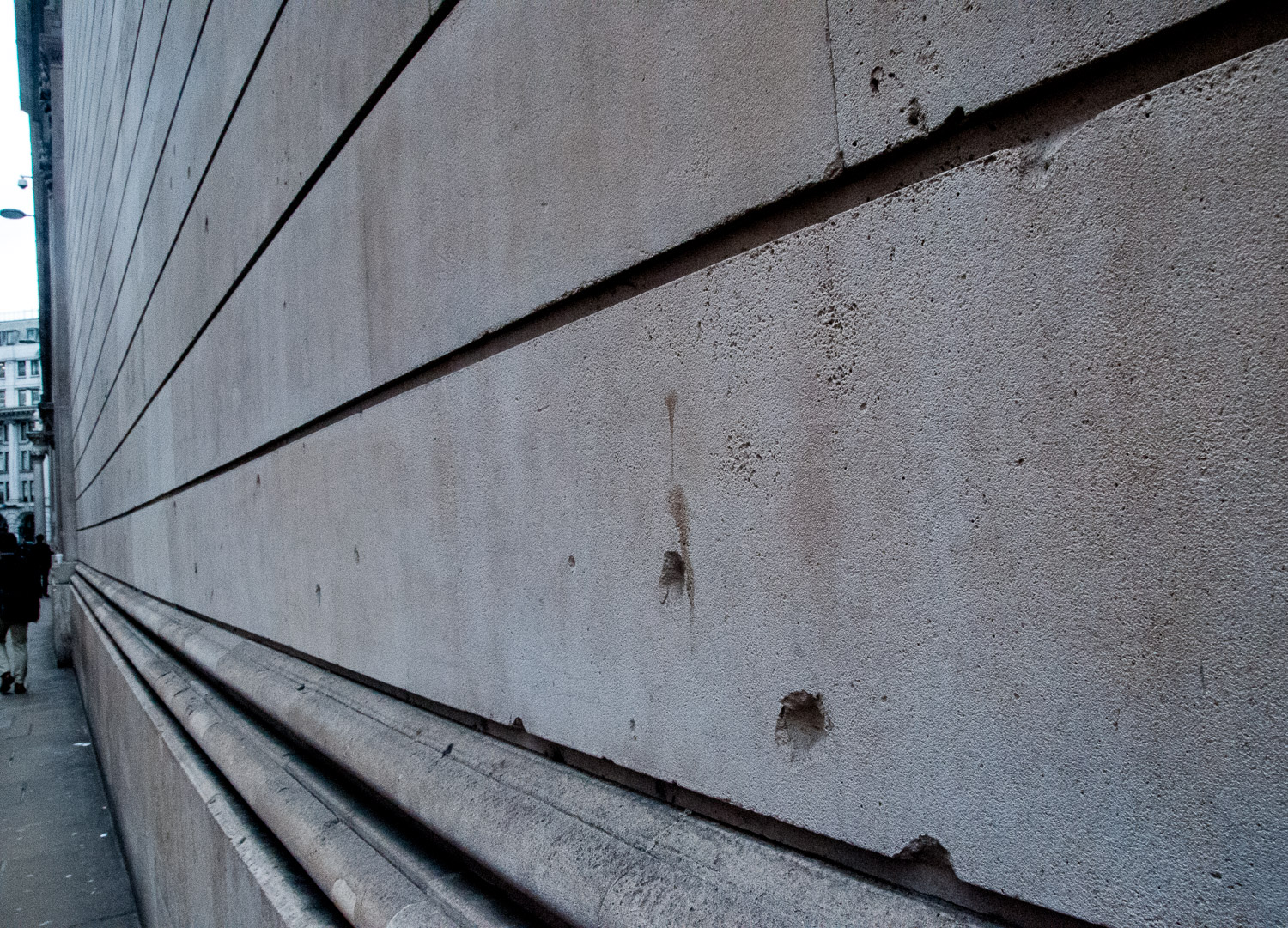
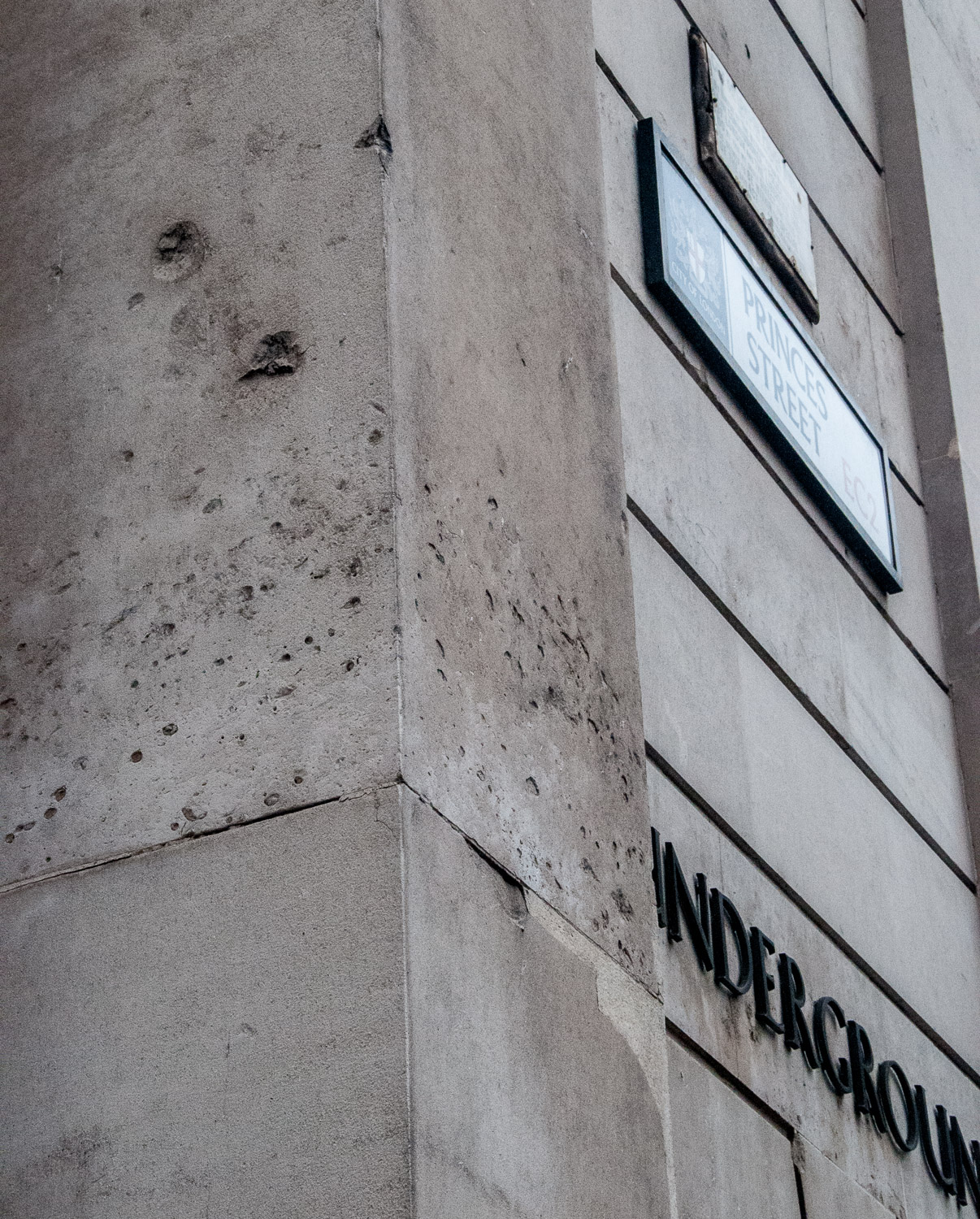
If you look carefully you can still see evidence of the wartime bombing with blast wounds on the wall of the Bank of England on Princes Street …
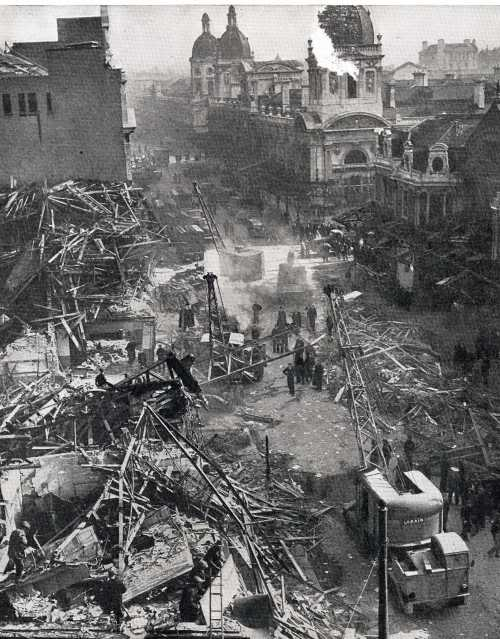
At 11:30 in the morning on 8th March 1945 Smithfield Market was extremely busy, with long queues formed to buy from a consignment of rabbits that had just been delivered. Many in the queue were women and children. With an explosion that was heard all over London, a V2 rocket landed in a direct hit which also cast victims into railway tunnels beneath – 110 people died and many more were seriously injured …
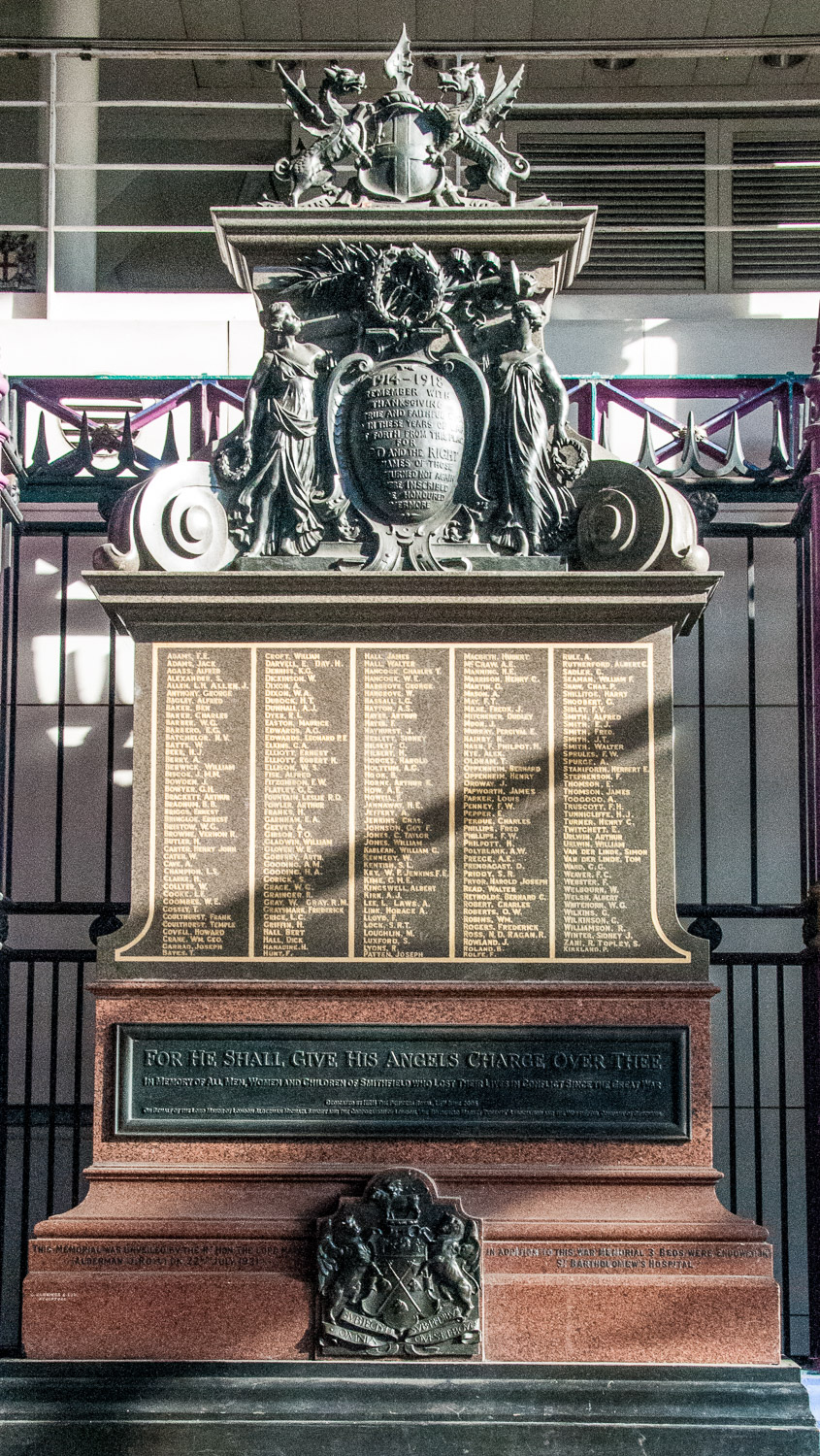
In the Grand Avenue, Central Markets, Smithfield (EC1A 9PS) is this memorial …
The original commemoration of names (above the red granite plinth) is by G Hawkings & Son and was unveiled on 22 July 1921. 212 people are listed.
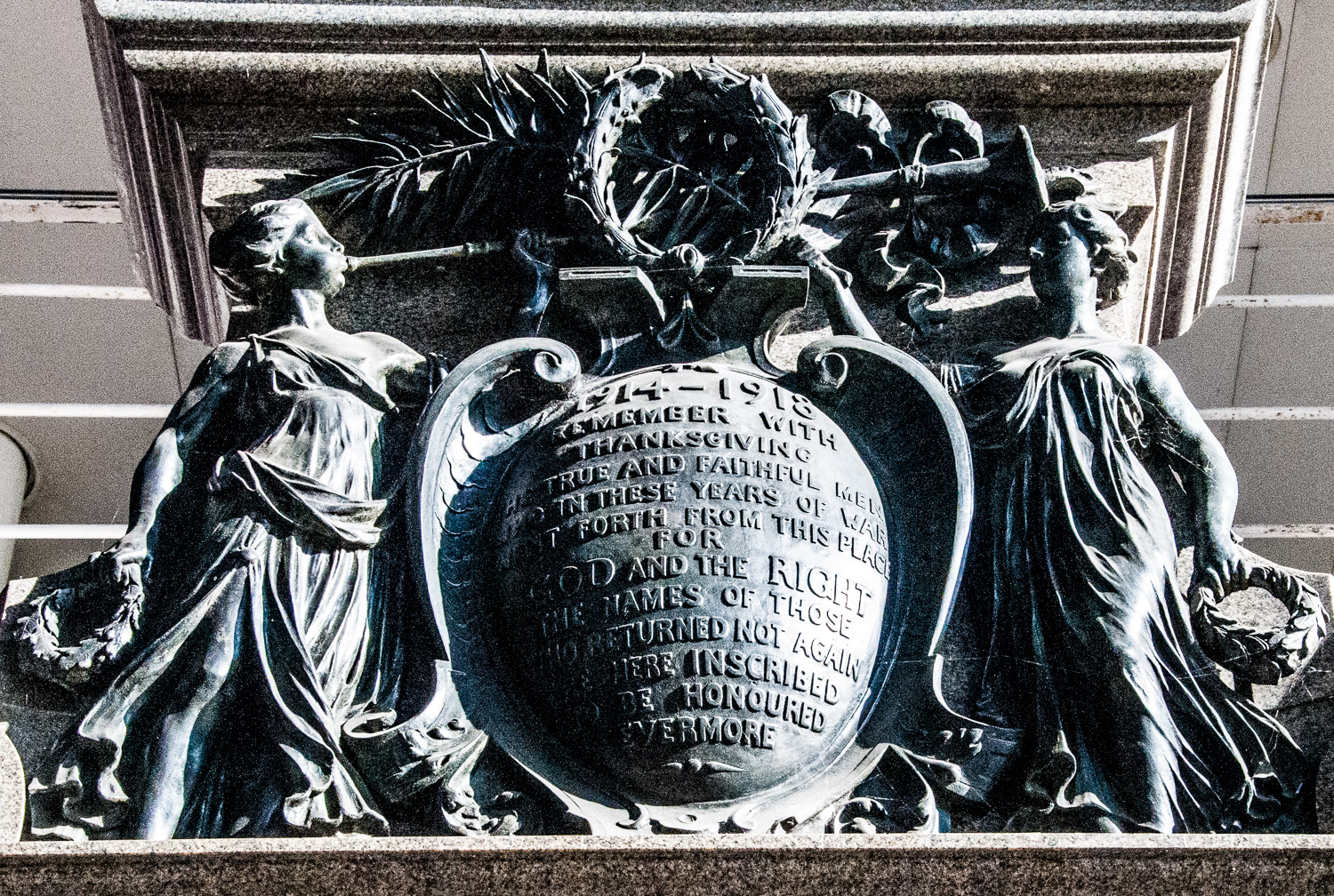
Between Fame and Victory holding laurel wreaths, the cartouche at the top reads …
1914-1918 Remember with thanksgiving the true and faithful men who in these years of war went forth from this place for God and the right. The names of those who returned not again are here inscribed to be honoured evermore.
The monument was refurbished in 2004/5 and unveiled on 15 June 2005 by the Princess Royal and Lord Mayor Savory. The red granite plinth had been added and refers to lives lost in ‘conflict since the Great War’. On it mention is made of the women and children although the V2 event is not specifically referred to.
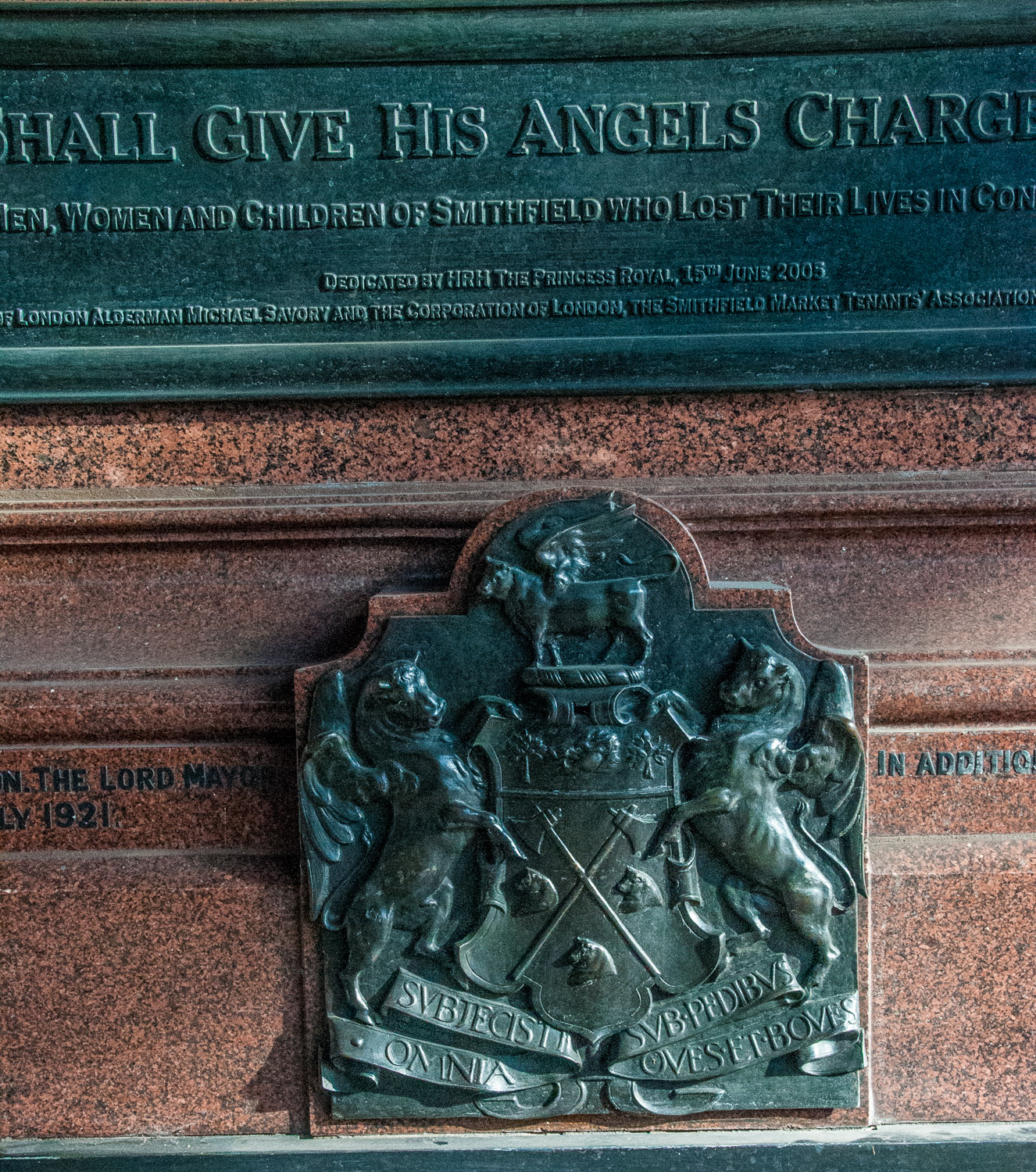
‘Thou hast put all things under his feet, all Sheep and Oxen’.
At the base is the coat of arms of the Worshipful Company of Butchers who helped to fund the refurbishment, along with the Corporation of London and the Smithfield Market Tenants’ Association.
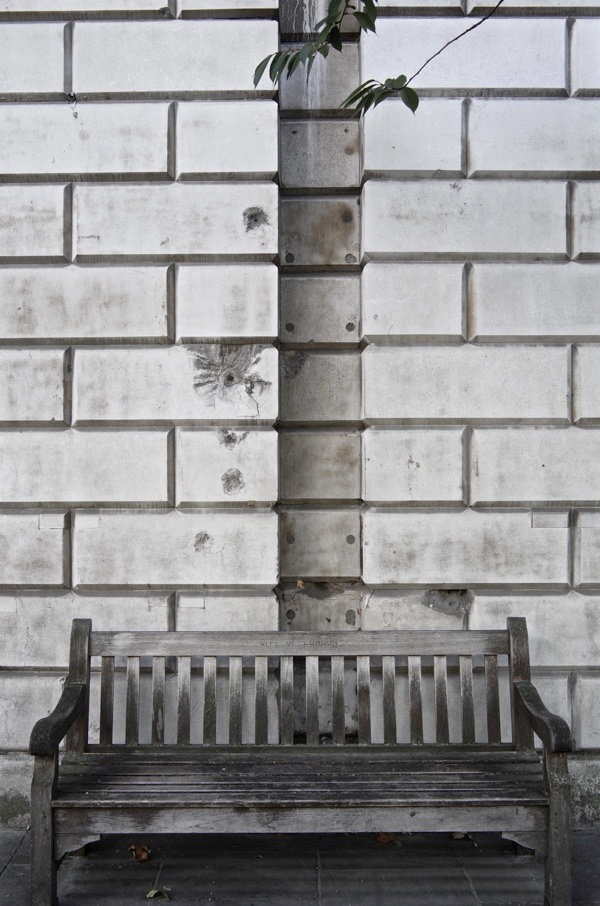
It’s sometimes forgotten that the civilian population of London was also bombed during the First World War. The market was hit in 1917 by bombs dropped from a Zeppelin – you can still see the shrapnel marks nearby on the walls of St Bartholomew’s Hospital …
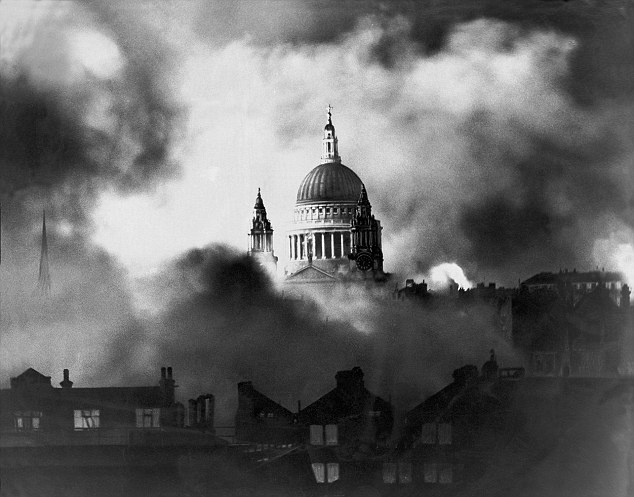
Herbert Mason’s famous photograph, taken from the roof of the Daily Mail building, of St Paul’s triumphantly rising above the inferno of smoke and flames below, came to symbolise for Britain and the world an apparently indestructible London …
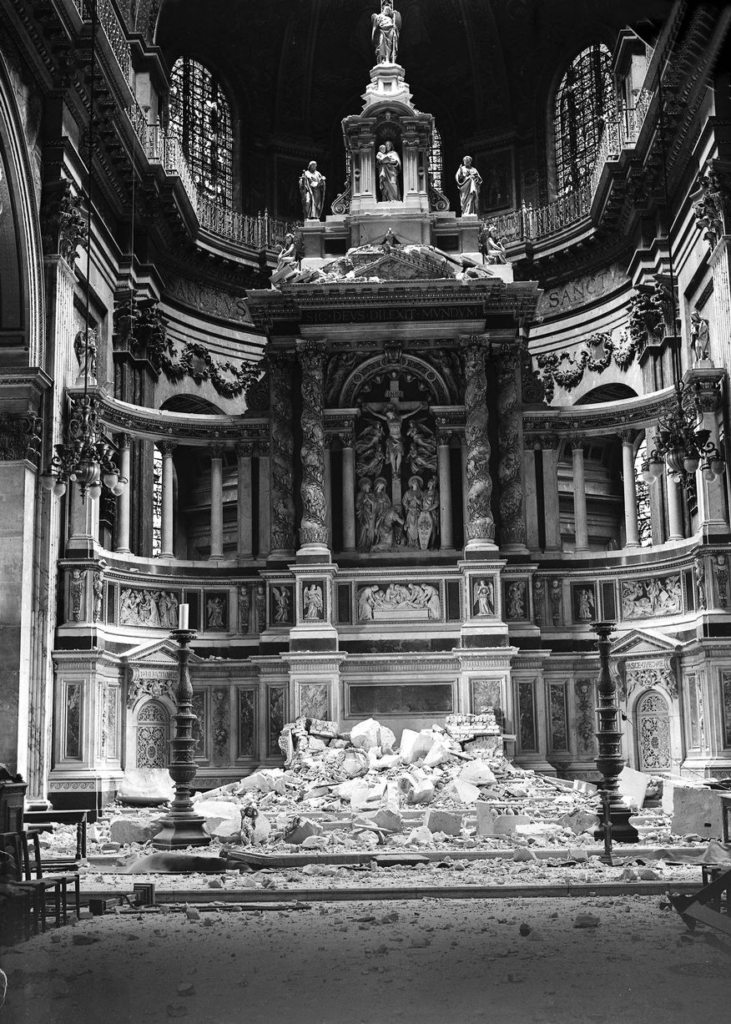
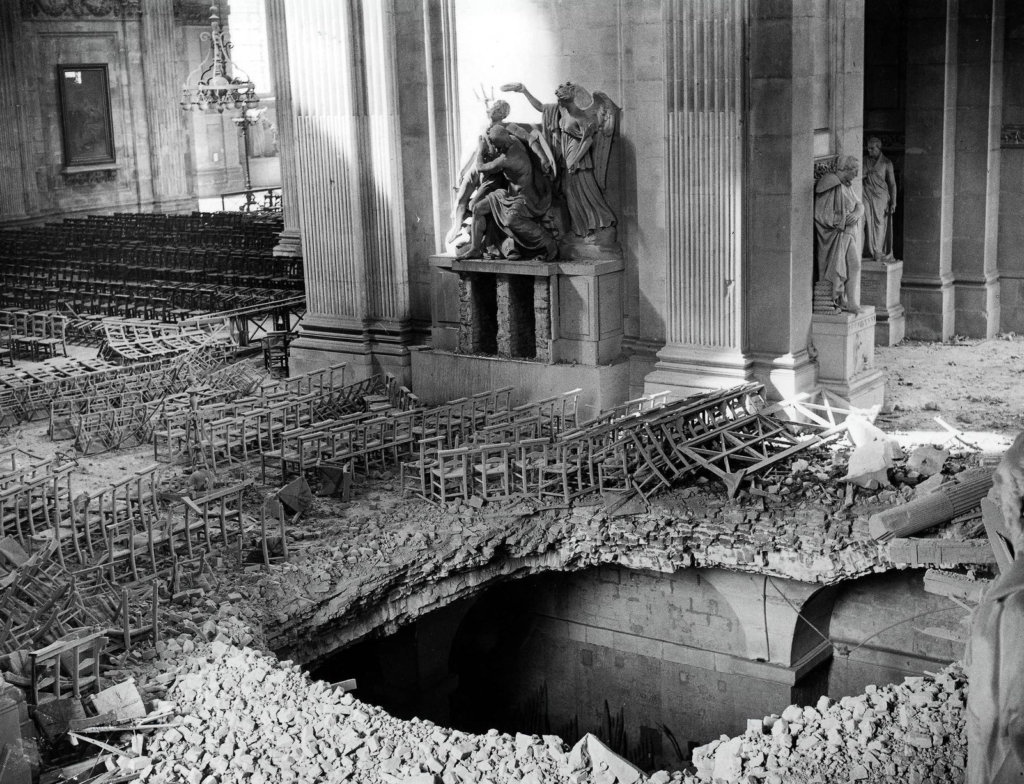
The Cathedral did not escape totally. It was hit by a bomb which detonated in the North Transept …
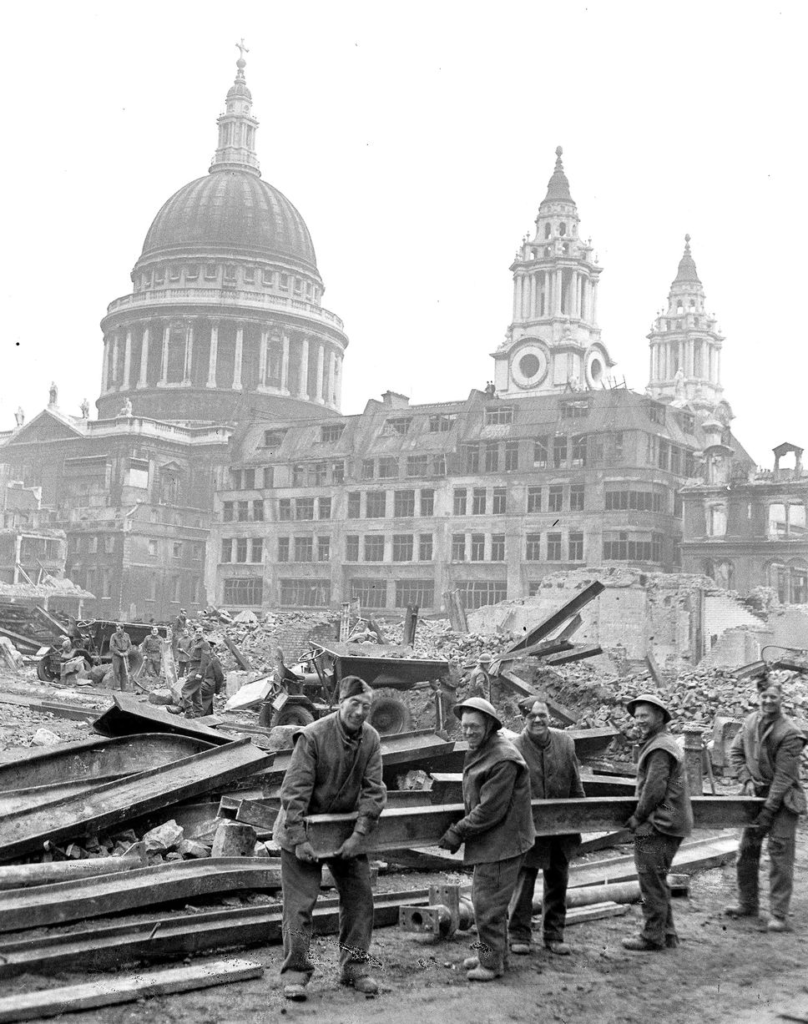
Troops start a clean-up nearby …
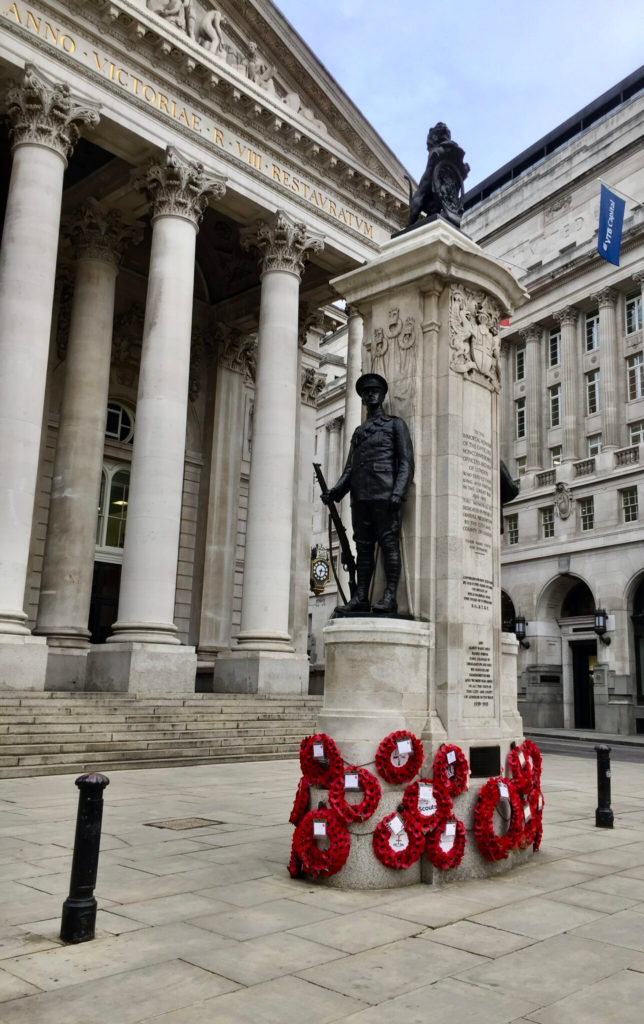
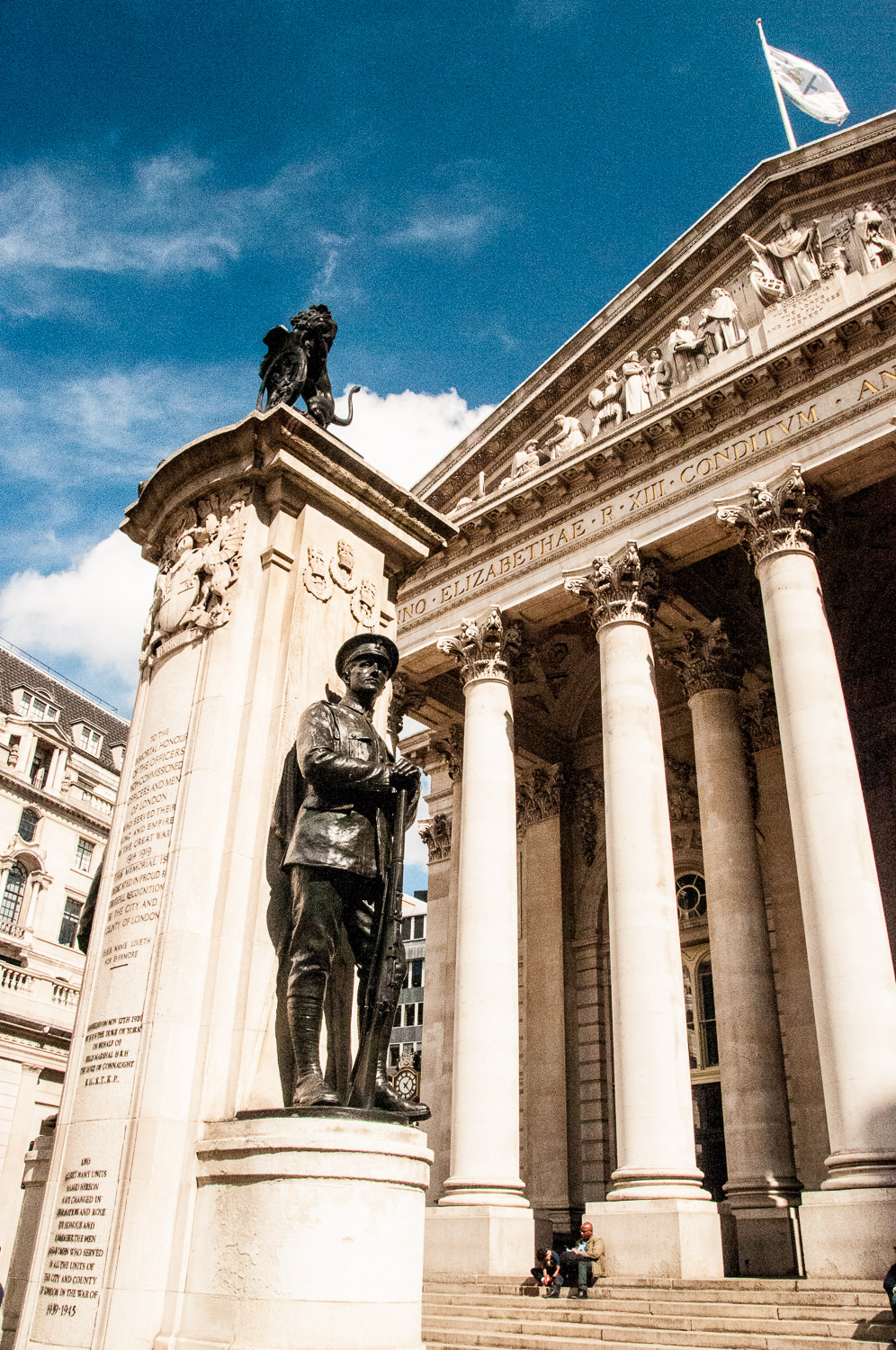
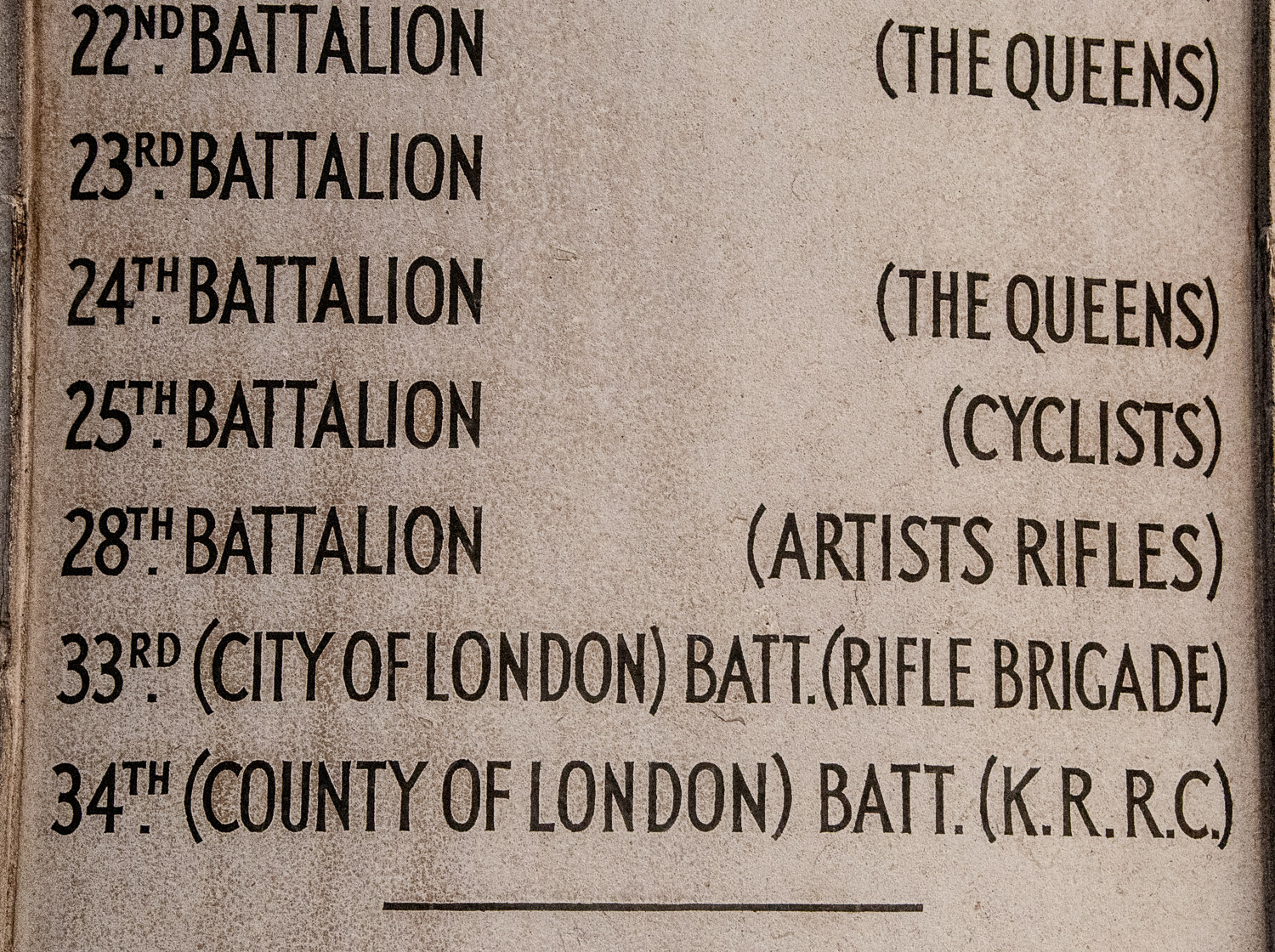
In the foreground of the Royal Exchange stands London Troops War Memorial …
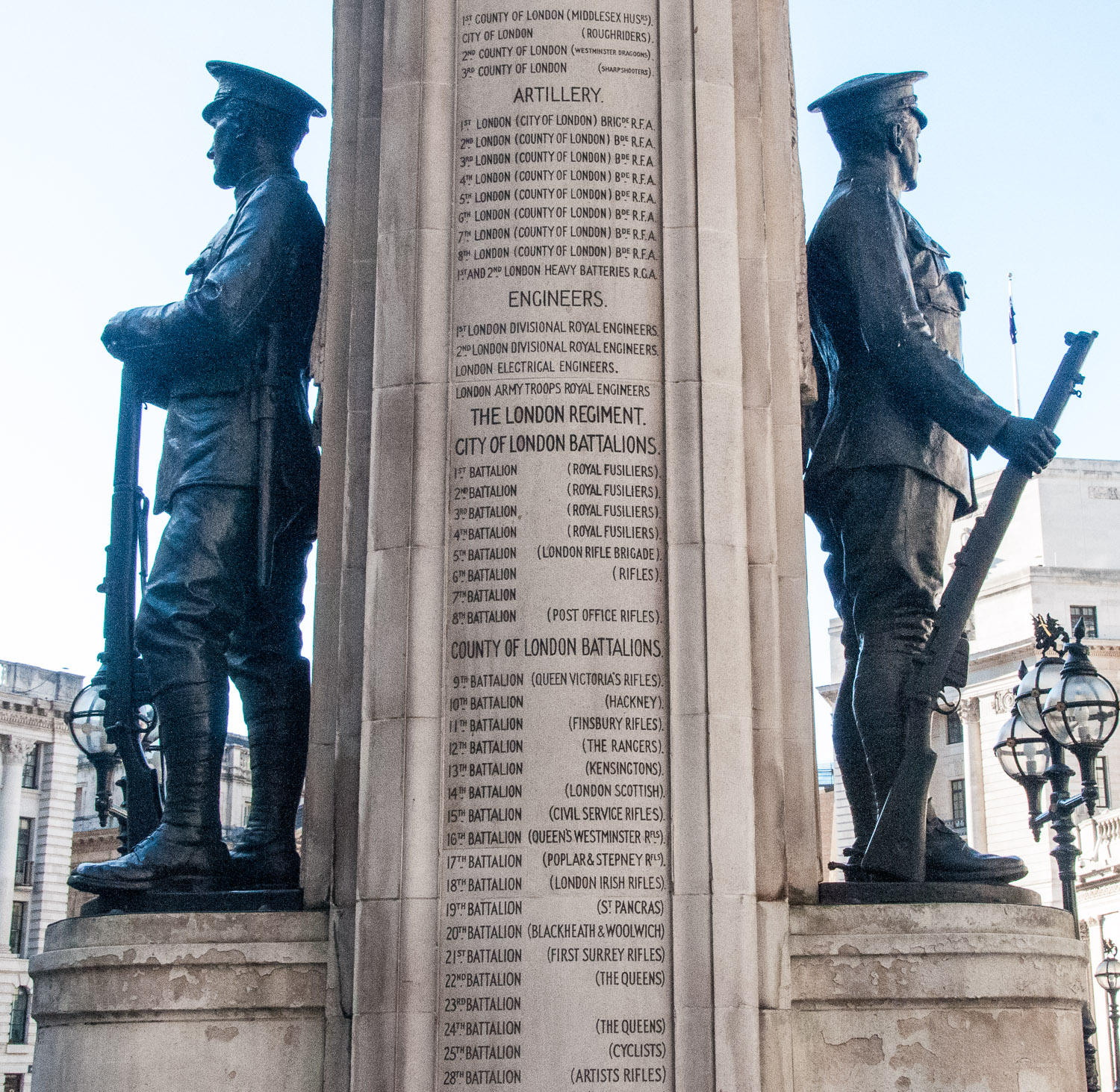
On either side two soldiers stand at ease, one representing the Royal Fusiliers and the other the Royal Field Artillery …
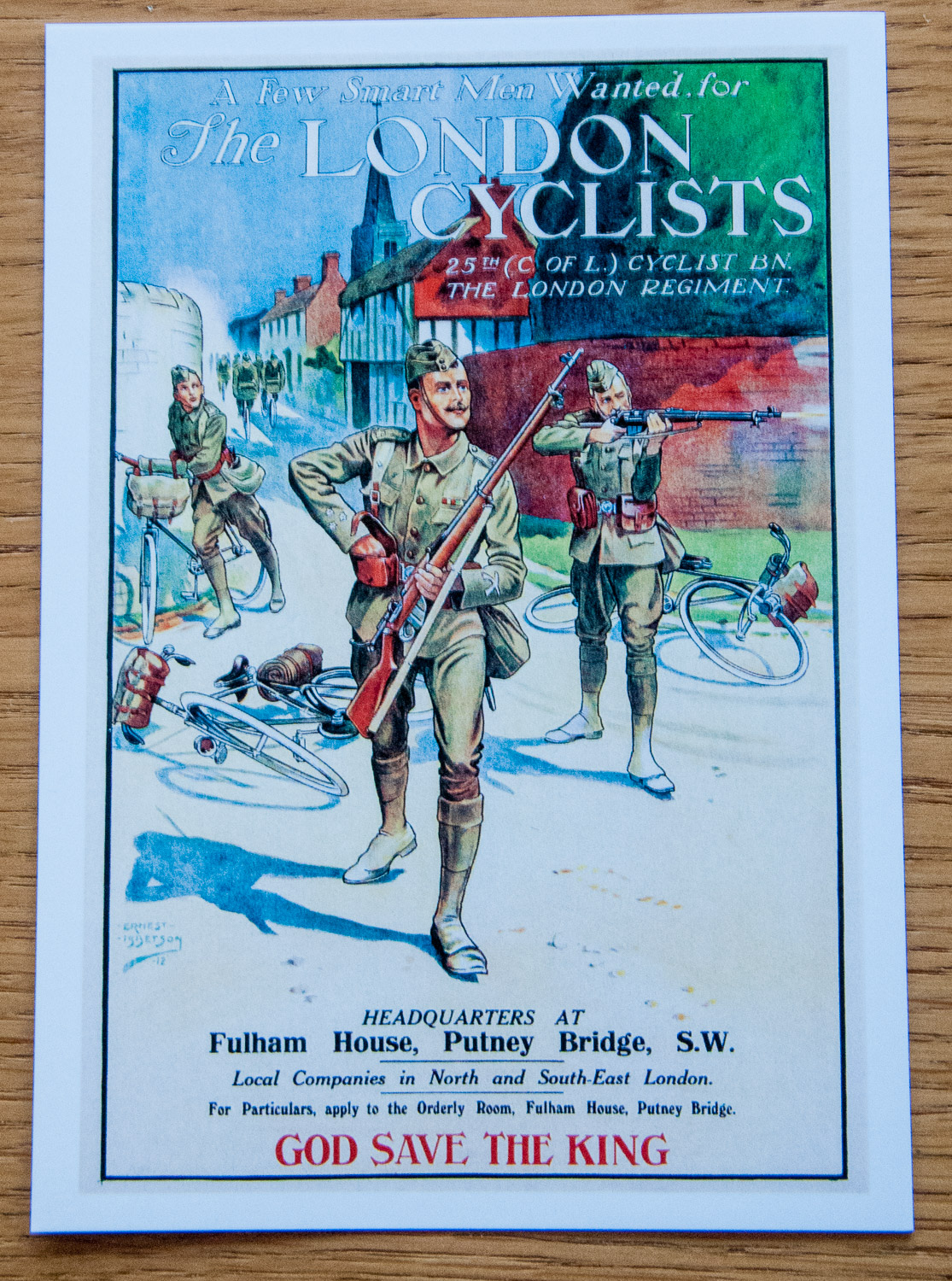
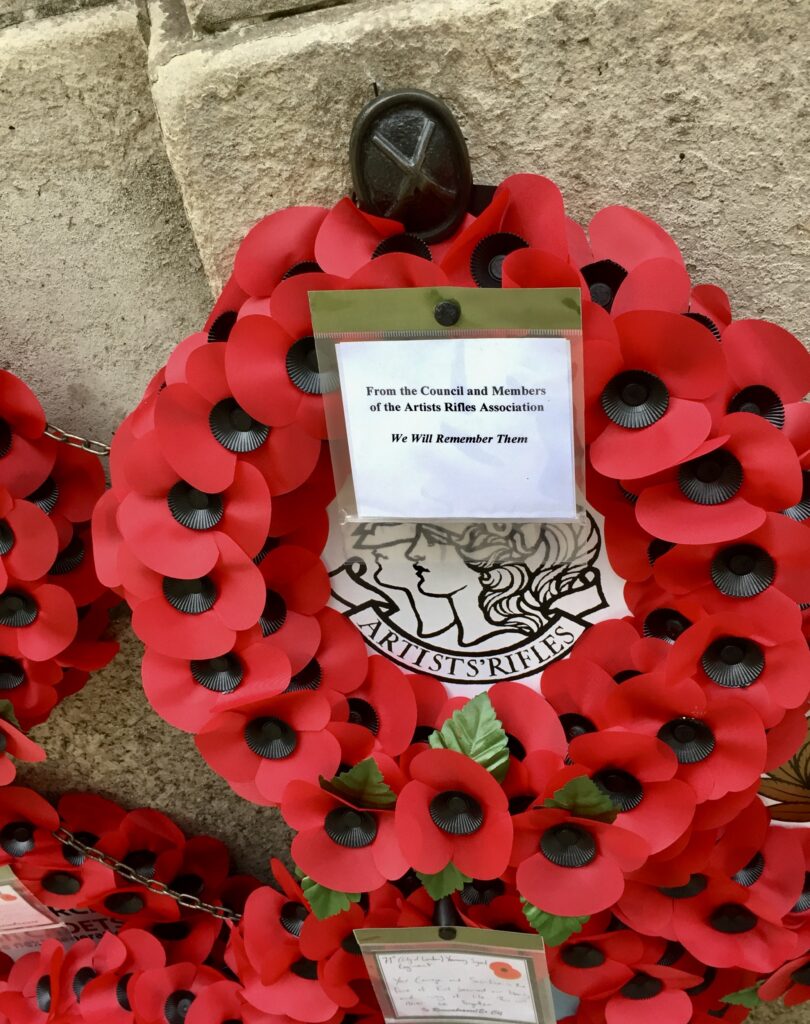
At the bottom of the list of battalions, two in particular caught my eye, the Cyclists and the Artists Rifles …
I came across this 1912 recruitment poster at the Imperial War Museum. It is poignant to look at this picture with its pretty village setting and then think of the industrial age war and slaughter that was soon to follow …
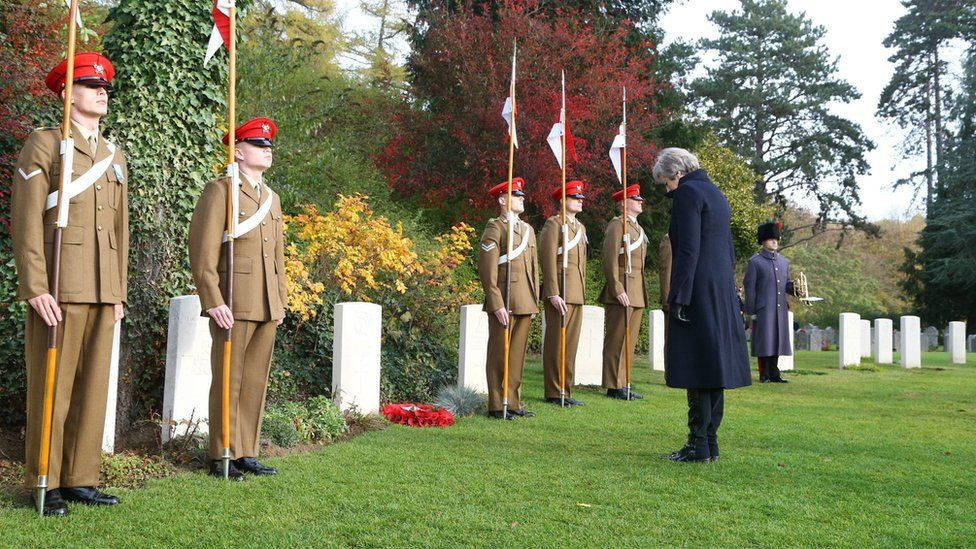
It was therefore quite a coincidence that, on 9th November 2018, the then Prime Minister Theresa May laid a wreath at the grave of a cyclist …
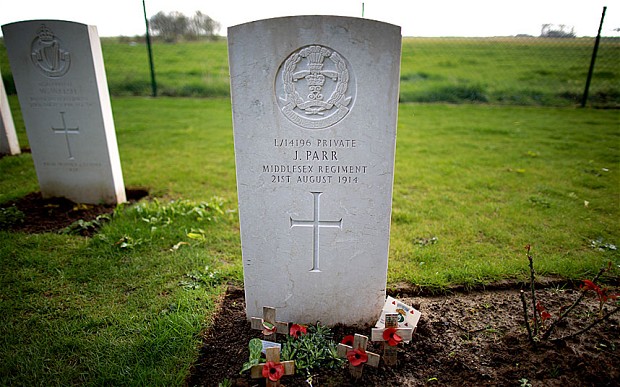
John Parr was the first UK soldier to be killed in the First World War on 21 August 1914. He was 15 when he signed up in 1912 but claimed to be eighteen years and one month. His comrades nicknamed him ‘Ole Parr’, which suggests that everyone knew he was much younger than he claimed, especially since on joining he was only 5 foot 3 inches tall and weighed just 8.5 stone! This is his grave at St Symphorium Military Cemetery, Mons, Belgium …
Parr was a reconnaissance cyclist in the 4th Battalion of the Middlesex Regiment and died on the outskirts of Mons, Belgium. Bicycles were commonly used in the War, not only for troop transport, but also for carrying dispatches. Field telephones were also limited by the need for cables, and ‘wireless’ communications were still unreliable. So cyclists – and runners, motorbike riders, pigeons and dogs – were frequently preferred by both the Allies and the German army. There is an interesting article on the subject by Carlton Reid in Forbes magazine
The story of the Artists’ Rifles is a fascinating one.
The regiment was formed in 1859 by art student Edward Starling. It was a volunteer regiment and formed out of the widespread fear of a French invasion. Many of those who joined were artists, actors, musicians and architects and its first headquarters was located at Burlington House. The First World War would see the regiment literally leading from the front as they become a training regiment for officers in this period. It is also for this reason that the Artists Rifles had one of the highest casualty rates of any regiment.
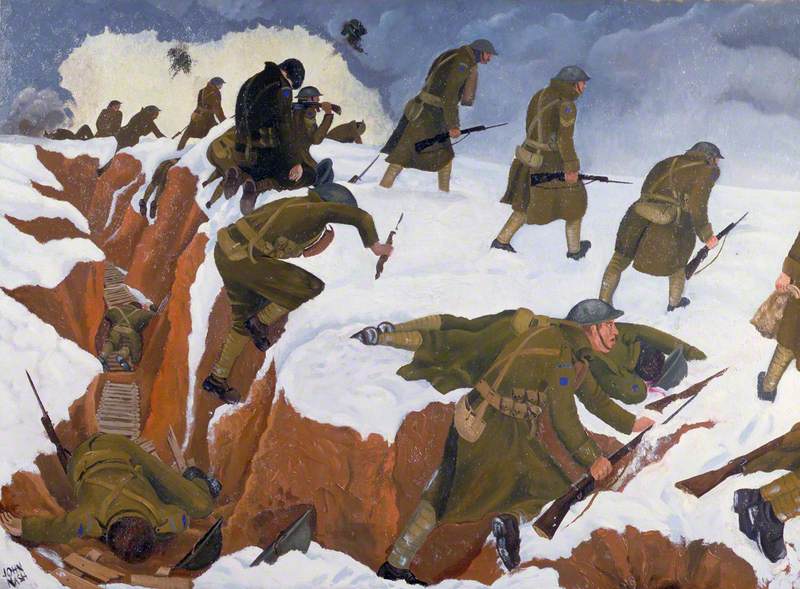
This painting, Over the Top by John Nash, depicts his regiment in action. On 30th December 1917, the 1st Artists Rifles counter-attacked at Welsh Ridge, south-west of Cambrai. Nash called the action ‘pure murder’ as most of the company were killed. A sergeant, he counted himself lucky to escape the carnage …
Copyright : Imperial War Museum.
During the Great War, 2,003 of the regiment’s men were killed and over 3,000 wounded. Members of the regiment would be awarded eight Victoria Crosses and over 850 other military awards including the Distinguished Service Order (awarded 52 times) and the Military Cross (awarded 822 times). They were also mentioned in dispatches 564 times.
Incidentally, in the very first episode of the fourth series of Blackadder he becomes an artist, believing that this is his chance to escape the trenches. However, it is revealed that the artist’s role is to undertake a highly dangerous job – to draw the enemy’s defences from No Man’s Land.
The last episode of the series is renowned for its moving climax and you can view it here : Good luck everyone.
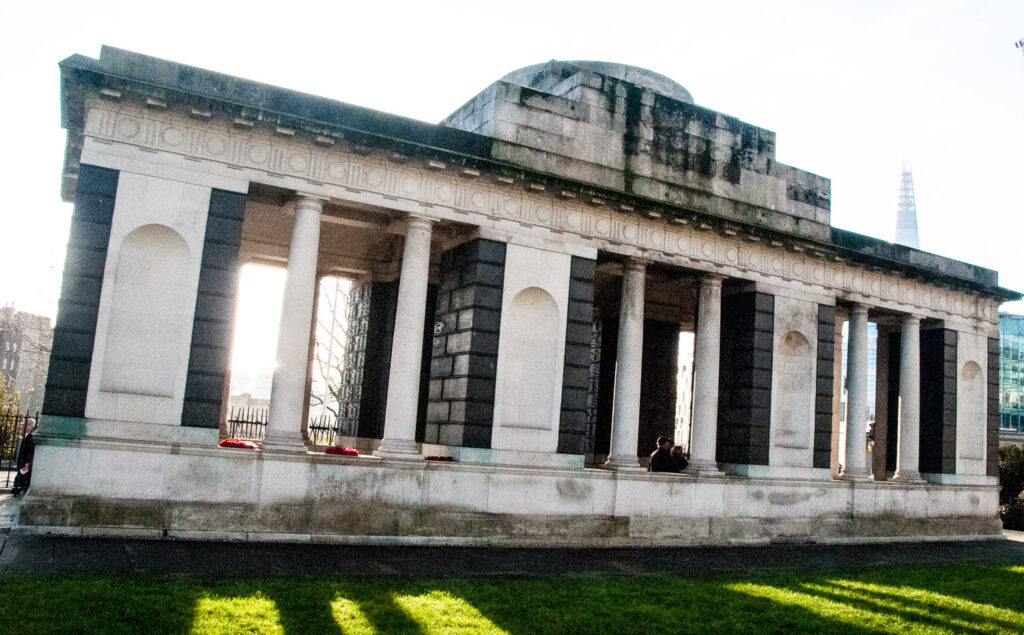
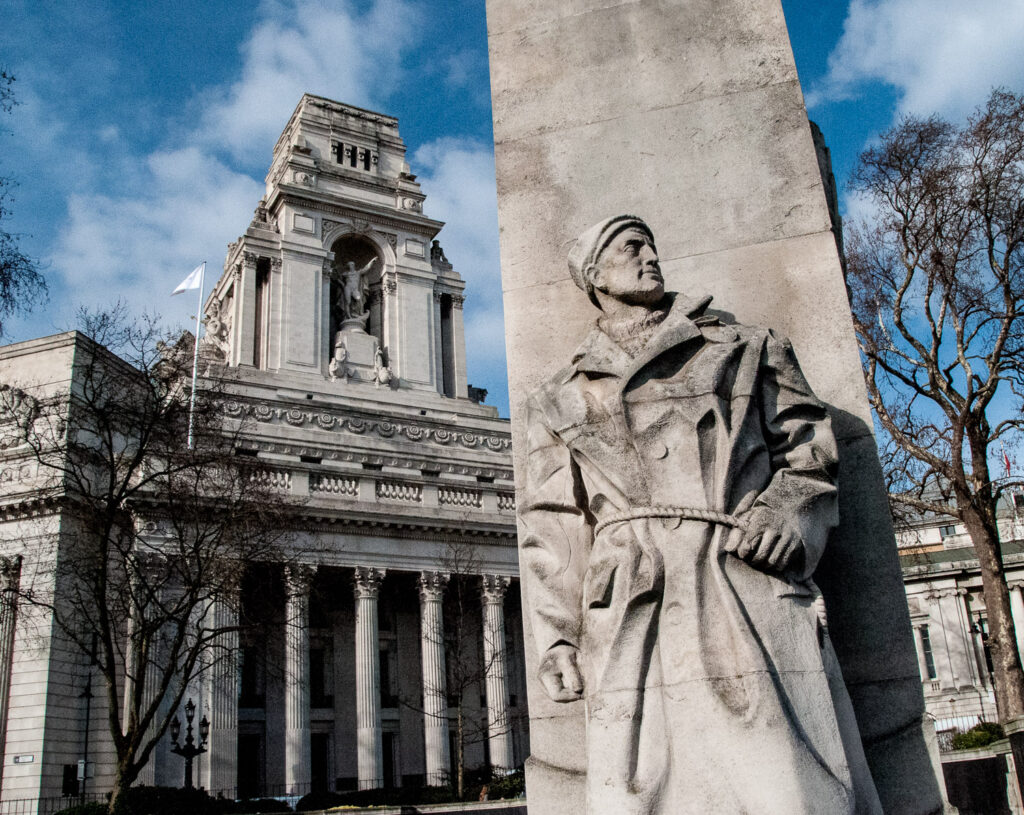
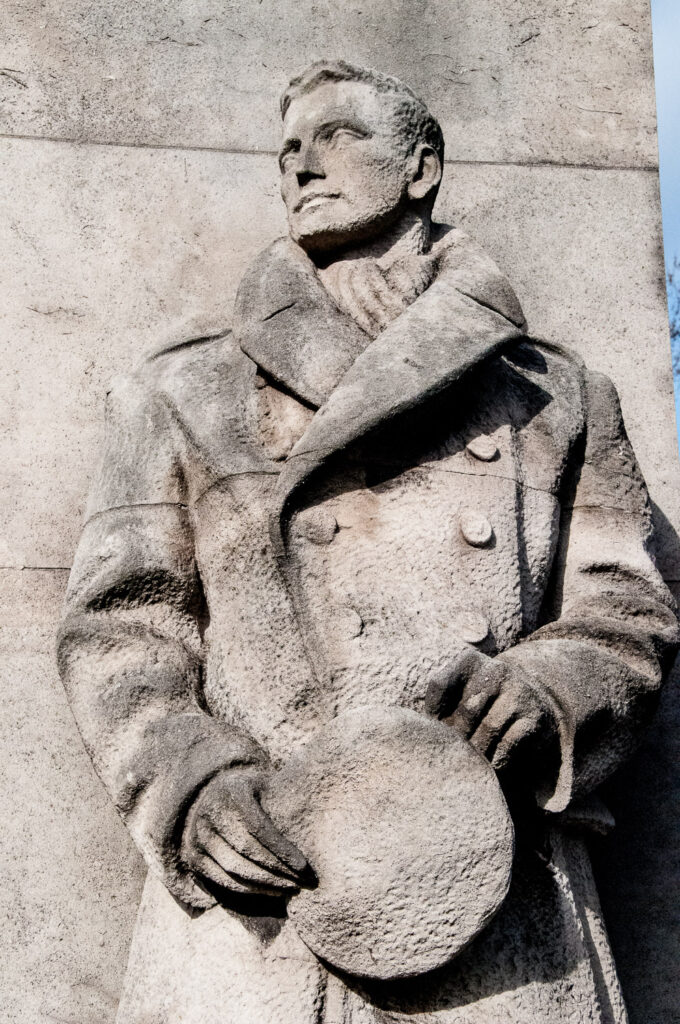
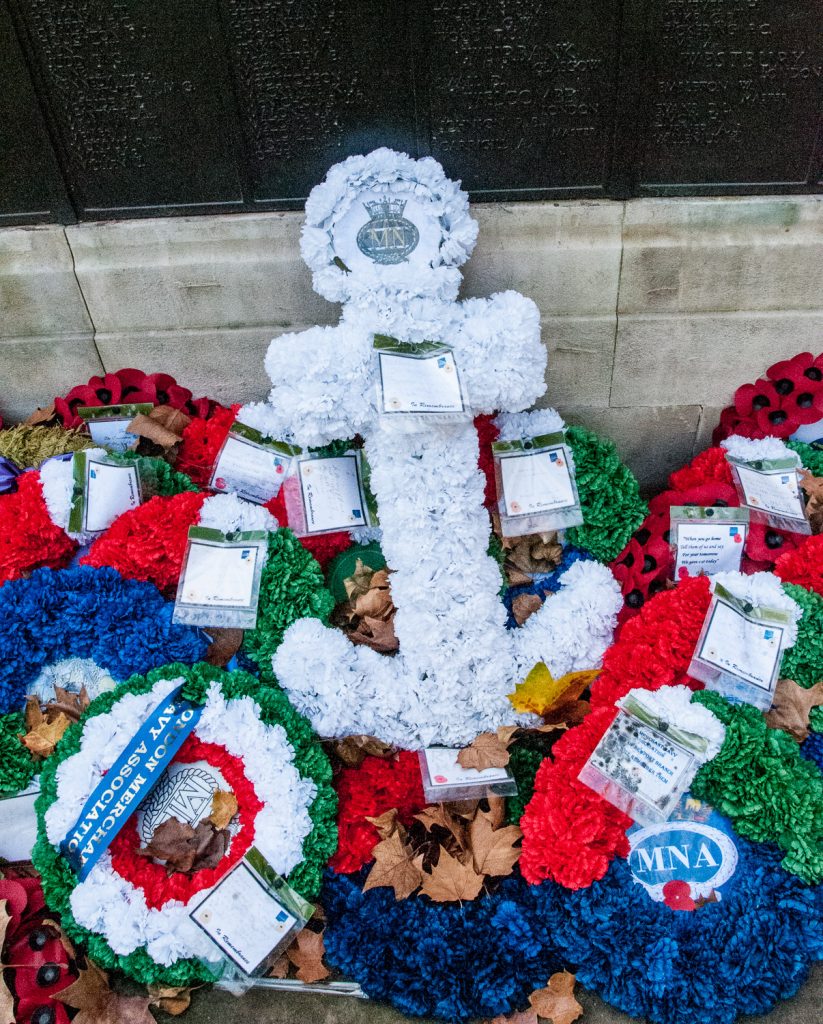
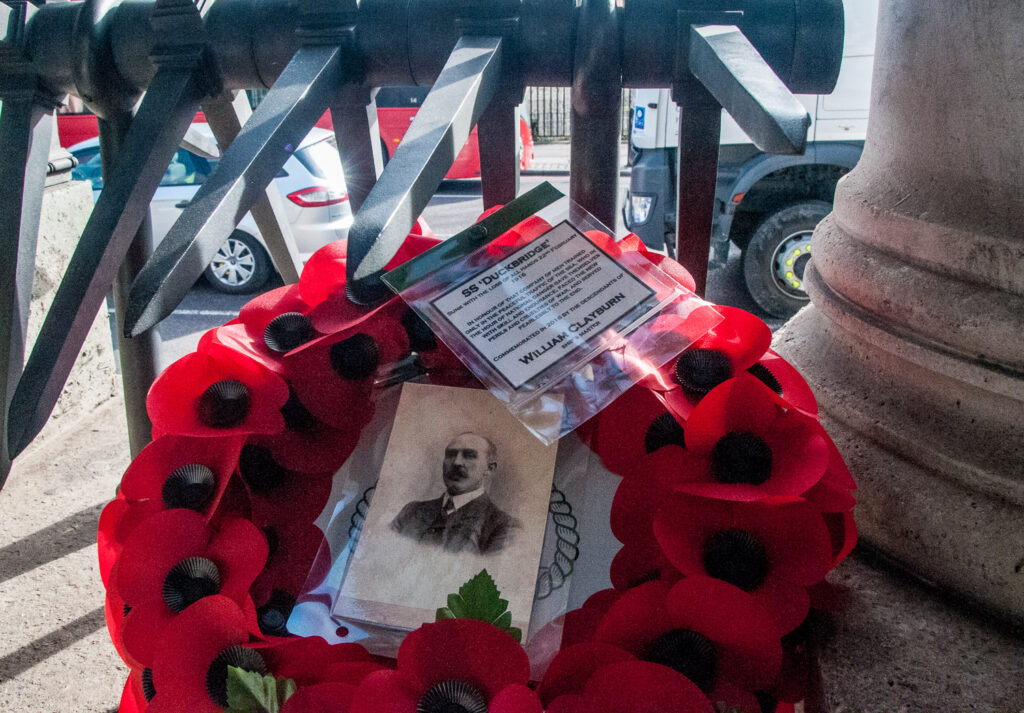
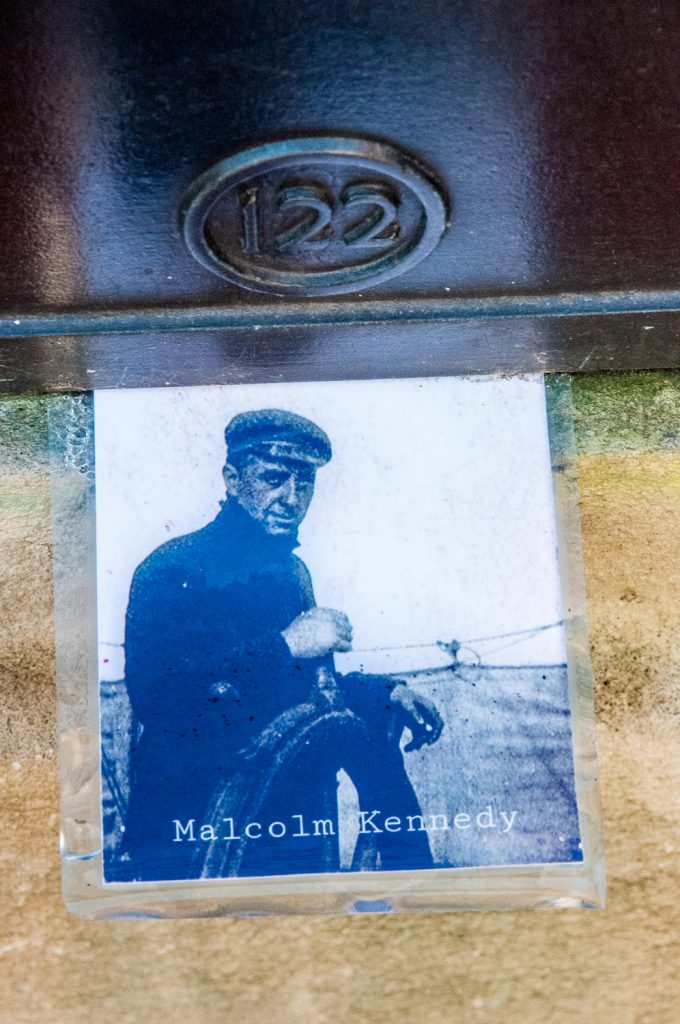
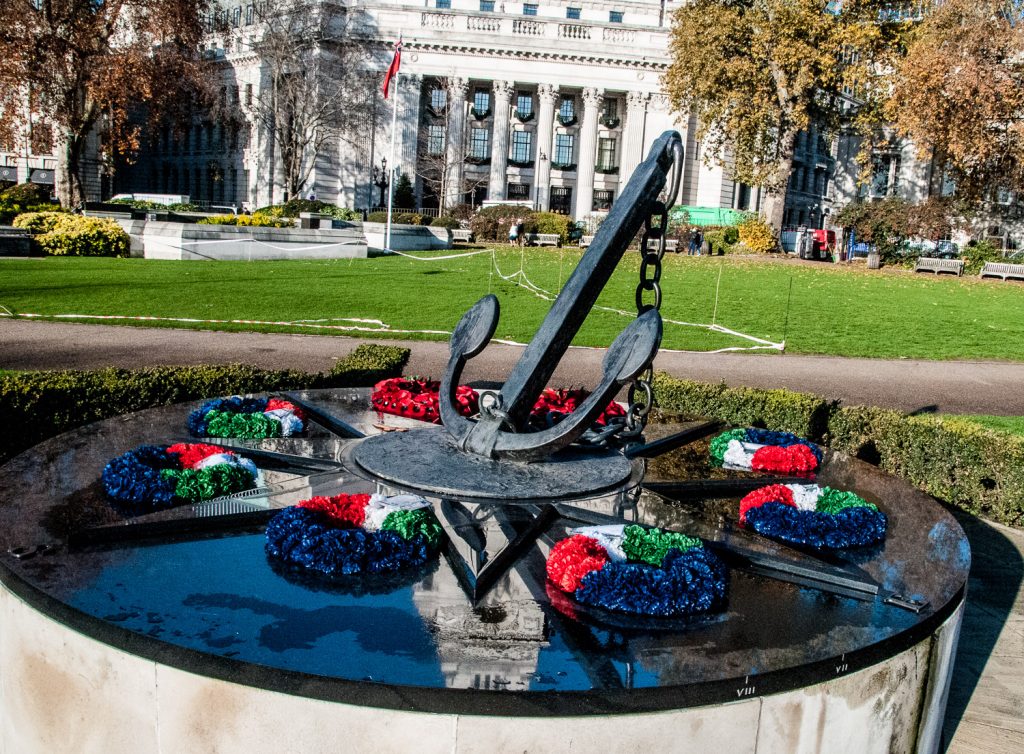
I also recommend a visit to the Tower Hill Memorial which commemorates men and women of the Merchant Navy and Fishing Fleets who died in both World Wars and who have no known grave.
The First World War section commemorates almost 12,000 Mercantile Marine casualties and was designed by Sir Edwin Lutyens with sculpture by Sir William Reid-Dick. It was unveiled by Queen Mary on 12 December 1928 …
The Second World War extension, which commemorates almost 24,000 casualties, was designed by Sir Edward Maufe, with sculpture by Charles Wheeler. It was unveiled by Queen Elizabeth II on 5 November 1955.
In the background, Neptune (standing on the old Port of London Authority headquarters) points towards the sea …
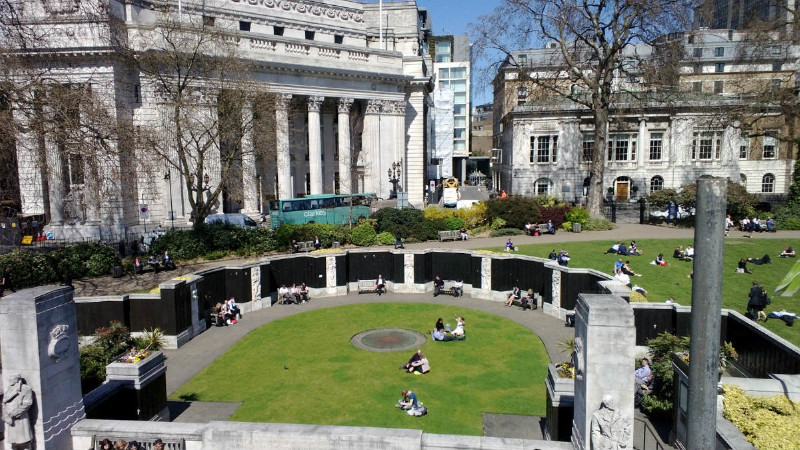
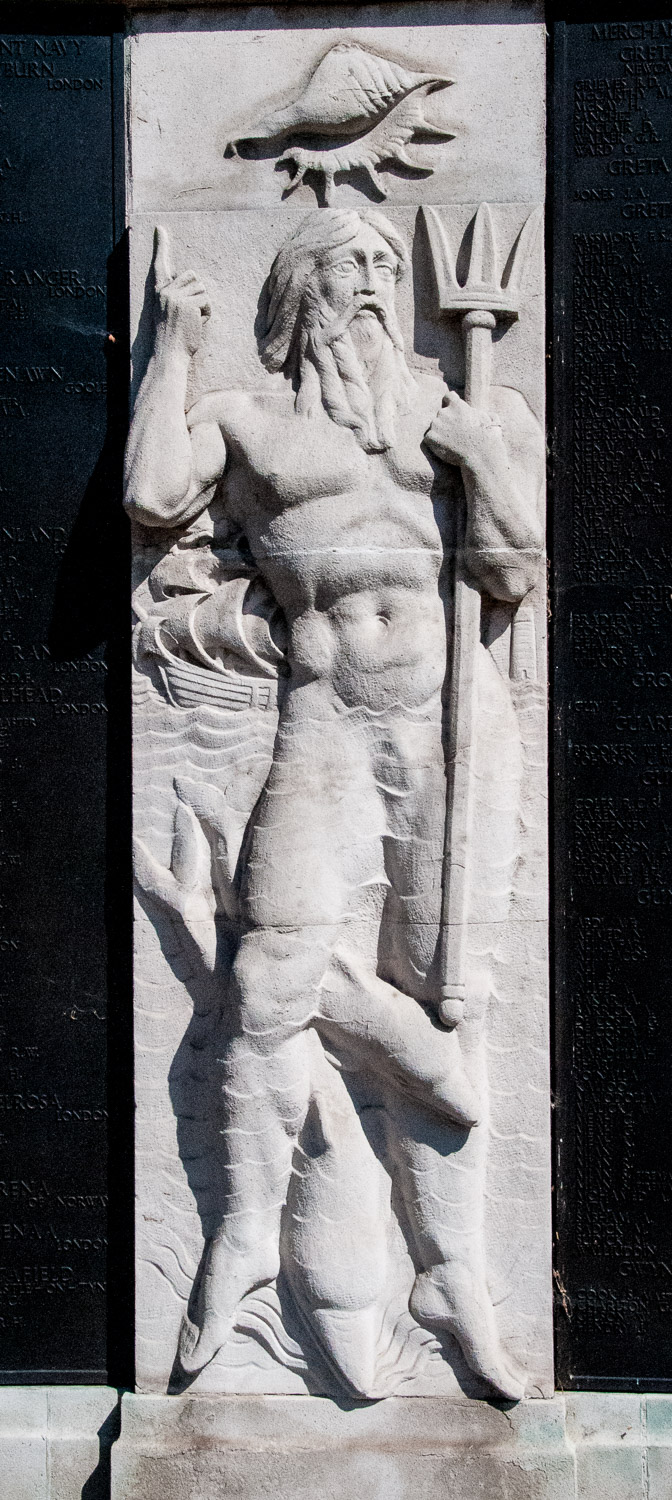
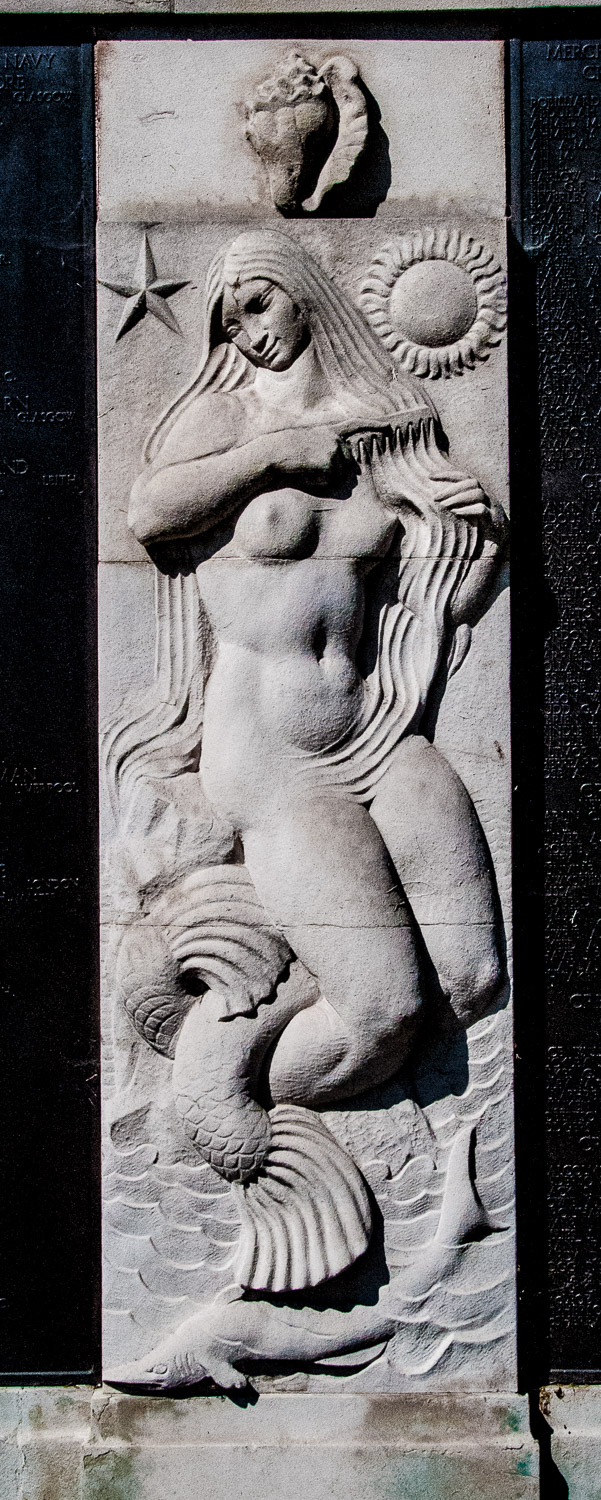
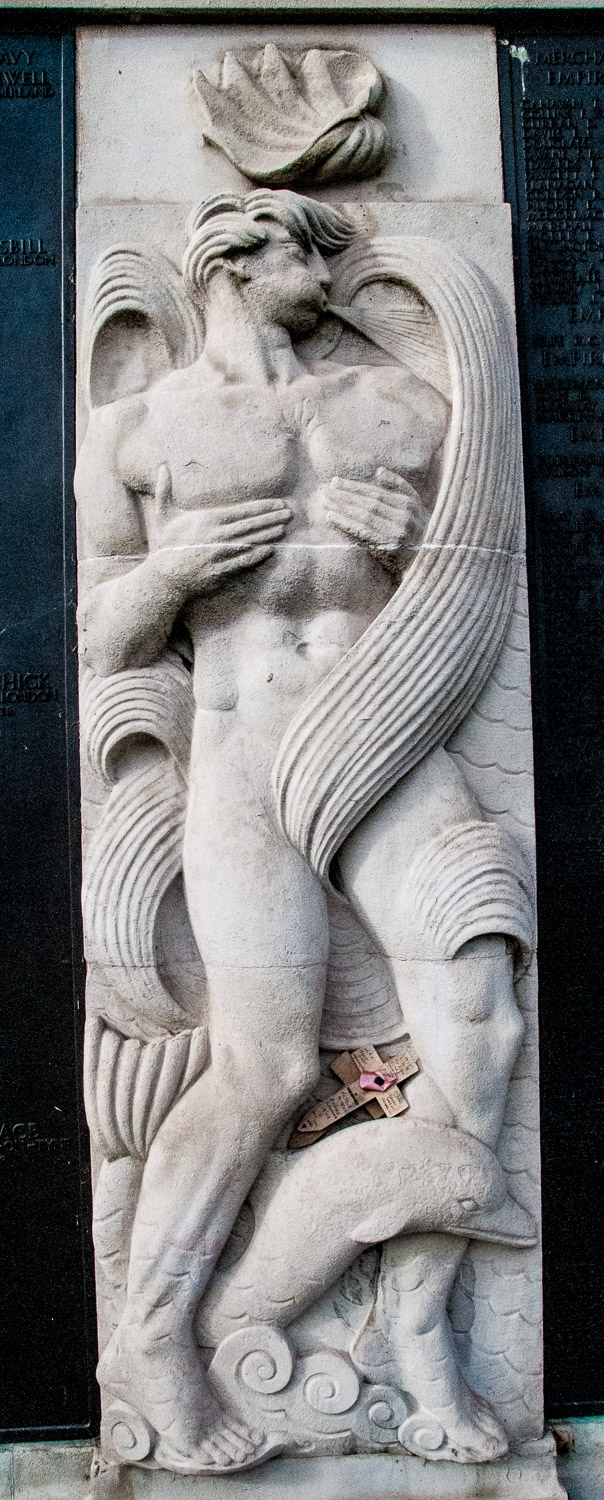
Within the garden the walls are overlaid with bronze plaques on which the names of the men and their ships are inscribed in relief. At regular intervals, between the inscription panels, are allegorical figures representing the Seven Seas. Here is one of them, Neptune with his trident …
And another, a mermaid combing her hair …
Images from my visit last November …
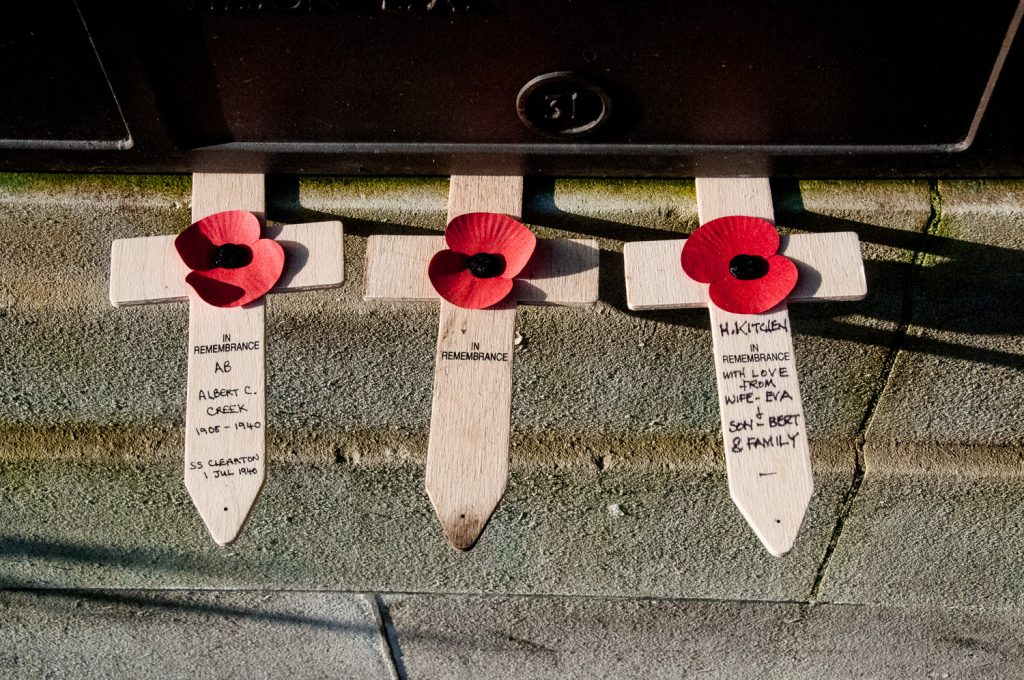
A few years ago I noticed a small cross resting on one of the allegorical figures, just above the dolphin’s head …
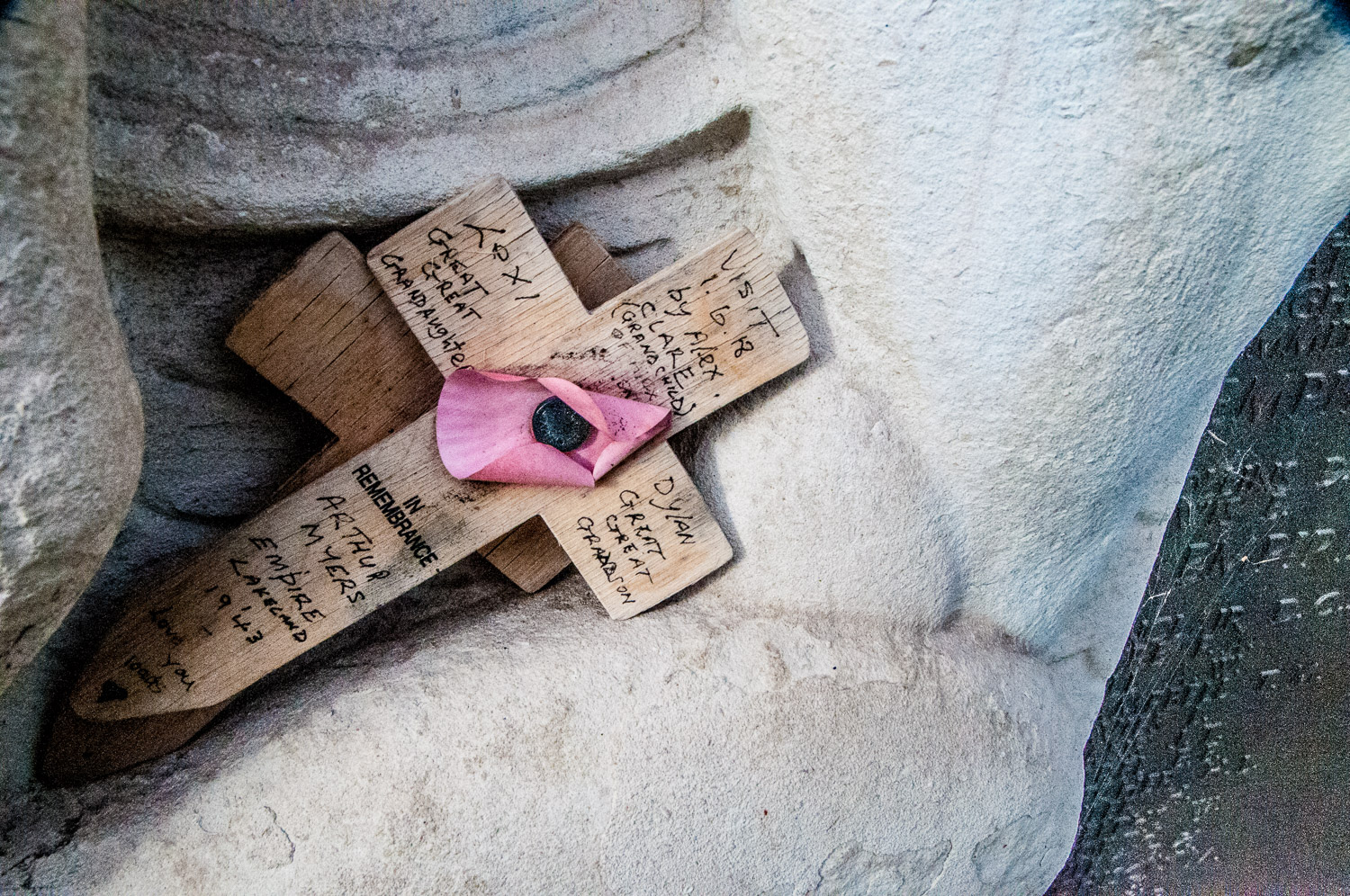
Here it is in close up …
How wonderful. Arthur Myers remembered by a grandchild and two great, great grandchildren. His ship, the Empire Lakeland, was sunk by a U Boat on 11 March 1943.
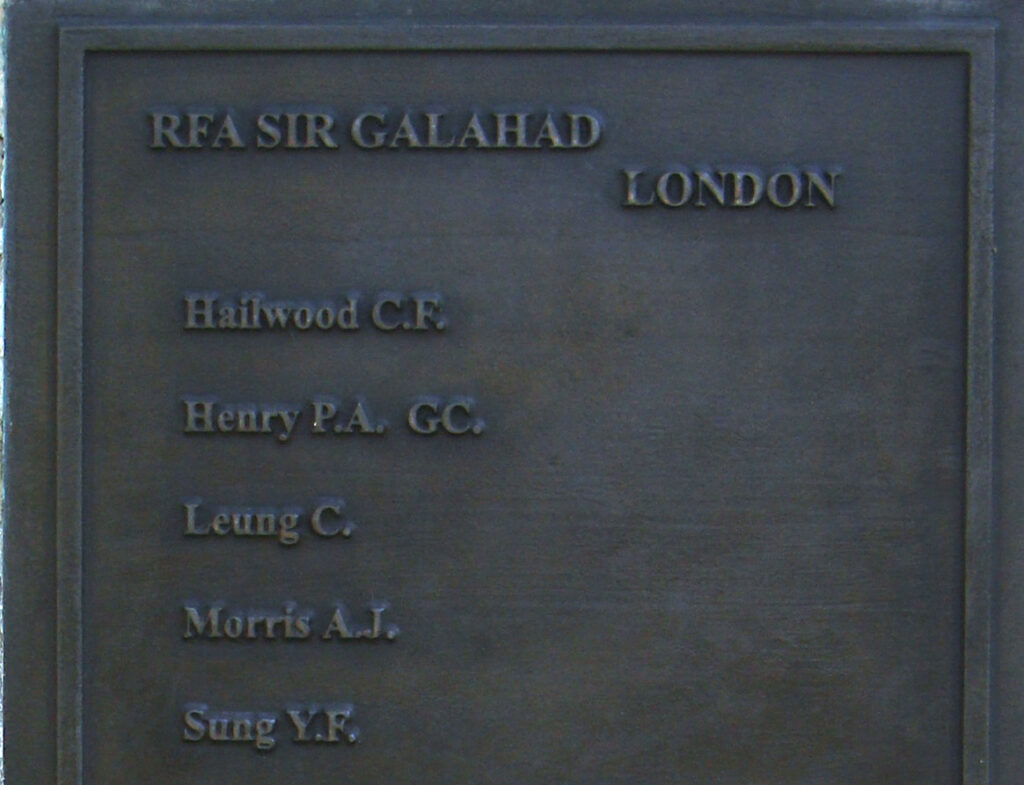
On 2 April 1982, Argentine forces landed in and captured the Falklands Islands. A task force was dispatched in order to retake the territory and this was accomplished when the occupying forces surrendered on 14 June that year. Nine members of the Merchant Navy and eight members of the Royal Fleet Auxiliary were killed in the conflict and their names are recorded here beneath those of their ships …
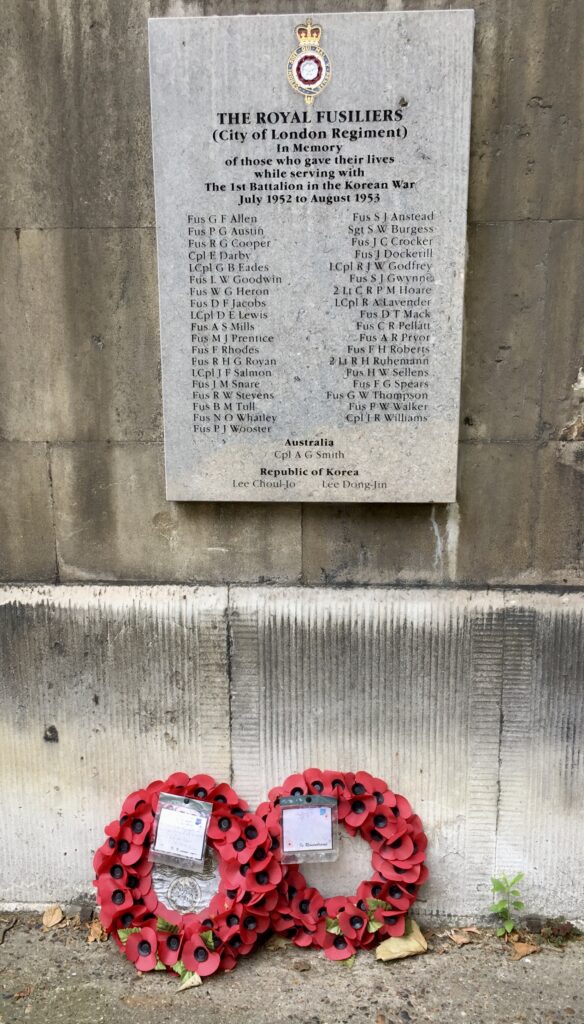
There is a Korean War Memorial outside St Sepulchre-without-Newgate Church (EC1A 9DQ) …
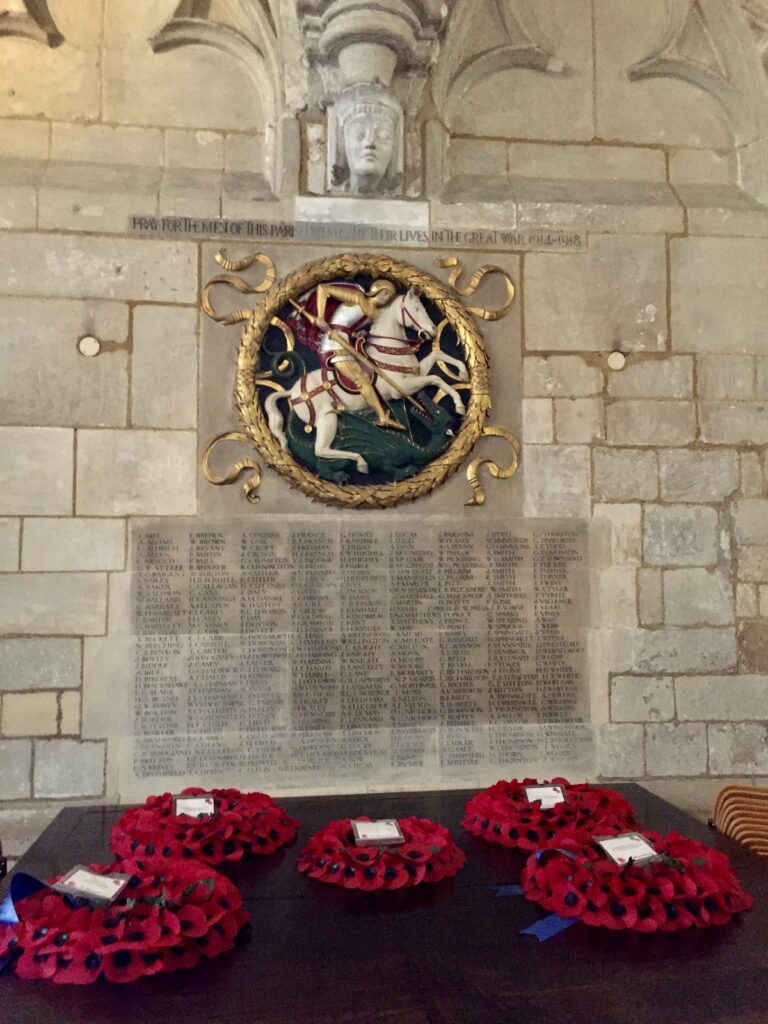
The Southwark Cathedral World War I bronze remembrance plaque is beautiful …
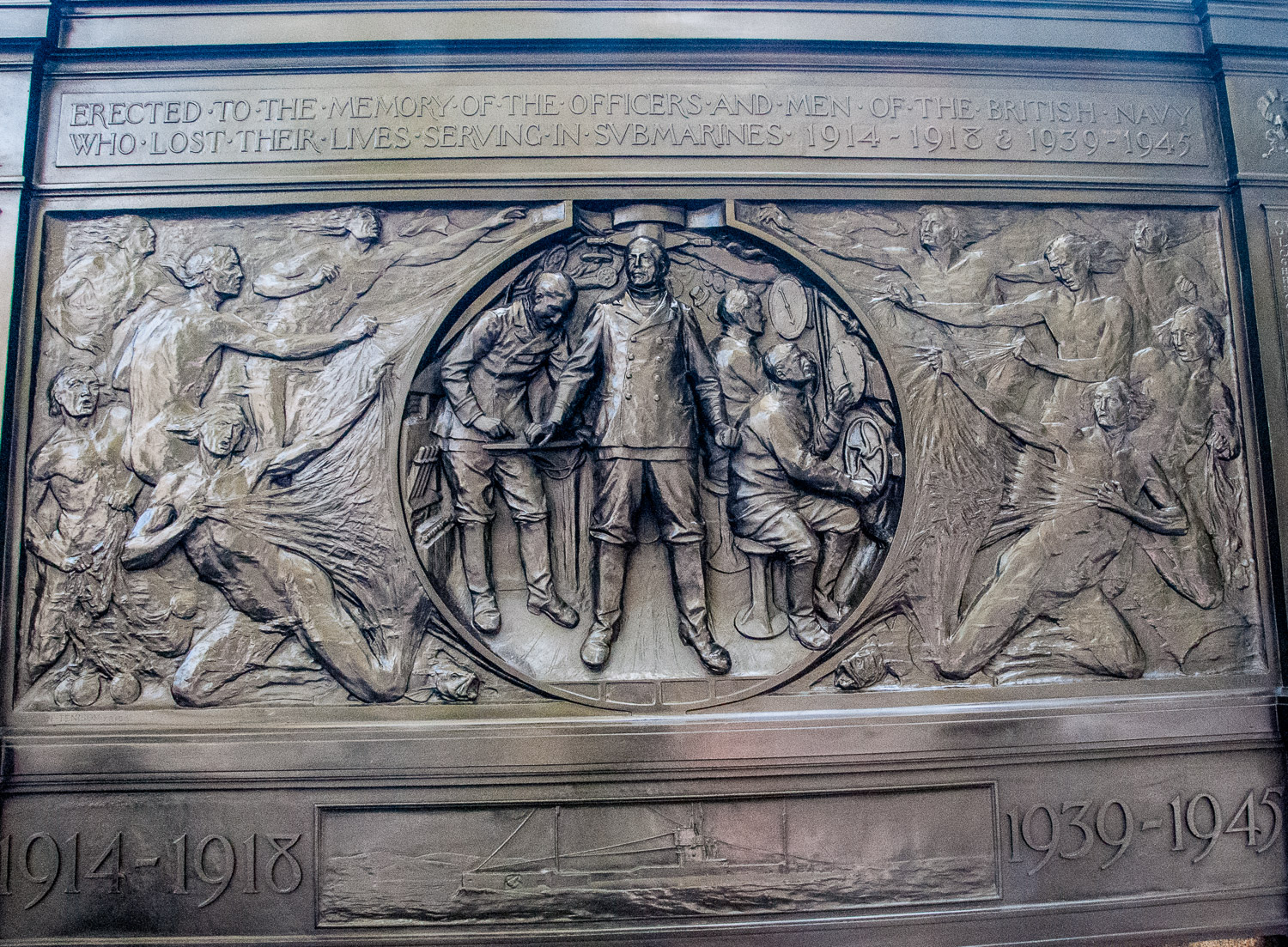
Another suggestion for a visit is the National Submarine War Memorial on Victoria Embankment (EC4Y 0HJ). Although able to hide when submerged, once struck the vessels were often unable to rise to the surface and became effectively underwater coffins. In the First World War fifty four boats were lost and with them the lives of 138 officers and 1,225 men. At the inauguration in 1922 Rear Admiral Sinclair, the Chief of the Submarine Service, reminded those present that, during the Great War …
The number of those killed in the Submarine Service was greater in proportion to its size than any other branch of His Majesty’s fighting forces … one third of the total personnel.
In November 1959 new panels commemorating Second World war losses were unveiled by Rear Admiral B W Taylor.
Wright and Moore, writing for the 20th Century Architecture website, describe the memorial as a complex mixture of narrative and symbolism …
Sculptor: F B Hitch Architect: A H R Tenison Founder: E J Parlanti
The central figures recreate the scene set inside the submarine exaggerating it into a small, claustrophobic tunnel. The crew use charts and follow dials, the captain is braced at the centre with the periscope behind his head. Around the vessel a shallow relief depicts an array of sea creatures or mermen appearing to trap and haul the submarine in fishing nets, reminding us that the submarines were as much prey to the tempestuous elements as they were to the enemy.
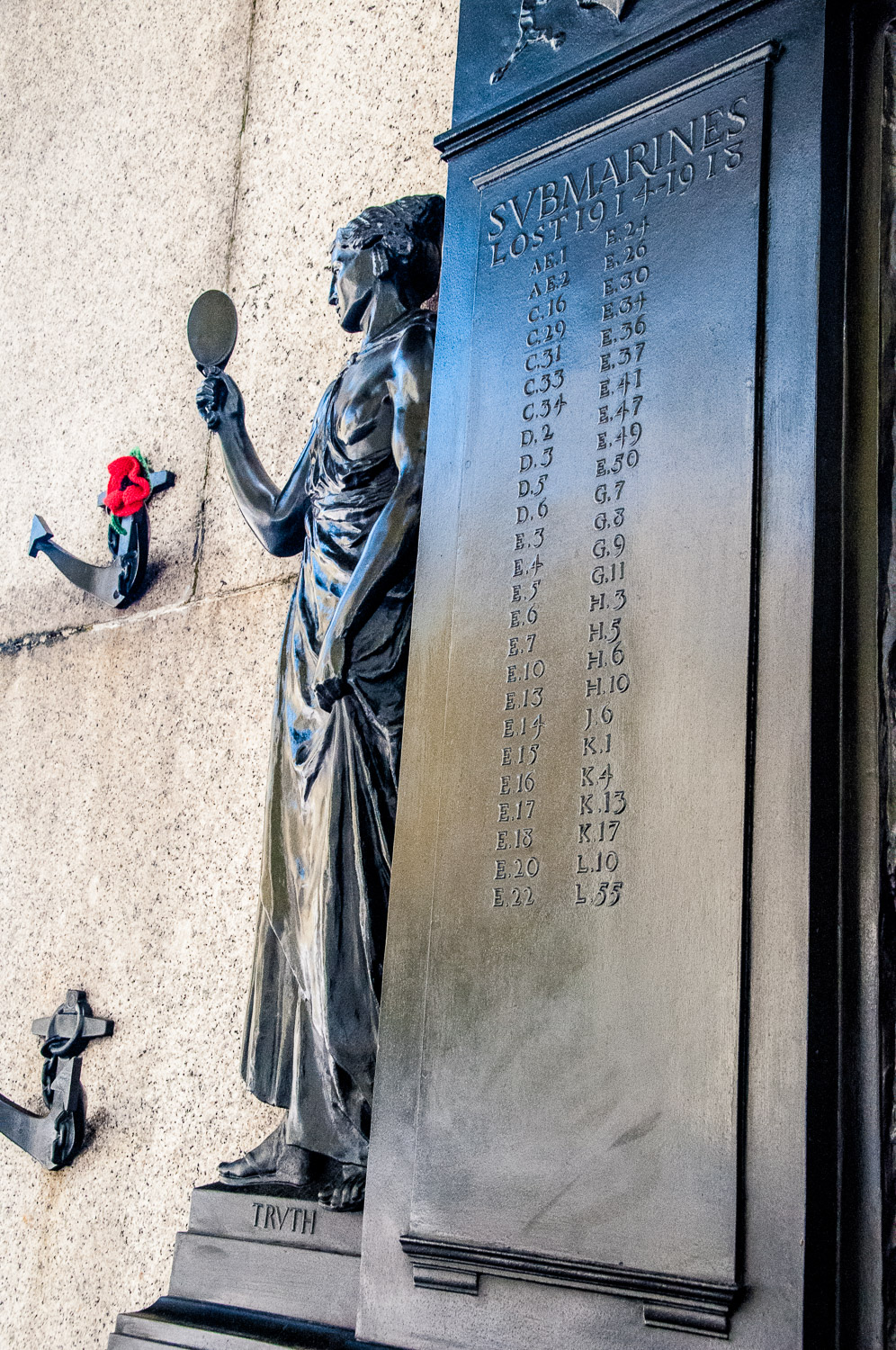
On both corners are allegorical figures. Next to the list of vessels lost between 1914 and 1918, Truth holds up her mirror. Just further to the left in the picture are two of the 40 bronze wreath hooks in the form of anchors …
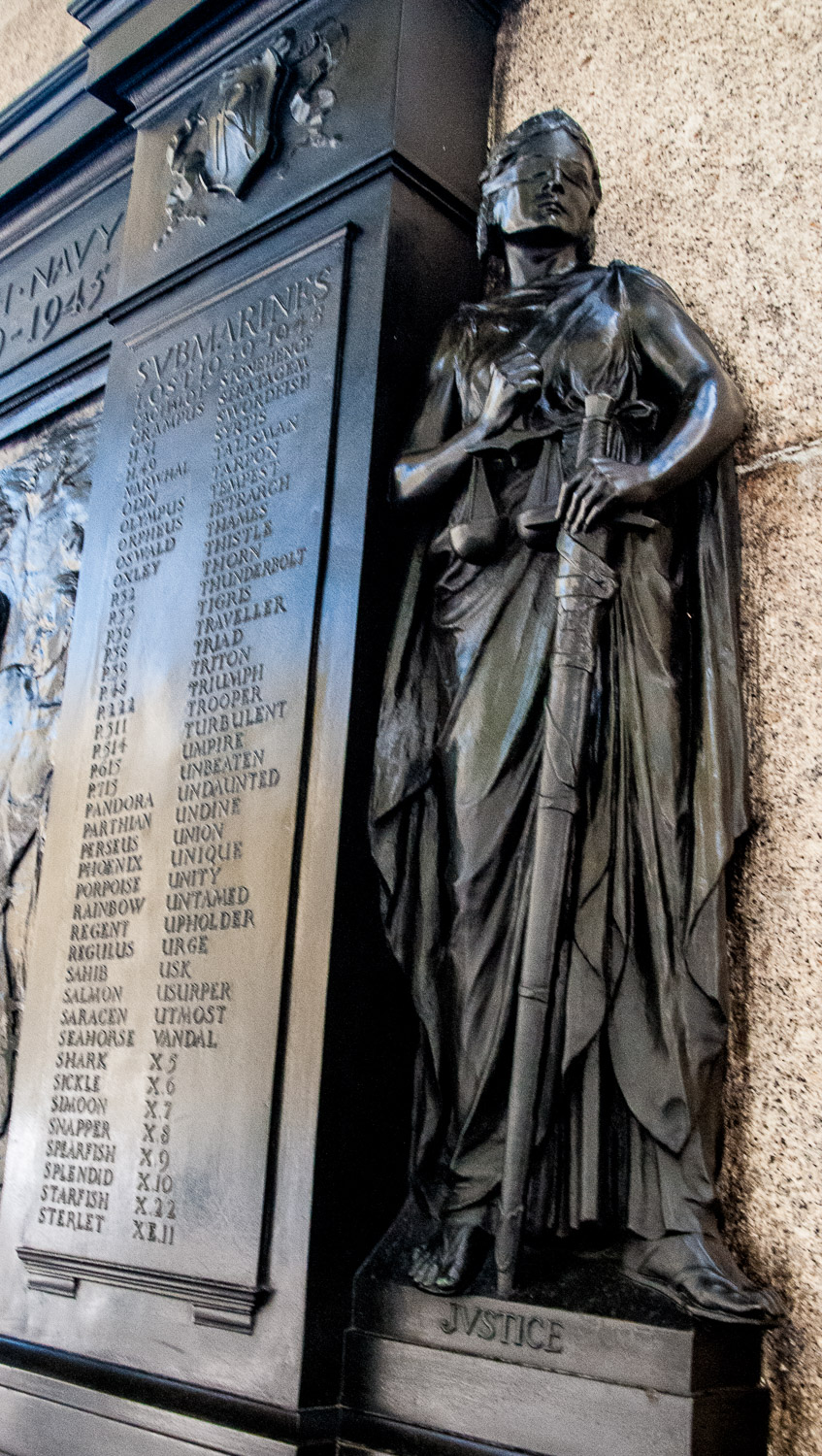
On the right, next to the vessels lost in the Second World War, Justice wears a blindfold and as usual holds a sword and scales …
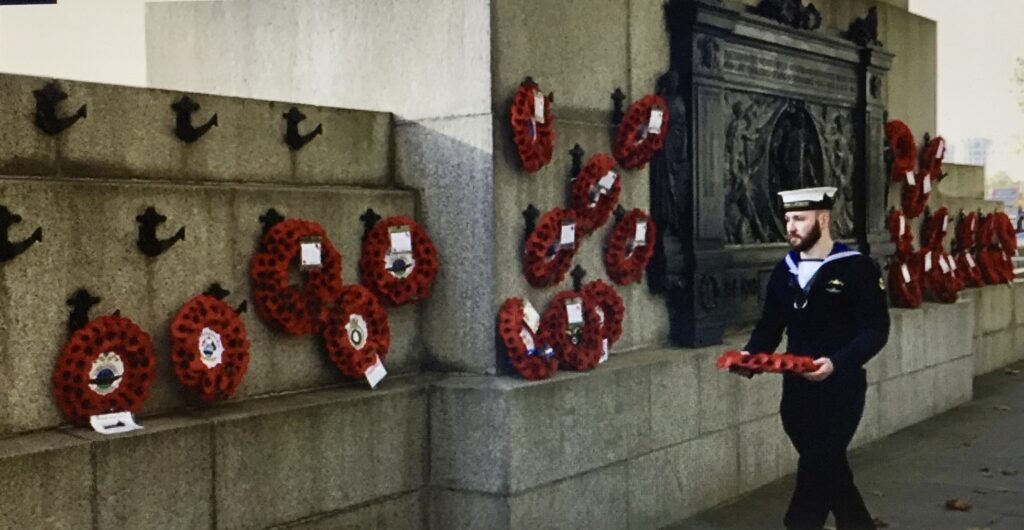
Here is an image from last year’s service …
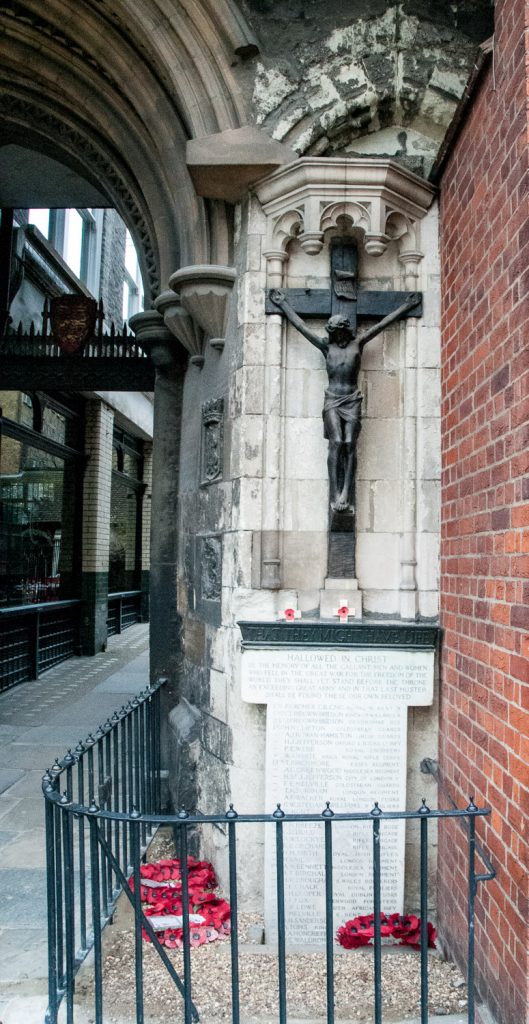
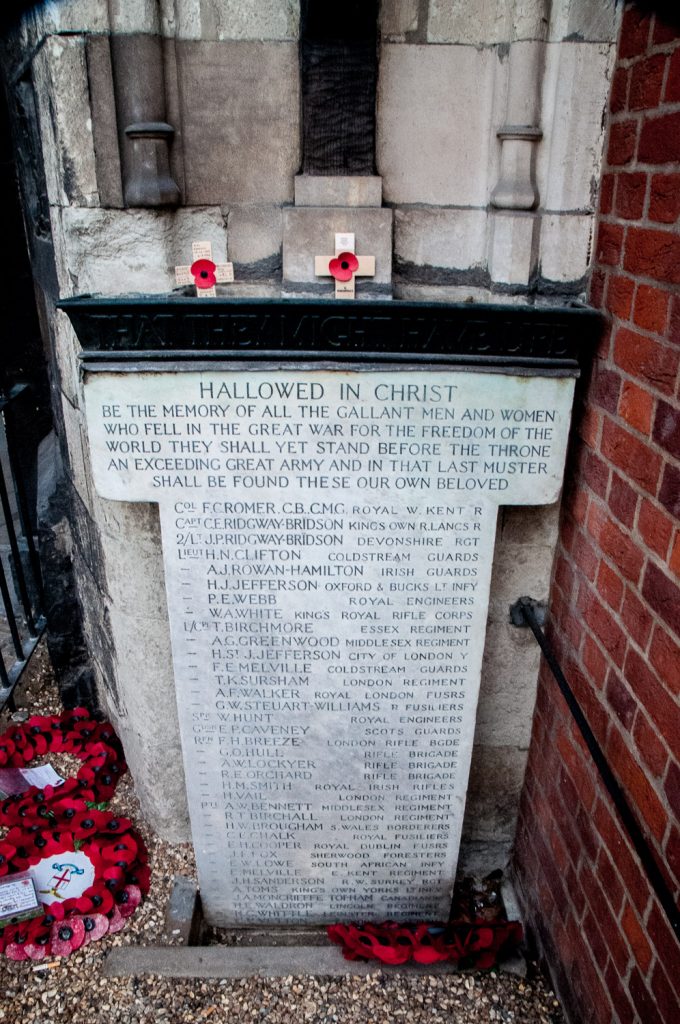
This is the Memorial at the entrance to the church of St Bartholomew the Great …
Much of the late 19th and early 20th century church restoration work was carried out by Sir Aston Webb (1849-1930) and he also designed the memorial. It includes the name of his son Philip, who was killed in action on 25th September 1916 …
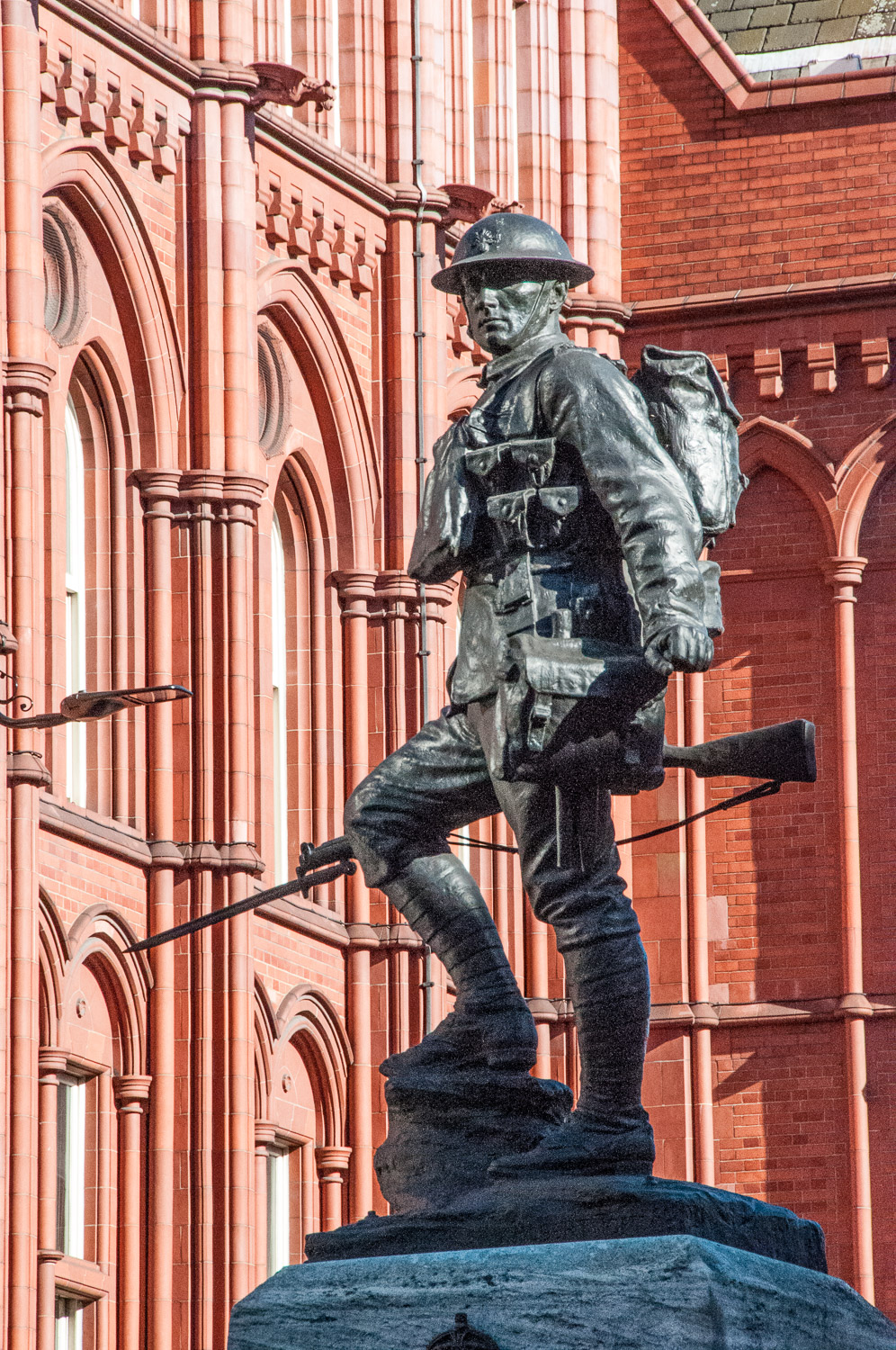
And now to Holborn and this work by Albert Toft. Unveiled by the Lord Mayor in 1922, the inscriptions read …
To the glorious memory of the 22,000 Royal Fusiliers who fell in the Great War 1914-1919 (and added later) To the Royal Fusiliers who fell in the World war 1939-1945 and those fusiliers killed in subsequent campaigns.
Toft’s soldier stands confidently as he surveys the terrain, his foot resting on a rock, his rifle bayoneted, his left hand clenched in determination. At the boundary of the City, he looks defiantly towards Westminster. The general consensus on the internet is that the model for the sculpture was a Sergeant Cox, who served throughout the First World War.
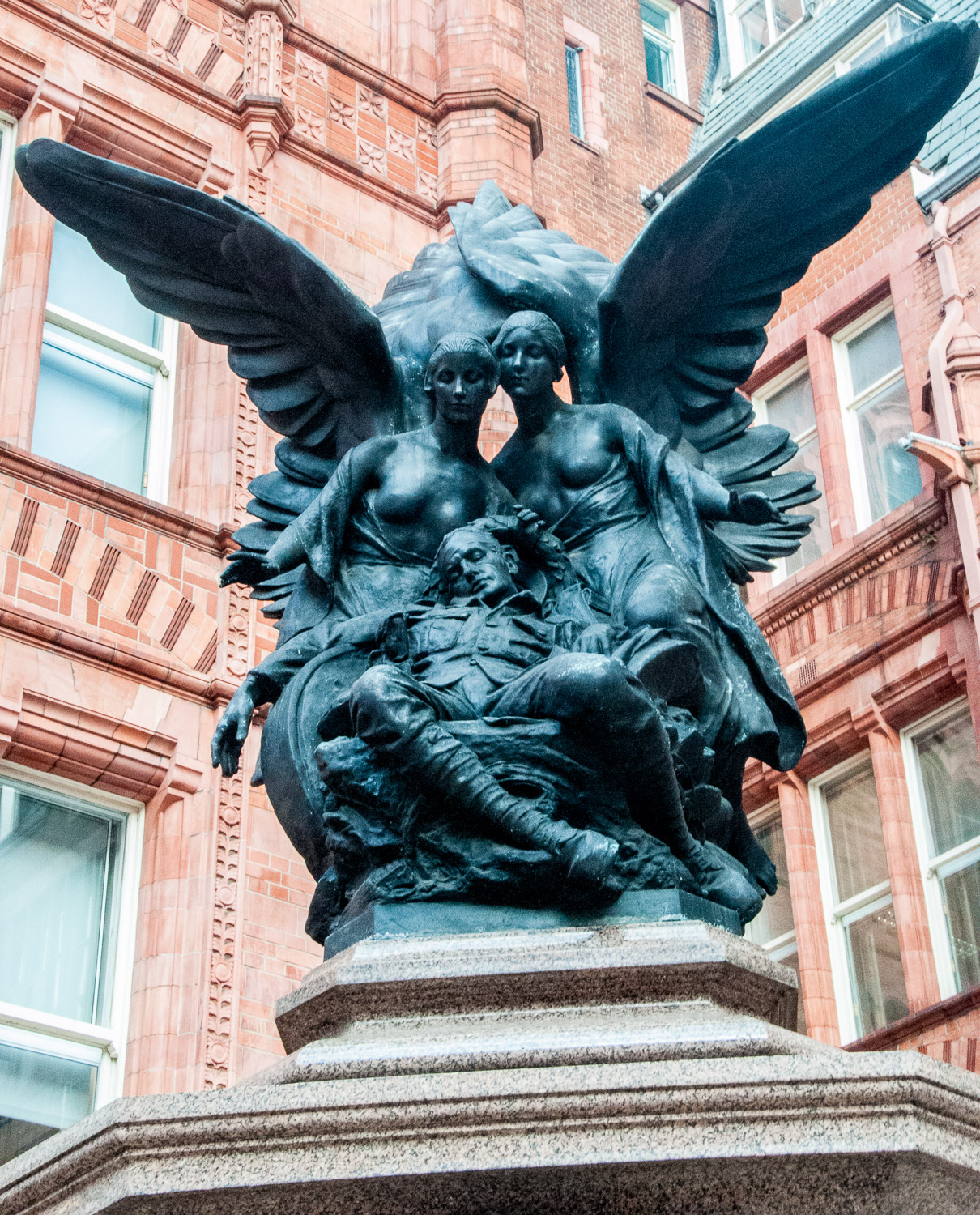
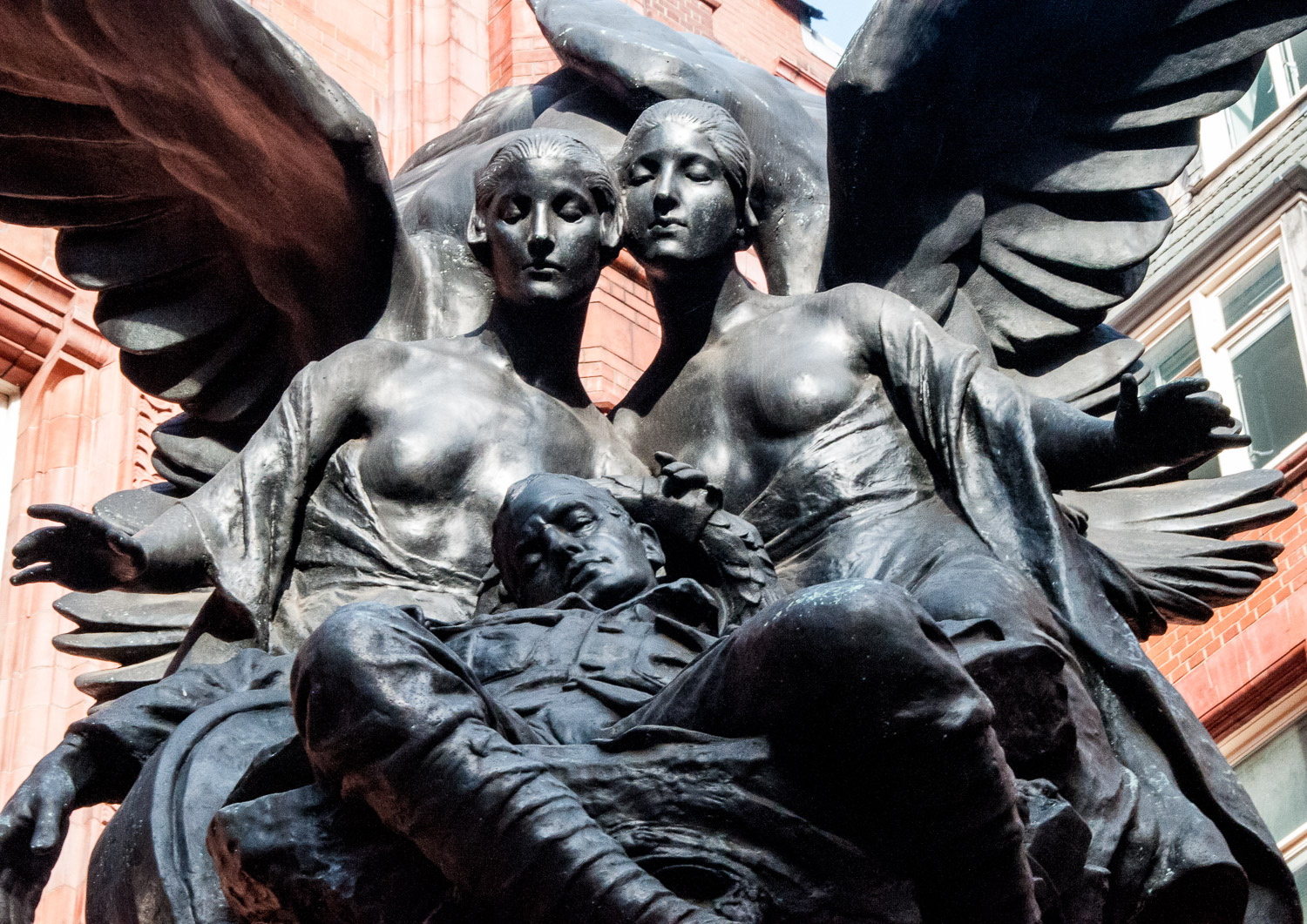
Behind him is the magnificent, red terracotta, Gothic-style building by J.W. Waterhouse, which once housed the headquarters of the Prudential Insurance Company. Walk through the entrance arch to the courtyard and you will see the work of a sculptor who has chosen to illustrate war in a very different fashion. The memorial carries the names of the 786 Prudential employees who lost their lives …
The sculptor was F.V. Blundstone and the work was inaugurated on 2 March 1922. All Prudential employees had been offered ‘the opportunity of taking a personal share in the tribute by subscribing to the cost of the memorial’ (suggested donations were between one and five shillings).
The main group represents a soldier sustained in his death agony by two angels. He is lying amidst war detritus with his right arm resting on the wheel of some wrecked artillery piece. His careworn face contrasts with that of the sombre, beautiful girls with their uplifted wings. I find it incredibly moving.
I have written about angels in the City before and they are usually asexual, but these are clearly female.
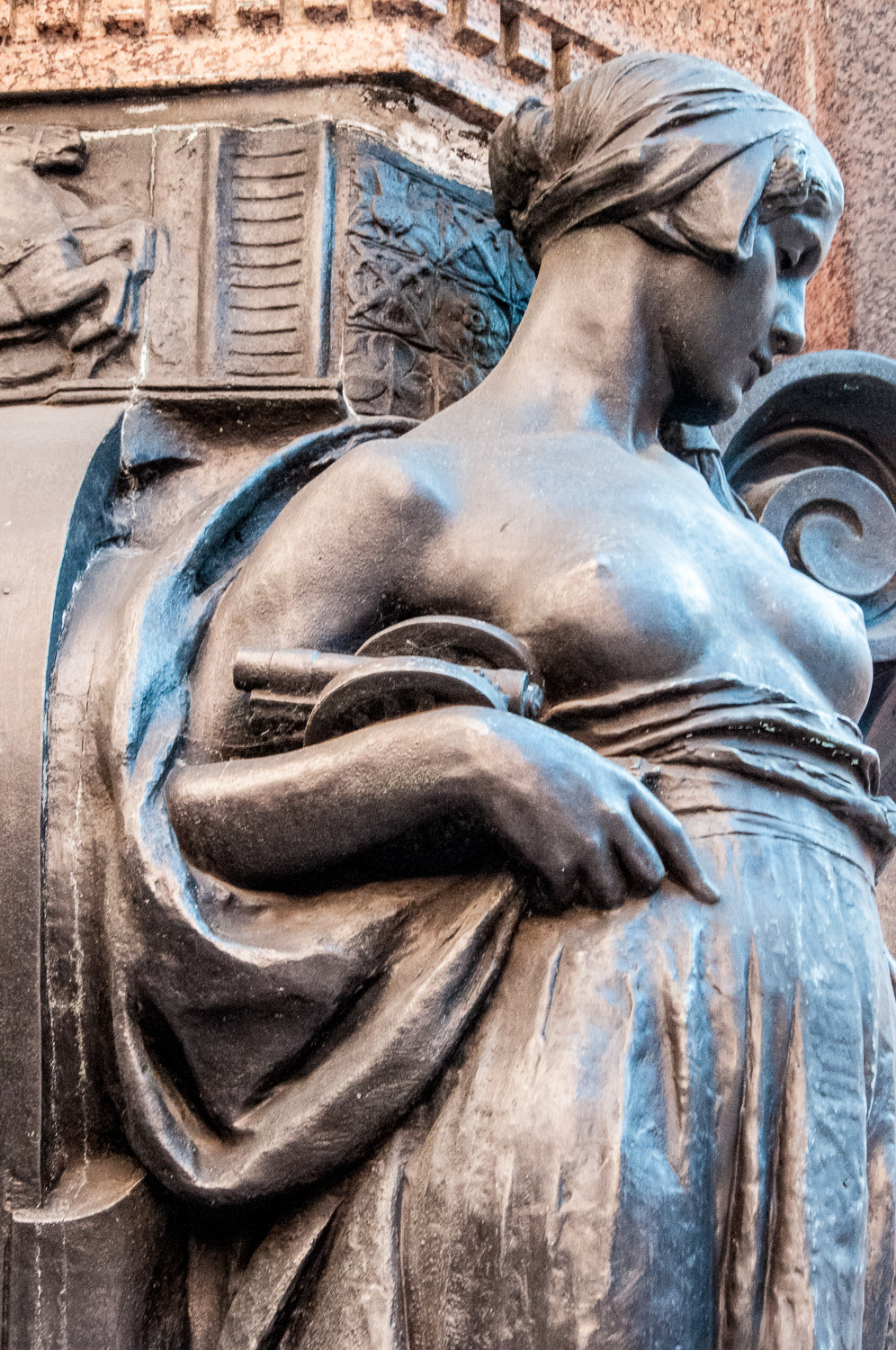
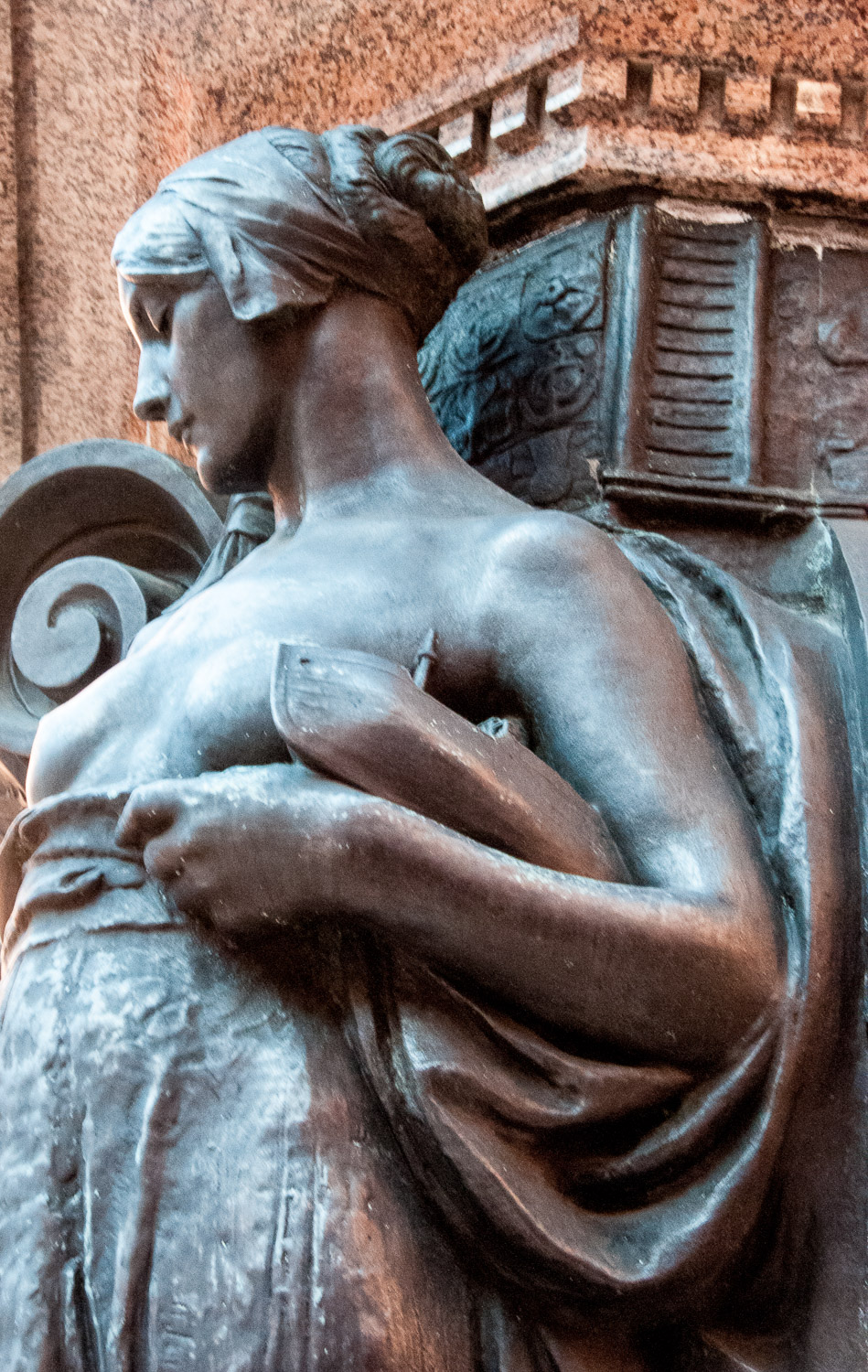
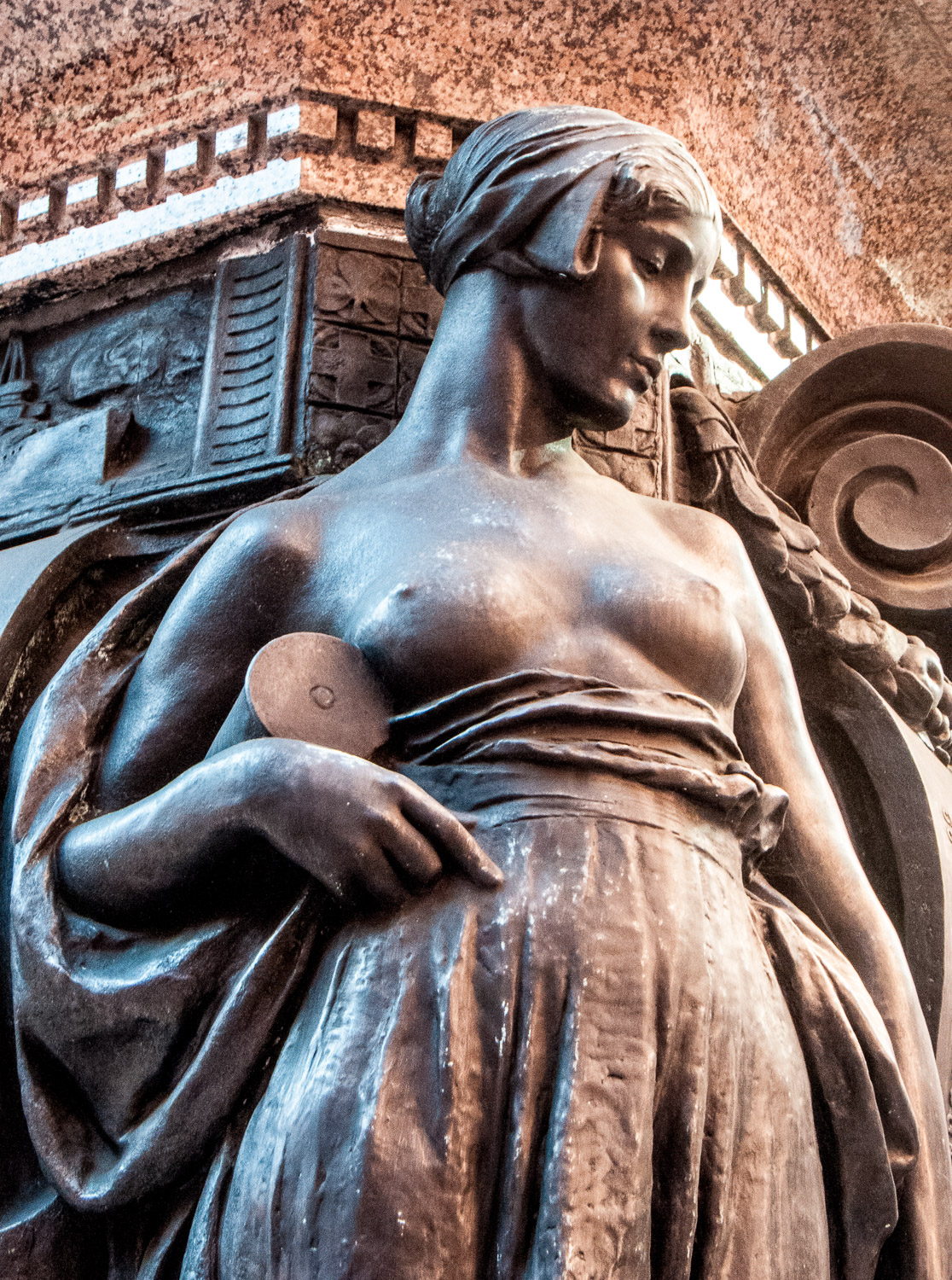
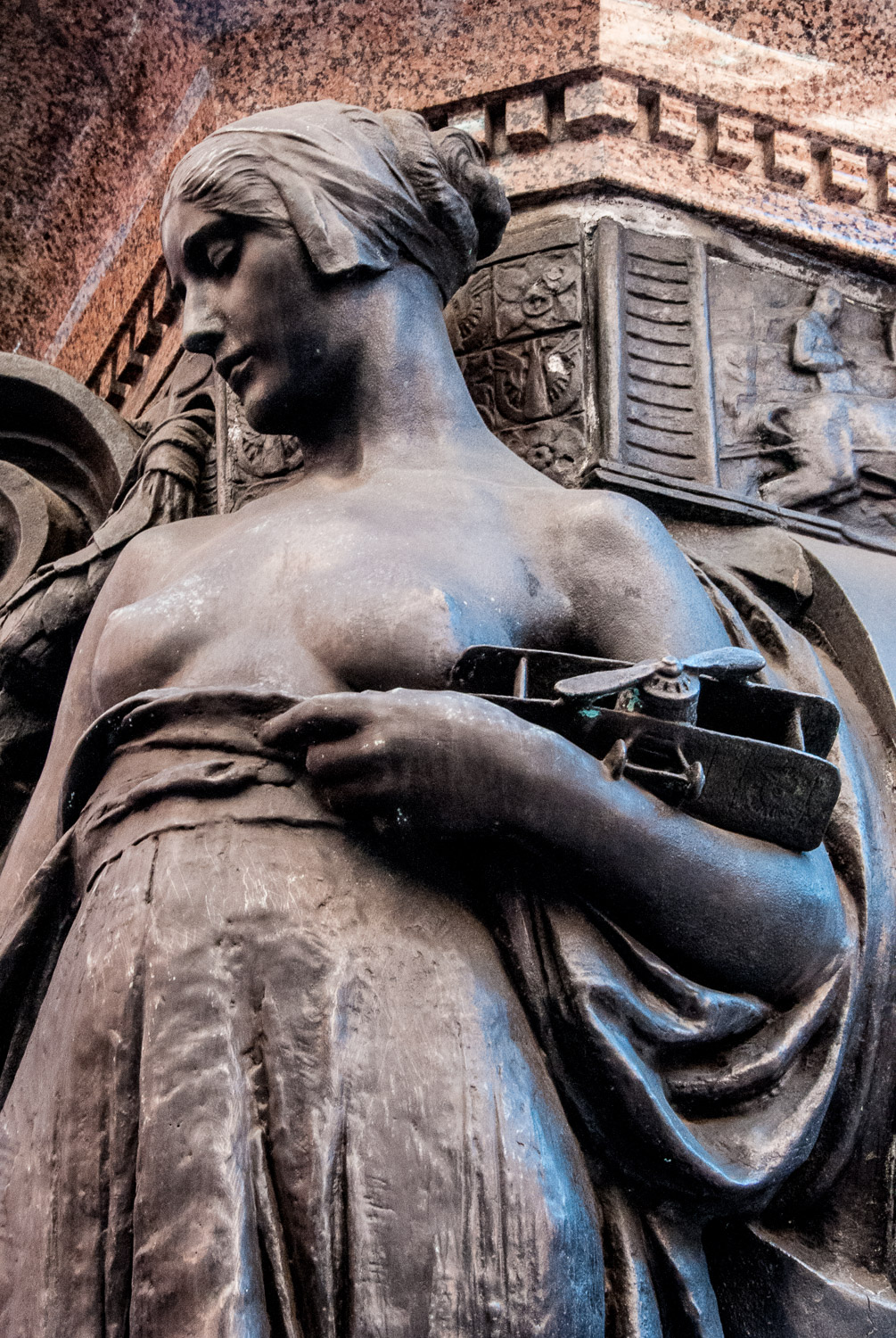
At the four corners of the pedestal stand four more female figures.
One holds a field gun and represents the army …
One holds a boat representing the navy …
At the back is a figure holding a shell representing National Service …
The fourth lady holds a bi-plane representing the air force …
The work is tucked away in the building’s courtyard, Waterhouse Square (EC1N 2SW), and I am sure that most of the thousands of people who walk along Holborn every day have no idea it is there.
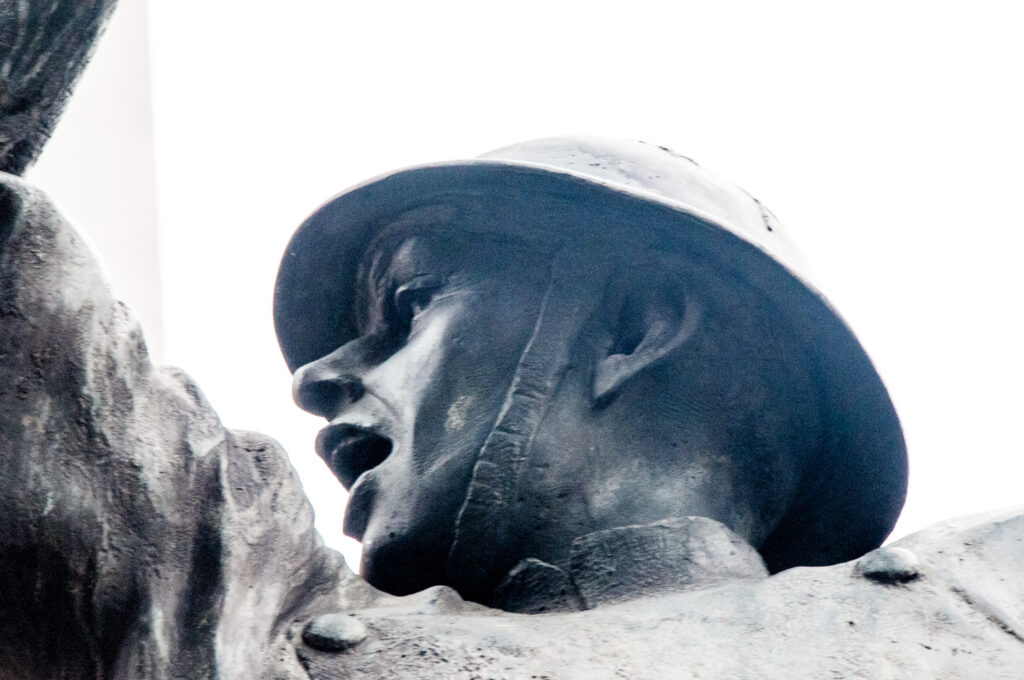
St Peter’s Hill runs north alongside the College and at the top you will find the Firefighters Memorial. On its octagonal bronze base are the names of the 997 men and women of the fire service who lost their lives during the conflict. The sculpture features two firemen ‘working a branch’, with their legs spread to take the strain of the hose …
A sub-officer directs others to assist. There are clues to the identity of this figure scattered among the debris at the figures’ feet: the letters CTD for C.T. Demarne. At the unveiling, his colleagues from the fire service claimed that there was no need for such clues. One who was interviewed by the Telegraph stated: ‘You can tell it’s Cyril by the way he’s standing…he always waved his arms about like that when he was ordering us about’.
Officer Demarne in full flow.
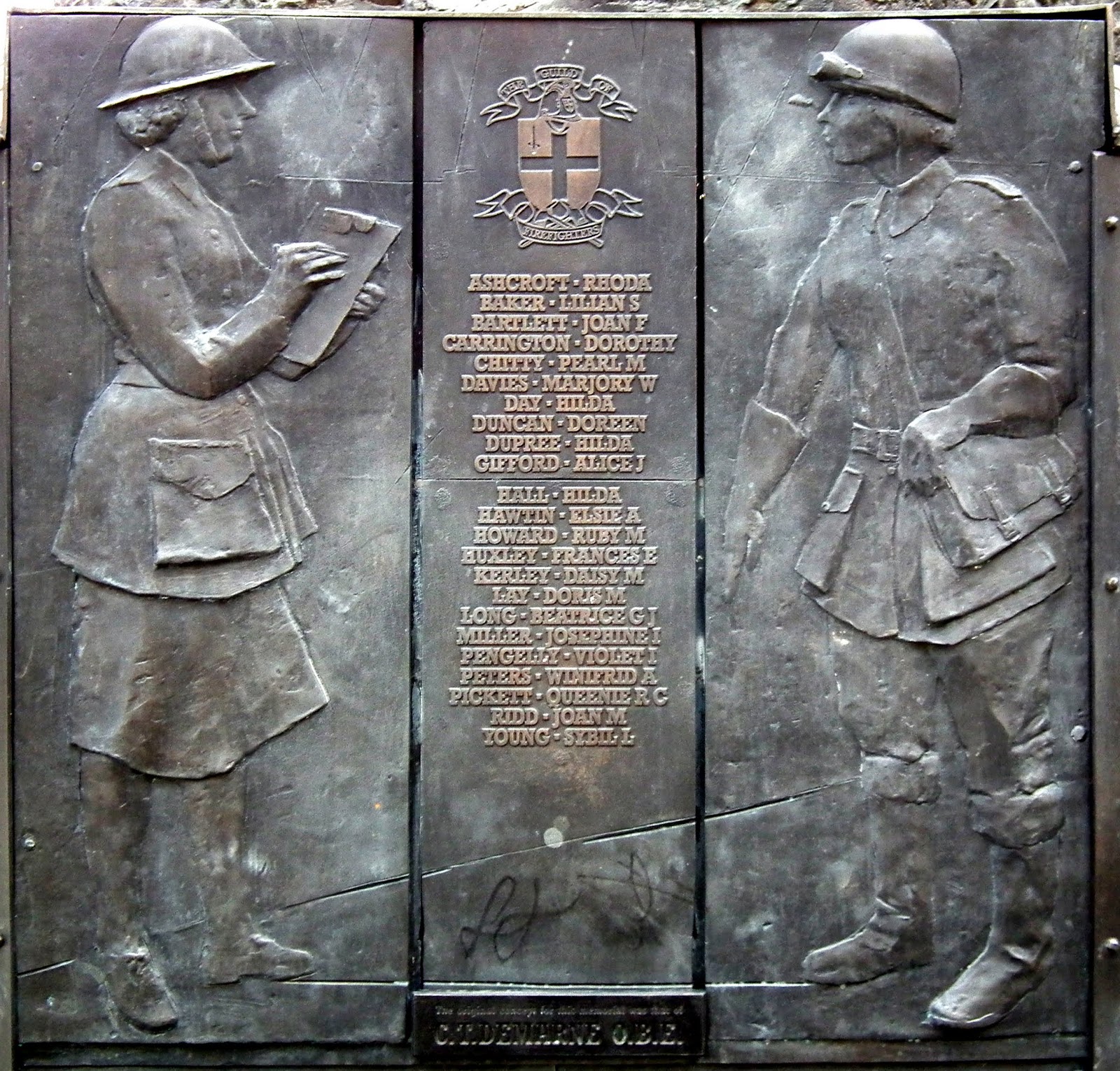
By 1943 over 70,00 women had enrolled in the National Fire Service in the United Kingdom. This memorial commemorates those who lost their lives in the London bombings …
The lady on the left is an incident recorder and the one on the right a despatch rider.
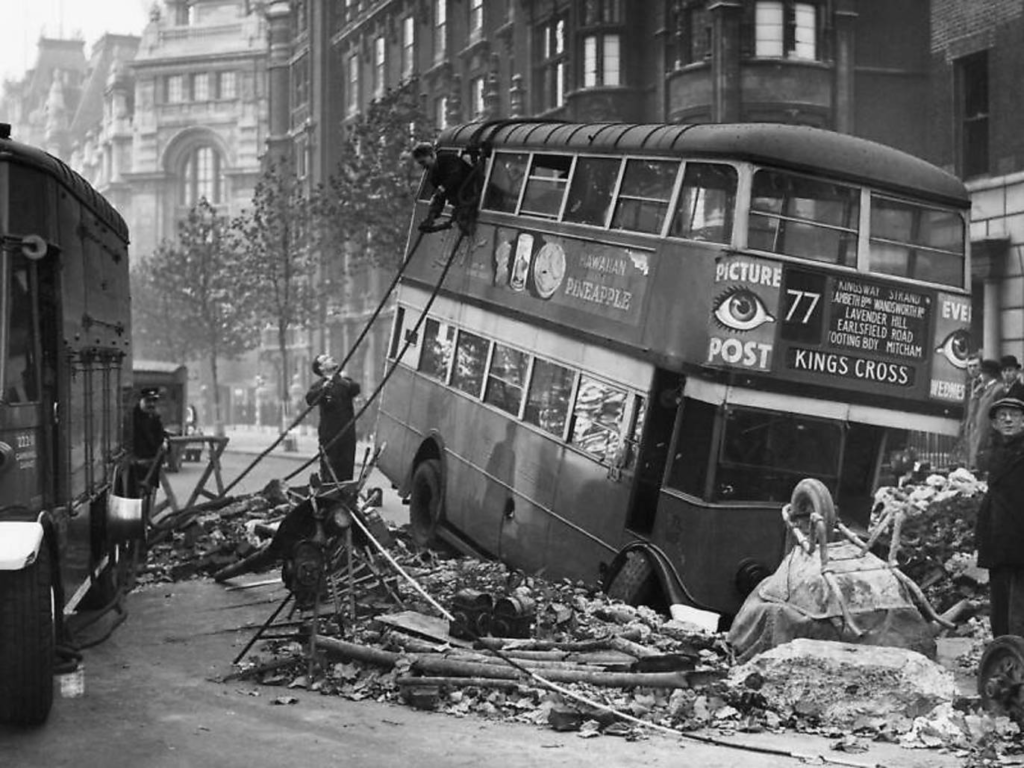
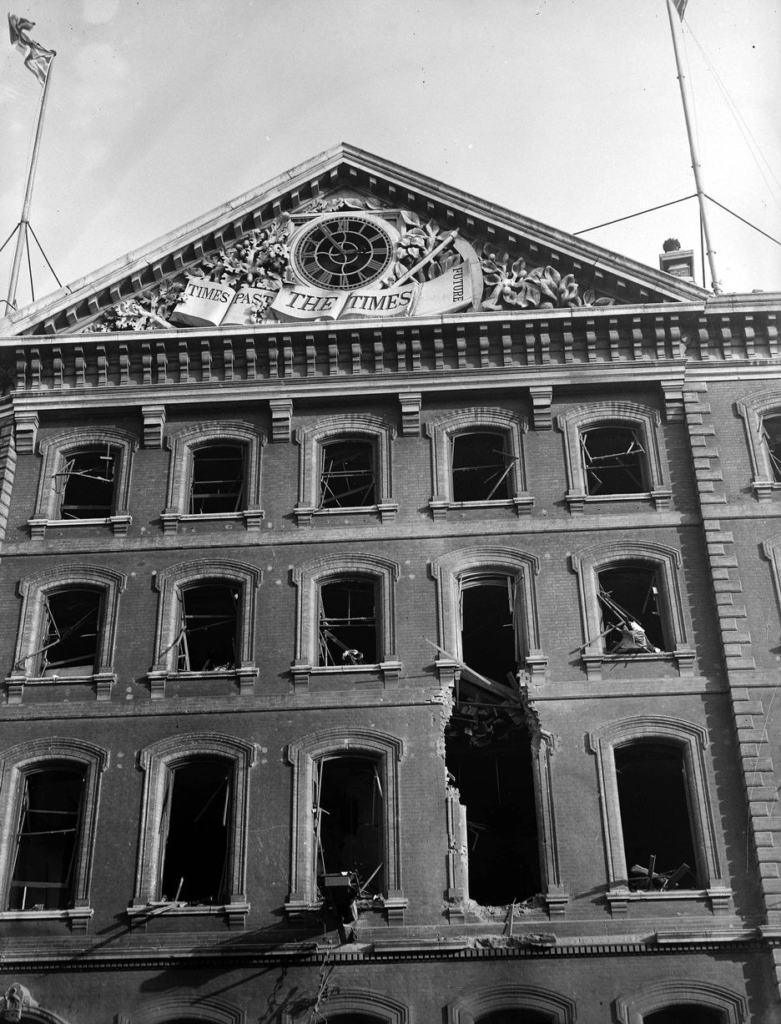
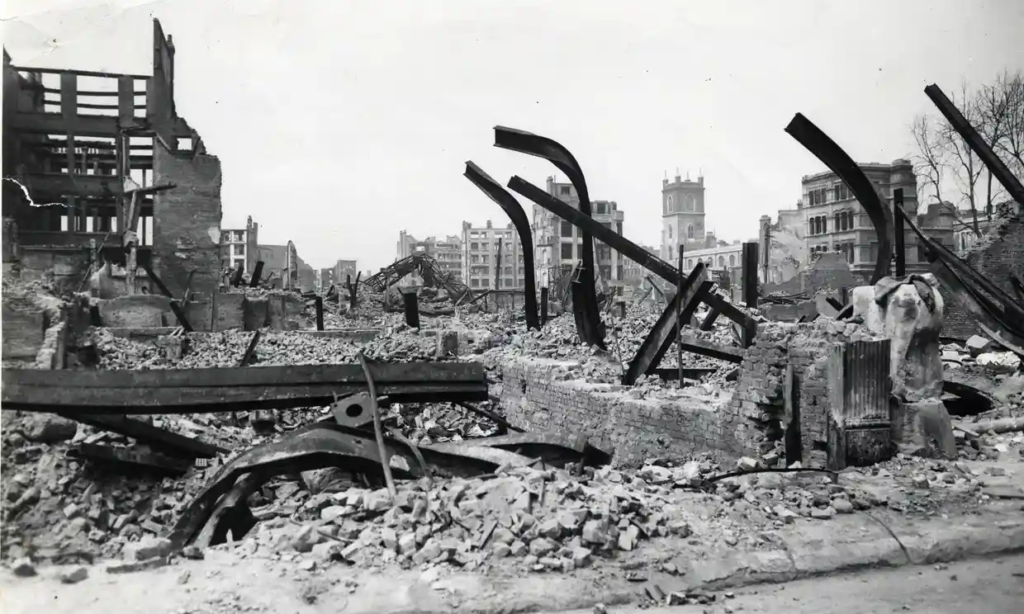
Some images from various archives …
Holborn 25 October 1940 …
Ludgate Hill …
King William Street …
Queen Victoria Street …
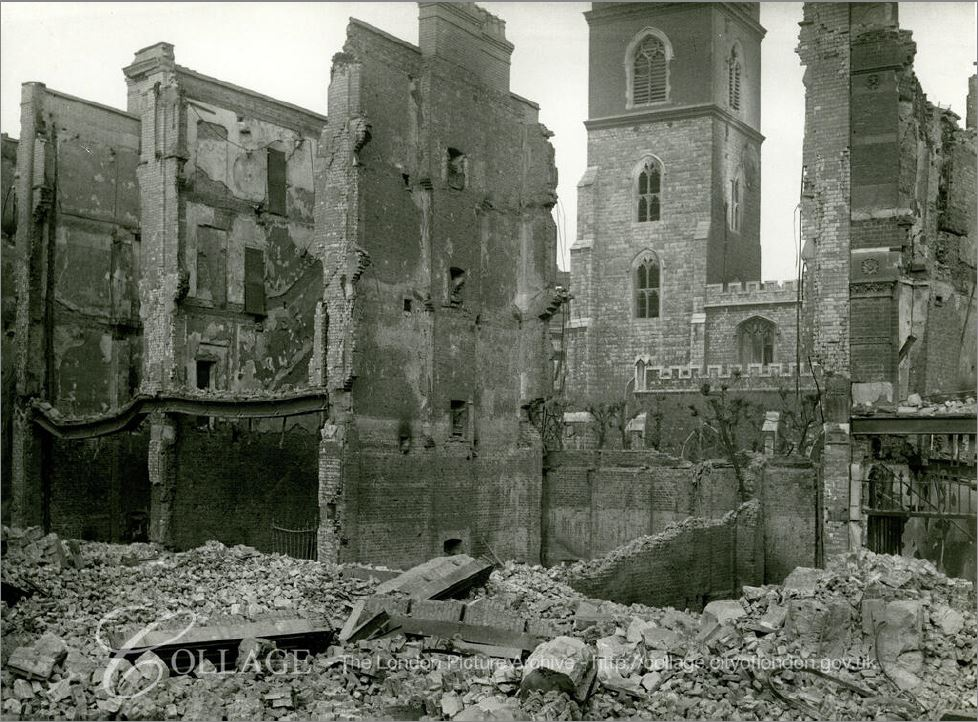
December 1940 – Cripplegate with the shell of St Giles church in the background …
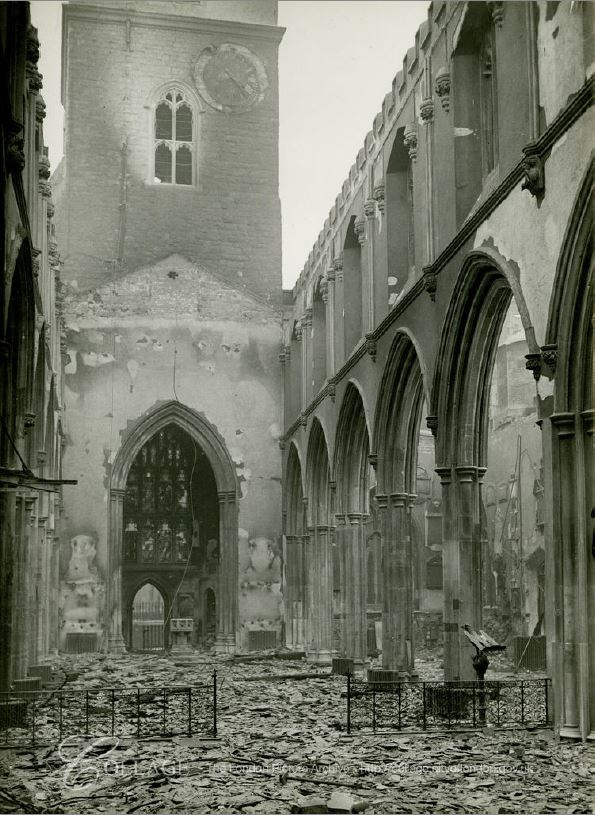
Inside the church …
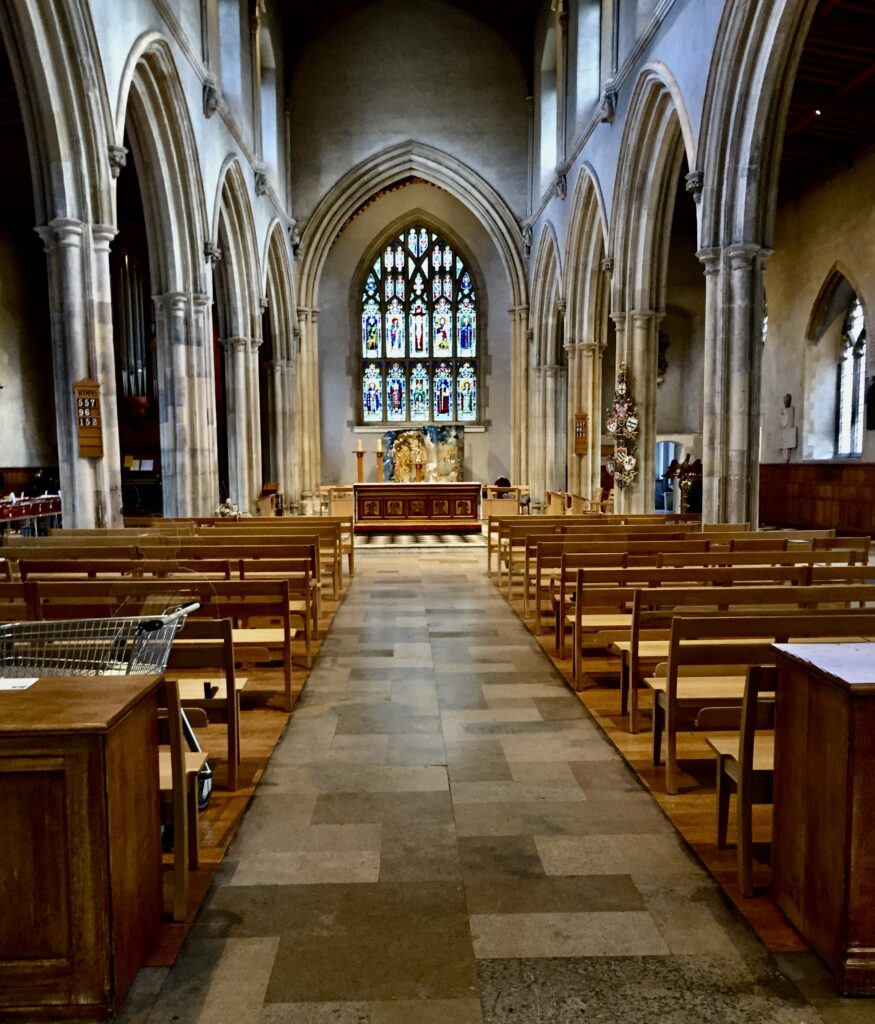
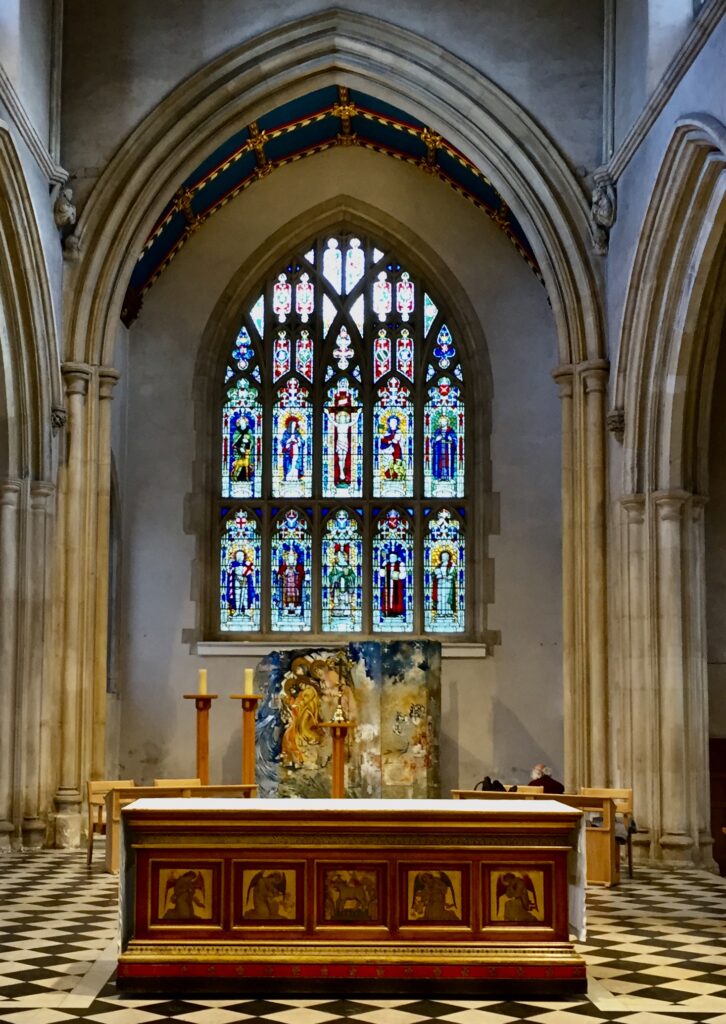
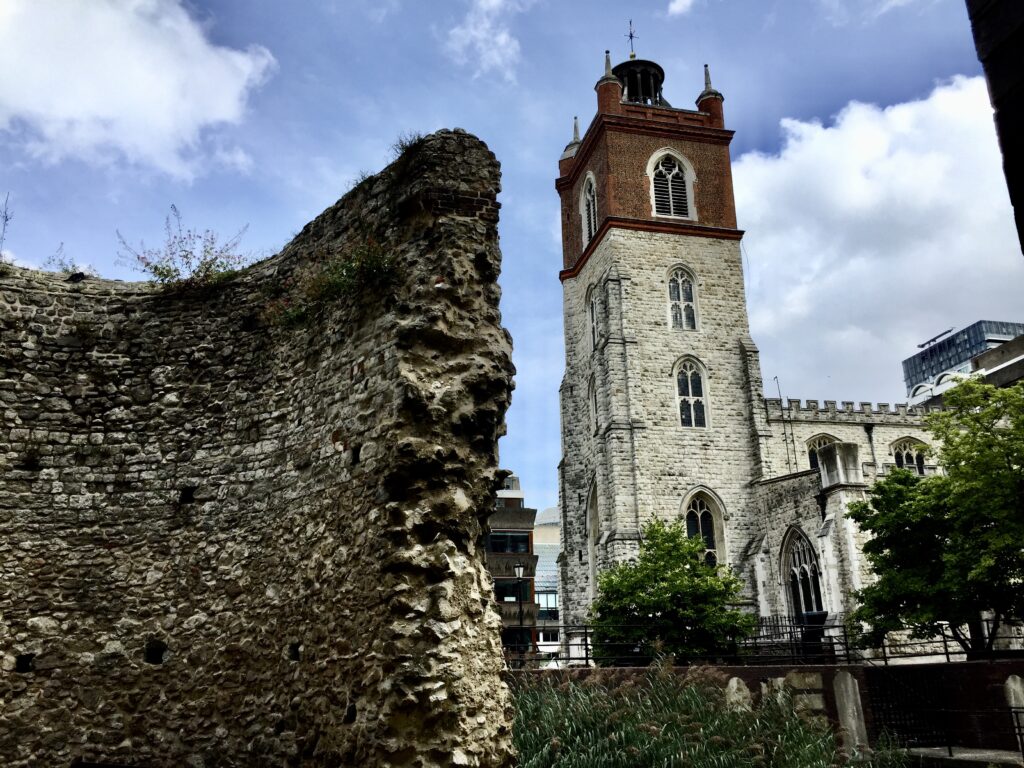
St Giles today …
It’s ironic, isn’t it, that some remains of the old Roman and Medieval City walls seen here in the foreground were only completely revealed as a result of the bombing …
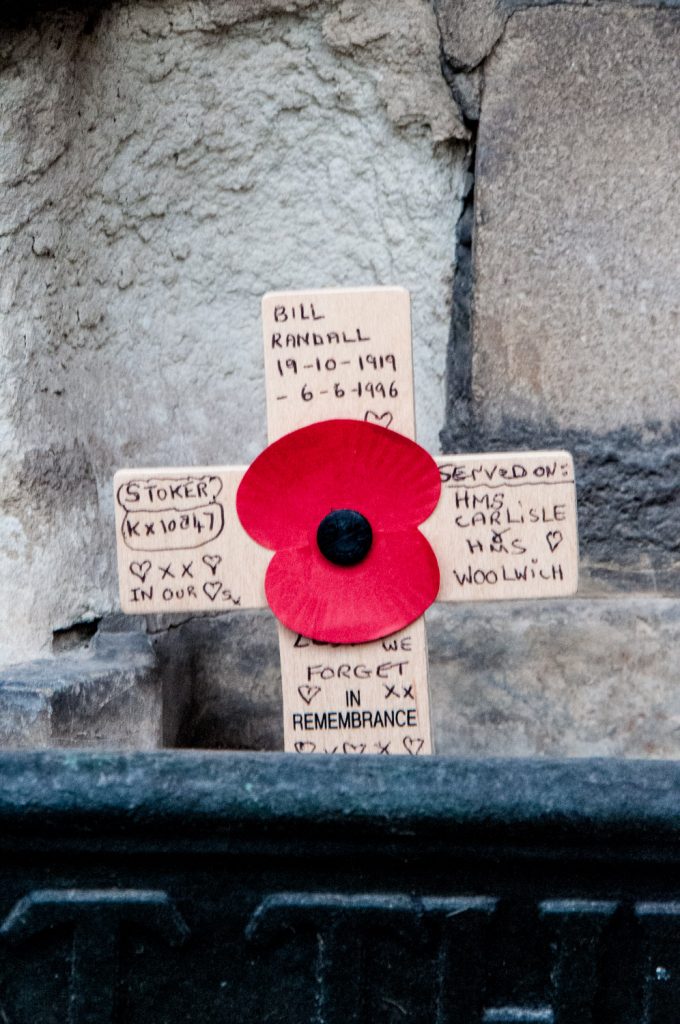
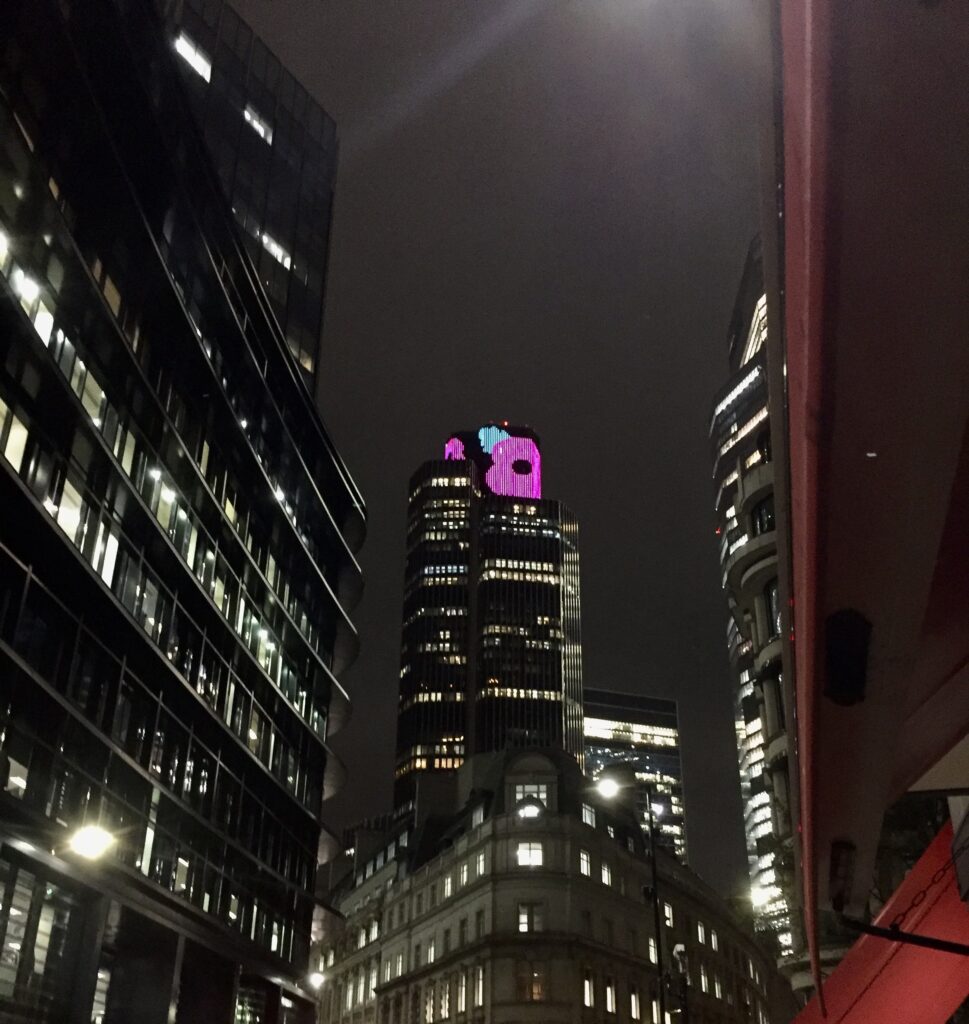
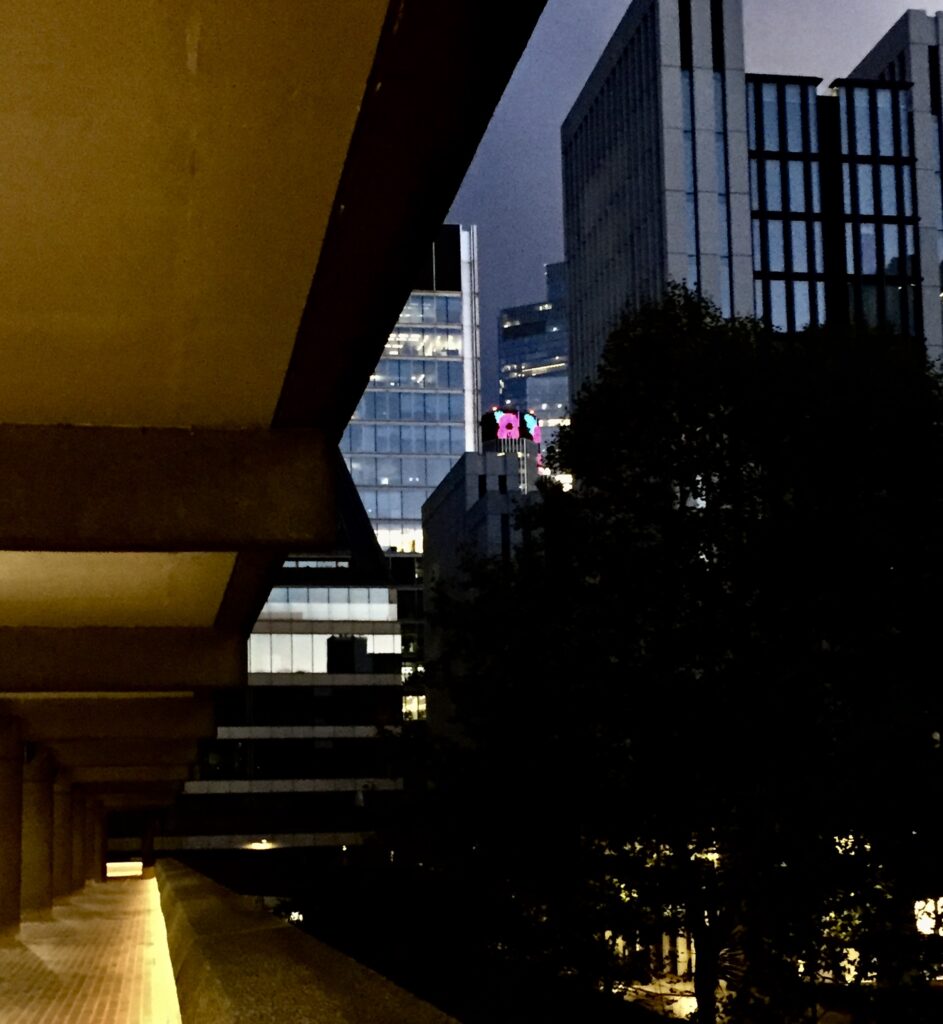
Tower 52’s poppy …
If you would like to follow me on Instagram here is the link …
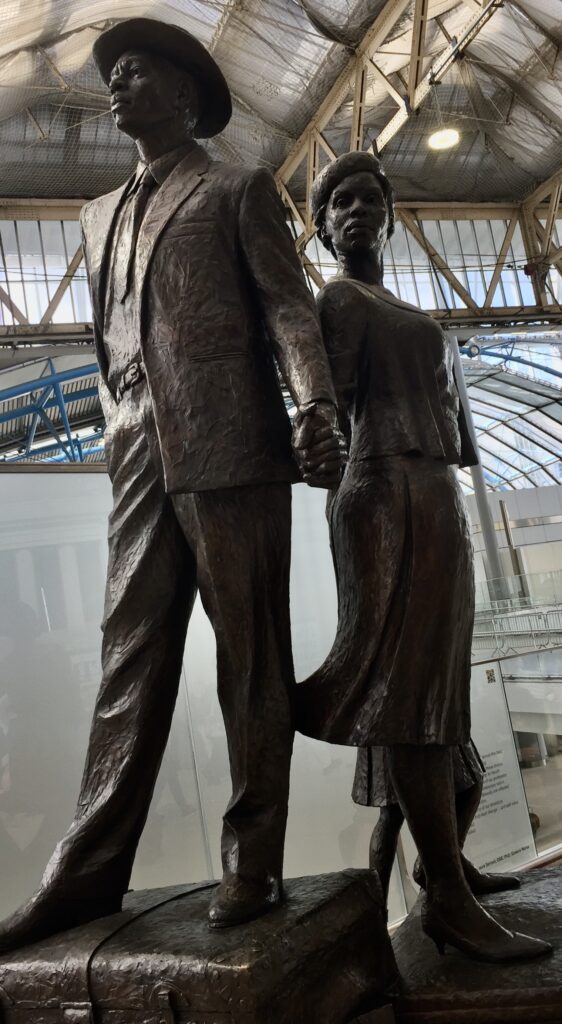
Whenever I am travelling anywhere by plane or train I am always ludicrously early and that was the case last week when I was catching a train at Waterloo. I therefore took the opportunity to look around and see if there was some material for the blog. There certainly was.
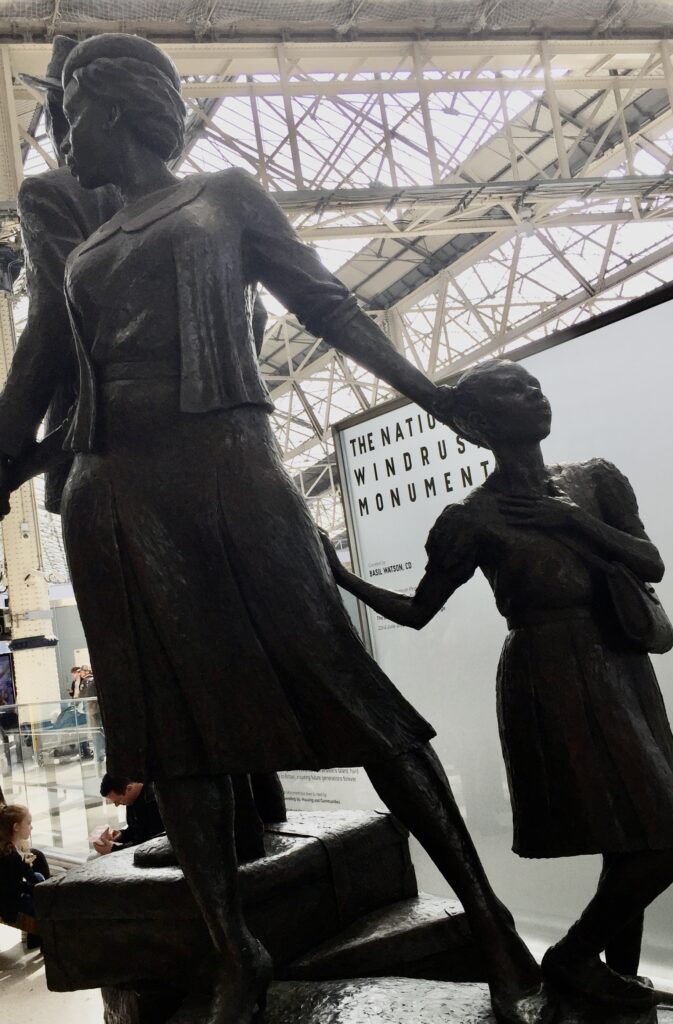
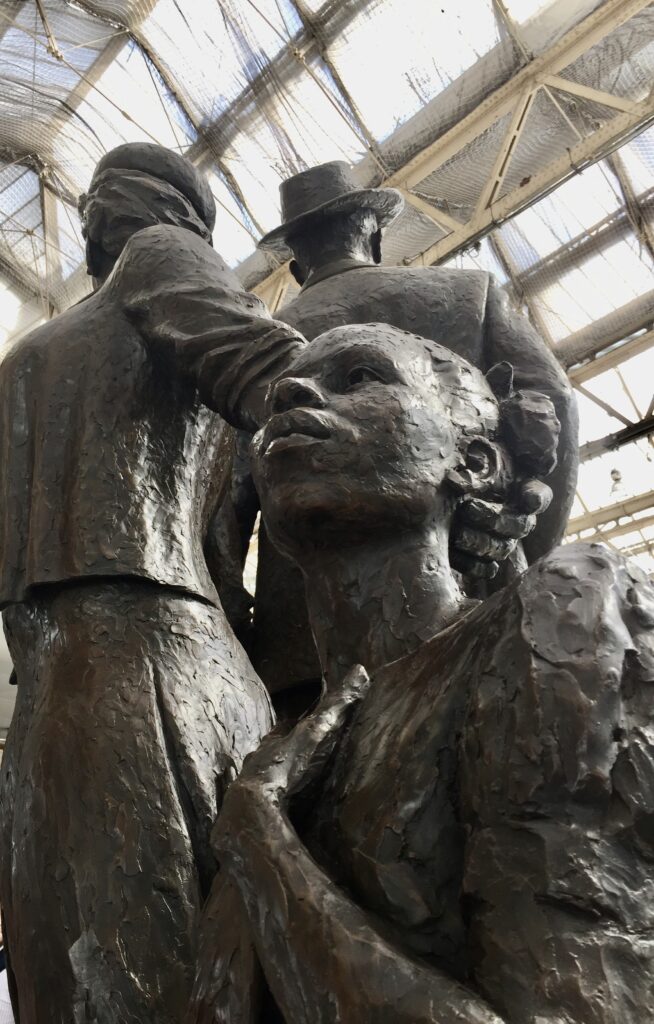
The station now hosts the National Windrush monument, designed by renowned Jamaican artist Basil Watson. It acknowledges and celebrates the Windrush generation’s outstanding contribution and has been created as a permanent place of reflection, to foster greater understanding of the generation’s talent, hard work and continuing contribution to British society.
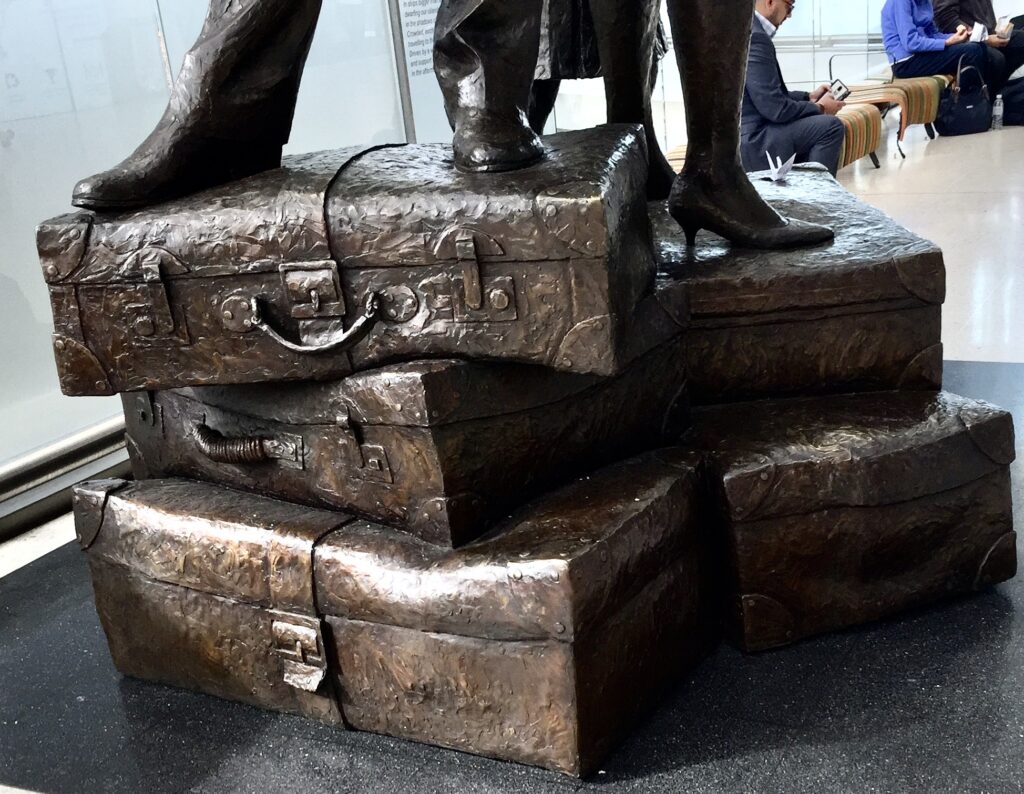
The three figures – a man, woman, and child – dressed in their ‘Sunday best’ are climbing a mountain of suitcases together, demonstrating the inseparable bond of the Windrush pioneers and their descendants, and the hopes and aspirations of their generation as they arrive to start new lives in the UK.
There’s much more to see at Waterloo and I shall return to it next week and write more about these images …
My Waterloo research has led me to write about a very different type of station that operated nearby. Passengers departing from here were destined for eternity rather than the seaside.
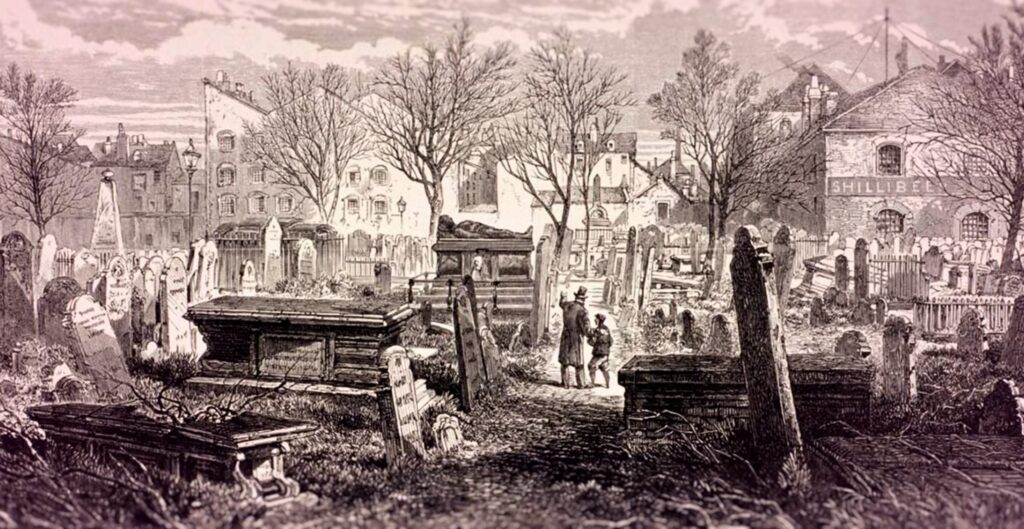
In the first half of the 19th century, London’s population shot up from around a million people in 1801 to close on two and a half million by 1851. Death was commonplace in the 19th century and eventually the City’s churchyards were literally full to bursting. Coffins were stacked one atop the other in 20-foot-deep shafts, the topmost mere inches from the surface. Putrefying bodies were frequently disturbed, dismembered or destroyed to make room for newcomers. Disinterred bones, dropped by neglectful gravediggers, lay scattered amidst the tombstones; smashed coffins were sold to the poor for firewood. Clergymen and sextons turned a blind eye to the worst practices because burial fees formed a large proportion of their income.
This is Bunhill Burial Ground around that time …
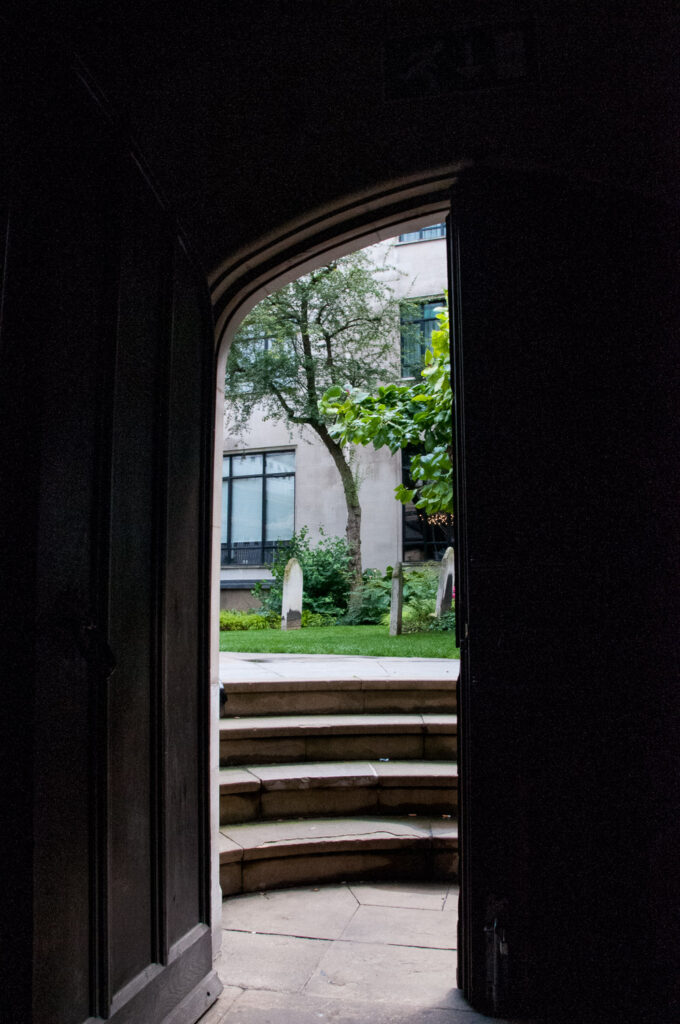
You can also get some idea of how packed cemeteries were if you look at some of the existing City churchyards and observe how much higher the graveyards are compared to street level. This, for example, is the graveyard of St Olave Hart street as seen from inside the church …
Between 1846 and 1849, a devastating cholera epidemic swept across London resulting in the deaths of almost 15,000 Londoners and it became apparent that something had to be done.
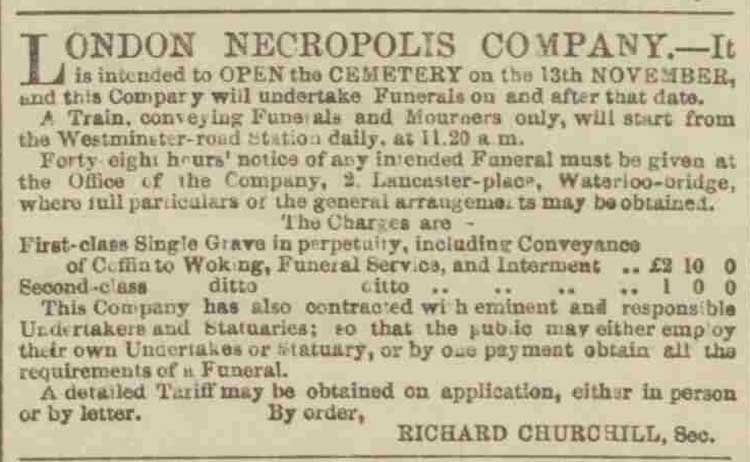
Legislation proved ineffective but private enterprise stepped in and a series of huge cemeteries, in which Londoners could be laid to rest in lush, green spacious landscapes, sprang up outside the metropolis. One such enterprise was the grandly titled ‘London Necropolis and National Mausoleum Company’ (LNC), which was formed in July, 1852, with a mandate to develop the former Woking Common, at Brookwood, in Surrey, as one of the new cemeteries to serve London.
Carrying the deceased 23 miles by horse-drawn coach was obviously not practical and thus, in November, 1854, one of Britain’s most bizarre railway lines – the London Necropolis Railway – commenced operations, and daily trains were soon chuffing their way out of ‘Cemetery Station’ in Waterloo, ‘wending their way through the outskirts of London, and on through verdant woodlands and lush, green countryside outside the Metropolis, bound for the tranquil oasis of the new Valhalla in rural Surrey’.
From The Illustrated London News. Saturday, 11th November, 1854 Copyright, Mary Evans Picture Library
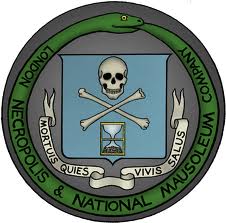
The Company obviously gave a lot of thought to its logo and motto. Here it is (the skull and crossbones isn’t exactly subtle, is it) …
The Latin translates as ‘Peace to the dead, health to the living’. Possibly a reference to the lack of security in the old existing graveyards and also their threat to health. Just inside the circle is the ouroboros, an ancient symbol of a snake or serpent eating its own tail, variously signifying infinity and the cycle of birth and death.
The history of the company is an absolutely fascinating story and if you want to know more just click on the link here to the excellent London Walking Tours blog.
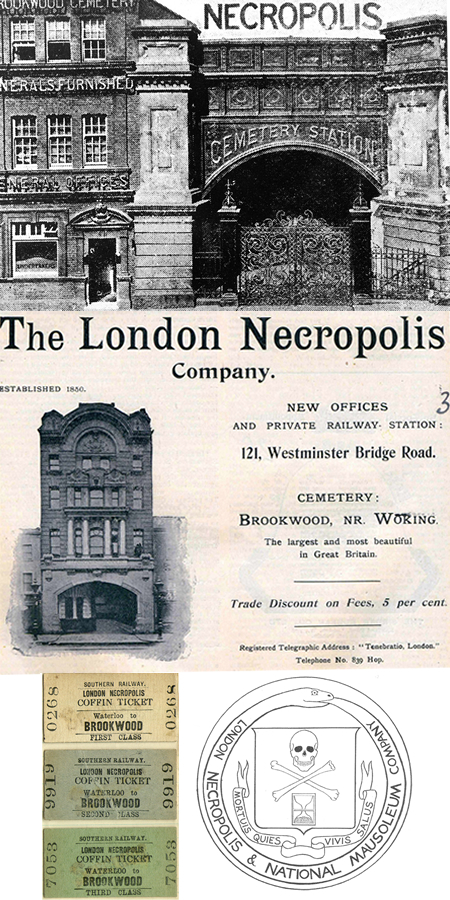
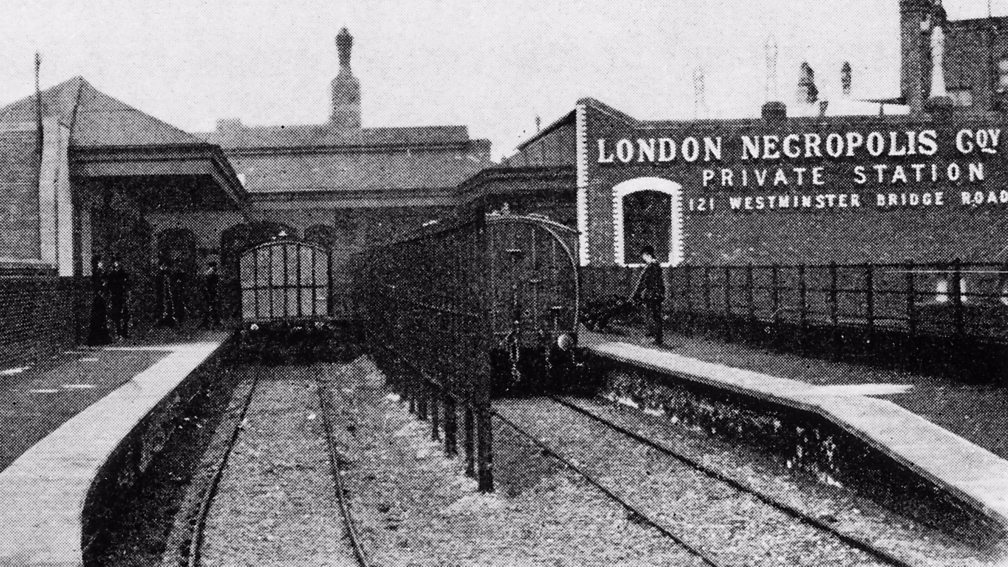
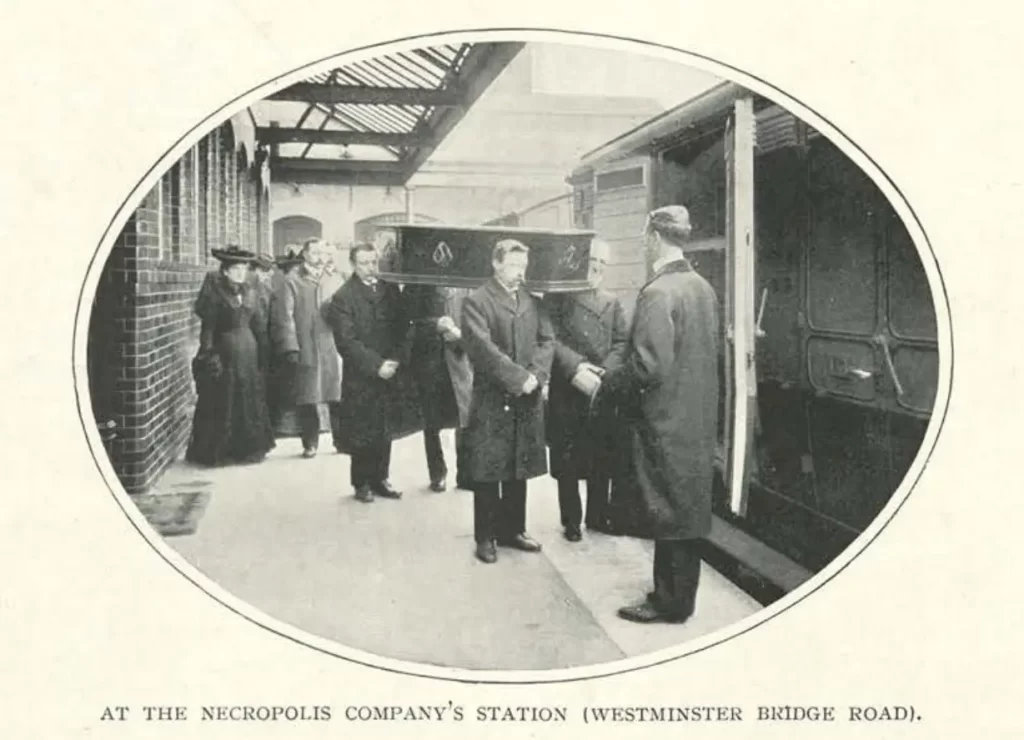
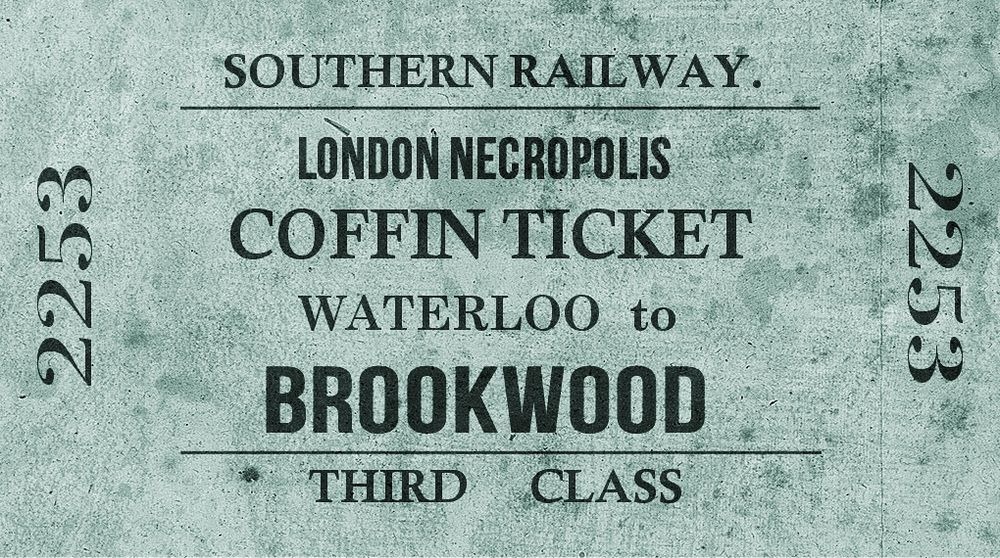
A new building for the London terminus was completed on the 8th of February, 1902. Here are some contemporary images …
A class system operated. First and Second Class ‘passengers’, accompanied by mourners, were placed in the train first. Third class mourners were not allowed to witness their loved ones being loaded! …
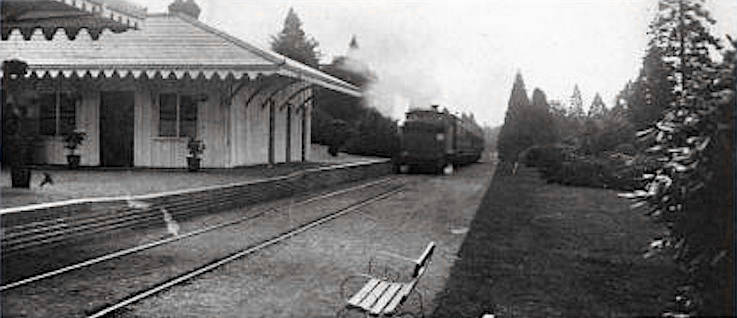
The end of the line. A funeral train from Waterloo pulling into the north section station at the cemetery in the early 20th century …
On Friday, 11th April, 1941, the body of Chelsea Pensioner Edward Irish (1868 – 1941) left the London Necropolis Station en route for Brookwood. He was the station’s last customer.
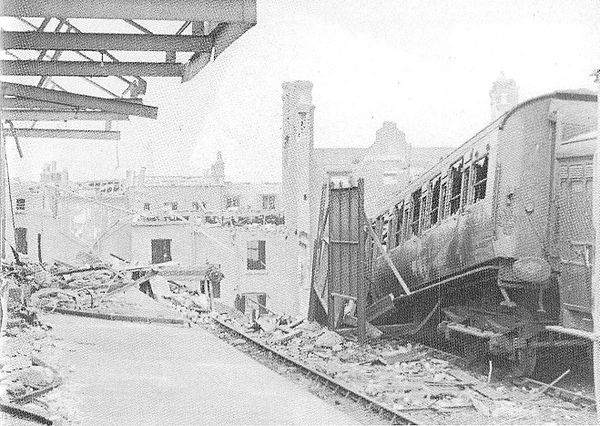
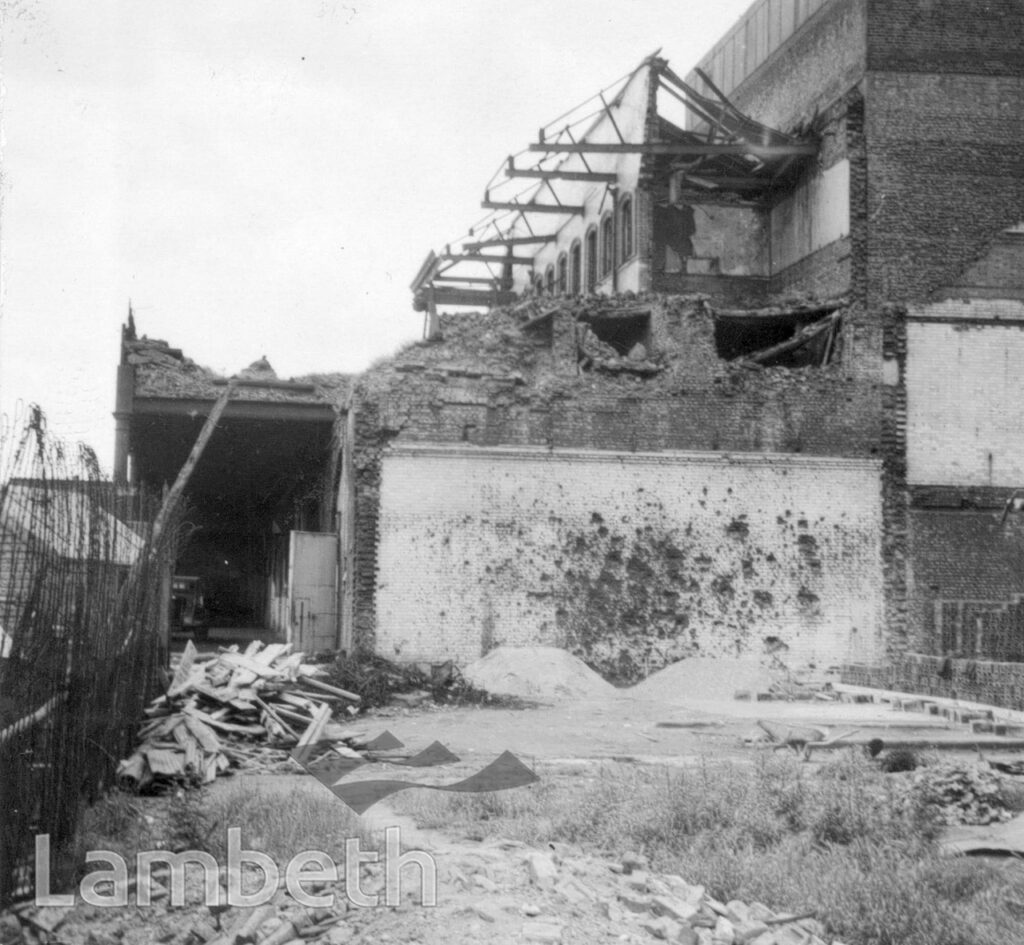
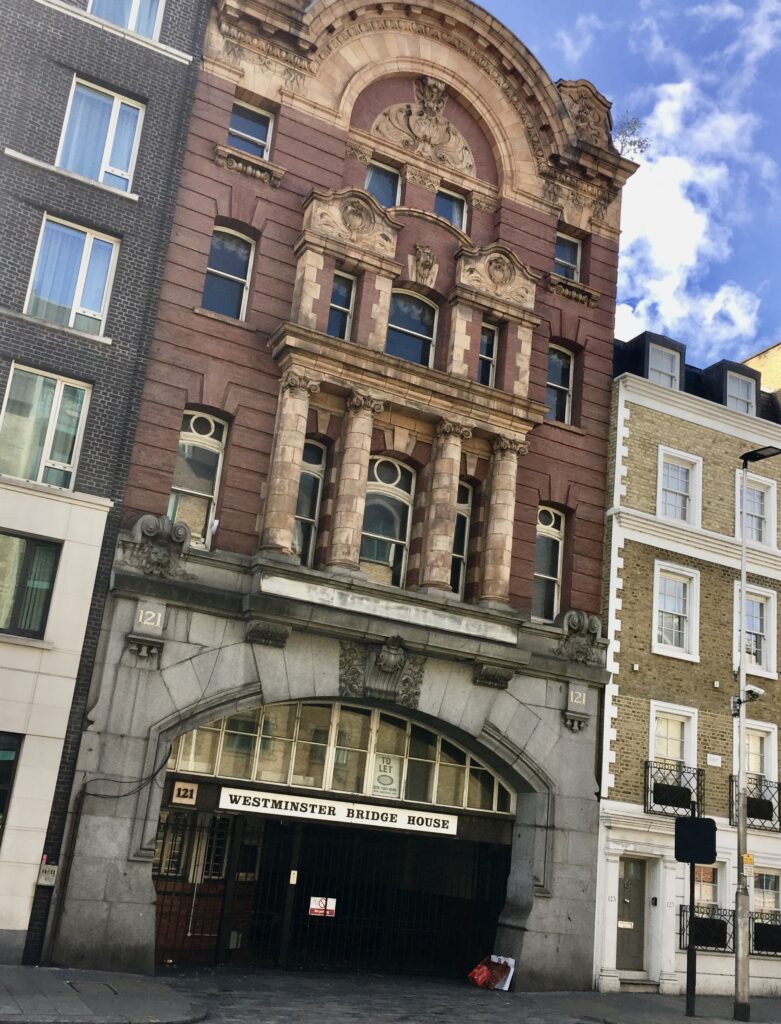
Five days later, on the night of the 16th/17th of April, 1941, a German bombing raid on the area destroyed the company’s rolling stock, along with much of the building. The Southern Railway’s Divisional Engineer, having inspected the damage at 2pm, on April, 17th, 1941, reported starkly, ‘Necropolis and buildings demolished.’ Although the offices and the First Class entrance from Westminster Bridge Road had survived, the devastation effectively sounded the death knell for the Necropolis Railway, and, on the 11th of May 1941, the station was officially declared closed.
The First Class platform just after the bombing …
The site in 1950 …
By the time it was put out of business after 87 years the company had ferried over 200,000 bodies between Waterloo and Surrey.
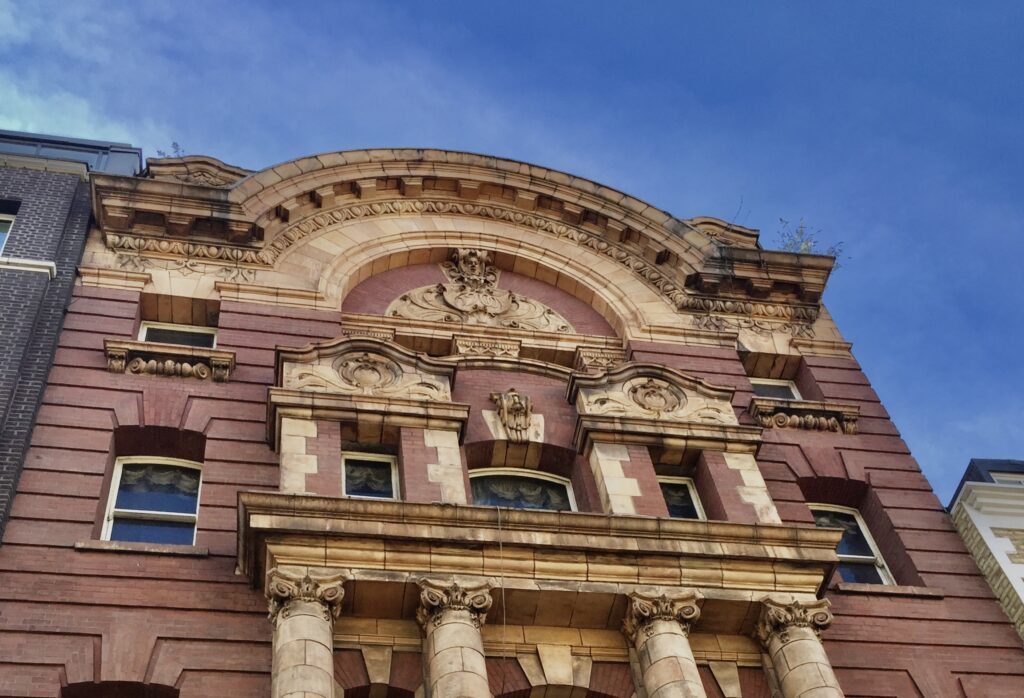
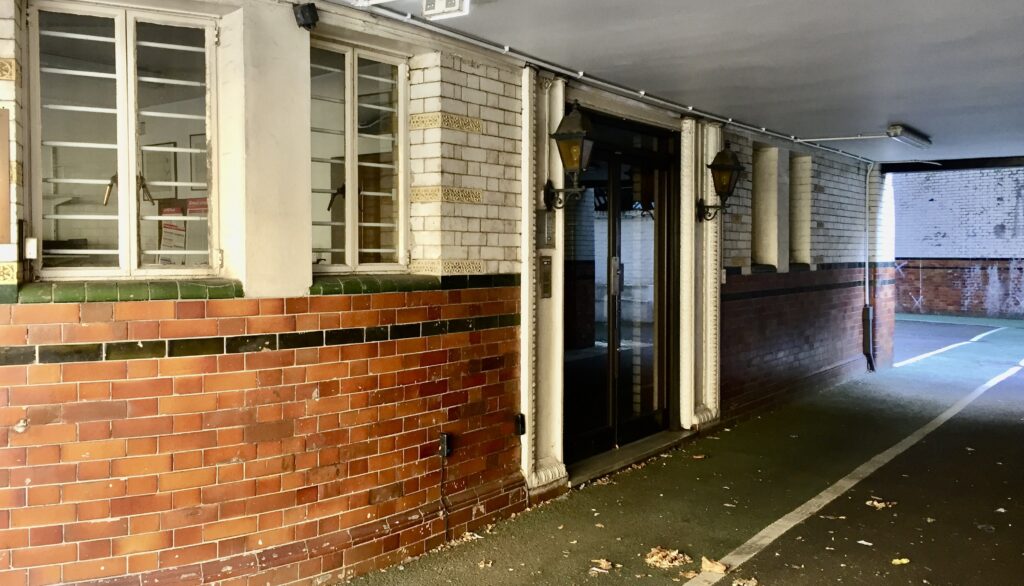
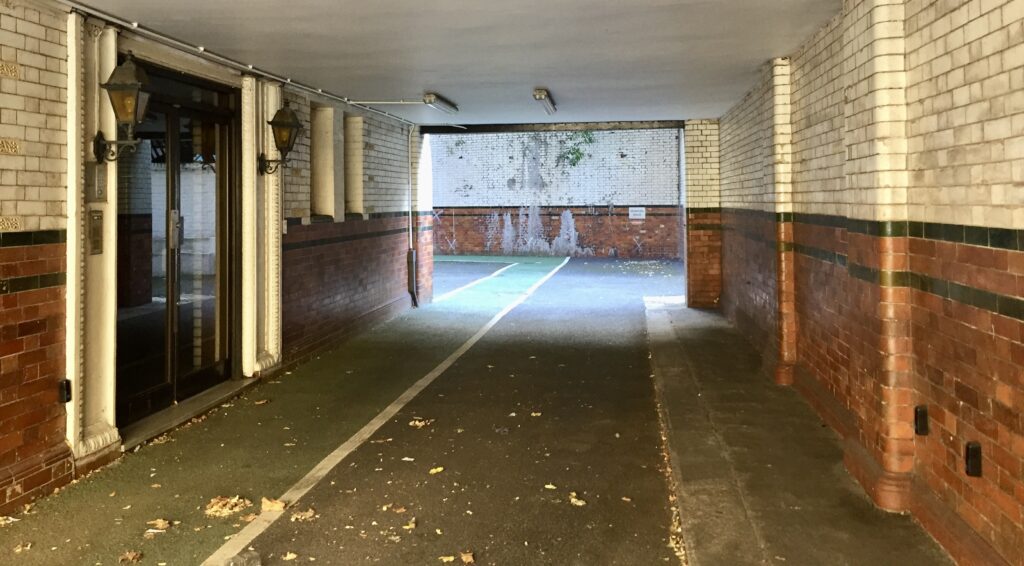
The First Class entrance and the Company’s old offices on Westminster Bridge Road are still there today (SE1 7HR) …
Inside the entrance arch (I think those lamps may be part of the original building, they look suitably funereal) …
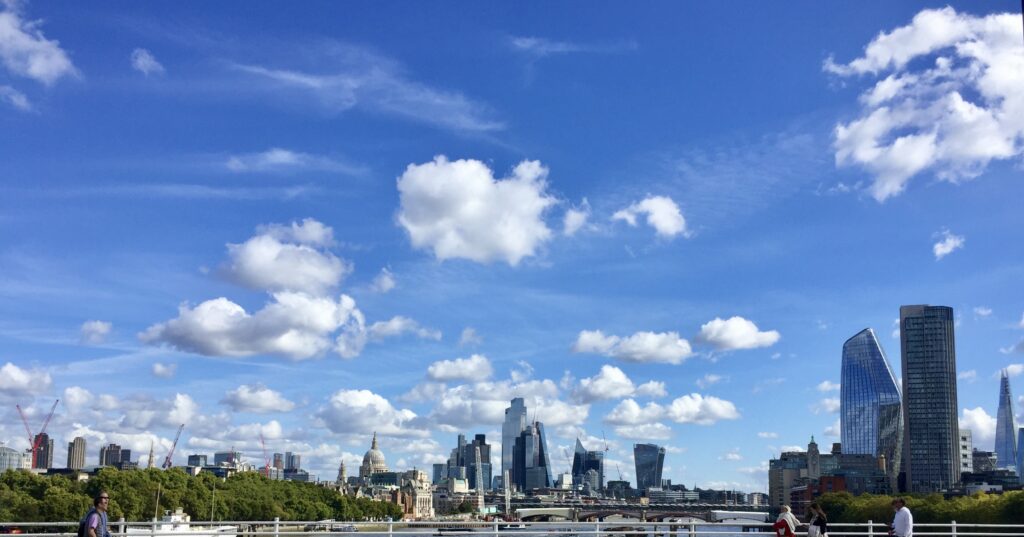
I caught this image as I walked home across Waterloo Bridge – the ever-changing City skyline …
Finally, by way of light relief, my favourite newspaper front page of the week – British journalism at its finest …
If you would like to follow me on Instagram here is the link …