Walking the City of London

Category: Sculpture Page 42 of 44

A walk around the Barbican

Last week I had the pleasure of joining the photographer Anthony Palmer as he conducted a walk around the Barbican. For those of you who have never visited the estate, or who have only come to attend a performance, I hope my pictures will encourage you to come for the first time, or linger longer and explore.

First of all, I want to show you some views that may not look like they are from the Barbican at all.

First up is Frobisher Crescent …
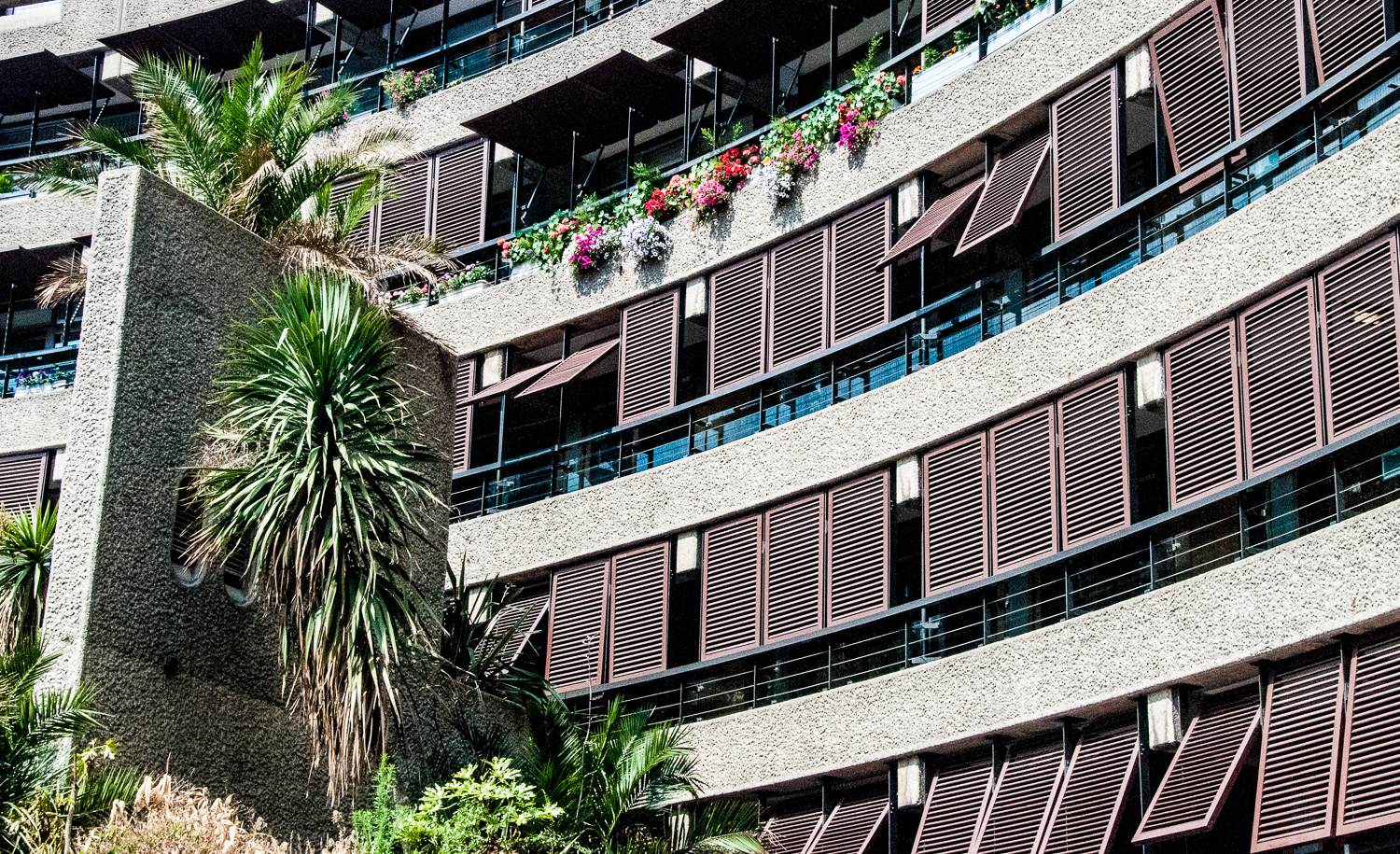
Frobisher Crescent shutters as seen from the Sculpture Court.

One of the lakes contain what are affectionately known as the ‘igloos’ …
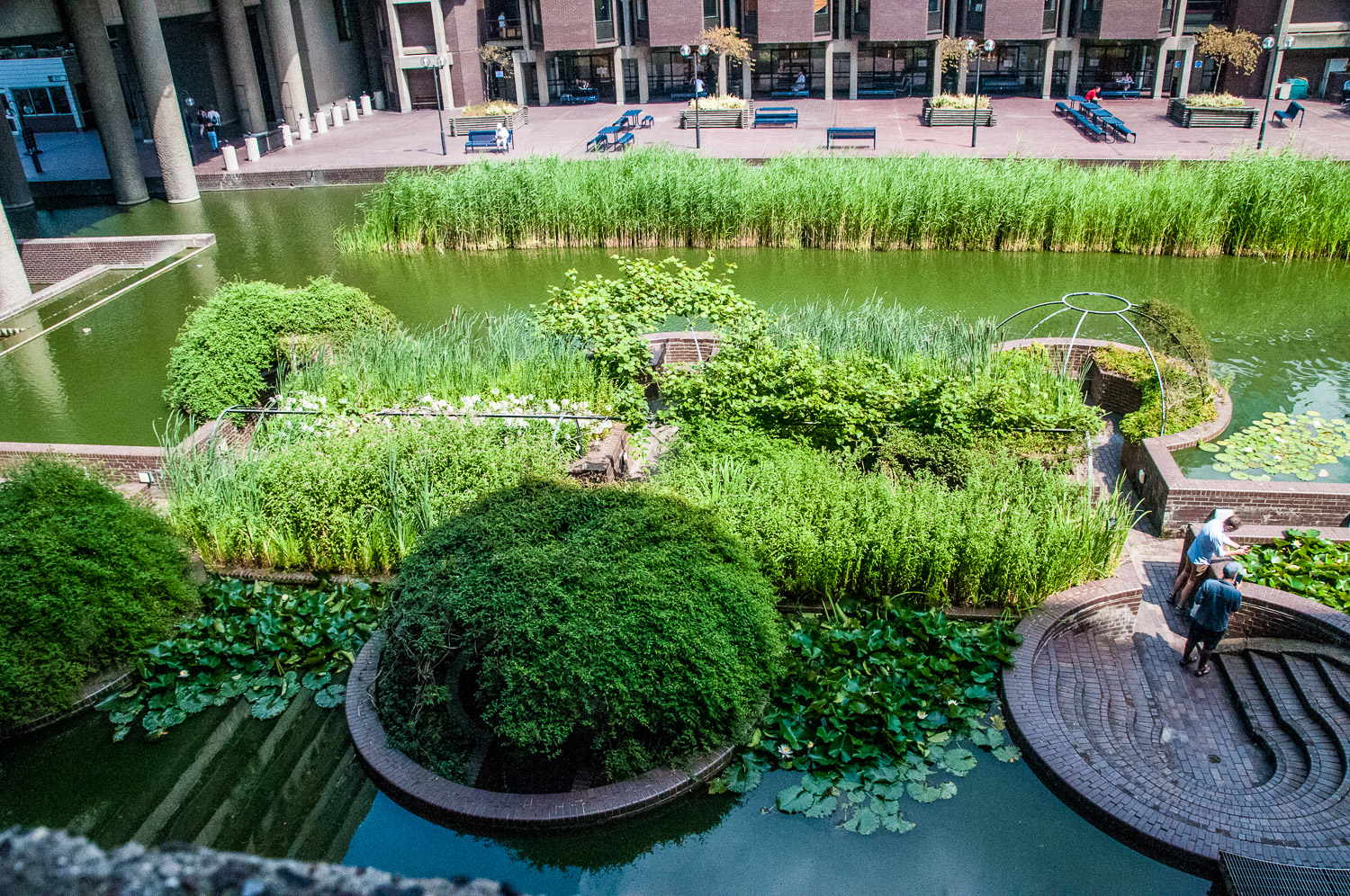
View looking down from the Andrewes Highwalk.

Beech Gardens (on the highwalk over the Beech Street ‘tunnel’) were designed by Nigel Dunnett and on his website there is a terrific description of how he achieved the transformation of the area.

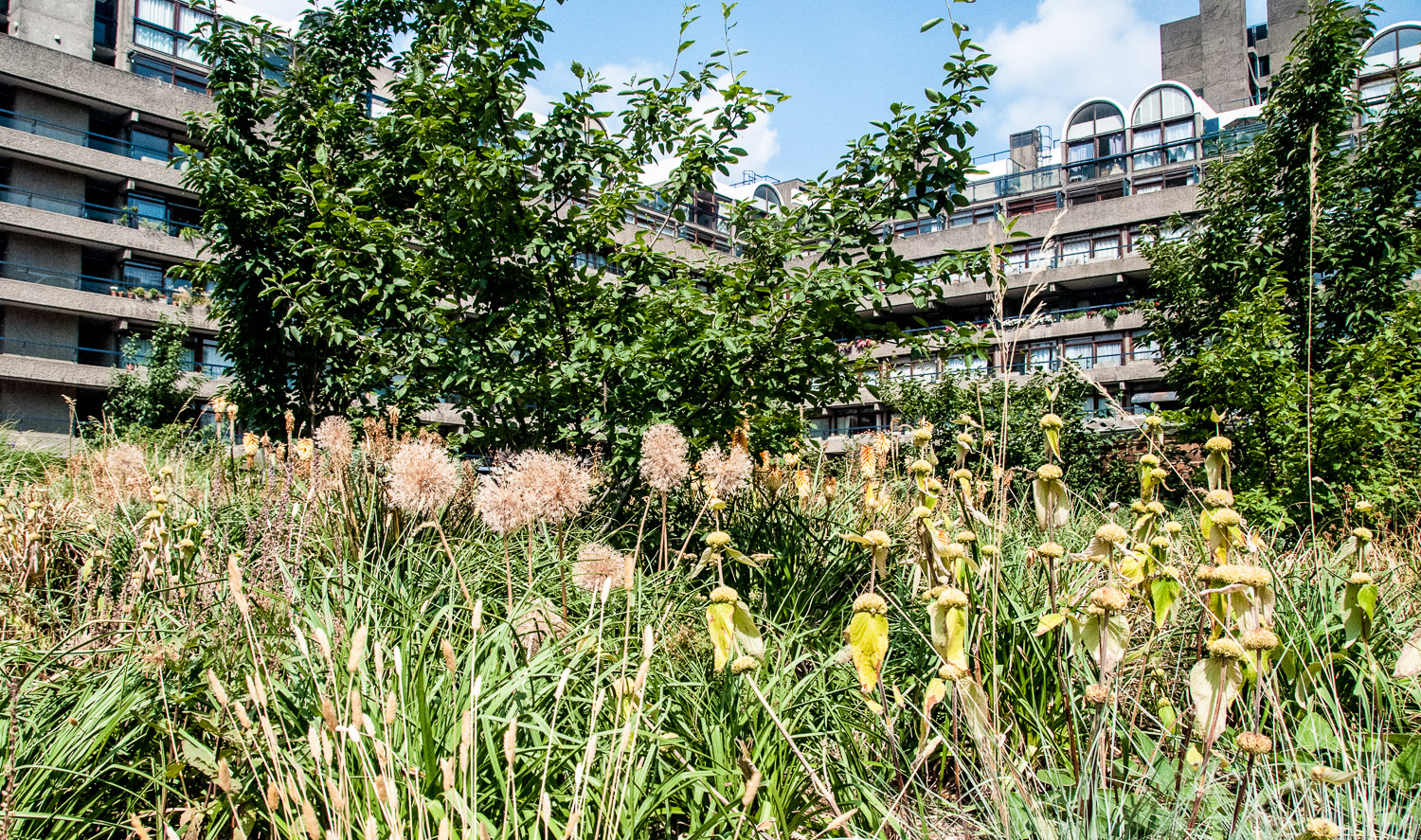
Here is a picture I took looking towards Bryer Court …
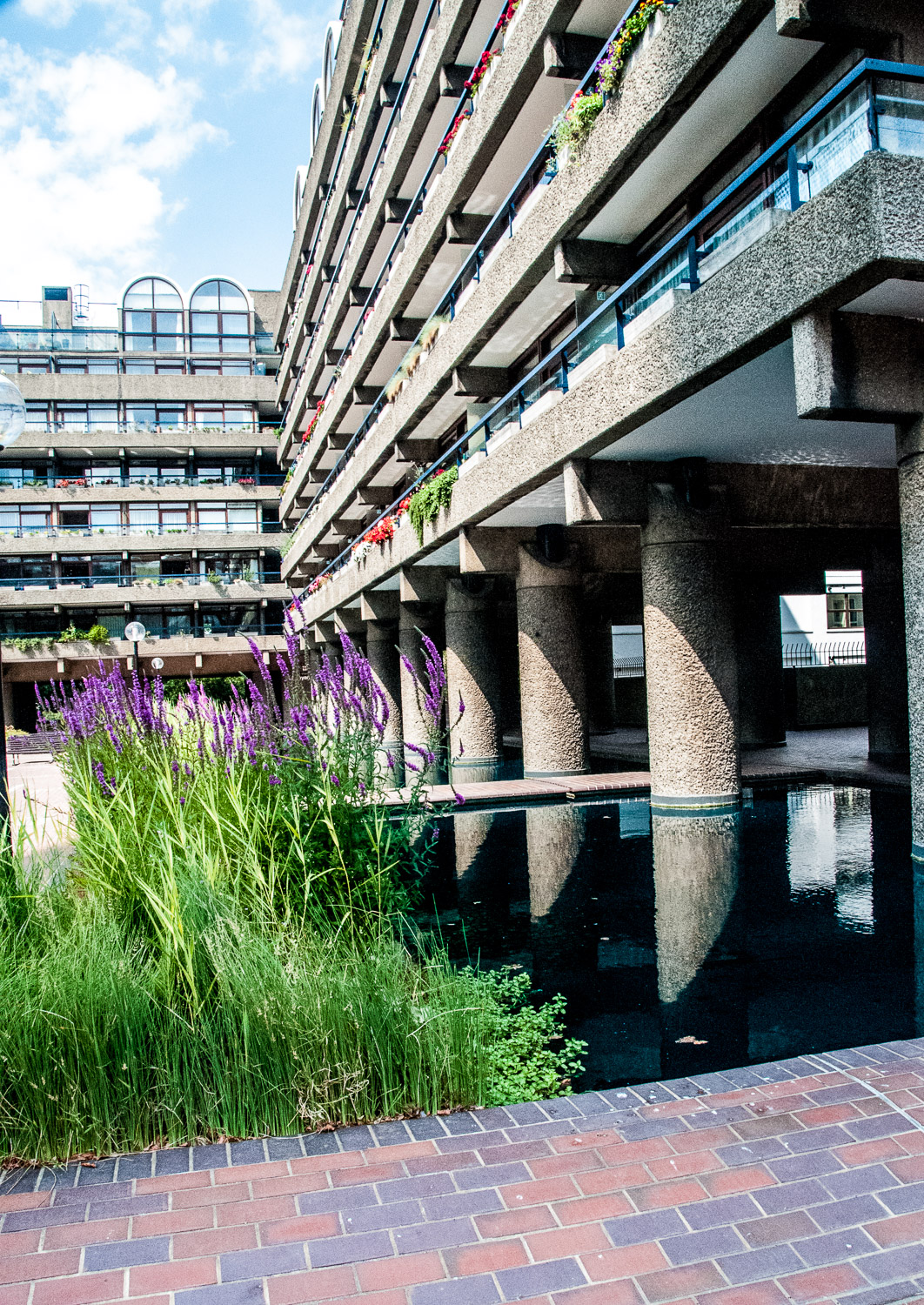
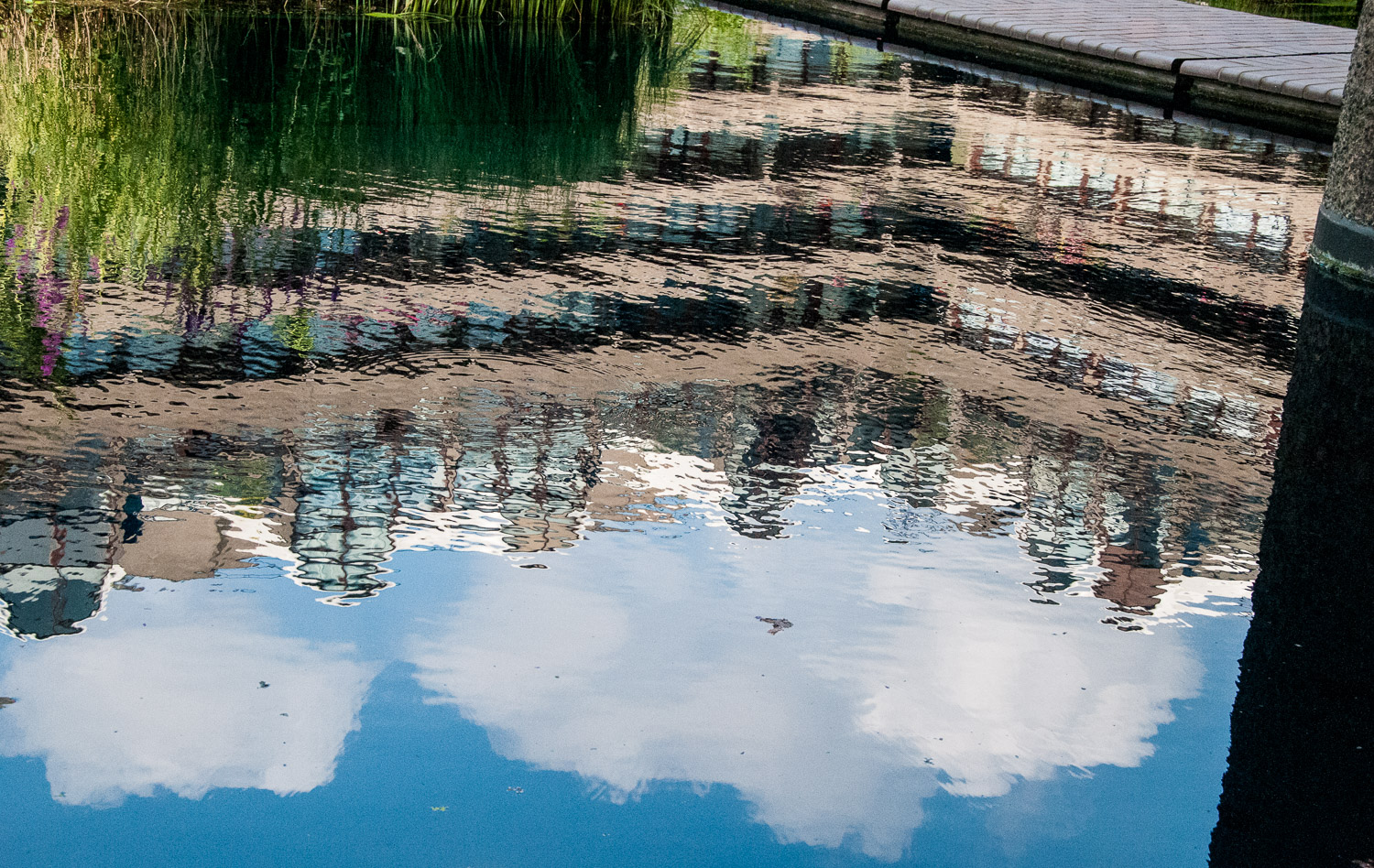
A water feature gives the opportunity to photograph some reflections …
Nearby in Ben Jonson Place, two small dolphins stand on their tails and twist in opposite directions …
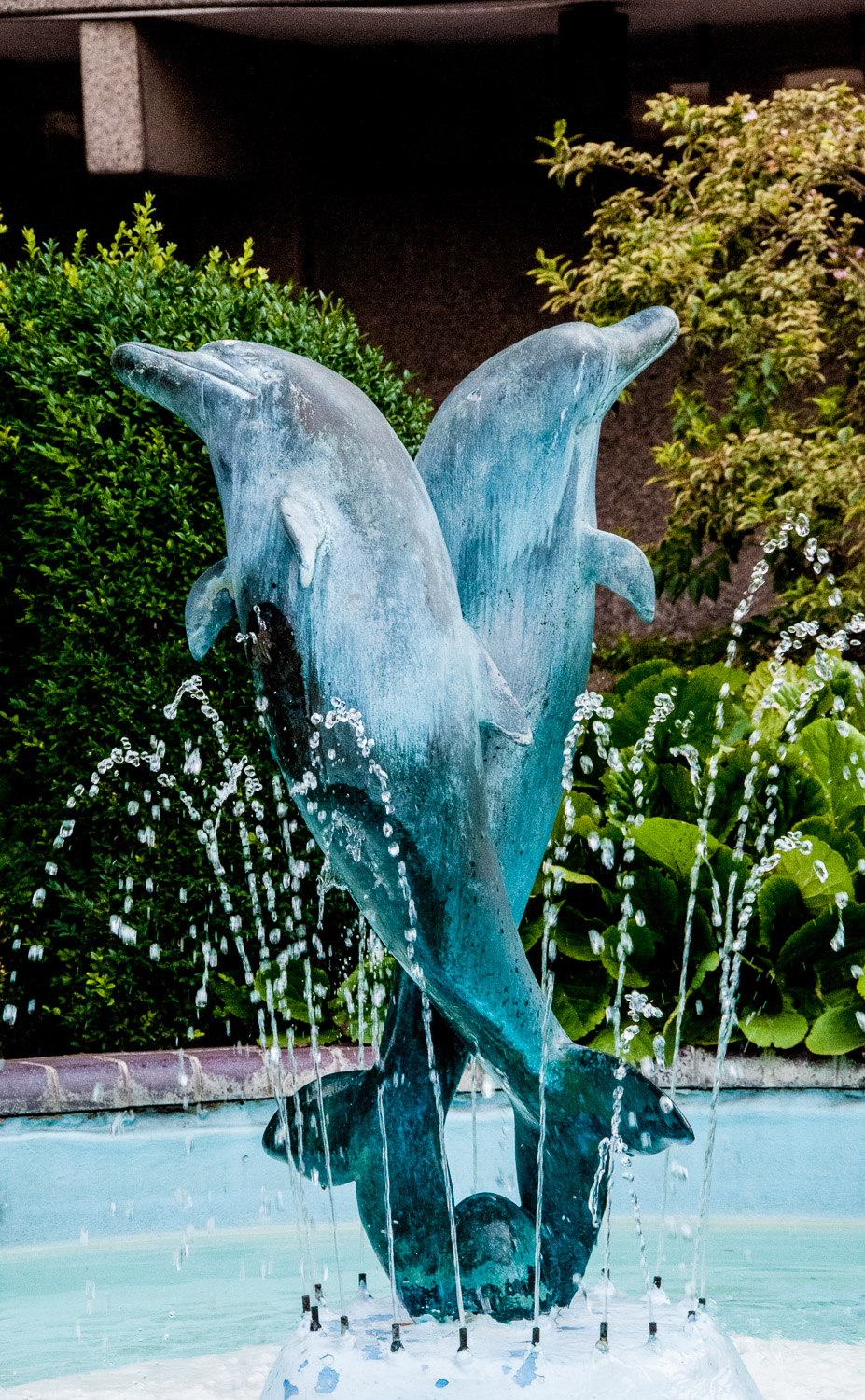
The sculpture is by John Ravera and dates from 1990.

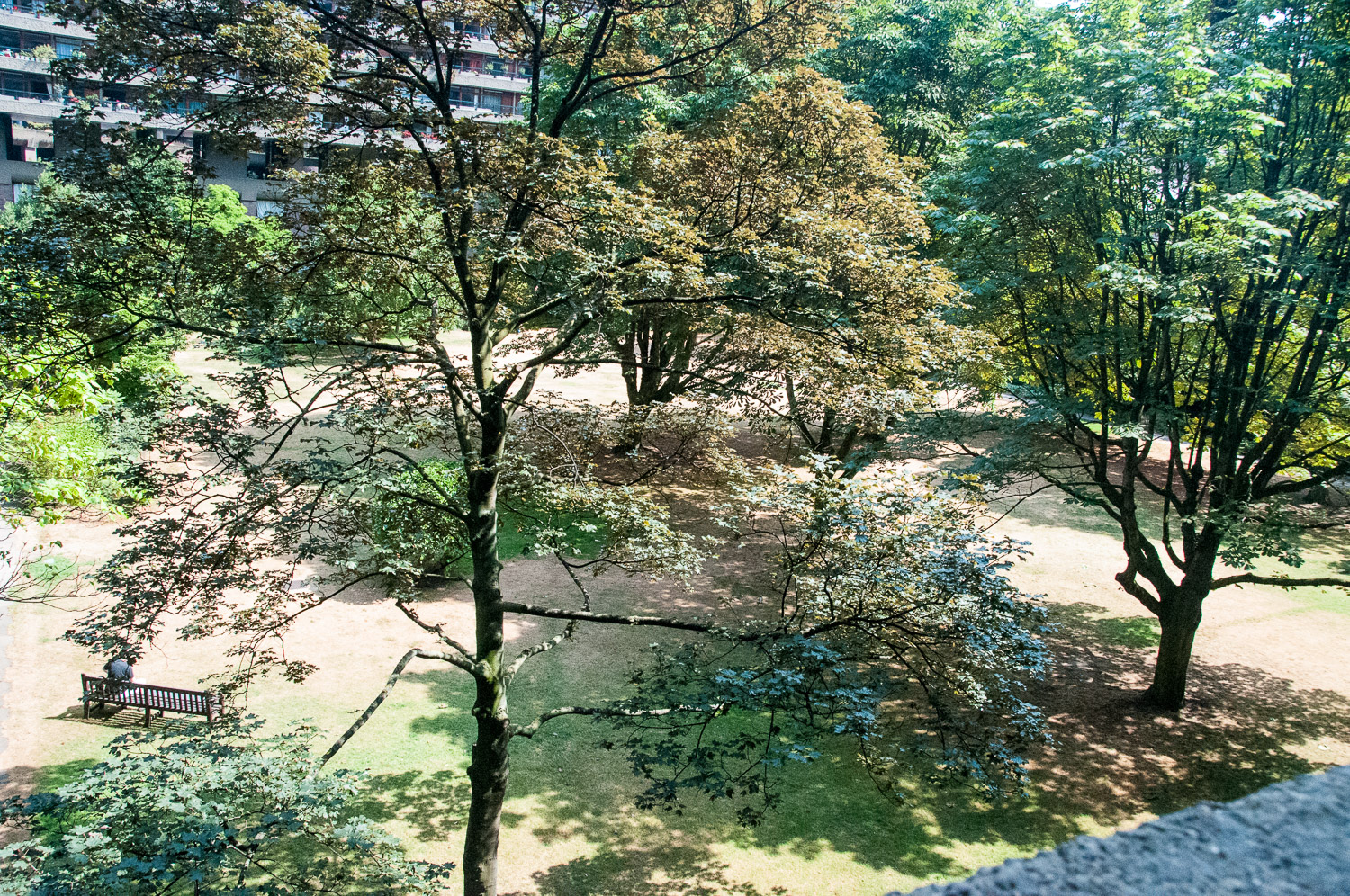
The estate contains two gardens for the use of residents only. This is the Thomas More Garden as seen from the Thomas More highwalk …
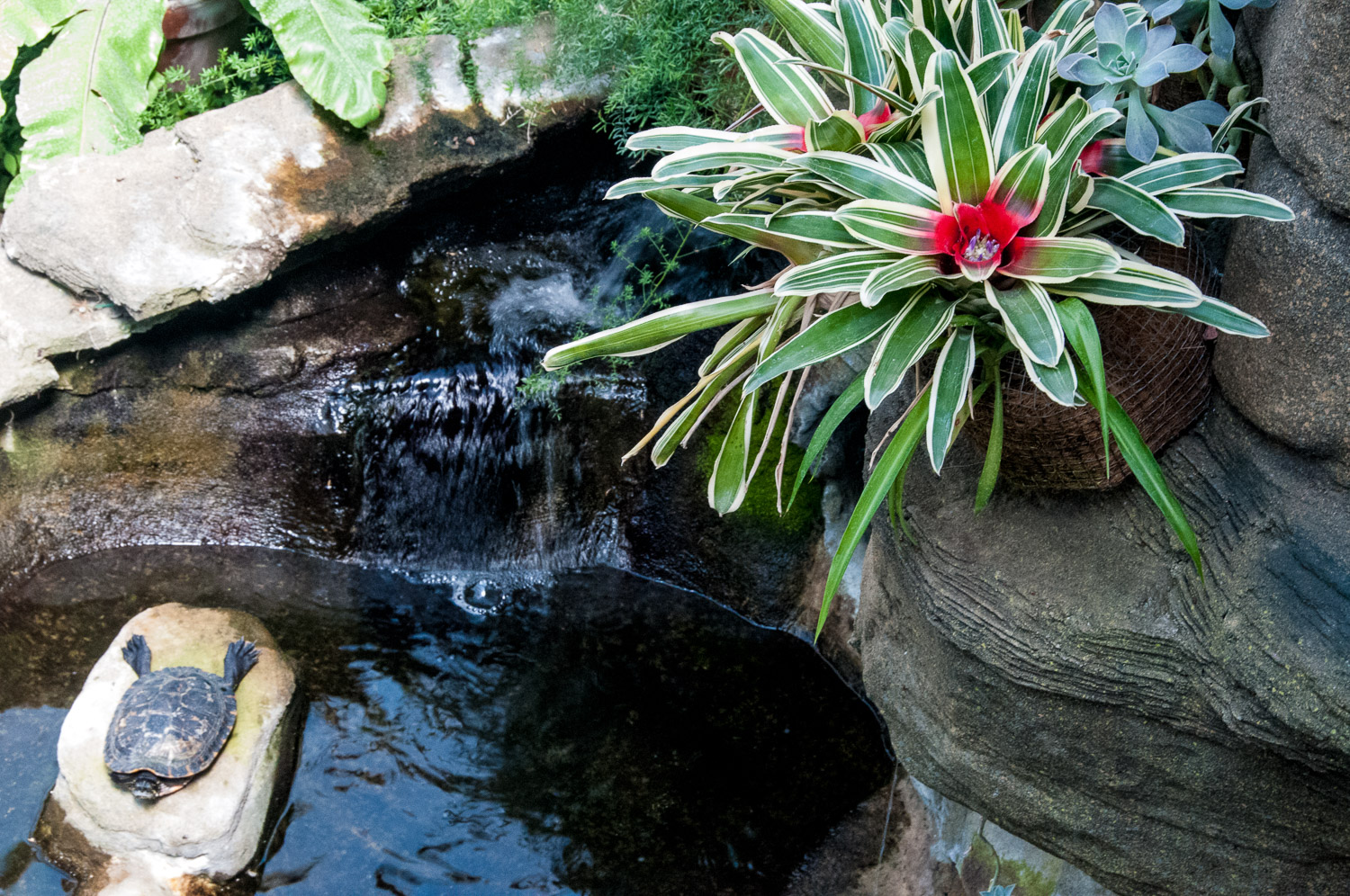
The second biggest conservatory in London after Kew is one of the Barbican’s best kept secrets. It is usually open on Sundays, but is sometimes shut for private events, so if you are thinking of visiting it is best to consult the website first. Here are a few of the pictures I took last week …
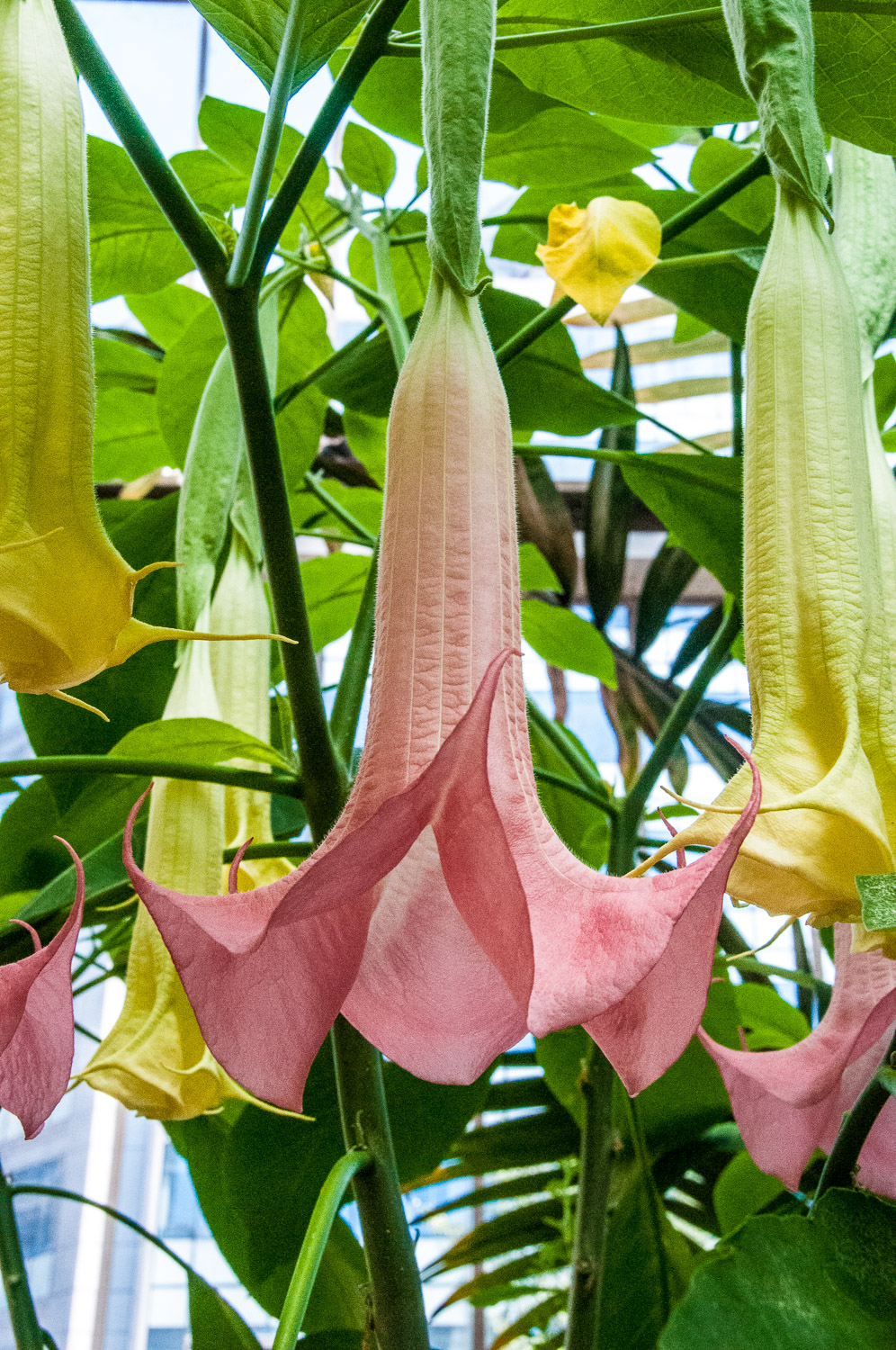
A long time conservatory resident …
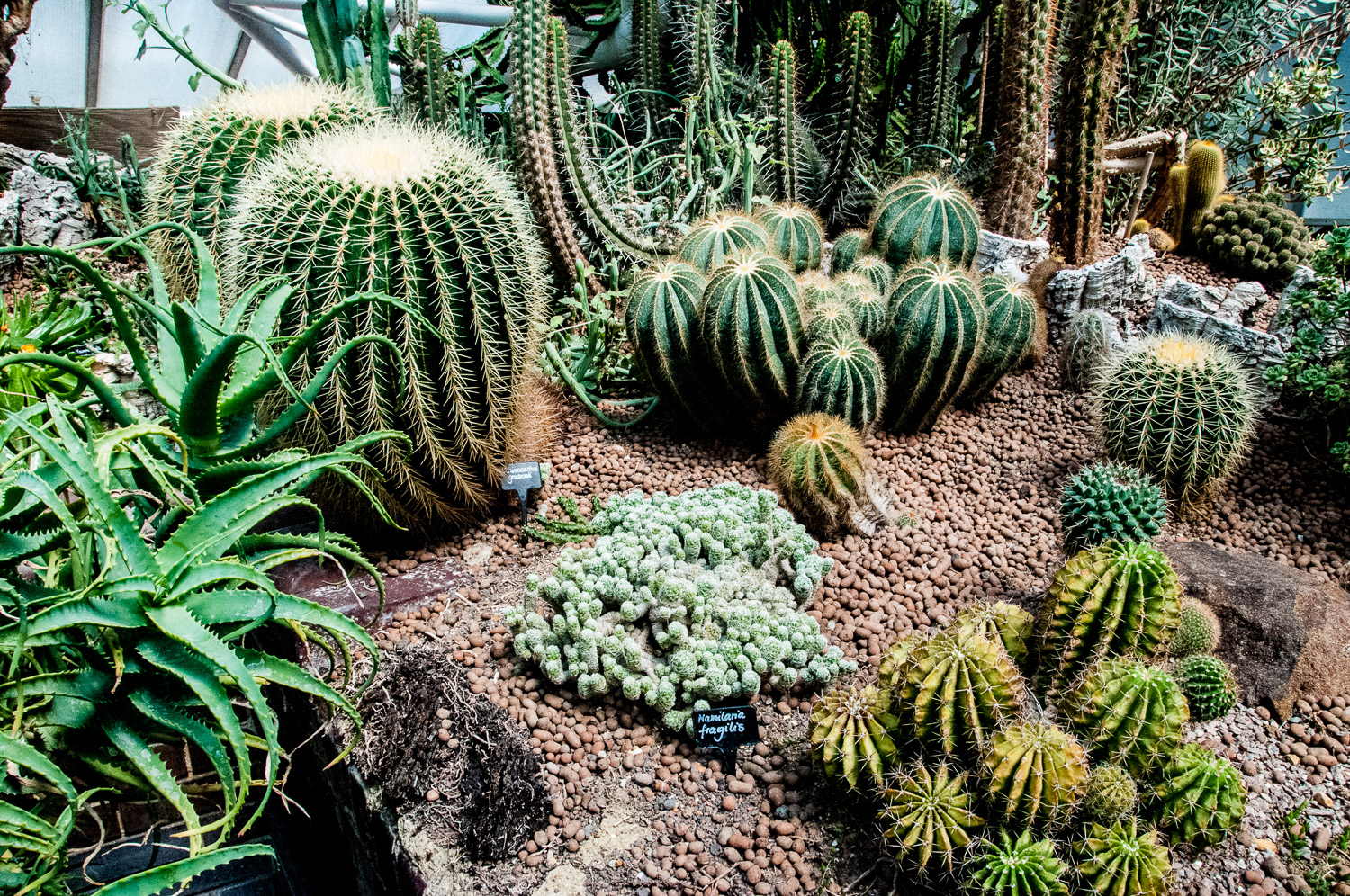
This is just a tiny part of the cactus garden …
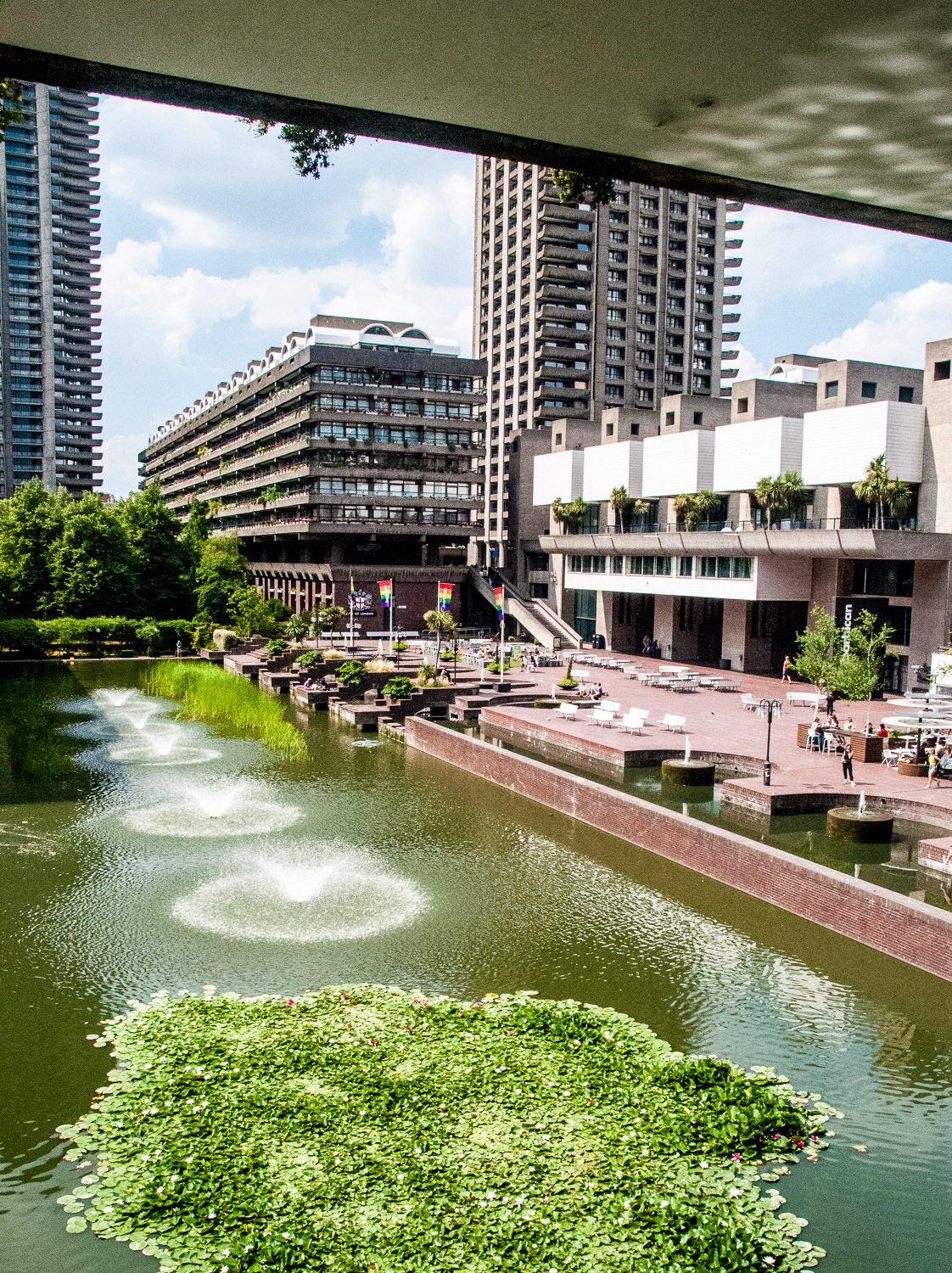
Gilbert Bridge gives you a good view of one of the lakes and the terrace, which is open to the public …
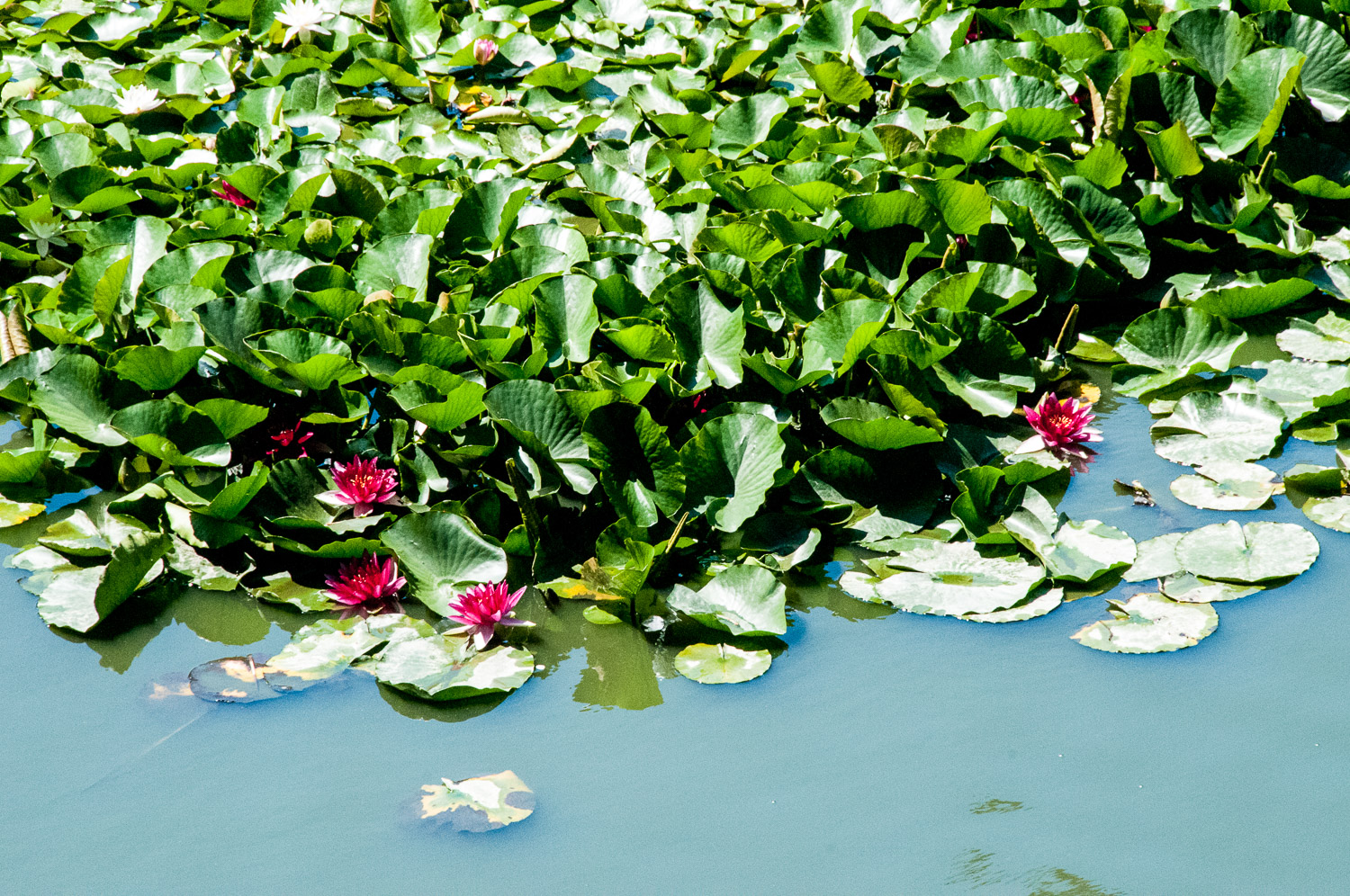
The water lilies are doing well this year …
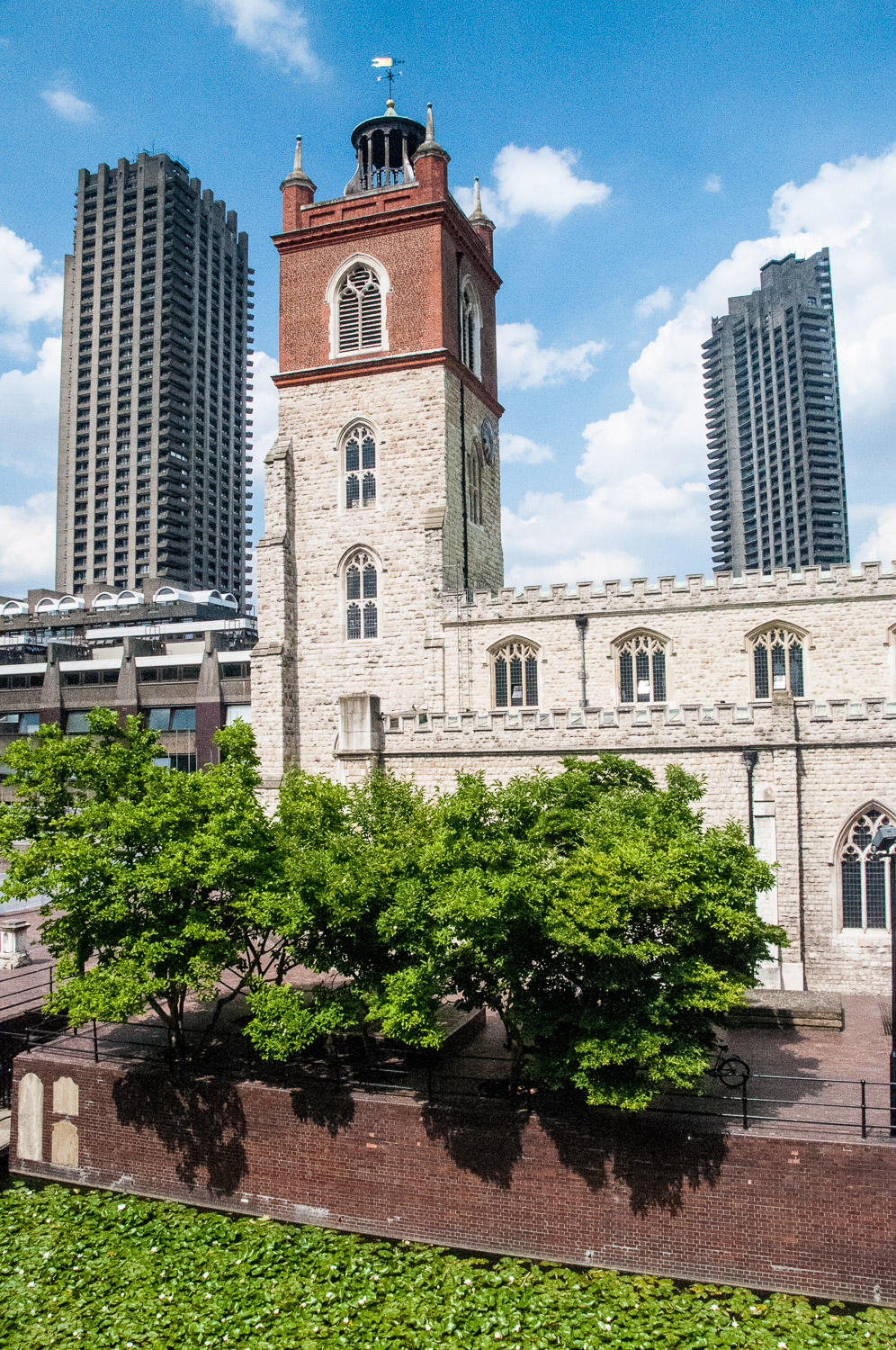
Standing on the Wallside highwalk you can see how the 17th century tower of St Giles-without-Cripplegate contrasts with two of the three Barbican residential blocks. Shakespeare Tower is on the left and Cromwell Tower on the right and they were until recently the highest residential towers in Europe …
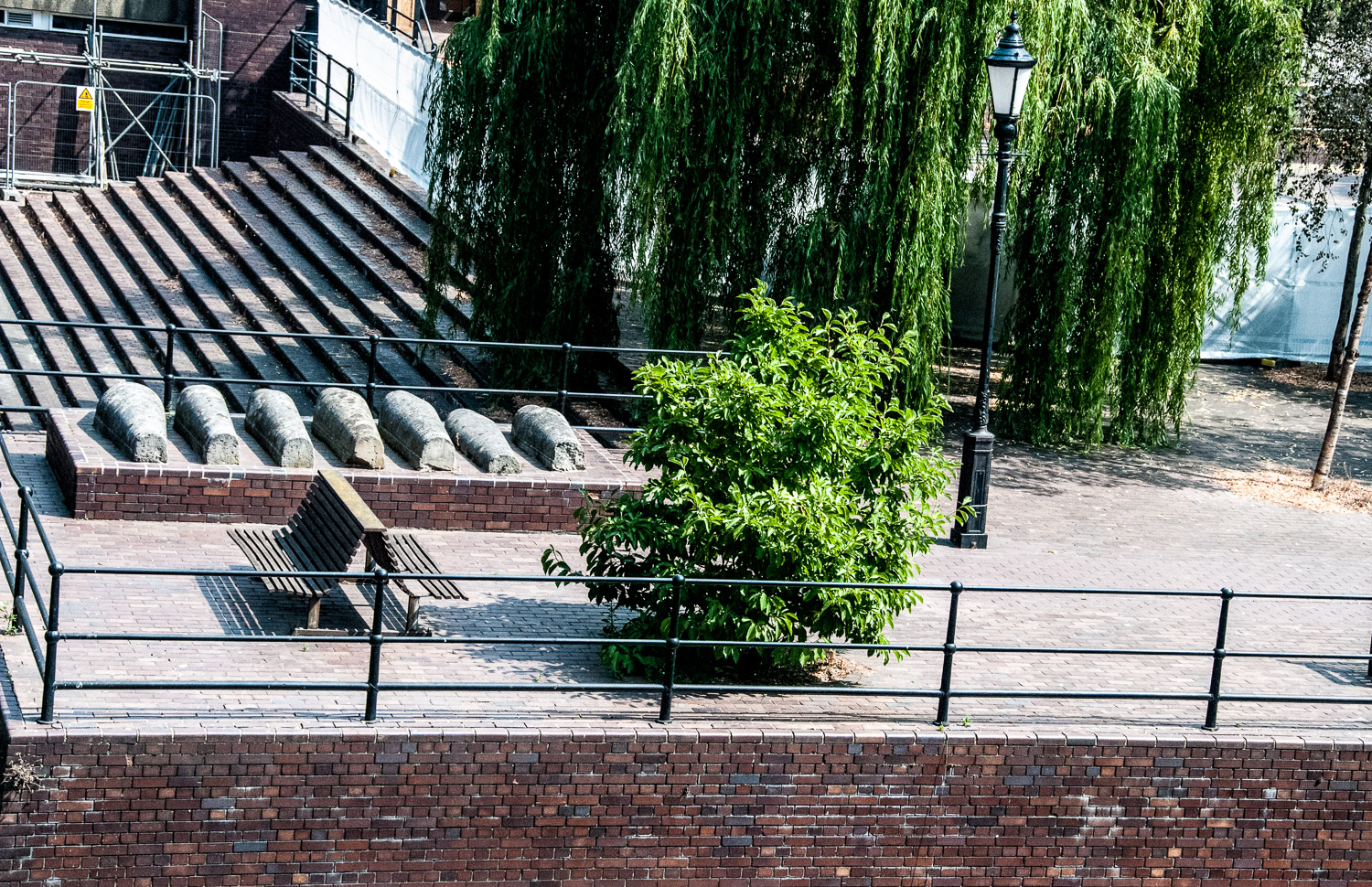
To the left of the church you can see a line of very old barrel tombs. They formed part of the St Giles cemetery before its destruction in the Second World war. I have written before about this churchyard, and others, in an earlier blog which can be found here.
I took this picture of the magnolia tree earlier this year when it was in flower …
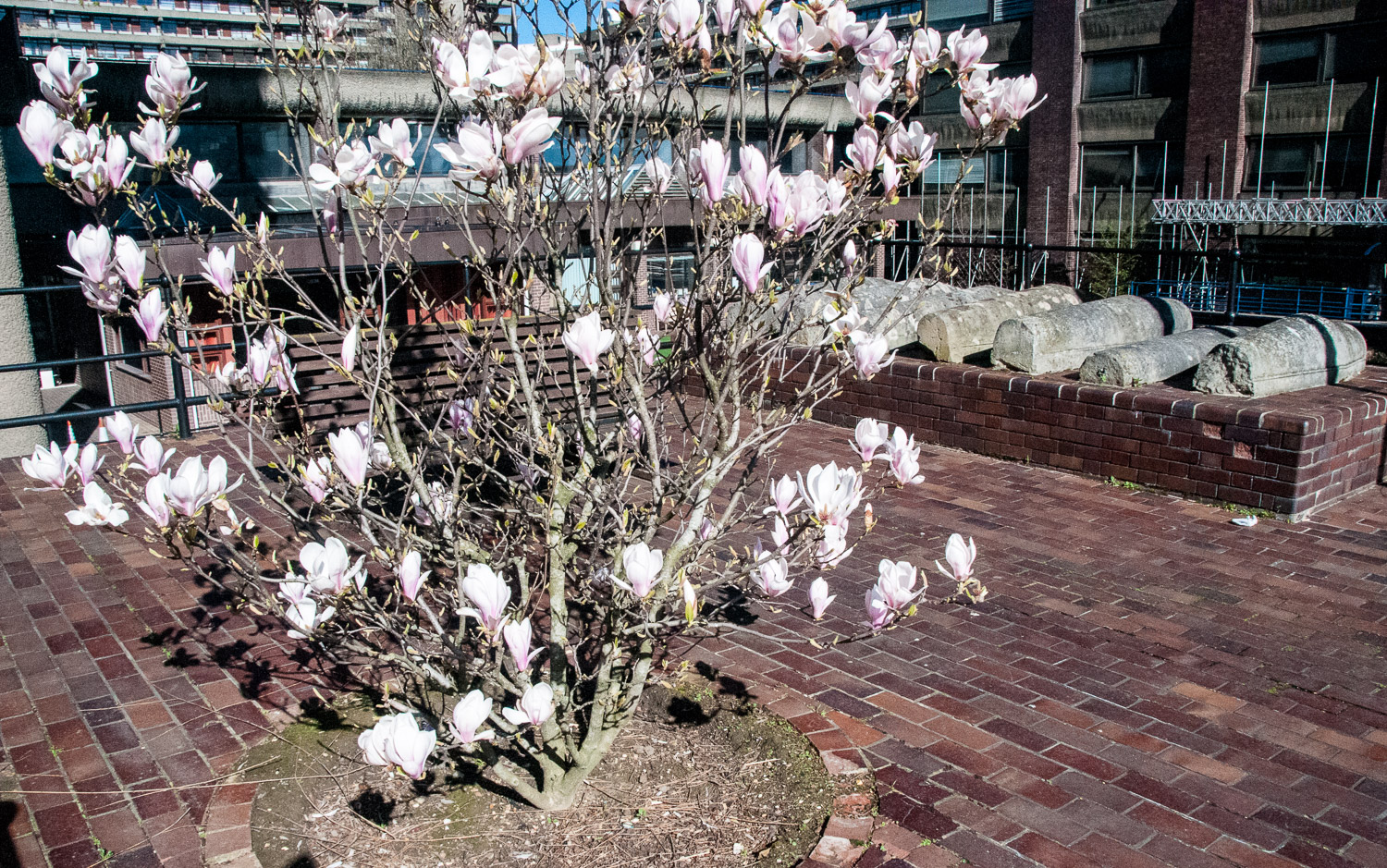
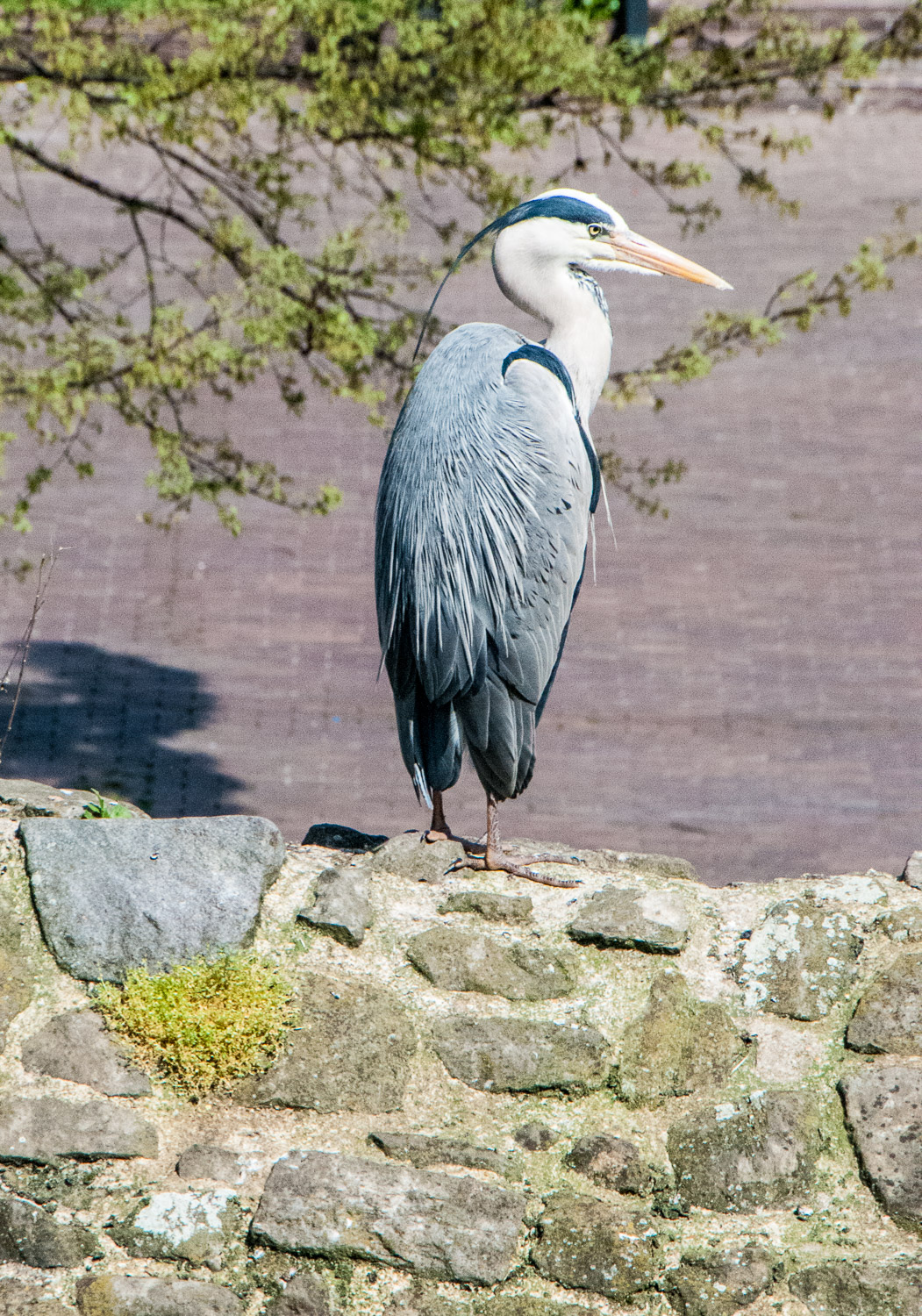
The Barbican also encloses parts of the old Roman/Medieval wall, occasionally used as a perch by a visiting Heron …
Alongside the Wallside highwalk.

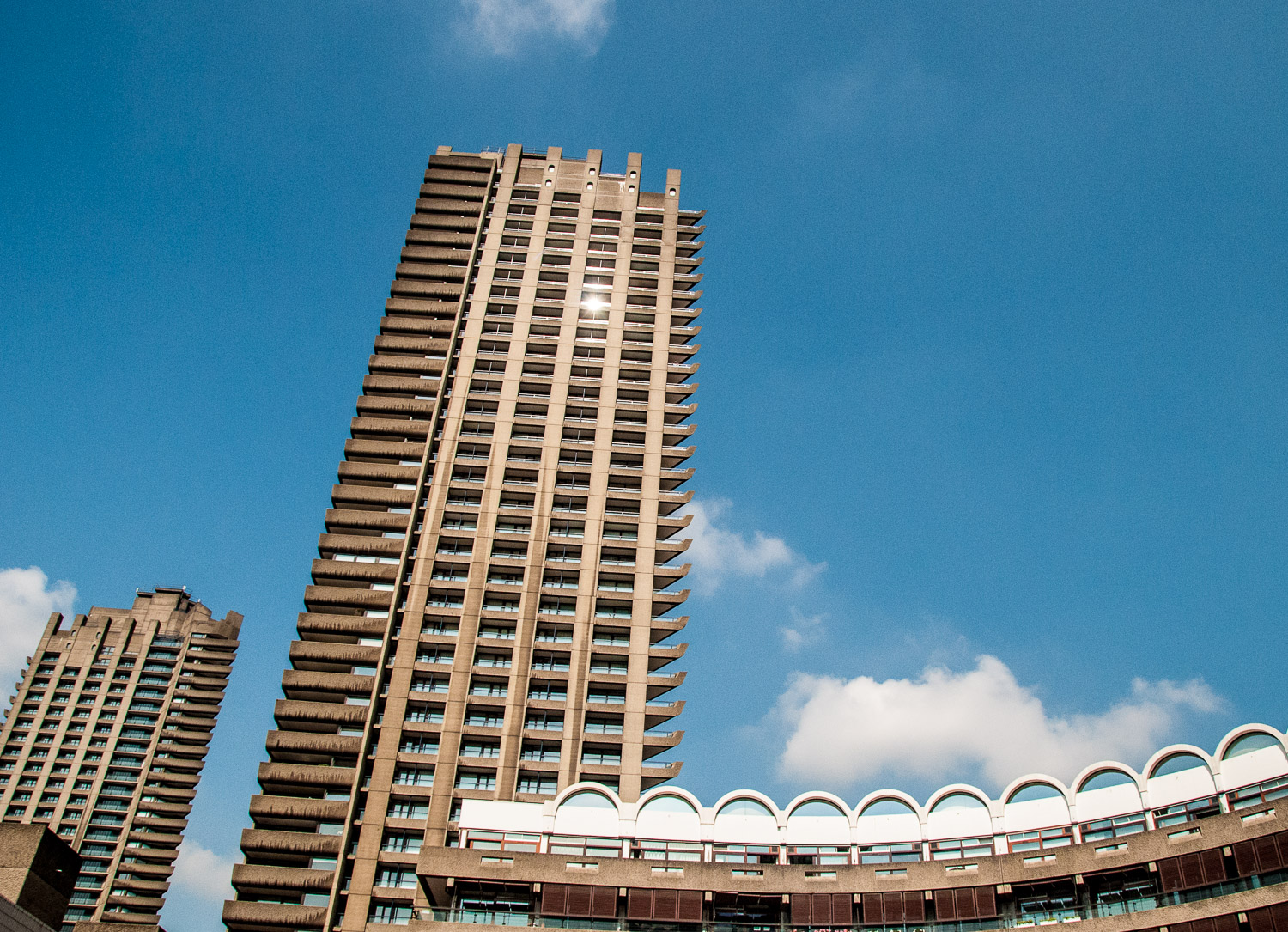
People visit from all over the world to explore the iconic Barbican architecture by Chamberlin, Powell and Bon.

In this picture Shakespeare tower looms over Frobisher crescent …
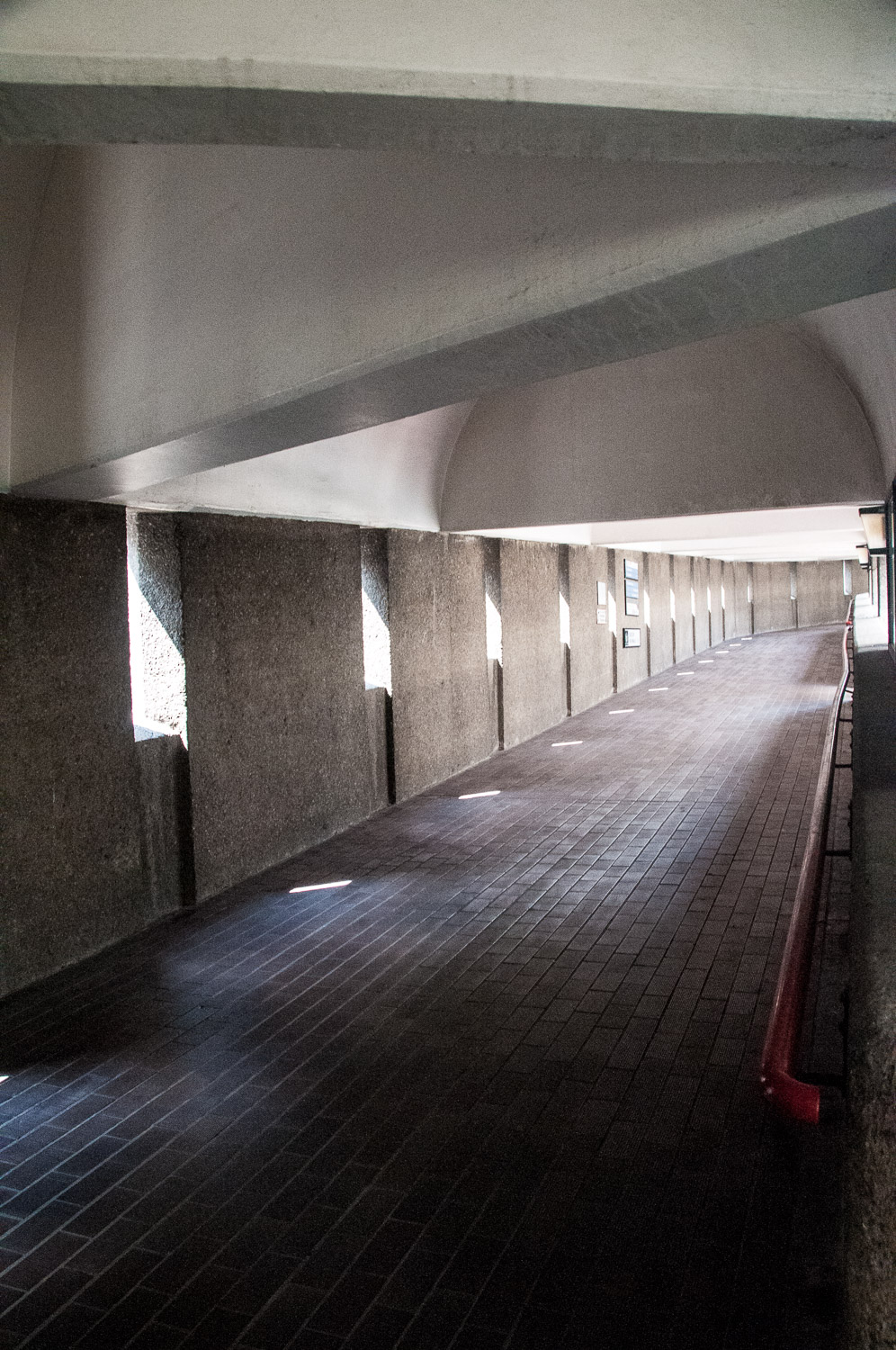
As you walk through the estate interesting shapes and shadows emerge …
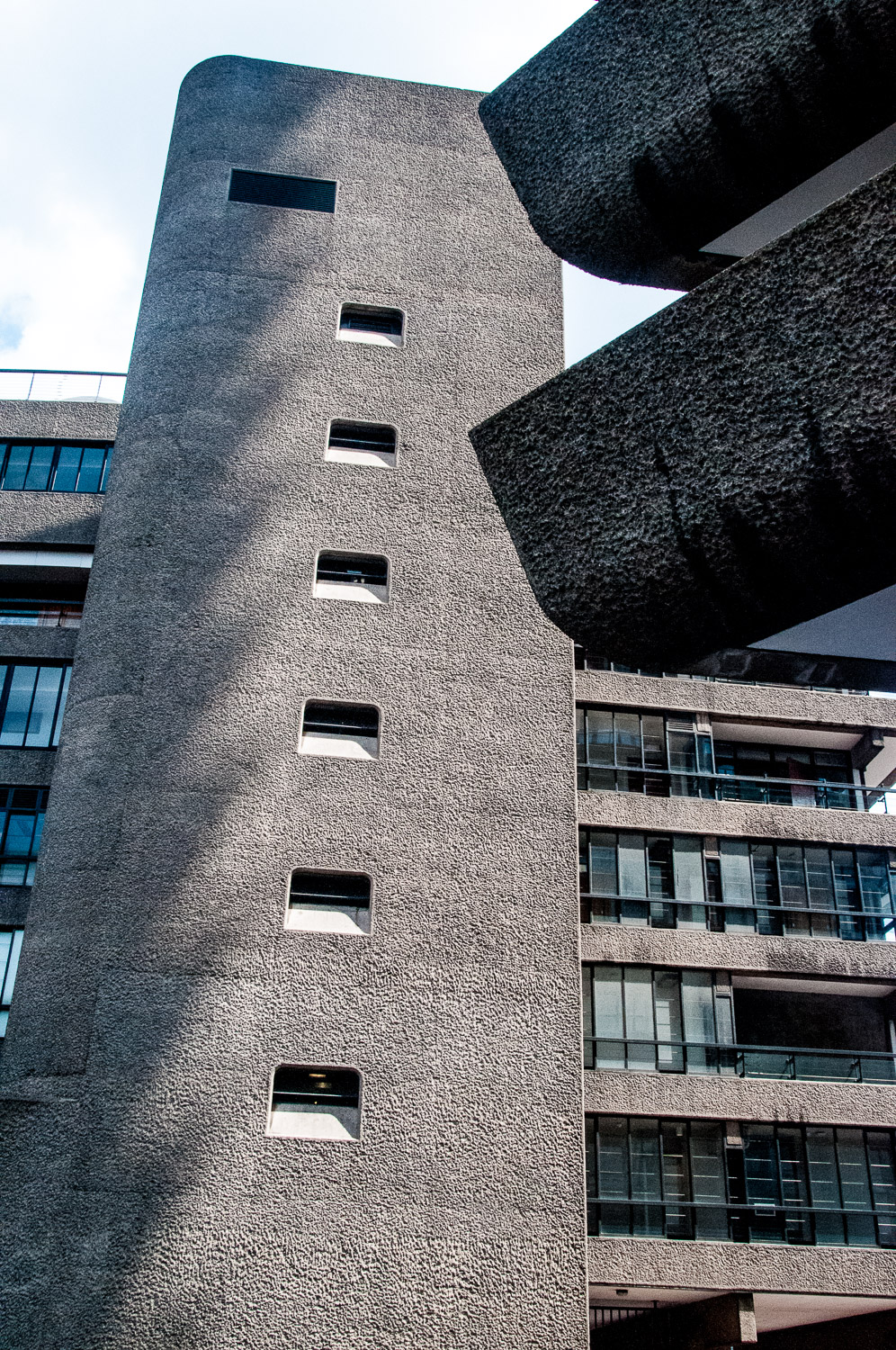
This view along Seddon Highwalk made me think of the slits used by medieval archers …
A little further on, an elegant column at the base of Lauderdale Tower illustrates the Barbican’s distinctive tooled-concrete finish. It was incredibly labour intensive. After the concrete had dried for at least 21 days, workers used handheld pick-hammers or wider bush-hammers to tool the surface and expose the coarse granite aggregate …
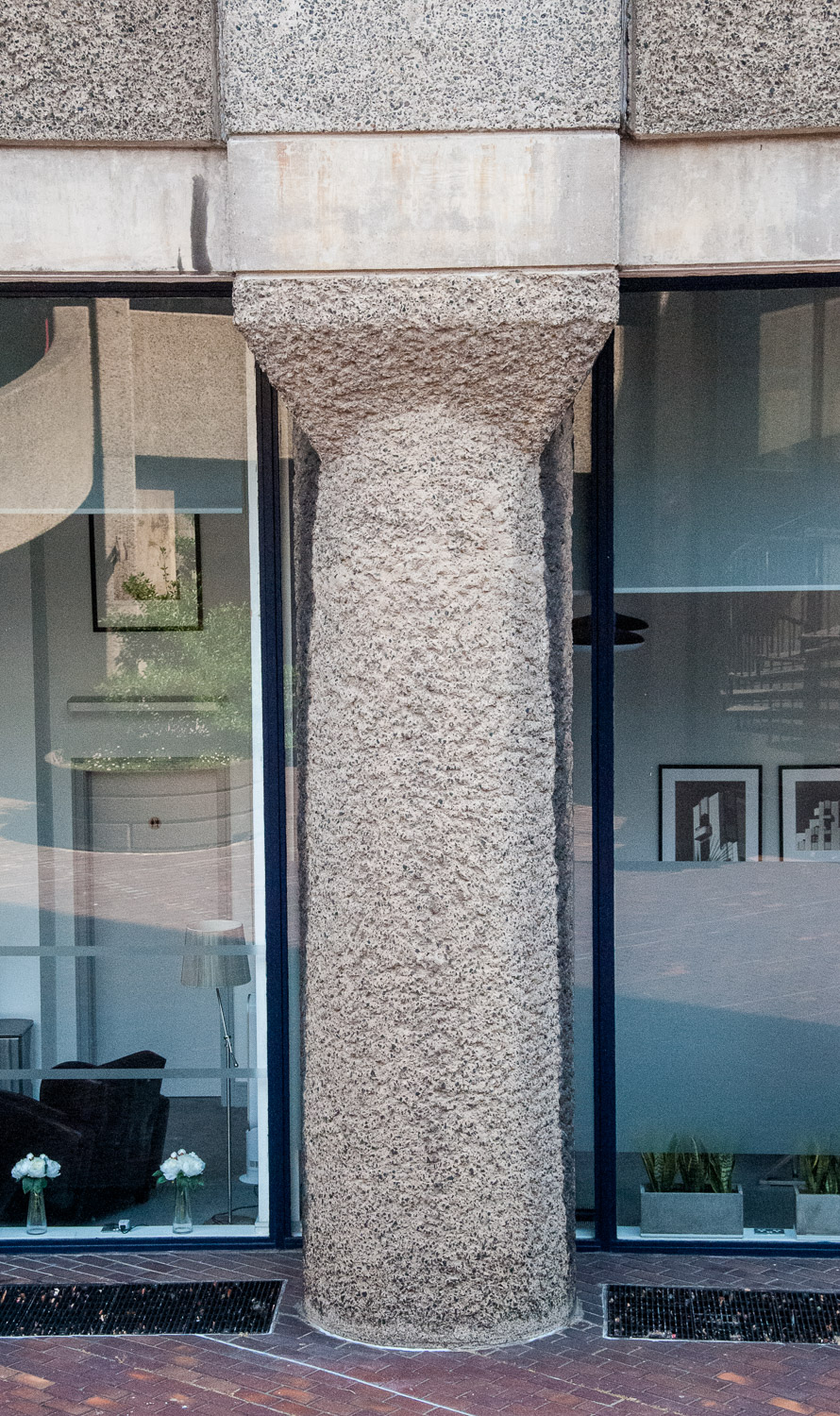
The column is next to the entrance to the ThaoV hair salon. The previous salon was called Scissors Palace which I though was a splendid name and was sorry to see it disappear.

New highwalks have just opened with their support structure itself looking like a piece of sculpture …
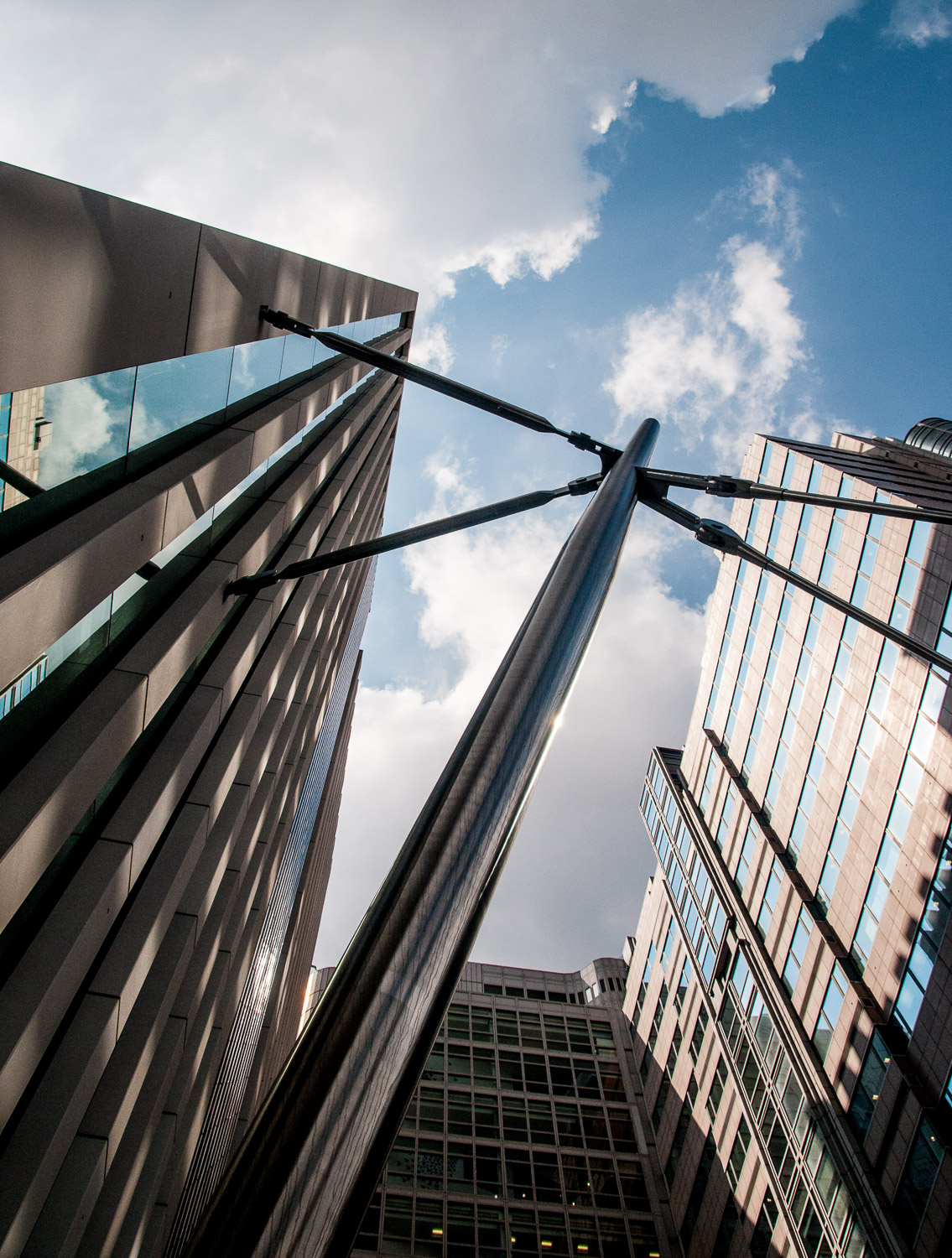
The entrance to the St Alphage Highwalk.

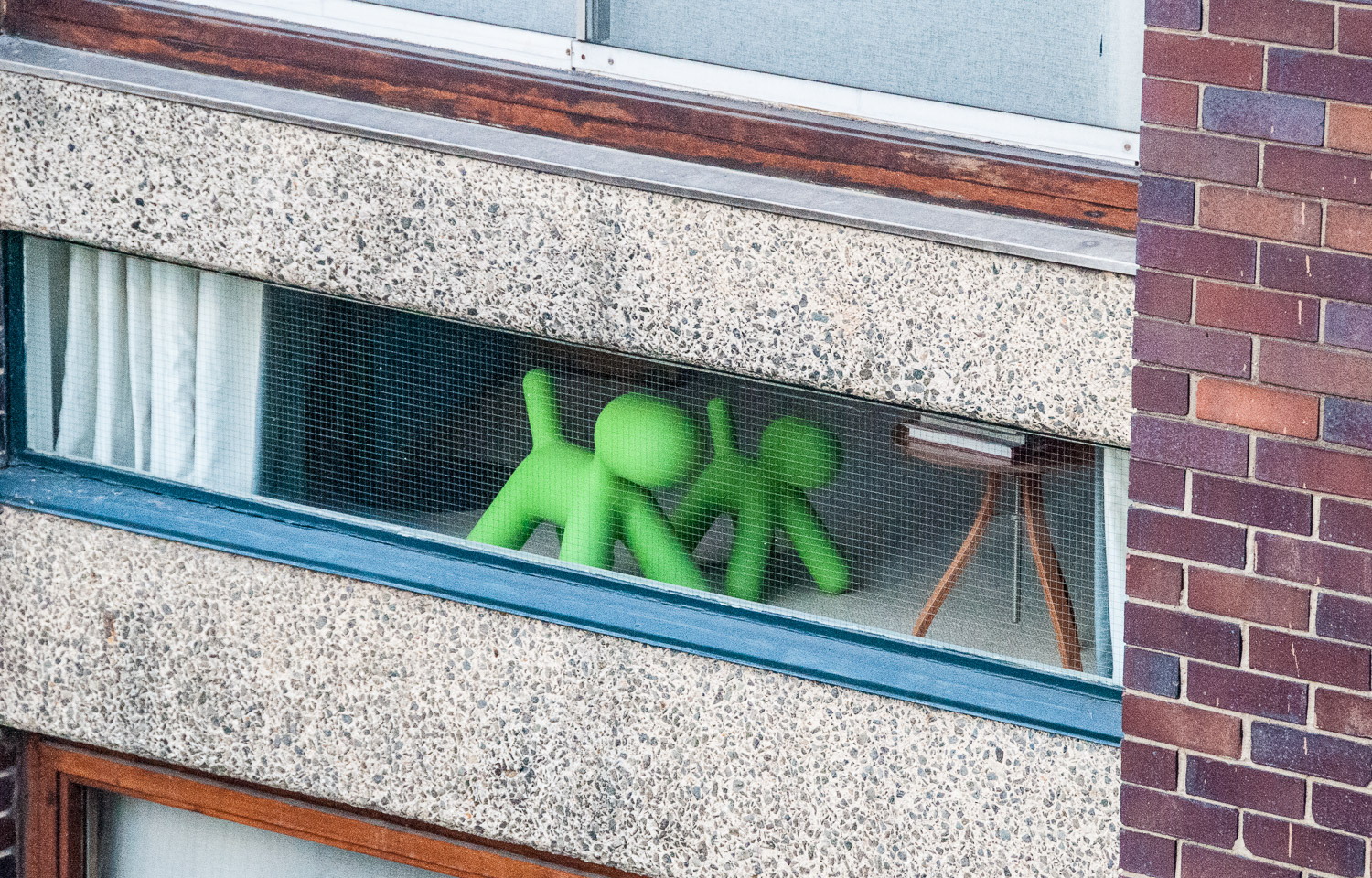
Around 4,000 people live on the Barbican estate and every now and then you get a glimpse of their decor. These little green creatures live in one of the houses on the estate and always make me smile when I see them peeping out the window …
I hope you have enjoyed this short tour and that it will inspire you to visit and explore. Ending the day with a cocktail at the Martini Bar is highly recommended.
 

City Churches – more unusual discoveries

Last week I thought it was time to take another stroll around the City churches to see what I would discover. After researching last week’s blog, I was particularly interested in artifacts that had been moved from one church to another and why.

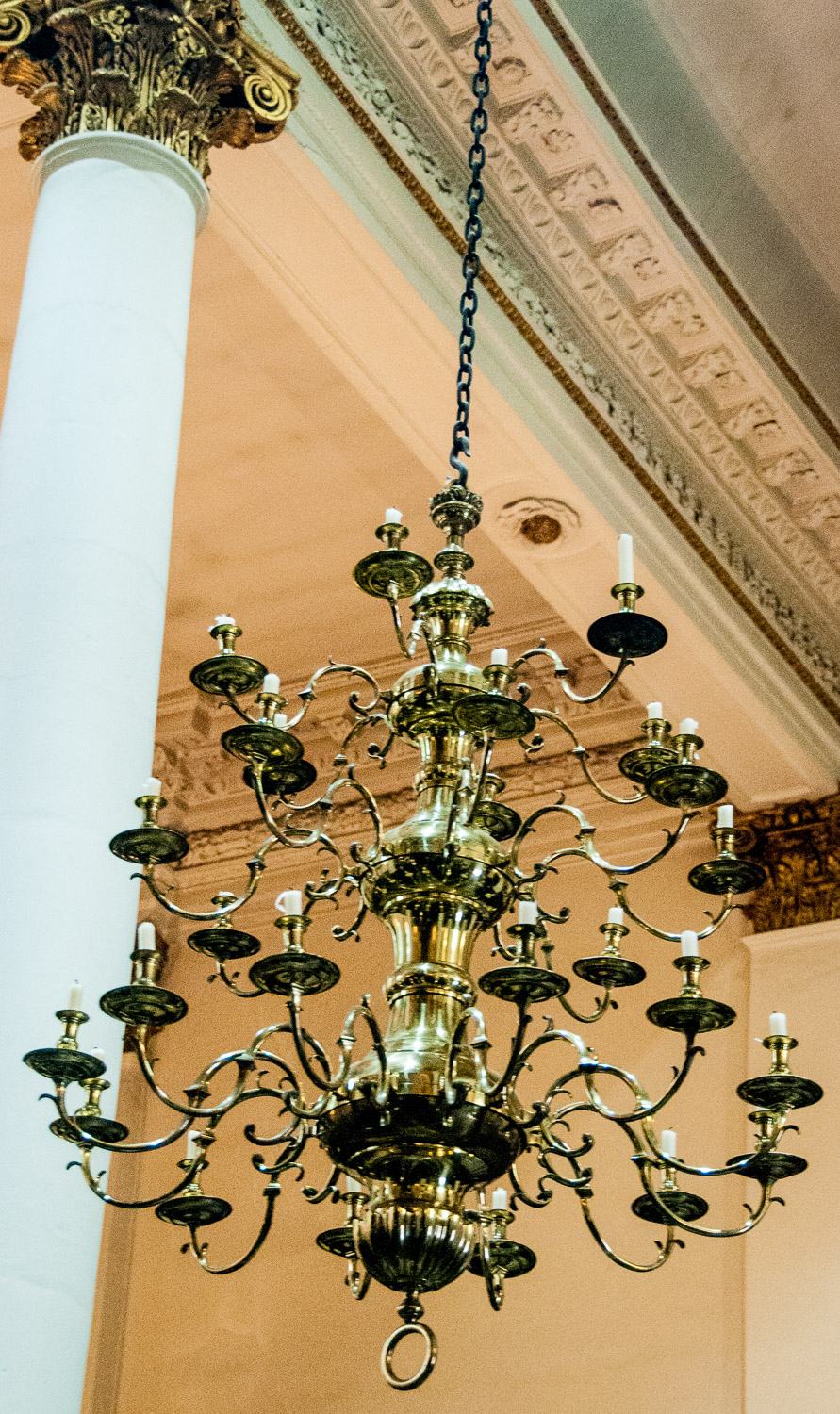
I was very lucky in the first church I visited, St Martin within Ludgate, on Ludgate Hill (EC4M 7DE) inside which I found both a fascinating chandelier and a very unusual font. There is a large entrance lobby (designed to reduce traffic noise inside the church) and you then enter one of Sir Christopher Wren’s least altered interiors (1677-1686) with fine dark woodwork which largely escaped the Blitz.

Look up and you will see this beautiful chandelier or candelabrum …

It’s still lit by candles.

As one commentator has noticed, it looks more like something you would find in a country house or a ballroom. The candles were not lit when I visited but I am sure that when they are, on a dark morning or evening, one must get a real feel for what it was like to worship here in earlier centuries. It came to the church via St Vincent’s Cathedral in the West Indies, probably in 1777: a reminder of the links between the City’s trading economy and the British Empire overseas.

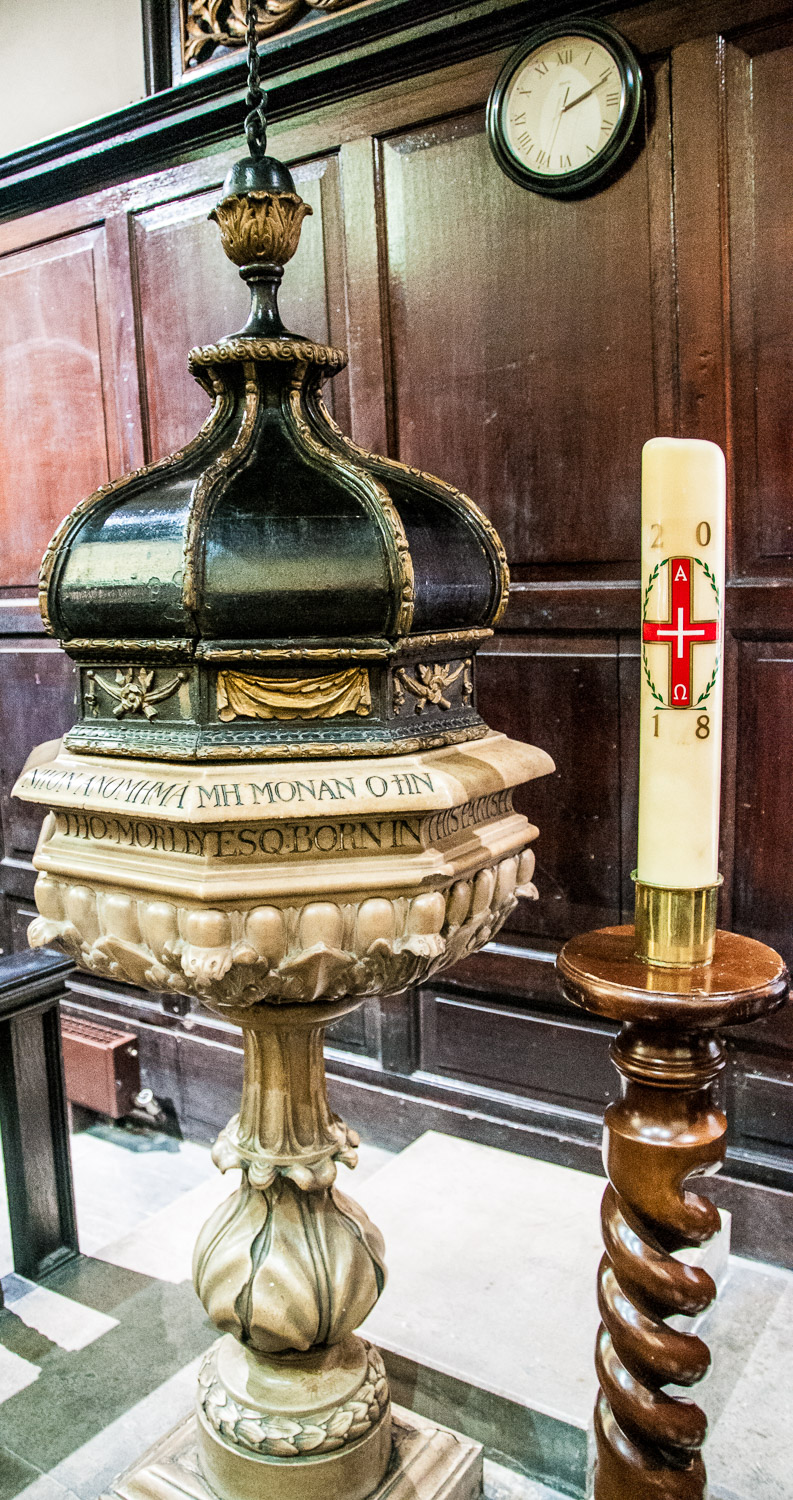
And now to the very unusual font …

The bowl is white marble and the wooden supporting plinth is painted to look like stone. It dates from 1673, predating the church, and was previously located in a ‘tabernacle’ used by the congregation during the rebuilding.

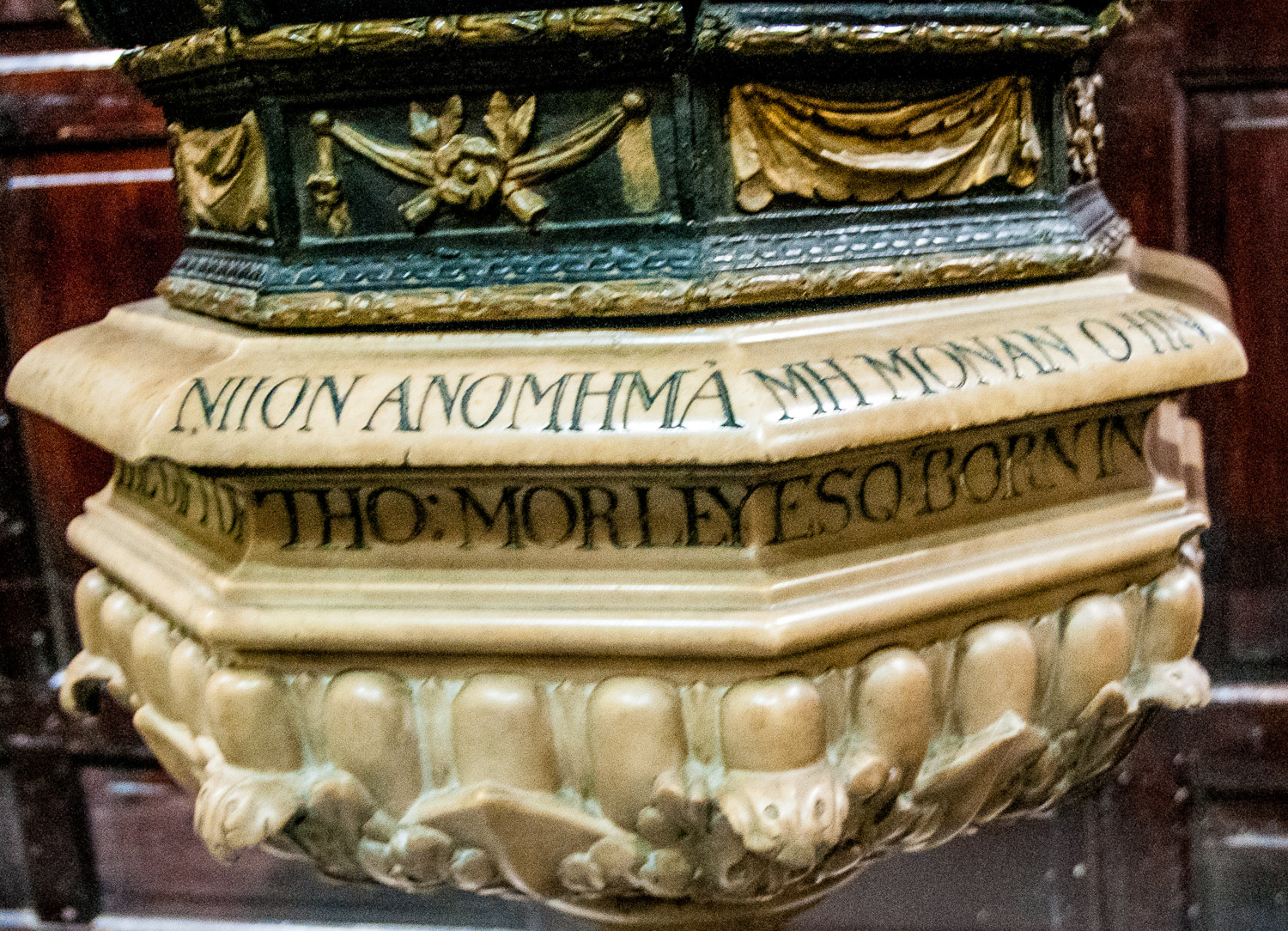
It contains a Greek palindrome copied from the Cathedral of St Sophia in Constantinople:

Niyon anomhma mh monan oyin

(Cleanse my sin and not my face only)

No church blog of mine would be complete if it didn’t contain a reference one of my favourite churches, St Vedast Foster Lane (EC2V 6HH) …

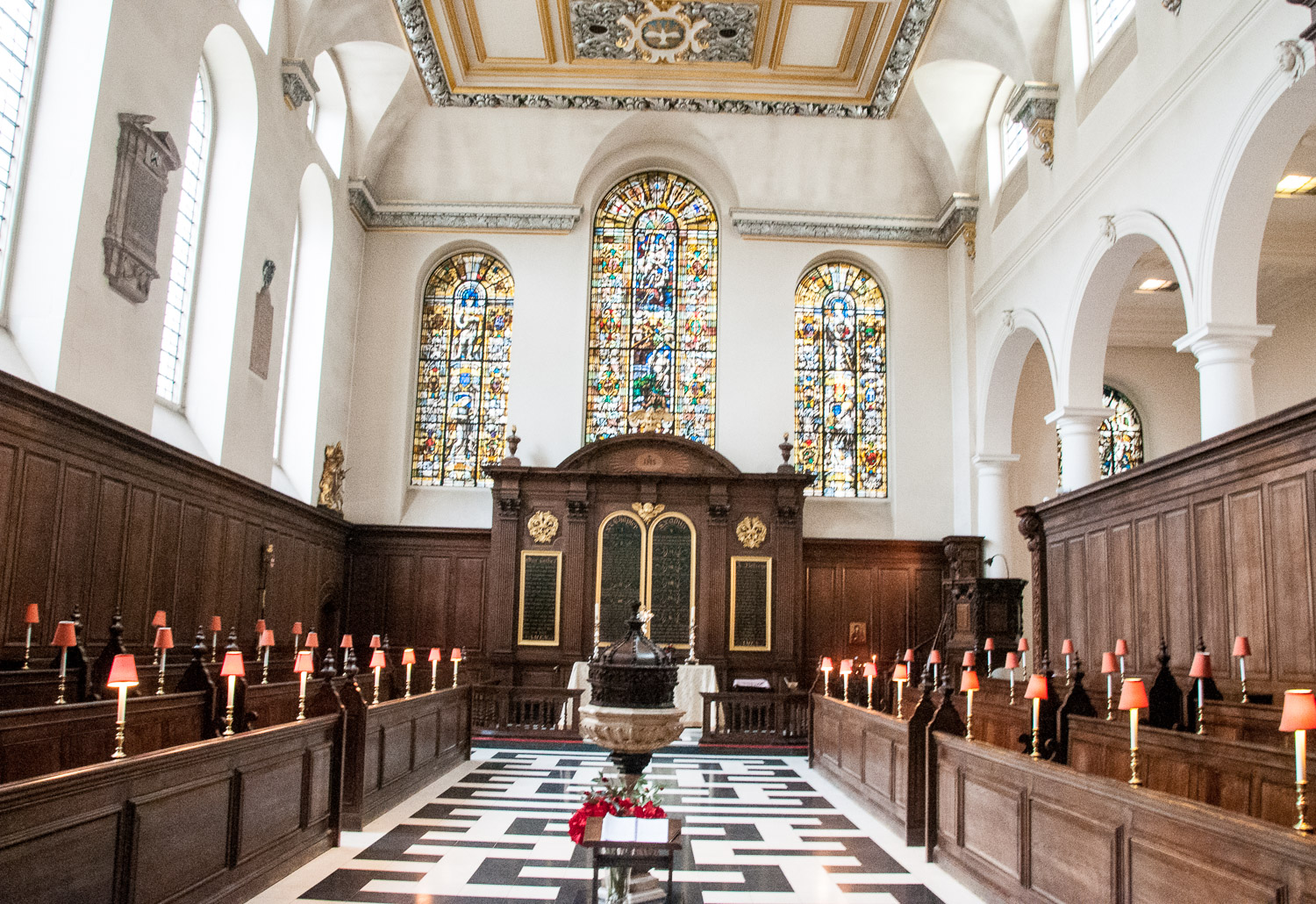
The interior looking east.

Here there are a few features that have come from other churches.

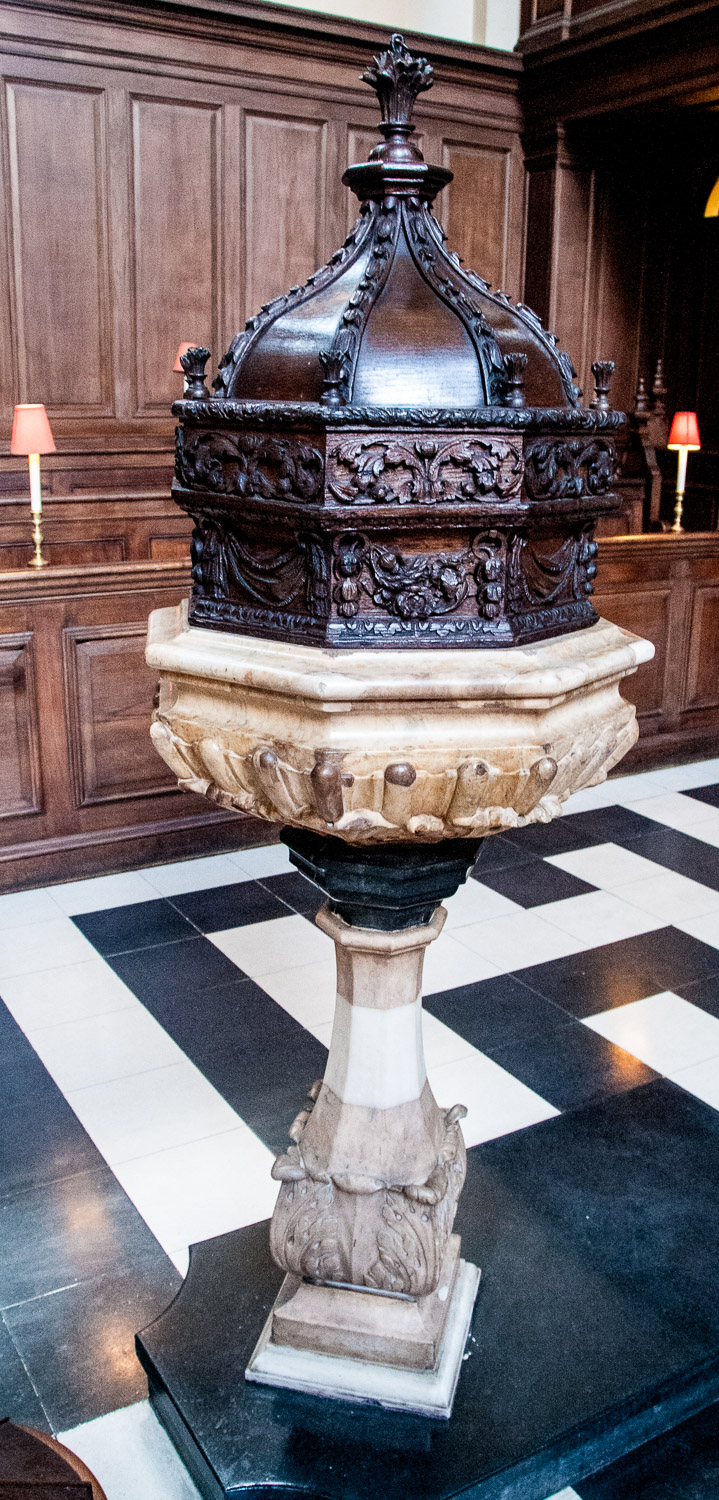
The font and its cover both date from the late 17th century. The font itself was designed by Christopher Wren and the cover is by the most celebrated woodcarver of the 17th century, Grinling Gibbons. Both were rescued from St Anne & St Agnes in Gresham Street after the Blitz.

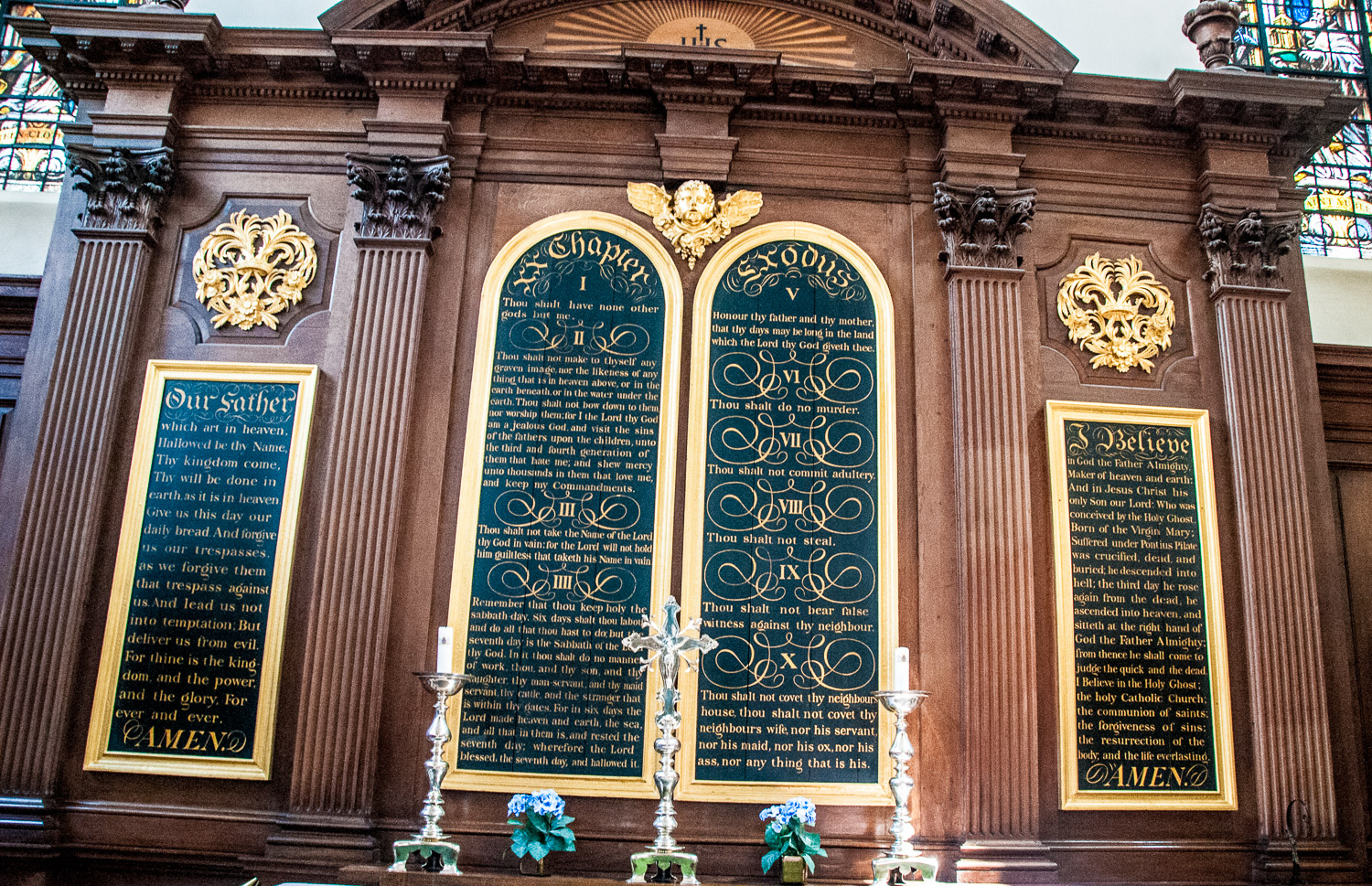
The reredos behind the altar came from the ‘lost’ church of St Christopher le Stocks …

The original St Christopher le Stocks was destroyed in the Great Fire, rebuilt by Wren in 1671 and situated in Threadneedle Street. During the 18th century, the Bank of England gradually bought up adjoining properties, extending its site into the parish. In 1781 it came to an agreement with the rector of St Christopher’s, and its patron, the Bishop of London, allowing it to demolish the church itself. This was not only motivated by a desire to build on the land, but also by a fear that rioters might use the church as a platform to attack the bank, a concern sparked by the Gordon Riots of 1780.

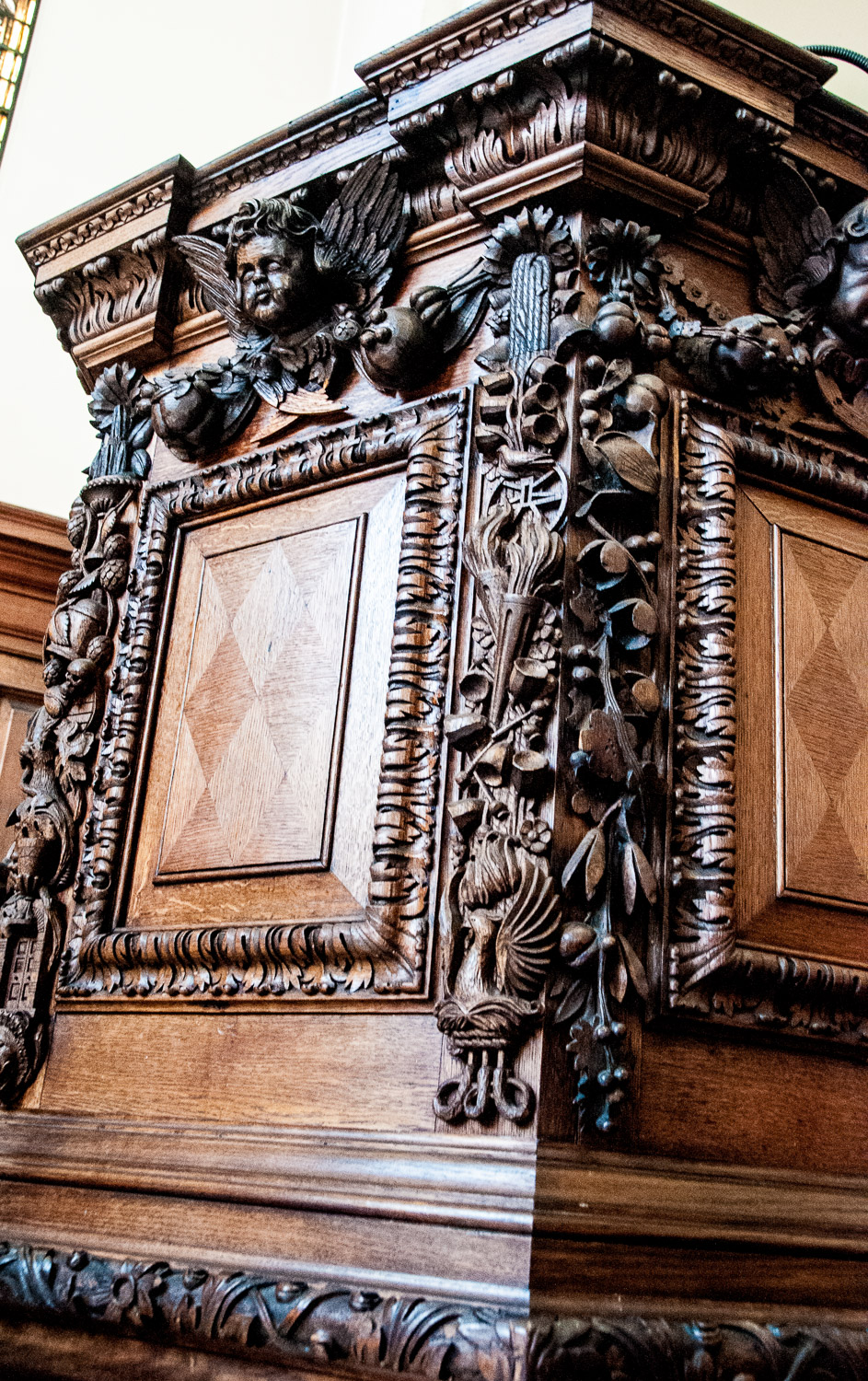
The richly carved pulpit came from All Hallows Bread Street, demolished in 1878 under the Union of Benefices Act 1860 which I also mentioned in last week’s blog …

For my last visit of the day I thought I would take a look at St Anne & St Agnes (mentioned above) and see what I could find there (Gresham Street EC2V 7BX).

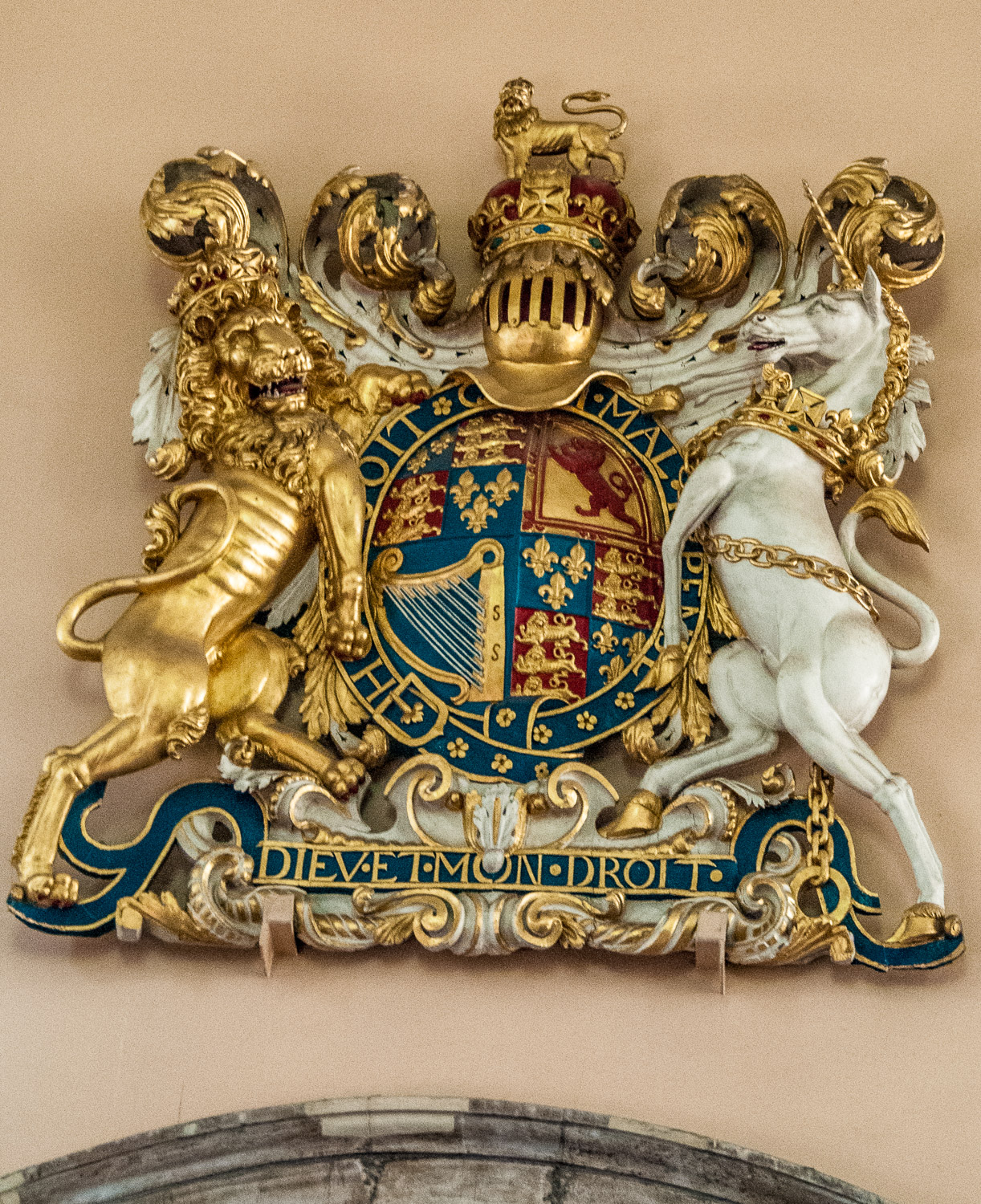
The Royal Arms of Charles II on the west wall is one of the best examples in England …

In 1649 the vicar was beheaded for protesting against the execution of King Charles I.

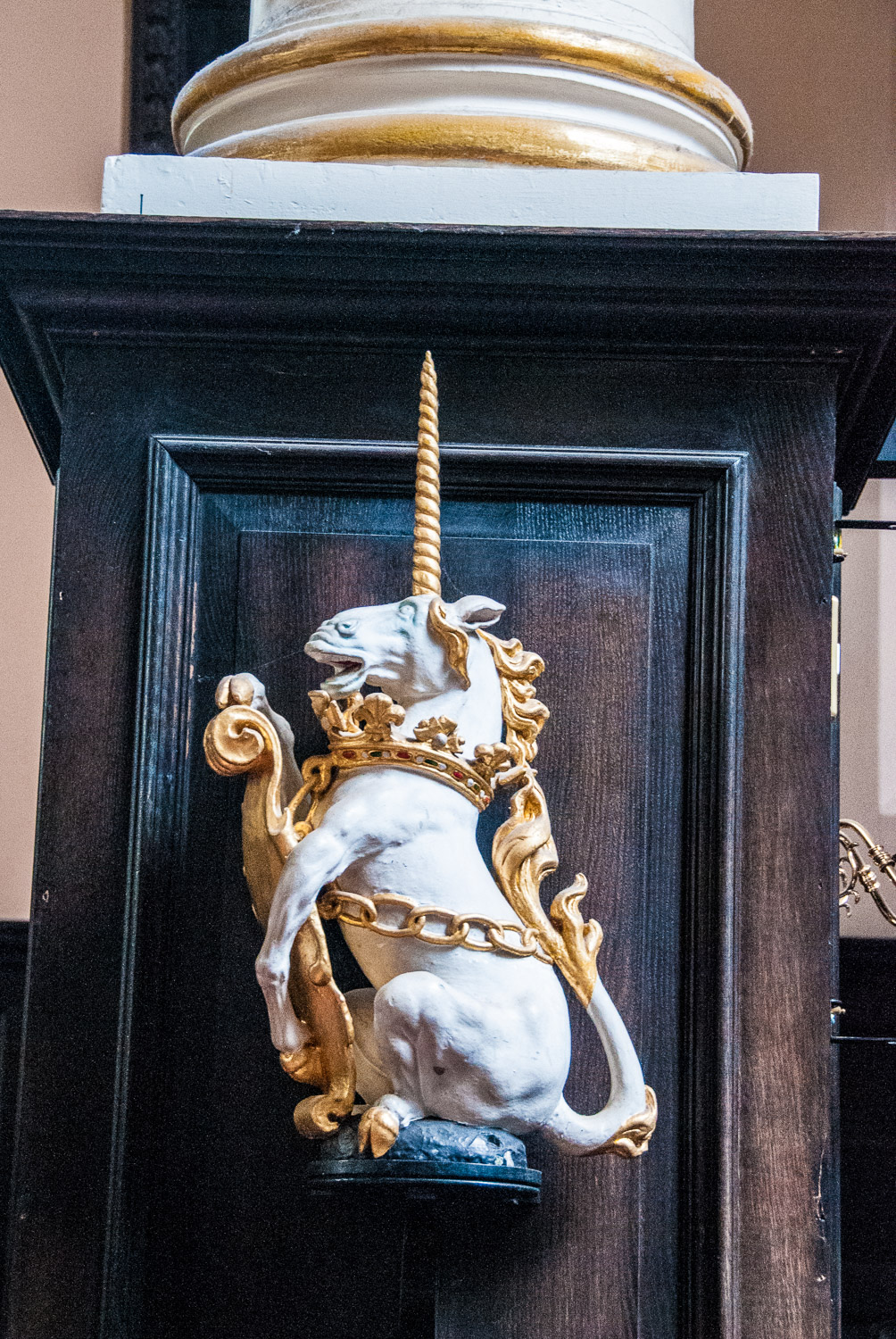
The central dome is supported by four handsome Corinthian columns two of which contain heraldic representations, one being this unicorn …

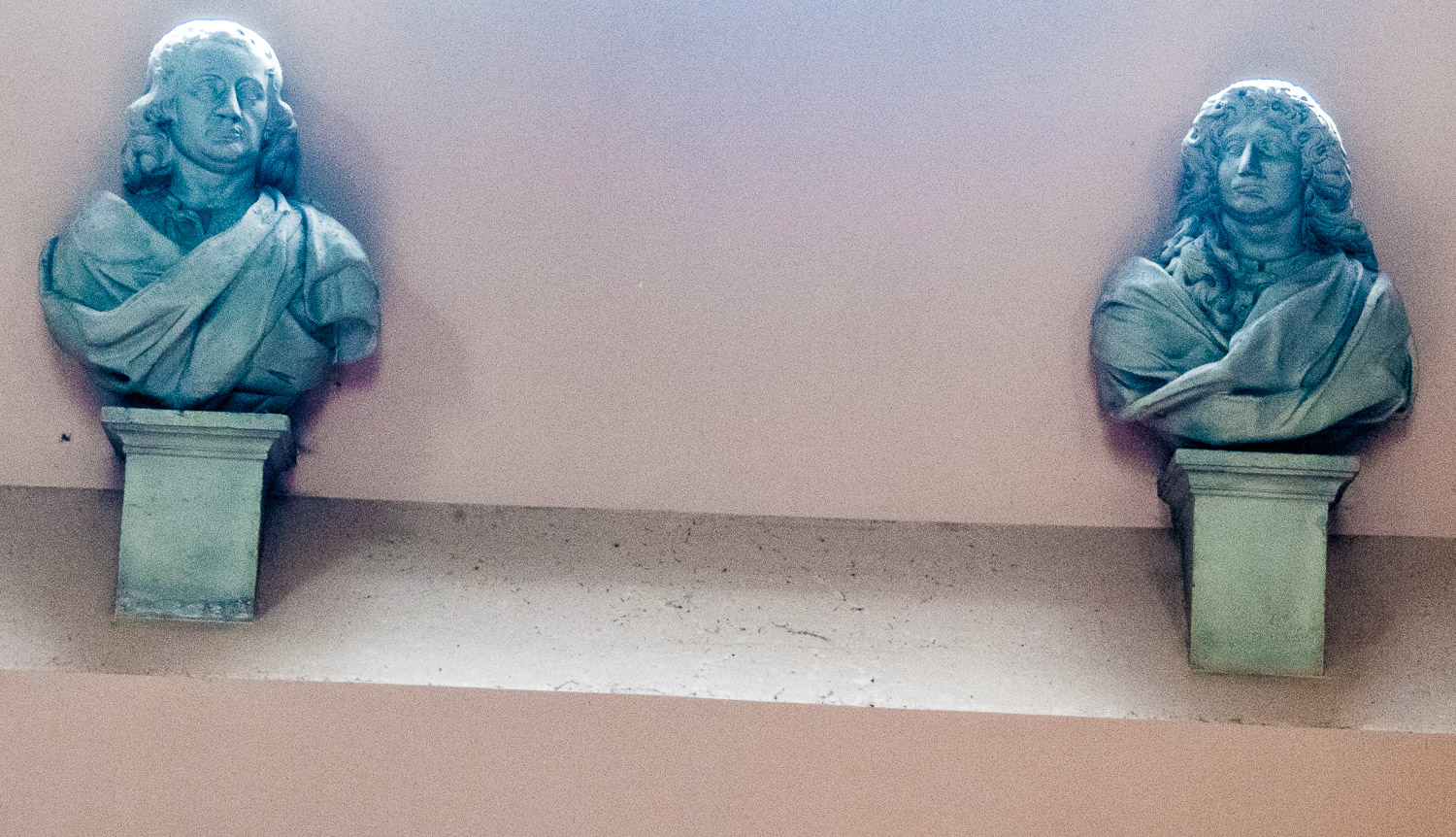
High up on the south wall are busts of Sir James Drax (died 1662) and his son John (died 1682). They come from the ‘lost’ church of St John Zachary which was destroyed in the Great Fire and not rebuilt …

The Drax family were pioneers of the sugar industry (and slavery) in Barbados and apparently Drax Hall Plantation in St George, Barbados is the oldest surviving Jacobean mansion in the western hemisphere.

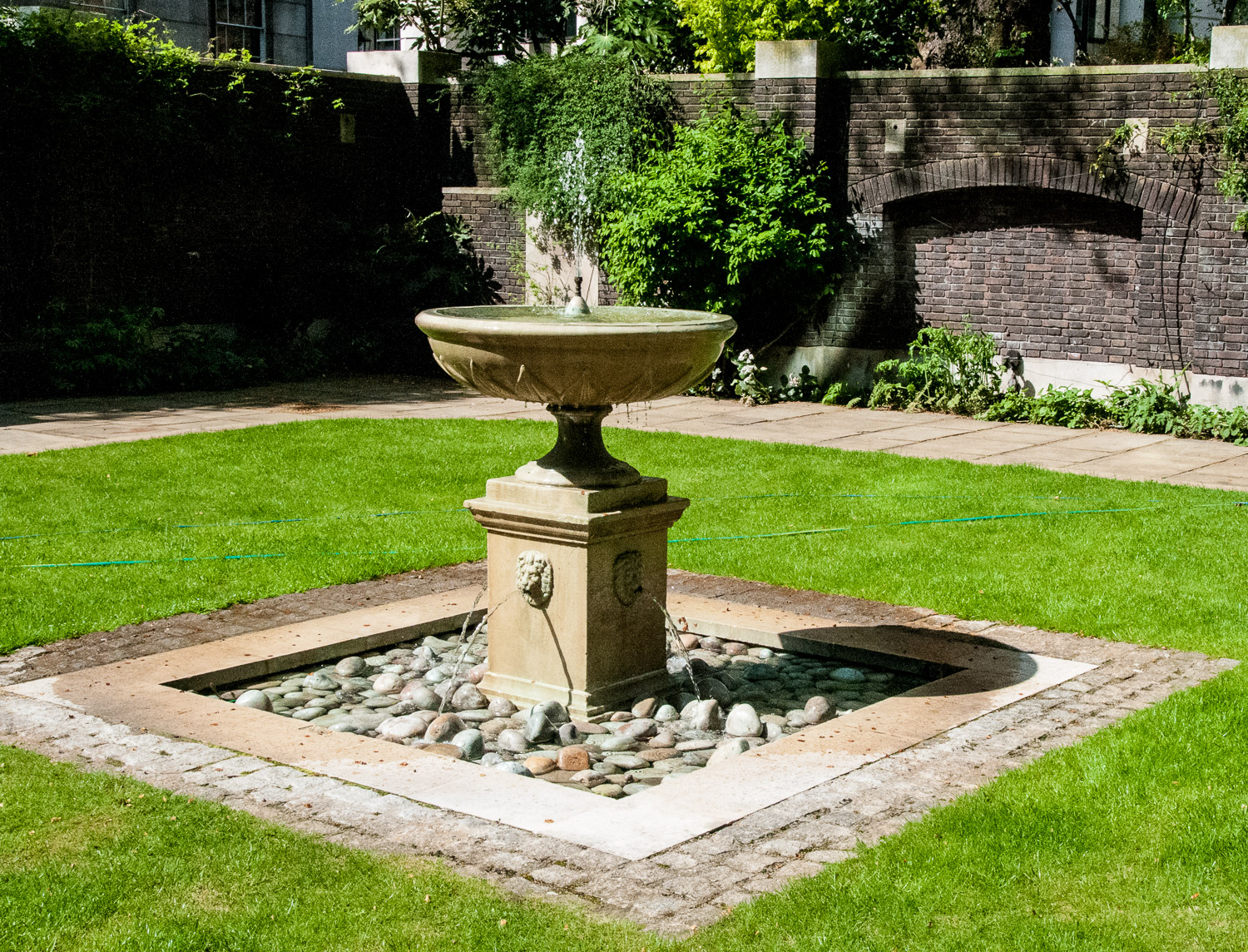
St John Zachary may be no more but there is now very attractive and quiet garden where the church used to stand …

You can read more about it here.


Terminus tales – Blackfriars Station

Nowadays, if you want to travel by rail to Continental Europe, you head for St Pancras International and Eurostar. Once upon a time though, your gateway to the Continent was Blackfriars Station in the City.

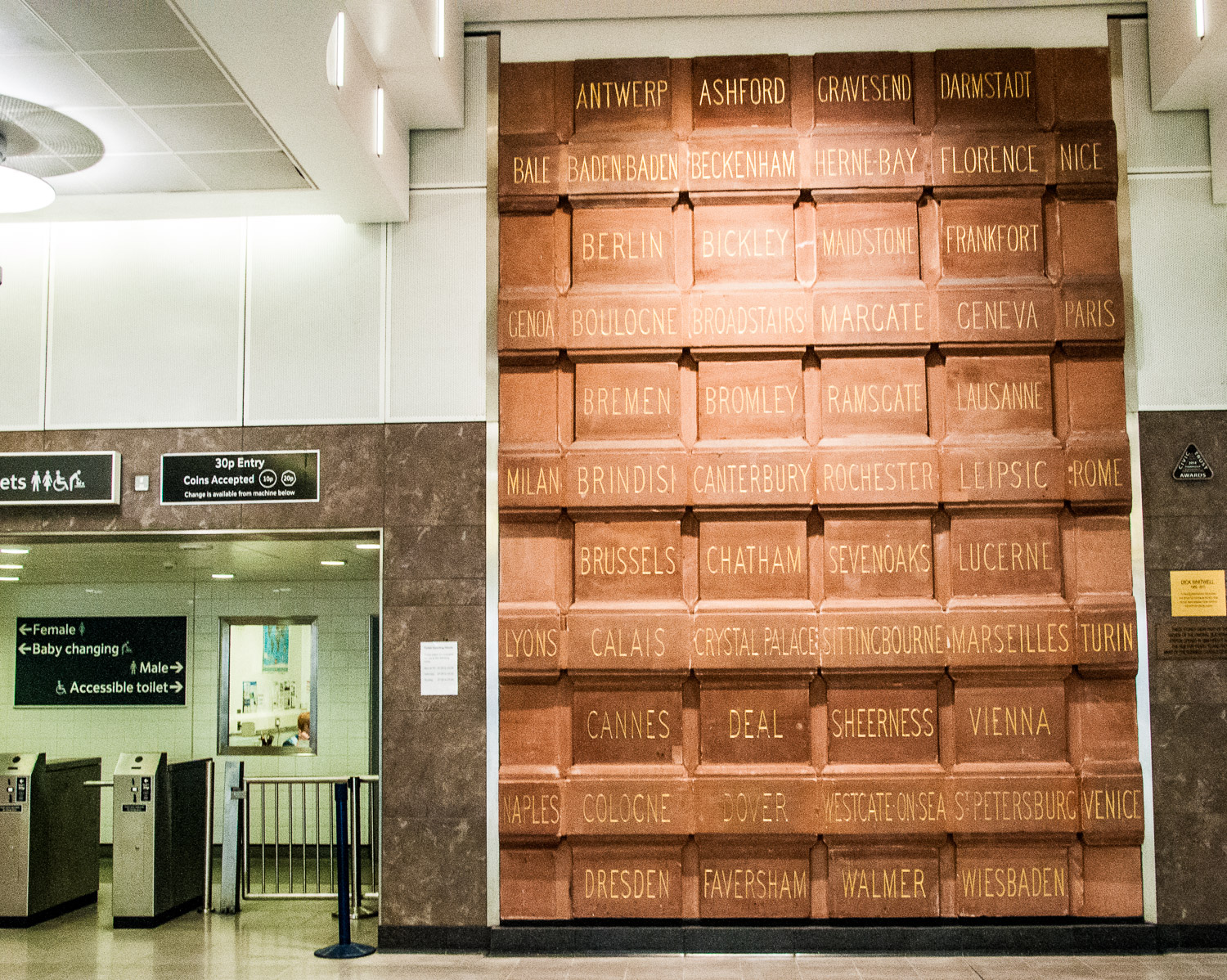
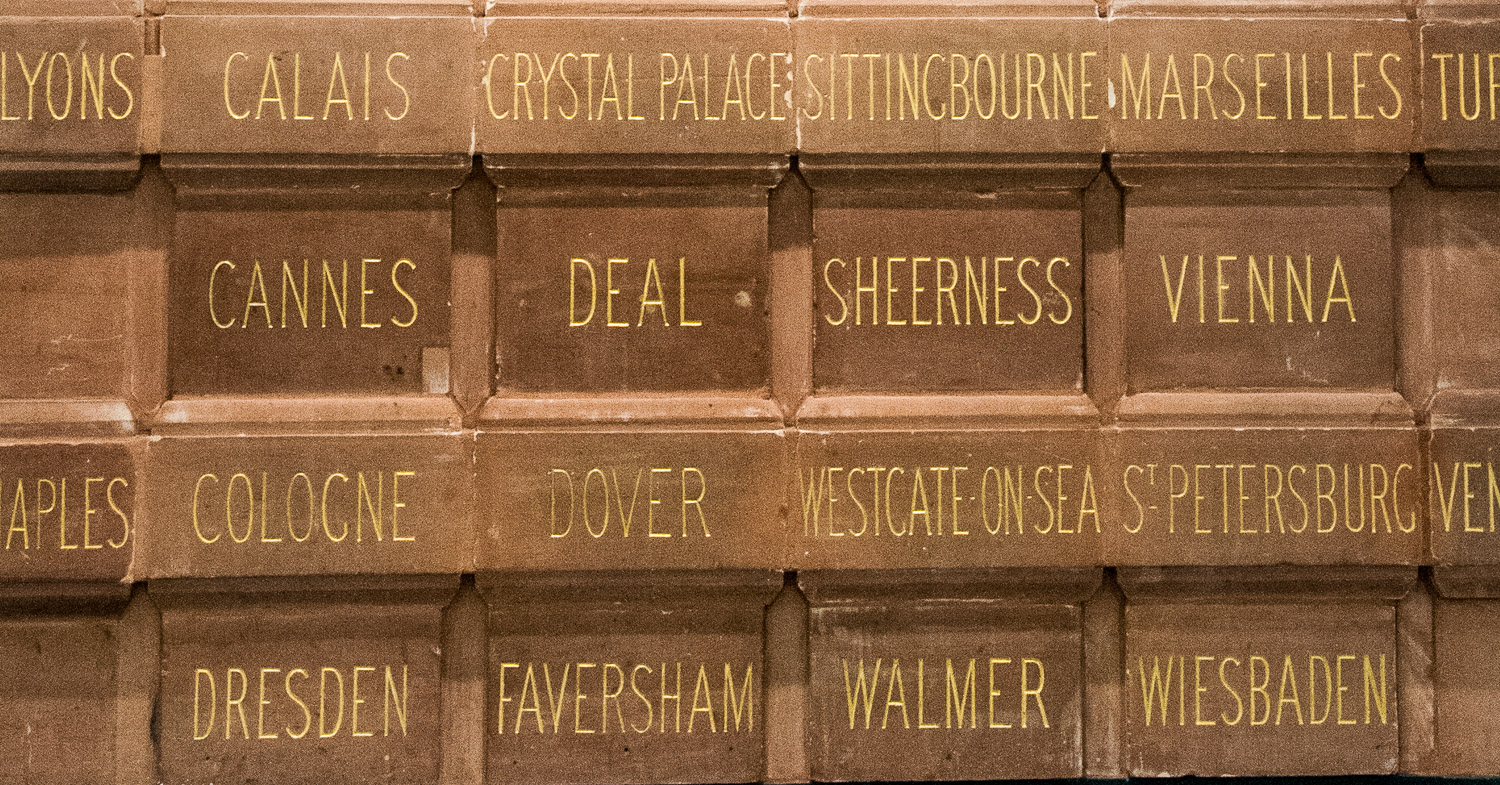
The station was badly damaged during the Second World War but the wall displaying a selection of the locations you could catch a train to survived and you can see it today in the ticket hall. It was part of the original façade of the 1886  station (originally known as St Paul’s) and features the names of 54 destinations – each painstakingly carved into separate sandstone blocks.

The destinations are gilded in 24 carat gold leaf …

‘Where shall we buy a ticket to today? Crystal Palace or Marseilles? Westgate-on-Sea or St Petersburg? Tough choices!’

The new station gave the London Chatham & Dover Railway an important foothold in the City of London.

If you leave the station and turn left you can walk across Blackfriars Bridge and take in a few more interesting sights.

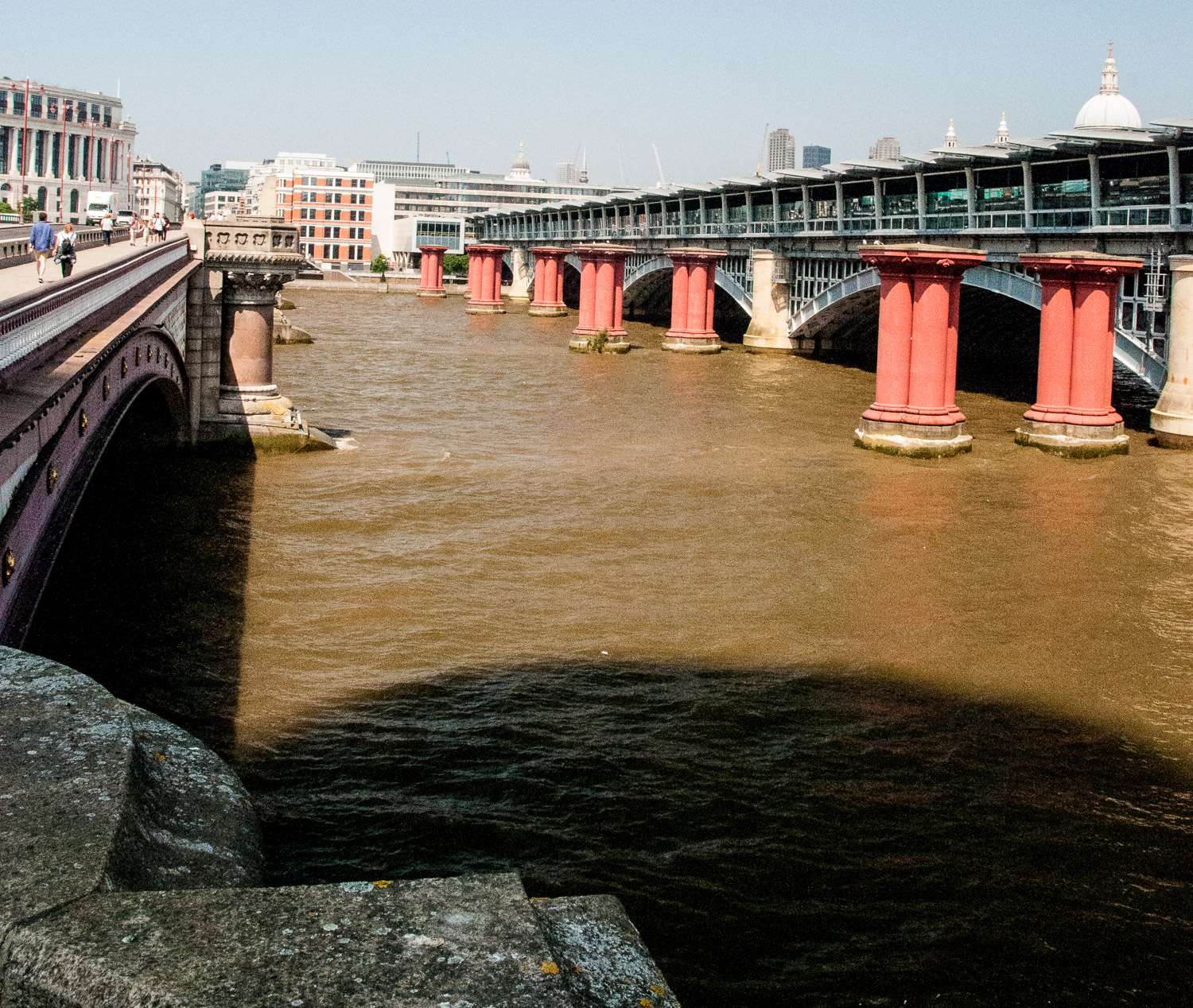
There are these columns rising out of the river …

In 1862-64 a bridge was built to accommodate four trains at one time. John Wolfe-Barry and H M Brunel built a second bridge to increase the number of trains coming into St Paul’s. The columns are the remains of the original bridge, which was removed in 1985 as it was deemed too weak for modern trains.

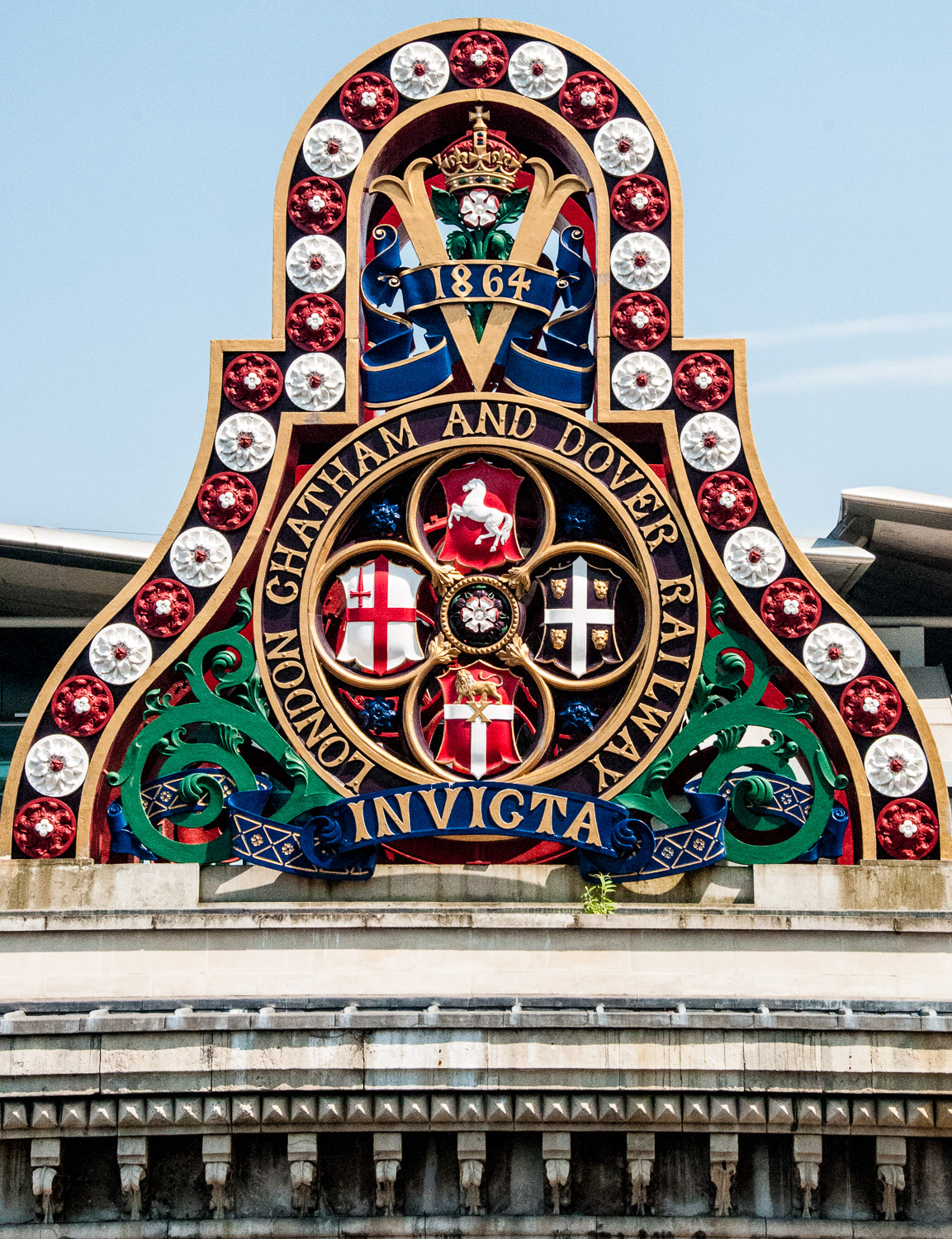
On the south side is the beautifully restored coat of arms of the London Chatham & Dover Railway …

Note the white horse rampant, symbol of Kent, and the county motto ‘Invicta’ meaning ‘undefeated’ or ‘unconquered’.

And now features not everyone notices. They are not related to the station but if you have ventured onto the bridge they are worth looking out for.

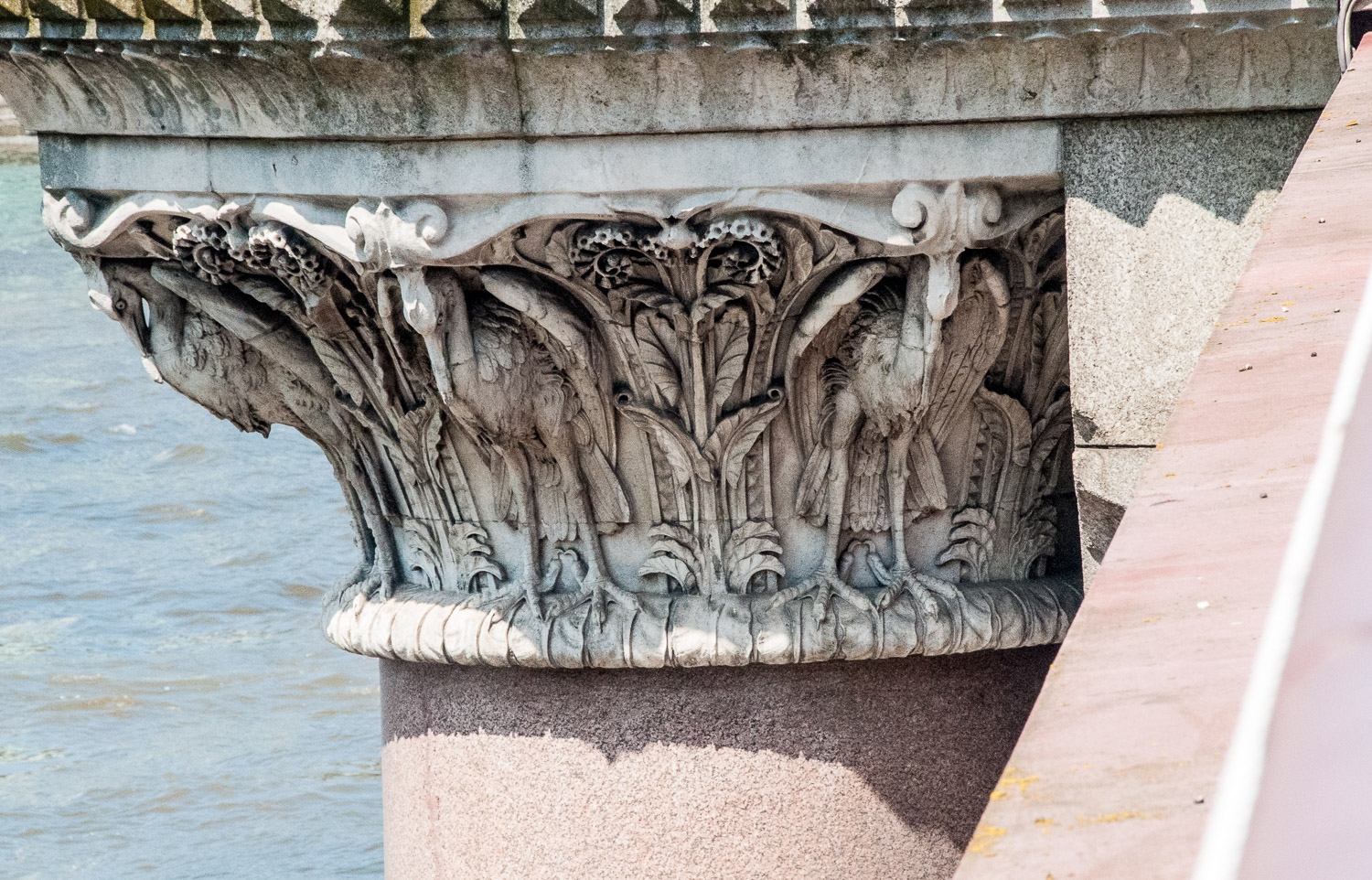
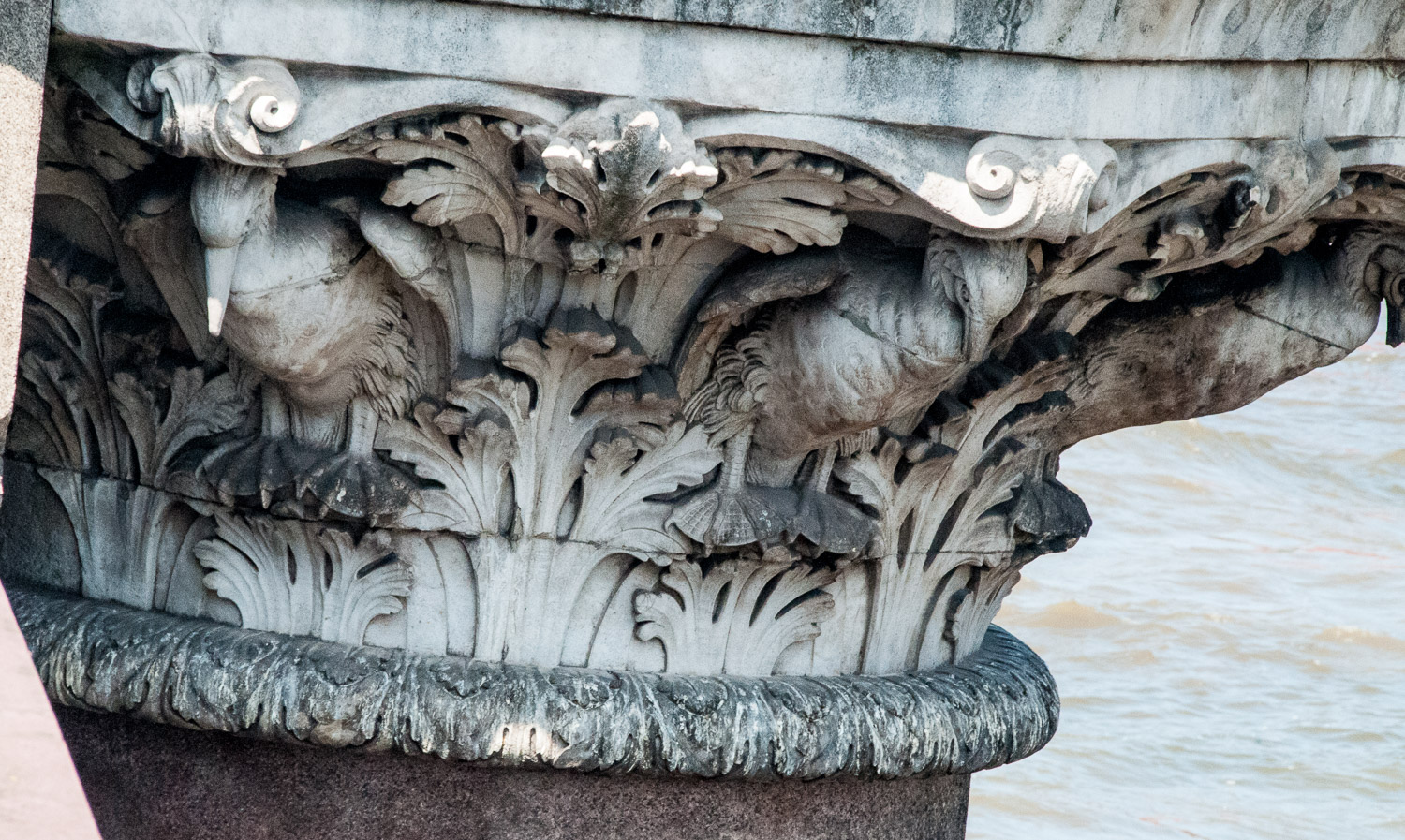
Peer over the parapet and on either side you will see some birds on the capitals of the bridge supports, beautifully carved in Portland stone by J.B.Philip.

The birds on the west side are fresh water birds and plants to be found on the upper reaches of the river …

And on the east side, sea birds and seaweeds to be found at the mouth of the Thames …

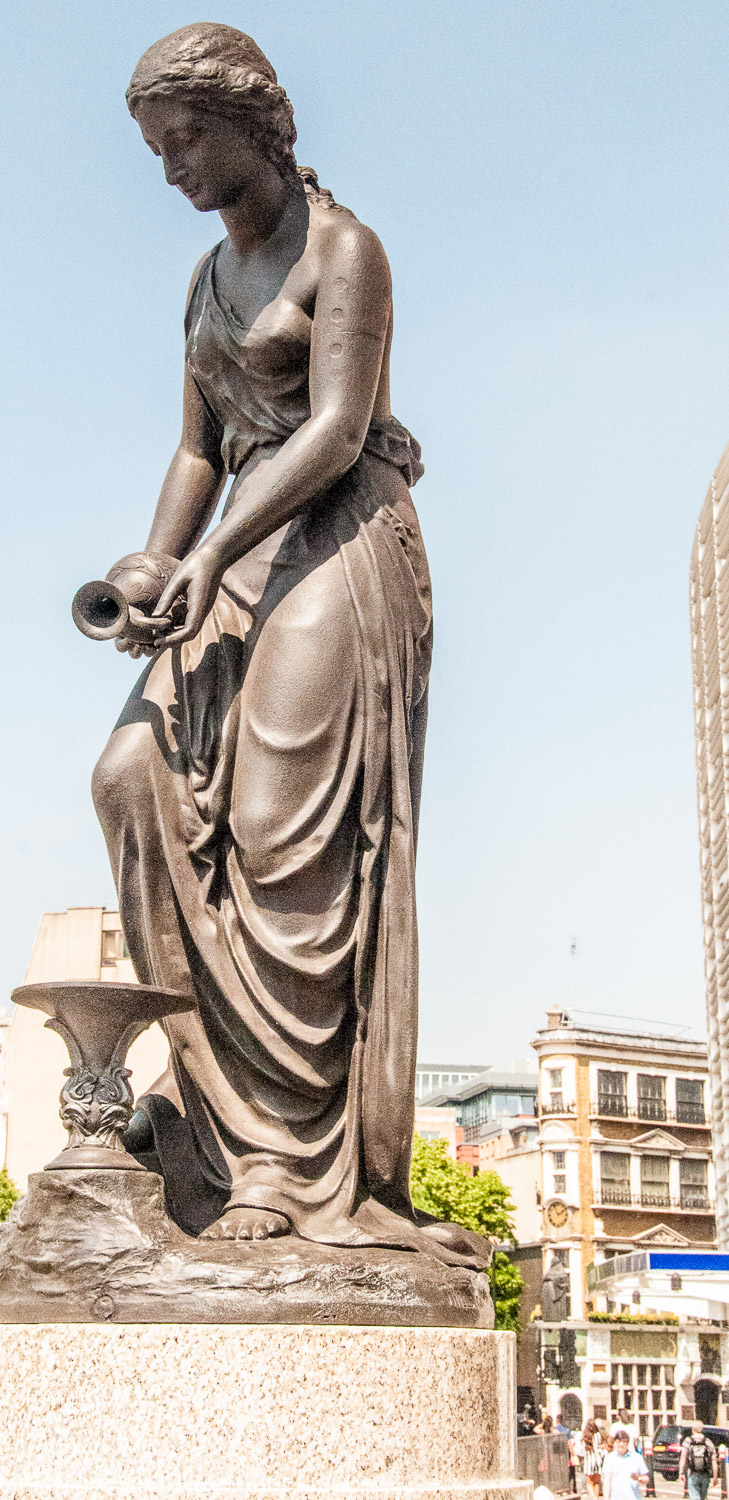
Just after you turn left outside the station you will see one of my favourite water fountains, recently liberated from behind hoardings and nicely restored.

Sculptor Wills Bros.

The pretty lady represents ‘Temperance’ and she originally stood outside the Royal Exchange.

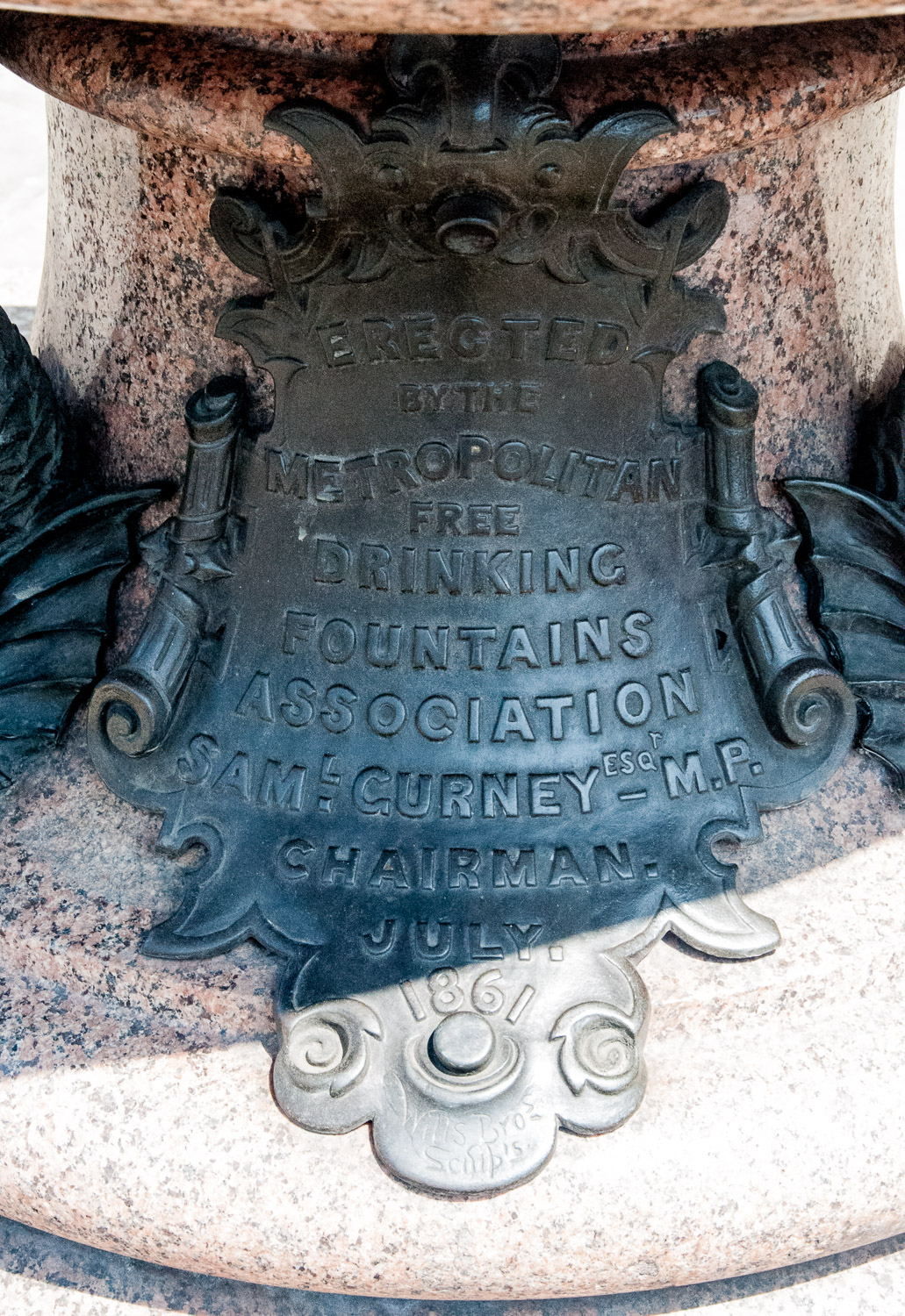
The fountain was inaugurated by Samuel Gurney, MP, the Chairman of the Metropolitan Free Drinking Fountains Association, on 27 July 1861 and you can read more about him, and the Association, in my earlier blog Philanthropic Fountains.

Page 42 of 44

Powered by WordPress & Theme by Anders Norén

Symbols & Secrets
Privacy Overview

This website uses cookies so that we can provide you with the best user experience possible. Cookie information is stored in your browser and performs functions such as recognising you when you return to our website and helping our team to understand which sections of the website you find most interesting and useful.