Walking the City of London

Category: Sculpture Page 33 of 43

City children

Not all statues, pictures and memorials in the City are of the ‘great and the good’ – there are quite a few young people represented as well.

For a start, there are the charity school children who wore a striking uniform that confirmed their school’s charity status – hence the name Bluecoat Schools. Blue was chosen since it was once the cheapest dye available. The school buildings often displayed life-size representations of their pupils and these two can now be found outside the church of St Andrew Holborn (EC4A 3AF) …
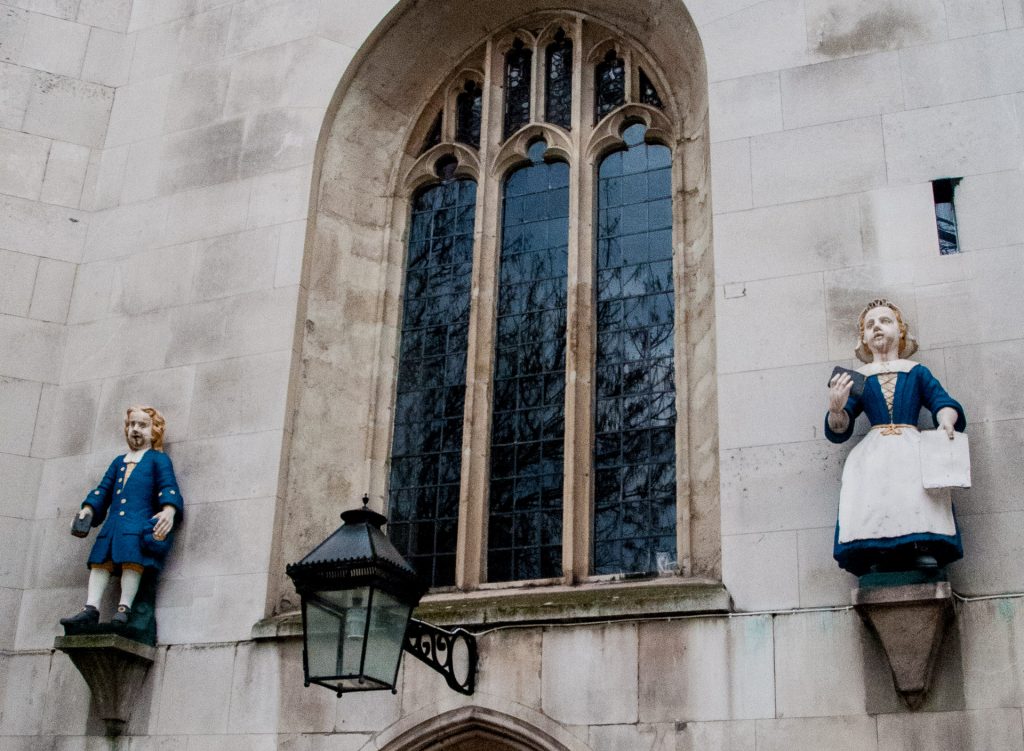
They depict children attending St Andrew’s Parochial School, founded in 1696 and located in Hatton Garden since 1721. The statues once stood over the Cross Street entrance to the Hatton Street school but were moved here during the church’s restoration after WWII bombing damage.

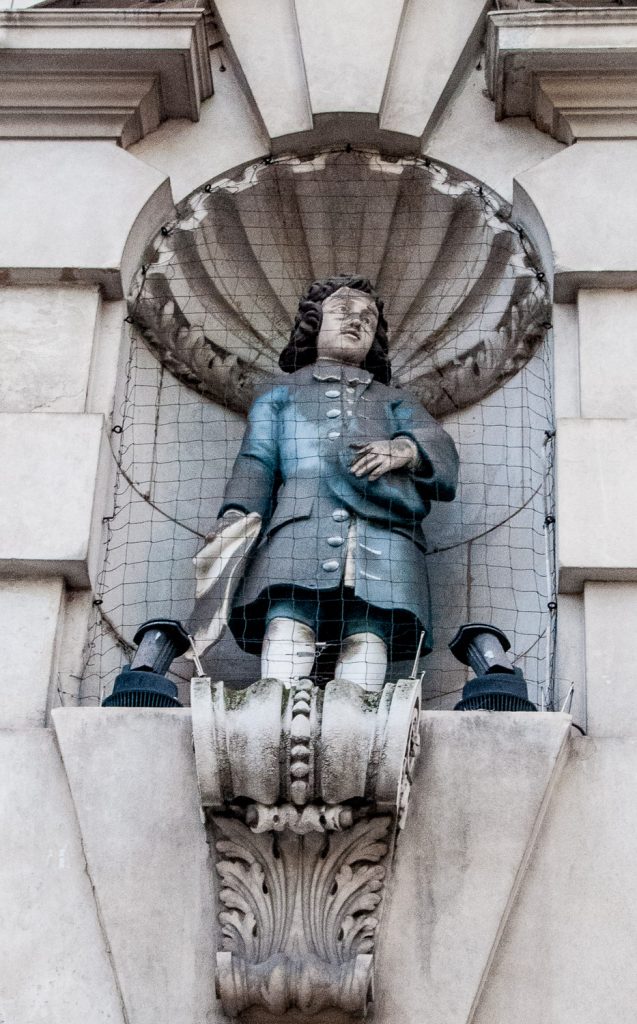
Sir John Cass’s School at Aldgate also has its little boy and girl statues (C3A 5DE) …
This work outside Liverpool Street Station depicts children from the Kindertransport (EC2M 7PD). I think they are beautifully portrayed, appearing both curious and confident (and one piece of luggage is clearly a violin case) …
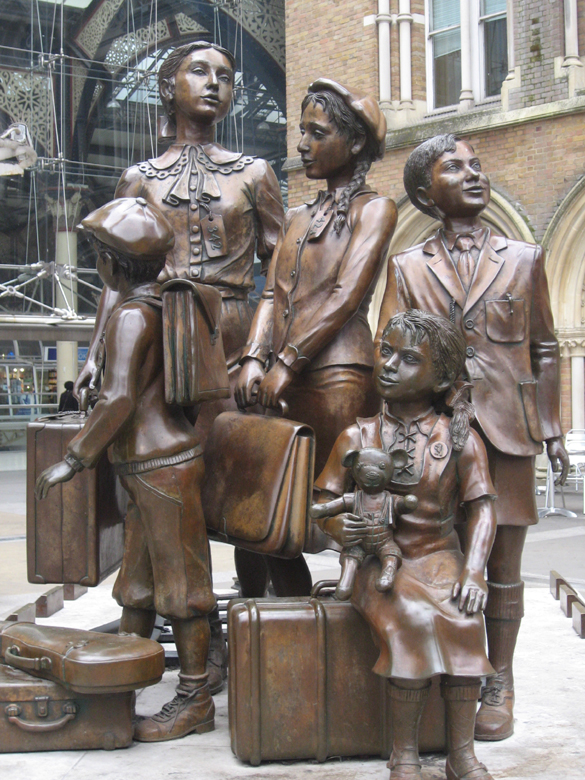
Photograph: Robin Coupland. Statue by Frank Meisler (2006).

In 1938 and 1939, nearly ten thousand unaccompanied Jewish children were transported to Britain to escape persecution in their hometowns in Germany, Czechoslovakia and Austria. These children arrived at Liverpool Street station to be taken in by British families and foster homes. Often they were the only members of their families to survive the Holocaust.

On a modern building in Giltspur Street (EC1A 9DD) a naked boy stands looking upwards with his arms crossed. He is often referred to as The Golden Boy of Pye Corner and he probably started life as a shop sign …
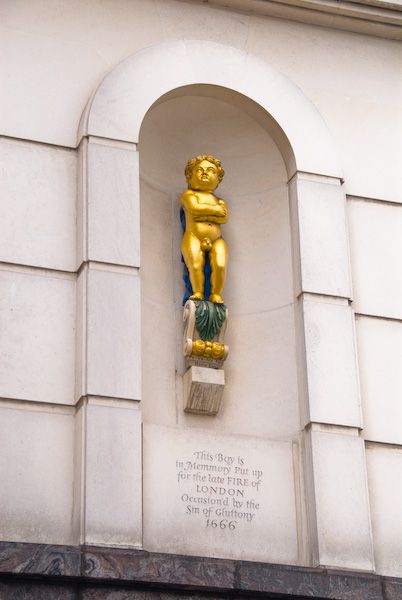
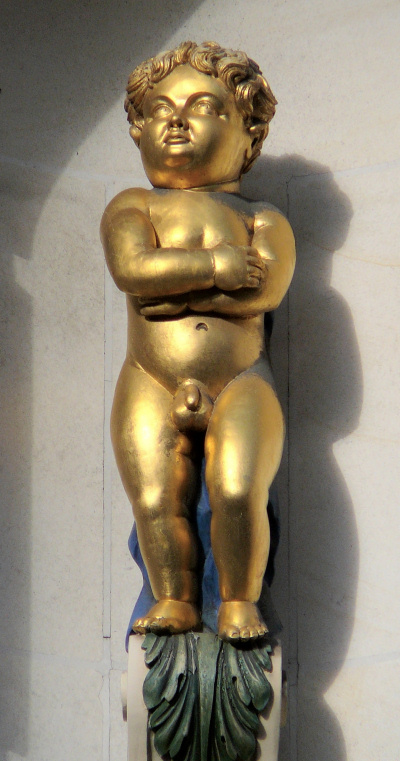
Now he commemorates one of the places where the Great Fire of 1666 was finally halted, and the inscription beneath refers to the belief by some at the time that God was punishing the City for the sin of gluttony. This was also evidenced by the fact that the conflagration started in Pudding Lane!

Despite the reference to gluttony, the little boy is not enormously fat but ‘healthily rotund’, as children or putti tended to be sculpted at that time. Pye (or Pie) Corner, on the other hand, was noted for food shops, particularly at the time of Bartholomew Fair. This annual celebration was finally suppressed in 1855 for ‘encouraging debauchery and public disorder’ and becoming a ‘school of vice which … initiated … youth into the habits of villainy’. The fair had also become one of the year’s great opportunities for pickpockets as well as for prostitutes, who might be found in tents coyly labelled ‘soiled doves’ or in a nearby street appropriately named Cock Lane.

But I digress.

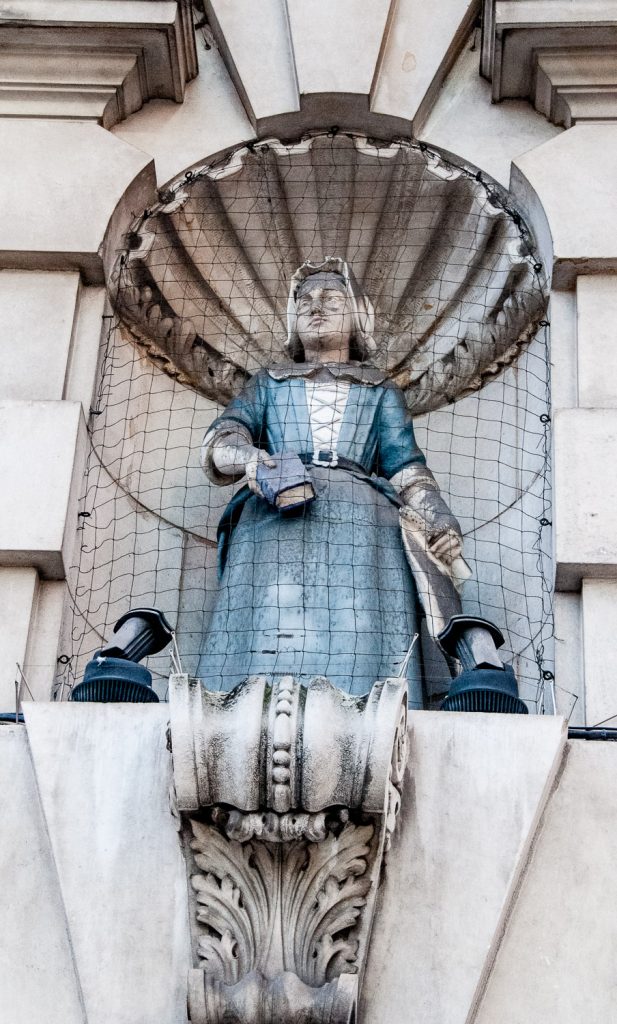
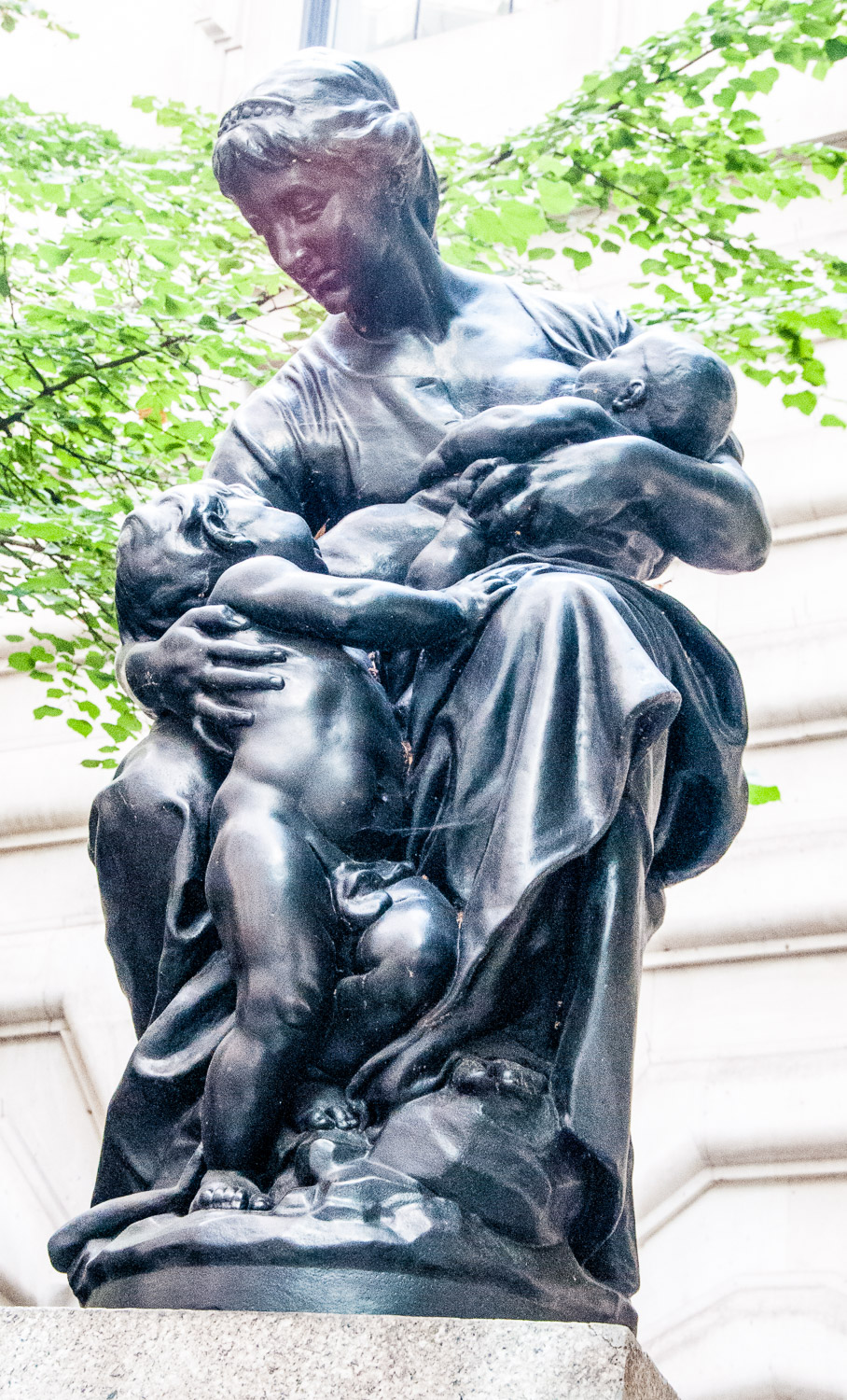
Just behind the Royal Exchange is a work that caused some controversy, the Charity Drinking Fountain (also known as La Maternité) by Aimé-Jules Dalou (1877-9). (EC3V 3NL).

In his book Public Sculpture of the City of London, Philip Ward-Jackson describes the lady as follows:

Despite her casual garb she has a diadem or tiara on her head. With her left arm she enfolds a baby, who she is suckling, whilst with her right she draws to her knee a naked boy, who gazes up at her.
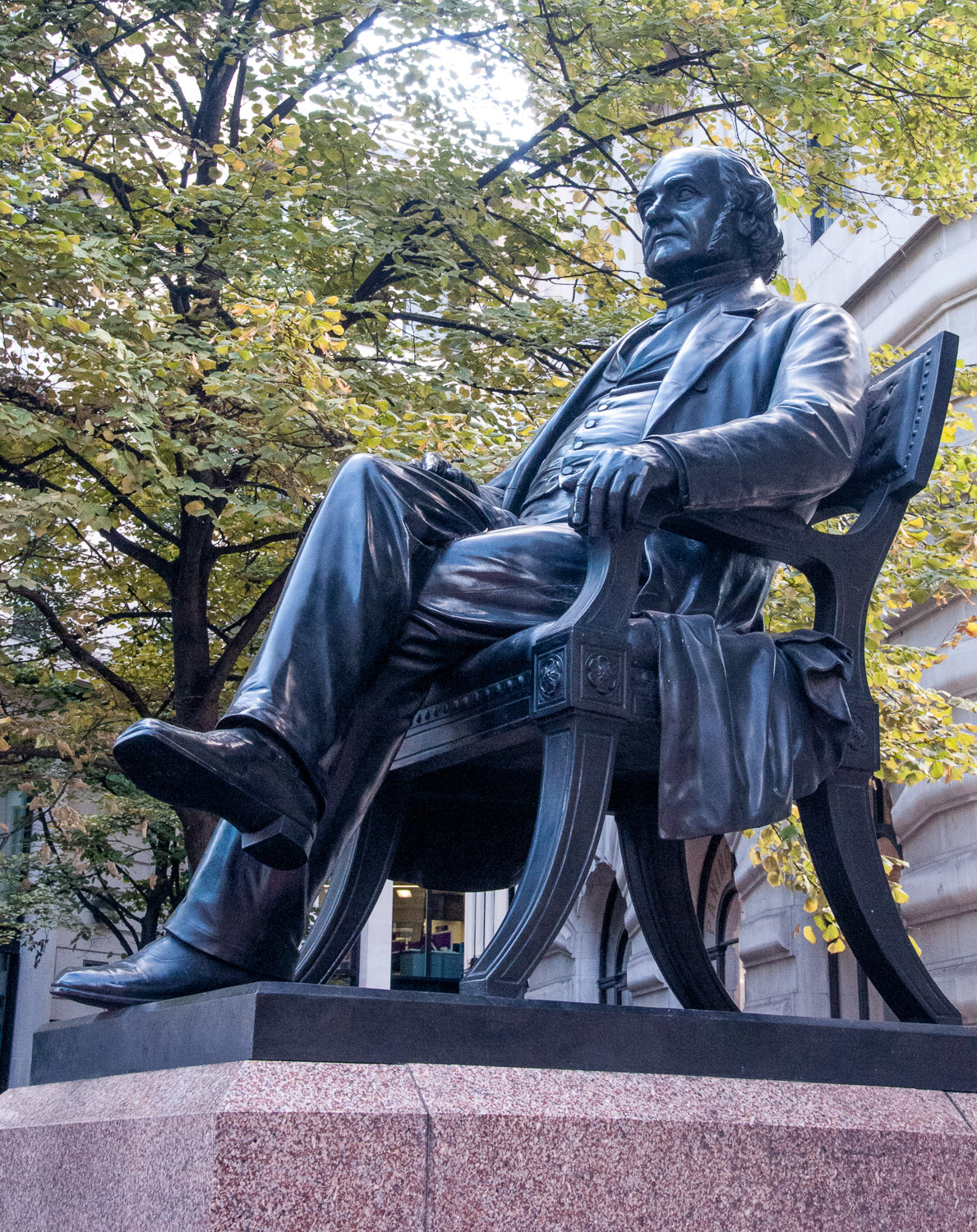
Nearby is a very relaxed George Peabody who I have written about in an earlier blog

Ward-Jackson tells us that the suckling lady’s very authentic exposed breast produced at least one letter of protest to the editor of The Globe. The correspondent urged that ‘common decency’ should be observed and went on …

Do you not think, Sir, that Mr Peabody’s chair should be turned, at least until the delicate operation of ‘lacteal sustenation’ be concluded … or the young woman and youngsters provided with the requisite clothing.

Living in the Appold Street entrance to Exchange Square are The Broad Family (EC2A 2BR) …

Look long enough and you will see mum, dad, a little girl with her ball and the family dog (well I did, anyway). It has just occurred to me that the dog resembles Dr Who’s companion K9.

The little girl’s shoes peep out tantalisingly …

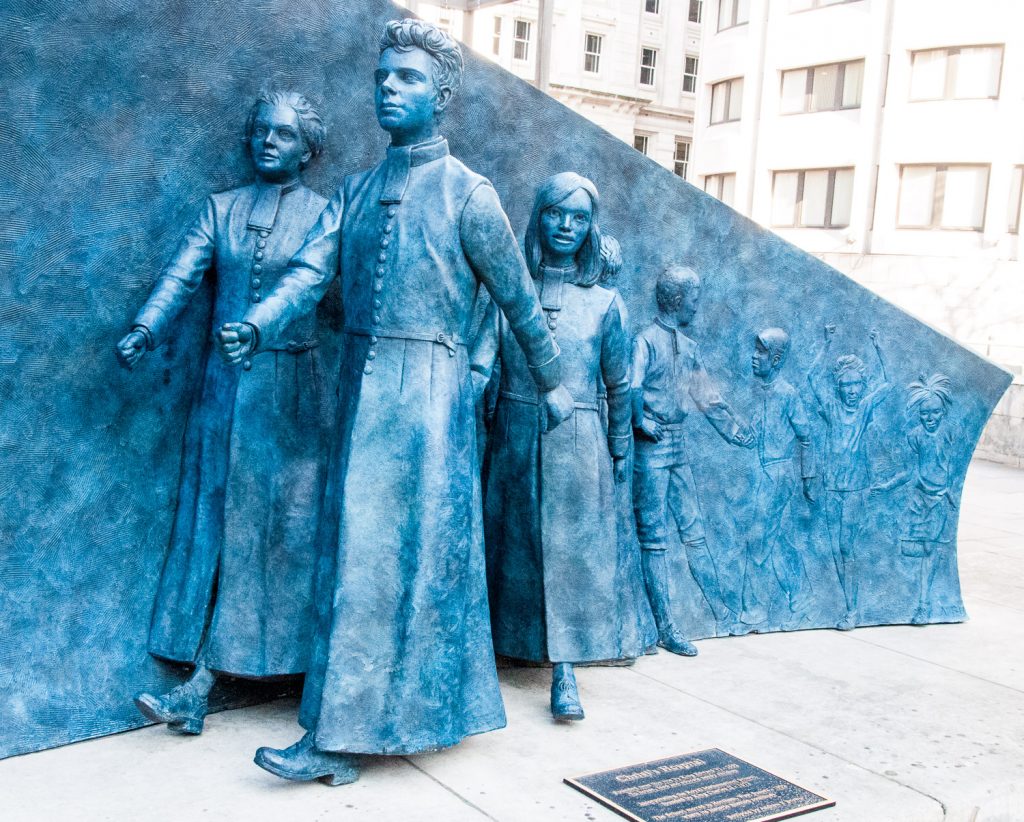
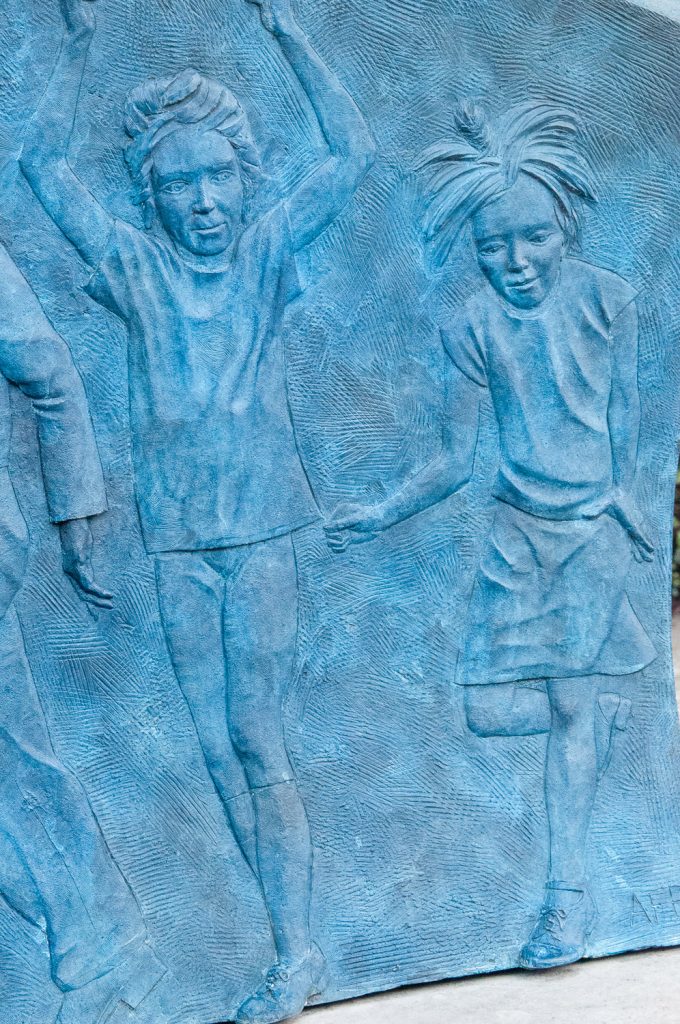
These young folk striding out purposefully are part of the memorial to Christ’s Hospital School which was sited nearby before it relocated to Horsham in 1902 (EC1A 7BA). It shows the pupils developing from street urchins to smart, confident young adults …
I love the ragamuffins at the far end of the sculpture.They seem to be having enormous fun and sport the most extraordinary hairstyles …
As you approach the Bank junction from Cheapside look up and you will see two young boys at either end of the grand building that was once the City headquarters of Midland Bank (1935). The are both struggling with a rather angry looking Goose …
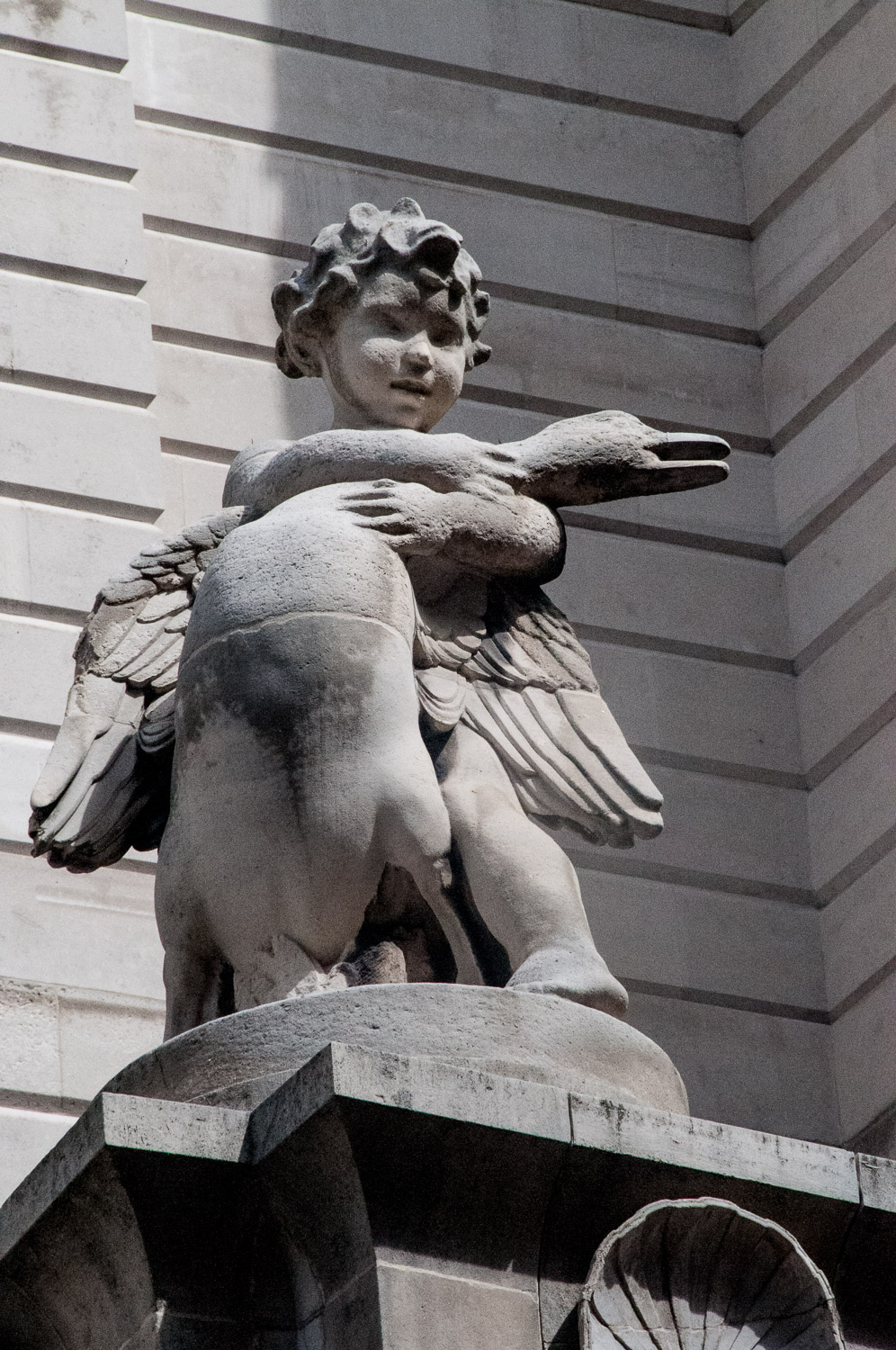
The sculptor was William Reid Dick.
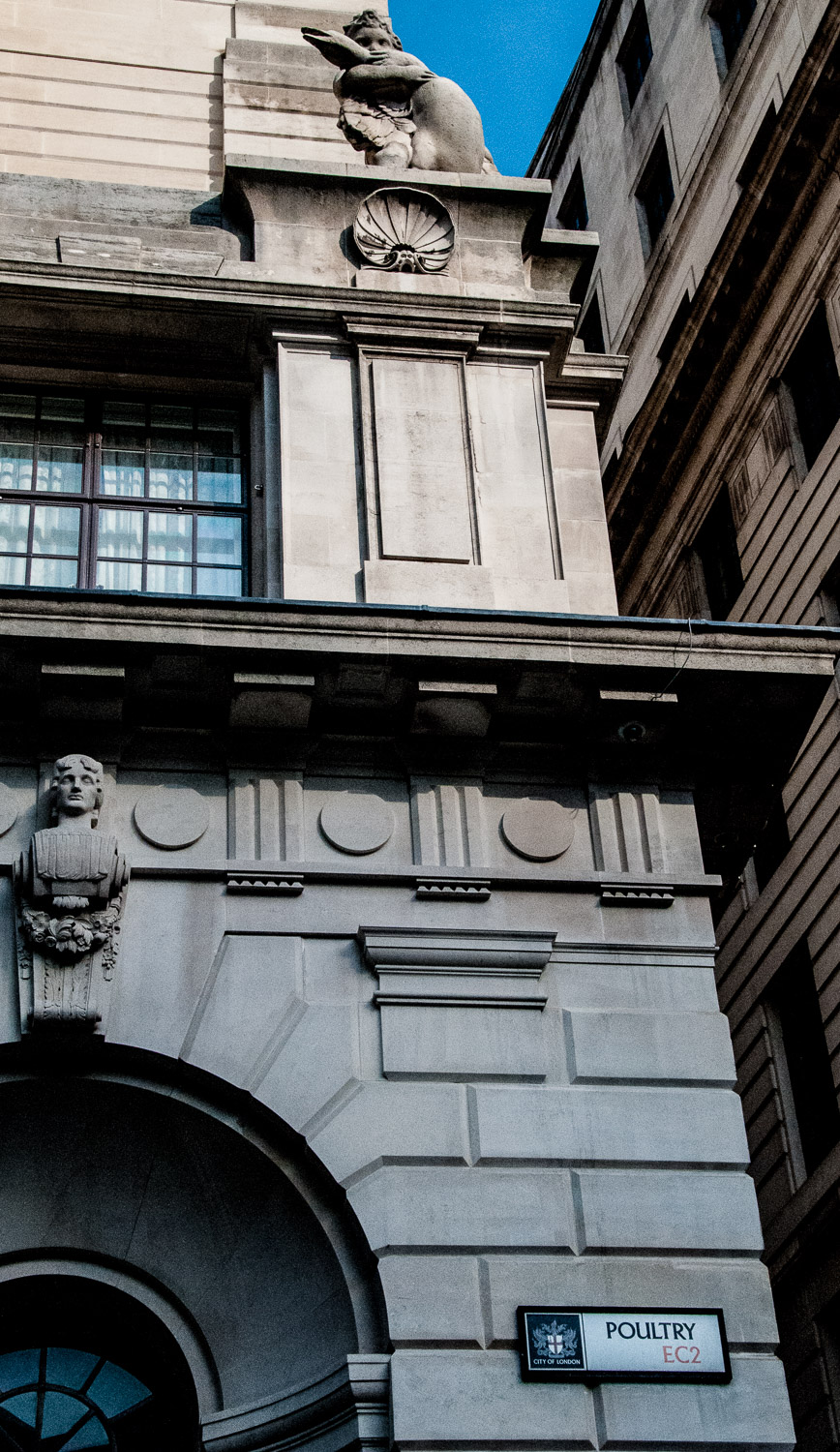
Why a goose? A clue is the ancient name of the street and the goose was a suggestion by the architect Sir Edwin Lutyens to commemorate its original market function. The building is now a private club and restaurant, called The Ned in Sir Edwin’s honour.

In the Guildhall Art Gallery there is a pretty little girl attending her first sermon …
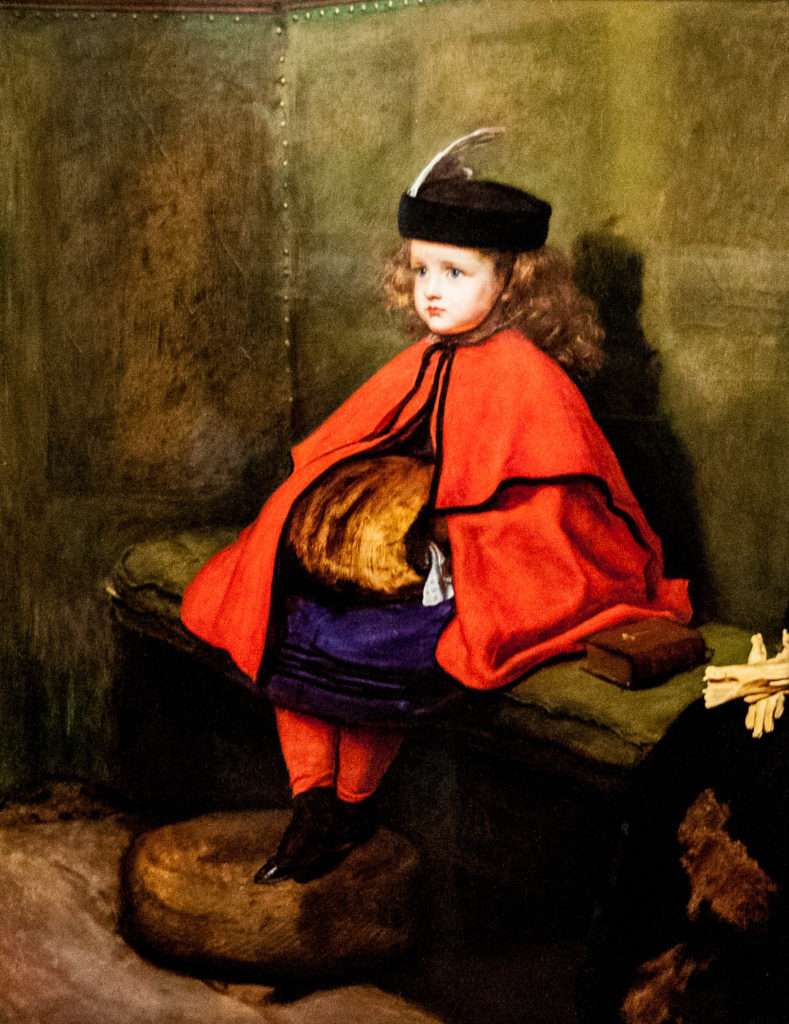
My First Sermon’ by John Everett Millais

She obviously knows this is an important occasion in her life and sits with her back straight, eyes attentively focused looking ahead. She is the artist’s 5 year old daughter Effie. On seeing it the Archbishop of Canterbury commented …

… our spirits are touched by the playfulness, the innocence, the purity, and … the piety of childhood

In 1864 the artist produced a sequel entitled ‘My Second Sermon’ …
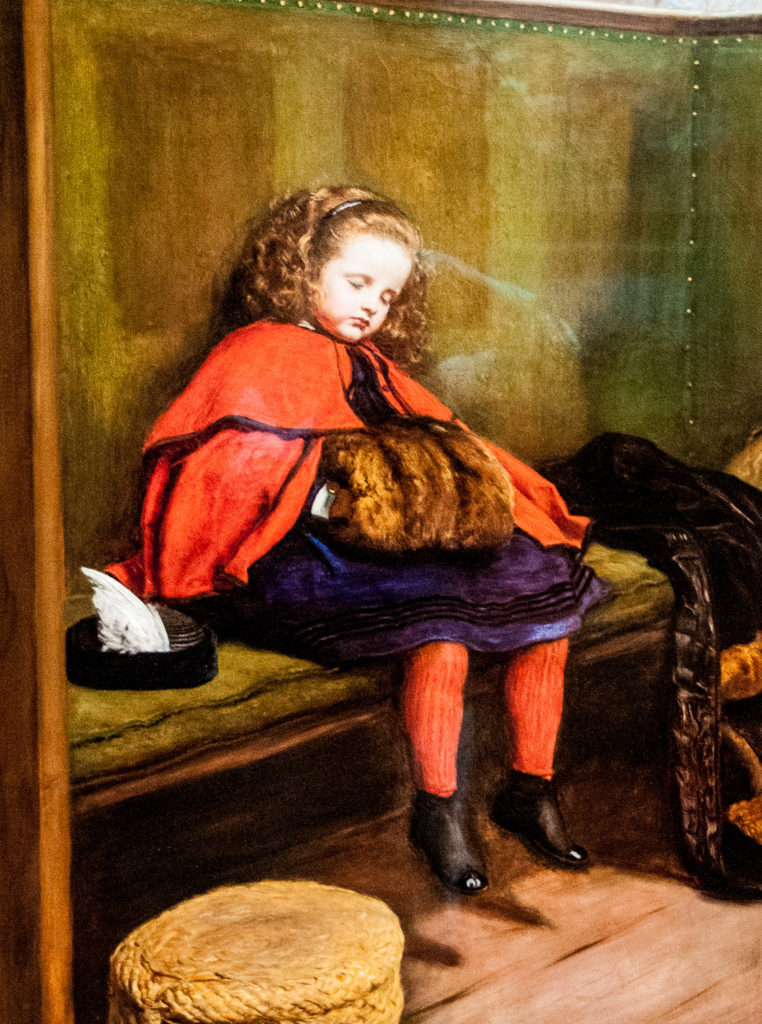
The Archbishop, Charles Longley, was obviously a rather good sport, and when he saw the later picture commented …

… by the eloquence of her silent slumber, (she has) given us a warning of the evil of lengthy sermons and drowsy discourses. Sorry indeed should I be to disturb that sweet and peaceful slumber, but I beg that when she does awake she may be informed who they are who have pointed the moral of her story, have drawn the true inference from the change that has passed over her since she has heard her “first sermon,” and have resolved to profit by the lecture she has thus delivered to them.

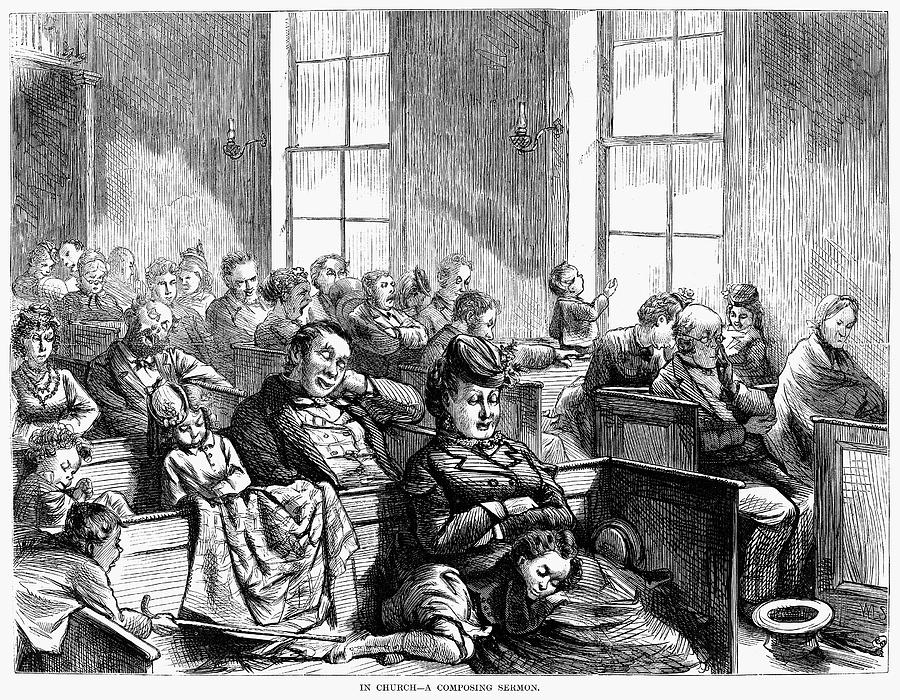
I was reminded of this wonderful drawing of a Victorian congregation who are finding the sermon rather heavy going …
In 1995 a skeleton was discovered when excavations were taking place before the construction of 30 St Mary Axe, now often referred to as the Gherkin. The remains were of a young girl aged between 13 and 17 years – her arms were crossed over her body and pottery close by indicated a burial date of between AD 350 and 400.

Having been removed to the Museum of London, she waited patiently until 2007 when the developers of the Gherkin proposed that she be reburied on the site. So, in April of that year, there was a service at St Botolph’s church in Aldgate followed by a procession through the streets before her body was respectfully interred near where it was found. The Lady Mayoress of the City of London was there to spread rose petals on the gravesite, marked with a marble slab decorated with a laurel wreath.
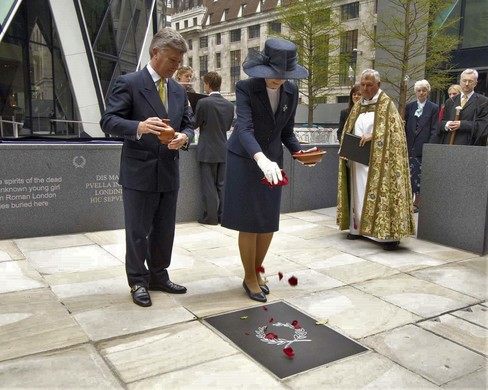
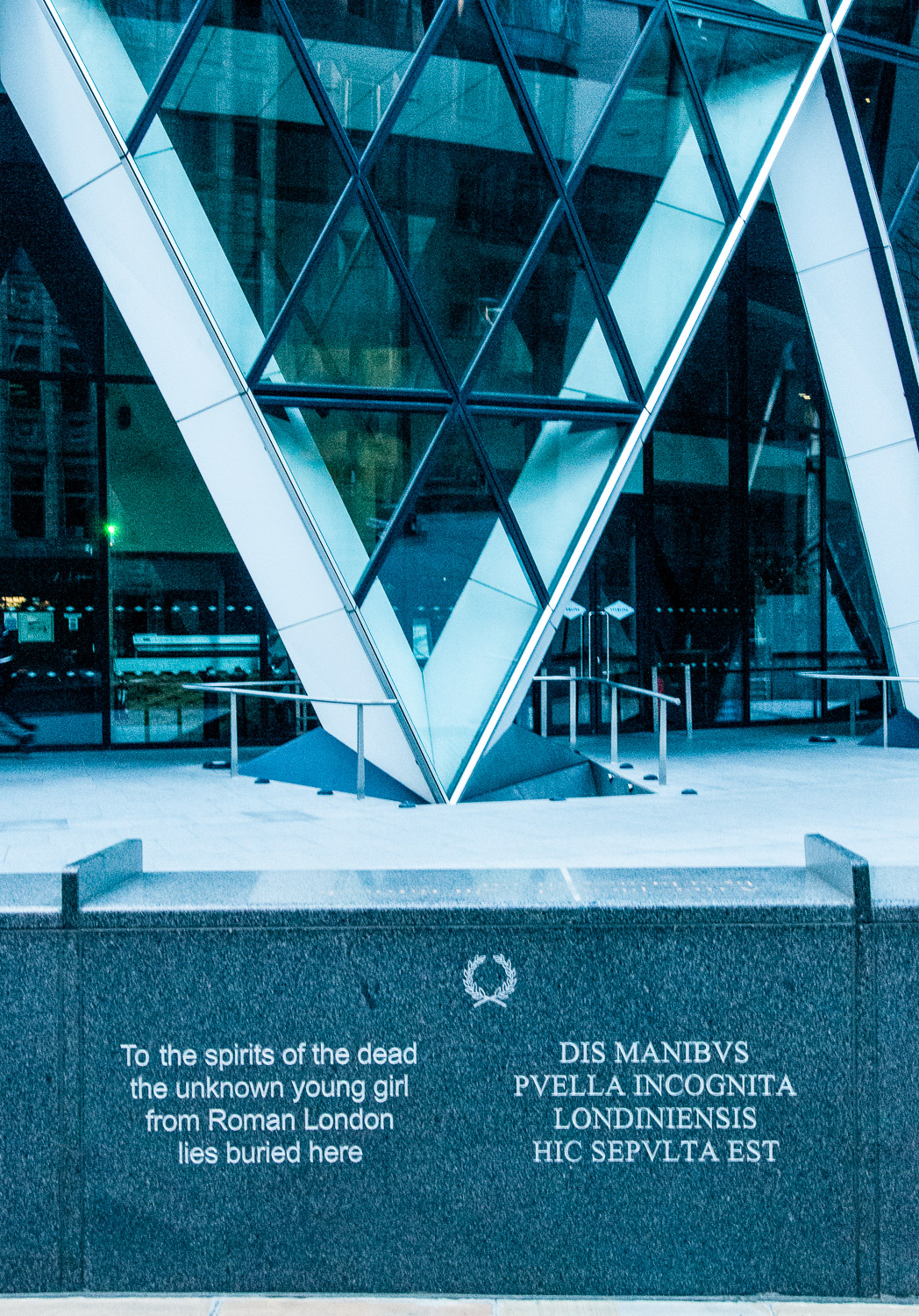
We don’t know her name, or whether she was an original Londoner, but she now rests again 1,600 years after her death in the place that she would have called Londinium.

And finally to one of my favourite places, the Watts Memorial in Postman’s Park (EC1A 7BT). I have written before about three of the brave youngsters commemorated there – Alice Ayres, John Clinton and Elizabeth Boxall.

To them I will now add this young man …
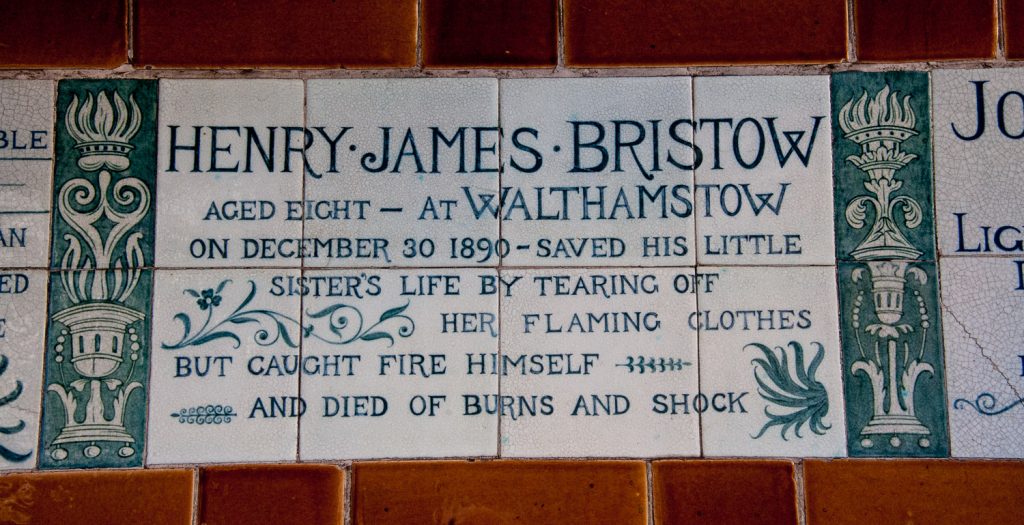
While their mum was out running an errand Henry’s two-year-old sister Jessie, intrigued by the glow of a paraffin lamp, managed to clamber up a chair and reach out for it. Tragically, she overturned it and was enveloped in flaming paraffin. Henry rushed to help her, but in tearing off her clothes set fire to himself and both children received severe burns. Jessie survived but Henry died on 5th January – the coroner at his inquest commented ‘it is a sad case, the little fellow was quite a hero’.

That’s all for this week – I hope you enjoyed it even though I have written about some of these subjects before.

Remember you can follow me on Instagram :
https://www.instagram.com/london_city_gent/

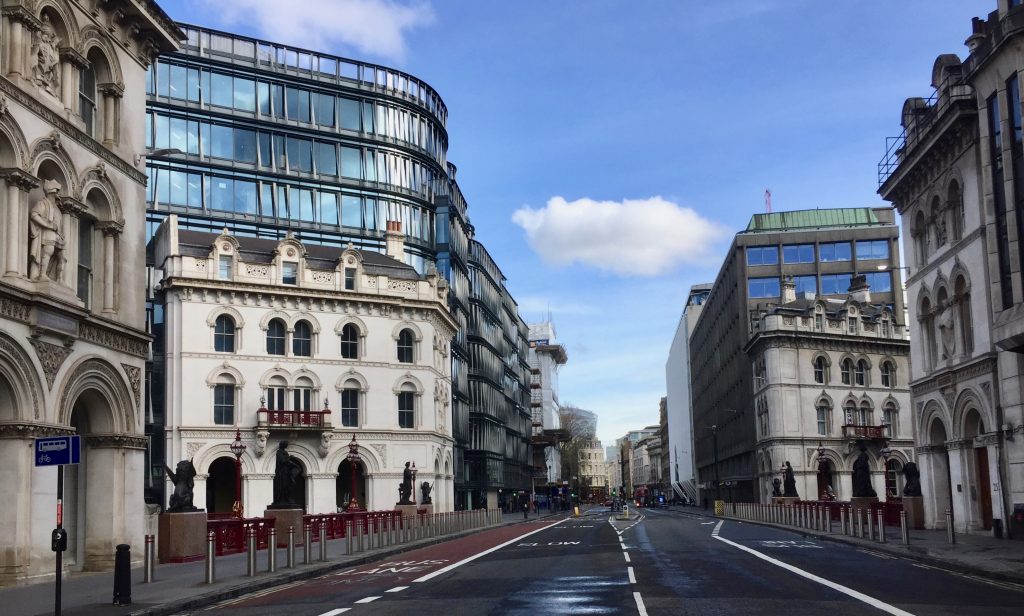
Holborn Viaduct – not all it seems

I have been out and about again, taking new pictures as I exercise.

Every now and then when researching I find out something I didn’t know that I really should have – more of this later.

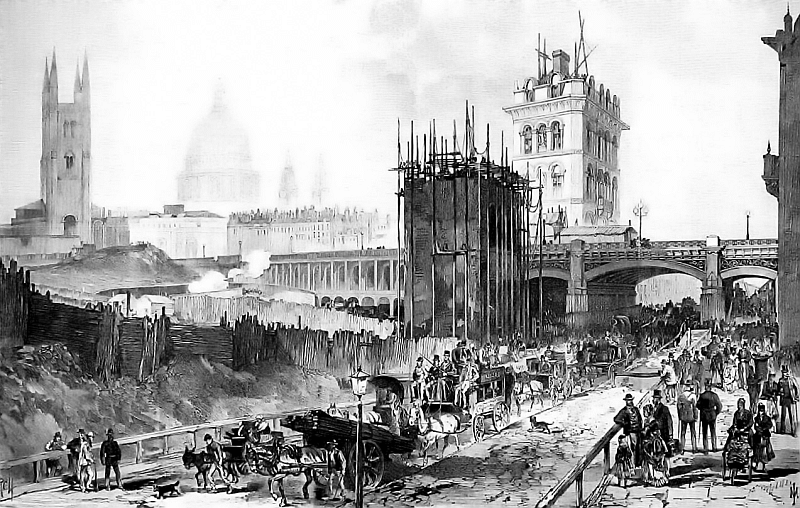
Before the Viaduct was built it had become obvious that a flat route between Bank and Holborn had become desperately needed. The hills leading down into the valley were as steep as 1:15 in places and the following passage from the Observer for the 20th November 1864 tells us something of the horrors of horse drawn traffic using this route:

The great traffic of the city of London is from east to west, and to accommodate this there are at present but two leading lines – those by way of Holborn Hill and Fleet Street. The steep ascents of Holborn Hill and Skinner Street are wholly unsuited for the vehicular traffic which passes over them, and no person can pass along these streets without witnessing the delays which are caused, and the wasteful expenditure of horse flesh and the cruelty to animals which the ascent of these streets involve.

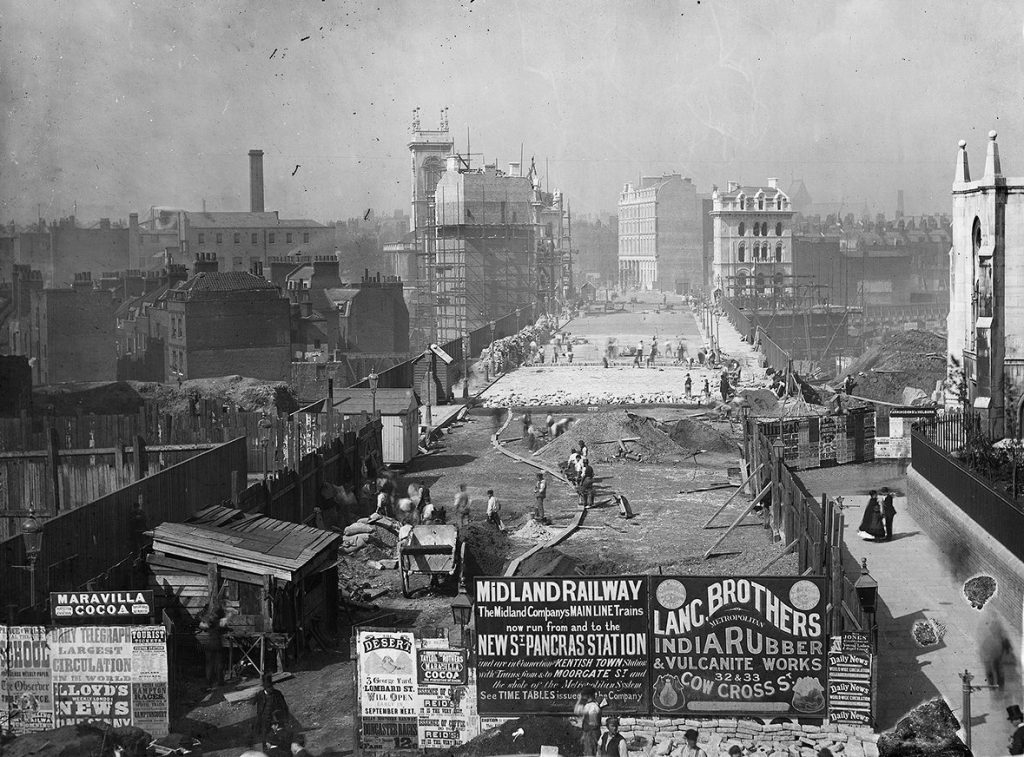
Work was started in 1863 and I really like this splendid photograph of the work in progress looking west …

Note the advertisement for the ‘New’ St Pancras Station.

And another view looking south …

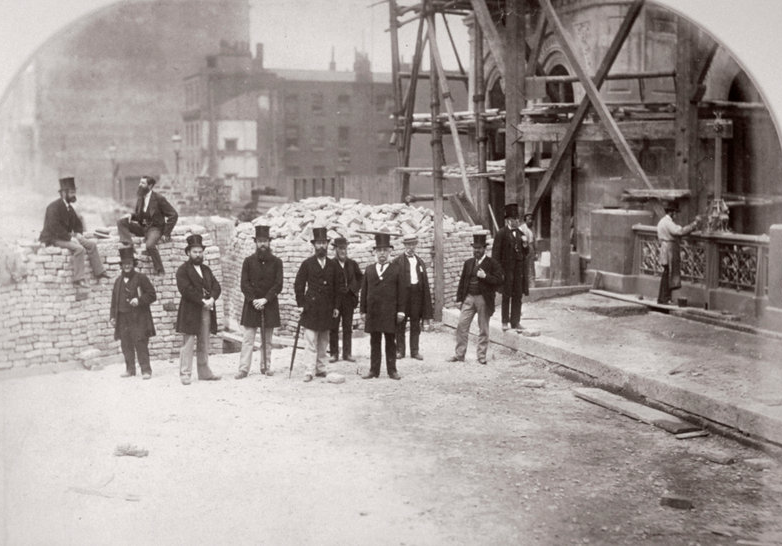
The Holborn Viaduct Improvements Committee turned up for a photo shoot …

True top-hatted Victorian Gentlemen. It’s a good composition, isn’t it, with two of them getting their clothes grubby sitting on bricks. An anonymous artisan looks to be doing a bit of work on the balustrade and lamp post to the right.

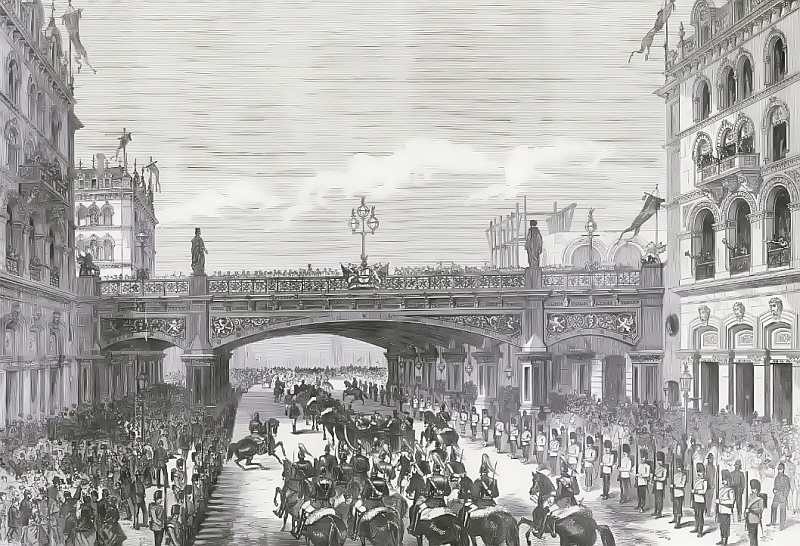
Queen Victoria arrives at the formal opening on 6 November 1869 …

It has been called ‘The world’s first flyover’.

She killed two birds with one stone by opening Blackfriars Bridge on the same day.

Up until the turn of this century, the north eastern corner of the viaduct was dominated by an early 1950s building called Bath House. You can see its massive scale in this picture …

When it was demolished it was decided that a new staircase building should be constructed in the same style as the old Victorian one that had been lost in wartime bombing (and that it should include a lift).

It was completed in 2014 and here it is, looking white and pristine in my picture …

Not only that, the north west step building (also on the left) is itself relatively new, being completed in 2001. All this was, I am embarrassed to say, news to me, although the buildings’ colour and cleanliness should have been a clue.

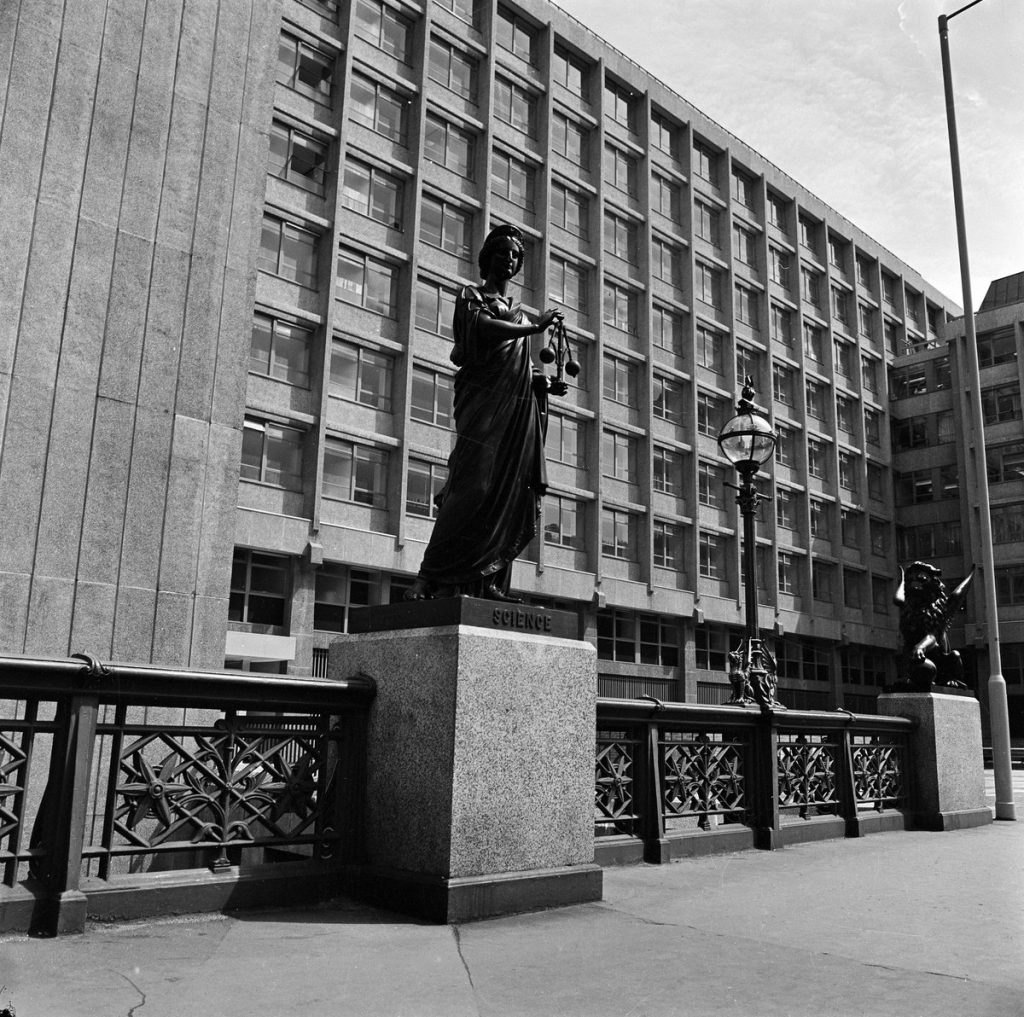
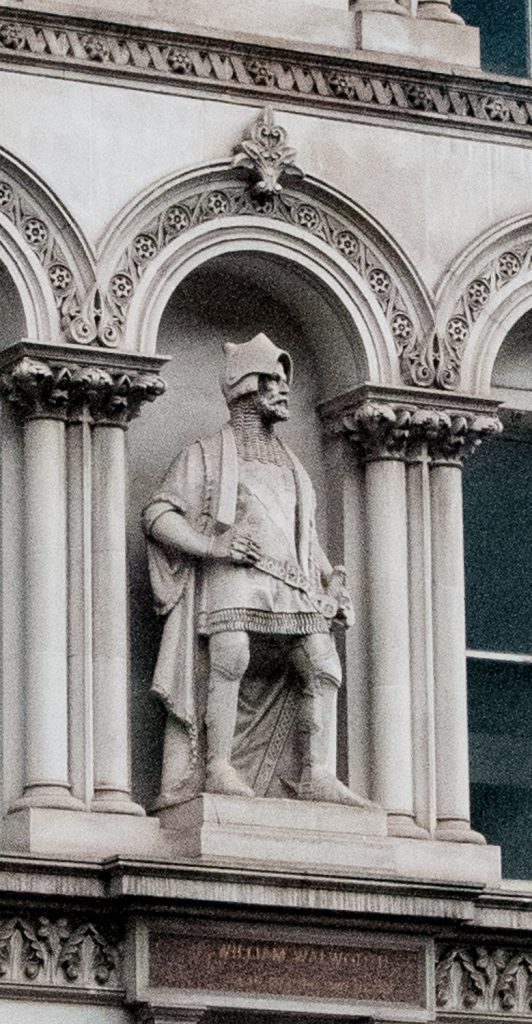
All four pavilions around the viaduct are named after important Londoners from the past.

Sir William Walworth was a 14th century Lord Mayor. He now poses authoritatively, sword in scabbard, on the north west corner …

On June 15th 1381 he was accompanying King Richard II when they debated in Spitalfields with the leader of the Peasants’ Revolt, Wat Tyler. For reasons that are not entirely clear, Walworth ran Tyler through with his sword. Badly wounded, Tyler was carried into nearby St Bartholomew’s Hospital but, rather unsportingly, Walworth had him dragged out and decapitated. Poll Tax protesters were dealt with very ruthlessly in those days!

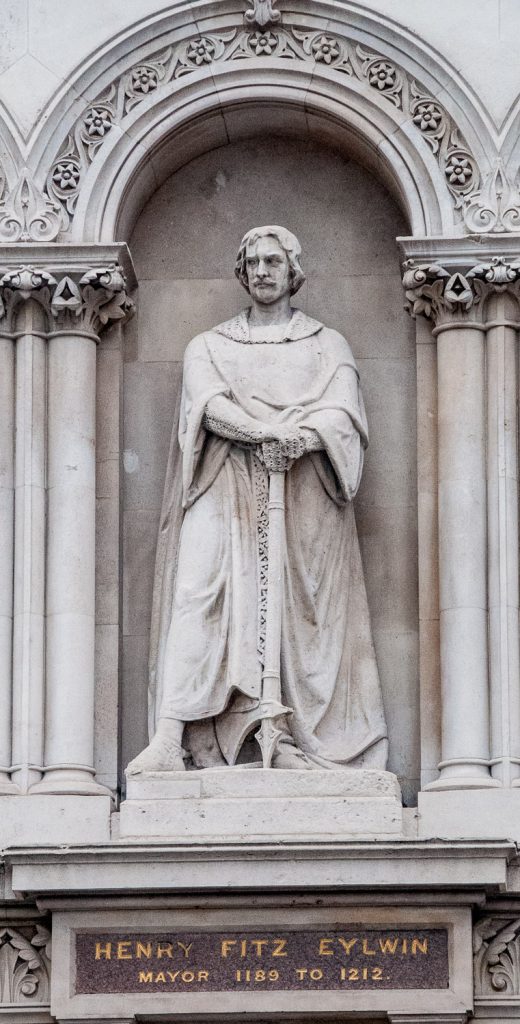
On the south west corner …

FitzEylwin was the first Mayor of London and probably held office until his death. His hands rest on a battleaxe and he is wearing a surcoat over his chain mail.

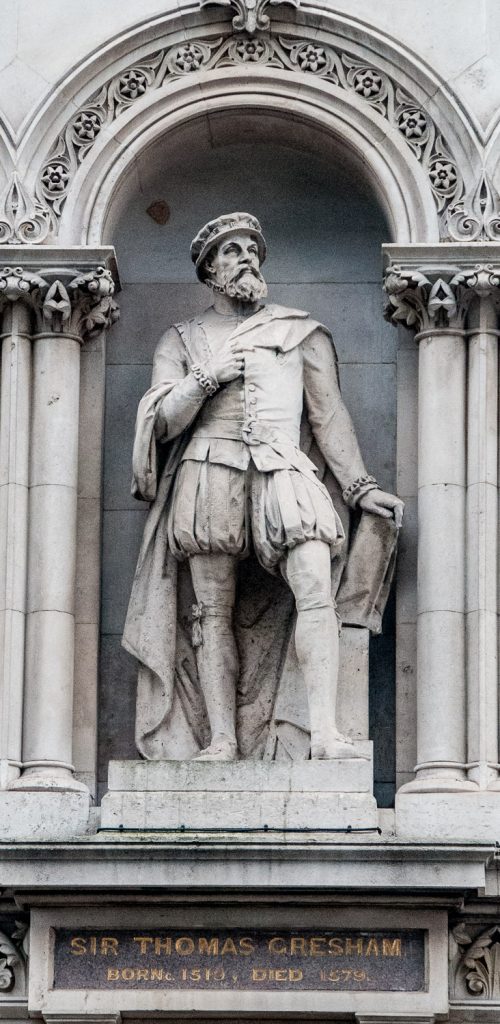
There is a City legend portrayed on the south east corner…

Sir Thomas Gresham, founder of the Royal Exchange, is dressed in 16th century costume and holds a parchment.

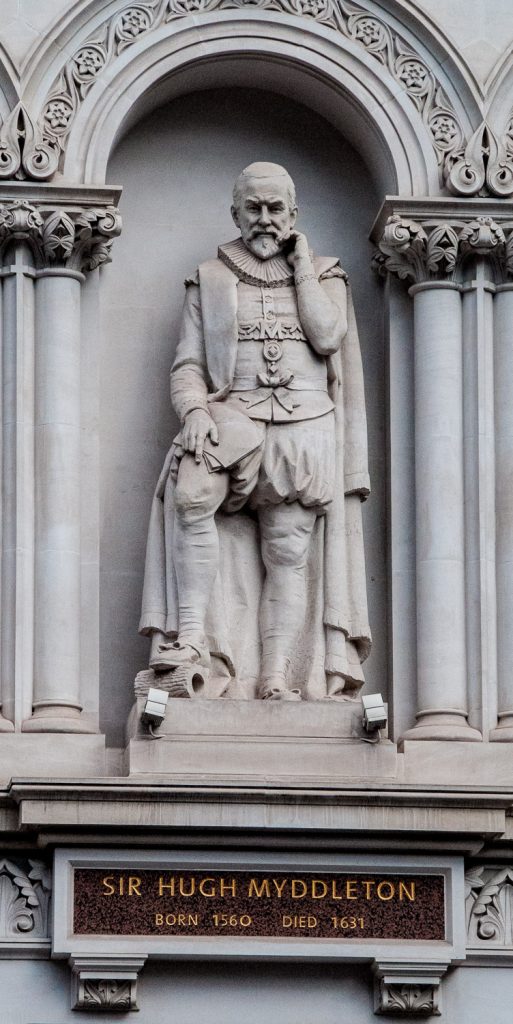
Finally, on the fourth corner, is this gentleman …

Sir Hugh Myddleton, a goldsmith and entrepreneur, established the New River Company which constructed the New River bringing much needed fresh water from Hertfordshire to London. This remained the most important source of piped water in London for 300 years and Robert Stephenson considered him ‘the first English Engineer’. He is holding the River plans in his hand and I think his right foot is resting on a water conduit pipe.

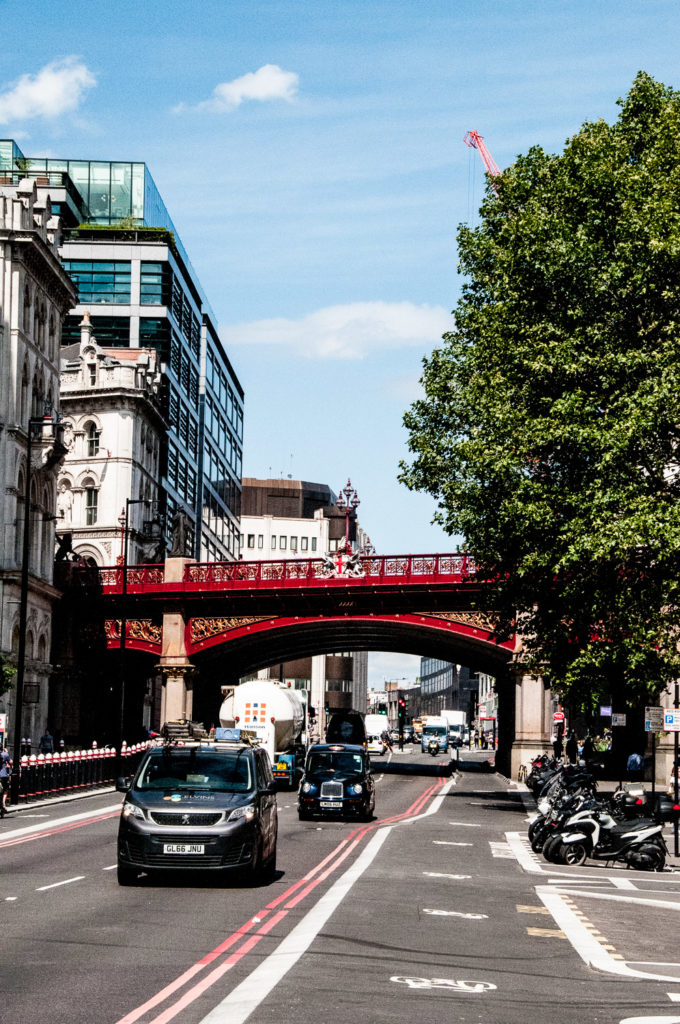
This is the view of the Viaduct today, giving some idea as to how deep the valley was …

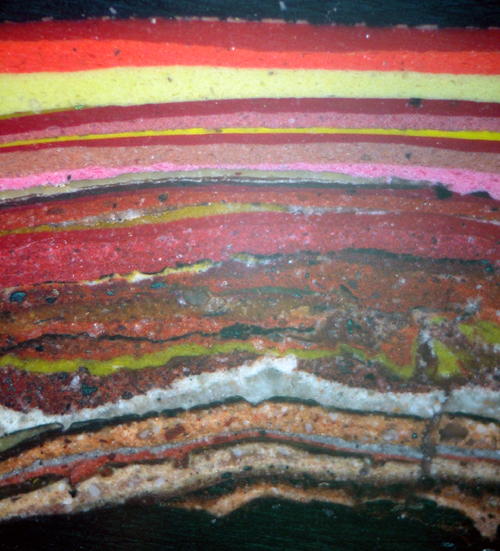
Paint analysts reckon it has been repainted at least fourteen times. Look at this fascinating cross section of old paint layers …

Cross section of paint from one of the lamp standards.

The Viaduct proved much more interesting than I expected, so I shall be continuing its story next week.

Remember you can follow me on Instagram :
https://www.instagram.com/london_city_gent/

More City doors and doorways

Created between the 15th century and the more recent past, I have found a selection for us to admire and, in many cases, still walk through like thousands before us.

The oldest door I have discovered is the medieval chapel door in The Charterhouse. It was damaged by fire when the building was bombed during the Blitz (EC1M 6AN) …

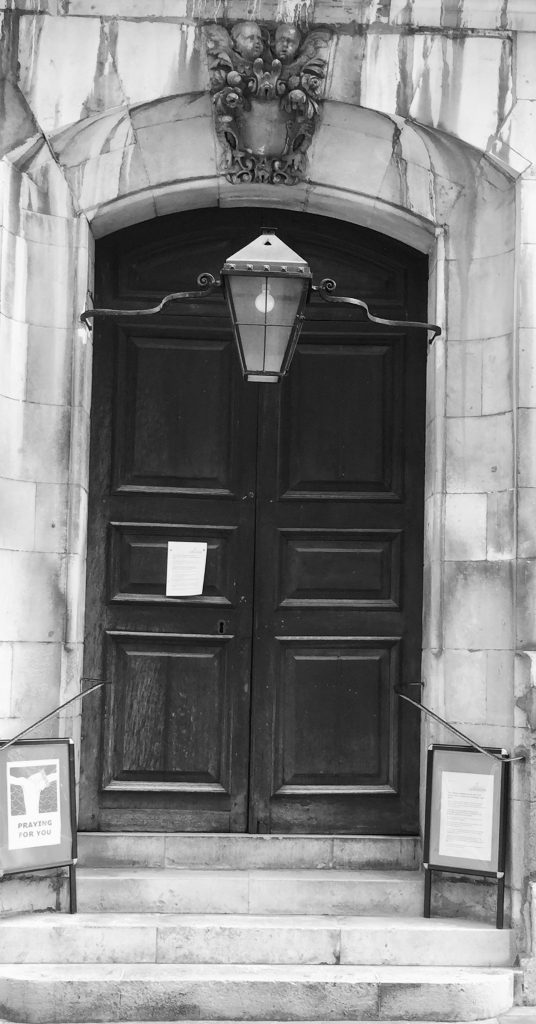
When you visit St Vedast-alias-Foster in Foster Lane you enter through early 17th century oak doors that have remarkably survived both the Great Fire of 1666 and the Blitz (EC2V 6HH) …

The cherubim carved on the keystone above the door are by one of Sir Christopher Wren’s favourite stonemasons, Edward Strong, and date from the 1690s. In total Strong was paid £3106:14:7 for his work on the church – he charged £5 for the cherubs.

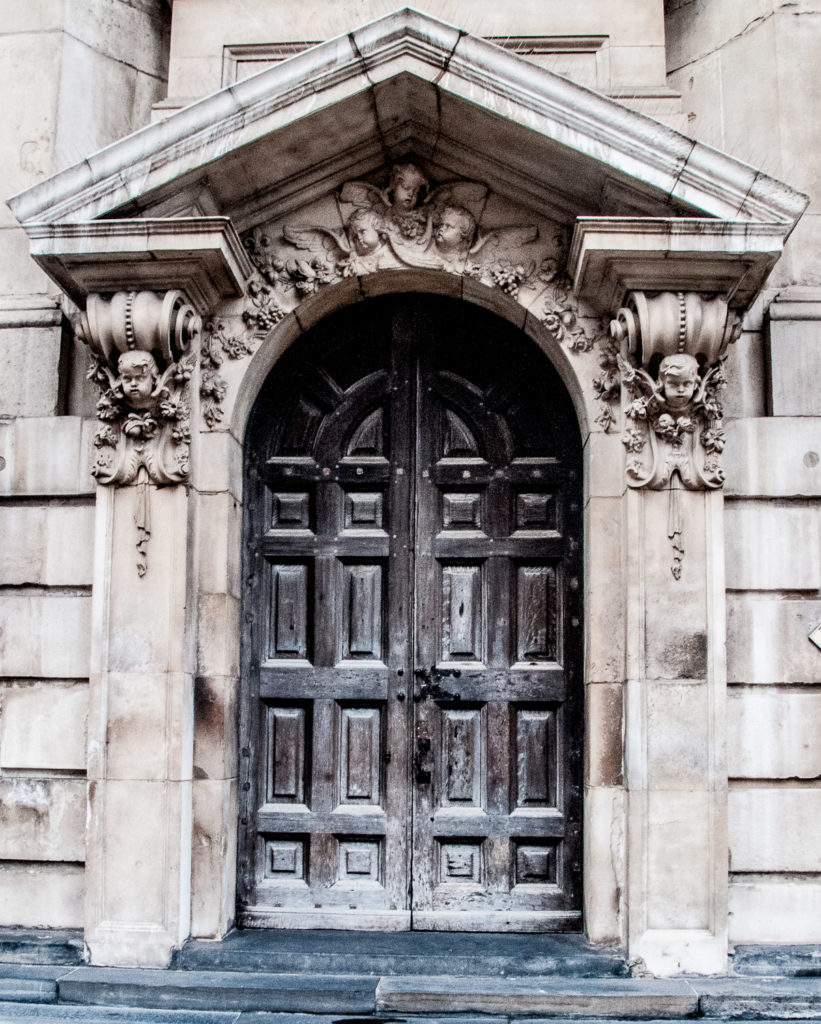
On the south side of St Paul’s Cathedral is the Dean’s Door …

The carver was stonemason and architect Christopher Kempster (1627-1715), another of Wren’s favourite craftsmen. His work on the cherub’s heads and foliage was considered so good Wren awarded him an extra £20 for ‘the extraordinary diligence and care used in the said carving and his good performance of the same’. When Kempster died at the age of 88 his son carved a cherub’s head for his memorial.

Incidentally, £1 then was worth about £120 now.

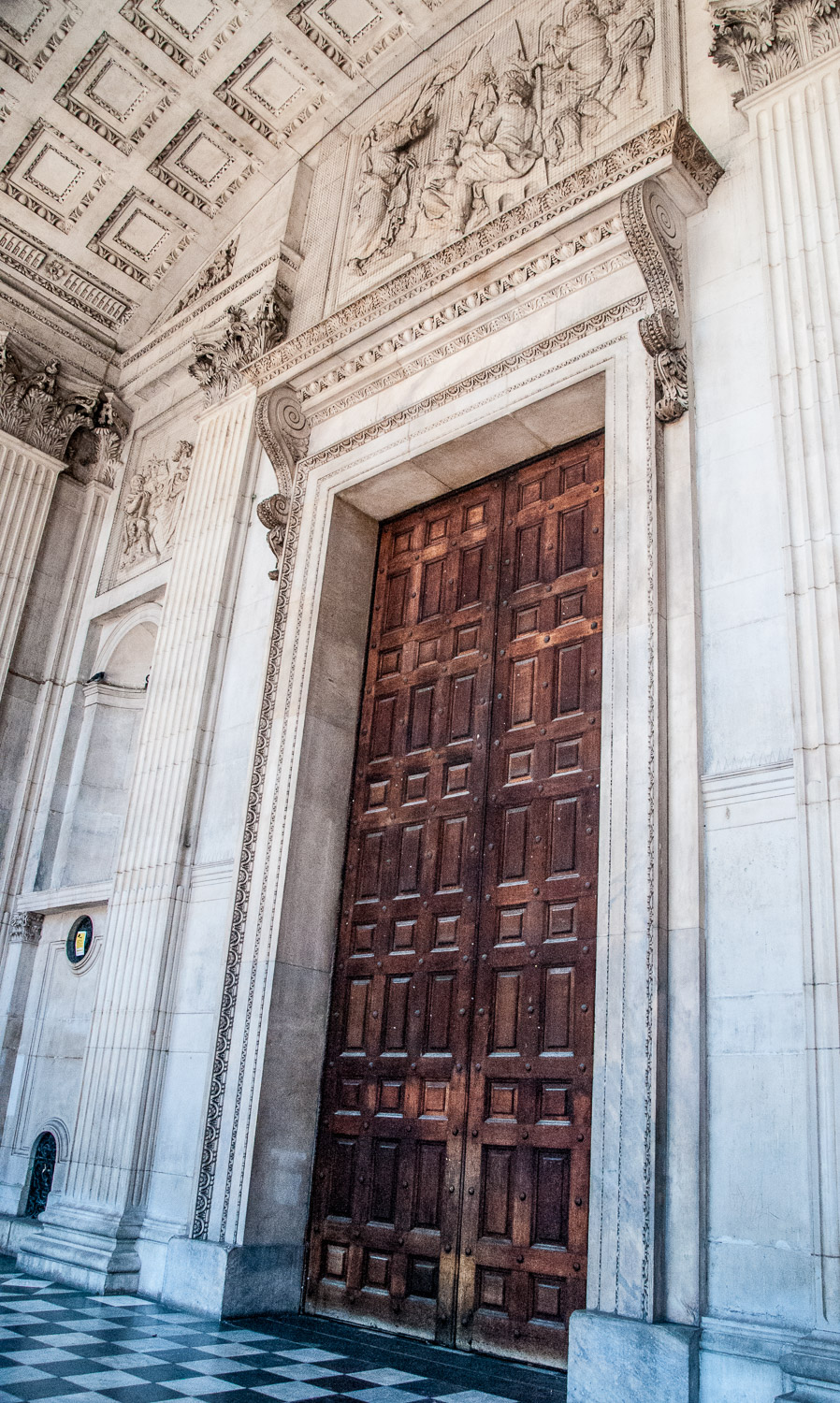
The Cathedral’s main entrance, the 30 foot high Great West Door, is only opened on special occasions …

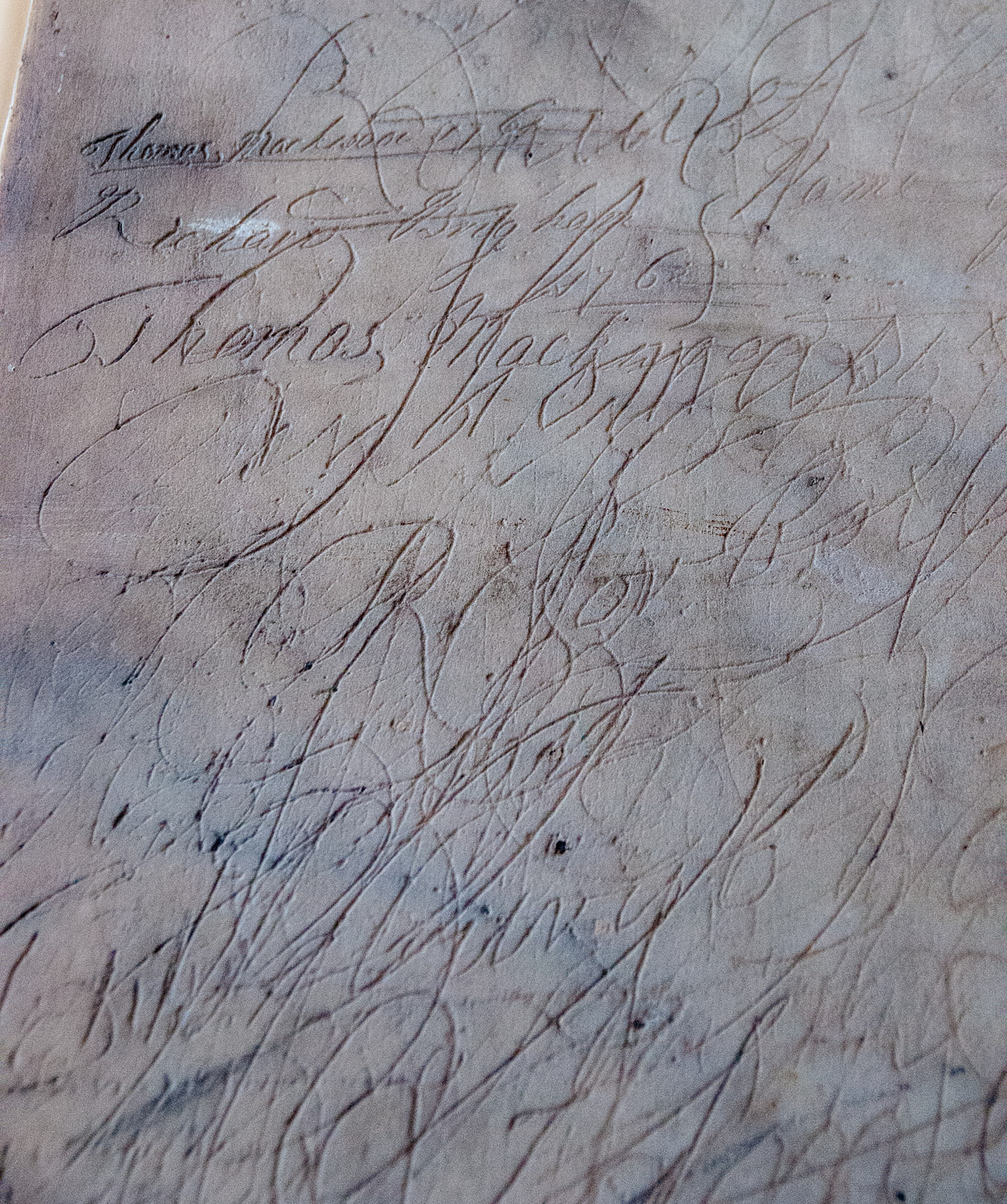
Look closely and you will see it is surrounded by 18th century graffiti, some in elegant cursive script …

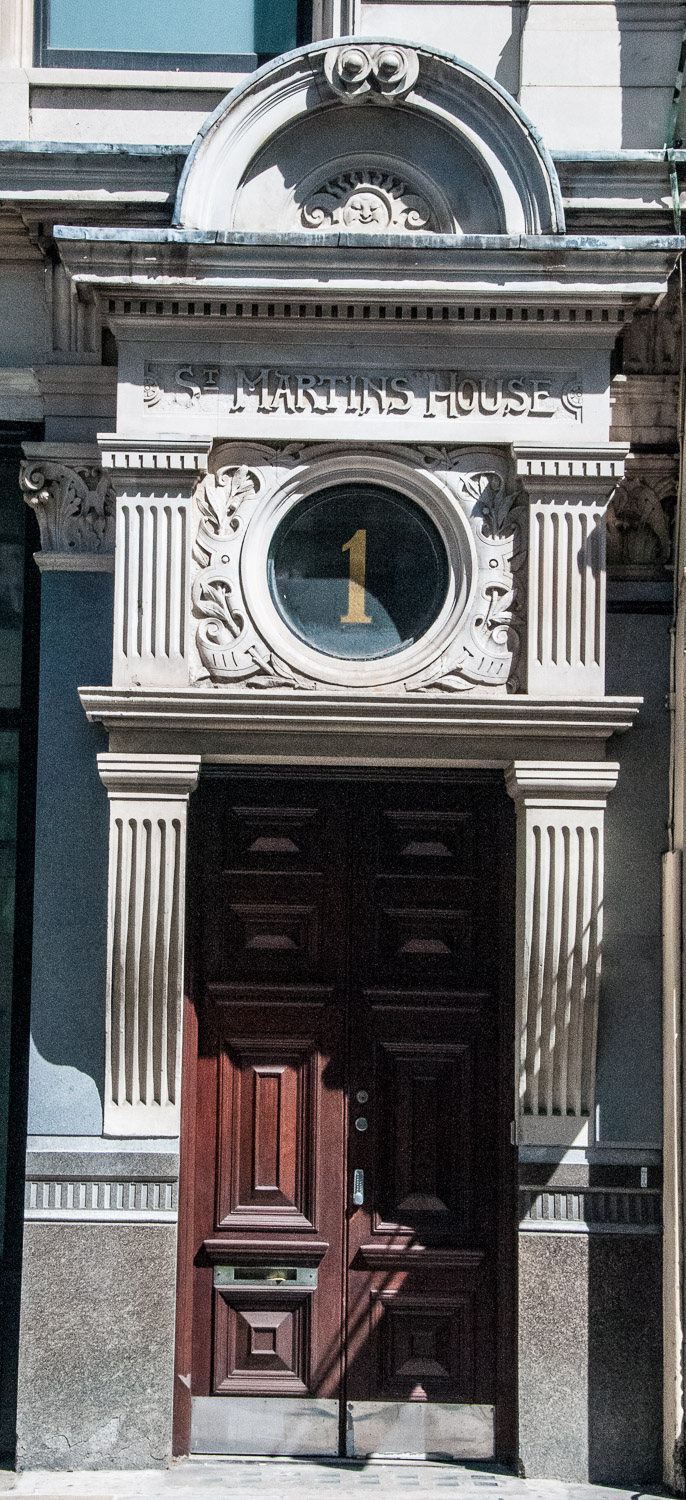
The facade St Martin’s House at 1 Gresham Street is a delight (EC4V 7BX) …

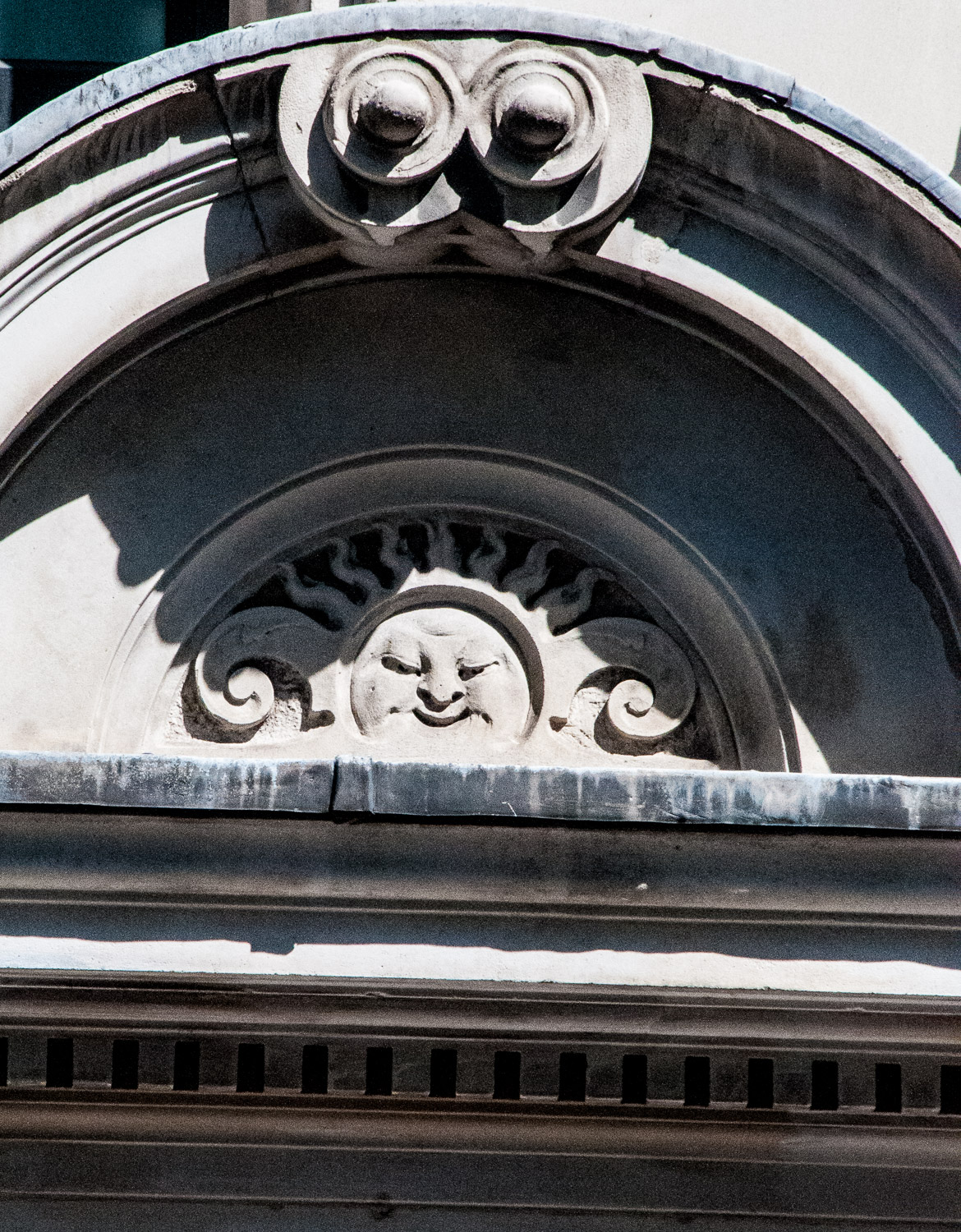
Dating from 1891 it incorporates a wonderfully happy, smiling Mr Sun …

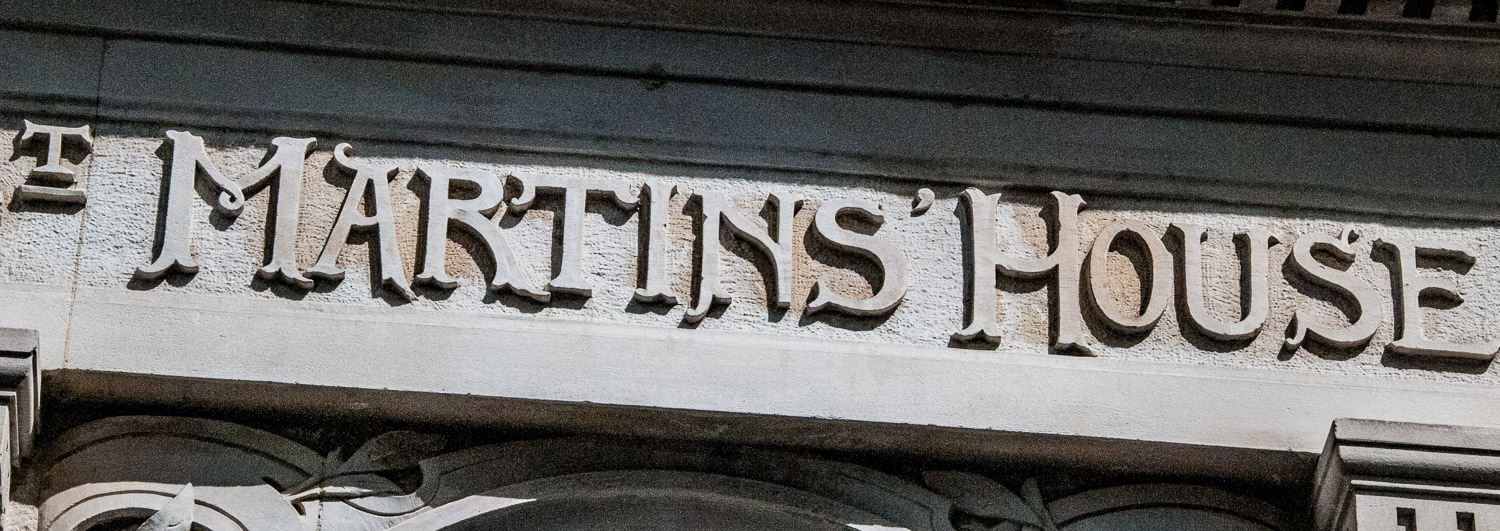
What also makes it charming is the rogue apostrophe ….

Surely it should read St Martin’s House?

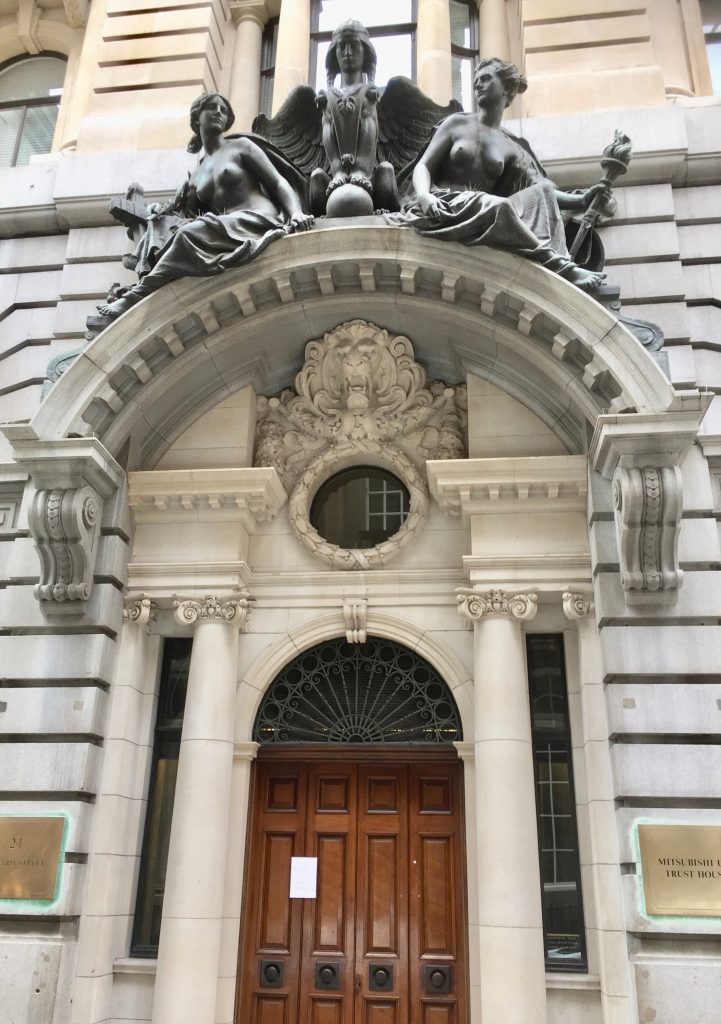
What about this trio above what was once the entrance to the City Headquarters of the Royal Insurance Company at 24-28 Lombard Street (EC3V 9AJ) …

The historian Philip Ward-Jackson writes as follows:

‘The winged chimera at the centre of the group has the head of a woman and the legs of a lion. The two personifications are fine looking women, naked to the waist. The Sea holds a caduceus, and therefore also symbolises marine commerce … The attributes of Fire are a torch and bunches of faggots.

This quite sinister allegorical group must have been intended to intensify the fears of potential customers.’

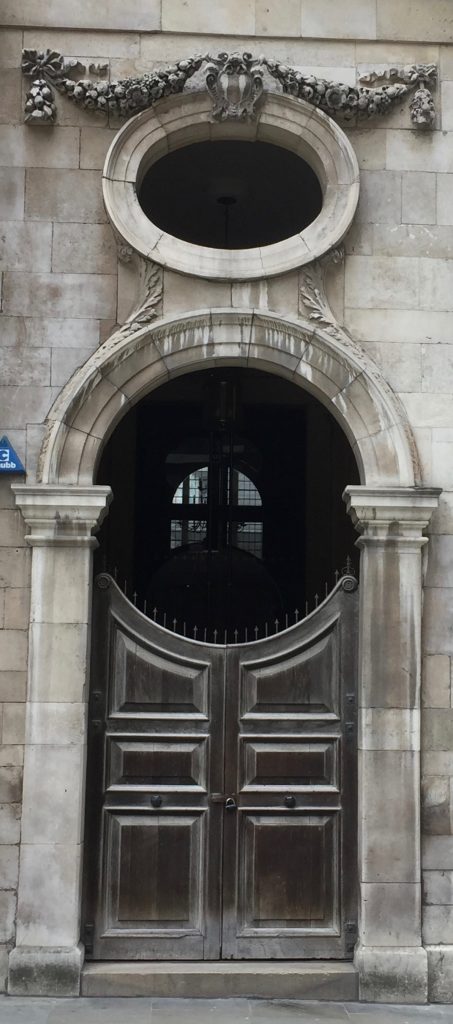
The church of St Stephen Walbrook was constructed between 1672 and 1679 and is another Wren building (EC4N 8BN). The doors look original to me but I haven’t yet found out for sure …

The building is where Dr Chad Varah founded the Samaritans and you can read more about that and the church itself here.

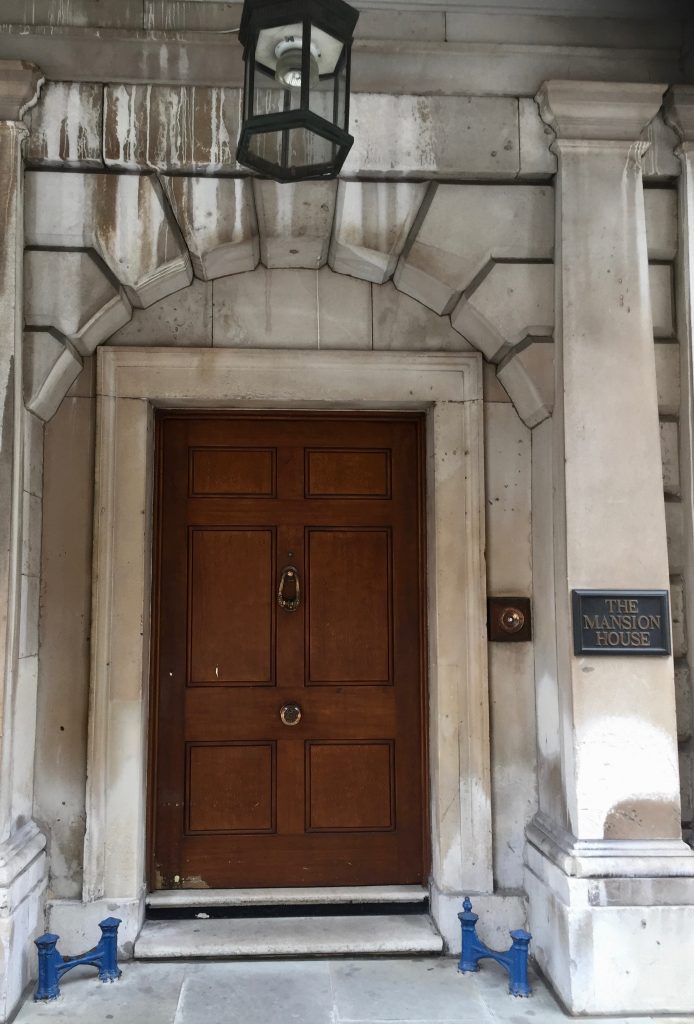
This impressive entrance is just around the corner from St Stephens. Push the doorbell and you never know, the Lord Mayor might answer the door …

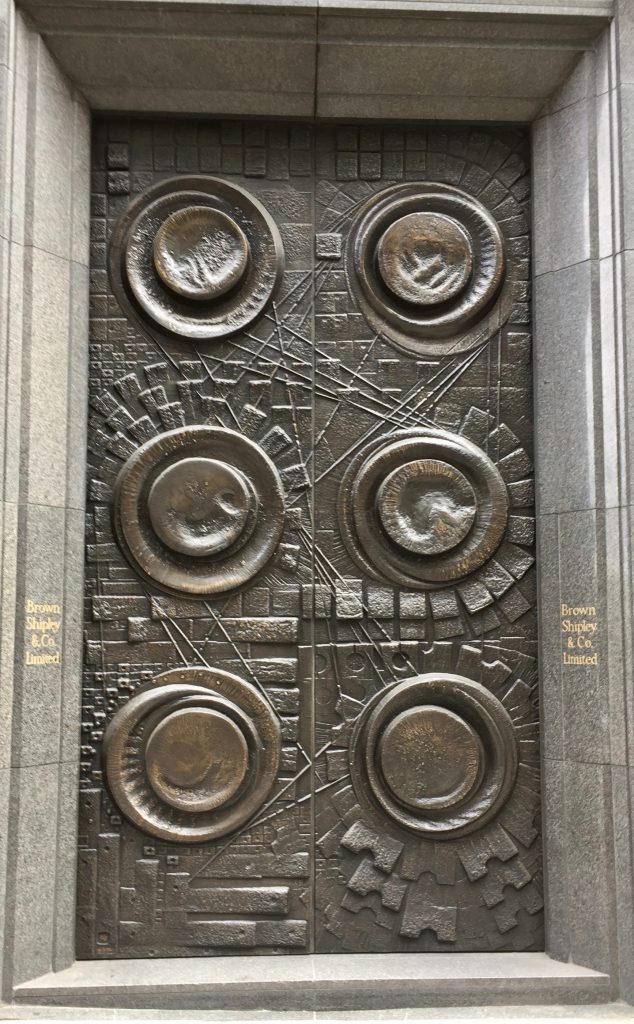
The virus shut down has meant that these magnificent doors at 2 Moorgate can now be seen easily during the week rather than just at the weekend (EC2R 6AG). Each door weighs a ton …

Suitably opulent for a private bank, they were designed by John Poole and date from 1975 when the building was opened by Edward Heath (who used to work for the company). Poole had a free hand with the design and said he intended to represent, in the circular forms, the firm’s centres of business. The linear patterns suggest communications between these centres along with ‘the interaction of spheres of influence’.

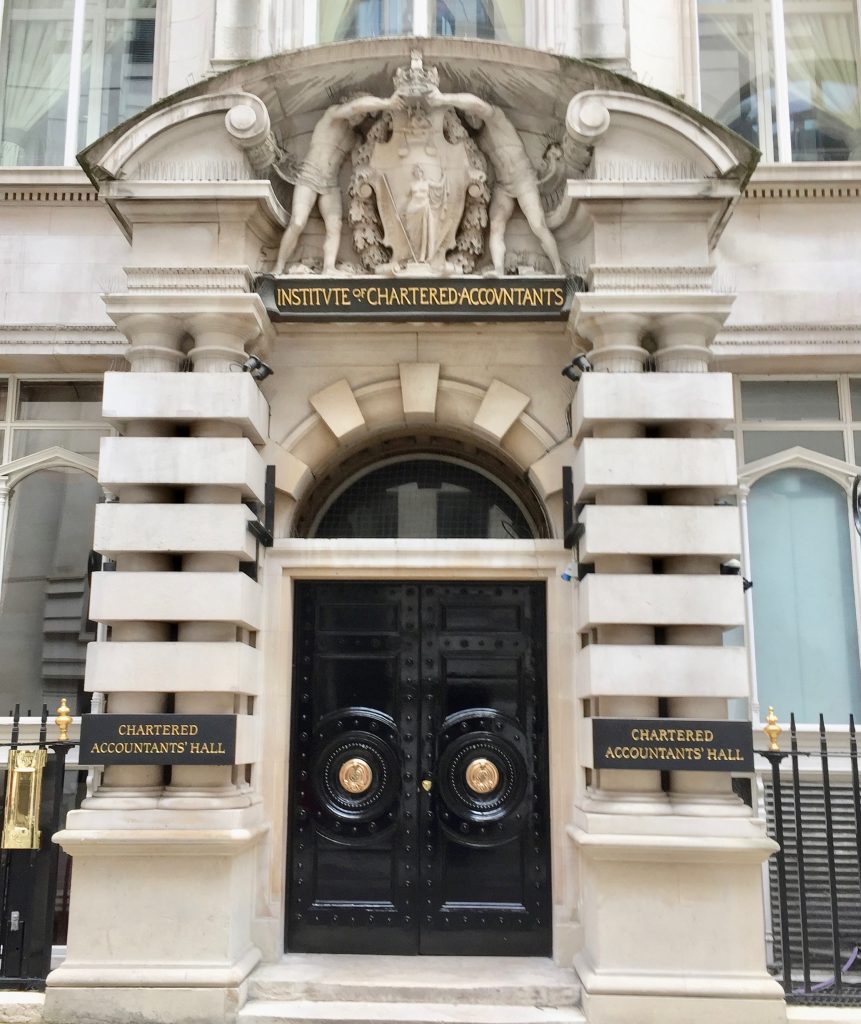
In 1888 the Institute of Chartered Accountants decided to treat themselves to a permanent headquarters and work was completed in 1893. Described by Sir Nikolaus Pevsner as ’eminently original and delightfully picturesque’, it is ‘a fine example of Victorian neo-Baroque which draws its inspiration from the work of the Italian Renaissance’. This is the formidable and imposing entrance at One Moorgate Place (EC2R 6EA) …

The architect was John Belcher RA.

The large cartouche above the massive bronze doors depicts the Institute’s coat of arms and is held up by two classical male figures.

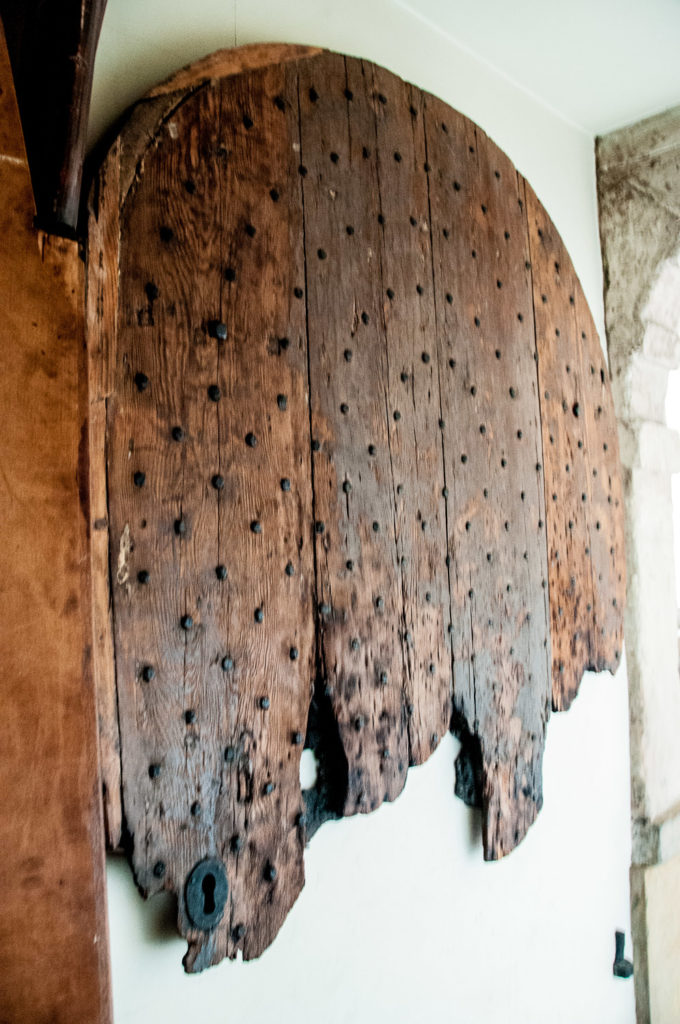
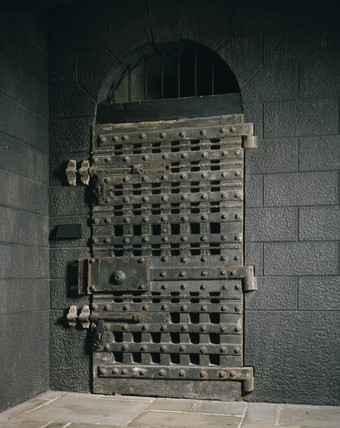
In the Museum of London you will find a door that must have struck terror into the hearts of the poor souls who were led through it …

Photograph : Museum of London.

It comes from the now demolished Newgate Prison, dates from 1783, and was the one through which criminals were taken to their place of execution. In fact they walked through three doors of which this was the inner one – there was also an iron-cased half door and an outer one of solid iron. The final person to pass through it to his execution by hanging was the Fenian Michael Barrett on 27 May 1868 – the last public execution to take place in England.

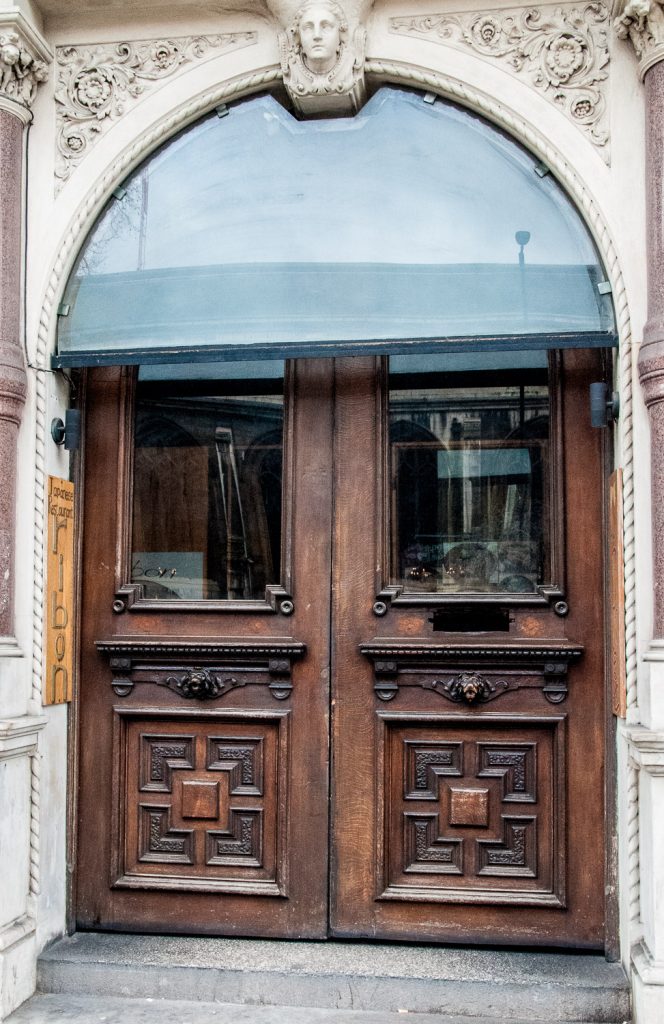
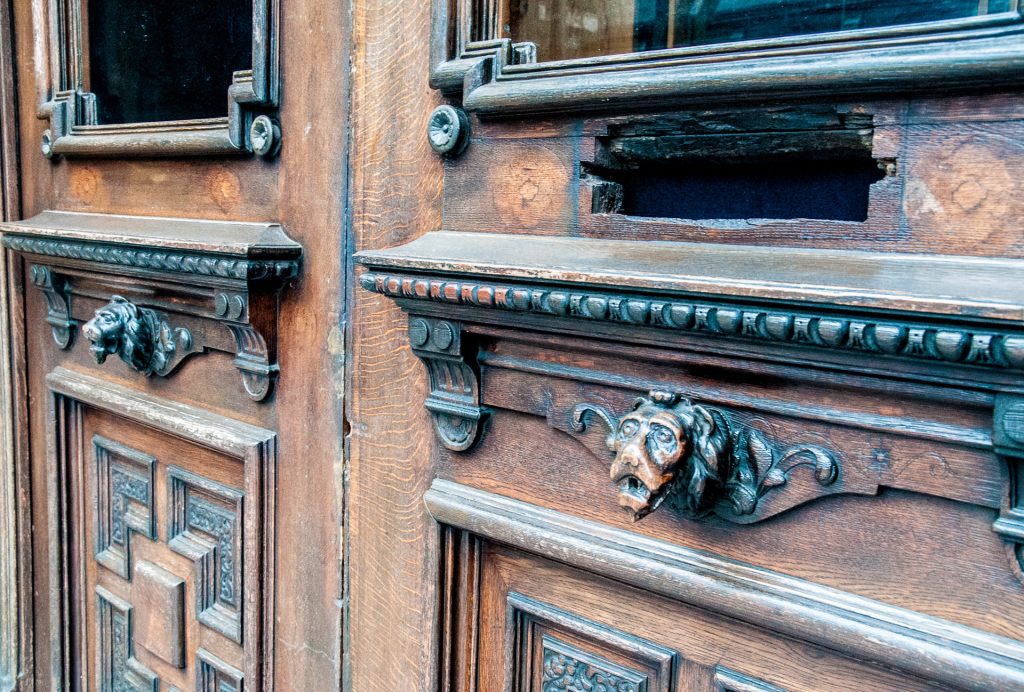
Two doors that are a bit tucked away when open are here at 6 Holborn Viaduct (EC1A 2AE) …

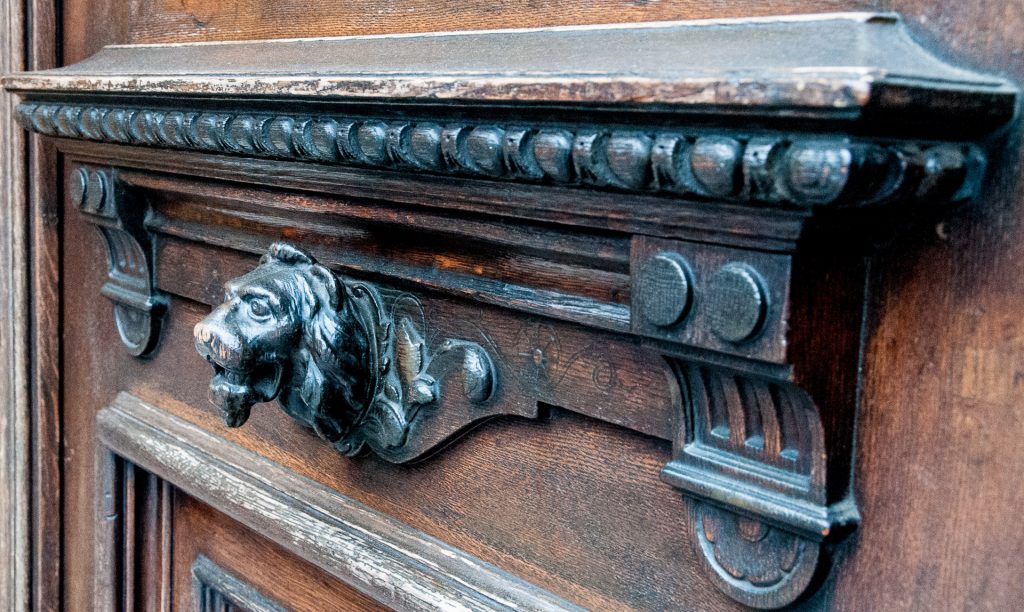
They have certainly suffered some brutal treatment over the years and look very unloved, but the lions heads have survived …

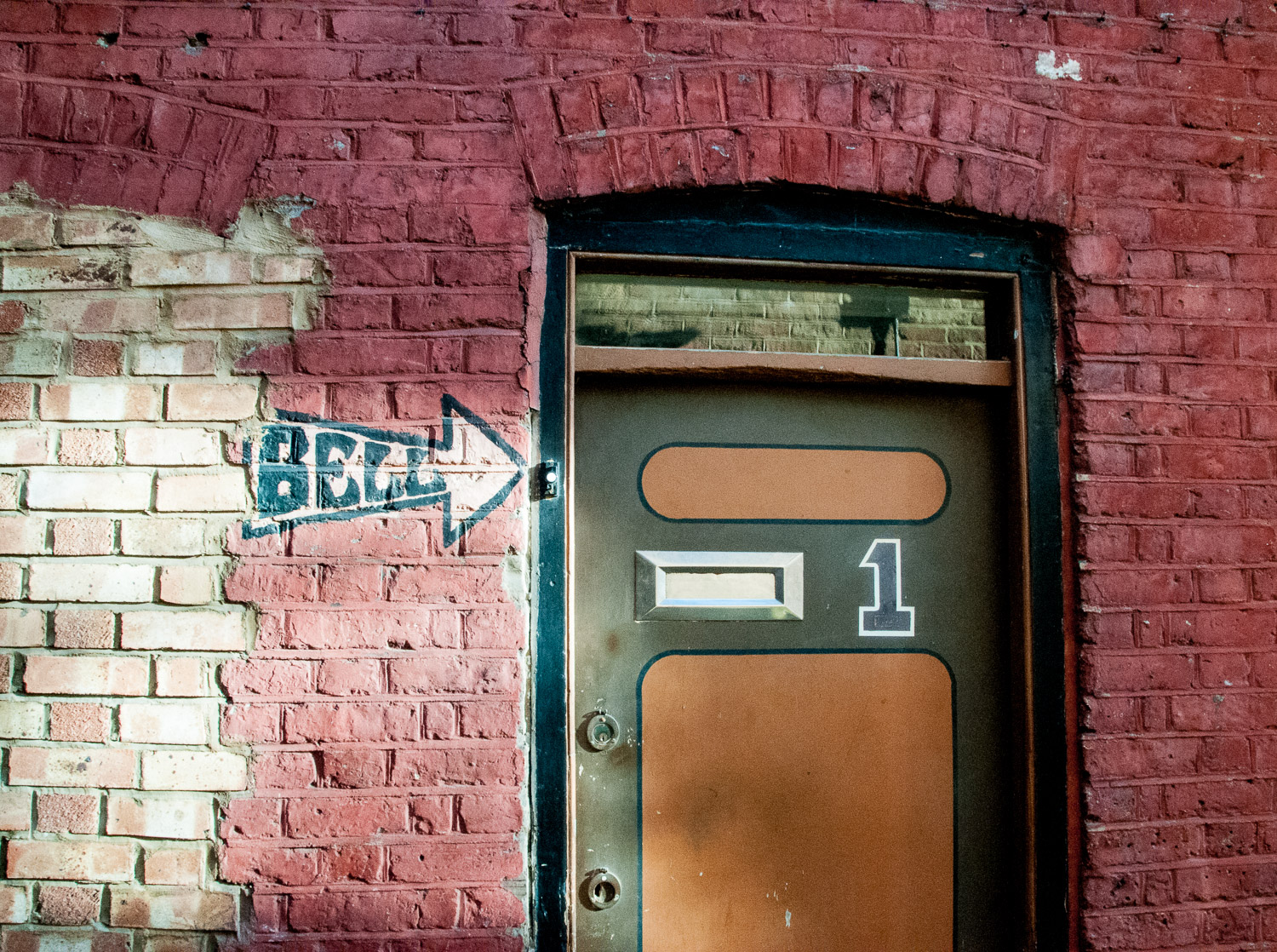
And finally, to finish on a more lighthearted note, just off Whitecross Street is this doorway which makes me smile every time I see it. The story I have conjured up in my mind is that, some time in the early 1970s, the people living there found that visitors knocked on the door rather than ringing the bell. When asked why, callers usually said that they didn’t know there was a bell. As a consequence, the residents (who obviously had artistic talents) got out their paint brushes and added this helpful sign to indicate where the push button bell was. Brilliant!

If, by any remote chance, doors, doorways and bells are your thing, do have a browse of the blogs I have written on these subjects : That Rings a Bell and City of London Doors and Doorways.

Remember you can follow me on Instagram :
https://www.instagram.com/london_city_gent/

Page 33 of 43

Powered by WordPress & Theme by Anders Norén

Symbols & Secrets
Privacy Overview

This website uses cookies so that we can provide you with the best user experience possible. Cookie information is stored in your browser and performs functions such as recognising you when you return to our website and helping our team to understand which sections of the website you find most interesting and useful.