I know I’ve already written about the Viaduct twice this year but I found myself drawn back to it one more time since I hadn’t explored it from ground level in Farringdon Road.
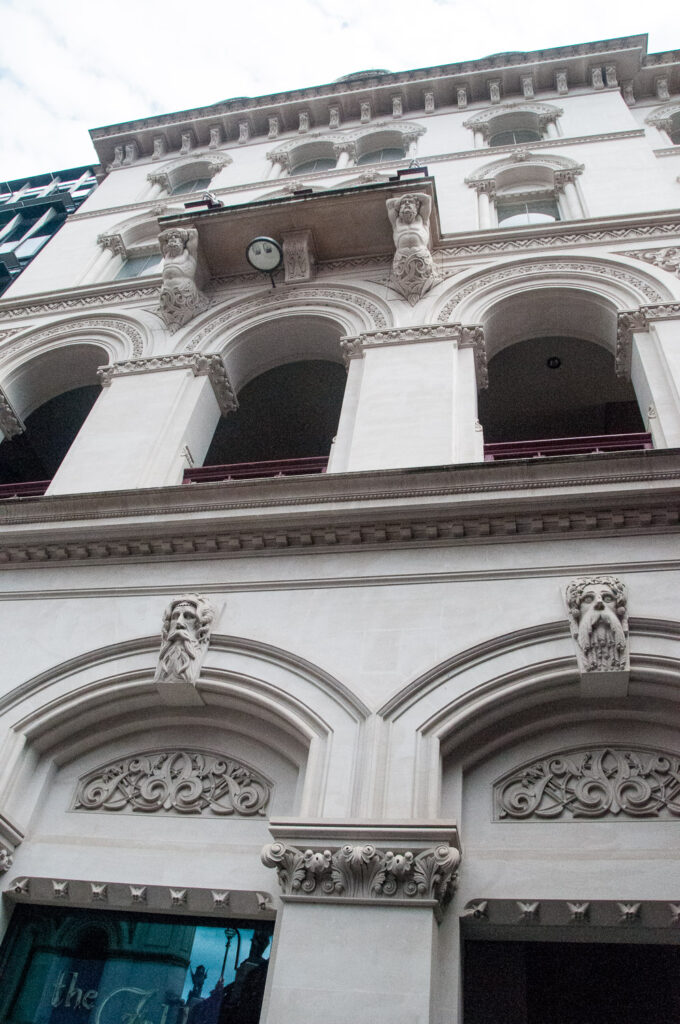
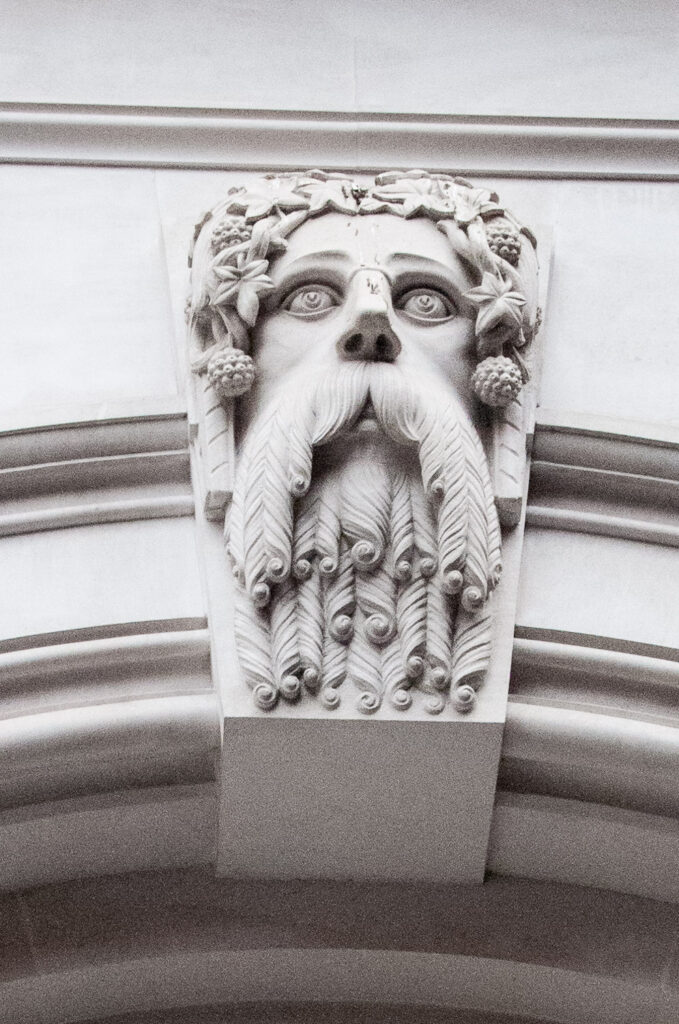
Looking up at the sky on the north east side there are some great beards on display …
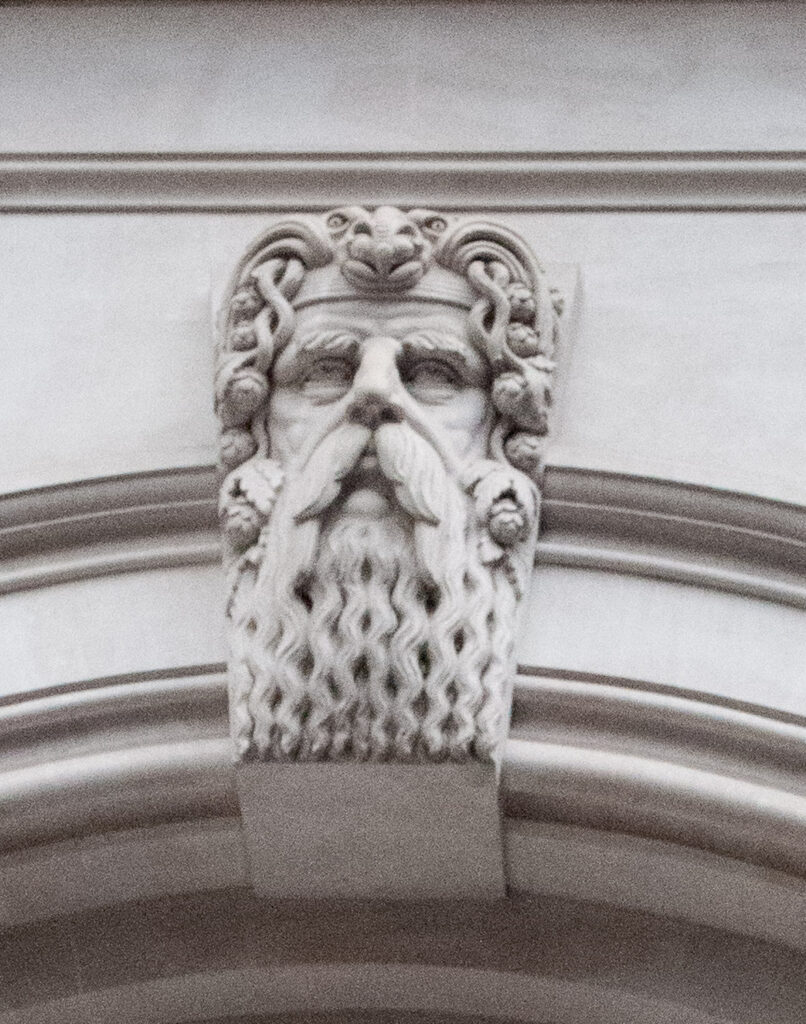
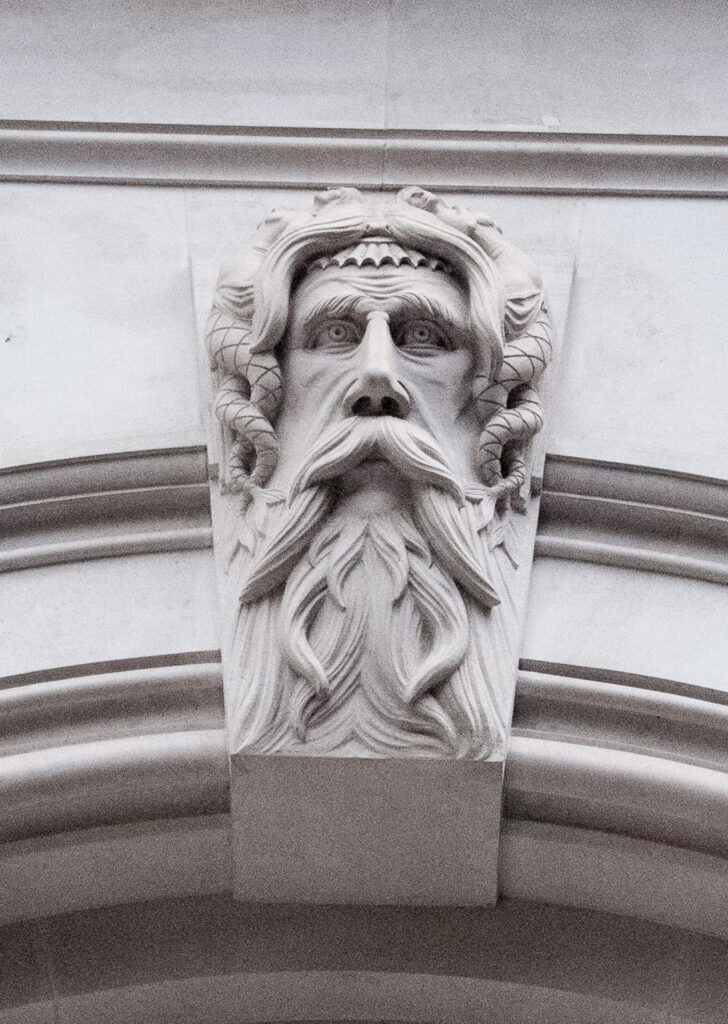
And in close-up …
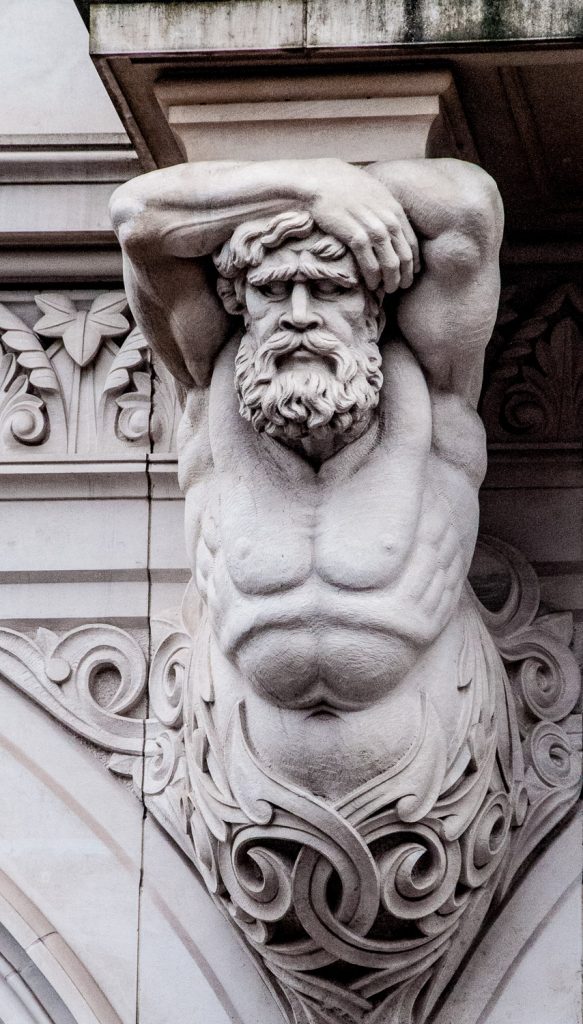
This is one of the Atlantes holding up the balcony. They date from 2014 when the north east pavilion was rebuilt …
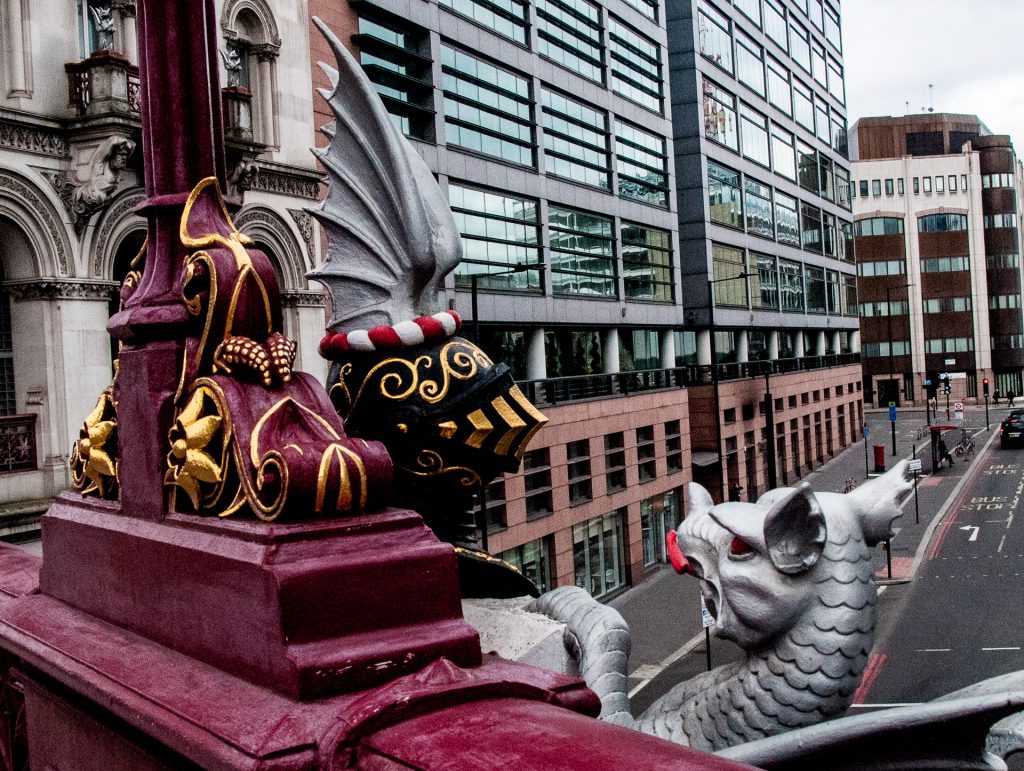
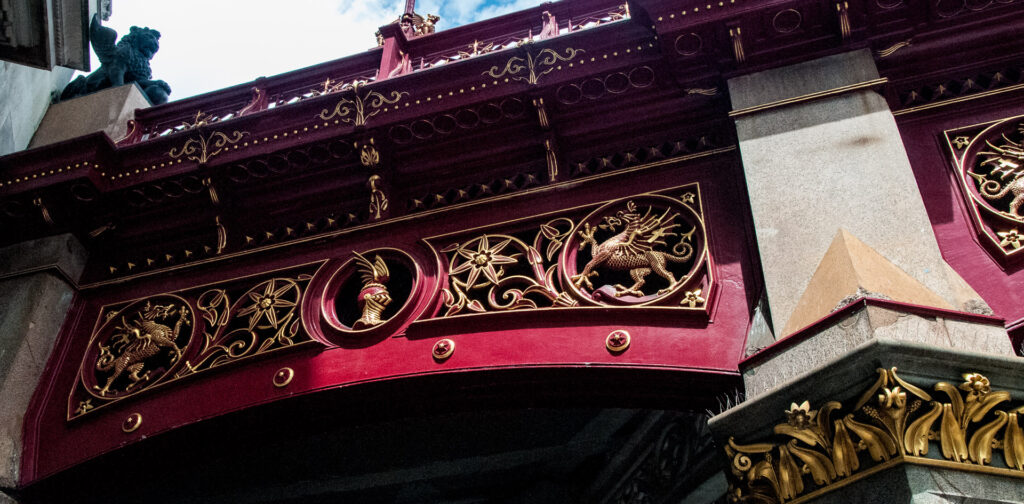
In 2013 the Viaduct was repainted and re-gilded with, at the request of the City Conservation Officer, ‘maximum bling’.
You get an idea of how well this was accomplished in this picture. It shows the re-gilded base of one of the lamps, a knight’s helmet and a City dragon …
Here’s a view looking up from Farringdon Street …
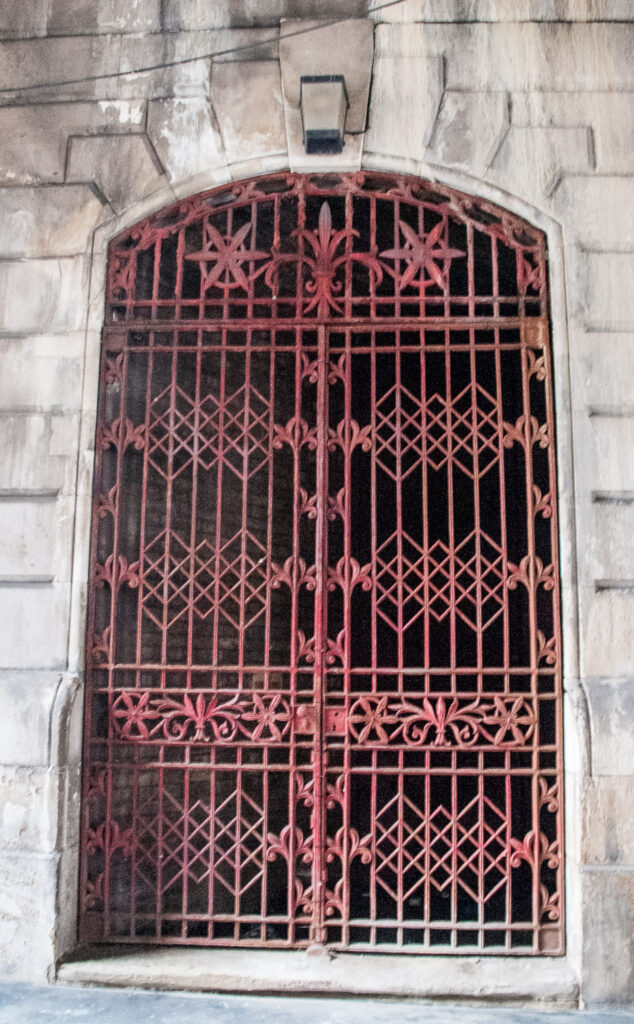
There are also some elaborate metal gates …
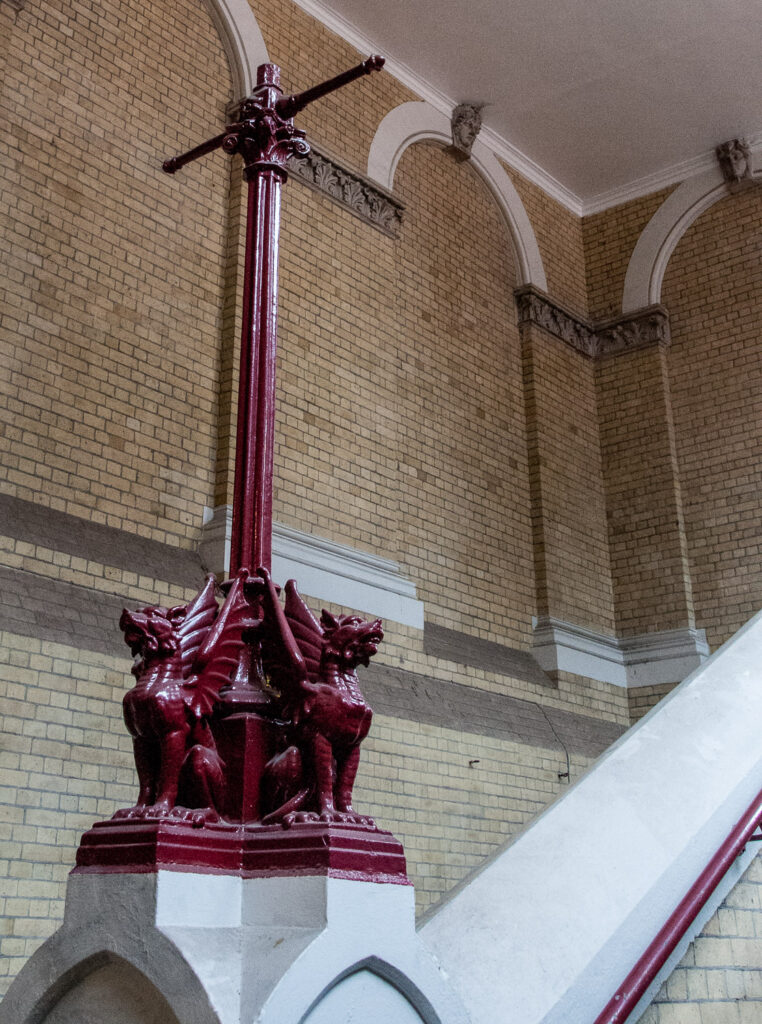
Walking up the stairs, this old light has lost its top …
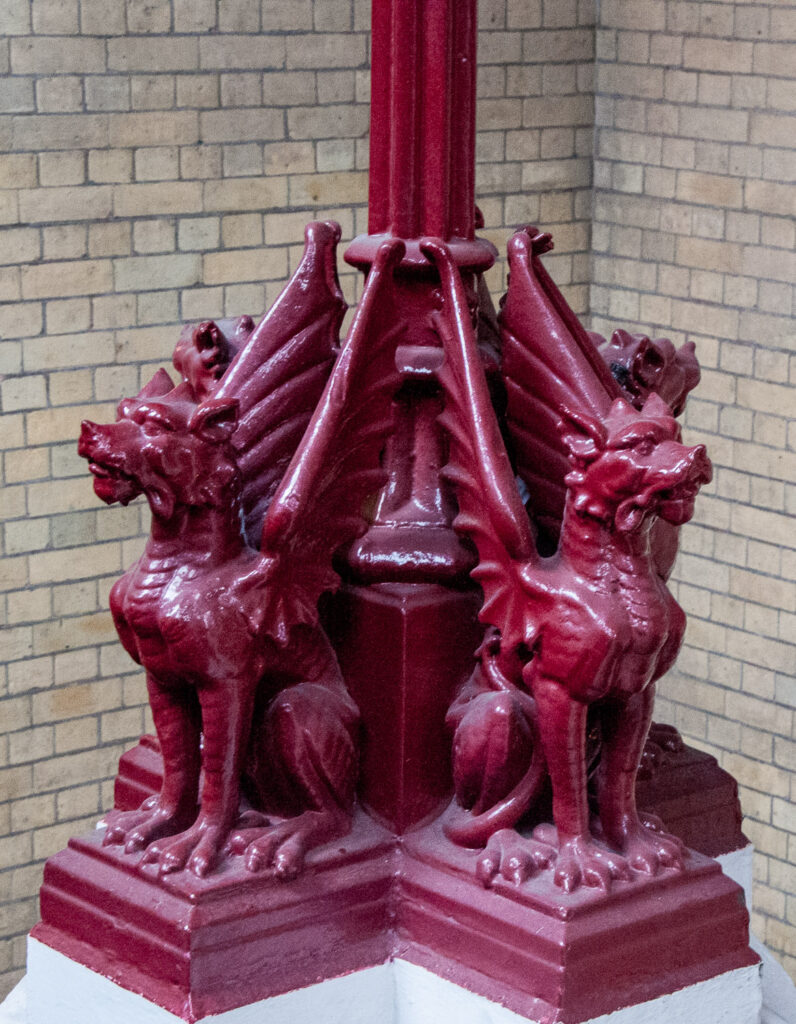
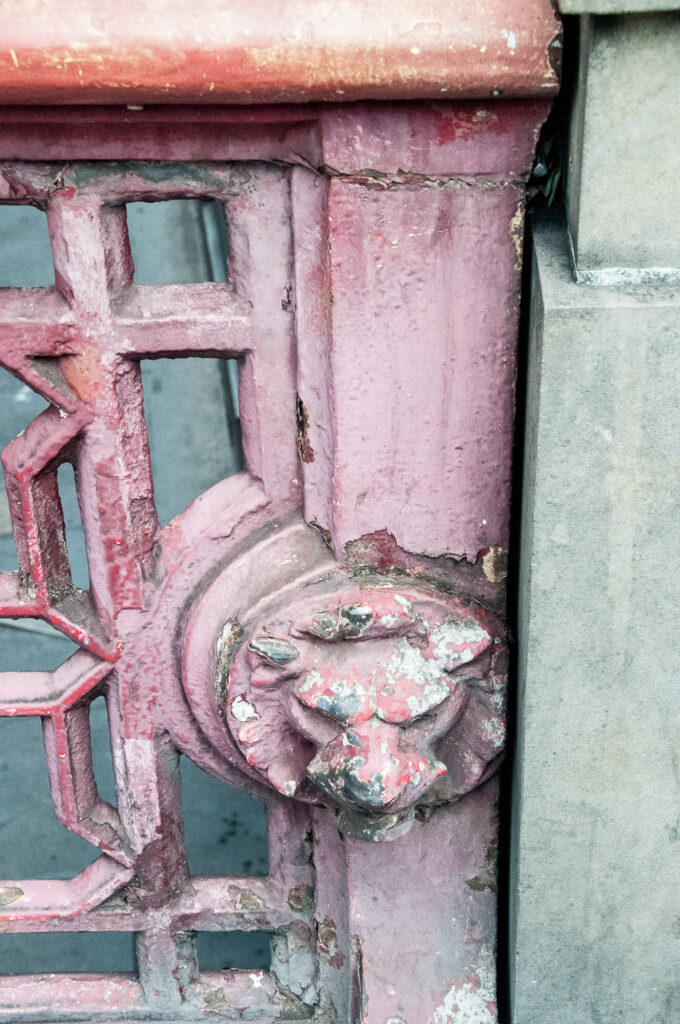
Four splendid City dragons …
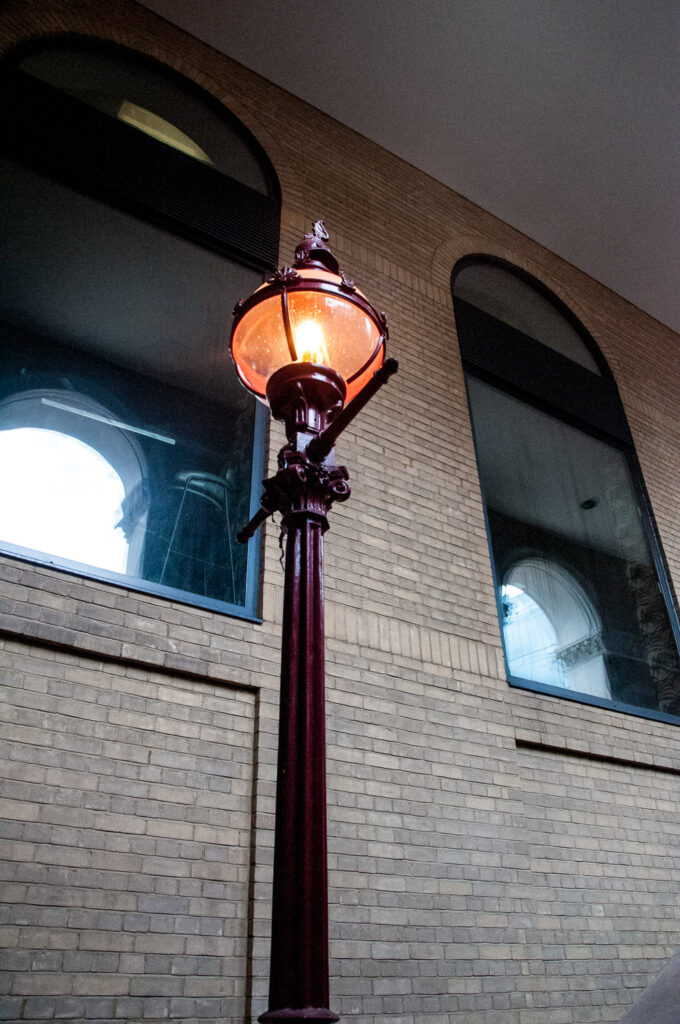
This functioning light is in the rebuilt North East stair …
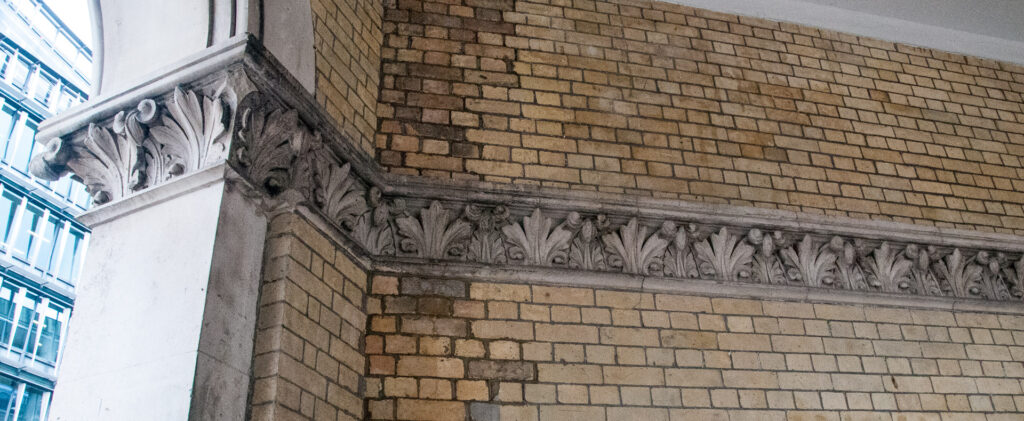
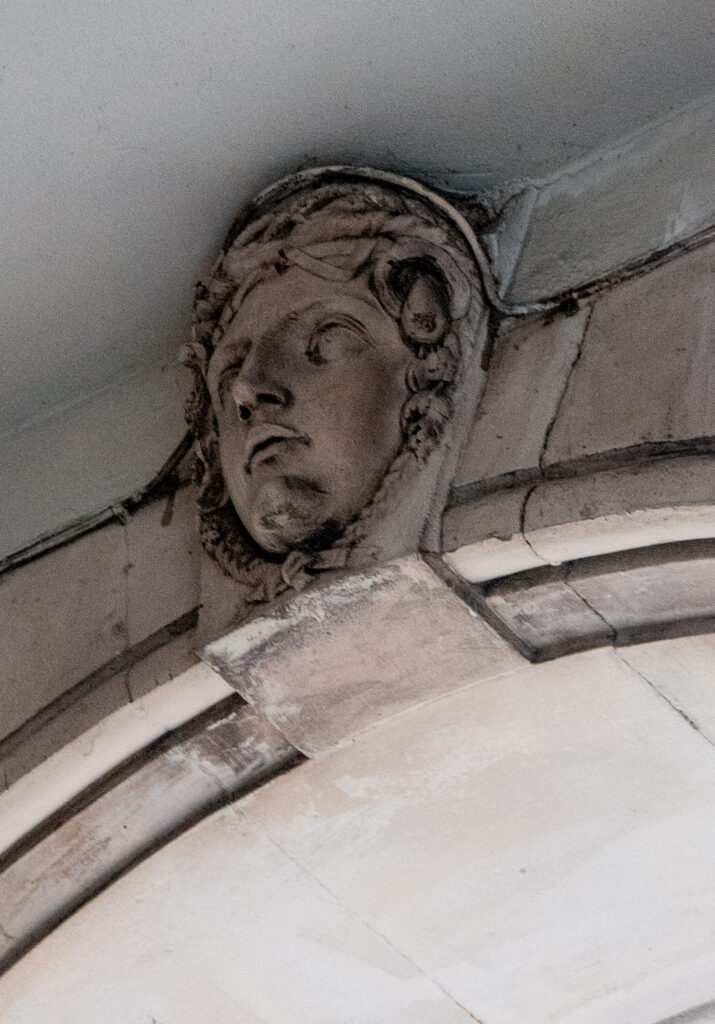
Attractive carvings at the South East entrance …
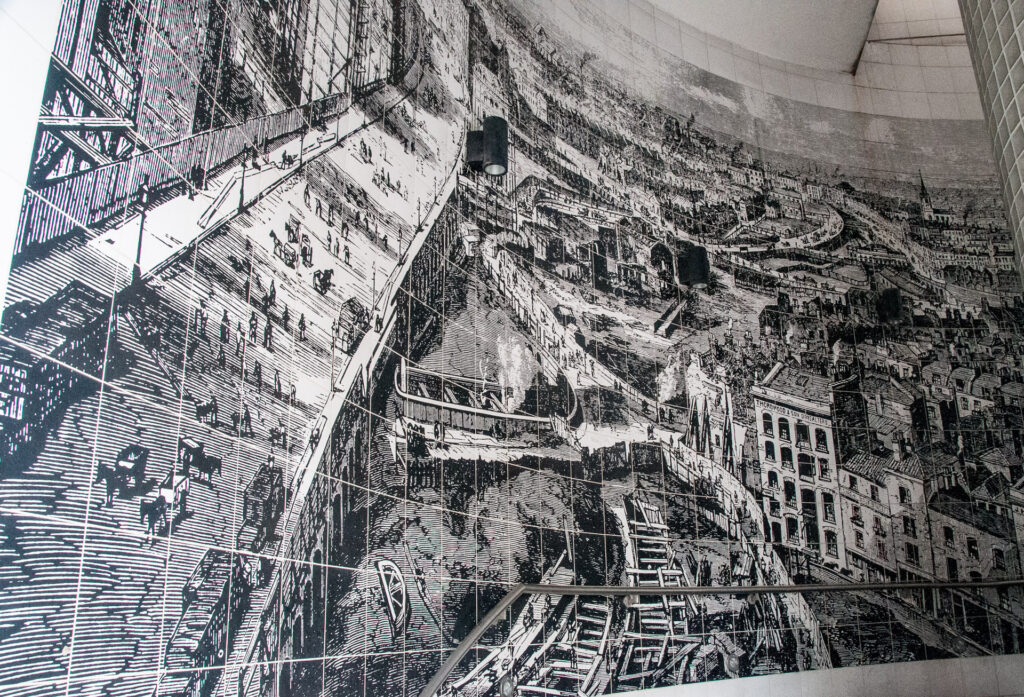
The North Western stair has a giant mural illustrating the Viaduct’s construction …
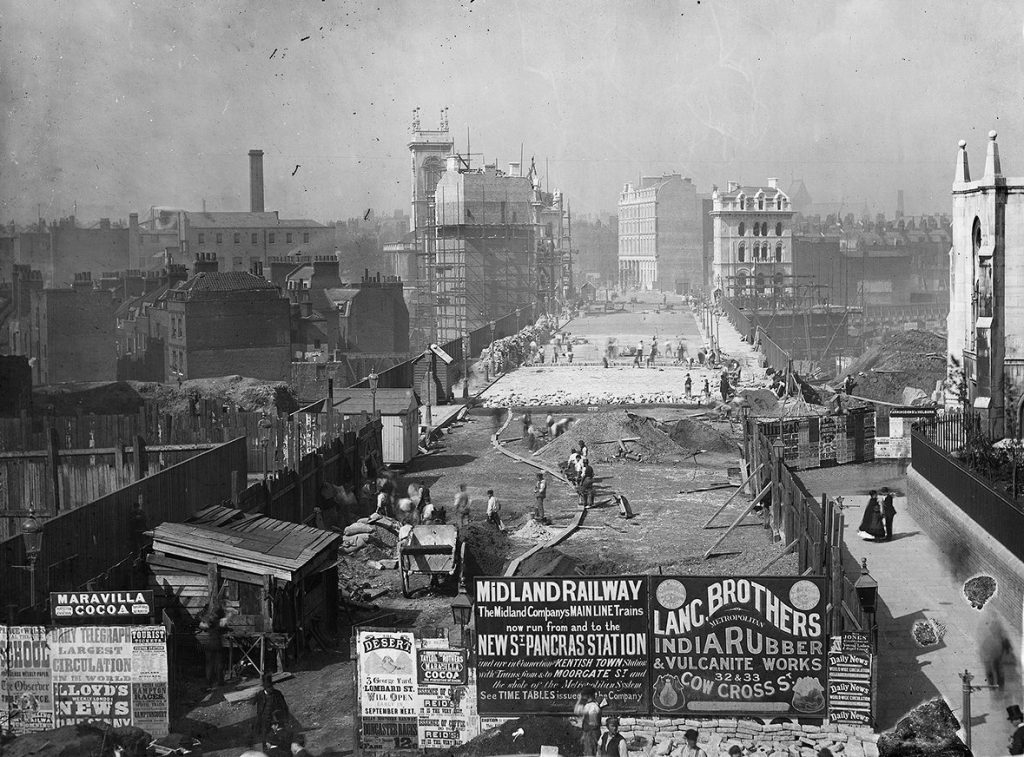
Work was started in 1863 and the mural reminded me of this photograph of the work in progress looking west …
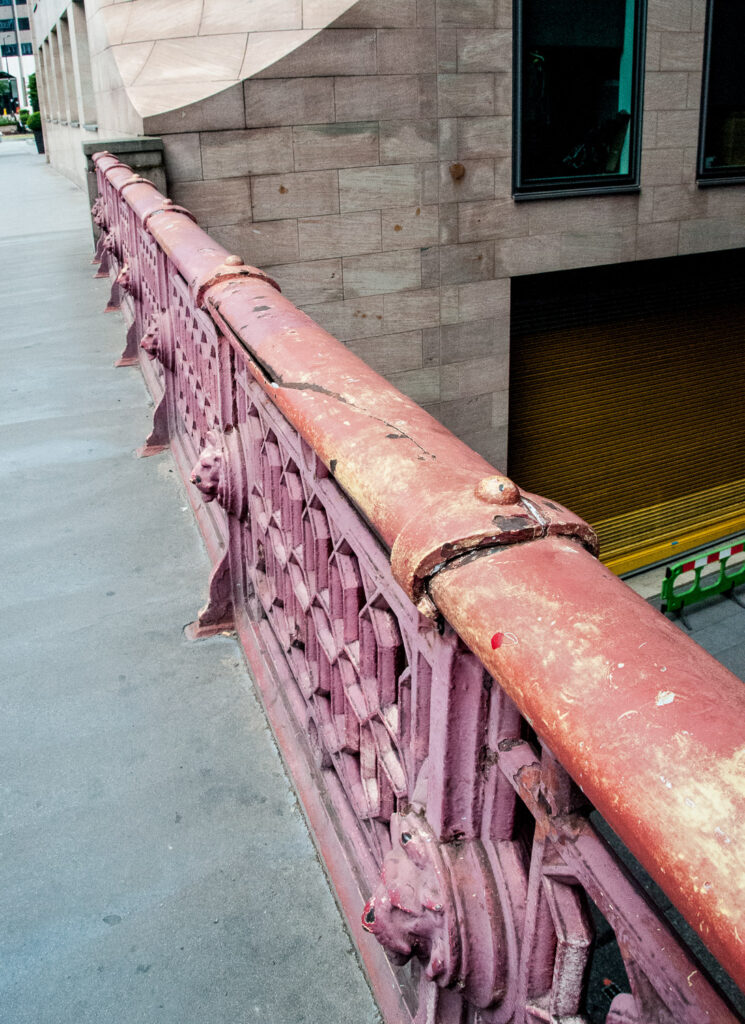
Further west there is a smaller, more modest bridge over Shoe Lane and this is in grave need of some TLC. Compare this with the restored parts of the main bridge …
It illustrates what time, weather and pollution can do to the most robust of structures.
If you want to read my two previous blogs about Holborn Viaduct they can be found here and here.
Having written about City Children a few weeks ago I though it was time to look at some of the ladies portrayed in sculpture around the City. I found enough for several blogs so this is the first instalment!
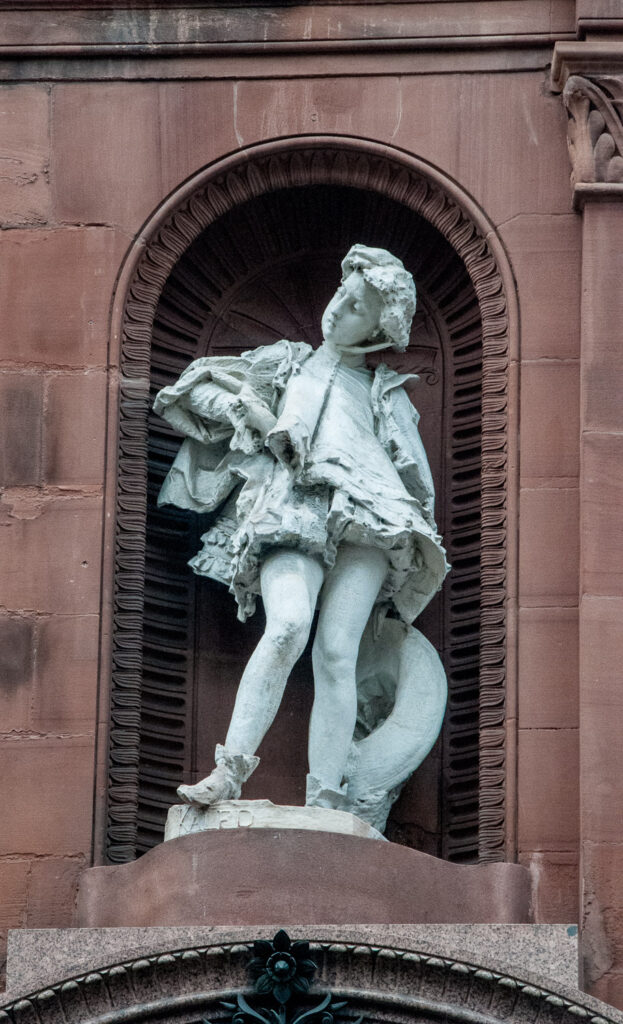
Let’s start with this extraordinary statue at 193 Fleet Street now, sadly, somewhat weathered …
I always thought that it resembled a rather effeminate youth but it is in fact a woman disguised as a pageboy, her name, Kaled, appears just under her right foot.
It is by Giuseppe Grandi, and dates from 1872. The shop owner, George Attenborough, had a niche created specially for it over the front door. Kaled is the page of Count Lara in Bryon’s poetic story of a nobleman who returns to his ancestral lands to restore justice. He antagonises the neighbouring chieftains who attack and kill him. Kaled stays with his master and lover to the end, when it is revealed he is in fact a woman. She goes mad from grief and dies.
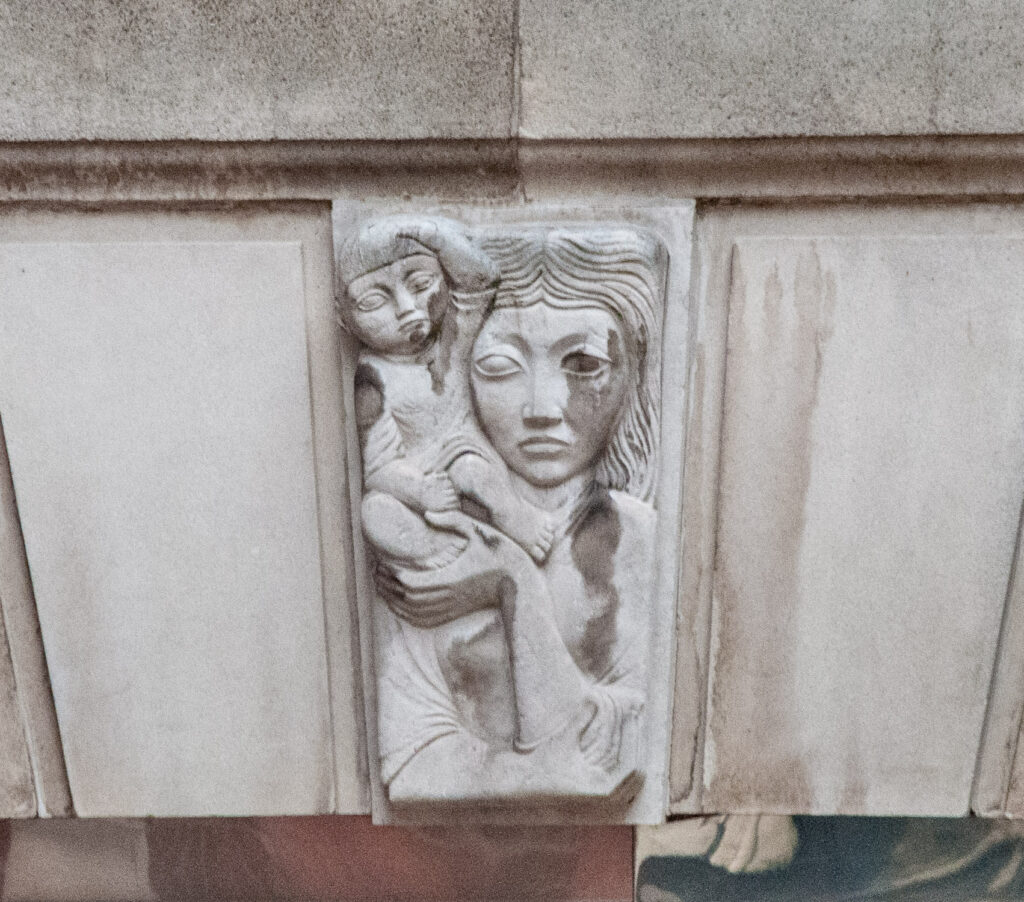
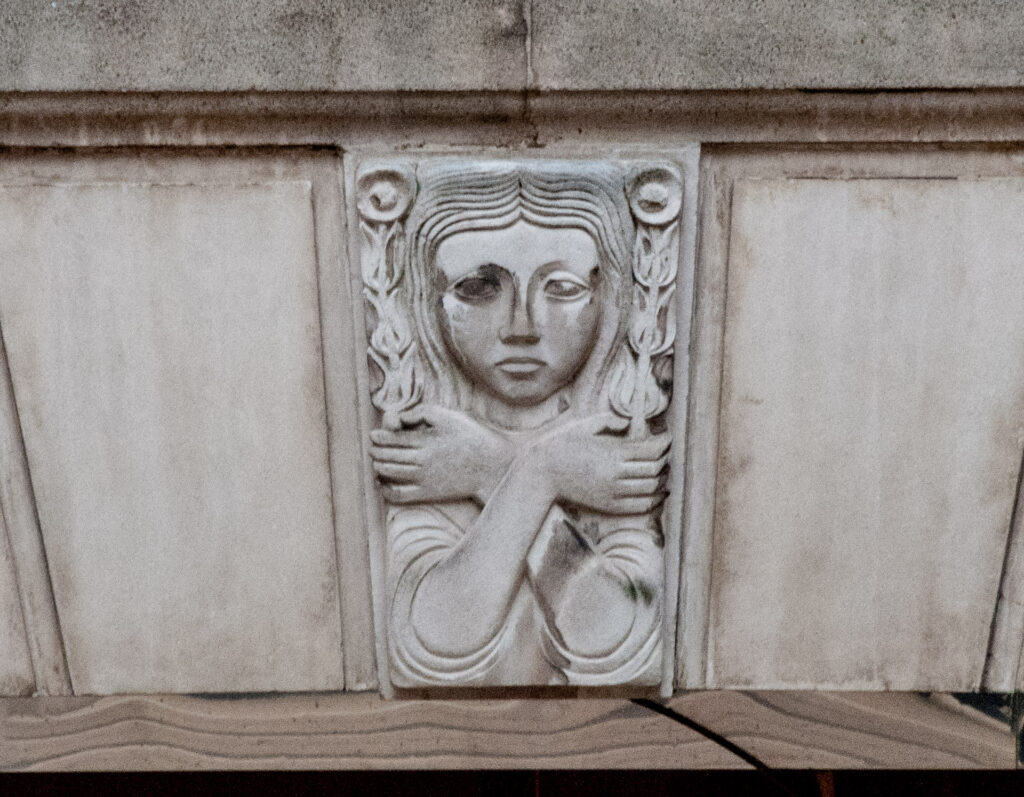
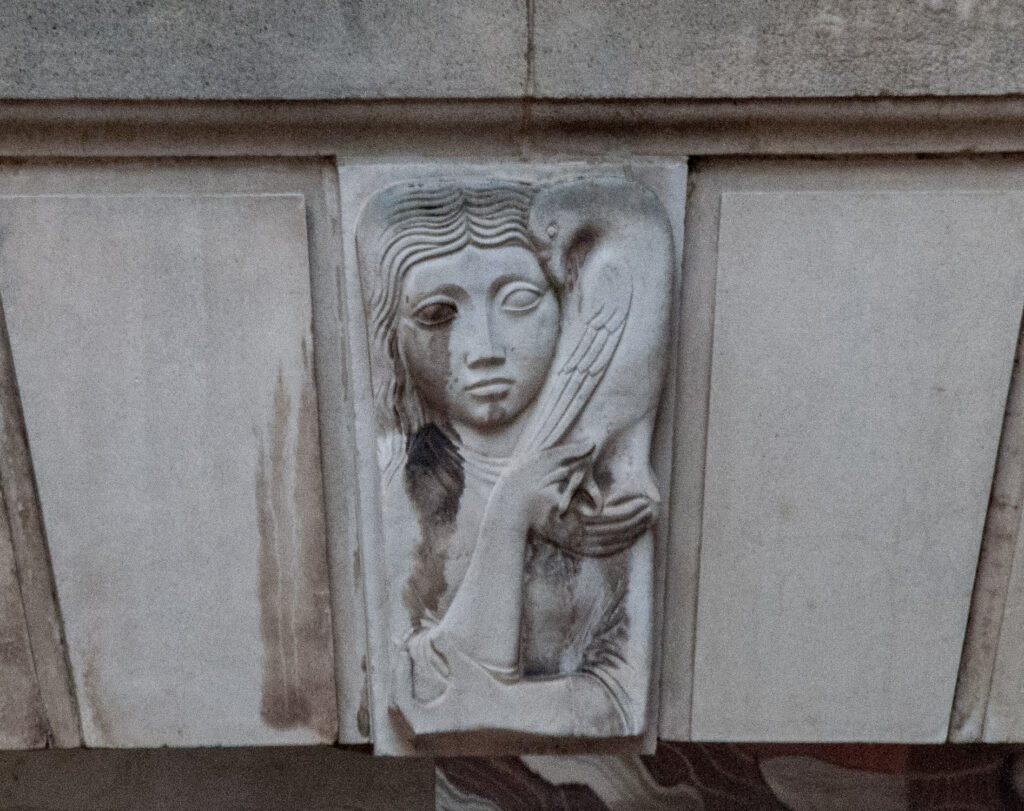
Walking further eastwards along the south side of Fleet Street you come across Serjeants’ Inn and these interesting keystones depicting a woman holding a baby, flowers and a bird (EC4Y 1AE) …
They date from 1958 and although the architects are known, Devereaux & Davis, the name of the sculptor is not (or, at least, I couldn’t discover it).
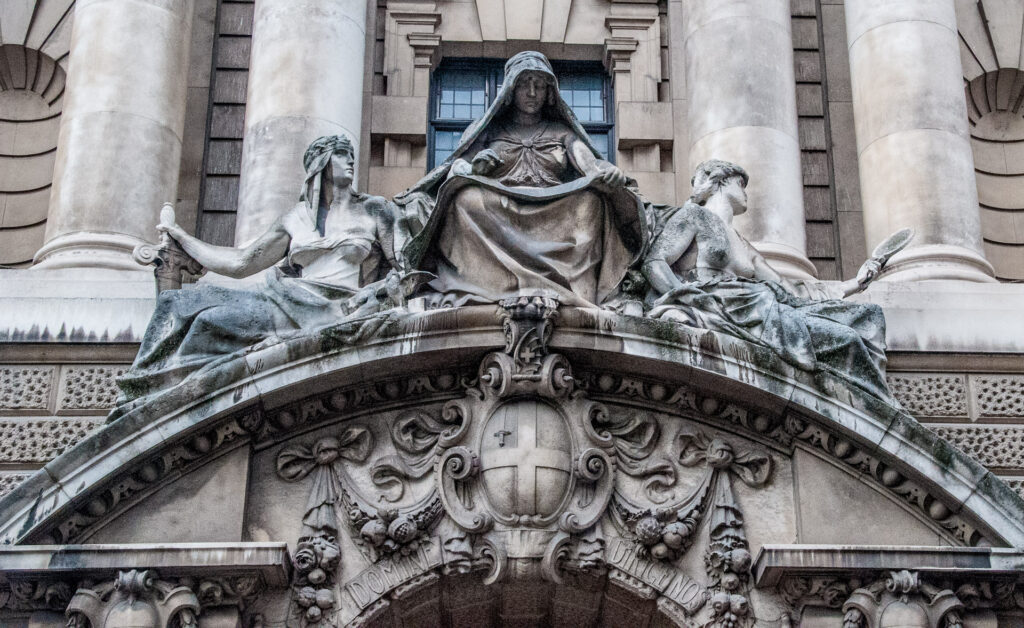
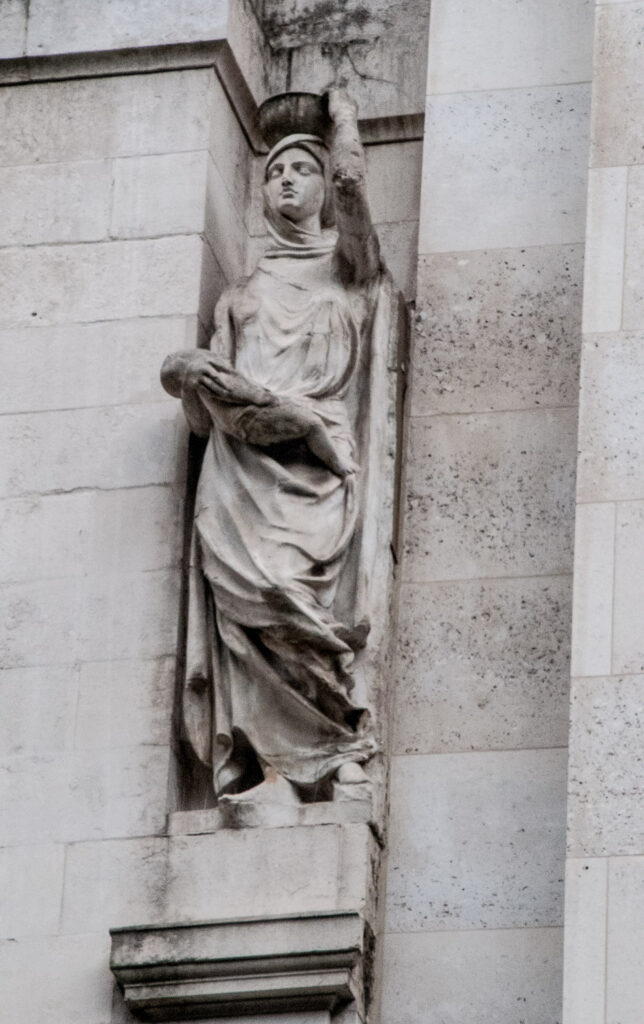
Over the original main door to the Old Bailey (EC4M 7EH) is a sinister figure, her face overshadowed by an ample hood. She is the Recording Angel, busy writing down all our deeds for God’s future reference …
To the left sits Fortitude, a female figure holding a massive and elaborate sword, and on the right Truth gazing into her mirror.
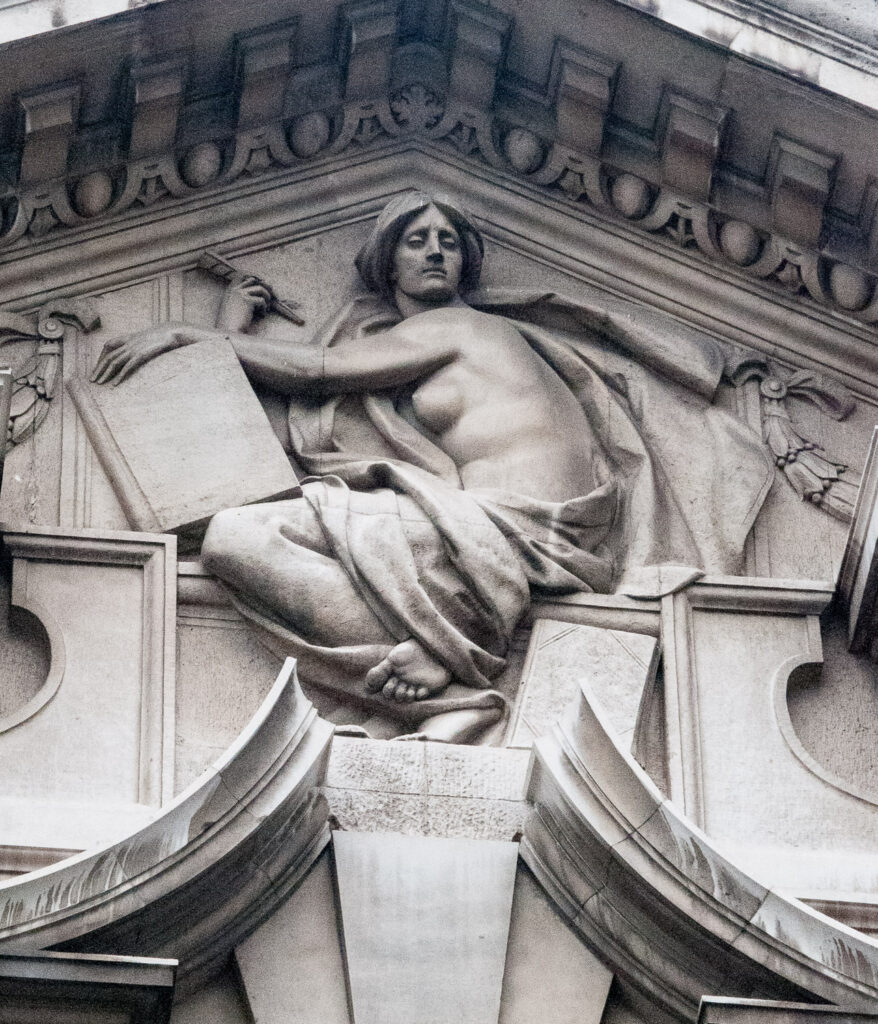
On the south pediment another woman holds a quill in one hand and in the other a closed book …
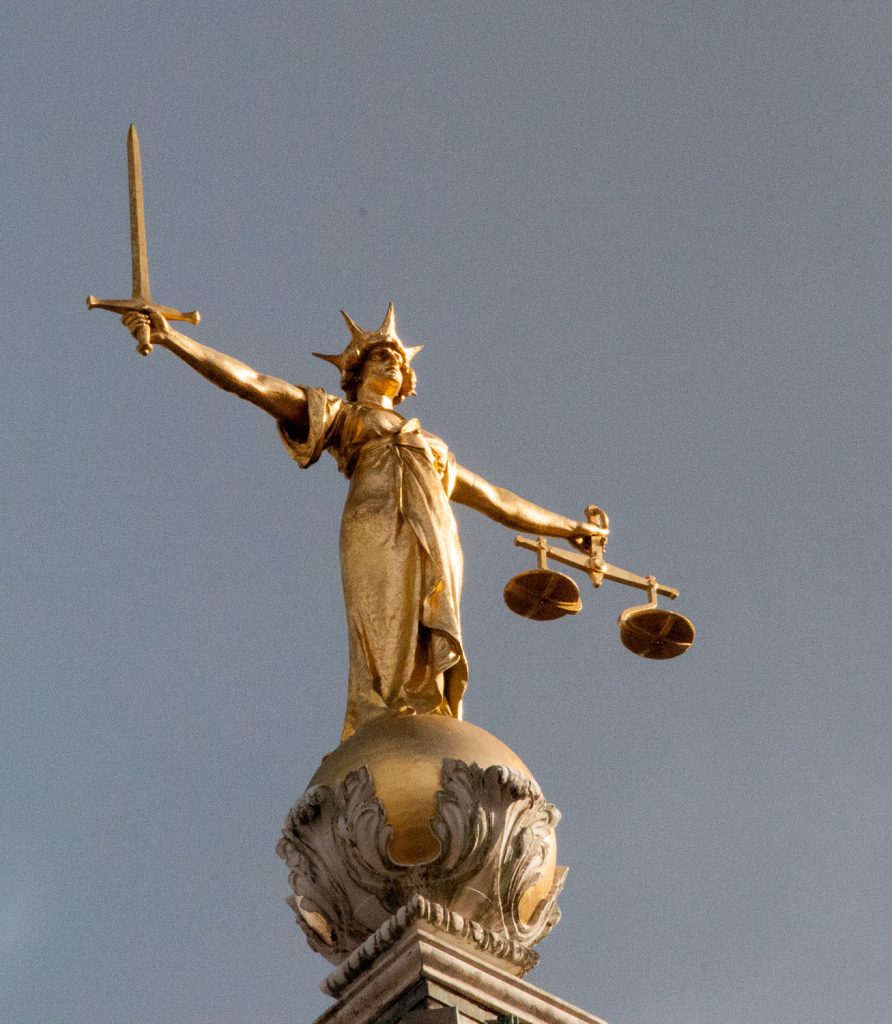
Both date from 1906 and are by the sculptor Frederick William Pomeroy as is Justice holding her symbolic sword and scales. She stands upon a globe because Justice straddles the world and although she is made of bronze not stone I couldn’t resist including her …
You may be surprised to see that she is not wearing a blindfold. I have written about her and the many other places she can be found in the City (often blindfolded) in an earlier blog entitled Lady Justice.
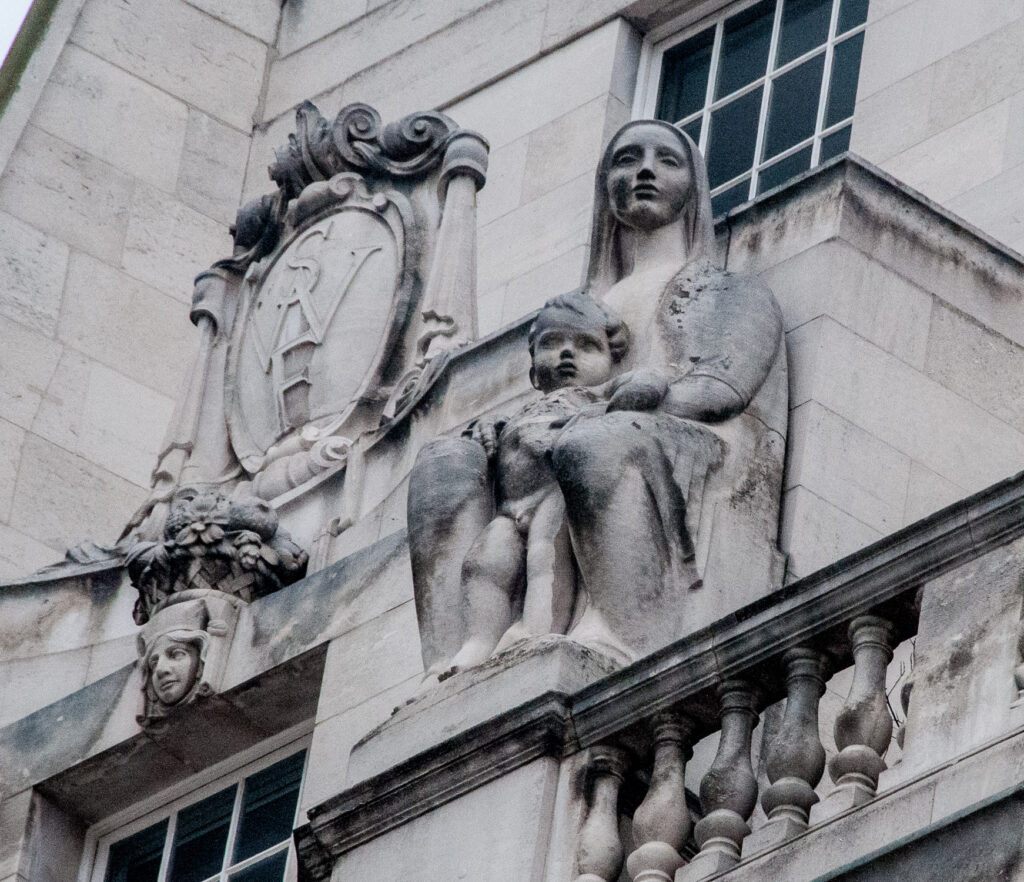
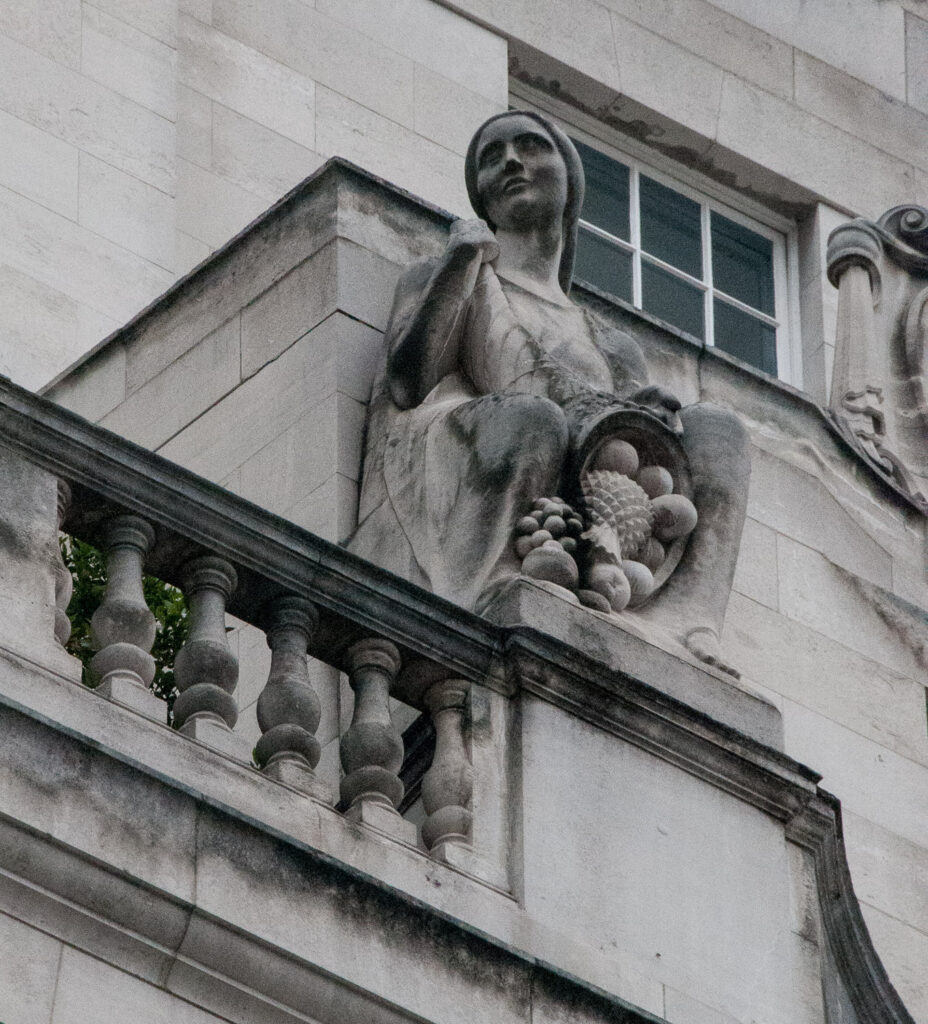
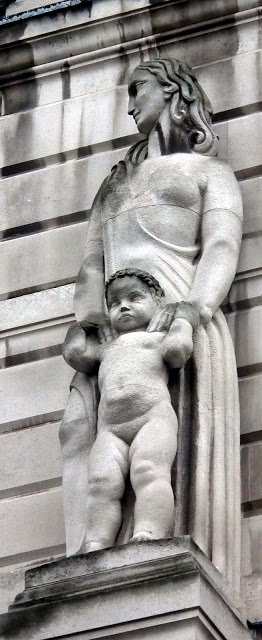
At 28-30 Cornhill can be found the old offices of the Scottish Widows Insurance Company (EC3V 3ND). High up the building, which dates from 1935, are two figures sculpted by William McMillan.
The one on the left holds a naked child between her knees …
… the other pours fruit and flowers from a cornucopia …
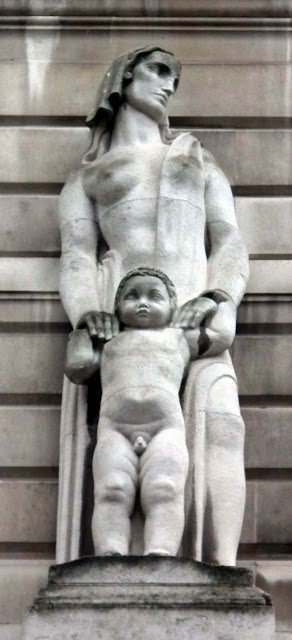
Dr Philip Ward-Jackson points out in his book Public Sculpture of the City of London that there is a striking resemblance both in iconography and style between these two figures and the so-called Lothbury Ladies. Charles Wheeler was sculpting them at the same time for the Lothbury front of the Bank of England. Here are two of them …
The children represent ‘the hope of the future of the renewed Bank and its ideals’.
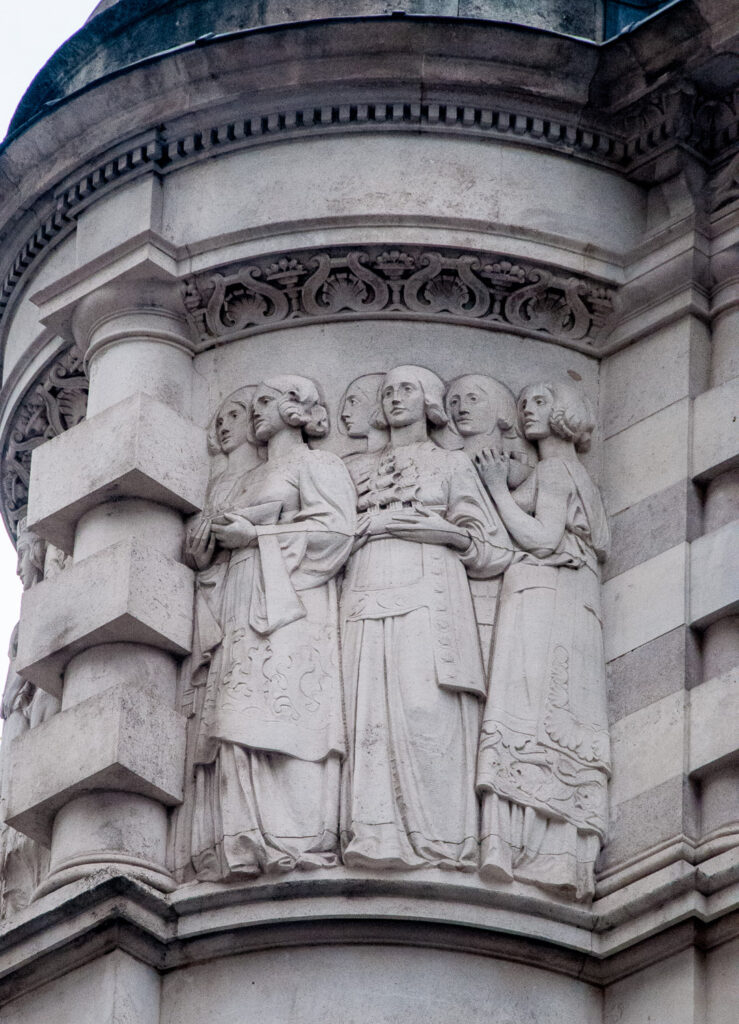
The Lloyd’s Register of Shipping at 71 Fenchurch Street is worth a visit in its own right. I counted over two dozen female figures incorporated into the building’s design and here are just a few of them …
I can’t really do the sculptors justice in this blog so I will return at a later date.
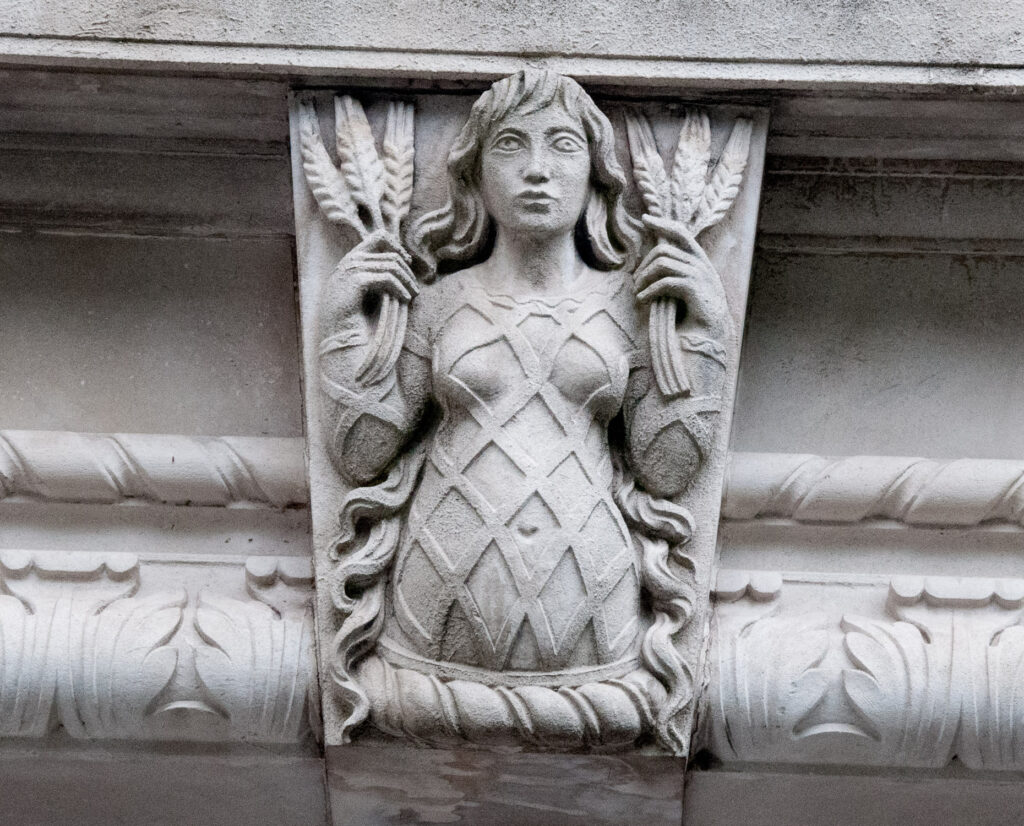
Brewers’ Hall in Aldermanbury Square boasts a maiden keystone over its entrance (EC2V 7HR) …
She holds in either hand three ears of barley and forms the crest of the Brewers’ Company coat of arms. This is another work by Charles Wheeler and dates from 1960.
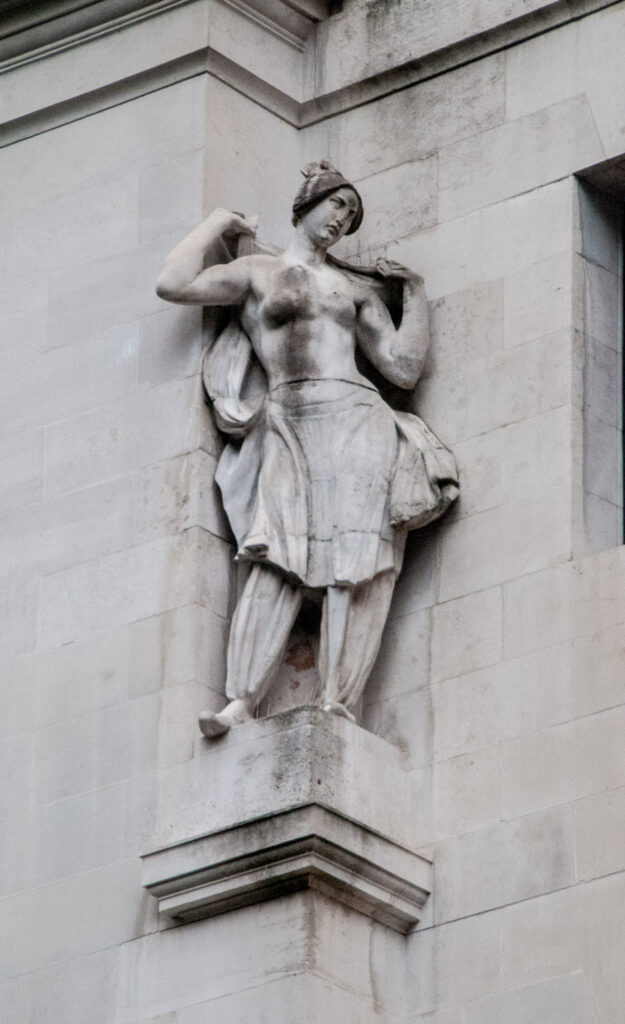
Walking around Finsbury Circus I looked up and saw this lady on the Lutyens designed Britannic House (EC2M 7EB). The building was originally the headquarters of the Anglo-Persian Oil Company …
Sculpted by Francis Derwent Wood in 1925, she’s a Persian Scarf Dancer.
Nearby is another work by him entitled Woman and Baby or Spring …
My walk around the City looking for ladies in sculpture was really enlightening and I’ll return to the subject in a later blog.
I think the lockdown is finally getting to me. I usually don’t have much trouble thinking of a theme for the blog but this week I have failed. So instead, I just wandered around a still quiet City with my camera waiting to see what caught my eye. These are the results – I hope you find some of them interesting.
Now the pavements are deserted, it’s easier to look upwards as you walk and see what you might have missed on previous occasions.
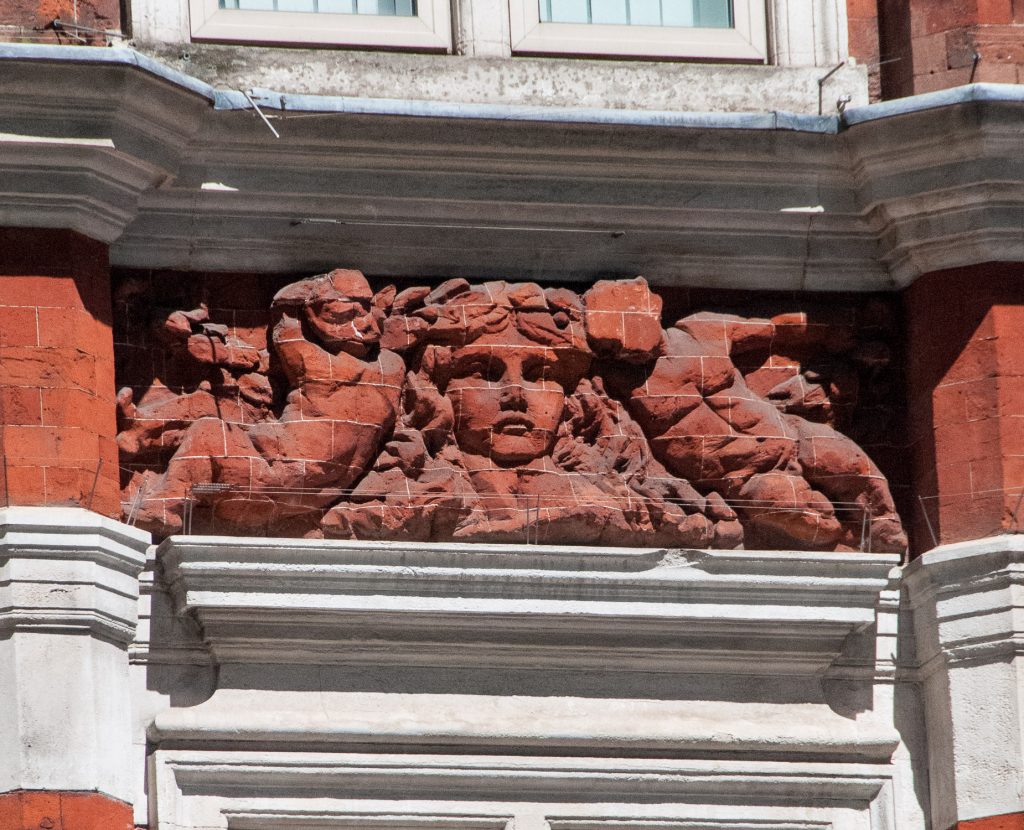
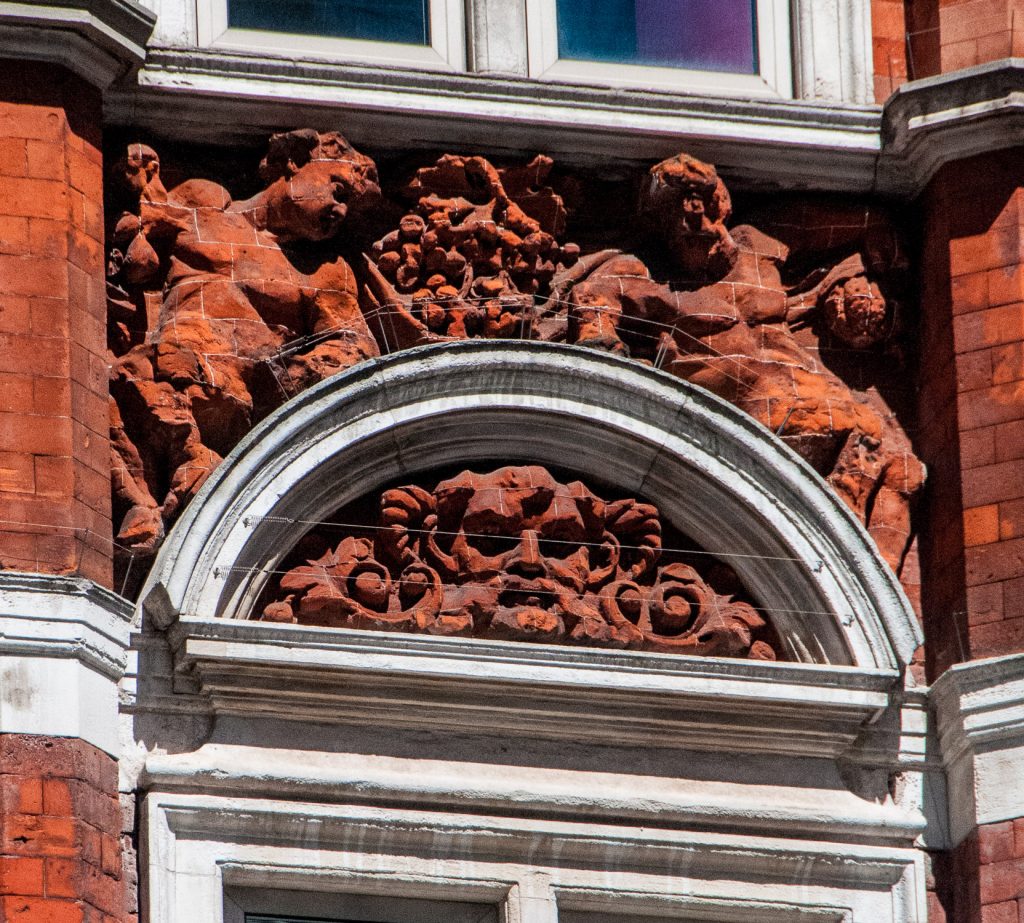
The Victorians paid a lot of attention to decorative detail and I really liked these two faces, carved into bricks, looking out over London Wall. I’ve nicknamed them Beauty …
… and the beast …
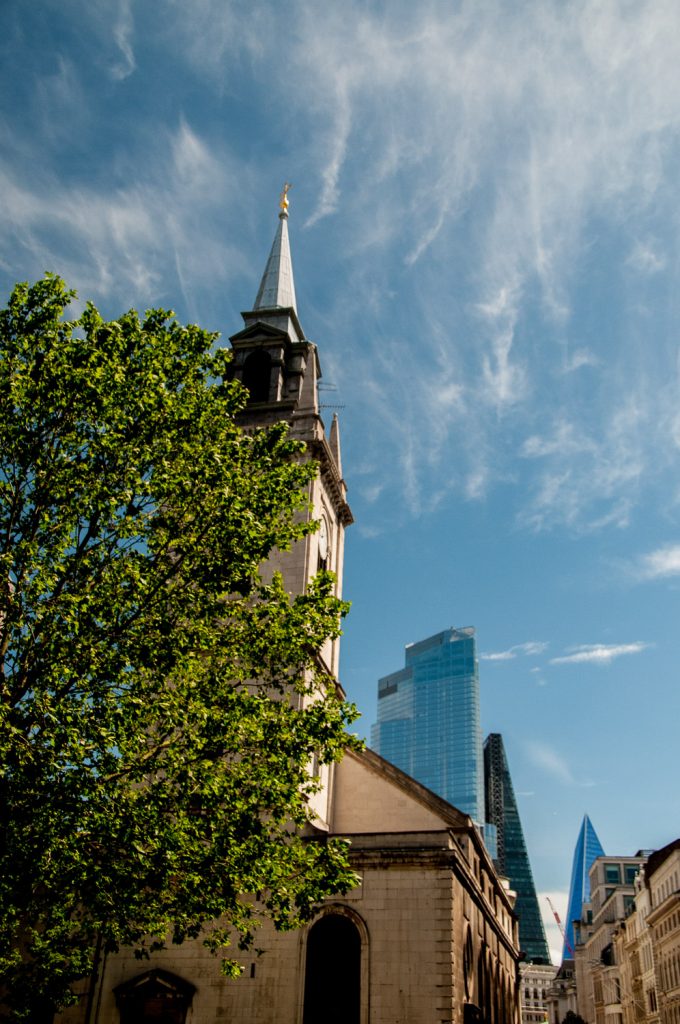
And while on the subject of beauties and beasts, take a look at this view from Gresham Street …
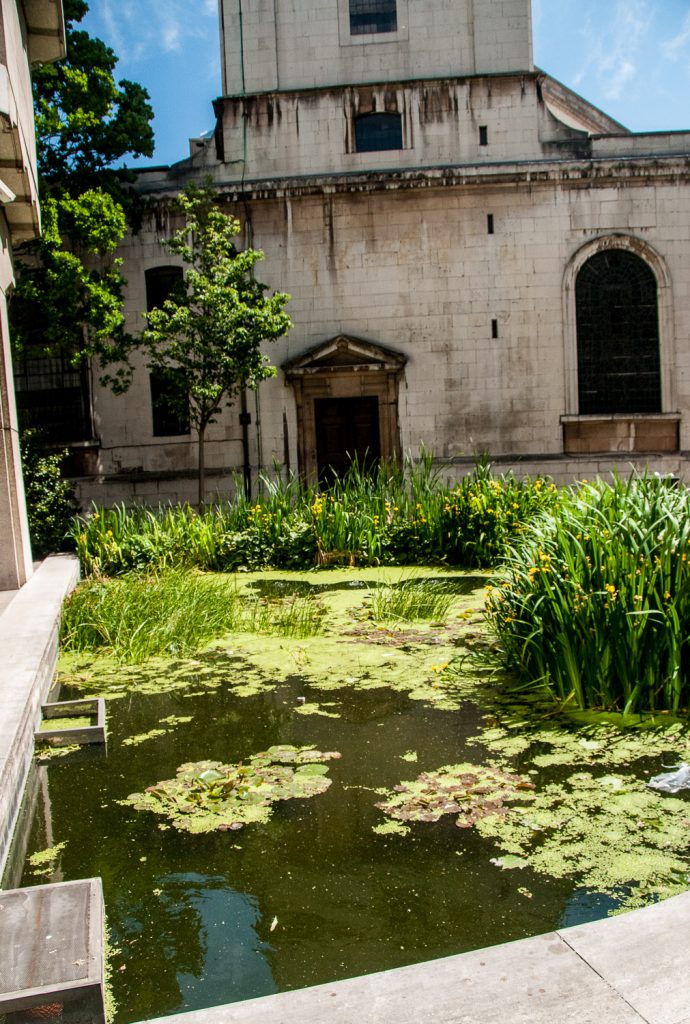
The church is St Lawrence Jewry and behind it some modern buildings that I like, the Cheesegrater and the Scalpel, and one I don’t, a characterless glass monster growing on Bishopsgate.
There’s a nice little pond in front of the church …
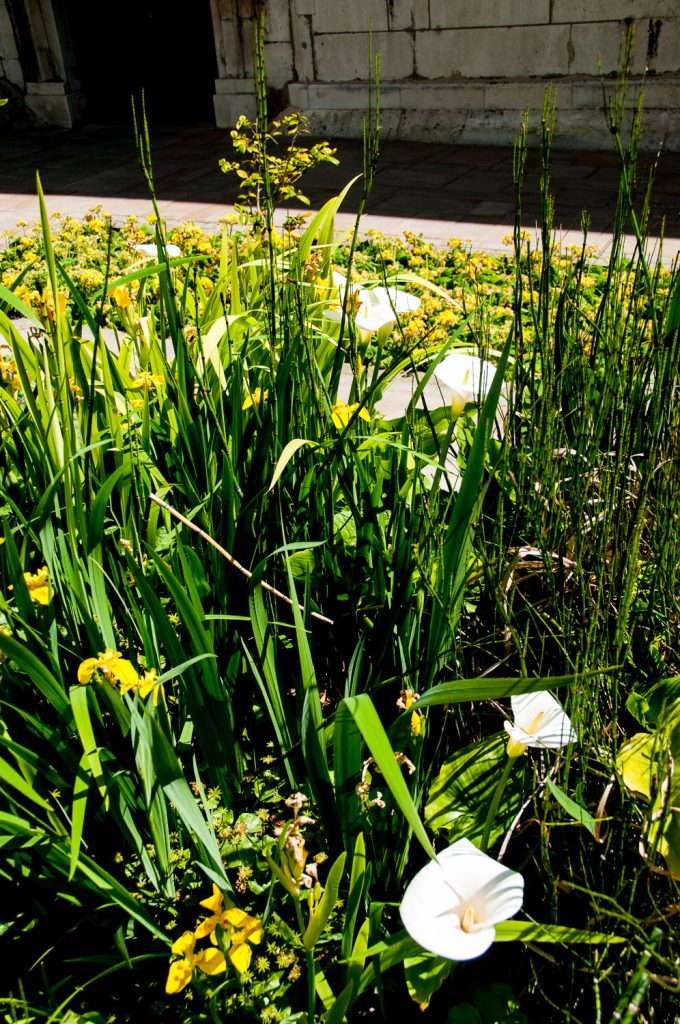
It’s home to these Arum Lilies and Irises …
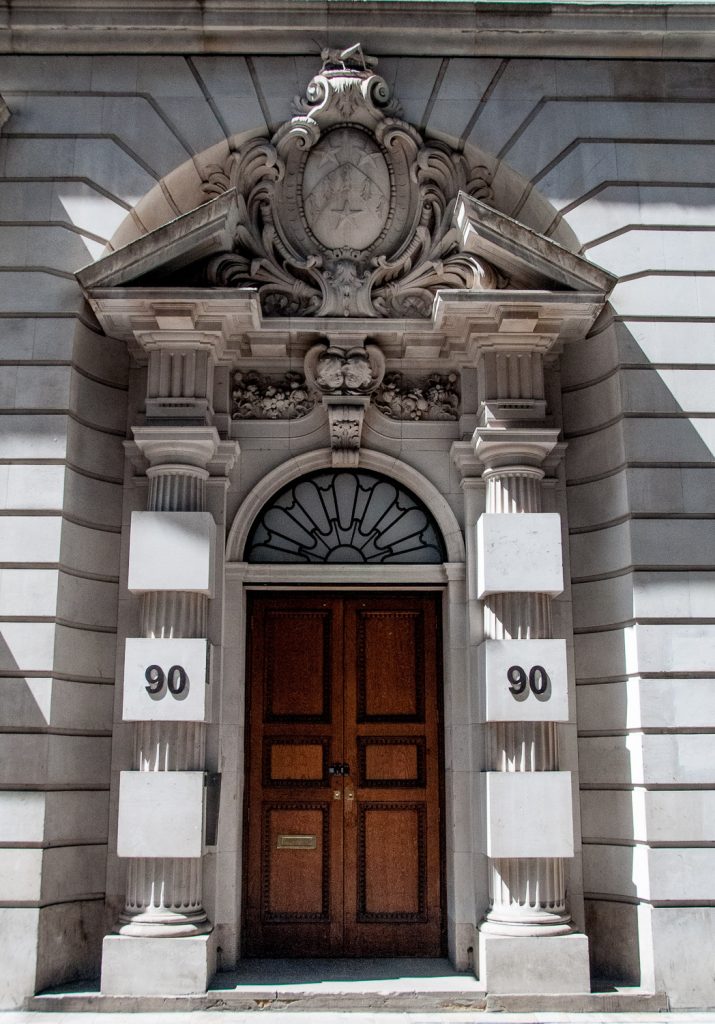
I have written before about Thomas Gresham and the college he founded was once based here at 90 Basinghall Street until 1991 (EC2V 5AY) …
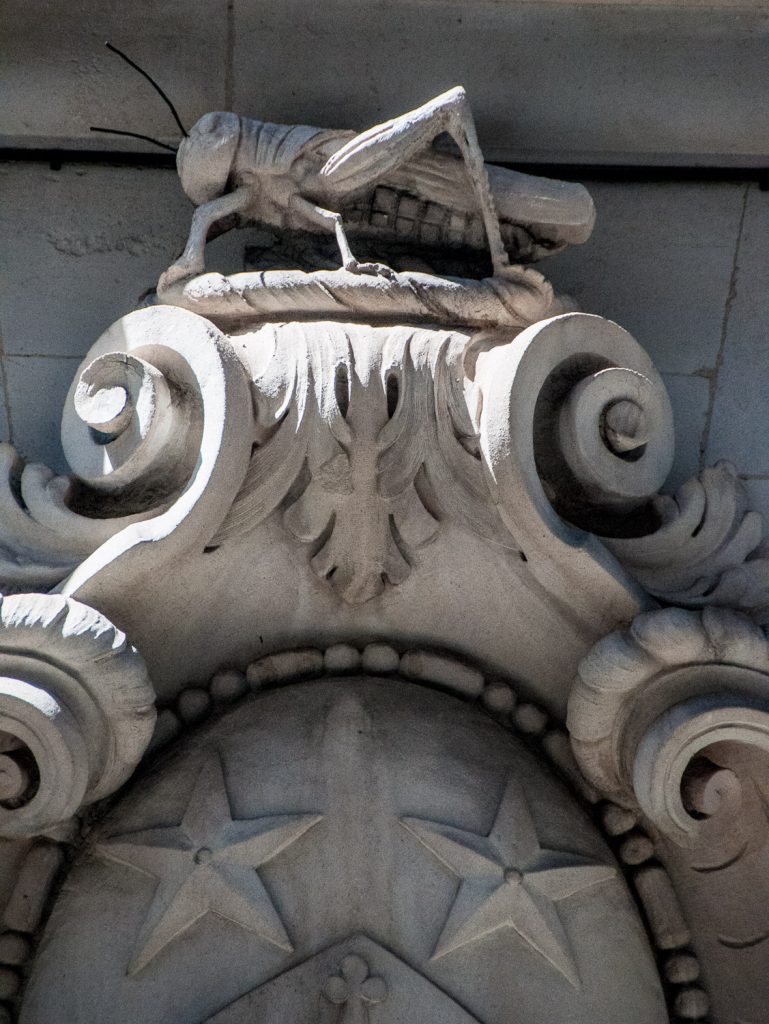
Above the coat of arms rests the symbolic Gresham grasshopper …
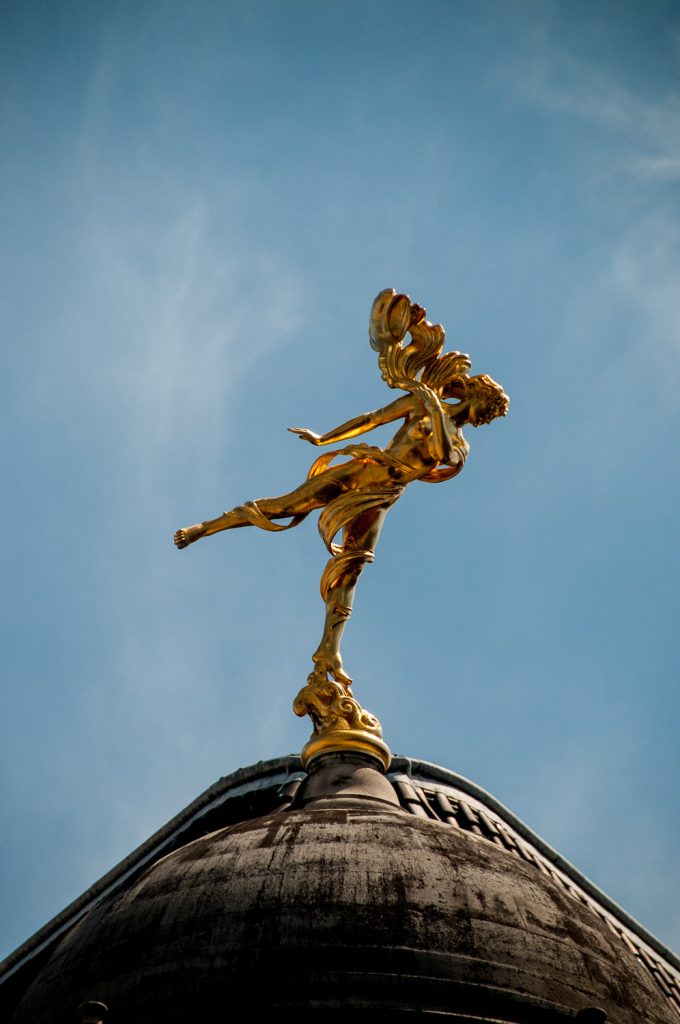
The sun was perfectly placed to illuminate Ariel or The Spirit of the Winds by Charles Wheeler. She’s positioned on a cupola above the Bank of England on Tivoli Corner …
When she was unveiled in 1937 the Bank’s magazine stated …
It is the symbol of the dynamic spirit of the Bank which carries Credit and Trust over the wide world.
Ariel was, of course, the Spirit of the Air in Shakespeare’s Tempest, who by Prospero’s magic could ‘put a girdle around the world in forty minutes’.
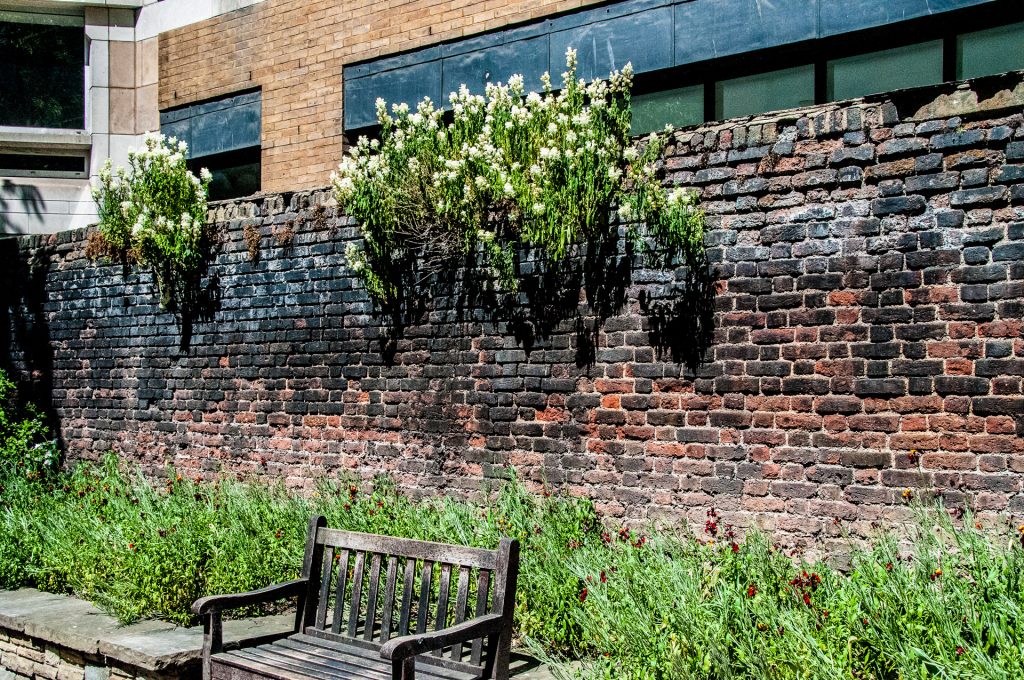
I’m fascinated by this old Wall on London Wall. I can’t find out more about it but it looks Medieval to me (EC2M 5ND) …
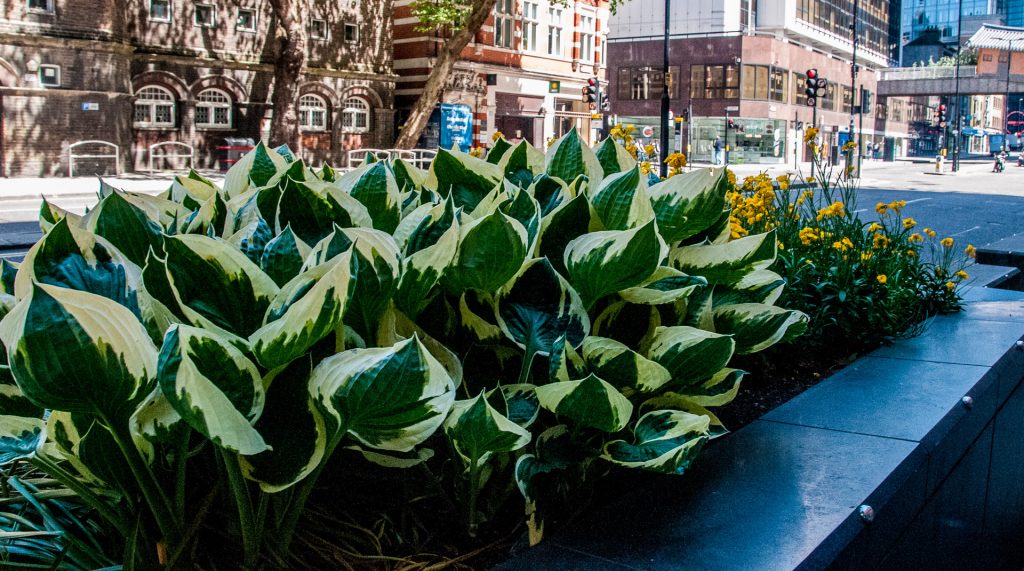
London Wall has lots of examples of the wonderful work the small team of City gardeners do to keep beds and parks looking good all year round …
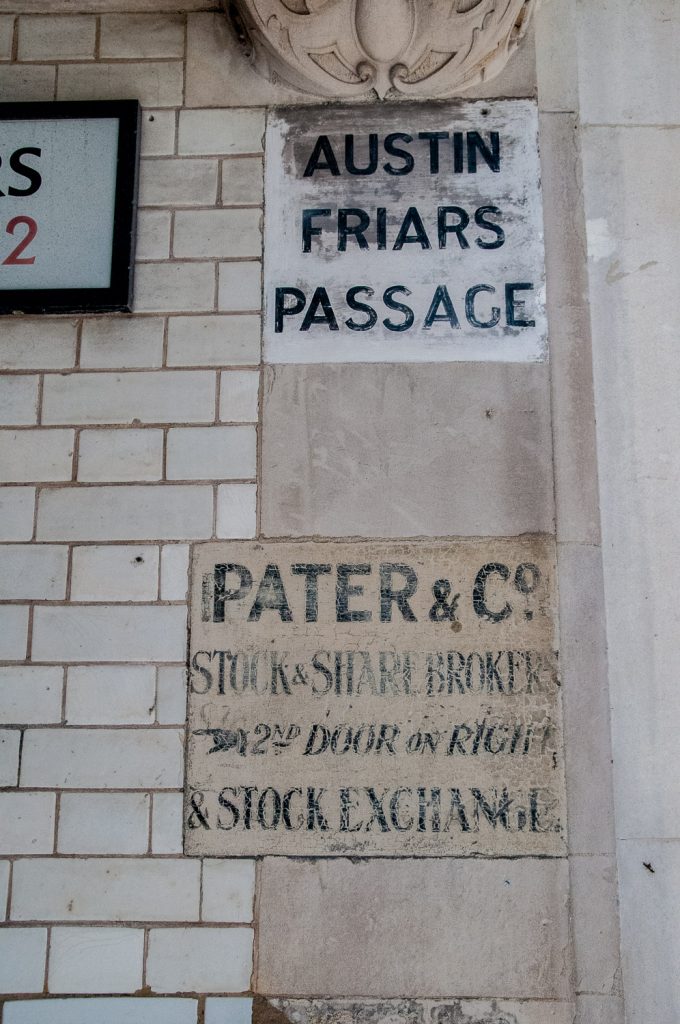
Austin Friars (off Old Broad street) was once the location of an Augustinian Friary until its dissolution in 1538. Walk in through an atmospheric doorway with its charming ghost signs …
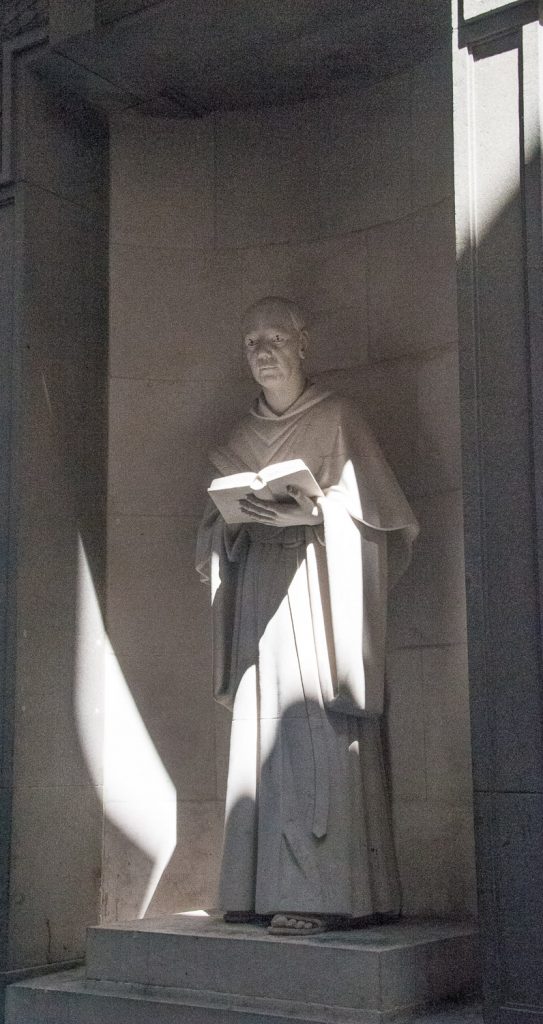
When I visited the sun was in exactly the right place to illuminate the slightly spooky friar who reminds us of the area’s original purpose …
He resides at 4 Austin Friars, was sculpted by T Metcalfe and dates from 1989 (EC2N 2HA).
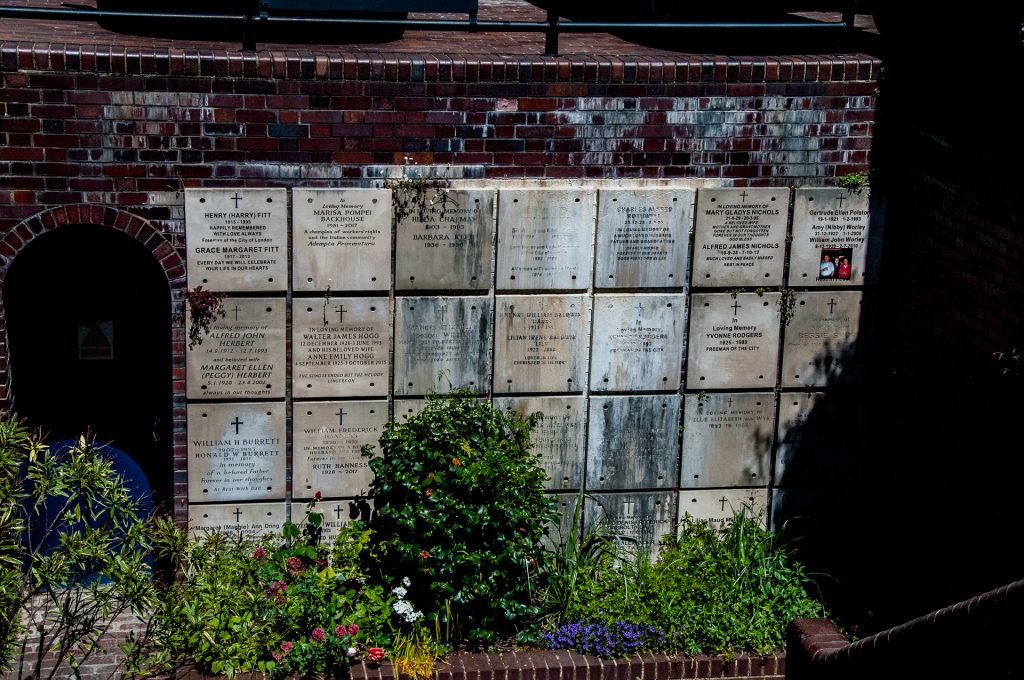
Near St Giles Cripplegate, the Columbarium is known as ‘one of London’s secret gardens.’ It lies to the east of the church down a flight of stairs. There are some niches on an outside wall and others are in a covered area enclosed by a gate …
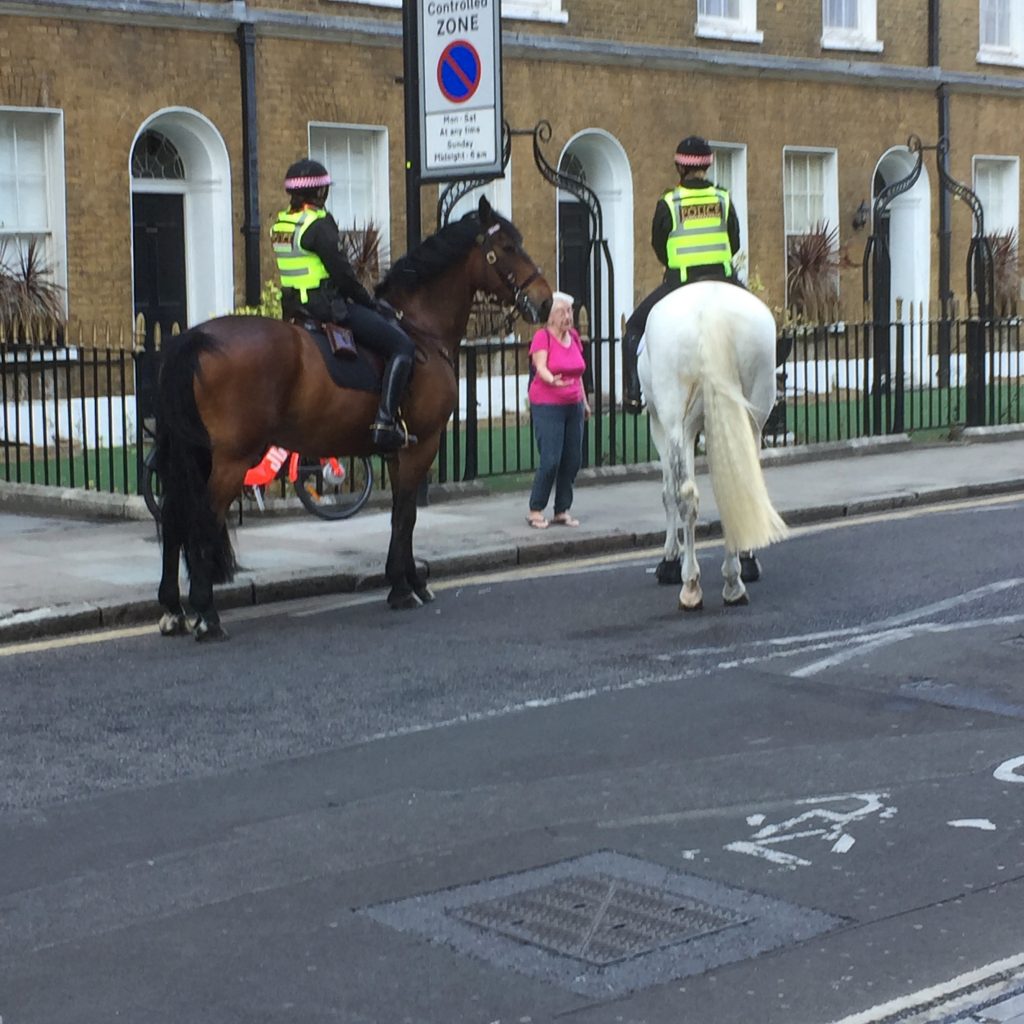
And finally, two of the City of London Police’s finest …
… and their riders.
I really enjoyed my little walk and I hope you enjoyed reading about it.