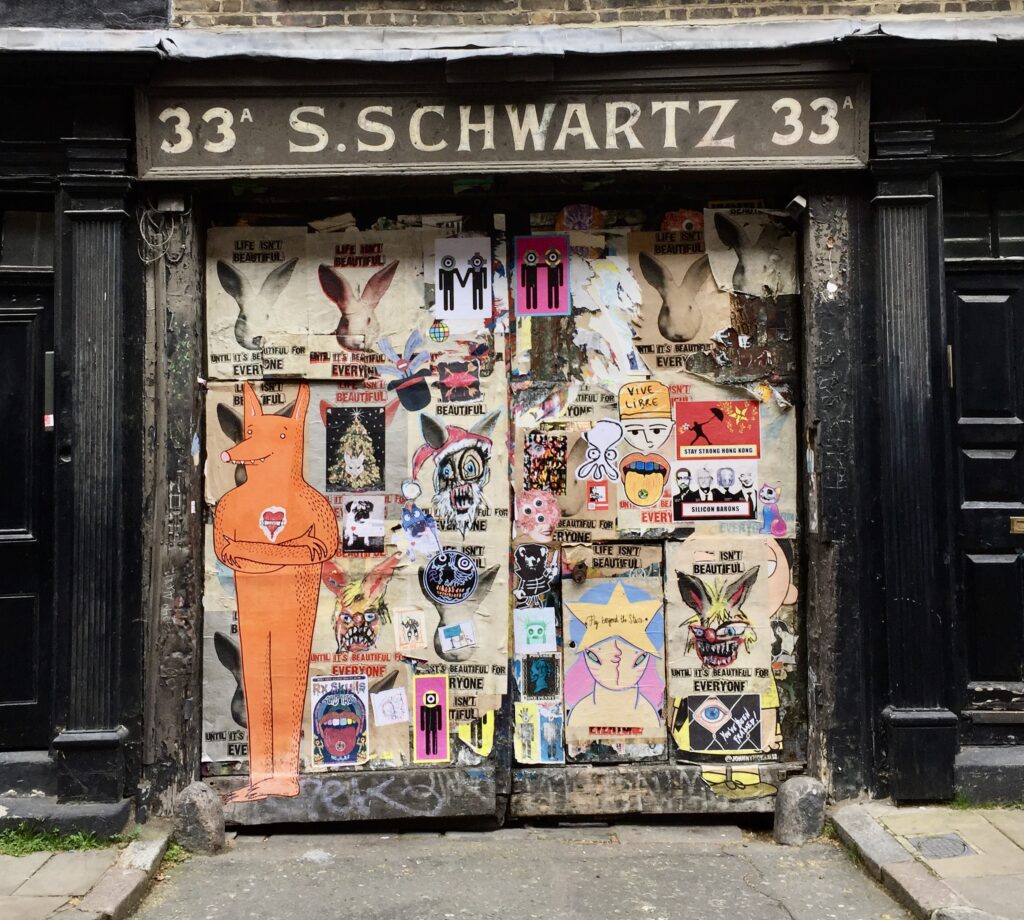
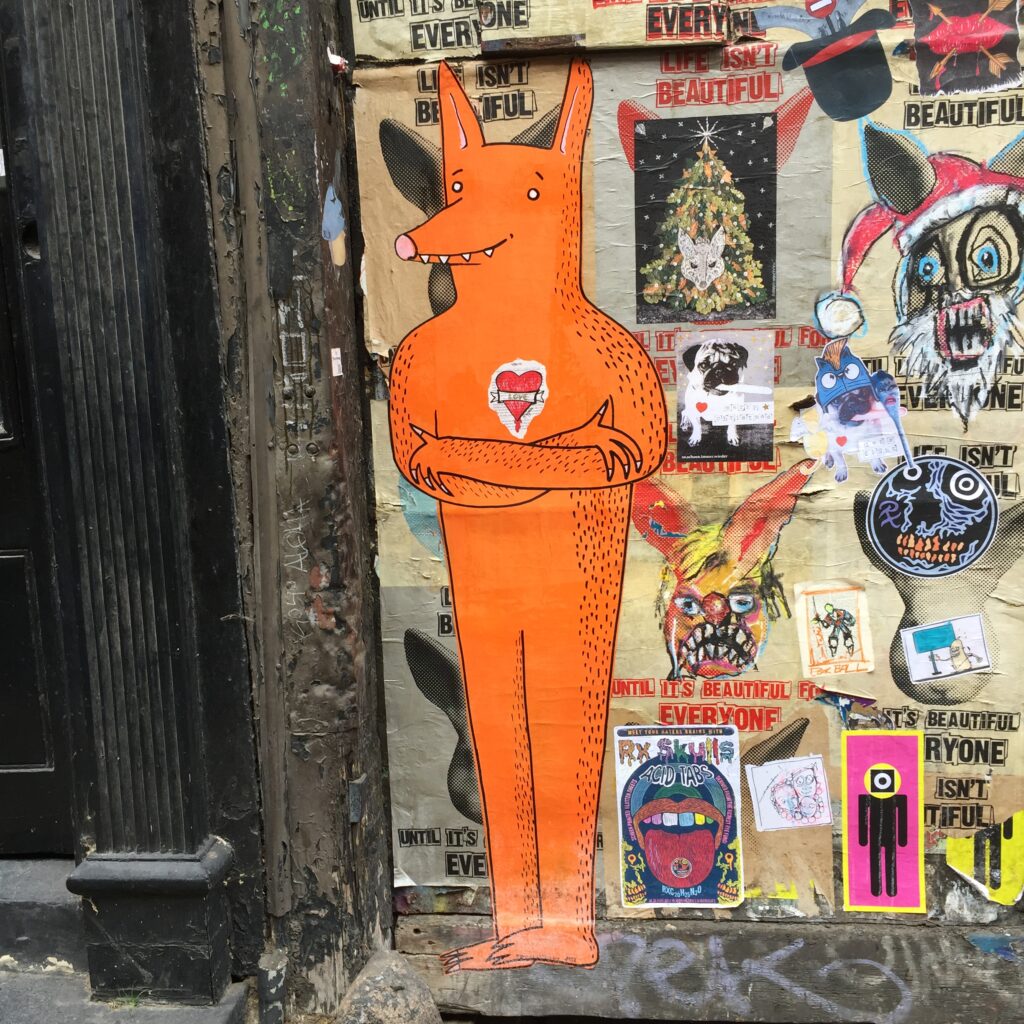
In my blog a few weeks ago some of you will remember that I wrote about this pair of doors in Fournier Street …
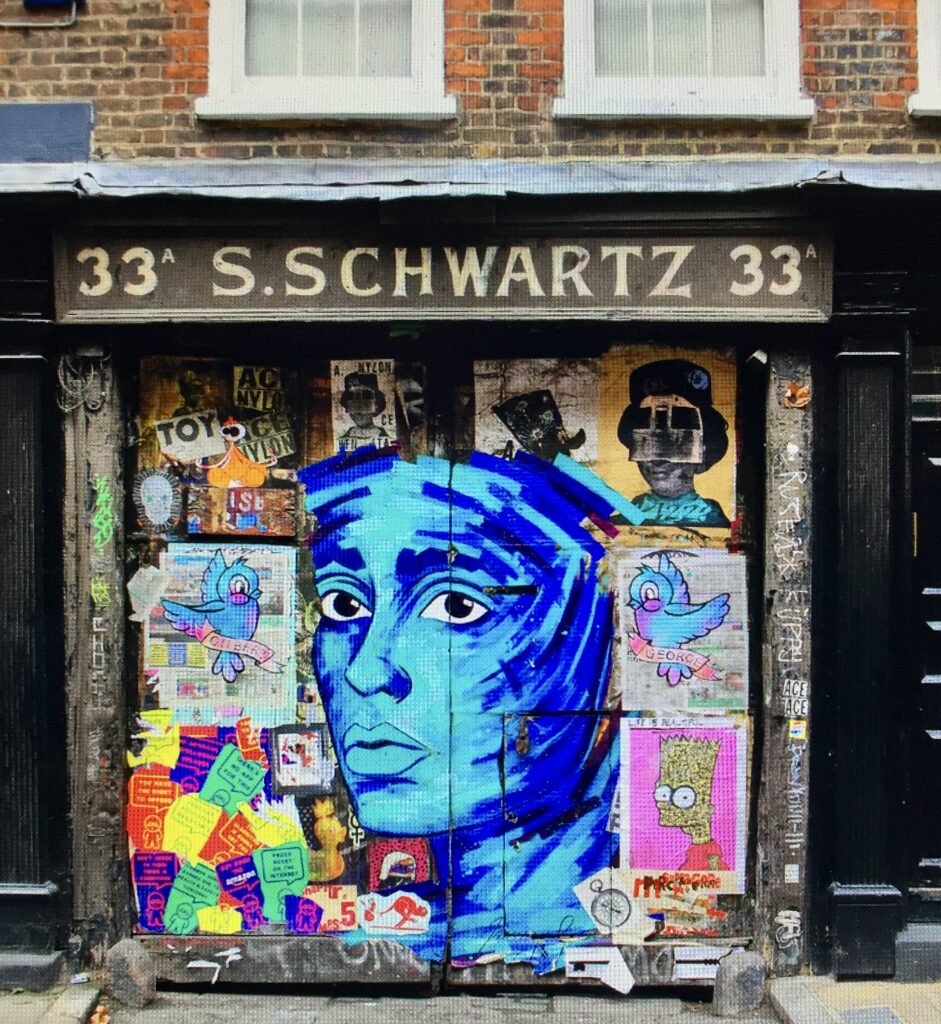
Much street art is constantly being painted or pasted over. For example, this is what the doors looked like in April 2018 …
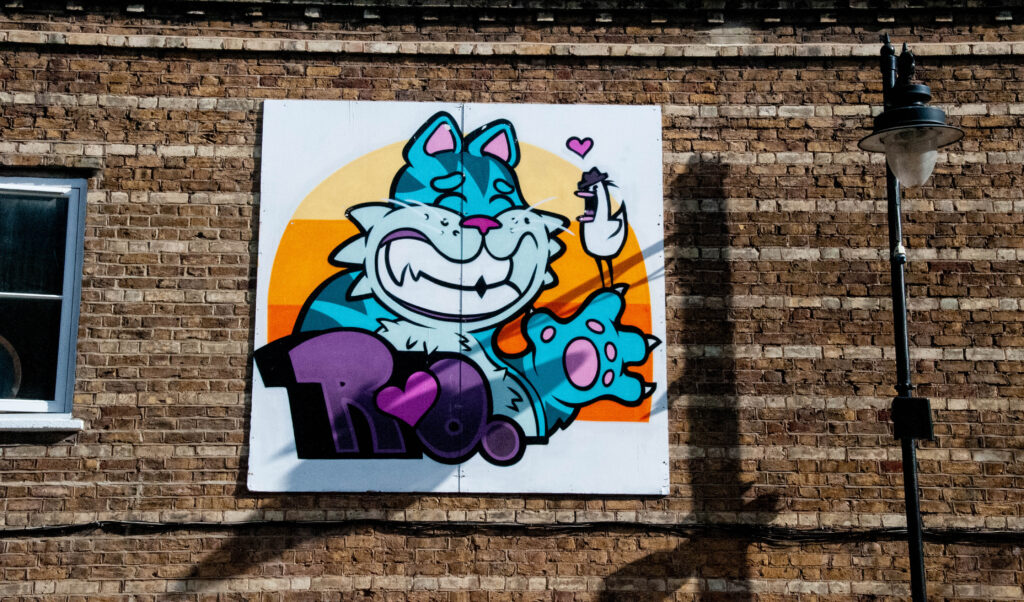
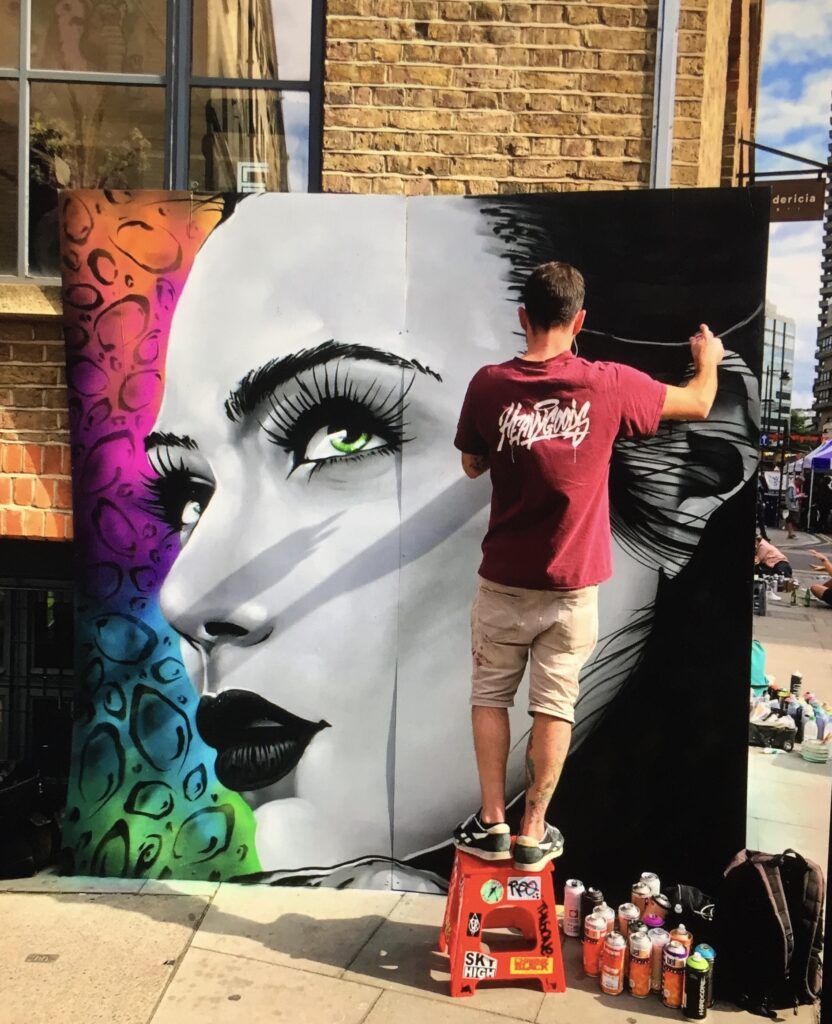
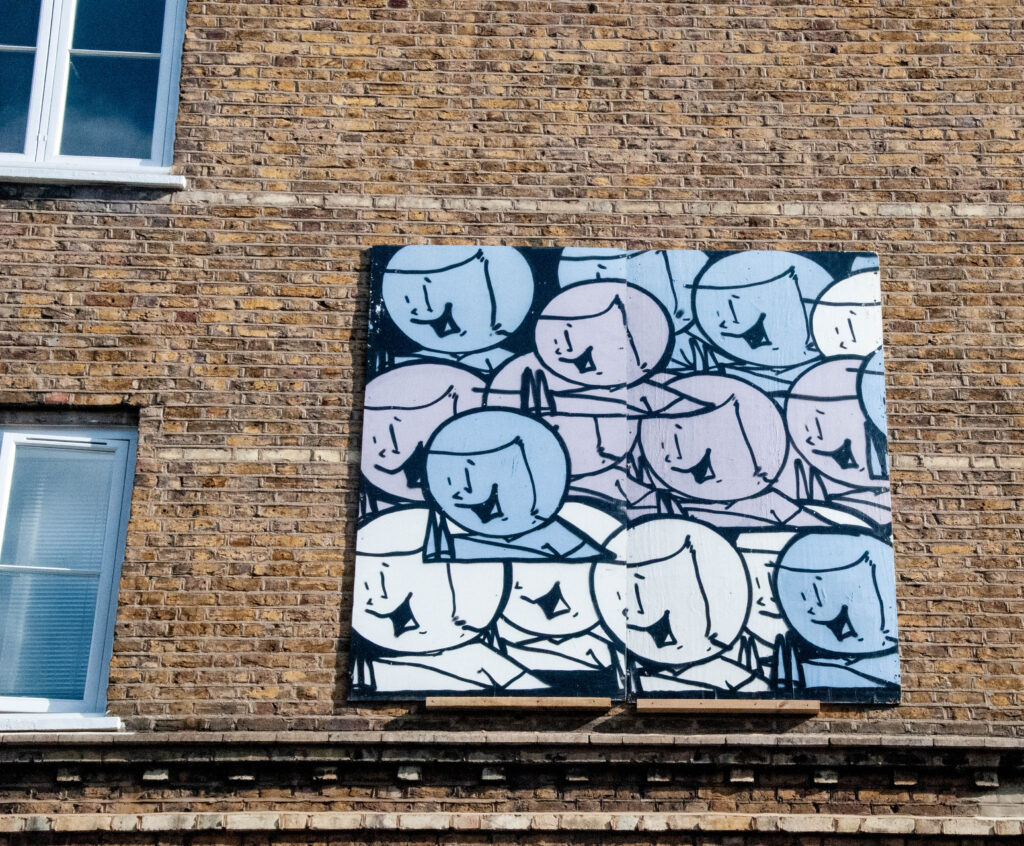
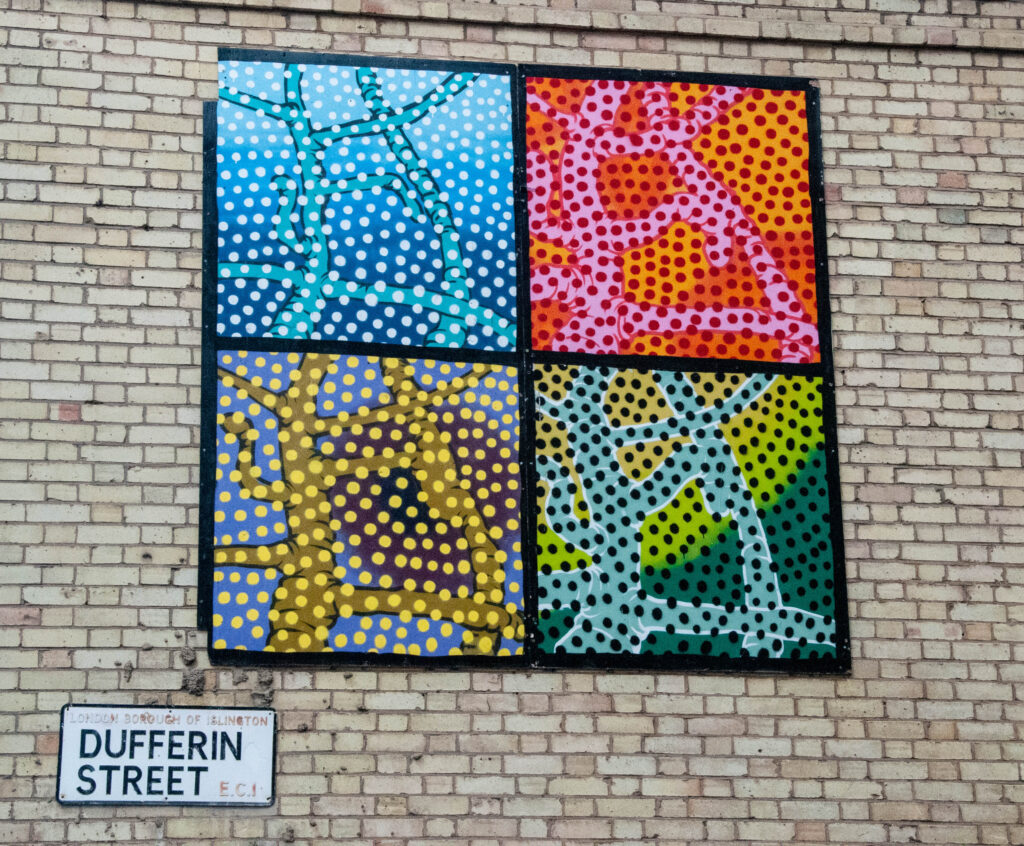
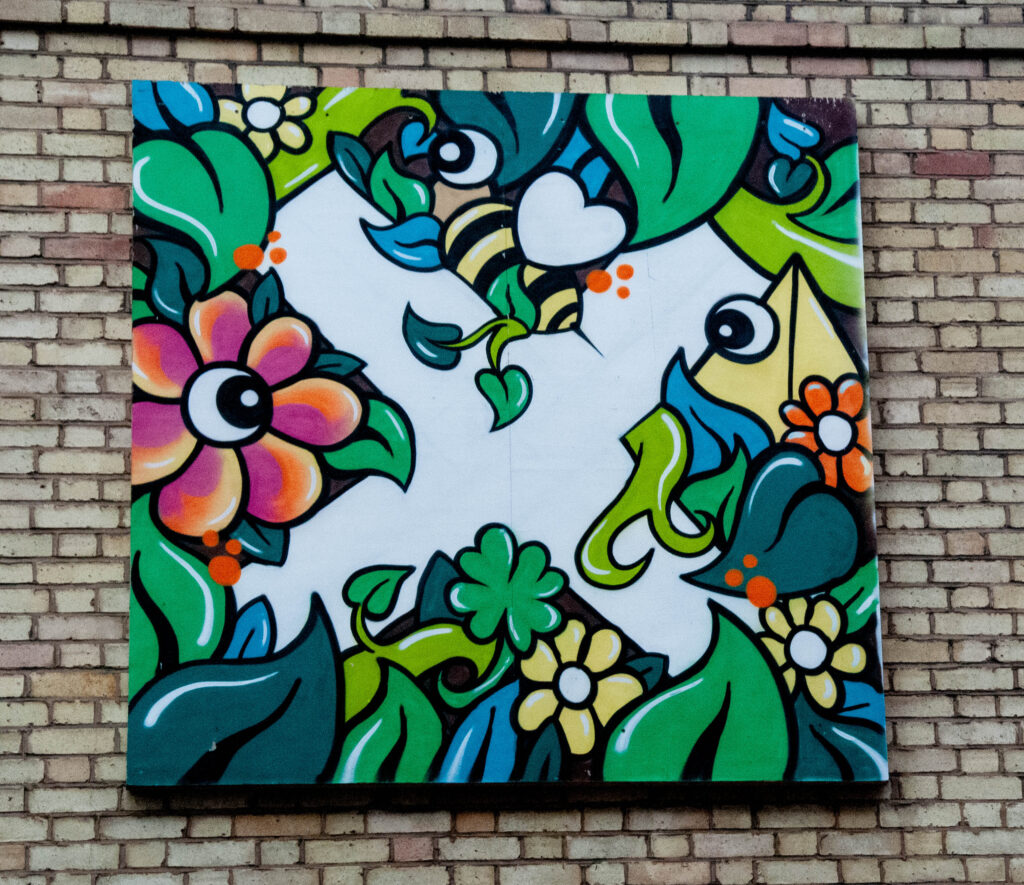
I was inspired to go in search of what else had been created nearby and these pictures are the result of my wanderings.
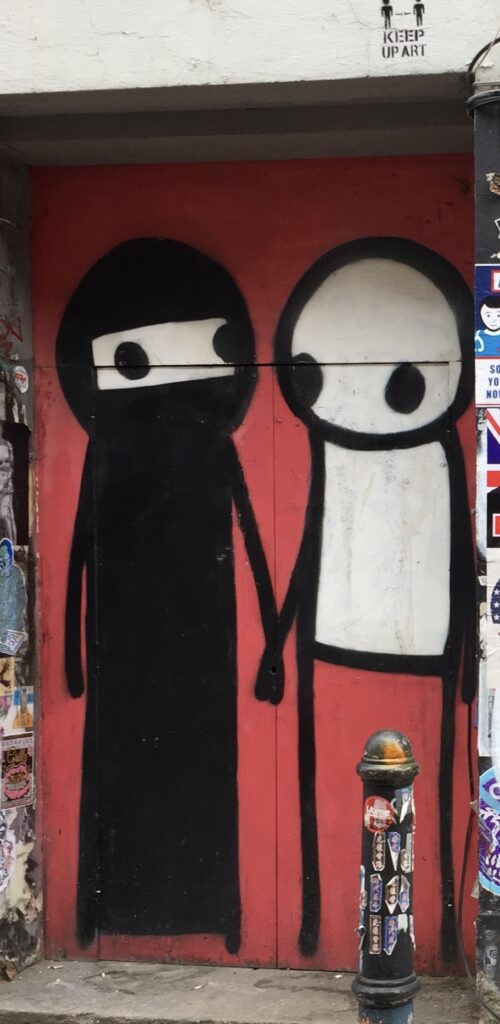
I’ll start in Princelet Street with a work by the famous street artist Stik …
Entitled A Couple Hold Hands in the Street, it shows a woman in a niqab holding hands with a second stick figure. It was painted in 2010 and you can read more about the artist in this fascinating article in Christie’s magazine.
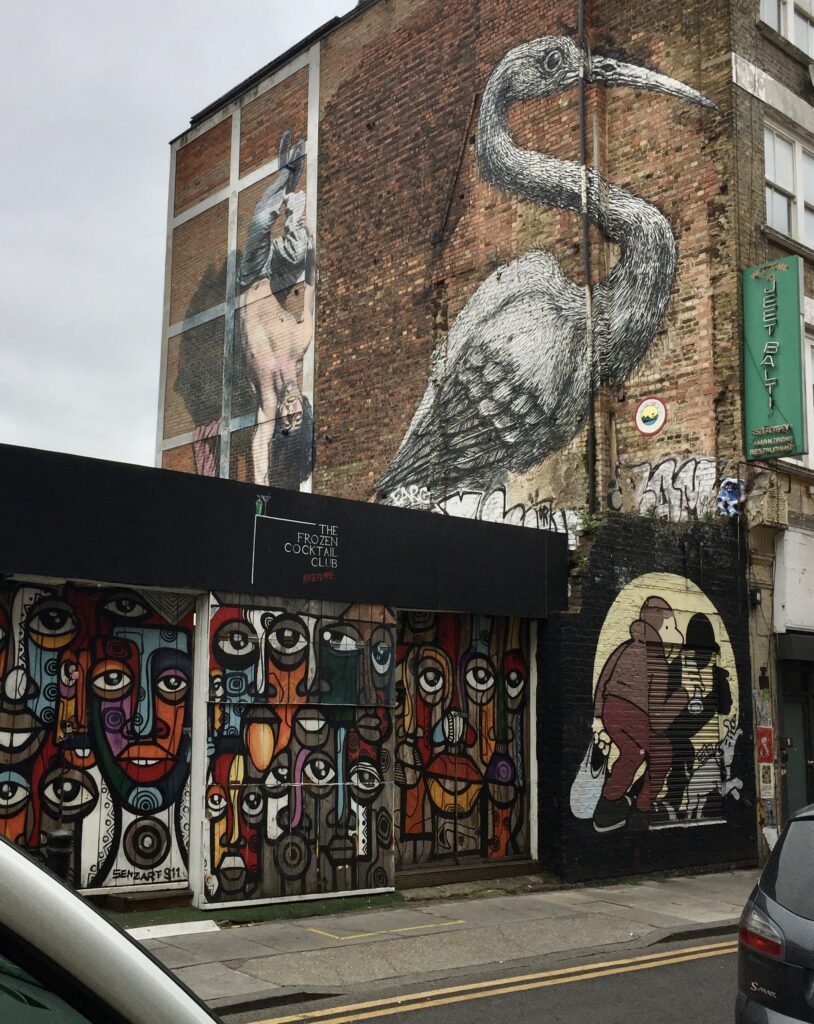
Local people are also very fond of this Hanbury Street bird …
The work is by the Belgian street artist Roa. His intention had been to paint a heron but, after being asked if it was a crane by Bengali people – for whom the crane is a sacred bird – he morphed his bird into a crane to best complement its location on the wall of an Indian restaurant. Read more here about The Return of Roa by The Gentle Author.
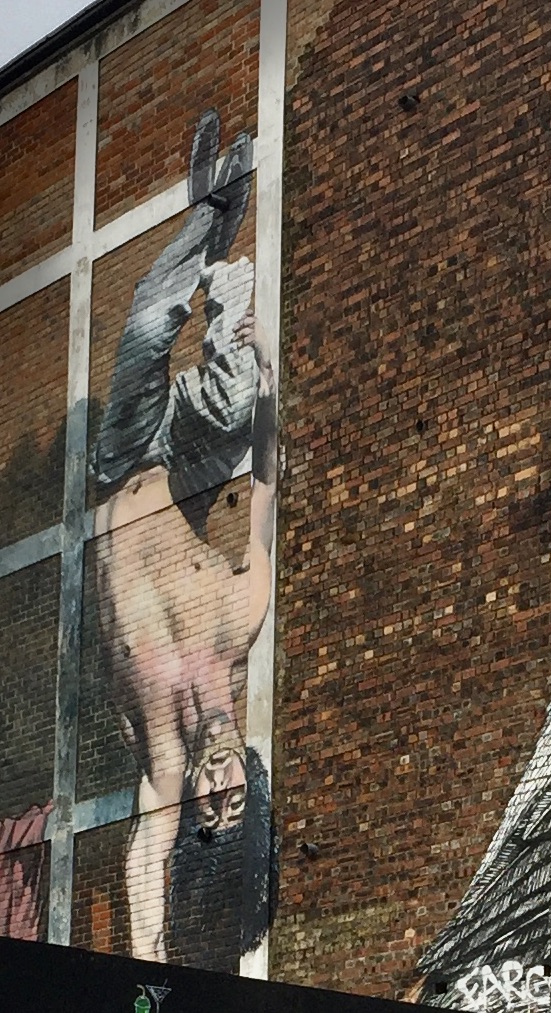
To the left of the crane is a bearskin-hatted guardsman break dancing …
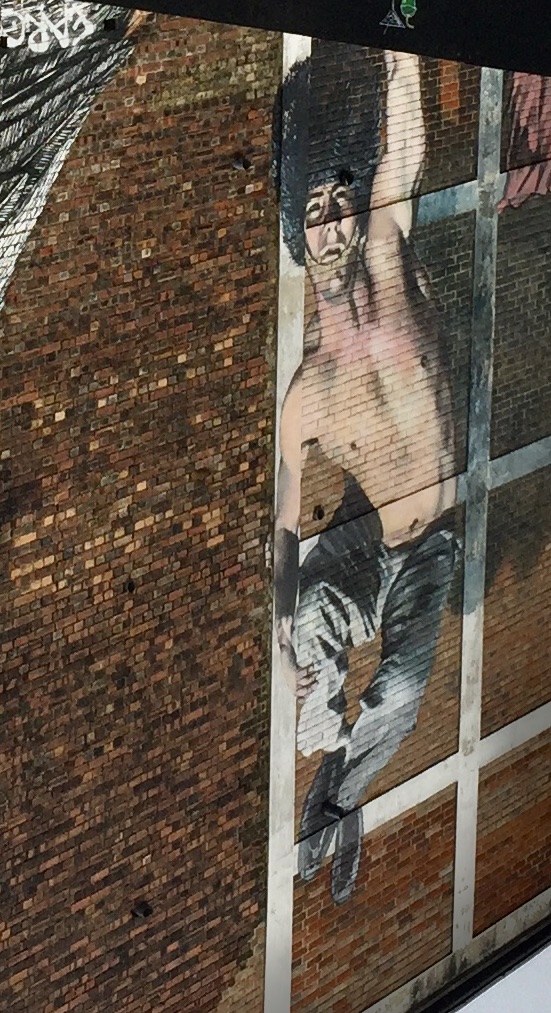
Here he is ‘right’ way up …
It’s by the Argentinian painter Martin Ron who is based in Buenos Aires.
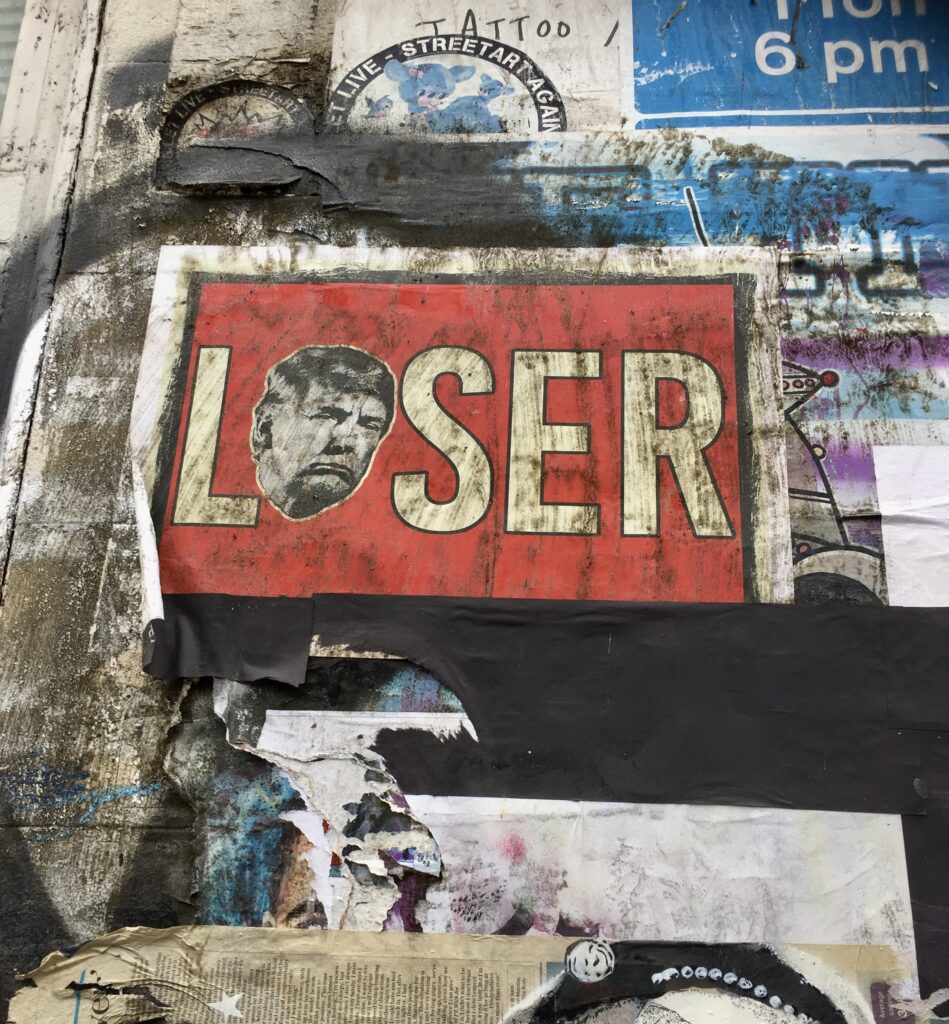
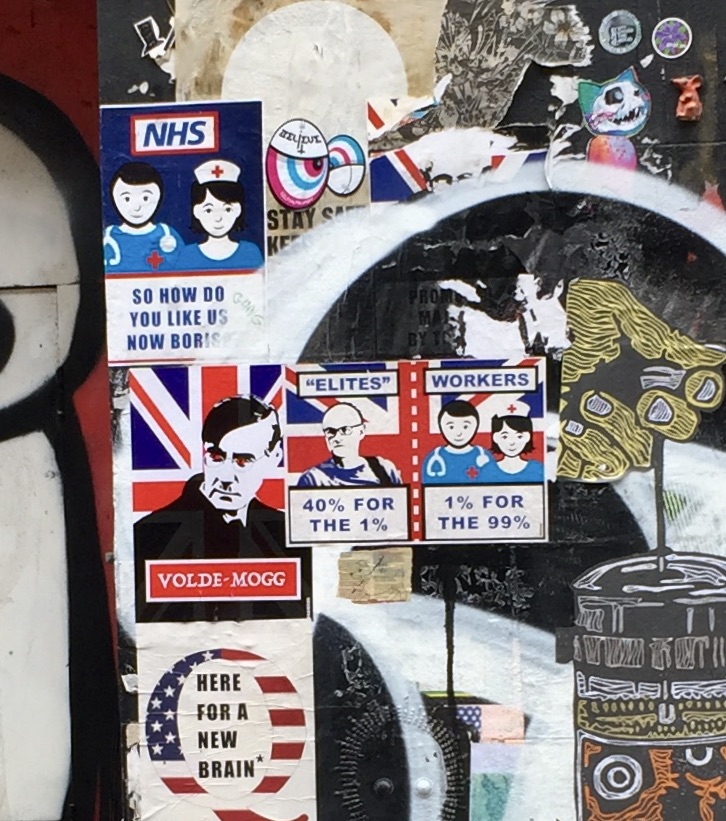
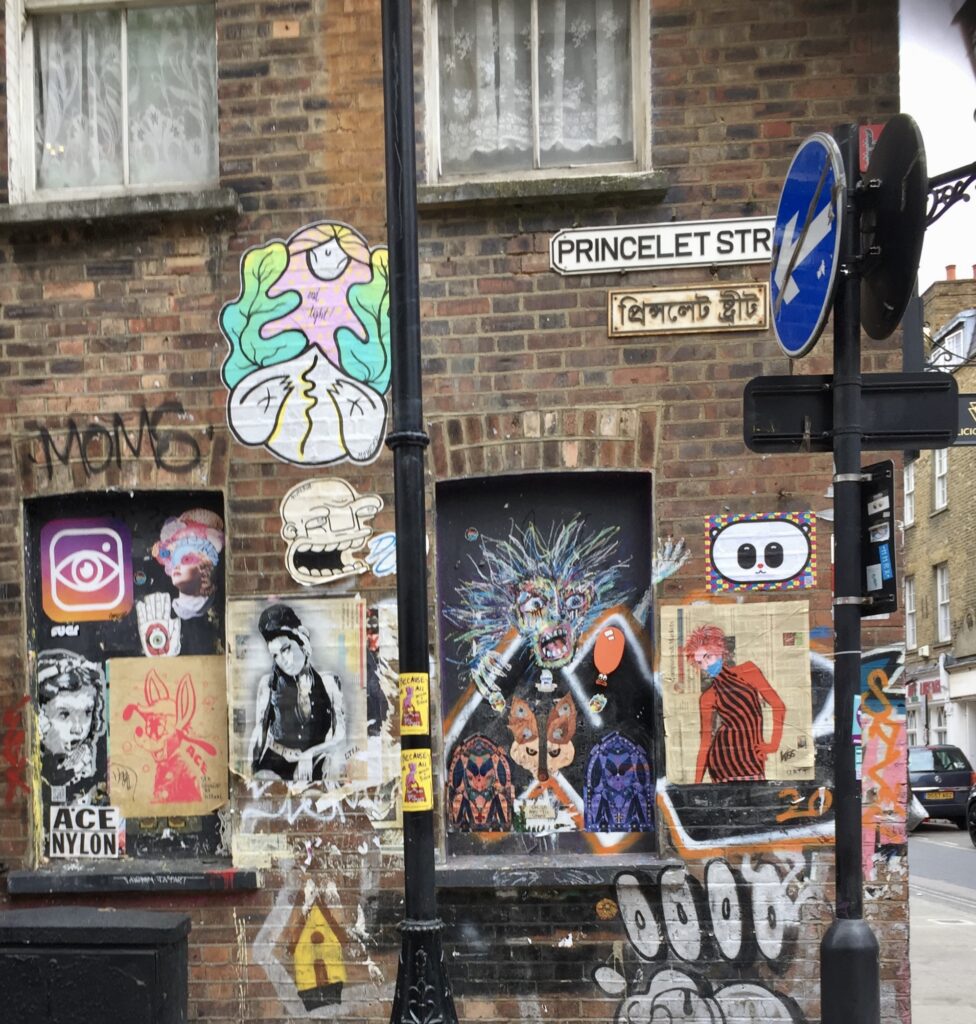
There were bound to be a few political points being made …
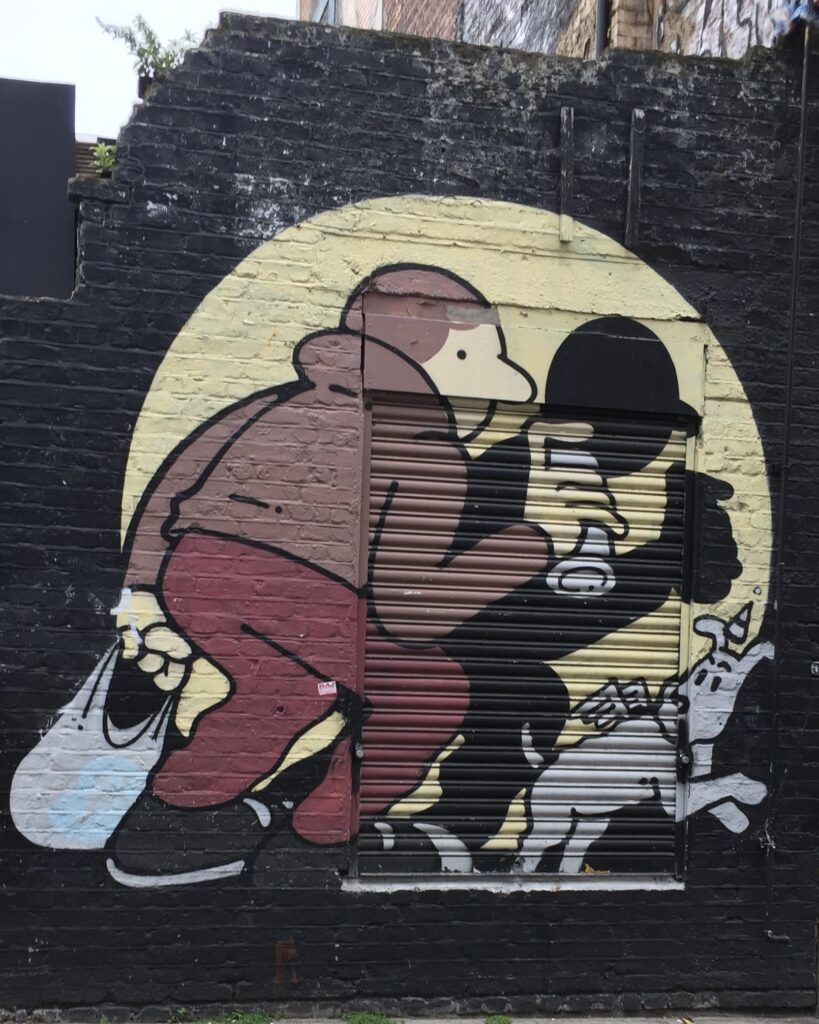
This made me laugh – could it be Tintin and his dog Snowy doing some clandestine paint spraying? …
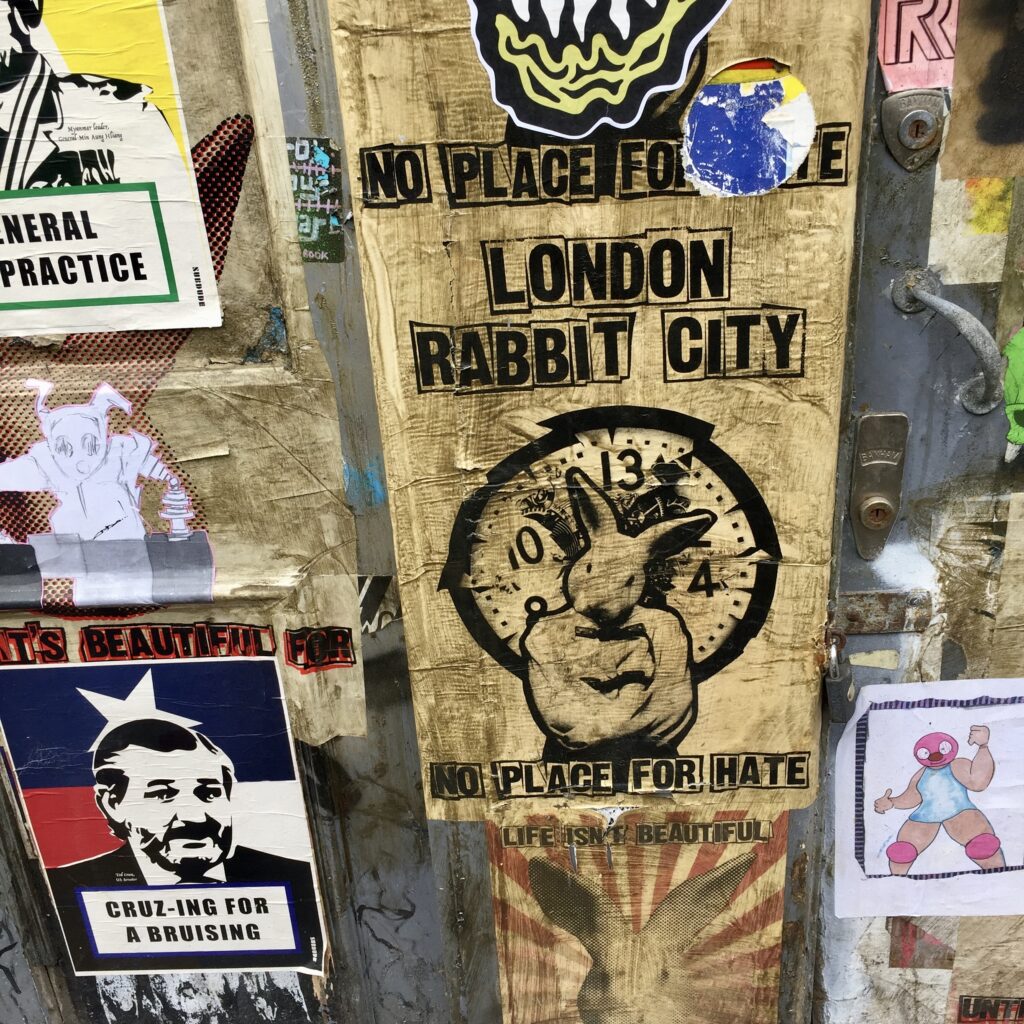
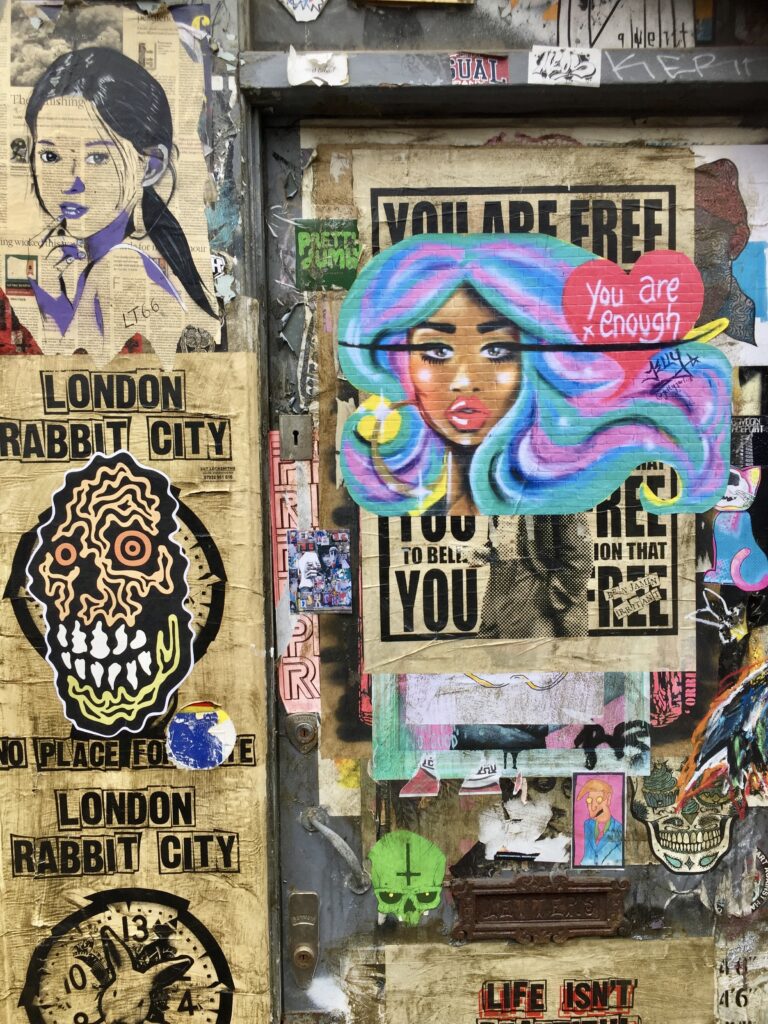
The ‘No place for hate’ rabbit pops up a lot …
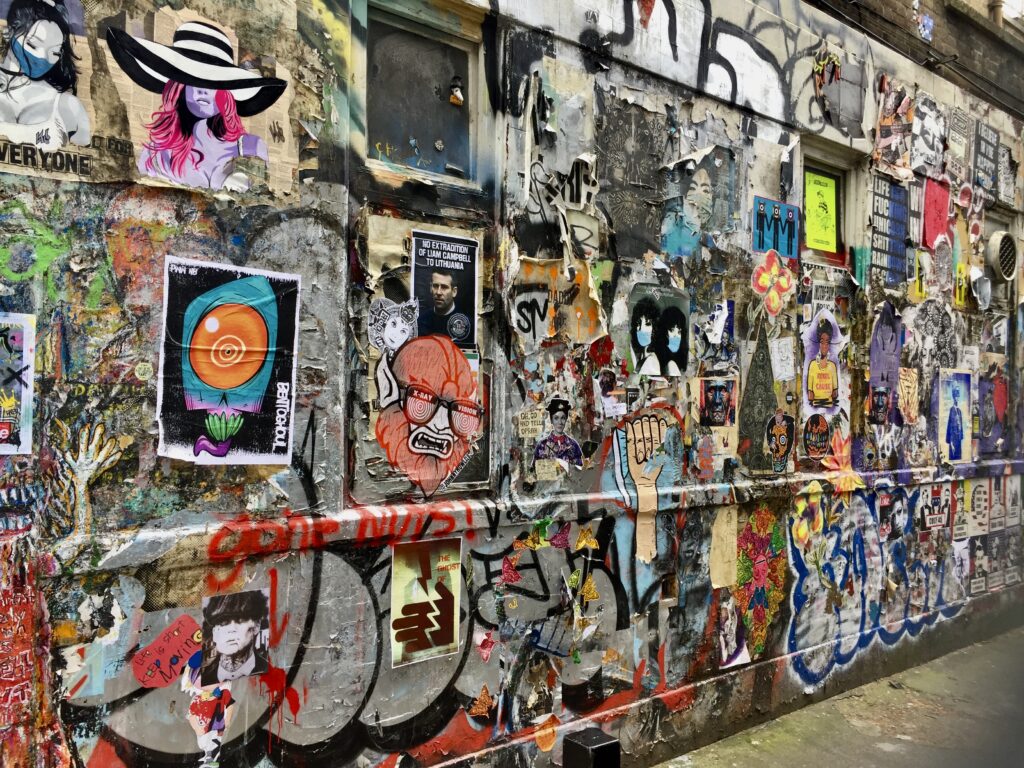
Layers and layers of street artist paste-ups cover walls …
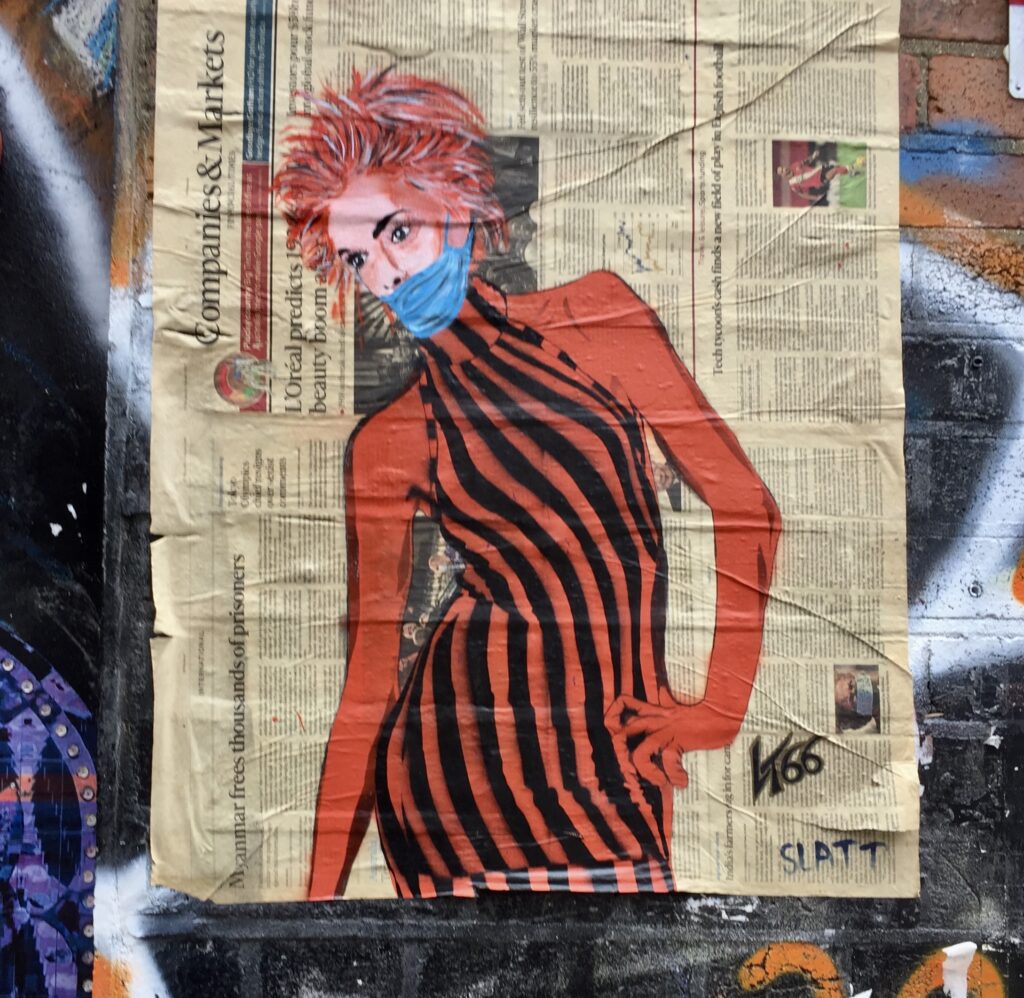
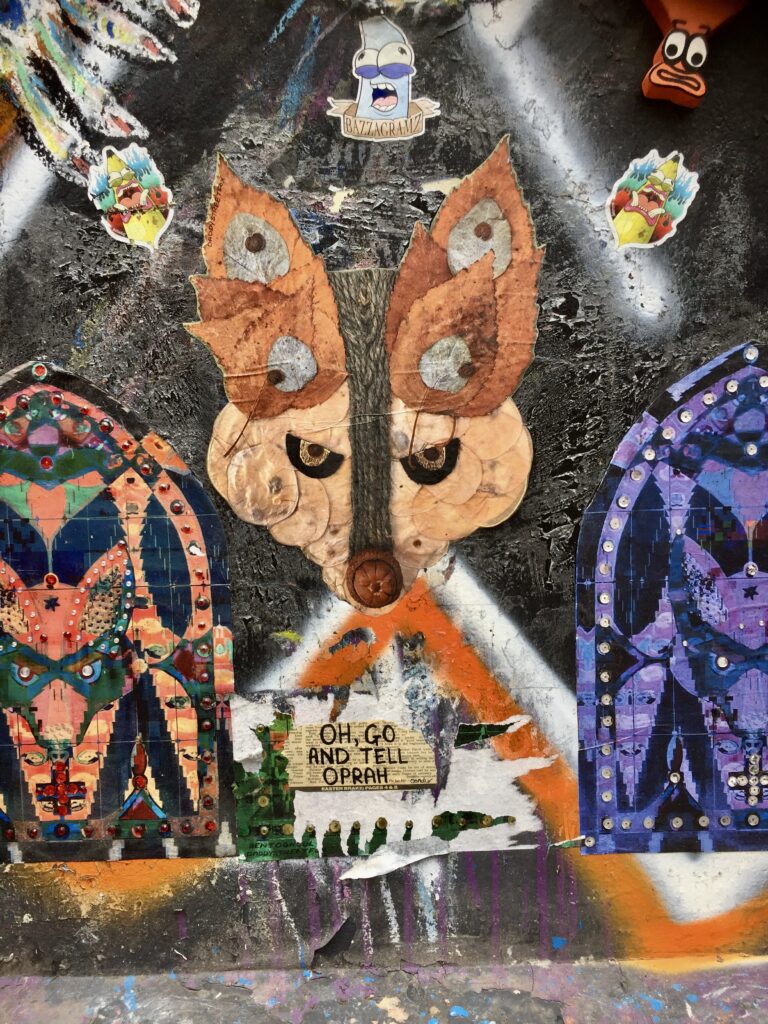
Picking out individual works is fun and quite absorbing …
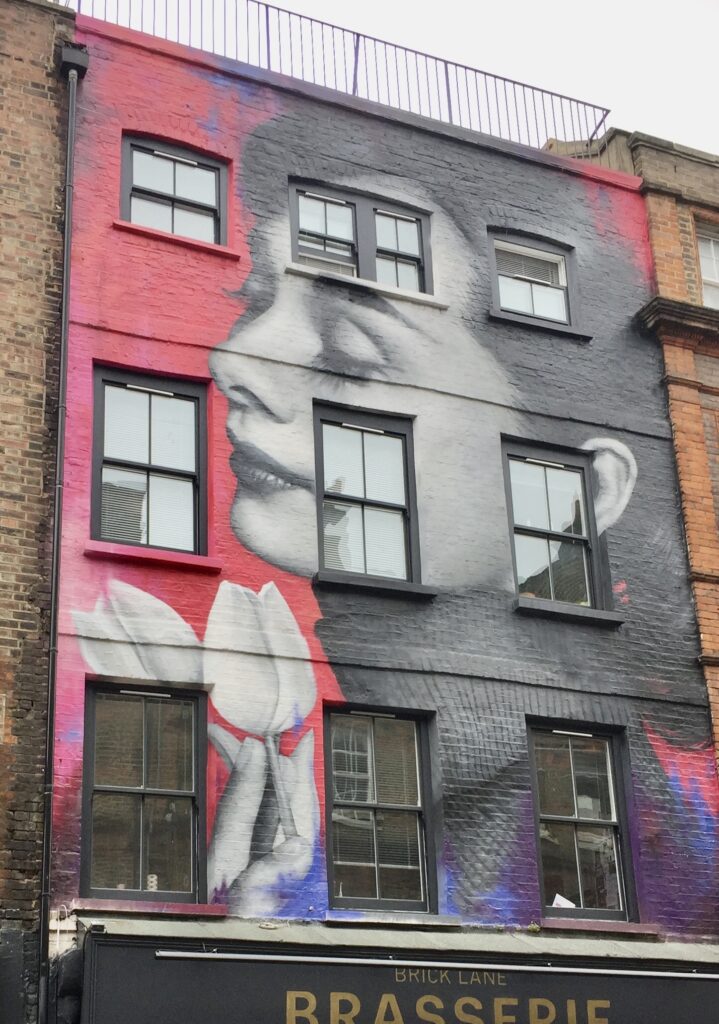
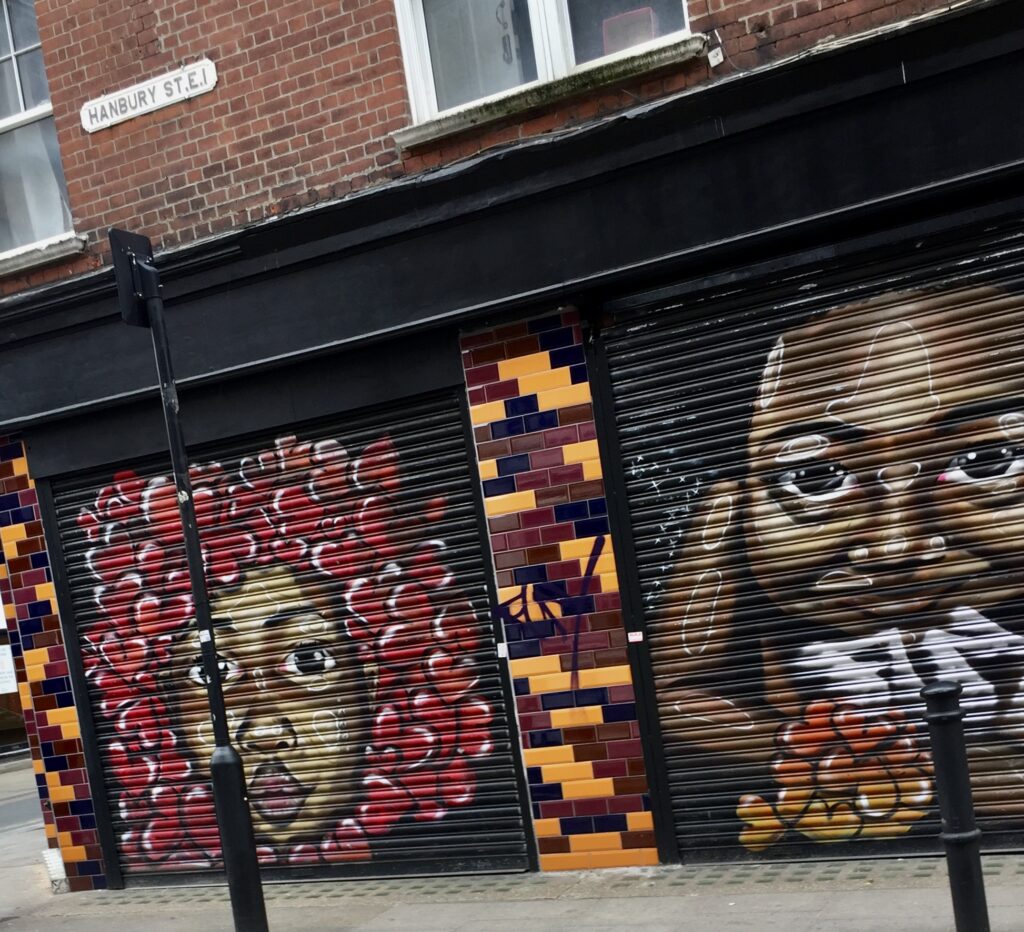
I have been trying to identify all the artists but still have some research to do with regard to these distinctive portraits …
Brick Lane looks a bit sad at the moment with the restaurants either closed or open for take-away orders only but the art certainly brightens everything up and I shall be going back to watch it continually develop.
If you would like to follow me on Instagram here is the link …
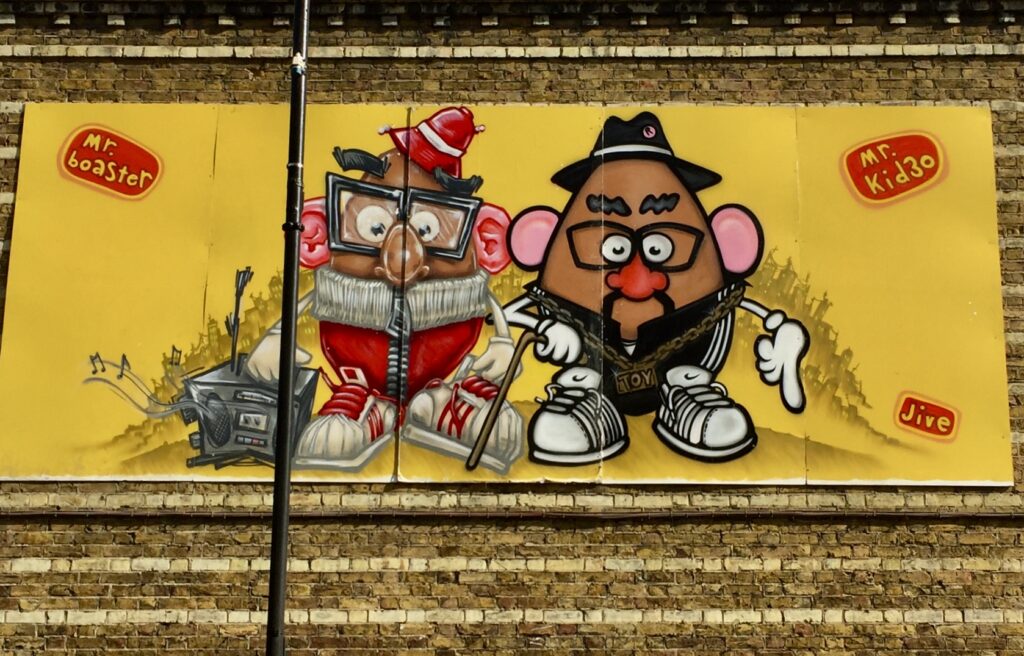
It was a lovely sunny day last Saturday so I wandered along Whitecross Street to gaze at some of the wonderful art works. Many of these have been produced over the years at the famous Whitecross Street Party. Who wouldn’t smile at this splendid pair of potato heads …
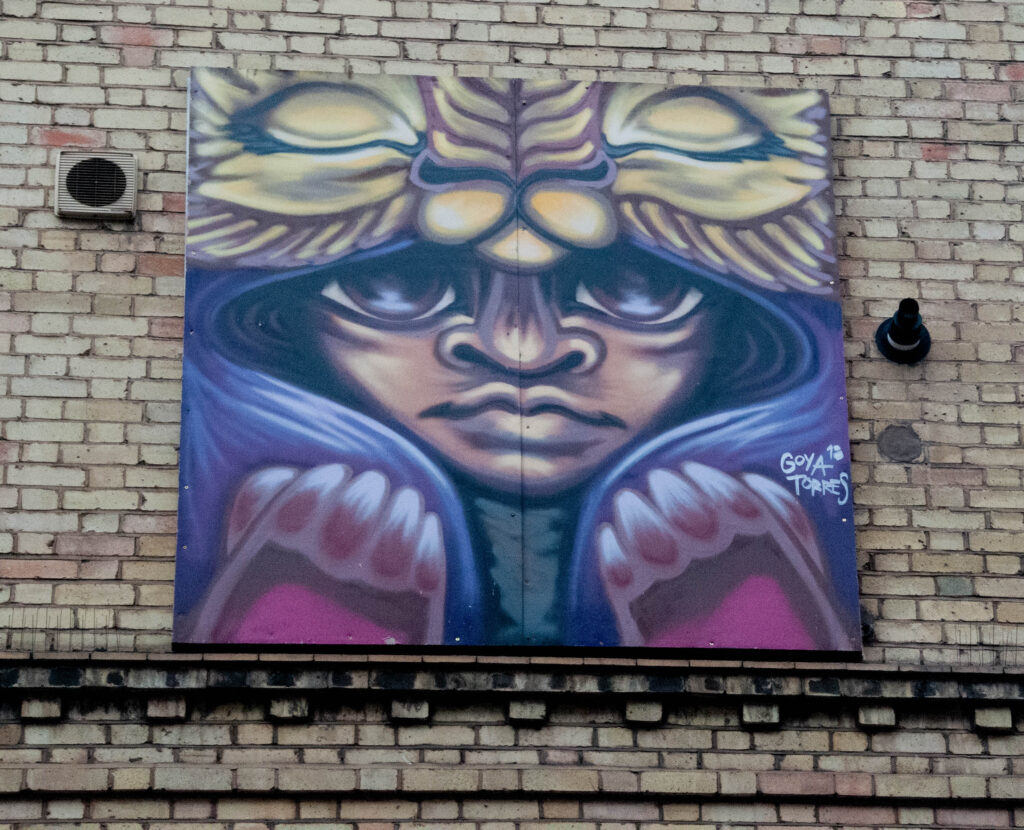
A young girl holding a spirit animal over her head and shoulders by Goya Torres (based on her Children of the Sun series). Read more about this fascinating artist here …
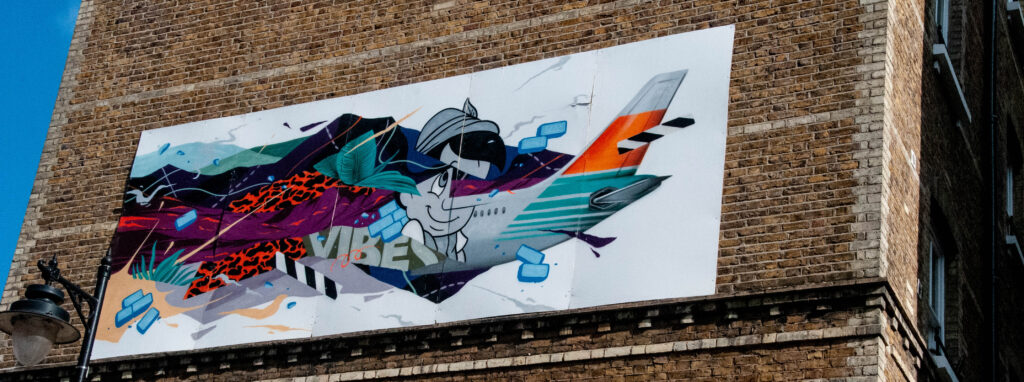
Not sure what this represents but I still like it, dynamic and colourful …
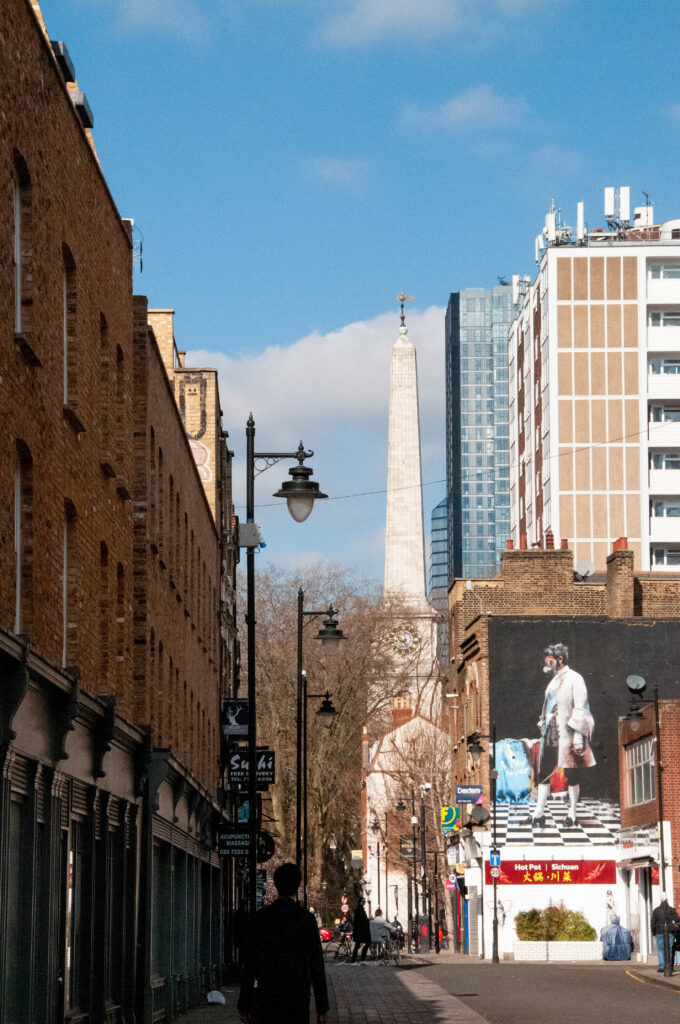
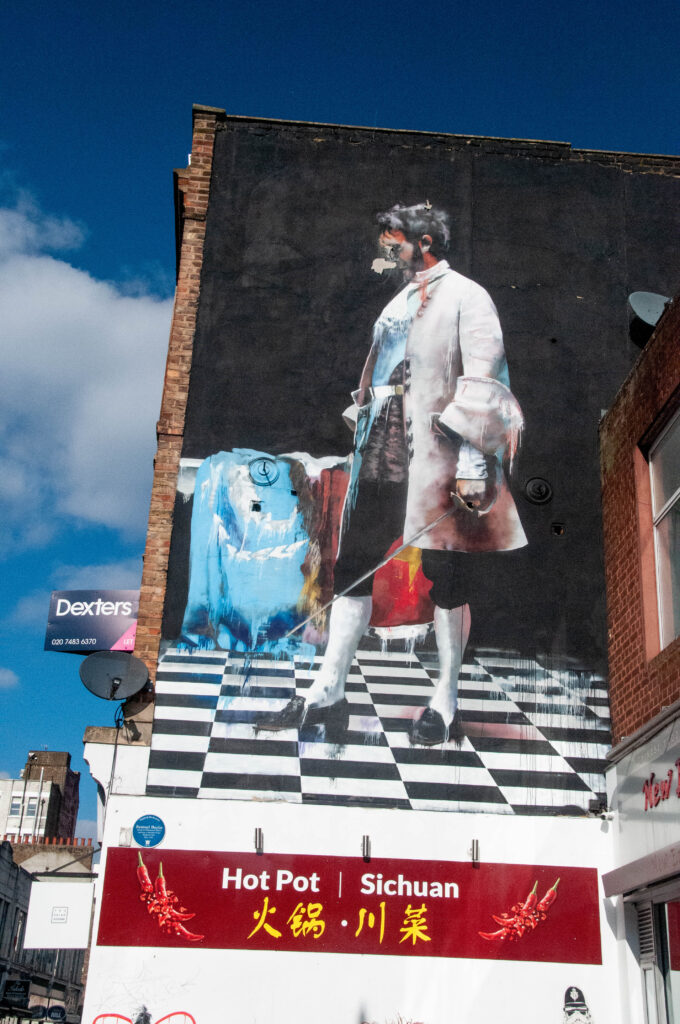
Looking north up the street you get a good view on the right of a mural by Conor Harrington, an Irish artist living and working in London. Incidentally, the church in the background is St Luke Old Street and the unusual obelisk spire is by Nicholas Hawksmoor …
Here is Harrington’s work in more detail. It has weathered quite well considering it was created in 2012 …
This year’s party is scheduled for 10th and 11th July, mid-day to 6:00 pm. Read more on the official website.
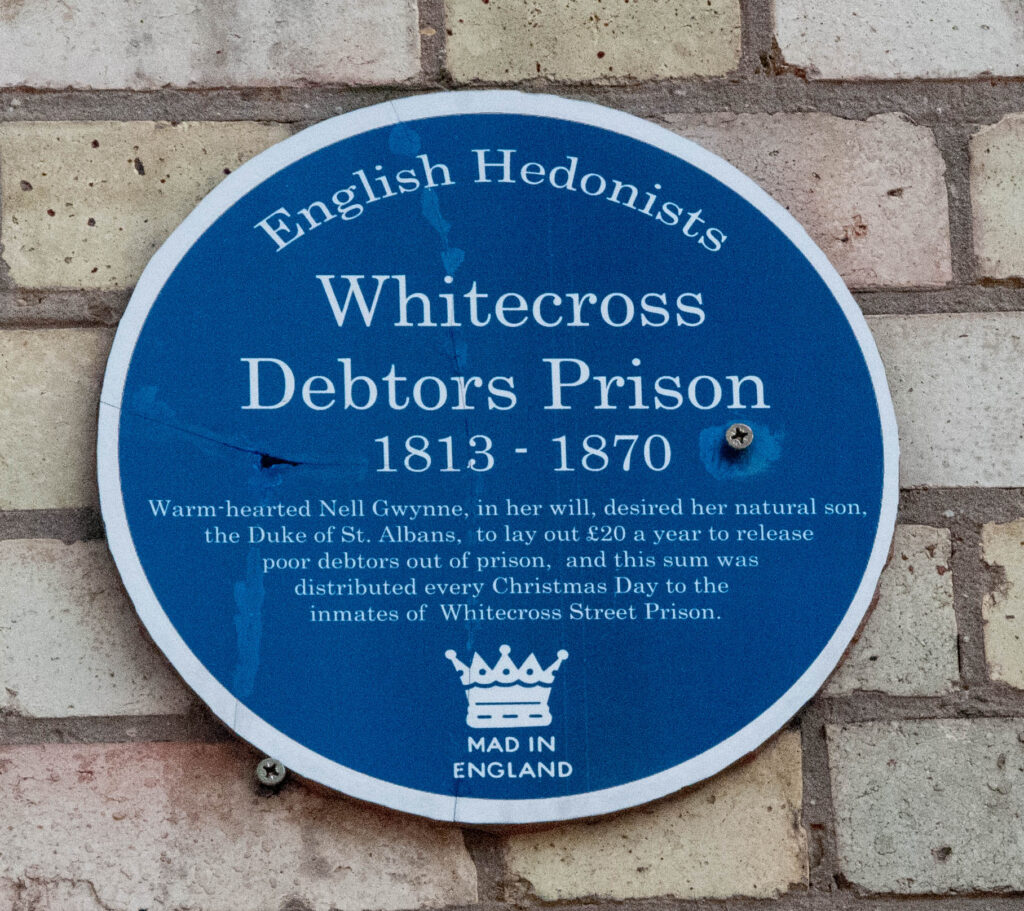
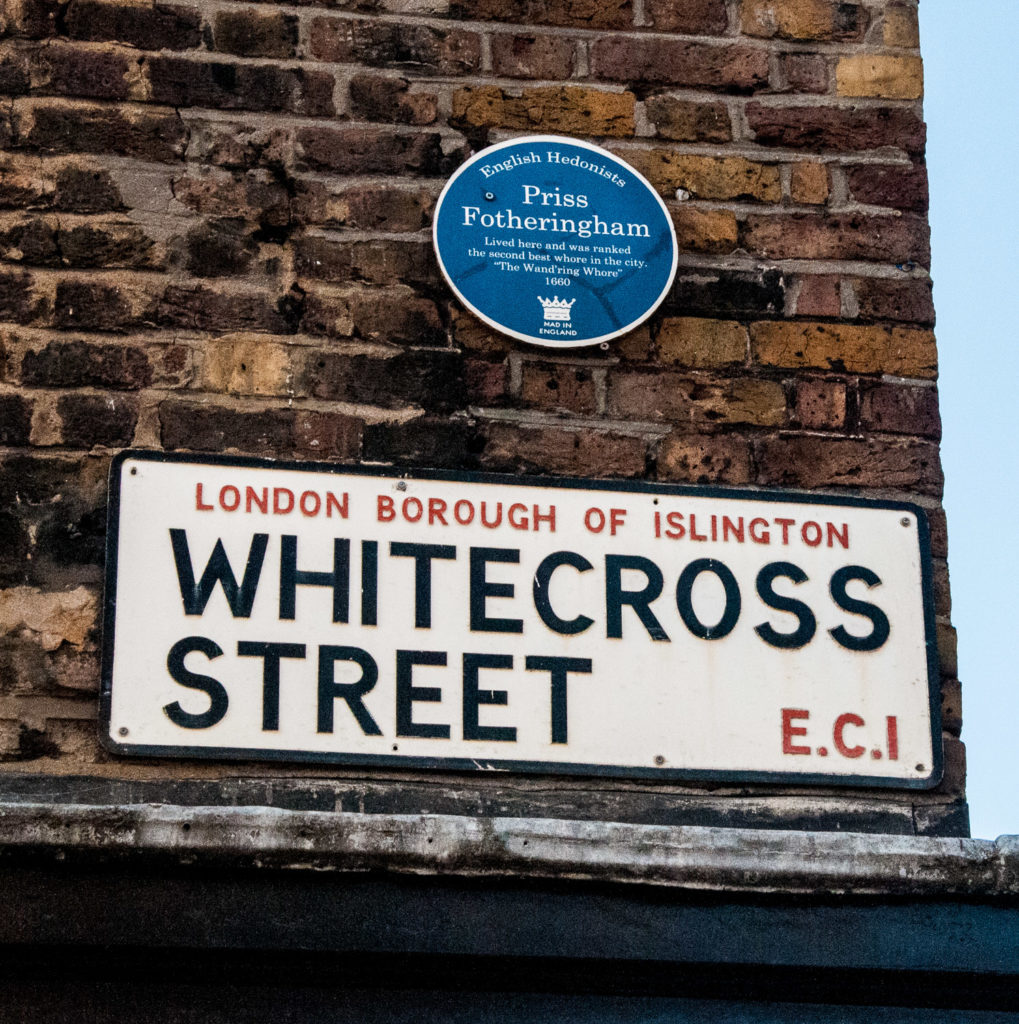
The street boasts a number of blue plaques placed there by ‘English Hedonists’ and ‘Mad in England’ …
I have written about the Debtors Prison before but here it is again for those of you who missed it the first time around.
British History Online confirms the Nell Gwynne story mentioned on the plaque but I cannot find another source. It also tells us that …
A man may exist in the prison who has been accustomed to good living, though he cannot live well. All kinds of luxuries are prohibited, as are also spirituous drinks. Each man may have a pint of wine a day, but not more; and dice, cards, and all other instruments for gaming, are strictly vetoed.”
A pint of wine a day doesn’t sound too bad.
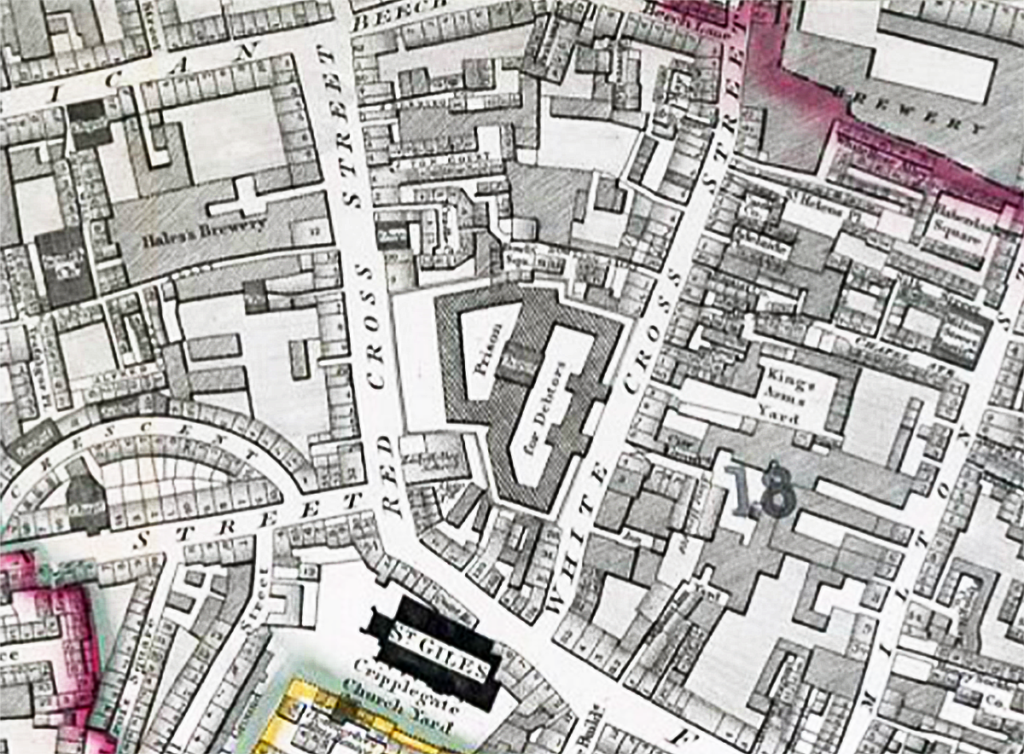
The prison was capable of holding up to 500 prisoners and Wyld’s map of London produced during the 1790s shows how extensive the premises were …
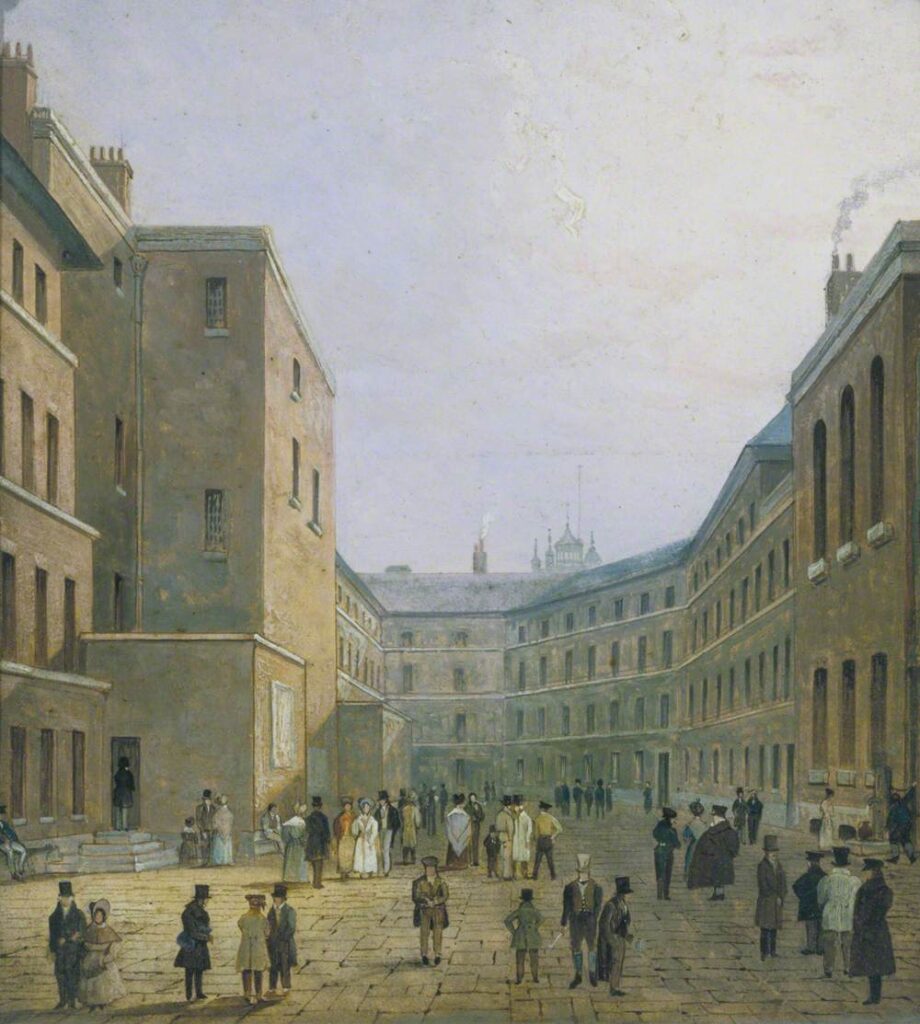
Prisoners would often take their families with them, which meant that entire communities sprang up inside the debtors’ jails, which were run as private enterprises. The community created its own economy, with jailers charging for room, food, drink and furniture, or selling concessions to others, and attorneys charging fees in fruitless efforts to get the debtors out. Prisoners’ families, including children, often had to find employment simply to cover the cost of the imprisonment. Here is a view of the inside of the Whitecross Street prison with people meeting and promenading quite normally …
‘Inside the Debtors’ Prison, Whitecross Street, London’ by an unknown artist : City of London Corporation, Guildhall Art Gallery.
Creditors were able to imprison debtors without trial until they paid what they owed or died and in the 18th century debtors comprised over half the prison population. Prisoners were by no means all poor but often middle class people in small amounts of debt. One of the largest groups was made up of shopkeepers (about 20% of prisoners) though male and female prisoners came from across society with gentlemen, cheesemongers, lawyers, wigmakers and professors rubbing shoulders.
It’s over two years since I wrote about this second plaque so here it is again.
It tells us that there once lived here a lady called Priss Fotheringham who had been ranked ‘the second best whore in the City’. This description appeared in 1660 in a serial publication called TheWandring Whore by John Garfield, which described in some detail the antics of London’s prostitutes.
Described when young as a ‘cat-eyed gypsy, pleasing to the eye’, Priscilla Fotheringham (nee Carswell) was a colourful character very famous in her time. It is thought she was born in Scotland around 1615 and little is known of her early life. What we do know is that in 1652 she was sent to Newgate Gaol having been found in a house of ill-repute …
… sitting between two Dutchmen with her breasts naked to the waist and without stockings, drinking and singing in a very uncivil manner.
In 1658 she was still misbehaving and was bound over by a Middlesex Justice of the Peace for …
… being a notorious strumpet … that had undone several men by giving them the foul disease … and for keeping the husband of Susan Slaughter from her and for also threatening to stab said Susan Slaughter … and also for several notorious wickedness which is not fit to be named among the heathen.
She had married Edward Fotheringham, an odious character from a brothel-owning family, in 1656 and he set her up as a madam at the Jack-a-Newberry Tavern on the corner where her plaque now stands. As her looks faded with time she became more ‘creative’ in the way customers were entertained – you can read more detail in her Wikipedia entry. She made enough money to set up her own brothel and died (of syphilis) a wealthy woman around 1668.
The Whitecross Street area was at one time rather notorious, as this 17th century ballad records …
In Whitecross Street and Golden Lane Do strapping lasses dwell, And so there do in every street ‘Twixt that and Clerkenwell. At Cowcross and at Smithfield I have much pleasure found, Where wenches like to fairies Did often trace the ground.
Nowadays the big attraction is Waitrose.
If you would like to follow me on Instagram here is the link …
Since many of the places I visit in order to get inspiration for my blog are temporarily closed I was beginning to get rather worried. However, an idea came to me just sitting at my desk and looking around the room. Regular readers will know how fond I am of St Paul’s and a number of pictures of the Cathedral hang on the study wall, so I decided to write about those.
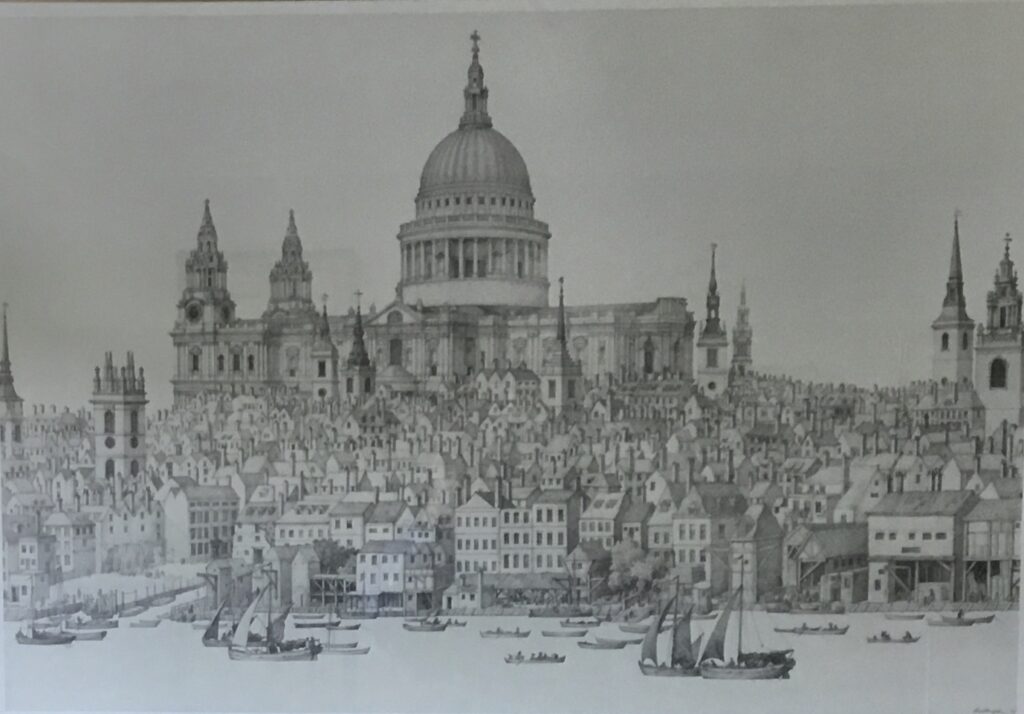
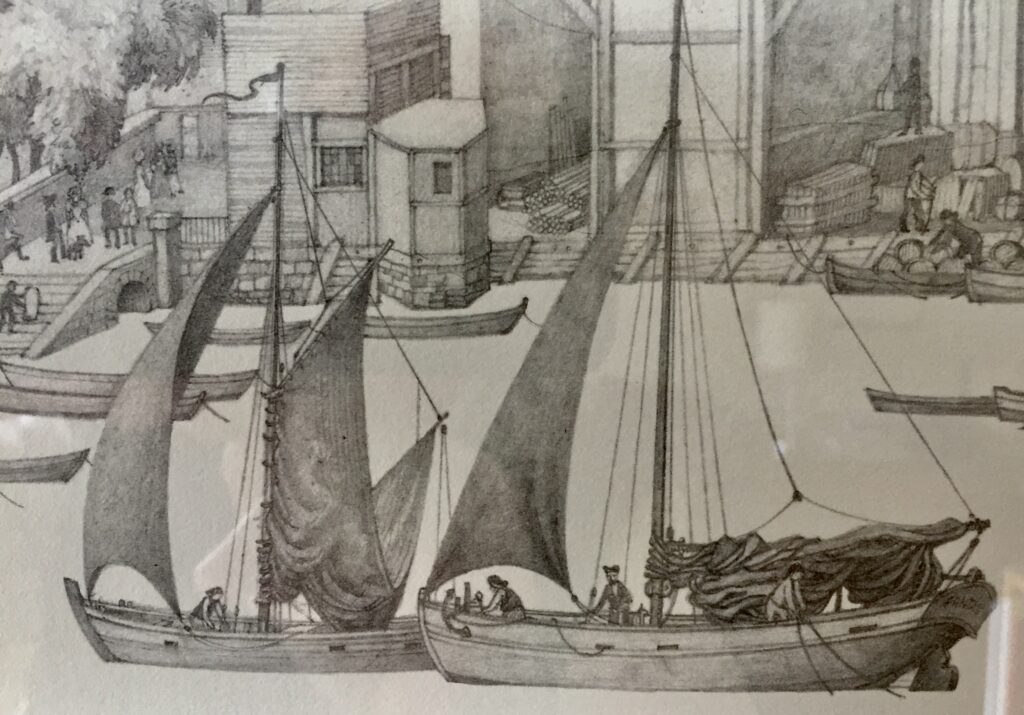
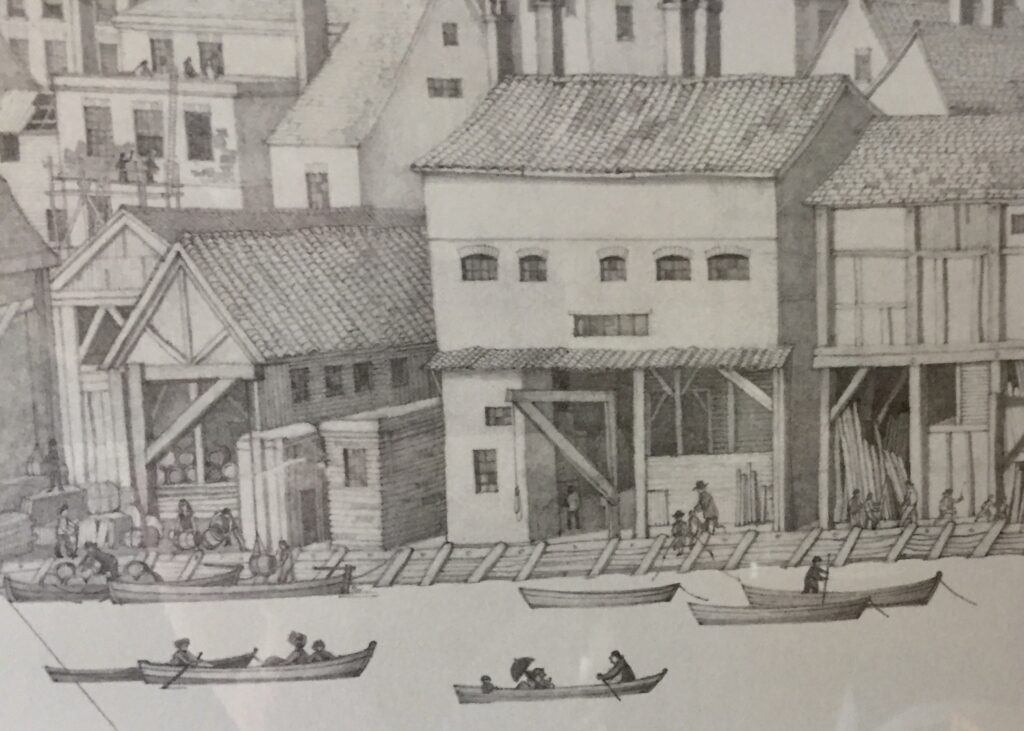
The largest by far is this one, a signed limited edition print entitled Pencil drawing of London and St Paul’s of the 18th Century by Roger Withington used on the reverse of the £50 note issued from 1981 …
I love the detail like the little figures manning the boats …
On the quayside barrels are being unloaded, wood is being stacked in the wood yard and in the foreground two ladies are being rowed to their destination. The lady in the boat on the left is wearing a pretty bonnet and the one in the boat on the right is holding an open parasol …
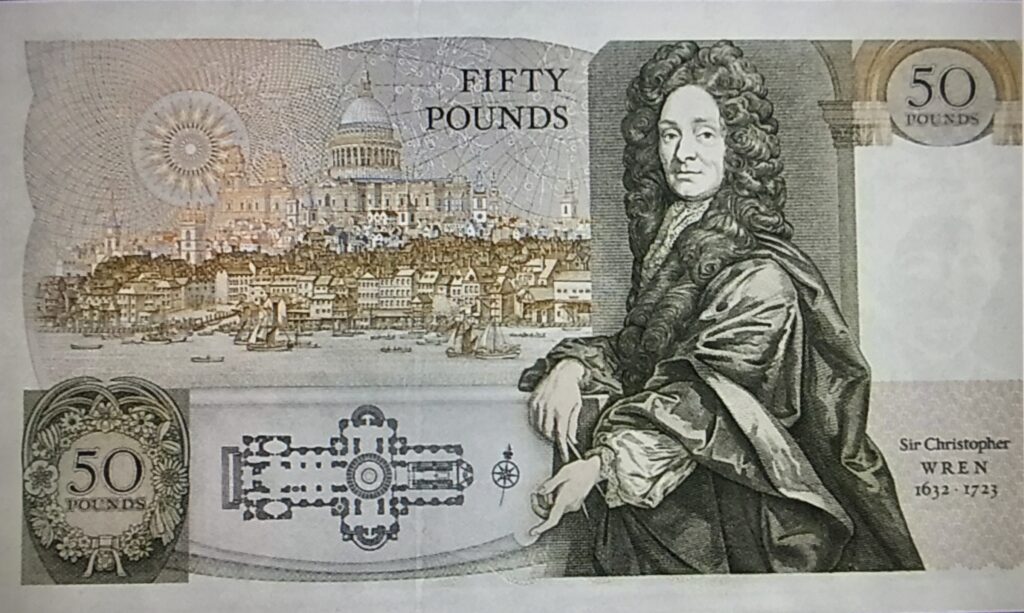
Here is how the drawing was used on the actual £50 note, with Sir Christopher Wren in the foreground …
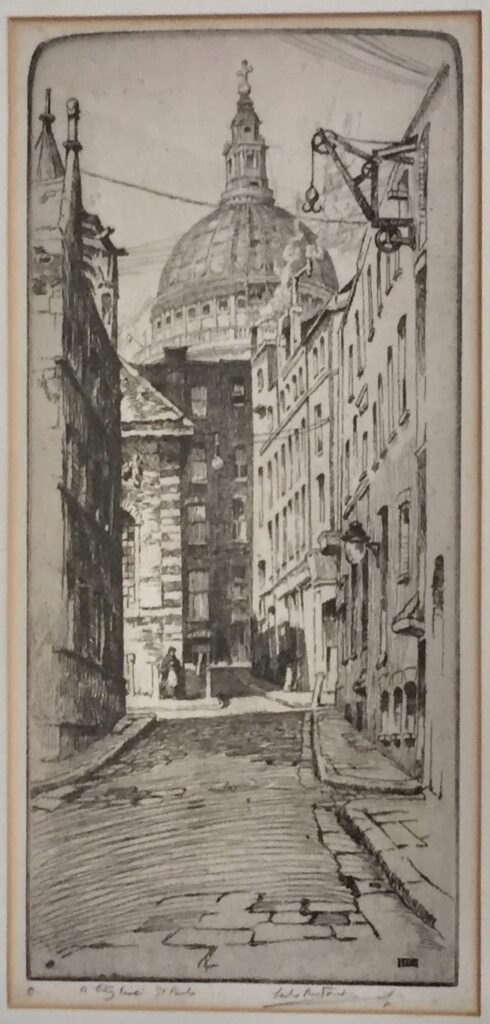
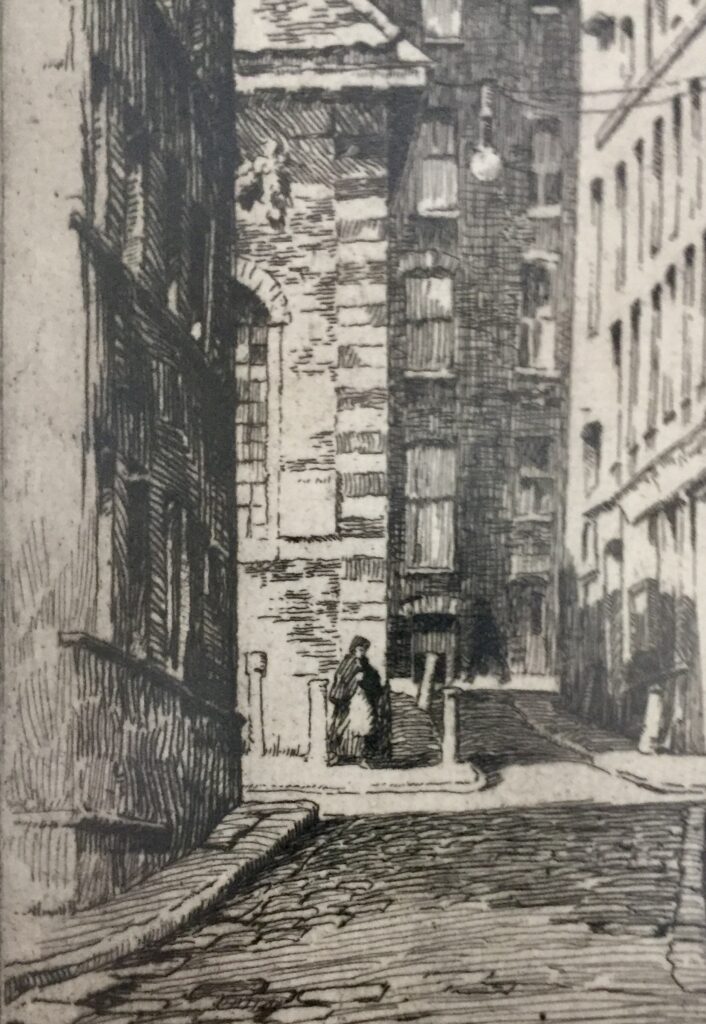
This is a signed etching entitled A City Lane. St Paul’s by Leslie Moffat WardRESGA (1888-1978) …
The picture isn’t dated but is obviously pre-Second World War. There is a lady standing on the corner and her clothes suggest the early years of the 20th century …
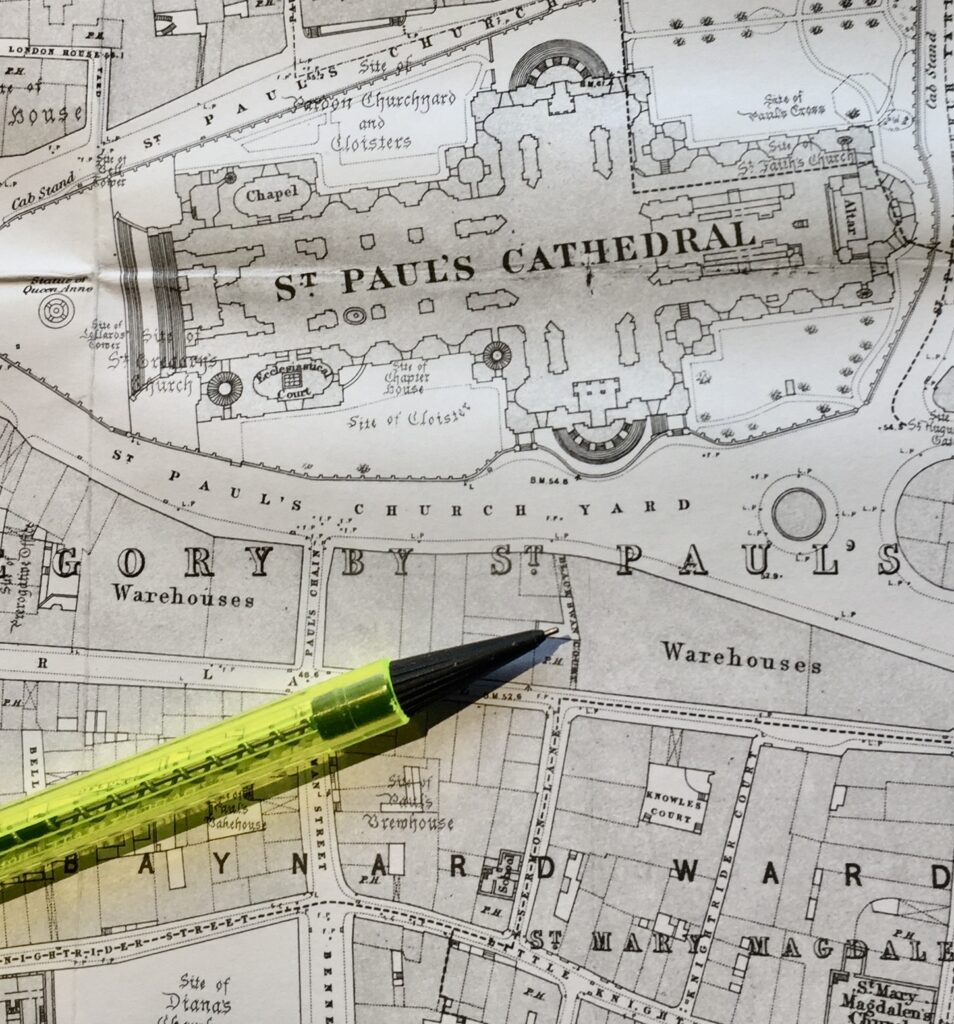
I have been trying to identify where the artist was at the time and I am pretty sure he was looking north up Black Swan Court, perhaps positioned at its junction with Carter Lane. Here’s the location in the 1873 Ordnance Survey Map with my pencil indicating where I think the lady was standing …
By 1895 the northern entrance had been built over and access converted into a covered alley way. I think that’s the arch you can see behind and to the right of the lady.
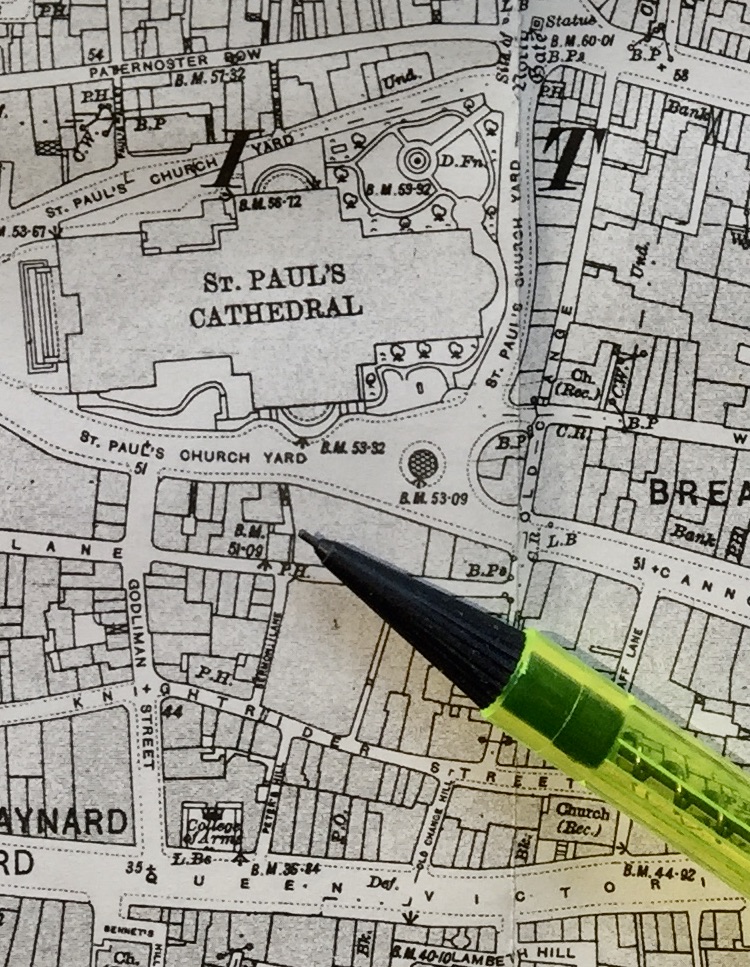
Black Swan Court is still shown in the Survey’s 1914 edition (although too small to be named) …
It looks like the southern entrance has now also been converted into a covered alley which suggests that, if he was standing on Carter Lane, Ward was working there before 1914 (when he would have had his 26th birthday).
The area was very badly damaged in the Blitz and Black Swan Court disappeared for ever. The Black Swan Tavern (which was actually on Carter Lane) was also destroyed and you can see an image of it in ruins here in the London Picture Archive.
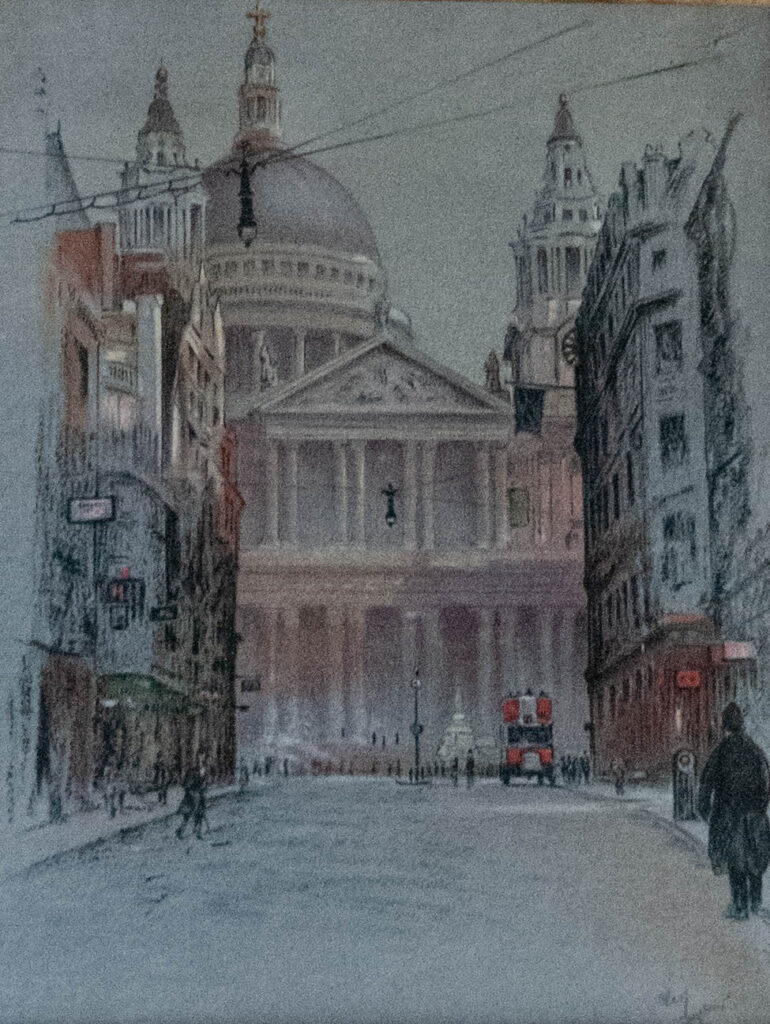
I really like this depiction of Ludgate Hill in 1928 (or thereabouts), especially the stout City policeman and the classic open-topped red omnibus …
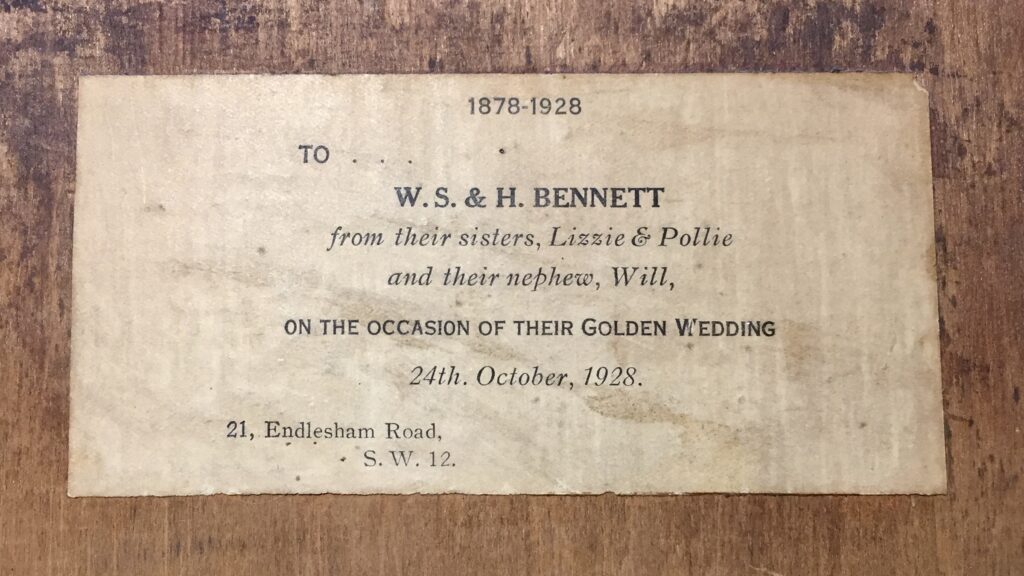
I’m sure about the dating because of the label on the back, which made me feel a bit sad. I wonder what Lizzie, Pollie and nephew Will would think of the fact that their thoughtful present would end up in a Kent bric-a-brac shop almost 90 years later, which is where I bought it for £20 …
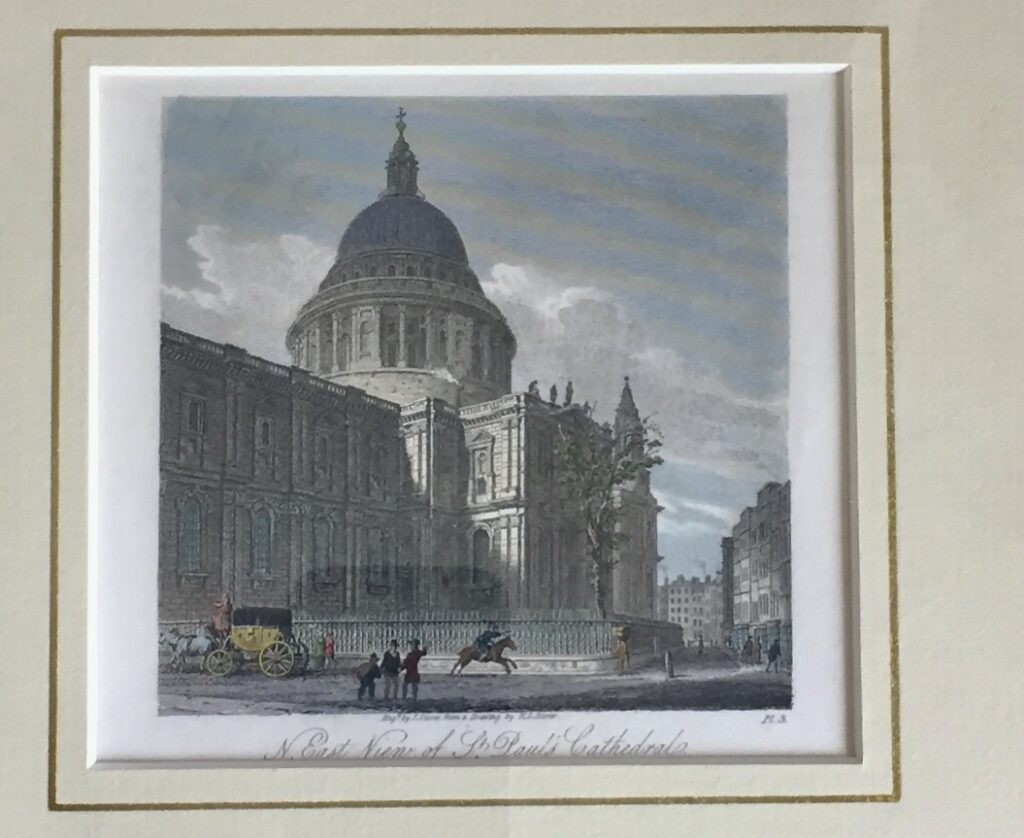
This picture is entitled Eng. by J. Storer from a drawing by H.S. Storer N. East View of St. Paul’s Cathedral …
The label on the back describes it as Date circa 1817 – copper engraving hand coloured in watercolours. It’s nice that there is a stagecoach in the picture since this was their golden age. For example, in 1750 it took around 2 days to travel from Cambridge to London but by 1820 the journey time had been slashed to under 7 hours. I also like the chap galloping off on his horse, obviously on urgent business.
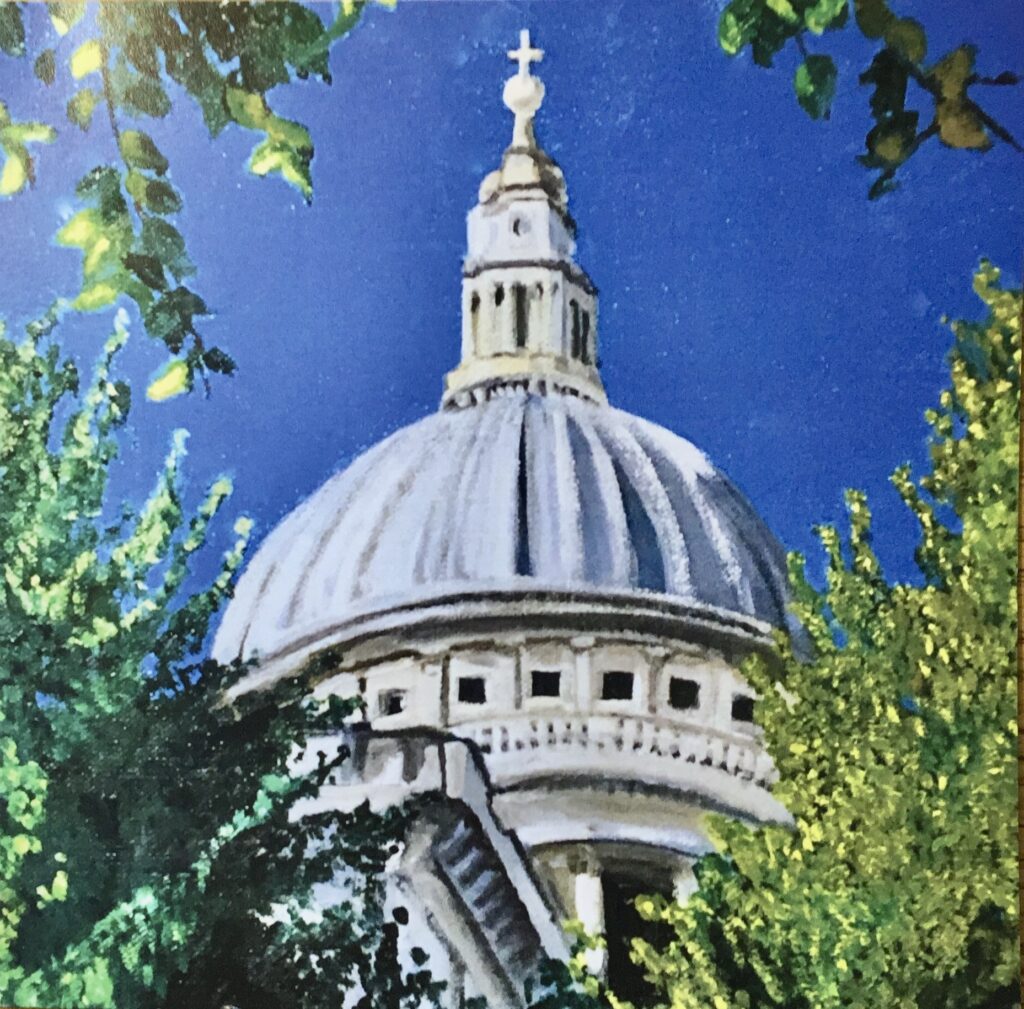
And last, but by no means least, a painting by my friend Chris (on a Christmas card) …
Finally, a picture to cheer everyone up, the little daffodils are out …
If you would like to follow me on Instagram here is the link …