Walking the City of London

Category: Art Page 26 of 30

A few more things that made me smile

In these difficult times, I’d like to share some miscellaneous things I have encountered recently that cheered me up.

I am going to start with the extraordinary, eccentric Stanley Green, ‘the protein man’, who regularly patrolled Oxford Street with his billboard. This may seem strange since he died in 1993, but I have chosen him as my first story because I came across his billboard last week at the Museum of London …

Copyright Andrew Lawson.

He began his mission in June 1968, initially in Harrow on Saturdays, becoming a full-time human billboard six months later on Oxford Street. He cycled there from Northolt with his board attached to his bicycle, a journey that could take up to two hours, until he was given a bus pass when he turned 65. From Monday to Saturday he walked up and down the street until 6:30 pm, reduced to four days a week from 1985. Saturday evenings were spent with the cinema crowds in Leicester Square. He would go to bed at 12:30am after saying a prayer. ‘Quite a good prayer, unselfish too’, he told the Sunday Times in 1985. ‘It is a sort of acknowledgment of God, just in case there happens to be one’. He was 78 when he died in December 1993 and, presumably because he distrusted ‘passion’, he never married.

The Museum’s decision to put his message on display introduces him to a new audience …

His self-published and printed booklet, Eight Passion Proteins, went through 84 editions and the Museum holds 36 of them. You can read more about him here and here.

You will no doubt be pleased to know that Royal Wedding teabags are still available in a Ludgate Hill tourist gift shop – hurry, hurry while stocks last …

Don’t they look lovely.

By way of contrast, I thought these models in a shop on Eastcheap were decidedly spooky …

Like creatures out of a Dr Who episode.

Covid humour at the pharmacy …

Covid humour at the wine bar …

Cocktail Bar humour …

A less complicated message …

Pretty camera camouflage on Holloway Road …

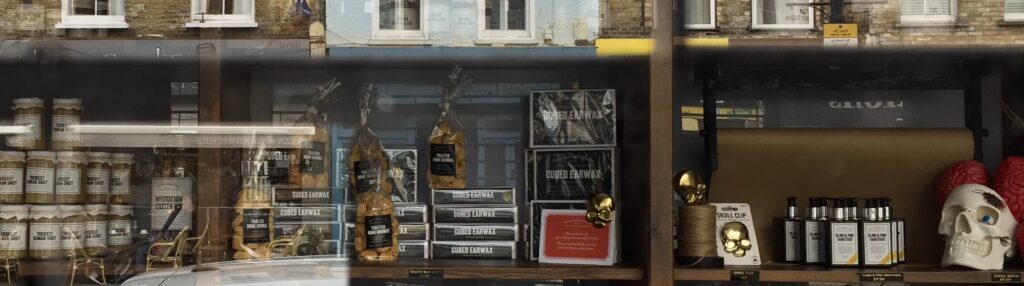
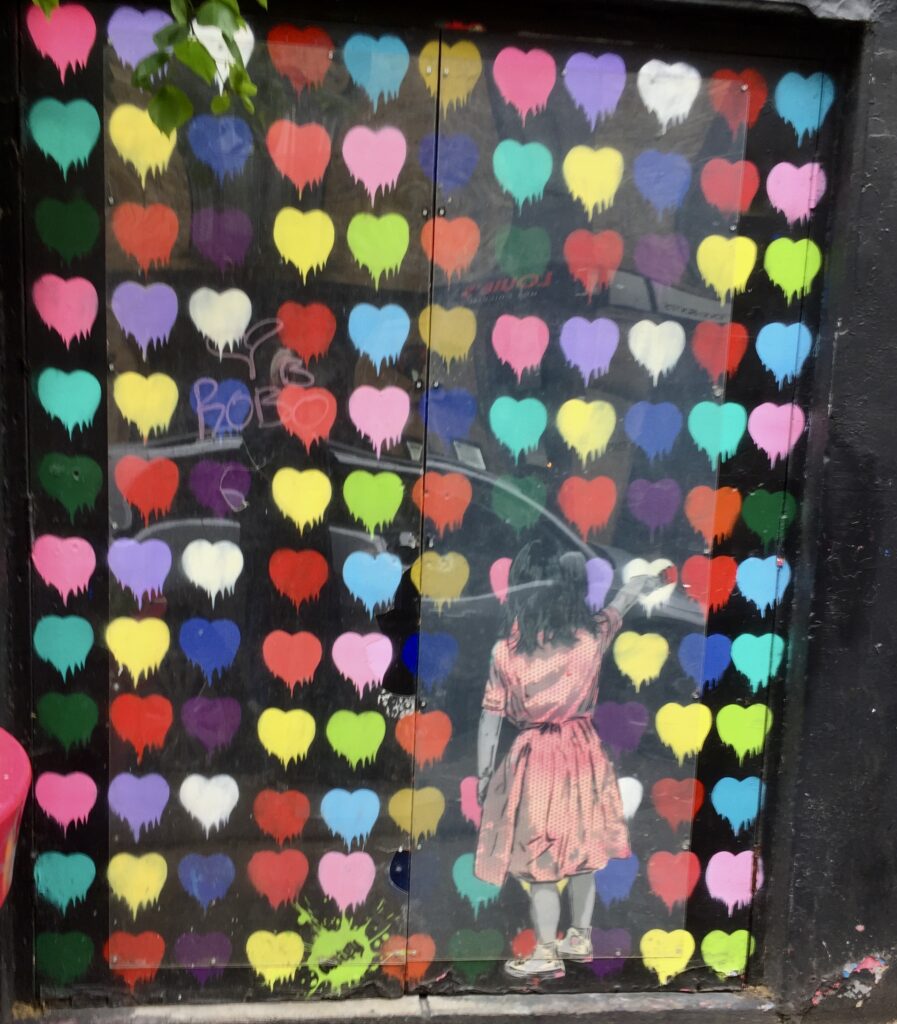
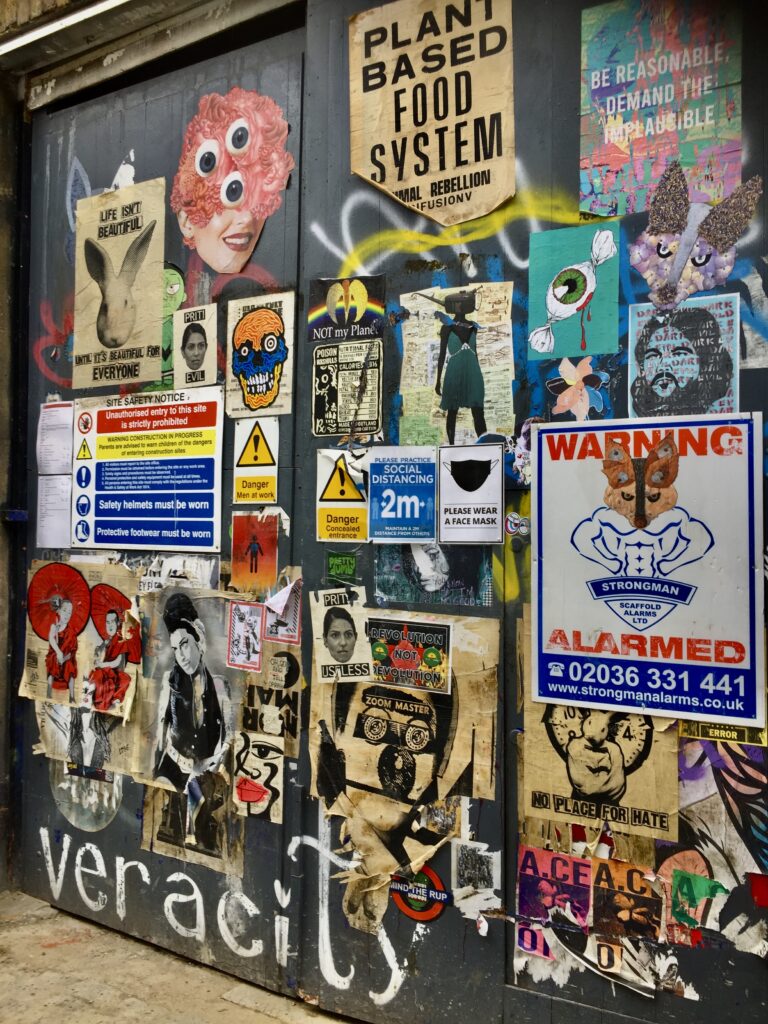
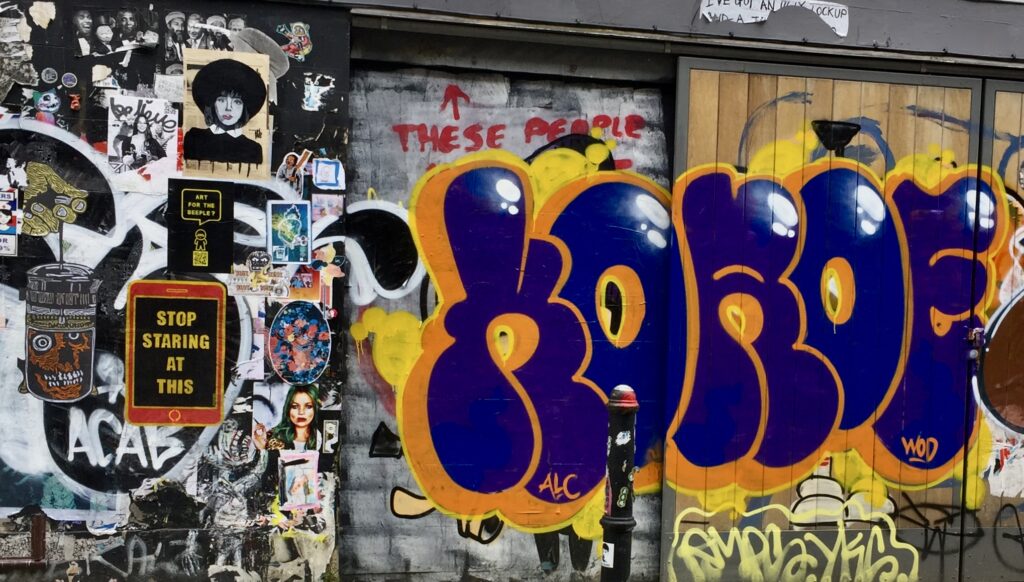
Street art meets spinal column in Hoxton …

Sadly over-optimistic signage …

Finally caught the reflection I wanted – street sculpture with red London bus and St Paul’s …

When construction workers use their imagination to brighten up the site – good for them …

What a positive message …

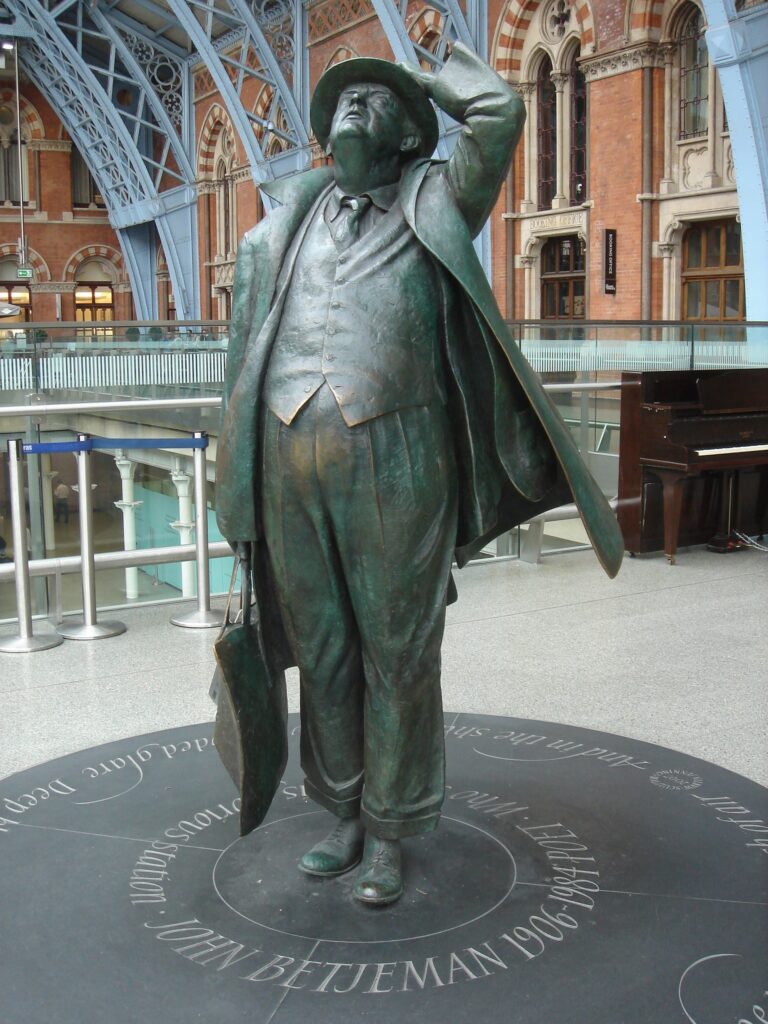
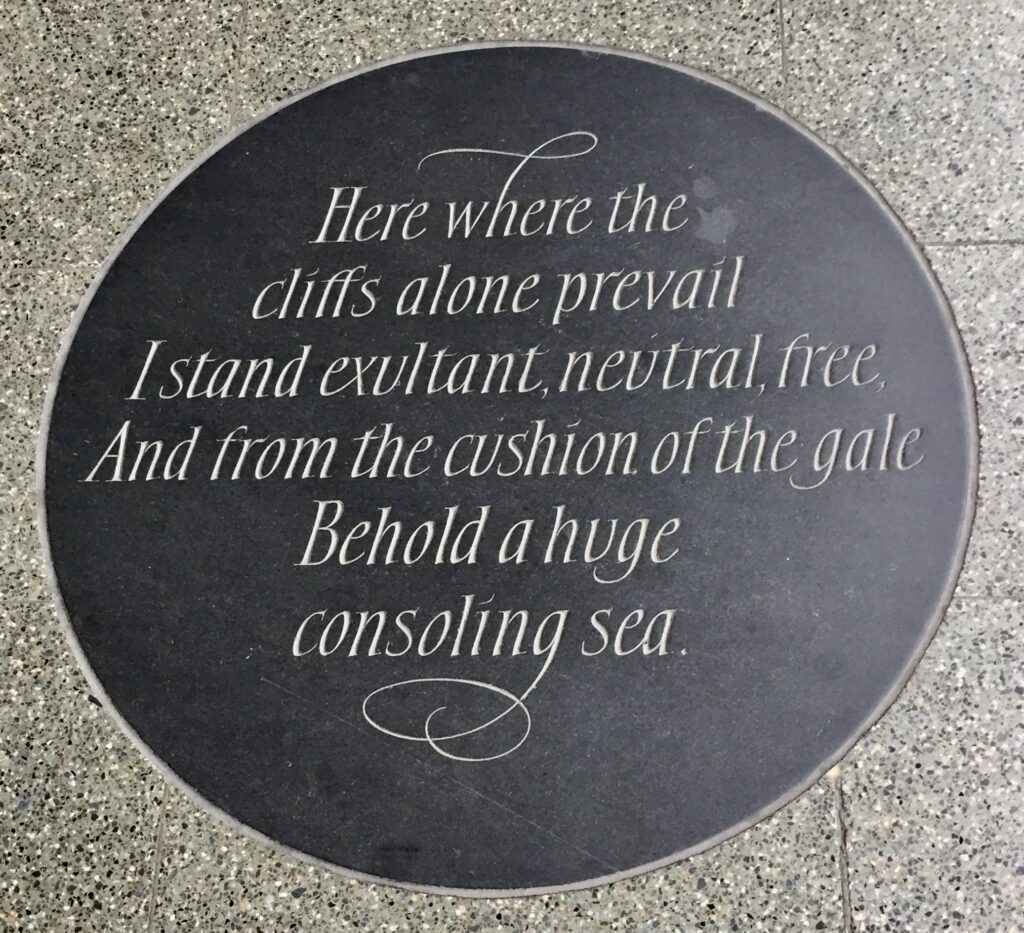
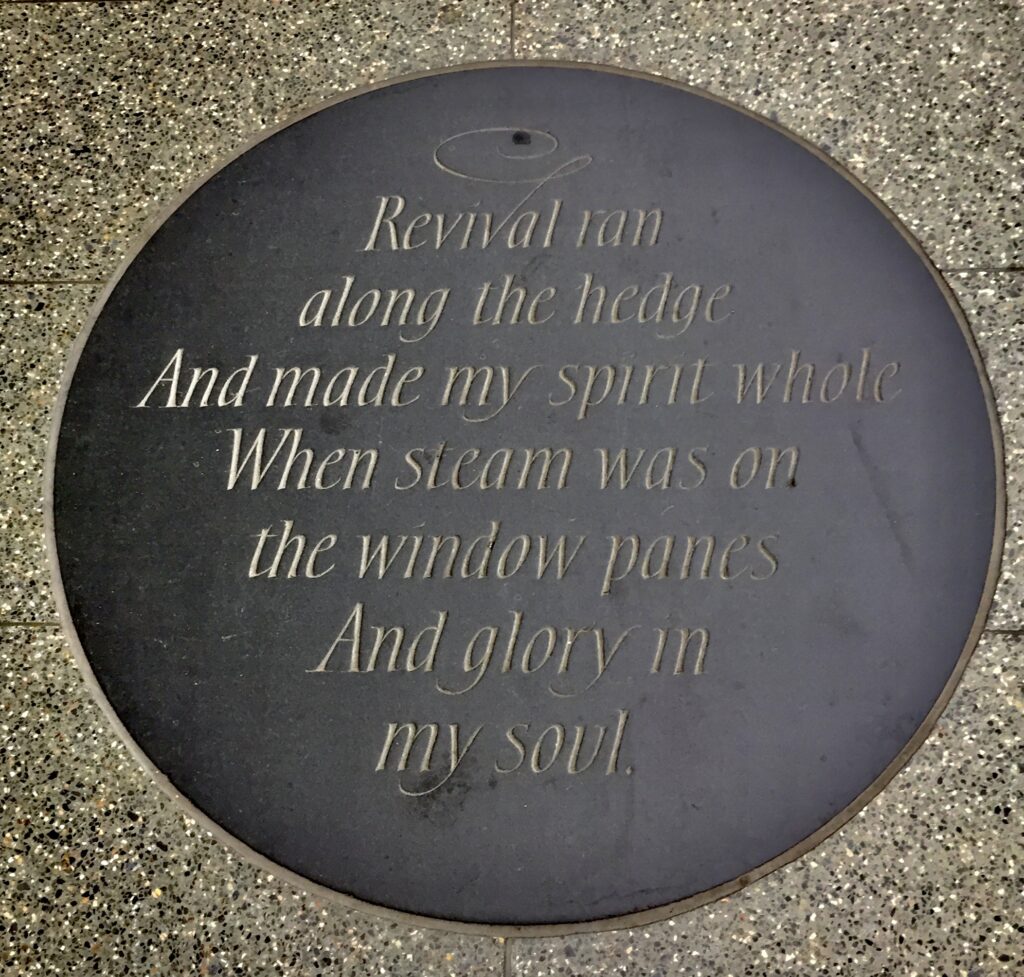
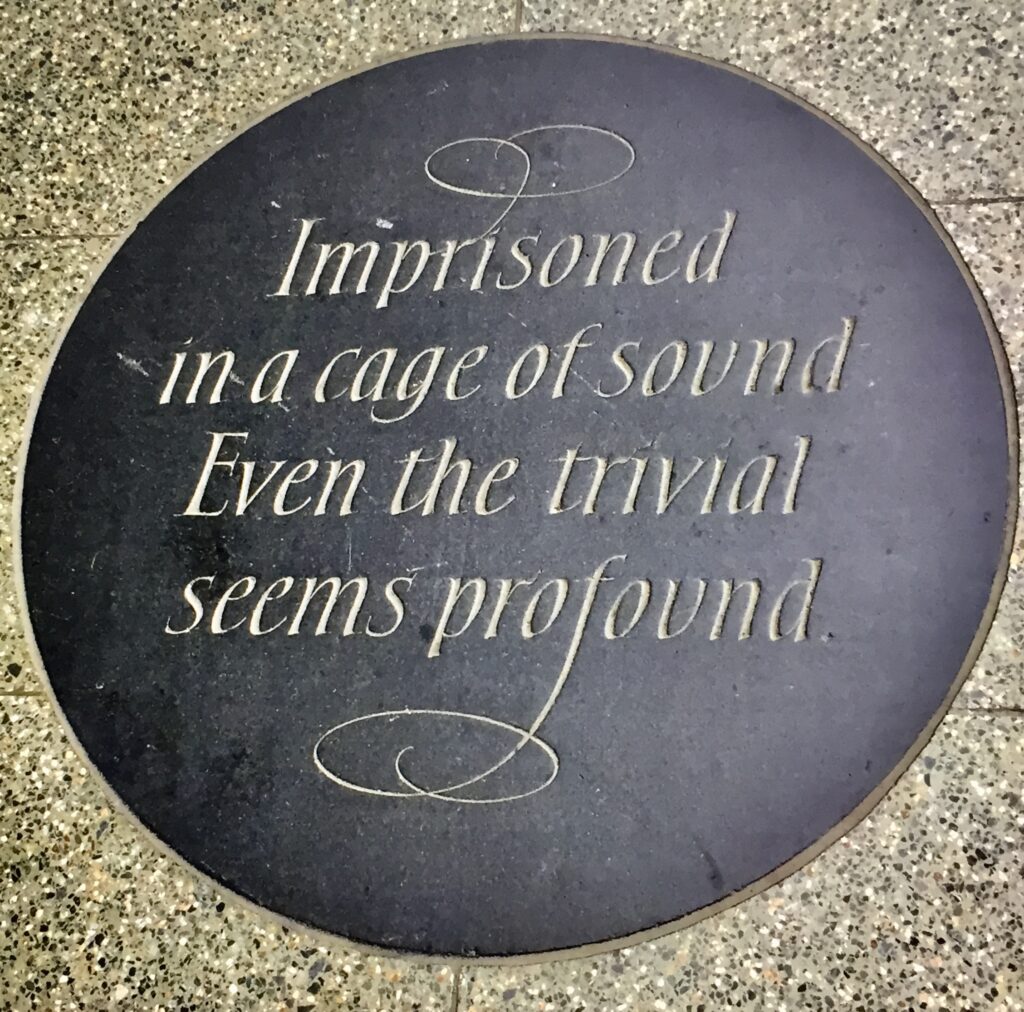
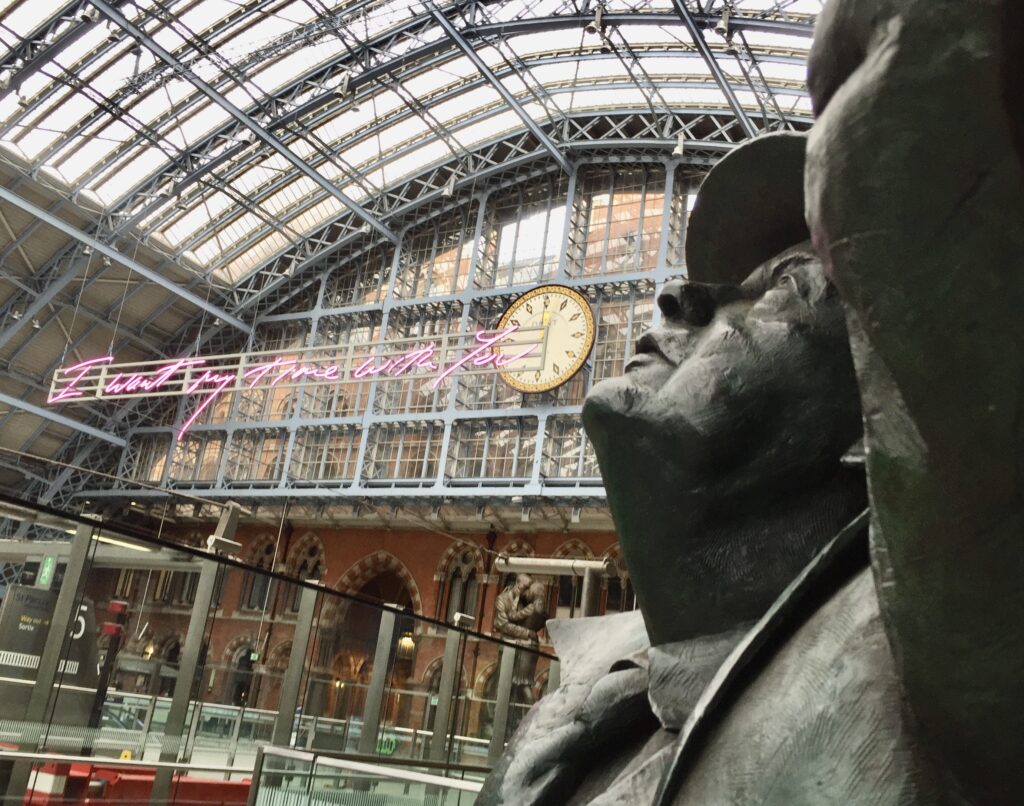
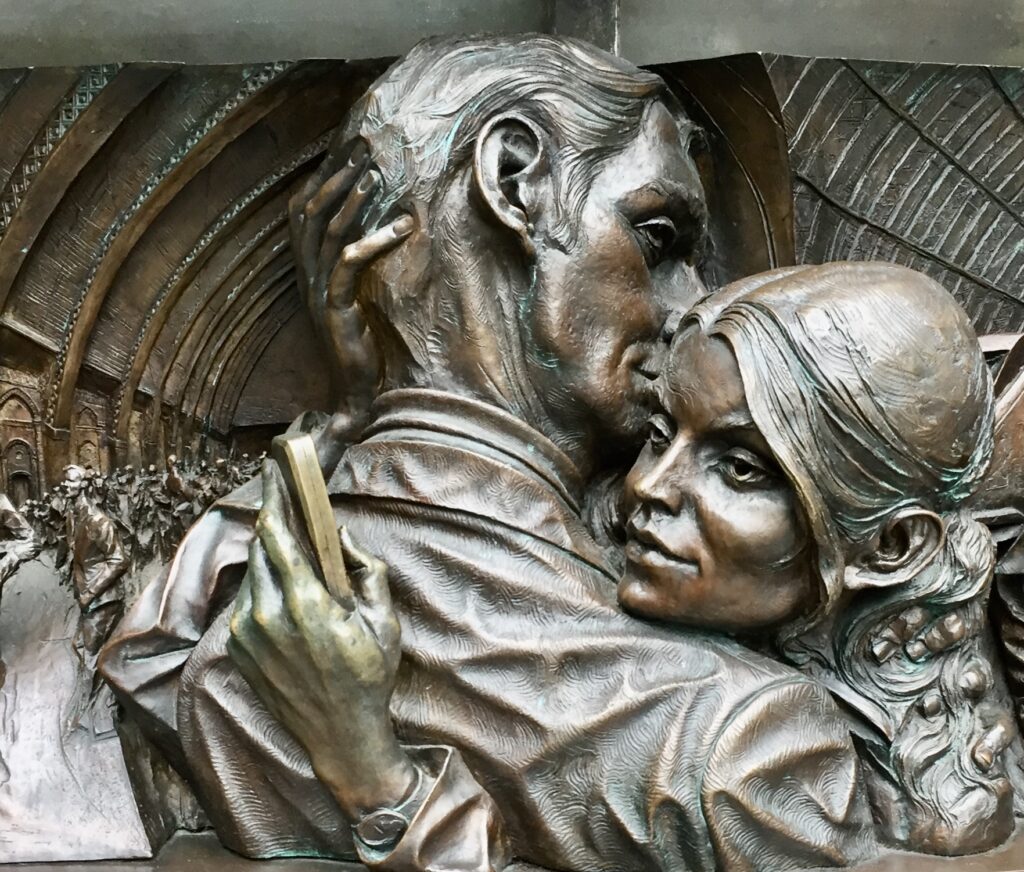
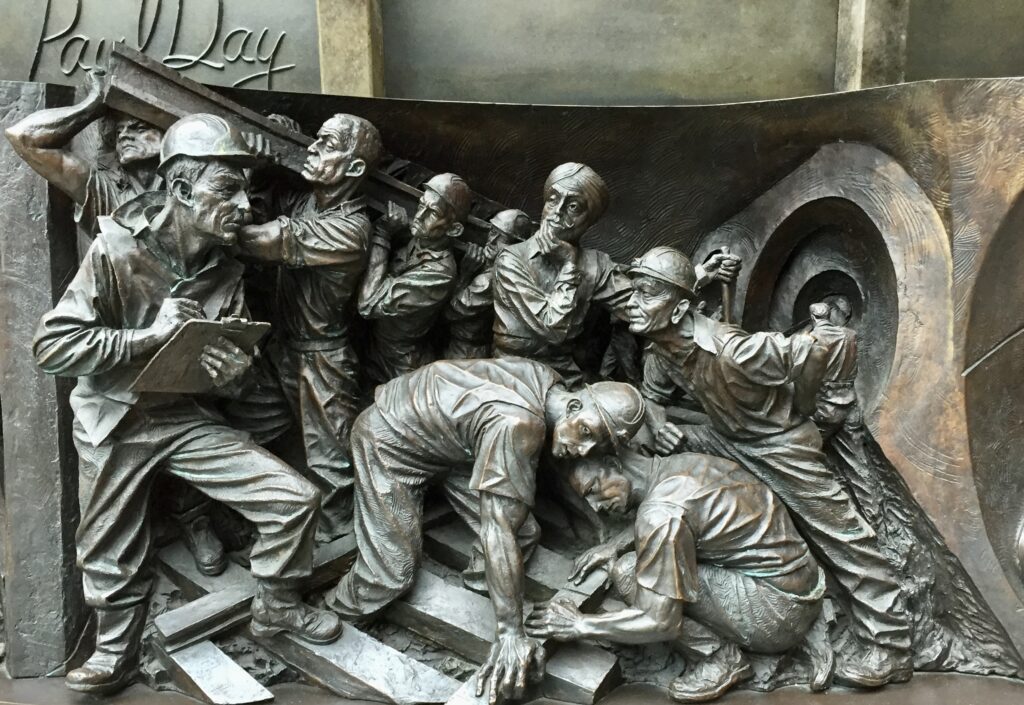
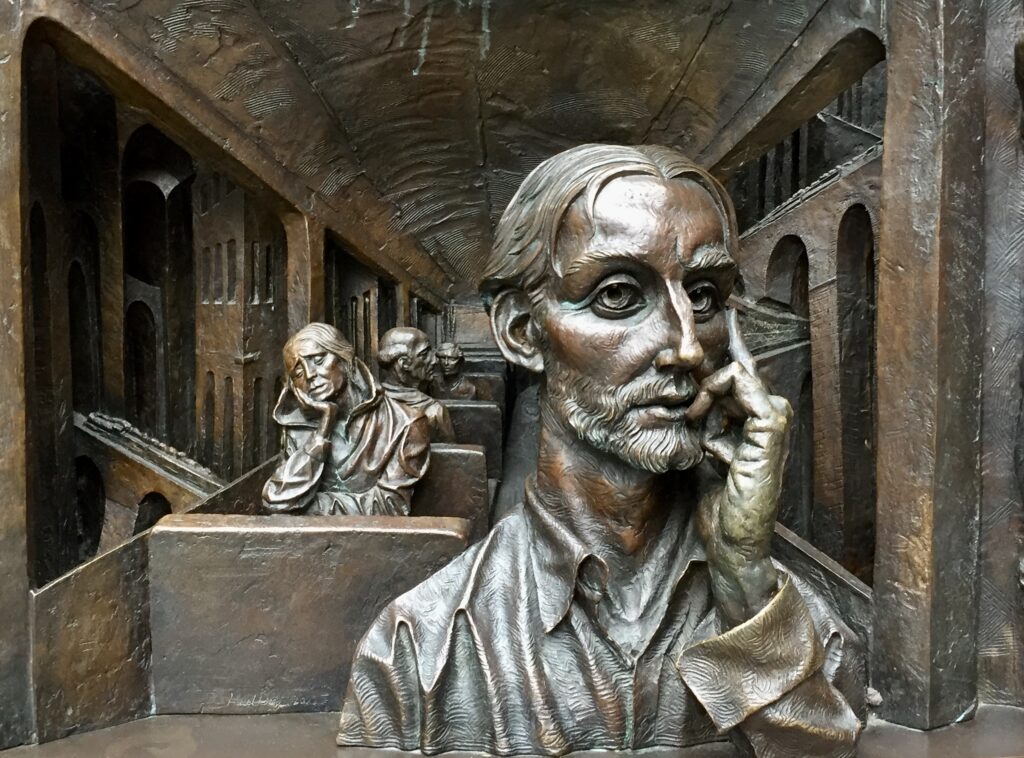
A great hero of mine and one of my favourite London statues – Sir John Betjeman at St Pancras International Station …

Many of Pimlico Plumbers’ vans have ‘witty’ number plates …

Even the scooters are wearing masks around here …

City pigeons simply don’t believe this statement …

We spent a really nice few days in Norfolk recently and here are some of the pictures I took.

Local delicacies – rabbit and pigs ears, giant trotters and chicken feet …

Sow and buffalo ears …

Houghton Hall has a stunning collection of work by Anish Kapoor. Some are in the grounds like this one, Sky Mirror

Others are in the house …

Kings Lynn is a lovely, interesting town. I even caught a glimpse of Bad King John …

At the charming and incredibly interesting True’s Yard Fisherfolk Museum, a Victorian seafarer struggles to come to terms with the pandemic …

And the place has a Wimpy! I thought they had disappeared decades ago. I didn’t pop in for a ‘Bender’ though (fellow Baby Boomers will know what I am referring to) …

There is some beautiful architecture to enjoy as well …

Now that going abroad is problematic it’s great to be exploring England again.

And finally to the Sandringham Estate where we came across these poignant little headstones commemorating the last resting place of three of Her Majesty’s corgis. Heather’s inscription tells us she was the great granddaughter of Susan (on the far left) …

I’ll be back walking the City again next week but hope you enjoyed this little excursion.

If you would like to follow me on Instagram here is the link …

https://www.instagram.com/london_city_gent/

Things that cheered me up

In these unusual times it is, I think, easy to get a bit fed up. So I thought I would share with you a few things that have brightened up my days recently.

What better place to start than with this magnificent bear taking a rest in City Point Square …

The Square is quite a cheerful place nowadays with lots of colourful seating and it’s quite buzzy weekday lunchtimes and evenings now that the Rack & Tenter pub is open again.

I call this picture ‘Sunflower Surprise’ …

Nature makes its presence felt against the Barbican concrete. That’s Shakespeare Tower in the background.

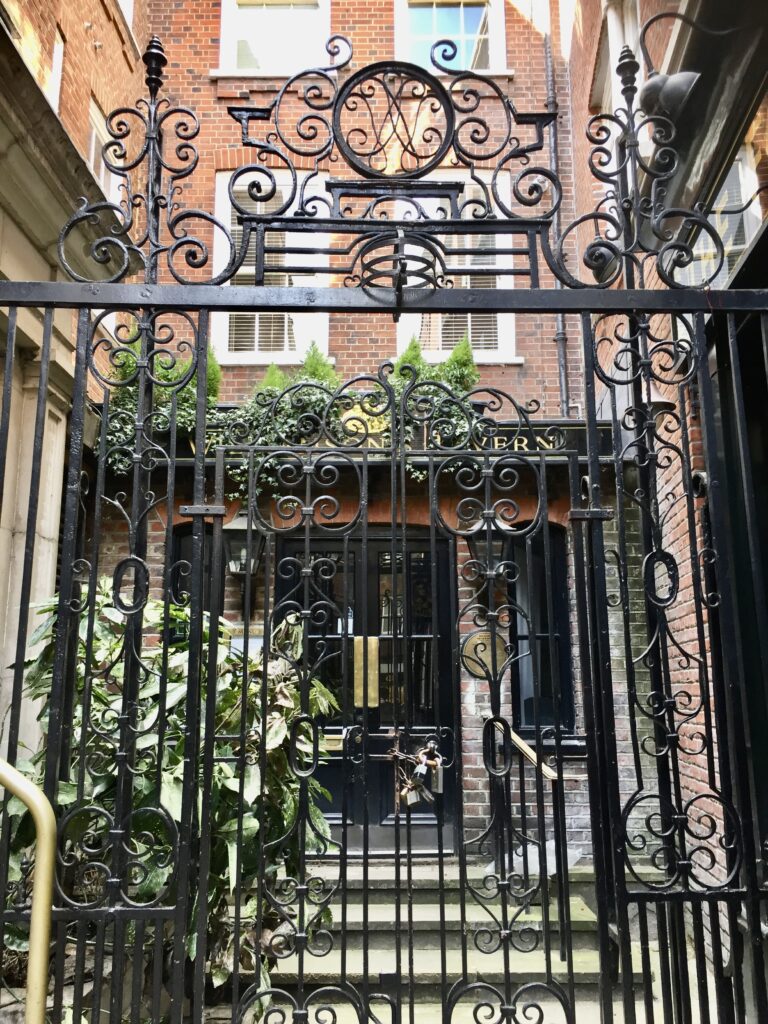
My favourite front door …

I suppose they got fed up with people saying they couldn’t find the bell!

I am very fond of Sir William Staines whose bust is on display in the church of St Giles Cripplegate, the Ward of which he represented as Alderman …

I smile when I see him because he looks like a man who enjoyed his food. Despite starting life as a bricklayer’s labourer, he amassed a vast fortune and, even though he remained illiterate, he was eventually elected Lord Mayor of London …

Beechey, William; Sir William Staines, Lord Mayor of London (1800); City of London Corporation.

He built nine houses for aged or infirm workmen and tradesmen who had fallen on hard times. No doubt remembering his own upbringing, he made sure that there was ‘nothing to distinguish them from the other dwelling-houses, and without ostentatious display of stone or other inscription to denote the poverty of the inhabitants’. That’s why I like him.

Fun street art always cheers me up. Here’s a rather grumpy elephant near Whitecross Street …

In the nearby company of a grumpy parrot …

A slightly disconcerting window display at the Jugged Hare Bar and Restaurant …

High spot of last week was a visit to the Henry Moore Studios and Gardens.

What I hadn’t properly appreciated before was the use Moore made of maquettes in order to help him visualise the finished work, which was often vast in scale. He also sometimes took photographs of these little masterpieces having placed them in an exterior setting in order to demonstrate to customers what a finished work would look like in the landscape.

There is a room full of them …

The gardens contain 21 sculptures by Moore and in several cases you can compare the original maquette …

… with the finished work …

It’s a bronze created between 1979 and 1981 entitled Two Piece Reclining Figure: Cut and to me looks like a a woman reaching back over her shoulders.

The gardens are a perfect setting for his work …

I like the faces in the less abstract pieces …

They can look quite sinister …

Goslar Warrior : Bronze : 1973-1974.

Another thing I didn’t know was that some of his designs had been woven into tapestries …

A great day – so nice to get away from the City and to loose oneself in the company of a genius like Moore.

And finally, a different kind of art …

In a music shop window, Jagger and Richards performing in Köln in 1976. Who would have guessed they would still be touring 44 years later?

They haven’t changed a bit!

If you would like to follow me on Instagram here is the link …
https://www.instagram.com/london_city_gent/

City children

Not all statues, pictures and memorials in the City are of the ‘great and the good’ – there are quite a few young people represented as well.

For a start, there are the charity school children who wore a striking uniform that confirmed their school’s charity status – hence the name Bluecoat Schools. Blue was chosen since it was once the cheapest dye available. The school buildings often displayed life-size representations of their pupils and these two can now be found outside the church of St Andrew Holborn (EC4A 3AF) …
They depict children attending St Andrew’s Parochial School, founded in 1696 and located in Hatton Garden since 1721. The statues once stood over the Cross Street entrance to the Hatton Street school but were moved here during the church’s restoration after WWII bombing damage.

Sir John Cass’s School at Aldgate also has its little boy and girl statues (C3A 5DE) …
This work outside Liverpool Street Station depicts children from the Kindertransport (EC2M 7PD). I think they are beautifully portrayed, appearing both curious and confident (and one piece of luggage is clearly a violin case) …

Photograph: Robin Coupland. Statue by Frank Meisler (2006).

In 1938 and 1939, nearly ten thousand unaccompanied Jewish children were transported to Britain to escape persecution in their hometowns in Germany, Czechoslovakia and Austria. These children arrived at Liverpool Street station to be taken in by British families and foster homes. Often they were the only members of their families to survive the Holocaust.

On a modern building in Giltspur Street (EC1A 9DD) a naked boy stands looking upwards with his arms crossed. He is often referred to as The Golden Boy of Pye Corner and he probably started life as a shop sign …

Now he commemorates one of the places where the Great Fire of 1666 was finally halted, and the inscription beneath refers to the belief by some at the time that God was punishing the City for the sin of gluttony. This was also evidenced by the fact that the conflagration started in Pudding Lane!

Despite the reference to gluttony, the little boy is not enormously fat but ‘healthily rotund’, as children or putti tended to be sculpted at that time. Pye (or Pie) Corner, on the other hand, was noted for food shops, particularly at the time of Bartholomew Fair. This annual celebration was finally suppressed in 1855 for ‘encouraging debauchery and public disorder’ and becoming a ‘school of vice which … initiated … youth into the habits of villainy’. The fair had also become one of the year’s great opportunities for pickpockets as well as for prostitutes, who might be found in tents coyly labelled ‘soiled doves’ or in a nearby street appropriately named Cock Lane.

But I digress.

Just behind the Royal Exchange is a work that caused some controversy, the Charity Drinking Fountain (also known as La Maternité) by Aimé-Jules Dalou (1877-9). (EC3V 3NL).

In his book Public Sculpture of the City of London, Philip Ward-Jackson describes the lady as follows:

Despite her casual garb she has a diadem or tiara on her head. With her left arm she enfolds a baby, who she is suckling, whilst with her right she draws to her knee a naked boy, who gazes up at her.

Nearby is a very relaxed George Peabody who I have written about in an earlier blog

Ward-Jackson tells us that the suckling lady’s very authentic exposed breast produced at least one letter of protest to the editor of The Globe. The correspondent urged that ‘common decency’ should be observed and went on …

Do you not think, Sir, that Mr Peabody’s chair should be turned, at least until the delicate operation of ‘lacteal sustenation’ be concluded … or the young woman and youngsters provided with the requisite clothing.

Living in the Appold Street entrance to Exchange Square are The Broad Family (EC2A 2BR) …

Look long enough and you will see mum, dad, a little girl with her ball and the family dog (well I did, anyway). It has just occurred to me that the dog resembles Dr Who’s companion K9.

The little girl’s shoes peep out tantalisingly …

These young folk striding out purposefully are part of the memorial to Christ’s Hospital School which was sited nearby before it relocated to Horsham in 1902 (EC1A 7BA). It shows the pupils developing from street urchins to smart, confident young adults …

I love the ragamuffins at the far end of the sculpture.They seem to be having enormous fun and sport the most extraordinary hairstyles …

As you approach the Bank junction from Cheapside look up and you will see two young boys at either end of the grand building that was once the City headquarters of Midland Bank (1935). The are both struggling with a rather angry looking Goose …

The sculptor was William Reid Dick.

Why a goose? A clue is the ancient name of the street and the goose was a suggestion by the architect Sir Edwin Lutyens to commemorate its original market function. The building is now a private club and restaurant, called The Ned in Sir Edwin’s honour.

In the Guildhall Art Gallery there is a pretty little girl attending her first sermon …

My First Sermon’ by John Everett Millais

She obviously knows this is an important occasion in her life and sits with her back straight, eyes attentively focused looking ahead. She is the artist’s 5 year old daughter Effie. On seeing it the Archbishop of Canterbury commented …

… our spirits are touched by the playfulness, the innocence, the purity, and … the piety of childhood

In 1864 the artist produced a sequel entitled ‘My Second Sermon’ …

The Archbishop, Charles Longley, was obviously a rather good sport, and when he saw the later picture commented …

… by the eloquence of her silent slumber, (she has) given us a warning of the evil of lengthy sermons and drowsy discourses. Sorry indeed should I be to disturb that sweet and peaceful slumber, but I beg that when she does awake she may be informed who they are who have pointed the moral of her story, have drawn the true inference from the change that has passed over her since she has heard her “first sermon,” and have resolved to profit by the lecture she has thus delivered to them.

I was reminded of this wonderful drawing of a Victorian congregation who are finding the sermon rather heavy going …

In 1995 a skeleton was discovered when excavations were taking place before the construction of 30 St Mary Axe, now often referred to as the Gherkin. The remains were of a young girl aged between 13 and 17 years – her arms were crossed over her body and pottery close by indicated a burial date of between AD 350 and 400.

Having been removed to the Museum of London, she waited patiently until 2007 when the developers of the Gherkin proposed that she be reburied on the site. So, in April of that year, there was a service at St Botolph’s church in Aldgate followed by a procession through the streets before her body was respectfully interred near where it was found. The Lady Mayoress of the City of London was there to spread rose petals on the gravesite, marked with a marble slab decorated with a laurel wreath.

We don’t know her name, or whether she was an original Londoner, but she now rests again 1,600 years after her death in the place that she would have called Londinium.

And finally to one of my favourite places, the Watts Memorial in Postman’s Park (EC1A 7BT). I have written before about three of the brave youngsters commemorated there – Alice Ayres, John Clinton and Elizabeth Boxall.

To them I will now add this young man …

While their mum was out running an errand Henry’s two-year-old sister Jessie, intrigued by the glow of a paraffin lamp, managed to clamber up a chair and reach out for it. Tragically, she overturned it and was enveloped in flaming paraffin. Henry rushed to help her, but in tearing off her clothes set fire to himself and both children received severe burns. Jessie survived but Henry died on 5th January – the coroner at his inquest commented ‘it is a sad case, the little fellow was quite a hero’.

That’s all for this week – I hope you enjoyed it even though I have written about some of these subjects before.

Remember you can follow me on Instagram :

https://www.instagram.com/london_city_gent/

Page 26 of 30

Powered by WordPress & Theme by Anders Norén

Symbols & Secrets
Privacy Overview

This website uses cookies so that we can provide you with the best user experience possible. Cookie information is stored in your browser and performs functions such as recognising you when you return to our website and helping our team to understand which sections of the website you find most interesting and useful.