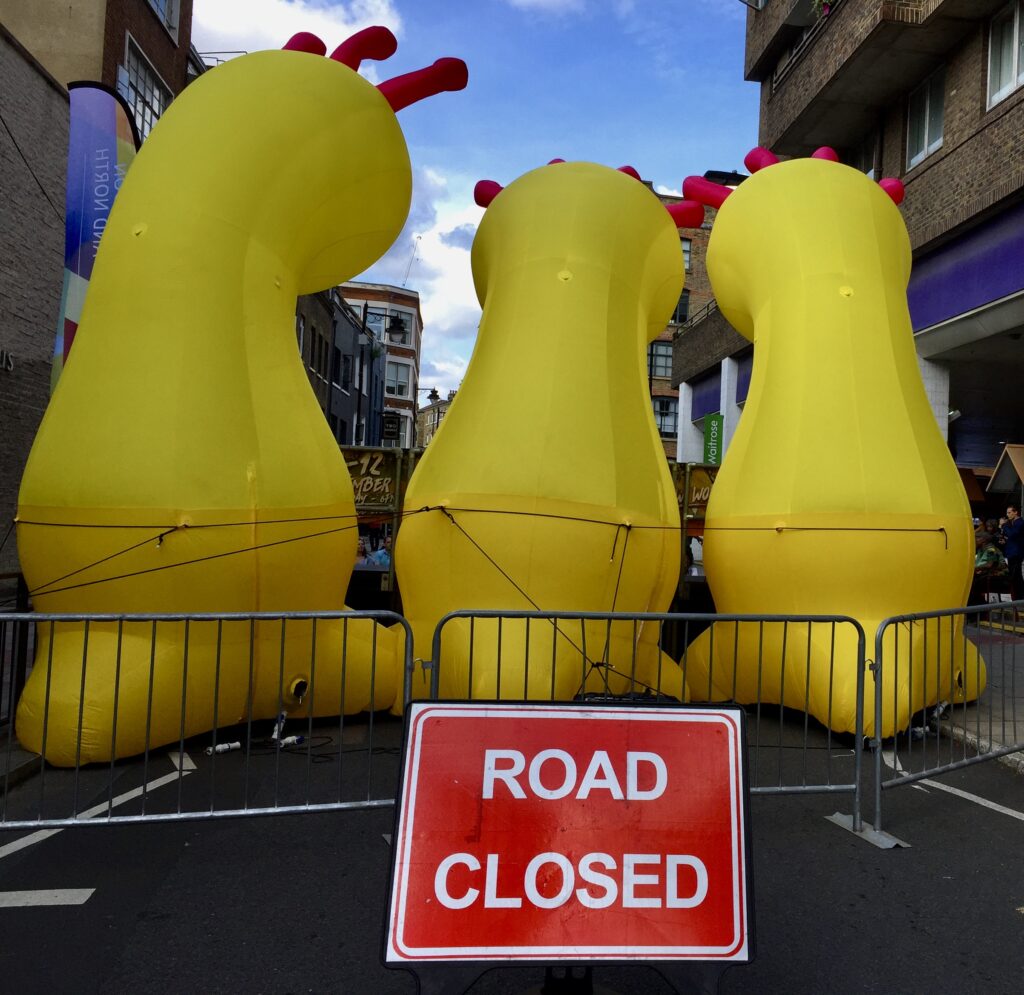
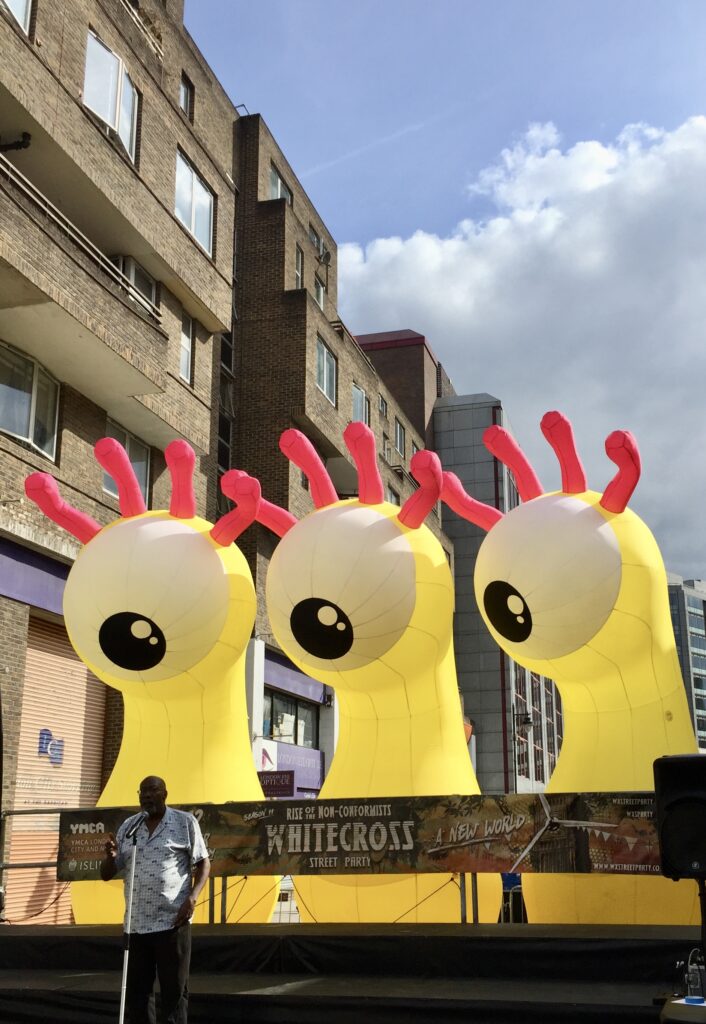
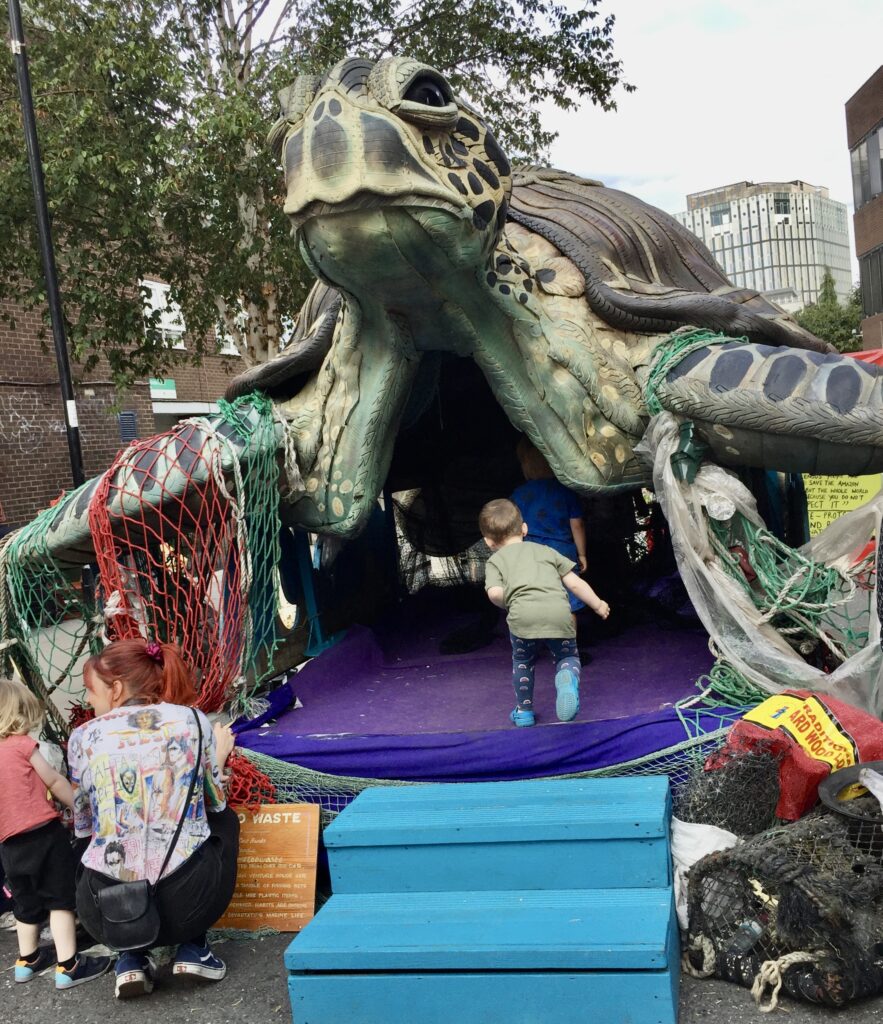
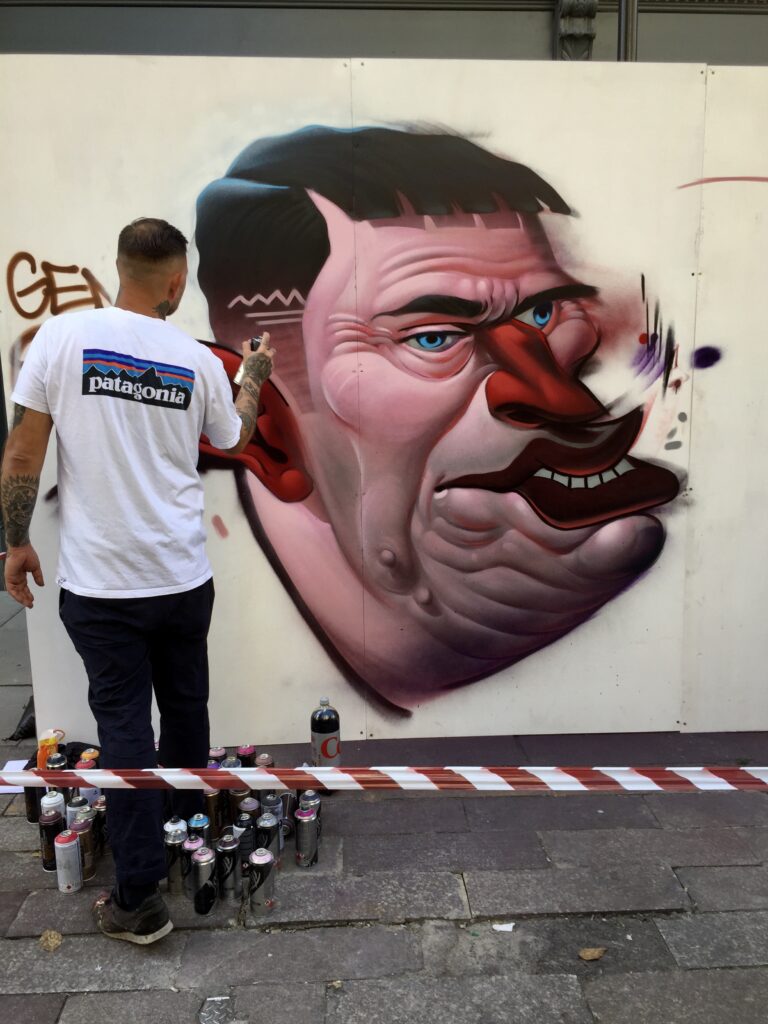
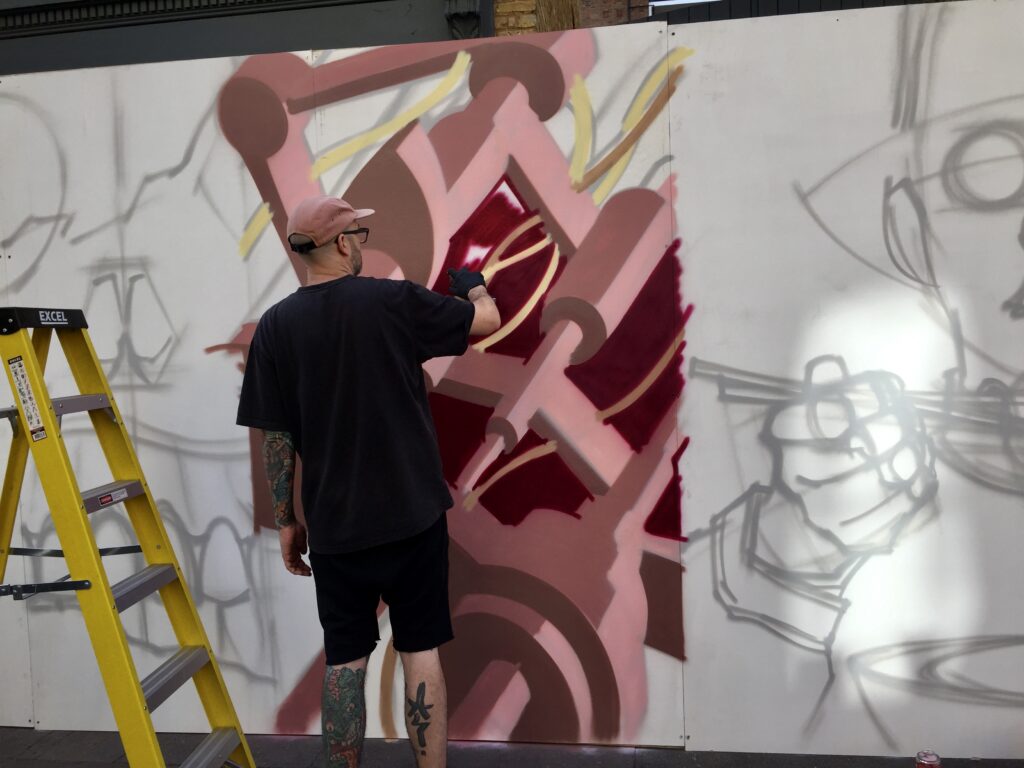
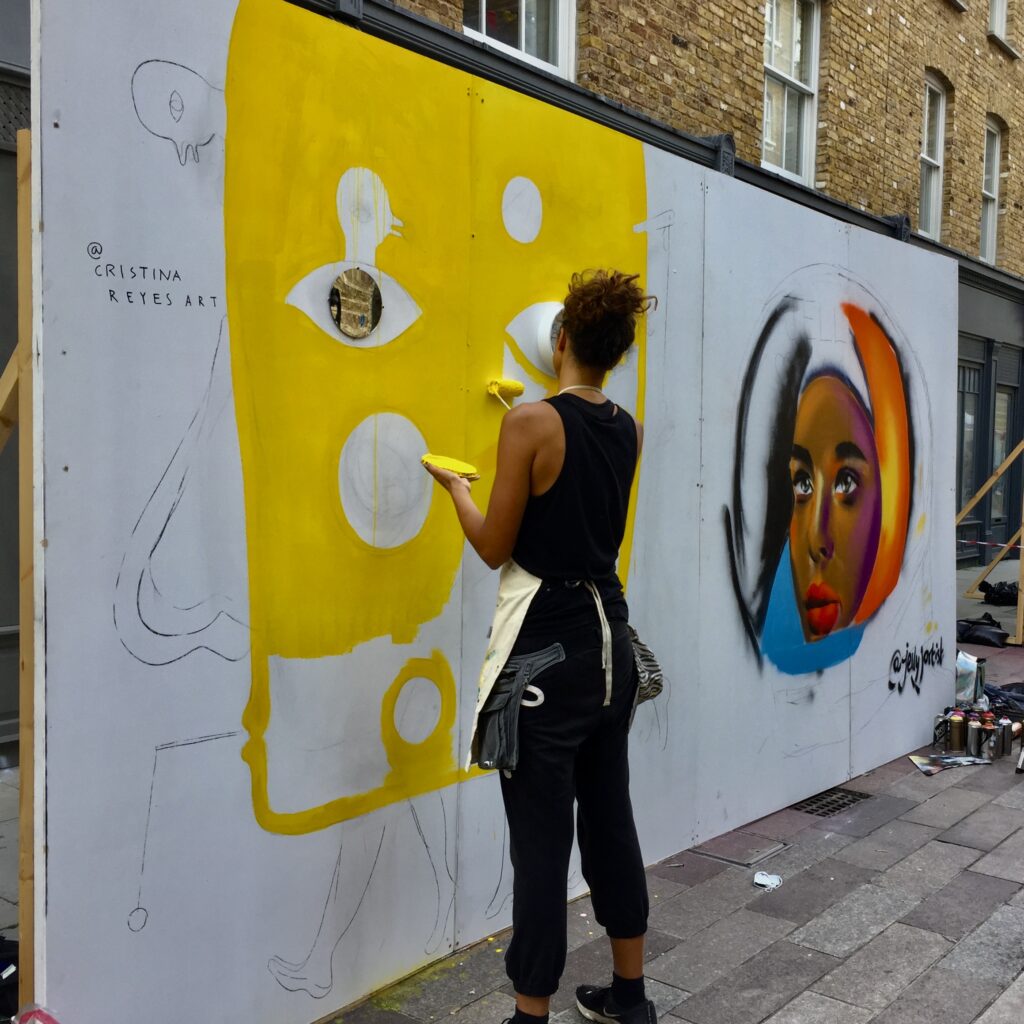
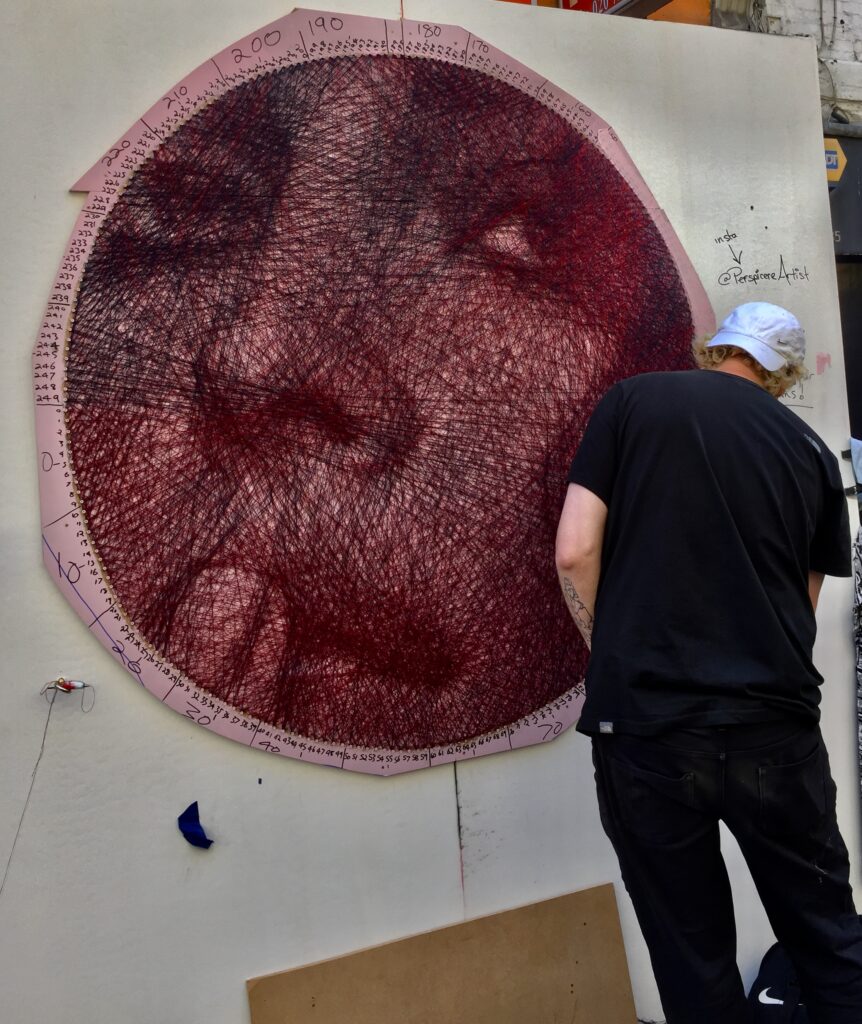
Last Saturday I knew I would be in for a treat when I saw these creatures blocking the road …
Poetry on one of the performance stages …
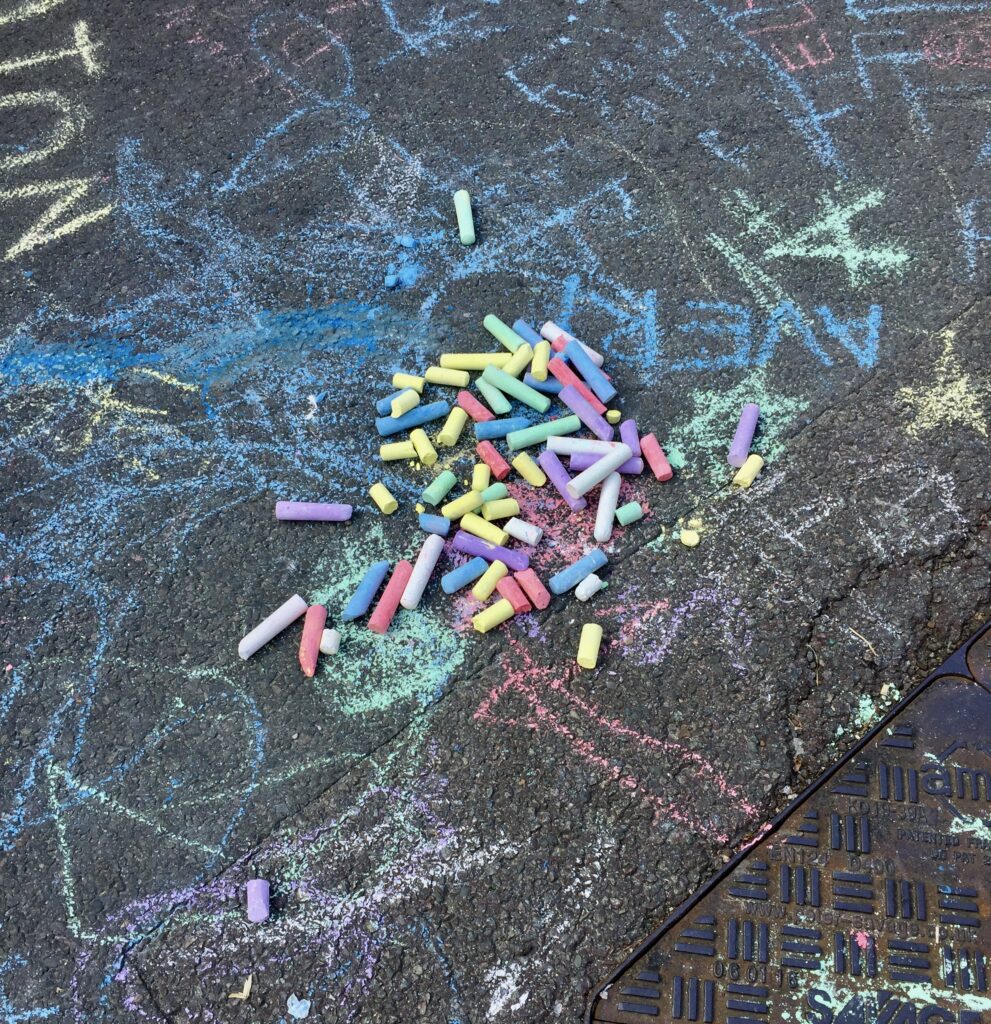
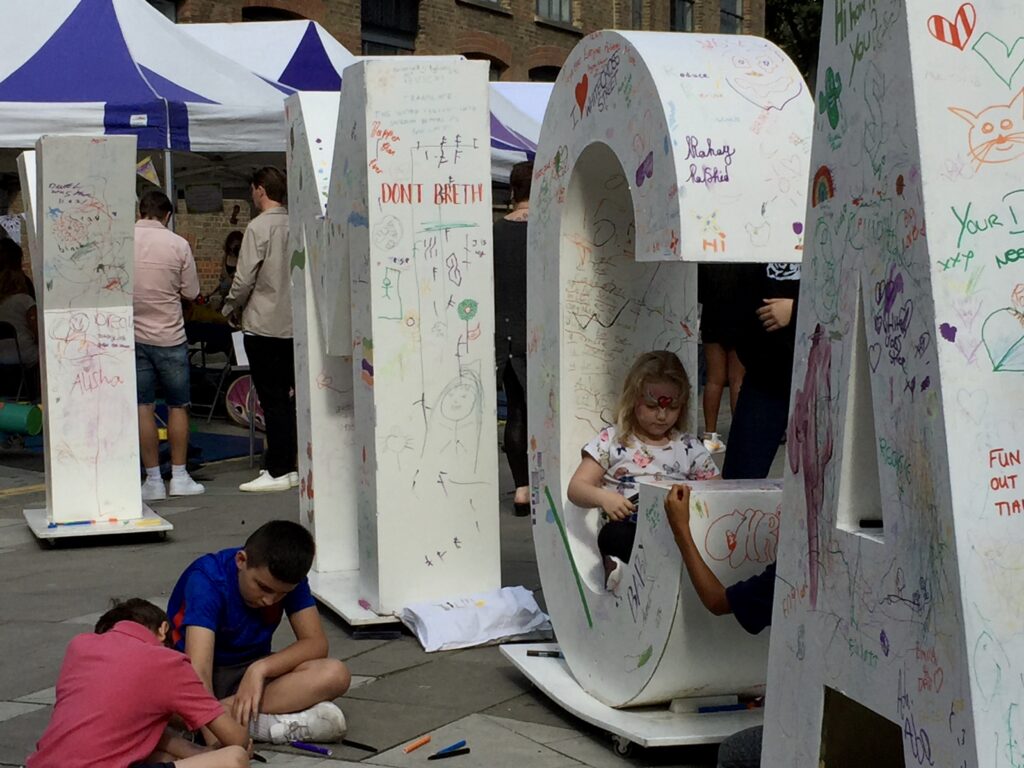
Time to get creative …
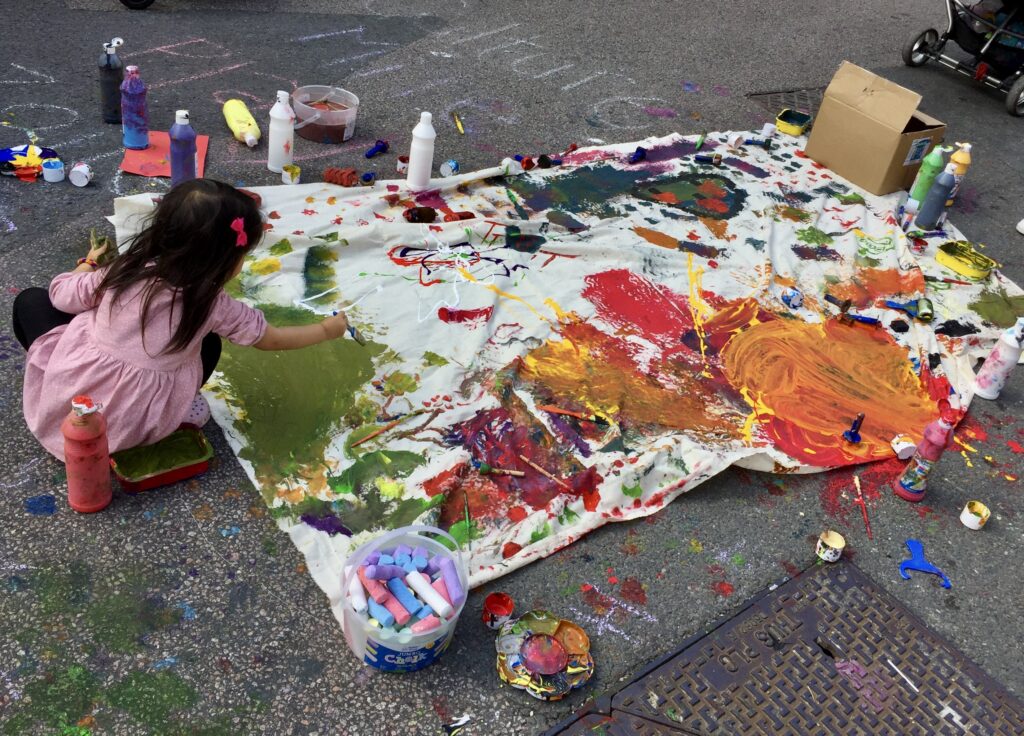
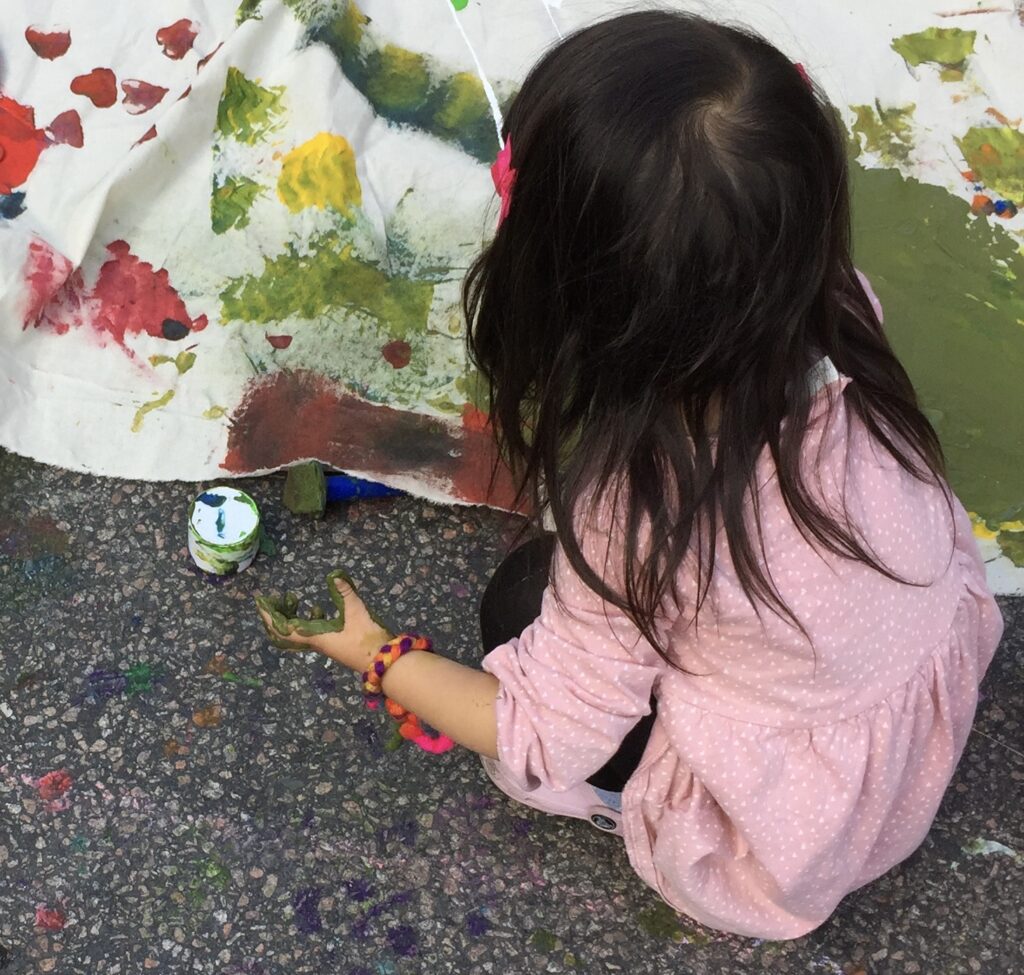
Who needs brushes when a handful of paint will do!
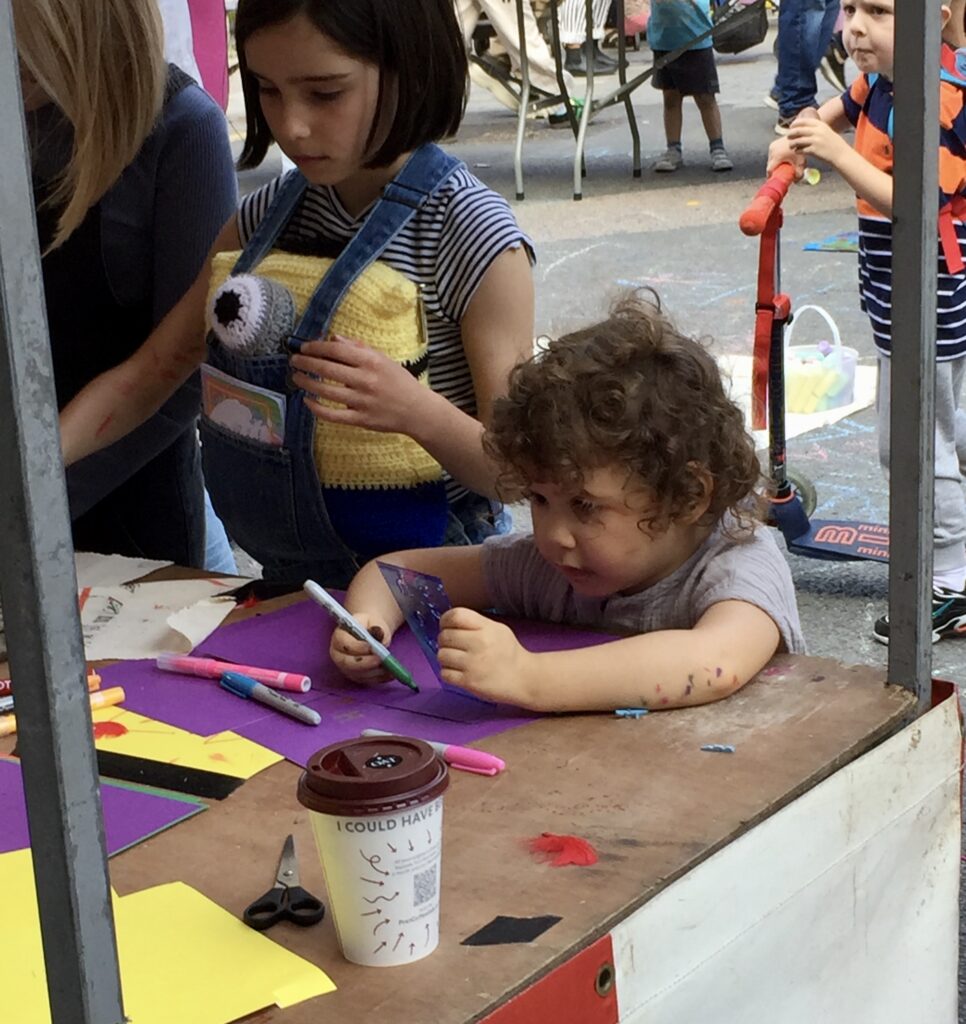
Concentration is so important …
There were lots of places to hunker down and enjoy the day …
Learn about saving our planet whilst having fun …
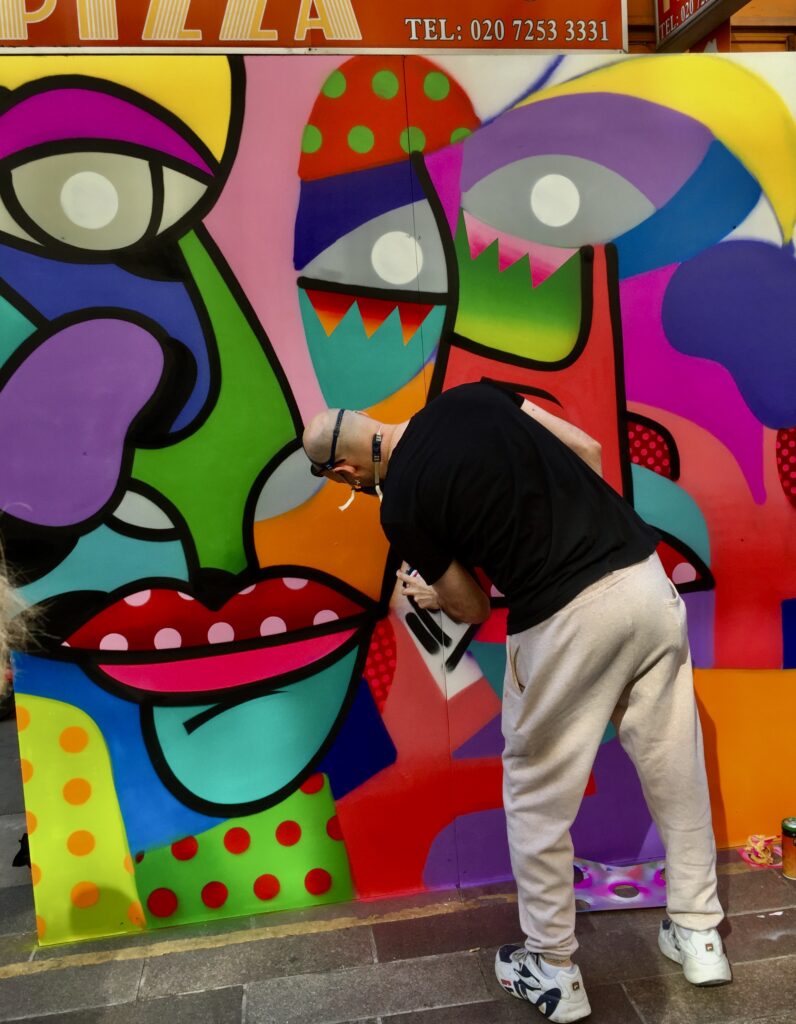
The grown-ups get to work on Saturday and Sunday …
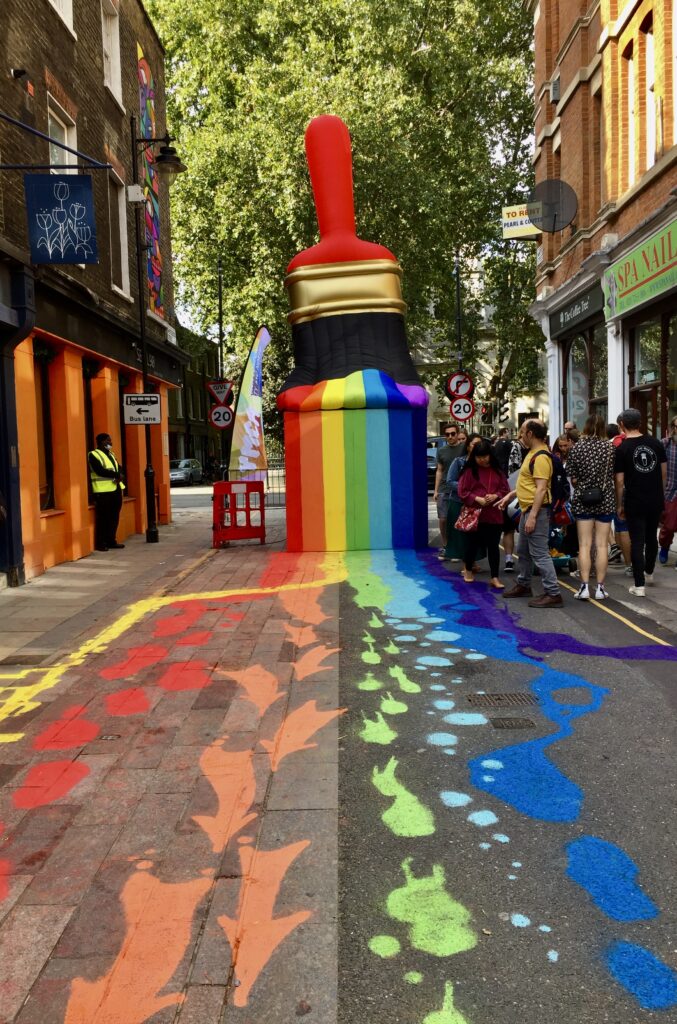
The big paintbrush is back!
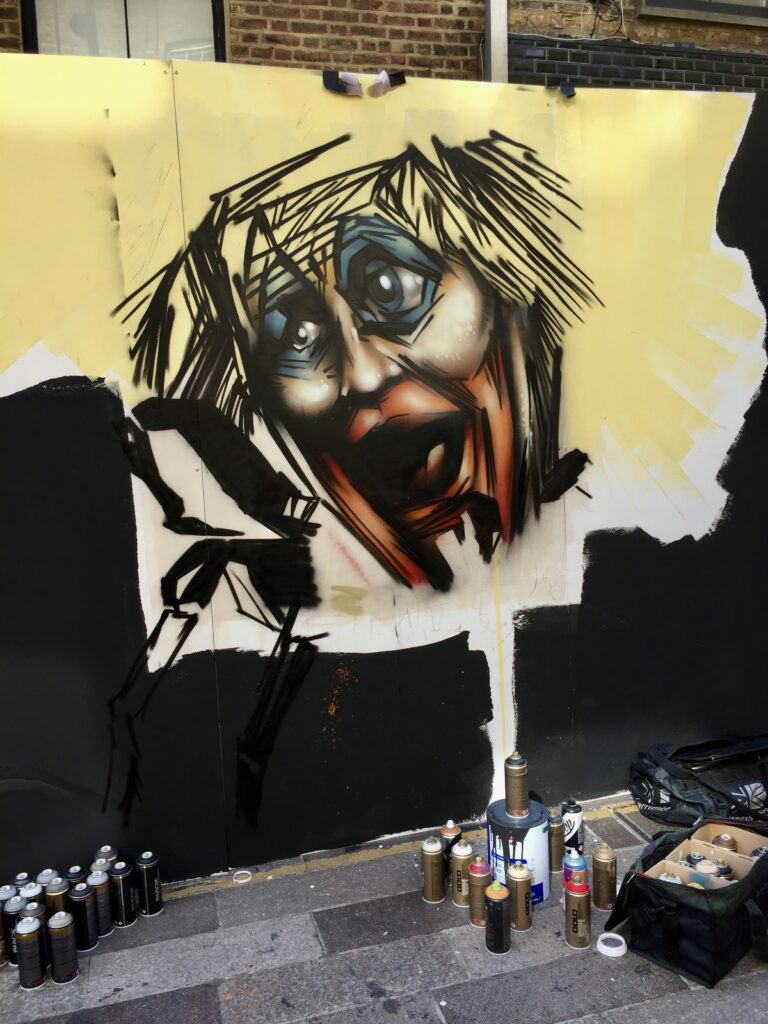
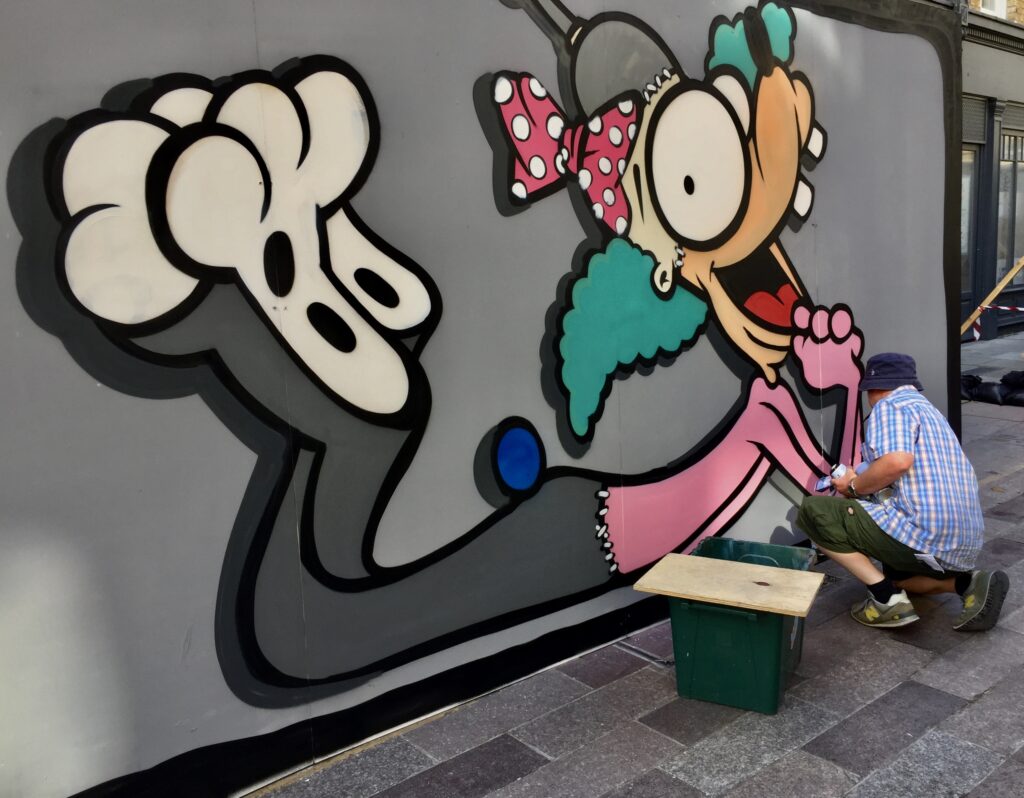
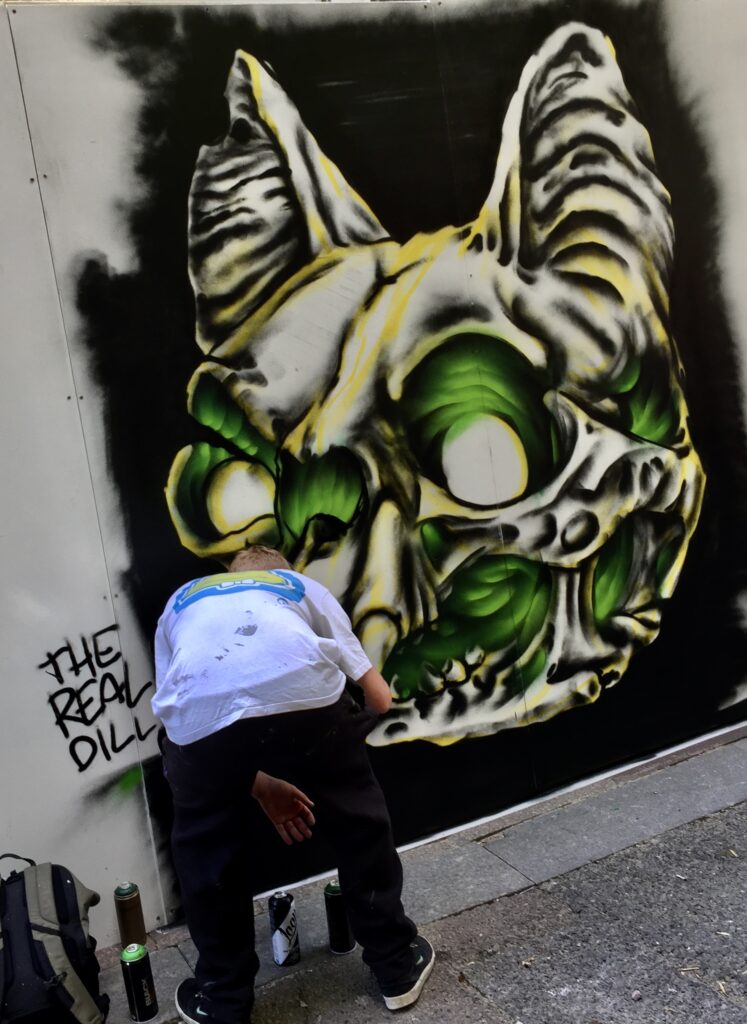
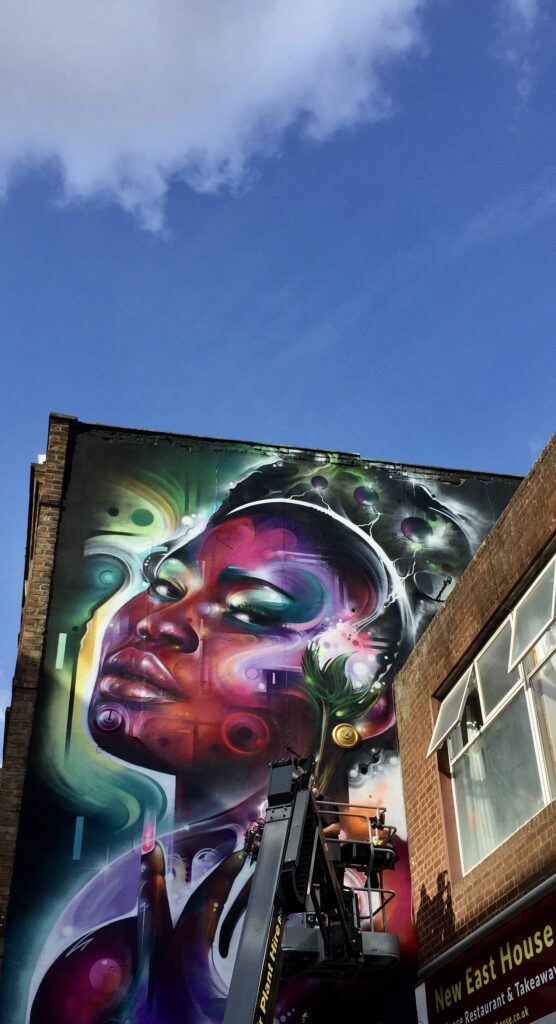
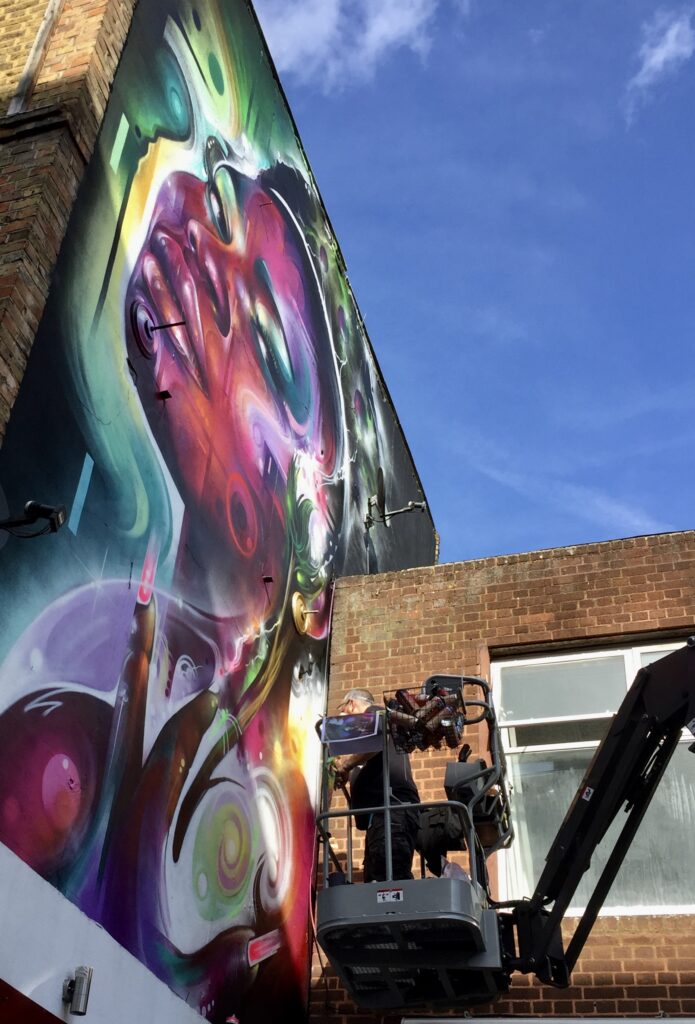
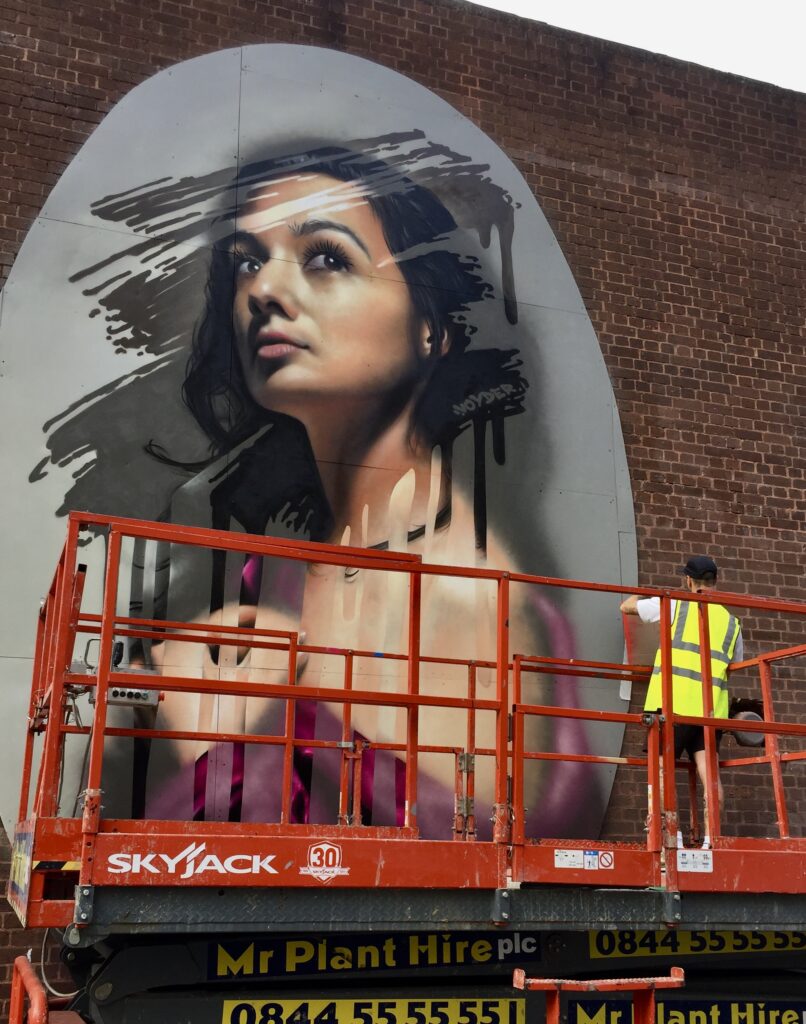
New murals take shape …
Artists at work …
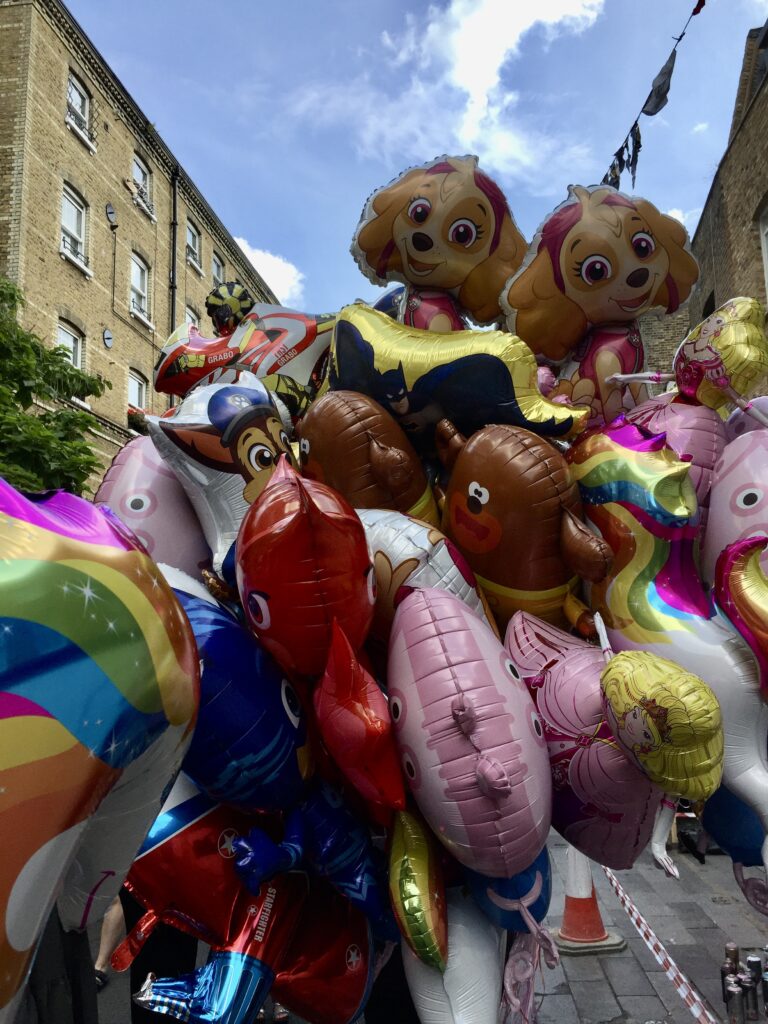
The day wouldn’t be complete without the bonkers balloons …
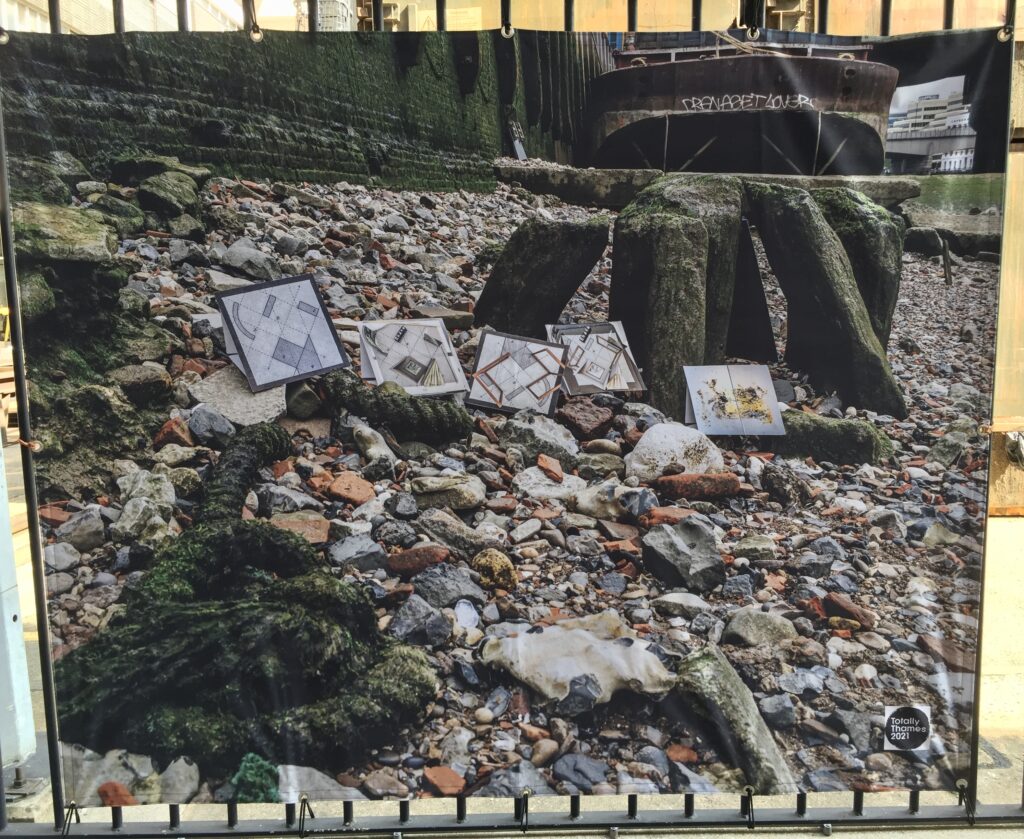
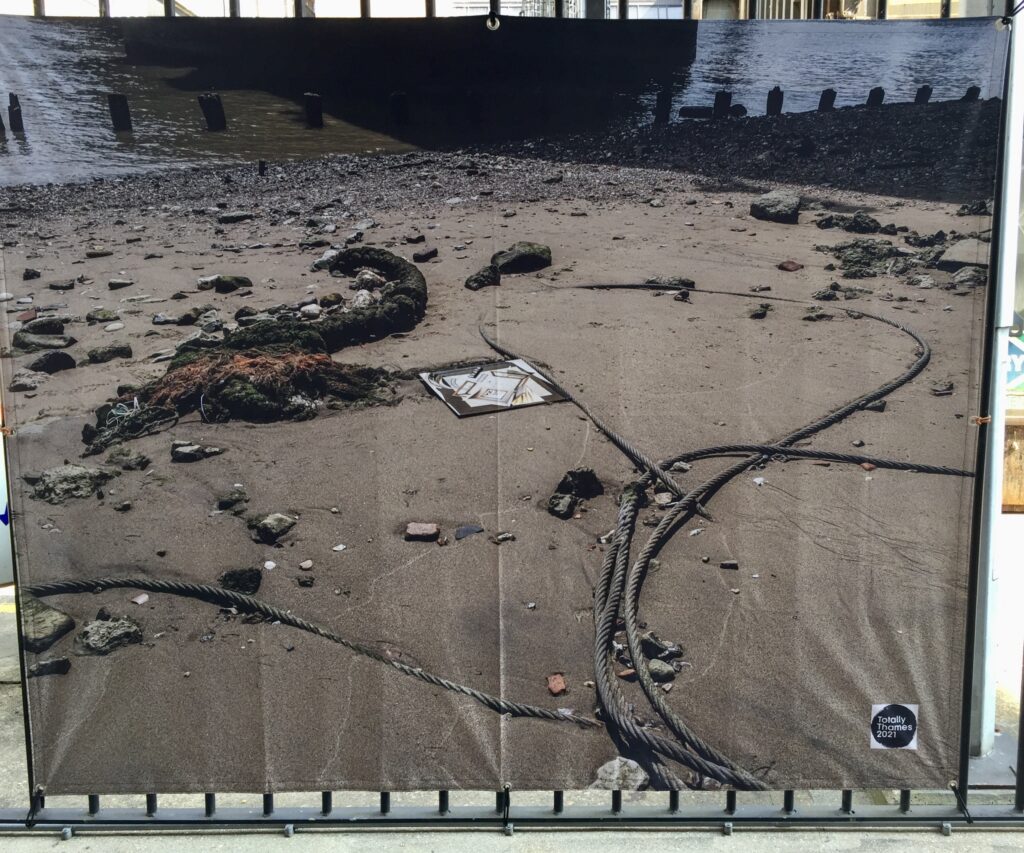
Don’t forget, there’s an exciting new installation created by my friend Natalie Robinson now set up for you to visit. The display is based on her body of work ‘Reflection: what lies beneath – new maps’ and will be part of the Totally Thames 2021 Festival until the 30th.
You’ll find Natalie’s banners on the Thames Path at Walbrook Wharf. Here are a few images to whet your appetite …
You can find more details of her display here and its digital counterpart here
If you would like to follow me on Instagram here is the link …
I do enjoy a wander along Old Street – remembering as I walk that it is, as its name suggests, an ancient thoroughfare that probably even pre-dates Roman times. The earliest records of the name are Ealdestrate around 1200, Eldestrete in 1275, and le Oldestrete in 1373. In other words, it was already known as the ‘old street’ when Edward I sat on the throne.
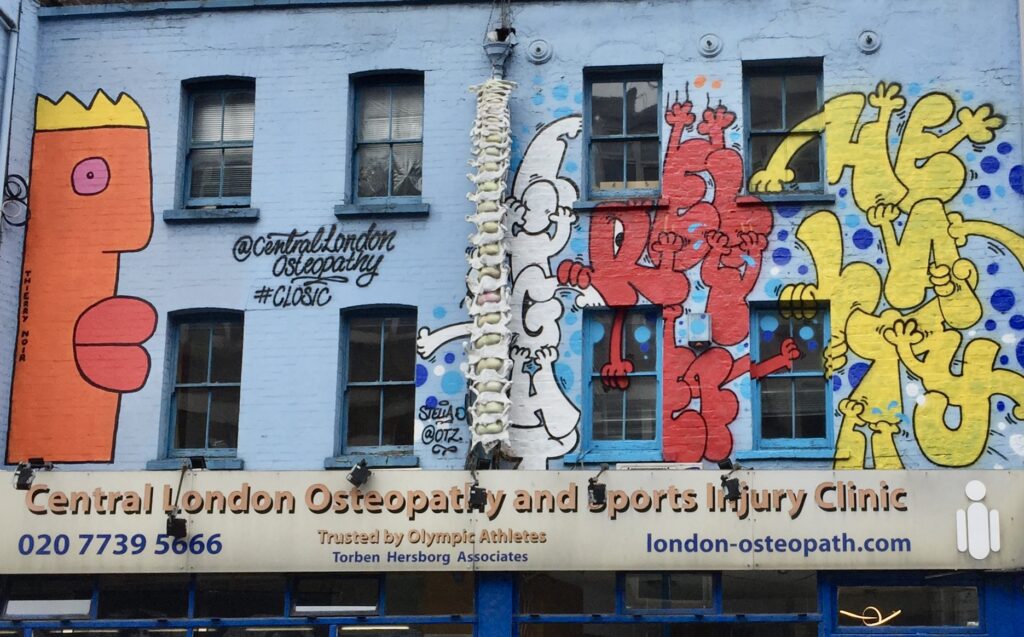
Starting at its Shoreditch end, I always admire the street art surrounding the gigantic spinal column that graces the Osteopathy and Sports clinic …
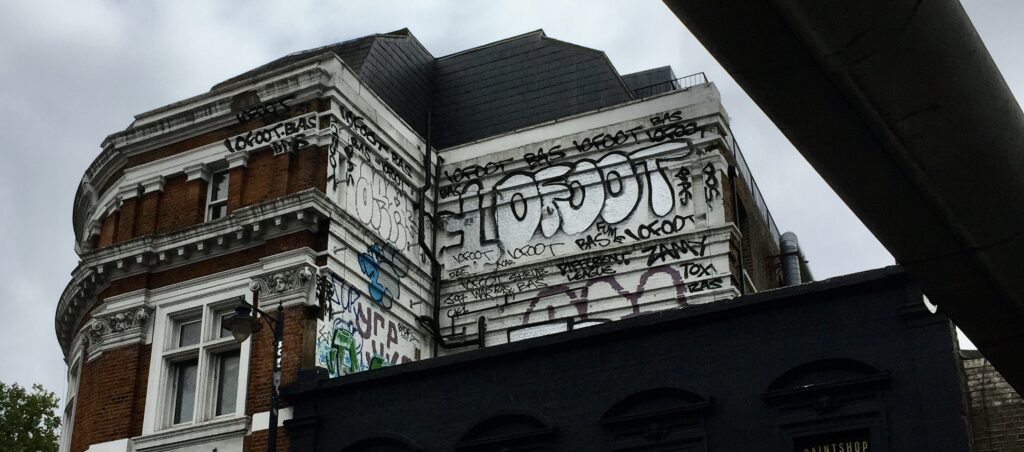
Across the road is some ‘work’ by the notorious ’10 foot’ character (or someone impersonating him) …
According to the My London blog the guy’s real name is Samuel Moore. In 2010 he was arrested over his work and bailed, but continued to create artwork in public places. He was eventually convicted for committing over £100,000 worth of criminal damage and sent to prison for 26 months.
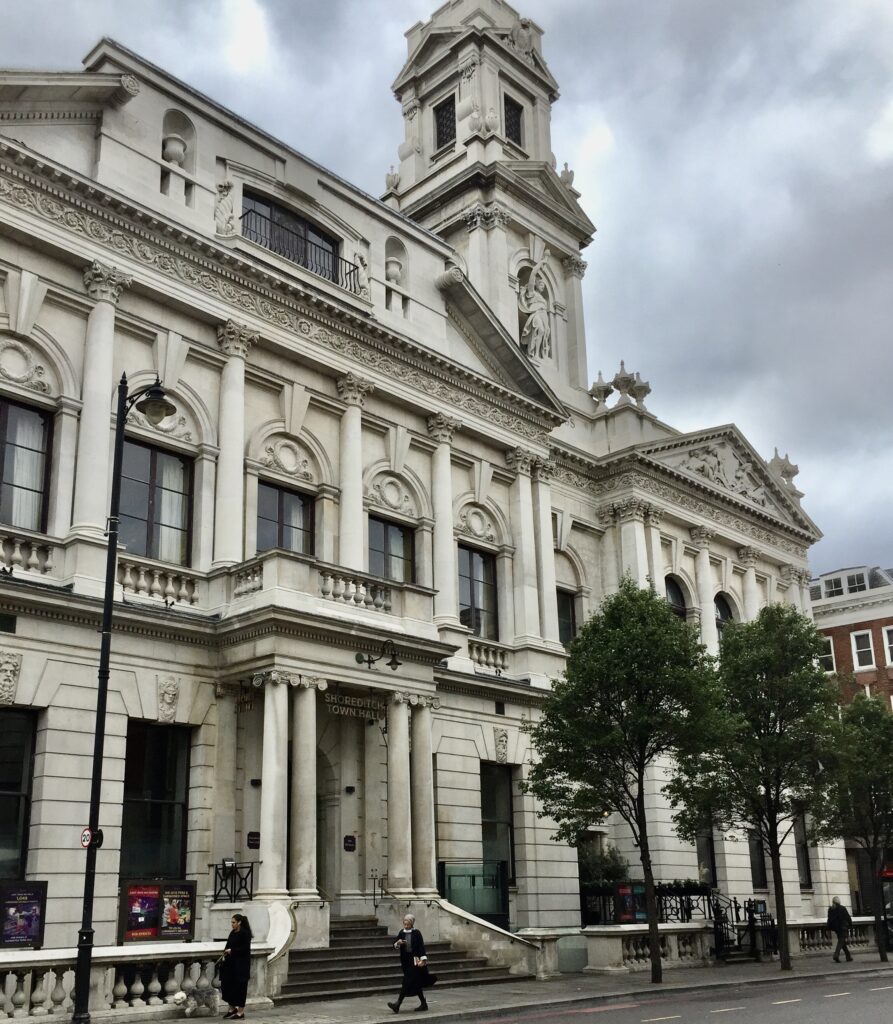
I love the beautiful civic building that is the old Shoreditch Town Hall …
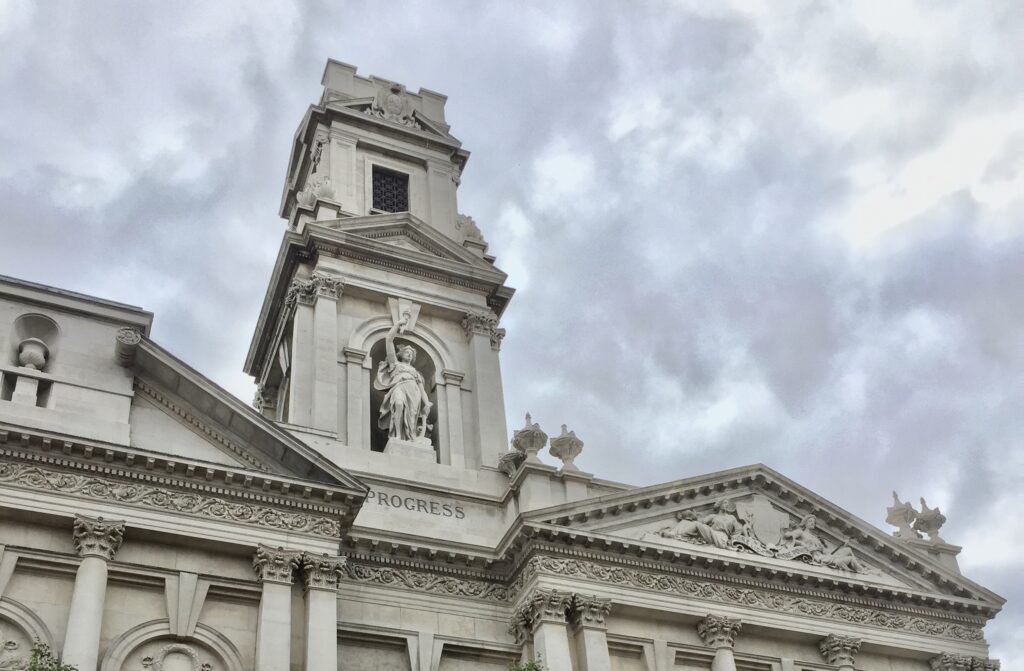
When it opened in 1866 it was one of the grandest Vestry Halls of its time and its ambitious founders wanted the building to embody their progressive values. Until the 1960s, the Town Hall operated as the centre of local democracy and civic life in the borough and now, after a somewhat rocky time when it was seriously at risk, it is a thriving event venue and community space.
Throughout the building the motto ‘More Light, More Power’ can be seen beneath the crest of Shoreditch. This motto, together with the statue of Progress on the front of the tower, commemorates the borough’s reputation for pioneering bold ideas such as the building’s revolutionary 1897 Refuse Destructor, which generated electricity and powered street lighting in the borough. You can read more about this extraordinary invention here.
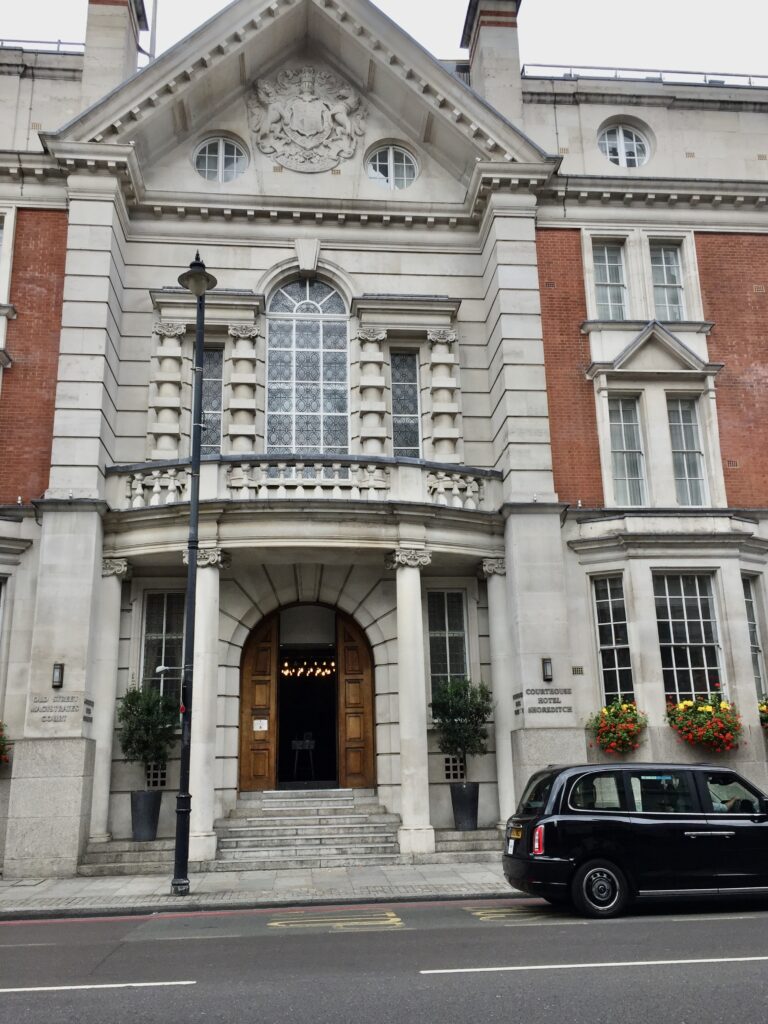
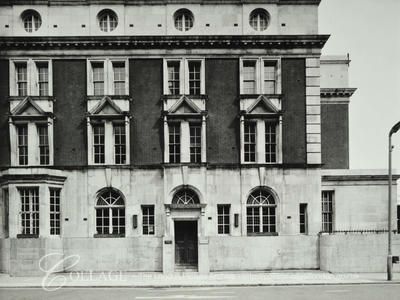
Old Street Magistrates Court was transformed into a hotel in 2016 (previous temporary visitors included Reggie and Ronnie Kray) …
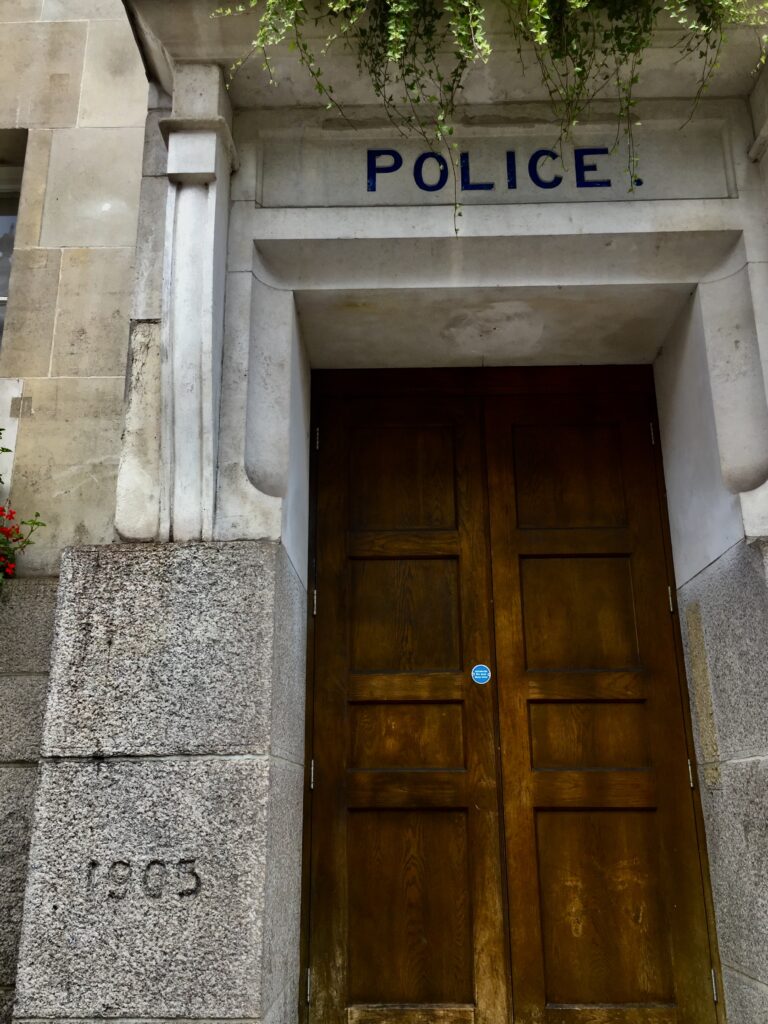
Originally known as a Police Court, it dealt with a wide range of business coming under the general heading of ‘summary jurisdiction’, i.e. trial without a jury. The cases heard were largely criminal and of the less serious kind. Examples included: drunk and disorderly conduct, assault, theft, begging, possessing stolen goods, cruelty to animals, desertion from the armed forces, betting, soliciting, loitering with intent, obstructing highways, and motoring offences. Non-criminal matters included small debts concerning income tax and local rates, landlord and tenant matters, matrimonial problems and bastardy (for example, fathers of illegitimate children failing to pay maintenance). There is a fascinating account of bastardy, and its associated tragedies, in the London Lives blog.
The eastern half of the building contained a police station …
It included accommodation for a married inspector on the first floor and for 40 single men on the second and third floors. There was a kitchen and mess room along with rooms for storing, drying and brushing clothes and boots. You really could say there was a ‘police presence’ in those days.
The building in 1974 …
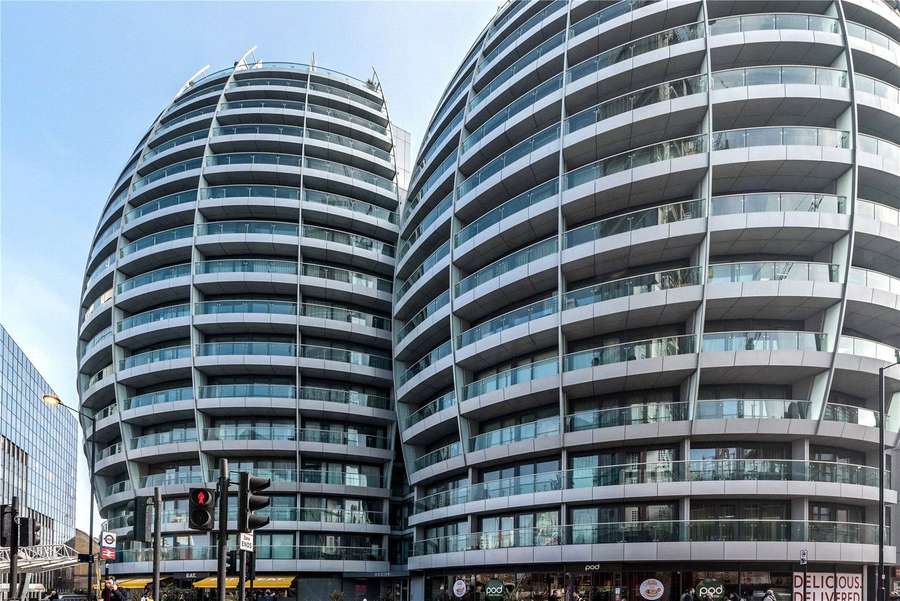
I paused at the Old Street roundabout to admire the Bezier Building …
Unfortunately, I can’t get out of my mind the Gentle Author’s assertion that it looks like a pair of buttocks.
I have written about the west end of the street before, but I hope readers won’t mind if I revisit a few of the buildings again.
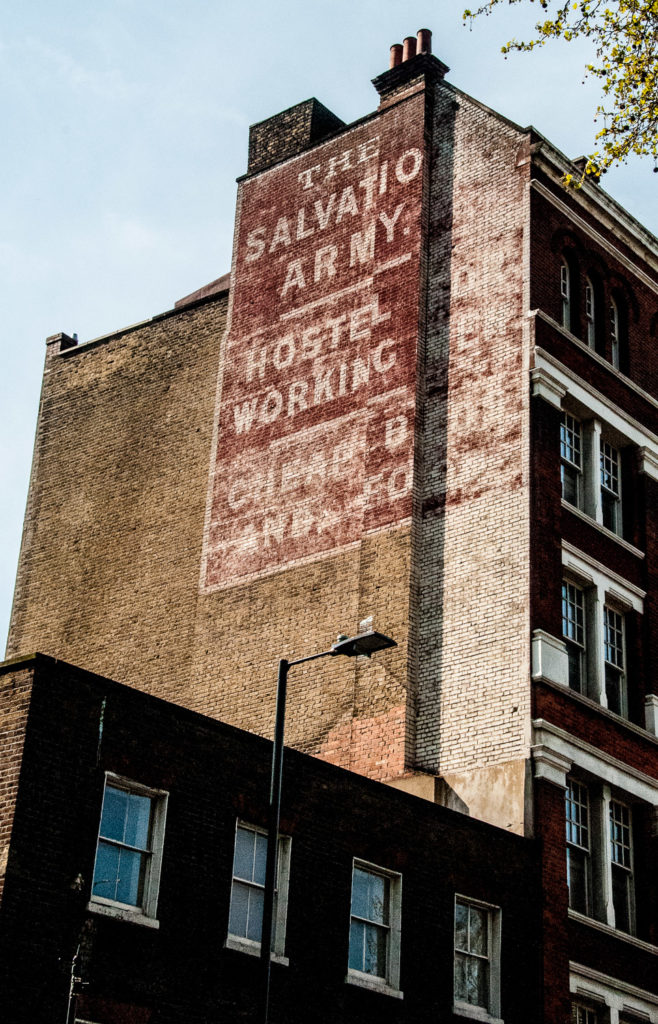
Look up and you will see the old Salvation Army Hostel ghost sign …
‘Hostel for working men. Cheap beds and food’.
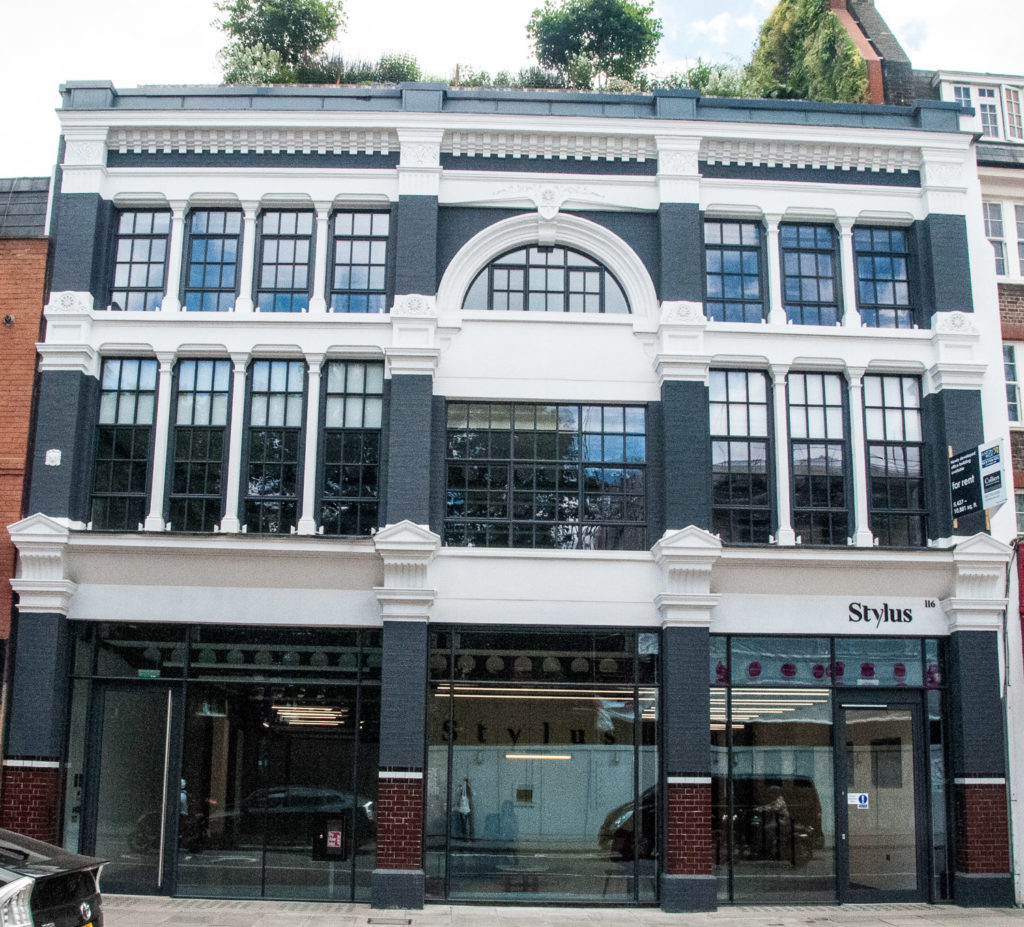
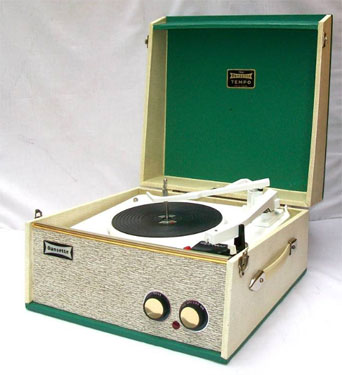
Number 116 used to be the Margolin Gramophone Company factory (the place is now called Stylus … get it?) …
They manufactured the Dansette record player – a name very familiar to us baby-boomers. During the years 1950-70 over one million were sold …
You could even buy a portable one!
Dansette production ended in December 1969, following the introduction of relatively cheap and efficient Japanese and other Far Eastern imported Hi-Fi equipment. Margolin subsequently went into liquidation.
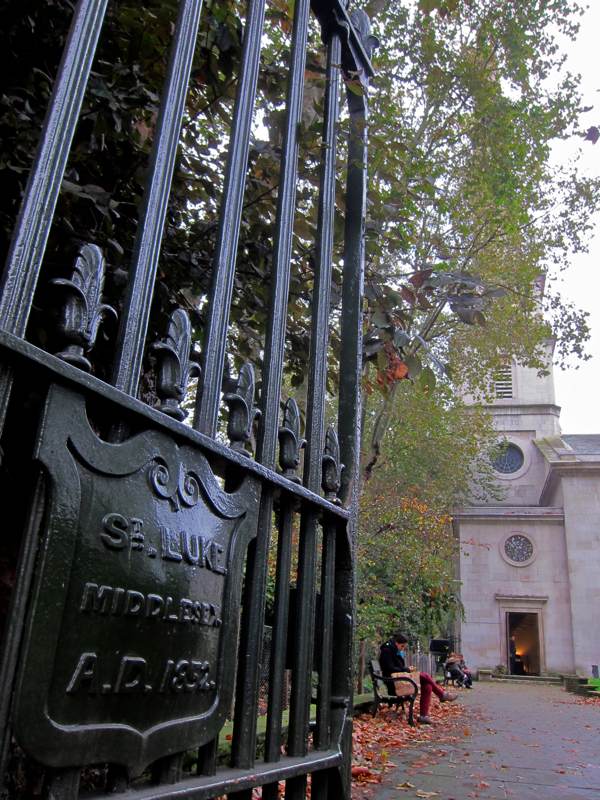
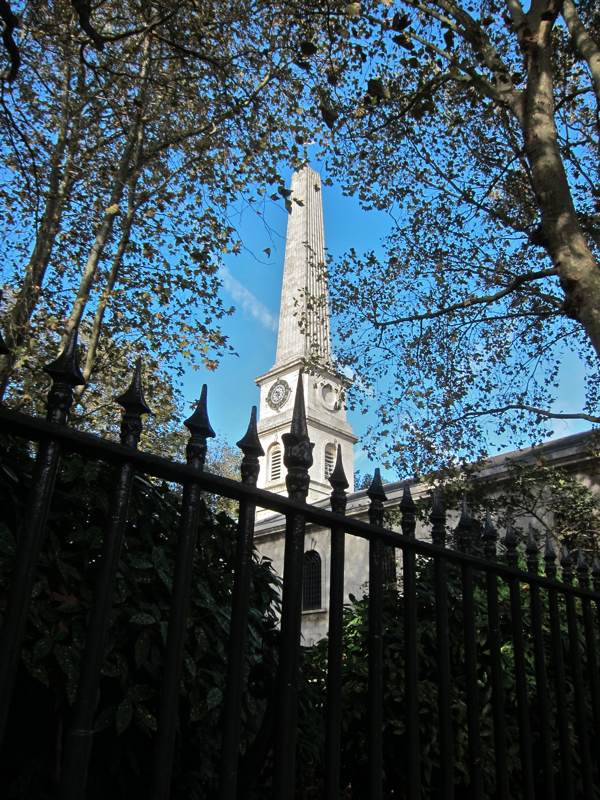
Look out for the now de-consecrated St Luke’s church. It was designed by John James, though the obelisk spire, a most unusual feature for an Anglican church, the west tower and the flanking staircase wings were by Nicholas Hawksmoor …
It was built between 1727-1733 to meet St Giles Without Cripplegate’s booming population.
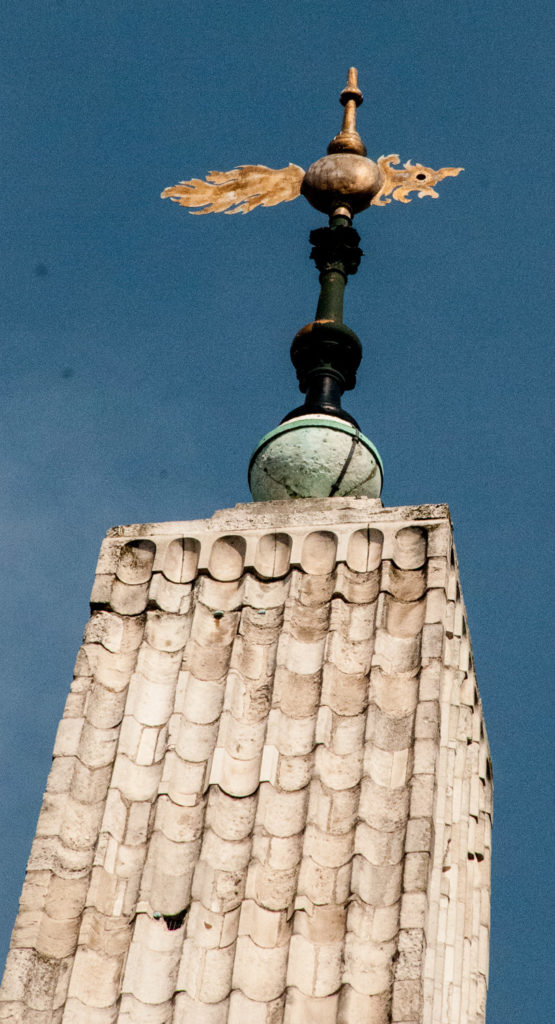
The weathervane is actually a red-eyed dragon but for some reason locals thought it resembled a louse and nicknamed the church Lousy St Luke’s …
The church was closed in 1964 due to subsidence, but the previously derelict building has now been restored by the London Symphony Orchestra as a beautiful space for performances, rehearsals, recording and educational purposes.
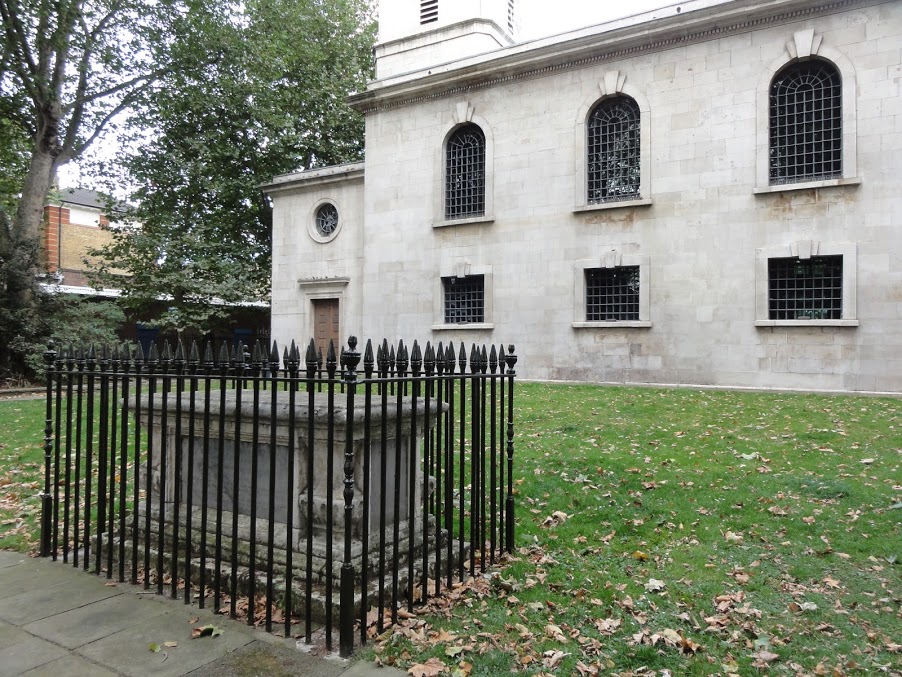
William Caslon the Elder is buried in the churchyard. …
Caslon’s family grave. He died in 1766.
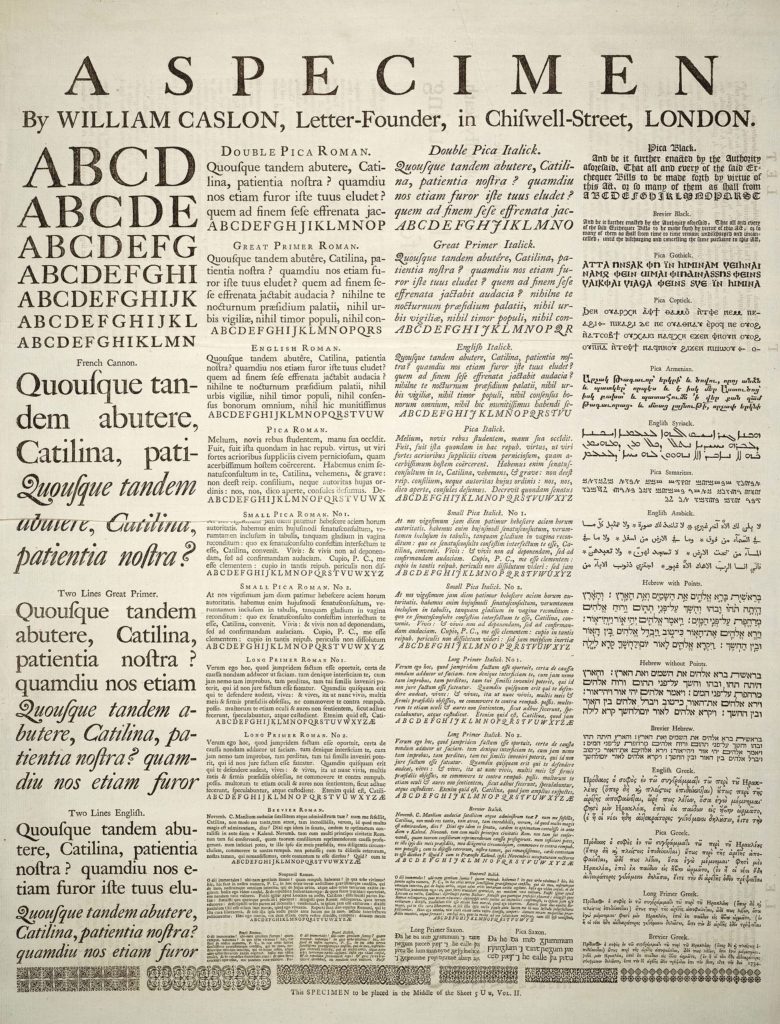
A typefounder, the distinction and legibility of his type secured him the patronage of the leading printers of the day in England and on the continent. His typefaces transformed English type design and first established an English national typographic style. Here is a specimen sheet of his typefaces from 1728. In its own way I think it is beautiful …
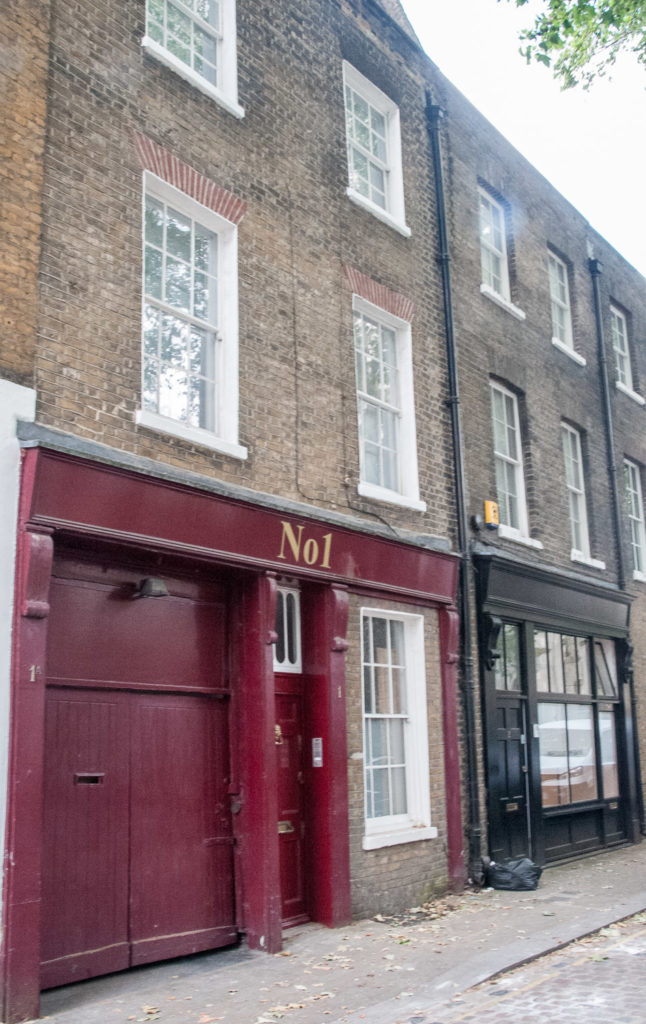
Caslon’s first workshop was in Helmet Row, next to the church. It has some Grade II listed early 19th century terraced houses, a few of which later had their ground floors converted into shops …
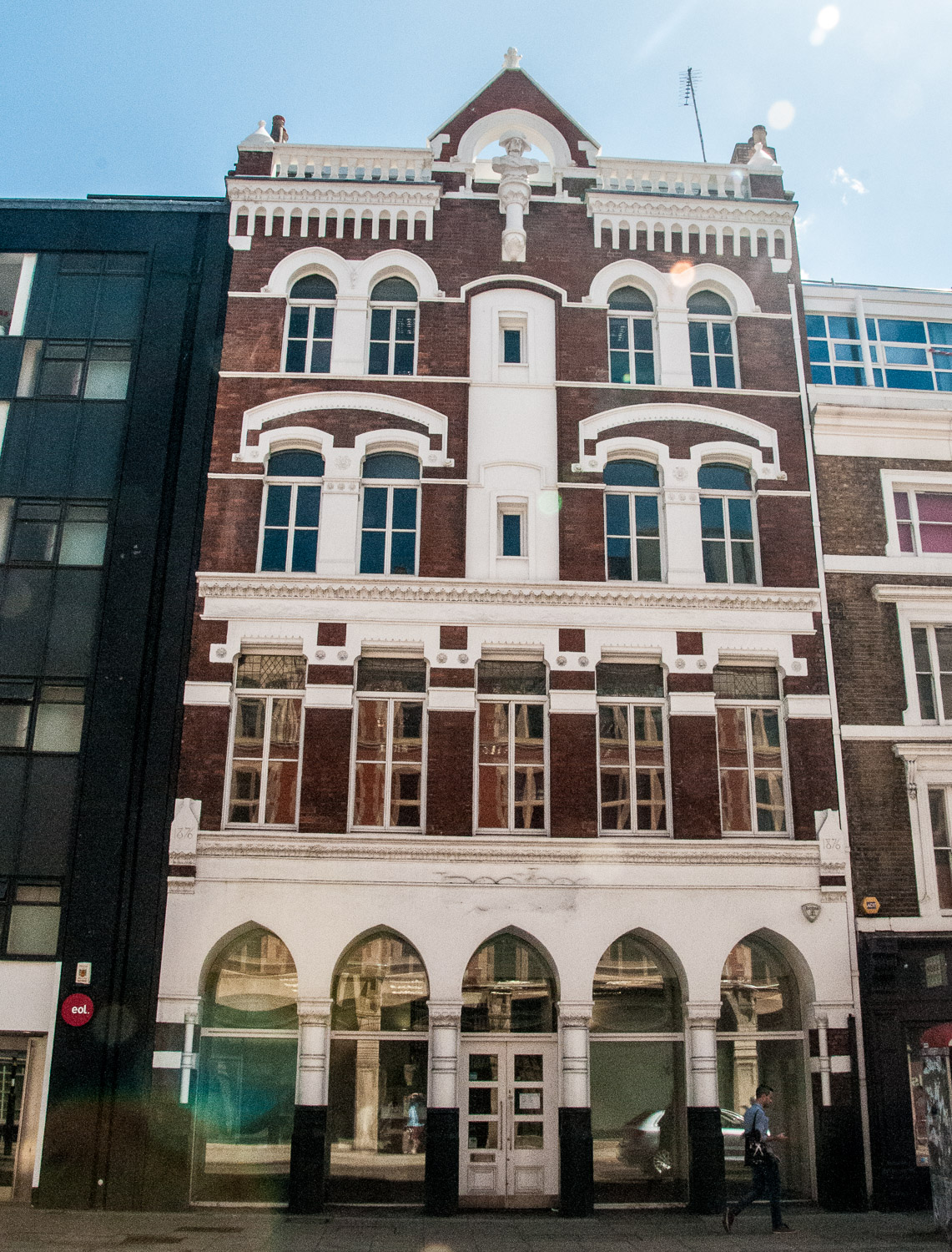
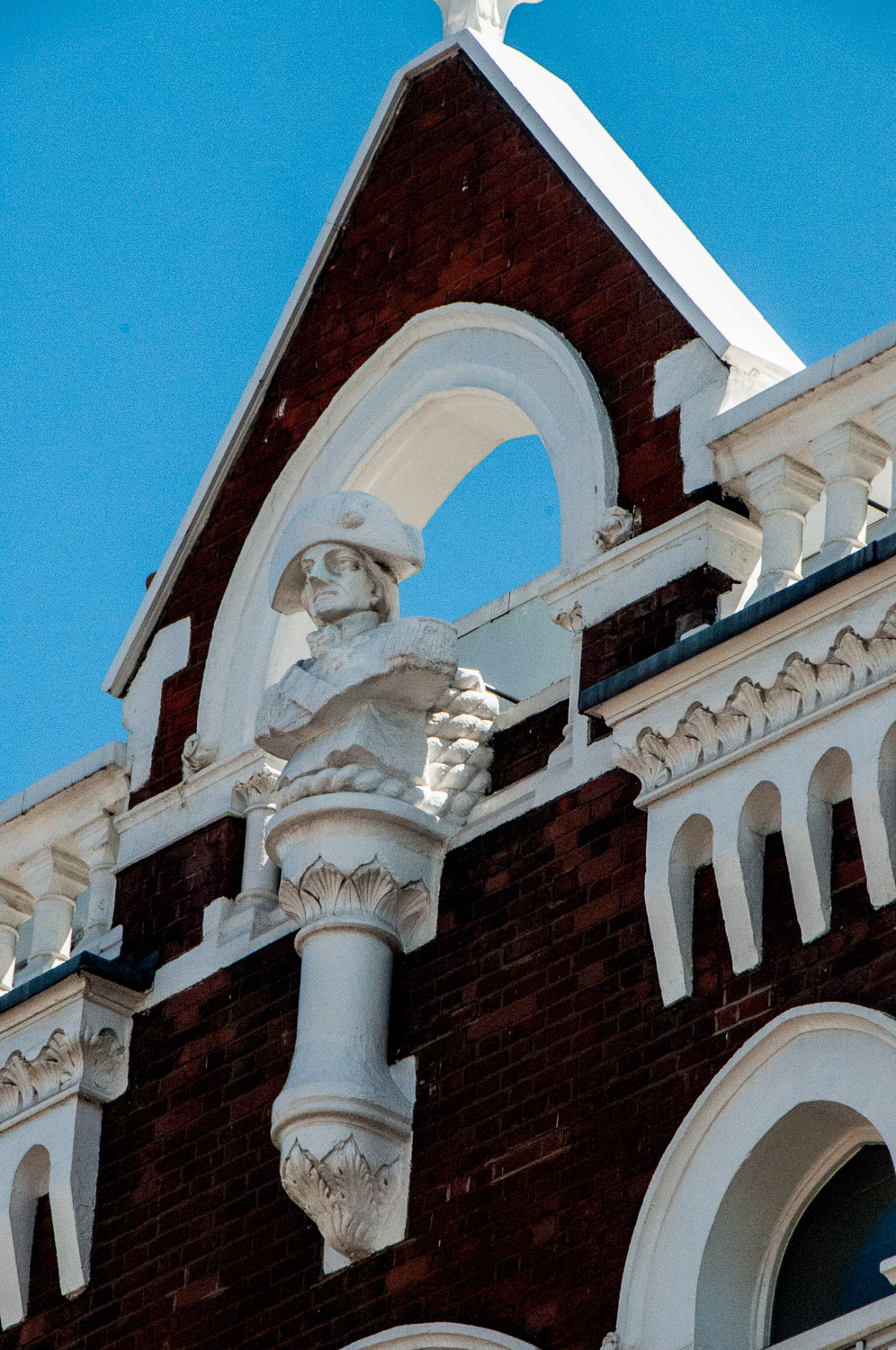
At 12 Old Street is the building that once housed The Old Rodney’s Head public house …
George Brydges Rodney, 1st Baron Rodney (1718-1792) was a famous Admiral best known for his victory over the French at the Battle of the Saintes in 1782 which ended the French threat to Jamaica. The building dates from 1876 and Rodney still gazes down on Old Street …
Some commentators mistakenly attribute the likeness to Lord Nelson.
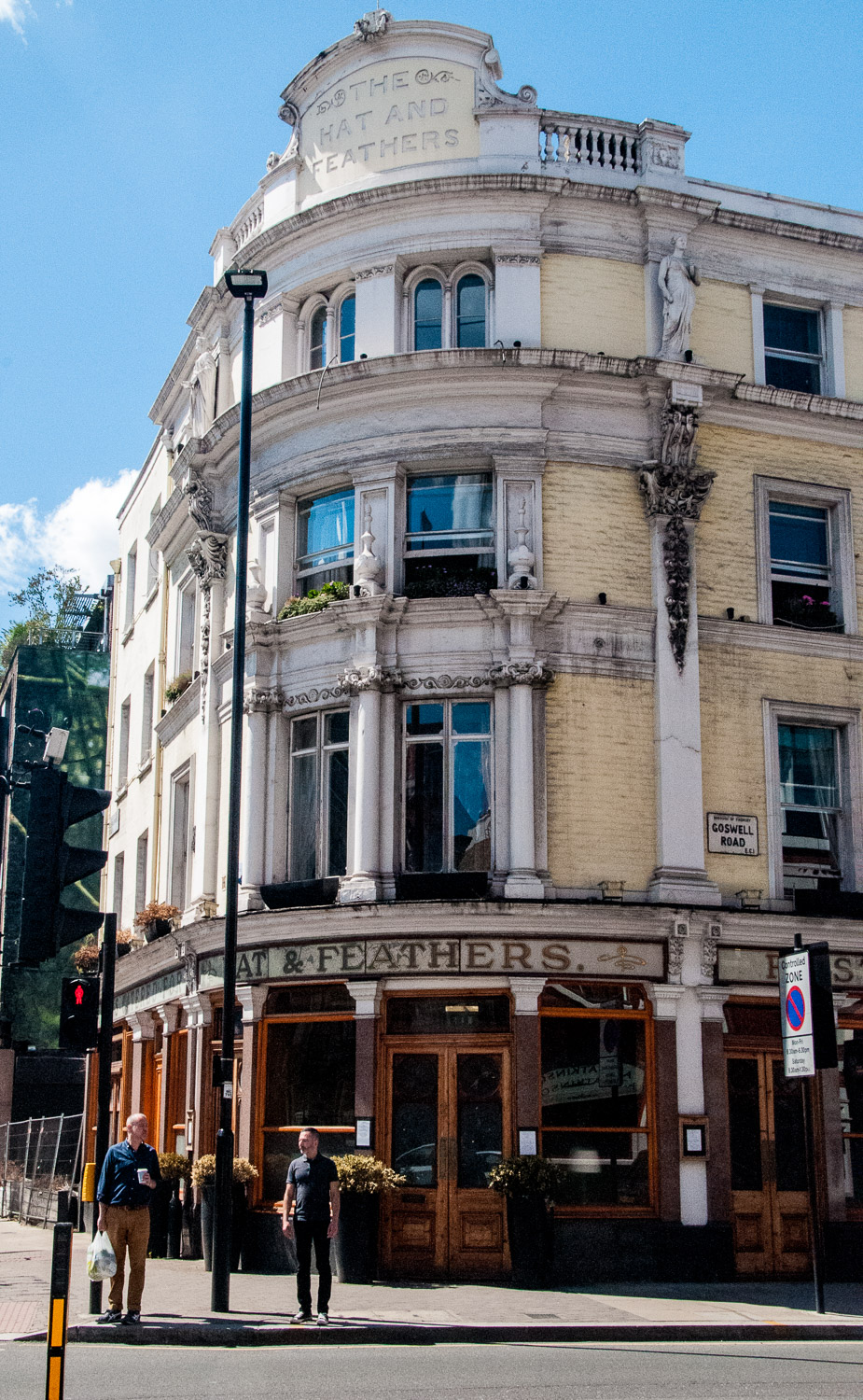
Sadly the Hat and Feathers, on the corner of Clerkenwell Road, has not reopened after a short time operating as a restaurant …
British History Online tells us that the building dates from 1860 and the facade – ‘gay without being crude’ – is decorated with classical statues, urns and richly ornate capitals and consoles. There are quite a few ghost pubs in the City and you can read more about them here.
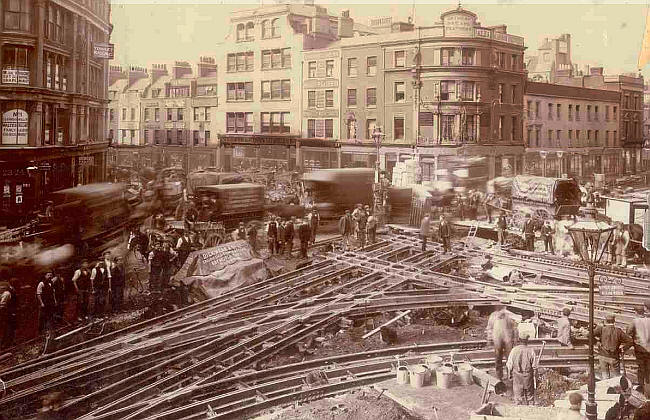
I love this old photograph of tram lines being laid at the same junction …
You can find out more about Old Street and its history using the following links:
Don’t forget, there’s an exciting new installation created by my friend Natalie Robinson now set up for you to visit. The display is based on her body of work ‘Reflection: what lies beneath – new maps’ and will be part of the Totally Thames 2021 Festival until the 30th.
You’ll find Natalie’s banners on the Thames Path at Walbrook Wharf. Here are a few images to whet your appetite …
You can find more details of her display here and its digital counterpart here
If you would like to follow me on Instagram here is the link …
Oh, bliss, the Museum of London is easily accessible again and I paid a visit last week. It wasn’t at all crowded (Monday afternoon) and I was looking for a theme that might be interesting. I chose faces.
Let’s get two gruesome ones out of the way first.
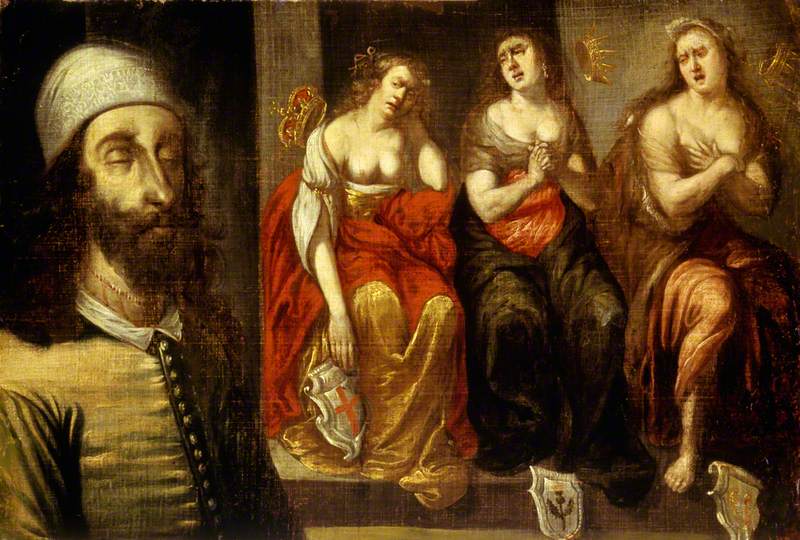
Thousands of Londoners flocked to witness the execution of Charles I on 30th January 1649. This curious painting represents Charles as saintly martyr, his head re-attached to his body with stitches around the neck. The three lamenting women represent England, Scotland and Ireland …
British School; Charles I (1600-1649). Artist unknown but reckoned to date from circa 1660.*
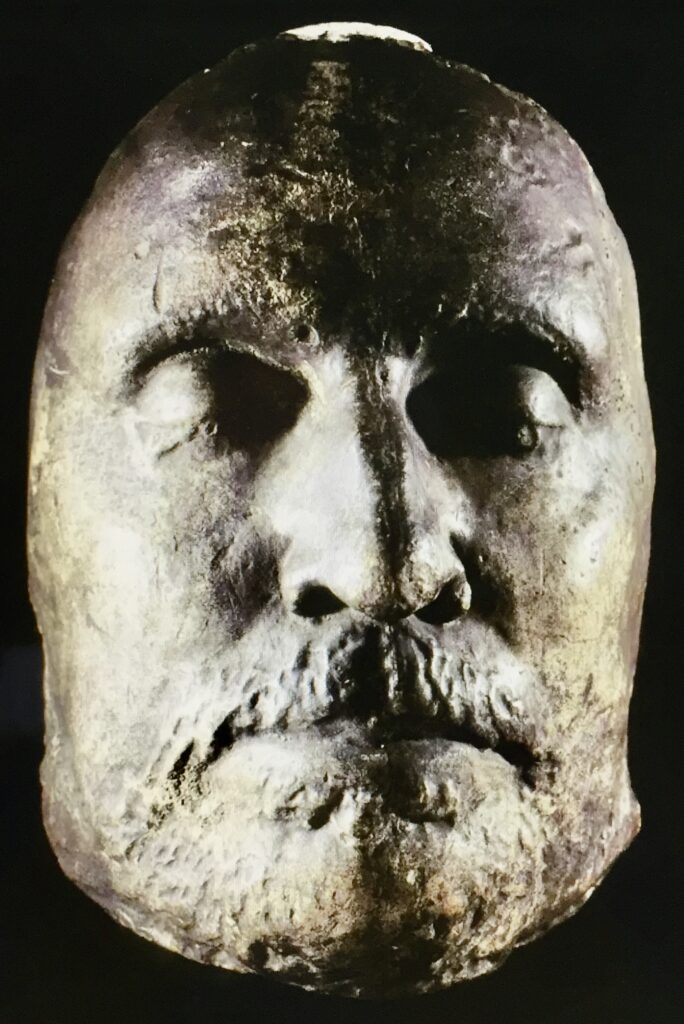
Also commemorated in the museum is the most famous regicide, Oliver Cromwell, only instead of a portrait it’s his death mask* …
.
When he died on 3rd September 1658, aged 59, a wax mould was made of his features and was most probably kept by its maker, Thomas Simon. Plaster-casts were made from this original and many now exist in museums both in this country and abroad. Cromwell was buried with great ceremony in the burial place of the Kings at Westminster.
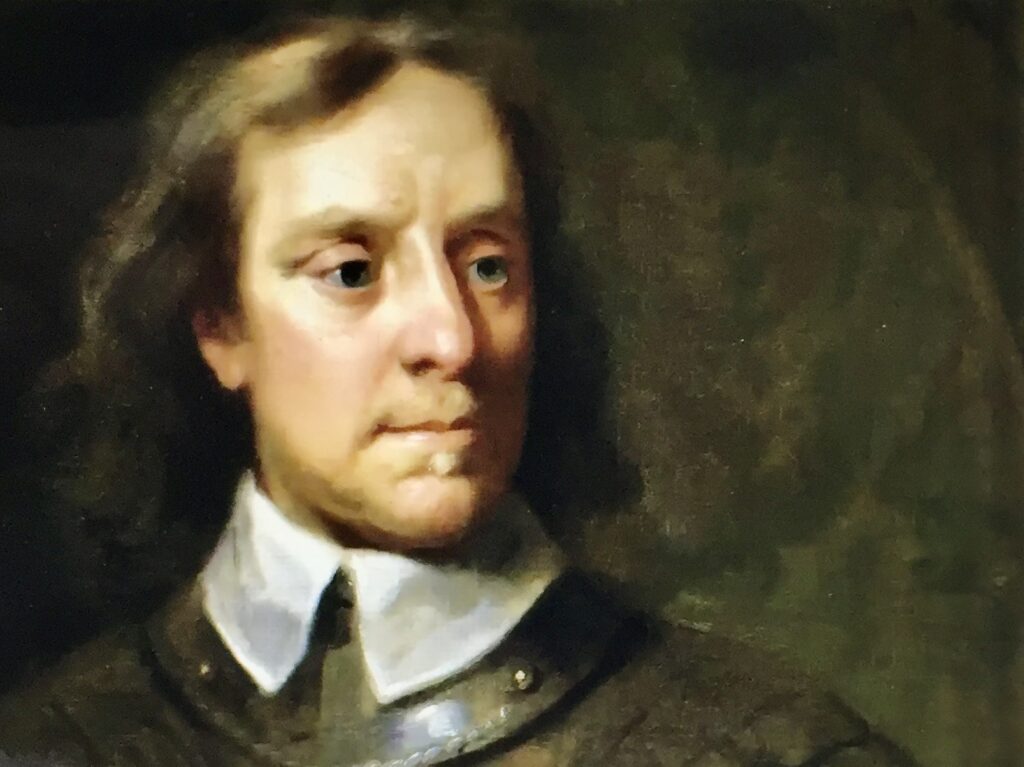
Oliver Cromwell, detail from a painting after Samuel Cooper, 1656, in the National Portrait Gallery, London.
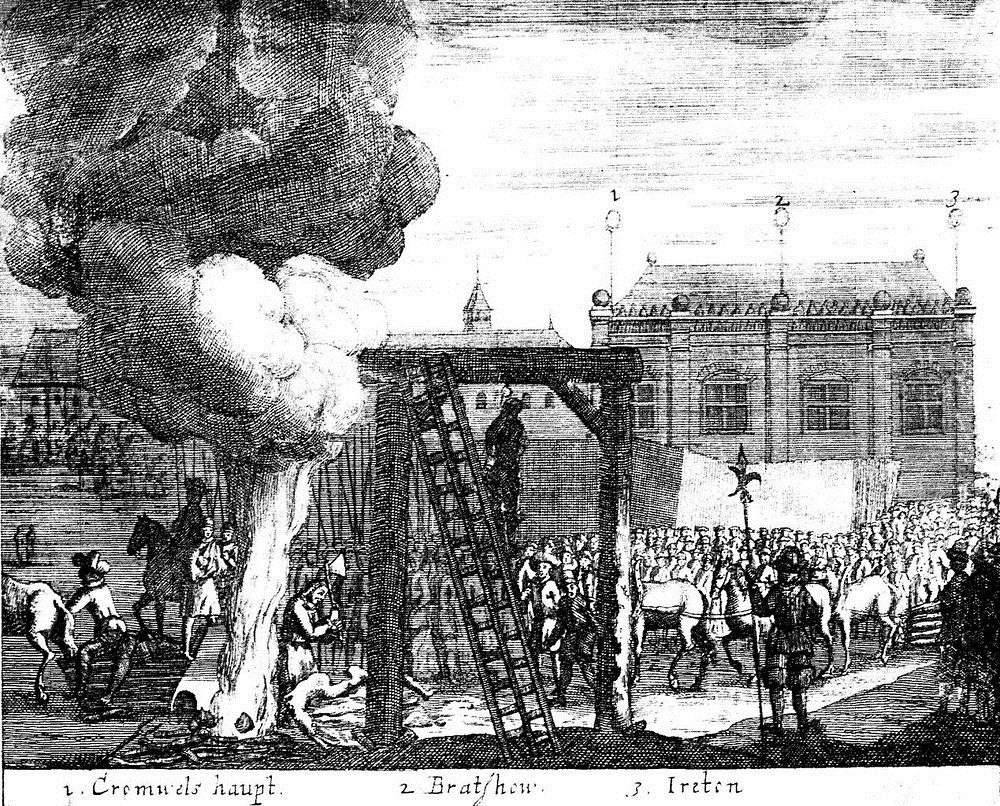
He was not destined to rest in peace for long. On the morning of 30 January 1661, the 12th anniversary of the execution of King Charles I, his exhumed body, and that of two other regicides, was dragged in an open coffin on a sledge through the streets of London to Tyburn gallows. There each body was hanged in full public view until around four o’clock that afternoon. After being taken down, Cromwell’s head was severed with eight blows, stuck on a 20-foot pole, and raised above Westminster Hall …
His head is number 1, the pole on the left above the building.Fellow regicides also exhumed wereJohn Bradshaw (head number 2) and Henry Ireton (number 3).
There are different theories as to what became of his remains – you can read about them here.
And now to a beautiful Roman lady who died young …
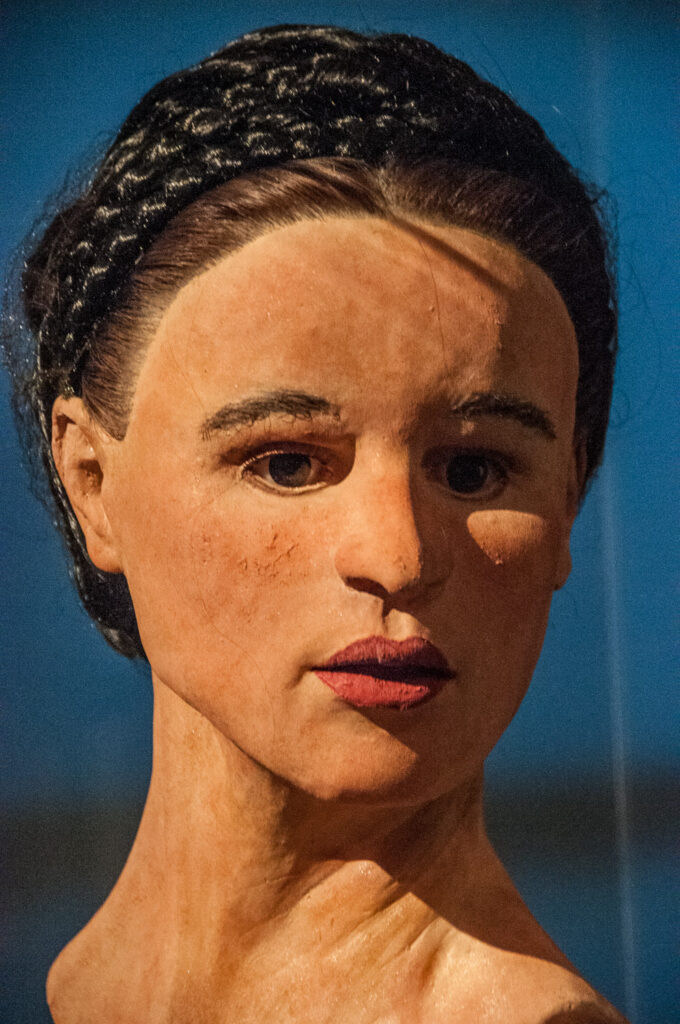
Facial reconstruction by Caroline Wilkinson of the Museum.The Museum Curator, Rebecca Redfern, describes her as ‘five foot three and delicately built, petite like a ballet dancer’.
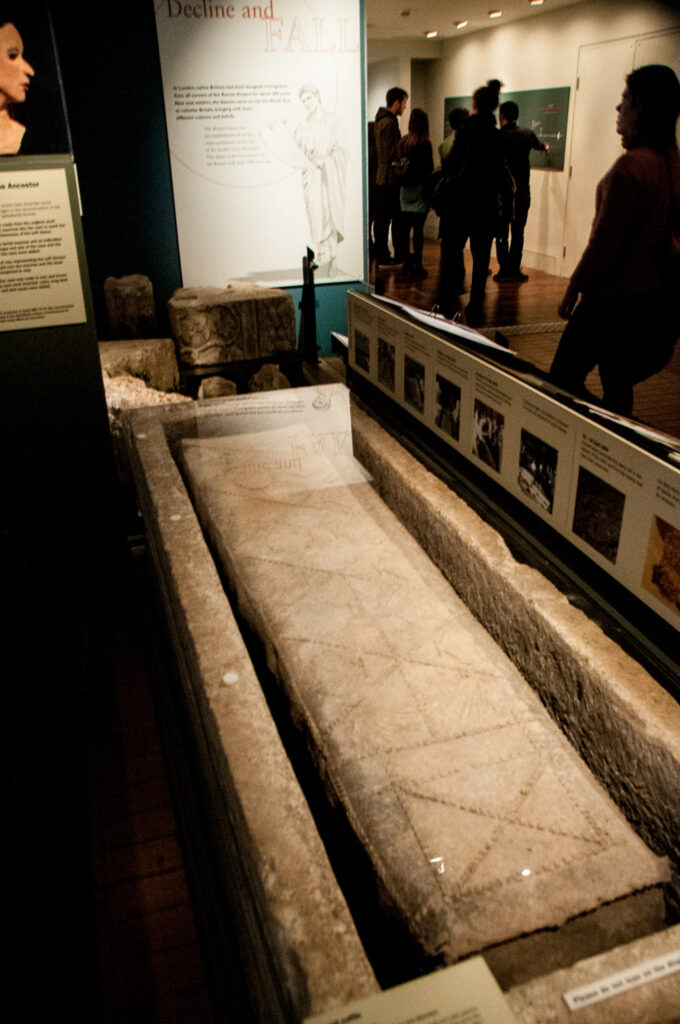
In March 1999, builders working on the redevelopment of Spitalfields Market made a remarkable discovery – a beautifully carved stone sarcophagus, unopened, and obviously holding the remains of someone of exceptional wealth and status. When examined at the Museum of London, the lead coffin inside was found to contain the body of a young woman. Further analysis revealed that her head had rested on a pillow of bay leaves, that she had been embalmed with oils from the Arab world and the Mediterranean, and that she was wrapped in silk, interwoven with fine gold thread. Isotopic analysis of her teeth revealed, not only that she came from Italy, but from Imperial Rome itself. What we do not know is who she was, and why she was so far from home when she died in about AD 350.
Her final resting place.
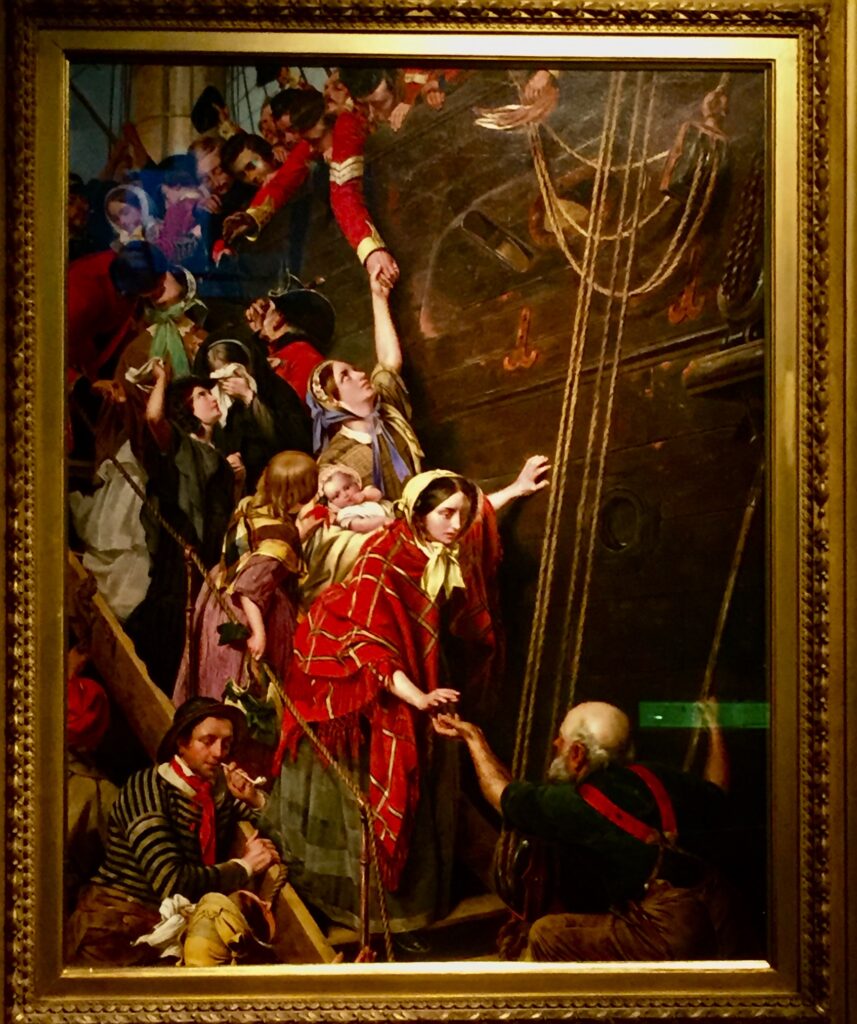
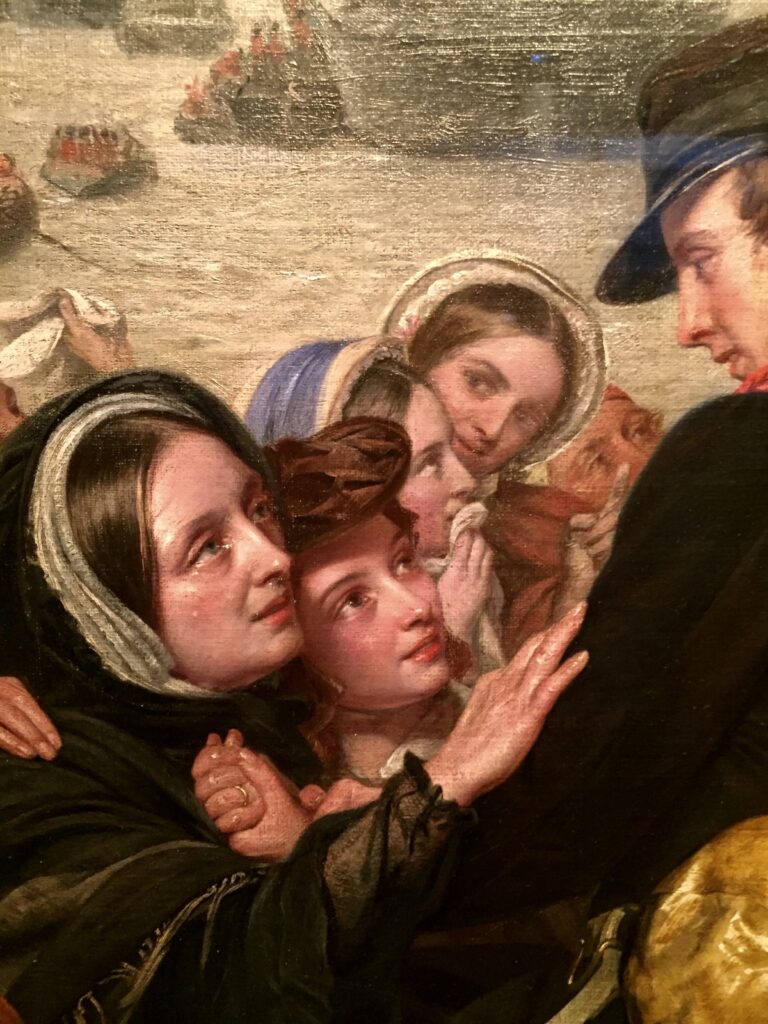
There were two paintings I really enjoyed studying. The first is entitled Eastward Ho! and was painted by Henry Nelson O’Neil in 1857. It became his most popular work …
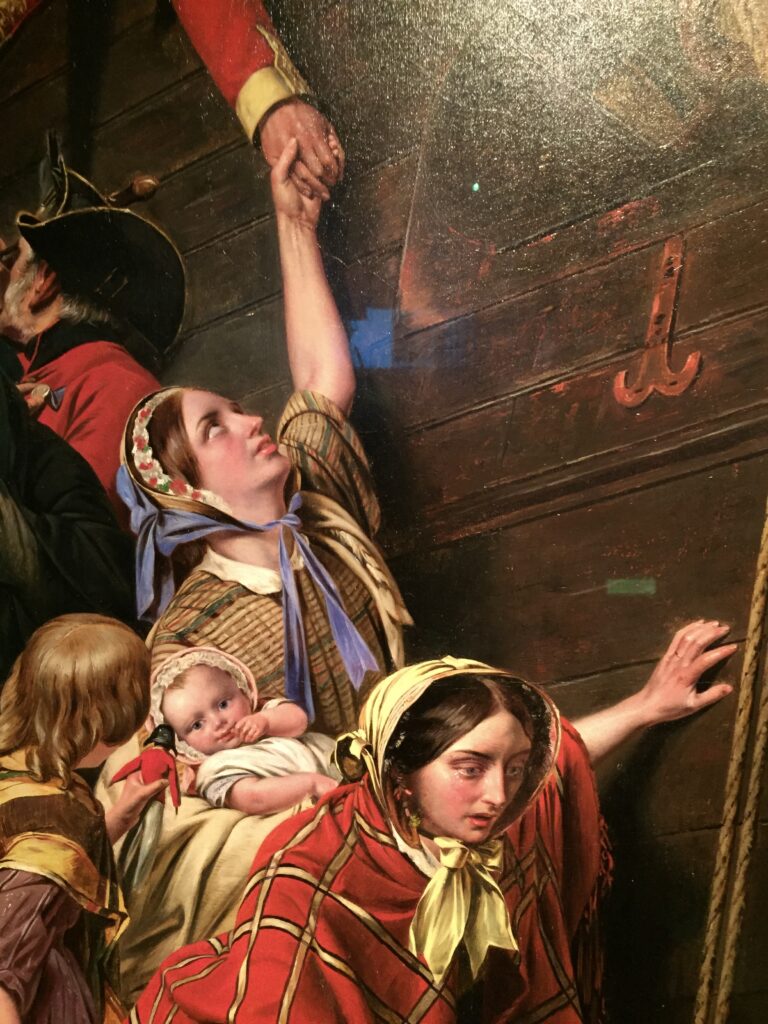
Soldiers are shown boarding a ship at Gravesend, leaving to fight in the ‘Indian Mutiny’ – the first Indian war of independence. In a poignant scene they are saying farewell to their loved ones and it is a very emotionally charged picture. For the men we can only see in their faces optimism and patriotism whilst in the faces of the women we see fear and a sense of foreboding …
The Times newspaper commented …
Hope and aspiration are busy among these departing soldiers, and if mothers and wives, and sisters and sweethearts, go down the side sorrowing, it is a sorrow in which there is no despair, and no stain of sin and frailty…
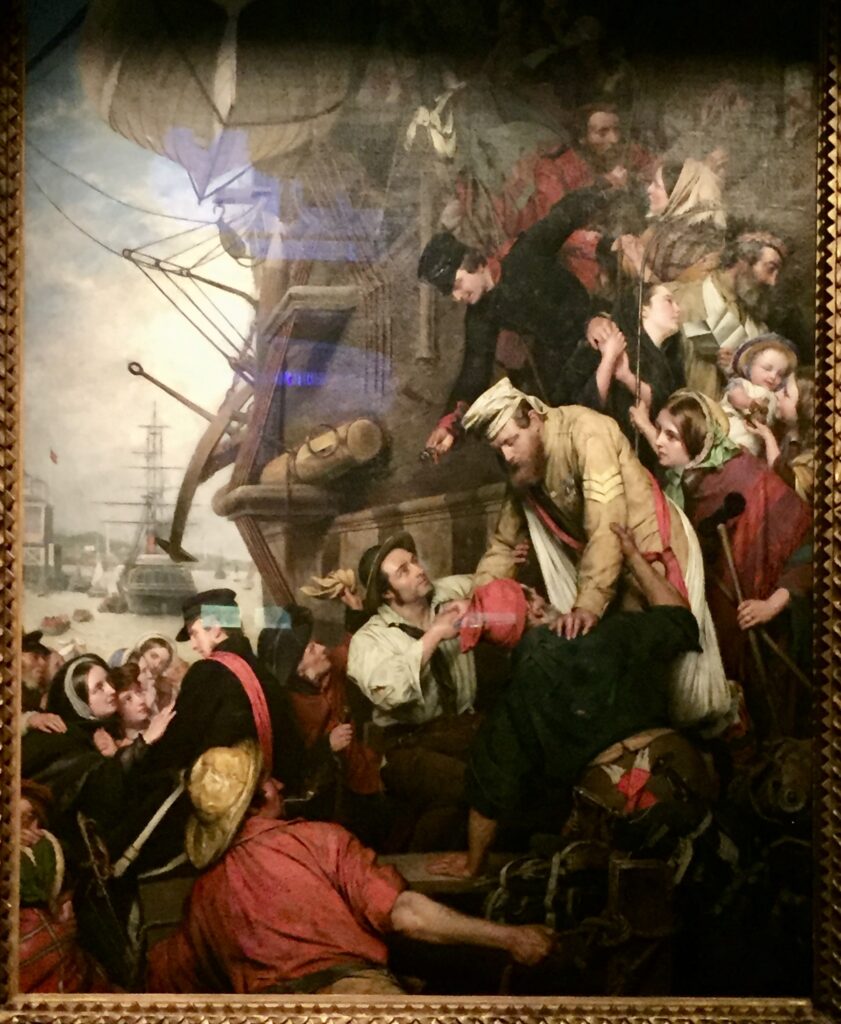
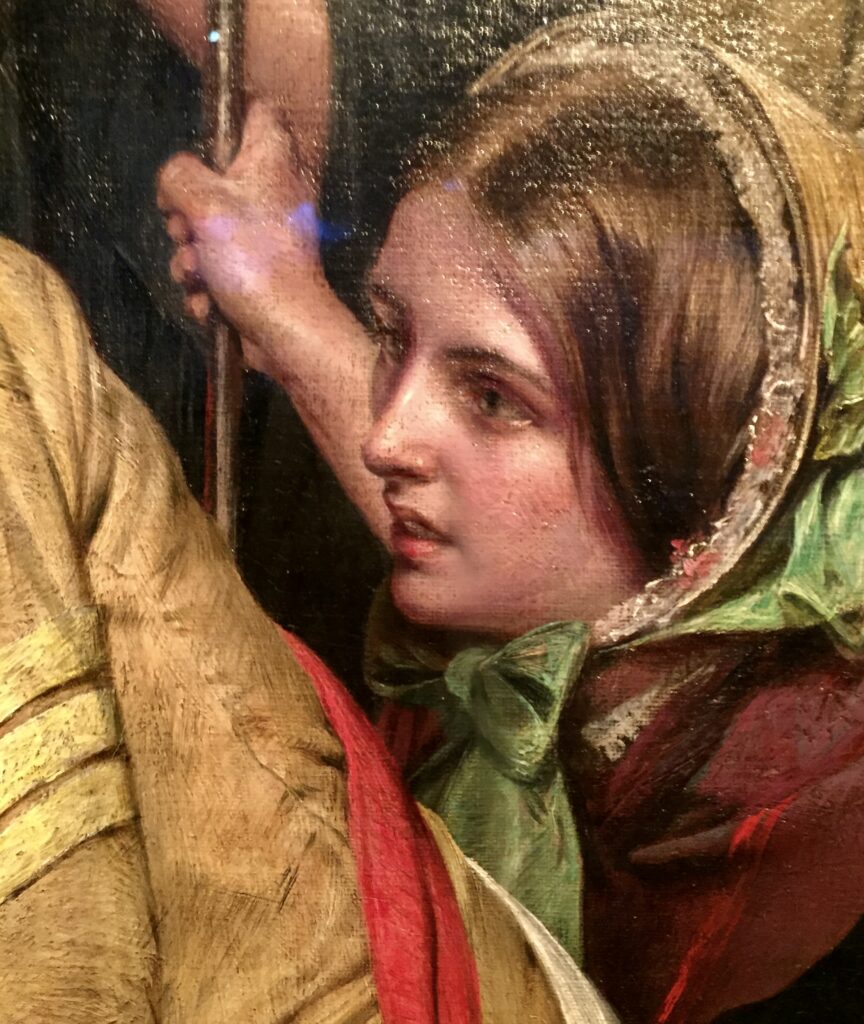
A year later he painted Home Again …
The soldiers are seen coming down the gangway of their troop ship. The main character appears to be the bearded soldier in khaki uniform with his Kilmarnock ‘pork-pie’ cap under a white cotton Havelock, which was worn to afford the wearer’s neck protection from the blazing and merciless Indian sun. I again looked particularly at the women’s faces …
When the paintings were exhibited together in London thousands of Victorians queued to see them.
The Times had this to say about Home Again …
The crowd round the picture delight to spell out the many stories it includes – its joyous reunitings, its agonies of bereavement; the latter kept judiciously down …
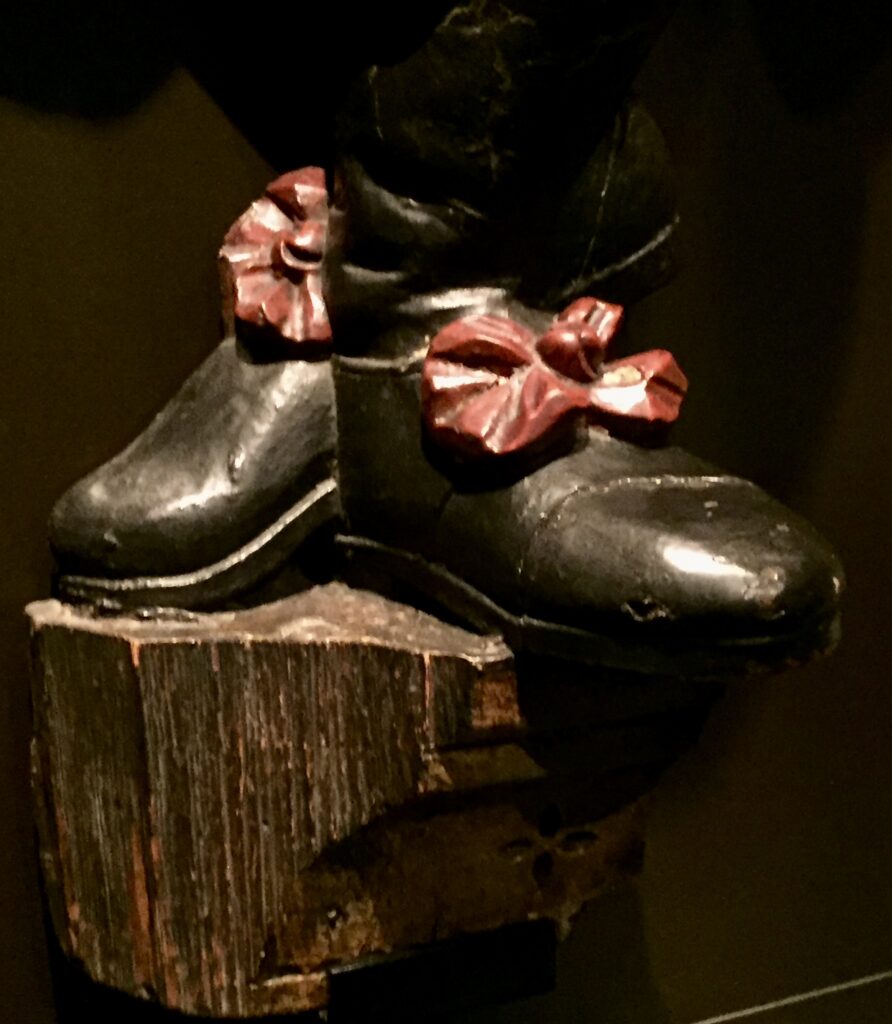
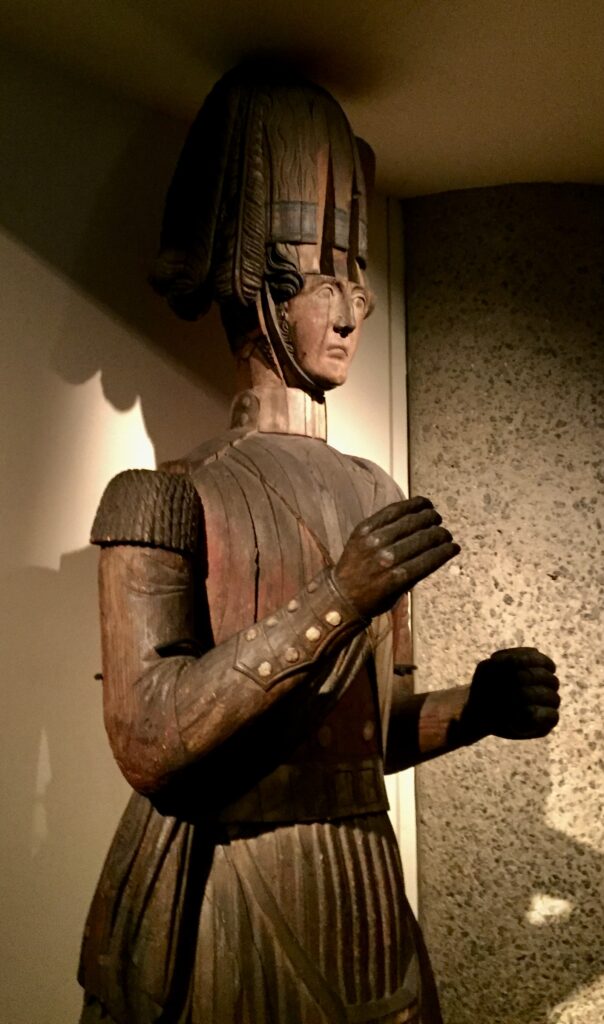
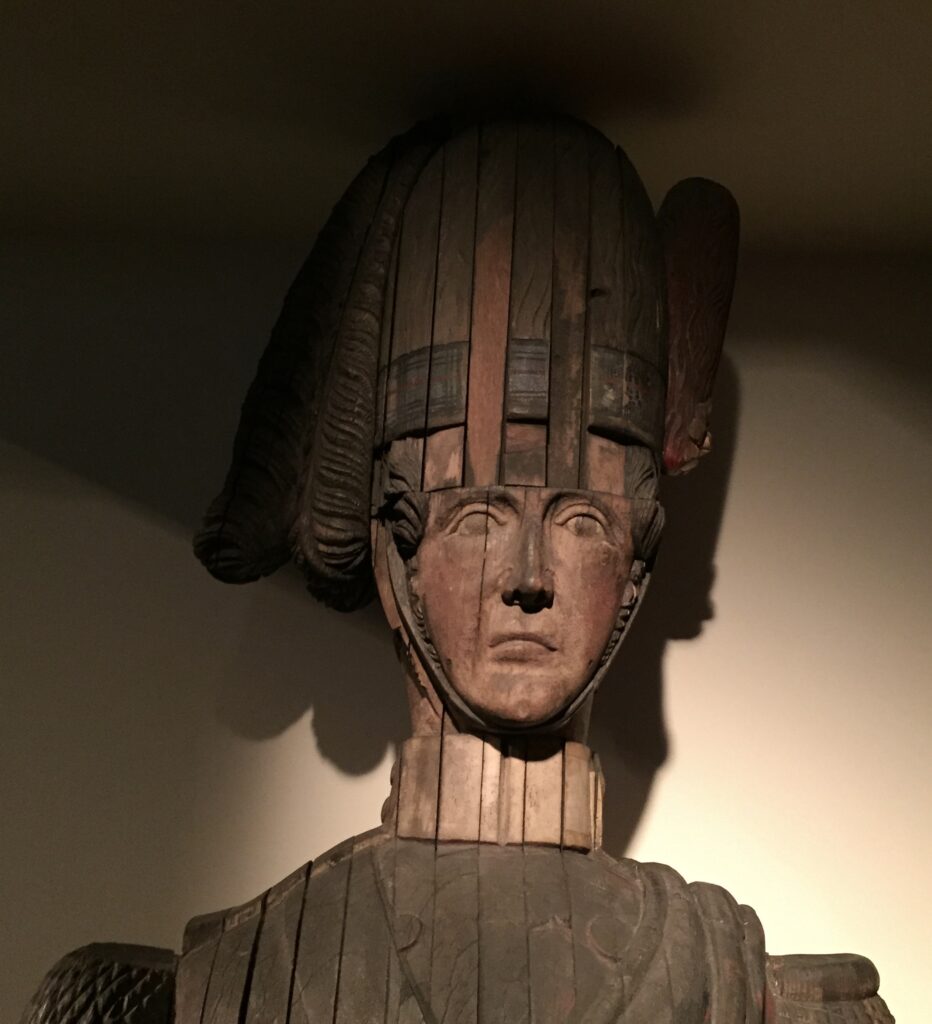
Referring to a giant who was supposed to have lived in the building, this figure, known as Gerald the Giant, stood in a niche on the front elevation of Gerard’s Hall in Basing Lane and dates from around 1670. He’s not what you’d call handsome …
But I like his daintily decorated shoes …
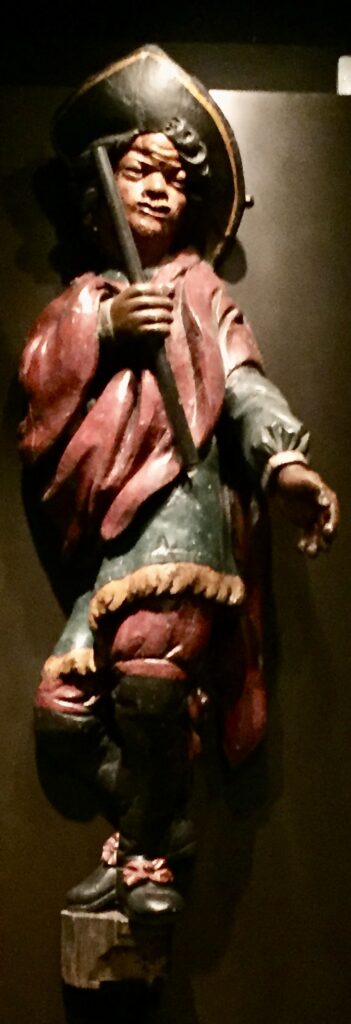
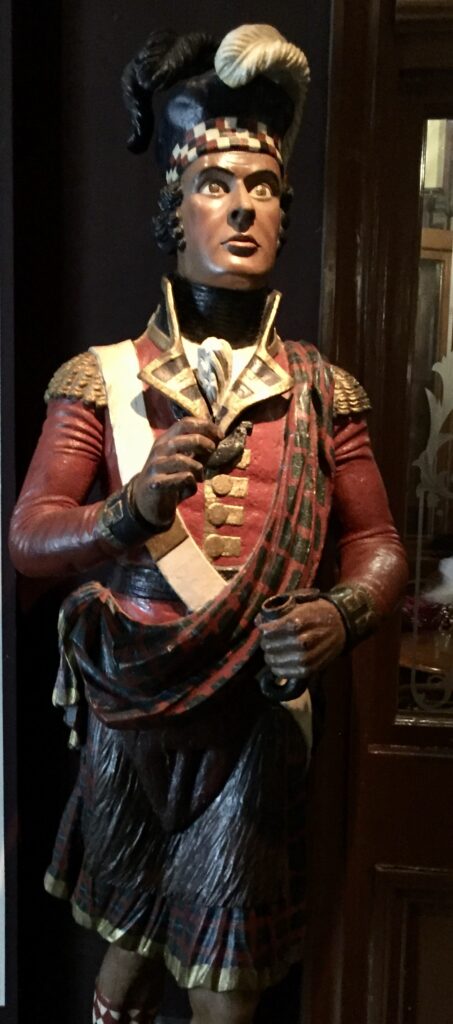
In this tobacconist’s shop sign from circa 1800 a Scottish Highlander figure is signalling that snuff is sold there. He would usually be holding a snuff mull of horn in his left hand and a pinch of snuff in his right …
This version has been nicely restored. I think he looks a bit scary …
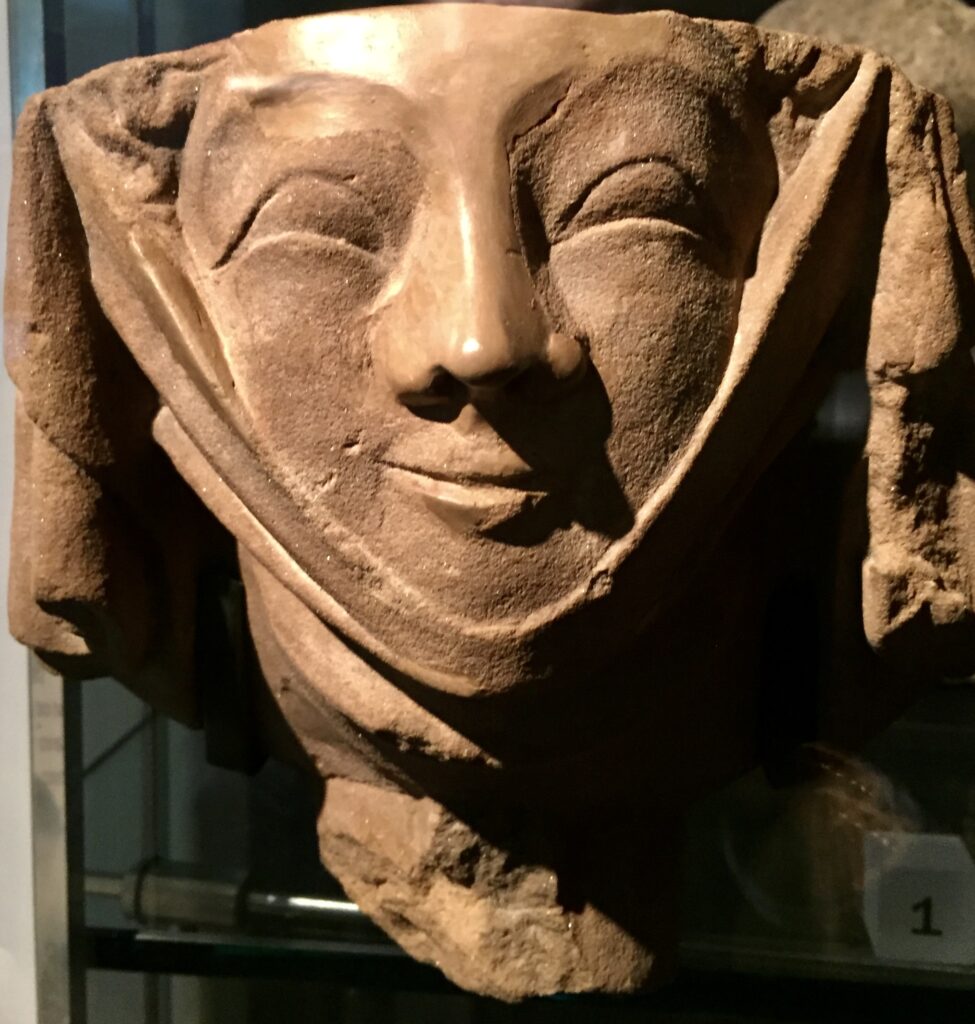
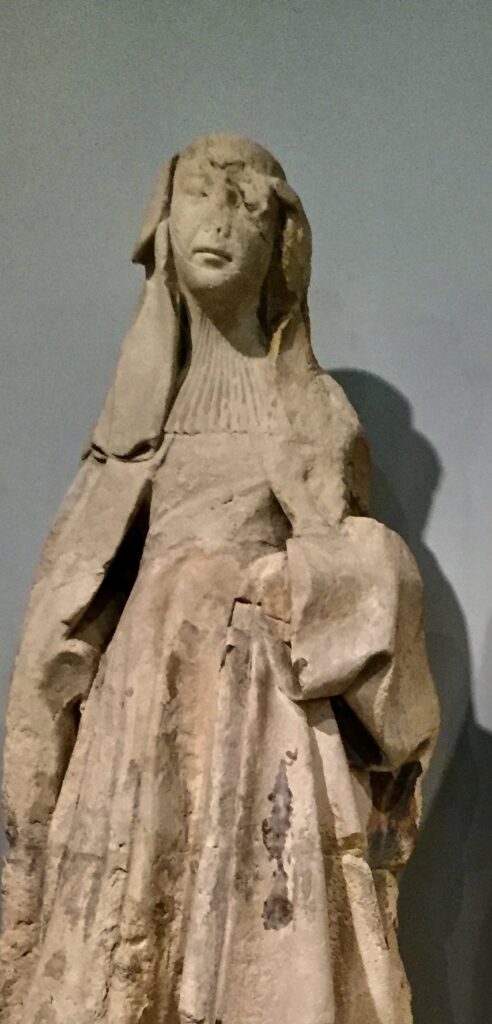
I like this lady’s cheeky grin, like she knows something we don’t. She wears a fashionable ‘wimple’, or neck cloth, under her chin …
Over 700 years old, she once decorated a London building. Do you think she looks a bit like Anne Robinson?
Photo credit : BBC TV.
This is one of the Civic Virtues who enriched the medieval Guildhall porch around 1480. These virtues were Temperance, Fortitude, Justice and Prudence but we don’t know which one she is …
What we do know is that she was discovered in a garden in North Wales in 1972.
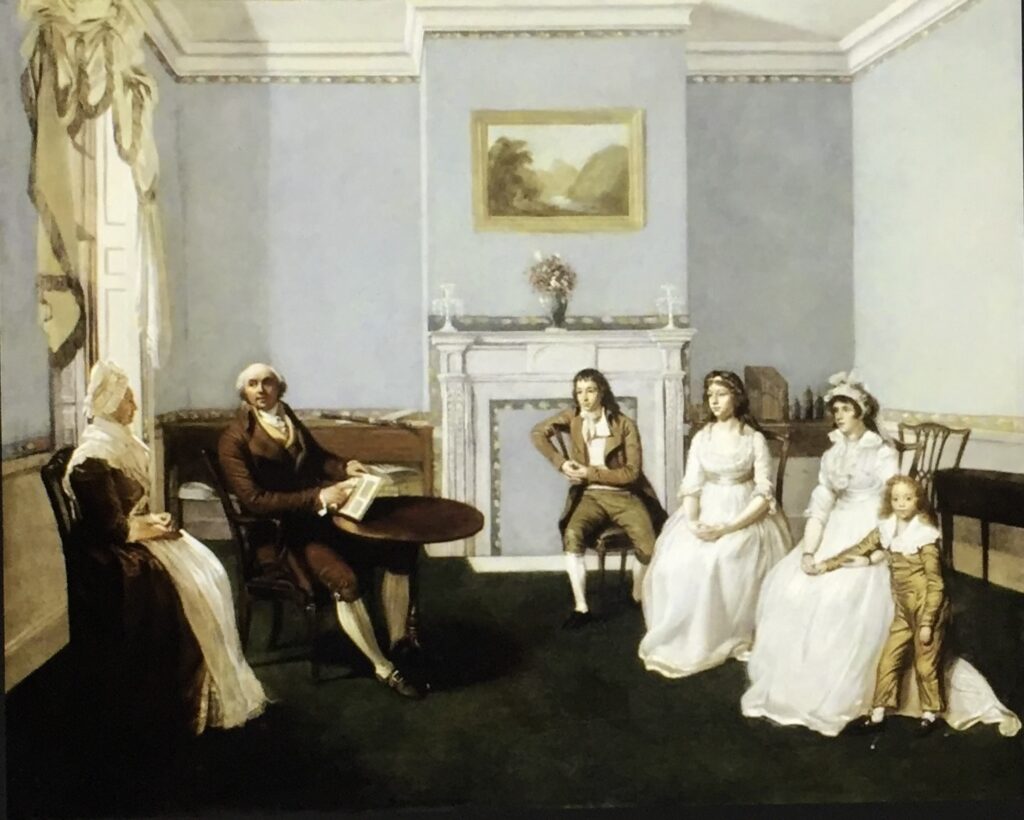
This painting, John Middleton with his Family in His Drawing Room, was painted circa 1796* …
Middleton turns towards an unknown woman and the room contains a ‘square piano’, a flute and a landscape painting above the fireplace. He holds what is probably a sample book since he claimed that he ‘served the principal Artists with their Cloths, Oils, Colours’. The family lived above his shop at 80-81 St Martin’s Lane.
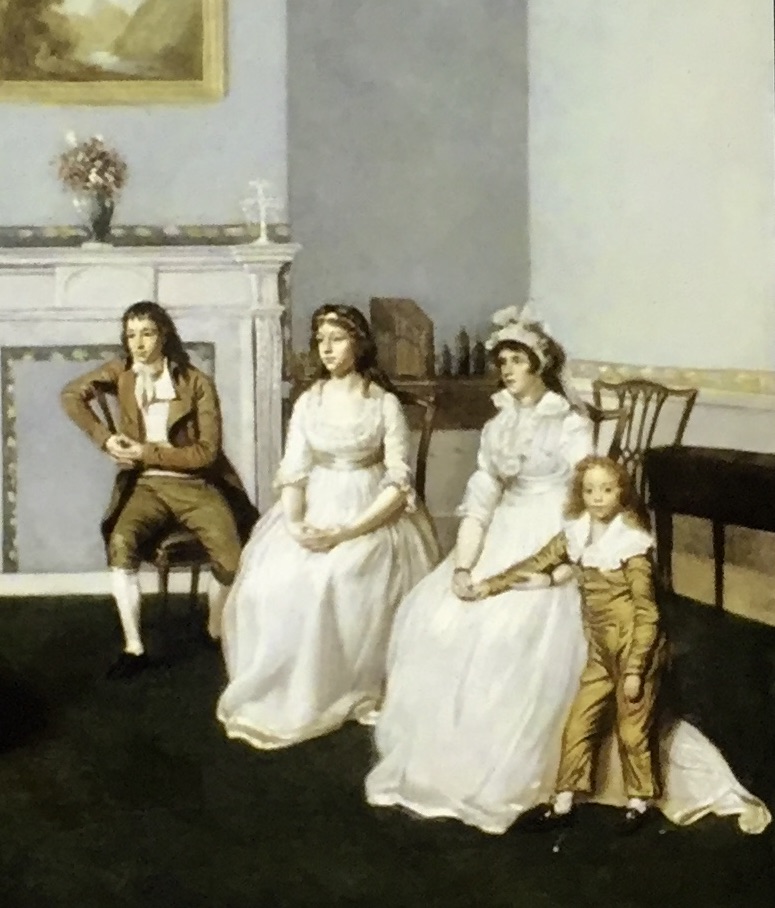
In the picture his four children, Jesse, Anna, Sarah and Joshua pose appropriately. I like the serene expressions on the girls’ faces with the older son paying respectful attention to what his father is saying …
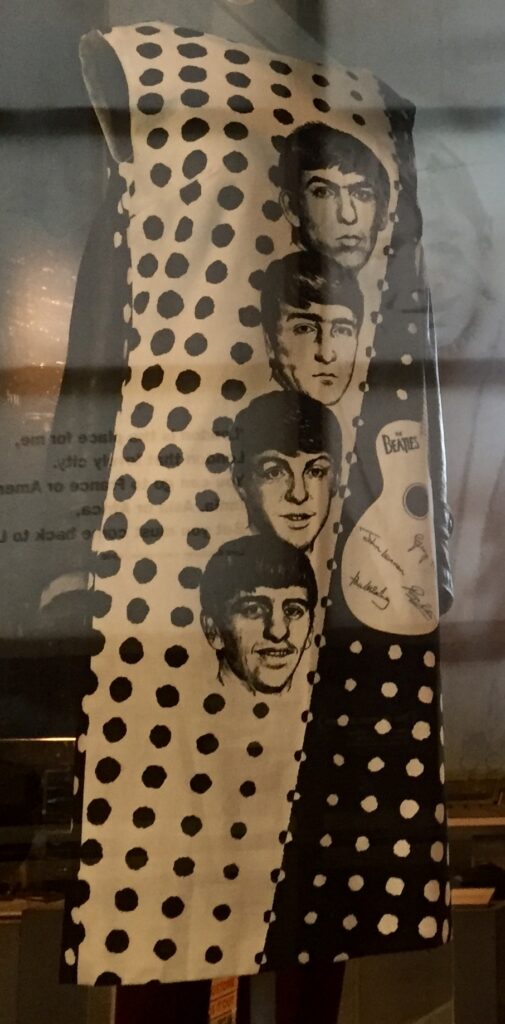
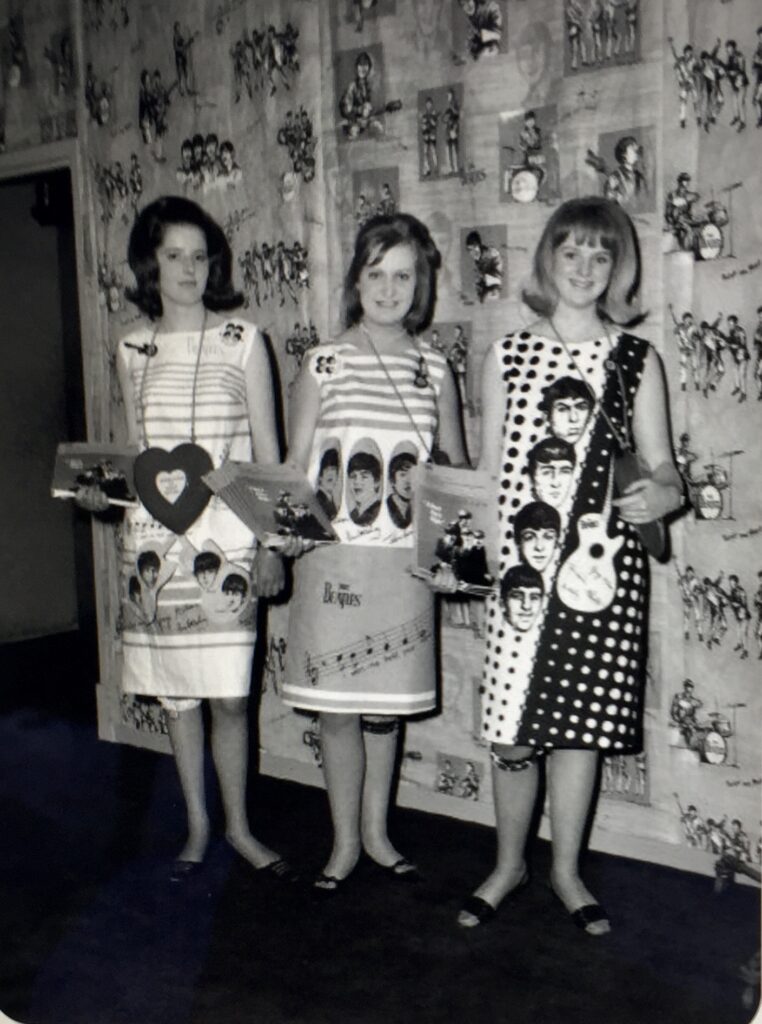
And finally, this cotton dress, emblazoned with the faces of the Fab Four, was available from C&A, a high street clothing shop. It testifies to the way young Londoners embraced the new music and fashions of the ‘Swinging Sixties’ …
Some true fans wearing images of their idols (note the wallpaper too!) …