Walking the City of London

Category: Art Deco Page 3 of 4

Wine and Oxo cubes

It has been many years since I crossed Southwark Bridge and then I wasn’t taking much notice of the buildings in Queen Street Place as I headed towards the bridge and out of the City. When I took the trouble to look last week I was absolutely captivated by this delightful but rather strange Art Deco sculpture by H W Palliser …
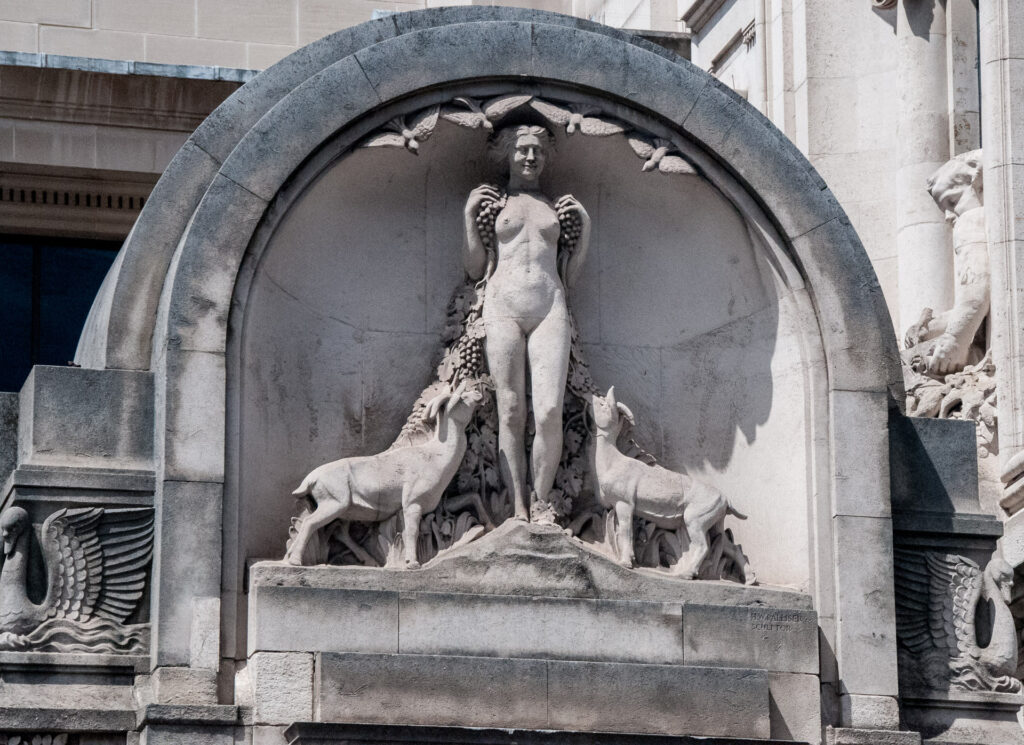
One writer called it ‘the sexiest sculpture in London– I couldn’t possibly comment.

Built by the Vintners’ Company in 1928, at the centre stands a nude woman clutching to herself bunches of grapes which grow on vines at her side. She is a Bacchante, the ‘spirit of the harvest’, and two goats look up at her adoringly as four doves descend above her head. Two swans are also in attendance, reminding us that the Vintners’ Company is one of the three owners of all the swans on the upper Thames, the others being the Dyers and HM the Queen. The model for the woman was Leopoldine Avico who was also, I believe, the model for The Queen of Time above Selfridges.

You get a nice view of Vintners’ Hall from the Bridge …
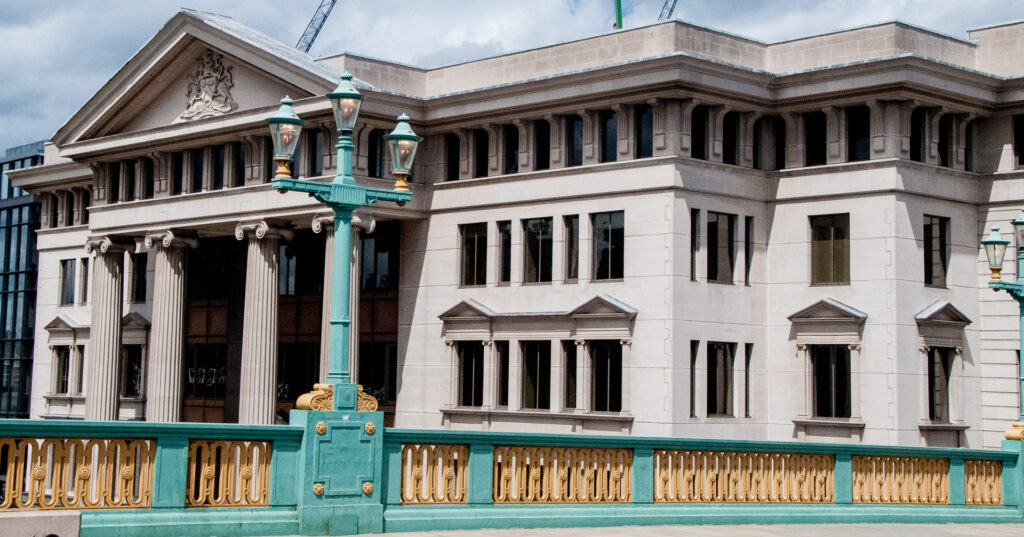
Immediately next door is Thames House (1911-12). It was built for the Liebig Extract of Meat Company whose product was imported from a huge plant in Fray Bentos, Uruguay. There is a clue as to what they made over the central entrance …
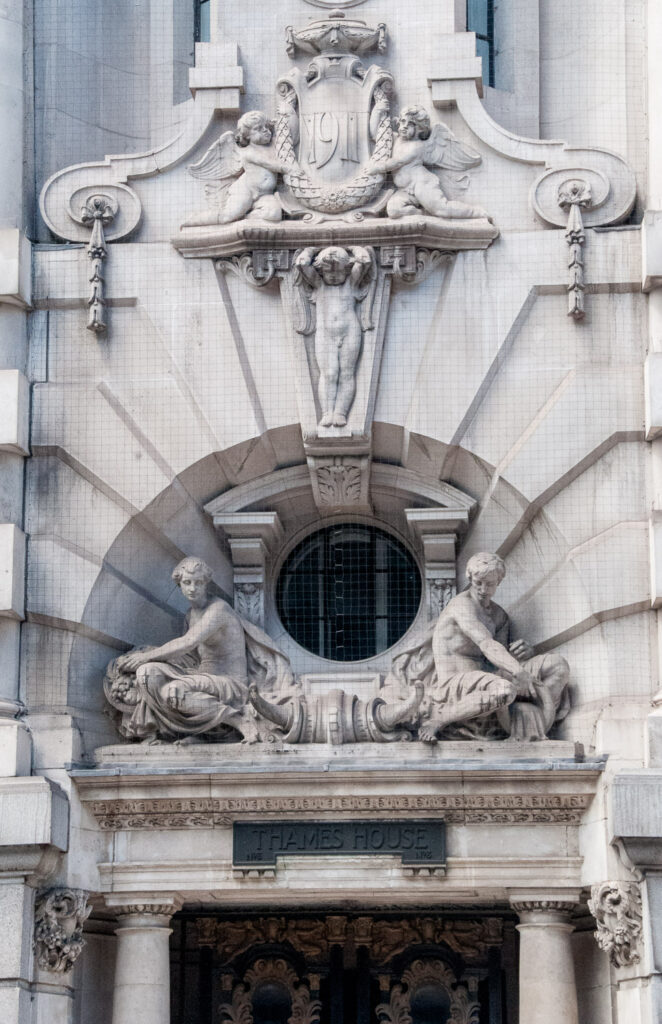
Yes, the two stone horns symbolise the South American herds that provided the meat for the famous and successful Oxo cube (or ‘boiled up cow’, as one commentator rather unkindly called it). The other carvings represent Abundance – a nude youth pours water from a vase and a nude maiden pours flowers from a cornucopia.

In the pediment on the North Pavilion a pair of nude figures hold a strop to tame the winged horse Pegasus, who beats the cloud with his hooves in his struggle …
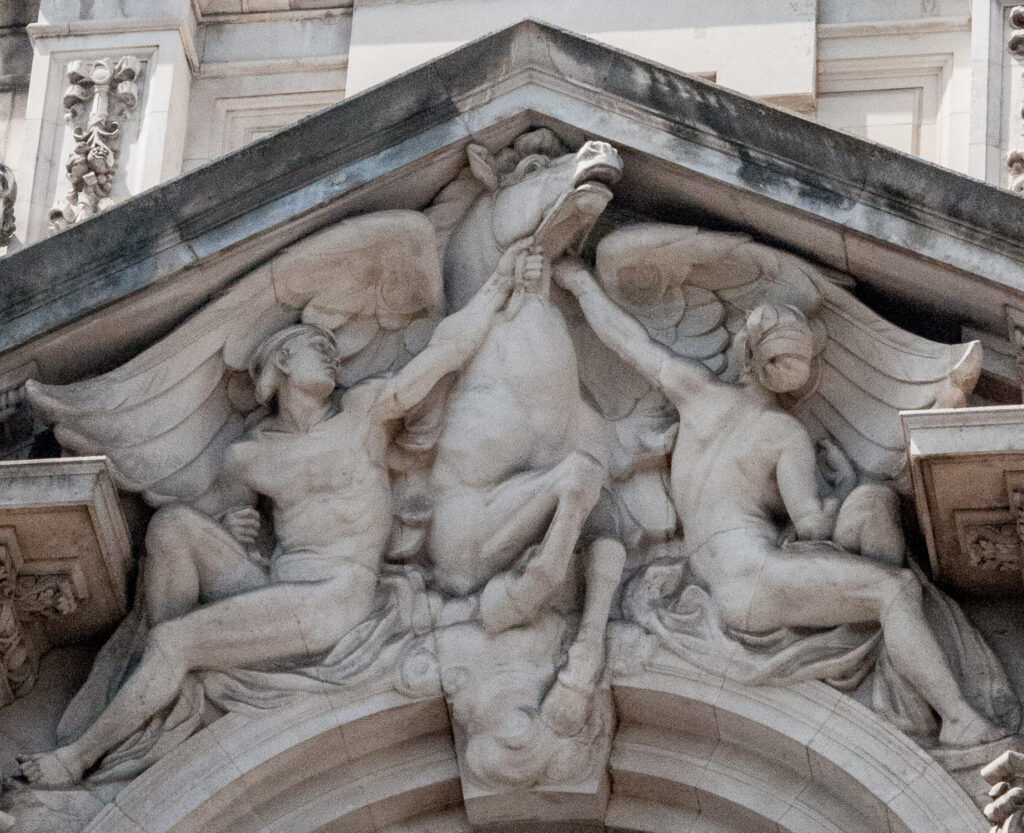
This may allude to the alleged energising qualities of the product.

On the South Pavilion pediment a female figure with fruit and flowers represents the fruits of the land with Neptune, holding his trident and a rope for his net, signifies the fruits of the water …
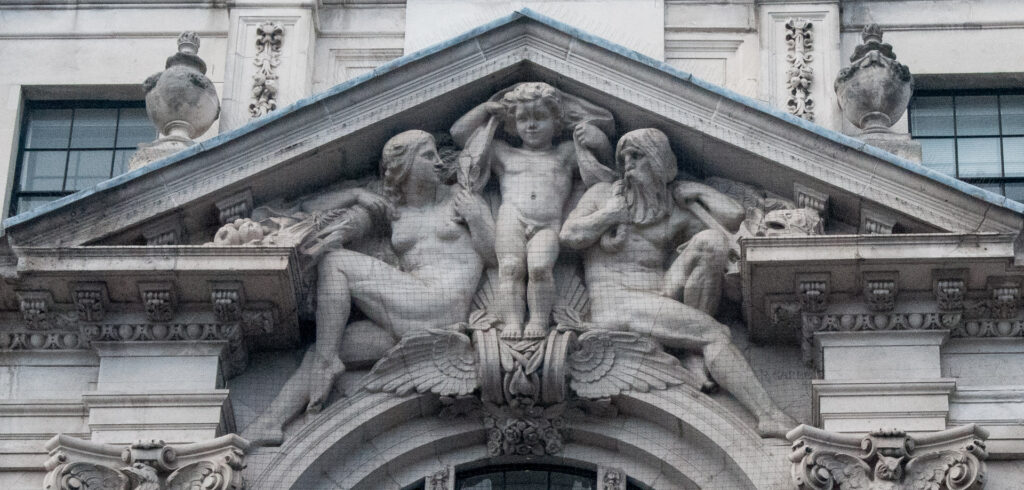
Between them is the figure of a boy standing on two winged wheels symbolising Trade..

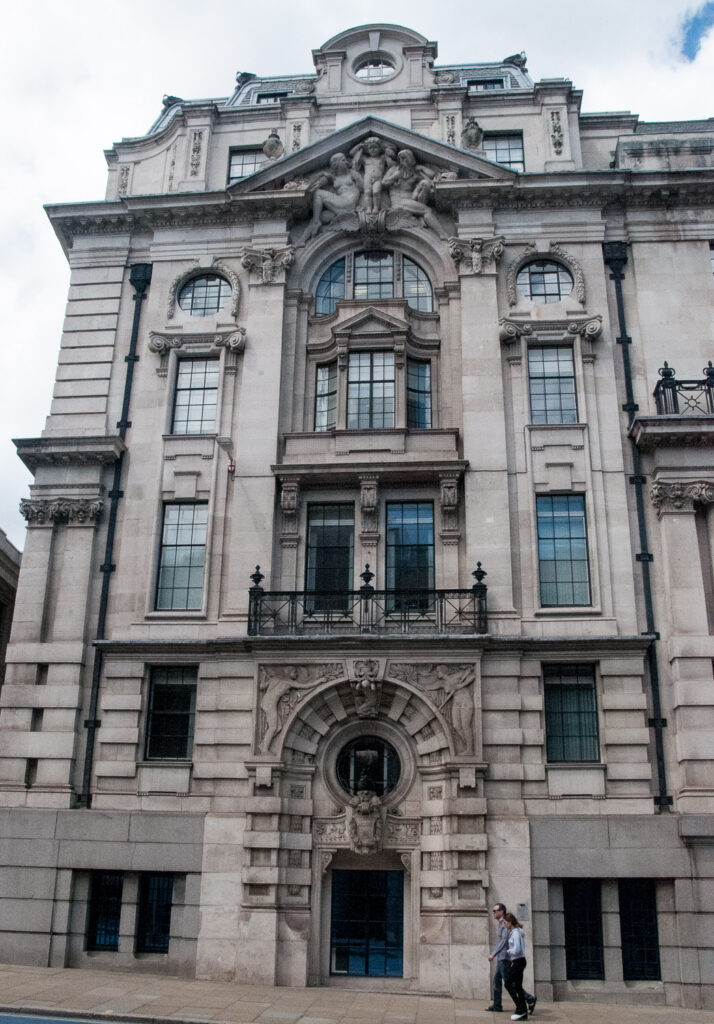
Directly over the door is this group …
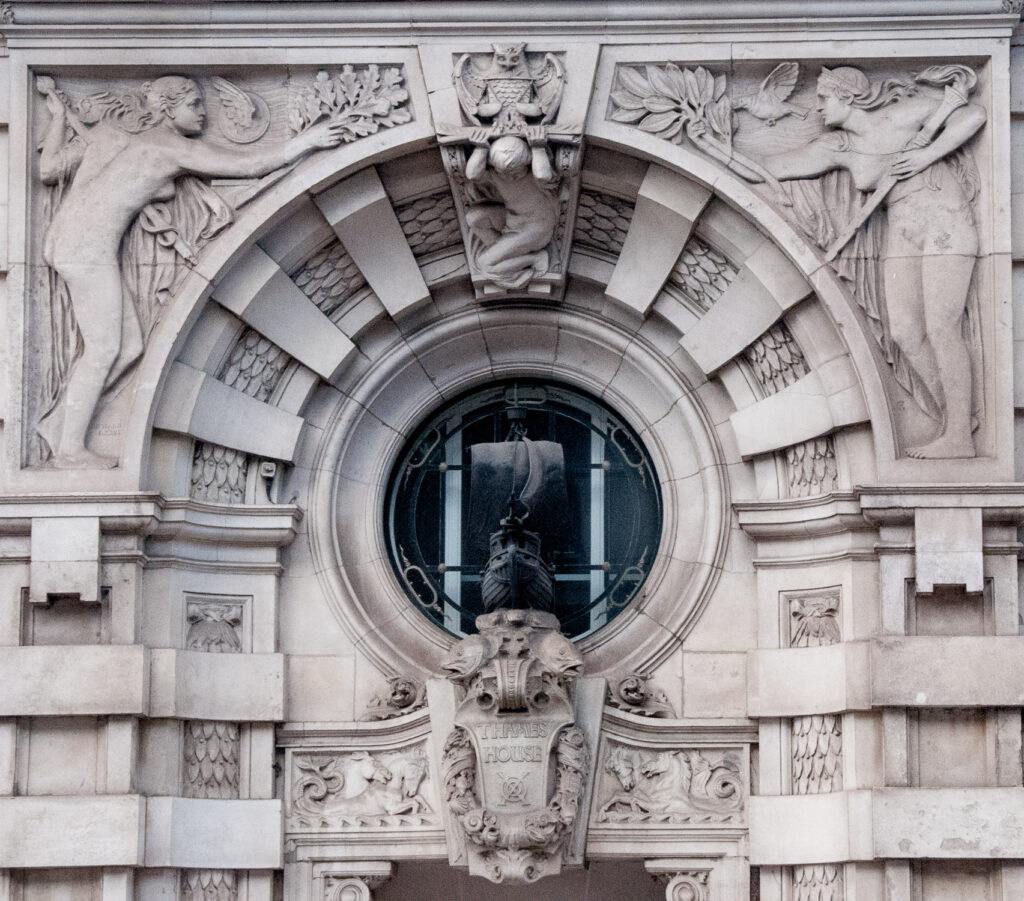
It’s a particularly lavish doorway surmounted by an arch over a circular window or oculus. The spandrels over the arch contain bas reliefs of women denoting Commerce (left) and Wisdom (right), by Richard Garbe. Commerce holds a caduceus and brandishes an oak branch, symbol of endurance and fortitude. Wisdom holds a torch and proffers a laurel branch, symbol of victory. Above, a dove with an olive branch in her beak brings peace.

In front of the window is a bronze galleon by the metalworker William Bainbridge Reynolds …
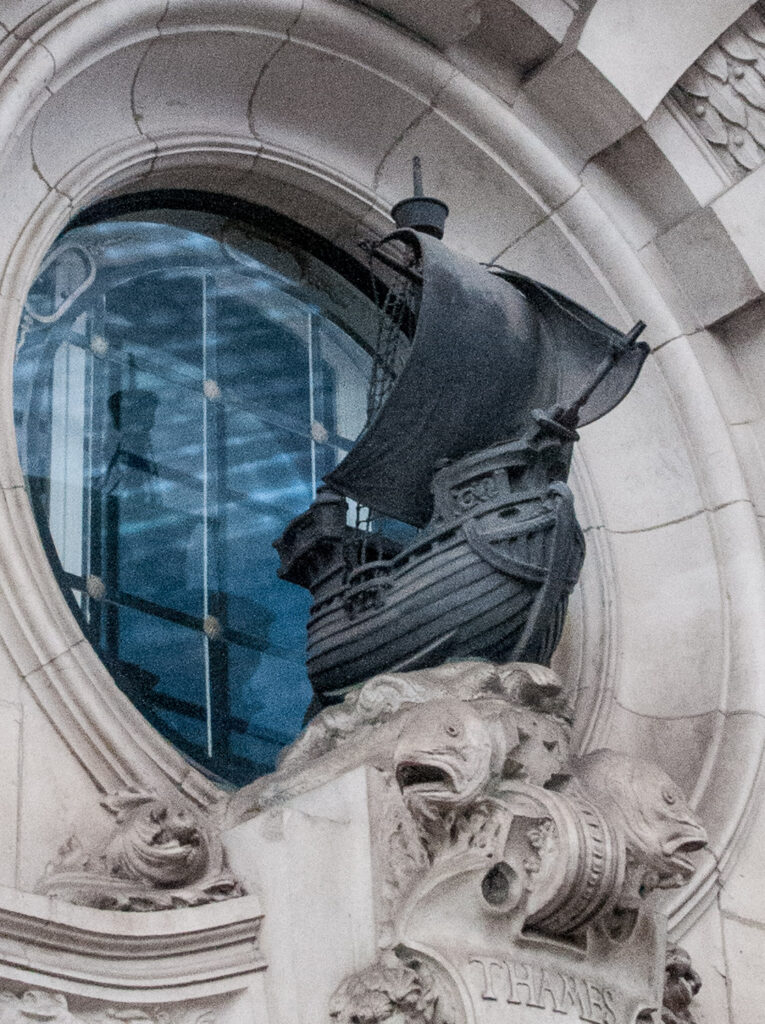
The ship is flanked by some rather grotesque fish which look like they are gasping for air. Maybe Neptune has just caught them.

Here’s the full frontal view …
Further along to the north I admired some elaborate doors …
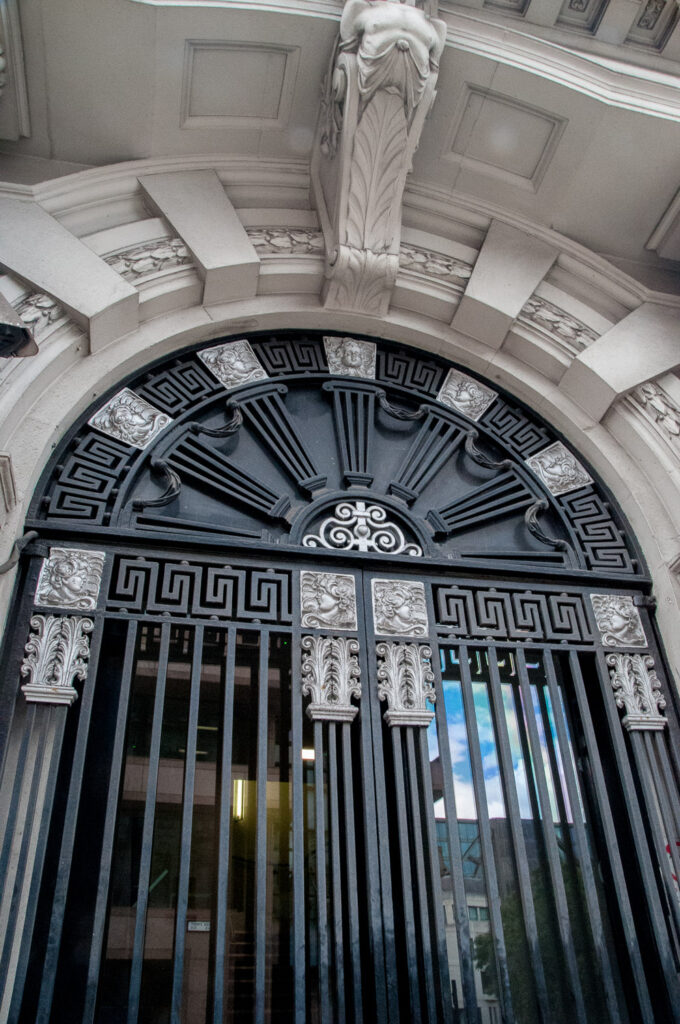
The old doorway to Thames House at the junction with Upper Thames Street is now an entrance to Five Kings House, the interior of the building having now presumably been segmented in some way (EC4R 1QS) …
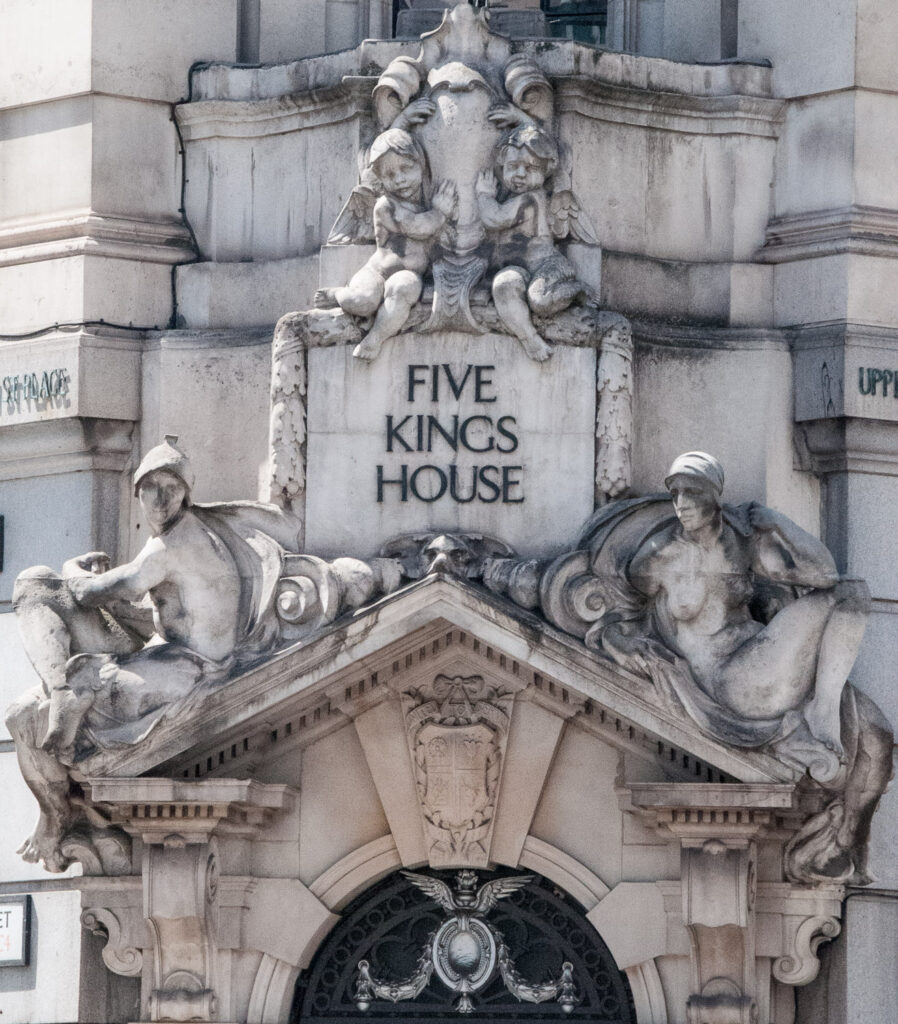
Above the door the male figure, with a helmet and wings at his heels, is clearly Mercury as God of Commerce. It’s not clear what the lady represents – possibly agriculture. Two seated putti support a cartouche

Queen Street Place was a wonderful surprise to me. I have often been asked if I am ever going to run out of things to write about but I can’t imagine this ever happening. The City seems to have something new to offer me every day I walk around it.

Remember you can follow me on Instagram :
https://www.instagram.com/london_city_gent/

The bridges of London Bridge – Part 2

For the first half of the 18th century the river remained London’s main thoroughfare. The watermen’s cry of ‘Oars! Oars!’ as they looked for customers constantly rang out in riverside streets. One Frenchman, who hadn’t quite mastered the language but had heard of London’s immoral reputation, thought this an invitation to try a quite different service.

But things were about to change.

By the mid-1750s the bridge was clearly failing in its purpose to provide an adequate river crossing, but the building of a new bridge nearby was constantly blocked by the strong waterman lobby and riverside businesses. Bridge residents showed their objection to a nearby temporary wooden bridge by persistently trying to burn it down.

But something had to be done, the bridge being …

Narrow, darksome, and dangerous … from the multitude of carriages … with frequent arches of strong timber crossing the street from the tops of houses to keep them together and stop them falling into the river.

Thomas Pennant writing in 1750.

A compromise was reached in 1757 by pulling down all the houses on the bridge as well as the chapel of St Thomas the Martyr. The bones of the cleric who oversaw the earliest building of the bridge in the 12th century, Peter de Colechurch, were interred there and some accounts say that, when they were uncovered, the workmen unceremoniously tossed them into the Thames.

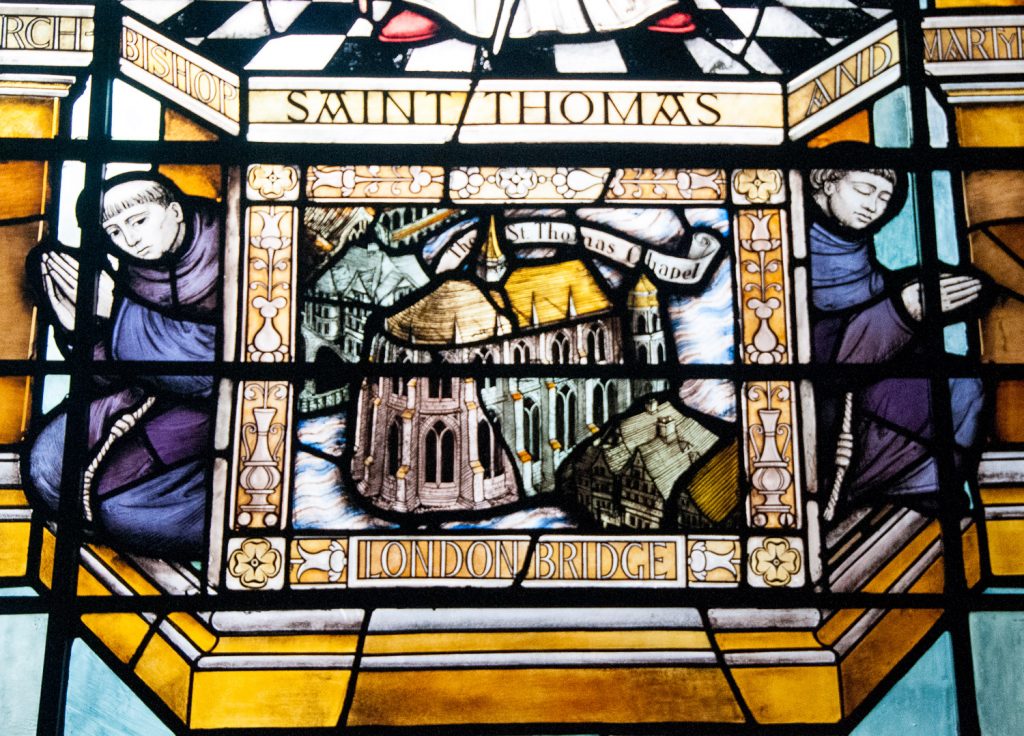
St Thomas’s chapel is commemorated with a stained glass window in St Magnus-the -Martyr church. I like the sleepy monk on the right …

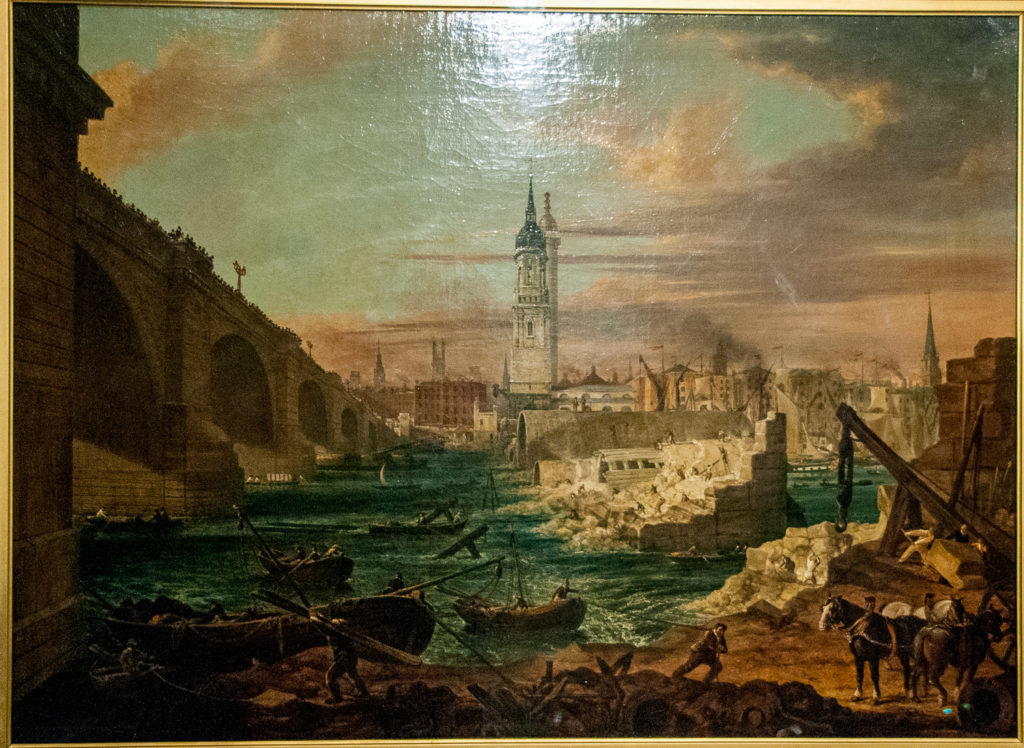
But the bridge continued to be congested and, for a growing port, increasingly seen as an obstacle to trade. The momentum for change was unstoppable and the old bridge was doomed …

Demolition of Old London Bridge as seen from the Southwark side 1832 Guildhall Art Gallery

Few tears were shed over its destruction. As Bernard Ash writes in his fascinating book The Golden City : ‘This was not a sentimental generation. It looked forward not backward. It saw no picturesqueness in the narrow, inconvenient ways of its forebears or in the narrow, inconvenient and often makeshift things they had built’.

But the river was no longer the highway of London – private carriages and hackney coaches were taking over. As Ash eloquently points out, all the watermen’s traffic had ‘run away on wheels’.

A new bridge designed by the Scottish engineer John Rennie (1761-1821) was decided upon. The work went ahead in 1824 under the supervision of his sons, John Rennie the Younger and George. In order to keep the old bridge open for traffic during construction it was decided that the new one should be on a different alignment, about one hundred feet upstream.

Construction took seven and a half years at a cost of two and a half million pounds and the lives of forty workmen, many perishing in the fast flowing water caused by the continued existence of the old bridge.

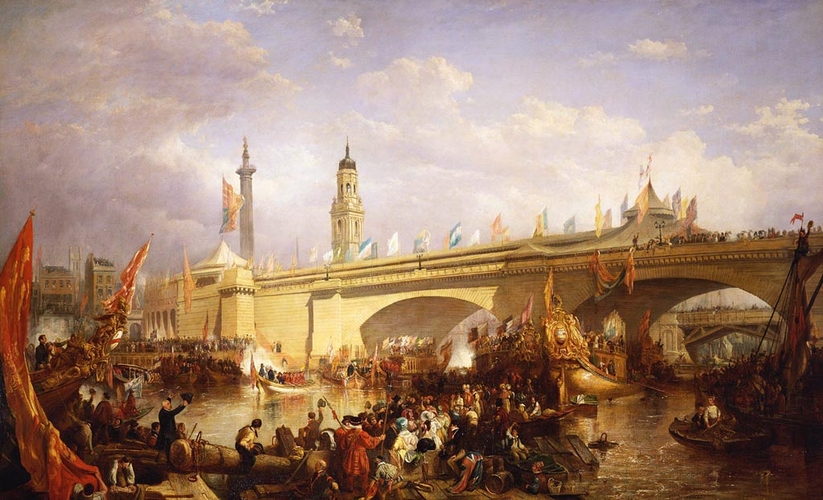
The opening (depicted below) was described in The Times as …

the most splendid spectacle that has been witnessed on the Thames for many years.

The opening of London Bridge by William IV on 1st August 1831 by Clarkson Stanfield (1793-1867) – Guildhall Art Gallery

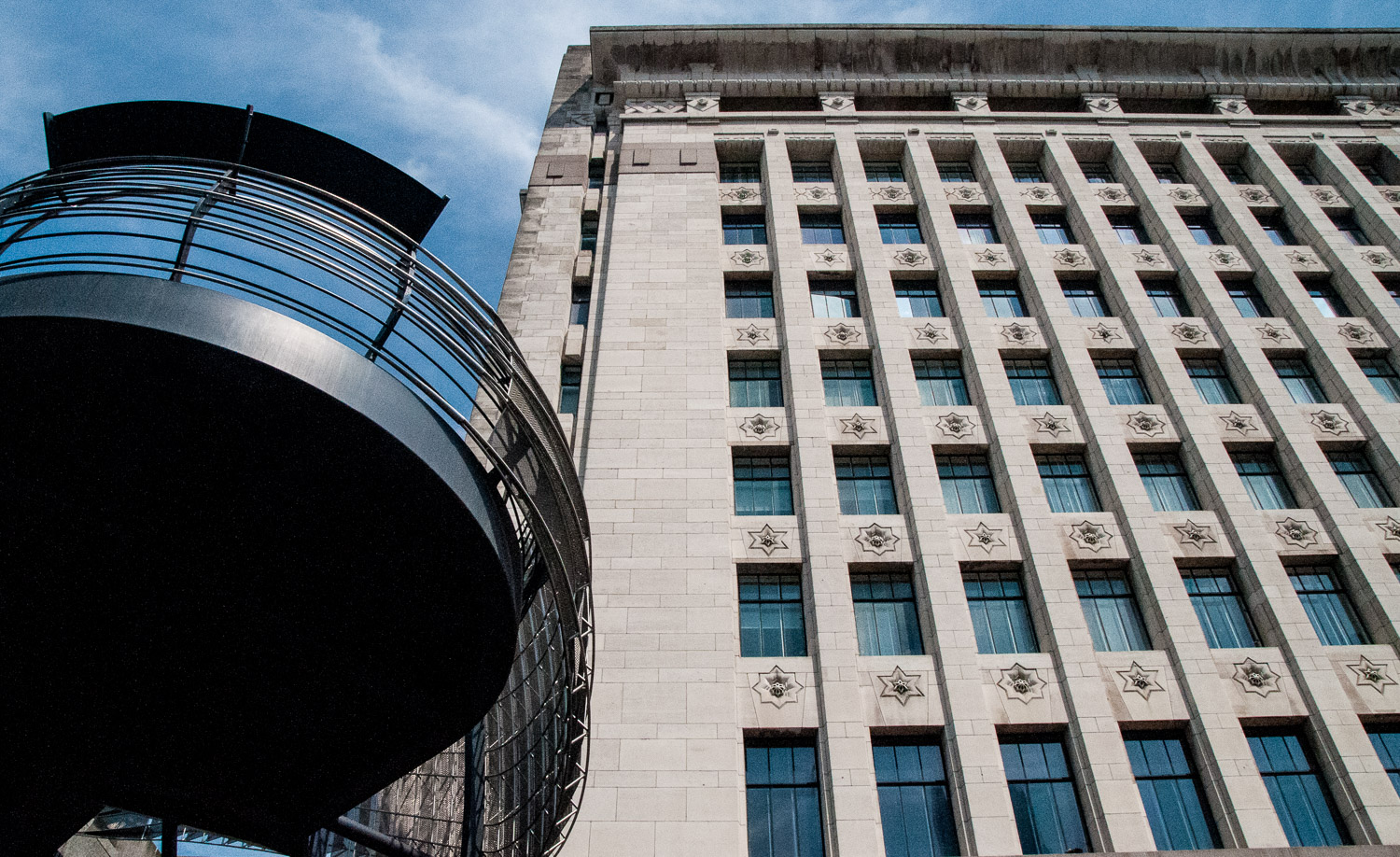
The King arrived at about 4pm and the red carpeted stairs where he landed can be seen leading up to the bridge on the far side of the river. A huge pavilion where a sumptuous banquet was held had been erected on the bridge. The royal standard can be seen flying from the pavilion at the north end. The King was accompanied by his wife Adelaide – hence the name of the 1925 Art Deco office block on the north east side of the bridge that you can see today.

Here’s a view of Adelaide House from the Thames path …

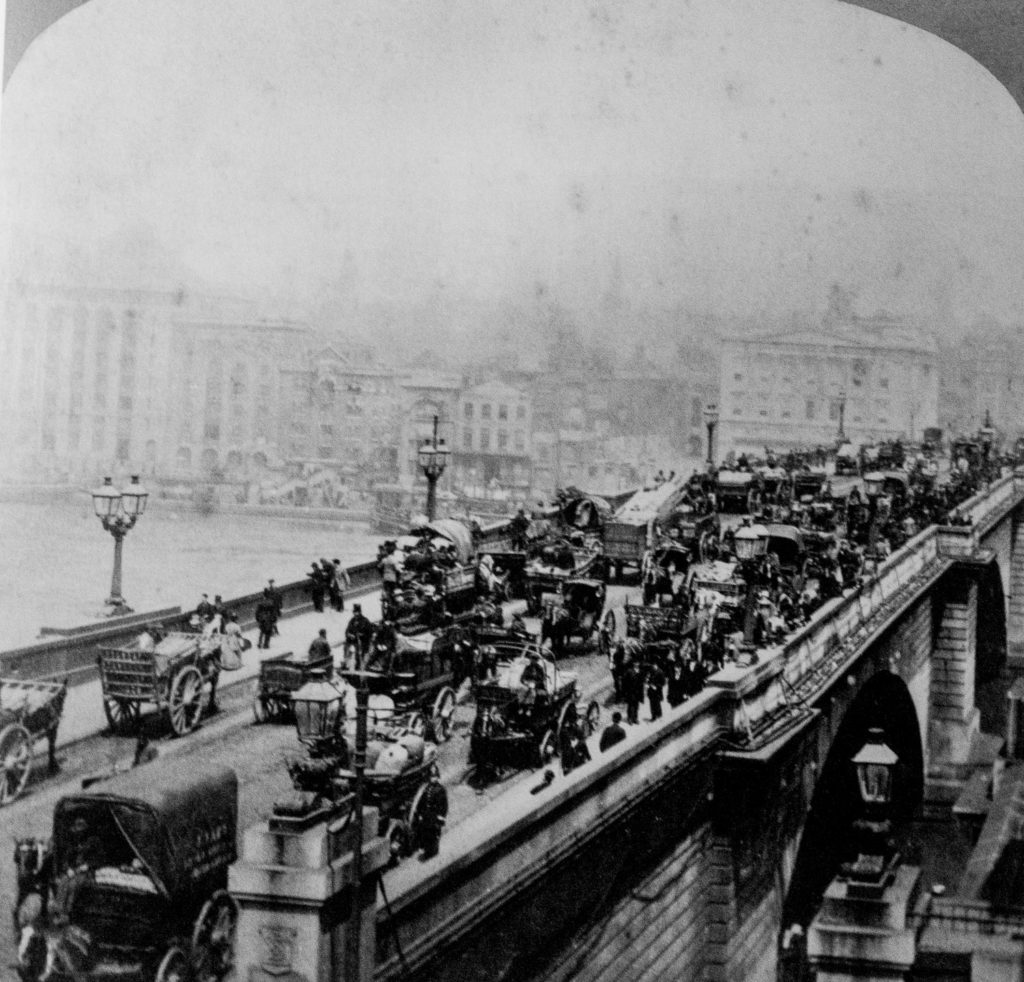
London’s growing prosperity led to increased traffic and more congestion problems for the bridge …

London Bridge circa 1870. Taken from a stereocard in the B E C Howarth-Loomes Collection [Ref BB83/05717B]

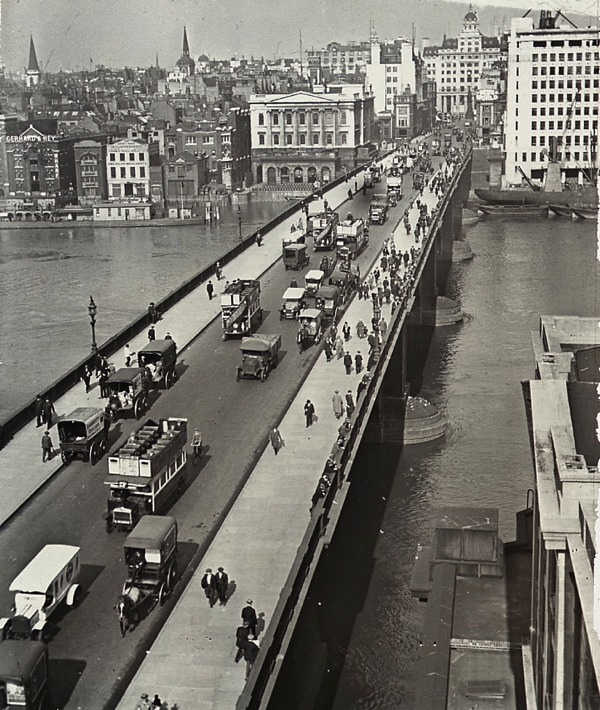
By 1896 the bridge was the busiest point in London, and one of its most congested – on average 8,000 pedestrians and 900 vehicles crossed every hour. Subsequent surveys showed that the bridge was sinking an inch every eight years, and by 1924 the east side had sunk some three to four inches lower than the west side. Clearly the bridge would eventually have to be removed and replaced.

The bridge in the 1930s – Adelaide House is on the right

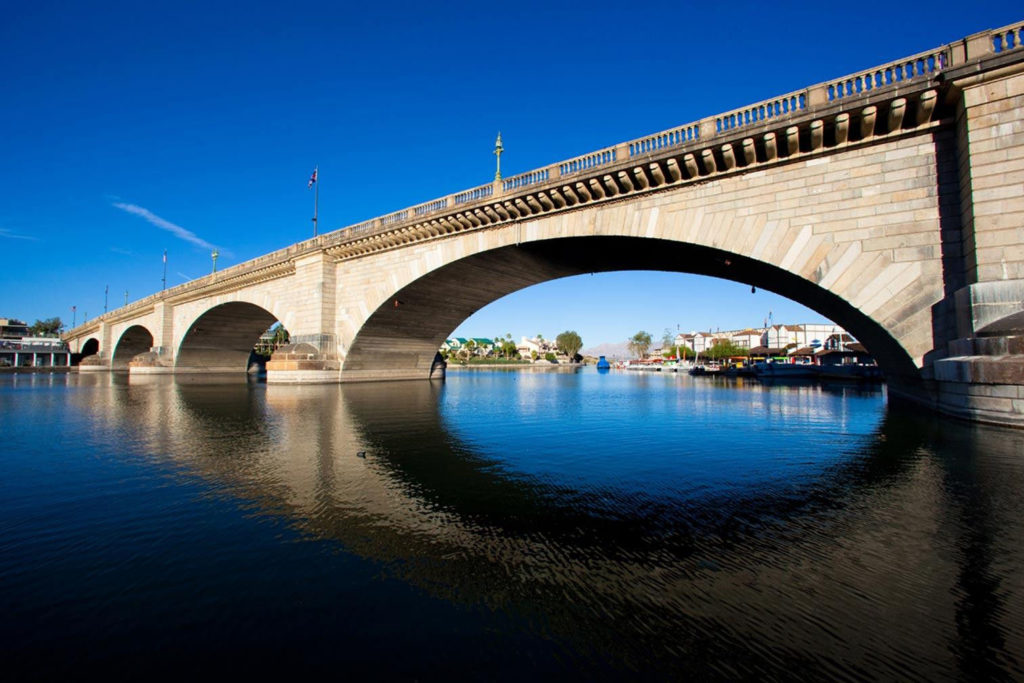
In 1967, to many people’s astonishment, Rennie’s bridge was put up for sale and, to more astonishment, was bought on 18th April 1968 by the Missourian entrepreneur and oilman Robert P McCulloch for $2,460,000. Under no illusion that he had bought Tower Bridge (as some papers mischievously reported) he moved it piece by piece to Lake Havasu City Arizona – all 10,276 granite blocks individually numbered.

The bridge is dedicated in its new home in 1971

I think it looks great …

You can read more about Lake Havasu here along with the 50th anniversary last year of the bridge’s purchase.

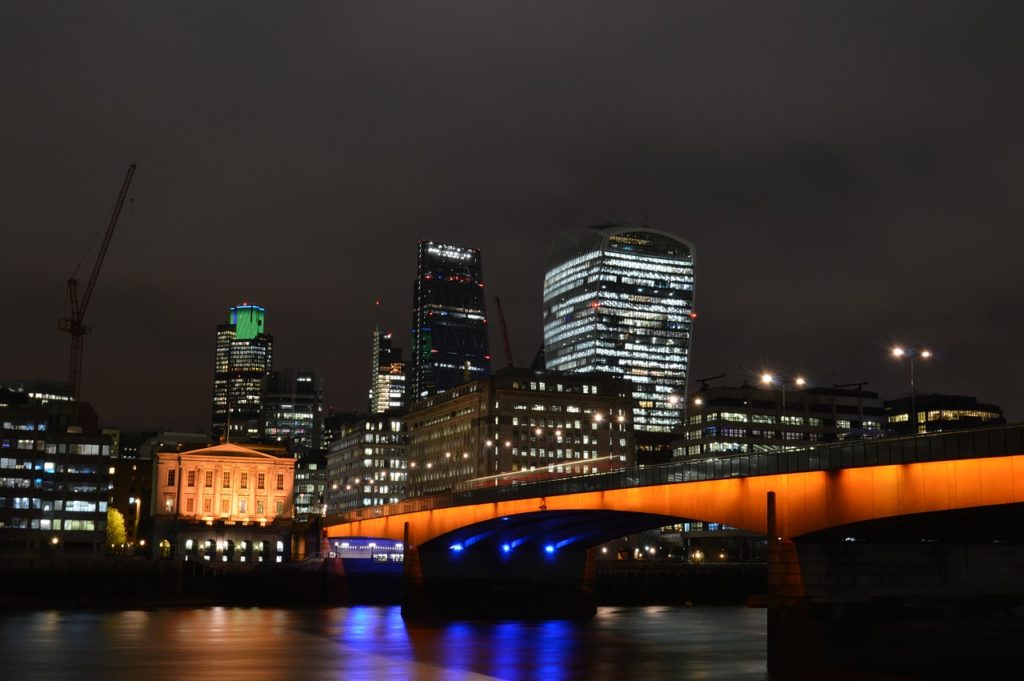
The London Bridge we see today was constructed between 1967 and 1972 and opened by Queen Elizabeth on 17th March 1973. I like this nighttime picture …

Now there are security blocks in place as a result of the terrorist attack in June 2017…

I hope you have enjoyed these short histories of the bridges that have been known as ‘London Bridge’. Incidentally, if you do a Google search for ‘London Bridge images’ you will see that, on most American sites, you’ll be shown pictures of Tower Bridge!

City Angels (and a few devils)

Having had a lot of fun seeking out cherubs for an earlier blog I decided to go in search of angels.

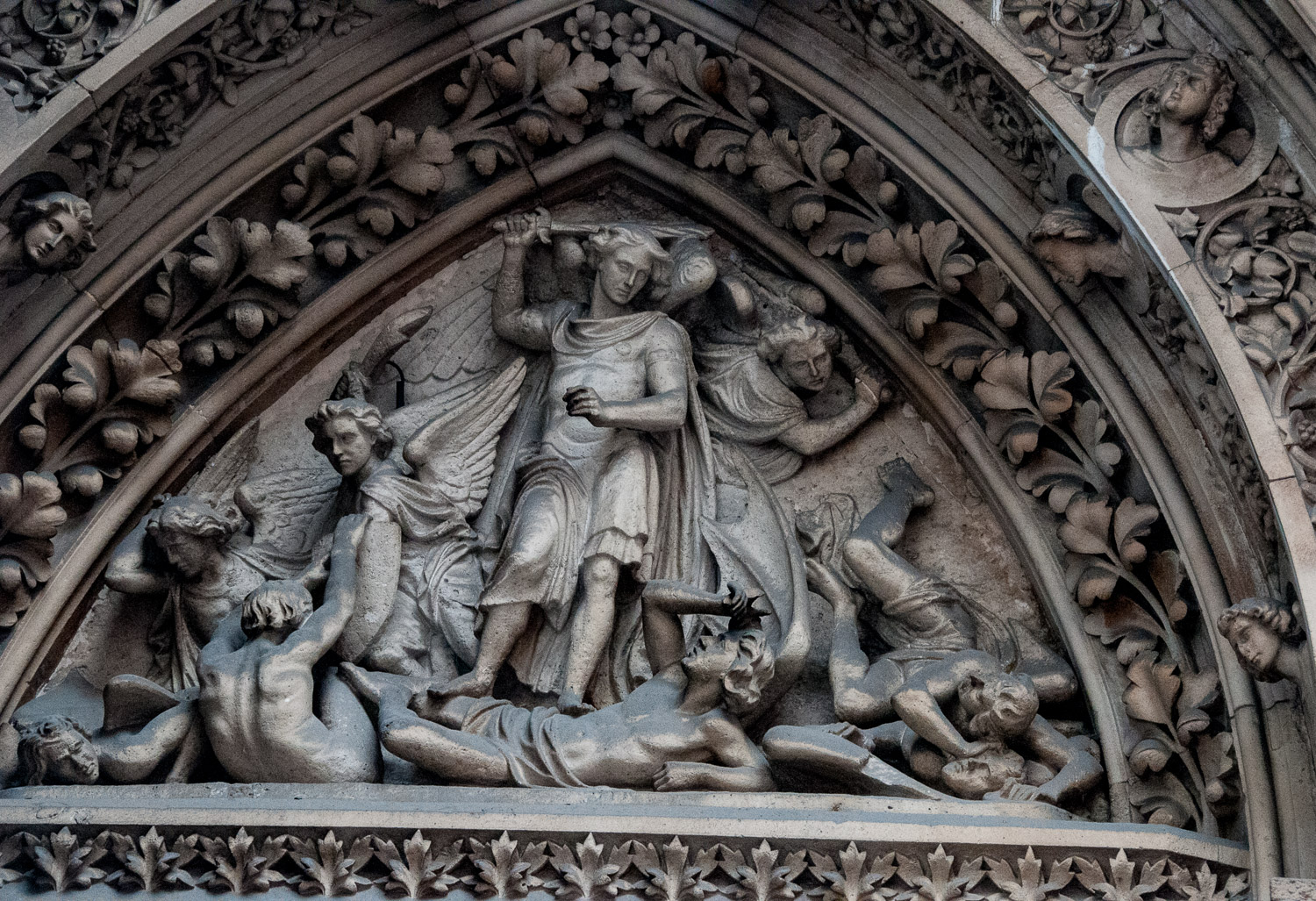
Above the door of St Michael Cornhill is the warrior Archangel Michael ‘disputing with Satan’. It was carved by John Birnie Philip when the church was remodelled in 1858-1860.

No question as to who is winning this battle

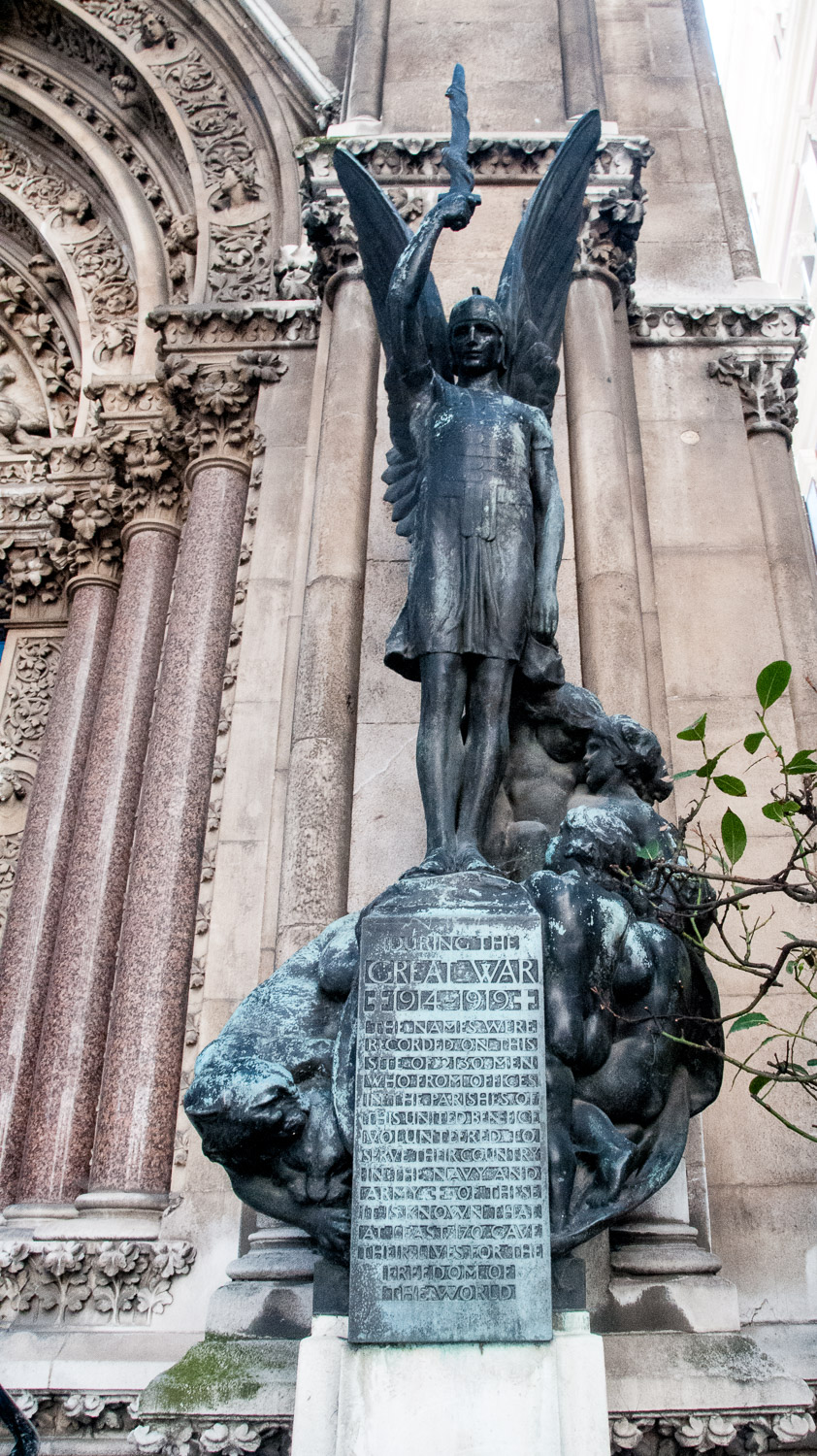
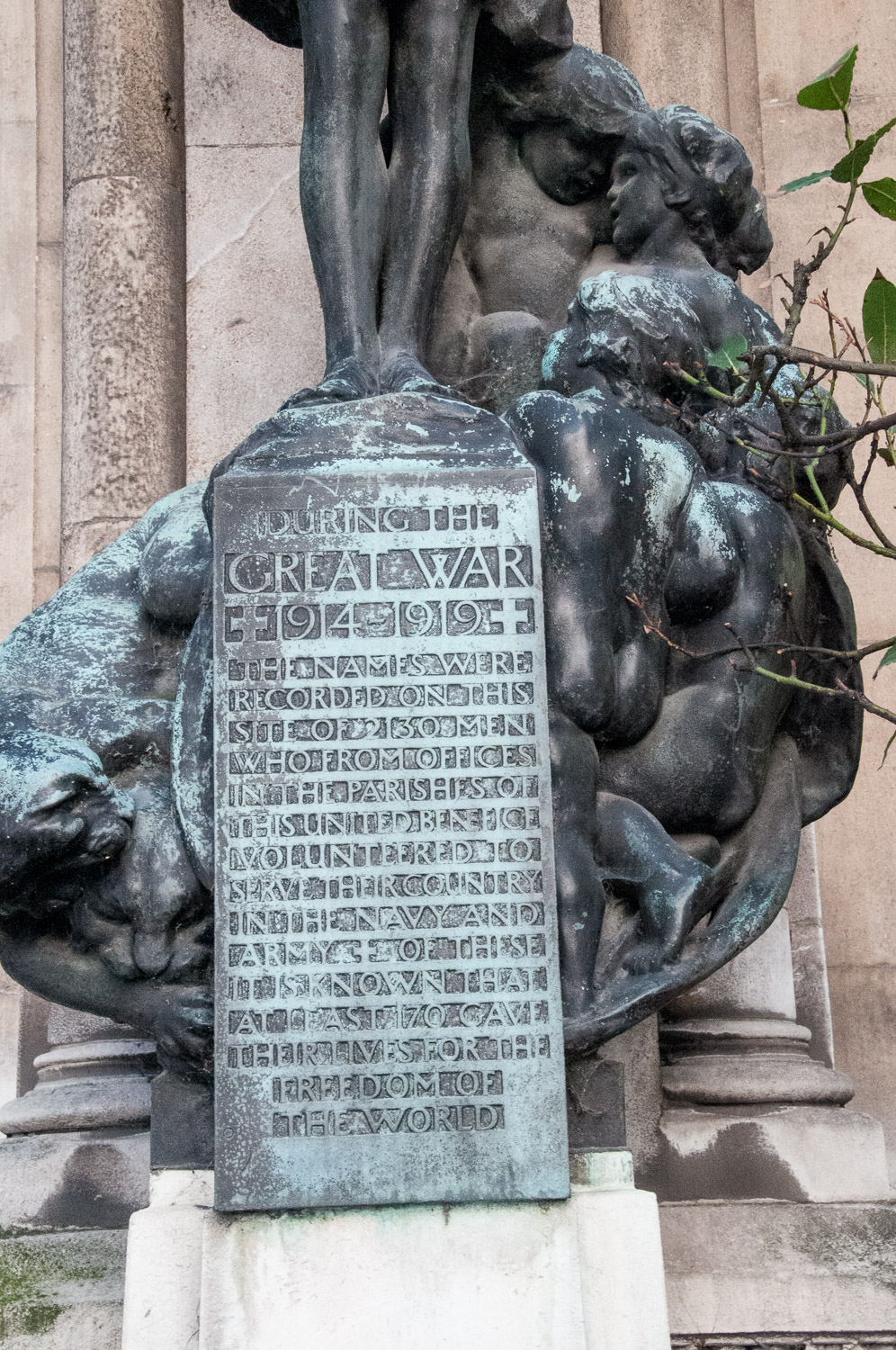
Outside the church is another sculpture of Michael brandishing a flaming sword. It is a bronze memorial to the 170 out of the 2,130 men of this parish who enrolled for military service in the First World War and died as a result.


A close-up of the inscription

The sculpture (by R R Goulden) was described in the Builder magazine as follows

St Michael with the flaming sword stands steadfast above the quarreling beasts which typify war, and are sliding slowly, but surely, from their previous paramount position. Life, in the shape of young children, rises with increasing confidence under the protection of the champion of right.


Do go into the church, it’s a serene place to visit with very attractive pews and stained glass.

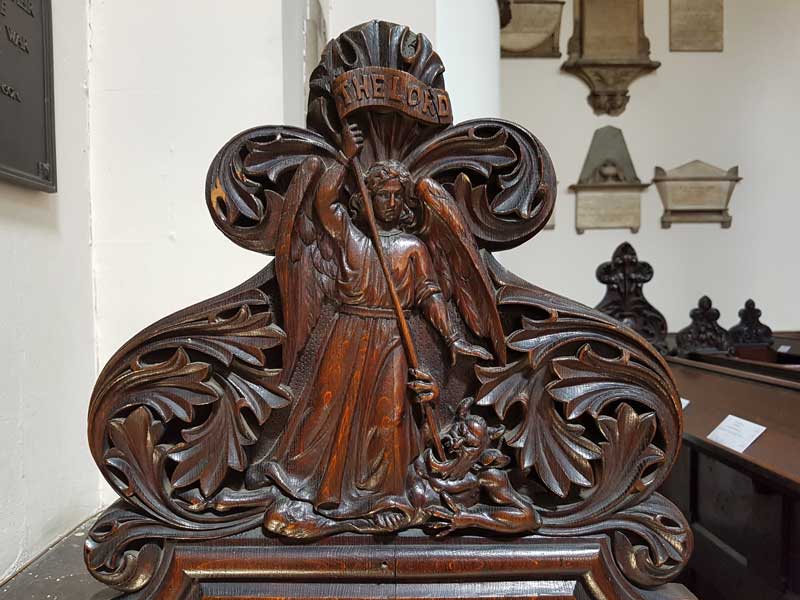
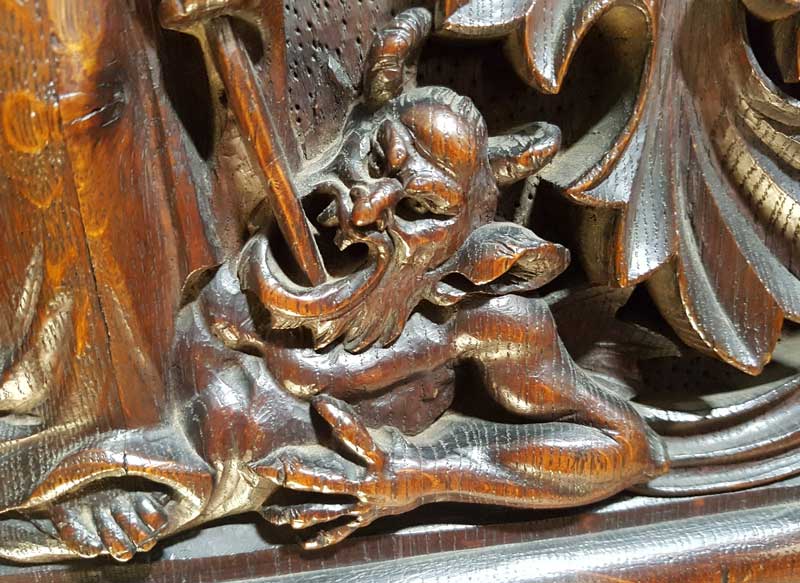
Of particular note on the left is the Churchwarden’s pew which shows St Michael thrusting a lance into the mouth of a truly evil-looking devil. It’s a work by the eminent wood carver William Gibbs Rogers (1792-1875).

The carving on the church wardens pew showing St Michael driving a spear into the devil’s mouth..


A close-up of the devil’s face on the churchwarden’s pew.

When you come out of the church turn right and you will find that Cornhill is seriously infested with devils.

It’s a blogger’s dilemma when one encounters what seems to be an apocryphal explanation for something one is researching. I have taken the decision that it’s OK to publish if, firstly, I make the nature of the story clear and, secondly, if it could just about be true, and thirdly if it’s a great story!

What follows seems to me to meet all the criteria.

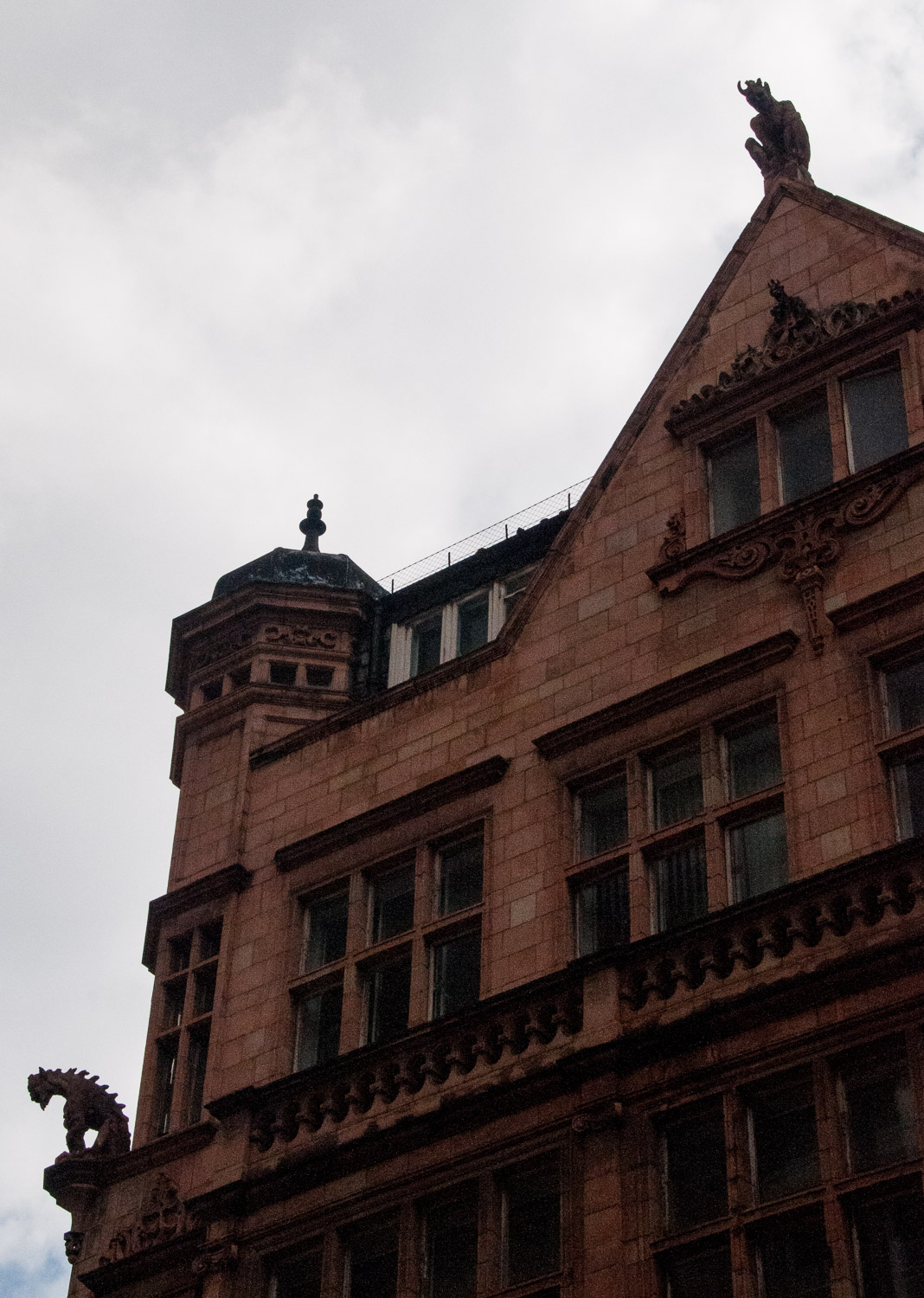
As I walked along Cornhill one day I glanced up and saw these rather sinister figures silhouetted against the sky…

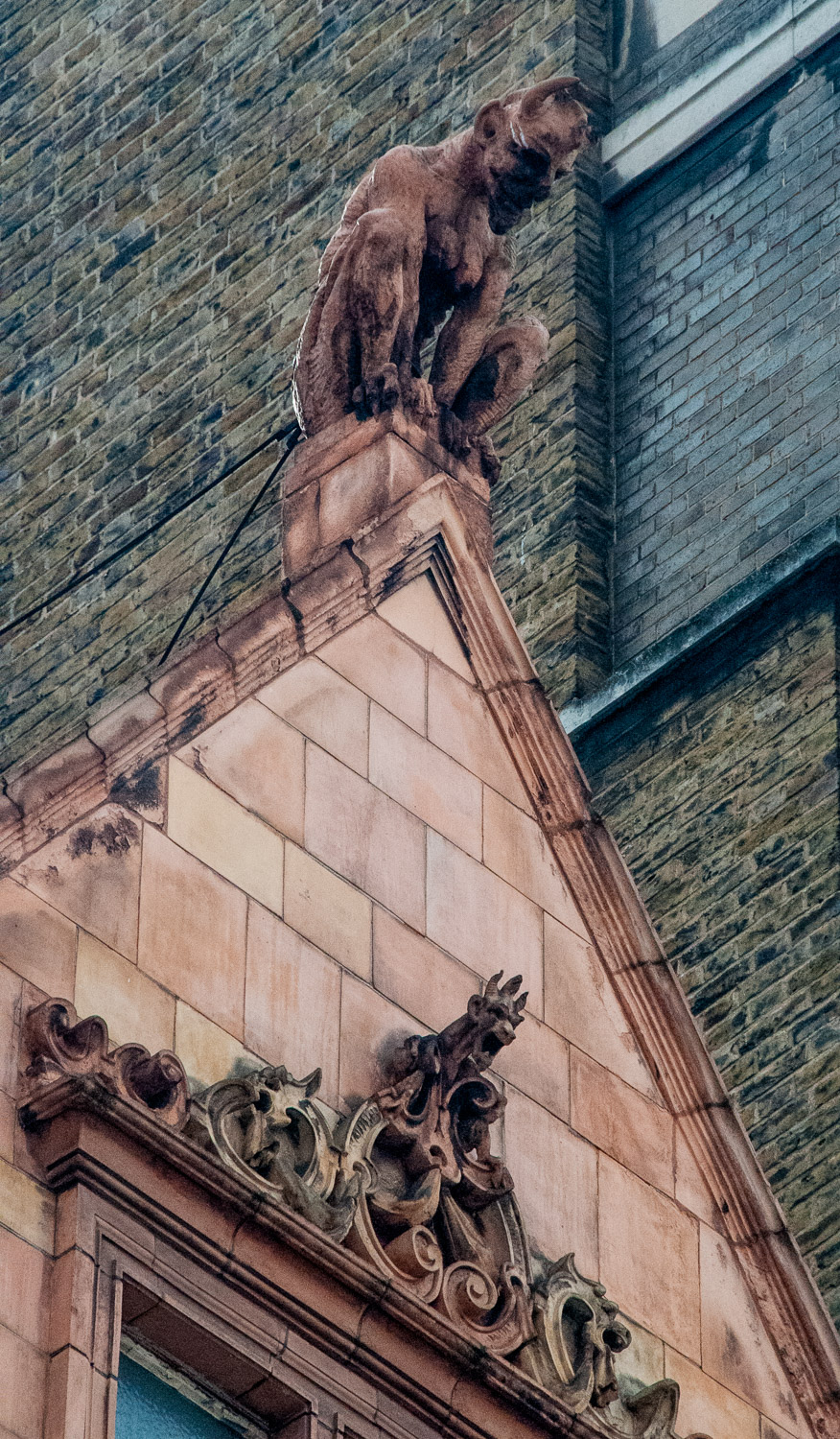
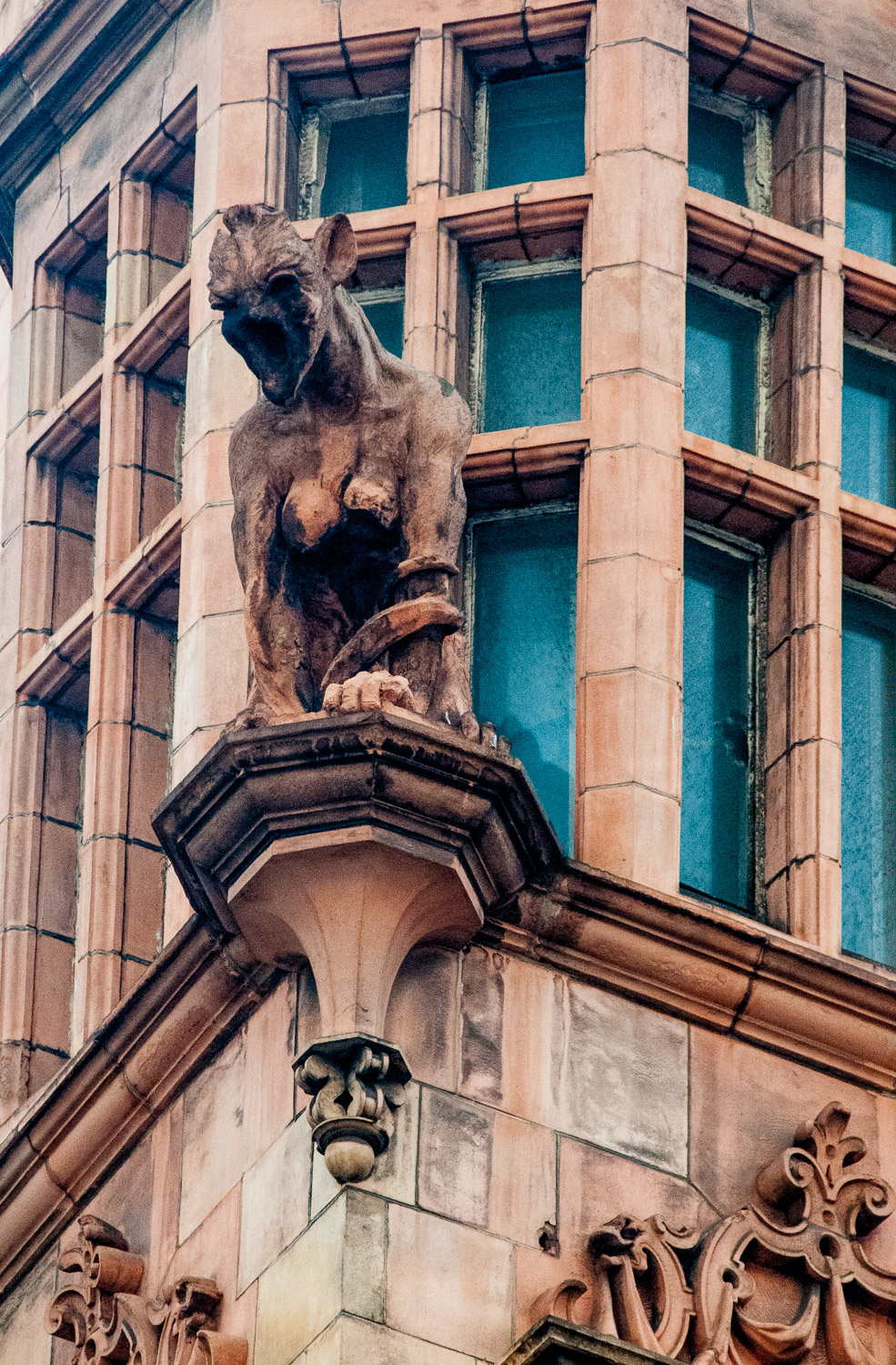
Closer inspection shows them to be devils, and rather angry and malevolent ones too …

They look down on St Peter upon Cornhill and are known as the Cornhill Devils. The story goes that, when plans were submitted for the late Victorian building next to the church, the rector noticed that they impinged slightly on church land and lodged a strong objection. Everything had to literally go back to the drawing board at great inconvenience and expense. The terracotta devils looking down on the entrance to the church are said to be the architect’s revenge with the lowest devil bearing some resemblance to the cleric himself.

If this resembles the rector he must have been a pretty ugly guy!

Onward now towards the Tower of London via Hart Street.

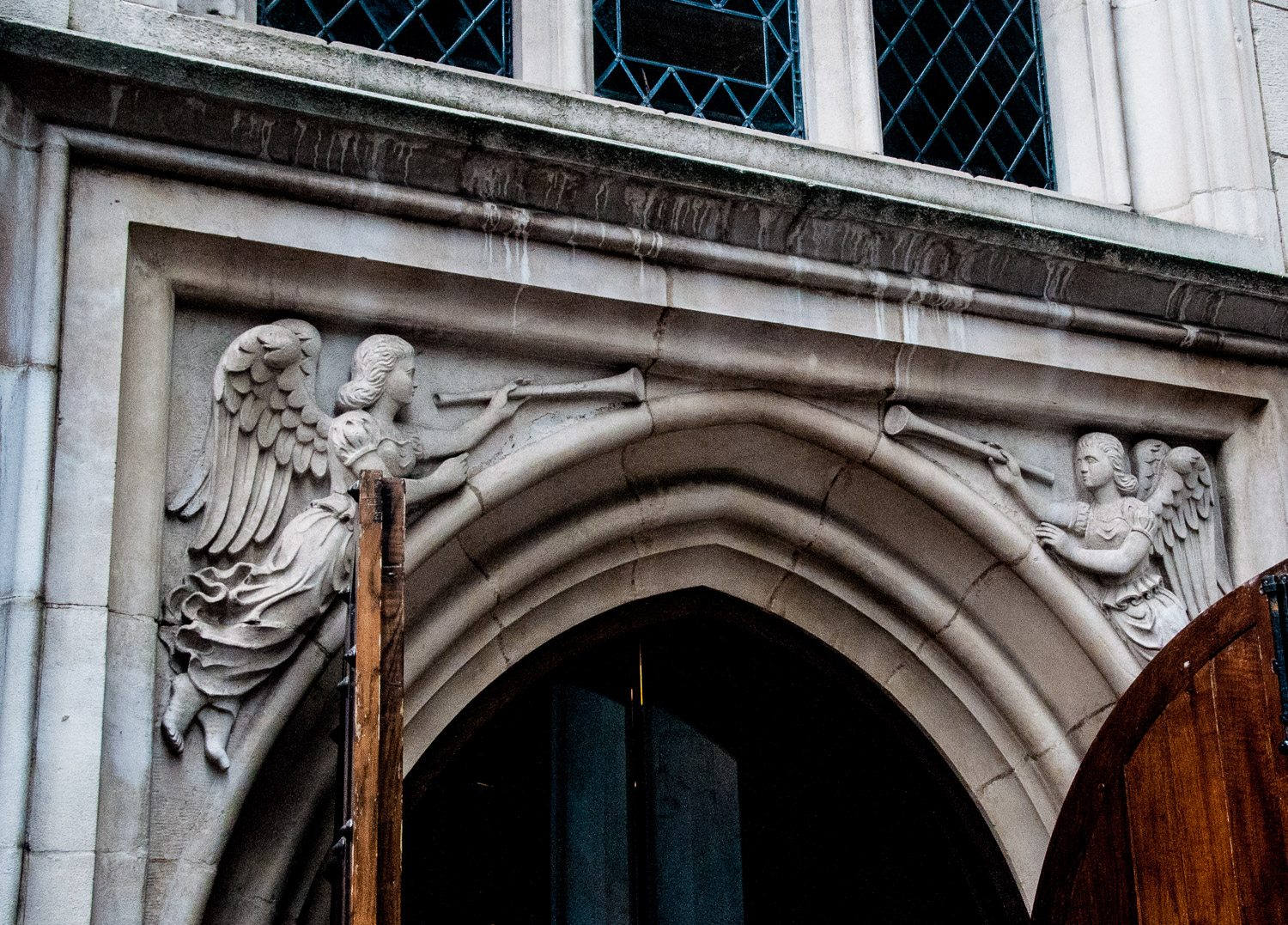
Two trumpeting spandrel angels face one another over the doors of St Olave, Hart Street.

North door, St Olave

You can read more about this historic church in my earlier blog Samuel Pepys and his ‘own church’.

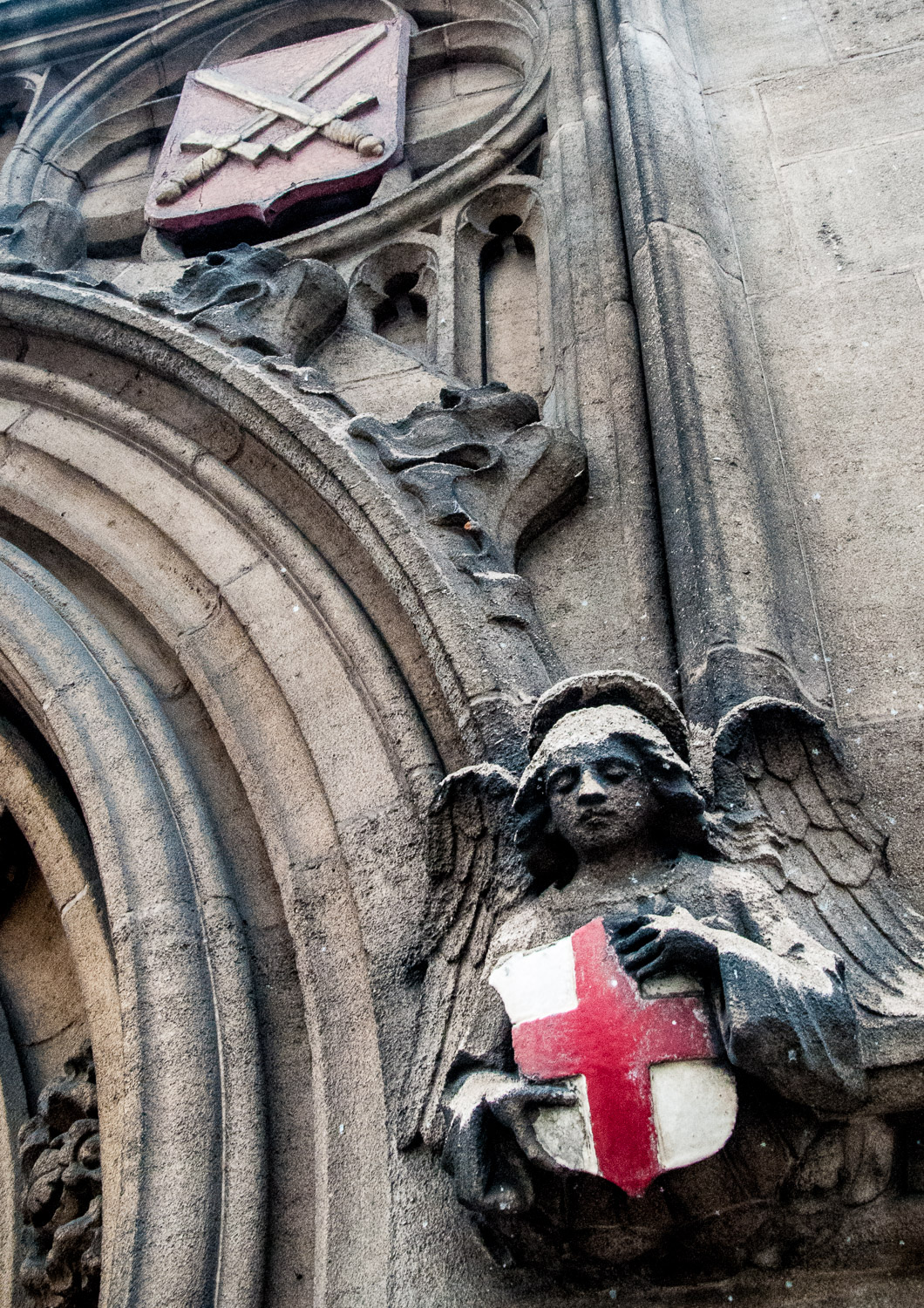
This angel by the door of All Hallows by the Tower holds a shield bearing the cross of St Andrew. Above is the crossed sword emblem of the Diocese of London.

All Hallows by the Tower, north door

Fleet street is always great to visit given the vast range of subjects to explore.

Inside the door of St Dunstan in the West, Fleet Street…

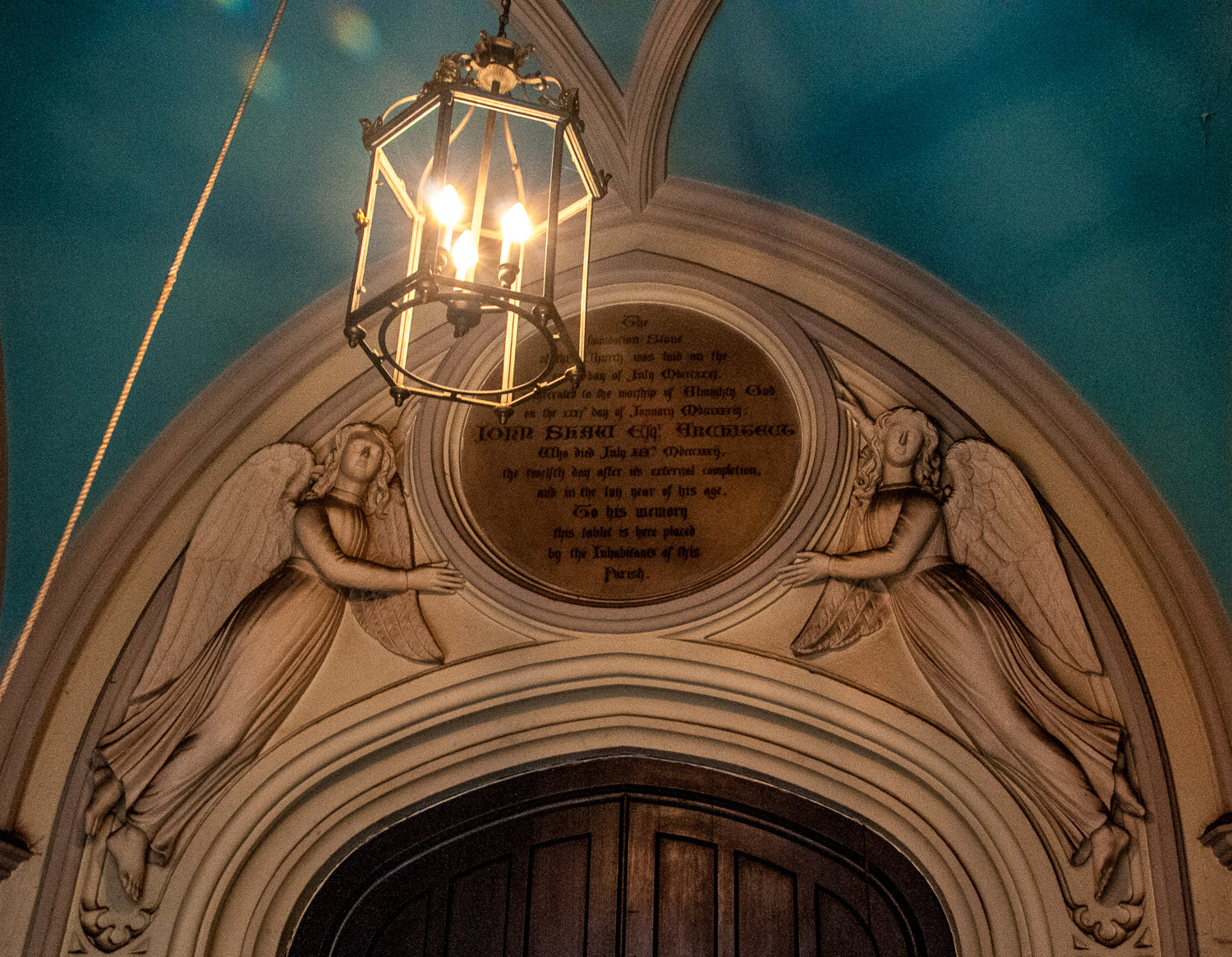
Angels holding a commemorative plaque to the original architect (1830-1832) John Shaw. On his death the work was continued by his son, also John

The plaque reads:

The foundation stone of this Church was laid on the 27th day of July 1831 and consecrated to the worship of Almighty God on the 31st day of January 1833: John Shaw, Architect who died July 30th 1832, the 12th day after its external completion, and in the 57th year of his age. To his memory this tablet is here placed by the Inhabitants of this Parish.

Ever since one of my earliest blogs, Philanthropic Fountains, I have a bit of  a ‘thing’ about drinking fountains so I shall digress from angels momentarily.

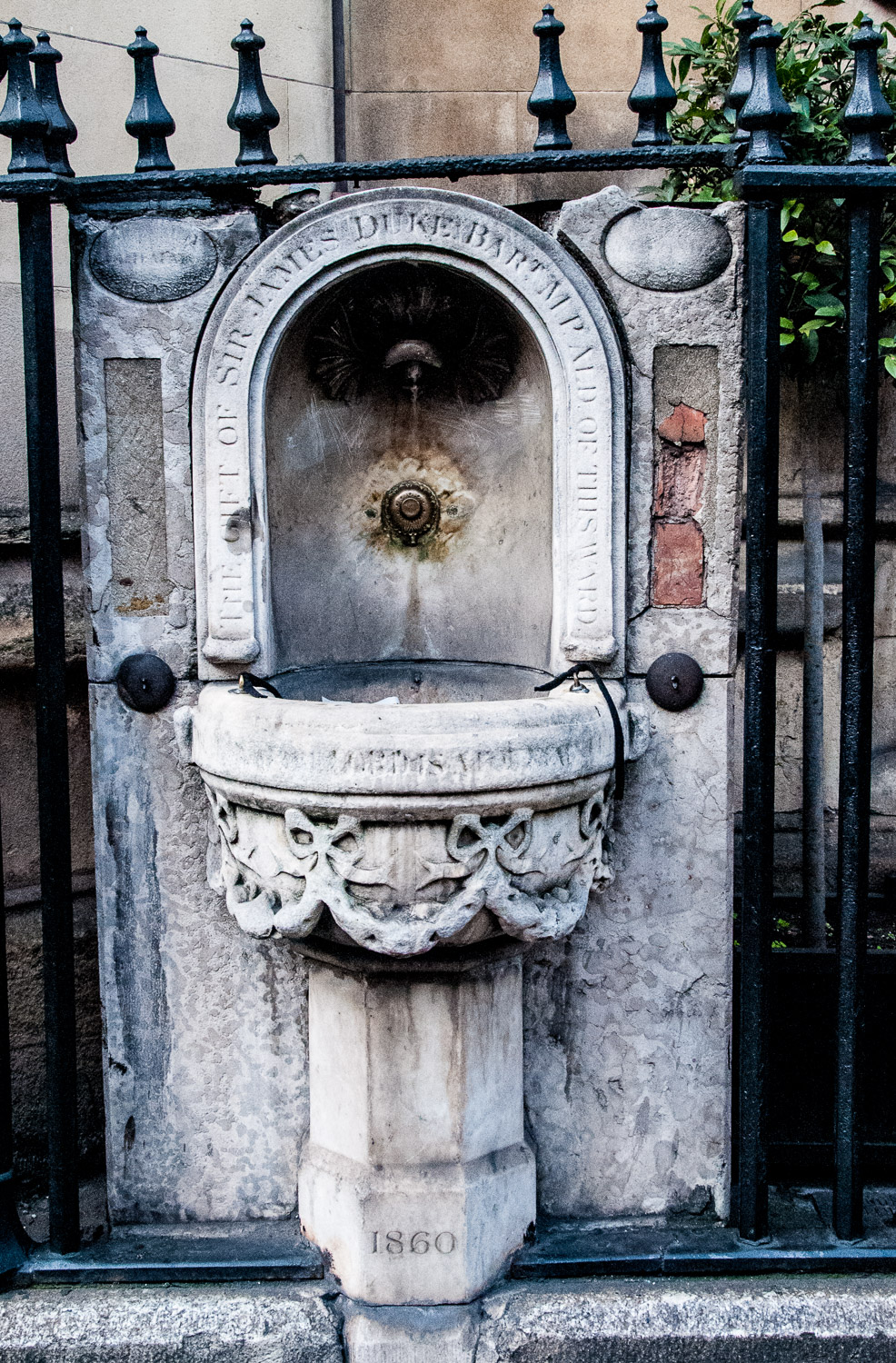
Just outside St Dunstan’s is this pretty but sadly timeworn fountain designed by John Shaw junior. The inscription is really hard to read but I believe it says …

The gift of Sir James Duke Bart MP ald. of this ward

The fear of the Lord is the fountain of life

Elected Lord Mayor 1848

MP London 1849

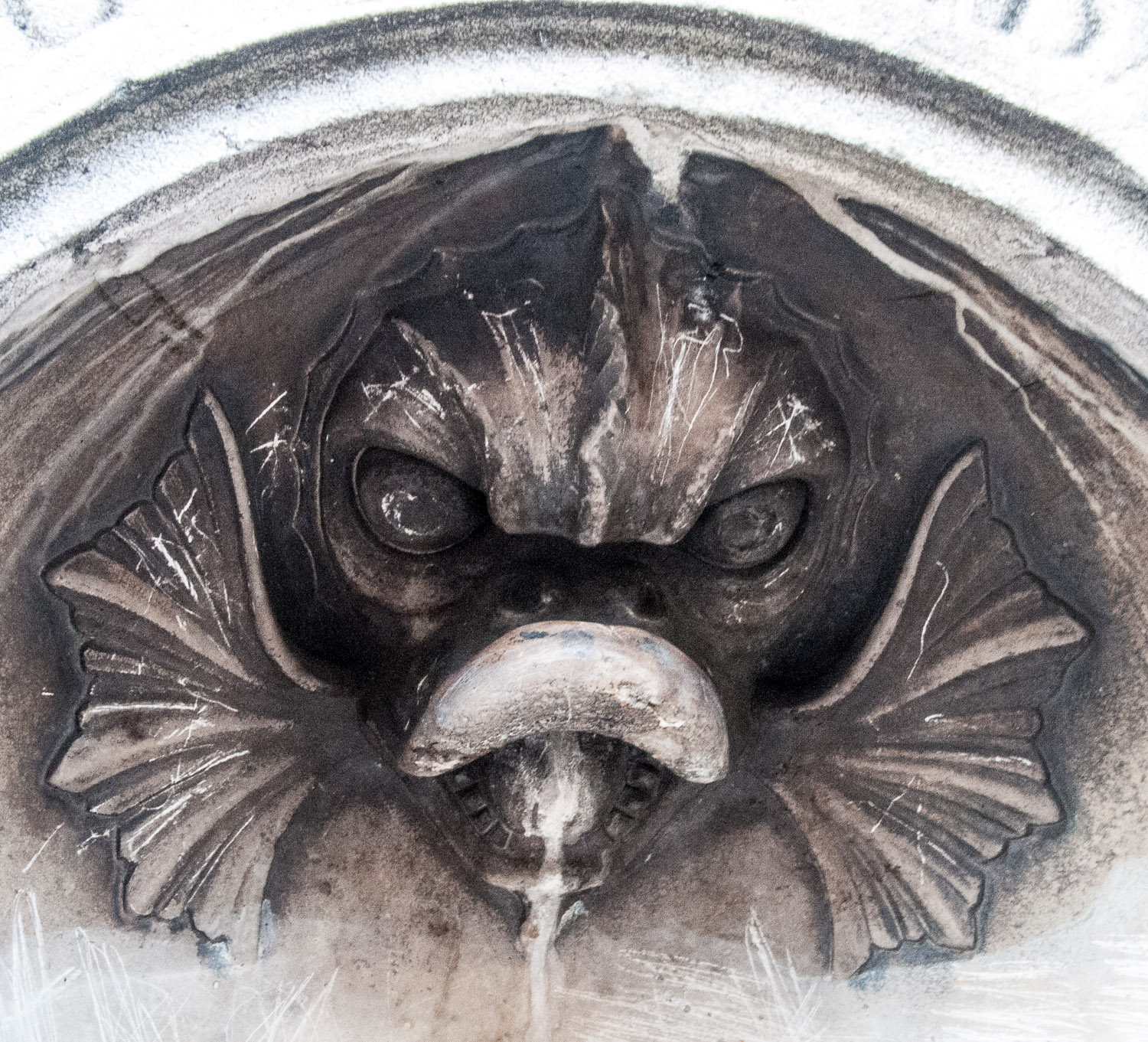
Fountain detail

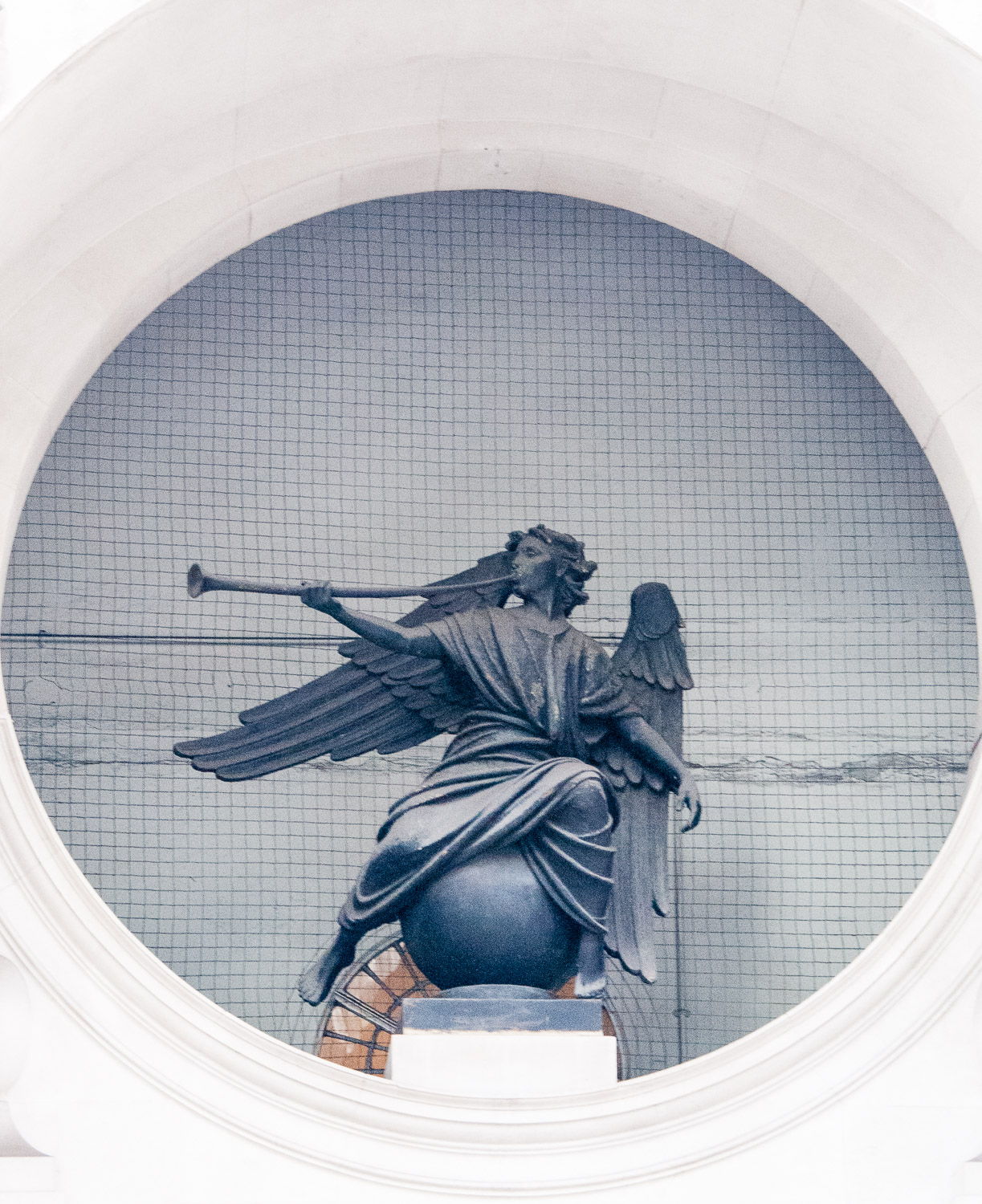
An Art Deco trumpeting angel called The Herald graces 85 Fleet Street. The sculpture is by William Reid Dick and was unveiled by Sir Edwin Lutyens himself on 10 July 1939. The Times stated that The Herald was

Sending forth through her trumpet the news gathered from all corners of the Earth …

The Herald

And finally to St Bartholomew the Great via St Paul’s Cathedral.

Emily Young FRBS is one of the country’s foremost stone sculptors and you can enjoy her work in the form of Angels I to V in the courtyard beside St Paul’s Cathedral. I never tire of looking at them.


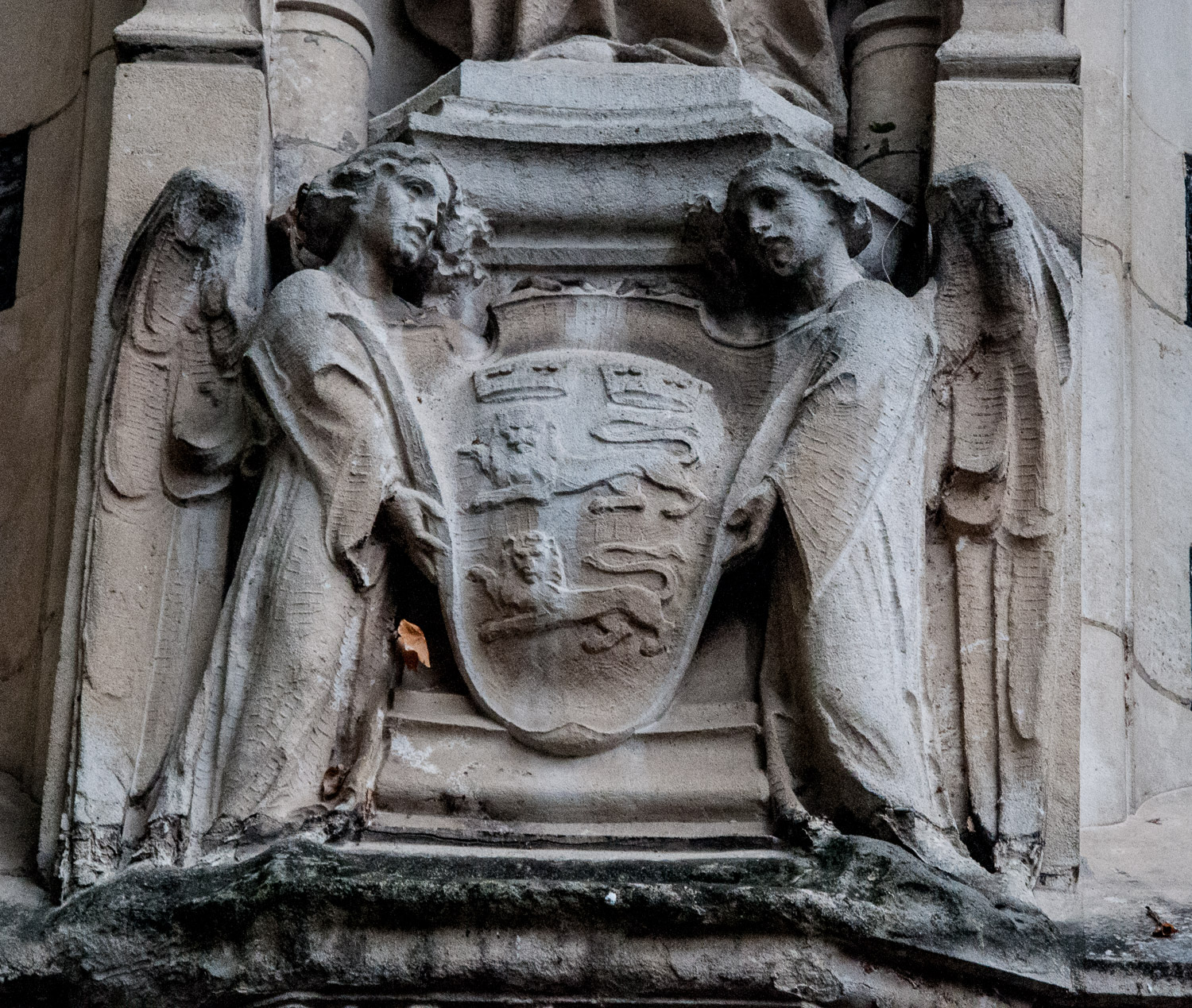
And finally some more classical angels at the church of St Bartholomew the Great …

They support the coat of arms of the founding patron King Henry I (reigned 1100-1135)


Page 3 of 4

Powered by WordPress & Theme by Anders Norén

Symbols & Secrets
Privacy Overview

This website uses cookies so that we can provide you with the best user experience possible. Cookie information is stored in your browser and performs functions such as recognising you when you return to our website and helping our team to understand which sections of the website you find most interesting and useful.