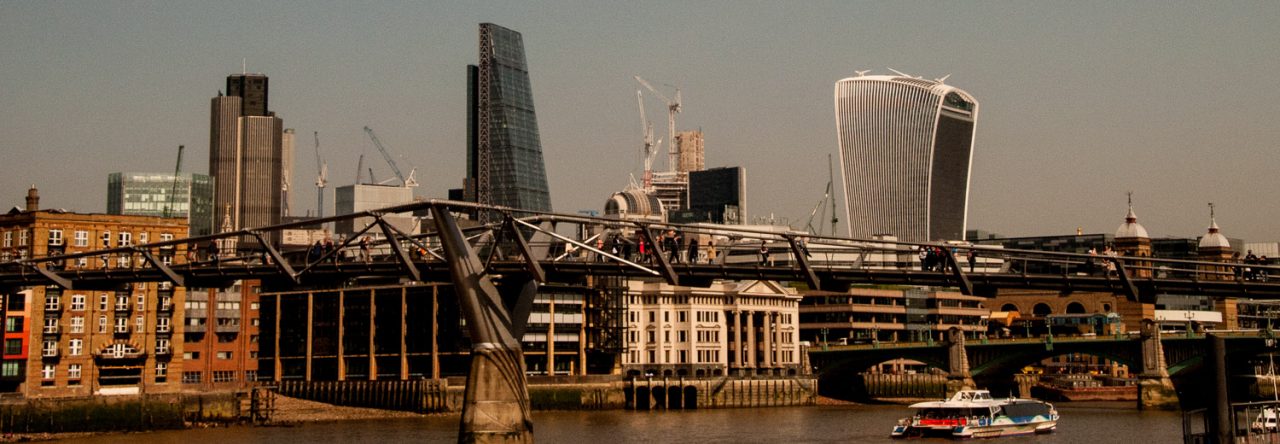
Walking the City of London

Category: Art Deco Page 2 of 4

From Submariners to the Blitz Firefighters – a walk along Embankment towards St Paul’s.

A lovely Sunny day last Saturday tempted me out for a walk.

The national Submarine Memorial Memorial on Victoria Embankment (EC4Y 0HJ) is, I think, one of London’s most moving.

Although able to hide when submerged, once struck the vessels were often unable to rise to the surface and became effectively underwater coffins. In the First World War fifty four boats were lost and with them the lives of 138 officers and 1,225 men. At the inauguration in 1922 Rear Admiral Sinclair, the Chief of the Submarine Service, reminded those present that, during the Great War …

The number of those killed in the Submarine Service was greater in proportion to its size than any other branch of His Majesty’s fighting forces … one third of the total personnel.

In November 1959 new panels commemorating Second World war losses were unveiled by Rear Admiral B W Taylor.

Wright and Moore, writing for the 20th Century Architecture website, describe the memorial as a complex mixture of narrative and symbolism …
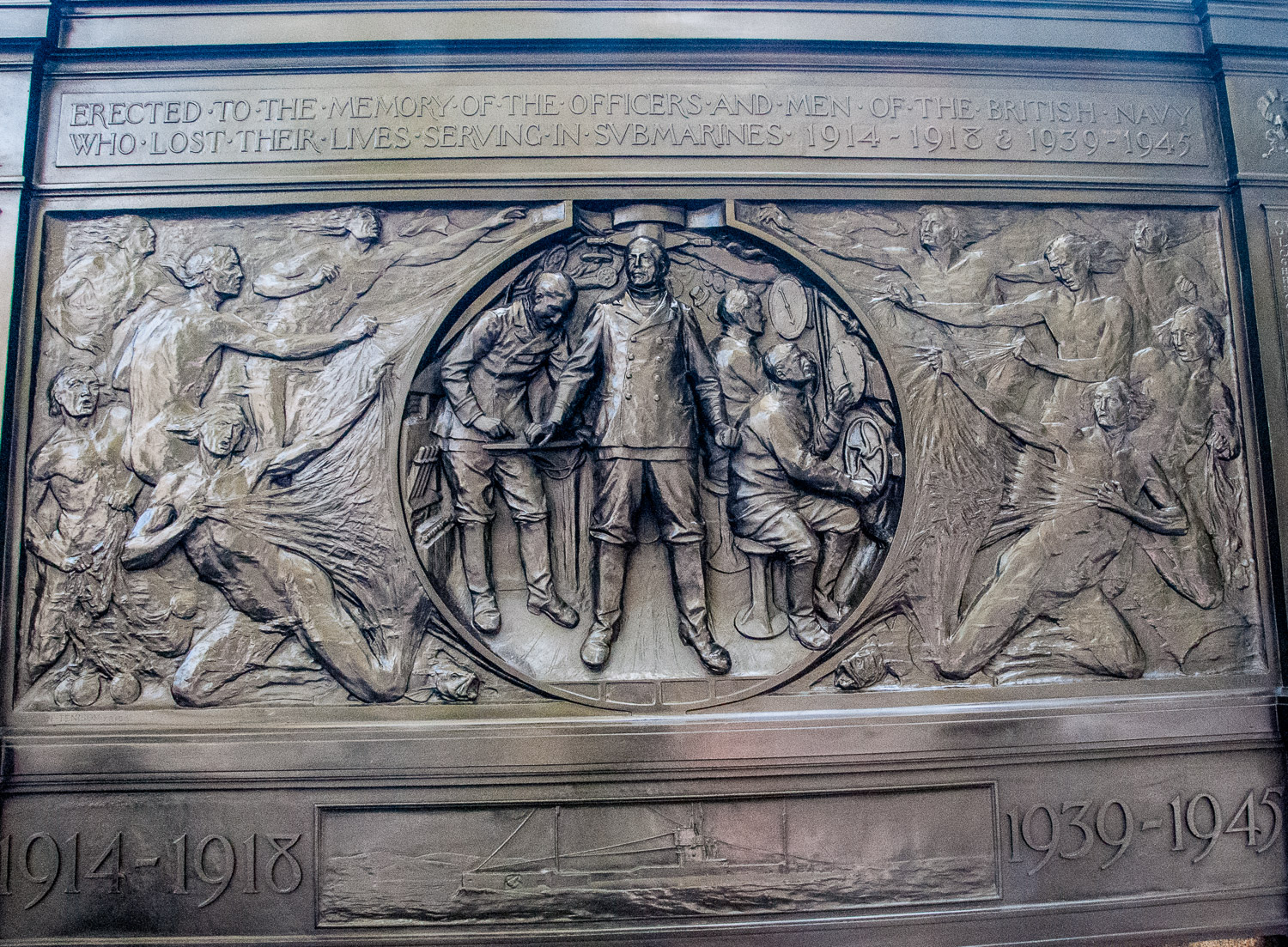
Sculptor: F B Hitch Architect: A H R Tenison Founder: E J Parlanti

The central figures recreate the scene set inside the submarine exaggerating it into a small, claustrophobic tunnel. The crew use charts and follow dials, the captain is braced at the centre with the periscope behind his head. Around the vessel a shallow relief depicts an array of sea creatures or mermen appearing to trap and haul the submarine in fishing nets, reminding us that the submarines were as much prey to the tempestuous elements as they were to the enemy.

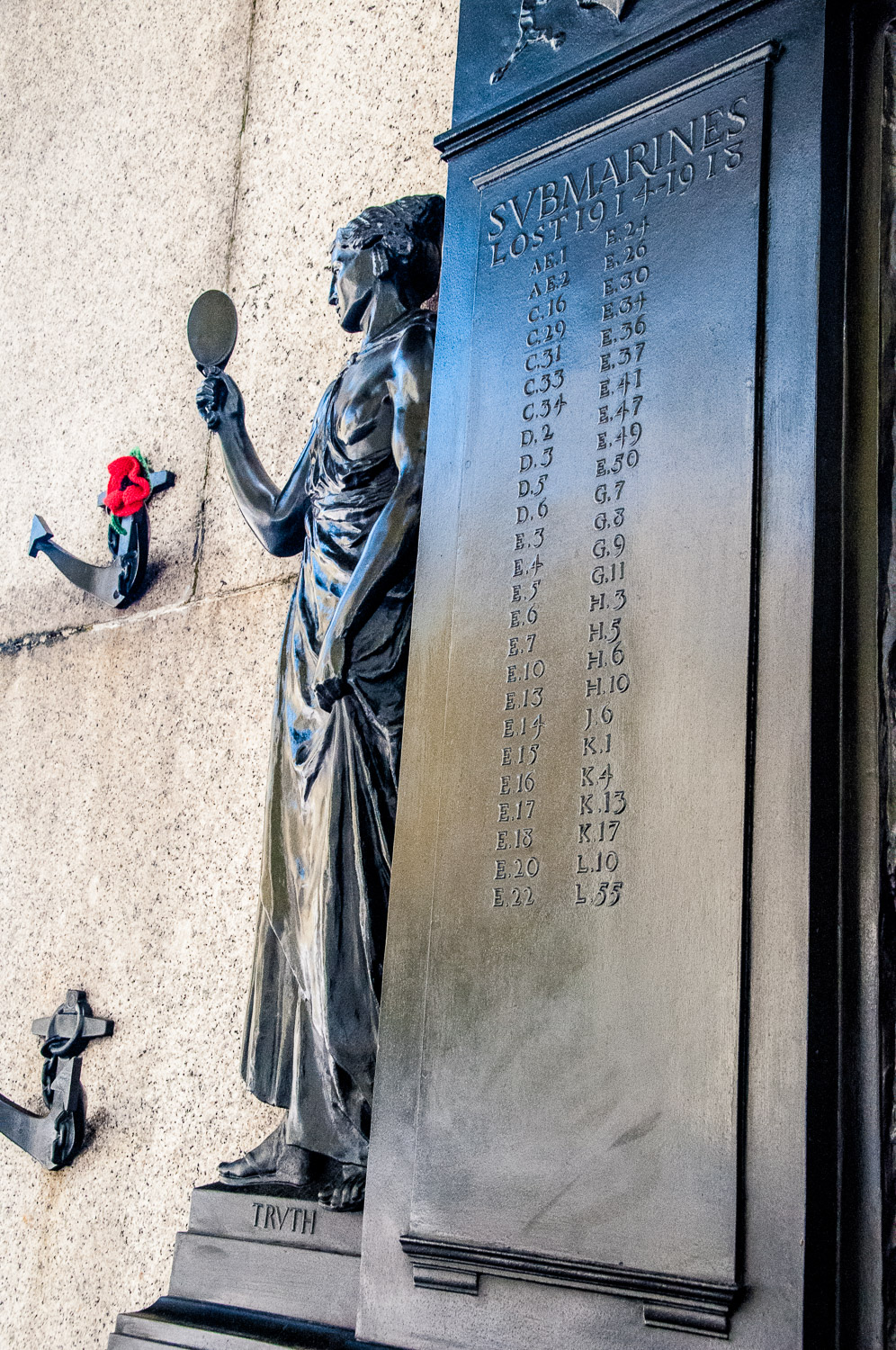
On both corners are allegorical figures. Next to the list of vessels lost between 1914 and 1918, Truth holds up her mirror. Just further to the left in the picture are two of the 40 bronze wreath hooks in the form of anchors …
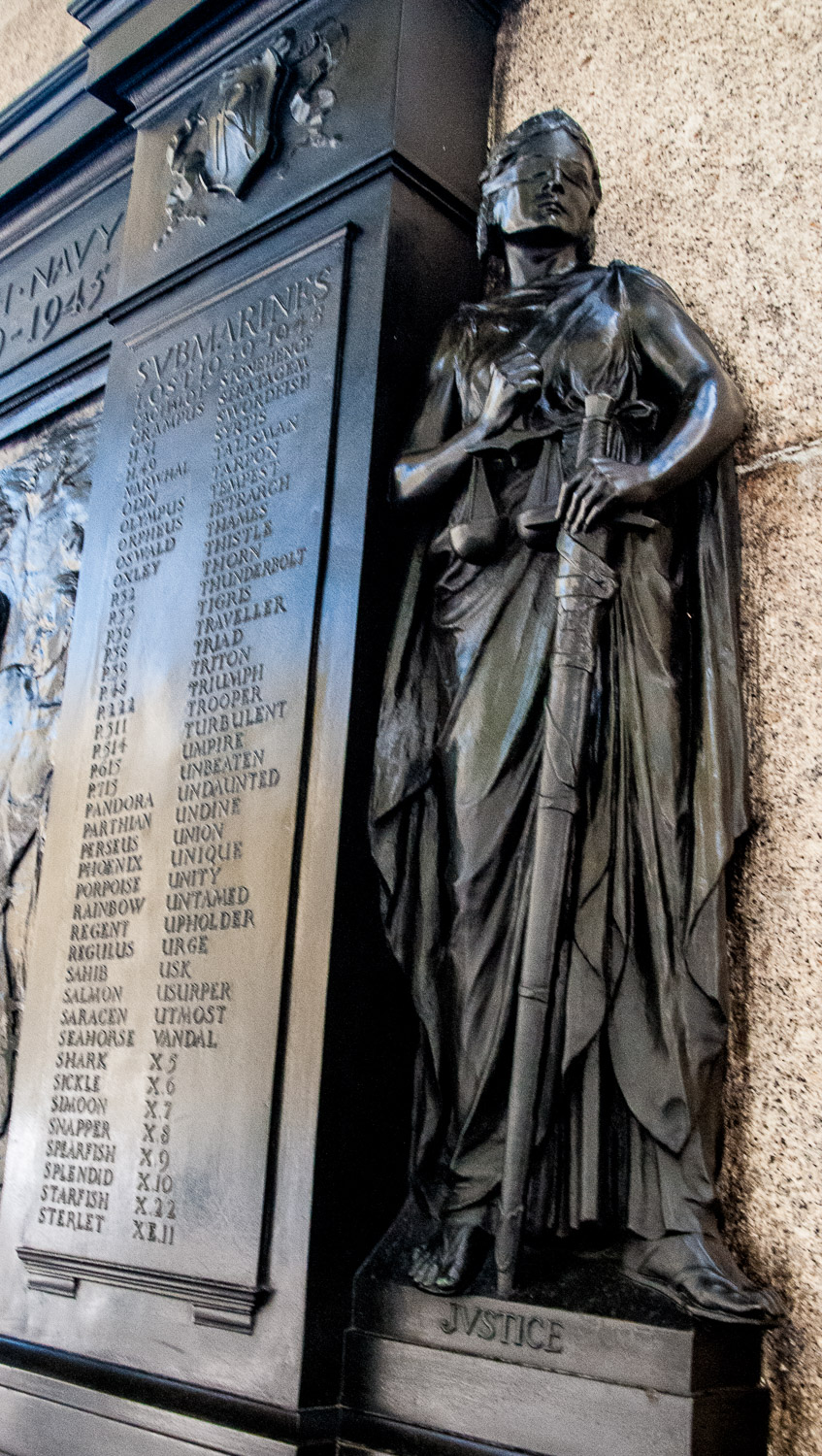
On the right, next to the vessels lost in the Second World War, Justice wears a blindfold and as usual holds a sword and scales …
On a more lighthearted vein, walk east from the Memorial on the north side of the road and you’ll find this chap frantically trying to hail a taxi …
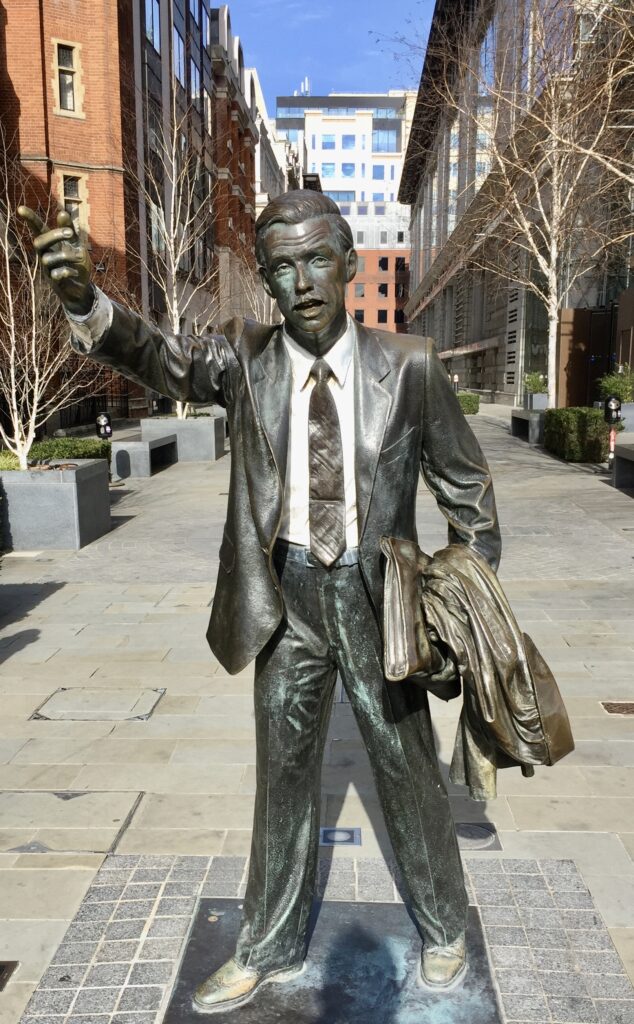
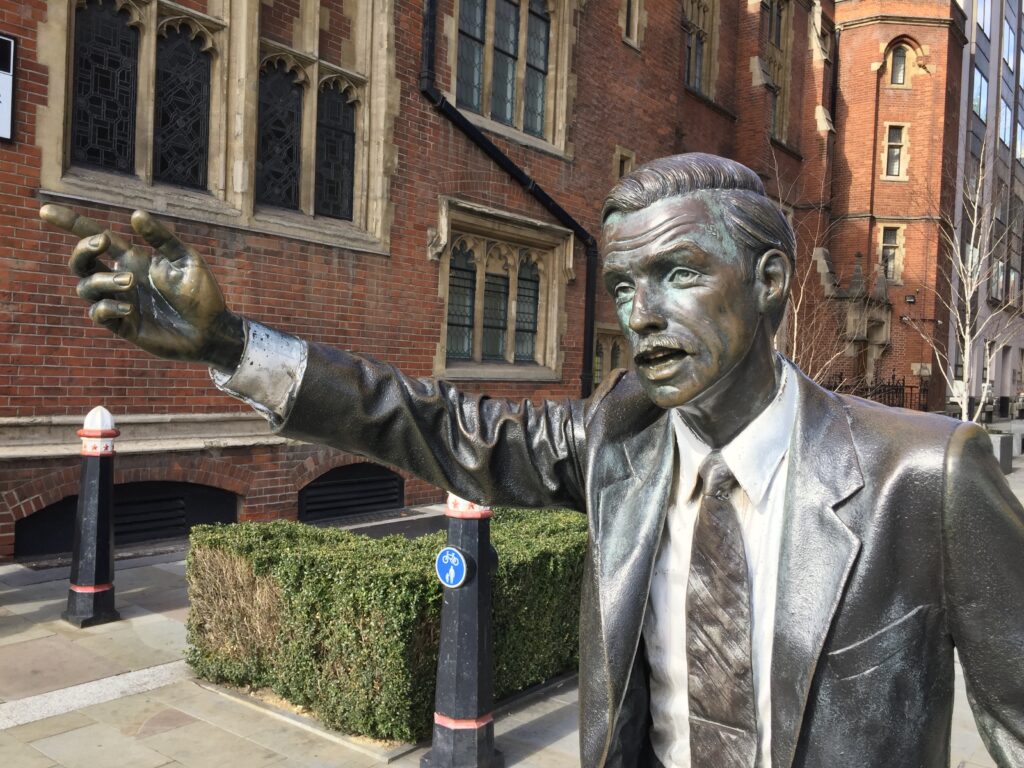
Taxi! by the American Sculptor J Seward Johnson is cast bronze and is now interestingly weathered. If you think the baggy trousers, moustache and side parting are erring on the retro, that’s because this particular office worker was transferred from New York in 2014. It was sculpted in 1983 and originally stood on Park Avenue and 47th Street.

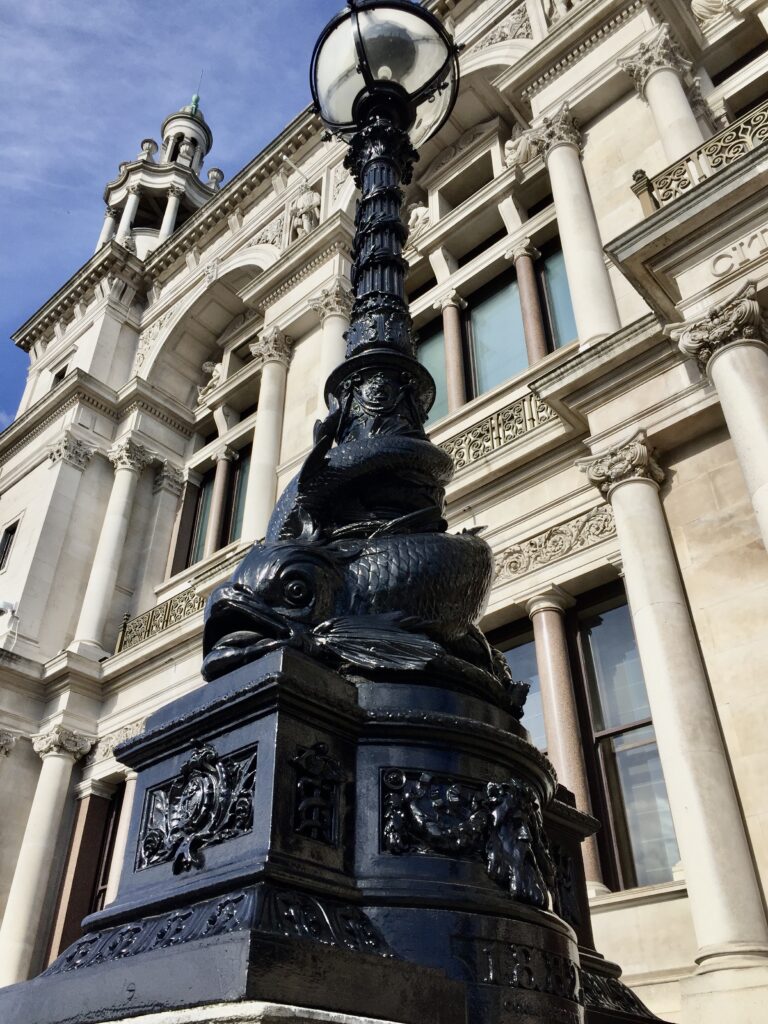
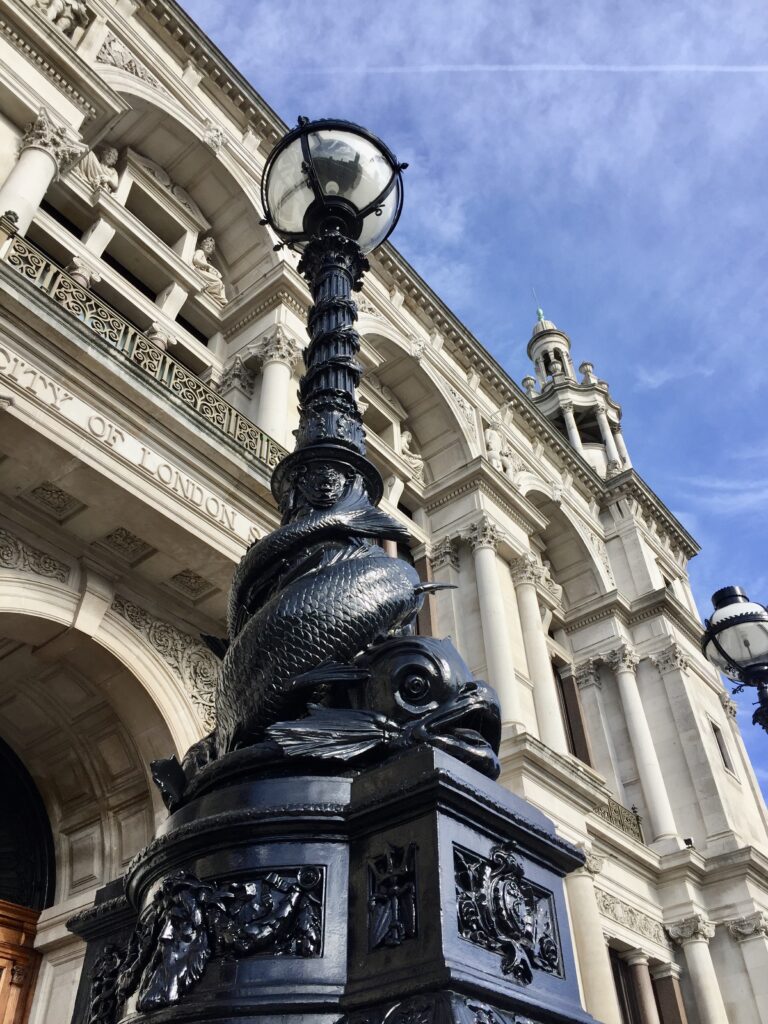
I love this pair of ‘dolphin’ lamps (although they are actually sturgeon) ..
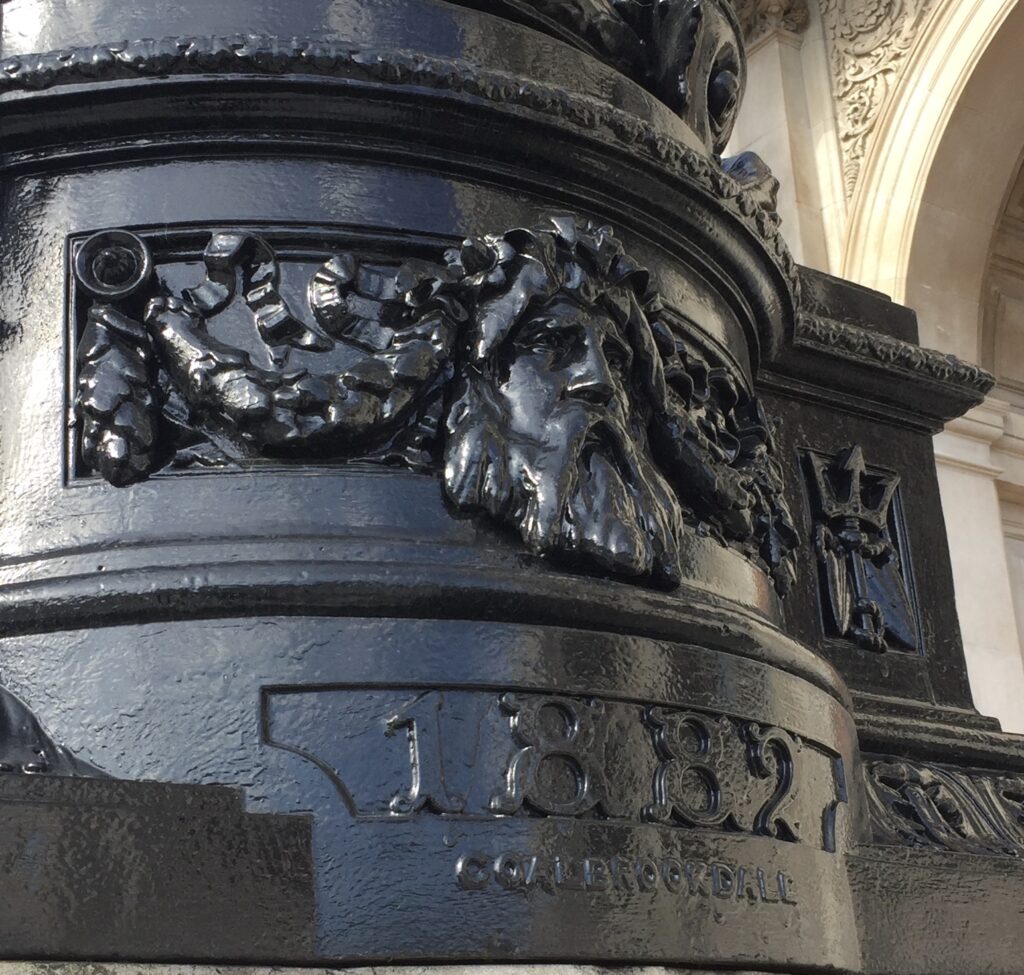
Neptune also makes an appearance …
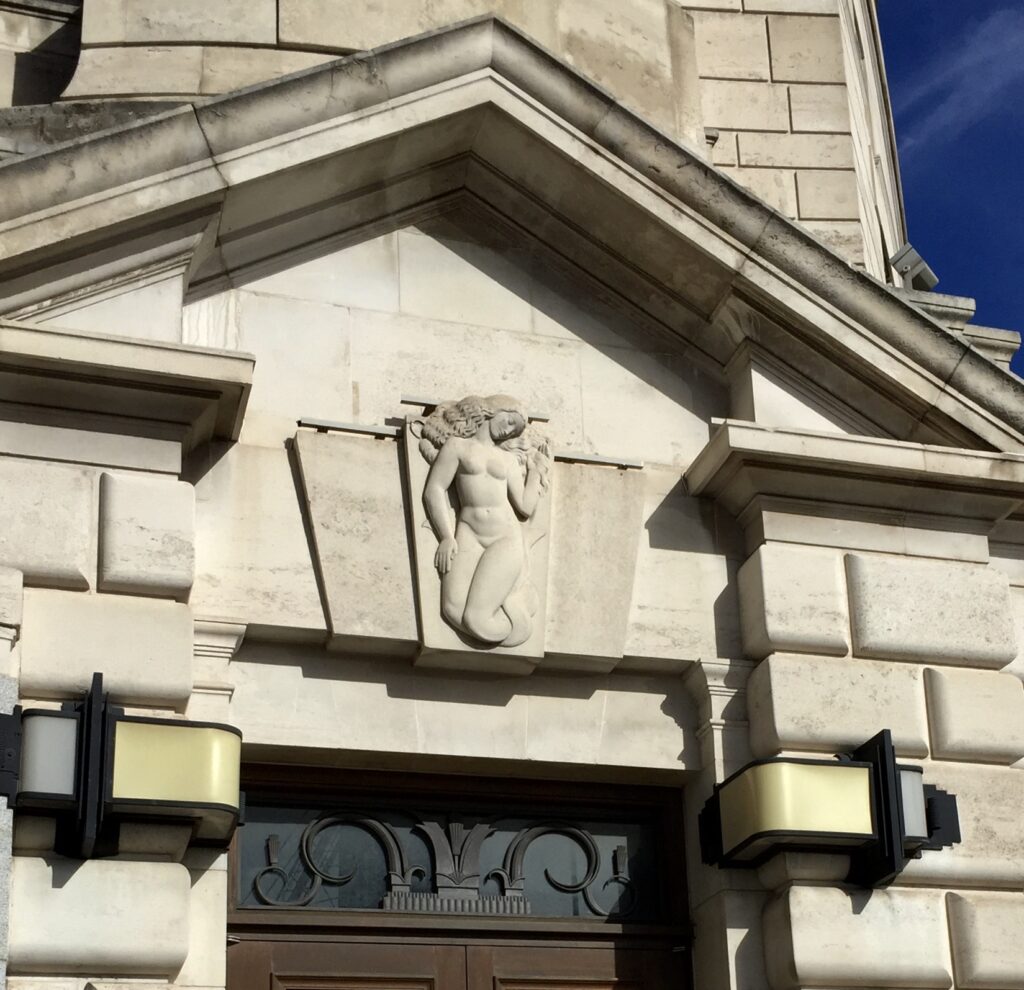
Further east you can wave to the pretty mermaid who embellishes the Art Deco style Unilever Building …
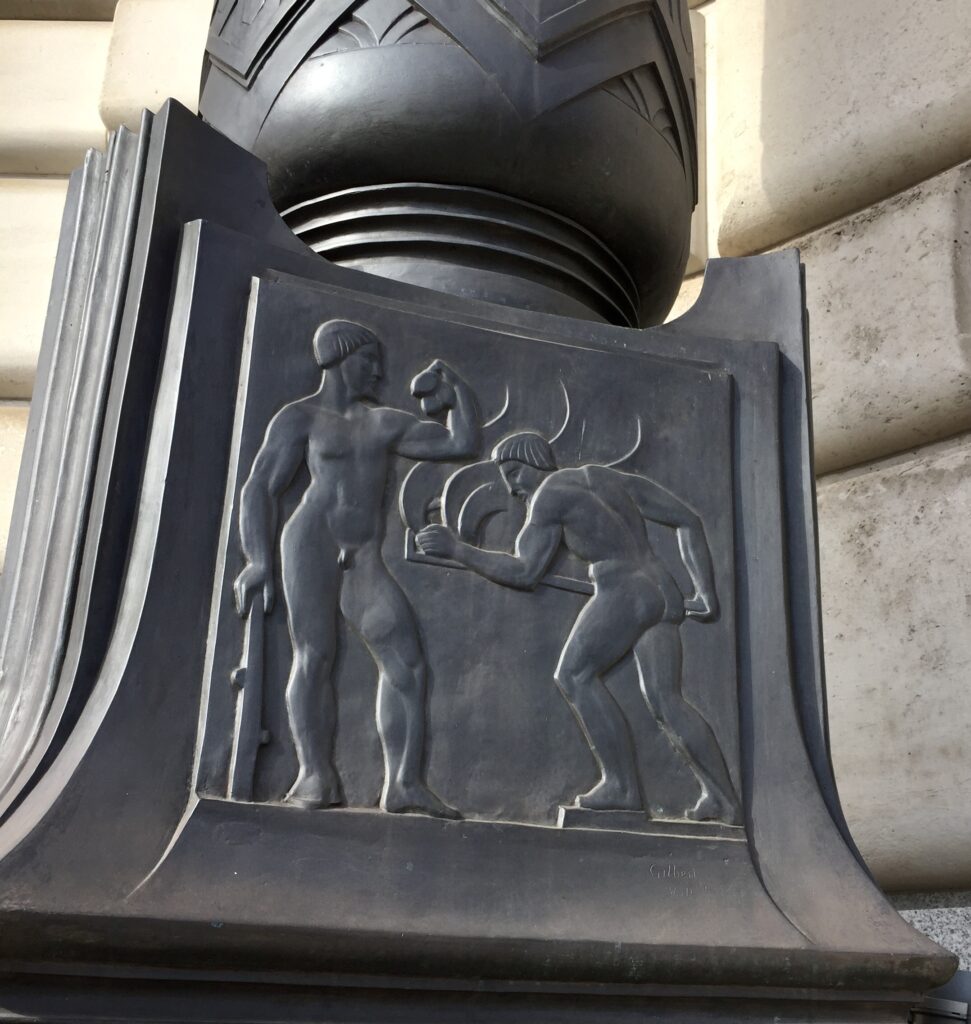
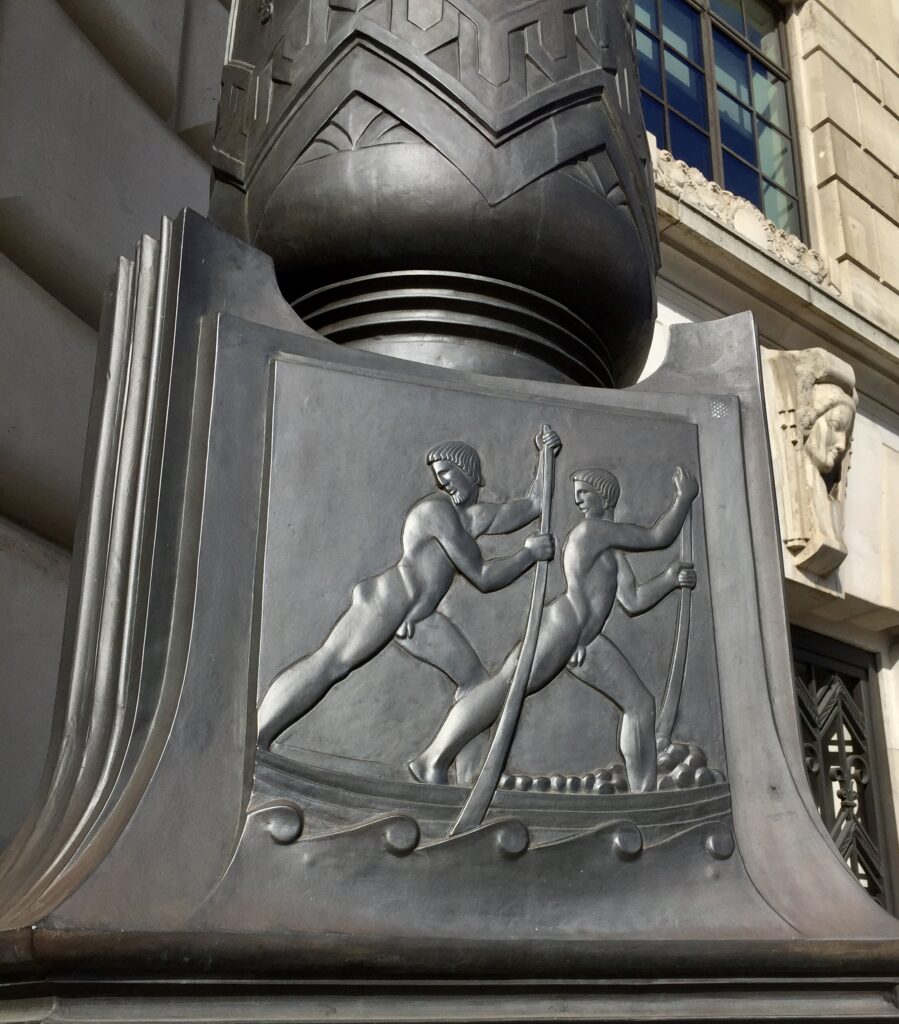
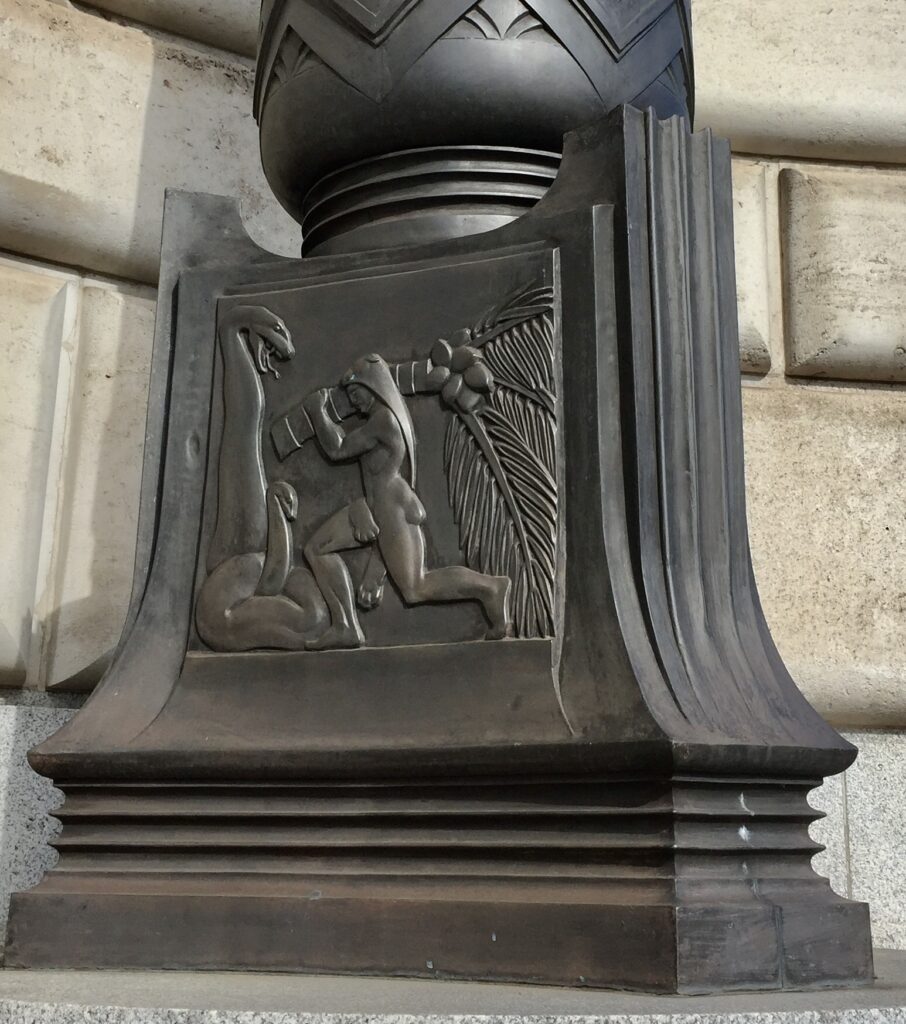
Further along the lamps repay detailed study …
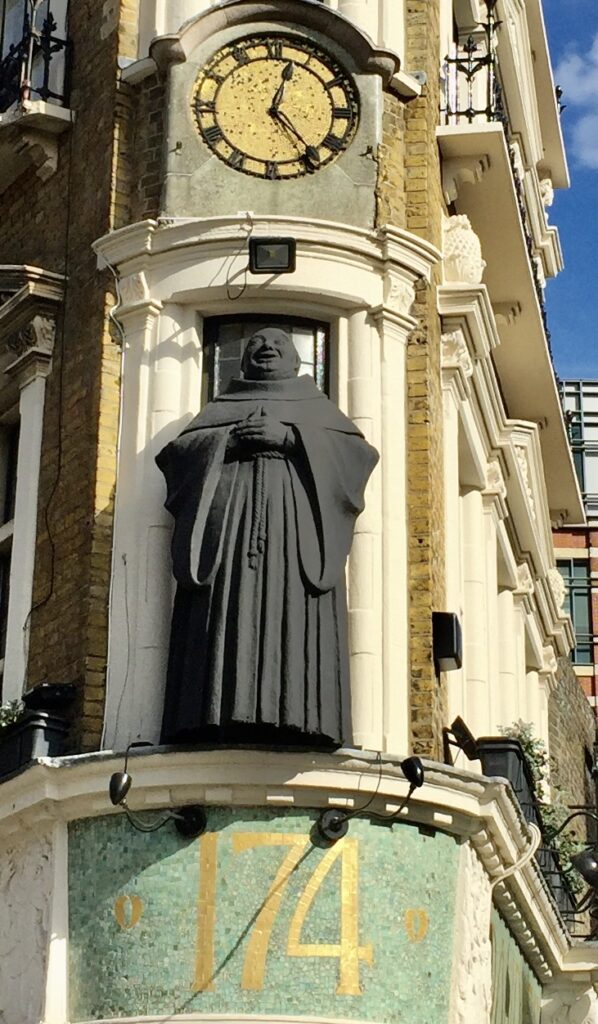
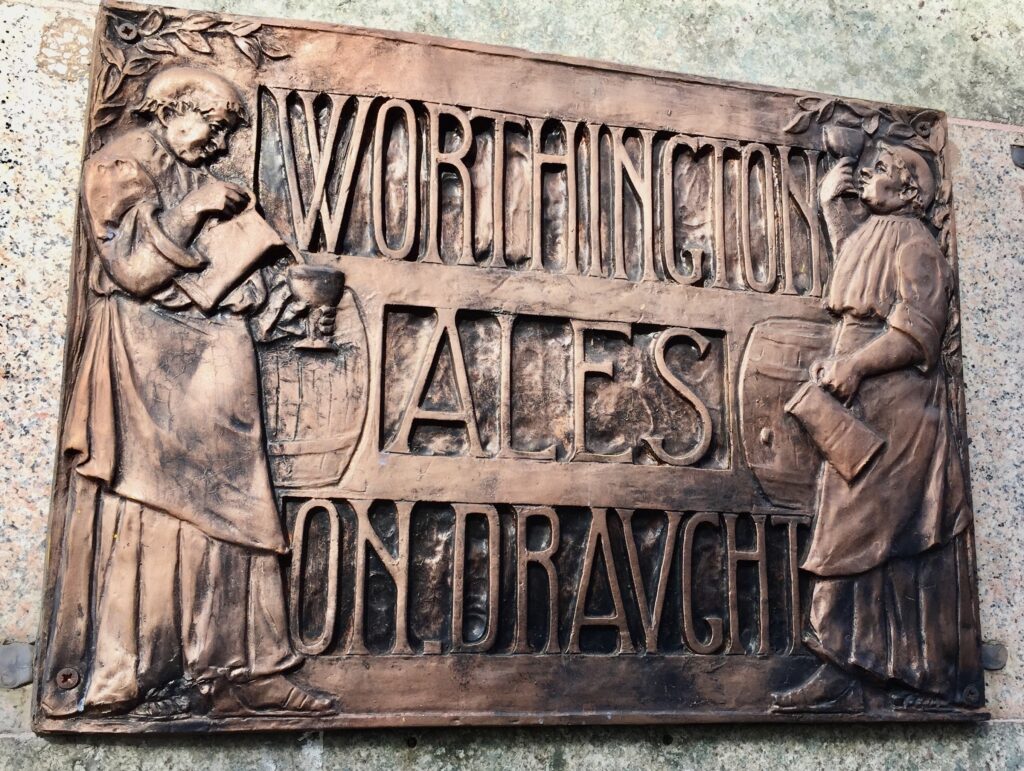
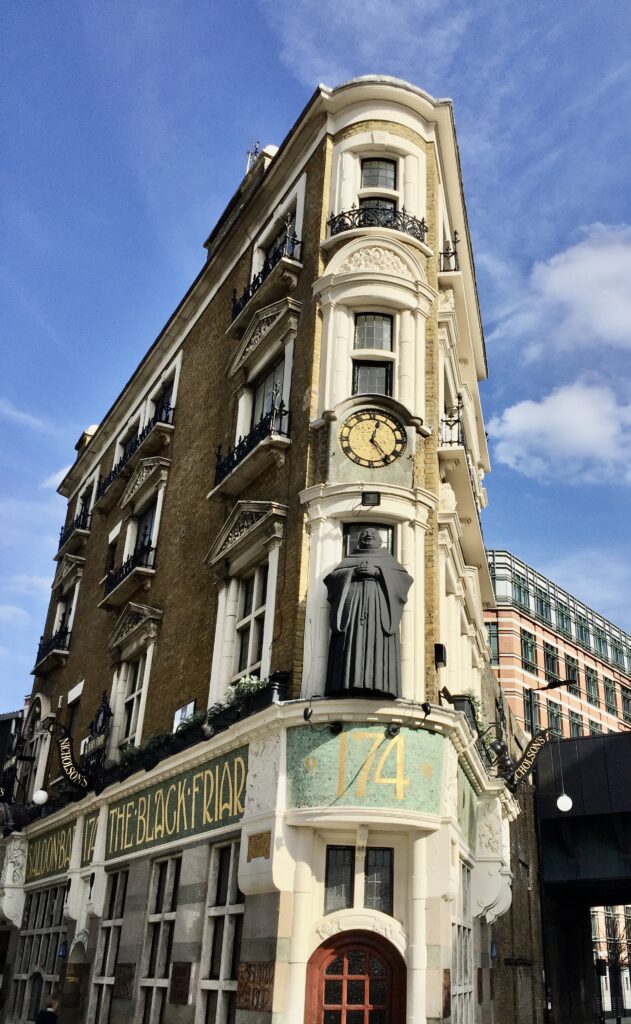
Across the road, a jolly friar looks down from the Blackfriar pub …
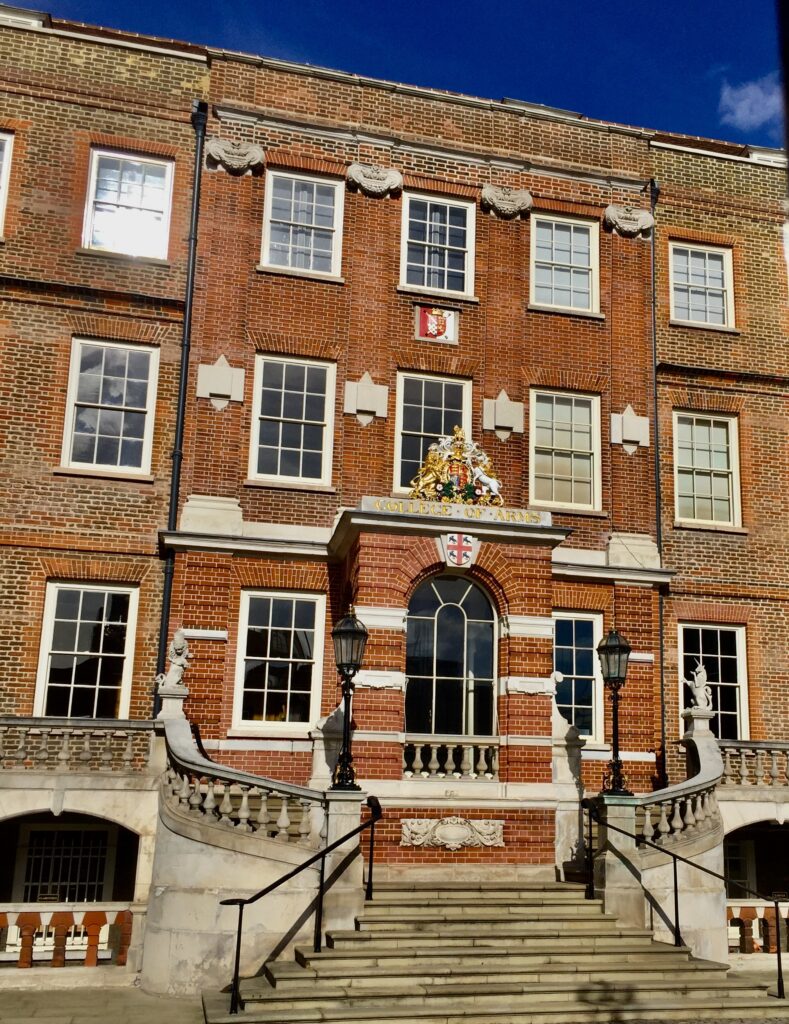
Carry on along Queen Victoria Street and admire the imposing College of Arms building …
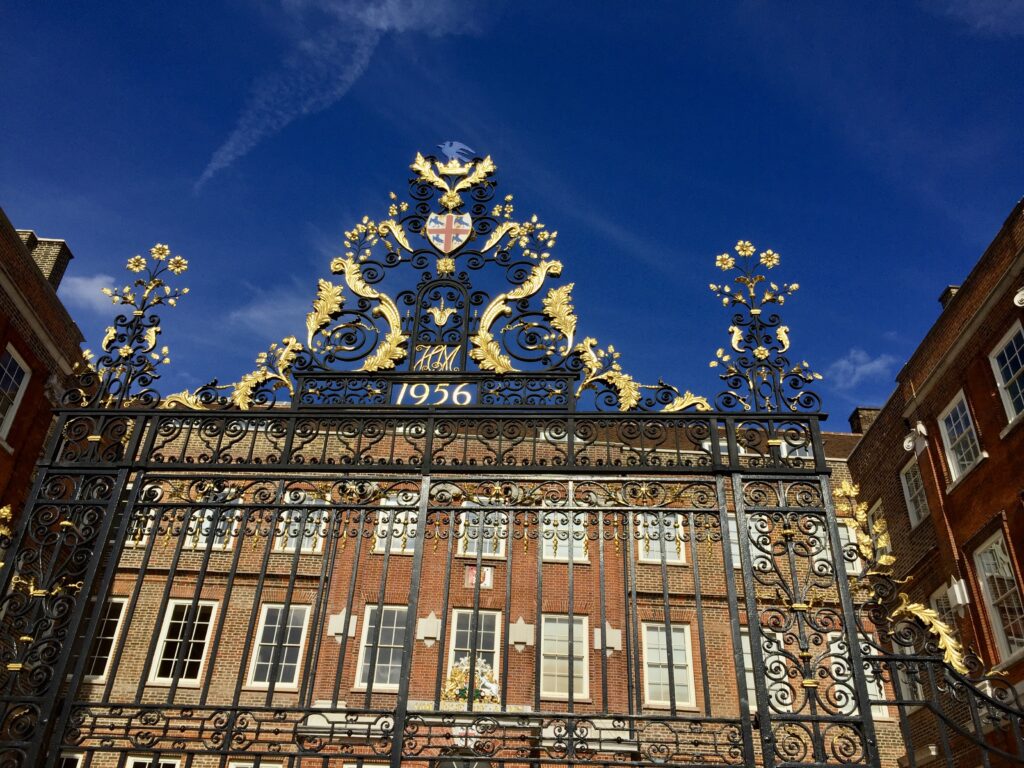
… and its ornate gate …
St Peter’s Hill runs north alongside the College and at the top you will find the Firefighters Memorial. On its octagonal bronze base are the names of the 997 men and women of the fire service who lost their lives during the conflict. The sculpture features two firemen ‘working a branch’, with their legs spread to take the strain of the hose …

A sub-officer directs others to assist. There are clues to the identity of this figure scattered among the debris at the figures’ feet: the letters CTD for C.T. Demarne. At the unveiling, his colleagues from the fire service claimed that there was no need for such clues. One who was interviewed by the Telegraph stated: ‘You can tell it’s Cyril by the way he’s standing…he always waved his arms about like that when he was ordering us about’.
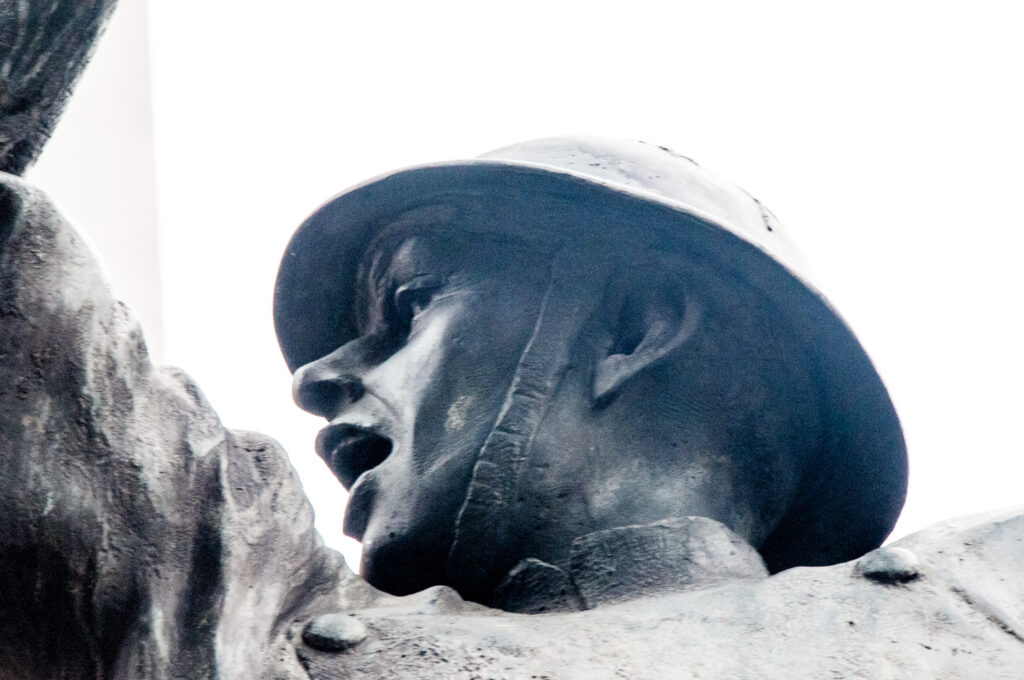
Officer Demarne in full flow.

By 1943 over 70,00 women had enrolled in the National Fire Service in the United Kingdom. This memorial commemorates those who lost their lives in the London bombings …
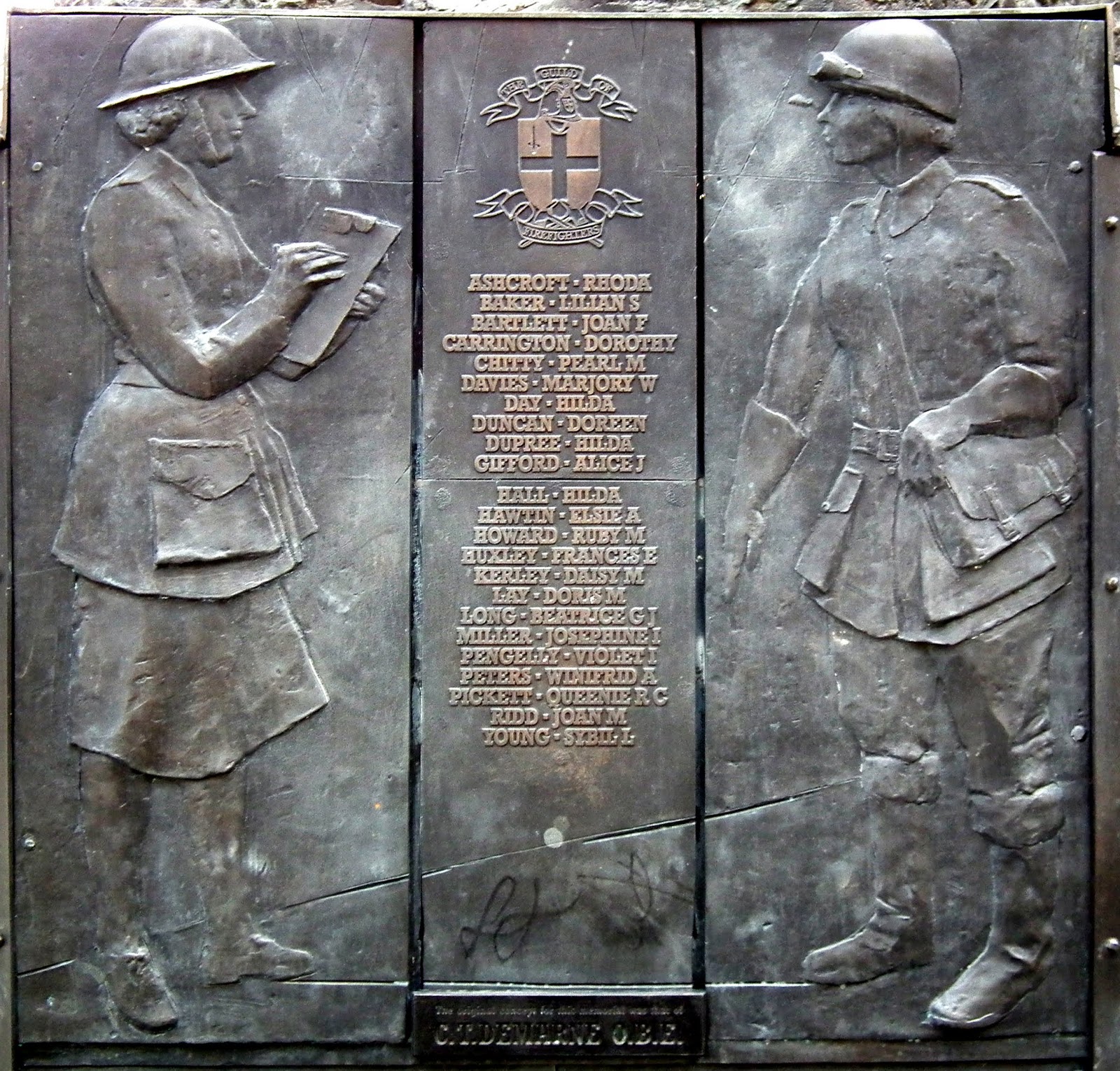
The lady on the left is an incident recorder and the one on the right a despatch rider.

Across the road, just south of the Cathedral, is this rather handsome bearded gentleman …
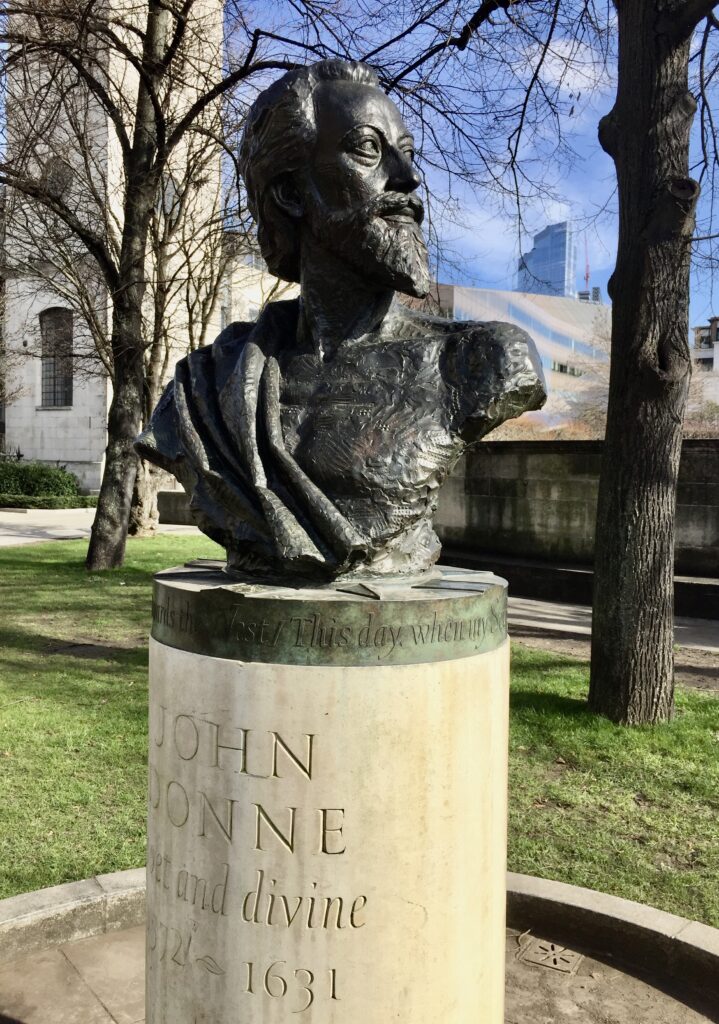
John Donne 1572-1631 by Nigel Boonham (2012).

In 1617, two years after his ordination, Donne’s wife died at age 33 after giving birth to a stillborn child, their twelfth. Grief-stricken at having lost his emotional anchor, Donne vowed never to marry again, even though he was left with the task of raising his ten surviving children in modest financial circumstances. His bereavement turned him fully to his vocation as an Anglican divine and, on November 22, 1621, Donne was installed as Dean of St. Paul’s Cathedral. The power and eloquence of his sermons soon secured for him a reputation as the foremost preacher in the England of his day, and he became a favourite of both Kings James I and Charles I.

His bust points almost due west but shows him turning to the east towards his birthplace on Bread Street. The directions of the compass were important to Donne in his metaphysical work: east is the Rising Sun, the Holy Land and Christ, while west is the place of decline and death. Underneath the bust are inscribed words from his poem Good Friday – Riding Westward :

Hence is’t that I am carried towards the west, This day when my soul’s form bends to the east

The most familiar quotation from Donne comes from his Meditation XVII – Devotions upon Emergent Occasions published in 1624:

‘No man is an island, entire of itself; every man is a piece of the continent, a part of the main … and therefore never send to know for whom the bell tolls, it tolls for thee.’

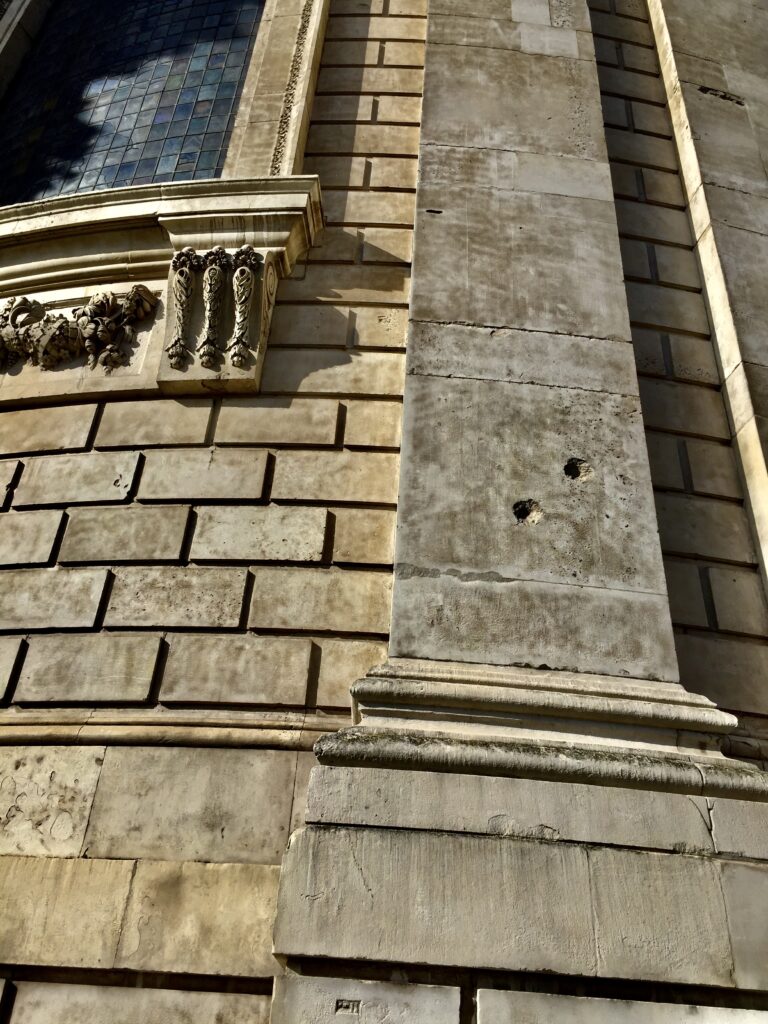
Incidentally, if you walk around the east side of the Cathedral you will see scars from the Second World War bombing which illustrate just how close the building came to destruction …
If you would like to follow me on Instagram here is the link …
https://www.instagram.com/london_city_gent/

Courts, alleys and a green elephant

Every time I walk along Fleet Street I find something to write about.

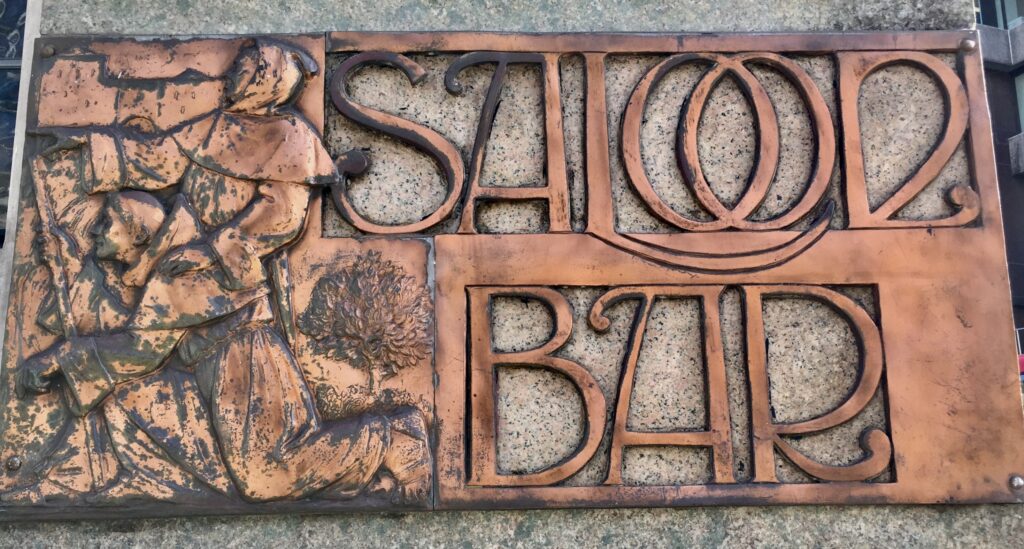
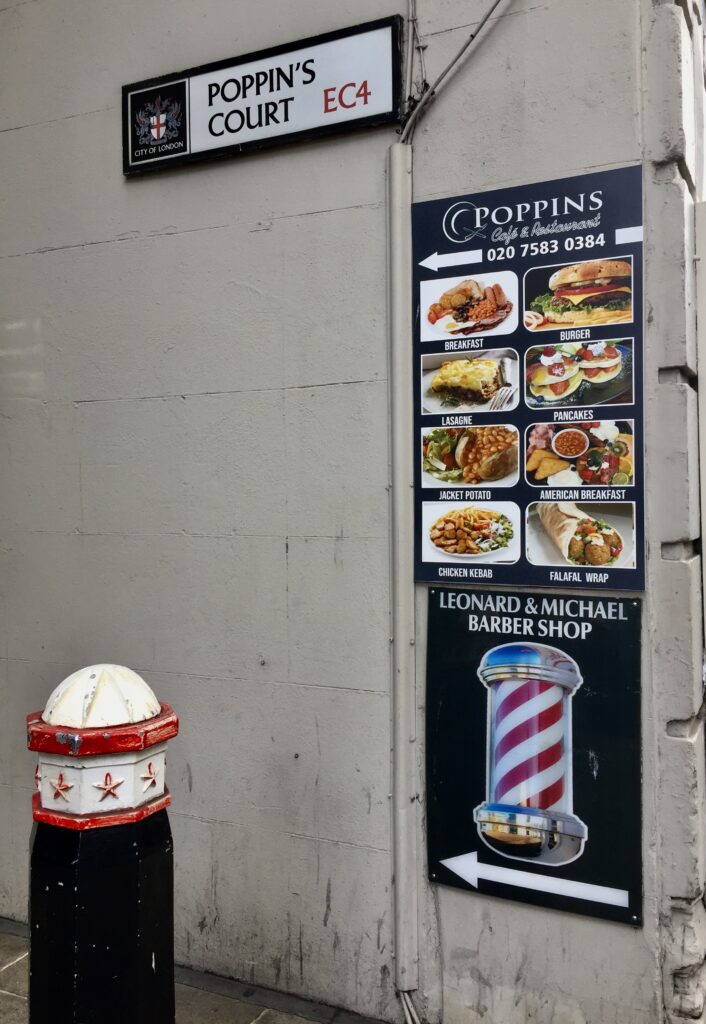
This week I decided to take another look at the courts and alleys starting with the curiously named Poppin’s Court (a good name for the restaurant). The wallsign gives tourists a visual clue as to what’s on offer, yummy!) ..

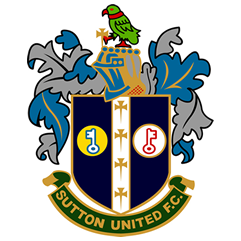
According to The London Encyclopaedia, the abbots of Cirencester, whose crest included a popinjay or parrot, had a town house here in the early 14th century called Le Popyngaye and the name stuck. If this is correct, the apostrophe in the current name is not really appropriate, giving the impression that someone called Poppin used to live there. Or possibly that the court is named after the restaurant. There used to be a stone relief of a parrot over the court’s entrance but this has disappeared.

I was curious to know what a coat of arms with a parrot on it looked like and I found one, on the crest of Sutton United Football Club of all places …

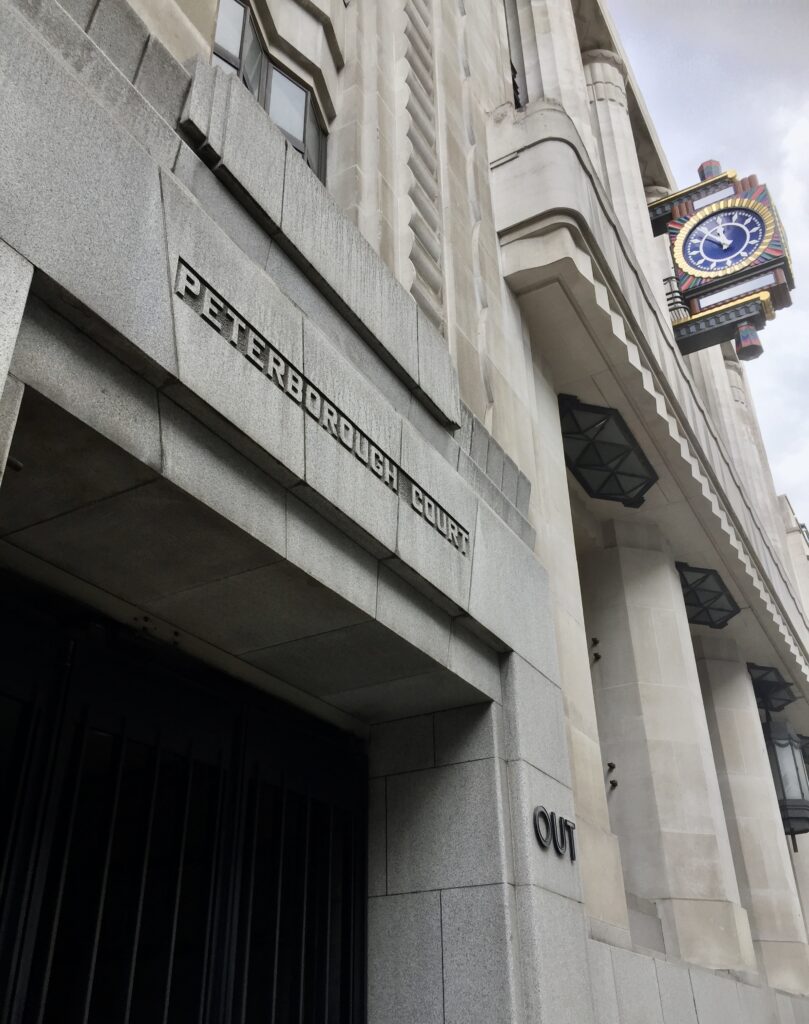
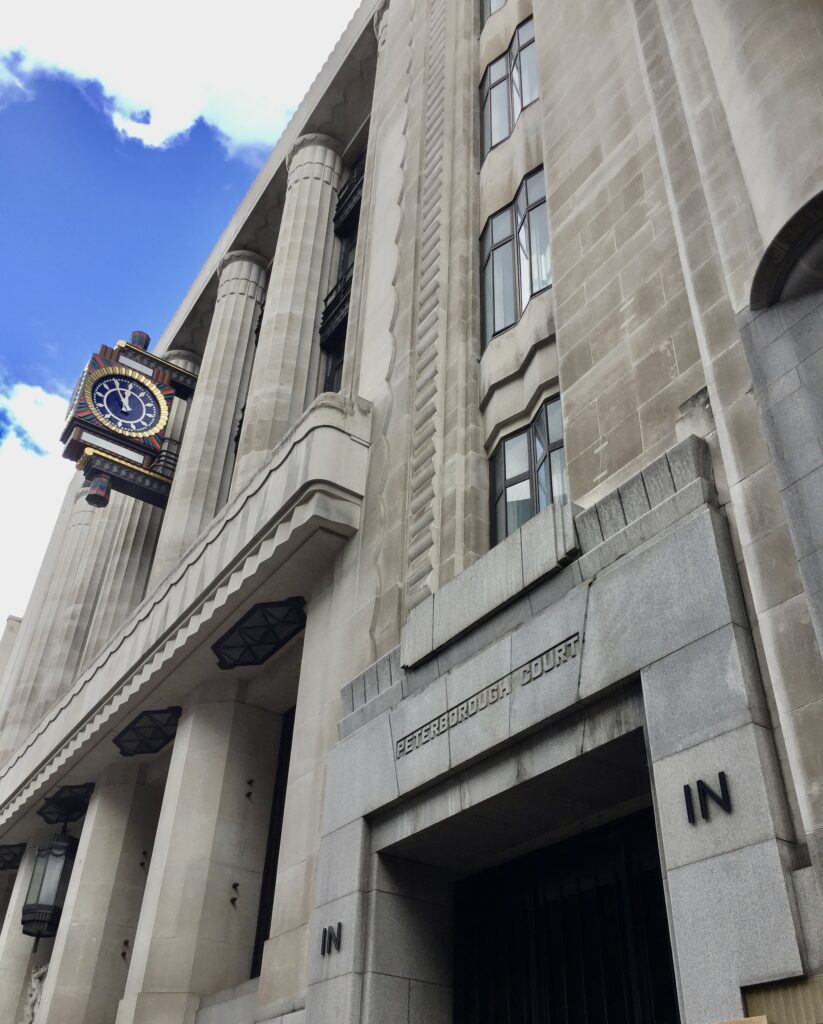
Further west is Peterborough Court, with its ‘IN’ entrance …

… and ‘OUT’ exit …

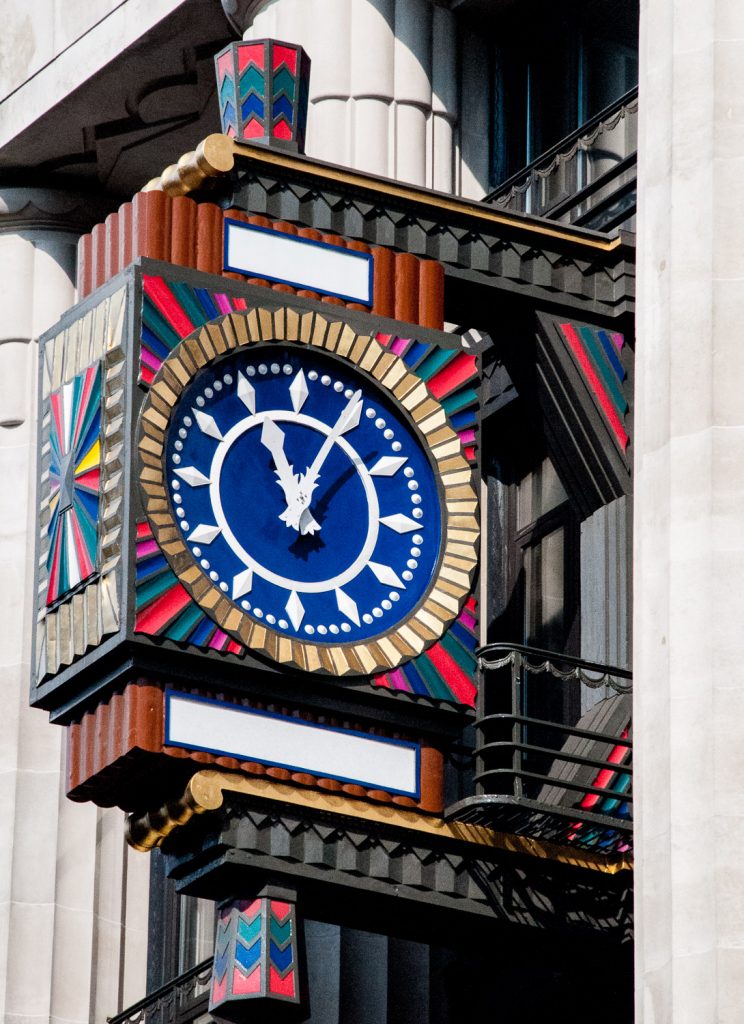
The Court is named after the Bishop of Peterborough who owned the land in the 14th century. Described as ‘An Art Deco Temple to Journalism’, the Portland Stone building dates from 1928 and was the home of the Daily Telegraph. The newspaper moved out in 1987 and eventually Goldman Sachs International leased the building at a cost of £18 million a year. The lease runs out in 2021 and I think they have already vacated the building since it looks a bit sad and neglected. There was talk last year of it becoming another WeWork site but who knows in the current economic climate. The lovely Art Deco clock usually makes me smile …

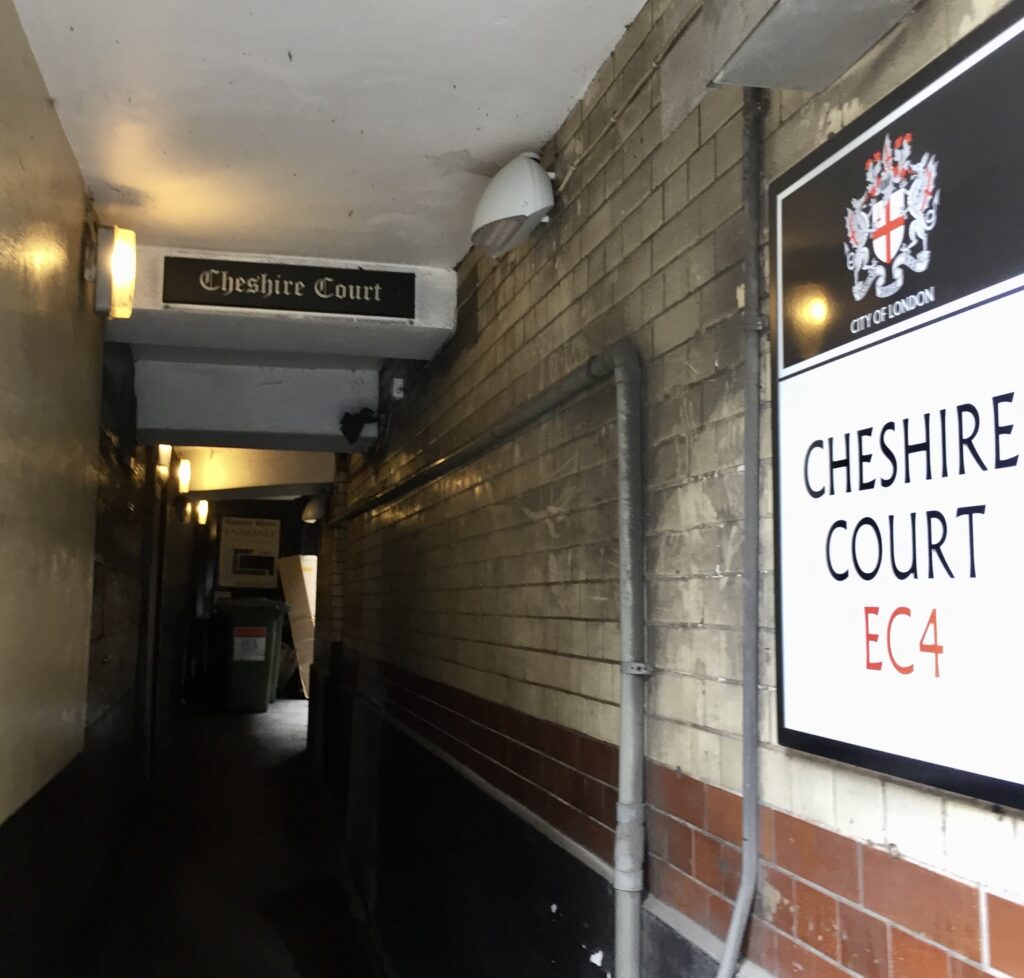
Cheshire Court is modest, but its fame comes from its neighbour, Ye Olde Cheshire Cheese – a pub which has been recorded on this location since at least 1538, although it’s original name was probably the Horn Tavern …

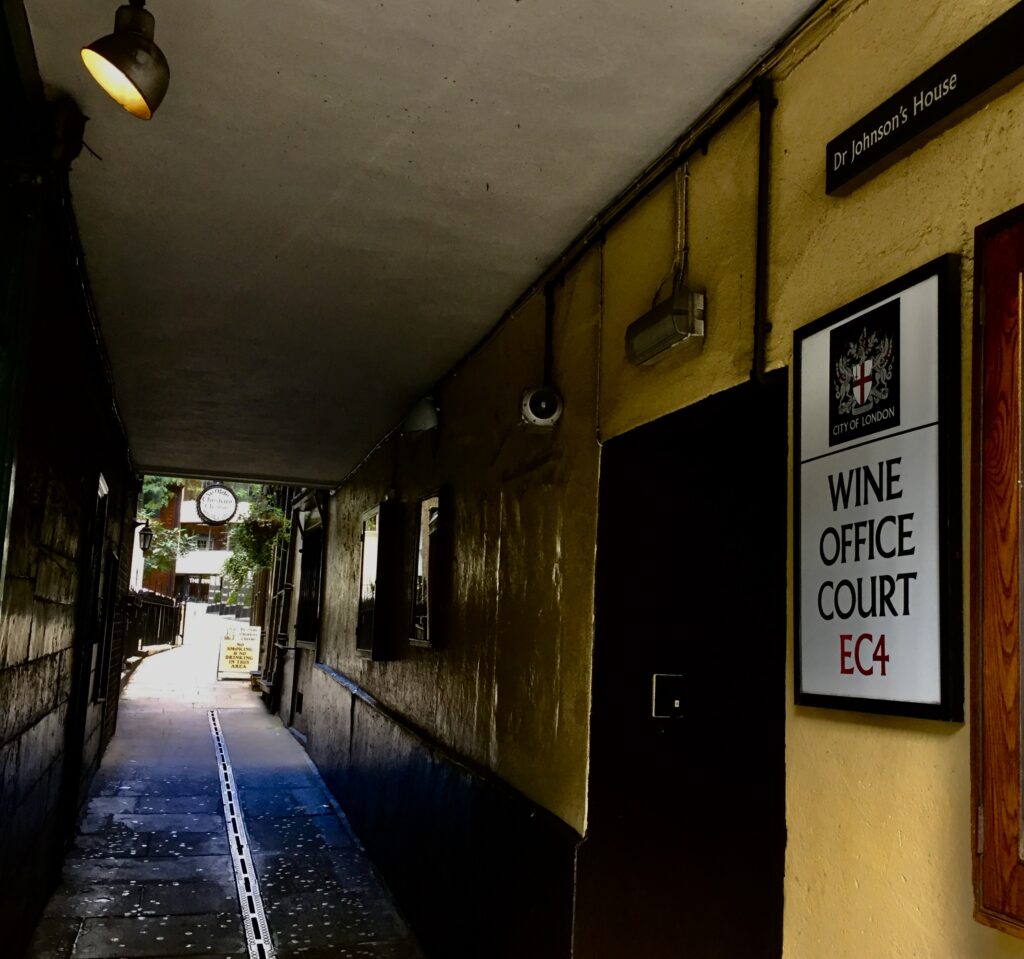
Wine Office Court is so named because licences for selling wine were issued at premises here. That’s the entrance to Ye Olde Cheshire Cheese on the right …

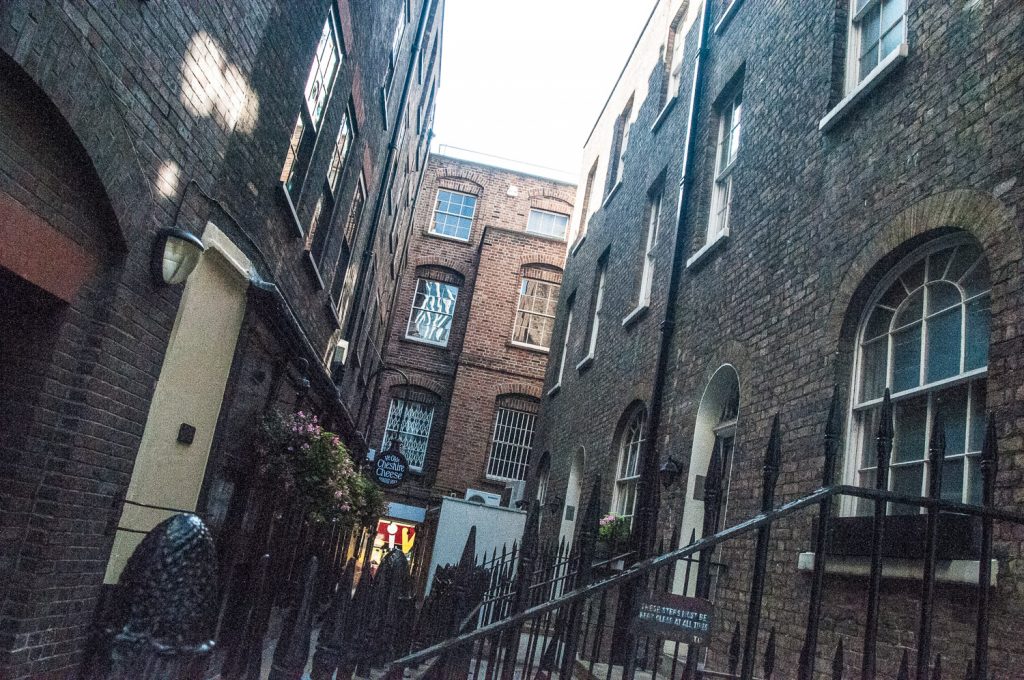
The view looking towards Fleet Street …

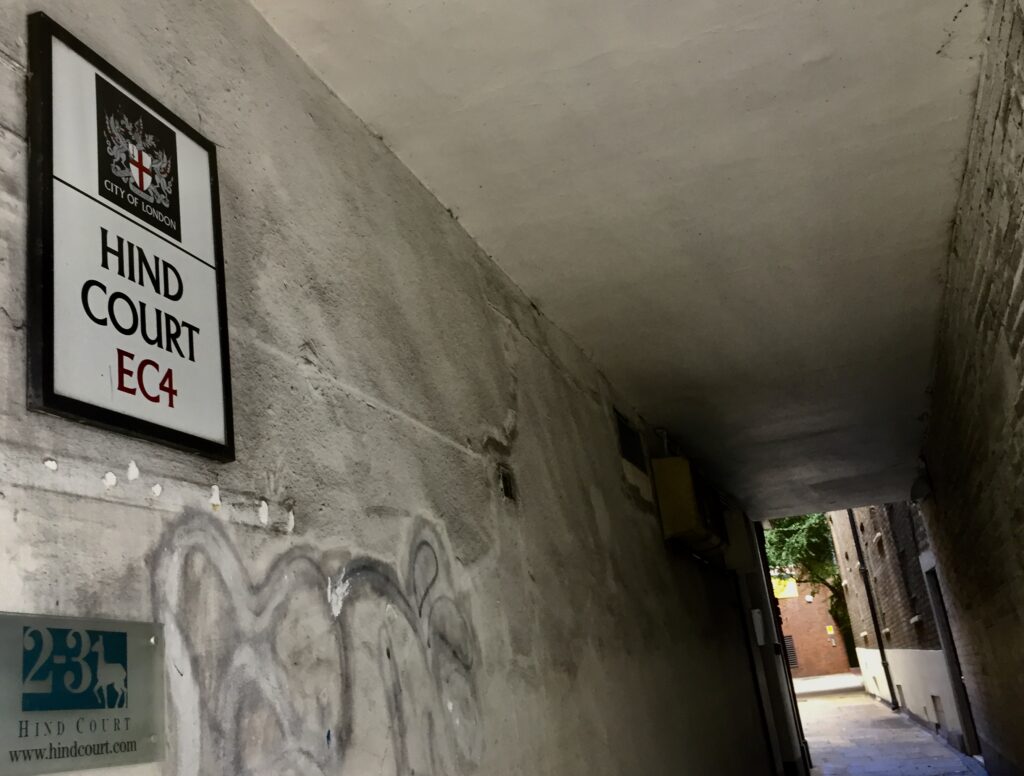
I can’t find out much about Hind Court, it’s possibly named after a tavern …

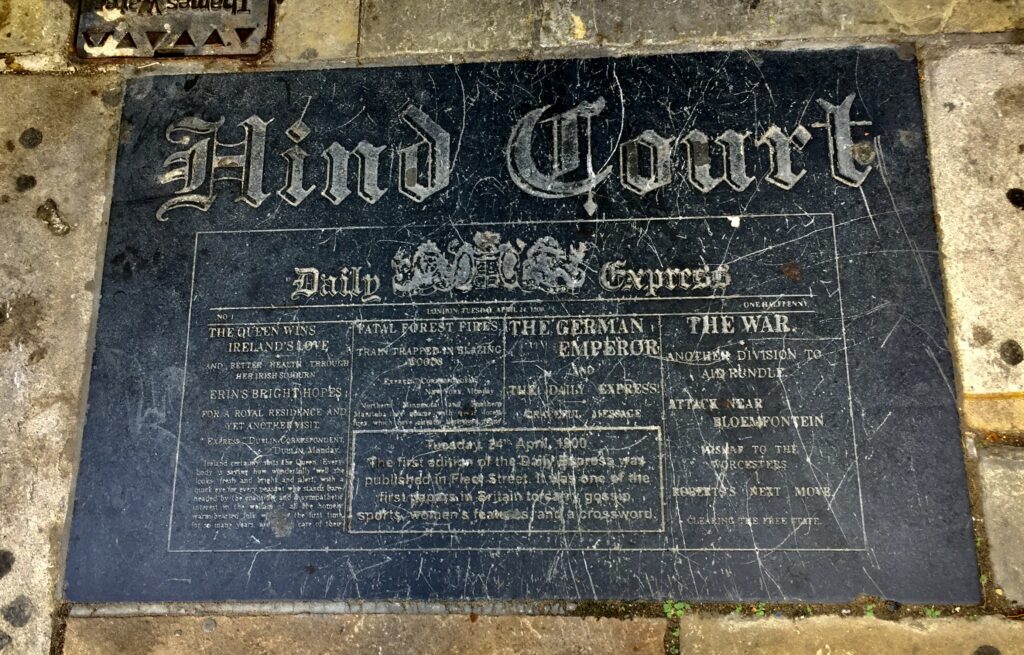
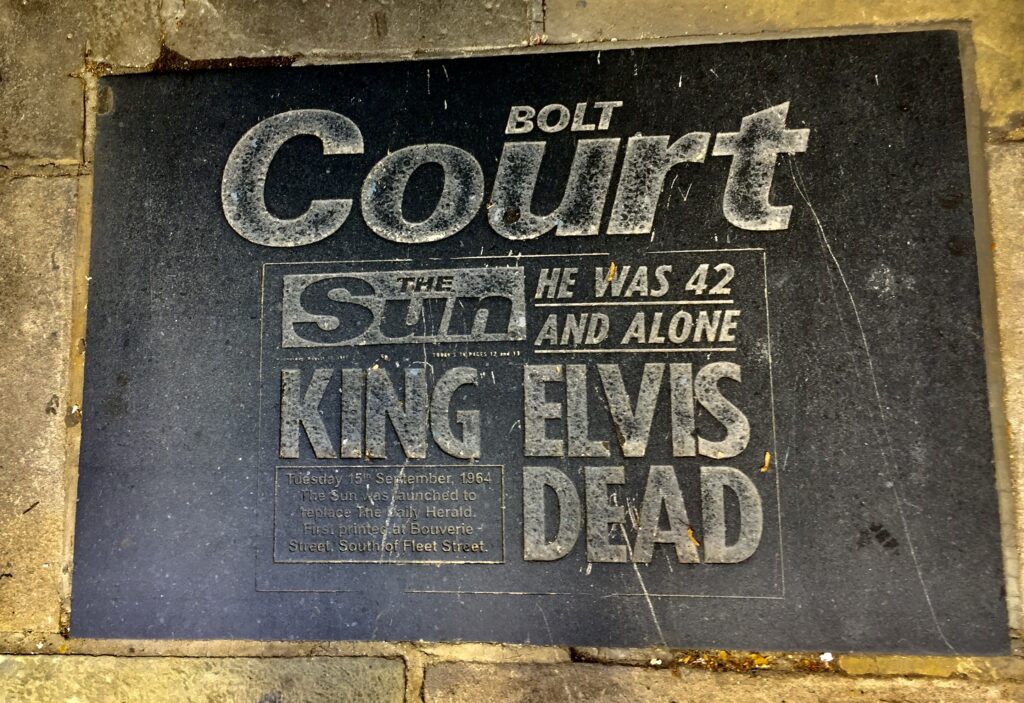
Many of the courts have a plaque at the entrance. This one shows a facsimile of the front page of the first edition of Daily Express dated Tuesday 24th April 1900 …

The note in the box reads …

The first edition of the Daily Express was published in Fleet Street. It was one of the first papers in Britain to carry gossip, sports, women’s features and a crossword.

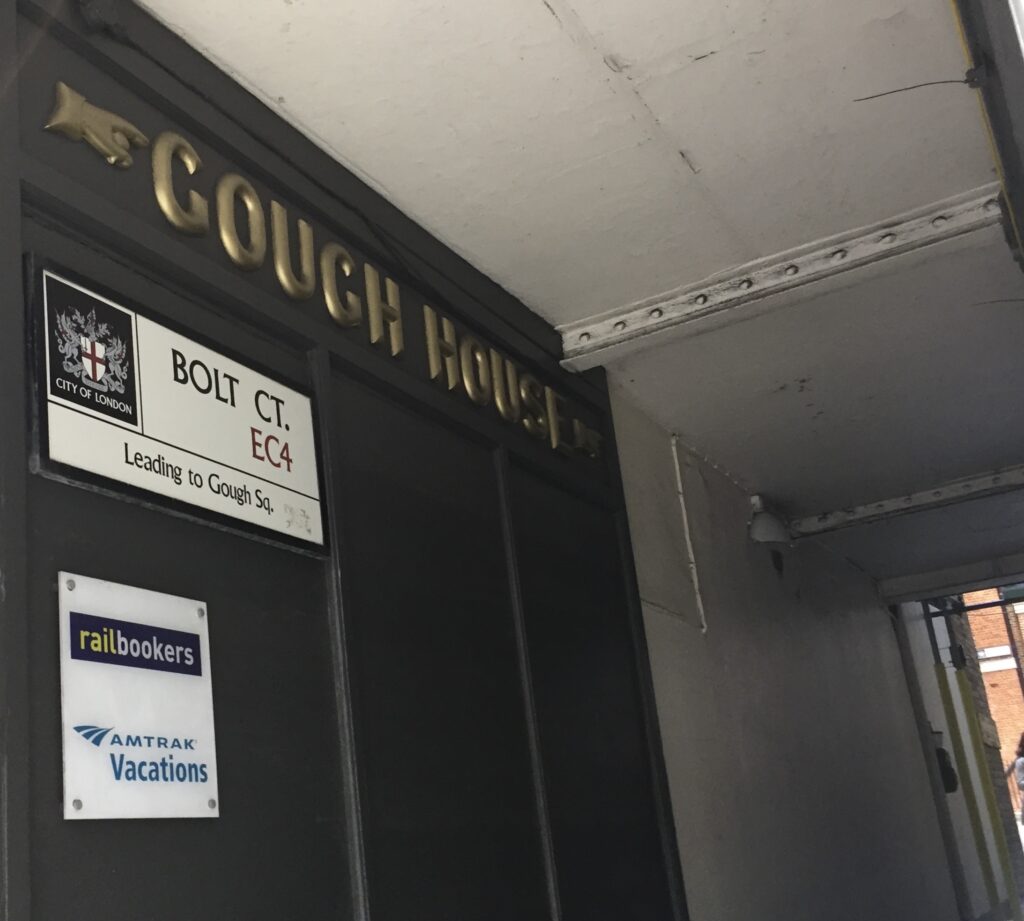
Bolt Court is probably named after another vanished inn, the Bolt-in-Tun, and Dr Johnson lived here at number 8 from 1776 to when he died in 1784. The house was lost in a fire in 1819 …

At the entrance is a facsimile of the front page of The Sun newspaper dated 15th September 1984 …

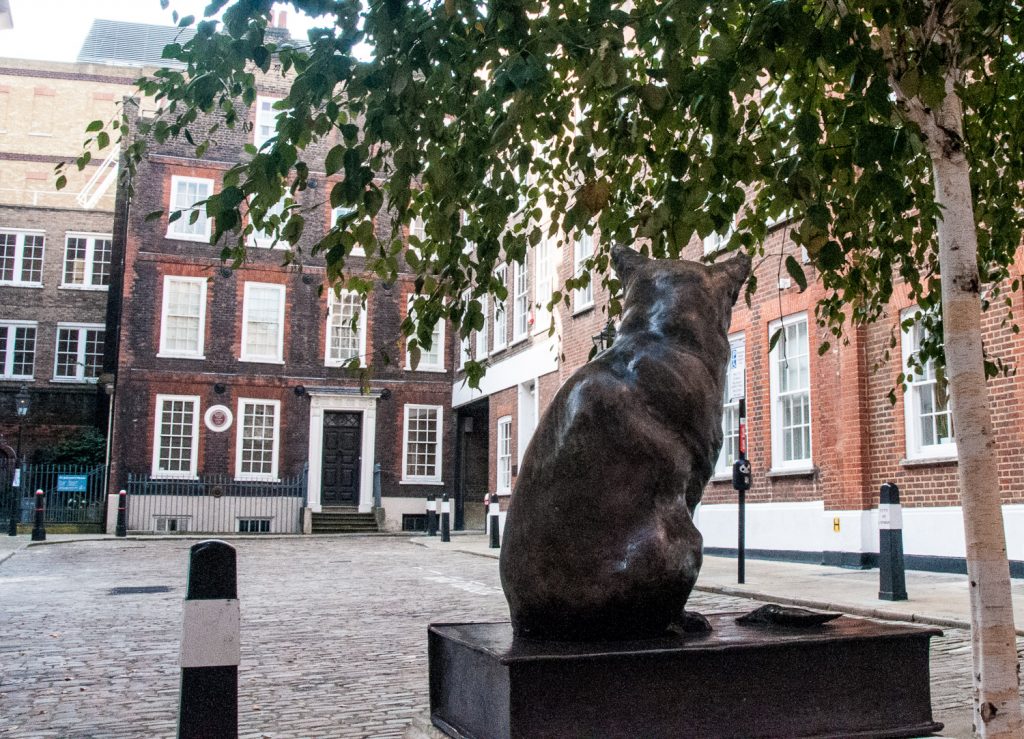
Bolt Court leads to Gough Square where another house that was occupied by Dr Johnson has survived. There is also a sweet sculpture of his cat Hodge looking towards his old home …

I’ve written more about the Square and Hodge in this blog entitled City Animals 2.

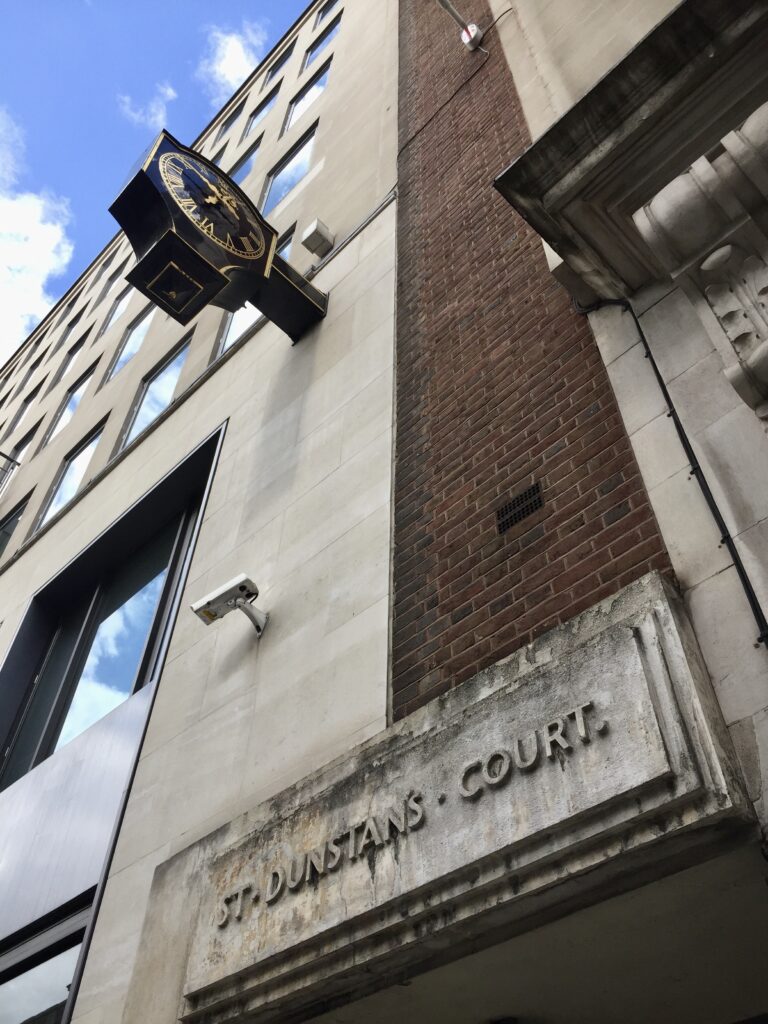
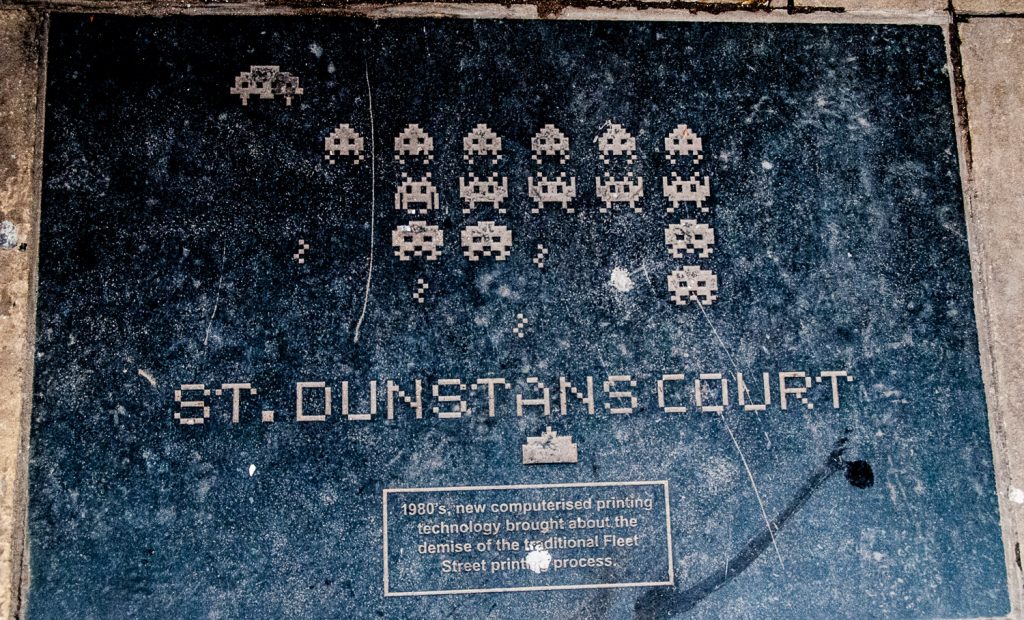
St Dunstan’s Court references the nearby church, St Dunstan-in-the-West …

At its entrance computerisation in the printing industry is illustrated, a bit bizarrely I think, by the Pac-Man game …

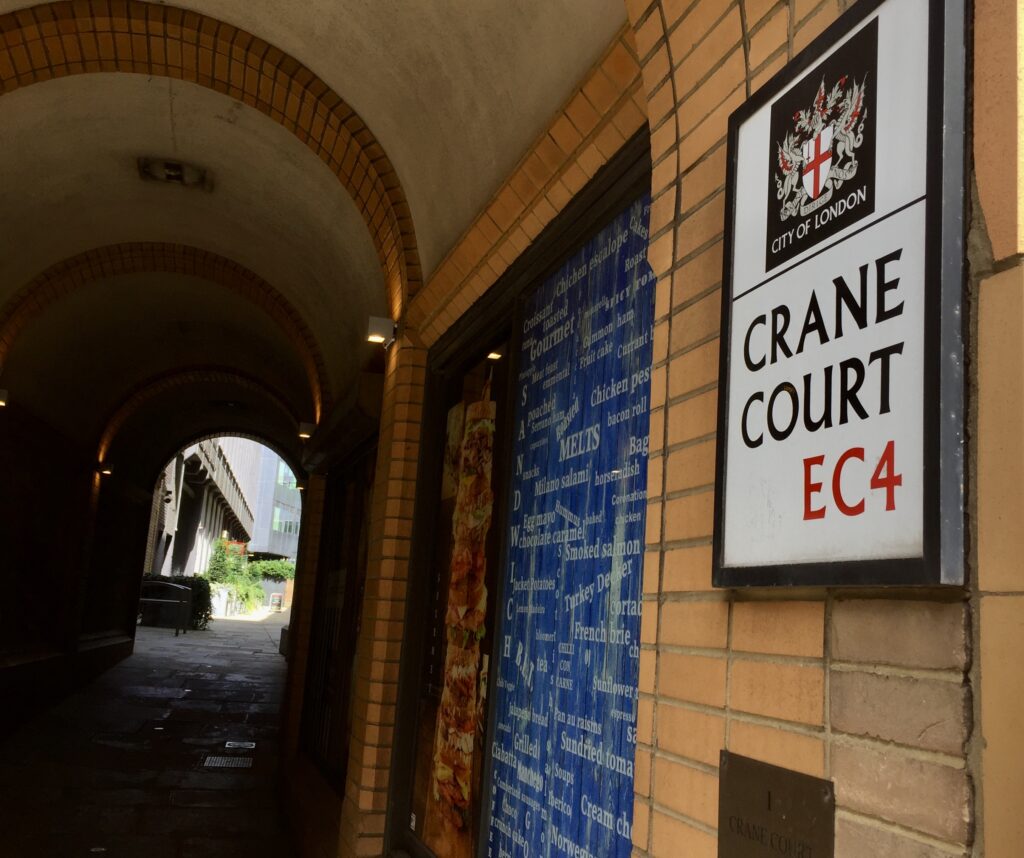
The Royal Society met in Crane Court from 1710 until they moved to Somerset House in 1780 …

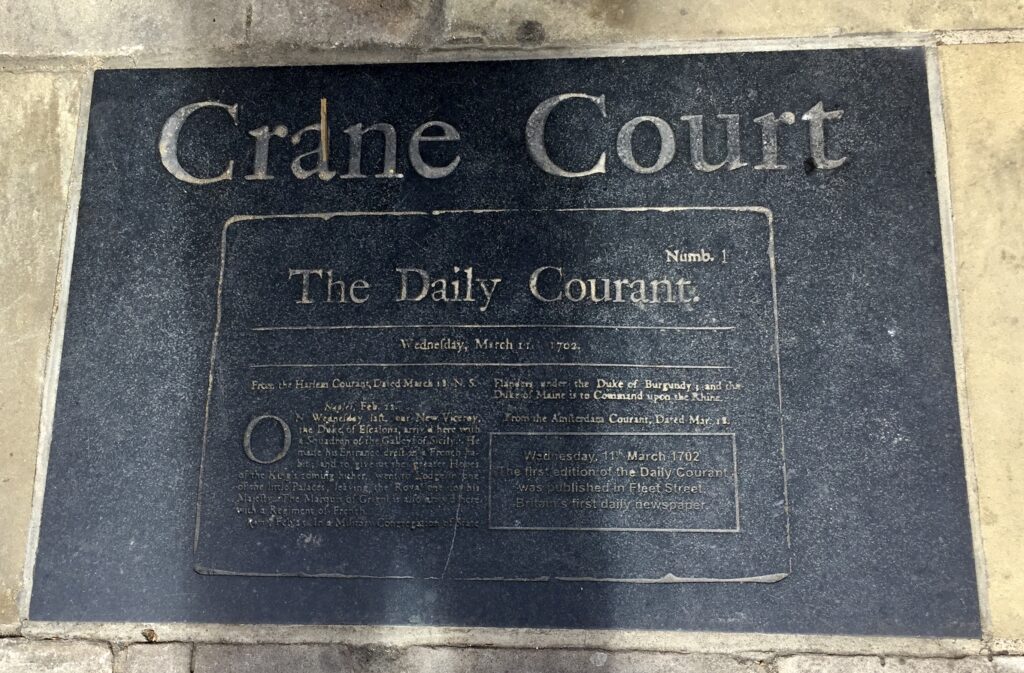
The plaque shows a facsimile of the front page of the Daily Courant dated Wednesday March 11, 1702 …

It was Britain’s first daily newspaper.

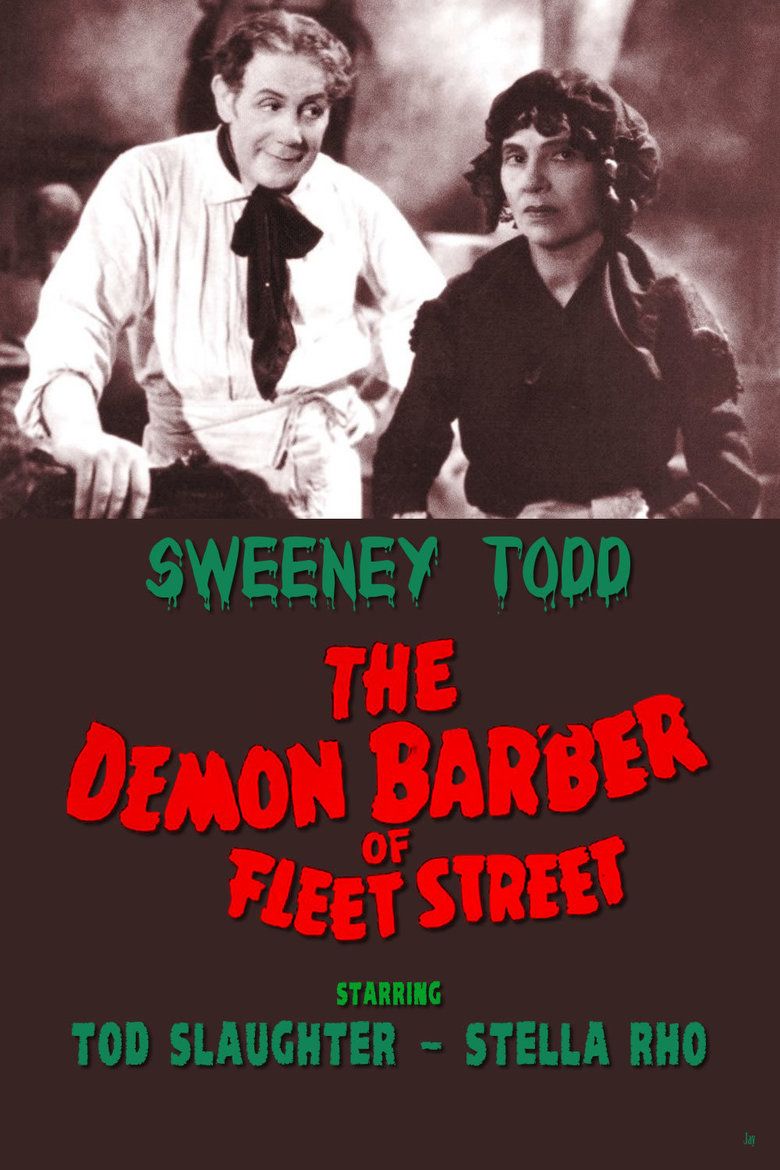
 On 14 April 1785 it ran a story about a man murdered after a visit to the barber. Some claim that this was the inspiration behind Victorian penny dreadful Sweeney Todd (allegedly a resident of 183 Fleet St) and the spawning of lots of movies …

It’s worth taking a walk through Crane Court and seeing how it opens up into an area full of character where development has been careful and restrained …

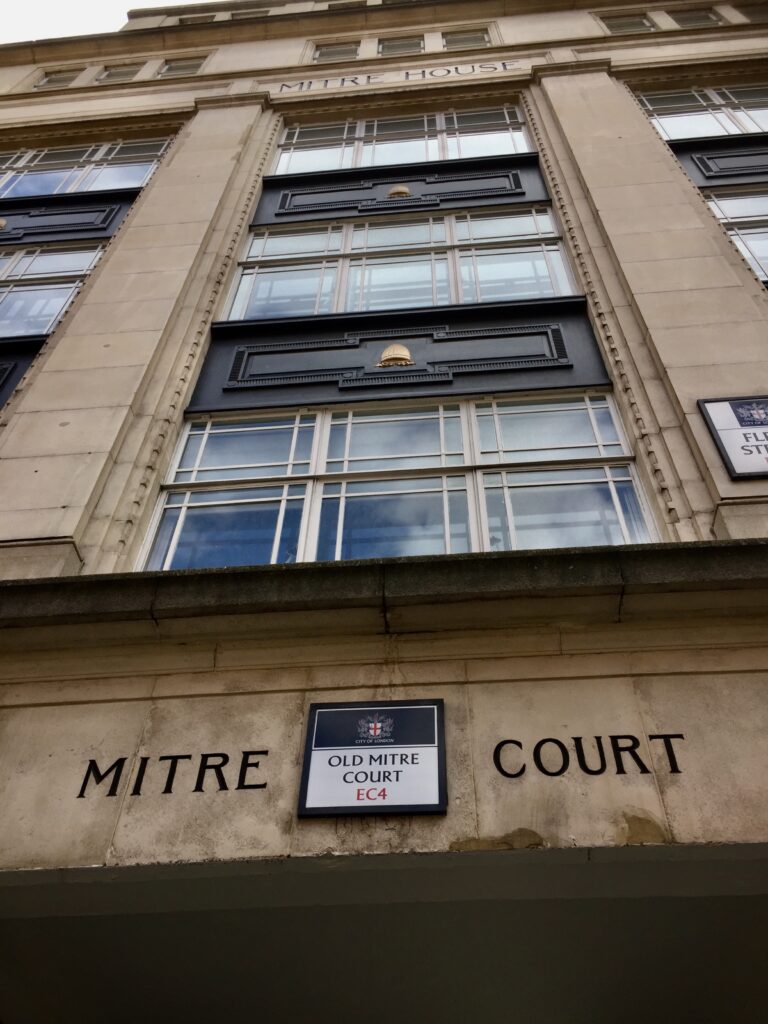
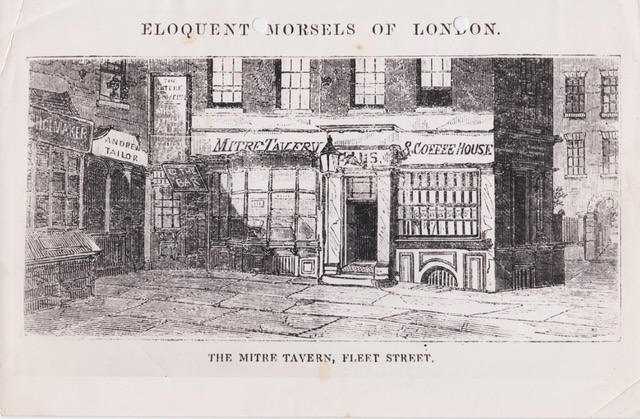
Mitre Court was named after the Mitre Tavern …

The Mitre was Dr. Johnson’s favourite supper-house and James Boswell, his biographer, referred to dining there …

We had a good supper, and port-wine, of which he (Johnson) sometimes drank a bottle.

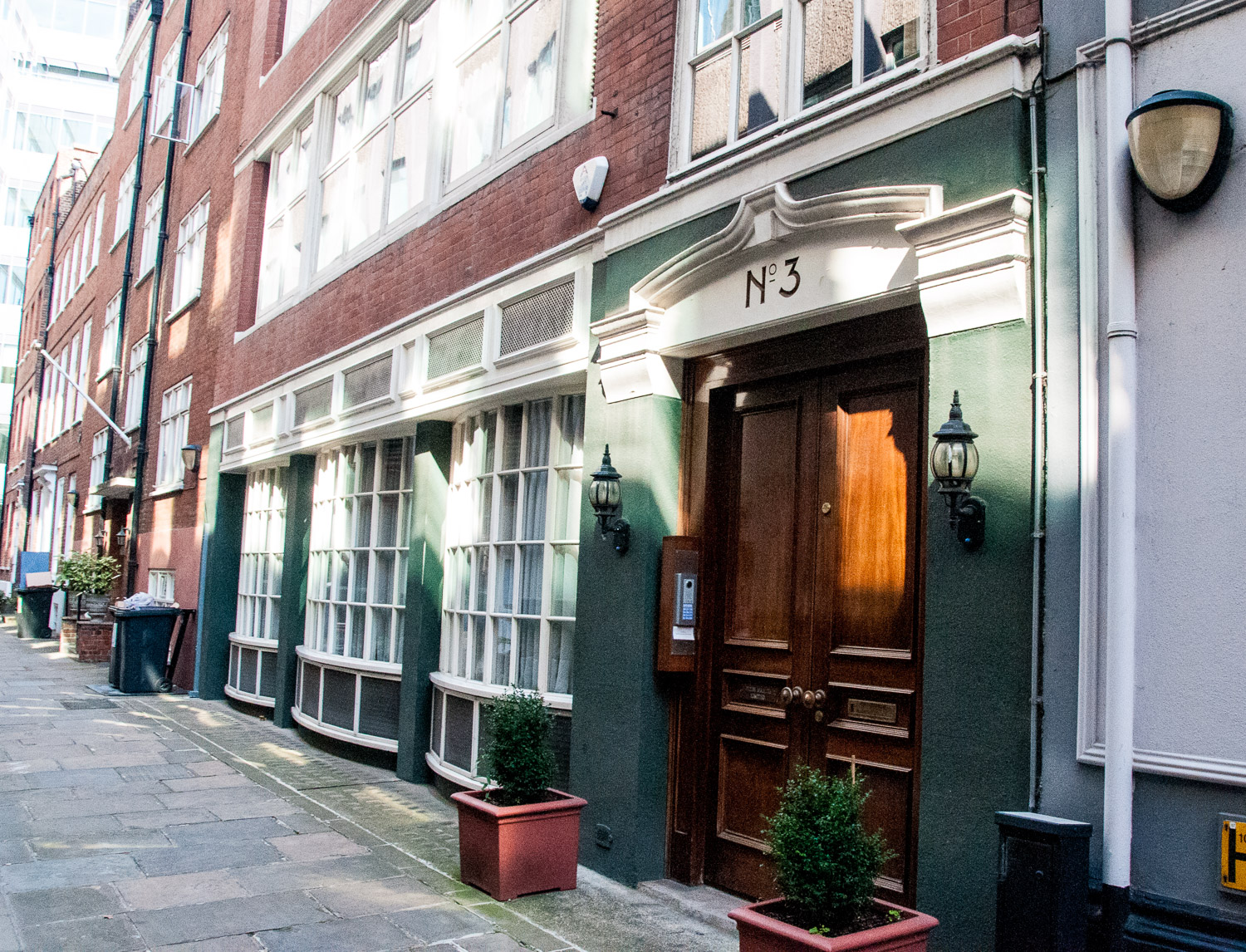
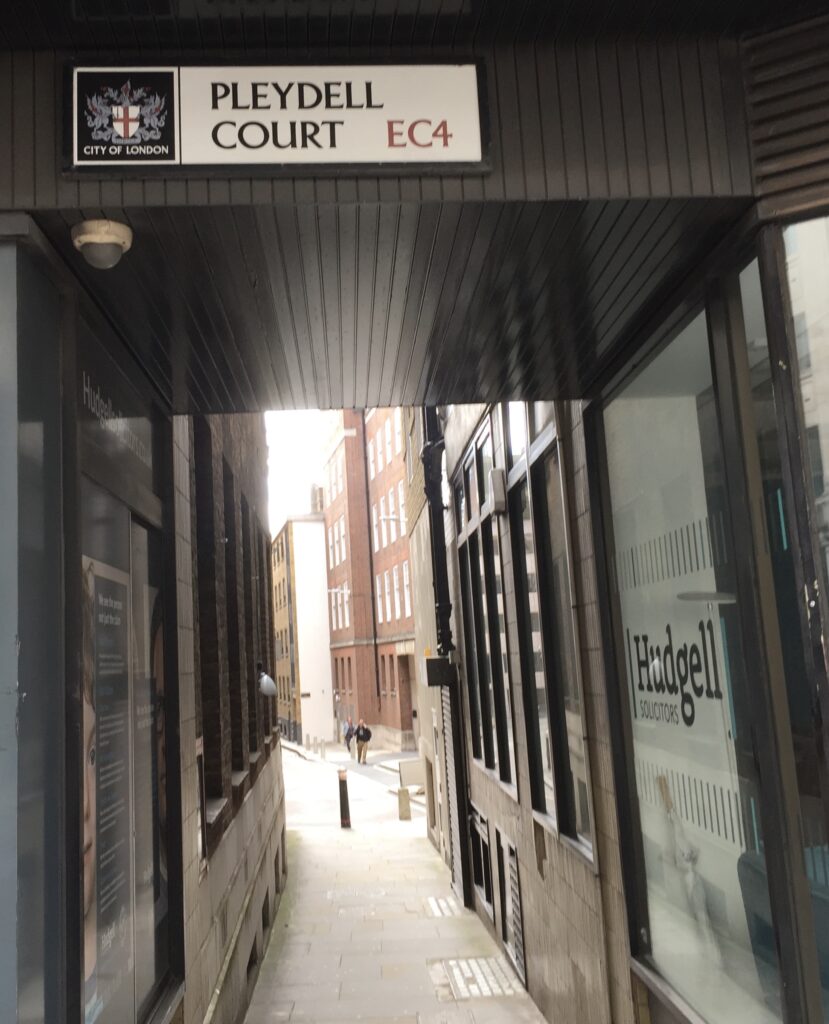
Like nearby Bouverie Street, the name Pleydell Court comes from the Pleydell-Bouveries, Earls of Radnor, who were landlords in this area …

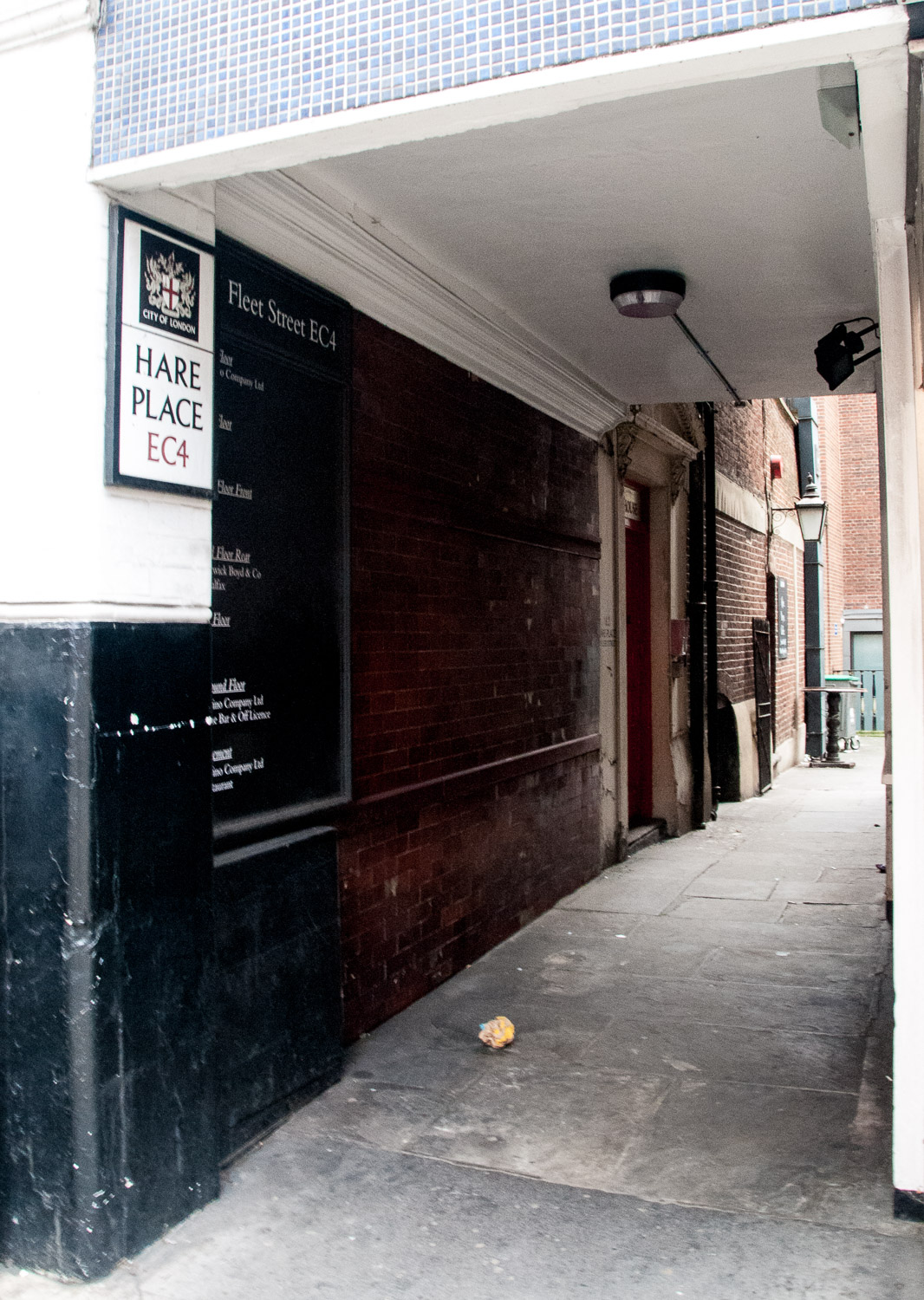
Now to Hare Place and its interesting history.

The Whitefriars, or Carmelites, once owned land stretching from here to the river. When the monastery was dissolved in November 1538 the land was sold to individuals who subdivided their plots and built tenements on them. However, this precinct had long possessed the privileges of Sanctuary, which were confirmed by a charter of James I in 1608. From about this time the area was known by the cant name Alsatia (after the disputed continental territory of Alsace), and its entrance was in Hare Place, then known as Ram Alley …

It became the ‘asylum of characterless debtors, cheats and gamblers here protected from arrest’. One Edwardian historian spoke of …

Its reeking dens, its bawds and its occupants’ disgusting habits. Every house was a resort of ill-fame, and therein harboured women, and still worse, men, lost to every instinct of humanity.

The privilege of Sanctuary was finally abolished in 1687.

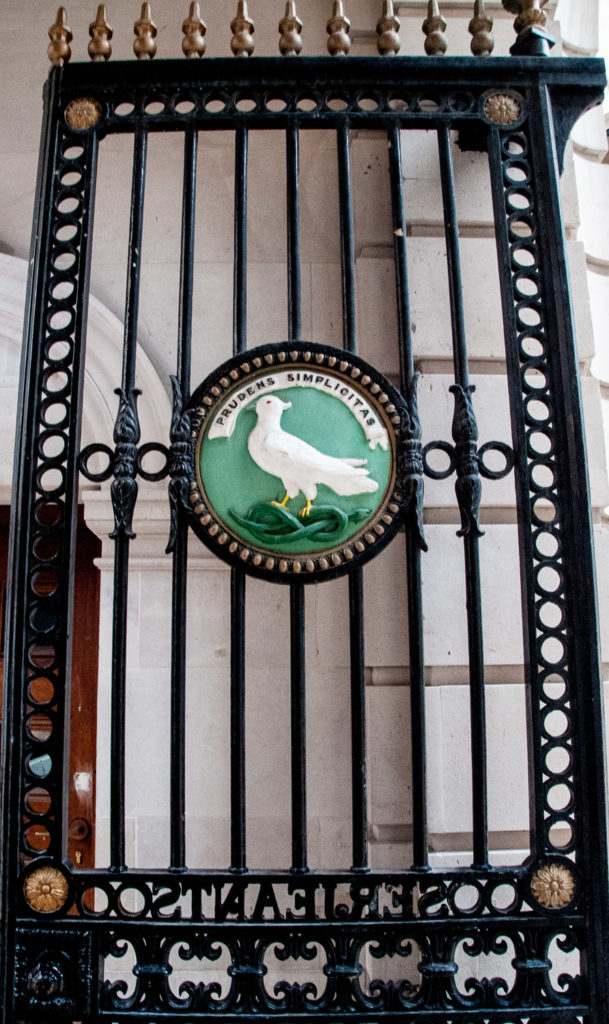
And, finally, I walked through these elaborate gates to Serjeants’ Inn. …

Prudens Simplicitas (Prudent Simplicity) was the motto of the Amicable Society which was based here from 1838 and was the world’s first mutual life insurance company. The unusual choice of creatures may refer to a biblical quotation in which Jesus exhorted followers to be ‘wise as serpents, gentle as doves’. Lost during building works, the gates were rediscovered in a scrapyard in 1937 and returned to their original position here in 1970.

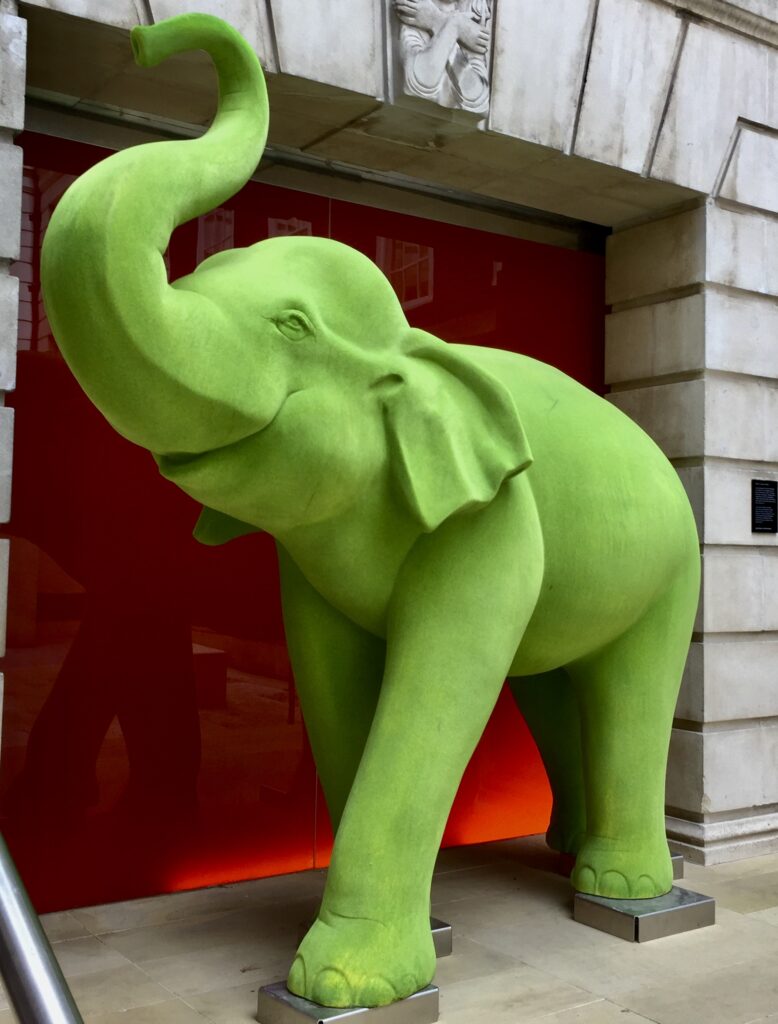
What awaited me inside the gates was quite unexpected …

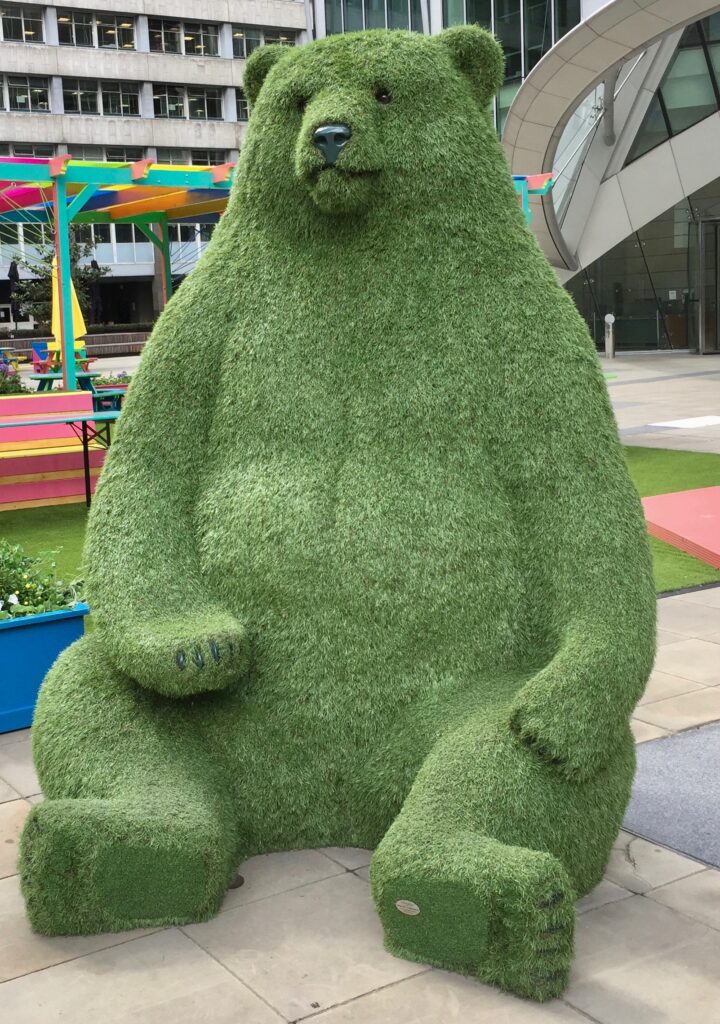
There is nothing to give a clue as to what this happy elephant represents but I am wondering if he is linked to the green bear that has recently appeared outside Citypoint …

If you would like to follow me on Instagram here is the link …
https://www.instagram.com/london_city_gent/

City grotesques, the screamer and other odd decorations

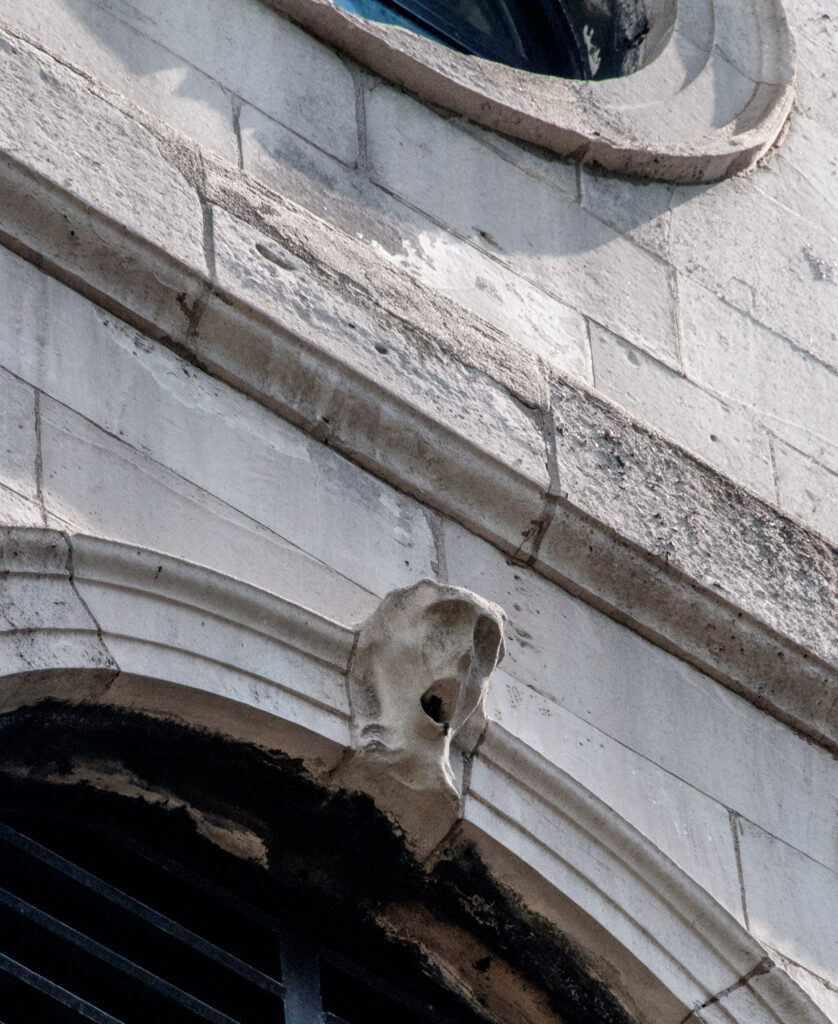
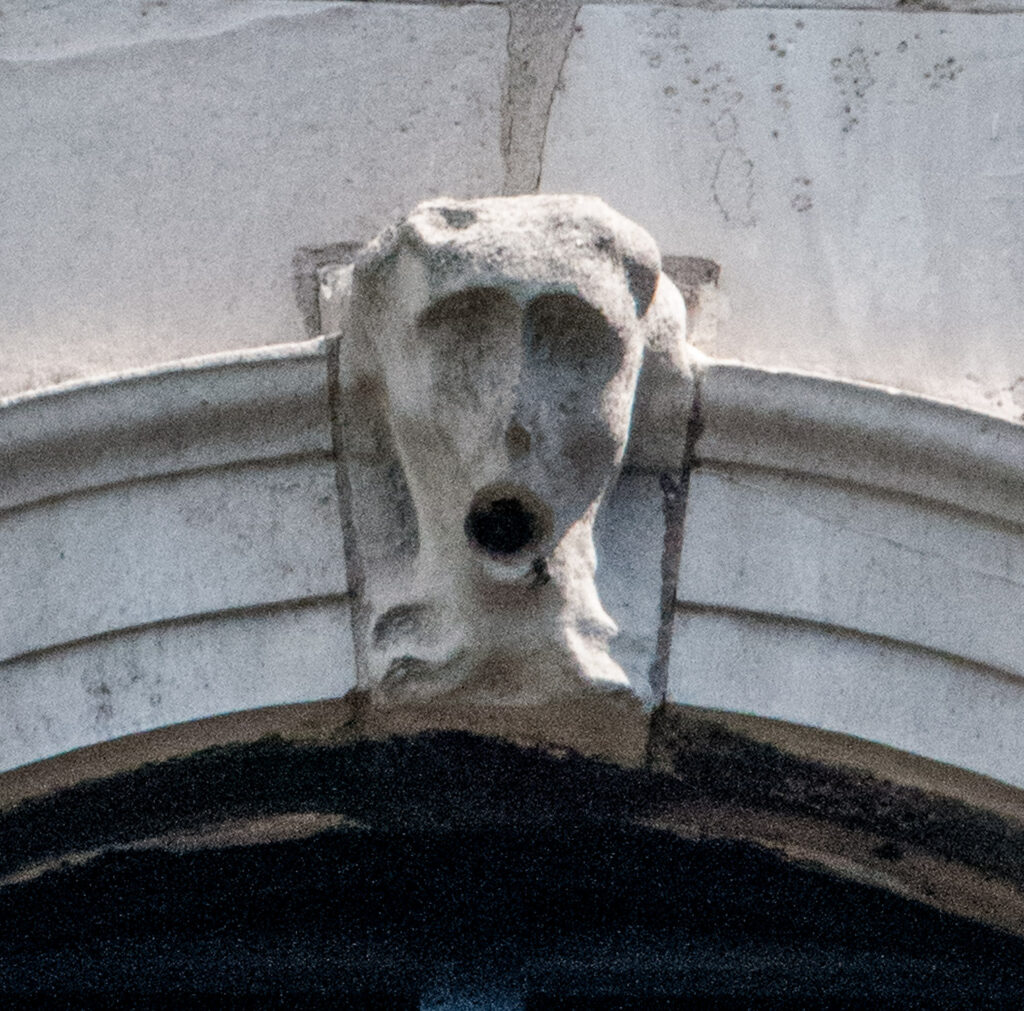
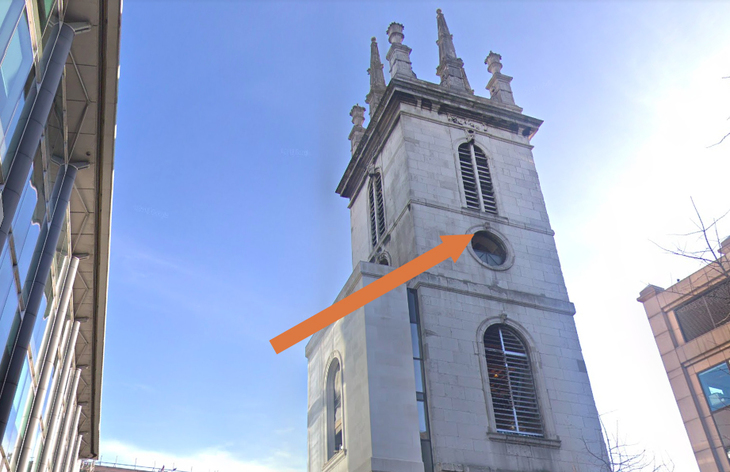
Is this the creepiest sculpture to be found in the City?

It’s on the tower of St Mary Somerset (EC4V 4AG). This was a Wren church, but I don’t think either he, or his very competent colleague Nicholas Hawksmoor, had anything to do with this screaming face. Their style was more cheerful cherubs and occasionally dragons or a phoenix.

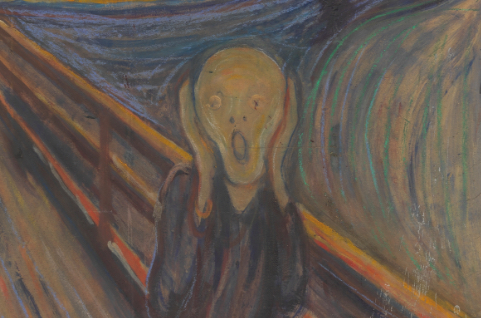
The church was demolished in 1871 but the tower was saved and restored by the architect Ewan Christian who was also responsible for the National Gallery. It was probably him, therefore, who installed the head. It predates Munch’s picture but reminds me of it …
The 1893 painting by Edvard Munch, commonly known as The Scream.

You can read more about the church and its background on The Londonist website from which I have borrowed this picture by Tony Tucker indicating where the screamer can be found …
The tower is now a private home.

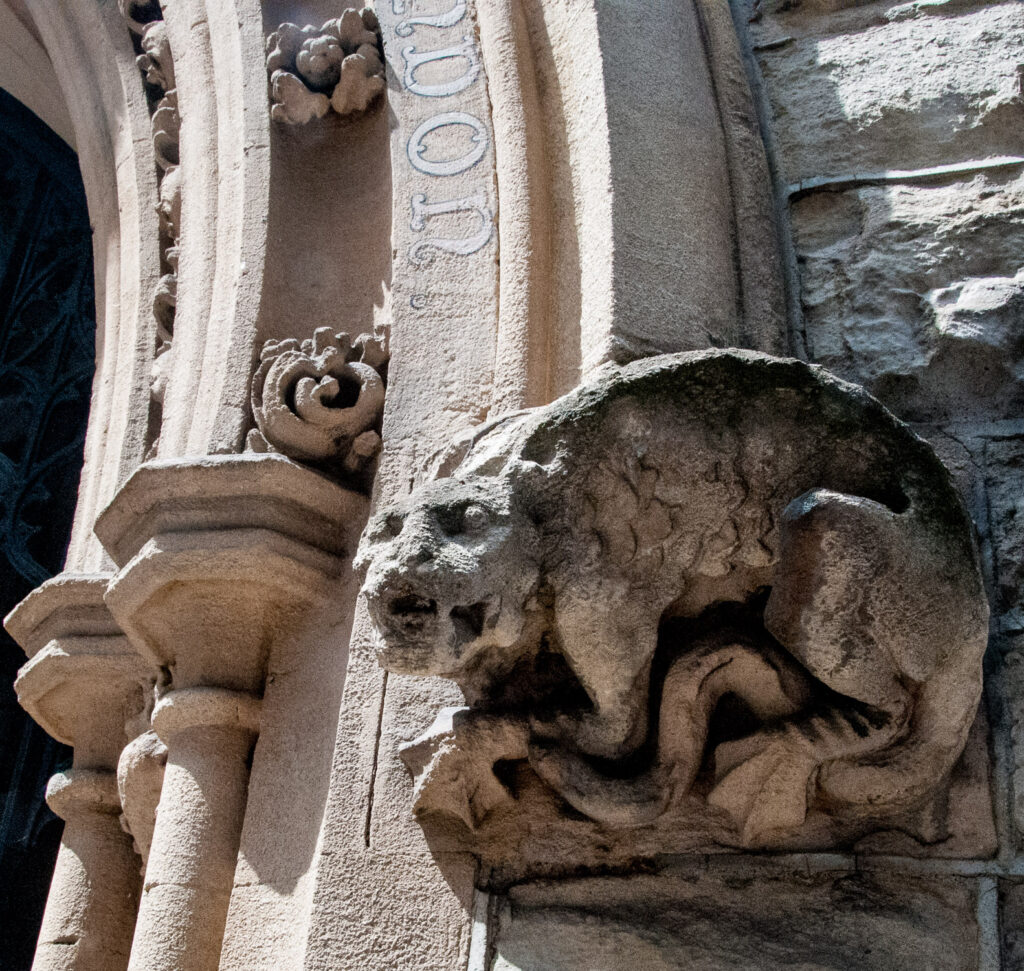
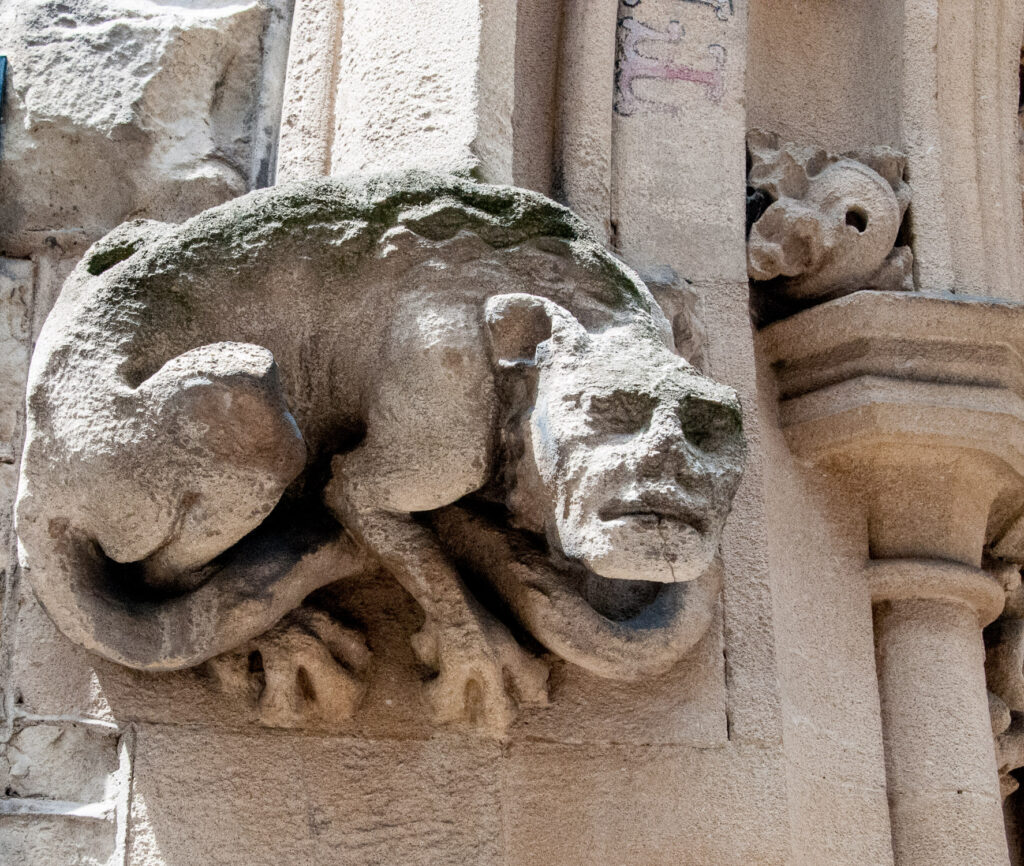
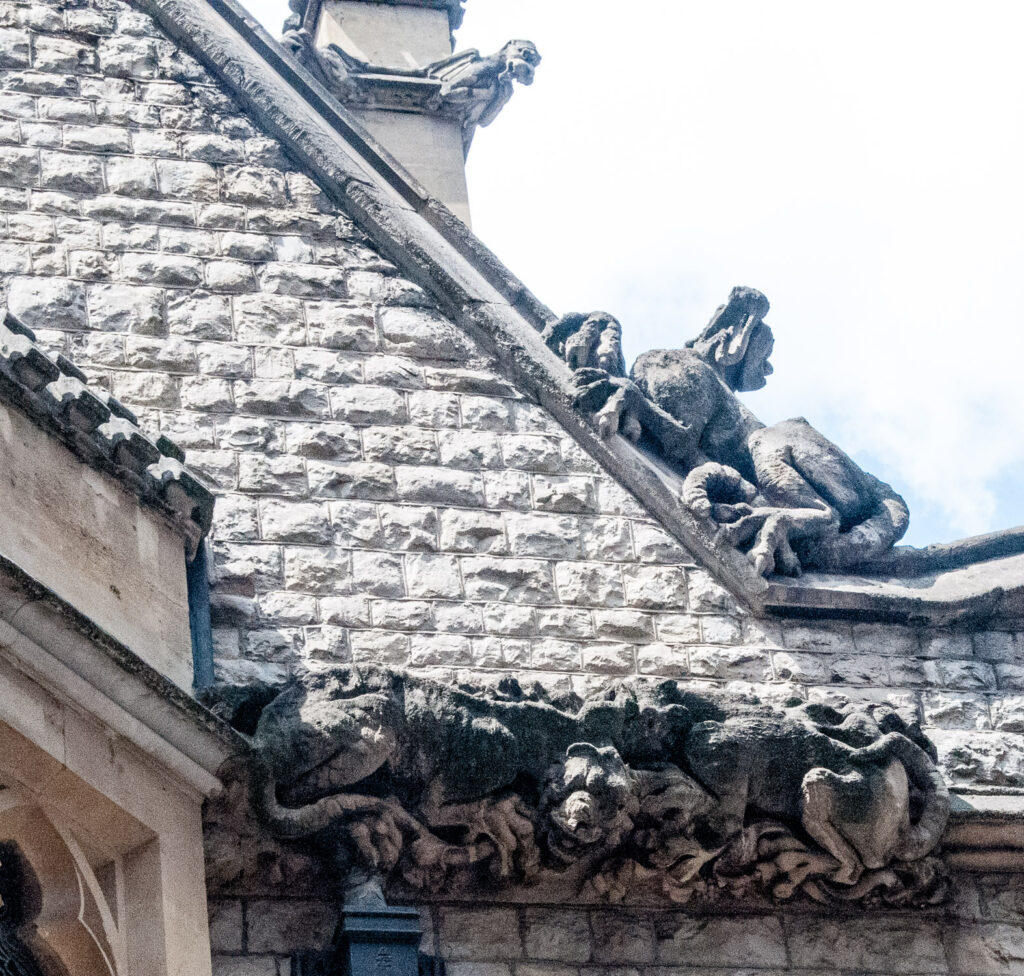
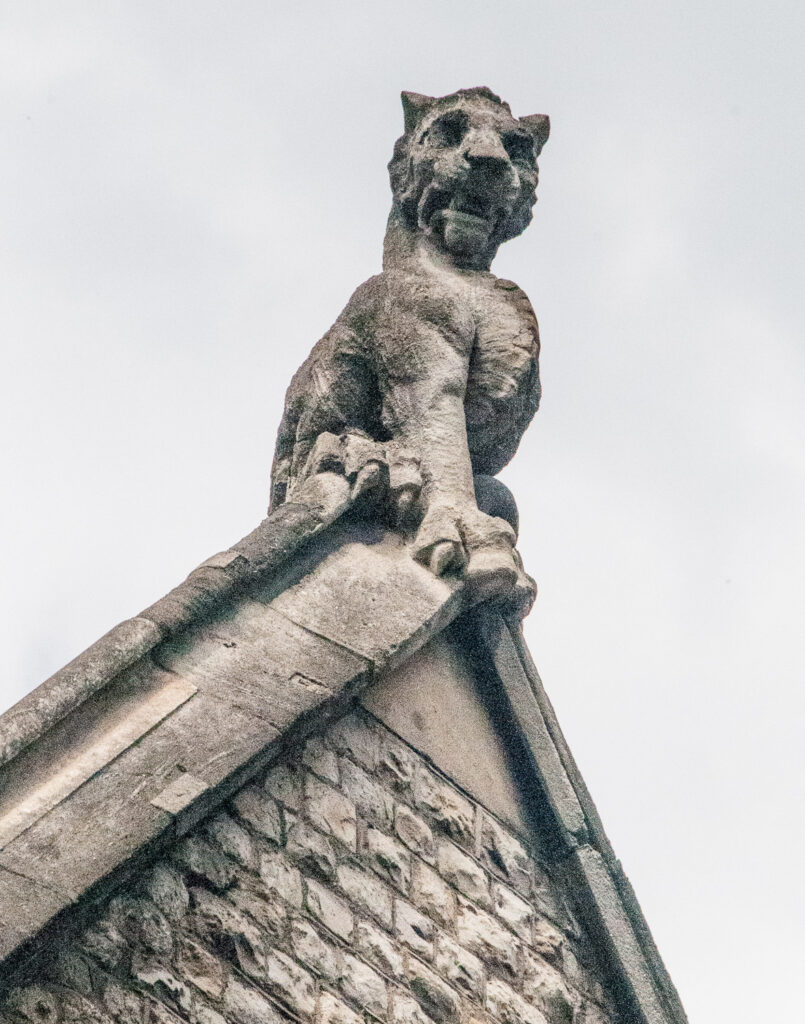
The Guildhall building at 71 Basinghall Street boasts a menagerie of strange creatures (EC2V 7HH). Some sit either side of the entrance …

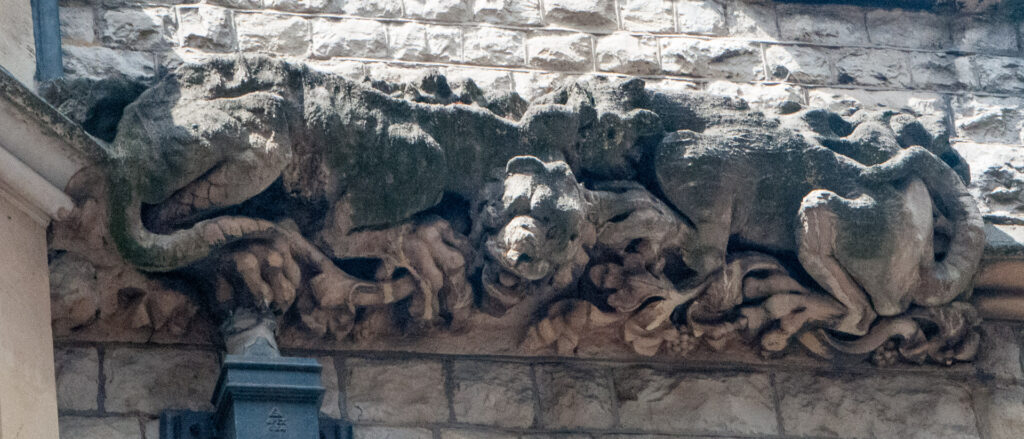
Others lurk near the top of the building …

… and on the roof itself …

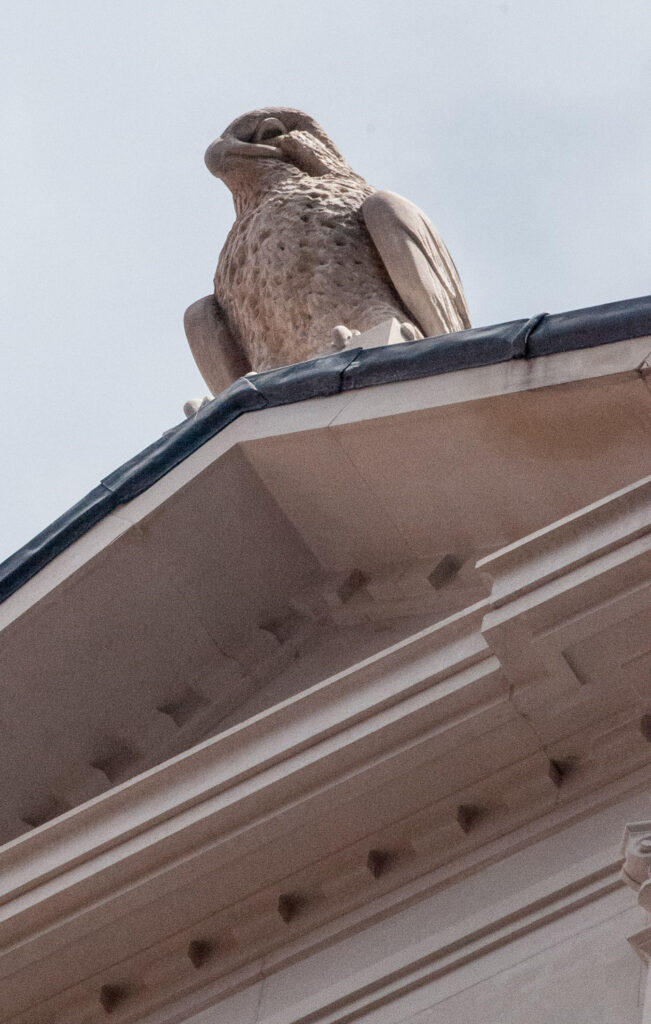
A predatory bird keeps a beady eye on you from the roof of 60 Lombard Street (EC3V 9EA) …

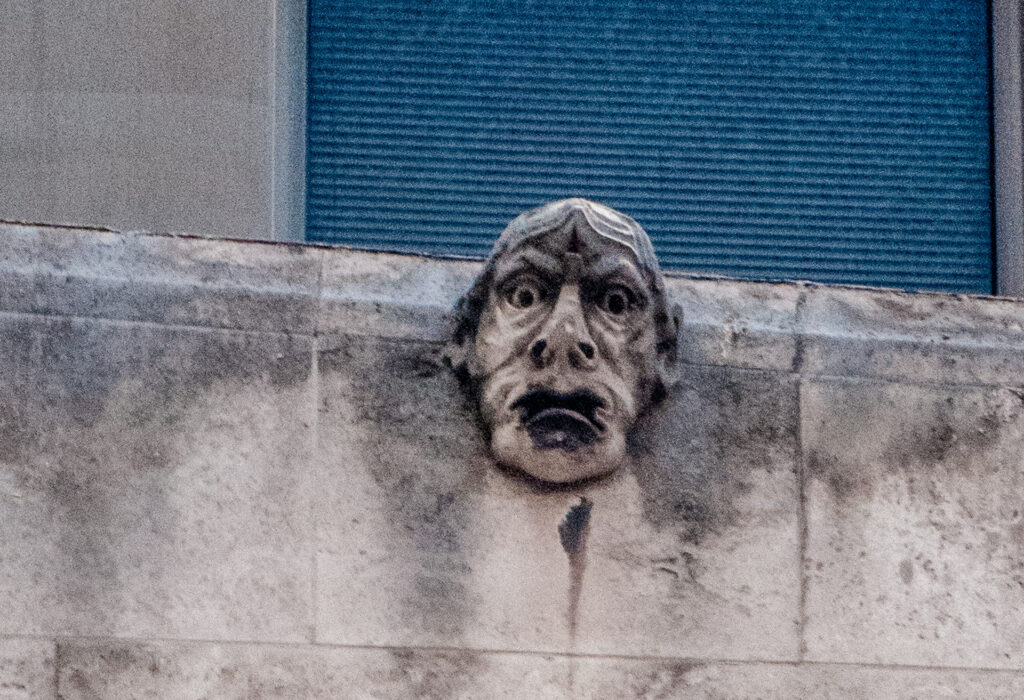
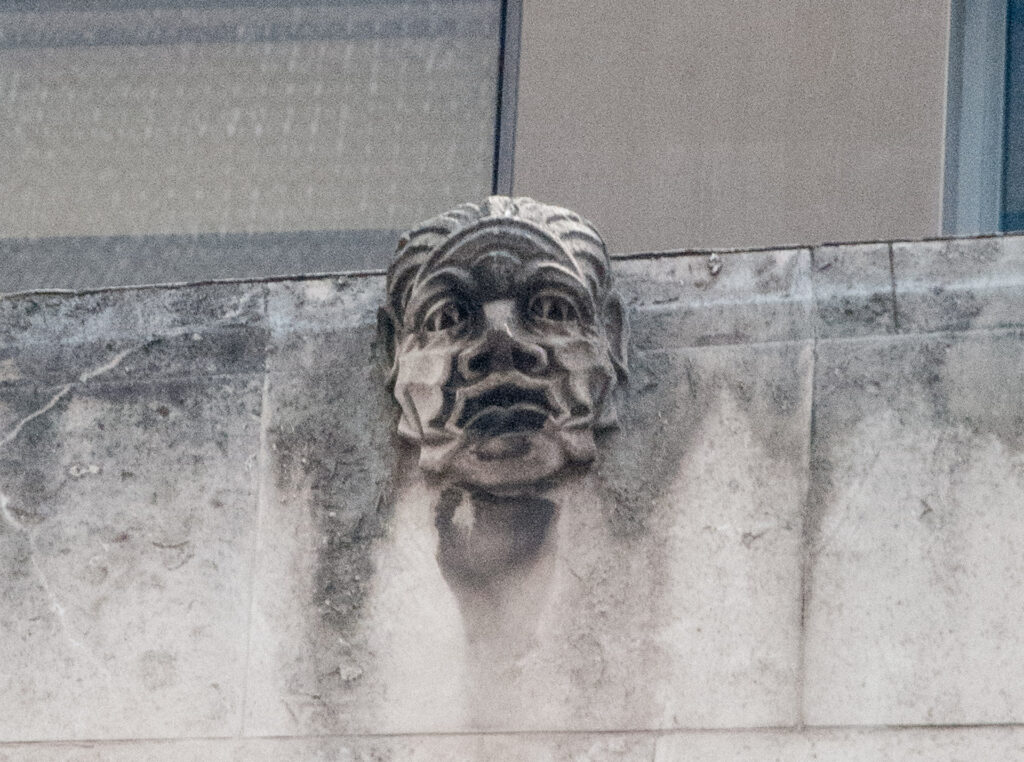
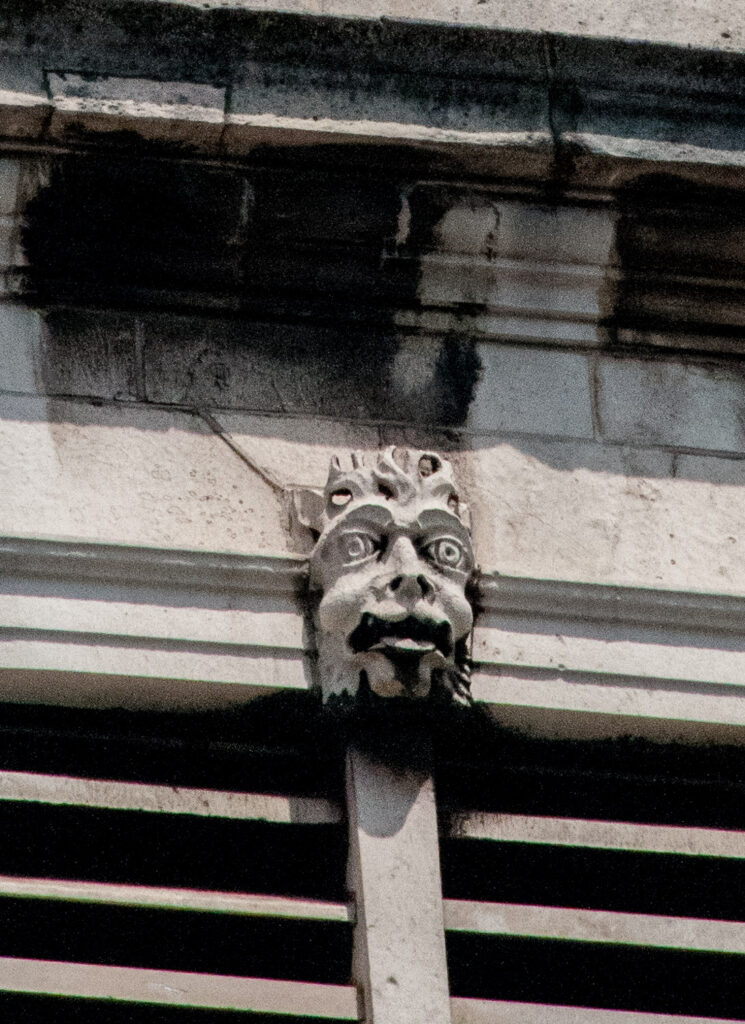
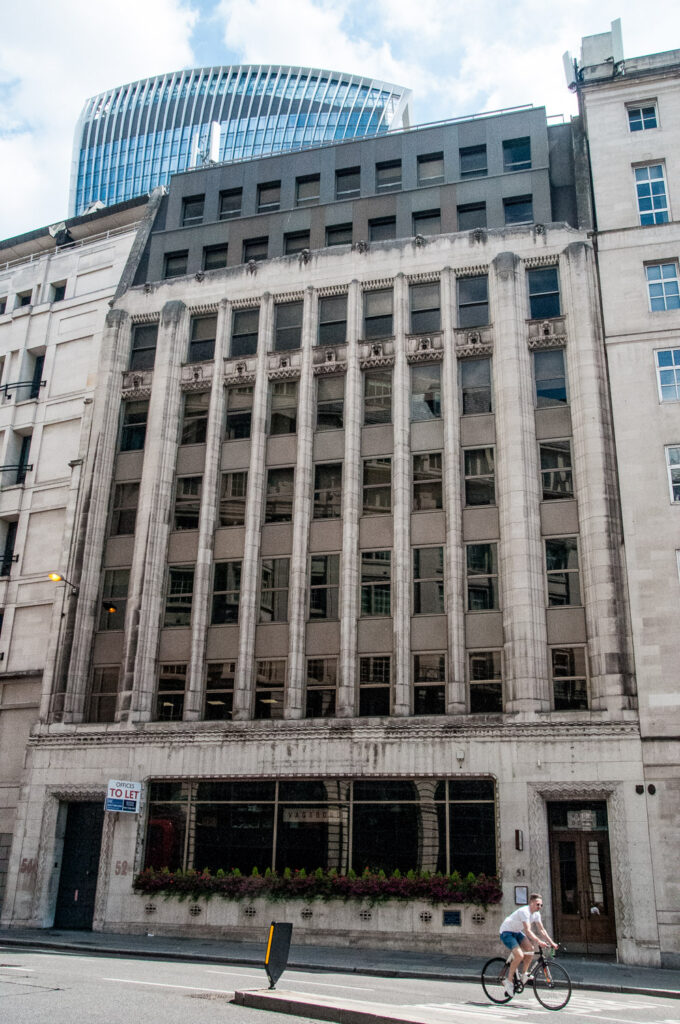
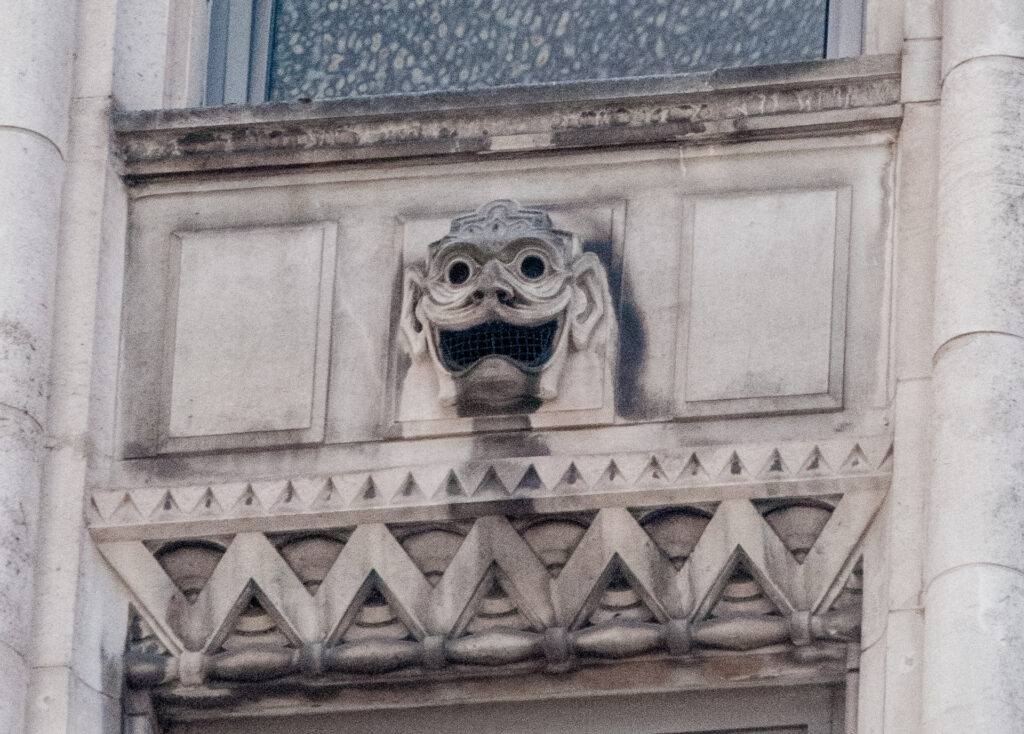
I must have walked past this building at 51-54 Gracechurch Street hundreds of times but never looked up and noticed two lines of extraordinary heads above and below the fifth floor windows …

It was constructed between 1928 and 1930 and designed by the architect Leo Sylvester Sullivan. It has lovely Art Deco features but I have no idea why he incorporated the heads. There are 17 in total and this is a small selection …

You can read more about the building on the excellent Look Up London website.

Another head, this time on the tower of St Margaret Pattens, Rood Lane (EC3M 1HS) …

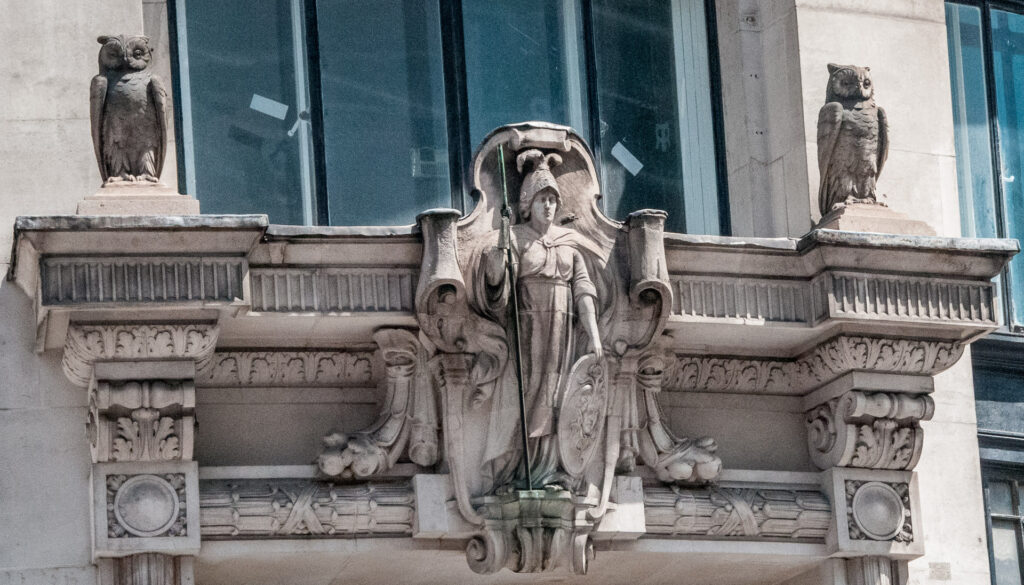
Two owls stand guard above the King William Street entrance to what was once the Guardian Royal Exchange Assurance Company’s City office…

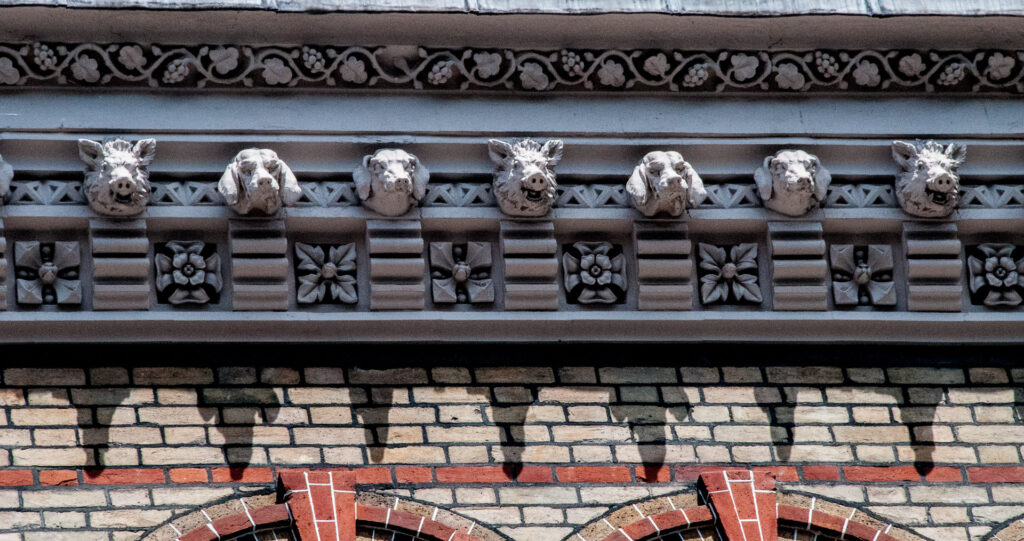
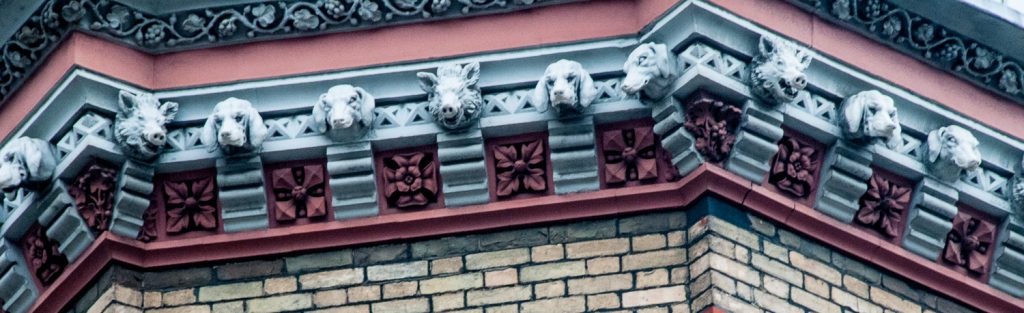
One of the delights of Eastcheap are these figures just below the roof of number 23 …

I cannot look at these dogs’ and boars’ heads without smiling. When I first photographed them a few years ago they had a splash of colour and I think it is a shame that this has been painted over …

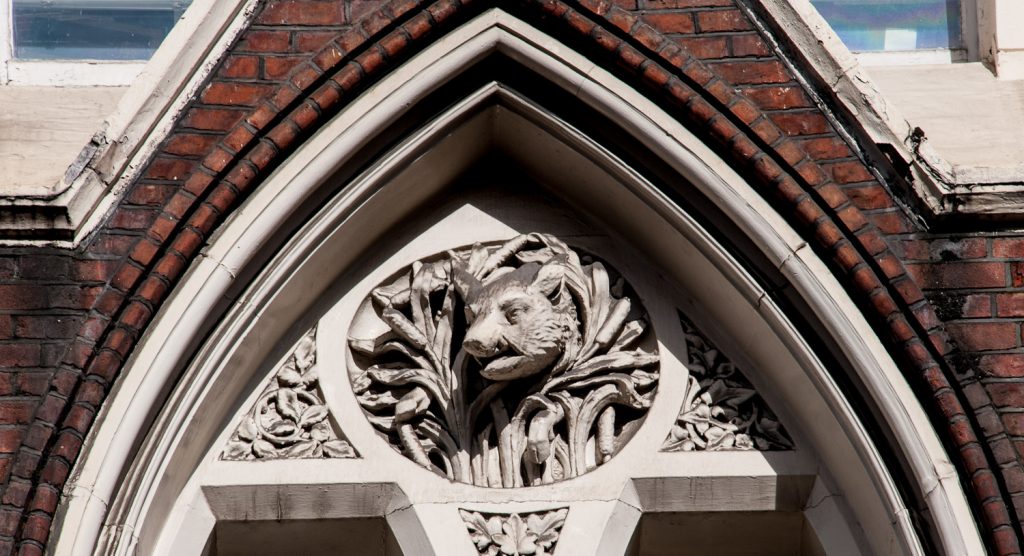
A little further east at 33-35 another boar’s head peeps out from the undergrowth. It references the Eastcheap inn of that name which was supposed to be the meeting place of Sir John Falstaff, Prince Hal and other characters in Shakespeare’s Henry IV plays …

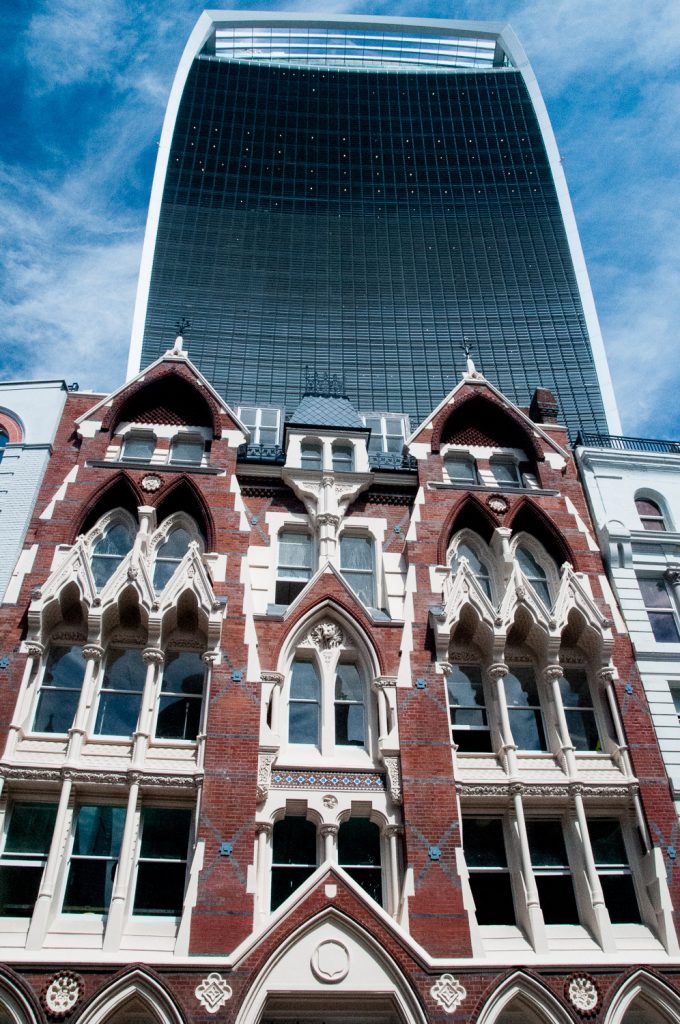
The Walkie Talkie looms over the area and dwarfs the remaining Victorian buildings including the one containing the boar’s head which dates from 1868. Pevsner described it as ‘one of the maddest displays in London of gabled Gothic’ and he quoted Ian Nairn, the architectural critic, who called it ‘the scream that you wake on at the end of a nightmare’ …

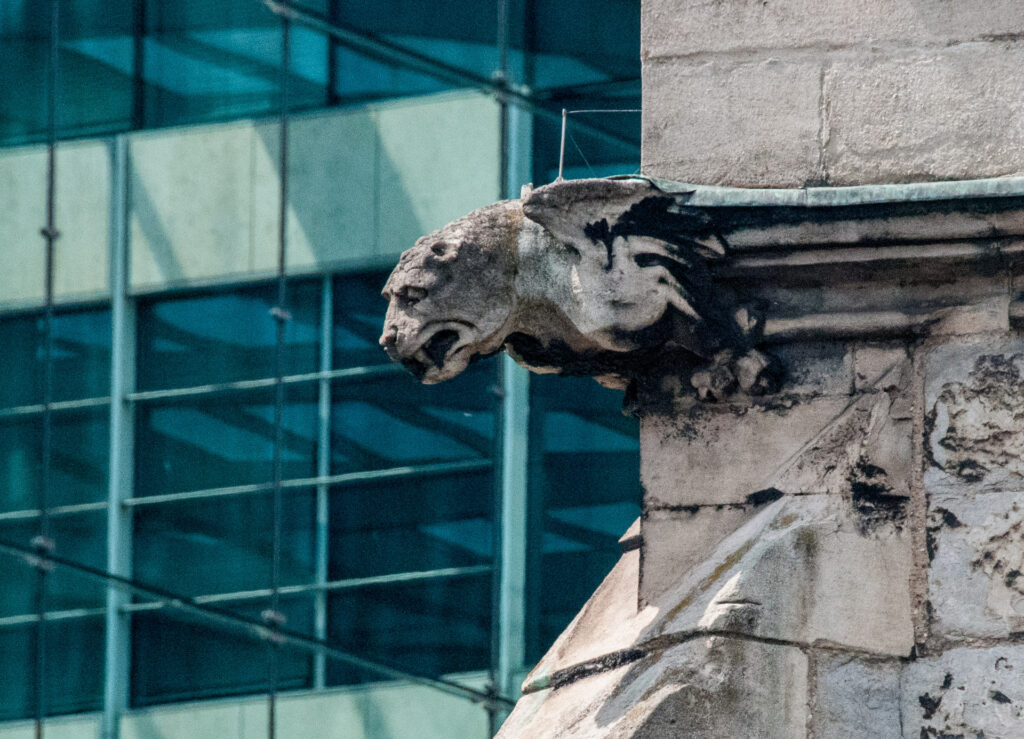
This creature on All Hallows by the Tower looks like an authentic gargoyle (water spout) but the downpipe or guttering is missing, maybe lost when the church was severely damaged in the war …

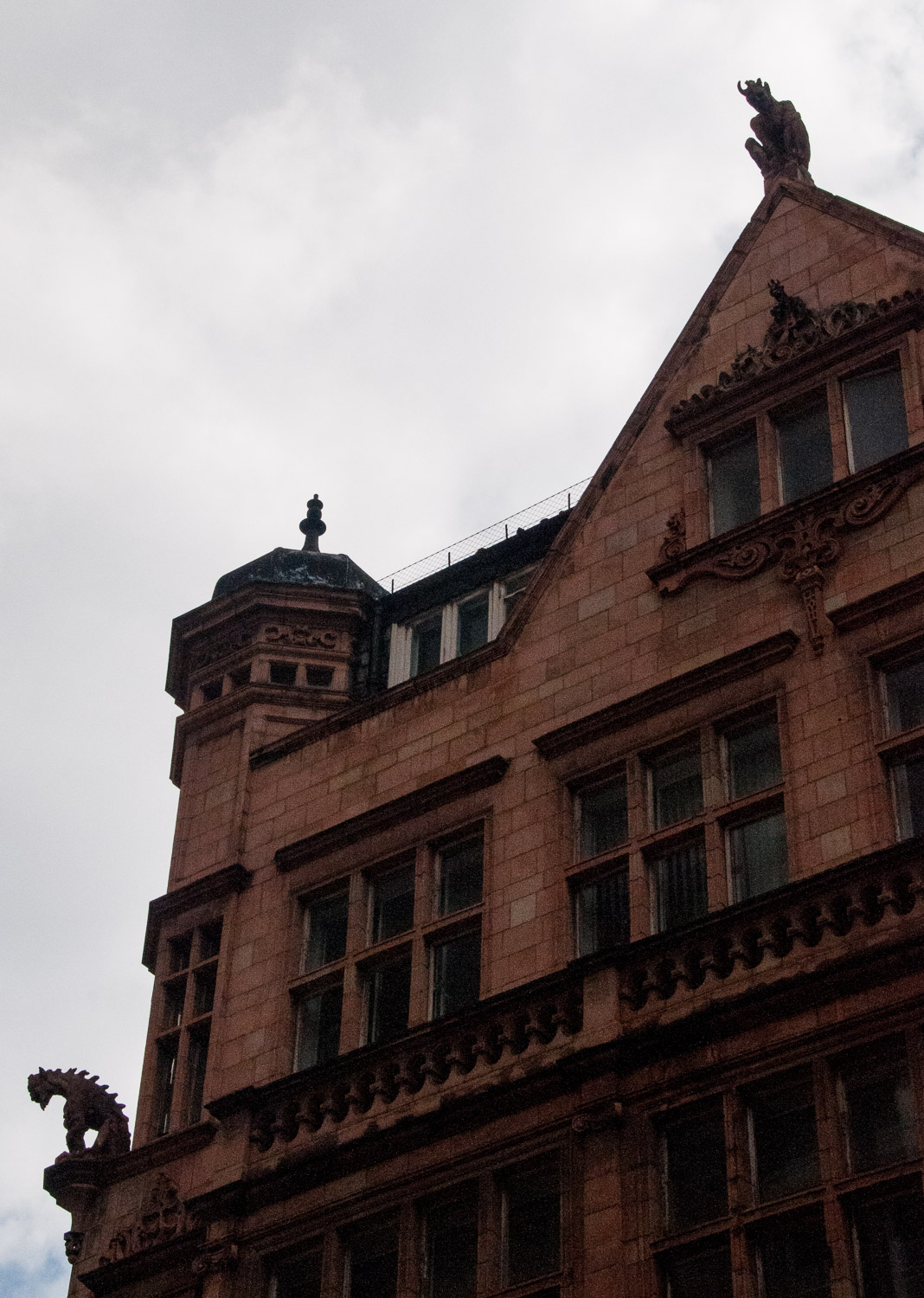
As I walked along Cornhill one day I glanced up and saw these rather sinister figures silhouetted against the sky…

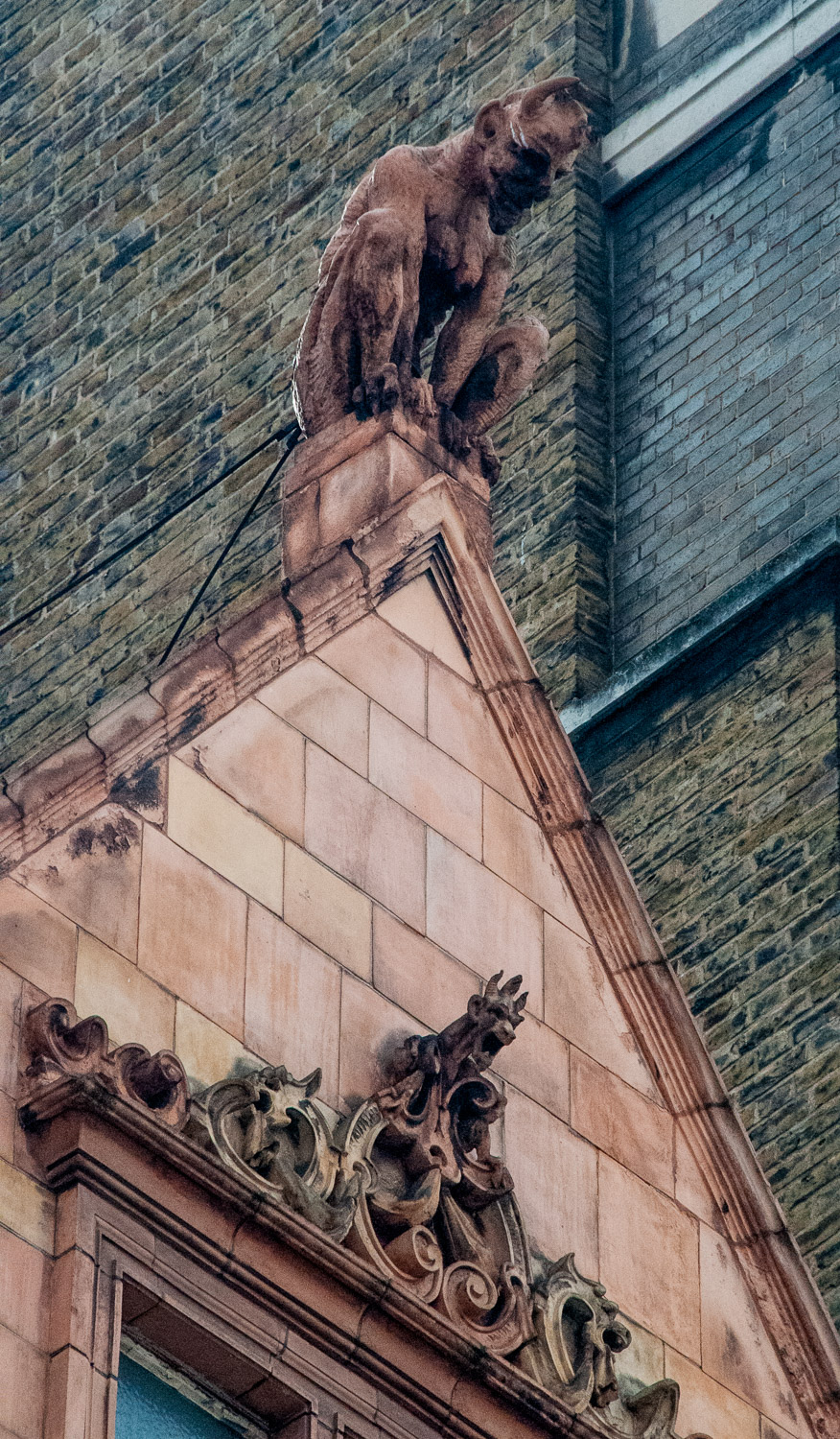
Closer inspection shows them to be devils, and rather angry and malevolent ones too …

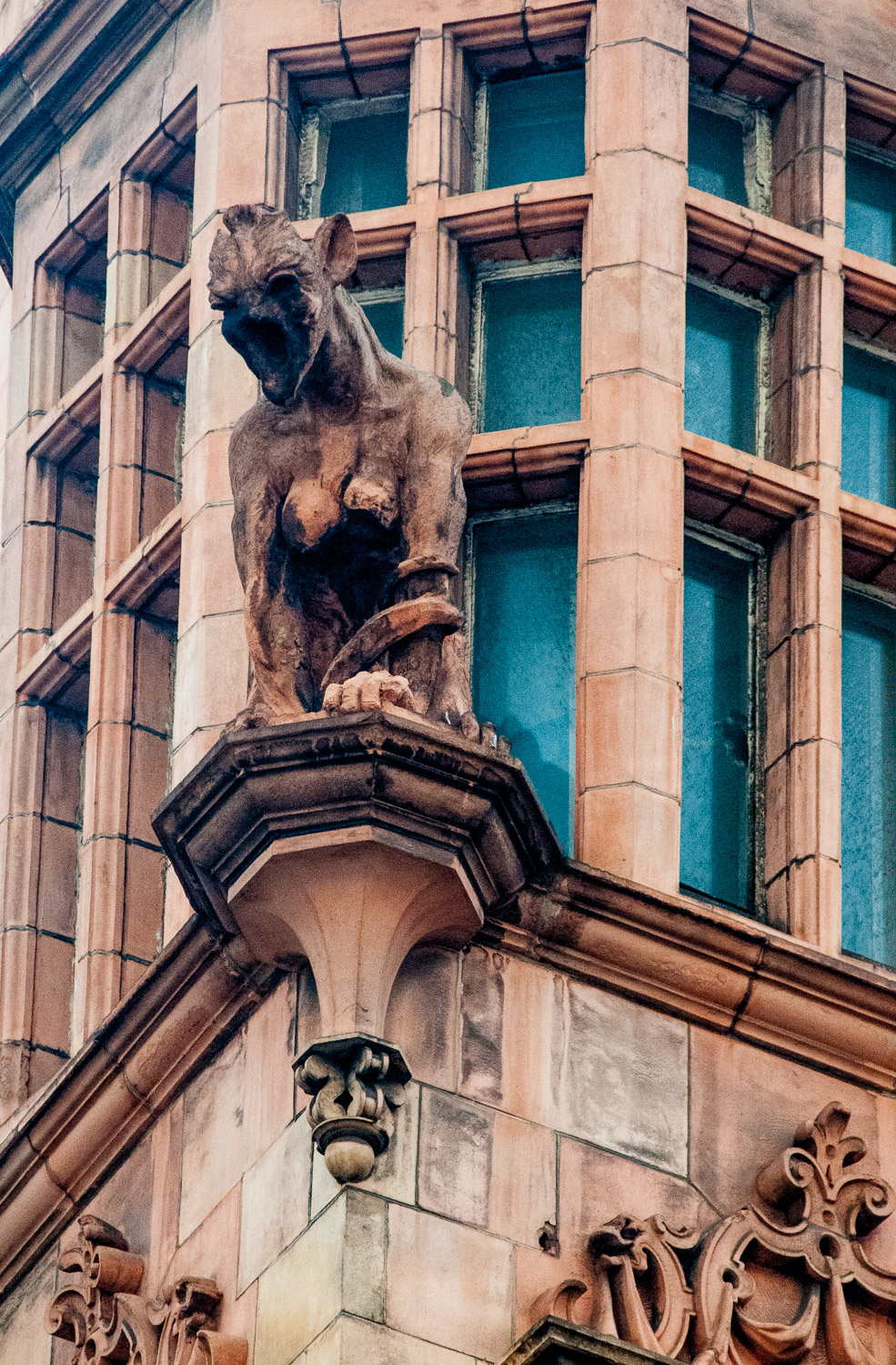
They look down on St Peter upon Cornhill and are known as the Cornhill Devils (EC3V 3PD). The story goes that, when plans were submitted for the late Victorian building next to the church, the rector noticed that they impinged slightly on church land and lodged a strong objection. Everything had to literally go back to the drawing board at great inconvenience and expense. The terracotta devils looking down on the entrance to the church are said to be the architect’s revenge with the lowest devil bearing some resemblance to the cleric himself …

If this resembles the rector he must have been a pretty ugly guy.

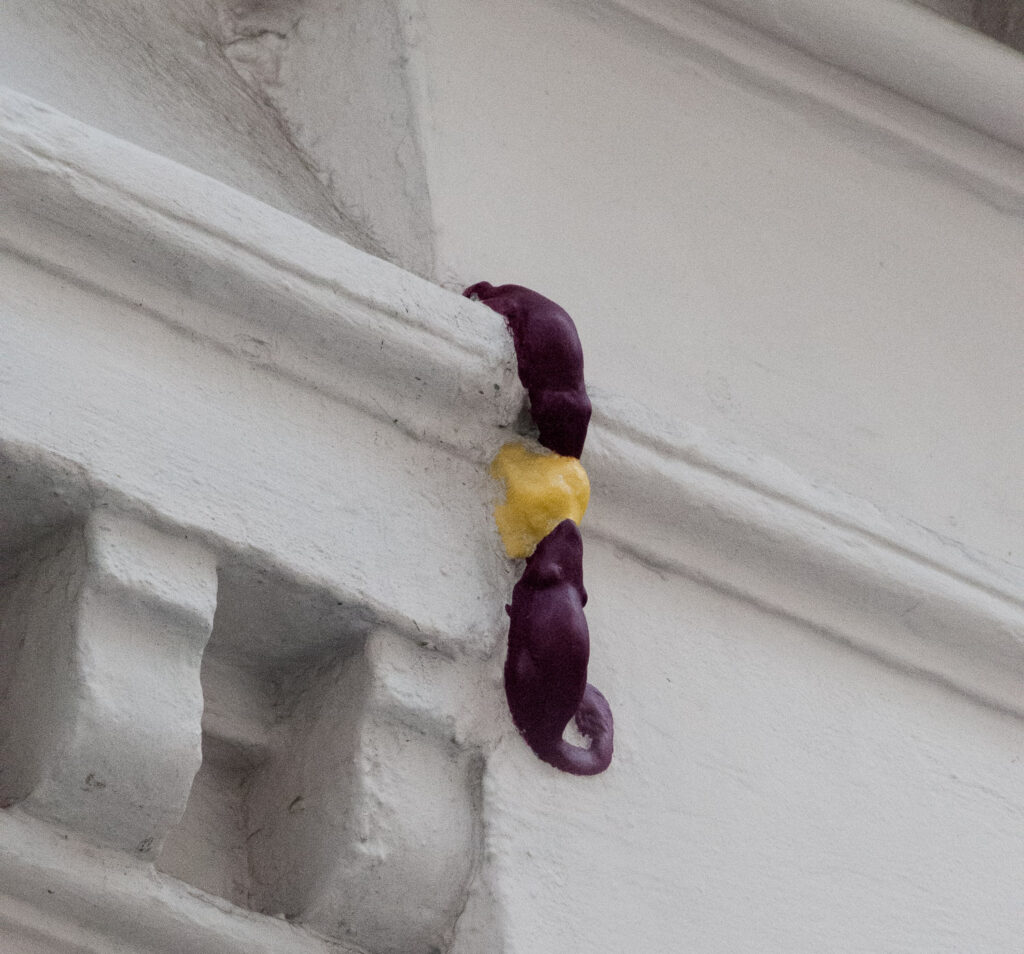
And finally, two mice share a piece of cheese in Philpot Lane. There are several theories as to the story behind these charming little creatures but no one knows for sure who put them there and why …

Remember you can follow me on Instagram :

https://www.instagram.com/london_city_gent/

Page 2 of 4

Powered by WordPress & Theme by Anders Norén

Symbols & Secrets
Privacy Overview

This website uses cookies so that we can provide you with the best user experience possible. Cookie information is stored in your browser and performs functions such as recognising you when you return to our website and helping our team to understand which sections of the website you find most interesting and useful.