Walking the City of London

Category: Architecture Page 8 of 90

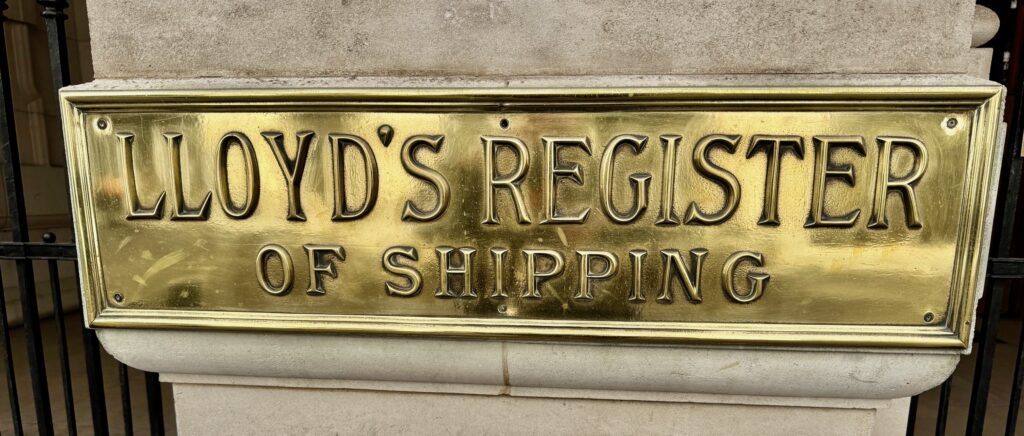
The Lloyd’s Register of Shipping and its maidens.

I first wrote briefly about this building in June 2020 saying that I would return later to write more and I have finally got around to it!

Lloyd’s Register began as The Society for the Registry of Shipping in 1760. In that year, eleven men met in Edward Lloyd’s coffee house to talk about publishing a list of ships, a register to define their quality and safeguard life and property carried on them. Much of the Register’s history, including its origins, has been preserved in the organisation’s Archives which contain over 1.1million digitised and catalogued assets including ship plans and surveys.

It has now eveolved into a charity, the Lloyd’s Register Foundation, whose objectives remain the same as those of Lloyd’s Register: to protect people from harm and to ensure the infrastructure that we depend on for day-to-day living is safe for society both now and in the future. The Foundation also strives to provide the right skills and education to achieve these objectives.

The building dates from 1899 t0 1901, its architect was T.E. Colcutt and the sculptors George Frampton and J.E. Taylerson.

It can be found at 71 Fenchurch Street, EC3M 4BS on the corner with Lloyd’s Avenue …
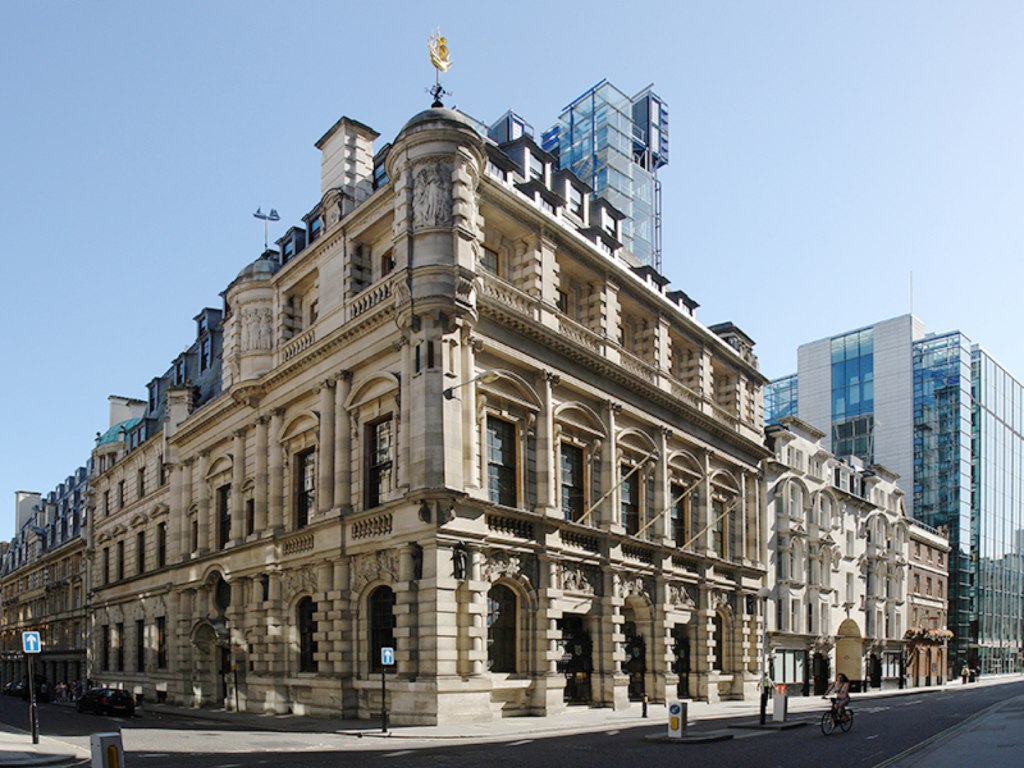
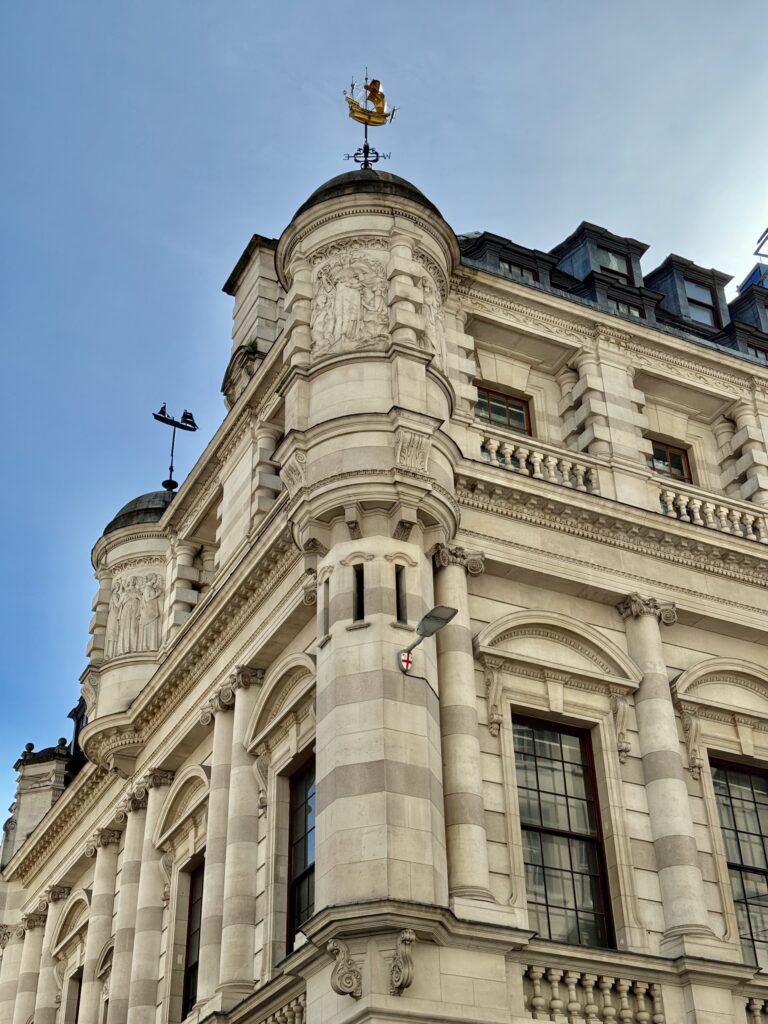
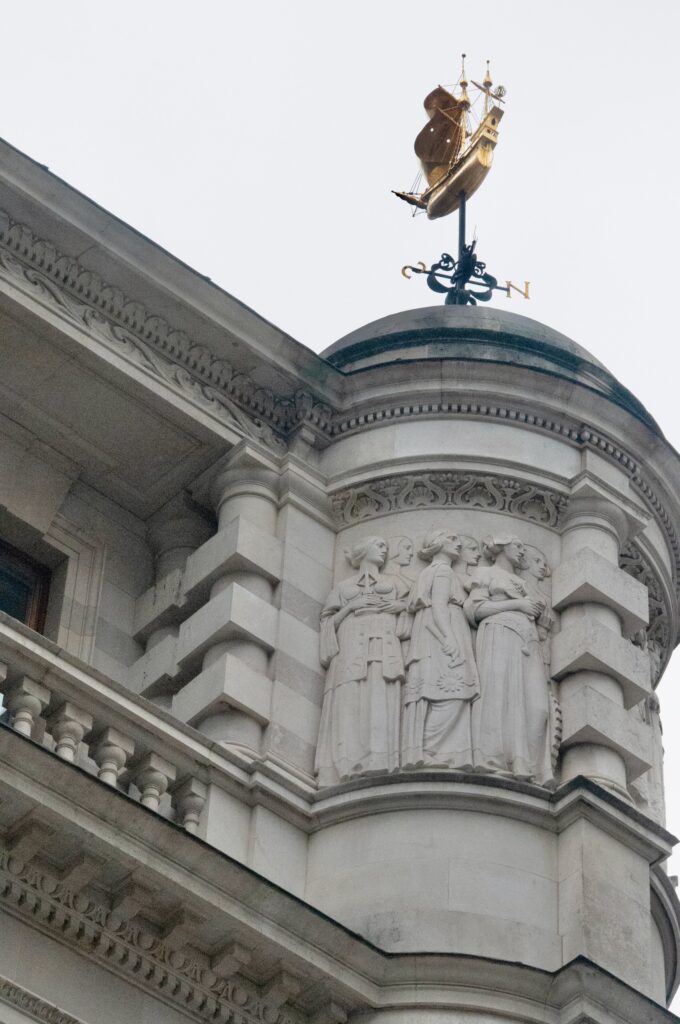
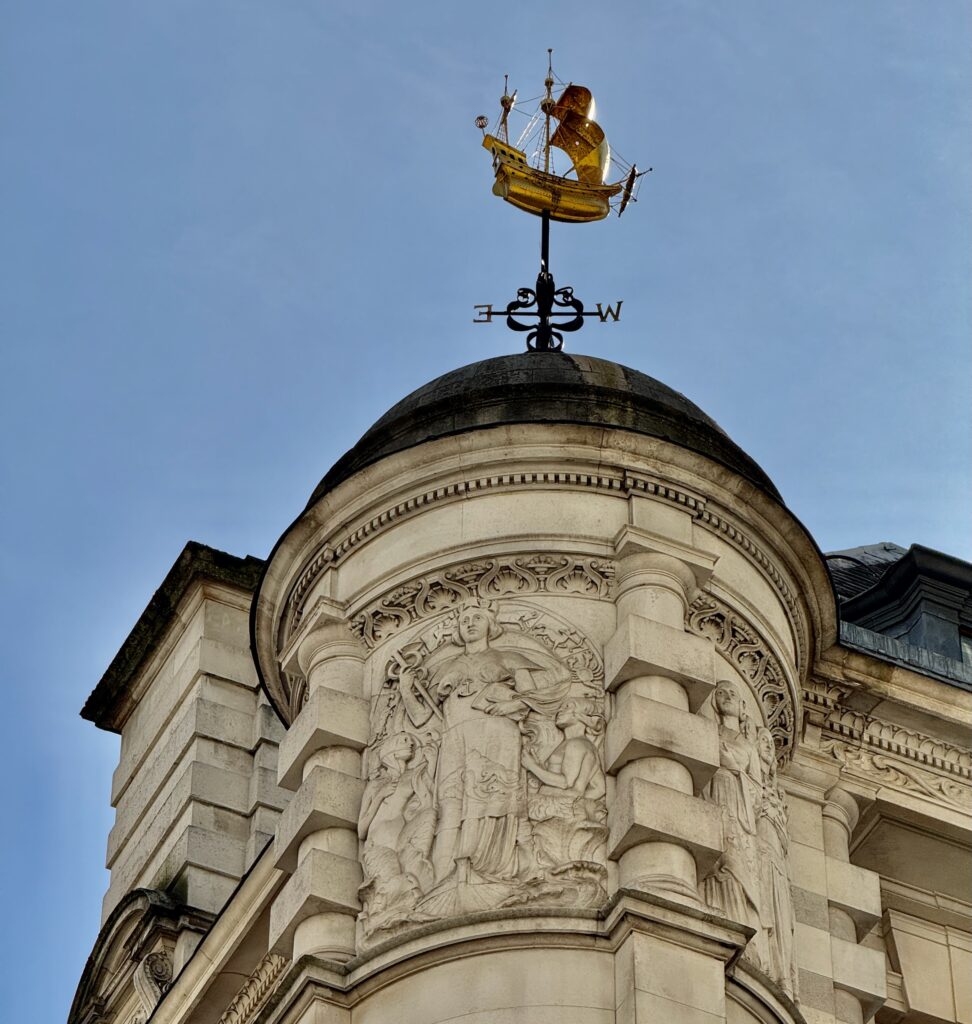
The north and south turrets …
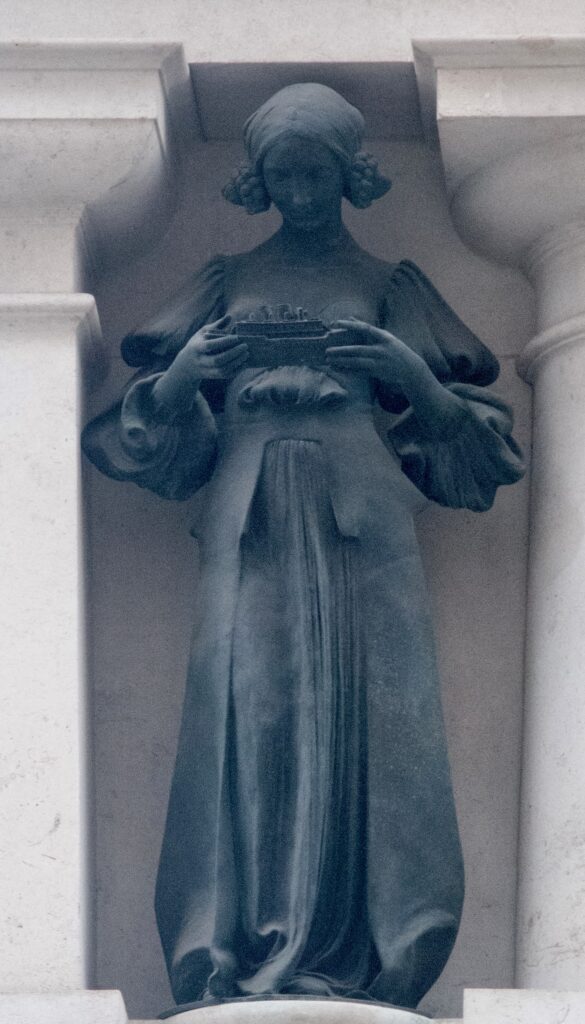
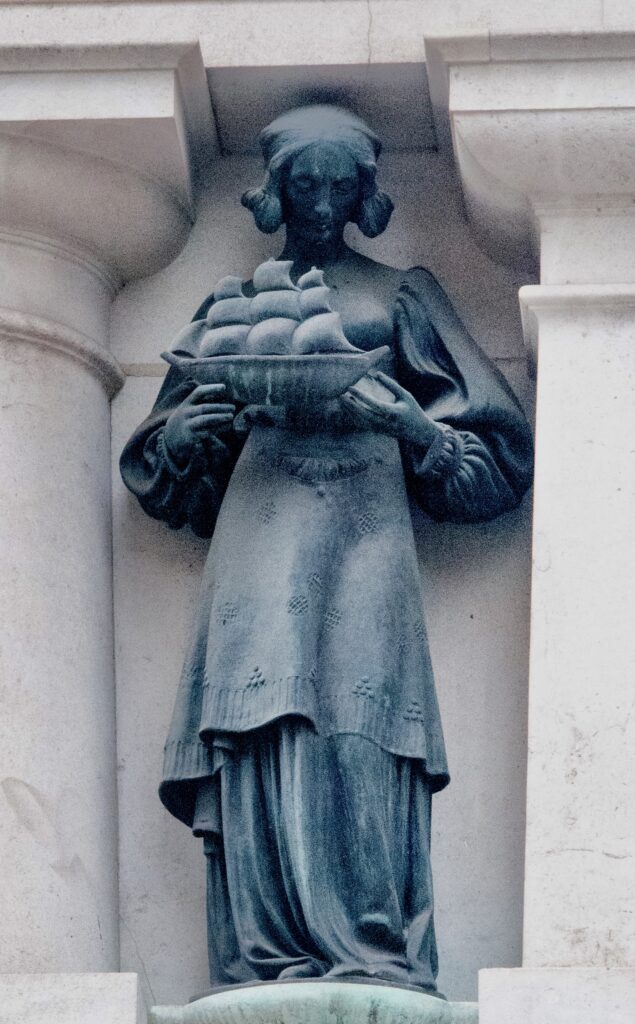
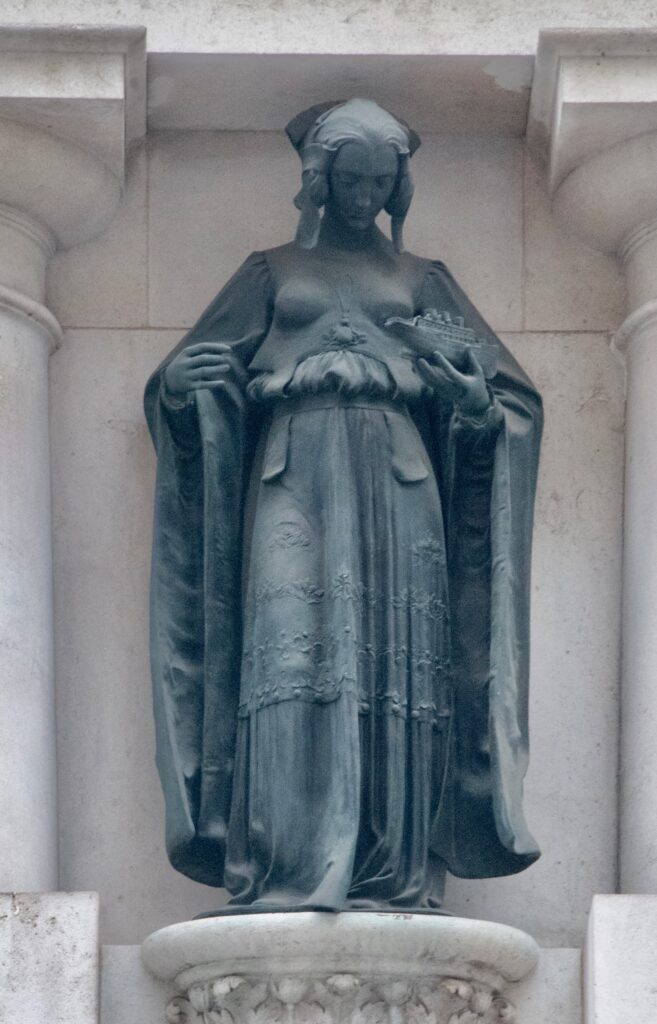
There are numerous maidens holding models of different types of vessels …
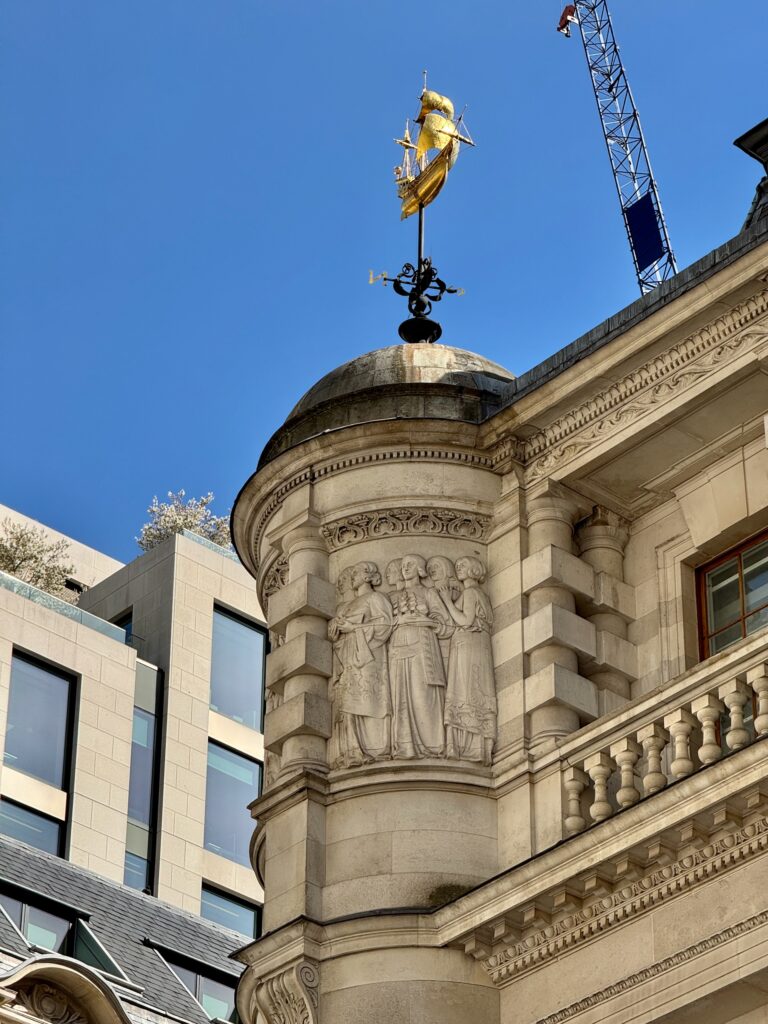
The second maiden from the left holds the model of a steamship whilst the figure immediatly behind her holds a model of a galleon …
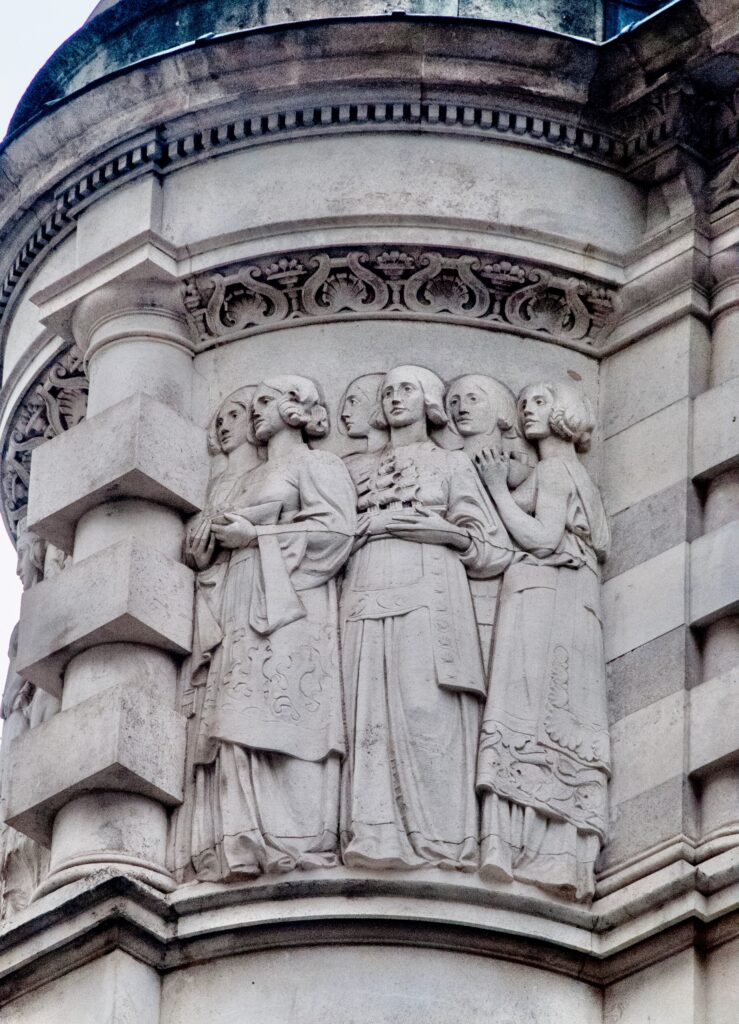
This panel also contains six maidens. Those in the foreground hold a ship’s telegraph, a hammer and a propeller. A cog or ratchet wheel emerges behind the leg of the right-hand figure …
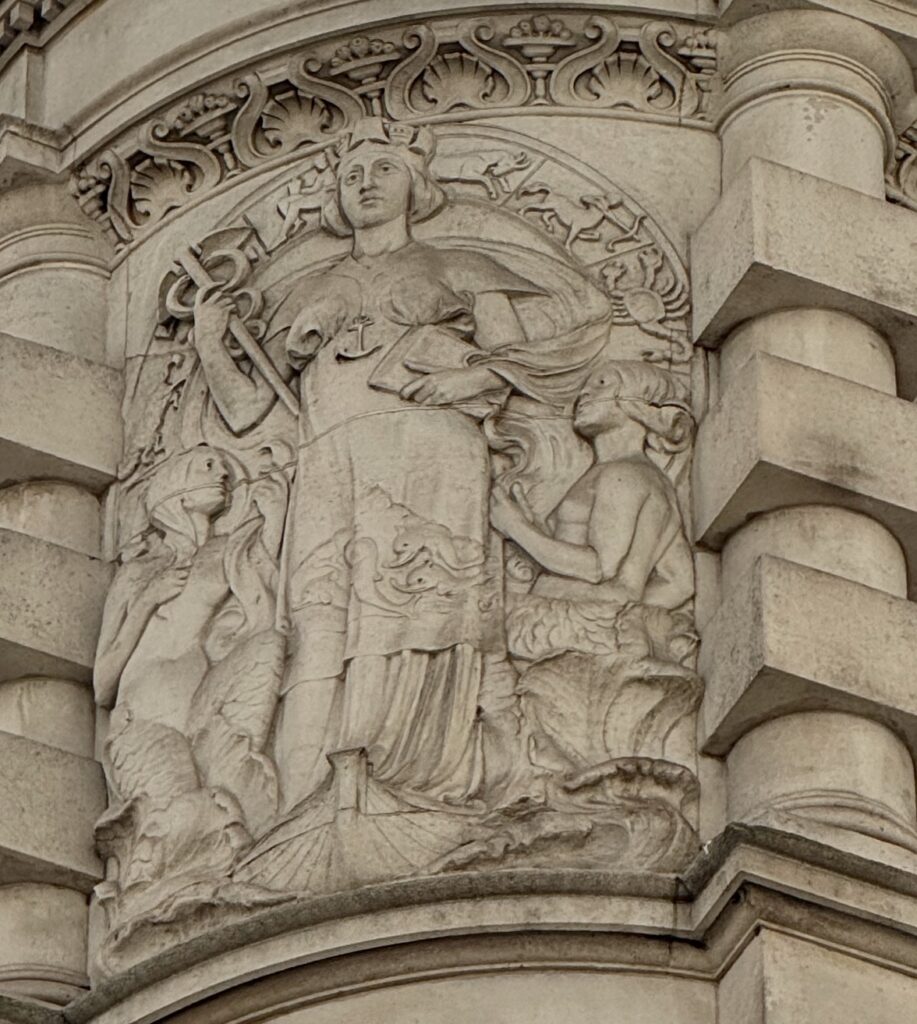
The central panel contains a standing female personifying Lloyd’s. She wears a crown of sails and stands on a ship’s prow, holding in one hand a caduceus, in the other a book. Behind her is a Zodiacal sphere, and to either side of her are two mermaids ..
A series of bronze maidens holding model ships …
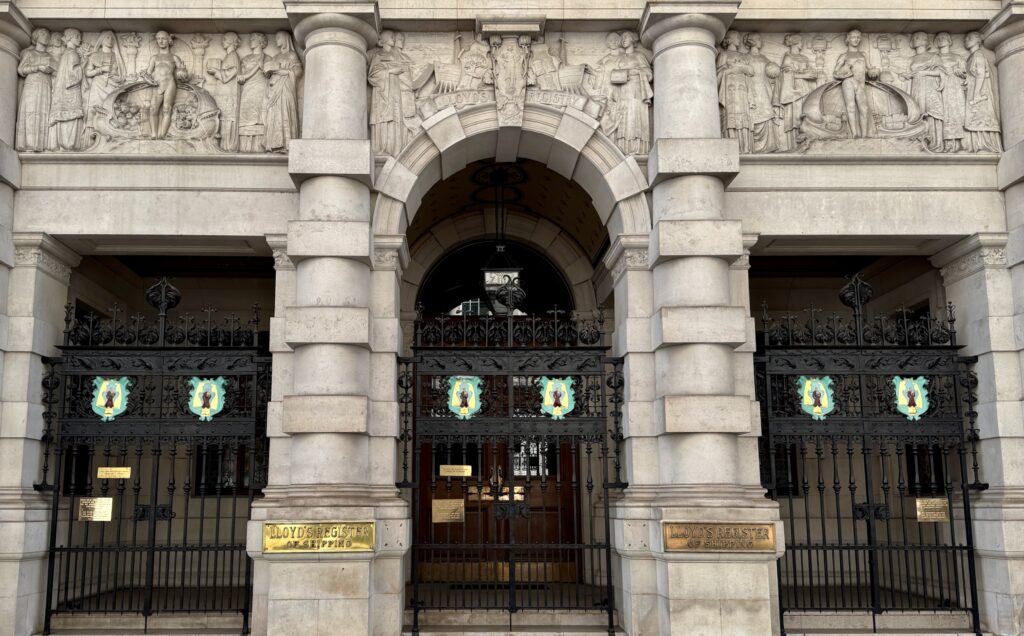
The impressive entrance …
The panel on the left may represent ‘Trade’. At the centre stands a naked youth, wearing mercury’s winged bonnet and holding the caduceus in one hand and in the other an orb surmounted by a galleon …
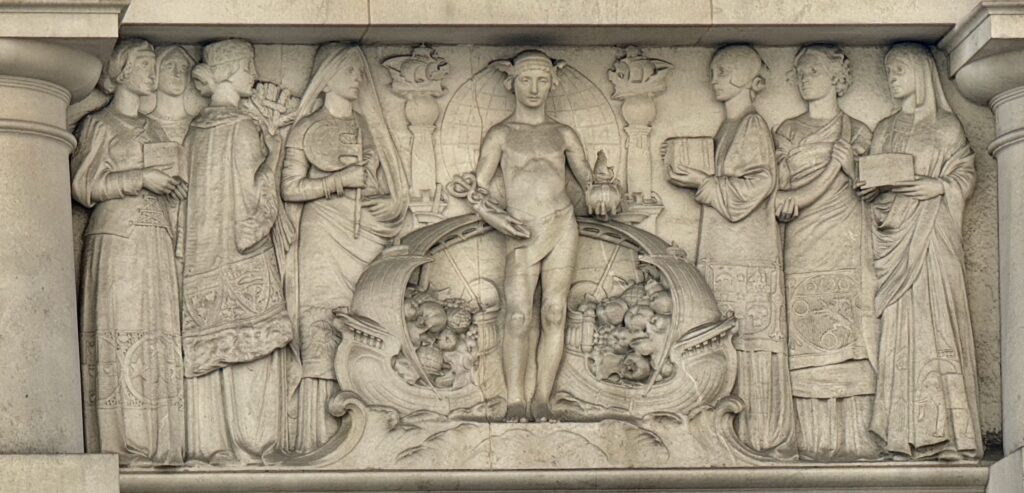
At his feet are waves bearing a symmetrical arrangement of sailing-ships laden with exotic fruit. Behind the youth is a representation of the globe. Four maidens stand to the left and three to the right, some wearing ethnic costume. One holds an elephants tusk, another a sheaf of corn. An Indian woman holds a war axe whilst the remainder hold closed caskets.

In the panel on the right there is at the centre another naked youth holding a sextant and a compass …
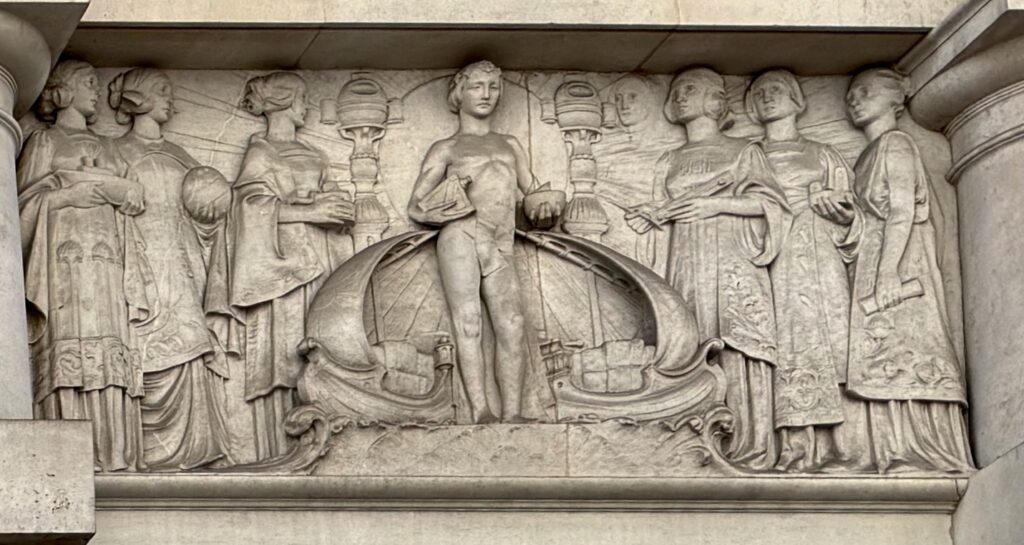
At his feet are waves bearing a symmetrical arrangement of sailing ships laden with packages. Behind the youth is the sun, its rays projecting to form a pattern in the background. The sun is flanked by ornamental columns, with compasses at the finials. There are three maidens on the left and four on the right, carrying navigational instruments, a globe and the model of a ship.

The spandrel above the right hand window on Lloyd’s Avenue. At the centre, from left to right, are the Arms of Cardiff and the words VILLÆ CARDIFF, the Arms of Hull, and the Arms of Southampton, with the words VILLÆ SOUT(HAMP)TONIÆ …
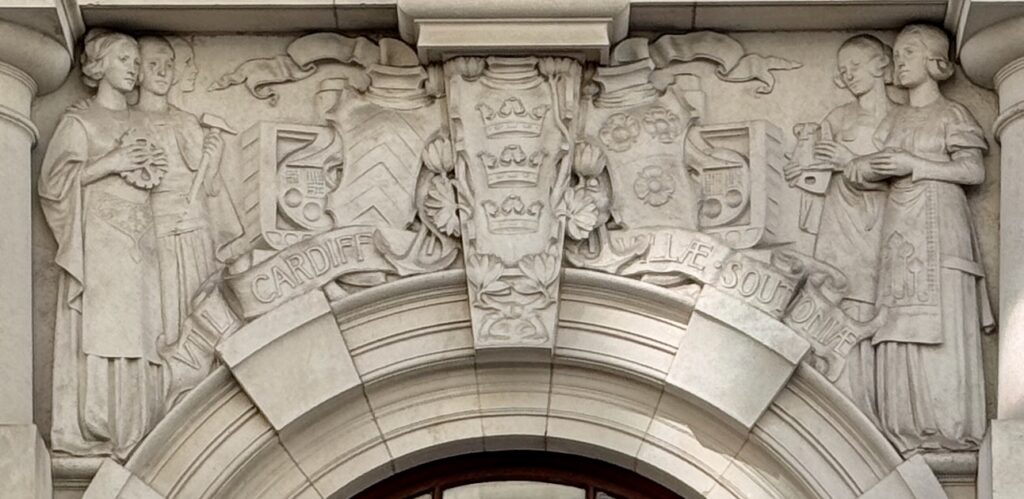
Flanking these are cross-sections of the engines of steamships and pairs of maidens to either side, holding tools and navigational instruments.

Above the left hand window …
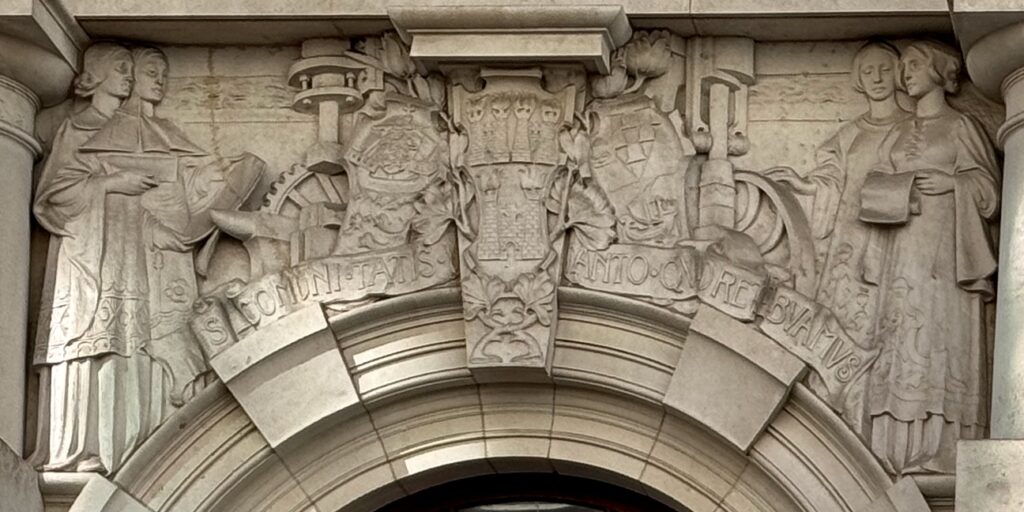
At the centre, from left to right, the coat of arms of an unidentified towm, with motto …S…COMMUNI.TATIS V, followed by the Arms of Dublin and the Arms of Belfast with its motto (PRO) TANTO QUID RETRIBUAMUS, surrounded by a trophy of machinery connected with shipbuilding. Pairs of maidens to left and right hold plans and a model of a steamship.

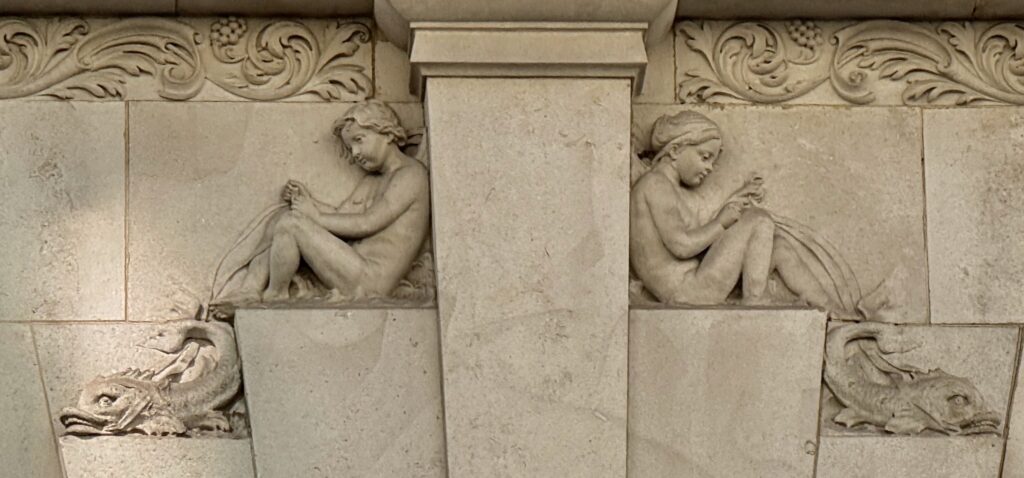
There are also some amusing figures nearby, children playing with dolphins on a leash …
I haven’t been able to capture all the great aspects of this building, so I do recommend a visit, particularly on a sunny day …
In my descriptions, I am extremely grateful to Dr Philip Ward-Jackson and his comprehensive guide Public Sculpture of the City of London from which I have quoted extensively.

Some miscellaneous news and images.

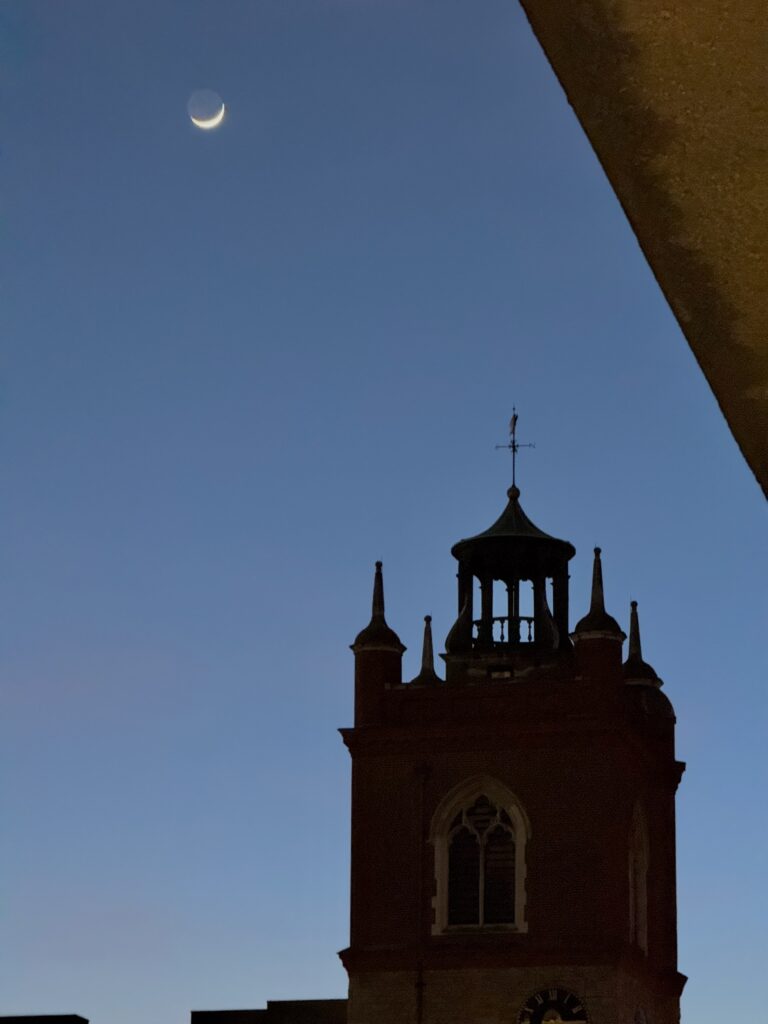
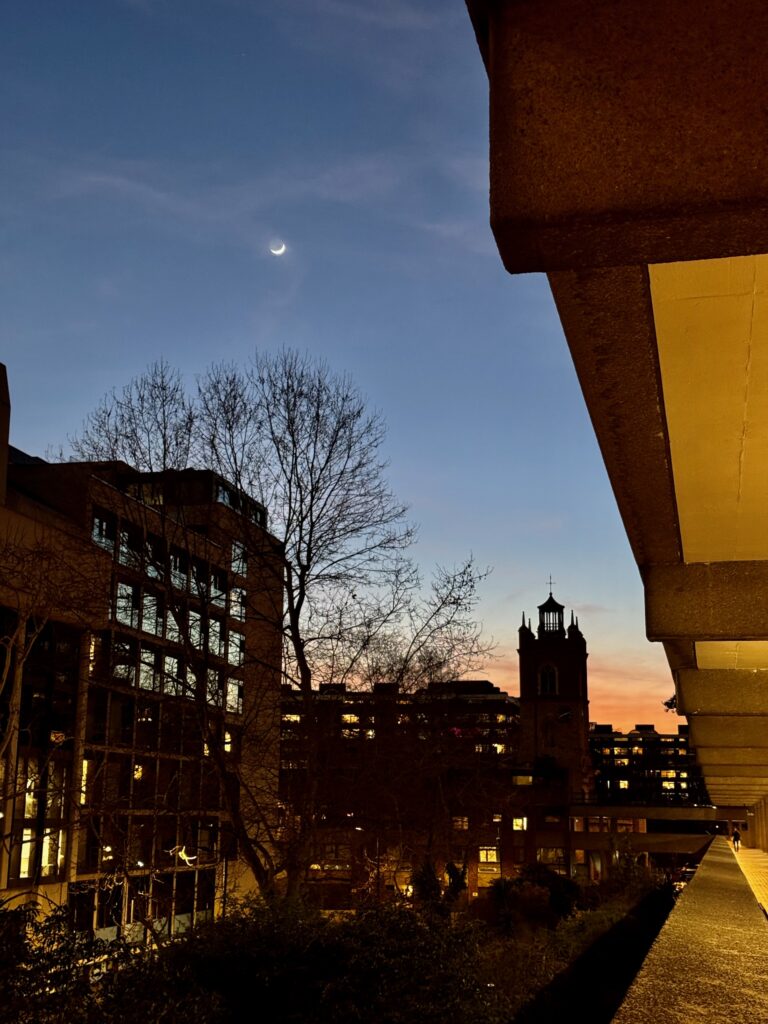
New Moon above St Giles …
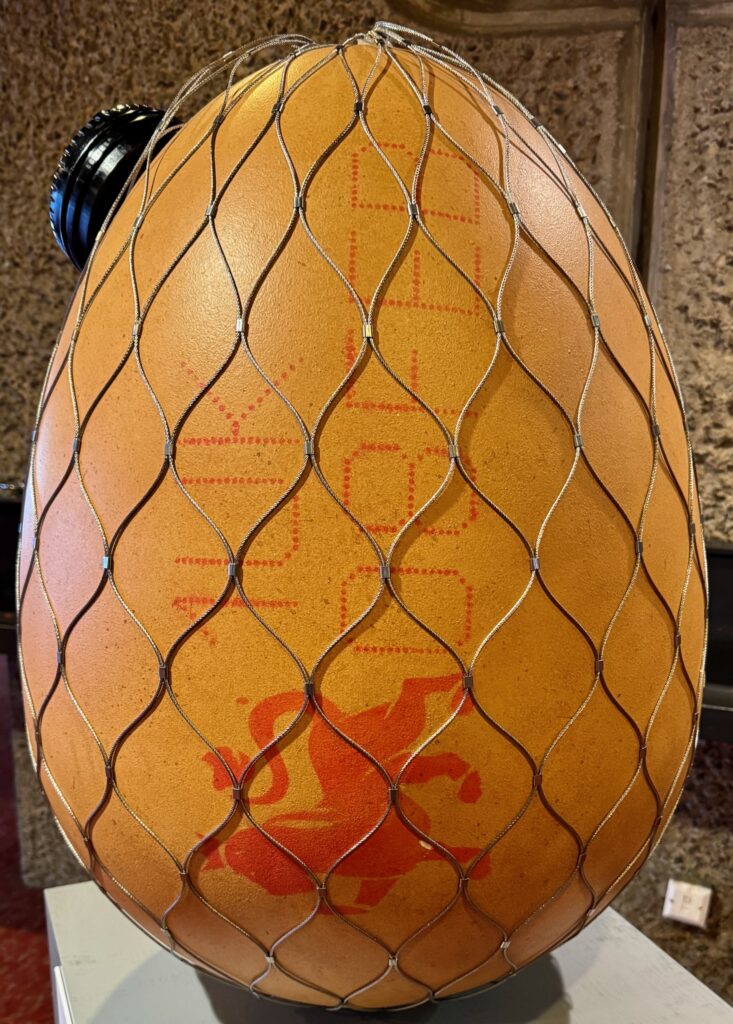
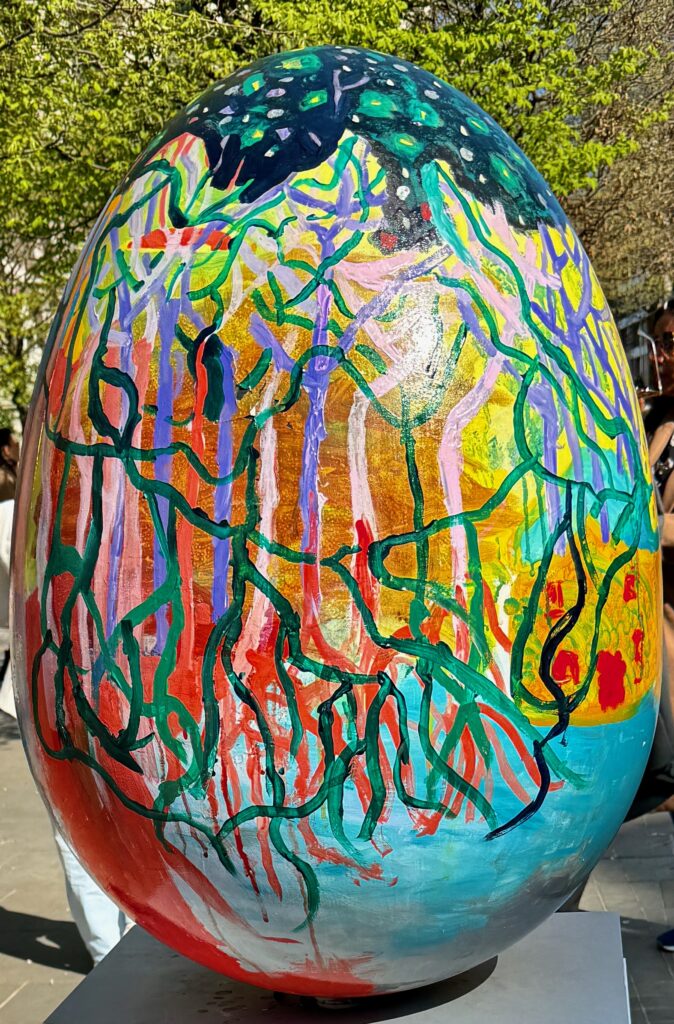
The Big Egg Hunt is on in the City (these two are at Aldgate and Barbican respectively) …
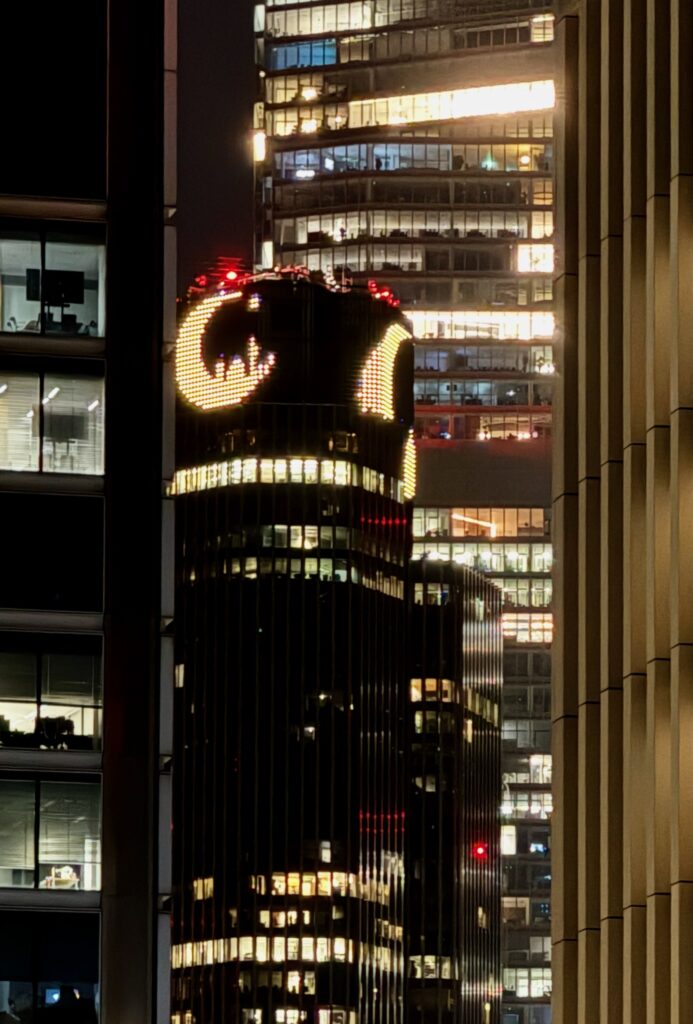
There’s a new image on the Tower 42 screen (but so far I haven’t been able to find out what it’s about – maybe something to do with Turkey?) …
Tulips are emerging in the Silk Street beds, hooray …
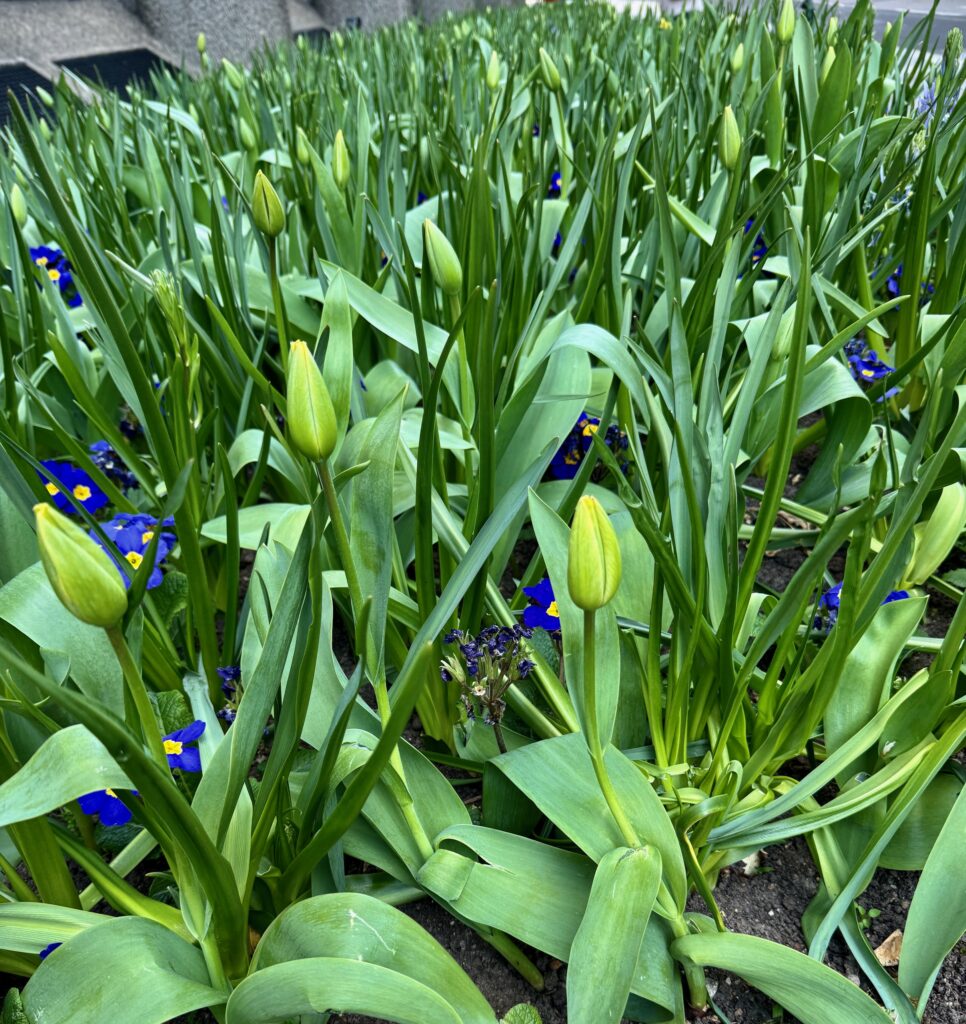
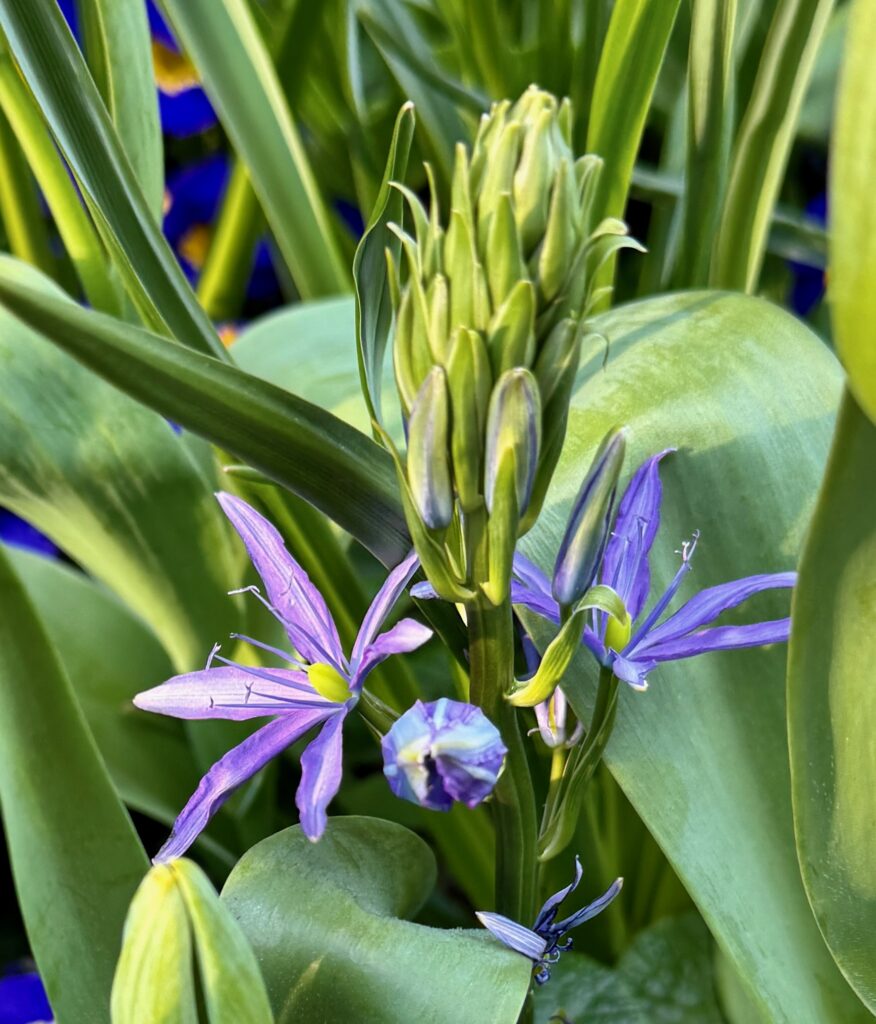
And, in the middle of them, a Camassia. Maybe from last year …
If you would like to follow me on Instagram here is the link …
https://www.instagram.com/london_city_gent

St Benet Paul’s Wharf. Get a sense of what the geniuses Wren and Hooke wanted a church to look like .

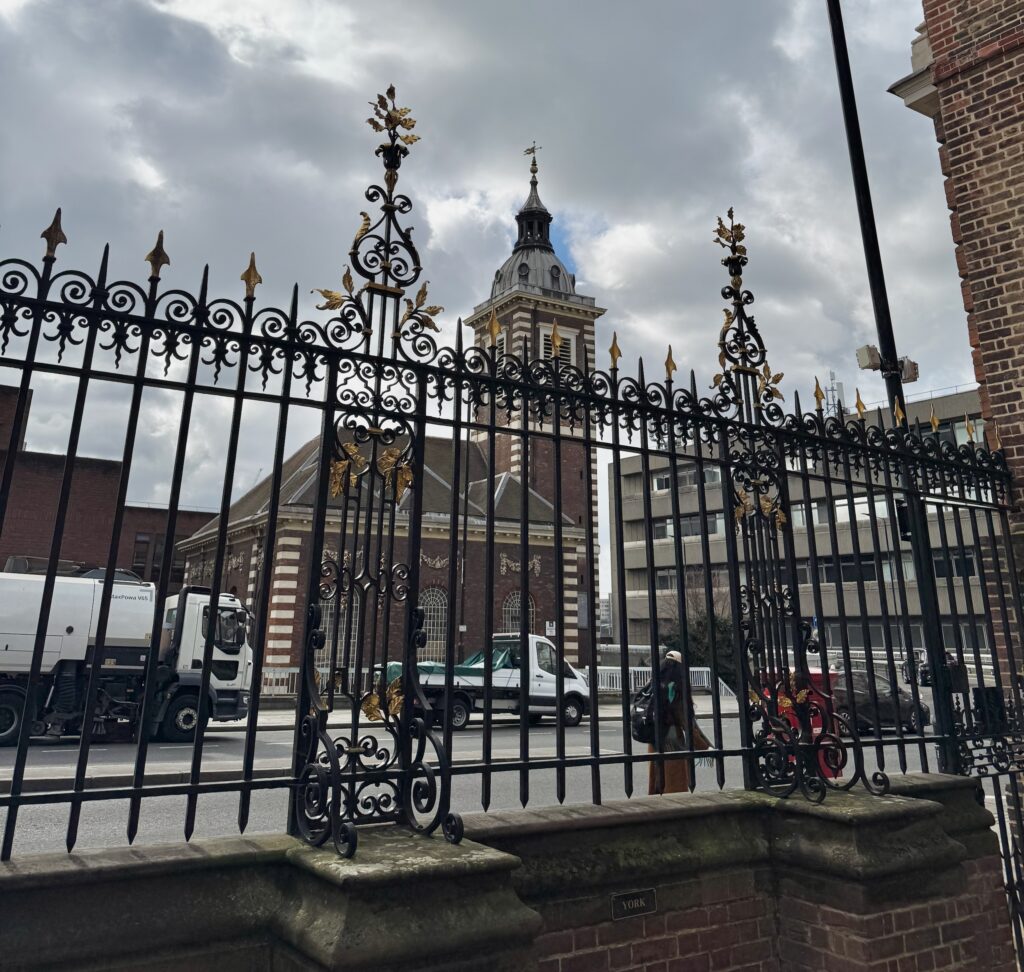
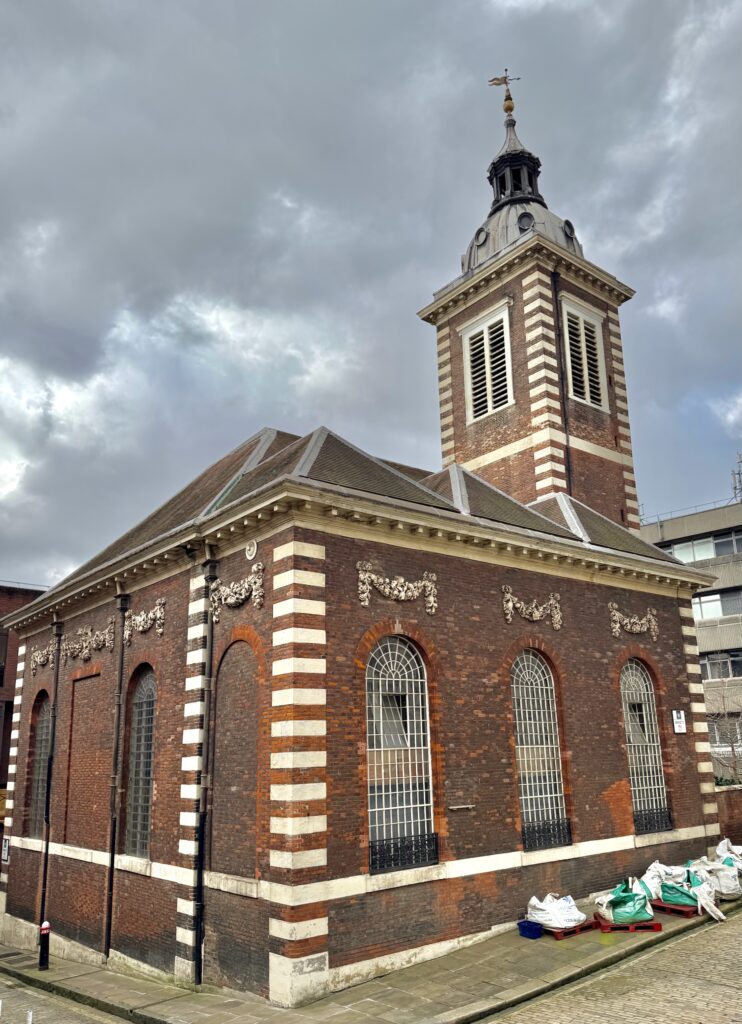
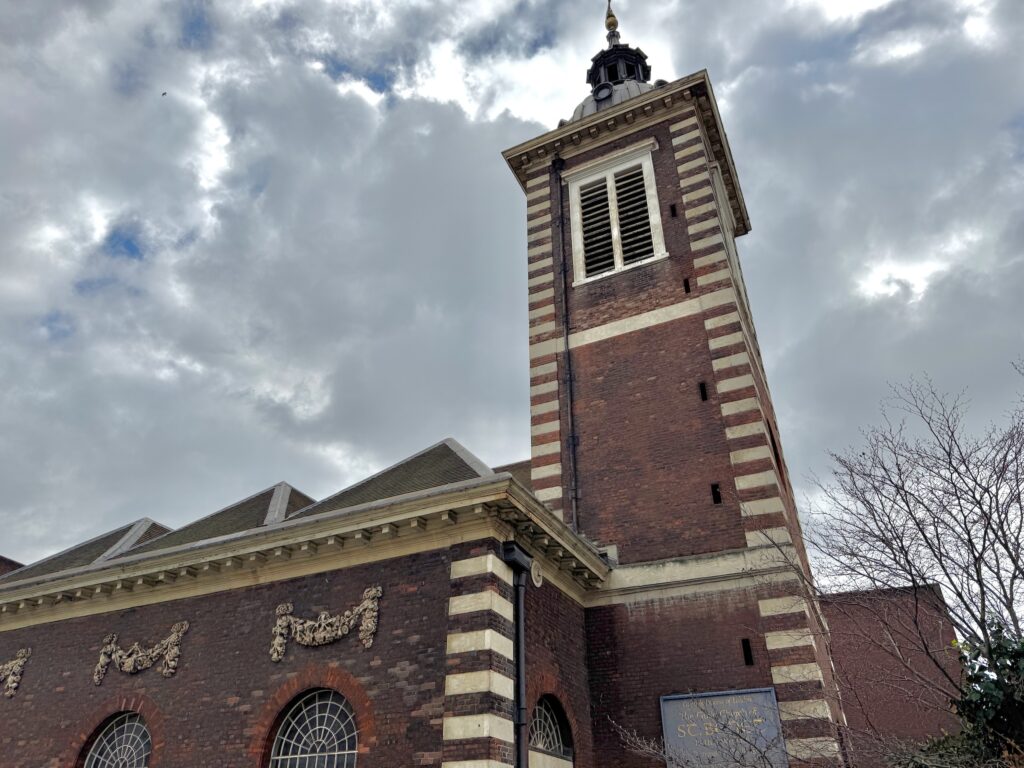
Dedicated to the 6th century St Benedict who founded the original monastic code, St Benet’s stands rather isolated with the fast traffic of Queen Victoria Street flowing high above (EC4V 4ER) …

It was built between 1678 and 1684 under the auspices of Sir Christopher Wren (1632-1723) with original drawings by Robert Hooke (1635-1703). It’s one of the few City churches to survive Victorian reordering and 20th century bomb damage and remains much as it was built.

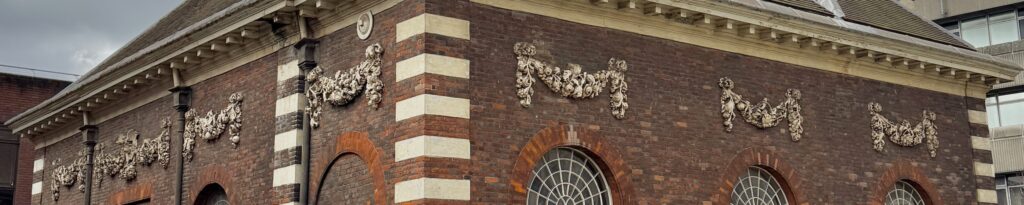
The Dutch-influenced exterior is built of red and blue brick, with stone quoins on the corners and carved stone garlands over the winows …

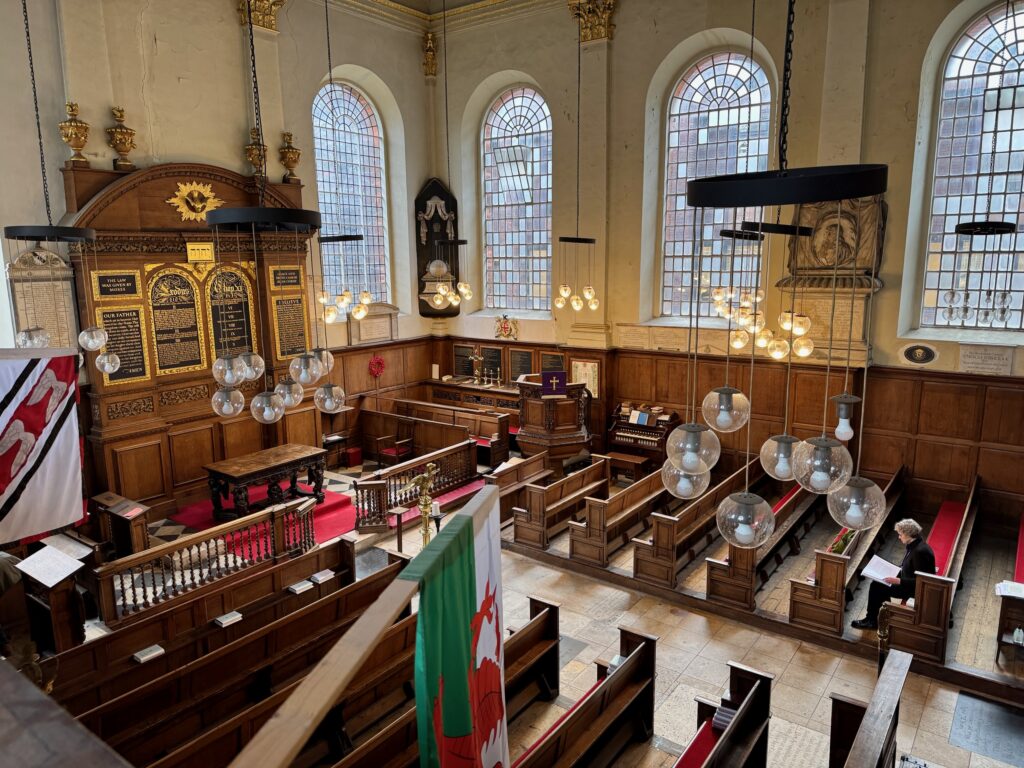
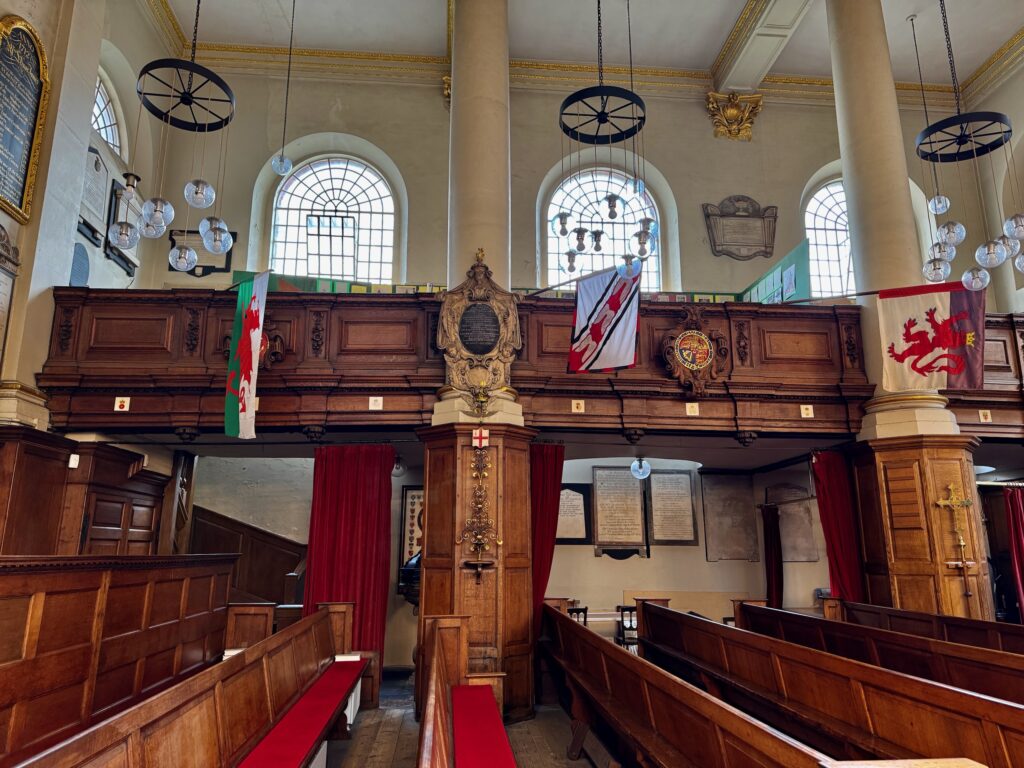
The interior of the church retains substantial galleries on the west and north side. The north side gallery …

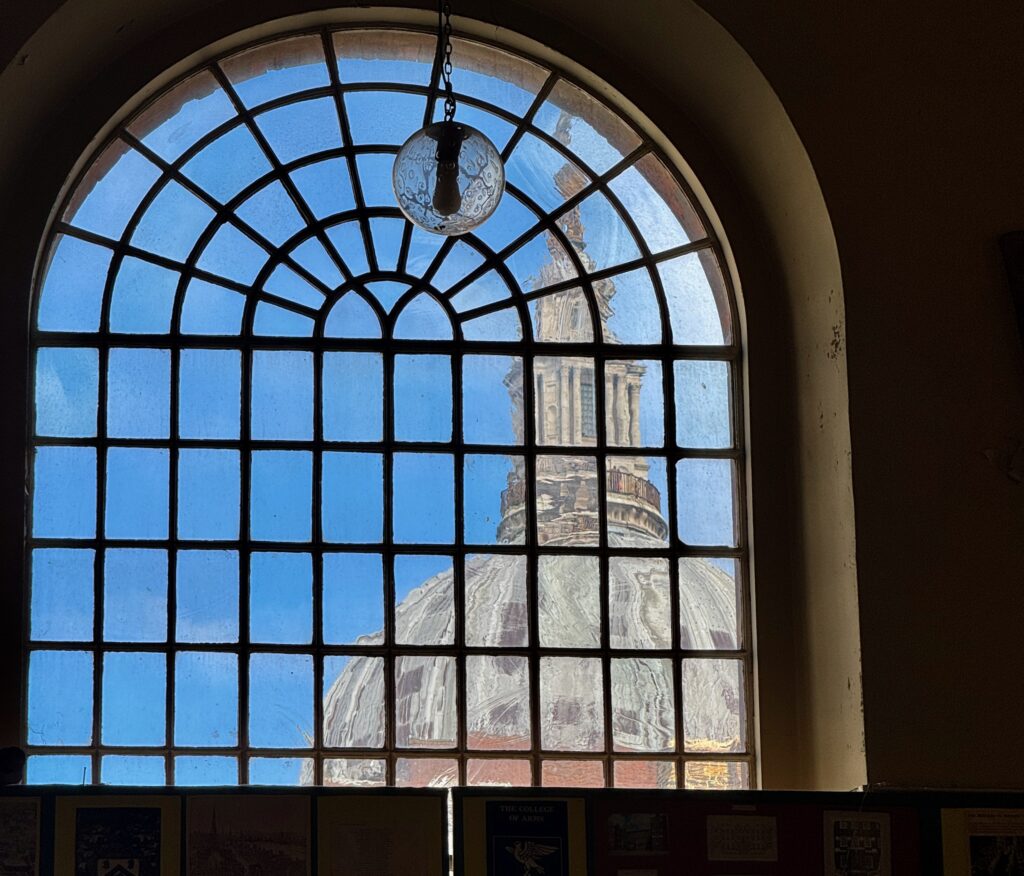
… which offers a striking view of St Paul’s Cathedral from the main aisle …

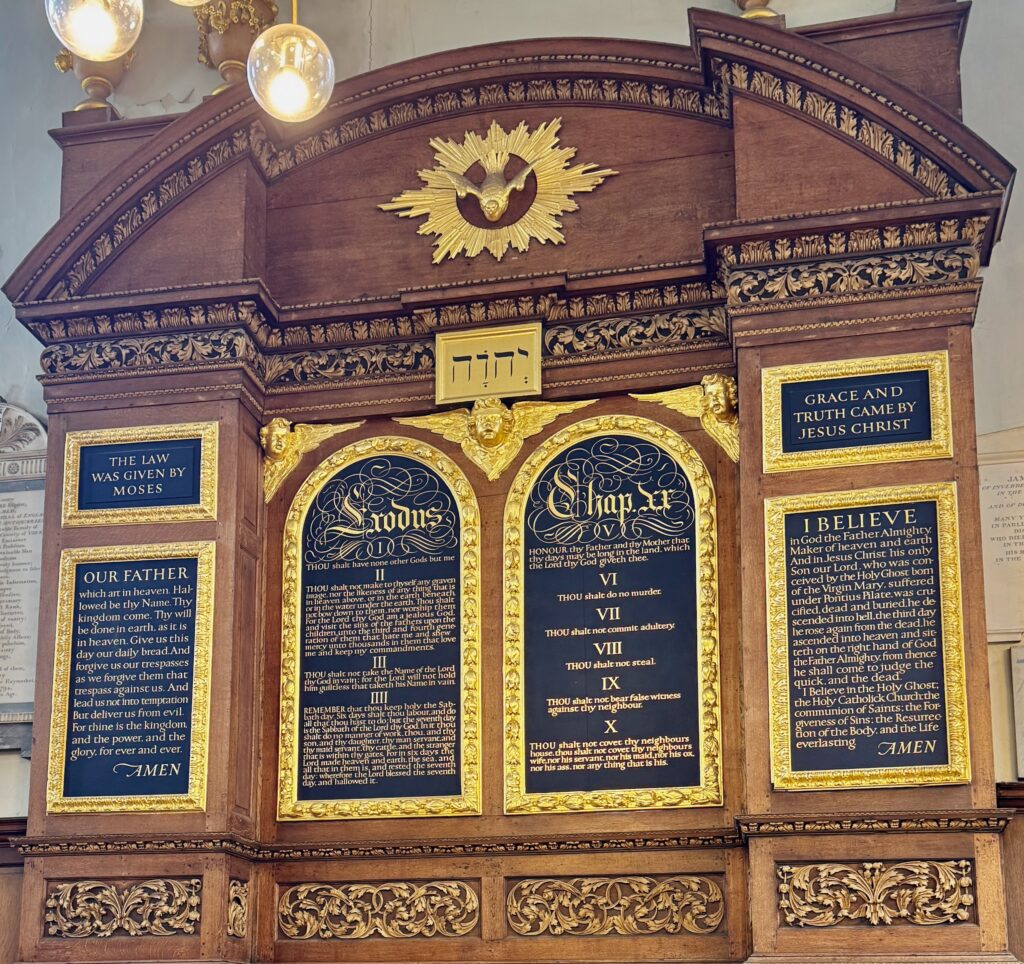
Original furnishings include the reredos, which displays the Ten Commandments, Creed and Lord’s Prayer, beneath the tetragrammaton (the name of God in Hebrew characters) …

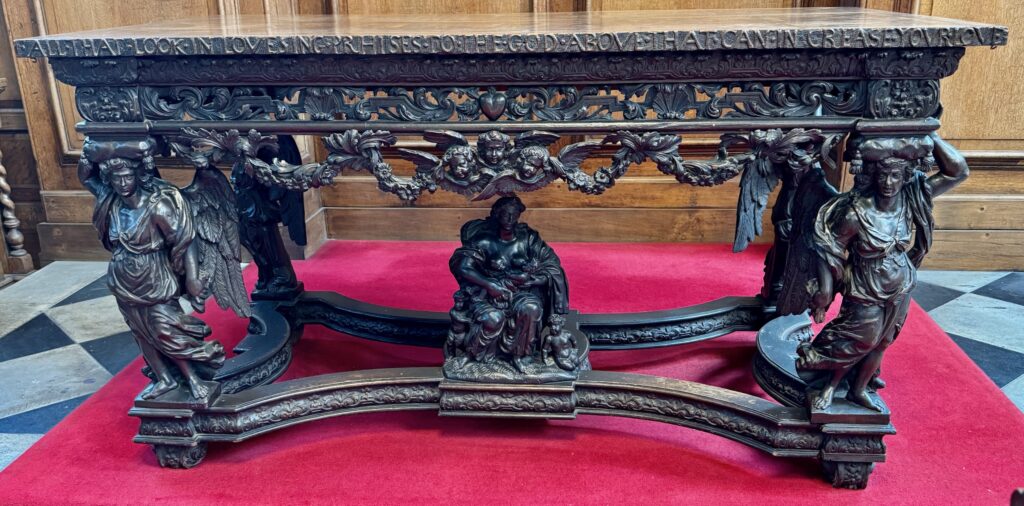
The magnificent Communion table (possibly Flemish) with its carved angels and central figure of Charity …

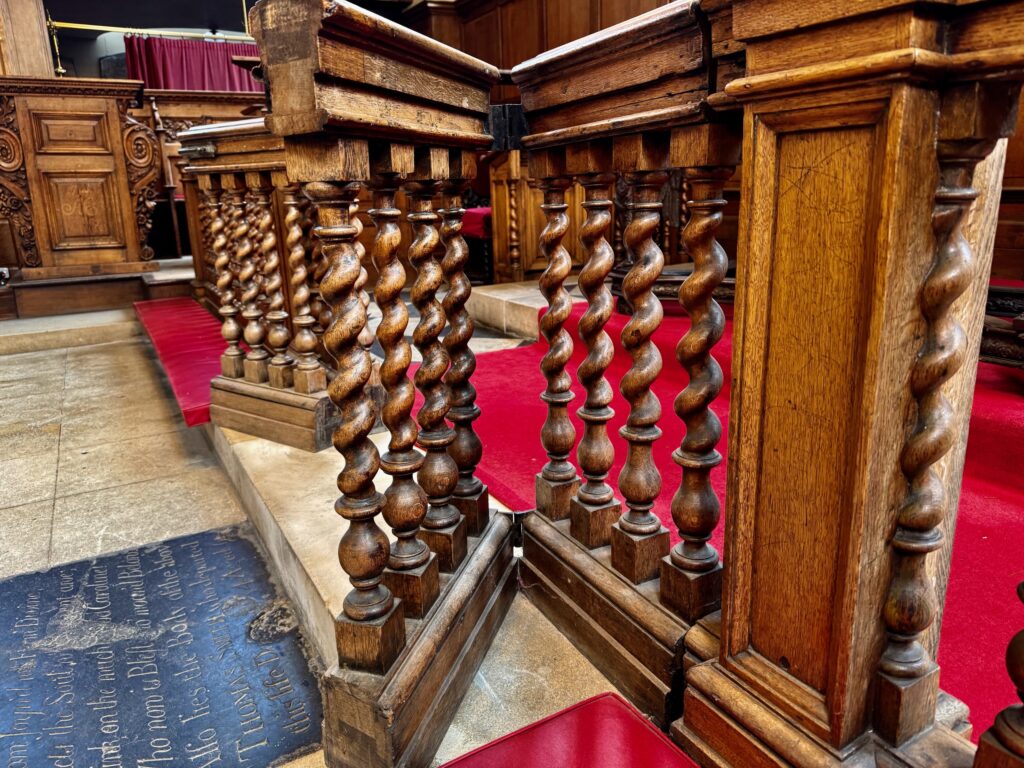
The original elegant Communion rails with twisted balusters …

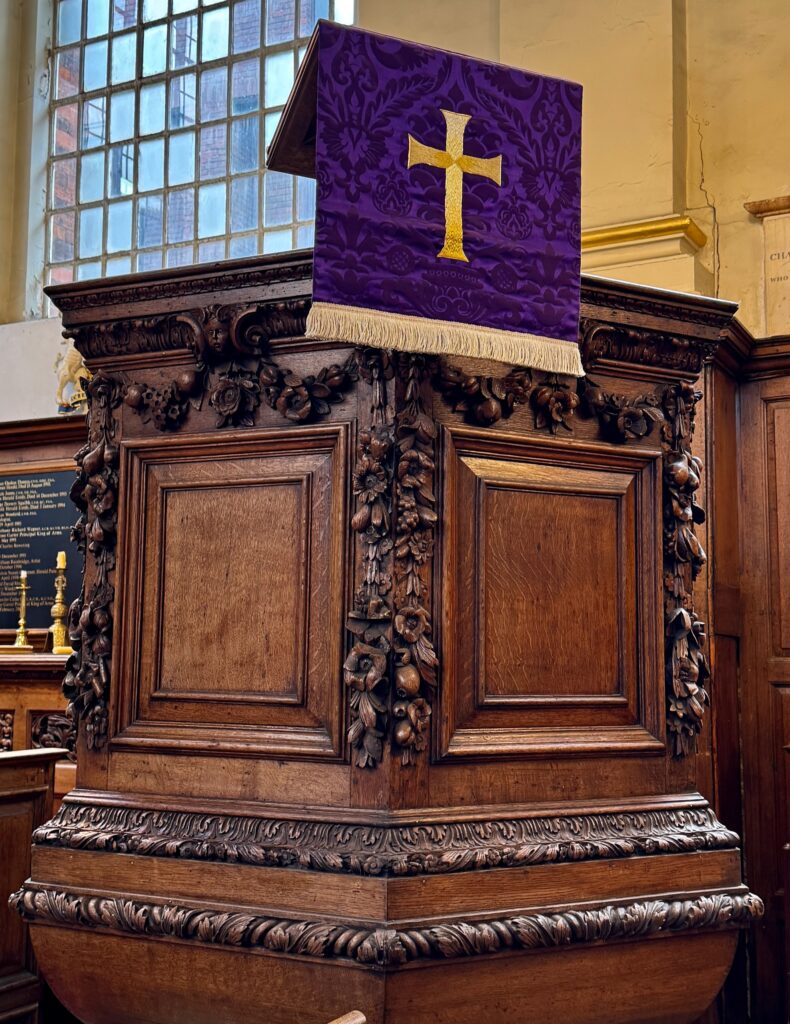
The pulpit, originally marked with the royal cipher and ‘Donum [given] 1683’ …

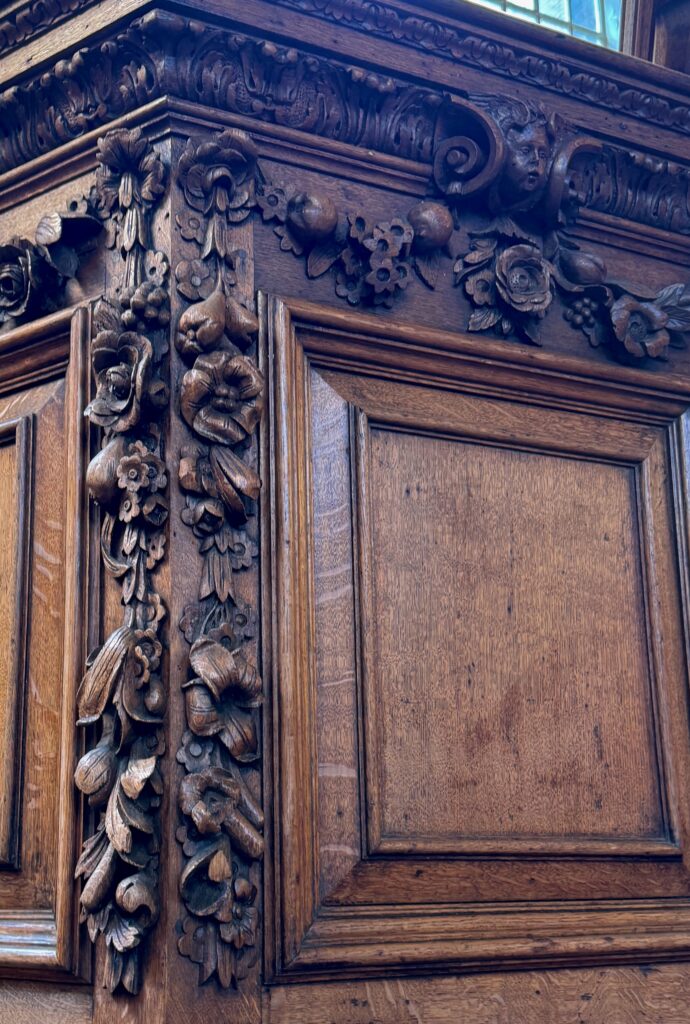
Some online guides attribute the carving to Grinling Gibbons but evidence is, apparently, not convincing. It’s still beautiful though …

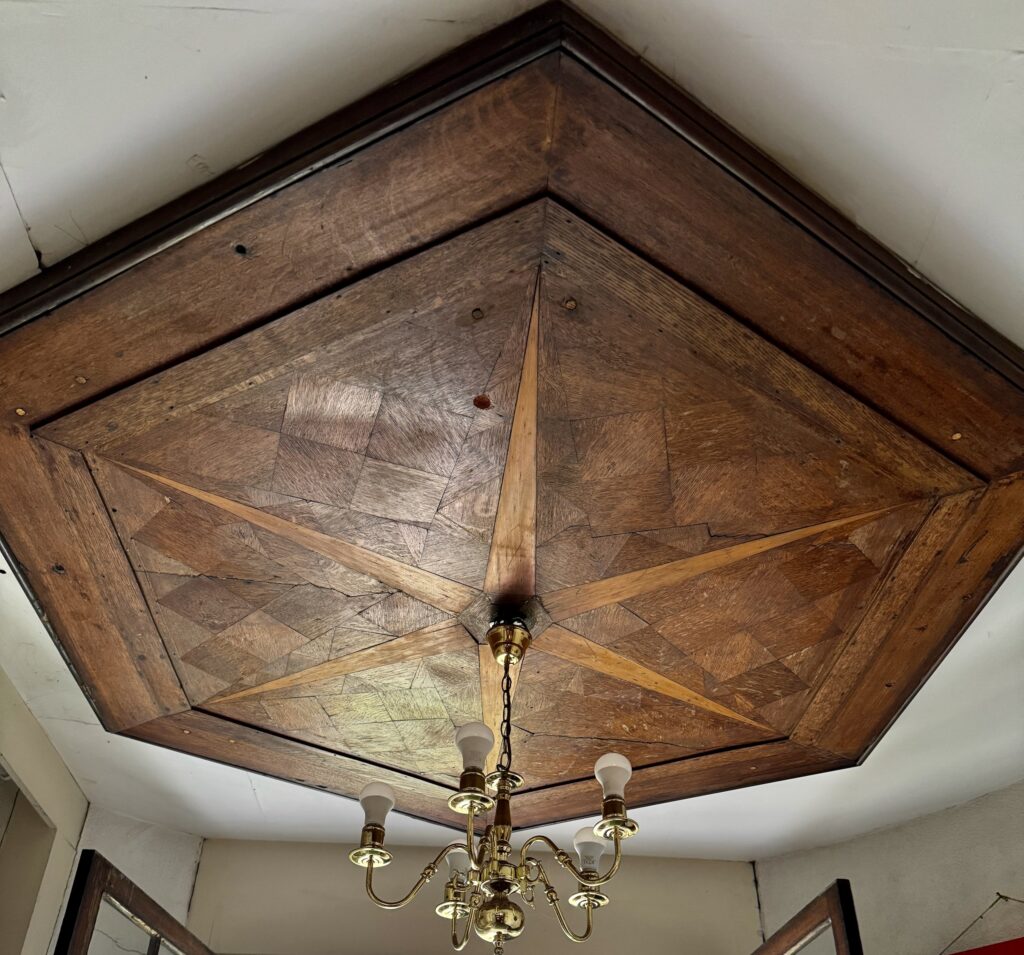
The pulpit’s tester, or sounding board, is now located in the vestibule below the tower …

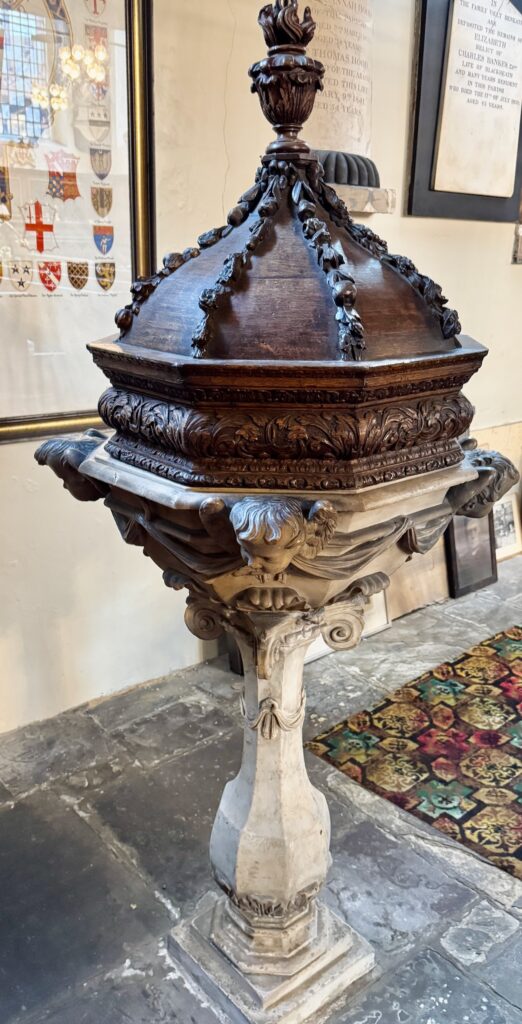
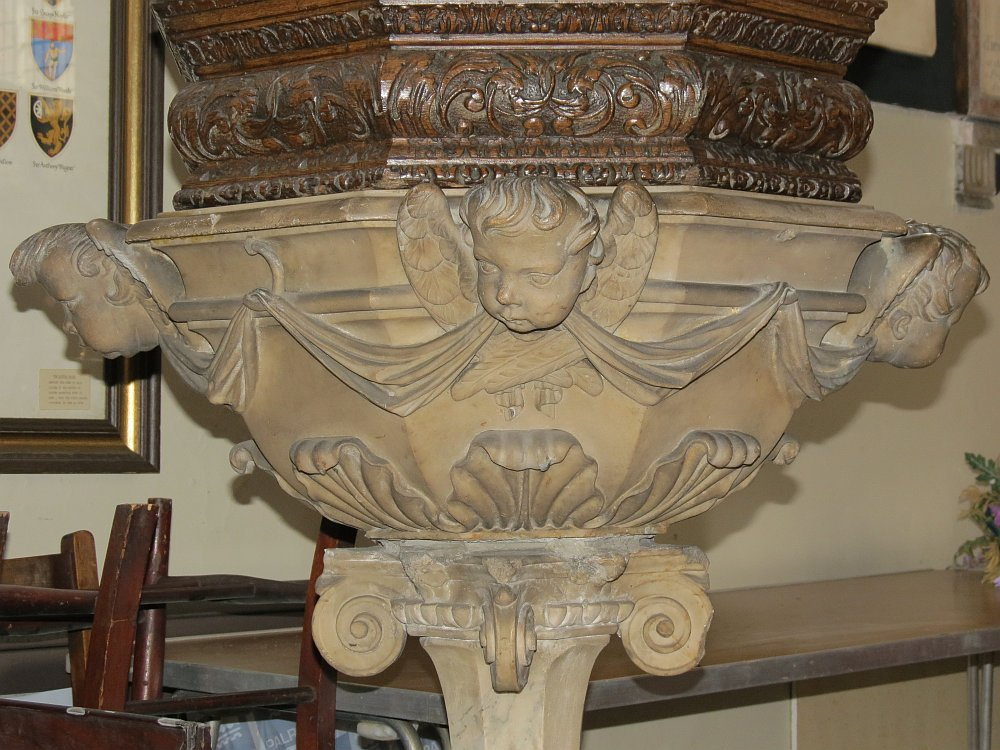
Another original furnishing is the octagonal marble font and its carved wooden cover …

Many of these furnishings were given by the lawyer and diplomat Sir Leoline (Llewellyn) Jenkins (1625-1685).

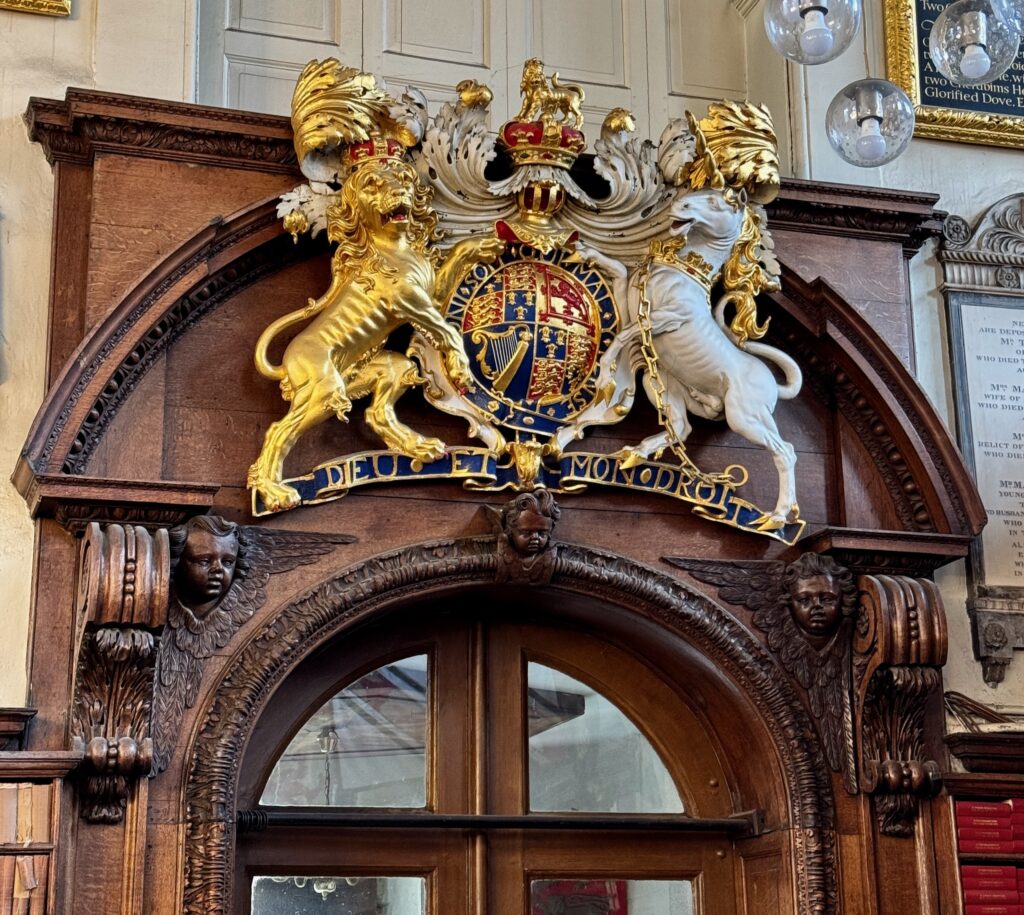
The splendid doorcase to the tower lobby is surmounted by the royal arms of Charles II …

View from the north gallery …

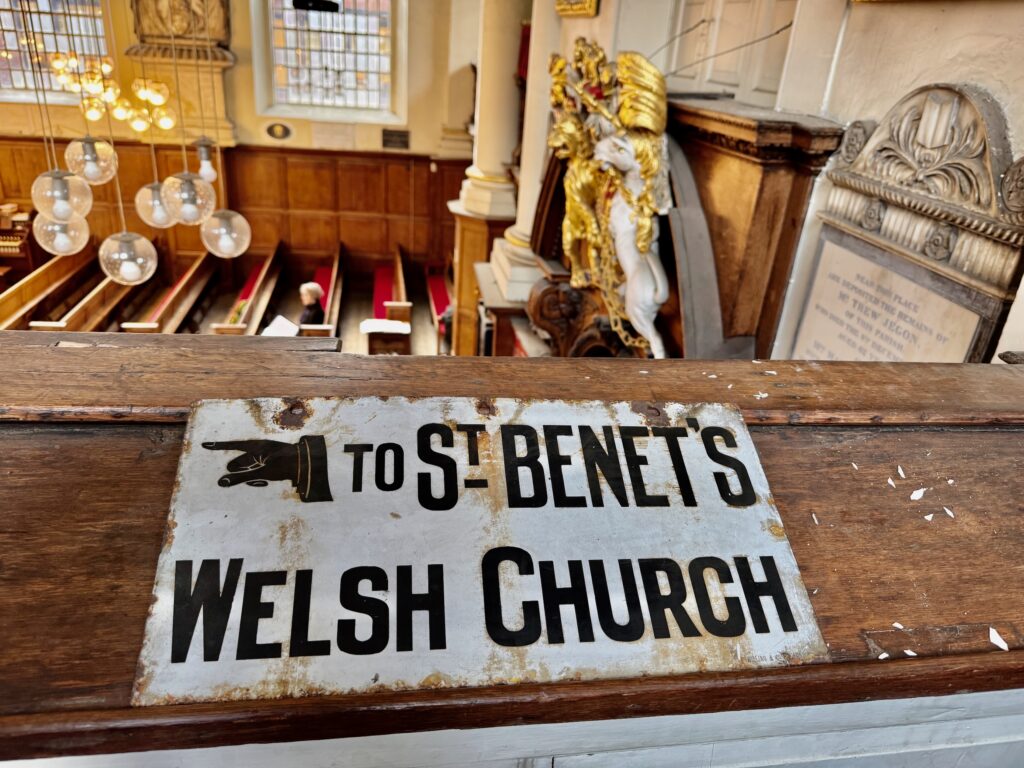
Balcony miscellany ..

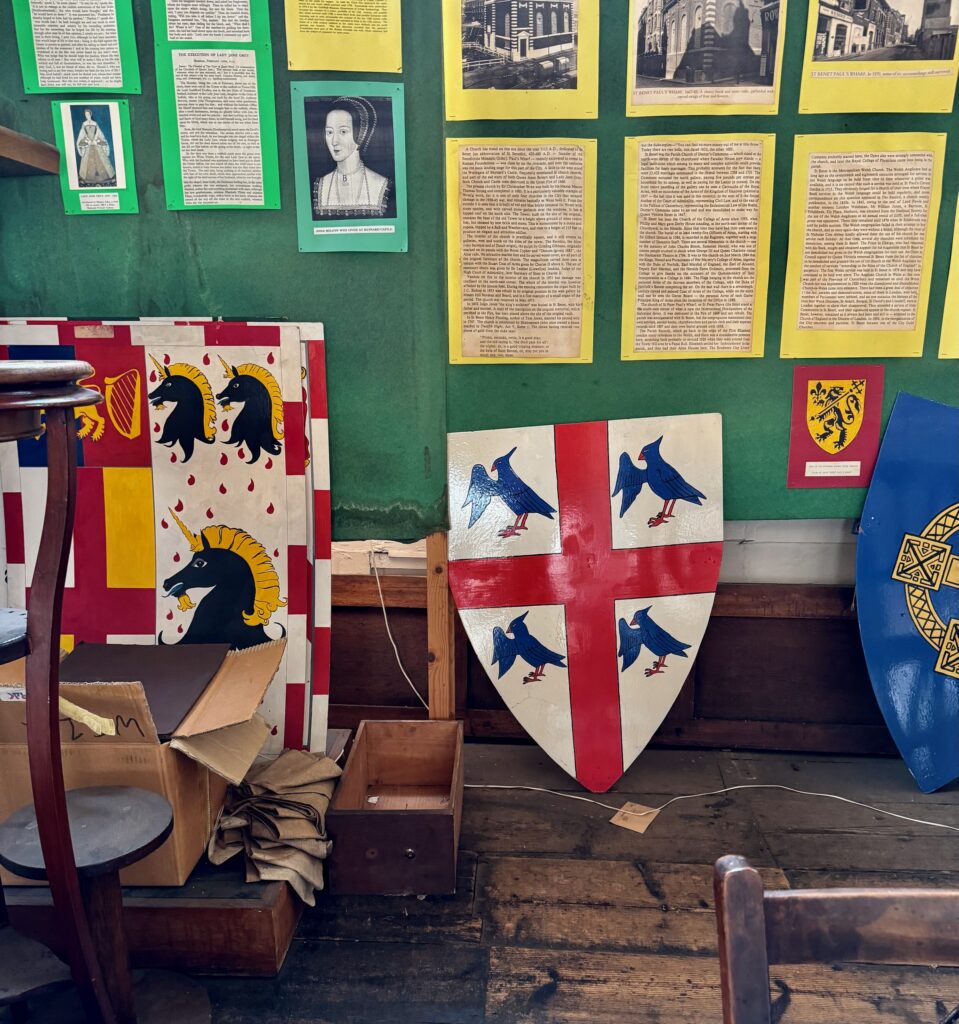
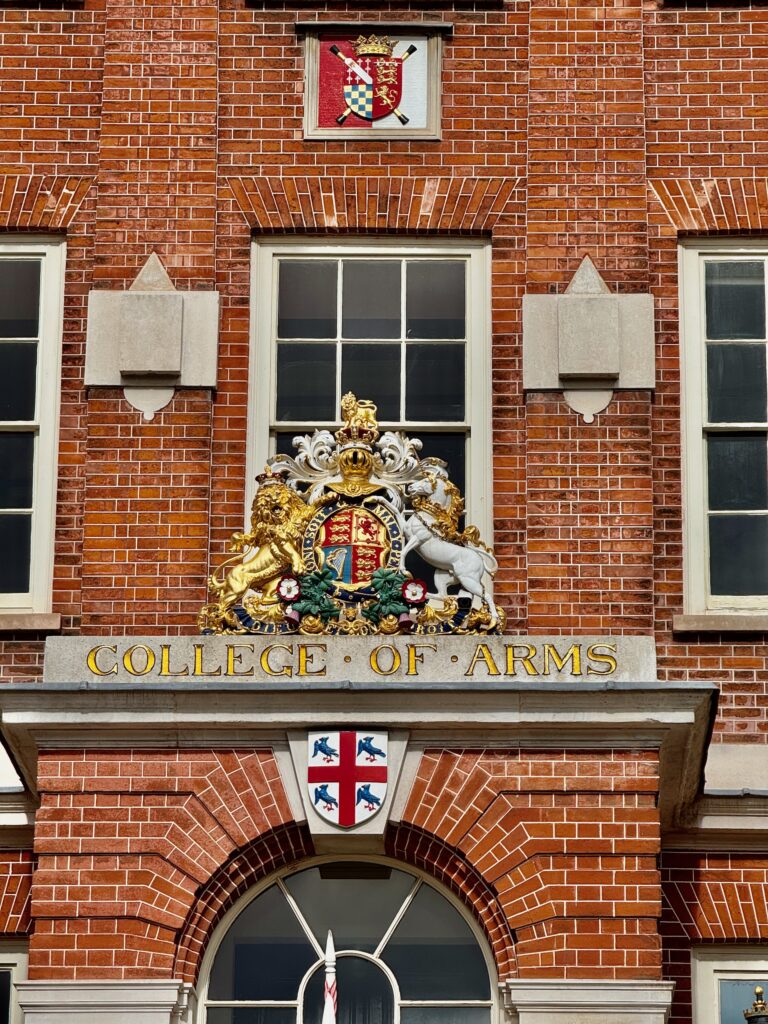
Since 1555, St Benet has been the church of the College of Arms (the heraldic authority for England, Wales, Northern Ireland and much of the Commonwealth) which stands nearly opposite on Queen Victoria Street.

The view of the church from the College forecourt …

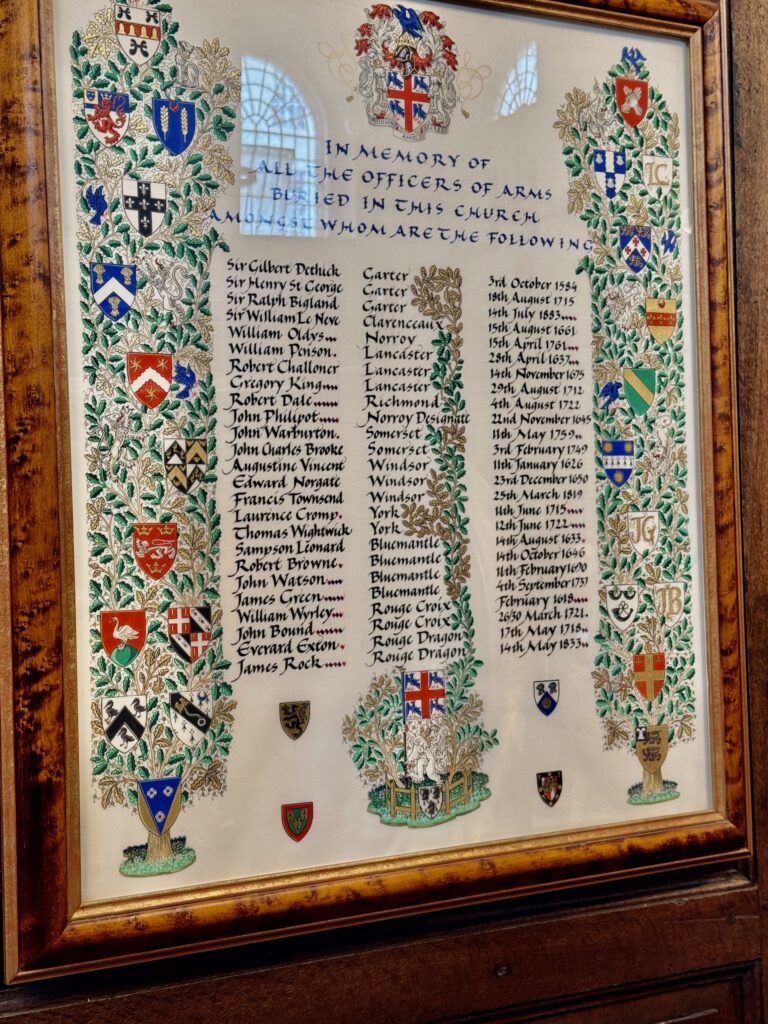
At least 25 Officers of Arms have been buried in the church …

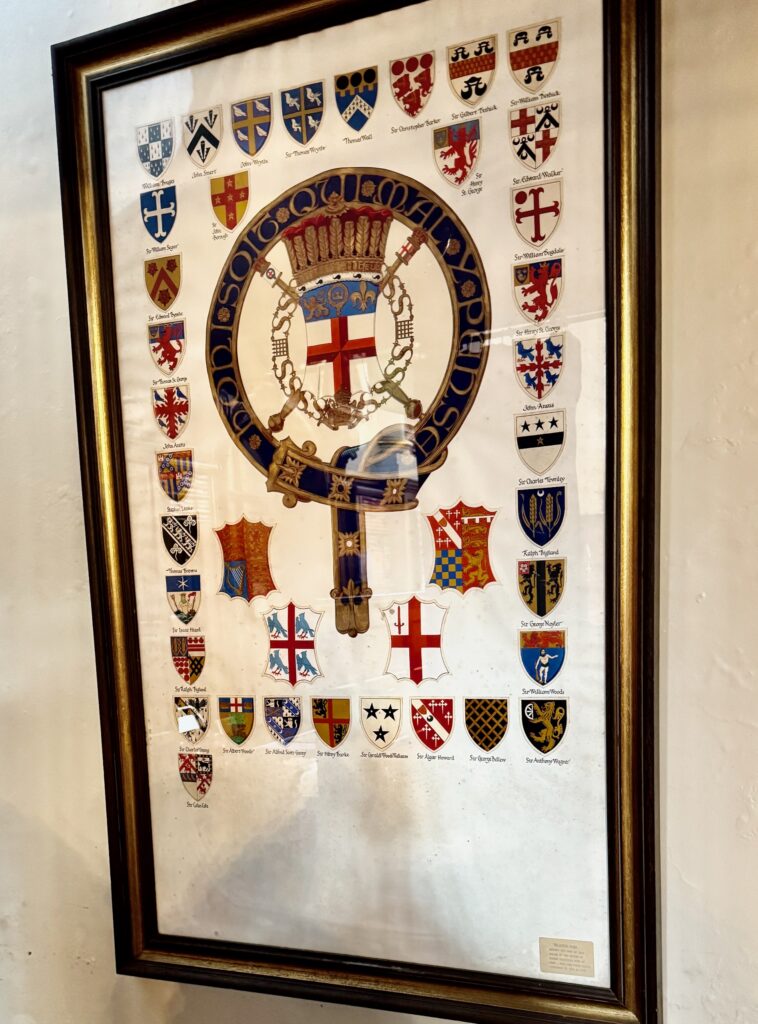
Coats of arms of College officers …

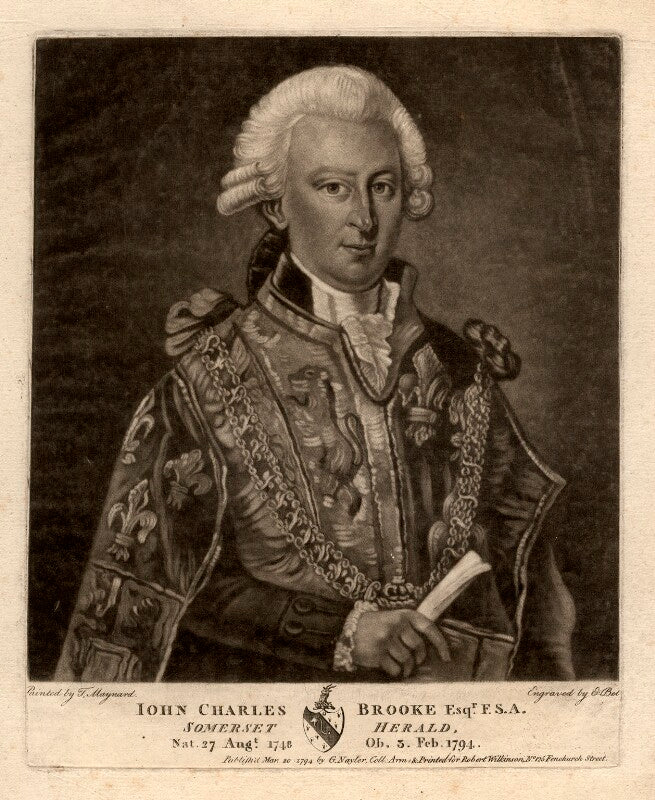
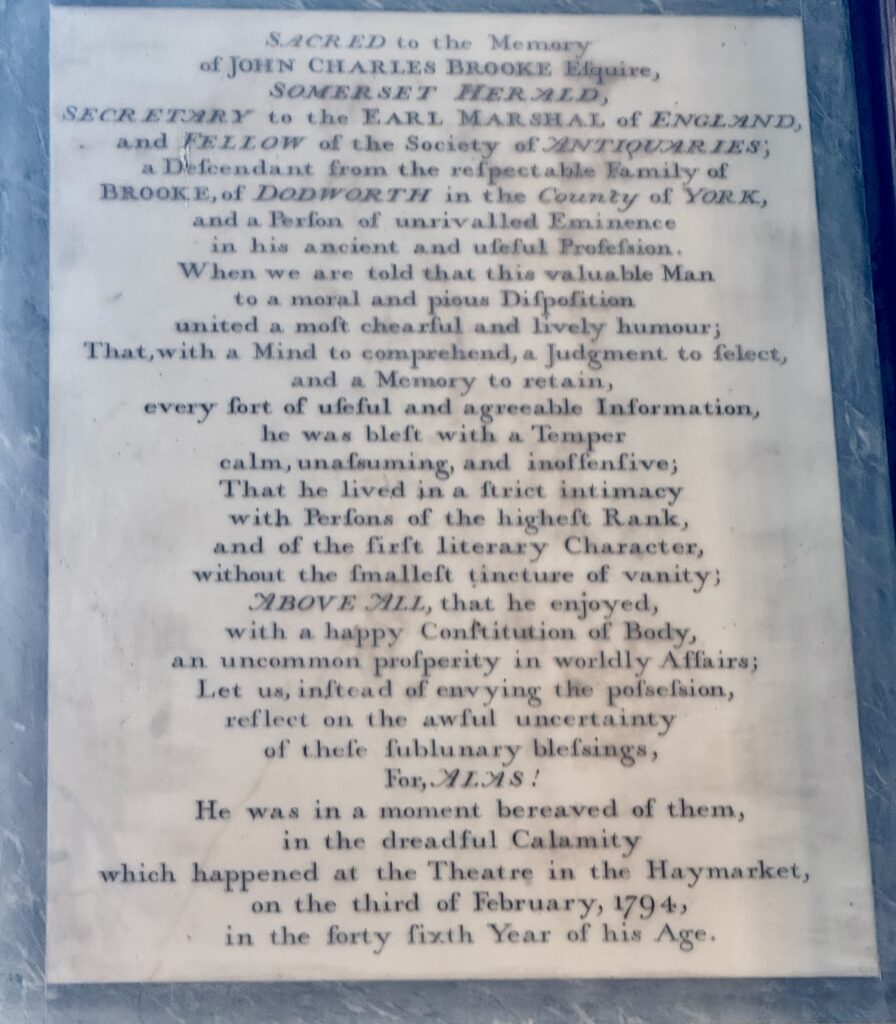
There is a memorial in the church to John Charles Brooke …

It refers to a ‘dreadful calamity’ at the Haymarket Theatre on 3 February 1794 which resulted in Brooke losing his life …

On that date, George III and Queen Charlotte were attending the Haymarket Theatre for the first time that season, and the royal command performance attracted vast numbers of people. The crowds were so huge that when the door was opened, those in the front of the queue were pushed down the stairs leading to the pit. More than 70 people fell and at least 20 were fatally crushed to death or suffocated. You can read more about the ‘Haymarket Tramplings’ here.

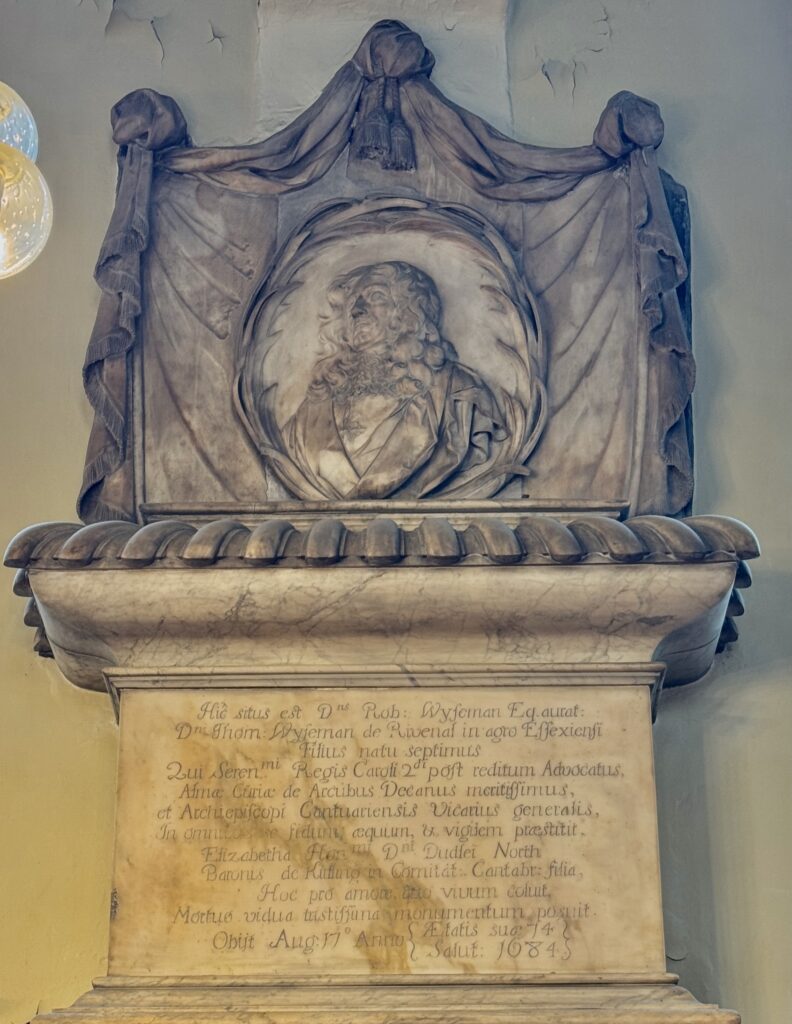
There is a splendid white marble bust of Sir Robert Wyseman (d. 1684). Sir Robert was Dean of the Court of Arches, the Archbishop of Canterbury’s chief ecclesiastical court, once held at St Mary-le-Bow …

When looking for great descriptions of monuments I always return to Bob Speel’s website.

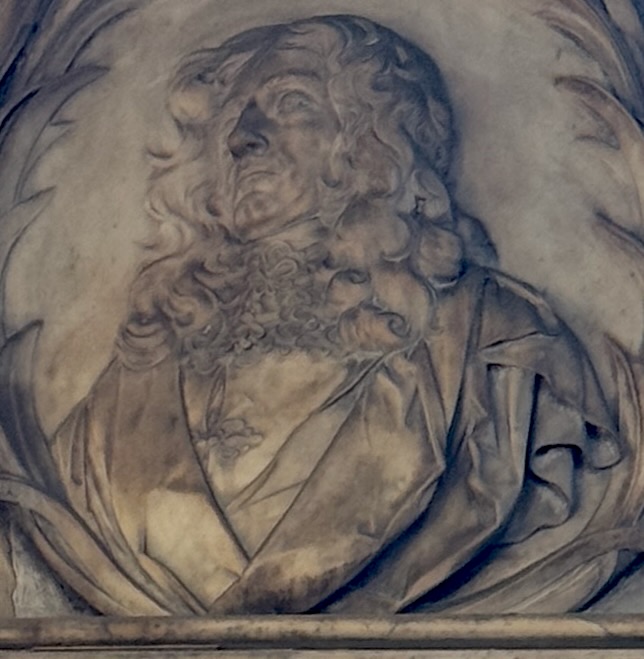
Here’s what he says about Wyseman: ‘The portrait is also excellent – a rather solid-faced man, given a look of pride and dignity, a stern man, with flowing locks of hair or wig, his throat covered by an ornate carved high collar, his chest within a heavy robe. Pevsner, the architectural historian, notes that the monument has been attributed to Grinling Gibbons and the bust to Arnold Quellin’.

Here’s a closer look …

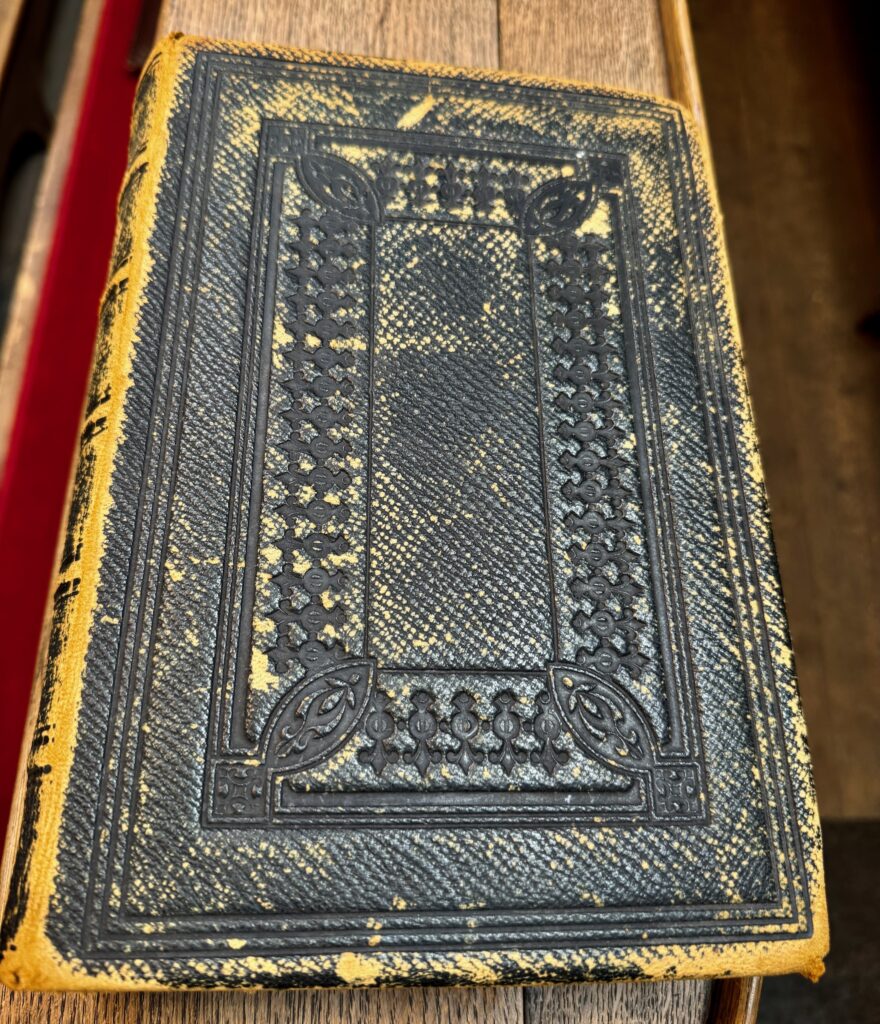
My eyes were drawn to this old bible resting in a pew beside the altar …

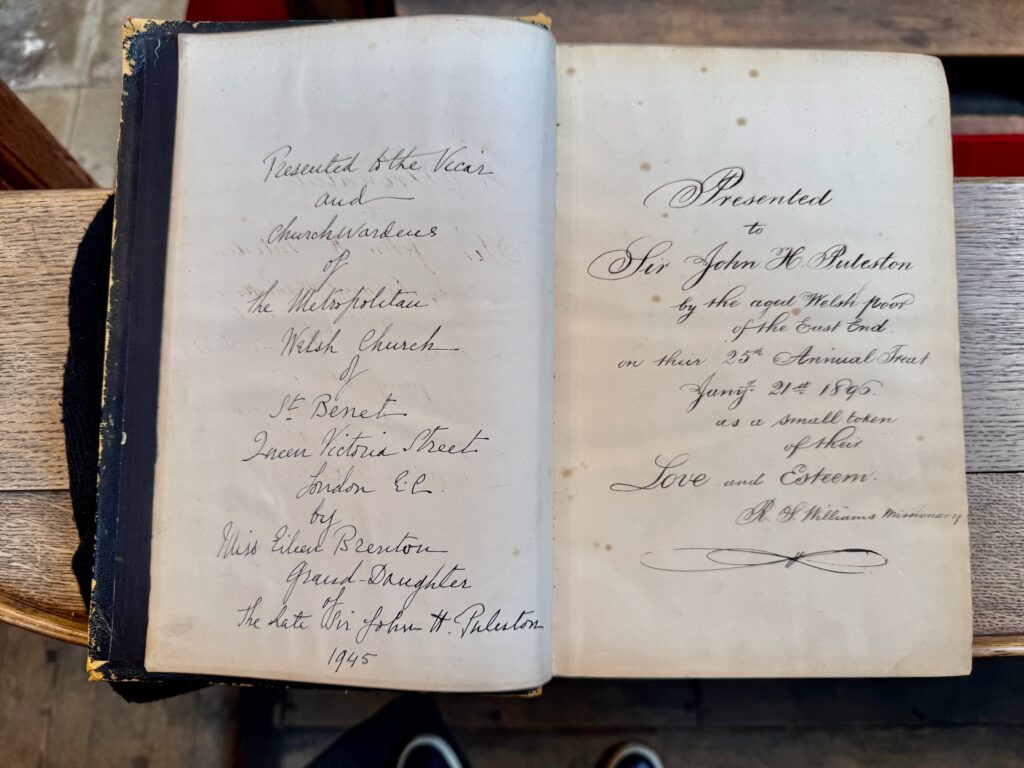
Being nosey, I looked to see if there was anything of interest written in the flyleaves. And there was! It was a gift ‘Presented to Sir John Puleston by the aged Welsh poor of the East End on their 25th Annual Treat, January 21st 1896 as a small token of their Love and Esteem’. It’s signed (and presumably written) on their behalf by ‘R H Williams Missionary’. Isn’t that wonderful …

The left hand page explains how it has found its way to St Benet – a gift in 1945 from Sir John’s grand daughter.

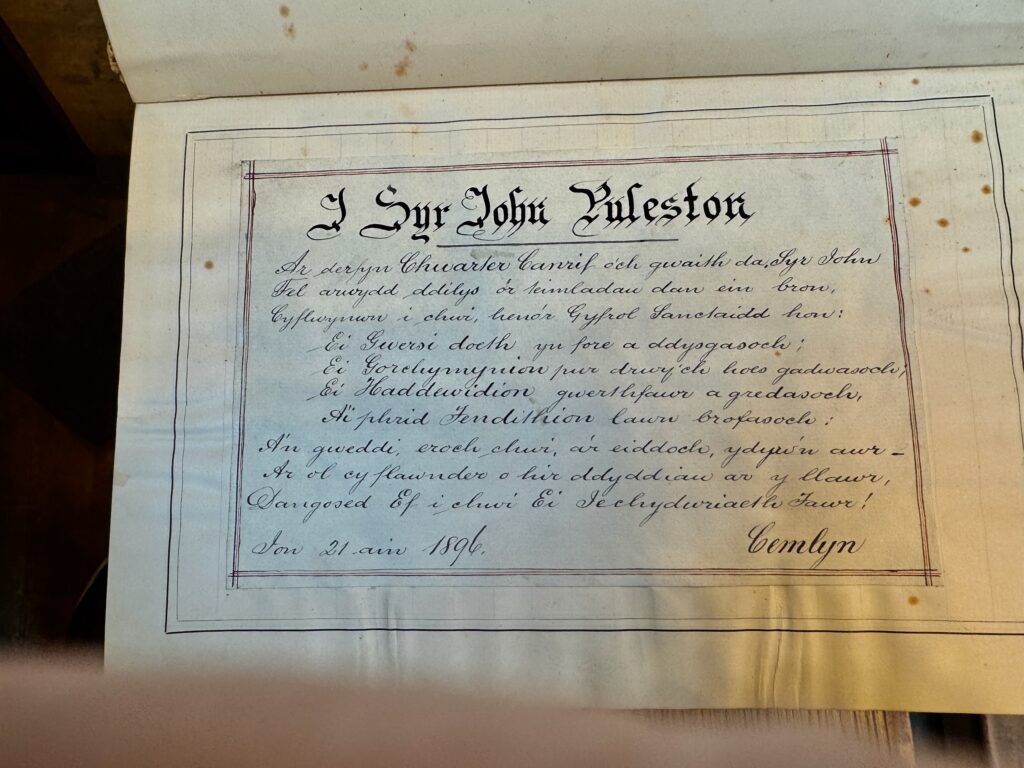
It is, of course, a Welsh Bible, with this inscription inside …

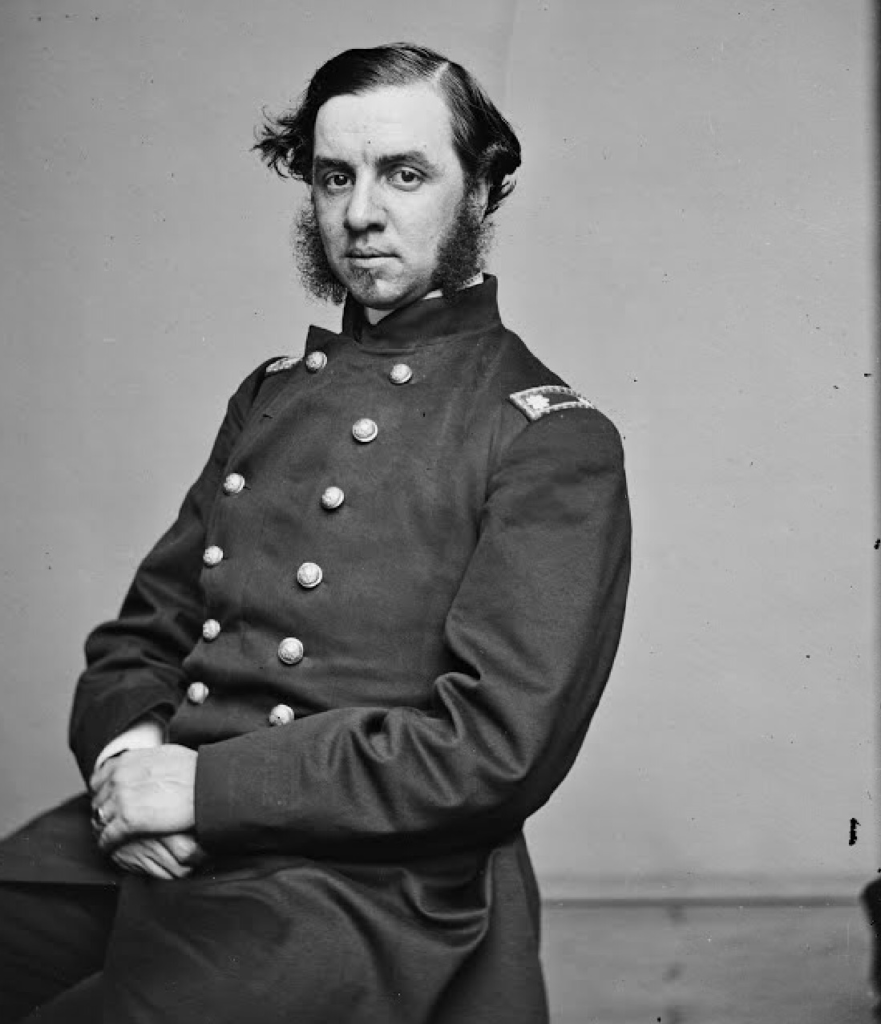
Sir John’s life is so remarkable I can’t even begin to describe it here so have provided some links. To whet your appetite, here he is in Washington DC holding the rank of Colonel ..

On 19 October he 1908 he passed away at his home at 2 Whitehall Court, London. Every pilot ship around Britain’s coast flew its flag at half mast. After a memorial service in London, he was buried in the family vault at Llanfair Dyffryn Clwyd, a village and community in Denbeighshire, Wales. He died bankrupt.

Two links for you to follow if you want to know more about him – in Wikipedia and in a fascinating ancestry site.

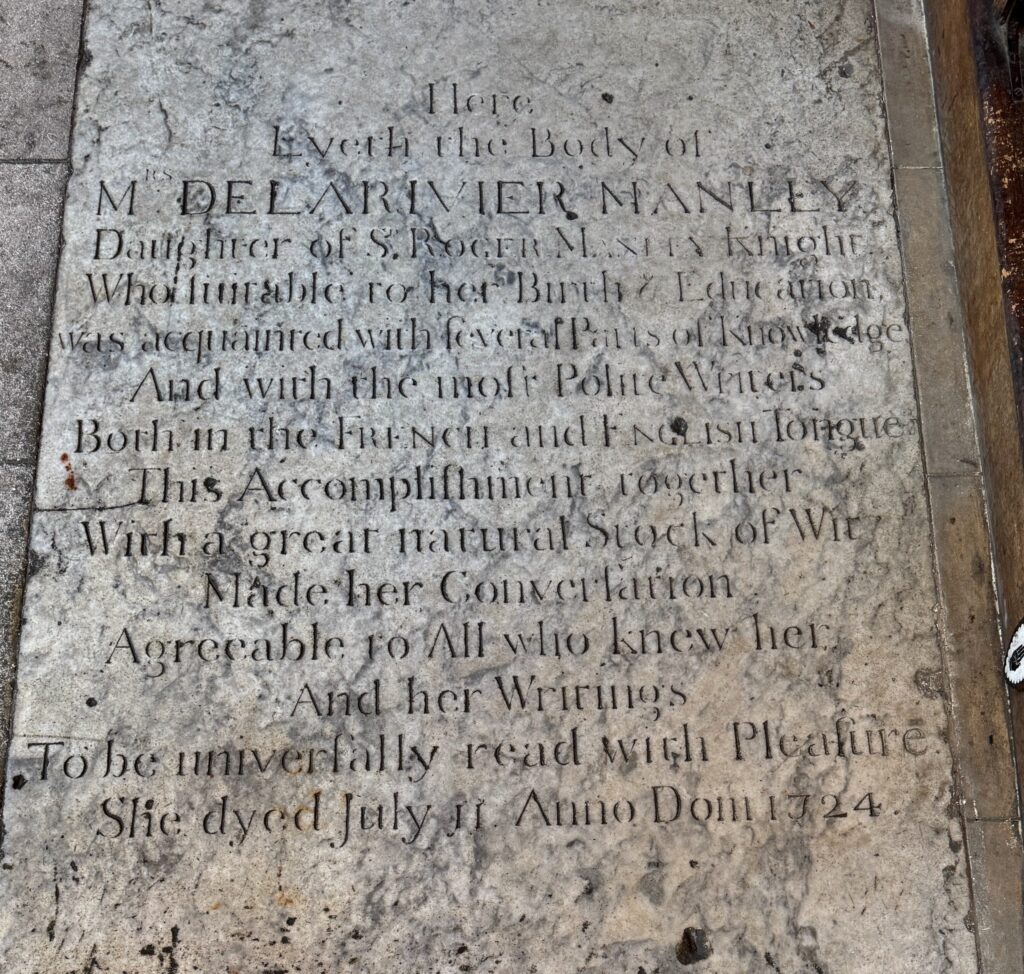
In the aisle is the tombstone of an extraordinary woman …

The inscription reads as follows:

Here lieth the body of Mrs. DELARIVIER MANLEY, Daughter of Sir Roger Manley, Knight, Who, suitable to her birth and education, was acquainted with several Parts of Knowledge And with the most Polite Writers, both in the FRENCH and ENGLISH tongue. This Accomplishment, Together with a greater natural Stock of Wit, made her Conversation Agreeable to All who knew Her and her Writings to be universally read with Pleasure. She dyed July 11 Anno Domini 1724.

A little more about her from a review of an autobiography: ‘A Tory pamphleteer, playwright, and satirical historian, Manley was regarded by her contemporaries Jonathan Swift and Robert Harley as a key member of the Tory propaganda team. Her best-selling political scandal chronicle The New Atlantis (1709) helped to bring down the Whig ministry in 1710. Her reputation was tarnished, however, in subsequent generations and twentieth-century scholars often misread her works as under-developed novels rather than as complex works of political satire’.

Sadly no picture of her exists but you can read more about her here.

For a great guide to the many other interesting monuments and memorials in the church, have a look at Bob Speel’s website.

Located as it is, on the south side of the busy Queen Victoria Street below the level of the road, St Benet looks rather inaccessible, but this is misleading. To visit, just cross at the pedestrian crossing leading to the Millennium Bridge, turn right, walk down the steps and you’re at the church in less than five minutes.

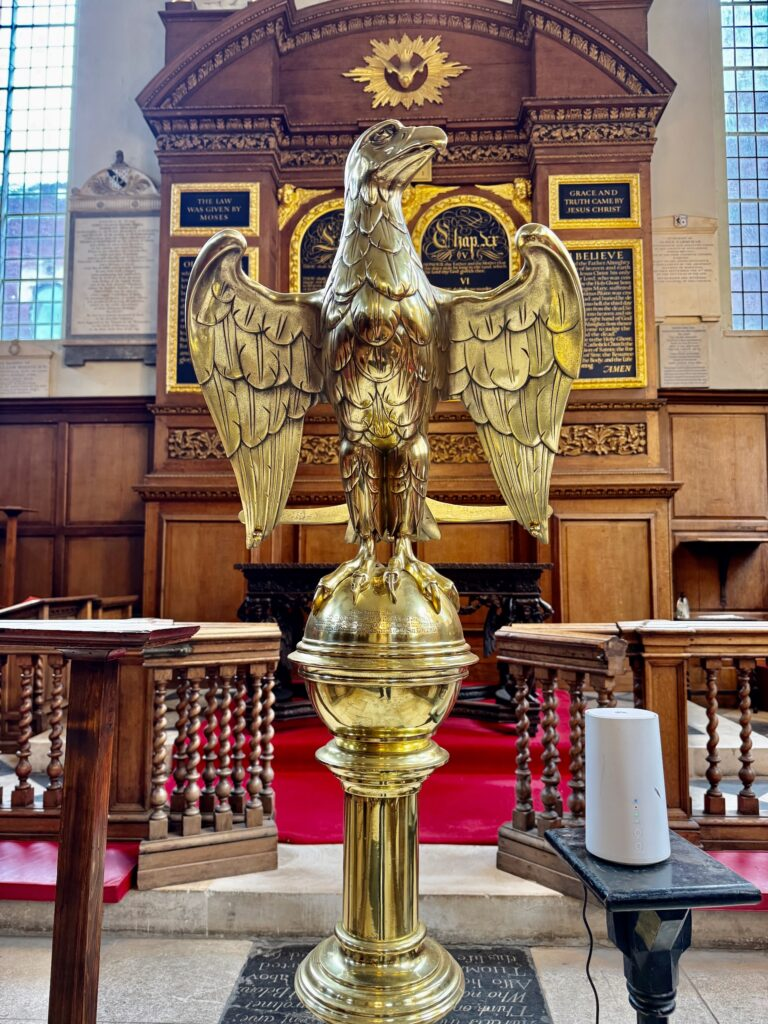
A magnificent eagle lectern …

Times to visit are restricted to when the Friends of City Churches are available to welcome visitors and at the moment this is on Thursdays between 11:00am and 3:00pm. They do a super job keeping churches open for visitors and the members who were on duty when I visited last Thursday were splendid company and very informative guides. There is a service there every Sunday. It’s primarily in Welsh since, by an Order in Council in 1879, St Benet became the Metropolitan Welsh Church after Queen Victoria was petitioned to prevent its demolition.

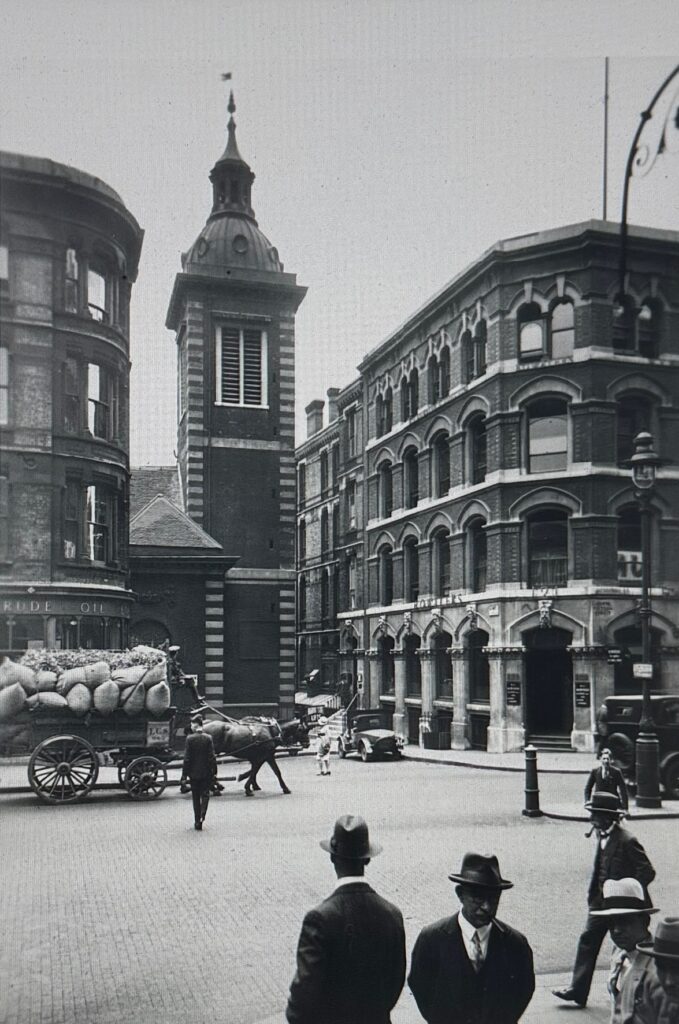
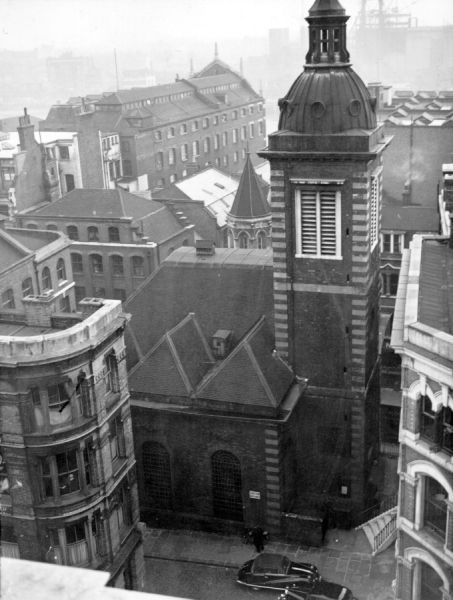
It is difficult now to imagine now what the area looked like before post-war development but this photograph, probably taken in the 1920s from the north across Queen Victoria Street, gives some idea (© The London Museum) …

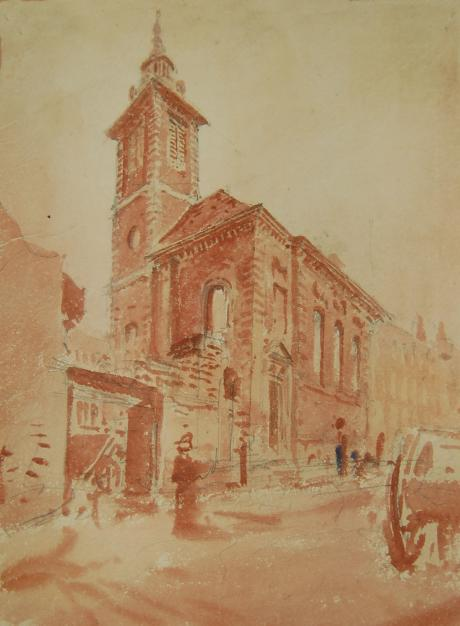
A painting by Rev John Louis Petit (1801 – 1868). He records it as having been made at mid-day, 22 June 1856 …

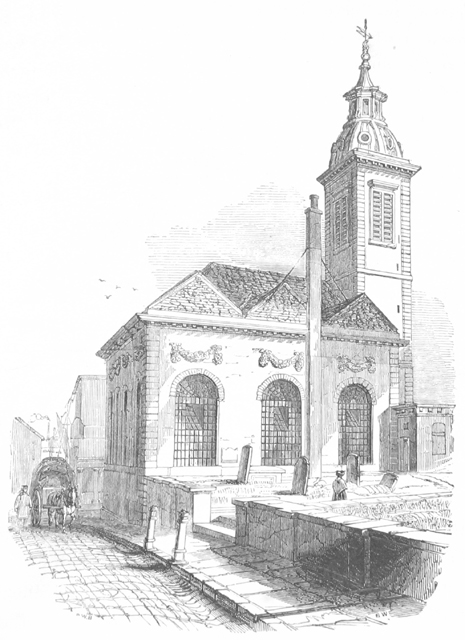
An engraving of St Benet’s Paul’s Wharf (c1rca 1838) reproduced from Godwin, ‘The Churches of London’ Vol I, 1838 …

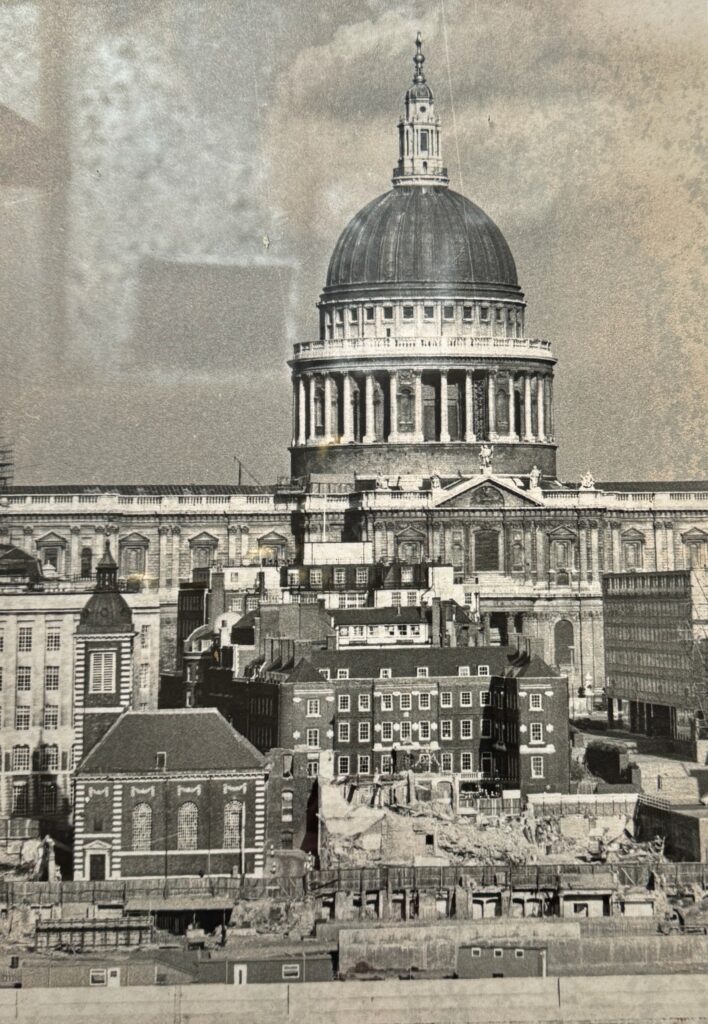
In August 1952 …

The church amidst 1960s redevelopment …

For even more information, visit the excellent London Inheritance blog entitled The Lost Wharfs of Upper Thames Street and St. Benet’s Welsh Church.

If you would like to follow me on Instagram here is the link …
https://www.instagram.com/london_city_gent

Things that cheered me up!

It’s a bit of an understatement to say that these are not very happy times but, being an optimist by nature, I have been looking for things to cheer me up. Here are some of them (organised totally at random).

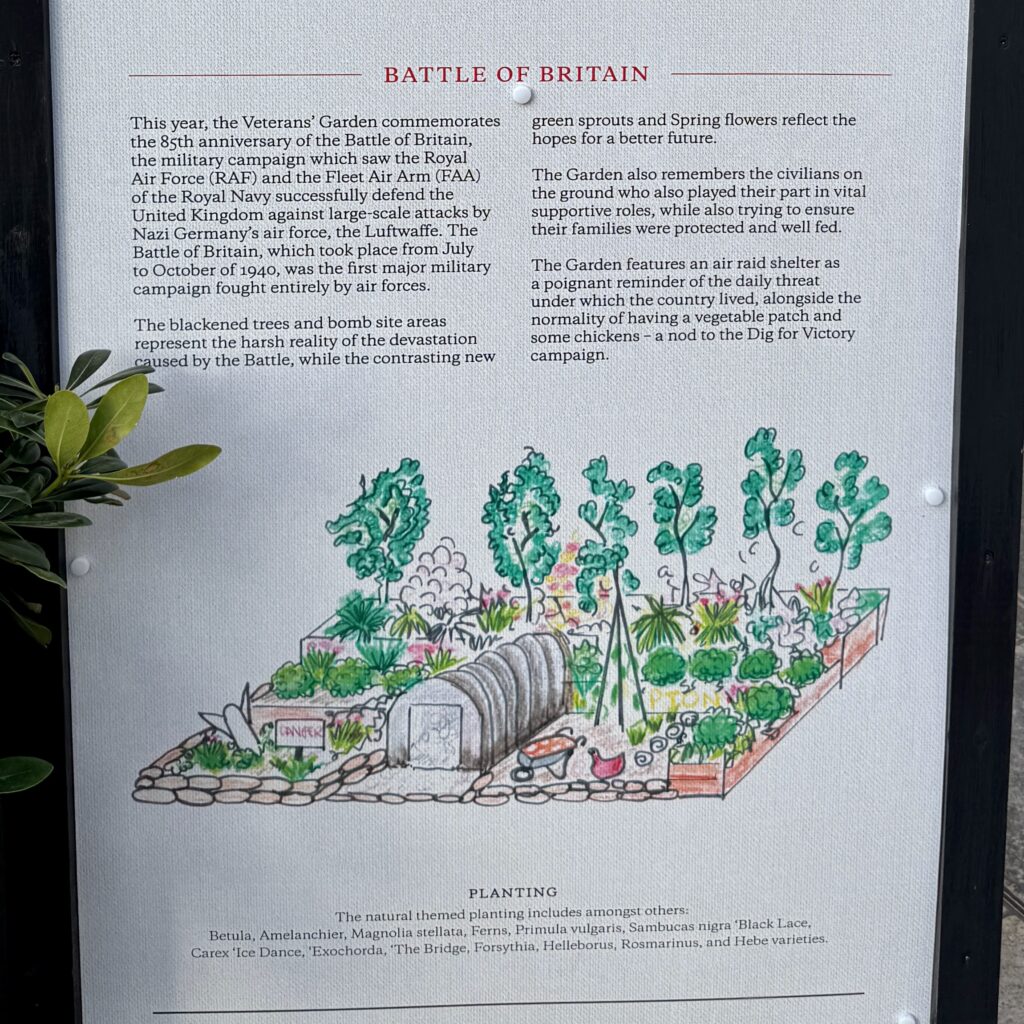
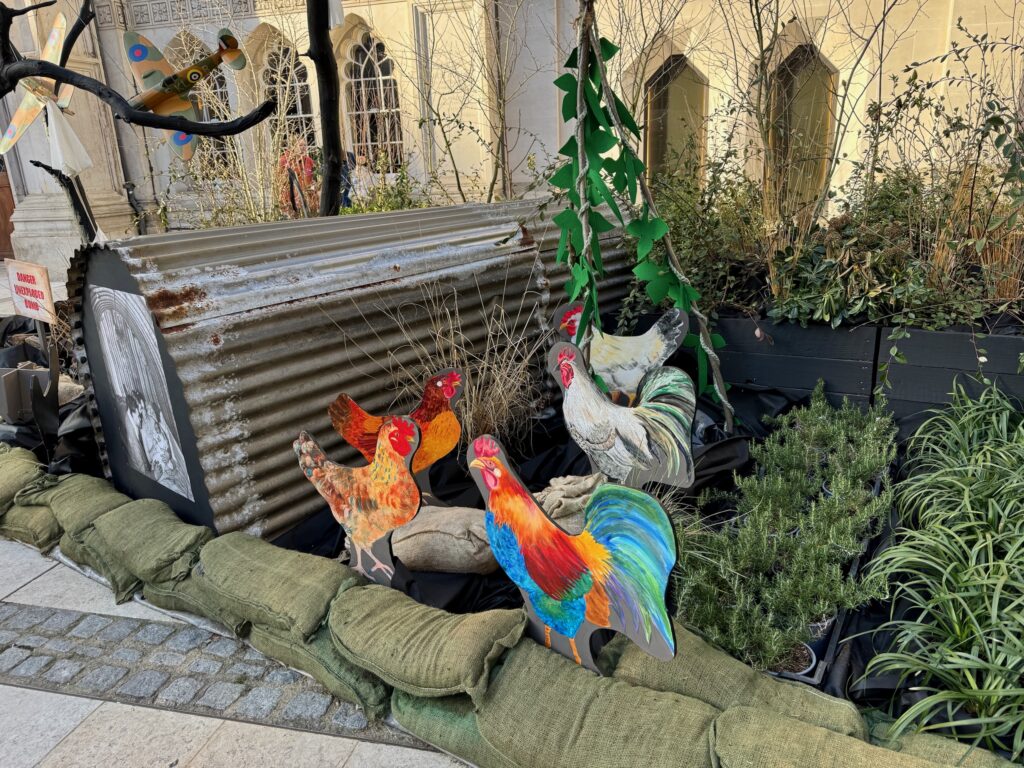
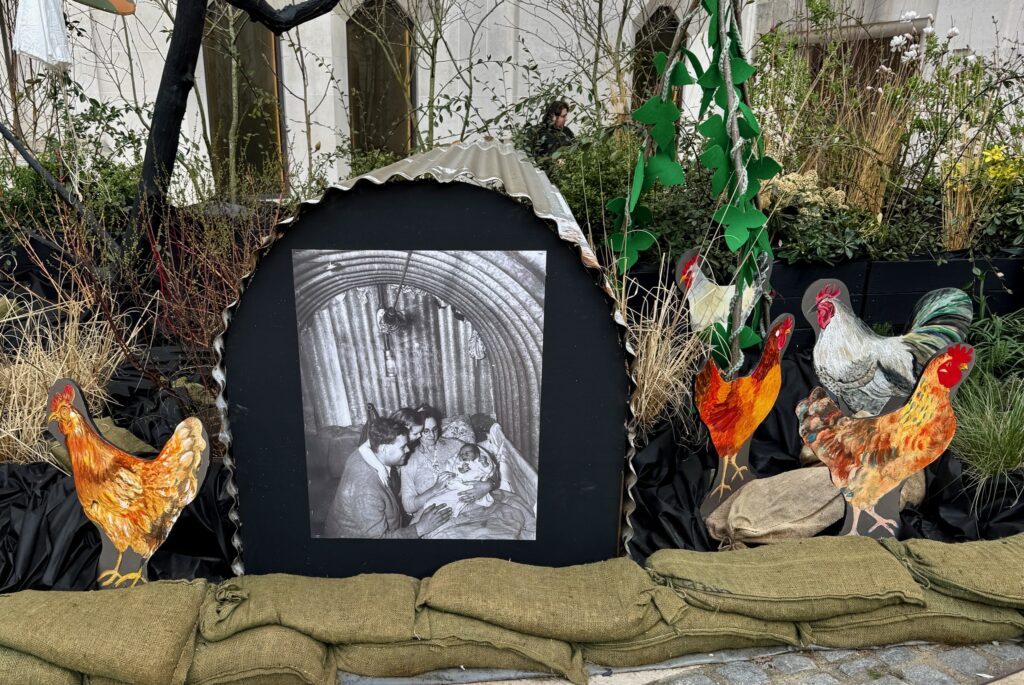
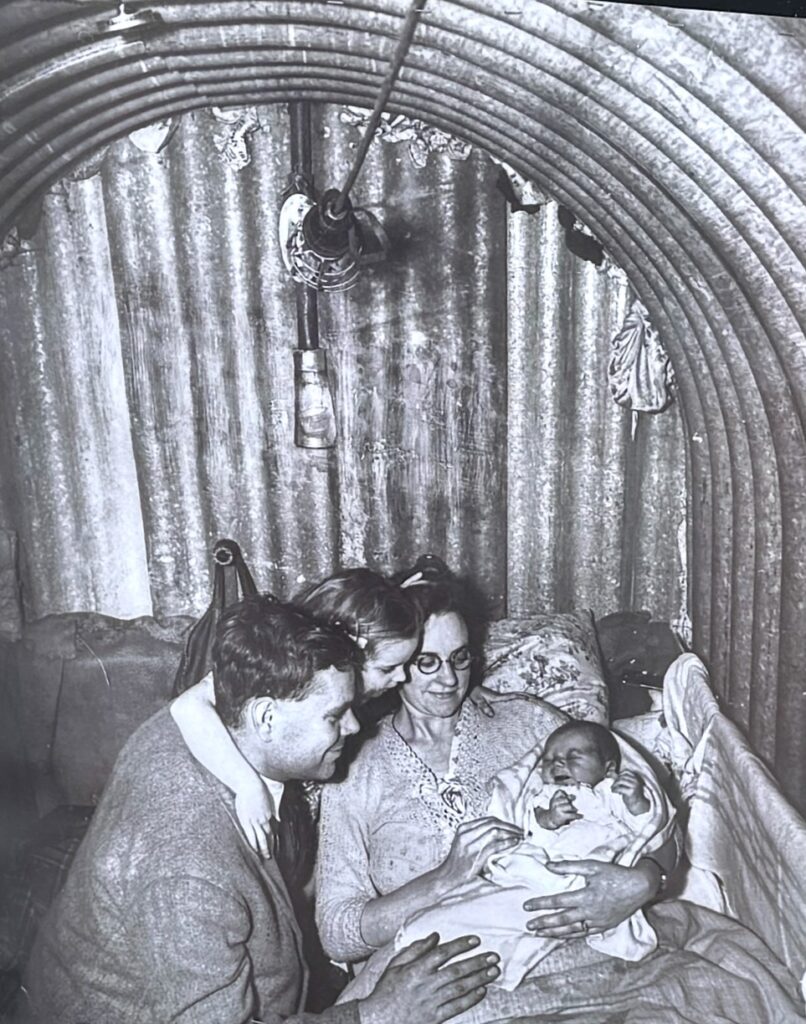
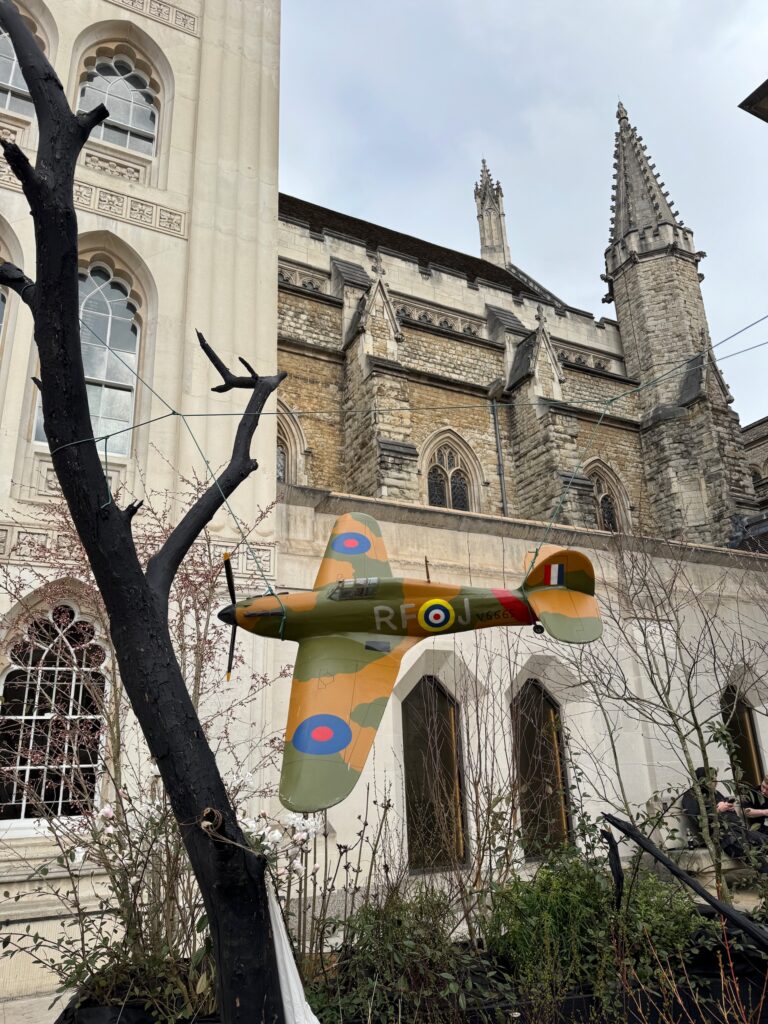
This year the Lord Mayor’s Big Curry Lunch commemorates the 85th anniversary of the Battle of Britain. If you are able, do pop along to the Guildhall and view the super garden that has been created there to recognise the occasion …

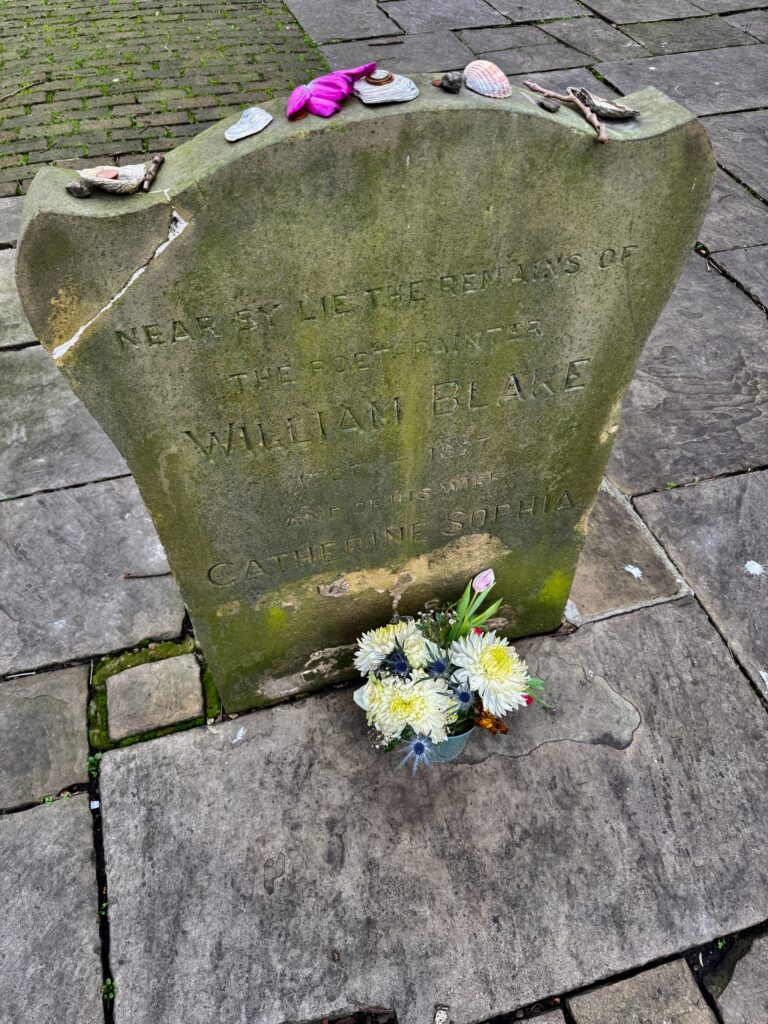
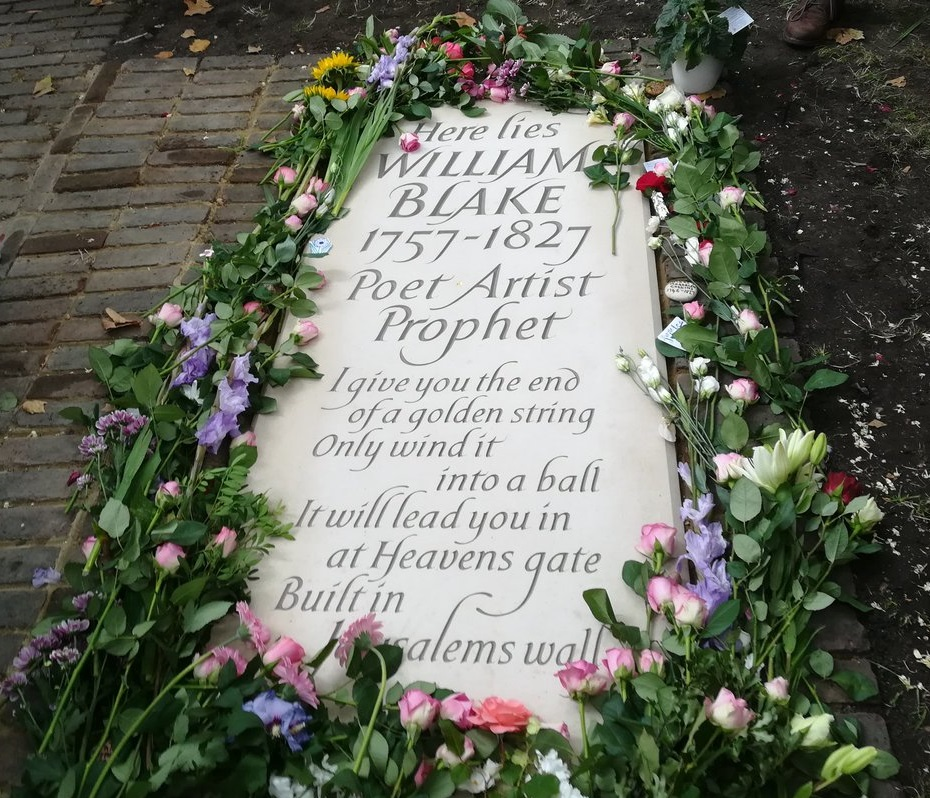
I think it is sweet that people still leave small tokens on this memorial to William Blake in Bunhill Burial Ground, even though his grave is now marked out elsewhere …

His actual burial place (photographed shortly after a marker was placed there) …

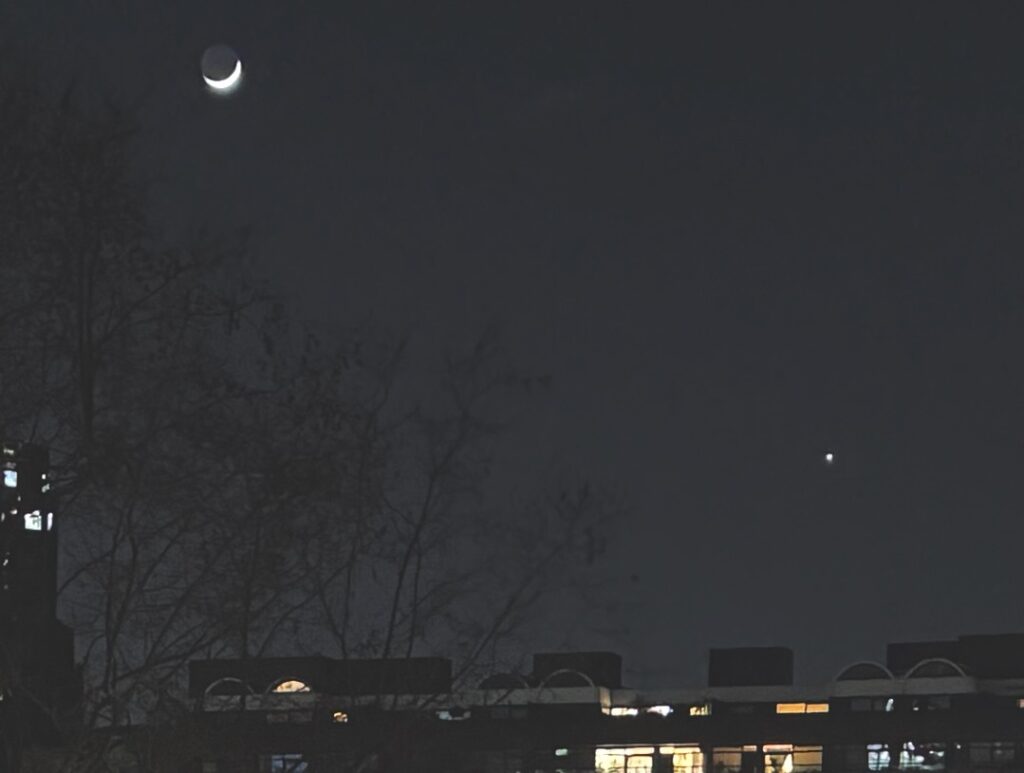
A couple of my attempts to photograph both the new Moon and the planet Venus (the slightly smudged light in the sky on the right) …

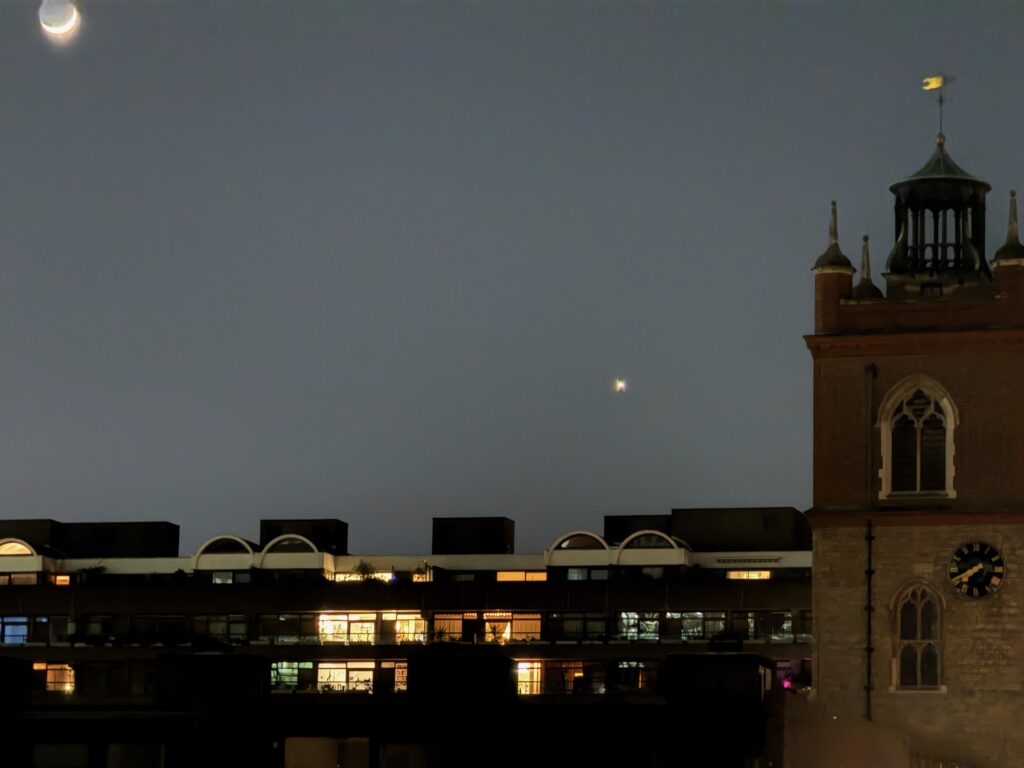
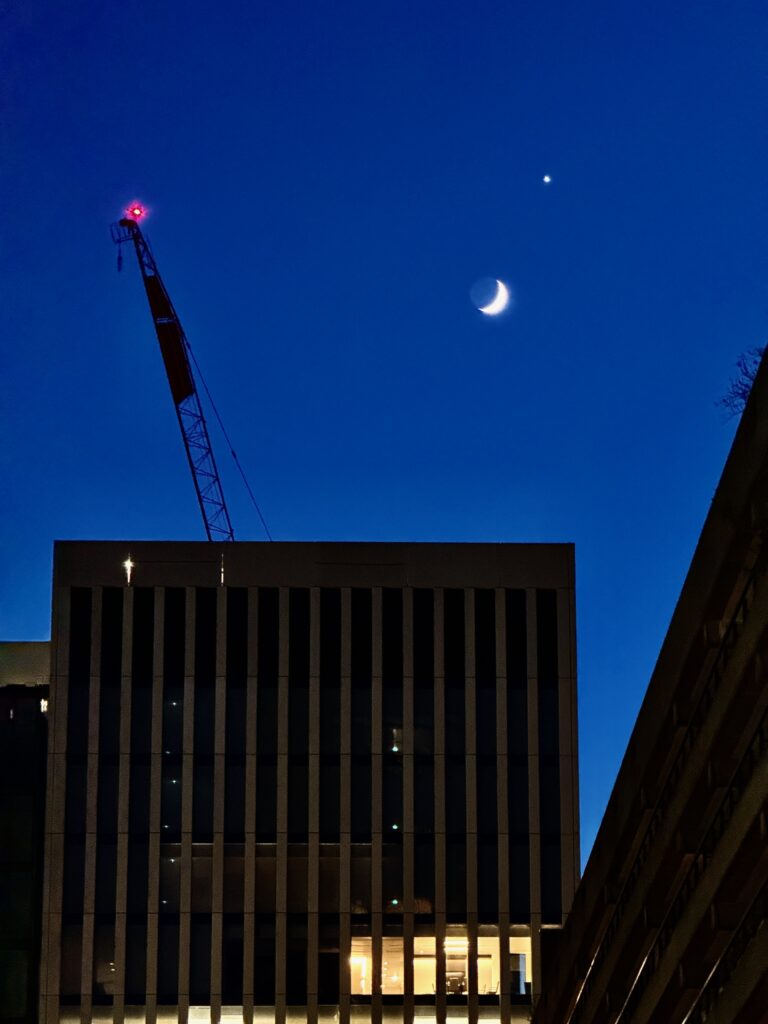
A better picture from early January …

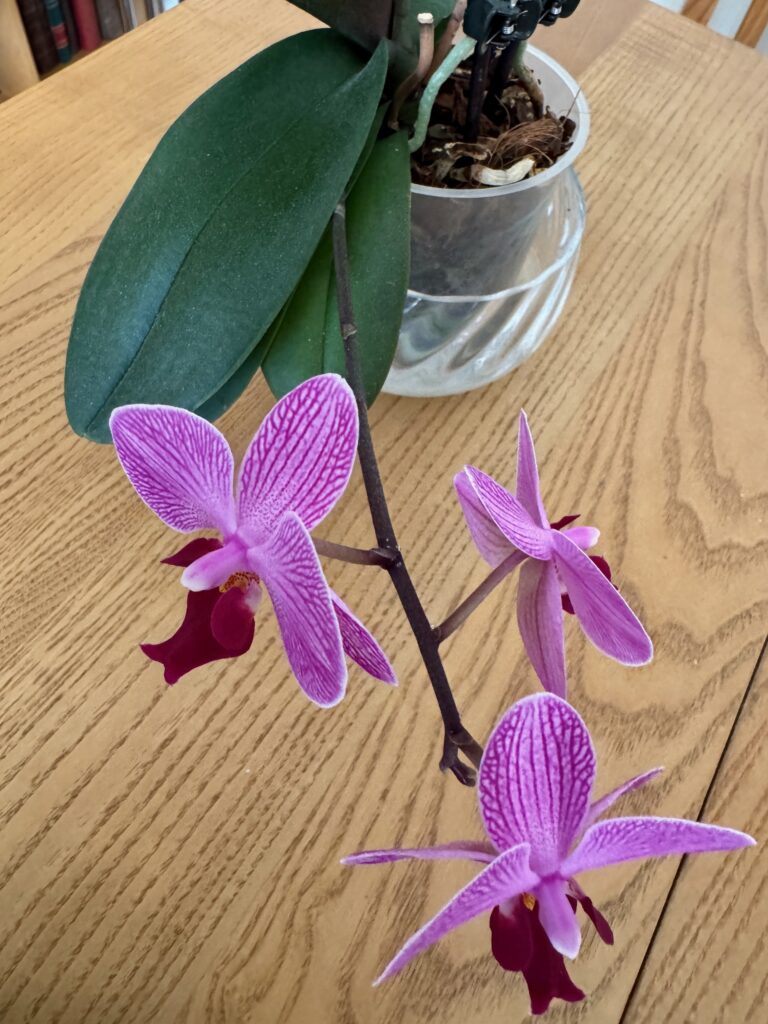
Our Orchid Christmas present from 2023 has flowered again …

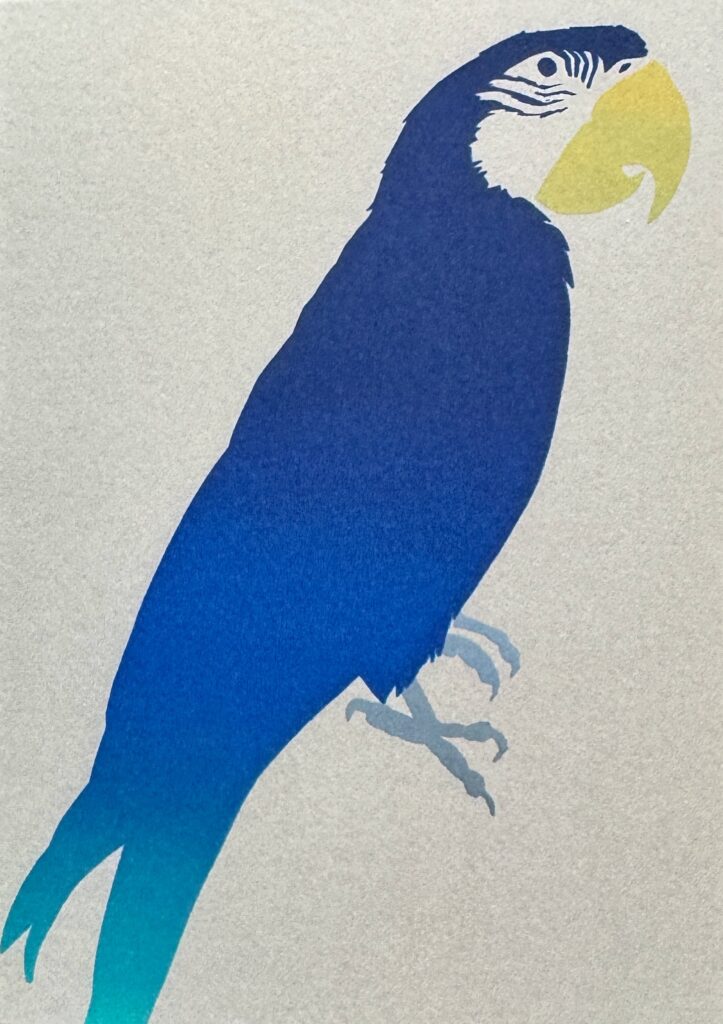
High point of the week, the arrival of a fresh set of cards from brilliant local artist Jill Green …

Check out her website for lots of other handcrafted goods, including lovely leather items : www.shopjill.com

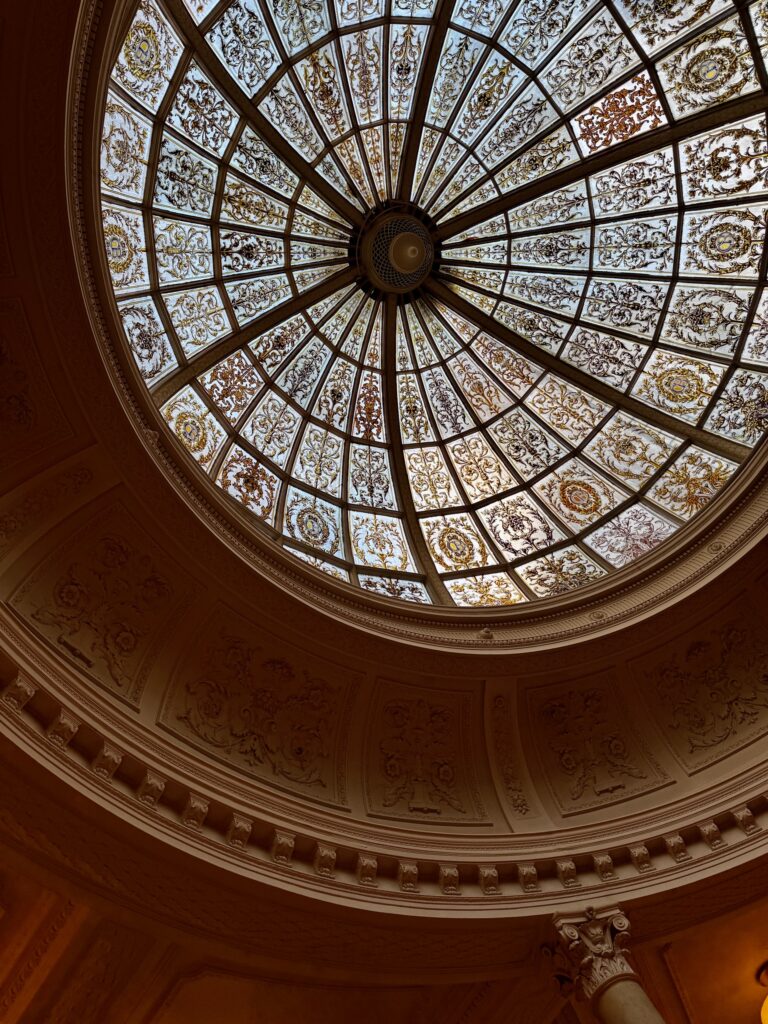
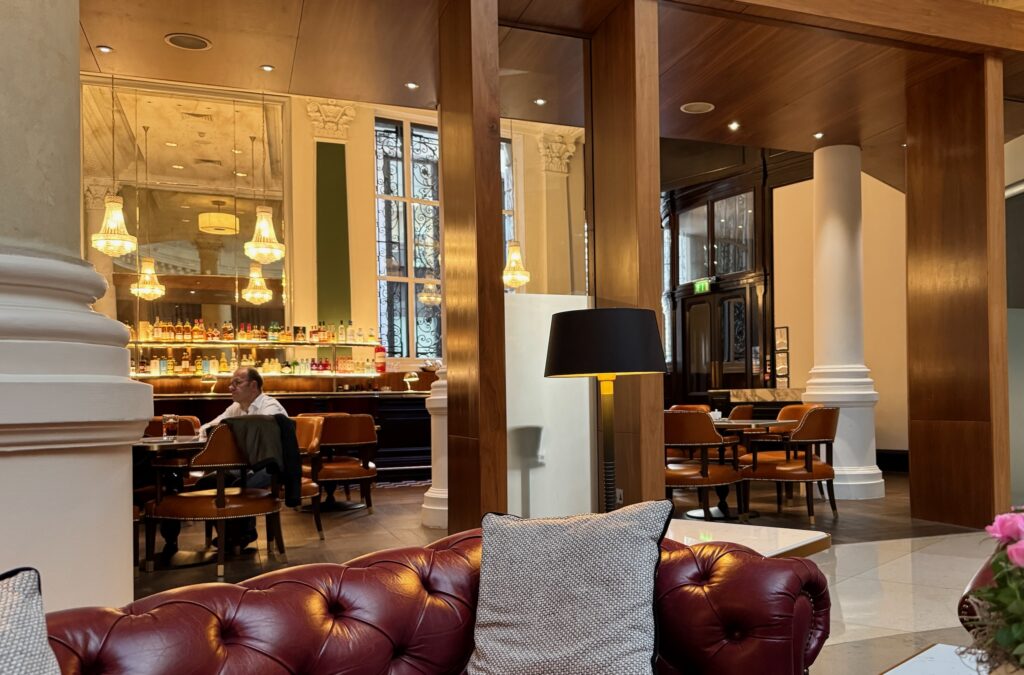
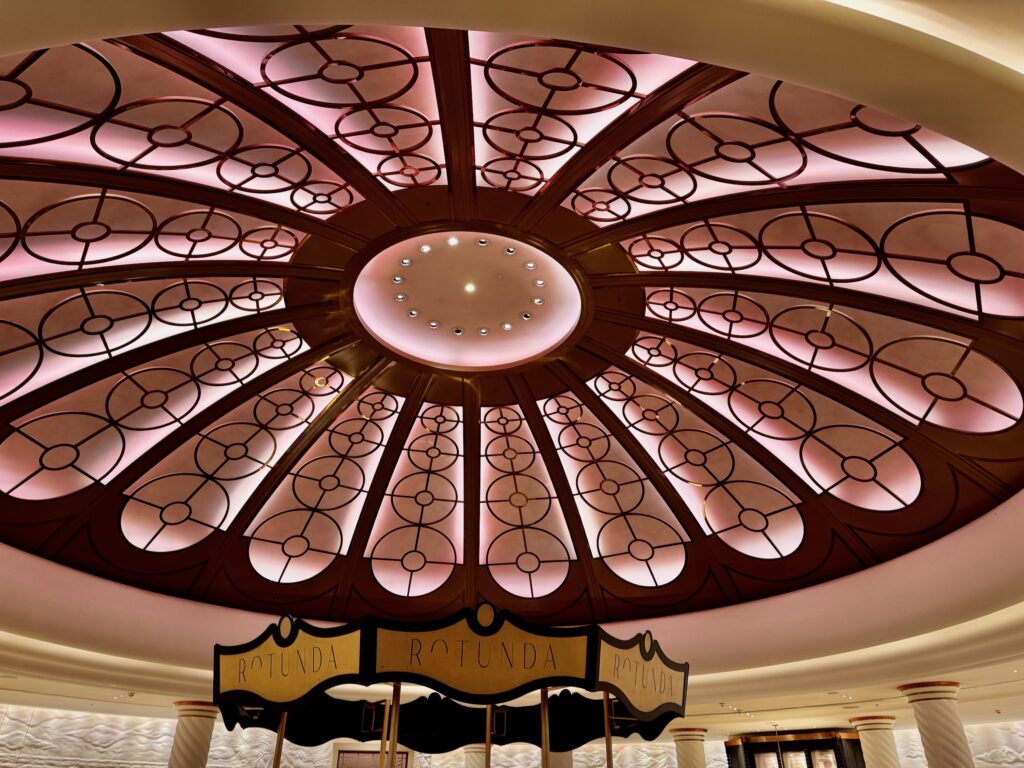
I visited the Threadneedle Hotel for the first time and encountered this magnificent glass dome …

I’m going to visit again and write more about its history (and the cocktail bar looks tempting) …

Another splendid dome at 10 Trinity Square …

Read more about it, and the building it is in, here.

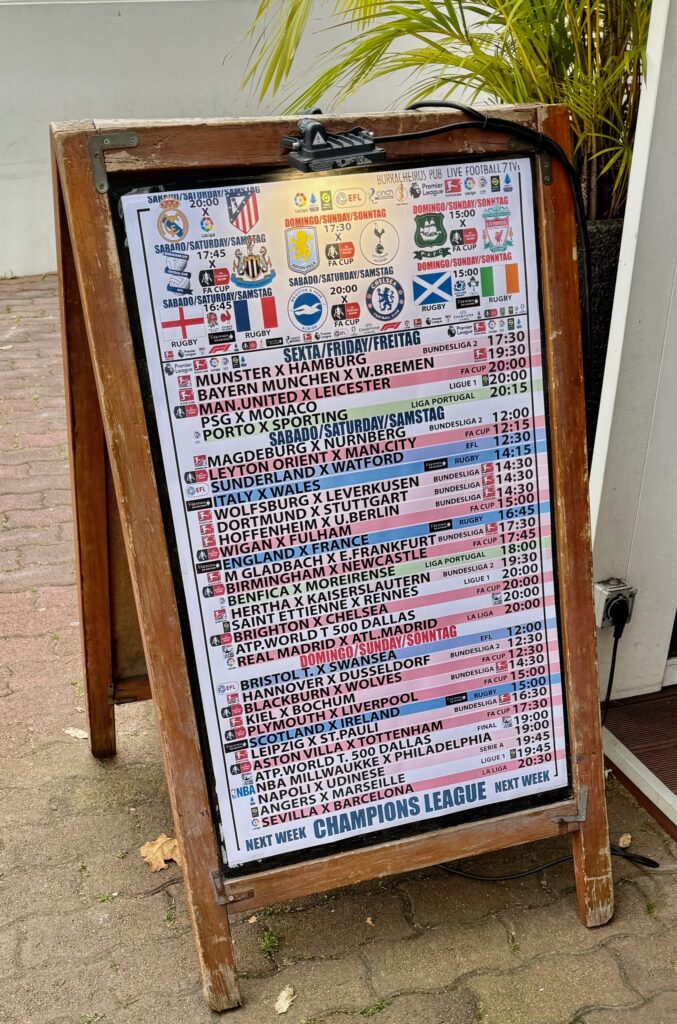
A time-travelling office worker from the 1970s would look at this picture and wonder why everyone in the office seemed to be watching TV …

The power and attraction of sporting competition. Advertising board outside a bar/restaurant in Madeira in Febrauary …

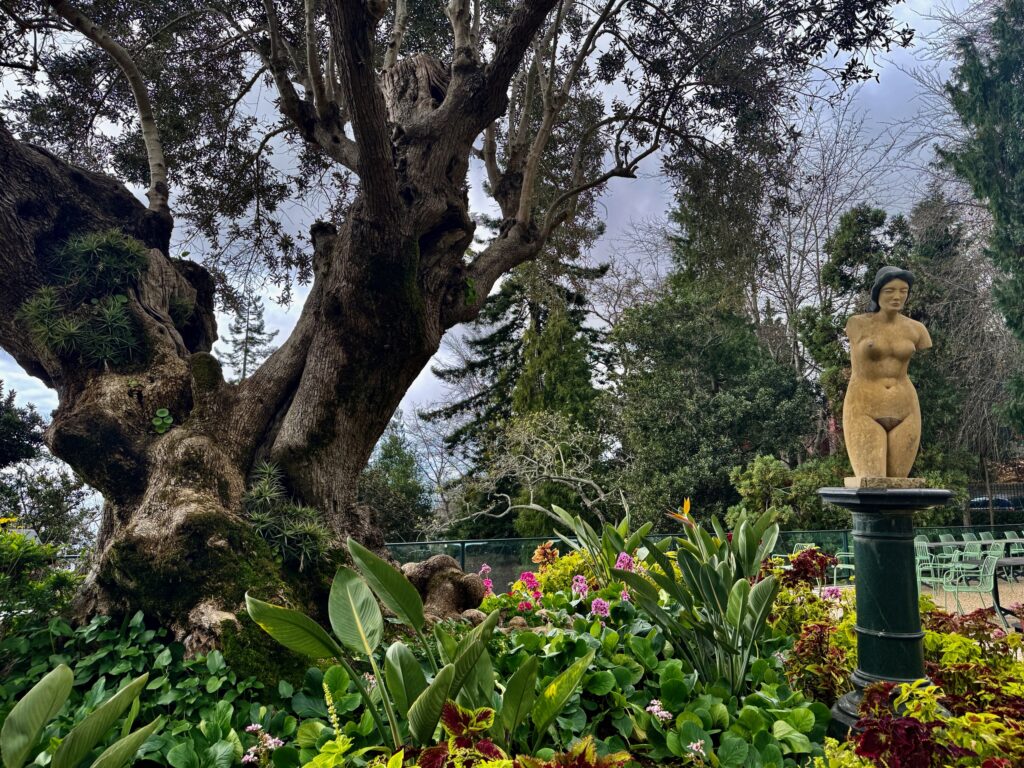
Funchal Botanical Gardens …

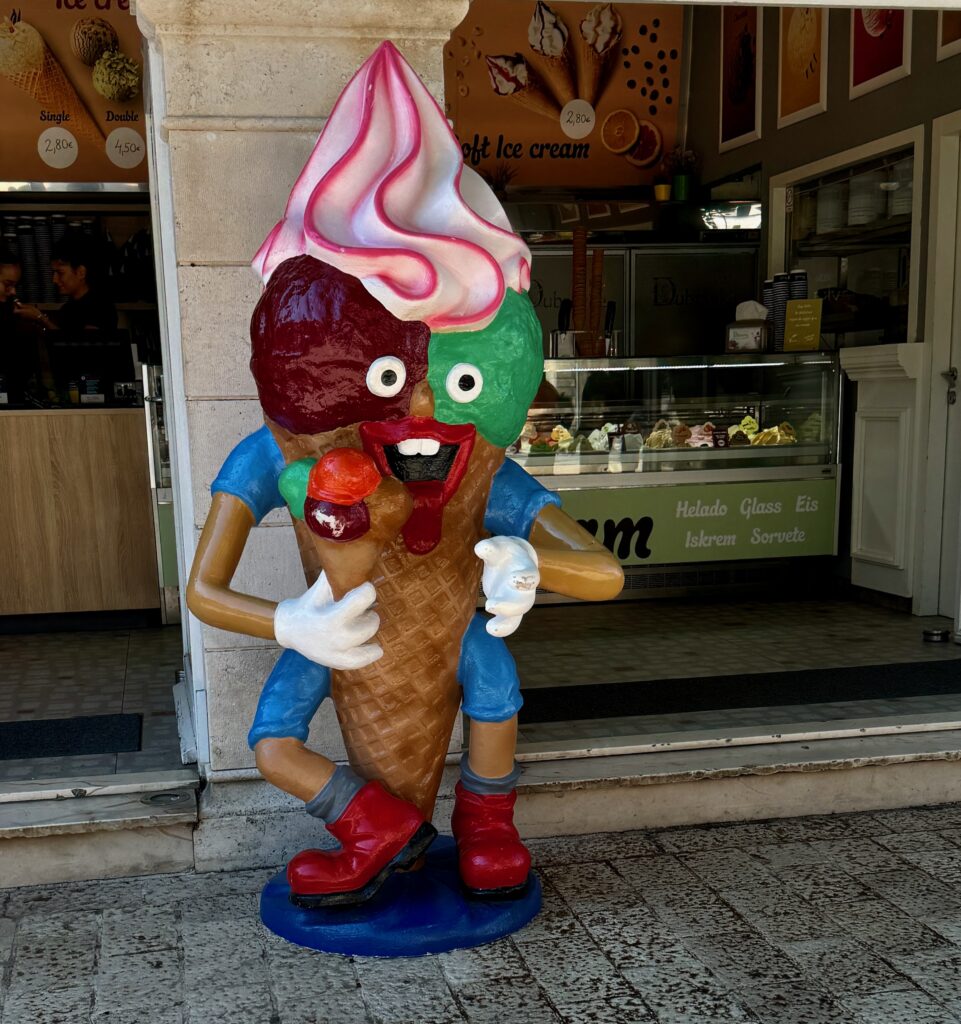
I found this ice cream cone really scary …

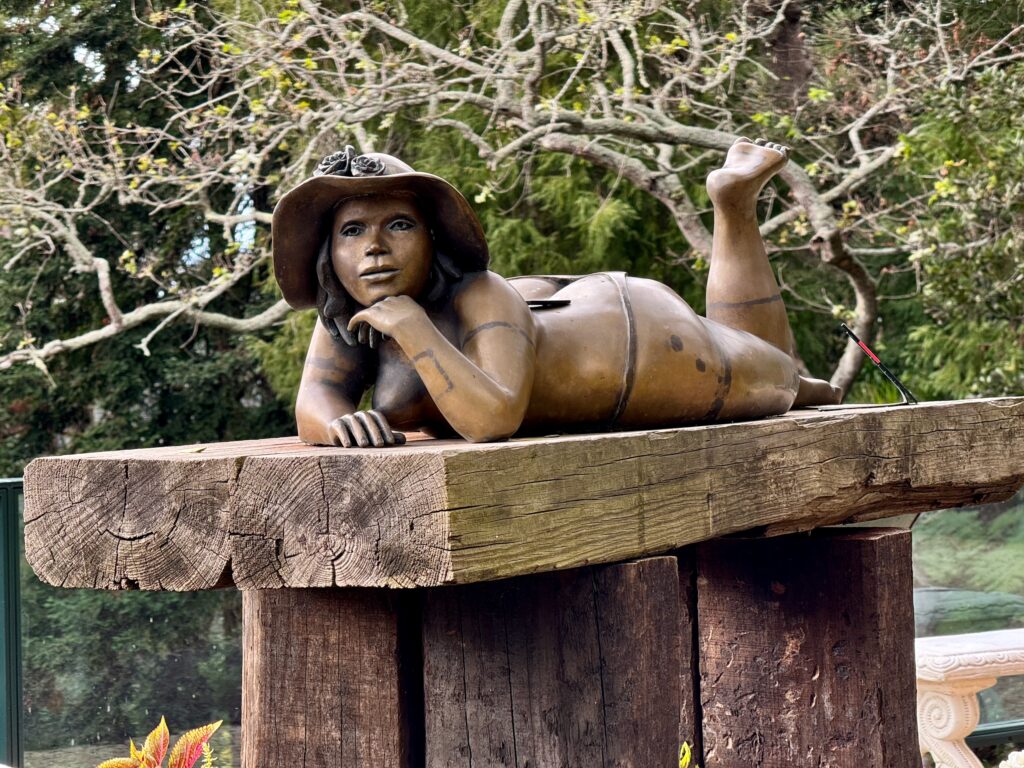
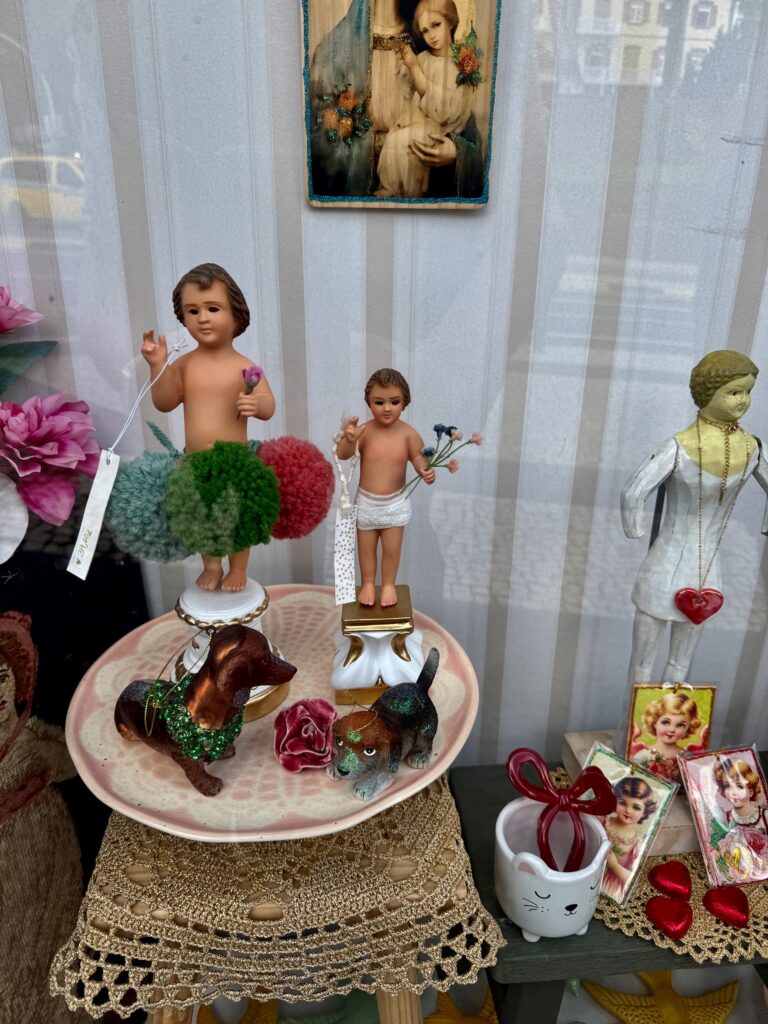
Portuguese knick-knacks …

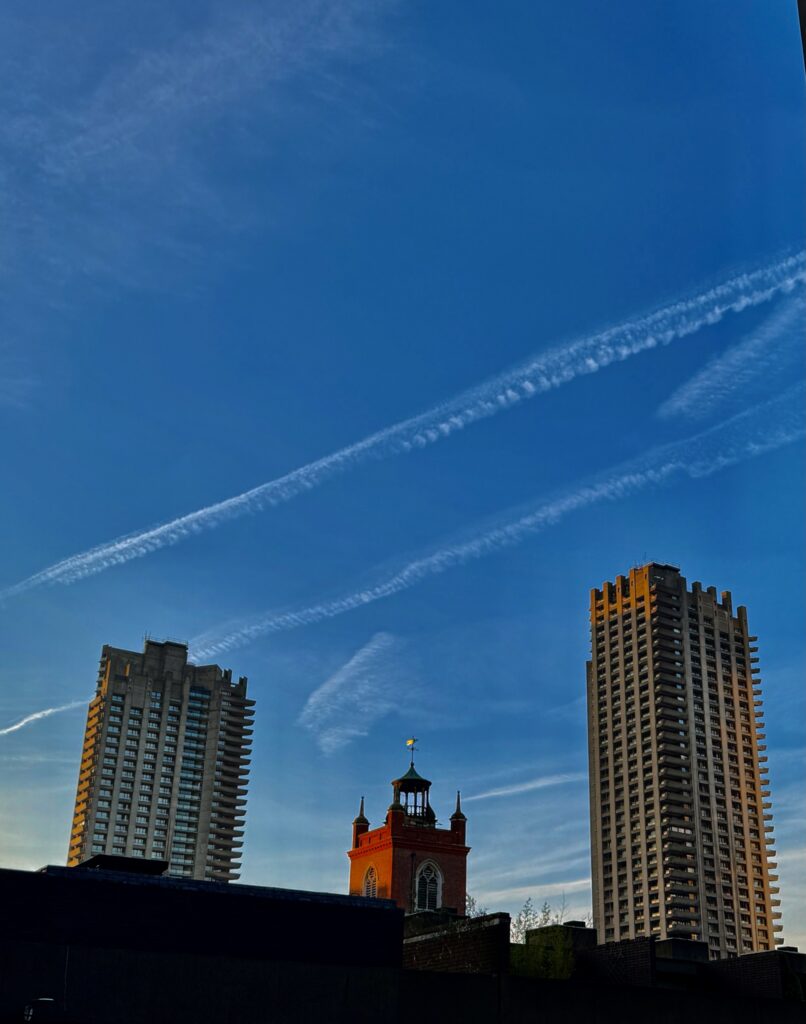
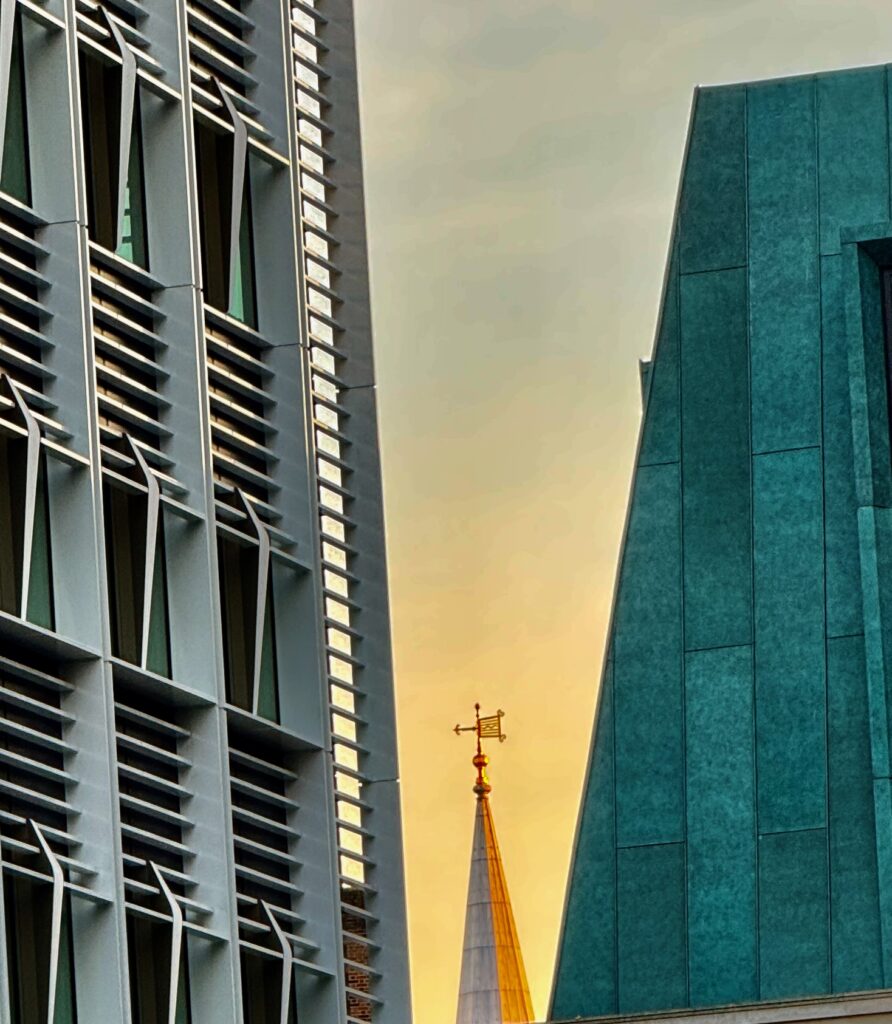
City church weathervanes glimpsed from a distance.

St Giles Cripplegate …

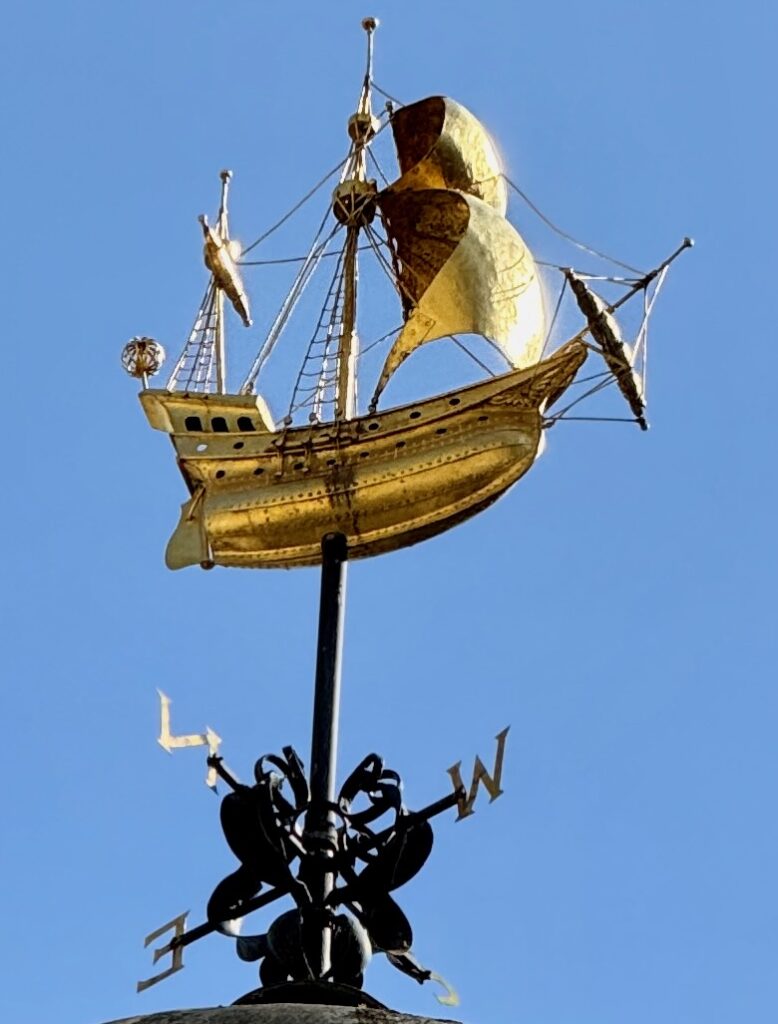
The St Lawrence Jewry gridiron weathervane …

St Lawrence was martyred in San Lorenzo on 10 August 258 AD in a particularly gruesome fashion, being roasted to death on a gridiron. At one point, the legend tells us, he remarked ‘you can turn me over now, this side is done’. Appropriately, he is the patron saint of cooks, chefs and comedians.

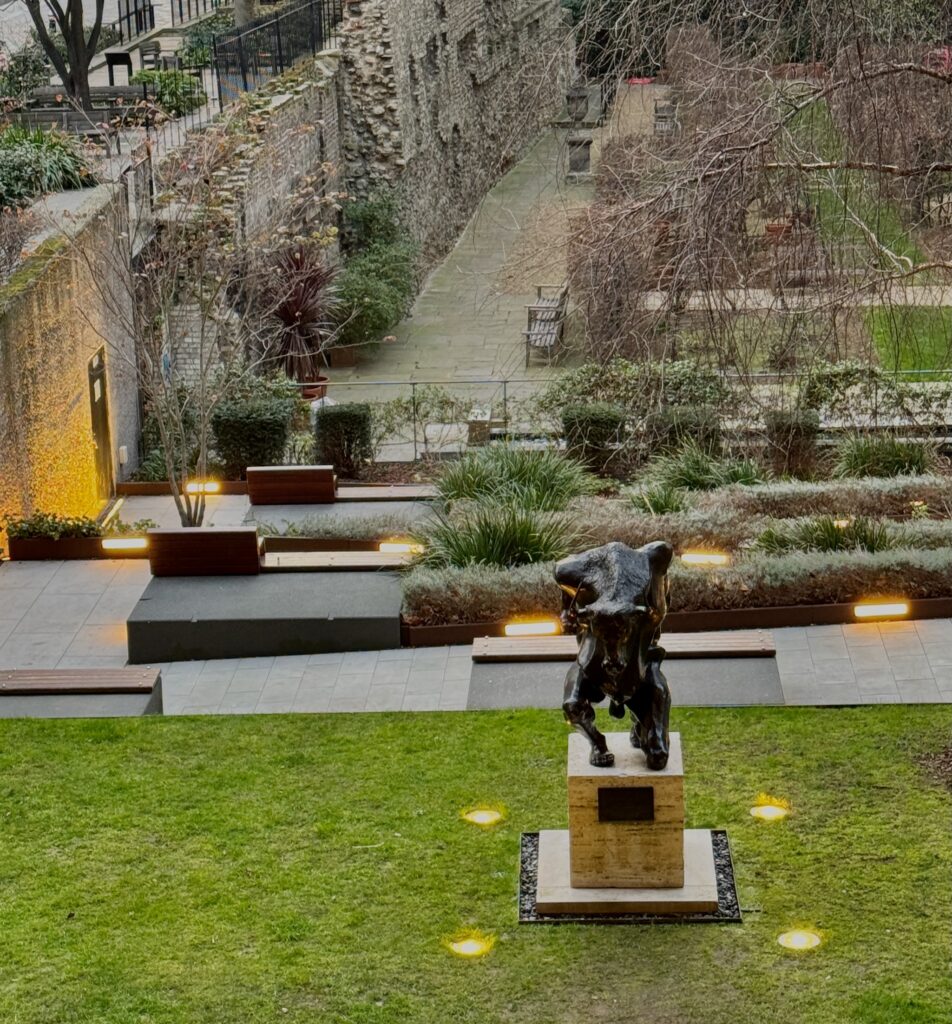
The Minotaur at dusk with the Roman/Medieval wall in the background …

A cormorant glides past Mrs Coot sitting on her nest …

Mr Coot is pottering about nearby at the top of the picture.

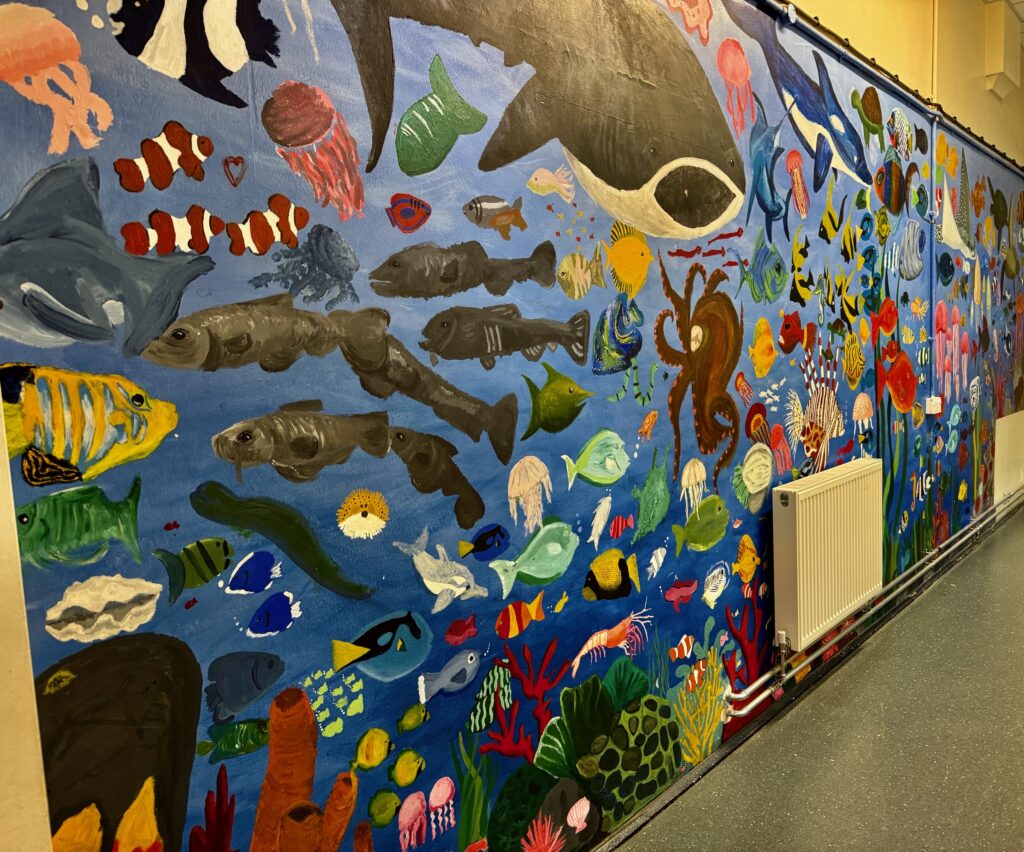
Aquatic themed corridor in Tonbridge Grammar School …

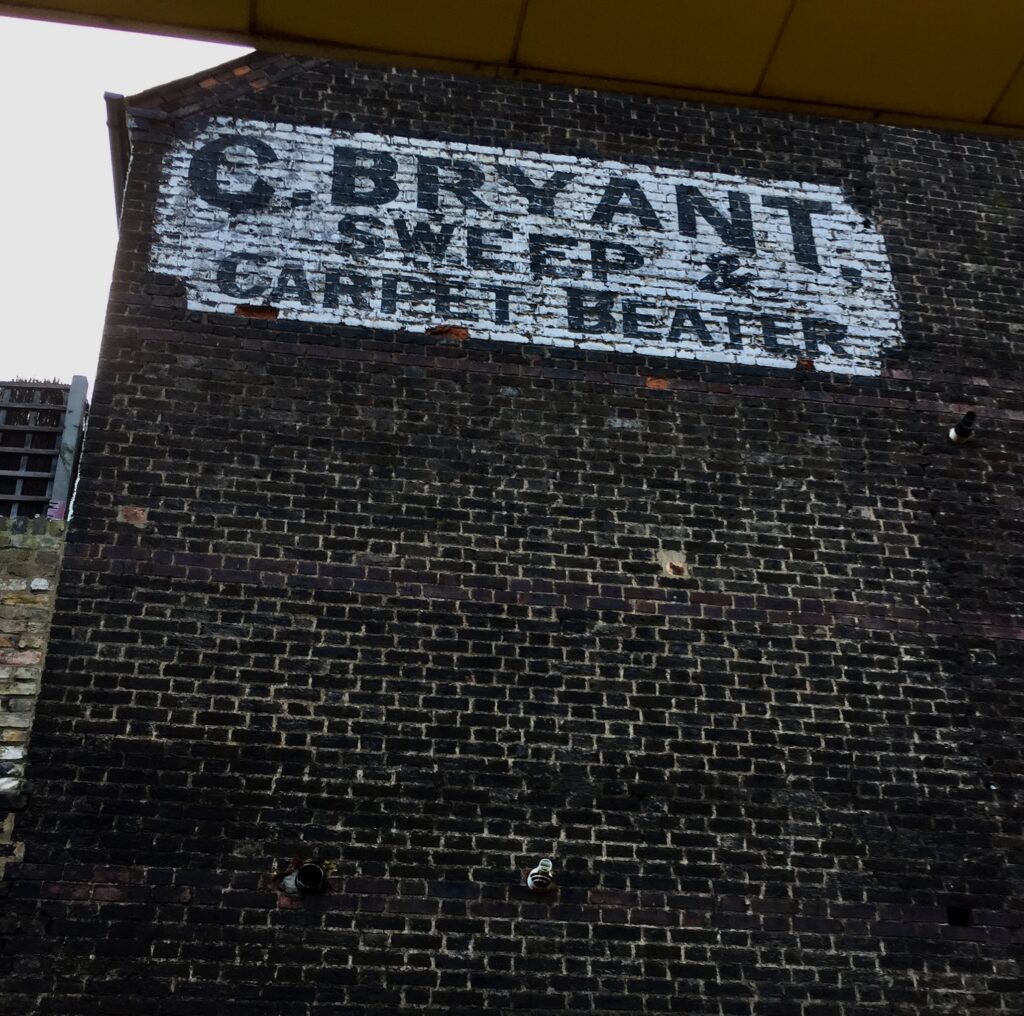
A favourite ghost sign at Finchley Road Underground Station …

The Bryant family produced three generations of chimney sweeps and the family history is, according to one researcher, a tale of ‘intrigue, betrayal and bigamy’. You can find their research on Instagram. Another person was curious enough to trace the family history using various databases such as Ancestry UK. You can read what they discovered here. A visit to Finchley Road Station will never be the same again!

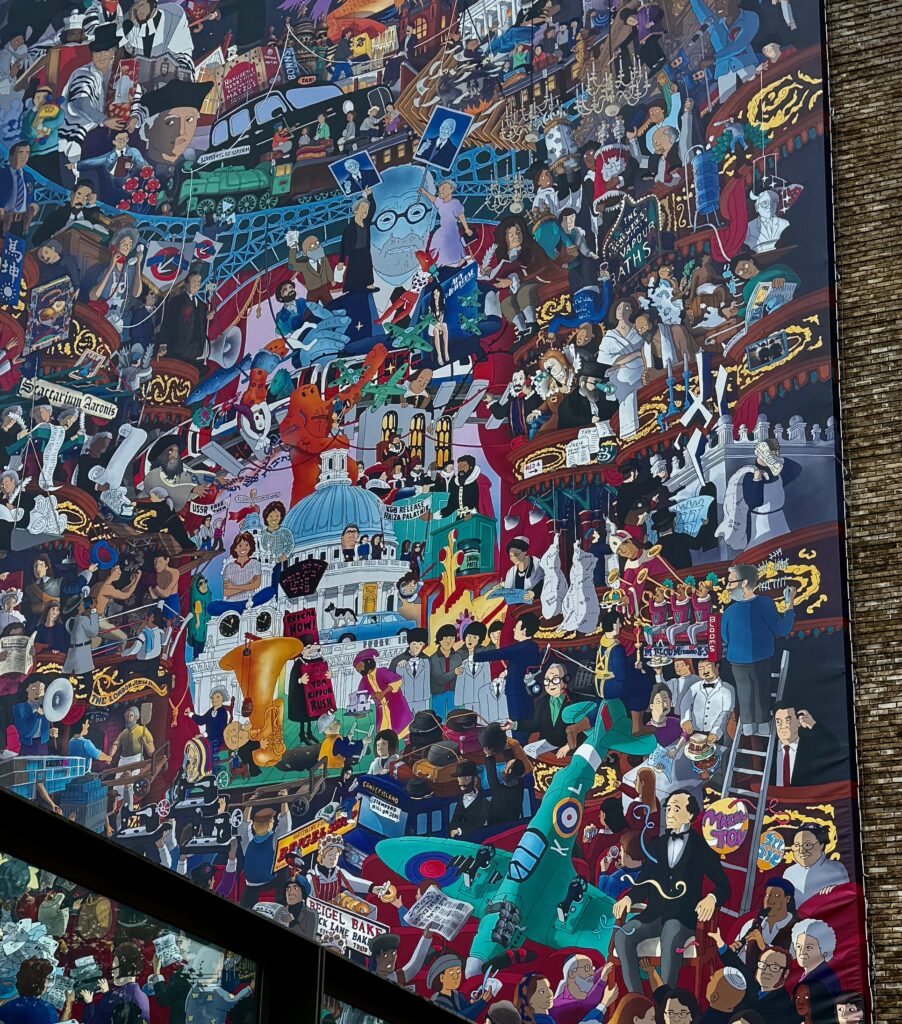
The London Jewish ‘Mural’ on Finchley Road …

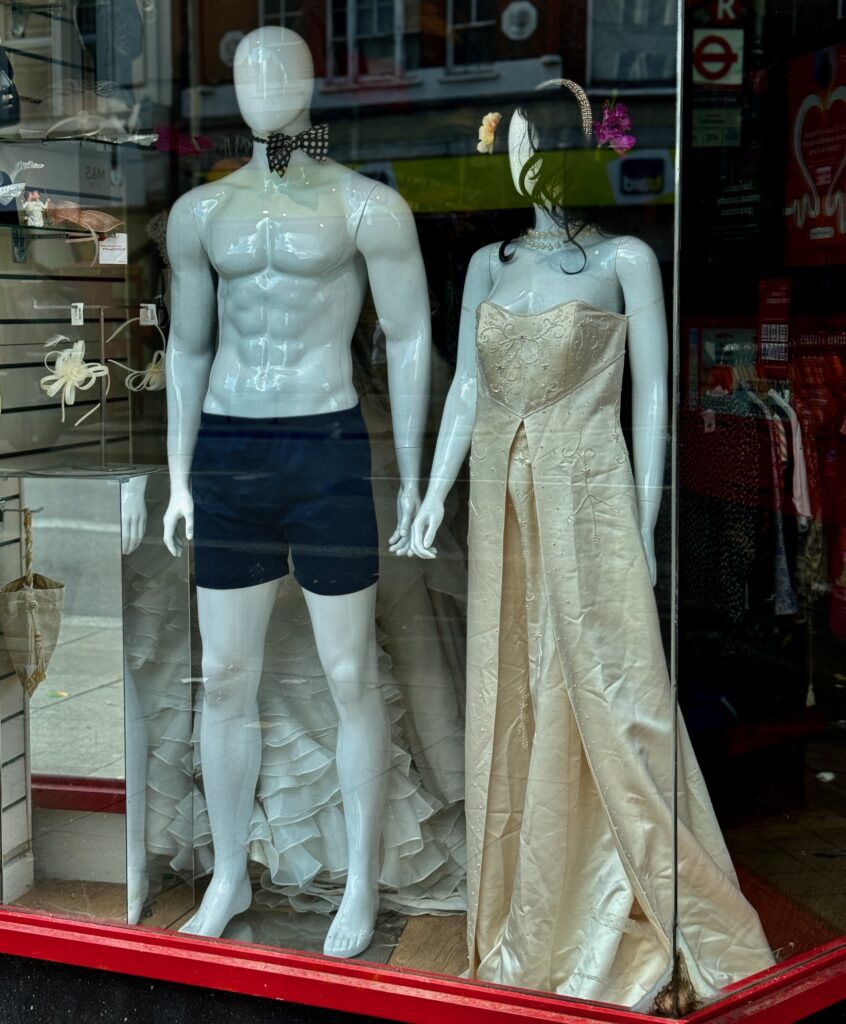
Spooky charity shop models …

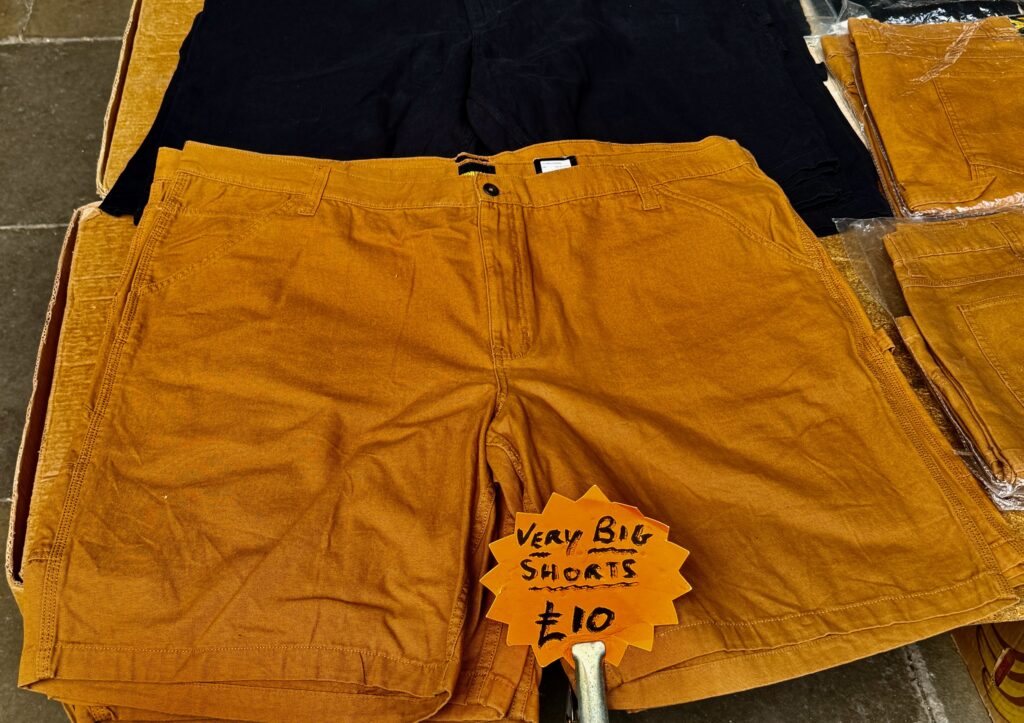
48-inch waist, I reckon …

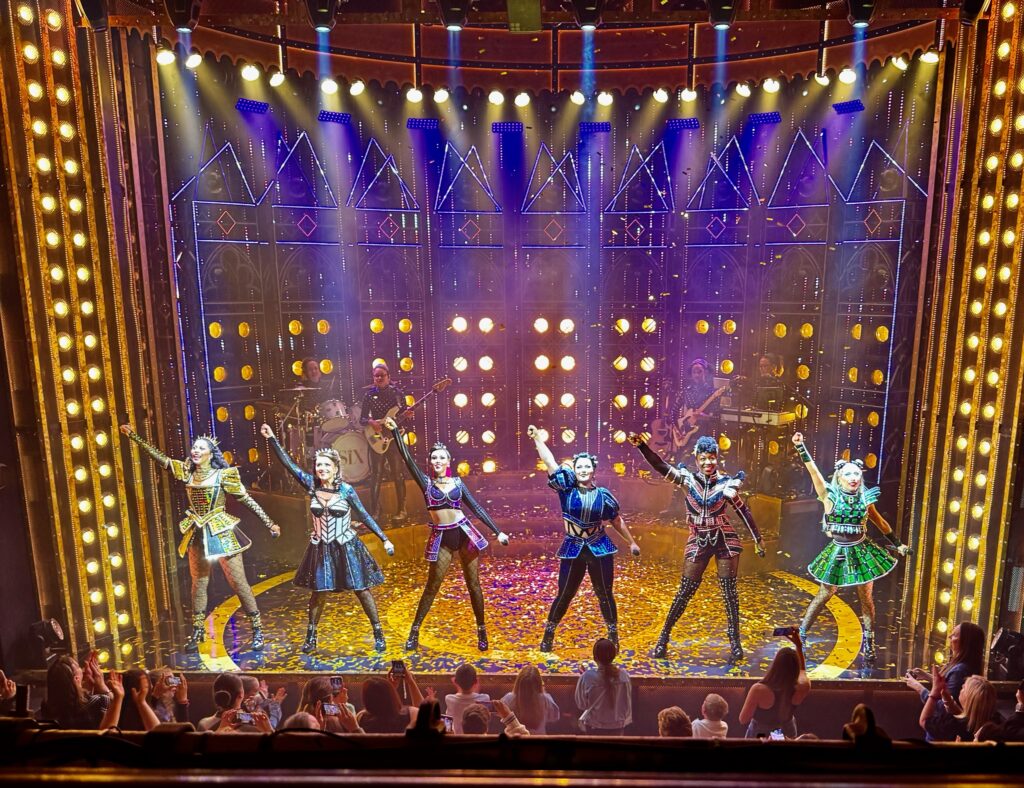
Six’, the musical, at the Vaudeville Theatre, put us in a great frame of mind. And they allow pictures to be taken of the finale …

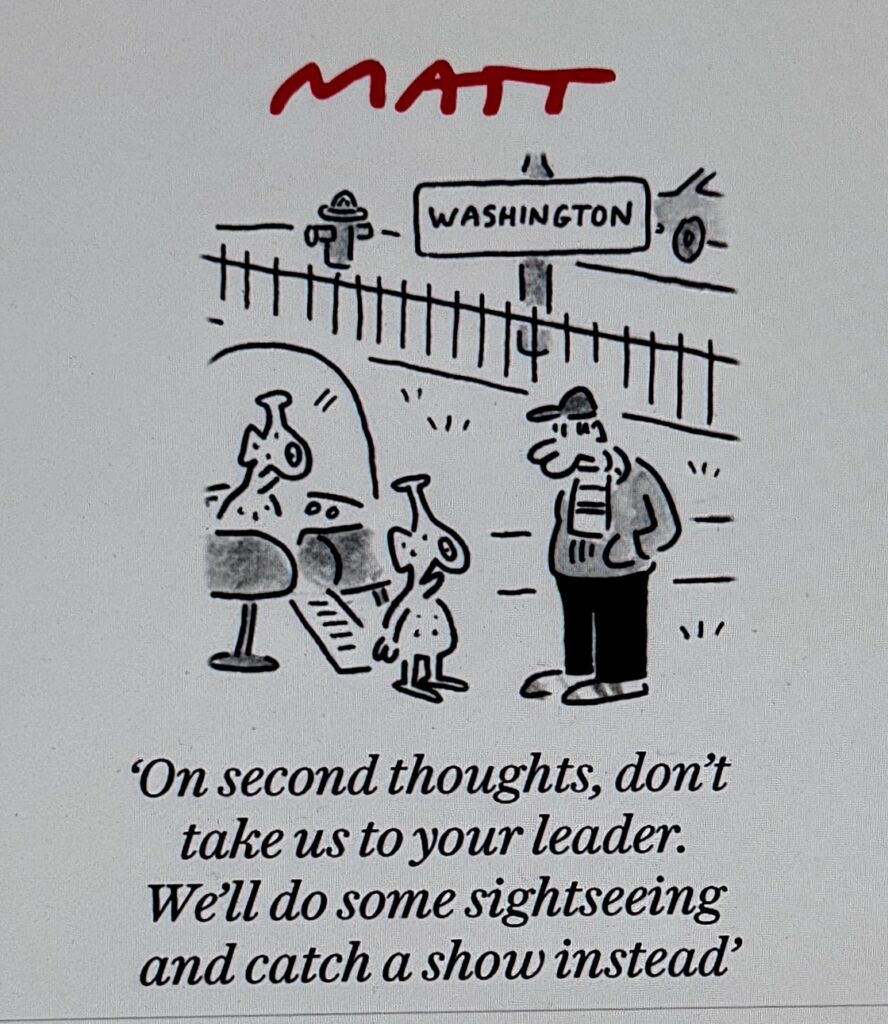
I’ll finish the blog with a laugh from one of the best political cartonists …

If you would like to follow me on Instagram here is the link …
https://www.instagram.com/london_city_gent

Page 8 of 90

Powered by WordPress & Theme by Anders Norén

Symbols & Secrets
Privacy Overview

This website uses cookies so that we can provide you with the best user experience possible. Cookie information is stored in your browser and performs functions such as recognising you when you return to our website and helping our team to understand which sections of the website you find most interesting and useful.