Walking the City of London

Category: Animals Page 9 of 20

‘True love will find you in the end!’ Whitecross Street art to cheer us up.

All today’s pictures were taken on Whitecross Street or very near it in adjacent roads.

I’m sorry to say that I hadn’t heard of the singer-songwriter Daniel Johnston before and so I am very grateful to this piece of street art by Steve Chapman for bringing him to my attention …

You can listen to Johnston actually singing this song here. If the link doesn’t work you can Google it – it’s lovely.

Here’s the rest of Chapman’s painting …

A quote by José Argüelles, (1939 – 2011), an American New-age author and artist …

Spring by Jimmy C …

This magnificent Camellia is obviously very happy here in the car park …

Jimmy also painted this sweet little heart …

Tyger Tyger by mural artists Paul Skelding and Tim Sanders is usually largely hidden by the fig tree in front. You can read more about it (and other tigers) here in the Londonist blog …

On Peabody Buildings …

Nearby …

See if you can find this little chap …

During creation at the Whitecross Street Party in September last year …

One of my favourites – the tattooed angel and her weird companion …

I like the pigeon …

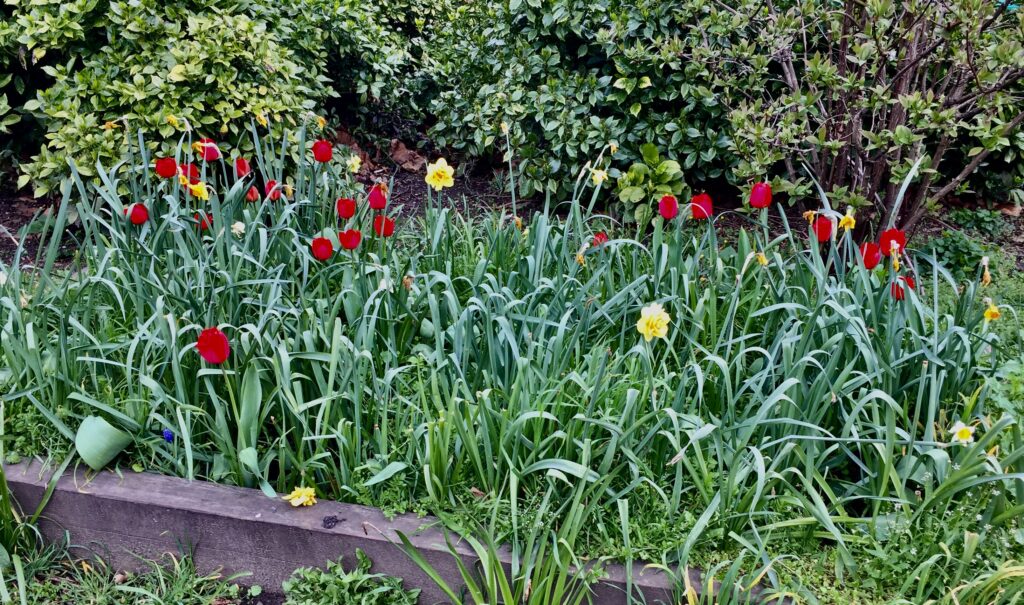
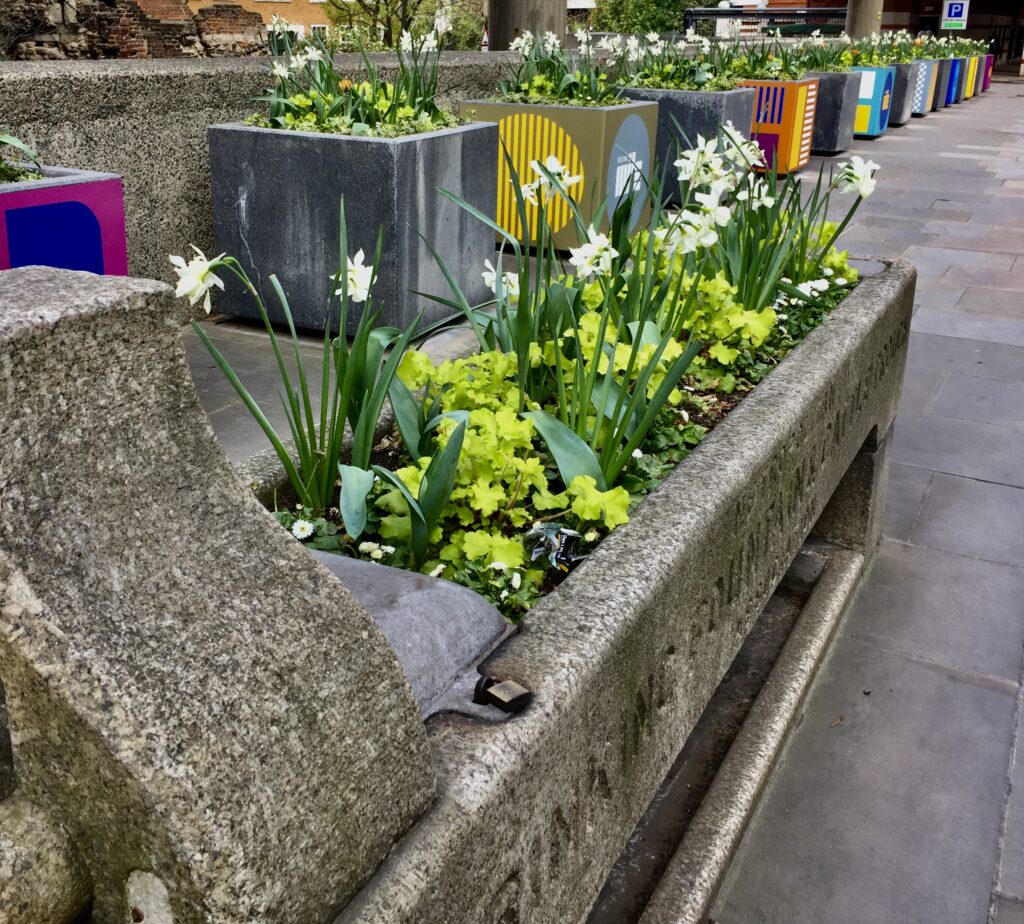
It was a dull day but these works really cheered me up as did these cheerful little daffodils popping up on London Wall. Thank you City of London Gardeners!

If you would like to follow me on Instagram here is the link …
https://www.instagram.com/london_city_gent/

Some things I have seen on recent wanderings – from traitors’ heads to woolly mammoths.

As regular readers will know, every now and then I like to publish some images that I have taken that don’t fit easily into any particular theme and this week’s blog is an example. They include wanderings outside the City and even London itself but I hope you will still enjoy them.

Walking down Errol Street in Islington (EC1Y 8LU – opposite Waitrose) I looked up and, for the first time, noticed this very touching memorial …

This wonderful map entitled The Streets They Left Behind is interactive. Just click on the poppies to read more about the men who never returned.

Just across the road in Whitecross Street are the premises of A Holt & Sons Ltd …

Because so many trades have moved out of the City and its adjacent boroughs, I had always assumed that the building contained flats and that the signage had been retained as a quaint ‘feature’ to attract tenants. How wrong I was!

The business (which specialises in cotton textiles) was founded by Abraham Holtz who started his enterprise on a stall nearby and who then bought these premises in 1864. It has been in the family ever since (the ‘z’ was dropped from the name at the time of the First World War). Have a look at their website for the full fascinating story.

The building is adjacent to the tiny, covered alley called Shrewsbury Court …

Despite my best efforts, I haven’t been able to establish the origin of its name. You can read more about its history here in the splendid Ian Visits blog.

A few yards inside the alley is one of my favourite London doors. The story I have conjured up in my mind is that, some time in the early 1970s, the people living there found that visitors knocked on the door rather than ringing the bell. When asked why, callers usually said that they didn’t know there was a bell. As a consequence, the residents (who obviously had artistic talents) got out their paint brushes and added this helpful sign to indicate where the push button bell was. Brilliant!

If learning a bit more about City doors takes your fancy have a look at my blog entitled That rings a Bell.

The other day at the Museum of London I was admiring this painting of London as seen from Southwark in around 1630. It’s one of the few painted records of the City before it was destroyed in the Great Fire …

My eye was drawn to London Bridge where a wide selection of traitors’ heads offered a grisly welcome to newcomers approaching from the south …

I liked this view of the outside of the Charterhouse with the very old gates, a gas lamp and an iconic red London pillar box …

The Kentish ragstone wall is fantastic …

I wrote recently about the great Italian experience that is Eataly on Bishopsgate. Here’s some of the scrumptious produce on sale …

There are a few doorways around the City that have always intrigued me since the wood seems to be incredibly old and repurposed from another function. The first is on Foster Lane and the next two Carter Lane …

I have noticed a recent trend in City opticians to have really wacky displays that don’t seem to bear much resemblance at all to their product. This one’s in Aldersgate and is obviously referencing the nearby Barbican estate …

Generally speaking, I don’t approve of graffiti, but this made me laugh …

When visiting Highgate Cemetery a few weeks ago I encountered these two ladies on Highgate Hill. The first (‘Big girls need big diamonds’) is obviously Elizabeth Taylor …

If you are visiting nearby and are interested in finding them they are on the outside wall of the oddly named Brendan the Navigator pub (N19 5NQ).

In the Egyptian Avenue in Highgate Cemetery you will come across the vault containing the remains of Mabel Veronica Batten. In front of the entrance there are always fresh flowers placed in a marble container inscribed with the name of her lover, Radclyffe Hall, who is also laid to rest there …

Hall, born Marguerite Radclyffe Hall but known to her loved ones as John, was a lesbian who dressed in men’s clothes in a society and era when same-sex love was considered not only immoral but legally punishable. Her book, The Well of Loneliness, dealing with a love between two women, was published in 1928. Here she is circa 1910 …

Picture: National Portrait Gallery, photographer unknown.

Her novel became the target of a campaign by James Douglas, editor of the Sunday Express, who wrote, ‘I would rather give a healthy boy or a healthy girl a phial of prussic acid than this novel.’ A judge eventually ordered the book destroyed, with the defendants to pay court costs.

A lady entrepreneur sets out her wares on Kilburn High Road …

Nearby stalls …

And finally, some images from a really enjoyable trip to Ipswich.

Ipswich Museum is a delight containing an extraordinary range of exhibits, all displayed in an authentic Victorian environment.

Ever wondered what a boa constrictor’s skeleton looks like? Wonder no more …

Ever fancied a close encounter with a woolly mammoth? This is the place to come …

In a sad sign of the times, ten years ago someone broke in and sawed off and stole Rosie the Rhino’s horn!

Staying at the Salthouse Harbour Hotel was fun. There is some interesting art on display …

And some, er, rather eccentric signage …

If you would like to follow me on Instagram here is the link …
https://www.instagram.com/london_city_gent/

A trip to Highgate in search of a famous cat (and other animals).

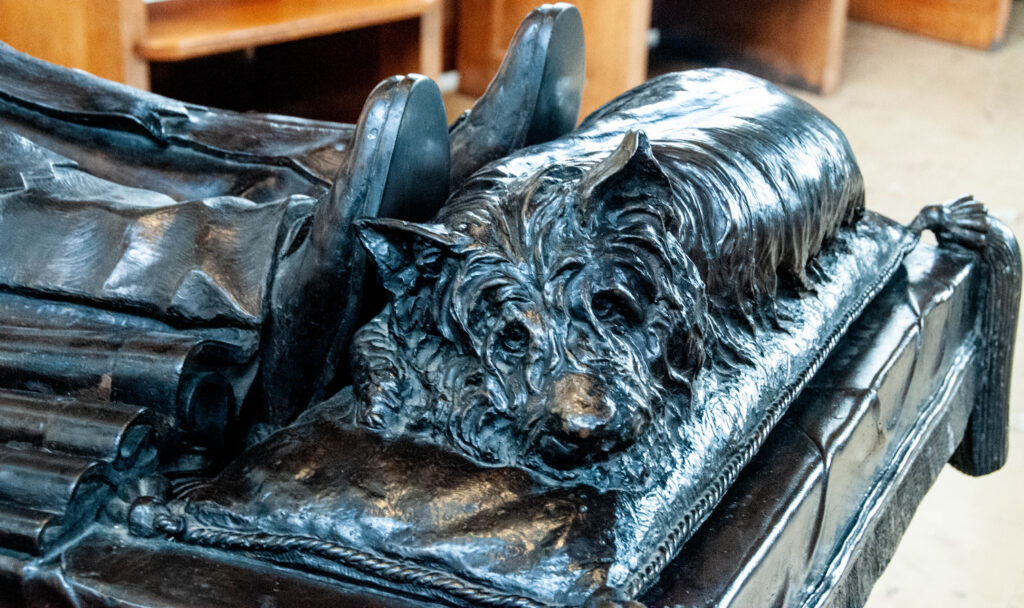
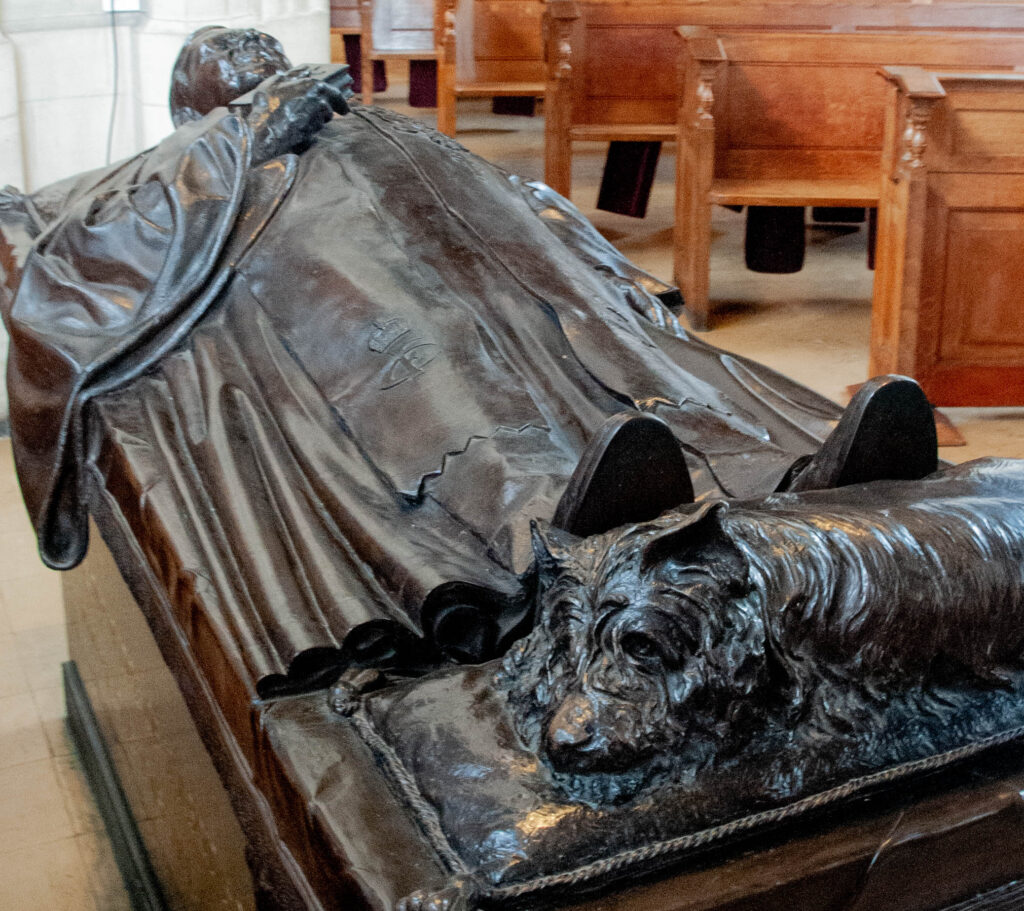
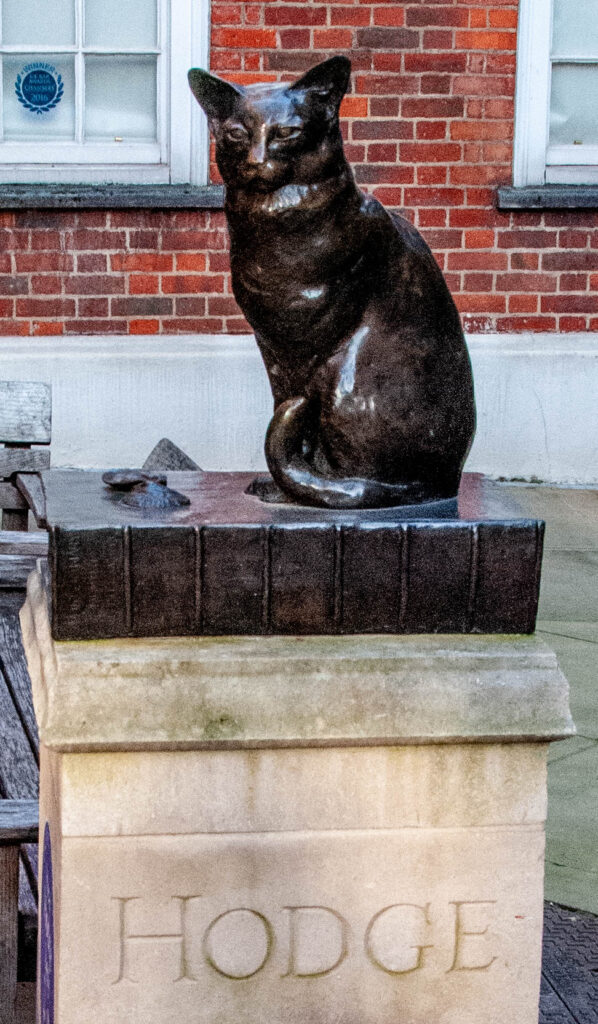
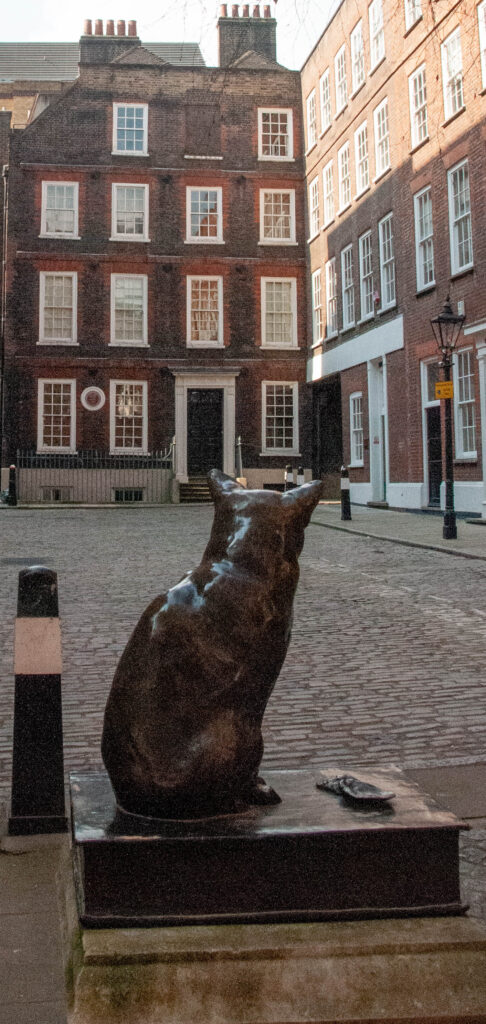
Everyone knows the story of Dick Whittington and his cat. Poor young Dick has given up on his hopes of making a fortune in London and is heading back home. As he climbs Highgate Hill, faithful cat at his side, he hears the bells of St Mary-le-Bow Cheapside ring out the words ‘Turn again Whittington, thrice Lord Mayor of London!’. There are several representations of Whittington and his companion in the City.

The first is a stunning window by the artist and glass maker John David Hayward in St Michael Paternoster Royal on College Hill (EC4R 2RL) where Dick Whittington was buried in 1423. It depicts him on Highgate Hill …

He’s just heard the church bells and glances back …

It has been commented that he rather resembles a flat-capped Hoxton Hipster – maybe there is an iPad in that bag.

I love the expression on the cat’s face. Perhaps he has seen a mouse.

I only recently discovered this sculpture in the ambulatory to The Guildhall Art Gallery (EC2V 5AE). He looks very thoughtful, doesn’t he. Times have been hard (note his torn leggings) and a rather unpleasant creature is peeping out from his pile of clothes – ‘Shall I return to the City and try my luck one more time?’ The milestone indicates it’s three miles away …

The sculptor Lawrence Tindall has written : ‘My figure, in Portland stone, is carved in a style illustrative of children’s literature. It shows Dick and his cat at the point of turning again on hearing Bow Bells and — look behind him: there is a rat! My idea with this and the other figures was to lighten the atmosphere at the entrance of this impressive building and provide something for visiting children’.

The cat …

And a rat! …

Although the story is a total myth, it burned itself into folklore so deeply that the point on Highgate Hill where he supposedly heard the bells is also commemorated (and I knew exactly where it was). Take the Underground train to Archway, walk up Highgate Hill, and a hundred yards or so further on, you will encounter this charming little memorial …

Carved on the side of the stone facing the road are the dates of Whittington’s Mayoralties, the three Kings he served under and the year he was Sheriff …

It also records that the stone was restored by W Hillier in 1935.

You can read a comprehensive history of the stone and the cat here on the London Remembers website. I recall the cat (made from Irish limestone) being added in 1964 since I walked up the hill almost every day on my way to school. The cat also lives on in the signage of the nearby Whittington Hospital …

And the pub opposite the stone …

Knowing that I was going to be visiting Highgate I couldn’t resist the temptation to book a self-guided tour of the famous Cemetery.

To get there I walked further up the hill and turned left into Waterlow Park. I paused briefly to pay my respects to the wonderful philanthropist Henry Waterlow in the park that he donated to people who were ‘gardenless’ …

He’s prepared for inclement weather with hat, overcoat and neatly-furled umbrella.

The entrance to the Cemetery is opposite the west entrance to Waterlow Park and is in two sections separated by a road. Paid entry to the West part gets you free entry to the East and includes an excellent printed guide – what a fascinating experience it was. Regular readers will know that I am intrigued by the way animals are represented in sculptures and memorials and here are three from my visit.

Firstly a very loyal doggie, a huge black mastiff called ‘Lion’ …

Thomas ‘Tom’ Sayers (1826-65) was an English bare-knuckle prize fighter. There were no formal weight divisions at the time, and although Sayers was only five feet eight inches tall and never weighed much more than 150 pounds, he frequently fought much bigger men. In a career which lasted from 1849 until 1860, he lost only one of sixteen bouts. He was recognized as heavyweight champion of England in 1857, when he defeated William Perry (the ‘Tipton Slasher’).

‘Tom and his battles’, from The Police Gazette

On 17th April 1860 there took place what was claimed to be the first ‘international’ title fight. At 6ft 2in and 195lb John Carmel Heenan, the American contender, towered above Sayers’s 5ft 8in and 149lb as the first round started at 7.29 am. Each severely battered and bloodied, yet unbowed, they would finish, level pegging, tit for tat, their business unsettled as a draw and with all bets off, fully two hours 27 mins and 42 rounds later. The bout was halted when the Aldershot police, brandishing magistrates’ warrants, stormed the ring. This picture of the encounter was painted by a retired boxer called Jem Ward …

Tom in his prime circa 1860 …

Seriously ill from consumption (tuberculosis) aggravated by diabetes he died aged only 39 at No. 257 Camden High Street on 8 November 1865 in the presence of his father and two children. His funeral a week later attracted some 100,000 people. According to the Spectator magazine, the crowd that accompanied the coffin stretched for more than two miles in length and the bier was drawn by four sable-plumed horses. Lion, the mourner in chief, sat alone in a pony cart …

Tom’s Highgate Cemetery tomb.

A real lion called Nero rests, sleeping, on top of the tomb of George Wombwell (1777-1850) …

George became a household name as owner of three large travelling animal shows. His menagerie included an elephant, giraffes, a gorilla, a hyena, a kangaroo, leopards, six lions, llamas, monkeys, ocelots, ostriches, panthers, a rhino (billed as ‘the real unicorn of scripture’), three tigers, wildcats and zebras …

Sadly, because many of the animals were from hotter climes, lots of them died in the British climate. Sometimes Wombwell could profitably sell the body to a taxidermist or a medical school; other times he chose to exhibit the dead animal as a curiosity.

This poor horse on a pedestal looks old, tired and worn out …

Once upon a time this was taken to be the tomb of John ‘Jack’ Atcheler who claimed to be ‘Horse Slaughterer to Queen Victoria’, and is described as such in the guide. More research has revealed, however, that he is buried elsewhere although there is a John Atcheler beneath the monument. He is the famous man’s son, who died in 1853 aged twenty-two. The grave also holds Jack’s second wife, Sarah, and his son-in-law. The now faded inscription may contain a clue as to why there is a horse on the monument: ‘She’s gone; whose nerve could rein the swiftest steed’. Jack almost certainly paid for the grave and monument and no doubt intended that he would be buried there as well. You can read about Jack in this fascinating article from the Highgate Cemetery Newsletter.

If you visit the East Cemetery other famous people resting there include …

Malcolm McLaren – Better a spectacular failure than a benign success

The ‘Great Train Robber’ Bruce Reynolds. The inscription reads ‘C’est la vie’, the words that Reynolds uttered when he was finally arrested in 1968 in Torquay by Tommy Butler, the dogged detective who pursued him to the end …

A very moving sculpture marking the tomb of Philip Gould, one of the architects and strategists of New Labour …

There is also some humour – the book spine reads The final chapter

The painter and print-maker Patrick Caulfield (1936-2005) was a contemporary of David Hockney. Regarded as part of the Pop Art movement, and a Turner Prize nominee in 1987, Caulfield designed the memorial which now sits on his grave. Brutally frank! …

And finally, of course …

If you would like to follow me on Instagram here is the link …
https://www.instagram.com/london_city_gent/

Page 9 of 20

Powered by WordPress & Theme by Anders Norén

Symbols & Secrets
Privacy Overview

This website uses cookies so that we can provide you with the best user experience possible. Cookie information is stored in your browser and performs functions such as recognising you when you return to our website and helping our team to understand which sections of the website you find most interesting and useful.