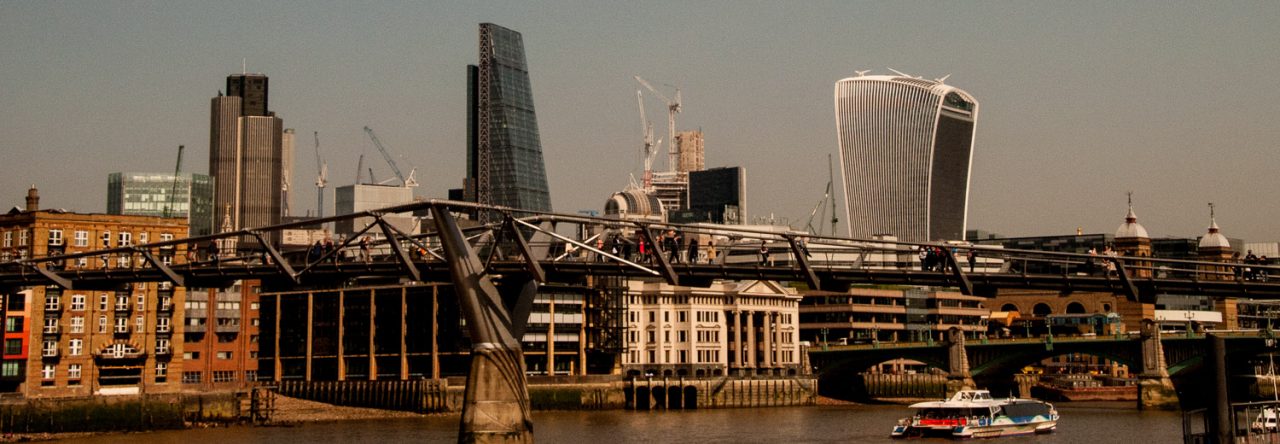
London’s historic Smithfield meat market is to close for good after the City of London Corporation voted on Tuesday this week to pull out of plans to relocate it to Dagenham.
Smithfield became London’s livestock market in the Middle Ages and animals reared as far away as the Midlands were brought here for sale. In 1174, William Fitzstephen described it as ‘A smooth field where every Friday there is a celebrated rendezvous of fine horses to be sold… [pigs] with deep flanks, and cows and oxen of immense bulk.’ Animals were kept at Smithfield to be rested and fattened up. Once sold, they headed inside the City walls to the Newgate Shambles – the city’s main slaughterhouses – or to Eastcheap, a market in the east of the city.
There follows a brief history of both the market and the area itself and includes an extraordinary Pathé News film that I have discovered about the terrible fire that seriously damaged the market in 1958.
Smithfield was ofen used for public execution and this slate triptych was unveiled by Ken Loach in 2015 and commemorates the Great Rising of 1381 (more commonly known as the Peasants’ Revolt) …
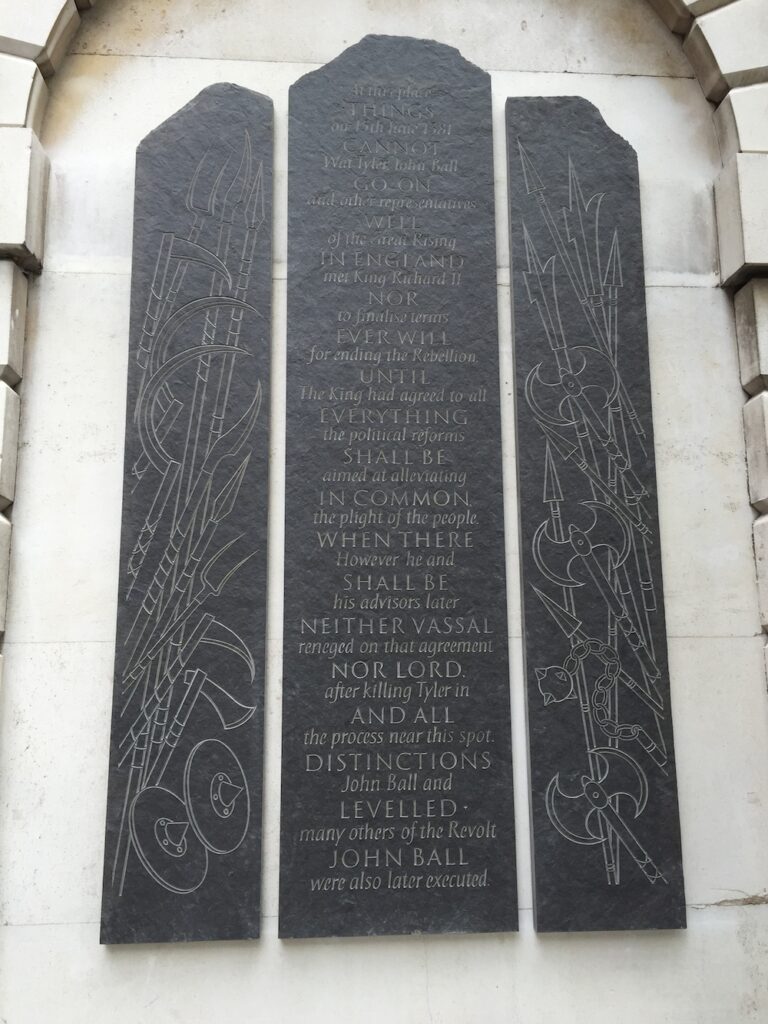
The Revolt was led by Wat Tyler and on June 15th 1381 he had the opportunity to speak directly to the 14-year-old king, Richard II. Accompanying the King was the Lord Mayor of London William Walworth and, for reasons that are not entirely clear, Walworth ran Tyler through with his sword. Badly wounded, Tyler was carried into nearby St Bartholomew’s Hospital but, rather unsportingly, Walworth had him dragged out and decapitated. It was certainly a very dangerous time to be a poll tax protester.
Of the 288 people estimated to have been burnt for heresy during the five year reign of Mary Tudor, forty eight were killed in Smithfield. ‘Bloody Mary’ was the daughter of Henry VIII and Katherine of Aragon and the burnings were part of her campaign to reverse the English Reformation.
The ‘Marian Martyrs’ are commemorated with this plaque erected by the Protestant Alliance in 1870 …
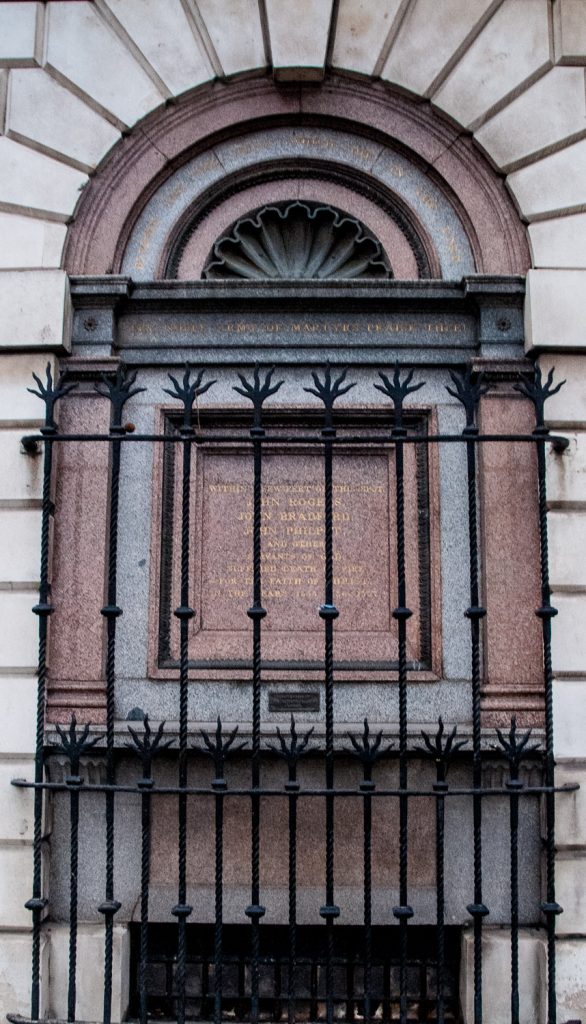
The gilding is a little faded in this picture. It reads …
Blessed are the dead which die in the Lord. The noble army of martyrs praise Thee! Within a few feet of this spot, John Rogers, John Bradford, John Philpot,and other servants of God, suffered death by fire for the faith of Christ, in the years 1555, 1556, 1557
One terrible occasion was on 16 July 1546 when Anne Askew was burnt at the stake along with John Lascelles (a lawyer and Gentleman of the King’s Privy Chamber), John Hadlam (a tailor from Essex) and John Hemsley (a former Franciscan friar). A great stage was built at Smithfield for the convenience of Chancellor Wriothesley, other members of the Privy Council and City dignitaries, to watch the burning in comfort …
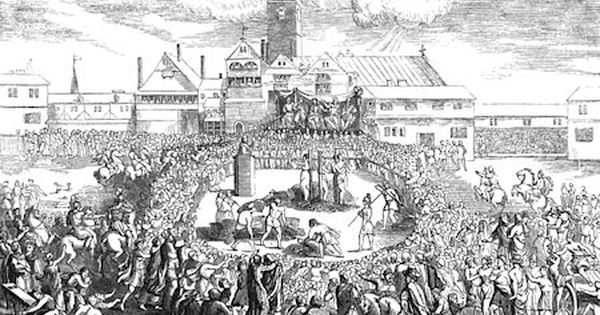
Anne herself, having been illegally broken on the rack, was unable to stand, and was chained to the stake in a sitting position. You can read more about this fascinating, brave lady here.
Every burning was different; if the fire ‘caught’, it could be over relatively quickly, but on damp days, or when the wind persisted in blowing the flames away from the body, it could take up to an hour for the condemned person to die, an hour of excruciating agony.
Another famous person who suffered here was William Wallace, ‘Braveheart’ in the movie of that name. This memorial is on West Smithfield, its railings often adorned with flowers and Scottish flags …
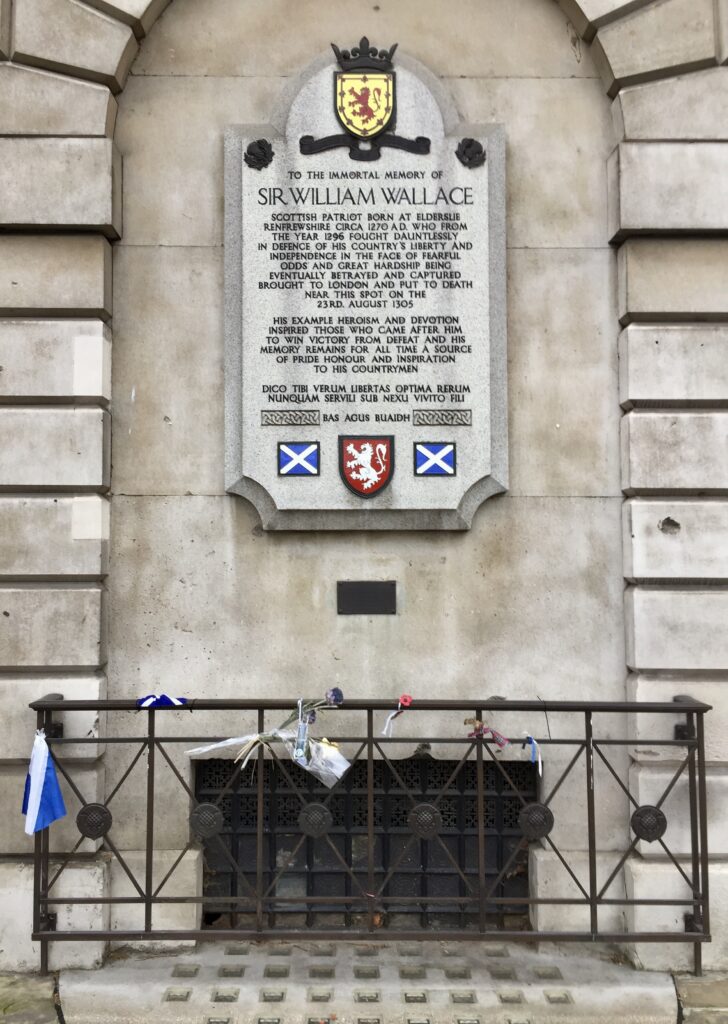
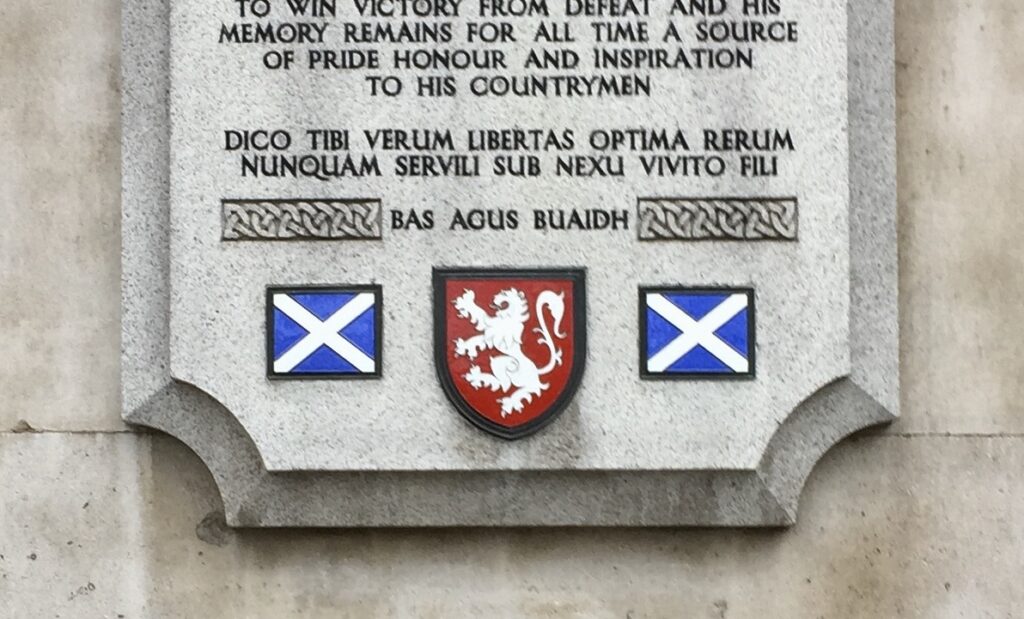
Translations from the Latin: I tell you the truth. Freedom is what is best. Sons, never live life like slaves. And the Gaelic: Death and Victory, an old Scottish battle cry.
Smithfield wasn’t all about executions, it also hosted the famous Bartholomew Fair. This annual summer gathering ran for over 700 years. Starting in 1133 as a trade show for buyers and sellers of cloth, the food, drink and sideshows eventually became the main attraction. By the 1600s, London’s most famous fair was pure entertainment – two weeks where crowds gathered for food, drink, puppet shows, wrestlers, a ferris wheel, dancing bears and contortionists …
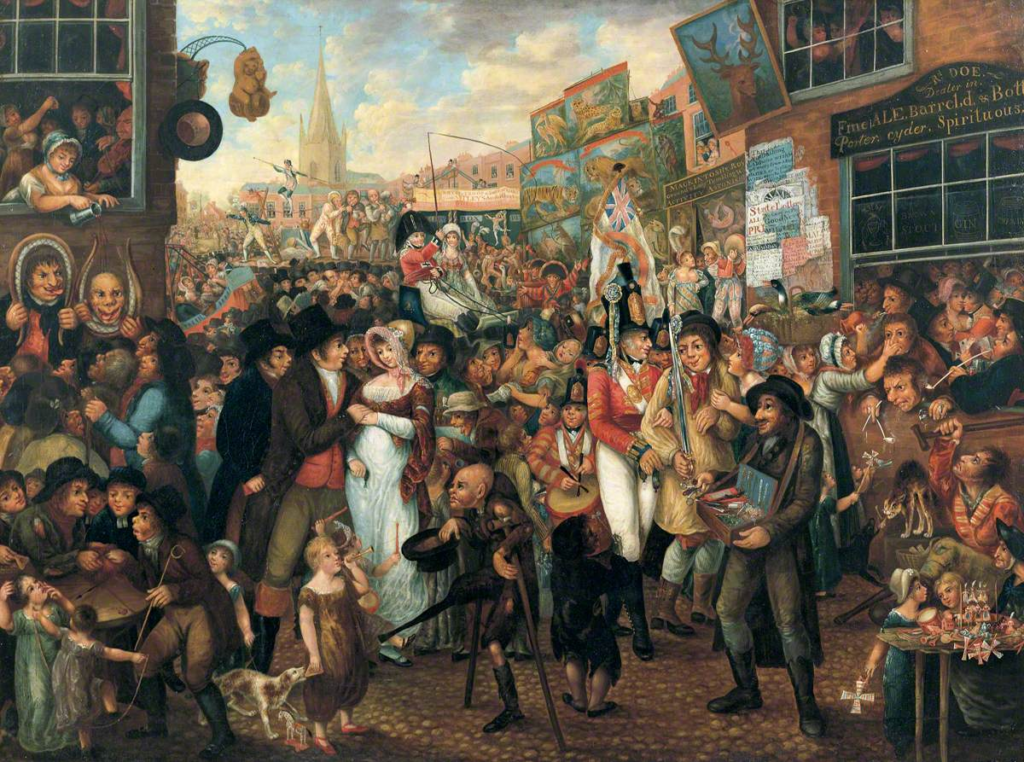
Many Londoners loved it but the chaos disturbed those who wanted a civilised city and Bartholomew Fair was shut down in 1855.
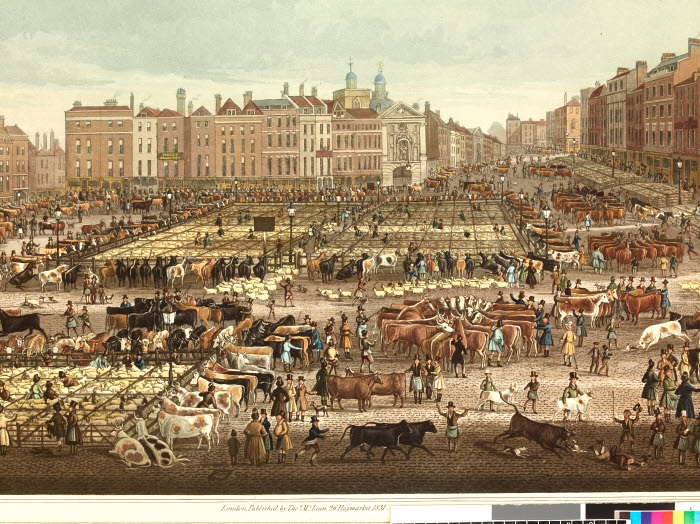
The market grew throughout the 18th and early 19th centuries, as did the noisy procession of animals which made their way there. In Oliver Twist, published 1837–1839, Charles Dickens captured the disorder: ‘It was market morning. The ground was covered, nearly ankle-deep, with filth and mire… the bleating of sheep, the grunting and squeaking of pigs… the shouts, oaths and quarrelling on all sides… rendered it a stunning and bewildering scene.’
Here’s how it looked in 1811 …
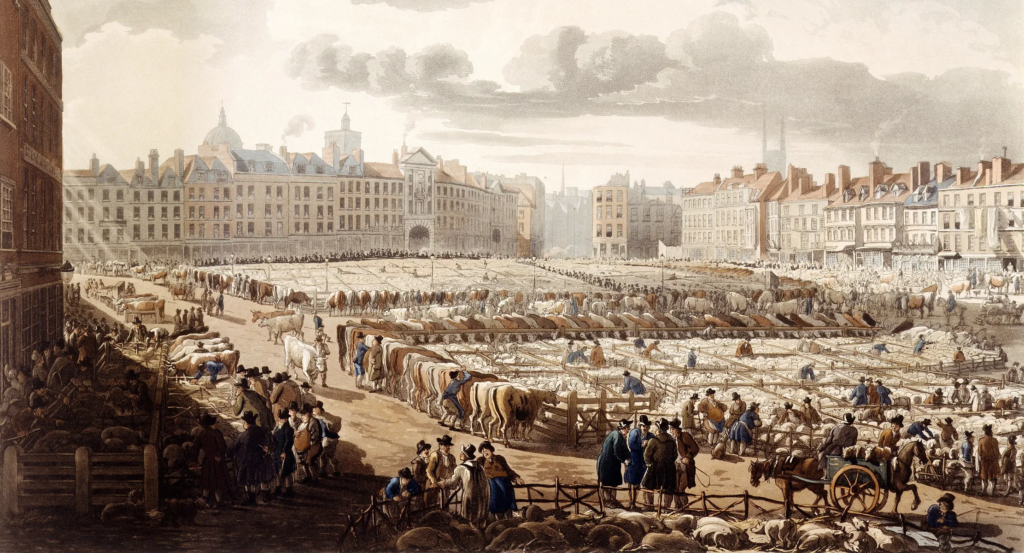
And 20 years later in 1831 © The British Library …
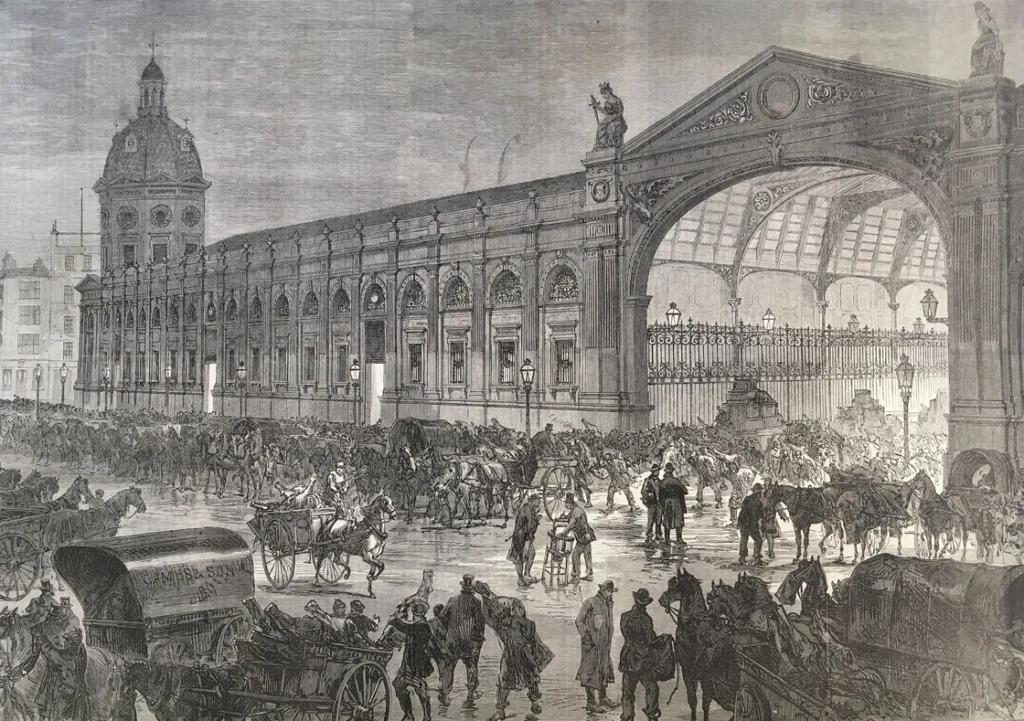
The livestock market was closed in the 1850s and construction of a covered market at Smithfield began in 1866. Horace Jones was chosen as the architect of the grand new market and you can read more about him in my blog of 8th August.
His imposing and elegant complex of buildings included the Central Meat Market, General Market and Poultry Market. All were innovatively designed to help business run smoothly in the face of mountains and mountains of meat …
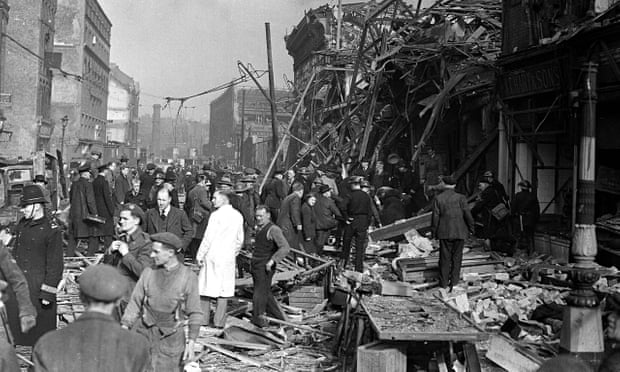
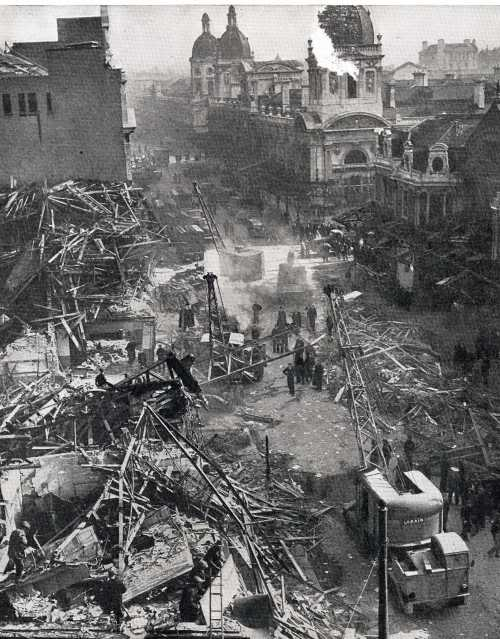
The market flourished but was not lucky enough to escape the traumas of two World Wars. Several hundred Smithfield employees were killed in the 1914-18 war and civilians were caught up in a terrible event towards the end of World War II.
At 11:30 in the morning on 8th March 1945 the market was extremely busy, with long queues formed to buy from a consignment of rabbits that had just been delivered. Many in the queue were women and children. With an explosion that was heard all over London, a V2 rocket landed in a direct hit which also cast victims into railway tunnels beneath – 110 people died and many more were seriously injured …
In the Grand Avenue is a memorial …
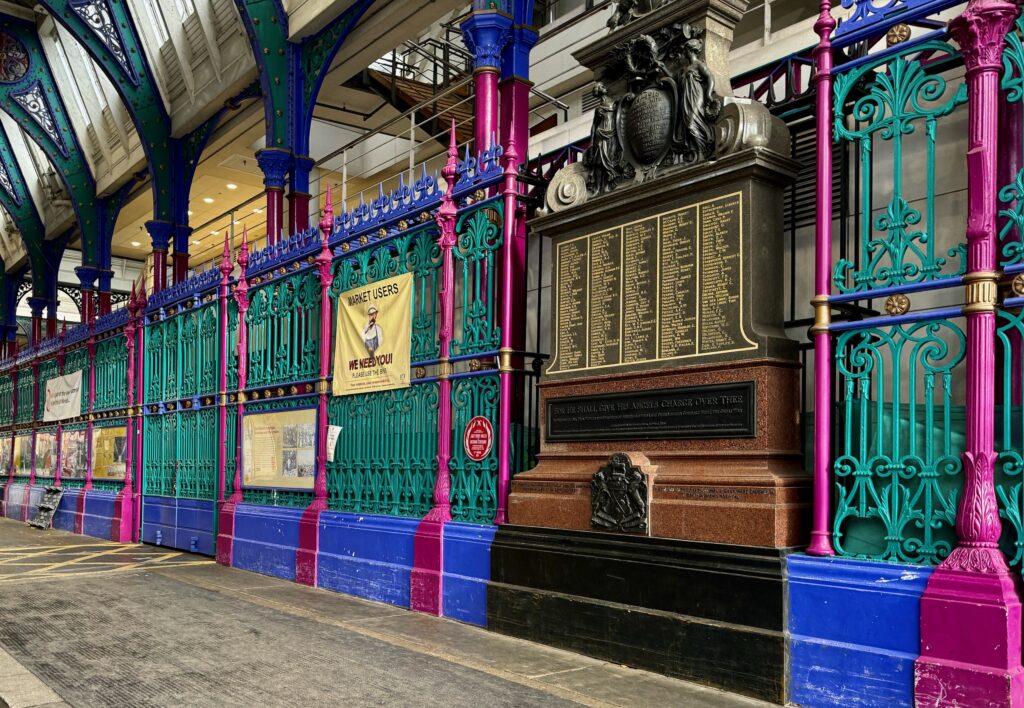
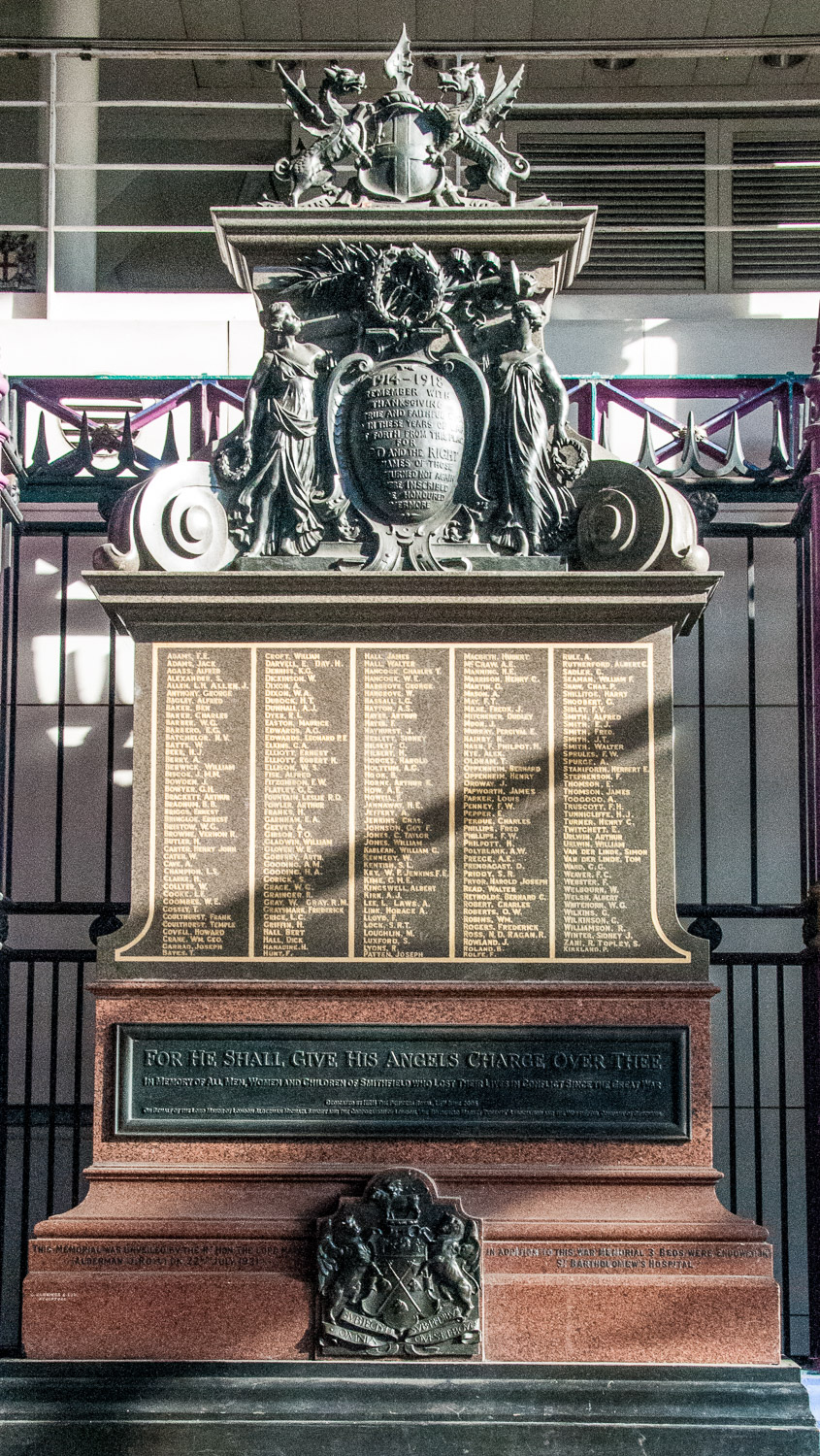
The original commemoration of names (above the red granite plinth) is by G Hawkings & Son and was unveiled on 22 July 1921. 212 people are listed.
Between Fame and Victory holding laurel wreaths, the cartouche at the top reads …
1914-1918 Remember with thanksgiving the true and faithful men who in these years of war went forth from this place for God and the right. The names of those who returned not again are here inscribed to be honoured evermore.
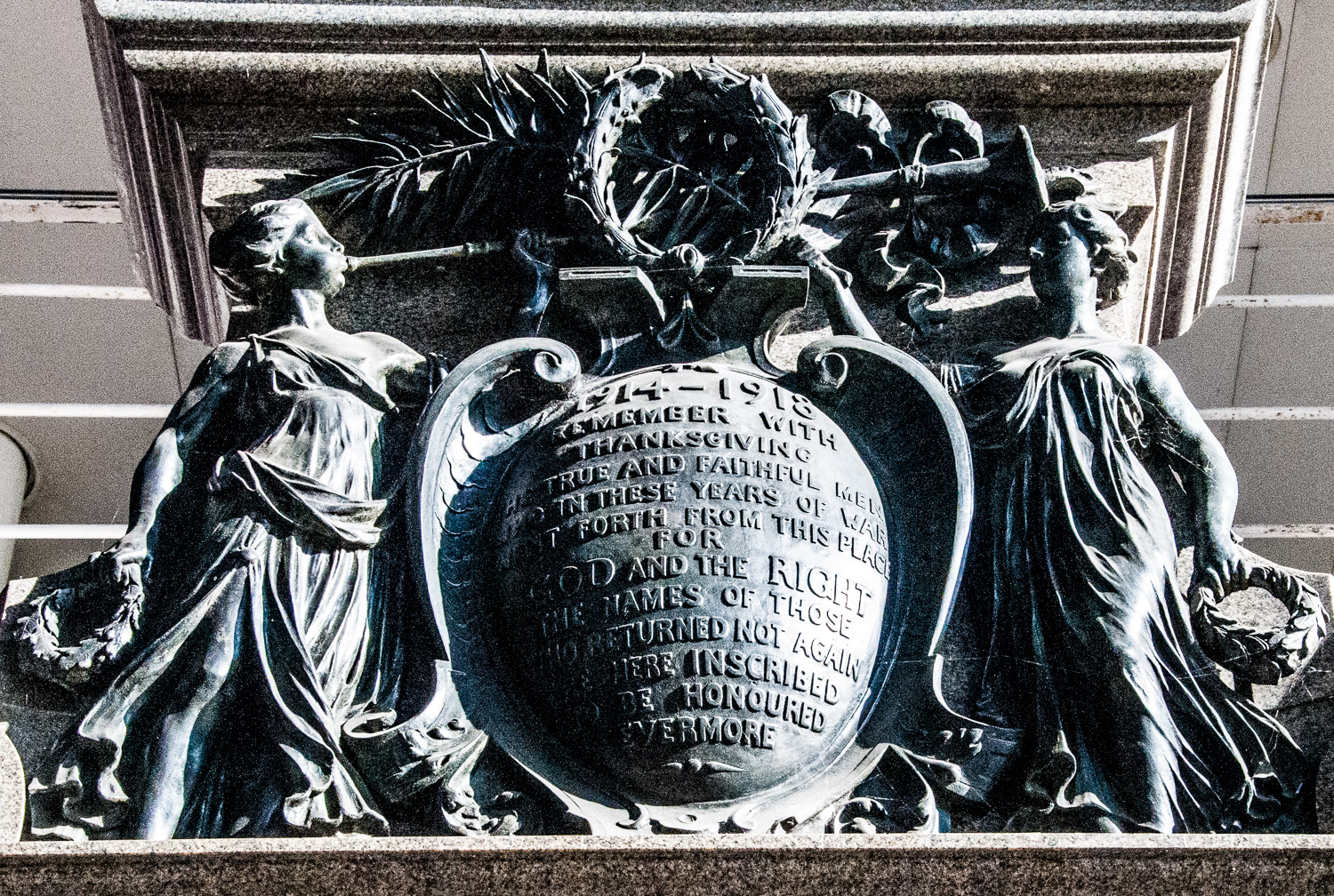
The monument was refurbished in 2004/5 and unveiled on 15 June 2005 by the Princess Royal and Lord Mayor Savory. The red granite plinth had been added and refers to lives lost in ‘conflict since the Great War’. On it mention is made of the women and children although the V2 event is not specifically referred to.
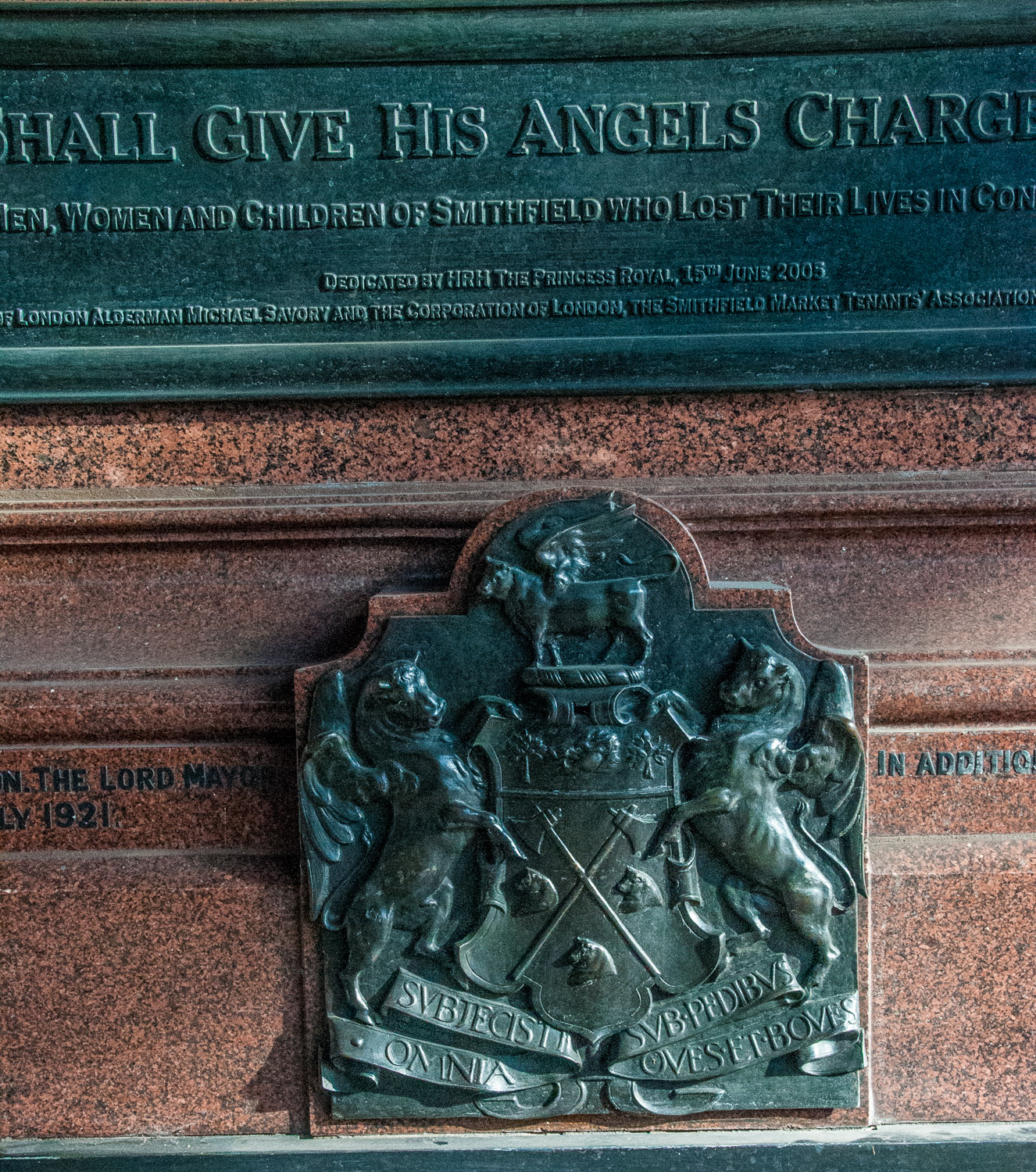
‘The latin inscription on the coat of arms translates as ‘Thou hast put all things under his feet, all Sheep and Oxen’ – the motto of the Worshipful Company of Butchers.
Tragedy struck again when two firefighters lost their lives in a terrible blaze at the Union Cold Storage Company which broke out on 23 January in 1958. The fire burned for three days in the centuries-old labyrinth, which ultimately collapsed. According to news reports at the time, when the first fire engines arrived, thick acrid smoke was pouring out of the market’s maze of underground tunnels leading to cold storage rooms.
Trying to reach the source of the fire …
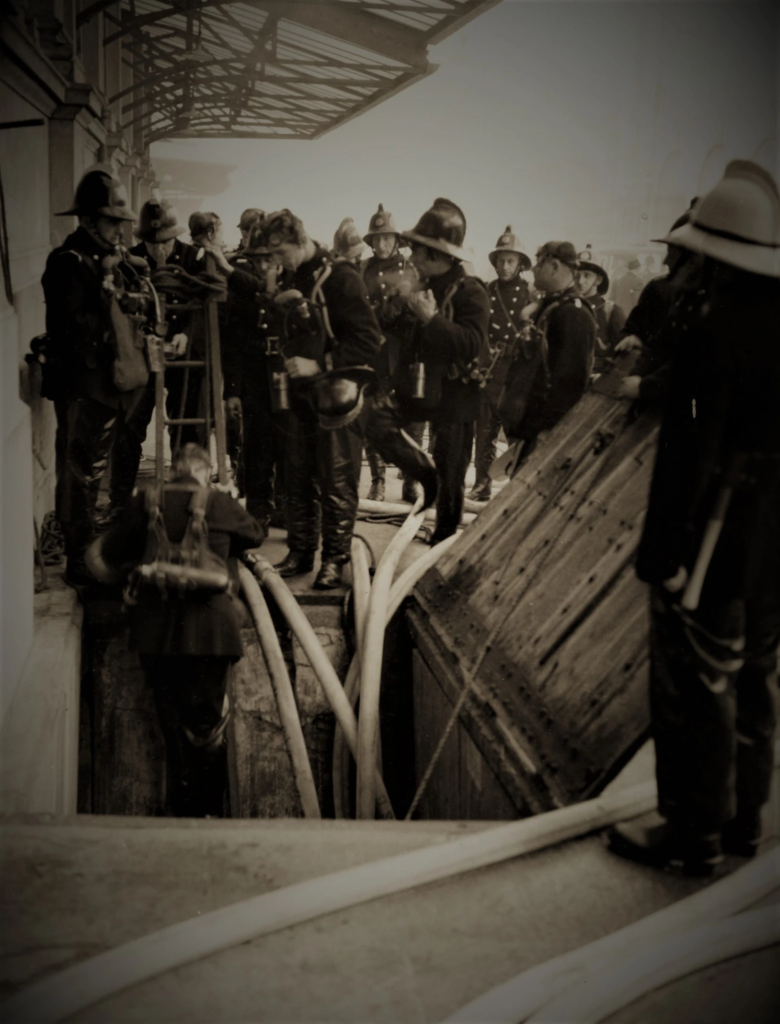
The Pathé News film about the fire is one of the most gripping and frightening I have ever seen. You can watch it here – take particular note of the unsatisfactory breathing apparatus the men had to wear: https://www.britishpathe.com/asset/186863/
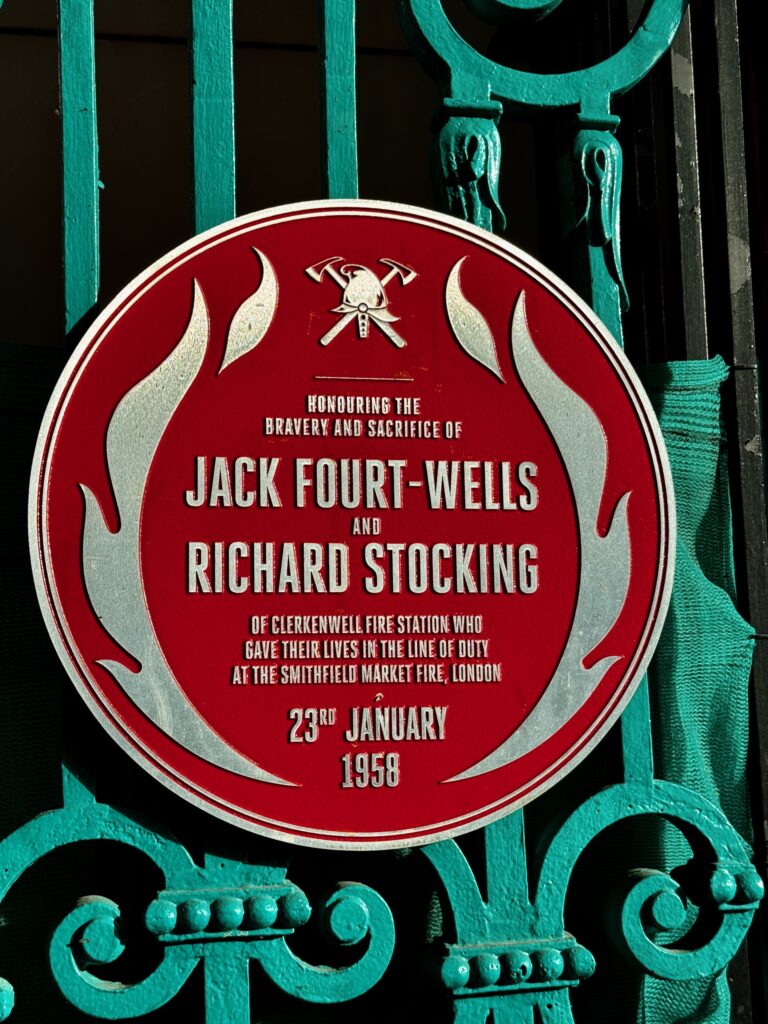
Jack Fourt-Wells and Richard Stocking, a Station Officer and a firefighter, headed down into the dense smoke, never to be seen alive again. Once inside the pitch black labyrinth of basement rooms and small passages they searched in vain for the source of the fire but with their breathing apparatus rapidly expiring, were overcome by the thick smoke. Their colleagues found them amongst the frozen meat packets and carcasses, and immediately got them out of the tunnels. Many attempts were made to resuscitate both men but tragically they were pronounced dead at the scene.
After the fire …
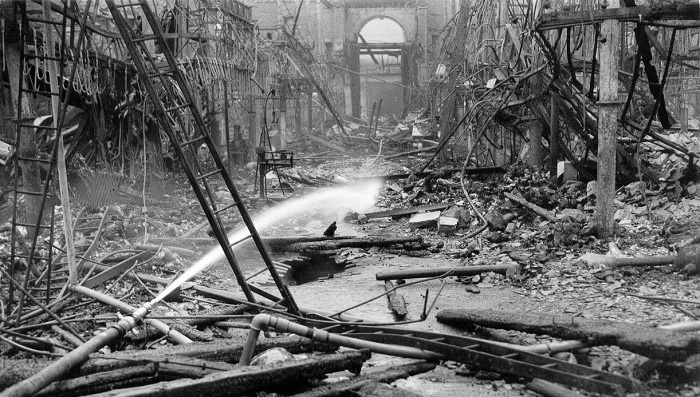
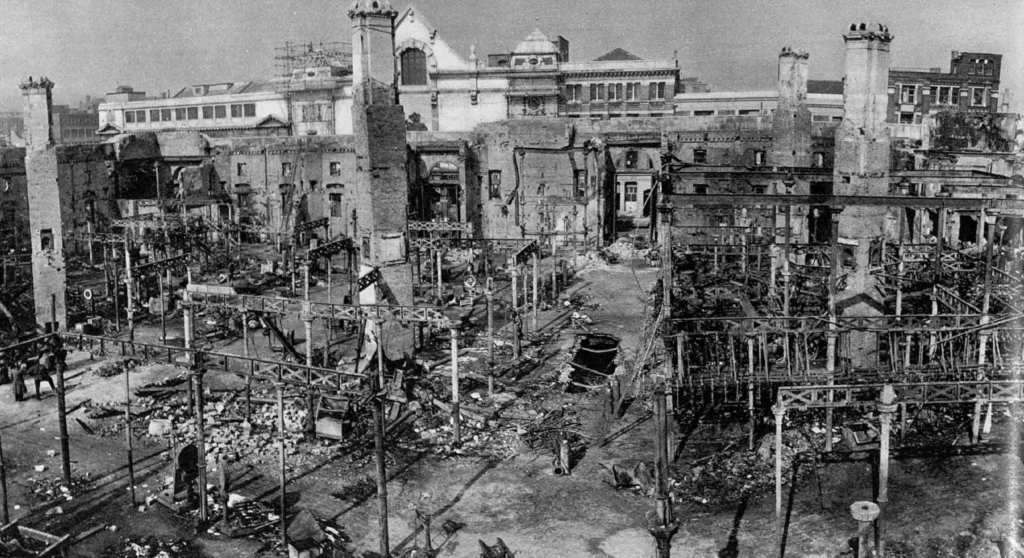
Fire Brigade processes and equipment were radically revised as a result of the catastrophe. This article gives much more information – it makes fascinating, and horrifying, reading: Sixty years on from the Smithfield fire.
For gripping personal accounts, more detail and more images go to Tales and stories of the London Fire Brigade and its people.
The report of the V2 rocket attack above mentions railway tunnels.
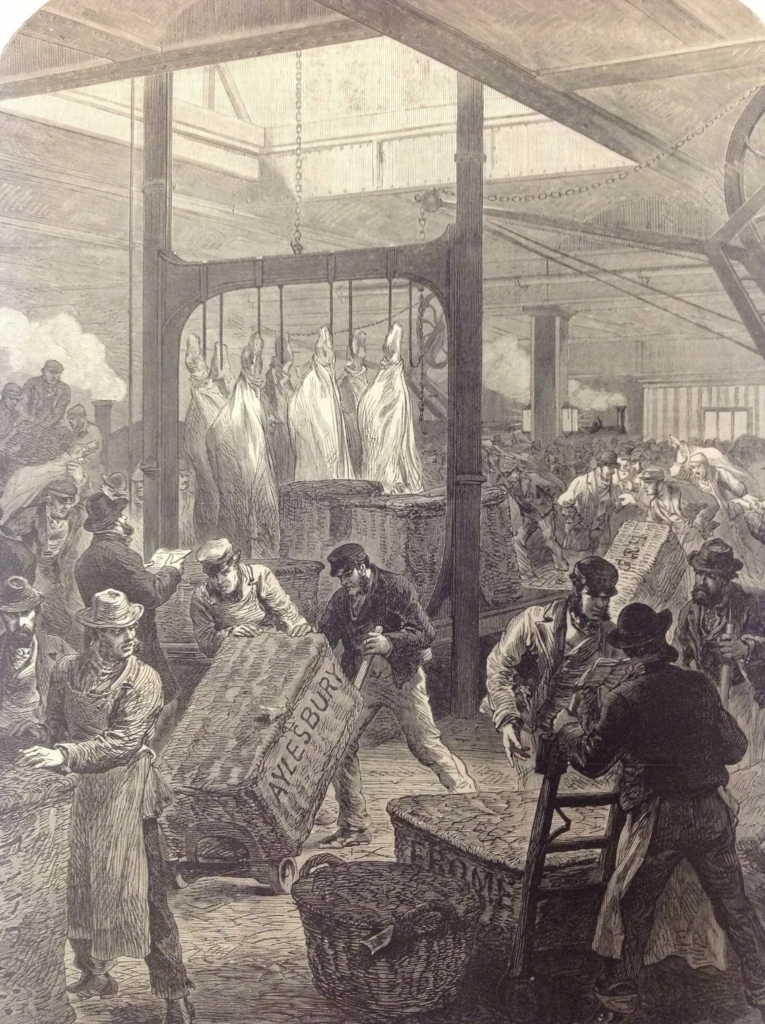
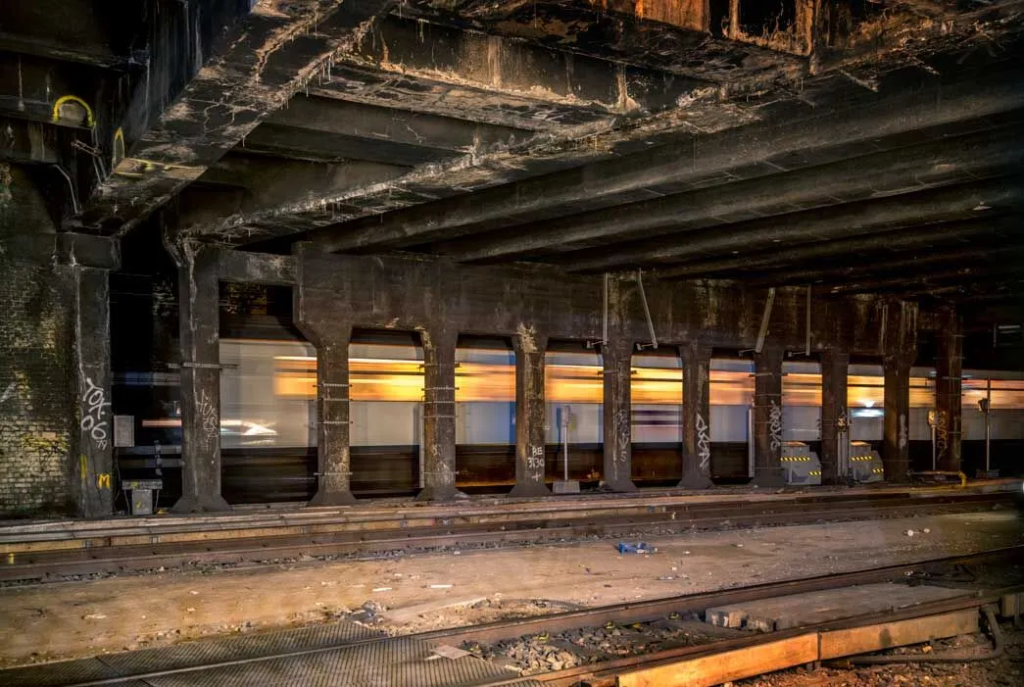
The market’s most revolutionary feature took advantage of London’s growing railway network. Smithfield was connected to the north, south, east and west. Metropolitan Railway freight trains passed right underneath the market. So Jones designed a massive basement of brick arches and iron girders to receive them. From there, the meat was lifted to the surface by hydraulic lift, or taken up the spiral ramp in the nearby rotunda.
A sketch from the Illustrated London News 1870 showing the arrival of an early meat train …
Anyone standing in the market basement now can watch the trains whizz past …
Smithfield was almost a city within a city – and one with its own hours.
To give customers time to buy and prepare their meat for sale the same day, the market opened at night and workers finished their shifts in the early morning. Many headed to ‘early houses’ – pubs within the market or nearby which opened early for workers.
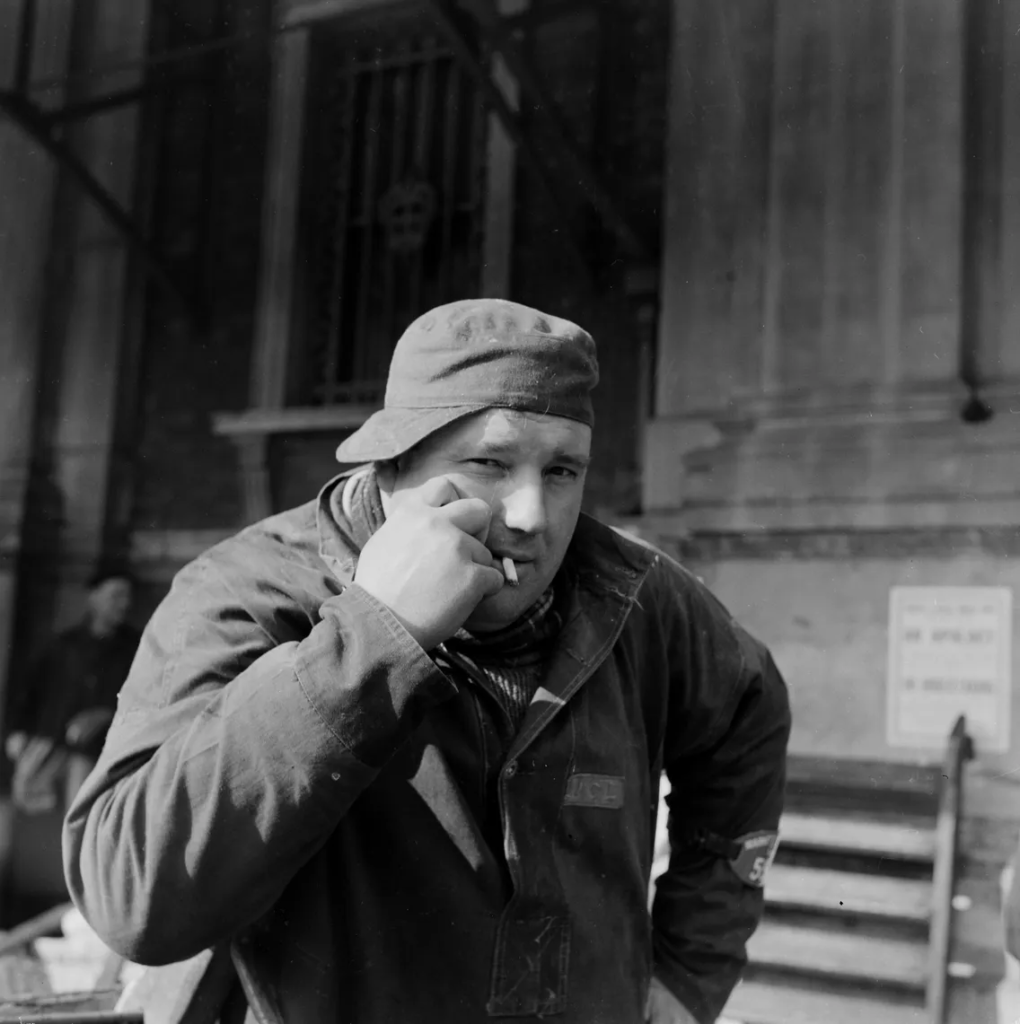
The market was mostly filled with men. Their work might have seemed grisly to outsiders but it was a tight-knit community, full of tradition, with generations of the same families working in the same place. Until 1996, the market was heavily unionised and there were strict job divisions. You might be a puller-back, a pitcher, a shunter, shopman or bummaree.
A bummaree (porter) around 1955 © The London Museum …
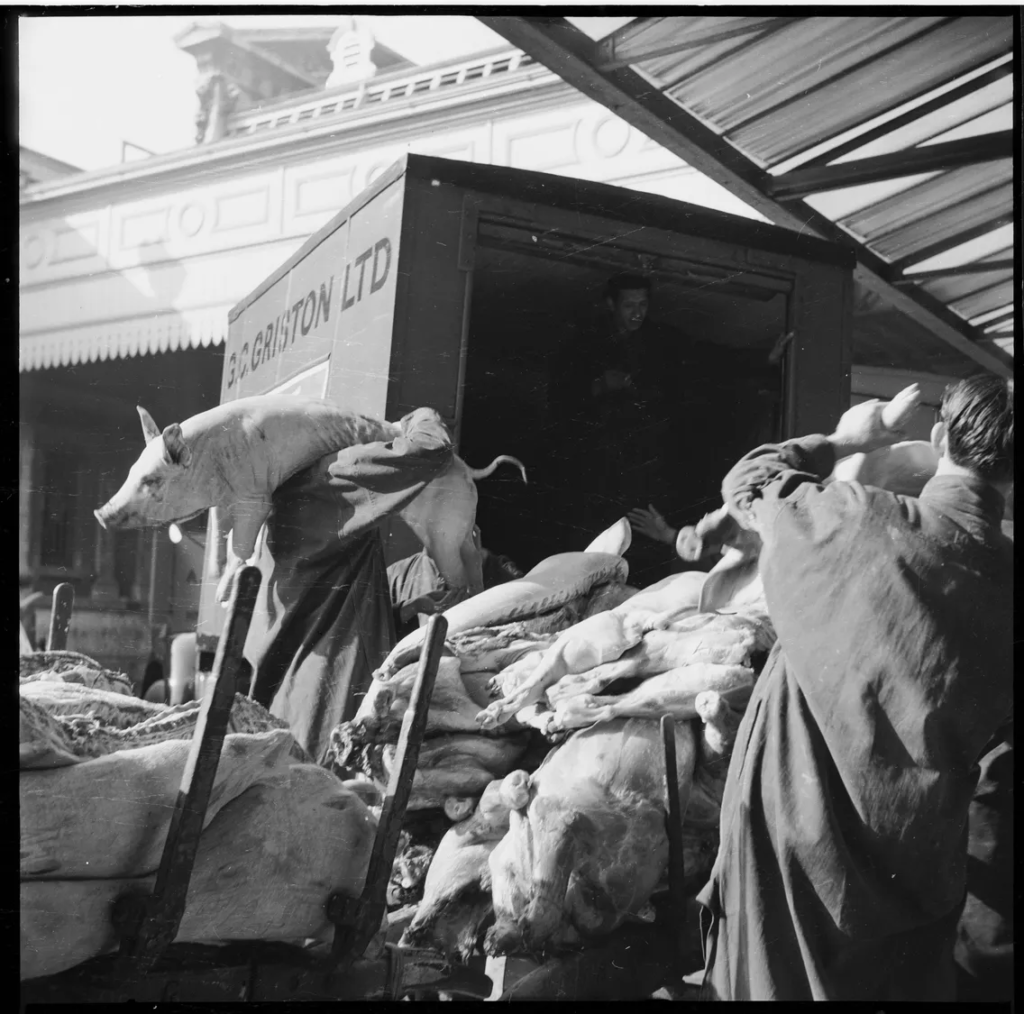
Pig carcasses being delivered to the market around 1955 © The London Museum …
By the 1880s, Smithfield was receiving enormous quantities of frozen meat from Argentina, New Zealand and Australia. It was a symbol of Britain’s global influence, with London at the centre. But from 1945, Smithfield gradually became less busy as meat stopped arriving through London’s docks. Britain’s trading relationships changed and supermarkets began placing orders directly with suppliers, cutting out Smithfield’s traders.
Other London Markets, like Billingsgate, Spitalfields and Covent Garden, moved out of central London. Follow this link for some fascinating photographs. Smithfield stayed, but reduced in size.
Here are some images I took last Monday.
The arrival of the Elizabeth Line has revitalised the area with new shops and restaurants popping up all the time …
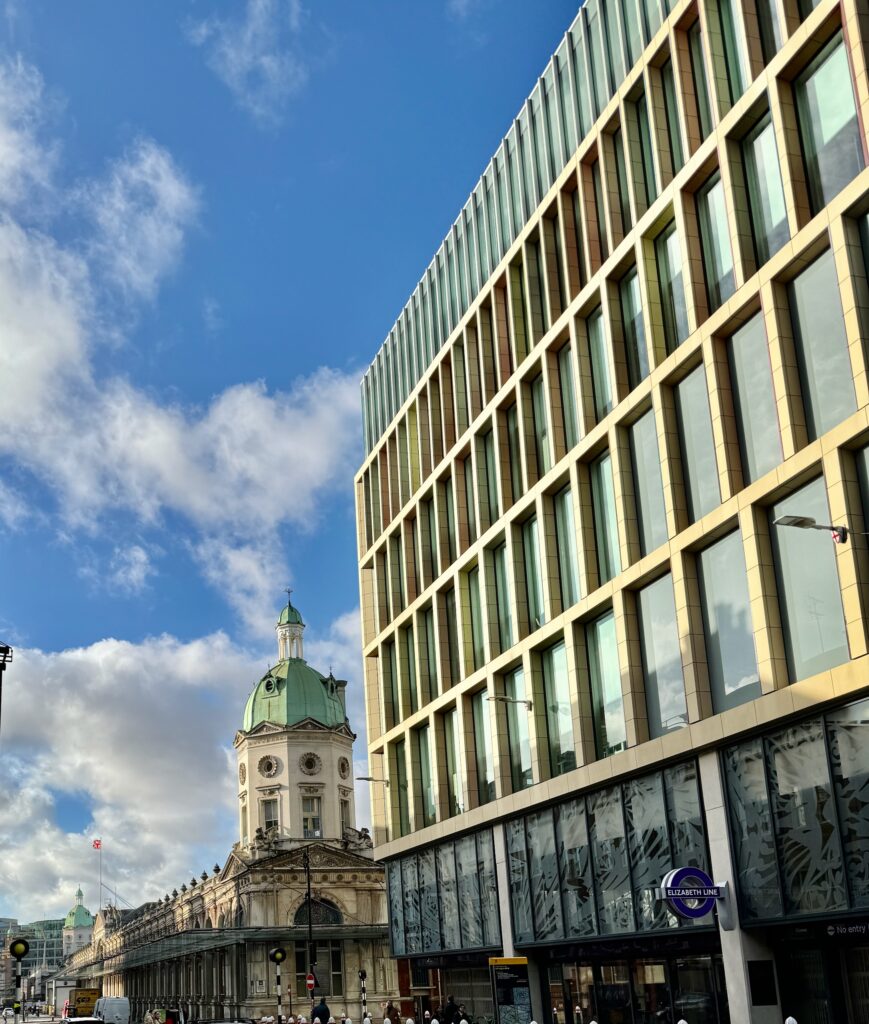
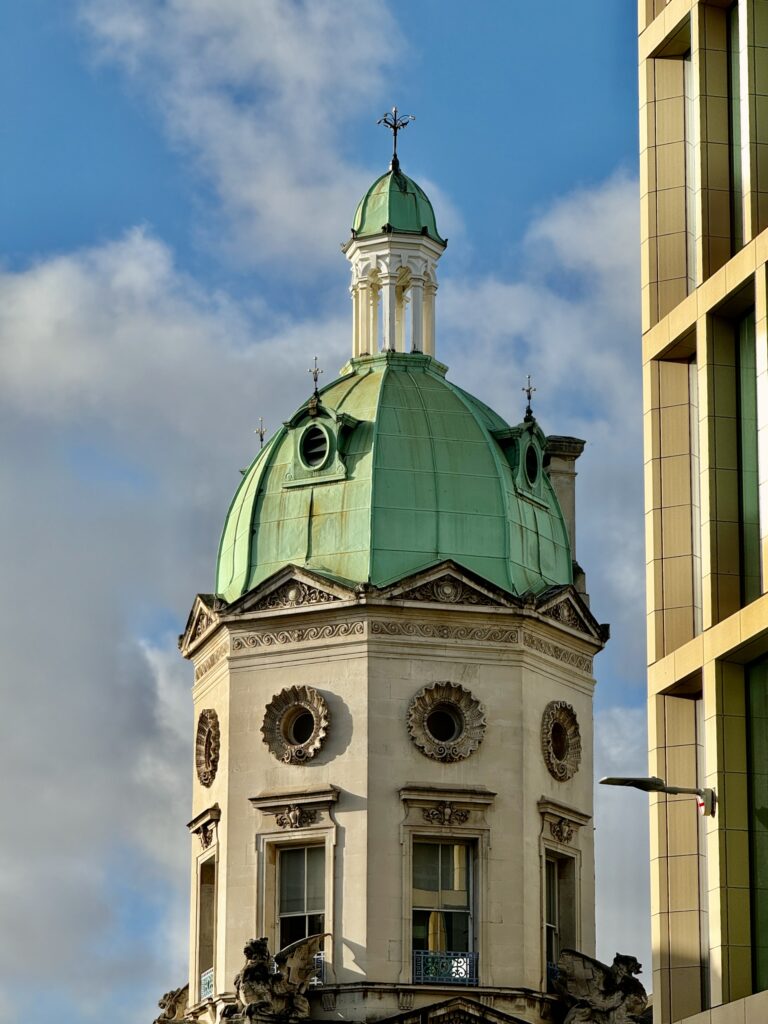
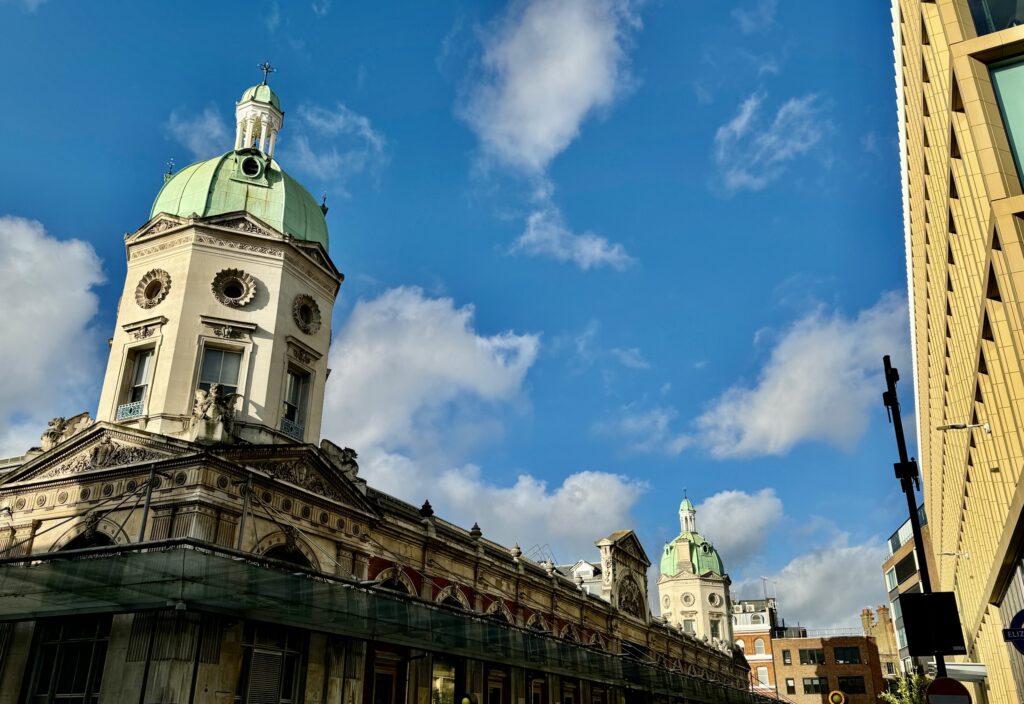
The entrance to Grand Avenue …
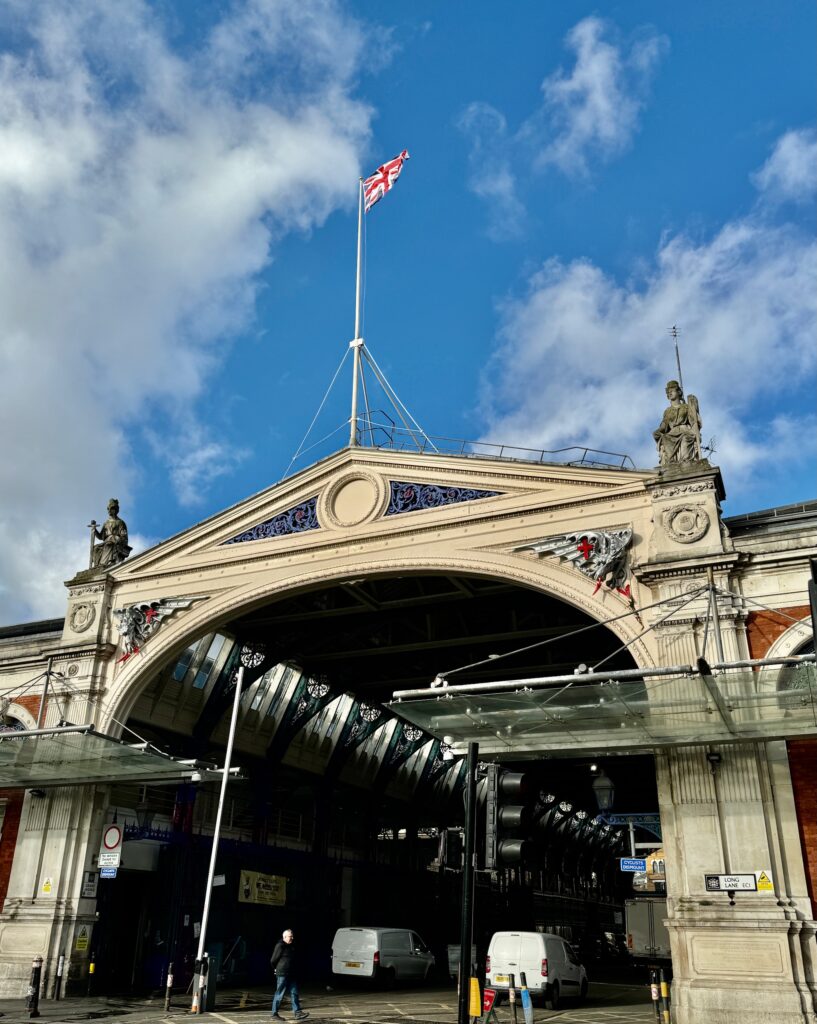
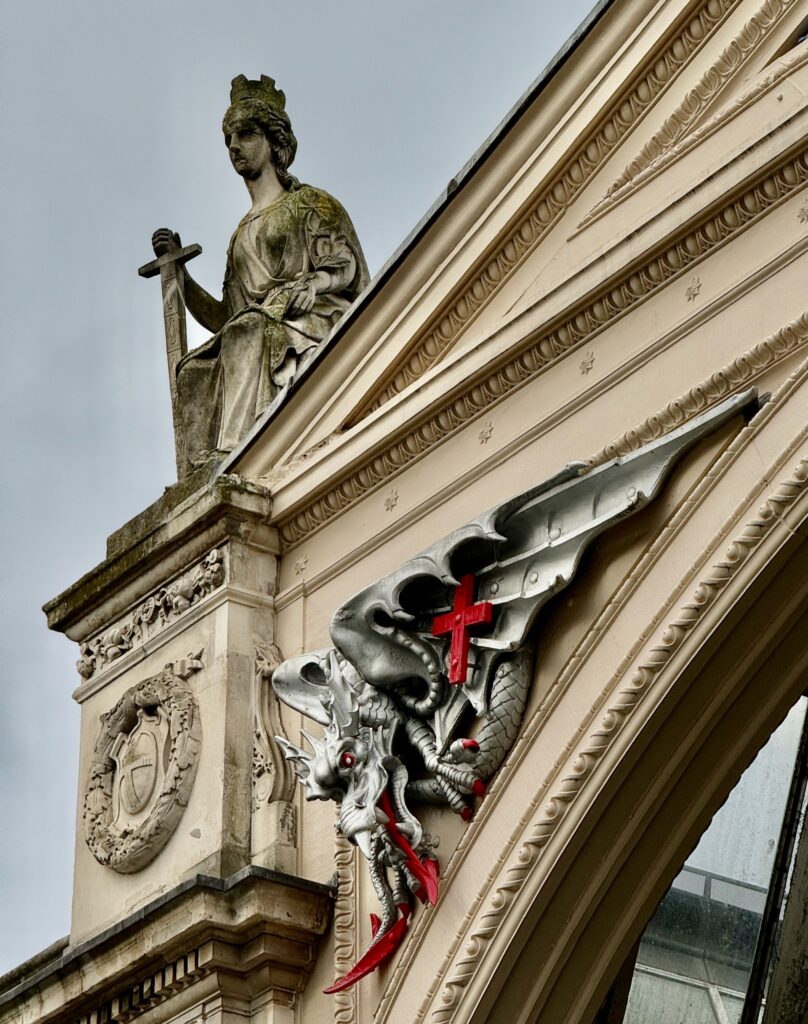
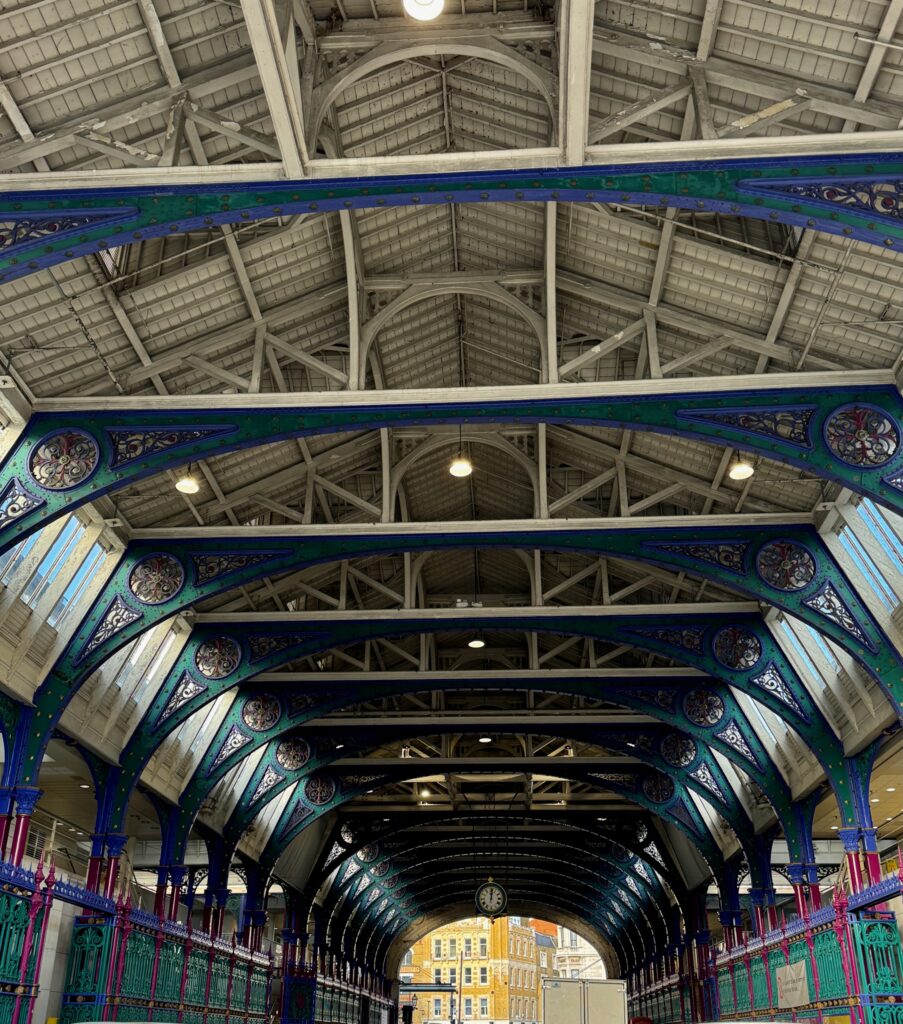
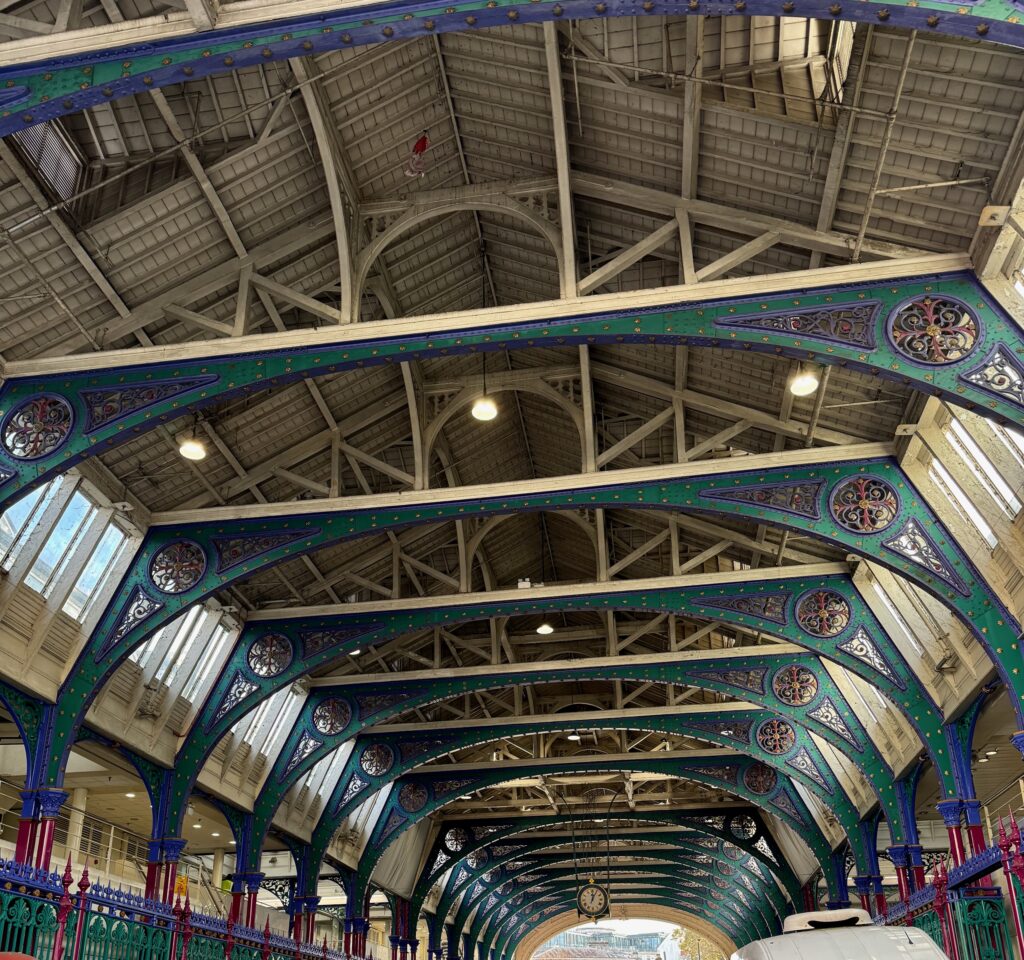
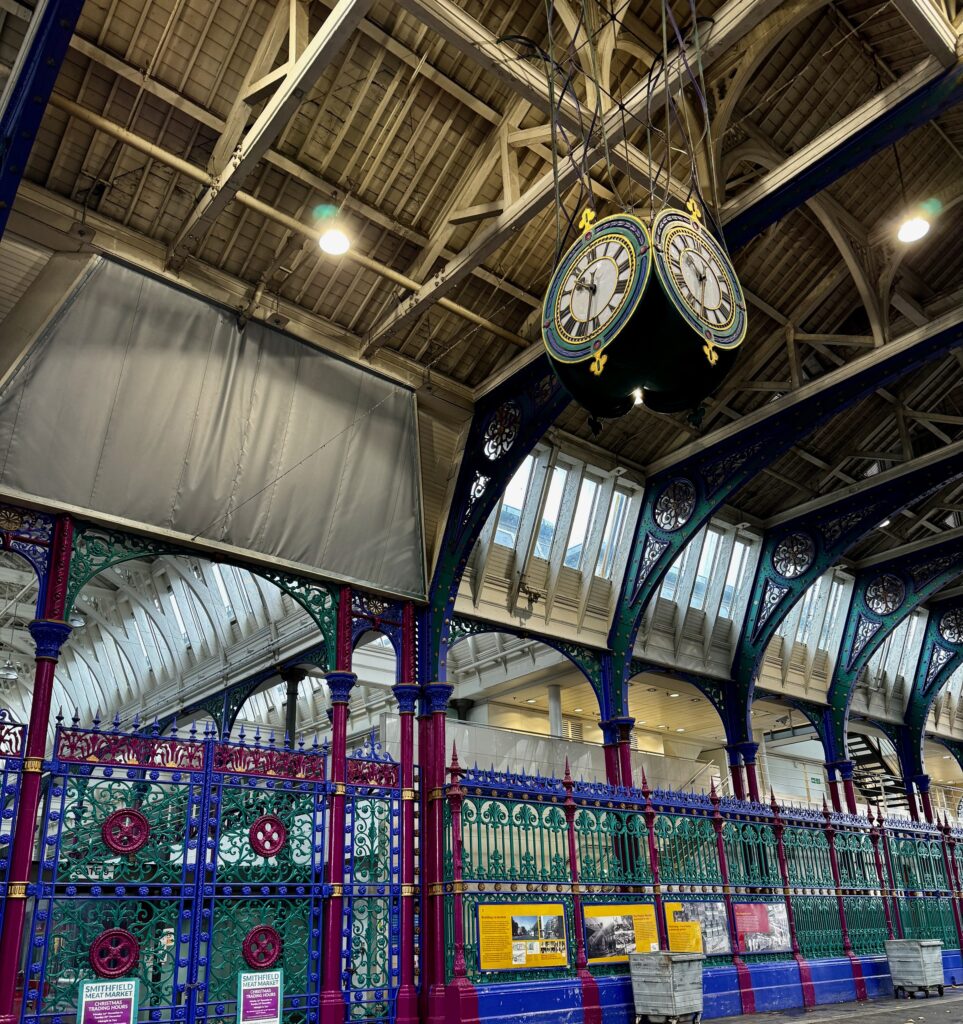
Which remains truly grand …
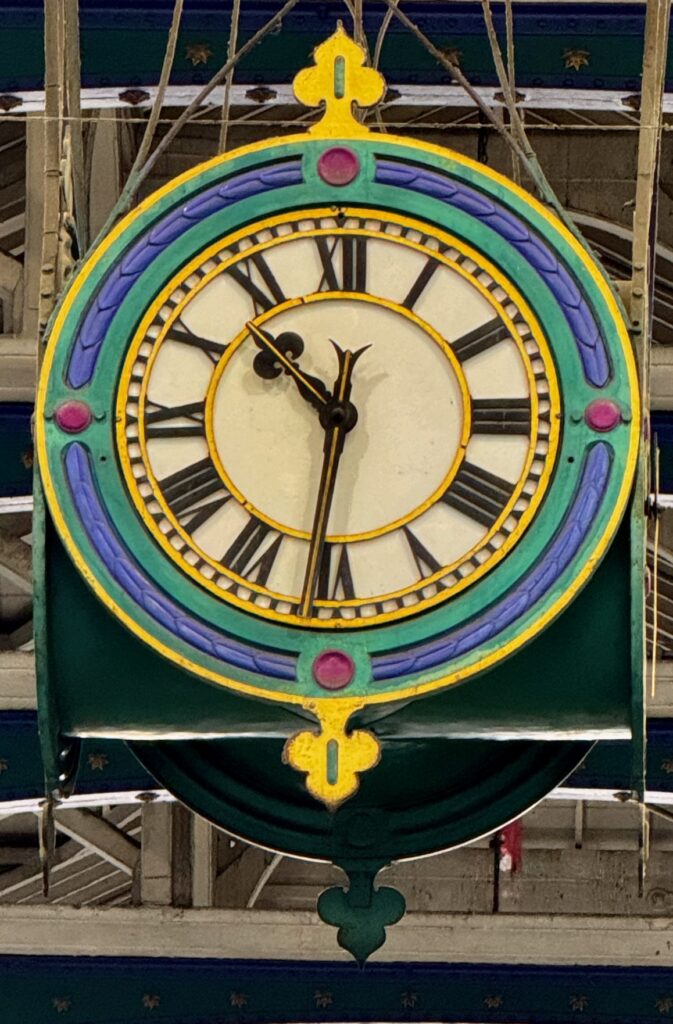
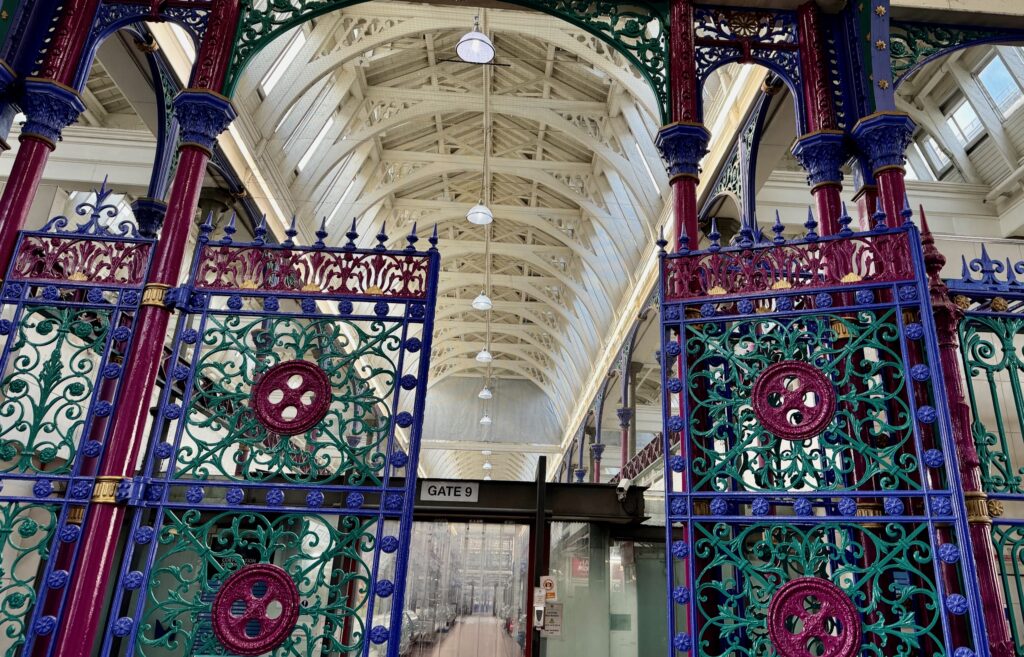
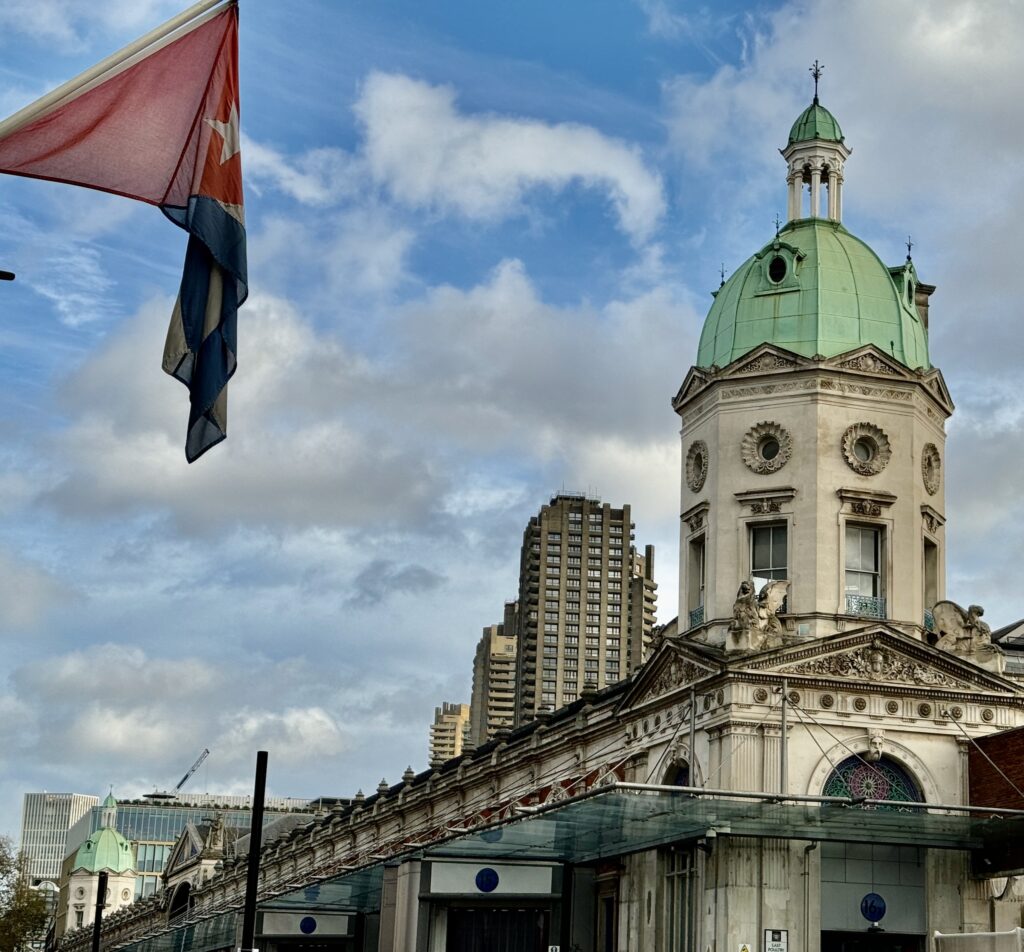
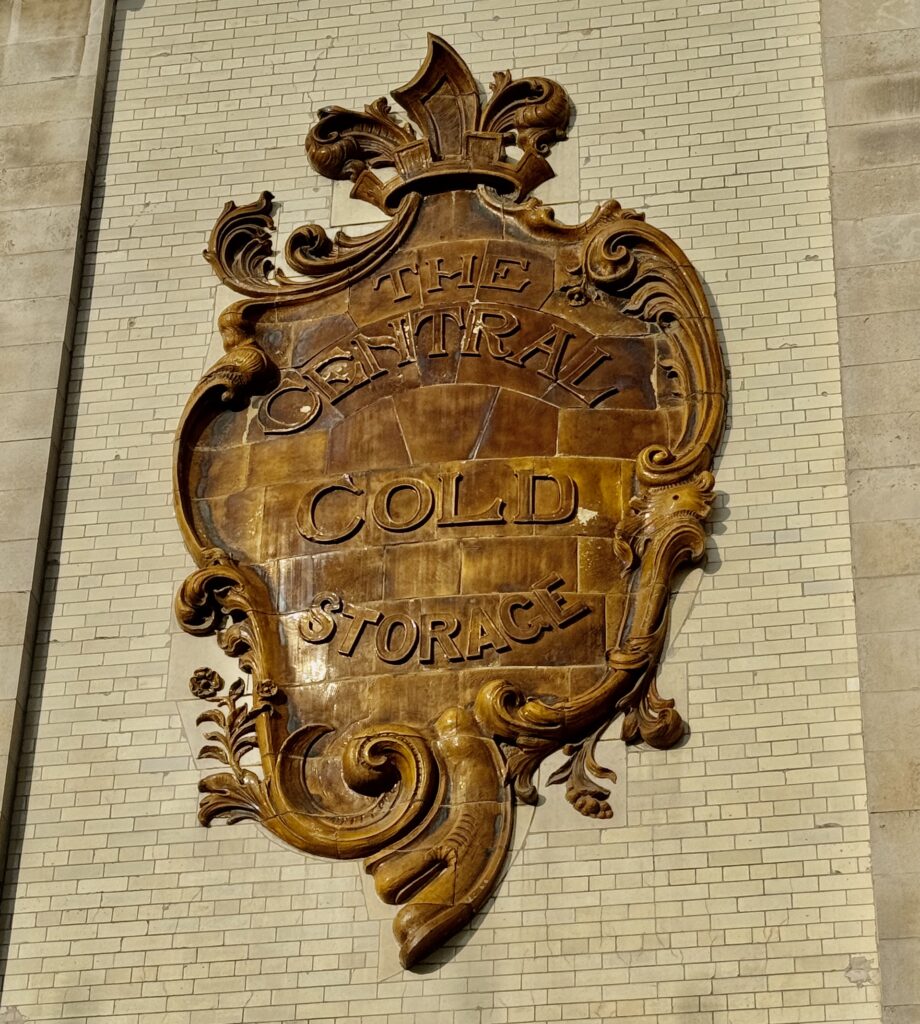
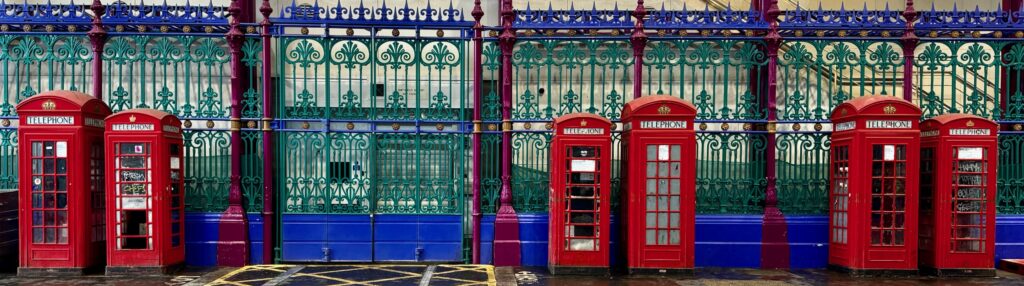
Apparently, these are the most frequently photographed telephone boxes in London …
But something is clearly going on at the west end of the market …
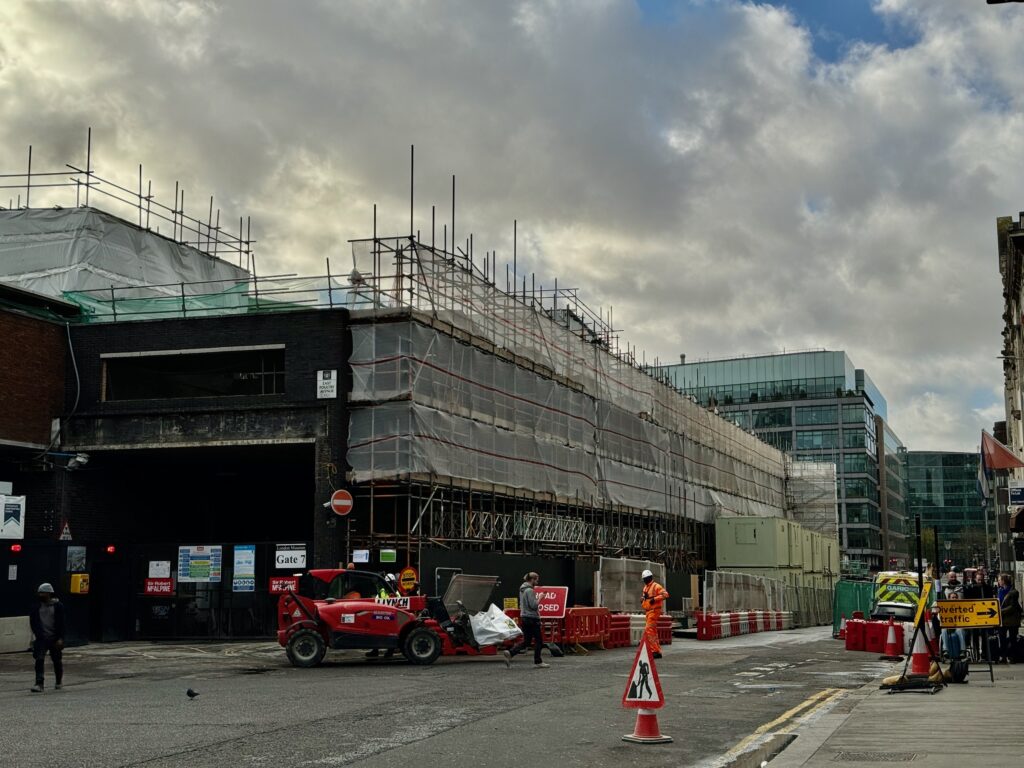
This is the site chosen for the relocated London Museum.
Read all about it here and in the excellent Ian Visits blog.
If you would like to see what the site looked like before the development began here is a link to the London Inheritance blog which is, as usual, full of fascinating facts and images.
If you would like to follow me on Instagram here is the link …