Symbols & Secrets

Walking the City of London

Victorian London in Photographs (pomp, progress and poverty). Plus the latest City Banksy and a ‘lost’ man!

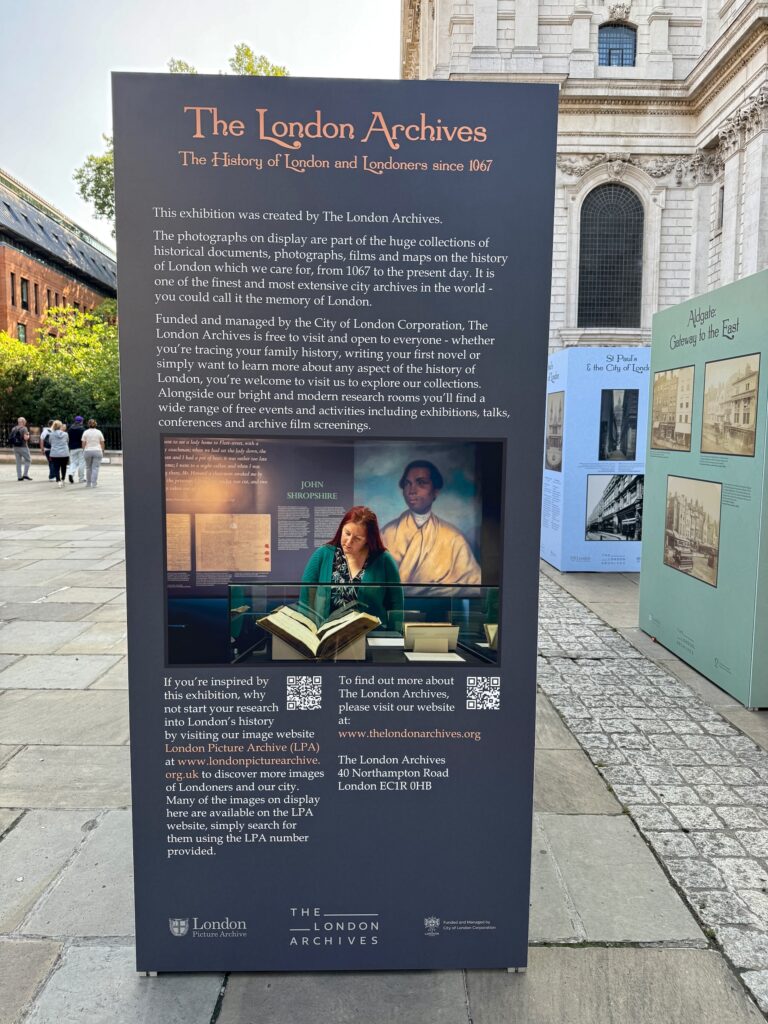
I’ve just been to see this super pop-up exhibition in St Paul’s Churchyard. It runs until 29 September and I highly recommend it …
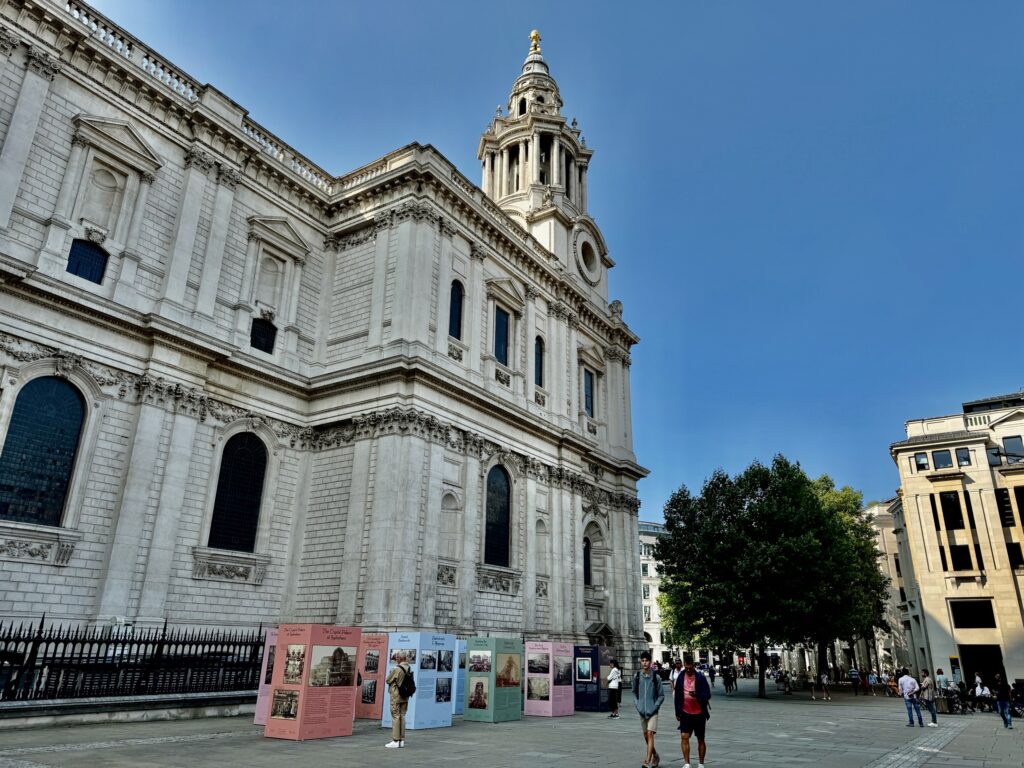
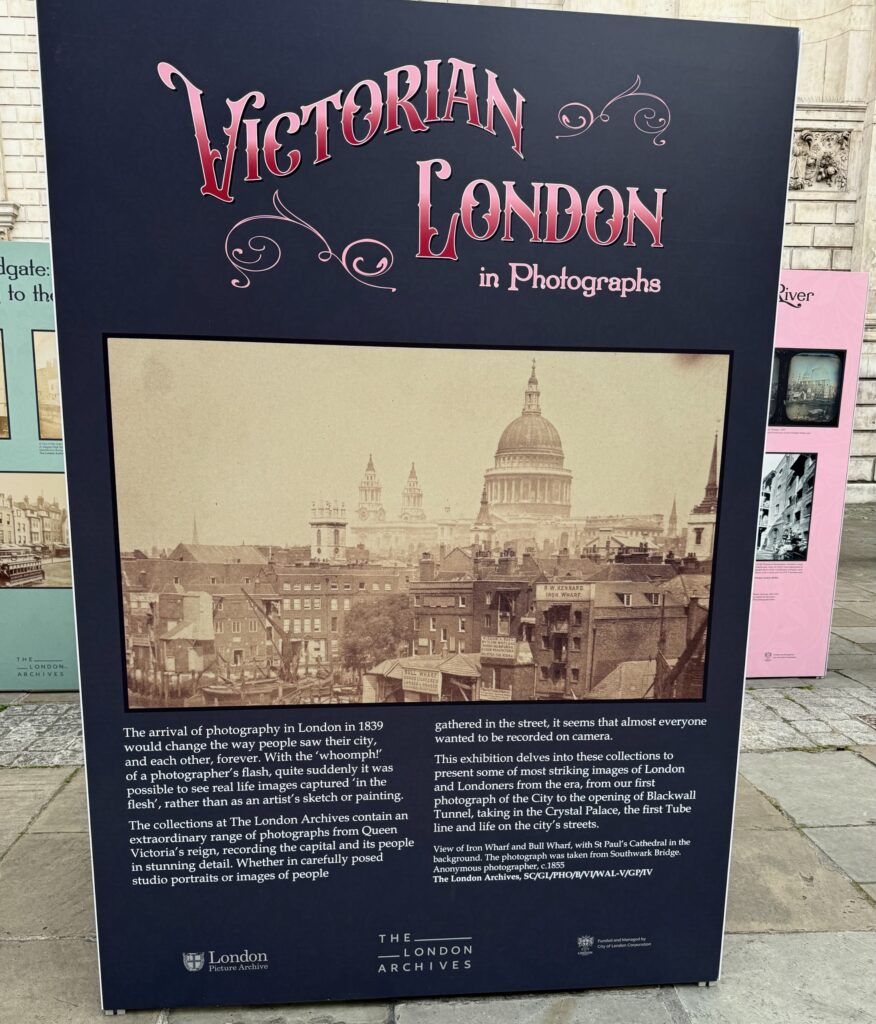
If, like myself, you like following London’s history using photographic images some of those on display will be familiar to you, but it’s great to see them again in a nice setting with very informative signage.

This is one of my favourites …
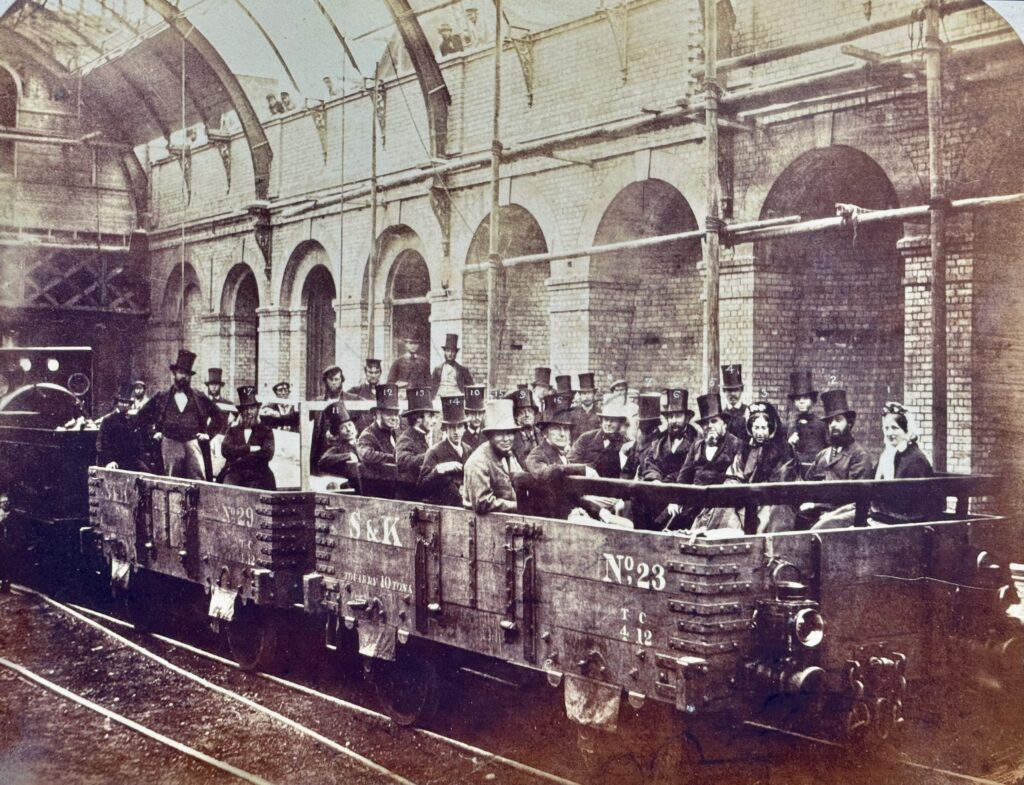
The ‘great and the good’ take the inaugural journey on the new underground railway. The date is 24 May 1862 and they are in an open wagon at Edgware Road Station. ‘Number 16’ is William Ewart Gladstone (1809-1898), later Prime Minister for four terms.

Another image I know well illustrates the vast difference between the lives of our railway passengers and the lives of the poor and destitute …
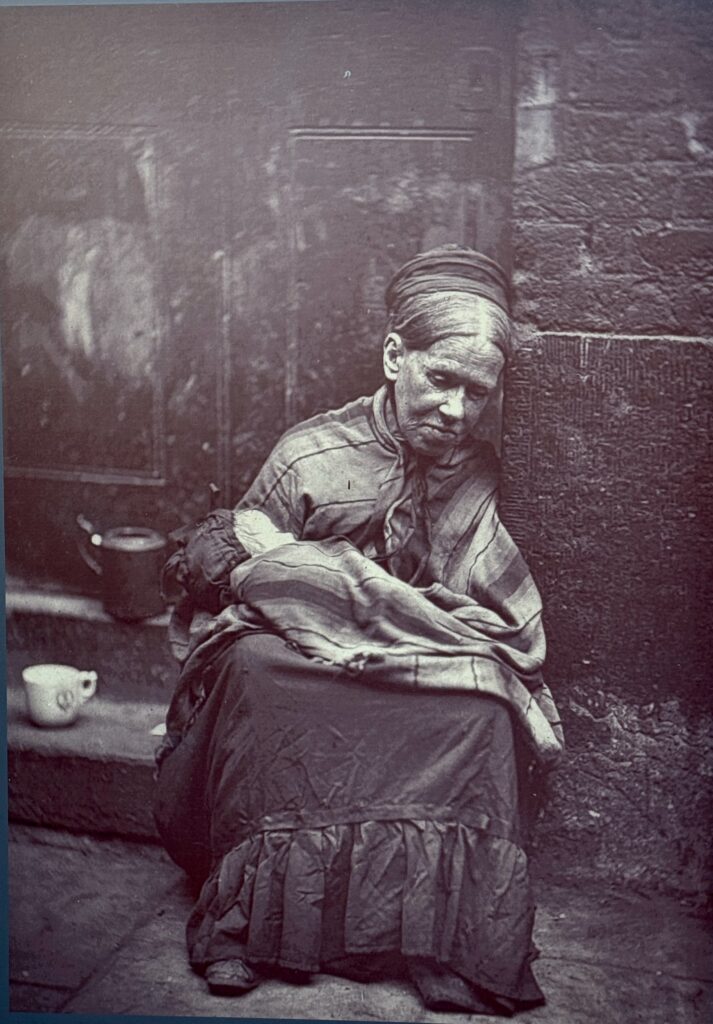
This photograph of a woman was taken by John Thompson in 1877 and was titled The Crawlers. Reduced to poverty, she explained to him that she was looking after a friend’s baby in exchange for some bread and a cup of tea.

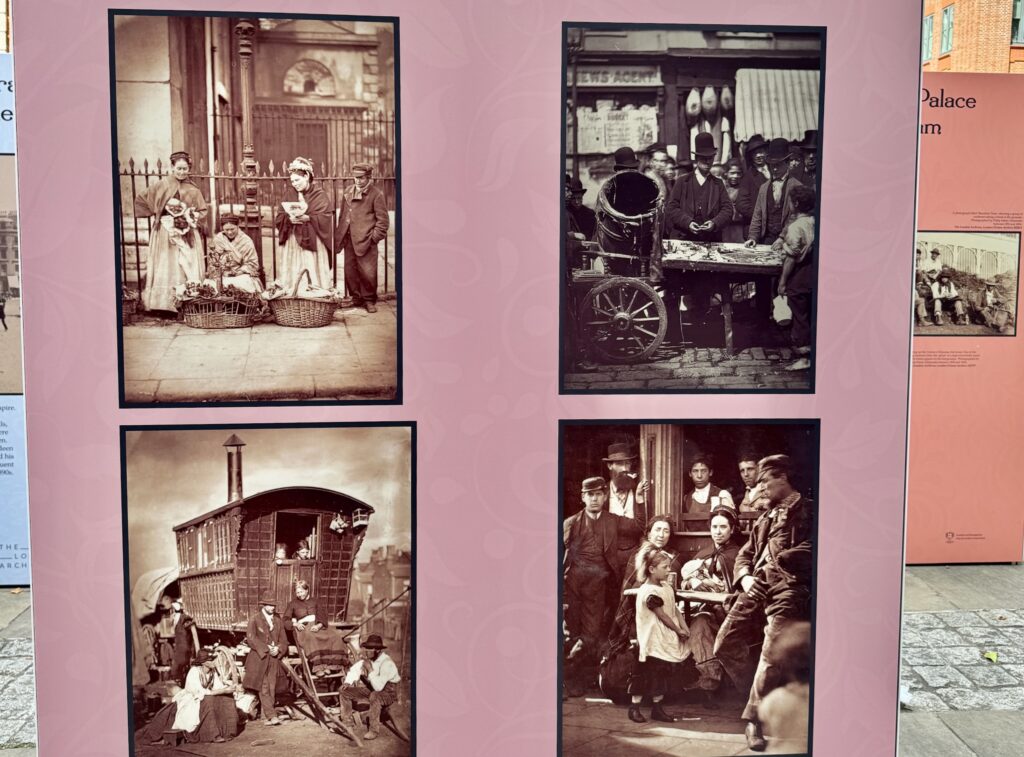
Another image from 1877 along with an example of the excellent exhibition signage …
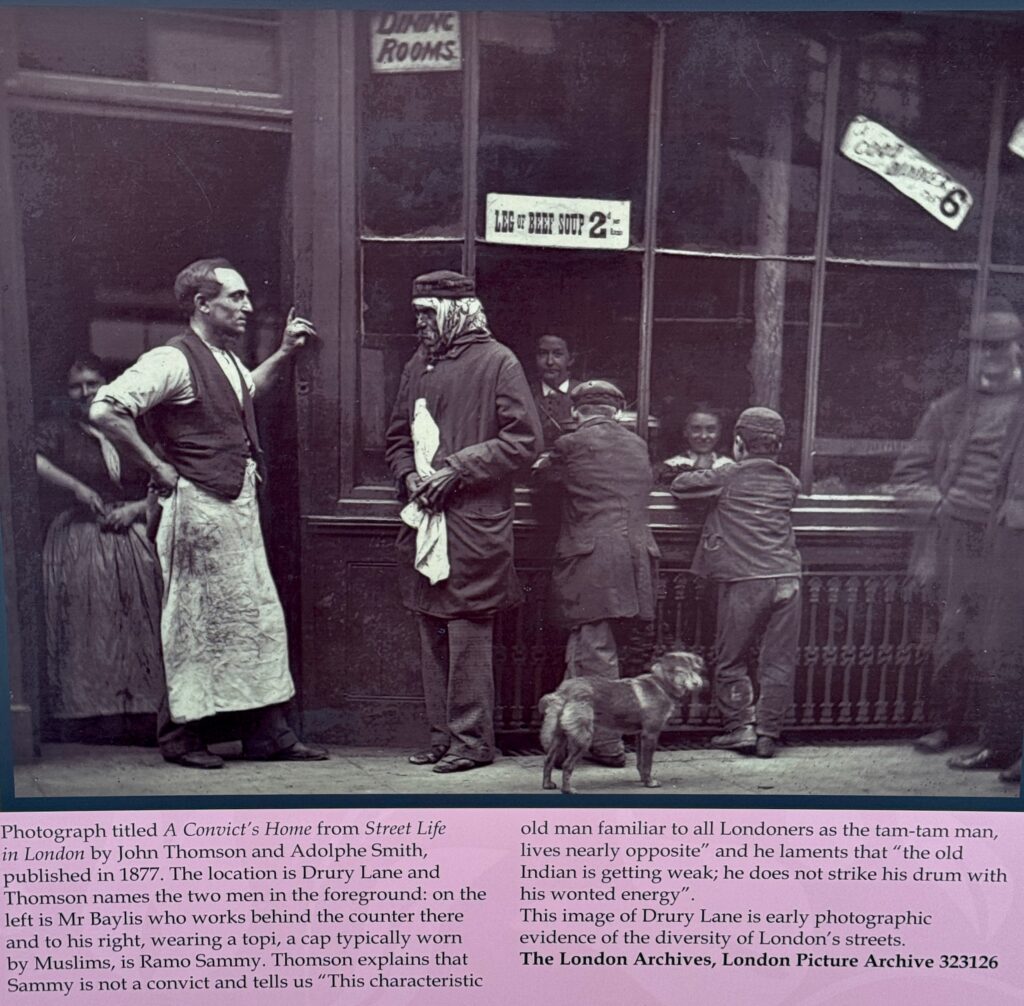
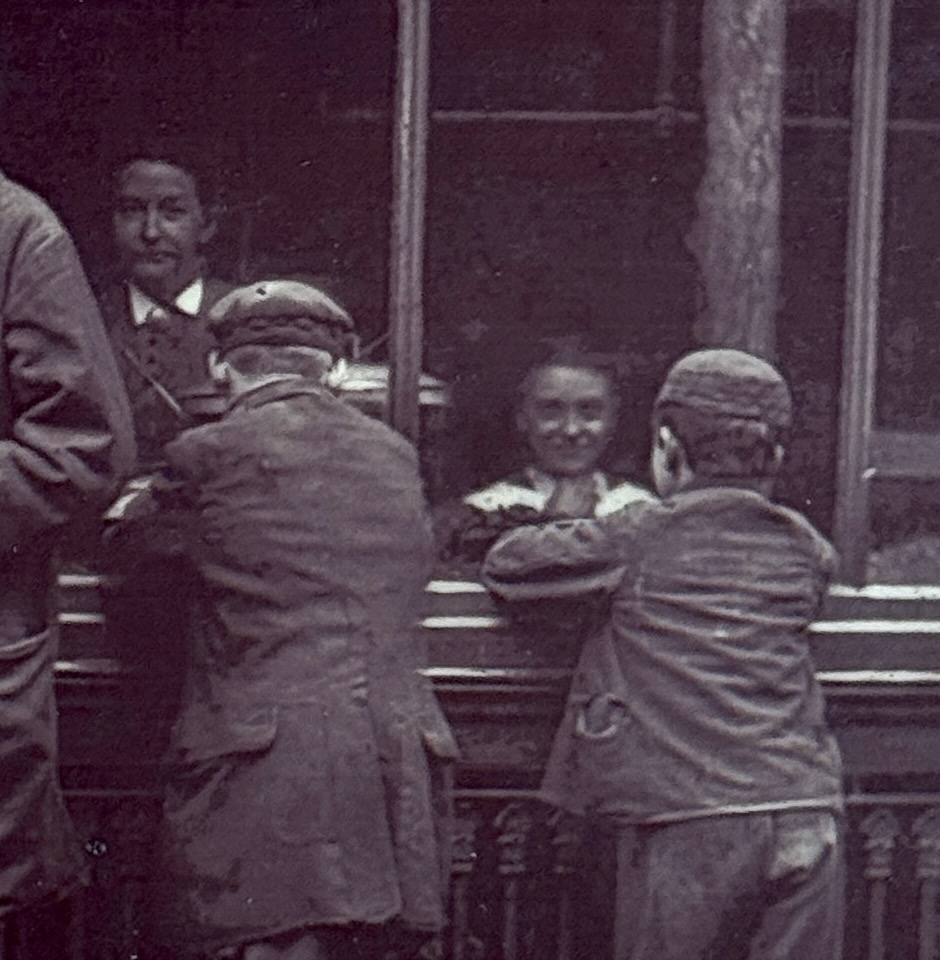
Wouldn’t it be amazing to be able to travel back in time and tell the these two ladies, and the young lads with their backs to us, that people would be looking at their images and thinking about their lives almost 150 years later …
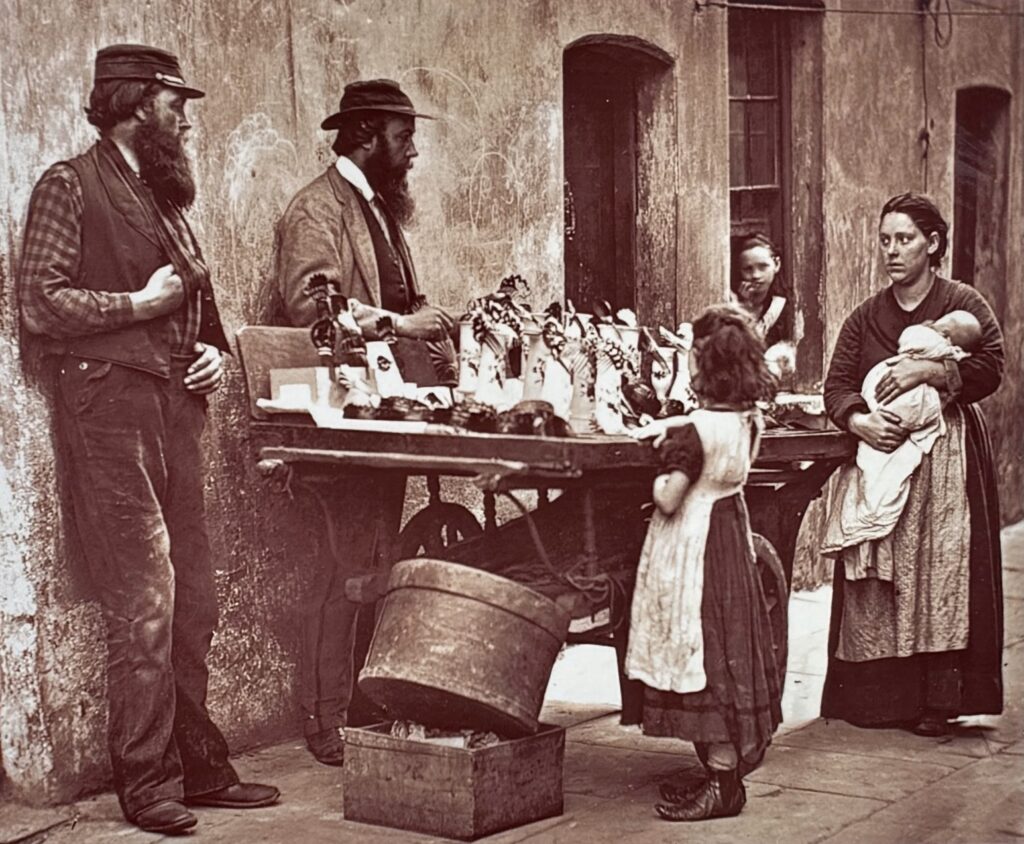
Street Life by the same photographer …
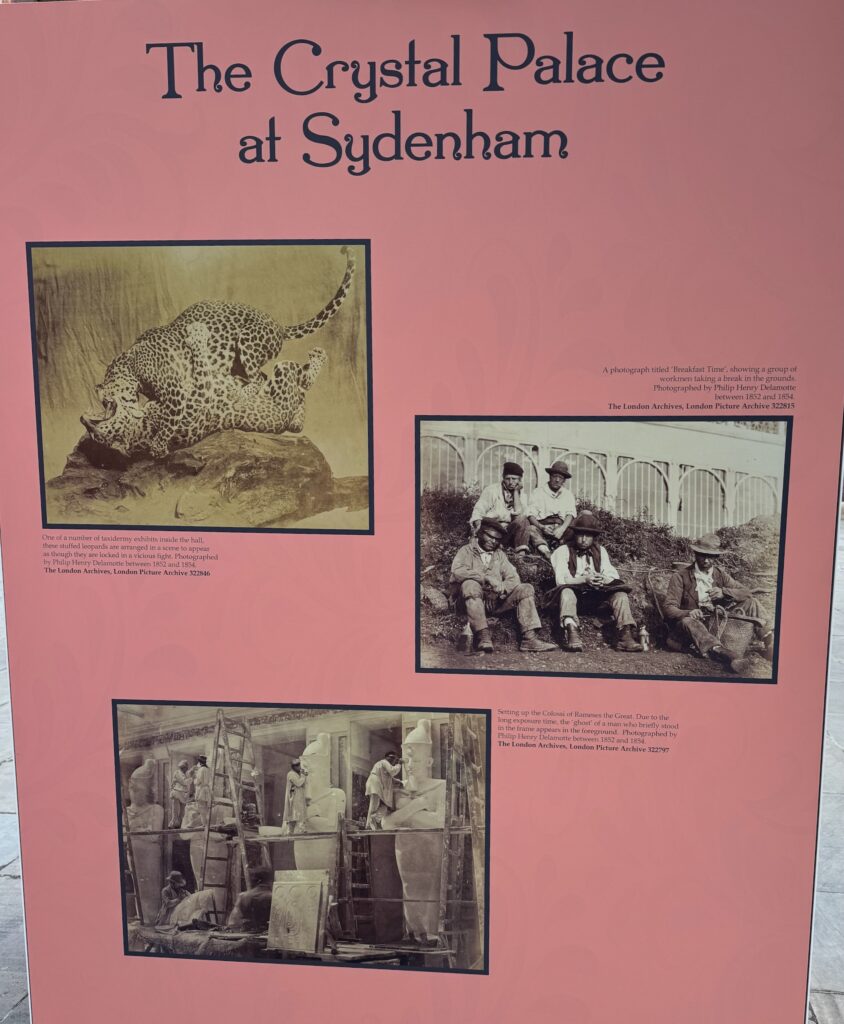
Pomp at the new Crystal Palace …
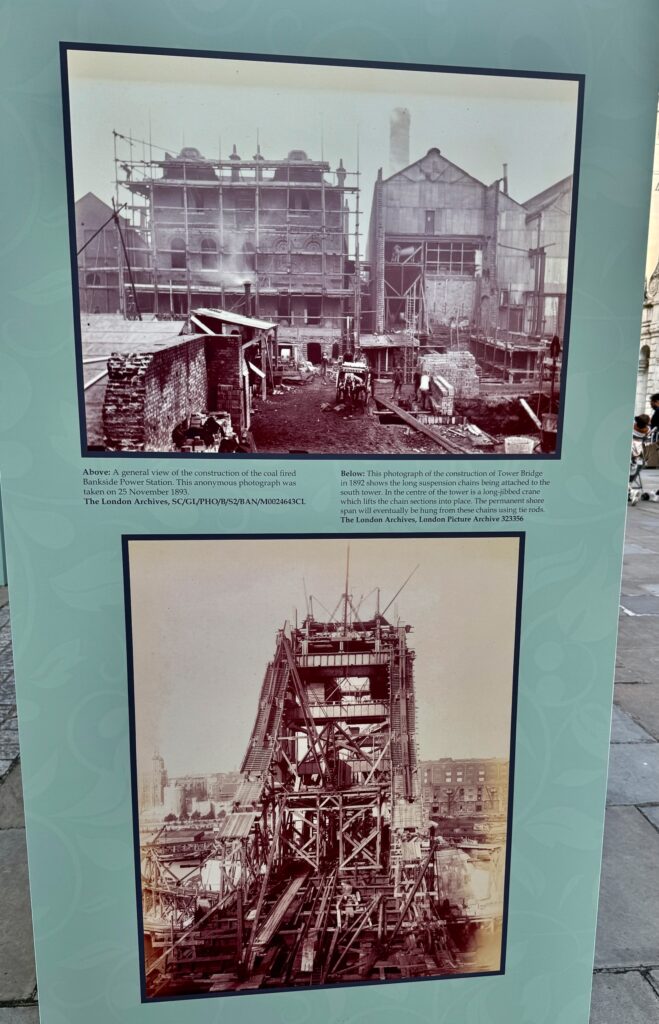
And progress – both Bankside Power Station and Tower Bridge under construction …
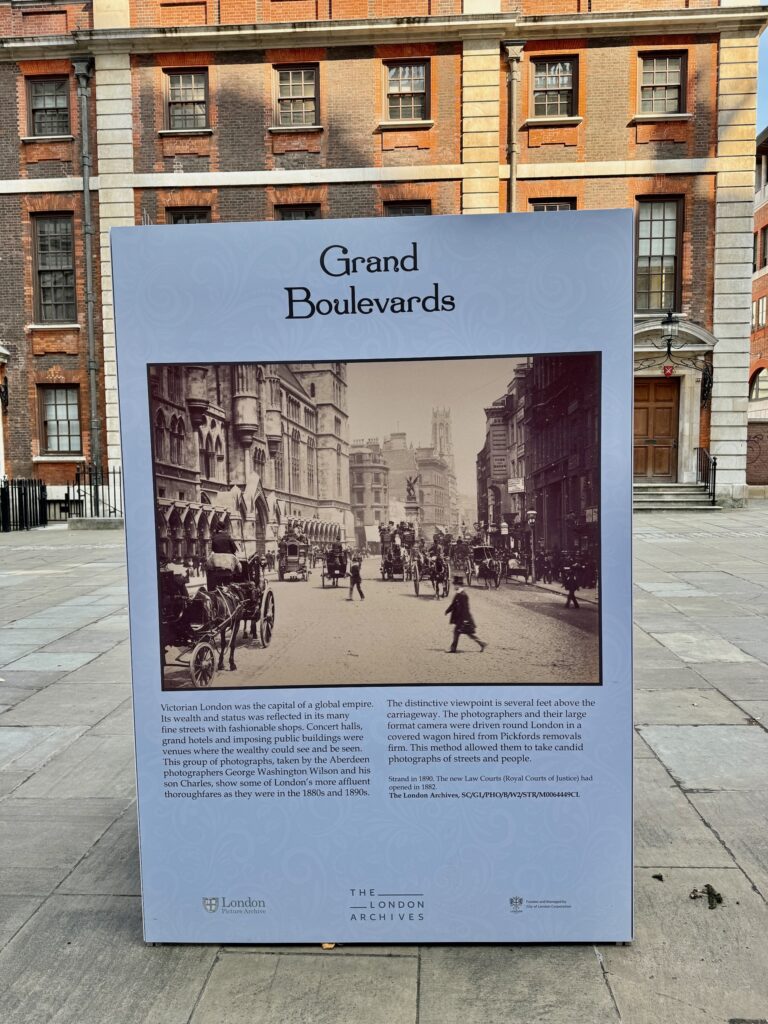
Another theme – Grand Boulevards …
Do pop along and see it if you can – it’s a great exhibition and my images are just a small sample.
On a similar theme, I have a little collection of old postcards of which these are a few examples.

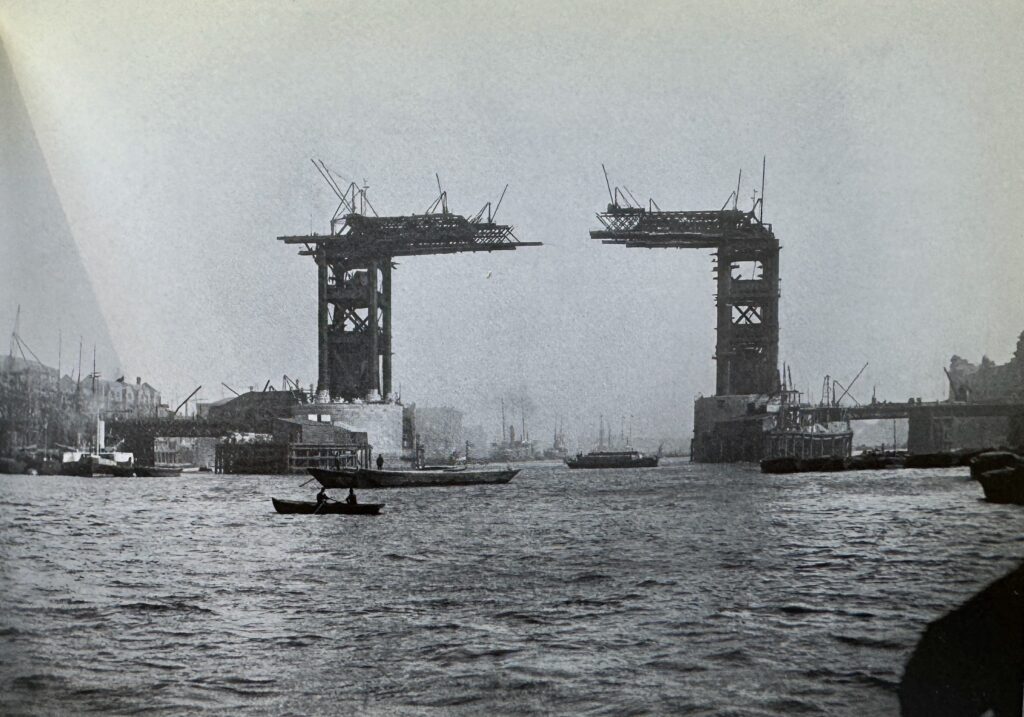
Tower Bridge gradually taking shape, as seen from the river …
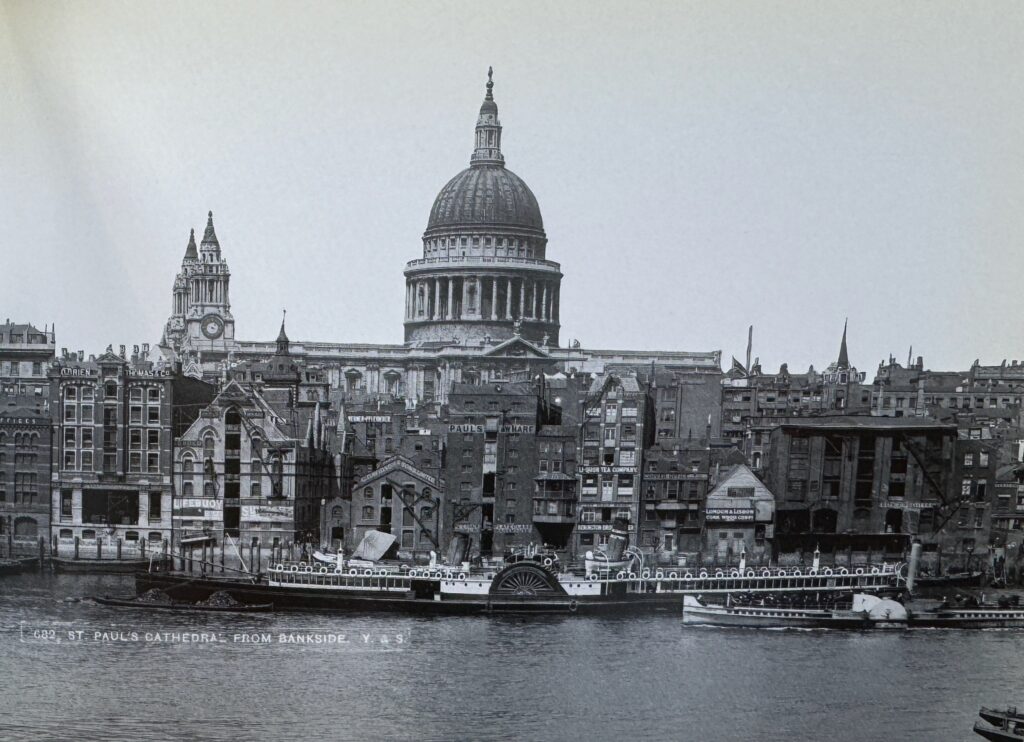
St Paul’s Cathedral from Bankside with a paddle steamer moored in the foreground …
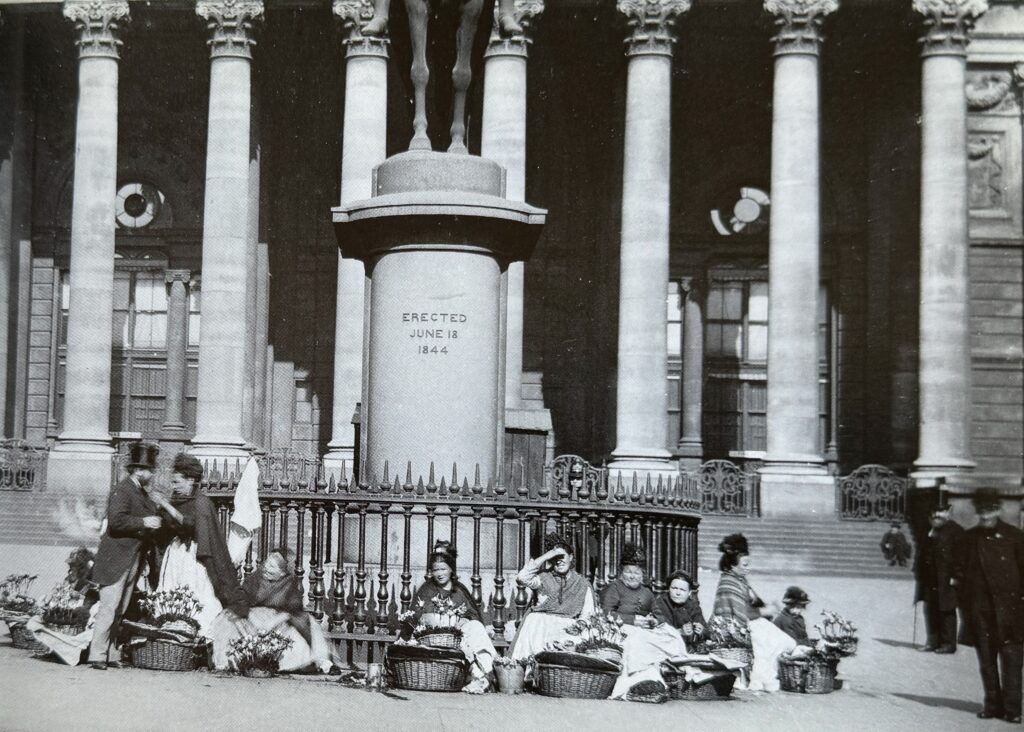
Flower seller ladies outside the Royal Exchange. I like this image, with the top-hatted man on the left having the flower placed in his buttonhole and the lady near the middle shielding her eyes from the sun …
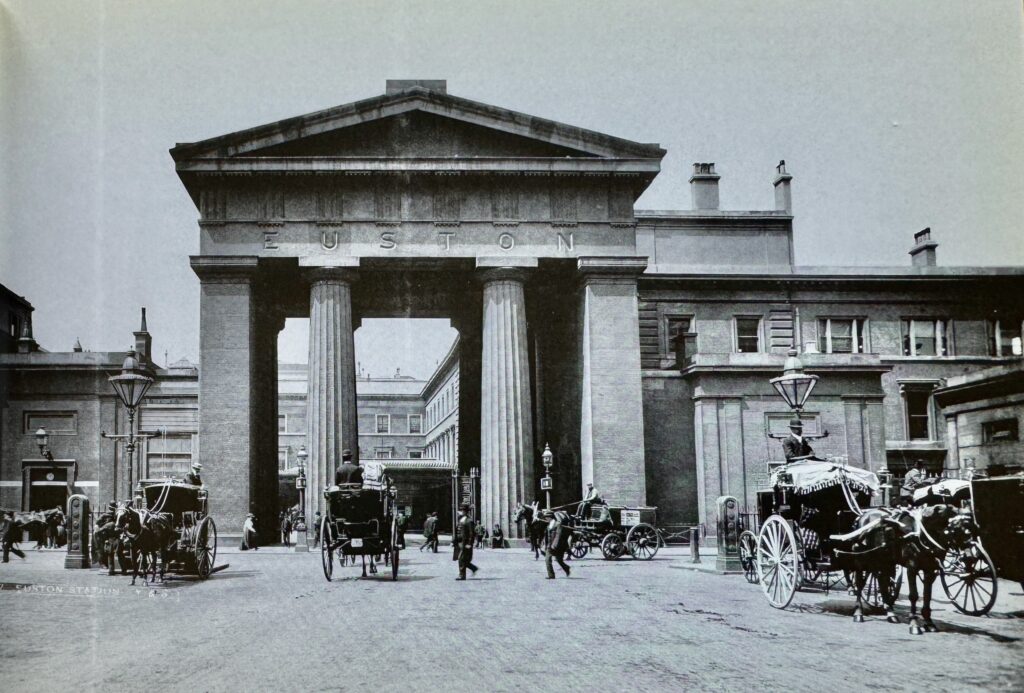
Euston Station with the famous arch which was controversially demolished in 1962 (‘an act of cultural vandalism’ said one commentator!) …
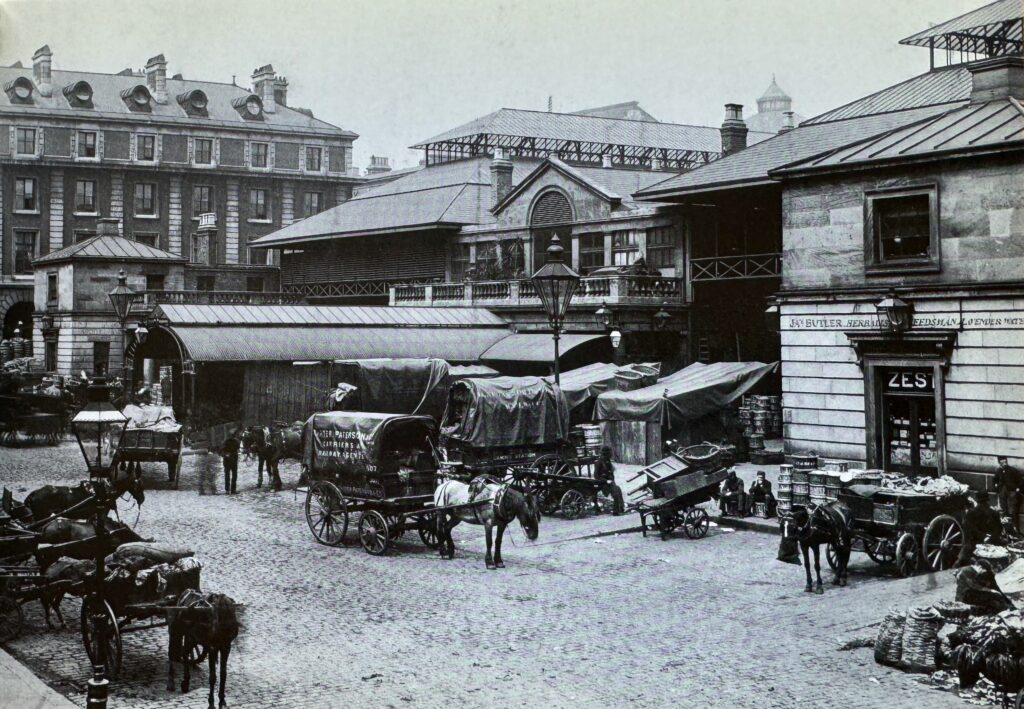
Covent Garden Market …
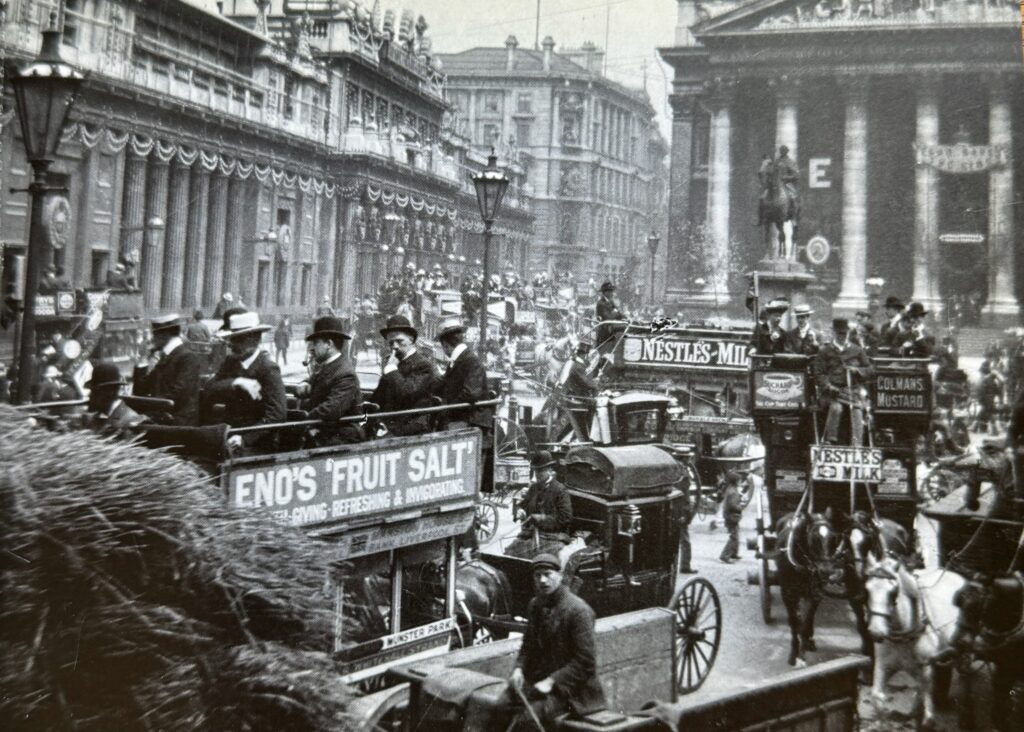
A busy day at Bank Junction …
Incidentally, just behind the exhibition is a great example of what pollution can do to Portland stone over time …
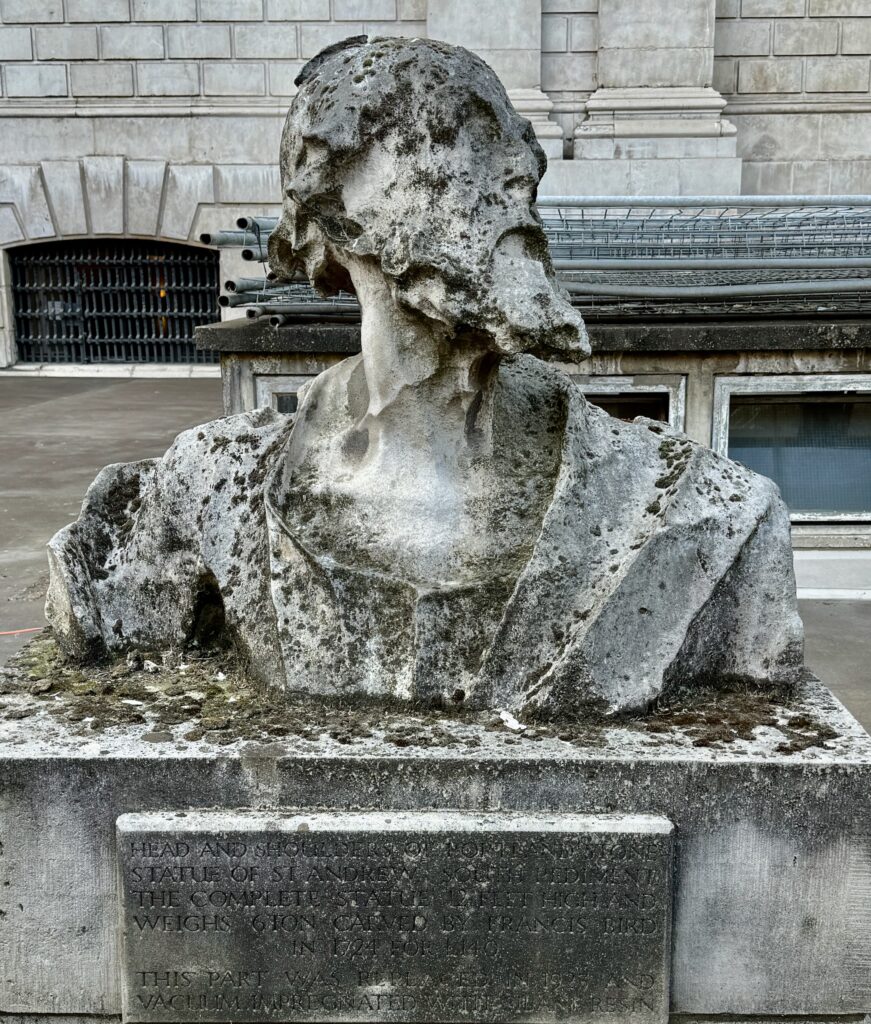
The plaque reads as follows: HEAD AND SHOULDERS OF PORTLAND STONE STATUE OF SAINT ANDREW SOUTH PEDIMENT. THE COMPLETE STATUE 12 FEET HIGH AND WEIGHS SIX TON. CARVED BY FRANCIS BIRD IN 1724 FOR £140. THIS PART WAS REPLACED IN 1923 AND VACUUM IMPREGNATED WITH SILANE RESIN.

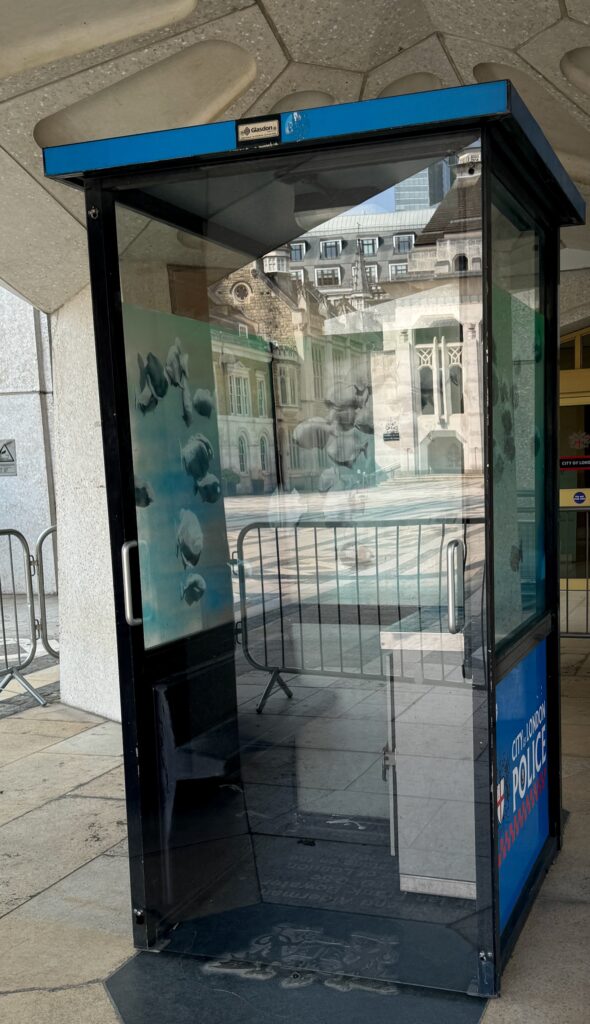
STOP PRESS, the latest City Banksy has been removed from its street setting and installed in Guildhall Yard. For how long I do not know …
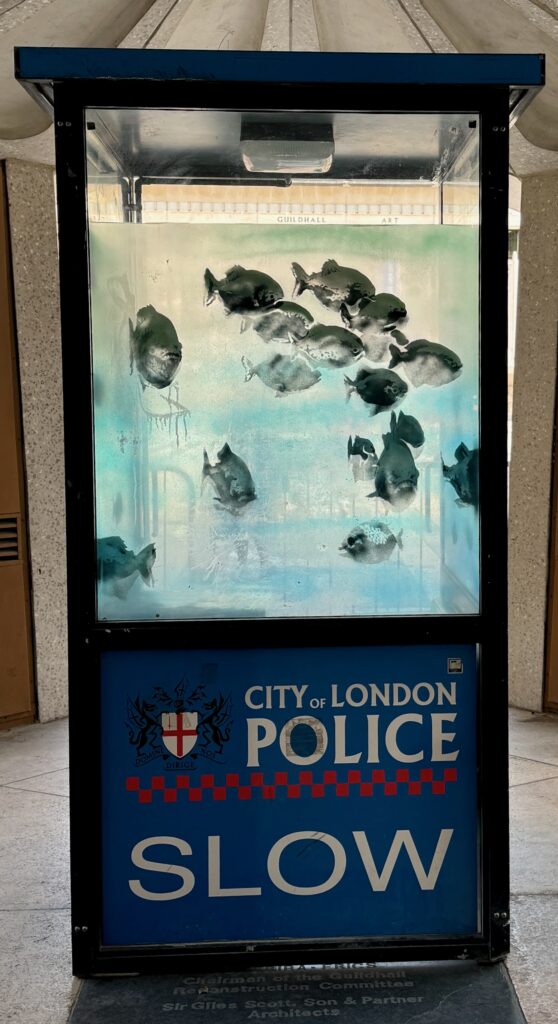
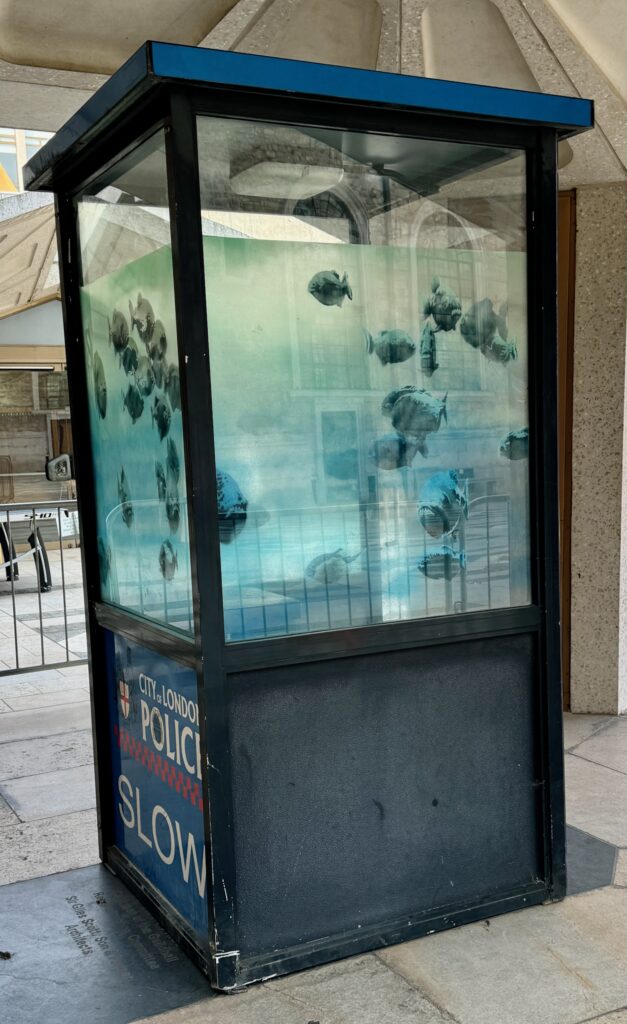
Finally, whilst walking along Chalk Farm Road yesterday, I saw this sweet request taped to a shop window near the 31 bus stop …
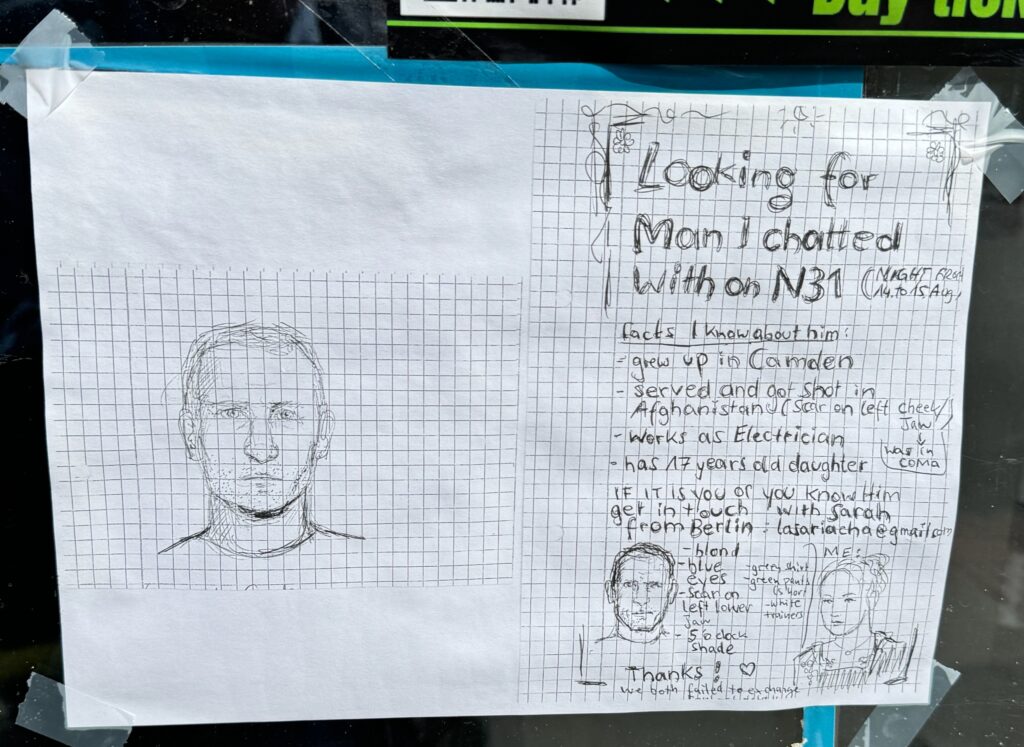
I don’t suppose he subscribes to my blog but you never know!

Remember you can follow me on Instagram …

https://www.instagram.com/london_city_gent

Some miscellaneous images and a bit of humour …

Another random collection I hope you might like.

When I go to buy the paper in the morning I often see the Bidfood truck delivering to Linklaters (lawyers seem to have great appetites). I like the pictures constructed out of food.

Here are my latest favourites …

Last year’s version …

I suppose I’m a bit sad recording these!

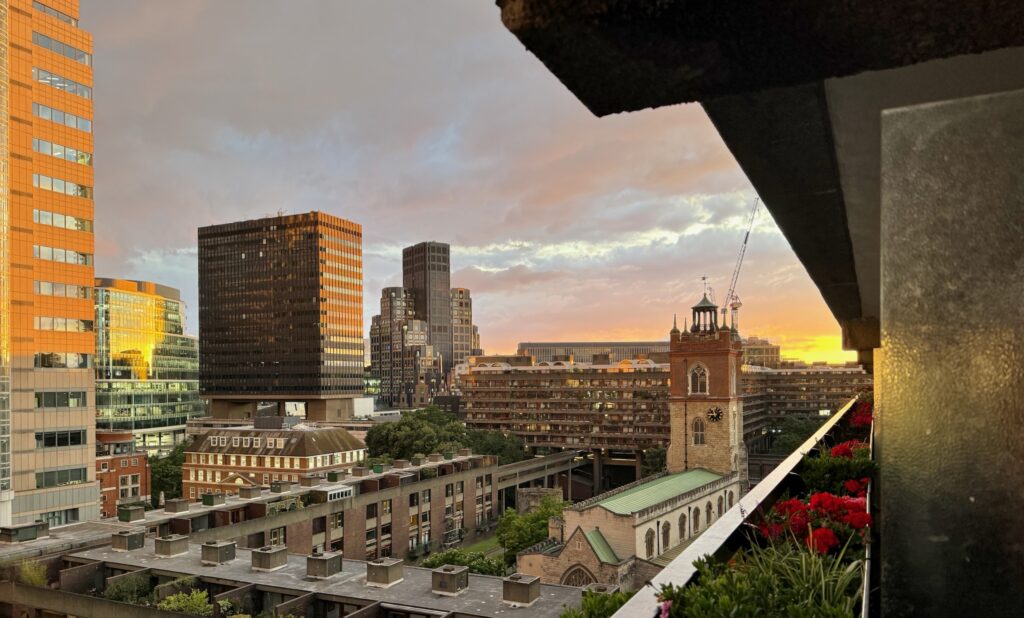
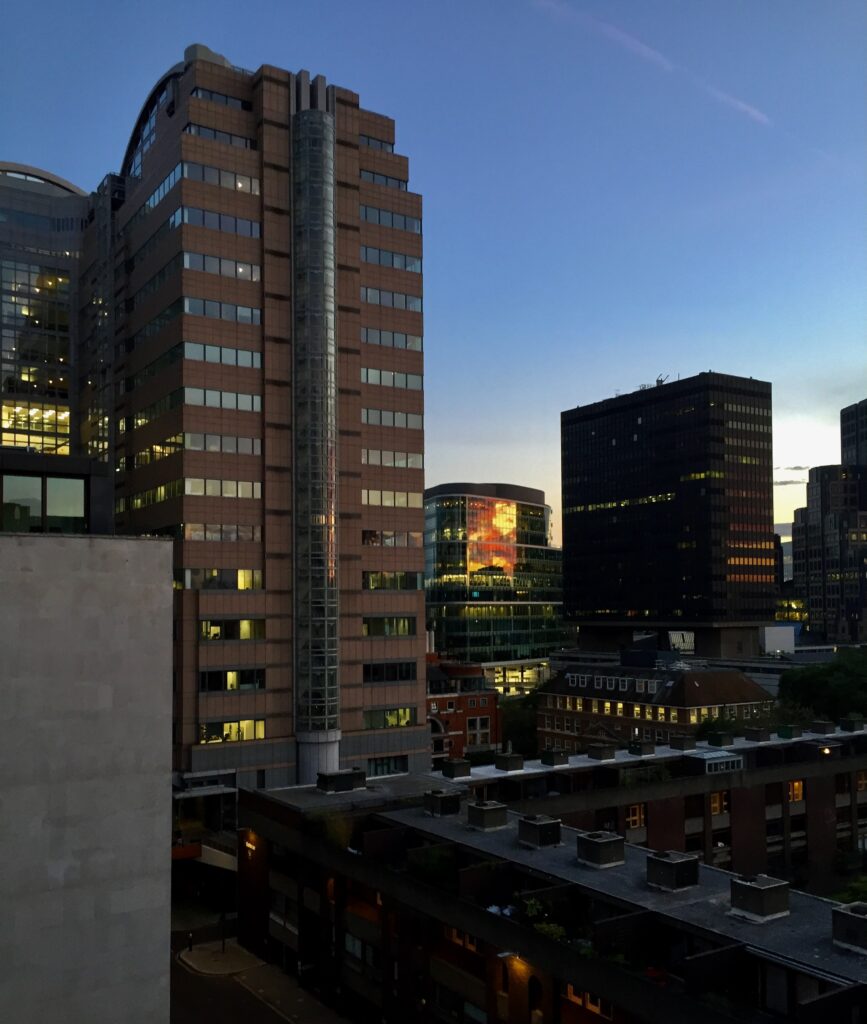
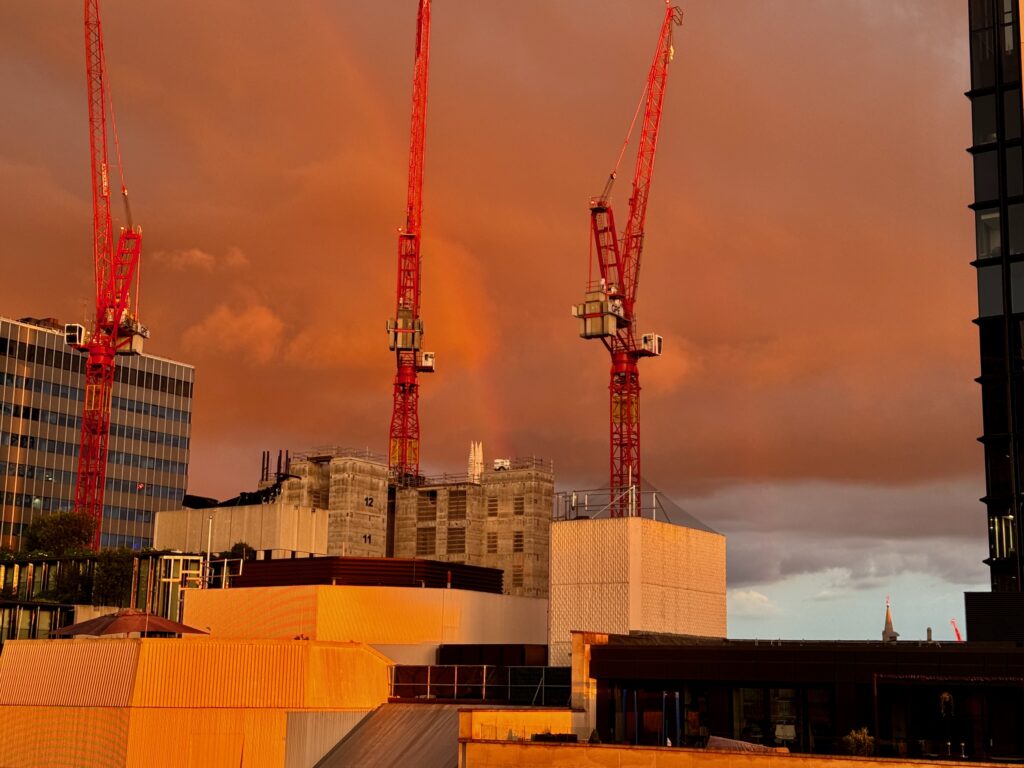
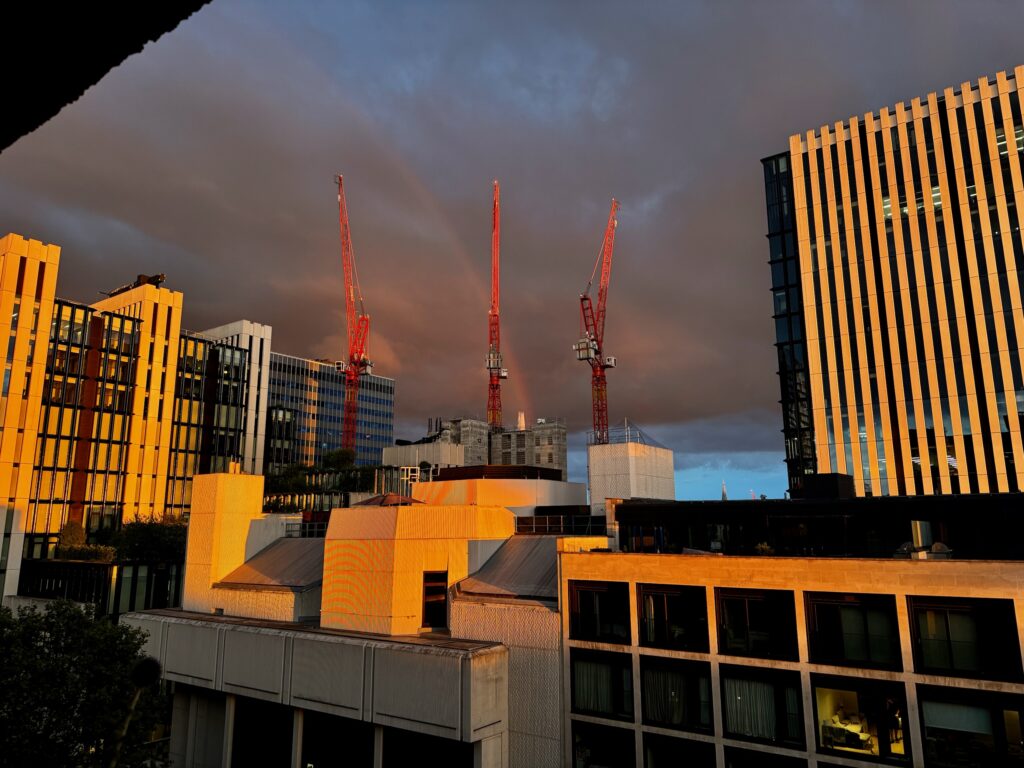
The weather was rather miserable in July but I think I captured some interesting sunsets.

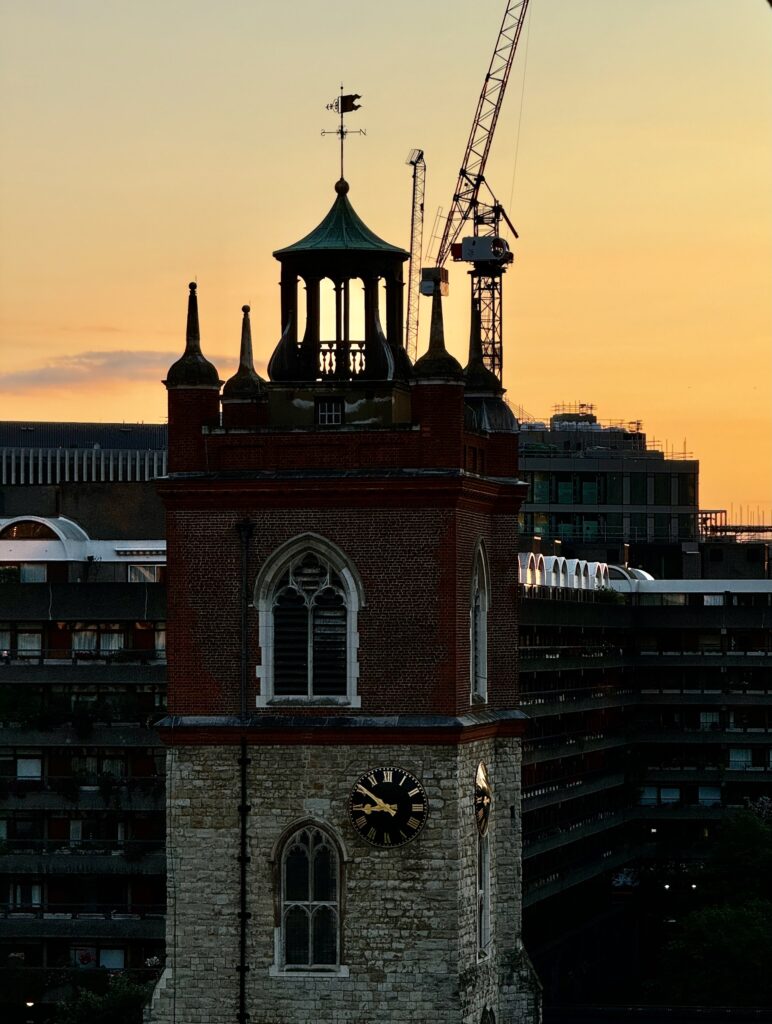
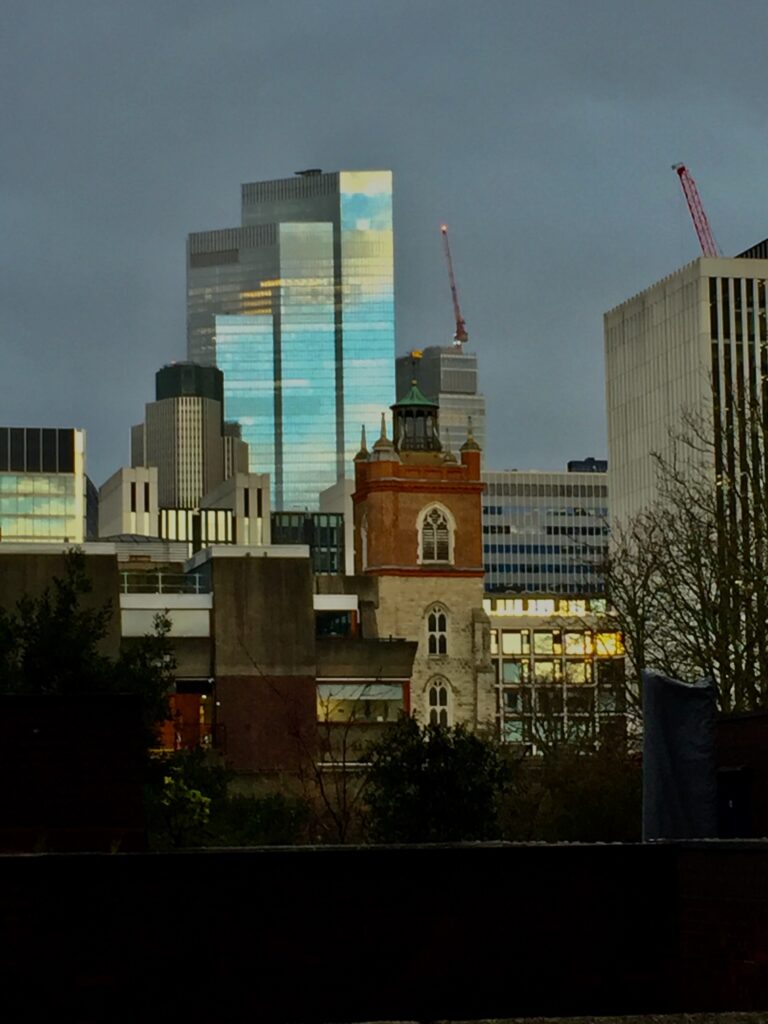
Looking west towards St Giles church. Dating from 1682, the unusual profile of the tower would have been familiar to centuries of travellers approaching or leaving the City (obviously without the crane) …

Offices on London Wall look like they are aflame …

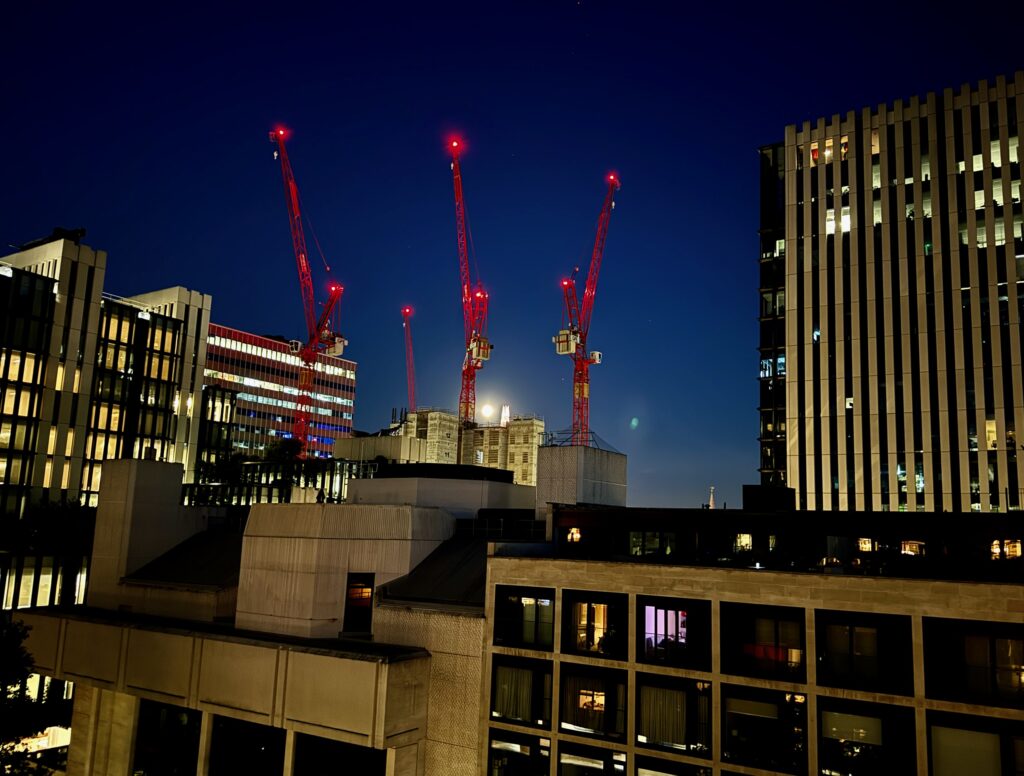
The view looking east …

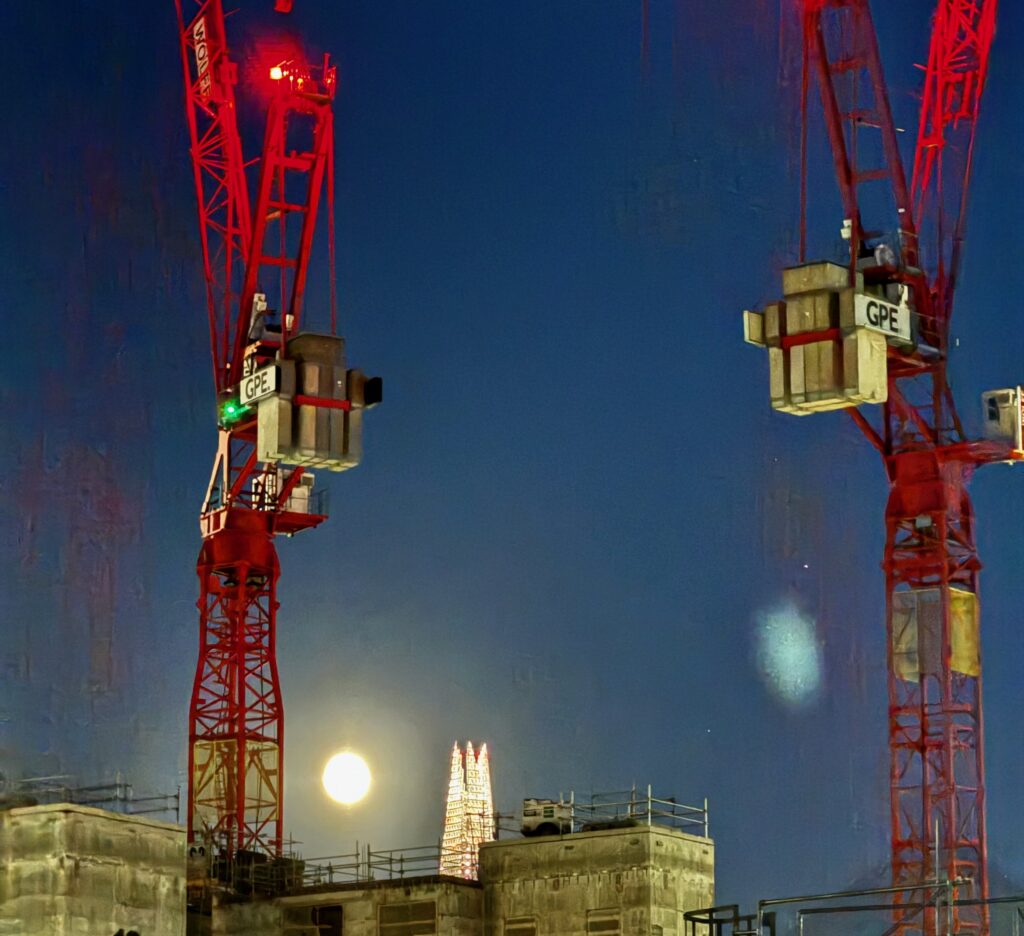
Looking south with the moon behind the Shard …

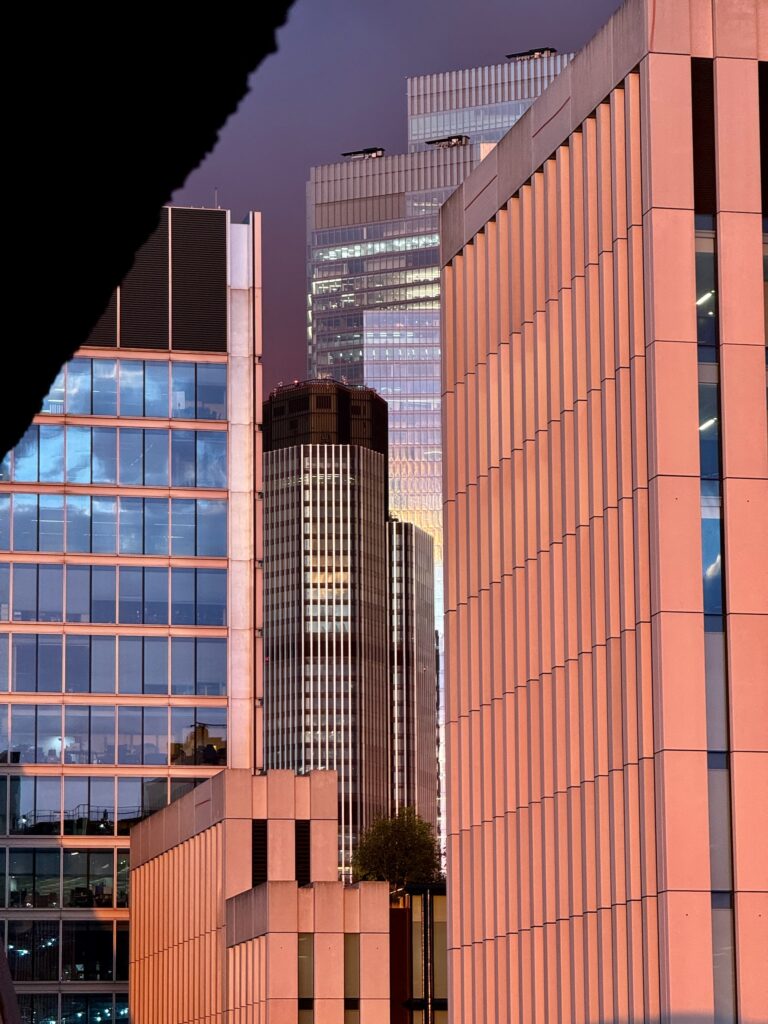
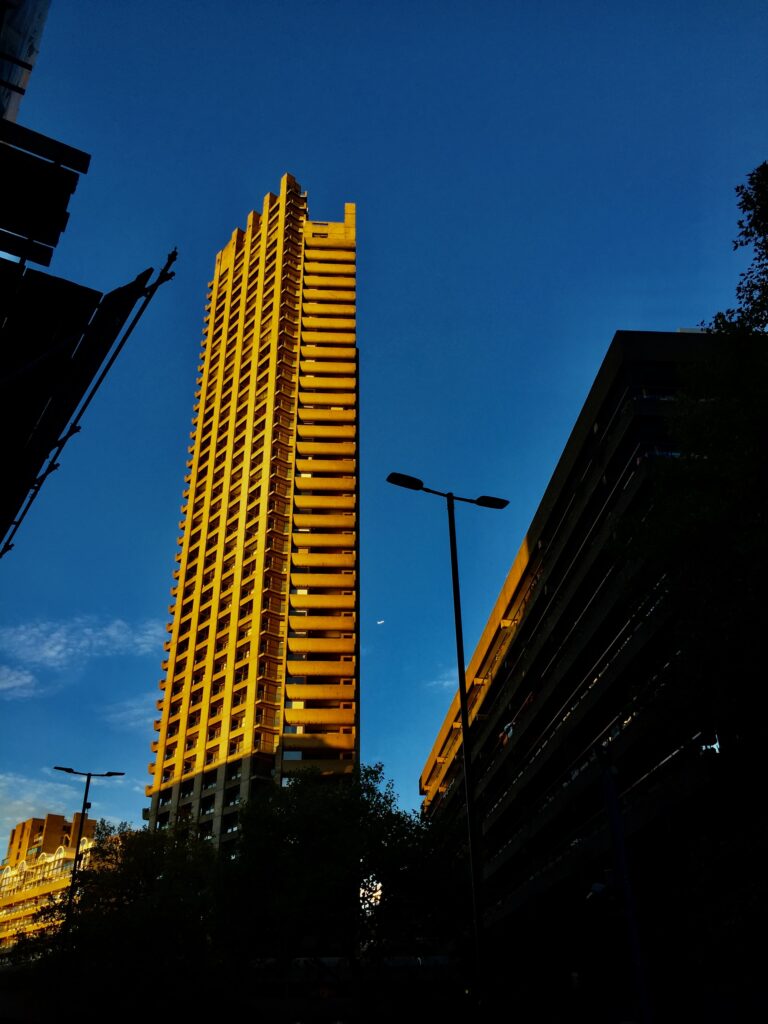
Tower 52 gradually being surrounded by later developments …

Stormy sky with cranes. The tiny church steeple in the distance on the right is St Lawrence Jewry …

One more sunset pic …

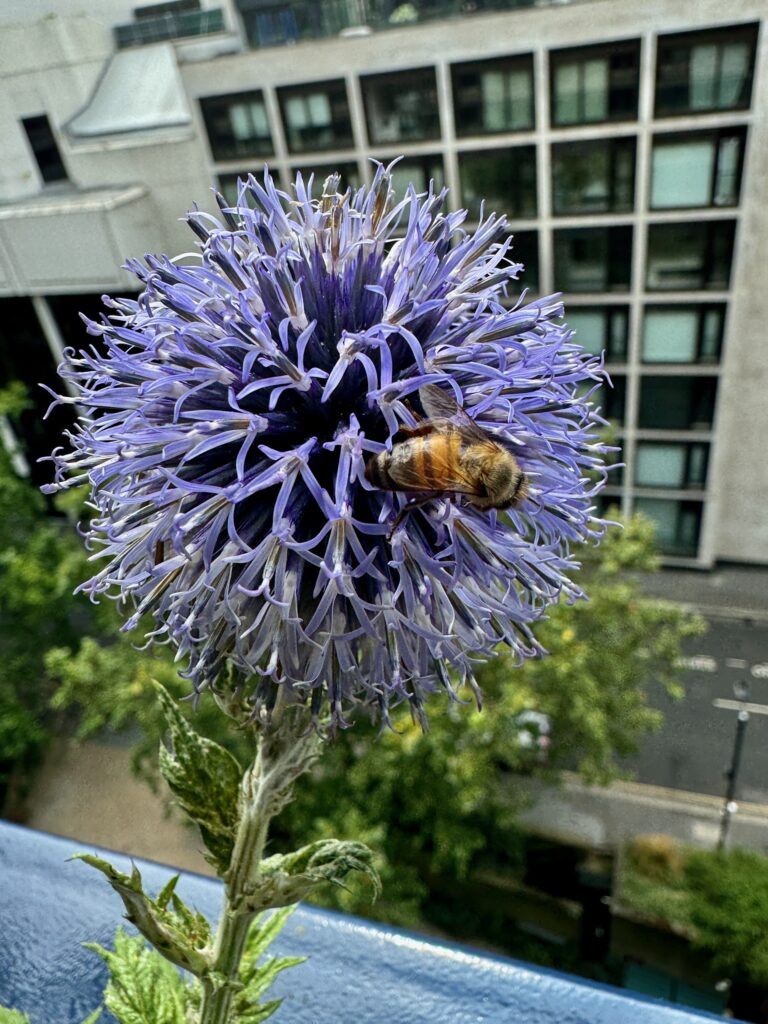
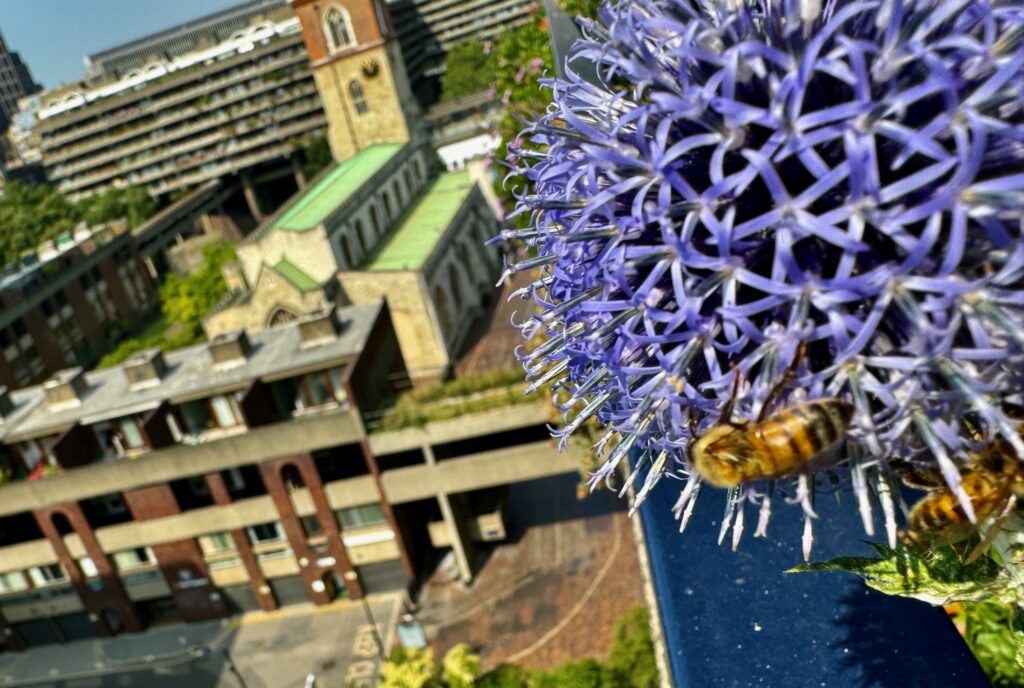
Bees love the pollen from our purple Echinops …

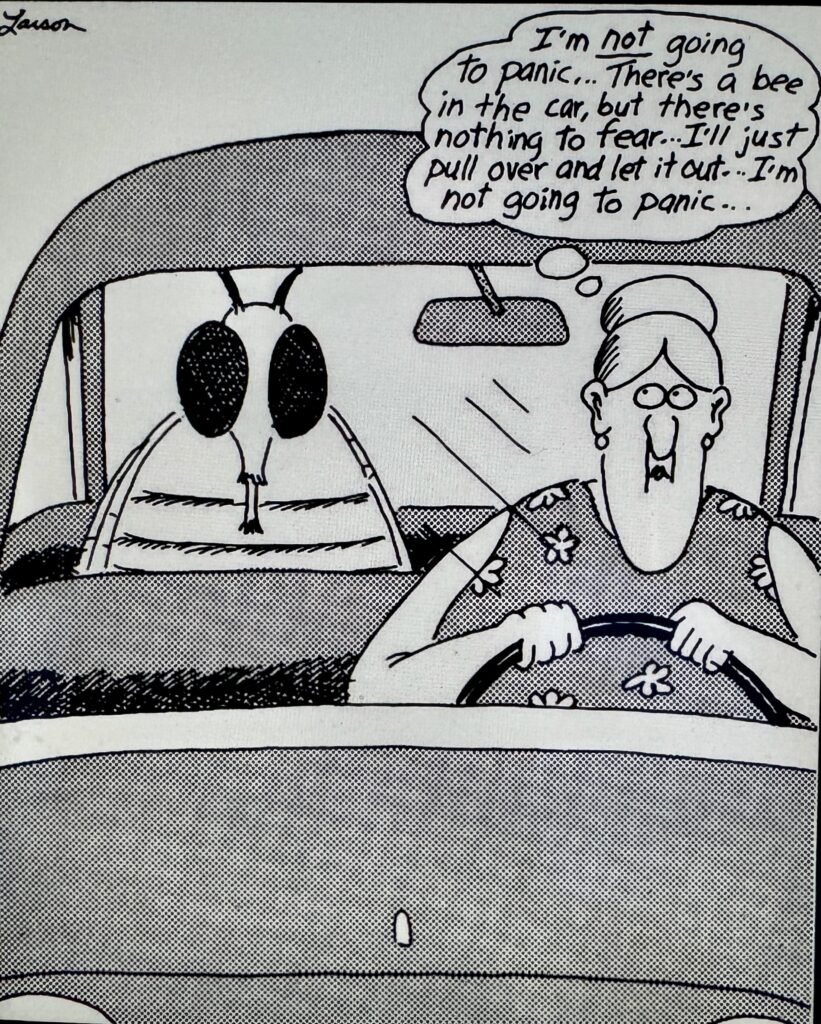
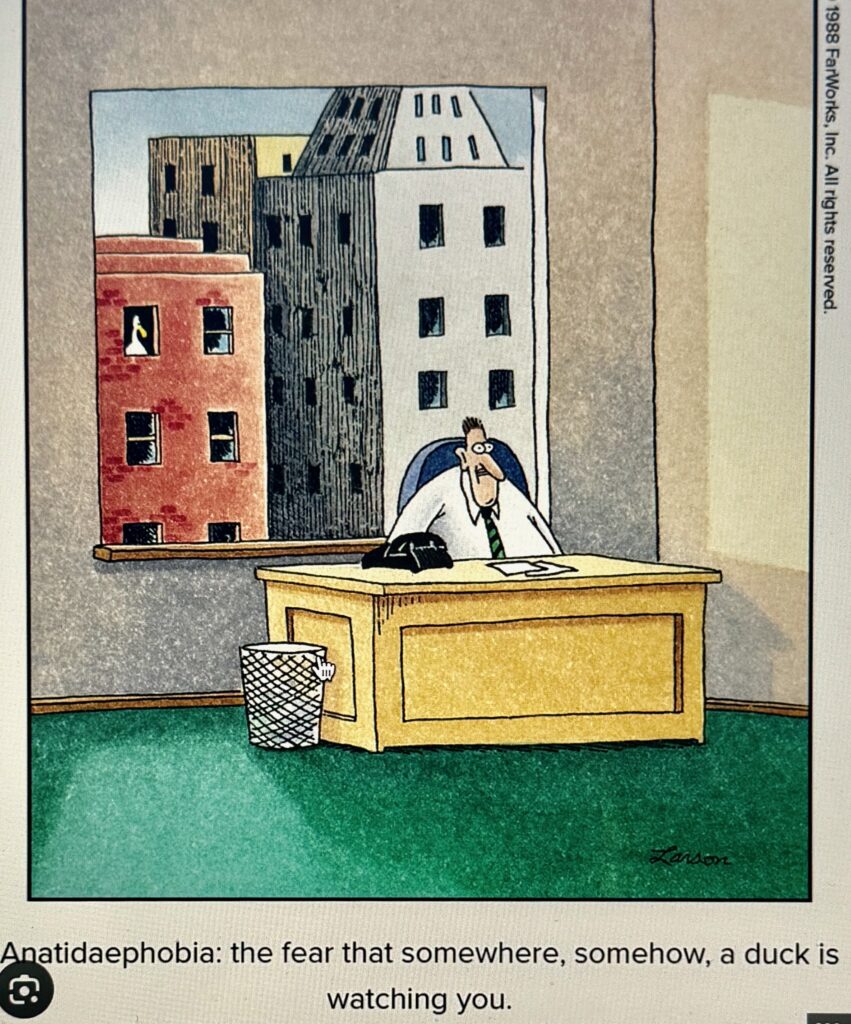
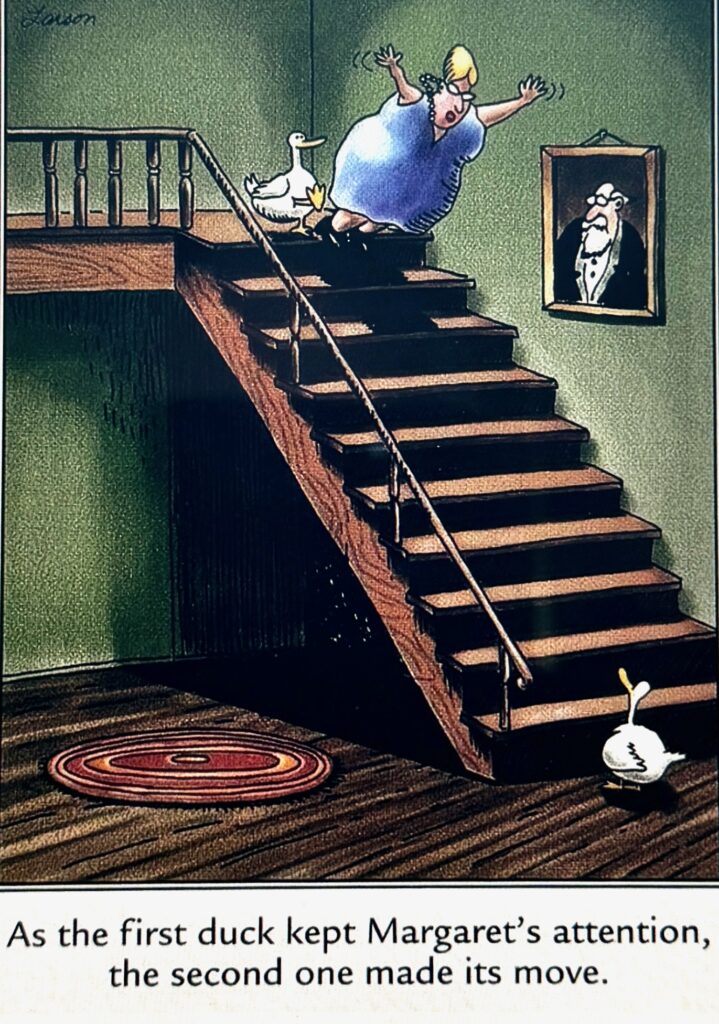
This presents an opportunity for bee-related humour from the great Gary Larson

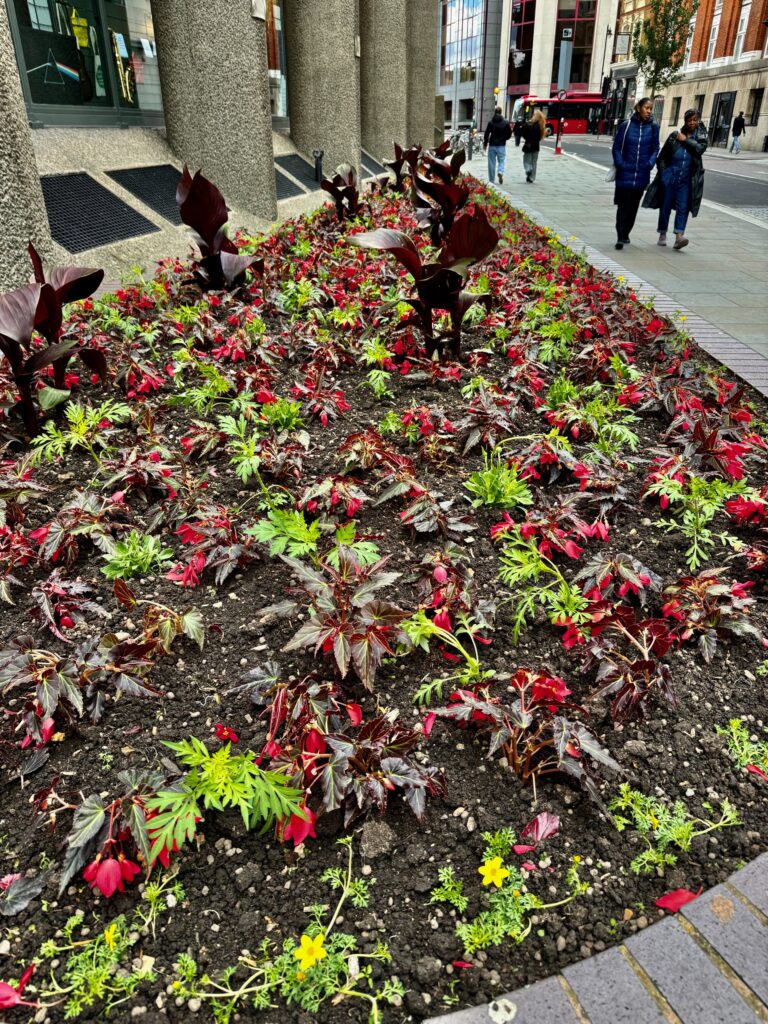
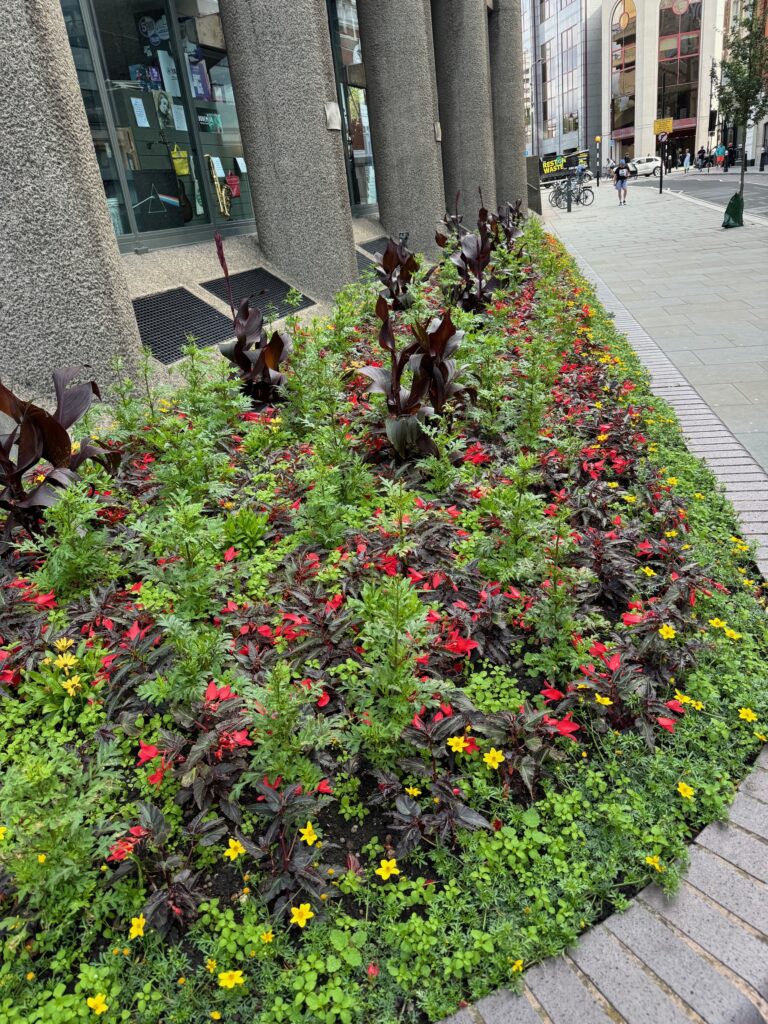
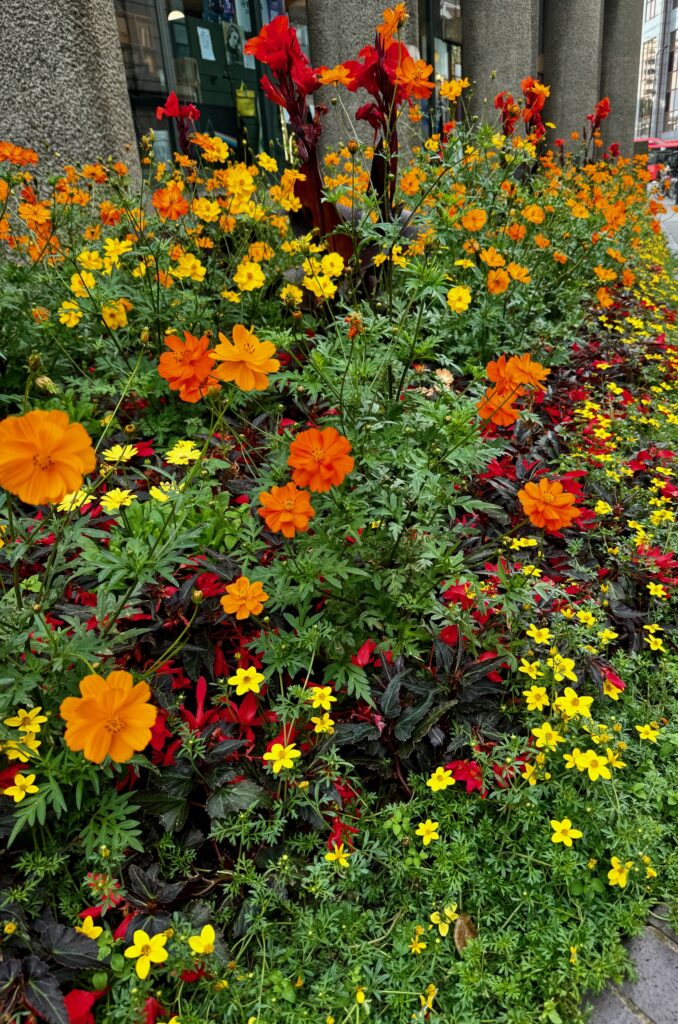
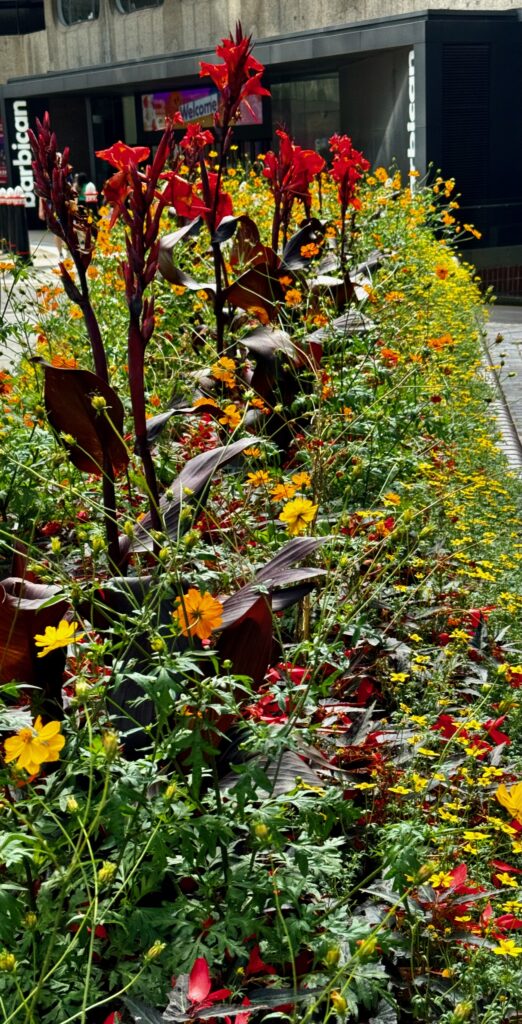
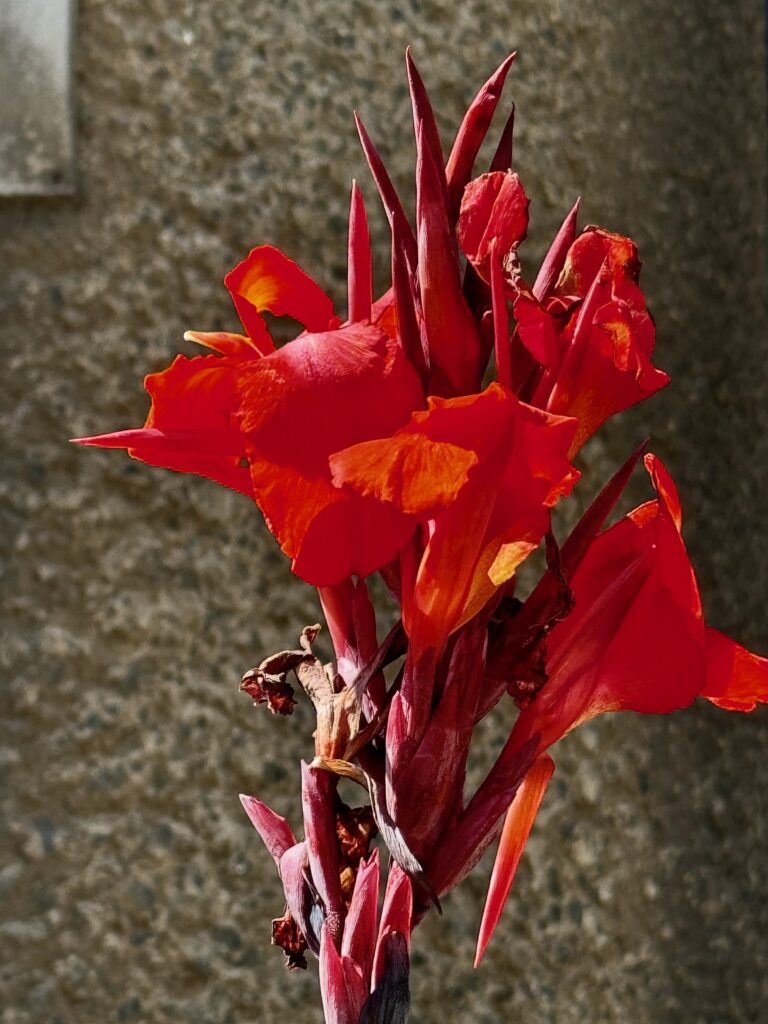
Silk Street planting in June …

July …

August …

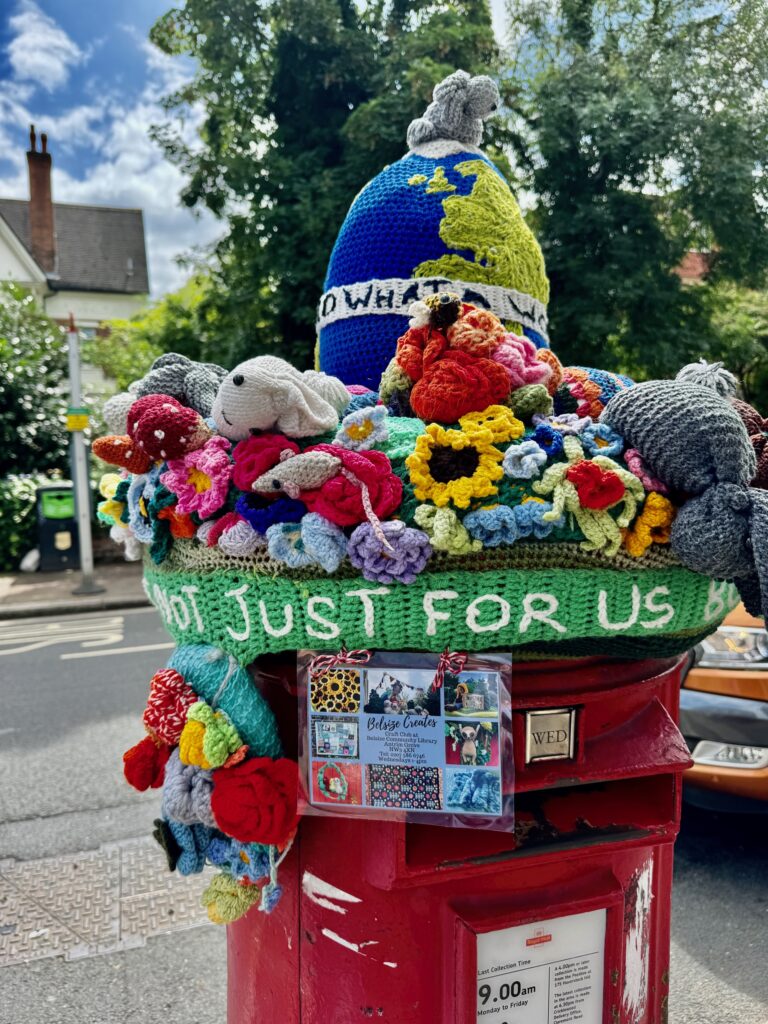
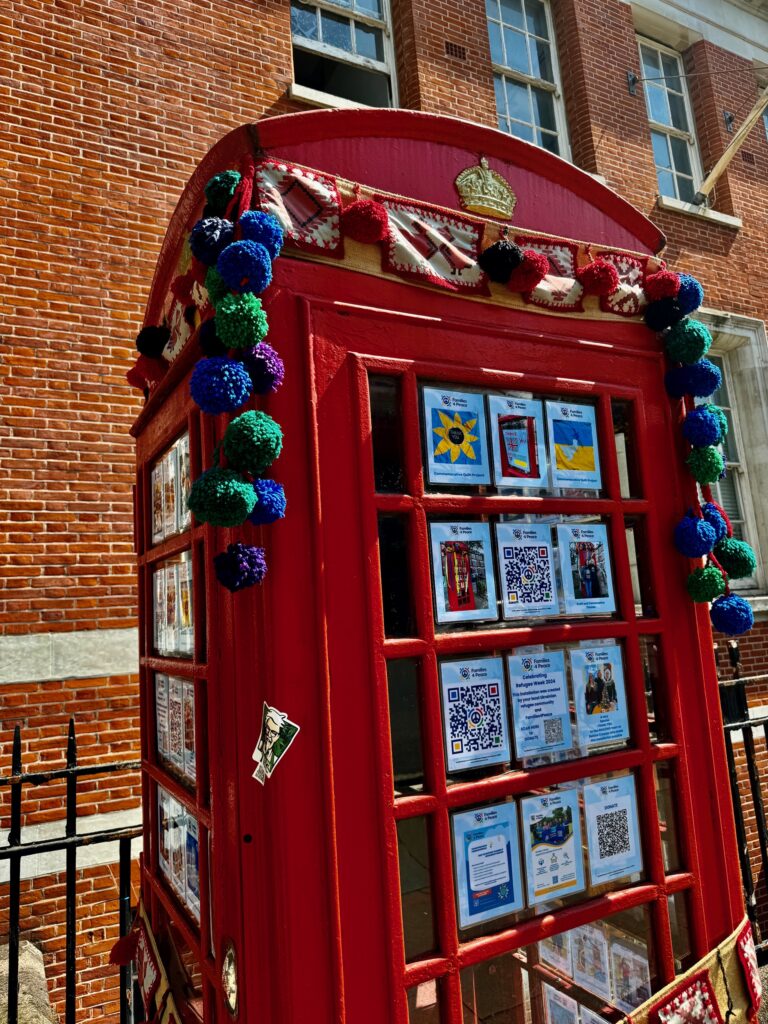
Wild crochet in North West London …

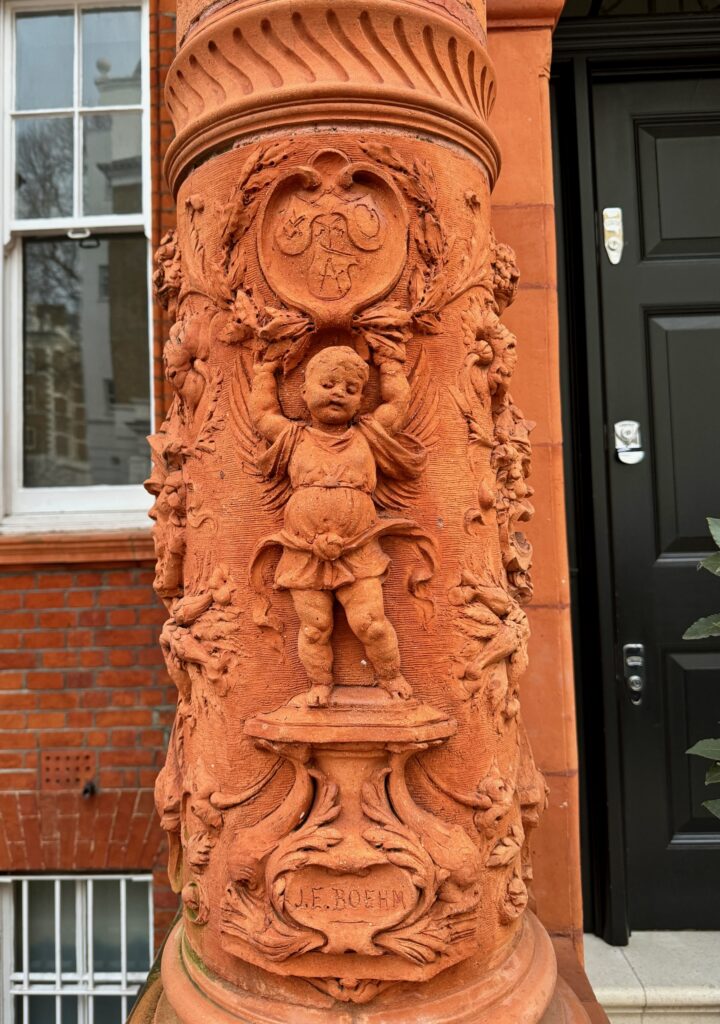
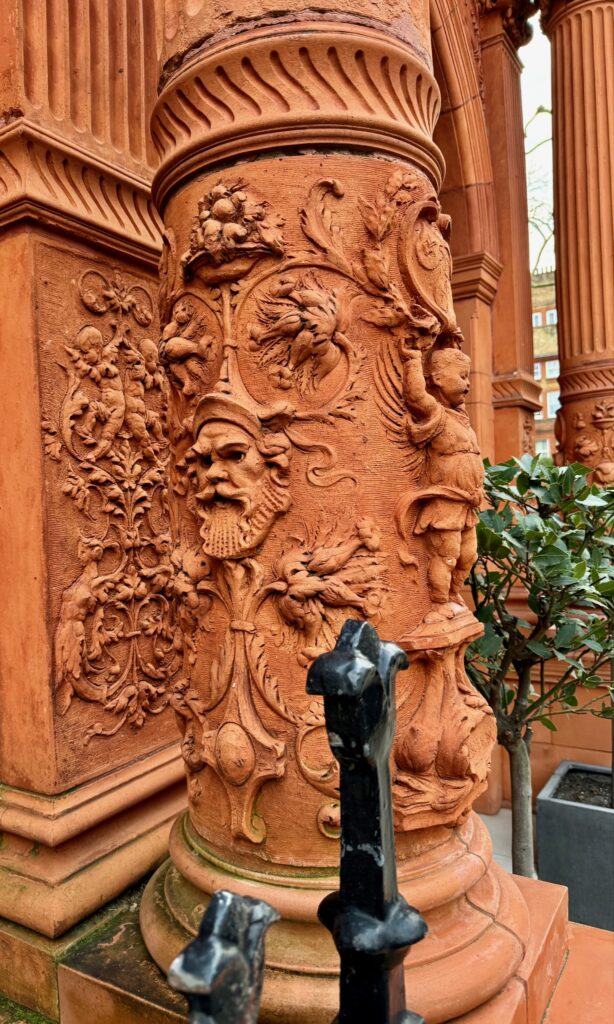
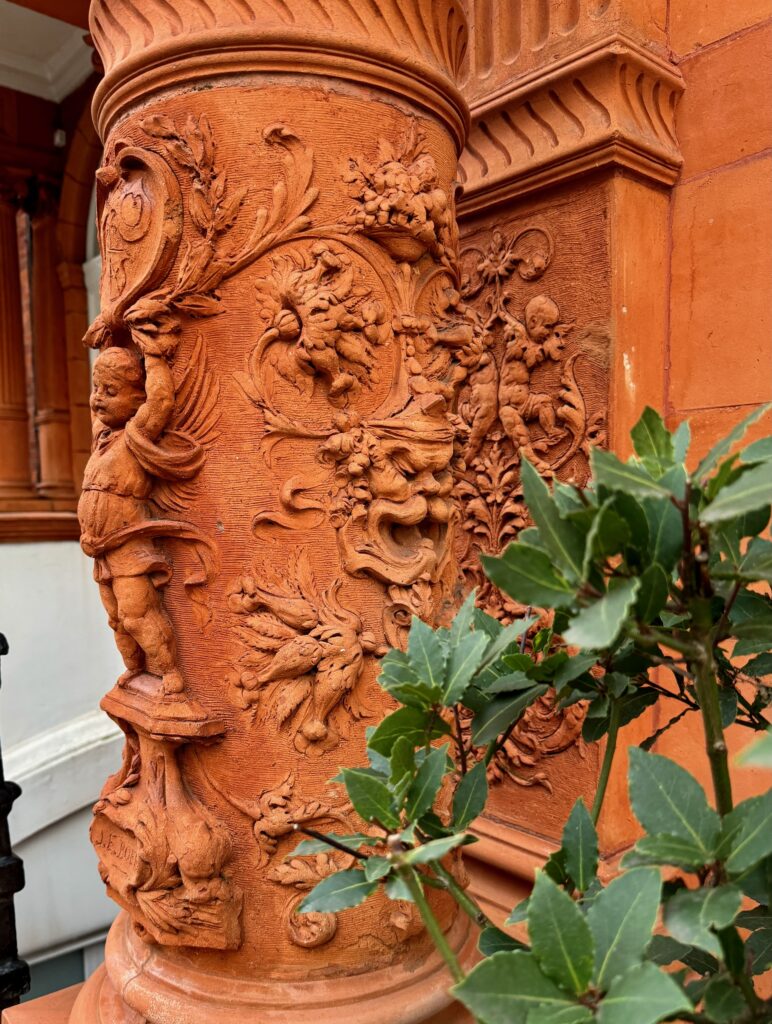
How wonderful it must have been to come back home to this house in Wetherby Gardens, South Kensington. On your way to the front door you would be walking past these extraordinary sculptures by the immensely distinguished Sir Joseph Edgar Boehm

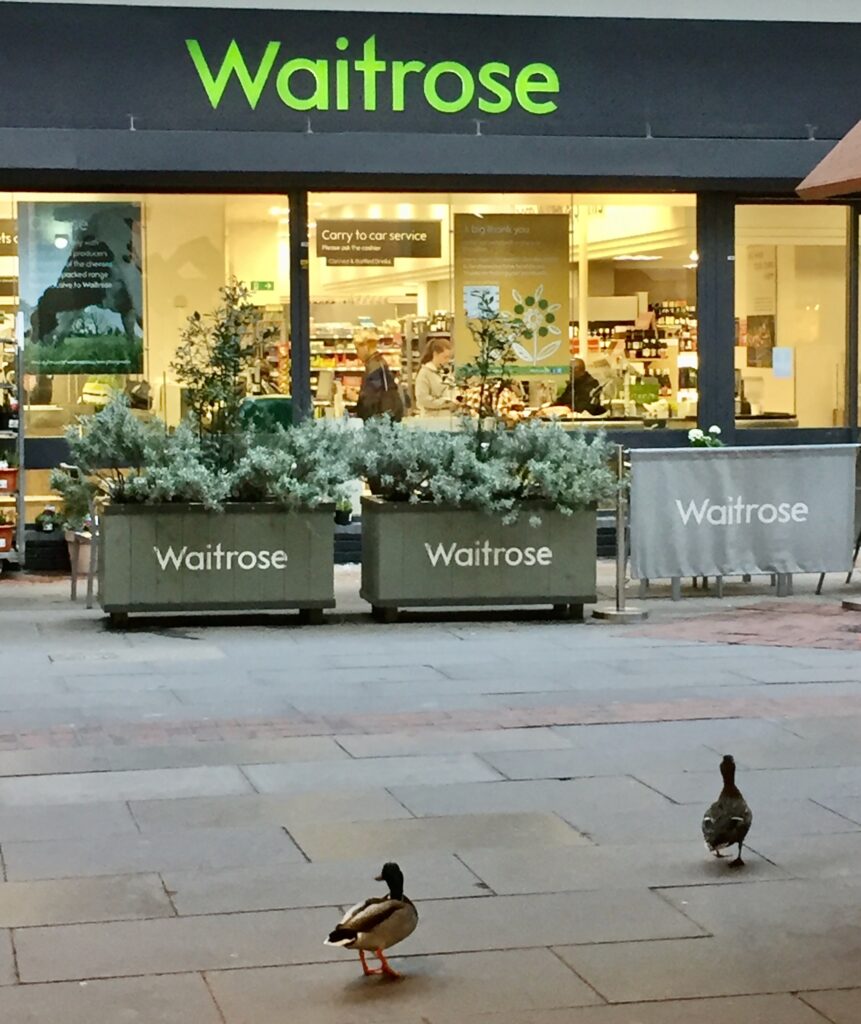
Where Barbican ducks do their shopping …

Proud mum …

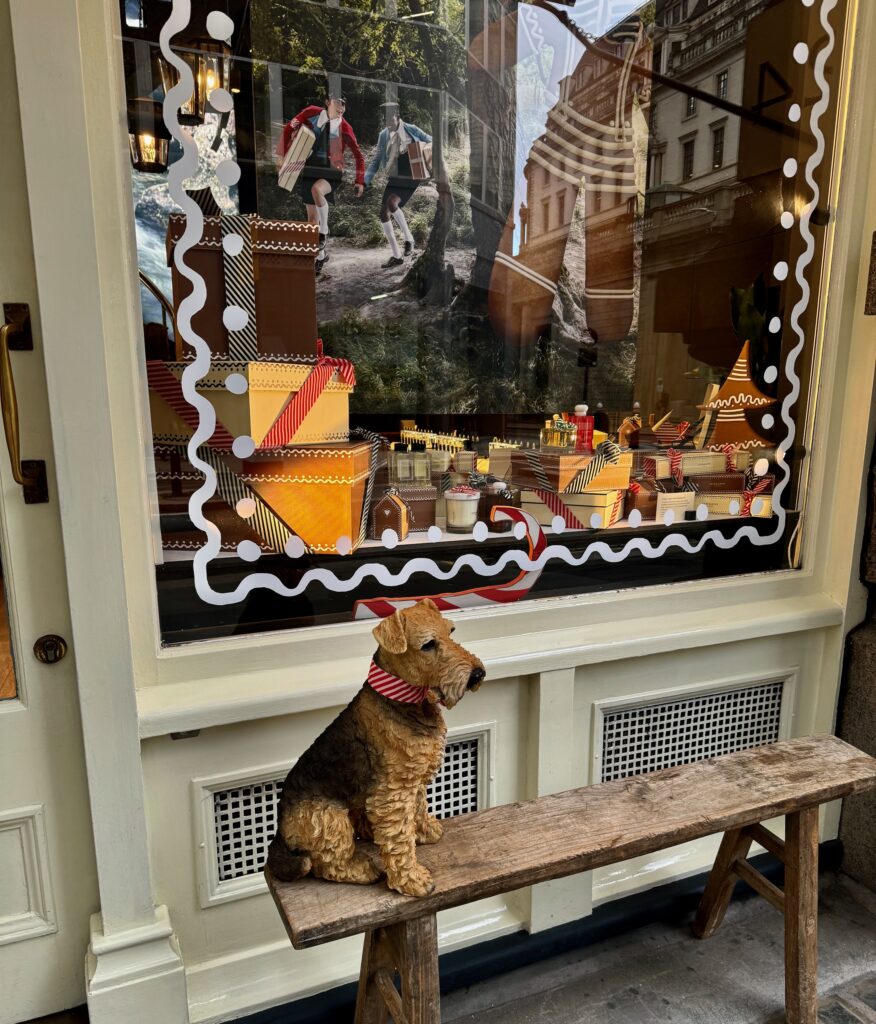
Outside the Royal Exchange – I think he looks very authentic …

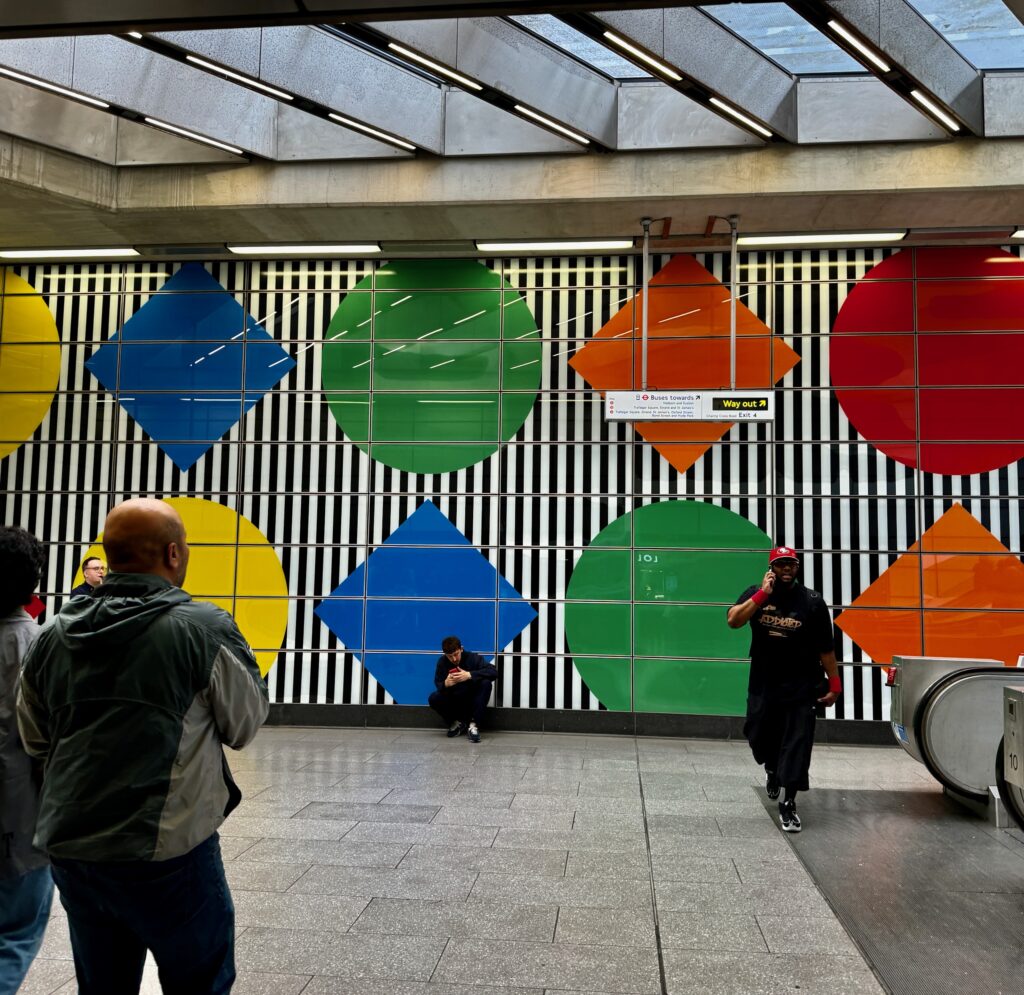
Lots of light and colour at the new Tottenham Court Road Station entrance …

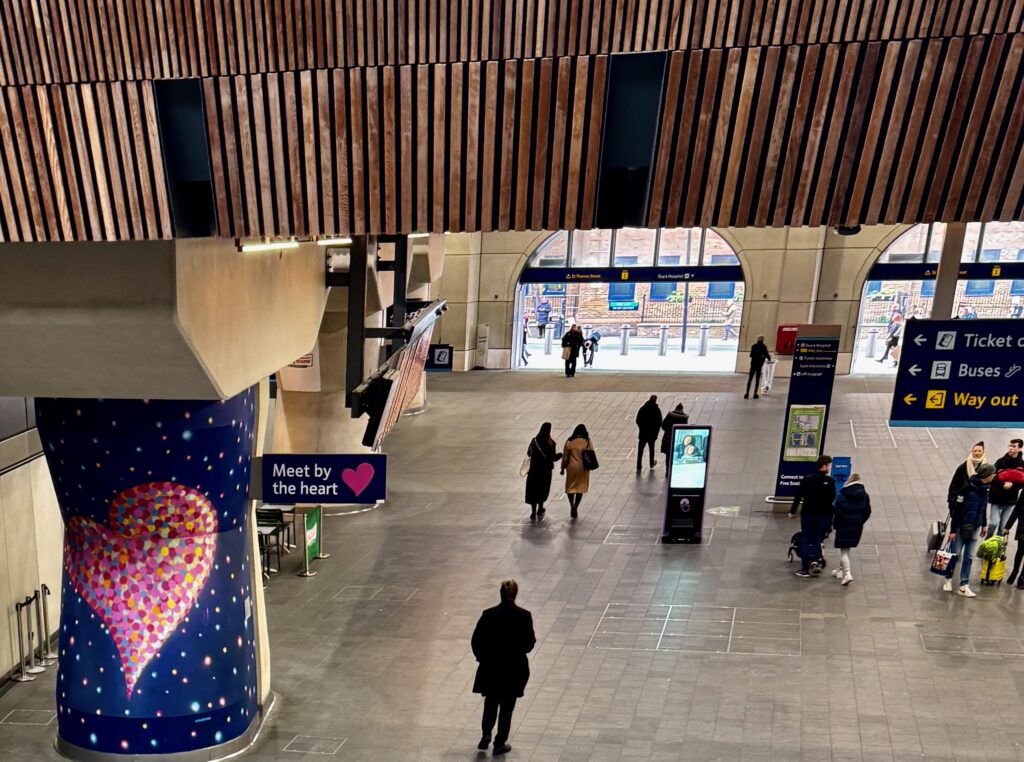
The new London Bridge Station is a design masterpiece – and what a sweet idea to suggest people could arrange to meet at The Heart

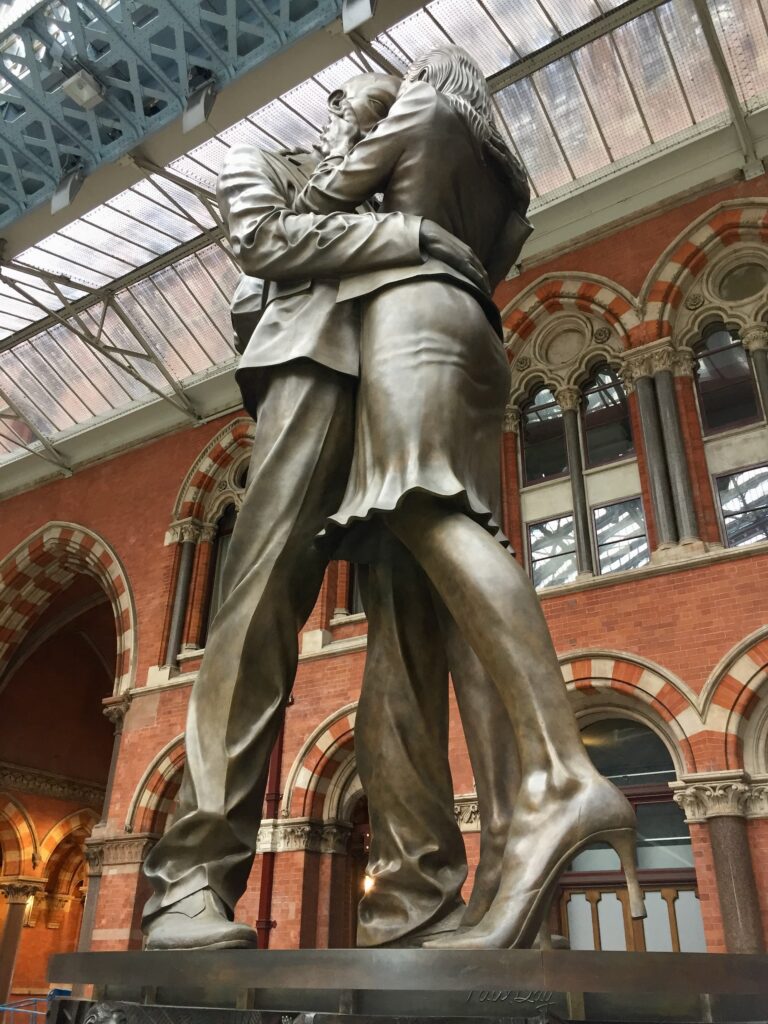
I think I prefer it to the controversial Meeting Place statue at St Pancras …

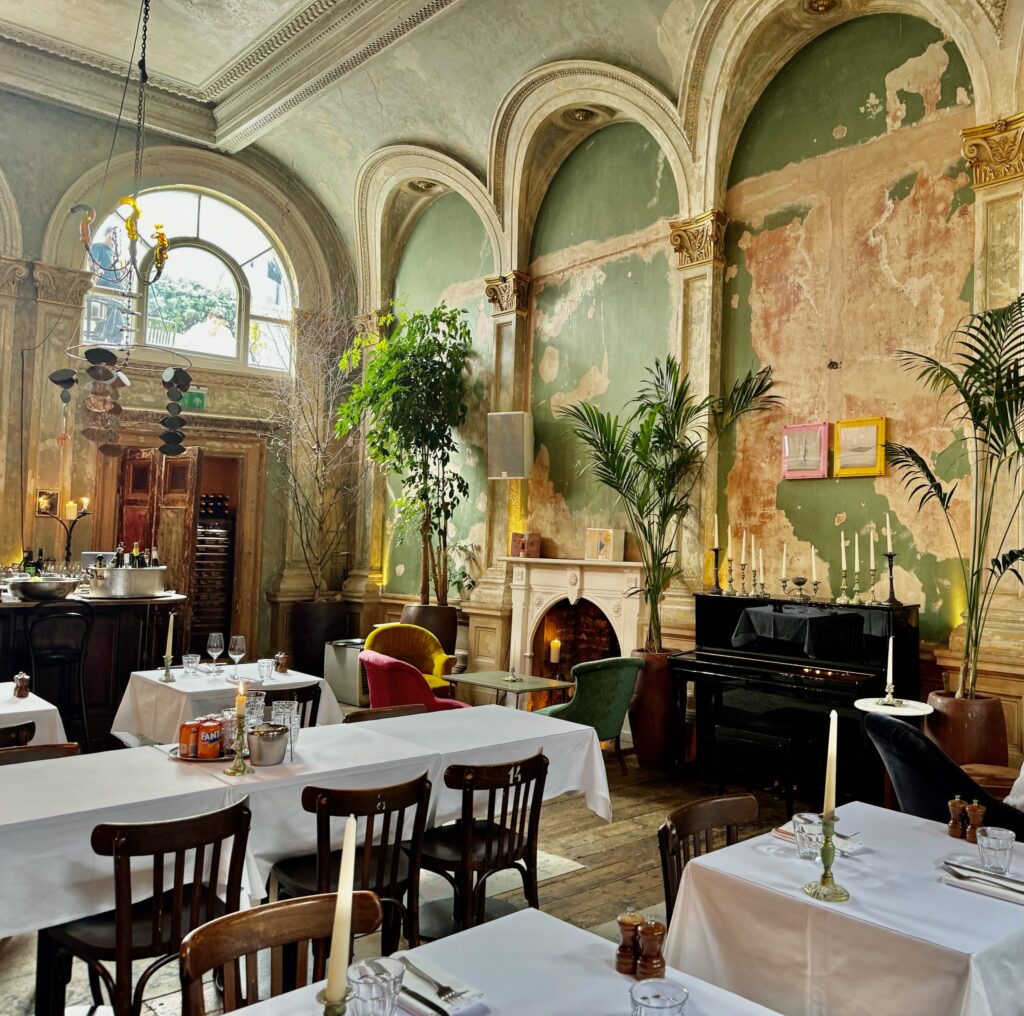
Interesting decor in the Sessions Arts Club restaurant …

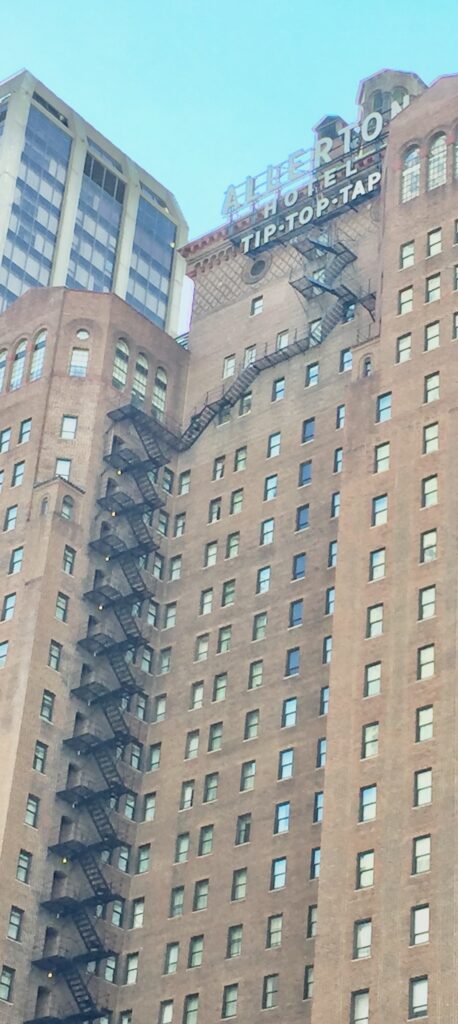
A hotel I came across when visiting Chicago – surely the scariest fire exit steps in the world!

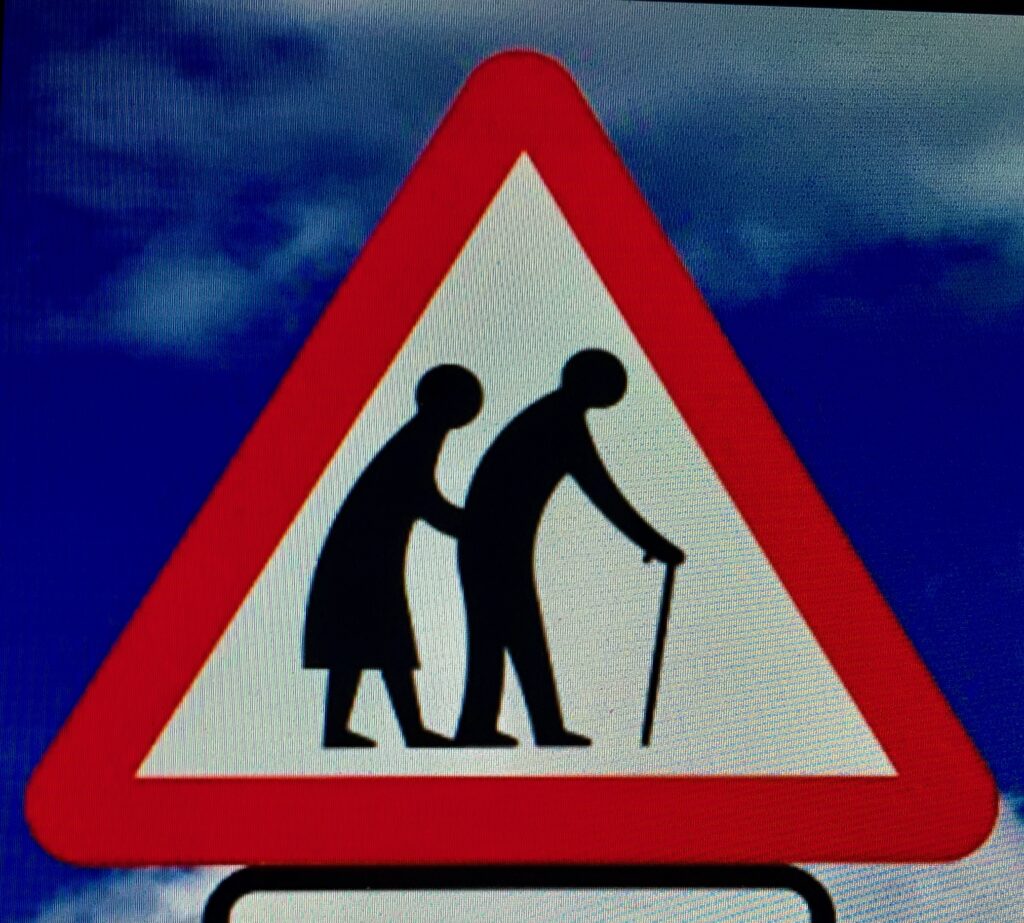
‘Beware of pickpockets’ …

Two more classic Larson’s …

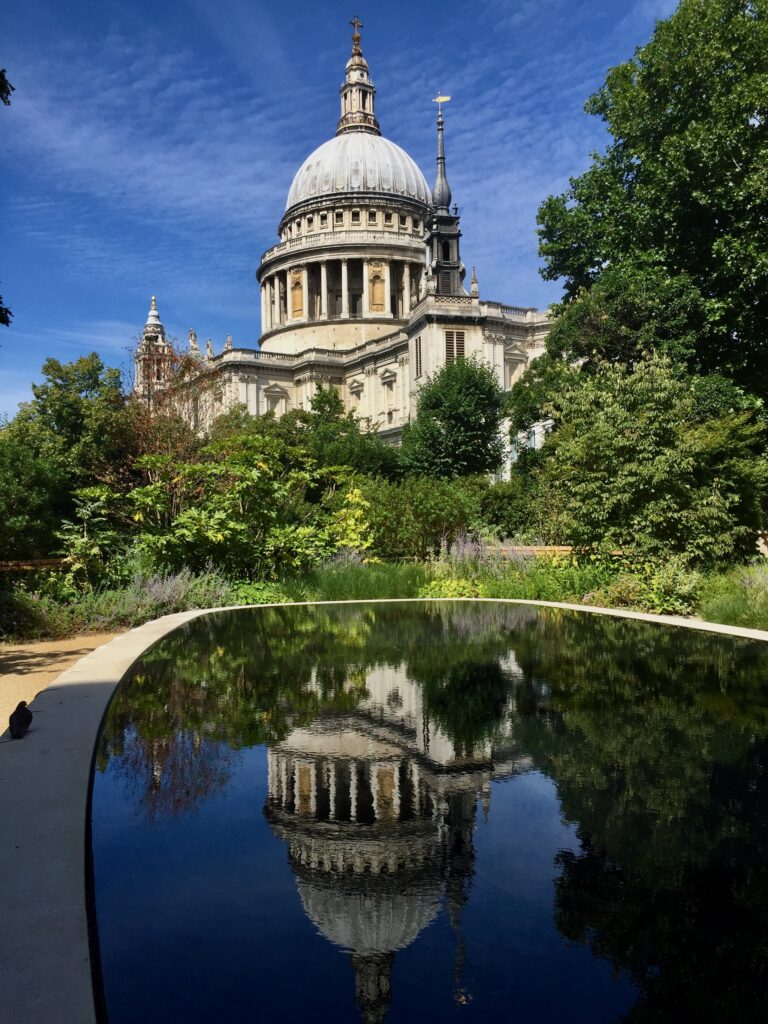
Finally, one of my favourite London reflections …

Remember you can follow me on Instagram …

https://www.instagram.com/london_city_gent

Tower Bridge and the extraordinary Sir Horace Jones. Plus a gathering of equerries and bedchamber ladies!

I thought I was familiar with the names of all the archiects associated with the City but somehow one of the most eminent seemed to have slipped my mind – although I must have read about him on numerous occasions. Some of his greatest works will be well known to all my readers – for example the original market buildings at Smithfield, Billingsgate and Leadenhall. His greatest surviving achievement however, in my view at least, is the structure that represents London itself to many people throughout the world – Tower Bridge.

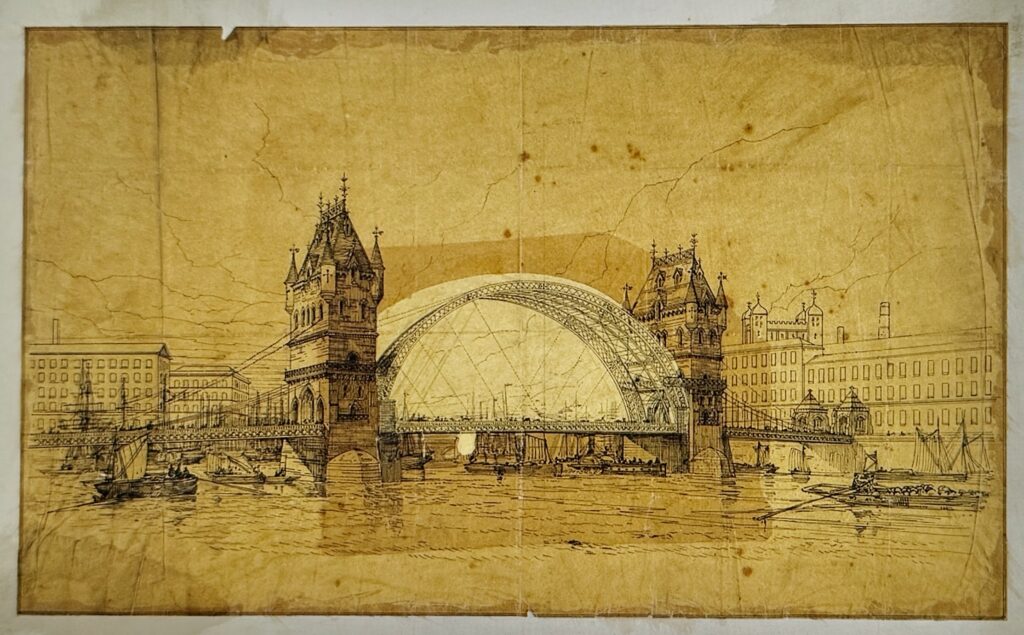
Jones was a brilliant artist as can be seen from this pen-and-ink drawing by him from his 1884 design …

© London Metropolitan Archives, City of London (ref COL/SVD/PL/03/0293)

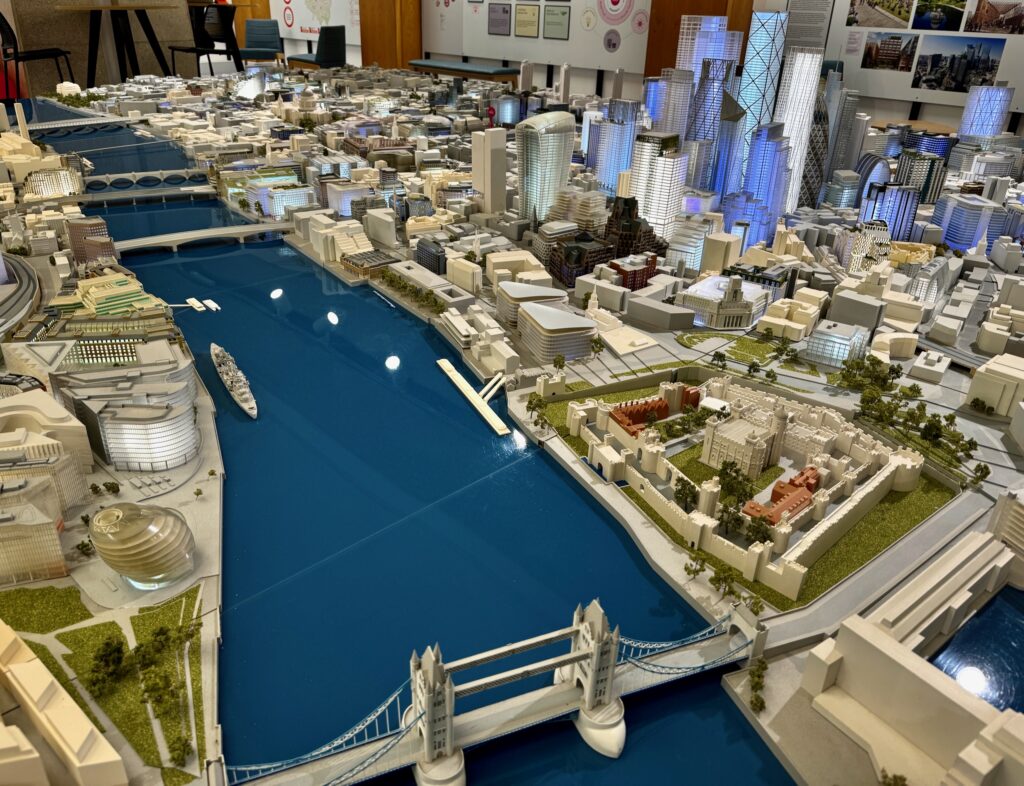
This model at The London Centre gives some perspective as to its location …

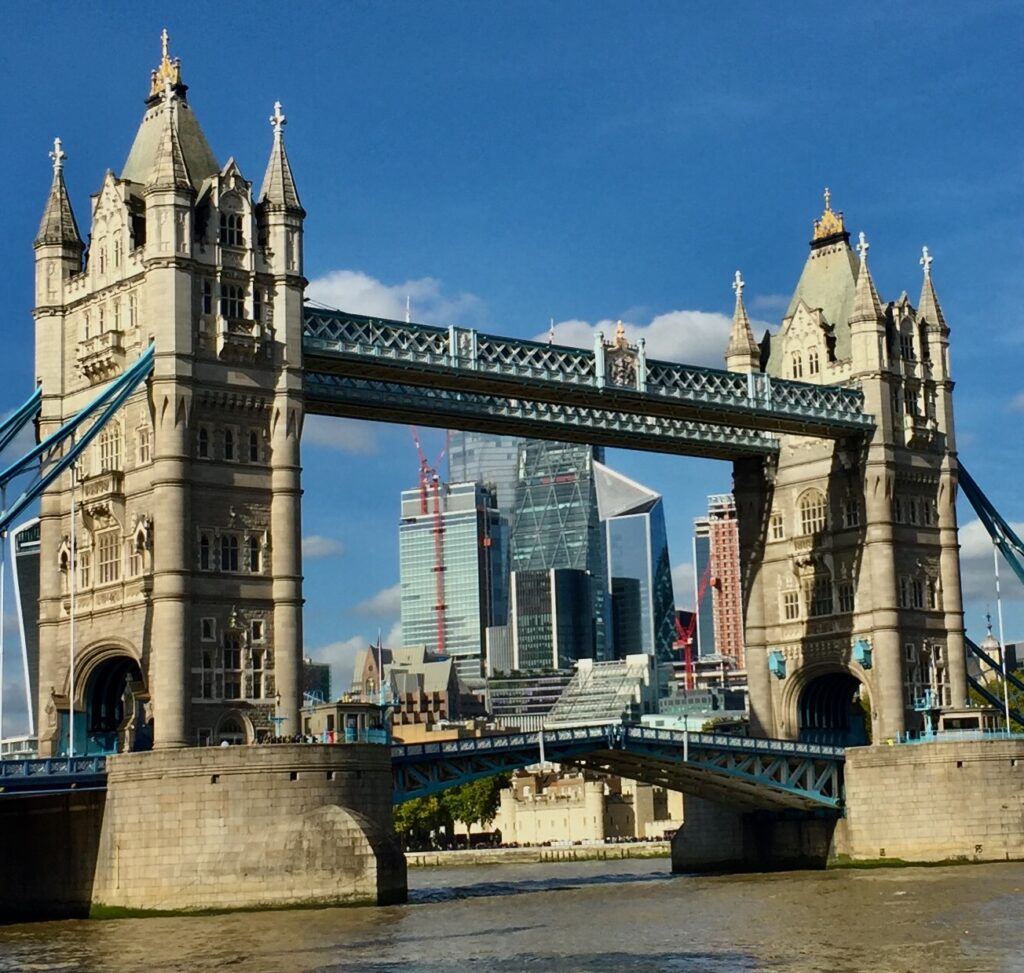
The modern City framed by the Bridge …

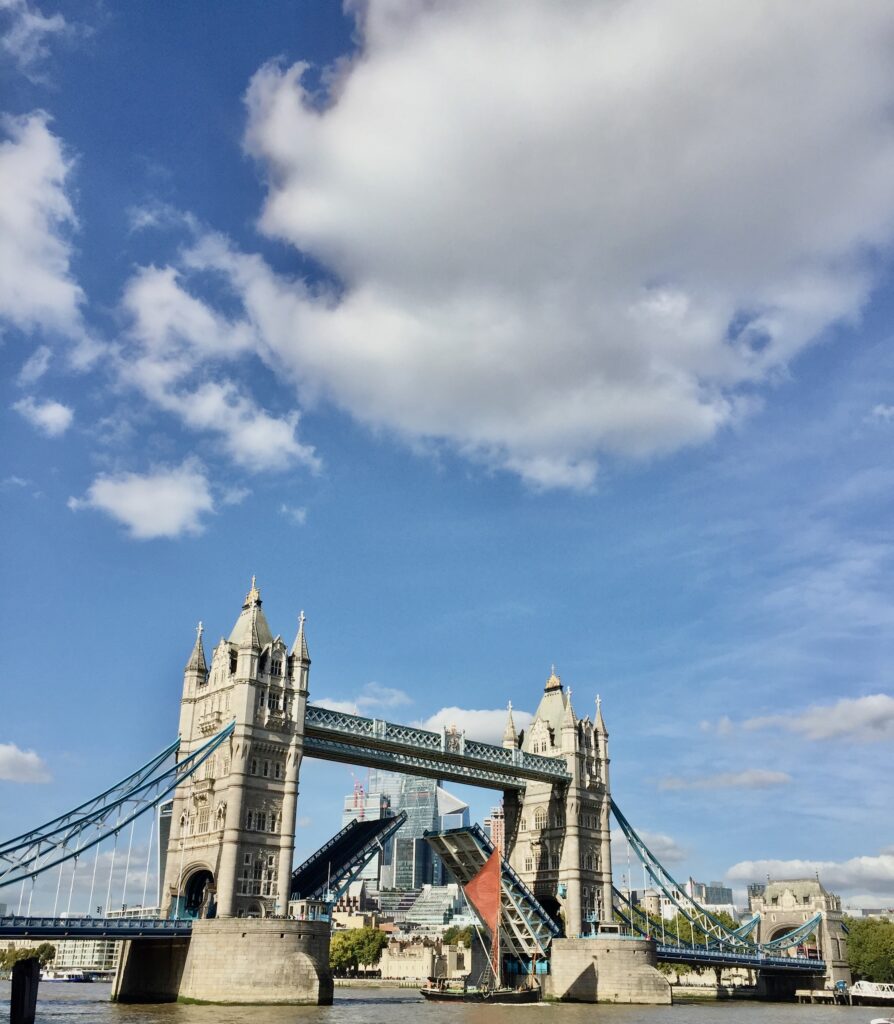
In action …

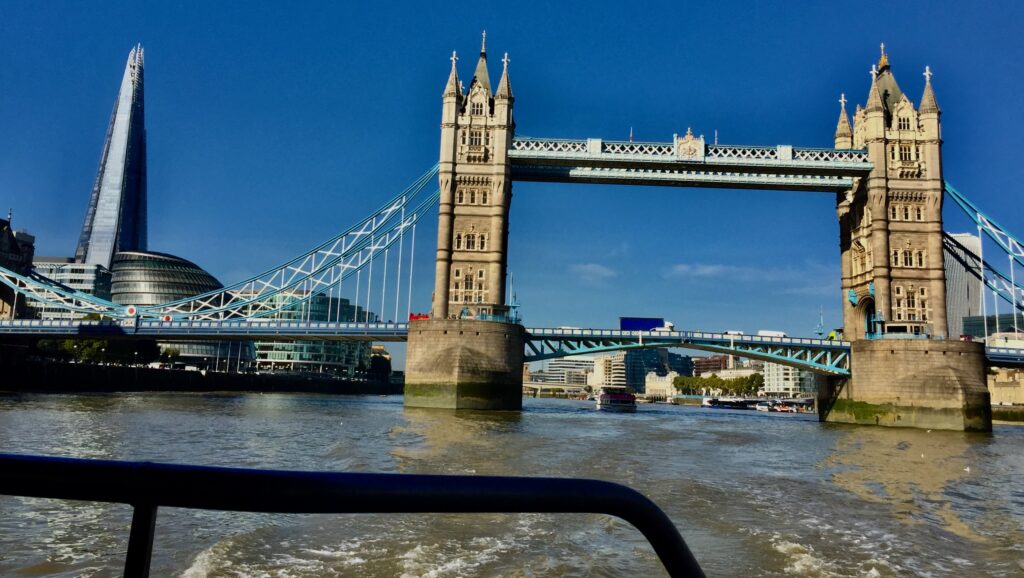
From the River Thames heading east …

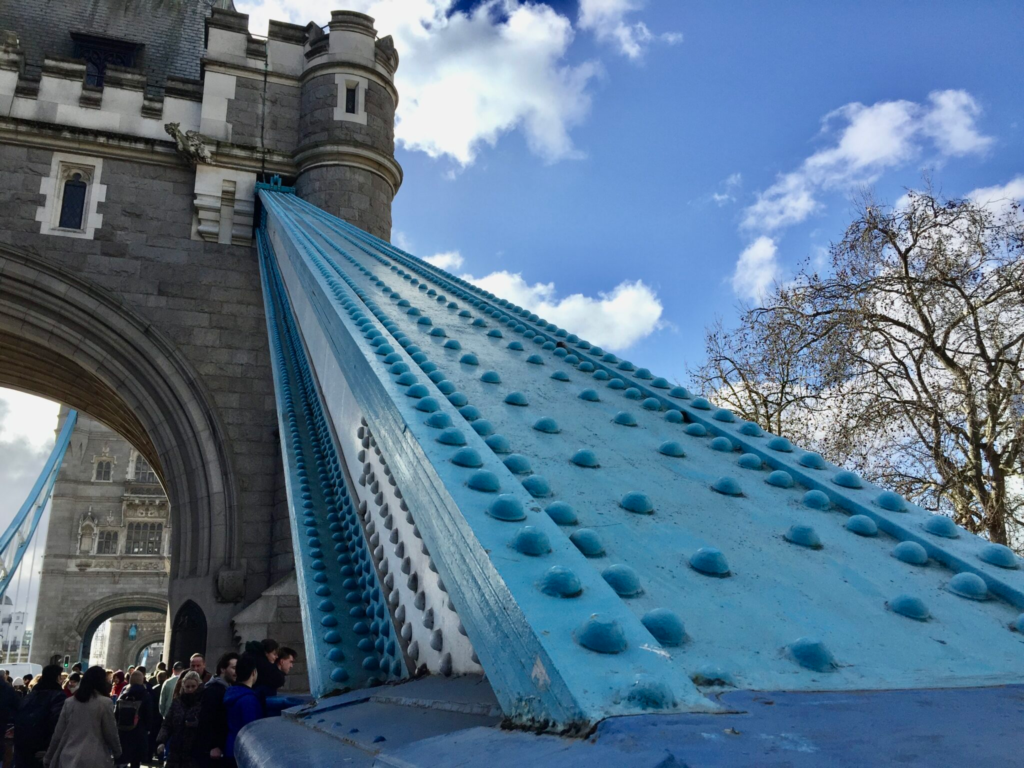
Serious engineering …

You can read about my tour of the bridge in March last year here.

My further interest in it was spiked, as it often is, by the current exhibition featuring Tower Bridge at the Guildhall Gallery …

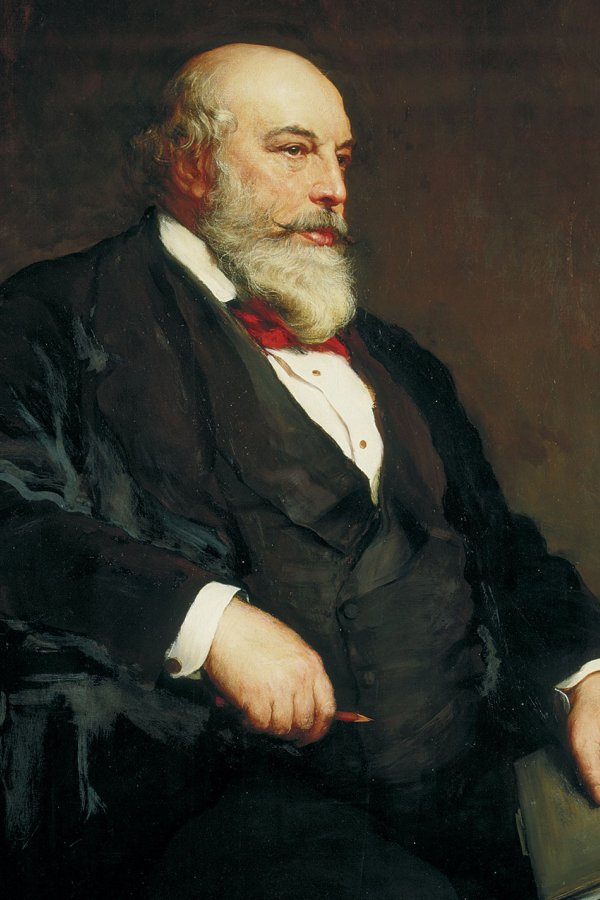
The great man himself. Horace Jones 1819-1887 painted in the year before his death by Walter William Ouless

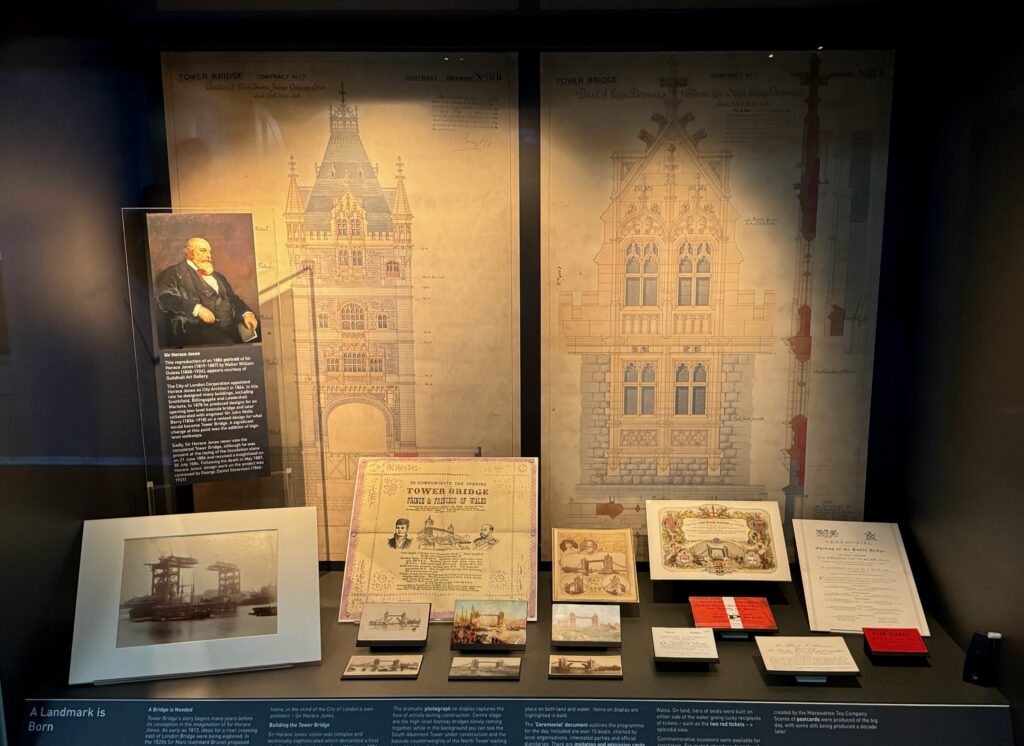
Some of the fascinating items on display in the exhibition.

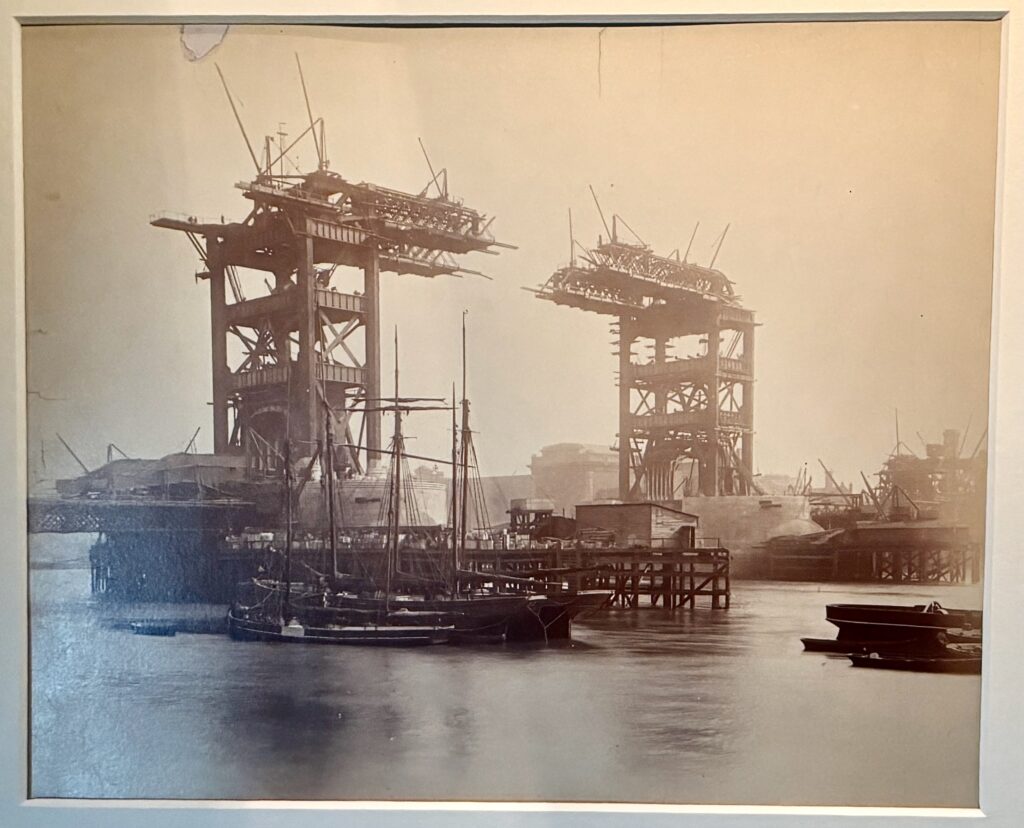
This dramatic photograph captures the hive of activity during construction …

Centre stage are the high-level footway bridges slowly coming together while in the background you can see the South Abutment Tower under construction. Work on the bridge had started in 1886 and work was completed in 1894 (seven years after Horace’s death).

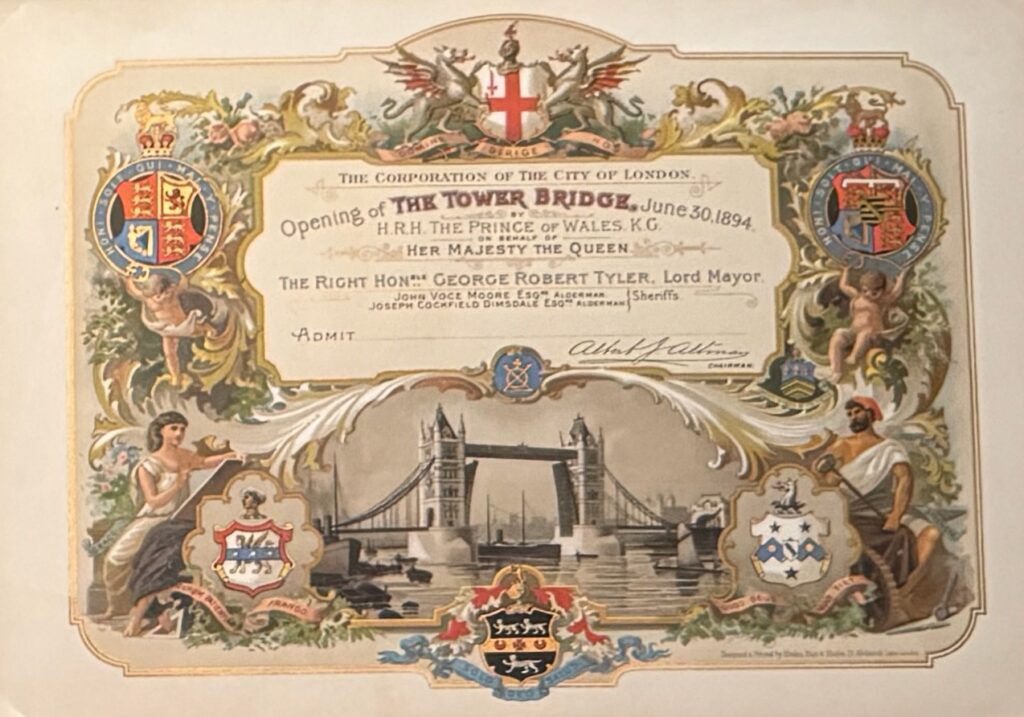
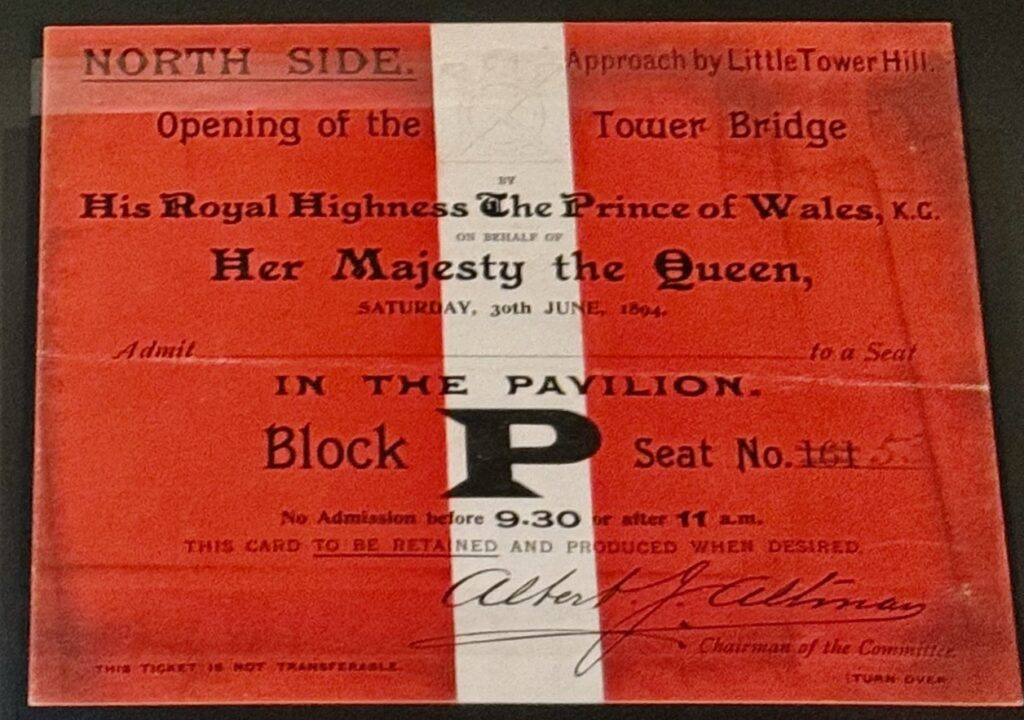
Hot tickets …

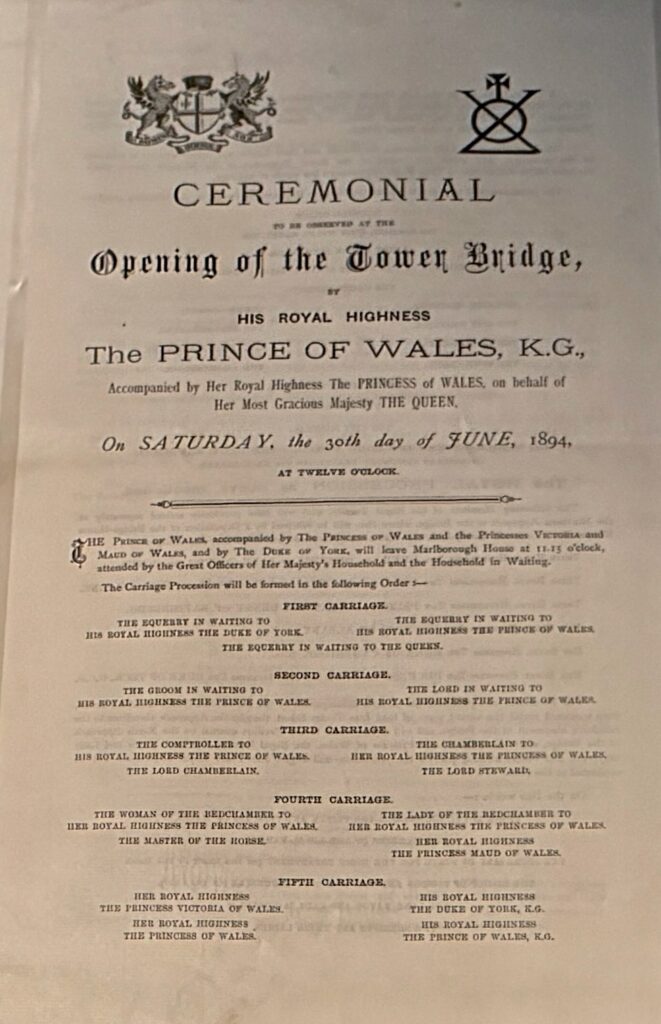
The ‘Ceremonial’ document outlining the programme. I was intrigued by the occupants of the carriages. What’s the difference between a ‘woman of the bedchamber’ and a ‘lady of the bedchamber’? And there are examples of chaps who are ‘in waiting’. Two equerries, a groom and a lord to be precise. No doubt a precise pecking order has been established over the centuries!

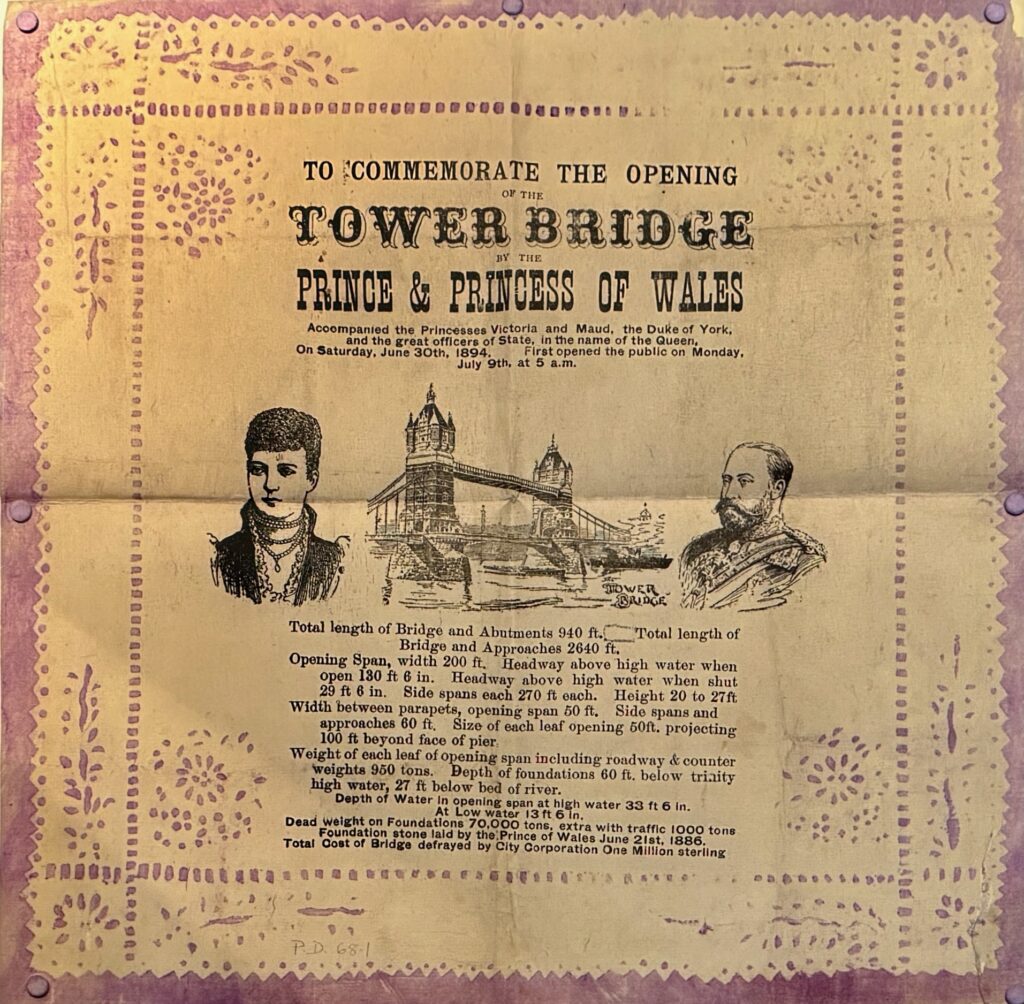
A napkin from the opening Celebration Dinner …

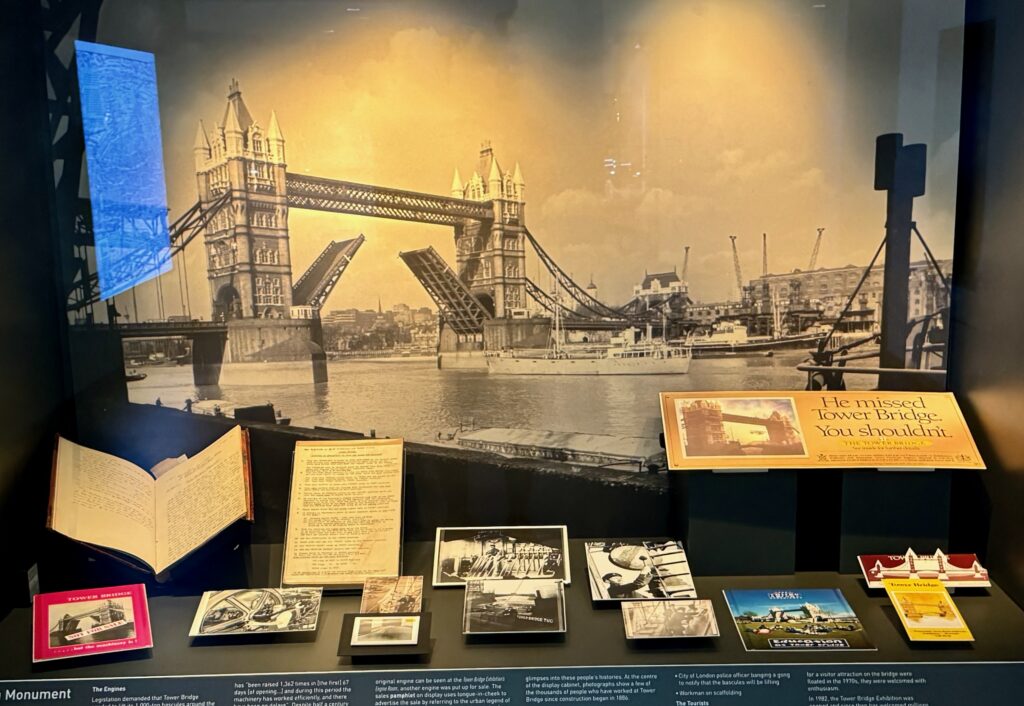
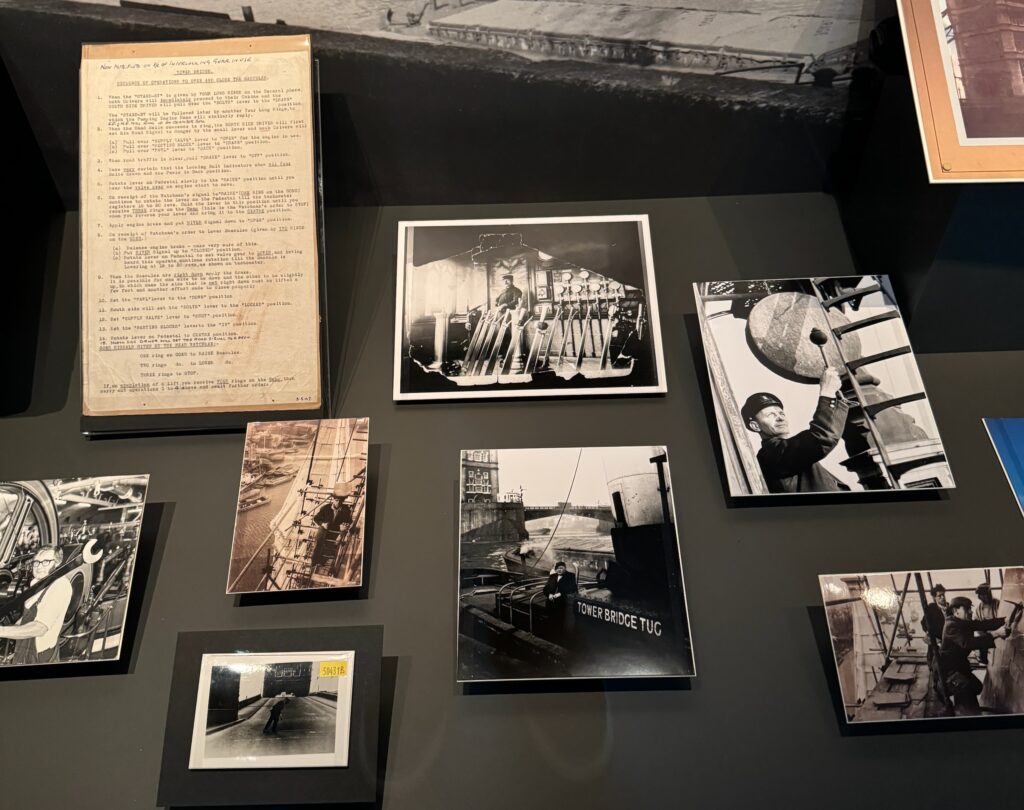
A great selection …

Instructions on how to operate the raising mechanism, an engineer with a super king size spanner, a workman doing masonry repairs, a police officer pulling a rope across the road to close it to traffic, the Tower Bridge tug and the Bridge Driver in the control cabin.

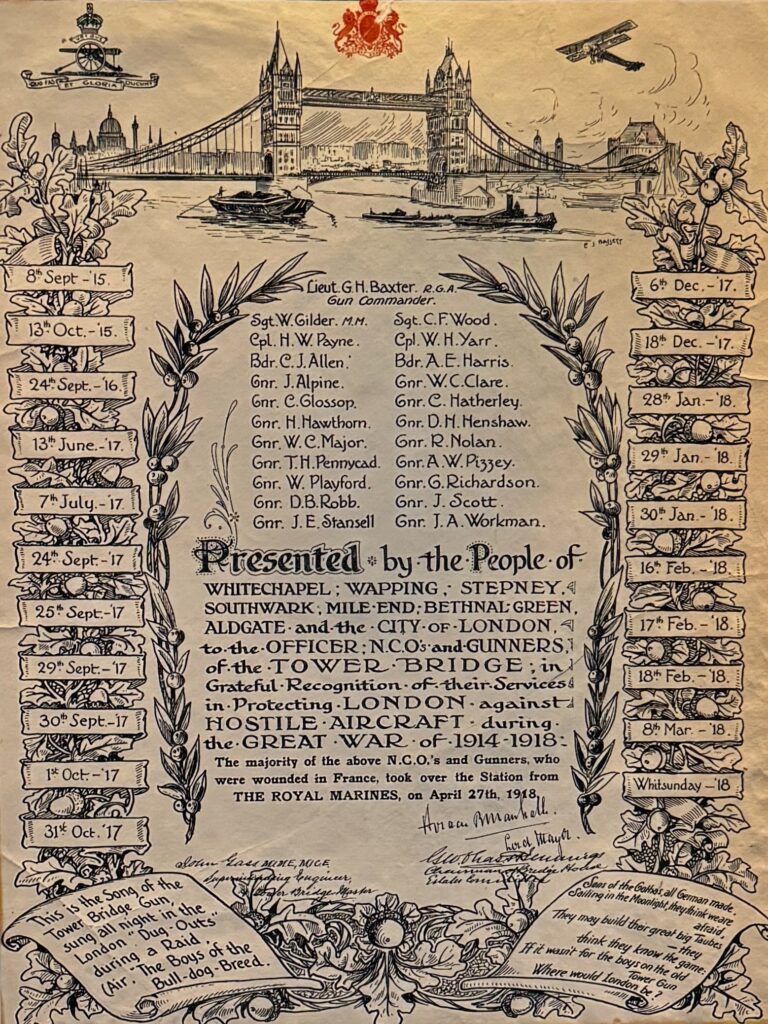
For the people of London during the First World War the bridge was more than a metaphorical symbol of resistance. Perched atop the upper walkway sat an anti-aircraft gun, its height and tactical position aligning it perfectly to defend against German raids. Its presence brought comfort to Londoners in the area and this poster captures the sentiment …

Each of the men listed in the centre of the poster were presented with a print as ‘grateful recognition of their services in protecting London against hostile aircraft during the Great War of 1914-1918’.

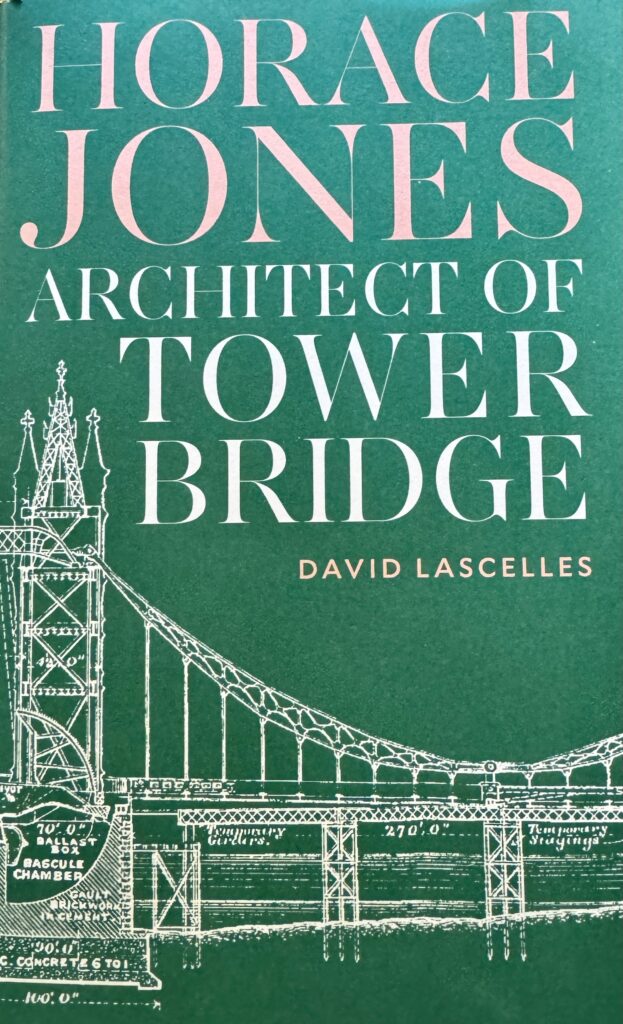
Whilst I was visiting I treated myself to this book. It’s a great read …

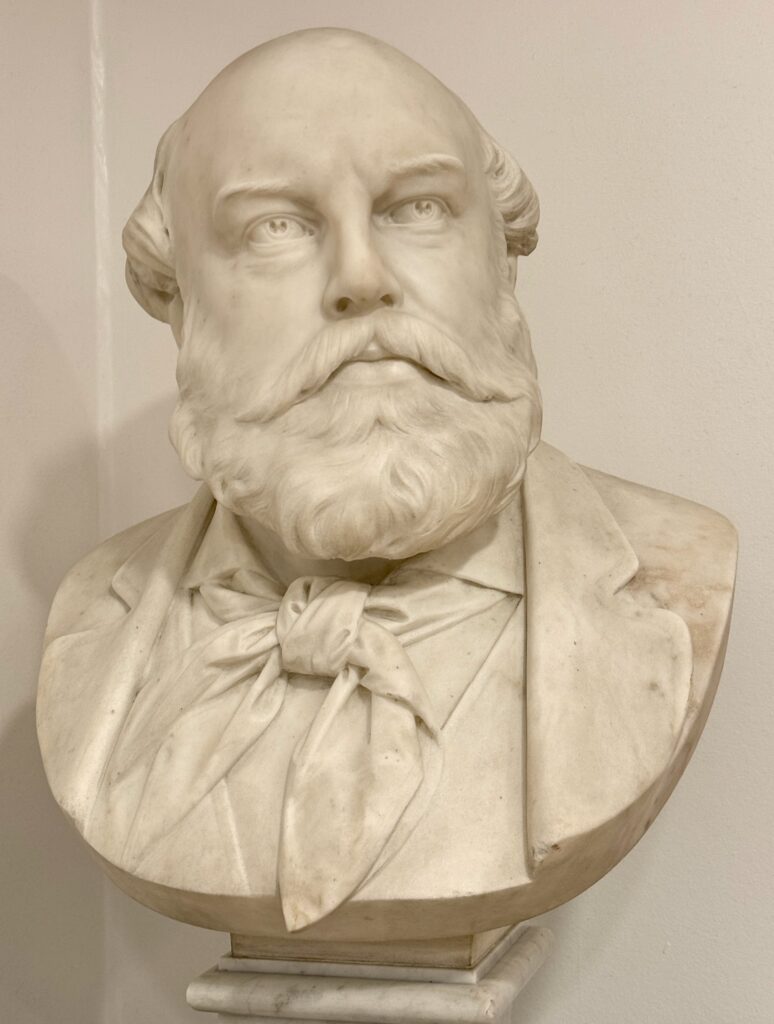
It explains in interesting detail why, despite a knighthood and elevation to the Presidency of the Royal Institute of British Architects, Horace never really received the full recognition he deserved and this remains the case today. For example, the Guildhall Gallery now owns the Ouless painting above but it is not on display. I’m pleased to say, however, that there is an excellent bust of Horace that you can go and see. It really gives a hint of the powerful presence and personality that clearly upset some of his contemporaries …

Unfortunately, I’m sad to say that it is tucked away at the back of the cloakroom! You’ll find it by turning right as you leave the special exhibition.

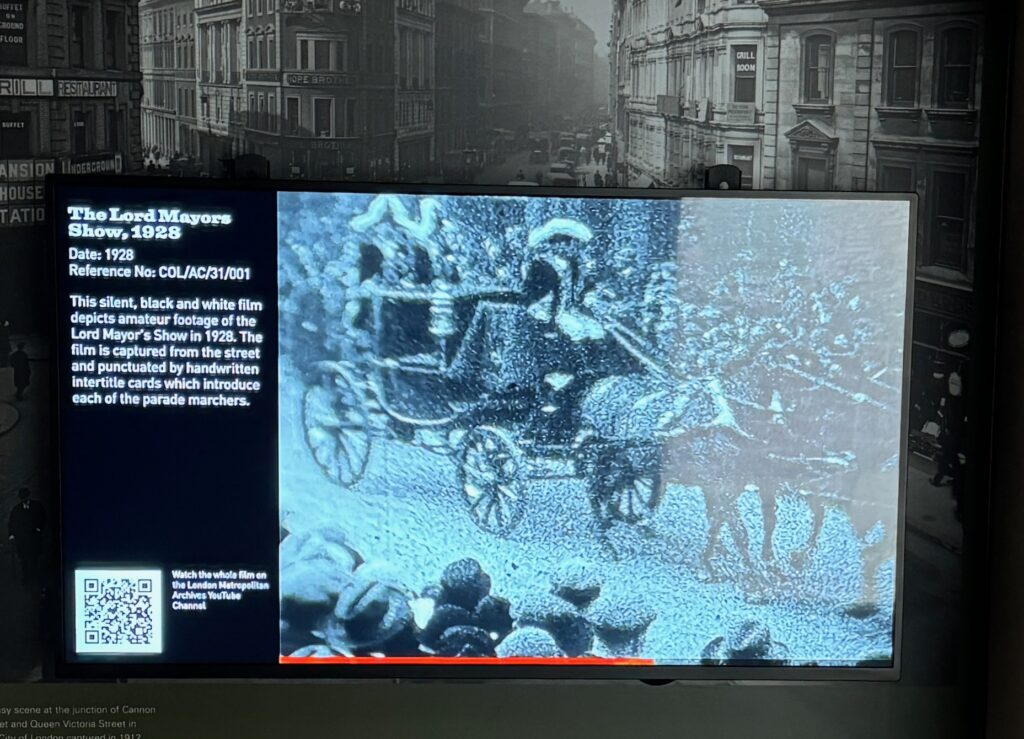
It’s on until 19 September and is located in the Heritage Gallery. During your visit you can enjoy watching films from the London Metropolitan Archive. This one is of the 1928 Lord Mayors Show …

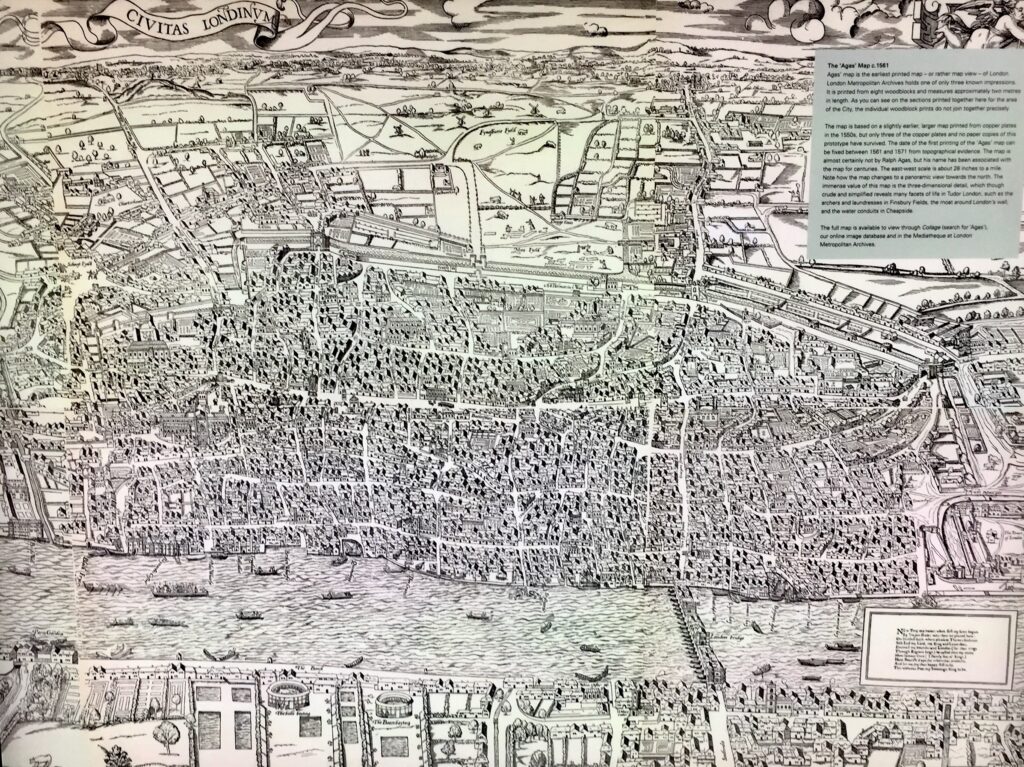
You can also inspect a superb back-lit copy of the ‘Agas’ map of circa 1561 …

Remember you can follow me on Instagram …

https://www.instagram.com/london_city_gent

Page 32 of 152

Powered by WordPress & Theme by Anders Norén