Symbols & Secrets

Walking the City of London

City of London Gates

As you all know, the Romans constructed a protective wall around their City some time in the 2nd or 3rd century and gateways were incorporated that aligned with the Roman road network. During the medieval period, these defences were further adapted and strengthened, but the City gradually extended beyond its original boundaries and we then start to see places described as ‘within’ and ‘without’. Eventually the wall and gates had become an obstruction and demolition, which started in 1760, continued right into the 19th century.

A short way to the west of the old Lud Gate was Temple Bar. Originally there to regulate trade into the City, it was rebuilt after the Great Fire more as a ceremonial entrance. Believed to have been designed by Christopher Wren, it survived until  1878 when it’s obstruction to traffic became too big a problem and it was carefully demolished and put in storage. It was sold in 1880 to the brewer Sir Henry Meux. It is a fascinating story and I have written about him and his beautiful, eccentric wife Valerie in an earlier blog which you can access here.

After 126 years on Sir Henry’s country estate, the Bar was finally returned to the City in 2004 and was re-erected in Paternoster Square next to st Paul’s Cathedral. I think it looks great …
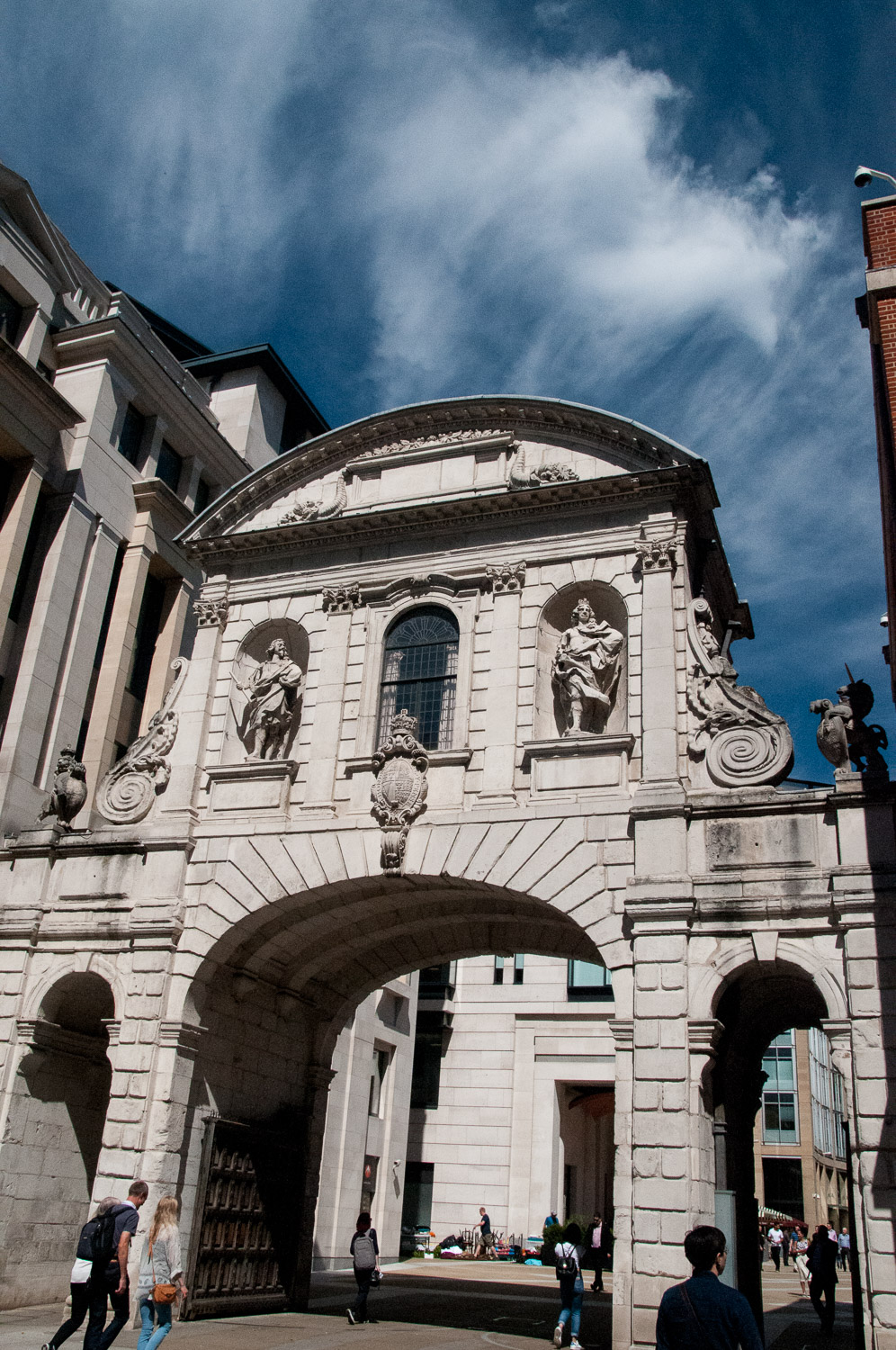
When I visited it recently I became intrigued by the wooden doors. There are two big doors that close to shut off the main entrance and two smaller doors in the pedestrian archways either side.
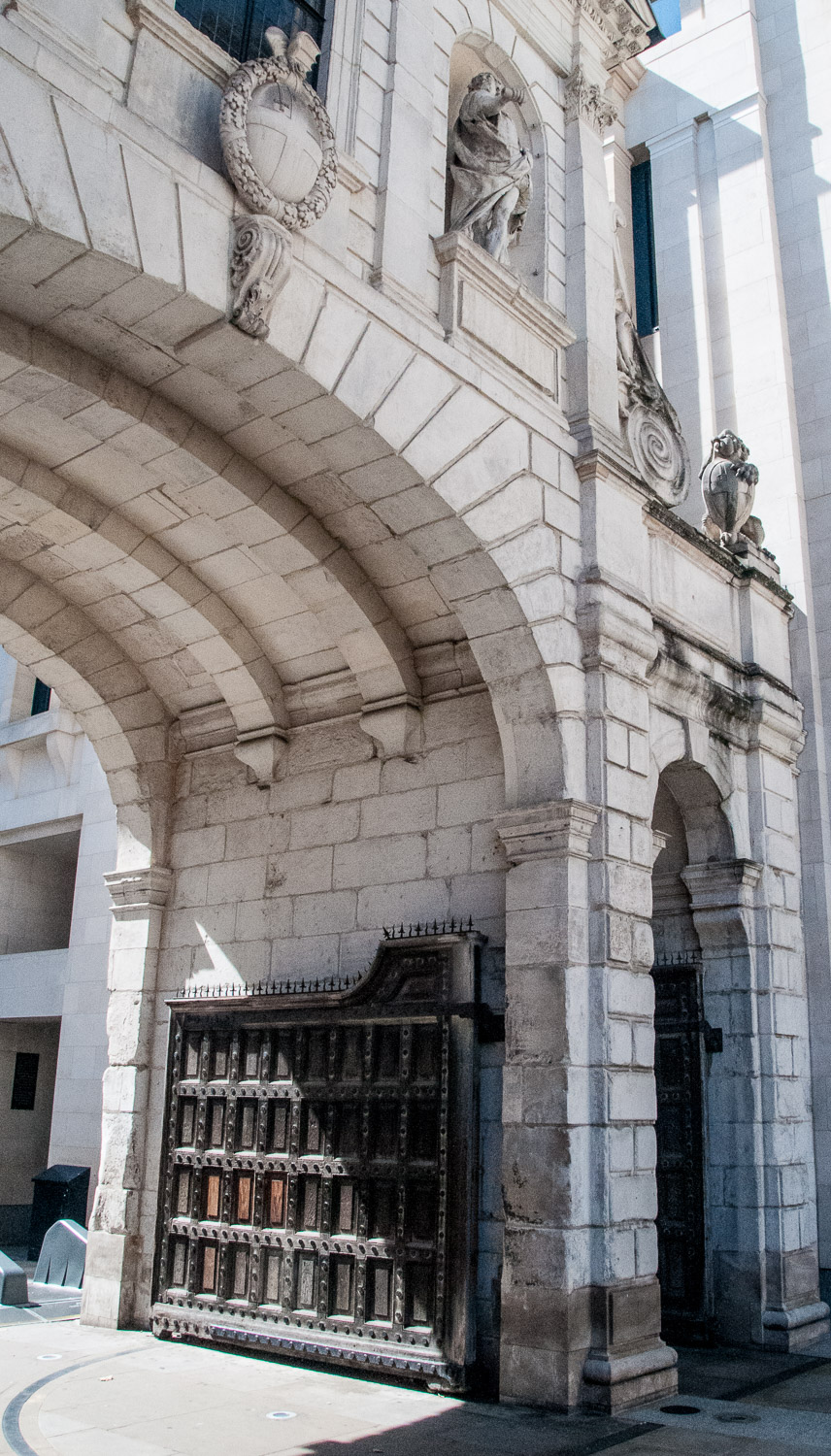
Were they original or were they fitted by Sir Henry? Photos show them closed when on the estate but I could not find a picture of them closed on Fleet Street. I went looking for graffiti to see if they would give me a clue. There were some from the 20th century …
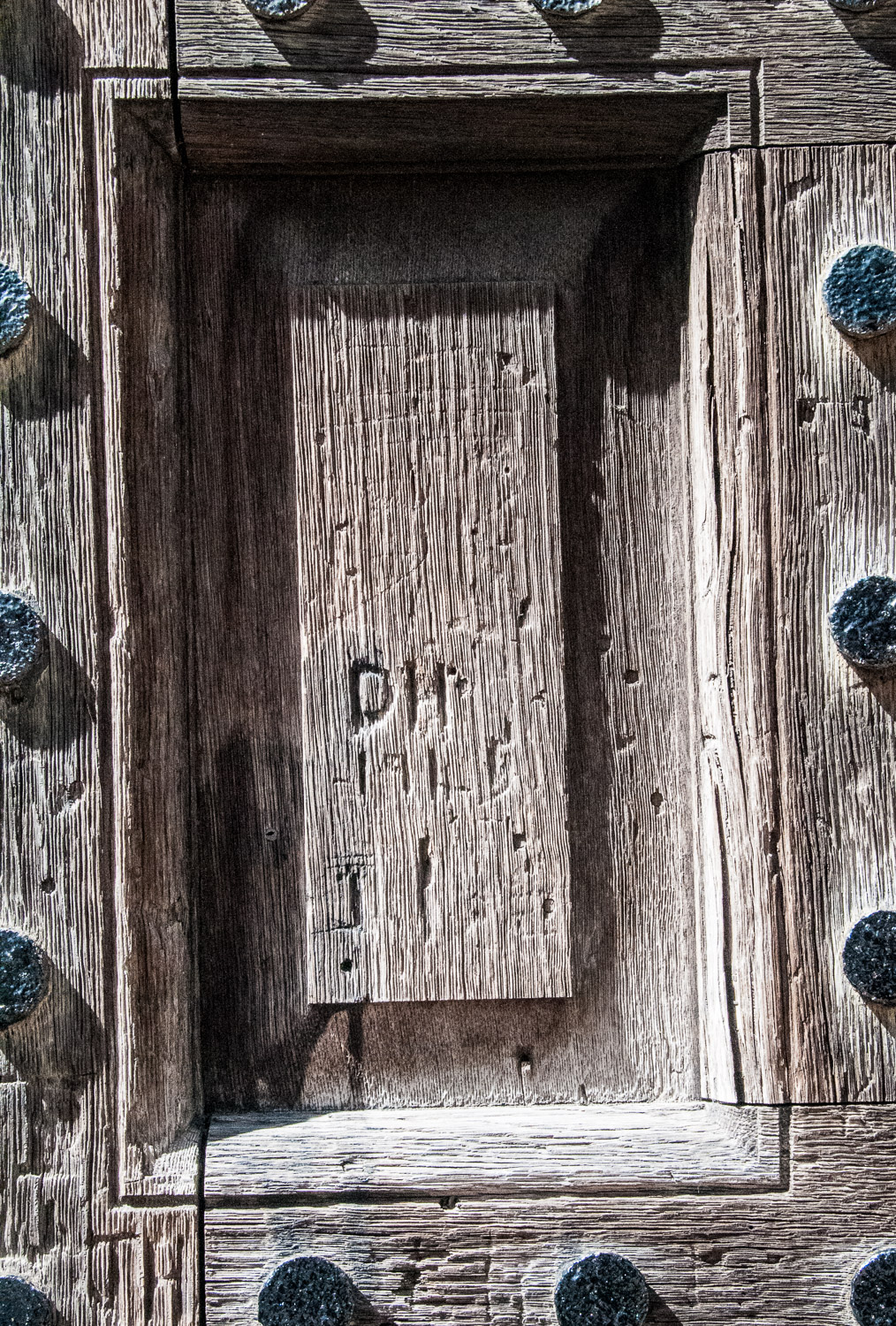
DH from 1945.
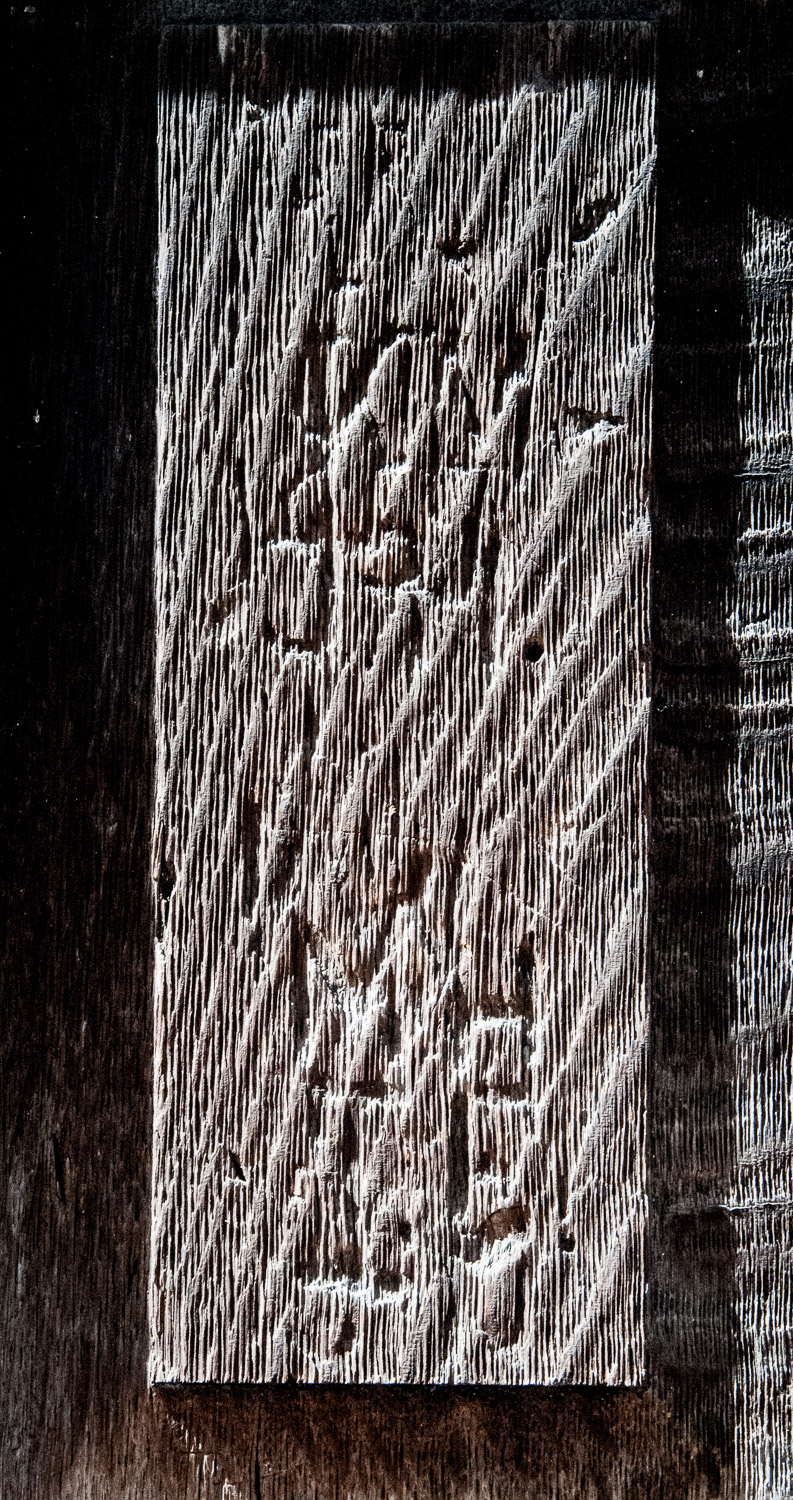
Someone in 1957.

But could this possibly be 1751 …
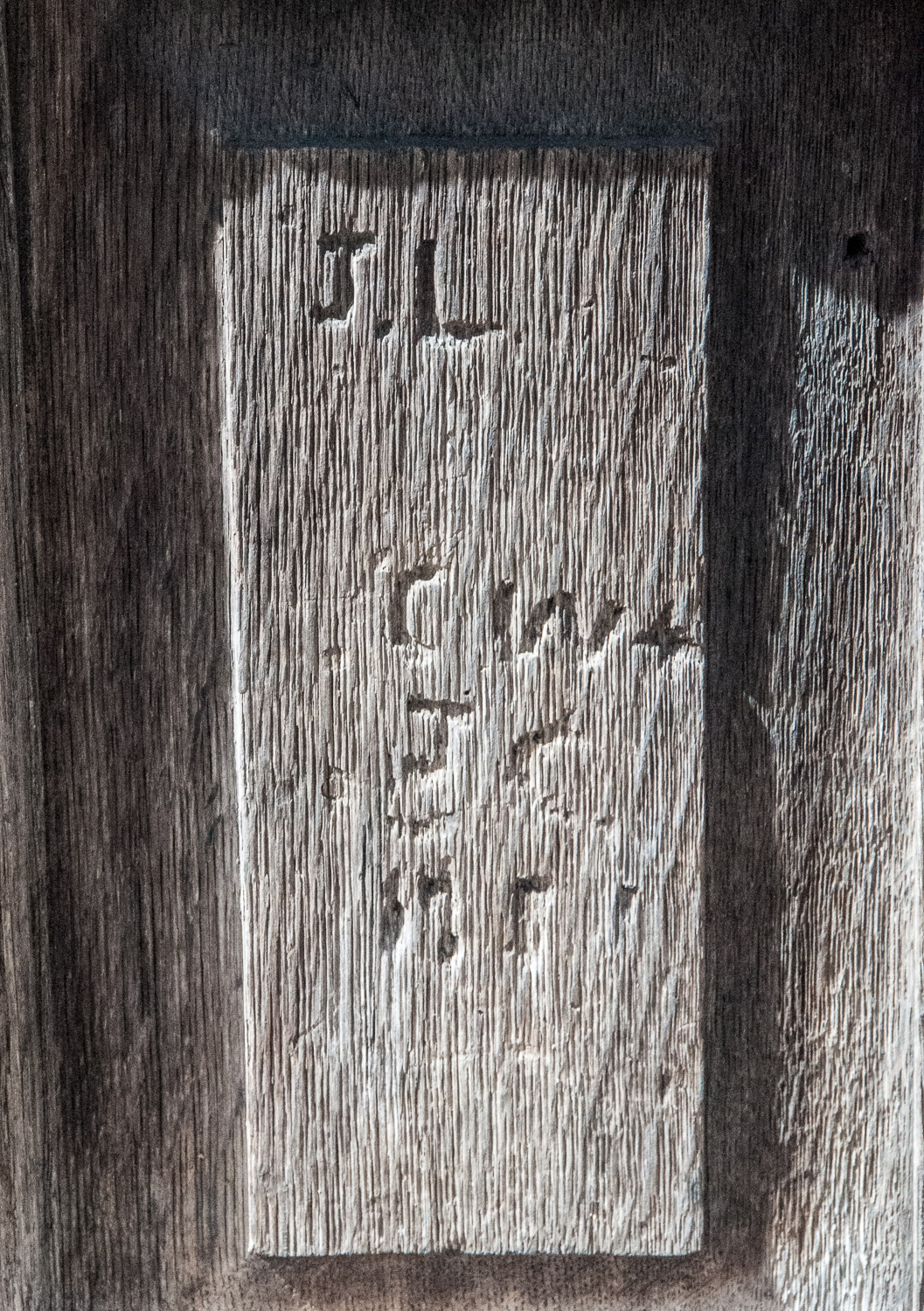
And maybe this is 1749 …
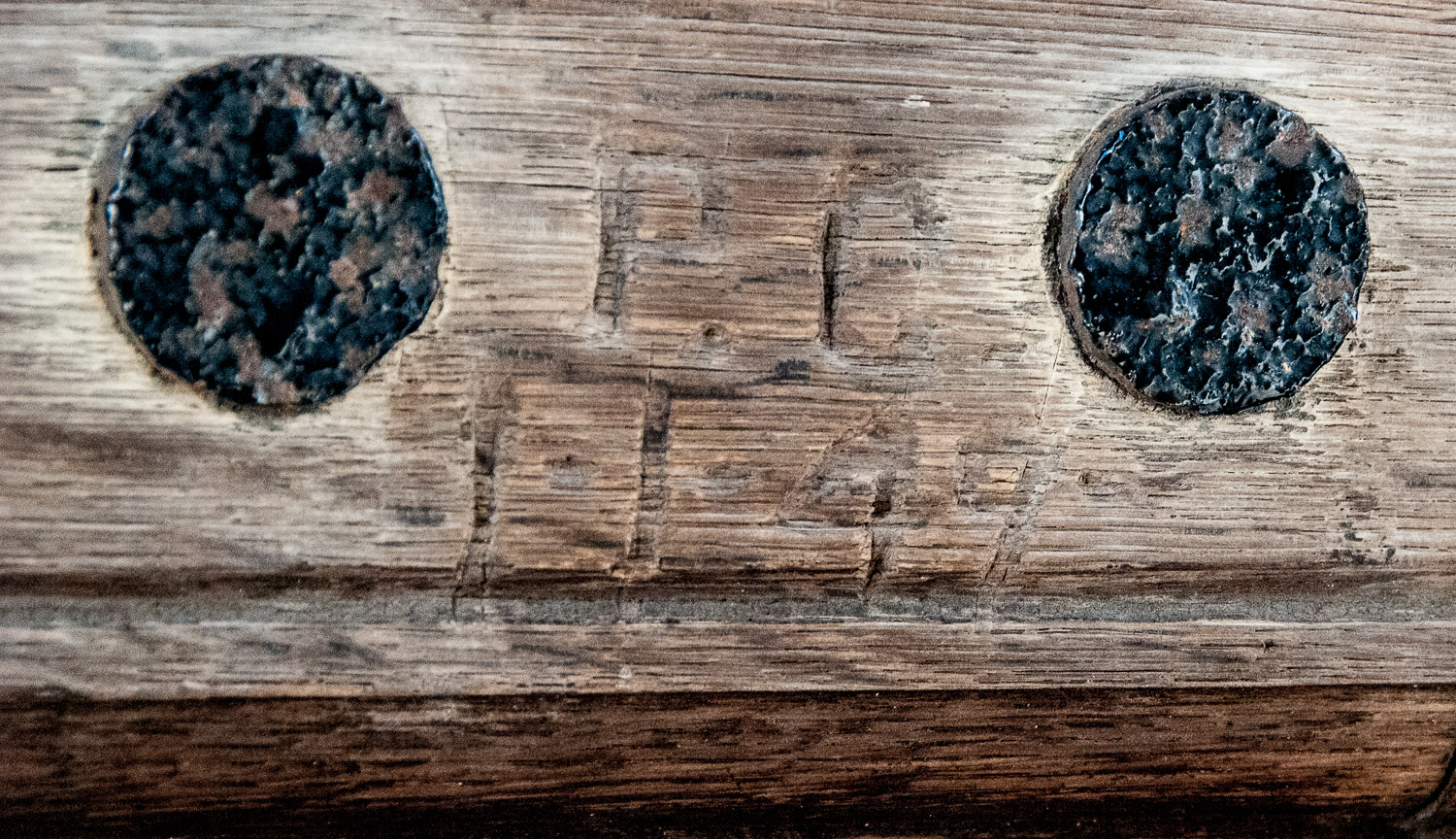
Neither are very conclusive unfortunately but I am pretty sure the gates predate the Bar’s removal in 1878. I am going to do a bit more research.

*** STOP PRESS ***

Saturday 18 August – Just started my research and I am sure the gates date from before 1880. Here is an extract from Bradshaw’s Illustrated Handbook to London and its Environs 1862:

‘To show the power of the Lord Mayor, the ponderous gates of the civic barrier are shut upon all occasions of royal visits to the city. The herald then sounds a trumpet, and the Mayor and corporation within demand by their marshal to know the monarch’s pleasure , which, being communicated, the City sword is presented , the barrier flies open, and the cavalcade proceeds to its destination’.

This got me interested in gates generally and there are some really attractive ones around the City.

These beautifully restored examples are outside Salters’ Hall in Fore Street (EC2Y 5DE) …
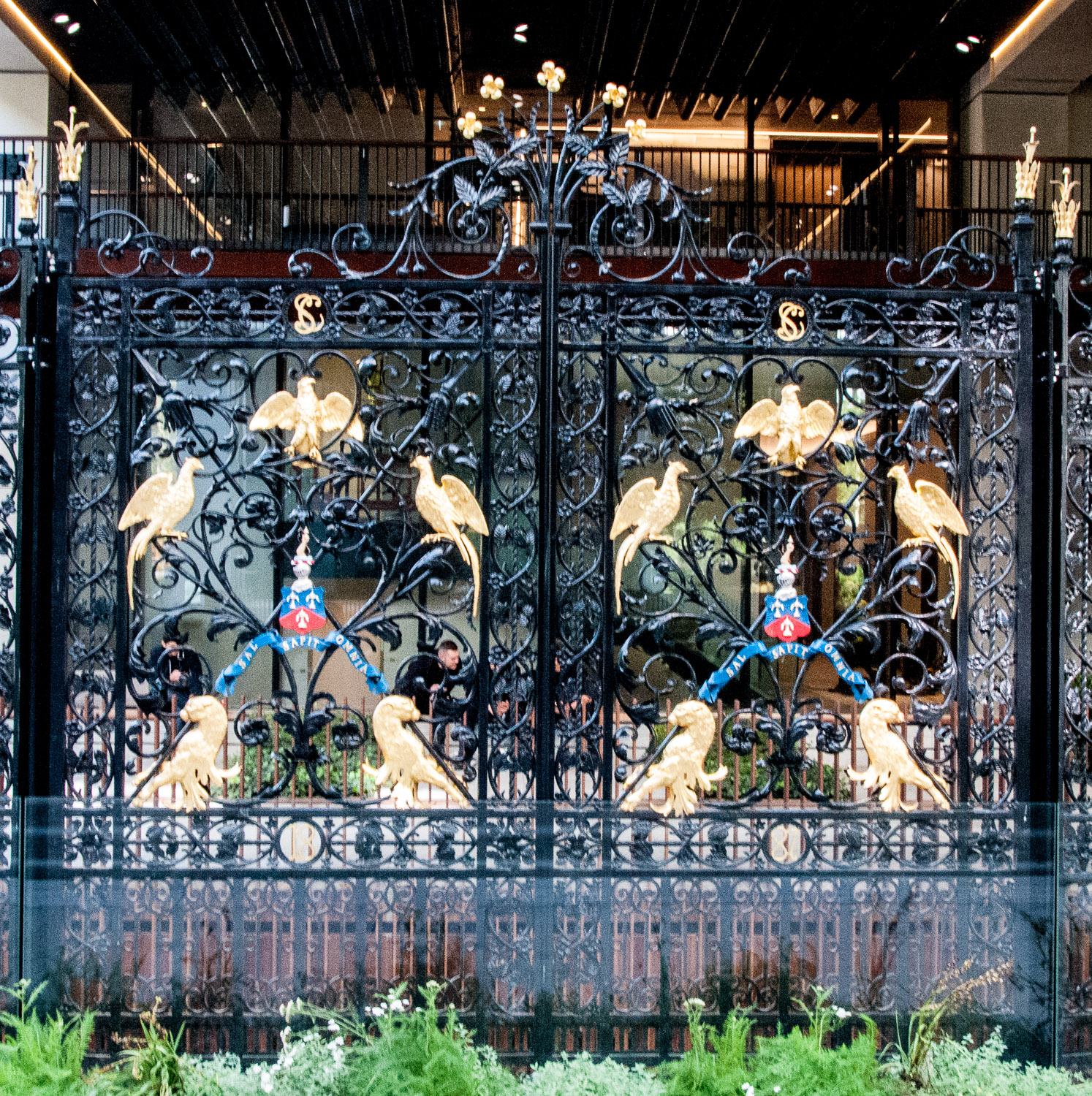
The gates are dated 1887 and were salvaged when the original hall was destroyed in the Blitz. The company’s motto sal sapit omnia (salt savours everything) has been incorporated along with birds and animals.

The Inner Temple has an impressive gated entrance off Tudor Street …
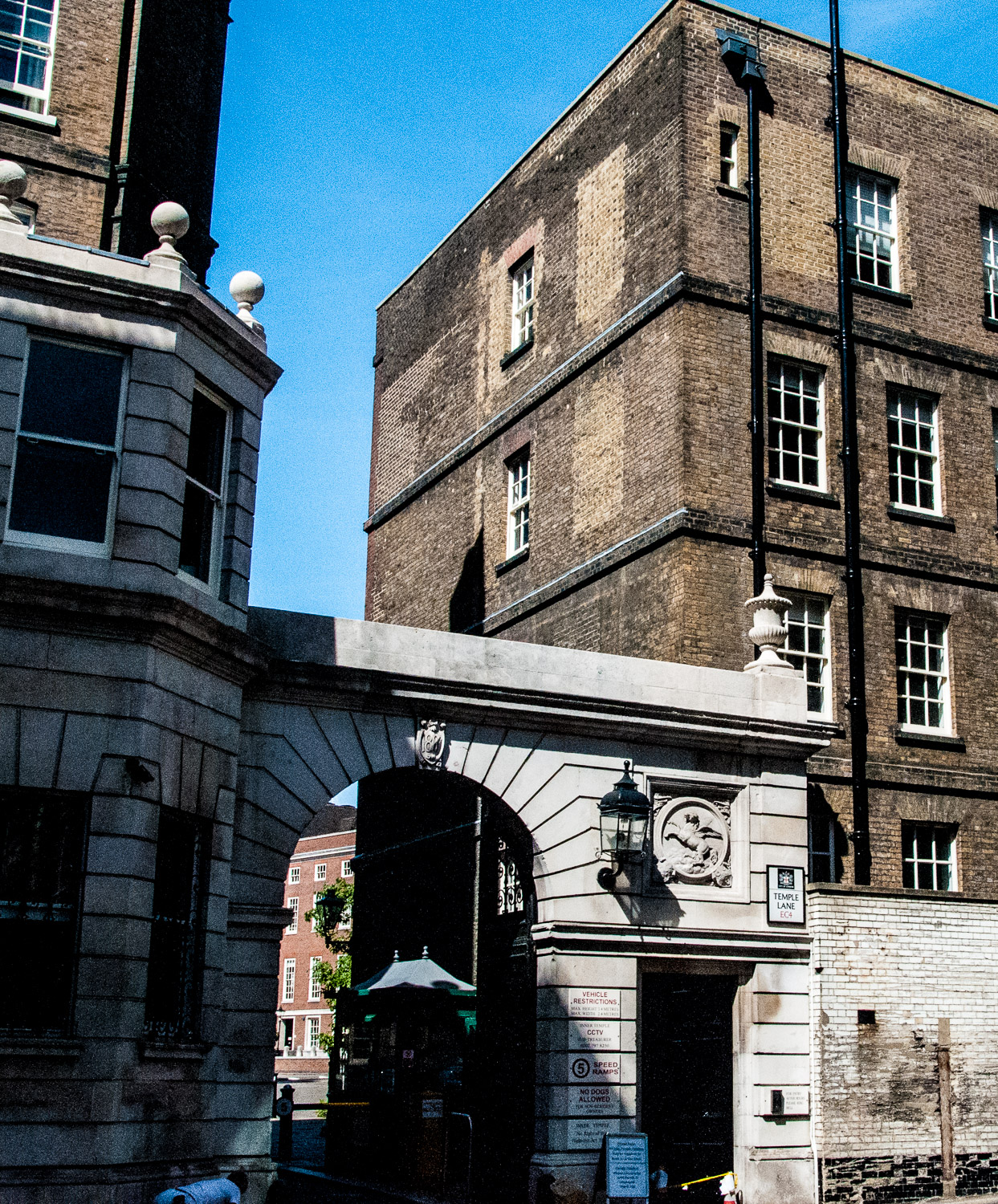
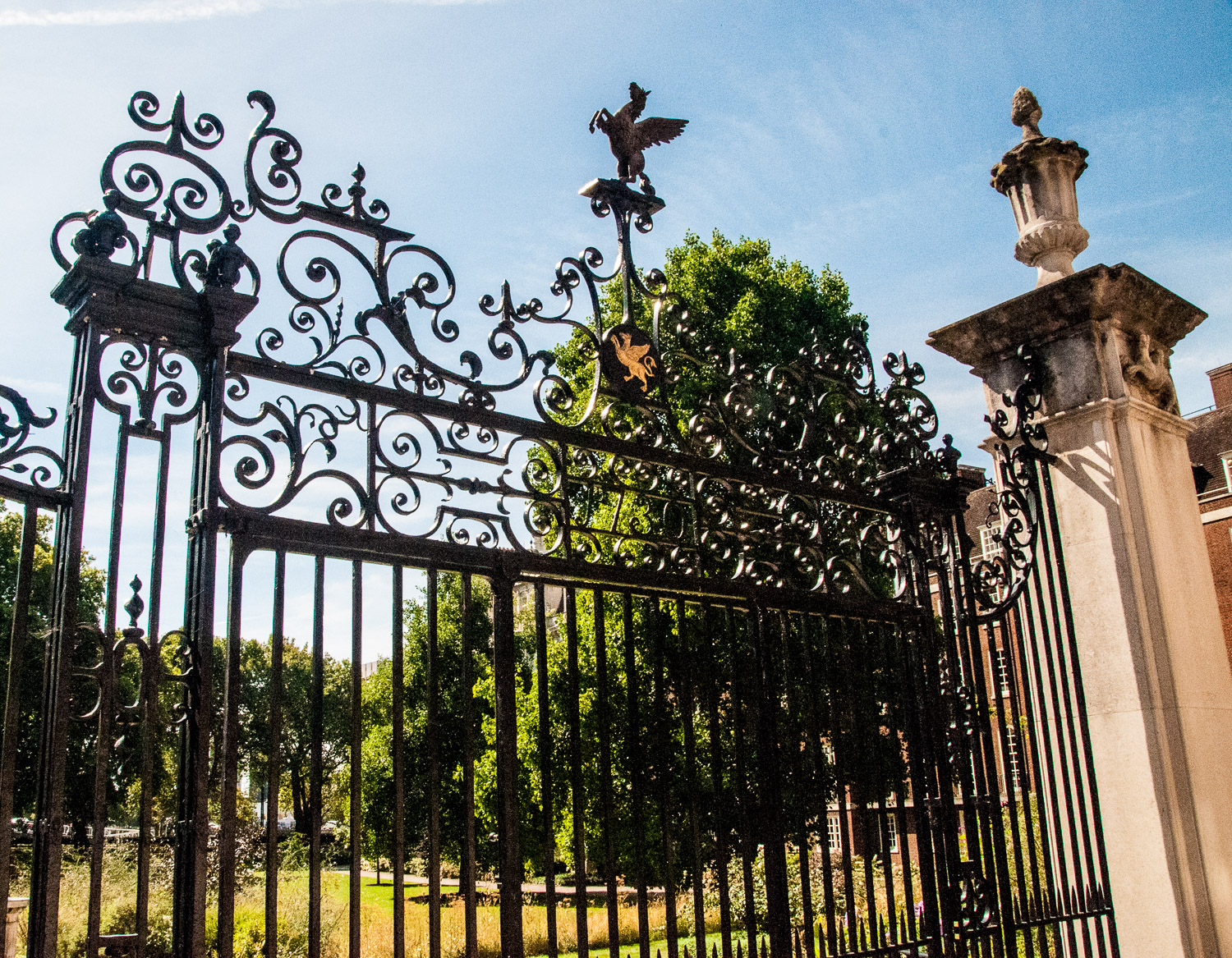
Through the entrance and on the left I noticed these gates leading to the Inner Temple Garden (EC4Y 9AT). They date from circa 1730 and lead to approximately three acres of gardens …
I particularly liked this sign …
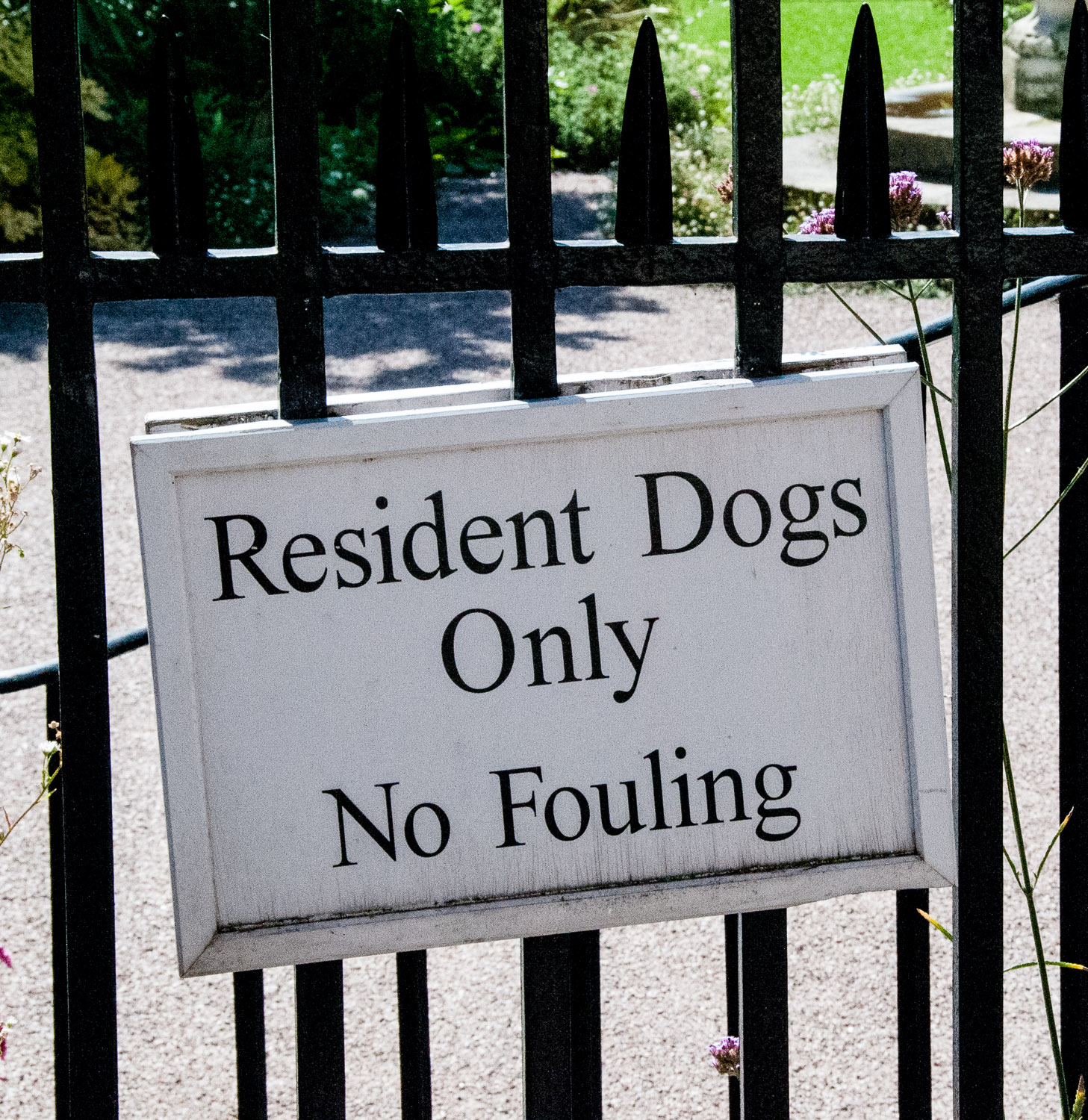
Placed quite low down, it is clearly aimed at literate animals who must nonetheless behave themselves.

And finally, this is the western entrance to Liverpool Street Station …
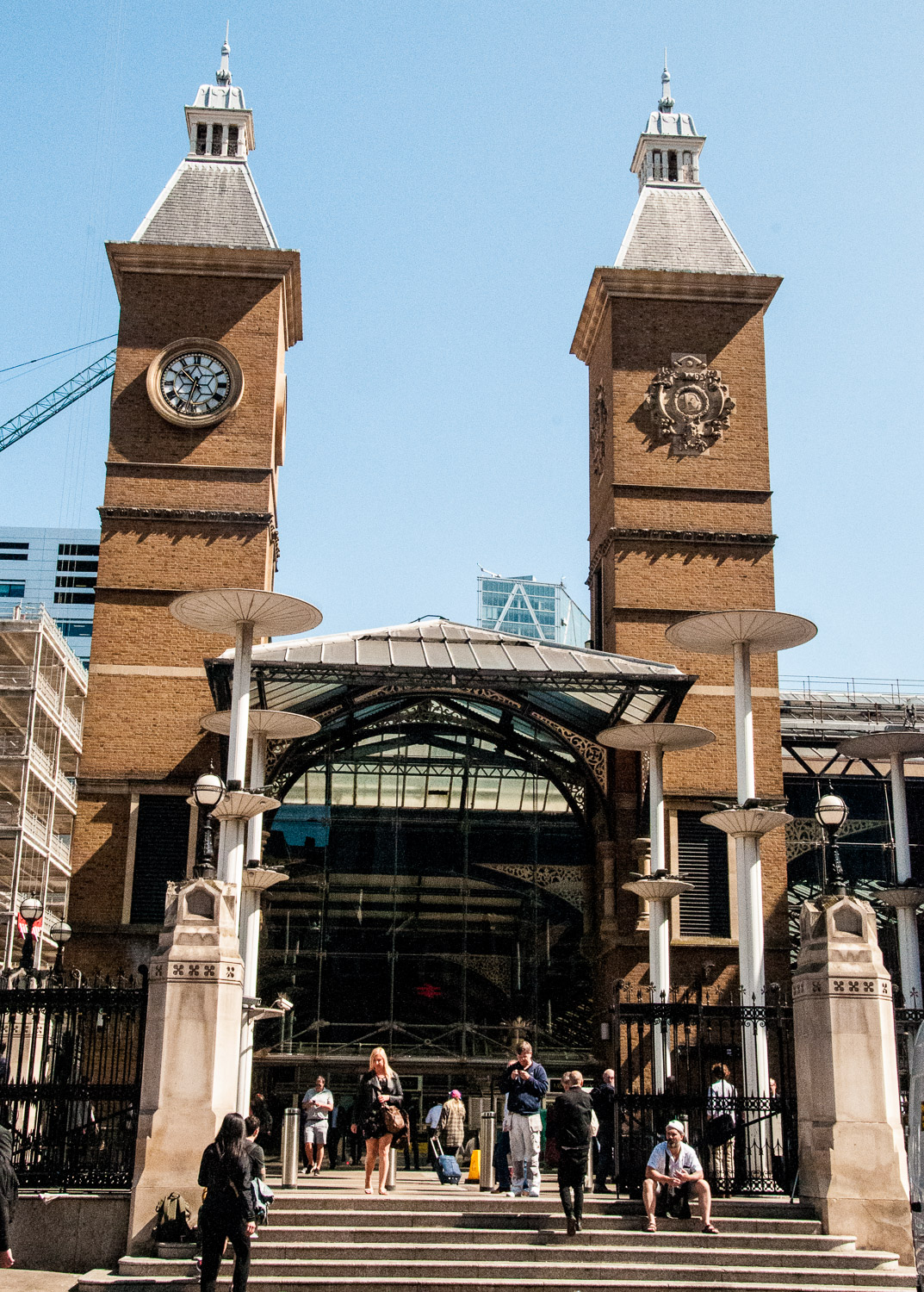
Up the stairs and to the left you will see gates incorporating this emblem …
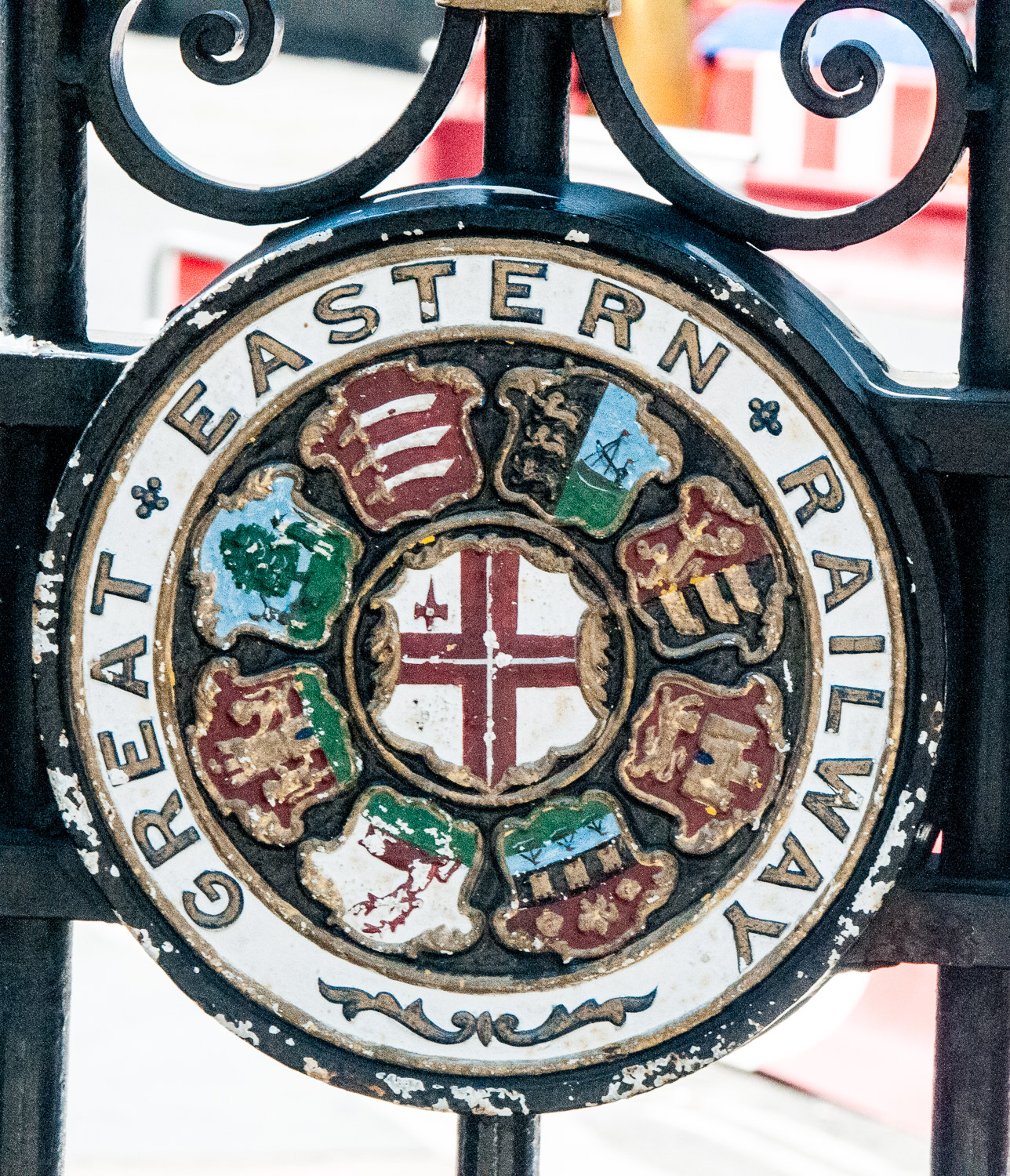
The Great Eastern Railway Company operated from 1862 until 1923 when it was incorporated into the London & North Eastern Railway. You can read more about the station and its history here.
 

City Animals 5

It has been quite a while since I sought out animals in the City and so last weekend I took advantage of the sunny weather and went on another safari.

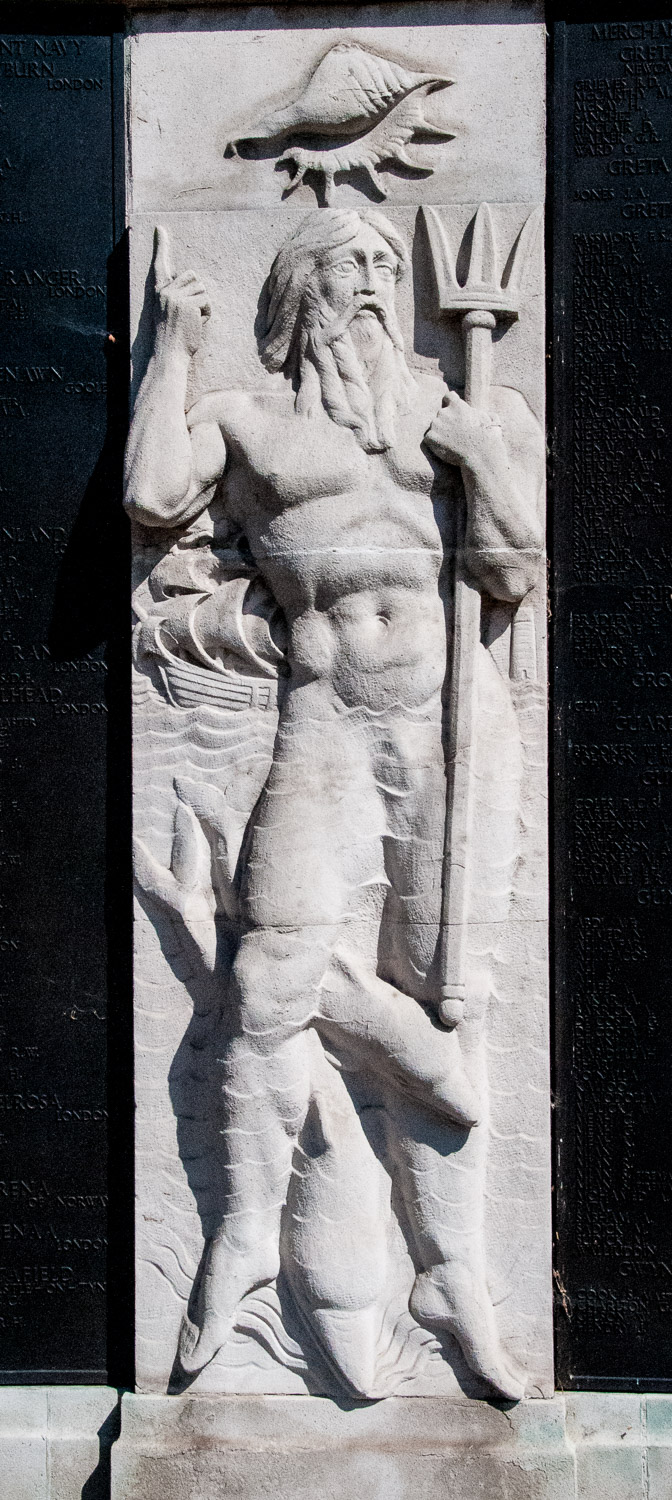
I always like to visit the Tower Hill memorial to the merchant navy and fishing fleet seafarers who lost their lives in both World Wars and have no grave but the sea. It’s a peaceful place on a weekend as virtually all the visitors to London have their eyes focused on the Tower of London across the road.

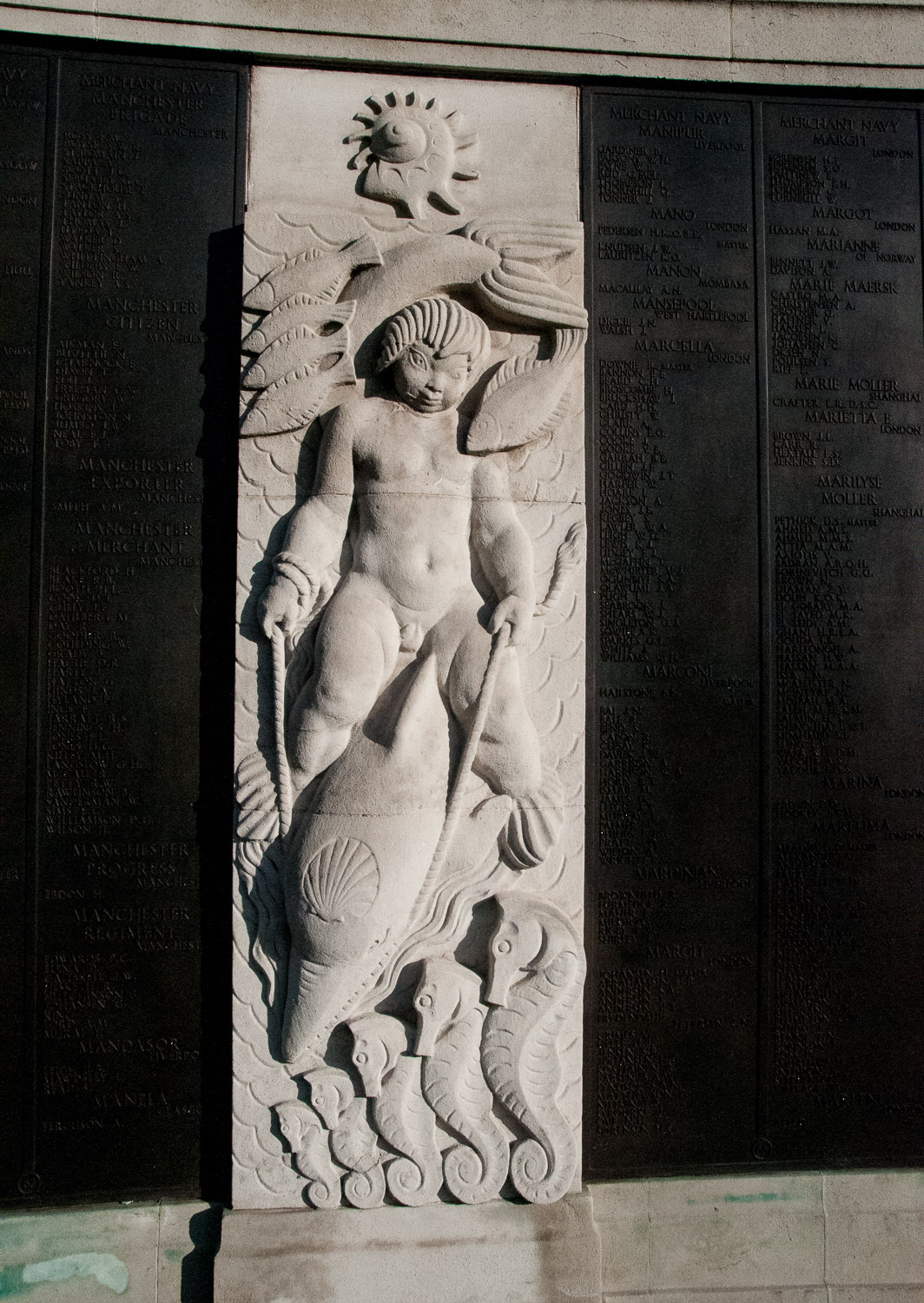
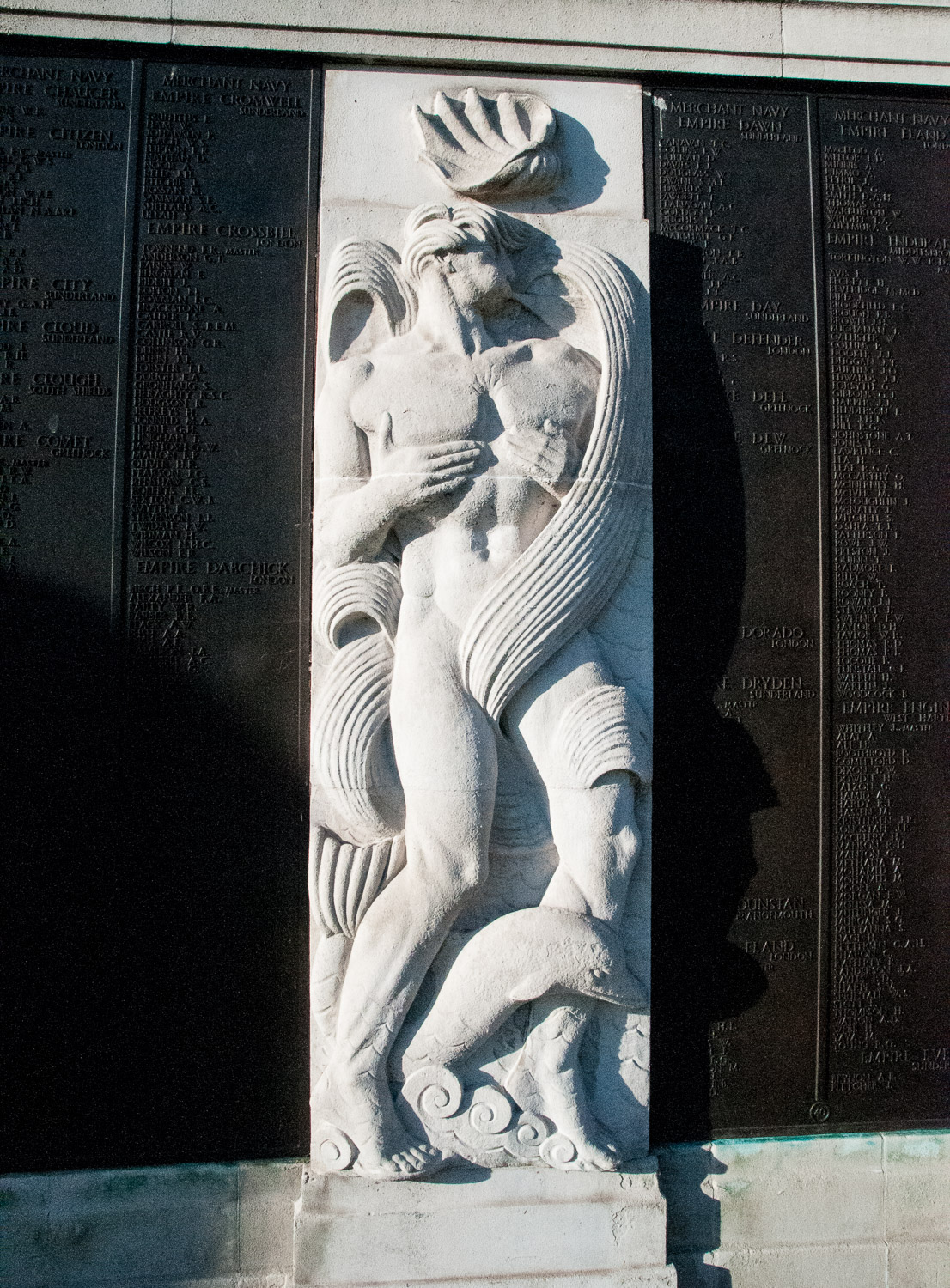
There are two memorials alongside one another and these pictures come from the one commemorating the almost 24,000 casualties of the Second World War (Trinity Square EC3N 4DH).

Dolphins feature highly in the allegorical sculptures by Sir Charles Wheeler representing the Seven Seas.

Here a boy is seen riding one surrounded by fishes and sea horses, above his head is a thorny snail …

A dolphin leaps through the legs of this figure who is creating the wind …

You can’t miss Neptune with a spider conch above his head and accompanied by another dolphin …

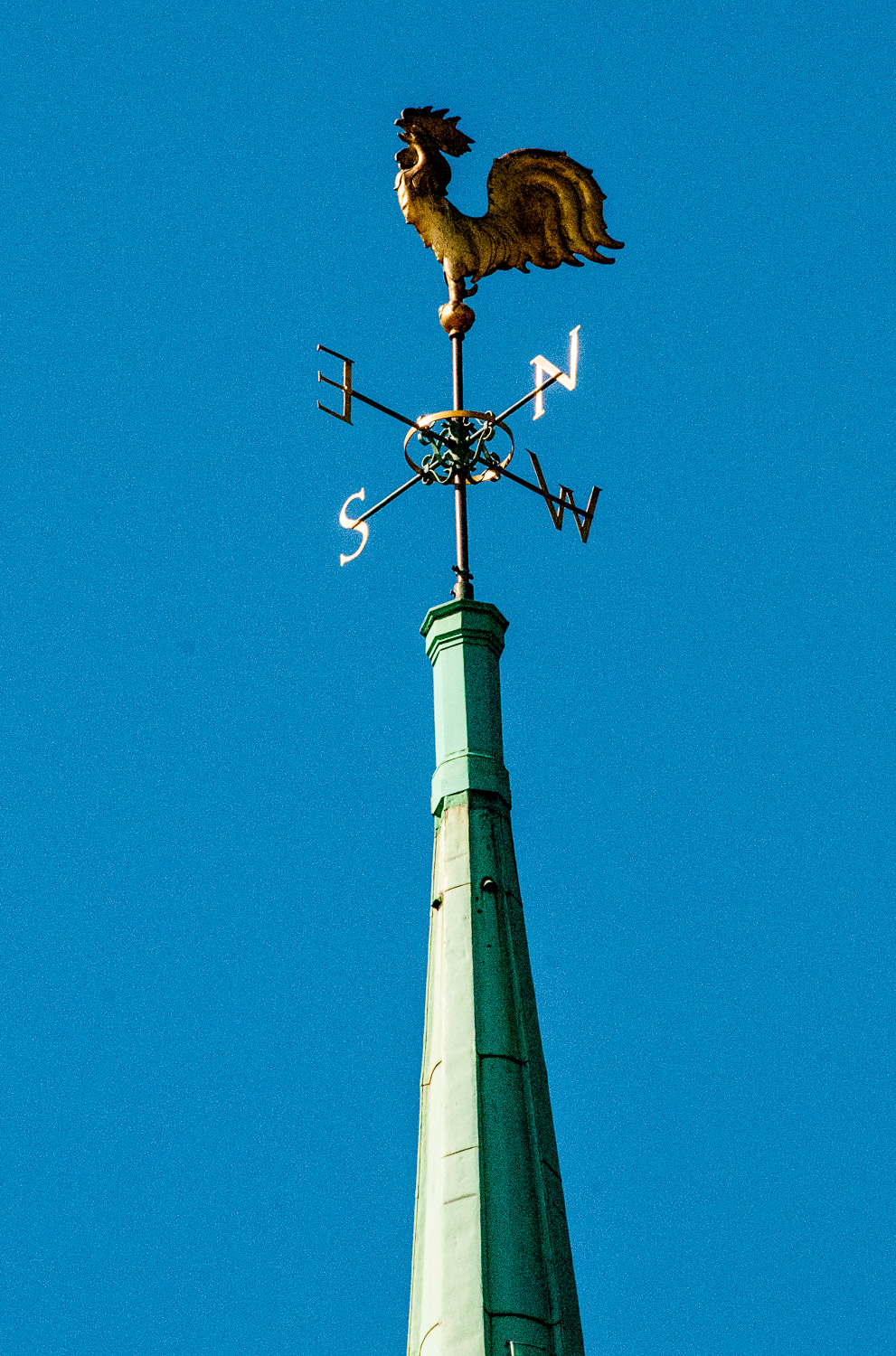
Across the road from Trinity Square is the church of All Hallows-by-the-Tower (EC3R 6BJ).

Substantially damaged in the War it was restored and reopened in 1957 with a new cockerel weathervane …

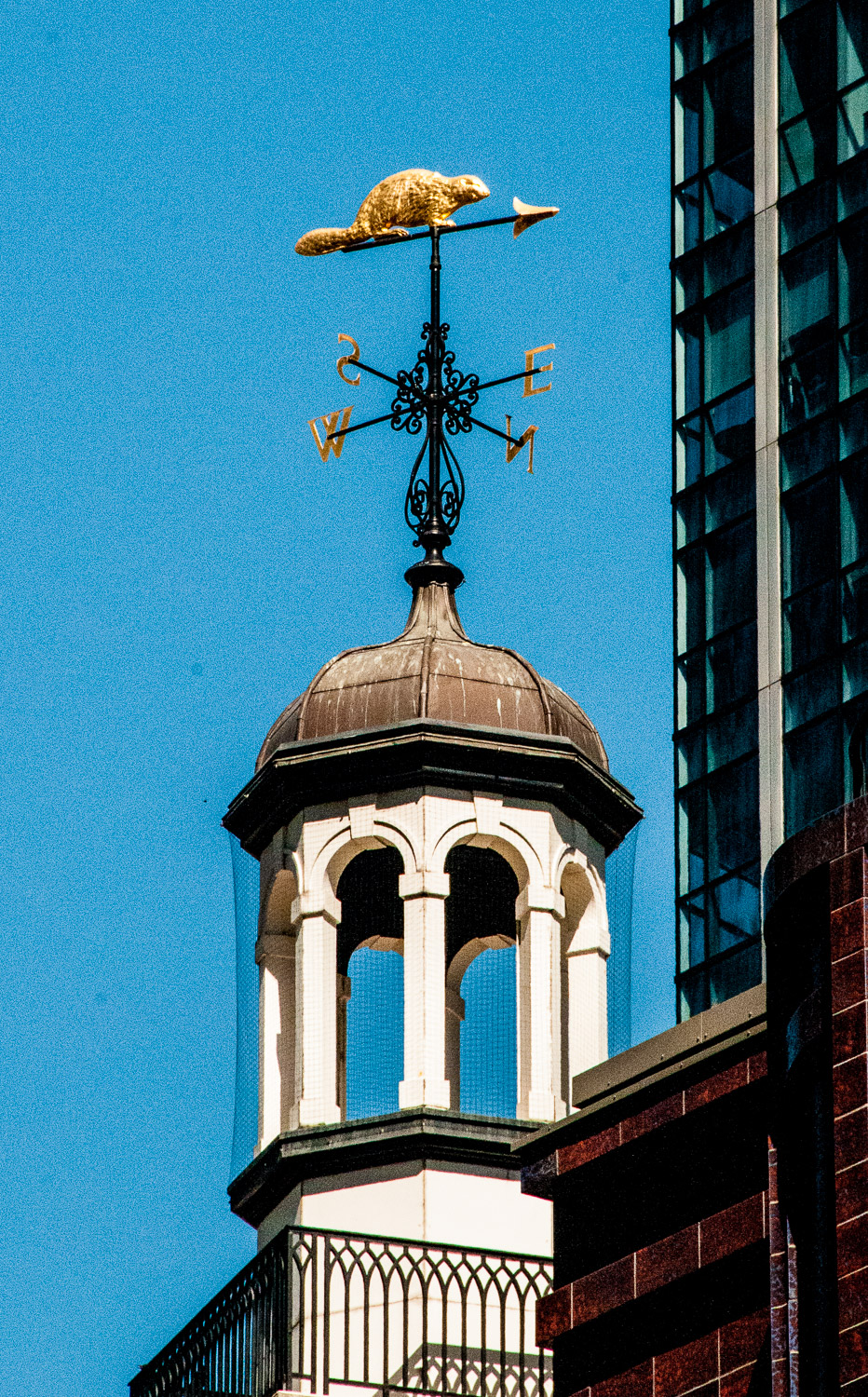
The beaver above 64 Bishopsgate (EC2N 4AW) is a reminder of the Hudson’s Bay company which once dominated the fur trade and was based nearby. Beaver fur was much sought after, particularly in the making of hats …

A golden rodent looks out across Bishopsgate.

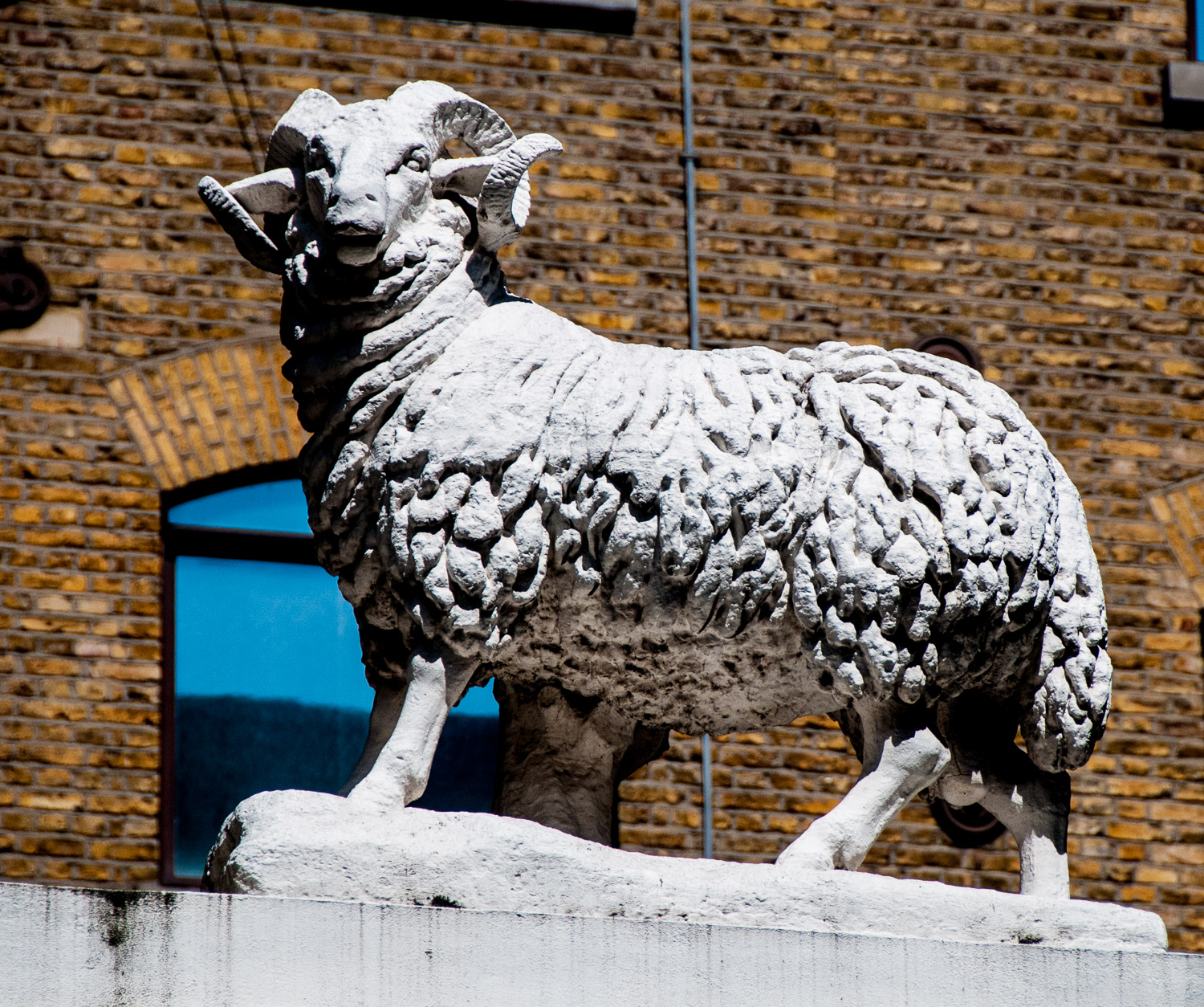
Wander down to the end of New Street off Bishopsgate (EC2M 4TP) and you will find this ram over the gateway leading to Cock Hill …

It’s by an unknown sculptor, dates from the 186os and used to stand over the entrance to Cooper’s wool warehouse.

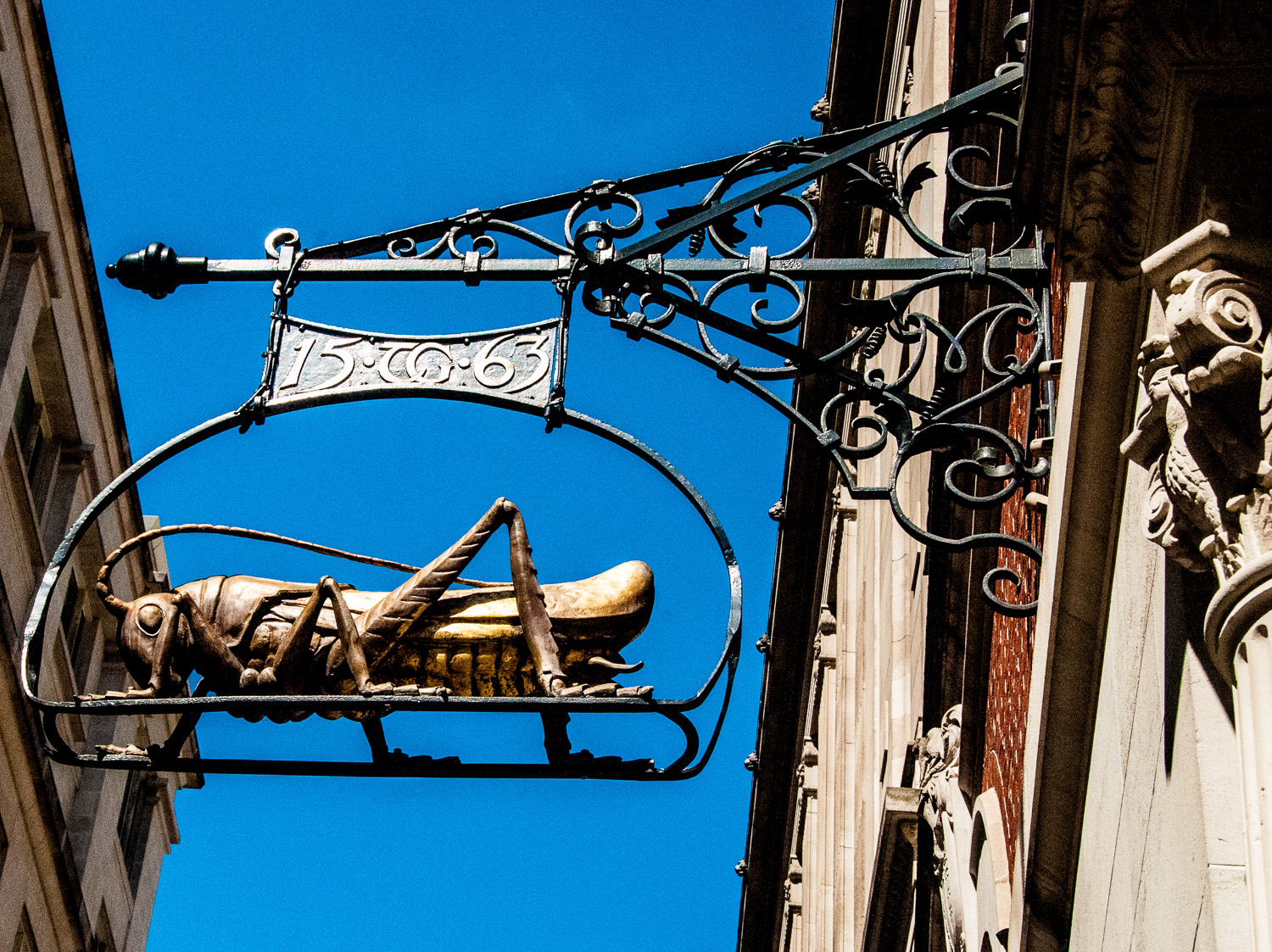
Outside 68 Lombard Street there hangs an astonishing five foot long grasshopper (EC3V 9LJ) the insect being derived from the coat of arms of the Gresham family. Buildings in Lombard Street were not numbered until 1770 and so when the Greshams lived and worked there a similar sign would have been used to mark their residence …

The year 1563 refers to the year Thomas Gresham (TG on the sign) set up his business here.

The present building dates from 1930 when it was destined to become the City office of Martin’s Bank (whose coat of arms included a grasshopper). The original family sign disappeared at the time of Charles II when such advertisements were banned after numerous serious accidents. They had a tendency to become detached in high winds and on one occasion pulled down the entire frontage of a building. This grasshopper dates from 1902 when a host of signs were recreated to celebrate the coronation of Edward VII.

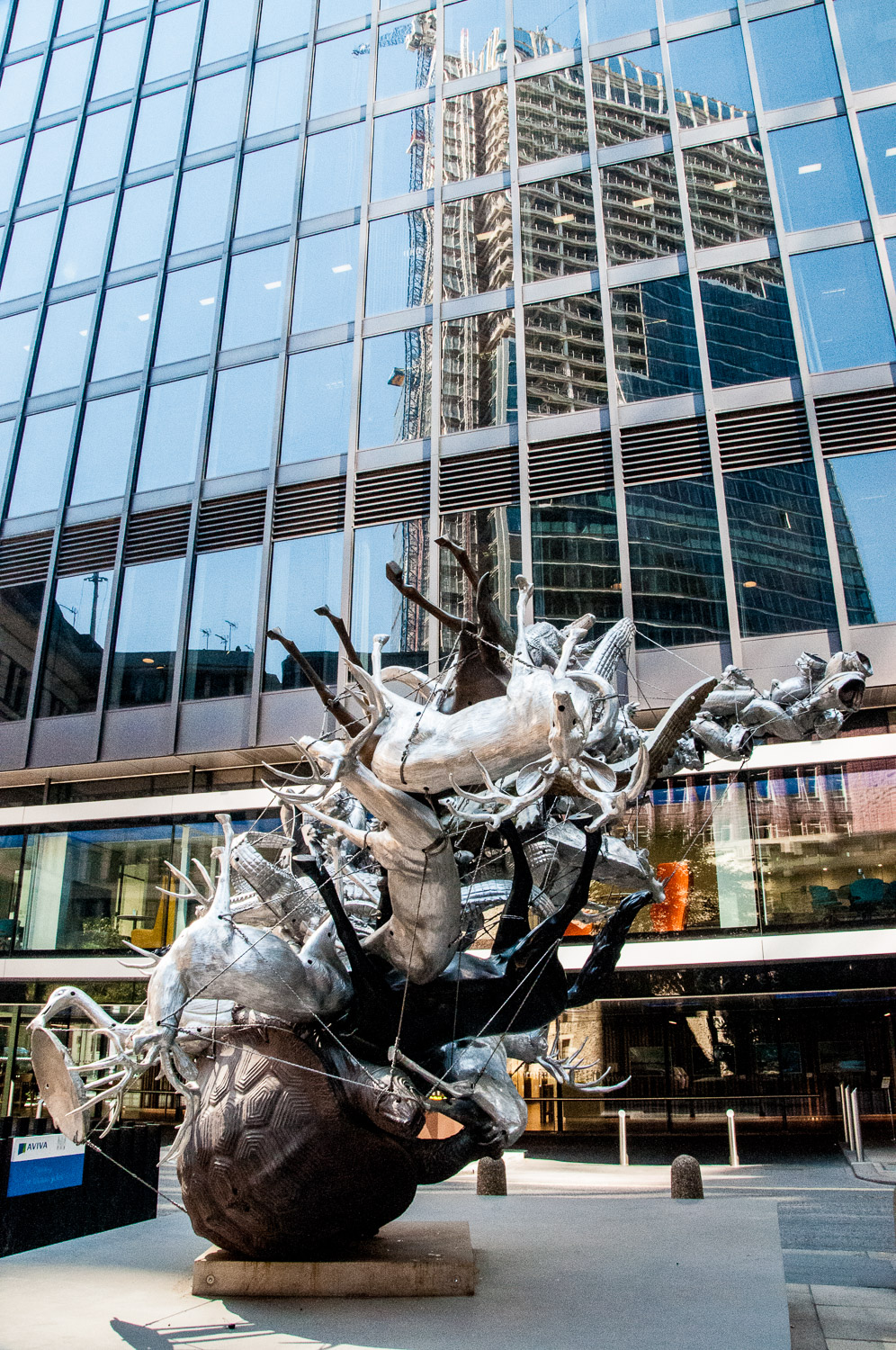
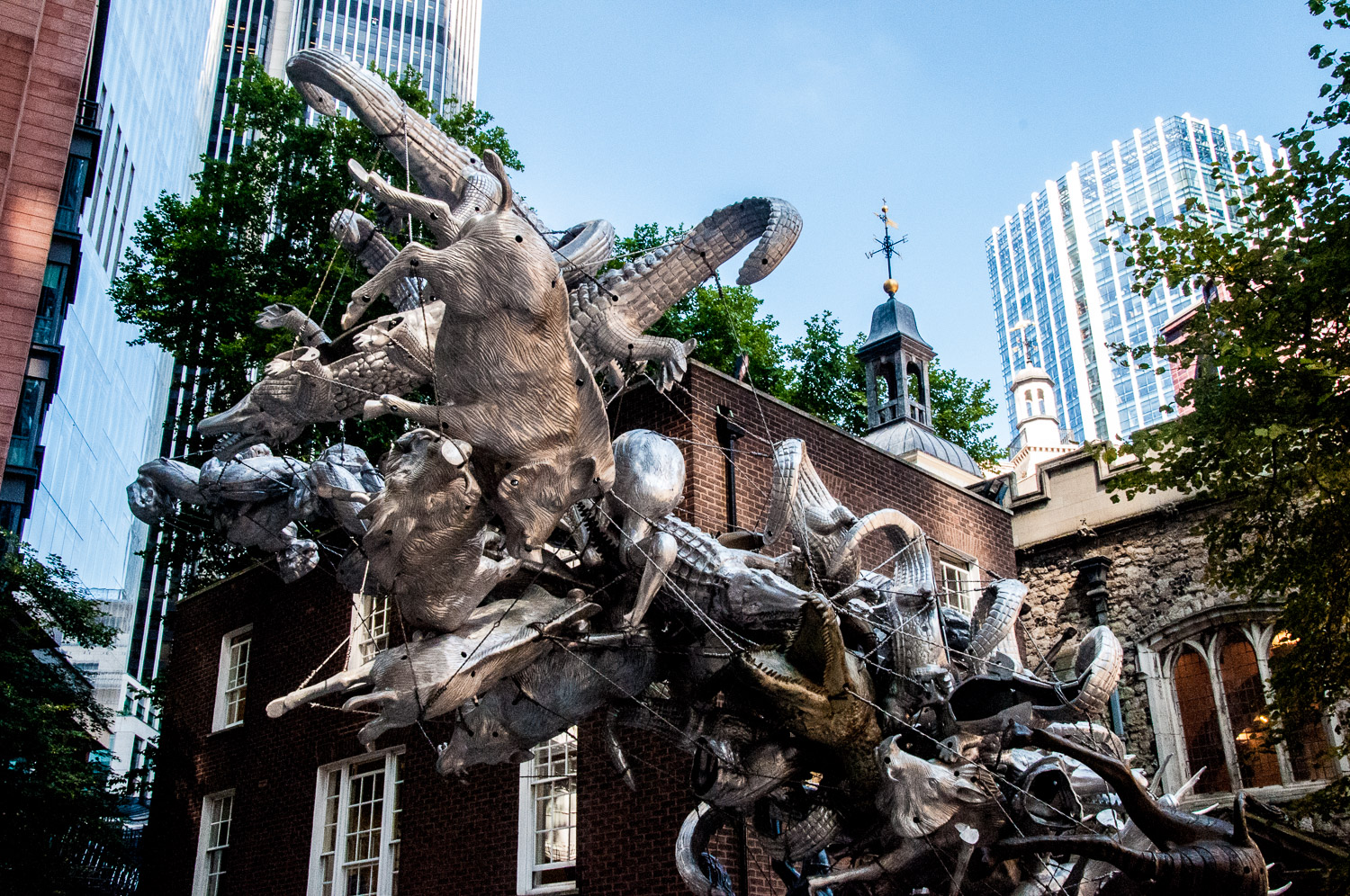
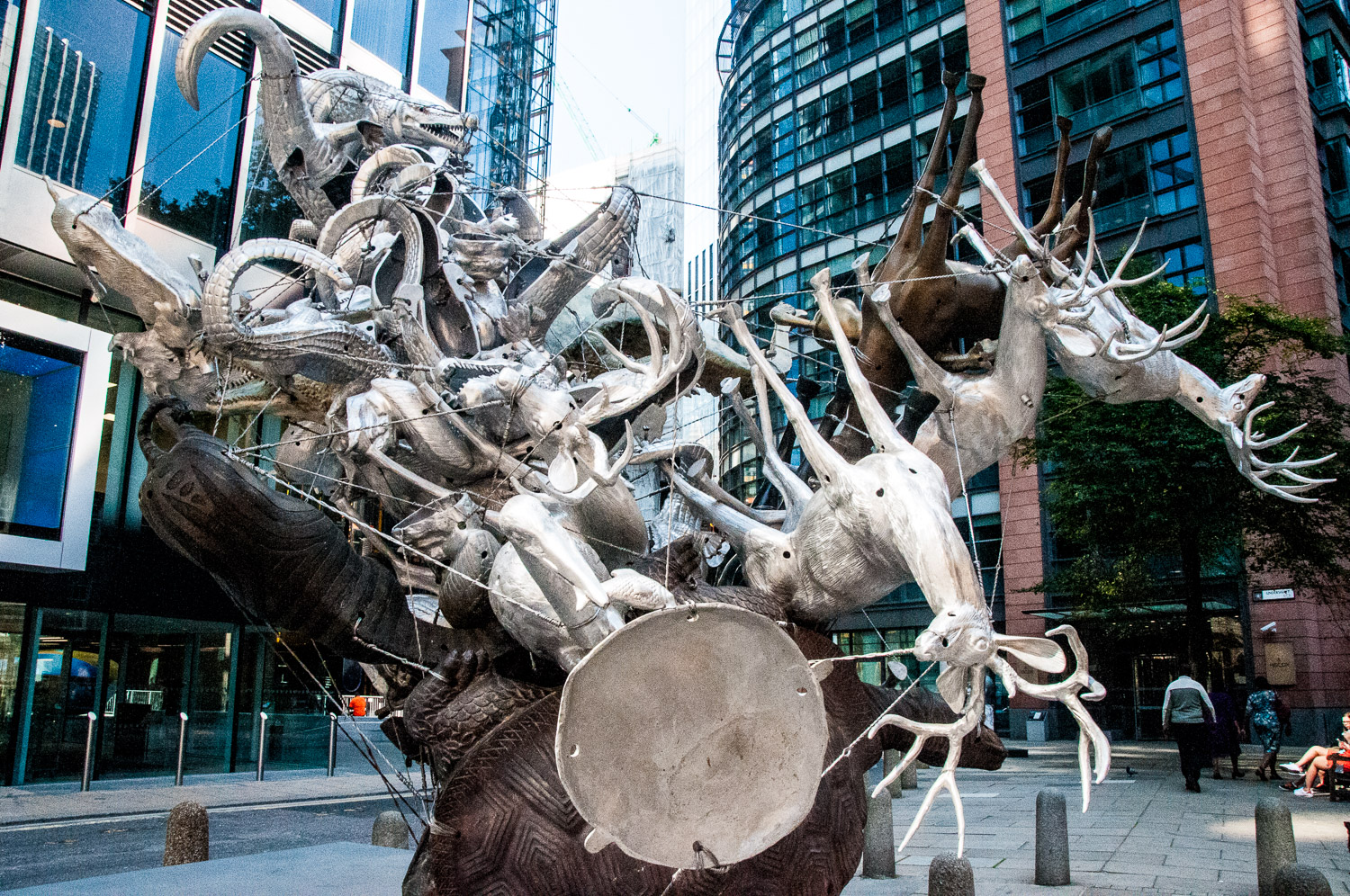
And finally, the Sculpture in the City event has brought us this extraordinary work by Nancy Rubins. It’s called Crocodylius Philodendrus and you can view it at 1 Undershaft (EC3A 6HX).

See how many animals you can spot …

In there somewhere you will find crocodiles, hogs, deer, tortoises and a zebra.


City of London pub ghosts

The City has been home to thousands of pubs over the years. Some have continued to flourish for, literally, centuries whereas others have disappeared. I have been exploring to see if I can identify some remnants of those lost hostelries.

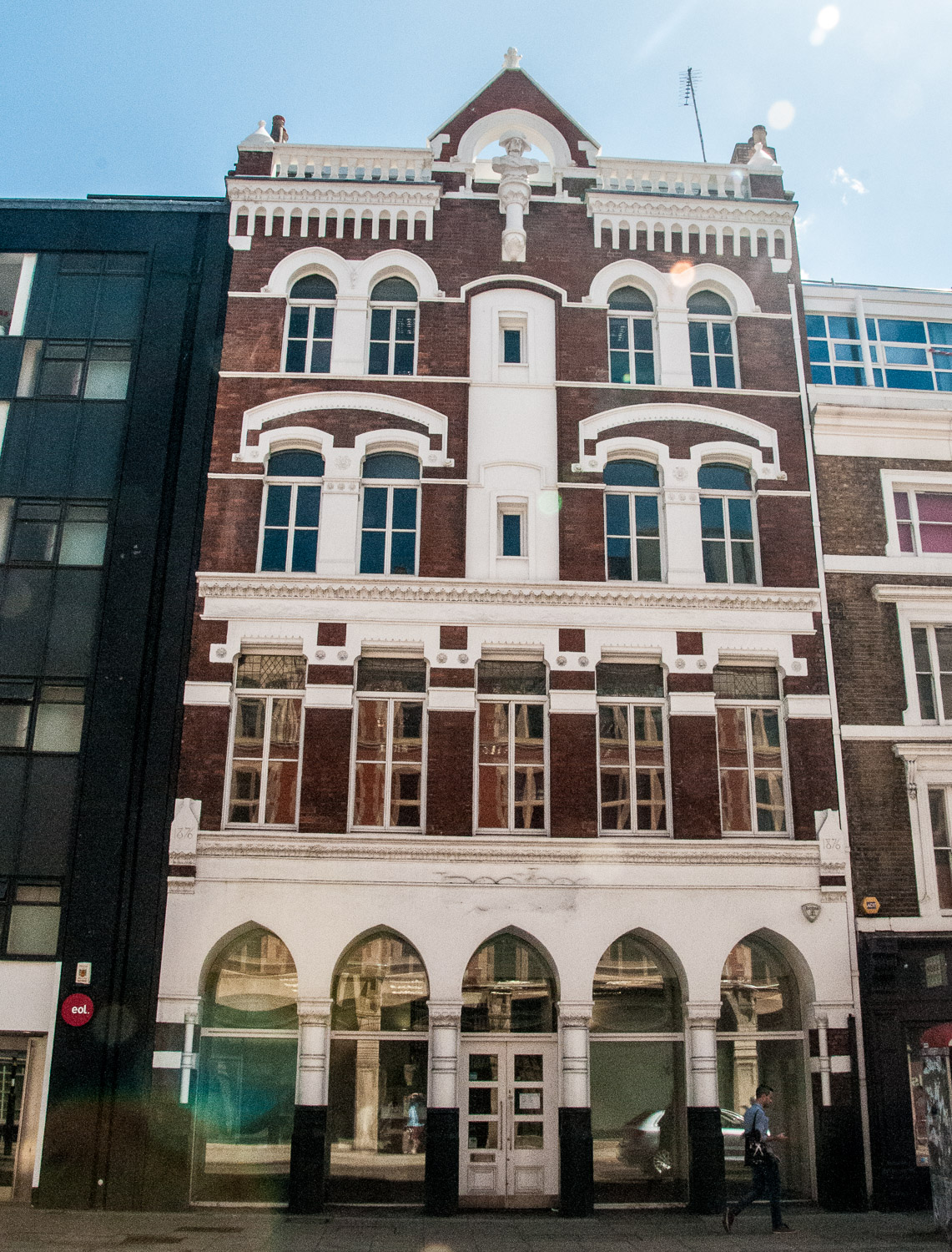
At 12 Old Street is the building that once housed The Old Rodney’s Head …

The building is for sale at the moment – offers in excess of £6.5 million – EC1V 9BE.

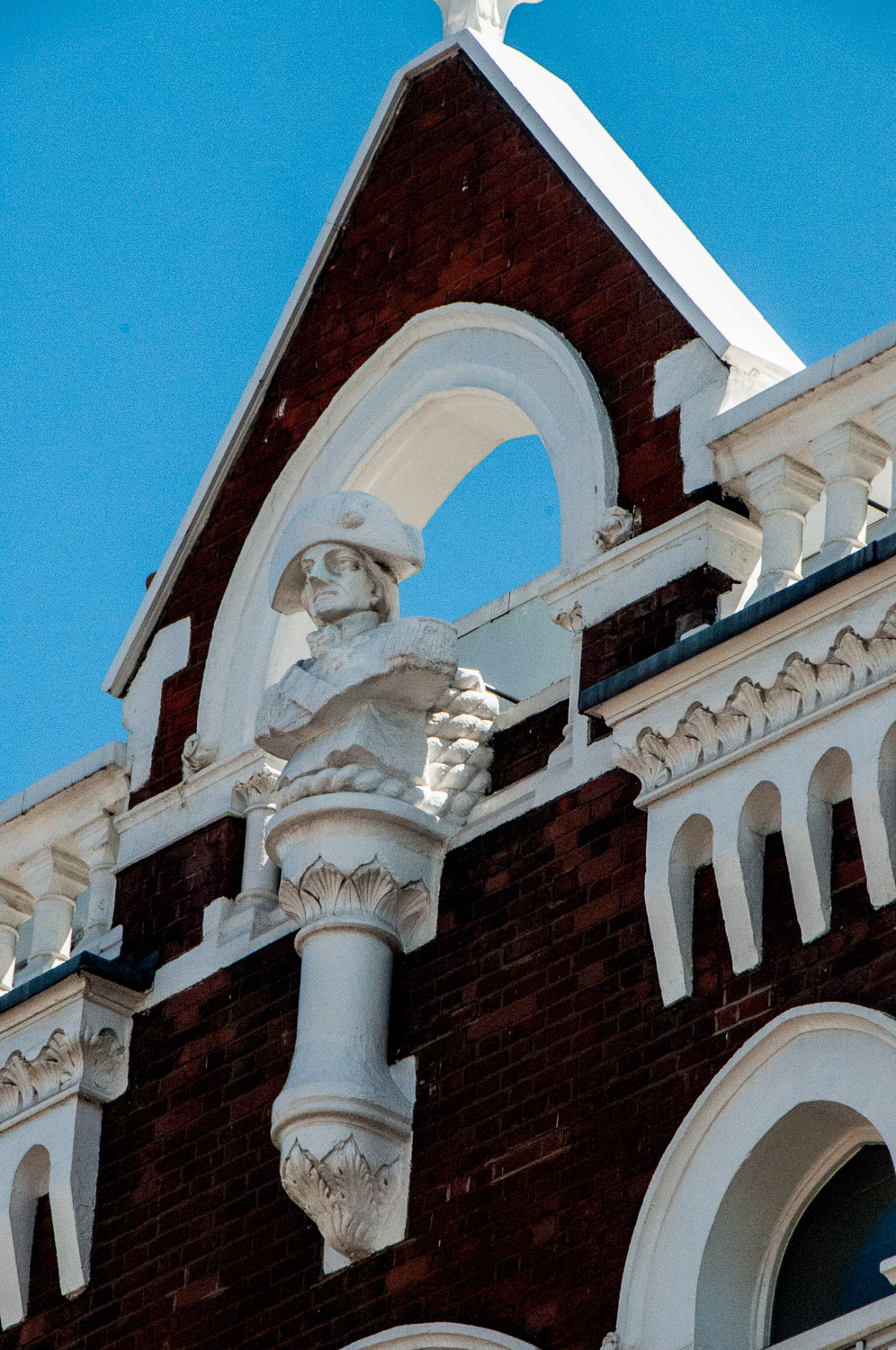
George Brydges Rodney, 1st Baron Rodney (1718-1792) was a famous Admiral best known for his victory over the French at the Battle of the Saintes in 1782 which ended the French threat to Jamaica. The building dates from 1876 and Rodney still gazes down on Old Street …

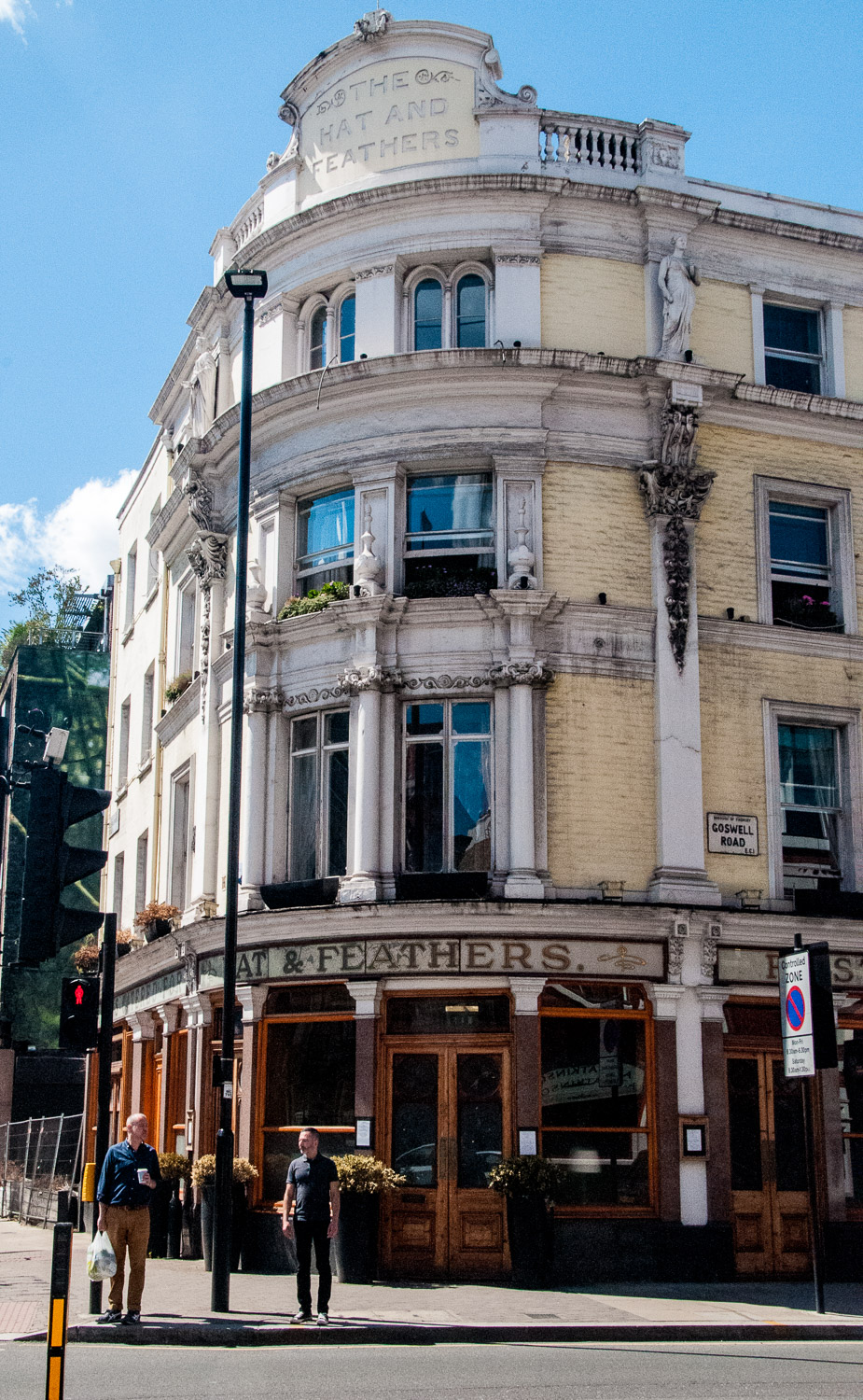
Sadly the Hat and Feathers has not reopened after a short time operating as a restaurant …

2 Clerkenwell Road EC1M 5PQ.

British History Online tells us that the building dates from 1860 and the facade – ‘gay without being crude’ – is decorated with classical statues, urns and richly ornate capitals and consoles.

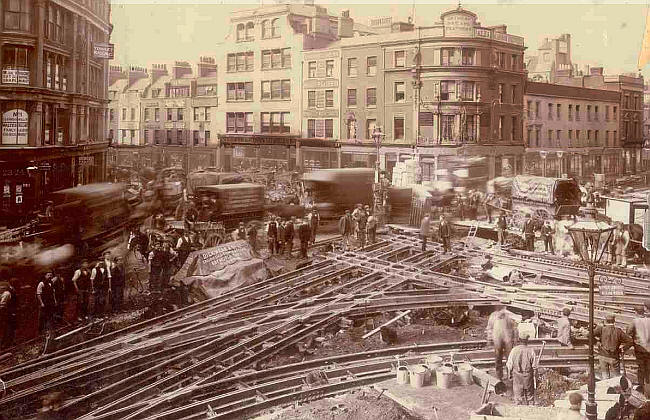
I found this fascinating picture whilst researching …

Laying tramlines outside the pub in 1906 – source UK Pub History.

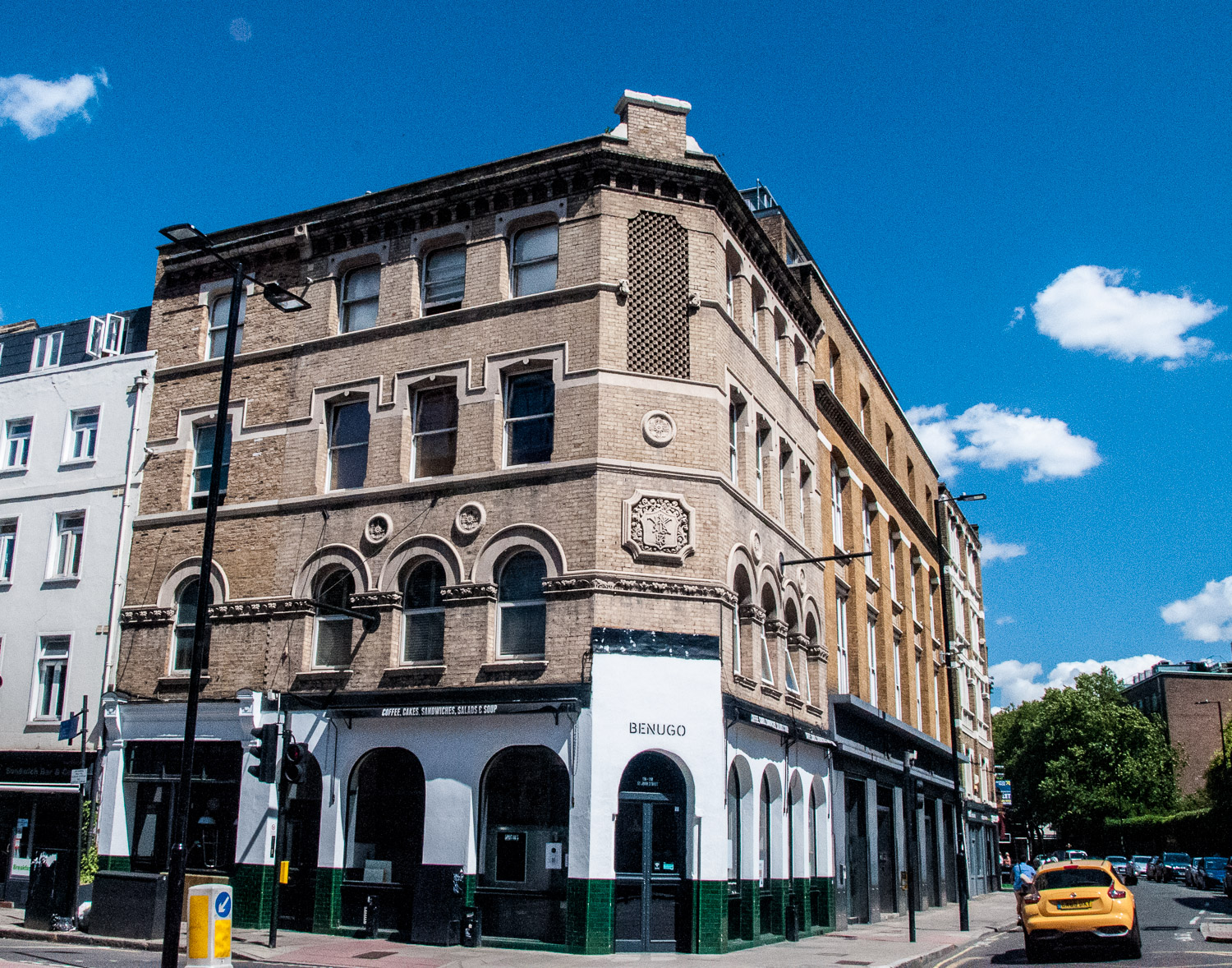
At the corner of Clerkenwell Road and St John Street is the building which once housed the Criterion Hotel (EC1V 4JS) …

The owners of the Cannon Brewery in St John Street built the Hotel here in 1874–6 as a replacement for the Red Lion and Punchbowl at No. 118 St John Street. This old tavern itself survived as a shop, but was eventually replaced in the 1920s by the present two storey extension to the Criterion, matching the style of the 1876 building. The Criterion closed in the 1960s, becoming a watch-materials shop and then, in the late 1990s, a restaurant.

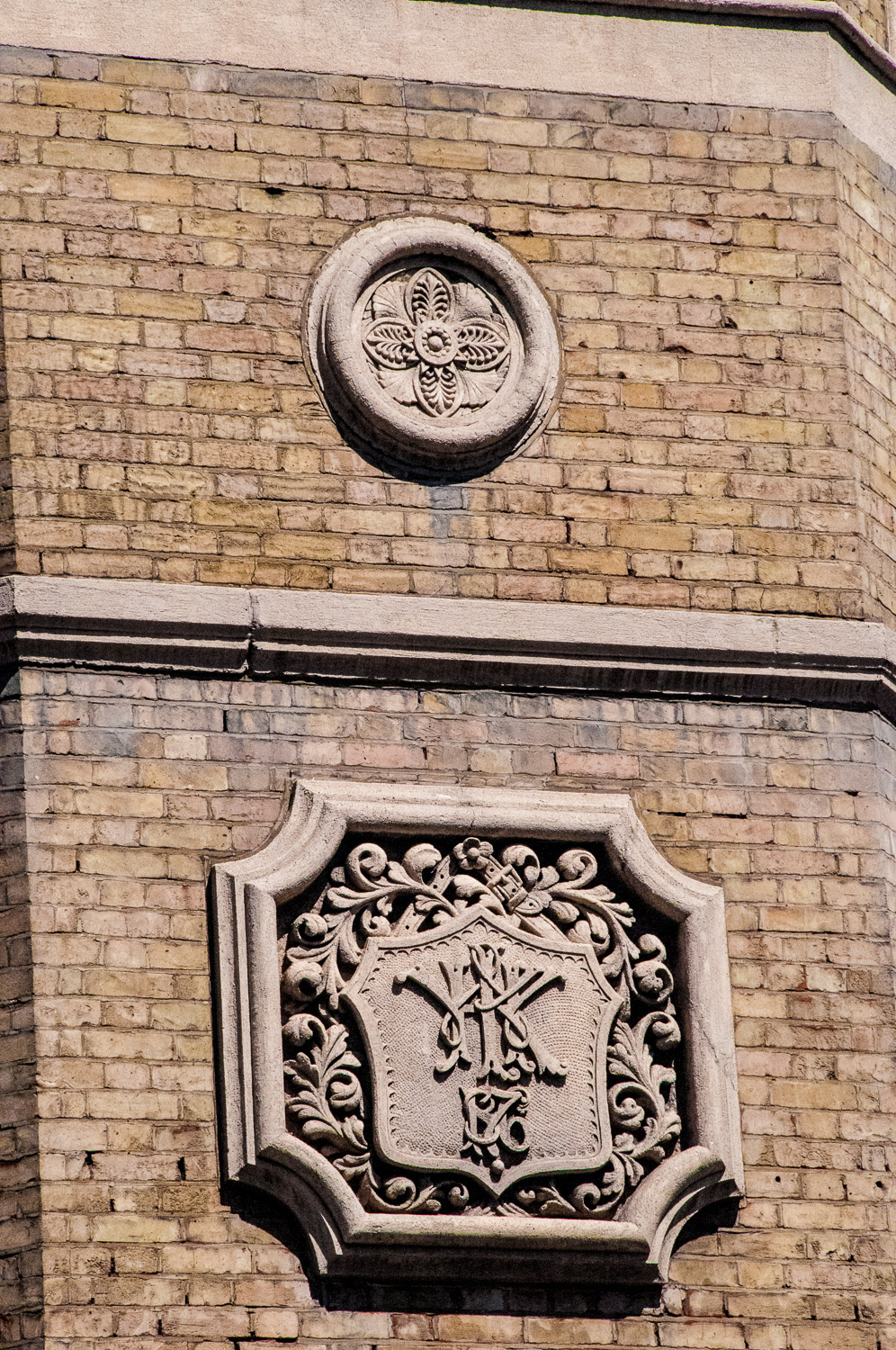
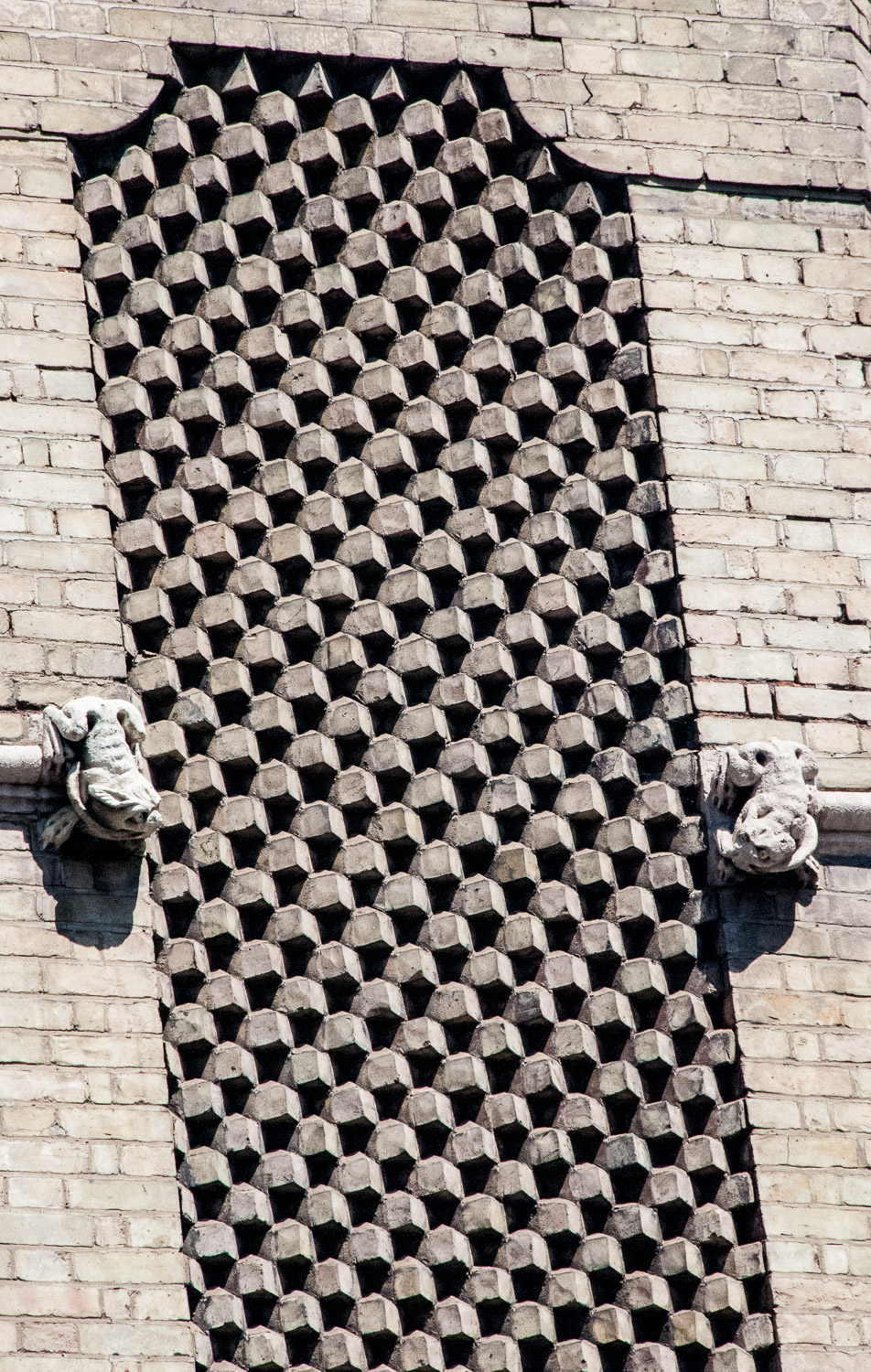
Look at this lovely ornate brickwork …

I don’t know the significance of the two frogs, or maybe they are toads.

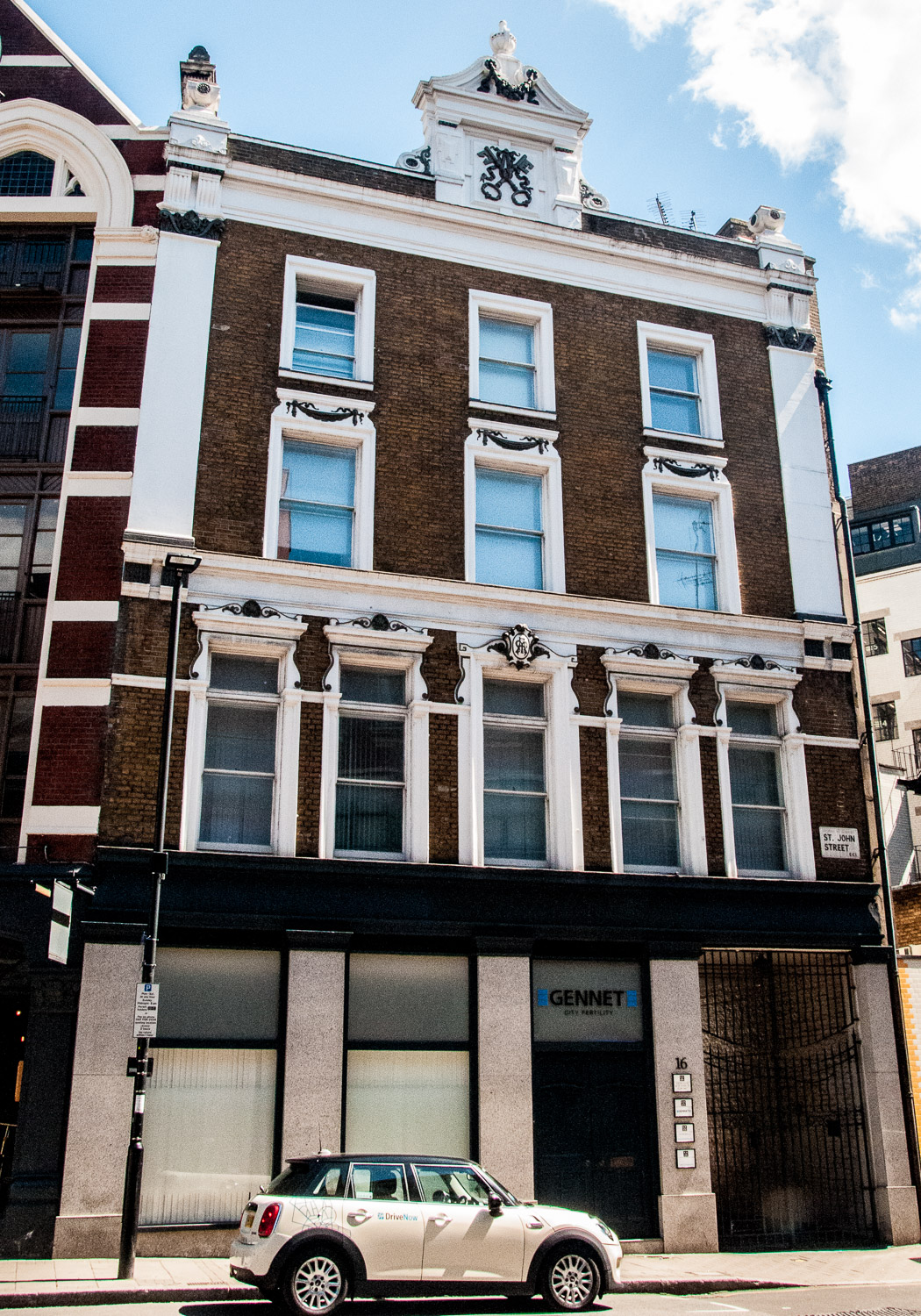
Further down St John Street at number 16 is the previous home of the Cross Keys pub with the pub’s emblem still visible at roof height (EC1M 4NT)

According to British History online the former Cross Keys inn was rebuilt in 1886–7 for Lovell & Christmas, provision merchants. It has been closed as a pub since the Second World War and was occupied during the 1980s as the London headquarters and library of the Communist Party of Great Britain, before being refurbished as offices in the early 1999.

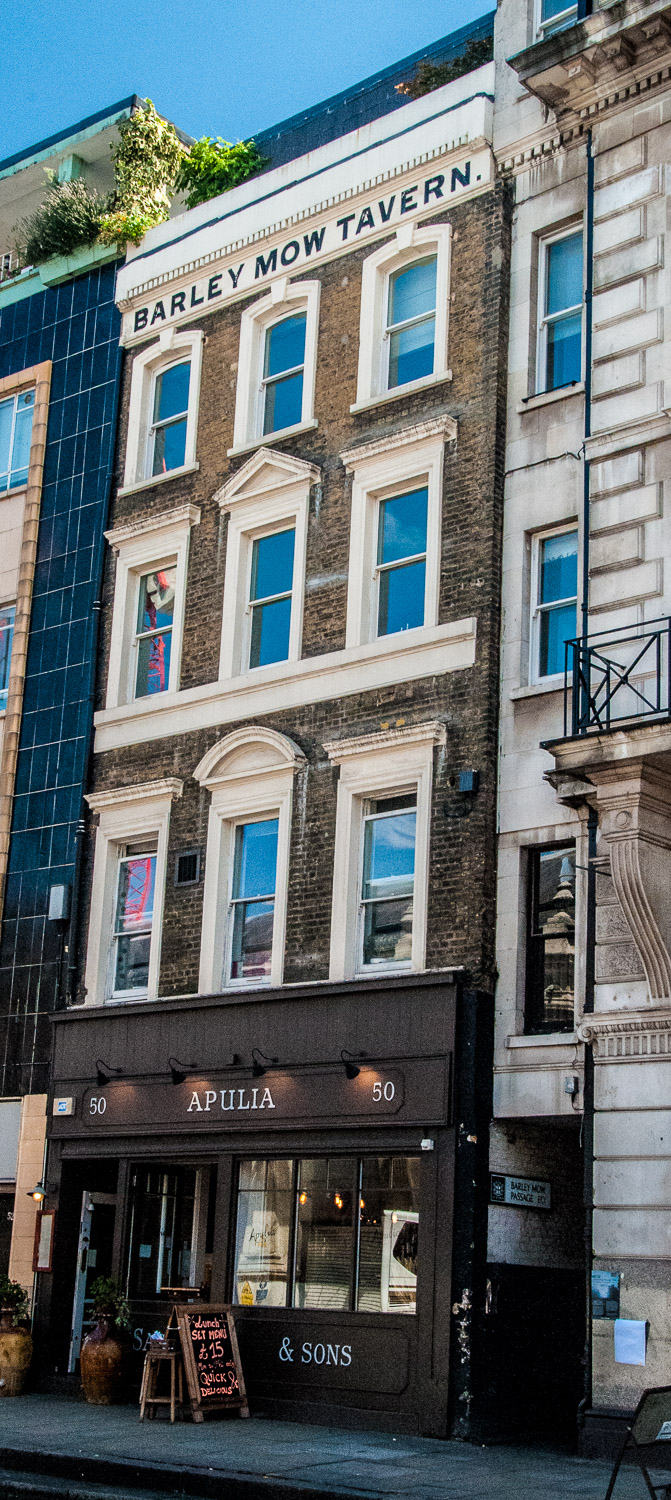
The Lost Pubs Project informs us that the Barley Mow was around as long ago as 1806 although it was rebuilt in the late 19th century. It is now a restaurant but the name lives on at the top of the building’s facade and the adjacent Barley Mow Passage (EC1A 9EJ)

In their 1973 book City of London Pubs the authors Richards and Curl describe the White Hart at 7 Giltspur Street as …

The most lavish pub encountered for some time, with heavily upholstered seats and settees, low coffee-type tables, a Black Watch tartan carpet , soft music and subdued lighting.

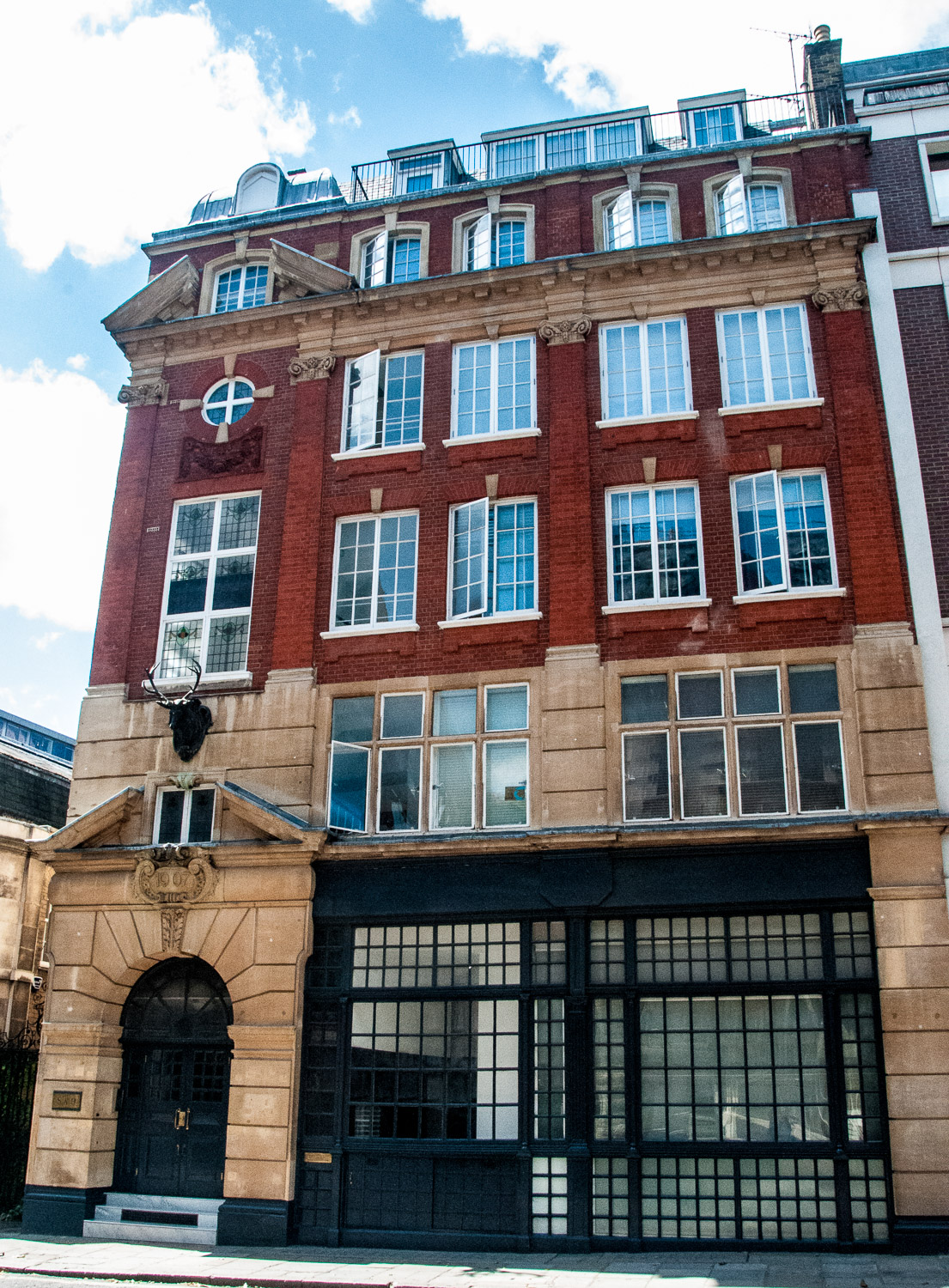
Makes one want to visit, doesn’t it, but unfortunately it is now office accommodation …

The building dates from 1907 – EC1A 9DE 

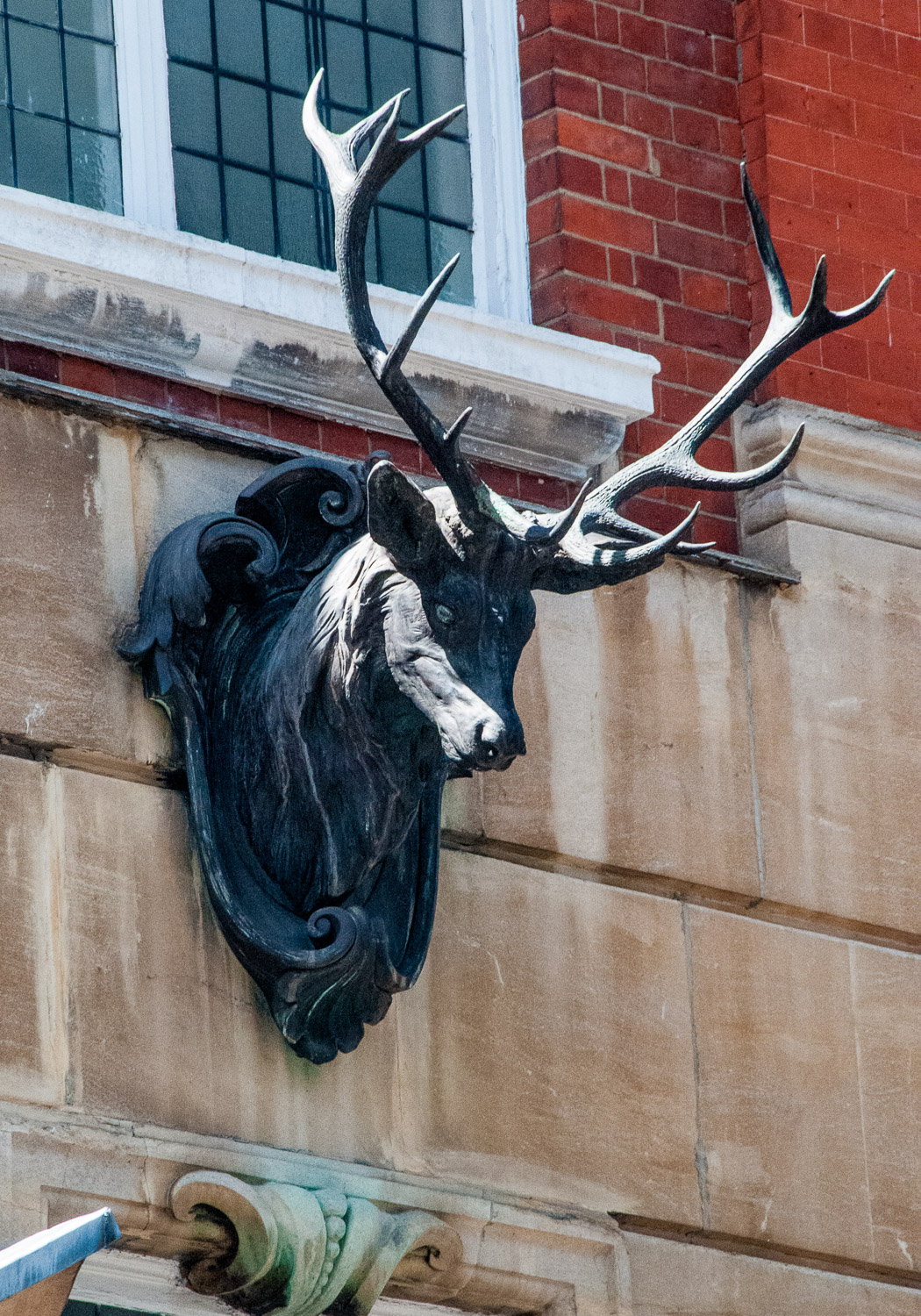
But the stag’s head remains over the entrance, rather spookily scrutinising visitors …

Incidentally, in 2014 the Darkest London blogger tracked down all the pubs in Richards and Curl’s book to see what had happened to them since it was published and you will find more information here.

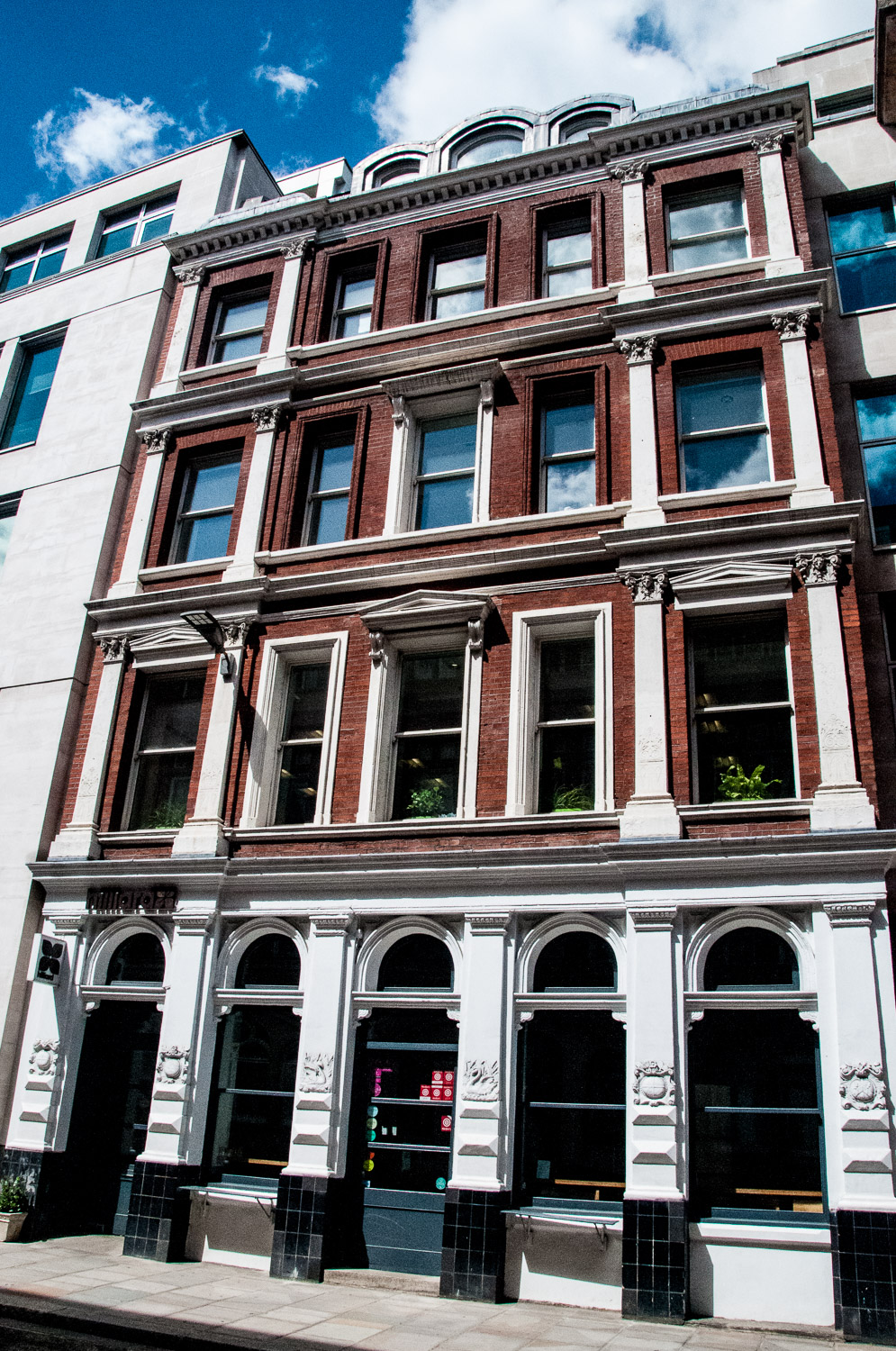
This building at 28-30 Tudor Street bears further investigation  (EC4Y 0BH)

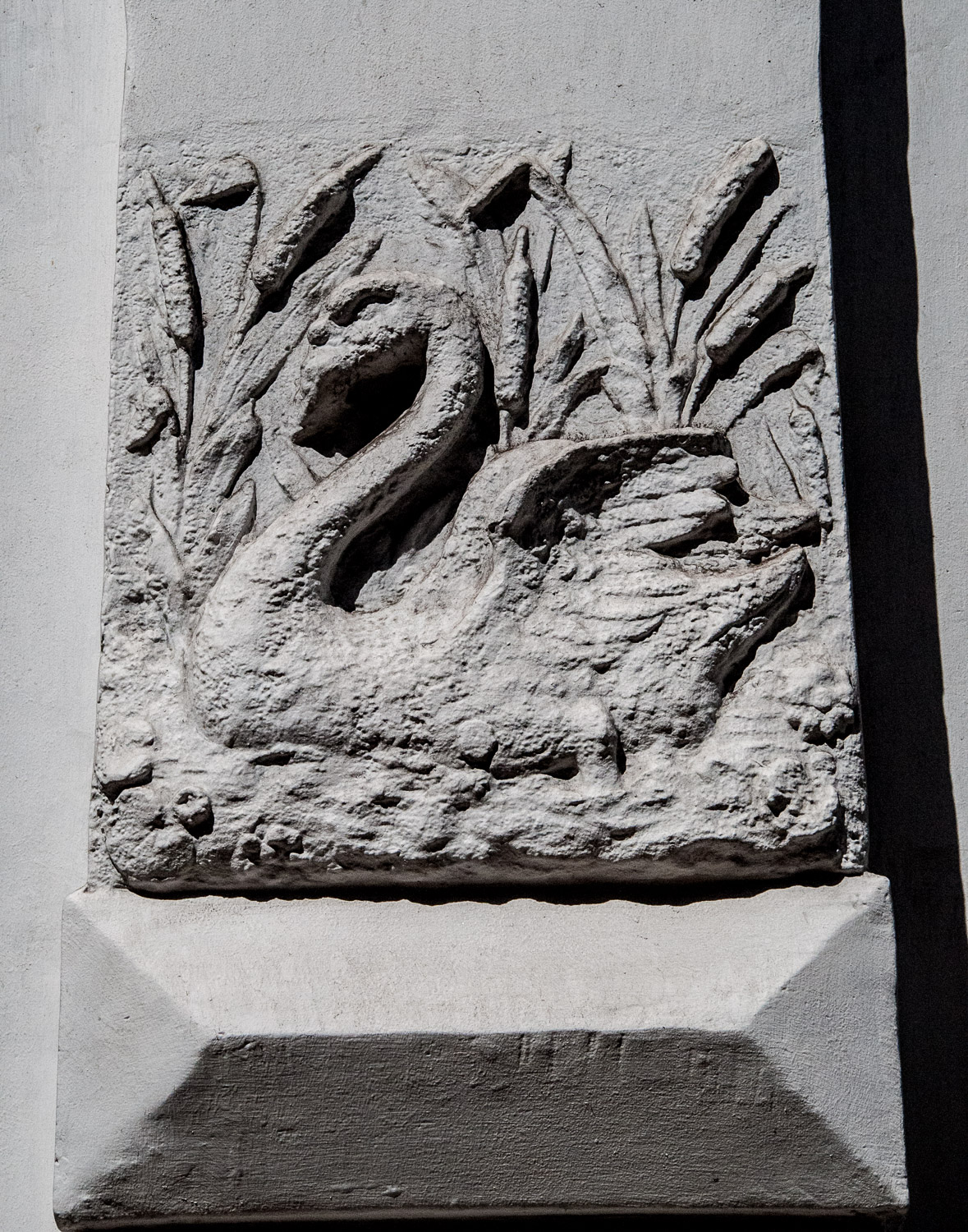
It was once The White Swan pub, known locally as The Mucky Duck. Swan motifs remain either side of the entrance …

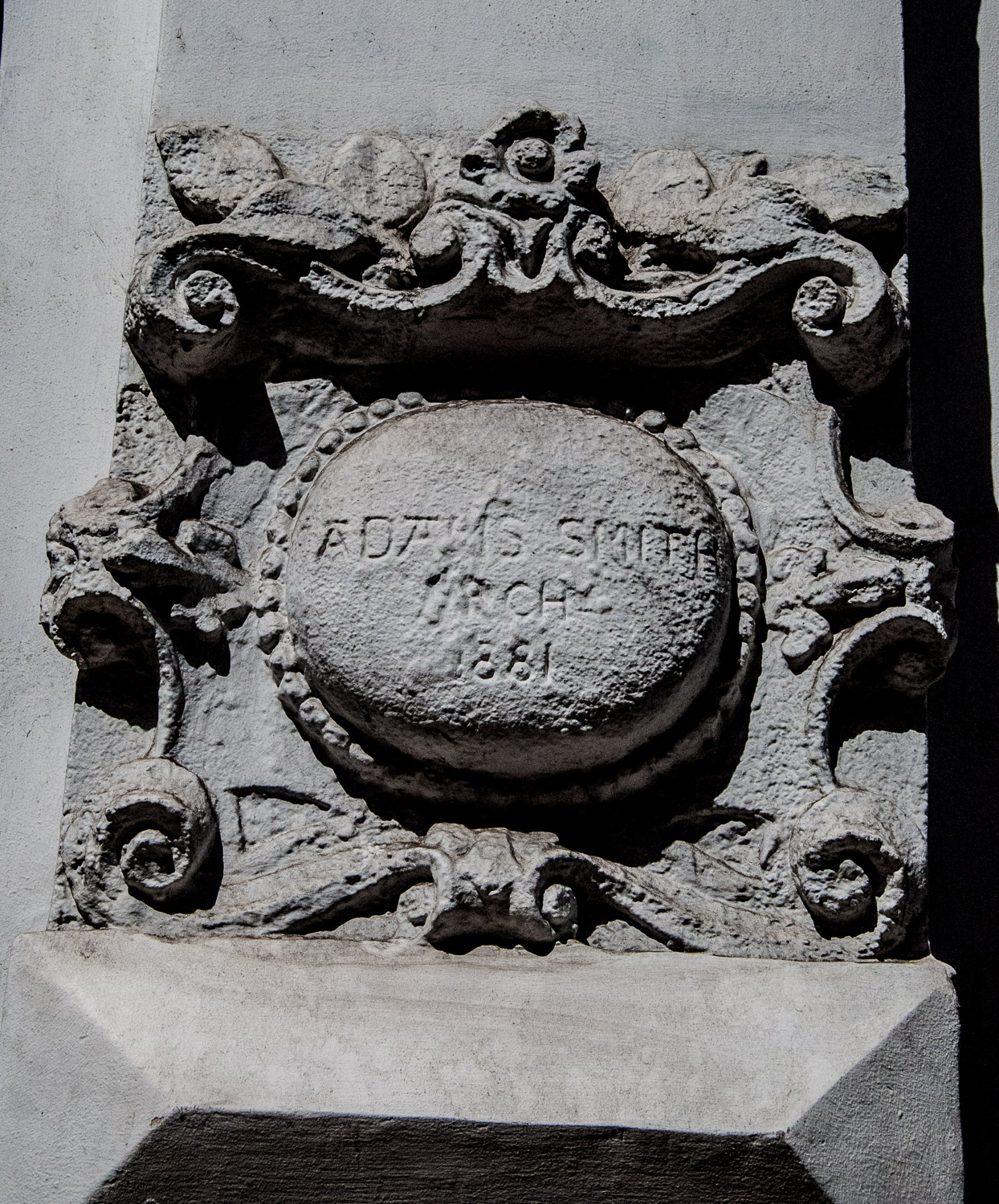
The building dates from 1881 …

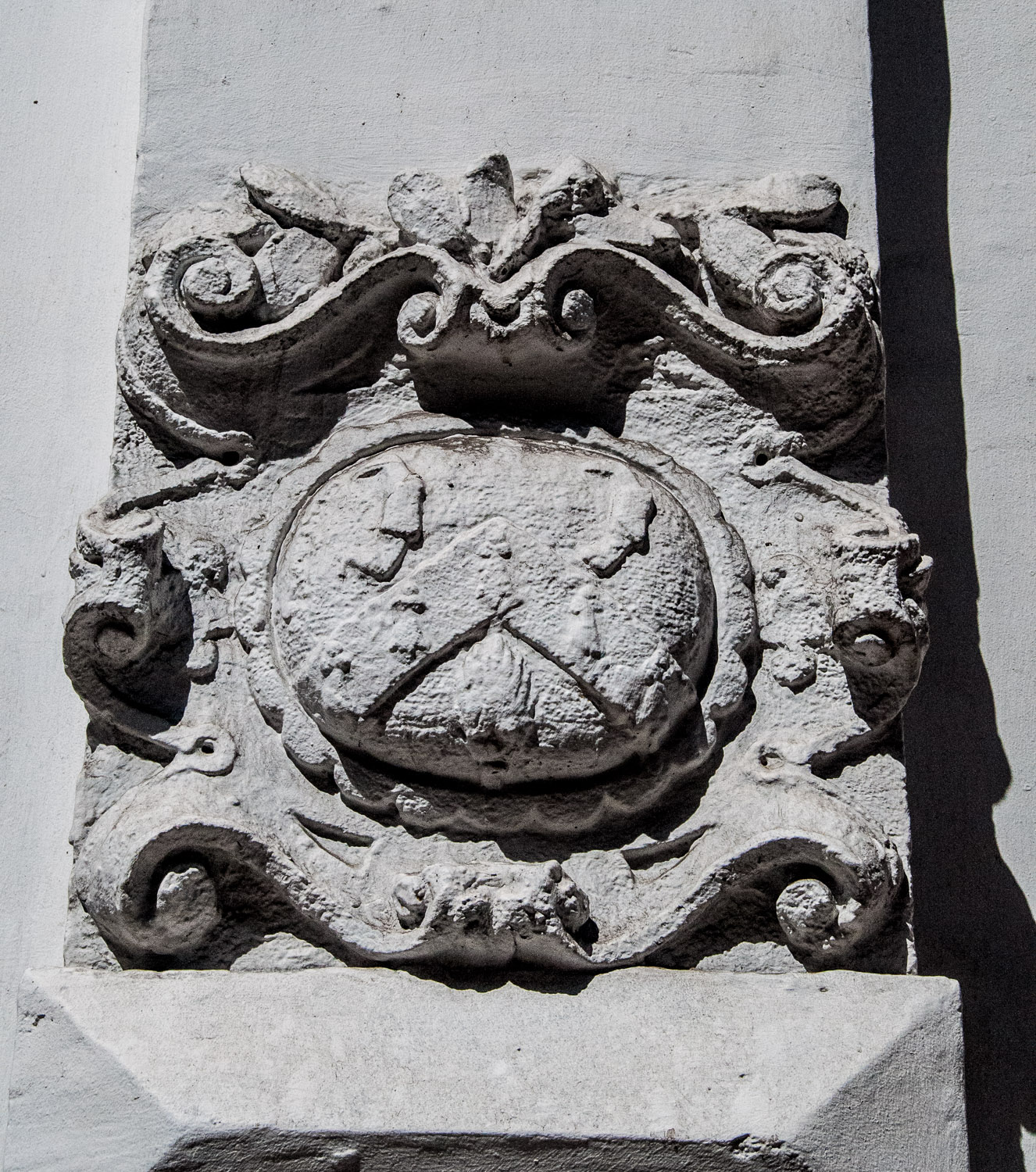
And the facade includes the coat of arms of the Clothworkers Guild – perhaps because they owned the freehold …

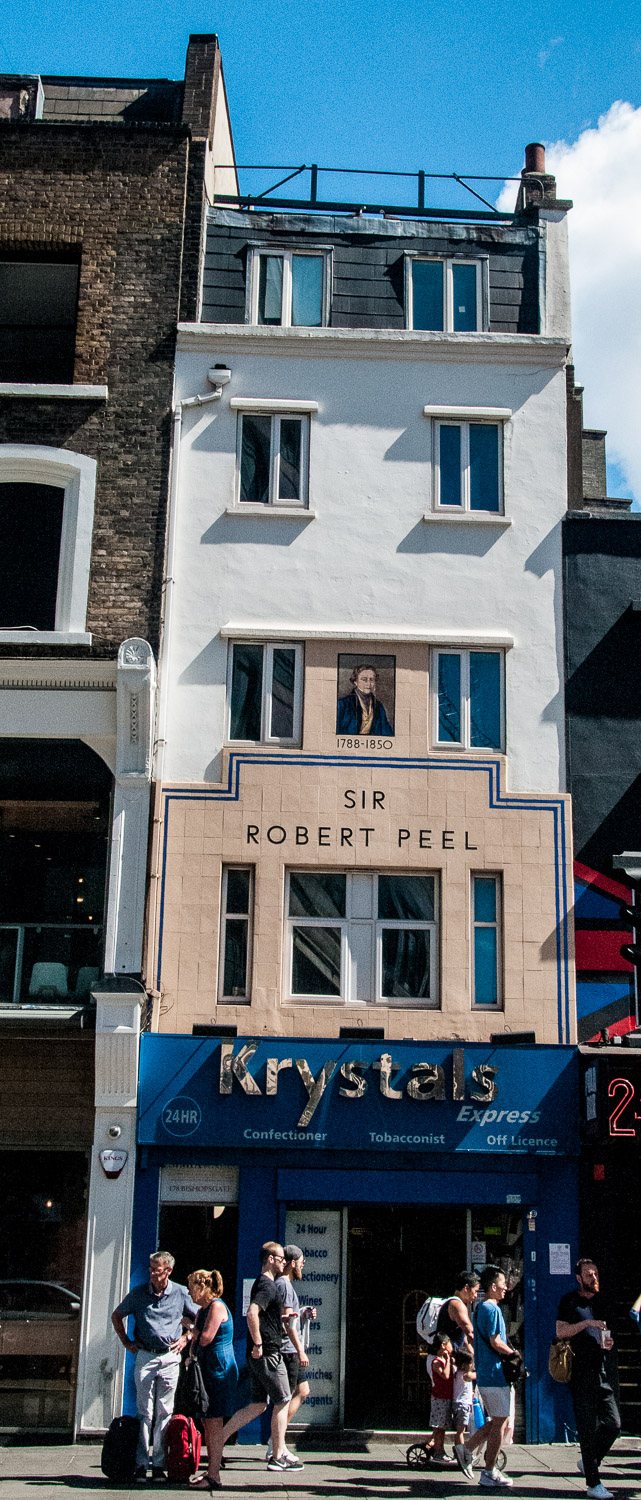
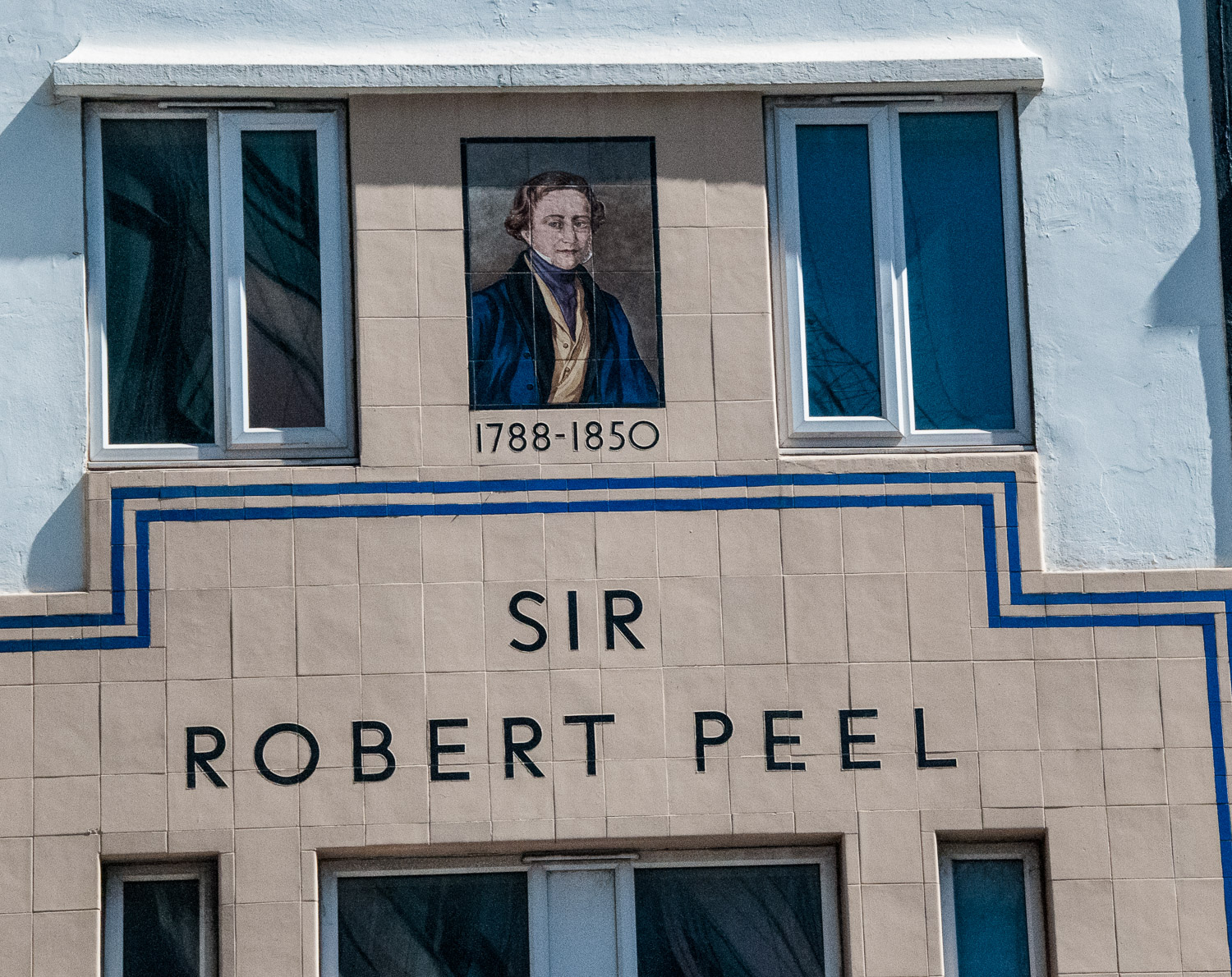
The excellent London Remembers website has the following to say about the building that was once the Sir Robert Peel pub at 178 Bishopsgate (EC2M 4NJ)

This building has been through interesting times. It looks like it started off in the Georgian period and had a major refacing round about 1930 when the windows were replaced and the tiled front added. And then the ground floor front suffered the standard anonymising sometime 1960-1990, but they left the lovely tiles for us to enjoy.

The building is Art Deco in style – shame about the uPVC windows.

Nowadays always busy, even at weekends, it is amusing to note that a visitor in the early 17th century described the area as ‘airy and fashionable … but a little too much in the country’.

The ceramic panel depicting Robert Peel looks like it was based on his picture in the National Portrait Gallery.

As is often the case when researching, one story leads to another.

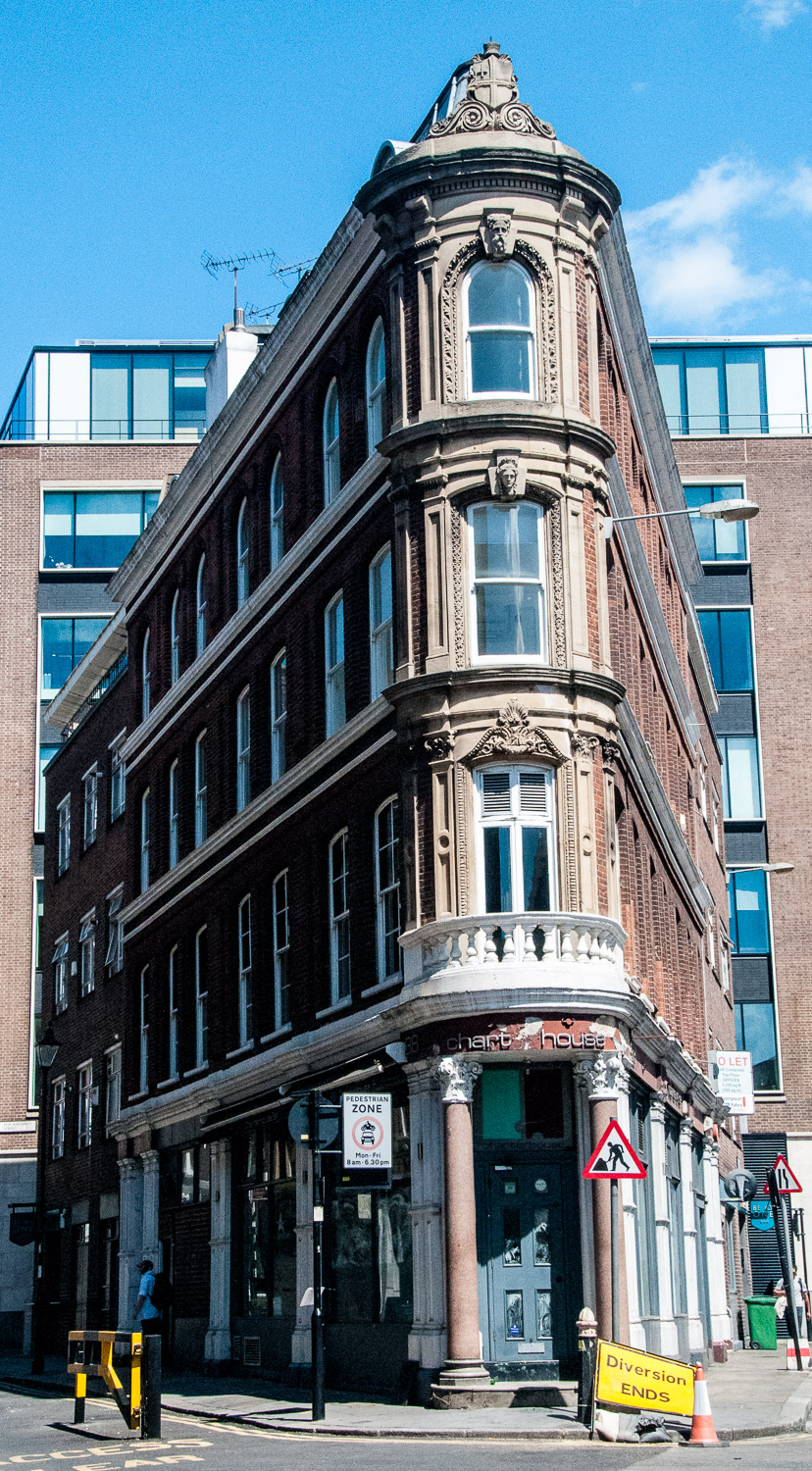
This building at 38 Charterhouse Street used to house the Charterhouse Bar which has now closed. However, I came across some more background about the premises which I found fascinating.

I really like the way it is squeezed into the triangular corner plot (EC1M 6JH)

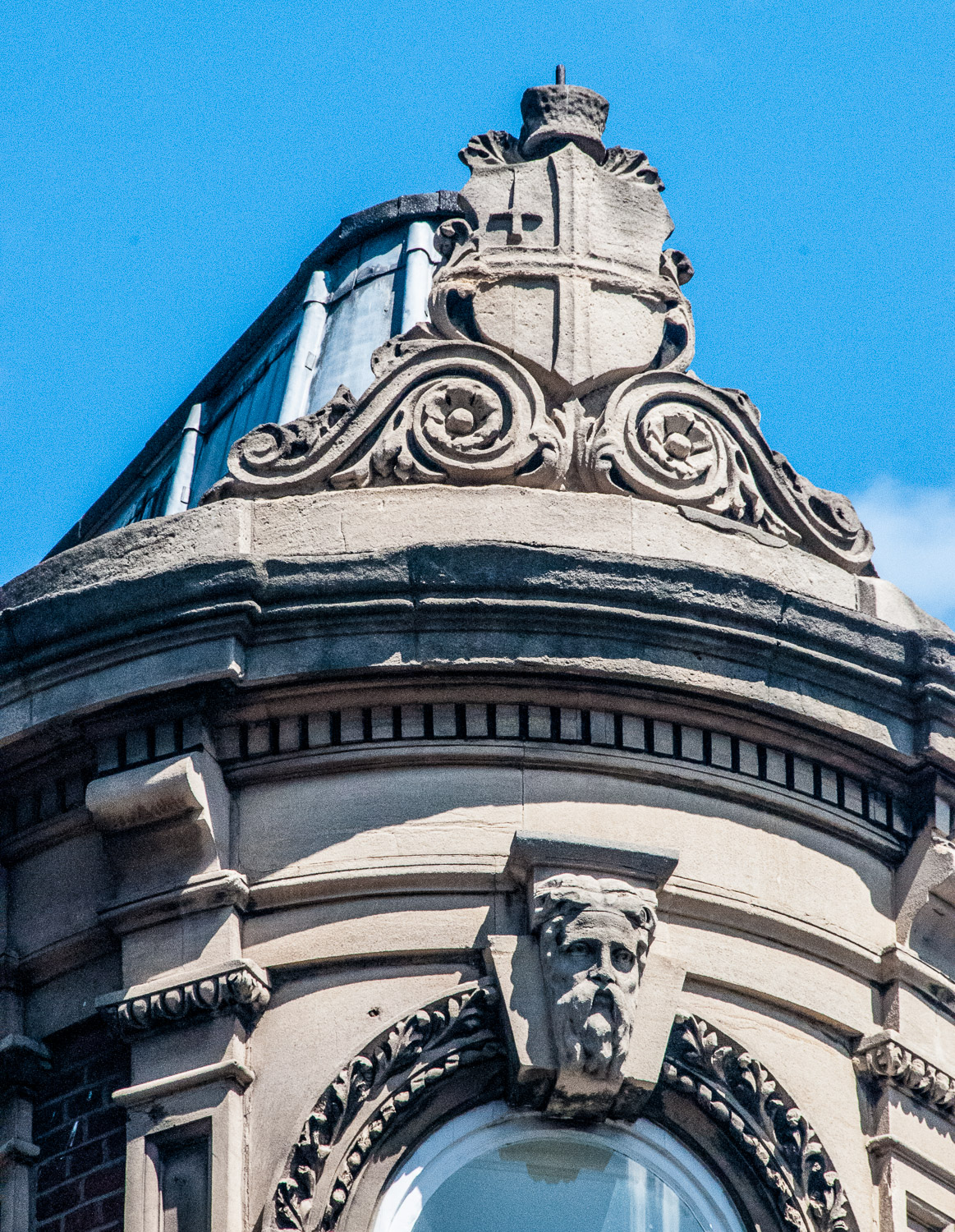
And the decoration – the City of London shield with its bearded supporter …

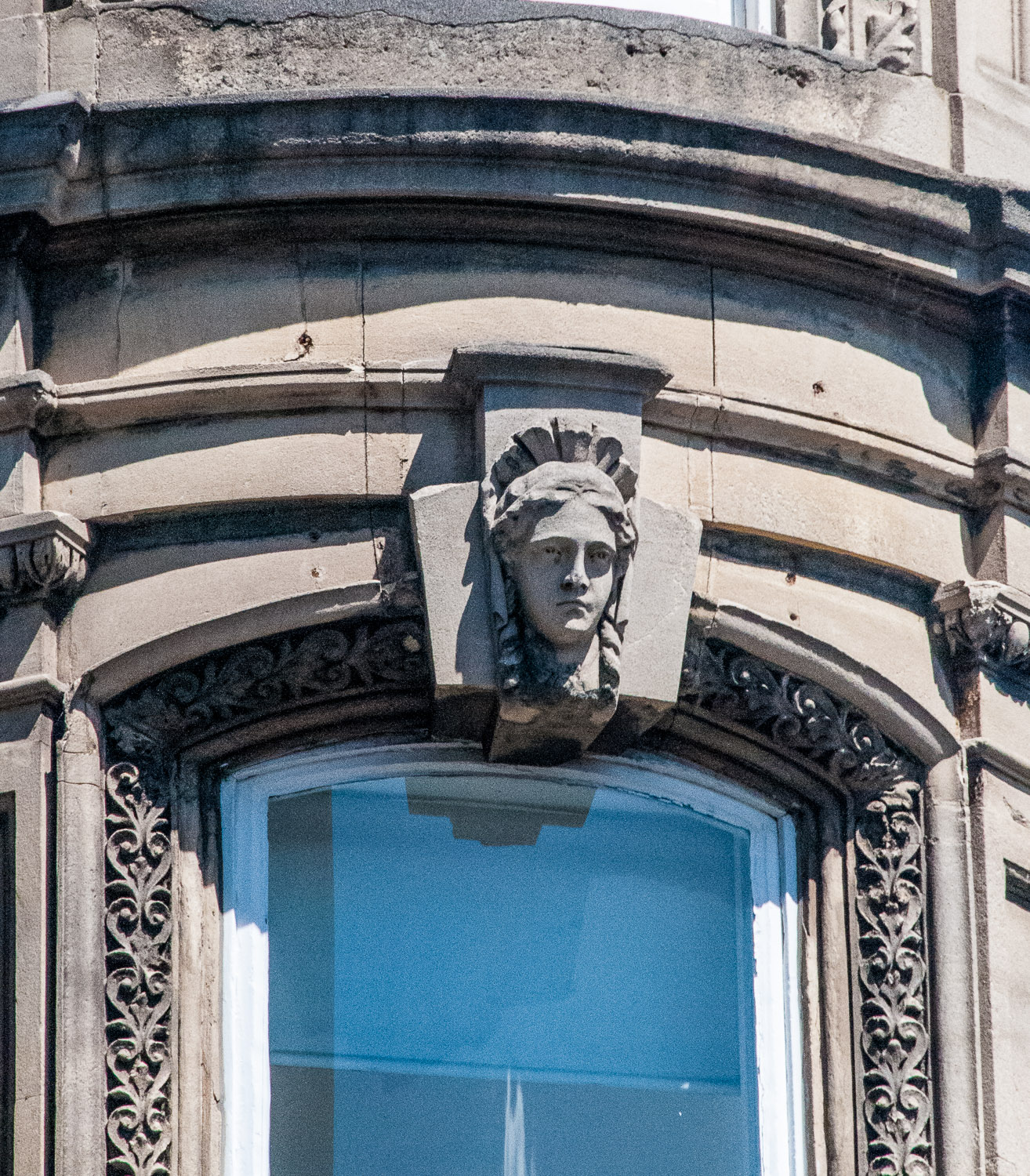
… and this pretty lady …

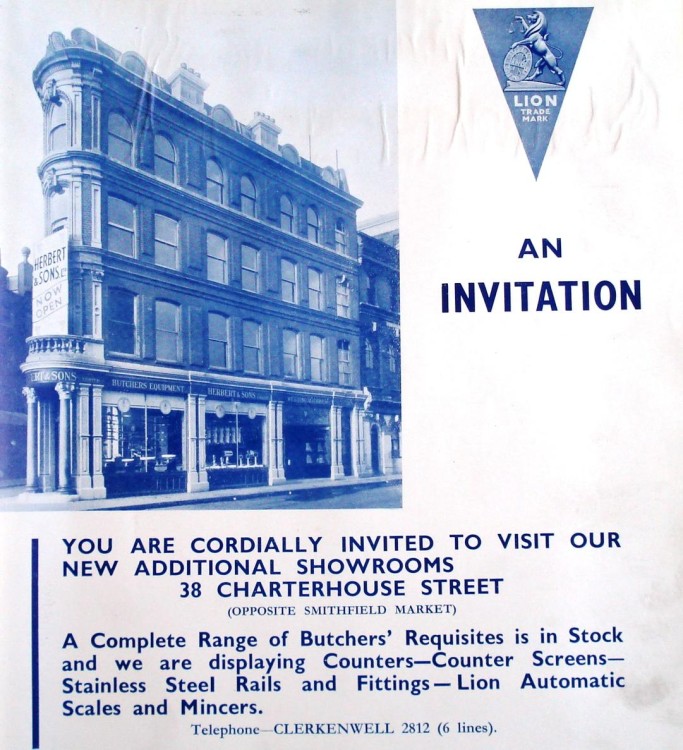
What I discovered was that it was once the ‘new additional showrooms’ for scalemakers Herbert & Son and their 250th anniversary commemoration contains this invitation from 1937 …

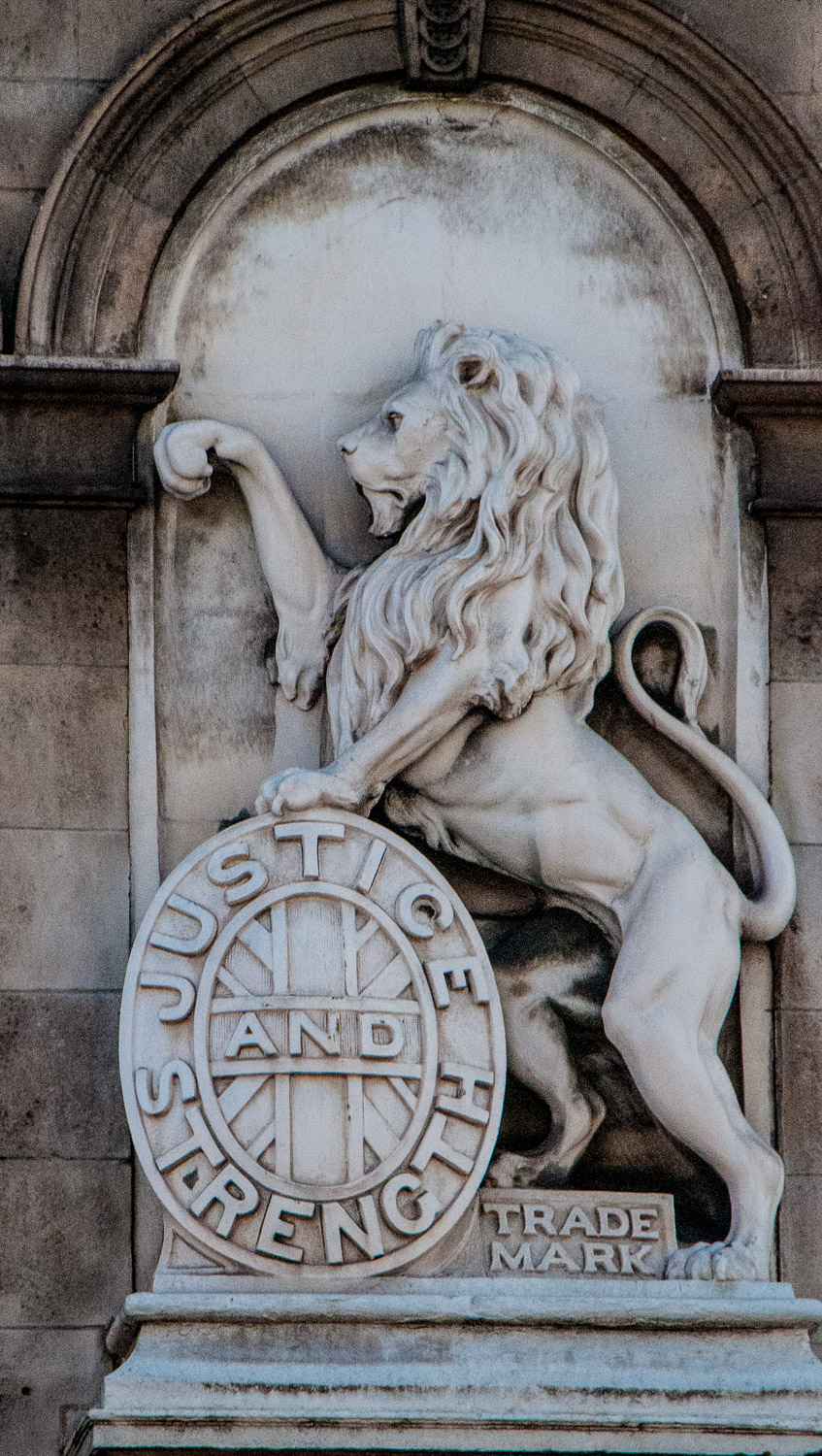
Their Lion Trademark was granted in 1888 and can still be seen above their old showrooms at 7 and 8 West Smithfield which date from 1889. It seems to typify the pride the organisation felt at the height of the British Empire …

Directly opposite Smithfield Market – what better location for a firm of scalemekers. And they’re still going strong based in Suffolk.


Page 136 of 153

Powered by WordPress & Theme by Anders Norén