Once again I have enthusiastically ventured west, this time to visit a stunning exhibition at the Philip Mould Gallery on Pall Mall …
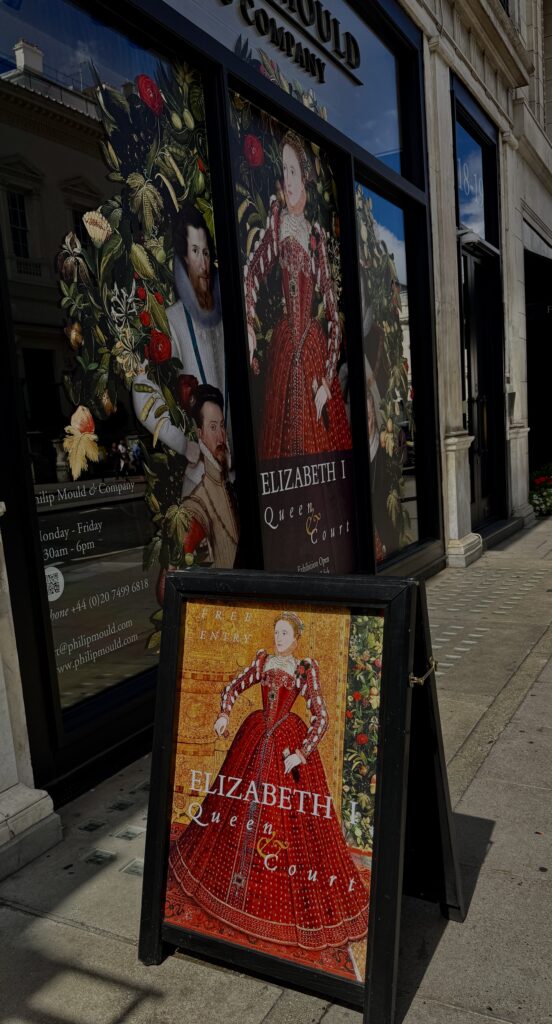
Running from 14 May to 10 July 2026, this display highlights the way court painting became a true instrument of political power, propaganda and the construction of the image of the ‘Virgin Queen’.
The Catalogue states: Elizabeth I: Queen and Court explores how portraiture shaped one of Britain’s most iconic reigns. Featuring outstanding Tudor works drawn from private collections, the exhibition includes the earliest surviving life-size, full-length portrait of Queen Elizabeth I, alongside portraits of some of the key figures from her close circle of courtiers and confidantes. These rarely seen paintings reveal how portraiture functioned as a tool of power and was used to project authority, secure allegiance, and, in rare cases, register dissent.
I was delighted to see that the exhibition also included a picture of Mary Queen of Scots, whose death warrant was signed by Elizabeth herself. Later in the blog I shall write about their relationship.
Firstly, however, I am going to include some images of pictures in the exhibition along with the descriptive labelling.
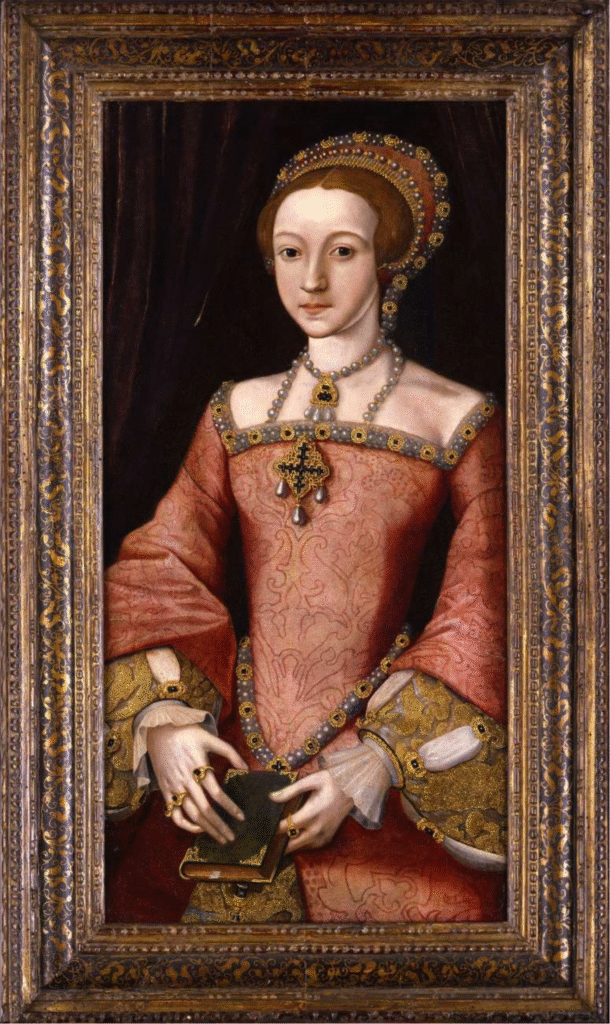
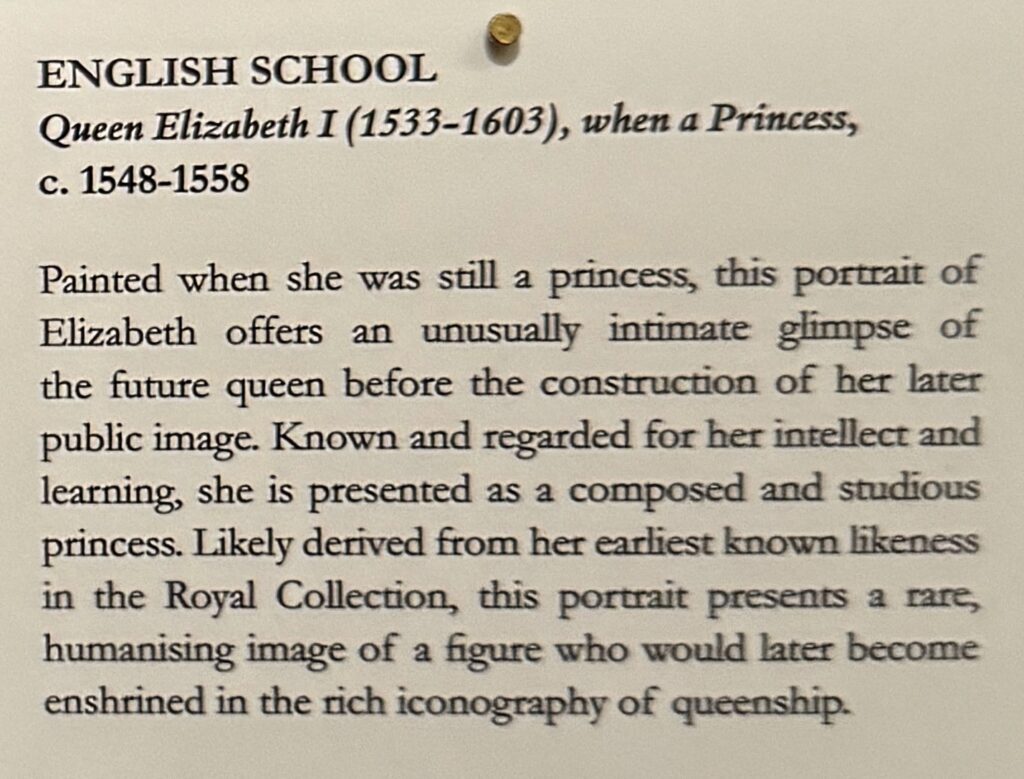
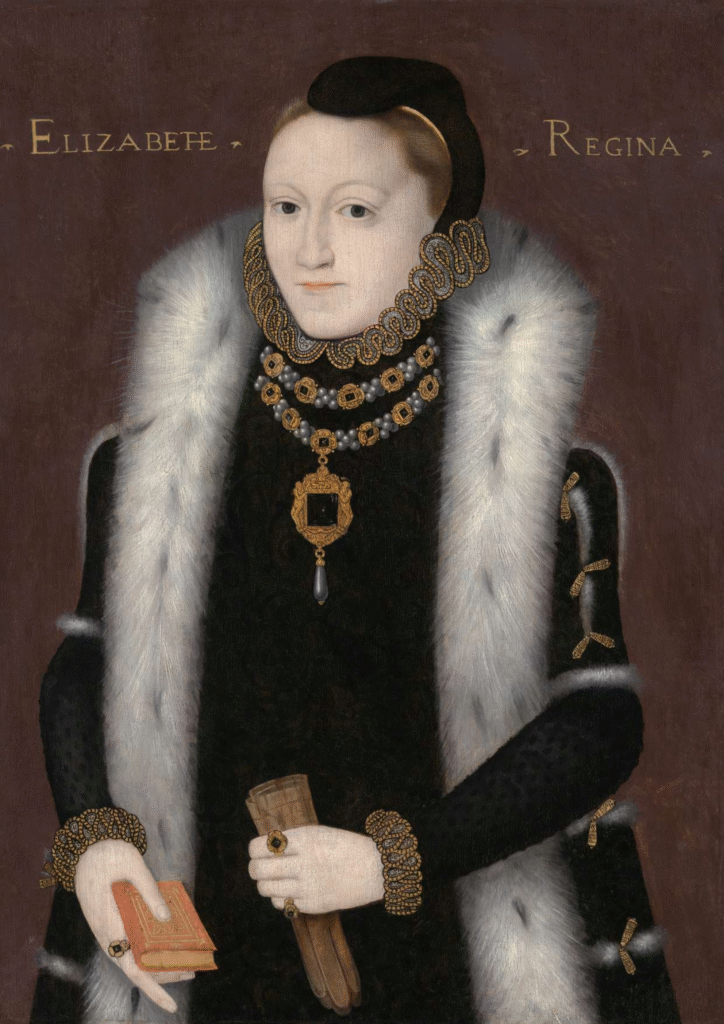
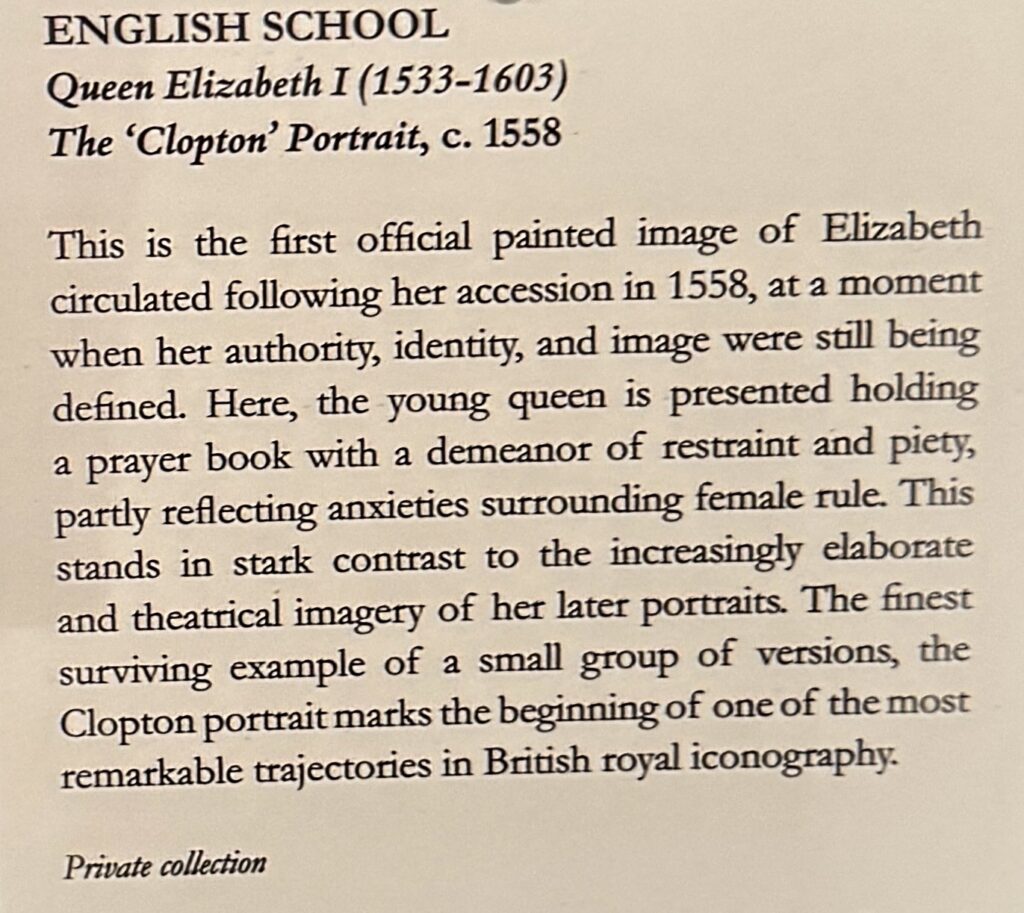
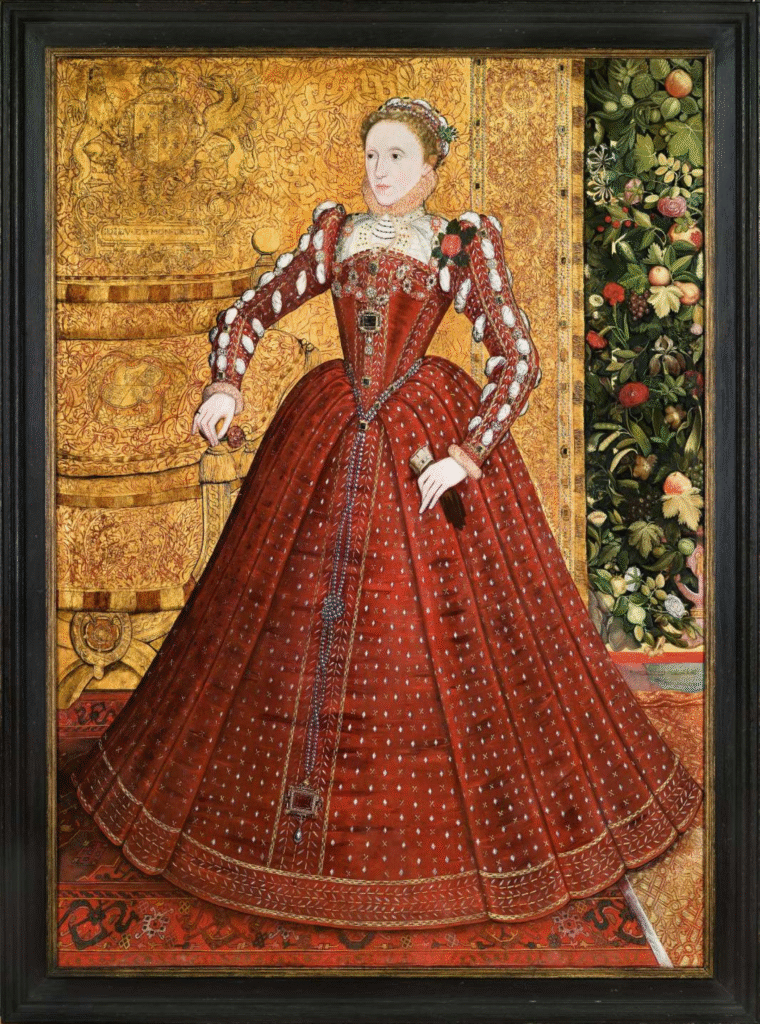
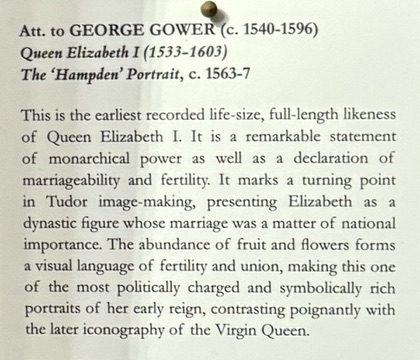
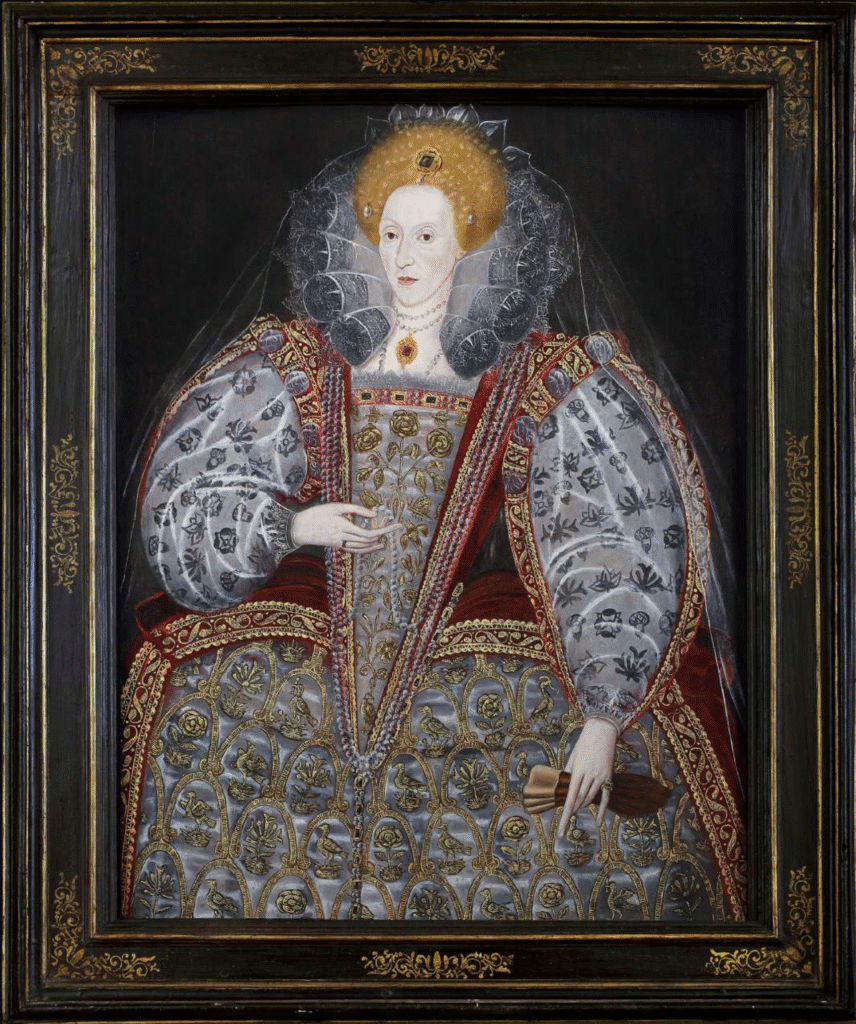
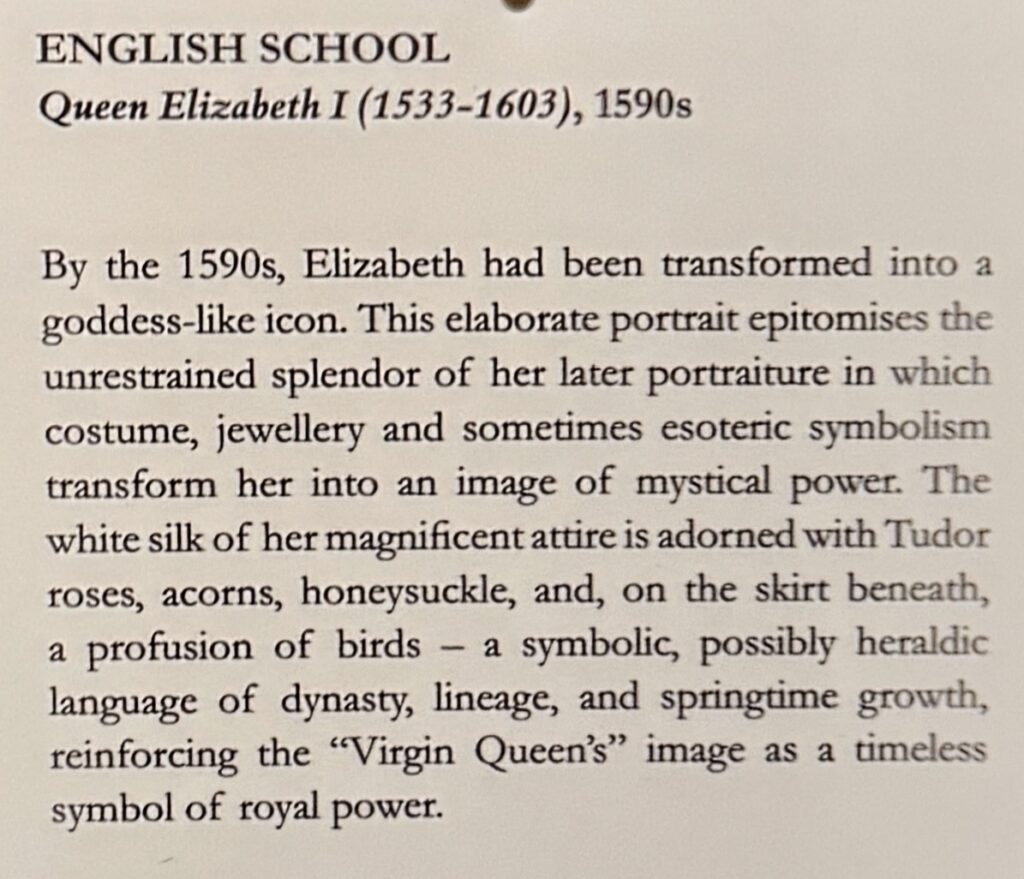
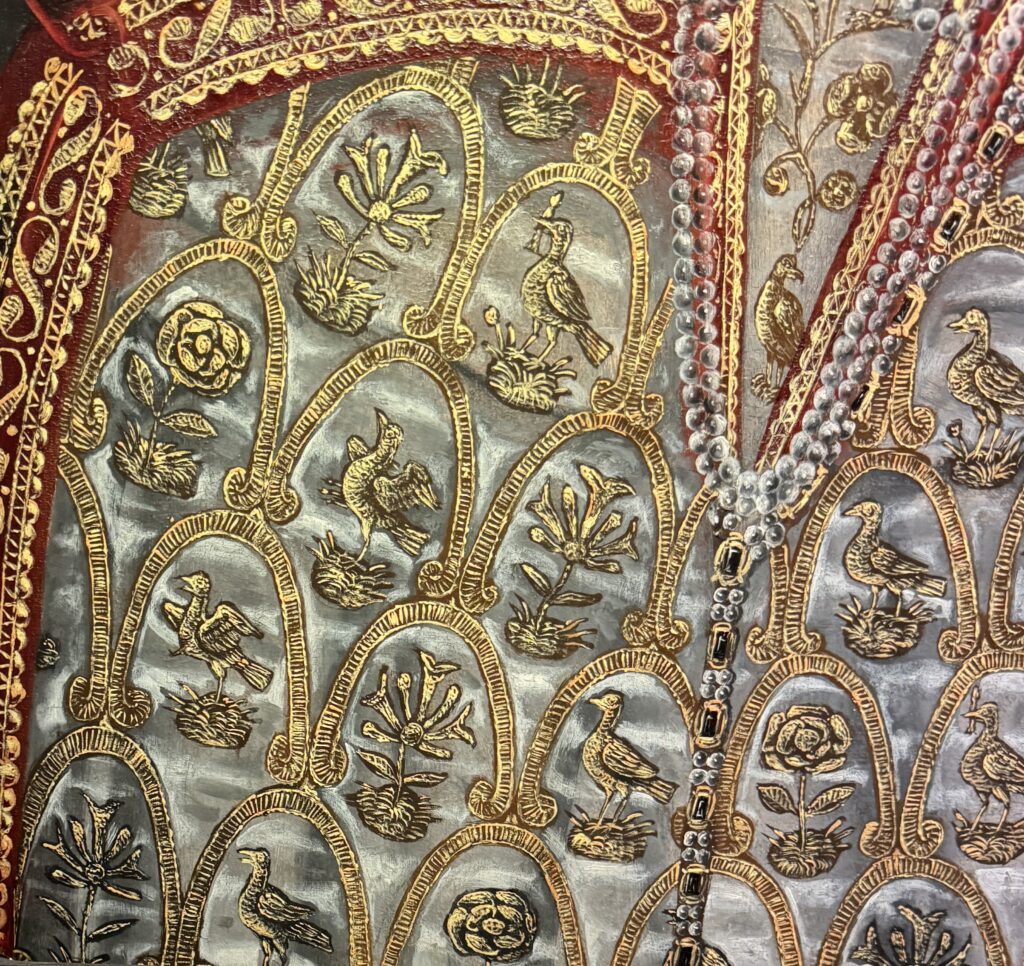
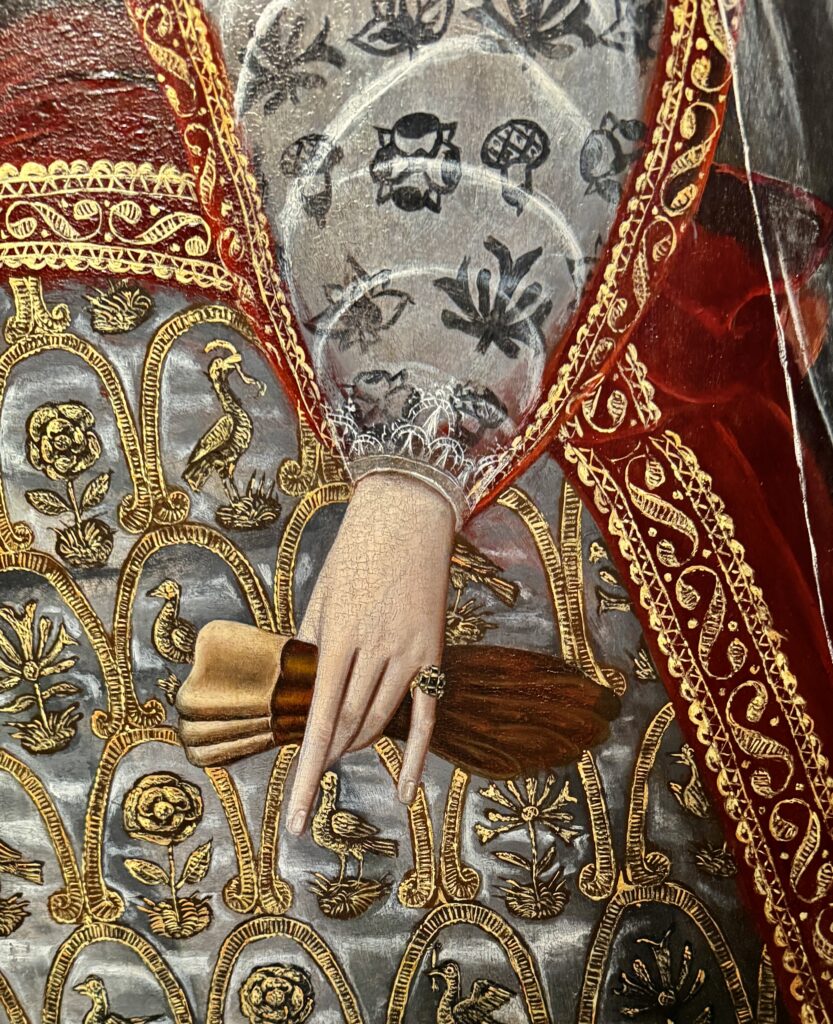
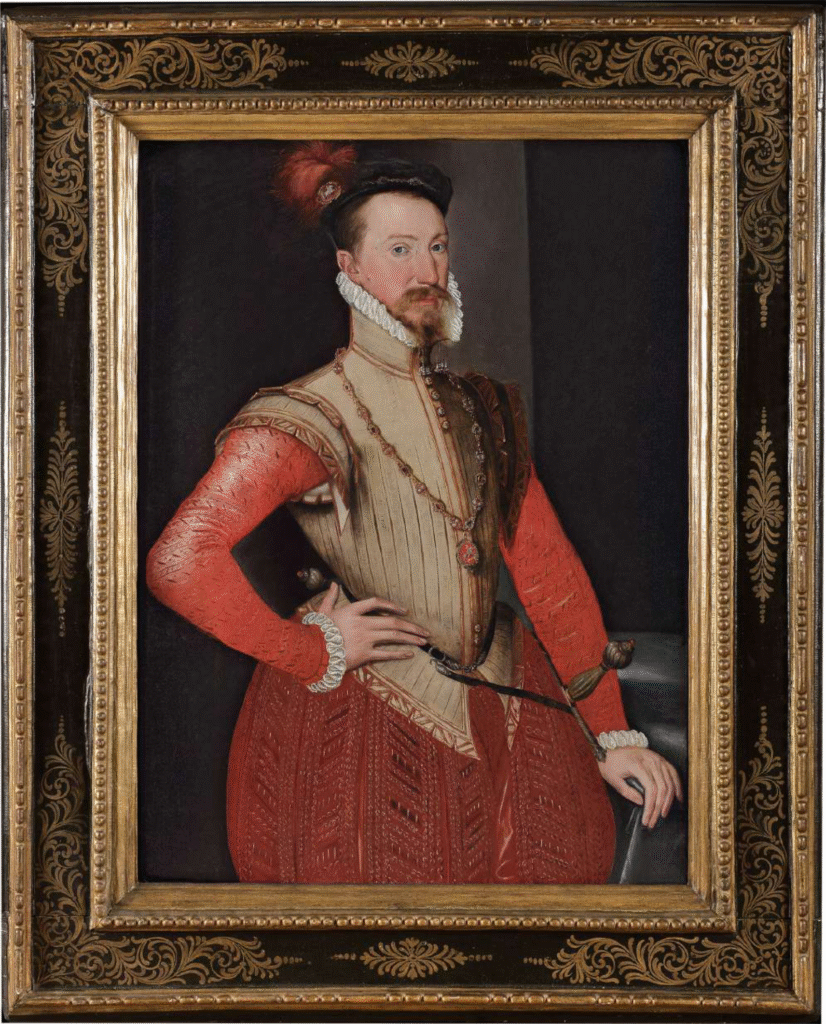
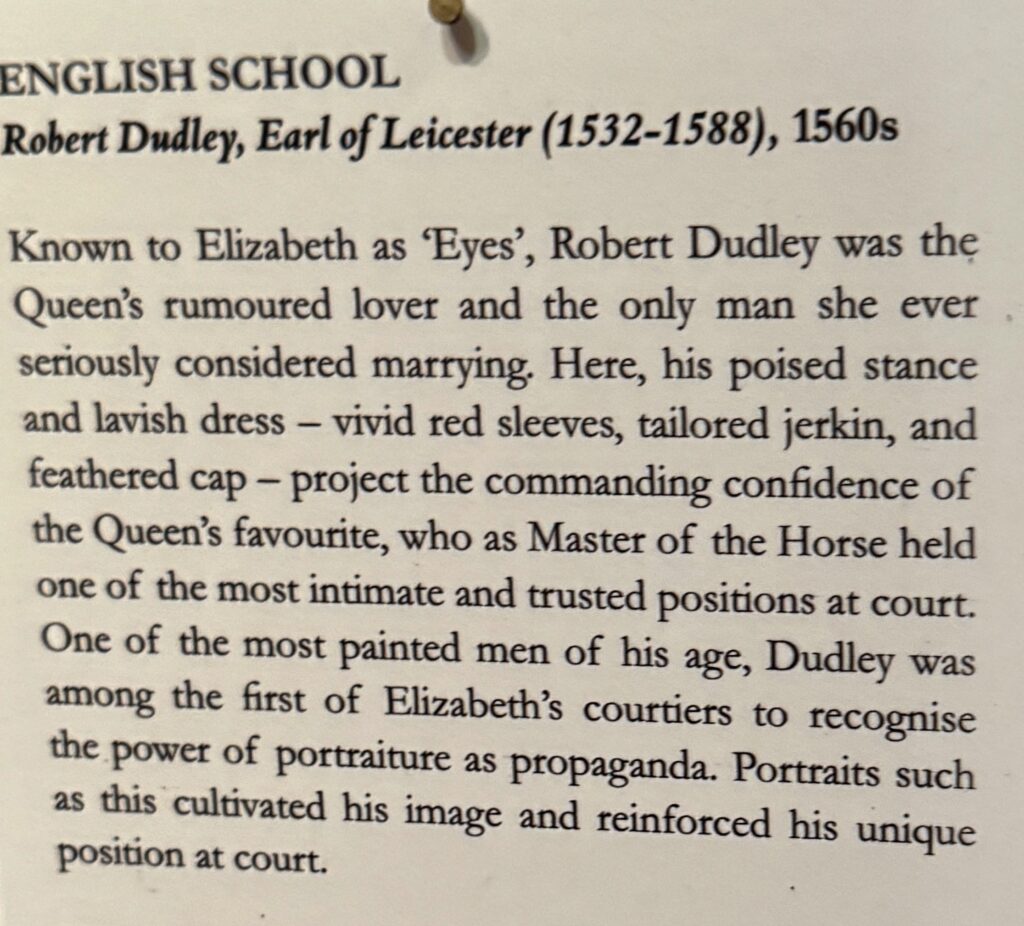
And now the tragic story of Mary Queen of Scots, starting with a rare portrait painted in France shortly after her execution …
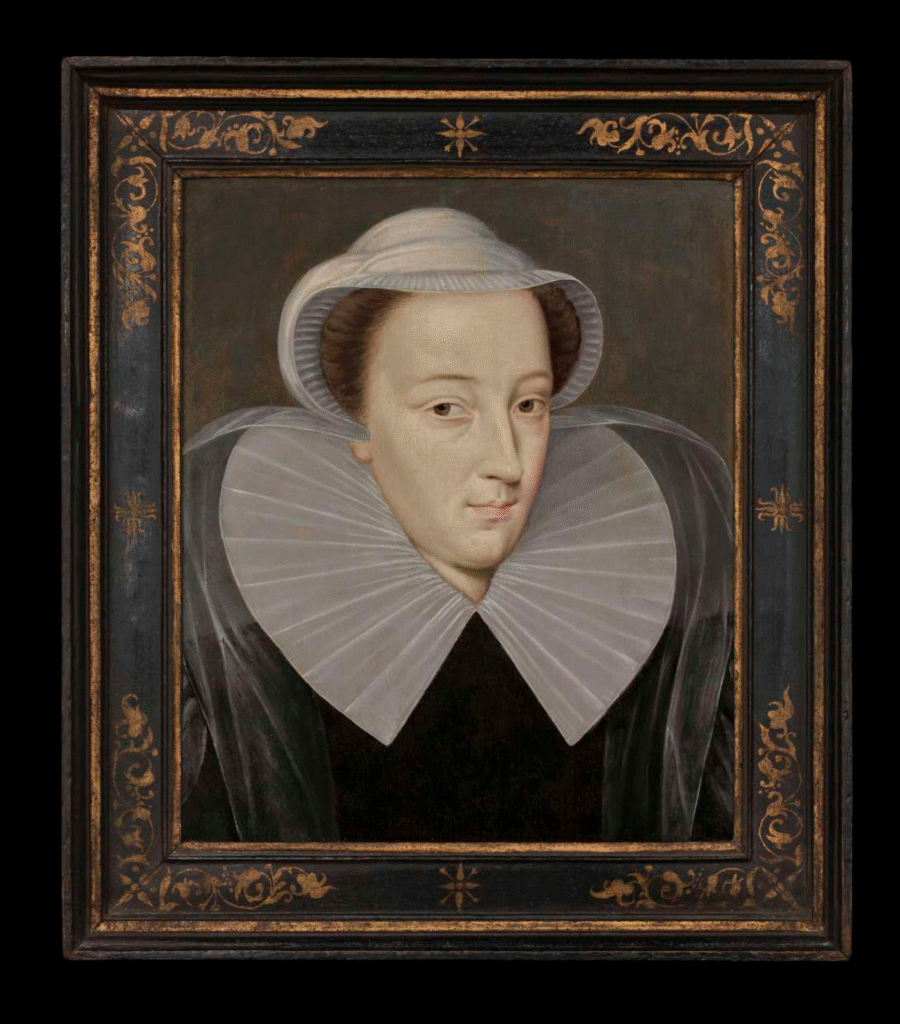
‘Tonight, after dinner, I have been advised of my sentence: I am to be executed like a criminal at eight in the morning’.
So wrote Mary Queen of Scots to Henry III, King of France, at two in the morning on 8th February 1587 from her place of imprisonment, Fotheringhay Castle. You can find an image of the letter and a translation here.
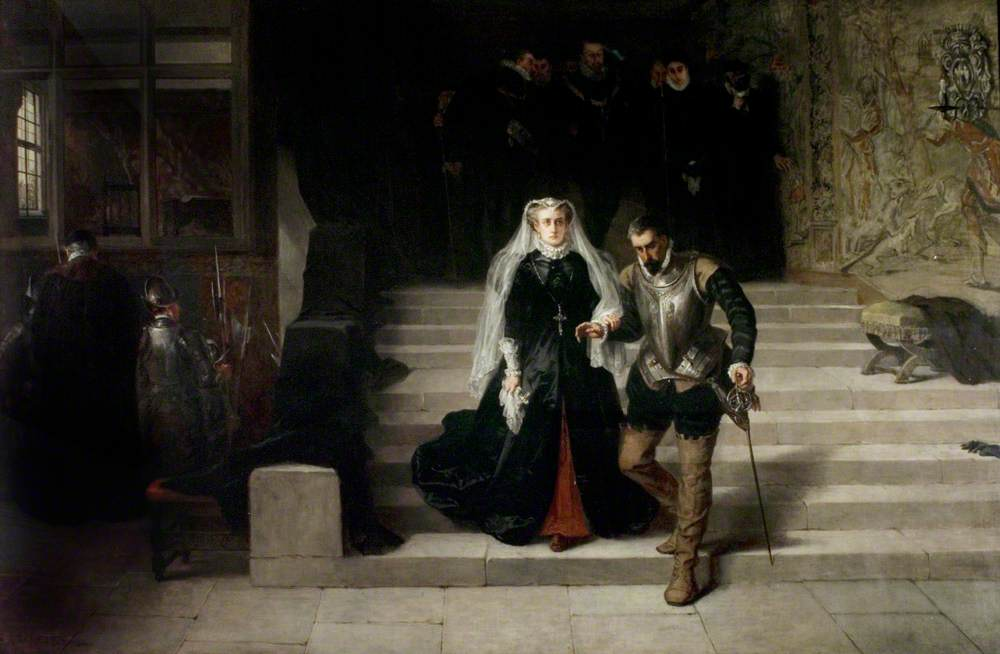
Mary was determined to die a Catholic martyr’s death and conducted herself accordingly. She entered the hall dressed in black with a white veil carrying her ivory crucifix and Latin prayer book. Her ladies then disrobed her to reveal her satin petticoat and bodice of deep crimson – the liturgical colour of Catholic martyrdom. It took three strokes of the axe to sever her head and, according to some accounts, her last words were those of her motto ‘In my end is my beginning’.
None of the three further images of Mary are part of the Mould Gallery exhibition, but I am using them to help tell her story.
A Victorian painter’s view of her being led to her execution …
An illustration of the event itself (National Gallery of Scotland) …
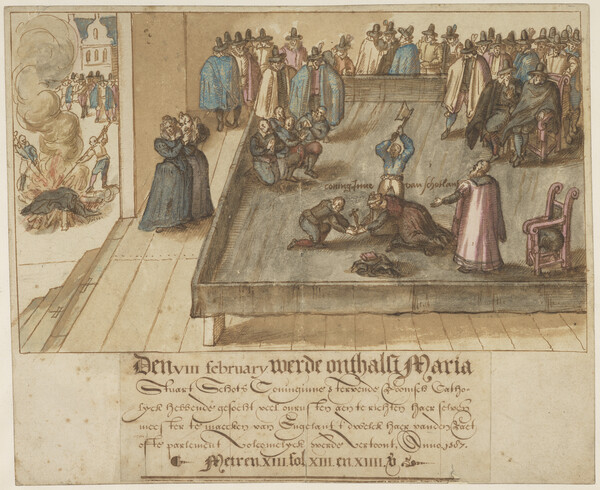
Her life shouldn’t have ended like this.
Elizabeth I and Mary Queen of Scots were cousins, both descended from Henry VII and his wife, Elizabeth of York. Born in 1533, Elizabeth was their grandchild, the daughter of Henry VIII by his second marriage to Anne Boleyn. Nine years younger, Mary was Henry VII and Elizabeth of York’s great grandchild, the granddaughter of their elder daughter Margaret by her first marriage to James IV of Scotland. Mary was the only surviving child of James V and Mary of Guise.
After a tortuous time, militarily, politically and personally, Mary had fled to England from Scotland in 1568, asking for her cousin Elizabeth’s protection. Initially their relationship was cordial with Elizabeth writing to her as follows: “Madam, I treat you as my daughter, and assure you that if I had one, I could wish for her nothing better than I desire for you… the one for whom one wishes the greatest good that may be possible in this world.”
However, as a focus for Catholic rebellion in England, with a claim to the English throne, she was to spend the next nineteen years effectively under house arrest and would never see Scotland again. Subsequent plotting and deceptions would lead her to the executioner’s block. Although found guilty of complicity in plots to assassinate Elizabeth, Mary saw herself as dying for her faith rather than politics.
Mary in captivity by Nicholas Hilliard circa 1578 …
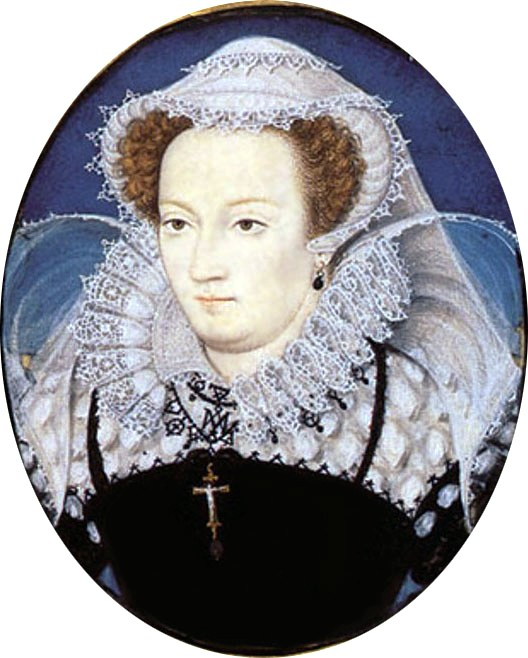
Imprisonment took its toll on Mary and ultimately, and fatally, she became associated with ‘The Babington Plot’, a plan to free her and murder Elizabeth, which meant she was guilty of treason. The plot was discovered by Elizabeth’s spymaster Sir Francis Walsingham, whose portrait is on display in the Gallery …
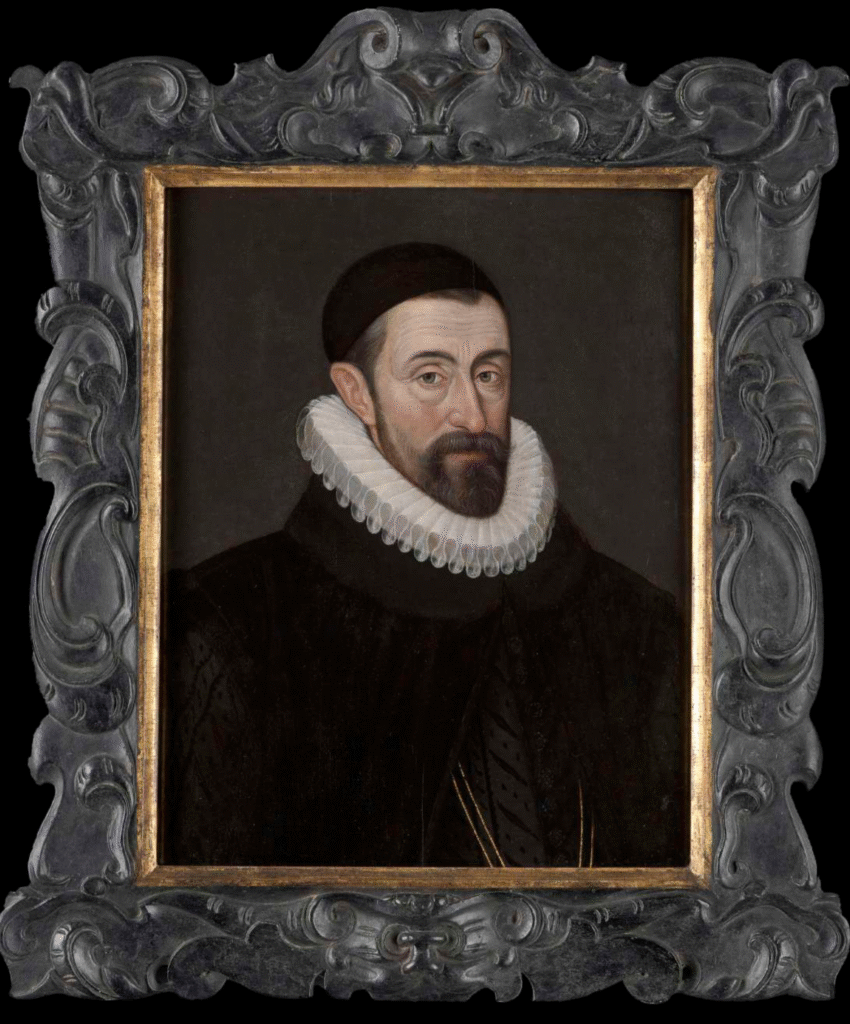
Even before then, Elizabeth wanted her dead in such a way that she was not personally implicated and so was reluctant to issue a death warrant. Her hesitation in executing Mary was partly informed by a horror of taking direct responsibility for killing a fellow queen and a close relative but there were also potentially disastrous political implications. Despite eventually signing the death warrant she decided not to issue it until she had first put pressure on Mary’s gaoler to take Mary’s life.
The next development involved another member of Elizabeth’s court, William Cecil, Lord Burghley, her chief adviser for most of her reign. She saw him as a kindred spirit and consequently gave him the nickname ‘Sir Spirit’. His portrait in the exhibition emanates authority …
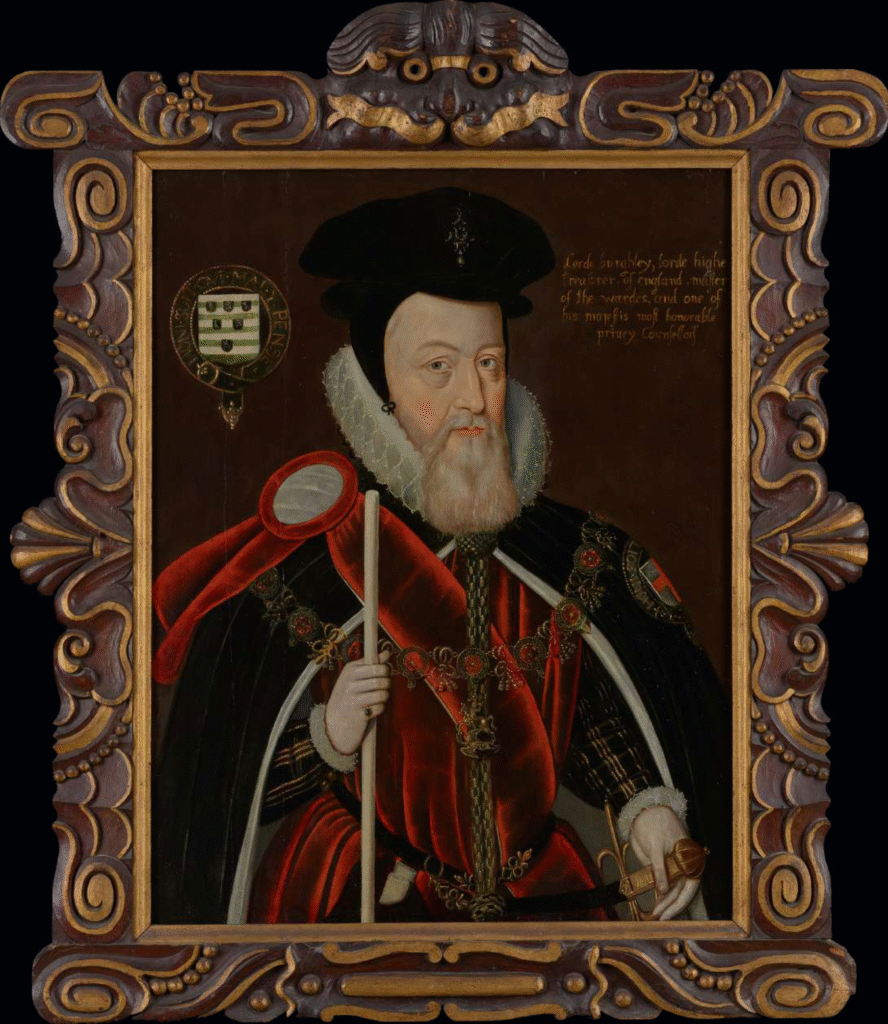
Burghley and his fellow councillors issued the warrant without the Queen’s knowledge and Mary was duly executed on 8 February. Elizabeth was livid, because Mary’s death would now, inevitably, be laid at her door. Burghley was temporarily banished from the royal presence, and William Davison, another councillor, was deprived of office, tried, imprisoned and fined. However, for Elizabeth the matter had worked out rather well. By acting independently, Burghley and his colleagues had given the Queen what she wanted. Not only had they succeeded in ridding her of the threat posed by Mary, but they had also ensured that she could deny direct responsibility for Mary’s death.
The expected massive Catholic military retaliation from Europe failed to materialise. The court slowly returned to normal, and Elizabeth recognised that Burghley and the Council had acted logically to secure the realm. She allowed him to return to his duties at court and the Privy Council and he went on to remain Elizabeth’s closest and most influential minister for another decade, shaping English policy right up until his death in 1598
Burghley’s son Robert‘s portrait is also part of the exhibition. He had obviously inherited his father’s wiliness and political acumen …
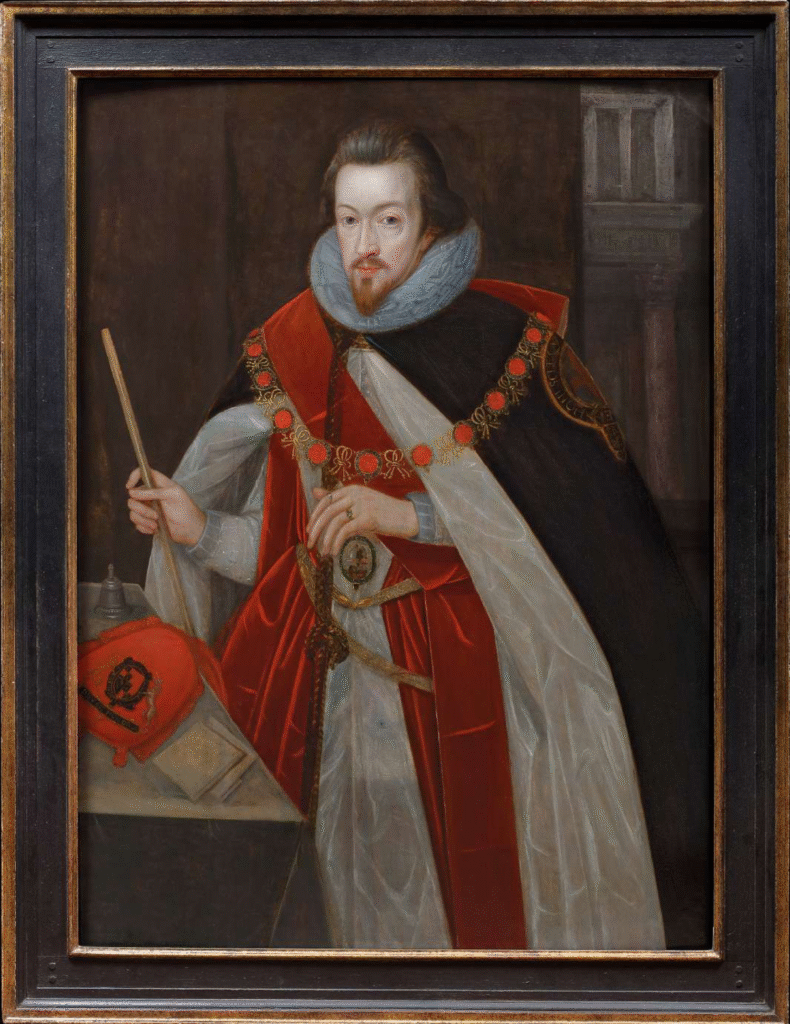
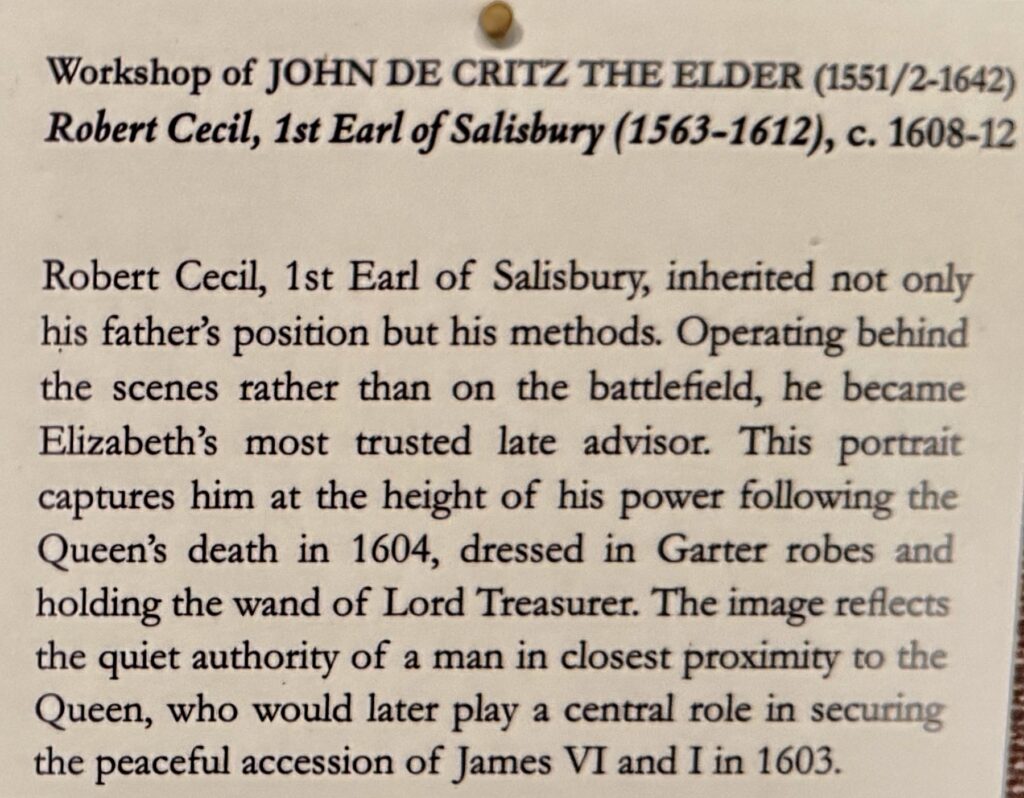
I have only written about a small part of this fantastic free exhibition. You can read more here in the beautifully illustrated and informative exhibition catalogue.
You can also do what I did and mooch around the rest of the gallery. I liked this endearing 1832 portrait of a young boy by Margaret Sarah Carpenter …
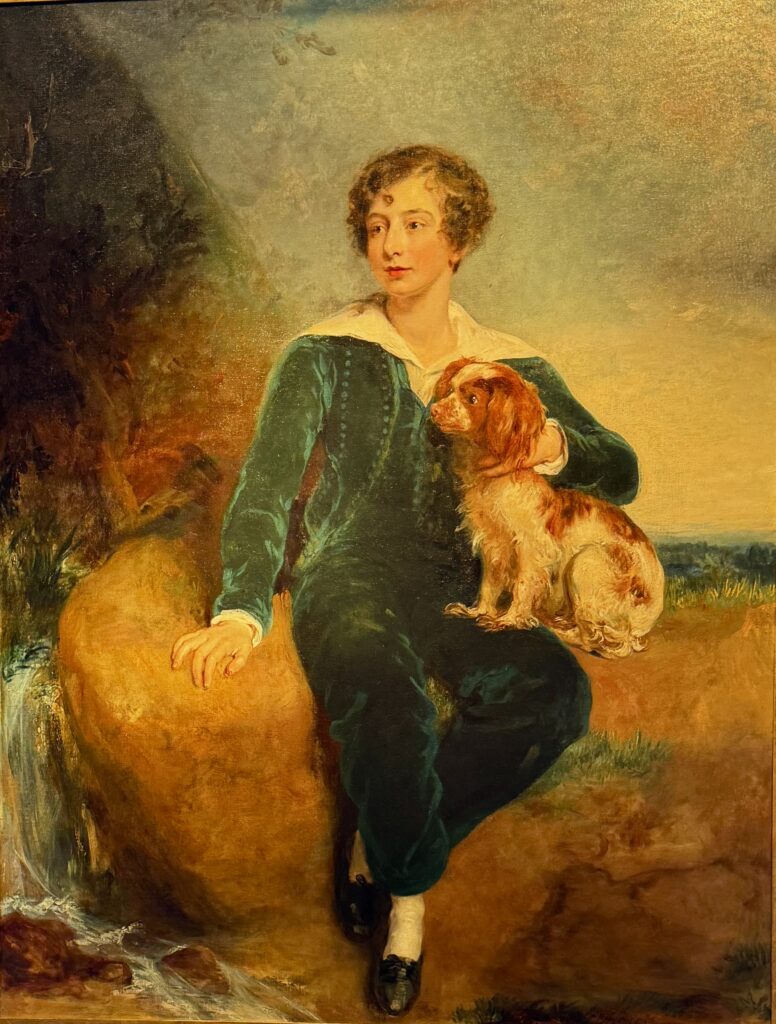
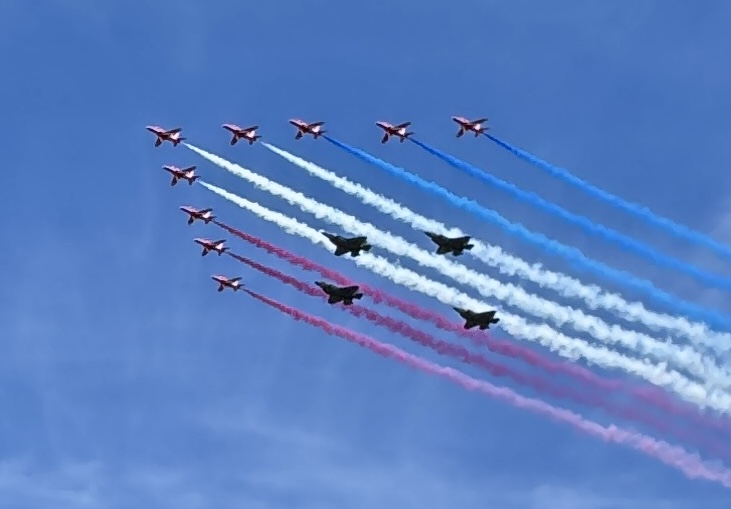
In other news, I took this picture of the King’s Birthday flypast from my balcony …
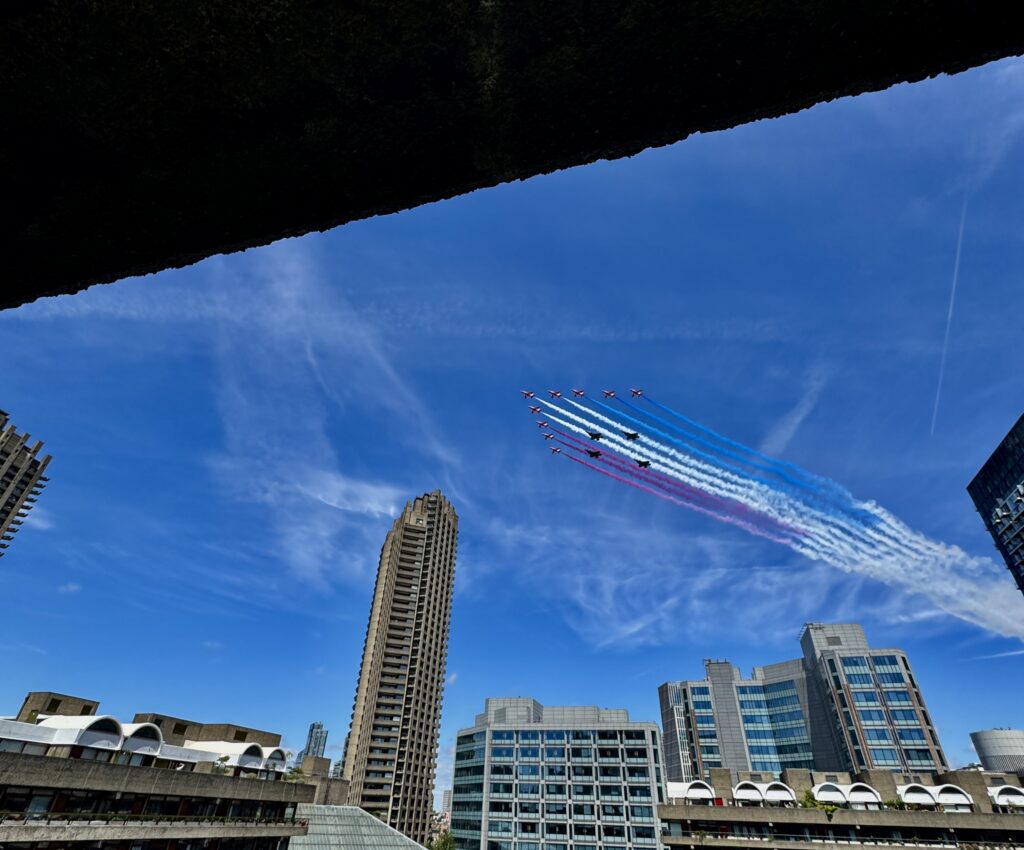
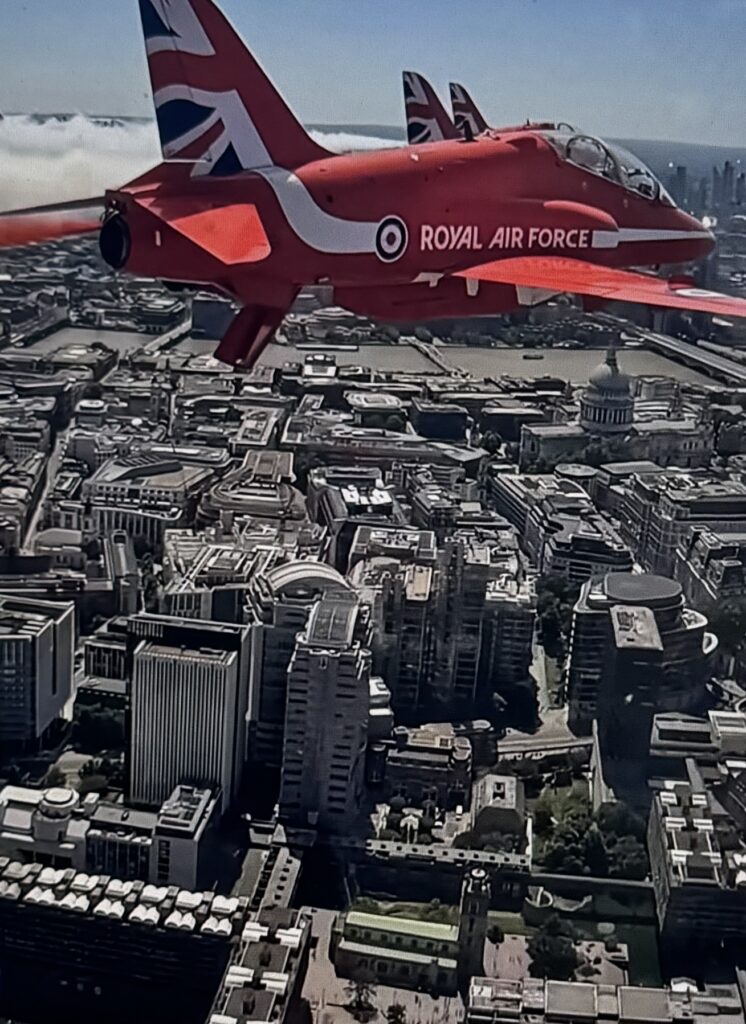
And here’s an image taken from one of the planes when they were almost directly over my head. My flat is in the block at the bottom left hand corner of the picture and the building with the green roof is the church of St Giles’ without Cripplegate …
If you would like to follow me on Instagram here is the link …