Walking the City of London

Category: Water Page 5 of 9

More fab fountains – one’s a cracker!

Why has this 19th century drinking fountain got a carving on it that looks a bit like a Christmas cracker?
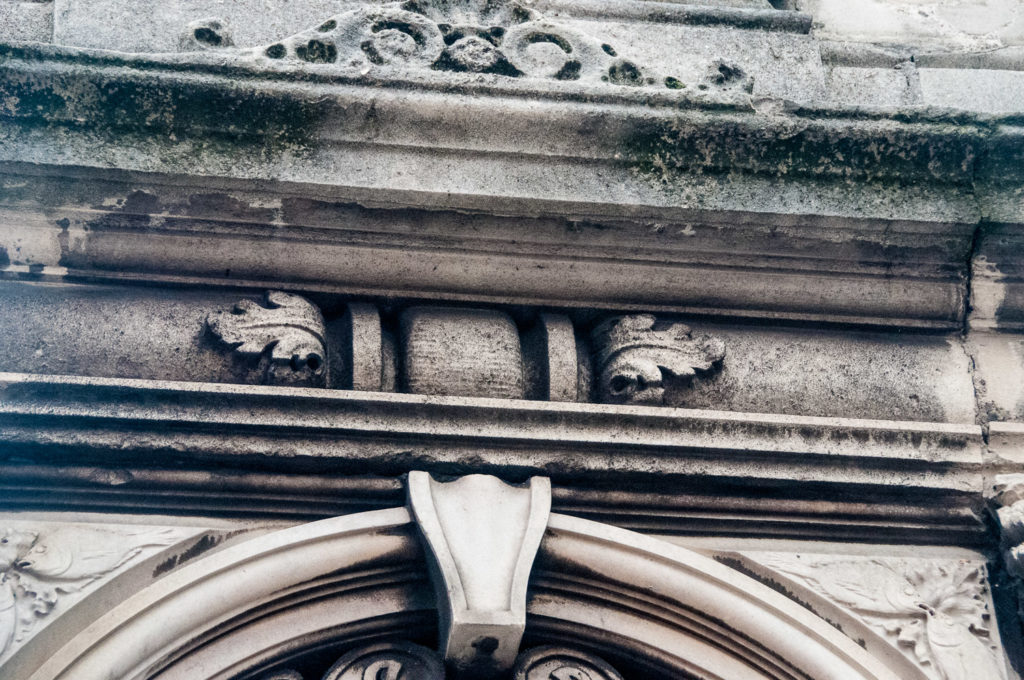
It’s located on the south west side of Finsbury Square and forms part of an elaborate memorial …
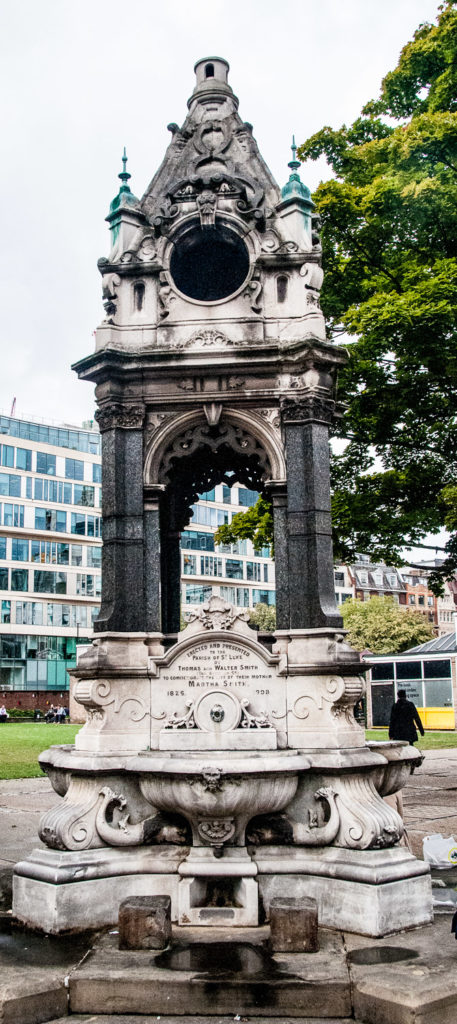
The inscription reads …

Erected and presented to the Parish of St Luke by Thomas and Walter Smith (Tom Smith and Co) to commemorate the life of their mother, Martha Smith, 1826 – 1898.

Martha was the widow of Tom Smith and here I would like to relate a little history courtesy of the excellent London Remembers website. In 1847, twenty five year old Tom, an ornamental confectionery retailer in Goswell Road, brought the French idea of a bon-bon wrapped in a twist of paper over to Britain. In 1861, probably inspired by fireworks, he introduced a new product line, ‘le cosaque’, or the ‘Bang of Expectation’, or crackers as we now know them. This successful product, originally used to celebrate any event you care to name, enabled the business to move to larger premises on Finsbury Square, where they stayed until 1953.

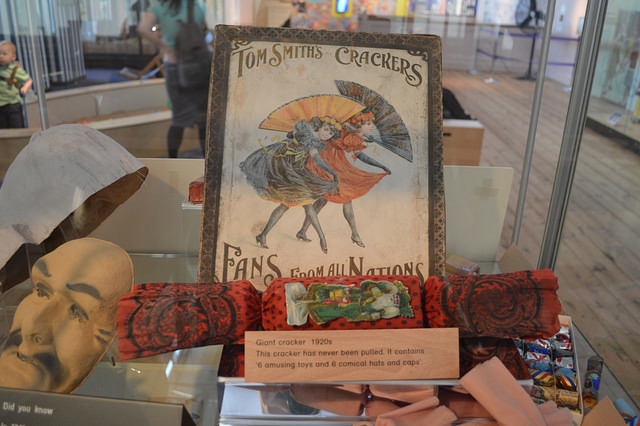
Smith and his sons knew a thing or two about advertising and were not modest about their wonderful products. Here’s a typical 19th century example …
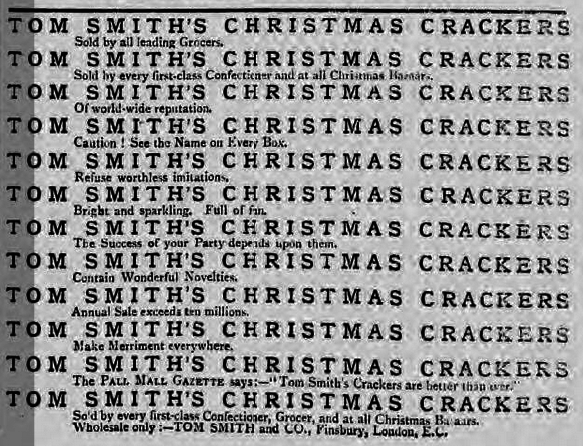
I love the instructions to ‘Refuse worthless imitations’ and ‘Make Merriment everywhere’.

There is an example of a Tom Smith’s Cracker and box on display in the Museum of Childhood in Bethnal Green. This picture was taken by The Londonist who has written a very comprehensive blog about the memorial which you can find here

Victorian Christmas crackers were filled with all sorts of trinkets and surprises – first they contained rhymed mottoes or verses, then some sort of fancy-paper hat, bonnet, mob-cap or masks. Considerable artistic talent was introduced in the adornment of these novelties.

And here is an image from the Tom Smith archive where you can also find the 2019 catalogue and order your Christmas supplies!
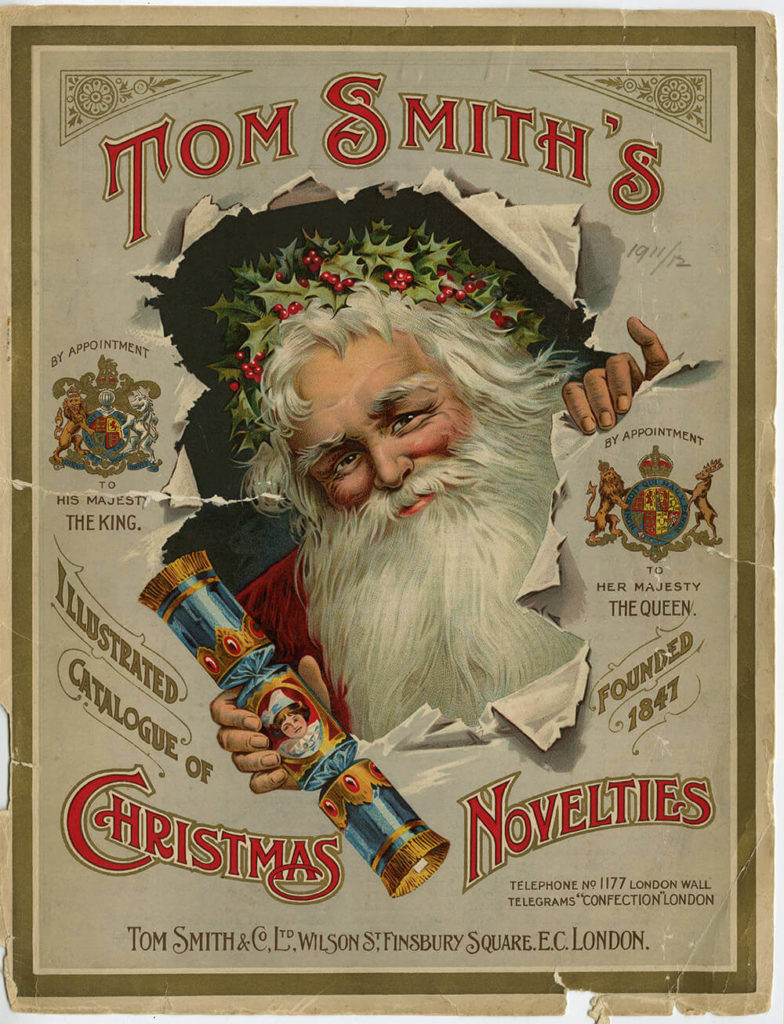
The company is now owned by Napier Industries and still holds a Royal Warrant.

Here’s the founder himself. He was born 1823 and died, quite young, in 1869 …

We can thank the company for going on to develop cracker contents like the novelty gift and corny joke. You also have to blame one of Tom’s sons for the paper hat we are obliged to wear, often with excruciating British embarrassment, at work Christmas parties.

Crackers never took off in America and it has been claimed that the British liked them because ‘it taught their children how to deal with disappointment at an early age’.

And now for something rather odd. The water fountain was funded by the sons but the daughters went their own way. A few yards away is this horse and cattle trough …
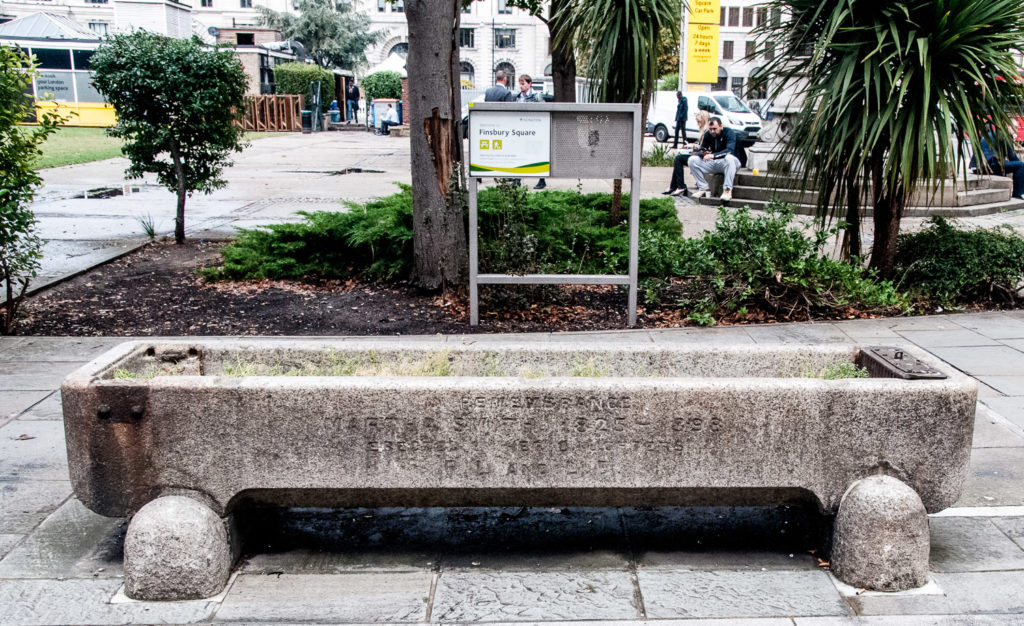
It bears the following inscription (now very faded) …

In remembrance Martha Smith 1898. Erected by her daughters P. L. and L. D.

The sons erect the splendid water fountain and the daughters erect the utilitarian water trough. Does this tell us something about their personalities or about Victorian gender differences?

Researching the origin of the Christmas cracker has been a genuine pleasure and if you want to know more there is a book about the ‘King of Crackers’ – I might just order a copy. You can find a review here.

Next up is the St Lawrence and Mary Magdalene fountain located on Carter Lane opposite St Paul’s Cathedral. Created as a joint enterprise between the two parishes that give it its name, the fountain was originally installed in 1866 outside the Church of St Lawrence Jewry …
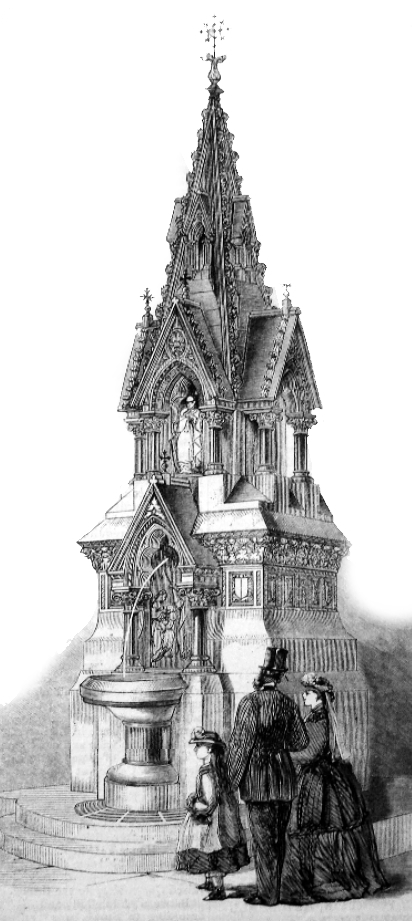
An engraving from ‘The Builder’ publication 1866.

The location next to St Lawrence Jewry …
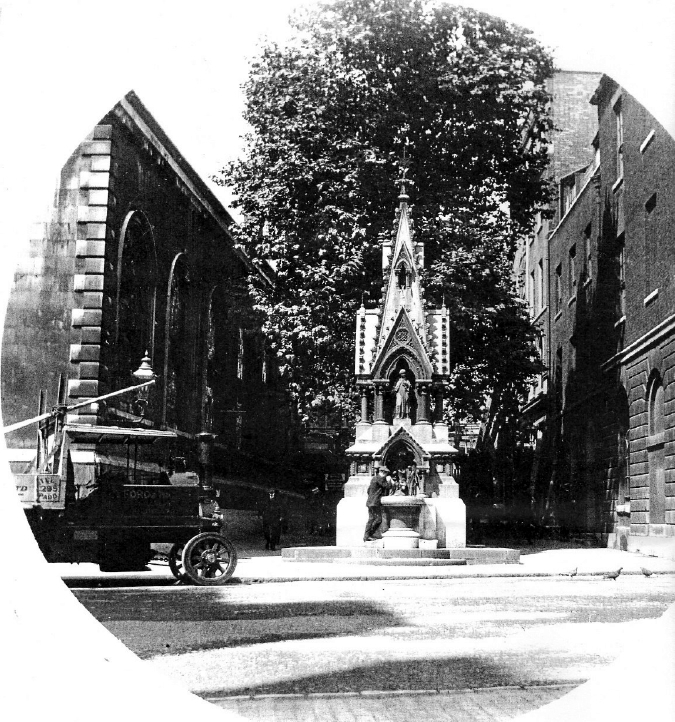
A man quenching his thirst in 1911.

It was dismantled in 1970 and put into a city vault for fifteen years, then stored in a barn at a farm in Epping. The pieces were sent to a foundry in Chichester for reassembly in 2009 and it was was moved to the current location the following year …
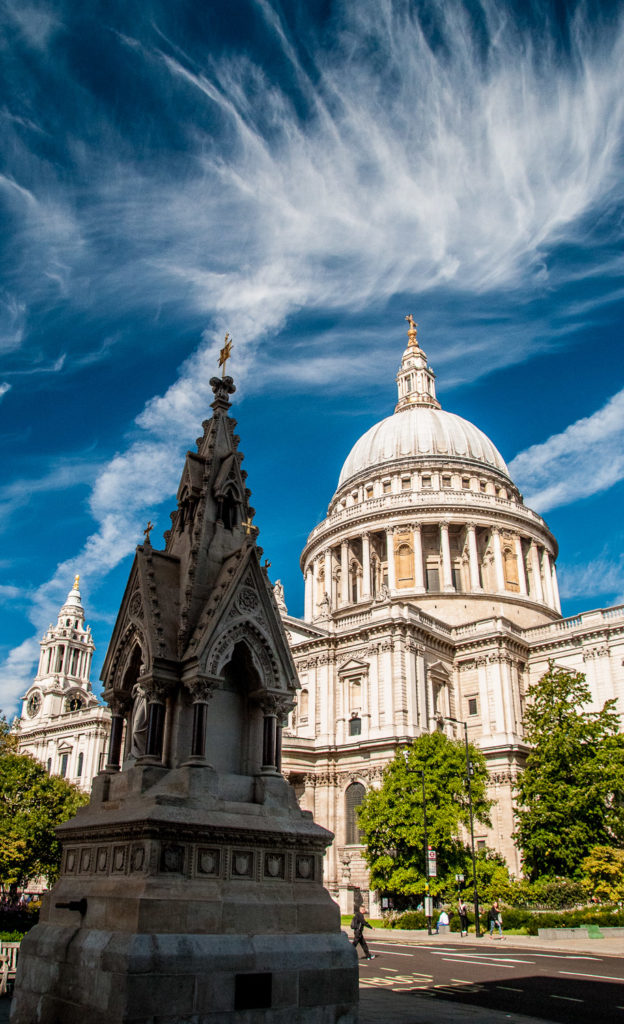
The work was designed by the architect John Robinson (1829-1912) and sculpted by Joseph Durham (1814-1877), both very famous men in their time.
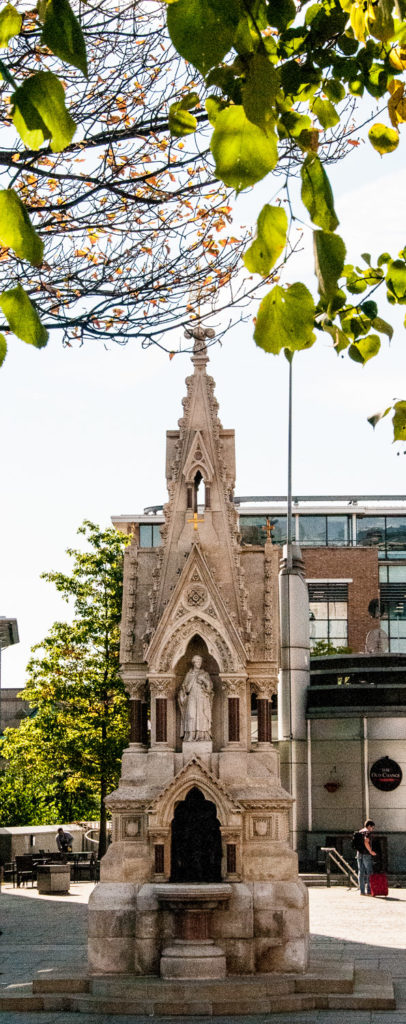
The fountain takes the form of a niche with carved hood resting on granite columns. Set into the niche is a bronze bas-relief of Moses striking the rock at Horeb (Exodus. XVII. IV-VI) …
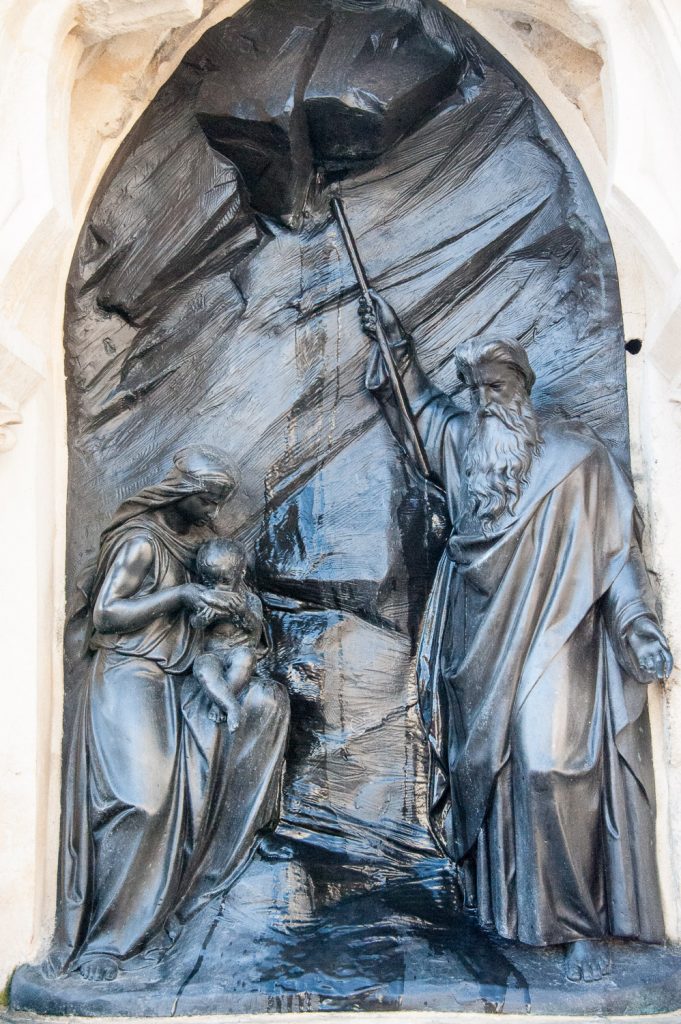
Water runs down the face of the bronze from where Moses’ staff strikes. To the left of Moses is the figure of a woman holding a cup of water to her child’s mouth.

Above the fountain is a carved stone statue of St Lawrence holding a gridiron (on which he was martyred) …
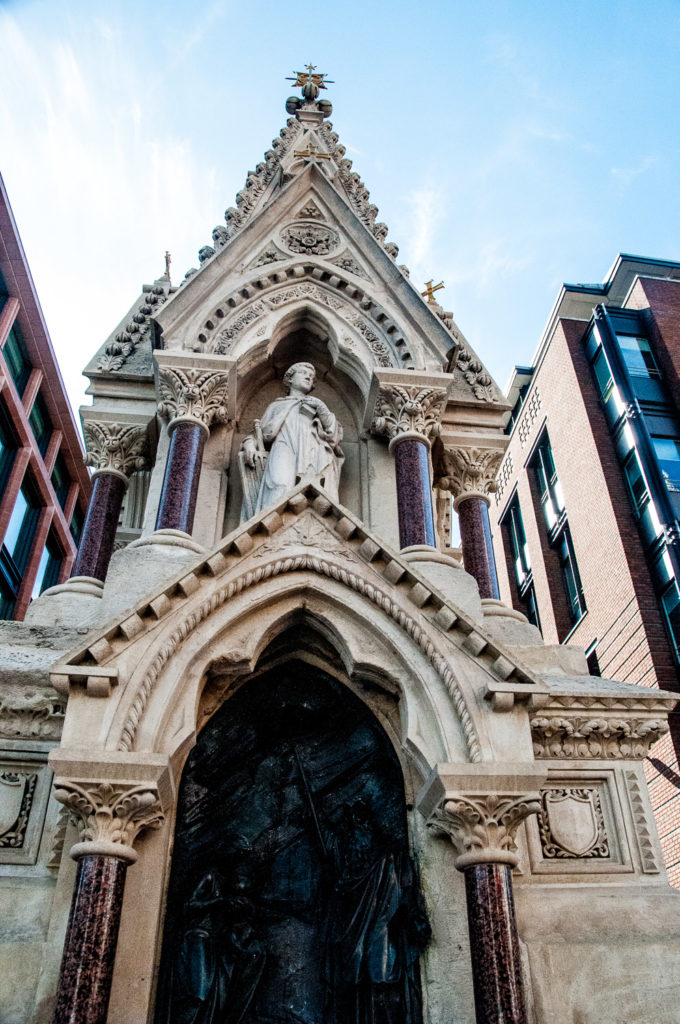
In the south-facing niche is a statue of St Mary Magdalene holding a cross, and with a skull at her feet …
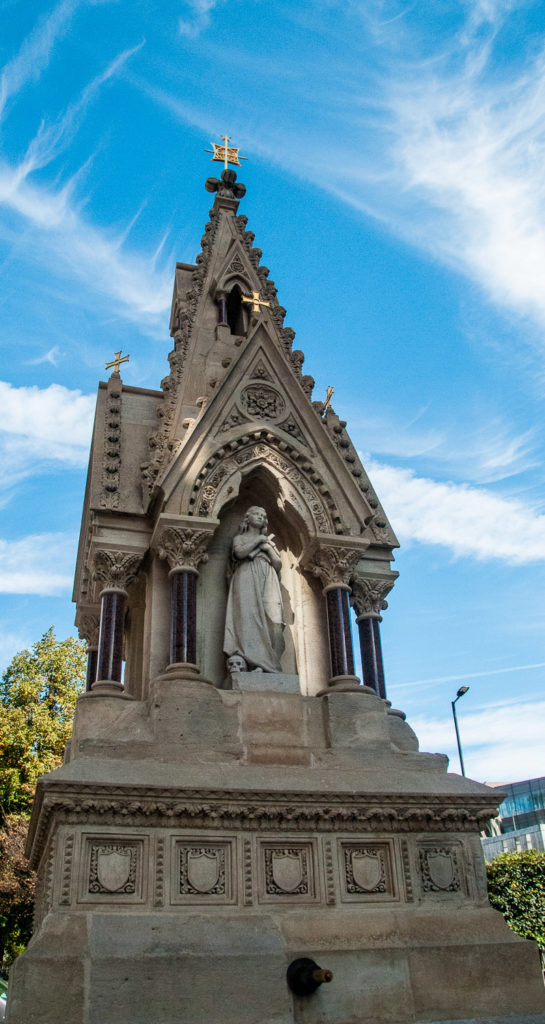
The other two niches are empty but are believed to have originally held the names of past benefactors of the churches carved into white marble slabs. Below, a new brass tap has now been fitted which dispenses water when pressed.

I wrote about the City’s water fountains and their fascinating history a few years ago and you can read the blog again here.
Secret & Sacred Rivers

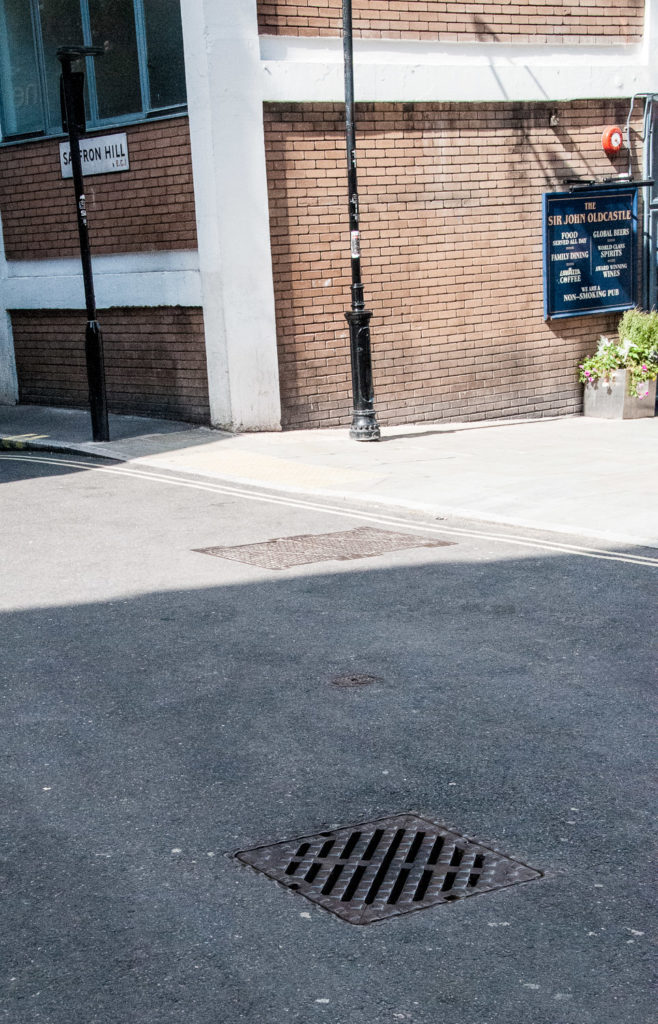
I’m always intrigued by Londoners’ capacity to ignore odd behaviour. For example, I spent a good ten minutes bending over this grating, some of it virtually on my knees, and no one showed the slightest curiosity …

Junction of Greville Street and Saffron Hill (EC1M 3JF)

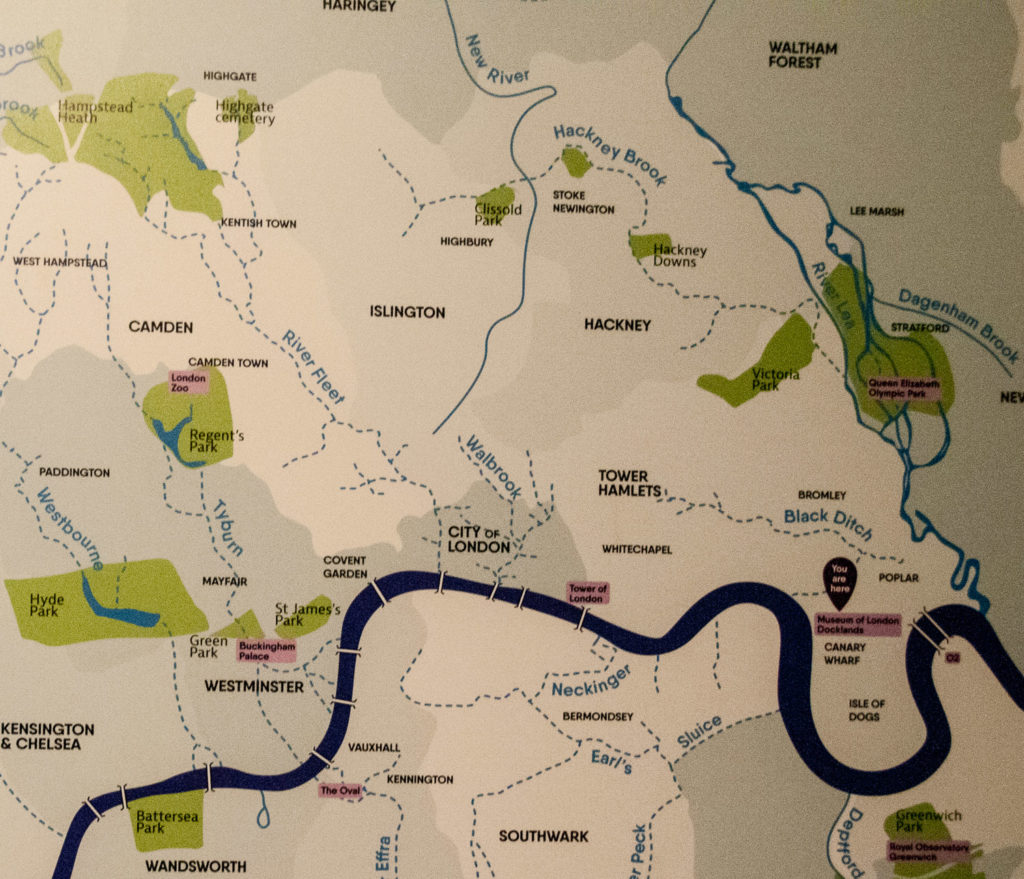
I was, of course, trying to hear the sound of running water since, directly underneath, runs probably the most famous of London’s ‘lost’ subterranean rivers, the Fleet. Its headwaters are two streams on Hampstead Heath, each of which was dammed into a series of ponds in the 18th century. At the southern edge of the Heath these descend underground as sewers which join in Camden Town. The waters flow four miles from the ponds to the River Thames, just underneath Blackfriars Bridge. Incidentally, it didn’t run down Fleet Street, it merely ran past its eastern, lower end.

This map, showing the route of the Fleet and various other waterways, is on display at the excellent Secret Rivers exhibition at the Museum of London Docklands …

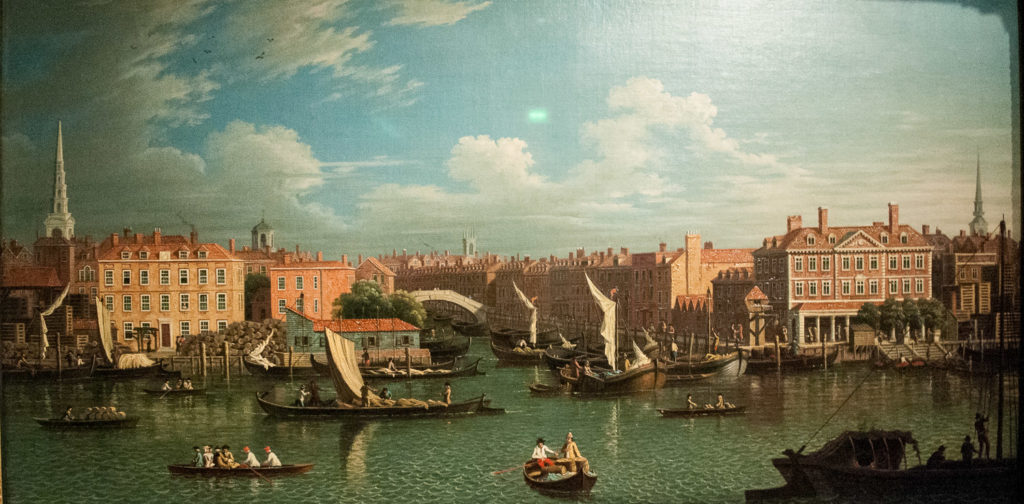
Because of its later reputation, I always had a view that the Fleet where it joined the Thames would be a deeply unpleasant place, so this picture rather surprised me …

This painting (by a follower of Samuel Scott) was obviously influenced by Canaletto, who was based in England until 1755. Looking north across the Thames, it shows the entrance to the Fleet circa 1750 with Bridewell Foot Bridge, the City Wharf and Dock, and Blackfriars Stairs. The Fleet was developed into a canal up to Holborn, lending this view a Venetian appearance. This grand aspect, however, did not last long as the wharves proved unprofitable and Londoners continued to dump their rubbish in the river.

Originally a green river valley, the Fleet River had been gradually transformed into the Fleet Ditch, infamous for being a source of filth, corruption and disease. Observing a flood during a storm in 1710 Jonathan Swift penned the following lines …

Sweepings from Butchers Stalls, Dung, Guts and Blood,
Drown’d Puppies, stinking Sprats, all drench’d in Mud,
Dead Cats and Turnip-Tops come tumbling down the Flood.

Pope made this small literary contribution in 1728 …

To where Fleet Ditch, with disemboguing streams, rolls the large tribute of dead dogs to the Thames.

On display at the exhibition is sad little exhibit. Found during excavations of the old river bed, it’s a dog’s collar with the inscription ‘Tom at Ye Greyhound Bucklersbury’. Poor Tom.

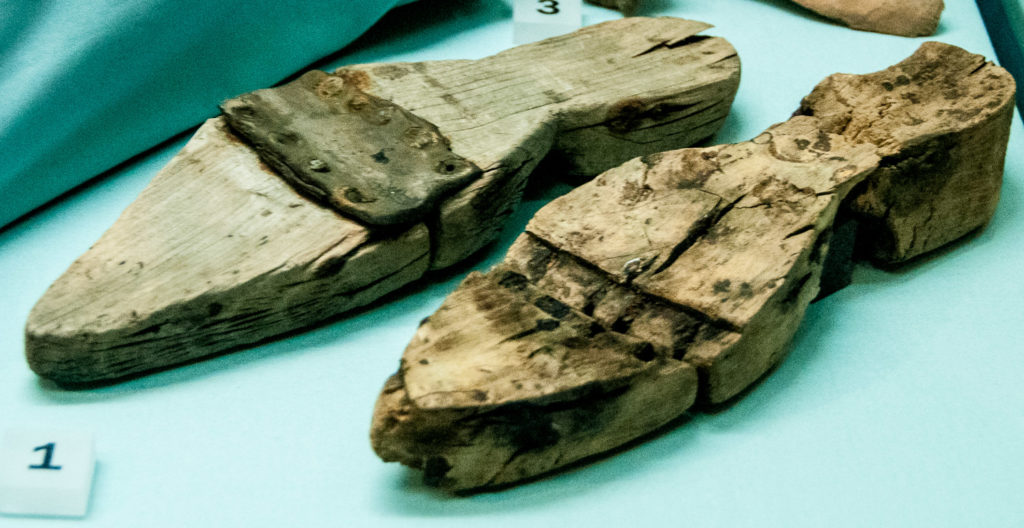
There is a reminder in the exhibition of how muddy and dirty the City’s streets were. This pair of wooden pattens date from the 15th century and were used to protect shoes and raise the wearer above the mud. They have a leather hinge to aid walking …

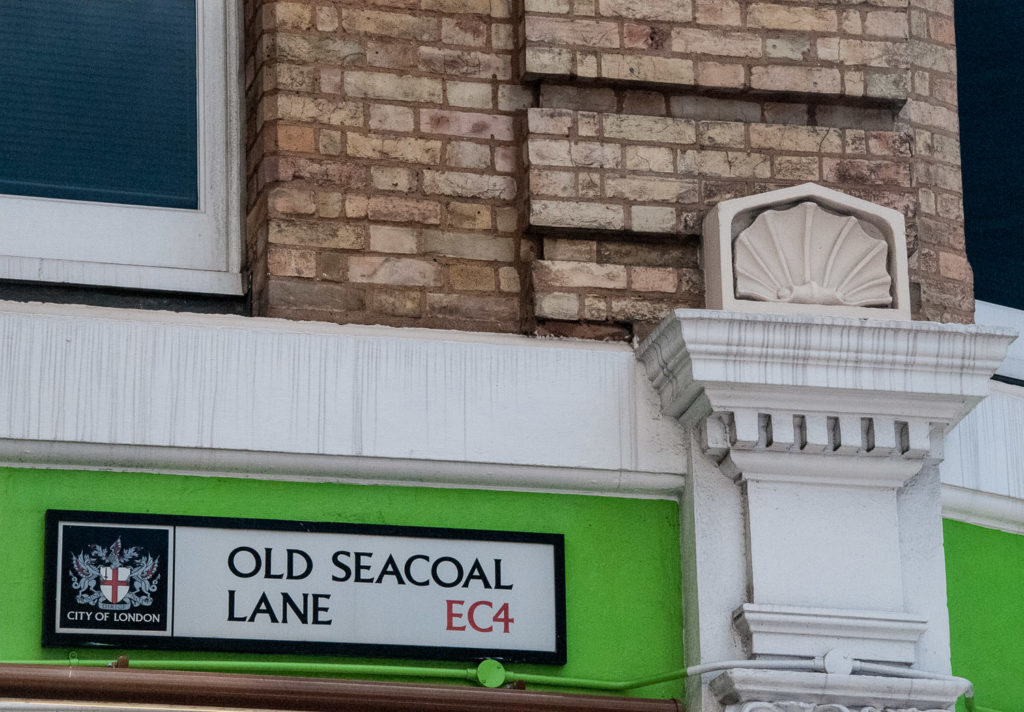
London’s population grew rapidly through the seventeenth century from about 200,000 to about half a million which resulted in a significant rise in the need for coal. This was brought from the north east of the country in barges which offloaded at wharves in the tidal Fleet. Street names that survive today remind us of this …

And the thoroughfare that ended at the canal, so you couldn’t go any further …

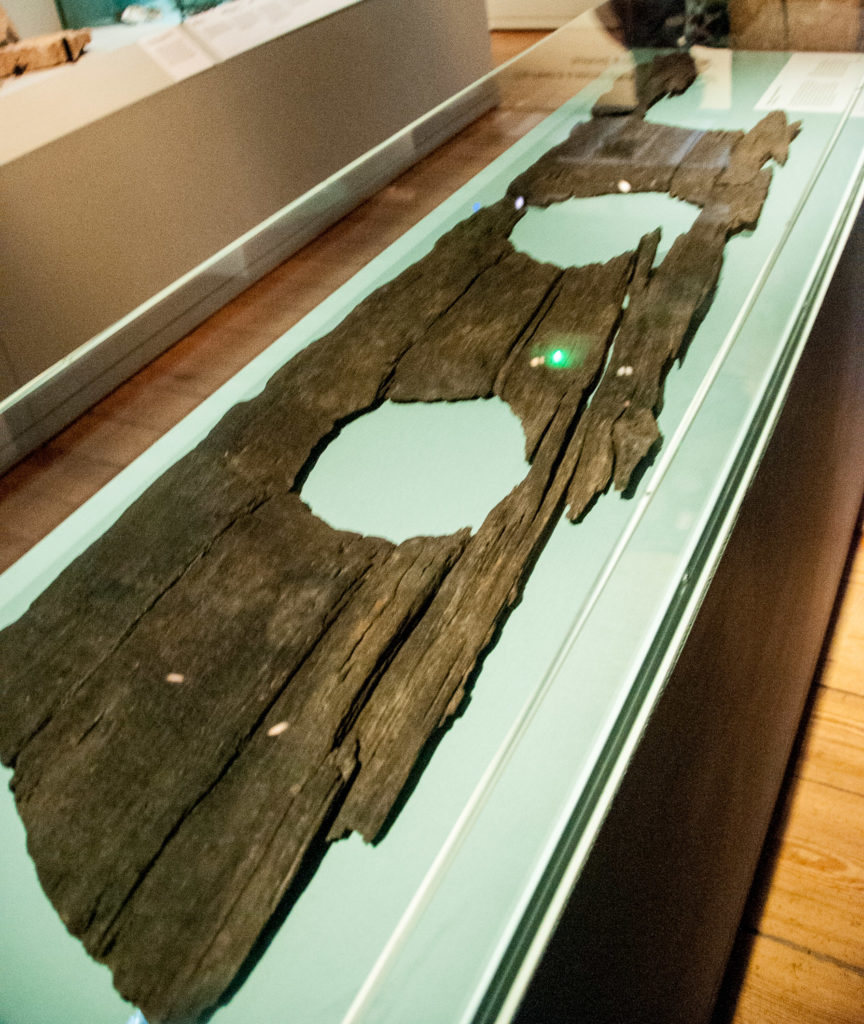
The Fleet Valley from Clerkenwell to the Thames housed many of London’s prisons and all manner of vice was practised in the dingy, stinking claustrophobic rookeries (slums). Nor was there much privacy if you had to go to the loo. This medieval oak three-seater toilet seat was found over cesspit in a yard behind buildings that faced on to modern day Ludgate Hill …

This picture tells a story. It’s an 1841 drawing by Antony Crosby of the Fleet River at Holborn Bridge – note the wooden latrine projecting over the ditch on the left …

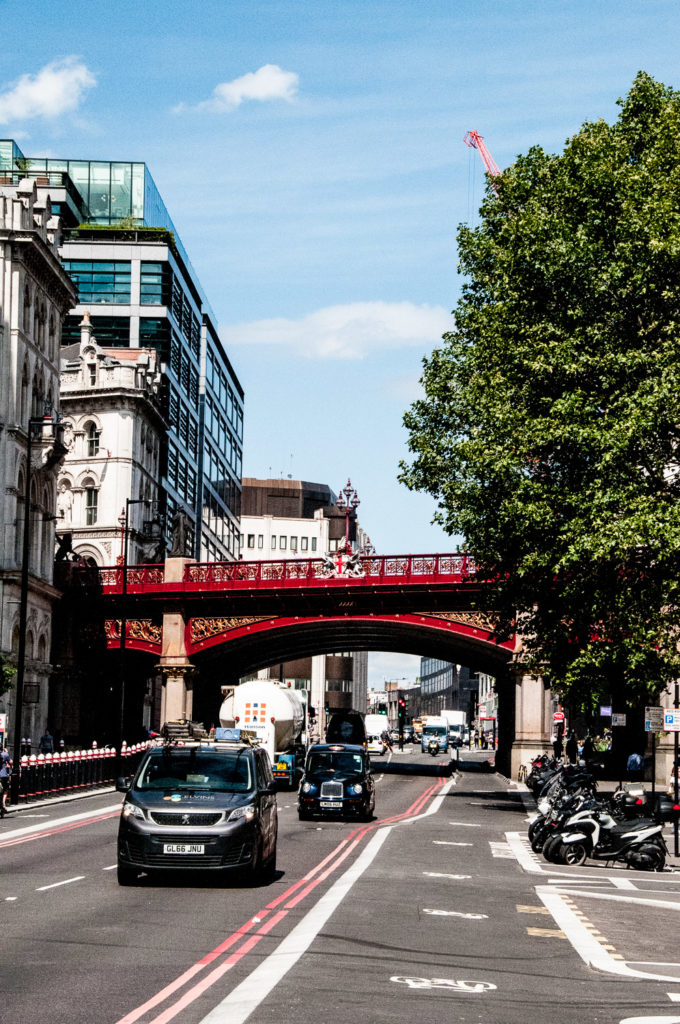
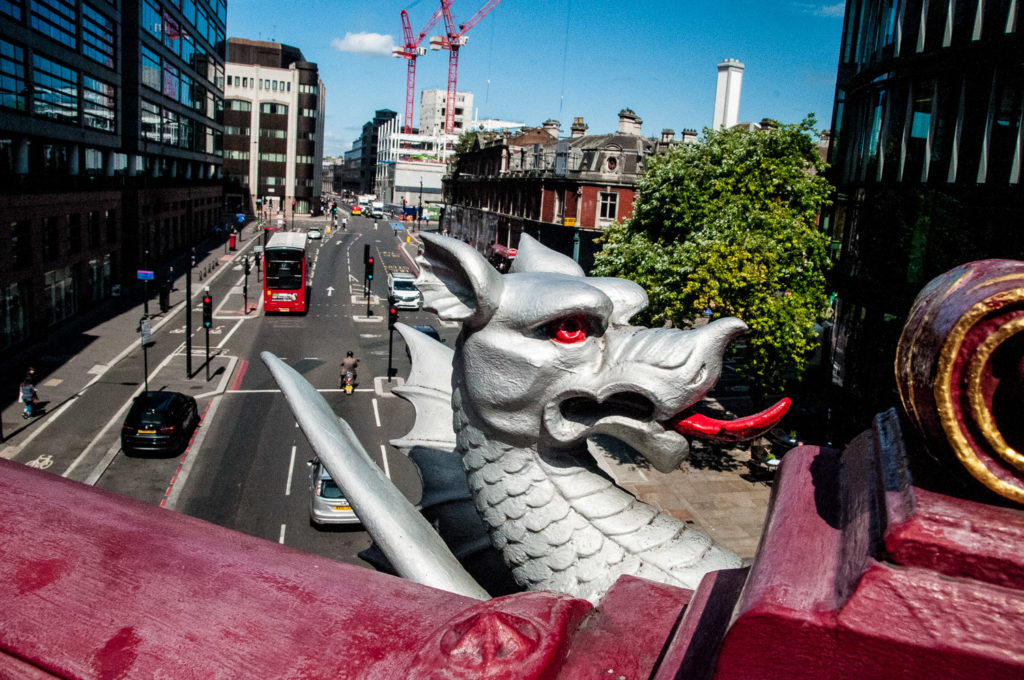
Holborn Viaduct was built between 1863 and 1869 in order to span the Fleet and provide level access from east to west – a great improvement in an era of horse-drawn traffic. You can see it reaches over a deep valley …

Looking north whilst standing on what was the bank of the old Fleet canal.

When I climbed the stairs to take a picture from above a curious City dragon popped his head up to see what I was doing …

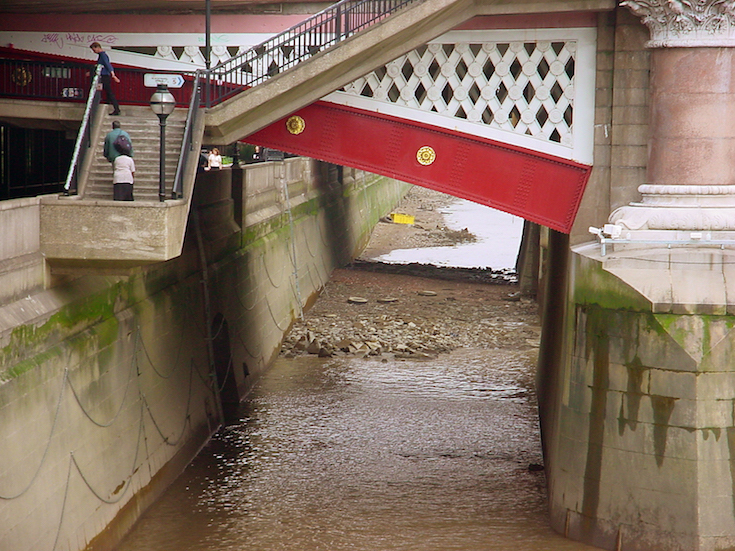
Gradually the entire river was enclosed in Victorian sewer tunnels and it now flows into the Thames under Blackfriars Bridge (just below where the banker Roberto Calvi was found hanged in 1982) …

Rivers, such as the Thames and the Walbrook, influenced where the Romans founded Londinium and the Museum of London exhibition also illustrates the fact that our connection to water goes beyond the practical, reaching into the spiritual. While most objects found in London’s rivers are lost items, rubbish or remnants of river-related activities, some cannot be explained so easily. These bear witness to the spiritual importance of rivers.

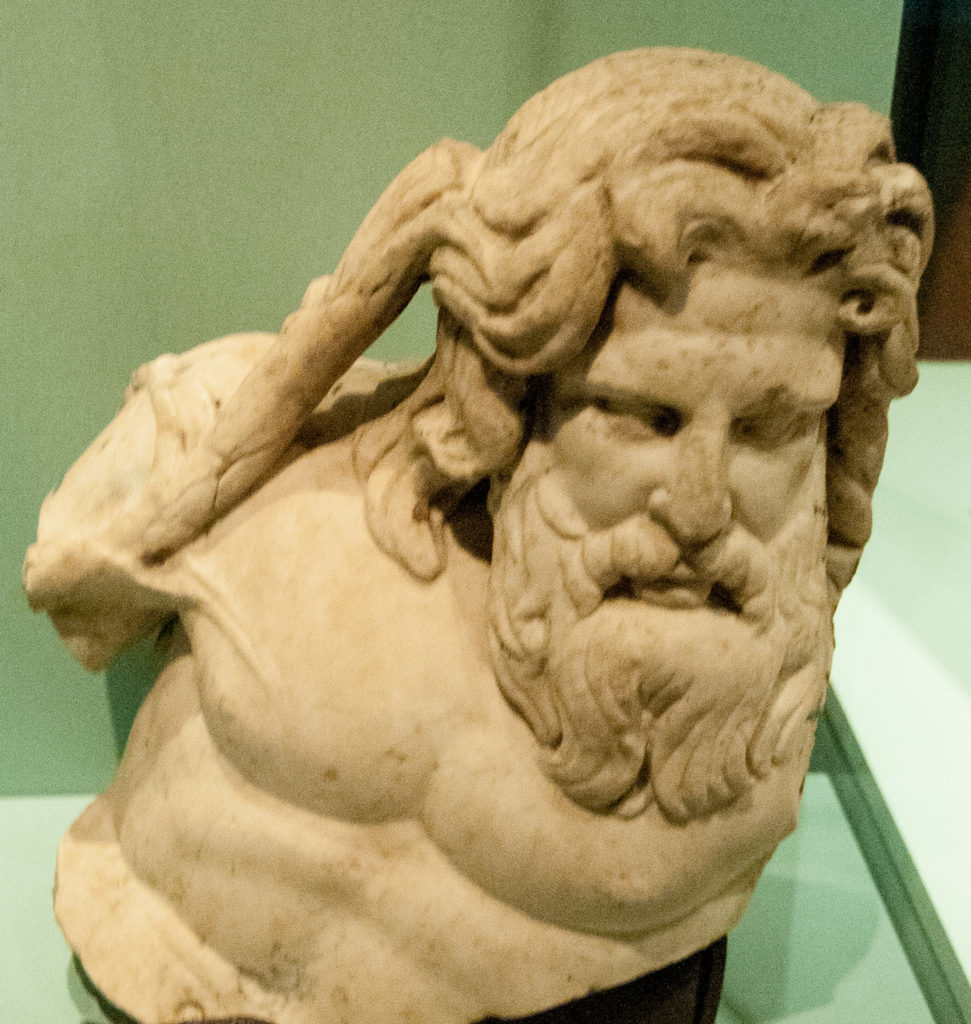
On display, for example, is this first or second century AD small representation of a river god, possible Neptune, apparently cast or placed into the Walbrook …

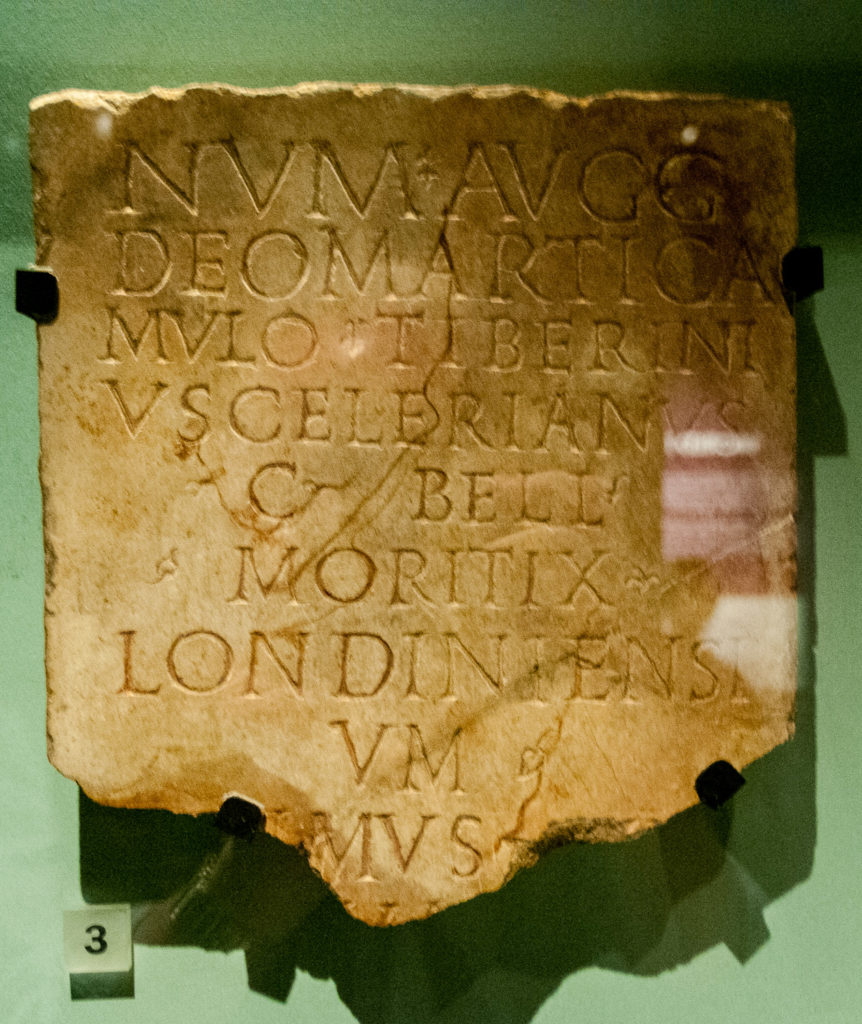
And this piece of a marble offering is particularly fascinating …

The inscription has been translated thus:

To the Divinities of the Emperors (and) to the god Mars Camulus. Tiberinius Celerianus, a citizen of the Bellovaci, moritix, of Londoners the first …

It is the first example from the capital to use the word Londiniensi or ‘Londoners’. The language suggests a man who hailed from northern France and probably traded or travelled regularly within that region but whose home seems to have become London.

If you want to read more about Roman London I have written three earlier blogs on the subject: The Romans in London – Mithras, Walbrook and the Games, The Romans in London … and two Roman ladies and The Roman Wall revisited.

The Museum of London Docklands exhibition runs until 27th October this year. I highly recommend it.

A man in a silk dress and a gallant rescue

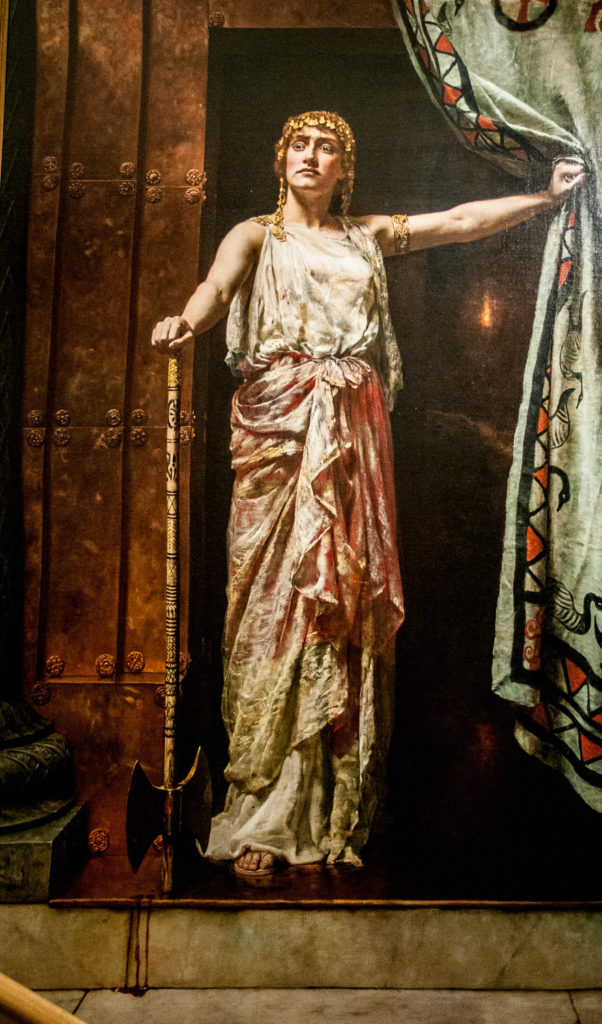
There seems to be no end to the wonderful paintings to be found at the Guildhall Art Gallery. This one is a representation of a famous Greek myth – the murder by Clytemnestra of her husband Agamemnon. Here she stands, wild-eyed in the Mediterranean sunlight, outside the room where she has committed the deed. In the background behind her we can just make out the outline of a dimly lit body …

‘Clytemnestra’ by John Collier (1882)

Agamemnon had commanded the Greek forces which besieged Troy during the Trojan Wars. Before setting sail for home, he sacrificed their youngest daughter Iphigenia to ensure a favourable wind for his fleet. To make matters worse, he returned with his lover, the prophetess Cassandra, the captured daughter of King Priam of Troy. Enraged and grieving, Clytemnestra and her son murdered them both in revenge

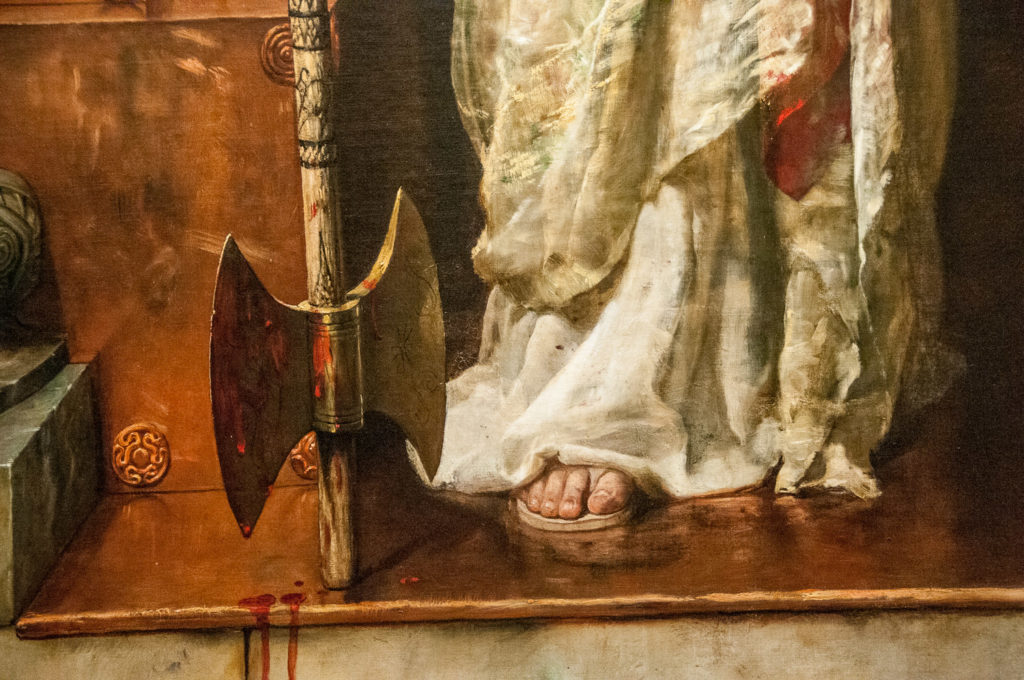
Collier was famous for his close attention to detail. There is light etching on the axe blade and the blood drips and runs authentically. All the little roundels we can see in the picture are different …

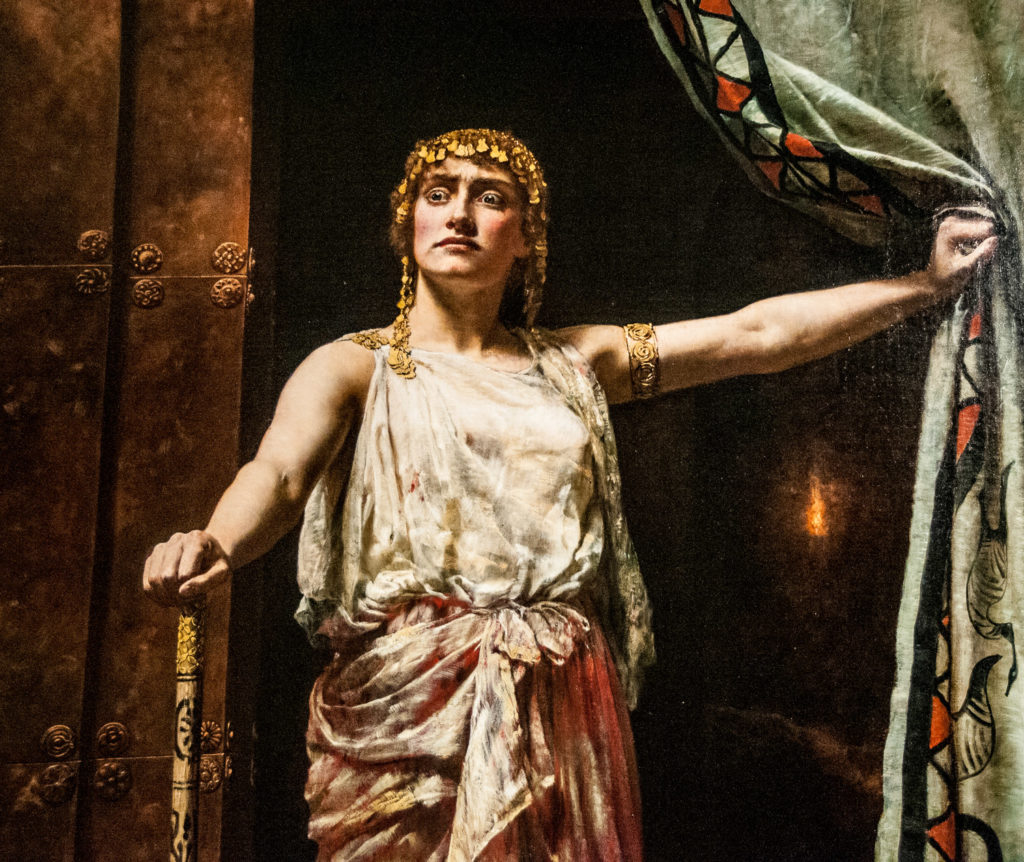
One has to say, however, that the more you study the figure the more it looks like a man. There is a pure physical dominance – and look at the muscular arms and large hands gripping the axe handle and holding back the curtain …

Collier brings extraordinary attention to detail in her blood-spattered garments.

It is now thought that Collier took his inspiration from an 1880 performance of Aeschylus’s Agamemnon at Balliol College, Oxford in which Clytemnestra was played by a male student, one Frank Benison.

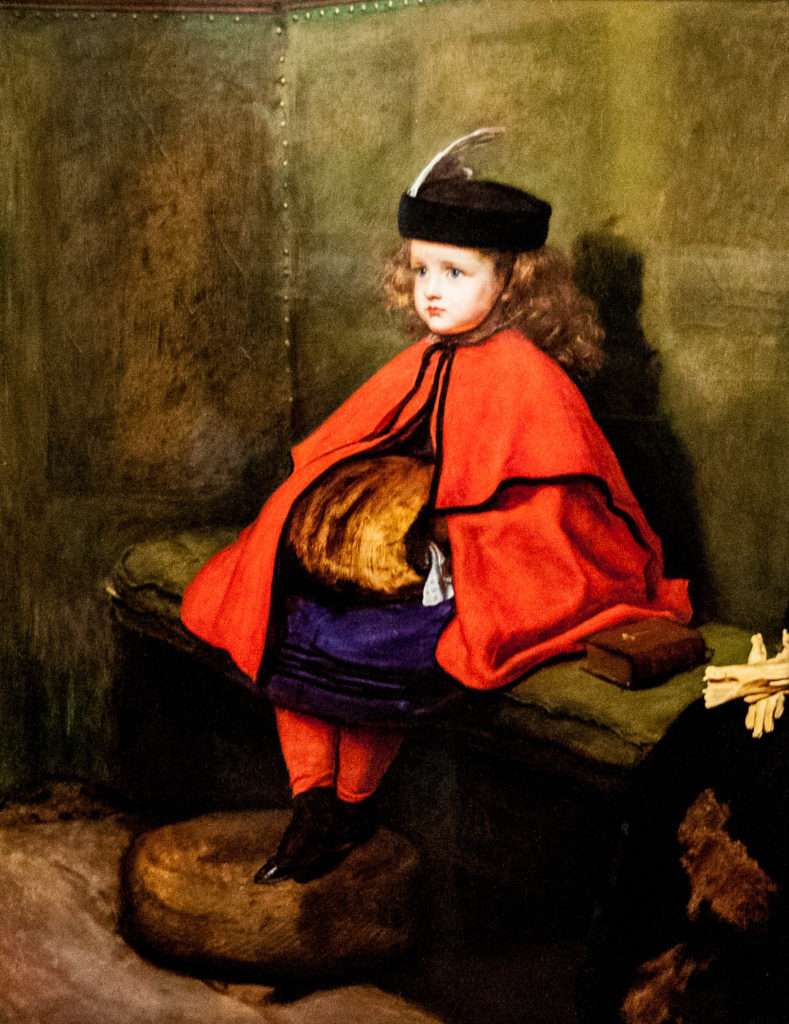
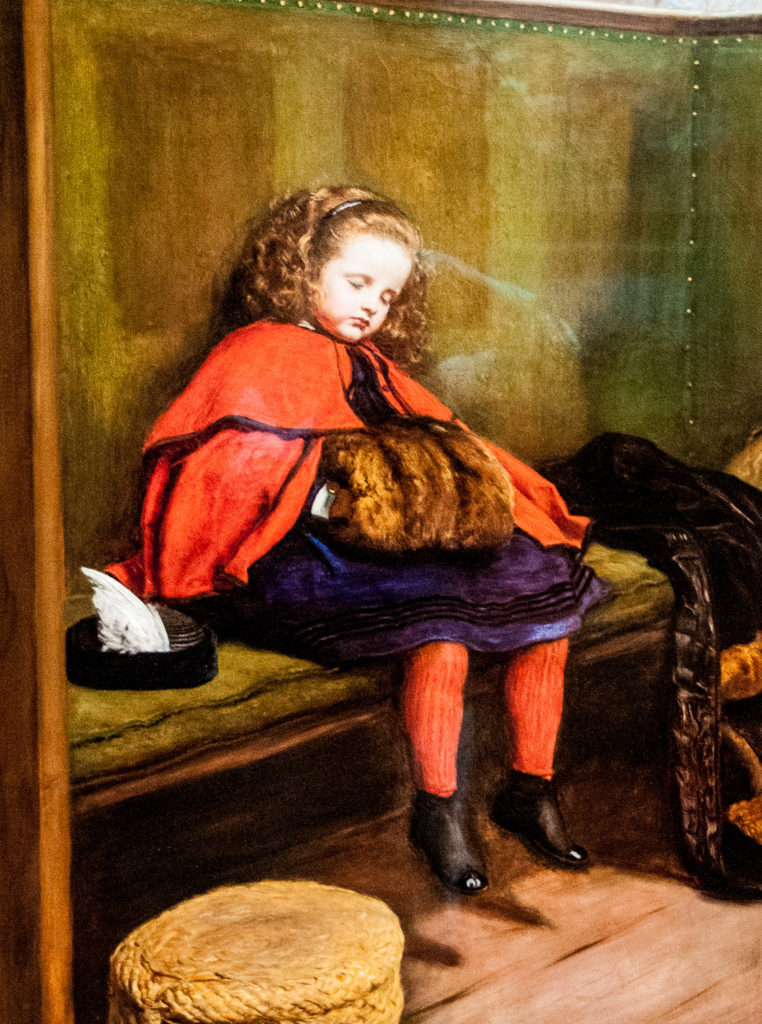
On a much lighter note, here is a pretty little girl attending her first sermon …

My First Sermon’ by John Everett Millais

She obviously knows this is an important occasion in her life and sits with her back straight, eyes attentively focused looking ahead. She is the artist’s 5 year old daughter Effie. On seeing it the Archbishop of Canterbury commented …

… our spirits are touched by the playfulness, the innocence, the purity, and … the piety of childhood

In 1864 the artist produced a sequel entitled ‘My Second Sermon’ …

The Archbishop, Charles Longley, was obviously a rather good sport, and when he saw the later picture commented …

… by the eloquence of her silent slumber, (she has) given us a warning of the evil of lengthy sermons and drowsy discourses. Sorry indeed should I be to disturb that sweet and peaceful slumber, but I beg that when she does awake she may be informed who they are who have pointed the moral of her story, have drawn the true inference from the change that has passed over her since she has heard her “first sermon,” and have resolved to profit by the lecture she has thus delivered to them.

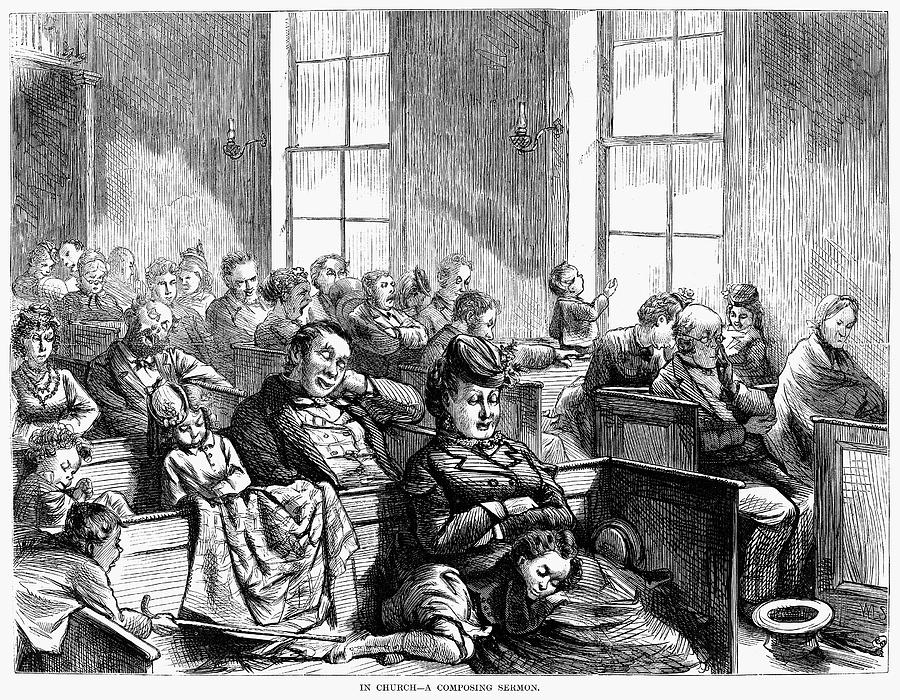
I was reminded of this wonderful drawing of a Victorian congregation who are finding the sermon rather heavy going …

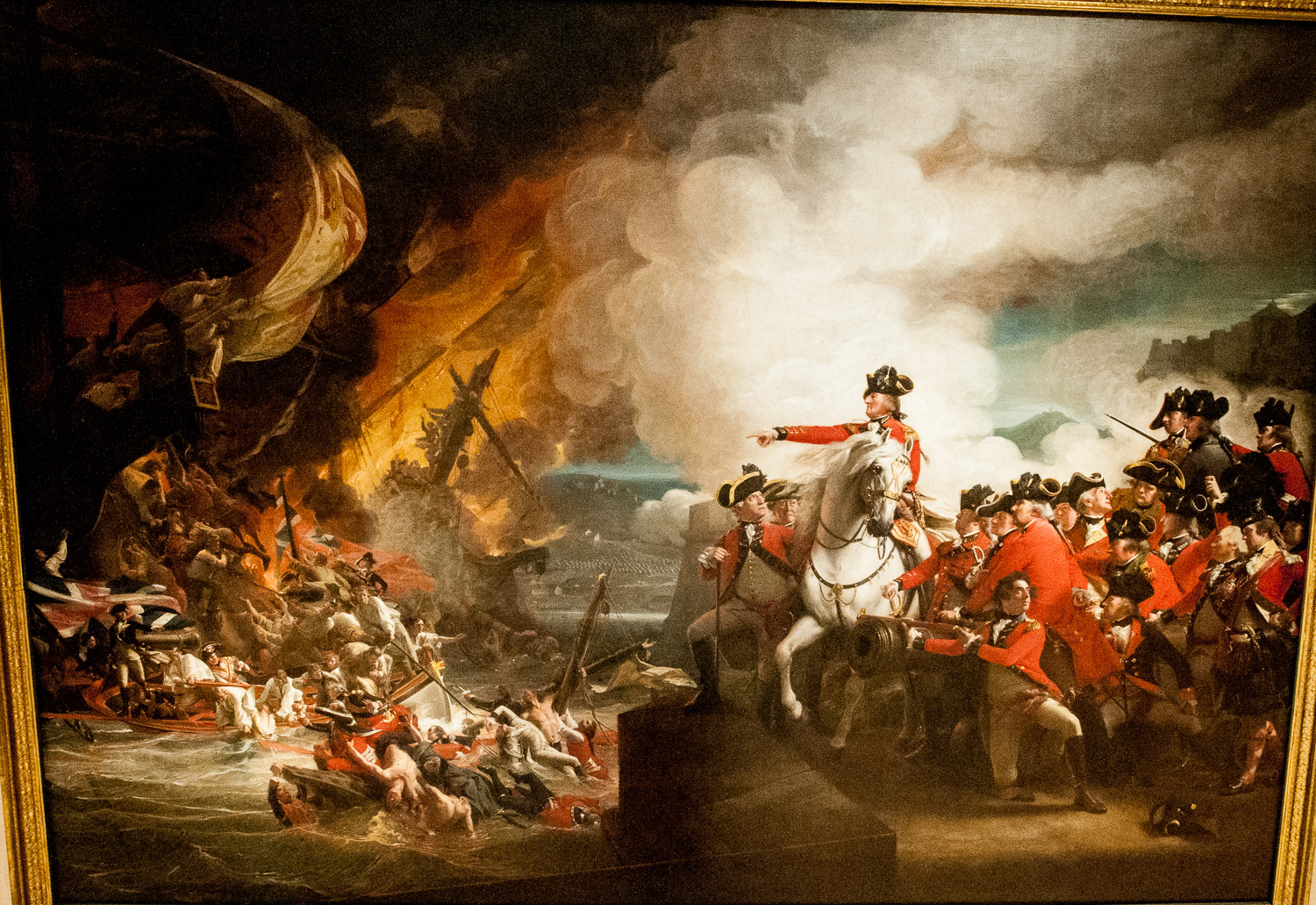
At the far end of the gallery, in a space specially designed for it, you look down on the action-packed painting by John Singleton Copley: ‘Defeat of the Floating Batteries at Gibraltar 1782’ …

A Spanish attack on Gibraltar was foiled when the Spanish battering ships, also known as floating batteries, were attacked by the British using shot heated up to red hot temperatures (with wry humour, sailors nicknamed them ‘hot potatoes’). I have written about this picture in more detail in an earlier blog which you can find here.

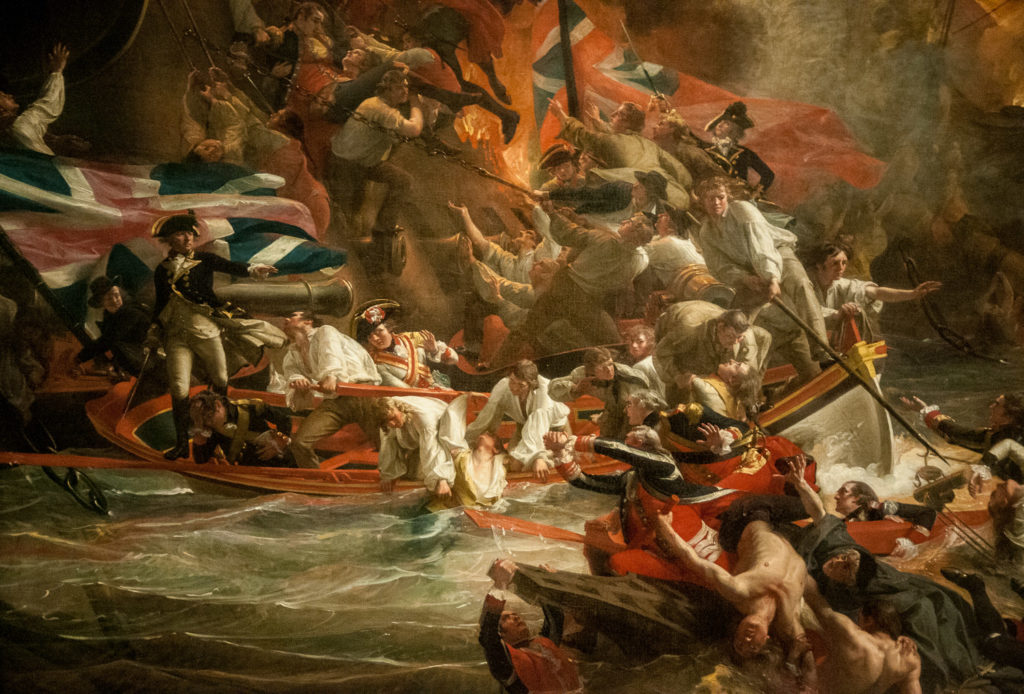
However, there was a detail I missed and really should have pointed out. Fire spread among the Spanish vessels and, as the battle turned in Britain’s favour, an officer called Roger Curtis set out with gunboats on a brave rescue mission which saved almost 350 people. Here is the gallant officer and his men carrying out the rescue, tucked away at the bottom left of the picture. The British flag billows symbolically behind them …

Undoubtedly a very chivalrous act.

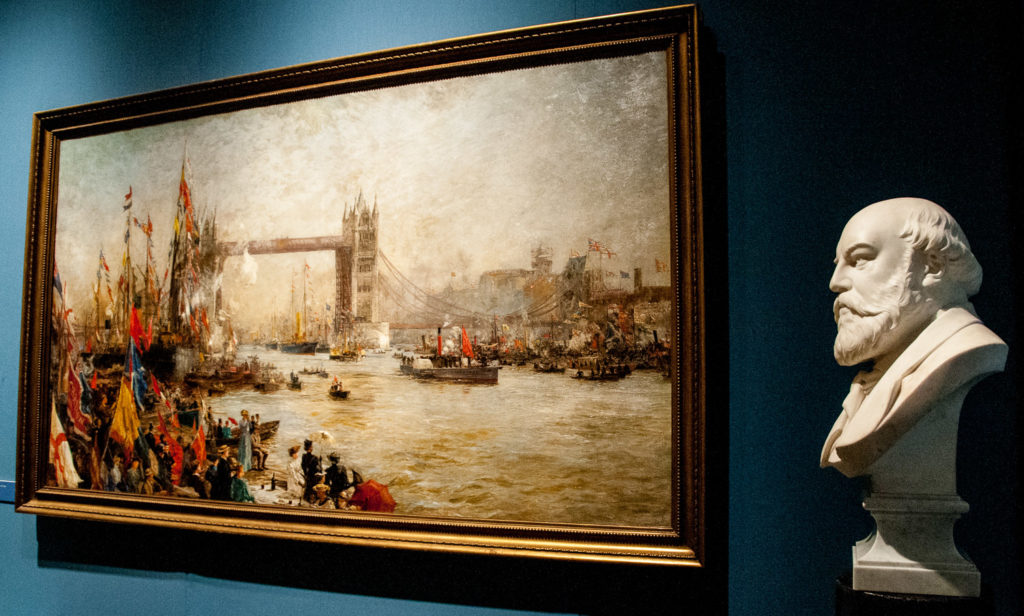
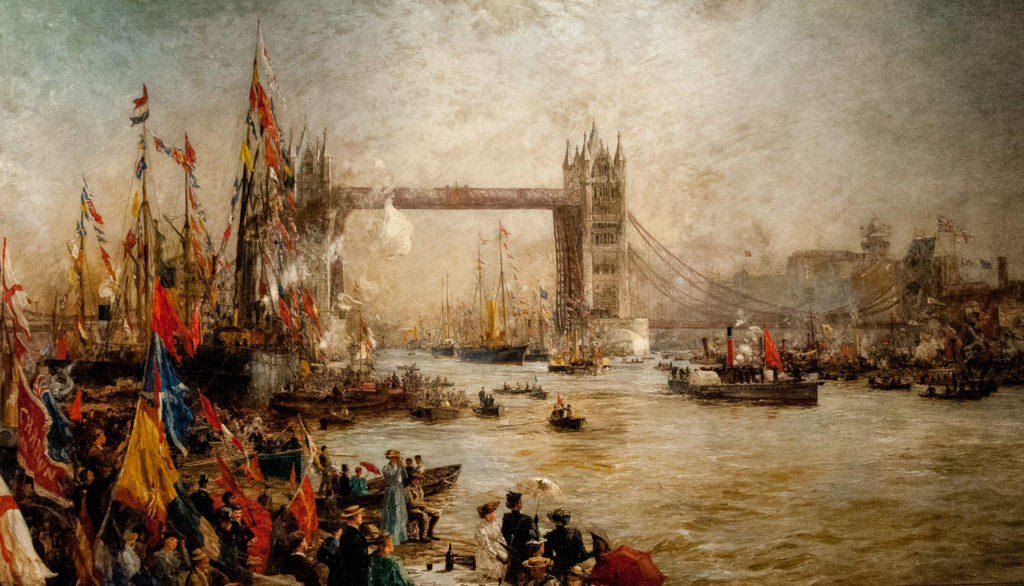
A rather distinguished looking man gazes towards a painting of the Grand Opening of Tower Bridge on 30 June 1894 …

He is the architect, Horace Jones, who designed the bridge but sadly died in 1887 before it was completed.

The painting is by William Lionel Wyllie (1851-1931), the most distinguished marine artist of his day …

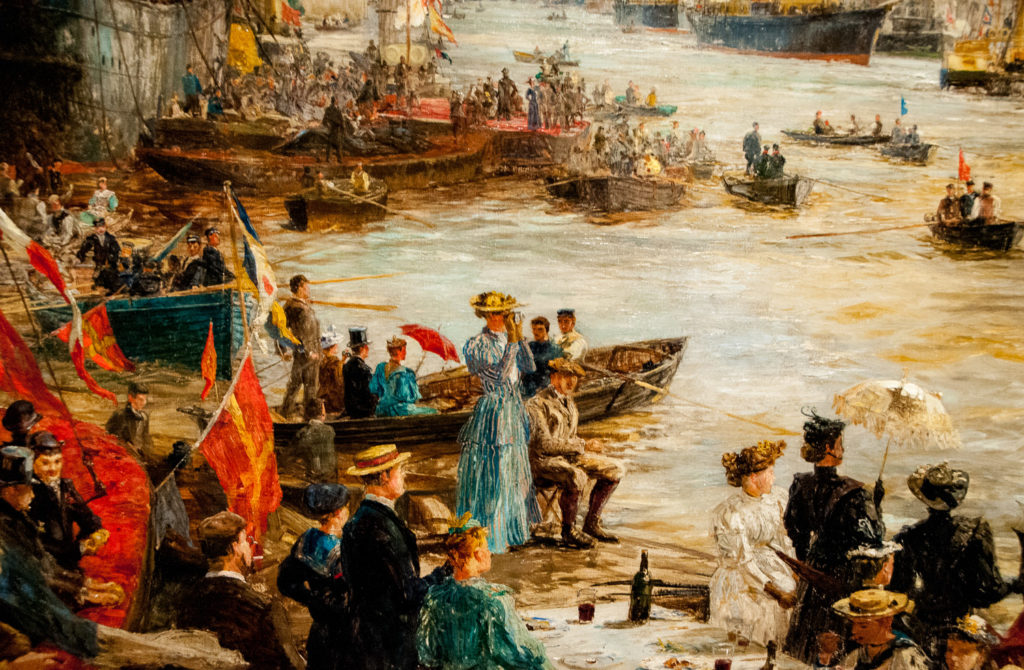
My eye was immediately drawn to the lady in the light blue dress and the man who looks like her companion sitting on his collapsible chair …

They were obviously important enough to bag a riverside view along with other folk who seem to have packed a wine-accompanied picnic. I know she’s looking through binoculars but I couldn’t get the idea out of my head that she was taking a picture with her smartphone.

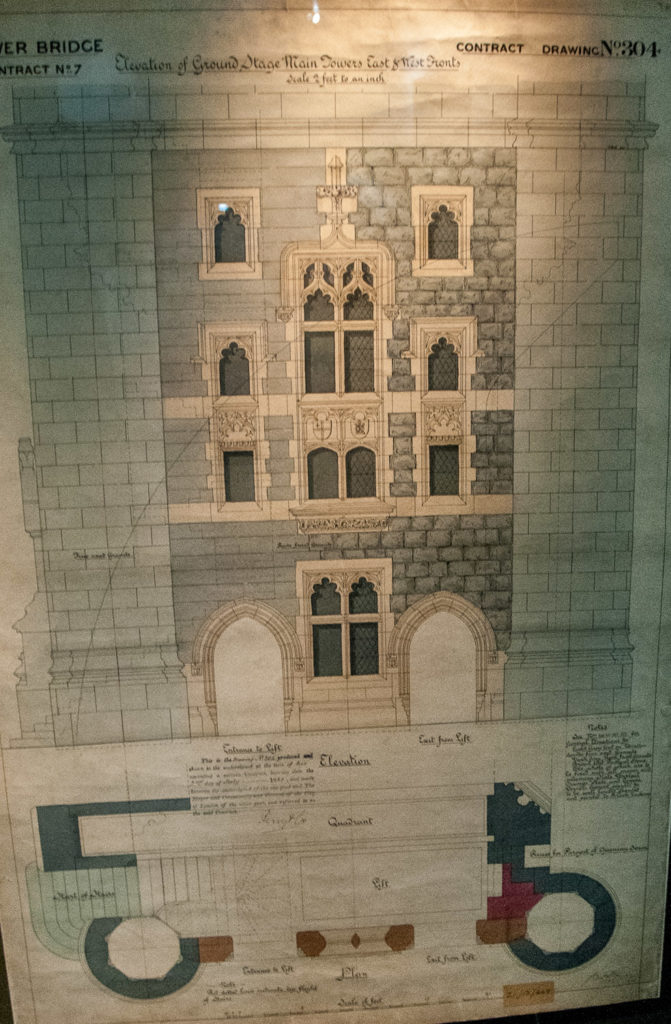
There are more treasures on display this week including Horace Jones’s original plans (but they don’t photograph very well through glass) …

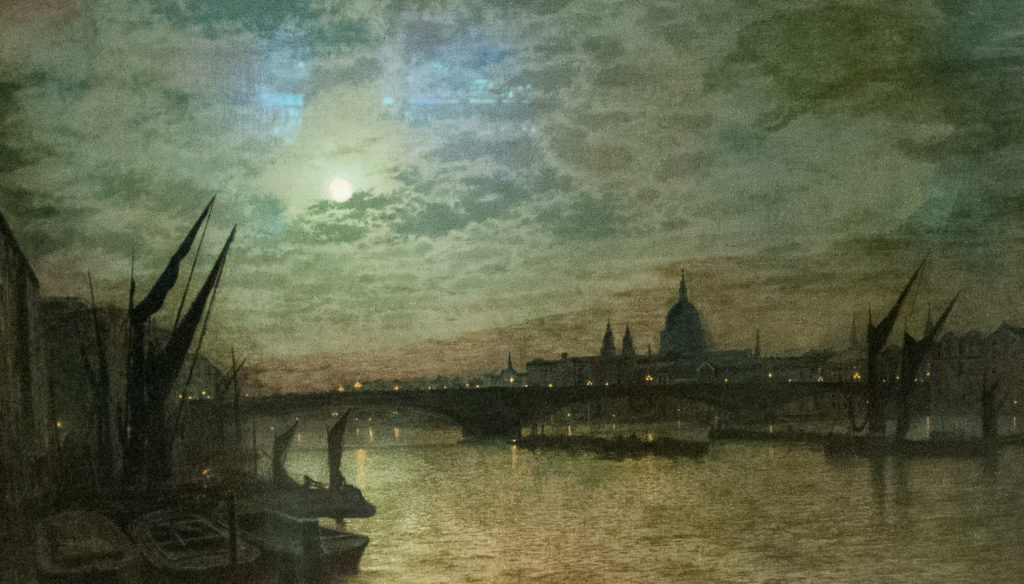
I really can’t resist views of London that incorporate the river …

The Thames by Moonlight with Southwark Bridge by John Atkinson Grimshaw (1836-1893)

Today Leeds born Grimshaw is considered one of the greatest painters of the Victorian era, as well as one of the best and most accomplished nightscape, and townscape, artists of all time.

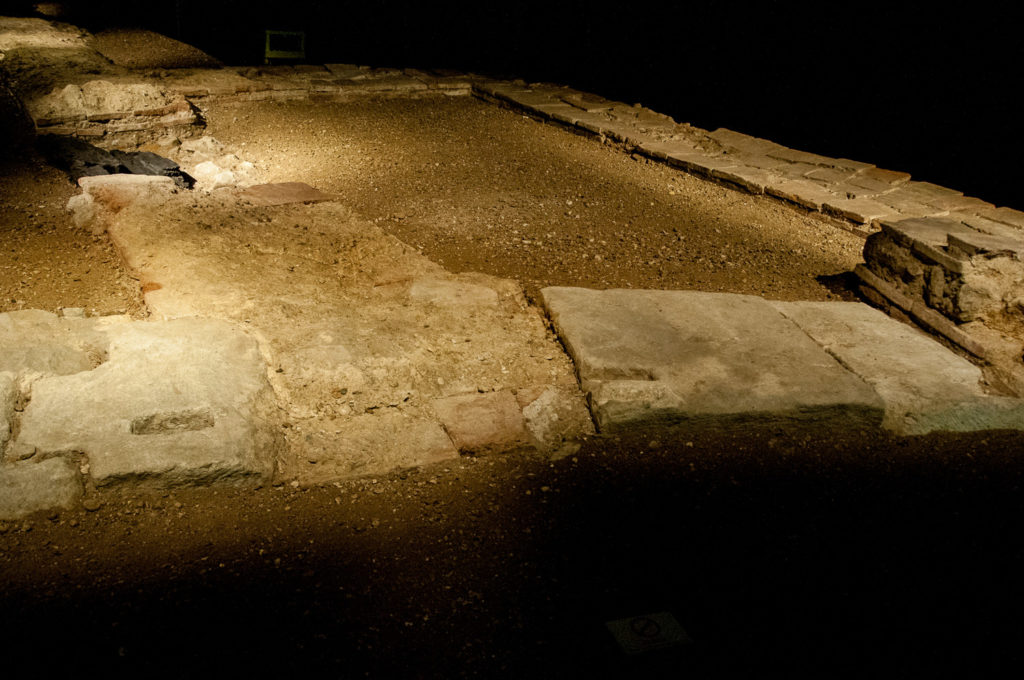
And finally, I paid a quick visit to the Roman Amphitheatre in the basement and took this picture of what is believed to be the opening used to allow wild animals to enter the arena. We can see two slots into which a gate may have been raised and lowered …

If you haven’t done so yet I highly recommend the free guided tours that take place on Tuesdays, Fridays and Saturdays – you can find out more here on their website.

Page 5 of 9

Powered by WordPress & Theme by Anders Norén