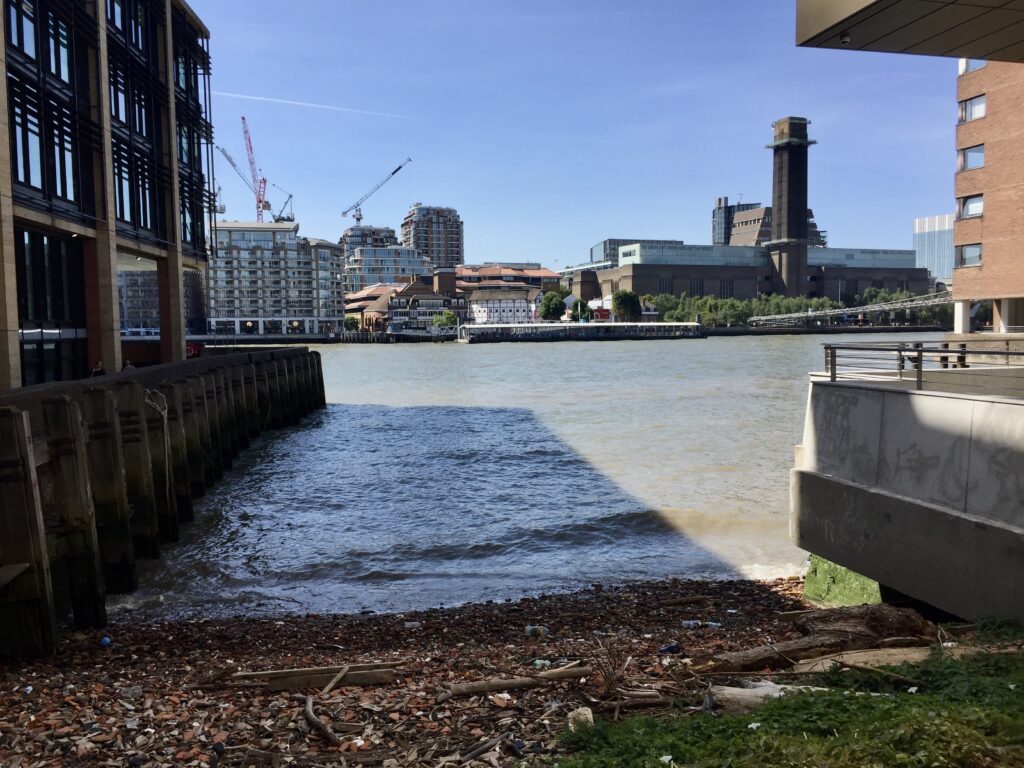
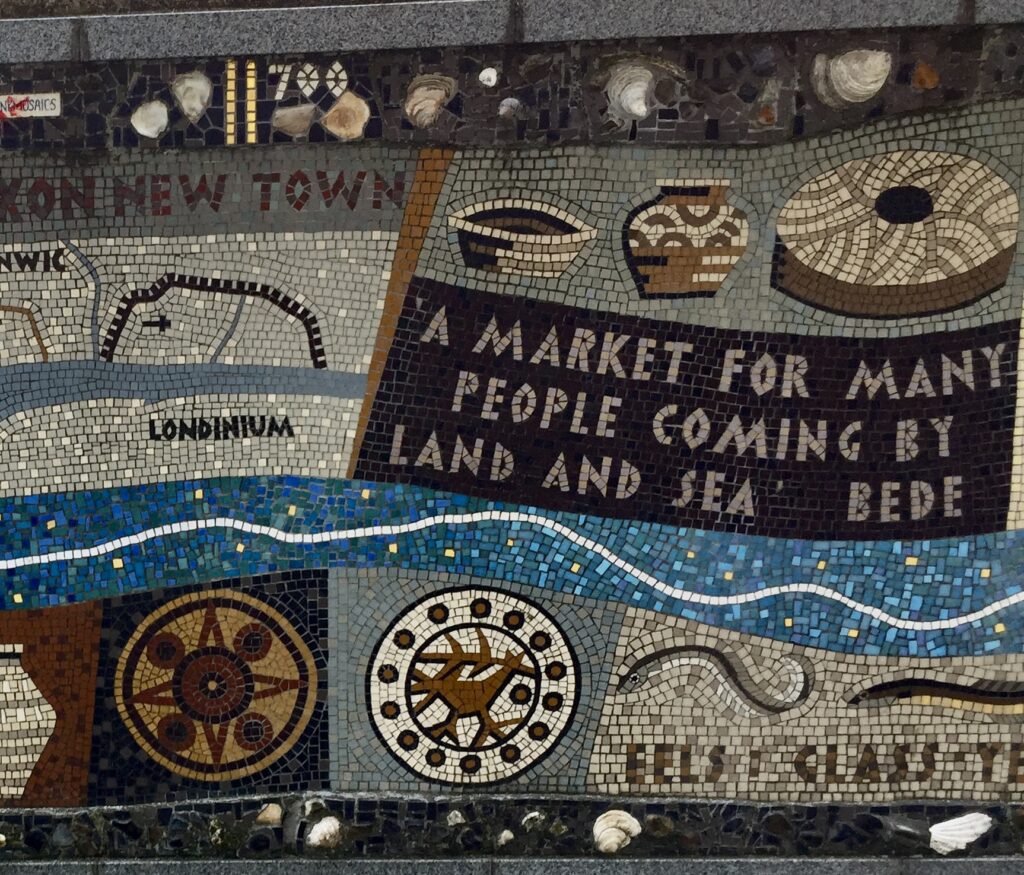
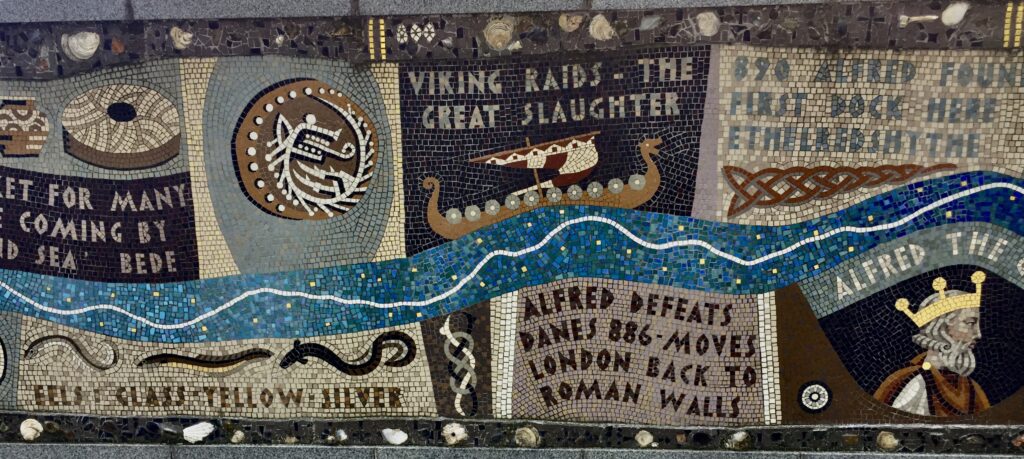
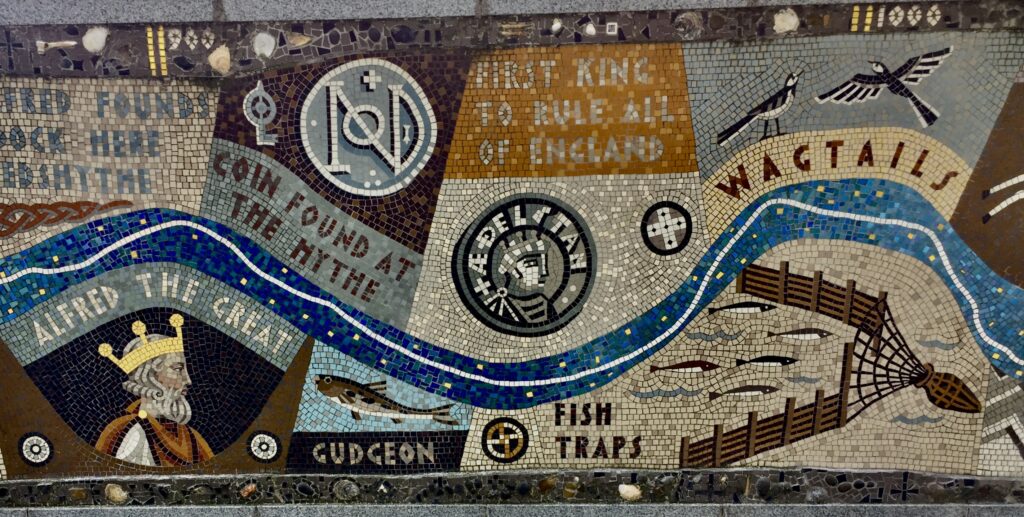
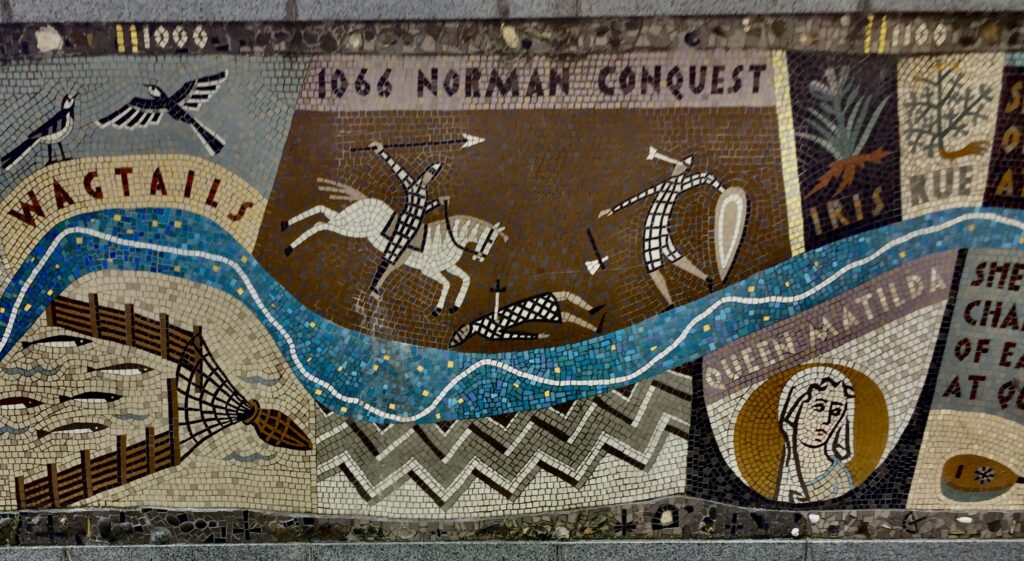
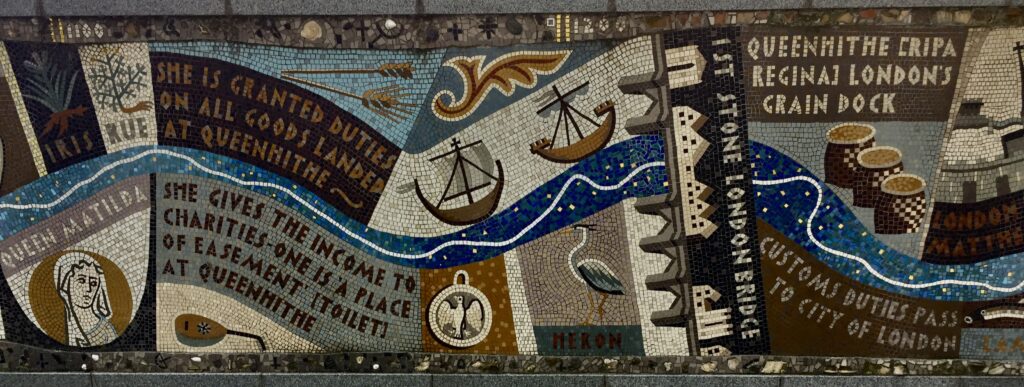
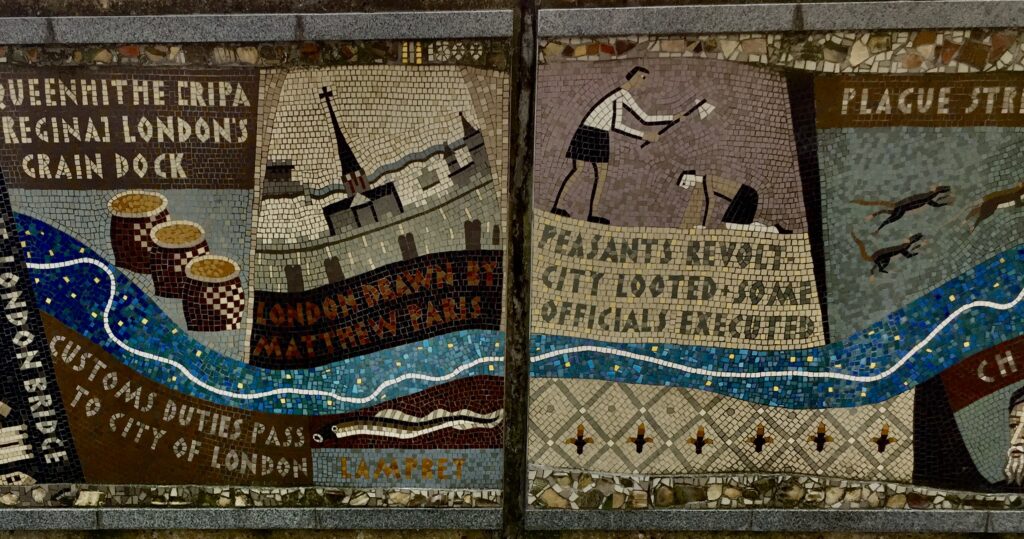
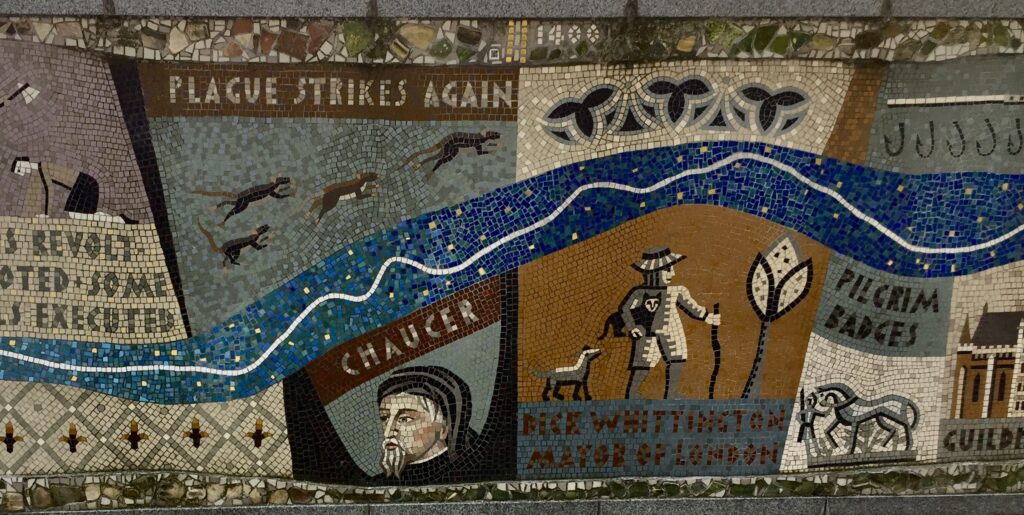
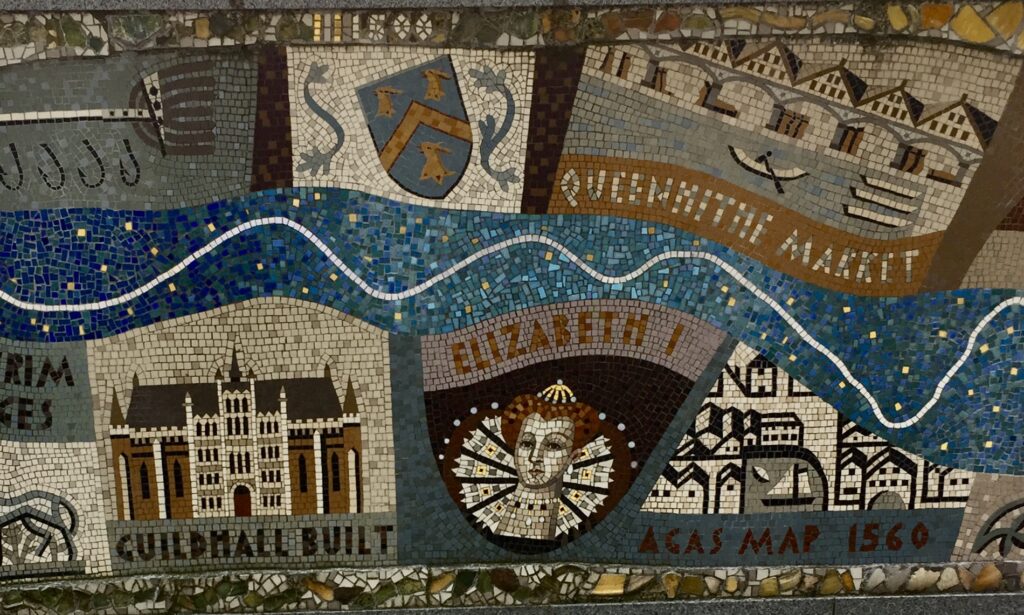
It doesn’t look like much but this could be the oldest Anglo-Saxon era dock in the world – it’s certainly the oldest in the UK. It’s also the last surviving inlet on the Thames in Central London …
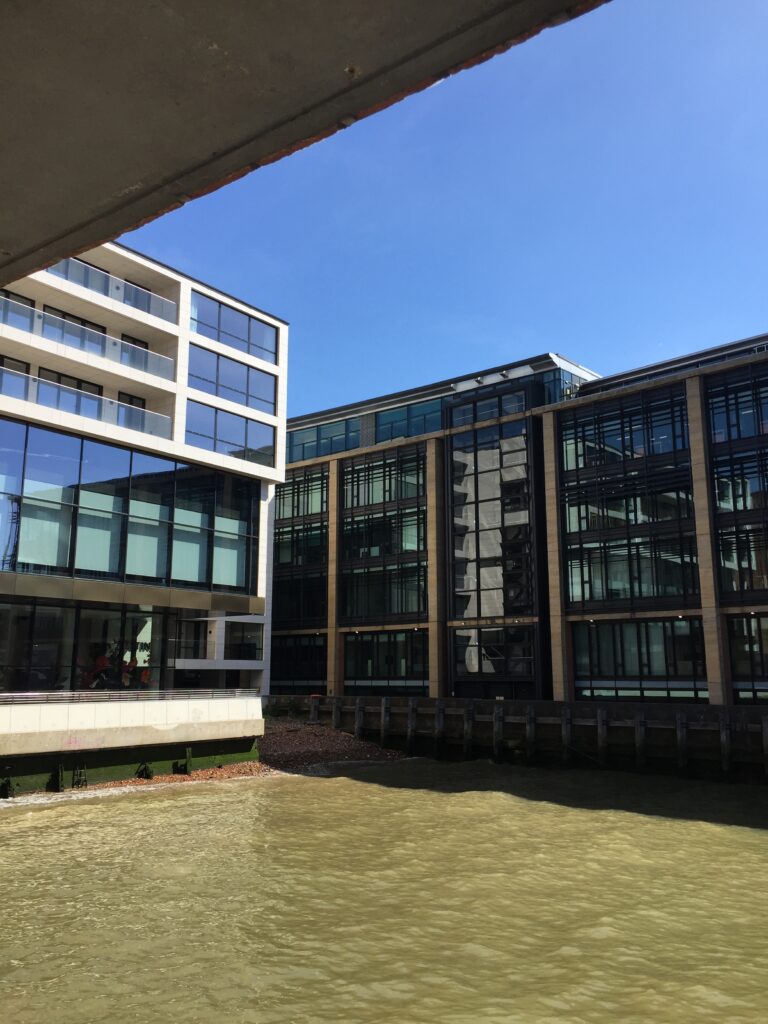
It’s squeezed in between tall modern buildings because it’s protected as a scheduled ancient monument …
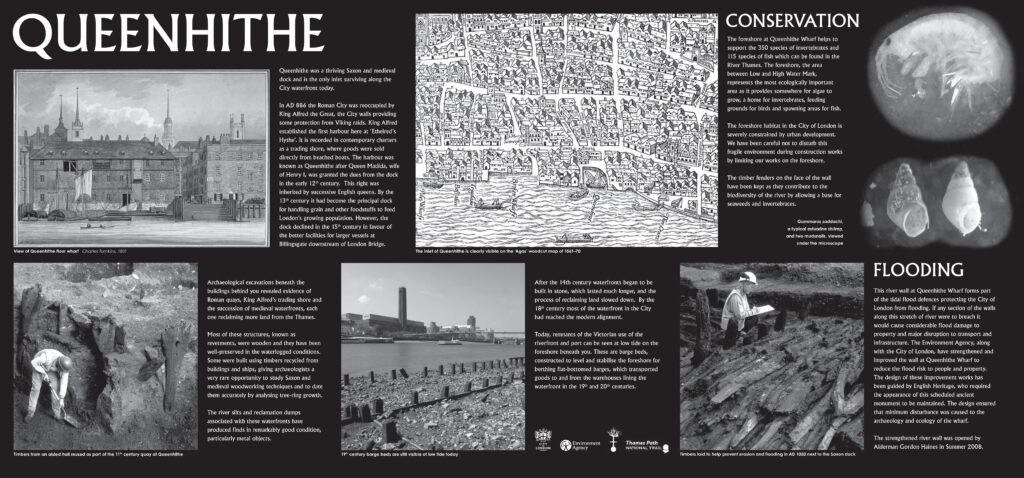
Nearby is a very informative plaque …
The hotel next door has a terrace you can walk around. Look down at the wharf and this is what you’ll see …
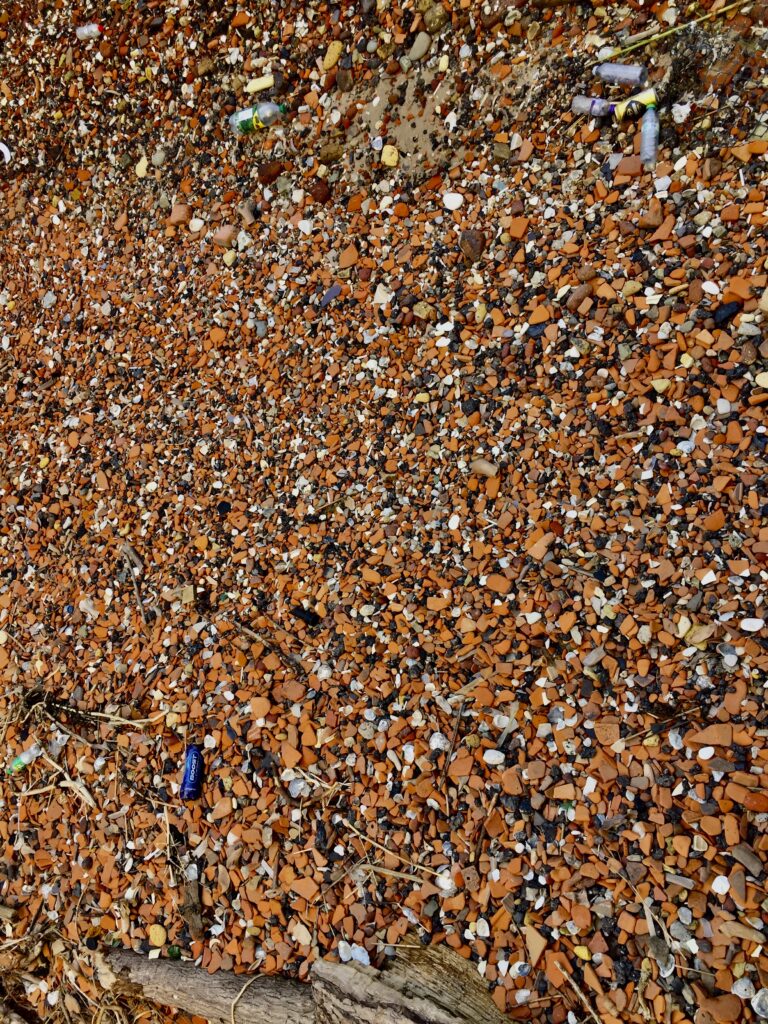
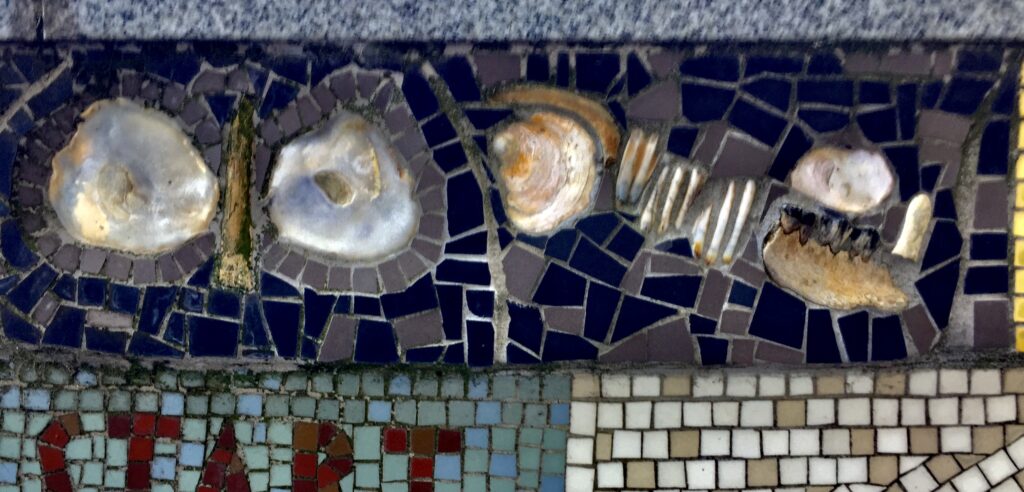
A wonderful collection of oyster shells (oysters once being a poor person’s food) and medieval (maybe even Roman) roof tiles and bricks …
There are also some lumps of white chalk. Large chalk beds were once laid down to provide a soft settling place for barges at low tide.
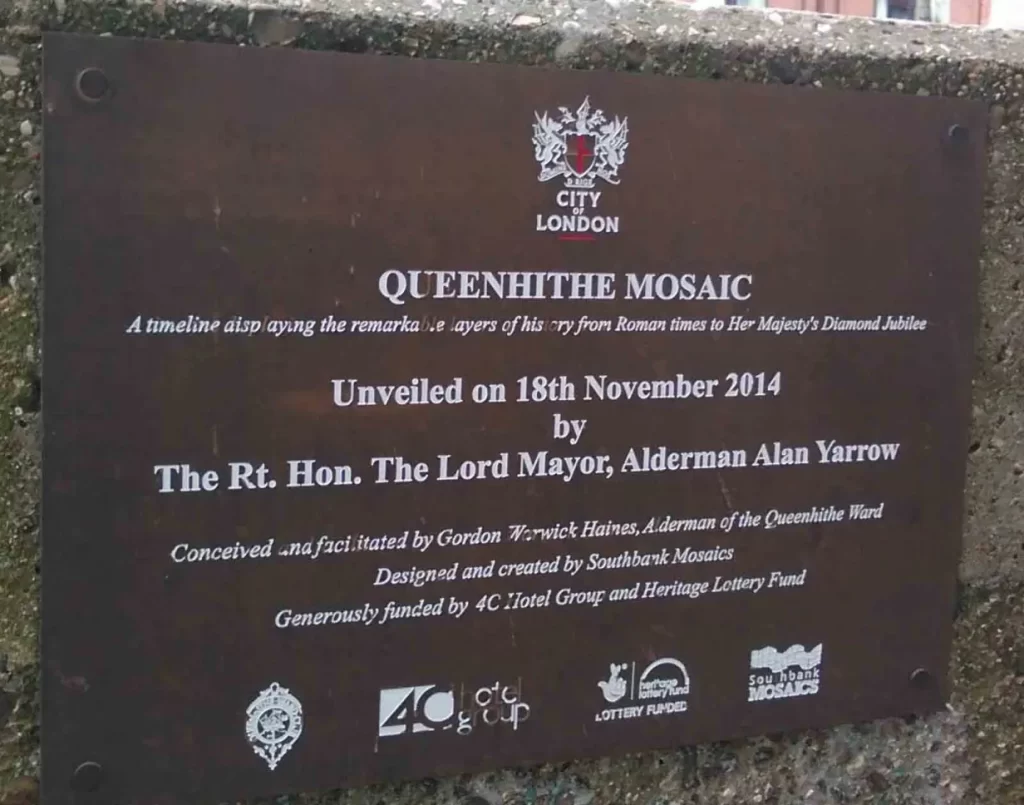
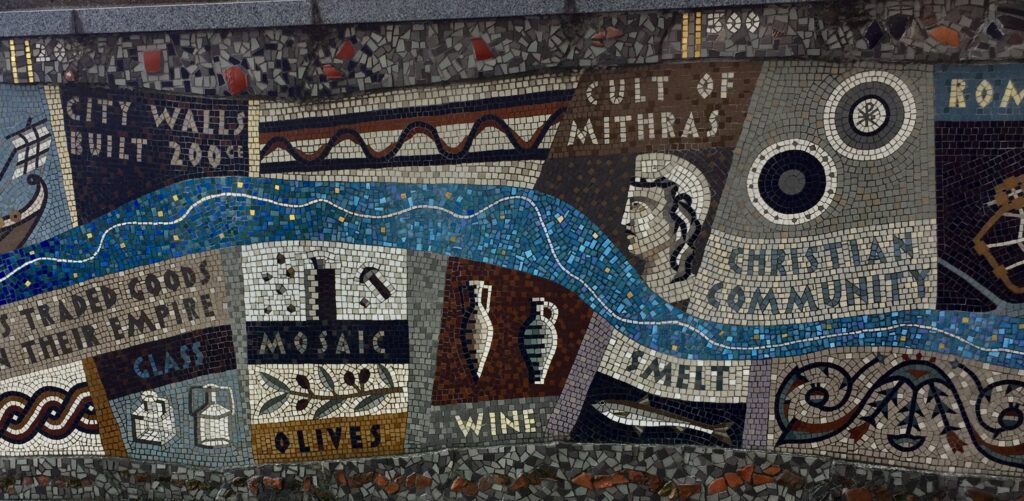
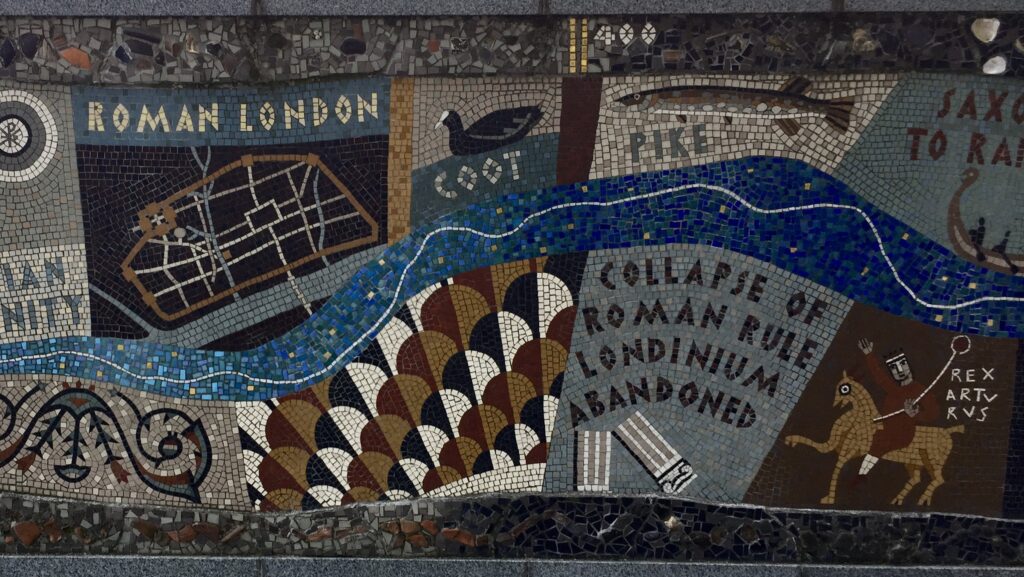
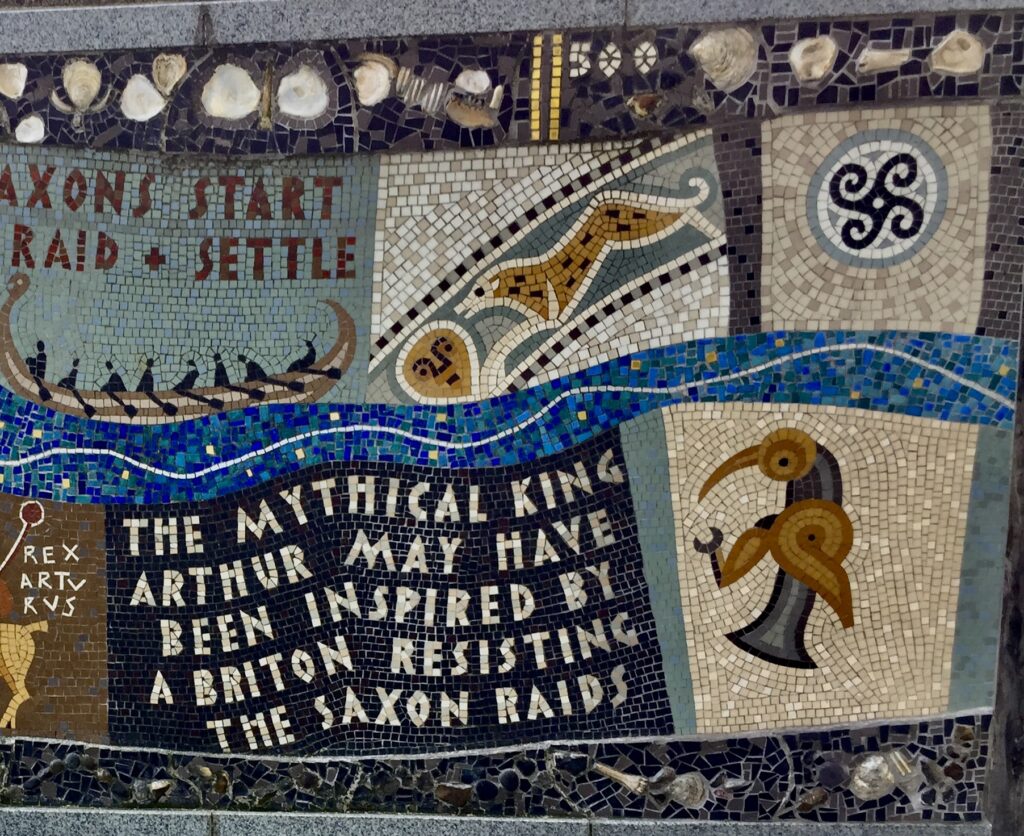
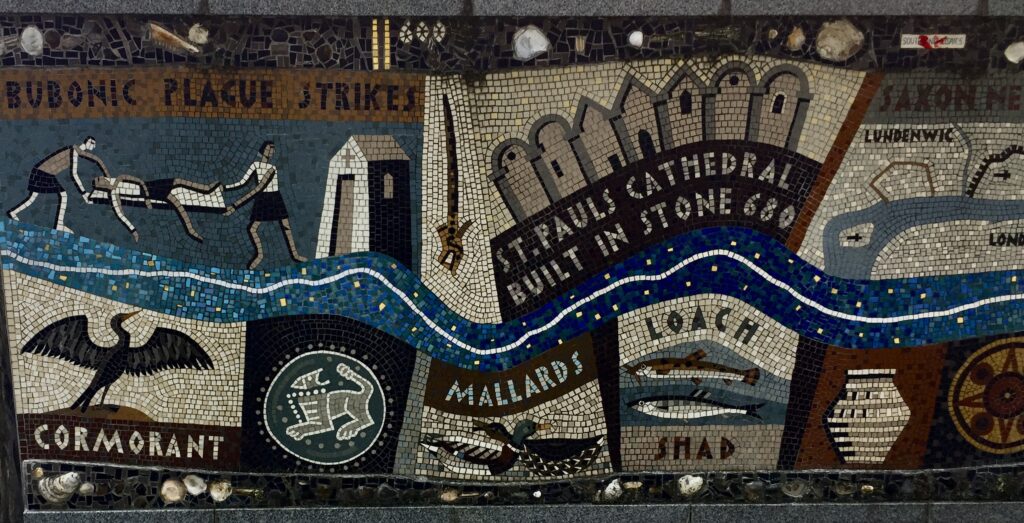
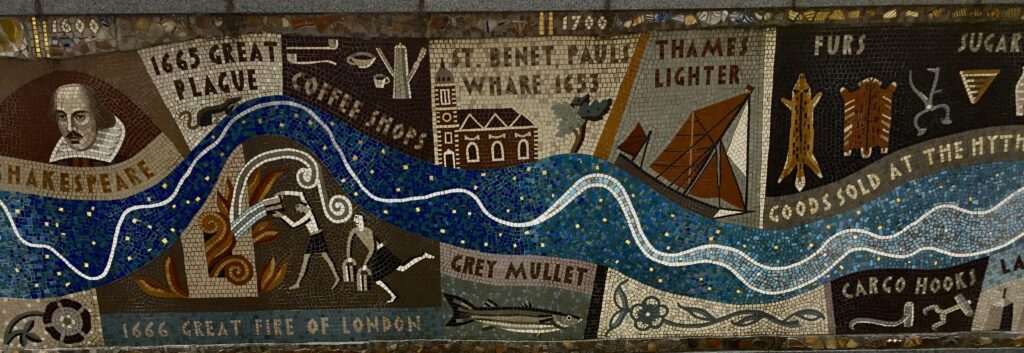
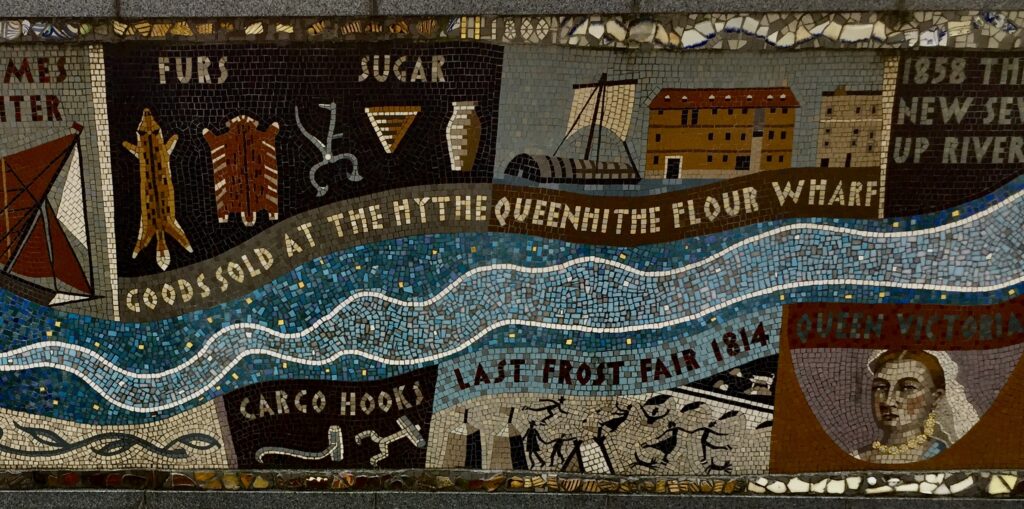
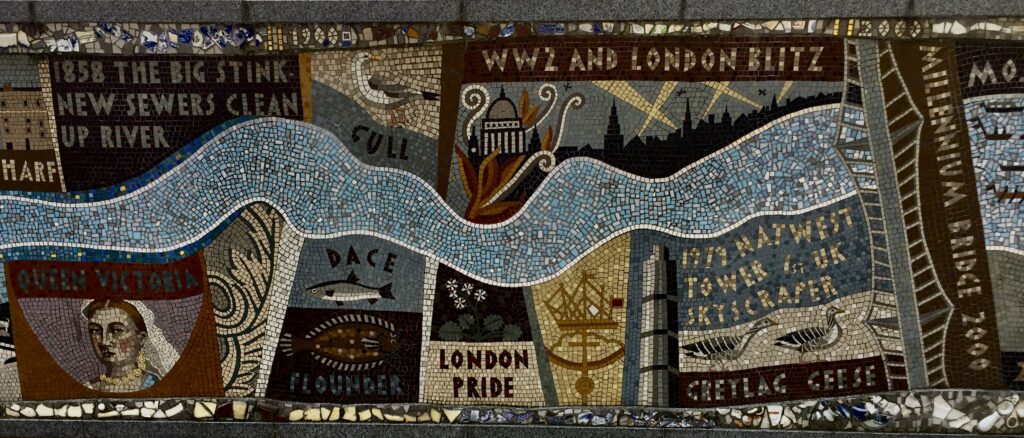
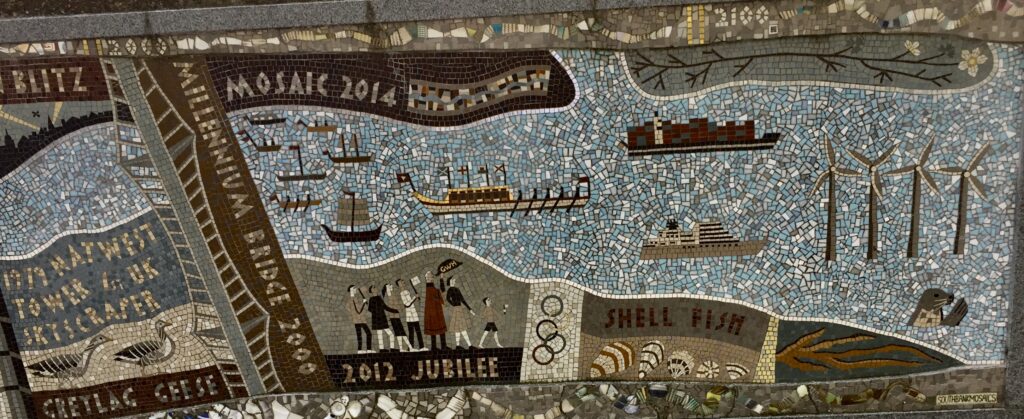
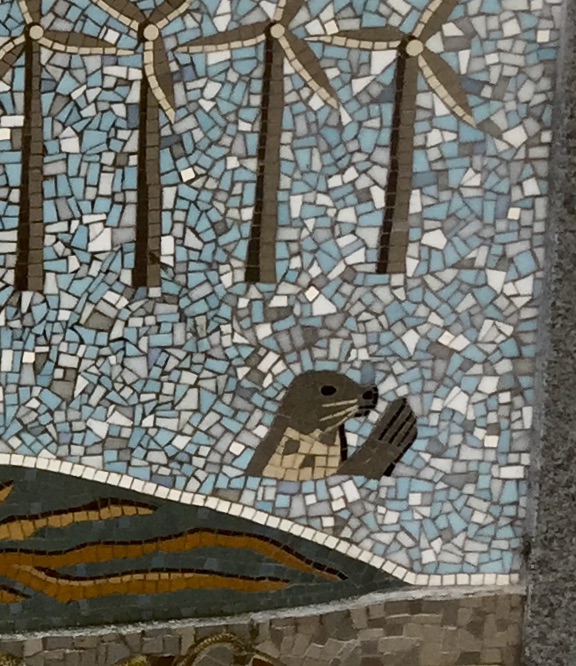
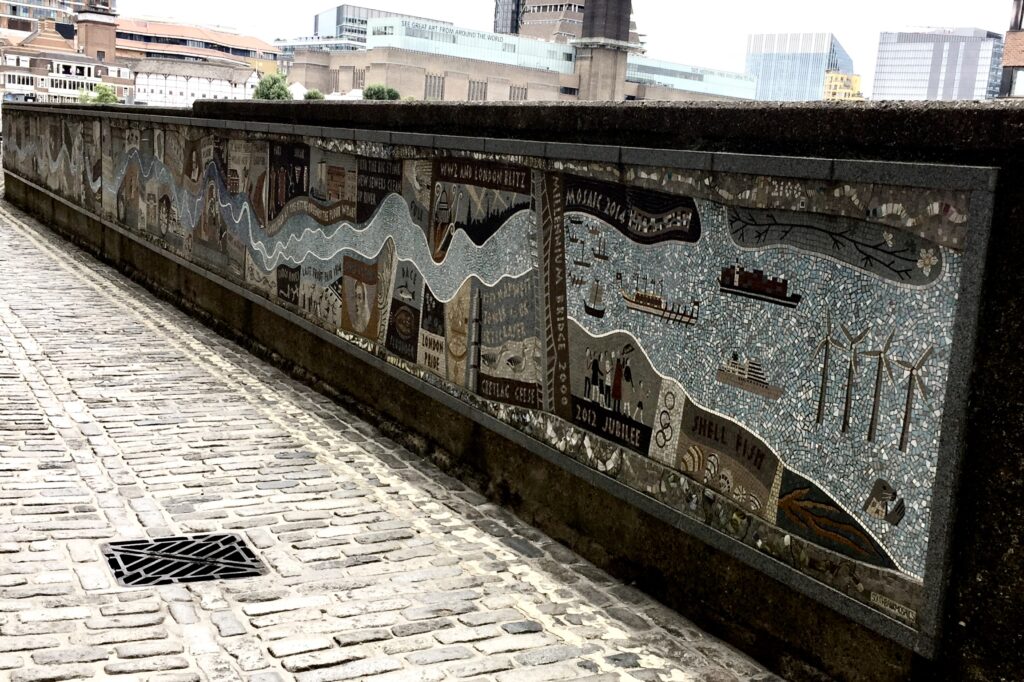
Another plaque gives the second reason for my visit …
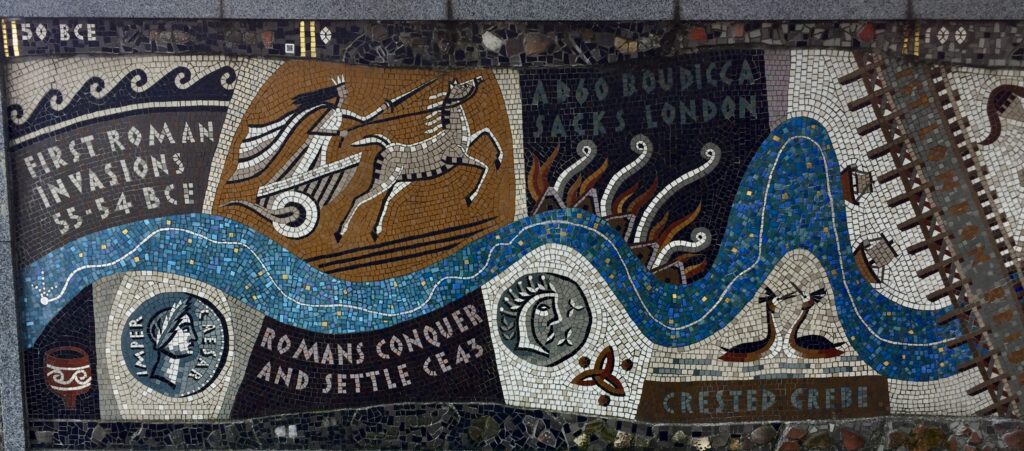
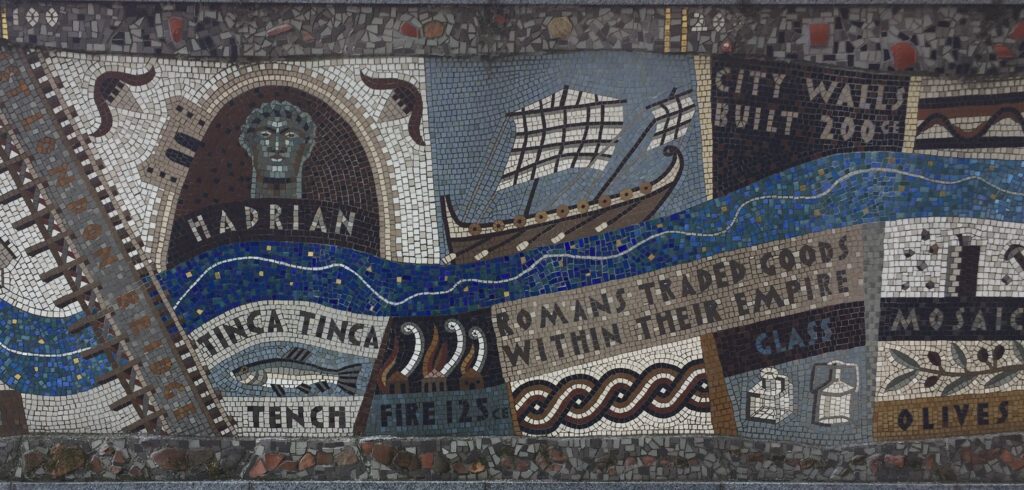
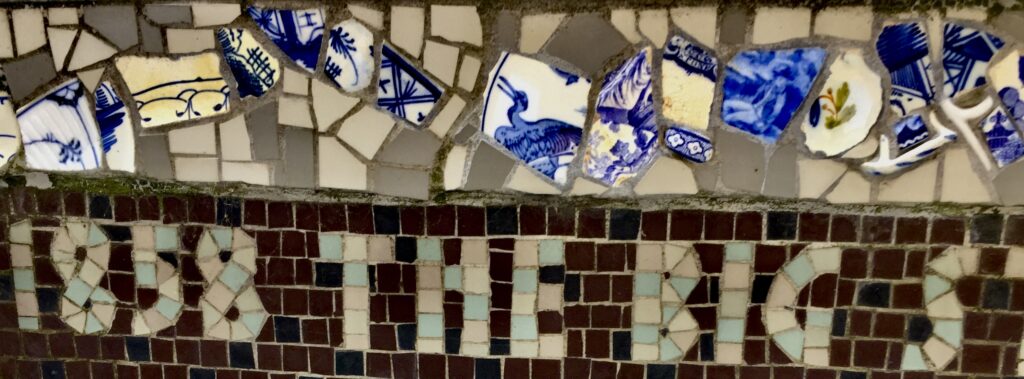
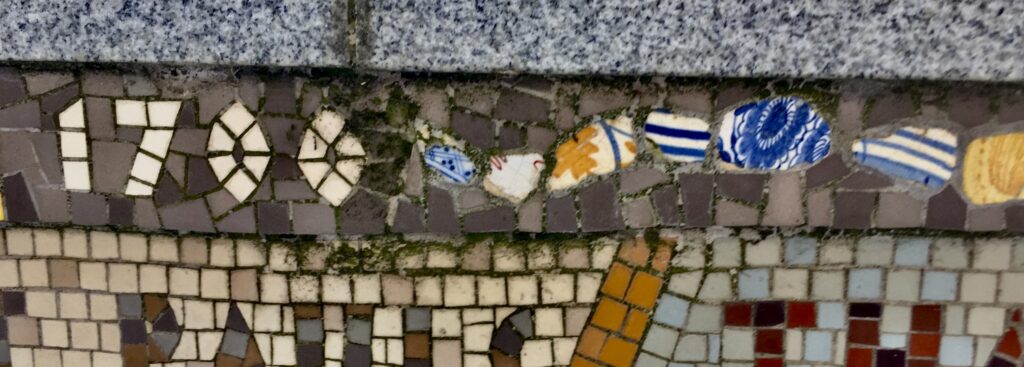
It was designed by Tessa Hunkin and executed by South Bank Mosaics under the supervision of Jo Thorpe – and I recommend you take a stroll down through the City to the river and study the intricate and lively detail of this epic work for yourself. Tessa also supervised the splendid mosaic I wrote about two weeks ago.
Here’s the mosaic from start to finish. It’s a stunning piece of work and rewards detailed study …
Note the little seal waving you goodbye …
A striking archaeological theme is that archaeology was incorporated into the mosaic. Archaeologist Mike Webber led volunteers to retrieve finds of Roman, medieval and modern date from the foreshore and selected finds were embedded into the mosaic: archaeology becomes art …
And how appropriate that we can see The Globe across the River …
Trivia fact: A key sequence of the 1951 Ealing comedy The Lavender Hill Mob used Queenhithe as a location for filming: Mr. Holland, played by Alec Guinness, can be seen falling from a wharf into the Thames and being rescued by two actors dressed as police officers. You can watch the official trailer here. They don’t make ’em like that any more!
If you would like to follow me on Instagram here is the link …
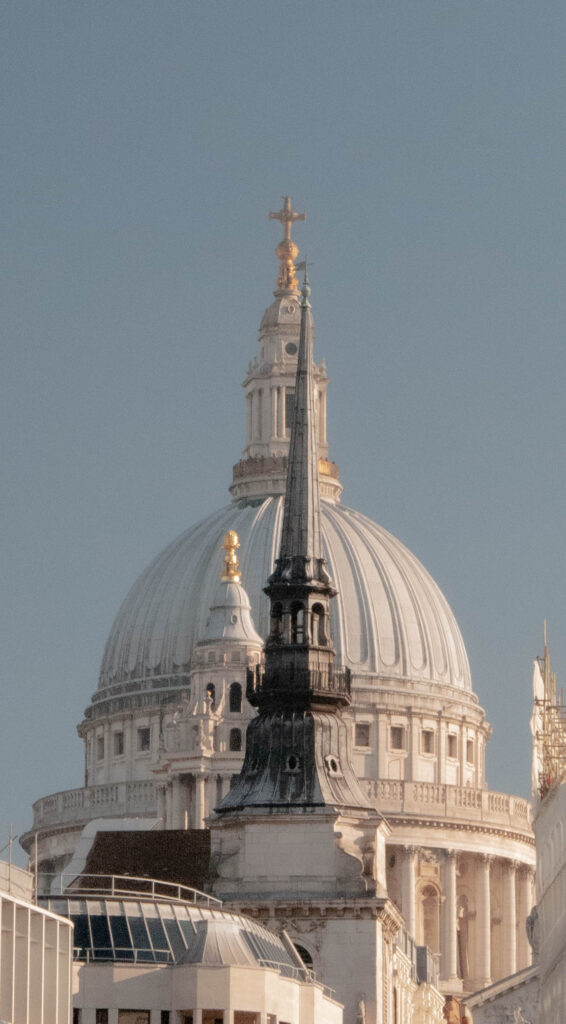
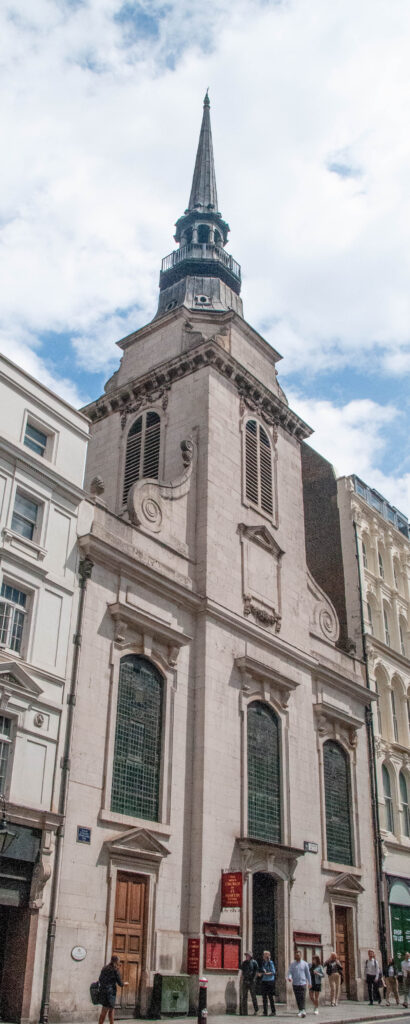
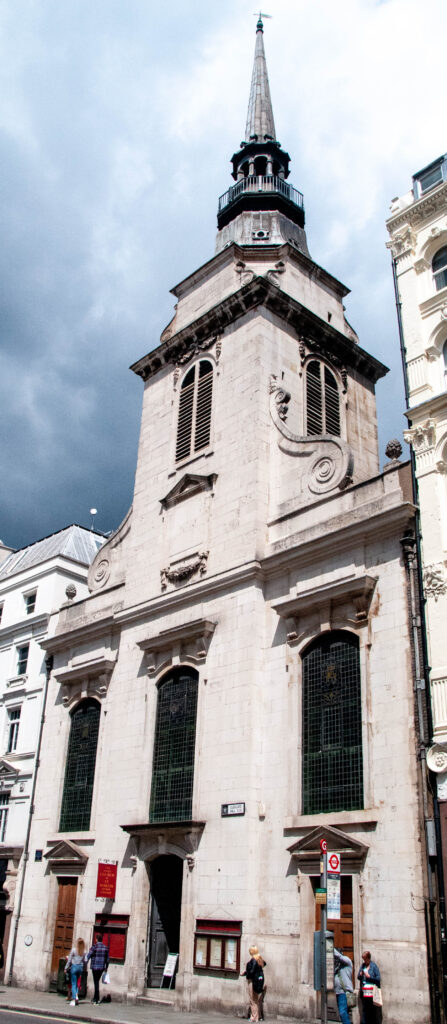
One of the most striking aspects about St Martin Within Ludgate is its tall, sharp leaded spire which, when seen from the lower part of Fleet Street, is a deliberate foil to the massive rounded dome of St Paul’s Cathedral …
The slim Portland stone exterior facing onto Ludgate Hill was designed by Wren to be best seen from the side …
I think the church suffers a bit because people walking past are more likely to be focused on St Paul’s and therefore miss the modest entrance to St Martin’s. There is a large entrance lobby (designed to reduce traffic noise inside the church) and you then enter one of Sir Christopher Wren’s least altered interiors (1677-1686) with fine dark woodwork which largely escaped the Blitz.
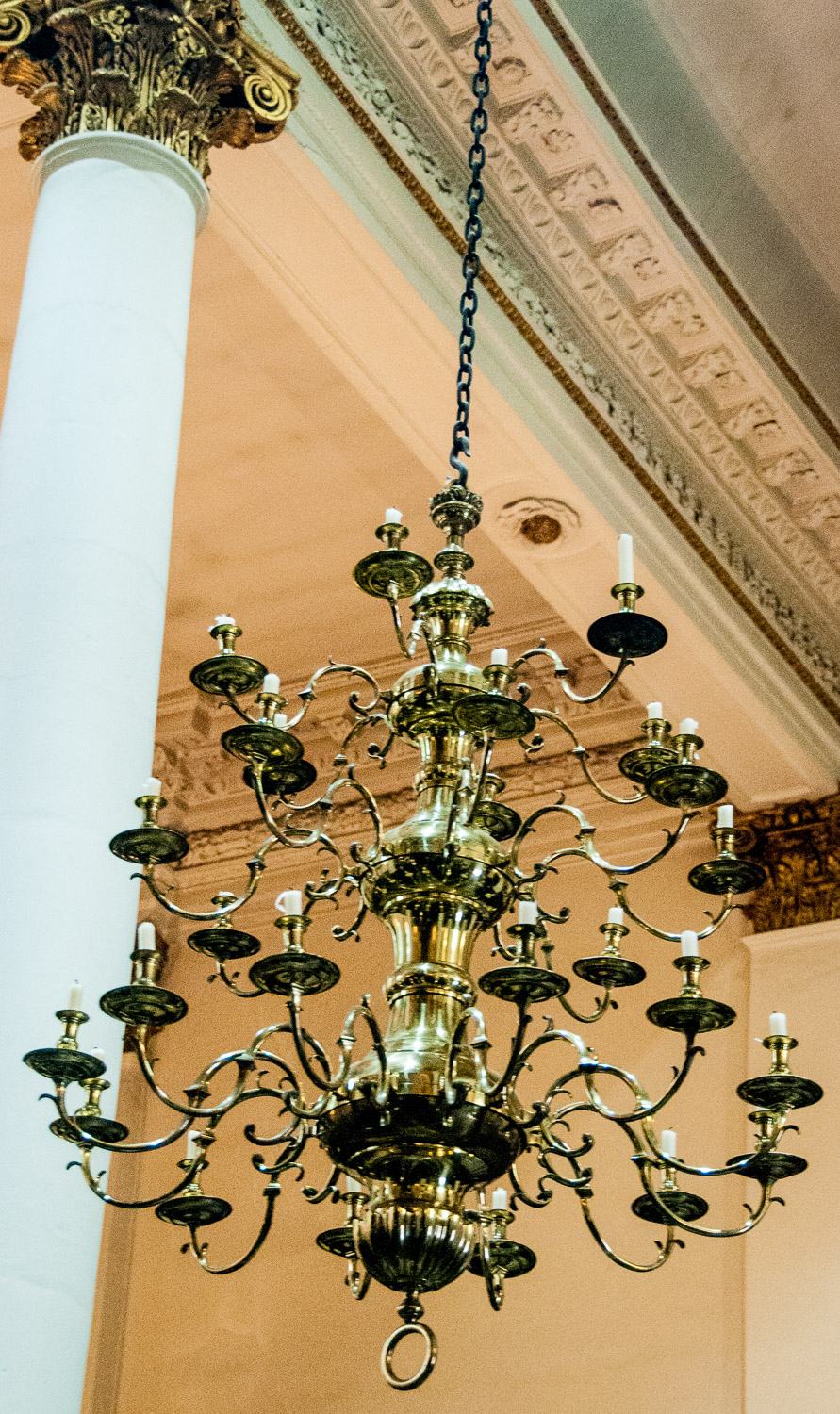
Look up and you will see this beautiful chandelier or candelabrum which is still lit by candles …
As one commentator has noticed, it looks more like something you would find in a country house or a ballroom. The candles were not lit when I visited but I am sure that when they are, on a dark morning or evening, one must get a real feel for what it was like to worship here in earlier centuries. It came to the church via St Vincent’s Cathedral in the West Indies, probably in 1777: a reminder of the links between the City’s trading economy and the British Empire overseas.
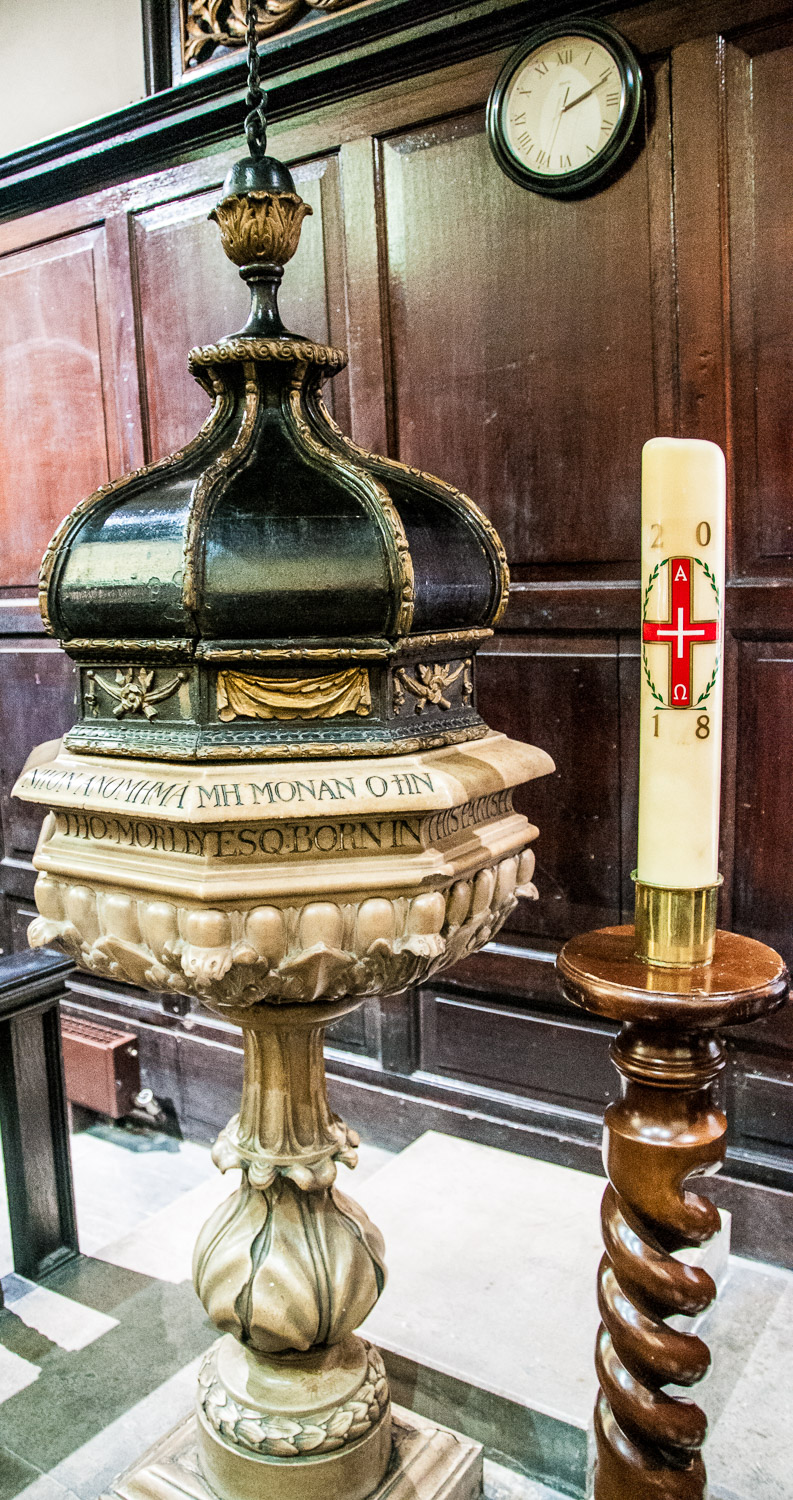
And now to the very unusual font and the first word game …
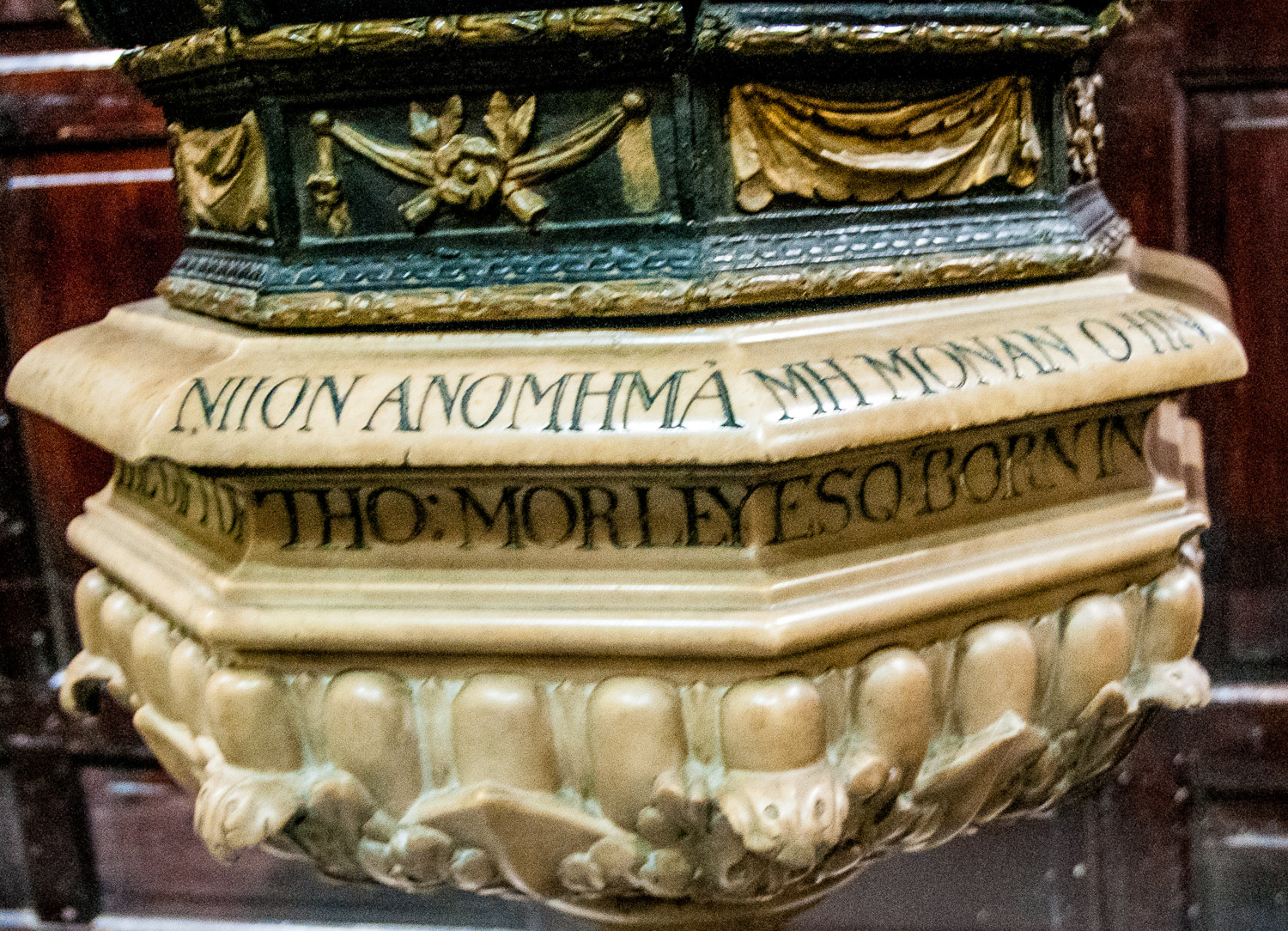
The bowl is white marble and the wooden supporting plinth is painted to look like stone. It dates from 1673, predating the church, and was previously located in a ‘tabernacle’ used by the congregation during the rebuilding.
It contains a Greek palindrome copied from the Cathedral of St Sophia in Constantinople:
Niyon anomhma mh monan oyin
(Cleanse my sin and not my face only)
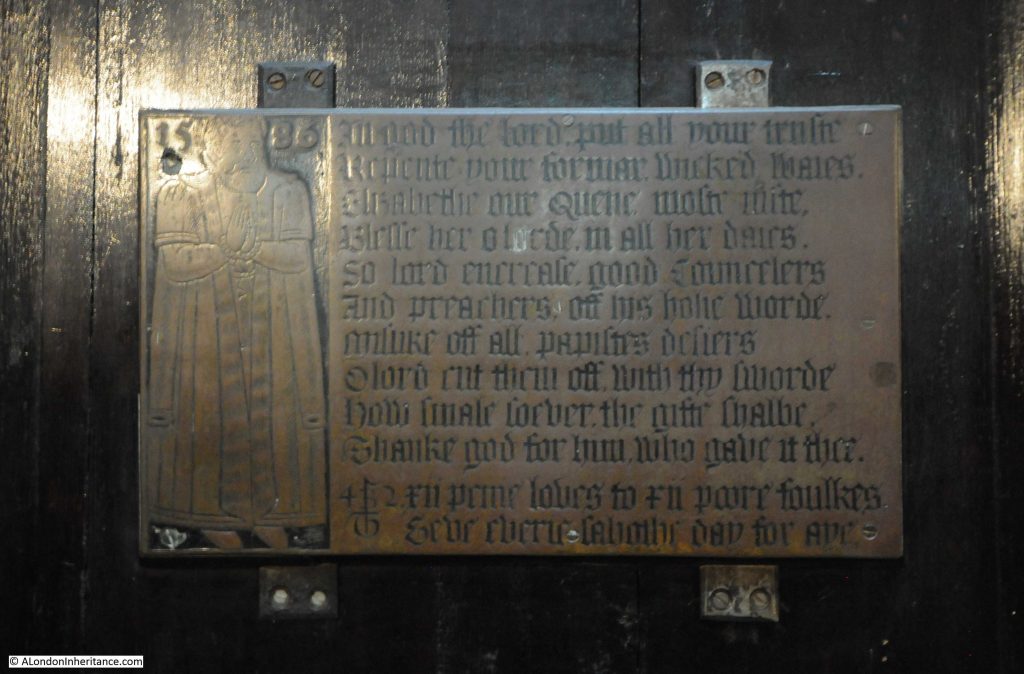
The second word game is associated a plaque that was originally housed in St Mary Magdalene’s on Old Fish Street which burned down in 1888. I am indebted, as I often am, to the blogger A London Inheritancewho pointed out in his blog something I missed when I first visited the church.
The plaque records a charity set up by Elizabethan fish monger Thomas Berry, or Beri. He is seen on the left of the plaque, and to the right are ten lines of text, followed by two lines which describe the charity:
“XII Penie loaves, to XI poor foulkes. Gave every Sabbath Day for aye”
The plaque is dated 1586, and the charity was set up in his will of 1601 which left his property in Edward Street, Southwark to St Mary Magdalen, with the instruction that the rent should be used to fund the loaves. The recipients of the charity were not in London, but were in Walton-on-the-Hill (now a suburb of Liverpool), a village that Berry seems to have had some connection with. The charity included an additional sum of 50s a year to fund a dinner for all the married people and householders of the town of Bootle.
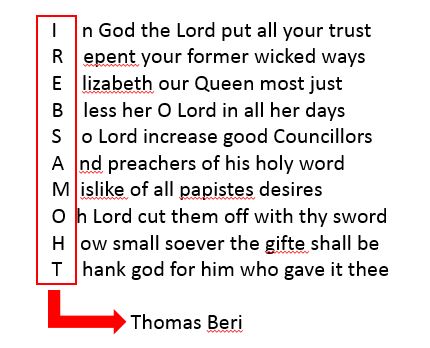
The interesting lines of text are above those which describe the charity. Thomas seems to have spelled his last name either Berry or Beri and these ten lines of anti-papist verse include his concealed name.
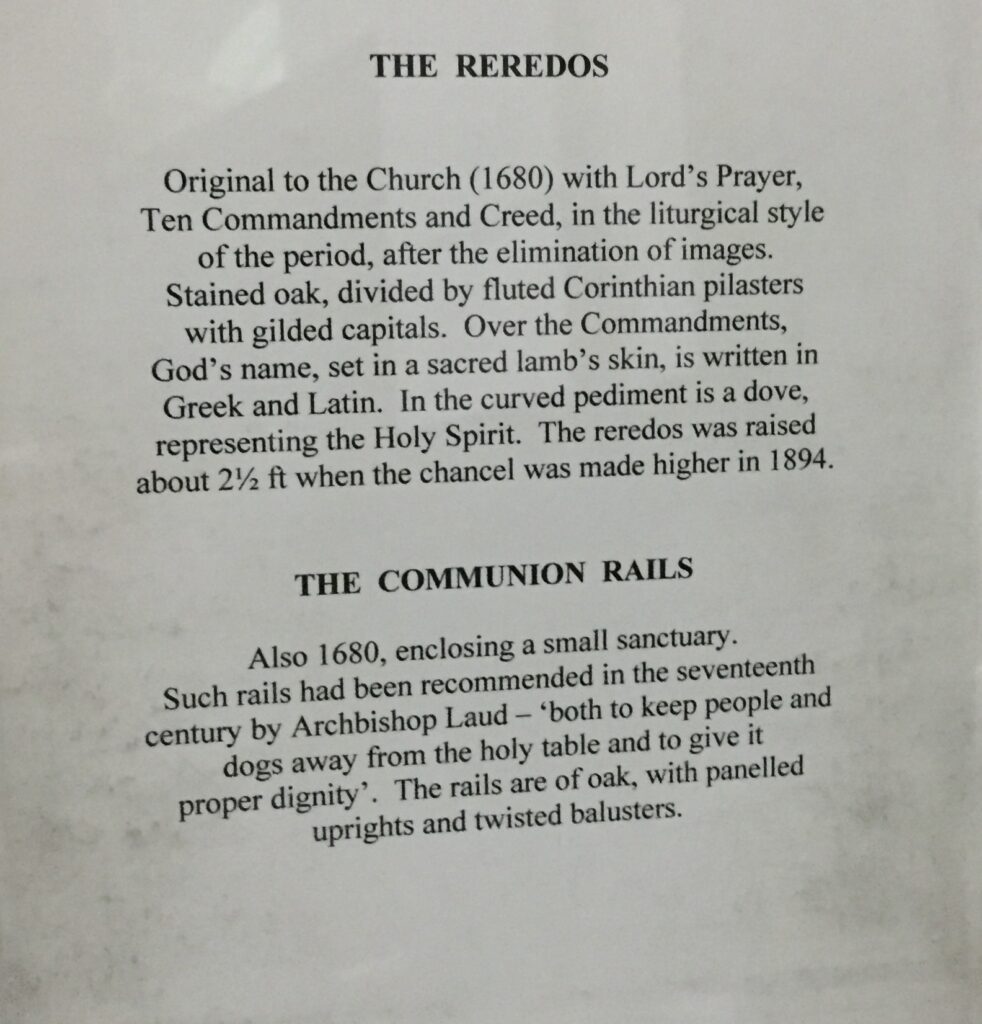
I am a big fan of helpful signage …
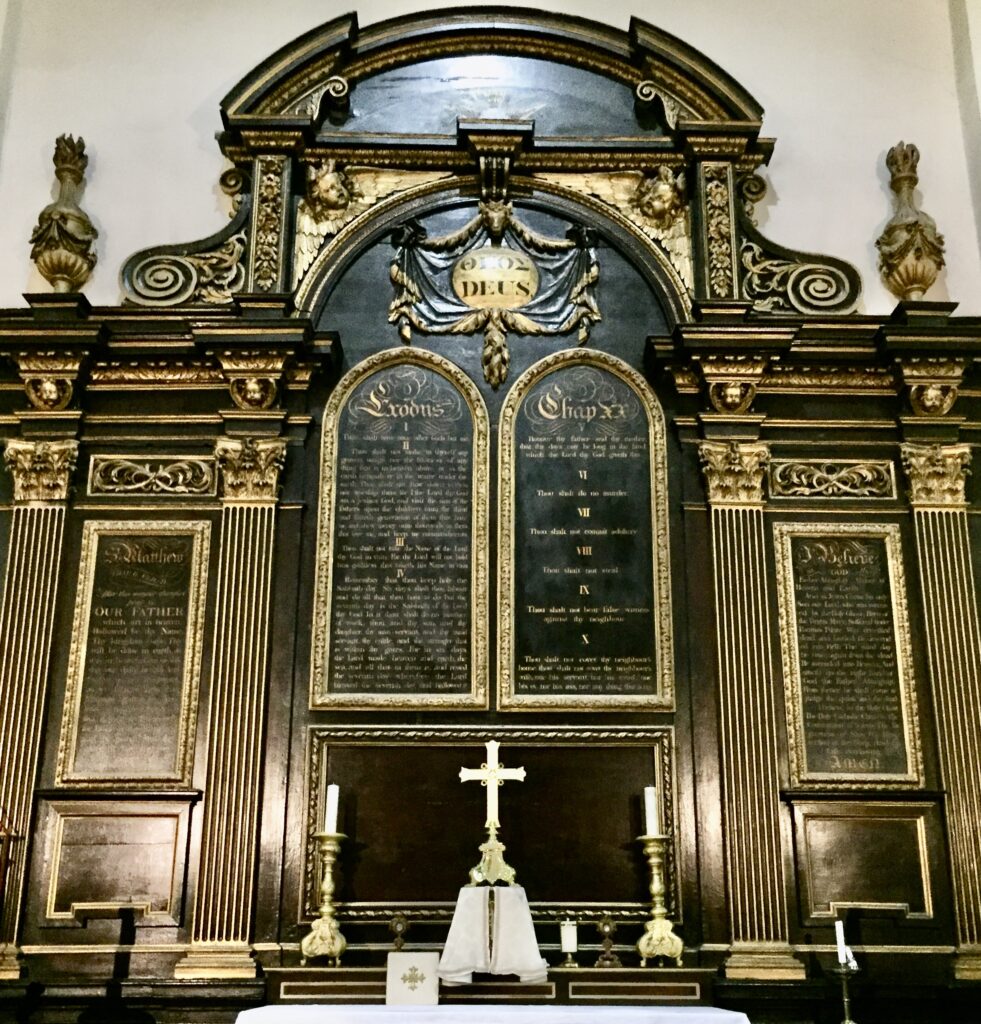
The reredos …
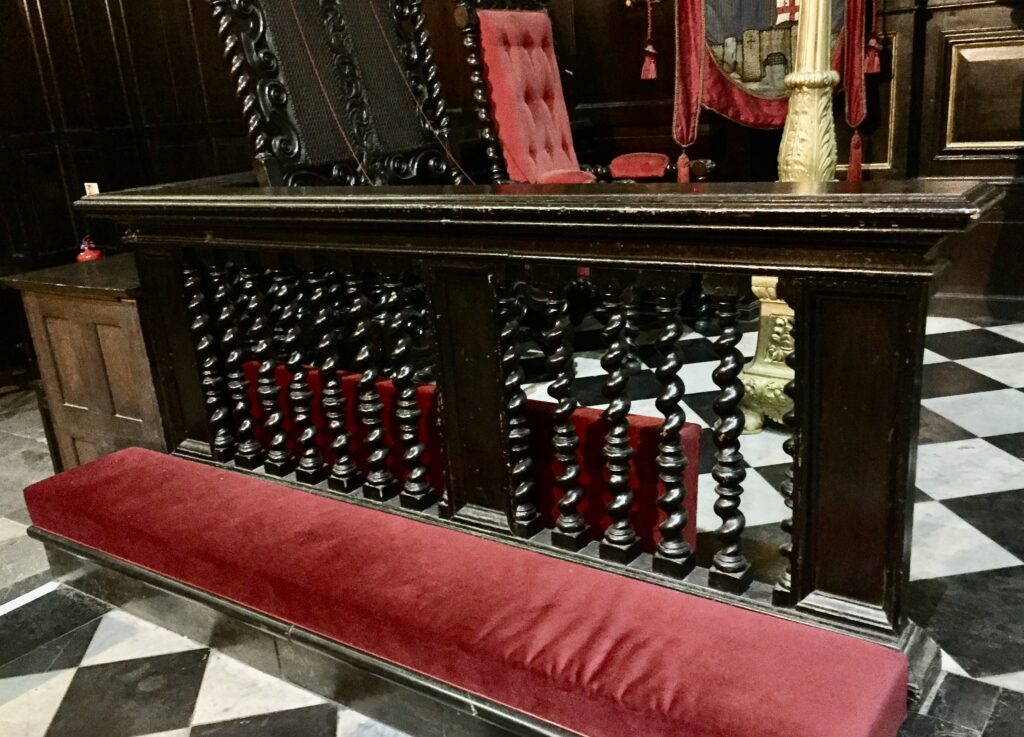
… and the communion rails …
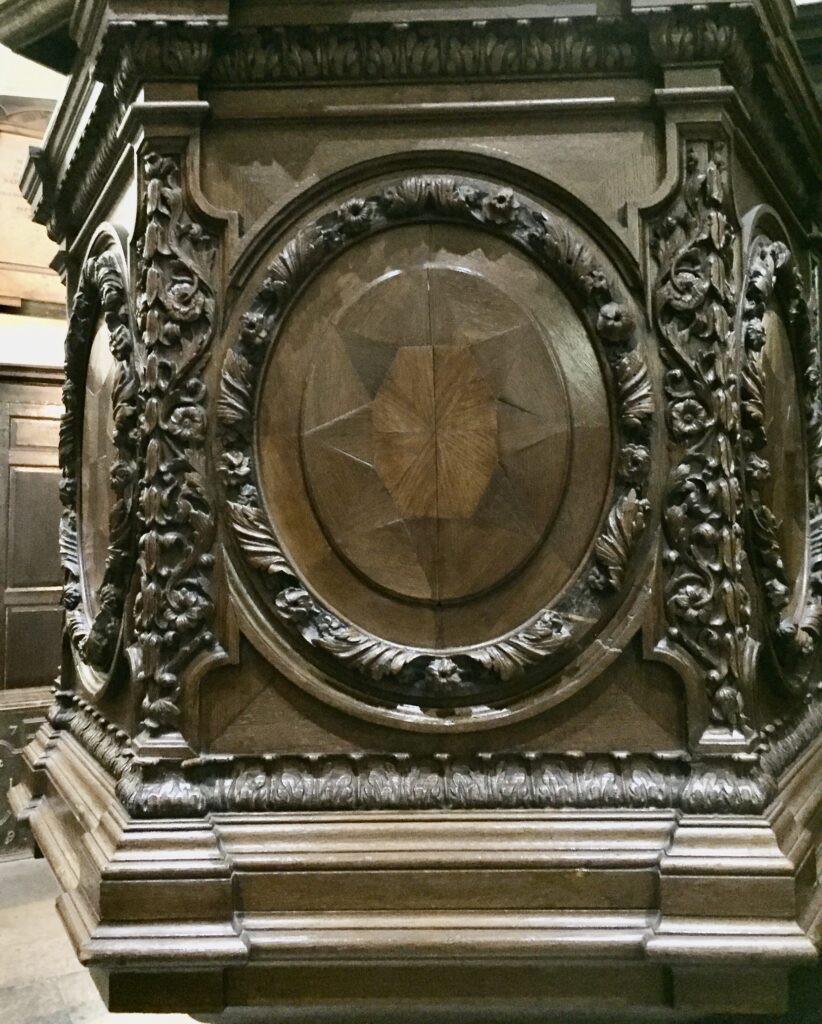
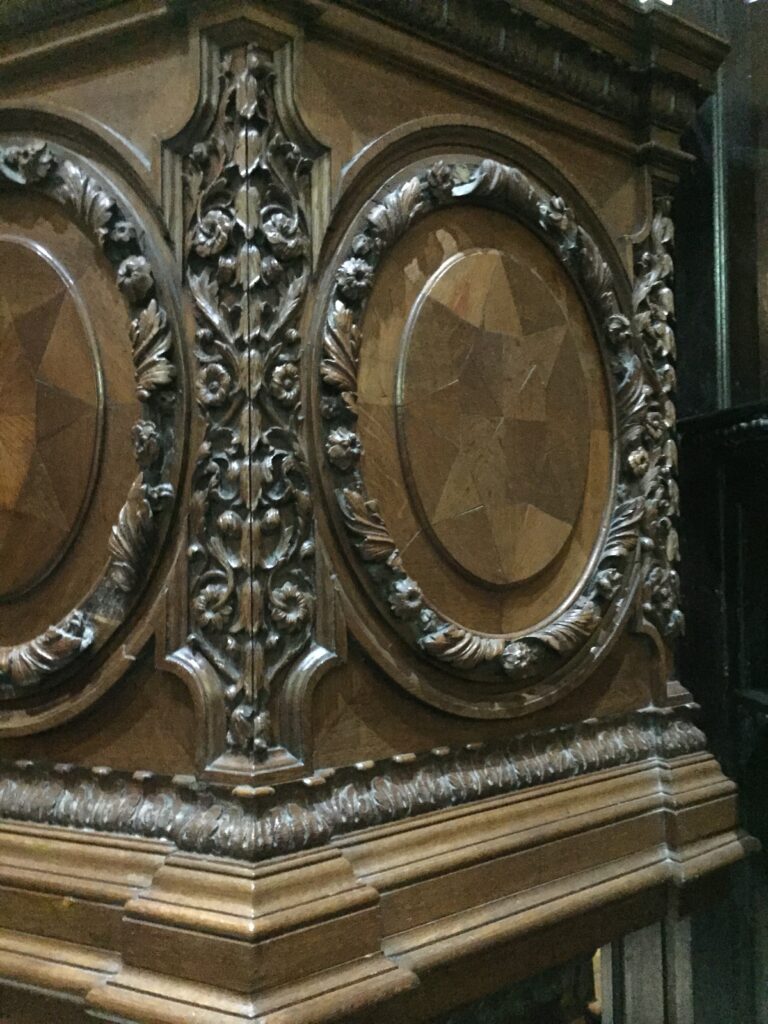
There is magnificent carving on the pulpit …
It’s original to the church (1680), made of oak and hexagonal in shape. Each face has an oval panel inlay with rich swags of fruit and flowers carved at the angles …
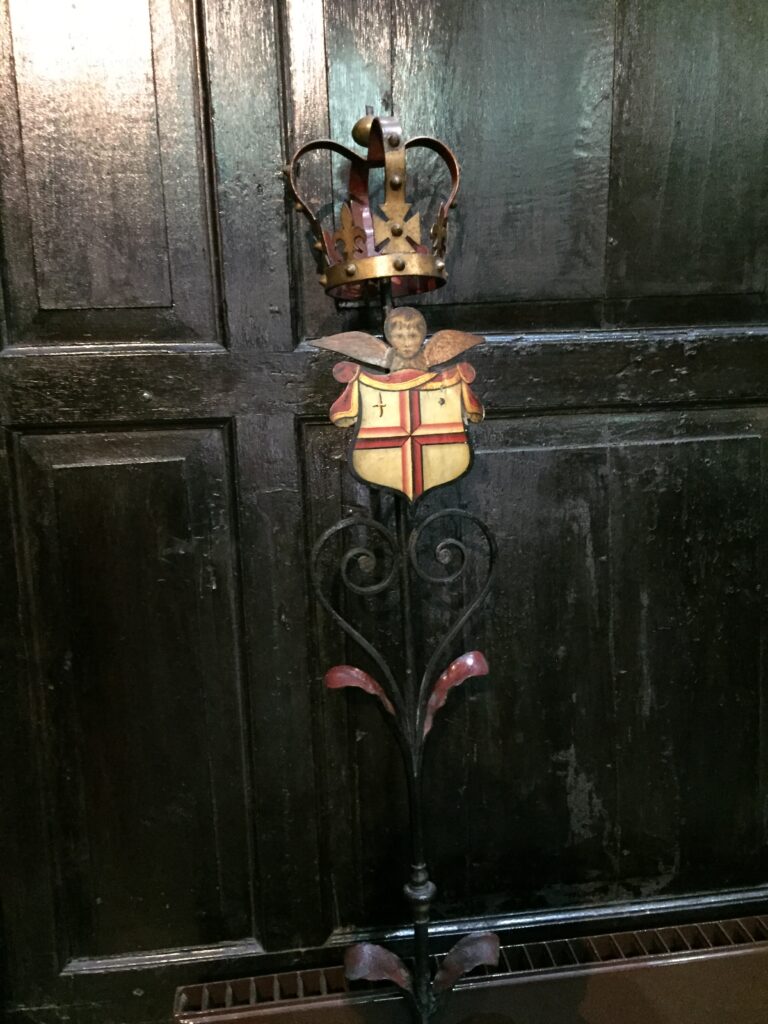
The sword rest is 18th century wrought iron and is also from St Mary Magdalene like Berry’s plaque. It was seriously damaged in the fire that destroyed the church and is much restored …
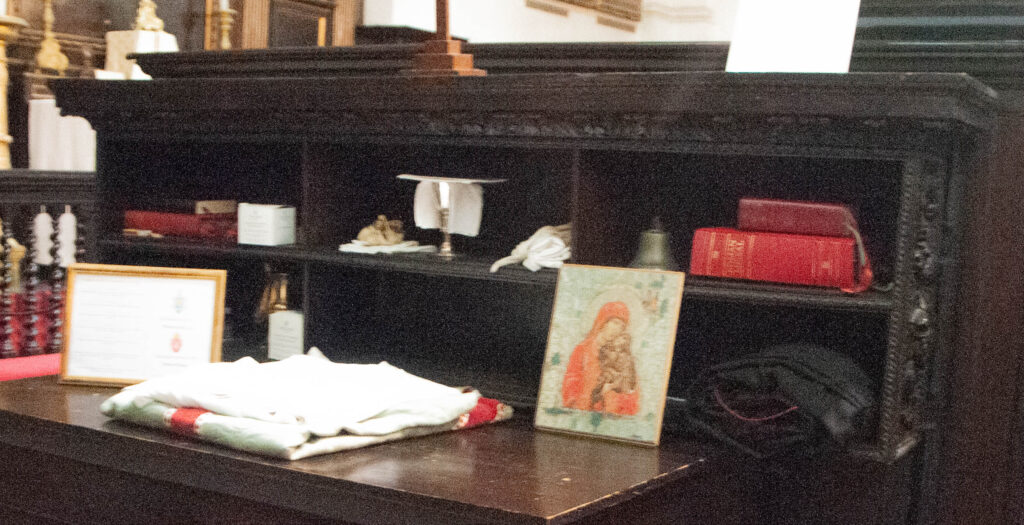
Another refugee from St Mary’s is a set of 17th century bread shelves. They would have hung from one of the walls on the entrance porch. After morning service wealthy parishioners would place bread on the shelves for the poor of the parish to collect …
As you can see, they have now been repurposed.
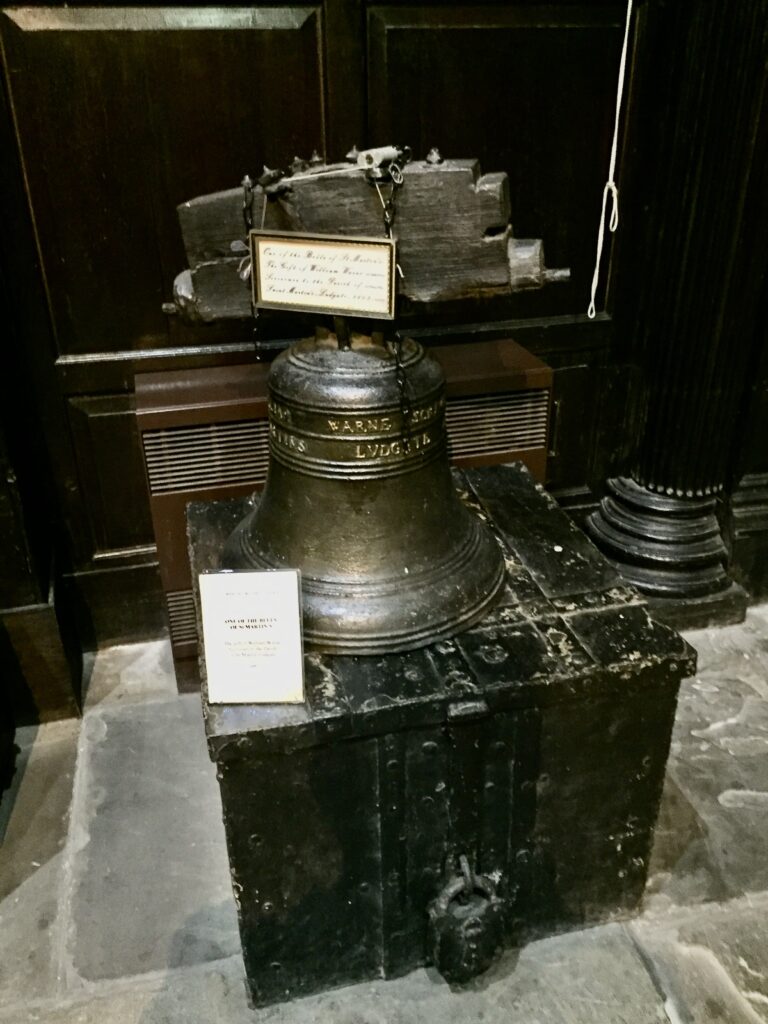
Also on display is one of the bells from the post Great Fire rebuild. Resting on an iron chest, the bell dates from 1683 and was a ‘Gift of William Warne, Scrivener to the Parish of St Martin’s Ludgate’ …
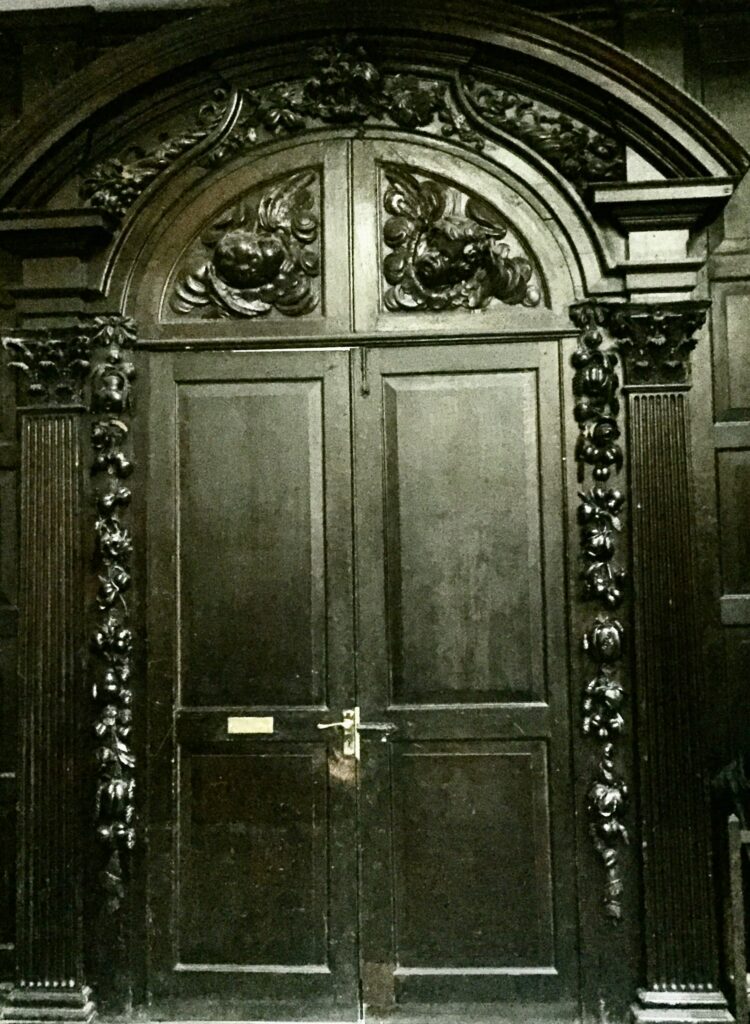
There are four beautifully carved door surrounds illustrating the great skill of the craftsmen of the late 1600s – in this case joiner William Grey and carver William Emmett …
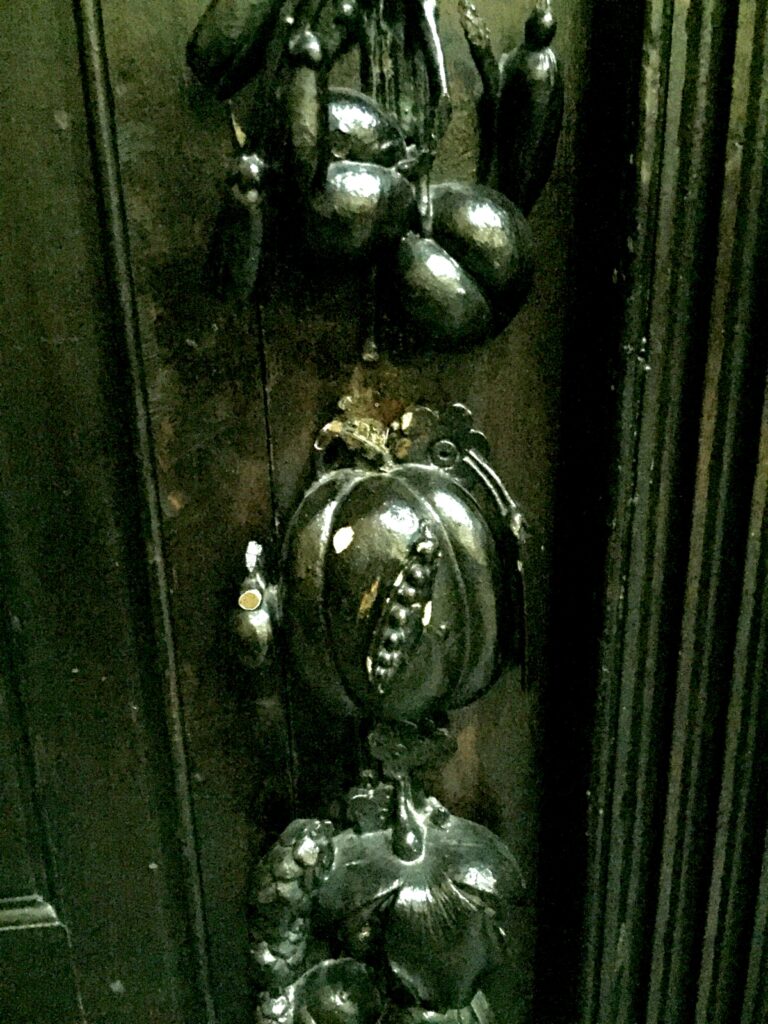
On this one they have (perhaps rather cheekily) included an open pea pod which was a mark commonly associated with the great Master Carver Grinling Gibbons …
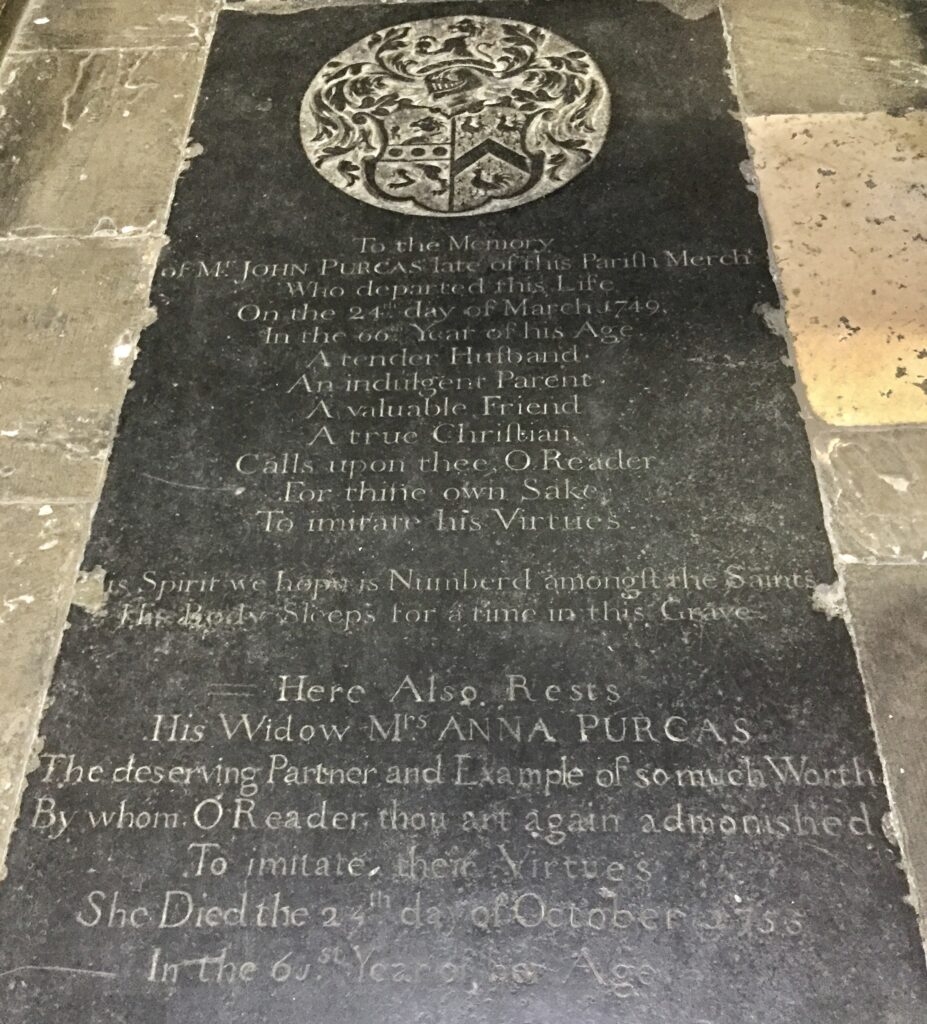
Here we are sternly ‘admonished’ to imitate the virtues ‘for thine own sake’ of the late John Purcas and his ‘deserving partner’ Anna …
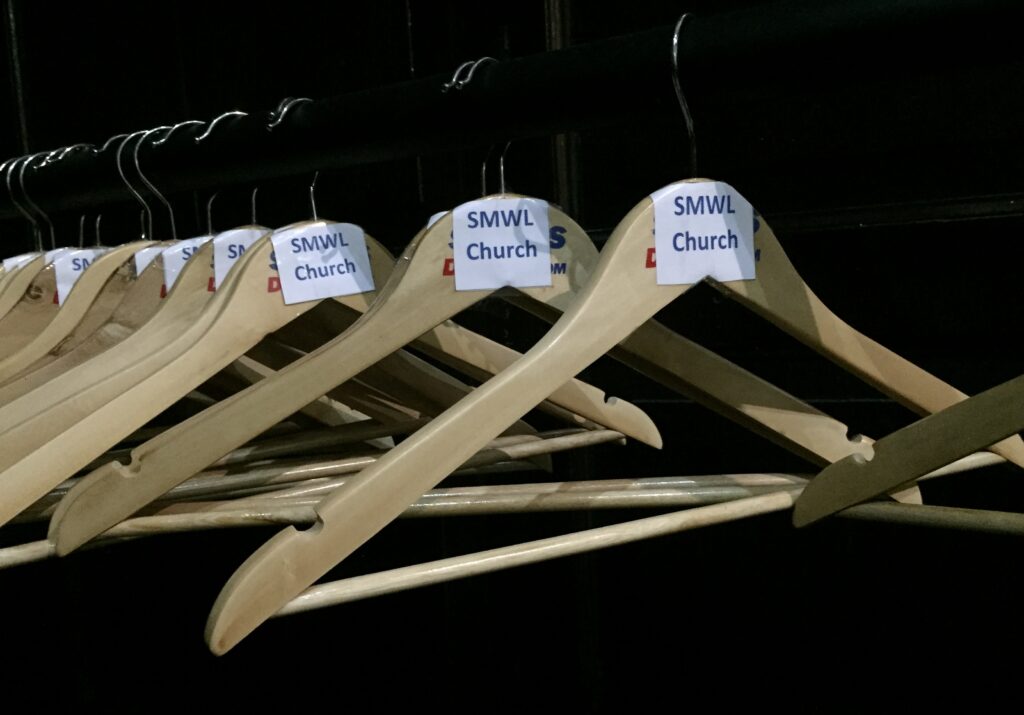
And finally, these made me smile. Presumably people had been nicking their coat hangers – you can’t trust anyone these days …
If you would like to follow me on Instagram here is the link …
What a pleasure on a gloomy, cold day to approach the Guildhall Art Gallery with an air of anticipation …
Sir Noël Peirce Coward (16 December 1899 – 26 March 1973) was one of the twentieth century’s most prolific and successful playwrights, songwriters, actors and directors …
Entry to the exhibition is free (timed ticket required) and you are also handed a delightful pocket biography containing images of some of the exhibits …
It tells us that there was much more to Coward’s style than just chic costumes and décor. His humour was often a deflecting mirror that allowed him to probe deeply into social and emotional complexities. As a gay man (at a time when homosexuality was criminalised) who also surmounted significant barriers of class, he brought to his art the acute perceptions of an outsider and an anarchic comic edge. He pushed boundaries by dramatising sexuality with candour, and modelled an alternative vision of masculinity. He built a family around him of friends and collaborators, offering fantastic opportunities to women that was rare for his time.
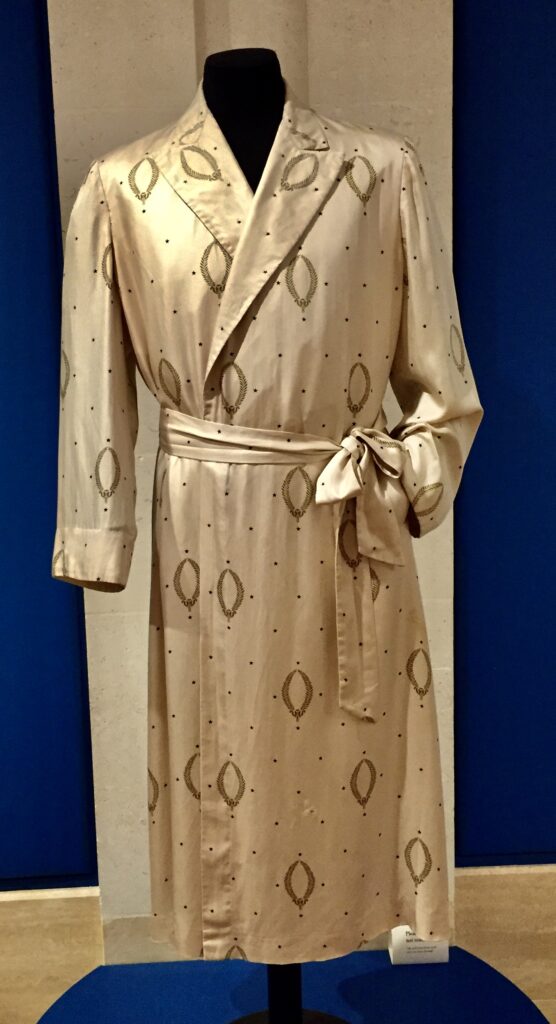
I recall seeing many Noël Coward caricatures over the years, often portraying him in a luxurious dressing gown holding a long cigarette holder …
And, appropriately, the first exhibit you see on display is this dressing gown that belonged to him in the 1950s. ‘They’re so comfortable to act in’, said Coward ‘. ‘And they’ve got swing …’ …
Noël’s famous Las Vegas dressing gown from 1955 …
It became an international icon in its own right following his stellar Las Vegas performances, Coward posing in it with a procession of celebrity visitors such as such as Cole Porter, Judy Garland, Lauren Bacall and, of course, Frank Sinatra …
Labels at the Gallery are clear and informative and items beautifully displayed …
For his contemporary audiences his productions were also visual feasts and one gets a great sense of this in the exhibition. For example, this reconstruction of a 1930 costume for Gertrude Lawrence when appearing in Private Lives …
There are some iconic items and images …
There is sheet music … it’s 1941 and Londoners are going about their normal business despite the horrors of the Blitz …
And from 1923 …
Along with posters …
And costume and set designs …
You also get a sense of the glamorous audiences of the day …
There are some great, evocative photographs …
And the very personal …
Sir Noël after receiving his Knighthood …
It’s a great exhibition and I highly recommend it.
If you would like to follow me on Instagram here is the link …