Walking the City of London

Category: Social History Page 20 of 25

The Great Tooley Street Fire.

Last week I said I would write more about the man commemorated on this plaque and the terrible event that prompted his bravery …
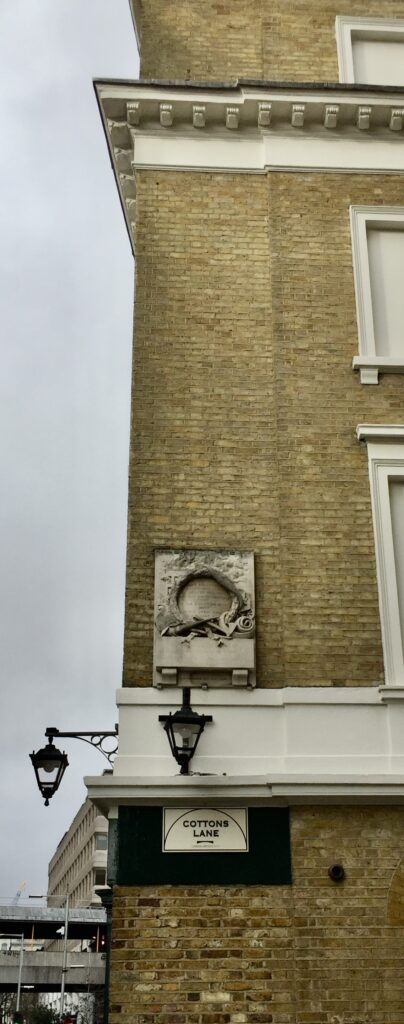
Here’s the memorial in close up …
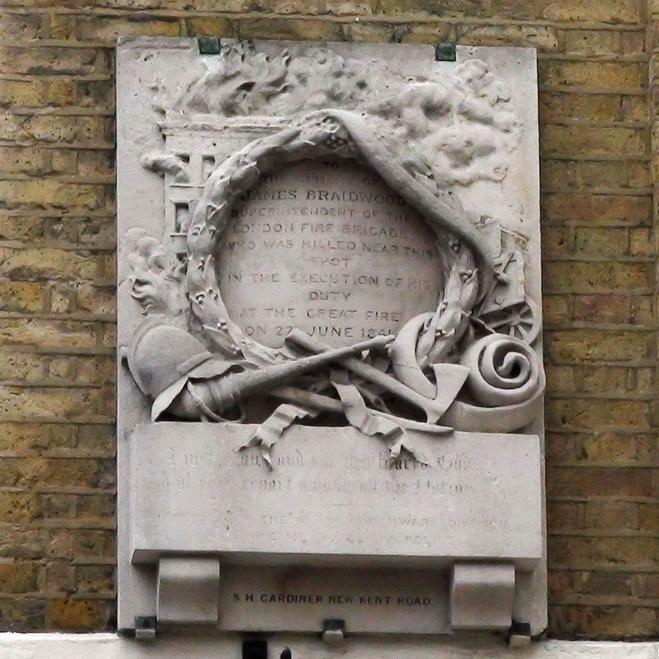
It records the death of James Braidwood, Superintendent of the London Fire Brigade and reads : To the memory of James Braidwood, superintendent of the London Fire Brigade, who was killed near this spot in the execution of his duty at the great fire on 22nd June 1861.

The inscription is inside a laurel wreath in front of a burning building. A hose snakes from the building over the top of the wreath and coils up at the bottom right while over at the left rests a fireman’s helmet. The imagery includes a fire engine wheel and an axe.

The words on the flat support read as follows : A just man and one that feared god, of good report among all the nation.
Erected by the M. or Southwark Division of the Metropolitan Police
.
(Beneath the support)
S. H. Gardiner, New Kent Road

The quote is from the Bible, Acts 10:22.

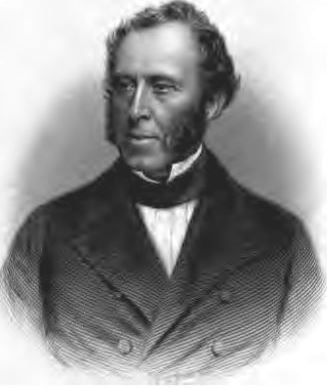
James Braidwood (1800–1861) …
If you had been in London on Saturday 22nd June 1861, you may well have been tempted to make your way, with thousands of other sightseers, to watch the Tooley Street Fire burn its way from Cotton’s Wharf, which was eventually destroyed, through to Hay’s and other wharfs and warehouses to Tooley Street shops.

Omnibuses were packed: ‘Men were struggling for places on them, offering three and four times the fare for standing room on the roofs, to cross London Bridge‘ and: ‘...every inch of room on London Bridge was crowded with thousands and thousands of excited faces’. Also reported: “Peripatetic vendors of ginger beer, fruit and other cheap refreshments abounded and were sold out half a dozen times over. Public houses, in defiance of Acts of Parliament kept open all night long, and did a roaring trade‘.
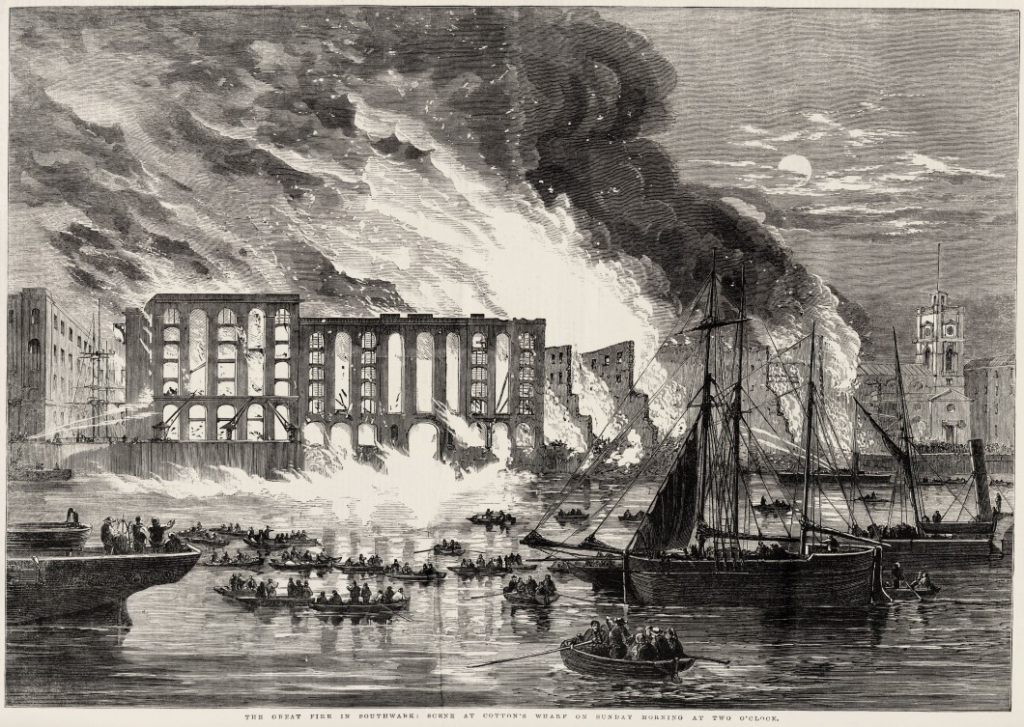
It is estimated some 30,000 spectators came from all over the city. By late evening the fire stretched from London Bridge to Custom House. Properties destroyed included offices, an American steamer, four sailing boats and many barges as ‘..burning oil and tallow poured in cascades from the wharfs and flowed out blazing on the river‘.

The following print from the time gives an impression of the scale and ferocity of the fire. The southern tip of London Bridge can just be seen on the right edge of the print …

Great Fire at London Bridge

Image credit: London Metropolitan Archives, City of London: catalogue ref: p5354642

The river is full of boats carrying spectators, and I suspect the watermen of the river found it very profitable to give people a close up view of the fire, although this could be dangerous. Look at the larger boat on the left edge of the print. A fire has started onboard and a figure is seen jumping into the river from the vessel.

The fire as viewed from Tooley Street …
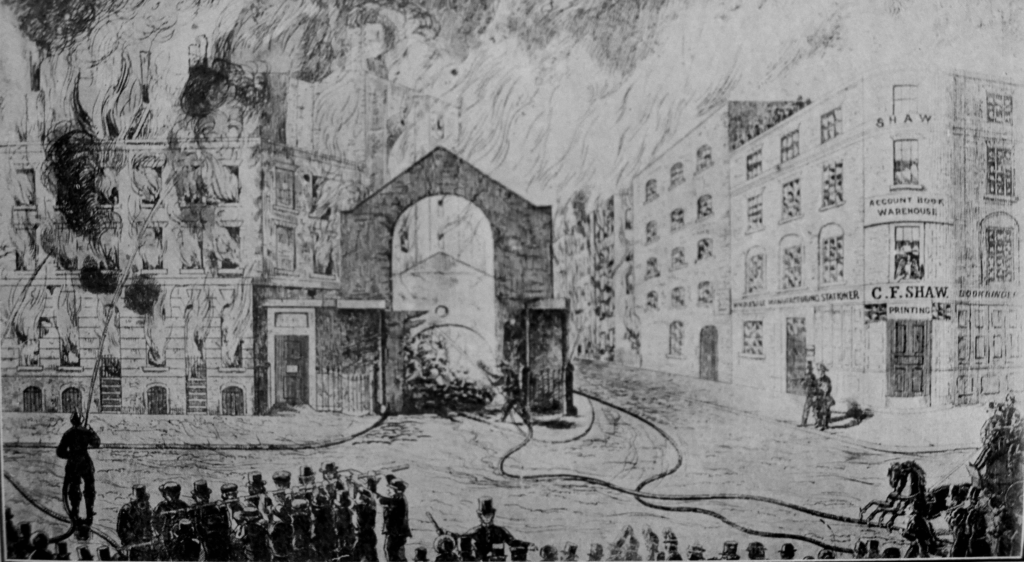
There were a number of casualties during the fire. Five men who were in a boat collecting tallow floating on the river were either burnt to death or drowned when their boat caught fire. A number of men working in the area of the warehouses fell into the river and drowned. Those suffering burns were taken to St Thomas’s Hospital, which also included a man who had his neck broken when the chain from a fire boat was caught around his neck.

The memorial in Tooley Street records the name of the most high profile casualty – the Superintendent of the London Fire Brigade Mr James Braidwood. The jury at the inquest heard that he had been in among his fire fighters handing out brandy and encouragement when the wall fell on him, killing him instantly.

The following report details the circumstances of his death:

‘Mr Braidwood, who had visited the men several times, was engaged in giving them some refreshment, when, all of a sudden, a terrific explosion occurred. In an instant it was seen that the whole frontage of the second warehouse was coming down, falling outwards into the avenue. Mr Henderson, the foreman of the southern district of the brigade, who was standing within a few paces of Mr Braidwood, shouted for all to run. The men dropped their hose branches. Two, with Mr Henderson escaped by the front gateway, and the others ran in the opposite direction on to the wharf where they jumped into the river. Mr Braidwood made an effort to follow Mr Henderson, but was struck down by the upper part of the wall, and buried beneath some tons of brickwork. His death must have been instantaneous. Several of his men rushed to extricate him, hopeless as the task was, but another explosion happening, they were compelled to fly. The sad fate of their chief had a most depressing effect upon all, and, to add to their trouble, the conflagration now assumed a most awful ascendancy’.

His funeral procession …
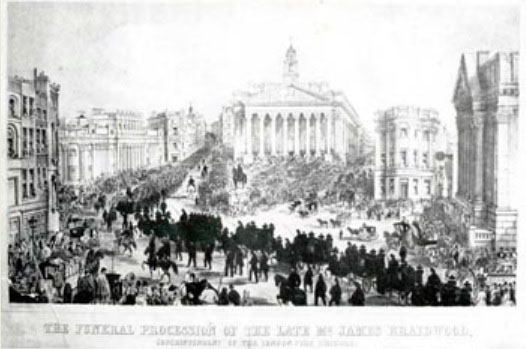
James Braidwood was buried at Abney Park Cemetery on 29 June 1861.

He left a widow and six children. His wife had already suffered a similar bereavement as a son from a previous marriage had died fighting a fire in Blackfriars Road in 1855 and Braidwood was buried next to him. The funeral procession was almost a mile and a half in length and, as well as the London Fire Brigade, there were members of the City and Metropolitan Police forces, members of the remaining private fire-brigades, along with many prominent persons of mid Victorian London.
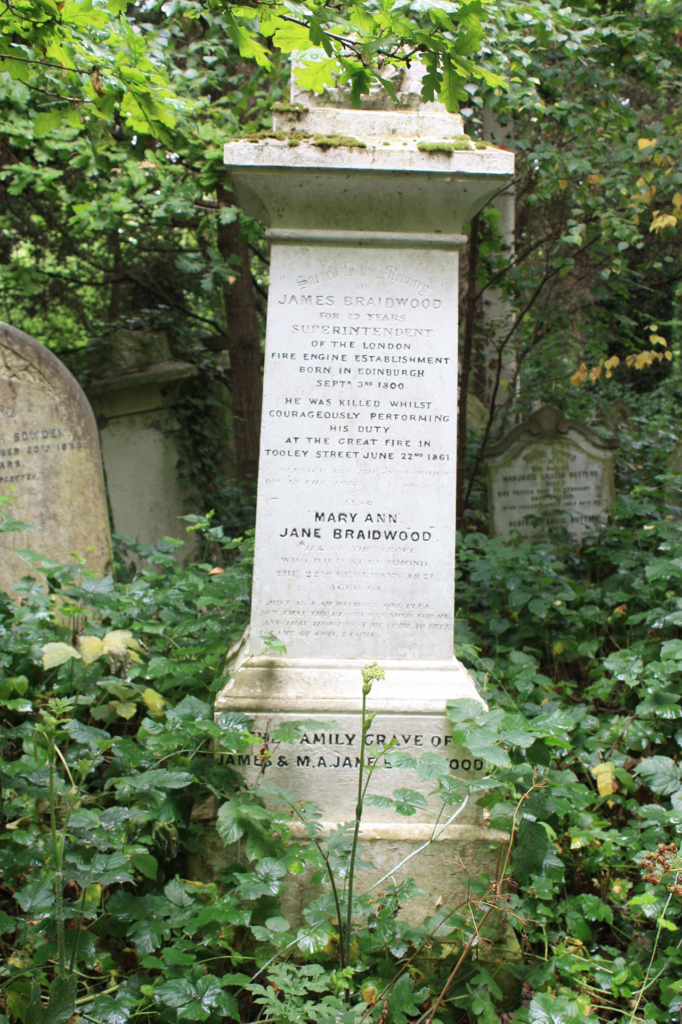
As a mark of respect, every church in the city rang its bells. The buttons and epaulets from his tunic were removed and were distributed to the firefighters of the The London Fire Engine Establishment.

Braidwood was a truly remarkable man whose thoughts about fire fighting and, most importantly, fire prevention were way ahead of his time. For example, fire spread quickly throughout the warehouses as the iron fire doors, which separated many of the storage rooms, had been left open. It is believed if they had been closed, as recommended by Braidwood, the fire may have burnt out, avoiding disaster.

I have found researching this episode in London’s history to be absolutely fascinating. If you find yourself in Tooley Street, glance up at the memorial to remember the Great Tooley Street Fire and the Superintendent of the London Fire Brigade, Mr James Braidwood.

Here are my sources – I hope you find browsing them interesting :

A London Inheritance (excellent as usual).

The London Fire Brigade website.

James Braidwood – Pioneer of Modern Firefighting.
If you would like to follow me on Instagram here is the link …
https://www.instagram.com/london_city_gent/

Lots to see at the Guildhall Art Gallery – William the Conqueror, Peabody Buildings, the regulation of bread and Lord Mayors’ Shows.

Visiting the Guildhall Art Gallery is always a treat. Exhibitions change all the time and, tucked away near the cloakroom, is the small City of London Heritage Gallery, which is free to enter.

There are not many exhibits but they are usually all fascinating.

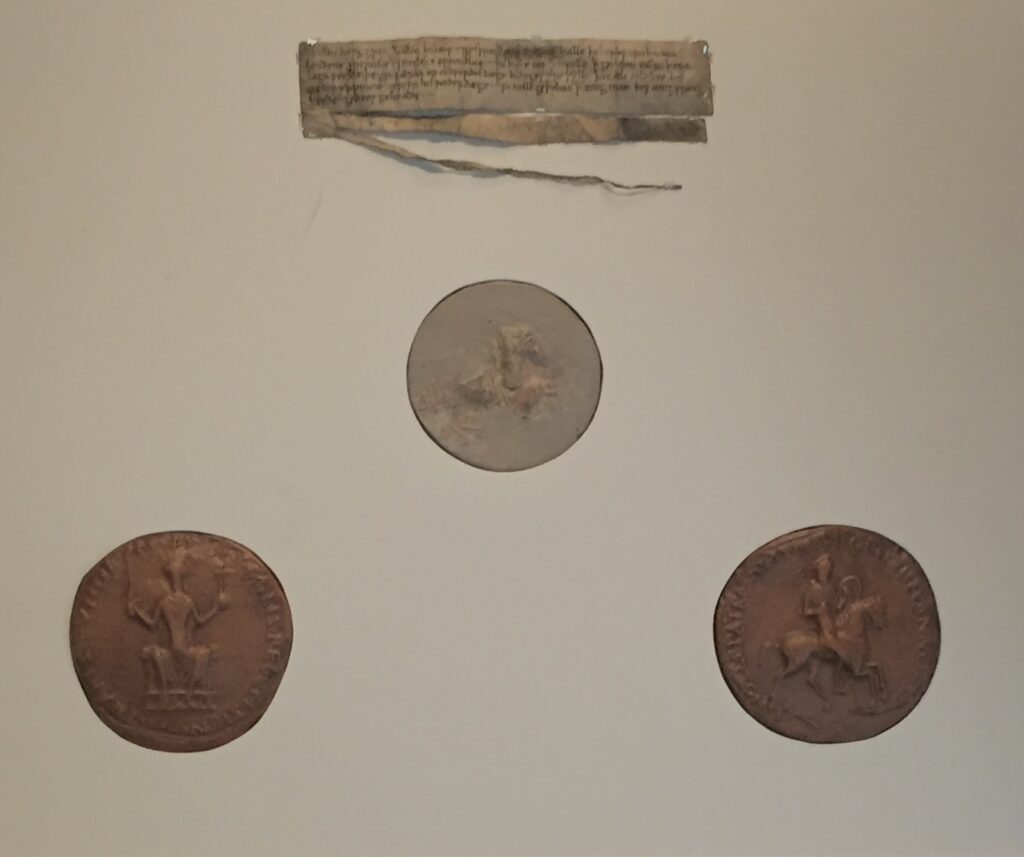
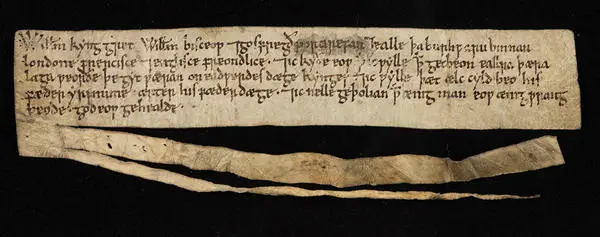
Seek out this little display. It contains the William Charter of 1067, the City of London’s oldest document, which tells us what happened when William I reached London after the Battle of Hastings …

Written on vellum (parchment) in Old English, it measures just six inches by one-and-a-half inches. It also comes complete with one of the earliest surviving seals from William the Conqueror’s reign …

Translated into modern English, the Charter reads as follows:

‘William the king, friendly salutes William the bishop and Godfrey the portreeve and all the burgesses within London both French and English. And I declare that I grant you to be all law-worthy, as you were in the days of King Edward; And I grant that every child shall be his father’s heir, after his father’s days; And I will not suffer any person to do you wrong; God keep you.’

City of London historians point out that one of the citizens’ primary concerns, as expressed by the words – “And I grant that every child shall be his father’s heir, after his father’s days” – was to ensure that their property handed down to the son and heir, rather than attracting the interest of the Crown.

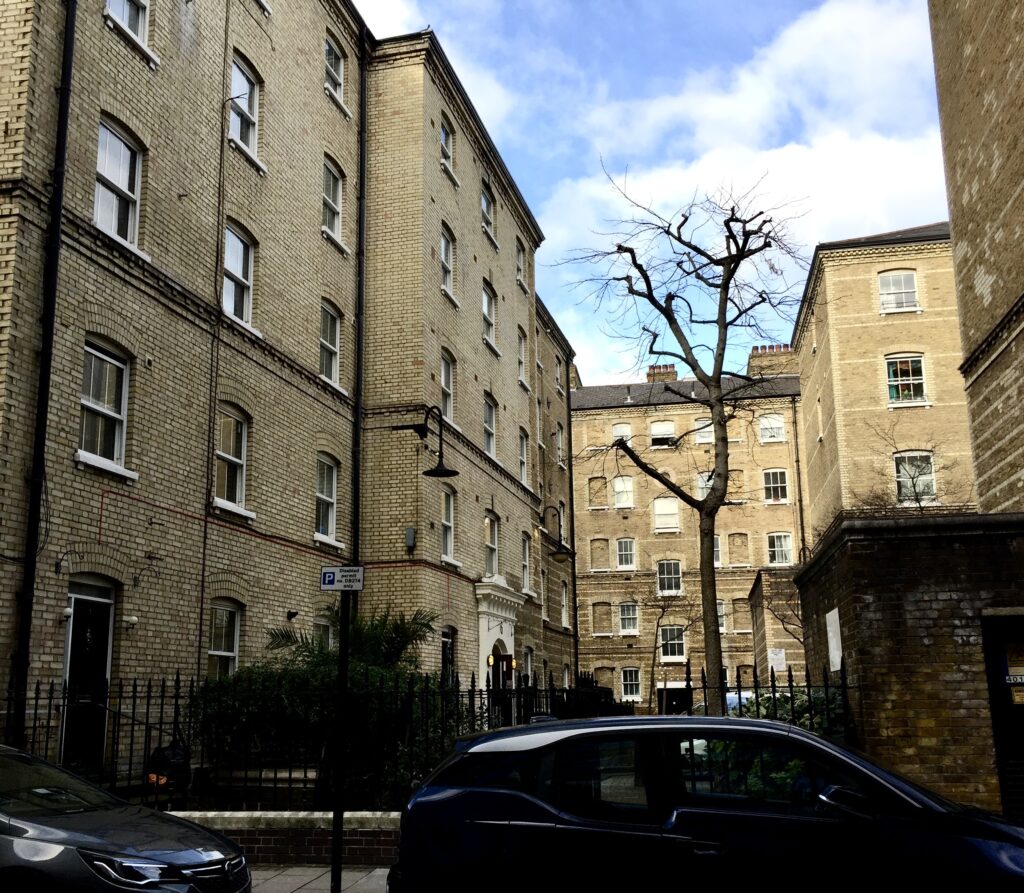
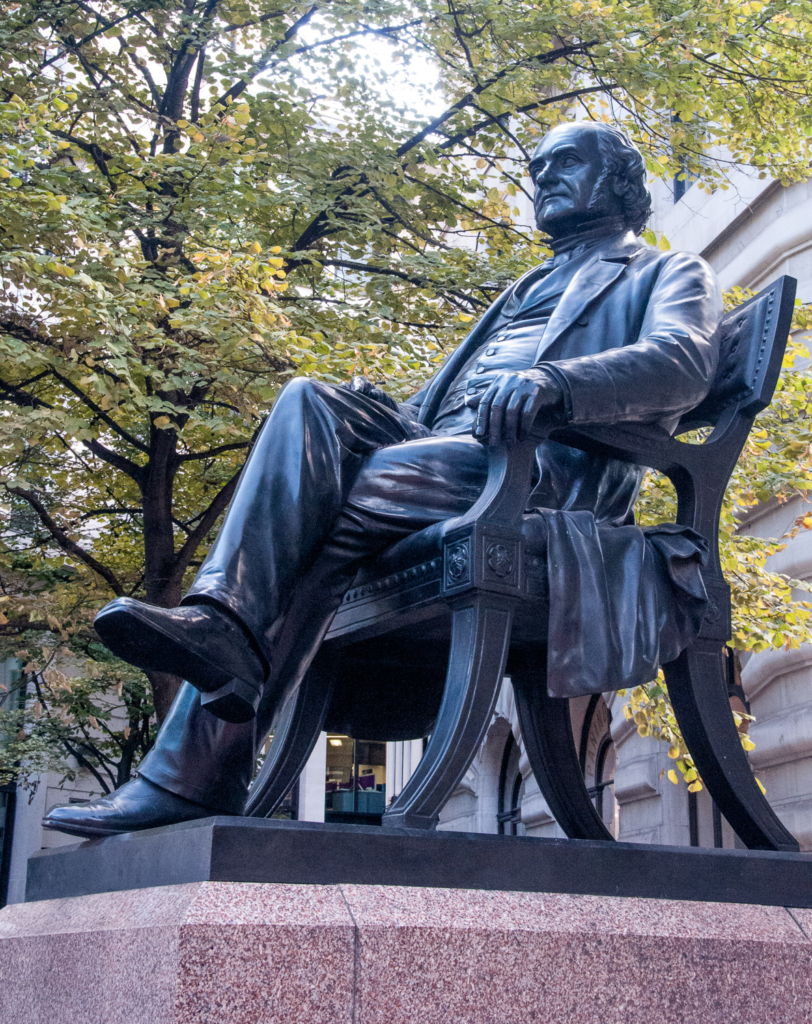
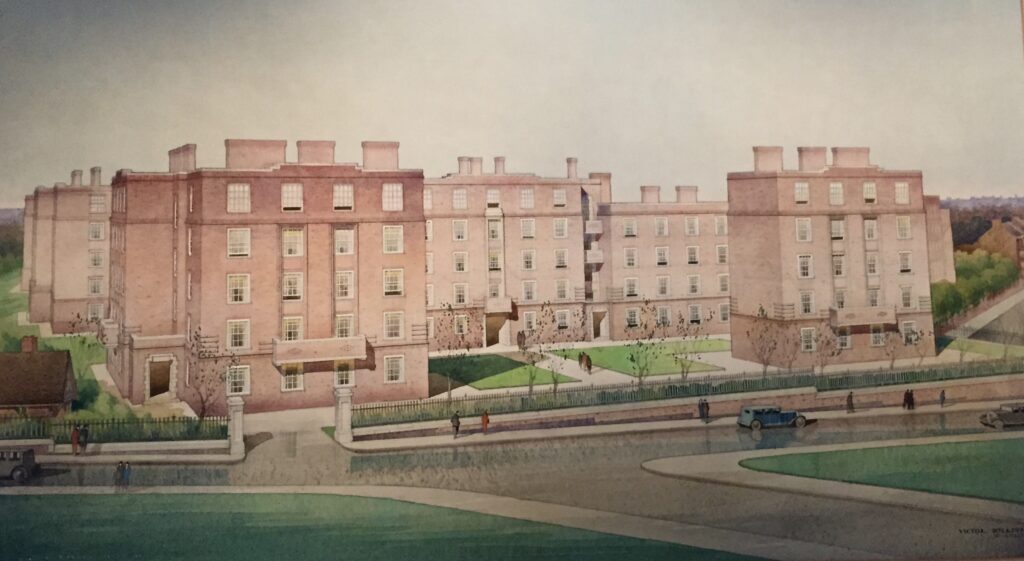
Nearby there’s a cabinet dedicated to the great philanthropist George Peabody (1795-1869). In retirement he devoted himself to charitable causes setting up a trust, the Peabody Donation Fund, to assist ‘the honest and industrious poor of London’. The Peabody Trustees would use the fund to provide ‘cheap, clean, well-drained and healthful dwellings for the poor’ with the first donation being made in 1862. The exhibition contains an illustration of the estate at Clapham Junction …

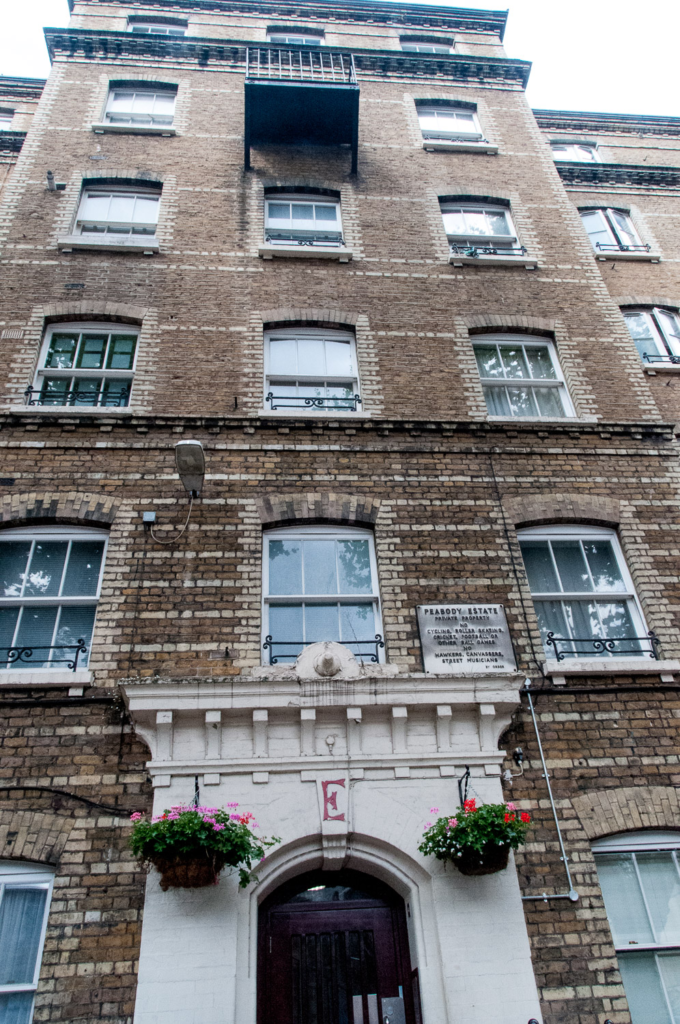
My ‘local’ estate is the one on Whitecross Street and dates from 1883 – the design is very typical Peabody, with honey coloured bricks and a pared down Italianate style …

Here he sits, looking pretty relaxed, at the northern end of the Royal Exchange Buildings …

You can read more about him here in my blog City Living.

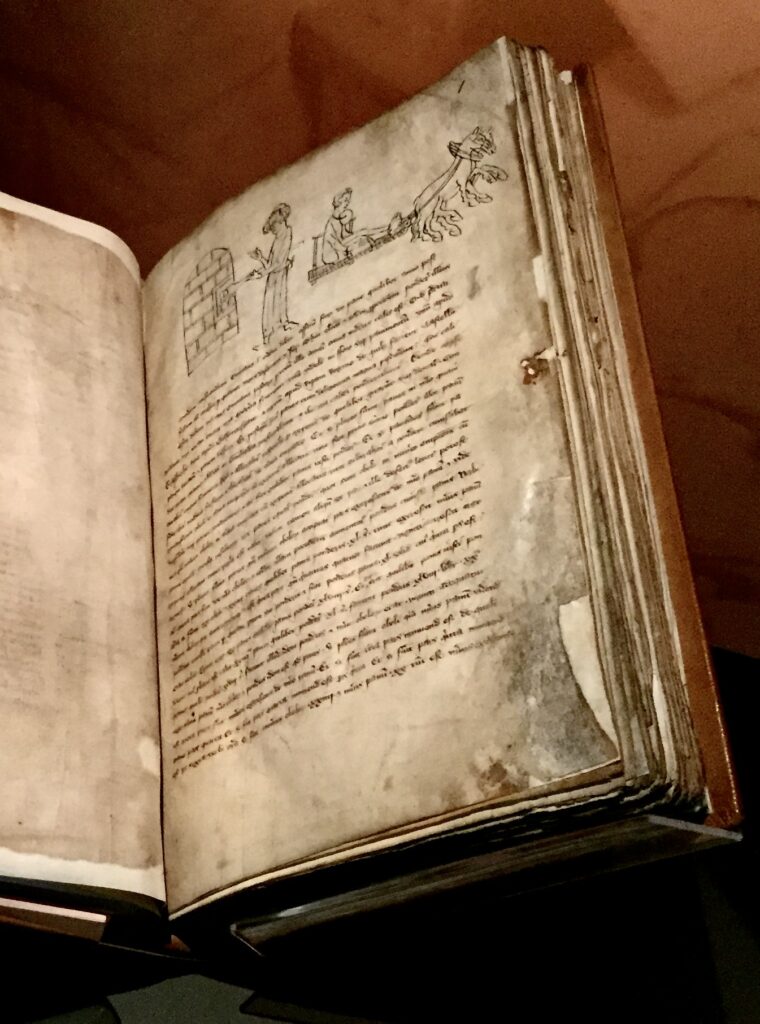
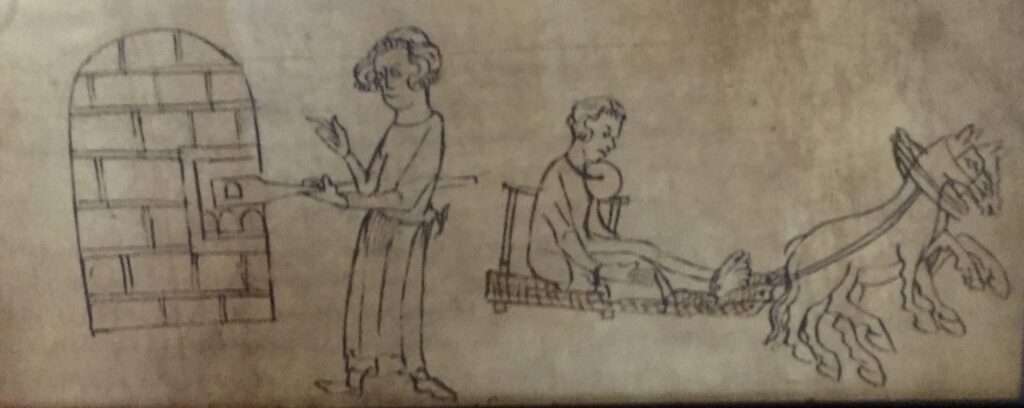
The Assize of Bread and Ale was a 13th-century law which regulated the price, weight and quality of the bread and beer. This medieval custumal (collection of customs) has drawings of bakers at work and others being punished for selling underweight loaves …

The punishment for the first offence was to be dragged through the city with the offending loaf around the person’s neck …

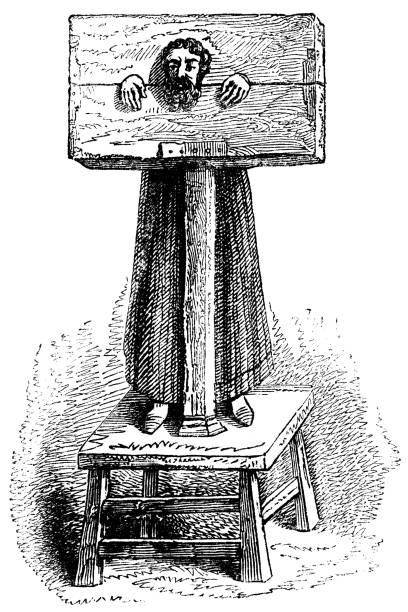
Incidentally, a second offence punishment was to be put in the pillory for an hour …

This may not sound like much but in addition to being jeered and mocked, those in the pillory might be pelted with rotten food, mud, offal, dead animals, and animal excrement. Sometimes people were killed or maimed in the pillory because crowds could get too violent and pelt the offender with stones, bricks and other dangerous objects.

On committing a third offence the baker’s oven was pulled down. This was the end of the person’s business, so unless someone bailed them out, they would be destitute.

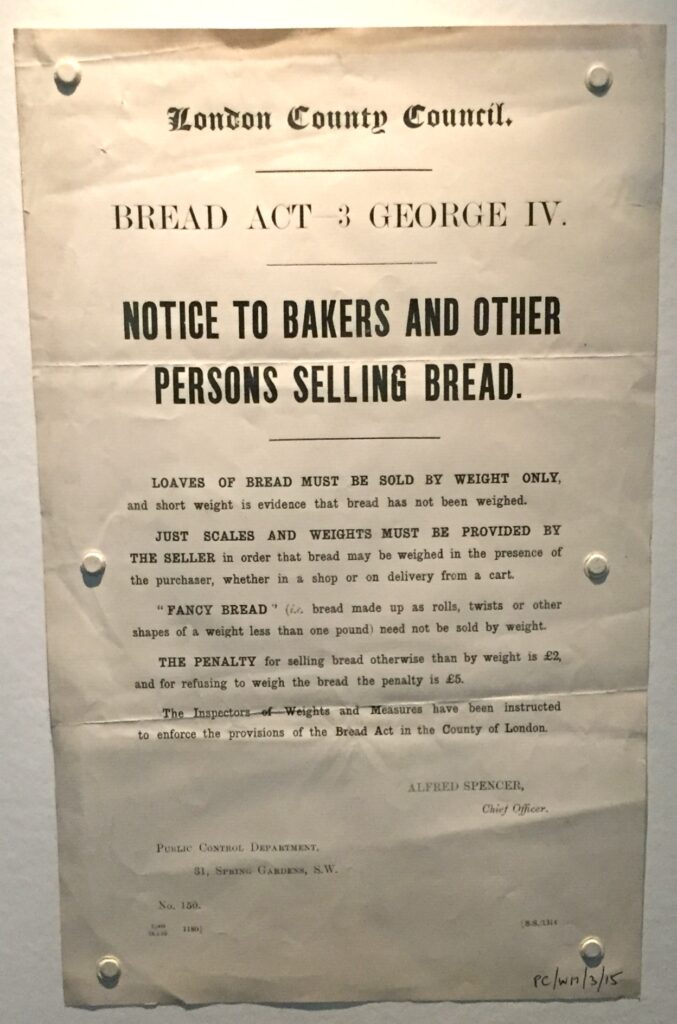
The legislation was continually updated as this poster from 1905 illustrates …

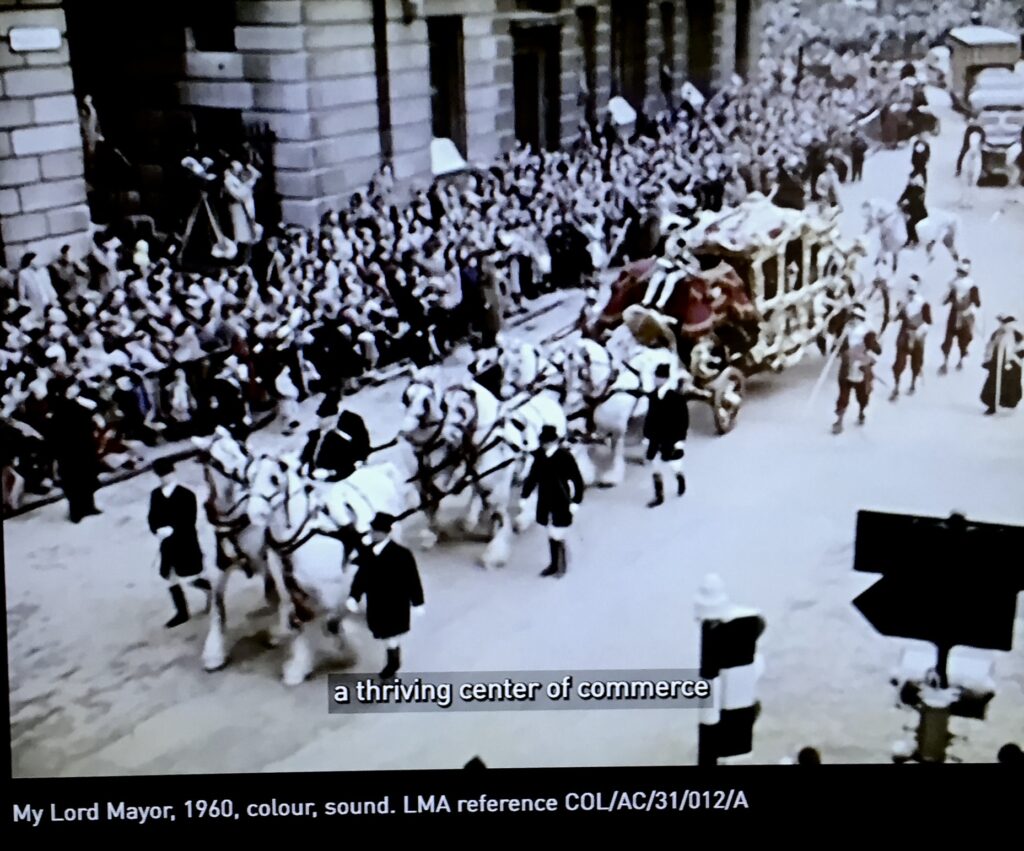
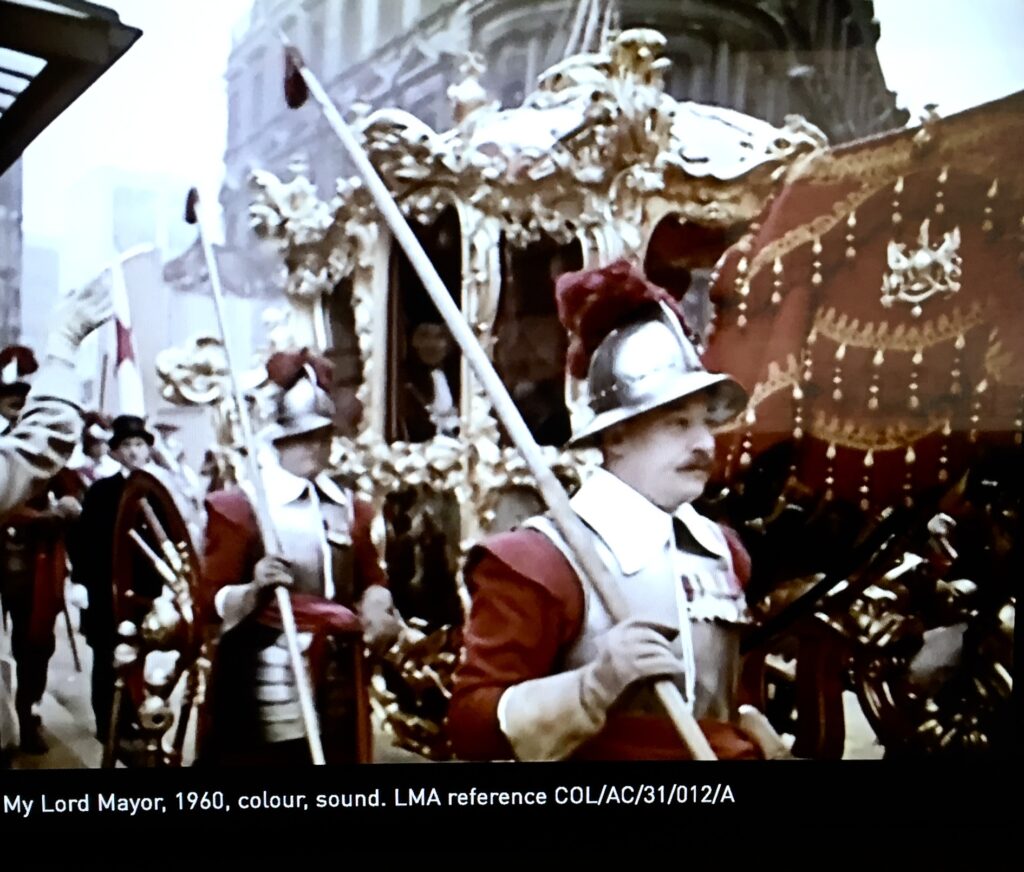
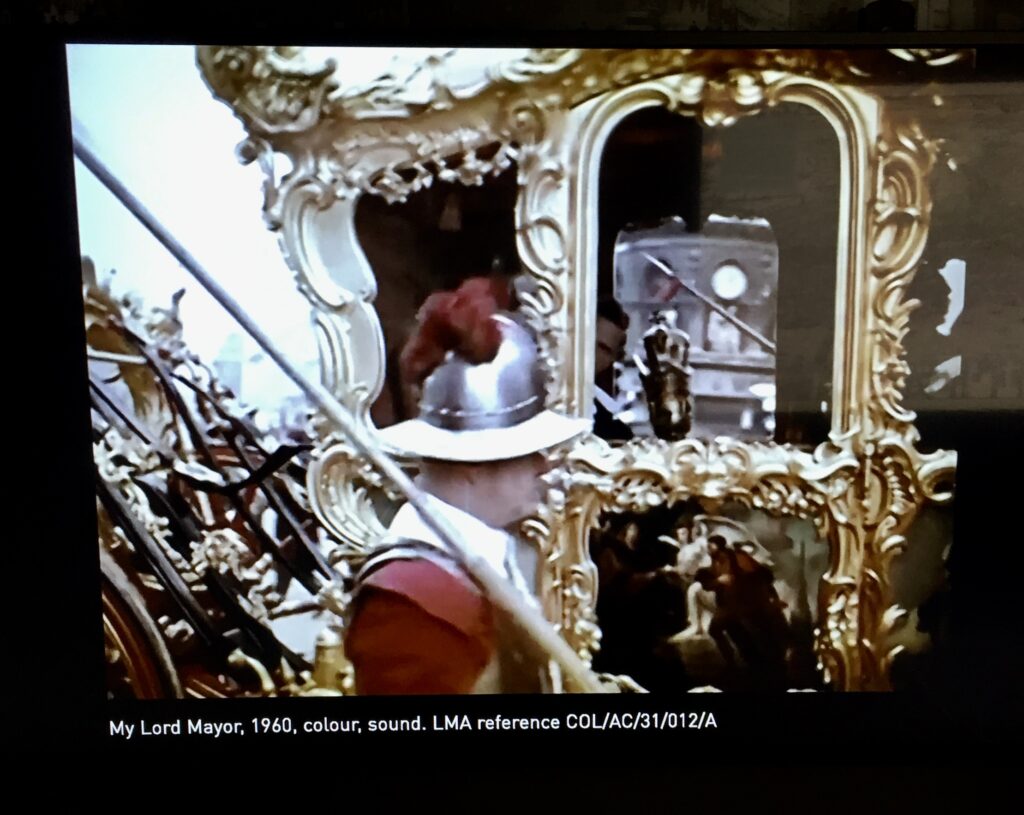
At the Gallery there are films running showing, among other scenes, glimpses of the 1960 Lord Mayor’s show …

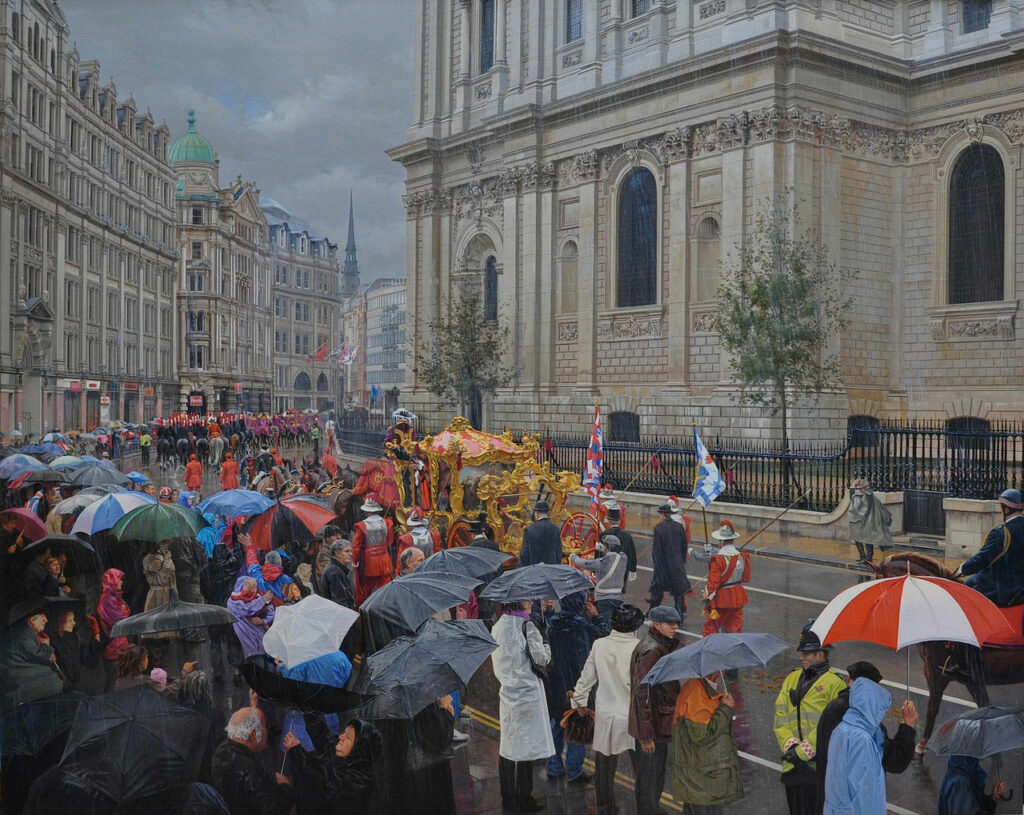
There are two paintings of a show near the main gallery entrance. This is 12:18 and 10 seconds (2010) by Carl Laubin …

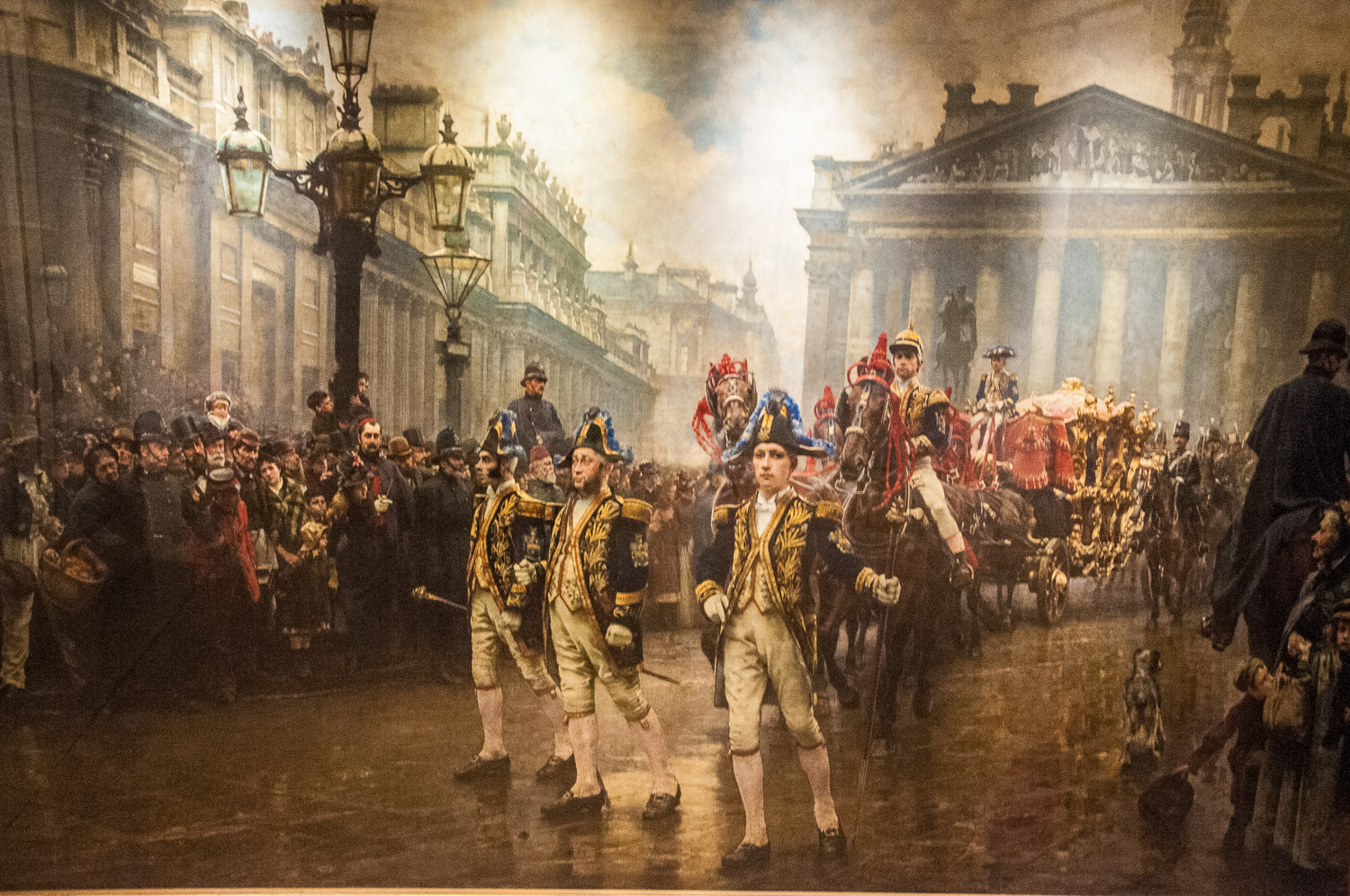
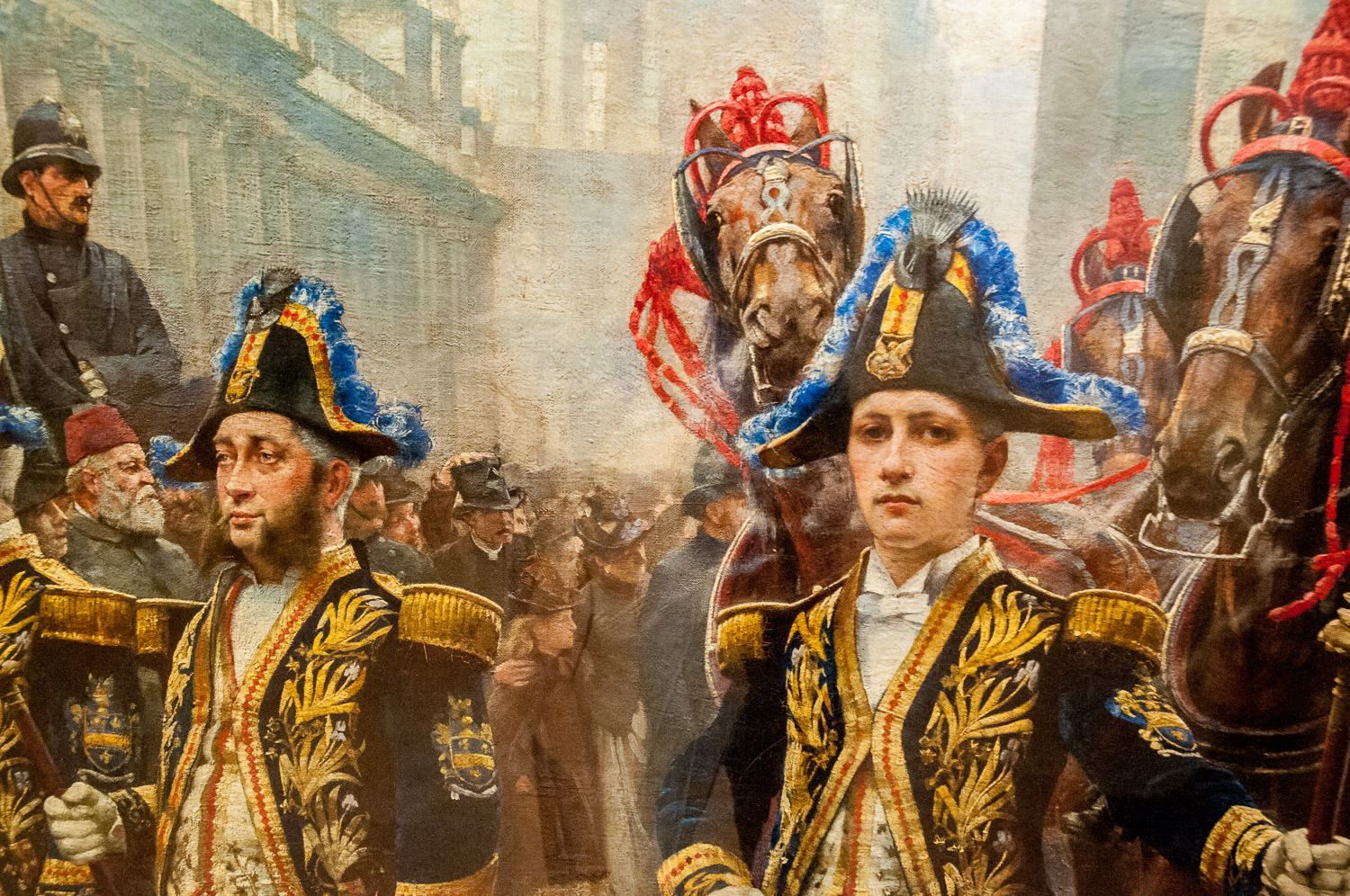
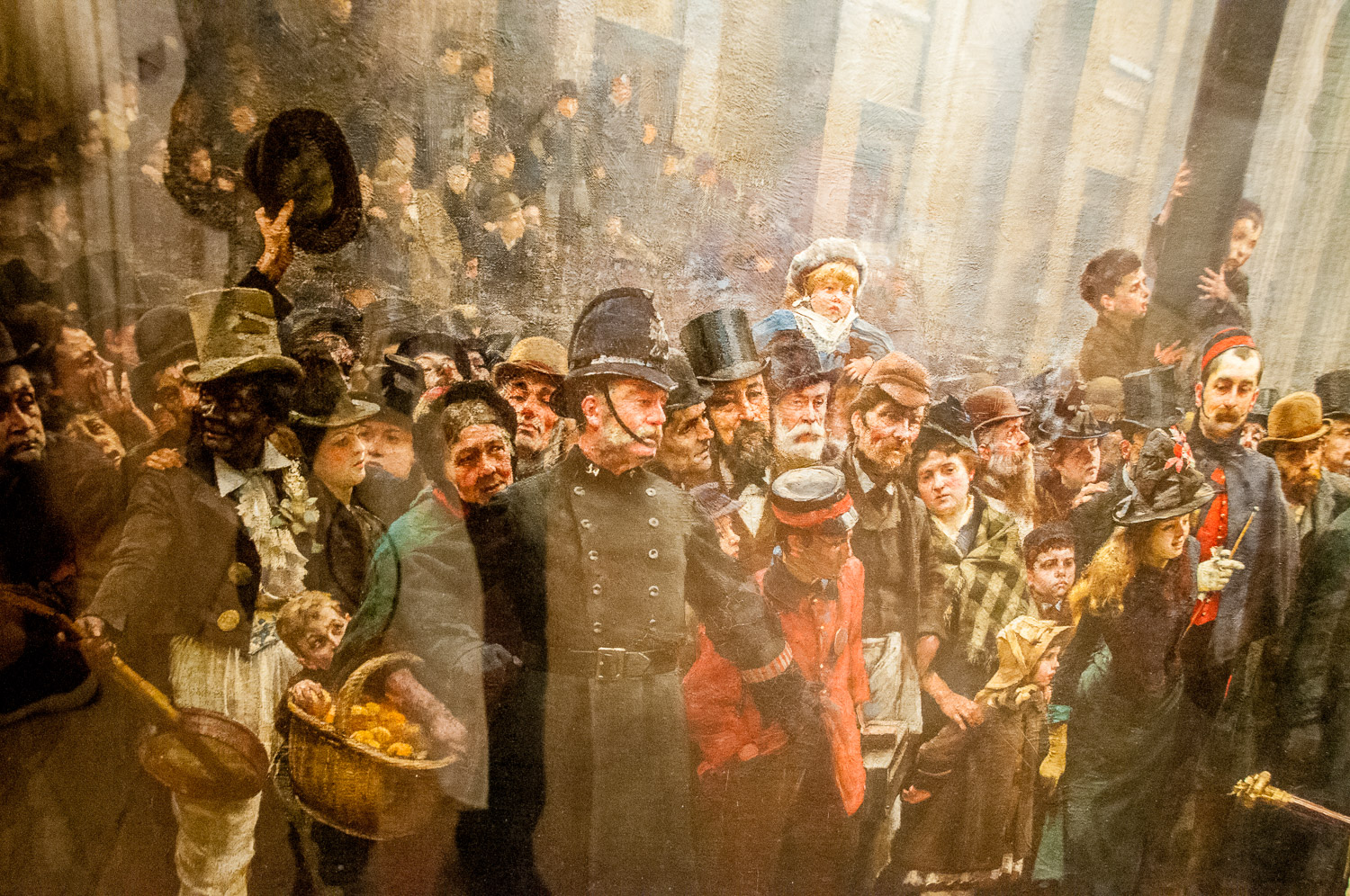
The other is one of my favourites, William Logsdail’s painting entitled The Ninth of November 1888 …

Although it’s the Lord Mayor’s procession in this picture he is nowhere to be seen and the artist has concentrated on the liveried beadles (who he actually painted in his studio)…

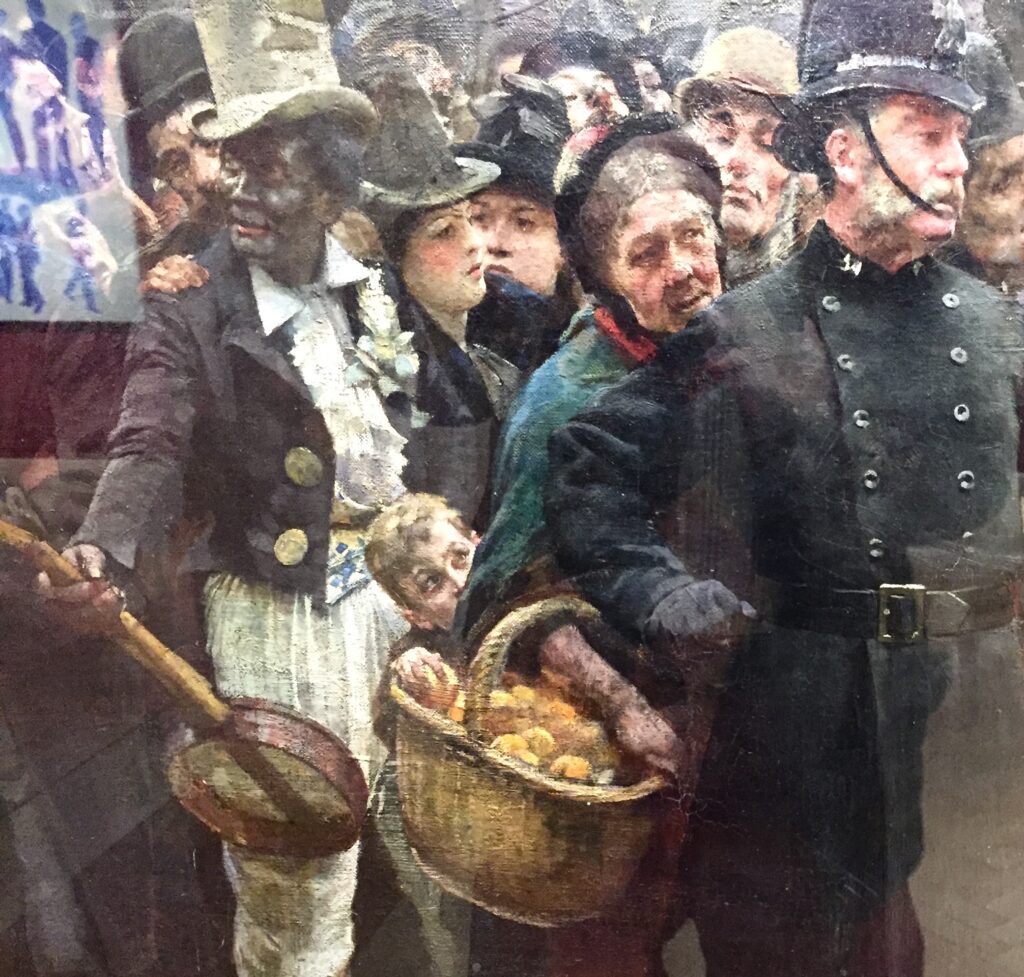
… and the people in the crowd …

There is a minstrel in blackface with his banjo and next to him a little boy is nicking an orange from the old lady’s basket. On the right of the picture the man in the brown hat, next to the soldier with the very pale face, is Logsdail’s friend the painter Sir James Whitehead.

Naughty boy!

It’s a sobering thought that, not far away in the East End that afternoon, police were discovering the body of Mary Kelly, believed to be the last of Jack the Ripper’s victims.

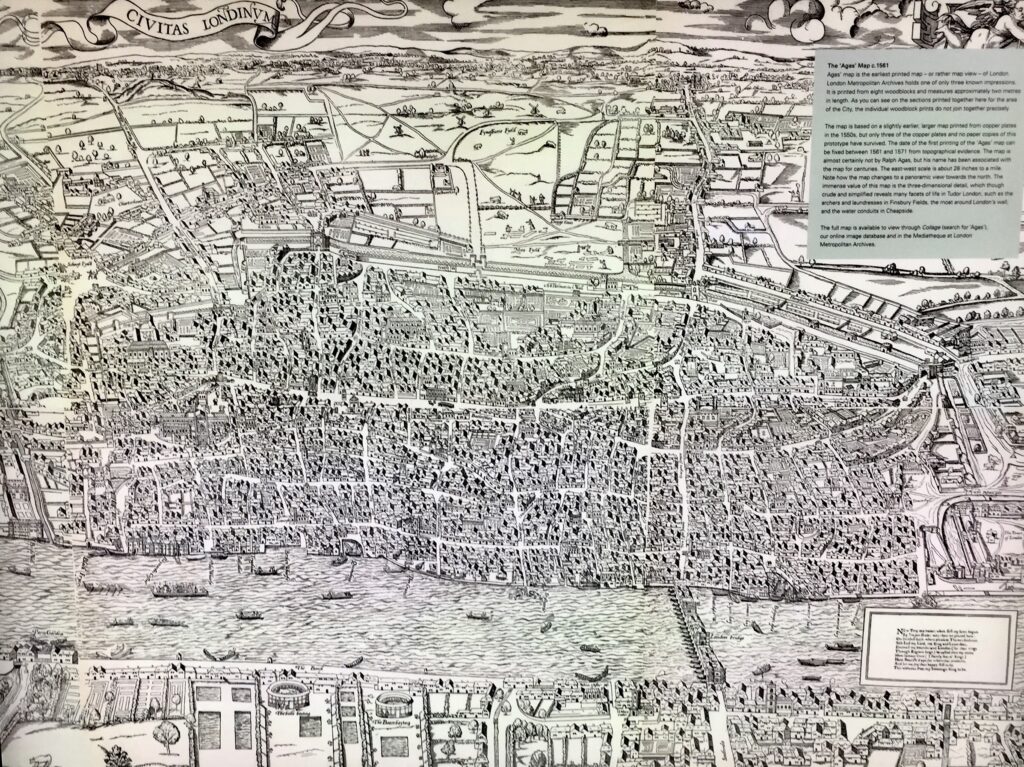
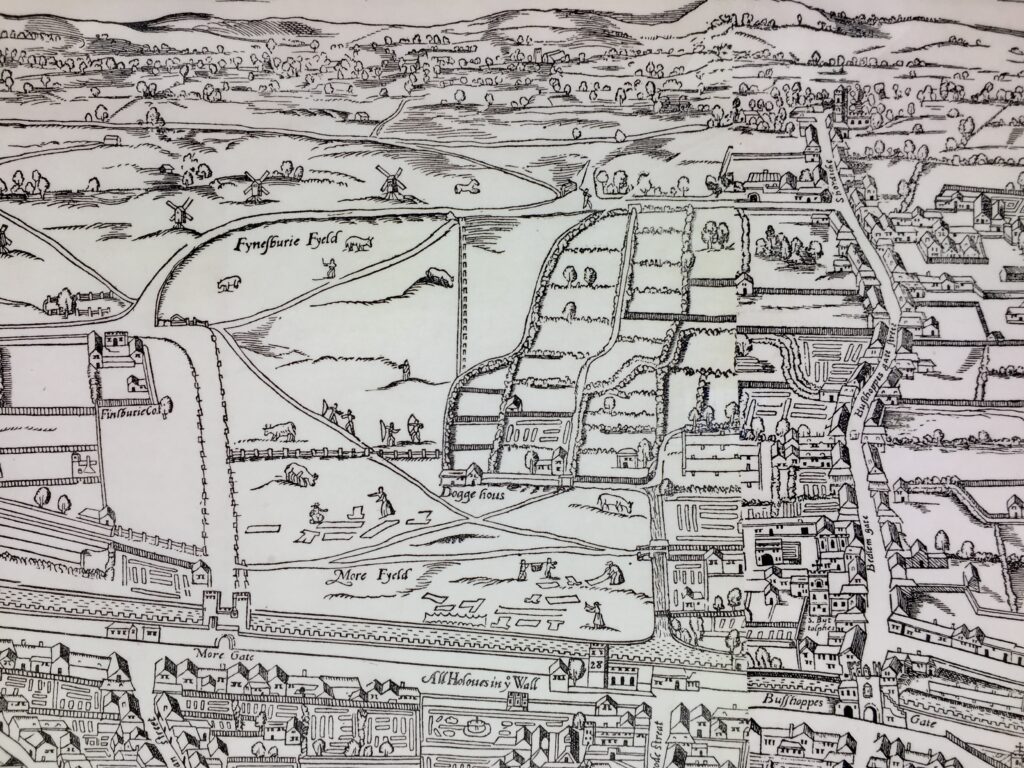
By the way, the Heritage room also has on permanent display a back lit illustration of the famous Agas Map …

I have spent ages looking at it spotting street names that still exist today and open speces like Moorfields …

You’ll find an interactive version here, have fun exploring it.

If you would like to follow me on Instagram here is the link …
https://www.instagram.com/london_city_gent/

A wander near the Tower of London. Windmill Girls and Waterways.

Visitors to the Tower looking down towards the river probably don’t give a second thought to this little strip of sand …

Here it is as seen from the cruise boat access bridge …

People had walked on the Thames foreshore for thousands of years but Tower Beach, as it was known, was created in 1934 by bringing 1,500 barge loads of sand to the site. When it was officially opened, King George V decreed that the beach was to be used by the children of London, and that they should be given ‘free access forever’.

Take a look at these wonderful images starting with the lovely girls from the famous Windmill Theatre …

East end lads having a great time …

Sadly it had to be closed in 1971 because of the danger of pollution to bathers.

You can see more if you click on this link to the article the images come from in the MailOnline.

This exciting sculpture, Girl With a Dolphin, was created in 1972 by David Wynne …

It looks even better when its water fountain is working.

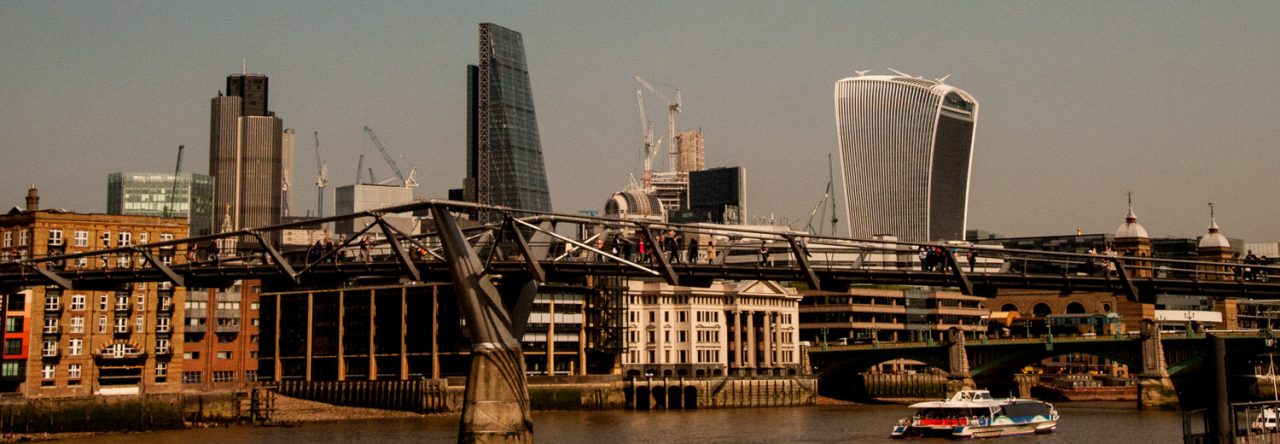
I know not everyone likes The Shard but I appreciate the way it mirrors the sky, especially on a stormy day …

That’s the well-camouflaged HMS Belfast in the foreground.

St Katharine Docks opened on the 25th October 1828 and this painting shows the first ships entering during the opening ceremony …

The docks as they appeared in full operation …

These formidable lock gates are still in place and fully functioning …

St Katharine, a 4th century aristocrat, refused to marry the Emperor Maximilian and was punished by being tortured on a spiked wheel before being beheaded. Her usual symbols are a wheel and a book, and may also include the more general symbols of the virgin martyr, a crown and a sword. The saint on this plaque has two appropriate extra symbols: the water and the Tower …

You will see her portrayed throughout the area …

Posh flats and yachts …

You can glimpse The Gherkin and The Scalpel in the background …

Ivory House, designed by George Aitchison & Son in 1853, is the only
original warehouse still standing in St Katharine Docks today. It gets its name because of the vast amount of ivory that passed through it. At its
peak in the 1870s, nearly 200 tons of ivory was stored annually. Apart from the ivory, other luxury imports were stored such as perfume, shells, marble,
carpets, spices and wine. The London docks were the world’s greatest concentration of portable wealth …

Note the thickness and height of the walls lining the street – serious security …

Across the river is Butlers Wharf, once used to store vast quantities of tea …

The sculptress Paula Haughney has a number of her works on display around the area which have as their theme the merchandise which used to be unloaded here. The stones used for these sculptures were part of the original dock. You’ll find a guide to where they are and their titles here …

This sundial was created by Wendy Taylor …

The work has reminders of the dock’s past. The chains which support it are reminiscent of anchor chains. The ring of the sundial is a giant washer. The central gnomon is an enlarged nail.

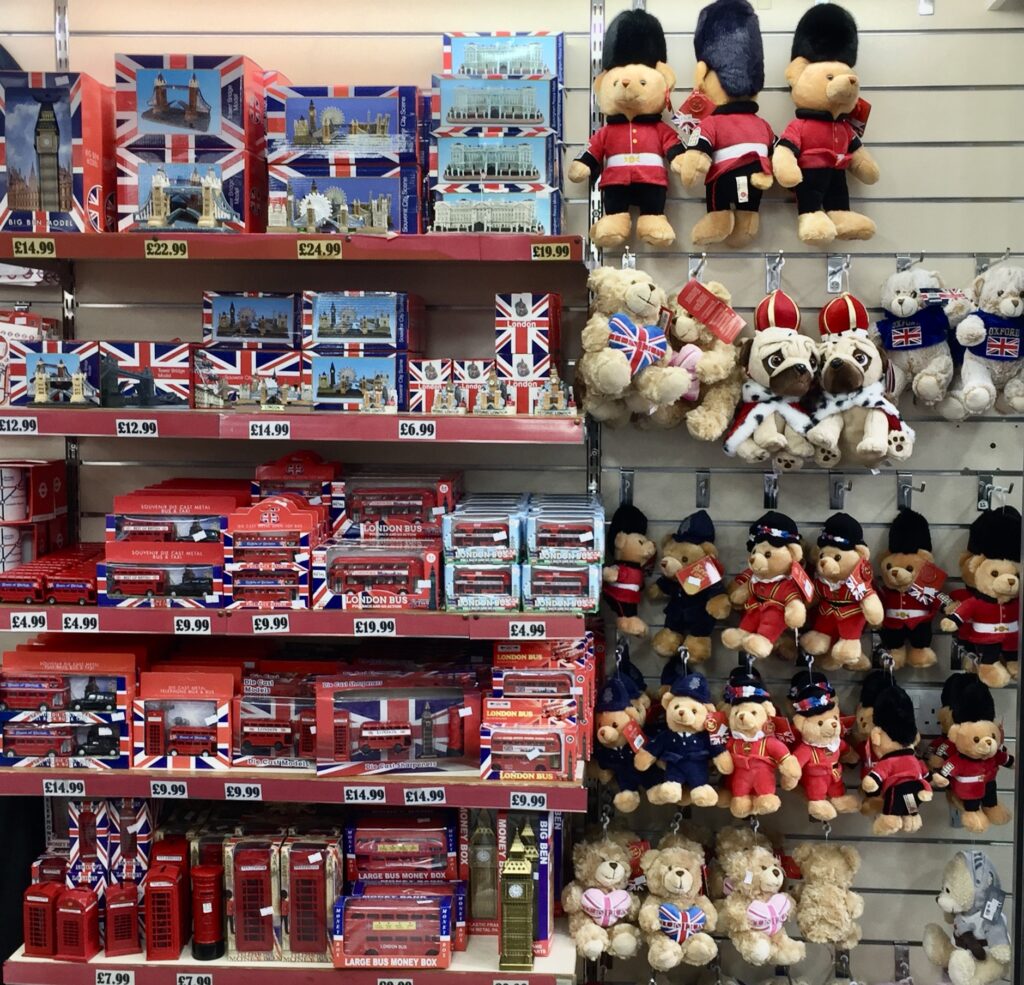
Get your souvenirs here …

As I left the area and walked towards Tower Hill Station I noticed this curious building …

The London Hydraulic Power Company was established in 1868 to install a hydraulic power network in London. This expanded to cover most of central London at its peak, before being replaced by electricity, with the final pump house closing in 1977. This is the entrance to the Tower Subway which was originally an old pedestrian tunnel the Company bought to carry power under the Thames …

Just before I reached the station I noticed the Armistice Day wreaths left at the Tower Hill memorial. It commemorates more than 36,000 Merchant sailors who have no grave but the sea …

I also paused by the site of the old scaffold …

I have written about both memorials before in a blog entitled The Tower Hill Memorials – wars and executions.

Finally, just around the corner is this site …

I peeped through the railings …

The Royal Mint in its heyday …

This will now be the site of the new Chinese Embassy since its purchase in 2018. This has proved controversial and you can read more here and view plans here.

If you would like to follow me on Instagram here is the link …
https://www.instagram.com/london_city_gent/

Page 20 of 25

Powered by WordPress & Theme by Anders Norén

Symbols & Secrets
Privacy Overview

This website uses cookies so that we can provide you with the best user experience possible. Cookie information is stored in your browser and performs functions such as recognising you when you return to our website and helping our team to understand which sections of the website you find most interesting and useful.