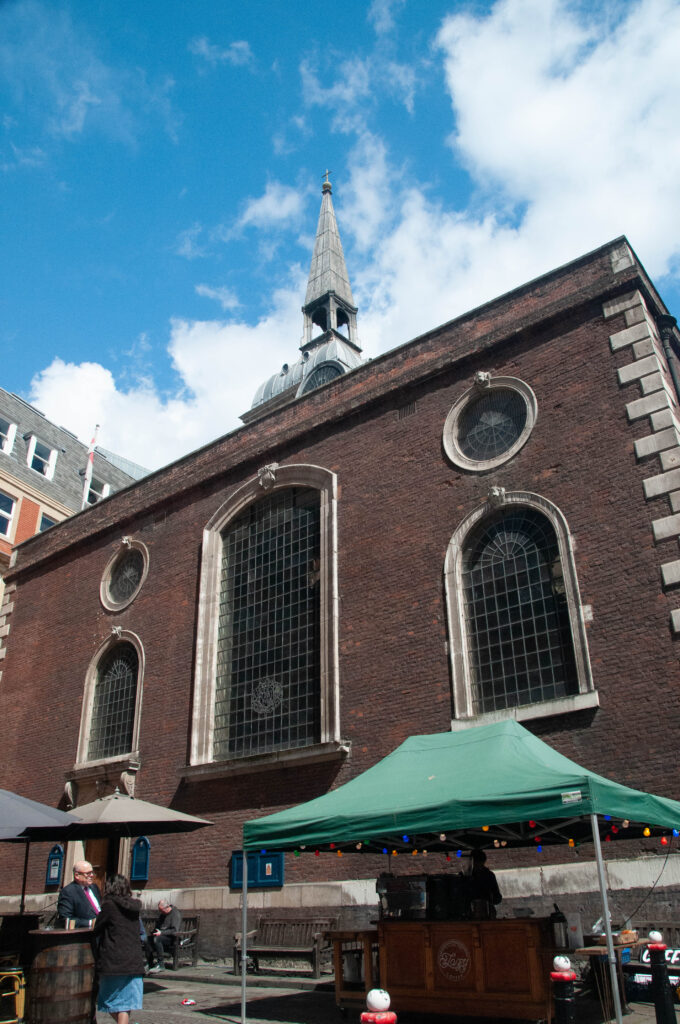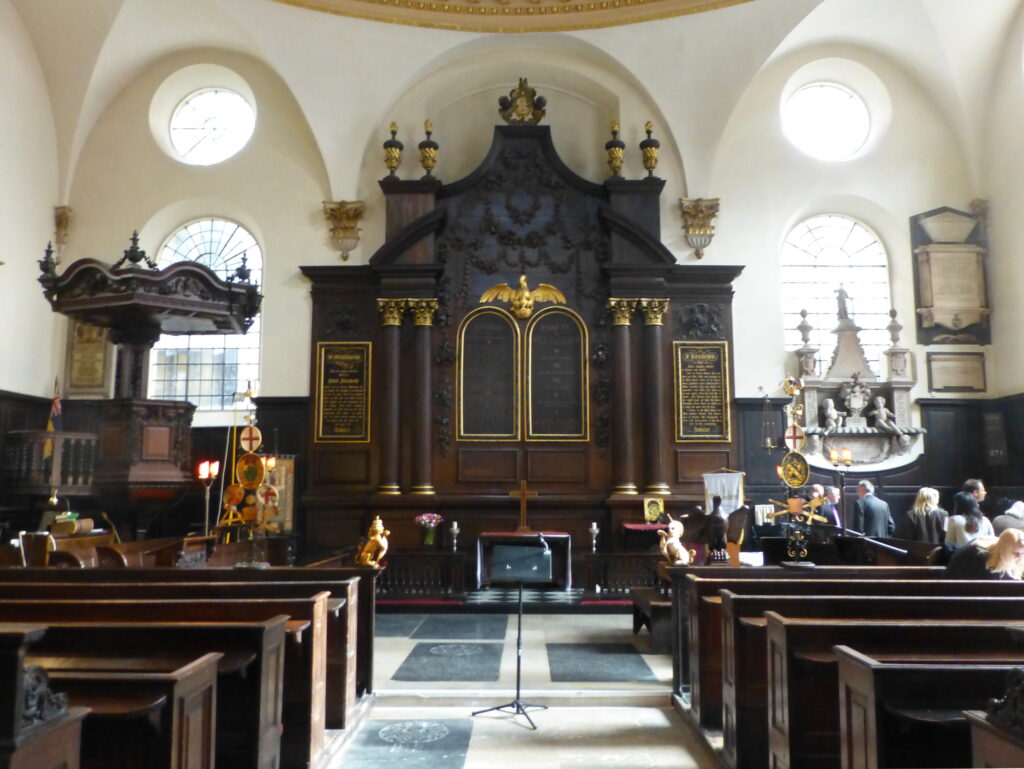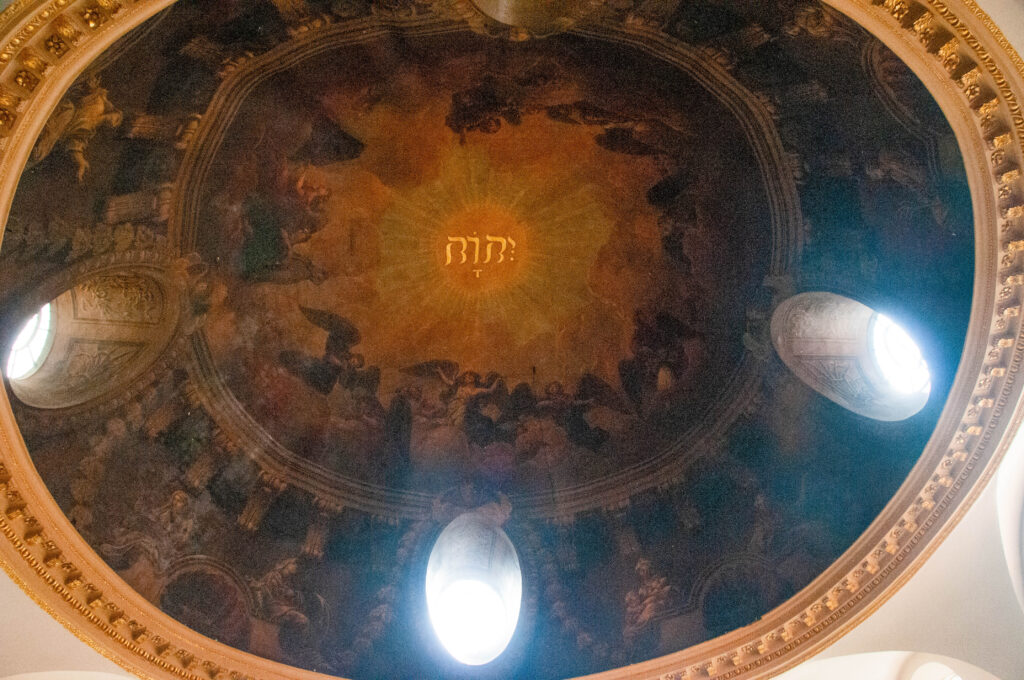
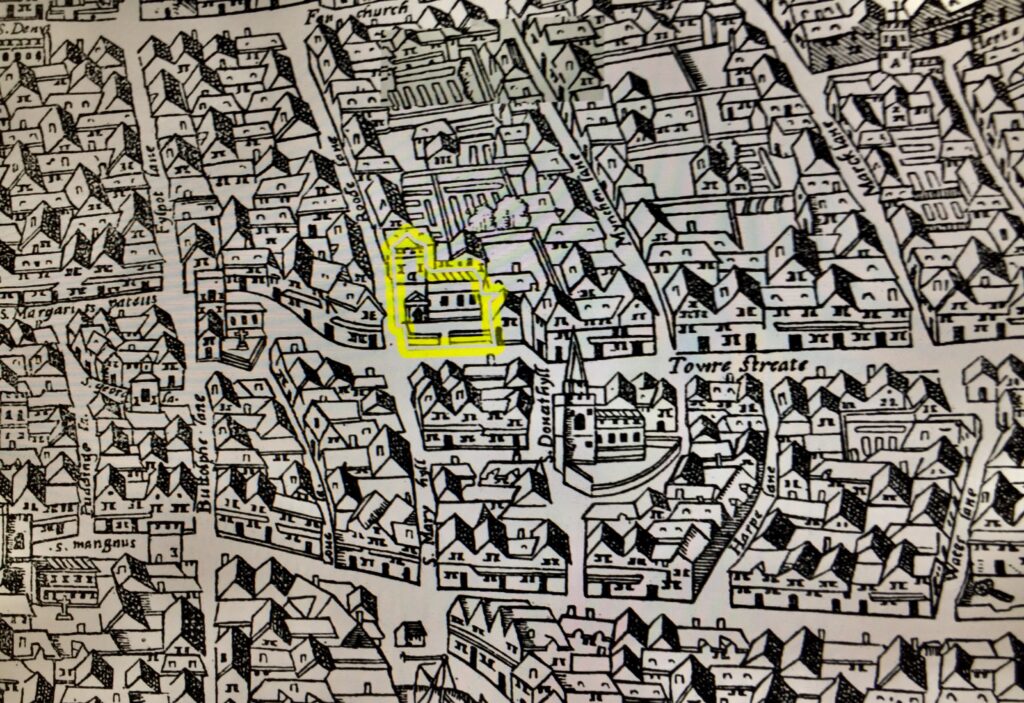
St Margaret’s church (EC3M 1HS) was originally built in the twelfth century, subsequently rebuilt in the sixteenth, and repaired in the early seventeenth. Here it is in the modified version of the Agas Map of 1633 …
By the time of the Great Fire of London in 1666, there were over a hundred parish churches and other places of Christian worship within and immediately without the walls of the City, despite a number having been closed down during the Reformation. To be precise, according to Parish Clerks’ records, there were 97 churches within the walls of the City, and 16 without, making a total of 113.
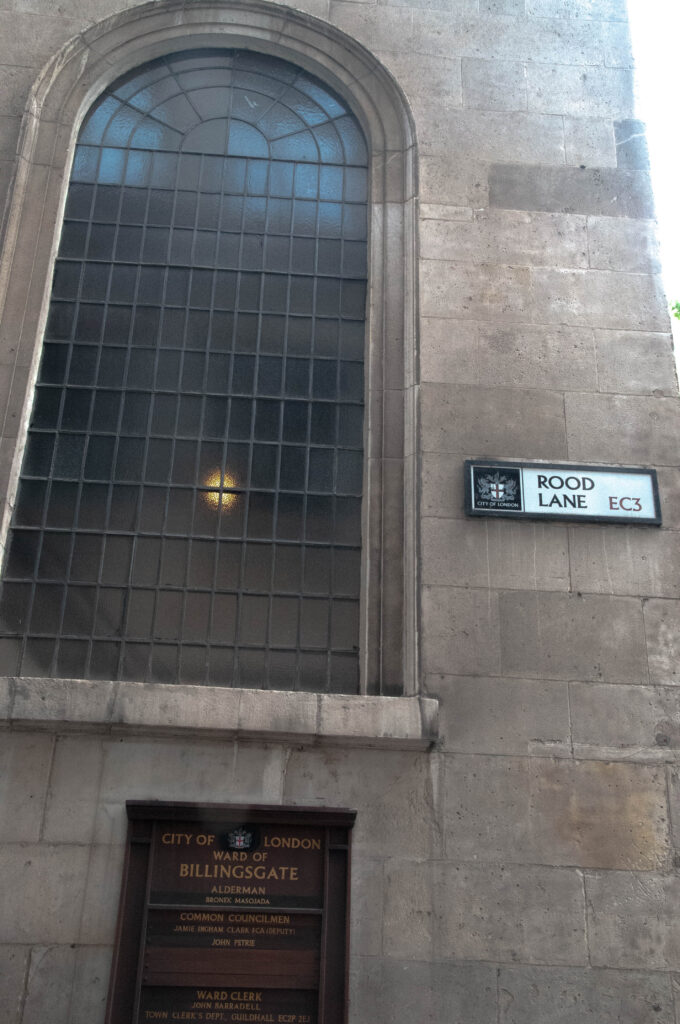
When the church was rebuilt in the 16th century a cross, or ‘rood’, was put outside – those who prayed to it (and contributed to the cost of rebuilding) received a pardon from the Pope for their sins. During the reformation such practices were frowned upon and the antiquarian John Stow writes ‘about the 23rd of May, in the morning … it was found to have been in the night preceding, by people unknown, broken all to pieces, together with the tabernacle wherein it had been placed’. The street on which the church stood, however, had already become known as Rood Lane …
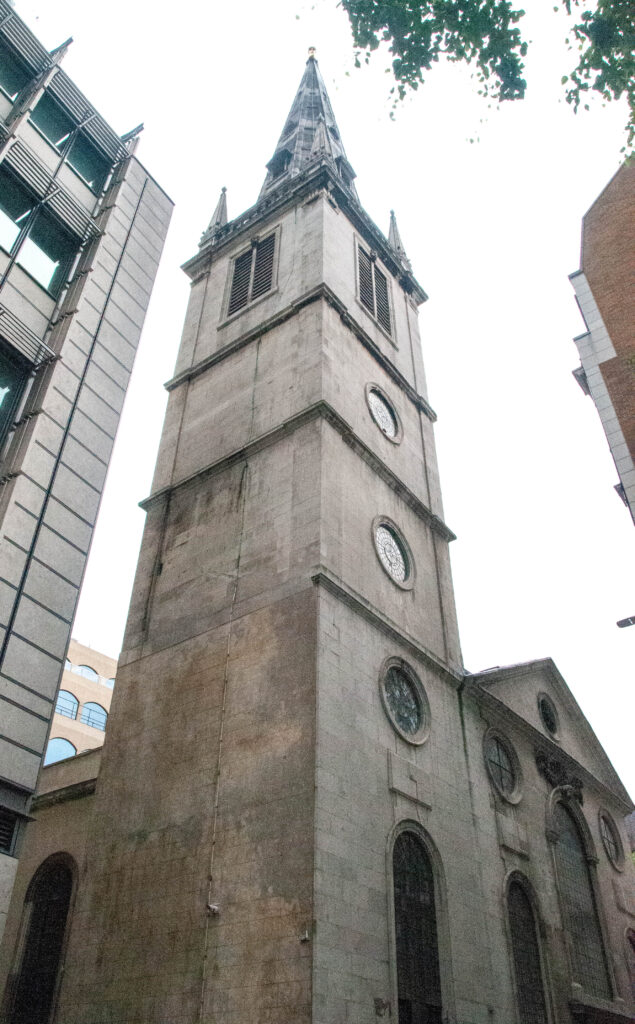
The spire is very imposing. Completed in 1702 to a height of 199 feet, it is the third highest of the City churches and is the only remaining example of Wren’s lead-covered timber spires….
During my visit, I was very fortunate to meet Chris Moore. Chris is not only the Church Administrator but also holds the office of Beadle of the Worshipful Company of Pattenmakers. There could have been no one better qualified to show me around and point out items of interest that I might otherwise have missed.
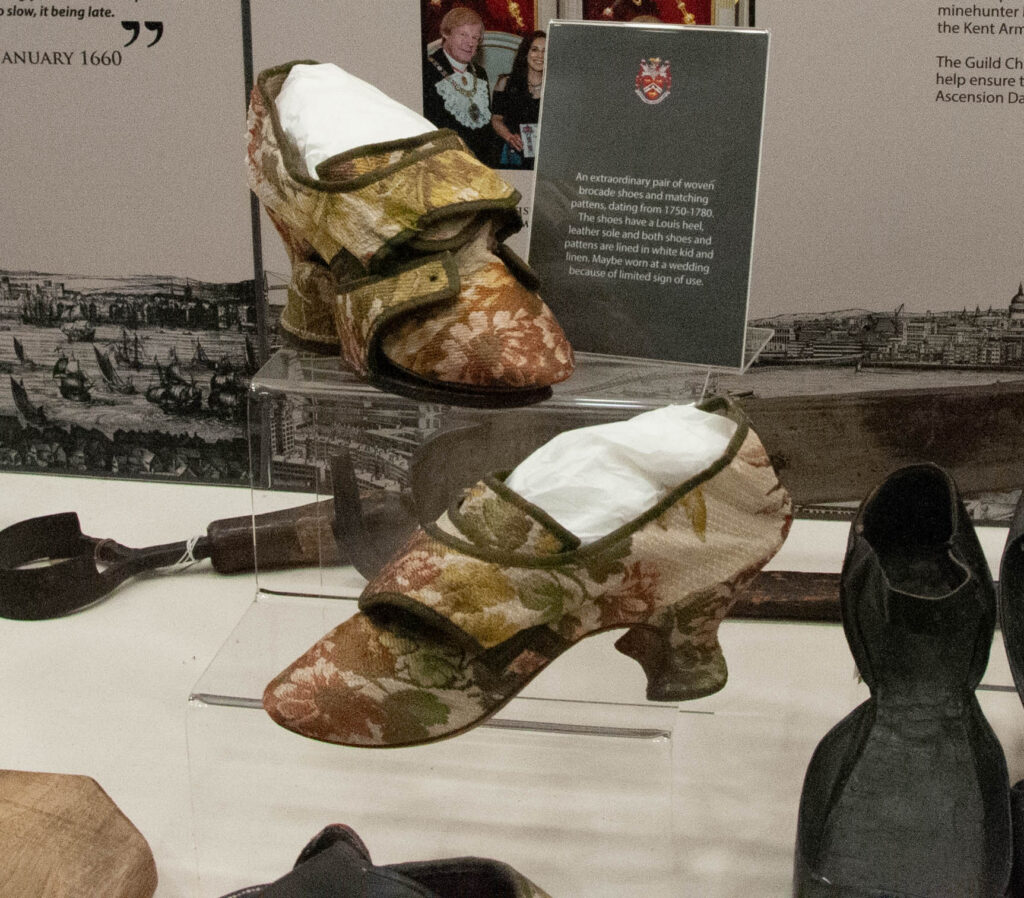
The church has long had an association with the Pattenmakers Guild and there is an interesting exhibition for visitors to inspect which includes a history of the craft …
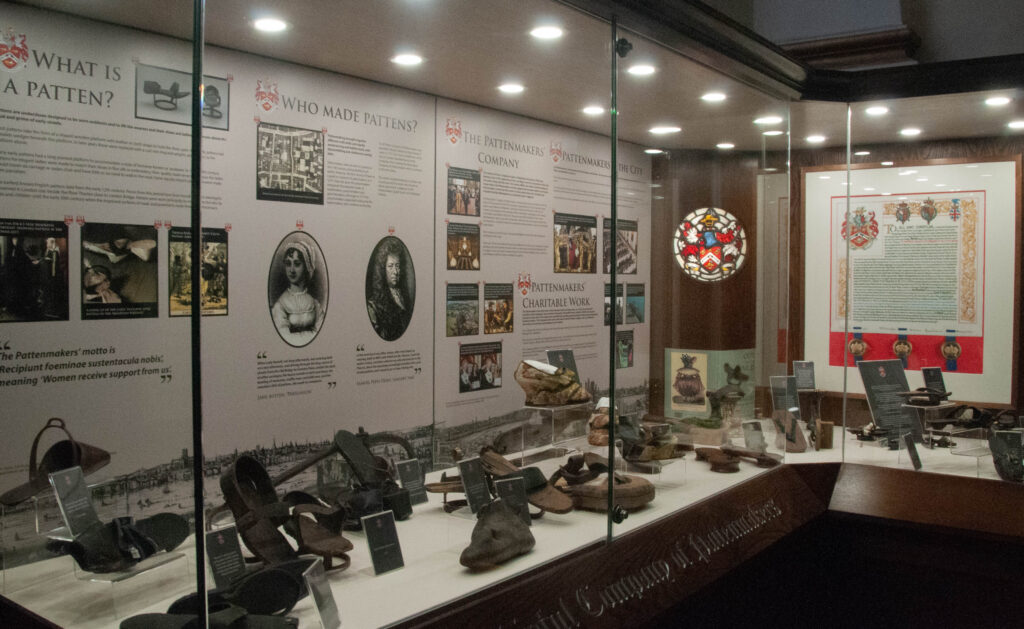
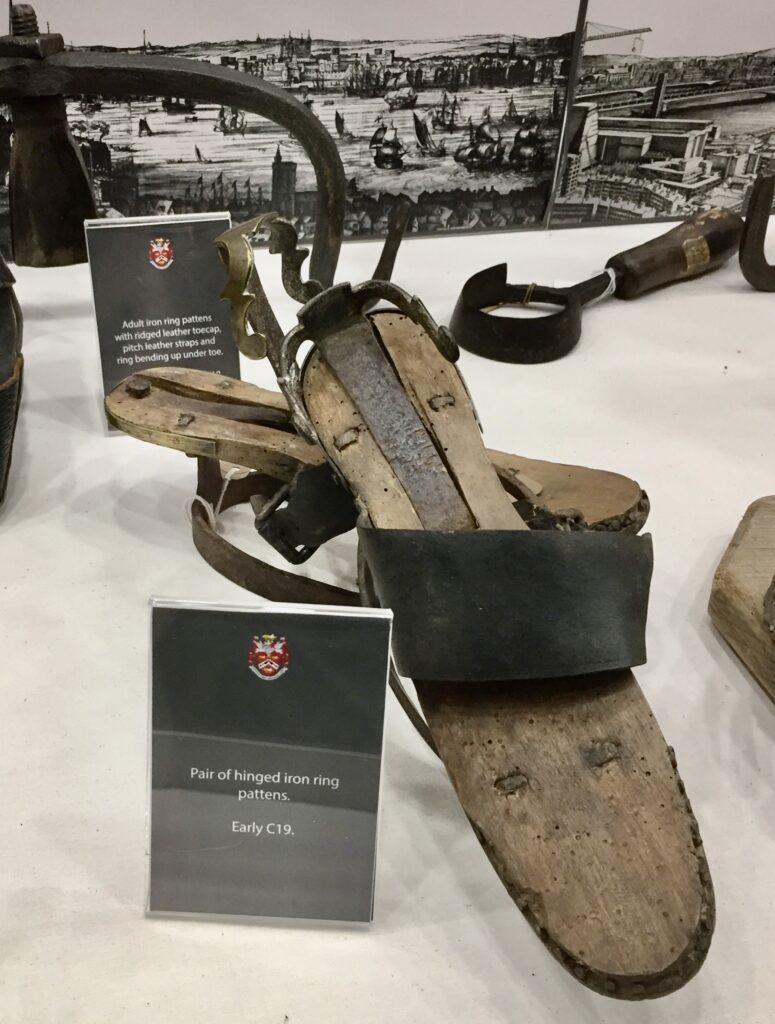
Pattens were under-shoes slipped on to protect the wearer’s shoes or clothing – not least from the filth on the streets in the Middle Ages!
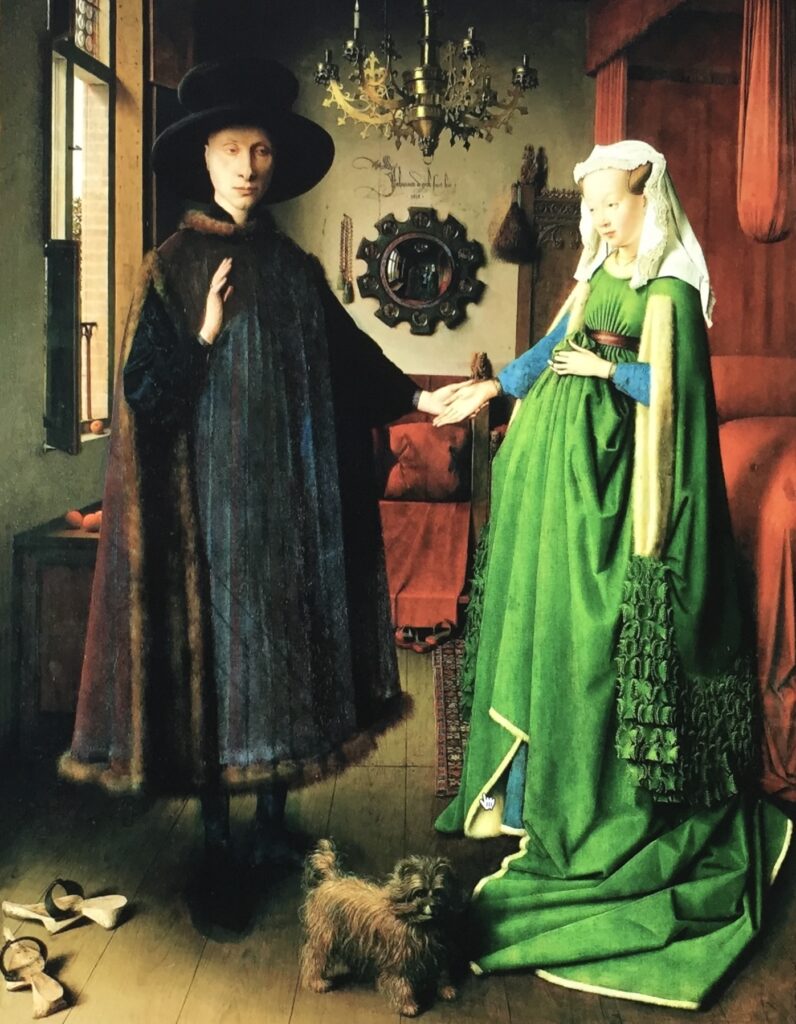
Incidentally, the next time you see this famous portrait check out the pattens in the foreground …
And supporting ladies?
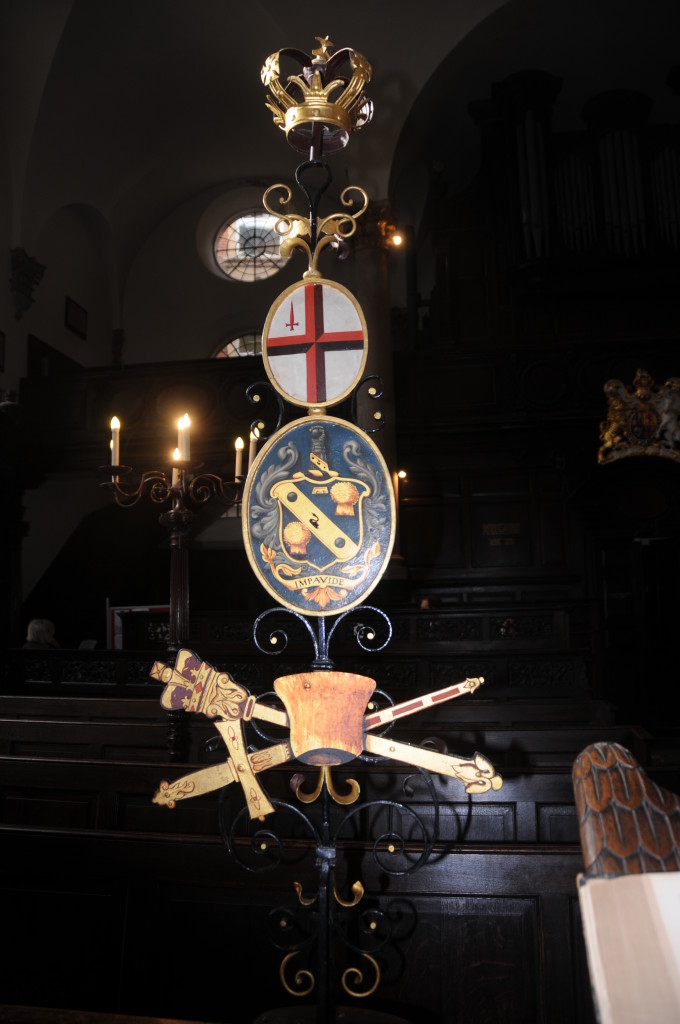
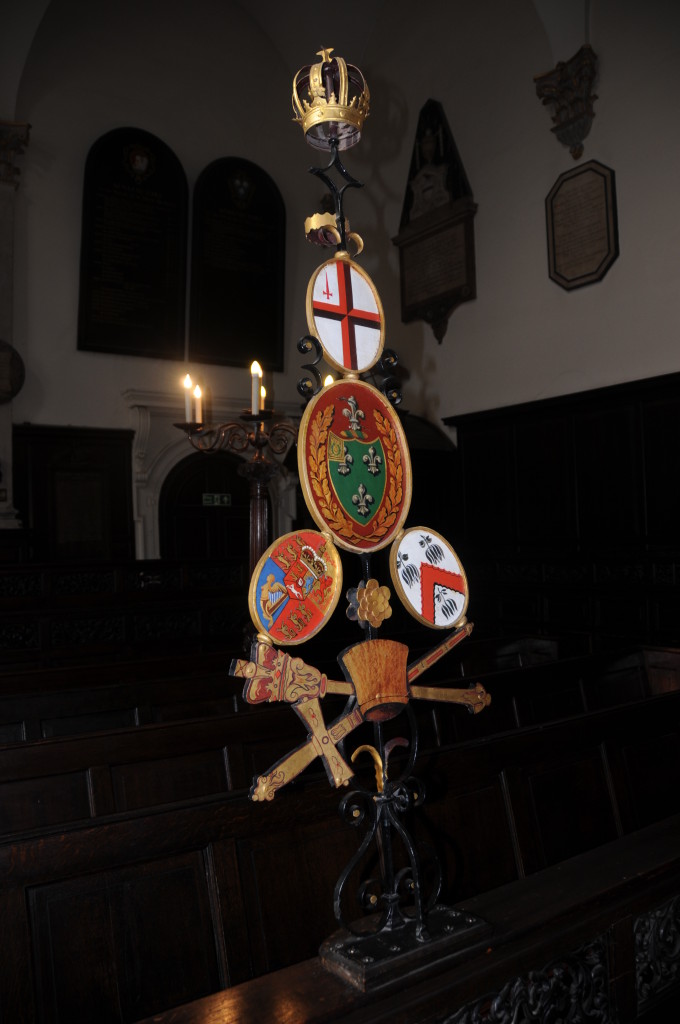
The Worshipful Company of Pattenmakers was awarded its Royal Charter in 1670, but the Company is first recorded as a trade association for the makers of pattens in 1379 and the trade itself dates from the 12th century or earlier. Its motto, Recipiunt fœminæ sustentacula nobis, means Women receive support from us …
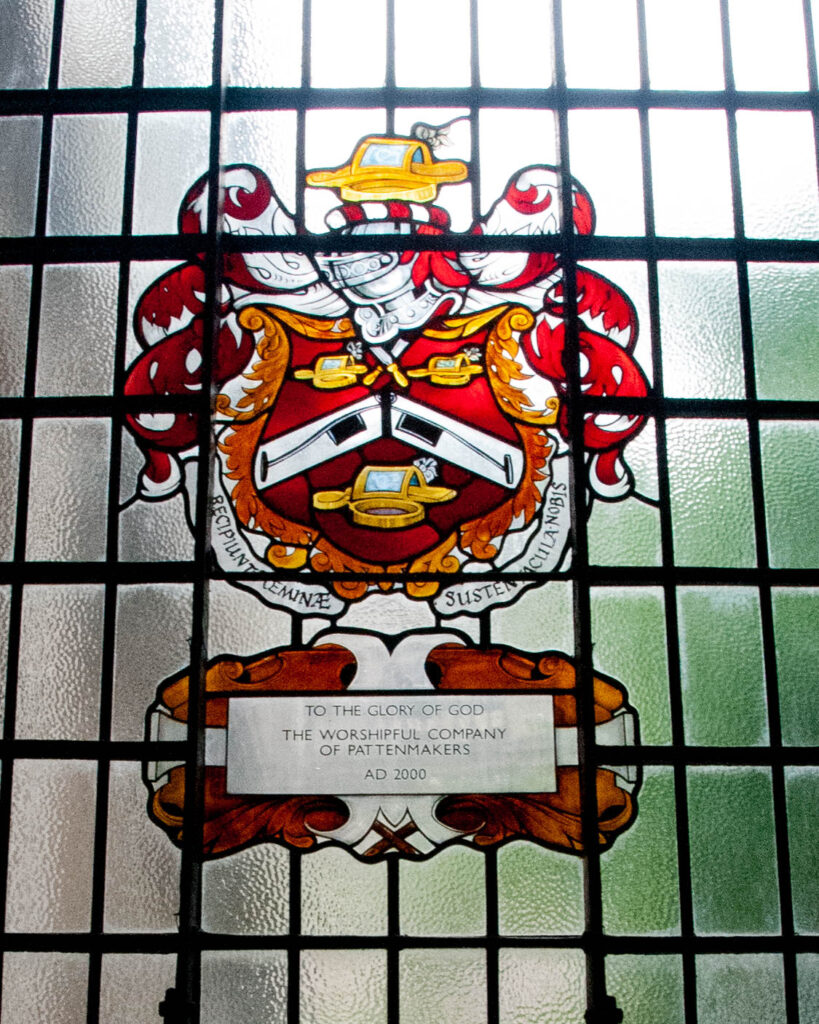
Not only that, Saint Margaret of Antioch, after whom the church is named, was the patron of childbirth and pregnant women.
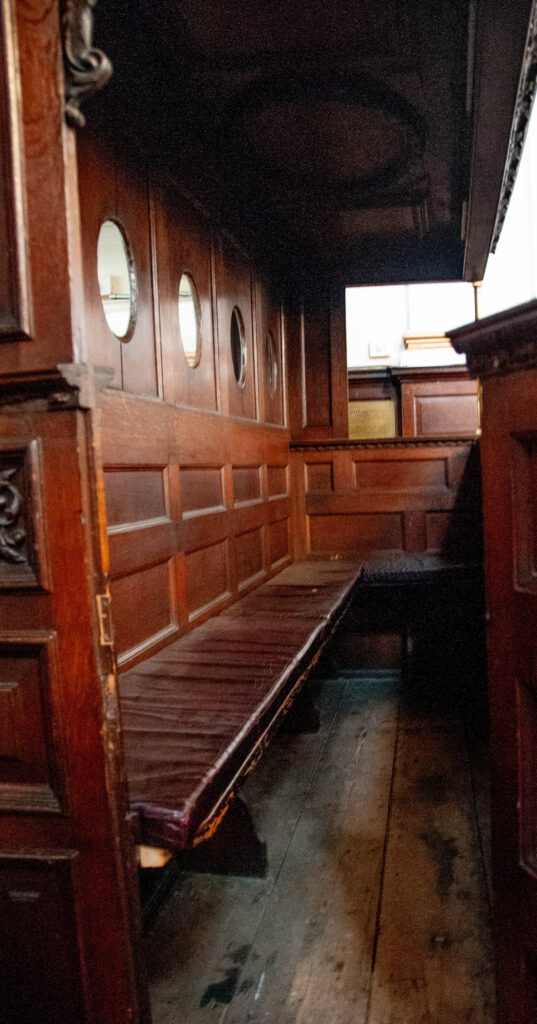
Just inside the entrance are two canopied pews which are unique in the City …
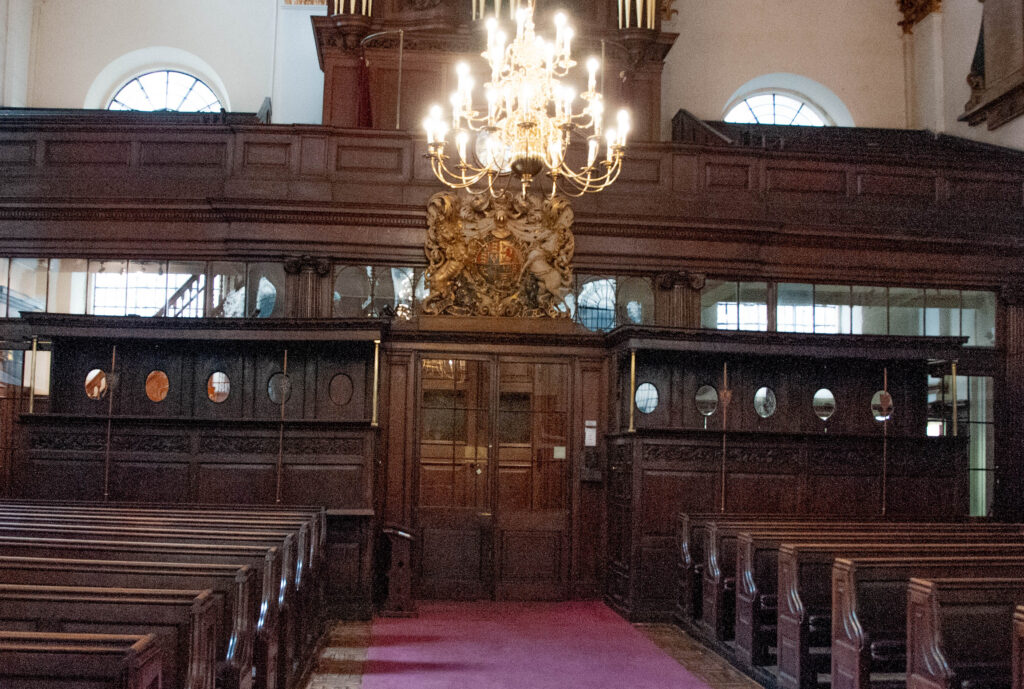
These were for the churchwardens and the initials on either side reflect the name not only of this church (St MP) …
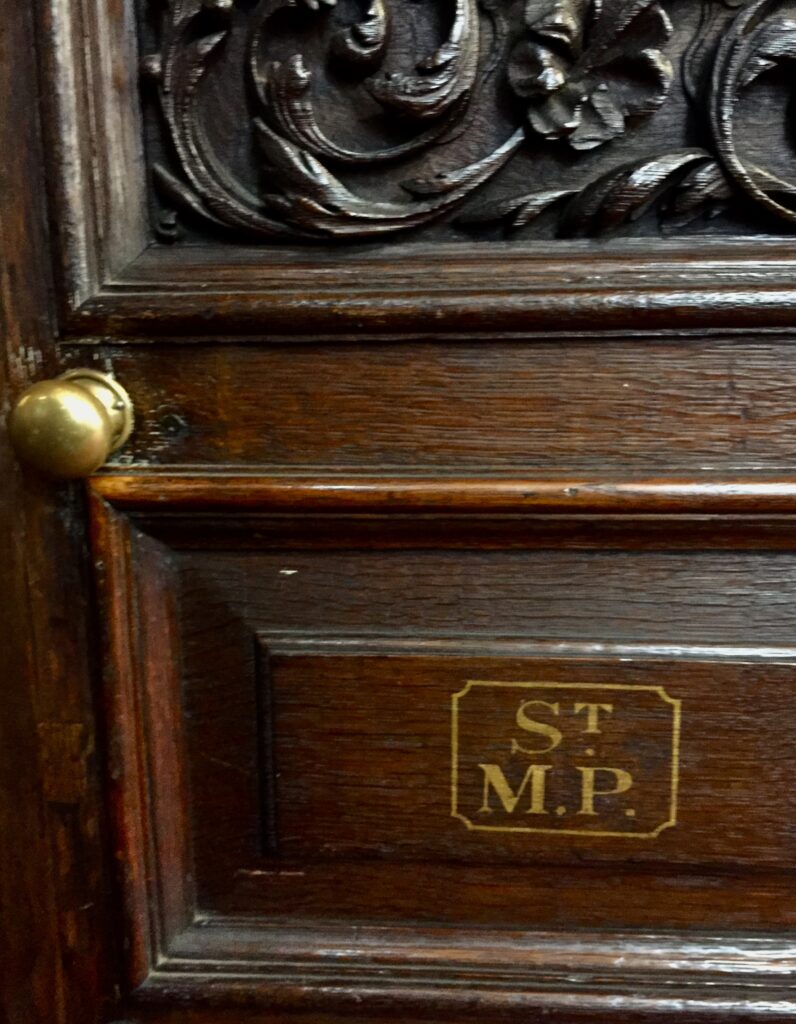
but also St Gabriel Fenchurch (St GF) …
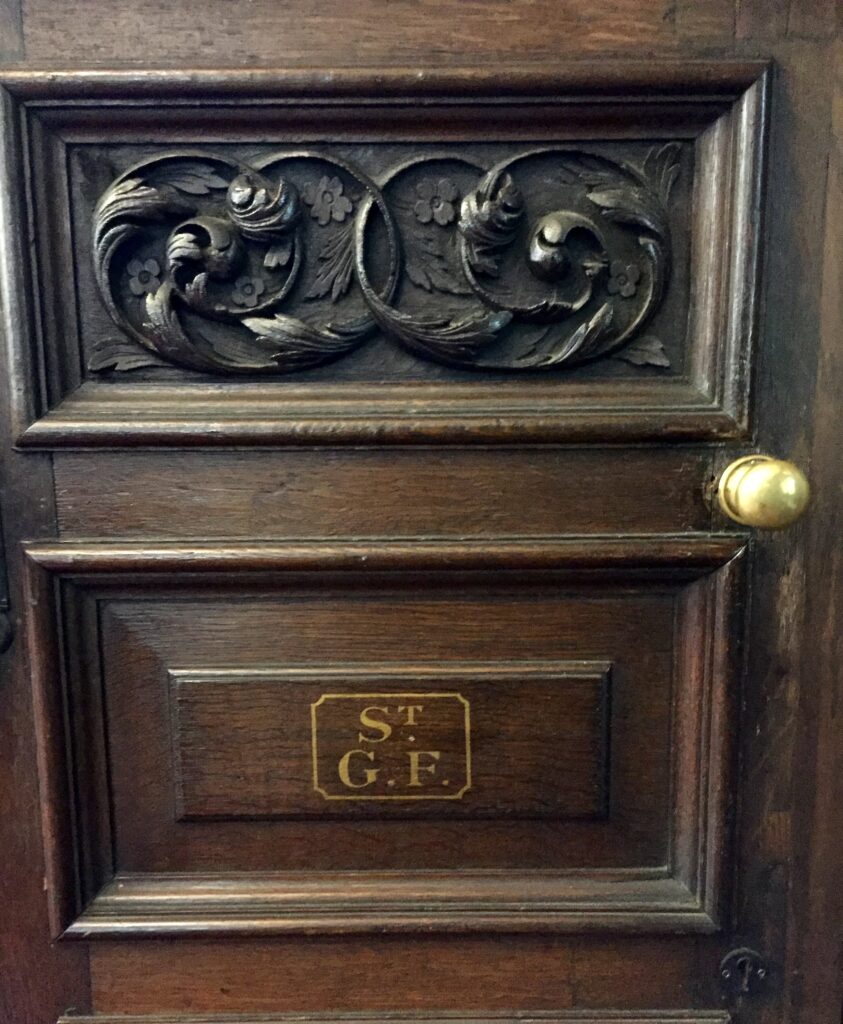
St Gabriel’s was not rebuilt after the Great Fire and was instead amalgamated with St Margaret’s. The Agas map shows the churches’ locations relative to one another …
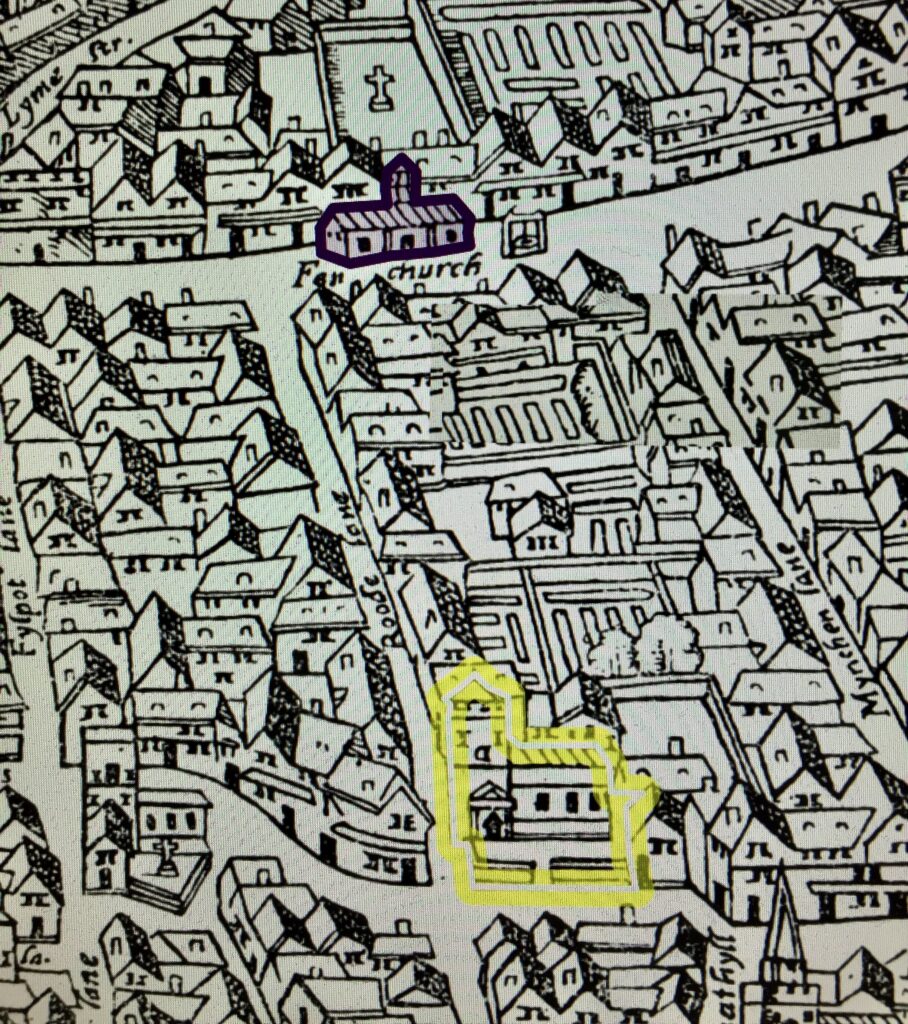
Stephen Millar has observed that, given the strong rivalry between parishes at this time, it is likely that the division between churchwardens was more than simply physical after 1666. Here’s a peep inside the St Margaret pew …
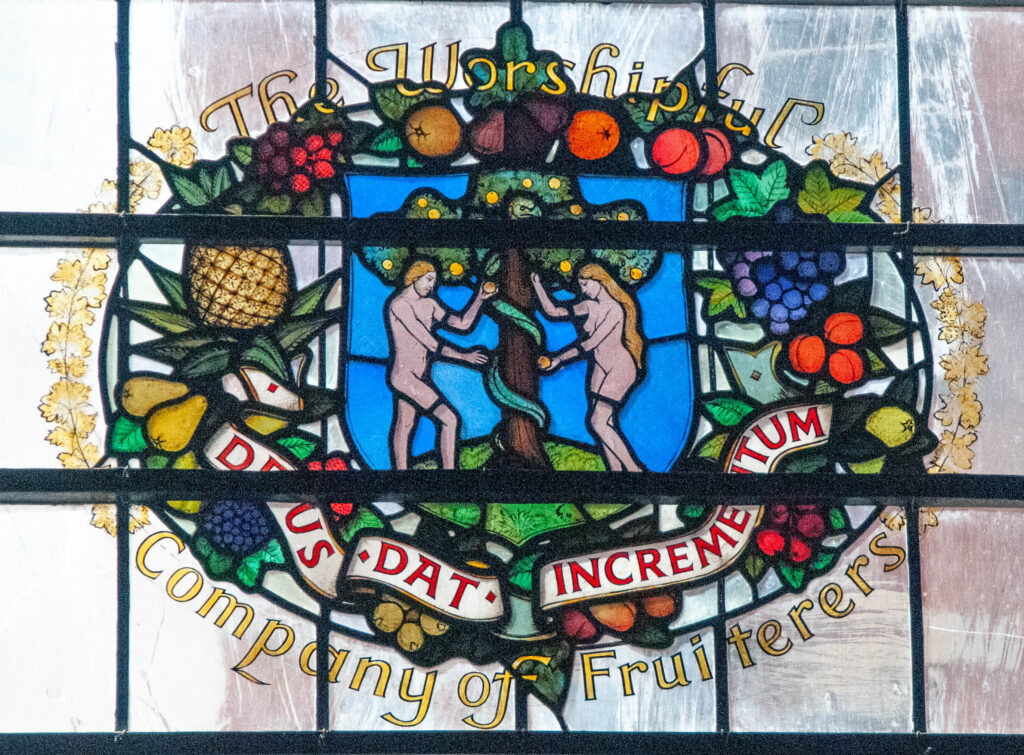
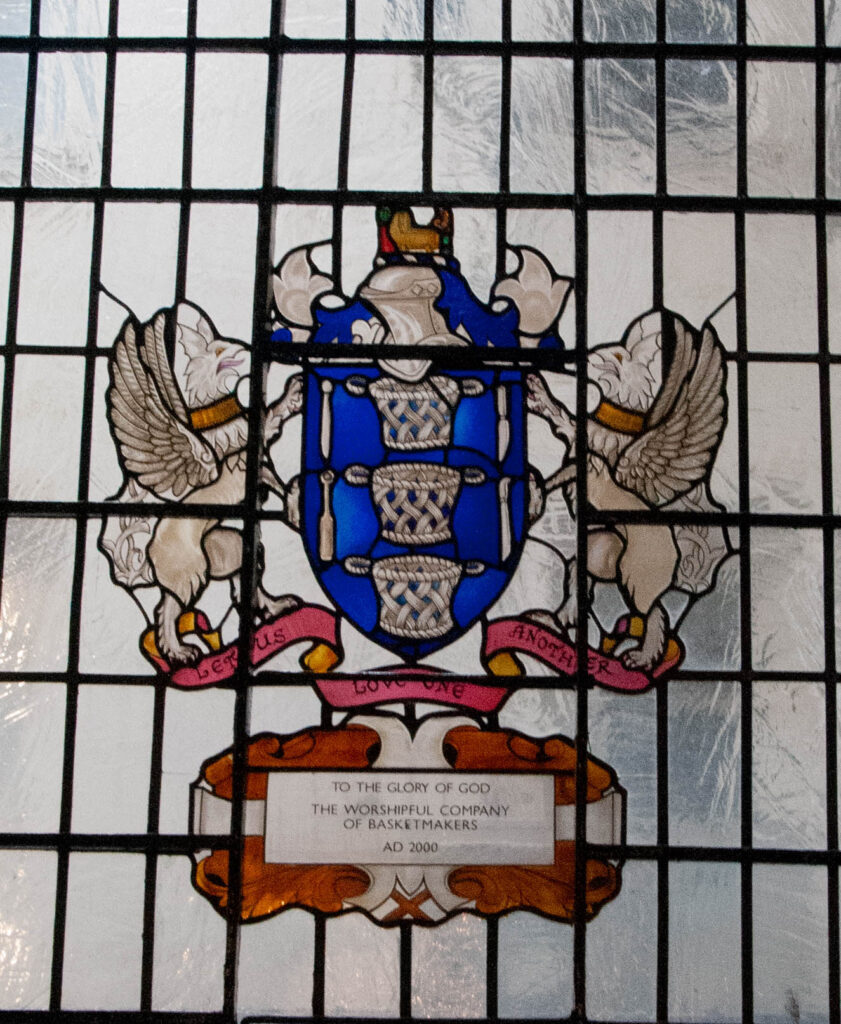
The church is shared with The Worshipful Company of Basketmakers …
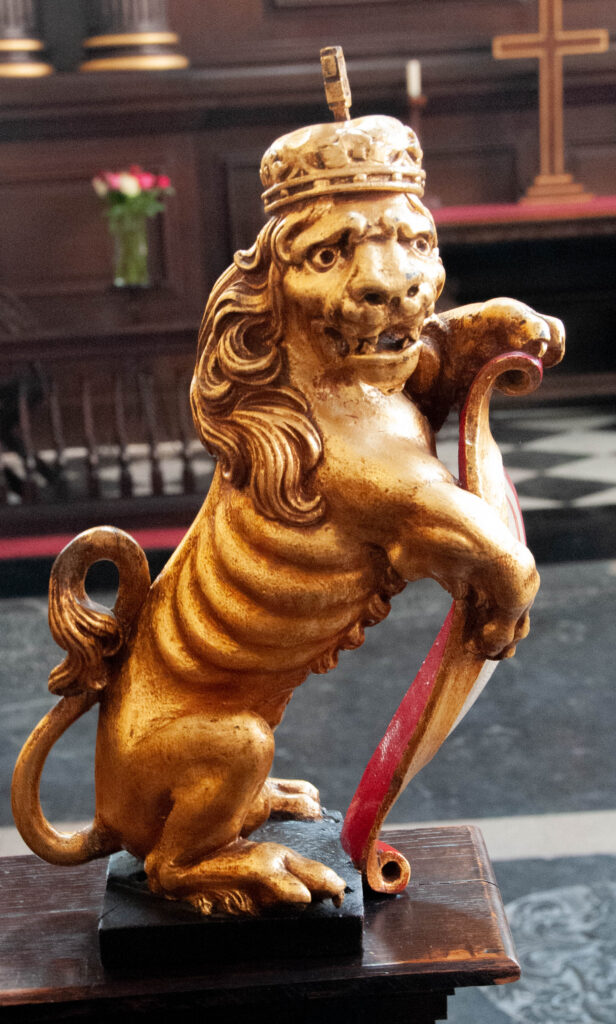
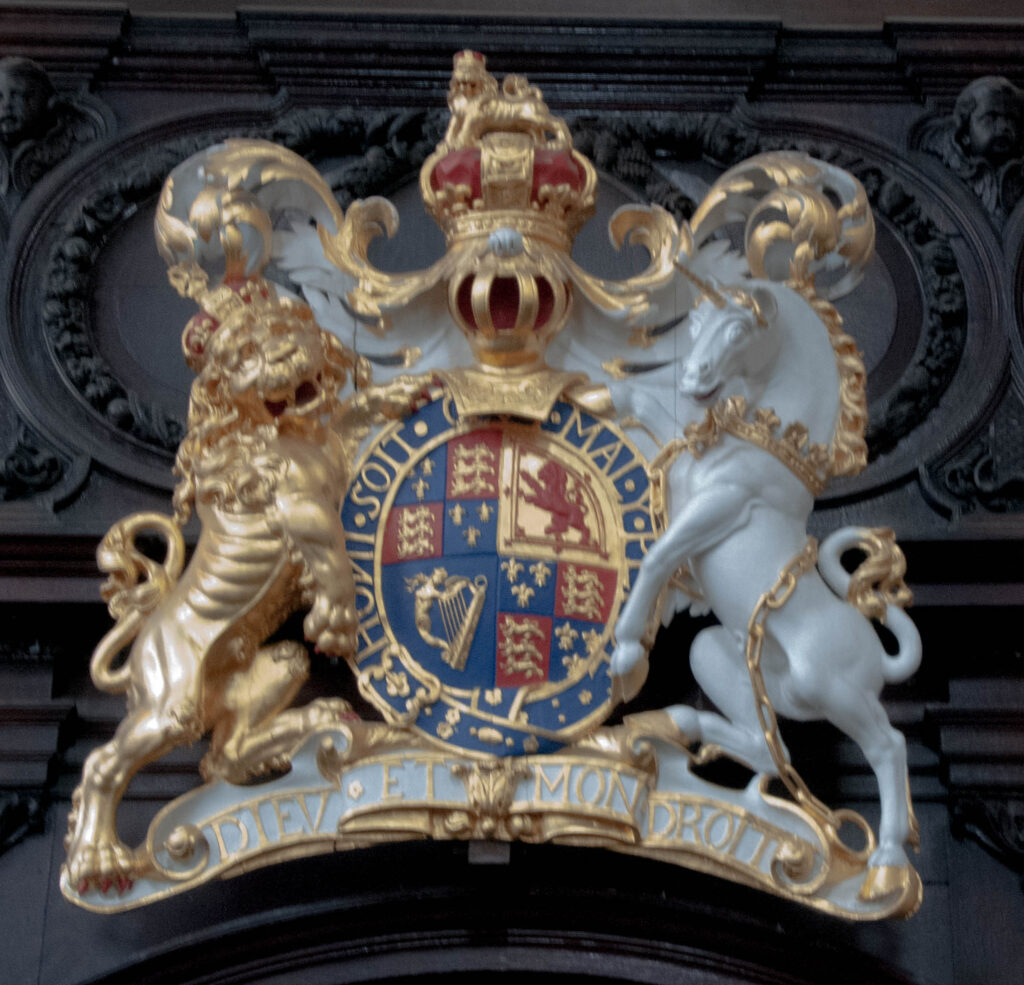
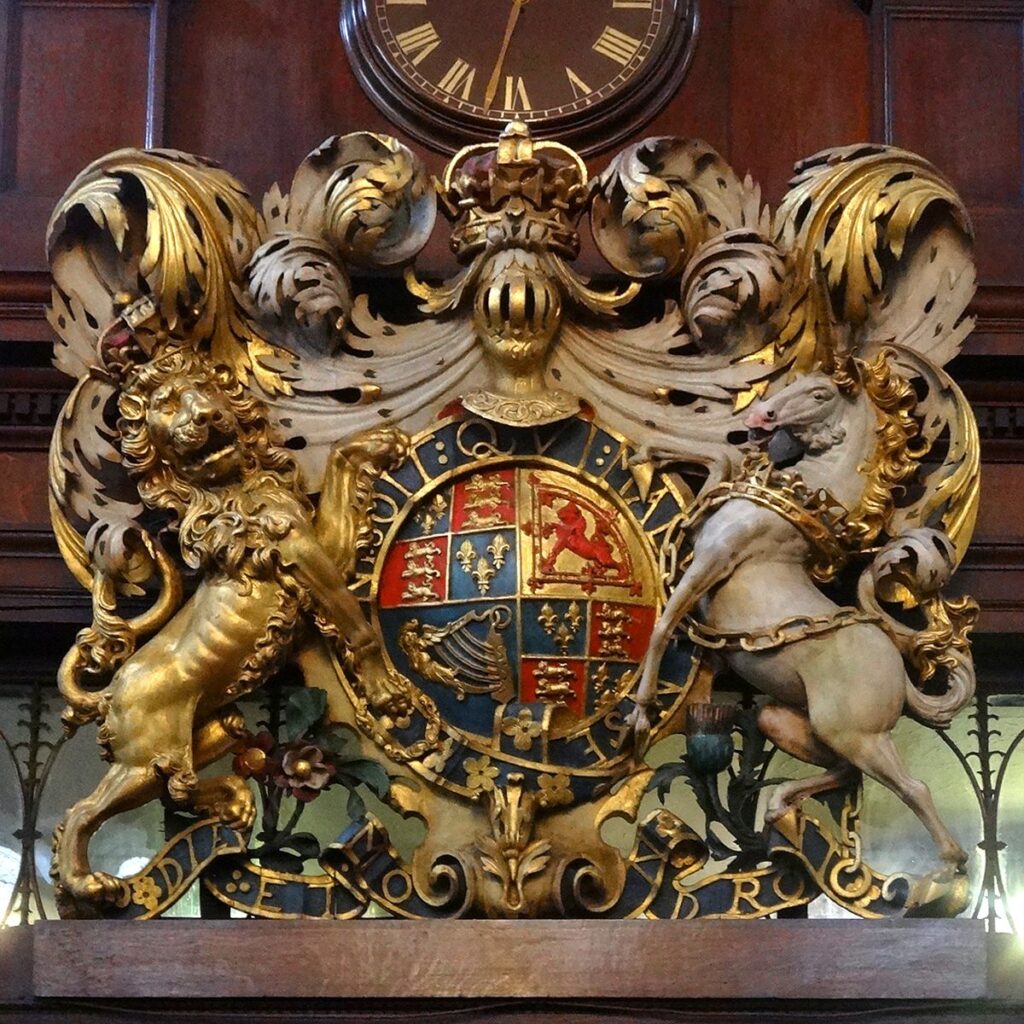
The Stuart royal arms above the door are a particularly exquisite example …
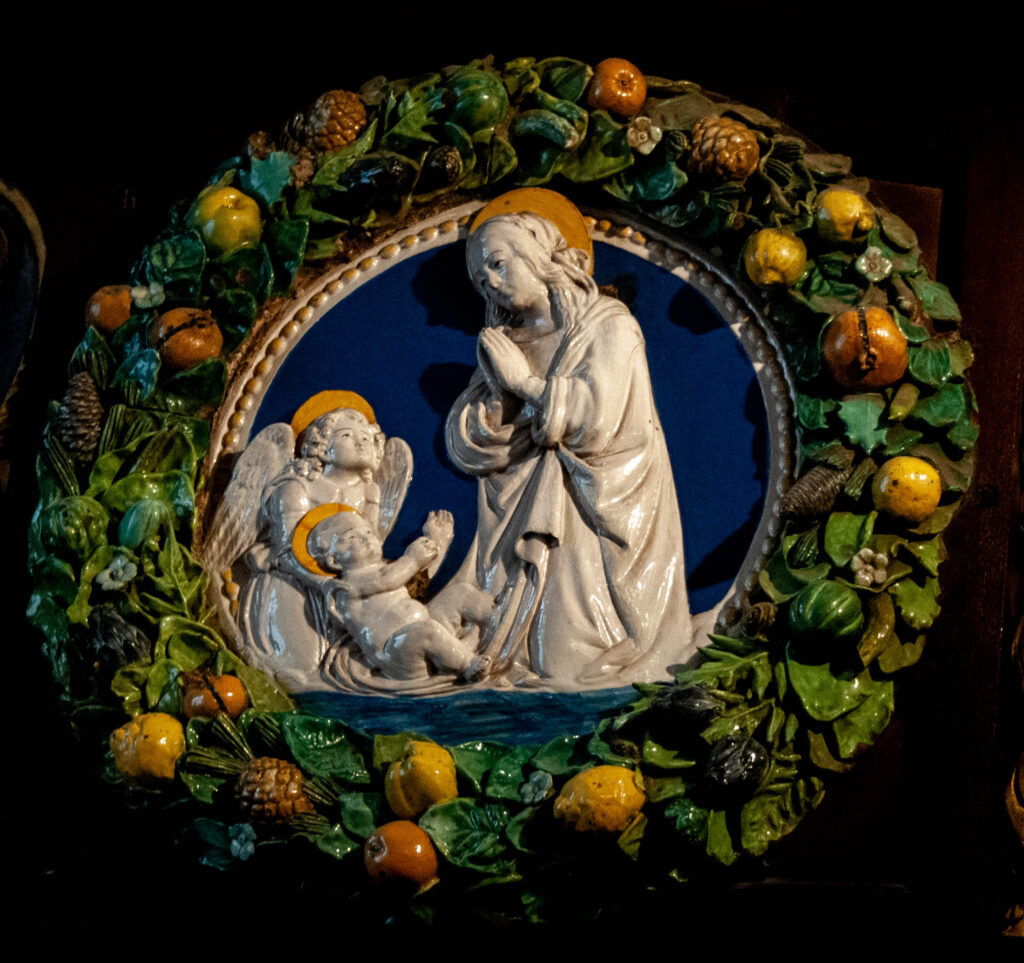
The 19th century reredos in the north-aisle chapel incorporates a beautiful Della Robbia style tondo commemorating former rector Thomas Wagstaffe …
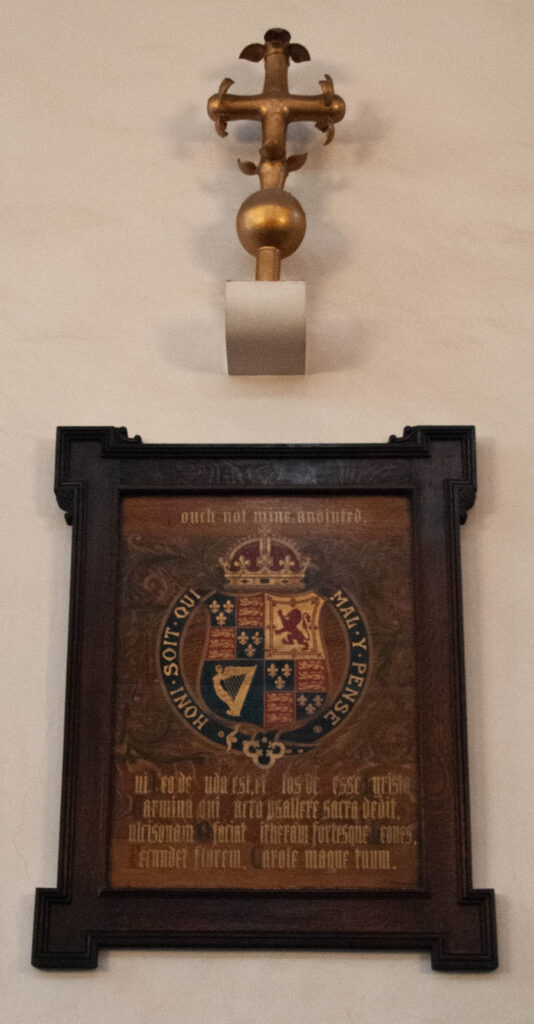
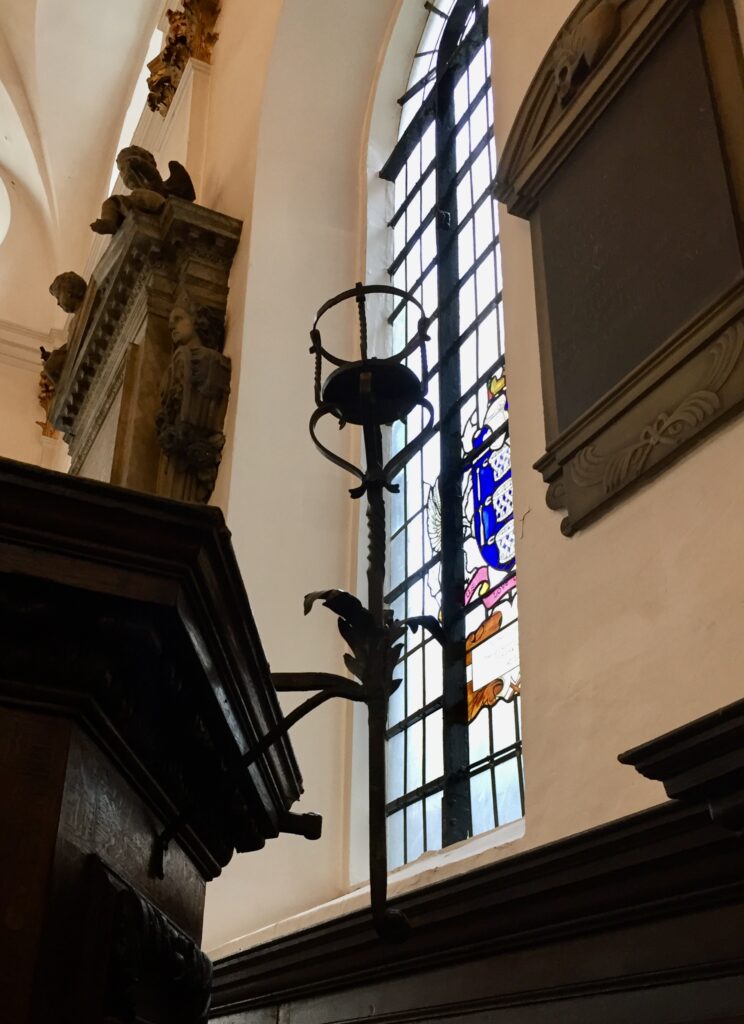
High up on the south wall is a copper cross weighing 3/4 cwt – a copy of the cross on St Paul’s Cathedral – which used to surmount the spire. Below the cross is a memorial to King Charles I, with the words ‘Touch not mine anointed’. A tradition of the Church is the commemoration of the death of King Charles at a special service which is held annually on the Thursday closest to 30th January …
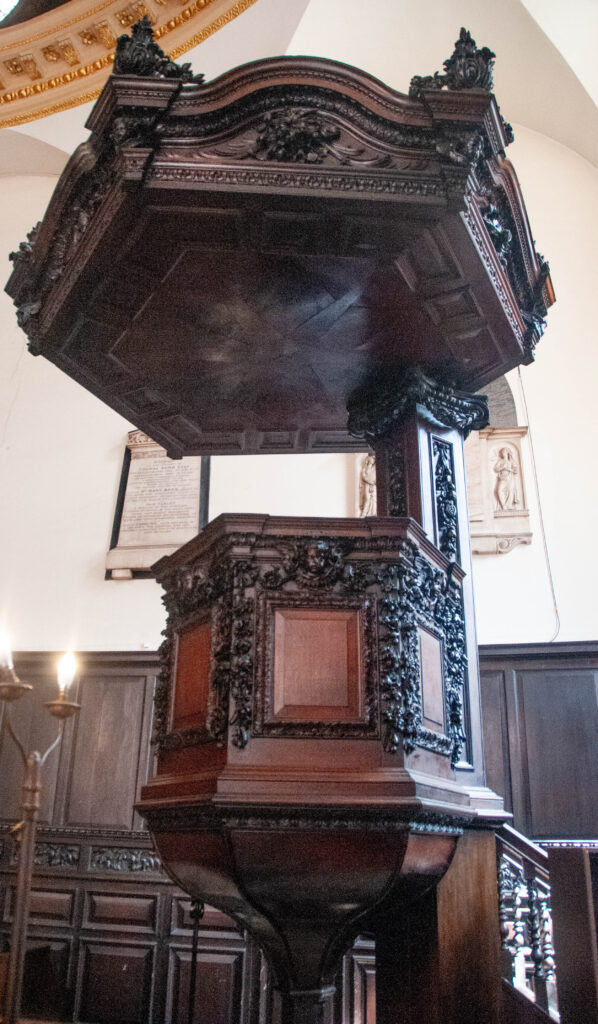
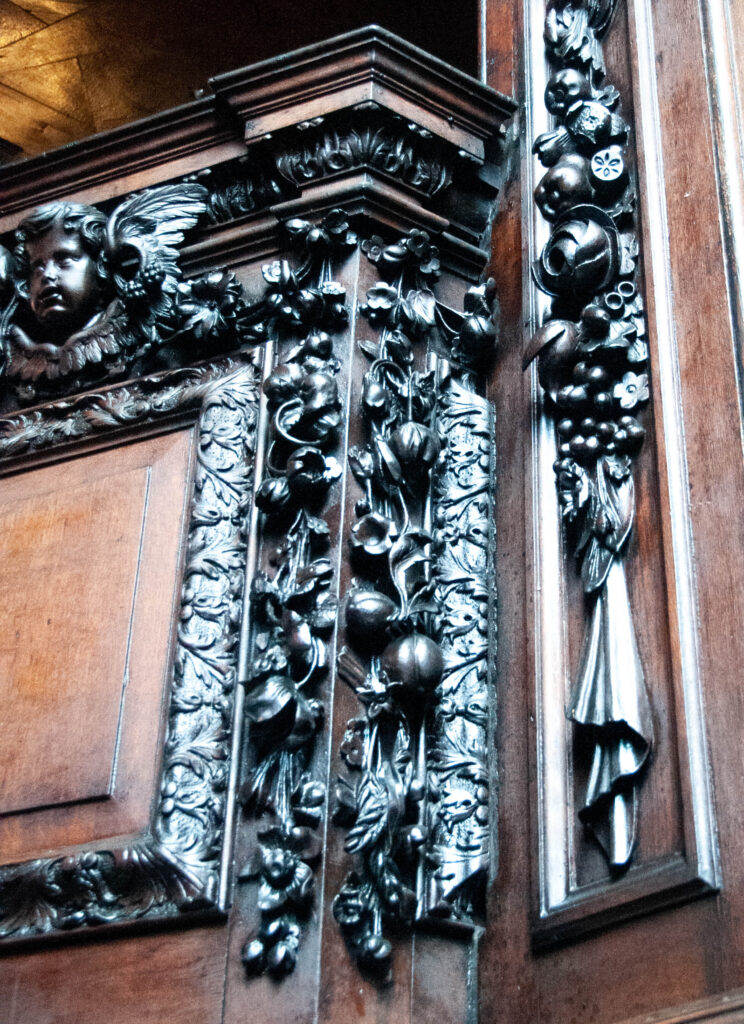
Both the lectern (with the unusual feature of an eagle grasping a viper) and the pulpit are examples of the very fine wood carving and wood panelling with which the church is blessed …
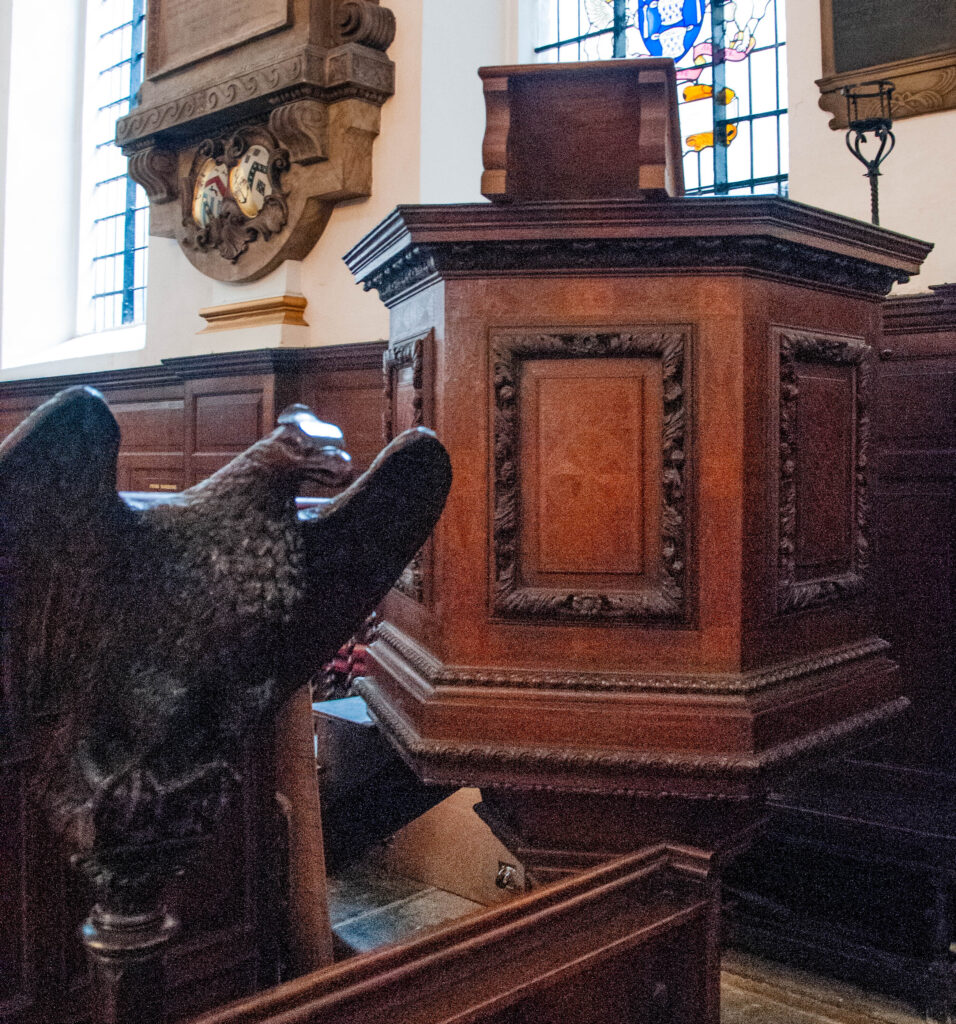
The pulpit incorporates a holder for the hourglass once used to time the sermons …
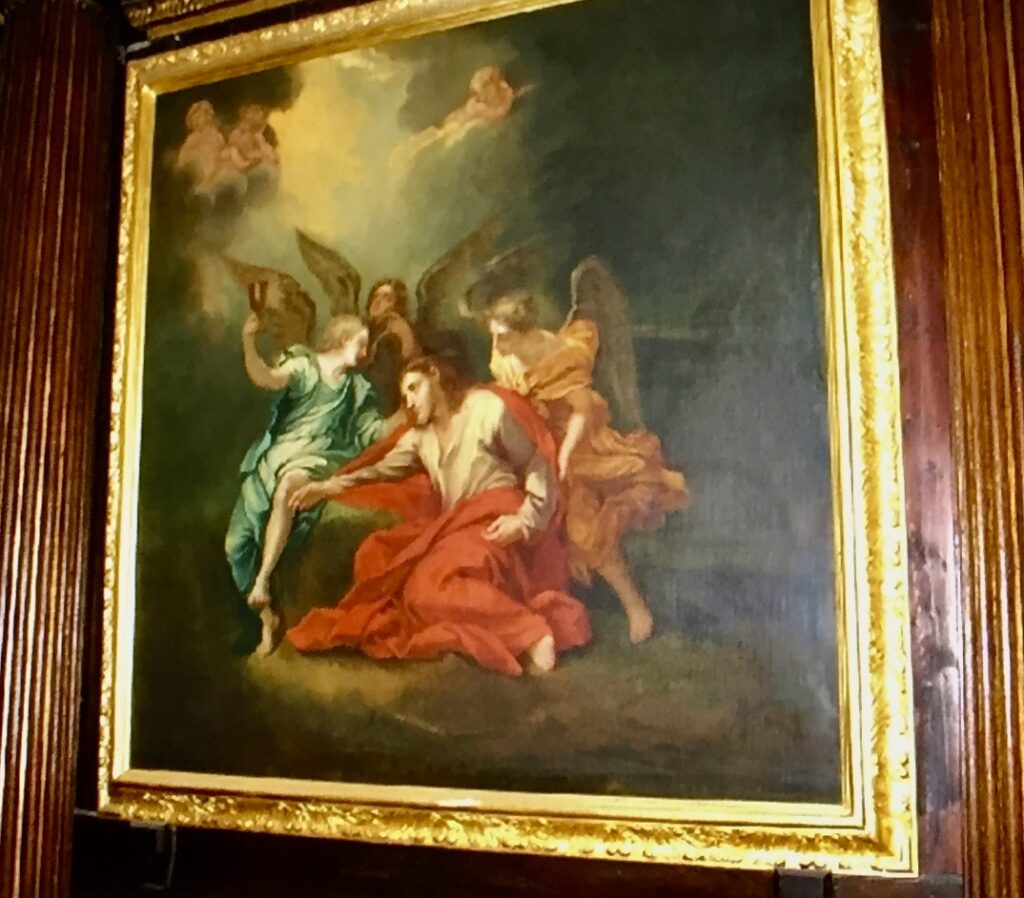
The reredos above the altar contain a painting by the Italian painter Carlo Maratta (1625-1713) depicting Christ with the ministering angels in Gethsemane …
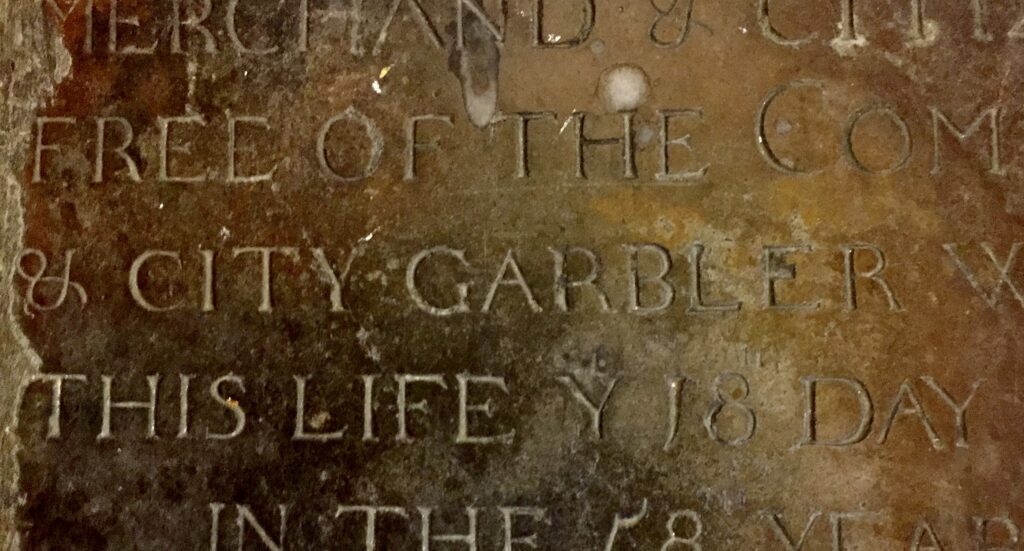
Before I left Chris made sure I visited the very impressive marker for the last resting place of James Donalson …
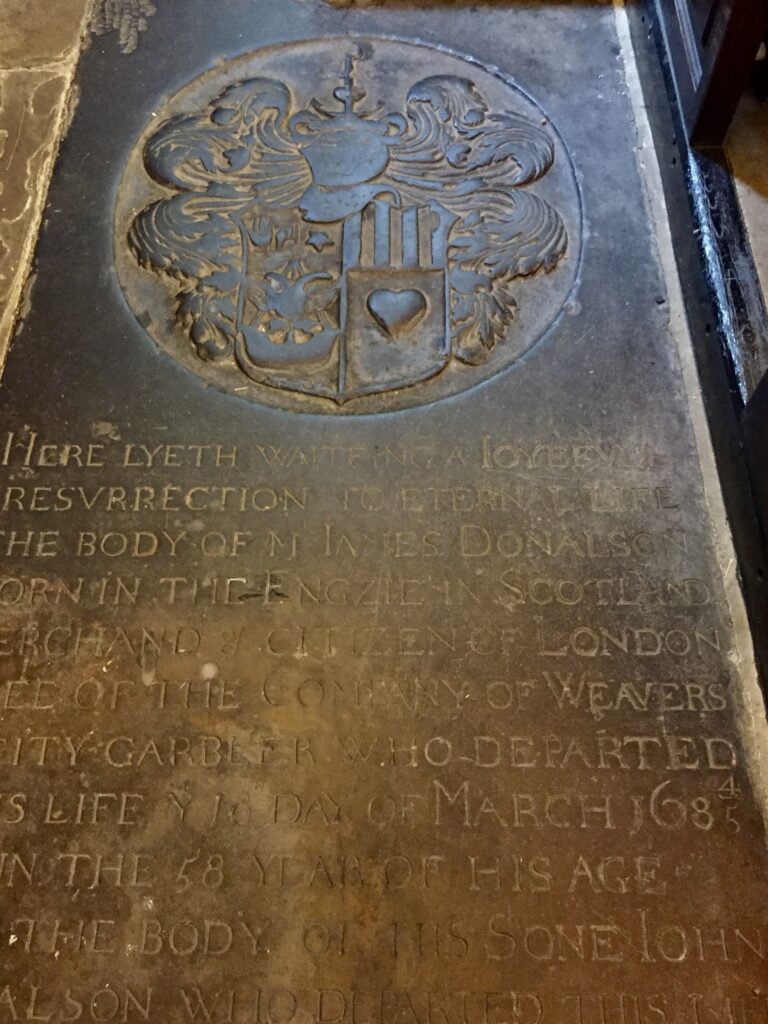
Donalson, who died in 1685, was the City Garbler who was entrusted with checking the quality of spices sold in the Square Mile. This was an incredibly important and prestigious appointment since nutmeg, for example, was at one time literally worth more than its weight in gold …
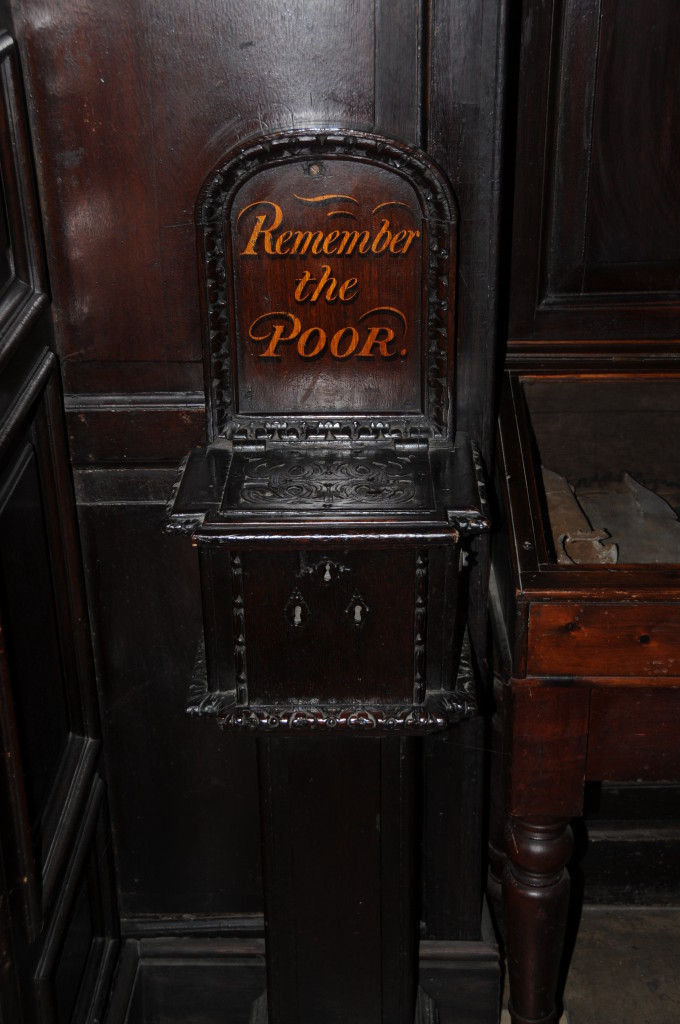
As a guild church, St Margaret Pattens has a regular weekday, rather than Sunday congregation, drawn mostly from people who work in offices nearby. As it’s not a parish church, it relies for funds on the generosity of the congregation, local business people, the supporting livery companies and visitors. Making a donation couldn’t be easier since, in the aisle next to the covered pews, you’ll find a facility to simply tap in your contribution using your credit or debit card. There’s also a box for more traditional cash donations.
There are drinks and snacks for sale in the courtyard on Eastcheap during weekdays.
If you want to contact the church for any reason the phone number is 020 7623 6630 and the email address info@stmargaretpattens.org
If you would like to follow me on Instagram here is the link …