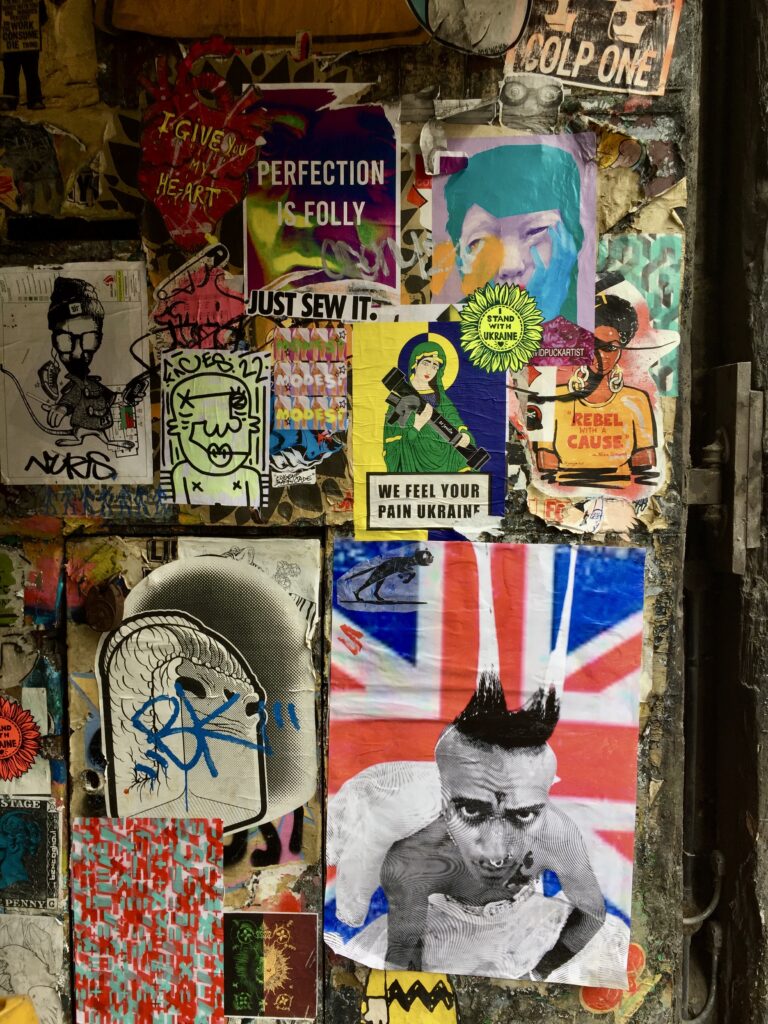
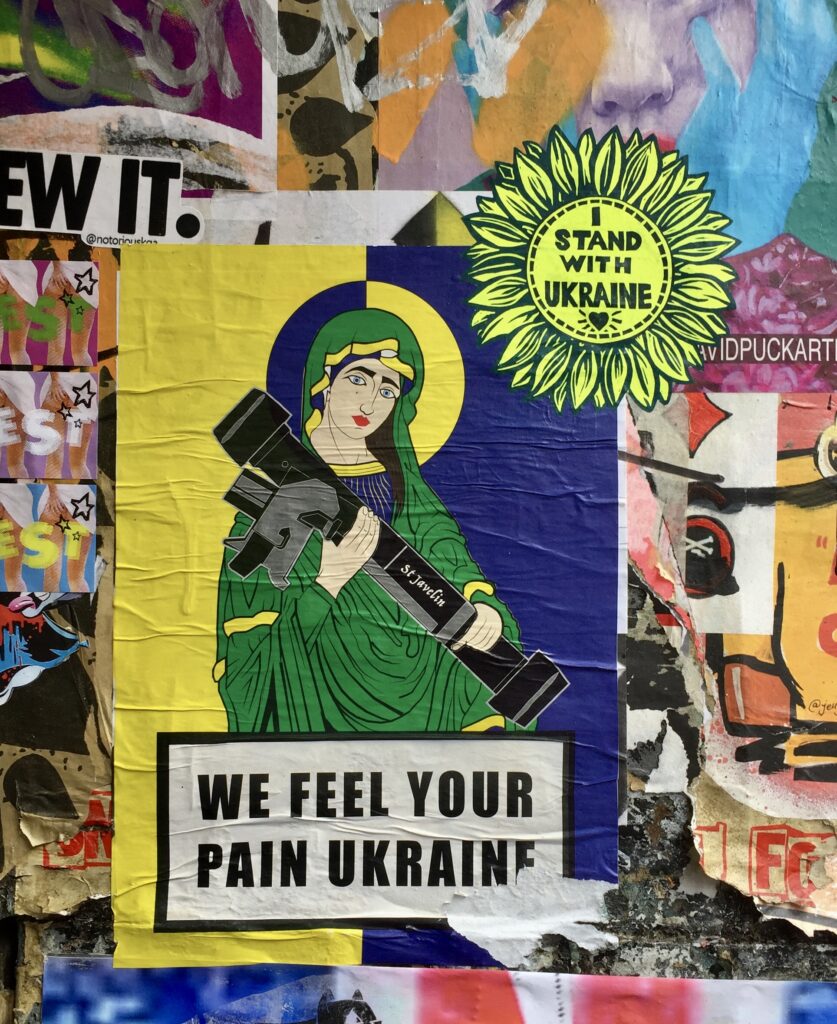
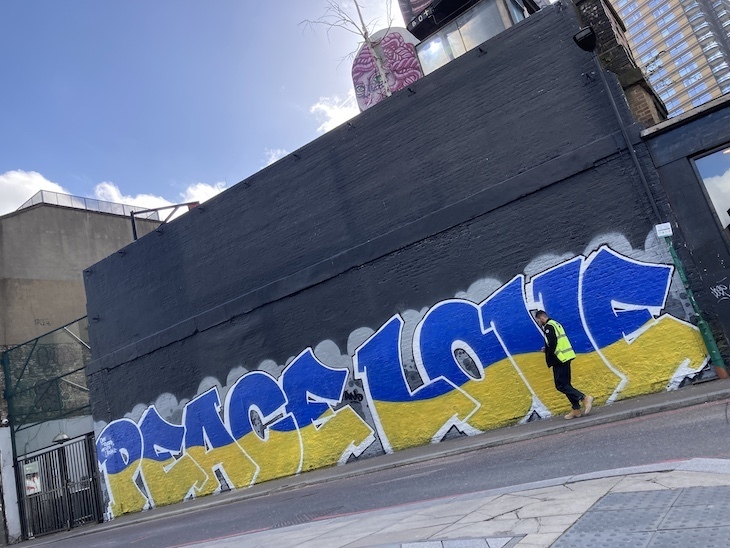
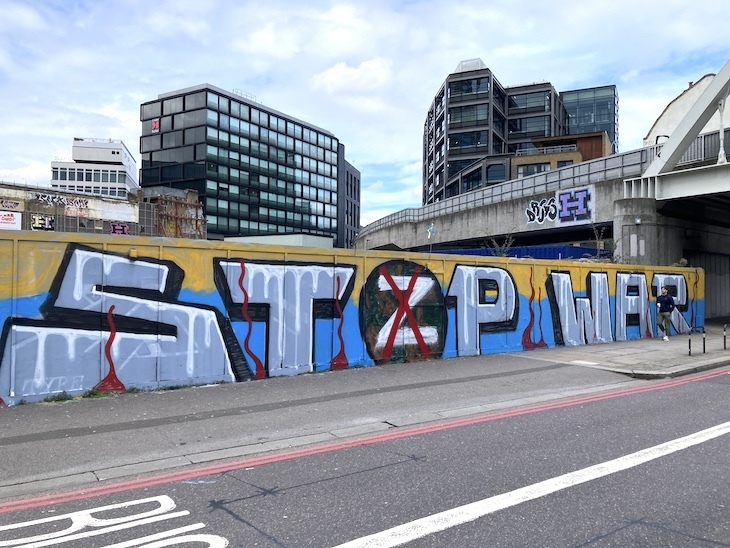
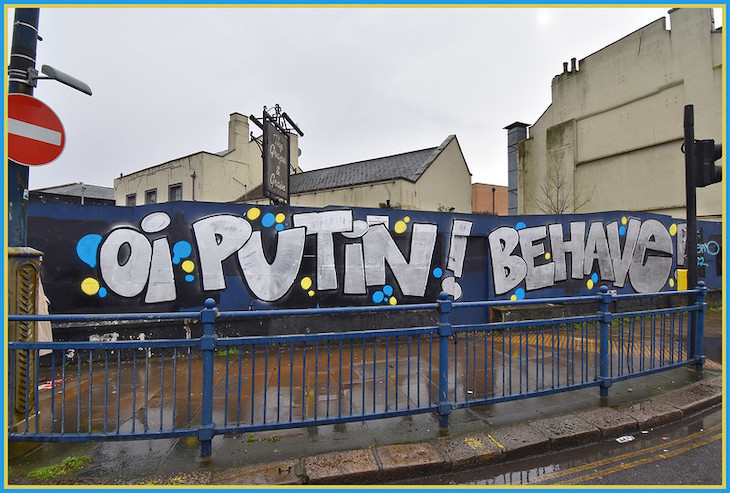
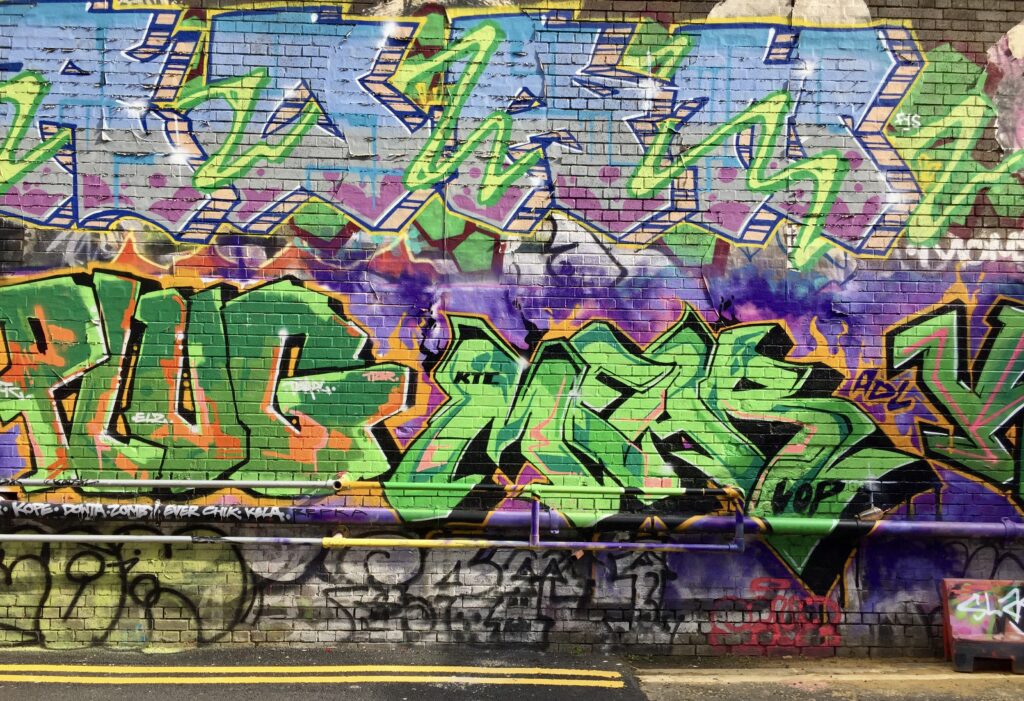
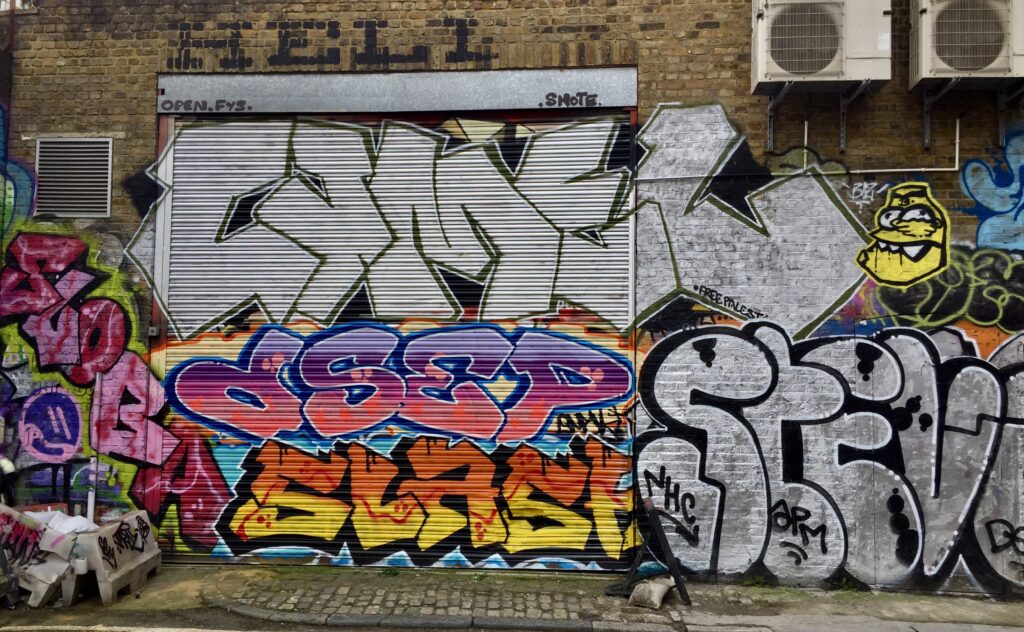
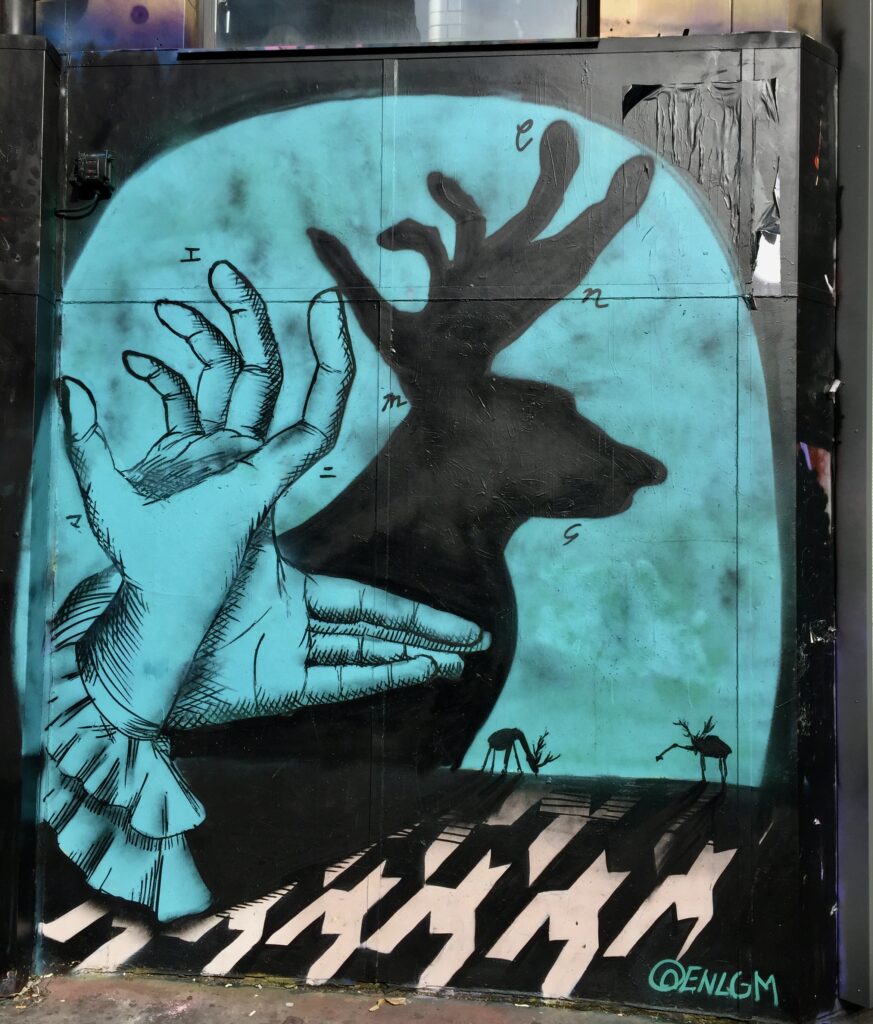
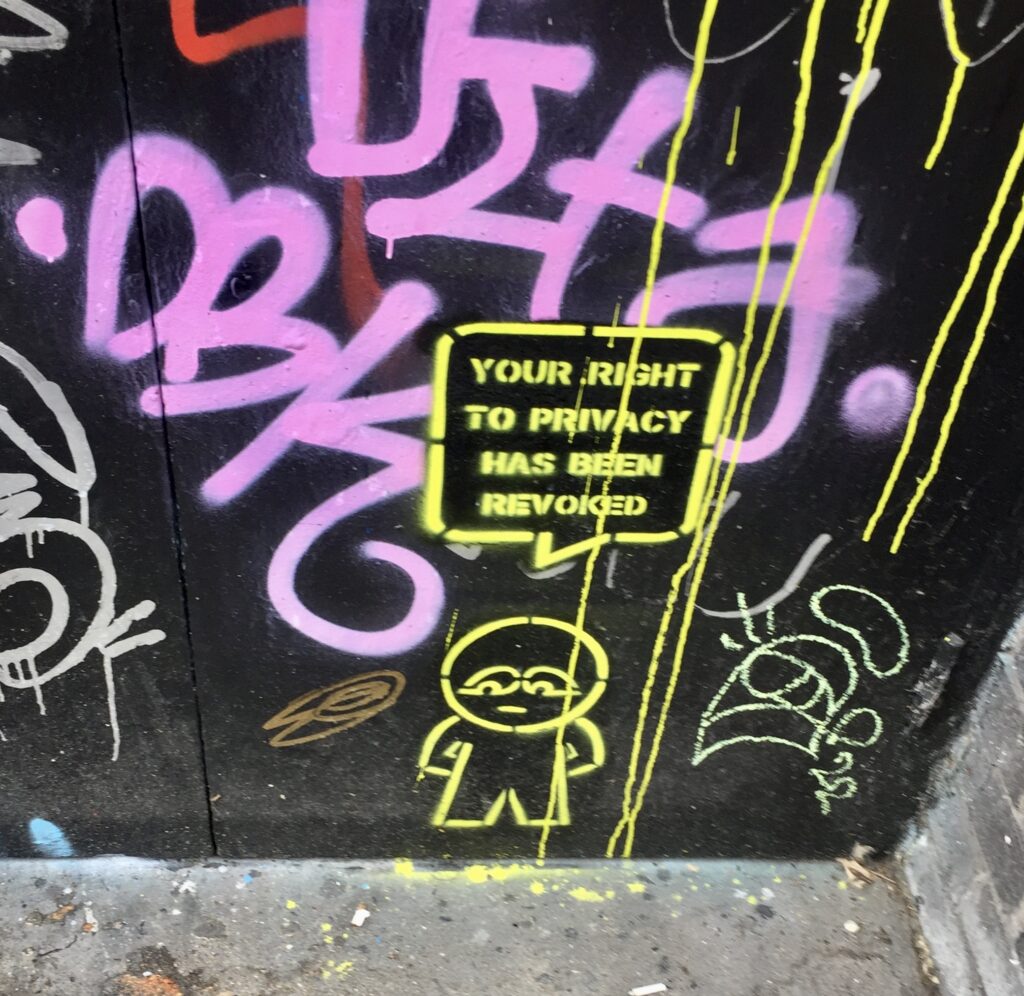
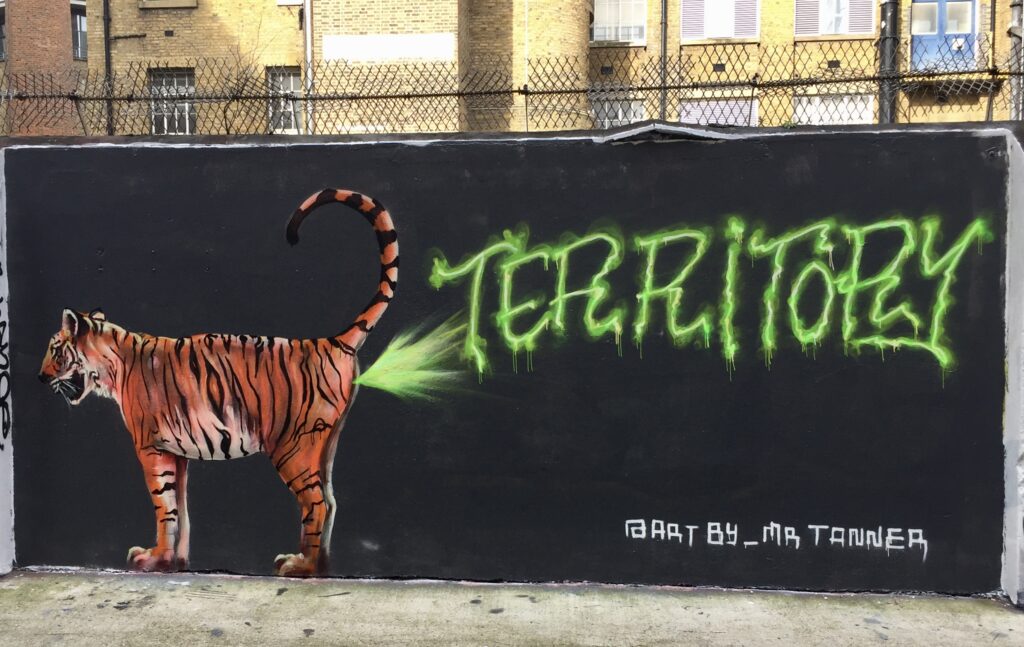
I popped over to the Brick Lane area in order to see what was happening in the flourishing street art scene and noticed that Ukraine and its struggle is beginning to emerge as a subject. I took these images in Fournier Street …
I’m indebted to The Londonistblog for further images …
And one I particularly like. Crystal Palace folk know how to send an authentic London message! …
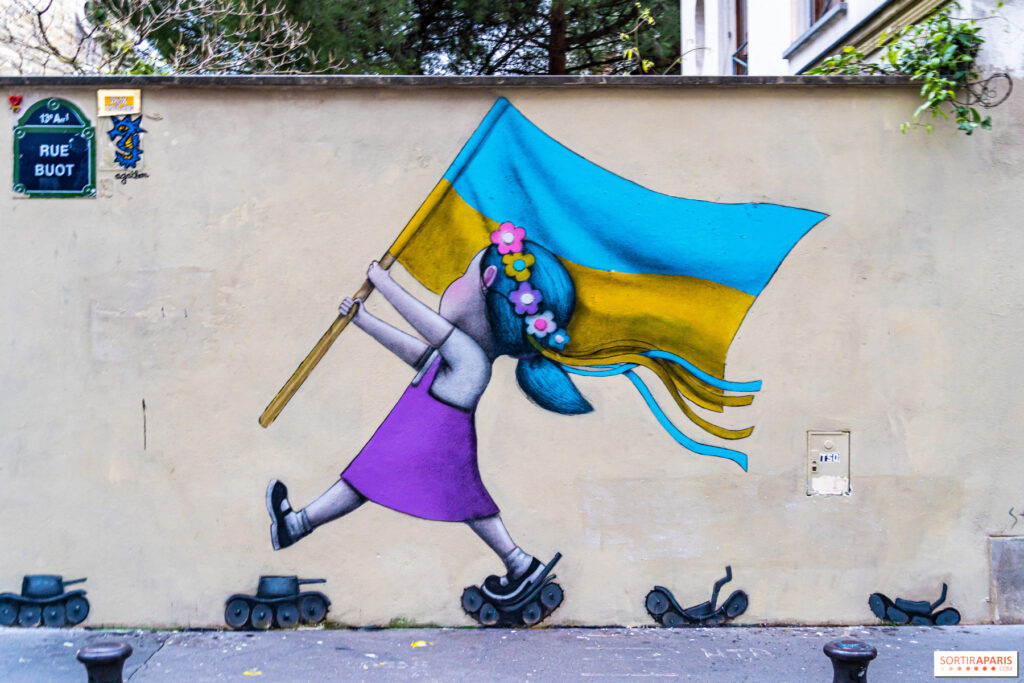
Meanwhile, in Paris …
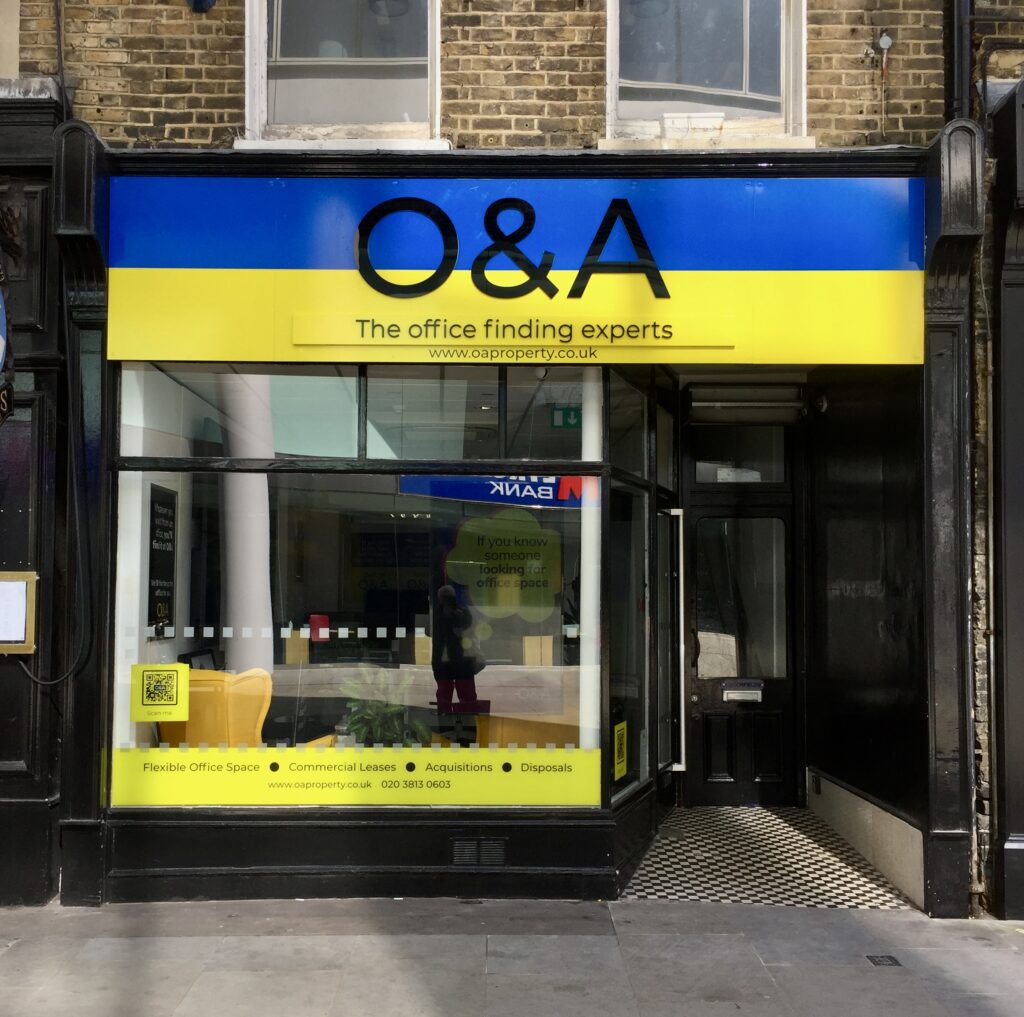
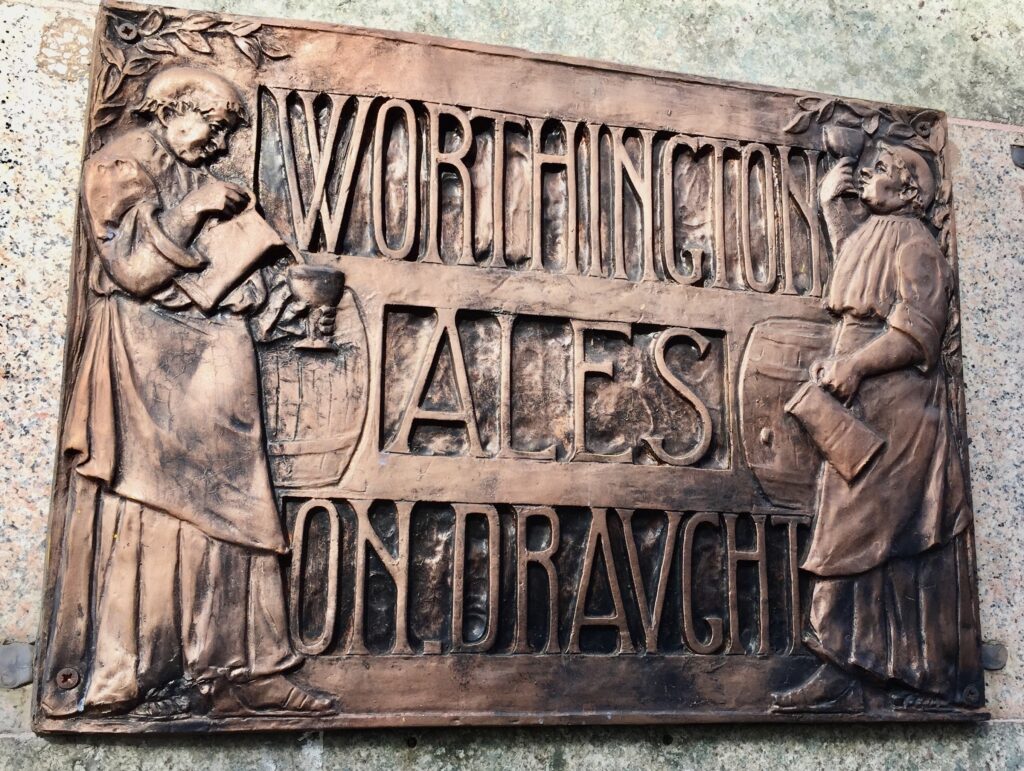
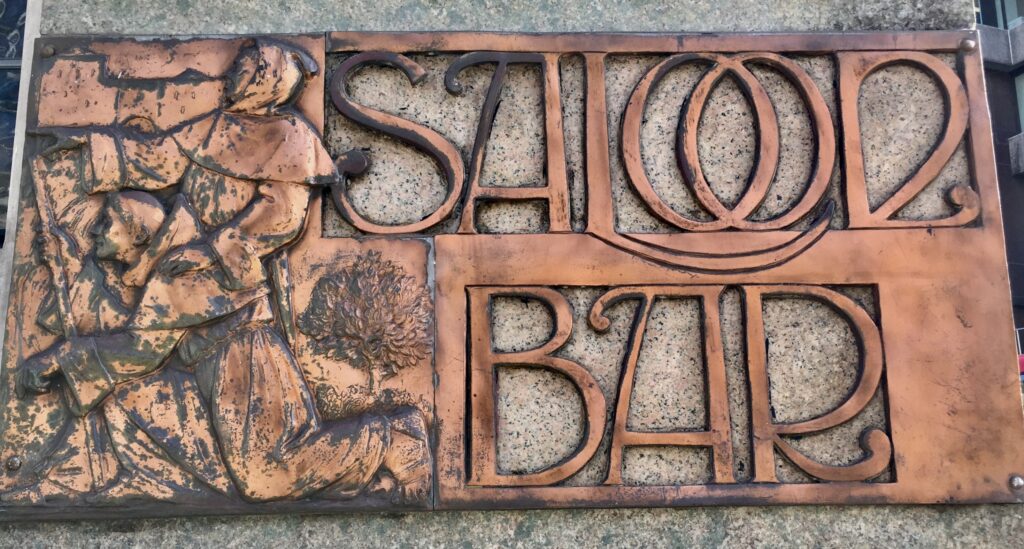
And this City of London shop repainted its signage …
Here are some other pics from my wanderings …
And some that made me smile …And I did!
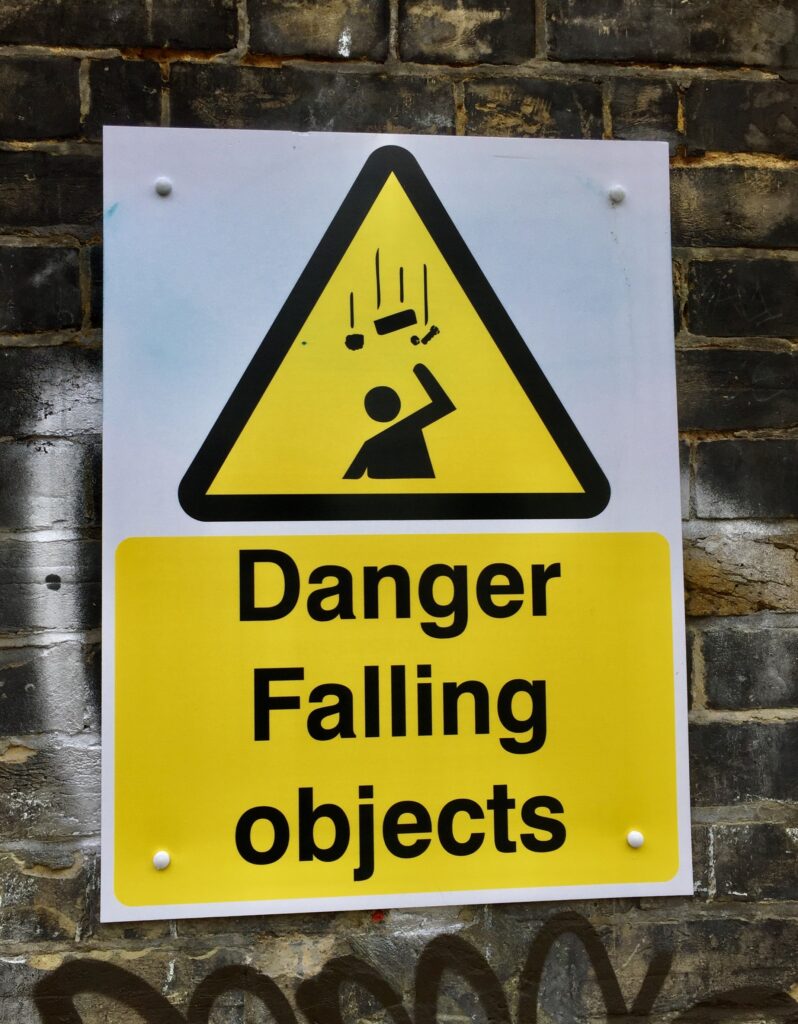
This one (and several like it) is on the wall beneath a warehouse now converted into apartments. Made me stand back and wonder what on earth could fall on my head …
If you would like to follow me on Instagram here is the link …
A lovely Sunny day last Saturday tempted me out for a walk.
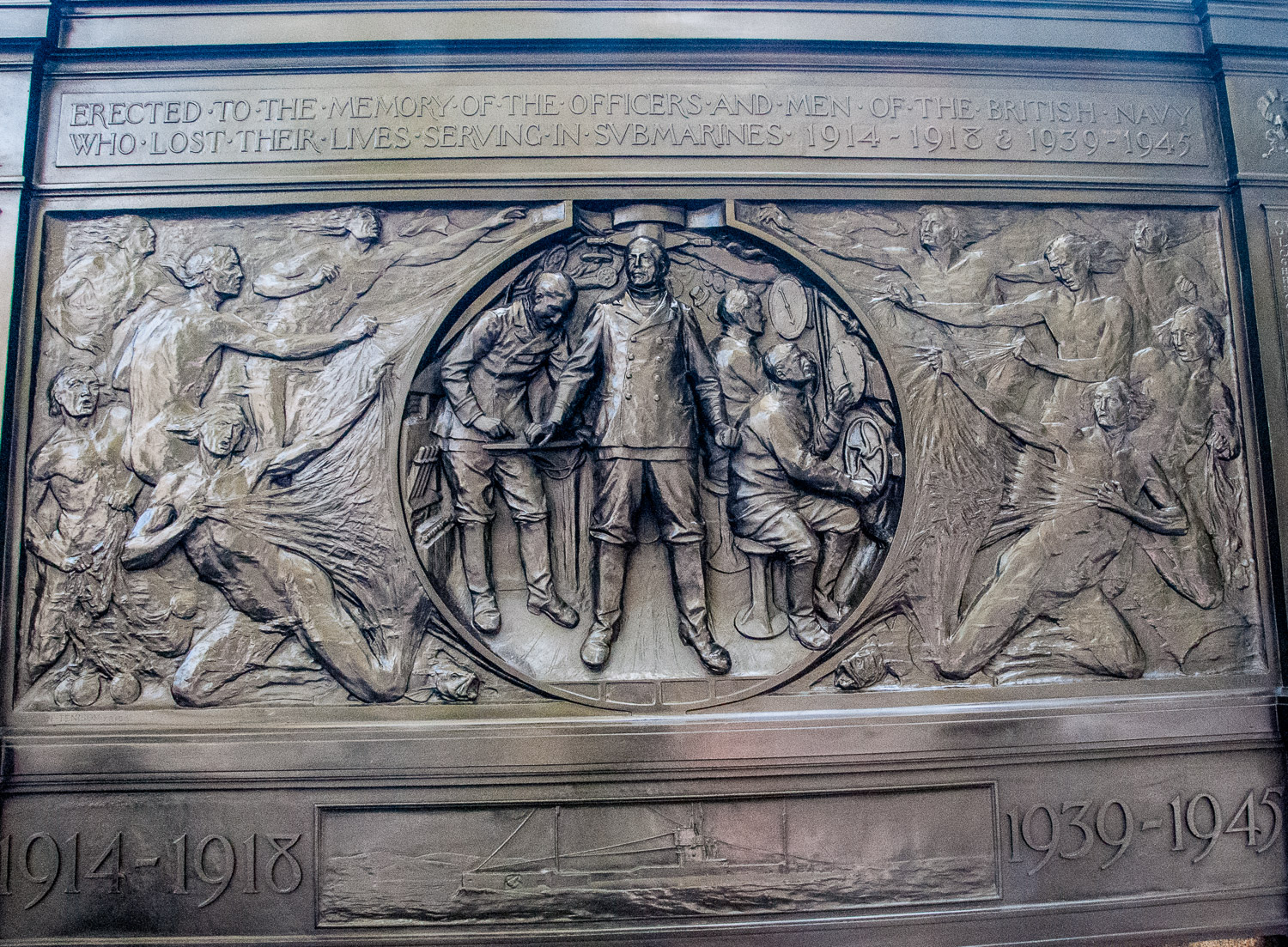
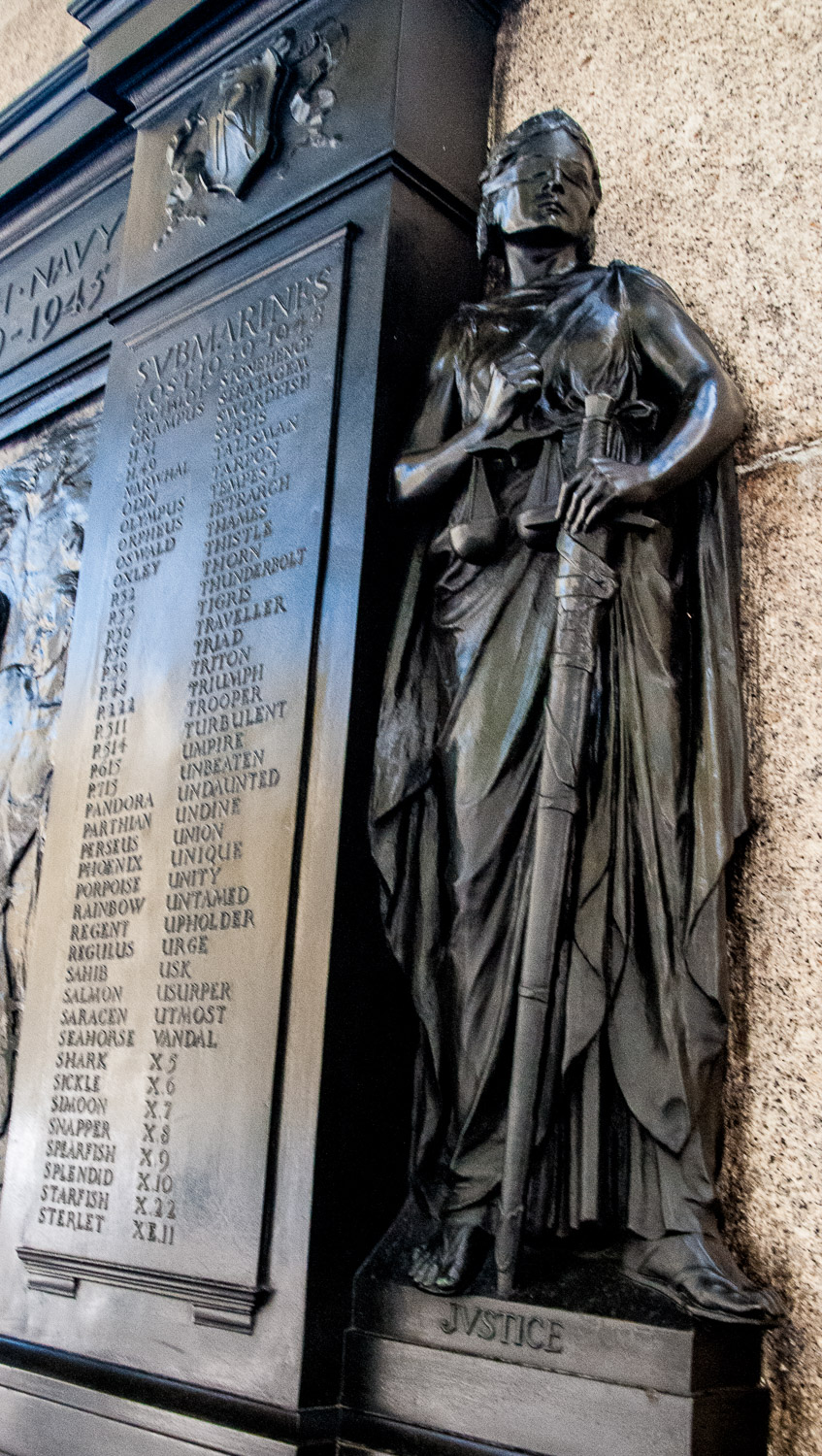
The national Submarine Memorial Memorial on Victoria Embankment (EC4Y 0HJ) is, I think, one of London’s most moving.
Although able to hide when submerged, once struck the vessels were often unable to rise to the surface and became effectively underwater coffins. In the First World War fifty four boats were lost and with them the lives of 138 officers and 1,225 men. At the inauguration in 1922 Rear Admiral Sinclair, the Chief of the Submarine Service, reminded those present that, during the Great War …
The number of those killed in the Submarine Service was greater in proportion to its size than any other branch of His Majesty’s fighting forces … one third of the total personnel.
In November 1959 new panels commemorating Second World war losses were unveiled by Rear Admiral B W Taylor.
Wright and Moore, writing for the 20th Century Architecture website, describe the memorial as a complex mixture of narrative and symbolism …
Sculptor: F B Hitch Architect: A H R Tenison Founder: E J Parlanti
The central figures recreate the scene set inside the submarine exaggerating it into a small, claustrophobic tunnel. The crew use charts and follow dials, the captain is braced at the centre with the periscope behind his head. Around the vessel a shallow relief depicts an array of sea creatures or mermen appearing to trap and haul the submarine in fishing nets, reminding us that the submarines were as much prey to the tempestuous elements as they were to the enemy.
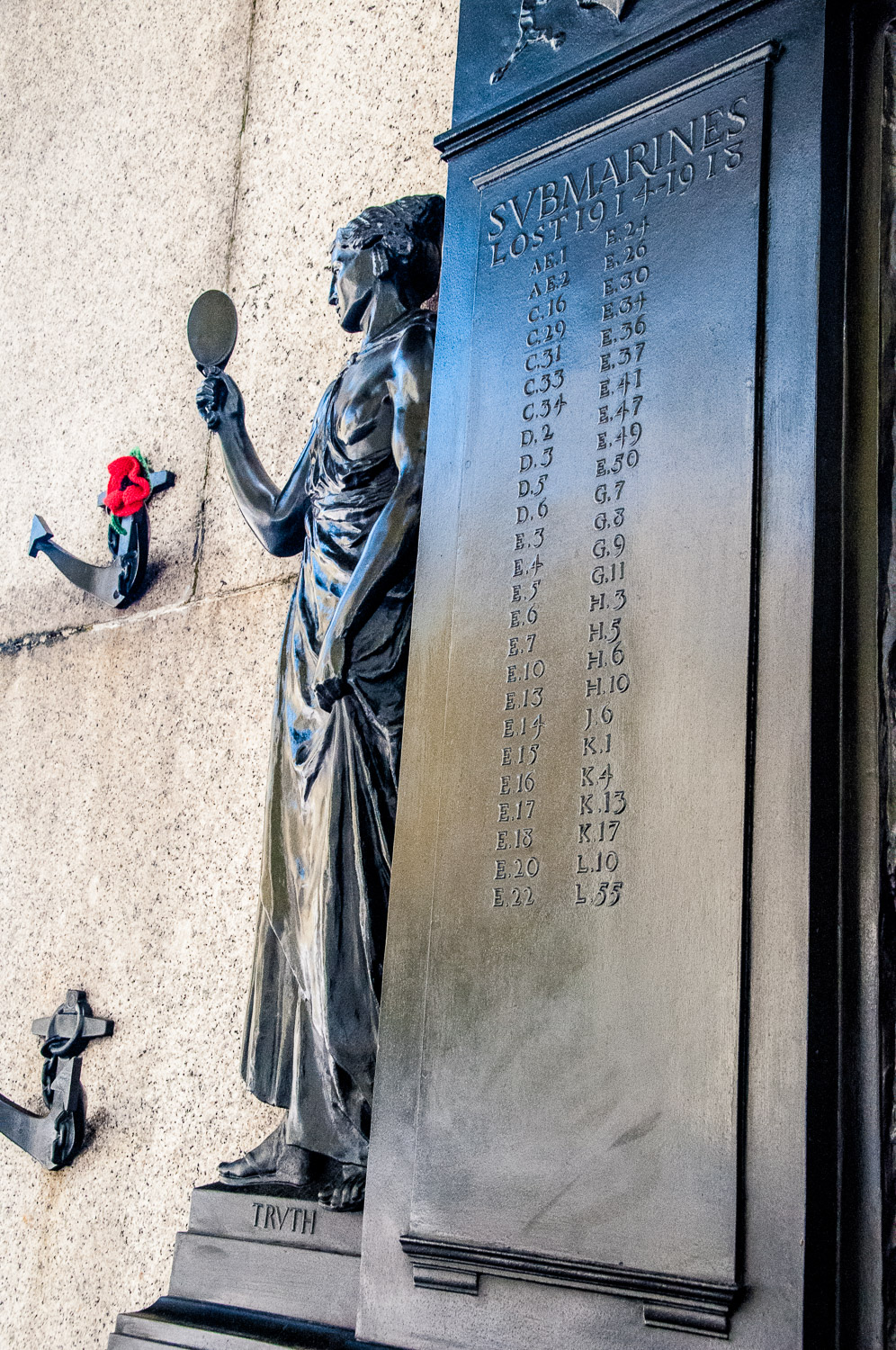
On both corners are allegorical figures. Next to the list of vessels lost between 1914 and 1918, Truth holds up her mirror. Just further to the left in the picture are two of the 40 bronze wreath hooks in the form of anchors …
On the right, next to the vessels lost in the Second World War, Justice wears a blindfold and as usual holds a sword and scales …
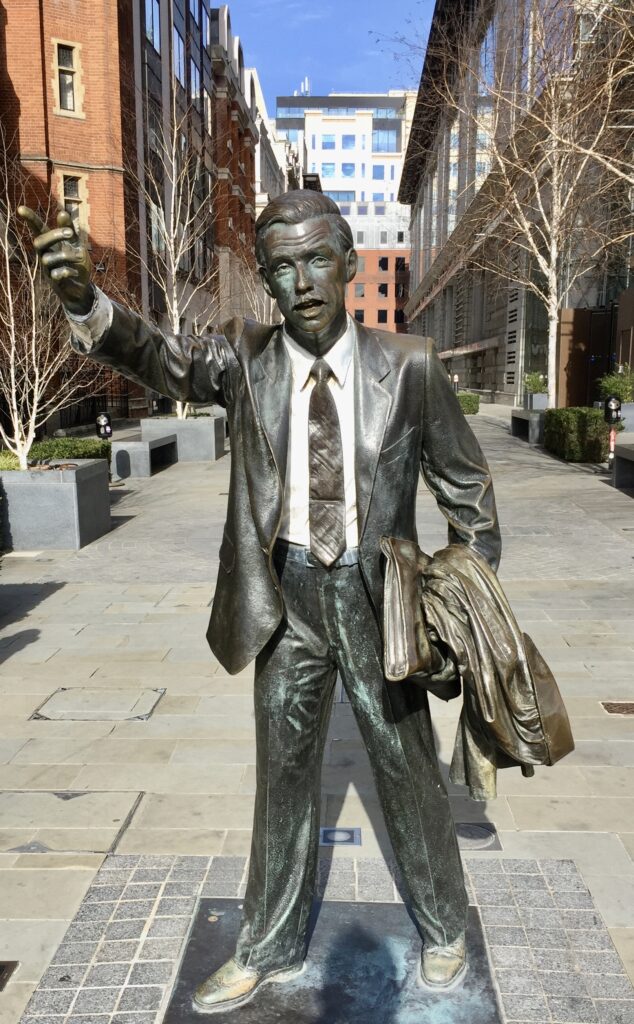
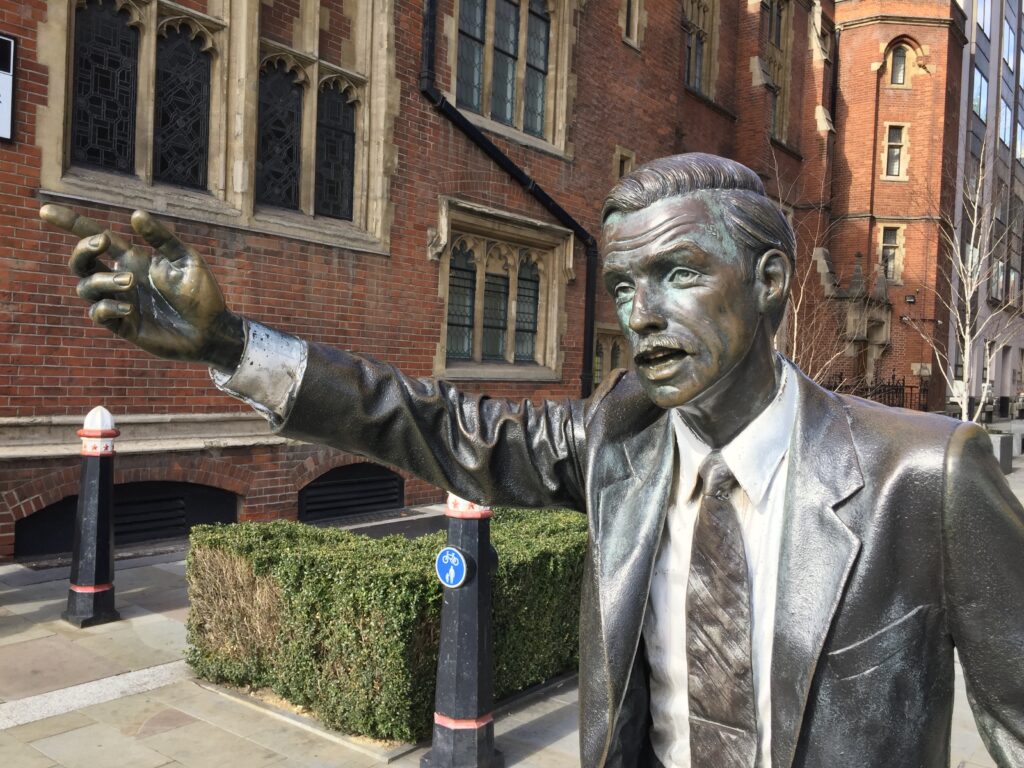
On a more lighthearted vein, walk east from the Memorial on the north side of the road and you’ll find this chap frantically trying to hail a taxi …
Taxi! by the American Sculptor J Seward Johnson is cast bronze and is now interestingly weathered. If you think the baggy trousers, moustache and side parting are erring on the retro, that’s because this particular office worker was transferred from New York in 2014. It was sculpted in 1983 and originally stood on Park Avenue and 47th Street.
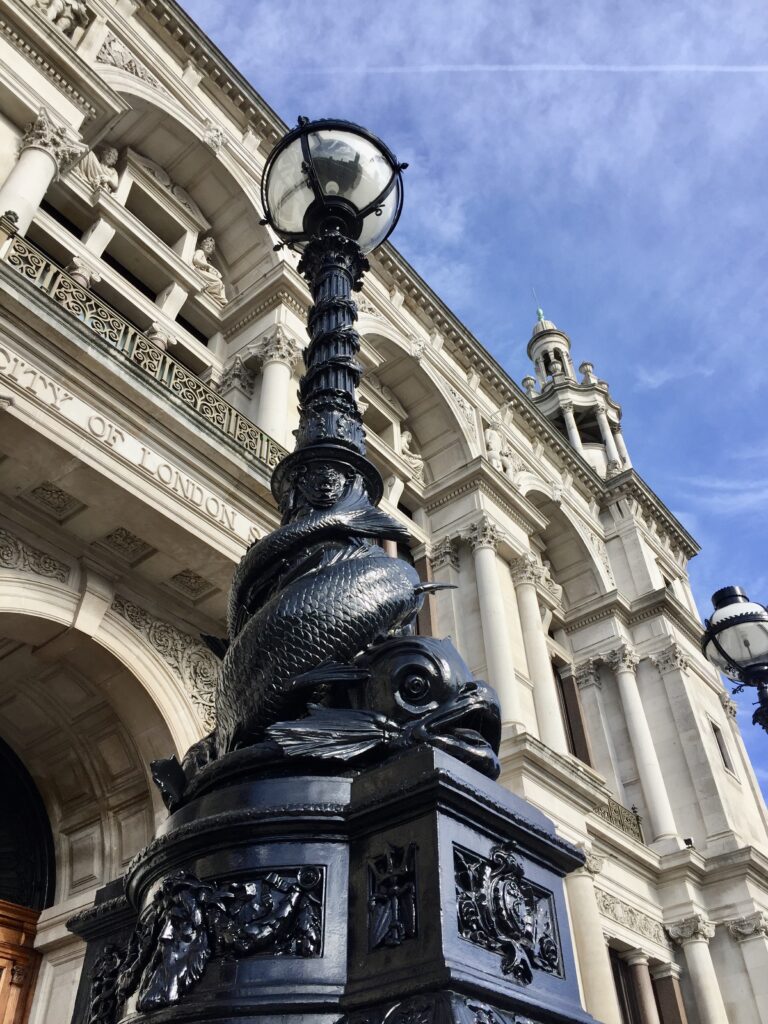
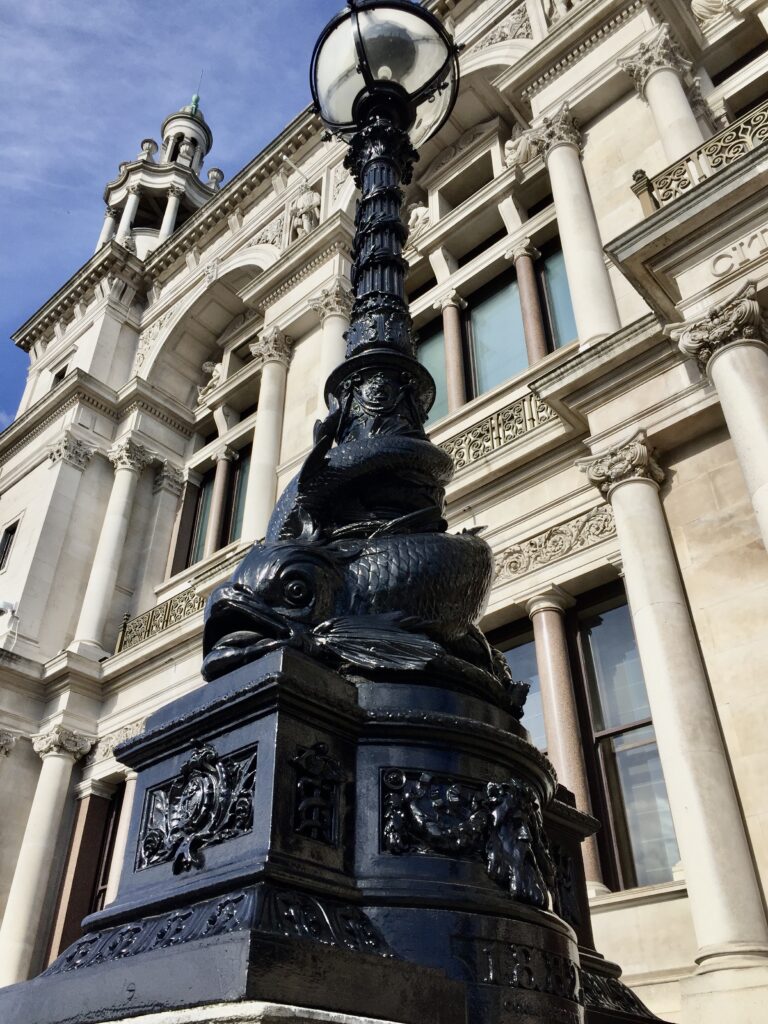
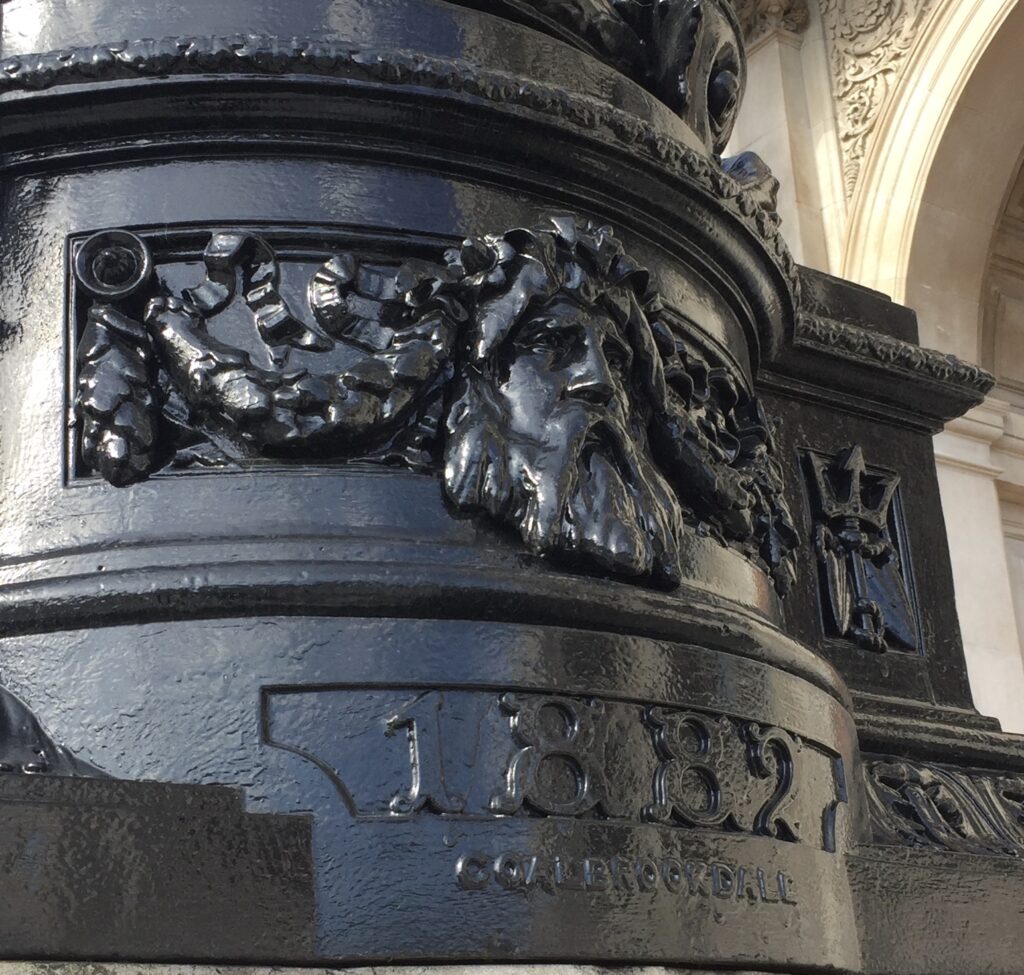
I love this pair of ‘dolphin’ lamps (although they are actually sturgeon) ..
Neptune also makes an appearance …
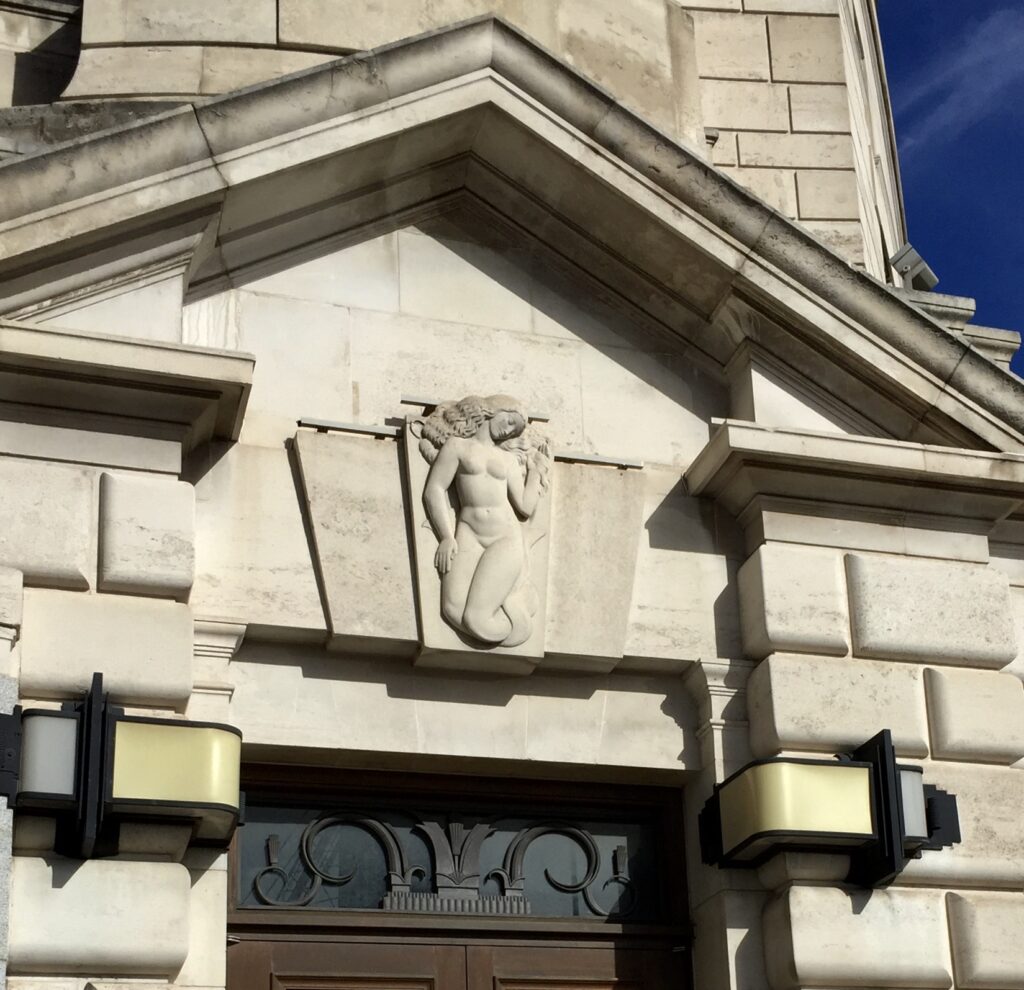
Further east you can wave to the pretty mermaid who embellishes the Art Deco style Unilever Building …
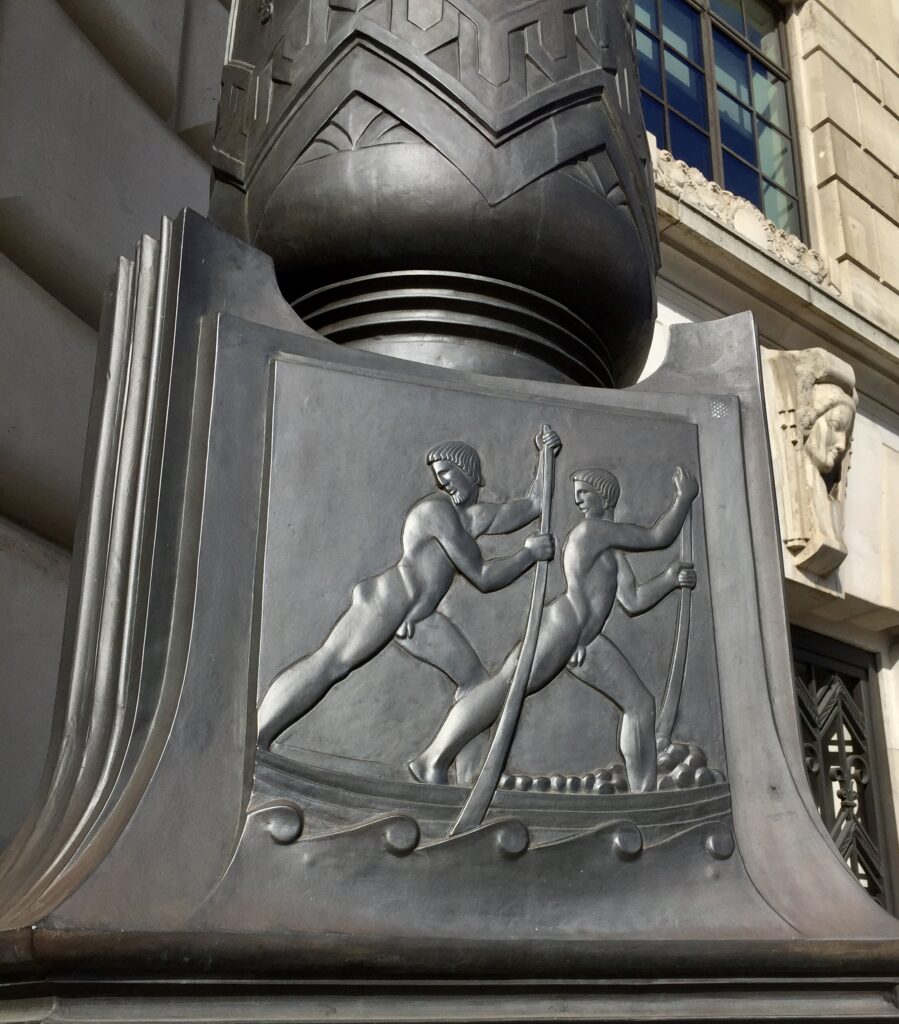
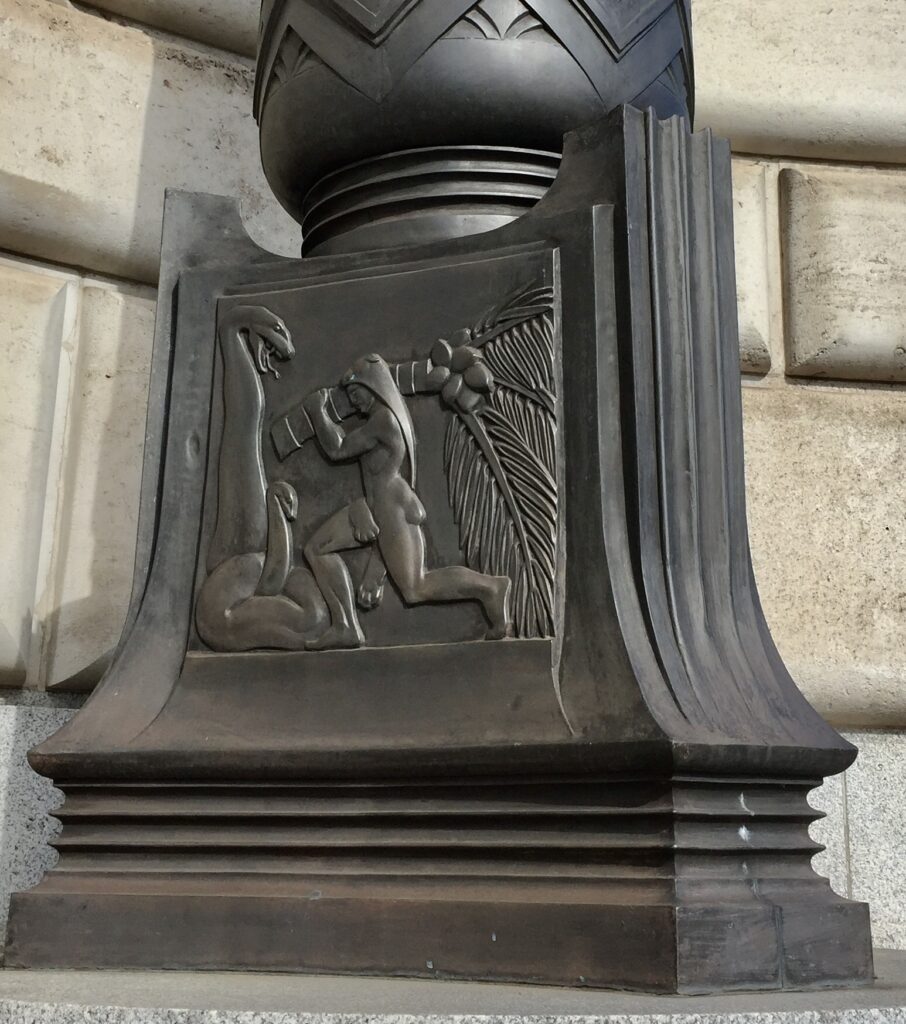
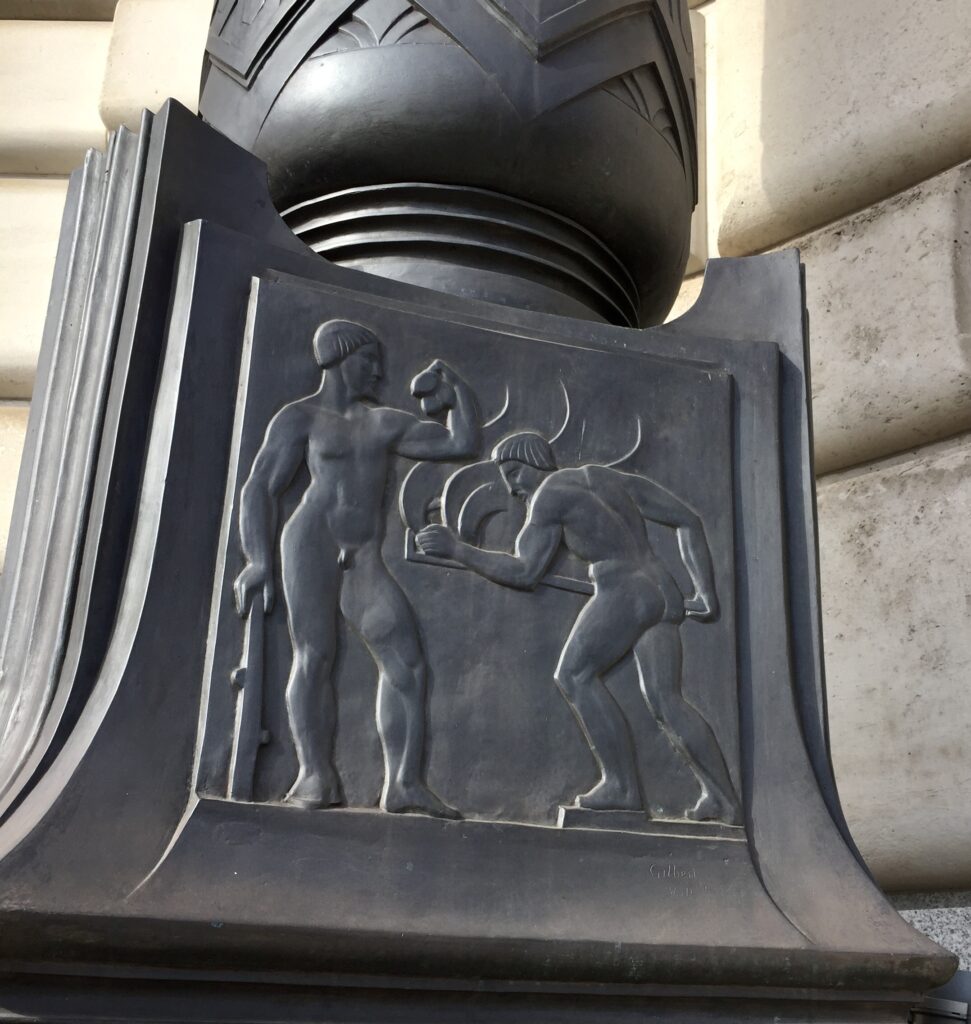
Further along the lamps repay detailed study …
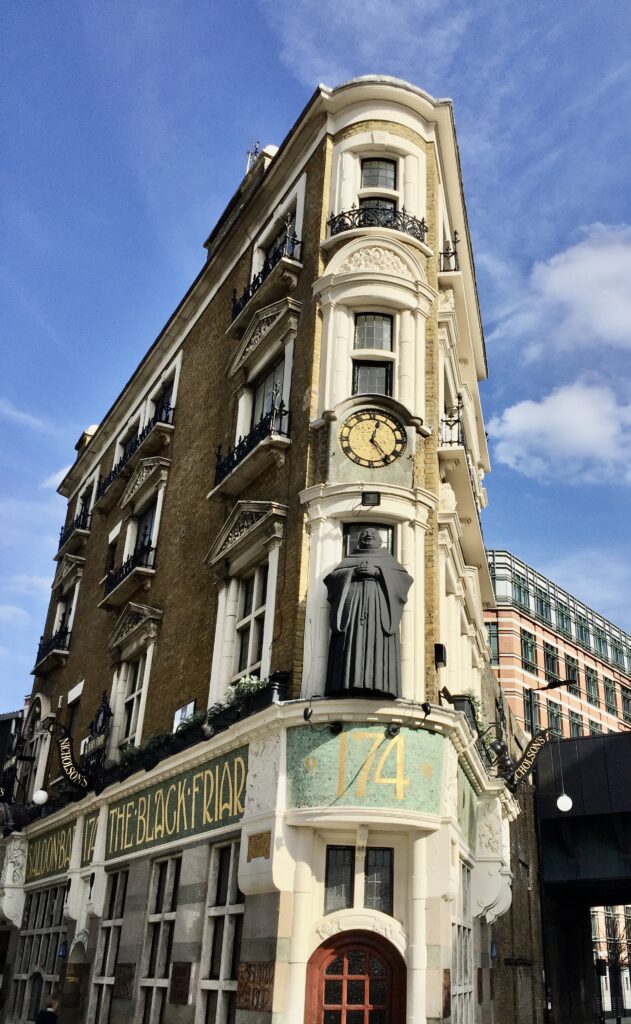
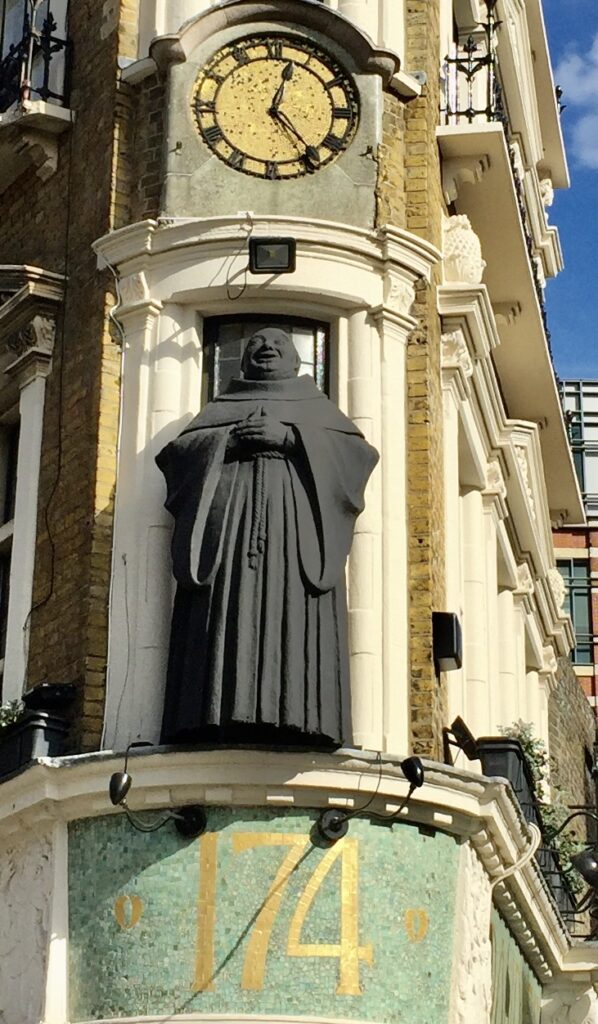
Across the road, a jolly friar looks down from the Blackfriar pub …
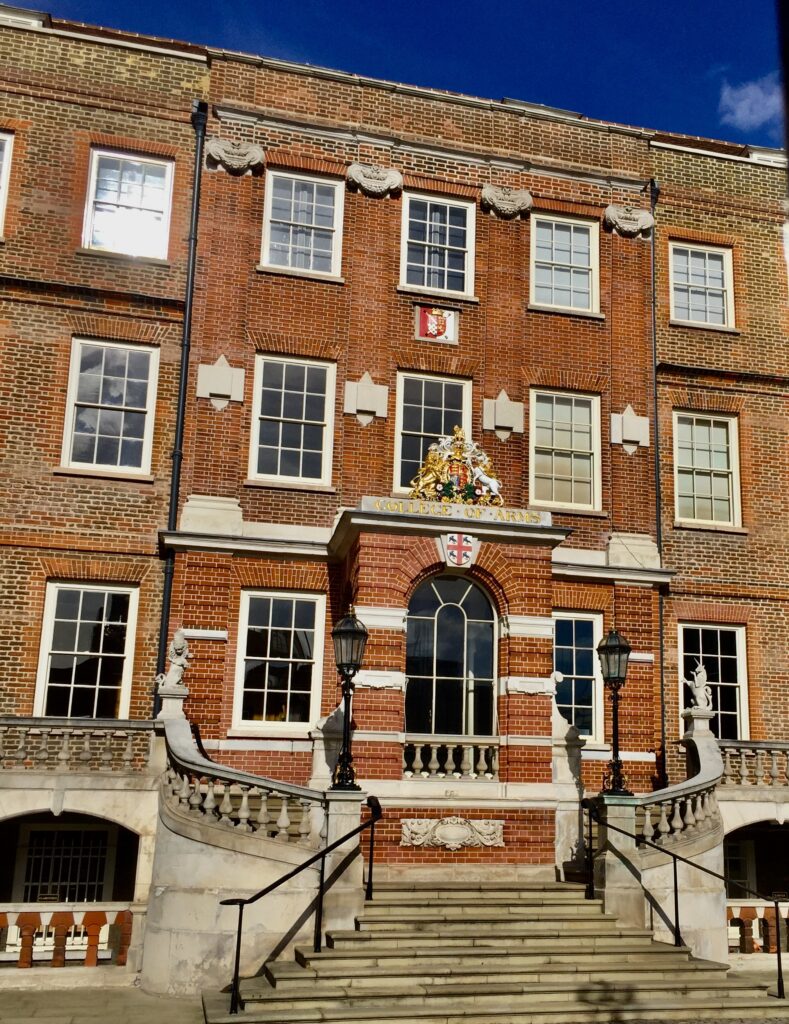
Carry on along Queen Victoria Street and admire the imposing College of Arms building …
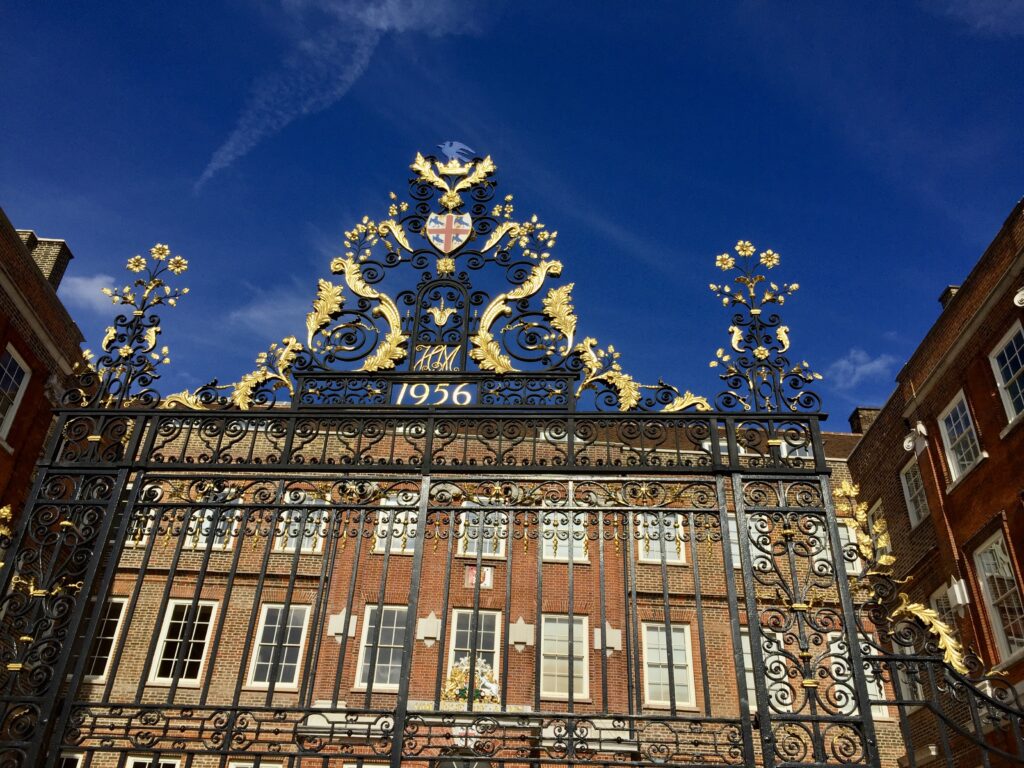
… and its ornate gate …
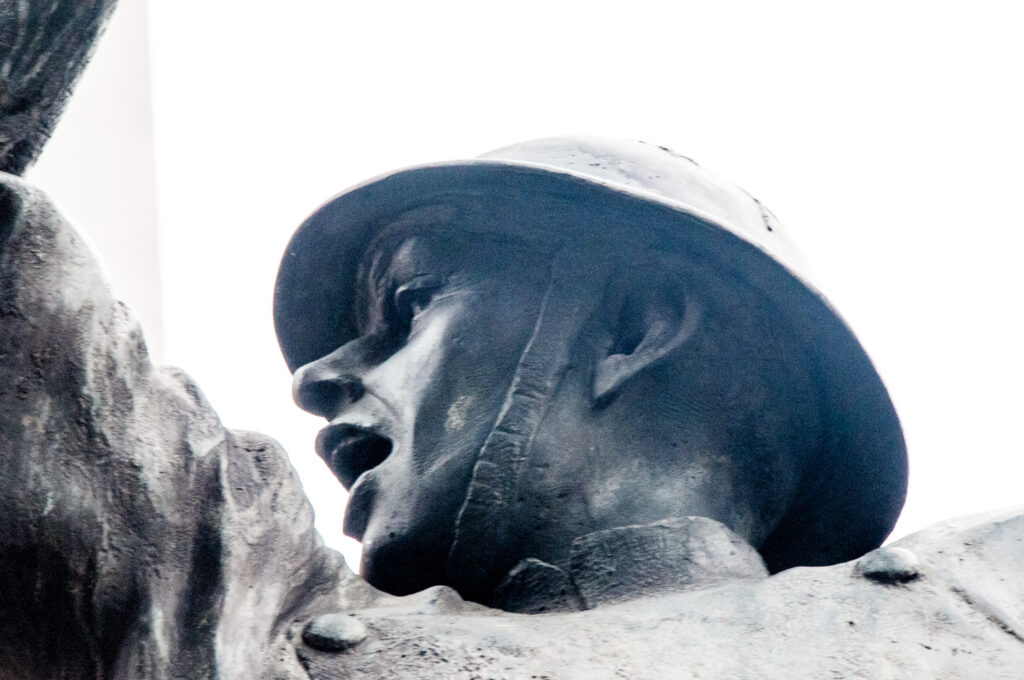
St Peter’s Hill runs north alongside the College and at the top you will find the Firefighters Memorial. On its octagonal bronze base are the names of the 997 men and women of the fire service who lost their lives during the conflict. The sculpture features two firemen ‘working a branch’, with their legs spread to take the strain of the hose …
A sub-officer directs others to assist. There are clues to the identity of this figure scattered among the debris at the figures’ feet: the letters CTD for C.T. Demarne. At the unveiling, his colleagues from the fire service claimed that there was no need for such clues. One who was interviewed by the Telegraph stated: ‘You can tell it’s Cyril by the way he’s standing…he always waved his arms about like that when he was ordering us about’.
Officer Demarne in full flow.
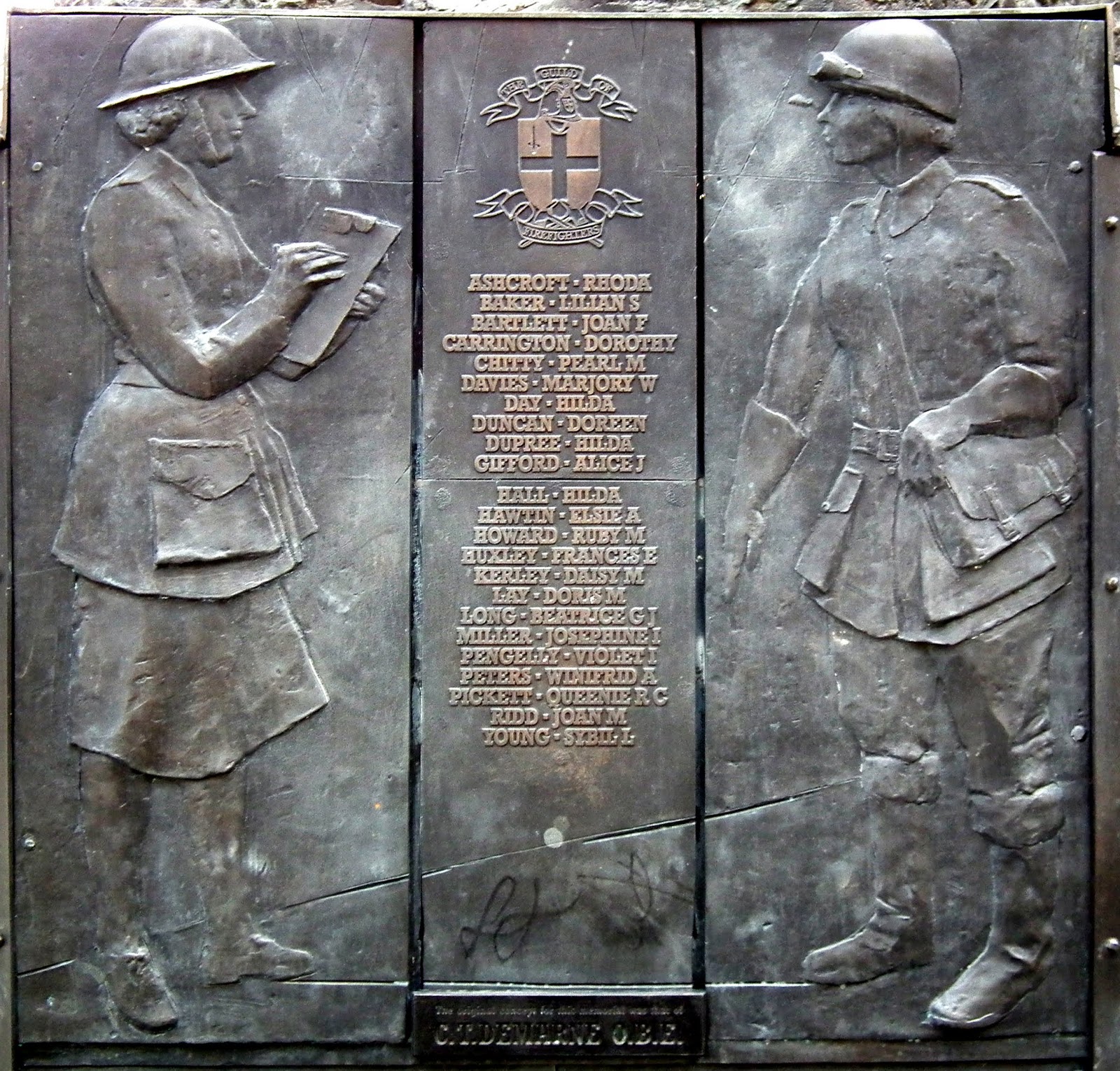
By 1943 over 70,00 women had enrolled in the National Fire Service in the United Kingdom. This memorial commemorates those who lost their lives in the London bombings …
The lady on the left is an incident recorder and the one on the right a despatch rider.
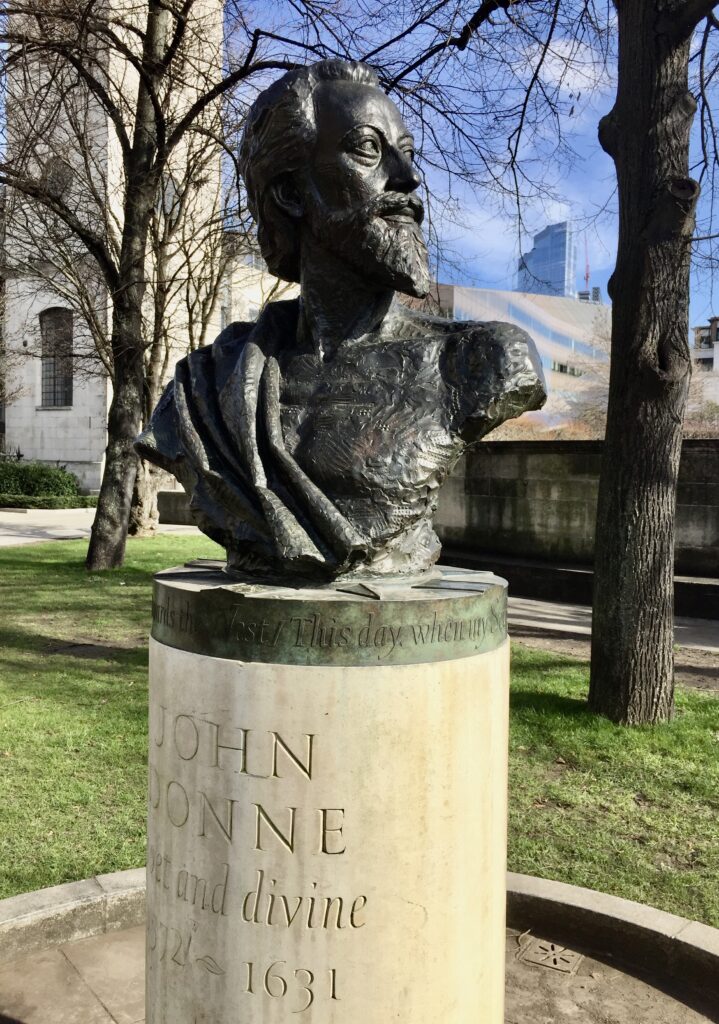
Across the road, just south of the Cathedral, is this rather handsome bearded gentleman …
John Donne 1572-1631 by Nigel Boonham (2012).
In 1617, two years after his ordination, Donne’s wife died at age 33 after giving birth to a stillborn child, their twelfth. Grief-stricken at having lost his emotional anchor, Donne vowed never to marry again, even though he was left with the task of raising his ten surviving children in modest financial circumstances. His bereavement turned him fully to his vocation as an Anglican divine and, on November 22, 1621, Donne was installed as Dean of St. Paul’s Cathedral. The power and eloquence of his sermons soon secured for him a reputation as the foremost preacher in the England of his day, and he became a favourite of both Kings James I and Charles I.
His bust points almost due west but shows him turning to the east towards his birthplace on Bread Street. The directions of the compass were important to Donne in his metaphysical work: east is the Rising Sun, the Holy Land and Christ, while west is the place of decline and death. Underneath the bust are inscribed words from his poem Good Friday – Riding Westward :
Hence is’t that I am carried towards the west, This day when my soul’s form bends to the east
The most familiar quotation from Donne comes from his Meditation XVII – Devotions upon Emergent Occasions published in 1624:
‘No man is an island, entire of itself; every man is a piece of the continent, a part of the main … and therefore never send to know for whom the bell tolls, it tolls for thee.’
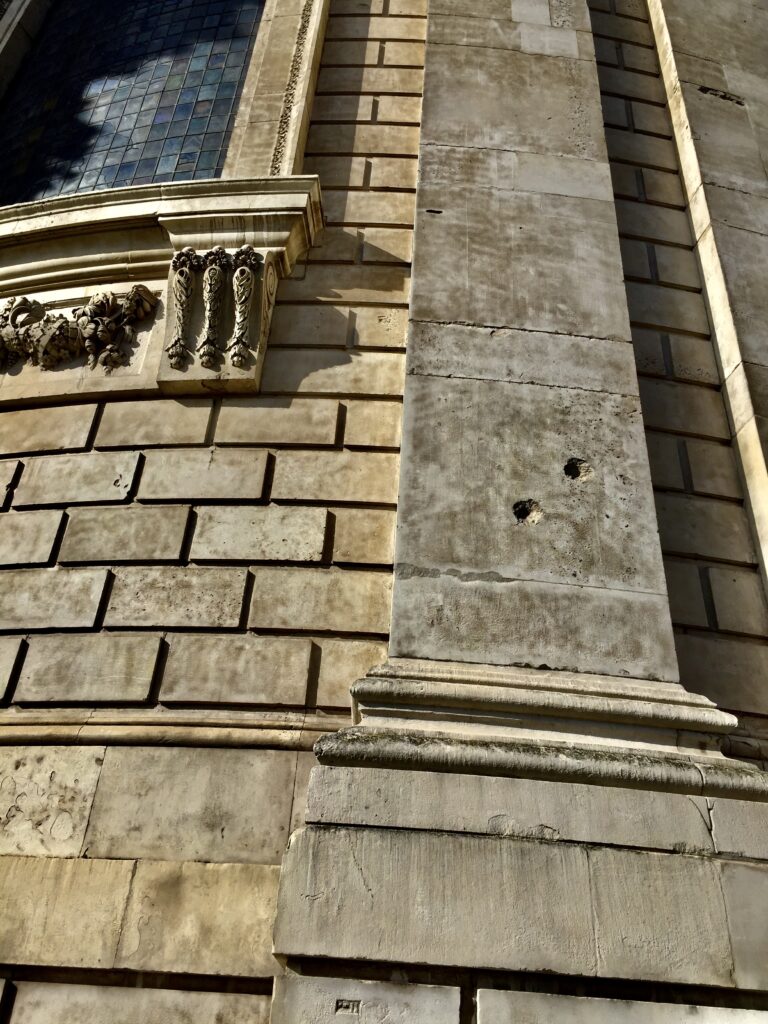
Incidentally, if you walk around the east side of the Cathedral you will see scars from the Second World War bombing which illustrate just how close the building came to destruction …
If you would like to follow me on Instagram here is the link …
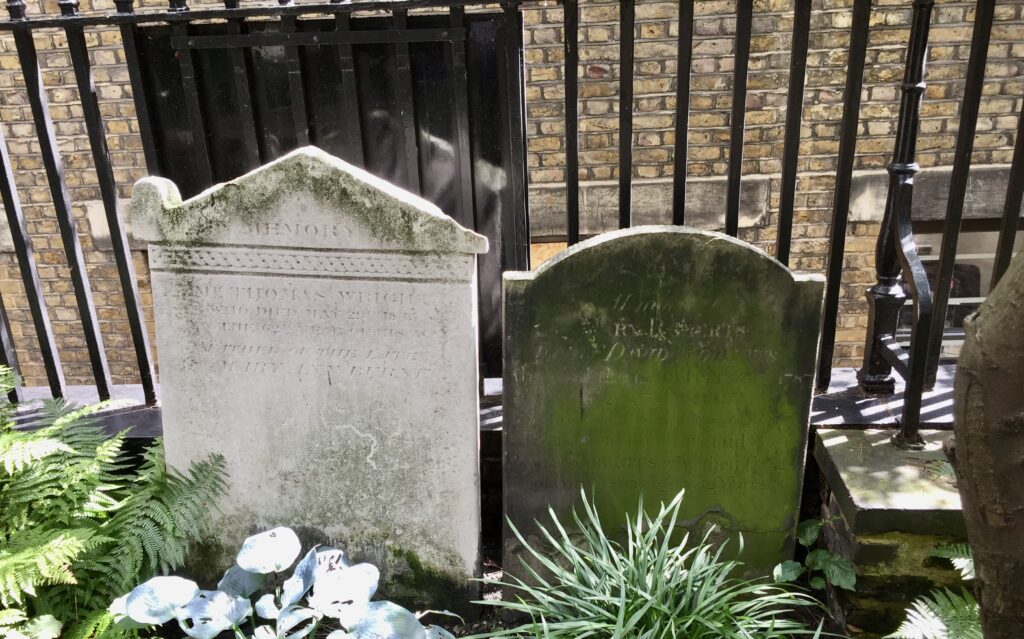
Back in August last year I spoke of a mystery connected to these two gravestones in the old parish churchyard of St Ann Blackfriars in Church Entry (EC4V 5HB) …
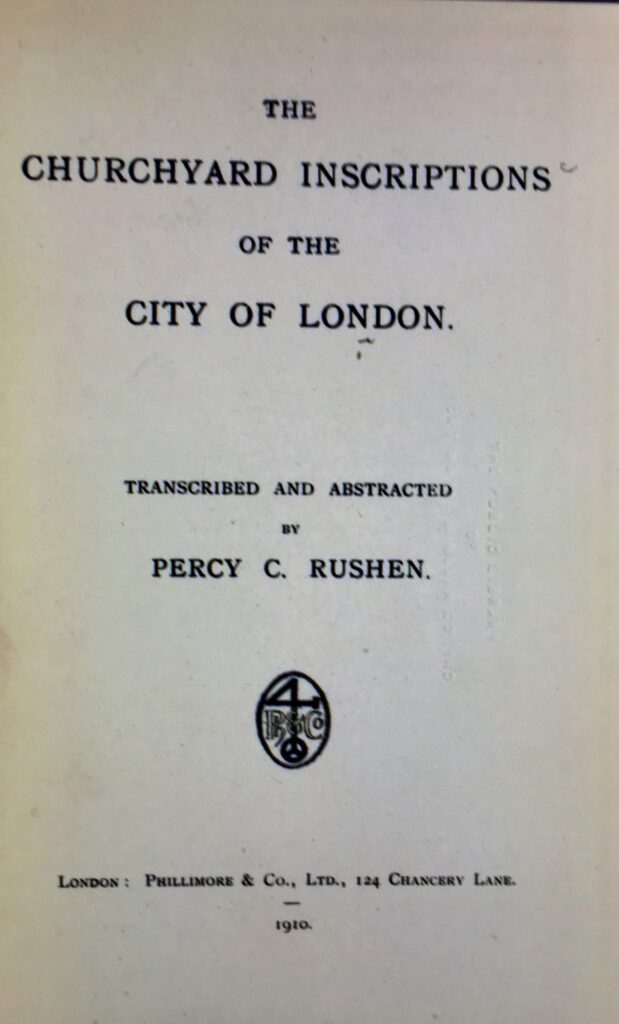
My ‘go to’ source of information when it comes to grave markers is the estimable Percy C. Rushen who published this guide in 1910 when he noticed that memorials were disappearing at a worrying rate due to pollution and redevelopment …
So when I came across the last two stones in this graveyard with difficult to read inscriptions I did what I normally do which is to consult Percy’s book in order to see what the full dedication was.
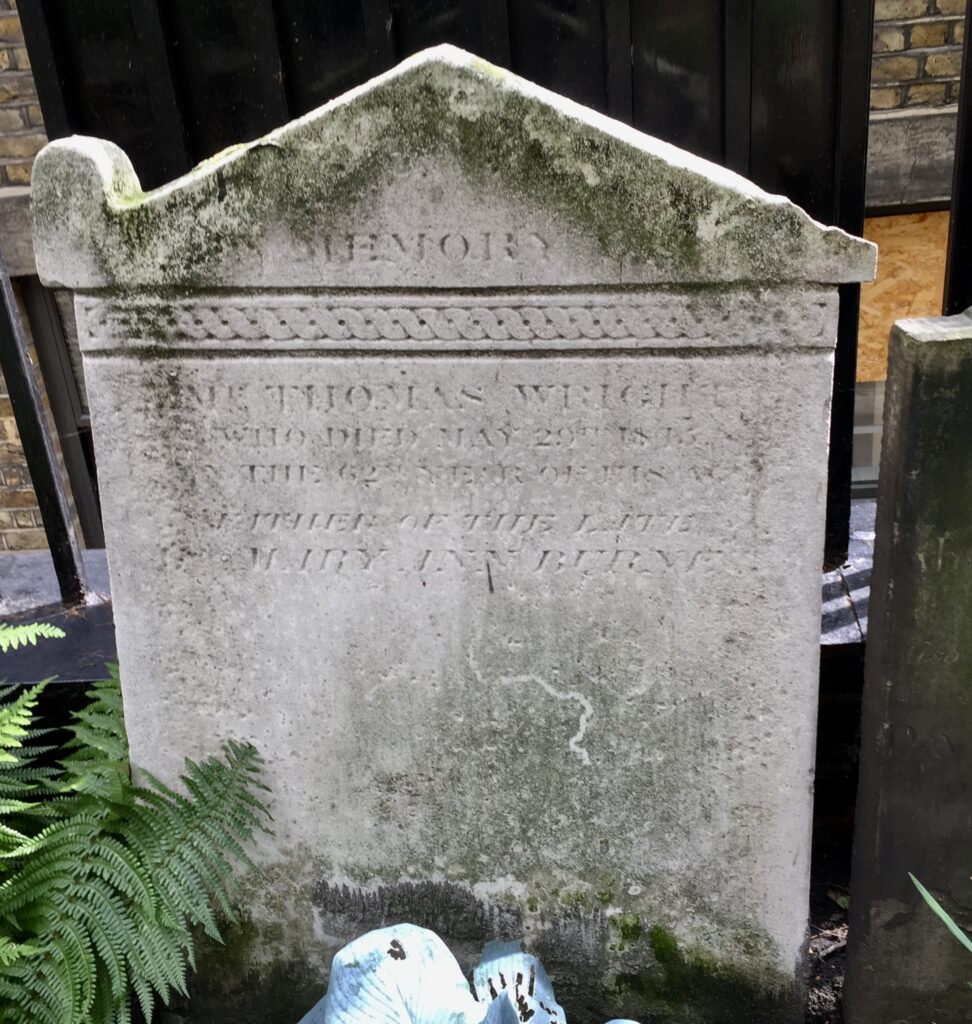
There was, however, a snag. Neither headstone is recorded in Percy’s list for St Ann Blackfriars. Let’s look at them one by one. This is the stone for Thomas Wright …
Fortunately, the book lists people in alphabetical order and, although there isn’t a Wright recorded at St Ann’s, there is one recorded at St Peter, Paul’s Wharf. It’s definitely the same one and reads as follows :
THOMAS WRIGHT, died 29 May 1845, father of the late Mrs Mary Ann Burnet.
The inscription of another stone recorded in the same churchyard reads …
CAROLINE, wife of JAMES BURNET , died 26 July 1830, aged 36.
MARY ANN, his second wife, died 12 April1840, aged 36.
JAMES BURNET, above, died … 1842, aged …3
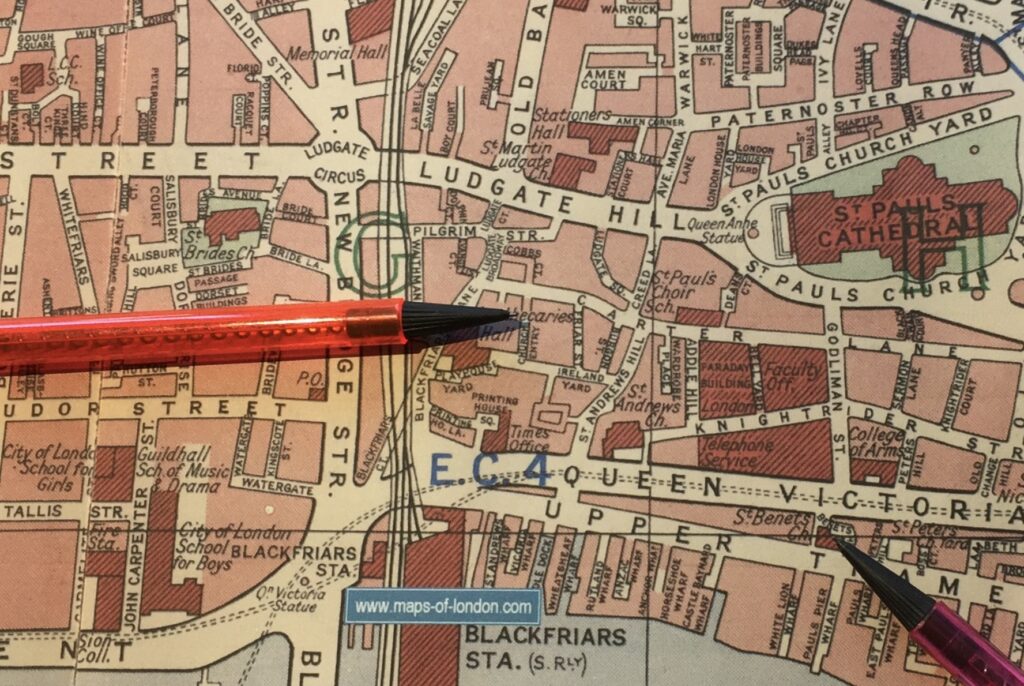
St Peter, Paul’s Wharf, was destroyed in the Great Fire of 1666 and not rebuilt but obviously its churchyard was still there in 1910. And it was still there in the 1950s as this map shows. I have indicated it in the bottom right hand corner with the other pencil showing the location of Church Entry and St Ann’s burial ground …
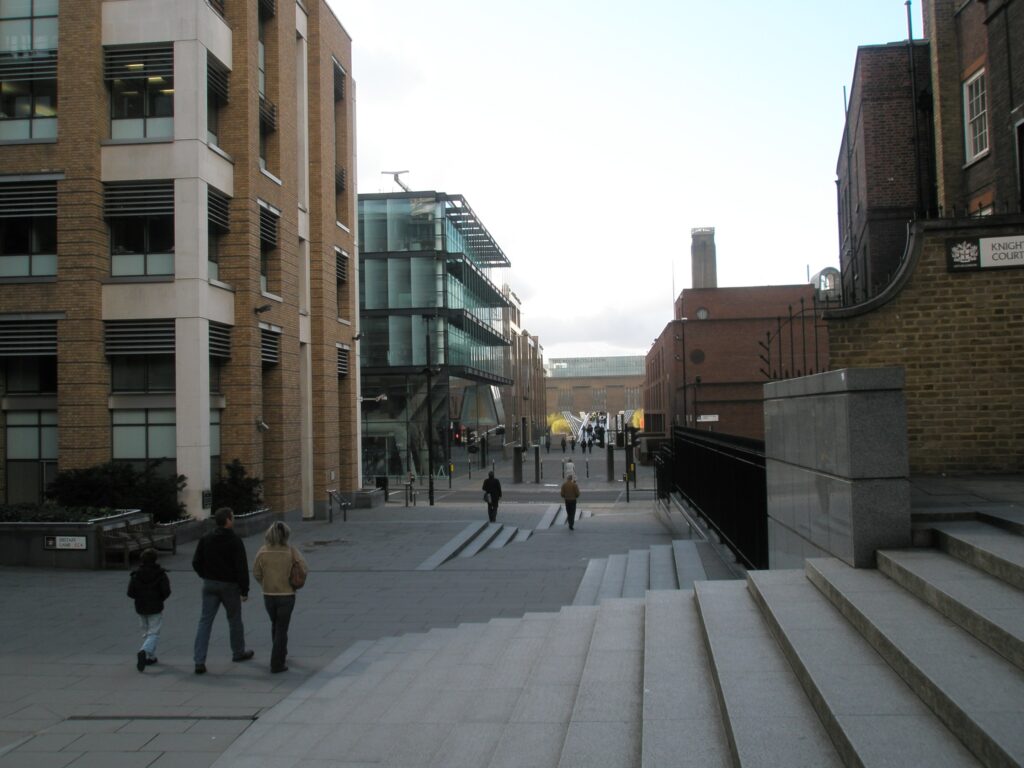
This is the present day site of Thomas Wright’s original burial place, now Peter’s Hill and the approach to the Millennium Bridge …
The stone must have been moved some time in the mid-20th century, but the question is, was Thomas moved as well? Have his bones finally come to rest in Church Entry? I have been unable to find out.
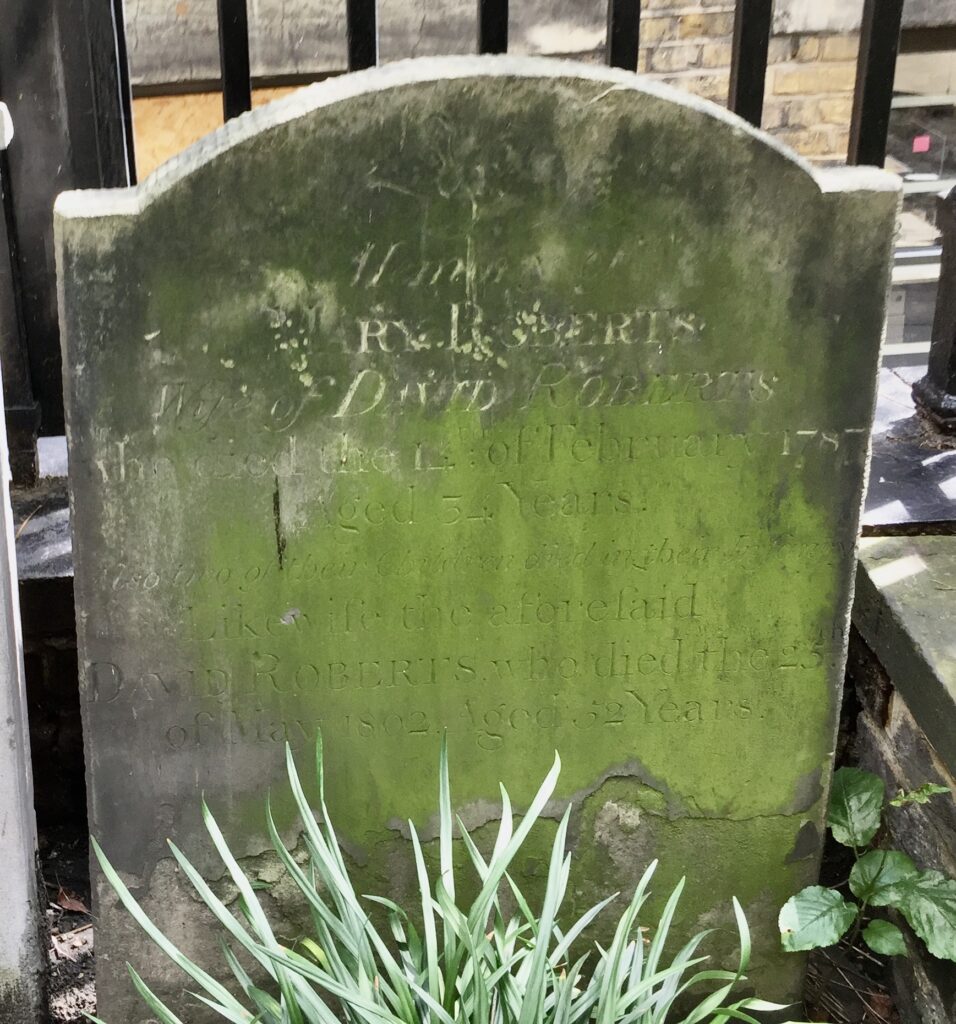
This is the headstone alongside Thomas’s …
It reads as follows …
In Memory of MARY ROBERTS wife of David Roberts who died the 14th February 1787 aged 34 years. Also two of their children who died in their infancy … the aforesaid DAVID ROBERTS who died the 25th May 1802, aged 52 years.
The mystery surrounding this stone was that, although there are quite a few people called Roberts recorded in Percy’s memorial list, none of them are called Mary or David. So, assuming, the book is complete (and Percy was obviously very fastidious) I wondered where this marker came from.
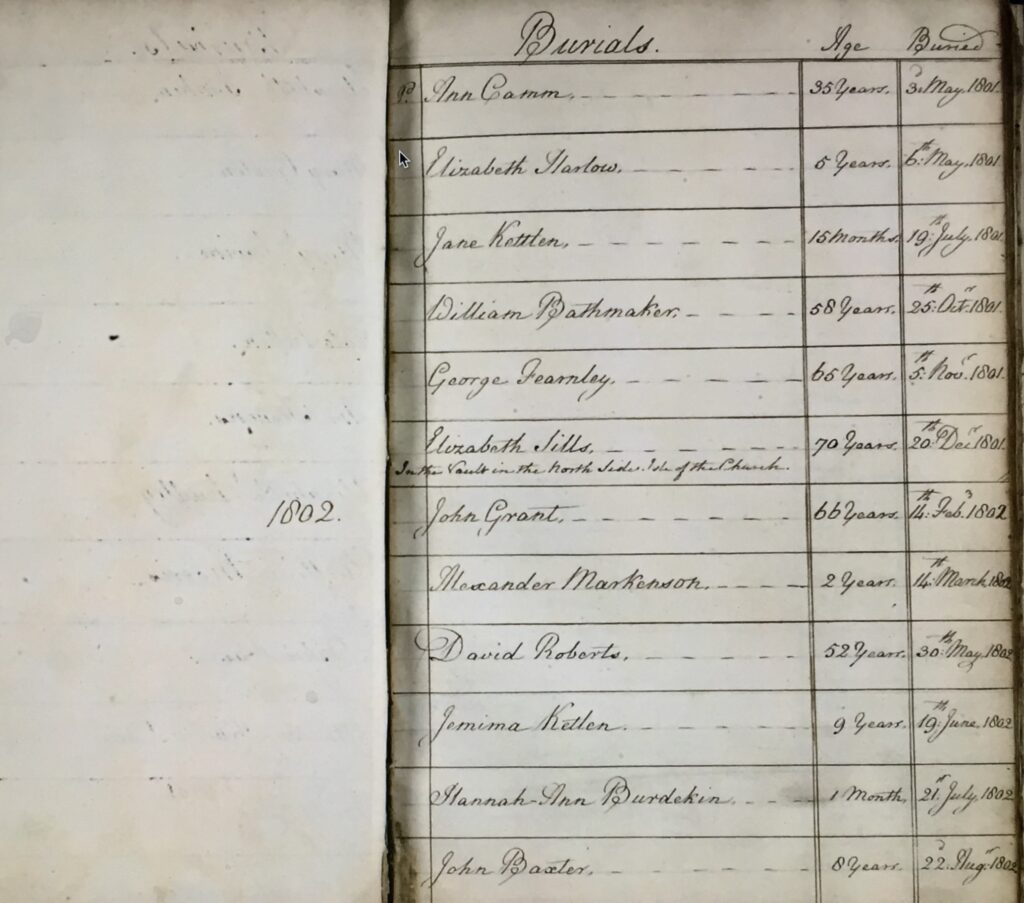
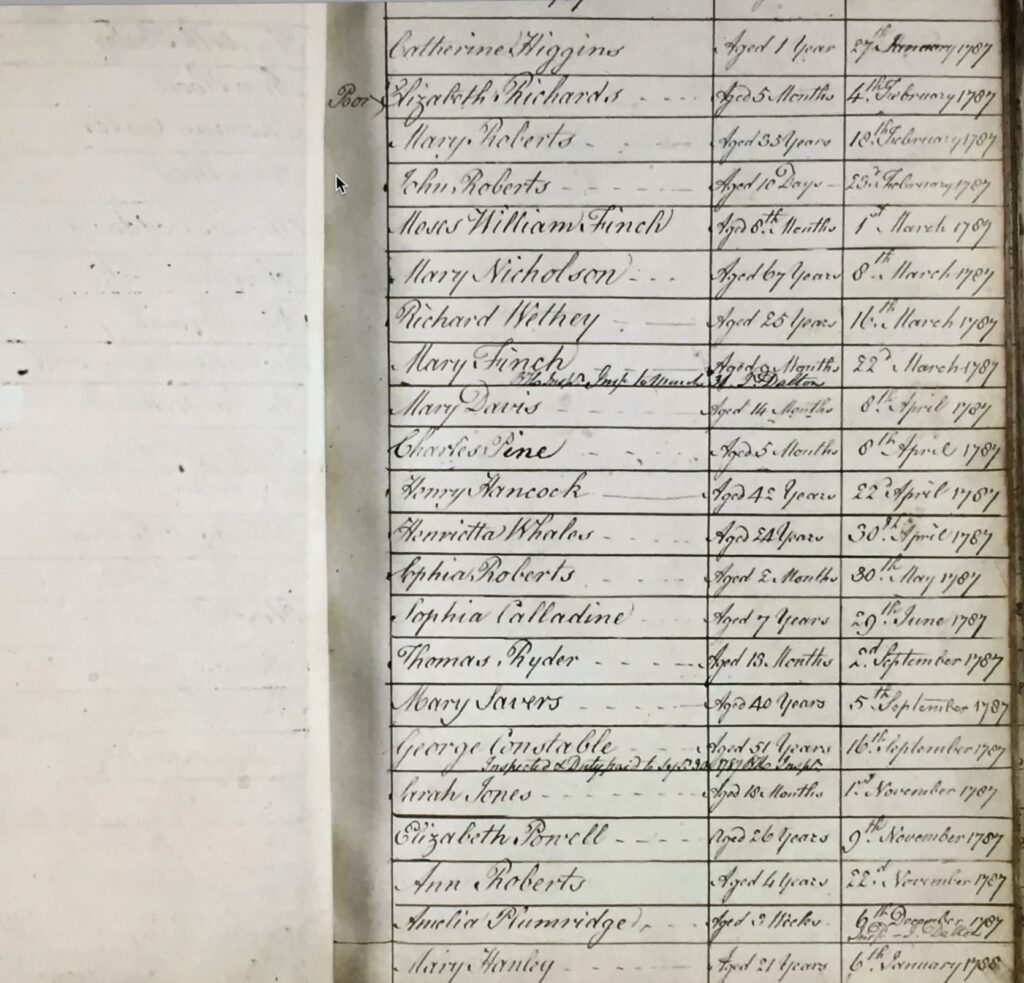
As a result of the blog, I was contacted by Leah Earl who had been researching old parish records. She discovered that the burials of David and Mary Roberts are recorded in the burial registers for St Peter, Paul’s Wharf, so the grave marker ought to have been there when Percy was transcribing. Since Percy was so careful I can only imagine that he missed this stone either because it had fallen on its face or it had been hidden behind some stones that had been stacked up.
Here are the two pages from the records.
David Roberts is fourth from the bottom on this page …
In this page you can see the tragic year of 1787 unfolding …
The record states that Mary, David’s wife, was buried on the 18th February and her newborn son, John, ten days later. Another child, Sophia, is buried three months after her mother on 30th May. These must be the two children of theirs who ‘died in infancy’. You’ll see that Mary’s age is given as 34 on the gravestone but 35 in the written record.
There is also a record of an Ann Roberts who died aged four on 22nd November 1787 but presumably she is not the child of David and Mary since she’s not mentioned on the marker.
About one in three children born in 1800 did not make it to their fifth birthday and maternal deaths at birth have been estimated at about five per thousand (although that is probably on the low side). Just by way of comparison, in 2016 to 2018, among the 2.2 million women who gave birth in the UK, 547 died during or up to a year after pregnancy from causes associated with their pregnancy. The 1800 equivalent rate would have meant 11,000 deaths.
If you are interested to know more about maternal mortality, its history and causes, you’ll find this incredibly informative article in The Journal of the Royal Society of Medicine. Most disturbing is how doctors who discovered the underlying cause of many deaths were disbelieved and vilified by the medical profession as a whole, thus allowing unnecessarily high mortality to continue for decades.
Now, on a more cheerful note, here are a few things that made me smile recently.
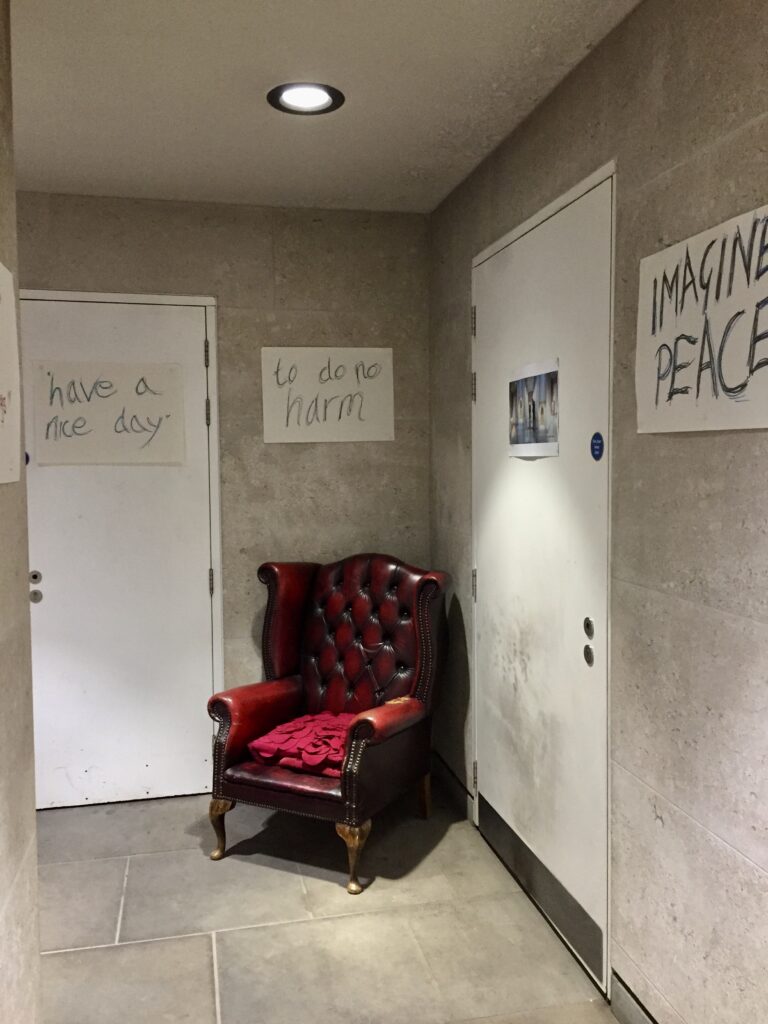
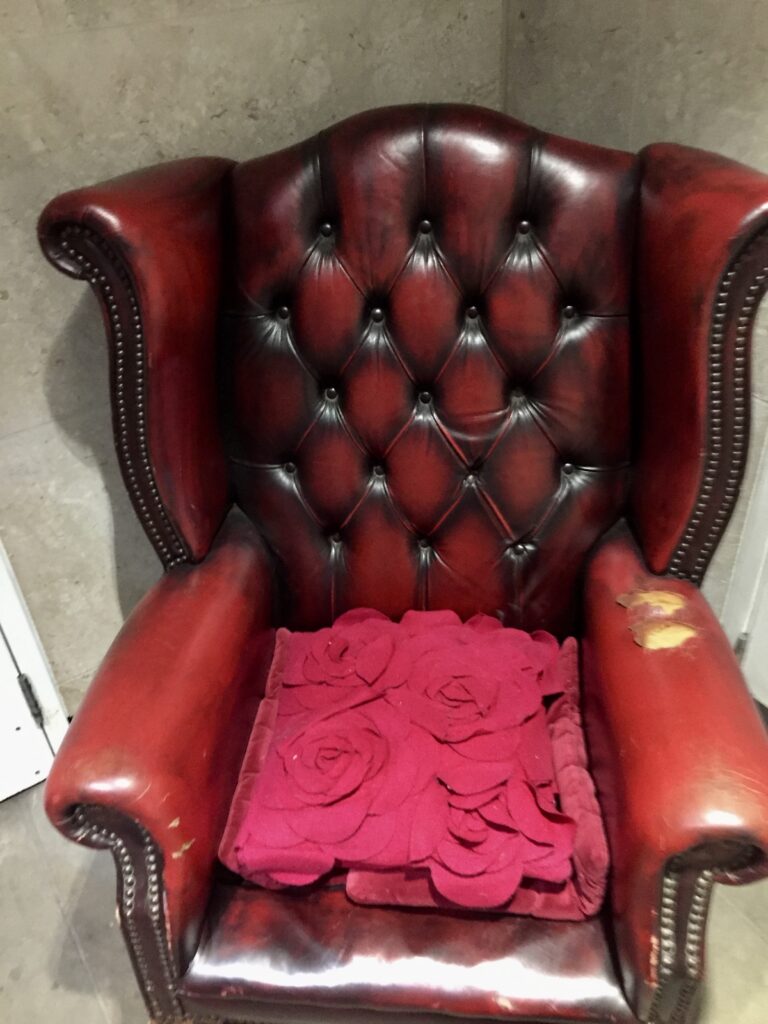
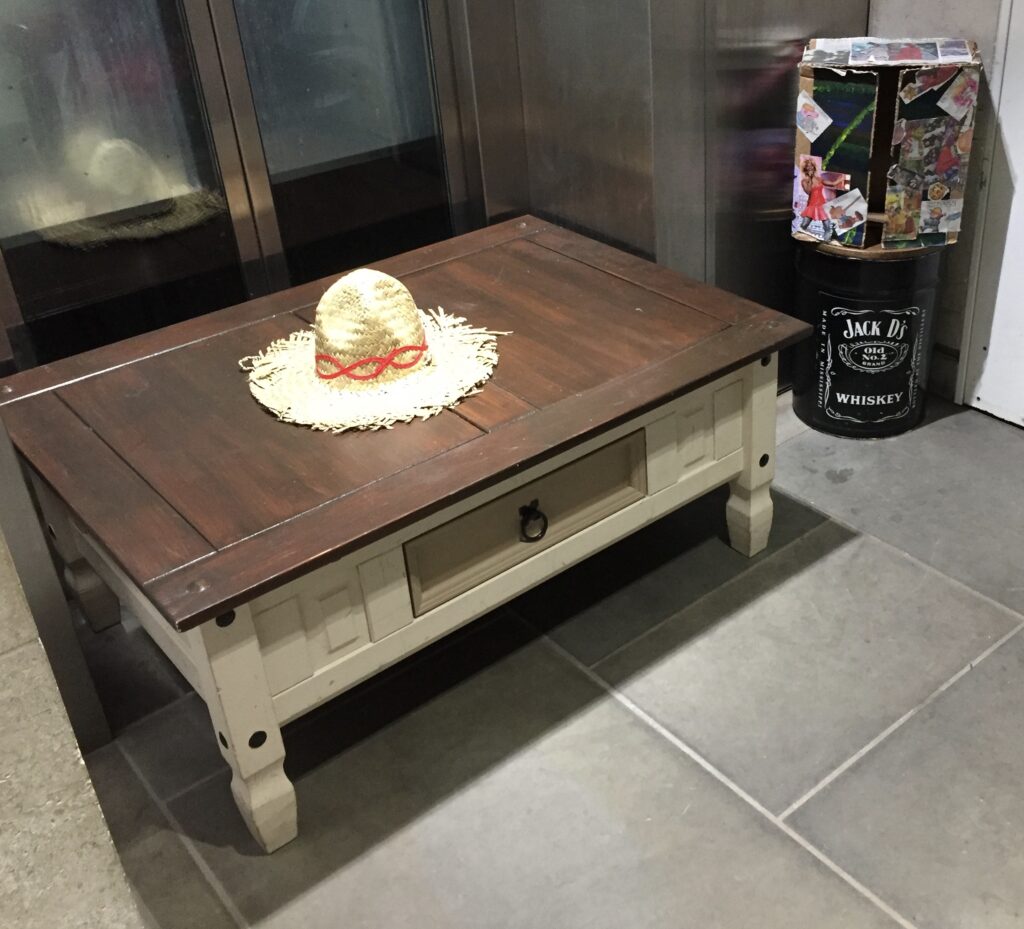
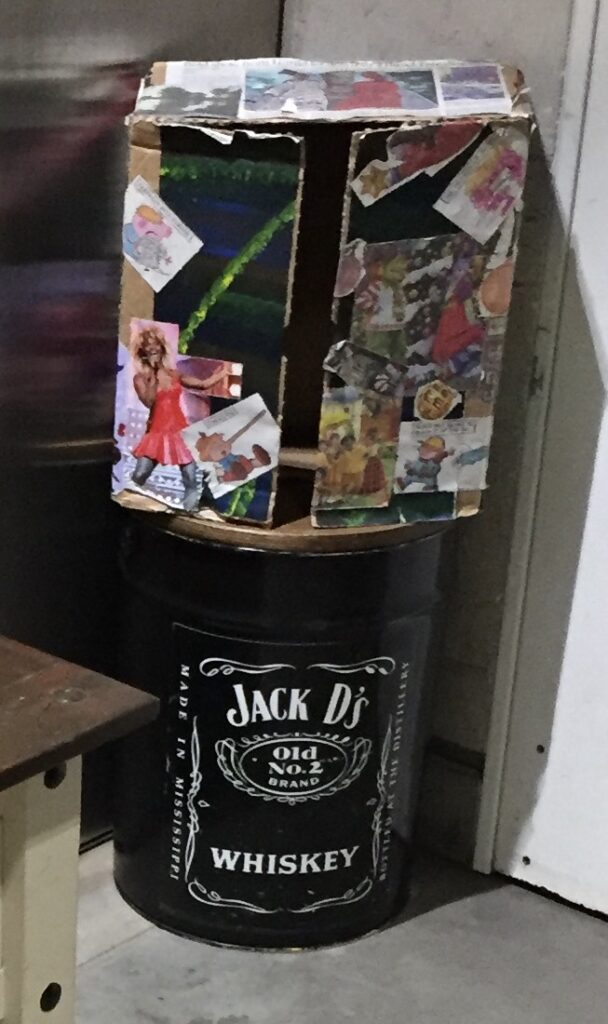
As I descended the stairs to Mansion House Station from Bow Lane I came across this little oasis of calm tucked away in a corner …
I have no idea what this is all about but it really cheered me up – so nice that it hasn’t been vandalised.
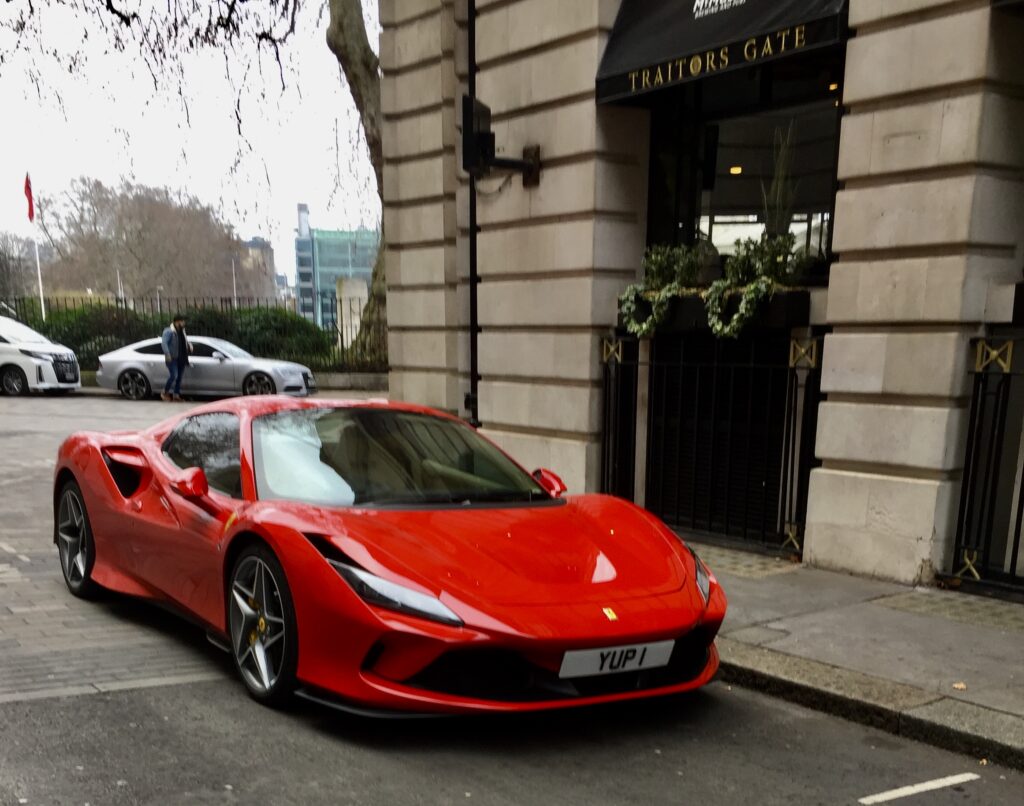
A couple of cars caught my eye …
Lord knows what this was doing parked outside the Linklaters law firm. Maybe the partners were going to a wedding.
And surely this car belongs to an old – school yuppie …
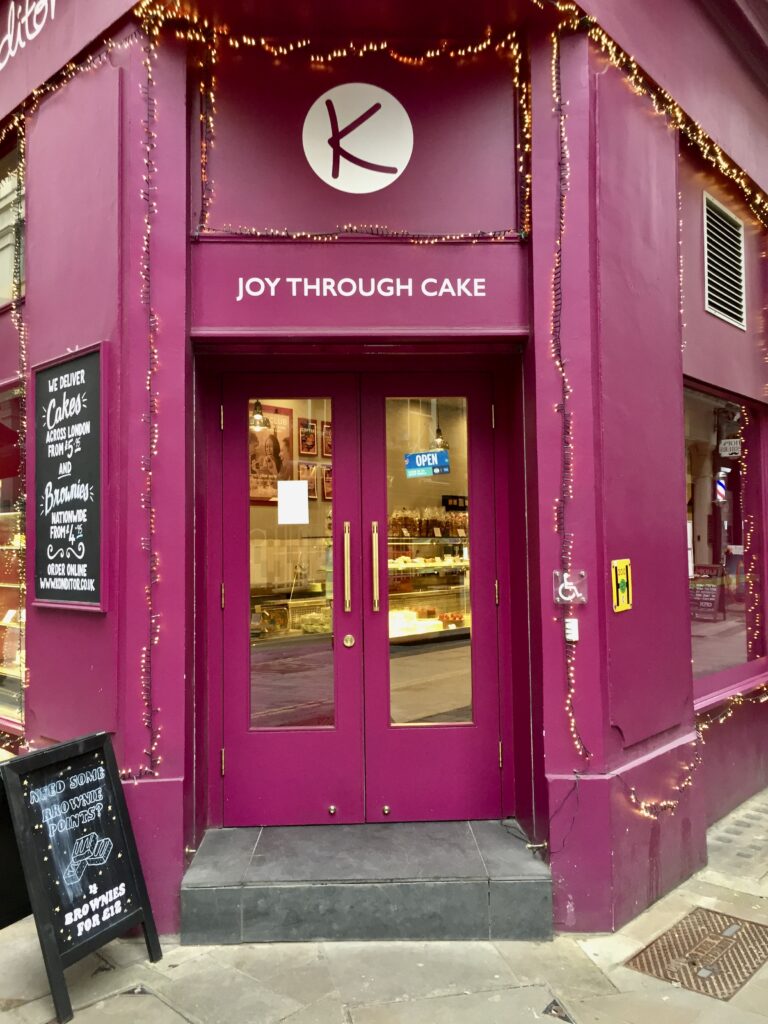
I wouldn’t argue with the sentiment above this door …
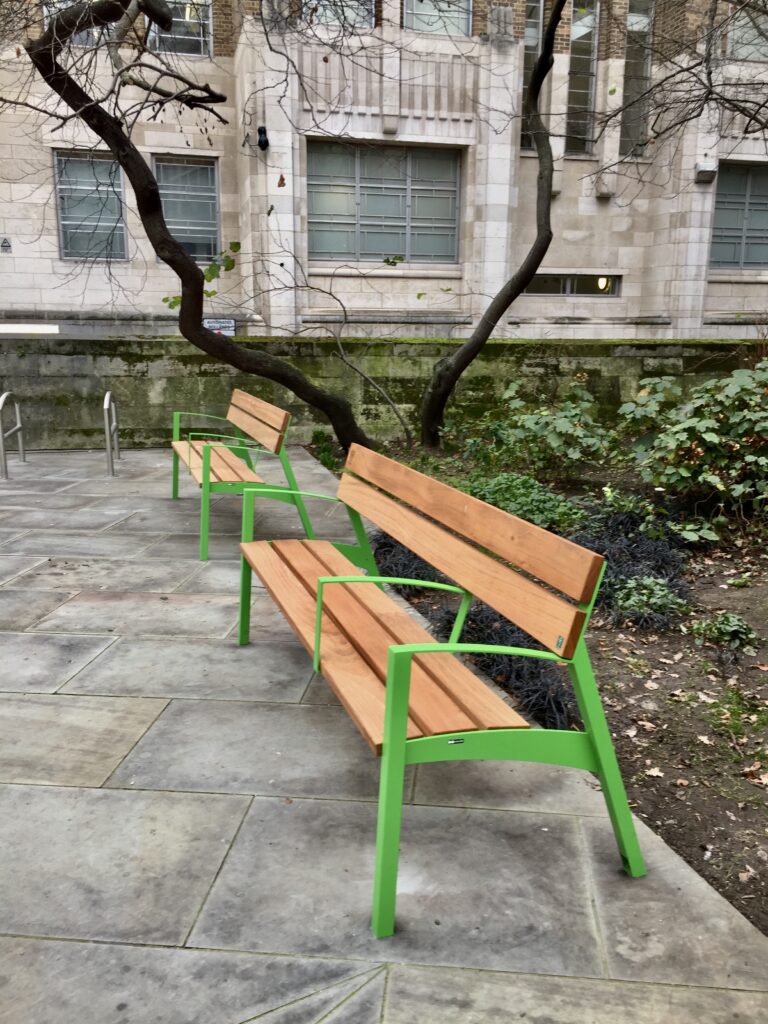
And finally, the City is being populated with some cheery new benches. These are in Aldermanbury …
Incidentally, the tree in the background is Cercis siliquastrum. It is also known as the ‘Judas tree’. This comes from the legend that Judas Iscariot, full of shame after his betrayal of Jesus, hanged himself from one of its branches.
If you would like to follow me on Instagram here is the link …