Walking the City of London

Category: Parks Page 2 of 3

Finsbury Circus Reborn!

I finally got around to having a walk through Finsbury Circus since it was reclaimed from the Crossrail excavations last year.

The park has two boasts – firstly, that it’s the largest public space in the City, and secondly, that it’s the oldest public park in London. At two acres, the first statement is undoubtedly true. The second, however, is a bit tenuous but I’ll relate the history of the space and you can reach your own conclusion.

Once upon a time, this area was part of the 12th century manor of Finsbury (hence the name). According to the Museum of London archive, archaeological investigations at seven sites within the nearby Finsbury Square area have revealed important evidence for the medieval and post-medieval development of this former marshy area north of the city walls. Evidence was recovered for Finsbury manor house, documented from 1272 and moated by the 14th/15th centuries, and for widespread quarrying and brick manufacturing beyond the manor in the later 15th century, along with dumping from nearby leather workshops in the 15th and 16th centuries.

The 16th century Agas map identifies the area as More Fyeld and, as you can see from this section of the map, it was a public open space where clothes could be laid out to dry …
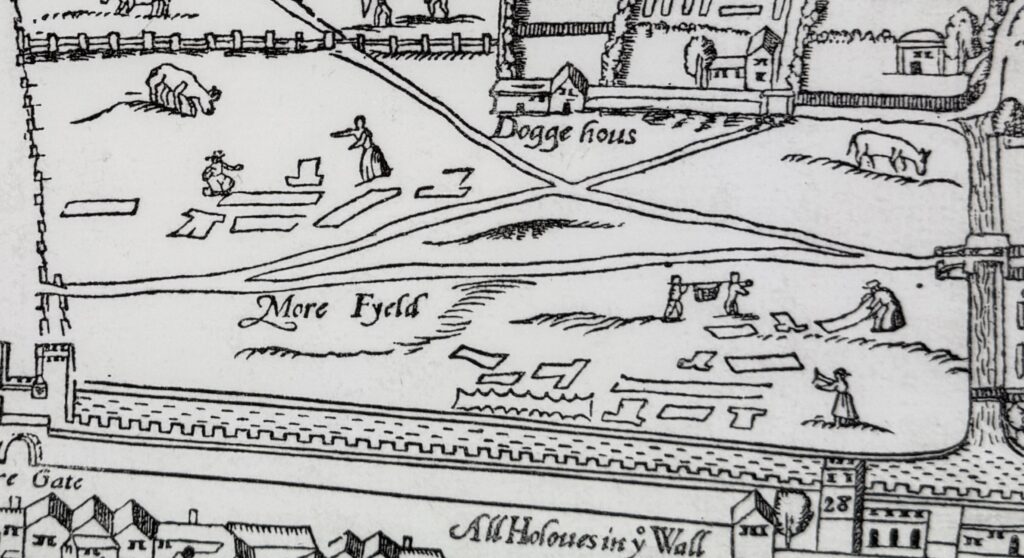
The dog house, incidentally, was where the Lord Mayor of London kept his hunting dogs.

The area in a wider perspective. Note the windmills, the men practising archery and the packed housing inside the London Wall. You can also see two of the City gates – Moorgate and Bishopsgate. Look north of the latter and you can observe how the City is already spreading out into farmland …
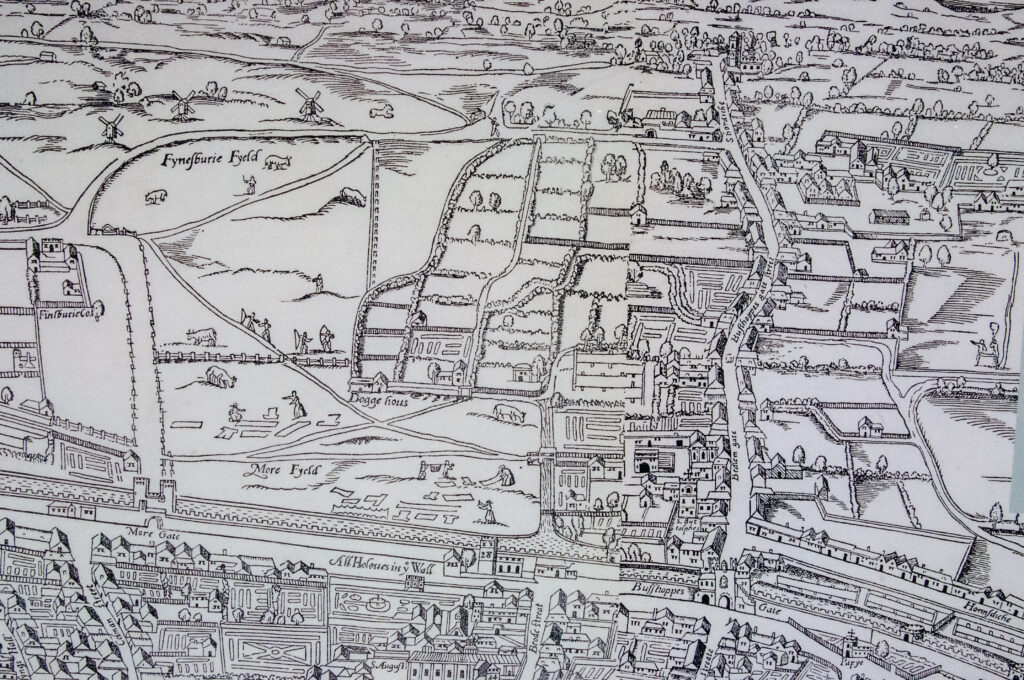
The designation of this as a public open space in 1607 was quite revolutionary since previously large open spaces tended to be enclosed (and were often the property of institutions such as the monasteries or the inns of court).

By the late 17th century it had acquired a notorious neighbour, as can be seen in this map of 1682 …
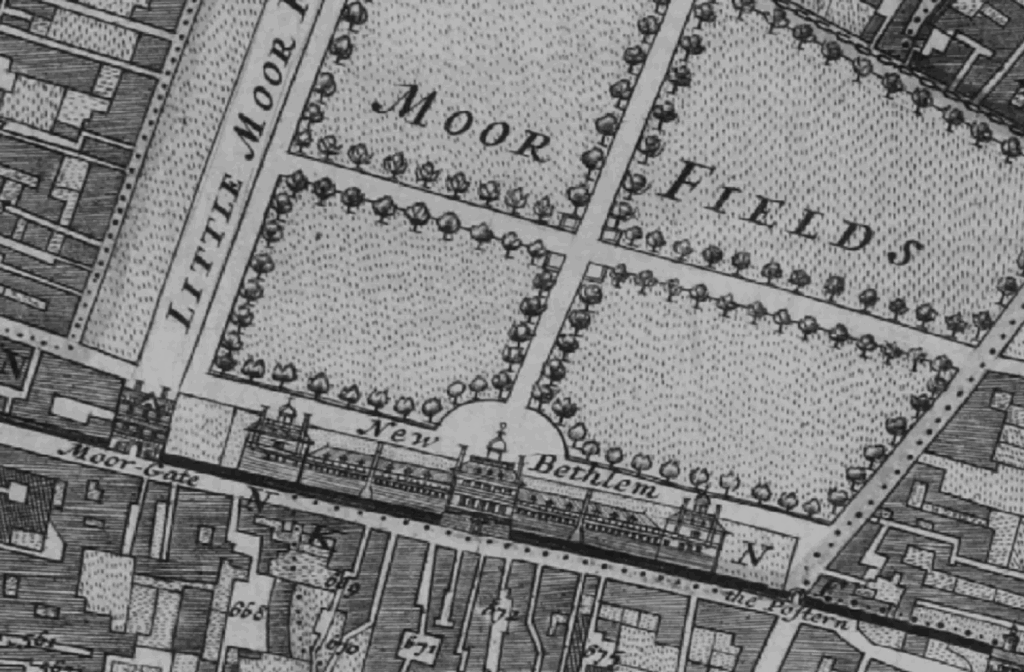
Bethlem Royal Hospital was England’s first asylum for the treatment of mental illness, and for many years a place of inhumane conditions, the nickname of which – Bedlam – became a byword for mayhem or madness. It was also a popular London attraction for the morbidly entertained.

Old Bethlehem Hospital at Moorfields about 1750 …
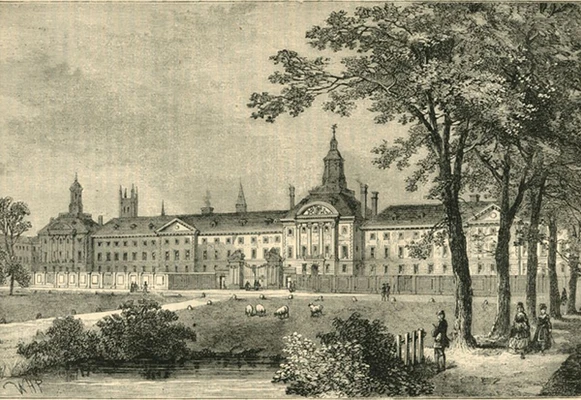
By the 1750s Bethlem was accepting tens of thousands of paying visitors a year, making it a top tourist attraction for Londoners, second only to St Paul’s Cathedral in popularity. Most did not wish to admire the manicured gardens or ornate architecture but came instead to visit the hospital’s ‘crackbrained’ patients. For as little as a penny, anyone could gain access to Bethlem’s wards in order to stare at, taunt or abuse inmates.

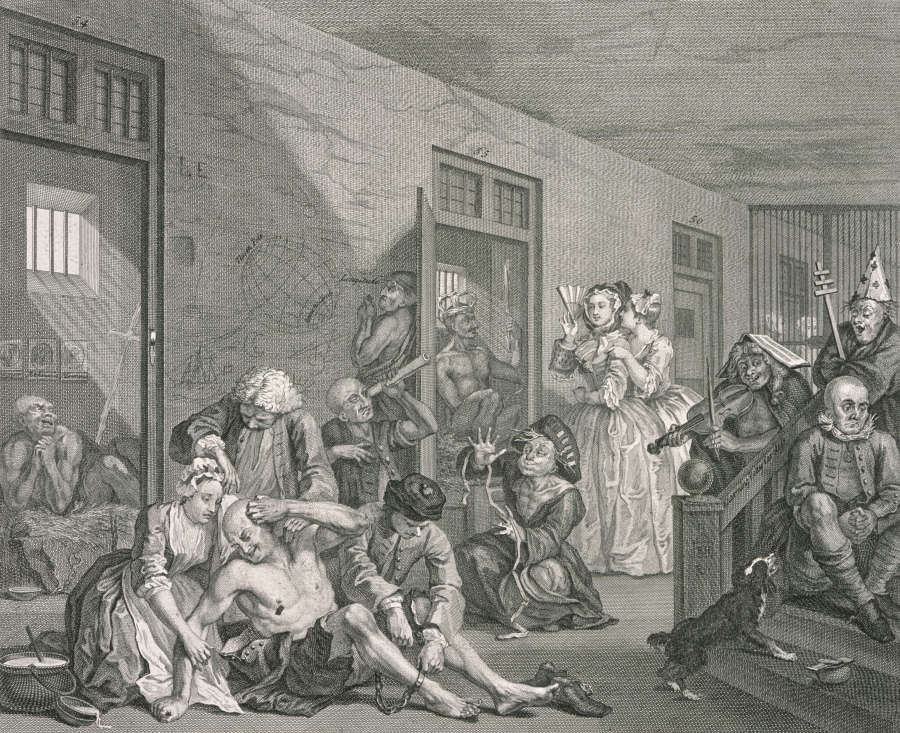
An insight into the chaos of the hospital can be seen in Hogarth’s ‘madhouse’ scene from his series, A Rake’s Progress. The ‘Rake’, a previously wealthy young man has lost his money gambling and is thrown into Bethlehem Hospital. He is half naked with his head shaved, his ankles about to be shackled, while around him are various scenes of madness while two well-dressed women visitors look on in amusement …
In 1815, Bethlem was moved from its collapsing Moorfields site to a brand new building at St George’s Fields, south of the Thames. Lessons had been learned and an 1818 report found patients ‘clean, amply supplied with wholesome provisions and well clothed [with none] under restraint’. A financial audit suggested that the hospital was solvent and generally well-managed.

In 1815 the City Surveyor, William Mountague laid out the large, oval design that still exists today. The space was unique in the City of London, a copy of the grand garden squares in the West End, and the circus was originally flanked by houses whose residents had exclusive use of the garden. Eventually, however, the houses were gradually demolished and the circus was opened as a public park in the early 20th century.

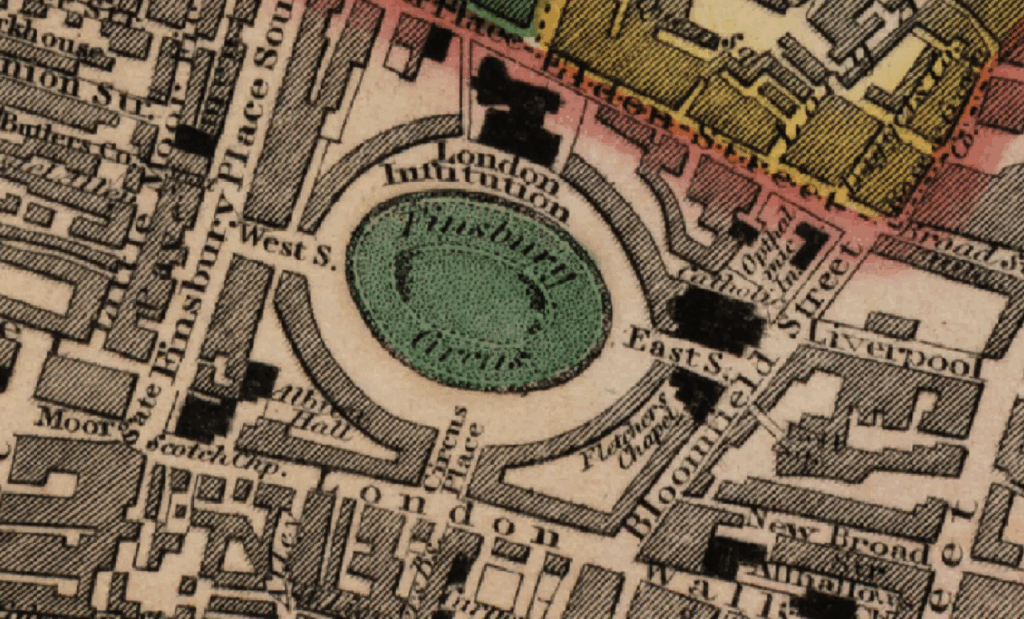
Looking at the 1828 C and J Greenwood map, the oval lawn is clear and one of the most prominent buildings is the London Institution. The educational institution specialised in the study of chemistry and only closed in 1912. It was briefly used by University of London but then the buildings were demolished in 1936 …
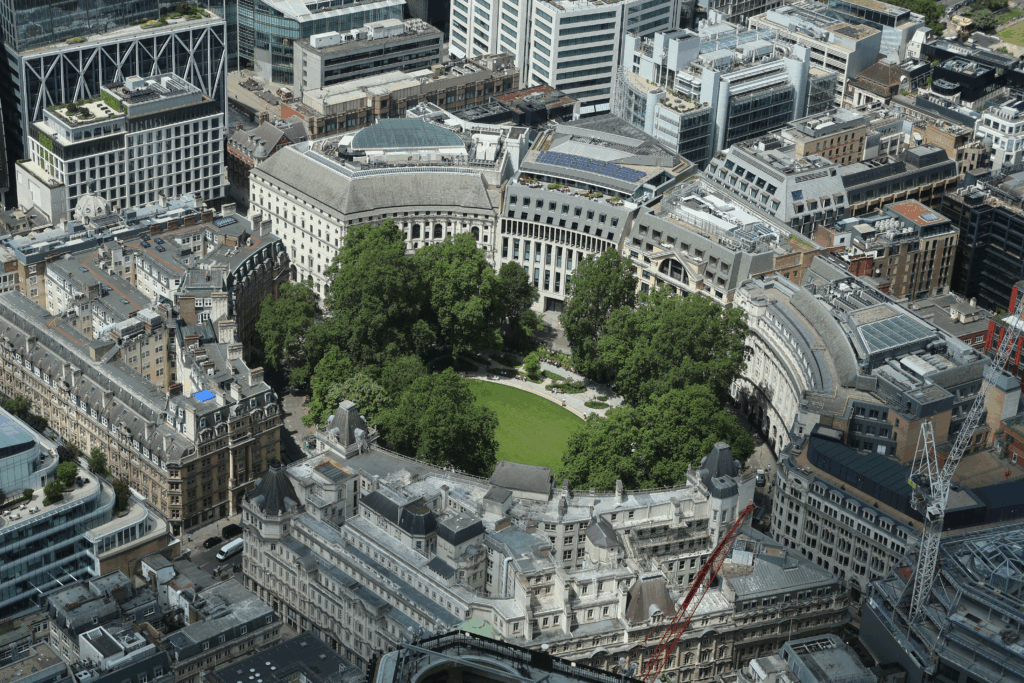
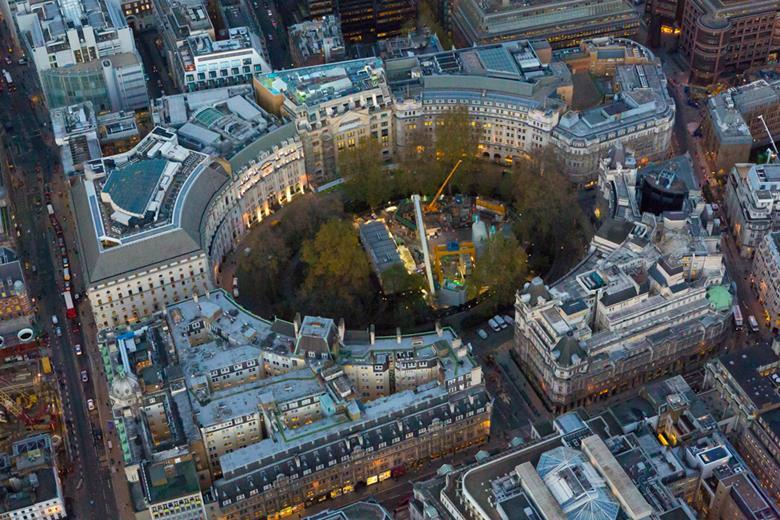
The ‘circus’ of the name reflects the elliptical shape of the space, similar to the circus venues of ancient Rome. This recent aerial image illustrates this nicely …
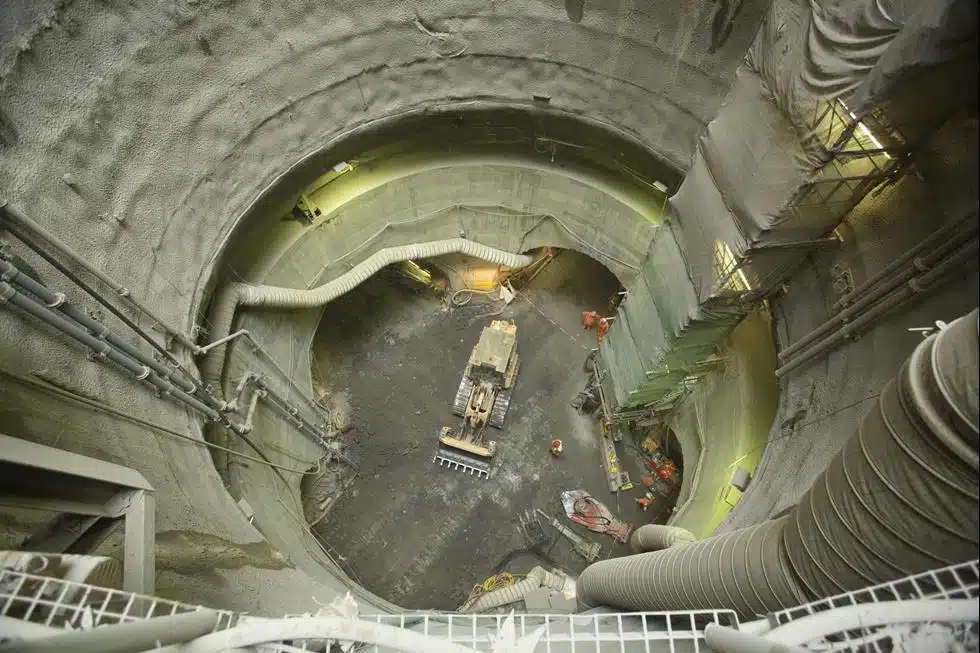
From 2010 Crossrail took over the site to utilise the open green space as an access shaft to building the Elizabeth Line’s Liverpool Street Station. This was an extraordinary feat of engineering and here are some images showing the work in progress at the circus …
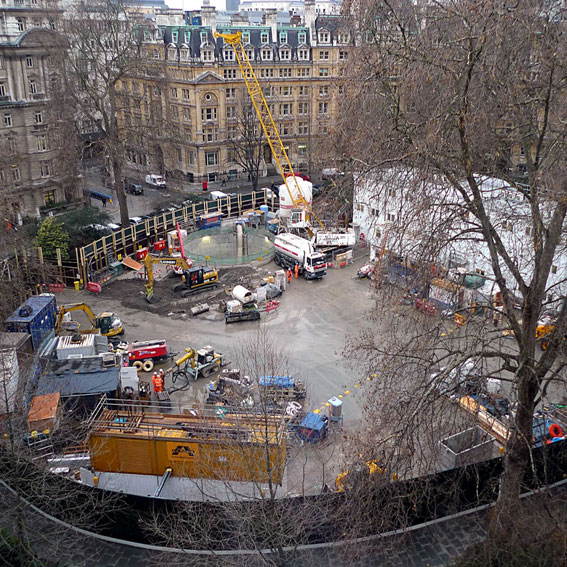
Looking down the shaft. It was 42 metres deep (that’s twice the height of the surrounding buildings if you want to picture it!) …
The garden is now restored and open. Policy Chairman at the City of London Corporation, Chris Hayward, said: Finsbury Circus Gardens is a beautiful, tranquil retreat in the heart of the City – now revitalised and ready to be rediscovered. Our green spaces play a vital role in making the Square Mile a welcoming and attractive place to live, work, and visit – delivering on our vision for a more inclusive, innovative, and sustainable City. These gardens reflect what makes the City of London so special – not just a global financial powerhouse, but a destination rich in beauty, history, and moments of escape.

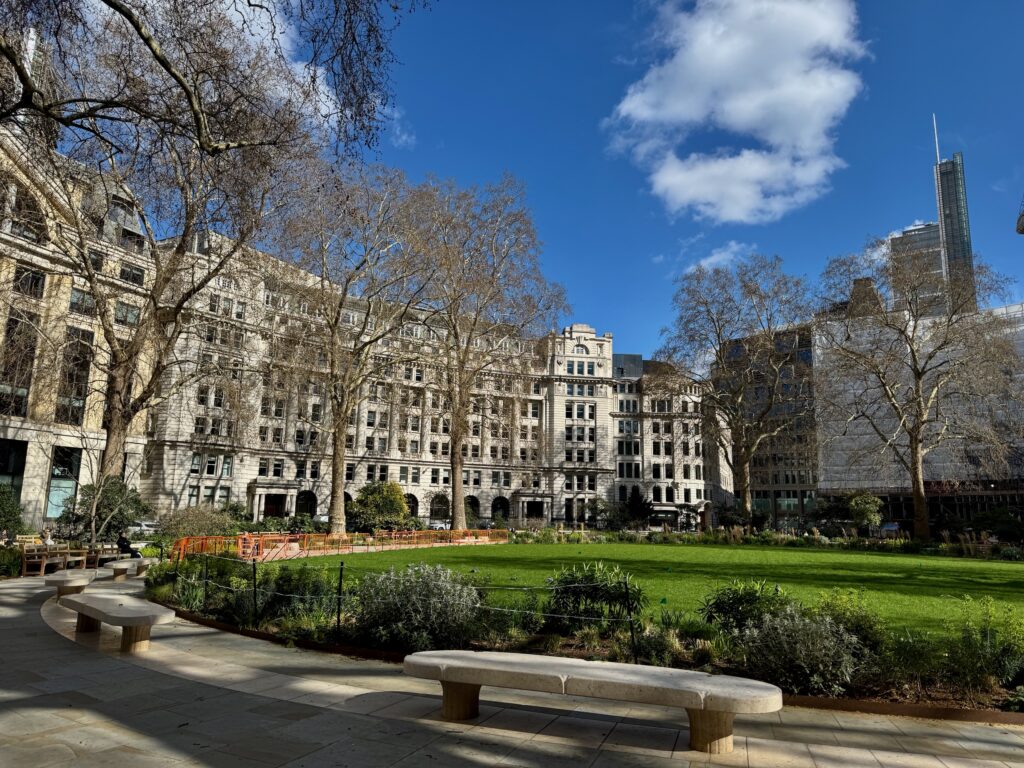
I’m inclined to agree. Here are some images I took last week when there was actually some sunshine for a change!

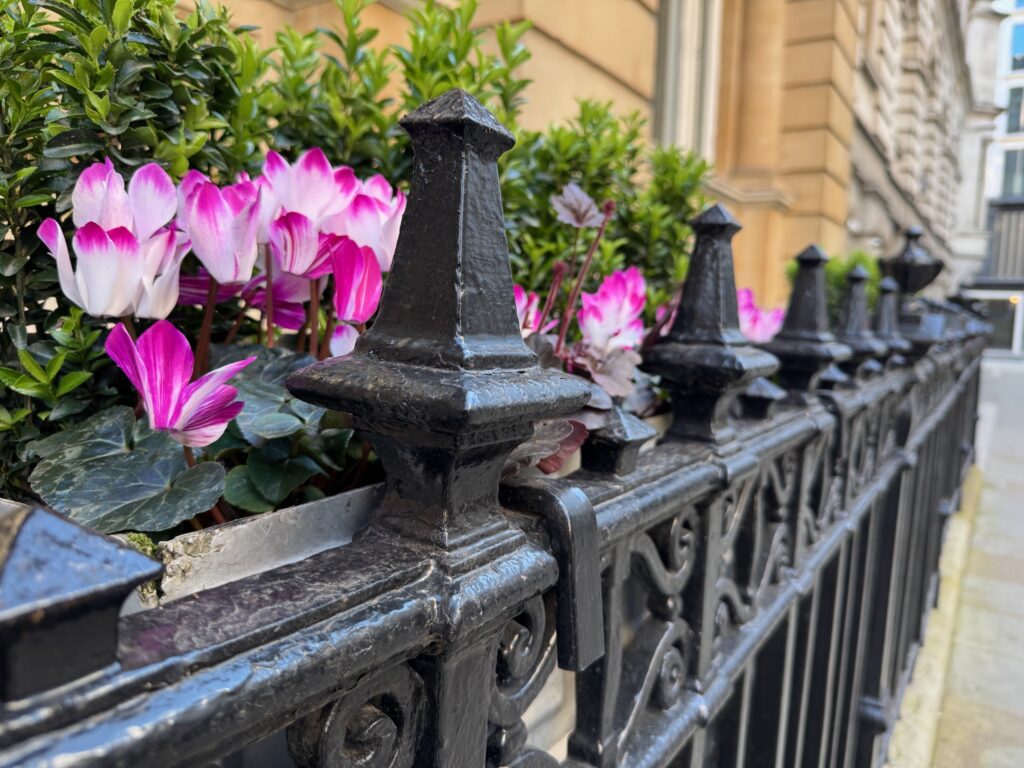
The approach from Moorgate has been pedestrianised with some nice new planting …
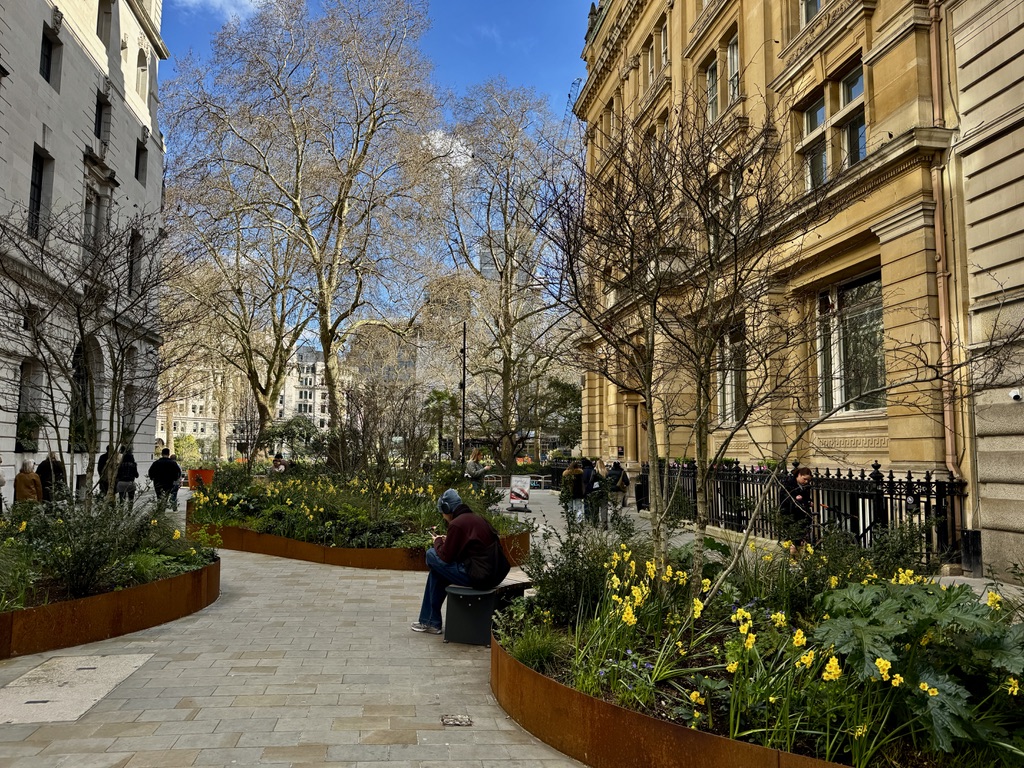
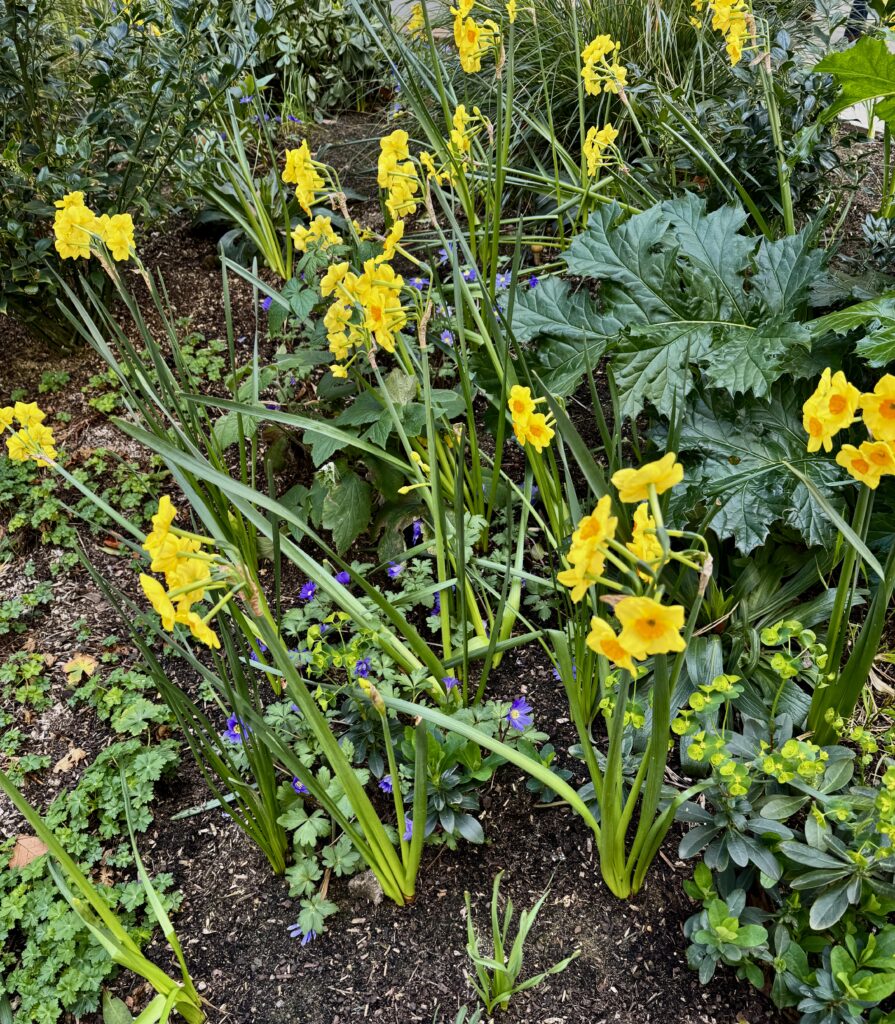
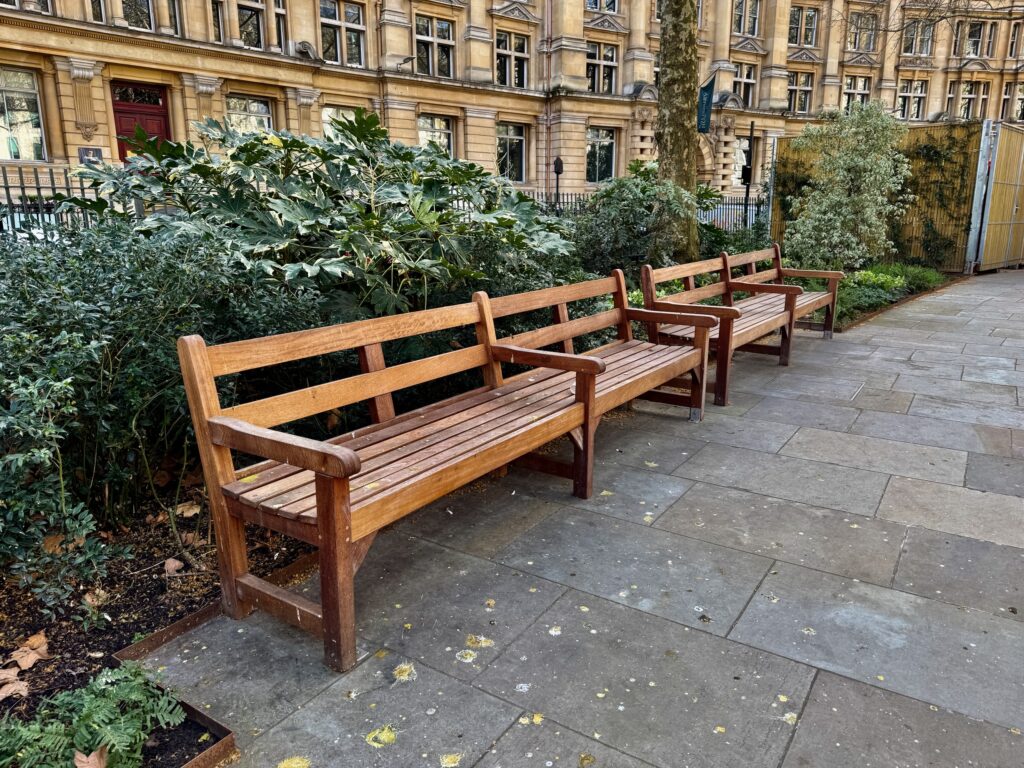
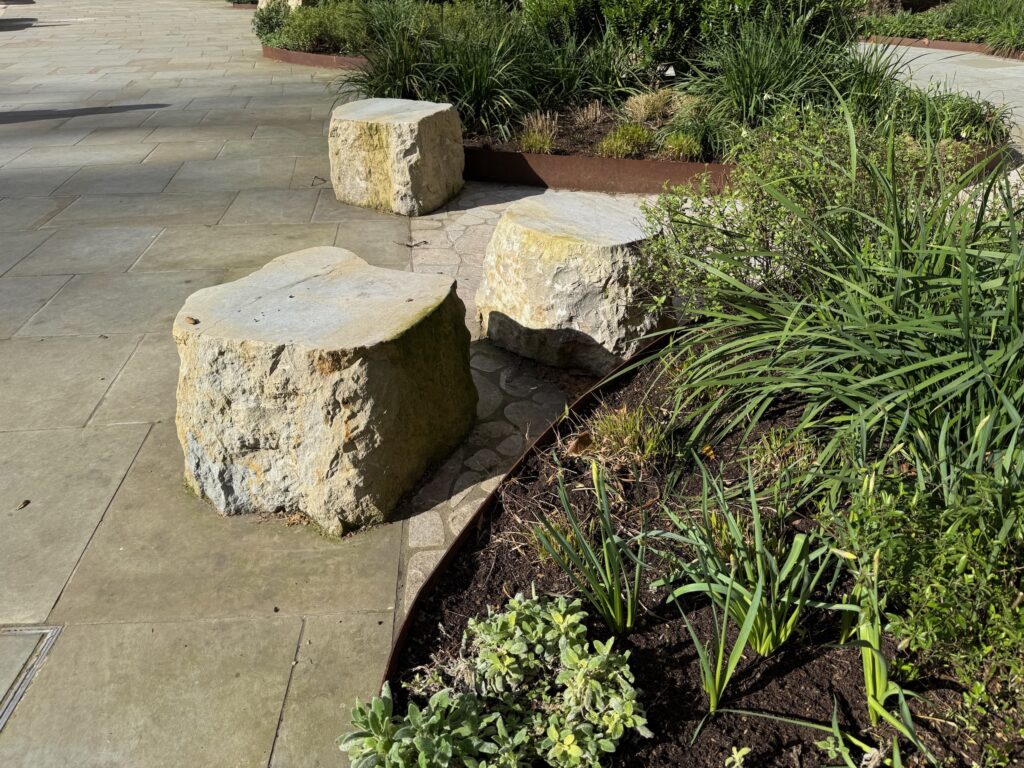
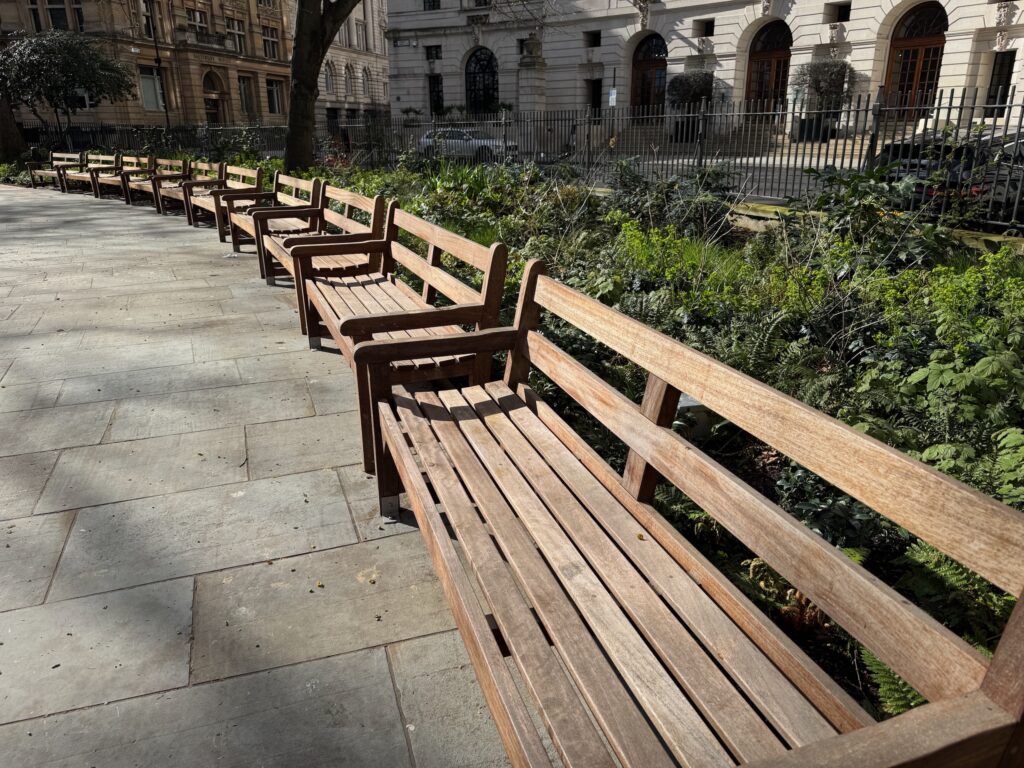
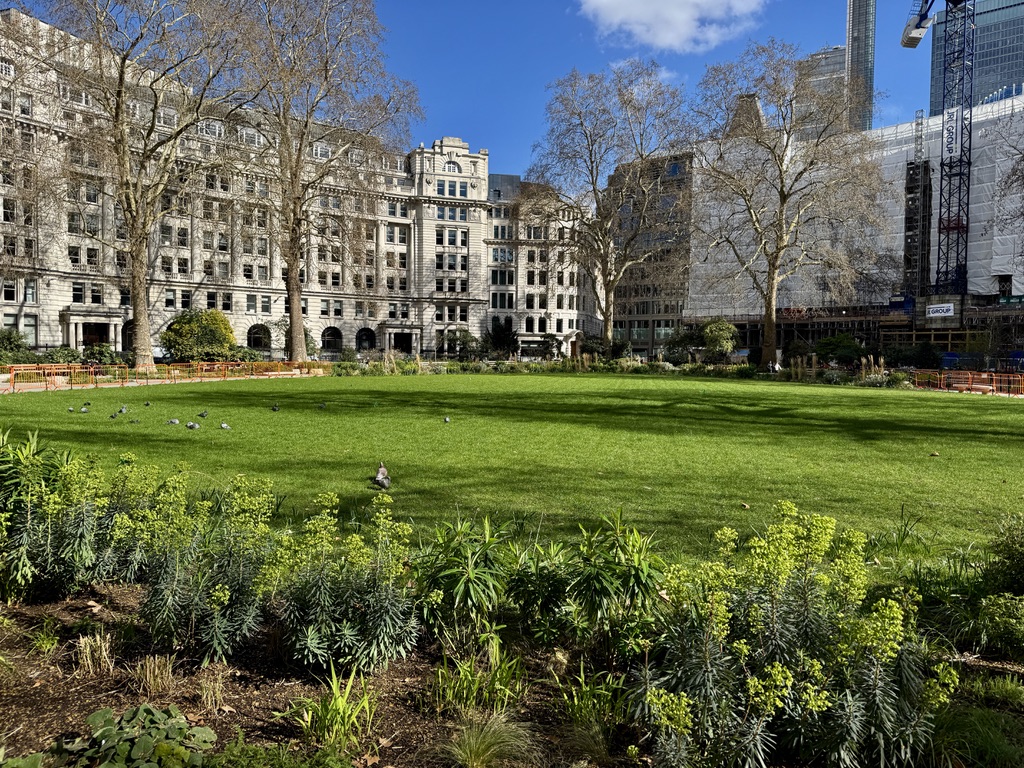
New landscaping has allowed 12 additional tree species to be introduced, along with 13,000 plants and 6,000 bulbs, creating a habitat for birds, bees and bats. A large central lawn is surrounded by flat, wide pathways and seating in the form of many benches, which will no doubt be popular with workers from nearby offices during sunny lunchtimes …
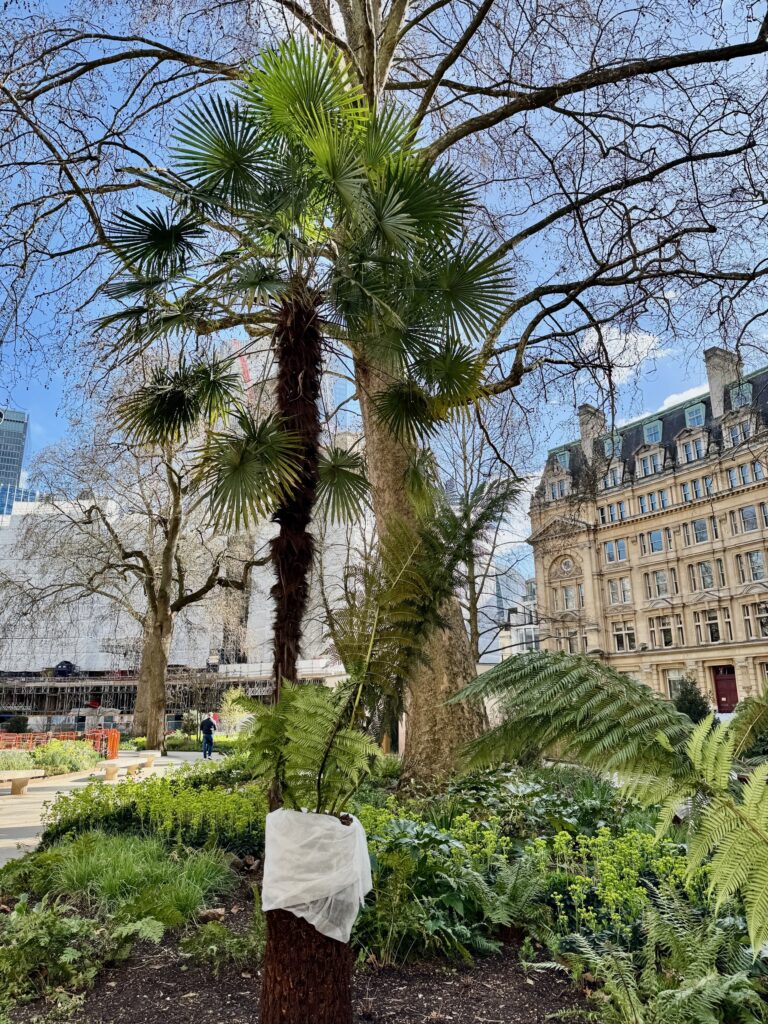
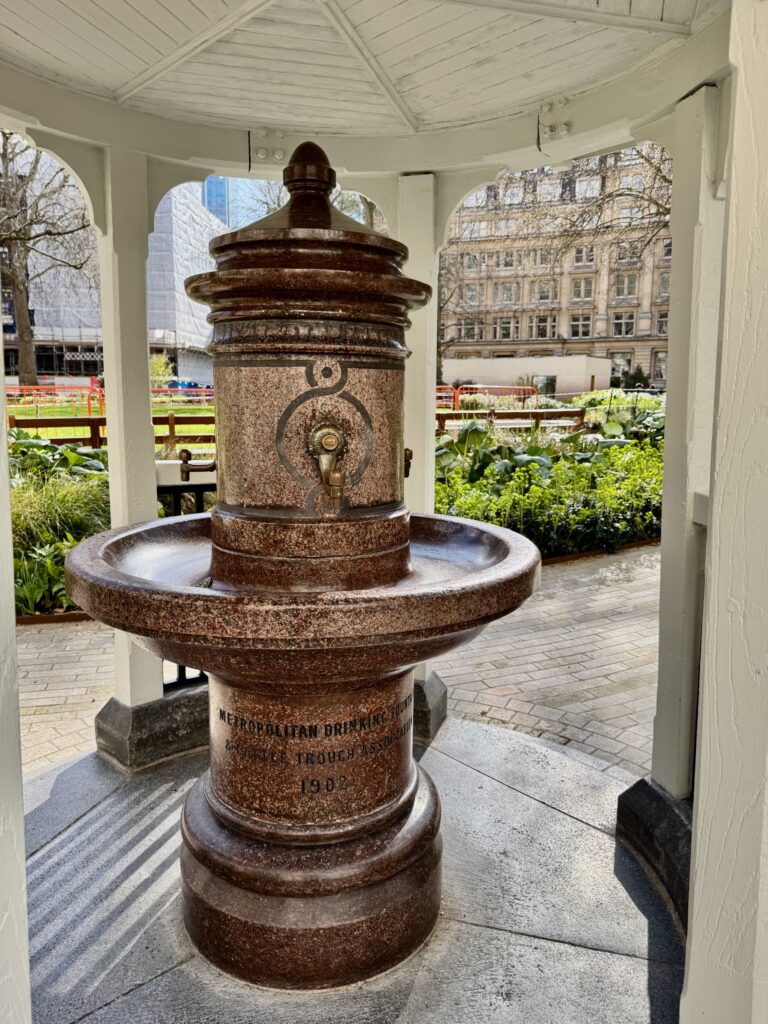
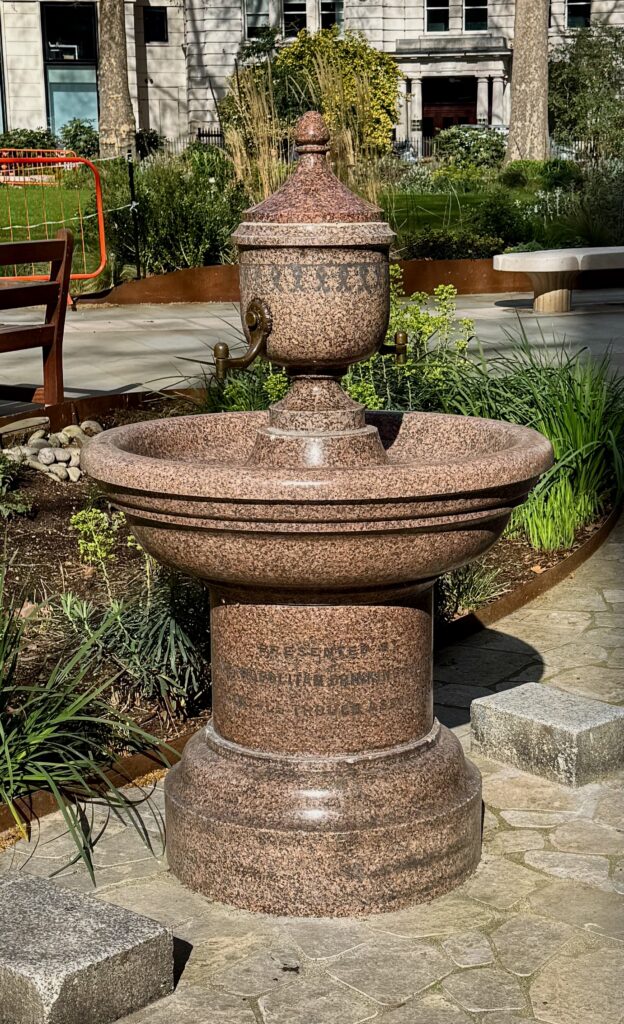
Two lovely old drinking fountains …
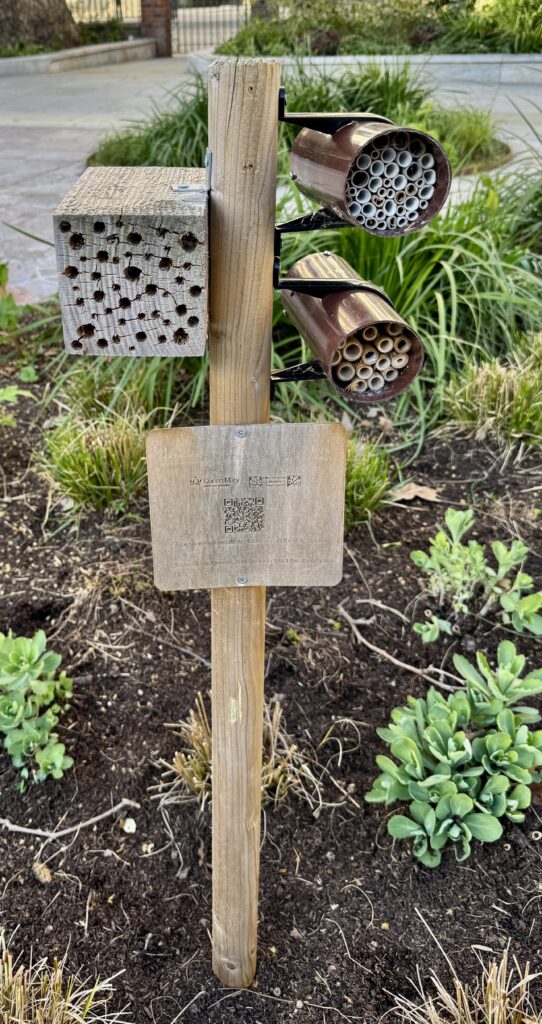
Insect hotel …
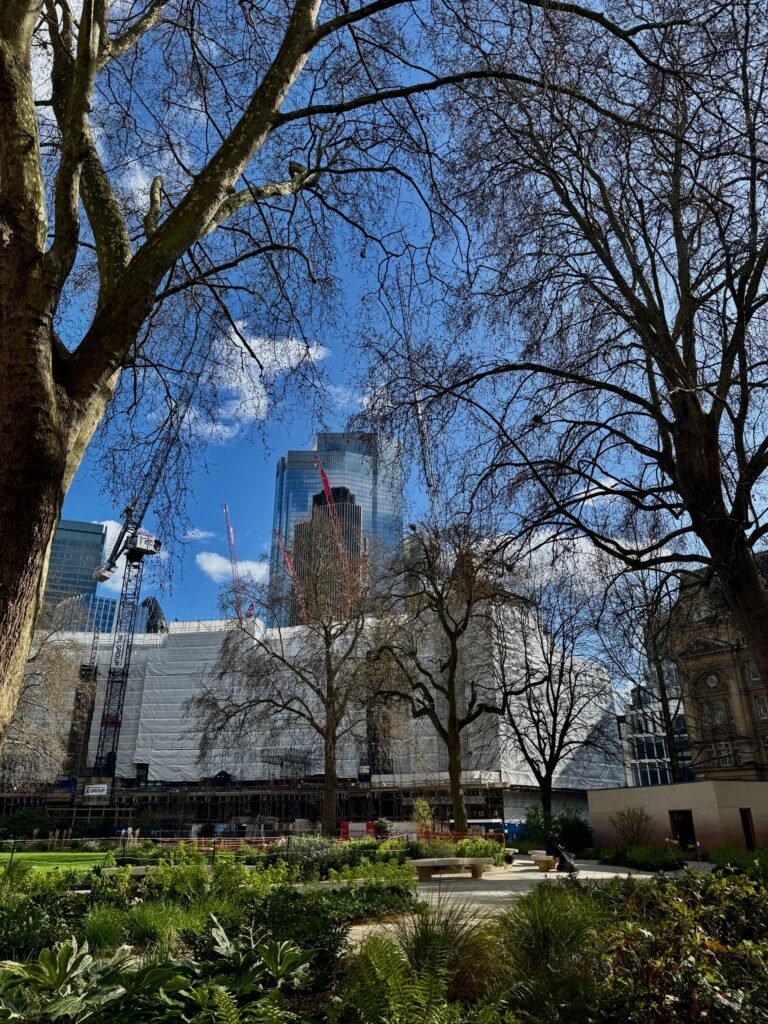
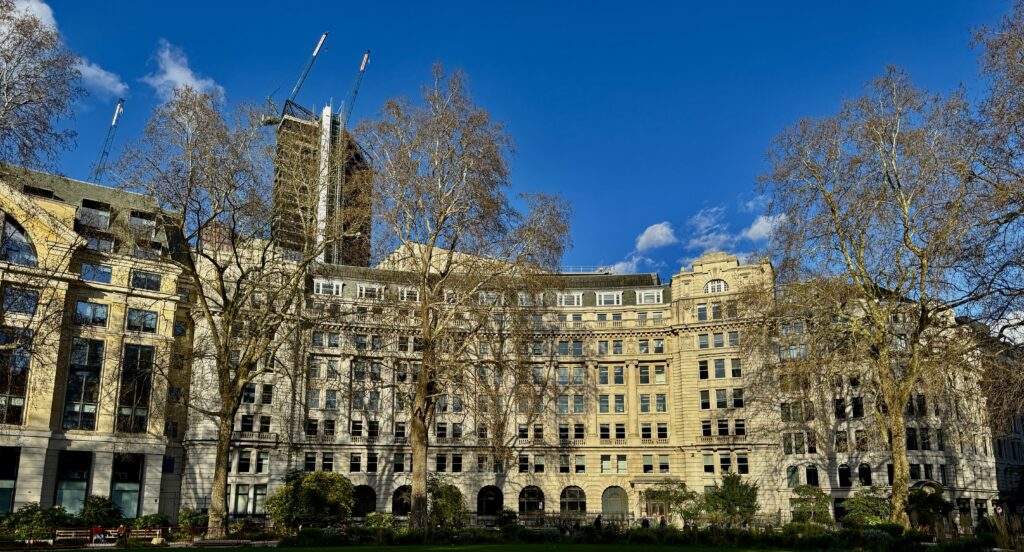
I was relieved to see that the beautiful mature trees had survived the disruption …
The squirrels and pigeons carry on their traditional roles as professional beggars …
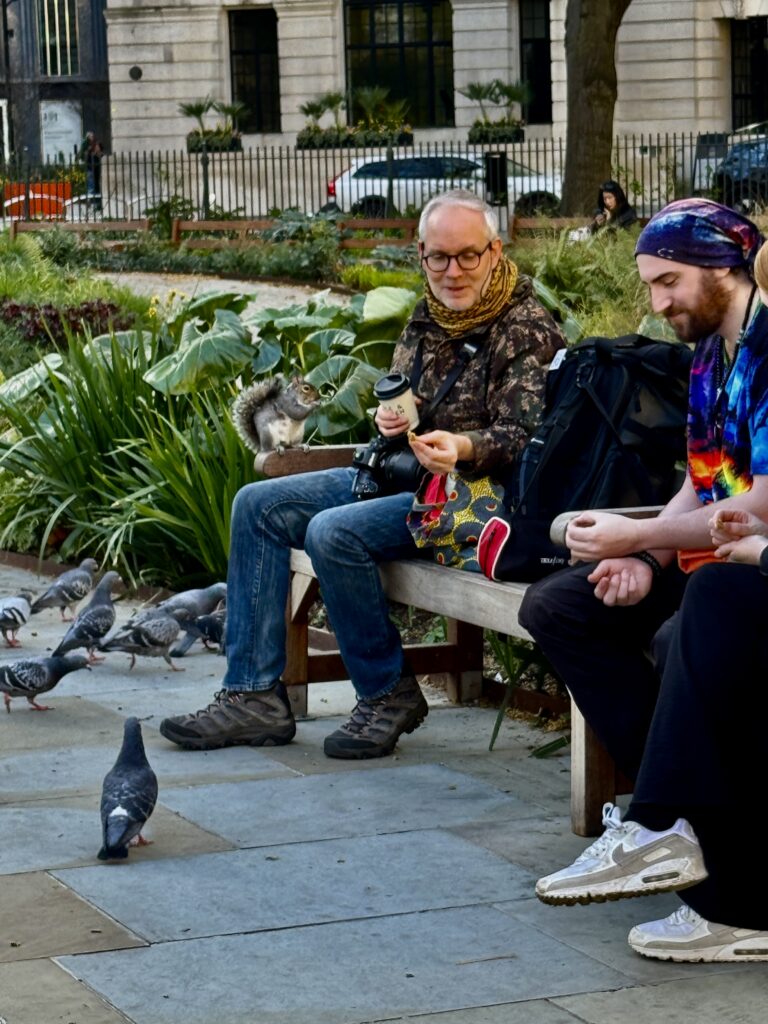
I was puzzled as to what became of the squirrels during the fifteen years of disruption after Crossrail moved in. Did they hang around in the trees or did they arrange an orderly retreat up City Road to Bunhill Fields until things returned to normal? I suppose I’ll never know.

There are interesting buildings both near and overlooking the circus and I shall write about them in another blog. Here’s a taster …
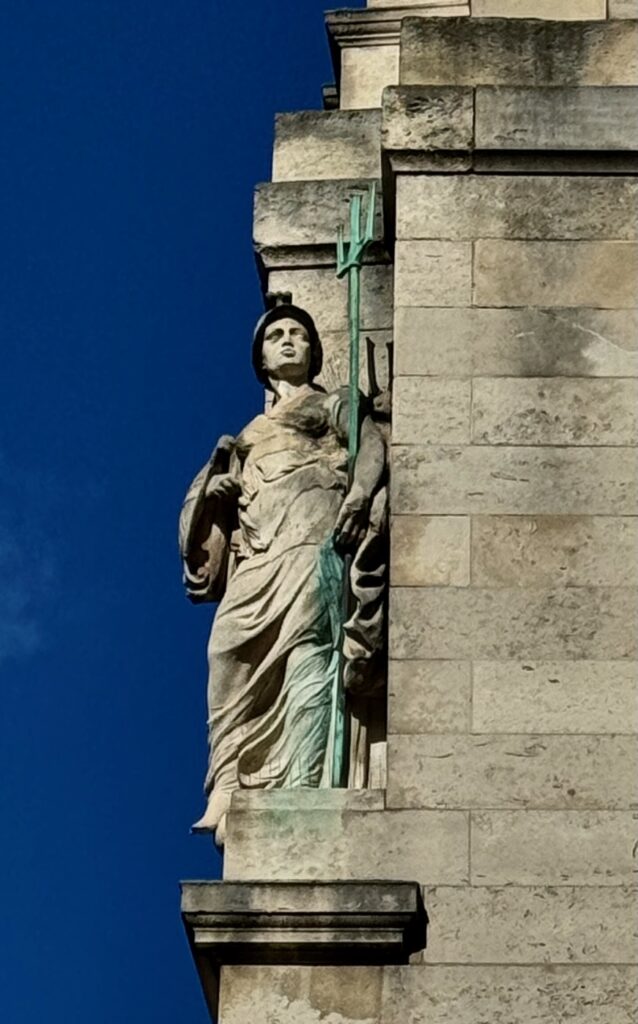
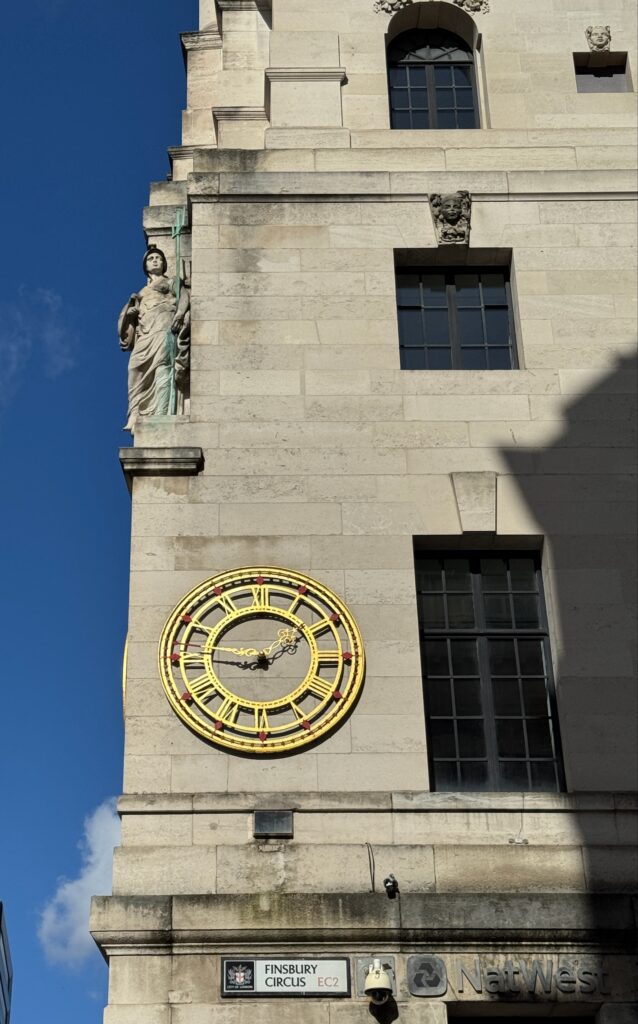
My thanks to Katie Wignall of Look Up London whose blog gave me some of the ideas for this week’s edition. You can read her post on Finsbury Circus here.

If you would like to follow me on Instagram here is the link …
https://www.instagram.com/london_city_gent

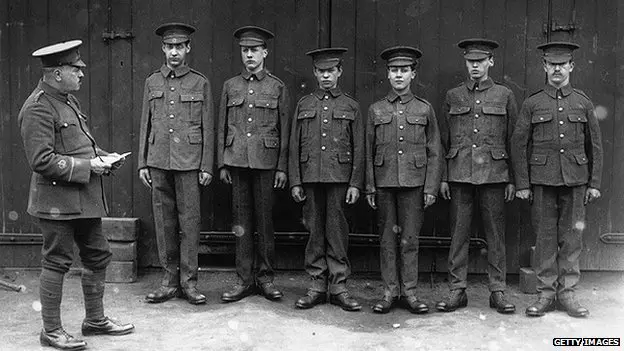
Seafarers and a boy soldier at Tower Hamlets Cemetery Park.

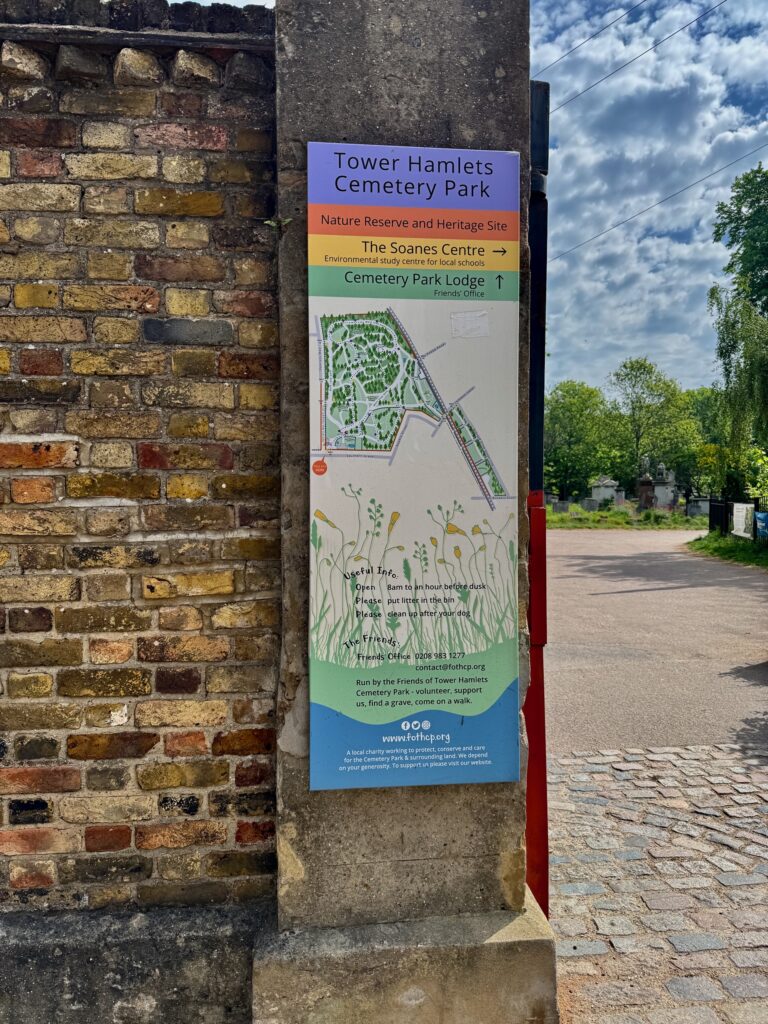
By the 1830s central London’s cemeteries were literally overflowing with bodies but it was entrepreneurs, rather than the religious authorities, who responded to the squalor by financing seemly, hygienic concepts of burial in the rural outskirts, now embraced by inner London. The Magnificent Seven is an informal term applied these developments and I am gradually working my way around them. I have now visited Highgate and Abney Park and recently I ventured east to Mile End and Tower Hamlets Cemetery Park.

The City of London and Tower Hamlets Cemetery Company was made up of eleven wealthy directors whose occupations reflect the industries of the day: corn merchant, merchant ship broker and ship owner, timber merchant, and Lord Mayor of the City of London. The company bought 27 acres (109,265 m2) of land and the cemetery was divided into a consecrated part for Anglican burials and an unconsecrated part for all other denominations. The Cemetery was very popular with people from the East End and by 1889 247,000 bodies had been interred (the cemetery remained open for another 77 years). In the first two years 60% of the burials were in public graves and by 1851 this had increased to 80%. Public graves were the property of the company and were used to bury those whose families could not afford to buy a plot. Several persons, entirely unrelated to each other, could be buried in the same grave within the space of a few weeks. There are stories of some graves being dug 40 feet deep and containing up to 30 bodies.

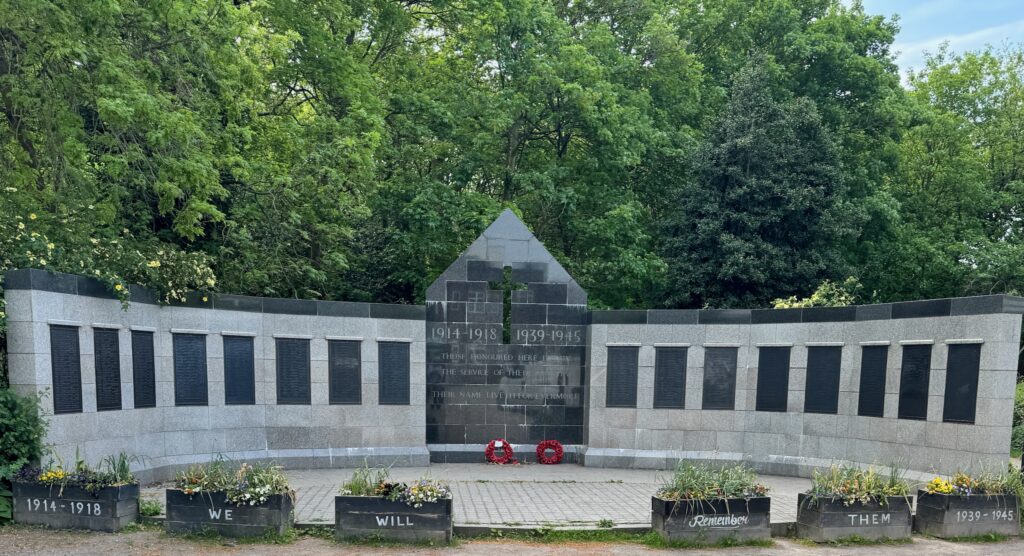
I headed straight for the beautifully situated war memorial …

It consistes of 16 bronze tablets carrying a list of 283 names. I often find it incredibly moving to look closely at the names, and particularly the ages, of those who have been commemorated in memorials such as this.

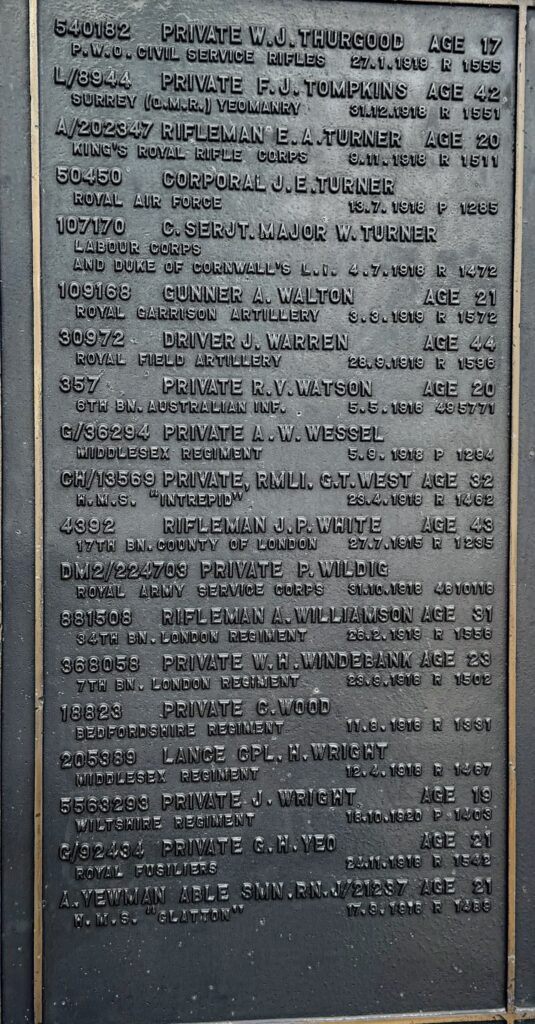
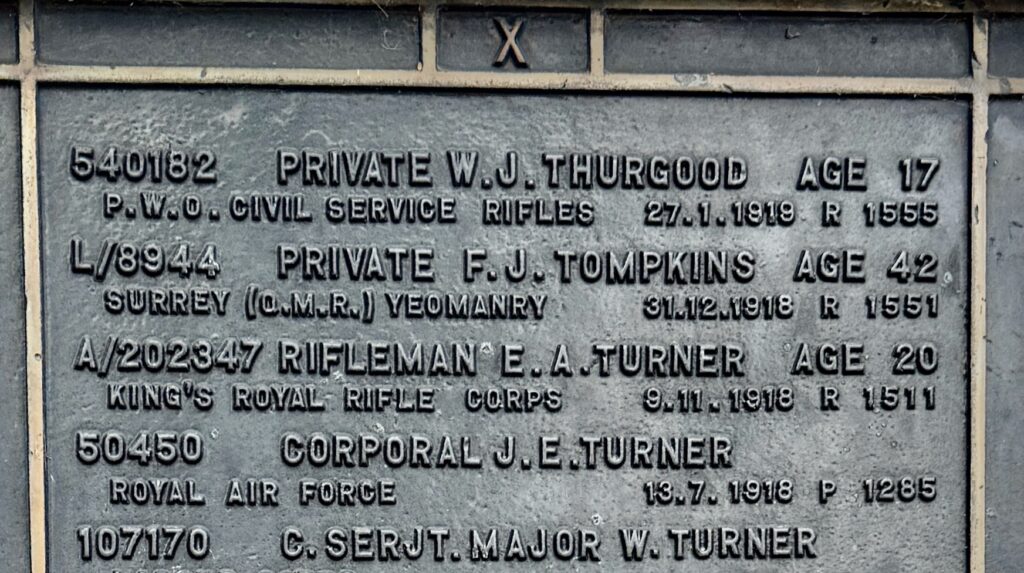
This panel certainly told a story since the first name I came across was that of a 17-year-old called Private W J Thurgood of the Civil Service Rifles …

The rules were that you had to be 18 to join up or be conscripted but it is estimated that around 250,000 boys under that age served during the First World War. Incidentally, the letters P.W.O. stand for the Prince of Wales’ Own.

This image tells a story …

The panel in full …

Of the fourteen men listed here where ages are stated, eight are aged 21 or younger.

You can read more about the teenage soldiers of World War 1 here.

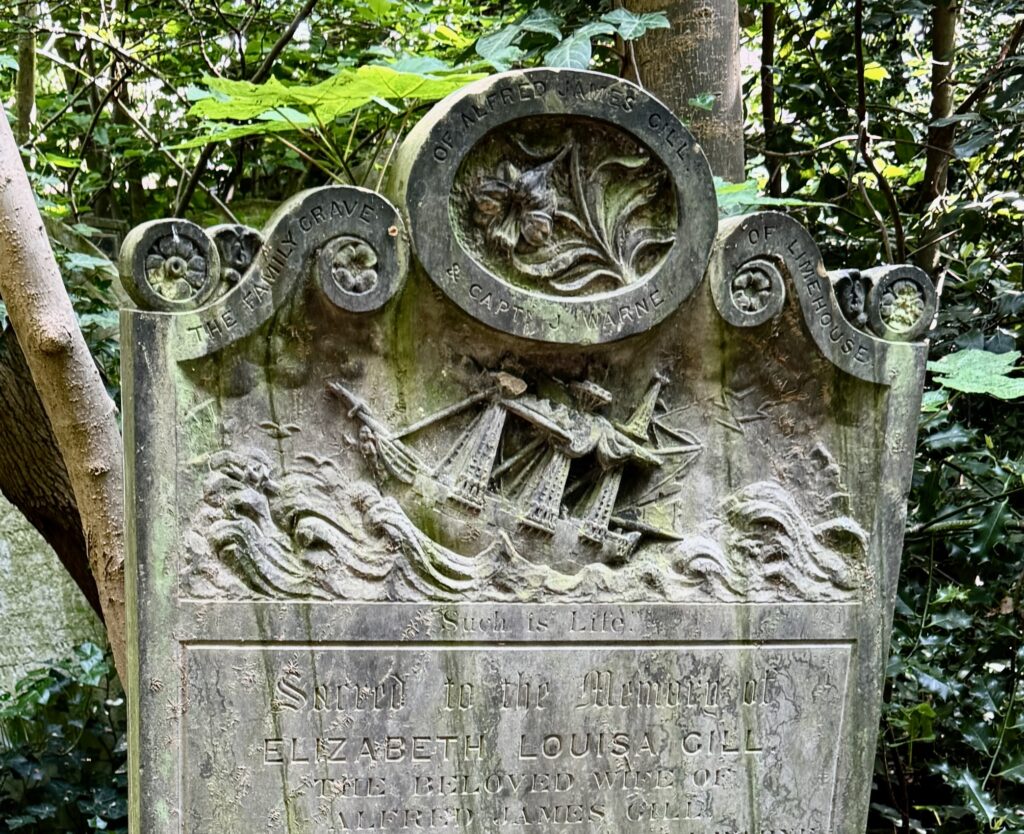
A terrible storm at sea is brought to mind here on the family grave of Alfred James Gill and Captain J Warne. I love the details such as the rigging, the bird hovering on the left and what looks like lightning flashing on the right ….

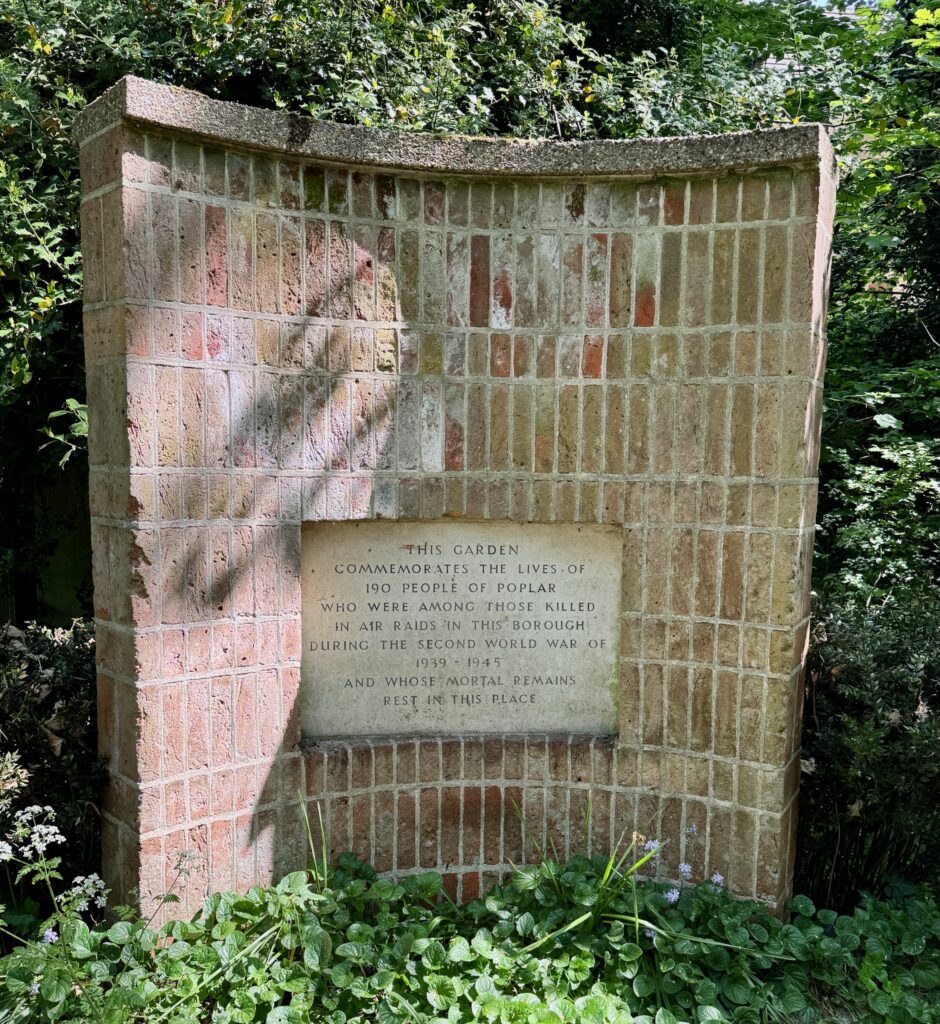
A commemoration of the 190 people who died in Second World War air raids ….

The bricks used in this memorial come from the bombed houses nearby. The mention of a garden in the inscription (“THIS GARDEN…”) is about a garden that does not exist any more because, first, it became a path right up to the brick memorial, and second, the memorial itself was moved to a different location within the cemetery in 1995 because of vandalism.

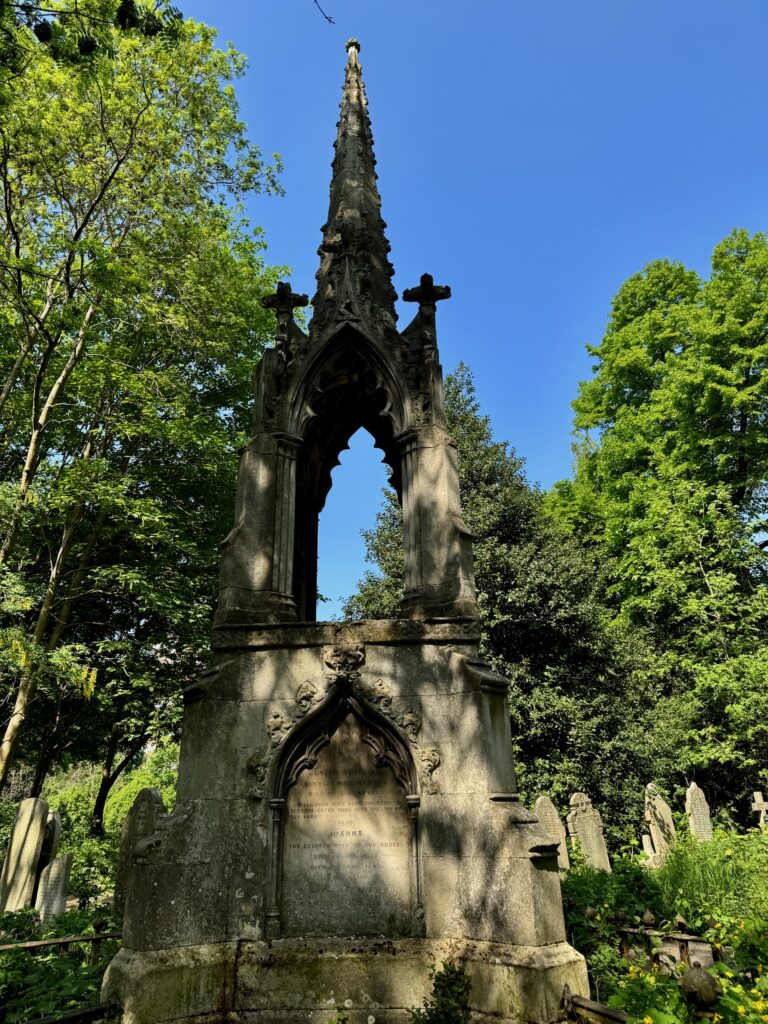
One of the largest – and certainly the most imposing – family monument in the cemetery, is the Westwood Monument. Joseph Westwood, a businessman, lived at Tredegar House on the Bow Road …

You can read more about the Westwood dynasty here.

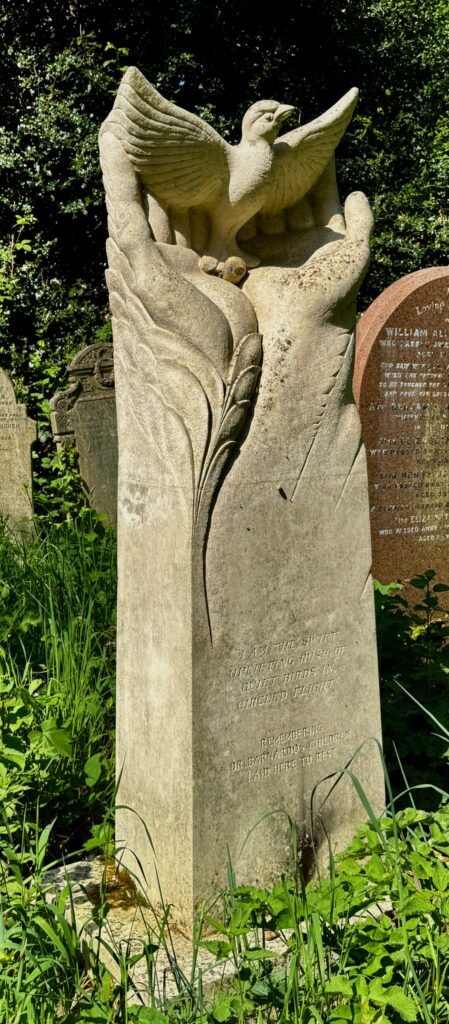
A few steps from the Westwood Monument is a 2016 memorial marking the
grave of three of Dr Thomas Barnado’s own children, and more than five hundred children who died whilst in his care who are buried elsewhere in
the Cemetery. Dr Barnado, who started his work with poor children in Stepney in 1868, set up The Ragged School in Stepney Causeway and children’s homes across the East End …

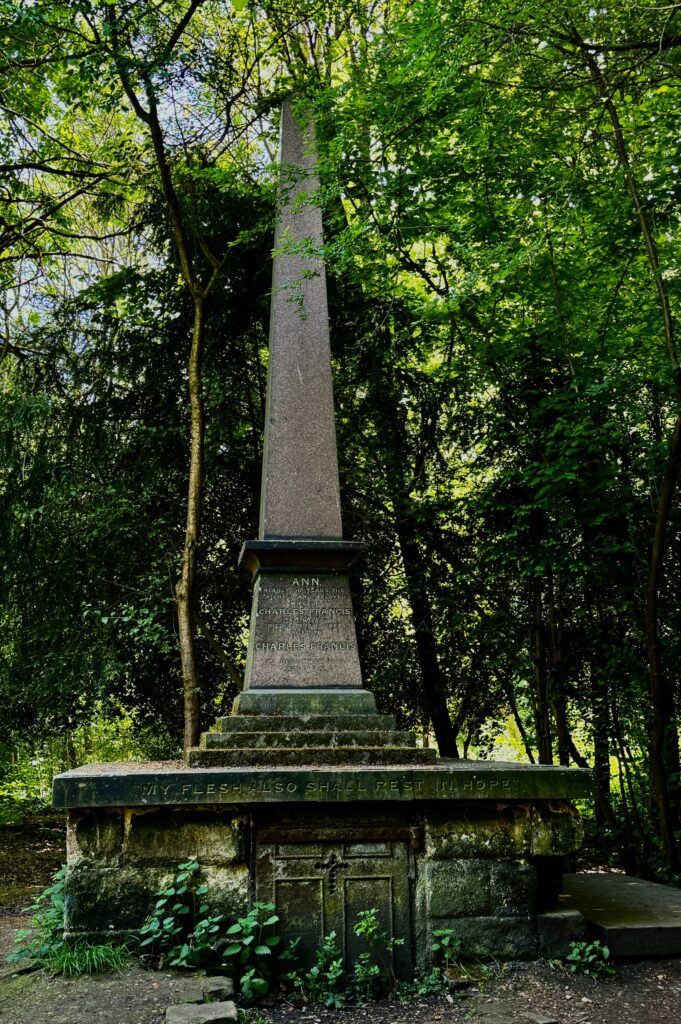
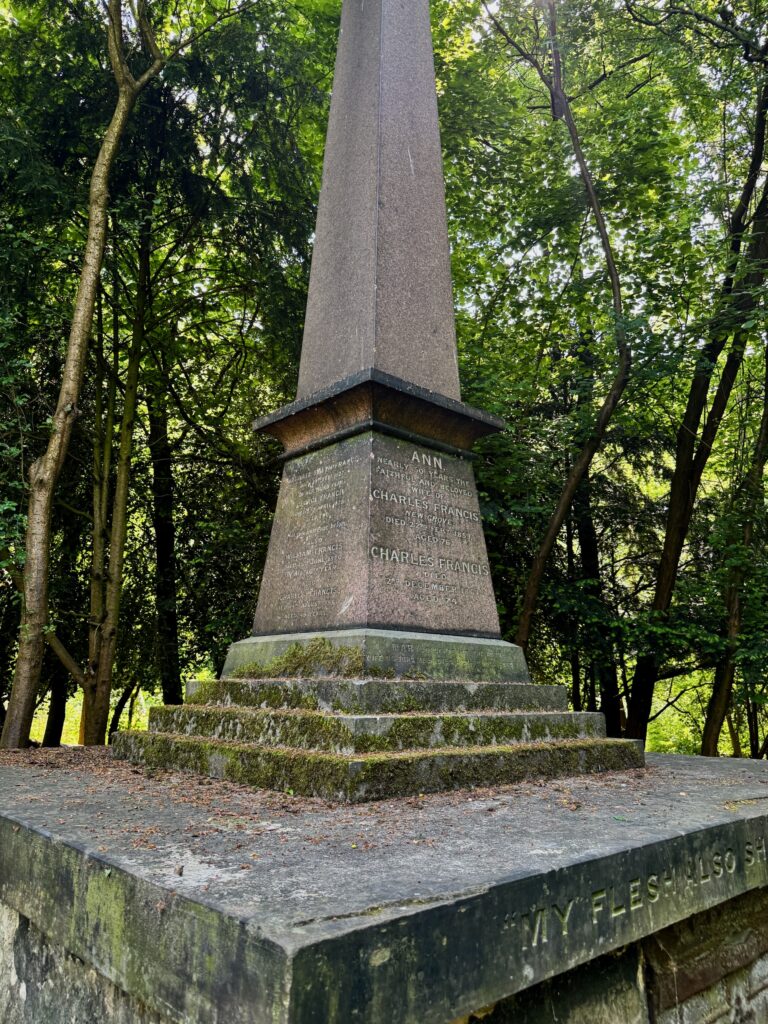
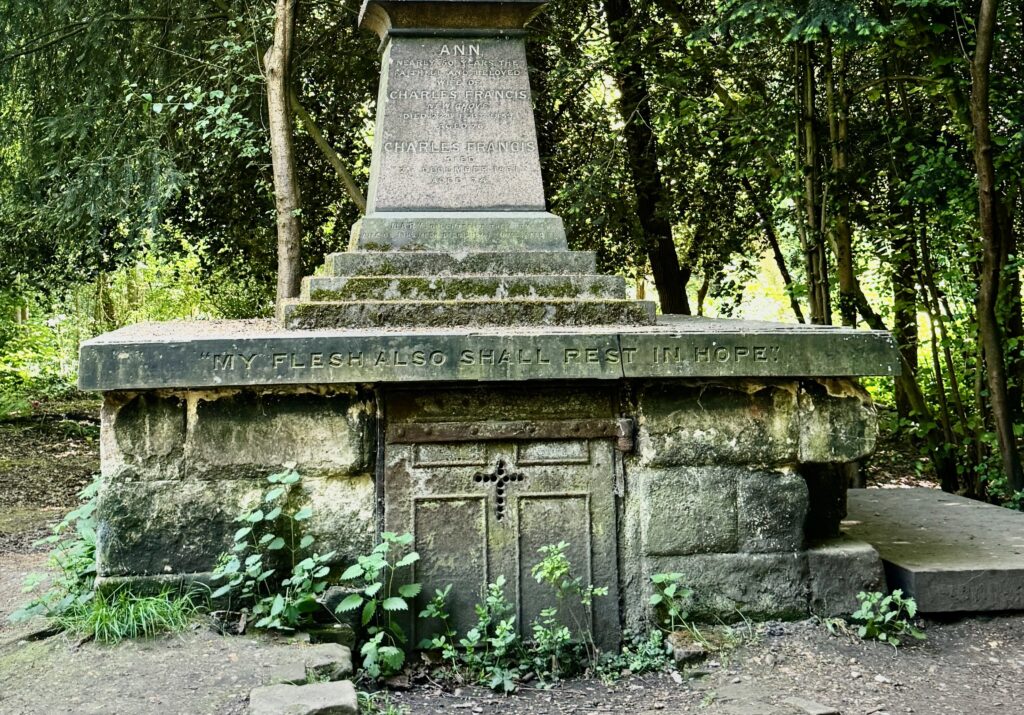
This is the large family vault erected for Ann Francis (d. 1859), wife of
Charles Francis (d.1861), a corn merchant and one of the founding Directors of the Cemetery. This is the highest point in the Cemetery Park and at the time the vault was built it was possible to see the Thames …

The monument was designed with a curious secret: a brick was removed from a wall so that the sun would shine through a wrought iron cross in a door on the western side of the vault at dawn on midsummer’s day …

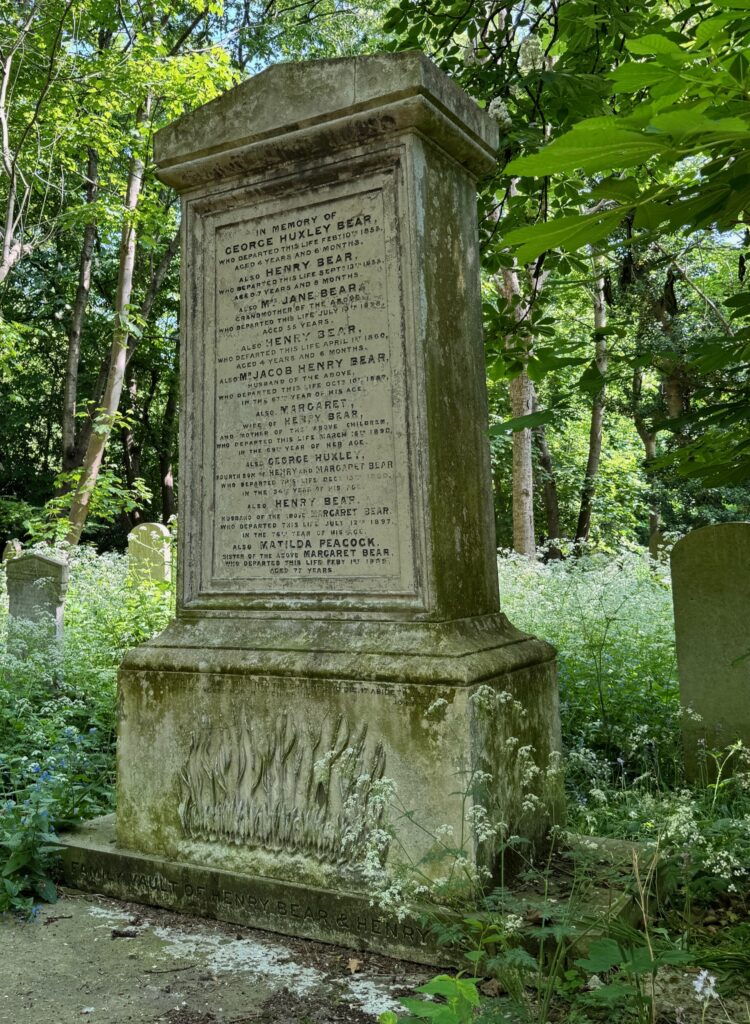
The Bears were of German Jewish origin but converted to Methodism
and anglicised their names. Those buried here include Henry Bear, a wealthy tobacco and sugar merchant who lived on Cable Street …

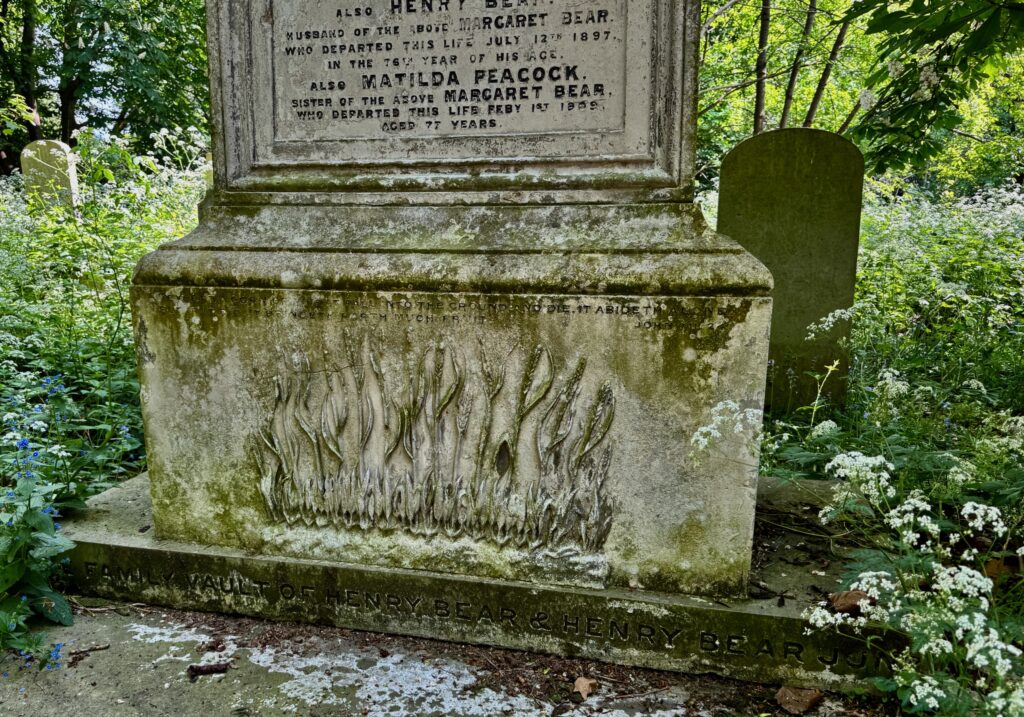
The unusual mural of wheat signifies everlasting life …

The consoling text from John XII, v 24 “Except a corn of wheat fall into the ground and die, it abideth alone: but if it die, it bringeth forth much fruit.”

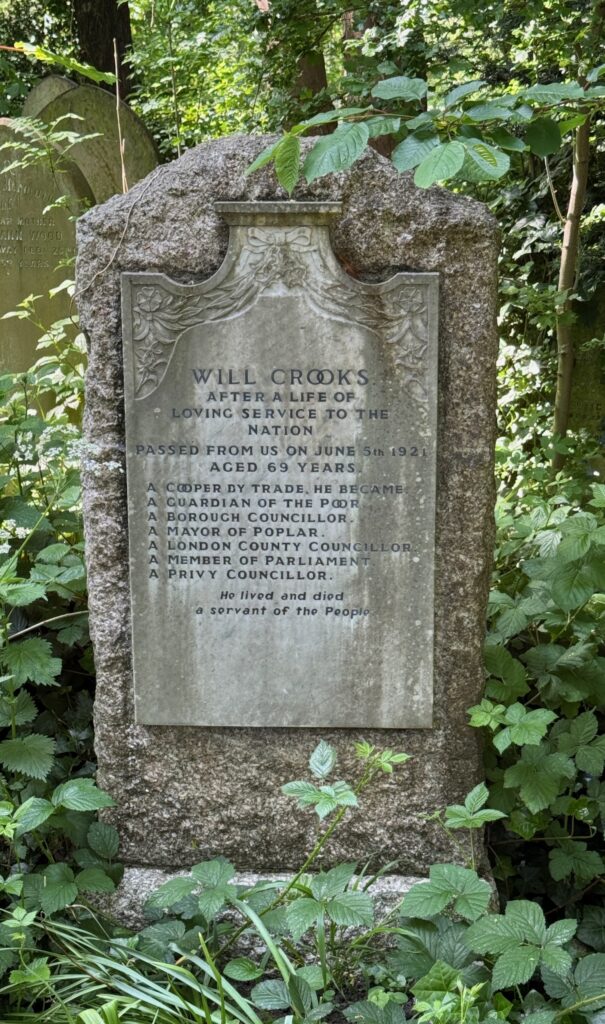
This is the grave of Will Crooks (d. 1921) and his second wife Elizabeth.
A casual labourer in the docks he became politically active and was one of the leaders of the historic 1889 Dock Strike,in which dockworkers
successfully demonstrated for increased wages …

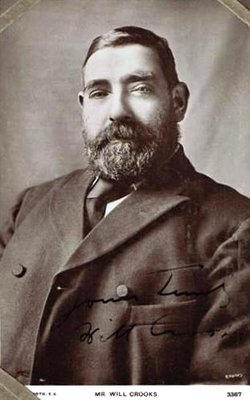
He campaigned not only for fair wages but also open spaces, technical education and the opening of the Blackwall Tunnel. He became London’s first Labour mayor in 1901 when he was named Mayor of Poplar. He was elected to Parliament in 1903 winning in Woolwich, a traditionally Tory constituency …

The grave was rediscovered and the Labour Party and local council paid for its restoration. A true working class hero, you can read more about him here.

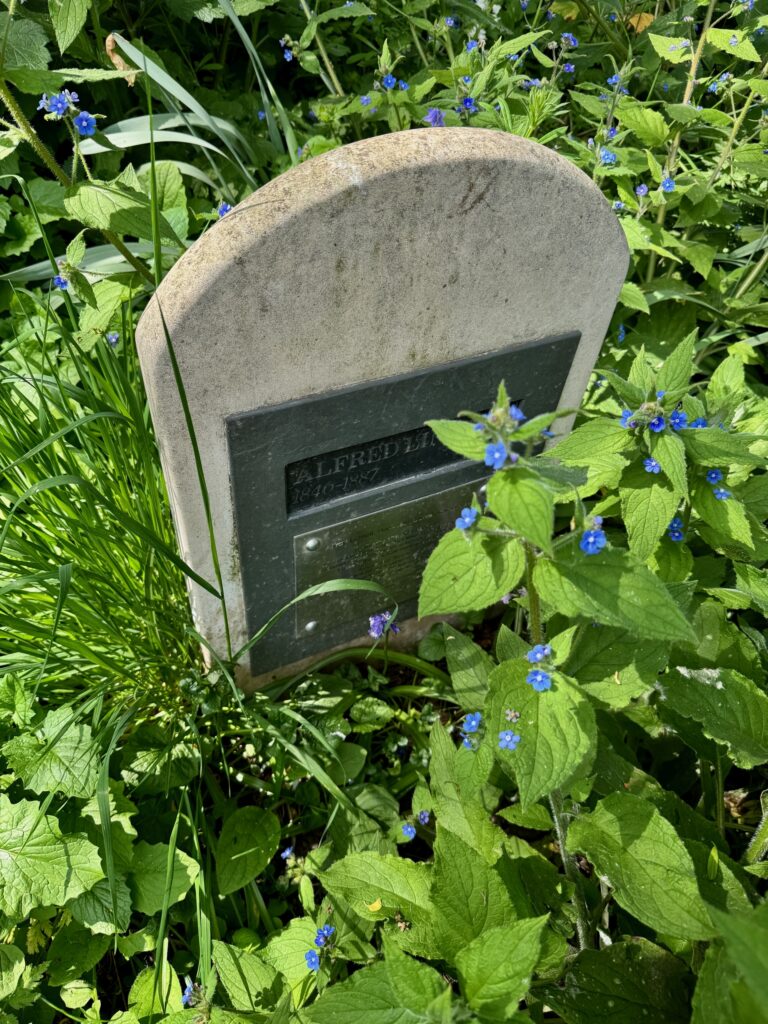
This small stone marker commemorates Alfred Linnel …

A steel plaque attached to it reads:

‘Alfred Linnell, 1846 – 1887, is buried near this spot.
On Sunday 13th November 1887, ten thousand people marched towards Trafalgar Square, protesting against repression in Ireland and unemployment. Police and troops beat them with truncheons. A week after ‘Bloody Sunday’ Alfred Linnell, joined a gathering in Trafalgar Square to protest against the authorities’ violence. He was knocked down by a police horse and died on December 2nd.

Not one, not one, nor thousands must they slay
But one and all if they would dusk the day.

William Morris.’

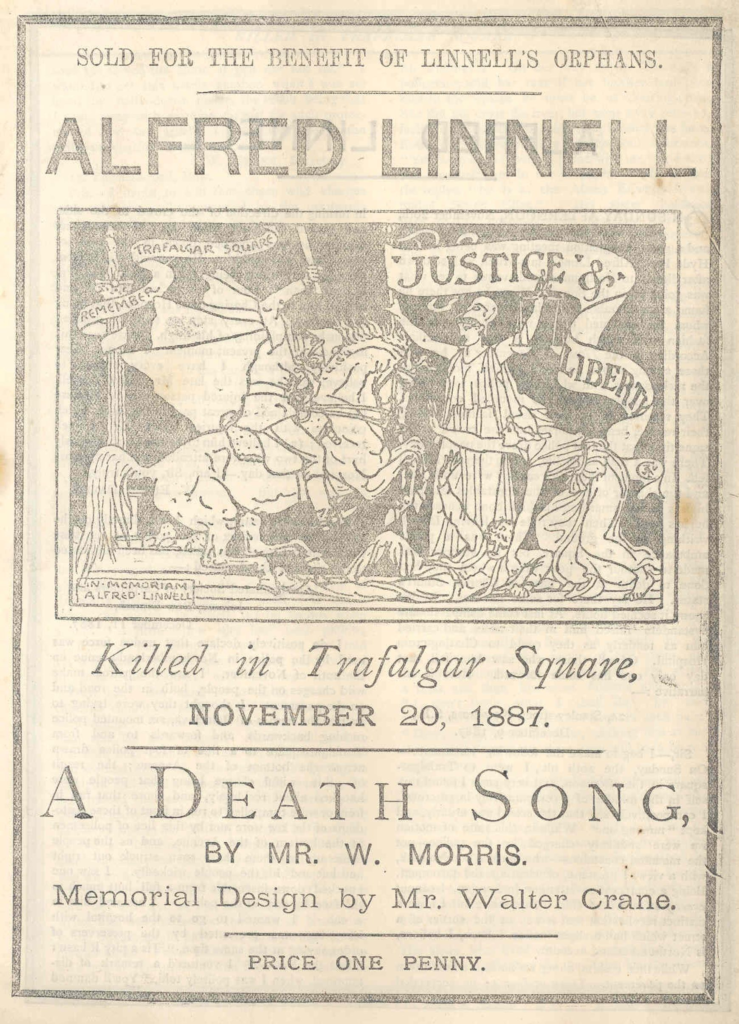
The pamphlet printed to raise money for his family …

Apparently his was one of the biggest funerals ever held at the cemetery with literally thousands of people following the procession.

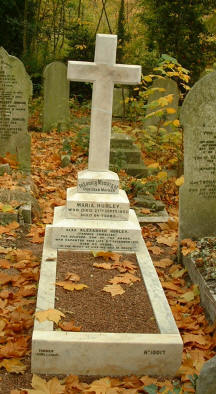
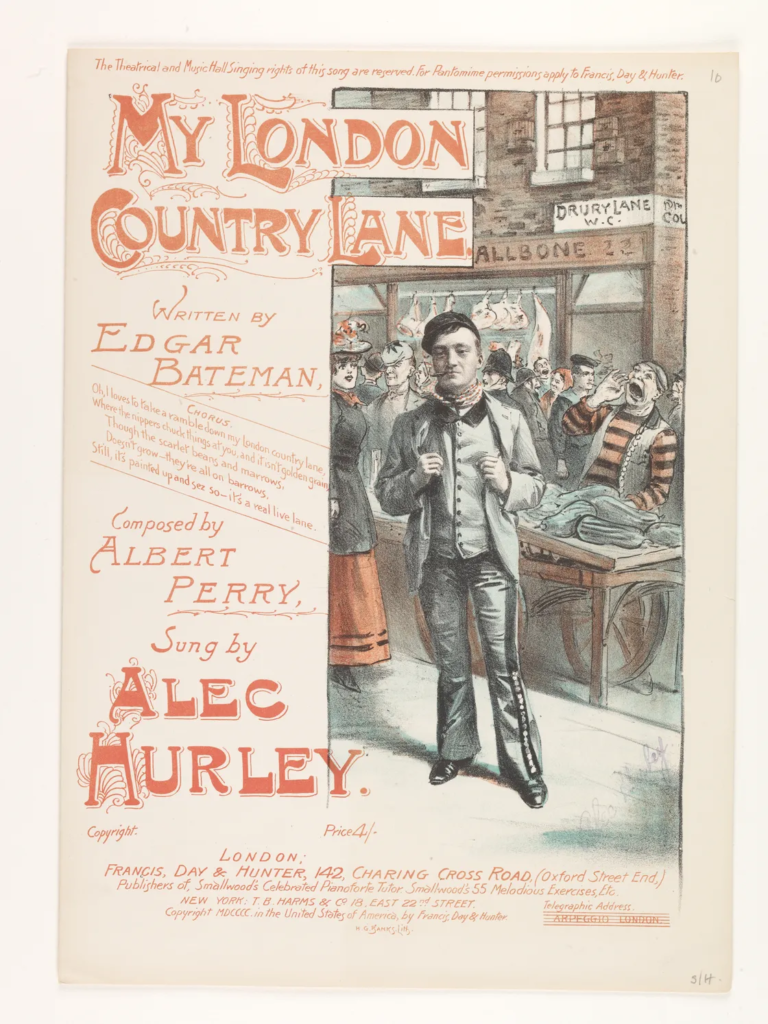
Unfortunately I failed to find the grave of Music Hall star (and husband of Marie Lloyd) Alec Hurley. Here’s an image of it I found online …

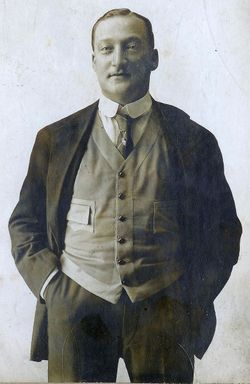
And the man himself …

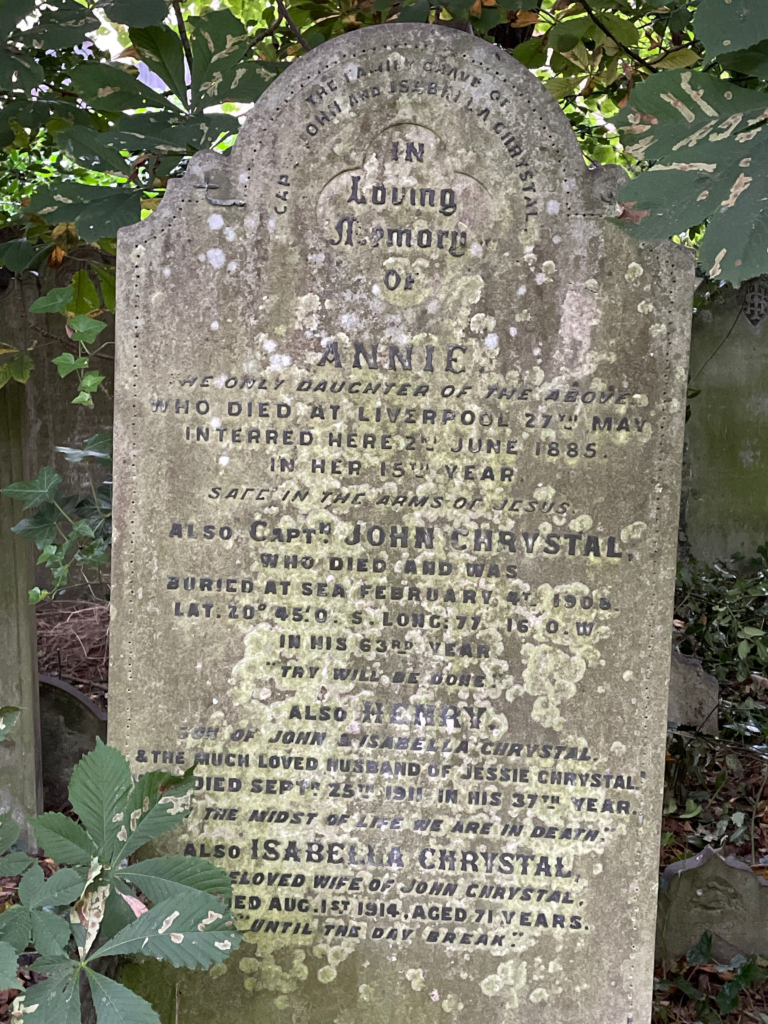
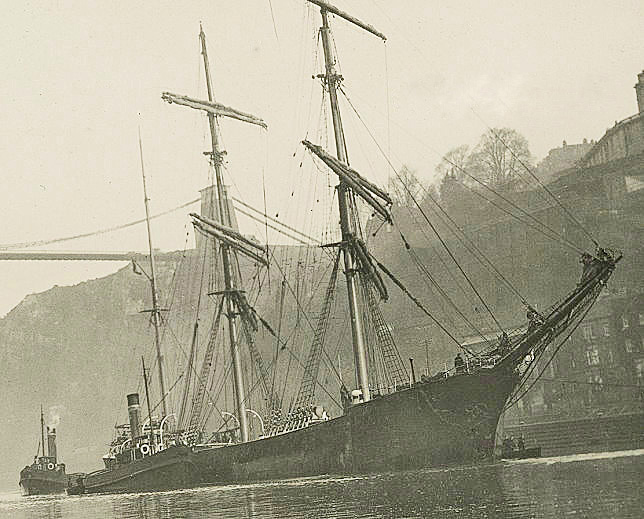
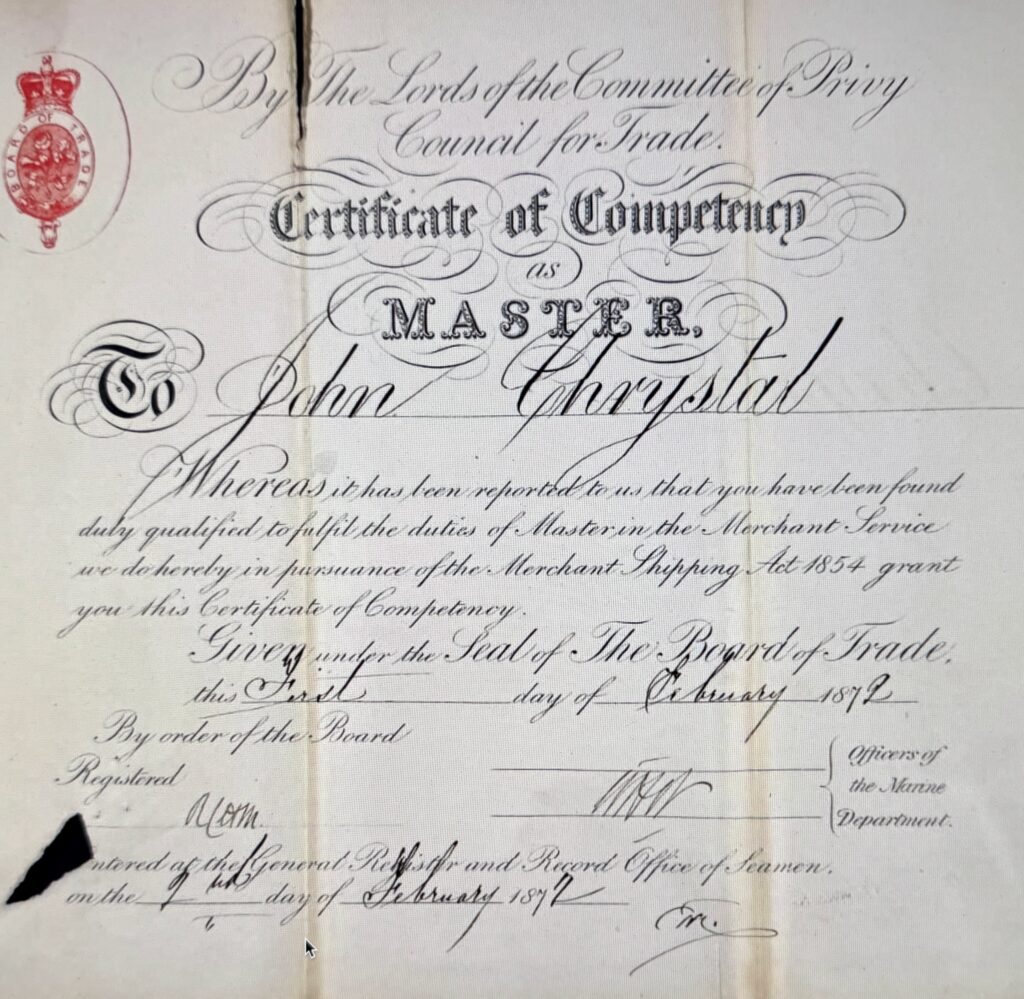
This stone displays very unusual information. Captain John Chrystal was buried at sea and the relevant Latitude and Longitude map co-ordinates are engraved on the family tombstone …

Research shows that his ship, The Travancore, was just off the coast of Peru when he died. The ‘Register of Deceased Seamen’ gives his cause of death as ‘Heart Failure’.

The Travancore …

And John’s Master’s Certificate is also online, along with other documents …

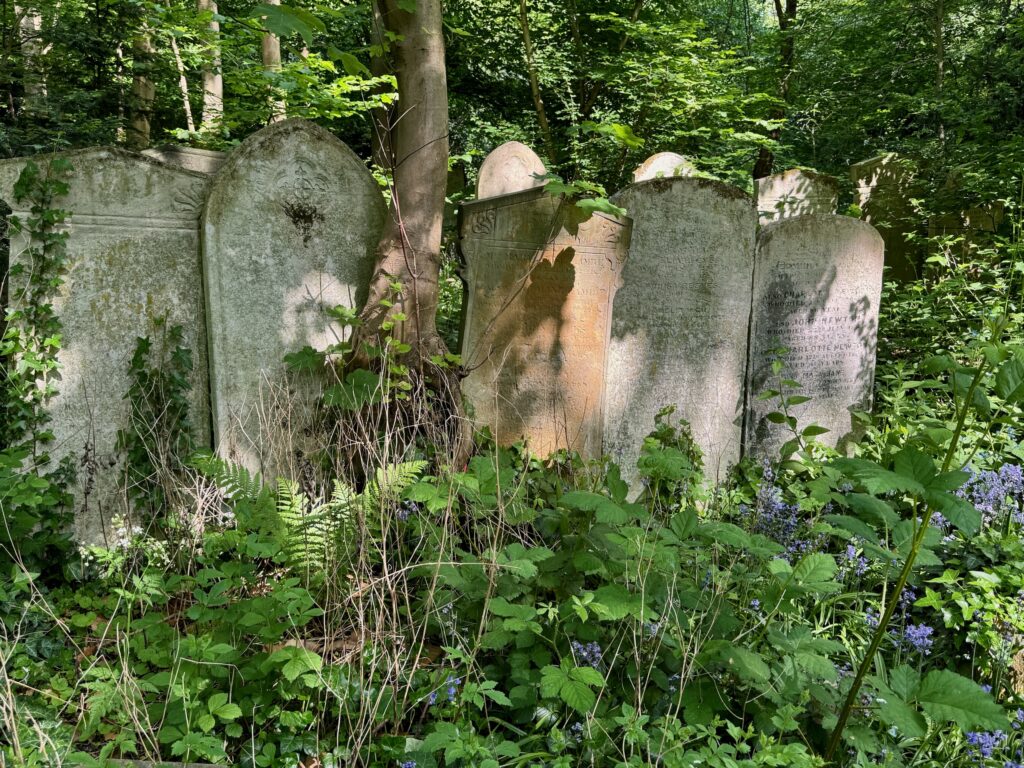
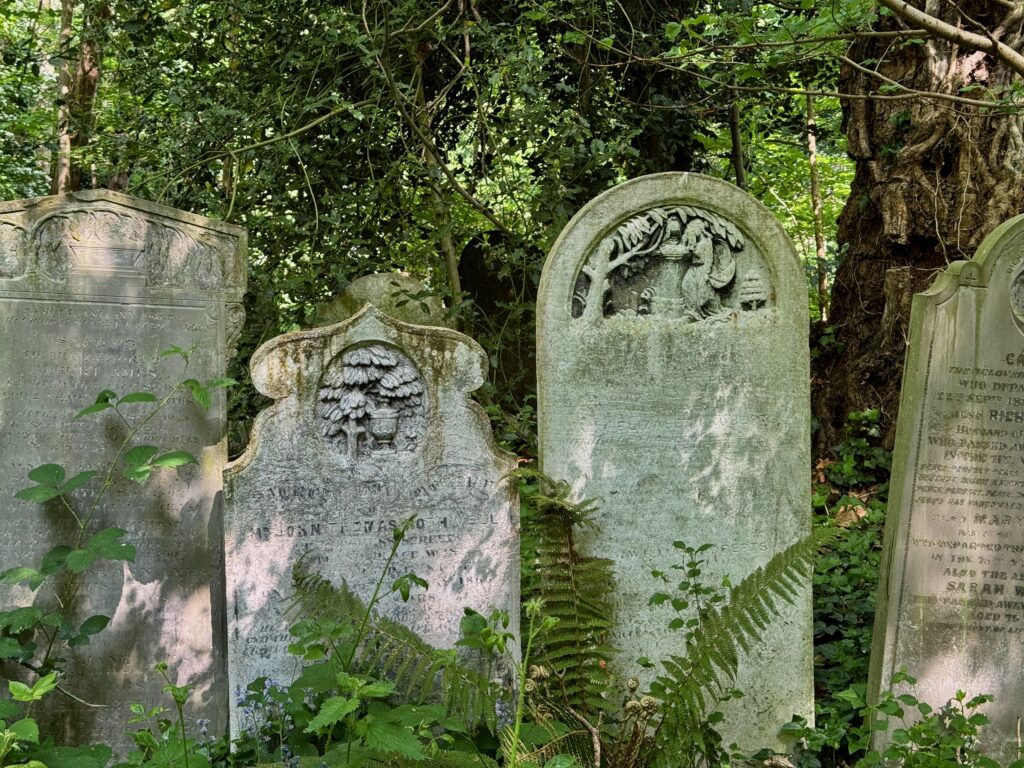
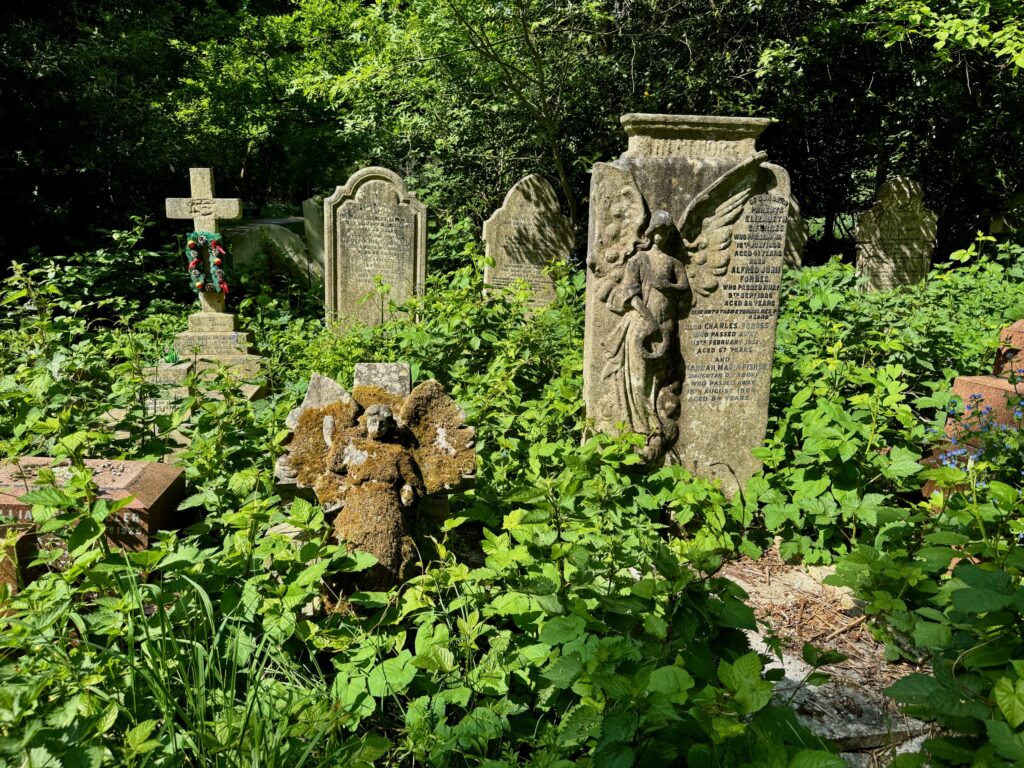
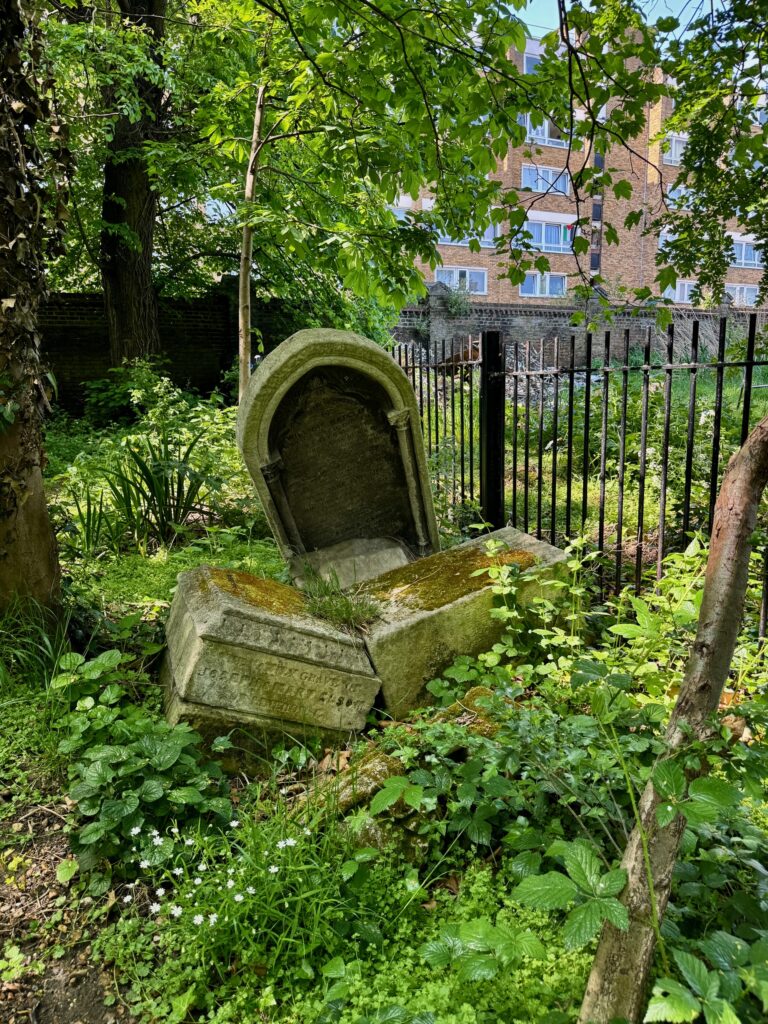
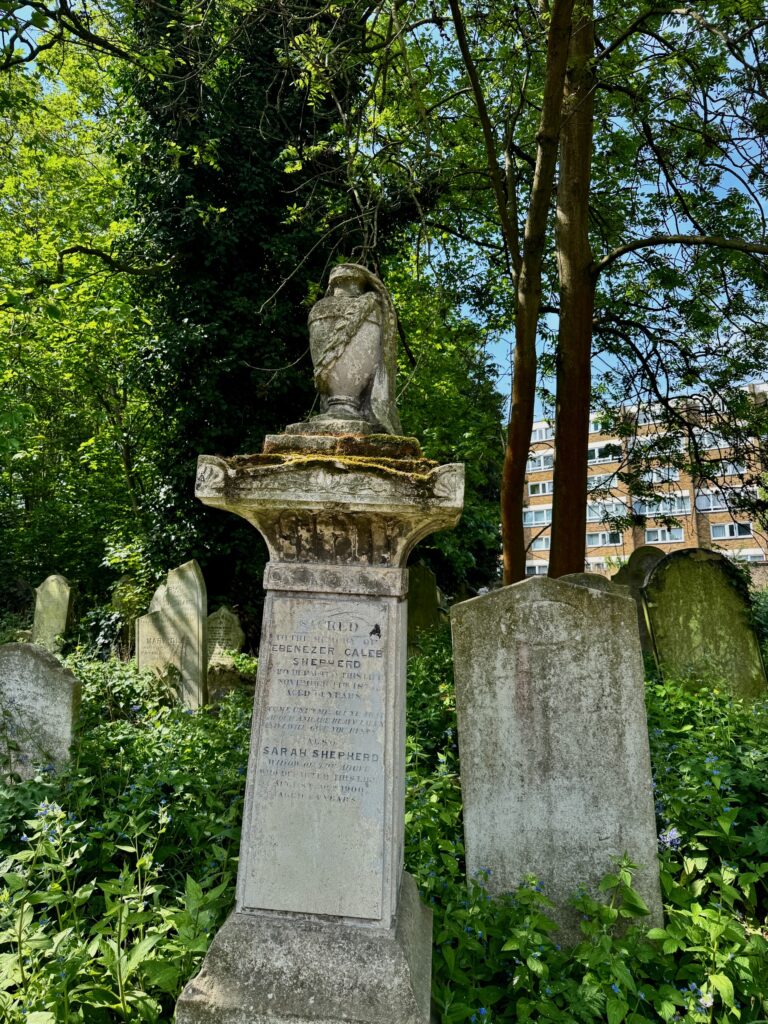
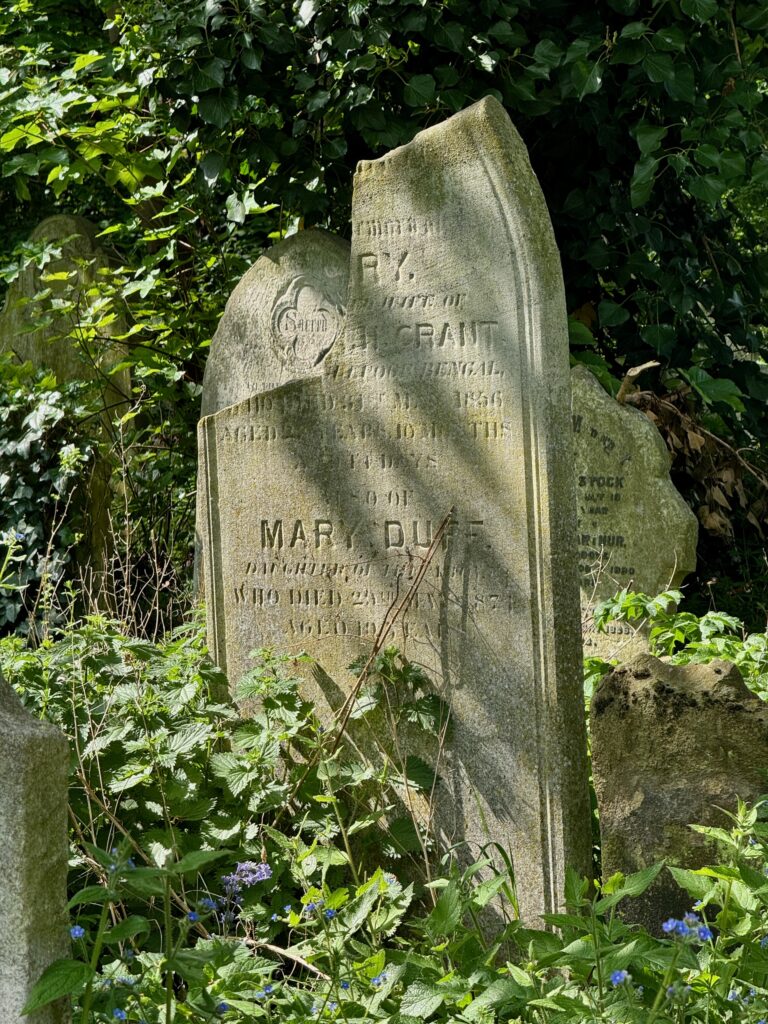
Here are other images I took as I walked around. Some graves seem incredibly close together and, since the graveyard was hit by bombs a number of times during the Blitz, I’m wondering whether the markers were disturbed and have subsequently been propped up again …

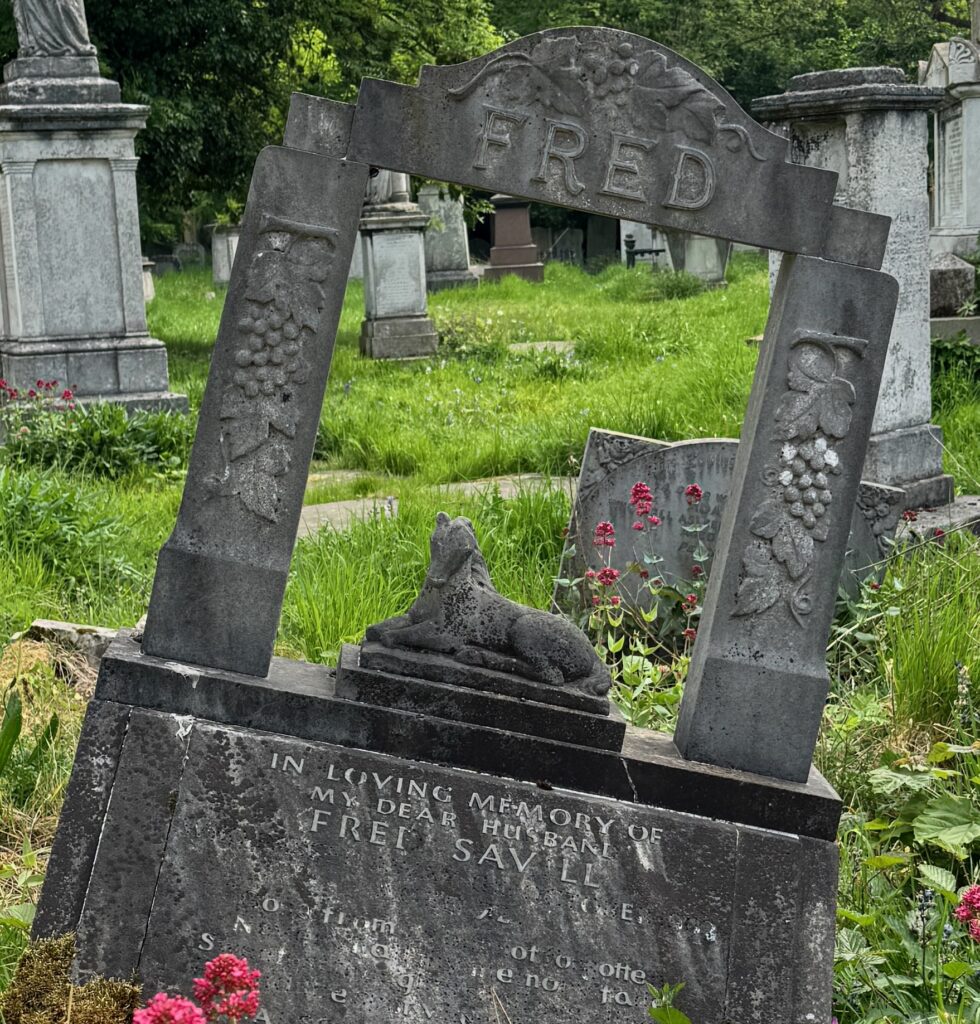
Fred Savill’s memorial incorporates a sculpture of a horse. Maybe he enjoyed a ‘flutter on the gee gees’ …

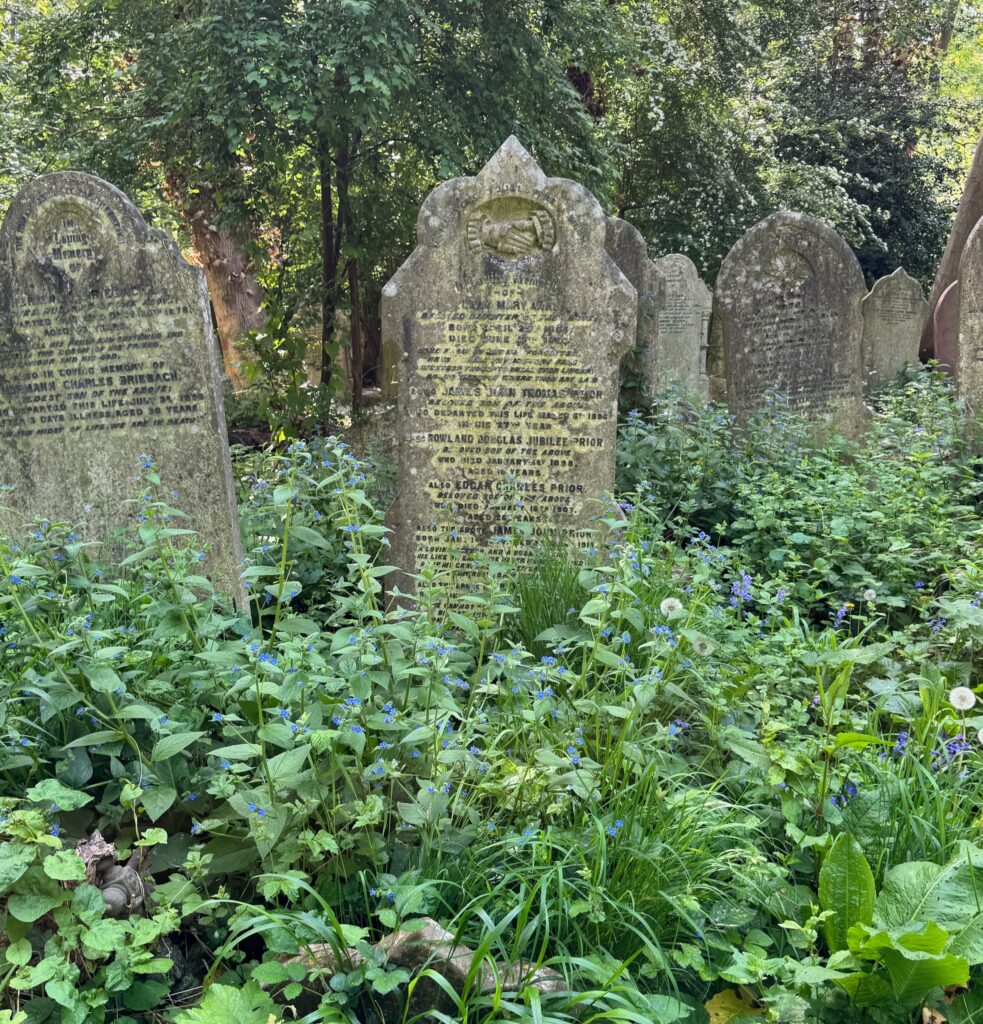
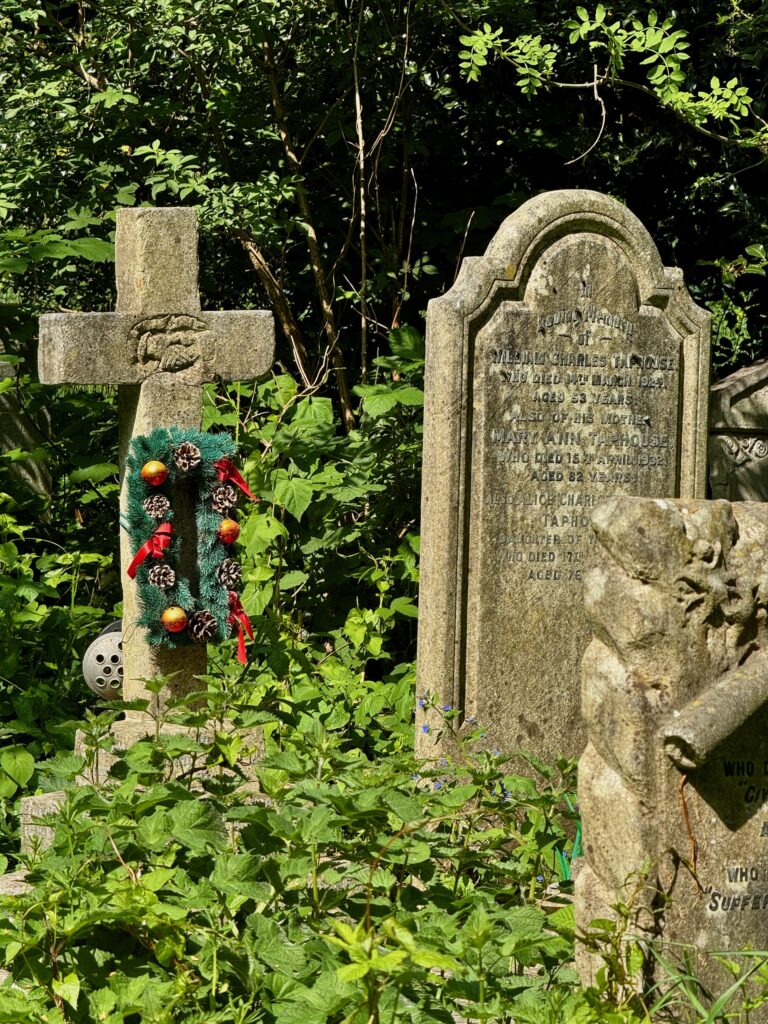
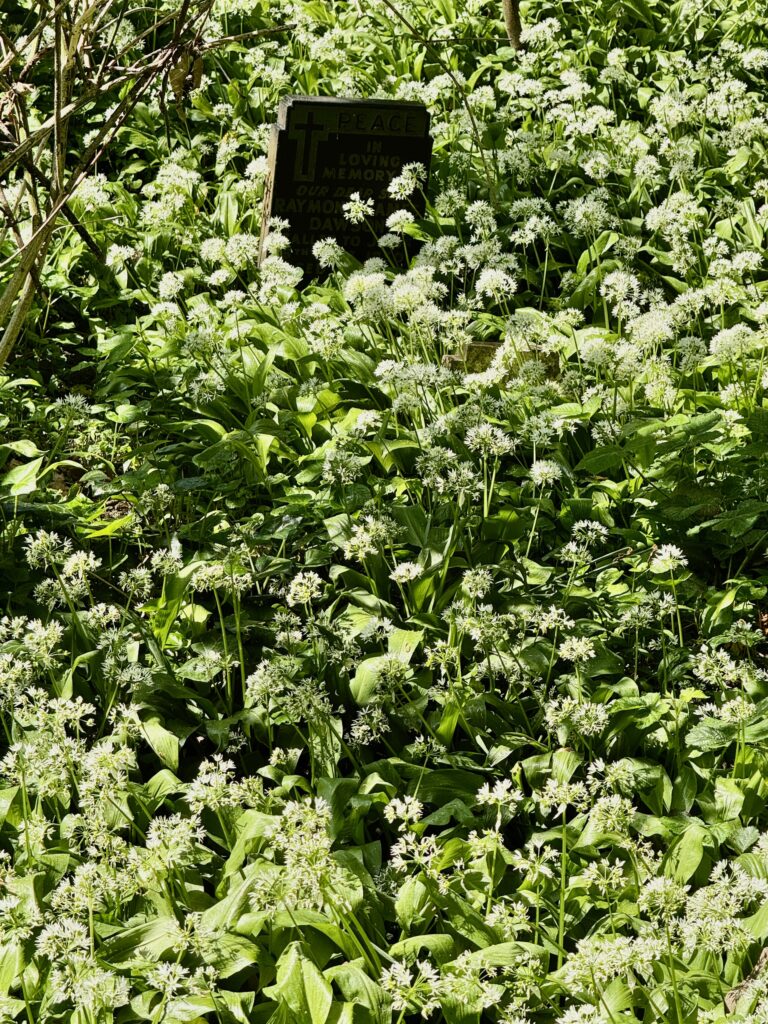
Though filled with gravestones and funerary monuments, the cemetery has been allowed to revert to resemble a natural woodland, with many wildflowers, birds and insect species found in the park. There are several trails and walks created by the Friends of Tower Hamlets Cemetery Park you can follow. Here is one of them.

If you would like to follow me on Instagram here is the link …
https://www.instagram.com/london_city_gent

Mosaic Magic … bringing beauty to new places.

A quiet mosaic revolution has been taking place in London and a new book is planned to celebrate its success. I would be incredibly grateful if you could consider giving some support to its publication, of which more later.

In the meantime, here is some background information on the achievements of the wonderful Hackney Mosaic Project.

My interest started back in 2022 when I visited Shepherdess Walk in Hoxton and headed down steps to what must be one of the most spooky and best-concealed alleys in London …

With a promise of something really special …

Emerging through the alley into the park you’re met with these stunning artworks. The mosaics were designed by Tessa Hunkin and completed over two years by a huge team of local volunteers (over 150 in total!) …

Unveiled in 2012 to coincide with the London Olympics, the scenes are a celebration of life in Hackney’s parks.

Taking the lyrical name of Shepherdess Walk as a starting point, the first mosaic portrays the shepherdesses that once drove their sheep through here when Hoxton was all fields …

A double wall panel illustrates park life throughout the seasons of the year in the East End …

What could be more Summery than buying a Mr Whippy ice cream, having a picnic or a swim in the lido wearing your smart goggles …

Tessa and some of the Shepherdess Walk team …

Why am I calling this a revolution? Well, it used to be the case that, when I heard the word ‘mosaic’, I just thought of the Romans and the floors of so-called high status villas in places like Pompeii.

Not any more.

Here is the Hounds Of Hackney Downs mosaic. Dog owners – just imagine the thrill of having your friend and companion immortalised for all to see …

Panels give credit to the volunteers who created the work …

The playground shelter on Hackney Downs …

Tessa’s team were commisioned by the Zoological Society of London to make two mosaic panels for either side of the main entrance to London Zoo. They show Humboldt penguins and Squirrel monkeys, both popular attractions. What a great job to get!

Another London Zoo project was for the lions’ enclosure …

You can read more here.

Regent’s Park commissioned a circular mosaic under an octagonal shelter in the newly refurbished playground. The theme was play and the brief to include the wildlife that lives in the park (they are particularly proud of their colony of hedgehogs). As well as the playful mammals the Jersey Tiger Moth is represented in its full lifecycle on the leaves around the border …

A fox balances a ball on his nose …

Mural on Somerford Grove Estate …

Two of the seven panels designed for Tower Court, Stamford Hill …

Lift lobby numbers …

On the Packington Estate, Islington …

You can find more about the projects along with a helpful map here. Click this link for some of the Project’s Greatest Hits.

What I love about the Project is that it aims to help people with addiction and mental health problems and at the same time to improve neglected corners of the city. They engage volunteers, recruited both from the Hackney Recovery Services and the local community, in making large mosaics in Hackney Parks and other locations. They also teach and encourage them to create their own artworks.

‘The Project does not just make colourful pictures out of broken fragments – it also helps to piece back broken lives, and build a new community by bringing people together around a shared vision’.

You can watch and listen to Tessa and some of her volunteers here. ‘For people who have worries in their lives, if you are concentrating on a mosaic it’s difficult to think about anything else – it’s like taking a holiday from your head’.

‘In a bold reinvention of the classical tradition, designer Tessa has assembled a passionate and diverse team of makers, creating dozens of breathtaking mosaics that have become cherished landmarks, celebrating community and elevating the streets of East London’.

My friend The Gentle Author wants to publish a book that takes the story of Hackney Mosaic Project to the widest audience and inspire a flowering of community mosaics across the land …

The book will include high quality photographs of all the major mosaics, an interview with Tessa Hunkin outlining the nature of the project, commentary on the background to each mosaic by Wendy Forrest, illustrations of the working process by which the mosaics are created and the names of everyone involved. It will honour the work of the hundreds of local people who have come together over the past decade to contribute their time and creativity to this magnificent collective endeavour.

To do this some money needs to be raised! Do please consider making a donation – however small.

Click here to contribute to the Tessa Hunkin Hackney Mosaic Project crowdfunder

If you would like to follow me on Instagram here is the link …
https://www.instagram.com/london_city_gent


Page 2 of 3

Powered by WordPress & Theme by Anders Norén

Symbols & Secrets
Privacy Overview

This website uses cookies so that we can provide you with the best user experience possible. Cookie information is stored in your browser and performs functions such as recognising you when you return to our website and helping our team to understand which sections of the website you find most interesting and useful.